


Product Monograph - Angeliq
SUMMARY PRODUCT INFORMATION
| Table 1: Product Information Summary | |||||
| Route of Administration | Dosage Form, Strength | Clinically Relevant Nonmedicinal Ingredients | |||
| Oral | Film-coated tablet, 1 mg drospirenone/1 mg estradiol-17β | None For a complete listing see DOSAGE FORMS, COMPOSITION AND PACKAGING section. | |||
INDICATIONS AND CLINICAL USE
ANGELIQ (drospirenone and estradiol-17β) is indicated for:
- treatment of the climacteric syndrome (vasomotor symptoms) in postmenopausal women. This may include the treatment of the symptoms of vulvar and vaginal dryness associated with menopause. When prescribing solely for the treatment of symptoms of vulvar and vaginal dryness, topical vaginal products should be considered. ANGELIQ is recommended for use only in patients with an intact uterus since the regimen includes a progestin whose role is to assist in the prevention of endometrial hyperplasia.
CONTRAINDICATIONS
- Liver dysfunction or disease as long as liver function tests have failed to return to normal
- Known, suspected, or personal history of estrogen-dependent or progestin-dependent malignant neoplasia (eg, breast cancer or endometrial cancer)
- Presence or history of liver tumors (benign or malignant)
- Presence or history of severe renal disease as long as renal function values have not returned to normal
- Severe hypertriglyceridemia
- Endometrial hyperplasia
- Undiagnosed abnormal genital bleeding
- Known or suspected pregnancy
- Lactation
- Active or past history of arterial thromboembolic disease (eg, stroke, myocardial infarction, coronary heart disease)
- Classical migraine
- Active or past history of confirmed venous thromboembolism (such as deep vein thrombosis or pulmonary embolism) or active thrombophlebitis
- A high risk of venous or arterial thrombosis, including known thrombophilic disorders (see WARNINGS AND PRECAUTIONS)
- Partial or complete loss of vision due to ophthalmic vascular disease
- Hypersensitivity to this drug or to any ingredient in the formulation or component of the container. For a complete listing, see the DOSAGE FORMS, COMPOSITION AND PACKAGING section.
WARNINGS AND PRECAUTIONS
Serious Warnings and Precautions The Women’s Health Initiative (WHI) trial examined the health benefits and risks of oral combined estrogen plus progestin therapy (n = 16 608) and oral estrogen-alone therapy (n = 10 739) in postmenopausal women aged 50 to 79 years. (1-3) The estrogen plus progestin arm of the WHI trial (mean age 63.3 years) indicated an increase risk of myocardial infarction (MI), stroke, invasive breast cancer, pulmonary emboli and deep vein thrombosis in postmenopausal women receiving treatment with combined conjugated equine estrogens (CEE, 0.625 mg/day) and medroxyprogesterone acetate (MPA, 2.5 mg/day) for 5.2 years compared to those receiving placebo. (3) The estrogen-alone arm of the WHI trial (mean age 63.6 years) indicated an increased risk of stroke and deep vein thrombosis in hysterectomized women treated with CEE-alone (0.625 mg/day) for 6.8 years compared to those receiving placebo. (1) Therefore, the following should be given serious consideration at the time of prescribing:
|
Carcinogenesis and Mutagenesis
Breast Cancer
Available epidemiological data indicate that the use of combined estrogen plus progestin by postmenopausal women is associated with an increased risk of invasive breast cancer.
In the estrogen plus progestin arm of the WHI trial, among 10 000 women over a one-year period, there were:
- 8 more cases of invasive breast cancer (38 on combined Hormone Replacement Therapy [HRT] versus 30 on placebo). (3)
The WHI study also reported that the invasive breast cancers diagnosed in the estrogen plus progestin group were similar in histology but were larger (mean (SD) 1.7 cm (1.1) vs 1.5 cm (0.9), respectively; P = 0.04) and were at a more advanced stage compared with those diagnosed in the placebo group. The percentage of women with abnormal mammograms (recommendations for short-interval follow-up, a suspicious abnormality, or highly suggestive of malignancy) was significantly higher in the estrogen plus progestin group versus the placebo group. This difference appeared at year one and persisted in each year thereafter. (2)
In the estrogen-alone arm of the WHI trial, there was no statistically significant difference in the rate of invasive breast cancer in hysterectomized women treated with conjugated equine estrogens versus women treated with placebo. (1)
It is recommended that estrogens with or without progestins not be given to women with existing breast cancer or those with a previous history of the disease. There is a need for caution in prescribing estrogens with or without progestins for women with known risk factors associated with the development of breast cancer, such as strong family history of breast cancer (first degree relative) or who present a breast condition with an increased risk (abnormal mammograms and/or atypical hyperplasia at breast biopsy). Other known risk factors for the development of breast cancer such as nulliparity, obesity, early menarche, late age at first full term pregnancy and at menopause should also be evaluated.
It is recommended that women undergo mammography prior to the start of HRT treatment and at regular intervals during treatment, as deemed appropriate by the treating physician and according to the perceived risks for each patient.
The overall benefits and possible risks of HRT should be fully considered and discussed with patients. It is important that the modest increased risk of being diagnosed with breast cancer after 4 years of treatment with combined estrogen plus progestin HRT (as reported in the results of the WHI trial) be discussed with the patient and weighed against its known benefits.
Instructions for regular self-examination of the breasts should be included in this counselling.
Ovarian Cancer
Some recent epidemiologic studies have found that the use of hormone replacement therapy (estrogen-alone and estrogen plus progestin therapies), in particular for five or more years, has been associated with an increased risk of ovarian cancer.
Liver Tumors
In rare cases, benign and even more rarely, malignant liver tumors have been observed after the use of hormonal substances such as those contained in HRT products. In isolated cases, these tumors led to life-threatening intra-abdominal hemorrhage. A hepatic tumor should be considered in the differential diagnosis if upper abdominal pain, enlarged liver, or signs of intra-abdominal hemorrhage occur.
Endometrial Hyperplasia and Endometrial Carcinoma
The use of unopposed estrogens in women with intact uteri has been associated with an increased risk of endometrial cancer.
Clinical surveillance of all women taking estrogen/progestin combinations is important. Adequate diagnostic measures, including endometrial sampling when indicated, should be undertaken to rule out malignancy in all cases of undiagnosed persistent or recurring abnormal vaginal bleeding. Adding a progestin to estrogen therapy has been shown to reduce the risk of endometrial hyperplasia, which may be a precursor to endometrial cancer (see CLINICAL TRIALS).
Pituitary Tumors
Close medical supervision (including periodic measurement of prolactin levels) is necessary if the patient suffers from hyperprolactinemia, prolactinoma or is at risk of developing prolactinoma.
Cardiovascular
The results of the Heart and Estrogen/progestin Replacement Studies (HERS and HERS II) and the Women’s Health Initiative (WHI) trial indicate that the use of estrogen plus progestin is associated with an increased risk of coronary heart disease (CHD) in postmenopausal women. (1, 4, 5) The results of the WHI trial indicate that the use of estrogen-alone and estrogen plus progestin is associated with an increased risk of stroke in postmenopausal women. (1, 3)
WHI Trial Findings
In the combined estrogen plus progestin arm of the WHI trial, among 10 000 women over a one-year period, there were:
- 8 more cases of stroke (29 on combined HRT versus 21 on placebo)
- 7 more cases of CHD (37 on combined HRT versus 30 on placebo). (3)
In the estrogen-alone arm of the WHI trial of women with prior hysterectomy, among 10 000 women over a one-year period, there were/was:
- 12 more cases of stroke (44 on estrogen-alone therapy versus 32 on placebo)
- no statistically significant difference in the rate of CHD. (1)
HERS and HERS II Findings
In the Heart and Estrogen/progestin Replacement Study (HERS) of postmenopausal women with documented heart disease (n = 2763, average age 66.7 years), a randomized placebo-controlled clinical trial of secondary prevention of coronary heart disease (CHD), treatment with 0.625 mg/day oral conjugated equine estrogen (CEE) plus 2.5 mg medroxyprogesterone acetate (MPA) demonstrated no cardiovascular benefit. Specifically, during an average follow-up of 4.1 years, treatment with CEE plus MPA did not reduce the overall rate of CHD events in postmenopausal women with established coronary heart disease. There were more CHD events in the hormone-treated group than in the placebo group in year 1, but not during the subsequent years. (5)
From the original HERS trial, 2 321 women consented to participate in an open label extension of HERS, known as HERS II. Average follow-up in HERS II was an additional 2.7 years, for a total of 6.8 years overall. After 6.8 years, hormone therapy did not reduce the risk of cardiovascular events in women with CHD. (4)
Blood Pressure
Women using HRT sometimes experience increased blood pressure. Blood pressure should be monitored with HRT use. Elevation of blood pressure in previously normotensive or hypertensive patients should be investigated and HRT may have to be discontinued.
Ear/Nose/Throat
Estrogens should be used with caution in patients with otosclerosis
Endocrine and Metabolism
Glucose and Lipid Metabolism
A worsening of glucose tolerance and lipid metabolism has been observed in a significant percentage of peri- and postmenopausal patients. Therefore, diabetic patients or those with a predisposition to diabetes should be observed closely to detect any alterations in carbohydrate or lipid metabolism, especially in triglyceride blood levels.
Women with moderately elevated levels of triglycerides need special surveillance. HRT in these women may be associated with a further increase in triglyceride levels bearing the risk of acute pancreatitis.
Women with familial hyperlipidemias need special surveillance. Lipid-lowering measures are recommended additionally, before treatment is started.
Heme Metabolism
Women with porphyria need special surveillance.
Calcium and Phosphorus Metabolism
Because the prolonged use of estrogens with or without progestins influences the metabolism of calcium and phosphorus, estrogens with or without progestins should be used with caution in patients with metabolic and malignant bone diseases associated with hypercalcemia and in patients with renal insufficiency.
Hypothyroidism
Patients who require thyroid hormone replacement therapy and who are also taking estrogen should have their thyroid function monitored regularly to assure that thyroid hormone levels remain in an acceptable range (see Drug-Laboratory Test Interactions).
Genitourinary
Vaginal Bleeding
Abnormal vaginal bleeding, due to its prolongation, irregularity or heaviness, occurring during therapy should prompt diagnostic measures like hysteroscopy, endometrial biopsy, or curettage to rule out the possibility of uterine malignancy and the treatment should be re-evaluated.
Uterine Leiomyomata
Pre-existing uterine leiomyoma may increase in size during estrogen use. Growth, pain, or tenderness of uterine leiomyoma requires discontinuation of medication and appropriate investigation.
Endometriosis
Symptoms and physical findings associated with a previous diagnosis of endometriosis may reappear or become aggravated with estrogen use. Should endometriosis be reactivated under treatment, discontinuation of therapy is recommended.
Hematologic
Venous Thromboembolism
Available epidemiological data indicate that use of estrogen with or without progestin by postmenopausal women is associated with an increased risk of developing venous thromboembolism (VTE).
In the estrogen plus progestin arm of the WHI trial, among 10 000 women on combined HRT over a one-year period, there were 18 more cases of venous thromboembolism, including 8 more cases of pulmonary embolism. (3)
In the estrogen-alone arm of the WHI trial, among 10 000 women on estrogen therapy over a one-year period, there were 7 more cases of venous thromboembolism, although there was no statistically significant difference in the rate of pulmonary embolism. (1)
Generally recognized risk factors for VTE include a personal history, a family history (the occurrence of VTE in a direct relative at a relatively early age may indicate genetic predisposition), severe obesity (body mass index >30 kg/m2), and systemic lupus erythematosus. The risk of VTE also increases with age and smoking. The potential for an increased synergistic risk of thrombosis should be considered in women who possess a combination of risk factors or exhibit a greater severity of an individual risk factor. This increased risk may be greater than a simple cumulative risk of the factors. HRT should not be prescribed in case of a negative risk benefit assessment.
The risk of VTE may be temporarily increased with prolonged immobilization, major surgery, or trauma. In women on HRT, attention should be given to prophylactic measures to prevent VTE following surgery. Also, patients with varicose veins should be closely supervised. The physician should be alert to the earliest manifestations of thrombotic disorders (thrombophlebitis, retinal thrombosis, cerebral embolism and pulmonary embolism). If these occur or are suspected, hormone therapy should be discontinued immediately, given the risks of long-term disability or fatality.
If feasible, estrogens with or without progestins should be discontinued at least 4 weeks before major surgery which may be associated with an increased risk of thromboembolism, or during periods of prolonged immobilization.
Benefit/risk should therefore be carefully weighed in consultation with the patient when prescribing HRT to women with a risk factor for VTE.
Hepatic/Biliary/Pancreatic
Gallbladder Diseases
A 2- to 4-fold increase in the risk of gallbladder disease requiring surgery in women receiving postmenopausal estrogens has been reported.
Hepatic hemangioma
Particular caution is indicated in women with hepatic hemangiomas as estrogens may cause an exacerbation of this condition.
Jaundice
Caution is advised in patients with a history of liver and/or biliary disorders. If cholestatic jaundice develops during treatment, the treatment should be discontinued and appropriate investigations carried out.
Liver Function Tests
Liver function tests should be done periodically in subjects who are suspected of having hepatic disease. For information on endocrine and liver function tests, see the section under Monitoring and Laboratory Tests.
Immune
Angioedema
Exogenous estrogens may induce or exacerbate symptoms of angioedema, in particular in women with hereditary angioedema. Discontinuation of this medication should be considered.
Systemic lupus erythematosus
Particular caution is indicated in women with systemic lupus erythematosus.
Neurologic
Cerebrovascular Insufficiency
Patients who develop visual disturbances, classical migraine, transient aphasia, paralysis, or loss of consciousness should discontinue medication.
Patients with a previous history of classical migraine and who develop a recurrence or worsening of migraine symptoms should be re-evaluated.
Dementia
Available epidemiological data indicate that the use of combined estrogen plus progestin in women aged 65 and over may increase the risk of developing probable dementia.
The Women’s Health Initiative Memory Study (WHIMS), a clinical substudy of the WHI, was designed to assess whether postmenopausal hormone replacement therapy (estrogen plus progestin or estrogen-alone) reduces the risk of dementia in women aged 65 and over and free of dementia at baseline. (6, 7)
In the estrogen plus progestin arm of the WHIMS (n = 4 532), women with an intact uterus were treated with daily 0.625 mg conjugated equine estrogens (CEE) plus 2.5 mg medroxyprogesterone acetate (MPA) or placebo for an average of 4.05 years. The results, when extrapolated to 10 000 women treated over a one-year period showed:
- 23 more cases of probable dementia (45 on combined HRT versus 22 on placebo). (7)
In the estrogen-alone arm of the WHIMS (n=2947), women with prior hysterectomy were treated with daily 0.625 mg CEE or placebo for an average of 5.21 years. The results, when extrapolated to 10 000 women treated over a one-year period showed:
- 12 more cases of probable dementia (37 on estrogen-alone versus 25 on placebo), although this difference did not reach statistical significance. (6)
When data from the estrogen plus progestin arm of the WHIMS and the estrogen-alone arm of the WHIMS were combined, as per the original WHIMS protocol, in 10 000 women over a one-year period, there were:
- 18 more cases of probable dementia (41 on estrogen plus progestin or estrogen-alone versus 23 on placebo). (6)
Epilepsy
Particular caution is indicated in women with epilepsy, as estrogens with or without progestins may cause an exacerbation of this condition.
Renal
Fluid Retention
Estrogens with or without progestins may cause fluid retention. Therefore, particular caution is indicated in cardiac or renal dysfunction or asthma. If, in any of the above-mentioned conditions, a worsening of the underlying disease is diagnosed or suspected during treatment, the benefits and risks of treatment should be reassessed based on the individual case.
Nonsevere disturbances of liver function, including hyperbilirubinemias such as Dubin-Johnson syndrome or Rotor syndrome, require close supervision. In case of deterioration of markers of liver function, the use of HRT should be discontinued.
Skin
Chloasma may occasionally occur, especially in women with a history of chloasma gravidarum. Women with a tendency to chloasma should avoid exposure to the sun or ultraviolet radiation while taking HRT.
Other Conditions
The following conditions have been reported to occur or deteriorate with HRT use. Although the evidence of an association with HRT use is inconclusive, women with these conditions and treated with HRT should be carefully monitored:
Asthma; benign breast disease; chorea minor; epilepsy; otosclerosis; porphyria; systemic lupus erythematosus.
Special Populations
Pregnant Women
ANGELIQ must not be used during pregnancy and lactation (see CONTRAINDICATIONS). If pregnancy occurs during medication with ANGELIQ, treatment must be discontinued immediately.
Monitoring and Laboratory Tests
Before ANGELIQ (drospirenone and estradiol-17β) is administered, the patient should have a complete physical examination, including a blood pressure determination. Breasts and pelvic organs should be appropriately examined and a Papanicolaou smear should be performed. Endometrial biopsy should be done when indicated. Baseline tests should include mammography, measurement of blood glucose, calcium, triglycerides and cholesterol, and liver function tests.
The first follow-up examination should be done within 3 to 6 months after initiation of treatment to assess response to treatment. Thereafter, examinations should be made at intervals of at least once a year. Appropriate investigations should be arranged at regular intervals as determined by the physician. It is important that patients are encouraged to practice frequent self-examination of the breasts.
ADVERSE REACTIONS
Adverse Drug Reaction Overview
See WARNINGS AND PRECAUTIONS regarding potential induction of malignant neoplasms and adverse effects similar to those of oral contraceptives.
The following adverse reactions have been reported with estrogen/progestin combinations in general:
Blood and Lymphatic System Disorders: Altered coagulation tests (see DRUG INTERACTIONS, Drug-Laboratory Test Interactions).
Cardiac Disorders: Palpitations; increase in blood pressure (see WARNINGS AND PRECAUTIONS); coronary thrombosis
Ear and Labyrinth Disorders: otosclerosis1
Endocrine Disorders: Increased blood sugar levels; decreased glucose tolerance or changes in effect on peripheral insulin resistance; prolactinoma
Eye Disorders: Neuro-ocular lesions (eg, retinal thrombosis, optic neuritis); visual disturbances; steepening of the corneal curvature; intolerance to contact lenses
Gastrointestinal Disorders: Nausea; vomiting; abdominal discomfort (cramps, pressure, pain, bloating)
General Disorders and Administration Site Conditions: Fatigue; changes in appetite; changes in body weight; change in libido
Hepatobiliary Disorders: Gallbladder disorder; asymptomatic impaired liver function; cholestatic jaundice; benign and malignant hepatic tumors
Immune System Disorders: asthma1; hypersensitivity (including symptoms such as rash and urticaria); systemic lupus erythematosus1
Metabolism and Nutrition Disorders: hypertriglyceridemia; porphyria1
Musculoskeletal and Connective Tissue Disorders: Musculoskeletal pain including leg pain not related to thromboembolic disease (usually transient, lasting 3 to 6 weeks) may occur
Nervous System Disorders: Aggravation of migraine episodes; headaches, dizziness; neuritis; chorea minor1; epilepsy1
Psychiatric Disorders: Mental depression; nervousness; irritability; dementia
Renal and Urinary Disorders: Cystitis; dysuria; sodium retention; edema
Reproductive System and Breast Disorders: Breakthrough bleeding; spotting; change in menstrual flow; dysmenorrhea; vaginal itching/discharge; dyspareunia; endometrial hyperplasia; premenstrual-like syndrome; reactivation of endometriosis; changes in cervical erosion and amount of cervical secretion; breast swelling and tenderness; benign breast disease1; increase in size of uterine fibroids
Skin and Subcutaneous Tissue Disorders: Chloasma or melasma, which may persist when drug is discontinued; erythema multiforme; erythema nodosum; hemorrhagic eruption; loss of scalp hair; hirsutism and acne
Vascular Disorders: Isolated cases of: thrombophlebitis; thromboembolic disorders
Exogenous estrogens may induce or exacerbate symptoms of angioedema, particularly in women with hereditary angioedema (see WARNINGS AND PRECAUTIONS).
Clinical Trial Adverse Drug Reactions
Because clinical trials are conducted under very specific conditions the adverse reaction rates observed in the clinical trials may not reflect the rates observed in practice and should not be compared to the rates in the clinical trials of another drug. Adverse drug reaction information
1 Occurrence or deterioration of conditions for which association with HRT use is not conclusive
from clinical trials is useful for identifying drug-related adverse events and for approximating rates.
A clinical trial dataset of 1 532 patients was used to generate the adverse drug reaction profile of ANGELIQ to support market authorization in Canada (market authorization clinical trials dataset). Subsequent to market introduction, additional adverse drug reaction data from clinical trials (n = 892) has become available for a total database of 2 424 patients.
Market Authorization Clinical Trials Dataset
The most commonly reported adverse reaction to ANGELIQ (drospirenone and estradiol-17β) in the clinical trials upon which market authorization is based (n = 1 532) were breast pain, vaginal bleeding, abdominal pain, headache, enlarged abdomen, breast neoplasm, asthenia, depression, hot flashes, emotional lability, nausea, enlarged uterine fibroids, cervix neoplasm, leukorrhea, fibrocystic breast, pain in extremity, nervousness, breast enlargement, peripheral edema, and vaginitis.
The following are adverse events reported with ANGELIQ treatment in these clinical trials, including strengths of drospirenone in combination with estradiol that are not approved (ie, containing 1, 2, or 3 mg DRSP):
| Table 2: Adverse Events Considered at Least Possibly Related to ANGELIQ in Four Phase III Clinical Trials (n = 1 532) | |||||
|---|---|---|---|---|---|
| Organ System | Adverse Event | ||||
Common (≥ 1/100, < 1/10) | Uncommon (≥ 1/1 000, < 1/100) | ||||
| Body as a Whole | Abdominal pain | Pain in back or pelvis | |||
| Asthenia | Chills | ||||
| Pain in extremity | Malaise | ||||
| Laboratory test abnormal | |||||
| Cardiovascular System | Migraine | ||||
| Hypertension | |||||
| Chest pain | |||||
| Palpitation | |||||
| Varicose veins | |||||
| Venous thrombosis | |||||
| Superficial thrombophlebitis | |||||
| Vasodilation | |||||
| Digestive | Nausea | Gastrointestinal disorder | |||
| Increased appetite | |||||
| Liver function test abnormal | |||||
| Metabolic and Nutritional Disorders | Generalized or localized edema | ||||
| Weight gain | |||||
| Hyperlipemia | |||||
| Musculoskeletal System | Muscle cramps | ||||
| Arthralgia | |||||
| Nervous System | Headache | Insomnia | |||
| Mood swings | Dizziness | ||||
| Hot flushes | Libido decreased | ||||
| Nervousness | Concentration ability impaired | ||||
| Paresthesia | |||||
| Sweating increased | |||||
| Anxiety | |||||
| Dry mouth | |||||
| Vertigo | |||||
| Respiratory System | Dyspnea | ||||
| Skin and Appendages | Benign breast neoplasms | Alopecia | |||
| Breast enlargement | Skin or hair disorder | ||||
| Hirsutism | |||||
| Breast carcinoma | |||||
| Breast engorgement | |||||
| Special Senses | Taste disturbance | ||||
| Urogenital | Uterine fibroids enlarged | Vulvovaginitis | |||
| Cervix neoplasm | Endometrial or cervical disorder | ||||
| Leukorrhea | Bleeding | ||||
| Dysmenorrhea | |||||
| Ovarian cyst | |||||
| Urinary tract infections | |||||
| Incontinence | |||||
Additional Related Adverse Drug Reactions
The following additional adverse drug reactions were observed in clinical trials (n = 2 424), including strengths of drospirenone in combination with estradiol that are not approved in Canada (ie, containing 0.5, 1, 2, or 3 mg DRSP), and are considered at least possibly related to ANGELIQ by the investigator:
Uncommon (≥1/1 000, <1/100)
Cardiovascular System: Embolism
Digestive System: Anorexia, constipation, diarrhea, flatulence, vomiting
Metabolic and Nutritional Disorders: Weight loss
Skin and Appendages: Acne, pruritus, rash
Special Senses: Abnormal vision, eye disorder
Rare (<1/1 000)
Digestive System: Cholelithiasis
Hematic and Lymphatic: Anemia
Skin and Appendages: Tinnitus
Urogenital System: Salpingitis
The following adverse reactions, considered at least possibly related to ANGELIQ were recorded in 2 clinical trials in hypertensive women: hyperkalemia, cardiac failure, atrial flutter, QT interval prolonged, cardiomegaly, blood aldosterone increased.
Postmarket Adverse Drug Reactions
The following adverse reactions have been identified from postmarketing experience with the use of ANGELIQ: venous and arterial thromboembolic events (peripheral deep venous occlusion, thrombosis and embolism/pulmonary vascular occlusion, thrombosis, embolism and infarction/myocardial infarction/cerebral infarction and stroke not specified as hemorrhagic) (see CONTRAINDICATIONS and WARNINGS AND PRECAUTIONS - Hematologic), breast cancer (see CONTRAINDICATIONS and WARNINGS AND PRECAUTIONS - Carcinogenesis and Mutagenesis).
If adverse symptoms persist, the prescription of HRT should be re-considered.
DRUG INTERACTIONS
Overview
Estrogens may diminish the effectiveness of anticoagulants, antidiabetics, and antihypertensive agents.
Preparations inducing liver enzymes (eg, barbiturates, hydantoins, carbamazepine, meprobamate, phenylbutazone, or rifampicin) may interfere with the activity of orally administered estrogens.
Drug-Drug Interactions
Clinical pharmacokinetic studies have not demonstrated any consistent effect of antibiotics (other than rifampicin) on plasma concentrations of synthetic steroids.
Effects of Drospirenone on Other Drugs
Metabolic Interactions
Metabolism of DRSP and potential effects of DRSP on hepatic cytochrome P450 (CYP) enzymes have been investigated in in vitro and in vivo studies (see ACTION AND CLINICAL PHARMACOLOGY - Pharmacokinetics). In in vitro studies, DRSP did not affect turnover of model substrates of CYP1A2 and CYP2D6, but had an inhibitory influence on the turnover of model substrates of CYP1A1, CYP2C9, CYP2C19, and CYP3A4, with CYP2C19 being the most sensitive enzyme. The potential effect of DRSP on CYP2C19 activity was investigated in a clinical pharmacokinetic study using omeprazole as a marker substrate. In the study with 24 postmenopausal women (including 12 women with homozygous (wild type) CYP2C19 genotype and 12 women with heterozygous CYP2C19 genotype), the daily oral administration of 3 mg DRSP for 14 days did not affect the oral clearance of omeprazole (40 mg, single oral dose). Based on the available results of in vivo and in vitro studies, it can be concluded that, at clinical dose level, DRSP is unlikely to interact significantly with cytochrome P450 enzymes.
Effects of Other Drugs on Clearance of HRTs
Substances increasing the clearance of sex hormones (diminished efficacy by enzyme induction)
Estrogens are metabolized partially by cytochrome P450 enzymes (e.g. CYP3A4). Interactions can occur with drugs that induce CYP enzymes which can result in increased clearance of sex hormones and which may lead to changes in the uterine bleeding profile and/or reduction of the therapeutic effect.
CYP enzyme inducers include phenytoin, barbituates, primidone, carbamazepine, rifampicin, and possibly also oxcarbazepine, topiramate, felbamate, griseofulvin and products containing St. John’s wort.
Substances with variable effects on the clearance of sex hormones
When co-administered with sex hormones, many anti-HIV protease inhibitors (eg, nelfinavir, ritonavir, ritonavir-boosted protease inhibitors), HCV protease inhibitors (eg, boceprevir, telaprevir) and non-nucleoside reverse transcriptase inhibitors (eg, nevirapine) can increase or decrease plasma concentrations of estrogen or progestin or both. These changes may alter the safety and effectiveness of ANGELIQ. Healthcare providers should refer to the label of the individual anti-HIV/HCV protease inhibitor or non-nucleoside reverse transcriptase inhibitor for further drug-drug interaction information.
Substances decreasing the clearance of sex hormones (enzyme inhibitors)
Strong and moderate CYP3A4 inhibitors such as azole antifungals (eg, fluconazole, itraconazole, ketoconazole, voriconazole,), verapamil, macrolides (eg, clarithromycin, erythromycin), diltiazem and grapefruit juice, can increase plasma concentrations of the estrogen or the progestin or both. The clinical relevance of potential interactions with enzyme inhibitors remains unknown.
Coadministration with Drugs that Have the Potential to Increase Serum Potassium
Nonsteroidal Anti-inflammatory Drugs (NSAID)
The interaction of DRSP 3 mg/E2 1 mg and indomethacin was studied in 32 postmenopausal women who were coadministered 150 mg indomethacin daily for 17 days. No subject developed hyperkalemia during the study. A complete 24 hour serum potassium profile showed no clinically or statistically significant difference between serum potassium concentrations in subjects on indomethacin alone or the combination of DRSP/E2 + indomethacin. The combined intake of a potent NSAID, indomethacin and DRSP 3 mg/E2 1 mg did not cause hyperkalemia in healthy postmenopausal women.
ACE Inhibitors or Angiotensin Receptor Blockers (ARB) + Nonsteroidal Anti-inflammatory Drugs (NSAID)
Combined effects of an ACEI or ARB with an NSAID were studied in 230 postmenopausal women with hypertension and/or diabetes mellitus requiring an ACE inhibitor or angiotensin receptor blocker (ARB). Of these, 26 patients had a creatinine clearance >50 mL/min to <80 mL/min. Patients were given DRSP 3 mg/E2 1 mg or placebo over 28 days. Nondiabetic patients also received ibuprofen 1200 mg/day for 5 days during the study. The range of mean serum potassium values during the treatment phase was similar in both groups, 4.35 to 4.42 mEq/L for the DRSP/E2 group and 4.27 to 4.34 mEq/L for the placebo group. After 28 days of exposure the mean change from baseline for the DRSP/E2 group was 0.11 mEq/L and 0.08 mEq/L for the placebo group.
Serum potassium levels ≥5.5 mEq/L were observed in 8 (7.3%) DRSP/E2-treated subjects (3 diabetic and 5 nondiabetic) and 3 (2.6%) placebo-treated subjects (2 diabetic and 1 nondiabetic). None of the subjects with serum potassium levels ≥5.5 mEq/L had cardiovascular adverse events. The elevated levels returned to normal even with continuous treatment. The addition of ibuprofen resulted in a slight increase in the number of subjects with potassium values greater than 5.5mEq/mL. The addition of an NSAID can increase the risk of elevated potassium in both diabetics and nondiabetics receiving ACEI and ARBs. DRSP/E2 administered concomitantly slightly increases the probability of elevated potassium, although the results were not statistically significant.
ACE Inhibitors
A 2-week study in 24 mildly hypertensive postmenopausal women taking enalapril maleate 10 mg twice daily with placebo or DRSP 3 mg/E2 1 mg was performed to assess the effect on serum potassium. Of them, 8 had mild renal insufficiency. Potassium levels were obtained every other day. Mean serum potassium levels in the DRSP/E2 treatment group relative to baseline were 0.22 mEq/L higher than those in the placebo group. Serum potassium concentrations also were measured at multiple timepoints over 24 hours at baseline and on Day 14. The ratios for serum potassium Cmax and AUC in the DRSP/E2 group to those in the placebo group were 0.955 (90% CI: 0.914, 0.999) and 1.010 (90% CI: 0.944, 1.080), respectively. No patient in either treatment group experienced serum potassium above the upper limit of normal.
Physicians and other health care providers should be aware of other nonprescription products concomitantly used by the patient, including herbal and natural products obtained from the widely spread health stores.
Coadministration with Drugs that Have the Potential to Decrease Serum Potassium
Hydrochlorothiazide
A 4-week study in 36 mildly hypertensive postmenopausal women taking hydrochlorothiazide (HCTZ) 25 mg once daily with placebo or DRSP 3 mg/E2 1 mg was performed to assess potential interactions with HCTZ. The pharmacokinetics of HCTZ was not affected by coadministration with DRSP 3 mg/E2 1 mg. Therefore, no dosage adjustment is required when administering ANGELIQ with HCTZ.
Drug-Food Interactions
The effect of food on the absorption and bioavailability of DRSP and E2 have not been investigated following the administration of ANGELIQ. However, clinical studies with formulations containing DRSP or E2 have shown that the bioavailability of both drugs is not affected by concomitant food intake.
Drug-Herb Interactions
It was found that some herbal products (eg, St. John’s wort) which are available as over-the-counter (OTC) products might interfere with steroid metabolism and therefore alter the efficacy and safety of estrogen/progestin products.
Physicians and other health care providers should be made aware of the other nonprescription products concomitantly used by the patient, including herbal and natural products obtained from the widely spread health stores.
Drug-Laboratory Test Interactions
The results of certain endocrine and liver function tests may be affected by estrogen-containing products:
- increased prothrombin time and partial thromboplastin time; increased levels of fibrinogen and fibrinogen activity; increased coagulation factors VII, VIII, IX, X; increased norepinephrine-induced platelet aggregability; decreased antithrombin III
- increased thyroxine-binding globulin (TBG), leading to increased circulating total thyroid hormone (T4) as measured by column or radioimmunoassay; free T3 resin uptake is decreased, reflecting the elevated TBG; free T4 concentration is unaltered
- other binding proteins may be elevated in serum, ie, corticosteroid binding globulin (CBG), sex hormone-binding globulin (SHBG), leading to increased circulating corticosteroids and sex steroids, respectively; free or biologically active hormone concentrations are unchanged (see ACTION AND CLINICAL PHARMACOLOGY - Pharmacokinetics).
- impaired glucose tolerance
- reduced serum folate concentration
- increased serum triglyceride and phospholipid concentration
In Study 96097 on endometrial safety, additional metabolic variables were investigated as safety variables in a subgroup of 210 patients. No relevant changes in insulin and glucose levels in the oral glucose tolerance tests performed after one year of treatment with the E2/DRSP combinations were observed. Overall, none of the E2/DRSP combinations impaired glucose tolerance. In addition, a number of coagulation parameters including activated partial thromboplastin time, fibrinogen level, and plasminogen activator inhibitor level were tested. These coagulation parameters generally decreased during treatment with E2 alone, as well as with the combinations of 1 mg E2 with 0.5 to 3 mg DRSP. The decreases of the activated partial thromboplastin time were statistically significant for all E2/DRSP combinations, the decrease in plasminogen activator inhibitor levels was only significant for the combination of 1 mg E2 with 3 mg DRSP, and the decrease in the fibrinogen levels was significant only for E2 alone. This hormone-associated reduction of plasminogen activator inhibitor was observed despite increased levels of triglycerides, which are known to induce the levels of plasminogen activator inhibitor.
The magnitude of the observed changes was small. It should also be noted that a predictive value of these changes for the risk of VTEs is not established.
The results of the above laboratory tests should not be considered reliable unless therapy has been discontinued for two to four weeks. The pathologist should be informed that the patient is receiving estrogen/progestin therapy when relevant specimens are submitted.
Drug-Lifestyle Interactions
Interaction with alcohol
Acute alcohol ingestion during use of HRT may lead to elevations of circulating estradiol levels.
DOSAGE AND ADMINISTRATION
Dosing Considerations
ANGELIQ tablets are a combination of estradiol-17β (estrogen) and drospirenone (progestin) intended for continuous administration as hormone replacement therapy (HRT). Women who do not take estrogens or women who change from a continuous combination product may start treatment at any time. Patients changing from a sequential combined HRT regimen should be started at the end of the scheduled bleeding.
Recommended Dose and Dosage Adjustment
One tablet is taken daily. Each blister pack is for 28 days of treatment. The tablets are to be swallowed whole with some liquid, irrespective of food intake. There is no need for the patient to count days between cycles because there are no "pill-free days". The tablets should be taken at the same time every day.
Missed Dose
In the case of a missed tablet, it should be taken as soon as possible. If more than 24 hours have elapsed, no extra tablet needs to be taken. If several tablets are forgotten, bleeding may occur. Irregular uterine bleeding may occur, particularly in the first 6 months, but generally decreases with time, and eventually may lead to an amenorrheic state. Patients should be re-evaluated after the first three months of therapy, then at regular (ie, three to six months) intervals or if significant bleeding occurs after three months.
OVERDOSAGE
For management of a suspected drug overdose, contact your regional Poison Control Centre.
Symptoms of Overdose
Numerous reports of ingestion of large doses of estrogen products and estrogen-containing oral contraceptives by young children have not revealed acute serious ill effects. Overdosage with estrogen may cause nausea, breast discomfort, fluid retention, bloating or vaginal bleeding in women.
Progestin (eg, norethindrone acetate) overdosage has been characterized by depressed mood, tiredness, acne, and hirsutism.
Treatment of Overdose
In the event of a possible overdose, the physician should observe the patient closely and symptomatic treatment should be given.
ACTION AND CLINICAL PHARMACOLOGY
Mechanism of Action
ANGELIQ is a continuous dosage regimen of an estrogen-progestin combination for oral administration as hormone replacement therapy (HRT). ANGELIQ contains 17β-estradiol, which is chemically and biologically identical to endogenous human estradiol, and the synthetic progestin, drospirenone. 17β-estradiol provides hormone replacement during and after the climacteric. The addition of drospirenone opposes the development of endometrial hyperplasia thought to be caused by estrogens.
Pharmacodynamics
Clinical Pharmacology of Estrogens
Endogenous estrogens are largely responsible for the development and maintenance of the female reproductive system and secondary sexual characteristics. Although circulating estrogens exist in a dynamic equilibrium of metabolic interconversions, estradiol-17β (E2) is the principal intracellular human estrogen and is substantially more potent than its metabolites, estrone and estriol, at the receptor level.
The primary source of estrogen in normally cycling adult women is the ovarian follicle, which secretes 70 to 500 μg of estradiol daily, depending on the phase of the menstrual cycle. After menopause, most endogenous estrogen is produced by conversion of androstenedione, secreted by the adrenal cortex, to estrone by peripheral tissues. Thus, estrone and the sulphate conjugated form, estrone sulphate, are the most abundant circulating estrogens in postmenopausal women.
Estrogens act through binding to nuclear receptors in estrogen-responsive tissues. To date, two estrogen receptors have been identified. These vary in proportion from tissue to tissue.
Circulating estrogens modulate the pituitary secretion of the gonadotropins, luteinizing hormone (LH), and follicle-stimulating hormone (FSH) through a negative feedback mechanism. Estrogen replacement therapy acts to reduce the elevated levels of these hormones seen in postmenopausal women.
Loss of ovarian estradiol-17β production after menopause can result in instability of thermoregulation, causing hot flushes associated with sleep disturbance and excessive sweating. Estrogen replacement therapy is effective in reducing the number and intensity of hot flushes associated with menopause.
Clinical Pharmacology of Progestins
Drospirenone (DRSP), a spironolactone analogue, is a progestogen with antimineralocorticoid activity. Similar to spironolactone and endogenous progesterone, drospirenone affects the rennin-angiotensin-aldosterone system (RAAS) by competitive binding to the aldosterone receptor. As an aldosterone antagonist, drospirenone may retain potassium and cause excess amounts of sodium to be excreted.
In animals, drospirenone has no glucocorticoid or antiglucocorticoid activity. Drospirenone is devoid of estrogenic and androgenic activity but is antiandrogenic in animal and in vitro models.
Drospirenone has no effect on glucose tolerance and insulin resistance. In women, glucose tolerance is not compromised by the use of ANGELIQ.
Progestins exert their effects in target cells by binding to specific progesterone receptors that interact with progesterone response elements in target genes. Progesterone receptors have been identified in the female reproductive tract, breast, pituitary, hypothalamus, and central nervous system. Progestins produce similar endometrial changes to those of the naturally occurring hormone progesterone.
Progestin compounds enhance cellular differentiation and generally oppose the actions of estrogens by decreasing estrogen receptor levels, increasing local metabolism of estrogens to less active metabolites, or inducing gene products that blunt cellular responses to estrogen.
The use of unopposed estrogen therapy has been associated with an increased risk of endometrial hyperplasia, a possible precursor of endometrial adenocarcinoma. The addition of a progestin, in adequate doses and appropriate duration, to an estrogen replacement regimen reduces the incidence of endometrial hyperplasia, and the attendant risk of carcinoma in women with an intact uterus.
Pharmacokinetics
This section makes reference to strengths of DRSP in combination with E2 that are not approved (ie, strengths other than 1 mg DRSP/1 mg E2).
Absorption
DRSP is rapidly and almost completely absorbed following oral administration. Its absolute bioavailability ranges between 76% to 85%. Serum concentrations of DRSP reached peak levels within approximately 1 hour after administration of ANGELIQ. Estradiol is well absorbed through the gastrointestinal tract. Following oral administration of ANGELIQ, peak serum estradiol concentrations are typically reached 6 to 8 hours after dosing. The oral relative bioavailability of estradiol and DRSP following administration of ANGELIQ is 107% and 102%, respectively, when compared to a combination oral microcrystalline suspension.
The pharmacokinetics of DRSP are dose proportional within the dose range of 1 to 4 mg. Following daily dosing of ANGELIQ, steady-state DRSP concentrations were observed after 10 days. Mean accumulation ratios for estradiol and DRSP were 1.9 and 2.4, respectively. Mean steady-state serum concentrations are shown in Figure 1a and 1b and a summary of primary pharmacokinetic parameters following the administration of ANGELIQ for 28 days is presented in Table 3.
| Time (hours.) 0 6 12 18 24 Mean Serum DRSP Concentration (ng/mL) 0 5 10 15 20 |
| Abbreviations: DRSP = drospirenone; mL = milliliter; ng = nanogram |
| Figure 1a: Mean Steady-State Serum Drospirenone Concentrations Following Repeated Daily Oral Administration of 1 mg DRSP/1mg Estradiol (n=18) |
| Time (hours.) 0 6 12 18 24 Mean Serum Estradiol Concentration (pg/mL) 0 5 10 15 20 25 30 35 |
| Abbreviations: mL = milliliter; pg = picogram |
| Figure 1b: Mean Steady-State Serum Estradiol Concentrations Following Repeated Daily Oral Administration of 1 mg DRSP/1mg Estradiol (n=18) |
| Table 3: Mean Steady-State Pharmacokinetic Parameters of ANGELIQ Tablets (Drospirenone and Estradiol) | ||||||||||||
| Drospirenone (Meana ± SD) | ||||||||||||
| Dose | No. of Subjects | Cmax (ng/mL) | tmax (h) | AUC(0-24h) (ng•h/mL) | t1/2 (h) | |||||||
| 1mg E2/1mg DRSP | 14 | 18.3± 5.55 | 1.07±0.27 | 208±83 | 42.3±21.3 | |||||||
| 1mg E2/4mg DRSP | 16 | 74.2±16.3 | 1.34±0.89 | 865±258 | 35.6±6.30 | |||||||
| Estradiol (Mean ± SD) | ||||||||||||
| Dose | No. of Subjects | Cmax (ng/mL) | tmax (h) | AUC(0-24h) (ng•h/mL) | t1/2 (h) | |||||||
| 1mg E2/ 1mg DRSP | 14 | 43.8± 10.0 | 4.8±4.4 | 665±178 | NA | |||||||
| 1mg E2/ 4mg DRSP | 16 | 44.6±18.4 | 3.8±2.6 | 683±330 | NA | |||||||
| Estrone (Mean ± SD) | ||||||||||||
| Dose | No. of Subjects | Cmax (ng/mL) | tmax (h) | AUC(0-24h) (ng•h/mL) | t1/2 (h) | |||||||
| 1mg E2/ 1mgDRSP | 14 | 245± 50.6 | 4.2±1.3 | 3814±1159 | 23±6.2 | |||||||
| 1mg E2/ 4mgDRSP | 16 | 283±143 | 4.1±1.6 | 4254±2121 | 22.4±4.5 | |||||||
NA = Not available, Cmax=Maximum serum concentration, AUC=area under the curve, tmax=time of maximum serum concentration, t1/2= half-life, SD= standard deviation. a arithmetic mean | ||||||||||||
Effect of Food: The effect of food on the absorption and bioavailability of DRSP and E2 have not been investigated following the administration of ANGELIQ. However, clinical studies with formulations containing DRSP or E2 have shown that the bioavailability of both drugs is not affected by concomitant food intake.
Distribution
DRSP does not bind to sex hormone-binding globulin (SHBG) or corticosteroid-binding globulin (CBG) but binds about 97% to serum protein, thought to be albumin. The distribution of exogenous estrogens is similar to that of endogenous estrogens. Estrogens are widely distributed in the body and are generally found in higher concentrations in the sex hormone target organs. Estradiol circulates in the blood bound to SHBG (37%) and to albumin (61%), while only approximately 1% to 2% is unbound.
Metabolism
DRSP is extensively metabolized after oral administration. The two main metabolites of DRSP found in human plasma were identified to be the acid form of DRSP, generated by opening of the lactone ring, and the 4,5-dihydrodrospirenone-3-sulfate, formed by reduction and subsequent sulfation. These metabolites were shown not to be pharmacologically active. DRSP is also subject to oxidative metabolism catalysed by CYP3A4.
Exogenous estrogens are metabolized in the same manner as endogenous estrogens. Circulating estrogens exist in a dynamic equilibrium of metabolic interconversions. These transformations take place mainly in the liver. Estradiol is converted reversibly to estrone, and both can be converted to estriol, which is the major urinary metabolite. Estrogens also undergo enterohepatic recirculation via sulphate and glucuronide conjugation in the liver, biliary secretion of conjugates into the intestine, and hydrolysis in the gut followed by reabsorption. In postmenopausal women, a significant proportion of the circulating estrogens exist as sulphate conjugates, especially estrone sulphate, which serves as a circulating reservoir for the formation of more active estrogens.
Excretion
DRSP serum levels are characterized by a terminal elimination half-life of approximately 36 to 42 hours. Excretion of DRSP was nearly complete after ten days and amounts excreted were slightly higher in feces compared to urine. DRSP was extensively metabolized and only trace amounts of unchanged DRSP were excreted in urine and feces. At least 20 different metabolites were observed in urine and feces. About 38% to 47% of the metabolites in urine were glucuronide and sulphate conjugates. In feces, about 17% to 20% of the metabolites were excreted as glucuronides and sulphates. Estradiol, estrone, and estriol are excreted in the urine along with glucuronide and sulphate conjugates.
Special Populations and Conditions
Geriatrics (> 65 years of age)
ANGELIQ should not be used in geriatric patients (> 65 years of age) as there are no studies showing benefits to geriatric patients.
Pediatrics
No pharmacokinetic study for ANGELIQ has been conducted in a pediatric population. ANGELIQ is not indicated in the pediatric population.
Gender
ANGELIQ is indicated for use in women only.
Race
No studies were done to determine the effect of race on the pharmacokinetics of ANGELIQ.
Hepatic Insufficiency
ANGELIQ is contraindicated in patients with active hepatic dysfunction or disease (see CONTRAINDICATIONS and WARNINGS AND PRECAUTIONS).
The safety and the pharmacokinetics of a single dose of DRSP 3 mg/E2 1 mg was evaluated in 10 female patients with moderate hepatic impairment and 10 healthy female subjects matched for age, weight, and smoking history. Small changes (not statistically significant) in serum potassium were observed, although clinical significance cannot be determined. DRSP was rapidly absorbed reaching equal peak serum DRSP for both groups of subjects. However, the total exposure of DRSP in the patients with moderate hepatic impairment was almost doubled compared to that of the normal volunteers due to prolongation of the DRSP half-life.
Renal Insufficiency
ANGELIQ is contraindicated in patients with severe renal insufficiency (see CONTRAINDICATIONS and WARNINGS AND PRECAUTIONS).
The effects of severe renal insufficiency on the pharmacokinetics of DRSP (3 mg daily for 14 days) and the effects of DRSP on serum potassium levels were investigated in female subjects (n = 28, age 30-65) with normal (11 patients) renal function and mild (10 patients) and moderate (7 patients) renal impairment. All subjects were on a low potassium diet. During the study, 7 subjects continued the use of potassium-sparing drugs for the treatment of the underlying illness. On the 14th day (steady-state) of DRSP treatment, serum DRSP levels in the group with mild renal impairment (creatinine clearance CLcr, 50-80 mL/min) were comparable to those in the group with normal renal function (CLcr, >80 mL/min). The serum DRSP levels were on average 37% higher in the group with moderate renal impairment (CLcr, 30-50 mL/min) compared to those in the group with normal renal function. DRSP treatment was well tolerated by all groups. DRSP treatment did not show any clinically significant effect on serum potassium concentration. Hyperkalemia was not observed in the study, in five of the seven subjects who continued use of potassium-sparing drugs during the study, individual mean serum potassium levels increased by up to 0.33 mEq/L (to 4.67 mEq/L), which is well within the normal serum potassium range.
STORAGE AND STABILITY
Store in original packaging between 15°C and 30°C. Do not refrigerate or freeze. Keep out of the reach of children and pets.
DOSAGE FORMS, COMPOSITION AND PACKAGING
ANGELIQ tablets (drospirenone and estradiol-17β) 1 mg/1 mg are available as round, biconvex, dark pink, film-coated tablets marked on one side with the letters “DU” inside a regular hexagon. ANGELIQ is available in cartons of 1 blister pack containing 28 tablets.
Composition: Each film-coated tablet contains 1.0 mg of drospirenone and 1.0 mg of estradiol. Nonmedicinal ingredients: corn starch, ferric oxide pigment, hydroxypropylmethyl cellulose, lactose monohydrate, macrogol 6000, magnesium stearate, modified starch, povidone 25000, talc, and titanium dioxide.
PART II: SCIENTIFIC INFORMATION
PHARMACEUTICAL INFORMATION
Drug Substance
Estradiol-17β
| Common Name: | estradiol hemihydrate, Ph.Eur. |
| Chemical Name: | estra-1,3,5(10)-triene-3,17β-diol, hydrate (2:1) (CAS 9 CI) |
| Molecular Formula: | C18H24O2 ∙ ½H2O |
| Molecular Weight: | 281.40 |
| Structural Formula: | CH3 OH OH H H H ½ H2O |
| Physical Form: | White to off-white crystals or crystalline powder |
| Melting Foint: | 173°C to 180°C |
| Solubilities: | Practically insoluble in water, freely soluble in alcohol, and soluble in acetone, dioxane, and other organic solvents. |
Drospirenone
| Common Name: | drospirenone |
| Chemical Name: | 6β, 7β; 15β, 16β-dimethylene-3-oxo-17α-pregn-4-ene-21, 17-carbolactone (IUPAC) |
| Molecular Formula: | C24H30O3 |
| Molecular Weight: | 366.50 |
| Structural Formula: | O H3C H H3C H H H H H H O O |
| Physical Form: | White to off-white crystalline powder |
| Melting Point: | 199°C to 201°C |
| Solubilities: | Freely soluble in dichloromethane; soluble in acetone, methanol, ethyl acetate, dimethoxyethane, and toluene; sparingly soluble in ethanol, and practically insoluble in water, n-hexane, and diisopropyl ether. |
CLINICAL TRIALS
This section makes reference to strengths of DRSP in combination with E2 that are not approved (ie, strengths other than 1 mg DRSP/1 mg E2).
Effects on Vasomotor Symptoms
Efficacy in the treatment of climacteric symptoms was shown through demonstration of efficacy on hot flushes in postmenopausal patients who had at least five moderate to severe hot flushes per day before treatment. The respective phase II/III Study 96082, was a placebo-controlled, randomized, double-blind, multicenter study with four treatment groups (placebo, and 1 mg E2 combined with 1, 2, and 3 mg DRSP) and a treatment duration of four months. Frequency and intensity of hot flushes were monitored using the patients' daily diary entries. The mean number of hot flushes dropped from around 60 per week at baseline by 45% during treatment with placebo, and by 90%, 87%, and 86% respectively during treatment with the combinations of 1 mg E2 with 1, 2, and 3 mg DRSP. The differences between each active treatment and placebo were statistically significant. The maximum treatment effect was almost achieved after five treatment weeks (Figure 2). Since differences in the DRSP dose did not influence efficacy, it can be assumed that the effect is entirely due to E2.
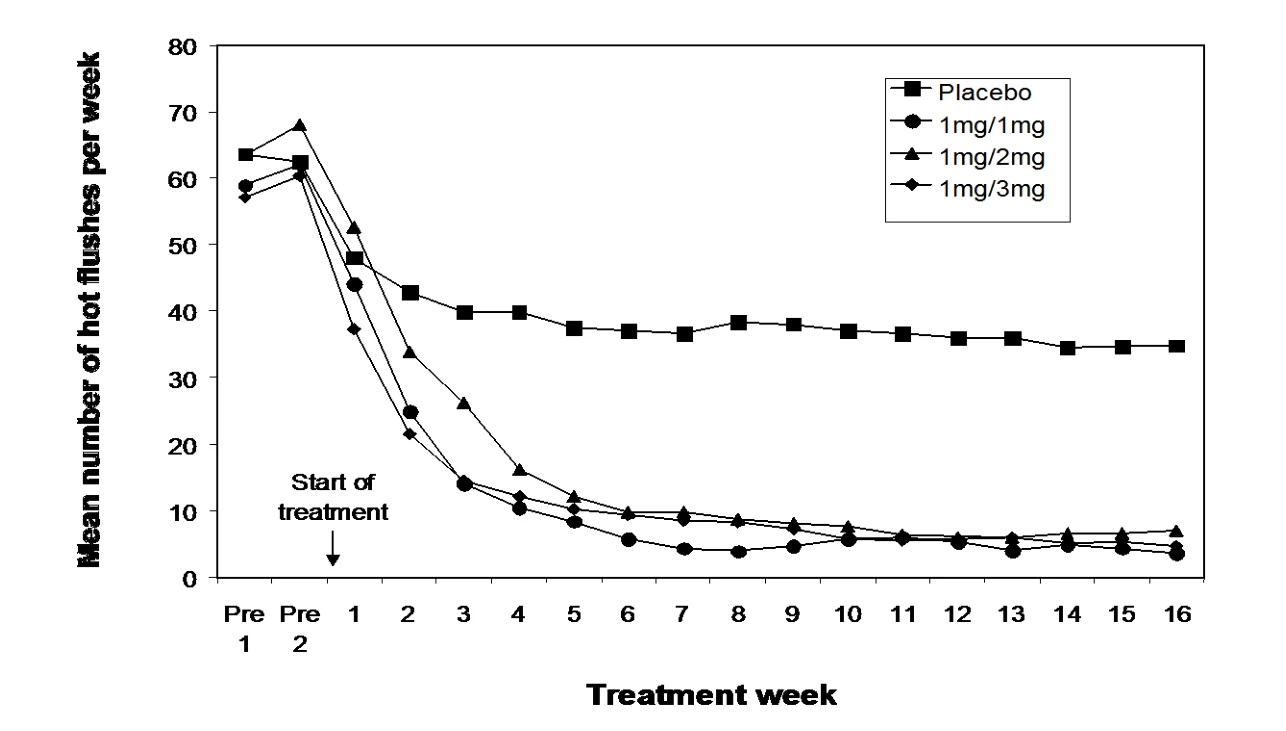 |
| Abbreviations: mg = milligram |
| Figure 2: Mean Number of Hot Flushes per Patient per Week (Study 96082) |
In Study 97182, the severity and intensity of hot flushes was also monitored as a secondary efficacy variable. The combinations of 1 mg E2 with 2 and 3 mg DRSP were compared to the combination of 0.625 mg CEE with 5 mg MPA in an open-label study design. Participating women had to be postmenopausal, but the presence of climacteric symptoms was not an inclusion criterion. The proportion of women with hot flushes dropped from around 70% at baseline to below 30% in week 4 and to below 10% in week 12, and stayed at around 5% until the end of the two-year treatment. No relevant differences between all three treatments were observed indicating similar efficacy of 1 mg E2 and 0.625 mg CEE.
In Study 96097, the mean weekly number of moderate to severe hot flushes showed differences between treatment groups at baseline (range 14.6 to 31.8). Within each group, a statistically significant decrease in the frequency of moderate and severe hot flushes from baseline was observed at all time points beginning at week 2. The absolute number of moderate to severe hot flushes dropped to below five per week after four treatment weeks and to below three per week after eight weeks in all treatment groups. Differences between the E2/DRSP combinations and E2 alone were not statistically significant.
Overall, ANGELIQ rapidly and effectively reduced the intensity and severity of hot flushes with a maximal effect reached after only a few weeks and lasting for at least two years. Since the DRSP dose did not play a role in any of the studies it can be assumed that efficacy on hot flushes is entirely due to E2.
Effects on Other Menopausal Symptoms and Urogenital Symptoms
The E2/DRSP combinations also reduced the frequency and intensity of other menopausal symptoms and urogenital symptoms as shown by descriptive data from Studies 96082, 97182, and 96097. In the four-month symptom Study 96082, sweating episodes and sleep problems were affected the most by the E2/DRSP combinations with a reduction in the incidence of approximately 60% to 70% compared to 30% by placebo. The extent of reduction in the incidence of depression, nervousness, vaginal dryness, and nocturia was also greater in the active treatment arms than in the placebo arm. For urogenital symptoms, the data were less conclusive. The E2/DRSP combinations were more effective in the treatment of vaginal dryness and nocturia than placebo, whereas, for pollakiuria, no clear difference between placebo and the E2/DRSP combinations was detectable. A difference between the combinations with 1, 2, and 3 mg DRSP was not apparent for any symptom. In the two-year comparative Study 97182 with the combinations of 2 and 3 mg DRSP and a tablet containing 0.625 mg conjugated estrogens and 5 mg medroxyprogesterone acetate (MPA), the descriptive data suggested that all three preparations were effective in the treatment of sweating periods, sleep problems, depressed moods, and nervousness. The incidences of the urogenital symptoms (vaginal dryness, increased frequency of urination, and nocturia) were also decreased, although to a lesser extent than the central nervous symptoms. In Study 96097, urogenital symptoms were assessed during treatment with 1 mg E2 alone and with combinations of 1 mg E2 with 0.5, 1, 2, and 3 mg DRSP. The data showed a trend towards improvement of vaginal dryness, pain during intercourse, frequent urination, and night time urination in all treatment groups, except for the group receiving 1 mg E2 with 1 mg DRSP.
Effects on Endometrium
In a one-year clinical trial of 1,142 postmenopausal subjects treated with E2 alone or E2 + 0.5, 1, 2, or 3 mg DRSP, endometrial biopsies were performed on 966 (84.6%) subjects during the treatment period. Eight subjects in the E2 monotherapy group developed endometrial hyperplasia and one subject in the 1 mg E2 + 2 mg DRSP group developed simple hyperplasia with no cytological atypia. Table 4 shows that there were no diagnoses of endometrial hyperplasia in the ANGELIQ group.
| Table 4: Incidence of Endometrial Hyperplasia in a 1-Year Clinical Trial | ||||||||||||||
|---|---|---|---|---|---|---|---|---|---|---|---|---|---|---|
| E2 1 mg | ANGELIQ (DRSP 1 mg and E2 1 mg) | |||||||||||||
| Total No. of Subjects | 226 | 231 | ||||||||||||
| Total No. of Biopsies | 197 | (87.2%) | 191 | (82.7%) | ||||||||||
| No endometrial tissue / Tissue insufficient for diagnosis | 13 | (6.6%) | 19 | (10.0%) | ||||||||||
| Normal endometrium | 141 | (71.6%) | 169 | (88.4%) | ||||||||||
| Endometritis/ Other inflammatory/reactive states | 0 | (%) | 0 | (%) | ||||||||||
| Proliferative pattern, disordered type | 35 | (17.8%) | 3 | (1.6%) | ||||||||||
| Simple hyperplasia with no atypia | 4 | (2.0%) | 0 | (%) | ||||||||||
| Complex hyperplasia with no atypia | 3 | (1.5%) | 0 | (%) | ||||||||||
| Complex hyperplasia with cytological atypia | 1 | (0.5%) | 0 | (%) | ||||||||||
Endometrial atrophy/inactive endometrium was achieved in 72% to 77% of women after 12 months of treatment with combination DRSP/E2. DRSP/E2 opposes the development of estrogen-induced endometrial hyperplasia effectively.
Effects on Bleeding Patterns
| 0.0 10.0 20.0 30.0 40.0 50.0 60.0 70.0 80.0 90.0 P ercent 1 2 3 4 5 6 7 8 9 10 11 12 Cycle E2 1 mg E2 + DRSP 1 mg |
| Abbreviations: DRSP = drospirenone; E2 = ethinyl estradiol; mg = milligram |
| Figure 3: Cumulative proportion of subjects at each cycle with no bleeding through the end of cycle 12 |
During the first few months of treatment, bleeding and spotting are quite common but decrease over time. In a cumulative analysis performed over 12 months in a double-blind trial of 1 142 postmenopausal women, the proportions of women with amenorrhea increased from 50% in the first treatment cycle to over 60% in cycle 6 and at one year 87.4% of subjects on E2 + DRSP 1 mg reported no bleeding.
Effects on Lipids
In a subgroup of subjects from the double-blind study of 1 142 postmenopausal women, lipid profile testing for subjects from selected study centers was performed at a special lipid laboratory. The results are shown in Table 5.
| Table 5: Mean Change in Lipid Profile from Baseline (Absolute Change - Endpoint) | |||||
| Parameter (mg/dL) | E2 1 mg | E2 1 mg & DRSP 1 mg | |||
| N=22a | N=25 | ||||
| Total Cholesterol | -1.4 | -17.2 | |||
| Triglycerides | 6.1 | -5.9 | |||
| HDL Cholesterol | 8.0 | 3.0 | |||
| LDL Cholesterol | -7.8 | -15.6 | |||
Abbreviations: DRSP = drospirenone; E2 = estradiol; HDL = high density lipoprotein; LDL = low density lipoprotein a One subject was excluded from the calculation since not all of her 4 parameters were available at screening visit and at endpoint. | |||||
Effects on Serum Potassium
In a double-blind controlled study of 1 142 postmenopausal women evaluated for endometrial safety with E2 1 mg or the combination DRSP/E2, there was no statistically significant difference between groups and no dose-related increases in the incidence of hyperkalemia (serum potassium > 5.5mEq/L) in subjects receiving doses up to 3 mg of DRSP. These observations do not appear to have any clinical significance. In this study, 876 subjects completed an average of 304 days on therapy. In a subset of 569 patients who were concomitantly using NSAIDs or ACEIs, only 9 had a serum potassium of >5.5mEq/L without any associated adverse event.
In a review of 1 253 patients treated with DRSP, 220 had a creatinine clearance >50 mL/min but <80 mL/min, and 12 patients had a creatinine clearance >30 but <50 mL/min. Within this cohort, no serum potassium exceeded 5.5 mEq/L.
DETAILED PHARMACOLOGY
Animal Pharmacology
Drospirenone exhibits potent progestational activity in a variety of animal models. In ovariectomized pregnant rats treated with drospirenone 3 mg/day SC in combination with ethinyl estradiol 0.1 μg/day SC, maintenance of pregnancy was comparable to intact control animals. Drospirenone effectively inhibited ovulation in mice and rats with half-maximal effects observed at subcutaneous doses of approximately 0.1 and 1 mg/day, respectively, and an oral dose of 1 mg/day (rats). Following subcutaneous administration of drospirenone, a marked transformation of the endometrium was detected in castrated, infantile female rabbits, with a threshold dose of 100 to 300 μg/day. In vitro, drospirenone bound with high affinity to the progesterone receptor, and the binding affinity was not affected by the presence of ethinyl estradiol.
In addition to its progestational activity, drospirenone also has antiandrogenic activity. Oral or subcutaneous administration of drospirenone (0.3 to 10 mg/day for 7 days) dose dependently inhibited testosterone-induced growth of the seminal vesicle and prostate in castrated, testosterone-substituted rats. This activity does not appear to be centrally mediated in rats because decreases in the relative weights of male accessory sex organs occur in the absence of significant changes in testes weights or serum luteinizing hormone levels. Oral or subcutaneous administration of drospirenone (10 mg/day) to pregnant rats during the final trimester of pregnancy resulted in the feminization of male fetuses, characterized by a significant shortening of the anogenital distance and the length of the urethra.
Significant antimineralocorticoid activity, characterized by increased sodium excretion and an increase of the urinary Na+/K+ ratio, was observed following single oral or subcutaneous administration of drospirenone to adrenalectomized, aldosterone-substituted rats. Drospirenone was five to ten times more potent than spironolactone, and its aldosterone antagonist activity was not affected by concomitant administration of ethinyl estradiol. When administered for 21 days to ovariectomized female rats, drospirenone (10 mg/day) stimulated the Na+/K+ excretion ratio over the entire treatment period, while spironolactone (10 mg/day) became ineffective after the initial treatment phase due to counter-regulation. Drospirenone also exhibited significant antimineralocorticoid activity in vitro, inhibiting aldosterone-stimulated electrogenic sodium transport 10 times more effectively than either spironolactone or progesterone. In vitro, drospirenone binds with high affinity to the mineralocorticoid receptor.
Drospirenone has no androgenic activity. This was demonstrated in vitro by the lack of stimulation of androgen receptor-driven gene transcription. In vivo in castrated male rats, drospirenone (10 mg/day) did not stimulate the growth of accessory sex organs above castration level. The same dose had no virilizing effect on the process of sexual differentiation of female rat fetuses.
Drospirenone is devoid of estrogenic, gluco- and antiglucocorticoid activity, as concluded from the absence of an influence on vaginal epithelial cornification in rats, adrenal weight changes in rats, and thymus regression in adrenalectomized, glucocorticoid-substituted rats, respectively.
Drospirenone did not affect smooth muscle organs (ileum, trachea, uterus) in vivo (rabbit) or in vitro (guinea pigs). In female mice, drospirenone did not affect central nervous system function at single oral doses up to 100 mg/kg.
Pharmacokinetics
The pharmacokinetic characterization of the drug demonstrated that drospirenone is orally bioavailable in the laboratory animals which were used for toxicology studies. The qualitative similarity in the profile of drug metabolites in the plasma of the test animals and human plasma further supports the adequacy of the test-species which were chosen. However, due to the much faster elimination of the drug, especially in rodents, it was necessary to administer high oral doses in order to achieve a systemic exposure to the parent drug comparable to or even exceeding human systemic exposure on the basis of plasma AUCs. Still, toxicokinetic investigations have shown that the high dose levels (≥10 mg/kg/day) which were used throughout the toxicology program and which represented a very high multiple of the oral human dose (≥170-fold) also resulted in a substantial multiple of systemic exposure to the parent drug (ca 3-fold in mice, ca 10-fold in rats to >20-fold in monkeys) relative to human exposure. The use of even higher doses would not have been appropriate because, for compounds like the contraceptive steroids, the toxic effects seen at highly exaggerated doses usually do not contribute useful information with regard to risk assessment for humans.
TOXICOLOGY
Acute Toxicity
Table 6 below summarizes the median lethal doses (LD50) determined in acute toxicity studies with drospirenone.
| Table 6: LD50 Values for Drospirenone | ||||||
| Species | Doses Tested (mg/kg/day) | Route of Administration | LD50 (mg/kg) | |||
| Mouse | 0, 250, 500, 1250, 2500 | intragastric | 500 - 2500 | |||
| 0, 250, 500, 1250, 2500 | intraperitoneal | 250 - 500 | ||||
| Rat | 0, 250, 500, 1250, 2000 | intragastric | 500 - 1250 | |||
| 0, 100, 250, 500, 1250, 2000 | intraperitoneal | 100 - 250 | ||||
| Dog | 0, 250 | oral (capsules) | > 250 | |||
| 0, 0.165 | intravenous | > 0.165 | ||||
The principle clinical signs observed in mice and rats were similar in all studies and included apathy, gait, and posture disturbances, and at higher doses, twitching, spasms, and/or unconsciousness. Deaths generally occurred within 3 to 4 days of dosing.
Single high doses of drospirenone to female Beagle dogs were generally well tolerated, with compound related effects limited to vomiting, transient changes in food/water consumption, and slight changes in serum biochemistry and coagulation parameters. No deaths occurred.
Long-term Toxicity
The long-term toxicity of drospirenone, alone and in combination with ethinyl estradiol and estradiol, was investigated after daily intragastric administration.
Compound related findings were generally limited to pharmacologic and exaggerated pharmacologic effects expected following administration of an exogenous progestogen or estrogen/progestogen combination. No organ toxicity was observed.
Changes observed following administration of drospirenone alone included:
- alterations in lipid, carbohydrate and protein metabolism (rats: ≥1 mg/kg/day)
- increased body weight gain and food consumption (rats: ≥3 mg/kg/day)
- decreased liver weights accompanied by decreased hepatic glycogen content (monkeys: ≥2 mg/kg/day)
- increased liver weights accompanied by increased hepatic DNA and protein content (rats: ≥50 mg/kg/day)
- changes in electrolyte excretion (rats: ≥10 mg/kg/day; monkeys: 10 mg/kg/day)
- decreased ovarian weights (mice: 30 mg/kg/day)
- decreased (mice: 30 mg/kg/day) or slightly increased (monkeys: 10 mg/kg/day) adrenal gland weights
- microscopic changes in endocrine target organs (mice: ≥3 mg/kg/day; rats: ≥3 mg/kg/day; monkeys: ≥0.2 mg/kg/day)
A spectrum of compound-related estrogenic, progestogenic and antimineralocorticoid effects was observed following administration of the combination to female mice, rats, and monkeys. In addition, the antagonism of some estrogenic effects (decreased body weight and food consumption (rats); hematologic changes (rats, monkeys); and increased uterine weights (mice)) and antagonism of some progestogenic effects (increased body weight and food consumption (rats)) were observed.
Synergism of other effects was observed in mice and rats and included atrophy of ovarian interstitial glands, decreased luteal mass and sexual cycles in mice, and decreased ovarian weights and increased hepatic N-demethylase activity in rats. In comparison with administration of either substance alone, administration of the combination to rats and cynomolgus monkeys eliminated some single substance effects (alterations in hepatic cytochrome P450 content). Overt toxicity was limited to one possible compound-related death in cynomolgus monkeys administered the combination at a dose of 3 mg/kg drospirenone +0.03 mg/kg ethinyl estradiol for 11 weeks.
Toxicokinetic monitoring showed that on the basis of AUC(0-24h) values, the highest doses used in mice (30 mg/kg/day), rats (15 mg/kg/day) and monkeys (10 mg/kg/day) which did not produce overt signs of toxicity led to roughly 10.6 times (mice), >12 times (rats) and ca 22 times (monkeys) higher systemic exposure as compared to human exposure at the therapeutic dose.
Carcinogenicity
The carcinogenic potential of drospirenone, alone and in combination with ethinyl estradiol, was investigated in female mice and rats after daily intragastric administration.
No carcinogenicity was observed after 2 years of treatment with drospirenone as a single compound in mice or rats. Mortality was increased in rats at the highest dose of drospirenone. The increased food intake of the rats with a resultant increase in body weight was considered as the reason for the reduction in their life span. In the mouse study, there were no effects on the survival of the animals observed after treatment with drospirenone.
Tumorigenic effects of the drug combination in mice were manifested by an increased incidence of pituitary adenomas at all doses, overall mammary tumors at the mid and low doses, and uterine adenocarcinomas at the mid and high doses in comparison with controls. The same qualitative tumor pattern (however, quantitatively more pronounced, especially in the pituitary) was seen in groups treated with ethinyl estradiol alone. As drospirenone alone elicited no tumorigenic response, the tumorigenic potential of the combination was attributed to ethinyl estradiol.
Treatment of rats with the drug combination resulted in an increased incidence of hepatic adenomas at the high dose and of total liver tumors from the mid dose onwards. A similar effect on liver tumor induction was seen in groups receiving ethinyl estradiol alone. Therefore, this effect in the livers could be attributed to the activity of ethinyl estradiol.
Compared to the control group, a tendency towards an increased rate of endometrial adenoma with a concomitant decrease in the rate of adenocarcinoma was seen in the uteri from the animals of the low-dose combination group. In the mid and high-dose combination groups, no endometrial adenomas or adenocarcinomas were noted, ie, there was a reduction in the rate of uterine tumors below the control level. A clear-cut increase in these uterine tumor incidences was induced by ethinyl estradiol when given alone from the mid dose onwards. Thus, the presence of drospirenone in the drug combination apparently led to a suppression of the deleterious estrogenic effect on the uterus. Treatment with ethinyl estradiol at the high dose led to an increased incidence of adenocarcinoma in the mammary glands. This effect was also completely counteracted by drospirenone in the drug combination group.
Evaluation of concomitant drug plasma concentrations revealed that exposure to drospirenone on the basis of AUC(0-24h) values amounted to roughly 0.1-, 0.5-, and 3-fold multiples of human exposure after the low, mid, and high doses, respectively. The corresponding exposure multiples for drospirenone in the rat were approximately 0.5, 3.5, and 10 to 12 times human steady-state exposure.
Mutagenicity
No mutagenic effect of drospirenone was demonstrated in vitro in bacterial (Salmonella typhimurium, Escherichia coli) or mammalian (human lymphocyte, Chinese hamster) cells in the presence or absence of extrinsic metabolic activation. Drospirenone did not increase the occurrence of micronucleated red blood cells in vivo following single intragastric administration of 1 000 mg/kg to mice.
Drospirenone increased unscheduled DNA synthesis in primary hepatocytes of female rats in vitro in a dose-dependent manner at a concentration of 10 to 60 µg/mL. Intragastric administration of drospirenone 10 mg/kg/day to rats for 14 consecutive days generated 2 forms of DNA adducts in male and female rat livers. Low levels of three compound-related DNA adducts were also observed in the livers of female mice given drospirenone 10 mg/kg/day, alone or in combination with 0.1 mg/kg/day ethinyl estradiol in the carcinogenicity study. In contrast to these findings observed in rodent livers, results from an in vitro study conducted with drospirenone 5 µg/mL in human liver slices did not indicate a DNA adduct-forming potential of drospirenone in human tissue. Given the lack of any drospirenone-related liver tumor formation in mice and rats, the biological relevance of this interaction with DNA in the rodent liver with regard to risk assessment in humans is questionable.
Reproduction and Teratology
The reproductive toxicity of drospirenone, alone and in combination with ethinyl estradiol, was investigated in rats, rabbits, and monkeys following intragastric administration.
As expected from the pharmacological activity of an estrogen/progestogen combination, estrous cycle disturbances and a transient impairment of fertility were observed in rats when treated for 6 weeks prior to mating with doses of 5 mg/kg/day drospirenone + 0.05 mg/kg/day ethinyl estradiol and higher. Pre- and postimplantation losses were significantly increased when 10 mg/kg/day drospirenone + 0.1 mg/kg/day ethinyl estradiol were administered during the preimplantation phase of gestation in rats.
No teratogenicity was observed following intragastric administration of drospirenone, alone or in combination with ethinyl estradiol, to female rats, rabbits and/or monkeys prior to mating or during gestation. Compound related maternal toxicity, characterized by decreased body weight gain (rats) and occasional vomiting (monkeys), was observed. The incidence of abortions was increased following administration of high doses of drospirenone (100 mg/kg/day) to pregnant rabbits, and a dose-dependent increase in abortions occurred following the administration of all doses to monkeys. Embryotoxicity and slight retardations of fetal development (eg, delayed ossification of feet bones, sternebrae, vertebrae; incomplete ossification of skull; slight increase in visceral abnormalities) were observed in the rat and rabbit at drospirenone doses of 15 mg/kg/day and 100 mg/kg/day, respectively.
Virilization of female fetuses (attributed to ethinyl estradiol) and feminization of male fetuses (attributed to drospirenone) were observed following administration of the drug combination to pregnant rats on days 14 through 21 of pregnancy, beginning at doses of 5+0.05 mg/kg and 15+0.15 mg/kg, respectively. If exposure estimates from nonpregnant rats are extrapolated to pregnant animals, the administration of 15 mg/kg/day drospirenone would result in plasma exposure levels which are at least 10 times higher than the steady-state human exposure after intake of ANGELIQ.
Prolonged or incomplete parturition or inability to deliver was observed when the drug combination was administered to rats from day 15 of gestation through day 3 postpartum. In the rat peri-/postnatal study, treatment from days 15 to 18 of gestation and days 1 to 22 postpartum caused a dose-dependent delay in postnatal development (body weight, physical and functional parameters) and a dose-dependent increased mortality of the F1 offspring. These observations were attributed to the negative effects of drospirenone and/or ethinyl estradiol on lactogenesis and milk secretion.
A reduced reproductive performance of the F1 animals was observed at the dose of 45 mg/kg/day drospirenone + 0.45 mg/kg/day ethinyl estradiol. This was attributed to an impairment of sex organ development in the male offspring due to the antiandrogenic activity of drospirenone.
REFERENCES
- 1. Anderson GL, Limacher M, Assaf AR, Bassford T, Beresford SA, Black H, et al. Effects of conjugated equine estrogen in postmenopausal women with hysterectomy: the Women's Health Initiative randomized controlled trial. Jama. 2004 Apr 14;291(14):1701-12.
- 2. Chlebowski RT, Hendrix SL, Langer RD, Stefanick ML, Gass M, Lane D, et al. Influence of estrogen plus progestin on breast cancer and mammography in healthy postmenopausal women: the Women's Health Initiative Randomized Trial. Jama. 2003 Jun 25;289(24):3243-53.
- 3. Rossouw JE, Anderson GL, Prentice RL, LaCroix AZ, Kooperberg C, Stefanick ML, et al. Risks and benefits of estrogen plus progestin in healthy postmenopausal women: principal results From the Women's Health Initiative randomized controlled trial. Jama. 2002 Jul 17;288(3):321-33.
- 4. Grady D, Herrington D, Bittner V, Blumenthal R, Davidson M, Hlatky M, et al. Cardiovascular disease outcomes during 6.8 years of hormone therapy: Heart and Estrogen/progestin Replacement Study follow-up (HERS II). Jama. 2002 Jul 3;288(1):49-57.
- 5. Hulley S, Grady D, Bush T, Furberg C, Herrington D, Riggs B, et al. Randomized trial of estrogen plus progestin for secondary prevention of coronary heart disease in postmenopausal women. Heart and Estrogen/progestin Replacement Study (HERS) Research Group. Jama. 1998 Aug 19;280(7):605-13.
- 6. Shumaker SA, Legault C, Kuller L, Rapp SR, Thal L, Lane DS, et al. Conjugated equine estrogens and incidence of probable dementia and mild cognitive impairment in postmenopausal women: Women's Health Initiative Memory Study. Jama. 2004 Jun 23;291(24):2947-58.
- 7. Shumaker SA, Legault C, Rapp SR, Thal L, Wallace RB, Ockene JK, et al. Estrogen plus progestin and the incidence of dementia and mild cognitive impairment in postmenopausal women: the Women's Health Initiative Memory Study: a randomized controlled trial. Jama. 2003 May 28;289(20):2651-62.
- 8. Archer DF, Thorneycroft IH, Foegh M, Hanes V, Glant MD, Bitterman P, et al. Long-term safety of drospirenone-estradiol for hormone therapy: a randomized, double-blind, multicenter trial. Menopause. 2005 Nov-Dec;12(6):716-27.
- 9. Binkley KE, Davis A, 3rd. Clinical, biochemical, and genetic characterization of a novel estrogen-dependent inherited form of angioedema. J Allergy Clin Immunol. 2000 Sep;106(3):546-50.
- 10. Bork K, Fischer B, Dewald G. Recurrent episodes of skin angioedema and severe attacks of abdominal pain induced by oral contraceptives or hormone replacement therapy. Am J Med. 2003 Mar;114(4):294-8.
- 11. Fuhrmann U, Krattenmacher R, Slater EP, Fritzemeier KH. The novel progestin drospirenone and its natural counterpart progesterone: biochemical profile and antiandrogenic potential. Contraception. 1996 Oct;54(4):243-51.
- 12. Losert W, Casals-Stenzel J, Buse M. Progestogens with antimineralocorticoid activity. Arzneimittelforschung. 1985;35(2):459-71.
- 13. Muhn P, Fuhrmann U, Fritzemeier KH, Krattenmacher R, Schillinger E. Drospirenone: a novel progestogen with antimineralocorticoid and antiandrogenic activity. Ann N Y Acad Sci. 1995 Jun 12;761:311-35.
- 14. Nzeako UC, Frigas E, Tremaine WJ. Hereditary angioedema: a broad review for clinicians. Arch Intern Med. 2001 Nov 12;161(20):2417-29.
- 15. Oelkers W, Berger V, Bolik A, Bahr V, Hazard B, Beier S, et al. Dihydrospirorenone, a new progestogen with antimineralocorticoid activity: effects on ovulation, electrolyte excretion, and the renin-aldosterone system in normal women. J Clin Endocrinol Metab. 1991 Oct;73(4):837-42.
- 16. Paterson ME, Wade-Evans T, Sturdee DW, Thom MH, Studd JW. Endometrial disease after treatment with oestrogens and progestogens in the climacteric. Br Med J. 1980 Mar 22;280(6217):822-4.
- 17. Pollow K, Juchem M, Elger W, Jacobi N, Hoffmann G, Mobus V. Dihydrospirorenone (ZK30595): a novel synthetic progestagen--characterization of binding to different receptor proteins. Contraception. 1992 Dec;46(6):561-74.
- 18. Schurmann R, Holler T, Benda N. Estradiol and drospirenone for climacteric symptoms in postmenopausal women: a double-blind, randomized, placebo-controlled study of the safety and efficacy of three dose regimens. Climacteric. 2004 Jun;7(2):189-96.
- 19. Warming L, Ravn P, Nielsen T, Christiansen C. Safety and efficacy of drospirenone used in a continuous combination with 17beta-estradiol for prevention of postmenopausal osteoporosis. Climacteric. 2004 Mar;7(1):103-11.
- 20. Whitehead MI, King RJ, McQueen J, Campbell S. Endometrial histology and biochemistry in climacteric women during oestrogen and oestrogen/progestogen therapy. J R Soc Med. 1979 May;72(5):322-7.
- 21. Report No. AU18: An open-label, randomized, multicenter study to investigate safety and efficacy of 2 continuously combined estradiol/drospirenone preparations compared to Premique/Premelle when used for hormone replacement therapy over 2 years in postmenopausal women. Data on file.