


Product Monograph - Climara Pro
SUMMARY PRODUCT INFORMATION
| Route of Administration | Dosage Form / Strength | Clinically Relevant Nonmedicinal Ingredients |
| Topical | transdermal system / 45 µg/day estradiol-17β and 15 µg/day levonorgestrel | acrylate copolymer adhesive and polyvinylpyrrolidone/vinyl acetate copolymer For a complete listing see DOSAGE FORMS, COMPOSITION AND PACKAGING section. |
INDICATIONS AND CLINICAL USE
CLIMARA PRO (estradiol/levonorgestrel transdermal system) is indicated for the relief of menopausal and postmenopausal symptoms occurring in naturally or surgically induced estrogen deficiency states.
CLIMARA PRO is recommended for use only in patients with an intact uterus since the regimen includes a progestin whose role is to prevent endometrial hyperplasia.
CONTRAINDICATIONS
Estrogen/progestin combinations are contraindicated in patients with any of the following conditions:
- Liver dysfunction or disease as long as liver function tests have failed to return to normal
- Known or suspected estrogen-dependent or progestin-dependent neoplasia (eg, endometrial cancer)
- Endometrial hyperplasia.
- Known, suspected, or past history of breast cancer.
- Undiagnosed abnormal genital bleeding
- Known or suspected pregnancy
- Lactation
- Active or past history of arterial thromboembolic disease (e.g., stroke, myocardial infarction, coronary heart disease)
- Classical migraine
- Active or past history of confirmed venous thromboembolism (such as deep venous thrombosis or pulmonary embolism) or active thrombophlebitis
- A high risk of venous or arterial thrombosis, including known thrombophilic disorders (see WARNINGS AND PRECAUTIONS)
- Partial or complete loss of vision due to ophthalmic vascular disease
- Hypersensitivity to this drug or to any ingredient in the formulation or component of the container. For a complete listing, see the DOSAGE FORMS, COMPOSITION AND PACKAGING section of the product monograph.
WARNINGS AND PRECAUTIONS
Serious Warnings and Precautions The Women’s Health Initiative (WHI) trial examined the health benefits and risks of oral combined estrogen plus progestin therapy (n=16,608) and oral estrogen-alone therapy (n=10,739) in postmenopausal women aged 50 to 79 years (1-3). The estrogen plus progestin arm of the WHI trial (mean age 63.3 years) an increased risk of myocardial infarction (MI), stroke, invasive breast cancer, pulmonary emboli and deep vein thrombosis in postmenopausal women receiving treatment with combined conjugated equine estrogens (CEE, 0.625 mg/day) and medroxyprogesterone (MPA, 2.5 mg/day) acetate for 5.2 years compared to those receiving placebo (1). The estrogen-alone arm of the WHI trial (mean age 63.6 years) indicated an increased risk of stroke and deep vein thrombosis in hysterectomized women treated with CEE-alone (0.625 mg/day) for 6.8 years compared to those receiving placebo (2). Therefore, the following should be given serious consideration at the time of prescribing:
|
Carcinogenesis and Mutagenesis
Breast Cancer
Available epidemiological data indicate that the use of combined estrogen plus progestin by postmenopausal women is associated with an increased risk of invasive breast cancer.
In the estrogen plus progestin arm of the WHI trial, among 10,000 women over a one-year period, there were:
- 8 more cases of invasive breast cancer (38 on combined HRT versus 30 on placebo) (1).
The WHI study also reported that the invasive breast cancers diagnosed in the estrogen plus progestin group were similar in histology but were larger (mean [SD], 1.7 cm [1.1] vs 1.5 cm [0.9], respectively; P=0.04) and were at a more advanced stage compared with those diagnosed in the placebo group. The percentage of women with abnormal mammograms (recommendations for short-interval follow-up, a suspicious abnormality, or highly suggestive of malignancy) was significantly higher in the estrogen plus progestin group versus the placebo group. This difference appeared at year one and persisted in each year thereafter (3).
In the estrogen-alone arm of the WHI trial, there was no statistically significant difference in the rate of invasive breast cancer in hysterectomized women treated with conjugated equine estrogens versus women treated with placebo (2).
It is recommended that estrogens with or without progestins not be given to women with existing breast cancer or those with a previous history of the disease (see CONTRAINDICATIONS).
There is a need for caution in prescribing estrogens with or without progestins for women with known risk factors associated with the development of breast cancer, such as strong family history of breast cancer (first degree relative) or who present a breast condition with an increased risk (abnormal mammograms and/or atypical hyperplasia at breast biopsy).
Other known risk factors for the development of breast cancer such as nulliparity, obesity, early menarche, late age at first full term pregnancy and at menopause should also be evaluated.
It is recommended that women undergo mammography prior to the start of HRT treatment and at regular intervals during treatment, as deemed appropriate by the treating physician and according to the perceived risks for each patient.
The overall benefits and possible risks of hormone replacement therapy should be fully considered and discussed with patients. It is important that the modest increased risk of being diagnosed with breast cancer after 4 years of treatment with HRT (as reported in the results of the WHI trial) be discussed with the patient and weighed against its known benefits.
Instructions for regular self-examination of the breasts should be included in this counselling.
Ovarian Cancer
Some recent epidemiological studies have found that the use of hormone replacement therapy (estrogen-alone and estrogen plus progestin therapies), in particular for five or more years, has been associated with an increased risk of ovarian cancer.
Endometrial hyperplasia and endometrial carcinoma
Estrogens, unopposed by progestins, increase the risk of endometrial hyperplasia/carcinoma in postmenopausal women with intact uteri. Adding a progestin to estrogen therapy has been shown to reduce the risk of endometrial hyperplasia, which may be a precursor to endometrial cancer. CLIMARA PRO (estradiol/ levonorgestrel transdermal system) provides plasma levonorgestrel levels within the therapeutic range necessary to counteract the effects of estradiol on the endometrium.
Clinical surveillance of all women taking estrogen/progestin combinations is important. Adequate diagnostic measures, including endometrial sampling when indicated, should be undertaken to rule out malignancy in all cases of undiagnosed persistent or recurrent abnormal vaginal bleeding.
Pituitary Tumours
Close medical supervision (including periodic measurement of prolactin levels) is necessary if the patient suffers from hyperprolactinemia, prolactinoma, or is at risk of developing prolactinoma.
Cardiovascular
The results of the Heart and Estrogen/progestin Replacement Studies (HERS and HERS II) and the Women’s Health Initiative (WHI) trial indicate that the use of estrogen plus progestin is associated with an increased risk of coronary heart disease (CHD) in postmenopausal women (1, 4, 5). The results of the WHI trial indicate that the use of estrogen-alone and estrogen plus progestin is associated with an increased risk of stroke in postmenopausal women (1, 2).
WHI trial findings
In the combined estrogen plus progestin arm of the WHI trial, among 10,000 women over a one-year period, there were:
- 8 more cases of stroke (29 on combined HRT versus 21 on placebo)
- 7 more cases of CHD ( 37 on combined HRT versus 30 on placebo) (1).
In the estrogen-alone arm of the WHI trial of women with prior hysterectomy, among 10,000 women over a one-year period, there were/was:
- 12 more cases of stroke (44 on estrogen-alone therapy versus 32 on placebo)
- no statistically significant difference in the rate of CHD (2).
HERS and HERS II findings
In the Heart and Estrogen/progestin Replacement Study (HERS) of postmenopausal women with documented heart disease (n=2763, average age 66.7 years), a randomized placebo-controlled clinical trial of secondary prevention of coronary heart disease (CHD), treatment with 0.625 mg/day oral conjugated equine estrogen (CEE) plus 2.5 mg oral medroxyprogesterone acetate (MPA) demonstrated no cardiovascular benefit. Specifically, during an average follow-up of 4.1 years, treatment with CEE plus MPA did not reduce the overall rate of CHD events in postmenopausal women with established coronary heart disease. There were more CHD events in the hormone-treated group than in the placebo group in year 1, but not during the subsequent years (5).
From the original HERS trial, 2321 women consented to participate in an open label extension of HERS known as HERS II. Average follow-up in HERS II was an additional 2.7 years, for a total of 6.8 years overall. After 6.8 years, hormone therapy did not reduce the risk of cardiovascular events in women with CHD (4).
Blood Pressure
Women using HRT sometimes experience increased blood pressure. Blood pressure should be monitored with HRT use. Elevation of blood pressure in previously normotensive or hypertensive patients should be investigated and HRT may have to be discontinued.
Ear/Nose/Throat
Estrogens should be used with caution in patients with otosclerosis.
Endocrine and Metabolism
Glucose and lipid metabolism
A worsening of glucose tolerance and lipid metabolism have been observed in a significant percentage of peri- and postmenopausal patients. Therefore, diabetic patients or those with a predisposition to diabetes should be observed closely to detect any alterations in carbohydrate or lipid metabolism, especially in triglyceride blood levels.
Women with familial hypertriglyceridemia need special surveillance. Lipid- lowering measures are recommended additionally, before treatment is started.
Heme Metabolism
Women with porphyria need special surveillance.
Calcium and phosphorus metabolism
Because the prolonged use of estrogens with or without progestins influences the metabolism of calcium and phosphorus, estrogens with or without progestins should be used with caution in patients with metabolic and malignant bone diseases associated with hypercalcemia and in patients with renal insufficiency.
Hypothyroidism
Patients who require thyroid hormone replacement therapy and who are also taking estrogen should have their thyroid function monitored regularly to assure that thyroid hormone levels remain in an acceptable range (see DRUG INTERACTIONS - Drug-Laboratory Test Interactions).
Vaginal Bleeding
Abnormal vaginal bleeding, due to its prolongation, irregularity or heaviness, occurring during therapy should prompt diagnostic measures to rule out the possibility of uterine malignancy, and the treatment should be re-evaluated.
Uterine leiomyomata
Pre-existing uterine leiomyomata may increase in size during estrogen use. Growth, pain or tenderness of uterine leiomyomata requires discontinuation of medication and appropriate investigation.
Endometriosis
Symptoms and physical findings associated with a previous diagnosis of endometriosis may reappear or become aggravated with estrogen use.
Hematologic
Venous thromboembolism
Available epidemiological data indicate that use of estrogen with or without progestin by postmenopausal women is associated with an increased risk of developing venous thromboembolism (VTE).
In the estrogen plus progestin arm of the WHI trial, among 10,000 women on combined HRT over a one-year period, there were 18 more cases of venous thromboembolism, including 8 more cases of pulmonary embolism (1).
In the estrogen-alone arm of the WHI trial, among 10,000 women on estrogen therapy over a one-year period, there were 7 more cases of venous thromboembolism, although there was no statistically significant difference in the rate of pulmonary embolism (2).
Generally recognized risk factors for VTE include a personal history, a family history (the occurrence of VTE in a direct relative at a relatively early age may indicate genetic predisposition), severe obesity (body mass index > 30 kg/m2) and systemic lupus erythematosus. The risk of VTE also increases with age and smoking. The potential for an increased synergistic risk of thrombosis should be considered in women who possess a combination of risk factors or exhibit a greater severity of an individual risk factor.
The risk of VTE may be temporarily increased with prolonged immobilization, major surgery or. In women on HRT, attention should be given to prophylactic measures to prevent VTE following surgery. Also, patients with varicose veins should be closely supervised. The physician should be alert to the earliest manifestations of thrombotic disorders (thrombophlebitis, retinal thrombosis, cerebral embolism and pulmonary embolism). If these occur or are suspected, hormone therapy should be discontinued immediately, given the risks of long-term disability or fatality.
If feasible, estrogens with or without progestins should be discontinued at least 4 weeks before major surgery which may be associated with an increased risk of thromboembolism, or during periods of prolonged immobilization.
Hepatic/Biliary/Pancreatic
Gallbladder diseases
A 2- to 4-fold increase in the risk of gallbladder disease requiring surgery in women receiving postmenopausal estrogens has been reported.
Hepatic hemangioma
Particular caution is indicated in women with hepatic hemangiomas as estrogens may cause an exacerbation of this condition.
Jaundice
Caution is advised in patients with a history of liver and/or biliary disorders. If cholestatic jaundice develops during treatment, the treatment should be discontinued and appropriate investigations carried out.
Liver function tests
Liver function tests should be done periodically in subjects who are suspected of having hepatic disease. For information on endocrine and liver function tests, see the section under Monitoring and Laboratory Tests.
Immune
Angioedema
Exogenous estrogens may induce/exacerbate symptoms of angioedema, in particular in women with hereditary angioedema. Discontinuation of this medication should be considered.
Systemic lupus erythematosus
Particular caution is indicated in women with system lupus erythematosus.
Neurologic
Cerebrovascular insufficiency
Patients who develop visual disturbances, classical migraine, transient aphasia, paralysis or loss of consciousness should discontinue medication.
Patients with a previous history of classical migraine and who develop a recurrence or worsening of migraine symptoms should be re-evaluated.
Dementia
Available epidemiological data indicate that the use of combined estrogen plus progestin in women age 65 and over may increase the risk of developing probable dementia.
The Women’s Health Initiative Memory Study, a clinical substudy of the WHI, was designed to assess whether postmenopausal hormone replacement therapy (oral estrogen plus progestin or oral estrogen-alone) reduces the risk of dementia in women aged 65 and over (age range 65-79 years) and free of dementia at baseline (6, 7).
In the estrogen plus progestin arm of the WHIMS (n=4532), women with intact uteri were treated with daily 0.625 mg conjugated equine estrogens (CEE) plus 2.5 mg medroxyprogesterone acetate (MPA) or placebo for an average of 4.05 years. The results, when extrapolated to 10,000 women treated over a one-year period showed:
- 23 more cases of probable dementia (45 on combined HRT versus 22 on placebo) (6).
In the estrogen-alone arm of the WHIMS (n=2947), women with prior hysterectomy were treated with daily 0.625 mg CEE or placebo for an average of 5.21 years. The results, when extrapolated to 10,000 women treated over a one-year period showed:
- 12 more cases of probable dementia (37 on estrogen-alone versus 25 on placebo), although this difference did not reach statistical significance (7).
When data from the estrogen plus progestin arm of the WHIMS and the estrogen-alone arm of the WHIMS were combined, as per the original WHIMS protocol, in 10,000 women over a one-year period, there were:
- 18 more cases of probable dementia (41 on estrogen plus progestin or estrogen-alone versus 23 on placebo) (7).
Epilepsy
Particular caution is indicated in women with epilepsy, as estrogens with or without progesins may cause an exacerbation of this condition.
Renal
Fluid retention
Estrogens with or without progestins may cause fluid retention.
Therefore, particular caution is indicated in cardiac, renal dysfunction or asthma. If, in any of the above-mentioned conditions, a worsening of the underlying disease is diagnosed or suspected during treatment, the benefits and risks of treatment should be reassessed based on the individual case.
Skin
Contact Sensitization
Contact sensitization is known to occur with topical applications. Although it is extremely rare, patients who develop contact sensitization to any component of the patch should be warned that a severe hypersensitivity reaction may occur with continuing exposure to the causative agent.
Special Populations
Pregnant Women
CLIMARA PRO must not be used during pregnancy and lactation (see CONTRAINDICATIONS). If pregnancy occurs during medication with CLIMARA PRO, treatment must be discontinued immediately.
Monitoring and Laboratory Tests
Before CLIMARA PRO (estradiol/levonorgestrel transdermal system) is administered, the patient should have a complete physical examination, including a blood pressure determination. Breasts and pelvic organs should be appropriately examined and a Papanicolaou smear should be performed. Endometrial biopsy should be done when indicated. Baseline tests should include mammography, measurement of blood glucose, calcium, triglycerides and cholesterol, and liver function tests.
The first follow-up examination should be done within 3-6 months after initiation of treatment to assess medical response to treatment. Thereafter, examinations should be made at intervals of at least once a year. Appropriate investigations should be arranged at regular intervals as determined by the physician.
The importance of regular self-examination of the breasts should be discussed with the patient.
ADVERSE REACTIONS
Adverse Drug Reaction Overview
See WARNINGS AND PRECAUTIONS regarding potential induction of malignant neoplasms and adverse effects similar to those of oral contraceptives.
The following adverse reactions have been reported with estrogen/progestin combinations in general:
Blood and lymphatic system disorders: Altered coagulation tests (see DRUG INTERACTIONS - Drug-Laboratory Test Interactions).
Cardiac disorders: Palpitations; increase in blood pressure (see WARNINGS AND PRECAUTIONS); coronary thrombosis.
Endocrine disorders: Increased blood sugar levels; decreased glucose tolerance.
Eye disorders: Neuro-ocular lesions (e.g. retinal thrombosis, optic neuritis); visual disturbances; steepening of the corneal curvature; intolerance to contact lenses.
Gastrointestinal disorders: Nausea; vomiting; abdominal discomfort (cramps, pressure, pain, bloating).
General disorders and administration site conditions: Fatigue; changes in appetite; changes in body weight; change in libido.
Hepatobiliary disorders: Gallbladder disorder; asymptomatic impaired liver function; cholestatic jaundice.
Musculoskeletal and connective tissue disorders: Musculoskeletal pain including leg pain not related to thromboembolic disease (usually transient, lasting 3-6 weeks) may occur.
Nervous system disorders: Aggravation of migraine episodes; headaches; dizziness; neuritis.
Psychiatric disorders: Mental depression; nervousness; irritability.
Renal and urinary disorders: Cystitis; dysuria; sodium retention; edema.
Reproductive system and breast disorders: Breakthrough bleeding; spotting; change in menstrual flow; dysmenorrhea ; vaginal itching/discharge; dyspareunia; endometrial hyperplasia;
pre-menstrual-like syndrome; reactivation of endometriosis; changes in cervical erosion and amount of cervical secretion; breast swelling and tenderness.
Skin and subcutaneous tissue disorders: exogenous estrogens may induce or exacerbate symptoms of angioedema, in particular in women with hereditary angioedema; chloasma or melasma, which may persist when drug is discontinued; erythema multiforme; erythema nodosum; haemorrhagic eruption; loss of scalp hair; hirsutism and acne.
Vascular disorders: Isolated cases of: thrombophlebitis; thromboembolic disorders; exacerbations of varicose veins.
Clinical Trial Adverse Drug Reactions
Because clinical trials are conducted under very specific conditions the adverse drug reaction rates observed in the clinical trials may not reflect the rates observed in practice and should not be compared to the rates in the clinical trials of another drug. Adverse drug reaction information from clinical trials is useful for identifying drug-related adverse events and for approximating rates.
The most commonly reported adverse reaction to CLIMARA PRO (estradiol/levonorgestrel transdermal system) in clinical trials was skin irritation at the application site. In controlled clinical trials, discontinuation due to application site reaction occurred in 1.5% of subjects receiving CLIMARA PRO for up to 3 cycles (vs. 3.2% of placebo subjects) and in 8.3% of subjects receiving CLIMARA PRO for up to13 cycles.
If adverse symptoms persist, the prescription of HRT should be re-considered.
DRUG INTERACTIONS
Overview
Estrogens may diminish the effectiveness of anticoagulant, antidiabetic and antihypertensive agents.
Preparations inducing liver enzymes (e.g., barbiturates, hydantoins, carbamazepine, meprobamates, phenylbutazone or rifampicin) may interfere with the activity of orally administered estrogens. The extent of interference with transdermally administered estradiol and levonorgestrel is not known.
Drug-Drug Interactions
Effects of other drugs on CLIMARA PRO
Substances increasing the clearance of sex hormones (diminished efficacy by enzyme induction)
Estrogens are metabolized partially by cytochrome P450 enzymes (e.g. CYP 3A4). Interactions can occur with drugs that induce CYP enzymes which can result in increased clearance of sex hormones and which may lead to changes in the uterine bleeding profile and/or reduction of the therapeutic effect.
CYP enzyme inducers include phenytoin, barbiturates, primidone, carbamazepine, rifampicin, and possibly also oxcarbazepine, topiramate, felbamate, griseofulvin and products containing St. John’s wort.
Substances with variable effects on the clearance of sex hormones
When co-administered with sex hormones, many HIV protease inhibitors (e.g., nelfinavir, ritonavir, ritonavir-boosted protease inhibitors), HCV protease inhibitors (e.g., boceprevir, telaprevir) and non-nucleoside reverse transcriptase inhibitors (e.g., nevirapine) can increase or decrease plasma concentrations of the estrogen. These changes may alter the safety and effectiveness of CLIMARA PRO. Healthcare providers should refer to the label of the individual anti-HIV/HCV protease inhibitor or non-nucleoside reverse transcriptase inhibitor for further drug-drug interaction information.
Substances decreasing the clearance of sex hormones (enzyme inhibitors)
Strong and moderate CYP3A4 inhibitors such as azole antifungals (e.g. fluconazole, itraconazole, ketoconazole, voriconazole), verapamil, macrolides (e.g. clarithromycin, erythromycin), diltiazem and grapefruit juice can increase plasma concentrations of the estrogen.
Drug-Lifestyle Interactions
Acute alcohol ingestion during use of HRT may lead to elevations in circulating estradiol levels.
Drug-Herb Interactions
It was found that some herbal products (e.g., St. John’s wort) which are available as OTC products might interfere with steroid metabolism and therefore alter the efficacy and safety of estrogen/progestin products.
Physicians and other health care providers should be aware of other non-prescription products concomitantly used by the patient, including herbal and natural products obtained from the widely spread health stores.
Drug-Laboratory Test Interactions
The results of certain endocrine and liver function tests may be affected by estrogen-containing products:
- increased sulfobromophthalein retention;
- increased prothrombin time and partial thromboplastin time; increased levels of fibrinogen and fibrinogen activity; increased coagulation factors VII, VIII, IX, X; increased norepinephrine-induced platelet aggregability; decreased antithrombin III;
- increased thyroxine-binding globulin (TBG), leading to increased circulating total thyroid hormone (T4) as measured by column or radioimmunoassay; free T3 resin uptake is decreased, reflecting the elevated TBG; free T4 concentration is unaltered.
- other binding proteins may be elevated in serum, i.e., corticosteroid binding globulin (CBG), sex hormone-binding globulin (SHBG), leading to increased circulating corticosteroids and sex steroids respectively; free or biologically active hormone concentrations are unchanged;
- reduced response to the METOPIRONE test;
- impaired glucose tolerance;
- reduced serum folate concentration;
- increased serum triglycerides and phospholipid concentration.
Following four consecutive weekly applications of CLIMARA PRO, mean (± SD) SHBG concentrations (Cmin) declined from a predose value of 47.5 (25.8) to 41.2 (22.4) nmol/L at week 4. In a 1-year clinical trial conducted with 45 µg estradiol/30 µg levonorgestrel and 45 µg estradiol/40 µg levonorgestrel transdermal systems, there were no clinically significant changes in fibrinogen or thrombin-antithrombin III complex values in either treatment group. In a 4-week clinical trial conducted with 45 µg estradiol/30 µg levonorgestrel and 45 µg estradiol/40 µg levonorgestrel transdermal systems, mean serum levels of SHBG and CBG at week 4 were decreased by about 20% in comparison to their respective baseline values, while no differences were observed in protein binding of either estradiol or levonorgestrel between weeks 1 and 4.
The results of the above laboratory tests should not be considered reliable unless therapy has been discontinued for two to four weeks.
The pathologist should be informed that the patient is receiving estrogen/progestin therapy when relevant specimens are submitted.
DOSAGE AND ADMINISTRATION
Dosing Considerations
Patients should be reevaluated within 3 to 6 months after initiation of treatment, to assess response to treatment.
Recommended Dose and Dosage Adjustment
Combination estrogen/progestin regimens are indicated for women with an intact uterus. CLIMARA PRO (estradiol/levonorgestrel transdermal system) delivers 45 µg estradiol and 15 µg levonorgestrel per day, and is worn continuously on the abdomen or buttocks. A new system should be applied once a week during each 28-day cycle. Irregular uterine bleeding may occur, particularly in the first 6 months, but generally decreases with time, and eventually may lead to an amenorrheic state.
Initiation of Therapy
Women not currently using continuous estrogen or combination estrogen/progestin therapy may start therapy with CLIMARA PRO at any time. However, women currently using continuous estrogen or combination estrogen/progestin therapy should complete the current cycle of therapy before initiating CLIMARA PRO therapy. Women often experience bleeding at the completion of the cycle. The first day of this bleeding would be an appropriate time to begin CLIMARA PRO therapy.
Administration
Patch Application
The physician should discuss the most appropriate placement of the patch with the patient. Immediately after removal of a patch from the pouch and removal of one-half of the protective
For management of a suspected drug overdose, contact your regional Poison Control Centre.
liner, the adhesive side of the CLIMARA PRO patch should be placed on a clean, dry area of intact skin, and the remaining one-half of the protective liner peeled off. The area selected should not be oily, damaged or irritated, and not exposed to the sun. The area selected should also be one at which little wrinkling of the skin occurs during movement of the body, preferably the buttocks, lower abdomen or hip. The patch may also be placed on the side or lower back. The patch should be placed consistently on the same area of the body with each application (e.g., either the buttocks, lower abdomen, hip, side or lower back). Experience to date has shown that less irritation of the skin occurs on the buttocks than on other sites of application. Therefore, it is advisable to apply CLIMARA PRO to the buttocks. The waistline should be avoided, since tight clothing may dislodge the patch. Application to areas where sitting would dislodge the patch should also be avoided. The patch should be pressed firmly in place, making sure there is good contact, especially around the edges. If the patch lifts, pressure should be applied to maintain adhesion.
In the event that a patch should fall off, it can be reapplied to another area of the buttocks, lower abdomen, hip, side or lower back. If it fails to adhere then a new patch should be applied. In either case, the original treatment schedule should be continued. Patches should not be applied to the same skin site twice in succession. CLIMARA PRO must not be applied to the breasts to avoid potentially harmful effects on the breast tissue.
Missed Dose
If the patient forgets to apply the patch, she should be counseled to apply a new patch and continue with her regular treatment schedule.
OVERDOSAGE
Symptoms of overdose
Numerous reports of ingestion of large doses of estrogen products and estrogen-containing oral contraceptives by young children have not revealed acute serious ill effects. Overdosage with estrogen may cause nausea, breast discomfort, fluid retention, bloating or vaginal bleeding in women.
Progestin overdosage has been characterized by depressed mood, tiredness, acne and hirsutism.
Treatment of overdose
In the event of a possible overdose, the system(s) should be removed immediately and symptomatic treatment should be given.
ACTION AND CLINICAL PHARMACOLOGY
Mechanism of Action
CLIMARA PRO (estradiol/levonorgestrel transdermal system) is a transdermal system containing estradiol-17β (estrogen) and levonorgestrel (progestin) intended for continuous administration as hormone replacement therapy. Following once-weekly application to intact skin, CLIMARA PRO provides continuous, controlled delivery of estradiol-17β and levonorgestrel to the systemic circulation.
Pharmacokinetics
When given orally, estrogens and their esters are extensively metabolized by the liver (first pass effect) and circulate primarily as estrone sulfate, with smaller amounts of other conjugated and unconjugated weaker estrogens. This results in limited oral potency.
In contrast, because the skin metabolizes estradiol only to a small extent, the transdermal administration of estradiol produces therapeutic serum levels of estradiol with lower circulating levels of estrone and estrone conjugates. CLIMARA PRO maintains the favourable estradiol/estrone ratio associated with transdermal application, which is comparable to that observed in premenopausal women during the early follicular phase.
Transdermal administration of estradiol offers several advantages over oral administration. It avoids the hepatic "first pass" effect thereby minimizing interpatient and intrapatient variations due to variable hepatic metabolism. Transdermal administration also avoids gastrointestinal intolerance associated with oral administration of estrogens.
Absorption
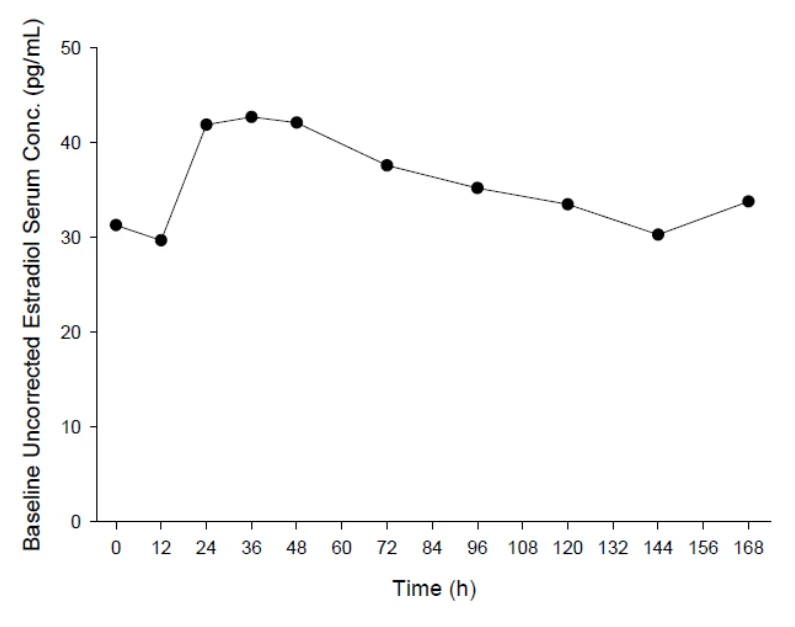
Administration of CLIMARA PRO to postmenopausal women produces mean maximum estradiol concentrations in serum in about 2 to 2.5 days. Estradiol concentrations equivalent to the normal ranges observed at the early follicular phase in premenopausal women are achieved within 12-24 hours after the first application, and are sustained for the entire patch wear period. A summary of estradiol, estrone and levonorgestrel pharmacokinetic parameters after CLIMARA PRO single and multiple applications is shown in Table 1 and Table 2.
| Table 1: Summary of mean (± SD) pharmacokinetic parameters following a single application of CLIMARA PRO in 24 healthy postmenopausal women | ||||||||||||||
| Parameter | Units | Estradiol | Estrone | Levonorgestrel | ||||||||||
| Cmax | pg/mL | 54.3 ± 18.9 | 43.9 ± 14.9 | 138 ± 51.8 | ||||||||||
| Tmax* | hours | 42 | 84 | 90 | ||||||||||
| AUC | pg C h/mL | 6340 ± 1740 | 6890 ± 2520 | 22900 ± 8860 | ||||||||||
| * Tmax is expressed as the median value. | ||||||||||||||
| Table 2: Summary of mean (± SD) pharmacokinetic parameters (week 4) following four consecutive weekly applications of CLIMARA PRO in 44 healthy postmenopausal women | ||||||||||||||
| Parameter | Units | Estradiol | Estrone | Levonorgestrel | ||||||||||
| Cmax | pg/mL | 50.7 ± 28.6 | 81.6 ± 252 | 194 ± 111 | ||||||||||
| Tmax* | hours | 36 | 48 | 48 | ||||||||||
| Cmin | pg/mL | 33.8 ± 28.7 | 72.5 ± 253 | 153 ± 69.6 | ||||||||||
| AUC | pg C h/mL | 6002 ± 1919 | 7642 ± 10518 | 27948 ± 16426 | ||||||||||
| * Tmax is expressed as the median value. | ||||||||||||||
At steady state, CLIMARA PRO maintains an average serum estradiol concentration of about 36 pg/mL during the application period, as depicted in Figure 1.
| Figure 1: Mean estradiol concentration profile (week 4) following four consecutive weekly applications of CLIMARA PRO |
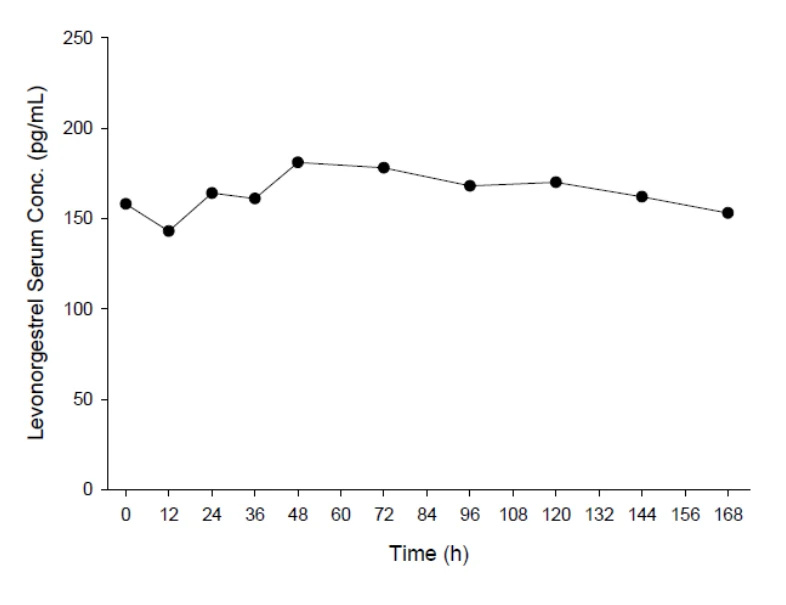
Following the application of CLIMARA PRO, levonorgestrel concentrations reach a maximum in about 3 days. At steady state, CLIMARA PRO maintains an average serum levonorgestrel concentration of about 166 pg/mL during the application period, as depicted in Figure 2.
| Figure 2: Mean levonorgestrel concentration profile (week 4) following four consecutive weekly applications of CLIMARA PRO |
Distribution
The distribution of exogenous estrogens is similar to that of endogenous estrogens. Estrogens are widely distributed in the body and are generally found in higher concentrations in the sex hormone target organs. Estrogens circulate in the blood largely bound to sex hormone binding globulin (SHBG) and albumin. In a multiple dose study with CLIMARA PRO, about 57-58% of estradiol was bound nonspecifically to serum albumin and about 40-41% to SHBG. The fraction of unbound estradiol in blood was less than 2%.
Levonorgestrel in serum is bound to both SHBG and albumin. In a multiple dose study with CLIMARA PRO, less than 2% of levonorgestrel was found to circulate in blood unbound. Approximately 77-79% was strongly bound to SHBG and 19-22% to albumin.
Metabolism
The biotransformation of transdermally administered estradiol is the same as that of the endogenous hormone. Estradiol is mainly metabolized in the liver but also extrahepatically, e.g., in the gut, kidney, skeletal muscles and target organs. These processes involve the formation of estrone, estriol, catecholestrogens and sulfate and glucuronide conjugates of these compounds, which are all distinctly less estrogenic or even nonestrogenic. After transdermal administration, the metabolism of estradiol to estrone and conjugates remains within the physiological range as seen during the early follicular phase in the reproductive period, indicated by an estradiol/estrone serum level ratio of approximately 1.
The most important metabolic pathway for levonorgestrel occurs in the reduction of the Δ4- and the 3-oxo group as well as hydroxylations at positions 2α, 1β and 16β, followed by conjugation. Most of the metabolites that circulate in the blood are sulfates of 3α, 5β- tetrahydro-levonorgestrel, while excretion occurs predominantly in the form of glucuronides. Some of the parent levonorgestrel also circulates as the 17β-sulfate.
Excretion
Estradiol, estrone and estriol are excreted in the urine along with glucuronide and sulfate conjugates. Following patch removal, serum estradiol concentrations decline rapidly with a mean terminal half-life of 3.0 ± 0.67 hours.
Levonorgestrel and its metabolites are primarily excreted in the urine. Mean (± SD) terminal half-life for levonorgestrel was determined to be 28 ± 6.4 hours.
Estrogen Pharmacology
Endogenous estrogens are largely responsible for the development and maintenance of the female reproductive system and secondary sexual characteristics. Although circulating estrogens exist in a dynamic equilibrium of metabolic interconversions, estradiol-17β is the principal intracellular human estrogen and is substantially more potent than its metabolites, estrone and estriol, at the receptor level.
The primary source of estrogen in normally cycling adult women is the ovarian follicle, which secretes 70 to 500 µg of estradiol daily, depending on the phase of the menstrual cycle. After menopause, most endogenous estrogen is produced by conversion of androstenedione, secreted by the adrenal cortex, to estrone by peripheral tissues. Thus, estrone and the sulfate conjugated form, estrone sulfate, are the most abundant circulating estrogens in postmenopausal women.
Estrogens act through binding to nuclear receptors in estrogen-responsive tissues. To date, two estrogen receptors have been identified. These vary in proportion from tissue to tissue.
Circulating estrogens modulate the pituitary secretion of the gonadotropins, luteinizing hormone (LH) and follicle stimulating hormone (FSH) through a negative feedback mechanism. Administration of transdermal estradiol to postmenopausal women elevates plasma estradiol concentrations into the range observed in premenopausal women at the early to mid-follicular stage. As a result of the increased plasma estradiol concentrations, plasma concentrations of FSH and LH are decreased and vaginal cytology is converted to a pattern resembling that found in premenopausal women, with improvement of the maturation and karyopyknotic indices.
Loss of ovarian estradiol-17β production after menopause can result in instability of thermoregulation, causing hot flushes associated with sleep disturbance and excessive sweating. Estrogen replacement therapy is effective in reducing the number and intensity of hot flushes associated with menopause.
Progestin Pharmacology
Levonorgestrel is a 19-nortestosterone derivative with potent progestogenic effects, but no significant estrogenic activity. It has been established that the inclusion of either cyclic or continuous administration of a progestin, such as levonorgestrel, in hormone replacement therapy inhibits endometrial proliferation induced by estrogen. This inhibition of endometrial proliferation is associated with a reduction in risk of endometrial hyperplasia and the attendant risk of carcinoma in women with intact uteri. Progestin compounds enhance cellular differentiation and generally oppose the actions of estrogens by decreasing estrogen receptor levels, increasing local metabolism of estrogens to less active metabolites, or inducing gene products that blunt cellular responses to estrogen.
STORAGE AND STABILITY
Store between 15°C and 30°C in sealed pouch. Do not refrigerate or freeze. Apply immediately upon removal from the protective pouch.
Keep out of the reach of children and pets before and after use.
DOSAGE FORMS, COMPOSITION AND PACKAGING
Each translucent 22 cm2 system contains 4.55 mg of estradiol hemihydrate, Ph. Eur. (equivalent to 4.40 mg of estradiol-17β) and 1.39 mg of levonorgestrel, USP, Ph. Eur., and provides controlled delivery of estradiol-17β 45 µg/day and levonorgestrel 15 µg/day to the patient. Available in packages of 4 systems.
The CLIMARA PRO system is composed of 3 layers. Proceeding from the visible surface towards the surface attached to the skin, these layers are (1) a translucent polyethylene backing film, (2) an acrylate adhesive matrix containing estradiol and levonorgestrel, and (3) a protective liner of either siliconized or fluoropolymer-coated polyester film. The protective liner is attached to the adhesive surface and must be removed before the system can be used.

The active components of the system are estradiol and levonorgestrel. The nonmedicinal components of the system (acrylate copolymer adhesive and polyvinylpyrrolidone/vinyl acetate copolymer) are pharmacologically inactive.
PART II : SCIENTIFIC INFORMATION
PHARMACEUTICAL INFORMATION
Drug Substance
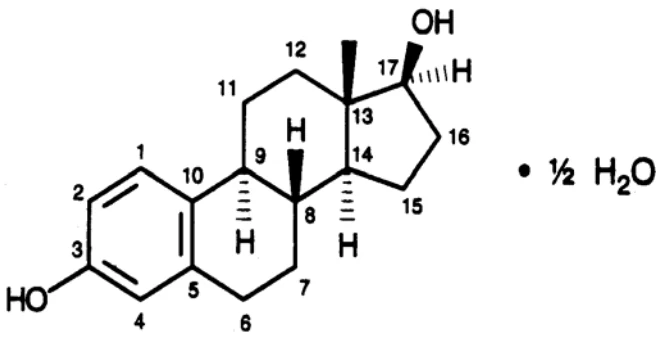
Estradiol-17β
Common Name: Estradiol hemihydrate, Ph. Eur.
Chemical Name: Estra-1,3,5(10)-triene-3,17β-diol, hydrate (2:1) (CAS 9 CI) Molecular Formula: C18H24O2• ½H2O
Molecular Weight: 281.40
Structural Formula:
Physical form: White to off-white crystals or crystalline powder
Melting point: 173°C to 180°C
Solubilities: Practically insoluble in water, freely soluble in alcohol, and soluble in acetone, dioxane and other organic solvents.
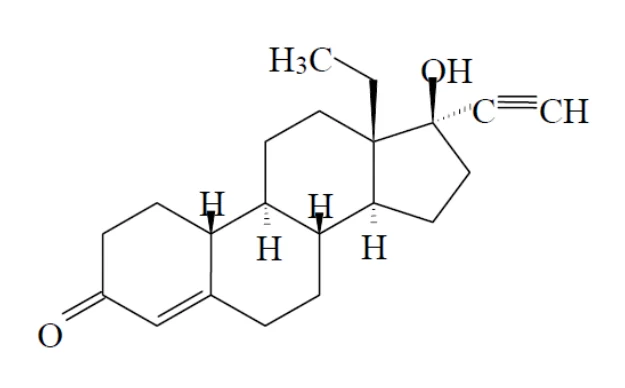
Levonorgestrel
Common Name: levonorgestrel, USP, Ph. Eur.
Chemical Name: 18,19-Dinorpregn-4-en-20-yn-3-one, 13-ethyl-17-hydroxy-, (17"α)-(—)
Molecular Formula: C21 H28 O2
Molecular Weight: 312.45
Structural Formula:
Physical Form: White to off-white crystalline powder
Melting Point: 232°C to 239°C
Solubilities: Practically insoluble in water, and slightly soluble in ethanol, vegetable oils, chloroform, ether and alkaline solutions.
CLINICAL TRIALS
Pivotal Clinical Trials
Although different strengths of levonorgestrel were tested, for the purpose of endometrial protection against hyperplasia, the 45 µg estradiol/15 µg levonorgestrel transdermal system has been determined to deliver enough levonorgestrel to obtain adequate protection against endometrial hyperplasia, and the higher strengths are therefore not justified.
Study Results
Effect on vasomotor symptoms
The efficacy of a 45 µg estradiol/30 µg levonorgestrel (E2 45 µg/LNG 30 µg) transdermal system in the relief of vasomotor symptoms in postmenopausal women was demonstrated in a double-blind, randomized, placebo-controlled trial. The system was administered continuously for three 28-day cycles, with a new system applied weekly. The mean weekly number of hot flushes (primary efficacy variable) was statistically significantly reduced from baseline at Weeks 4, 8 and 12 and at All Endpoints as compared to baseline (intent-to-treat population). Pairwise comparisons showed statistically significant differences for the E2 45 µg/LNG 30 µg group versus the placebo group at all timepoints. The severity of hot flushes was evaluated by analysis of mean decrease from baseline in daily maximum severity on Days 1, 2, 3, 4, 5, 6 and 7 of each cycle. The E2 45 µg/LNG 30 µg group had statistically significant decreases in severity from baseline at all timepoints. CLIMARA PRO (E2 45 µg/LNG 15 µg) and the E2 45 µg/LNG 30 µg strength used in this study have been shown to be bioequivalent in terms of estradiol delivery.
| Table 3: Mean changes in weekly number and daily maximum severity of hot flushes at All Endpoints1 (Vasomotor Symptoms study) | ||||||
E2 45 µg/LNG 30 µg (n=92) | Placebo (n=88) | |||||
| Mean weekly number of hot flushes at baseline | 88.17 | 93.83 | ||||
| Mean weekly number of hot flushes at All Endpoints | 16.22 | 54.64 | ||||
| Mean change from baseline in weekly number of hot flushes at All Endpoints | -72.022,3 | -37.74 | ||||
Mean daily maximum severity of hot flushes at baseline (on Day 7 of run-in period) | 2.90 | 2.84 | ||||
| Mean change from baseline in mean daily maximum severity4 of hot flushes at All Endpoints (on Day 7 of patch wear period) | -2.122,3 | -0.61 | ||||
1 Final evaluation on study medication carried forward to 12 weeks 2 Statistically significant vs. placebo (p< 0.001) 3 Statistically significant vs. baseline (p < 0.001) 4 1 = mild, 2 = moderate, 3 = severe | ||||||
In the 1-year endometrial protection study, an analysis of the results of the first three cycles of treatment in a symptomatic subset of women confirmed the efficacy of CLIMARA PRO (E2 45 µg/LNG 15 µg). The mean total number of weekly hot flushes (intent-to-treat population) was statistically significantly reduced (p<0.001) from baseline at each cycle with continuous administration of CLIMARA PRO, and was similar to the results seen with unopposed transdermal estrogen (E2 45 µg). The CLIMARA PRO group also showed statistically significant decreases in mean daily maximum severity of hot flushes at each cycle.
Effects on the endometrium
In a randomized, double-blind, multicentre, 1-year clinical trial of 412 postmenopausal women (with intact uteri) treated with a continuous regimen of CLIMARA PRO or with a continuous estradiol-only transdermal system, results of evaluable endometrial biopsies showed that no hyperplasia was seen with CLIMARA PRO. Table 4 below summarizes these results (intent-to-treat populations).
| Table 4: Incidence of endometrial hyperplasia during continuous combined treatment with CLIMARA PRO (intent-to-treat population) | |||||||||
CLIMARA PRO (E2 45µg/LNG 15 µg) (n=210) | Estradiol (E2 45 µg) (n=201) | ||||||||
| No. of patients with biopsies at β 6 months1 | 124 | 139 | |||||||
| No. of patients with biopsies at 1 year2 | 102 | 110 | |||||||
| No. (%) of patients with hyperplasia3 | 0 (0%) | 19 (17.3%) | |||||||
| 95% Confidence Interval | 0 - 3.55% | 9.75 - 24.79% | |||||||
| p-value4 | <0.001 | ||||||||
1 Defined as β 180 days of treatment. 2 Defined as β 323 days of treatment. 3 Includes hyperplasia occurring at any time after initiation of treatment as a proportion of patients with biopsies at one year. 4 P-value for comparison to unopposed estradiol dose using the Fisher Exact test. P-values were adjusted by the method of Bonferroni: p < 0.0167. | |||||||||
Effects on uterine bleeding or spotting
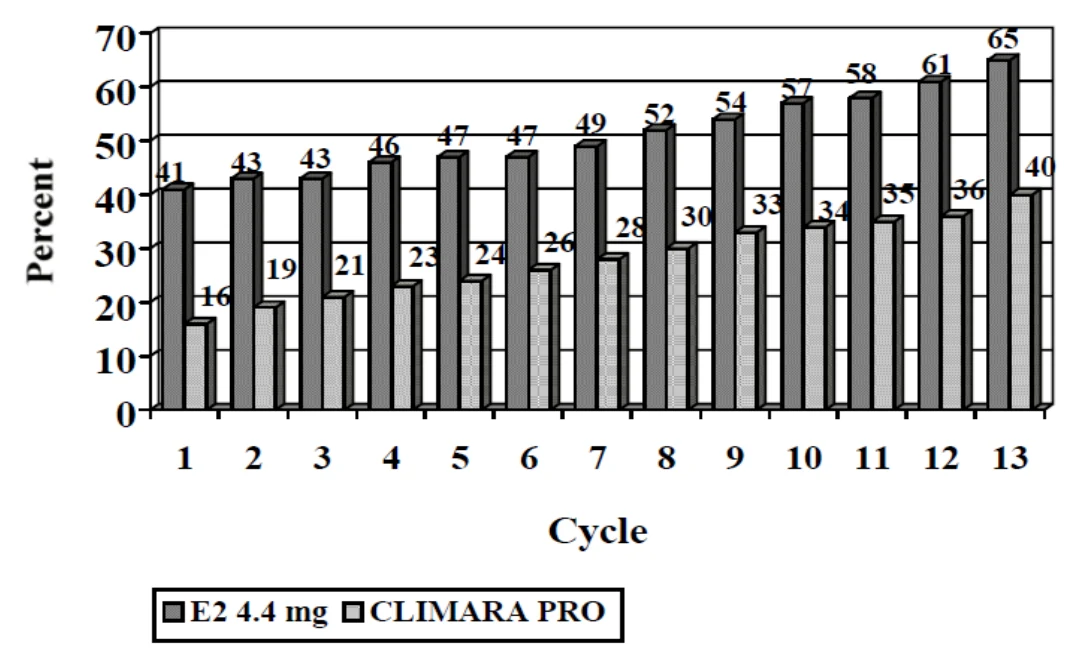
The effects of CLIMARA PRO on uterine bleeding or spotting were evaluated in the 1-year endometrial protection trial. Results are shown in Figure 3.
| Figure 3: Cumulative proportion of subjects at each cycle with no bleeding/spotting through the end of cycle 13. Last observation carried forward* |
| *Percent based upon number of subjects at each cycle with data. Last non-missing cycle carried forward through cycle 13. Bleeding associated with endometrial biopsies not included. |
Effect on lipids
In the 1-year endometrial protection trial, CLIMARA PRO significantly (p<0.001) decreased total cholesterol and triglycerides compared to continuous transdermal estradiol alone. CLIMARA PRO also decreased low density lipoprotein cholesterol (LDL-C) and high density lipoprotein cholesterol (HDL-C) compared to estradiol alone (see Table 5).
| Table 5: Mean % change from baseline lipid profile: values after 1 year of treatment | |||||||
| Lipid Parameter | Estradiol 45 µg (n=204) | CLIMARA PRO (E2 45 µg/LNG 15 µg) (n=212) | |||||
| Total cholesterol | -1.5% | -6.5% | |||||
| Triglycerides | 1.2% | -18.5% | |||||
| LDL-C | -3.2% | -5.6% | |||||
| HDL-C | 1.6% | -4.3% | |||||
Effect on coagulation parameters
Effects on coagulation parameters were assessed following one year of treatment with E2 45 µg/LNG 30 µg (n=23) and E2 45 µg/LNG 40 µg (n=26) transdermal systems. No clinically significant changes were observed for fibrinogen and thrombin-antithrombin III complex (TAT).
Effect on skin sensitization
A twenty-one day cumulative irritation study conducted in 29 postmenopausal females compared the skin irritation potential of CLIMARA PRO with that of a placebo patch containing only the adhesive. Both patches showed only minimal to low irritation potential.
The sensitization potential of CLIMARA PRO and a placebo patch containing adhesive only was assessed in 170 postmenopausal females. The study consisted of a three- week induction phase, a 10 to 17 day rest period, and a one-week challenge phase. None of the subjects showed any sensitization-type reactions.
TOXICOLOGY
A guinea pig sensitization study was conducted with CLIMARA PRO (estradiol/levonorgestrel transdermal system) and a placebo patch containing only the adhesive. No positive responses were observed during the challenge phase of this study, indicating that CLIMARA PRO does not induce contact sensitization in this model.
Observations after repeated dermal administration of CLIMARA PRO (estradiol/levonorgestrel transdermal system) to rats once weekly for 4 weeks (29 to 30 days of continuous exposure) were primarily exaggerated pharmacological effects that are expected following high doses of estradiol and levonorgestrel in rodents. No unexpected toxic effects were observed. Slight to moderate local irritation was observed for both CLIMARA PRO and the hormone-free placebo patch containing adhesive only, and was shown to be reversible after patch removal.
No signs of local intolerance were observed following topical application of CLIMARA PRO or a hormone-free placebo patch to the skin of rabbits for 4 hours.
Neither the CLIMARA PRO patch nor the hormone-free placebo patch was shown to induce contact sensitization in the guinea pig.
Long-term continuous administration of natural and synthetic estrogens in certain animal species increases the frequency of carcinomas of the breast, uterus, cervix, vagina, testis, and liver (See CONTRAINDICATIONS and WARNINGS AND PRECAUTIONS).
Long-term continuous administration of natural and synthetic progestins increases the frequency of benign liver tumours in male mice, but not in male or female rats.
In vitro and in vivo studies with estradiol or with levonorgestrel gave no indication of a mutagenic potential.
REFERENCES
- 1. Writing Group for the Women's Health Initiative Investigators. Risks and benefits of estrogen plus progestin in healthy postmenopausal women: principal results from the Women's Health Initiative randomized controlled trial. Jama. 2002;288(3):321-33.
- 2. The Women's Health Steering Committee. Effects of conjugated equine estrogen in postmenopausal women with hysterectomy: the Women’s Health Initiative randomized controlled trial. Jama. 2004;291(14):1701-12.
- 3. Chlebowski RT, Hendrix SL, Langer RD, Stefanick ML, Gass M, Lane D, et al. Influence of estrogen plus progestin on breast cancer and mammography in healthy postmenopausal women: the Women's Health Initiative Randomized Trial. Jama. 2003;289(24):3243-53.
- 4. Grady D, Herrington D, Bittner V, Blumenthal R, Davidson M, Hlatky M, et al. Cardiovascular disease outcomes during 6.8 years of hormone therapy: Heart and Estrogen/progestin Replacement Study follow-up (HERS II). Jama. 2002;288(1):49-57.
- 5. Hulley S, Grady D, Bush T, Furberg C, Herrington D, Riggs B, et al. Randomized trial of estrogen plus progestin for secondary prevention of coronary heart disease in postmenopausal women. Jama. 1998;280(7):605-13.
- 6. Shumaker SA, Legault C, Rapp SR, Thal L, Wallace RB, Ockene JK, et al. Estrogen plus progestin and the incidence of dementia and mild cognitive impairment in postmenopausal women: the Women's Health Initiative Memory Study: a randomized controlled trial. Jama. 2003;289(20):2651-62.
- 7. Shumaker SA, Legault C, Kuller L, Rapp SR, Thal L, Lane DS, et al. Conjugated equine estrogens and incidence of probable dementia and mild cognitive impairment in postmenopausal women: Women's Health Initiative Memory Study. Jama. 2004;291(24):2947-58.
- 8. Balfour JA and Heel RC. Transdermal estradiol - a review of its pharmacodynamic and pharmacokinetic properties, and therapeutic efficacy in the treatment of menopausal complaints. Drugs 1990; 40(4):561-582.
- 9. Gordon SF et al. Efficacy and safety of a seven-day, transdermal estradiol drug delivery system: Comparison with conjugated estrogens and placebo. Int J Fertil 1995; 40:126-134.
- 10. Gordon SF. Clinical experience with a seven-day estradiol transdermal system for estrogen replacement therapy. Am J Obstet Gynecol 1995; 173 (3, Part 2):999-1004.
- 11. Pickar JH et al. Effects of hormone replacement therapy on the endometrium and lipid parameters: a review of randomized clinical trials, 1985 to 1995. Am J Obstet Gynecol 1998; 178:1087-1099.
- 12. van Erpecum KJ et al. Different hepatobiliary effects of oral and transdermal estradiol in postmenopausal women. Gastroenterol 1991; 100(2): 482-488.