


Product Monograph - Apo-Bimatoprost (Apotex, PM 00067890)
RECENT MAJOR LABEL CHANGES
N/A
TABLE OF CONTENTS
Sections or subsections that are not applicable at the time of authorization are not listed.
RECENT MAJOR LABEL CHANGES............................................................................................. 2
TABLE OF CONTENTS ............................................................................................................... 2
PART I: HEALTH PROFESSIONAL INFORMATION ...................................................................... 4
1 INDICATIONS.................................................................................................................. 4
1.1 Pediatrics .............................................................................................................. 4
1.2 Geriatrics............................................................................................................... 4
2 CONTRAINDICATIONS .................................................................................................... 4
4 DOSAGE AND ADMINISTRATION .................................................................................... 4
4.1 Dosing Considerations ........................................................................................... 4
4.2 Recommended Dose and Dosage Adjustment......................................................... 4
4.3 Reconstitution ....................................................................................................... 5
4.4 Administration....................................................................................................... 5
4.5 Missed Dose .......................................................................................................... 5
5 OVERDOSAGE................................................................................................................. 5
6 DOSAGE FORMS, STRENGTHS, COMPOSITION AND PACKAGING .................................... 6
7 WARNINGS AND PRECAUTIONS ..................................................................................... 6
7.1 Special Populations ................................................................................................ 8
7.1.1 Pregnant Women................................................................................................... 8
7.1.2 Breast-feeding ....................................................................................................... 9
7.1.3 Pediatrics .............................................................................................................. 9
7.1.4 Geriatrics............................................................................................................... 9
8 ADVERSE REACTIONS ..................................................................................................... 9
8.1 Adverse Reaction Overview.................................................................................... 9
8.2 Clinical Trial Adverse Reactions .............................................................................. 9
8.3 Less Common Clinical Trial Adverse Reactions .......................................................11
8.4 Abnormal Laboratory Findings: Hematologic, Clinical Chemistry and Other Quantitative Data..................................................................................................11
8.5 Post-Market Adverse Reactions.............................................................................11
9 DRUG INTERACTIONS ....................................................................................................12
9.2 Drug Interactions Overview...................................................................................12
9.3 Drug-Behavioural Interactions...............................................................................12
9.4 Drug-Drug Interactions .........................................................................................12
9.5 Drug-Food Interactions .........................................................................................12
9.6 Drug-Herb Interactions .........................................................................................12
9.7 Drug-Laboratory Test Interactions .........................................................................12
10 CLINICAL PHARMACOLOGY ...........................................................................................13
10.1 Mechanism of Action ............................................................................................13
10.2 Pharmacodynamics...............................................................................................13
10.3 Pharmacokinetics .................................................................................................13
11 STORAGE, STABILITY AND DISPOSAL .............................................................................15
12 SPECIAL HANDLING INSTRUCTIONS ...............................................................................15
PART II: SCIENTIFIC INFORMATION ........................................................................................16
13 PHARMACEUTICAL INFORMATION ................................................................................16
14 CLINICAL TRIALS ............................................................................................................17
14.1 Clinical Trials by Indication ....................................................................................17
15 MICROBIOLOGY ............................................................................................................19
16 NON-CLINICAL TOXICOLOGY..........................................................................................19
17 SUPPORTING PRODUCT MONOGRAPHS ........................................................................22
PATIENT MEDICATION INFORMATION ...................................................................................23
PART I: HEALTH PROFESSIONAL INFORMATION
1 INDICATIONS
APO-BIMATOPROST (bimatoprost topical solution, 0.03% w/v) is indicated for:
- treatment of hypotrichosis of the eyelashes by increasing their growth including length, thickness and darkness.
Patients without visible eyelashes were not studied.
1.1 Pediatrics
Pediatrics (<18 years of age): No data are available to Health Canada; therefore, Health Canada has not authorized an indication for pediatric use.
1.2 Geriatrics
No overall clinical differences in safety or effectiveness have been observed between elderly and other adult patients. Use as for adult patients.
2 CONTRAINDICATIONS
- APO-BIMATOPROST is contraindicated in patients who are hypersensitive to this drug or to any ingredient in the formulation, including any non-medicinal ingredient, or component of the container. For a complete listing, see 6 DOSAGE FORMS, STRENGTHS, COMPOSITION AND PACKAGING.
4 DOSAGE AND ADMINISTRATION
4.1 Dosing Considerations
Not applicable.
4.2 Recommended Dose and Dosage Adjustment
- Special device and administration procedure are recommended for delivering proper dose of APO-BIMATOPROST once nightly. This is done by adding ONLY ONE drop of the drug solution on a special applicator with which the medication is applied to the upper eyelid margin of one eye following a specified administration procedure. See 4.4 Administration. As a result, only a small fraction of the solution applied to the applicator/device is actually administered on the dermal part of the upper eye lid margin of each eye per day. The recommended administration procedure should be closely followed to ensure the recommended dose is properly applied. See 4.4 Administration.
- Additional applications of APO-BIMATOPROST will not increase the growth of eyelashes and may increase the risk of adverse reactions. See 8.5 Post-Market Adverse Reactions.
- Upon discontinuation of treatment, eyelash growth is expected to gradually return to its pre-treatment level.
Health Canada has not authorized an indication for pediatric use.
4.3 Reconstitution
Not applicable.
4.4 Administration
Intended for dermal topical application to the upper eyelid margin.
The following administration procedure should be closely followed to ensure that recommended dose is administered.
Ensure the face is clean, makeup and contact lenses are removed. Once nightly, place ONLY one drop of APO-BIMATOPROST solution on the disposable sterile applicator supplied with the package and apply evenly along the skin of the upper eyelid margin at the base of the eyelashes. The upper lid margin in the area of lash growth should feel lightly moist without runoff. Blot any excess solution runoff outside the upper eyelid margin with a tissue or other absorbent cloth. Dispose of the applicator after one use. Repeat for the opposite eyelid margin using a NEW sterile applicator.
- Do not apply directly in the eye.
- Do not add more than one drop to an applicator.
- Blot any excess solution outside the upper eyelid margin with a tissue or other absorbent material.
- Do not administer the medication more than once daily.
- Do not apply to the lower eyelash line.
- Do not use the same applicator for more than one eye.
- Do not reuse applicators.
- Do not alter the applicator in any form.
- Do not use any other brush/applicator to apply APO-BIMATOPROST.
See PATIENT MEDICATION INFORMATION, How to take APO-BIMATOPROST section.
4.5 Missed Dose
If a dose is missed, patients should be instructed to return to their regular routine the following day.
5 OVERDOSAGE
No information is available on overdosage in humans. If overdose with APO-BIMATOPROST occurs, treatment should be symptomatic. If bimatoprost topical solution is accidentally ingested, the following information may be useful: in oral (by gavage) mouse and rat studies, doses up to 100 mg/kg/day did not produce any toxicity. This dose, expressed as mg/m2, is at least 165 times higher than the amount of bimatoprost to which a 10 kg child would be exposed were it to accidentally ingest one 3 mL bottle of bimatoprost topical solution.
| For management of a suspected drug overdose, contact your regional poison control centre. |
6 DOSAGE FORMS, STRENGTHS, COMPOSITION AND PACKAGING
Table 1 – Dosage Forms, Strengths, Composition and Packaging
| Route of Administration | Dosage Form / Strength /composition | Non-medicinal Ingredients |
| Topical | Solution / 0.03% w/v | benzalkonium chloride 0.05 mg/mL as preservative, citric acid anhydrous, sodium chloride, sodium phosphate dibasic anhydrous, and water for injection. hydrochloric acid and/or sodium hydroxide may be added to adjust pH. |
APO-BIMATOPROST Topical Solution, 0.03% w/v is supplied in white opaque polypropylene bottles with translucent polypropylene droppers and turquoise opaque polypropylene caps in the following configuration: 3 mL sterile solution in a 5 mL bottle accompanied by 60 disposable applicators.
APO-BIMATOPROST Topical Solution, 0.03% w/v is a clear, isotonic, buffered, preserved, colorless, sterile solution with a pH of 7.3 ± 0.5, and an osmolality of approximately 290 mOsmol/kg.
APO-BIMATOPROST Topical Solution, 0.03% w/v is packaged as follows:
- 3 mL bottle of sterile solution, accompanied by 60 sterile disposable applicators packaged in a separate blister format. These 2 components, solution and applicators, are combined in a carton.
7 WARNINGS AND PRECAUTIONS
General
Patients who receive treatment with APO-BIMATOPROST should be informed of the possibility of increased iris pigmentation (IP).
Carcinogenesis and Mutagenesis
Bimatoprost was neither carcinogenic nor mutagenic in animals and in vitro studies. See 16 NON-CLINICAL TOXICOLOGY.
Driving and Operating Machinery
As with any ocular medication, if transient blurred vision occurs after application to the upper eyelashes, the patient should wait until the vision clears before driving or using machinery.
Hepatic/Biliary/Pancreatic
Bimatoprost topical solution has not been studied in patients with hepatic impairment and should therefore be used with caution in such patients.
Ophthalmologic
Iris Pigmentation:
Bimatoprost-containing products, including bimatoprost ophthalmic solution and bimatoprost topical solution, have been associated with IP. See 8.5 Post-market Adverse Reactions . Based on clinical experience with bimatoprost-containing products, iris color changes may not be noticeable for weeks to several months or longer, although there are some reports associated with shorter duration of treatment. The related causes are not known. See 8.5 Post-Market Adverse Reactions.
Typically in bimatoprost-associated IP, increased brown pigmentation around the pupil spreads concentrically towards the periphery of the iris. This may affect the entire iris. The color change may not be symmetrical in the iris of an eye or between the irises of the two eyes. Darker or brown spots in iris were reported in some of the post-marketing cases of bimatoprost topical solution. See 8.5 Post-Market Adverse Drug Reactions. Bimatoprost-induced IP is most likely permanent. Treatment with APO-BIMATOPROST should be discontinued if IP is observed.
Because overall exposure to bimatoprost is considerably lower with bimatoprost topical solution than with bimatoprost ophthalmic solution, under approved conditions of use, it is expected that the risk of IP associated with bimatoprost topical solution would be very low compared to the risk associated with the use of bimatoprost ophthalmic solution. However, there have been higher numbers of reports of IP with bimatoprost topical solution use than anticipated. Because improper use may play a role in increasing the risk of IP with bimatoprost topical solution, it is important to emphasize the correct use of the product and advise patients to use bimatoprost topical solution according to the specialized administration procedure. See 4.4 Administration).
Contamination of Bimatoprost Topical Solution or Applicators
The tip of the APO-BIMATOPROST bottle should not be allowed to contact the eye, surrounding structures, fingers or any other surface in order to avoid eye injury or contamination of the solution. It is important to use APO-BIMATOPROST as instructed, by placing one drop on the single-use-per eye applicator. The accompanying sterile applicators should only be used on one eye and then discarded since reuse of applicators increases the potential for contamination and infections. There have been reports of bacterial keratitis associated with the use of multiple-dose containers of topical ophthalmic products. See PATIENT MEDICATION INFORMATION, How to take APO-BIMATOPROST section.
Effects on Intraocular Pressure:
Bimatoprost ophthalmic solution lowers intraocular pressure (IOP) when instilled directly to the eye in patients with elevated IOP. In clinical trials, in patients without elevated IOP, bimatoprost topical solution lowered IOP, however, the magnitude of the reduction was not cause for clinical concern.
In ocular hypertension studies with bimatoprost ophthalmic solution it has been shown that exposure of the eye to more than one dose of bimatoprost daily may decrease the IOP lowering effect. In patients using bimatoprost ophthalmic solution or other prostaglandin analogs for the treatment of elevated IOP, the concomitant use of bimatoprost topical solution may interfere with the desired reduction in IOP. Patients using prostaglandin analogs including bimatoprost ophthalmic solution for IOP reduction should only use APO-BIMATOPROST after consulting with their physician and should be monitored for changes to their IOP.
Intraocular Inflammation:
APO-BIMATOPROST should be used with caution in patients with active intraocular inflammation (e.g. uveitis) because the inflammation may be exacerbated.
Macular Edema:
Macular edema, including cystoid macular edema, has been reported during treatment with bimatoprost 0.03% ophthalmic solution for elevated IOP. APO-BIMATORPOST should be used with caution in aphakic patients, in pseudophakic patients with a torn posterior lens capsule, or in patients with known risk factors for macular edema.
Use with Contact Lenses:
Contact lenses should be removed prior to application of APO-BIMATOPROST and may be reinserted 15 minutes following its administration. Patients should be advised that APO-BIMATOPROST contains benzalkonium chloride, which may be absorbed by soft contact lenses.
Renal
Bimatoprost topical solution has not been studied in patients with renal impairment and should therefore be used with caution in such patients.
Reproductive Health: Female and Male Potential
- Fertility
Bimatoprost did not impair fertility in male or female rats at doses of up to 0.6 mg/kg/day (approximately 103 times the human exposure based on Area Under the Curve (AUC) levels after ocular administration).
Skin
Hair Growth Outside the Treatment Area:
There is the potential for hair growth to occur in areas where bimatoprost topical solution comes in repeated contact with the skin surface. It is important to apply APO-BIMATOPROST only to the skin of the upper eyelid margin at the base of the eyelashes using the accompanying sterile applicators, and to carefully blot any excess APO-BIMATOPROST from the eyelid margin to avoid it running onto the cheek or other skin areas.
Lid Pigmentation:
Bimatoprost has been reported to cause pigment changes (darkening) to periorbital pigmented tissues and eyelashes. The increased pigmentation is expected to be present as long as bimatoprost is administered but has been reported to be reversible upon discontinuation of bimatoprost in most patients.
Pigment changes (darkening) of lids observed with the use of bimatoprost ophthalmic solution during clinical trials were periorbital, whereas these changes reported during clinical trials with the use of bimatoprost topical solution were limited to the targeted applied area (upper eyelid), and occurred less frequently.
Patients with no visible eyelashes-alopecia:
The efficacy and safety of bimatoprost topical solution in patients with no visible eyelashes due to underlying systemic diseases or conditions (e.g., alopecia universalis, or trichotillomania) or drug-induced alopecia (e.g., cytotoxic antineoplastic agents) has not been studied. It is recommended that the underlying condition or systemic disease be managed appropriately prior to considering APO-BIMATOPROST.
7.1 Special Populations
7.1.1 Pregnant Women
There are no adequate and well-controlled studies of bimatoprost topical solution administration in pregnant women. Because animal reproductive studies are not always predictive of human response,
APO-BIMATOPROST should be administered during pregnancy only if the potential benefit justifies the potential risk to the fetus.
In embryo/fetal developmental studies in pregnant mice and rats, abortion was observed at oral doses of bimatoprost that were at least 33 or 97 times, respectively, the intended human exposure (AUC) after ocular administration of bimatoprost ophthalmic solution.
Maternal toxicity and reduced pup body weights were observed when female rats received oral doses that were at least 41 times the intended human exposure (AUC) after ocular administration of bimatoprost ophthalmic solution. See NON-CLINICAL TOXICOLOGY.
As the clinical dose of bimatoprost topical solution is a fraction of the bimatoprost ophthalmic solution dose, the above margins of safety for maternal and embryo/fetal effect are expected to be greater for bimatoprost topical solution.
7.1.2 Breast-feeding
It is not known whether bimatoprost is excreted in human milk, although in animal studies, bimatoprost has been shown to be excreted in breast milk. Because many drugs are excreted in human milk, caution, considering the benefit to risk ratio, should be exercised when APO-BIMATOPROST is administered to a nursing woman.
7.1.3 Pediatrics
Pediatrics (< 18 years of age): No data are available to Health Canada; therefore, Health Canada has not authorized an indication for pediatric use.
7.1.4 Geriatrics
No overall clinical differences in safety or effectiveness have been observed between elderly and other adult patients. Use as for adult patients.
8 ADVERSE REACTIONS
8.1 Adverse Reaction Overview
In one multicentre, double-masked, randomized, vehicle-controlled, parallel study of 4 months duration (Study 192024-032), most adverse events detected were ocular, mild to moderate, and not serious.
The most frequently reported adverse events with the use of bimatoprost topical solution were eye pruritis, conjunctival hyperemia, skin hyperpigmentation, ocular irritation, dry eye symptoms, and erythema of the eyelid. These events occurred in less than 4% of patients (see Table 2).
8.2 Clinical Trial Adverse Reactions
Clinical trials are conducted under very specific conditions. The adverse reaction rates observed in the clinical trials; therefore, may not reflect the rates observed in practice and should not be compared to the rates in the clinical trials of another drug. Adverse reaction information from clinical trials may be useful in identifying and approximating rates of adverse drug reactions in real-world use.
In the clinical study (192924-032) 278 subjects with hypotrichosis, otherwise healthy (without ocular or systemic diseases) were treated with bimatoprost topical solution for four months. Subjects (n=251) followed a post-treatment period that lasted 4 weeks.
Adverse reactions that were reported by greater than 1% of subjects enrolled in Study 192024-032 are presented in Table 2.
Table 2 Number (%) of Adverse Reactions Reported by Greater Than 1% of Subjects, Treatment and Post-treatment Periods Combined (Study 192024-032)
Bimatoprost Topical Solution n = 137 (%) | Vehicle n = 141 (%) | ||
|---|---|---|---|
| Eye Disorders | |||
| Eye pruritus | 5 (3.6) | 1 (0.7) | |
| Conjunctival hyperemiaa | 5 (3.6) | 0 (0.0) | |
| Eye irritation | 3 (2.2) | 2 (1.4) | |
| Dry eye | 3 (2.2) | 1 (0.7) | |
| Erythema of eyelid | 3 (2.2) | 1 (0.7) | |
| Immune System Disorders | |||
| Seasonal allergy | 2 (1.5) | 0 (0.0) | |
| Infections and Infestations | |||
| Sinusitis | 2 (1.5) | 2 (1.4) | |
| Influenza | 2 (1.5) | 0 (0.0) | |
| Benign and Malignant Neoplasms | |||
| Blepharal papilloma | 2 (1.5) | 0 (0.0) | |
| Skin and Subcutaneous Tissue Disorders | |||
| Skin hyperpigmentation | 4 (2.9) | 1 (0.7) | |
| Dermatitis contact | 2 (1.5) | 0 (0.0) | |
a Conjunctival hyperaemia was the only preferred term that was reported by a statistically significantly higher percentage of subjects in the bimatoprost group compared with the vehicle group.
Overall for the study as a whole, 40.1% (55/137) of subjects in the bimatoprost group and 29.1% (41/141) of subjects in the vehicle group reported at least 1 adverse event (AE), a difference that was not statistically significant. Four subjects in each treatment group discontinued the study due to an adverse event. The adverse events that led to study discontinuation by the 4 subjects in the vehicle group were lymphoma, eyelid erythema, conjunctival hemorrhage (all mild or moderate severity), and low IOP (severe). The adverse events that led to study discontinuation by the 4 subjects in the bimatoprost group were eczema, dry eye, eye inflammation, and contact dermatitis, all of which were of mild or moderate severity. All were ongoing at the time of discontinuation, with the exception of contact dermatitis, which had resolved without sequelae. The adverse event of eye inflammation was considered by the investigator to be unrelated to treatment.
Adverse reactions reported with bimatoprost ophthalmic solution for the reduction of intraocular pressure include, ocular dryness, visual disturbance, ocular burning, foreign body sensation, eye pain, blepharitis, cataract, superficial punctate keratitis, eye discharge, tearing, photophobia, allergic conjunctivitis, asthenopia, increases in iris pigmentation, conjunctival edema, conjunctival hyperemia, macular edema, eyelid edema, periorbital erythema, abnormal hair growth, iritis, deepened lid sulcus, enophthalmos, infections (primarily colds and upper respiratory tract infections), hypertension, headaches, dizzinesss, nausea, asthenia, eye pruritus, eyelid pruritus, irritation eye, erythema eyelid, blepharal pigmentation.
8.3 Less Common Clinical Trial Adverse Reactions
Clinical studies have shown increased IP in glaucoma patients treated with bimatoprost ophthalmic products. In clinical trials, the incidence of IP associated with bimatoprost ophthalmic solution, 0.03% w/v and bimatoprost ophthalmic solution, 0.01% w/v was 1.5% and 0.05%, respectively. Based on the dose-dependent nature of bimatoprost ophthalmic solution-associated IP and the fact that the daily administered bimatoprost dose in the bimatoprost topical solution therapy is only about 5% of that in bimatoprost ophthalmic solution, 0.03% w/v, the risk of bimatoprost topical solution-associated IP is expected to be very low. However, during the post-marketing phase, there have been reports of IP associated with the use of bimatoprost topical solution. See 8.5 Post-Market Adverse Reactions.
For bimatoprost ophthalmic solution the following ocular AEs (<1%) were blepharospasm, eyelid oedema, chalazion, eye oedema, hordeolum, conjunctival bleb, conjunctival folliculosis, eyelid pain, iritis (ocular inflammation), keratitis, visual field defect, vitreous floaters.
8.4 Abnormal Laboratory Findings: Hematologic, Clinical Chemistry and Other Quantitative Data
Clinical Trial Findings
Not applicable.
8.5 Post-Market Adverse Reactions
In addition to what has been observed in clinical trials, the following adverse reactions have been identified during post marketing use of bimatoprost topical solution in clinical practice. Because post marketing reporting is voluntary and from a population of uncertain size, it is not possible to reliably estimate the frequency of these reactions.
Eye disorders: blepharitis, eye discharge, eye pain, eye swelling, eyelid edema, eyelid irritation, eyelid pain, eyelids pruritus, foreign body sensation in eyes, increased lacrimation, iris hyperpigmentation, periorbital and lid changes associated with periorbital fat atrophy and skin tightness resulting in deepening of eyelid sulcus and eyelid ptosis, skin exfoliation of the eyelid and/or periorbital area, vision blurred.
It is clear that bimatoprost exposure levels with bimatoprost topical solution are a fraction of that seen with bimatoprost ophthalmic solution use in glaucoma, if used according to recommended conditions; nevertheless, there have been reports of IP with bimatoprost topical solution use. In addition, the post-marketing reporting rate of IP with bimatoprost topical solution is higher than that observed with bimatoprost ophthalmic solution. While the exact reason for the observed differences is not clear, improper administration and excessive doses of bimatoprost topical solution may result in increased reports of IP. See 4.4 Administration.
Immune system disorder: hypersensitivity (systemic allergic reaction), hypersensitivity (local allergic reaction)
Nervous system disorder: headache
Skin and subcutaneous tissue disorders: burning sensation (eyelid), dry skin of the eyelid and/or periocular area, erythema periorbital, hair growth abnormal, hordeolum, madarosis (temporary loss of a few eyelashes to loss of sections of eyelashes), rash (including macular, erythematous, and pruritic limited to the eyelids and periorbital region), skin discoloration (periorbital), trichiasis, trichorrhexis (temporary eyelash breakage).
9 DRUG INTERACTIONS
9.2 Drug Interactions Overview
No specific drug interaction studies have been conducted. However, no drug-drug interactions are anticipated in humans since systemic drug concentrations of bimatoprost are extremely low (less than 0.2 ng/mL) following repeated ocular dosing and as metabolism and excretion involves multiple pathways. Topical dermal administration of bimatoprost topical solution is expected to result in lower systemic drug concentrations than after topical ocular administration.
In ocular hypertension studies with bimatoprost ophthalmic solution, it has been shown that exposure of the eye to more than one dose of bimatoprost daily may decrease the IOP lowering effect. In patients using bimatoprost ophthalmic solution or other prostaglandin analogs for the treatment of elevated IOP, the concomitant use of bimatoprost topical solution may interfere with the desired reduction in IOP. Patients using prostaglandin analogs including bimatoprost ophthalmic solution for IOP reduction should only use APO-BIMATOPROST after consulting with their physician and should be monitored for changes to their IOP. See 7 WARNINGS AND PRECAUTIONS.
9.3 Drug-Behavioural Interactions
Not applicable.
9.4 Drug-Drug Interactions
Interactions with other drugs have not been established.
9.5 Drug-Food Interactions
Interactions with food have not been established.
9.6 Drug-Herb Interactions
Interactions with herbal products have not been established.
9.7 Drug-Laboratory Test Interactions
Interactions with laboratory tests have not been established.
10 CLINICAL PHARMACOLOGY
10.1 Mechanism of Action
Bimatoprost is a synthetic prostamide analogue and is structurally related to prostaglandin F2α (PGF2α) in that the carboxylic acid group is replaced with an electronically neutral substituent. Its mechanism of action resembles that of prostamide F2α, a naturally occurring substance. Bimatoprost topical solution exhibits no meaningful pharmacological activity at known prostaglandin receptors as well as no uterotonic or mitogenic activity.
Although the precise mechanism of action is not entirely understood, the growth of eyelashes is believed to occur by increasing the duration of the anagen or growth phase of the hair cycle: increased thickness/fullness is believed to result from extending the anagen phase and increase in darkness occurs by stimulation of pigment (melanin) formation in the hair follicles. The overall effect is increased length, thickness and darkness of eyelashes (prominence).
10.2 Pharmacodynamics
Daily administration (once a day) of bimatoprost ophthalmic solution 0.03% for 14 days to mouse eyes produced a significant increase in eyelash number with no signs of inflammation, hyperplasia, or other adverse effects. Bimatoprost ophthalmic solution 0.03% also increased the length and thickness of mouse eyelashes. Additional studies in ocular normotensive and laser-induced ocular hypertensive cynomolgus monkeys indicated that bimatoprost potently reduces intraocular pressure when applied to the eye. Five-day studies in ocular normotensive monkeys and one day studies in ocular hypotensive monkeys demonstrated that a 0.001% dose of bimatoprost could significantly lower intraocular pressure. Five day studies in ocular normotensive Beagle dogs confirmed bimatoprost as a potent ocular hypotensive over a dose range of 0.001% to 0.1% when given either once daily or twice daily.
Bimatoprost did not alter pupil diameter in monkeys at the 0.1% dose. This is in contrast to Beagle dog studies, where 0.001% to 0.1% doses produced miosis.
10.3 Pharmacokinetics
Table 3 – Summary of Mean Bimatoprost Pharmacokinetic Parameters Following Once-daily Ocular Administration of Bimatoprost 0.03% to Each Eye of Healthy Subjects for 2 Weeks
| Collection Day | Cmax (ng/mL) | Tmax (hr) | AUC (ng•hr/mL)a |
| 1 | 0.0864 | 0.105 | 0.1024 |
| 7 | 0.0721 | 0.131 | 0.0742 |
| 14 | 0.0822 | 0.107 | 0.0960 |
| a AUC refers to AUC0-inf on Day 1 and AUC0-24h on Days 7 and 14. | |||
After one drop of 0.03% bimatoprost ophthalmic solution was administered once daily to both eyes of 15 healthy subjects, blood bimatoprost concentrations peaked within 10 minutes after dosing and were below the lower limit of detection (0.025 ng/mL) in most subjects within 1.5 hours after dosing.
Systemic exposure after repeated ocular application is low. Steady state was achieved after one week of once daily dosing with one drop of 0.03% bimatoprost ophthalmic solution to both eyes.
In patients with glaucoma or ocular hypertension, bimatoprost blood concentrations were similar to those observed in normal healthy subjects.
There was no significant systemic drug accumulation over time with the once daily dosing regimen. Mean blood concentration was around 0.08 ng/mL after 12 months of QD or BID dosing. The once daily regimen corresponded to a total exposure of 6.13 mg (one 28 mcL drop in each eye once a day for 12 months) or 0.00028 mg/kg/day for a 60-kg individual over 12 months.
Absorption
Bimatoprost penetrates the human cornea and sclera well in vitro. The mean corneal permeability coefficient was 3.24 x 10⁻⁶ cm/sec. Bimatoprost penetrated human scleral tissue better than corneal tissue with a mean scleral permeability coefficient of 14.5 x 10⁻⁶ cm/sec.
The blood concentrations of bimatoprost from patients with open angle glaucoma or ocular hypertension in two Phase 3 safety and efficacy studies were measured (N = 88 on once-daily treatment and N = 89 on twice-daily treatment). The samples were collected at approximately 5 minutes after the evening dose over a 3-month treatment period. Bimatoprost blood concentrations were similar to those observed in normal, healthy subjects and there was no significant systemic drug accumulation over time. The C-1 acid metabolite (AGN 191522) was typically not measurable in blood samples from these studies.
Therapeutic drug monitoring in the Phase 3 studies with bimatoprost ophthalmic solution showed that in one study that the elderly group had a higher concentration in the blood; however, this was not observed in the second Phase 3 study.
There was no significant systemic accumulation of bimatoprost following twice-daily dosing for 7 days in either young (18 to 44 years, mean = 28.5) or elderly patients (65 to 80 years, mean = 71.0). Bimatoprost appeared rapidly in the blood in both age groups, and was below the LLOQ by 1.5 hours in most patients. Systemic exposure was higher in the elderly than the young following both single and multiple dosing (124% and 213%, respectively). The mean AUC0-24 hr value of 0.0634 ng•hr/mL in elderly subjects was statistically significantly higher than that of 0.0218 ng•hr/mL in young subjects, suggesting the existence of an age effect. However, this finding is not considered clinically relevant as bimatoprost exhibits similar efficacy and safety profiles in both the young and elderly populations.
Distribution
Bimatoprost is moderately distributed into body tissues with a steady-state volume of distribution of 0.67 L/kg. In human blood, bimatoprost resides mainly in the plasma. Approximately 12% of bimatoprost remains unbound in human plasma. The in vitro binding of bimatoprost to synthetic melanin was ~20% at concentrations of 0.2 - 100 mcg/mL. The overall extent of melanin binding was not dependent on concentration, and the binding was reversible.
Metabolism
Bimatoprost is the major circulating species in the blood once it reaches the systemic circulation following ocular dosing. Bimatoprost then undergoes oxidation, N-deethylation and glucuronidation to form a diverse variety of metabolites. Studies using human liver microsomes and recombinant human P450 isozymes, identified CYP 3A4 as one of the enzymes involved in the metabolism of bimatoprost in humans. However, since multiple enzymes and pathways are involved in the biotransformation of bimatoprost, no significant drug-drug interactions are anticipated.
Bimatoprost is only minimally metabolized in ocular tissues in humans, and is active in its intact form, without metabolic modification.
Elimination
Following an intravenous dose of radiolabelled bimatoprost (3.12 mcg/kg) to six healthy subjects, the maximum blood concentration of unchanged drug was 12.2 ng/mL and decreased rapidly with an elimination half-life of approximately 45 minutes. The total blood clearance of bimatoprost was 1.5 L/hr/kg. Up to 67% of the administered dose was excreted in the urine while 25% of the dose was recovered in the feces. Both urinary and fecal routes are important pathways for elimination of the parent compound and its metabolites, following intravenous administration.
Special Populations and Conditions
- Geriatrics: Elderly individuals (>65 years) exhibited higher systemic levels but this was not considered to be clinically relevant since bimatoprost had a similar efficacy and safety profile in both the young (<65 years of age) and elderly that participated in the clinical trials.
11 STORAGE, STABILITY AND DISPOSAL
APO-BIMATOPROST Topical Solution, 0.03% w/v should be stored in the original container at 2°C to 25°C.
Discard 28 days after opening.
Keep out of reach and sight of children.
12 SPECIAL HANDLING INSTRUCTIONS
There are no special handling instructions.
PART II: SCIENTIFIC INFORMATION
13 PHARMACEUTICAL INFORMATION
Drug Substance
Proper name: bimatoprost
Chemical name: (Z)-7-[(1R,2R,3R,5S)-3,5-Dihydroxy-2-[1E,3S)-3-hydroxy-5-phenyl-1-pentenyl]cyclopentyl]-5-N-ethylheptenamide
Molecular formula and molecular mass: C25H37NO4 and 415.58 g/mol
Structural Formula:
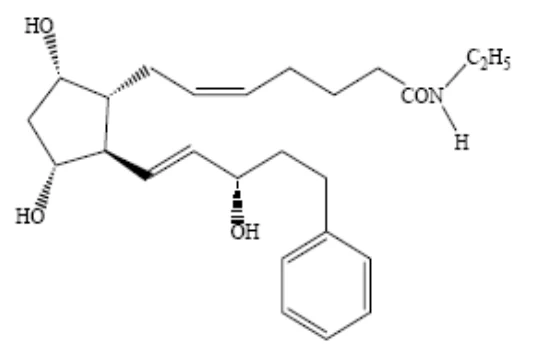
Physicochemical properties: Bimatoprost is a white to off-white powder, which is very soluble in ethyl alcohol and methyl alcohol and slightly soluble in water.
Melting Point: 68°C ± 2°C
Optical Rotation: [αD] +33 at 37°C
Solubility in pH 2-9: 0.04 mg/mL
pKa: 16.46 ± 0.46
14 CLINICAL TRIALS
14.1 Clinical Trials by Indication
Treatment of Hypotrichosis of the Eyelashes
Table 4 - Summary of patient demographics for clinical trials in treatment of hypotrichosis of the eyelashes
| Study # | Study design | Dosage, route of administration and duration | Study subjects (n) | Mean age (Range) | Sex |
| 192024-032 | multicentre, double-masked, randomized, vehicle-controlled, parallel study | Bimatoprost 0.03% QD Vehicle QD One drop was applied to the special applicator and was applied over the upper eyelid margin once daily. Any run-off of the medication was to be blotted. 4 months | 278 total: BIM: N=137 Vehicle: N=141 | 49.8 (22 - 78) | F=270 M= 8 |
The 2 treatment groups were comparable at baseline, with no statistically significant demographic differences. Overall, the mean age of the subjects was 49.8 years (range 22–78 years). The majority of the population were female (97.1%) and Caucasian (80.9%). The majority of subjects had light irides (60.1%). As per inclusion criteria, all enrolled subjects conformed to the Global Eyelash Assessment (GEA) scale at baseline with a score of 1 (20.1%) or 2 (79.9%), with a similar distribution of GEA scores in both treatment groups. No subjects in either treatment group had baseline GEA scores of 3 (marked) or 4 (very marked).
Patients with no visible eyelashes due to underlying systemic diseases or conditions (e.g., alopecia universalis, or trichotillomania) or drug-induced alopecia (e.g., cytotoxic antineoplastic agents) were excluded from the study. See 7 WARNING AND PRECAUTIONS.
Results of study in treatment of hypotrichosis of the eyelashes
Bimatoprost topical solution was evaluated for its effect on overall eyelash prominence in a multicentre, double-masked, randomized, vehicle-controlled, parallel study including 278 adult patients for four months of treatment. The primary efficacy endpoint in this study was the proportion of subjects achieving an increase in overall eyelash prominence as measured by at least a 1- grade increase on the 4-point Global Eyelash Assessment (GEA) scale, from baseline to the end of the treatment period (week 16). Bimatoprost topical solution was more effective than vehicle in improving the GEA score, with statistically significant differences seen at 8-week, 12-week, and 16-week (primary endpoint) treatment durations.
The proportion of subjects achieving ≥ 1 GEA grade was statistically significantly different from vehicle from 8 weeks of treatment to end of treatment (Week 16, endpoint) see Table 5.
The GEA is a 4-point scale with representative photos for each grade comprised of the scores “minimal, moderate, marked, and very marked.” GEA scale with a photonumeric (photography) guide provides the necessary photo guidance for clinicians in the assignment of 1 of these 4 scores in the assessment of overall eyelash prominence. To use the tool, the investigator assesses the subjects’ eyelashes across both eyes during a live evaluation and assigns a score based on a comparison between the subject’s eyelashes and the photonumeric guide.
Table 5 - Number (%) of subjects with at least a 1-grade increase from baseline in Global Eyelash Assessment, Treatment and Post-treatment Periods (ITT Population)
| Visita | Bimatoprost Topical Solution N=137 N (%) | Vehicle N=141 N (%) | p-valueb |
| Week 1 | 7 (5.1%) | 3 (2.1%) | 0.2124c |
| Week 4 | 20 (14.6%) | 11 (7.8%) | 0.0719 |
| Week 8 | 69 (50.4%) | 21 (14.9%) | < 0.0001 |
| Week 12 | 95 (69.3%) | 28 (19.9%) | < 0.0001 |
| Week 16 (Primary Endpoint) | 107 (78.1%) | 26 (18.4%) | < 0.0001 |
| Week 20 (Post-treatment phase) | 103 (78.6%) | 27 (21/4) | < 0.0001 |
a LOCF was performed on weeks 1 to 16 and week 20 analysis was based only on observed cases.
b P-values are based on Pearson’s chi-square test or Fisher’s exact test if at least 25% of the cells have expected cell sizes of < 5.
c Fisher’s exact test was performed.
In this study, patients were also evaluated for the effect of bimatoprost topical solution on the length, thickness, and darkness of their eyelashes. Improvements from baseline in eyelash growth as measured by digital image analysis (number of pixels) assessing eyelash length, fullness/thickness, and darkness were statistically significantly more pronounced in the bimatoprost group at week 8.
Upon discontinuation of treatment, eyelash growth is expected to return to its pre-treatment level.
Secondary endpoints are presented in Table 6.
Table 6 - Improvements from baseline in eyelash growth as measured by digital image analysis assessing eyelash length, fullness/thickness, and darkness (ITT population)
| Efficacy endpoint at Week 16 (mean change from baseline) | Bimatoprost Topical Solution | Vehicle | p-value |
|---|---|---|---|
Eyelash length (mm; % increase; pixels*) | N=137 1.39; 25%; 51.63 | N=141 0.11; 2%; 4.19 | < 0.0001 |
Fullness/thickness (mm2; % increase; pixels*) | N=136 0.71; 106%; 12.21 | N=136 0.06; 12%; 1.10 | < 0.0001 |
Eyelash darkness (intensity**; % increase in darkness) | N=135 -20.15; -18% | N=138 -3.57; -3% | < 0.0001 |
* 1 pixel is approximately 0.027 mm
** a negative value is representative of eyelash darkening
After the 16-week treatment period, a 4-week post-treatment period followed during which the effects of bimatoprost on increased eyelash prominence, length, thickness, and darkness were maintained to a statistically significant degree (p < 0.0001 for all). Longer term effect of discontinuation has not been assessed. The effect on eyelash growth is likely reversible following longer term discontinuation.
When evaluating patients who achieved a 2-grade increase on the 4-point GEA scale from baseline to the end of the treatment period (week 16), bimatoprost topical solution was more effective than vehicle in the GEA score, with statistically significant differences seen at 12-week and 16-week (primary endpoint) treatment durations.
Table 7 - Number (%) of Subjects with at Least a 2-Grade Increase from Baseline in GEA Score on the 4-Point GEA Scale: Treatment and Post-treatment Periods (ITT Population)
| Visita | Bimatoprost 0.03% (N = 137) | Vehicle (N = 141) | P-valueb |
| Week 1 | 0/137 (0.0) | 0/141 (0.0) | N/A |
| Week 4 | 0/137 (0.0) | 0/141 (0.0) | N/A |
| Week 8 | 5/137 (3.6) | 1/141 (0.7) | 0.1164c |
| Week 12 | 28/137 (20.4) | 1/141 (0.7) | < 0.0001 |
| Week 16 | 45/137 (32.8) | 2/141 (1.4) | < 0.0001 |
| Week 20 | 49/131 (37.4) | 4/126 (3.2) | < 0.0001 |
N/A: not applicable
Note: Summaries of week 1 to 16 pertain to the ITT population in the treatment period and week 20 the post-treatment period.
a LOCF was performed for weeks 1 through 16; week 20 analysis was based only on observed cases.
b P-values are based on Pearson’s chi-square test or Fisher’s exact test if at least 25% of the cells have expected cell sizes of < 5.
c Fisher’s exact test was performed.
15 MICROBIOLOGY
No microbiological information is required for this drug product.
16 NON-CLINICAL TOXICOLOGY
General Toxicology: The acute toxicity of bimatoprost was evaluated in single intraperitoneal and intravenous (IV) dose studies in mice and rats. A dose of 96 mg/kg administered intraperitoneally to mice, and up to 3 mg/kg IV administered to rats produced no adverse effects.
Long-term Toxicity: No treatment-related ocular or systemic effects were produced in Dutch belted rabbits when 0.03% or 0.1% bimatoprost ophthalmic formulation was instilled to the eye once or twice daily for 6 months. The highest dose (0.1% twice daily) produced 53 times the systemic drug exposure seen in humans treated with 1 drop in each eye of 0.03% bimatoprost once daily for 2 weeks. No treatment-related systemic effects were observed in cynomolgus monkeys when 0.03% or 0.1% bimatoprost ophthalmic formulation was instilled to the eye once or twice daily for 1 year. An increase in iris pigmentation was noted in some animals in all treated groups. No associated increase in melanocyte number was observed with the pigmentation. It appears that the mechanism of increased iris pigmentation is due to increased stimulation of melanin production in melanocytes and not to an increase in melanocyte number. Reversible dose-related periocular effects characterized by a prominent upper and/or lower sulcus and widening of the palpebral fissure of the treated eye was also observed. No functional or microscopic change related to the periocular change was observed. The highest dose (0.1% twice daily) produced at least 65 times the systemic drug exposure seen in humans treated with
1 drop into each eye of 0.03% bimatoprost once daily for 2 weeks. (Human dose calculated as 21 mcg in a 35 mcL drop dosed once daily in both eyes - not based on the 28 mcL drop size as used in the bimatoprost ophthalmic solution Phase III studies.)
No effects were observed in mice given 4 mg/kg/day bimatoprost orally for 3 months. This dose achieved systemic exposure that was at least 149 times higher than that observed in humans after topical ocular administration. Female mice given oral doses of 8 mg/kg/day showed a reversible thymic lymphoid proliferation. This effect was observed only in mice and at a dose far exceeding the intended human exposure after ocular administration (460-fold higher).
Increased serum aminoglutamate oxaloacetate and glutamate pyruvate transaminase (2- to 5-fold in males) was observed in rats given 8 or 16 mg/kg/day orally for 13 weeks. These changes were reversible after 4 weeks without treatment and no microscopic correlate was observed. In addition, increased ovarian weight and increased number of prominent, vacuolated corpora lutea were observed with these doses and with the dose of 4 mg/kg/day. Ovarian changes were also reversible at 4 weeks. The effects on the ovaries could be related to the pharmacological effect of this class drug in rats since these changes were not observed in other species. A dose of 4 mg/kg/day achieved systemic exposure that was at least 1538 times higher than that observed in humans treated with 1 drop into each eye of 0.03% bimatoprost once daily for 2 weeks.
A slight, reversible increase in alanine aminotransferase and aspartate aminotransferase was observed in rats given ≥ 0.1 mg/kg/day orally for 1 year. There were no associated microscopic liver findings. A dose-related, reversible cellular vacuolation of corpora lutea at ≥ 0.3 mg/kg/day in female rats was observed. The lowest effect dose of 0.1 mg/kg/day achieved systemic exposure (Cmax) that was 8 times higher than the human clinical dose after topical ocular administration. Hepatic and ovarian effects in rats were considered species-specific since these changes have not been observed in mice and monkeys at systemic exposures up to 2,800- to 14,000-fold higher, respectively, than those in humans given topical ocular doses of bimatoprost (1 drop into each eye of 0.03% bimatoprost once daily for 2 weeks).
No treatment related systemic effects were produced when monkeys were intravenously administered from 0.01 to 1.0 mg/kg/day bimatoprost for 17 weeks. An increase in the prominence of the periocular sulci and widening of the palpebral fissure of both eyes were observed in all treated monkeys. This finding was reversible at 12 weeks after cessation of treatment. A dose of 0.01 mg/kg/day achieved systemic exposure that was 235 times greater than that observed in humans treated with 1 drop into each eye of 0.03% bimatoprost once daily for 2 weeks.
Penetration into the eyelid skin by molecules of similar molecular weight and logP to bimatoprost is low, approximately 1.5%, therefore, the systemic exposure after dermal application of bimatoprost 0.03% on the upper eyelid margin is not expected to exceed that obtained after ocular dosing in humans. In addition, the amount of product, and therefore dose, delivered to the eyelid by topical dermal application is lower than the dose given to the eye by ocular administration.
Carcinogenicity: Bimatoprost was not carcinogenic when administered once daily orally (by gavage) at doses of 0.3, 1.0 and 2.0 mg/kg/day to mice and 0.1, 0.3 and 1.0 mg/kg/day to rats (approximately 192 or 291 times the human exposure after ocular administration based on AUC levels) for 104 weeks.
Genotoxicity: Bimatoprost was not mutagenic or clastogenic in a series of in vitro and in vivo studies (Ames test, Mouse Lymphoma and Micronucleus tests).
Salmonella/Escherichia Coli Mutagenicity Assay:
Bimatoprost was tested in the bacterial reverse mutation assay (Ames assay) using S. typhimurium tester strains TA98, TA100, TA 1535, and TA1537 and E. coli tester strains WP2 uvrA (pKM101) and WP2
(pKM101) in the presence and absence of Aroclor-induced rat liver S9. No positive response was observed in the mutagenicity assay at concentrations of up to 5000 mcg per plate.
Mouse Lymphoma Mutagenesis Assay:
Bimatoprost was tested in the reduced volume L5178Y/TK+/- mouse lymphoma mutagenesis assay in the presence and absence of Aroclor-induced rat liver S9, and was negative when tested at concentrations up to 900 mcg/mL with or without S9.
In Vivo Mouse Micronucleus Assay:
Bimatoprost was assayed for clastogenic activity and potential to disrupt the mitotic apparatus by evaluating micronuclei in polychromatic erythrocyte (PCE) cells in mouse bone marrow. Bimatoprost is considered negative in the mouse bone marrow micronucleus test following 20 mg/kg/day in mice. The high dose was based on the limit of solubility.
Reproductive and Developmental Toxicology:
Impairment of Fertility:
No impairment of fertility occurred in rats when males were treated for 70 days prior to cohabitation and females were treated for 15 days prior to mating. Treatment was continued in males until copulation was observed and in females through gestation day 7. The highest dose (0.6 mg/kg/day) achieved systemic exposure that was 103 times that observed in humans treated with 1 drop of 0.03% bimatoprost in each eye once daily for 2 weeks.
Pregnancy/Teratogenic Effects:
Bimatoprost given orally at doses up to 0.3 or 0.6 mg/kg/day to pregnant rats during gestation day 6 through 17 caused abortion but no drug-related developmental effects. This effect was also seen in mice receiving 0.3 mg/kg/day during gestation day 6 through 15. The maternal no-observable-adverse-effect level (NOAEL) of bimatoprost was 0.1 or 0.3 mg/kg/day for mice or rats, respectively. Abortion was expected as a rodent-specific pharmacological effect. The lowest effect dose of 0.3 mg/kg in mice and rats achieved systemic exposure (AUC) that was at least 33 or 97 times higher respectively, than that observed in humans treated with 1 drop of 0.03% bimatoprost in each eye once daily for 2 weeks.
Perinatal and Postnatal:
Treatment of F0 female rats given 0.3 mg/kg/day (at systemic exposure estimated 41 times the intended clinical dose) or greater caused maternal toxicity as evidenced by reduced gestation length, increased late resorption, fetal death, and postnatal mortality and reduced pup body weight (a rodent-specific pharmacological effect). No effects on postnatal development and mating performance of the F1 offspring were observed in groups treated with dosages as high as 0.1 mg/kg/day. Neurobehavioral function, Caesarean-sectioning parameters, and litter parameters in F1 rats were unaffected by doses as high as 0.3 mg/kg/day.
Animal Lactation:
In animal studies, bimatoprost has been shown to be excreted in breast milk.
Special Toxicology: Bimatoprost did not possess antigenic, cutaneous or systemic anaphylactic potential, or produce dermal contact hypersensitivity responses when administered topically, intradermally or systemically in rodents and guinea pigs.
17 SUPPORTING PRODUCT MONOGRAPHS
- 1) LATISSE® (bimatoprost) Topical Solution, 0.03% w/v, Control Number 266211, Product Monograph, AbbVie Corporation, August 25, 2022.