


Patient Medication Information: uses, side effects, how to take - Apo-Tiotropium
What is APO-TIOTROPIUM used for?
APO-TIOTROPIUM is used long-term in adults to manage airway blockage from chronic obstructive pulmonary disease (COPD; a lung disease that makes it hard to breathe). This can include chronic bronchitis (inflammation of the lungs) and emphysema (damage to parts of the lung known as alveoli).
APO-TIOTROPIUM is not a rescue medicine and should not be used on an as needed basis for treating sudden severe symptoms of COPD (e.g., sudden breathing problems). Your healthcare professional may give you other medicines to use for sudden breathing problems.
How does APO-TIOTROPIUM work?
APO-TIOTROPIUM belongs to a class of medications known as long-acting muscarinic antagonist (LAMA) bronchodilators, also known as an anticholinergic. It works by relaxing the muscles around the airways in your lungs for 24 hours. When you inhale it, it makes it easier for you to breathe.
What are the ingredients in APO-TIOTROPIUM?
Medicinal ingredients: Tiotropium bromide monohydrate.
Non-medicinal ingredients: Gelatin, lactose monohydrate, polyethylene glycol, titanium dioxide.
The black imprinting ink contains: Iron oxide black, potassium hydroxide, propylene glycol, shellac, and strong ammonia solution.
APO-TIOTROPIUM comes in the following dosage forms:
Inhalation powder capsules: 18 mcg of tiotropium (as tiotropium bromide monohydrate).
Do not use APO-TIOTROPIUM if:
- you are allergic to tiotropium bromide, atropine or its derivatives (such as ipratropium), or to other ingredients in APO-TIOTROPIUM. If you are unsure ask your healthcare professional.
To help avoid side effects and ensure proper use, talk to your healthcare professional before you take APO-TIOTROPIUM. Talk about any health conditions or problems you may have, including if you:
are pregnant or plan to become pregnant;
- are breastfeeding or plan to breastfeed;
- are taking any medications including eye drops, this includes those you can buy without prescription;
- have difficulty urinating, which can include problems caused by an enlarged prostate;
- have eye pain caused by increased pressure in the eyes (narrow-angle glaucoma);
- have problems digesting certain milk sugars (e.g., galactose intolerance, total lactase deficiency, or glucose-galactose malabsorption). APO-TIOTROPIUM capsules contain lactose, a milk sugar. If you are unsure ask your healthcare professional;
- have kidney problems;
- have or have had heart problems.
Other warnings you should know about:
Eye problems: Avoid getting the APO-TIOTROPIUM powder into your eyes. This may cause eye pain, discomfort, temporary blurring of vision, and/or coloured images in association with red eyes. These may be signs of acute narrow-angle glaucoma (eye pain caused by increased pressure in the eyes). If you develop any of these symptoms, consult a healthcare professional right away.
Driving and using machines: APO-TIOTROPIUM can cause dizziness or blurred vision. Before you drive or do tasks that require special attention, wait until you know how you respond to APO-TIOTROPIUM.
Monitoring: Your healthcare professional might monitor your health throughout your treatment with APO-TIOTROPIUM. This can include monitoring your kidney and the development of sudden or worsening COPD symptoms.
Contact your healthcare professional immediately if:
- you require more than one dose per day to relieve your breathing problems;
- your shortness of breath becomes worse;
- you don’t get the same benefit from your medicine as you did before;
- you have breathing difficulties and chest pain;
- you experience difficulty with urination.
See the Serious side effects and what to do about them table below for more information on these and other serious side effects.
Tell your healthcare professional about all the medicines you take, including any drugs, vitamins, minerals, natural supplements or alternative medicines.
The following may interact with APO-TIOTROPIUM:
- medicines similar to APO-TIOTROPIUM (other short- or long-acting muscarinic antagonists) used for your lung disease may interact with APO-TIOTROPIUM and increase the risk of experiencing possible side effects.
How to take APO-TIOTROPIUM:
- APO-TIOTROPIUM has been prescribed for you and should not be given to other people. Take APO-TIOTROPIUM capsules exactly as your healthcare professional tells you to. Do not take more than once a day or exceed the prescribed dose. You should check with your healthcare professional if you are not sure.
- Your healthcare professional may also provide you with an inhaled short-acting bronchodilator for the treatment of COPD symptoms that may occur suddenly.
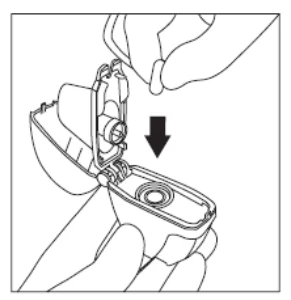
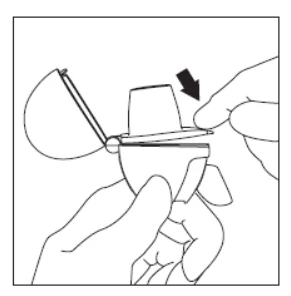
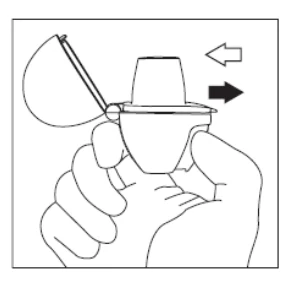
- The contents of the capsule must be inhaled once daily through the mouthpiece of the APO-TIOTROPIUM Inhaler only. Do NOT swallow the capsule! The APO-TIOTROPIUM Inhaler is especially designed for APO-TIOTROPIUM and must not be used with any other capsules. Likewise, you should not take your APO-TIOTROPIUM capsules with any other inhaler.
- Before starting your treatment with APO-TIOTROPIUM, be certain that you are completely familiar with the use and proper care of the APO-TIOTROPIUM Inhaler.
APO-TIOTROPIUM Inhaler:
- The inhaler enables you to inhale the medicine contained in the APO-TIOTROPIUM capsule that your healthcare professional has prescribed for your breathing problems.
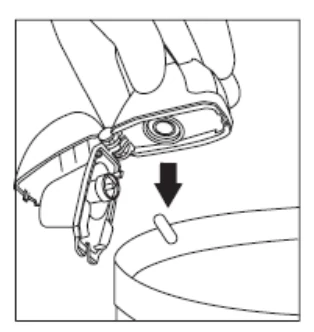
- After first use, you can use your inhaler for up to one-year to take your medication before needing a replacement.
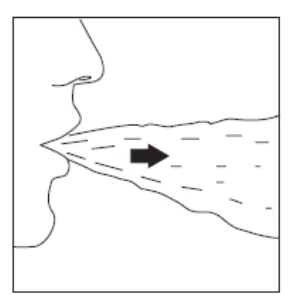
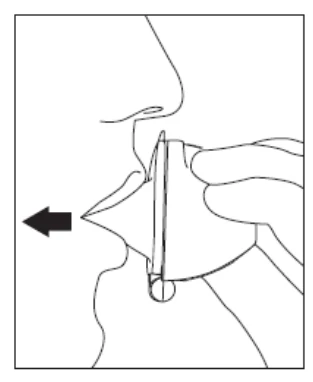
- If you are unable to inspire through the inhaler to make the APO-TIOTROPIUM capsule vibrate, consult your healthcare professional.
How to Use the APO-TIOTROPIUM Inhaler and APO-TIOTROPIUM:
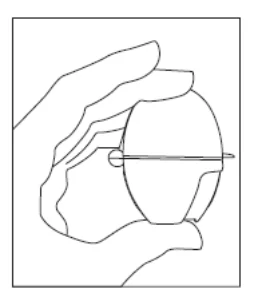
Preparation:
|  |
|---|
| Inhaler parts: | 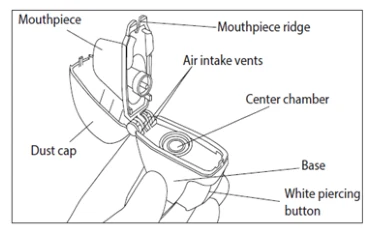 | ||
|---|---|---|---|
| 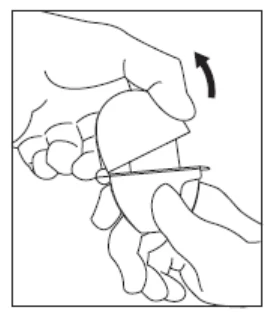 | ||
| 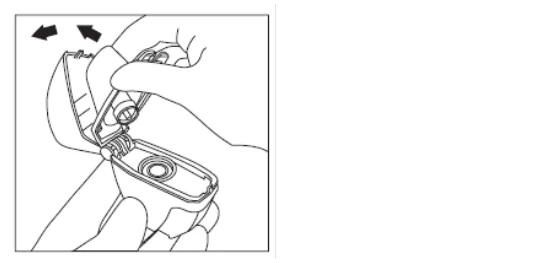 | ||
| Blister Handling: | |||
4A. The blister card contains ten capsules, each capsule is separated by perforated lines. Each day, separate only 1 of the blisters from the blister card by tearing along the perforated line. Do not cut the foil or use sharp instruments to take out the APO-TIOTROPIUM capsule from the blister. | 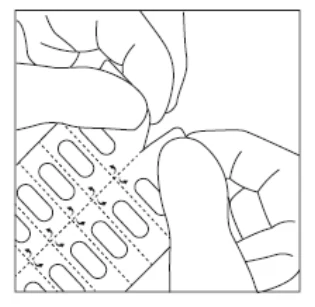 | ||
4B. Immediately before use, peel the aluminum back foil until one capsule is fully visible. Bend 1 of the blister corners with an arrow and separate the aluminum foil layers. Peel back the printed foil until you see the whole capsule. | 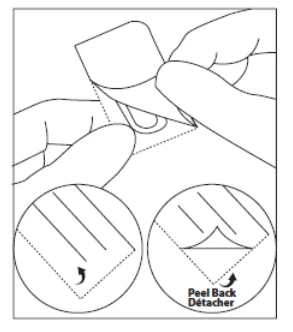 | ||
4C. Remove one APO-TIOTROPIUM capsule from the blister. Do not expose more than one capsule. If more than one capsule is exposed, you should discard the exposed unused capsules. Do not store the capsule in the APO-TIOTROPIUM Inhaler. APO-TIOTROPIUM capsules are partially filled but contain exact amount of medication as declared on the label. | 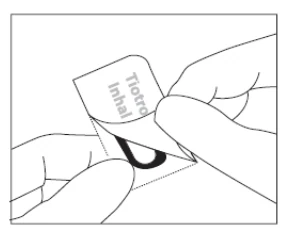 |
|---|---|
| Administration: | |
|  |
|  |
7.
|  |
| |
|---|---|
|  |
9.
|  |
| |
|  |
| |
Cleaning:
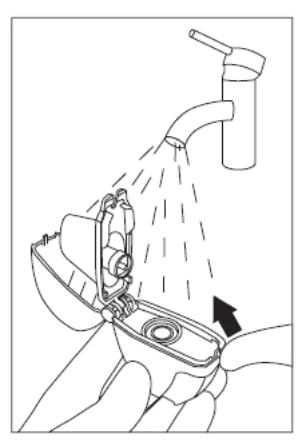
Clean your APO-TIOTROPIUM Inhaler as needed.
- It takes 24 hours to air dry your APO-TIOTROPIUM Inhaler after you clean it.
- Do not use cleaning agents or detergents.
- Do not place your APO-TIOTROPIUM Inhaler in the dishwasher for cleaning.
Cleaning Steps:
|  |
|---|
If you have any questions about APO-TIOTROPIUM or the APO-TIOTROPIUM Inhaler, contact your healthcare professional.
Usual dose:
One (1) APO-TIOTROPIUM capsule is to be inhaled once daily, preferably at the same time each day, only with the APO-TIOTROPIUM Inhaler.
Overdose:
Symptoms of an overdose with APO-TIOTROPIUM include:
- constipation,
- difficulty urinating,
- dry mouth,
- increased eye pressure or pain,
- eye redness,
- vision changes.
| If you think you, or a person you are caring for, have taken too much APO-TIOTROPIUM, contact a healthcare professional, hospital emergency department, or regional poison control center immediately, even if there are no symptoms. |
|---|
Missed Dose:
If you miss or forget to take a dose, take it as soon as you remember. If it is almost time for your next dose, skip the missed dose and take the next dose at your regularly scheduled time. Do not take 2 doses at the same time or on the same day.
What are possible side effects from using APO-TIOTROPIUM?
These are not all the possible side effects you may have when taking APO-TIOTROPIUM. If you experience any side effects not listed here, tell your healthcare professional.
Side effects of APO-TIOTROPIUM may include:
- coughing;
- dry mouth or throat. Check with your healthcare professional if the dry mouth persists;
- bad taste. Check with your healthcare professional if the bad taste persists;
- dizziness;
- hoarse voice;
- itching;
- difficulty in sleeping;
- heartburn;
- constipation. If you experience constipation for a prolonged period of time, tell your healthcare professional;
- sore throat;
- sinus infection;
- inflammation of the mouth, gums and/or tongue;
- nosebleed;
- infections or ulcerations of the skin;
- dry skin;
- swelling of joints;
- dehydration.
Serious side effects and what to do about them
| Symptom / effect | Talk to your healthcare professional | Stop taking drug and get immediate medical help |
|---|---|---|
| Only if severe | In all cases | |
| UNCOMMON (< 1/100 patients) | ||
Serious side effects and what to do about them
| Symptom / effect | Talk to your healthcare professional | Stop taking drug and get immediate medical help | |
|---|---|---|---|
| Only if severe | In all cases | ||
| Oropharyngeal candidiasis (a fungal infection of the oral cavity and throat). | ✓ | ||
| Fast or irregular heartbeat | ✓ | ||
| Urinary retention (inability to pass urine or to empty the bladder): difficulty and pain when passing urine, urinating frequently, or urination in a weak stream or drips. | ✓ | ||
| RARE (< 1/1000 patients) | |||
| Eye disorders: new or worsened pressure in your eyes, eye pain or discomfort, blurred vision, seeing halos or rainbows around items, or red eyes. | ✓ | ||
Paradoxical bronchospasm (sudden narrowing of the airway after taking medicines known as bronchodilators): tightness of the chest associated with coughing, wheezing, or breathlessness immediately after inhalation (bronchospasm). | ✓ | ||
| Intestinal obstruction (blockage that stops or impairs passage of contents of intestines): absence of bowel movements, cramping pain in abdomen that may begin suddenly, bloating, loss of appetite, pain that comes and goes but will then last, nausea and vomiting, or diarrhea. | ✓ | ||
Serious side effects and what to do about them
| Symptom / effect | Talk to your healthcare professional | Stop taking drug and get immediate medical help | |
|---|---|---|---|
| Only if severe | In all cases | ||
| Urinary tract infection (infection in urinary system including kidneys, ureters, bladder and urethra): pain or burning sensation while urinating, frequent urination, blood in urine, pain in the pelvis, strong smelling urine, or cloudy urine. | ✓ | ||
| Serious allergic reaction: rash, hives, swelling of the face, lips, tongue or throat, difficulty swallowing or breathing, wheezing, feeling sick to your stomach, or throwing up. | ✓ | ||
If you have a troublesome symptom or side effect that is not listed here or becomes bad enough to interfere with your daily activities, tell your healthcare professional.
Reporting Side Effects
You can report any suspected side effects associated with the use of health products to Health Canada by:
NOTE: Contact your healthcare professional if you need information about how to manage your side effects. The Canada Vigilance Program does not provide medical advice. |
|---|
Storage:
- Store your APO-TIOTROPIUM capsules and APO-TIOTROPIUM Inhaler between 15°C to 25°C. Protect from freezing, moisture, heat, and sunlight.
Your capsules should always be stored in the blister pockets and only removed from the blister immediately before use. If more than one capsule is accidently
- to air, discard the exposed unused capsule.
- Do not store APO-TIOTROPIUM capsules inside the APO-TIOTROPIUM Inhaler.
- Keep out of reach and sight of children.
If you want more information about APO-TIOTROPIUM:
- Talk to your healthcare professional
- Find the full Product Monograph that is prepared for healthcare professionals and includes this Patient Medication Information by visiting the Health Canada website: (https://www.canada.ca/en/health-canada/services/drugs-health-products/drug-products/drug-product-database.html); the manufacturer’s website (http://www.apotex.ca/products), or by calling 1-800-667-4708.