


Patient Medication Information: uses, side effects, how to take - Apo-Glycopyrronium
What is APO-GLYCOPYRRONIUM used for?
- APO-GLYCOPYRRONIUM is used long term in adults to manage airway blockage from chronic obstructive pulmonary disease (COPD; a lung disease that makes it hard to breathe). This can include chronic bronchitis (inflammation of the lungs) and emphysema (damage to parts of the lung known as alveoli).
- APO-GLYCOPYRRONIUM is not a rescue medicine and should not be used on an as needed basis for treating sudden, severe symptoms of COPD (e.g. sudden breathing problems). Your healthcare professional may give you other medicines to use for sudden breathing problems.
How does APO-GLYCOPYRRONIUM work?
APO-GLYCOPYRRONIUM contains glycopyrronium bromide which belongs to a group of medicines called bronchodilators. In COPD the muscles around the airways tighten, making breathing difficult. APO-GLYCOPYRRONIUM blocks tightening of these muscles in the lungs, making it easier for air to get in and out of the lungs. When you inhale it, it helps you breathe more easily.
What are the ingredients in APO-GLYCOPYRRONIUM?
Medicinal ingredient: Glycopyrronium bromide
Non-medicinal ingredients: Carrageenan, FD&C Yellow 6, hypromellose, lactose monohydrate, magnesium stearate and potassium chloride.
APO-GLYCOPYRRONIUM comes in the following dosage forms:
Inhalation powder hard capsules: 50 mcg of glycopyrronium (as glycopyrronium bromide)
Do not use APO-GLYCOPYRRONIUM if:
- you are allergic to glycopyrronium bromide or any of the other ingredients in APO-GLYCOPYRRONIUM (see What are the ingredients in APO-GLYCOPYRRONIUM?)
- you have a severe milk protein allergy as APO-GLYCOPYRRONIUM contains lactose
To help avoid side effects and ensure proper use, talk to your healthcare professional before you take APO-GLYCOPYRRONIUM. Talk about any health conditions or problems you may have, including if you:
are pregnant or planning to become pregnant
- are breastfeeding or plan to breastfeed
- have or have had heart problems, such as rapid or irregular heartbeat or long QT syndrome
- are taking any medications including eye drops, this includes medications you can buy without prescription
- have difficulty urinating, which can include problems caused by an enlarged prostate
- have eye pain caused by increased pressure in the eyes (narrow-angle glaucoma)
- have kidney problems
Other warnings you should know about:
Eye problems: Avoid getting APO-GLYCOPYRRONIUM powder into your eyes. This may cause eye pain, discomfort, temporary blurring of vision, and/or coloured images in association with red eyes. These may be signs of acute narrow-angle glaucoma (eye pain caused by increased pressure in the eyes). If you develop any of these symptoms, talk to your healthcare professional right away.
Driving and Using Machines: APO-GLYCOPYRRONIUM can cause dizziness or blurred vision. You should not drive or operate machinery if this occurs.
Monitoring: Your healthcare professional might monitor your health throughout your treatment with APO-GLYCOPYRRONIUM. This can include monitoring your kidneys and the development of sudden or worsening COPD symptoms.
Talk to your healthcare professional immediately if:
- your shortness of breath becomes worse
- you don’t get the same benefit from your medicine as you did before
- you have breathing difficulties and chest pain
- you have trouble urinating
See the Serious side effects and what to do about them table, below, for more information on these and other serious side effects.
Tell your healthcare professional about all the medicines you take, including any drugs, vitamins, minerals, natural supplements or alternative medicines.
The following may interact with APO-GLYCOPYRRONIUM:
- medicines similar to APO-GLYCOPYRRONIUM (other short- or long-acting muscarinic antagonists) used for your lung disease. They may interact with APO-GLYCOPYRRONIUM and increase the risk of experiencing side effects.
How to take APO-GLYCOPYRRONIUM:
- APO-GLYCOPYRRONIUM has been prescribed for you and should not be given to other people. Take APO-GLYCOPYRRONIUM capsules exactly as your healthcare professional has told you. Do not take more than once a day or exceed the prescribed dose. You should check with your healthcare professional if you are not sure.
- Your healthcare professional may also provide you with an inhaled short-acting bronchodilator for the treatment of COPD symptoms that may occur suddenly.
- The contents of the capsule must be inhaled once daily through the mouthpiece of the APO-GLYCOPYRRONIUM Inhaler only. Do NOT swallow the capsule. The APO-GLYCOPYRRONIUM Inhaler is especially designed for APO-GLYCOPYRRONIUM capsules and must not be used with any other capsules. Likewise, you should not take your APO-GLYCOPYRRONIUM capsules with any inhalation device other than the APO-GLYCOPYRRONIUM Inhaler.
- When you start a new pack, use the new APO-GLYCOPYRRONIUM Inhaler supplied in the new pack. Dispose of each inhaler after 30 days of use.
- You can inhale APO-GLYCOPYRRONIUM before or after food or drink.
- Store the APO-GLYCOPYRRONIUM capsules in the blister strip until immediately before use.
- Before starting your treatment with APO-GLYCOPYRRONIUM, make sure that you are completely familiar with the use and proper care of the APO-GLYCOPYRRONIUM Inhaler. See the Instructions for Use for complete information.
- It is important that you continue to take APO-GLYCOPYRRONIUM regularly even if you feel fine and do not have any symptoms.
If you have any questions about APO-GLYCOPYRRONIUM or the APO-GLYCOPYRRONIUM Inhaler, talk to your healthcare professional.
Usual dose:
One (1) APO-GLYCOPYRRONIUM capsule is to be inhaled once daily, preferably at the same time each day, only with the APO-GLYCOPYRRONIUM Inhaler.
Instructions for Use
This part of the leaflet explains how to use and care for your APO-GLYCOPYRRONIUM Inhaler.
Please read carefully and follow these instructions.
If you have any questions, ask your healthcare professional.
Your APO-GLYCOPYRRONIUM Inhaler pack contains:
- One APO-GLYCOPYRRONIUM Inhaler
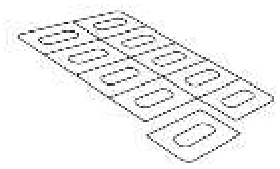
- One or more blister cards, each containing 10 APO-GLYCOPYRRONIUM capsules to be used in the inhaler
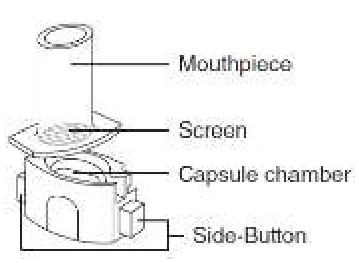
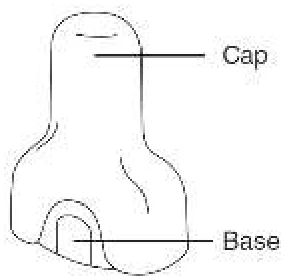
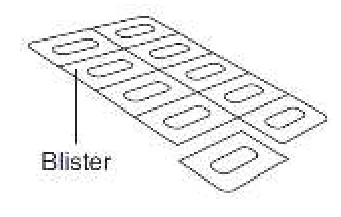
Inhaler
Inhaler base
Blister Card
Please read the full “Instructions for Use” before using the APO-GLYCOPYRRONIUM Inhaler.
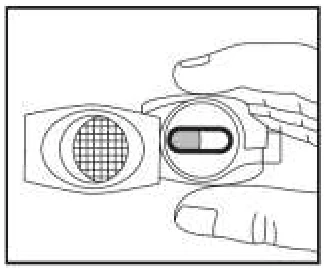
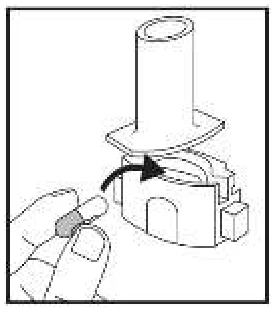
Insert
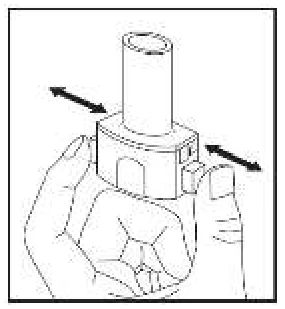
Pierce and release
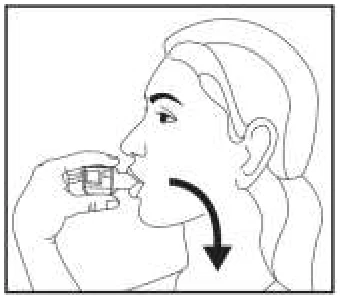
Inhale deeply
Check capsule is empty
| 1 | 2 | 3 | Check |
|---|---|---|---|
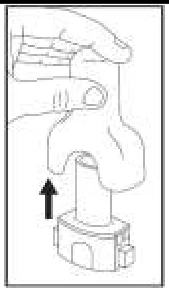 | 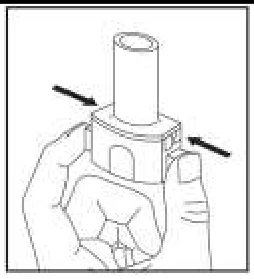 | 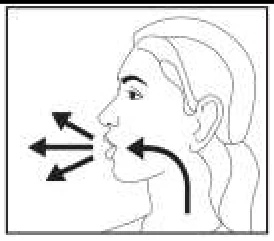 | 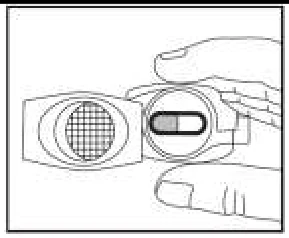 |
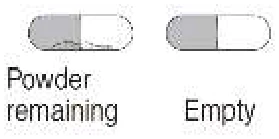
Step 1a: Pull off cap | Step 2a: Pierce capsule once Hold the inhaler upright. Pierce capsule by firmly pressing both side buttons at the same time. You should hear a noise as the capsule is pierced. Only pierce the capsule once. | Step 3a: Breathe out fully Do not blow into the inhaler. | Check capsule is empty Open the inhaler to see if any powder is left in the capsule. If there is powder left in the capsule:
|
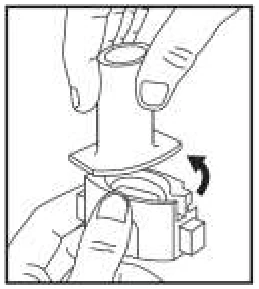 | 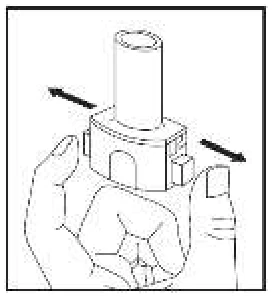 | 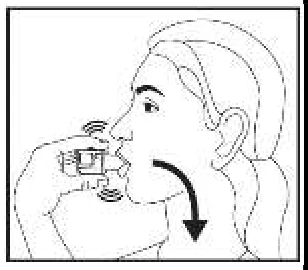 |  |
Step 1b: Open inhaler | Step 2b: Release side buttons | Step 3b: Inhale medicine deeply Hold the inhaler as shown in the picture. Place the mouthpiece in your mouth and close your lips firmly | Remove empty |
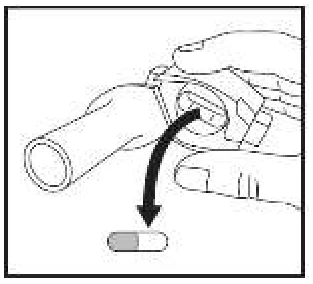 around it. Do not press the side buttons. Breathe in quickly and as deeply as you can. During inhalation you will hear a whirring noise. You may taste the medicine as you inhale. | capsule Put the empty capsule in your household waste. Close the inhaler and replace the cap. Important Information
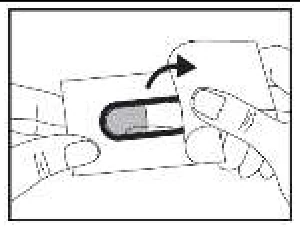
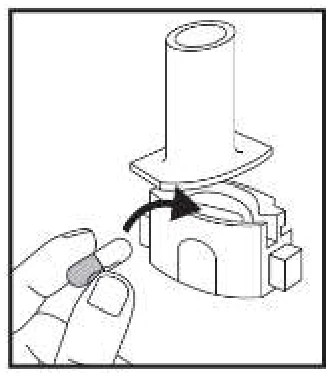
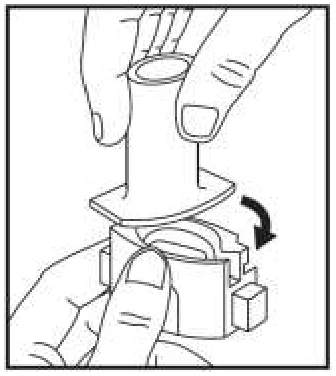
| Step 1c: Remove capsule Separate one of the blisters from the blister card. Peel open the blister and remove the capsule. Do not push the capsule through the foil. Do not swallow the capsule. Step 1d: Insert capsule Never place a capsule directly into the mouthpiece. Step 1e: | |
| Close inhaler | ||
    | |||
 Step 3c: Hold breath Hold your breath for up to 5 seconds. |
Frequently Asked Questions Why didn’t the inhaler make a noise when I inhaled? The capsule may be stuck in the capsule chamber. If this happens, carefully loosen the capsule by tapping the base of the inhaler. Inhale the medicine again by repeating steps 3a to 3c. What should I do if there is powder left inside the capsule? You have not received enough of your medicine. Close the inhaler and repeat steps 3a to 3c. I coughed after inhaling – does this matter? This may happen. As long as the capsule is empty you have received enough of your medicine. I felt small pieces of the capsule on my tongue – does this matter? This can happen. It is not harmful. The chances of the capsule breaking into small pieces will be increased if the capsule is pierced more than once. | Cleaning the inhaler Wipe the mouthpiece inside and outside with a clean, dry, lint-free cloth to remove any powder residue. Keep the inhaler dry. Never wash your inhaler with water. Disposing of the inhaler after use Each inhaler should be disposed of after all capsules have been used. Ask your pharmacist how to dispose of medicines and inhalers that are no longer required. |
|---|
Overdose:
If you think you, or a person you are caring for, have inhaled too much APO-GLYCOPYRRONIUM, contact a healthcare professional, hospital emergency department, regional poison control centre or Health Canada’s toll-free number, 1-844 POISON-X (1-844-764-7669) immediately, even if there are no signs or symptoms.
Symptoms of an overdose with APO-GLYCOPYRRONIUM include:
- constipation
- difficulty urinating
- increased eye pressure or pain
- eye redness
- vision changes
Missed Dose:
If you miss or forget to take a dose, take it as soon as you remember. If it is almost time for your next dose, skip the missed dose and take the next dose at your regularly scheduled time. Do not take two doses at the same time on the same day.
What are possible side effects from using APO-GLYCOPYRRONIUM?
These are not all the possible side effects you may have when taking APO-GLYCOPYRRONIUM. If you experience any side effects not listed here, tell your healthcare professional.
Side effects may include:
- cough
- hoarse voice
- headache
- upset stomach, indigestion
- vomiting
- feeling of pressure or pain in the cheeks and forehead (sinus congestion)
- runny or stuffy nose, sore throat
- dry mouth or throat. Talk to your healthcare professional if the dry mouth persists.
- difficulty sleeping (insomnia)
- fatigue, weakness
- pain in muscles, bones or joints, pain in arms or legs
- tingling or numbness
- dental cavities
- rash, itching
- nose bleeds
Serious side effects and what to do about them
| Serious side effects and what to do about them | |||
| Serious side effects and what to do about them | |||
| Symptom / effect | Talk to your healthcare professional | Stop taking drug and get immediate medical help | |
| Symptom / effect | Talk to your healthcare professional | Stop taking drug and get immediate medical help | |
| Symptom / effect | Talk to your healthcare professional | Stop taking drug and get immediate medical help | |
| Only if severe | In all cases | ||
| Only if severe | In all cases | ||
| Only if severe | In all cases | ||
| UNCOMMON | |||
| Heart palpitations: unusually fast or irregular heartbeat | ✓ | ||
| Hyperglycemia (high blood sugar): increased thirst, frequent urination, dry skin, headache, blurred vision and fatigue | ✓ | ||
| Urinary retention (inability to pass urine or to empty the bladder): difficulty and pain when passing urine, urinating frequently, urination in a weak stream or drips | ✓ | ||
Eye problems: new or worsened pressure in your eyes, eye pain or discomfort, blurred vision, seeing halos of bright colours around lights, red eyes | ✓ | ||
| Gastroenteritis (inflammation of the stomach and intestines): abdominal pain, diarrhea, results in nausea, vomiting | ✓ | ||
| UNKNOWN | |||
| Paradoxical bronchospasm (sudden narrowing of the airways after taking medicines known as bronchodilators): tightness of the chest associated with coughing, wheezing, or breathlessness immediately after inhalation of APO-GLYCOPYRRONIUM | ✓ | ||
| Allergic reaction: rash, hives, swelling of the face, mouth, lips, throat and tongue, difficulty swallowing or breathing | ✓ | ||
Cystitis (bladder infection): increased need to urinate, pain in the pelvis or lower back, frequent urination during the night, cloudy urine that may contain blood, burning sensation when passing urine | ✓ | ||
If you have a troublesome symptom or side effect that is not listed here or becomes bad enough to interfere with your daily activities, tell your healthcare professional.
Reporting side effects
You can report any suspected side effects associated with the use of health products to Health Canada by:
- Visiting the Web page on Adverse Reaction Reporting (canada.ca/drug-device-reporting) for information on how to report online, by mail or by fax; or
- Calling toll-free at 1-866-234-2345.
NOTE: Contact your healthcare professional if you need information about how to manage your side effects. The Canada Vigilance Program does not provide medical advice.
Storage:
Do not use after the expiry date shown on the box.
Store APO-GLYCOPYRRONIUM at room temperature between 15°C to 25°C.
Store the capsules in the original package in a dry place in order to protect from heat and moisture. Do not remove capsules from the blister pack until immediately before use.
Do not use this medicine if you notice that the pack is damaged or show signs of tampering. Each inhaler should be disposed of after 30 days of use.
Keep out of reach and sight of children.
If you want more information about APO-GLYCOPYRRONIUM:
- Talk to your healthcare professional
- Find the full product monograph that is prepared for healthcare professionals and includes this Patient Medication Information by visiting the Health Canada Drug Product Database website: (https://www.canada.ca/en/health-canada/services/drugs-health-products/drug-products/drug-product-database.html); the manufacturer’s website (http://www.apotex.ca/products), or by calling 1-800-667-4708.