


Product Monograph - Arestin Microspheres
1 INDICATIONS
ARESTIN MICROSPHERES (minocycline hydrochloride) is indicated:
- as an adjunct to scaling and root planning (SRP) procedures to decrease pocket depth (PD) in adult patients with chronic periodontitis.
ARESTIN MICROSPHERES is administered with SRP to help further reduce PD in the treatment of adult patients with moderate to advanced chronic periodontal disease.
ARESTIN MICROSPHERES may be used as part of a periodontal maintenance program which includes good oral hygiene and SRP.
ARESTIN MICROSPHERES should be administered under the supervision of a qualified health professional who is experienced in the management of adult periodontitis.
To reduce the development of drug-resistant bacteria and maintain the effectiveness of ARESTIN MICROSPHERES and other antibacterial drugs, ARESTIN MICROSPHERES should be used only to treat infections that are proven or strongly suspected to be caused by susceptible bacteria.
1.1 Pediatrics
Pediatrics (< 18 years of age): No data are available to Health Canada; therefore, Health Canada has not authorized an indication for pediatric use (see 7.1.3 Pediatrics).
1.2 Geriatrics
Geriatrics (> 65 years of age): The mean age of subjects treated in pivotal trials was 49.1 (range 29 -76) years. Age did not affect ARESTIN MICROSPHERES efficacy (see 7.1.4 Geriatrics).
2 CONTRAINDICATIONS
- Patients who are hypersensitive to minocycline or tetracyclines or to any ingredient in the formulation or component of the container. For a complete listing, see the 6 DOSAGE FORMS, COMPOSITION AND PACKAGING section of the Product Monograph.
3 SERIOUS WARNINGS AND PRECAUTIONS BOX
Serious Warnings and Precautions
|
|---|
4 DOSAGE AND ADMINISTRATION
4.2 Recommended Dose and Dosage Adjustment
The recommended dose is one cartridge of ARESTIN MICROSPHERES, containing 1 mg minocycline and 3 mg of polymer carrier, administered sub-gingivally, per periodontal pocket greater than or equal to 5 mm as soon as possible after SRP. The total dose per patient varies with the number of pockets treated.
The maximum number of pockets treated in one visit during the clinical trials was 122 (122 ARESTIN MICROSPHERES cartridges, 122 mg minocycline). The mean dose administered, per visit, was 31 mg. In the two pivotal trials, probing depths were maintained for up to 9 months during which ARESTIN MICROSPHERES alone was reapplied twice; however, the trials did not provide evidence that reapplication of ARESTIN MICROSPHERES alone provided additional or incremental clinical benefit.
4.4 Administration
ARESTIN MICROSPHERES is provided as a dry powder, packaged in a unit dose cartridge, which is inserted into a cartridge handle to administer the product. The oral healthcare professional removes the disposable dispenser from its pouch, removes a cartridge and connects it to the handle mechanism as shown in Figure 1 below.
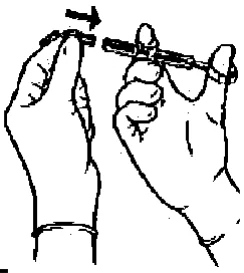
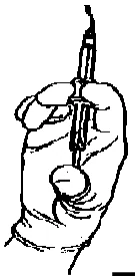
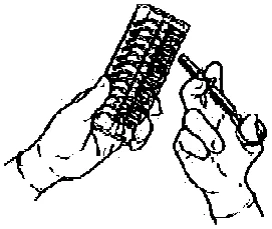
Figure 1: Removal of Cartridge from Package and Insertion onto Handle
The administration of ARESTIN MICROSPHERES does not require local anaesthesia. Professional subgingival administration is accomplished by inserting the tip of the unit dose cartridge to the base of the periodontal pocket and then pressing the thumb ring in the handle mechanism to expel the powder while gradually withdrawing the tip from the base of the pocket. The handle mechanism should be sterilized between patients. ARESTIN MICROSPHERES does not have to be removed, as it is bioresorbable, nor is an adhesive or dressing required.
Patients should be cautioned about foods touching the site of ARESTIN MICROSPHERES insertion and the need to delay tooth brushing and cleaning following treatment (see 7
1a
1b
1c
WARNINGS AND PRECAUTIONS).
5 OVERDOSAGE
There have been no reports of overdosage with the use of ARESTIN MICROSPHERES and such risks are limited due primarily to the method and route of its administration.
Overdose symptoms reported with oral use of minocycline hydrochloride include dizziness, nausea, vomiting, abdominal pain, intestinal haemorrhage, hypotension, lethargy, coma, acidosis, and azotemia without a concomitant rise in creatinine.
Treatment
Dilute well with water or milk due to the possibility of esophageal ulceration. Antacids may relieve nausea and abdominal pain (e.g., calcium carbonate or lactate, milk of magnesia, aluminum hydroxide). Measures to reduce absorption such as induction of emesis or use of cathartic may be beneficial in certain cases.
| For management of a suspected drug overdose, contact your regional poison control centre. |
|---|
6 DOSAGE FORMS, STRENGTHS, COMPOSITION AND PACKAGING
Table 1: Dosage Forms, Strengths, Composition and Packaging
Description
ARESTIN MICROSPHERES (minocycline hydrochloride) is a subgingival controlled-release product, containing the antibiotic minocycline hydrochloride incorporated into a bioresorbable polymer, poly (glycolide-co-dl-lactide) or PGLA, and it is intended for professional subgingival administration into periodontal pockets. Each unit dose cartridge delivers microspheres in powder form and contains minocycline hydrochloride equivalent to 1 mg minocycline free base in 3 mg of polymer.
ARESTIN MICROSPHERES is supplied in single dose cartridges equivalent to 1 mg (as minocycline base). 12 cartridges are packaged in one tray with desiccant in a heat-sealed foil laminate resealable pouch. Each cartridge contains 4 mg of powder made up of minocycline hydrochloride and poly (glycolide-co-DL-lactide), PGLA. There is one pouch (total of 12 units) or two pouches (total of 24 units) in each box. Each unit dose cartridge contains the product
| Route of Administration | Dosage Form / Strength/Composition | Non-medicinal Ingredients |
| Subgingival | Controlled-release microspheres, minocycline 1 mg as base | Poly (glycolide-co-dl-lactide) |
identifier "OP-1".
7 WARNINGS AND PRECAUTIONS
General
ARESTIN MICROSPHERES has not been clinically tested in immunocompromised patients (such as those immunocompromised by diabetes, chemotherapy, radiation therapy, or infection with HIV).
ARESTIN MICROSPHERES should be used with caution in patients having a history or predisposition to oral candidiasis. The safety and effectiveness of ARESTIN MICROSPHERES have not been established for the treatment of periodontitis in patients with co-existent oral candidiasis.
Carcinogenesis and Mutagenesis
Dietary administration of minocycline in long-term tumorigenicity studies in rats resulted in evidence of thyroid tumour production. Minocycline has also been found to produce thyroid hyperplasia in rats and dogs. In addition, there has been evidence of oncogenic activity in rats in studies with a related antibiotic, oxytetracycline (i.e., adrenal, and pituitary tumours).
Minocycline demonstrated no potential to cause genetic toxicity in a battery of in vitro and in vivo assays in animals.
The significance of these studies to human administration of ARESTIN MICROSPHERES is unknown.
Ear/nose/throat
The insertion of ARESTIN MICROSPHERES in periodontal pockets affected by acute abscess formation has not been studied and is not recommended.
ARESTIN MICROSPHERES has not been clinically tested for use in the regeneration of alveolar bone, either in preparation for or in conjunction with the placement of endosseous (dental) implants or in the treatment of failing implants.
Immune
Autoimmune Syndromes
Tetracyclines, including oral minocycline, have been associated with the development of autoimmune syndromes including a Lupus-like syndrome manifested by arthralgia, myalgia, rash and swelling. Sporadic cases of serum sickness-like reaction have presented shortly after oral minocycline use, manifested by fever, rash, arthralgia, lymphadenopathy, and malaise.
Exacerbation of systemic lupus erythematosus has also occurred.
If any of the above effects should occur after ARESTIN MICROSPHERES treatment, no further treatment with ARESTIN MICROSPHERES should be administered to the patient. If autoimmune syndrome symptoms develop, liver function tests, ANA, CBC, and other appropriate tests should be performed to evaluate the patient.
Hypersensitivity Reactions and Hypersensitivity Syndrome
The following adverse events have been reported with minocycline products when taken orally. Hypersensitivity reactions and hypersensitivity syndrome that included, but were not limited to anaphylaxis, anaphylactoid reaction, angioneurotic edema, polyarthralgia, urticaria, rash, eosinophilia, and one or more of the following: hepatitis, pneumonitis, nephritis, myocarditis, and pericarditis may be present. Swelling of the face, pruritus, fever, and lymphadenopathy have been reported with the use of ARESTIN MICROSPHERES. Some of these reactions were serious.
Post-marketing cases of anaphylaxis and serious skin reactions such as Stevens-Johnson syndrome and erythema multiforme have been reported with oral minocycline. Drug Rash with Eosinophilia and Systemic Symptoms (DRESS) including fatal cases have been reported with minocycline use. If this syndrome is recognized, the drug should be discontinued immediately.
The potential for local manifestations of hypersensitivity reactions also exists. Patients should be notified to inform their health care provider if itching, swelling, papules, reddening or other signs and symptoms of possible hypersensitivity occur.
Reproductive health: Female and male potential
Minocycline, like other tetracyclines, may decrease the effectiveness of oral contraceptives. Women of childbearing potential should use an effective method of contraception when treated with minocycline for 3 weeks after treatment.
Fertility and general reproduction studies have provided evidence that minocycline impairs fertility in male rats.
Sensitivity/Resistance
Development of Drug-Resistant Bacteria
Prescribing ARESTIN MICROSPHERES in the absence of a proven or strongly suspected bacterial infection is unlikely to provide benefit to the patient and risks the development of resistant drug-resistant bacteria.
Potential for Microbial Overgrowth
While no overgrowth by opportunistic microorganisms, such as yeast, were noted following single dosing in clinical studies, as with other antimicrobials, the use of ARESTIN MICROSPHERES may result in overgrowth of non-susceptible microorganisms including fungi.
If superinfection with resistant organisms is suspected, appropriate measures should be taken.
Skin
Photosensitivity manifested by an exaggerated sunburn reaction has been observed in some individuals taking tetracyclines. Patients apt to be exposed to direct sunlight or ultraviolet light should be advised that this reaction can occur with tetracycline drugs, and treatment should be discontinued at the first evidence of skin erythema. Further sun exposure is to be avoided should any form of cutaneous rash occur.
As with the systemic administration of minocycline, hypersensitivity reactions are possible with ARESTIN MICROSPHERES (see 7 WARNINGS and PRECAUTIONS, Hypersensitivity Reactions and Hypersensitivity Syndrome).
7.1 Special Populations
7.1.1 Pregnant Women
ARESTIN MICROSPHERES has not been clinically tested and is not recommended for use in pregnant women.
The use of drugs of the tetracycline class during tooth development (last half of pregnancy, infancy, and childhood to the age of eight years) may cause permanent discolouration of the teeth (yellow-gray-brown). This adverse reaction is more common during long-term use of the drugs but has been observed following repeated short-term courses. Enamel hypoplasia has also been reported.
Results of animal studies indicate that tetracyclines cross the placenta, are found in fetal tissues, and can have toxic effects on the developing fetus (often related to retardation of skeletal development). Evidence of embryotoxicity has also been noted in animals treated early in pregnancy. Tetracyclines complex with calcium in bone-forming tissue. If the patient becomes pregnant while taking this drug, the patient should be apprised of the potential hazard to the fetus.
7.1.2 Breast-feeding
Minocycline like other tetracyclines is excreted in human milk. ARESTIN MICROSPHERES should not be administered to nursing women because of the potential for serious adverse reactions in nursing infants.
7.1.3 Pediatrics
Pediatrics (< 18 years of age)
Like other tetracyclines minocycline can stain growing teeth and affect growing bone in children. ARESTIN MICROSPHERES has not been studied and is not recommended for use in children. No data are available to Health Canada; therefore, Health Canada has not authorized an indication for pediatric use (see 1.1 Pediatrics).
7.1.4 Geriatrics
Geriatrics (> 65 years of age)
There are no specific monitoring requirements or hazards associated with the use of ARESTIN MICROSPHERES in geriatric patients (see 1.2 Geriatrics).
8 ADVERSE REACTIONS
8.1 Adverse Reaction Overview
The most frequently reported non-dental treatment emergent adverse events irrespective of causation in pivotal clinical trials with ARESTIN MICROSPHERES, were headache, infection, flu syndrome and pain.
The most frequently reported dental treatment-emergent adverse events which were reported in pivotal trials, irrespective of causation, were dental pain (toothache, pain associated with teeth and discomfort after dental procedures, periodontitis and gingivitis, tooth disorders (tooth fractures, problems with fillings and hot/cold sensitivity), tooth caries (root surface decay, recurrent decay, and dental caries), stomatitis, dental infections.
8.2 Clinical Trial Adverse Reactions
Clinical trials are conducted under very specific conditions. The adverse reaction rates observed in the clinical trials may not reflect the rates observed in practice and should not be compared to the rates in the clinical trials of another drug. Adverse reaction information from clinical trials may be useful in identifying and approximating rates of adverse drug reactions in real-world use.
Three major studies were conducted in 922 subjects to evaluate the safety and efficacy of ARESTIN MICROSPHERES. At baseline all subjects received SRP and ARESTIN MICROSPHERES, vehicle, or nothing. ARESTIN MICROSPHERES or vehicle alone was re-administered twice during the 9-month observation period. Adverse events reported, irrespective of causation are presented in Table 2.
Table 2: Incidence of Adverse Events Reported by ≥ 1% of ARESTIN MICROSPHERES Subjects.
Protocols 103A, 103B, 104 Combined
| Event | ARESTIN MICROSPHERES + SRP n = 423 (%) | Vehicle + SRP n = 249 (%) | SRP Alone n = 250 (%) |
|---|---|---|---|
| Body as a Whole | |||
| Headache | 10.4 | 13.7 | 9.2 |
| Infection | 8.0 | 10 | 8.4 |
| Flu Syndrome | 5.2 | 6.8 | 3.6 |
| Pain | 5.0 | 2.4 | 4 |
|---|---|---|---|
| Accidental Injury | 2.6 | 3.6 | 3.6 |
Mucous Membrane Disorder | 3.5 | 1.6 | 2.4 |
| Back Pain | 2.8 | 2.8 | 0.8 |
| Allergic Reaction | 1.2 | 0.8 | 2.0 |
| Abdominal Pain | 1.2 | 0.8 | 0 |
| Digestive | |||
| Periodontitis | 17 | 28.5 | 26.8 |
| Tooth Disorder | 13.0 | 16.5 | 13.2 |
| Tooth Caries | 12.1 | 13.3 | 10.4 |
| Dental Pain | 10.9 | 11.6 | 11.6 |
| Gingivitis | 10.6 | 10 | 8.4 |
| Stomatitis | 6.6 | 8 | 9.2 |
| Infection Dental | 4.3 | 4.4 | 4 |
| Mouth Ulceration | 5.9 | 3.6 | 1.6 |
| Dyspepsia | 4.0 | 0 | 2.4 |
| Leukoplakia of Mouth | 2.4 | 1.2 | 2 |
| Periodontal Abscess | 1.7 | 2 | 1.6 |
| Tongue Discolouration | 1.7 | 0.4 | 0.8 |
| Diarrhea | 1.4 | 1.2 | 0 |
| Musculoskeletal | |||
| Myalgia | 1.9 | 1.2 | 0.8 |
| Arthralgia | 1.2 | 1.2 | 0.8 |
| Nervous | |||
| Hypertension | 2.8 | 2.0 | 0.8 |
| Respiratory | |||
| Pharyngitis | 5.2 | 1.6 | 3.6 |
| Rhinitis | 2.4 | 2.8 | 1.2 |
| Bronchitis | 1.4 | 2.4 | 1.2 |
| Sinusitis | 1.7 | 2.8 | 0.4 |
| Skin & Appendages | |||
| Rash | 1.2 | 0 | 1.2 |
8.4 Abnormal laboratory findings: Hematologic, clinical chemistry and other quantitative data
No clinical laboratory safety evaluations were performed in the three Phase 3 studies.
8.5 Post-Market Adverse Reactions
The following adverse reactions have been identified during post-approval use of ARESTIN MICROSPHERES. Because these events were reported voluntarily from a population of unknown size, frequencies cannot be estimated accurately.
- Skin and hypersensitivity reactions: anaphylaxis, angioneurotic edema, acute febrile neutrophilic dermatosis (Sweet’s syndrome), urticaria, rash, swelling of the face and pruritus.
9 DRUG INTERACTIONS
9.4 Drug-Drug Interactions
Subgingival administration results in systemic blood levels which are 2 to 3 times lower than that found after oral administration. The potential for drug-drug interactions is considered low.
However, the possibility that interactions could occur should not be ignored.
Because tetracyclines can decrease plasma prothrombin activity, they may potentiate the effects of oral anticoagulants. The low plasma concentrations associated with ARESTIN MICROSPHERES (minocycline hydrochloride) treatment have not been assessed for these effects.
As for other tetracyclines, there is demonstrable antagonism in vitro between minocycline and either beta-lactam (e.g., penicillin, amoxicillin, cefaclor) or aminoglycoside (e.g., gentamycin, tobramycin) antibiotics. The clinical relevance of these findings to periodontal use of ARESTIN MICROSPHERES is unknown.
Concurrent use of methoxyflurane anaesthesia and tetracyclines has been reported to seriously impair renal function, leading in some cases to death.
Minocycline, like other tetracyclines, may decrease the effectiveness of oral contraceptives.
9.5 Drug-Food Interactions
Interactions with food have not been studied. Oral and other forms of minocycline, like other tetracyclines, can chelate with cations.
9.6 Drug-Herb Interactions
Interactions with herbal products have not been established.
9.7 Drug-Laboratory Test Interactions
Interactions with laboratory tests have not been established.
10 CLINICAL PHARMACOLOGY
10.1 Mechanism of Action
Minocycline hydrochloride is a semisynthetic derivative of tetracycline. It is bacteriostatic and exerts its antimicrobial activity by inhibiting bacterial protein synthesis. It has non-antibacterial, anti-inflammatory, and other properties.
Periodontitis is a bacterial infection with immuno-inflammatory components which destroys supporting tooth structures. A wide variety of bacterial pathogens are implicated and in part include Porphyromonas gingivalis, Prevotella intermedia, Treponema denticola, Tannerella forsythia, Fusobacterium nucleatum, Eikenella corrodens and Aggregatibacter actinomycetemcomitans among others. In vitro susceptibility testing has demonstrated minimum inhibitory concentrations against tetracyclines of ≤4 mcg/mL for species of Bacteroides, Prevotella, Porphyromonas and Fusobacterium. These MIC values increase significantly in bacterial biofilm.
In vivo the plaque biofilm environment is protective of bacteria necessitating higher inhibitory drug concentrations. Plaque breakup and debridement with SRP along with adjunctive ARESTIN MICROSPHERES are used to decrease PD.
Antimicrobial
Like other tetracyclines, minocycline inhibits bacterial protein synthesis by binding the 30S ribosomal subunit. The binding to the ribosome is reversible, explaining the bacteriostatic nature of these compounds. This binding blocks the association of the aminoacyl transfer RNA to the acceptor site on the messenger RNA-ribosome complex, thus preventing the addition of new amino acids into the growing peptide chain. Like other tetracyclines minocycline enters the outer membrane of gram-negative bacteria by passive diffusion through porin channels OmpF and OmpC, probably as positively charged molecules associated with magnesium. Once in the periplasmic space, the complex dissociates, and minocycline enters the inner membrane by diffusion (minocycline is lipophilic). Similarly, the lipophilic form enters the cytoplasmic space of gram-positive bacteria driven by a process dependent on the change in pH.
Non-antimicrobial
Periodontal disease is characterized by a breakdown of connective tissue and bone loss caused by resorption. Minocycline HCl and other tetracyclines have been shown to retard pathologic connective tissue breakdown, including bone loss, when administered either orally, or when applied directly to the molar teeth of rats. For example, minocycline HCl
(10 mg/kg/day, administered orally for 21 days) ameliorated the elevations of collagenase, gelatinase, elastase, and β-glucuronidase in the gingiva and skin of diabetic rats and in the gingiva of rats challenged with bacterial endotoxin, while 0.2% minocycline HCl significantly reduced root caries and bone loss when applied to the molar teeth of rats for nine weeks.
Minocycline, given orally in a dose of 20 mg daily for 21 days, also increased protein synthesis and secretions in periodontal ligament fibroblasts and increased collagen synthesis in osteoblasts of streptozotocin-induced diabetic rats. Minocycline HCl and other tetracyclines inhibit the breakdown of connective tissue because they inhibit the activity of matrix metalloproteinase (MMP) collagenase.
One study has explored the potential non-antimicrobial effects of ARESTIN MICROSPHERES on host biomarkers of tissue breakdown. Local levels of catabolic host markers in 48 chronic periodontitis patients treated with either ARESTIN MICROSPHERES + SRP or vehicle (PGLA) + SRP were monitored. The investigators also included 8 periodontally healthy subjects as negative controls. Accordingly, gingival crevicular fluid (i.e., a serum-like exudate that diffuses from the periodontal tissues and bathes the periodontal pocket) was sampled using absorbent paper strips (8 sites per patient) and analyzed using ELISA techniques for two host biomarkers. These were pyridinoline cross-linked carboxy-terminal telopeptide of type I collagen (ICTP)
which is a bone-specific collagen degradation product, and interleukin-1 beta (IL-l) which is a potent bone-resorptive cytokine.
The results indicated that gingival crevicular fluid levels of ICTP and IL-l are related to baseline clinical observations. Cross-sectionally, deep sites had significantly (p<0.001) higher ICTP and IL-1 levels as compared to shallow sites. In addition, healthy subjects had significantly lower levels (p<0.001) at baseline as compared to periodontitis subjects. Significant (p<0.05) reductions in ICTP and IL-l were observed at 1 month for periodontitis patients treated with ARESTIN MICROSPHERES + SRP as compared to patients treated with the adjunctive vehicle. In addition, the ARESTIN MICROSPHERES + SRP group had significantly (p<0.02) lower crevicular fluid levels of IL-l when compared to the vehicle + SRP group at 1 month. These data suggested that local delivery of minocycline via ARESTIN MICROSPHERES may inhibit local collagen breakdown and inflammatory responses in patients with chronic periodontitis.
Animal Pharmacology
Blood levels produced following oral dosing of minocycline hydrochloride to various animals’ species were:
- 21 mg/L at steady state in monkeys administered 30 mg/kg.
- 6.5 mg/L at 3 hours post-dose in rats given a single 25 mg/kg dose.
Minocycline hydrochloride was extensively distributed to all tissues examined in 14C-labelled drug studies in dogs.
10.3 Pharmacokinetics
Pharmacokinetic parameters were derived from a study of 18 subjects with moderate to advanced chronic periodontitis who, following full-mouth SRP, were treated with ARESTIN MICROSPHERES at a minimum of 30 sites (unit dose of 1 mg minocycline per site) on at least 8 teeth with PD of ≥5 mm. The mean minocycline dose per patient was 46 mg, and the doses ranged from 25 to 112 mg. Serum and saliva data from this study normalized per unit 1 mg dose of minocycline are displayed in Table 3. The mean patient Cmax irrespective of dose was 0.216 mcg/mL in serum and 254 mcg/mL in saliva.
Table 3: Pharmacokinetic Parameters of Minocycline after Subgingival Administration of ARESTIN MICROSPHERES*
| PK Parameter | Biological Fluid Sampled | |
|---|---|---|
| Serum Data Mean (%CV) (n=18) | Saliva Data Mean (%CV) (n=13) | |
| AUC0→T dose** (mcg·h/mL) | 0.139 (40.0) | 17.5 (45.3) |
| AUC∞/dose (mcg·h/mL) | 0.169 (40.0) | 17.6 (44.7) |
| Cmax/dose (mcg. mL) | 0.00488 (38.2) | 5.55 (47.9) |
| Tmax (h) | 4.83 (37.7) | 0.748 (74.8) |
| k e1 (1/h) | 0.0322 (33.2) | 0.0181 (40.2) |
|---|---|---|
| Half-life (h) | 23.8 (34.5) | 44.7 (42.9) |
| CL/F(L/h) | 7.12 (51.8) | Not calculated |
| VAREA/F(L) | 223 (38.7) | Not calculated |
*One treatment with ARESTIN MICROSPHERES to each qualifying pocket (1 mg minocycline/pocket; mean number pockets treated per patient 46 (range 25-112).
**Values reported are not the observed values, but are dose adjusted (normalized) to a single dose, to account for the different number of pockets treated for each patient.
Serum data from the above study, dose adjusted (normalized) to a single 1 mg minocycline dose to account for the different number of pockets treated for each patient, was compared to serum data for a single oral minocycline dose of 100 mg and these results are shown in Table 4.
Table 4: Mean Serum Pharmacokinetic Estimates: ARESTIN MICROSPHERES vs Minocycline 100 mg Orally
| Parameter | Treatment with Minocycline | |
|---|---|---|
| ARESTIN MICROSPHERES administered at various doses depending on the number of pockets (normalized to a single 1 mg dose) | Minocycline single oral dose of 100 mg | |
| Reference | Study 105 | Saivin & Houin Clin Pharmacokinetics 1988, 15:355 |
| AUC∞/dose (mcg·h/mL) | 0.169 | 31.6 |
| Cmax/dose (mcg/mL) | 0.00488 | 1.6 |
| Tmax (h) | 4.83 | 1.9 |
| Half-life (h) | 23.8 | 18.4 |
Absorption
In the study summarized in Table 3, mean dose normalized saliva AUC∞ and Cmax were found to be approximately 125 and 1000 times higher than those of serum parameters respectively. The rate and extent of absorption of minocycline from this study based on Cmax and AUC∞ respectively are estimated to be 3 and 2 times lower than would be expected following an equivalent oral (systemic) minocycline dose.
Distribution
Minocycline's high degree of lipophilicity explains its wide distribution in all the body tissues. Plasma protein binding of minocycline ranges from 70% to 80%. The volume of distribution ranges from 80 L to 115 L.
Metabolism
Minocycline is subject to biotransformation in the liver. Three microbiologically inactive metabolites have been found in urine and faeces, the main metabolite being 9-hydroxy- minocycline, and the two others resulting from demethylation of the parent compound in the 4 or 9 positions.
Excretion
Elimination of unchanged minocycline in the urine represents 8 to 12% of the oral dose and corresponds to a renal clearance of 0.54 L/h. Faecal elimination of the parent compound represents 20 to 35% of the dose, the rest being eliminated as metabolites either in the urine or in the faeces. Total clearance of minocycline ranges from 33.6 L/h to 5.7 L/h. The elimination half-life of minocycline after oral dosing is reported to be between 13.5 and 18.4 hours and after IV dosing, between 12.6 and 16 hours.
Polymer and Gingival Crevicular Fluid (GCF) Concentration
The polymer microspheres are hydrophilic and coalesce within the pocket forming a honeycomb structure which slowly releases minocycline to the GCF. The polymer microspheres adhere to each other and to subgingival tissues when in contact with crevicular fluid. The polymer is bio-resorbed within a month converting to its lactic acid and glycolic acid components. High mean minocycline concentrations were recorded in GCF within periodontal pockets following single doses of ARESTIN MICROSPHERES in 10 patients (n=21-24 periodontal pockets; 1 mg minocycline per periodontal pocket) decreasing from 562 mcg/mL at 3 days to 7 mcg/mL by 2 weeks and 0.5 mcg/mL by 28 days.
11 STORAGE, STABILITY AND DISPOSAL
Store between 15°C to 30°C. Avoid exposure to excessive heat.
12 SPECIAL HANDLING INSTRUCTIONS
No special handling instructions for this product.
PART II: SCIENTIFIC INFORMATION
13 PHARMACEUTICAL INFORMATION
Drug Substance
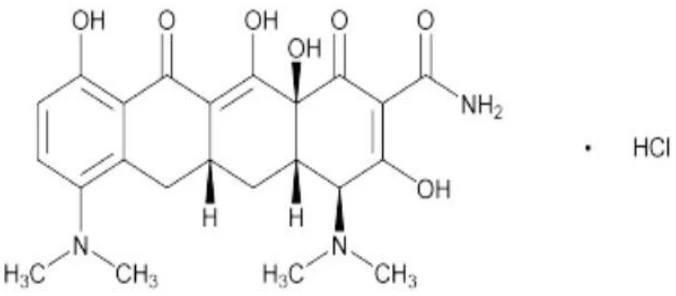
Proper name: Minocycline Hydrochloride
Chemical name: 7-dimethylamino-6-demethyl-6-deoxytetracycline hydrochloride 2-Naphthacenecarboxamide, 4,7-bis(dimethylamino) 1,4,4a,5,5a,6,11,12a-octahydro-3, 1 0,-12,12a-tetrahydroxy-1,11-dioxo-,monohydrochloride,[4S-(4α,4aα,5aα,12aα)]-4,7-Bis(dimethy1amlno)-1,4,4a,5,5a,6,11,12a-octahydro-3,10,-12,12a-tetrahydroxy-1,11- dioxo-,2-naphthacene-carboxamide monohydrochloride
Molecular formula and molecular mass: C23H27N3O7HCl 493.94 g/mol
Structural formula:
Physicochemical properties:
Description: Minocycline hydrochloride is a yellow crystalline powder that is essentially odourless and has a somewhat bitter taste.
ARESTIN MICROSPHERES (minocycline hydrochloride) delivers a sustained release of minocycline for 14 days. In vitro studies have shown that approximately 90% of the polymer is hydrolyzed within 50 days of application. The polymer is bioresorbable so there is no need to remove the product.
Solubility: Minocycline hydrochloride is soluble in water and dissolves in aqueous solutions of alkali hydroxides and carbonates. Minocycline hydrochloride has the following solubilities in organic solvents:
| Solvent | Minocycline Solubility (mg/mL at 25° C) |
|---|---|
| Methanol | 14 |
| Absolute Ethanol | 42 |
| 1-Octanol | 0.5 |
| Acetone | 0.6 |
| Ethyl Acetate | 0.3 |
| Chloroform | 0.13 |
pH: pH=3.9
pKa: pKa1=2.8 (tricarbonylmethane moiety)
pKa2=5.0 (7-dimethylammonium moiety)
pKa3=7.8 (phenolic diketone moiety)
pKa4=9.5 (4-dimethylammonium moiety)
Thermal properties: Minocycline hydrochloride loses its water of hydration between 75° to 150°C. Decomposition begins at approximately 177° to 181°C.
Hygroscopicity: Minocycline hydrochloride readily associates with two moles of water even at low relative humidity. However, once the dihydrate (6.8% water) is formed, further hydration at room temperature is negligible unless the material is exposed to conditions close to 100% RH.
Partition coefficient: 0.051 at pH 3.9 (octanol/aqueous buffer)
1.11 at pH 5.6 (octanol/aqueous buffer)
1.48 at pH 6.6 (octanol/aqueous buffer)
0.36 at pH 8.5 (octanol/aqueous buffer)
PLGA (poly (DL-lactide-co-glycolide))
ARESTIN MICROSPHERES (minocycline hydrochloride) releases minocycline continuously for 14 days. According to in vitro studies, around 90% of the polymer is hydrolyzed within 50 days of application. As the polymer is resorbed in the body, there is no need to remove it.
14 CLINICAL TRIALS
14.1 Clinical Trials by Indication
Adjunct to Scaling and Root Planning (SRP) Procedures to Decrease Pocket Depth (PD) in Adult Patients with Chronic Periodontitis
The efficacy of ARESTIN MICROSPHERES (minocycline hydrochloride) as an adjunct to SRP in reducing PD in adults with chronic moderate to advanced periodontitis (American Dental Association Class 3 and 4) was demonstrated principally in 3 clinical trials conducted in the US. Two were pivotal, controlled, 9-month trials (103A and 103B) with identical protocols. The third (104) was a single-arm, uncontrolled, open, 12-month study.
Study demographics and trial designs are summarized in Table 5.
Table 5: Summary of Patient Demographics for Clinical Trials in The Treatment of Acne Vulgaris in Patients 9 Years of Age and Older
| Study # | Study design | Dosage, route of administration and duration | Study subjects (n) | Mean age (Range) | Sex |
| 103 A | Multicentre, randomized, single-blind, evaluator-blind, parallel, vehicle-controlled, 3-arm studies. | SRP to all teeth at baseline; subgingival adjunctive treatments at baseline and at 3 & 6 months to pockets ≥5 mm. Possible doses of 4-168 mg minocycline (ARESTIN MICROSPHERE S) per treatment. | 368 patients | 48.1 (29-77) | 203 M 165 F |
| 103 B | Multicentre, randomized, single-blind, evaluator-blind, parallel, vehicle-controlled, 3-arm studies. | SRP to all teeth at baseline; subgingival adjunctive treatments at baseline and at 3 & 6 months to pockets ≥5 mm. Possible doses of 4-168 mg minocycline (ARESTIN MICROSPHERE S) per treatment. | 380 patients | 47.9 (29-79) | 207 M 173 F |
| 104 | Multicentre, open label | SRP to all teeth at baseline; subgingival adjunctive treatments at baseline and at 3 & 6 months to pockets ≥5 mm. Possible doses of 4-168 mg minocycline (ARESTIN MICROSPHERE S) per treatment. | 173 patients | 48.8 (29-78) | 92 M
|
Severity of periodontal disease was moderate in 61% of patients and advanced in 39% of patients. Subjects in pivotal trials received at baseline one of three treatments: (1) ARESTIN MICROSPHERES + SRP, (2) Vehicle (bioresorbable polymer, PGLA) + SRP, and (3) SRP alone. Retreatment with ARESTIN MICROSPHERES or vehicle alone occurred at 3 and 6 months after initial treatment. Any new site with PD ≥5mm also received treatment but was assessed separately. To qualify for the study, patients were required to have four teeth with periodontal pockets of 6-9 mm that bled on probing. However, adjunctive treatment was administered to all sites with mean probing depths of 5 mm. Third molars were not included. Patients studied were in good general health.
Patients with poor glycemic control or active infectious diseases were excluded from the studies.
Table 6: Results of Study in Scaling and Root Planning (SRP) Procedures to Decrease Pocket Depth (PD) in Adult Patients with Chronic Periodontitis
| Primary Endpoints | Associated value and statistical significance for Placebo or active control |
| The primary variable in the 2 pivotal trials was PD reduction. Their integrated results (averages of patient means) are expressed in Figure 2 and with more details in Table 7. Patients treated with ARESTIN MICROSPHERES were found to have statistically significantly greater probing PD reduction compared to those treated with SRP alone or with vehicle at all post baseline observation times. | In these two pivotal studies, an average of 31 (5-108), 31.7 (4-137) and 29.5 (5-114) sites were treated at baseline in the ARESTIN MICROSPHERES + SRP group, Vehicle + SRP group and SRP alone group, respectively. Table 7 details integrated data for the 2 pivotal trials from the 3 treatment groups over time. |
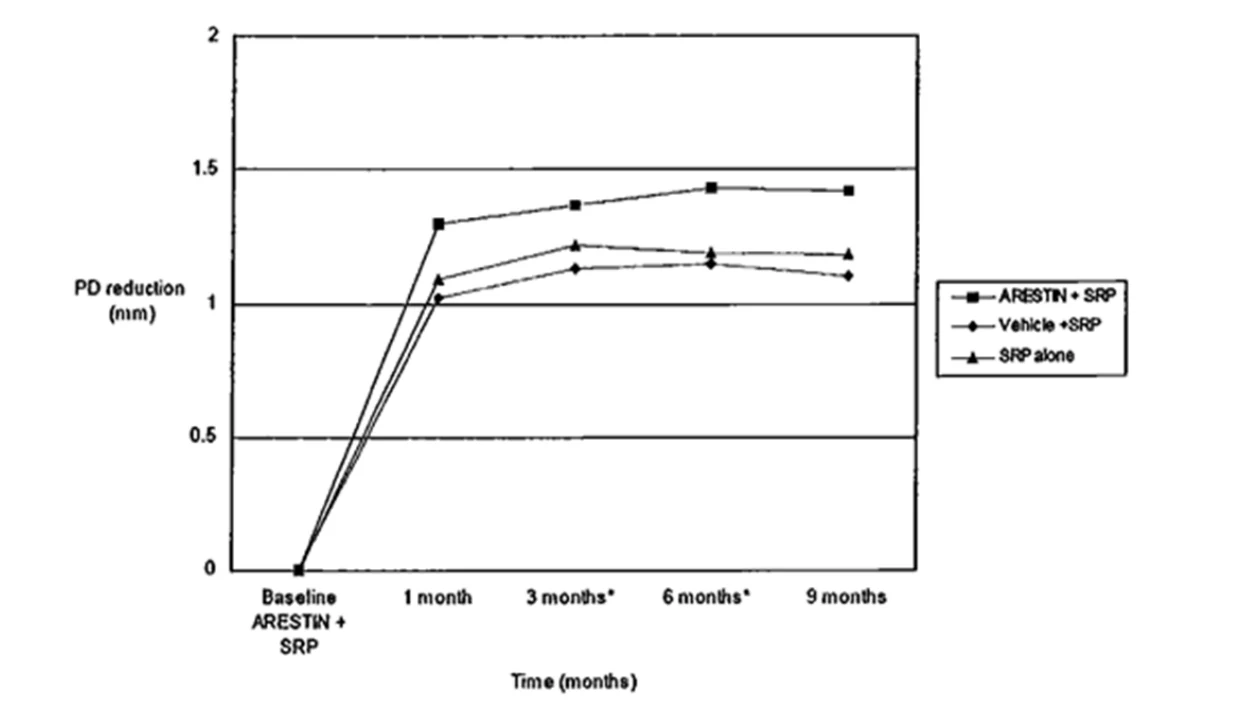
*ARESTIN MICROSPHERES alone or vehicle alone re-administered at the 3 month and 6-month visits.
Figure 2: Integrated Mean Patient PD Reduction from Baseline in Pivotal Trials 103A & 103B
Table 7: lntegrated Patient Mean PD Reduction Results from Baseline in 2 Pivotal Trials
| Time after Baseline Treatment | ARESTIN MICROSPHERES + SRP (n=249) | Vehicle + SRP (n=249) | SRP Alone (n=250) | |||||
|---|---|---|---|---|---|---|---|---|
| ITT patients mean PD at baseline (min ± SD) | ||||||||
| 5.84 (0.43) | 5.86 (0.51) | 5.83 (0.44) | ||||||
| ITT patients mean PD reduction from baseline (min ± SD) | ||||||||
| Month 1 | 1.30 (0.69) | 1.02 (0.64) | 1.09 (0.66) | |||||
| Month 3 | 1.37 (0.73) | 1.13 (0.66) | 1.22 (0.72) | |||||
| Month 6 | 1.43 (0.77) | 1.15 (0.73) | 1.19 (0.76) | |||||
| Month 9 | 1.42 (0.82) | 1.10 (0.78) | 1.18 (0.81) | |||||
PD reduction from baseline (ITT analysis): ARESTIN MICROSPHERES + SRP versus vehicle + SRP or SRP alone was statistically significant at all-time points (ANOVA p≤0.01)
Table 8 shows the comparative PD changes for ARESTIN MICROSPHERES+ SRP versus SRP alone for all pockets treated at baseline in trials 103A and 103B. ARESTIN MICROSPHERES + SRP resulted in a greater percentage of pockets showing a change of PD ≥2 mm and ≥3 mm compared to SRP alone at 3, 6 and 9 months after baseline treatment.
Table 8: Percent of Periodontal Pockets by Level of PD Reductions in Pivotal Trials 103 A & B
PD Reduction | ARESTIN MICROSPHERES + SRP (n=7713) | SRP (n=7365) | |||||||||||||
|---|---|---|---|---|---|---|---|---|---|---|---|---|---|---|---|
| 3 months | 6 months | 9 months | 3 months | 6 months | 9 months | ||||||||||
| <0 mm | 6.1 | 6.7 | 7.7 | 6.8 | 7.9 | 9.4 | |||||||||
| ≥0 and <1 mm | 21.1 | 20.9 | 20.8 | 26.6 | 27.8 | 26.7 | |||||||||
| ≥1 mm | 72.8 | 72.4 | 71.5 | 66.6 | 64.4 | 64 | |||||||||
| ≥2 mm | 43 | 44.9 | 44.2 | 36.8 | 37.3 | 37.2 | |||||||||
| ≥3mm | 14 | 15.8 | 16.2 | 12.1 | 12.8 | 13.2 | |||||||||
Table 9 shows that PD reduction tended to be greater the larger the PD at baseline and ARESTIN MICROSPHERES + SRP was superior to either vehicle + SRP or SRP alone 9 months following baseline.
Table 9: Mean Patient PD Reduction from BL at Month 9 for Patients with Mean BL PD
≥ 5 mm, ≥ 6 mm and ≥ 7 mm - Pivotal Studies (ITT)
| Patient's Mean BL PD | Change from BL at Month 9 | Treatment Group | Treatment Comparison p values1 ARESTIN MICROSPHERES + SRP vs | |||||||||||||||
|---|---|---|---|---|---|---|---|---|---|---|---|---|---|---|---|---|---|---|
| ARESTIN MICROSPHER ES + SRP | Vehicle + SRP | SRP Alone | Vehicle + SRP | SRP Alone | ||||||||||||||
| ≥5 mm | N | 249 | 249 | 250 | <0.001 | <0.001 | ||||||||||||
| Mean (SD) | 1.42 (0.82) | 1.10 (0.78) | 1.18 (0.81) | |||||||||||||||
| ≥6 mm | N | 82 | 86 | 59 | <0.001 | 0.002 | ||||||||||||
| Mean (SD) | 1.53 (0.89) | 1.09 (0.88) | 1.09 (0.86) | |||||||||||||||
| ≥7 mm | N | 5 | 8 | 6 | ||||||||||||||
| 0.024 | 0.060 | Mean (SD) | 2.28 (0.83) | 0.70 (0.76) | 1.30 (0.87) |
1 P-value from ANCOVA for testing the null hypothesis that the response is equal between the two treatment groups. Note: Baseline (BL) treatment sites are those sites that first qualified for treatment at the BL visit, prior to randomization. Missing responses were imputed using LOCF or WOCF rules.
Smoking status, age or history of cardiac disease did not impact on the ability of ARESTIN MICROSPHERES + SRP to provide greater PD reduction than Vehicle + SRP or SRP alone. Table 10 shows results at 9 months. No differences were observed relating to gender or race.
Table 10: Mean Patient PD Reduction ± SE (mm) in Subpopulations, Studies 103A and 103B Combined
| Population | ARESTIN MICROSPHERES + SRP | Vehicle + SRP | SRP Alone |
|---|---|---|---|
| Smokers | N=90 1.24±0.09** | N=90 0.98±0.07 | N=91 0.96±0.09 |
| Non-smokers | N=159 1.53±0.06** | N=159 1.17±0.07 | N=159 1.31±0.06 |
| >50 Years Old | N=107 1.42±0.08** | N=81 0.92±0.08 | N=83 1.07±0.09 |
| ≤50 Years Old | N=142 1.43±0.07* | N=168 1.19±0.06 | N=167 1.24±0.06 |
| Patients with CV Disease | N=36 1.56±0.14** | N=29 1.06±0.14 | N=36 0.99±0.13 |
| Patients without CV Disease | N=213 1.40±0.06** | N=220 1.11±0.05 | N=214 1.22±0.06 |
*ARESTIN MICROSPHERES + SRP versus SRP alone p≤0.05; **ARESTIN MICROSPHERES + SRP versus SRP alone p≤0.001
Table 11 demonstrates a consistently higher incidence of PD reduction of ≥2 mm at individual sites within all subjects including smokers at 1 and 3 and 9 months following a single ARESTIN MICROSPHERES administration with SRP. These data demonstrate a higher likelihood or incidence for clinically relevant changes in PD ≥2 mm with adjunctive ARESTIN MICROSPHERES treatment relative to SRP alone. The early intergroup PD reduction differences observed at 1 and/or 3 months with adjunctive ARESTIN MICROSPHERES + SRP versus SRP alone are used as a basis to support clinical relevance of the findings.
The pivotal trials did not provide evidence that re-administration of ARESTIN MICROSPHERES alone at 3 and 6 months provided additional benefits compared to controls. Qualitative or quantitative changes in plaque microorganisms were not demonstrated in periodontitis patients in pivotal trials. Other conventional clinical measures of treatment success in addition to PD reduction were also evaluated in the pivotal trials. Bleeding on probing was reduced and clinical attachment levels were increased following baseline treatments, but no consistent intergroup differences were noted.
Table 11: Percent of Periodontal Pockets with PD Reduction ≥ 2 mm at 1, 3 and 9 Months: ARESTIN MICROSPHERES + SRP versus SRP Alone
| Patient Group | Baseline PD ≥5 mm | Baseline PD ≥6 mm | ||
|---|---|---|---|---|
| ARESTIN MICROSPHERES + SRP | SRP Alone | ARESTIN MICROSPHERES + SRP | SRP Alone | |
| Month 1 | ||||
| All Patients (%) | 2981/7713 (39%) | 2308/7365 (31%) | 1624/3869 (42%) | 1239/3571 (35%) |
| Smokers (%) | 1057/3310 (32%) | 797/3054 (26%) | 534/1557 (34%) | 392/1411 (28%) |
| P=0.00 04 | P=0.00 37 | |||
| Month 3 | ||||
| All Patients (%) | 3317/7713 (43%) | 2713/7365 (37%) | 1825/3869 (47%) | 1508/3571 (42%) |
| Smokers (%) | 1182/3310 (36%) | 932/3054 (31%) | 608/1557 (39%) | 487/1411 (35%) |
| P=0.02 28 | P=0.07 14 | |||
| Month 9 | ||||
| All Patients (%) | 3408/7713 (44%) | 2738/7365 (37%) | 1943/3869 (50%) | 1537/3571 (43%) |
| Smokers (%) | 1172/3310 (35%) | 882/3054 (29%) | 647/1557 (42%) | 480/1411 (34%) |
| P=0.00 14 | P=0.00 19 | |||
Statistical comparisons are based upon sequential multivariate logistic regression models for correlated data (periodontal pockets within patient), where p-values represent treatment effect after adjustment for smoking status, baseline probing depth, and age. P-value refers to comparison between ARESTIN MICROSPHERES + SRP versus SRP alone.
Supportive Study
A third, uncontrolled study was conducted over an observation period of 12 months. The results of this study are consistent with the results of the 2 pivotal trials described above. In the non- comparative study, at 12 months, the mean PD reduction for ARESTIN MICROSPHERES + SRP was 1.79 mm.
15 MICROBIOLOGY
In Vitro Antimicrobial Activity
Periodontitis is a bacterial infection caused mainly by the growth of anaerobes or fastidious bacteria. These include Porphyromonas gingivalis, Prevotella intermedia, Treponema denticola, Tannerella forsythia, Fusobacterium nucleatum, Eikenella corrodens and Aggregatibacter actinomycetemcomitans among others.
Minocycline is capable of inhibiting dental pathogens. The following are reported MIC90 ranges (mcg/mL) of minocycline against common dental pathogens:
- Porphyromonas gingivalis (n=13) 0.31-1.58
- Prevotella intermedia (n=10) 0.31-0.79
- Treponema denticola (n=2) 0.063-0.125
- Fusobacterium nucleatum (n=19) 0.31-0.79
- Eikenella corrodens (n=2) 1.58
- Aggregatibacter actinomycetemcomitans (n=16) 0.125-3.11
The in vivo biofilm environment, such as that of dental plaque, is highly protective of bacteria and 1000-1500-fold MIC increases have been reported in vitro. In addition, after SRP alone, Porphyromonas gingivalis, Treponema denticola, and Tannerella forsythia, labelled as "red complex organisms", have been reported to be significantly decreased relative to many other organisms amongst the 40 common bacterial species evaluated in dental plaque samples taken from the subgingival periodontal pockets of subjects with periodontal disease. These microbial changes due to SRP alone were accompanied by a significant decrease in full mouth mean PD and attachment level.
Antimicrobial Resistance
The emergence of minocycline-resistant bacteria in single site plaque and gastrointestinal samples was studied in subjects before and after treatment with ARESTIN MICROSPHERES. There was a slight increase in the numbers of minocycline-resistant bacteria at plaque site at the end of the 9-month study period, and gastrointestinal tract at the end of 56-day period. An overgrowth of Candida albicans or Staphylococcus aureus was also seen in the gastrointestinal samples. However, the number of subjects studied was small, and the clinical significance of these findings is not known.
In Vivo Antimicrobial Activity
In a multicentre, single-blinded, randomized, 30-day clinical trial, the effect of adjunctive treatment with ARESTIN MICROSPHERES on the subgingival flora in patients with moderate to advanced periodontitis was compared with the control of SRP alone. Five non-adjacent, interproximal, periodontal pockets with probing depth of ≥5 mm at baseline were sampled from each patient. Microbiological assessment was made by DNA probe technique.
Care is needed in interpreting such data since DNA analysis techniques measure DNA content and do not differentiate between dead or living bacteria. In addition, the number of bacteria may be influenced by plaque sampling methodology. Tables 12 and 13 show the results for the sum of the three red complex bacteria.
Table 12: Red Complex Bacteria Numbers; Reduction from Baseline
| Treatment Group | N | Baseline Value (X101 Bacteria) | Mean Change (X101 Bacteria) | p-value | |||
|---|---|---|---|---|---|---|---|
| ARESTIN MICROSPHERES + SRP | 62 | 18.9 | 9.4 | 0.0021 | |||
| SRP Alone | 65 | 19.3 | 5.1 | ||||
N is the number of subjects with observations at both Baseline and 30 days.
1ARESTIN MICROSPHERES + SRP versus SRP Alone by ANCOVA Log10 transformed red complex bacteria numbers. Bacterial number: Sum of numbers of red complex bacteria.
Table 13: Red Complex Bacteria Proportion; Reduction from Baseline
| Treatment Group | N | Baseline Value (%) | Mean Change | p-value | |||
|---|---|---|---|---|---|---|---|
| ARESTIN MICROSPHERES + SRP | 62 | 13.45 | 6.49 | 0.00051 | |||
| SRP Alone | 65 | 15.11 | 5.03 | ||||
N is the number of subjects with observations at both Baseline and 30 days.
1ARESTIN MICROSPHERES + SRP versus SRP Alone by ANCOVA of Log10 transformed red complex bacteria proportions. Bacterial Proportion: Sum of red complex bacteria as a percentage of the total140 common dental bacteria analyzed.
16 NON-CLINICAL TOXICOLOGY
General Toxicology
Minocycline hydrochloride has been tested in acute experiments in mice and rats, sub-chronic and chronic experiments in rats and dogs following oral and parenteral routes of administration.
The LD of intravenous and intraperitoneal injections of minocycline in mice was 95 mg/kg and 280 mg/kg, respectively. The oral LD50 in mice was 3100 mg/kg.
Minocycline hydrochloride has been given orally each day to dogs for 6 months at doses of 0, 4, 20 and 60 mg/kg/day (100/mg/kg/day for the first month) equally divided each day. At 20 mg/kg/day, there were no apparent drug-related findings except yellow discolouration of the skeleton and teeth in some animals, occasional emesis, and black discolouration of the thyroid gland. At a dose of 4 mg/kg/day, there were no drug-related findings during the 6-month period, with the exception of discolouration of the thyroid gland and possibly some yellowing of the bones. Peak serum drug concentrations ranging from 8.5 to 100 mg/L were obtained with 60 and 100 mg/kg/day doses, 2.1 to 9.7 mg/L with the 20 mg/kg/day dose and 0.4 to 1.5 mg/L with the 4 mg/kg/day dose.
Minocycline hydrochloride was also given intravenously to dogs at doses of 5, 10, 20 and 40 mg/kg/day, a very similar dose range to that of the oral study but administered for 1 month. Untoward findings such as body weight loss, reduced food consumption, erythema of the skin and of visible mucous membranes of varying duration, intensity, and incidence, were associated primarily with the high dose (40 mg/kg/day). These findings were similar, except for erythema, to those obtained after the same dose of tetracycline. These drug-related findings with minocycline hydrochloride were associated with serum concentrations of 95 mg/L, three times those found with tetracycline (31 mg/L). Dogs that received 5, 10 and 20 mg/kg/day intravenously gave serum concentrations of 4, 12 and 38 mg/L, respectively, and were found essentially to be without toxicity. These serum values are in considerable excess of those necessary for therapeutic effectiveness in man. In these experiments, minocycline hydrochloride appeared to be tolerated as well intravenously as it was orally.
Similar results were found following chronic oral administration of minocycline hydrochloride to rats for one year.
These animals were given a drug diet containing 0.008, 0.04, 0.2 and 1.0% minocycline hydrochloride, which corresponded to ranges of 4.4 to 8.5, 21.3 to 44.0, 108 to 122 and 593 to 812 mg/kg/day drug intake; these doses gave early morning plasma drug concentrations of 0.07 to 0.16, 0.36 to 0.51, 2.9 to 6.5 and 17 to 50 mg/L respectively. With the exception of the discolouration of the teeth (dose 0.04% drug diet or greater), femur and thyroid gland, there were no significant drug-related signs of toxicity at doses less than 1% drug diet.
As with other tetracyclines, minocycline hydrochloride has been found to produce discolouration of the thyroid gland in the rat, dog, monkey and human but not in the mouse. There was no evidence, however, from these investigations that thyroid function or bone growth was affected. A 23-month carcinogenicity study in the rat has shown that minocycline hydrochloride was not carcinogenic and that the black pigment in the thyroid gland did not cause neoplastic changes.
Biopsy specimens of thyroid tissue following the administration of minocycline and tetracyclines to man revealed an intraepithelial lipofuscin deposition of both drugs, considered to be within normal variation. Thyroid function studies in man displayed a decrease within the normal range of thyroxine, indicating a tendency toward relative hypothyroidism.
Other than the tooth and bone discolouration that also occurs with other tetracyclines and the thyroid pigmentation seen in rats, dogs and monkeys, toxic effects of minocycline hydrochloride were observed only where serum concentrations were in excess of the therapeutic concentrations. It is concluded from the chronic safety evaluation studies that minocycline hydrochloride has a good margin of safety between therapeutic blood concentrations and concentrations producing toxic effects.
Reproductive and Developmental Toxicology
Reproduction studies performed in rats, rabbits and dogs have shown, as with other tetracyclines in animal studies, that minocycline crosses the placenta, is found in fetal tissues, and can produce toxic effects on the developing embryo, fetus or neonate when present in sufficient amounts.
The effects observed on the conceptus in rats and rabbits ranged from a low incidence of slight retardation of ossification and slight angulation of ribs at oral doses of 70 mg/kg/day in rats and 25 mg/kg/day in rabbits during pregnancy, to more extensive retardation of ossification and generalized morphologic changes and death at doses of 150 mg/kg/day and higher in the rat fetus. On other experiments, no deleterious effects were reported in rats or rabbits with oral doses as high as 100 and 75 mg/kg/day respectively. No adverse effects due to minocycline hydrochloride were seen in the newborn of 2 dogs given 20 mg/kg in 2 equally divided daily doses from days 35 to 62 of pregnancy.
Table 14 summarizes other recent toxicology studies conducted to confirm the safety of ARESTIN MICROSPHERES (minocycline hydrochloride).
Table 14: Overview of Toxicity Studies
| Study | Species: Strain | Route and Dose/Concentration (mg/kg) | Result (Dose in mg/kg) |
|---|---|---|---|
| Special Toxicity (ARESTIN MICROSPHERES) | |||
| Dermal Sensitization | Guinea Pig Hartley | Topical 25% (minocycline free base) used for induction, booster, and challenge doses | No contact sensitization at 4 or 48 hours |
| Local Tolerance | Dog | Topical application to gingiva
|
|
| Genotoxicity (minocycline) | ||||||||
|---|---|---|---|---|---|---|---|---|
AA13KR502.BTL Bacterial Reverse Mutation Assay | Salmonella typhimurium strains TA98, TA100, TA1535 and TA1537 and Escherichia coli strain WP2uvrA | In vitro 0.025-7.5 mcg/plate |
| |||||
AA13KR704.BIL In Vitro Mammalian Cell Gene Mutation Test | L5178Y cells Clone 3.7.2C | In vitro 5-40 mcg/plate |
No dose-dependent changes in mutations with or without activation | |||||
AA13KR331.BTL In Vitro Mammalian Chromosome Aberration Test | CHO-K1, cells | In vitro 75-750 mcg/plate |
No dose-dependent increase in aberrations | |||||
AA13KR123.BTL Mammalian Erythrocyte Micronucleus Test | ICR Mouse | IP 32-125 |
No dose-dependent increases in micronucleated polychromatic erythrocytes | |||||