


Product Monograph - Prevora Stage 1
SUMMARY PRODUCT INFORMATION
| Route of Administration | Dosage Form / Strength | Clinically Relevant Nonmedicinal Ingredients |
| Topical oral treatment | Solution, 10% w/v | Sumatra benzoin. For a complete listing see Dosage Forms, Composition and Packaging section. |
INDICATIONS AND CLINICAL USE
PREVORA STAGE 1 is indicated for use by dental healthcare professionals only. PREVORA STAGE 1 is indicated for the reduction of root caries in adults at high risk of dental caries.
CONTRAINDICATIONS
PREVORA STAGE 1 is contraindicated in:
- Patients who are hypersensitive to this drug or to any ingredient in the formulation or component of the container. For a complete listing, see the DOSAGE FORMS, COMPOSITION AND PACKAGING section of the product monograph.
- Patients with a history of eczema or of allergies to chlorhexidine salts or Sumatra benzoin. Such allergies are rare but have been reported in the literature. Such allergies have not been reported during or after the use of PREVORA STAGE 1.
WARNINGS AND PRECAUTIONS
General
PREVORA STAGE 1 should be used with caution in patients with a history of asthma. Avoid application of the PREVORA STAGE 1 or Prevora Stage 2 to the soft tissues. Failure to do so can result in temporary stinging or inflammation of the tissues.
Special Populations
Pregnant Women: No controlled clinical trials have been carried out to ascertain if there are any adverse reactions when PREVORA STAGE 1 is applied to the dentition of expectant mothers. Therefore, it is recommended that PREVORA STAGE 1 should not be administered during pregnancy.
Nursing Women: Since many drugs are excreted during lactation and there have not been any studies performed using PREVORA STAGE 1 in nursing mothers, it is recommended that PREVORA STAGE 1 should not be applied if the mother is nursing.
ADVERSE REACTIONS
Adverse Drug Reaction Overview
Chlorhexidine is known to occasionally cause a brown staining of the teeth especially when used in long-term daily mouth rinses. This staining has been infrequently reported with PREVORA STAGE 1 in controlled clinical trials and in Canadian dental use. Stains can be removed with a dental prophylaxis.
Immediate hypersensitivity reactions to chlorhexidine (urticaria or anaphylaxis), though rare, have been documented for other chlorhexidine formulations. These hypersensitivity reactions have not been seen in controlled trials and in Canadian dental use of PREVORA STAGE 1.
Other minor adverse reactions include an objectionable taste associated with accidental contact of PREVORA STAGE 1 with the oral mucosa; localized areas of white precipitate on the margin of the gingivae or on the teeth as a result of contact of the solution with moisture before it had set; redness and/or a burning sensation at the margin of the gingivae; excessive roughness of the solution layer to the tongue. All these effects are temporary and mild.
Adverse reactions were seen in the minority of patients treated and all were attributed to lapses in technique.
DRUG INTERACTIONS
Overview
There are no known drug interactions to the dental use of PREVORA STAGE 1.
Drug-Food Interactions
There are no known drug-food interactions to the dental use of PREVORA STAGE 1.
Drug-Herb Interactions
There are no known drug-herb interactions to the dental use of PREVORA STAGE 1.
Drug-Laboratory Interactions
There are no known drug-laboratory interactions to the dental use of PREVORA STAGE 1.
Drug-Lifestyle Interactions
There are no known drug-lifestyle interactions to the dental use of PREVORA STAGE 1.
DOSAGE AND ADMINISTRATION
Administration
The procedure for administration of PREVORA STAGE 1 and Prevora Sealant Stage 2 is described below in 12 steps.
Up to 0.600 mL of PREVORA STAGE 1 and then Prevora Sealant Stage 2 are consecutively applied to the full dentitions of adults in a single treatment. Over the course of seven months involving 5 applications, a cumulative volume of up to 3.0 mL of PREVORA STAGE 1 and Prevora Sealant Stage 2 is applied to the patient’s teeth.
Treatment Procedures:
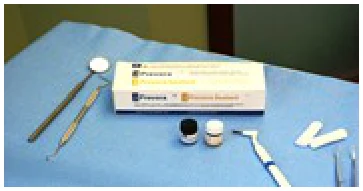
- 1. Ensure that the dentition contains no open caries lesions or restorations with imperfect margins. Prepare for the application with a tray as shown below, consisting of cotton rolls, cotton pellets or fine brushes, a forceps, air syringe and the box of PREVORA STAGE 1 and Prevora Sealant Stage 2.
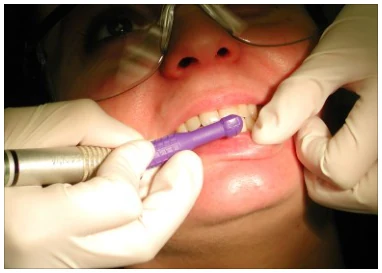
- 2. Give a rubber cup prophylaxis using flour of pumice and water, or a non-oil based prophylactic paste
- 3. Thoroughly rinse and floss the patient’s teeth with unwaxed floss to remove pumice and residual dental plaque. Ensure the cleanliness of the distal surface of the last tooth in each arch by wiping it with a cotton pellet held in a pair of forceps.
- 4. Isolate one quadrant of the dentition with cotton rolls and a saliva ejector.
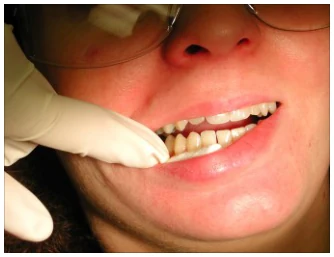
- 5. Dry all teeth in that quadrant with an air syringe.
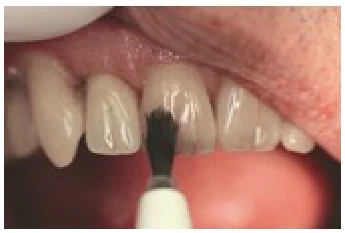
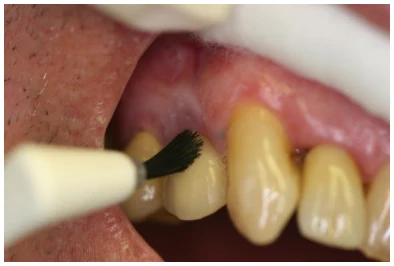
- 6. Using a cotton pellet held in forceps, or a fine brush suitable for reaching interproximal areas, apply PREVORA STAGE 1 to the interproximal areas of all posterior teeth in the quadrant.
- 7. Again dry the tooth surfaces of that quadrant with the air syringe and apply PREVORA STAGE 1 to all tooth surfaces; dry PREVORA STAGE 1 briefly with an air syringe.
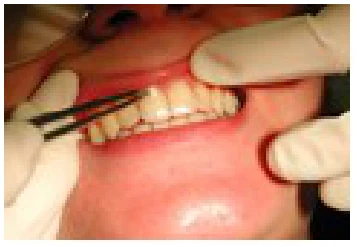
- 8. Apply Prevora Sealant Stage 2 over the PREVORA STAGE 1 with a second cotton pellet or with another fine brush; dry Prevora Sealant Stage 2 with an air syringe.
- 9. Repeat steps 4 through 8 on each of the other quadrants.
- 10. Advise the patient: (i) that the dried Prevora film will begin coming off the teeth during the next meal; (ii) to avoid eating hard foods for at least 4 hours after treatment (iii) to avoid tooth-brushing for 24 hours after treatment and then to resume tooth-brushing with a new brush; (iv) not to chew gum for 24 hours, and: (v) to avoid flossing for 3 days.
- 11. Instruct the patient to control sugar intake and to follow regular oral hygiene practices, including brushing with a fluoridated dentifrice and frequent flossing, Provide the patient with instructions on important procedures to maintain the Prevora antibacterial tooth coating after treatment.
- 12. Repeat this initial PREVORA application every week for 3 more weeks after the initial application, followed by a single application at six months and thereafter according to professional judgement. The patient should be followed-up for an assessment of caries risk and experience between 3 and 6 months thereafter, according to standard recall procedures for patients at risk of dental caries.
Instruments, clothing etc. in contact with PREVORA STAGE 1 may be cleaned with alcohol.
OVERDOSAGE
There is no experience with overdosage with PREVORA STAGE 1. Consequently, the signs and symptoms have not been identified. If overdose should occur, treat symptomatically.
ACTION AND CLINICAL PHARMACOLOGY
Mechanism of Action
The antimicrobial action of chlorhexidine results from its adsorption on to the cell wall of Streptococcus mutans, resulting in an alteration or breakdown of the structure of these bacteria.
STORAGE AND STABILITY
PREVORA STAGE 1 is packaged in light-resistant amber glass vials. It is to be stored in a refrigerator at between 2 and 8 degrees Celsius. PREVORA STAGE 1 may become darker in color with time. This is expected but does not affect the shelf life.
DOSAGE FORMS, COMPOSITION AND PACKAGING
PREVORA STAGE 1 contains chlorhexidine acetate, Sumatra benzoin and ethyl alcohol. PREVORA STAGE 1 is packaged in 1 mL aliquots in 2 mL amber glass vials at a strength of 10% w/v chlorhexidine acetate.
Prevora Sealant Stage 2, a secondary coating applied immediately over PREVORA STAGE 1, contains methacrylate, triethyl citrate and purified water.
PREVORA STAGE 1 along with Prevora Sealant Stage 2 (one treatment set) is packaged in a box containing 6 treatment sets or 12 glass vials.
PART II: SCIENTIFIC INFORMATION
PHARMACEUTICAL INFORMATION
Drug Substance
Proper name: Chlorhexidine acetate
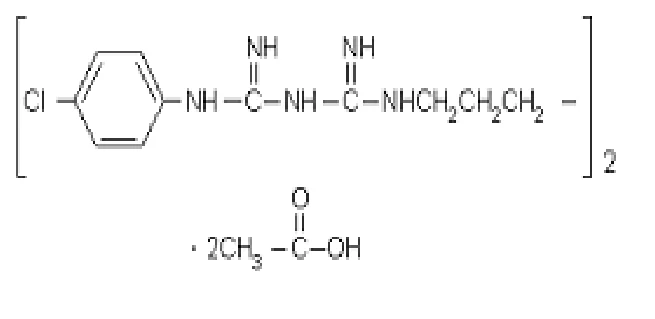
Chemical name: 1,1’ – hexamethylene-bis ([5 – (4-chlorophenyl) biguanide) diacetate
Molecular formula and molecular mass: C22H30Cl2N10 · 2C2H4O2
625.6 a.m.u
Structural formula:
Physicochemical properties: Chlorhexidine acetate is a white crystalline powder. It is soluble in 55 parts of water and in 15 parts of 96% ethanol.
CLINICAL TRIALS
In a multi-centered, randomized, placebo-controlled, double-blinded study involving 240 patients, average age of 58.7 years, with medication-induced xerostomia (defined as un-stimulated salivary flow of less than or equal to 0.2 mL per minute), PREVORA STAGE 1 significantly reduced the increment of root caries over a 12 month period of observation.
Table 1 Reduction in Caries Increment in the Trial of 240 Medication-induced Xerostomic Adults
- one year period of treatment and observation and 5 treatments –
| Surface | Group | Caries increment | % reduction active vs. placebo | P value active vs. placebo (two sided, LOCF) |
| Coronal | PREVORA STAGE 1 | 1.79 | 14.4% | 0.0644 |
| Placebo | 2.09 | |||
| Root | PREVORA STAGE 1 | 0.77 | 40.8% | 0.0206 |
| Placebo | 1.30 |
Five applications of PREVORA STAGE 1 were administered during this study, including four weekly applications in the first month and a single application at month six. The dose per application was between 300 µL and 600 µL of chlorhexidine.
In this study, there were no serious adverse events related to the application of PREVORA STAGE 1. Adverse events related to PREVORA STAGE 1 were generally mild limited to the oral cavity and involved abnormal taste, stinging and burning of the oral mucosa and temporary loss of taste acuity.
DETAILED PHARMACOLOGY
No pharmacology data are available for PREVORA STAGE 1. However, chlorhexidine digluconate has been studied extensively. A metabolic study was conducted using radiolabelled chlorhexidine digluconate. Animals and one human volunteer were dosed orally.
The results of this study are summarized as follows:
- Chlorhexidine is a poorly absorbed drug. In the human volunteer, no chlorhexidine was detected in the blood after the oral administration of 0.07 mg of chlorhexidine per kilogram of body weight.
- The small amount that is absorbed initially is metabolized by the liver and the kidney.
- Chlorhexidine has an affinity for mucosal surfaces in the alimentary tract, including the mouth.
- Circulating blood levels following oral dosing to dogs are extremely low.
- Detectable amounts of p-chloroaniline are not produced from the enzymatic metabolism of the chlorhexidine.
MICROBIOLOGY
It has been shown in vitro that Streptococcus mutans are highly susceptible to chlorhexidine acetate. The minimum inhibitory concentration of 11 strains of Streptococcus mutans to chlorhexidine acetate is between 0.39 and 1.56 micrograms per mL.
PREVORA STAGE 1, assessed in vitro in buffer which was changed daily, released an initial burst of about 1.2 mg of chlorhexidine in the first 24 hours, followed by a 10 day period in which the rate of release was approximately constant (zero order kinetics). The concentration of chlorhexidine attained daily in each sample of the buffer solution remained above 10 ug/mL, which was determined to be above the minimum bactericidal concentration for several strains of Streptococcus mutans (M.B.C. less than 6.25 ug/mL).
There has been no evidence of an alteration in the balance of the other oral microflora or of any detectable increases in gingivitis index in association with treatment with PREVORA STAGE 1.
TOXICOLOGY
Animal Studies: The acute oral toxicity of chlorhexidine is low, with an LD50 of chlorhexidine acetate in mice of 2000 mg/kg. Chlorhexidine is poorly absorbed by the gastro-intestinal tract and almost entirely excreted in the faeces. In an acute and long-term toxicity study involving rats, the PREVORA STAGE 1 and its ingredients administered at 150 µL per day over 14 days to the dentition and oral mucosa, resulted in no systemic or local drug/treatment related toxicity.
Human Studies: The single dose of chlorhexidine acetate administered to adults in one treatment of PREVORA STAGE 1 ranges between 30 mg and 60 mg depending on the size of the mouth and number of teeth of the patient.
The maximum daily dose based on 1.0 mL of 10% w/v chlorhexidine acetate in PREVORA STAGE 1 would be 100 mg of chlorhexidine acetate. The total dose per week would be the same as the daily dose of 100 mg, while the total dose after 4 weeks of treatment would be 400 mg. These doses are well below the level of 2,000 mg per day that adults have shown to be able to consume for a week without adverse effects.
Long-term oral use in the form of a daily chlorhexidine mouthwash by humans has not produced changes in haematological and biochemical parameters. However, oral intolerances such as desquamation or ulceration of the oral mucosa have occurred after use of chlorhexidine mouth rinses. It has been reported that exposure of human cells in culture to chlorhexidine in equal to or greater than 0.004% resulted in impaired cellular function and/or cell death.
REFERENCES
- 4. Case D.E. Safety of Hibitane I. Laboratory Experiments. J. Clin. Periodont. 1977; 4: 66-72.
- 5. Cheung J., O’Leary J.J. Allergic Reaction to Chlorhexidine in an Anaesthetised Patient. Anaesth. Intens. Care 1985; 13: 429-430
- 6. Davies A. The mode of action of chlorhexidine. J. Periodont. Res. 1973; 8 (12): 68-75
- 7. Emilson C.G. Susceptibility of various microorganisms to Chlorhexidine. Scand. J. Dent. Res. 1977; 85: 255-265.
- 8. Fardal D., Turnbull R.S. A Review of the Literature on Use of Chlorhexidine in Dentistry. JADA 1986: 112: 863-869.
- 9. Flotra L., Gjermo P., Rolla G., Waerhaug J. Side Effects of Chlorhexidine Mouth Washes. Scand. J. Dent. Res. 1971; 79: 119-125.
- 10. Jenkins S., Addy M, Wade W. The mechanism of action of chlorhexidine. J. Clin. Periodontol. 1988; 15: 415-424
- 11. Rushton A. Safety of Hibitane II. Human Experience. J. Clin. Periodont. 1977; 4: 73-79.
- 12. Senior N. Some Observations on the Formulation and Properties of Chlorhexidine. J. Soc. Cosmet. Chem. 1973; 24: 259-278.
- 13. Winrow M.J. Metabolic Studies with Radiolabelled Chlorhexidine in Animals and Man. J. Periodont. Res. 1973; 8: Suppl. 12: 45-48.