


Product Monograph - Auro-Desmopressin
SUMMARY PRODUCT INFORMATION
| Route of Administration | Dosage Form / Strength | Clinically Relevant Nonmedicinal Ingredients |
| Oral | Tablet 0.1 mg, 0.2 mg | Lactose monohydrate, Corn Starch, Povidone and Magnesium Stearate |
INDICATIONS AND CLINICAL USE
Auro-Desmopressin (desmopressin acetate tablets) is indicated for:
- treatment of Central Diabetes Insipidus
- treatment of Nocturnal Enuresis
Central Diabetes Insipidus
Auro-Desmopressin (0.1 and 0.2 mg desmopressin acetate) is indicated for the management of vasopressin sensitive central diabetes insipidus, and for the control of temporary polyuria and polydipsia following head trauma, hypophysectomy or surgery in the pituitary region.
Primary Nocturnal Enuresis
Auro-Desmopressin (0.1 and 0.2 mg desmopressin acetate) is indicated in the management of nocturnal enuresis in patients 5 years of age and older who have normal ability to concentrate urine. Auro-Desmopressin should be used in conjunction with non-medicinal therapy, such as motivational counselling and bladder exercises.
CONTRAINDICATIONS
- Hypersensitivity to desmopressin or any of the tablet constituents.
- Patients with type IIB or platelet-type (pseudo) Willerbrand disease, because of the risk of platelet aggregation and thrombocytopenia
Any condition associated with impaired water excretion, such as:
Hyponatremia
Severe liver disease
Nephrosis
Cardiac insufficiency
Chronic renal insufficiency Congestive heart failure
Habitual or psychogenic polydypsia
Any medical conditions which lead to sodium losing states such as:
Vomiting
Diarrhea
Bulimia
Anorexia nervosa
Adrenocortical insufficiency
Salt losing nephropathies,
- Lactose intolerance/allergies
WARNINGS AND PRECAUTIONS
General
In general, by adequate treatment with Auro-Desmopressin, thirst is automatically reduced. However, there is potential risk of water intoxication if, during treatment, excessive liquid is consumed. Fluid intake should be adjusted to reduce the possibility of water intoxication and hyponatremia especially in the very young and elderly patients (See DOSAGE AND ADMINISTRATION). Particular attention should be paid to the risk of extreme decrease in plasma osmolality and resulting seizures in young children.
Treatment with desmopressin should be interrupted during acute inter-current illnesses characterised by fluid and/or electrolyte imbalance (such as systemic infections, fever, and gastroenteritis).
In patients with Syndrome of Inappropriate Antidiuretic Hormone secretion (SIADH) or with high intra-cranial pressure, it is necessary that extra care be exercised with liquid intake.
Desmopressin should not be administered to dehydrated patients until water balance has been adequately restored.
The product contains lactose monohydrate. Patients with rare hereditary problems of galactose intolerance, the Lapp Lactase deficiency or glucose-galactose malabsorption should not take this medicine.
Desmopressin is not effective in controlling polyuria caused by renal disease, nephrogenic diabetes insipidus, psychogenic diabetes insipidus, hypokalemia or hypercalcemia.
Cardiovascular
Desmopressin acetate can occasionally produce a slight elevation of blood pressure, which disappears with a reduction in dosage. The drug should be used with caution in patients with coronary artery insufficiency and/or hypertensive cardiovascular disease because of possible tachycardia and changes in blood pressure.
Genitourinary
Severe bladder dysfunction and outlet obstruction should be considered before starting treatment.
Respiratory
Desmopressin should be used with caution in patients with cystic fibrosis because these patients are prone to hyponatremia.
Special Populations
Pregnant Women:
No controlled studies in pregnant women have been carried out. The physician should weigh possible therapeutic advantages against potential risks in each case.
Data on a limited number (n=53) of exposed pregnancies in women with diabetes insipidus indicate no adverse effects of desmopressin on pregnancy or on the health of the fetus or newborn child. Animal studies do not indicate direct or indirect harmful effects with respect to pregnancy, embryonal/fetal development, parturition or postnatal development.
Nursing Women:
There have been no controlled studies in nursing mothers. Results from analysis of milk from nursing mothers receiving high doses of desmopressin (300 mcg intranasal), indicate that the amounts of desmopressin that may be transferred to the child are considerably less than the amounts required to influence diuresis.
Pediatric:
Use of desmopressin in infants and children will require careful fluid intake restriction to prevent possible hyponatremia and water retention due to over ingestion of fluids.
Geriatric:
Geriatric patients should be closely observed for possible hyponatremia and water retention due to over ingestion of fluids.
Monitoring and Laboratory Tests
Central Diabetes Insipidus
Continued response to desmopressin acetate is monitored by urine volume and osmolality.
ADVERSE REACTIONS
Clinical Trial Adverse Drug Reactions
Because clinical trials are conducted under very specific conditions the adverse reaction rates observed in the clinical trials may not reflect the rates observed in practice and should not be compared to the rates in the clinical trials of another drug. Adverse drug reaction information from clinical trials is useful for identifying drug-related adverse events and for approximating rates.
Infrequently, high doses of desmopressin have produced transient headache and nausea. Nasal congestion, rhinitis, flushing, and mild abdominal cramps have been reported. These symptoms disappeared with reduction in dosage.
Side effects reported from controlled clinical trials involving 638 subjects included headache (2%), and rhinitis (1%), nasal discomfort (1%), epistaxis (1%) and abdominal pain (1%). Other effects, reported at a frequency of less than 1% included dizziness, chills, wheezing, rash, edema of face and hands, nausea, constipation, anorexia, increased appetite, conjunctivitis and after taste in the mouth. These symptoms disappeared with reduction of dosage or withdrawal of drug. Adverse effects rarely necessitate discontinuance of the drug.
Serum SGOT levels were elevated in 4/16 patients 6 months after commencing oral desmopressin acetate therapy (200 to 600 µg/day). Two of these patients had exhibited baseline levels of SGOT that were above the normal range and all four patients had normal SGOT levels on repeat test at 9 months, even though desmopressin acetate administration continued. The possibility that desmopressin acetate has an adverse effect on serum enzymes is therefore remote.
DRUG INTERACTIONS
Drug-Drug Interactions
It is unlikely that desmopressin will interact with drugs affecting hepatic metabolism, since desmopressin has been shown not to undergo significant liver metabolism in in vitro studies with human microsomes.
Potential Drug-Drug Interaction
| Proper name | Clinical comment |
Clofibrate Chlorpropamide Carbamazapine | May potentiate the antidiuretic activity of desmopressin |
Demeclocycline Lithium Norepinephrine | May decrease the antidiuretic activity of desmopressin |
| Other Pressor agents | Although the pressor activity of desmopressin acetate is very low compared |
| with the antidiuretic activity, use of large doses of desmopressin with other pressor agents should be done only with careful patient monitoring. | |
Drugs which are known to induce SIADH, e.g. tricyclic antidepressants, selective serotonin reuptake inhibitors, chlorpromazine and carbamazepine | May cause an additive antidiuretic effect leading to an increased risk of water intoxication. |
| Non-steroidal anti-inflammatory drugs (NSAIDs) including Cox-2 inhibitors | May induce water retention and hyponatremia. |
| Opiates such as loperamide | May result in a 3-fold increase of plasma desmopressin concentrations, which may lead to water retention and hyponatremia. Although not investigated, other drugs slowing intestinal transport might have the same effect |
Drug-Food Interactions
Intake of a standardised meal with oral desmopressin resulted in significant decreased bioavailability compared to fasting. This is hypothesised to be due to reduced absorption from the gastrointestinal tract. However no effect on dynamics (urine production or osmolality) was observed.
DOSAGE AND ADMINISTRATION
Dosing Considerations
Central Diabetes Insipidus
To institute desmopressin therapy, patients should be withdrawn from previous medication and allowed to establish a baseline polyuria and polydipsia. The stable polyuria is used as a baseline to determine the magnitude and duration of the response to medication.
Primary Nocturnal Enuresis
A restricted fluid intake is recommended a few hours before administration, especially one hour before bedtime. In the event that the child wakes up during the night, liquid intake should be restricted.
Recommended Dose and Dosage Adjustment
Central Diabetes Insipidus
A suitable starting dose for adults and children is 0.1 mg desmopressin acetate three times daily. This dosage regimen should then be adjusted in accordance with the patient's response in order to ensure an optimum dose.
For patients who have been controlled on intranasal desmopressin and who are to be switched to the oral form, the oral dose producing comparable antidiuresis is about 10-20 times greater than the established intranasal dose.
Geriatric patients may be more sensitive to the antidiuretic effect of desmopressin acetate.
In children, the evening dose is usually 2x higher than the morning and midday dose to ensure sufficient antidiuresis during sleep. This is generally not a requirement for adult patients, presumably because adults sleep for shorter periods of time.
The maximum recommended dosage for both adults and children is 1.2 mg per day (0.4 mg three times a day).
The lowest effective dosage should be given. Rarely, during long term use, patients may develop tolerance to the drug and require cautious increase in dosage to achieve adequate therapeutic response.
Primary Nocturnal Enuresis
The dosage of Auro-Desmopressin must be determined for each individual patient and adjusted according to response.
Patients previously on intranasal Auro-Desmopressin therapy can begin tablet therapy the night following (24 hours after) the last intranasal dose. The oral dose producing comparable antidiuresis is about 10-20 times greater than the established intranasal dose.
The recommended initial dose is 0.2 mg 1 hour before bedtime.
If the patient experiences a wet night after three days on an initial dose of 0.2 mg (1 x 0.2 mg tablet), increase the dose by 0.2 mg. The dose may be increased by 0.2 mg increments, in the manner described (every 3 days), to a maximal dose of 0.6 mg.
The physician should be consulted if enuresis persists at the maximal dose. A restricted fluid intake is recommended a few hours before administration, especially one hour before bedtime. In the event that the child wakes up during the night, liquid intake should be restricted.
The need for continued treatment should be reassessed every 3 months by means of a period of at least one week without Auro-Desmopressin. If the patient is still wetting the bed, then reintroduce Auro-Desmopressin at the same dosage prior to discontinuing treatment for another three months and reassess.
Missed Dose
Central Diabetes Insipidus
If the patient misses a dose, the patient should be advised to take the missed dose as soon as possible. However if it is almost time for the next dose, the patient should be advised to skip the missed dose, to return to the regular dosing schedule and to not double dose.
Primary Nocturnal Enuresis
If the patient misses a dose, the patient should be advised not to take the missed dose.
OVERDOSAGE
Overdosage will increase the risk of fluid retention and symptoms which include headaches, abdominal cramps, nausea, and facial flushing. Dosage and frequency of administration should be reduced, or the drug withdrawn, according to severity of the condition.
If hyponatremia occurs following medication or excessive fluid intake, treatment should be discontinued and fluid intake restricted until serum sodium is normalized. In most cases this is sufficient. In cases with severe symptoms, (e.g., those associated with the central nervous system (CNS) such as unconsciousness), admission to hospital and a slow normalization of serum sodium is required to avoid additional complications.
| For the most recent information in the management of a suspected drug overdose, contact your regional poison control centre or Health Canada’s toll-free number, 1-844 POISON X (1-844-764-7669). |
|---|
ACTION AND CLINICAL PHARMACOLOGY
Mechanism of Action
Desmopressin acetate is a synthetic structural analogue of the antidiuretic hormone, arginine vasopressin, which alters the permeability of the renal tubule to increase resorption of water. The increase in the permeability of both the distal tubules and collecting ducts appears to be mediated by a stimulation of the adenylcyclase activity in the renal tubules.
The synthetic analogue exhibits a greater antidiuretic potency, as well as a longer half-life and duration of action, as compared to vasopressin.
Pharmacodynamics
Clinical studies have demonstrated that peroral administration of desmopressin acetate is active in eliciting an antidiuretic effects in humans, be they normal subjects, or adults and children suffering from central diabetes insipidus (CDI) of various etiologies, or from nocturnal enuresis.
The only recognized pharmacodynamic actions detected after orally administered desmopressin are reduction in urine flow and increase in urine osmolality. A number of studies have examined dose, and concentration-effect relationships of desmopressin with respect to its antidiuretic effects. Some studies show clear dose- and concentration-effect relationships, while others do not.
Pharmacokinetics
Absorption:
Dose-response relationships and pharmacokinetic profiles of orally administered desmopressin acetate were similar in normal subjects and in adults and children with CDI. In all studies, both the magnitude of the plasma peak concentration and the AUC were dose dependent. Time to peak plasma concentration and the plasma half-life were not affected by the size of the dose.
Plasma desmopressin levels increased in a dose-dependent fashion and its disappearance from plasma followed an exponential time course, with half-life of 86 to 142 minutes.
Pharmacokinetics of Oral Desmopressin in Normal Subjects and CDI Patients. Numbers in brackets indicate the number of subject/patients from which the parameter was derived.
| Dose (mcg) | AUC (ng/L.hr)(N) | Cmax (ng/L)N) | Tmax (min)(N) | T1/2 (hour)(N) | ||||||||||||
| Study | A | B | C | D | A | B | C | D | A | B | C | D | A | B | C | D |
100 NS | 14.4 (5) | - | - | - | 3.6 (5) | 3.2 (5) | - | - | 96 (5) | 60 | - | - | 1.9 (5) | 1.9 (5) | - | - |
200 NS | 39.8 (3) | - | - | - | 7.1 (4) | 7.0 (4) | - | - | 90 (4) | 120 | - | - | 2.0 (3) | 2.4 (4) | - | - |
100 CDI | - | - | 25.9 (4) | - | - | - | 9.2 (4) | - | - | - | 53 (4) | - | - | - | 1.8 (4) | - |
200 CDI | 27.1 (5) | - | 129 (5) | 148 (7) | 7.8 (6) | 7 (7) | 34 (4) | 33 (7) | 70 (6) | 60 | 54 (5) | 48 (7) | 2.5 (5) | 2.1 (7) | 2.6 (5) | 3 (7) |
400 CDI | - | - | 162 (4) | 246 (7) | - | - | 56 (4) | 104 (7) | - | - | 50 (4) | 49 (7) | - | - | 1.9 (4) | 2.5 (7) |
Pharmacokinetics of Typical Therapeutic Doses of Oral Desmopressin in Pediatric CDI Patients
| Unit | 200 mcg | 400 mcg | |
| AUC (0-infinity) | ng/L/h | 148 ± 152 | 246 ± 367 |
| Cmax | ng/L | 33.2 ± 30.7 | 103.9 ± 176.4 |
| Tmax | Min | 48 ± 21 | 49 ± 19 |
| t1/2 | Hours | 2.96 ± 2.04 | 2.47 ± 2.92 |
| Kel | h-1 | 0.34 ± 0.22 | 0.47 ± 0.27 |
| Max osm | mOsm/kg | 733 ± 156 | 809 ± 77 |
| time to max osm | Min | 315 ± 127 | 345 ± 77 |
Distribution:
The distribution of desmopressin has not been fully characterized. It is not known if desmopressin crosses the placenta, but small quantities have been shown to be distributed into milk.
Metabolism:
The in-vitro metabolism of desmopressin has not been studied. In vitro human liver microsome metabolism studies of desmopressin have shown that no significant amount is metabolized in the liver by the cytochrome P450 system. Thus human liver metabolism in vivo by the cytochrome P450 system is unlikely to occur. The effect of desmopressin on the PK of other drugs is likely to be minimal due to its lack of inhibition of the cytochrome P450 drug metabolizing system.
In healthy subjects the fraction excreted unchanged was 52% (44% - 60%).
Excretion:
Urinary clearance in 6 hydrated volunteers was calculated to be 0.514 mL/min/kg body weight and the amount of peptide excreted in the urine during the 6-hour observation period constituted 16.4% of the amount absorbed from the intestine over the same period of time. Urinary clearance for desmopressin is thus smaller than that reported for vasopressin.
STORAGE AND STABILITY
Store between 15°C to 25°C and protect from moisture and light. Avoid exposure to excessive heat and light.
DOSAGE FORMS, COMPOSITION AND PACKAGING
| Dosage form | Tablets | ||||
|---|---|---|---|---|---|
| Strength | 0.1 mg | 0.2 mg | |||
| Description | White to off-white, oval, biconvex tablets, debossed with D and S on either side of score line on one side and 1 on other side. | White to off-white, round, biconvex tablets, debossed with D and S on either side of score line on one side and 2 on other side. | |||
| Composition | Lactose monohydrate, Corn Starch, Povidone and Magnesium Stearate | ||||
| Packaging | HDPE bottles of 100 tablets. | ||||
* 0.1 mg and 0.2 mg of Desmopressin acetate.
PART II: SCIENTIFIC INFORMATION
PHARMACEUTICAL INFORMATION
Drug Substance
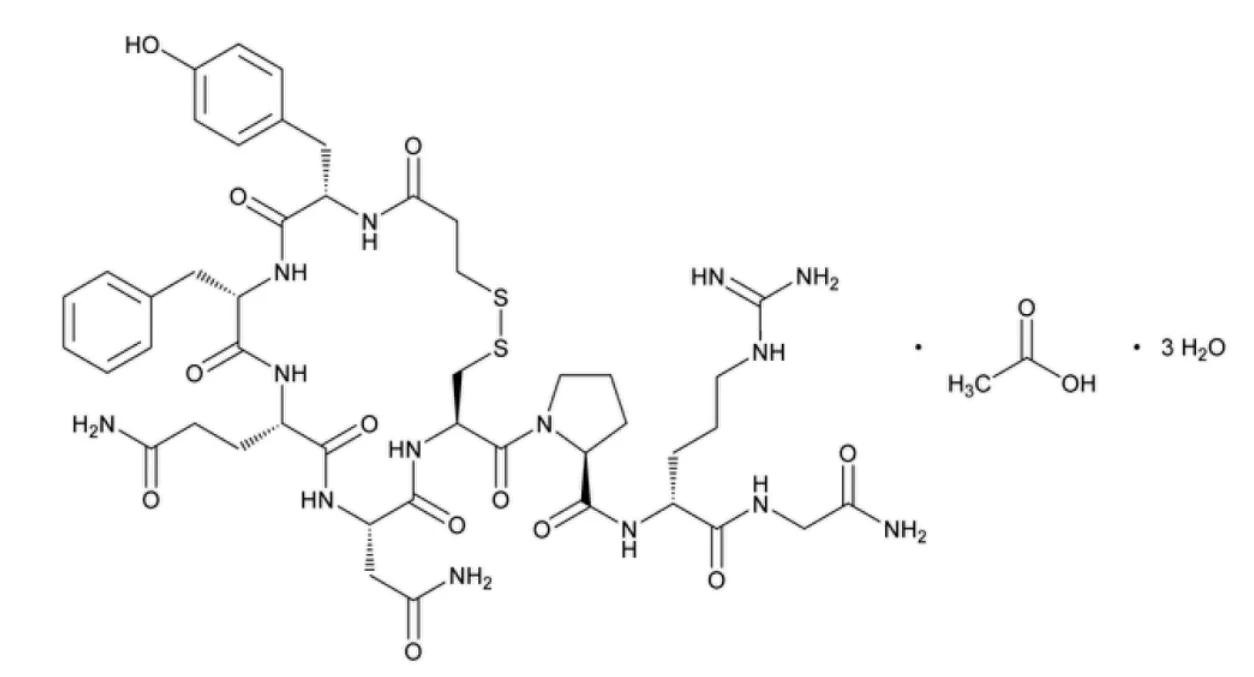
Proper name: Desmopressin acetate
Chemical names: Vasopressin, 1-(3-mercaptopropanoic acid)-8-D-arginine-, monoacetate (salt) trihydrate;
or
1-(3-Mercaptopropionic acid)-8-D-arginine-vasopressin monoacetate (salt) trihydrate.
Molecular formula and molecular mass: C48H68N14O14S2.3H2O and 1183.31 g/mol
Structural formula:
Physicochemical properties: White or almost white fluffy powder. Soluble in water and in ethanol (96 percent) and in glacial acetic acid. pH 3.5 to 6.0
CLINICAL TRIALS
Comparative Bioavailability Studies
A randomized, single-dose (3 x 0.2 mg), two-treatment, four period, two-sequence, replicated crossover comparative bioavailability study of Auro-Desmopressin tablets 0.2 mg (Auro Pharma Inc.) with PrDDAVP® Tablets 0.2 mg (Ferring Inc., Canada) was conducted in healthy, adult male subjects under fasting conditions.
Comparative bioavailability data from 35 subjects that were included in the statistical analysis are presented in the following table:
SUMMARY TABLE OF THE COMPARATIVE BIOAVAILABILITY DATA
Desmopressin (3 x 0.2 mg) Geometric Mean Arithmetic Mean (CV %) | ||||
| Parameter | Test1 | Reference2 | % Ratio of Geometric Means | 90% Confidence Interval |
AUCT (pg∙h/mL) | 251.8 280.3 (52.9) | 240.2 269.5 (53.1) | 104.8 | 94.9 - 115.8 |
AUCI (pg∙h/mL) | 273.2 300.9 (51.8) | 258.4 289.1 (53.2) | 105.7 | 95.5 - 116.9 |
Cmax (pg/mL) | 72.3 80.8 (55.9) | 70.8 80.2 (60.9) | 102.0 | 92.8 - 112.0 |
Tmax3 (h) | 1.00 (0.50 – 2.50) | 1.00 (0.50 – 2.00) | ||
T½4 (h) | 3.3 (39.3) | 3.1 (13.5) | ||
1 Auro-Desmopressin (desmopressin acetate) tablets, 0.2 mg (Auro Pharma Inc.)
2 PrDDAVP® Tablets (desmopressin acetate), 0.2 mg (Ferring Inc., Canada)
3 Expressed as the median (range) only
4 Expressed as the arithmetic mean (CV%) only
Central Diabetes Insipidus
Six patients aged 23 to 65 years took part in an open dose-ranging study of desmopressin acetate tablets followed by a four week open study on an out-patient basis. All patients completed the dose range study in hospital and were discharged on a dosage regimen ranging from 25 to
200 mcg t.i.d.
A dose-dependent effect was seen at doses of 12.5, 25, 50, 100 and 200 mcg desmopressin acetate both for duration and magnitude of antidiuretic activity. All doses elicited an antidiuretic response although doses of 100 to 200 mcg induced a more optimum duration of antidiuretic activity. Although there were large interindividual differences, most patients were stabilized on a mean daily dose of 345 mcg desmopressin acetate (range 75 to 900 mcg). One patient dropped out of the study due to inadequate response to oral therapy, despite being treated with 400 mcg t.i.d.
This patient had been previously well controlled with a dosage of 10 mcg t.i.d., intranasally. The individual response varied greatly between patients in both magnitude and duration but was found to be of the same order of magnitude as for intranasal desmopressin acetate which had previously been administered in daily doses of 15 to 75 mcg in these patients.
No significant deviations from normal laboratory values for hematology, blood chemistry including liver function, serum electrolytes or urinalysis were noted, and there were no clinically important changes in body weight or blood pressure. Two patients who received cortisone had lower baseline diuresis than other patients and required a lower desmopressin acetate dose to control adequate water turnover. However, neither cortisone nor thyroxine interfered with desmopressin acetate efficacy.
Six patients aged 21 to 59 years completed 18 months of oral desmopressin acetate therapy and 4 patients had completed 6 to 12 months of therapy. These patients were well controlled with satisfactory water turnover at doses within the range of 100-200 mcg t.i.d., with no development of tolerance to desmopressin acetate.
None of the minor changes noted in serum total protein, electrolytes (Na, K, C1) or glucose or in the plasma osmolality were considered to be of any clinical significance. There were no clinically significant changes in blood pressure or body weight.
Primary Nocturnal Enuresis
Two trials investigated the long-term efficacy and safety of desmopressin acetate tablets for primary nocturnal enuresis. The first study continued for six months. One hundred and twenty-five (of the 232 enrolled) completed the trial; 92 were male, 33 were female. Patients were 6-17 years of age with a mean age of 9.34. All patients were assigned to a dose of 200 mcg for two weeks. The dose was increased in increments of 200 mcg every two weeks until the patient was completely dry (over a 14-day period) or had reached a maximum dose of 600 mcg. The data obtained in this trial indicate that desmopressin 200 mcg reduces the mean number of wet nights within two weeks and sustains this effect over a six-month treatment period. The safety profile was unremarkable. The number of patients who reported one or more adverse events was: 200 mcg dose - 57 (25%); 400 mcg dose - 54 (24%), and 600 mcg dose - 44 (47%). Headache, pharyngitis, rhinitis and infection were the most commonly reported adverse events.
The second (Canadian) trial investigated the long-term safety of oral desmopressin treatment for up to one year, in children with nocturnal enuresis. Two hundred and fifty-six patients were treated with desmopressin; 80% of these patients were male with a mean age of 9.6 years (range 6-18 years). Of the 80 children completing the trial, 27 became dry (at most one wet night) for at least 28 days. Of the 24 adverse events evaluated as possibly/probably related to treatment, 16 were evaluated as mild, seven were moderate [nausea (1), headache (3), mood swings (2), bacterial infection (1)], and one was severe (vomiting).
In summary, a total of 117/236 children who completed the titration period (49.6%; 95% confidence interval 40–57%) responded (>50% reduction over baseline). Throughout the study their response rate remained constant at ~74%. Continuous treatment reduced the median number of wet nights during the observation period from 5.75 to 1.00 per week. A total of 12.4% of children received the 0.2 mg dose and 87.6% the 0.4 mg dose. The proportion of full responses increased over the course of the study from 5.8% to 37.5%. Desmopressin acetate was well tolerated: the majority of reported adverse events were mild, although two adverse events leading to withdrawal were reported. 40, 41
TOXICOLOGY
- (i) Acute Toxicity
The IV acute toxicity of desmopressin acetate is very low. Mice tolerate IV doses of 2 mg/kg (Table 3). At doses of 30 mcg/kg in rats and 50 mcg/kg in rabbits, only transient changes in clinical behaviour were observed. Intravenous doses up to 24 mcg/kg in dogs did not produce any cardiovascular changes.
Acute Toxicity of Desmopressin Acetate
| Species | Number | LD50 Dose | Route |
| Mice | 10, both sexes | 2 mg/kg | IV |
| Rats | 12, both sexes | 30 mcg/kg | IV |
| Rabbits | 6, both sexes | 50 mcg/kg | IV |
| Dogs | 5, males | 24 mcg/kg | IV |
- (ii) Subacute Toxicity
Results from 14-day studies show that the drug given intravenously to rats at 18 mcg/kg/day and to rabbits at 6 mcg/kg/day caused no biologically significant changes in hematological and clinical chemistry parameters. Post-mortem examinations did not reveal any abnormalities.
Rats which received 5 mg/kg/day SC for 3 weeks did not show any significant changes in weight, blood count, or organ changes.
(iii) Chronic Toxicity
Subcutaneous Administration
Rat Studies
Rats (20 per group) which received doses of 5, 50 and 500 ng/kg/day, for six months did not show any significant changes in weight, blood values, or levels of transaminases. The weight of heart, lungs and kidneys decreased in female animals in the lower dose groups but not in the higher ones. In the male animals a decrease in non-esterified fatty acids was noted.
Dog Studies
Dogs (3 per group) which received SC doses of 10 and 100 ng/kg/day for 6 months did not show any significant changes in comparison with control groups in blood sugar or transaminases and did not show histological or morphological organ changes.
Oral Administration
Rat Studies
Oral administration of desmopressin to rats (20 male and 20 females per group dosed at 25, 75 and 200 mcg/kg/day) did not reveal any clinical findings related to desmopressin. Treated male and female rats were comparable to controls with respect to food consumption, body weight gain and water consumption. There were no drug-induced ocular abnormalities.
A dosage-related reduction was seen in levels of total circulating white blood cells, attributable to reduced neutrophil and lymphocyte counts in treated females, when compared with controls, at the week 13 and 26 investigations. Treated males were not affected.
Reduced plasma Factor VIII levels were seen in treated females at week 14 and treated males at week 25 in comparison with controls.
The terminal studies revealed no morphological or histological changes related to treatment with desmopressin.
Dog Studies
When desmopressin was given orally to dogs (4 males and 4 females per group, at 0, 25, 75 and 200 mcg/kg/day) all animals survived the 26-week period and no clinical signs were observed that were related to treatment. There were no adverse effects on body weight, food and water consumption and no ocular abnormalities. Hematological investigations revealed no treatment- related findings.
During weeks 6, 13 and 26 serum total protein concentrations of treated animals were increased due to an increase in the globulin fraction. However, there were no changes from the pre-dose values in males at 200 mcg/kg/day after 13 and 26 weeks treatment and males at 75 mcg/kg/day after 26 weeks treatment.
No organ morphological or histological changes were seen on autopsy which could be related to treatment with desmopressin.
(iv) Reproduction Studies
Subcutaneous Administration
Rat Studies
In a teratogenicity study in Wistar rats, neither teratologic nor embryotoxic effects were observed in 369 fetuses from 40 females dosed with up to 50 ng/kg/day desmopressin acetate SC during day 1 to day 20 of gestation.
Rabbit Studies
In a study of 78 Dutch belted rabbits which received SC doses of desmopressin acetate up to 10 mcg/kg/day during the sixth and eighteenth day of pregnancy, neither teratogenic nor embryotoxic effects were observed in 296 fetuses. Weaning was unaffected.
REFERENCES
- 1. Besser GM, Cunnah D. A Clinical Trial with Peroral administration of DDAVP (desmopressin acetate) tablets in the treatment of Central Diabetes Insipidus.-A long Term Study in Outpatients. Data of File at Ferring Inc., 1986.
- 2. Burrow GN, Wassenaar W, Robertson GL, Sehl H. DDAVP treatment of Diabetes Insipidus during pregnancy and the post-partum period. Acta Endocrinologica 1981; 97: 23.
- 3. Chau R. Acute intravenous toxicity of DDAVP in rats. Data on File at Fering Inc., 1982
- 4. Chau R. Acute intravenous toxicity of DDAVP in rabbits. Data on File at Fering Inc., 1982
- 5. Chau R. Fourteen-day intravenous safety study of DDAVP in rats. Data on File at Fering Inc., 1982
- 6. Chau R. Fourteen-day intravenous safety study of DDAVP in rabbits. Data on File at Fering Inc., 1982
- 7. Cort JH. Acute cardiological toxicity of ampouled desmopressin acetate. Data on File at Fering Inc., 1978.
- 8. Cunnah D. Ross G, Besser GM. Management of cranial diabetes insipidus with oral desmopressin (DDAVP). Clin Endocrinol 1986; 24: 253-257.
- 9. Edwards CRW, Kitau MJ, Chard T, Besser GM. Vasopressin analogue DDAVP in diabetes insipidus: Clinical and laboratory studies. Brit Med J 1973; 2: 375-378.
- 10. A pharmacokinetic study of peroral administration of DDAVP given as tablets in doses from 12.5 to 400 μg. Ferring data, 14 January 1987.
- 11. A pharmacokinetic study of peroral administration of desmopressin (DDAVP) given as tablets in doses from 50 to 200 μg. Ferring data, 14 January 1987.
- 12. Fjellestad A, Czernichow P. Central diabetes insipidus in children. Acta Paediatr Scand 1986; 75: 605-610.
- 13. Fjellestad A, Tubiana N, Harris A, Czernichow P. Central diabetes insipidus in children: Antidiuretic effect and pharmacokinetics of intranasal and peroral DDAVP. Acta Endocrinologica (Copenh) 1987,115: 307-312.
- 14. Green OP, Heaps CJ. DDAVP toxicity to rats by repeated oral administration for 26 weeks. Data on File at Ferring Inc., 1986.
- 15. Hammer M. A clinical trial of peroral administration of DDAVP tablets in the treatment of central diabetes insipidus.A long term study (18 months) in outpatients. Data on file at Ferring Inc., 1986.
- 16. Hammer M, Vilhardt H. Peroral treatment of diabetes insipidus with a polypeptide hormone analog, desmopressin. J. Pharm Exp Ther 1987; 234 (3):754.
- 17. Harling RJ, Chesterman H, Spencer-Briggs DJ, et al. DDAVP oral toxicity study in beagle dogs. Data on File at ferring Inc., 1986.
- 18. Rittig S, Jensen AR, Jensen KT, Pedersen EB. Effect of food intake on the pharmacokinetics and antidiuretic activity of oral desmopressin (DDAVP) in hydrated normal subjects. Clin Endocrinol (Oxf) 1998 Feb, Vol: 48 (2) 235-41.
- 19. Moses AM, Moses LK, Nostman DD, Springer J. Antidiuretic responses to injected desmopressin, alone and with indomethacin. J Clin Endocrinol Metab 1981; 52: 910-913.
- 20. Nilsson A, Hedner P. A clinical trial with peroral administration of DDAVP tablets in the treatment of central diabetes insipidus in adults.Data on File at Ferring Inc., 1986.
- 21. Pullan PT, Burger HG, Johnston CI. Pharmacokinetics of DDAVP in patients with central diabetes insipidus. Clin Endocrinol 1978; 9: 273-278.
- 22. Rado JP, Marosi J, Fischer J. Comparison of the antidiuretic effect of single intravenous and intranasal doses of DDAVP in diabetes insipidus. Pharmacology 1977; 15, 40-45.
- 23. Robinson AG. DDAVP in the treatment of central diabetes insipidus. N Engl J Med 1976; 294, 507-511.
- 24. Sawyer WH, Acosta M, Balaspiri L, Judd J, Manning M. Structural changes in the arginine vasopressin molecule that enhance antidiuretic activity and specificity. Endocrinology 1974; 94 (4): 1106.
- 25. Sawyer WH, Acosta M, Manning M. Structural changes in the arginine vasopressin molecule that prolong its antidiuretic action. Endocrinology 1974;(1): 140.
- 26. Seif SM, Zenser TV, Ciarochi FF, Davis BB, Robinson AG. DDAVP treatment of central diabetes insipidus-mechanism of prolonged antidiuresis. J Clin Endocrinol Metab 1978; 46: 381-388.
- 27. Tucker ML. DDAVP - Teratogenicity in the rabbit. Data on file at Ferring Inc., 1972.
- 28. Vavra L, Machova A, Cort JH. Official translation of the pharmacological and Toxicological Report on DDAVP for the Ministry of Health. Prague, Czechoslovakia, 1968.
- 29. Vilhardt H, Bie P. Antidiuretic effect of perorally administered DDAVP in hydrated humans. Acta Endocrin. 1984; 105: 474.
- 30. Vilhardt H, Lundin S. Biological effect and plasma concentrations of DDAVP after intranasal and peroral administration to humans. Gen Pharmac 1986; 17: 481-483.
- 31. Westgren V, Wittstrom C, Harris AS. Oral desmopressin in central diabetes insipidus. Arch Disease in Childhood 1986; 61: 247.
- 32. Williams TDM, Dunger DB, Lyon CC, Lewis RJ, Taylor F, Lightman SL. Antidiuretic effect and pharmacokinetics of oral 1-Desamino-8-D-arginine vasopressin. 1. Studies in adults and children. J Clin End Metab 1986; 63: 129.
- 33. Wille S. A Study of Desmopressin Tablets in the Treatment of Primary Nocturnal Enuresis in Childhood - A Dose Ranging Study. Arch.Dis. Child. 1987, 62:674-677.
- 34. Läckgren G, Lilja B, Neveus T, Stenberg A. Desmopressin in the treatment of severe nocturnal enuresis in adolescents- a 7 -year follow-up study. British Journal of Urology (1998), 81.Suppl.3,17-23.
- 35. Fjellestad A, Wille S, Harris AS. Comparison of intranasal and oral desmopressin for nocturnal enuresis. Arch.Dis.Child. 1987;62:674-677.
- 36. Nørgaard JP, Rittig S, Matthiesen T. A Dose Titration and an Open Six-Week Efficacy and Safety Study of Desmopressin Tablets in the Management of Nocturnal Enuresis. J Urol.1994 Feb; 151(2):460-3
- 37. Skoog SJ. Oral Desmopressin Acetate (DDAVP) in the treatment of primary nocturnal enuresis (PNE) Today’s Therapeutic Trends Vol 16: 275-285.
- 38. Turner KL, Stokes A. A randomized, double blind, placebo controlled, parallel study of DDAVP Tablets in patients with primary nocturnal enuresis. Comprehensive Medical Report. 22 January 1997 RG-84063-607.
- 39. Skoog SJ, Stokes A, Turner KL. Oral desmopressin: a randomised, double blind, placebo controlled study of effectiveness in children with primary nocturnal enuresis. J Urol 1997; 158: 1035-40.
- 40. Wolfish NM, Barkin J, Gorodzinsky F, Schwartz R. The Canadian Enuresis Study and Evaluation. Short and long term safety and efficacy of an oral desmopressin preparation. Scan J Urol Nephrol 36: 00-00, 2002.
- 41. Wolfish NM, Barkin J, Gorodzinsky F, Schwartz R. The Canadian Enuresis Study and Evaluation. Short and long term safety and efficacy of an oral desmopressin preparation. Scan J Urol Nephrol 37:22-27, 2003.
- 42. DDAVP® TABLETS (Desmopressin Acetate Tablets; 0.1 mg and 0.2 mg) submission control 187744, Product Monograph, Ferring Inc. December 17, 2015.