


Patient Medication Information: uses, side effects, how to take - Avtozma
What is AVTOZMA used for?
AVTOZMA treatment should be initiated and supervised by specialist physicians experienced in the diagnosis and treatment of rheumatoid arthritis (RA) and familiar with the AVTOZMA efficacy and safety profile.
AVTOZMA (also known as tocilizumab), is a medicine that is used to treat adults with moderate to severe rheumatoid arthritis and adults with giant cell arteritis (GCA). AVTOZMA is also used to treat active systemic juvenile idiopathic arthritis (sJIA) and polyarticular juvenile idiopathic arthritis (pJIA) in patients aged 2 and above. It is also used to treat people who experience severe or life-threatening cytokine release syndrome (CRS) following chimeric antigen receptor (CAR) T-cell treatment, in patient populations specified for authorized CAR T cell products.
AVTOZMA is used to treat hospitalized adults with coronavirus disease 2019 (COVID-19) who are receiving systemic corticosteroids and require oxygen support.
Serious Warnings and Precautions
Serious Infections
Some serious infections have been observed with the use of AVTOZMA . These infections include: active tuberculosis (TB), bacterial, viral and fungal infections. Most patients who developed these infections were taking other drugs that lower the immune system. Hospitalization or death associated with these infections have been reported. Ensure you tell your doctor if you are taking any other medication.
AVTOZMA should not be started if you have any active infections including long-term or localized infections. If a serious infection develops, stop AVTOZMA until the infection is controlled.
Your doctor will evaluate you for both active and non-active tuberculosis before starting treatment with AVTOZMA. During and after treatment with AVTOZMA , you will be closely monitored for signs and symptoms of an infection, including the possible development of tuberculosis even if you tested negative prior to initiating therapy.
Hepatotoxicity
Serious cases of drug-induced liver injury (DILI) have been observed in patients treated with AVTOZMA. Some of these cases have resulted in acute liver failure requiring a liver transplant.
The safety and efficacy in patients aged less than 2 years in pJIA and sJIA has not been established. The safety and efficacy in patients aged less than 3 years in CRS has not been established.
The safety and efficacy of AVTOZMA in children with RA and GCA conditions has not been established.
How does AVTOZMA work?
AVTOZMA is a medicine that helps keep the immune system from attacking healthy tissues in the body. A normal immune system leaves healthy body tissues alone. In people with rheumatoid arthritis, the immune system attacks normal body tissues causing damage and inflammation, especially in the tissues of your joints. AVTOZMA interferes with an important step in this attack (blocks a cytokine called IL-6 which is found at high levels in the joints affected by rheumatoid arthritis). By decreasing the immune system’s attack on normal tissues, AVTOZMA can reduce pain, joint inflammation and tiredness leading to a better quality of life.*
Interleukin-6 (IL-6) is a protein that is made by the immune system and the body uses IL-6 to manage infections. It also plays a major role in the signs and symptoms of rheumatoid arthritis (RA). People with RA have too much IL-6.
What are the ingredients in AVTOZMA?
Medicinal ingredients: tocilizumab Non-medicinal ingredients:
Intravenous formulation – L-Histidine, L-Histidine-HCl monohydrate, L-Methionine, L-Threonine, polysorbate 80, water for injections.
Subcutaneous formulation – L-Histidine, L-Histidine-HCl monohydrate, L-Methionine, L-Threonine polysorbate 80, water for injections.
AVTOZMA comes in the following dosage forms:
Intravenous infusion: available in vials containing of 80, 200 or 400 mg of tocilizumab.
Subcutaneous injection: supplied in either a single-use pre-filled syringe with needle safety guard, or a single-use autoinjector, each containing 162 mg of AVTOZMA in a 0.9 mL volume. The prefilled syringe is not made with natural rubber latex.
Do not use AVTOZMA if:
- you are allergic to tocilizumab or any other non-medicinal ingredient in AVTOZMA
- you have an active infection or active liver disease.
To help avoid side effects and ensure proper use, talk to your healthcare professional before you take AVTOZMA. Talk about any health conditions or problems you may have, including if:
- You have ever had a bad reaction to tocilizumab or any of the non-medicinal ingredients.
- You are allergic to other medications, food or dyes.
You are taking any other medications, including but not limited to corticosteroids. You can take other medicines provided your doctor has prescribed them and has told you it is ok to take
- them while you are taking AVTOZMA. You should also tell your doctor about any over-the- counter drugs, herbal medicines and vitamin and mineral supplements you are taking.
You have any kind of infection, or if you often get infections. Treatment with AVTOZMA could
cause your infection to get worse. Tell your doctor immediately if symptoms from an infection occur (see warning box above)
- You have diabetes, HIV/AIDS or a weaker immune system, which can increase your risk of serious infections.
- You live or have lived, or have travelled to certain parts of the world where there is an increased chance for getting certain kinds of fungal infections (histoplasmosis, coccidiomycosis, or blastomycosis). These infections may happen or become more severe if you use AVTOZMA.
- You are scheduled to have surgery.
- You have recently had a vaccination or are planning to have a vaccination. You or your child should be brought up to date (if possible) on all recommended vaccinations, prior to initiation of therapy with AVTOZMA. Certain vaccines should not be given while receiving AVTOZMA.
- You have tuberculosis (TB), or if you have been in close contact with someone who has had TB. Your doctor should test you for TB before starting treatment with AVTOZMA.
- You have hepatitis or any disease of the liver.
- You have had any type of cancer
- You have disease of the nerves or nervous system, such as multiple sclerosis
- You have a history of macrophage activating syndrome (MAS), a rare but serious immune reaction in patients with systemic juvenile idiopathic arthritis.
- You have abdominal pain or have been diagnosed with stomach, pancreas or bowel (intestine) problems, including ulcers, inflammation or infection, including diverticulitis and pancreatitis
- You have cardiovascular risk factors such as high blood pressure and raised cholesterol levels.
Other warnings you should know about:
AVTOZMA should be used during pregnancy only if the potential benefit justifies the potential risk to the fetus. Women who could become pregnant need to use effective birth control methods during AVTOZMA treatment and for at least 3 months after treatment with AVTOZMA.
Tell your healthcare professional about all the medicines you take, including any drugs, vitamins, minerals, natural supplements or alternative medicines.
The following may interact with AVTOZMA:
- Biological medicines: etanercept injection, etanercept for injection, adalimumab injection, infliximab powder for solution, rituximab injection, rituximab for injection, abatacept for injection, abatacept injection, anakinra injection, golimumab injection, golimumab for injection, certolizumab pegol injection. AVTOZMA has not been studied in combination with these biological medicines. AVTOZMA is not to be used with biological medicines that are used to treat rheumatoid arthritis.
Before starting treatment, make sure your doctor knows if you are taking or have recently taken any other medicines (including those you have bought for yourself from a pharmacy, supermarket or health store). This is extremely important, as using more than one medicine at the same time can strengthen or weaken their effect. AVTOZMA should not be used with other drugs unless your doctor has told you it is safe to do so.
Usual dose:
Intravenous formulation:
The recommended starting dose of AVTOZMA for adult patients with RA is 4 mg per kg of body weight with an increase to 8 mg per kg of body weight, based on how you respond to the drug.
AVTOZMA will be given to you by a healthcare professional using an intravenous line. This means the medicine will be given to you through a needle placed in a vein in your arm. It will take about 1 hour to give you the full dose of medicine.
AVTOZMA should be given once every 4 weeks. Your doctor will advise you on how long you will continue to be treated with AVTOZMA.
The recommended dose for children with sJIA is either 8 or 12 mg per kg of body weight depending on the child’s weight. Children with sJIA receive a dose of AVTOZMA every 2 weeks.
The recommended dose for children with pJIA is either 8 or 10 mg per kg of body weight depending on the child’s weight. Children with pJIA receive a dose of AVTOZMA every 4 weeks.
The recommended dose of AVTOZMA for CRS patients is 8 mg for every kg of body weight if you weigh 30 kg or more or 12 mg for every kg of body weight if you weigh less than 30 kg. AVTOZMA can be given alone or in combination with corticosteroids.
The recommended dose of AVTOZMA for treatment of adult patients with COVID-19 is a single 60- minute infusion of 8 mg per kg of body weight. A second dose may be needed.
Subcutaneous formulation:
The recommended starting dose of AVTOZMA for an adult patient with RA is 162 mg given once every other week followed by an increase to every week depending on clinical response. Patients weighing 100 kg or more should receive treatment weekly.
For adult patients treated for GCA, the AVTOZMA dose is 162 mg given once every week as a subcutaneous injection. In some cases, your doctor may tell you to take 162 mg of AVTOZMA once every other week. Your doctor will also ask you to take glucocorticoids with AVTOZMA. Your doctor may eventually tell you to stop taking glucocorticoids and use AVTOZMA alone.
The recommended dose for children with pJIA is 162 mg either every two or three weeks depending on the child’s weight.
The recommended dose of AVTOZMA for patients with sJIA is:
- 162 mg once every two weeks for patients below 30 kg,
- 162 mg once every week for patients ≥ 30 kg
The pre-filled syringe with needle safety guard can be used to treat children of all approved ages. The autoinjector should not be used to treat children < 12 years of age.
“Subcutaneous” means that it is given into the fat layer just under the skin. The recommended injection sites are the abdomen, thigh and upper arm. The sites should be rotated and injections should never be given into moles, scars, or areas that are tender, bruised, red, hard or have open sores.
Your healthcare provider should show you how to prepare and inject properly before you use the AVTOZMA subcutaneously for the first time. Ask your healthcare provider any questions you may have. Do not attempt to administer an injection until you are sure you understand how to inject using the pre-filled syringe with needle safety guard or a single-use autoinjector. Appendix 1 - Instructions for Use explains the use of both the pre-filled syringe with needle safety guard and the autoinjector. It is important that you follow the specific instructions for using the kind of AVTOZMA that your doctor has prescribed.
Overdose:
Because AVTOZMA is given intravenously by a doctor or nurse, and the subcutaneous injection comes in a single-use pre-filled syringe with needle safety guard or autoinjector, it is unlikely that you will be given too much. However, if you are worried then talk to your doctor. If necessary, you will be monitored closely for any signs and symptoms of overdose and be treated for those symptoms as necessary.
Missed Dose:
If you have missed your dose of AVTOZMA, ask your doctor when to schedule your next dose.
What are possible side effects from using AVTOZMA?
These are not all the possible side effects you may have when taking tocilizumab. If you experience any side effects not listed here, tell your healthcare professional.
The most common side effects of tocilizumab are upper respiratory tract infections (common cold, sinus infections) headaches, and increase in blood pressure.
In pJIA the most common side effects of tocilizumab were upper respiratory tract infections, nausea, headache dizziness, decrease in blood pressure and rash. Patients with pJIA receiving tocilizumab subcutaneously also experienced reactions at the injection site.
Possible serious side effects include serious infections, liver injury and allergic reactions.
Patient advice regarding early recognition and treatment to limit risk of a serious infection.
Be alert for the first signs of infection such as:
- body aches, fever, chills
If you think you, or a person you are caring for, have taken too much AVTOZMA, contact a healthcare professional, hospital emergency department, or regional poison control centre immediately, even if there are no symptoms.
- cough, chest discomfort/tightness, shortness of breath redness, heat, unusual swelling of skin or joint
- abdominal pain/tenderness and/or change in bowel function
Call your doctor and seek medical attention without delay if you think you might be developing an infection.
A severe skin reaction called Stevens-Johnson syndrome (SJS) and serious drug-induced liver injury (DILI), including rapid loss of liver function, inflammation of the liver and jaundice (yellowing of skin and eyes) were reported during treatment with tocilizumab.
Stop taking tocilizumab and call your doctor or seek medical attention immediately if you notice any of the following:
- Difficulty with breathing or light-headedness.
- Rash, itching, hives, swelling of the lips or other signs of an allergic reaction.
- Chest pain.
- Feeling dizzy or faint.
- Yellowing of the skin and eyes, dark brown coloured urine, pain or swelling in the upper right side of the stomach area, or you feel very tired and confused.
Patient advice regarding hypersensitivity reactions (also known as anaphylaxis, if severe)
If you develop symptoms such as, but not limited to skin rash, itching, chills, swelling of face, lips, tongue or throat, chest pain, wheezing, difficulty breathing or swallowing or feeling dizzy or faint at any time following an injection, you should seek emergency care immediately.
Since this medicine can cause dizziness, it is recommended that you do not drive or use machines until it has stopped.
Tell your doctor as soon as possible if you notice any of the following: signs of infection such as fever and chills, mouth or skin blisters, stomachache, or persistent headaches.
The symptoms described above can be signs of the side effects listed in the table below, all of which have been observed with tocilizumab in controlled clinical trials:
Serious side effects and what to do about them
| Serious side effects and what to do about them | |||
|---|---|---|---|
| Symptom / effect | Talk to your healthcare professional | Stop taking drug and get immediate medical help | |
| Symptom / effect | Talk to your healthcare professional | Stop taking drug and get immediate medical help | |
| Only if severe | In all cases | ||
| Only if severe | In all cases | ||
| VERY COMMON | |||
| For sJIA (SC formulation): Injection Site Reactions like redness of the skin (erythema), pruritus, pain, and swelling | √ | ||
| COMMON | |||
| Upper respiratory tract infections like coughs and cold, pneumonia, cellulitis (skin infection) | √ | ||
| Cold sores (oral herpes simplex), blisters, shingles (herpes zoster), skin infection sometimes with fever and chills. Low white blood cell counts, shown by blood tests, high blood lipids (cholesterol levels), headache, dizziness, high blood pressure, mouth ulceration, stomach pain, abnormal liver function tests, rash and itching | √ | ||
Injection site reactions (with subcutaneous use) | √ | ||
| In addition, in sJIA: ear infection, chicken pox, gastroenteritis (nausea, vomiting, diarrhea), MAS (macrophage activation syndrome – fever, tiredness, headache, confusion, large lymph nodes, liver or spleen) | √ | ||
| UNCOMMON | |||
| Diverticulitis (fever, nausea, diarrhea, constipation, stomach pain), red swollen (inflamed) areas in the mouth, high blood lipids (triglyceride levels) and serious allergic reactions | √ | √ | |
| Pancreatitis: Stomach pain, back pain, nausea, vomiting | √ | √ | |
| Lung disease: shortness of breath, trouble breathing, cough | √ | √ | |
| RARE | |||
| Multiple Sclerosis (including blurred vision, loss of vision, eye pain, feeling dizzy, or numbness, weakness or tingling in the face, arms or legs) | √ | √ | |
| Drug-induced liver injury (loss of appetite, nausea and vomiting, fatigue, itching, dark urine, confusion, abdominal swelling and/or pain in the upper-right side of the stomach) | √ | √ | |
| Jaundice (yellowing of skin and eyes) | √ | √ | |
Very common: at least 1 in 10 patients; Common: at least 1 in 100 and less than 1 in 10 patients; Uncommon: at least 1 in 1,000 and less than 1 in 100 patients; Rare: at least 1 in 10,000 and less than 1 in 1,000 patients.
If you have a troublesome symptom or side effect that is not listed here or becomes bad enough to interfere with your daily activities, tell your healthcare professional.
Storage:
Vials
Store vials in a refrigerator (2°C–8°C). Do not freeze. Keep the vial(s) in the outer carton in order to protect from light.
The unopened vial may be stored at temperatures up to a maximum of 25°C for a single period of up to 5 weeks. If necessary, the vial may be returned to the refrigerator once within these 5 weeks and stored refrigerated until the expiry date. The vial must be protected from light discarded if not used within the single period of 5 weeks outside of the refrigerator or by the original expiry date, whichever is earlier.
Parenteral medicinal products should be inspected visually for particulate matter or discolouration prior to administration. Only solutions which are clear to slightly opalescent, colourless to pale yellow and free of visible particles should be diluted. Use a sterile needle and syringe to prepare Avtozma.
Avtozma is for single-use only.
Any unused product or waste material should be disposed of in accordance with local requirements.
Pre-filled Syringe with needle safety guard
Store in a refrigerator (2°C – 8°C). Do not freeze. Once removed from the refrigerator, pre-filled syringe with needle safety guard can be stored up to 3 weeks at or below 30°C. If necessary, the pre-filled syringe may be returned to the refrigerator once within these 3 weeks and stored refrigerated until the expiry date. The pre-filled syringe must be discarded if not used within the single period of 3 weeks outside of the refrigerator or by the original expiry date, whichever is earlier. Keep pre-filled syringe with needle safety guard in the outer carton in order to protect from light and moisture.
Avtozma is supplied in a single use pre-filled syringe with needle safety guard fitted into a needle safety device.
After removing the pre-filled syringe with needle safety guard from the refrigerator, the pre-filled syringe with needle safety guard should be allowed to reach room temperature (18 °C to 28 °C) by waiting for 30 minutes, before injecting Avtozma. The syringe should not be shaken.
After removing the cap the injection must be started within 5 minutes, to prevent the medicine from drying
Reporting Side Effects
You can report any suspected side effects associated with the use of health products to Health Canada by:
- Visiting the Web page on Adverse Reaction Reporting (https://www.canada.ca/en/health- canada/services/drugs-health-products/medeffect-canada.html) for information on how to report online, by mail or by fax; or
- Calling toll-free at 1-866-234-2345.
NOTE: Contact your health professional if you need information about how to manage your side effects. The Canada Vigilance Program does not provide medical advice.
out and blocking the needle. If the pre-filled syringe with needle safety guard is not used within 5 minutes of removing the cap, you must dispose of it in a puncture resistant container and use a new pre-filled syringe with needle safety guard.
If following insertion of the needle you cannot depress the plunger, you must dispose of the pre-filled syringe with needle safety guard in a puncture resistant container and use a new pre-filled syringe with needle safety guard.
Do not use if the medicine is cloudy or contains particles, is any colour besides colourless to yellow, or any part of the pre-filled syringe with needle safety guard appears to be damaged.
Comprehensive instructions for the administration of Avtozma in a pre-filled syringe with needle safety guard are given in the package leaflet.
Any unused product or waste material should be disposed of in accordance with local requirements.
Autoinjector
Store in a refrigerator (2°C – 8°C). Do not freeze. Once removed from the refrigerator, the autoinjector can be stored up to 3 weeks at or below 30°C. If necessary, the autoinjector may be returned to the refrigerator once within these 3 weeks and stored refrigerated until the expiry date. The pre-filled pen must be discarded if not used within the single period of 3 weeks outside of the refrigerator or by the original expiry date, whichever is earlier. Keep the autoinjector in the outer carton in order to protect from light and moisture.
Avtozma is supplied in a single use autoinjector. After removing the autoinjector from the refrigerator the autoinjector should be allowed to reach room temperature (18°C to 28°C) by waiting for 45 minutes, before injecting Avtozma. The autoinjector should not be shaken. After removing the cap the injection must be started within 3 minutes, to prevent the medicine from drying out and blocking the needle. If the autoinjector is not used within 3 minutes of removing the cap, you must dispose of it in a puncture resistant container and use a new autoinjector.
If following pressing the needle cover the orange indicator does not move, you must dispose of the autoinjector in a puncture resistant container. Do not try to re-use the autoinjector. The autoinjector is locked and the needle is covered inside the needle cover when trying to re-use. Do not repeat the injection with another autoinjector. Call your healthcare provider for help.
Do not use if the medicine is cloudy or contains particles, is any colour besides colourless to yellow, or any part of the autoinjector appears to be damaged.
Comprehensive instructions for the administration of Avtozma in an autoinjector are given in the package leaflet.
Any unused product or waste material should be disposed of in accordance with local requirements.
If you want more information about AVTOZMA:
- Talk to your healthcare professional
- Find the full product monograph that is prepared for healthcare professionals and includes this Patient Medication Information by visiting the Health Canada website: (https://www.canada.ca/en/health-canada/services/drugs-health-products/drug-products/drug-product-database.html; the manufacturer’s website www. celltrionhealthcare.ca.
*a measurement called HAQ was used to quantify disability (dressing, grooming, eating, walking, hygiene, reach, grip, activities)
Last Revised : April 15, 2026
All other trade-marks are the property of their respective owners.
APPENDIX 1 – INSTRUCTIONS FOR USE
AVTOZMA pre-filled syringe with Needle Safety Guard
Read and follow the Instructions for Use that come with your Avtozma Pre-filled Syringe with needle safety guard before you start using it and each time you get a refill. There may be new information. Before you use Avtozma, make sure your healthcare provider shows you the right way to use it.
Important Information
- Do not remove the prefilled syringe cap until you are ready to inject Avtozma.
- Do not try to take apart the prefilled syringe with needle safety guard at any time.
- Do not reuse the same syringe with needle safety guard.
- Do not shake the prefilled syringe with needle safety guard.
- Do not use the pre-filled syringe with needle safety guard if it has been dropped or damaged.
- Patient advice regarding hypersensitivity reactions (or anaphylaxis): If you develop symptoms such as, but not limited to skin rash, itching, chills, swelling of face, lips, tongue or throat, chest pain, wheezing, difficulty breathing or swallowing or feeling dizzy or faint at any time while not at the clinic during or following an injection you should seek emergency care immediately.
Storing Avtozma
- Store the unused pre-filled syringe with needle safety guard in the original carton in a refrigerator between 2°C to 8ºC. Do not freeze.
- Once removed from the refrigerator, Avtozma can be stored up to 3 weeks at or below 30°C. If necessary, Avtozma may be returned to the refrigerator once within these 3 weeks and stored refrigerated until the expiry date. Avtozma must be discarded, if not used within the single period of 3 weeks outside of the refrigerator or by the original expiry date, whichever is earlier.
- Keep the pre-filled syringe with needle safety guard out of direct sunlight.
- Do not remove the pre-filled syringe with needle safety guard from its original carton during storage.
- Do not leave the pre-filled syringe with needle safety guard unattended.
- Keep the pre-filled syringe with needle safety guard out of the reach of children. Contains small part.
Parts of your the Prefilled Syringe with needle safety guard (See Figure A).
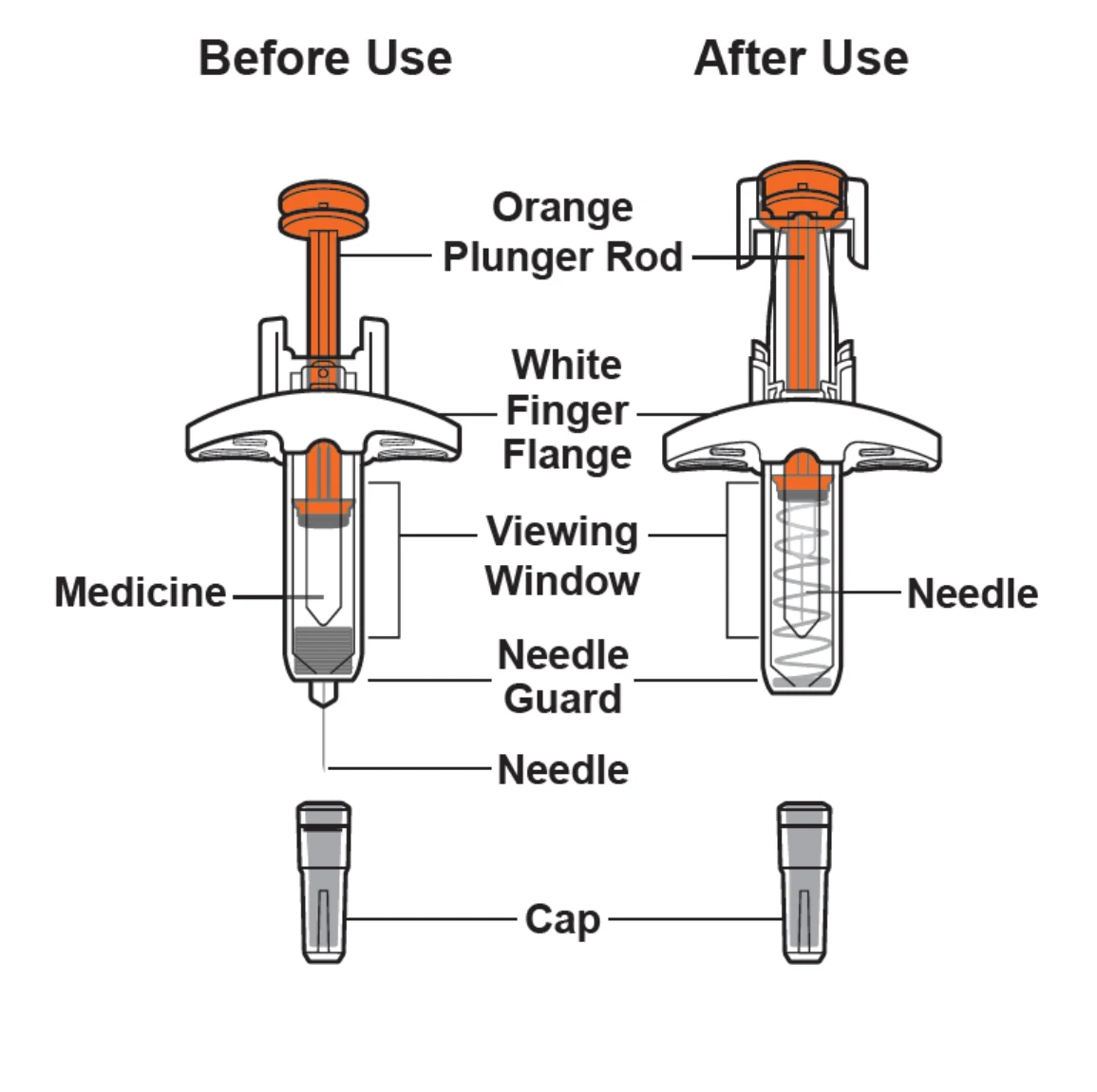
Figure A
Preparing for the Injection
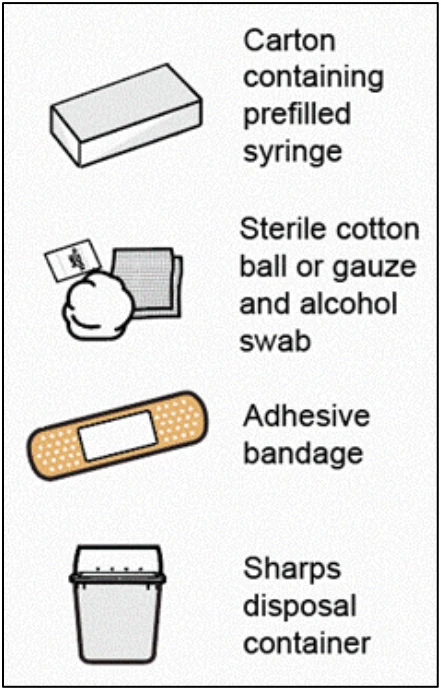
- 1. Gather the supplies for the injection.
- a. Prepare a clean, flat surface, such as a table or countertop, in a well-lit area.
- b. Take the carton containing the prefilled syringe with needle safety guard out of the refrigerator.
- c. Make sure you have the following supplies (see Figure B):
- - Carton containing Avtozma prefilled syringe with needle safety guard
Not included in the carton:
- Sterile cotton ball or gauze
- Adhesive bandage
- Sharps disposal container
Alcohol swab
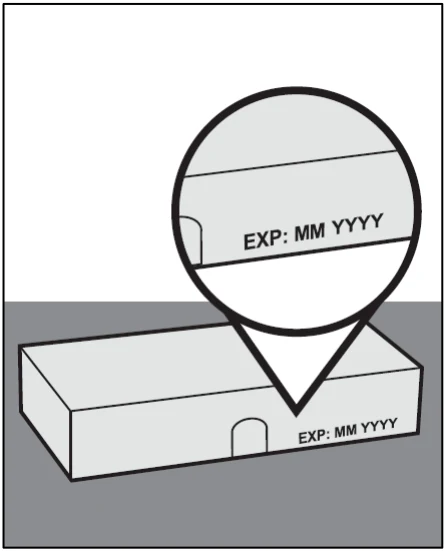
- 2. Inspect the carton (see Figure C).
- a. Look at the carton and make sure you have the correct medicine and dose strength. (Avtozma)
- b. Check the expiration date on the carton to make sure the date has not passed.
- • Do not use the pre-filled syringe with needle safety guard if the expiration date has passed.
- • Do not use the pre-filled syringe with needle safety guard if the carton looks like it has been opened or damaged if you are opening the carton for the first time and check to make sure that it is properly sealed.
Figure C
Figure B
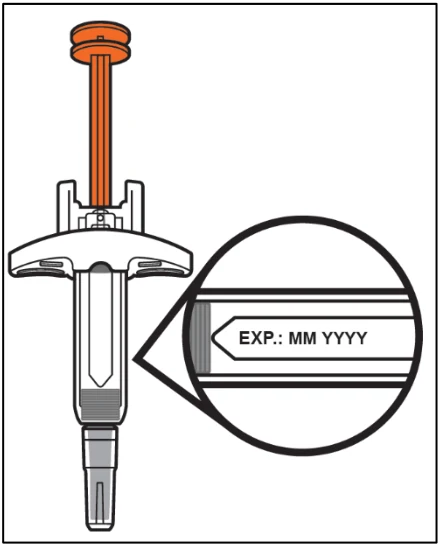
- 3. Inspect the Pre-filled Syringe with needle safety guard.
- a. Open the carton and remove 1 single- dose pre-filled syringe from the carton. Return any remaining Avtozma pre-filled syringes with needle safety guard in the carton to the refrigerator.
- b. Check the expiration date on the Avtozma pre-filled syringe with needle safety guard (see Figure D).
- • Do not use the pre-filled syringe with needle safety guard if the expiration date has passed. If the expiration date has passed, safely dispose of the pre-filled syringe in your sharps disposal container and get a new one.
- c.
Check the pre-filled syringe with needle safety guard to
- make sure it is not damaged, and shows no sign of
- leakage.
- • Do not use the pre-filled syringe with needle safety guard if it has been dropped, damaged, or has leaked.
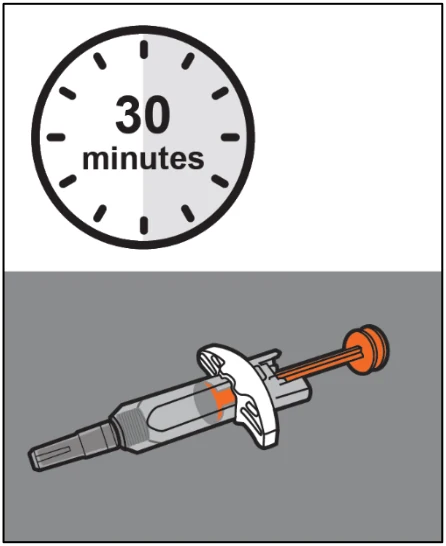
- 4. Wait 30 minutes.
- a. Leave the pre-filled syringe outside of the carton at room temperature 18°C to 28°C for 30 minutes to allow it to warm up (see Figure E).
- • Do not warm the pre-filled syringe with needle safety guard using heat sources such as hot water or a microwave.
- • Do not leave the pre-filled syringe with needle safety guard in the direct sunlight.
- • Do not remove the cap while allowing your pre-filled syringe with needle safety guard to reach room temperature.
- •
If the pre-filled syringe with needle safety guard does not reach room temperature, this could
- cause discomfort and make it hard to push the plunger.
Figure D
Figure E
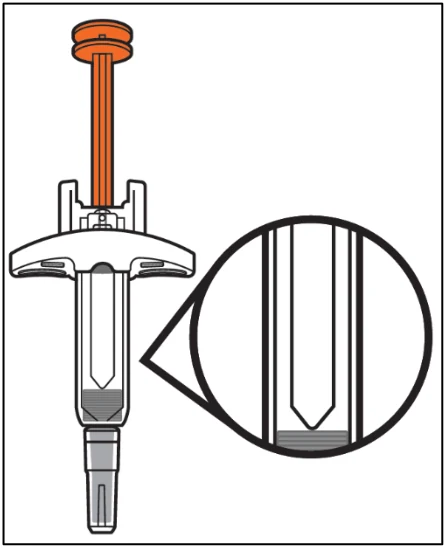
- 5. Inspect the medication.
- a. Hold your Avtozma with the cap pointing down.
- b. Look at the medicine and confirm that the liquid is clear and colourless to yellow and does not contain any particles or flakes (see Figure F).
- • Do not use the pre-filled syringe with needle safety guard if the liquid is discolored, cloudy, or has particles or flakes in it. Safely dispose of the pre-filled syringe with needle safety guard in a sharps disposal container and use a new one.
- • Air bubbles are normal.
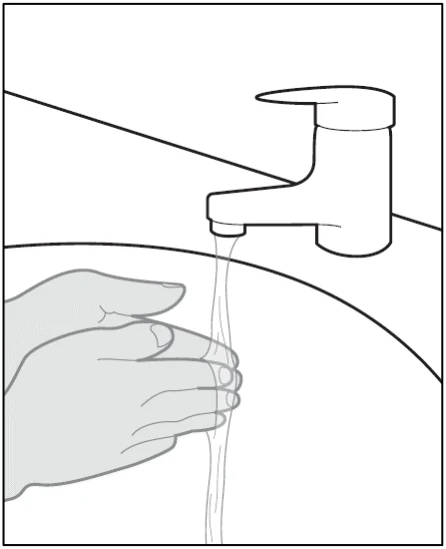
- 6. Wash your hands.
- a. Wash your hands with soap and water and dry them thoroughly (see Figure G).
Figure F
Figure G
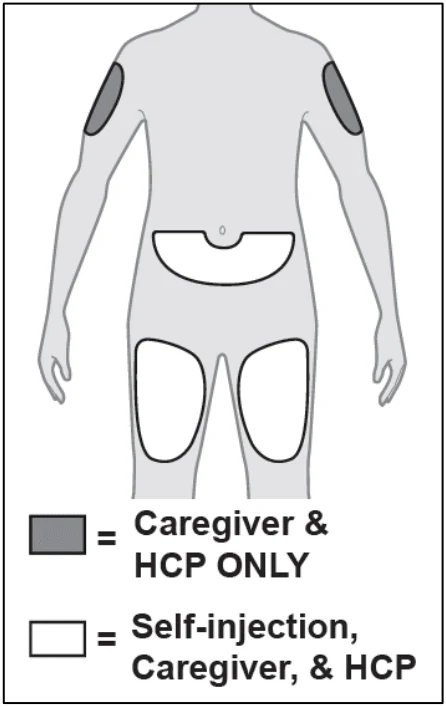
- 7. Choose an appropriate injection site (see Figure H).
- a. You may inject into
- - The front of the thighs
- - The lower abdomen below the belly button, except for the 5 cm around the belly button.
- - The outer area of the upper arm (only if you are a caregiver or healthcare professional (HCP).
- • Do not inject into the upper arm by yourself.
- • Choose a different injection site for each new injection at least 2.5 cm from the last area you injected.
- • Do not inject into moles, scares, bruises, or areas where the skin is tender, red, or hard.
- • Do not inject through your clothes.
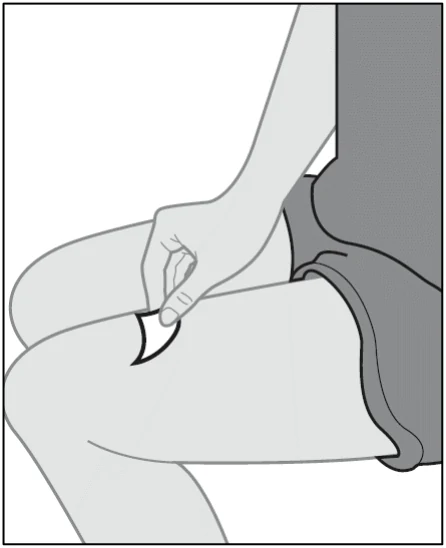
- 8. Clean the injection site.
- a. Wipe the injection site with an alcohol swab and let it air dry for approximately 10 seconds (see Figure I). This will reduce the chance of getting an infection.
- • Do not touch the injection site again before giving the injection.
- • Do not fan or blow on the clean area.
Figure I
Figure H
Administering the Injection
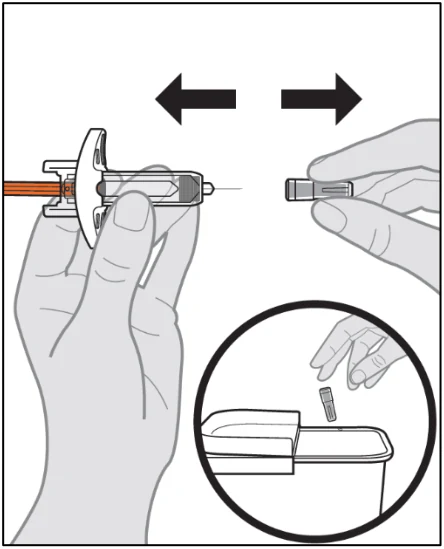
- 9. Remove the cap.
- a. Hold the pre-filled syringe with needle safety guard by the syringe body using one hand. Gently pull the cap straight off with the other hand (see Figure J).
Note: If you cannot remove the cap, you should ask a caregiver for help or contact your healthcare provider.
- Do not hold the plunger while removing the cap.
- You may see a drop of liquid at the tip of the needle. This is normal.
If the prefilled syringe with needle safety
- guard is not used within 5 minutes of needle cap removal, the prefilled syringe should be
- disposed of in the puncture resistant container or sharps container and a new prefilled syringe should be used.
- b. Dispose of the cap right away in your sharps disposal container (see step 14 and Dispose of prefilled syringe and Figure N)
- Do not re-cap the prefilled syringe with needle safety guard.
- Do not touch the needle shield at the tip of the prefilled syringe with needle safety guard to avoid accidental needle stick injury.
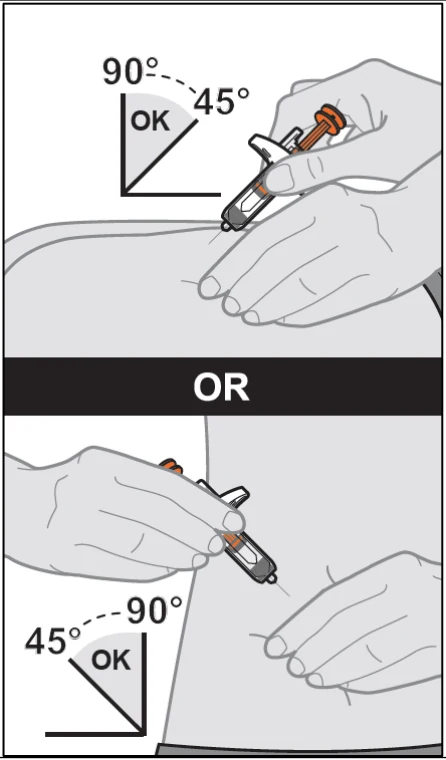
- 10. Insert the prefilled syringe with needle safety guard into the injection site.
- a. Gently pinch a fold of skin at the injection site with one hand.
Note: Pinching the skin is important to make sure that you inject under the skin (into fatty tissue) but not any deeper (into muscle).
- Do not pull back on the plunger rod at any time.
- With a quick and “dart-like” motion, insert the Needle completely into the fold of skin at a 45 to 90-degree angle (see Figure K).
Note: It is important to use the correct angle to make sure the medicine is delivered under the skin (into fatty tissue), or the injection could be painful, and the
Figure J
medicine may not work.
Do not touch the plunger while inserting the
- needle into the skin.
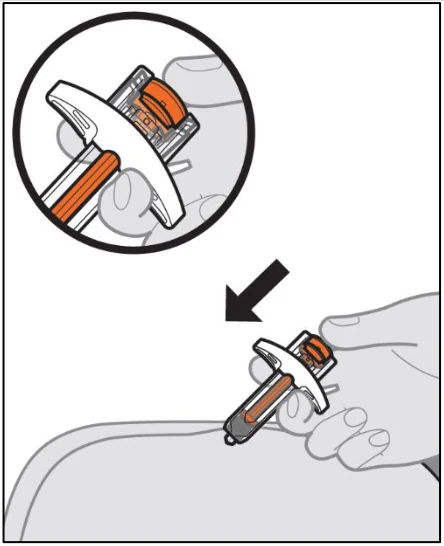
- 11. Give the injection.
- a. Gently pinch a fold of skin at the injection site with one hand.
- b. Slowly push the plunger all the way down until the full dose of medicine gets injected, and the syringe is empty (see Figure L).
- • Do not change the position of the prefilled syringe after the injection has started.
- • If the plunger is not fully pressed, the needle guard will not extend to cover the needle when it is removed.
- •
If the needle is not covered, proceed
- carefully to dispose of the syringe (see step 14. Dispose of prefilled syringe with needle
- safety guard).
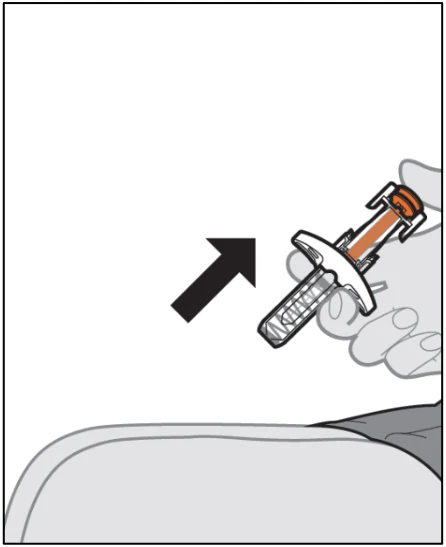
- 12. Remove the pre-filled syringe with needle safety guard from the injection site.
- a. After the prefilled syringe with needle safety guard is empty, remove the needle from the injection site and release the plunger until the entire needle is covered by the guard (see Figure M).
- • Some bleeding may occur (see step 13. Care for the injection site).
- • In case of skin contact with medicine, wash the area that touched the medicine with water.
- • Do not reuse the prefilled syringe with needle safety guard.
Figure M
Figure L
Figure K
After the Injection
- 13.
Care for the injection site.
- a.
If a little bleeding occurs, treat the injection site by gently pressing, not rubbing, a cotton ball or gauze to the site and apply an adhesive bandage if needed.
- • Do not rub the injection site.
- a.
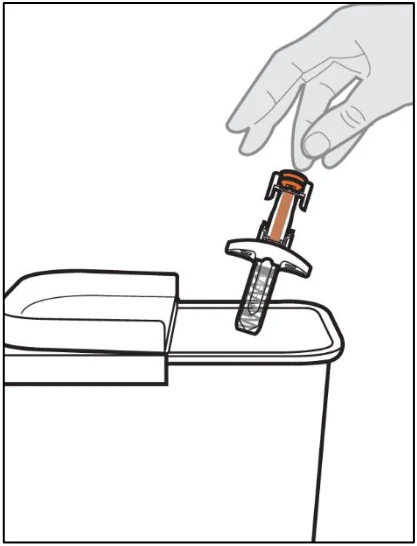
- 14. Dispose of the prefilled syringe with needle safety guard.
- a. Put the used pre-filled syringe with needle safety guard and other supplies in your sharps disposal container right away after use (see Figure N).
Note: If your injection is given by another person, this person must also be careful when removing the pre-filled syringe with needle safety guard and disposing of it to prevent accidental needle stick injury and passing infection.
Do not re-use the pre-filled syringe with
- needle safety guard.
Do not put the cap back onto the pre-filled
- syringe with needle safety guard.
- Do not throw away (dispose of) your used sharps disposal container in your household trash.
- Do not recycle your used sharps disposal container.
- Keep the Avtozma pre-filled syringe with needle safety guard and disposal container out of the reach of children.
Dispose of the full container as instructed by your healthcare provider or pharmacist. If you do not have a sharps disposal container, you may use a household container that is closable and puncture resistant. Any unused medicinal product or waste material should be disposed of in accordance with local requirements.
- 15.
Record your injection.
- a.
Write the date, time, and specific part of your body where you injected yourself.
Figure N
- a.
AVTOZMA autoinjector
Read and follow the Instructions for Use that come with your Avtozma autoinjector before you start using it and each time you get a refill. There may be new information. Before you use Avtozma, make sure your healthcare provider shows you the right way to use it.
Important Information
- Do not remove the autoinjector cap until you are ready to inject Avtozma.
- Do not try to take apart the autoinjector at any time.
- Do not reuse the same autoinjector.
- Do not inject through clothing.
- Do not use the autoinjector if it has been dropped or damaged.
- Patient advice regarding hypersensitivity reactions (or anaphylaxis): If you develop symptoms such as, but not limited to skin rash, itching, chills, swelling of face, lips, tongue or throat, chest pain, wheezing, difficulty breathing or swallowing or feeling dizzy or faint at any time while not at the clinic during or following an injection you should seek emergency care immediately.
Storing Avtozma
- Store the unused autoinjector in the original carton in a refrigerator between 2°C to 8°C. Do not freeze.
- Once removed from the refrigerator, Avtozma can be stored up to 3 weeks at or below 30°C. If necessary, Avtozma may be returned to the refrigerator once within these 3 weeks and stored refrigerated until the expiry date. Avtozma must be discarded, if not used within the single period of 3 weeks outside of the refrigerator or by the original expiry date, whichever is earlier.
- Keep the autoinjector out of direct sunlight.
- Do not remove the autoinjector from its original carton during storage.
- Do not leave the autoinjector unattended.
- Keep the autoinjector out of the reach of children. Contains small part.
Parts of your Avtozma autoinjector (See Figure A).
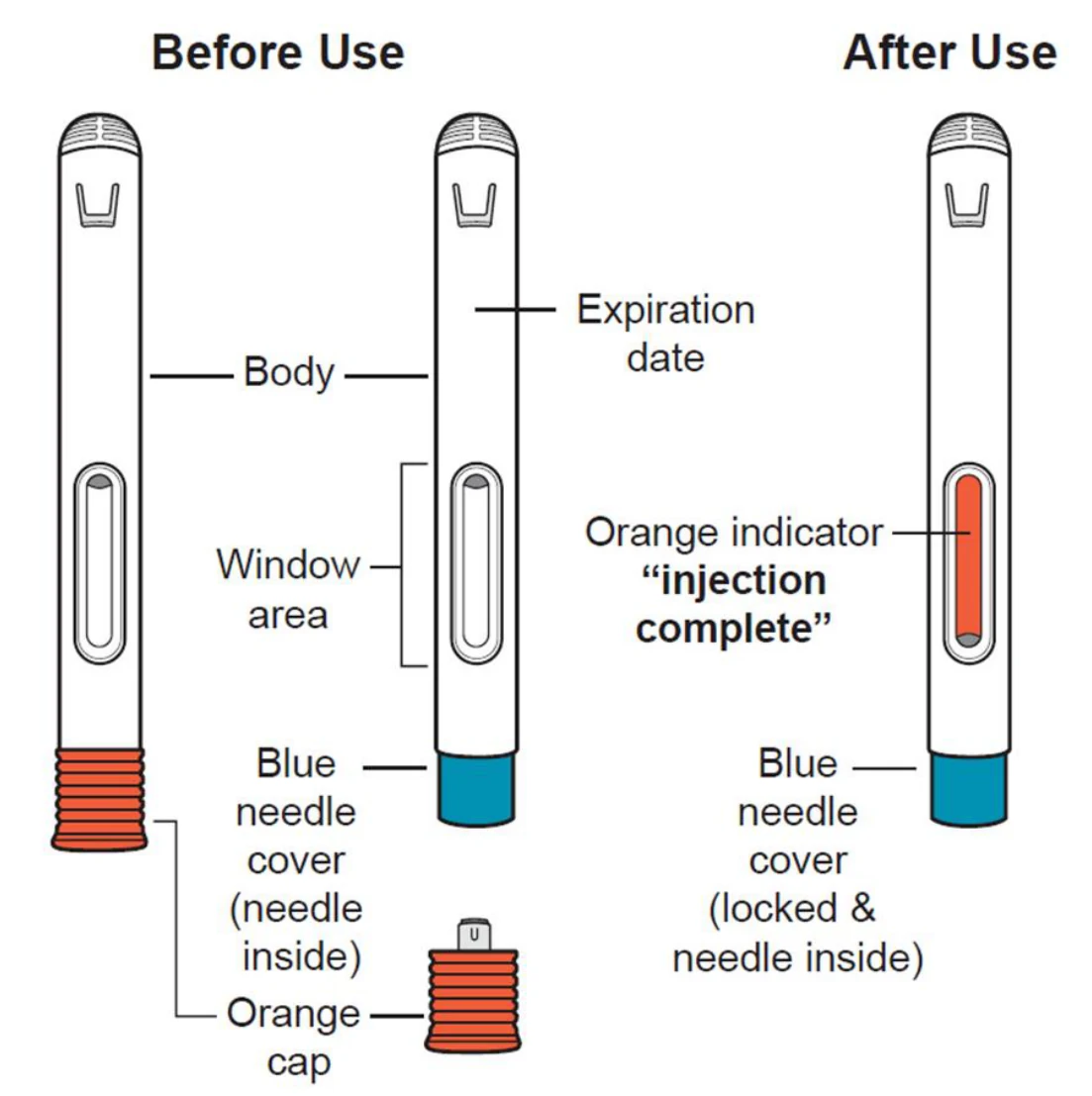
Figure A
Preparing for the Injection
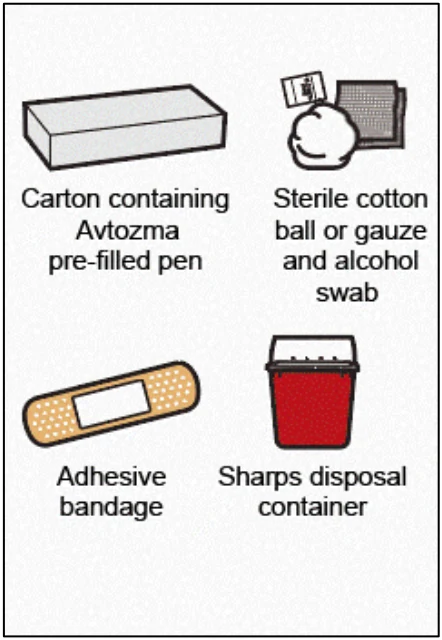
- 1. Gather the supplies for the injection.
- a. Prepare a clean, flat surface, such as a table or countertop, in a well-lit area.
- b. Take the carton containing the autoinjector out of the refrigerator.
- c. Make sure you have the following supplies (see Figure B):
- - Carton containing Avtozma autoinjector
Not included in the carton:
- Sterile cotton ball or gauze
- Adhesive bandage
- Sharps disposal container
- Alcohol swab
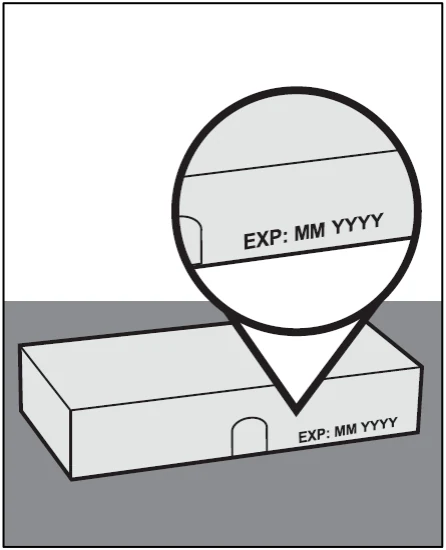
- 2. Inspect the carton
- a. Look at the carton and make sure you have the correct medicine and dose strength. (Avtozma)
- b. Check the expiration date on the carton to make sure the date has not passed.
- • Do not use the autoinjector if the expiration date has passed.
- • If you are opening the carton for the first time, check to make sure that it is properly sealed.
- • Do not use the autoinjector if the carton looks like it has been opened or damaged.
Figure C
Figure B
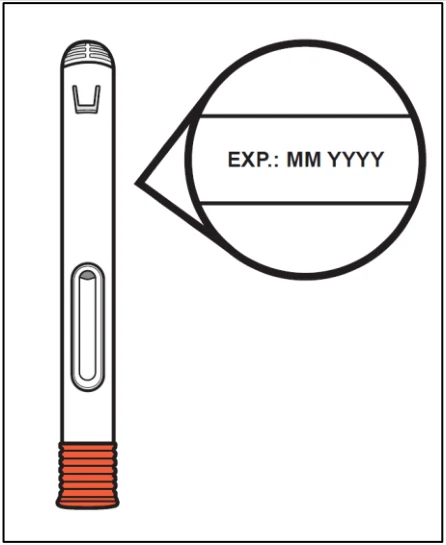
- 3. Inspect the autoinjector.
- a. Open the carton and remove one single- dose autoinjector from the carton. Return any remaining Avtozma autoinjector in the box to the refrigerator.
- b. Check the expiration date on the Avtozma autoinjector (see Figure D).
- • Do not use the autoinjector if the expiration date has passed. If the expiration date has passed, safely dispose of the autoinjector in your sharps disposal container and get a new one.
- c. Check the autoinjector to make sure it is not damaged, and shows no sign of leakage.
- •
Do not use the autoinjector if it has been
- dropped, damaged, or has leaked.
Note: A small gap between the orange cap and injector body is normal.
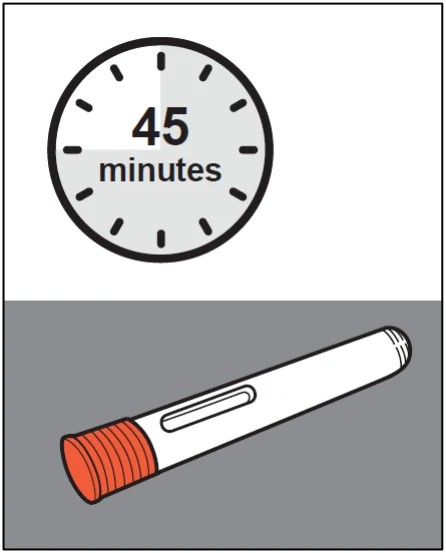
- 4. Wait 45 minutes.
- a. Leave the autoinjector outside of the carton at room temperature 18°C to 28°C for 45 minutes to allow it to warm up (see Figure E).
- • Do not warm the autoinjector using heat sources such as hot water or a microwave.
- • Do not leave the autoinjector in the direct sunlight.
- • Do not remove the cap while allowing your autoinjector to reach room temperature.
- • If the autoinjector does not reach room temperature, this could cause discomfort.
Figure D
Figure E
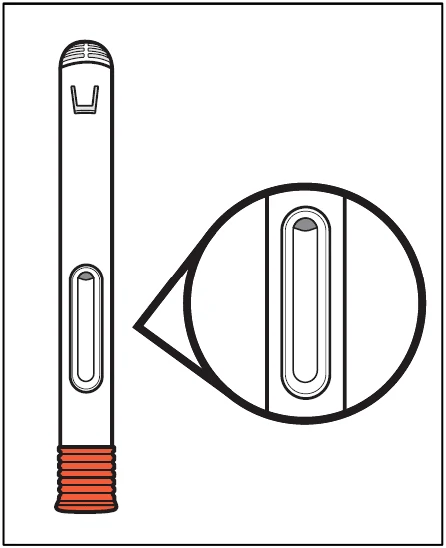
- 5. Inspect the medication.
- a. Hold your Avtozma with the cap pointing down.
- b. Look at the medicine and confirm that the liquid is clear and colourless to yellow and does not contain any particles or flakes (see Figure F).
- • Do not use the autoinjector if the liquid is discolored, cloudy, or has particles or flakes in it. Safely dispose of the autoinjector in a sharps disposal container and use a new one.
- • Air bubbles are normal.
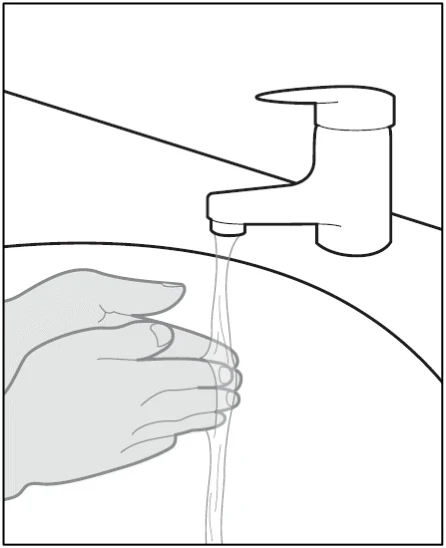
- 6. Wash your hands.
- a. Wash your hands with soap and water and dry them thoroughly (see Figure G).
Figure F
Figure G
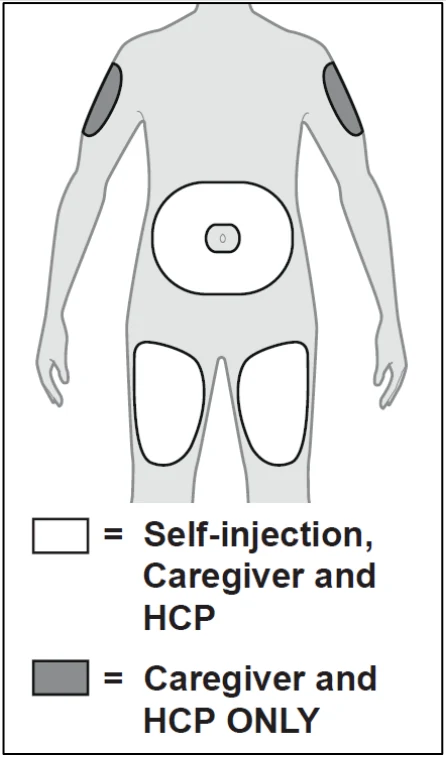
- 7. Choose an appropriate injection site (see Figure H).
- a. You may inject into
- - The front of the thighs
- - The abdomen, except for the 5 cm around the belly button.
- - The outer area of the upper arm (only if you are a caregiver or healthcare professional (HCP).
- • Do not inject into the upper arm by yourself.
- • Choose a different injection site for each new injection at least 2.5 cm from the last area you injected.
- • Do not inject into moles, scares, bruises, or areas where the skin is tender, red, or hard.
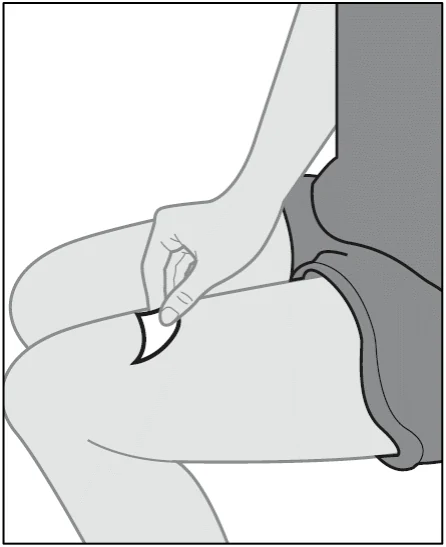
- 8. Clean the injection site.
- a. Wipe the injection site with an alcohol swab and let it air dry (see Figure I). This will reduce the chance of getting an infection.
- • Do not touch the injection site again before giving the injection.
- • Do not fan or blow on the clean area.
Figure I
Figure H
Administering the Injection
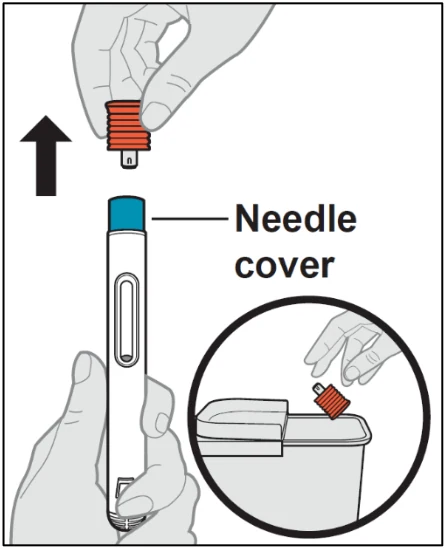
- 9. Remove the cap.
- a. Hold the autoinjector by the injector body with the cap on top using one hand. Gently pull the cap straight off with the other hand (see Figure J).
Note: If you cannot remove the cap, you should ask a caregiver for help or contact your healthcare provider.
- b. Dispose of the cap right away in your sharps disposal container (see step 14 and Figure O)
- • Do not re-cap the autoinjector.
- • Do not touch the needle shield at the tip of the autoinjector to avoid accidental needle stick injury.
- •
After you remove the cap, the autoinjector is ready for use. If the autoinjector is not used
- within 3 minutes of cap removal, throw away the autoinjector in a sharps disposal container and use a new autoinjector
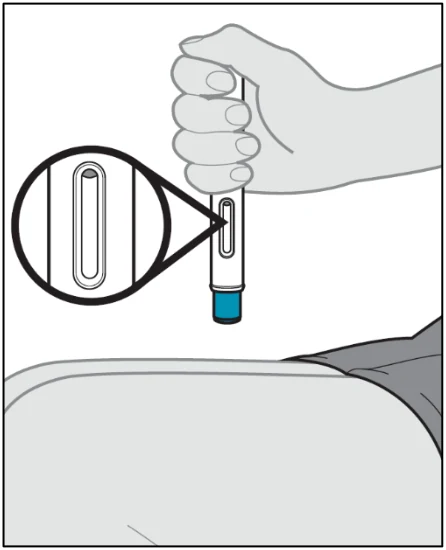
- 10. Place the autoinjector on the injection site.
- a. Hold the autoinjector comfortably in one hand so that you can see the window (see Figure K).
- b. Without pinching or stretching the skin, place the autoinjector against the skin at a 90-degree angle (see Figure L).
Note: It is important to use the correct angle to make sure the medicine is delivered under the skin (into fatty tissue), or the injection could be painful, and the medicine may not work
- Do not administer into muscle or a blood vessel
Figure J
Figure K
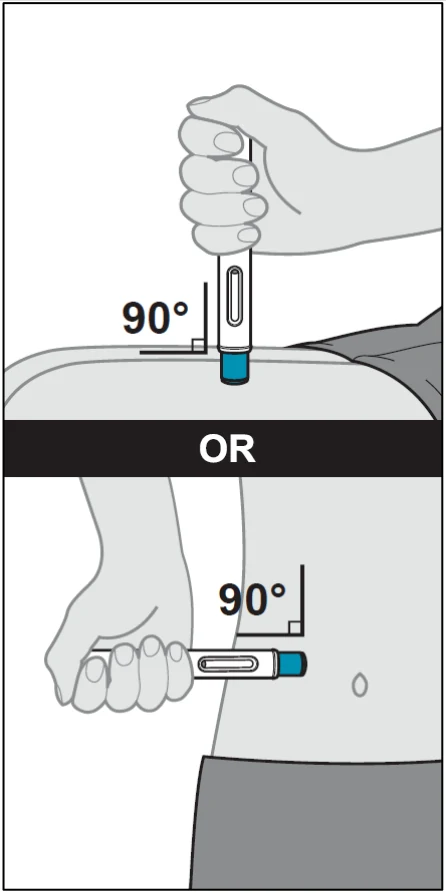
Figure L
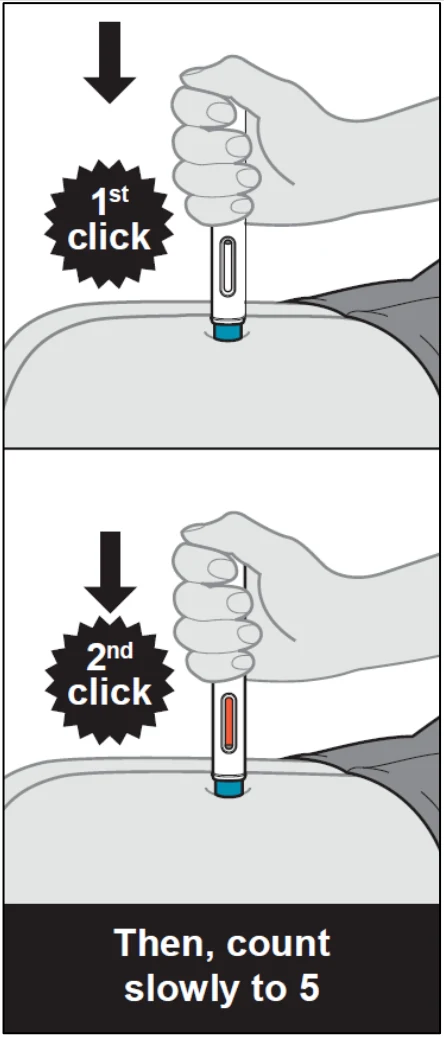
- 11. Give the injection.
- a. Firmly press the autoinjector into the skin to begin the injection.
- b. When the injection starts you will hear the 1st “click” and the orange indicator will begin to fill the window (see Figure M).
- c. Keep holding the autoinjector firmly against the skin and listen for the 2nd “click”.
- d. After you hear the 2nd “click”, continue to hold the autoinjector firmly against the skin and count slowly to 5 to make sure you inject the full dose (see Figure M).
- e. Watch the orange indicator until it stops moving and has reached the end of the window to be sure the full dose of medicine is injected.
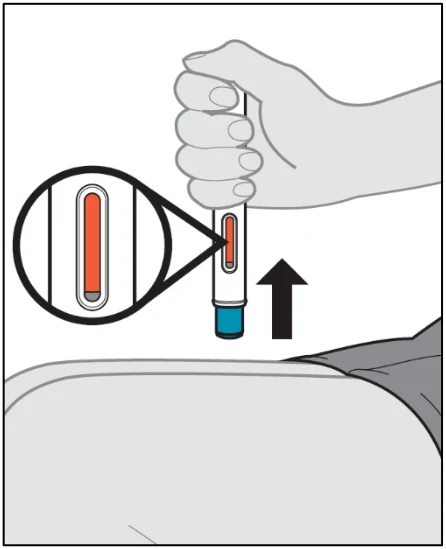
- 12. Remove the autoinjector from the injection site.
- a. When the orange indicator has stopped moving, lift the autoinjector straight off of the injection site at a 90-degree angle to remove the needle from the skin.
- • The needle cover will automatically move out and lock into place covering the needle (see Figure N).
Note: If the window has not turned completely orange or if the medicine is still injecting, this means you have not received a full dose. Carefully place the autoinjector into the sharps disposal container and call your healthcare provider immediately.
Do not touch the needle cover of the
- autoinjector.
- Do not try to re-use the autoinjector
- Do not repeat the injection with another autoinjector
Figure N
Figure M
After the Injection
- 13.
Care for the injection site.
- a.
If a little bleeding occurs, treat the injection site by gently pressing, not rubbing, a cotton ball or gauze to the site and apply an adhesive bandage if needed.
- • Do not rub the injection site
- a.
- 14. Dispose of Avtozma.
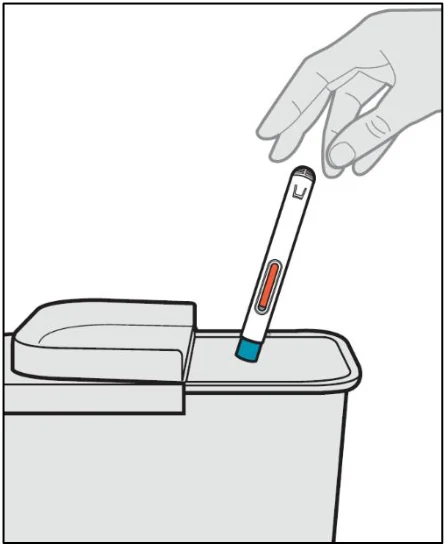
- a. Put the used autoinjector and other supplies in your sharps disposal container right away after use (see Figure O).
Note: If your injection is given by another person, this person must also be careful when removing the autoinjector and disposing of it to prevent accidental needle stick
injury and passing infection.
- Do not re-use the autoinjector.
- Do not put the cap back onto the autoinjector.
Do not dispose of your used sharps disposal
- container in your household trash.
Do not recycle your used sharps disposal container.
- Keep the Avtozma autoinjector and disposal container out of the reach of children.
- Dispose of the full container as instructed by your healthcare provider or pharmacist. If you do not have a sharps disposal container, you may use a household container that is closable and puncture resistant. Any unused medicinal product or waste material should be disposed of in accordance with local requirements
- Record your injection.
Write the date, time, and specific part of your body where you injected yourself.
Figure O