


Patient Medication Information: uses, side effects, how to take - Spevigo
What is Spevigo used for?
Spevigo is a prescription medicine used in adults and children who are 12 years of age and older to treat and prevent:
painful skin blisters (also called pustules) developing suddenly over large areas of your skin.
These episodes are also known as a flare, and are related to a rare, inflammatory, skin disease called generalized pustular psoriasis (GPP). Spevigo helps to clear your skin and reduces your symptoms such as burning, itching, pain, redness, and fatigue during a flare.
How does Spevigo work?
Spevigo contains the active substance spesolimab. Spesolimab is a monoclonal antibody belonging to a group of medicines called interleukin (IL) inhibitors. Monoclonal antibodies are proteins that recognize and bind specifically to certain proteins in the body. Spevigo works by blocking the activity of a protein called IL-36R, which can cause pustules, painful inflammation on the skin and fibrosis (scarring).
What are the ingredients in Spevigo?
Medicinal ingredient: spesolimab
Non-medicinal ingredients: arginine hydrochloride, glacial acetic acid, polysorbate 20, sodium acetate trihydrate, sucrose, water for injection.
Spevigo comes in the following dosage forms:
Spevigo is available as pre-filled syringes, 150 mg/syringe (150 mg/mL).
Each pack has two pre-filled syringes.
Spevigo is available as pre-filled syringes, 300 mg/syringe (150 mg/mL).
Each pack has one pre-filled syringe.
Spevigo is available as single use vials, 450 mg/vial (60 mg/mL).
Each pack has two vials.
The vial stopper does not contain natural rubber latex.
Do not use Spevigo if:
You are allergic to spesolimab or any of the other ingredients of this medicine. See What are the ingredients in Spevigo?
To help avoid side effects and ensure proper use, talk to your healthcare professional before you take Spevigo. Talk about any health conditions or problems you may have, including if you:
- have an infection that does not go away or that keeps coming back;
- have tuberculosis (TB) or have been in close contact with someone with TB;
- have recently received or are scheduled to receive an immunization (vaccine). You should not receive live vaccines for at least 16 weeks after treatment with Spevigo;
are pregnant or plan to become pregnant. It is not known if Spevigo can harm your unborn baby;
- are breastfeeding or plan to breastfeed. It is not known if Spevigo passes into your breast milk;
- experience symptoms like new-onset weakness in your arms or legs or numbness (loss of sensation), tingling or burning sensation in any part of your body. These might be signs of peripheral neuropathy;
- have any known allergies. Spevigo contains polysorbates that may cause allergic reactions.
Talk to your healthcare professional right away if you have any of the signs or symptoms of an allergic reaction, including:
- difficulty breathing or swallowing;
- swelling of the face, lips, tongue or throat;
- severe itching of the skin, with a red rash or raised bumps that is different from your GPP symptoms;
- feel faint.
You can also have allergic reactions days or weeks after receiving Spevigo. Call your doctor immediately if you develop any widespread skin rash not previously experienced, fever, and/or facial swelling 2-8 weeks after receiving the medication.
Tell your healthcare professional about all the medicines you take, including any drugs, vitamins, minerals, natural supplements, or alternative medicines.
How to take Spevigo:
When given under the skin (subcutaneously) for GPP flare prevention
Read the Instructions for Use that comes with Spevigo for information on how to prepare and inject a dose of Spevigo and how to properly throw away (dispose of) used Spevigo pre-filled syringes.
- Spevigo pre-filled syringes come in two different forms (300 mg or 150 mg). Your healthcare provider will prescribe the pre-filled syringe that is right for you.
- Your healthcare provider will tell you how often you should use Spevigo. Use Spevigo exactly as your healthcare provider tells you to use it.
- Do not try to inject Spevigo until you have been shown the right way to give the injections by your healthcare provider. If your healthcare provider decides that you or a caregiver may give your injections of Spevigo at home, you should receive training on the right way to prepare and inject Spevigo.
- If you miss a dose of Spevigo, inject your dose as soon as you remember. Then, take your next dose at your regular scheduled time. In case you are not sure when to inject Spevigo, call your healthcare provider.
- Subcutaneous injection of Spevigo should not be used for GPP flare treatment.
When given in a vein (intravenously) for GPP flare treatment
- Your healthcare provider will give you Spevigo through a needle placed in your vein (intravenous infusion) over 90 minutes.
- Spevigo is usually given one time. Your healthcare provider will decide if you should receive an additional treatment after 1 week.
- Intravenous infusion of Spevigo should not be used for GPP flare prevention.
Usual dose:
The usual dose for GPP flare prevention is a loading dose of 600 mg (4 x 150 mg/1mL syringes or 2 x 300 mg/2 mL syringes) followed by 300 mg (2 x 150 mg/1 mL syringes or 1 x 300 mg/2 mL syringe) administered subcutaneously 4 weeks later and every 4 weeks thereafter.
The usual dose for GPP flare treatment is a single dose of 900 mg (2 x 450 mg/7.5 mL vials) administered as an intravenous infusion.
If your flare persists, an additional 900 mg dose may be administered 1 week after the initial dose.
Overdose:
If you think that you or a person you are caring for have taken too much Spevigo, contact your healthcare professional, hospital emergency department, regional poison control centre or Health Canada’s toll-free number, 1-844 POISON-X (1-844-764-7669) immediately, even if there are no signs or symptoms.
What are possible side effects from using Spevigo?
These are not all the possible side effects you may have when taking Spevigo. If you experience any side effects not listed here, tell your healthcare professional.
- urinary tract infections;
- upper respiratory tract infections;
- itching;
- feeling tired;
- redness, swelling, hardening, warmth, pain, peeling of the skin, small solid raised bumps on the skin, itching, skin rash or hives at the injection site;
- allergic reaction.
Serious side effects and what to do about them
| Symptom / effect | Talk to your healthcare professional | Stop taking drug and get immediate medical help | |
|---|---|---|---|
| Only if severe | In all cases | ||
| VERY COMMON | |||
| Upper respiratory tract infections: fevers, chills or sweats, cough, shortness of breath | ✓ | ||
| COMMON | |||
| Urinary tract infections: burning when you urinate, urinating more often than normal | ✓ | ||
| UNKNOWN | |||
| Allergic (hypersensitivity) reactions and infusion reactions: feeling faint, swelling of your face, eyelids, lips, mouth, tongue or throat, chest tightness, skin rash | ✓ | ||
| Serious allergic reactions that may occur days to weeks after receiving Spevigo: skin rash that is different than the rash from GPP, fever, swollen lymph nodes, facial swelling, mouth sores | ✓ | ||
If you have a troublesome symptom or side effect that is not listed here or becomes bad enough to interfere with your daily activities, tell your healthcare professional.
Reporting Side Effects
You can report any suspected side effects associated with the use of health products to Health Canada by:
- Visiting the Web page on Adverse Reaction Reporting (https://www.canada.ca/en/health-canada/services/drugs-health-products/medeffect-canada.html) for information on how to report online, by mail or by fax; or
- Calling toll-free at 1-866-234-2345.
NOTE: Contact your health professional if you need information about how to manage your side effects. The Canada Vigilance Program does not provide medical advice.
Storage:
- Store Spevigo in a refrigerator at 2 to 8°C.
- Do not freeze Spevigo. Do not use Spevigo if frozen, even if it has been thawed.
- Store Spevigo in original carton until it is to be used to protect from light.
150 mg pre-filled syringe
- If needed, Spevigo 150 mg pre-filled syringes can be stored at room temperature up to 25°C for up to 14 days.
- Throw away Spevigo 150 mg pre-filled syringes if kept at room temperature up to 25°C for more than 14 days.
300 mg pre-filled syringe
- If needed, Spevigo 300 mg pre-filled syringe can be stored at room temperature up to 30°C for up to 14 days.
- Throw away Spevigo 300 mg pre-filled syringe if kept at room temperature up to 30°C for more than 14 days.
Keep Spevigo out of reach and sight of children.
If you want more information about Spevigo:
- Talk to your healthcare professional.
Find the full product monograph that is prepared for healthcare professionals and includes
- this Patient Medication Information by visiting the Health Canada website: (https://www.canada.ca/en/health-canada/services/drugs-health-products/drug-products/drug-product-database.html); the manufacturer’s website (www.leo-pharma.ca), or by calling 1-800-263-4218.
The information in this leaflet is current up to the time of the last revision date shown below, but more current information may be available from the manufacturer.
Last Revised: 2026-03-26
Spevigo® is a registered trademark of LEO Pharma A/S used under license by LEO Pharma
Inc. Canada
INSTRUCTIONS FOR USE
SPEVIGO
(spesolimab injection)
Spevigo injection in pre-filled syringe for subcutaneous use
150 mg pre-filled syringe for administration of the subsequent dose
These “Instructions for Use” contain information on how to inject Spevigo when the prescribed dose for you or your child requires 2 pre-filled syringes of Spevigo.
Read these Instructions for Use before you use Spevigo for the first time and each time you get a refill. There may be new information.
This information does not take the place of talking to your healthcare professional about your or your child’s medical condition or treatment. Your healthcare professional should show you the right way to inject Spevigo before you try to inject yourself or your child for the first time.
Your healthcare professional has prescribed a dose of Spevigo for you or your child that requires two injections to deliver a complete dose. You must inject the contents of both Spevigo pre-filled syringes that come in the carton to deliver the complete dose.
Spevigo is for one-time use. Do not re-use the pre-filled syringe.
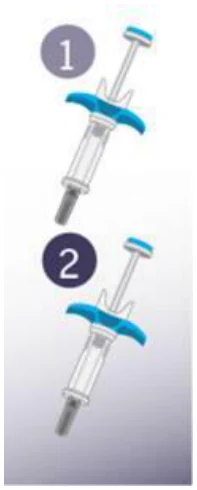
Getting to know Spevigo pre-filled syringe
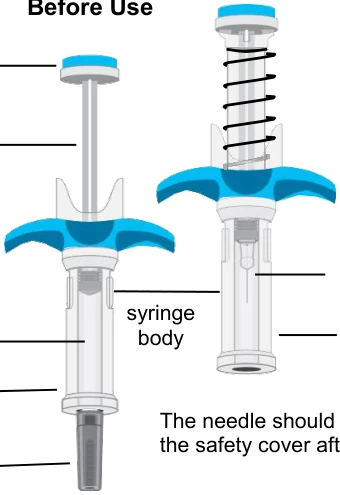
Spevigo comes in a pre-filled syringe with a safety cover. The needle is pulled back into the safety cover after injection.
Spevigo pre-filled syringe before use and after use with the activated safety cover
Important information you need to know before injecting Spevigo pre-filled syringe
150 mg pre-filled syringe for administration of the subsequent dose
- You must inject the contents of both Spevigo pre-filled syringes to deliver a complete dose.
- Inspect the carton that the product comes in to be sure that you have the correct medicine, the correct number of pre-filled syringes for your or your child’s prescribed dose, for any damage, and the expiration date.
- Do not use Spevigo if the liquid is cloudy or contains flakes or large particles.
- Do not use Spevigo if the expiration date (EXP) has passed.
- Do not use Spevigo if the pre-filled syringe has been dropped.
- Do not remove the cap until you are ready to inject.
- Inject Spevigo under the skin (subcutaneous injection) in either the upper thighs or stomach-area (abdomen). Do not inject Spevigo into any other area of the body.
Storing Spevigo:
- If needed, Spevigo 150 mg pre-filled syringes can be stored at room temperature up to 25°C for up to 14 days.
- Throw away Spevigo 150 mg pre-filled syringes if kept at room temperature for more than 14 days.
Keep Spevigo and all medicines out of the reach and sight of children.
Before Use
After Use
thumb pad
plunger rod
finger grip
medicine
safety cover
cap
covered needle
activated safety cover
The needle should be inside the safety cover after use.
syringe body
Follow the steps below when you use Spevigo:
| STEP 1 | Gathering supplies |
|---|---|
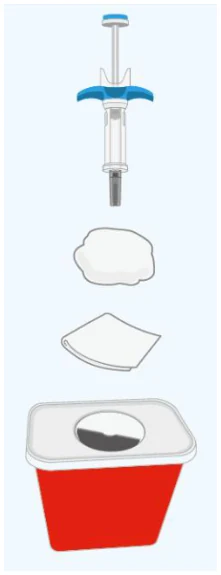 1 sharps disposal container (not included) 2 Spevigo pre-filled syringes 2 cotton balls or gauze (not included) 2 alcohol wipes (not included) |
|
| STEP 2 | Preparing to inject Spevigo |
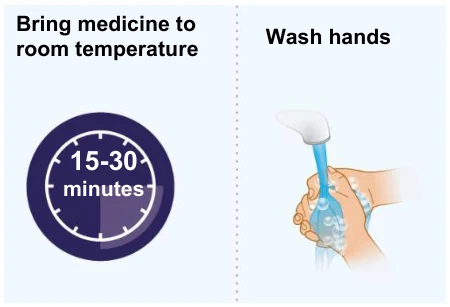 Bring medicine to room temperature Wash hands 15-30 minutes |
|
| STEP 3 | Inspecting the pre-filled syringes |
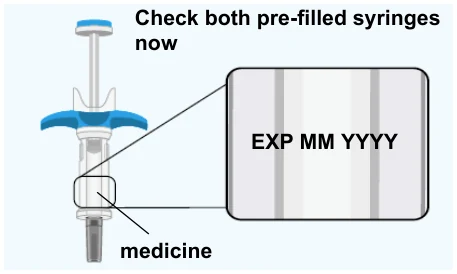 EXP MM YYYY medicine Check both pre-filled syringes now | Check both pre-filled syringes now:
|
| Preparing for your first injection | |
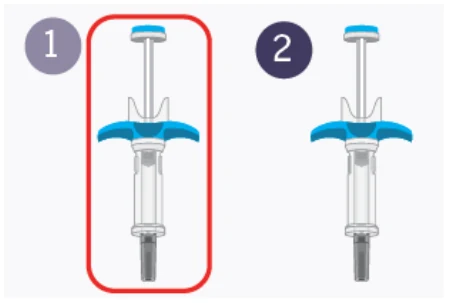 | Prepare for the first of two injections. Remember, you will repeat the following steps with the second pre-filled syringe right away after your first injection. Two injections are needed for a complete dose. |
| STEP 4 | Choosing the injection site |
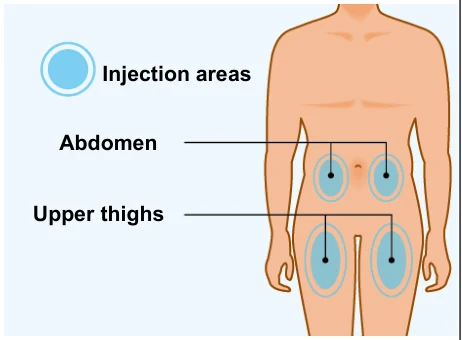 Injection areas Abdomen Upper thighs | Choose an injection site.
|
| STEP 5 | Cleaning the injection site |
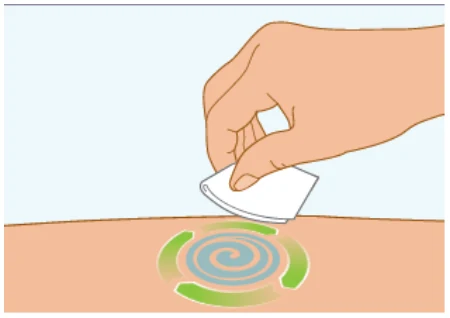 |
|
| STEP 6 | Removing the cap |
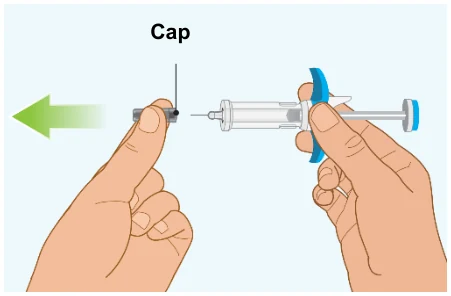 Cap Cap |
|
| STEP 7 | Pinch the skin |
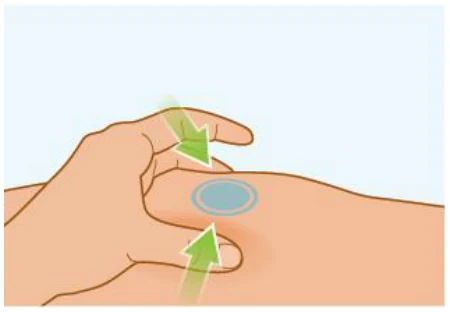 |
|
| STEP 8 | Before injecting, review steps A, B, and C to learn the correct way to inject |
| Important: Do Not move the pre-filled syringe when inserting the needle into your skin, while injecting, or when removing the needle from your skin. | |
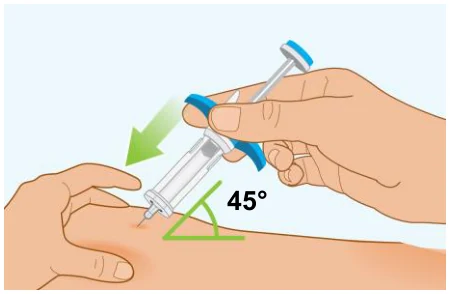 45° |
|
| A Inserting the needle | |
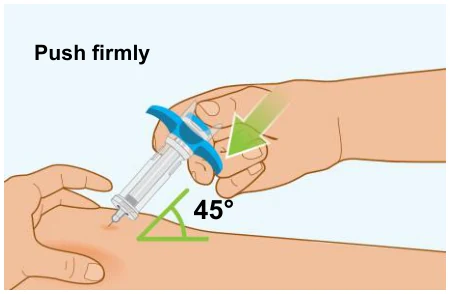 Push firmly 45° | To inject Spevigo:
|
| B Injecting the medicine | |
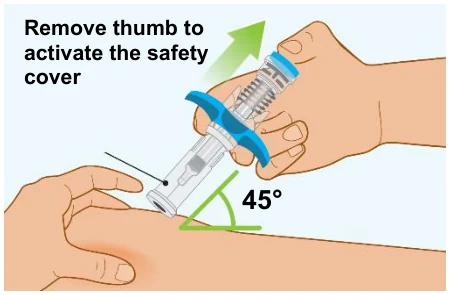 45° Remove thumb to activate the safety cover |
|
| C Checking injection is complete | |
| STEP 9 | Second injection |
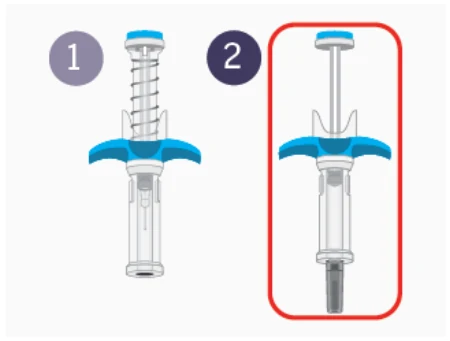 |
Important: You must inject the contents of both Spevigo pre-filled syringes to give a complete dose. |
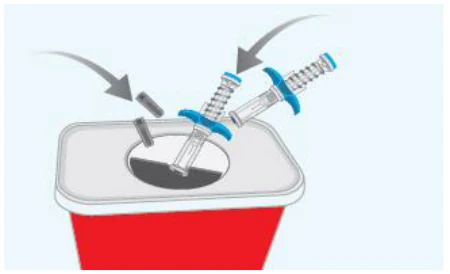
| STEP 10 | Disposing of the used Spevigo pre-filled syringes and caps |
Important: Always keep the sharps disposal container out of the reach of children. | |
Need help?
Call your doctor to talk about any questions you may have. For questions or concerns visit the manufacturer’s website (www.leo-pharma.ca) or call 1-800-263-4218.
 |
|---|
INSTRUCTIONS FOR USE
SPEVIGO
(spesolimab injection)
Spevigo injection in pre-filled syringe for subcutaneous use
300 mg pre-filled syringe for administration of the subsequent dose
These “Instructions for Use” of the Spevigo pre-filled syringe contain information on how to inject Spevigo if the prescribed dose for you or your child requires 1 pre-filled syringe of Spevigo.
Read these Instructions for Use before you use Spevigo for the first time and each time you get a refill. There may be new information.
This information does not take the place of talking to your healthcare professional about your or your child’s medical condition or treatment. Your healthcare professional should show you the right way to inject Spevigo before you try to inject yourself or your child for the first time.
Spevigo is for one-time use. Do not re-use the pre-filled syringe.
Getting to know Spevigo pre-filled syringe
Spevigo comes in a pre-filled syringe with a safety cover. The needle is pulled back into the safety cover after injection.
Spevigo pre-filled syringe before use and after use with the activated safety cover
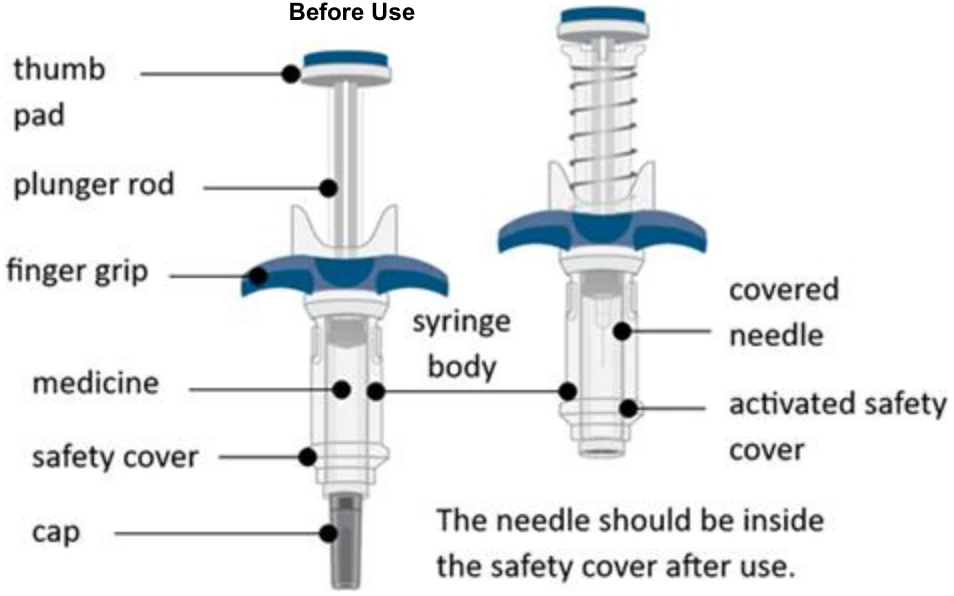
Important information you need to know before injecting Spevigo pre-filled syringe
300 mg pre-filled syringe for administration of the subsequent dose
- Inspect the carton that the product comes in to be sure that you have the correct medicine, the correct number of pre-filled syringes for your or your child’s prescribed dose, for any damage, and the expiration date.
- Do not use Spevigo if the liquid is cloudy or contains flakes or large particles.
- Do not use Spevigo if the expiration date (EXP) has passed.
- Do not use Spevigo if the pre-filled syringe has been dropped.
- Do not remove the cap until you are ready to inject.
- Inject Spevigo under the skin (subcutaneous injection) in either the upper thighs or stomach-area (abdomen). Do not inject Spevigo into any other area of the body.
Storing Spevigo:
- If needed, Spevigo 300 mg pre-filled syringe can be stored at room temperature up to 30°C for up to 14 days.
Throw away Spevigo 300 mg pre-filled syringe if kept at room temperature up to 30°C for more than 14 days.
Before Use
After Use
Keep Spevigo and all medicines out of the reach of children.
| 300 mg pre-filled syringe for administration of the subsequent dose | ||
|---|---|---|
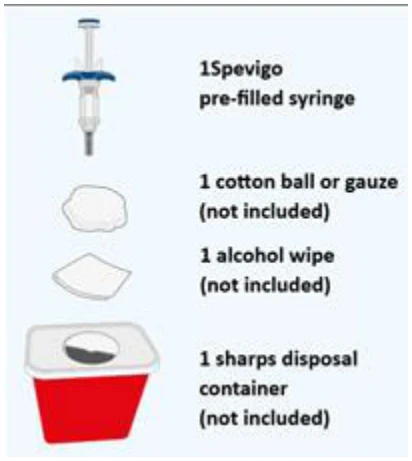
| STEP 1 | Gathering supplies | |
 |
| |
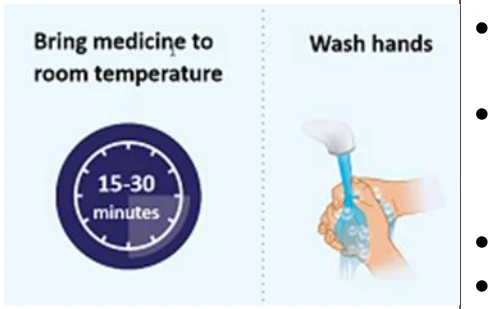
| STEP 2 | Preparing to inject Spevigo | |
 |
| |
| STEP 3 | Inspecting the pre-filled syringe | |
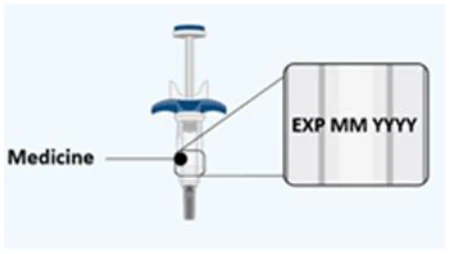 | Check the pre-filled syringe:
| |
| STEP 4 | Choosing the injection site | |
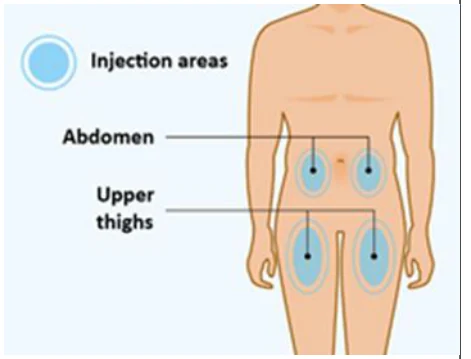 | Choose an injection site.
| |
| STEP 5 | Cleaning the injection site | |
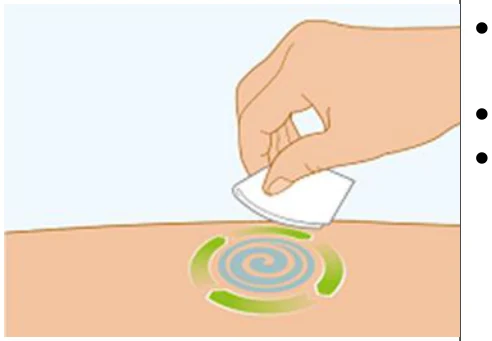 |
| |
| STEP 6 | Removing the cap | |
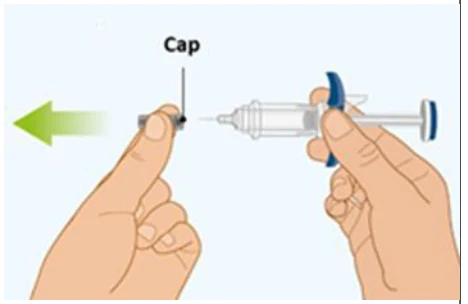 |
| |
| STEP 7 | Pinch the skin | |
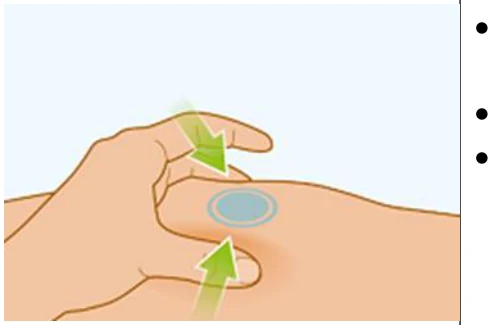 |
| |
| STEP 8 | Before injecting, review steps A, B, and C to learn the correct way to inject | |
| Important: Do not move the pre-filled syringe when inserting the needle into your skin, while injecting, or when removing the needle from your skin. | ||
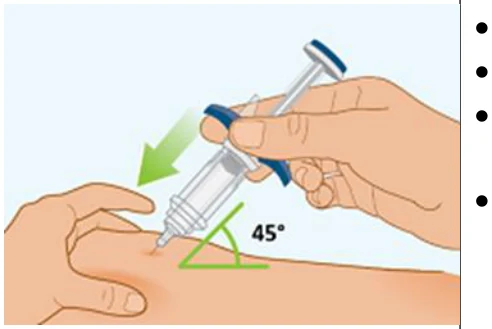 A Inserting the needle |
| |
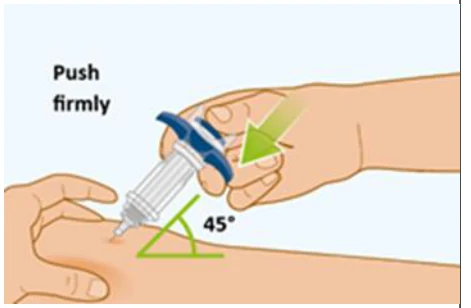 B Injecting the medicine | To inject Spevigo:
| |
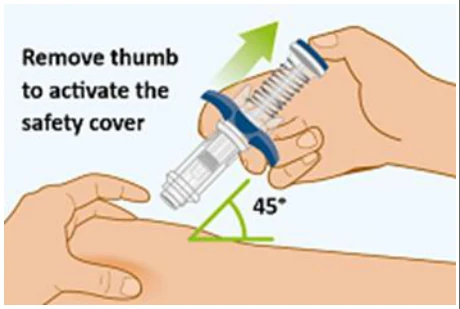 C Checking injection is complete |
| |
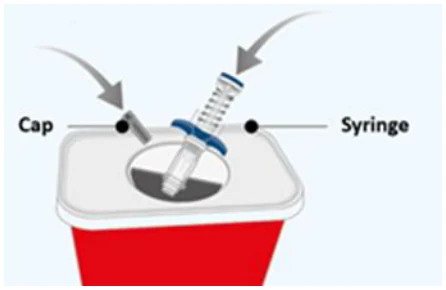
| STEP 9 | Disposing of the used Spevigo pre-filled syringe and cap | |
Important: Always keep the sharps disposal container out of the reach of children. | ||
Need help?
Call your doctor to talk about any questions you may have. For questions or concerns visit the manufacturer’s website (www.leo-pharma.ca) or call 1-800-263-4218.
 |
|---|