


Patient Medication Information: uses, side effects, how to take - Ilaris (Novartis Pharmaceuticals Canada, Solution)
What is Ilaris used for?
Cryopyrin-Associated Periodic Syndrome (CAPS)
Ilaris is used in adults and children aged 2 years and older for the ongoing management of the following auto-inflammatory diseases which are collectively known as Cryopyrin-Associated Periodic Syndromes (CAPS), including:
- Familial Cold Autoinflammatory Syndrome (FCAS) also called Familial Cold Urticaria (FCU), presenting with signs and symptoms of cold-induced urticarial rash
- Muckle-Wells Syndrome (MWS)
Ilaris may also be used in Neonatal-Onset Multisystem Inflammatory Disease (NOMID)/ Chronic Infantile Neurological, Cutaneous, Articular Syndrome (CINCA). It is not known if Ilaris improves nervous system problems in patients with NOMID, such as inflammatory meningitis, hearing loss or pressure on the brain.
Tumor Necrosis Factor receptor Associated Periodic Syndrome (TRAPS)
Ilaris is used to treat Tumor Necrosis Factor (TNF) receptor Associated Periodic Syndrome (TRAPS) in adult and pediatric patients.
Hyperimmunoglobulin D Syndrome (HIDS)/Mevalonate Kinase Deficiency (MKD)
Ilaris is used to treat Hyperimmunoglobulin D Syndrome (HIDS)/Mevalonate Kinase Deficiency (MKD) in adult and pediatric patients.
Familial Mediterranean Fever (FMF)
Ilaris is used to treat Familial Mediterranean Fever (FMF) in adult and pediatric patients. Ilaris can be used alone or together with colchicine.
Ilaris is also used for the treatment of:
Still’s disease including Systemic Juvenile Idiopathic Arthritis (SJIA) and Adult Onset Still’s Disease (AOSD)
Ilaris is used in adults, adolescents and children to treat active Still’s disease including Systemic Juvenile Idiopathic Arthritis (SJIA) in patients aged 2 years and older, and Adult-Onset Still’s Disease (AOSD).
How does Ilaris work?
CAPS, TRAPS, HIDS/MKD and FMF
In patients with CAPS, TRAPS, HIDS/MKD and FMF, the body produces excessive amounts of a chemical messenger called interleukin-1 beta (IL-1 beta). This may lead to symptoms such as fever, headache, fatigue, skin rash, painful joints and muscles. In some patients, more severe outcomes such as hearing loss are observed.
Still’s disease
Still’s disease including SJIA and AOSD is an autoinflammatory disorder which can be caused by high levels of certain proteins in the blood such as interleukin-1 beta (IL-1 beta), and can cause fever, rash, headache, tiredness, or painful joints and muscles.
Ilaris belongs to a group of medicines called interleukin-1 (IL-1) inhibitors. The active substance in Ilaris is canakinumab, a human monoclonal antibody. It selectively binds to IL-1 beta, blocking its activity and leading to an improvement in symptoms.
What are the ingredients in Ilaris?
Medicinal ingredient: canakinumab
Non-medicinal ingredients: L-histidine, L-histidine HCl monohydrate, mannitol, polysorbate 80, water for injection.
Ilaris comes in the following dosage form:
Ilaris is supplied as a solution for injection. It is provided in a single-use vial. One vial of solution contains 150 mg/ 1 mL canakinumab.
Do not use Ilaris if:
- you are allergic to canakinumab or to any nonmedicinal ingredients of Ilaris (see list of nonmedicinal ingredients).
- you think you may be allergic to Ilaris solution, ask your healthcare professional for advice. You may need a skin test before you start your treatment.
- you think you may have an infection, ask your healthcare professional for advice.
BEFORE starting Ilaris, your healthcare professional should test you for tuberculosis (TB); monitor you closely for symptoms of TB during treatment with Ilaris; and check you for symptoms of any type of infection before, during and after your treatment with Ilaris.
To help avoid side effects and ensure proper use, talk to your healthcare professional before you take Ilaris. Talk about any health conditions or problems you may have, including if you:
- currently have an infection or if you have a history of recurring infections or a condition such as low level of white blood cells, which makes you more likely to get infections.
- require vaccinations. You must not be given a certain type of vaccination known as “live vaccines” while being treated with Ilaris.
Other warnings you should know about:
DURING the treatment with Ilaris, tell your healthcare professional immediately if you experience any of the following symptoms:
- Fever higher than 38°C/100°F, Fever lasting longer than 3 days or any other symptoms possibly related to an infection (including serious infection), such as prolonged cough, phlegm, chest pain, difficulty breathing, ear pain, prolonged headache or redness, warmth or swelling of your skin.
- Signs of an allergic reaction such as difficulty breathing or swallowing, nausea, dizziness, skin rash, itching, hives, palpitations (irregular heartbeat) or low blood pressure.
- The serious skin reaction, DRESS (drug reaction with eosinophilia and systemic symptoms), has rarely been reported in association with Ilaris treatment, predominantly in patients with Systemic Juvenile Idiopathic Arthritis (sJIA). Seek medical attention immediately if you notice an atypical, widespread rash, which may occur in conjunction with high body temperature and enlarged lymph nodes.
- Patients with Still’s disease may develop a serious condition called macrophage (a type of white blood cell) activation syndrome (MAS), which can cause death. Tell your healthcare professional right away if your Still’s disease symptoms become worse, or if you have any symptoms of an infection such as fever, cough, or redness, warmth, or swelling of your skin.
Ilaris is not recommended for children younger than 2 years of age.
Tell your healthcare professional about all the medicines you take, including any drugs, vitamins, minerals, natural supplements or alternative medicines.
The following may interact with Ilaris:
You must not be given a certain type of vaccination known as a “live vaccines” while being treated with Ilaris. Your healthcare professional may want to check your vaccination history and give you any vaccinations that you have missed before you start treatment with Ilaris.
You should not take medicines that increase the risk of infection while taking Ilaris such as:
- Other blockers of interleukin-1, such as anakinra (Kineret*).
Blockers of tumour necrosis factor (TNF), such as etanercept, (Enbrel*), adalimumab (Humira*)
or infliximab (Remicade*) should not be used with Ilaris because this may increase the risk of infections. TNF blockers are used mainly in rheumatic and autoimmune diseases.
Proper use of Ilaris:
Driving and using machines
Some symptoms associated with CAPS or with Ilaris treatment, such as a spinning sensation (known as vertigo), may affect your ability to drive or use machines. If you feel a spinning sensation, do not drive or operate any tools or machines until you are feeling normal again.
Ask your healthcare professional, nurse or pharmacist for advice before taking any medicine.
Use in pregnancy and breast feeding
Ilaris has not been studied in pregnant women. It is important to tell your healthcare professional if you are pregnant or could be pregnant, or if you plan to get pregnant. Your healthcare professional will discuss with you the potential risks of taking Ilaris during pregnancy. It is advised you avoid becoming 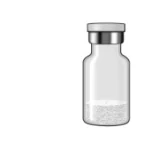
pregnant, and that you use adequate birth control before starting Ilaris, while using Ilaris and for at least 3 months after the last Ilaris treatment.
If you received Ilaris while you were pregnant, it is important that you inform the baby’s healthcare professional or nurse before any vaccinations are given to your baby. Your baby should not receive live vaccines until at least 16 weeks after you received your last dose of Ilaris before giving birth.
It is not known if Ilaris is expressed in human breast milk, or what effects Ilaris could have on the baby. Breast-feeding is therefore not recommended in women who are being treated with Ilaris. It is important to tell your healthcare professional if you are considering breast-feeding during or after treatment with Ilaris.
Use in children
Ilaris can be used in children aged 2 years of age and older.
How to take Ilaris:
After proper training in injection technique, you may inject Ilaris yourself.
You and your healthcare professional should decide together whether or not you will inject
Ilaris yourself.
- Your healthcare professional or nurse will show you how to inject yourself.
- Do not try to inject yourself if you have not been properly trained or if you are not sure how to do it.
Before beginning
- Find a clean, comfortable area.
- Wash your hands with soap and water.
- After removing the vial from the refrigerator, check the expiry dates on the vial. Do not use if the expiry date has passed (last day of the month stamped on the vial).
Let the vial stand unopened for 10 minutes to allow the contents to reach room temperature.
Do not expose the vial to heat.
- Always use new, unopened needles and syringes. Avoid touching the needles and the top of the vial.
Read these instructions all the way through before beginning.
Gather together the necessary items
Included in the pack
A. one vial of Ilaris solution for injection (keep refrigerated)
Not included in the pack
B. one 1mL syringe
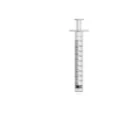
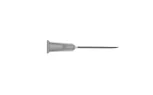



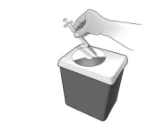
C. one appropriate size needle (e.g. 21G or larger) with appropriate length for withdrawing the solution (“withdrawal needle”)
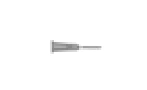
D. one 27 G x 0.5” needle for injecting (“injection needle”)
E. alcohol swabs
F. clean, dry cotton swabs
G. an adhesive bandage
H. a proper disposal container for used needles, syringe and vials (sharps container)
Preparing the injection
- 1. Remove the protective cap from the vial (A). Do not touch the vial stopper. Clean the stopper with the alcohol swab (E).
- 2. Open the wrappers containing the syringe (B) and the withdrawal needle (C) (bigger one) and attach the needle to the syringe.
- 3.
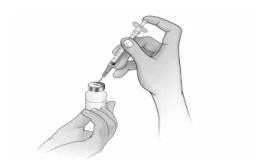
Carefully remove the cap from the withdrawal needle and set the cap aside. Insert the syringe needle into the vial of Ilaris solution through the centre of the rubber stopper (Fig. 1).
Figure 1
- 4. Do not invert the vial and syringe assembly. Insert the needle all the way into the vial until it reaches the bottom edge.
- 5.
Tip the vial to ensure that the required amount of solution can be drawn into the syringe (Fig.
2).
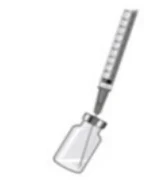


Figure 2
- 6. Slowly pull the syringe plunger up to the correct mark, filling the syringe with Ilaris solution. If there are air bubbles in the syringe, remove bubbles as instructed by your healthcare professional. Ensure that the correct amount of solution is in the syringe.
NOTE: The required amount depends on the dose to be administered. Your healthcare professional will instruct you on the right amount for you.
- 7. Remove the needle and syringe from the vial and recap the withdrawal needle. Remove the withdrawal needle from the syringe and place in sharps container (H).
- 8.
Open the wrapper containing the injection needle (D) and attach the needle to the syringe.
Immediately proceed to administering the injection.
Giving the injection
- 1. Choose an injection site on the upper arm, upper thigh, abdomen or buttocks. Do not use an area that has a rash or broken skin, or is bruised or lumpy. Avoid injecting into scar-tissue as this may lead to insufficient exposure to canakinumab. Avoid injecting into a vein.
- 2. Clean the injection site with a new alcohol swab. Allow the area to dry. Uncap the injection needle.
- 3.
Gently pinch the skin up at the injection site. Hold the syringe at a 90-degree angle and in a single, smooth motion, push the needle straight down completely into the skin (Fig. 3).
Figure 3
- 4.
Keep the needle all the way in the skin while slowly pushing the syringe plunger down until the barrel is empty (Fig. 4). Release the pinched skin and pull the needle straight out. Safely dispose of needles and syringe without recapping or removing the needle in the sharps container or as directed by your healthcare provider or pharmacist. Never reuse syringes or needles.
Figure 4
After the injection
- 1. Do not rub the injection area. If bleeding occurs, apply a clean, dry cotton swab over the area, and press gently for 1 to 2 minutes, or until bleeding stops. Then apply an adhesive bandage (G).
Ilaris 150 mg / 1 mL solution for injection is for individual use only.
Never re-use left-over solution.
Keep the sharps container out of reach of children. Dispose of it as directed by your healthcare professional or pharmacist.
Usual dose:
CAPS
The recommended starting dose of Ilaris for CAPS patients is:
Adults and children aged 2 years and above
- 150 mg for patients with body weight of more than 40 kg.
- 2 mg/kg for patients with body weight between 15 kg and 40 kg (example: a 25 kg child should receive a 50 mg injection).
Every 8 weeks a single dose of Ilaris is injected under the skin.
Do not exceed the recommended dose.
TRAPS, HIDS/MKD and FMF
The recommended starting dose of Ilaris for TRAPS, HIDS/MKD and FMF patients is:
- 150 mg for patients with body weight of more than 40 kg
- 2 mg/kg with body weight ≤40 kg.
With a starting dose of 150 mg or 2 mg/kg, if a satisfactory treatment response has not been achieved 7 days after treatment start, a second dose of 150 mg or 2 mg/kg may be considered by your healthcare professional. If a full treatment response is then achieved, the higher dosing regimen of 300 mg or 4 mg/kg every 4 weeks should be maintained.
Do not exceed the recommended dose.
Still’s disease (SJIA and AOSD)
The recommended dose of Ilaris for patients with Still’s disease 2 years and older is 4 mg/kg (up to a maximum of 300 mg).
Ilaris is injected every 4 weeks under the skin.
Do not exceed the dose.
Do not use more Ilaris than your healthcare professional has recommended for you (see OVERDOSE below).
How long to use Ilaris
You should continue using Ilaris for as long as your healthcare professional tells you.
Overdose:
If you have CAPS, you should not inject Ilaris earlier than 8 weeks after the previous dose, unless your healthcare professional tells you to. If you have TRAPS, HIDS/MKD or FMF, you should not inject Ilaris earlier than 4 weeks after the last dose, unless your healthcare professional tells you to. If you have Still’s disease (SJIA or AOSD), you should not inject Ilaris earlier than 4 weeks after the last dose. If you accidentally inject more Ilaris or sooner than you should, inform your healthcare professional, nurse or pharmacist, as soon as possible.
If you think you, or a person you are caring for, have accidentally injected more Ilaris than the recommended dose, or sooner than they / you should, contact a healthcare professional, hospital emergency department, or regional poison control centre immediately, even if there are no symptoms.
Missed Dose:
If you have forgotten to take a dose of Ilaris, inject the dose as soon as you remember then contact your healthcare professional to discuss when you should take the next dose. You should then continue with injections at recommended intervals, or as recommended by your healthcare professional.
If you have any further questions on the use of this product, ask your healthcare professional, nurse or pharmacist.
What are possible side effects from using Ilaris?
These are not all the possible side effects you may have when taking Ilaris. If you experience any side effects not listed here, tell your healthcare professional.
As with all medicines, patients treated with Ilaris may experience side effects, although not everybody gets them. Most of the side effects are mild to moderate and will generally disappear a few days to a few weeks after treatment, but some side effects may be serious with medicines such as Ilaris and require your special attention to seek the care of your healthcare professional.
Call your healthcare professional right away if you have any of these signs of an infection:
- a fever lasting longer than 3 days
- a cough that does not go away
- redness in one part of your body
- warm feeling or swelling of your skin
- sudden bleeding or easy bruising
Other possible side effects include:
Very common (affects more than 1 user in 10):
- sore throat with runny nose, blocked nose, sneezing, feeling of pressure or pain in the cheeks and/or forehead with or without fever (nasopharyngitis, pharyngitis, rhinitis)
- painful or frequent urination with or without fever (bladder or kidney infection)
- abdominal pain
- cold symptoms
- diarrhea
- stomach pain and feeling sick (gastroenteritis)
- flu (influenza)
- injection site reaction (such as redness, swelling, warmth, itching)
- headache
Common (affects 1 to 10 users in 100):
- nausea
- being sick (vomiting)
- abnormal levels of triglycerides in the blood (lipid metabolism disorder)
- feeling weak, fatigued (asthenia) or tired
- back pain
- combination of sore throat, fever, swollen or red tonsils, cough, difficulty to swallow and headache (tonsillitis)
Uncommon (affects 1 to 10 users in 1,000):
- heartburn (gastroesophageal reflux)
Serious side effects and what to do about them
| Symptom / effect | Talk to your healthcare professional | Stop taking drug and | |||
| Only if severe | In all cases | get immediate | |||
| medical help | |||||
| VERY COMMON | |||||
| Cellulitis: Fever lasting longer than 3 days or any other symptoms that might be due to an infection (for example, viral infection, bronchitis and ear infection) and serious infection (including chronic tonsillitis, lower respiratory tract infection, sepsis and other serious infections of the skin, lungs and blood). These include shivering, chills, malaise, loss of appetite, body aches, typically in connection with a sudden onset of illness, prolonged cough, phlegm, chest pain, difficulty breathing, ear pain, prolonged headache or localized redness, warmth or swelling of your skin or inflammation of connective tissues | √ | ||||
| Thrombocytopenia: Sudden bleeding or easy bruising, which could be linked to low levels of blood platelets | √ | ||||
Serious side effects and what to do about them
| Symptom / effect | Talk to your healthcare professional | Stop taking drug and | |||
| Only if severe | In all cases | get immediate | |||
| medical help | |||||
| Sore throat | √ | ||||
| COMMON | |||||
| Vertigo: Feeling dizzy, spinning sensation | √ | ||||
| Leucopenia, neutropenia: Fever, sore throat or mouth ulcers due to infections, which could be symptoms of low levels of white blood cells | √ | ||||
Increase in liver enzymes (transaminases) from a blood test | √ | ||||
| Signs of hepatitis; increase of bilirubin in CAPS patients: Yellow skin and eyes, dark urine | √ | ||||
| Pneumonia: Fever, cough, difficulty or painful breathing, wheezing, pain in chest when breathing | √ | ||||
| Vaginal yeast infection | √ | ||||
| RARE | |||||
| Signs of an allergic reaction: Trouble breathing or swallowing, nausea, dizziness, skin rash, itching, hives, palpitations (irregular heartbeat) or low blood pressure | √ | ||||
| Signs of a tuberculosis infection: Persistent cough, weight loss or low fever | √ | ||||
| Fever lasting longer than 3 days or any other symptoms that may be due to an infection, such as prolonged cough, phlegm, chest pain, blood in sputum, difficulty breathing, ear pain, prolonged headache or localized redness, warmth or swelling of your skin (may be symptoms of a typical infection or one that may be more serious (opportunistic infections)) | √ | ||||
If you have a troublesome symptom or side effect that is not listed here or becomes bad enough to interfere with your daily activities, tell your healthcare professional.
Reporting Side Effects
You can report any suspected side effects associated with the use of health products to Health Canada by:
- Visiting the Web page on Adverse Reaction Reporting (https://www.canada.ca/en/health-canada/services/drugs-health-products/medeffect-canada.html) for information on how to report online, by mail or by fax; or
- Calling toll-free at 1-866-234-2345.
NOTE: Contact your health professional if you need information about how to manage your side effects. The Canada Vigilance Program does not provide medical advice.
Storage:
Keep out of reach and sight of children.
Do not use Ilaris after the expiry date. The expiry date can be found on the label and carton. The expiry date refers to the last day of that month.
Store Ilaris vials in a refrigerator (2°C to 8°C). Do not freeze. Store in the original package in order to protect from light.
Do not use Ilaris if you notice that the solution is not clear or contains particles. The solution should be clear and free of visible particles.
Ilaris is available as a single use vial. Any unused solution should be discarded.
If you want more information about Ilaris:
- Talk to your healthcare professional
Find the full product monograph that is prepared for healthcare professionals and includes this
Patient Medication Information by visiting the Health Canada website:
(https://www.canada.ca/en/health-canada/services/drugs-health-products/drug-products/drug-product-database.html); the manufacturer’s website www.novartis.ca, or by calling 1-800-363-8833.
Last Revised June 19, 2025
ILARIS is a registered trademark.
*All trademarks and registered trademarks are the property of their respective owners.