


Patient Medication Information: uses, side effects, how to take - Siliq
Serious Warnings and Precautions
Suicidal thoughts or behaviour have happened in some people treated with SILIQ. Some people have ended their own lives. It has not been proven that SILIQ causes suicidal thoughts or behaviour. Your risk of suicidal thoughts and behaviour may be increased if you have a history of suicidal thoughts or depression. Seek medical attention if you have thoughts of suicide, dying, or hurting yourself, new onset or worsening depression, anxiety, or other mood changes.
What is SILIQ used for?
SILIQ is used to treat a skin condition called “plaque psoriasis”, which causes inflammation and scaly plaque formation on the skin. SILIQ reduces the inflammation and other symptoms of the disease. SILIQ is used in adults with moderate to severe plaque psoriasis that involves large areas of the body, who may benefit from taking injections, pills, or phototherapy.
Using SILIQ will benefit you by leading to improvements of skin clearance, possible total skin clearance, and by reducing signs and symptoms such as itch, redness, scaling, burning, stinging, cracking, flaking, and pain.
It is not known if SILIQ is safe and effective in children.
How does SILIQ work?
SILIQ contains the active substance brodalumab. Brodalumab is a monoclonal antibody. Monoclonal antibodies are proteins that recognize and bind specifically to certain proteins in the body.
SILIQ belongs to a group of medicines called interleukin (IL) inhibitors. The medicine works by blocking the activity of IL-17 proteins, which are present at increased levels in diseases such as psoriasis.
What are the ingredients in SILIQ?
Medicinal ingredients: brodalumab
Non-medicinal ingredients: Glutamate, Polysorbate 20, Proline, and Water for injections
SILIQ comes in the following dosage forms:
SILIQ is supplied as a single-use prefilled syringe. Each syringe contains one 210 mg dose of SILIQ. Each SILIQ prefilled syringe can only be used once.
Do not use SILIQ if:
- you are allergic to brodalumab or any of the ingredients in SILIQ. See What are the ingredients in SILIQ? for a complete list of ingredients in SILIQ.
To help avoid side effects and ensure proper use, talk to your healthcare professional before you take SILIQ. Talk about any health conditions or problems you may have, including if you:
- currently have Crohn’s disease or if you have a history of Crohn’s disease;
- have or have had suicidal thoughts or actions, depression, anxiety, or mood problems;
- have an infection at the moment or often get infections;
- if you have long-term (chronic) infections;
- have tuberculosis, have had a positive tuberculosis test, or have been in close contact with someone with tuberculosis. You may need to be treated with another medicine for tuberculosis before you begin treatment with SILIQ;
- have recently received or are scheduled to receive a vaccination. You should not be given certain types of vaccines (called ‘lives vaccines’) while being treated with SILIQ.
Other warnings you should know about:
Tell your doctor or pharmacist immediately if you get any of these symptoms during treatment with SILIQ:
- if you have suicidal thoughts or actions, depression, anxiety, or mood problems;
if you think you have an infection or have symptoms of an infection such as:
- fever, sweats, or chills;
- muscle aches;
- cough;
- shortness of breath;
- sore throat or difficulty swallowing;
- warm, red, or painful skin or sores on your body;
- diarrhea or stomach pain;
- burning when you urinate or urinate more often than normal;
- if you have been told you have tuberculosis.
Children and adolescents (below the age of 18 years): SILIQ is not recommended for children and adolescents (under 18 years of age) because it has not been studied in this age group.
Pregnancy and breast-feeding: before using SILIQ, tell your healthcare provider if you:
- are pregnant or plan to become pregnant. It is not known if SILIQ can harm your unborn baby. You and your healthcare provider should decide if you should use SILIQ;
- are breastfeeding or plan to breastfeed. It is not known if SILIQ passes into your breast milk.
Tell your healthcare professional about all the medicines you take, including any drugs, vitamins, minerals, natural supplements, or alternative medicines. Know the medicines you take. Keep a list of your medicines with you and show it to your healthcare provider when you get a new medicine.
The following may interact with SILIQ:
Tell your doctor or pharmacists if you recently had or are going to have a vaccination. You should not have certain types of vaccines (called ‘live vaccines’) while using SILIQ.
How to take SILIQ:
- Read “Instructions for Use” all the way through before use.
- Use SILIQ exactly as your healthcare provider has told you. Check with your healthcare provider if you are not sure.
- SILIQ is given as an injection under the skin (known as a subcutaneous or SC injection).
- SILIQ is available as a single-use prefilled syringe that you or your caregiver may use at home to give injections.
- If your healthcare provider decides that you or a caregiver can give the injections of SILIQ at home, you or your caregiver should receive training on the right way to prepare and inject SILIQ. Do not try to inject SILIQ until you or your caregiver has been shown how to inject SILIQ by your healthcare provider.
- SILIQ is injected in your upper legs (thighs) or stomach area (abdomen) by you or a caregiver. A caregiver may also give you an injection of SILIQ in your upper outer arm.
- Do not give an injection in an area of the skin that is tender, bruised, red, hard, or in an area of skin that is affected by psoriasis.
Usual dose:
- Your doctor will decide how much SILIQ you need and for how long. The recommended dose is 210 milligram (mg) each injection. Make sure to discuss with your doctor when you will receive injections and to come in for all your schedules follow-up appointments.
- After the first dose you will need to take an injection at Week 1 (one week after first dose) and Week 2 (two weeks after first dose). After that, you will need to take an injection every two weeks.
- SILIQ is for long term treatment. Your doctor will regularly monitor your condition to check that the treatment is having the desired effect.
Instructions for Use:
SILIQ is supplied as a single-use prefilled syringe. Each syringe contains one 210 mg dose of SILIQ. Your healthcare provider has prescribed SILIQ and will tell you how often it should be injected. Each SILIQ prefilled syringe can only be used once.
If your healthcare provider decides that you or a caregiver may be able to give your injections of SILIQ at home, you should receive training on the right way to prepare and inject SILIQ. Do not try to inject yourself until you have been shown the right way to give the injections by your healthcare provider.
Please read all of the instructions before using the SILIQ syringe. Call your healthcare provider if you or your caregiver have any questions about the right way to inject SILIQ.
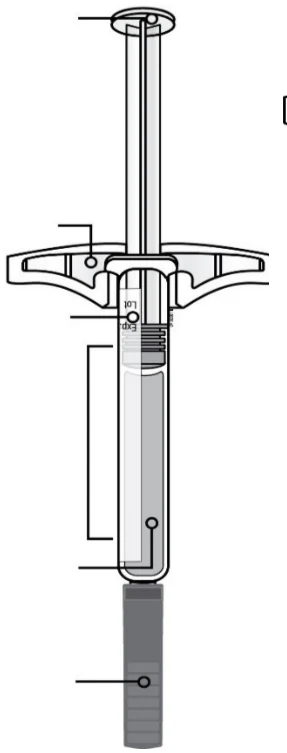
| Guide to parts: | |||
|---|---|---|---|
| Before use | After use | ||
Plunger rod Finger flange Label and expiration date | Used plunger rod Finger flange Label and expiration date Used syringe barrel | ||
Syringe barrel | Used needle | ||
Medicine Gray needle cap on | Gray needle cap off | ||
Important: Needle is inside
Before you use a SILIQ prefilled syringe, read this important information:
Storing your SILIQ prefilled syringes
- Keep the SILIQ prefilled syringe out of the reach of children.
- Keep the SILIQ prefilled syringe in the original carton to protect from light or physical damage.
- The SILIQ prefilled syringe should be kept in the refrigerator (2˚C to 8˚C).
- If needed, you may store the SILIQ prefilled syringe at room temperature at 20°C to 25°C for up to 14 days. Throw away SILIQ that has been stored at room temperature after 14 days.
- Do not store the SILIQ prefilled syringe in extreme heat or cold. For example, avoid storing in your vehicle’s glove box or trunk. Do not freeze.
 |  |
Using your SILIQ prefilled syringe
- It is important that you do not try to give the injection unless you or your caregiver has received training from your healthcare provider.
- Do not use a SILIQ prefilled syringe after the expiration date on the label.
- Do not shake the SILIQ prefilled syringe.
- Do not remove the gray needle cap from the SILIQ prefilled syringe until you are ready to inject.
- Do not freeze or use the SILIQ prefilled syringe if it has been frozen.
- Do not use a SILIQ prefilled syringe if it has been dropped on a hard surface. Part of the SILIQ prefilled syringe may be broken even if you cannot see the break.
Step 1: Prepare
- A) Remove the SILIQ prefilled syringe from the package.
Grab the syringe barrel to remove the syringe from the tray.
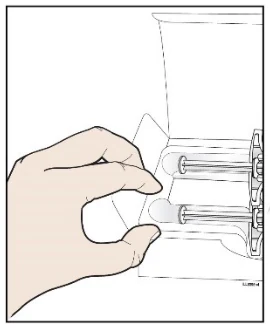
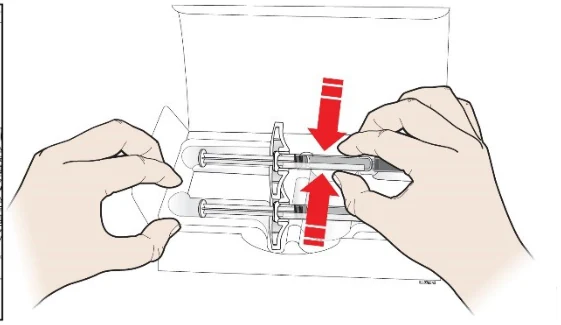
Put the original package with any unused syringes back in the refrigerator.
For safety reasons:
- Do not grasp the plunger rod.
- Do not grasp the gray needle cap.
- Do not remove the gray needle cap until you are ready to inject.
- Do not remove the finger flange. This is part of the syringe.
Leave the syringe at room temperature for at least 30 minutes before injecting.
- Do not put the syringe back in the refrigerator once it has reached room temperature.
- Do not try to warm the syringe by using a heat source such as hot water or microwave.
- Do not leave the syringe in direct sunlight.
- Do not shake the syringe.
Place finger or thumb on edge of tray to secure it while you remove syringe. | Grab Here |
|---|
- B)
Inspect the SILIQ prefilled syringe.
Syringe Label and
barrel expiration date Plunger rod
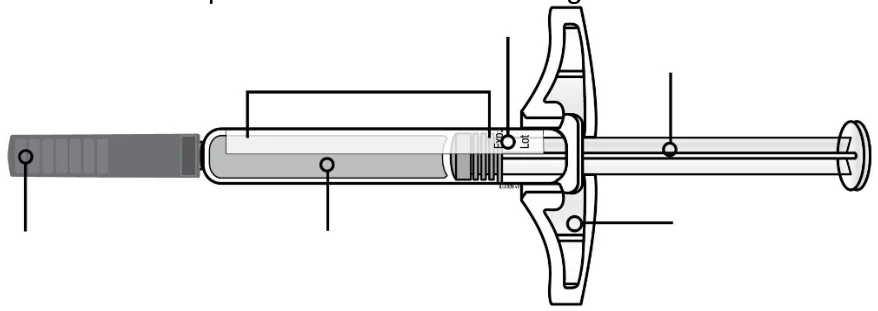
Gray Medicine Finger flange
needle
cap on
Always hold the syringe by the syringe barrel.
Make sure the medicine in the syringe is clear and colorless to slightly yellow.
Do not use the syringe if:
- The medicine is cloudy or discolored or contains flakes or particles.
- Any part appears cracked or broken.
- The gray needle cap is missing or not securely attached.
- The expiration date printed on the label has passed.
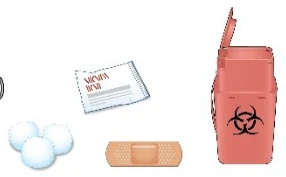
- Gather all materials needed for your injection.
Wash your hands thoroughly with soap and water.
On a clean, well-lit work surface, place the:
- New syringe
Alcohol wipes
- Cotton ball or gauze pad
- Adhesive bandage
- Sharps disposal container

- D) Prepare and clean your injection site.
| Upper arm | |
|---|---|
Stomach area (abdomen) | |
| Thigh | |
You can use:
- Your thigh
- Stomach area (abdomen), except for a 2-inch area right around your navel
- Outer area of upper arm (only if someone else is giving you the injection)
Clean your injection site with an alcohol wipe. Let your skin dry.
- Do not touch this area again before injecting.
- If you want to use the same injection site, make sure it is not the same spot on the injection site you used for a previous injection.
- Do not inject into areas where the skin is tender, bruised, red, or hard.
- Avoid injecting into areas with scars or stretch marks.
- Avoid injecting directly into raised, thick, red, or scaly skin patch or lesion.
Step 2: Get ready
- E) Pull gray needle cap straight out and away from your body when you are ready to inject.
 |
|---|
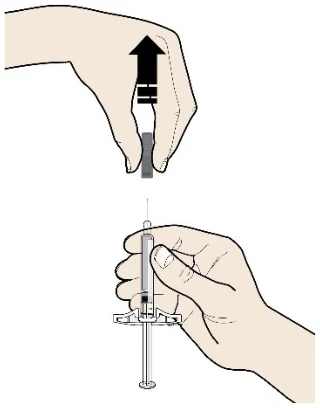
It is normal to see a drop of liquid at the end of the needle.
- Do not twist or bend the gray needle cap.
- Do not put the gray needle cap back onto the syringe.
- Do not remove the gray needle cap from the syringe until you are ready to inject.
Important: Throw the needle cap into the sharp’s disposal container.
- F) Pinch your injection site to create a firm surface.
Pinch skin firmly between your thumb and fingers, creating an area of about 2 inches wide.

Important: Keep skin pinched while injecting.
Step 3: Inject
- G) Hold the pinch. With the gray needle cap off, insert the syringe into your skin at 45 to 90 degrees.
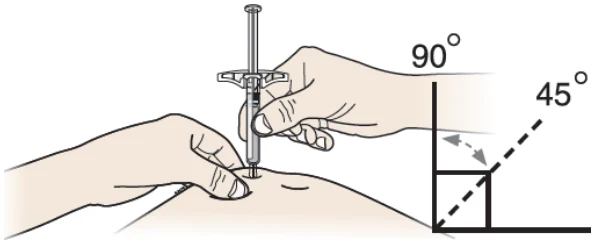
Do not place your finger on the plunger rod while inserting the needle.
- H) Using slow and constant pressure, push the plunger rod all the way down until it stops moving.
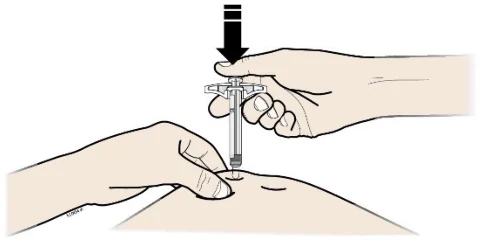
- I) When done, release your thumb, and gently lift the syringe off of your skin.
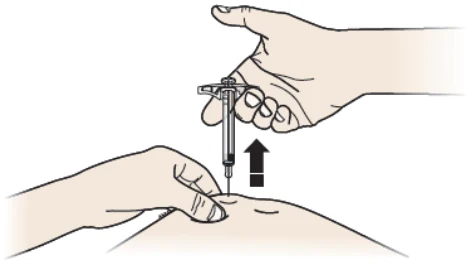
Important: When you remove the syringe, if it looks like the medicine is still in the syringe barrel, this means you have not received a full dose. Call your healthcare provider immediately.
Step 4: Finish
- J) Discard the used syringe and the gray needle cap.
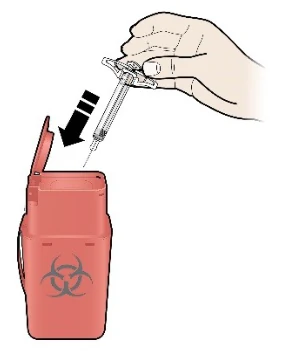
- DO NOT put the needle cap back on. Immediately throw away the used SILIQ syringe in a sharp’s disposal container. Do not throw away (dispose of) the syringe in your household trash.
- When your sharps disposal container is almost full, you will need to follow your community guidelines for the right way to dispose of your sharp’s disposal container. There may be provincial or local laws about how you should throw away used needles and syringes.
- NEVER reuse the syringe.
- Do not recycle the syringe or sharps disposal container or throw them into household trash.
Important: Always keep the sharps disposal container out of the reach of children.
- K) Examine the injection site.
If there is blood, press a cotton ball or gauze pad on your injection site. Do not rub the injection site. Apply an adhesive bandage if needed.
Overdose:
If you use more SILIQ than prescribed or take the dose sooner than required, tell your doctor.
| If you think you, or a person you are caring for, have taken too much SILIQ, contact a healthcare professional, hospital emergency department, or regional poison control centre immediately, even if there are no symptoms. |
|---|
Missed Dose:
If you have forgotten to inject a dose of SILIQ, inject the next dose as soon as you can after the missed dose. Then, talk to your doctor about when you should inject the next dose.
What are possible side effects from using SILIQ?
These are not all the possible side effects you may have when taking SILIQ. If you experience any side effects not listed here, tell your healthcare professional.
Common side effects of SILIQ include:
- Headache
- Joint pain
- Feeling tired
- Mouth or throat pain
- Diarrhea
Serious side effects and what to do about them
| Symptoms / effects | Talk to your healthcare professional | Stop taking drug and get immediate medical help | |
|---|---|---|---|
| Only if severe | In all cases | ||
| UNKNOWN | |||
| Allergic reactions (angioedema, anaphylaxis): sudden low blood pressure, which can cause dizziness or light-headedness, difficulty swallowing or breathing; wheezing; swollen face, lips, tongue, throat, hands and feet, genitals; hives or rash; severe itching of the skin, with red rash or raised bumps | √ | ||
| Hypersensitivity reactions: rashes, eczema, urticaria and dermatitis | √ | ||
If you have a troublesome symptom or side effect that is not listed here or becomes bad enough to interfere with your daily activities, tell your healthcare professional.
Reporting Side Effects
You can report any suspected side effects associated with the use of health products to Health Canada by:
NOTE: Contact your health professional if you need information about how to manage your side effects. The Canada Vigilance Program does not provide medical advice. |
Storage:
- Store SILIQ in a refrigerator at 2°C to 8°C.
- Keep SILIQ in the original carton to protect from light and physical damage during storage.
- SILIQ can be kept at controlled room temperature between 20°C to 25°C in the original carton for 14 days. Discard SILIQ if it is not used within 14 days of storage at room temperature.
- Keep SILIQ out of sight and reach of children.
- Do not freeze SILIQ.
- Do not shake SILIQ.
- Do not use SILIQ beyond the expiration date on the label of the prefilled syringe.
- Do not throw away any medicines via wastewater or household waste. Ask your healthcare provider how to throw away medicines you no longer use.
Medicines are sometimes prescribed for purposes other than those listed in a Medication Guide. Do not use SILIQ for a condition for which it was not prescribed. Do not give SILIQ to other people even if they have the same symptoms that you have. It may harm them.
If you want more information about SILIQ:
- Talk to your healthcare professional.
- Find the full product monograph that is prepared for healthcare professionals and includes this Patient Medication Information by visiting the Health Canada website: (https://www.canada.ca/en/health-canada/services/drugs-health-products/drug-products/drug-product-database.html; the manufacturer’s website www.bauschhealth.ca, or by calling 1-800-361-4261.