


Product Monograph - Spevigo
RECENT MAJOR LABEL CHANGES
| 1 INDICATIONS | 07/2024 |
|---|---|
| 1 INDICATIONS, 1.1 pediatrics | 07/2024 |
| 2 CONTRAINDICATIONS | 07/2025 |
| 4 DOSAGE AND ADMINISTRATION | 07/2024 |
| 4 DOSAGE AND ADMINISTRATION, 4.1 Dosing Considerations | 07/2024 |
| 4 DOSAGE AND ADMINISTRATION, 4.2 Recommended Dose and Dosage Adjustments | 10/2025 |
| 4 DOSAGE AND AMINISTRATION, 4.4 Administration | 10/2025 |
| 4 DOSAGE AND AMINISTRATION, 4.5 Missed Dose | 07/2024 |
| 7 WARNINGS AND PRECAUTIONS | 07/2025 |
| 7 WARNINGS AND PRECAUTIONS, 7.1.3 Pediatrics | 07/2024 |
TABLE OF CONTENTS
Sections or subsections that are not applicable at the time of authorization are not listed.
RECENT MAJOR LABEL CHANGES ............................................................................................ 2
TABLE OF CONTENTS .............................................................................................................. 2
PART I: HEALTH PROFESSIONAL INFORMATION ...................................................................... 4
1 INDICATIONS ............................................................................................................... 4
1.1 Pediatrics (<18 years of age) ................................................................................... 4
1.2 Geriatrics (≥65 years of age) ................................................................................... 4
2 CONTRAINDICATIONS ................................................................................................. 4
4 DOSAGE AND ADMINISTRATION ................................................................................. 4
4.1 Dosing Considerations ............................................................................................ 4
4.2 Recommended Dose and Dosage Adjustment ....................................................... 4
4.3 Reconstitution ........................................................................................................ 6
4.4 Administration ........................................................................................................ 6
4.5 Missed Dose ........................................................................................................... 8
5 OVERDOSAGE .............................................................................................................. 8
6 DOSAGE FORMS, STRENGTHS, COMPOSITION AND PACKAGING ................................. 8
7 WARNINGS AND PRECAUTIONS .................................................................................. 9
7.1 Special Populations............................................................................................... 11
7.1.1 Pregnant Women ........................................................................................... 11
7.1.2 Breast-feeding ................................................................................................ 12
7.1.3 Pediatrics (<18 years of age) ........................................................................... 12
7.1.4 Geriatrics (≥65 years of age) ........................................................................... 12
8 ADVERSE REACTIONS ................................................................................................ 12
8.1 Adverse Reaction Overview .................................................................................. 12
8.2 Clinical Trial Adverse Reactions ............................................................................ 12
8.2.1 Clinical Trial Adverse Reactions – Pediatrics ................................................... 15
8.5 Post-Market Adverse Reactions ........................................................................... 15
9 DRUG INTERACTIONS ................................................................................................ 15
9.2 Drug Interactions Overview .................................................................................. 15
9.4 Drug-Drug Interactions ......................................................................................... 16
9.5 Drug-Food Interactions ......................................................................................... 16
9.6 Drug-Herb Interactions ......................................................................................... 16
9.7 Drug-Laboratory Test Interactions ........................................................................ 16
10 CLINICAL PHARMACOLOGY ....................................................................................... 16
10.1 Mechanism of Action ...................................................................................... 16
10.2 Pharmacodynamics ........................................................................................ 16
10.3 Pharmacokinetics ........................................................................................... 16
11 STORAGE, STABILITY AND DISPOSAL ......................................................................... 18
12 SPECIAL HANDLING INSTRUCTIONS ........................................................................... 19
PART II: SCIENTIFIC INFORMATION ....................................................................................... 20
13 PHARMACEUTICAL INFORMATION ............................................................................ 20
14 CLINICAL TRIALS ........................................................................................................ 20
14.1 Clinical Trials by Indication ............................................................................. 20
14.3 Immunogenicity .............................................................................................. 24
15 MICROBIOLOGY ........................................................................................................ 25
16 NON-CLINICAL TOXICOLOGY ..................................................................................... 25
PATIENT MEDICATION INFORMATION .................................................................................. 27
PART I: HEALTH PROFESSIONAL INFORMATION
1 INDICATIONS
Spevigo (spesolimab injection/spesolimab for injection) is indicated for the treatment of generalized pustular psoriasis (GPP) in adults and pediatric patients 12 years of age and older and weighing at least 40 kg.
1.1 Pediatrics (<18 years of age)
The safety and efficacy of Spevigo have been established in pediatric patients with GPP aged 12 years and older (see 14 Clinical Trials).
The safety and efficacy of Spevigo in children below the age of 12 years have not been established. No data are available in this population.
1.2 Geriatrics (≥65 years of age)
No dose adjustment is required. There is limited information in patients 65 years and older.
2 CONTRAINDICATIONS
Spevigo is contraindicated in patients with severe or life-threatening hypersensitivity or have a history of anaphylaxis to this drug or to any ingredient in the formulation, including any non-medicinal ingredient, or component of the container. For a complete listing, see 6 DOSAGE FORMS, STRENGTHS, COMPOSITION AND PACKAGING.
4 DOSAGE AND ADMINISTRATION
4.1 Dosing Considerations
Treatment with Spevigo for intravenous infusion should be initiated by physicians experienced in the management of patients with inflammatory skin diseases.
Spevigo treatment can be initiated with the Spevigo pre-filled syringe as a subcutaneous injection to prevent GPP flares or with an intravenous dose of Spevigo to treat a GPP flare.
Spevigo solution for injection in pre-filled syringe is intended for subcutaneous use for GPP flare prevention only. Spevigo concentration for solution for infusion is intended for intravenous use for GPP flare treatment only.
4.2 Recommended Dose and Dosage Adjustment
Recommended dose for GPP flare prevention
150 mg pre-filled syringe
The recommended dose of Spevigo for GPP flare prevention in adults and adolescents from 12 years of age is a subcutaneous loading dose of 600 mg (four 150 mg injections), followed by 300 mg (two 150 mg injections) administered subcutaneously every 4 weeks.
300 mg pre-filled syringe
The recommended dose of Spevigo for GPP flare prevention in adults and adolescents from 12 years of age is a subcutaneous loading dose of 600 mg (two 300 mg injections), followed by 300 mg (one 300 mg injection) administered subcutaneously every 4 weeks.
Spevigo has not been studied in patients weighing less than 40 kg or below the age of 12 years (see 10.3 Pharmacokinetics).
GPP flare treatment during subcutaneous GPP prevention treatment
If a patient experiences a GPP flare while receiving subcutaneous Spevigo, the GPP flare should be treated with intravenous Spevigo (see 4.2 Recommended Dose and Dosage Adjustment).
Initiating or reinitiating subcutaneous GPP prevention treatment after intravenous GPP flare treatment
150 mg pre-filled syringe
Four weeks after treatment with intravenous Spevigo, subcutaneous Spevigo can be initiated or reinitiated at a dose of 300 mg (two 150 mg injections) administered every 4 weeks. A subcutaneous loading dose is not required.
300 mg pre-filled syringe
Four weeks after treatment with intravenous Spevigo, subcutaneous Spevigo can be initiated or reinitiated at a dose of 300 mg (one 300 mg injection) administered every 4 weeks. A subcutaneous loading dose is not required.
Recommended dose for Spevigo concentrate for solution for infusion for GPP flare treatment
The recommended dose of Spevigo concentrate solution for infusion to treat a GPP flare in adults and adolescents from 12 years of age and weighing at least 40 kg is a single dose of 900 mg (two 450 mg/7.5 mL vials) administered as an intravenous infusion.
If flare symptoms persist, an additional 900 mg dose (two 450 mg/7.5 mL vials) may be administered 1 week after the initial dose.
Spevigo has not been studied in patients weighing less than 40 kg or below the age of 12 years (see 10.3 Pharmacokinetics).
Pediatrics (<18 years of age)
The safety and efficacy of Spevigo have been established in adolescents with GPP aged 12 years and older (see 14 CLINICAL TRIALS).
The safety and efficacy of Spevigo in pediatric patients below the age of 12 have not been established. No data are available in this population.
Geriatrics (≥65 years of age)
No dose adjustment is required. There is limited information in patients aged 65 years and older.
Renal or Hepatic Impairment
Spevigo has not been formally studied in these patient populations. These conditions are generally not expected to have any clinically relevant impact on the pharmacokinetics of monoclonal antibodies and no dose adjustments are considered necessary.
4.3 Reconstitution
Parenteral Products:
Instructions for Dilution
Spevigo concentrate for solution for infusion must be diluted before use.
The vial should be visually inspected before use. Spevigo is a colourless to slightly brownish-yellow, clear to slightly opalescent solution. If the solution is cloudy, discoloured, or contains large or coloured particulates, the vial should be discarded.
Preparation
- Use aseptic technique to prepare the solution for infusion.
- Draw and discard 15 mL from a 100 mL container of sterile 0.9% sodium chloride solution.
- Slowly replace with 15 mL of Spevigo (two vials of 450 mg/7.5 mL).
- Mix gently before use.
- The diluted Spevigo solution for infusion should be used immediately.
Spevigo is for single-use only and does not contain preservatives.
4.4 Administration
Subcutaneous Injection Use (GPP Flare Prevention)
The injection should be administered subcutaneously in the upper thighs or abdomen. Spevigo pre-filled syringe should not be injected into areas where the skin is tender, bruised, erythematous, indurated, or scarred.
150 mg pre-filled syringe
If a 600 mg subcutaneous loading dose of Spevigo is needed (see 4.2 Recommended Dose and Dosage Adjustment), the loading dose should be administered by a healthcare professional. A different injection site should be chosen for each injection, at least 2 cm away from the other injection sites.
For the subsequent subcutaneous 300 mg doses of Spevigo, if the healthcare professional determines that it is appropriate, patients may self-inject or caregivers may administer the Spevigo pre-filled syringe after proper training in subcutaneous injection technique.
For a complete subsequent 300 mg dose, two 150 mg pre-filled syringes are required to be injected, one right after the other. A different injection site should be chosen for each of the two injections, at least 2 cm away from the other injection site (see 4.2 Recommended Dose and Dosage Adjustment,150 mg pre-filled syringe for administration of the subsequent dose).
300 mg pre-filled syringe
If a 600 mg subcutaneous loading dose of Spevigo is needed, (see 4.2 Recommended Dose and Dosage Adjustment), the loading dose should be administered by a healthcare professional. A different injection site should be chosen for each injection, at least 2 cm away from the other injection site.
For the subsequent subcutaneous 300 mg doses of Spevigo, if the healthcare professional determines that it is appropriate, patients may self-inject or caregivers may administer the Spevigo pre-filled syringe after proper training in subcutaneous injection technique.
For a subsequent 300 mg dose, one 300 mg pre-filled syringe is required to be injected (see 4.2 Recommended Dose and Dosage Adjustment, 300 mg pre-filled syringe for administration of the subsequent dose).
Intravenous Infusion Use (GPP Flare Treatment)
- Do not mix Spevigo with other medicinal products.
- Administer Spevigo as a continuous intravenous infusion through an intravenous line containing a sterile, non-pyrogenic, low protein binding in-line filter (pore size of 0.2 micron) over 90 minutes.
- If the infusion is slowed or temporarily stopped, the total infusion time (including stop time) should not exceed 180 minutes (see 7 WARNINGS AND PRECAUTIONS).
A pre-existing intravenous line may be used for administration of Spevigo. The line must be flushed with sterile 0.9% sodium chloride solution prior to and at the end of infusion. No
- other infusion should be administered in parallel via the same intravenous access.
- No incompatibilities have been observed between Spevigo and infusion sets composed of polyvinylchloride (PVC), polyethylene (PE), polypropylene (PP), polybutadiene and polyurethane (PUR), and in-line filter membranes composed of polyethersulfone (PES, neutral and positively charged) and positively charged polyamide (PA).
4.5 Missed Dose
Spevigo Solution for Subcutaneous Injection in pre-filled syringe for GPP flare prevention
If a dose is missed, the dose should be administered as soon as possible. Thereafter, dosing should be resumed at the regular scheduled time.
5 OVERDOSAGE
There is no clinical experience with overdoses of Spevigo.
The highest dose of Spevigo administered in GPP clinical trials was 900 mg intravenously or 600 mg subcutaneously. Adverse events observed in subjects receiving single or repeated doses up to 1200 mg in other clinical trials were consistent with the known safety profile of Spevigo.
In the event of overdose, it is recommended that the patient be monitored for any signs or symptoms of adverse reactions and symptomatic treatment be instituted as appropriate.
For the most recent information in the management of a suspected drug overdose, contact your regional poison control centre or Health Canada’s toll-free number, 1-844 POISON-X (1-844-764-7669).
6 DOSAGE FORMS, STRENGTHS, COMPOSITION AND PACKAGING
Table 1 - Dosage Forms, Strengths, Composition and Packaging
Subcutaneous
Spevigo is supplied in 1 mL pre-filled glass syringe with a needle safety device containing 150 mg/mL. Each pack has two syringes.
| Route of Administration | Dosage Form / Strength / Composition | Non-medicinal Ingredients |
| Subcutaneous | Solution for injection 150 mg/mL | Arginine hydrochloride, glacial acetic acid, polysorbate 20, sodium acetate trihydrate, sucrose, water for injection |
| Intravenous infusion | Concentrate for Solution for Infusion 450 mg/7.5 mL(60 mg/mL) | Arginine hydrochloride, glacial acetic acid, polysorbate 20, sodium acetate trihydrate, sucrose, water for injection |
Spevigo is supplied in 2 mL pre-filled glass syringe with a needle safety device containing 150 mg/mL. Each pack has one syringe.
Intravenous Infusion
Spevigo is supplied in a 10 mL clear glass vial with a coated rubber stopper containing 7.5 mL concentrate. Each pack has two vials.
The vial stopper is not manufactured with natural rubber latex.
Excipients
This medicinal product contains less than 1 mmol sodium (23 mg), essentially ‘sodium free’.
Spevigo 150 mg pre-filled syringe
This medicine contains 0.4 mg of polysorbate 20 in each 1 mL pre-filled syringe.
Spevigo 300 mg pre-filled syringe
This medicine contains 0.8 mg of polysorbate 20 in each 2 mL pre-filled syringe.
Spevigo 60 mg vial
This medicine contains 3 mg of polysorbate 20 in each 7.5 mL vial.
7 WARNINGS AND PRECAUTIONS
General
Limited safety data are available for re-treatment with spesolimab for a subsequent new flare.
Spevigo contains polysorbate 20, which may cause allergic reactions.
Traceability
In order to improve traceability of biological medicinal products, the trade name and the batch number of the administered product should be clearly recorded in the patient file.
Infections
Spevigo may increase the risk of infections. Higher rates of infections such as urinary tract infections and upper respiratory infections were observed in patients receiving Spevigo compared with placebo (see 8 ADVERSE REACTIONS).
In patients with a chronic infection or a history of recurrent infection, the potential risks and expected clinical benefits of treatment should be considered prior to prescribing Spevigo. Treatment with Spevigo should not be initiated in patients with any clinically important active infection until the infection resolves or is adequately treated. Patients should be instructed to seek medical advice if signs or symptoms of clinically important infection occur during or after treatment with Spevigo.
Spevigo Subcutaneous Injection for GPP flare prevention
If a patient is on treatment with Spevigo subcutaneous injection for GPP flare prevention, and develops a clinically important active infection, treatment with Spevigo should be stopped. Re-initiation can be considered once the infection resolves or is adequately treated.
Pre-treatment evaluation for tuberculosis
Patients should be evaluated for tuberculosis (TB) infection prior to initiating treatment with Spevigo. Spevigo should not be administered to patients with active TB infection.
Anti-TB therapy should be considered prior to initiating Spevigo in patients with latent TB or a history of TB in whom an adequate course of treatment cannot be confirmed. During and after Spevigo treatment, patients should be monitored for signs and symptoms of active TB.
Hypersensitivity and infusion-related reactions
Hypersensitivity and infusion-related reactions may occur with monoclonal antibodies such as Spevigo. Hypersensitivity may include immediate reactions such as anaphylaxis and delayed reactions such as drug reaction with eosinophilia and systemic symptoms (DRESS).
Immediate hypersensitivity reactions, including anaphylactic reactions have been reported in patients treated with Spevigo (see 8 ADVERSE REACTIONS).
If a patient develops signs of anaphylaxis or other serious hypersensitivity, Spevigo should be discontinued immediately, and appropriate treatment should be initiated (see 2 CONTRAINDICATIONS).
Spevigo Subcutaneous Injection for GPP flare prevention
Prior to initiating Spevigo for GPP flare prevention, completion of all appropriate immunizations should be considered according to current immunization guidelines.
Spevigo Intravenous Infusion for GPP flare treatment
If a patient develops mild or moderate hypersensitivity during an intravenous infusion or other infusion-related reactions, Spevigo should be stopped and appropriate medical therapy should be considered (e.g., systemic antihistamines and/or corticosteroids). Upon resolution of the reaction, the infusion may be restarted at a slower infusion rate with gradual increase to complete the infusion (see 4 DOSAGE AND ADMINISTRATION).
Immunizations
No specific studies have been conducted in patients who have recently received live viral or live bacterial vaccines. Live vaccines should not be given concurrently with Spevigo. The interval between live vaccinations and initiation of Spevigo therapy should be at least 4 weeks. Live vaccines should not be administered during and for at least 16 weeks after treatment with Spevigo.
Driving and Operating Machinery
Spevigo has no or negligible influence on the ability to drive and use machines.
Neurologic
Peripheral neuropathy
The potential for peripheral neuropathy with Spevigo is unknown. Cases of peripheral neuropathy have been reported in clinical trials with spesolimab. Physicians should be vigilant for symptoms potentially indicative of new-onset peripheral neuropathy.
Reproductive Health: Female and Male Potential
- Fertility
- Spevigo on human fertility. No specific non-clinical animal study on fertility has been conducted with spesolimab (see 16 NON-CLINICAL TOXICOLOGY).
7.1 Special Populations
7.1.1 Pregnant Women
There are limited data from the use of Spevigo in pregnant women. Non-clinical animal reproductive and developmental toxicology studies were not conducted with spesolimab due to lack of pharmacologic activity in non-human species (see 16 NON-CLINICAL TOXICOLOGY). Human IgG are known to cross the human placental barrier. As a precautionary measure, it is recommended to avoid the use of Spevigo in pregnancy.
7.1.2 Breast-feeding
It is unknown whether Spevigo is excreted in human milk. There are no data on the effects on the breastfed infant, or the effects on milk production. Spesolimab is a monoclonal antibody and is expected to be present in human milk. A risk to newborns/infants cannot be excluded.
7.1.3 Pediatrics (<18 years of age)
The safety and efficacy of Spevigo have been established in adolescents with GPP aged 12 years and older. Use of Spevigo for this indication is supported by data from 8 adolescent patients aged 14 to 17 years included in EFFISAYIL-2, evidence from adequate and well controlled studies of Spevigo in adults with GPP, and pharmacokinetic analyses showing similar drug exposure levels in adults and pediatric subjects 12 years of age and older (see 8.2 Clinical Trial Adverse Reactions, 10.3 Pharmacokinetics and 14 CLINICAL TRIALS).
The safety and efficacy of Spevigo in pediatric patients younger than 12 years have not been established. No data are available in this population.
7.1.4 Geriatrics (≥65 years of age)
No dose adjustment is required. There is limited information in patients aged 65 years and older.
8 ADVERSE REACTIONS
8.1 Adverse Reaction Overview
Spevigo has been studied in clinical trials including 183 patients with GPP. The safety data provided in the following are based on two randomized, double-blind, placebo-controlled trials comparing treatment with Spevigo to placebo (EFFISAYIL-1 and EFFISAYIL-2), open-label extension trials and post-marketing experience.
In clinical trials, the most frequently reported adverse reactions associated with Spevigo were infections.
During the 1-week placebo-controlled period in EFFISAYIL-1, infections were reported in 17.1% of patients treated with Spevigo compared with 5.6% of patients treated with placebo. In EFFISAYIL-1, serious infection (urinary tract infection) was reported in 1 patient (2.9%) in the Spevigo group and no patients in the placebo group. During the placebo-controlled period of up to 48 weeks in EFFISAYIL-2, infections were reported in 33.3% of patients treated with Spevigo and 33.3% of patients treated with placebo. In EFFISAYIL-2, serious infections were reported in 3 patients (3.2%) in the Spevigo group and no patients in the placebo group. Infections observed in clinical trials with spesolimab were generally mild to moderate with no distinct pattern regarding pathogen or type of infection.
In EFFISAYIL-1, local tolerability was assessed after the Day 1 and the Day 8 infusions, based on 6 symptoms (swelling, induration, heat, redness, pain, other) and 3 grades of intensity (mild, moderate, severe). In the placebo group, 1 patient (5.6%) had symptoms (heat of moderate intensity) on Day 1 and no patient had symptoms on Day 8. In the Spevigo group, 6 patients (17.1%) had mild to moderate symptoms on Day 1 and no patient had symptoms on Day 8. No severe symptoms were reported in any treatment group.
In open-label extension trials and the post-marketing setting, immediate hypersensitivity reactions, including anaphylactic reactions, have been reported.
8.2 Clinical Trial Adverse Reactions
Clinical trials are conducted under very specific conditions. The adverse reaction rates observed in the clinical trials therefore, may not reflect the rates observed in practice and should not be compared to the rates in the clinical trials of another drug. Adverse reaction information from clinical trials may be useful in identifying and approximating rates of adverse drug reactions in real-world use.
EFFISAYIL-1
Spevigo was studied in a randomized, double-blind, placebo-controlled trial (EFFISAYIL-1) comparing a single intravenous 900 mg dose of Spevigo (n=35) with placebo (n=18) in patients with GPP experiencing an acute flare [see 14 CLINICAL TRIALS].
Table 2 summarizes the adverse reactions that occurred at a rate of at least 1% and at a higher rate in the Spevigo group than in the placebo group through Week 1.
Table 2 – Selected Adverse Reactions Occurring in ≥1% of the Spevigo Group and More Frequently than in the Placebo Group through Week 1 in Subjects with GPP Flare (Study EFFISAYIL-1)
| Adverse Reaction | Spevigo N=35 n (%) | Placebo N=18 n (%) |
|---|---|---|
| Asthenia and fatigue | 3 (9) | 1(6) |
| Headache | 3 (9) | 1 (6) |
| Pruritus and prurigo | 2 (6) | 0 |
| Infusion site hematoma and bruising | 2 (6) | 0 |
| Urinary tract infection | 2 (6) | 0 |
| Bacteremia | 1 (3) | 0 |
| Bacteriuria | 1 (3) | 0 |
| Cellulitis | 1 (3) | 0 |
| Herpes dermatitis and oral herpes | 1 (3) | 0 |
| Upper respiratory tract infection | 1 (3) | 0 |
| Dyspnea | 1 (3) | 0 |
| Eye edema | 1 (3) | 0 |
| Urticaria | 1 (3) | 0 |
Subjects in either treatment group who continued to experience flare symptoms at Week 1 were eligible to receive a single open-label intravenous dose of 900 mg of Spevigo (second dose and first dose for subjects in the Spevigo and placebo groups, respectively). At Week 1, 12 (34%) subjects and 15 subjects (83%) in the Spevigo and placebo groups, respectively, received open-label Spevigo. After Week 1 to Week 12, subjects in either treatment group whose GPP flare reoccurred after achieving a clinical response were eligible to receive a single open-label rescue intravenous dose of 900 mg of Spevigo, with a maximum of 3 total doses of Spevigo throughout the study. Six subjects received a single open-label rescue dose of Spevigo. Thirty-six subjects received 1 dose of Spevigo, 13 subjects received 2 doses of Spevigo, and 2 subjects received 3 doses of Spevigo throughout the study.
In study EFFISAYIL-1, additional adverse reactions that occurred through Week 12 in subjects treated with 1 single dose of randomized Spevigo were mild to moderate infections: device-related infection (3%), subcutaneous abscess (3%), furuncle (3%), and influenza (3%).
Additional adverse reactions that occurred through Week 17 in subjects treated with a single dose of open-label Spevigo at Week 1 (second dose and first dose for subjects in the Spevigo and placebo groups, respectively) were mild to moderate infections: otitis externa (7%), vulvovaginal candidiasis (4%), vulvovaginal mycotic infection (4%), and latent tuberculosis (4%), diarrhea (11%), and gastritis (4%). No new adverse reactions were identified for up to 16 weeks in subjects treated with a single dose of open-label rescue Spevigo from Week 1 to Week 12 (range 1-3 total doses).
EFFISAYIL-2
Subcutaneous treatment with Spevigo was studied in EFFISAYIL-2, a randomized, placebo-controlled, double-blind, parallel group trial evaluating three doses of Spevigo (n=93) or placebo (n=30) in patients with generalized pustular psoriasis. Patients were randomized (1:1:1:1) to receive a 600 mg loading dose (LD) of Spevigo followed by 300 mg every 4 weeks, one of two other dosages of Spevigo, or placebo for up to 48 weeks. (see 4.2 Recommended Dose and Dosage Adjustment; 14.1 Clinical Trials by Indication).
Patients ranged in age from 14 to 75 years (mean age was 40 years); 64% of patients were Asian and 36% were Caucasian; 62% of patients were female.
Table 3 describes patients who received any of the 3 doses of Spevigo and experienced adverse reactions that occurred at a rate of at least 3% and at a higher rate in the Spevigo group than in the placebo group through Week 48.
Table 3 – Adverse Reactions Occurring in ≥3% of the Spevigo Group and More Frequently than in Placebo Group through Week 48 (EFFISAYIL-2).
| Adverse Reaction | Spevigo N=93 n (%) | Placebo N=30 n (%) |
|---|---|---|
| Injection site reactions* | 17 (18) | 2 (7) |
| Urinary tract infection | 5 (5) | 0 (0) |
| Pruritus | 4 (4) | 0 (0) |
*Includes erythema, pain, swelling, induration, urticaria, exfoliation, papule, pruritus, rash and warmth at the injection site. Injection site reactions observed in EFFISAYIL-2 were typically mild to moderate in severity.
8.2.1 Clinical Trial Adverse Reactions - Pediatrics
The available data with Spevigo in pediatric subjects are limited. No new safety concerns were identified based on the limited number of treated adolescent subjects.
8.5 Post-market Adverse Reactions
Immune system disorders: Immediate systemic hypersensitivity reactions, including anaphylactic reaction.
9 DRUG INTERACTIONS
9.2 Drug Interactions Overview
No interaction studies have been performed. In GPP patients, spesolimab is not expected to cause cytokine-mediated CYP interactions as a perpetrator.
Live vaccines should not be given concurrently with Spevigo (see 7 WARNINGS AND PRECAUTIONS).
9.4 Drug-Drug Interactions
No formal drug interactions studies have been conducted with Spevigo.
9.5 Drug-Food Interactions
Interactions with food have not been established.
9.6 Drug-Herb Interactions
Interactions with herbal products have not been established.
9.7 Drug-Laboratory Test Interactions
Interactions with laboratory tests have not been established.
10 CLINICAL PHARMACOLOGY
10.1 Mechanism of Action
Spesolimab is a humanized antagonistic monoclonal immunoglobulin G1 (IgG1) antibody that blocks interleukin-36 (IL-36) signalling by binding to IL-36 receptor (IL-36R). Binding of spesolimab to IL-36R prevents the subsequent activation of IL-36R by its ligands (IL-36 α, β and γ) and downstream activation of pro-inflammatory and pro-fibrotic pathways.
There is evidence that suggests the link between IL 36R signalling and skin inflammation but the precise mechanism of how the decrease in IL-36R signalling in the skin of GPP patients is linked to the treatment is not clear.
10.2 Pharmacodynamics
The pharmacodynamic effect of spesolimab in treatment of GPP has not been fully characterized.
10.3 Pharmacokinetics
A population pharmacokinetic (PK) model was developed based on data collected from healthy subjects, patients with GPP and patients with other diseases. After a single intravenous dose of 900 mg spesolimab, the population PK model-estimated AUC0-∞ (95% CI) and Cmax (95% CI) in a typical anti-drug antibody (ADA)-negative patient with GPP were 4750 (4510, 4970) mcg·day/mL and 238 (218, 256) mcg/mL, respectively. After a 600 mg subcutaneous loading dose of spesolimab followed by 300 mg spesolimab subcutaneously every 4 weeks, the geometric mean observed steady-state trough concentration ranged from 29.4 mcg/mL to 38.1 mcg/mL. Steady-state trough concentrations were reached after 4 weeks of dosing.
When administered intravenously, spesolimab AUC increased approximately dose-proportionally within the dose range of 0.3 to 20 mg/kg with clearance (CL) and terminal half-life independent of dose.
Following subcutaneous single dose administration, spesolimab exposure increased slightly more than dose-proportionally across the dose range of 150 mg to 600 mg due to slightly increased bioavailability at higher doses.
Table 4 – Typical PK parameters of spesolimab following a single intravenous dose of 900 mg or at steady-state following subcutaneous administration of spesolimab in GPP patients1.
| Route of Administration | Cmax [mcg/mL] | AUC [mcg·day/mL] | Tmax [day] | Ctrough,ss [mcg/mL] | Vd [L] | T1/2 [Day] | CL [L/day] | ||||||
|---|---|---|---|---|---|---|---|---|---|---|---|---|---|
| Intravenous2 | 238 (218,256) | 4750 (4510, 4970) | -- | -- | 6.39 (6.17, 6.70) | 25.5 (24.4, 26.3) | 0.184 (0.175, 0.194) | ||||||
| Subcutaneous3 | -- | -- | 5-74 | 29.4-38.15 | |||||||||
1all PK parameters (95% CI, if applicable) were estimated using population PK for a typical ADA-negative GPP patient unless otherwise specified.
2 after a single intravenous dose of 900 mg spesolimab
3 after a 600 mg subcutaneous loading dose of spesolimab followed by 300 mg spesolimab subcutaneously every 4 weeks
4 observed median Tmax in healthy volunteers
5 observed geometric mean in EFFISAYIL-2
Absorption:
After subcutaneous administration in the abdomen, absolute bioavailability was 65%, at the, 300 mg dose. Subcutaneous administration of 300 mg spesolimab into the thigh resulted in an approximately 40% increase in AUCt and a 56% increase in Cmax compared to administration into the abdomen based on limited data from healthy volunteers.
Following subcutaneous single dose administration of spesolimab in healthy volunteers, peak plasma concentrations were achieved between 5.5 to 7.0 days after dosing.
Distribution:
Based on the population PK analysis, the typical volume of distribution at steady-state was 6.4 L.
Metabolism:
The metabolic pathway of spesolimab has not been characterized. As a humanized IgG1 monoclonal antibody, spesolimab is expected to be degraded into small peptides and amino acids via catabolic pathways in a manner similar to endogenous IgG.
Elimination:
At dose range 0.3-20 mg/kg, in a typical GPP patient weighing 70 kg without ADA formation, the population PK model predicted spesolimab CL (95% CI) was 0.184 (0.175, 0.194) L/day. The terminal-half-life was 25.5 (24.4, 26.3) days.
Special Populations and Conditions
Pediatric population: The pharmacokinetics of spesolimab in pediatric patients below the age of 12 years have not been studied.
The plasma pharmacokinetics of spesolimab observed in adolescents were consistent with that observed in adults. No difference in plasma exposure is expected between adolescents and adults other than due to body weight. Population pharmacokinetic simulations show overlapping exposure between these populations at steady-state. In adults and adolescents, the simulated median Ctrough,ss (95% PI) following the recommended subcutaneous dosing regimen was 31.8 mcg/mL (10.3, 84.9) and 43.2 mcg/mL (11.1, 101), respectively. Similarly, the simulated median Cmax,ss (95% PI) was 58.8 mcg/mL (22.8, 132) and 77.2 mcg/mL (25.4, 160) in adults and adolescents, respectively.
Age, Gender and Race: Based on population pharmacokinetic analyses, age, gender and race did not have an effect on the pharmacokinetics of spesolimab.
Hepatic and renal insufficiency: As a monoclonal antibody, spesolimab is not expected to undergo hepatic or renal elimination. No formal study of the effect of hepatic or renal impairment on the pharmacokinetics of spesolimab was conducted.
Body weight: Spesolimab concentrations were increased in subjects with lower body weight and decreased in subjects with higher body weight. The clinical impact of body weight on spesolimab plasma concentrations is not yet clear. The pharmacokinetics of spesolimab have not been studied in patients weighing less than 40 kg. Spesolimab has not been studied in patients with GPP weighing more than 164 kg.
11 STORAGE, STABILITY AND DISPOSAL
Store Spevigo in a refrigerator at 2 to 8°C in original carton to protect from light. Do not freeze.
Spevigo Subcutaneous Injection for GPP Flare Prevention
Spevigo pre-filled syringe must not be used if frozen, even if it has been thawed.
150 mg pre-filled syringe
Prior to use, Spevigo pre-filled syringe may be kept at temperatures up to 25°C for up to 14 days, if stored in the original package, in order to protect from light. Spevigo pre-filled syringe must be discarded if it has been kept at temperatures up to 25°C for more than 14 days.
300 mg pre-filled syringe
Prior to use, Spevigo pre-filled syringe may be kept at temperatures up to 30°C for up to 14 days, if stored in the original package in order to protect from light. Spevigo pre-filled syringe must be discarded if it has been kept at temperatures up to 30°C for more than 14 days.
Spevigo Intravenous Infusion for GPP Flare Treatment
Single-dose vials
Spevigo sterile concentrate is for single-use only and does not contain preservatives.
Store in a refrigerator at 2 to 8°C in original carton to protect from light. Do not freeze.
Prior to use, the unopened vial may be stored at room temperature (15 to 30°C) for up to 24 hours in the original package to protect from light.
For storage conditions after dilution of the medicinal product, see 12 SPECIAL HANDLING
INSTRUCTIONS.
12 SPECIAL HANDLING INSTRUCTIONS
The diluted Spevigo solution for infusion should be used immediately. If not used immediately, the diluted drug product may be stored for up to 4 hours at 2 to 8°C. The diluted solution for infusion should be stored protected from light from the time of preparation to start of administration.
Any unused medicinal product or waste material should be disposed of in accordance with local requirements.
PART II: SCIENTIFIC INFORMATION
13 PHARMACEUTICAL INFORMATION
Drug Substance
Proper name: Spesolimab
Chemical name: Not applicable. Spesolimab is an immunoglobulin.
Molecular mass: 146 kDA
Structural formula: Spesolimab is a humanized monoclonal IgG1 antibody (mAb) against human IL-36R. The spesolimab molecule is composed of two heterodimers. Each heterodimer is composed of a heavy chain (449 amino acids) and a light chain (215 amino acids). The four polypeptide chains of the antibody are linked together by disulfide bonds. Each heavy polypeptide chain contains one consensus sequence for N-linked glycosylation.
Physicochemical properties: spesolimab is a colourless to slightly brownish-yellow, clear to slightly opalescent solution.
14 CLINICAL TRIALS
14.1 Clinical Trials by Indication
14.1.1 Treatment of Flares in patients with generalized pustular psoriasis (EFFASAYIL-1)
Table 5 - Summary of patient demographics for clinical trials in treatment of flares in patients with generalized pustular psoriasis
| Study # | Study design | Dosage, route of administration and duration | Study subjects (n) | Mean age (Range) | Sex |
EFFISAYIL-1 (Study 1368-0013) | Randomized, double-blind, placebo-controlled, in adults with flares of GPP Post week 1-week 12: open label | 900 mg, intravenous infusion, single dose with optional second dose at day 8 (follow up to 12 weeks) | Spevigo:35 Placebo:18 | 43 years (21 to 69) | Male: 32% Female:68% |
A randomized, double-blind, placebo-controlled study (EFFISAYIL-1) was conducted to evaluate the clinical efficacy and safety of Spevigo in adult patients with flares of Generalized Pustular Psoriasis (GPP), regardless of IL36RN mutation status. Patients were randomised if they had a flare of GPP of moderate-to-severe intensity, as defined by a Generalized Pustular Psoriasis Physician Global Assessment (GPPGA) total score (which ranges from 0 [clear] to 4 [severe]) of at least 3 (moderate), presence of fresh pustules (new appearance or worsening of pustules),
GPPGA pustulation sub score of at least 2 (mild), and at least 5% of body surface area (BSA) covered with erythema and the presence of pustules. Patients were required to discontinue systemic and topical therapy for GPP prior to receiving study drug.
The primary endpoint of the study was the proportion of patients with a GPPGA pustulation subscore of 0 (indicating no visible pustules) at Week 1. The key secondary endpoint of the study was the proportion of patients with a GPPGA total score of 0 or 1 (clear or almost clear skin) at Week 1. Additional secondary endpoint at Week 4 was the proportion of patients with a 75% reduction in the Psoriasis Area and Severity Index for Generalized Pustular Psoriasis (GPPASI 75).
A total of 53 patients were randomized to receive a single intravenous dose of 900 mg -Spevigo (n= 35) or placebo (n=18). Patients in either treatment arm who still experienced flare symptoms at Week 1 were eligible to receive a single intravenous dose of open-label 900 mg Spevigo, resulting in 12 patients (34%) in the Spevigo arm receiving a second dose of Spevigo and 15 patients (83%) in the placebo arm receiving one dose of Spevigo on Day 8. In addition, 6 patients (4 Spevigo arm; 2 placebo arm) received flare treatment with a single 900 mg dose of intravenous Spevigo for reoccurrence of a flare after Week 1.
The study population consisted of 32% men and 68% women. The mean age was 43 (range: 21 to 69) years; 55% of patients were Asian and 45% were Caucasian. Most patients included in the study had a GPPGA pustulation sub score of 3 (43%) or 4 (36%), and patients had a GPPGA total score of 3 (81%) or 4 (19%). A total of 13 of 53 (24.5%) patients had been previously treated with biologic therapy for GPP.
Study results
The study met the pre-specified objectives at Week 1 for both GPPGA pustulation sub score of 0 (indicating no visible pustules) and GPPGA total score of 0 or 1 (clear or almost clear skin). Results are shown in Table 6.
Table 6 - GPPGA Pustulation Sub Score and GPPGA Total Score at Week 1 (EFFISAYIL-1)
| Spevigo 900 mg IV | Placebo | |||||||
|---|---|---|---|---|---|---|---|---|
| Number of Patients analysed | 35 | 18 | ||||||
| Patients achieving a GPPGA pustulation sub score of 0, n (%) | 19 (54.3) | 1 (5.6) | ||||||
| Risk difference versus placebo, % (95% CI) | 48.7 (21.5, 67.2) | |||||||
| p-value* | 0.0004 | |||||||
| Patients achieving a GPPGA total score of 0 or 1, n (%) | 15 (42.9) | 2 (11.1) | ||||||
| Risk difference versus placebo, % (95% CI) | 31.7 (2.2, 52.7) | |||||||
| p-value* | 0.0118 | |||||||
GPPGA = Generalized Pustular Psoriasis Physician Global Assessment; IV = intravenous
*One-sided p-value
14.1.2 Prevention of Flares in patients with generalized pustular psoriasis (EFFISAYIL-2)
Table 7 - Summary of patient demographics for clinical trials in prevention of flares in patients with generalized pustular psoriasis
| Study # | Study design | Dosage, route of administration and duration | Study subjects (n) | Mean age (Range) | Sex |
EFFISAYIL-2 (Study 1368-0027) | Randomized, double-blind, placebo-controlled, in adults and adolescents with a history of GPP |
44 weeks (last dose) | Total: 123 30 31 31 31 | 40 years (14 to 75) | Male: 38% Female: 62% |
SC: subcutaneous; LD: loading dose
A randomized, double-blind, placebo-controlled phase II b study (EFFISAYIL-2) was conducted to evaluate the efficacy and safety of Spevigo for subcutaneous administration in adult and adolescent patients weighing at least 40 kg) with a history of at least two GPP flares of moderate-to-severe intensity in the past, regardless of IL36RN mutation status. Patients were randomized if they had a GPPGA total score of 0 or 1 at screening and randomization. Patients were required to discontinue systemic and topical therapy for GPP prior to or at randomization. These patients must have had a history of flaring while on concomitant treatment for GPP or a history of flaring upon dose reduction or discontinuation of these concomitant medications.
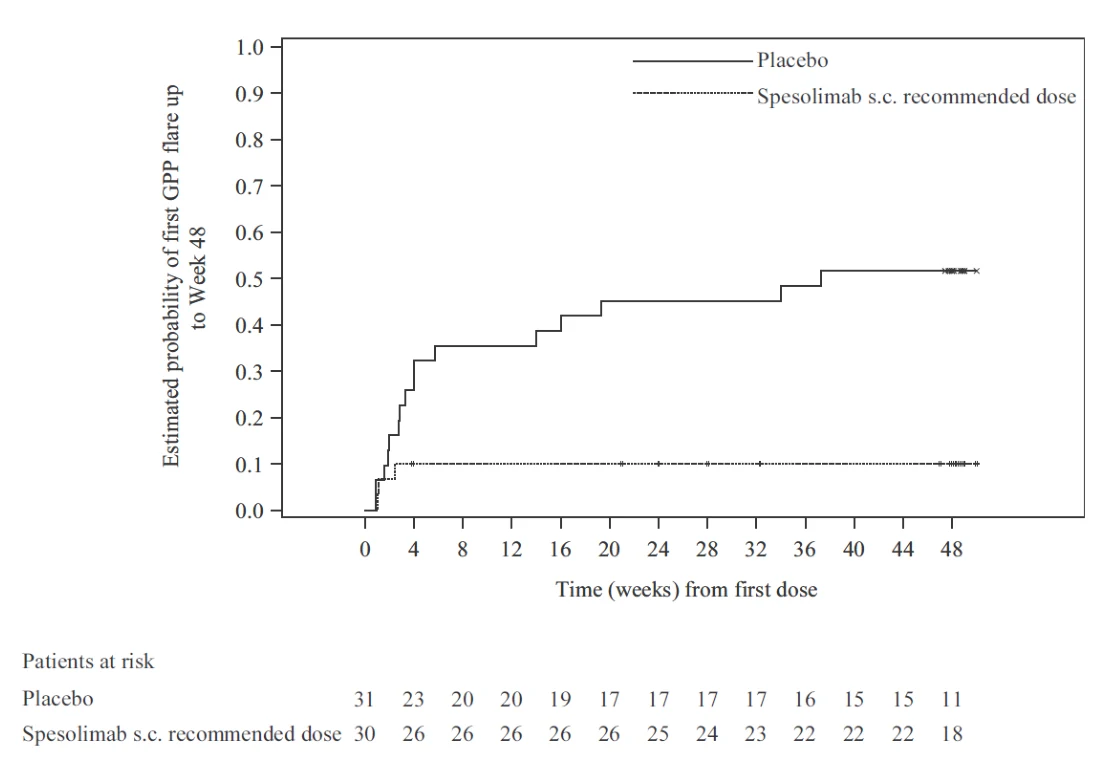
The primary endpoint of the study was the time to the first GPP flare up to Week 48 (defined by a GPPGA pustulation subscore of ≥ 2 and an increase in GPPGA total score by ≥ 2 from baseline). The key secondary endpoint of the study was the occurrence of at least one GPP flare up to Week 48.
While 3 dosing regimens were studied in EFFISAYIL-2, the recommended dosing regimen for GPP flare prevention is a subcutaneous loading dose of 600 mg Spevigo followed by 300 mg subcutaneous treatment administered every 4 weeks (see 4 DOSAGE AND ADMINISTRATION). The results summarized below are those for the recommended dosing regimen.
Patients who experienced a flare were eligible to receive up to two open-label, intravenous doses of 900 mg Spevigo (see 4 DOSAGE AND ADMINISTRATION). Two (6.7%) patients in the Spevigo arm for the recommended dose and 15 (48.4%) patients in the placebo arm received intravenous flare treatment.
The study population consisted of 38% men and 62% women. The mean age was 40(range: 14 to 75) years with 8 (6.5%) adolescent patients (2 per treatment arm); 64% of patients were Asian and 36% were Caucasian. Patients included in the study had a GPPGA pustulation sub score of 1 (28.5%) or 0 (71.5%), and patients had a GPPGA total score of 1 (86%) or 0 (14%). At the time of randomization, 75% of patients were treated with systemic therapy for GPP, which was discontinued at the start of the randomized study treatment.
Study results
The number of subjects who experienced at least one GPP flare and the time to first GPP flare are presented in Table 7 and Figure 1. The study met the pre-specified objective for time to the first GPP flare up to Week 48.
Table 8 - Time to the first GPP flare and occurrence of at least one GPP flare up to Week 48 (EFFISAYIL- 2)
| Spevigo | Placebo | ||||||||
|---|---|---|---|---|---|---|---|---|---|
| Number of Patients analysed | 30 | 31 | |||||||
| Patients with GPP flares, n (%)* | 3 (10.0) | 16 (51.6) | |||||||
| Hazard ratio (HR)** for the time to the first flare vs placebo (95% CI)) | 0.16 (0.05,0.54) | ||||||||
| p-value*** | 0.0005 | ||||||||
| Risk difference for GPP flare occurrence vs placebo, % (95% CI) | -39.0 (-62.1, -15.9) | ||||||||
| p-value**** | 0.0013 | ||||||||
*The use of intravenous Spevigo treatment or investigator-prescribed standard of care to treat GPP worsening were considered as onset of GPP flare
**Cox regression model stratified by the use of systemic GPP medications at randomisation
***Log-rank test stratified by the use of systemic GPP medications at randomisation, one-sided p-value
****Cochran-Mantel-Haenszel test after multiple imputation, stratified by the use of systemic GPP medications at randomization, one-sided p-value
Figure 1 Time to the first GPP flare up to Week 48 (EFFISAYIL- 2)
The results of the primary and key secondary endpoints were generally consistent across subgroups including sex, age, race, BMI, body weight, mutation status in IL36RN, concurrent plaque psoriasis, GPPGA total score at baseline, and irrespective of any systemic GPP treatment at randomization.
14.3 Immunogenicity
As with all therapeutic proteins, there is the potential for immunogenicity. The detection of antibody formation is highly dependent on the sensitivity and specificity of the assay.
In patients with GPP treated with spesolimab in EFFISAYIL-1 (study 1368-0013), anti-drug antibodies (ADA) formed with a median onset of 2.3 weeks. Following administration of intravenous spesolimab 900 mg, 24% (12 out of 50) of patients had a maximum ADA titer greater than 4000 and were neutralizing antibody (Nab)-positive by end of the trial (Weeks 12 to 17). In patients with GPP treated with spesolimab in EFFISAYIL- 2 (study 1368-0027), ADA formed with a median onset of 8 weeks. Following administration of a 600 mg subcutaneous loading dose of spesolimab followed by 300 mg spesolimab subcutaneously every 4 weeks for a total duration of 48 weeks, 24% of patients had a maximum ADA titer greater than 4 000 and were Nab-positive.
Following intravenous spesolimab, females appeared to have higher immunogenicity response; the percentage of patients with ADA titer greater than 4000 was 30% in females, and 12% in males, respectively. Following subcutaneous spesolimab, the comparative data on immunogenicity response in males versus females were inconclusive.
In patients with ADA titers below 4000, no apparent impact on spesolimab pharmacokinetics was observed. Following intravenous spesolimab, in most patients with ADA titer values greater than 4000, plasma spesolimab concentrations were considerably lower. Following subcutaneous spesolimab, the mean plasma steady-state trough concentrations in ADA-positive patients with titers greater than 4 000 were approximately 77% to 107% of trough concentrations in patients who were ADA-negative or ADA-positive with titer values ≤ 4 000.
In the presence of ADA, efficacy was observed upon re-treatment of subsequent flares with intravenous spesolimab in an open label extension trial. After subcutaneous administration of spesolimab, there was no consistent impact of ADA presence on efficacy.
There was no consistent correlation between the presence of ADA to spesolimab and hypersensitivity reactions following intravenous or subcutaneous administration of spesolimab.
15 MICROBIOLOGY
No microbiological information is required for this drug product.
16 NON-CLINICAL TOXICOLOGY
Animal toxicology studies have not been conducted with spesolimab due to a lack of pharmacologic activity in non-human species. The repeat-dose, reproductive, and developmental toxicology studies were conducted in mice using a surrogate, mouse specific anti-IL36R monoclonal antibody (BI 674304).
General Toxicology:
In the pivotal repeat-dose toxicology study, mice were administered BI 674304 by intravenous injection twice per week for 26 weeks at doses of 0 (vehicle), 10, or 50 mg/kg. Additional groups of mice administered vehicle or high-dose BI 674304 were observed for a 4-week recovery period following dosing. There were ten unscheduled deaths during the course of the study (3, 2 and 5 mice from the control, 10 and 50 mg/kg groups, respectively).
The cause of mortality/moribundity was determined in 3 of the 10 mice; 1) euthanasia due to an abrasion on the tail that led to ulceration and infection, which impaired dosing (50 mg/kg), 2) euthanasia due to systemic bacterial infection (50 mg/kg) and 3) malignant lymphoma, a type of cancer that occurs naturally in this strain of mouse (10 mg/kg). These findings were considered incidental, however, a relationship of BI 674304 treatment to infection cannot be excluded.
The cause of mortality/moribundity in the other 7 animals could not be determined; these 7 mortalities were not considered related to the administration of BI 674304 as they occurred across all dose groups, including the control.
No adverse changes in body weight, food consumption or clinical observations were noted at this dose. No adverse effects on clinical pathology parameters including haematology, immunophenotyping, clinical chemistry and histopathology, including lymphoid tissues, have been observed.
Carcinogenicity:
Carcinogenicity and mutagenicity studies have not been conducted with spesolimab or BI 674304.
Genotoxicity:
Genotoxicity studies have not been conducted with spesolimab or BI 674304.
Reproductive and Developmental Toxicology:
Pre-clinical studies conducted in mice using a surrogate antibody directed towards murine IL-36R do not indicate direct or indirect harmful effects with respect to pregnancy, embryonic/fetal development or fertility, at intravenous doses up to 50 mg/kg twice weekly. Serum concentrations of BI 674304 were low in the females of these studies. The reproductive and developmental data should be interpreted with caution.
Table 9 - Reproductive Toxicology
| Study Type | Species | No. of animals/group | Doses (mg/kg/twice weekly IV) | Findings |
|---|---|---|---|---|
| Fertility and early embryonic development study | Mice | 22m 22f | 0, 10, 50 2-4 weeks prior to cohabitation, during cohabitation, and/or gestation | NOAEL = 50 mg/kg. BI 674304 was neither a teratogen nor embryotoxic. BI 674304 did not affect fertility of the adult mice nor the development of the pups exposed via the treated mother. |
| Embryo fetal development study | Mice | 25f | 0, 10, 50 GD 6, 9, 12, and 15 | A higher number of resorptions was observed but was within the historical control range and therefore an effect of BI 674304 was considered to be equivocal. |
| Pre- and postnatal development study | Mice | 22f | 0, 10, 50 GD 6 to LD 18 | NOAEL = 50 mg/kg. BI 674304 did not affect pregnancy or delivery; or morphological, functional and immunological developmental parameters of offspring. |
GD, gestation day; LD, lactation day
Juvenile Toxicity:
Juvenile toxicity studies have not been conducted with spesolimab or BI 674304.