


Product Monograph - Tyenne
Recent Major Label Changes
| 4 Dosage and Administration, 4.4 Administration | 2025-11 |
|---|
Table of Contents
Certain sections or subsections that are not applicable at the time of the preparation of the most recent authorized product monograph are not listed.
Recent Major Label Changes .................................................................................................... 2
Table of Contents .................................................................................................................... 2
Part 1: Healthcare Professional Information ............................................................................ 4
1 Indications ................................................................................................................... 4
1.1 Pediatrics ........................................................................................................... 4
1.2 Geriatrics ........................................................................................................... 5
2 Contraindications ......................................................................................................... 5
3 Serious Warnings and Precautions Box ........................................................................ 5
4 Dosage and Administration .......................................................................................... 6
4.1 Dosing Considerations ....................................................................................... 6
4.2 Recommended Dose and Dosage Adjustment .................................................. 6
4.4 Administration ................................................................................................ 11
5 Overdose.................................................................................................................... 14
6 Dosage Forms, Strengths, Composition, and Packaging .............................................. 14
7 Warnings and Precautions .......................................................................................... 15
7.1 Special Populations ......................................................................................... 22
7.1.1 Pregnancy ........................................................................................................ 22
7.1.2 Breastfeeding .................................................................................................. 22
8 Adverse Reactions ...................................................................................................... 22
8.1 Adverse Reaction Overview ............................................................................ 22
8.2 Clinical Trial Adverse Reactions ....................................................................... 27
8.2.1 Clinical Trial Adverse Reactions - Pediatrics ..................................................... 89
8.3 Less Common Clinical Trial Adverse Reactions ................................................ 94
8.4 Abnormal Laboratory Findings: Hematologic, Clinical Chemistry and Other Quantitative Data .......................................................................................................... 103
8.5 Post-Market Adverse Reactions .................................................................... 112
9 Drug Interactions ...................................................................................................... 112
9.2 Drug Interactions Overview ........................................................................... 112
9.4 Drug-Drug Interactions .................................................................................. 113
10 Clinical Pharmacology ............................................................................................... 114
10.1 Mechanism of Action .................................................................................... 114
10.2 Pharmacodynamics ....................................................................................... 114
10.3 Pharmacokinetics .......................................................................................... 114
11 Storage, Stability, and Disposal ................................................................................. 121
12 Special Handling Instructions .................................................................................... 121
Part 2: Scientific Information ................................................................................................ 122
13 Pharmaceutical Information ...................................................................................... 122
14 Clinical Trials ............................................................................................................. 123
14.4 Clinical Trials - Reference Biologic Drug ........................................................ 123
15 Microbiology ............................................................................................................. 147
16 Non-Clinical Toxicology ............................................................................................. 147
17 Supporting Product Monographs .............................................................................. 156
Patient Medication Information ........................................................................................... 157
Instructions for Use .............................................................................................................. 166
Instructions for Use .............................................................................................................. 174
Part 1: Healthcare Professional Information
Tyenne® (tocilizumab) is a biosimilar to Actemra (tocilizumab). A biosimilar is a biologic drug that was granted authorization based on a demonstration of similarity to a version previously authorized in Canada, known as the reference biologic drug.
1 Indications
Rheumatoid Arthritis (RA) [Intravenous or subcutaneous formulations]
TYENNE (tocilizumab) is indicated for:
- reducing signs and symptoms in adult patients with moderately to severely active rheumatoid arthritis.
Tyenne (Intravenous only) in combination with methotrexate (MTX) has been shown to reduce the rate of progression of radiographic joint damage at Week 52.
Tyenne is to be given in combination with MTX or other DMARDs; however, in cases of intolerance to MTX or where treatment with MTX is not appropriate Tyenne may also be given as monotherapy.
Giant Cell Arteritis (GCA) [Subcutaneous formulation only]
Tyenne is indicated for the treatment of giant cell arteritis (GCA) in adult patients.
Polyarticular Juvenile Idiopathic Arthritis (pJIA) [Intravenous or subcutaneous formulations]
Tyenne is indicated for the treatment of signs and symptoms of active polyarticular juvenile idiopathic arthritis in patients 2 years of age and older who have responded inadequately to previous therapy with DMARDs.
Systemic Juvenile Idiopathic Arthritis (sJIA) [Intravenous or subcutaneous formulations]
Tyenne is indicated for the treatment of active systemic juvenile idiopathic arthritis in patients 2 years of age and older, who have responded inadequately to previous therapy with one or more non-steroidal anti-inflammatory drugs and systemic corticosteroids.
Cytokine release syndrome (CRS) [Intravenous formulation only]
Tyenne is indicated for the treatment of patients with chimeric antigen receptor (CAR) T cell-induced severe or life-threatening cytokine release syndrome (CRS), in accordance with patient populations specified for authorized CAR T cell products.
Coronavirus disease 2019 (COVID-19) [Intravenous formulation only]:
Tyenne is indicated for the treatment of hospitalized adult patients with coronavirus disease 2019 (COVID-19) who are receiving systemic corticosteroids, and require supplemental oxygen, non-invasive or invasive mechanical ventilation or extracorporeal membrane oxygenation.
1.1 Pediatrics
Pediatrics (<18 years of age): The safety and efficacy in patients aged less than 2 years in sJIA and pJIA have not been established.
The safety and efficacy of Tyenne for treating CAR T cell-induced CRS in children under the age of 3 has not been established.
1.2 Geriatrics
Geriatrics (>65 years of age): Of the 2644 patients who received tocilizumab in studies, a total of 435 rheumatoid arthritis patients were 65 years of age and older, including 50 patients 75 years and older. The frequency of serious infection among tocilizumab treated subjects 65 years of age and older was higher than those under the age of 65. There is a higher incidence of infections in the elderly population in general, therefore, caution should be used when treating the elderly with tocilizumab.
2 Contraindications
Tyenne (tocilizumab) should not be administered to patients with known hypersensitivity to tocilizumab or any of its components. For a complete listing, see 6 Dosage Forms, Strengths, Composition and Packaging section of the product monograph.
Patients with active infections, with the exception of COVID-19, as indicated (see also 7 Warnings and Precautions).
3 Serious Warnings and Precautions Box
Serious Warnings and Precautions
RISK OF SERIOUS INFECTIONS Serious infections including sepsis, tuberculosis (TB), invasive fungal, and other opportunistic infections have been observed with the use of biologics agents, including Tyenne. Hospitalization or fatal outcomes associated with infections have been reported. Reported infections include:
Most patients who developed these infections were taking concomitant immunosuppressants such as methotrexate or corticosteroids, that, in addition to their rheumatoid arthritis could predispose them to infections. Before starting treatment with Tyenne, all patients should be evaluated for both active and latent tuberculosis. Treatment with Tyenne should not be initiated in patients with active infections including chronic or localized infections. If a serious infection develops, interrupt Tyenne until the infection is controlled. Patients should be closely monitored for the development of signs and symptoms of infection during and after treatment with Tyenne, including the possible development of tuberculosis in patients who tested negative for latent tuberculosis infection prior to initiating therapy. |
|---|
RISK OF HEPATOXICITY Serious cases of drug-induced liver injury (DILI) have been observed in patients treated with Tyenne. Some of these cases have resulted in acute liver failure requiring a liver transplant (see 7 Warnings and Precautions, Hepatic/Biliary/Pancreatic). |
4 Dosage and Administration
4.1 Dosing Considerations
General
- For adult patients with RA, Tyenne may be administered as an intravenous infusion or a subcutaneous injection.
- For adult patients with GCA, Tyenne is administered as a subcutaneous injection.
- For patients with pJIA and sJIA, Tyenne is administered as an intravenous infusion or a subcutaneous injection.
- For patients with CRS, Tyenne is administered as an intravenous infusion.
- For adult patients with COVID-19, Tyenne is administered as an intravenous infusion.
- For adult patients with COVID-19, Tyenne should not be administered in patients who are not receiving corticosteroids.
- Intravenous infusion: Use a sterile needle and syringe to prepare Tyenne.
See below for indication specific details.
RHEUMATOID ARTHRITIS [INTRAVENOUS OR SUBCUTANEOUS FORMULATIONS]
Dosing Considerations
- It would be prudent not to use Tyenne in patients who are using azathioprine or cyclophosphamide.
- Tocilizumab has not been studied in combination with biological DMARDs such as TNF antagonists.
- Treatment with biological DMARDs such as TNF inhibitors has been associated with reactivation of Hepatitis B and C. Therefore, screening for viral hepatitis should be performed in accordance with published guidelines before starting therapy with Tyenne. In clinical studies with tocilizumab, patients who screened positive for hepatitis were excluded from the study
- Tyenne treatment should be interrupted if a patient develops a serious infection until the infection is controlled.
- Continuing therapy beyond 16 weeks should be carefully reconsidered in a patient not responding within this time period.
4.2 Recommended Dose and Dosage Adjustment
RHEUMATOID ARTHRITIS [INTRAVENOUS OR SUBCUTANEOUS FORMULATIONS]
Tyenne is to be given in combination with MTX or other DMARDs; however, in cases of intolerance to MTX or where treatment with MTX is not appropriate Tyenne may also be given as monotherapy.
Recommended Intravenous Dose
The recommended intravenous dose of Tyenne for adult patients with rheumatoid arthritis is 4 mg/kg followed by an increase to 8 mg/kg based on clinical response, given once every 4 weeks as an intravenous infusion over 1 hour.
In clinical trials with tocilizumab, patients with the following laboratory parameter were not initiated: Platelet count below 100,000/mm3, hemoglobin (Hb) below 8.5 g/dL, WBC below 3000/mm3, ANC below 2.0x10⁹/L, absolute lymphocyte count below 500/mm3, ALT or AST above 1.5 x upper limit of normal (ULN), total bilirubin above ULN, Triglycerides (TG) above 10 mmol/L (above 900 mg/dL), Serum creatinine above 1.4 mg/dL in female patients and above 1.6 mg/dL in male patients.
For individuals whose body weight is more than 100 kg, doses exceeding 800 mg per infusion are not recommended (see 10.3 Pharmacokinetics).
Tyenne intravenous formulation is not intended for subcutaneous administration.
Recommended Subcutaneous Dose:
The recommended dose of Tyenne for adult patients with moderately to severely active rheumatoid arthritis is:
| Recommended Dose | |
|---|---|
| Patients less than 100 kg weight | Starting dose of 162 mg administered subcutaneously every other week, followed by an increase to every week based on clinical response |
| Patients at or above 100 kg weight | 162 mg administered every week |
Patients transitioning from Tyenne intravenous therapy to subcutaneous administration should administer the first subcutaneous dose at the time of the next scheduled intravenous dose under the supervision of a qualified healthcare professional.
Tyenne subcutaneous formulation is not intended for intravenous administration.
Patients should be assessed for suitability for subcutaneous home use and instructed to inform a healthcare professional if they experience symptoms of allergic reaction before administering the next dose. Patients should seek immediate medical attention if they develop any symptoms of serious allergic reactions (see 7 Warnings and Precautions).
POLYARTICULAR JUVENILE IDIOPATHIC ARTHRITIS (pJIA) [INTRAVENOUS OR SUBCUTANEOUS FORMULATIONS]
Recommended Dose
Intravenous Dosing Regimen:
The recommended dose of Tyenne intravenous for patients with pJIA is:
- 10 mg/kg for patients below 30 kg
- 8 mg/kg for patients ≥30 kg
given in combination with MTX, once every four weeks as an intravenous infusion.
Subcutaneous Dosing Regimen:
The recommended dose of Tyenne subcutaneous for patients with pJIA is:
- 162 mg once every three weeks for patients below 30 kg
- 162 mg once every two weeks for patients ≥30 kg
given in combination with MTX.
The pre-filled syringe with needle safety device (PFS + NSD) can be used to treat pediatric patients of all approved ages. The autoinjector should not be used to treat pediatric patients <12 years of age.
Tyenne may also be given as monotherapy in cases of intolerance to MTX or where treatment with MTX is not appropriate. A change in dose should only be based on a consistent change in the patient’s body weight over time.
Interruption of dosing may be needed for management of dose-related laboratory abnormalities including elevated liver enzymes, neutropenia, and thrombocytopenia.
SYSTEMIC JUVENILE IDIOPATHIC ARTHRITIS (sJIA) [INTRAVENOUS AND SUBCUTANEOUS FORMULATIONS]
A change in dose should only be based on a consistent change in the patient’s body weight over time. Tyenne can be used alone or in combination with MTX.
Recommended Dose
Intravenous Dosing Regimen:
The recommended dose of Tyenne for patients with sJIA
- 12 mg/kg for patients below 30 kg
- 8 mg/kg for patients ≥30 kg
given once every two weeks as an intravenous infusion over 1 hour.
Subcutaneous Dosing Regimen:
The recommended dose of Tyenne subcutaneous for patients with sJIA is:
- 162 mg once every two weeks for patients below 30 kg,
- 162 mg once every week for patients ≥30 kg
The PFS + NSD can be used to treat pediatric patients of all approved ages. The autoinjector should not be used to treat pediatric patients <12 years of age.
GIANT CELL ARTERITIS (GCA) [SUBCUTANEOUS FORMULATION ONLY]
For adult patients with GCA, the recommended dose of Tyenne is 162 mg given once every week as a subcutaneous injection, in combination with a tapering course of glucocorticoids.
A dose of 162 mg given once every other week as a subcutaneous injection, in combination with a tapering course of glucocorticoids, may be prescribed based on clinical considerations.
Tyenne can be used alone following discontinuation of glucocorticoids.
Dose adjustment may be needed for management of dose-related laboratory abnormalities including elevated liver enzymes, neutropenia, and thrombocytopenia [see 4.2 Recommended Dose and Dosage Adjustment].
Intravenous administration is not approved for GCA.
CYTOKINE RELEASE SYNDROME (CRS) [INTRAVENOUS FORMULATION ONLY]
The recommended dose for treatment of CRS given as a 60-minute intravenous infusion is 8 mg/kg in patients weighing greater than or equal to 30 kg or 12 mg/kg in patients weighing less than 30 kg.
Authorized CAR T cell products may provide additional recommendations in the CRS management algorithm within that product monograph. Doses exceeding 800 mg per infusion are not recommended in CRS patients whose body weight is more than 100 kg (see 10.3 Pharmacokinetics). Tyenne can be given alone or in combination with corticosteroids.
If no clinical improvement in the signs and symptoms of CRS occurs after the first dose, up to 3 additional doses of Tyenne may be administered. Recommended dosing intervals may differ between CAR T cell products. Consult the CRS management algorithm in the appropriate CAR T cell therapy product monograph for information on dosing intervals.
Patients with severe or life-threatening CRS frequently have cytopenias or elevated ALT or AST due to the underlying malignancy, preceding lymphodepleting chemotherapy or the CRS. The decision to administer Tyenne should take into account the potential benefit of treating the CRS versus the risks of short-term treatment with Tyenne.
COVID-19 [Intravenous formulation only]
The recommended dose of Tyenne for the treatment of adult patients with COVID-19 is a single intravenous infusion of 8 mg/kg administered over 60 minutes. Doses exceeding 800 mg per infusion are not recommended in patients with COVID-19.
If clinical signs or symptoms worsen or do not improve after the first dose, one additional intravenous infusion of Tyenne 8 mg/kg may be administered at least 8 hours after the initial infusion.
Administration of Tyenne is not recommended in patients with COVID-19 who have any of the following laboratory abnormalities:
| Laboratory Test Type | Laboratory Value | Action |
|---|---|---|
| Liver enzyme | ≥10x ULN | Administration of Tyenne is not recommended |
| Absolute neutrophil count | <1x10⁹/L | |
| Platelet count | <50x103/mcL | |
DOSE ADJUSTMENTS FOR RA AND GCA
The following dose adjustments are recommended for management of certain dose-related laboratory changes including elevated liver enzymes, neutropenia, and thrombocytopenia.
Liver enzyme abnormalities
| Lab Value | Action |
|---|---|
| >1 to 3x ULN | Dose modify concomitant DMARDs (RA) or immunomodulatory agents (GCA) if appropriate. For patients on intravenous tocilizumab (RA only) with persistent increases in this range, reduce tocilizumab dose to 4 mg/kg or interrupt tocilizumab until ALT/AST have normalized. For patients on subcutaneous tocilizumab with persistent increases in this range, reduce tocilizumab injection frequency to every other week or interrupt tocilizumab until ALT/AST have normalized. Restart with injection every other week, and increase frequency to weekly dosing, as clinically appropriate. |
| >3 to 5x ULN (confirmed by repeat testing) | Interrupt tocilizumab dosing until <3x ULN and follow recommendations above for >1 to 3x ULN. For persistent increases >3x ULN (confirmed by repeat testing), discontinue tocilizumab. |
| >5x ULN | Discontinue tocilizumab. |
Low absolute neutrophil count (ANC)
Lab Value (cellsx109/L) | Action |
|---|---|
| ANC >1 | Maintain dose. |
| ANC 0.5 to 1 | Interrupt tocilizumab dosing. For patients on intravenous tocilizumab (RA only), when ANC >1x10⁹/L resume tocilizumab at 4 mg/kg and increase to 8 mg/kg, as clinically appropriate. For patients on subcutaneous tocilizumab, when ANC >1x10⁹/L resume tocilizumab injection every other week and increase frequency to every week, as clinically appropriate. |
| ANC <0.5 | Discontinue tocilizumab. |
Low platelet count
Lab Value (cellsx103/mcL) | Action |
|---|---|
| 50 to 100 | Interrupt tocilizumab dosing. For patients on intravenous tocilizumab (RA only), when platelet count is >100x103/mcL resume tocilizumab at 4 mg/kg and increase to 8 mg/kg, as clinically appropriate. For patients on subcutaneous tocilizumab, when platelet count is >100x103/mcL resume tocilizumab injection every other week and increase frequency to every week, as clinically appropriate. |
| <50 | Discontinue tocilizumab. |
DOSE ADJUSTMENTS FOR pJIA AND sJIA
Dose reduction of Tyenne has not been studied in the pJIA or sJIA population. Dose interruptions of Tyenne for laboratory abnormalities are recommended in patients with pJIA or sJIA and are similar to what is outlined above for patients with RA and GCA (see 7 Warnings and Precautions, Hepatic/Biliary/Pancreatic). If appropriate, concomitant MTX and/or other medications should be dose modified or interrupted and Tyenne dosing interrupted until the clinical situation has been evaluated. In pJIA or sJIA the decision to discontinue Tyenne for a laboratory abnormality should be based upon the medical assessment of the individual patient.
Special Dosage Instructions
Pediatric: The safety and efficacy of Tyenne in children with conditions other than pJIA or sJIA have not been established. Children under the age of two have not been studied. The safety and efficacy of Tyenne for treating CAR T cell-induced CRS in children under the age of three has not been established.
Geriatric: As with all biologics, there is a higher incidence of infections in the elderly population in general, therefore, caution should be used when treating the elderly.
Renal impairment: No dose adjustment is required in patients with mild renal impairment (see 10 Clinical Pharmacology, Special Populations and Conditions, Renal Insufficiency). Tyenne has not been studied in patients with moderate to severe renal impairment.
Hepatic impairment: The safety and efficacy of Tyenne has not been studied in patients with hepatic impairment (see 7 Warnings and Precautions). Therefore, no dose recommendations can be made.
4.4 Administration
The KabiCare clinic Network has been established to facilitate the administration of Tyenne. This network consists of clinics located across Canada that are staffed by qualified healthcare professionals specially trained in the administration of Tyenne. Contact your doctor if you have any questions. Information about the KabiCare Infusion Network can be obtained by contacting KabiCare® at: 1-888-304-2034 or info@kabicare.ca.
Intravenous Tyenne
RHEUMATOID ARTHRITIS:
Tyenne concentrate for intravenous infusion should be diluted to 100 mL by a healthcare professional using aseptic technique as follows:
- Withdraw the required amount of Tyenne for a dose of 4 mg/kg or 8 mg/kg (equivalent to 0.2 mL/kg or 0.4 mL/kg, respectively).
- Withdraw the same amount of sterile, non-pyrogenic 0.9% or 0.45% w/v sodium chloride solution from the infusion bag and discard.
- Slowly add the withdrawn Tyenne concentrate into the infusion bag. The final volume in the infusion bag should total 100 mL.
- To mix the solution, gently invert the bag to avoid foaming.
- Allow the fully diluted Tyenne solution to reach room temperature prior to infusion.
- The infusion should be administered over 60 minutes, and must be administered with an infusion set. Do not administer as an intravenous push or bolus.
POLYARTICULAR JUVENILE IDIOPATHIC ARTHRITIS (PJIA), SYSTEMIC JUVENILE IDIOPATHIC ARTHRITIS (SJIA), CYTOKINE RELEASE SYNDROME (CRS) AND ADULT COVID-19 PATIENTS:
Tyenne concentrate for intravenous infusion should be diluted by a healthcare professional using aseptic technique as outlined below.
pJIA, sJIA and CRS Patients ≥30 kg and Adult COVID-19 Patients:
- Withdraw the required amount of Tyenne for a dose of 8 mg/kg (equivalent to 0.4 mL/kg) for patients weighing <100 kg. For patients who weigh ≥100 kg, withdraw 40 mL of Tyenne for an 800 mg dose.
- From a 100 mL infusion bag containing 0.9% or 0.45% w/v sterile, non-pyrogenic sodium chloride solution, withdraw the volume equivalent to the volume of Tyenne needed to provide an 8 mg/kg dose (or 800 mg in patients weighing >100 kg) and discard.
- Slowly inject the previously withdrawn Tyenne concentrate into the infusion bag. The final volume in the infusion bag should total 100 mL.
pJIA Patients below 30 kg:
- Withdraw the required amount of Tyenne for a dose of 10 mg/kg (equivalent to 0.5 mL/kg).
- From a 50 mL infusion bag, withdraw the same amount of sterile, non-pyrogenic 0.9% or 0.45% w/v sodium chloride solution from the infusion bag and discard.
- Slowly add the withdrawn Tyenne concentrate into the infusion bag. The final volume in the infusion bag should total 50 mL.
sJIA and CRS Patients below 30 kg:
- Withdraw the required amount of Tyenne for a dose of 12 mg/kg (equivalent to 0.6 mL/kg).
- From a 50 mL infusion bag, withdraw the same amount of sterile, non-pyrogenic 0.9% or 0.45% w/v sodium chloride solution from the infusion bag and discard.
- Slowly add the withdrawn Tyenne concentrate into the infusion bag. The final volume in the infusion bag should total 50 mL.
For all pJIA, sJIA, CRS and Adult COVID-19 Patients:
- To mix the solution, gently invert the bag to avoid foaming.
- Allow the fully diluted Tyenne solution to reach room temperature prior to infusion.
- The infusion should be administered over 60 minutes, and must be administered with an infusion set. Do not administer as an intravenous push or bolus.
For All Prepared Infusion Solutions: Tyenne does not contain preservatives, therefore reconstitution and dilution of the product should be performed under aseptic conditions. The prepared infusion solution of tocilizumab is physically and chemically stable in 0.9% or 0.45% w/v sodium chloride solution. Following dilution in 0.9% or 0.45% sodium chloride, the prepared solution for infusion may be stored in the infusion bag for up to 48 hours up to 30 °C followed by 14 days at 2-8 °C, protected from light. From a microbiological point of view, the prepared infusion should be used immediately (see 11 Storage, Stability, and Disposal).
Parenteral drug products should be inspected visually for particulate matter and discoloration prior to administration, whenever solution and container permit. Tyenne is a colorless to pale yellow liquid. If particulates and discolorations are noted, the product should not be used. Fully diluted Tyenne solutions are compatible with polypropylene, polyethylene and polyvinyl chloride infusion bags and polypropylene, polyethylene and glass infusion bottles.
Tyenne should not be infused concomitantly in the same intravenous line with other drugs. No physical or biochemical compatibility studies have been conducted to evaluate the co-administration of Tyenne with other drugs.
Subcutaneous Tyenne
Tyenne subcutaneous formulation is not intended for intravenous administration.
Tyenne subcutaneous formulation is administered with a single-use pre-filled syringe with needle safety device (PFS + NSD) or autoinjector. The autoinjector should not be used to treat pediatric patients <12 years of age since there is a potential risk of intramuscular injection due to thinner subcutaneous tissue layer.
Tyenne subcutaneous injection is intended for use under the guidance and supervision of a physician. After proper training in subcutaneous injection technique, a patient (or parent/caregiver) may inject Tyenne if a physician determines that it is appropriate and with medical follow-up as necessary. The first injection should be performed under the supervision of a qualified healthcare professional. The recommended injection sites (abdomen, thigh and upper arm) should be rotated and injections should never be given into moles, scars, or areas where the skin is tender, bruised, red, hard, or not intact.
Patients who transition from Tyenne intravenous administration to subcutaneous administration should administer the first subcutaneous dose at the time of the next scheduled intravenous dose under the supervision of a qualified health care professional.
Patients (or parent/caregiver) using Tyenne for subcutaneous administration should be instructed to inject the full amount in the syringe or autoinjector (0.9 mL) which provides 162 mg of Tyenne, according to the directions provided in the Consumer Information Leaflet.
Do not use if the medicine is cloudy or contains particles, is any color besides colorless to yellowish, or any part of the PFS + NSD or autoinjector appears to be damaged.
5 Overdose
There are limited data available on overdosage with Tyenne (tocilizumab). One case of accidental overdose was reported in which a patient with multiple myeloma received a single dose of 40 mg/kg intravenous. No adverse drug reactions were observed. No serious adverse drug reactions were observed in healthy volunteers who received a single dose up to 28 mg/kg intravenous, although dose-limiting neutropenia was observed.
In case of an overdose, it is recommended that the patient be monitored for signs and symptoms of adverse reactions. Patients who develop adverse reactions should receive appropriate symptomatic treatment.
| For the most recent information in the management of a suspected drug overdose, contact your regional poison control centre or Health Canada's toll-free number, 1-844 POISON-X (1-844-764-7669). |
|---|
6 Dosage Forms, Strengths, Composition, and Packaging
Table – Dosage Forms, Strengths, Composition, and Packaging
| Route of Administration | Dosage Form / Strength / Composition | Non-medicinal Ingredients |
|---|---|---|
| Intravenous | Vial: 20 mg/mL Concentrate Solution for Infusion | L-arginine, L-histidine, L-lactic acid, Polysorbate 80, Sodium chloride, Sodium hydroxide, Hydrochloric acid, and water for injection. |
| Subcutaneous | 162 mg/0.9 mL Solution for Injection in a single-use pre-filled syringe (PFS) with needle safety device (NSD) or single-use autoinjector | L-arginine, L-histidine, L-lactic acid, Polysorbate 80, Sodium chloride, Sodium hydroxide, Hydrochloric acid, and water for injections. |
For Intravenous Infusion
Tyenne (tocilizumab for injection) is supplied in single-use vials as a preservative-free, sterile concentrate (20 mg/mL) solution for intravenous infusion. The following packaging configurations are available:
- Type I glass single use vial with a stopper (butyl rubber) containing 80 mg of tocilizumab in 4 mL (20 mg/mL). Packs of 1 and 4 vials.
- Type I glass single use vial with a stopper (butyl rubber) containing 200 mg of tocilizumab in 10 mL (20 mg/mL). Packs of 1 and 4 vials.
- Type I glass single use vial with a stopper (butyl rubber) containing 400 mg of tocilizumab in 20 mL (20 mg/mL). Packs of 1 and 4 vials.
*Not all pack sizes may be marketed.
For Subcutaneous Injection
Tyenne (tocilizumab injection) for subcutaneous administration is supplied as a sterile preservative-free liquid solution in either a ready-to-use single-use pre-filled syringe (PFS) with needle safety device or single-use autoinjector. Each device delivers 0.9 mL (162 mg) of tocilizumab per injection. The PFS and autoinjector are not made with natural rubber latex. The following packaging configurations are available:
- Pre-filled syringes with needle safety device (PFS with NSD) containing 162 mg tocilizumab. Packs of 1, 4 and 12 pre-filled syringes.
- Autoinjector containing 162 mg tocilizumab. Packs of 1 and 4 autoinjectors.
*Not all pack sizes may be marketed.
7 Warnings and Precautions
Please see 3 Serious Warnings and Precautions Box.
General
In order to improve the traceability of biological medicinal products, the trade name, the non-proprietary (active ingredient) name, as well as other product-specific identifiers such as the Drug Identification Number (DIN) and batch/lot number of the administered product should be clearly recorded (or stated) in the patient file.
Carcinogenesis and Genotoxicity
The impact of treatment with tocilizumab on the development of malignancies is not known but malignancies were observed in clinical studies (see 8.1 Adverse Reaction Overview, Malignancies). Tyenne is an immunosuppressant, and treatment with immunosuppressants may result in an increased risk of malignancies (see 8.1 Adverse Reaction Overview, Malignancies).
Cardiovascular
RA patients have an increased risk for cardiovascular disorders and should have risk factors (e.g. hypertension, hyperlipidaemia) managed as part of usual standard of care. Adverse events of hypertension have been observed with tocilizumab treated patients in clinical trials, 21 hypertension serious adverse events (SAEs) (0.13 per 100 patient years intravenous all-exposure RA population) in long-term trials occurred in patients receiving tocilizumab, all at the higher dose (8 mg/kg) (see 8 Adverse Reactions). Most events were transitory.
Dependence,Tolerance and/or Abuse Liability
No studies on the effects on the potential for tocilizumab to cause dependence have been performed. However, there is no evidence from the available data that tocilizumab treatment results in dependence.
Driving and Operating Machinery
No studies on the effects on the ability to drive and use machinery have been performed. However, there is no evidence from the available data that treatment with tocilizumab affects the ability to drive and use machines. However, given that dizziness has been reported, patients who experience this adverse reaction should be advised not to drive or use machines until it has been resolved.
Gastrointestinal
Gastrointestinal perforations have been reported in clinical trials, primarily as complications of diverticulitis in patients treated with tocilizumab. Tocilizumab should be used with caution in patients at increased risk for gastrointestinal perforation, including those with a history of gastrointestinal ulceration, diverticulitis, concomitant corticosteroid use and age >65 years. These medically confirmed GI perforations occurred at a higher rate following treatment with 8 mg/kg tocilizumab compared to 4 mg/kg tocilizumab 0.22 (95% CI: 0.14, 0.31) vs. 0.14 (95% CI: 0.00, 0.77) per 100 patient years in the intravenous all-exposure RA population] (see 8 Adverse Reactions).
Patients should be evaluated promptly for early identification of gastrointestinal perforation, especially since typical symptoms of diverticulitis or perforation such as pain, fever or leukocytosis may be attenuated or absent in immunocompromised patients.
In clinical studies with tocilizumab, patients with a history of diverticulitis, chronic ulcerative lower GI disease such as Crohn’s disease, ulcerative colitis or other symptomatic lower GI conditions were excluded.
Hepatic/Biliary/Pancreatic
Serious cases of hepatic injury have been observed in patients taking intravenous or subcutaneous tocilizumab. Some of these cases have resulted in liver transplant or death. Time to onset for cases ranged from 2 weeks to over 5 years after treatment initiation with tocilizumab. While most cases presented with marked elevations of transaminases (>5 times ULN), some cases presented with signs or symptoms of liver dysfunction and only mildly elevated transaminases.
During randomized controlled studies, treatment with tocilizumab was associated with a higher incidence of transaminase elevations. Increased frequency and magnitude of these elevations was observed when potentially hepatotoxic drugs (e.g., MTX) were used in combination with tocilizumab (see 8.4 Abnormal Laboratory Findings: Hematologic, Clinical Chemistry and Other Quantitative Data, Liver Enzyme Elevations).
For RA, GCA, pJIA, and sJIA patients, obtain a liver test panel (serum alanine aminotransferase [ALT], aspartate aminotransferase [AST], alkaline phosphatase, and total bilirubin) before initiating tocilizumab, every 4 to 8 weeks after start of therapy for the first 6 months of treatment and every 3 months thereafter. It is not recommended to initiate tocilizumab treatment in RA or GCA patients with elevated transaminases ALT or AST greater than 1.5x ULN. In RA, GCA, pJIA and sJIA patients who develop elevated ALT or AST greater than 5x ULN, discontinue tocilizumab. For recommended modifications based upon increase in transaminases (see 4.2 Recommended Dose and Dosage Adjustment, Dose Adjustments for RA and GCA).
Measure liver tests promptly in patients who report symptoms that may indicate liver injury, such as fatigue, anorexia, right upper abdominal discomfort, dark urine or jaundice. In this clinical context, if the patient is found to have abnormal liver tests (e.g., ALT greater than three times the upper limit of the reference range, serum total bilirubin greater than two times the upper limit of the reference range), tocilizumab treatment should be interrupted and investigation done to establish the probable cause.
tocilizumab should only be restarted in patients with another explanation for the liver test abnormalities after normalization of the liver tests.
A similar pattern of liver enzyme elevation is noted with tocilizumab treatment in the pJIA and sJIA populations. Monitor liver test panel prior to the initiation of treatment at the time of the second administration and thereafter every 2 to 4 weeks for pJIA and sJIA. For recommended dose modifications, see 4.2 Recommended Dose and Dosage Adjustment, Dose Adjustments for pJIA and sJIA.
Treatment with Tyenne is not recommended in patients with active hepatic disease or hepatic impairment.
Immune
Hypersensitivity Reactions
Serious hypersensitivity reactions, including anaphylaxis have been reported in association with tocilizumab (see 8.1 Adverse Reaction Overview, Infusion Reactions). Anaphylaxis and other hypersensitivity reactions that required treatment discontinuation were reported in 0.7 % (19 out of 2644) of patients in the 6-month controlled intravenous trials, and in 1.4% (60 out of 4171) of patients in the intravenous all-exposure RA population, after 2 and 5 years of follow-up, respectively, 0.7% (8 out of 1068) in the subcutaneous 6-month controlled RA trials, and in 0.7% (10 out of 1465) of patients in the subcutaneous all-exposure RA population after 2 years of follow-up.
In the post marketing setting, serious hypersensitivity AEs and anaphylaxis occurred during treatment with tocilizumab, both with or without premedication; and with or without previous hypersensitivity reactions. These SAEs occurred in patients treated with a range of doses of tocilizumab, and with or without other treatments for arthritis. These events were associated with the first infusion of tocilizumab and as late as the 20th infusion, although the majority (66/86, 77%) of cases were reported between the 2nd and 4th doses (in cases where the infusion number was reported). In the post marketing setting, cases with a fatal outcome have been reported with intravenous tocilizumab.
Appropriate treatment should be available for immediate use in the event of an anaphylactic reaction during infusion with Tyenne. Tyenne intravenous should only be administered by a healthcare professional with appropriate medical support to manage anaphylaxis. Advise patients to seek immediate medical attention if they experience any symptoms of a hypersensitivity reaction after the administration of Tyenne infusion or subcutaneous injection. If an anaphylactic reaction or other serious hypersensitivity reaction occurs, administration of Tyenne should be stopped immediately and Tyenne should be permanently discontinued. Do not administer Tyenne to patients with known hypersensitivity to Tyenne. Patients with clinically significant hypersensitivity should not be rechallenged with additional doses of Tyenne (see 2 Contraindications and 8 Adverse Reactions).
Immunization
Live and live attenuated vaccines should not be given concurrently with tocilizumab as clinical safety has not been established.
No data are available on the secondary transmission of infection from persons receiving live vaccines to patients receiving tocilizumab.
In a randomized open-label study, adult RA patients aged 25-65 years treated with tocilizumab and MTX mounted a similar immunological response to the tetanus toxoid vaccine as adult patients receiving MTX only.
An effective response to the 23-valent pneumococcal polysaccharide was achieved by 60% (95% CI: 46.4, 73.6) of patients receiving tocilizumab and MTX versus 70.8% (95% CI: 52.6, 89.0) of patients receiving MTX only.
Because IL-6 inhibition may interfere with the normal immune response to new antigens, it is recommended that all patients, particularly pediatric or elderly patients, if possible, be brought up to date with all immunizations in agreement with current immunization guidelines prior to initiating treatment with Tyenne. The interval between live vaccinations and initiation of Tyenne therapy should be in accordance with current vaccination guidelines regarding immunosuppressive agents.
Macrophage Activation Syndrome (MAS)
MAS is a serious life-threatening disorder that may develop in patients with sJIA. In clinical trials, tocilizumab has not been studied in patients during an episode of active MAS. Cases of MAS, including a case with a fatal outcome [15 days following the 4th tocilizumab dose (8 mg/kg)], have been reported in clinical trials. MAS has also been reported in the post-marketing setting.
Serious Infections
Concurrent therapy with Tyenne and another biologic agent is not recommended. When transitioning from another biologic therapy to Tyenne, patients should be monitored for signs of infection. In the clinical trials in adults, a higher incidence of infections was observed in patients previously exposed to a TNF inhibitor.
Serious and sometimes fatal infections due to bacterial, mycobacterial, invasive fungal, viral, protozoal, or other opportunistic infections have been observed in patients receiving immunosuppressive agents including tocilizumab for rheumatoid arthritis. The most common serious infections included pneumonia, urinary tract infection, cellulitis, herpes zoster, gastroenteritis, diverticulitis, sepsis and bacterial arthritis. Opportunistic infections including tuberculosis, cryptococcus, aspergillosis, candidiasis, and pneumocystosis were reported with tocilizumab. Other serious infections, not reported in clinical studies, may also occur (e.g., histoplasmosis, coccidiomycosis, listeriosis). Patients have presented with disseminated rather than localized disease. Rheumatoid arthritis itself as well as concomitant immunosuppressant treatment such as methotrexate or corticosteroids are additional risk factors for serious infections. Patients should be closely monitored for the development of signs and symptoms of infection during and after treatment with tocilizumab.
Patients with sJIA also reported the following serious infections: varicella and mycoplasmal pneumonia.
Treatment with Tyenne should not be initiated in patients with active infections including chronic or localized infections. Administration of Tyenne should be interrupted if a patient develops a serious infection, an opportunistic infection, or sepsis, until the infection is controlled (see 4.1 Dosing Considerations).
The risks and benefits of treatment should be considered prior to initiating Tyenne in patients
- With chronic or recurrent infection;
- Who have been exposed to tuberculosis;
- With a history of serious or an opportunistic infection;
- Who have resided or traveled in areas of endemic tuberculosis or endemic mycoses; or
- With underlying conditions that may predispose them to infection.
In patients with COVID-19, Tyenne should not be administered if patients also have any other concurrent active infection.
Vigilance for the timely detection of serious infection is recommended for patients receiving treatment with immunosuppressive agents, such as Tyenne, as signs and symptoms of acute inflammation may be lessened, due to suppression of the acute phase reactants. A patient who develops a new infection during treatment with Tyenne should undergo a prompt and complete diagnostic workup appropriate for an immunocompromised patient, appropriate antimicrobial therapy should be initiated, and the patient should be closely monitored.
Patients (which include younger children who may be less able to communicate their symptoms) and parents/guardians of minors should be instructed to contact a physician immediately when any symptoms suggesting infection appear, in order to assure rapid evaluation and appropriate treatment.
Tuberculosis
Patients should be evaluated for tuberculosis risk factors and tested for latent and active infection prior to initiating Tyenne.
Patients with latent or active tuberculosis should complete treatment with standard anti-mycobacterial therapy before initiating Tyenne. Anti-tuberculosis therapy should also be considered prior to initiation of Tyenne in patients with a past history of latent or active tuberculosis in whom an adequate course of treatment cannot be confirmed, and for patients with a negative test for latent tuberculosis but having risk factors for tuberculosis infection.
Consultation with a physician with expertise in the treatment of tuberculosis is recommended to aid in the decision whether initiating anti-tuberculosis therapy and/or Tyenne is appropriate for an individual patient.
Patients should be closely monitored for the development of signs and symptoms of tuberculosis including patients who tested negative for tuberculosis infection prior to initiating therapy.
Viral Reactivation
Treatment with TNF inhibitors has been associated with reactivation of hepatitis B and C and cases of herpes zoster exacerbation were observed in clinical studies with tocilizumab. Therefore, screening for viral hepatitis should be performed in accordance with published guidelines before starting therapy with tocilizumab. In clinical studies with tocilizumab, patients who screened positive for hepatitis were excluded from the study.
Monitoring and Laboratory Tests
Liver Function Tests
Treatment with tocilizumab particularly when administered concomitantly with MTX, was associated with a higher incidence of mild to severe elevations in hepatic enzymes (see 8.4 Abnormal Laboratory Findings: Hematologic, Clinical Chemistry and Other Quantitative Data, Liver Enzyme Elevations).
In clinical trials, one patient who had received tocilizumab 8 mg/kg monotherapy without elevations in transaminases experienced elevation in AST to above 10x ULN and elevation in ALT to above 16x ULN when MTX was initiated in combination with tocilizumab. Transaminases normalized when both treatments were held, but elevations recurred when MTX and tocilizumab were restarted at lower doses. Elevations resolved when MTX and tocilizumab were discontinued.
Mild to severe elevations of hepatic transaminases have been observed with tocilizumab treatment. In the intravenous all-exposure RA population, of the 463 patients who reported an elevation above 3x ULN post baseline, 21 patients (4.5%) also reported a moderate or severe hepatic AEs at any time, of which 11 patients (2.4%) reported hepatic AEs after the elevation (see 8.4 Abnormal Laboratory Findings: Hematologic, Clinical Chemistry and Other Quantitative Data).
In patients who entered the studies with liver enzymes within the normal range and experienced a liver enzyme elevation, modification of treatment regimen, such as reduction in the dose of concomitant DMARD, interruption of tocilizumab, or reduction in tocilizumab dose, resulted in normalization of liver enzymes in 199 of 285 patients (see 4.2 Recommended Dose and Dosage Adjustment).
Increased frequency of these elevations was observed when potential hepatotoxic drugs (e.g. methotrexate) were used in combination with tocilizumab.
It is not recommended to initiate Tyenne treatment in patients with elevated transaminases ALT or AST above 1.5x ULN. Discontinue Tyenne in patients who develop persistent elevated ALT or AST above 3x ULN or who develop ALT or AST above 5x ULN (see 4.2 Recommended Dose and Dosage Adjustment).
For RA and GCA patients, obtain a liver test panel (serum alanine aminotransferase [ALT], aspartate aminotransferase [AST], alkaline phosphatase, and total bilirubin) before initiating Tyenne, every 4 to 8 weeks after start of therapy for the first 6 months of treatment and every 3 months thereafter.
In pJIA and sJIA, ALT and AST should be monitored prior to the initiation of treatment, at the time of the second Tyenne treatment and thereafter every 2 to 4 weeks according to good clinical practice (see 4.2 Recommended Dose and Dosage Adjustment, Dose Adjustments for pJIA and sJIA).
Patients with severe or life-threatening CRS frequently have cytopenias or elevated ALT or AST due to the underlying malignancy, preceding lymphodepleting chemotherapy or the CRS. The decision to administer Tyenne should take into account the potential benefit of treating the CRS versus the risks of short-term treatment with Tyenne. For recommended monitoring frequency refer to 7 Warnings and Precautions, Hepatic/Biliary/Pancreatic.
Patients hospitalized with COVID-19 may have elevated ALT or AST levels. Multi-organ failure with involvement of the liver is recognized as a complication of severe COVID-19. The decision to administer Tyenne should balance the potential benefit against the risks of acute treatment with Tyenne. In COVID-19 patients with elevated ALT or AST above 10x ULN, administration of Tyenne treatment is not recommended (see 4.2 Recommended Dose and Dosage Adjustment, COVID-19 [Intravenous formulation only]).
In COVID-19 patients, ALT/AST should be monitored according to current standard clinical practices (see 4.2 Recommended Dose and Dosage Adjustment, COVID-19 [Intravenous formulation only]).
Lipids
Lipid levels in untreated RA patients tend to be lower compared to the general population as it relates to the increase in systemic inflammation in patients with RA. Treatment with tocilizumab was associated with increases in lipid parameters such as total cholesterol, triglycerides, and/or low density lipoprotein (LDL) cholesterol, (see 8.4 Abnormal Laboratory Findings: Hematologic, Clinical Chemistry and Other Quantitative Data, Elevations in lipid parameters).
In patients treated with Tyenne, assessment of lipid parameters should be performed 4 to 8 weeks following initiation of Tyenne therapy. Patients should be managed according to local clinical guidelines for management of hyperlipidemia.
Neutrophils
Treatment with tocilizumab was associated with a higher incidence of neutropenia (see 8.4 Abnormal Laboratory Findings: Hematologic, Clinical Chemistry and Other Quantitative Data, Hematology Abnormalities). A serious infection has been reported in 1/223 patients with grade 3 treatment-related neutropenia in the intravenous all-exposure RA population.
Caution should be exercised when considering initiation of treatment with Tyenne in patients with a low neutrophil count i.e. absolute neutrophil count (ANC) below 2x10⁹/L. In RA, GCA, pJIA and sJIA patients with an absolute neutrophil count below 0.5x10⁹/L treatment is not recommended (see also 4.2 Recommended Dose and Dosage Adjustment). In COVID-19 patients with an ANC below 1x10⁹/L, administration of treatment is not recommended (see 4.2 Recommended Dose and Dosage Adjustment, COVID-19 [Intravenous formulation only]).
In RA and GCA patients, neutrophils should be monitored 4 to 8 weeks after start of therapy and thereafter according to good clinical practice (see 10.2 Pharmacodynamics). For recommended modifications based on ANC results, see 4 Dosage and Administration.
In pJIA and sJIA patients, neutrophils should be monitored prior to the initiation of treatment, at the time of the second Tyenne treatment and thereafter every 2 to 4 weeks according to good clinical practice (see 4.2 Recommended Dose and Dosage Adjustment, Dose Adjustments for pJIA and sJIA).
In COVID-19 patients, the neutrophil count should be monitored according to current standard clinical practices.
Platelets (Thrombocytopenia)
Treatment with tocilizumab was associated with a reduction in platelet counts.
Caution should be exercised when considering initiation of Tyenne treatment in patients with a platelet count below 100x103/mcL. In all patients, including COVID-19, with a platelet count below 50x103/mcL treatment is not recommended (see also 4.2 Recommended Dose and Dosage Adjustment).
In RA and GCA patients, platelets should be monitored 4 to 8 weeks after start of therapy and thereafter according to good clinical practice. For recommended modifications based on platelet counts, see 4 Dosage and Administration.
In pJIA and sJIA patients, platelets should be monitored prior to the initiation of treatment, at the time of the second Tyenne treatment and thereafter every 2 to 4 weeks according to good clinical practice (see 4.2 Recommended Dose and Dosage Adjustment, Dose Adjustments for pJIA and sJIA).
In COVID-19 patients, platelets should be monitored according to current standard clinical practices.
Neurologic
The impact of treatment with tocilizumab on demyelinating disorders is not known, but multiple sclerosis and chronic inflammatory demyelinating polyneuropathy were reported rarely in clinical studies. Patients should be closely monitored for signs and symptoms potentially indicative of demyelinating disorders. Prescribers should exercise caution in considering the use of Tyenne in patients with preexisting or recent onset demyelinating disorders.
7.1 Special Populations
7.1.1 Pregnancy
Women of Childbearing Potential: Women of childbearing potential must use effective contraception during and up to 3 months after treatment.
Pregnant Women: There are no adequate data from the use of tocilizumab in pregnant women. A study in monkeys did not indicate any dysmorphogenic potential but has showed a higher number of spontaneous abortions /embryo-fetal deaths at a high dose (see 16 Non-Clinical Toxicology). The relevance of these data for humans is unknown.
In the intravenous all-exposure RA population, a total of 48 pregnancies were reported in 43 patients. The outcome is known for 44 of the cases: 18 had therapeutic terminations, 10 resulted in spontaneous miscarriage, one pregnancy was later reported as suspected gestational trophoblastic tumor, 14 delivered to term and one baby was born prematurely. In the 14 pregnancies that delivered to term 12 resulted in normal and healthy newborns. Of the remaining two there was one neonatal death due to acute respiratory distress syndrome (ARDS), and one baby was born with a left kidney pelviectasis.
Tyenne should be used during pregnancy only if the potential benefit justifies the potential risk to the fetus.
7.1.2 Breastfeeding
Excretion of a murine analogue of tocilizumab into the milk of lactating mice has been observed, however, it is unknown whether tocilizumab is excreted in human breast milk. A decision on whether to continue/discontinue breast-feeding or to continue/discontinue therapy with tocilizumab should be made taking into account the benefit of breast-feeding to the child and the benefit of tocilizumab therapy to the woman.
8 Adverse Reactions
The adverse drug reaction profiles reported in clinical studies that compared Tyenne to the reference biologic drug were comparable. The description of adverse reactions in this section is based on clinical experience with the reference biologic drug.
8.1 Adverse Reaction Overview
RHEUMATOID ARTHRITIS
Patients Treated with Intravenous Tyenne:
The tocilizumab data described below includes 5 Phase III, double-blind, controlled, multicenter studies and their extension periods. In the double-blind controlled studies, patients received doses of tocilizumab 8 mg/kg monotherapy (288 patients), tocilizumab 8 mg/kg in combination with DMARDs (including methotrexate) (1582 patients), or tocilizumab 4 mg/kg in combination with methotrexate (774 patients).
Safety data is also presented from study II, LITHE, (see 14 Clinical Trials) from the initial randomized treatment period up to 24 months. This data also contributed to the 6-month controlled study data presented below and in Table 1 and intravenous all-exposure RA population data described below.
Long-term safety data was also evaluated in two open-label extension trials (see 14 Clinical Trials) in adult patients with moderate to severe RA. Overall, treatment with tocilizumab was well tolerated during studies VII (LTE Study I) and VIII (LTE Study II). The safety profile was not apparently different from that of the core studies (the studies that contributed patients into the LTE studies) and it did not worsen as tocilizumab exposure increased during the studies [the median study durations (exposure), including the core studies, was 5.37 years (2461.94 PYs) and 5.22 years (9179.83 PYs), respectively]. No new safety signals emerged during the long-term treatment. The majority of all reported AEs in these studies were of mild or moderate intensity, and there was no evidence of an increase in the rate of AEs per 100 PYs over time.
The intravenous all-exposure RA population includes all patients who received at least one dose of tocilizumab either in the double-blind control period or open-label extension phase on studies. This includes adult patients with moderate to severe RA in Studies I-V, VII and VIII (see Table 15) as well as patients in ADACTA (see 14 Clinical Trials, Monotherapy) and a small drug-drug interaction study with simvastatin (see 9 Drug Interactions). Of the 4171 patients in this intravenous all-exposure RA population, 3809 received treatment for at least 6 months, 3410 for approximately one year, 3082 for approximately 2 years, 2870 for approximately 3 years, 2686 for approximately 4 years and 1982 patients for approximately 5 years (May 2, 2012 cut-off).
Due to the design of the phase III studies, 836 (86%) of the 974 patients who received 4 mg/kg as their first dose of tocilizumab also received at least one dose of 8 mg/kg before or at entry into the long term extension studies. Therefore, the majority of the safety data is for patients receiving 8 mg/kg dose. Of the total tocilizumab exposure in the clinical studies 5% was in patients receiving 4 mg/kg and 95% was in patients receiving 8 mg/kg.
All patients in these studies had moderately to severely active rheumatoid arthritis. The study population had a mean age of 52 years, 82% were female and 74% were Caucasian.
The most frequent serious adverse events (SAE) were serious infections, including pneumonia and cellulitis (see 7 Warnings and Precautions). The second most frequently reported type of SAE was injury, poisoning, and procedural complications, specifically fractures. The most frequently reported adverse events in 6-month controlled studies (occurring in ≥3% of patients treated with monotherapy or in combination with traditional DMARDs) were upper respiratory tract infections, headache, nasopharyngitis, urinary tract infections, nausea, hypertension, increased alanine amino transferase (ALT), diarrhea, abdominal pain, dyspepsia, sinusitis, bronchitis, rash, back pain, rheumatoid arthritis, and dizziness.
The proportion of patients who discontinued treatment due to any adverse reactions during the double-blind, placebo-controlled studies was 5% for patients treated with tocilizumab and 3% for placebo-treated patients. The most common adverse reactions that required discontinuation of tocilizumab were increased hepatic transaminase values (per protocol requirement) and serious infections.
Infections
In the 6-month controlled studies, the rate of all infections reported in the 4 mg/kg and 8 mg/kg tocilizumab plus traditional DMARD treatment was 133 and 127 events per 100 patient years, respectively, compared to 112 events per 100 patient years in the placebo plus traditional DMARD group.
In Study II (LITHE), during the initial randomized treatment up to 12 months, the proportion of patients with an infection was higher in the tocilizumab + MTX groups compared with the placebo + MTX group (tocilizumab 4 mg/kg + MTX 46.9%, tocilizumab 8 mg/kg + MTX 49.9% vs placebo 39.5%) as was the overall rate of infections per 100 patient-years (110.1 and 97.1 vs 92.9 events respectively). In the cumulative data up to 24 months, the profile of infections was comparable with that reported up to 12 months with no changes in either the type of infections reported or the rates per 100 patient-years. The rates of infections across all treatment groups were highest during the first 6 months of treatment and did not increase over time up to month 24.
The overall rate of infections with tocilizumab in the intravenous all-exposure RA population was 93 events per 100 patient years exposure.
Serious Infections
In the 6-month controlled clinical studies, the rate of serious infections (bacterial, viral and invasive fungal) in the 4 mg/kg and 8 mg/kg tocilizumab plus traditional DMARDs was 4.4 and 5.3 events per 100 patient years, respectively, compared to 3.9 events per 100 patient years exposure in the placebo plus traditional DMARD group. In the monotherapy study the rate of serious infections was 3.6 events per 100 patient years of exposure in the tocilizumab group and 1.5 events per 100 patient years of exposure in the MTX group.
In Study II (LITHE), during initial randomized treatment up to 12 months, the proportion of patients with serious infections was infrequent in all three treatment groups (2.5% in the tocilizumab 4 mg/kg + MTX group, 3.0% in the tocilizumab 8 mg/kg + MTX group and 1.5% in the placebo + MTX group) as were the rates per 100 patient-years (3.7, 4.0 and 2.3, respectively). Pneumonia was the most commonly reported serious infection in all three groups. Cumulative data up to month 24 demonstrate that the rates of serious infections across all treatment groups were highest during the first 12 months of treatment and did not increase over time.
In the intravenous all-exposure RA population, the overall rate of serious infections observed was 4.4 events per 100 patient years exposure. Reported serious infections, some with fatal outcome, included pneumonia, cellulitis, urinary tract infection, herpes zoster, gastroenteritis, diverticulitis, sepsis, bacterial arthritis, bronchitis and erysipelas. Twenty-six fatal infections/4171 patients (0.6%) were reported with the most common infections resulting in death being pneumonia and sepsis/septic shock. Infectious agents included: streptococcus, staphylococcus, enterococcus, pseudomonas, blastomycosis and E.coli.
Opportunistic Infections
In the intravenous all-exposure RA population, a total of 38 opportunistic infections (excluding tuberculosis) were reported in 35 patients. Eleven of the 38 opportunistic infections were serious. Of the 38 opportunistic infections, 2 events of systemic candida contributed to the patient’s death, and 6 (16%) led to tocilizumab dose modification. One patient with systemic candida also had concomitant staphylococcal sepsis, which was the cause of death.
In addition, 17 AEs of tuberculosis, 13 of which were SAEs, were reported in 15/4171 patients (14 de novo and 1 reactivation). Fifteen (15) cases of tuberculosis occurred after 24 months of treatment with tocilizumab [0.16 per 100 patient years exposure, 95% CI (0.09, 0.28)] compared to 2 cases during the first 24 months [0.03 per 100 patient years exposure, 95% CI (0.00, 0.11)] although due to the low numbers of events the increase in the rate of TB events over time cannot be confirmed. The 17 tuberculosis cases (0.11 per 100 patient years) occurred in patients receiving the higher dose of tocilizumab, i.e. 8 mg/kg (see 8.1 Adverse Reaction Overview).
In Study II (LITHE), five opportunistic infections were reported: Candida osteomyelitis, GI candidiasis, Cryptococcal pneumonia, Pseudomonas and Serratia bursitis, and tuberculous pleurisy. All occurred in patients on tocilizumab 8 mg/kg, the former two events during the initial 52 weeks of the study.
Gastrointestinal Perforation
During the 6-month controlled clinical trials, the incidence overall rate of gastrointestinal perforation was 0.26 events per 100 patient-years with tocilizumab therapy.
In Study II (LITHE), for the cumulative data up to 24 months, four patients reported GI perforations: one patient receiving tocilizumab 4 mg/kg + MTX and three patients receiving tocilizumab 8 mg/kg + MTX. The rate of GI perforation in the tocilizumab 4 mg/kg and 8 mg/kg groups (0.19 and 0.23 events per 100 patient-years, respectively) is consistent with the overall rates reported below in the intravenous all-exposure RA population. Two additional cases of diverticulitis (one serious) were reported in patients receiving tocilizumab 8 mg/kg.
In the intravenous all-exposure RA population, the overall rate of medically confirmed gastrointestinal perforation was 0.20 events per 100 patient years (33/4171 patients, 0.79%). Reports of gastrointestinal perforation on tocilizumab were primarily reported as complications of diverticulitis including generalized purulent peritonitis, lower GI perforation, fistula and abscess. Most patients who developed gastrointestinal perforations were taking concomitant non-steroidal anti-inflammatory medications (NSAIDs), corticosteroids, or methotrexate (see 7 Warnings and Precautions, Gastrointestinal Perforation).
The relative contribution of these concomitant medications versus tocilizumab to the development of GI perforations is not known.
Infusion Reactions
In the 6-month controlled clinical studies, adverse events associated with infusion (occurring during or within 24 hours of infusion) were reported in 8% and 7% of patients in the 4 mg/kg and 8 mg/kg tocilizumab plus DMARD group, respectively, compared to 5% of patients in the placebo plus DMARD group. The most frequently reported event on the 4 mg/kg and 8 mg/kg dose during the infusion was hypertension (1% for both doses), while the most frequently reported event occurring within 24 hours of finishing an infusion were headache (1% for both doses) and skin reactions (1% for both doses), including rash, pruritus and urticaria. These events were not treatment limiting. No premedication was administered in the clinical trials.
Anaphylaxis
Clinically significant hypersensitivity reactions (e.g., anaphylactoid and anaphylactic reactions) associated with tocilizumab and requiring treatment discontinuation were reported in 0.1% (3/2644) in the 6-month, controlled trials and in 0.2% (8/4171) in the intravenous all-exposure RA population. These reactions were generally observed during the second to fourth infusion of tocilizumab (see 7 Warnings and Precautions, Hypersensitivity Reactions).
In Study II (LITHE), up to 24 months, four serious anaphylactic reaction or shock events that required treatment discontinuation were reported, all with tocilizumab 4 mg/kg + MTX treatment. These reactions were all observed in the first 12 months of the study, during the second or third infusion of tocilizumab. There were in addition, two cases of infusion-associated hypersensitivity reactions (both on tocilizumab 4 mg/kg + MTX) that led to premature withdrawal from treatment.
Immunogenicity
In 6-month controlled clinical studies, a total of 2876 patients have been tested for anti-tocilizumab antibodies. Forty-six patients (1.6%) developed positive anti-tocilizumab antibodies of whom 5 had an associated medically significant hypersensitivity reaction leading to withdrawal. Thirty patients (1.1%) developed neutralizing antibodies.
Malignancies
During the 6-month controlled period of the studies, 15 malignancies were diagnosed in patients receiving tocilizumab, compared to 8 malignancies in patients in the control groups. Exposure-adjusted incidence was similar in the tocilizumab groups (1.32 events per 100 patient years) and in the placebo plus DMARD group (1.37 events per 100 patient years).
In Study II (LITHE), during the first 52 weeks, one solid tumour was reported in the placebo-MTX group (1/392 patients ≤1%). Twelve malignancies were reported in the tocilizumab groups: (12/798 patients=1.5%): eight solid tumours (two prostate cancers, two cervical carcinomas and one each of breast cancer, kidney clear cell carcinoma, uterine endometrial cancer, and stage III squamous cell lung carcinoma); and four skin carcinomas.
During the second year (open-label phase), nine solid tumours were reported in the tocilizumab groups: three lung cancers (lung cancer, metastatic lung adenocarcinoma, and metastatic non-small cell cancer) and one each of anal cancer, metastatic endometrial cancer, gastro-oesophageal cancer, malignant melanoma metastatic to liver, thyroid cancer, metastatic tongue cancer, and squamous cell carcinoma of the skin.
An overall total of 204 malignancies were reported in the intravenous all-exposure RA population. Malignancies represent all histologically-confirmed cases of invasive cancer and are divided in to solid tumours (stage and type unspecified; only solid tumours occurring in 2 or more patients included) (including 28 cases of lung cancer, 21 cases of breast cancer, 12 cases of prostate cancer, 7 cases of colon cancer, 5 cases of cervical cancer, 4 cases each of endometrial cancer, ovarian, and thyroid cancer and 3 cases each of gastric cancer, gastrointestinal tract cancer, melanoma, pancreatic cancer and sarcomas. Additionally, 2 cases each of anal, bladder, tongue, carcinoid, hepatic cancer, rectal, renal cell, and transitional cell cancers have been reported and 1 case each of astrocytoma, glioblastoma, laryngeal, nasal cavity, neuroendocrine, pharyngeal, respiratory tract, and uterine cancer); non-melanoma skin cancers (41 cases of basal cell carcinoma and 25 cases of squamous cell carcinoma and 1 case of basosquamous carcinoma); and hematologic cancers (2 cases of diffuse large B-cell lymphoma, 1 case each of acute myeloid leukemia, chronic lymphocytic leukemia, and diffuse large B-cell lymphoma stage III, and gammopathy, myelodysplastic syndrome, non-Hodgkin’s lymphoma and extranodal marginal zone B cell lymphoma).
The rate of medically confirmed malignancies (including non-melanoma skin cancer) remained consistent (1.26 events per 100 patient years) with the rate observed in the 6-month, controlled period. The rate of medically confirmed malignancy excluding non-melanoma skin cancer was 0.84 events per 100 patient years.
Cardiovascular/Hypertension
In the intravenous all-exposure RA population, 910 hypertension events (5.62 per 100 patient years) were reported.
In study II (LITHE) through 24 months of treatment, hypertension was more common in patients receiving tocilizumab: 13 events (4.56 per 100 patient years) in patients receiving placebo, 42 events (8.05 per 100 patient years) in patients receiving 4 mg/kg tocilizumab and 91 events (6.89 per 100 patient years) in patients receiving 8 mg/kg tocilizumab; event rates for hypertension occurring during or within 24 hours of infusion reactions were: 3 events (1.05 per 100 patient years) in patients receiving placebo, 7 events (1.34 per 100 patient years) in patients receiving 4 mg/kg tocilizumab and 22 events (1.67 per 100 patient years) in patients receiving 8 mg/kg tocilizumab respectively.
Deaths
During the placebo-controlled Phase III trials in RA, there were 5 (<1%) deaths among 1454 patients in the placebo group and 5 deaths (<1%) among 2644 patients in the combined tocilizumab group. There was no predominant cause of death among patients treated with tocilizumab (cardio-respiratory arrest, gastrointestinal haemorrhage, haemorrhagic stroke, myocardial ischemia, post procedural complication). In the intravenous all-exposure RA population, there were 94 deaths among 4171 patients treated with at least one dose of tocilizumab over an exposure period of 16205 patient years (0.58 per 100 patient years), and 6 deaths among 1555 placebo patients over an exposure period of 824.56 patient years (0.73 per 100 patient years). The most common causes of death among patients treated with tocilizumab were bronchopneumonia and myocardial infarction (5 deaths each), pulmonary embolism and pneumonia (4 deaths each), cardio-respiratory arrest, haemorrhagic stroke, sepsis & septic shock (3 deaths each), and acute myocardial infarction, cerebrovascular accident, metastatic pancreatic cancer, metastatic small cell lung cancer, multi-organ failure, subarachnoid haemorrhage & suicide (2 deaths each).
In study II (LITHE), a total of 10 deaths were reported, 6 during the initial 52-week study period (1 of which occurred on placebo, 4 in 8 mg/kg and 1 in placebo with escape to 4 mg/kg) and 4 during the second 52 weeks of the study (all on tocilizumab 8 mg/kg, due respectively to gastroesophageal cancer, metastatic malignant melanoma, metastatic lung adenocarcinoma and cardiomyopathy).
8.2 Clinical Trial Adverse Reactions
Clinical trials are conducted under very specific conditions. Therefore, the frequencies of adverse reactions observed in the clinical trials may not reflect frequencies observed in clinical practice and should not be compared to frequencies reported in clinical trials of another drug.
Table 1 below lists the adverse events (regardless of causality) occurring in >1% of patients treated with tocilizumab during placebo-controlled double-blind rheumatoid arthritis studies.
Table 1 Adverse Events Reported by >1% of Patients Treated with tocilizumab Dosed Every 4 weeks during Phase III Rheumatoid Arthritis Placebo Controlled Studies (6 month control portion)
| Body System/Adverse Event | TCZ 8 mg/kg monotherapy | MTX | TCZ 4 mg/kg + MTX | TCZ 8 mg/kg + DMARDS | PBO + DMARDs | |||||||||
|---|---|---|---|---|---|---|---|---|---|---|---|---|---|---|
| Body System/Adverse Event | TCZ 8 mg/kg monotherapy | MTX | TCZ 4 mg/kg + MTX | TCZ 8 mg/kg + DMARDS | PBO + DMARDs | |||||||||
| Body System/Adverse Event | TCZ 8 mg/kg monotherapy | MTX | TCZ 4 mg/kg + MTX | TCZ 8 mg/kg + DMARDS | PBO + DMARDs | |||||||||
| Body System/Adverse Event | TCZ 8 mg/kg monotherapy | MTX | TCZ 4 mg/kg + MTX | TCZ 8 mg/kg + DMARDS | PBO + DMARDs | |||||||||
| N=288 (%) | N=284 (%) | N=774 (%) | N=1582 (%) | N=1170 (%) | ||||||||||
| N=288 (%) | N=284 (%) | N=774 (%) | N=1582 (%) | N=1170 (%) | ||||||||||
| N=288 (%) | N=284 (%) | N=774 (%) | N=1582 (%) | N=1170 (%) | ||||||||||
| N=288 (%) | N=284 (%) | N=774 (%) | N=1582 (%) | N=1170 (%) | ||||||||||
| Infections and Infestations | ||||||||||||||
| Upper respiratory tract infection | 7.3 | 5.3 | 6.2 | 7.8 | 6.1 | |||||||||
| Nasopharyngitis | 6.9 | 6.0 | 4.3 | 5.6 | 4.4 | |||||||||
| Urinary Tract Infection | 4.2 | 4.6 | 2.2 | 3.4 | 3.3 | |||||||||
| Sinusitis | 3.1 | 3.9 | 2.1 | 2.9 | 2.1 | |||||||||
| Bronchitis | 3.1 | 2.1 | 4.3 | 3.2 | 3.2 | |||||||||
| Pharyngitis | 2.4 | 2.1 | 1.7 | 1.6 | 1.7 | |||||||||
| Influenza | 1.7 | 2.8 | 2.8 | 2.5 | 2.6 | |||||||||
| Gastroenteritis | 1.4 | 3.2 | 2.3 | 1.5 | 1.5 | |||||||||
| Oral Herpes | 0.7 | 0.7 | 1.2 | 1.4 | 0.6 | |||||||||
| Pneumonia | 1.0 | 0.4 | 1.0 | 1.0 | 0.9 | |||||||||
| Gastroenteritis Viral | 1.7 | 1.4 | 0.9 | 0.8 | 0.6 | |||||||||
| Herpes Zoster | 0.3 | -- | 0.8 | 1.1 | 0.7 | |||||||||
| Rhinitis | 0.7 | 2.1 | 1.4 | 0.6 | 0.5 | |||||||||
| Cellulitis | 0.3 | 0.4 | 0.3 | 1.1 | 0.7 | |||||||||
| Cystitis | 0.7 | 0.7 | 1.2 | 0.6 | 0.3 | |||||||||
| Gastrointestinal Disorders | ||||||||||||||
| Nausea | 6.3 | 12.0 | 4.3 | 4.0 | 3.8 | |||||||||
| Diarrhea | 5.2 | 5.3 | 4.0 | 3.9 | 3.2 | |||||||||
| Dyspepsia | 3.5 | 4.2 | 2.2 | 2.6 | 2.0 | |||||||||
| Mouth Ulceration | 2.1 | 2.1 | 1.3 | 2.0 | 0.5 | |||||||||
| Abdominal pain, upper | 1.7 | 2.1 | 2.7 | 2.5 | 1.5 | |||||||||
| Vomiting | 2.1 | 3.2 | 2.1 | 1.7 | 1.6 | |||||||||
| Abdominal pain | 3.8 | 2.1 | 1.7 | 1.3 | 1.3 | |||||||||
| Gastritis | 1.0 | 1.8 | 1.2 | 1.8 | 0.8 | |||||||||
| Constipation | 1.4 | 1.4 | 1.0 | 1.2 | 0.9 | |||||||||
| Stomatitis | 1.4 | 1.8 | 0.5 | 0.8 | 0.3 | |||||||||
| Abdominal Discomfort | 1.0 | -- | 0.3 | 0.2 | 0.2 | |||||||||
| Skin and Subcutaneous Tissue Disorders | ||||||||||||||
| Rash | 2.4 | 1.4 | 3.9 | 3.3 | 1.3 | |||||||||
| Pruritus | 2.8 | 1.1 | 1.4 | 1.6 | 0.9 | |||||||||
| Alopecia | 2.1 | 2.8 | 0.8 | 1.0 | 0.5 | |||||||||
| Musculoskeletal and Connective Tissue Disorders | ||||||||||||||
| Back Pain | 2.4 | 1.1 | 2.1 | 3.3 | 2.4 | |||||||||
| Rheumatoid Arthritis | 0.7 | 2.1 | 3.0 | 2.1 | 4.1 | |||||||||
| Arthralgia | 2.4 | 1.4 | 1.4 | 1.1 | 2.0 | |||||||||
| Musculoskeletal pain | 1.0 | 0.4 | 0.8 | 0.4 | 0.4 | |||||||||
| Osteoarthritis | 1.4 | -- | 0.3 | 0.3 | 0.3 | |||||||||
| Nervous system disorders | ||||||||||||||
| Headache | 7.3 | 2.5 | 5.8 | 5.3 | 3.4 | |||||||||
| Dizziness | 3.1 | 1.4 | 1.9 | 3.1 | 1.7 | |||||||||
| Paraesthesia | 1.0 | -- | 0.4 | 0.6 | 0.5 | |||||||||
| Hypoaesthesia | 1.0 | 0.4 | 0.5 | 0.3 | 0.3 | |||||||||
| Investigations | ||||||||||||||
| Alanine Aminotransferase increased | 5.6 | 3.9 | 2.8 | 3.2 | 0.9 | |||||||||
| Transaminases increased | 1.0 | 4.6 | 1.7 | 2.3 | 0.5 | |||||||||
| Hepatic enzyme increased | 2.1 | 2.8 | 1.2 | 1.5 | 0.6 | |||||||||
| Weight Increased | 1.7 | 0.4 | 0.6 | 0.8 | 0.2 | |||||||||
| Aspartate Aminotransferase Increased | 1.7 | 0.4 | 0.4 | 0.3 | <0.1 | |||||||||
| Neutrophil Count Decreased | 1.0 | -- | 0.3 | 0.3 | -- | |||||||||
| Blood Triglycerides Increased | 1.0 | -- | -- | 0.3 | -- | |||||||||
| Vascular Disorders | ||||||||||||||
| Hypertension | 5.6 | 2.1 | 4.1 | 4.4 | 2.7 | |||||||||
| Flushing | 1.0 | 0.4 | 0.6 | 0.3 | 0.3 | |||||||||
| General Disorders and Administration Site Conditions | ||||||||||||||
| Fatigue | 1.7 | 3.2 | 1.4 | 2.4 | 2.1 | |||||||||
| Oedema Peripheral | 1.7 | -- | 1.3 | 2.1 | 1.5 | |||||||||
| Pyrexia | 0.3 | 1.1 | 1.3 | 0.6 | 1.6 | |||||||||
| Asthenia | 0.7 | 0.7 | 1.0 | 0.5 | 0.6 | |||||||||
| Chest Pain | 1.4 | 1.1 | 0.8 | 0.5 | 0.5 | |||||||||
| Respiratory, Thoracic and Mediastinal Disorders | ||||||||||||||
| Cough | 2.8 | 0.4 | 2.1 | 2.3 | 1.9 | |||||||||
| Pharyngolaryngeal Pain | 2.4 | 1.1 | 1.9 | 1.7 | 1.1 | |||||||||
| Dyspnoea | 0.3 | 0.4 | 1.0 | 0.8 | 0.3 | |||||||||
| Injury, Poisoning and Procedural Complications | ||||||||||||||
| Fall | 0.3 | -- | 1.0 | 0.7 | 0.9 | |||||||||
| Reproductive System and Breast Disorders | ||||||||||||||
| Menorrhagia | 1.0 | 0.4 | 0.3 | 0.3 | 0.3 | |||||||||
| Renal and Urinary Disorders | ||||||||||||||
| Dysuria | 1.7 | 0.4 | 0.4 | 0.4 | 0.7 | |||||||||
| Ear and Labyrinth Disorders | ||||||||||||||
| Vertigo | 0.7 | 0.4 | 1.2 | 0.7 | 1.0 | |||||||||
| Blood and Lymphatic System Disorders | ||||||||||||||
| Leukopenia | 1.4 | -- | 0.5 | 1.2 | <0.1 | |||||||||
| Anaemia | 0.3 | 2.5 | 0.8 | 1.0 | 1.9 | |||||||||
| Neutropenia | 1.4 | -- | 0.4 | 1.1 | -- | |||||||||
| Metabolism and Nutrition Disorders | ||||||||||||||
| Hypercholesterolaemia | 0.3 | 0.4 | 0.3 | 1.1 | -- | |||||||||
| Hyperlipidaemia | 1.4 | -- | 0.4 | 0.2 | 0.3 | |||||||||
| Psychiatric Disorders | ||||||||||||||
| Insomnia | 2.1 | 1.1 | 2.1 | 1.0 | 1.3 | |||||||||
| Depression | 2.1 | 0.7 | 1.0 | 1.3 | 1.2 | |||||||||
| Anxiety | 2.4 | 0.7 | 0.6 | 0.8 | 0.8 | |||||||||
| Eye Disorders | ||||||||||||||
| Conjunctivitis | 1.4 | 0.4 | 0.6 | 0.9 | 0.5 | |||||||||
| PBO: placebo; TCZ: tocilizumab | ||||||||||||||
Table 2 below lists the adverse events (regardless of causality) occurring in ≥1% of patients treated with tocilizumab through 12-months treatment in Study II (LITHE). As patients were allowed to have escape therapy and the data in this table includes adverse events during original treatment group and escape therapy, patients may be represented in more than one treatment group.
Table 2 Adverse Events Reported by ≥1% of Patients Treated with tocilizumab Dosed Every 4 weeks during Study II, (LITHE) through 12 Months of Treatment (events on escape therapy are included)
| Body System/Adverse Event | PBO + MTX* | TCZ (Plac→4) 4 mg/kg + MTX | TCZ (Plac→4→8) 8 mg/kg + MTX | TCZ (4 and 4→8) 4 mg/kg + MTX* | TCZ (4→8) 8 mg/kg + MTX | TCZ 8 mg/kg + MTX* | ||||||||||||||||||||||
|---|---|---|---|---|---|---|---|---|---|---|---|---|---|---|---|---|---|---|---|---|---|---|---|---|---|---|---|---|
| Body System/Adverse Event | PBO + MTX* | TCZ (Plac→4) 4 mg/kg + MTX | TCZ (Plac→4→8) 8 mg/kg + MTX | TCZ (4 and 4→8) 4 mg/kg + MTX* | TCZ (4→8) 8 mg/kg + MTX | TCZ 8 mg/kg + MTX* | ||||||||||||||||||||||
| Body System/Adverse Event | PBO + MTX* | TCZ (Plac→4) 4 mg/kg + MTX | TCZ (Plac→4→8) 8 mg/kg + MTX | TCZ (4 and 4→8) 4 mg/kg + MTX* | TCZ (4→8) 8 mg/kg + MTX | TCZ 8 mg/kg + MTX* | ||||||||||||||||||||||
| Body System/Adverse Event | PBO + MTX* | TCZ (Plac→4) 4 mg/kg + MTX | TCZ (Plac→4→8) 8 mg/kg + MTX | TCZ (4 and 4→8) 4 mg/kg + MTX* | TCZ (4→8) 8 mg/kg + MTX | TCZ 8 mg/kg + MTX* | ||||||||||||||||||||||
| Body System/Adverse Event | PBO + MTX* | TCZ (Plac→4) 4 mg/kg + MTX | TCZ (Plac→4→8) 8 mg/kg + MTX | TCZ (4 and 4→8) 4 mg/kg + MTX* | TCZ (4→8) 8 mg/kg + MTX | TCZ 8 mg/kg + MTX* | ||||||||||||||||||||||
| N=392 (%) | N=196∆ (%) | N=30∆ (%) | N=399 (%) | N=95¥ (%) | N=399 (%) | |||||||||||||||||||||||
| N=392 (%) | N=196∆ (%) | N=30∆ (%) | N=399 (%) | N=95¥ (%) | N=399 (%) | |||||||||||||||||||||||
| N=392 (%) | N=196∆ (%) | N=30∆ (%) | N=399 (%) | N=95¥ (%) | N=399 (%) | |||||||||||||||||||||||
| N=392 (%) | N=196∆ (%) | N=30∆ (%) | N=399 (%) | N=95¥ (%) | N=399 (%) | |||||||||||||||||||||||
| N=392 (%) | N=196∆ (%) | N=30∆ (%) | N=399 (%) | N=95¥ (%) | N=399 (%) | |||||||||||||||||||||||
| Infections and Infestations | 147 (38) | 63 (32) | 12 (40) | 179 (45) | 43 (45) | 211 (53) | ||||||||||||||||||||||
| Upper respiratory tract infection | 26(7) | 10(5) | 1(3) | 36(9) | 6(6) | 49 (12) | ||||||||||||||||||||||
| Urinary tract infection | 21(5) | 6(3) | - | 20(5) | 5(5) | 22(6) | ||||||||||||||||||||||
| Nasopharyngitis | 17(4) | 10(5) | 1(3) | 17(4) | 5(5) | 30(8) | ||||||||||||||||||||||
| Bronchitis | 17(4) | 6(3) | 1(3) | 19(5) | 4(4) | 22(6) | ||||||||||||||||||||||
| Influenza | 16(4) | 2(1) | 1(3) | 16(4) | 5(5) | 18(5) | ||||||||||||||||||||||
| Sinusitis | 10(3) | 5(3) | - | 22(6) | 7(7) | 14(4) | ||||||||||||||||||||||
| Pharyngitis | 9(2) | 4(2) | 2(7) | 15(4) | 4(4) | 14(4) | ||||||||||||||||||||||
| Gastroenteritis | 9(2) | 5(3) | - | 12(3) | 3(3) | 9(2) | ||||||||||||||||||||||
| Gastroenteritis viral | 8(2) | 3(2) | 1(3) | 10(3) | 3(3) | 8(2) | ||||||||||||||||||||||
| Viral upper respiratory tract infection | 6(2) | 3(2) | - | 7(2) | 2(2) | 4(1) | ||||||||||||||||||||||
| Cellulitis | 5(1) | 2(1) | 1(3) | 3(<1) | - | 6(2) | ||||||||||||||||||||||
| Pneumonia | 6(2) | 1(<1) | - | 5(1) | - | 5(1) | ||||||||||||||||||||||
| Herpes zoster | 3(<1) | 2(1) | - | 4(1) | - | 9(2) | ||||||||||||||||||||||
| Rhinitis | 3(<1) | - | - | 6(2) | - | 6(2) | ||||||||||||||||||||||
| Tooth abscess | 3(<1) | - | - | 7(2) | 2(2) | 2(<1) | ||||||||||||||||||||||
| Cystitis | 2(<1) | 2(1) | 1(3) | 9(2) | 3(3) | 2(<1) | ||||||||||||||||||||||
| Respiratory tract infection | - | 2(1) | 1(3) | 10(3) | 1(1) | 4(1) | ||||||||||||||||||||||
| Oral Herpes | 1(<1) | 1(<1) | - | 5(1) | 1(1) | 6(2) | ||||||||||||||||||||||
| Gastrointestinal Disorders | 63 (16) | 26 (13) | 5 (17) | 82 (21) | 24 (25) | 96 (24) | ||||||||||||||||||||||
| Nausea | 15(4) | 5(3) | - | 11(3) | 4(4) | 14(4) | ||||||||||||||||||||||
| Diarrhea | 8(2) | 4(2) | - | 16(4) | - | 15(4) | ||||||||||||||||||||||
| Dyspepsia | 8(2) | 5(3) | - | 11(3) | 3(3) | 11(3) | ||||||||||||||||||||||
| Abdominal pain, upper | 8(2) | 4(2) | 1(3) | 11(3) | 4(4) | 8(2) | ||||||||||||||||||||||
| Gastritis | 5(1) | 2(1) | - | 11(3) | 2(2) | 8(2) | ||||||||||||||||||||||
| Mouth ulceration | 3(<1) | - | - | 4(1) | 2(2) | 10(3) | ||||||||||||||||||||||
| Vomiting | 3(<1) | 4(2) | 1(3) | 6(2) | - | 7(2) | ||||||||||||||||||||||
| Constipation | 4(1) | 1(<1) | - | 4(1) | - | 9(2) | ||||||||||||||||||||||
| Abdominal pain | 5(1) | 3(2) | - | 2(<1) | 1(1) | 7(2) | ||||||||||||||||||||||
| Haemorrhoids | 2(<1) | - | - | 1(<1) | - | 8(2) | ||||||||||||||||||||||
| Gastrooesophageal reflux disease | 3(<1) | - | - | 2(<1) | 3(3) | 1(<1) | ||||||||||||||||||||||
| Aphthous Stomatitis | 1(<1) | 3(2) | - | 2(<1) | 1(1) | 1(<1) | ||||||||||||||||||||||
| Stomatitis | - | 2(1) | - | 2(<1) | - | 4(1) | ||||||||||||||||||||||
| Musculoskeletal and Connective Tissue Disorders | 50 (13) | 16 (8) | 3 (10) | 60 (15) | 14 (15) | 72 (18) | ||||||||||||||||||||||
| Rheumatoid arthritis | 15(4) | 3(2) | - | 9(2) | 4(4) | 10(3) | ||||||||||||||||||||||
| Back Pain | 8(2) | 1(<1) | - | 13(3) | 1(1) | 17(4) | ||||||||||||||||||||||
| Arthralgia | 8(2) | 2(1) | - | 7(2) | 1(1) | 12(3) | ||||||||||||||||||||||
| Osteoarthritis | 4(1) | 2(1) | - | 3(<1) | - | 7(2) | ||||||||||||||||||||||
| Bursitis | - | - | - | 3(<1) | - | 11(3) | ||||||||||||||||||||||
| Muscle spasms | 4(1) | 1(<1) | - | 2(<1) | - | 3(<1) | ||||||||||||||||||||||
| Skin and Subcutaneous Tissue Disorders | 37 (9) | 21 (11) | 2 (7) | 55 (14) | 13 (14) | 64 (16) | ||||||||||||||||||||||
| Rash | 3(<1) | 6(3) | - | 11(3) | 3(3) | 10(3) | ||||||||||||||||||||||
| Alopecia | 6(2) | 1(<1) | 1(3) | 6(2) | - | 3(<1) | ||||||||||||||||||||||
| Pruritus | 3(<1) | 1(<1) | - | 6(2) | - | 2(<1) | ||||||||||||||||||||||
| Eczema | 2(<1) | - | - | 2(<1) | - | 5(1) | ||||||||||||||||||||||
| Ecchymosis | 1(<1) | 2(1) | - | 4(1) | 1(1) | 2(<1) | ||||||||||||||||||||||
| Urticaria | 1(<1) | 1(<1) | - | 2(<1) | - | 6(2) | ||||||||||||||||||||||
| Investigations | 15 (4) | 14 (7) | 1(3) | 43 (11) | 13 (14) | 76 (19) | ||||||||||||||||||||||
| Transaminases increased | 6(2) | 8(4) | - | 20(5) | 8(8) | 30(8) | ||||||||||||||||||||||
| Alanine Aminotransferase increased | 5(1) | 2(1) | - | 6(2) | 2(2) | 22(6) | ||||||||||||||||||||||
| Blood bilirubin increased | - | 1(<1) | - | 1(<1) | 2(2) | 6(2) | ||||||||||||||||||||||
| Injury, Poisoning and Procedural Complications | 34 (9) | 12 (6) | - | 48 (12) | 11 (12) | 48 (12) | ||||||||||||||||||||||
| Contusion | 7(2) | 1(<1) | - | 5(1) | 3(3) | 7(2) | ||||||||||||||||||||||
| Arthropod bite | 2(<1) | 1(<1) | - | 4(1) | 3(3) | 7(2) | ||||||||||||||||||||||
| Excoriation | 3(<1) | 3(2) | - | 3(<1) | - | 1(<1) | ||||||||||||||||||||||
| Joint injury | 1(<1) | - | - | 4(1) | 1(1) | 1(<1) | ||||||||||||||||||||||
| Limb injury | 1(<1) | - | - | 5(1) | - | 1(<1) | ||||||||||||||||||||||
| Nervous system Disorders | 28 (7) | 8 (4) | 3 (10) | 45 (11) | 10 (11) | 48 (12) | ||||||||||||||||||||||
| Headache | 8(2) | 3(2) | - | 20(5) | 5(5) | 19(5) | ||||||||||||||||||||||
| Dizziness | 7(2) | - | - | 7(2) | 1(1) | 9(2) | ||||||||||||||||||||||
| Carpal tunnel syndrome | 1(<1) | 1(<1) | - | 5(1) | - | 2(<1) | ||||||||||||||||||||||
| Paraesthesia | 1(<1) | 2(1) | - | 2(<1) | 2(2) | - | ||||||||||||||||||||||
| Syncope | - | 1(<1) | - | 5(1) | - | 1(<1) | ||||||||||||||||||||||
| General Disorders and Administration Site Conditions | 30 (8) | 13 (7) | 1(3) | 43 (11) | 6 (6) | 44 (11) | ||||||||||||||||||||||
| Oedema peripheral | 7(2) | 4(2) | - | 5(1) | 3(3) | 14(4) | ||||||||||||||||||||||
| Fatigue | 6(2) | 2(1) | - | 6(2) | - | 11(3) | ||||||||||||||||||||||
| Asthenia | 3(<1) | 1(<1) | - | 10(3) | 1(1) | 3(<1) | ||||||||||||||||||||||
| Pyrexia | 6(2) | 2(1) | - | 2(<1) | 2(2) | 1(<1) | ||||||||||||||||||||||
| Chest pain | - | 1(<1) | - | 6(2) | 1(1) | 3(<1) | ||||||||||||||||||||||
| Respiratory, Thoracic and Mediastinal Disorders | 25 (6) | 13 (7) | - | 37 (9) | 8 (8) | 44 (11) | ||||||||||||||||||||||
| Cough | 11 (3) | 2 (1) | - | 12 (3) | 2 (2) | 15 (4) | ||||||||||||||||||||||
| Oropharyngeal Pain | 2 (<1) | 3 (2) | - | 4 (1) | 1 (1) | 9 (2) | ||||||||||||||||||||||
| Epistaxis | 2 (<1) | 2 (1) | - | - | - | 6 (2) | ||||||||||||||||||||||
| Dyspnoea | - | 4 (2) | - | 3 (<1) | - | 4 (1) | ||||||||||||||||||||||
| Asthma | 1(<1) | - | - | 5 (1) | - | 1 (<1) | ||||||||||||||||||||||
| Vascular Disorders | 26 (7) | 11 (6) | 3 (10) | 35 (9) | 7 (7) | 35 (9) | ||||||||||||||||||||||
| Hypertension | 12 (3) | 8 (4) | 2 (7) | 23 (6) | 4 (4) | 26 (7) | ||||||||||||||||||||||
| Hypotension | 8(2) | - | - | - | - | 1(<1) | ||||||||||||||||||||||
| Haematoma | - | 1 (<1) | 1(3) | 4 (1) | - | 2 (<1) | ||||||||||||||||||||||
| Metabolism and Nutrition Disorders | 12 (3) | 3 (2) | 3 (10) | 21 (5) | 8 (8) | 31 (8) | ||||||||||||||||||||||
| Hypercholesterolae-mia | 4 (1) | 1 (<1) | - | 4 (1) | - | 14 (4) | ||||||||||||||||||||||
| Diabetes mellitus | 2 (<1) | - | 1(3) | 4 (1) | 3 (3) | 3 (<1) | ||||||||||||||||||||||
| Hypokalaemia | 2 (<1) | - | 2 (7) | 2 (<1) | 2 (2) | 3 (<1) | ||||||||||||||||||||||
| Psychiatric Disorders | 14 (4) | 4 (2) | - | 23 (6) | 5 (5) | 25 (6) | ||||||||||||||||||||||
| Depression | 10 (3) | 2 (1) | - | 7 (2) | 2 (2) | 11 (3) | ||||||||||||||||||||||
| Insomnia | 2 (<1) | 2 (1) | - | 9 (2) | 2 (2) | 8 (2) | ||||||||||||||||||||||
| Anxiety | 3 (<1) | - | - | 4 (1) | 1 (1) | 5 (1) | ||||||||||||||||||||||
| Blood and Lymphatic System Disorders | 16 (4) | 2 (1) | - | 19 (5) | 3 (3) | 19 (5) | ||||||||||||||||||||||
| Anaemia | 11 (3) | 2 (1) | - | 8 (2) | 1 (1) | 6 (2) | ||||||||||||||||||||||
| Neutropenia | - | - | - | 2 (<1) | 1 (1) | 6 (2) | ||||||||||||||||||||||
| Leukopenia, | - | - | - | 1(<1) | - | 4(1) | ||||||||||||||||||||||
| Eye Disorders | 12 (3) | 9 (5) | - | 14 (4) | 6 (6) | 20 (5) | ||||||||||||||||||||||
| Conjunctivitis | 2 (<1) | 3 (2) | - | 3 (<1) | - | 5 (1) | ||||||||||||||||||||||
| Cataract | 1 (<1) | 1 (<1) | - | 4 (1) | 1 (1) | 2 (<1) | ||||||||||||||||||||||
| Dry Eye | - | 2 (1) | - | - | - | - | ||||||||||||||||||||||
| Ear and Labyrinth Disorders | 6 (2) | 2 (1) | - | 11 (3) | 1 (1) | 14 (4) | ||||||||||||||||||||||
| Vertigo | 2 (<1) | 1 (<1) | - | 4 (1) | - | 7 (2) | ||||||||||||||||||||||
| Renal and Urinary Disorders | 5 (1) | 3 (2) | - | 9 (2) | 1 (1) | 12 (3) | ||||||||||||||||||||||
| Nephrolithiasis | - | 2 (1) | - | 4 (1) | - | 5 (1) | ||||||||||||||||||||||
| Immune System Disorders | 3 (<1) | 5 (3) | - | 8 (2) | 1 (1) | 10 (3) | ||||||||||||||||||||||
| Seasonal allergy | 1 (<1) | 1 (<1) | - | 1 (<1) | - | 4 (1) | ||||||||||||||||||||||
| Hypersensitivity | - | - | - | 4 (1) | - | 2 (<1) | ||||||||||||||||||||||
| Anaphylactic shock | - | 2(1) | - | - | - | - | ||||||||||||||||||||||
| Endocrine Disorders | 1 (<1) | - | - | 4(1) | - | 5 (1) | ||||||||||||||||||||||
| Hypothyroidism | - | - | - | - | - | 4 (1) | ||||||||||||||||||||||
* These groups represent the original randomized treatment assignments ∆ Represents patients who started on placebo + MTX escaped to tocilizumab 4 mg/kg; this includes 30 patients who started on MTX + placebo, escaped to 4 mg/kg and then subsequently escaped to 8 mg/kg tocilizumab. ¥ Includes 95 patients who started on 4 mg/kg escaped to 8 mg/kg tocilizumab PBO: placebo; TCZ: tocilizumab | ||||||||||||||||||||||||||||
Serious Adverse Events
Within Study II, (LITHE) (see 14 Clinical Trials) during the initial randomized treatment up to month 12, a higher proportion of patients in the tocilizumab + MTX groups (4 mg/kg dose: 35 (9%); 8 mg/kg dose: 34 (9%)) experienced SAEs compared with the placebo + MTX group (22 (6%)). Regardless of causality, SAEs occurred most frequently in the following body systems: infections (mainly pneumonia), injury and poisoning (primarily fractures of various types), neoplasms, GI disorders, nervous system disorders and cardiac disorders.
Infections and infestations, the most frequently reported SAEs, were observed in 2.5% of patients in the tocilizumab 4 mg/kg + MTX group, 3.0% of patients in the tocilizumab 8 mg/kg + MTX group and 1.5% of patients in the placebo + MTX group. Among the tocilizumab + MTX, groups, neoplasms were more frequent in the tocilizumab 4 mg/kg + MTX group (2.5%) than in the tocilizumab 8 mg/kg + MTX group (0.3%).
In the intravenous all-exposure RA population, the rate of SAEs was 14.4 per 100 patient-years. This is consistent with rates seen in the 12-month period of Study II (LITHE) (placebo patients: 10.15 per 100 patient years; 4 mg/kg dose: 12.78 per 100 patient years 8 mg/kg dose: 11.46 per 100 patient years). There was no evidence of an increased risk of SAEs with prolonged exposure to tocilizumab.
Dose Interruptions
In study II (LITHE), dose interruptions were permitted for safety reasons (in particular, for active infections and for ALT/AST elevations).
During initial randomized treatment up to week 52, 19% and 22% of patients in the tocilizumab + MTX groups (4 mg/kg and 8 mg/kg, respectively) compared with 11% of patients in the placebo + MTX group had dose interruptions for AEs. The most common AEs that led to dose interruptions were infections and infestations, which were reported in 12% and 15% of patients in the tocilizumab + MTX 4 mg/kg and 8 mg/kg groups, respectively, compared with 6.4% in the placebo + MTX group, elevated liver transaminases (3.3% and 5.3% in the tocilizumab + MTX 4 mg/kg and 8 mg/kg groups, respectively) and GI disorders including mouth ulcers and abdominal pain (1.3% and 1.8% in the tocilizumab + MTX 4 mg/kg and 8 mg/kg groups, respectively) compared with patients in the placebo + MTX group (1.0% elevated liver transaminases; 0.5% GI disorders).
Early Rheumatoid Arthritis
Tocilizumab was also studied in 1162 patients with early, moderate to severe RA who were naïve to treatment with both MTX and a biologic agent (see 14 Clinical Trials, Rheumatoid Arthritis). The overall safety profile observed in the tocilizumab treatment groups was consistent with the known safety profile of tocilizumab as outlined in Table 1 and Table 2 above.
Table 3 below lists the adverse events (regardless of causality) occurring in ≥1% of patients treated with tocilizumab during the 52-week double-blind portion of the study.
Most AEs in Study VI (FUNCTION) were of mild or moderate intensity, and the rates of each intensity category were similar between placebo + MTX and the tocilizumab treatment groups. The pattern of AEs observed in Study VI (FUNCTION) was overall similar to that reported in the intravenous all-exposure RA population described above. The most frequently affected system organ class (SOC) in Study VI (FUNCTION) was Infections and Infestations, followed by Gastrointestinal Disorders, and Investigations (chiefly liver transaminase increases). The most frequent individual AEs were nausea, upper respiratory tract infection (URTI), increased alanine aminotransferase (ALT), nasopharyngitis and increased transaminases.
Table 3 Adverse Events (regardless of causality) Reported by ≥1% of Patients treated with tocilizumab dosed every 4 weeks up to Week 52 in Patients with Early RA
| Body System/Adverse Event | PBO + MTX | TCZ 4 mg/kg + MTX | TCZ 8 mg/kg + MTX | TCZ 8 mg/kg + PBO |
|---|---|---|---|---|
| Body System/Adverse Event | PBO + MTX | TCZ 4 mg/kg + MTX | TCZ 8 mg/kg + MTX | TCZ 8 mg/kg + PBO |
| Body System/Adverse Event | PBO + MTX | TCZ 4 mg/kg + MTX | TCZ 8 mg/kg + MTX | TCZ 8 mg/kg + PBO |
| Body System/Adverse Event | PBO + MTX | TCZ 4 mg/kg + MTX | TCZ 8 mg/kg + MTX | TCZ 8 mg/kg + PBO |
| Body System/Adverse Event | PBO + MTX | TCZ 4 mg/kg + MTX | TCZ 8 mg/kg + MTX | TCZ 8 mg/kg + PBO |
| Body System/Adverse Event | PBO + MTX | TCZ 4 mg/kg + MTX | TCZ 8 mg/kg + MTX | TCZ 8 mg/kg + PBO |
| N=282 | N=289 | N=290 | N=292 | |
| N=282 | N=289 | N=290 | N=292 | |
| N=282 | N=289 | N=290 | N=292 | |
| N=282 | N=289 | N=290 | N=292 | |
| N=282 | N=289 | N=290 | N=292 | |
| N=282 | N=289 | N=290 | N=292 | |
| No. (%) | No. (%) | No. (%) | No. (%) | |
| No. (%) | No. (%) | No. (%) | No. (%) | |
| No. (%) | No. (%) | No. (%) | No. (%) | |
| No. (%) | No. (%) | No. (%) | No. (%) | |
| No. (%) | No. (%) | No. (%) | No. (%) | |
| No. (%) | No. (%) | No. (%) | No. (%) | |
| Infections and Infestations | 136 (48.2) | 155 (53.6) | 137 (47.2) | 138 (47.3) |
| Upper respiratory tract infection | 41 (14.5) | 37 (12.8) | 30 (10.3) | 39 (13.4) |
| Nasopharyngitis | 38 (13.5) | 40 (13.8) | 28 (9.7) | 27 (9.2) |
| Urinary tract infection | 13 (4.6) | 19 (6.6) | 14 (4.8) | 11 (3.8) |
| Bronchitis | 6 (2.1) | 18 (6.2) | 20 (6.9) | 8 (2.7) |
| Sinusitis | 9 (3.2) | 12 (4.2) | 11 (3.8) | 11 (3.8) |
| Pharyngitis | 7 (2.5) | 10 (3.5) | 9 (3.1) | 6 (2.1) |
| Oral Herpes | 11 (3.9) | 12 (4.2) | 3 (1.0) | 4 (1.4) |
| Gastroenteritis | 5 (1.8) | 10 (3.5) | 6 (2.1) | 7 (2.4) |
| Influenza | 5 (1.8) | 9 (3.1) | 5 (1.7) | 4 (1.4) |
| Viral upper respiratory tract infection | 4 (1.4) | 7 (2.4) | 6 (2.1) | 5 (1.7) |
| Herpes zoster | 4 (1.4) | 2 (0.7) | 5 (1.7) | 6 (2.1) |
| Pneumonia | 5 (1.8) | 6 (2.1) | 2 (0.7) | 3 (1.0) |
| Cellulitis | 1 (0.4) | 6 (2.1) | 2 (0.7) | 5 (1.7) |
| Gastroenteritis viral | 6 (2.1) | 1 (0.3) | 3 (1.0) | 4 (1.4) |
| Ear infection | 1 (0.4) | 4 (1.4) | 2 (0.7) | 4 (1.4) |
| Herpes simplex | 1 (0.4) | 1 (0.3) | 5 (1.7) | 3 (1.0) |
| Lower respiratory tract infection | 2 (0.7) | 4 (1.4) | 1 (0.3) | 3 (1.0) |
| Tooth abscess | 5 (1.8) | 3 (1.0) | 1 (0.3) | 1 (0.3) |
| Vulvovaginal mycotic infection | 3 (1.1) | 2 (0.7) | 2 (0.7) | 3 (1.0) |
| Cystitis | 2 (0.7) | 3 (1.0) | - | 3 (1.0) |
| Pharyngotonsillitis | 1 (0.4) | 3 (1.0) | 2 (0.7) | 2 (0.7) |
| Respiratory tract infection | 2 (0.7) | 3 (1.0) | 1 (0.3) | 2 (0.7) |
| Tonsillitis | 1 (0.4) | 2 (0.7) | 3 (1.0) | 2 (0.7) |
| Localised infection | - | 4 (1.4) | 1 (0.3) | 2 (0.7) |
| Vaginal infection | - | 1 (0.3) | - | 6 (2.1) |
| Infected bites | 2 (0.7) | 1 (0.3) | 3 (1.0) | - |
| Paronychia | 1 (0.4) | - | 1 (0.3) | 4 (1.4) |
| Respiratory tract infection Viral | 1 (0.4) | 3 (1.0) | 2 (0.7) | - |
| Tooth Infection | 1 (0.4) | 2 (0.7) | - | 3 (1.0) |
| Folliculitis | - | 1 (0.3) | - | 4 (1.4) |
| Upper respiratory tract Infection bacterial | 1 (0.4) | - | 1 (0.3) | 3 (1.0) |
| Gastrointestinal Disorders | 121 (42.9) | 119 (41.2) | 122 (42.1) | 95 (32.5) |
| Nausea | 46 (16.3) | 41 (14.2) | 43 (14.8) | 19 (6.5) |
| Diarrhoea | 18 (6.4) | 16 (5.5) | 19 (6.6) | 18 (6.2) |
| Dyspepsia | 16 (5.7) | 17 (5.9) | 11 (3.8) | 14 (4.8) |
| Mouth ulceration | 12 (4.3) | 14 (4.8) | 14 (4.8) | 10 (3.4) |
| Abdominal pain Upper | 12 (4.3) | 13 (4.5) | 11 (3.8) | 10 (3.4) |
| Vomiting | 13 (4.6) | 13 (4.5) | 14 (4.8) | 4 (1.4) |
| Gastroesophageal reflux Disease | 8 (2.8) | 5 (1.7) | 6 (2.1) | 6 (2.1) |
| Gastritis | 8 (2.8) | 6 (2.1) | 3 (1.0) | 7 (2.4) |
| Abdominal pain | 2 (0.7) | 8 (2.8) | 8 (2.8) | 5 (1.7) |
| Stomatitis | 3 (1.1) | 9 (3.1) | 8 (2.8) | 2 (0.7) |
| Constipation | 8 (2.8) | 6 (2.1) | 4 (1.4) | 3 (1.0) |
| Aphthous stomatitis | 3 (1.1) | 5 (1.7) | 5 (1.7) | 6 (2.1) |
| Abdominal discomfort | 4 (1.4) | 3 (1.0) | 2 (0.7) | 6 (2.1) |
| Abdominal distension | - | 2 (0.7) | 3 (1.0) | 3 (1.0) |
| Haemorrhoids | 2 (0.7) | 1 (0.3) | 4 (1.4) | 1 (0.3) |
| Flatulence | 3 (1.1) | - | 4 (1.4) | - |
| Dry mouth | - | 3 (1.0) | 1 (0.3) | 2 (0.7) |
| Toothache | - | - | 5 (1.7) | 1 (0.3) |
| Irritable bowel syndrome | 1 (0.4) | 1 (0.3) | 3 (1.0) | - |
| Oral pain | - | 3 (1.0) | 2 (0.7) | - |
| Investigations | 59 (20.9) | 78 (27.0) | 117 (40.3) | 63 (21.6) |
| Alanine Aminotransferase increased | 29 (10.3) | 40 (13.8) | 55 (19.0) | 22 (7.5) |
| Transaminases increased | 23 (8.2) | 35 (12.1) | 41 (14.1) | 22 (7.5) |
| Aspartate Aminotransferase increased | 8 (2.8) | 9 (3.1) | 17 (5.9) | 11 (3.8) |
| Weight increased | 3 (1.1) | 2 (0.7) | 4 (1.4) | 6 (2.1) |
| Hepatic enzyme increased | 1 (0.4) | 4 (1.4) | 5 (1.7) | 1 (0.3) |
| Blood bilirubin increased | 1 (0.4) | 2 (0.7) | 3 (1.0) | 2 (0.7) |
| Neutrophil count decreased | - | - | 5 (1.7) | 3 (1.0) |
| Blood cholesterol increased | 1 (0.4) | - | 2 (0.7) | 3 (1.0) |
| Blood triglycerides increased | - | 1 (0.3) | - | 3 (1.0) |
| Musculoskeletal and Connective Tissue Disorders | 69 (24.5) | 58 (20.1) | 51 (17.6) | 67 (22.9) |
| Rheumatoid arthritis | 23 (8.2) | 9 (3.1) | 16 (5.5) | 10 (3.4) |
| Back Pain | 7 (2.5) | 10 (3.5) | 8 (2.8) | 19 (6.5) |
| Arthralgia | 7 (2.5) | 9 (3.1) | 8 (2.8) | 6 (2.1) |
| Muscle spasms | 8 (2.8) | 6 (2.1) | 5 (1.7) | 8 (2.7) |
| Myalgia | 1 (0.4) | 3 (1.0) | 2 (0.7) | 6 (2.1) |
| Osteoarthritis | 4 (1.4) | 3 (1.0) | 3 (1.0) | 2 (0.7) |
| Tendonitis | 3 (1.1) | 2 (0.7) | 4 (1.4) | 2 (0.7) |
| Bursitis | 4 (1.4) | 2 (0.7) | 3 (1.0) | 1 (0.3) |
| Pain in extremity | 4 (1.4) | 1 (0.3) | 2 (0.7) | 3 (1.0) |
| Musculoskeletal pain | 3 (1.1) | 3 (1.0) | - | 2 (0.7) |
| Sjogren's syndrome | 1 (0.4) | 1 (0.3) | 2 (0.7) | 4 (1.4) |
| Fibromyalgia | 1 (0.4) | 3 (1.0) | 2 (0.7) | - |
| Skin and Subcutaneous Tissue Disorders | 37 (13.1) | 62 (21.5) | 50 (17.2) | 55 (18.8) |
| Alopecia | 14 (5.0) | 14 (4.8) | 7 (2.4) | 6 (2.1) |
| Rash | 3 (1.1) | 18 (6.2) | 12 (4.1) | 8 (2.7) |
| Pruritus | 1 (0.4) | 4 (1.4) | 3 (1.0) | 14 (4.8) |
| Dermatitis | 1 (0.4) | 7 (2.4) | 3 (1.0) | 2 (0.7) |
| Urticaria | - | 5 (1.7) | 5 (1.7) | 2 (0.7) |
| Eczema | 1 (0.4) | 1 (0.3) | 3 (1.0) | 6 (2.1) |
| Ingrowing nail | 2 (0.7) | 2 (0.7) | 2 (0.7) | 3 (1.0) |
| Dry skin | - | 4 (1.4) | - | 4 (1.4) |
| Psoriasis | - | 2 (0.7) | 2 (0.7) | 3 (1.0) |
| Nervous system Disorders | 35 (12.4) | 41 (14.2) | 38 (13.1) | 42 (14.4) |
| Headache | 12 (4.3) | 20 (6.9) | 18 (6.2) | 20 (6.8) |
| Dizziness | 8 (2.8) | 9 (3.1) | 7 (2.4) | 11 (3.8) |
| Paraesthesia | 3 (1.1) | 3 (1.0) | 1 (0.3) | 3 (1.0) |
| Sciatica | - | - | 1 (0.3) | 4 (1.4) |
| Respiratory, Thoracic and Mediastinal Disorders | 35 (12.4) | 38 (13.1) | 42 (14.5) | 37 (12.7) |
| Cough | 7 (2.5) | 10 (3.5) | 14 (4.8) | 9 (3.1) |
| Oropharyngeal Pain | 9 (3.2) | 8 (2.8) | 6 (2.1) | 7 (2.4) |
| Rhinitis allergic | 1 (0.4) | 2 (0.7) | 7 (2.4) | 5 (1.7) |
| Dyspnoea | 5 (1.8) | 3 (1.0) | 4 (1.4) | 2 (0.7) |
| Asthma | 1 (0.4) | 2 (0.7) | 4 (1.4) | 3 (1.0) |
| Epistaxis | 1 (0.4) | 2 (0.7) | 3 (1.0) | 2 (0.7) |
| Vascular Disorders | 35 (12.4) | 29 (10.0) | 29 (10) | 35 (12.0) |
| Hypertension | 21 (7.4) | 16 (5.5) | 23 (7.9) | 26 (8.9) |
| Injury, poisoning and procedural Complications | 35 (12.4) | 25 (8.7) | 30 (10.3) | 27 (9.2) |
| Arthropod bite | 4 (1.4) | 7 (2.4) | 3 (1.0) | 1 (0.3) |
| Contusion | 5 (1.8) | 1 (0.3) | 5 (1.7) | 3 (1.0) |
| Muscle strain | - | 3 (1.0) | 4 (1.4) | 3 (1.0) |
| Fall | 5 (1.8) | 1 (0.3) | 3 (1.0) | - |
| Infusion related reaction | - | 1 (0.3) | 2 (0.7) | 3 (1.0) |
| Ligament sprain | 2 (0.7) | 1 (0.3) | 3 (1.0) | - |
| General Disorders and Administration Site Conditions | 22 (7.8) | 22 (7.6) | 29 (10.0) | 27 (9.2) |
| Fatigue | 5 (1.8) | 7 (2.4) | 9 (3.1) | 5 (1.7) |
| Oedema peripheral | - | 6 (2.1) | 6 (2.1) | 9 (3.1) |
| Drug Intolerance | 4 (1.4) | 2 (0.7) | 3 (1.0) | - |
| Psychiatric Disorders | 18 (6.4) | 19 (6.6) | 13 (4.5) | 21 (7.2) |
| Depression | 4 (1.4) | 8 (2.8) | 5 (1.7) | 9 (3.1) |
| Anxiety | 6 (2.1) | 4 (1.4) | 4 (1.4) | 3 (1.0) |
| Insomnia | 7 (2.5) | 1 (0.3) | 4 (1.4) | 4 (1.4) |
| Metabolism and nutrition disorders | 13 (4.6) | 16 (5.5) | 12 (4.1) | 27 (9.2) |
| Dyslipidaemia | - | 2 (0.7) | 5 (1.7) | 5 (1.7) |
| Hyperlipidaemia | - | 4 (1.4) | 2 (0.7) | 6 (2.1) |
| Hypertriglyceridaemia | - | - | 2 (0.7) | 7 (2.4) |
| Decreased appetite | 2 (0.7) | 4 (1.4) | 1 (0.3) | - |
| Hypercholesterolaemia | - | 1 (0.3) | 1 (0.3) | 5 (1.7) |
| Blood and Lymphatic System Disorders | 12 (4.3) | 18 (6.2) | 19 (6.6) | 16 (5.5) |
| Neutropenia | 3 (1.1) | 6 (2.1) | 7 (2.4) | 12 (4.1) |
| Anaemia | 3 (1.1) | 6 (2.1) | 3 (1.0) | 1 (0.3) |
| Leukopenia | 1 (0.4) | 4 (1.4) | 3 (1.0) | 2 (0.7) |
| Eye Disorders | 14 (5.0) | 18 (6.2) | 8 (2.8) | 11 (3.8) |
| Conjunctivitis | 2 (0.7) | 3 (1.0) | 4 (1.4) | 3 (1.0) |
| Dry eye | 3 (1.1) | 3 (1.0) | 1 (0.3) | 3 (1.0) |
| Hepatobiliary disorders | 10 (3.5) | 11 (3.8) | 10 (3.4) | 4 (1.4) |
| Hypertransaminasaemia | 4 (1.4) | 8 (2.8) | 5 (1.7) | 2 (0.7) |
| Immune system disorders | 3 (1.1) | 10 (3.5) | 11 (3.8) | 10 (3.4) |
| Seasonal allergy | 3 (1.1) | 4 (1.4) | 4 (1.4) | 3 (1.0) |
| Hypersensitivity | - | 3 (1.0) | 3 (1.0) | 4 (1.4) |
| Drug hypersensitivity | - | 2 (0.7) | 1 (0.3) | 3 (1.0) |
| Neoplasms benign, malignant and unspecified (incl. cysts and polyps) | 4 (1.4) | 8 (2.8) | 10 (3.4) | 7 (2.4) |
| Lipoma | - | 1 (0.3) | 3 (1.0) | - |
| Uterine leiomyoma | - | - | - | 3 (1.0) |
| Renal and urinary disorders | 9 (3.2) | 11 (3.8) | 6 (2.1) | 2 (0.7) |
| Nephrolithiasis | 1 (0.4) | 1 (0.3) | 3 (1.0) | - |
| Pregnancy, puerperium and perinatal conditions | - | - | 3 (1.0) | 4 (1.4) |
| Pregnancy | - | - | 3 (1.0) | 4 (1.4) |
| PBO: placebo; TCZ: tocilizumab | ||||
Serious Adverse Events
The number and proportions of patients who experienced at least one SAE was similar between the treatment groups (tocilizumab 8 mg/kg + MTX: 31 [10.7%]; tocilizumab 8 mg/kg + placebo: 25 [8.6%]; tocilizumab 4 mg/kg + MTX: 29 [10.0%]; and placebo + MTX: 24[8.5%]).
Infections and infestations were the most frequently reported SAEs followed by neoplasms, benign, malignant, and unspecified (including cysts and polyps), and respiratory, thoracic and mediastinal disorders.
Deaths
There were nine deaths reported in the study up to week 52: 2 in the tocilizumab 8 mg/kg + MTX group (1 each due to tension pneumothorax and hypoglycemic coma); 1 in the tocilizumab 8 mg/kg + placebo group (due to lung neoplasm); 4 in the tocilizumab 4 mg/kg + MTX group (1 each due to cerebral haemorrhage, lung infection, pneumonia and arteriosclerosis; and 2 in the placebo + MTX group (1 each due to sepsis and pneumonia).
Dose Interruptions
Dose modifications and interruptions for an AE were more common in the tocilizumab + MTX combination therapy groups (tocilizumab 8 mg/kg + MTX: 171 [59%]; tocilizumab 4 mg/kg + MTX: 153 [52.9%]) compared with placebo + MTX (134 [47.5%] and tocilizumab 8 mg/kg + placebo 128 [43.8%]) groups. This includes modifications in either tocilizumab or MTX as both drugs were considered study drugs.
In total, 149 patients withdrew prematurely from study treatment due to an AE (including SAEs). A greater percentage of patients in the tocilizumab treatment groups prematurely discontinued study treatment because of an AE compared with patients in the placebo group, with the highest number of withdrawals observed in the tocilizumab 8 mg/kg + MTX group.
In all three tocilizumab treatment groups, the most common reasons for treatment discontinuation were attributed to the Investigations SOC, in particular events related to liver enzyme elevations. In contrast, in the placebo + MTX group, AEs under the SOC of Infections and Infestations; and Musculoskeletal and connective Tissue Disorders were the leading cause of treatment discontinuation.
Patients Treated with Subcutaneous tocilizumab:
The safety of subcutaneous tocilizumab in RA was studied in two trials (see 14 Clinical Trials). SC-I (SUMMACTA) compared the efficacy and safety of tocilizumab 162 mg administered every week subcutaneous versus 8 mg/kg intravenous in 1262 subjects with adult RA. SC-II (BREVACTA) compared the safety and efficacy of tocilizumab 162 mg administered every other week subcutaneous versus placebo in 656 subjects with adult RA. All patients in both studies received background non-biologic DMARD(s). During the 6-month controlled treatment period, the safety and immunogenicity observed for tocilizumab administered subcutaneous was consistent with the known safety profile of intravenous tocilizumab and no new or unexpected adverse drug reactions were observed. A higher frequency of injection site reactions was observed in the subcutaneous arms compared with placebo subcutaneous injections in the intravenous/placebo arms.
In studies SC-I (SUMMACTA) and SC-II (BREVACTA), patients who completed the 6-month double-blind treatment period were re-randomized into a 72-week open-label, long-term extension for each study.
In both Studies SC-I (SUMMACTA) and SC-II (BREVACTA), the safety profile of tocilizumab subcutaneous in the open-label, long-term extension was generally consistent with the safety observed during the first 6-month double-blinded period, and no new safety issues emerged with the longer duration of tocilizumab subcutaneous treatment. In the weekly administration regimen (162 mg subcutaneous) more adverse events leading to withdrawals were noted relative to once every two-week administration (162 mg subcutaneous).
Injection Site Reactions
During the 6-month controlled period, in SC-I (SUMMACTA), the frequency of injection site reactions (ISRs) was 10.1% (64/631) and 2.4% (15/631) for the subcutaneous tocilizumab and the subcutaneous placebo (Intravenous group) weekly injections, respectively. In SC-II (BREVACTA), the frequency of injection site reactions was 7.1% (31/437) and 4.1% (9/218) for every other week subcutaneous tocilizumab and placebo groups, respectively. These injection site reactions (including erythema, pruritus, pain and haematoma) were mild to moderate in severity. The majority was resolved without any treatment and none necessitated drug discontinuation.
Immunogenicity
In SC-I (SUMMACTA), a total of 625 patients treated with tocilizumab 162 mg weekly were tested for anti-tocilizumab antibodies in the 6-month controlled period. Five patients (0.8%) developed positive anti-tocilizumab antibodies; of these, all developed neutralizing anti-tocilizumab antibodies. In SC-II (BREVACTA), a total of 434 patients treated with tocilizumab 162 mg every two weeks and 217 placebo treated patients were tested for anti-tocilizumab antibodies in the 6 month controlled period. Seven patients (1.6%) in the tocilizumab-subcutaneous arm compared with 3 patients (1.4 %) in the placebo arm developed anti-tocilizumab antibodies; of these, 6 (1.4%) in the tocilizumab-subcutaneous arm and 1(0.5% ) in the placebo arm also developed neutralizing antibodies.
A total of 1463 patients in the tocilizumab subcutaneous all-exposure RA population have been tested for anti-tocilizumab antibodies, 27 patients (1.8%) developed anti-tocilizumab antibodies, and of these 25 patients (1.7%) developed neutralizing anti-tocilizumab antibodies.
No correlation of antibody development to clinical response or adverse events was observed.
Table 4 below lists the adverse events (regardless of causality) occurring in >1% of patients treated with tocilizumab, either subcutaneous or intravenous or Placebo, during the 6-month double-blind controlled period of the studies.
Table 4 Adverse Events Reported by >1% of Patients Treated with tocilizumab subcutaneous or intravenous or Placebo through 6 Months of Treatment
| SC-I (SUMMACTA) | SC-II (BREVACTA) | ||||||||||||||||
|---|---|---|---|---|---|---|---|---|---|---|---|---|---|---|---|---|---|
| SC-I (SUMMACTA) | SC-II (BREVACTA) | ||||||||||||||||
| SC-I (SUMMACTA) | SC-II (BREVACTA) | ||||||||||||||||
| SC-I (SUMMACTA) | SC-II (BREVACTA) | ||||||||||||||||
| SC-I (SUMMACTA) | SC-II (BREVACTA) | ||||||||||||||||
| Body System/Adverse Event | 162 mgSC qw + DMARD | 8 mg/kg IV q4w + DMARD | PBO SC q2w + DMARD | 162 mg SC q2w + DMARD | |||||||||||||
| Body System/Adverse Event | 162 mgSC qw + DMARD | 8 mg/kg IV q4w + DMARD | PBO SC q2w + DMARD | 162 mg SC q2w + DMARD | |||||||||||||
| Body System/Adverse Event | 162 mgSC qw + DMARD | 8 mg/kg IV q4w + DMARD | PBO SC q2w + DMARD | 162 mg SC q2w + DMARD | |||||||||||||
| Body System/Adverse Event | 162 mgSC qw + DMARD | 8 mg/kg IV q4w + DMARD | PBO SC q2w + DMARD | 162 mg SC q2w + DMARD | |||||||||||||
| Body System/Adverse Event | 162 mgSC qw + DMARD | 8 mg/kg IV q4w + DMARD | PBO SC q2w + DMARD | 162 mg SC q2w + DMARD | |||||||||||||
N=631 No. (%) | N=631 No. (%) | N=218 No. (%) | N=437 No. (%) | ||||||||||||||
N=631 No. (%) | N=631 No. (%) | N=218 No. (%) | N=437 No. (%) | ||||||||||||||
N=631 No. (%) | N=631 No. (%) | N=218 No. (%) | N=437 No. (%) | ||||||||||||||
N=631 No. (%) | N=631 No. (%) | N=218 No. (%) | N=437 No. (%) | ||||||||||||||
N=631 No. (%) | N=631 No. (%) | N=218 No. (%) | N=437 No. (%) | ||||||||||||||
| All Body Systems | |||||||||||||||||
| Total Pts with at Least one AE | 481 (76.2) | 486 (77.0) | 126 (57.8) | 274 (62.7) | |||||||||||||
| Infections and Infestations | |||||||||||||||||
| Total Pts with at Least one AE | 227 (36.0) | 247 (39.1) | 61 (28.0) | 131 (30.0) | |||||||||||||
| Upper respiratory tract Infection | 46 (7.3) | 73 (11.6) | 14 (6.4) | 28 (6.4) | |||||||||||||
| Nasopharyngitis | 36 (5.7) | 36 (5.7) | 5 (2.3) | 19 (4.3) | |||||||||||||
| Urinary tract infection | 26 (4.1) | 32 (5.1) | 7 (3.2) | 18 (4.1) | |||||||||||||
| Bronchitis | 18 (2.9) | 14 (2.2) | 2 (0.9) | 8 (1.8) | |||||||||||||
| Pharyngitis | 10 (1.6) | 18 (2.9) | 7 (3.2) | 8 (1.8) | |||||||||||||
| Sinusitis | 16 (2.5) | 11 (1.7) | 1 (0.5) | 9 (2.1) | |||||||||||||
| Gastroenteritis | 14 (2.2) | 11 (1.7) | 3 (1.4) | 5 (1.1) | |||||||||||||
| Oral herpes | 9 (1.4) | 12 (1.9) | 3 (1.4) | 4 (0.9) | |||||||||||||
| Influenza | 8 (1.3) | 8 (1.3) | 7 (3.2) | 9 (2.1) | |||||||||||||
| Cellulitis | 6 (1.0) | 9 (1.4) | - | 2 (0.5) | |||||||||||||
| Rhinitis | 9 (1.4) | 5 (0.8) | - | 5 (1.1) | |||||||||||||
| Lower respiratory tract Infection | 7 (1.1) | 6 (1.0) | - | 2 (0.5) | |||||||||||||
| Herpes zoster | 5 (0.8) | 7 (1.1) | 1 (0.5) | 2 (0.5) | |||||||||||||
| Pharyngotonsillitis | 7 (1.1) | 3 (0.5) | 1 (0.5) | 6 (1.4) | |||||||||||||
| Tooth infection | 6 (1.0) | 3 (0.5) | 1 (0.5) | 1 (0.2) | |||||||||||||
| Laryngitis | 2 (0.3) | 6 (1.0) | - | 1 (0.2) | |||||||||||||
| Investigations | |||||||||||||||||
| Total Pts with at Least one AE | 147 (23.3) | 134 (21.2) | 15 (6.9) | 74 (16.9) | |||||||||||||
| Alanine aminotransferase Increased | 118 (18.7) | 104 (16.5) | 11 (5.0) | 58 (13.3) | |||||||||||||
| Aspartate aminotransferase Increased | 85 (13.5) | 66 (10.5) | 8 (3.7) | 36 (8.2) | |||||||||||||
| Blood cholesterol increased | 5 (0.8) | 6 (1.0) | - | 2 (0.5) | |||||||||||||
| Neutrophil count decreased | 5 (0.8) | 2 (0.3) | - | 5 (1.1) | |||||||||||||
| Gastrointestinal Disorders | |||||||||||||||||
| Total Pts with at Least one AE | 121 (19.2) | 117 (18.5) | 22 (10.1) | 52 (11.9) | |||||||||||||
| Nausea | 25 (4.0) | 29 (4.6) | 2 (0.9) | 6 (1.4) | |||||||||||||
| Diarrhoea | 27 (4.3) | 26 (4.1) | 3 (1.4) | 8 (1.8) | |||||||||||||
| Mouth ulceration | 13 (2.1) | 12 (1.9) | 1 (0.5) | 4 (0.9) | |||||||||||||
| Dyspepsia | 9 (1.4) | 6 (1.0) | 2 (0.9) | 9 (2.1) | |||||||||||||
| Gastritis | 6 (1.0) | 7 (1.1) | 3 (1.4) | 2 (0.5) | |||||||||||||
| Vomiting | 8 (1.3) | 5 (0.8) | 1 (0.5) | 1 (0.2) | |||||||||||||
| Aphthous stomatitis | 5 (0.8) | 7 (1.1) | - | 1 (0.2) | |||||||||||||
| Abdominal pain upper | 6 (1.0) | 4 (0.6) | - | 6 (1.4) | |||||||||||||
| Constipation | 6 (1.0) | 4 (0.6) | - | 2 (0.5) | |||||||||||||
| Musculoskeletal and Connective Tissue Disorders | |||||||||||||||||
| Total Pts with at Least one AE | 97 (15.4) | 97 (15.4) | 27 (12.4) | 38 (8.7) | |||||||||||||
| Arthralgia | 9 (1.4) | 16 (2.5) | 1 (0.5) | 10 (2.3) | |||||||||||||
| Back pain | 8 (1.3) | 15 (2.4) | 3 (1.4) | 5 (1.1) | |||||||||||||
| Rheumatoid arthritis | 14 (2.2) | 9 (1.4) | 4 (1.8) | 5 (1.1) | |||||||||||||
| Pain in extremity | 11 (1.7) | 6 (1.0) | 1 (0.5) | 2 (0.5) | |||||||||||||
| Musculoskeletal pain | 6 (1.0) | 10 (1.6) | 1 (0.5) | 1 (0.2) | |||||||||||||
| Muscle spasms | 9 (1.4) | 5 (0.8) | 1 (0.5) | 1 (0.2) | |||||||||||||
| Neck pain | 6 (1.0) | 7 (1.1) | 1 (0.5) | 2 (0.5) | |||||||||||||
| Musculoskeletal chest pain | 5 (0.8) | 7 (1.1) | - | 1 (0.2) | |||||||||||||
| Tendonitis | 1 (0.2) | 10 (1.6) | - | 1 (0.2) | |||||||||||||
| Skin and Subcutaneous Tissue Disorders | |||||||||||||||||
| Total Pts with at Least one AE | 73 (11.6) | 82 (13.0) | 13 (6.0) | 30 (6.9) | |||||||||||||
| Rash | 18 (2.9) | 17 (2.7) | 1 (0.5) | 6 (1.4) | |||||||||||||
| Pruritus | 15 (2.4) | 11 (1.7) | - | 6 (1.4) | |||||||||||||
| Alopecia | 7 (1.1) | 7 (1.1) | 1 (0.5) | 1 (0.2) | |||||||||||||
| Urticaria | 6 (1.0) | 5 (0.8) | 2 (0.9) | 1 (0.2) | |||||||||||||
| General Disorders and Administration Site Conditions | |||||||||||||||||
| Total Pts with at Least one AE | 94 (14.9) | 44 (7.0) | 13 (6.0) | 43 (9.8) | |||||||||||||
| Injection site erythema | 28 (4.4) | 5 (0.8) | 1 (0.5) | 10 (2.3) | |||||||||||||
| Injection site pruritus | 14 (2.2) | - | - | 3 (0.7) | |||||||||||||
| Injection site pain | 12 (1.9) | 5 (0.8) | 5 (2.3) | 11 (2.5) | |||||||||||||
| Oedema peripheral | 11 (1.7) | 9 (1.4) | - | 3 (0.7) | |||||||||||||
| Fatigue | 8 (1.3) | 6 (1.0) | 2 (0.9) | 4 (0.9) | |||||||||||||
| Injection site haematoma | 5 (0.8) | 5 (0.8) | 3 (1.4) | 5 (1.1) | |||||||||||||
| Nervous System Disorders | |||||||||||||||||
| Total Pts with at Least one AE | 59 (9.4) | 73 (11.6) | 17 (7.8) | 37 (8.5) | |||||||||||||
| Headache | 28 (4.4) | 33 (5.2) | 13 (6.0) | 23 (5.3) | |||||||||||||
| Dizziness | 13 (2.1) | 15 (2.4) | 3 (1.4) | 3 (0.7) | |||||||||||||
| Sciatica | 2 (0.3) | 6 (1.0) | - | 1 (0.2) | |||||||||||||
| Blood and Lymphatic System Disorders | |||||||||||||||||
| Total Pts with at Least one AE | 50 (7.9) | 52 (8.2) | 3 (1.4) | 29 (6.6) | |||||||||||||
| Neutropenia | 25 (4.0) | 25 (4.0) | - | 20 (4.6) | |||||||||||||
| Leukopenia | 13 (2.1) | 12 (1.9) | 1 (0.5) | 7 (1.6) | |||||||||||||
| Thrombocytopenia | 9 (1.4) | 7 (1.1) | - | 5 (1.1) | |||||||||||||
| Anaemia | 8 (1.3) | 7 (1.1) | 1 (0.5) | 2 (0.5) | |||||||||||||
| Metabolism and Nutrition Disorders | |||||||||||||||||
| Total Pts with at Least one AE | 50 (7.9) | 50 (7.9) | 8 (3.7) | 20 (4.6) | |||||||||||||
| Hypertriglyceridaemia | 12 (1.9) | 15 (2.4) | 1 (0.5) | 7 (1.6) | |||||||||||||
| Dyslipidaemia | 15 (2.4) | 9 (1.4) | 4 (1.8) | 2 (0.5) | |||||||||||||
| Hypercholesterolaemia | 7 (1.1) | 12 (1.9) | - | 4 (0.9) | |||||||||||||
| Hyperlipidaemia | 5 (0.8) | 7 (1.1) | - | 1 (0.2) | |||||||||||||
| Vascular Disorders | |||||||||||||||||
| Total Pts with at Least one AE | 40 (6.3) | 52 (8.2) | 9 (4.1) | 22 (5.0) | |||||||||||||
| Hypertension | 26 (4.1) | 38 (6.0) | 8 (3.7) | 16 (3.7) | |||||||||||||
| Injury, Poisoning and Procedural Complications | |||||||||||||||||
| Total Pts with at Least one AE | 46 (7.3) | 45 (7.1) | 9 (4.1) | 17 (3.9) | |||||||||||||
| Contusion | 11 (1.7) | 6 (1.0) | 1 (0.5) | 4 (0.9) | |||||||||||||
| Fall | 7 (1.1) | 9 (1.4) | 3 (1.4) | 5 (1.1) | |||||||||||||
| Arthropod bite | 3 (0.5) | 6 (1.0) | 2 (0.9) | 2 (0.5) | |||||||||||||
| Excoriation | 6 (1.0) | 2 (0.3) | - | 2 (0.5) | |||||||||||||
| Respiratory, Thoracic and Mediastinal Disorders | |||||||||||||||||
| Total Pts with at Least one AE | 34 (5.4) | 51 (8.1) | 11 (5.0) | 22 (5.0) | |||||||||||||
| Cough | 13 (2.1) | 8 (1.3) | - | 5 (1.1) | |||||||||||||
| Epistaxis | 3 (0.5) | 6 (1.0) | 1 (0.5) | - | |||||||||||||
| Rhinitis Allergic | 1 (0.2) | 6 (1.0) | - | 5 (1.1) | |||||||||||||
| Eye Disorders | |||||||||||||||||
| Total Pts with at Least one AE | 28 (4.4) | 22 (3.5) | 1 (0.5) | 17 (3.9) | |||||||||||||
| Conjunctivitis | 8 (1.3) | 3 (0.5) | 1 (0.5) | 6 ( 1.4) | |||||||||||||
| Psychiatric Disorders | |||||||||||||||||
| Total Pts with at Least one AE | 20 (3.2) | 19 (3.0) | 6 (2.8) | 15 (3.4) | |||||||||||||
| Depression | 9 (1.4) | 4 (0.6) | 2 (0.9) | 5 (1.1) | |||||||||||||
| Anxiety | 4 (0.6) | 5 (0.8) | 3 (1.4) | 6 (1.4) | |||||||||||||
| Insomnia | 4 (0.6) | 8 (1.3) | - | 3 (0.7) | |||||||||||||
| Immune system Disorders | |||||||||||||||||
| Total Pts with at Least one AE | 11 (1.7) | 11 (1.7) | 1 (0.5) | 5 (1.1) | |||||||||||||
| Hypersensitivity | 7 (1.1) | 6 (1.0) | - | 2 (0.5) | |||||||||||||
| PBO: placebo; TCZ: tocilizumab; SC: subcutaneous; IV: intravenous | |||||||||||||||||
Monotherapy: tocilizumab versus HUMIRA®
In study WA19924, a 24-week randomized, double-blinded, parallel study monotherapy with tocilizumab 8 mg/kg intravenous q4w (N=162) was compared to HUMIRA 40 mg subcutaneous q2w (N=162).
Serious Adverse Events
The proportion of patients with serious adverse events was tocilizumab 11.7% vs. HUMIRA 9.9% with the most common event being infections [3.1% (5) each]. In the cases where an organism was identified and reported, the infectious agents were: Escherichia coli (urinary tract infection), gram negative cocci (urosepsis) and staphylococcus aureus (cellulitis).
Immunogenicity testing was event driven and was not done routinely in either arm of the trial. Patients were identified for anti-TCZ antibody testing if they had an event of anaphylaxis or a serious hypersensitivity reaction that the investigator considered potentially related to tocilizumab.
There were no events of anaphylaxis and one SAE of drug hypersensitivity in a patient in the HUMIRA arm whose reaction occurred while receiving commercial tocilizumab (following withdrawal from the trial). One patient in the tocilizumab arm was withdrawn for an infusion-related reaction (IRR). Only the patient with the IRR had pre-and post-event samples available for immunogenicity testing and tested positive for anti-TCZ antibodies.
Two deaths were reported during the study. Both patients were in the tocilizumab treatment group. The first patient died suddenly and the cause of death is unknown. The investigator attributed the cause of death in the second patient to an illicit drug overdose.
Dose Interruptions
More patients in the tocilizumab arm [25% (40 patients)] compared with the HUMIRA arm [19% (30 patients)] had a dose modification or interruption due to AEs. This included 15% of tocilizumab vs. 12% of HUMIRA patients with an AE of infection, 3% of tocilizumab vs. 1.2% of HUMIRA patients with an AE of transaminase elevation, and 1.2% of tocilizumab vs. 0% of HUMIRA patients with an AE of neutropenia.
The proportion of patients who prematurely discontinued treatment was 18% (30 patients) in the HUMIRA arm and 15% (24 patients) in the tocilizumab arm.
Abnormal Laboratory Findings
The magnitude of change and the frequency of marked laboratory abnormalities was higher with tocilizumab compared with HUMIRA and occurred more commonly during the first month of treatment. Low neutrophil counts (<1.5x10⁹/L) were more common in the tocilizumab arm (14% tocilizumab vs. 5% HUMIRA). Four (2.5%) patients in the tocilizumab arm and two (1.2%) patients in the HUMIRA arm experienced Common Toxicity Criteria (CTC) grade 3 or 4 neutrophil count decreases. Eleven (6.8%) patients in the tocilizumab arm and five (3.1%) patients in the HUMIRA arm experienced ALT increases of CTC grade 2 or higher) including 2 patients in each treatment group with grade 3 or higher. Four (2.5%) patients in the tocilizumab arm and two (1.2%) patients in the HUMIRA arm experienced AST increases of CTC grade 2 and 1 patient in the HUMIRA arm experienced AST increases of CTC grade 3.
In patients not receiving lipid lowering agents during the study, the mean LDL increase from baseline was 0.64 mmol/L for patients in the tocilizumab arm and 0.19 mmol/L for patients in the HUMIRA arm. Twenty-three (19.5%) patients in the tocilizumab arm and ten (8%) patients in the HUMIRA arm had a week 24 LDL >4.2mmol/l.
The safety observed in the tocilizumab arm was consistent with the known safety profile of tocilizumab (see Table 1) (see 14 Clinical Trials). Table 5 below lists the adverse events (regardless of causality) occurring in ≥1% of patients in either treatment arm through 24 weeks of treatment.
Table 5 Adverse Events (regardless of causality) Occurring in ≥1% of Patients in Either Treatment Arm through 24 weeks of Treatment in Study WA19924
| Body System/Adverse Event | HUMIRA 40 mg (SC) + PBO (IV) N=162 No. (%) | TCZ 8 mg/kg (IV) + PBO (SC) N=162 No. (%) |
|---|---|---|
| Body System/Adverse Event | HUMIRA 40 mg (SC) + PBO (IV) N=162 No. (%) | TCZ 8 mg/kg (IV) + PBO (SC) N=162 No. (%) |
| Body System/Adverse Event | HUMIRA 40 mg (SC) + PBO (IV) N=162 No. (%) | TCZ 8 mg/kg (IV) + PBO (SC) N=162 No. (%) |
| Body System/Adverse Event | HUMIRA 40 mg (SC) + PBO (IV) N=162 No. (%) | TCZ 8 mg/kg (IV) + PBO (SC) N=162 No. (%) |
| Body System/Adverse Event | HUMIRA 40 mg (SC) + PBO (IV) N=162 No. (%) | TCZ 8 mg/kg (IV) + PBO (SC) N=162 No. (%) |
| Body System/Adverse Event | HUMIRA 40 mg (SC) + PBO (IV) N=162 No. (%) | TCZ 8 mg/kg (IV) + PBO (SC) N=162 No. (%) |
| Infections and Infestations | ||
| Total Pts With at Least one AE | 68 (42.0) | 77 (47.5) |
| Upper respiratory tract infection | 17 (10.5) | 18 (11.1) |
| Nasopharyngitis | 13 (8.0) | 17 (10.5) |
| Urinary Tract Infection | 11 (6.8) | 9 (5.6) |
| Bronchitis | 4 (2.5) | 7 (4.3) |
| Sinusitis | 6 (3.7) | 5 (3.1) |
| Gastroenteritis | 3 (1.9) | 5 (3.1) |
| Pharyngitis | 4 (2.5) | 2 (1.2) |
| Influenza | 3 (1.9) | 2 (1.2) |
| Lower respiratory tract infection | 2 (1.2) | 2 (1.2) |
| Oral herpes | 3 (1.9) | 1 (0.6) |
| Tooth abscess | 3 (1.9) | 1 (0.6) |
| Cellulitis | 2 (1.2) | 1 (0.6) |
| Cystitis | 1 (0.6) | 2 (1.2) |
| Fungal infection | 1 (0.6) | 2 (1.2) |
| Gastroenteritis viral | 2 (1.2) | 1 (0.6) |
| Localised infection | - | 3 (1.9) |
| Tinea Pedis | 2 (1.2) | 1 (0.6) |
| Tonsillitis | - | 3 (1.9) |
| Viral upper respiratory tract infection | 1 (0.6) | 2 (1.2) |
| Fungal skin infection | 2 (1.2) | - |
| Herpes simplex | 2 (1.2) | - |
| Pharyngitis streptococcal | 2 (1.2) | - |
| Pharyngotonsillitis | 2 (1.2) | - |
| Vaginal infection | - | 2 (1.2) |
| Vulvovaginal candidiasis | - | 2 (1.2) |
| Musculoskeletal and Connective Tissue Disorders | ||
| Total Pts With at Least one AE | 48 (29.6) | 43 (26.5) |
| Rheumatoid arthritis | 16 (9.9) | 11 (6.8) |
| Back pain | 4 (2.5) | 7 (4.3) |
| Arthralgia | 2 (1.2) | 6 (3.7) |
| Muscle spasms | 4 (2.5) | 3 (1.9) |
| Musculoskeletal pain | 2 (1.2) | 3 (1.9) |
| Myalgia | 1 (0.6) | 4 (2.5) |
| Osteoarthritis | 3 (1.9) | 2 (1.2) |
| Bursitis | 1 (0.6) | 3 (1.9) |
| Connective tissue disorder | 2 (1.2) | 1 (0.6) |
| Joint swelling | 2 (1.2) | 1 (0.6) |
| Rotator cuff syndrome | 2 (1.2) | 1 (0.6) |
| Synovitis | 2 (1.2) | 1 (0.6) |
| Intervertebral disc protrusion | - | 2 (1.2) |
| Tendon calcification | 2 (1.2) | - |
| Torticollis | 2 (1.2) | - |
| Gastrointestinal Disorders | ||
| Total Pts With at Least one AE | 35 (21.6) | 28 (17.3) |
| Nausea | 10 (6.2) | 6 (3.7) |
| Diarrhoea | 8 (4.9) | 5 (3.1) |
| Dyspepsia | 3 (1.9) | 4 (2.5) |
| Gastrooesophageal reflux Disease | 4 (2.5) | 1 (0.6) |
| Abdominal pain | 3 (1.9) | 1 (0.6) |
| Aphthous stomatitis | 1 (0.6) | 3 (1.9) |
| Abdominal distension | 1 (0.6) | 2 (1.2) |
| Abdominal pain upper | 2 (1.2) | 1 (0.6) |
| Constipation | 3 (1.9) | - |
| Haemorrhoids | - | 3 (1.9) |
| Mouth ulceration | - | 3 (1.9) |
| Vomiting | 2 (1.2) | 1 (0.6) |
| Dental caries | 2 (1.2) | - |
| Skin and Subcutaneous Tissue Disorders | ||
| Total Pts With at Least one AE | 25 (15.4) | 26 (16.0) |
| Rash | 8 (4.9) | 3 (1.9) |
| Pruritus | 7 (4.3) | 3 (1.9) |
| Erythema | 3 (1.9) | 3 (1.9) |
| Alopecia | 1 (0.6) | 3 (1.9) |
| Dermatitis allergic | 2 (1.2) | 2 (1.2) |
| Urticaria | 3 (1.9) | 1 (0.6) |
| Hyperhidrosis | 1 (0.6) | 2 (1.2) |
| Ingrowing nail | - | 2 (1.2) |
| Swelling face | - | 2 (1.2) |
| General Disorders and Administration Site Conditions | ||
| Total Pts With at Least one AE | 32 (19.8) | 16 (9.9) |
| Fatigue | 8 (4.9) | 5 (3.1) |
| Oedema peripheral | 8 (4.9) | 3 (1.9) |
| Injection site reaction | 4 (2.5) | - |
| Injection site erythema | 3 (1.9) | - |
| Pain | 1 (0.6) | 2 (1.2) |
| Chest discomfort | - | 2 (1.2) |
| Injection site hypersensitivity | 2 (1.2) | - |
| Injection site rash | 2 (1.2) | - |
| Respiratory, Thoracic and Mediastinal Disorders | ||
| Total Pts With at Least one AE | 26 (16.0) | 16 (9.9) |
| Cough | 9 (5.6) | 4 (2.5) |
| Dyspnoea | 5 (3.1) | 1 (0.6) |
| Oropharyngeal pain | 3 (1.9) | 2 (1.2) |
| Epistaxis | 4 (2.5) | - |
| Rhinitis allergic | 4 (2.5) | - |
| Nasal congestion | 2 (1.2) | - |
| Rhinorrhoea | 2 (1.2) | - |
| Nervous system disorders | ||
| Total Pts With at Least one AE | 20 (12.3) | 21 ( 13.0) |
| Headache | 9 (5.6) | 9 ( 5.6) |
| Dizziness | 3 (1.9) | 3 ( 1.9) |
| Migraine | 2 (1.2) | 1 ( 0.6) |
| Paraesthesia | 2 (1.2) | 1 ( 0.6) |
| Carpal tunnel syndrome | - | 2 ( 1.2) |
| Injury, Poisoning and Procedural Complications | ||
| Total Pts With at Least one AE | 17 (10.5) | 19 (11.7) |
| Contusion | 2 (1.2) | 3 (1.9) |
| Ligament sprain | 4 (2.5) | 1 (0.6) |
| Arthropod bite | 2 (1.2) | 1 (0.6) |
| Fall | 2 (1.2) | 1 (0.6) |
| Infusion related reaction | 1 (0.6) | 2 (1.2) |
| Muscle strain | 1 (0.6) | 2 (1.2) |
| Excoriation | - | 2 (1.2) |
| Investigations | ||
| Total Pts With at Least one AE | 10 (6.2) | 22 (13.6) |
| Weight increased | 4 (2.5) | 5 (3.1) |
| Alanine aminotransferase increased | 2 (1.2) | 5 (3.1) |
| Aspartate aminotransferase increased | 2 (1.2) | 2 (1.2) |
| Transaminases increased | 1 (0.6) | 3 (1.9) |
| Liver function test abnormal | 1 (0.6) | 2 (1.2) |
| Blood cholesterol increased | - | 2 (1.2) |
| Metabolism and Nutrition Disorders | ||
| Total Pts With at Least one AE | 14 (8.6) | 13 (8.0) |
| Hypercholesterolaemia | 3 (1.9) | 4 (2.5) |
| Hyperlipidaemia | 3 (1.9) | 3 (1.9) |
| Diabetes mellitus | 2 (1.2) | 1 (0.6) |
| Dyslipidaemia | - | 3 (1.9) |
| Hypokalaemia | 2 (1.2) | - |
| Vascular Disorders | ||
| Total Pts With at Least one AE | 12 (7.4) | 14 (8.6) |
| Hypertension | 7 (4.3) | 13 (8.0) |
| Hot flush | 2 (1.2) | - |
| Venous insufficiency | 2 (1.2) | - |
| Cardiac disorders | ||
| Total Pts With at Least one AE | 8 (4.9) | 4 (2.5) |
| Myocardial infarction | 2 (1.2) | 1 (0.6) |
| Immune System Disorders | ||
| Total Pts With at Least one AE | 6 (3.7) | 6 (3.7) |
| Hypersensitivity | 5 (3.1) | 4 (2.5) |
| Renal and Urinary Disorders | ||
| Total Pts With at Least one AE | 7 (4.3) | 5 (3.1) |
| Dysuria | 2 (1.2) | 1 (0.6) |
| Eye Disorders | ||
| Total Pts With at Least one AE | 4 (2.5) | 7 (4.3) |
| Dry eye | - | 2 (1.2) |
| Blood and Lymphatic System Disorders | ||
| Total Pts With at Least one AE | 5 (3.1) | 5 (3.1) |
| Anaemia | 2 (1.2) | 1 (0.6) |
| Neutropenia | 1 (0.6) | 2 (1.2) |
| Thrombocytopenia | - | 2 (1.2) |
| Psychiatric Disorders | ||
| Total Pts With at Least one AE | 3 (1.9) | 6 (3.7) |
| Insomnia | 1 (0.6) | 3 (1.9) |
| Depression | 1 (0.6) | 2 (1.2) |
| Hepatobiliary Disorders | ||
| Total Pts With at Least one AE | 1 (0.6) | 2 (1.2) |
| Hepatic steatosis | - | 2 (1.2) |
| PBO: placebo; TCZ: tocilizumab; SC: subcutaneous; IV: intravenous | ||
GIANT CELL ARTERITIS
The safety of tocilizumab subcutaneous has been studied in one Phase III (GiACTA) study with 251 GCA patients. The total patient years duration in the tocilizumab all exposure population was 138.5 patient years during the 52-week double blind, placebo-controlled phase of the study. The overall safety profile observed in the tocilizumab treatment groups was, in general, consistent with the known safety profile of tocilizumab.
Infections
There was an overall higher incidence of infections/serious infections in GCA patients relative to RA patients. The incidence rate of infection/serious infection events was comparable between tocilizumab and placebo treated groups in GiACTA study. The rate of infections/serious infections was 200.2/9.7 events per 100 patient years (PY) in the tocilizumab weekly group and 160.2/4.4 events per 100 PY in the tocilizumab every other week group as compared to 156.0/4.2 events per 100 PY in the placebo + 26-week prednisone taper and 210.2/12.5 events per 100 PY in the placebo + 52 week taper groups. In the intravenous all-exposure RA population, the incidence of infection/serious infection was 92.7/4.4 events per 100 PY.
Hypersensitivity and anaphylaxis
The rates of hypersensitivity reactions were higher in GCA patients as compared to RA patients. The rate of hypersensitivity reactions was 26.9 events per 100 PY in the weekly group and 17.6 events per 100 PY in every other week group in the GiACTA study. In the intravenous all-exposure RA population, the rate of hypersensitivity reactions was 10.4 events per 100 PY. Hypersensitivity reactions leading to withdrawal from study treatment were reported in 1.3% (2 out of 149) of patients, in the tocilizumab every other week group, in the GiACTA study.
Immunogenicity
In GCA patients, 1 patient (1.1%) in the tocilizumab weekly group and 3 patients (6.5%) in the tocilizumab every other week group developed treatment-induced anti-drug antibodies (ADAs) after exposure to tocilizumab for up to 12 months. All 4 cases of ADAs were neutralizing antibodies. Among these 4 patients, none experienced any anaphylaxis, serious/clinically significant hypersensitivity, or injection site reactions.
Table 6 Summary of Adverse Events (Regardless of Causality) Occurring in ≥1% of Patients in Study GiACTA
| PBO QW + 26 Week Prednisone Taper | PBO QW + 52 Week Prednisone Taper | TCZ QW + 26 Week Prednisone Taper | TCZ Q2W + 26 Week Prednisone Taper | ||||||||||||||
|---|---|---|---|---|---|---|---|---|---|---|---|---|---|---|---|---|---|
| PBO QW + 26 Week Prednisone Taper | PBO QW + 52 Week Prednisone Taper | TCZ QW + 26 Week Prednisone Taper | TCZ Q2W + 26 Week Prednisone Taper | ||||||||||||||
| PBO QW + 26 Week Prednisone Taper | PBO QW + 52 Week Prednisone Taper | TCZ QW + 26 Week Prednisone Taper | TCZ Q2W + 26 Week Prednisone Taper | ||||||||||||||
| PBO QW + 26 Week Prednisone Taper | PBO QW + 52 Week Prednisone Taper | TCZ QW + 26 Week Prednisone Taper | TCZ Q2W + 26 Week Prednisone Taper | ||||||||||||||
| PBO QW + 26 Week Prednisone Taper | PBO QW + 52 Week Prednisone Taper | TCZ QW + 26 Week Prednisone Taper | TCZ Q2W + 26 Week Prednisone Taper | ||||||||||||||
| PBO QW + 26 Week Prednisone Taper | PBO QW + 52 Week Prednisone Taper | TCZ QW + 26 Week Prednisone Taper | TCZ Q2W + 26 Week Prednisone Taper | ||||||||||||||
| PBO QW + 26 Week Prednisone Taper | PBO QW + 52 Week Prednisone Taper | TCZ QW + 26 Week Prednisone Taper | TCZ Q2W + 26 Week Prednisone Taper | ||||||||||||||
| PBO QW + 26 Week Prednisone Taper | PBO QW + 52 Week Prednisone Taper | TCZ QW + 26 Week Prednisone Taper | TCZ Q2W + 26 Week Prednisone Taper | ||||||||||||||
| PBO QW + 26 Week Prednisone Taper | PBO QW + 52 Week Prednisone Taper | TCZ QW + 26 Week Prednisone Taper | TCZ Q2W + 26 Week Prednisone Taper | ||||||||||||||
| PBO QW + 26 Week Prednisone Taper | PBO QW + 52 Week Prednisone Taper | TCZ QW + 26 Week Prednisone Taper | TCZ Q2W + 26 Week Prednisone Taper | ||||||||||||||
| PBO QW + 26 Week Prednisone Taper | PBO QW + 52 Week Prednisone Taper | TCZ QW + 26 Week Prednisone Taper | TCZ Q2W + 26 Week Prednisone Taper | ||||||||||||||
| PBO QW + 26 Week Prednisone Taper | PBO QW + 52 Week Prednisone Taper | TCZ QW + 26 Week Prednisone Taper | TCZ Q2W + 26 Week Prednisone Taper | ||||||||||||||
| PBO QW + 26 Week Prednisone Taper | PBO QW + 52 Week Prednisone Taper | TCZ QW + 26 Week Prednisone Taper | TCZ Q2W + 26 Week Prednisone Taper | ||||||||||||||
| PBO QW + 26 Week Prednisone Taper | PBO QW + 52 Week Prednisone Taper | TCZ QW + 26 Week Prednisone Taper | TCZ Q2W + 26 Week Prednisone Taper | ||||||||||||||
| PBO QW + 26 Week Prednisone Taper | PBO QW + 52 Week Prednisone Taper | TCZ QW + 26 Week Prednisone Taper | TCZ Q2W + 26 Week Prednisone Taper | ||||||||||||||
| PBO QW + 26 Week Prednisone Taper | PBO QW + 52 Week Prednisone Taper | TCZ QW + 26 Week Prednisone Taper | TCZ Q2W + 26 Week Prednisone Taper | ||||||||||||||
| MedDRA (Version 19) System Organ Class | (N=50) | (N=51) | (N=100) | (N=49) | |||||||||||||
| MedDRA (Version 19) System Organ Class | (N=50) | (N=51) | (N=100) | (N=49) | |||||||||||||
| MedDRA (Version 19) System Organ Class | (N=50) | (N=51) | (N=100) | (N=49) | |||||||||||||
| MedDRA (Version 19) System Organ Class | (N=50) | (N=51) | (N=100) | (N=49) | |||||||||||||
| MedDRA (Version 19) System Organ Class | (N=50) | (N=51) | (N=100) | (N=49) | |||||||||||||
| MedDRA (Version 19) System Organ Class | (N=50) | (N=51) | (N=100) | (N=49) | |||||||||||||
| MedDRA (Version 19) System Organ Class | (N=50) | (N=51) | (N=100) | (N=49) | |||||||||||||
| MedDRA (Version 19) System Organ Class | (N=50) | (N=51) | (N=100) | (N=49) | |||||||||||||
| MedDRA (Version 19) System Organ Class | (N=50) | (N=51) | (N=100) | (N=49) | |||||||||||||
| MedDRA (Version 19) System Organ Class | (N=50) | (N=51) | (N=100) | (N=49) | |||||||||||||
| MedDRA (Version 19) System Organ Class | (N=50) | (N=51) | (N=100) | (N=49) | |||||||||||||
| MedDRA (Version 19) System Organ Class | (N=50) | (N=51) | (N=100) | (N=49) | |||||||||||||
| MedDRA (Version 19) System Organ Class | (N=50) | (N=51) | (N=100) | (N=49) | |||||||||||||
| MedDRA (Version 19) System Organ Class | (N=50) | (N=51) | (N=100) | (N=49) | |||||||||||||
| MedDRA (Version 19) System Organ Class | (N=50) | (N=51) | (N=100) | (N=49) | |||||||||||||
| MedDRA (Version 19) System Organ Class | (N=50) | (N=51) | (N=100) | (N=49) | |||||||||||||
| Infections And Infestations | |||||||||||||||||
| Nasopharyngitis | 9 (18.0%) | 13 (25.5%) | 29 (29.0%) | 12 (24.5%) | |||||||||||||
| Upper Respiratory Tract Infection | 5 (10.0%) | 7 (13.7%) | 10 (10.0%) | 6 (12.2%) | |||||||||||||
| Urinary Tract Infection | 2 (4.0%) | 4 (7.8%) | 10 (10.0%) | 4 (8.2%) | |||||||||||||
| Bronchitis | 5 (10.0%) | 5 (9.8%) | 8 (8.0%) | 4 (8.2%) | |||||||||||||
| Cystitis | 2 (4.0%) | 3 (5.9%) | 7 (7.0%) | 0 | |||||||||||||
| Rhinitis | 2 (4.0%) | 3 (5.9%) | 6 (6.0%) | 4 (8.2%) | |||||||||||||
| Herpes Zoster | 0 | 2 (3.9%) | 5 (5.0%) | 2 (4.1%) | |||||||||||||
| Conjunctivitis | 4 (8.0%) | 1 (2.0%) | 4 (4.0%) | 1 (2.0%) | |||||||||||||
| Fungal Skin Infection | 0 | 0 | 4 (4.0%) | 0 | |||||||||||||
| Oral Herpes | 3 (6.0%) | 2 (3.9%) | 4 (4.0%) | 5 (10.2%) | |||||||||||||
| Pharyngitis | 1 (2.0%) | 3 (5.9%) | 4 (4.0%) | 0 | |||||||||||||
| Gastroenteritis | 4 (8.0%) | 4 (7.8%) | 3 (3.0%) | 4 (8.2%) | |||||||||||||
| Gastroenteritis Viral | 0 | 1 (2.0%) | 3 (3.0%) | 0 | |||||||||||||
| Gastrointestinal Infection | 1 (2.0%) | 0 | 3 (3.0%) | 0 | |||||||||||||
| Laryngitis | 0 | 2 (3.9%) | 3 (3.0%) | 1 (2.0%) | |||||||||||||
| Lower Respiratory Tract Infection | 0 | 1 (2.0%) | 3 (3.0%) | 0 | |||||||||||||
| Sinusitis | 1 (2.0%) | 2 (3.9%) | 3 (3.0%) | 4 (8.2%) | |||||||||||||
| Erysipelas | 1 (2.0%) | 0 | 2 (2.0%) | 1 (2.0%) | |||||||||||||
| Gingivitis | 1 (2.0%) | 2 (3.9%) | 2 (2.0%) | 0 | |||||||||||||
| Influenza | 0 | 1 (2.0%) | 2 (2.0%) | 0 | |||||||||||||
| Oral Candidiasis | 1 (2.0%) | 0 | 2 (2.0%) | 0 | |||||||||||||
| Paronychia | 0 | 0 | 2 (2.0%) | 1 (2.0%) | |||||||||||||
| Rash Pustular | 0 | 2 (3.9%) | 2 (2.0%) | 0 | |||||||||||||
| Vulvovaginal Candidiasis | 0 | 0 | 2 (2.0%) | 1 (2.0%) | |||||||||||||
| Breast Cellulitis | 0 | 0 | 1 (1.0%) | 0 | |||||||||||||
| Cellulitis | 0 | 1 (2.0%) | 1 (1.0%) | 1 (2.0%) | |||||||||||||
| Chronic Sinusitis | 0 | 0 | 1 (1.0%) | 0 | |||||||||||||
| Ear Infection | 0 | 0 | 1 (1.0%) | 0 | |||||||||||||
| Enterocolitis Infectious | 0 | 0 | 1 (1.0%) | 0 | |||||||||||||
| Folliculitis | 0 | 0 | 1 (1.0%) | 1 (2.0%) | |||||||||||||
| Fungal Infection | 0 | 0 | 1 (1.0%) | 0 | |||||||||||||
| Herpes Simplex | 0 | 0 | 1 (1.0%) | 0 | |||||||||||||
| Herpes Virus Infection | 1 (2.0%) | 0 | 1 (1.0%) | 0 | |||||||||||||
| Hordeolum | 2 (4.0%) | 0 | 1 (1.0%) | 1 (2.0%) | |||||||||||||
| Infected Bite | 0 | 0 | 1 (1.0%) | 0 | |||||||||||||
| Labyrinthitis | 0 | 0 | 1 (1.0%) | 0 | |||||||||||||
| Localised Infection | 1 (2.0%) | 0 | 1 (1.0%) | 0 | |||||||||||||
| Mastoiditis | 0 | 0 | 1 (1.0%) | 0 | |||||||||||||
| Onychomycosis | 0 | 2 (3.9%) | 1 (1.0%) | 0 | |||||||||||||
| Ophthalmic Herpes Simplex | 0 | 1 (2.0%) | 1 (1.0%) | 0 | |||||||||||||
| Otitis Media | 0 | 0 | 1 (1.0%) | 0 | |||||||||||||
| Pneumonia | 1 (2.0%) | 0 | 1 (1.0%) | 1 (2.0%) | |||||||||||||
| Pneumonia Haemophilus | 0 | 0 | 1 (1.0%) | 0 | |||||||||||||
| Pyelonephritis | 1 (2.0%) | 0 | 1 (1.0%) | 0 | |||||||||||||
| Sepsis | 0 | 0 | 1 (1.0%) | 0 | |||||||||||||
| Skin Bacterial Infection | 0 | 0 | 1 (1.0%) | 0 | |||||||||||||
| Skin Candida | 1 (2.0%) | 0 | 1 (1.0%) | 0 | |||||||||||||
| Tooth Abscess | 2 (4.0%) | 1 (2.0%) | 1 (1.0%) | 0 | |||||||||||||
| Tooth Infection | 1 (2.0%) | 1 (2.0%) | 1 (1.0%) | 0 | |||||||||||||
| Tracheitis | 0 | 0 | 1 (1.0%) | 0 | |||||||||||||
| Urosepsis | 0 | 0 | 1 (1.0%) | 0 | |||||||||||||
| Viral Pharyngitis | 0 | 0 | 1 (1.0%) | 0 | |||||||||||||
| Viral Upper Respiratory Tract Infection | 1 (2.0%) | 0 | 1 (1.0%) | 1 (2.0%) | |||||||||||||
| Vulvovaginal Mycotic Infection | 1 (2.0%) | 1 (2.0%) | 1 (1.0%) | 0 | |||||||||||||
| Wound Infection | 0 | 1 (2.0%) | 1 (1.0%) | 0 | |||||||||||||
| Abscess Oral | 0 | 0 | 0 | 1 (2.0%) | |||||||||||||
| Cholangitis Infective | 0 | 0 | 0 | 1 (2.0%) | |||||||||||||
| Laryngitis Fungal | 0 | 0 | 0 | 1 (2.0%) | |||||||||||||
| Oral Fungal Infection | 0 | 0 | 0 | 2 (4.1%) | |||||||||||||
| Oropharyngeal Candidiasis | 0 | 0 | 0 | 1 (2.0%) | |||||||||||||
| Pulpitis Dental | 0 | 0 | 0 | 1 (2.0%) | |||||||||||||
| Respiratory Tract Infection | 0 | 2 (3.9%) | 0 | 1 (2.0%) | |||||||||||||
| Skin Infection | 0 | 0 | 0 | 1 (2.0%) | |||||||||||||
| Tinea Infection | 0 | 0 | 0 | 1 (2.0%) | |||||||||||||
| Vaginal Infection | 1 (2.0%) | 0 | 0 | 1 (2.0%) | |||||||||||||
| Viral Infection | 0 | 0 | 0 | 2 (4.1%) | |||||||||||||
| Musculoskeletal And Connective Tissue Disorders | |||||||||||||||||
| Back Pain | 7 (14.0%) | 10 (19.6%) | 14 (14.0%) | 7 (14.3%) | |||||||||||||
| Arthralgia | 11 (22.0%) | 8 (15.7%) | 13 (13.0%) | 8 (16.3%) | |||||||||||||
| Musculoskeletal Pain | 5 (10.0%) | 2 (3.9%) | 12 (12.0%) | 6 (12.2%) | |||||||||||||
| Myalgia | 4 (8.0%) | 4 (7.8%) | 9 (9.0%) | 4 (8.2%) | |||||||||||||
| Pain In Extremity | 5 (10.0%) | 5 (9.8%) | 8 (8.0%) | 5 (10.2%) | |||||||||||||
| Osteoarthritis | 3 (6.0%) | 4 (7.8%) | 7 (7.0%) | 2 (4.1%) | |||||||||||||
| Neck Pain | 2 (4.0%) | 4 (7.8%) | 6 (6.0%) | 1 (2.0%) | |||||||||||||
| Muscle Spasms | 6 (12.0%) | 4 (7.8%) | 4 (4.0%) | 6 (12.2%) | |||||||||||||
| Musculoskeletal Stiffness | 1 (2.0%) | 0 | 4 (4.0%) | 1 (2.0%) | |||||||||||||
| Tendonitis | 1 (2.0%) | 0 | 4 (4.0%) | 0 | |||||||||||||
| Arthritis | 0 | 0 | 3 (3.0%) | 1 (2.0%) | |||||||||||||
| Pain In Jaw | 2 (4.0%) | 0 | 3 (3.0%) | 1 (2.0%) | |||||||||||||
| Flank Pain | 0 | 1 (2.0%) | 2 (2.0%) | 0 | |||||||||||||
| Joint Stiffness | 1 (2.0%) | 0 | 2 (2.0%) | 0 | |||||||||||||
| Joint Swelling | 0 | 0 | 2 (2.0%) | 1 (2.0%) | |||||||||||||
| Muscular Weakness | 2 (4.0%) | 0 | 2 (2.0%) | 0 | |||||||||||||
| Osteopenia | 0 | 1 (2.0%) | 2 (2.0%) | 1 (2.0%) | |||||||||||||
| Plantar Fasciitis | 1 (2.0%) | 0 | 2 (2.0%) | 0 | |||||||||||||
| Rotator Cuff Syndrome | 0 | 1 (2.0%) | 2 (2.0%) | 0 | |||||||||||||
| Spinal Osteoarthritis | 0 | 0 | 2 (2.0%) | 0 | |||||||||||||
| Arthropathy | 0 | 0 | 1 (1.0%) | 0 | |||||||||||||
| Bursitis | 2 (4.0%) | 1 (2.0%) | 1 (1.0%) | 4 (8.2%) | |||||||||||||
| Haemarthrosis | 0 | 0 | 1 (1.0%) | 0 | |||||||||||||
| Intervertebral Disc Protrusion | 1 (2.0%) | 0 | 1 (1.0%) | 0 | |||||||||||||
| Limb Discomfort | 2 (4.0%) | 0 | 1 (1.0%) | 0 | |||||||||||||
| Muscle Tightness | 0 | 0 | 1 (1.0%) | 1 (2.0%) | |||||||||||||
| Musculoskeletal Chest Pain | 0 | 1 (2.0%) | 1 (1.0%) | 1 (2.0%) | |||||||||||||
| Myopathy | 1 (2.0%) | 0 | 1 (1.0%) | 0 | |||||||||||||
| Osteochondrosis | 0 | 0 | 1 (1.0%) | 0 | |||||||||||||
| Osteoporosis | 1 (2.0%) | 1 (2.0%) | 1 (1.0%) | 2 (4.1%) | |||||||||||||
| Periarthritis | 0 | 0 | 1 (1.0%) | 0 | |||||||||||||
| Spinal Column Stenosis | 0 | 0 | 1 (1.0%) | 0 | |||||||||||||
| Spinal Pain | 1 (2.0%) | 1 (2.0%) | 1 (1.0%) | 2 (4.1%) | |||||||||||||
| Spondylitis | 0 | 0 | 1 (1.0%) | 0 | |||||||||||||
| Tendon Pain | 0 | 1 (2.0%) | 1 (1.0%) | 0 | |||||||||||||
| Torticollis | 0 | 0 | 1 (1.0%) | 1 (2.0%) | |||||||||||||
| Groin Pain | 1 (2.0%) | 0 | 0 | 1 (2.0%) | |||||||||||||
| Myosclerosis | 0 | 0 | 0 | 1 (2.0%) | |||||||||||||
| Nervous System Disorders | |||||||||||||||||
| Headache | 16 (32.0%) | 12 (23.5%) | 27 (27.0%) | 10 (20.4%) | |||||||||||||
| Dizziness | 6 (12.0%) | 8 (15.7%) | 6 (6.0%) | 10 (20.4%) | |||||||||||||
| Paraesthesia | 5 (10.0%) | 4 (7.8%) | 4 (4.0%) | 2 (4.1%) | |||||||||||||
| Hypoaesthesia | 2 (4.0%) | 0 | 3 (3.0%) | 1 (2.0%) | |||||||||||||
| Hyperaesthesia | 1 (2.0%) | 0 | 2 (2.0%) | 0 | |||||||||||||
| Migraine | 1 (2.0%) | 1 (2.0%) | 2 (2.0%) | 0 | |||||||||||||
| Sciatica | 2 (4.0%) | 0 | 2 (2.0%) | 2 (4.1%) | |||||||||||||
| Somnolence | 1 (2.0%) | 0 | 2 (2.0%) | 1 (2.0%) | |||||||||||||
| Amnesia | 0 | 0 | 1 (1.0%) | 1 (2.0%) | |||||||||||||
| Burning Sensation | 0 | 0 | 1 (1.0%) | 0 | |||||||||||||
| Carpal Tunnel Syndrome | 0 | 0 | 1 (1.0%) | 1 (2.0%) | |||||||||||||
| Dysaesthesia | 0 | 0 | 1 (1.0%) | 0 | |||||||||||||
| Dyskinesia | 0 | 0 | 1 (1.0%) | 0 | |||||||||||||
| Formication | 0 | 0 | 1 (1.0%) | 0 | |||||||||||||
| Intercostal Neuralgia | 0 | 0 | 1 (1.0%) | 0 | |||||||||||||
| Neurodegenerative Disorder | 0 | 0 | 1 (1.0%) | 0 | |||||||||||||
| Orthostatic Intolerance | 0 | 0 | 1 (1.0%) | 0 | |||||||||||||
| Polyneuropathy | 0 | 0 | 1 (1.0%) | 0 | |||||||||||||
| Syncope | 2 (4.0%) | 1 (2.0%) | 1 (1.0%) | 0 | |||||||||||||
| Ageusia | 0 | 0 | 0 | 1 (2.0%) | |||||||||||||
| Disturbance In Attention | 0 | 0 | 0 | 1 (2.0%) | |||||||||||||
| Dysarthria | 0 | 1 (2.0%) | 0 | 1 (2.0%) | |||||||||||||
| Loss Of Consciousness | 0 | 0 | 0 | 1 (2.0%) | |||||||||||||
| Sensory Disturbance | 0 | 0 | 0 | 1 (2.0%) | |||||||||||||
| Spinal Claudication | 0 | 0 | 0 | 1 (2.0%) | |||||||||||||
| Tarsal Tunnel Syndrome | 0 | 0 | 0 | 1 (2.0%) | |||||||||||||
| Thrombotic Stroke | 0 | 0 | 0 | 1 (2.0%) | |||||||||||||
| Trigeminal Neuralgia | 0 | 0 | 0 | 1 (2.0%) | |||||||||||||
| General Disorders And Administration Site Conditions | |||||||||||||||||
| Oedema Peripheral | 8 (16.0%) | 6 (11.8%) | 16 (16.0%) | 12 (24.5%) | |||||||||||||
| Fatigue | 8 (16.0%) | 3 (5.9%) | 8 (8.0%) | 5 (10.2%) | |||||||||||||
| Asthenia | 5 (10.0%) | 0 | 5 (5.0%) | 3 (6.1%) | |||||||||||||
| Peripheral Swelling | 0 | 2 (3.9%) | 4 (4.0%) | 1 (2.0%) | |||||||||||||
| Malaise | 1 (2.0%) | 0 | 3 (3.0%) | 0 | |||||||||||||
| Cyst | 0 | 1 (2.0%) | 2 (2.0%) | 0 | |||||||||||||
| Feeling Cold | 0 | 0 | 2 (2.0%) | 0 | |||||||||||||
| Gait Disturbance | 0 | 0 | 2 (2.0%) | 0 | |||||||||||||
| Oedema | 0 | 0 | 2 (2.0%) | 1 (2.0%) | |||||||||||||
| Swelling | 0 | 1 (2.0%) | 2 (2.0%) | 0 | |||||||||||||
| Abasia | 0 | 0 | 1 (1.0%) | 0 | |||||||||||||
| Chest Discomfort | 0 | 0 | 1 (1.0%) | 0 | |||||||||||||
| Chest Pain | 0 | 0 | 1 (1.0%) | 2 (4.1%) | |||||||||||||
| Chills | 0 | 1 (2.0%) | 1 (1.0%) | 0 | |||||||||||||
| Drug Intolerance | 0 | 0 | 1 (1.0%) | 0 | |||||||||||||
| Feeling Hot | 1 (2.0%) | 0 | 1 (1.0%) | 0 | |||||||||||||
| Gravitational Oedema | 0 | 0 | 1 (1.0%) | 0 | |||||||||||||
| Influenza Like Illness | 1 (2.0%) | 1 (2.0%) | 1 (1.0%) | 0 | |||||||||||||
| Injection Site Haematoma | 0 | 1 (2.0%) | 1 (1.0%) | 0 | |||||||||||||
| Injection Site Haemorrhage | 0 | 0 | 1 (1.0%) | 0 | |||||||||||||
| Non−Cardiac Chest Pain | 1 (2.0%) | 3 (5.9%) | 1 (1.0%) | 2 (4.1%) | |||||||||||||
| Pyrexia | 2 (4.0%) | 2 (3.9%) | 1 (1.0%) | 2 (4.1%) | |||||||||||||
| Discomfort | 0 | 0 | 0 | 1 (2.0%) | |||||||||||||
| Feeling Abnormal | 0 | 0 | 0 | 1 (2.0%) | |||||||||||||
| Hunger | 1 (2.0%) | 0 | 0 | 1 (2.0%) | |||||||||||||
| Injection Site Bruising | 0 | 0 | 0 | 1 (2.0%) | |||||||||||||
| Injection Site Erythema | 0 | 0 | 0 | 1 (2.0%) | |||||||||||||
| Injection Site Pain | 1 (2.0%) | 0 | 0 | 1 (2.0%) | |||||||||||||
| Injection Site Pruritus | 0 | 0 | 0 | 2 (4.1%) | |||||||||||||
| Injection Site Reaction | 0 | 0 | 0 | 2 (4.1%) | |||||||||||||
| Injection Site Urticaria | 0 | 0 | 0 | 1 (2.0%) | |||||||||||||
| Pain | 1 (2.0%) | 0 | 0 | 1 (2.0%) | |||||||||||||
| Gastrointestinal Disorders | |||||||||||||||||
| Diarrhoea | 8 (16.0%) | 5 (9.8%) | 12 (12.0%) | 3 (6.1%) | |||||||||||||
| Nausea | 5 (10.0%) | 4 (7.8%) | 8 (8.0%) | 2 (4.1%) | |||||||||||||
| Abdominal Pain | 2 (4.0%) | 2 (3.9%) | 3 (3.0%) | 0 | |||||||||||||
| Abdominal Pain Upper | 3 (6.0%) | 4 (7.8%) | 3 (3.0%) | 3 (6.1%) | |||||||||||||
| Mouth Ulceration | 0 | 2 (3.9%) | 3 (3.0%) | 0 | |||||||||||||
| Toothache | 0 | 2 (3.9%) | 3 (3.0%) | 0 | |||||||||||||
| Dental Caries | 0 | 0 | 2 (2.0%) | 0 | |||||||||||||
| Dry Mouth | 2 (4.0%) | 0 | 2 (2.0%) | 1 (2.0%) | |||||||||||||
| Gastritis | 0 | 1 (2.0%) | 2 (2.0%) | 2 (4.1%) | |||||||||||||
| Gastrooesophageal Reflux Disease | 2 (4.0%) | 1 (2.0%) | 2 (2.0%) | 2 (4.1%) | |||||||||||||
| Vomiting | 2 (4.0%) | 3 (5.9%) | 2 (2.0%) | 2 (4.1%) | |||||||||||||
| Abdominal Discomfort | 0 | 0 | 1 (1.0%) | 1 (2.0%) | |||||||||||||
| Abdominal Distension | 2 (4.0%) | 0 | 1 (1.0%) | 1 (2.0%) | |||||||||||||
| Aphthous Ulcer | 0 | 0 | 1 (1.0%) | 2 (4.1%) | |||||||||||||
| Colitis | 0 | 0 | 1 (1.0%) | 1 (2.0%) | |||||||||||||
| Diverticulum Intestinal | 0 | 0 | 1 (1.0%) | 0 | |||||||||||||
| Flatulence | 2 (4.0%) | 2 (3.9%) | 1 (1.0%) | 0 | |||||||||||||
| Gingival Recession | 0 | 0 | 1 (1.0%) | 0 | |||||||||||||
| Gingival Ulceration | 0 | 0 | 1 (1.0%) | 0 | |||||||||||||
| Glossodynia | 0 | 0 | 1 (1.0%) | 0 | |||||||||||||
| Subileus | 0 | 0 | 1 (1.0%) | 0 | |||||||||||||
| Tongue Coated | 1 (2.0%) | 0 | 1 (1.0%) | 0 | |||||||||||||
| Tooth Loss | 0 | 0 | 1 (1.0%) | 0 | |||||||||||||
| Constipation | 3 (6.0%) | 4 (7.8%) | 0 | 1 (2.0%) | |||||||||||||
| Defaecation Urgency | 1 (2.0%) | 0 | 0 | 1 (2.0%) | |||||||||||||
| Gastrointestinal Disorder | 2 (4.0%) | 0 | 0 | 1 (2.0%) | |||||||||||||
| Gastrointestinal Haemorrhage | 0 | 0 | 0 | 1 (2.0%) | |||||||||||||
| Gingival Pain | 1 (2.0%) | 1 (2.0%) | 0 | 1 (2.0%) | |||||||||||||
| Haemorrhoids | 2 (4.0%) | 1 (2.0%) | 0 | 1 (2.0%) | |||||||||||||
| Hyperchlorhydria | 0 | 0 | 0 | 1 (2.0%) | |||||||||||||
| Irritable Bowel Syndrome | 0 | 0 | 0 | 1 (2.0%) | |||||||||||||
| Oesophageal Spasm | 0 | 0 | 0 | 1 (2.0%) | |||||||||||||
| Oral Mucosal Blistering | 0 | 0 | 0 | 1 (2.0%) | |||||||||||||
| Sensitivity Of Teeth | 1 (2.0%) | 0 | 0 | 1 (2.0%) | |||||||||||||
| Skin And Subcutaneous Tissue Disorders | |||||||||||||||||
| Rash | 4 (8.0%) | 2 (3.9%) | 7 (7.0%) | 5 (10.2%) | |||||||||||||
| Alopecia | 3 (6.0%) | 5 (9.8%) | 5 (5.0%) | 7 (14.3%) | |||||||||||||
| Erythema | 1 (2.0%) | 2 (3.9%) | 3 (3.0%) | 1 (2.0%) | |||||||||||||
| Hyperhidrosis | 2 (4.0%) | 1 (2.0%) | 3 (3.0%) | 0 | |||||||||||||
| Dermatitis | 0 | 0 | 2 (2.0%) | 1 (2.0%) | |||||||||||||
| Dermatitis Allergic | 0 | 1 (2.0%) | 2 (2.0%) | 0 | |||||||||||||
| Dry Skin | 0 | 0 | 2 (2.0%) | 3 (6.1%) | |||||||||||||
| Eczema | 2 (4.0%) | 2 (3.9%) | 2 (2.0%) | 0 | |||||||||||||
| Pruritus | 1 (2.0%) | 1 (2.0%) | 2 (2.0%) | 4 (8.2%) | |||||||||||||
| Psoriasis | 0 | 0 | 2 (2.0%) | 1 (2.0%) | |||||||||||||
| Acne | 1 (2.0%) | 1 (2.0%) | 1 (1.0%) | 0 | |||||||||||||
| Actinic Keratosis | 0 | 1 (2.0%) | 1 (1.0%) | 0 | |||||||||||||
| Dermatitis Acneiform | 0 | 0 | 1 (1.0%) | 0 | |||||||||||||
| Dermatitis Contact | 0 | 0 | 1 (1.0%) | 0 | |||||||||||||
| Diffuse Alopecia | 0 | 0 | 1 (1.0%) | 0 | |||||||||||||
| Erythema Nodosum | 0 | 0 | 1 (1.0%) | 0 | |||||||||||||
| Ingrowing Nail | 0 | 0 | 1 (1.0%) | 0 | |||||||||||||
| Nail Ridging | 0 | 0 | 1 (1.0%) | 0 | |||||||||||||
| Night Sweats | 1 (2.0%) | 1 (2.0%) | 1 (1.0%) | 3 (6.1%) | |||||||||||||
| Pain Of Skin | 1 (2.0%) | 0 | 1 (1.0%) | 1 (2.0%) | |||||||||||||
| Petechiae | 0 | 0 | 1 (1.0%) | 0 | |||||||||||||
| Photosensitivity Reaction | 0 | 0 | 1 (1.0%) | 1 (2.0%) | |||||||||||||
| Pruritus Generalised | 0 | 0 | 1 (1.0%) | 0 | |||||||||||||
| Rash Erythematous | 0 | 0 | 1 (1.0%) | 2 (4.1%) | |||||||||||||
| Rash Generalised | 0 | 0 | 1 (1.0%) | 1 (2.0%) | |||||||||||||
| Skin Fissures | 0 | 0 | 1 (1.0%) | 0 | |||||||||||||
| Urticaria | 1 (2.0%) | 0 | 1 (1.0%) | 0 | |||||||||||||
| Blister | 0 | 0 | 0 | 1 (2.0%) | |||||||||||||
| Ecchymosis | 1 (2.0%) | 3 (5.9%) | 0 | 2 (4.1%) | |||||||||||||
| Sebaceous Gland Disorder | 0 | 0 | 0 | 1 (2.0%) | |||||||||||||
| Skin Haemorrhage | 0 | 0 | 0 | 1 (2.0%) | |||||||||||||
| Skin Lesion | 0 | 0 | 0 | 1 (2.0%) | |||||||||||||
| Swelling Face | 1 (2.0%) | 0 | 0 | 1 (2.0%) | |||||||||||||
| Injury, Poisoning And Procedural Complications | |||||||||||||||||
| Fall | 2 (4.0%) | 2 (3.9%) | 7 (7.0%) | 2 (4.1%) | |||||||||||||
| Contusion | 0 | 2 (3.9%) | 4 (4.0%) | 2 (4.1%) | |||||||||||||
| Arthropod Bite | 0 | 2 (3.9%) | 2 (2.0%) | 0 | |||||||||||||
| Laceration | 1 (2.0%) | 2 (3.9%) | 2 (2.0%) | 1 (2.0%) | |||||||||||||
| Tooth Fracture | 0 | 0 | 2 (2.0%) | 0 | |||||||||||||
| Alcohol Poisoning | 0 | 1 (2.0%) | 1 (1.0%) | 0 | |||||||||||||
| Bone Contusion | 0 | 1 (2.0%) | 1 (1.0%) | 1 (2.0%) | |||||||||||||
| Chemical Burn Of Skin | 0 | 0 | 1 (1.0%) | 0 | |||||||||||||
| Epicondylitis | 1 (2.0%) | 0 | 1 (1.0%) | 0 | |||||||||||||
| Face Injury | 0 | 0 | 1 (1.0%) | 0 | |||||||||||||
| Foot Fracture | 0 | 0 | 1 (1.0%) | 0 | |||||||||||||
| Hand Fracture | 1 (2.0%) | 0 | 1 (1.0%) | 0 | |||||||||||||
| Injection Related Reaction | 0 | 0 | 1 (1.0%) | 0 | |||||||||||||
| Ligament Sprain | 0 | 1 (2.0%) | 1 (1.0%) | 0 | |||||||||||||
| Lumbar Vertebral Fracture | 0 | 0 | 1 (1.0%) | 0 | |||||||||||||
| Meniscus Injury | 0 | 0 | 1 (1.0%) | 1 (2.0%) | |||||||||||||
| Muscle Rupture | 0 | 0 | 1 (1.0%) | 0 | |||||||||||||
| Periorbital Haematoma | 0 | 0 | 1 (1.0%) | 0 | |||||||||||||
| Rib Fracture | 2 (4.0%) | 0 | 1 (1.0%) | 0 | |||||||||||||
| Spinal Compression Fracture | 0 | 0 | 1 (1.0%) | 0 | |||||||||||||
| Stress Fracture | 0 | 0 | 1 (1.0%) | 0 | |||||||||||||
| Subcutaneous Haematoma | 0 | 0 | 1 (1.0%) | 0 | |||||||||||||
| Tendon Rupture | 0 | 1 (2.0%) | 1 (1.0%) | 0 | |||||||||||||
| Wound | 0 | 2 (3.9%) | 1 (1.0%) | 0 | |||||||||||||
| Head Injury | 0 | 0 | 0 | 1 (2.0%) | |||||||||||||
| Muscle Strain | 0 | 1 (2.0%) | 0 | 1 (2.0%) | |||||||||||||
| Procedural Dizziness | 1 (2.0%) | 0 | 0 | 1 (2.0%) | |||||||||||||
| Soft Tissue Injury | 0 | 0 | 0 | 1 (2.0%) | |||||||||||||
| Traumatic Haematoma | 0 | 0 | 0 | 1 (2.0%) | |||||||||||||
| Investigations | |||||||||||||||||
| Alanine Aminotransferase Increased | 2 (4.0%) | 0 | 5 (5.0%) | 2 (4.1%) | |||||||||||||
| Aspartate Aminotransferase Increased | 1 (2.0%) | 0 | 4 (4.0%) | 1 (2.0%) | |||||||||||||
| Hepatic Enzyme Increased | 0 | 2 (3.9%) | 4 (4.0%) | 0 | |||||||||||||
| Complement Factor C3 Decreased | 0 | 0 | 3 (3.0%) | 1 (2.0%) | |||||||||||||
| Weight Increased | 1 (2.0%) | 0 | 3 (3.0%) | 1 (2.0%) | |||||||||||||
| Blood Creatine Phosphokinase Increased | 0 | 0 | 2 (2.0%) | 0 | |||||||||||||
| Blood Pressure Increased | 0 | 0 | 2 (2.0%) | 1 (2.0%) | |||||||||||||
| Complement Factor C4 Decreased | 0 | 0 | 2 (2.0%) | 1 (2.0%) | |||||||||||||
| Intraocular Pressure Increased | 2 (4.0%) | 2 (3.9%) | 2 (2.0%) | 1 (2.0%) | |||||||||||||
| Blood Bilirubin Increased | 0 | 0 | 1 (1.0%) | 0 | |||||||||||||
| Blood Creatinine Increased | 0 | 0 | 1 (1.0%) | 0 | |||||||||||||
| Blood Thyroid Stimulating Hormone Decreased | 0 | 0 | 1 (1.0%) | 0 | |||||||||||||
| Haemoglobin Decreased | 0 | 0 | 1 (1.0%) | 0 | |||||||||||||
| Transaminases Increased | 0 | 0 | 1 (1.0%) | 0 | |||||||||||||
| Weight Decreased | 1 (2.0%) | 0 | 1 (1.0%) | 0 | |||||||||||||
| Body Temperature Increased | 0 | 2 (3.9%) | 0 | 1 (2.0%) | |||||||||||||
| Low Density Lipoprotein Increased | 0 | 2 (3.9%) | 0 | 1 (2.0%) | |||||||||||||
| Neutrophil Count Decreased | 0 | 0 | 0 | 1 (2.0%) | |||||||||||||
| Platelet Count Decreased | 0 | 0 | 0 | 1 (2.0%) | |||||||||||||
| White Blood Cell Count Decreased | 0 | 0 | 0 | 1 (2.0%) | |||||||||||||
| Respiratory, Thoracic And Mediastinal Disorders | |||||||||||||||||
| Oropharyngeal Pain | 5 (10.0%) | 8 (15.7%) | 7 (7.0%) | 4 (8.2%) | |||||||||||||
| Cough | 7 (14.0%) | 3 (5.9%) | 6 (6.0%) | 3 (6.1%) | |||||||||||||
| Dyspnoea | 1 (2.0%) | 3 (5.9%) | 3 (3.0%) | 4 (8.2%) | |||||||||||||
| Epistaxis | 4 (8.0%) | 0 | 3 (3.0%) | 1 (2.0%) | |||||||||||||
| Pulmonary Embolism | 0 | 0 | 2 (2.0%) | 0 | |||||||||||||
| Dyspnoea Exertional | 3 (6.0%) | 1 (2.0%) | 1 (1.0%) | 0 | |||||||||||||
| Interstitial Lung Disease | 0 | 0 | 1 (1.0%) | 0 | |||||||||||||
| Nasal Polyps | 0 | 0 | 1 (1.0%) | 1 (2.0%) | |||||||||||||
| Nasal Ulcer | 0 | 0 | 1 (1.0%) | 0 | |||||||||||||
| Pleural Effusion | 0 | 0 | 1 (1.0%) | 0 | |||||||||||||
| Rhinitis Allergic | 0 | 1 (2.0%) | 1 (1.0%) | 0 | |||||||||||||
| Catarrh | 0 | 0 | 0 | 1 (2.0%) | |||||||||||||
| Chronic Obstructive Pulmonary Disease | 0 | 0 | 0 | 1 (2.0%) | |||||||||||||
| Dysphonia | 0 | 1 (2.0%) | 0 | 1 (2.0%) | |||||||||||||
| Eosinophilic Bronchitis | 0 | 0 | 0 | 1 (2.0%) | |||||||||||||
| Pleuritic Pain | 0 | 1 (2.0%) | 0 | 1 (2.0%) | |||||||||||||
| Rhinorrhoea | 0 | 0 | 0 | 2 (4.1%) | |||||||||||||
| Sleep Apnoea Syndrome | 0 | 0 | 0 | 1 (2.0%) | |||||||||||||
| Wheezing | 0 | 0 | 0 | 1 (2.0%) | |||||||||||||
| Vascular Disorders | |||||||||||||||||
| Hypertension | 4 (8.0%) | 4 (7.8%) | 12 (12.0%) | 6 (12.2%) | |||||||||||||
| Haematoma | 3 (6.0%) | 1 (2.0%) | 5 (5.0%) | 3 (6.1%) | |||||||||||||
| Deep Vein Thrombosis | 0 | 0 | 3 (3.0%) | 0 | |||||||||||||
| Hypertensive Crisis | 0 | 1 (2.0%) | 2 (2.0%) | 0 | |||||||||||||
| Hypotension | 2 (4.0%) | 0 | 1 (1.0%) | 0 | |||||||||||||
| Raynaud’s Phenomenon | 1 (2.0%) | 0 | 1 (1.0%) | 0 | |||||||||||||
| Temporal Arteritis | 1 (2.0%) | 1 (2.0%) | 1 (1.0%) | 1 (2.0%) | |||||||||||||
| Thrombophlebitis Superficial | 0 | 0 | 1 (1.0%) | 0 | |||||||||||||
| Dry Gangrene | 0 | 0 | 0 | 1 (2.0%) | |||||||||||||
| Flushing | 0 | 0 | 0 | 1 (2.0%) | |||||||||||||
| Hot Flush | 1 (2.0%) | 0 | 0 | 1 (2.0%) | |||||||||||||
| Lymphostasis | 0 | 0 | 0 | 1 (2.0%) | |||||||||||||
| Eye Disorders | |||||||||||||||||
| Cataract | 3 (6.0%) | 5 (9.8%) | 5 (5.0%) | 1 (2.0%) | |||||||||||||
| Blepharitis | 1 (2.0%) | 1 (2.0%) | 2 (2.0%) | 0 | |||||||||||||
| Vision Blurred | 2 (4.0%) | 1 (2.0%) | 2 (2.0%) | 1 (2.0%) | |||||||||||||
| Conjunctival Haemorrhage | 2 (4.0%) | 1 (2.0%) | 1 (1.0%) | 1 (2.0%) | |||||||||||||
| Dry Eye | 1 (2.0%) | 1 (2.0%) | 1 (1.0%) | 3 (6.1%) | |||||||||||||
| Eye Haemorrhage | 0 | 0 | 1 (1.0%) | 0 | |||||||||||||
| Eye Pain | 0 | 1 (2.0%) | 1 (1.0%) | 0 | |||||||||||||
| Iridocyclitis | 0 | 0 | 1 (1.0%) | 0 | |||||||||||||
| Iritis | 0 | 0 | 1 (1.0%) | 0 | |||||||||||||
| Ocular Hyperaemia | 2 (4.0%) | 1 (2.0%) | 1 (1.0%) | 0 | |||||||||||||
| Retinal Detachment | 0 | 0 | 1 (1.0%) | 0 | |||||||||||||
| Scleritis | 0 | 0 | 1 (1.0%) | 0 | |||||||||||||
| Visual Impairment | 0 | 0 | 1 (1.0%) | 1 (2.0%) | |||||||||||||
| Cataract Nuclear | 0 | 0 | 0 | 1 (2.0%) | |||||||||||||
| Eye Inflammation | 0 | 0 | 0 | 1 (2.0%) | |||||||||||||
| Eye Pruritus | 0 | 0 | 0 | 2 (4.1%) | |||||||||||||
| Glaucoma | 2 (4.0%) | 0 | 0 | 1 (2.0%) | |||||||||||||
| Lacrimation Increased | 0 | 1 (2.0%) | 0 | 1 (2.0%) | |||||||||||||
| Optic Ischaemic Neuropathy | 0 | 0 | 0 | 1 (2.0%) | |||||||||||||
| Visual Acuity Reduced | 1 (2.0%) | 0 | 0 | 1 (2.0%) | |||||||||||||
| Vitreous Detachment | 0 | 0 | 0 | 1 (2.0%) | |||||||||||||
| Xerophthalmia | 0 | 0 | 0 | 1 (2.0%) | |||||||||||||
| Psychiatric Disorders | |||||||||||||||||
| Insomnia | 4 (8.0%) | 4 (7.8%) | 4 (4.0%) | 1 (2.0%) | |||||||||||||
| Anxiety | 6 (12.0%) | 1 (2.0%) | 3 (3.0%) | 1 (2.0%) | |||||||||||||
| Depression | 3 (6.0%) | 1 (2.0%) | 3 (3.0%) | 2 (4.1%) | |||||||||||||
| Agitation | 0 | 0 | 1 (1.0%) | 0 | |||||||||||||
| Confusional State | 0 | 0 | 1 (1.0%) | 0 | |||||||||||||
| Depressed Mood | 1 (2.0%) | 0 | 1 (1.0%) | 0 | |||||||||||||
| Initial Insomnia | 0 | 0 | 1 (1.0%) | 0 | |||||||||||||
| Sleep Disorder | 1 (2.0%) | 1 (2.0%) | 1 (1.0%) | 3 (6.1%) | |||||||||||||
| Somatic Symptom Disorder | 0 | 0 | 1 (1.0%) | 0 | |||||||||||||
| Stress | 0 | 0 | 1 (1.0%) | 0 | |||||||||||||
| Disorientation | 0 | 0 | 0 | 1 (2.0%) | |||||||||||||
| Tension | 0 | 0 | 0 | 1 (2.0%) | |||||||||||||
| Blood And Lymphatic System Disorders | |||||||||||||||||
| Leukopenia | 0 | 0 | 4 (4.0%) | 0 | |||||||||||||
| Neutropenia | 0 | 0 | 4 (4.0%) | 1 (2.0%) | |||||||||||||
| Anaemia | 2 (4.0%) | 0 | 2 (2.0%) | 0 | |||||||||||||
| Histiocytosis Haematophagic | 0 | 0 | 1 (1.0%) | 0 | |||||||||||||
| Leukocytosis | 0 | 1 (2.0%) | 1 (1.0%) | 0 | |||||||||||||
| Lymphopenia | 1 (2.0%) | 0 | 1 (1.0%) | 0 | |||||||||||||
| Thrombocytopenia | 0 | 0 | 0 | 1 (2.0%) | |||||||||||||
| Metabolism And Nutrition Disorders | |||||||||||||||||
| Decreased Appetite | 0 | 0 | 2 (2.0%) | 0 | |||||||||||||
| Diabetes Mellitus | 2 (4.0%) | 0 | 2 (2.0%) | 0 | |||||||||||||
| Hypercholesterolaemia | 0 | 1 (2.0%) | 2 (2.0%) | 3 (6.1%) | |||||||||||||
| Gout | 0 | 0 | 1 (1.0%) | 0 | |||||||||||||
| Hyperlipidaemia | 0 | 0 | 1 (1.0%) | 0 | |||||||||||||
| Hyponatraemia | 0 | 1 (2.0%) | 1 (1.0%) | 1 (2.0%) | |||||||||||||
| Increased Appetite | 0 | 0 | 1 (1.0%) | 0 | |||||||||||||
| Hyperglycaemia | 0 | 0 | 0 | 1 (2.0%) | |||||||||||||
| Hypoglycaemia | 0 | 0 | 0 | 1 (2.0%) | |||||||||||||
| Hypokalaemia | 0 | 3 (5.9%) | 0 | 1 (2.0%) | |||||||||||||
| Cardiac Disorders | |||||||||||||||||
| Atrial Fibrillation | 0 | 0 | 2 (2.0%) | 0 | |||||||||||||
| Palpitations | 4 (8.0%) | 2 (3.9%) | 2 (2.0%) | 2 (4.1%) | |||||||||||||
| Aortic Valve Stenosis | 0 | 1 (2.0%) | 1 (1.0%) | 0 | |||||||||||||
| Bradycardia | 0 | 0 | 1 (1.0%) | 0 | |||||||||||||
| Supraventricular Tachycardia | 0 | 1 (2.0%) | 1 (1.0%) | 0 | |||||||||||||
| Tachyarrhythmia | 0 | 0 | 1 (1.0%) | 0 | |||||||||||||
| Tachycardia | 1 (2.0%) | 0 | 1 (1.0%) | 0 | |||||||||||||
| Atrial Tachycardia | 0 | 0 | 0 | 1 (2.0%) | |||||||||||||
| Ear And Labyrinth Disorders | |||||||||||||||||
| Ear Pain | 1 (2.0%) | 0 | 2 (2.0%) | 2 (4.1%) | |||||||||||||
| Vertigo | 3 (6.0%) | 1 (2.0%) | 2 (2.0%) | 1 (2.0%) | |||||||||||||
| Vertigo Positional | 0 | 2 (3.9%) | 2 (2.0%) | 0 | |||||||||||||
| Deafness Bilateral | 0 | 0 | 1 (1.0%) | 0 | |||||||||||||
| Hypoacusis | 1 (2.0%) | 0 | 1 (1.0%) | 0 | |||||||||||||
| Tinnitus | 1 (2.0%) | 2 (3.9%) | 0 | 1 (2.0%) | |||||||||||||
| Renal And Urinary Disorders | |||||||||||||||||
| Dysuria | 2 (4.0%) | 1 (2.0%) | 3 (3.0%) | 0 | |||||||||||||
| Chronic Kidney Disease | 0 | 0 | 1 (1.0%) | 0 | |||||||||||||
| Micturition Urgency | 0 | 2 (3.9%) | 1 (1.0%) | 0 | |||||||||||||
| Pollakiuria | 0 | 1 (2.0%) | 1 (1.0%) | 0 | |||||||||||||
| Polyuria | 0 | 0 | 1 (1.0%) | 0 | |||||||||||||
| Endocrine Disorders | |||||||||||||||||
| Hypothyroidism | 0 | 0 | 2 (2.0%) | 0 | |||||||||||||
| Adrenal Insufficiency | 0 | 0 | 1 (1.0%) | 0 | |||||||||||||
| Cushing’s Syndrome | 0 | 0 | 1 (1.0%) | 0 | |||||||||||||
| Cushingoid | 0 | 2 (3.9%) | 1 (1.0%) | 0 | |||||||||||||
| Goitre | 1 (2.0%) | 0 | 1 (1.0%) | 0 | |||||||||||||
| Reproductive System And Breast Disorders | |||||||||||||||||
| Breast Tenderness | 0 | 0 | 1 (1.0%) | 0 | |||||||||||||
| Erectile Dysfunction | 0 | 0 | 1 (1.0%) | 0 | |||||||||||||
| Prostatitis | 0 | 1 (2.0%) | 1 (1.0%) | 0 | |||||||||||||
| Vaginal Discharge | 0 | 0 | 1 (1.0%) | 0 | |||||||||||||
| Vaginal Haemorrhage | 0 | 0 | 1 (1.0%) | 0 | |||||||||||||
| Breast Pain | 0 | 0 | 0 | 1 (2.0%) | |||||||||||||
| Gynaecomastia | 0 | 0 | 0 | 1 (2.0%) | |||||||||||||
| Metrorrhagia | 0 | 0 | 0 | 1 (2.0%) | |||||||||||||
| Pruritus Genital | 0 | 0 | 0 | 1 (2.0%) | |||||||||||||
| Immune System Disorders | |||||||||||||||||
| Drug Hypersensitivity | 1 (2.0%) | 1 (2.0%) | 1 (1.0%) | 1 (2.0%) | |||||||||||||
| Seasonal Allergy | 1 (2.0%) | 0 | 1 (1.0%) | 0 | |||||||||||||
| Allergy To Arthropod Bite | 0 | 1 (2.0%) | 0 | 1 (2.0%) | |||||||||||||
| Hypersensitivity | 0 | 0 | 0 | 1 (2.0%) | |||||||||||||
| Neoplasms Benign, Malignant And Unspecified (Incl Cysts And Polyps) | |||||||||||||||||
| Marginal Zone Lymphoma | 0 | 0 | 1 (1.0%) | 0 | |||||||||||||
| Neuroma | 0 | 0 | 1 (1.0%) | 0 | |||||||||||||
| Colon Adenoma | 1 (2.0%) | 0 | 0 | 1 (2.0%) | |||||||||||||
| Ovarian Adenoma | 0 | 0 | 0 | 1 (2.0%) | |||||||||||||
| Seborrhoeic Keratosis | 0 | 0 | 0 | 1 (2.0%) | |||||||||||||
| Product Issues | |||||||||||||||||
| Device Breakage | 0 | 0 | 1 (1.0%) | 0 | |||||||||||||
| Surgical And Medical Procedures | |||||||||||||||||
| Tooth Extraction | 0 | 0 | 1 (1.0%) | 0 | |||||||||||||
| Skin Neoplasm Excision | 0 | 0 | 0 | 1 (2.0%) | |||||||||||||
| PBO: placebo; TCZ: tocilizumab; QW: weekly; Q2W: every other week | |||||||||||||||||
COVID-19
The safety evaluation of tocilizumab in COVID-19 was based on 3 randomized, double-blind, placebo controlled trials (studies ML42528, WA42380, and WA42511). A total of 974 patients were exposed to tocilizumab in these studies. Safety data from RECOVERY (Randomised Evaluation of COVID-19 Therapy) is not provided here as collection of adverse event data was limited.
Table 7 below lists the adverse events occurring in ≥1% of patients in studies ML42528, WA42380, and WA42511.
Table 7 Adverse Events Occurring in ≥1% of Patients in Studies ML42528, WA42380, and WA42511
| Body System/Adverse Event | TCZ 8 mg/kg (IV) | PBO |
|---|---|---|
| Body System/Adverse Event | TCZ 8 mg/kg (IV) | PBO |
| Body System/Adverse Event | TCZ 8 mg/kg (IV) | PBO |
| N=974 | N=483 | |
| N=974 | N=483 | |
| N=974 | N=483 | |
| Gastrointestinal Disorders | ||
| Constipation | 88 (9.03%) | 37 (7.66%) |
| Diarrhoea | 37 (3.80%) | 12 (2.48%) |
| Nausea | 33 (3.39%) | 11 (2.28%) |
| Vomiting | 17 (1.75%) | 6 (1.24%) |
| Dysphagia | 13 (1.33%) | 6 (1.24%) |
| Abdominal pain | 11 (1.13%) | 4 (0.83%) |
| Infections and infestations | ||
| COVID-19 pneumonia | 74 (7.60%) | 50 (10.35%) |
| Pneumonia | 52 (5.34%) | 26 (5.38%) |
| Urinary tract infection | 49 (5.03%) | 21 (4.35%) |
| Septic shock | 37 (3.80%) | 21 (4.35%) |
| COVID-19 | 29 (2.98%) | 10 (2.07%) |
| Sepsis | 18 (1.85%) | 12 (2.48%) |
| Pneumonia bacterial | 15 (1.54%) | 13 (2.69%) |
| Bacteraemia | 11 (1.13%) | 12 (2.48%) |
| Rash | 15 (1.54%) | 4 (0.83%) |
| Vascular disorders | ||
| Hypotension | 38 (3.90%) | 27 (5.59%) |
| Hypertension | 35 (3.59%) | 7 (1.45%) |
| Deep vein thrombosis | 23 (2.36%) | 12 (2.48%) |
| Investigations | ||
| Transaminases increased | 39 (4.00%) | 17 (3.52%) |
| Alanine aminotransferase increased | 22 (2.26%) | 9 (1.86%) |
| Aspartate aminotransferase increased | 16 (1.64%) | 5 (1.04%) |
| Liver function test increased | 11 (1.13%) | 6 (1.24%) |
| Hepatic enzyme increased | 11 (1.13%) | 4 (0.83%) |
| Fibrin D dimer increased | 10 (1.03%) | 2 (0.41%) |
| Blood and lymphatic system disorders | ||
| Anaemia | 32 (3.29%) | 26 (5.38%) |
| Thrombocytopenia | 27 (2.77%) | 4 (0.83%) |
| Leukocytosis | 14 (1.44%) | 6 (1.24%) |
| Renal and urinary disorders | ||
| Acute kidney injury | 69 (7.08%) | 35 (7.25%) |
| Urinary retention | 12 (1.23%) | 5 (1.04%) |
| Renal failure | 10 (1.03%) | 5 (1.04%) |
| Cardiac Disorders | ||
| Atrial fibrillation | 36 (3.70%) | 18 (3.73%) |
| Bradycardia | 18 (1.85%) | 14 (2.90%) |
| Tachycardia | 13 (1.33%) | 9 (1.86%) |
| Metabolism And Nutrition Disorders | ||
| Hypokalaemia | 37 (3.80%) | 15 (3.11%) |
| Hyperglycaemia | 31 (3.18%) | 17 (3.52%) |
| Hyperkalaemia | 23 (2.36%) | 14 (2.90%) |
| Hypoglycaemia | 19 (1.95%) | 5 (1.04%) |
| Hypernatraemia | 12 (1.23%) | 9 (1.86%) |
| Hypophosphataemia | 14 (1.44%) | 7 (1.45%) |
| Hypocalcaemia | 11 (1.13%) | 4 (0.83%) |
| Hypomagnesaemia | 10 (1.03%) | 4 (0.83%) |
| Psychiatric Disorders | ||
| Anxiety | 38 (3.90%) | 12 (2.48%) |
| Insomnia | 36 (3.70%) | 13 (2.69%) |
| Delirium | 28 (2.87%) | 12 (2.48%) |
| Respiratory, Thoracic And Mediastinal Disorders | ||
| Pulmonary embolism | 22 (2.26%) | 12 (2.48%) |
| Pneumothorax | 21 (2.16%) | 10 (2.07%) |
| Epistaxis | 16 (1.64%) | 12 (2.48%) |
| Respiratory failure | 10 (1.03%) | 9 (1.86%) |
| Nervous System Disorders | ||
| Headache | 24 (2.46%) | 9 (1.86%) |
| Dizziness | 15 (1.54%) | 3 (0.62%) |
| Encephalopathy | 10 (1.03%) | 7 (1.45%) |
| Musculoskeletal And Connective Tissue Disorders | ||
| Back pain | 19 (1.95%) | 6 (1.24%) |
| Arthralgia | 13 (1.33%) | 4 (0.83%) |
| General Disorders And Administration Site Conditions | ||
| Pyrexia | 13 (1.33%) | 7 (1.45%) |
| Pain | 13 (1.33%) | 3 (0.62%) |
| Oedema peripheral | 10 (1.03%) | 5 (1.04%) |
| Skin and subcutaneous tissue disorders | ||
| Rash | 15 (1.54%) | 4 (0.83%) |
| PBO: placebo; TCZ: tocilizumab; IV: intravenous | ||
Infections
In the pooled safety-evaluable population from the studies ML42528, WA42380, and WA42511, the rates of infection/serious infection events were balanced between COVID-19 patients receiving tocilizumab (30.3%/18.6%, n=974) versus placebo (32.1%/22.8%, n=483).
The safety profile observed in the subgroup of patients receiving baseline systemic corticosteroids (597 and 315 patients in the tocilizumab and placebo arms, respectively) was consistent with the safety profile in the overall safety-evaluable population presented in Table 7. In this subgroup, infections and serious infections occurred in 27.8% and 18.1% of patients treated with tocilizumab and in 30.5% and 22.9% of patients treated with placebo, respectively.
POLYARTICULAR JUVENILE IDIOPATHIC ARTHRITIS (PJIA)
The safety of intravenous tocilizumab was evaluated in 188 pediatric patients, 2 to 17 years of age, with pJIA who had an inadequate response to, or inability to tolerate MTX. The safety of subcutaneous tocilizumab in pJIA was studied in 52 pJIA patients (1 to 17 years of age) who had an inadequate clinical response or were intolerant to methotrexate and had been either naive to tocilizumab or with well-controlled disease on treatment with tocilizumab intravenous. The total patient exposure in the pJIA all exposure population was 184.4 patient years for tocilizumab intravenous; and 50.4 patient years for tocilizumab subcutaneous. In general, the safety profile of tocilizumab subcutaneous observed in patients with pJIA was consistent with the known safety profile of tocilizumab intravenous with the exception of injection site reactions (ISRs) and neutropenia. A higher frequency of ISRs was experienced by pJIA patients following tocilizumab subcutaneous injections compared to adult RA patients.
Intravenous tocilizumab
Through completion of part III of the Phase III tocilizumab intravenous study, nine patients were withdrawn from the study due to an adverse event (AE). This included 4 SAEs: hypertransaminasemia, benign intracranial hypertension and pregnancy in the 8 mg/kg (≥30 kg) group and scleroderma in the 10 mg/kg (<30 kg) group. Other AEs were 1 serum-sickness-like reaction [8 mg/kg (<30 kg group)], 1 pneumonia [8 mg/kg (≥30 kg group)], 1 hyperbilirubinemia [10 mg/kg (<30 kg group)], 1 patient who was withdrawn following an event reported as lack of efficacy [8 mg/kg (<30 kg)], and 1 patient with gastroenteritis that began when the patient had received placebo for 22 weeks in Part II of the study.
A total of 169/188 patients reported at least 1 AE, with an overall rate of 406.5 AEs per 100 patient-years. The number of patients experiencing at least 1 AE were 109/119 (91.6%) patients receiving 8 mg/kg [(≥30 kg group), 422.8 per 100 patient-years], 20/22 (90.9%) patients receiving10 mg/kg [(<30 kg group), 368.5 per 100 patient-years], 11/13 (84.6%) patients who switched from 10 mg/kg to 8 mg/kg [(<30 kg group based on baseline bodyweight; due to change in weight during Part III), 274.4 per 100 patient-years] and 29/34 (85.3%) patients receiving 8 mg/kg [(<30 kg group), 432.8 per 100 patient-years]. The highest AE rate was seen in the system organ class (SOC) of infections and infestations.
The majority of AEs were of mild [707 AEs in 150 patients (79.8%)] or moderate [268 AEs in 111 patients (59%)] intensity. Twenty-one AEs in 21 patients (11.2%) were considered severe in intensity.
Table 8 below lists the adverse events (judged to be at least remotely causally-related to treatment) occurring in ≥1% of patients treated with tocilizumab during the Part I (Open label tocilizumab lead-in portion) of the pJIA trial.
Table 9 below lists the adverse events (judged to be at least remotely causally-related to treatment) occurring in ≥1% of patients treated with tocilizumab during the Part II (double-blind placebo-controlled portion) of the pJIA trial.
Table 10 below lists adverse events (regardless of causality) occurring in ≥1% of patients treated with tocilizumab during the study up to end of Part III (IV All Exposure Safety Population).
Serious Adverse Events
Twenty-six patients (13.8%) reported 33 serious adverse events (SAEs). The SOC that had the most patients reporting at least 1 SAE in the all exposure population was infections and infestations [14 patients (7.4%)], followed by injury, poisoning and procedural complications [3 patients (1.6%)].
The following SAEs were reported:
- Pneumonia: 4 patients, 3 patients receiving tocilizumab 8 mg/kg (≥30 kg) and 1 patient receiving tocilizumab 10 mg/kg (<30 kg)].
- Bronchitis: 2 patients receiving tocilizumab 10 mg/kg (<30 kg)
- Cellulitis: 2 patients receiving tocilizumab 8 mg/kg (≥30 kg).
- Varicella: 2 patients, 1 patient receiving tocilizumab 8 mg/kg (<30 kg) and 1 patient receiving tocilizumab 10 mg/kg (<30 kg).
- Uveitis: 2 patients receiving tocilizumab 8 mg/kg (<30 kg)
- Scleroderma: 1 patient receiving tocilizumab 10 mg/kg (<30 kg)
- Pyelonephritis: 1 patient receiving tocilizumab 10 mg/kg to 8 mg/kg (<30 kg)
- Tonsillitis and viral infection: individual cases in patients receiving tocilizumab 8 mg/kg (<30 kg)
- Appendicitis, EBV infection, paronychia, neck injury, synovial rupture, upper limb fracture, sclerosing cholangitis, hypertransaminasemia, back pain, osteoporosis, familial mediterranean fever, constipation, benign intracranial hypertension, pregnancy, psychosomatic disease, urinary calculus and asthmatic crisis: individual cases in patients receiving tocilizumab 8 mg/kg (≥30 kg).
Of the 33 SAEs reported, 7 SAEs that occurred in 7 patients (3.7%) were considered possibly related to study drug by the investigator (EBV infection, scleroderma, benign intracranial hypertension, uveitis, urinary calculus, pneumonia, and cellulitis).
Dose Interruptions
Patients were allowed to have dose interruptions for safety reasons. In the all exposure population, 18.6% (35/188) of patients experienced tocilizumab dose interruptions because of safety concerns. There was a higher incidence of AEs leading to dose interruptions in patients receiving tocilizumab 10 mg/kg (<30 kg) (36.4%) than patients receiving tocilizumab 8 mg/kg (<30 kg) (17.6%) or tocilizumab 8 mg/kg (≥30 kg) (15.1%) or in patients who switched from 10 mg/kg to 8 mg/kg (<30 kg) due to weight change (23.1%).
The most common AEs that led to dose interruptions were infections and infestations (15.4%) including:
- Pneumonia: 6 patients, 3 in patients receiving 10 mg/kg (<30 kg) and 3 in patients receiving 8 mg/kg (≥30 kg)
- Latent tuberculosis: [3 patients, 1 patient receiving 10 mg/kg (<30 kg) and 2 in patients receiving 8 mg/kg (≥30 kg)
- Pharyngitis streptococcal: 1 patient receiving 10 mg/kg (<30 kg) and 2 patients receiving 8 mg/kg (≥30 kg)
- Epstein-Barr virus infections: 2 patients, 1 patient receiving 8 mg/kg (<30 kg) and 1 patient receiving 8 mg/kg (≥30 kg)
- Tuberculosis: 1 patient receiving 8 mg/kg (≥30 kg)
- Urinary tract infection: 1 patient receiving 10 mg/kg (<30 kg) and 1 patient receiving 8 mg/kg (<30 kg) and
- Varicella: 2 patients, 1 patient receiving 8 mg/kg (<30 kg) and 1 patient receiving switching from 10 to 8 mg/kg (<30kg).
Infections
The incidence and rate of infections in the tocilizumab all exposure population was 134/188 (71.3%) patients (151.4 per 100 patient years). Specifically, for each dose the incidences were 89/119 (74.8%) patients receiving 8 mg/kg [(≥30 kg group), 146.6 per 100 patient-years], 16/22 (72.7%) patients receiving10 mg/kg [(<30 kg group), 179.7 per 100 patient-years], 21/34 (61.8%) patients receiving 8 mg/kg [(<30 kg group), 180.7 per 100 patient-years] and 8/13 (61.5%) patients who switched from 10 mg/kg to 8 mg/kg [(<30 kg group), 96.8 per 100 patient-years]. The most common events observed were nasopharyngitis and upper respiratory tract infections.
The rate of serious infections was numerically higher in patients treated with 10 mg/kg tocilizumab weighing <30 kg (12.0 per 100 patient years) compared to patients, treated with 8 mg/kg tocilizumab weighing ≥30 kg (4.0 per 100 patient years). The incidence of infections leading to dose interruptions was also numerically higher in patients treated with 10 mg/kg tocilizumab weighing <30 kg (31.8%) compared to patients treated with 8 mg/kg tocilizumab weighing ≥30 kg (12.6%).
Infusion Reactions
In pJIA patients, infusion related reactions are defined as all events occurring during or within 24 hours of an infusion. In the tocilizumab all exposure population, 12 patients (6.4%) experienced infusion reactions during the infusion, and 44 patients (23.4%) experienced an event within 24 hours of an infusion. The most common events occurring during infusion were headache, nausea and hypotension and within 24 hours of infusion were dizziness and hypotension. Table 8 below summarizes the incidence of infusion reactions by dose/weight.
Table 8 Incidence of Infusion Reactions by Dose/Weight in the All Exposure Population
| TCZ 10 mg/kg | TCZ 10 mg/kg to 8 mg/kg | TCZ 8 mg/kg | TCZ 8 mg/kg | TCZ | |||||||||
|---|---|---|---|---|---|---|---|---|---|---|---|---|---|
| (<30 kg) | (<30 kg) | (<30 kg) | (≥30 kg) | All | |||||||||
| N=22 | N=13 | N=34 | N=119 | N=188 | |||||||||
| No. (%) | No. (%) | No. (%) | No. (%) | No. (%) | |||||||||
| Patients with Event during Infusion | 2 (9.1) | 1 (7.7) | 3 (8.8) | 6 (5.0) | 12 (6.4) | ||||||||
| Patients with Event within 24 hours of Infusion | 1 (4.5) | 3 (23.0) | 7 (20.6) | 33 (27.7) | 44 (23.4) | ||||||||
| TCZ: tocilizomab | |||||||||||||
No clinically significant hypersensitivity reactions associated with tocilizumab and requiring treatment discontinuation were reported.
In the clinical trial, pJIA patients were not premedicated for the prevention of infusion reactions however oral corticosteroids were used concomitantly by 51% of patients and use was similar across treatment groups (all exposure safety population).
Immunogenicity
One patient in the 10 mg/kg (<30 kg) group developed positive anti-tocilizumab antibodies without developing a hypersensitivity reaction and subsequently withdrew from the study.
Table 9 Adverse Events (judged to be at least remotely causally related to treatment) Reported by ≥1% of Patients Treated with tocilizumab Dosed Every 4 weeks during the Part I (Open label tocilizumab lead in phase) of the pJIA Trial
| Body System/Adverse Event (preferred Term) | TCZ 10 mg/kg | TCZ 8 mg/kg | TCZ 8 mg/kg | TCZ All | |||||||||
|---|---|---|---|---|---|---|---|---|---|---|---|---|---|
| Body System/Adverse Event (preferred Term) | TCZ 10 mg/kg | TCZ 8 mg/kg | TCZ 8 mg/kg | TCZ All | |||||||||
| Body System/Adverse Event (preferred Term) | TCZ 10 mg/kg | TCZ 8 mg/kg | TCZ 8 mg/kg | TCZ All | |||||||||
| (<30 kg) | (<30 kg) | (≥30 kg) | |||||||||||
| (<30 kg) | (<30 kg) | (≥30 kg) | |||||||||||
| (<30 kg) | (<30 kg) | (≥30 kg) | |||||||||||
| N=35 | N=34 | N=119 | N=188 | ||||||||||
| N=35 | N=34 | N=119 | N=188 | ||||||||||
| N=35 | N=34 | N=119 | N=188 | ||||||||||
| Infections and Infestations | 4 (11.4) | 4 (11.8) | 13 (10.9) | 21 (11.2) | |||||||||
| Nasopharyngitis | 2 ( 5.7) | 1 (2.9) | 1 (0.8) | 4 (2.1) | |||||||||
| Rhinitis | 1 (2.9) | 2 (5.9) | 1 (0.8) | 4 (2.1) | |||||||||
| Upper respiratory tract infection | 1 (2.9) | 3 (2.5) | 4 (2.1) | ||||||||||
| Influenza | 1 (2.9) | 1 (0.8) | 2 (1.1) | ||||||||||
| Tonsillitis | 1 (2.9) | 1 (0.5) | |||||||||||
| Tracheobronchitis | 1 (2.9) | 1 (0.5) | |||||||||||
| Mumps | 1 (2.9) | 1 (0.5) | |||||||||||
| Paronychia | 1 (2.9) | 1 (0.5) | |||||||||||
| Respiratory, Thoracic and Mediastinal Disorders | 4 (11.4) | 2 (5.9) | 4 (3.4) | 10 (5.3) | |||||||||
| Cough | 1 (2.9) | 1 (0.8) | 2 (1.1) | ||||||||||
| Epistaxis | 1 (2.9) | 1 (0.8) | 2 (1.1) | ||||||||||
| Respiratory tract congestion | 1 (2.9) | 1 (0.5) | |||||||||||
| Rhinorrhoea | 1 (2.9) | 1 (0.5) | |||||||||||
| Oropharyngeal pain | 2 (5.9) | 2 (1.7) | 4 (2.1) | ||||||||||
| Gastrointestinal Disorders | - | 4 (11.8) | 11 (9.2) | 15 (8.0) | |||||||||
| Nausea | 1 (2.9) | 6 (5.0) | 7 (3.7) | ||||||||||
| Abdominal pain upper | 1 (2.9) | 1 (0.8) | 2 (1.1) | ||||||||||
| Gingivitis | 1 (2.9) | 1 (0.5) | |||||||||||
| Mouth ulceration | 1 (2.9) | 3 (2.5) | 4 (2.1) | ||||||||||
| Tongue ulceration | 1 (2.9) | 1 (0.5) | |||||||||||
| Vomiting | 1 (2.9) | 1 (0.5) | |||||||||||
| Diarrhoea | 3 (2.5) | 3 (1.6) | |||||||||||
| Nervous System Disorders | - | 2 (5.9) | 10 (8.4) | 12 (6.4) | |||||||||
| Headache | 2 (5.9) | 4 (3.4) | 6 (3.2) | ||||||||||
| Dizziness | 4 (3.4) | 4 (2.1) | |||||||||||
| Eye Disorders | - | 2 (5.9) | - | 2 (1.1) | |||||||||
| Iridocyclitis | 1 (2.9) | 1 (0.5) | |||||||||||
| Conjunctivitis | 1 (2.9) | 1 (0.5) | |||||||||||
| Musculoskeletal and Connective Tissue Disorders | 2 (5.7) | 1 (2.9) | 3 (2.5) | 6 (3.2) | |||||||||
| Juvenile arthritis | 1 (2.9) | 1 (2.9) | 2 (1.1) | ||||||||||
| Polyarthritis | 1 (2.9) | 1 (0.5) | |||||||||||
| Skin and Subcutaneous Tissue Disorders | 1 (2.9) | 2 (5.9) | 7 (5.9) | 10 (5.3) | |||||||||
| Rash macular | 1 (2.9) | 1 (0.5) | |||||||||||
| Acne | 1 (2.9) | 1 (0.5) | |||||||||||
| Rash | 1 (2.9) | 2 (1.7) | 3 (1.6) | ||||||||||
| Urticaria | 2 (1.7) | 2 (1.1) | |||||||||||
| Pruritis | 3 (2.5) | 3 (1.6) | |||||||||||
| Vascular Disorders | 1 (2.9) | 1 (2.9) | 3 (2.5) | 5 (2.7) | |||||||||
| Hypotension | 1 (2.9) | 1 (2.9) | 1 (0.8) | 3 (1.6) | |||||||||
| Injury, Poisoning and Procedural Complications | - | 1 (2.9) | 1 (0.8) | 2 (1.1) | |||||||||
| Ligament sprain | 1 (2.9) | 1 (0.5) | |||||||||||
| General Disorders and Administration Site Conditions | - | 1 (2.9) | 5 (4.2) | 6 (3.2) | |||||||||
| Fatigue | 1 (2.9) | 1 (0.8) | 2 (1.1) | ||||||||||
| Pyrexia | 2 (1.7) | 2 (1.1) | |||||||||||
| Immune System Disorders | - | 1 (2.9) | - | 1 (0.5) | |||||||||
| Serum sickness-like reaction | 1 (2.9) | 1 (0.5) | |||||||||||
| TCZ: tocilizumab | |||||||||||||
Table 10 Adverse Events (judged to be at least remotely causally related to treatment) Reported by >1% of Patients Treated with tocilizumab Dosed Every 4 weeks during the Part II (double blind, placebo controlled phase) of the pJIA Trial
| Body System/Adverse Event (preferred Term) | PBO | TCZ 10 mg/kg | TCZ 8 mg/kg | TCZ 8 mg/kg | TCZ | |||||||||||||||
|---|---|---|---|---|---|---|---|---|---|---|---|---|---|---|---|---|---|---|---|---|
| Body System/Adverse Event (preferred Term) | PBO | TCZ 10 mg/kg | TCZ 8 mg/kg | TCZ 8 mg/kg | TCZ | |||||||||||||||
| Body System/Adverse Event (preferred Term) | PBO | TCZ 10 mg/kg | TCZ 8 mg/kg | TCZ 8 mg/kg | TCZ | |||||||||||||||
| Body System/Adverse Event (preferred Term) | PBO | TCZ 10 mg/kg | TCZ 8 mg/kg | TCZ 8 mg/kg | TCZ | |||||||||||||||
| (<30 kg) | (<30 kg) | (≥30 kg) | All | |||||||||||||||||
| (<30 kg) | (<30 kg) | (≥30 kg) | All | |||||||||||||||||
| (<30 kg) | (<30 kg) | (≥30 kg) | All | |||||||||||||||||
| (<30 kg) | (<30 kg) | (≥30 kg) | All | |||||||||||||||||
| N=81 | N=16 | N=11 | N=55 | N=82 | ||||||||||||||||
| N=81 | N=16 | N=11 | N=55 | N=82 | ||||||||||||||||
| N=81 | N=16 | N=11 | N=55 | N=82 | ||||||||||||||||
| N=81 | N=16 | N=11 | N=55 | N=82 | ||||||||||||||||
| Infections and Infestations | 14 (17.3) | 1 (6.3) | 1 (9.1) | 11 (20.0) | 13 (15.9) | |||||||||||||||
| Nasopharyngitis | 7 (8.6) | 2 (3.6) | 2 (2.4) | |||||||||||||||||
| Influenza | 1 (1.2) | |||||||||||||||||||
| Fungal skin infection | 1 (1.2) | |||||||||||||||||||
| Gastroenteritis | 1 (1.2) | |||||||||||||||||||
| Oral herpes | 1 (1.2) | |||||||||||||||||||
| Sinusitis | 2 (2.5) | |||||||||||||||||||
| Urinary tract infection | 2 (2.5) | 1 (1.8) | 1 (1.2) | |||||||||||||||||
| Viral infection | 1 (1.2) | |||||||||||||||||||
| Hordeolum | 1 (1.2) | |||||||||||||||||||
| Paronychia | 1 (1.2) | |||||||||||||||||||
| Abcess limb | 1 (6.3) | 1 (1.2) | ||||||||||||||||||
| Muscle abcess | 1 (6.3) | 1 (1.2) | ||||||||||||||||||
| Sinusitis | 1 (6.3) | 1 (1.2) | ||||||||||||||||||
| Pharyngitis | 1 (9.1) | 1 (1.2) | ||||||||||||||||||
| Pulpitis dental | 1 (9.1) | 1 (1.2) | ||||||||||||||||||
| Upper respiratory tract infection | 1 (1.8) | 1 (1.2) | ||||||||||||||||||
| Rhinitis | 1 (1.8) | 1 (1.2) | ||||||||||||||||||
| Candidiasis | 1 (1.8) | 1 (1.2) | ||||||||||||||||||
| Ear infection | 1 (1.8) | 1 (1.2) | ||||||||||||||||||
| Lower respiratory tract infection | 1 (1.8) | 1 (1.2) | ||||||||||||||||||
| Otitis media | 1 (1.8) | 1 (1.2) | ||||||||||||||||||
| Pneumonia | 1 (1.8) | 1 (1.2) | ||||||||||||||||||
| Pyoderma | 1 (1.8) | 1 (1.2) | ||||||||||||||||||
| Tonsillitis | 1 (1.8) | 1 (1.2) | ||||||||||||||||||
| Viral upper respiratory tract infection | 1 (1.8) | 1 (1.2) | ||||||||||||||||||
| Musculoskeletal and Connective Tissue Disorders | 7 (8.6) | - | - | 7 (12.7) | 7 (8.5) | |||||||||||||||
| Juvenile arthritis | 6 (7.4) | 5 (9.1) | 5 (6.1) | |||||||||||||||||
| Arthritis | 1 (1.2) | |||||||||||||||||||
| Arthralgia | 1 (1.8) | 1 (1.2) | ||||||||||||||||||
| Myalgia | 1 (1.8) | 1 (1.2) | ||||||||||||||||||
| Gastrointestinal Disorders | 7 (8.6) | - | - | 3 (5.5) | 3 (3.7) | |||||||||||||||
| Abdominal pain upper | 2 (2.5) | 1 (1.8) | 1 (1.2) | |||||||||||||||||
| Diarrhoea | 1 (1.2) | |||||||||||||||||||
| Abdominal pain | 1 (1.2) | |||||||||||||||||||
| Constipation | 1 (1.2) | |||||||||||||||||||
| Nausea | 1 (1.2) | |||||||||||||||||||
| Oesophagitis | 1 (1.2) | |||||||||||||||||||
| Aphthous stomatitis | 1 (1.8) | 1 (1.2) | ||||||||||||||||||
| Mouth ulceration | 1 (1.8) | 1 (1.2) | ||||||||||||||||||
| Gastritis | 1 (1.8) | 1 (1.2) | ||||||||||||||||||
| Respiratory, Thoracic and Mediastinal Disorders | 3 (3.7) | - | - | 1 (1.8) | 1 (1.2) | |||||||||||||||
| Oropharyngeal pain | 2 (2.5) | |||||||||||||||||||
| Respiratory tract irritation | 1 (1.2) | |||||||||||||||||||
| Tonsillar hypertrophy | 1 (1.2) | |||||||||||||||||||
| Cough | 1 (1.8) | 1 (1.2) | ||||||||||||||||||
| Skin and Subcutaneous Tissue Disorders | 2 (2.5) | 1 (6.3) | 1 (9.1) | 1 (1.8) | 3 (3.7) | |||||||||||||||
| Alopecia | 1 (1.2) | |||||||||||||||||||
| Night sweats | 1 (1.2) | |||||||||||||||||||
| Ecchymosis | 1 (6.3) | 1 (1.2) | ||||||||||||||||||
| Eczema | 1 (9.1) | 1 (1.2) | ||||||||||||||||||
| Urticaria | 1 (1.8) | 1 (1.2) | ||||||||||||||||||
| Eye Disorders | 2 (2.5) | - | - | - | ||||||||||||||||
| Conjunctival haemorrhage | 1 (1.2) | |||||||||||||||||||
| Uveitis | 1 (1.2) | |||||||||||||||||||
| Injury, Poisoning and Procedural Complications | 1 (1.2) | - | - | - | - | |||||||||||||||
| Excoriation | 1 (1.2) | |||||||||||||||||||
| Investigations | 2 (2.5) | 1 (6.3) | - | 1 (1.8) | 2 (2.4) | |||||||||||||||
| Liver function test abnormal | 1 (1.2) | |||||||||||||||||||
| Tuberculin test positive | 1 (1.2) | |||||||||||||||||||
| Blood bilirubin abnormal | 1 (6.3) | 1 (1.2) | ||||||||||||||||||
| Platelet count decreased | 1 (1.8) | 1 (1.2) | ||||||||||||||||||
| Nervous System Disorders | 1 (1.2) | - | - | - | - | |||||||||||||||
| Dizziness | 1 (1.2) | |||||||||||||||||||
| Blood and Lymphatic System Disorders | 1 (1.2) | - | - | - | ||||||||||||||||
| Anaemia | 1 (1.2) | |||||||||||||||||||
| Ear and Labyrinth Disorders | 1 (1.2) | - | - | - | - | |||||||||||||||
| Ear pain | 1 (1.2) | |||||||||||||||||||
| Reproductive System and Breast Disorders | 1 (1.2) | |||||||||||||||||||
| Pruritus general | 1 (1.2) | |||||||||||||||||||
| General and Administrative Site Disorders | - | 1 (6.3) | 1 (9.1) | - | 2 (2.4) | |||||||||||||||
| Oedema | 1 (9.1) | 1 (1.2) | ||||||||||||||||||
| Pyrexia | 1 (9.1) | 1 (1.2) | ||||||||||||||||||
| Chest pain | 1 (6.3) | 1 (1.2) | ||||||||||||||||||
| Metabolism and Nutrition Disorders | 2 (3.6) | 2 (2.4) | ||||||||||||||||||
| Hyperlipidaemia | 1 (1.8) | 1 (1.2) | ||||||||||||||||||
| Hypertriglyceridaemia | 1 (1.8) | 1 (1.2) | ||||||||||||||||||
| Neoplasms Benign, Malignant and Unspecified (Incl Cysts and Polyps) | 1 (1.8) | 1 (1.2) | ||||||||||||||||||
| Melanocytic naevus | 1 (1.8) | 1 (1.2) | ||||||||||||||||||
| PBO: placebo; TCZ: tocilizumab | ||||||||||||||||||||
Table 11 Summary of Adverse Events (regardless of causality) Occurring in ≥1%* of Patients Treated with tocilizumab during the study up to end of Part III (All Exposure Safety Population)
| Body System/Adverse Event (Preferred Term) | TCZ 10 mg/kg | TCZ 10 mg/kg to 8 mg/kg | TCZ 8 mg/kg | TCZ 8 mg/kg | TCZ |
|---|---|---|---|---|---|
| Body System/Adverse Event (Preferred Term) | TCZ 10 mg/kg | TCZ 10 mg/kg to 8 mg/kg | TCZ 8 mg/kg | TCZ 8 mg/kg | TCZ |
| Body System/Adverse Event (Preferred Term) | TCZ 10 mg/kg | TCZ 10 mg/kg to 8 mg/kg | TCZ 8 mg/kg | TCZ 8 mg/kg | TCZ |
| Body System/Adverse Event (Preferred Term) | TCZ 10 mg/kg | TCZ 10 mg/kg to 8 mg/kg | TCZ 8 mg/kg | TCZ 8 mg/kg | TCZ |
| Body System/Adverse Event (Preferred Term) | TCZ 10 mg/kg | TCZ 10 mg/kg to 8 mg/kg | TCZ 8 mg/kg | TCZ 8 mg/kg | TCZ |
| Body System/Adverse Event (Preferred Term) | TCZ 10 mg/kg | TCZ 10 mg/kg to 8 mg/kg | TCZ 8 mg/kg | TCZ 8 mg/kg | TCZ |
| Body System/Adverse Event (Preferred Term) | TCZ 10 mg/kg | TCZ 10 mg/kg to 8 mg/kg | TCZ 8 mg/kg | TCZ 8 mg/kg | TCZ |
| (<30 kg) | (<30 kg) | (<30 kg) | (≥30 kg) | All | |
| (<30 kg) | (<30 kg) | (<30 kg) | (≥30 kg) | All | |
| (<30 kg) | (<30 kg) | (<30 kg) | (≥30 kg) | All | |
| (<30 kg) | (<30 kg) | (<30 kg) | (≥30 kg) | All | |
| (<30 kg) | (<30 kg) | (<30 kg) | (≥30 kg) | All | |
| (<30 kg) | (<30 kg) | (<30 kg) | (≥30 kg) | All | |
| (<30 kg) | (<30 kg) | (<30 kg) | (≥30 kg) | All | |
| N=22 | N=13 | N=34 | N=119 | N=188 | |
| N=22 | N=13 | N=34 | N=119 | N=188 | |
| N=22 | N=13 | N=34 | N=119 | N=188 | |
| N=22 | N=13 | N=34 | N=119 | N=188 | |
| N=22 | N=13 | N=34 | N=119 | N=188 | |
| N=22 | N=13 | N=34 | N=119 | N=188 | |
| N=22 | N=13 | N=34 | N=119 | N=188 | |
| No. (%) | No. (%) | No. (%) | No. (%) | No. (%) | |
| No. (%) | No. (%) | No. (%) | No. (%) | No. (%) | |
| No. (%) | No. (%) | No. (%) | No. (%) | No. (%) | |
| No. (%) | No. (%) | No. (%) | No. (%) | No. (%) | |
| No. (%) | No. (%) | No. (%) | No. (%) | No. (%) | |
| No. (%) | No. (%) | No. (%) | No. (%) | No. (%) | |
| No. (%) | No. (%) | No. (%) | No. (%) | No. (%) | |
| Infections and Infestations | 16 (72.7) | 8 (61.5) | 21 (61.8) | 89 (74.8) | 134 (71.3) |
| Nasopharyngitis | 7 (31.8) | 1 (7.7) | 5 (14.7) | 32 (26.9) | 45 (23.9) |
| Pharyngitis | 4 (18.2) | 1 (7.7) | 3 (8.8) | 18 (15.1) | 26 (13.8) |
| Upper respiratory tract infection | 2 (9.1) | - | 4 (11.8) | 17 (14.3) | 23 (12.2) |
| Ear infection | 1 (4.5) | 2 (15.4) | 2 (5.9) | 10 (8.4) | 15 (8.0) |
| Rhinitis | 1 (4.5) | 2 (15.4) | 5 (14.7) | 7 (5.9) | 15 (8.0) |
| Gastroenteritis | 1 (4.5) | - | 3 (8.8) | 7 (5.9) | 11 (5.9) |
| Influenza | 2 (9.1) | 1 (7.7) | 1 (2.9) | 7 (5.9) | 11 (5.9) |
| Bronchitis | 3 (13.6) | - | 1 (2.9) | 6 (5.0) | 10 (5.3) |
| Sinusitis | 1 (4.5) | 2 (15.4) | 2 (5.9) | 5 (4.2) | 10 (5.3) |
| Pneumonia | 3 (13.6) | - | - | 6 (5.0) | 9 (4.8) |
| Urinary tract infection | 1 (4.5) | - | 1 (2.9) | 6 (5.0) | 8 (4.3) |
| Oral herpes | 2 (9.1) | 1 (7.7) | 1 (2.9) | 3 (2.5) | 7 (3.7) |
| Pharyngotonsillitis | - | 1 (7.7) | - | 6 (5.0) | 7 (3.7) |
| Otitis media | - | - | 2 (5.9) | 3 (2.5) | 5 (2.7) |
| Paronychia | 1 (4.5) | - | 1 (2.9) | 3 (2.5) | 5 (2.7) |
| Pharyngitis streptococcal | 1 (4.5) | - | - | 4 (3.4) | 5 (2.7) |
| Respiratory tract infection viral | - | 1 (7.7) | - | 4 (3.4) | 5 (2.7) |
| Varicella | 2 (9.1) | 2 (15.4) | 1 (2.9) | - | 5 (2.7) |
| Viral infection | - | 1 (7.7) | 1 (2.9) | 3 (2.5) | 5 (2.7) |
| Viral upper respiratory tract Infection | 1 (4.5) | - | 1 (2.9) | 3 (2.5) | 5 (2.7) |
| Cellulitis | - | - | 1 (2.9) | 3 (2.5) | 4 (2.1) |
| Respiratory tract infection | - | 1 (7.7) | 1 (2.9) | 2 (1.7) | 4 (2.1) |
| Tinea pedis | - | - | - | 4 (3.4) | 4 (2.1) |
| Tonsillitis | 1 (4.5) | - | 2 (5.9) | 1 (0.8) | 4 (2.1) |
| Acarodermatitis | - | - | 1 (2.9) | 2 (1.7) | 3 (1.6) |
| Gastrointestinal infection | - | - | - | 3 (2.5) | 3 (1.6) |
| Impetigo | - | - | 1 (2.9) | 2 (1.7) | 3 (1.6) |
| Laryngitis | 2 (9.1) | - | - | 1 (0.8) | 3 (1.6) |
| Latent tuberculosis | 1 (4.5) | - | - | 2 (1.7) | 3 (1.6) |
| Localised infection | - | - | - | 3 (2.5) | 3 (1.6) |
| Lower respiratory tract Infection | - | - | 1 (2.9) | 2 (1.7) | 3 (1.6) |
| Nail infection | - | - | - | 3 (2.5) | 3 (1.6) |
| Pyoderma | 1 (4.5) | - | - | 2 (1.7) | 3 (1.6) |
| Enterobiasis | 1 (4.5) | - | - | 1 (0.8) | 2 (1.1) |
| Epstein-barr virus infection | - | - | 1 (2.9) | 1 (0.8) | 2 (1.1) |
| Folliculitis | - | - | - | 2 (1.7) | 2 (1.1) |
| Fungal skin infection | - | - | 1 (2.9) | 1 (0.8) | 2 (1.1) |
| Gastroenteritis viral | - | - | 1 (2.9) | 1 (0.8) | 2 (1.1) |
| Hordeolum | - | - | - | 2 (1.7) | 2 (1.1) |
| Infection parasitic | - | 1 (7.7) | 1 (2.9) | - | 2 (1.1) |
| Lice infestation | - | - | 1 (2.9) | 1 (0.8) | 2 (1.1) |
| Mumps | - | - | 2 (5.9) | - | 2 (1.1) |
| Onychomycosis | - | - | - | 2 (1.7) | 2 (1.1) |
| Otitis media acute | - | - | 1 (2.9) | 1 (0.8) | 2 (1.1) |
| Pulpitis dental | - | - | 1 (2.9) | 1 (0.8) | 2 (1.1) |
| Tooth abscess | 1 (4.5) | - | 1 (2.9) | - | 2 (1.1) |
| Tracheitis | 1 (4.5) | - | - | 1 (0.8) | 2 (1.1) |
| Tuberculosis | - | - | - | 2 (1.7) | 2 (1.1) |
| Wound infection | - | - | 1 (2.9) | 1 (0.8) | 2 (1.1) |
| Musculoskeletal and Connective Tissue Disorders | 9 (40.9) | 6 (46.2) | 7 (20.6) | 51 (42.9) | 73 (38.8) |
| Juvenile arthritis | 6 (27.3) | 3 (23.1) | 6 (17.6) | 37 (31.1) | 52 (27.7) |
| Arthralgia | 3 (13.6) | 2 (15.4) | - | 5 (4.2) | 10 (5.3) |
| Back pain | 1 (4.5) | - | 1 (2.9) | 4 (3.4) | 6 (3.2) |
| Pain in extremity | - | - | - | 5 (4.2) | 5 (2.7) |
| Arthritis | 1 (4.5) | - | - | 2 (1.7) | 3 (1.6) |
| Musculoskeletal pain | 1 (4.5) | - | - | 2 (1.7) | 3 (1.6) |
| Rheumatoid arthritis | - | - | - | 3 (2.5) | 3 (1.6) |
| Musculoskeletal chest pain | - | - | - | 2 (1.7) | 2 (1.1) |
| Gastrointestinal Disorders | 5 (22.7) | 2 (15.4) | 10 (29.4) | 50 (42.0) | 67 (35.6) |
| Diarrhoea | 1 (4.5) | - | 2 (5.9) | 14 (11.8) | 17 (9.0) |
| Nausea | - | - | 2 (5.9) | 15 (12.6) | 17 (9.0) |
| Vomiting | 1 (4.5) | 1 (7.7) | 3 (8.8) | 12 (10.1) | 17 (9.0) |
| Abdominal pain | 1 (4.5) | 1 (7.7) | 2 (5.9) | 12 (10.1) | 16 (8.5) |
| Abdominal pain upper | - | - | 2 (5.9) | 8 (6.7) | 10 (5.3) |
| Mouth ulceration | - | - | 1 (2.9) | 6 (5.0) | 7 (3.7) |
| Constipation | - | - | - | 6 (5.0) | 6 (3.2) |
| Aphthous stomatitis | - | 1 (7.7) | 1 (2.9) | 3 (2.5) | 5 (2.7) |
| Dental caries | - | 1 (7.7) | - | 3 (2.5) | 4 (2.1) |
| Odynophagia | - | - | - | 4 (3.4) | 4 (2.1) |
| Dyspepsia | 1 (4.5) | - | - | 2 (1.7) | 3 (1.6) |
| Colitis | - | - | - | 2 (1.7) | 2 (1.1) |
| Gastritis | 1 (4.5) | - | - | 1 (0.8) | 2 (1.1) |
| Gastrointestinal disorder | - | - | - | 2 (1.7) | 2 (1.1) |
| Gastrooesophageal reflux disease | 1 (4.5) | - | 1 (2.9) | - | 2 (1.1) |
| Respiratory, Thoracic and Mediastinal Disorders | 9 (40.9) | 3 (23.1) | 9 (26.5) | 33 (27.7) | 54 (28.7) |
| Cough | 4 (18.2) | 2 (15.4) | 6 (17.6) | 13 (10.9) | 25 (13.3) |
| Oropharyngeal pain | 1 (4.5) | - | 3 (8.8) | 15 (12.6) | 19 (10.1) |
| Epistaxis | 2 (9.1) | - | 1 (2.9) | 5 (4.2) | 8 (4.3) |
| Rhinorrhoea | 1 (4.5) | 1 (7.7) | - | 4 (3.4) | 6 (3.2) |
| Pneumonitis | - | - | 2 (5.9) | 1 (0.8) | 3 (1.6) |
| Asthmatic crisis | - | - | - | 2 (1.7) | 2 (1.1) |
| Bronchospasm | - | - | 1 (2.9) | 1 (0.8) | 2 (1.1) |
| Dyspnoea | - | - | - | 2 (1.7) | 2 (1.1) |
| Nasal congestion | - | - | - | 2 (1.7) | 2 (1.1) |
| Nasal obstruction | - | 1 (7.7) | 1 (2.9) | - | 2 (1.1) |
| Productive cough | - | 1 (7.7) | - | 1 (0.8) | 2 (1.1) |
| Skin and Subcutaneous Tissue Disorders | 4 (18.2) | 2 (15.4) | 8 (23.5) | 35 (29.4) | 49 (26.1) |
| Rash | 1 (4.5) | - | 3 (8.8) | 7 (5.9) | 11 (5.9) |
| Ingrowing nail | - | - | - | 6 (5.0) | 6 (3.2) |
| Urticaria | - | 1 (7.7) | - | 5 (4.2) | 6 (3.2) |
| Eczema | - | - | 2 (5.9) | 3 (2.5) | 5 (2.7) |
| Pruritus | - | - | - | 4 (3.4) | 4 (2.1) |
| Alopecia | - | - | 2 (5.9) | 1 (0.8) | 3 (1.6) |
| Dermatitis contact | - | - | - | 3 (2.5) | 3 (1.6) |
| Erythema | - | 1 (7.7) | 1 (2.9) | 1 (0.8) | 3 (1.6) |
| Acne | - | - | 1 (2.9) | 1 (0.8) | 2 (1.1) |
| Dermatitis atopic | 1 (4.5) | - | - | 1 (0.8) | 2 (1.1) |
| Ecchymosis | 1 (4.5) | - | - | 1 (0.8) | 2 (1.1) |
| Keratosis pilaris | - | - | 1 (2.9) | 1 (0.8) | 2 (1.1) |
| Prurigo | - | - | 2 (5.9) | - | 2 (1.1) |
| Rash generalised | - | - | - | 2 (1.7) | 2 (1.1) |
| Rash papular | - | - | - | 2 (1.7) | 2 (1.1) |
| Skin fissures | - | - | - | 2 (1.7) | 2 (1.1) |
| Skin lesion | - | - | 1 (2.9) | 1 (0.8) | 2 (1.1) |
| Injury, poisoning and procedural Complications | 7 (31.8) | 5 (38.5) | 9 (26.5) | 26 (21.8) | 47 (25.0) |
| Ligament sprain | 2 (9.1) | 1 (7.7) | 1 (2.9) | 3 (2.5) | 7 (3.7) |
| Arthropod bite | 2 (9.1) | 1 (7.7) | 1 (2.9) | 2 (1.7) | 6 (3.2) |
| Limb injury | 1 (4.5) | - | 1 (2.9) | 4 (3.4) | 6 (3.2) |
| Contusion | 2 (9.1) | - | - | 2 (1.7) | 4 (2.1) |
| Thermal burn | 1 (4.5) | 1 (7.7) | 2 (5.9) | - | 4 (2.1) |
| Fall | - | 1 (7.7) | 1 (2.9) | 1 (0.8) | 3 (1.6) |
| Tibia fracture | - | 1 (7.7) | - | 2 (1.7) | 3 (1.6) |
| Wound | - | - | - | 3 (2.5) | 3 (1.6) |
| Face injury | - | - | 1 (2.9) | 1 (0.8) | 2 (1.1) |
| Foot fracture | - | 1 (7.7) | - | 1 (0.8) | 2 (1.1) |
| Joint injury | - | - | 1 (2.9) | 1 (0.8) | 2 (1.1) |
| Post-traumatic pain | - | - | - | 2 (1.7) | 2 (1.1) |
| Upper limb fracture | - | - | - | 2 (1.7) | 2 (1.1) |
| Nervous System Disorders | 2 (9.1) | 3 (23.1) | 7 (20.6) | 32 (26.9) | 44 (23.4) |
| Headache | 1 (4.5) | 3 (23.1) | 5 (14.7) | 22 (18.5) | 31 (16.5) |
| Dizziness | 1 (4.5) | - | - | 7 (5.9) | 8 (4.3) |
| Migraine | - | - | 1 (2.9) | 3 (2.5) | 4 (2.1) |
| General disorders and administration site conditions | 2 (9.1) | 1 (7.7) | 3 (8.8) | 15 (12.6) | 21 (11.2) |
| Pyrexia | - | 1 (7.7) | 2 (5.9) | 4 (3.4) | 7 (3.7) |
| Fatigue | - | - | 1 (2.9) | 4 (3.4) | 5 (2.7) |
| Chest pain | 1 (4.5) | - | - | 3 (2.5) | 4 (2.1) |
| Asthenia | - | - | - | 2 (1.7) | 2 (1.1) |
| Eye disorders | 2 (9.1) | - | 6(17.6) | 13 (10.9) | 21 (11.2) |
| Conjunctivitis | 2 (9.1) | - | 1 (2.9) | 6 (5.0) | 9 (4.8) |
| Uveitis | - | - | 3 (8.8) | - | 3 (1.6) |
| Iridocyclitis | - | - | 2 (5.9) | - | 2 (1.1) |
| Blood and lymphatic system disorders | 1 (4.5) | 2 (15.4) | 3 (8.8) | 14 (11.8) | 20 (10.6) |
| Leukopenia | - | - | - | 4 (3.4) | 4 (2.1) |
| Lymphadenitis | - | - | - | 4 (3.4) | 4 (2.1) |
| Lymphadenopathy | - | - | 1 (2.9) | 2 (1.7) | 3 (1.6) |
| Neutropenia | - | - | 1 (2.9) | 2 (1.7) | 3 (1.6) |
| Anaemia | - | - | - | 2 (1.7) | 2 (1.1) |
| Thrombocytopenia | - | 1 (7.7) | - | 1 (0.8) | 2 (1.1) |
| Investigations | 2 (9.1) | 1 (7.7) | 2 (5.9) | 11 (9.2) | 16 (8.5) |
| Transaminases increased | - | 1 (7.7) | - | 4 (3.4) | 5 (2.7) |
| Alanine aminotransferase increased | - | - | - | 2 (1.7) | 2 (1.1) |
| Blood bilirubin increased | - | - | - | 2 (1.7) | 2 (1.1) |
| Weight increased | 1 (4.5) | - | 1 (2.9) | - | 2 (1.1) |
| Reproductive system and breast disorders | - | 1 (7.7) | 2 (5.9) | 6 (5.0) | 9 (4.8) |
| Dysmenorrhoea | - | - | 1 (2.9) | 1 (0.8) | 2 (1.1) |
| Ovarian cyst | - | - | - | 2 (1.7) | 2 (1.1) |
| Ear and labyrinth disorders | - | - | 2 (5.9) | 7 (5.9) | 9 (4.8) |
| Ear pain | - | - | 2 (5.9) | 6 (5.0) | 8 (4.3) |
| Immune system disorders | 1 (4.5) | - | 2 (5.9) | 5 (4.2) | 8 (4.3) |
| Hypersensitivity | - | - | 1 (2.9) | 2 (1.7) | 3 (1.6) |
| Seasonal allergy | - | - | - | 3 (2.5) | 3 (1.6) |
| Vascular disorders | - | 1 (7.7) | 1 (2.9) | 6 (5.0) | 8 (4.3) |
| Hypotension | - | 1 (7.7) | 1 (2.9) | 2 (1.7) | 4 (2.1) |
| Neoplasms benign, malignant and unspecified (incl cysts and polyps) | - | - | - | 7 (5.9) | 7 (3.7) |
| Skin papilloma | - | - | - | 5 (4.2) | 5 (2.7) |
| Renal and urinary disorders | 1 (4.5) | - | 1 (2.9) | 5 (4.2) | 7 (3.7) |
| Dysuria | 1 (4.5) | - | 1 (2.9) | 2 (1.7) | 4 (2.1) |
| Metabolism and nutrition disorders | - | - | 1 (2.9) | 4 (3.4) | 5 (2.7) |
| Hypertriglyceridaemia | - | - | 1 (2.9) | 1 (0.8) | 2 (1.1) |
| Surgical and medical procedures | - | - | - | 3(2.5) | 3 (1.6) |
| Wisdom teeth removal | - | - | - | 2(1.7) | 2 (1.1) |
* 1% cut off applied to the All tocilizumab group PBO: placebo; TCZ: tocilizumab | |||||
There were no changes in the overall pattern of AEs observed through Week 104 (end of Part III) of the study compared to those reported previously through Week 40 (Parts I and II).
Through Week 104, at least one AE was reported for 169 patients and the overall AE rate was 406.5 per 100 patient years, which was comparable to the rate of 479.8 per 100 patient years through Week 40. Overall the AE rates across the dose groups were: 368.5 per 100 patient years [10 mg/kg (<30 kg)], 432.8 per 100 patient years [8 mg/kg (<30 kg)], 274.4 [10 mg/kg to 8 mg/kg (<30 kg)] and 422.8 per 100 patient years [8 mg/kg (≥30 kg)].
Overall, through Week 104 the highest AE rates were seen in the SOC of infections and infestations (151.4 per 100 patient years), followed by gastrointestinal disorders (51.8 per 100 patient years); musculoskeletal and connective tissue disorders (39.4 per 100 patient years); and respiratory, thoracic and mediastinal disorders (33.2 per 100 patient years). A comparable distribution of AE rates was seen through Week 40: infections and infestations (163.7 per 100 patient years), followed by gastrointestinal disorders (71.0 per 100 patient years); musculoskeletal and connective tissue disorders (53.1 per 100 patient years); and respiratory, thoracic and mediastinal disorders (36.9 per 100 patient years).
AEs occurring at least once in ≥1% of patients overall are presented in Table 10 and are similar to findings through Week 40. The most frequent of these events included juvenile arthritis (27.7%; underlying disease flares were reported as AEs), nasopharyngitis (23.9%), headache (16.5%), pharyngitis (13.8%), cough (13.3%), upper respiratory tract infection (12.2%) and oropharyngeal pain (10.1%).
Subcutaneous tocilizumab
Infections
The rate of infection in pJIA patients treated with tocilizumab subcutaneous was comparable with pJIA patients treated with tocilizumab Intravenous.
Injection Site Reactions
During the 52-week study period, the frequency of injection site reactions (ISRs) was 28.8% (15/52) in tocilizumab subcutaneous treated pJIA patients. These ISRs occurred in 44% of patients ≥30 kg compared to 14.8% of patients below 30 kg. The most common ISRs were injection site erythema, swelling, hematoma, pain and pruritus. All ISRs reported were mild in severity, and none of the ISRs required patient withdrawal from treatment or dose interruption. A higher frequency of ISRs was observed in tocilizumab subcutaneous treated PJIA patients compared to what was seen in adult RA or GCA patients.
Immunogenicity
In the tocilizumab subcutaneous study in pJIA patients, three patients (3/52, 5.8%), two with body weight ≥30 kg and one patient with body weight <30 kg, developed anti-tocilizumab antibodies with neutralizing potential without developing a serious or clinically significant hypersensitivity reaction. Of these 3 patients, one subsequently withdrew from the study.
Neutropenia
During routine laboratory monitoring in the tocilizumab subcutaneous all exposure population, a decrease in neutrophil counts below 1x10⁹/L occurred in 15.4% of patients, higher than that in tocilizumab intravenous (3.7%) and was more frequently observed in the patients <30 kg (25.9%) compared to patients ≥30 kg (4.0%). There was no clear association between decreases in neutrophils below 1x10⁹/L and the occurrence of serious infections.
CYTOKINE RELEASE SYNDROME (CRS)
In a retrospective analysis of data from clinical trials of CTL019/tisagenlecleucel, 45 patients were treated with intravenous tocilizumab 8 mg/kg (12 mg/kg for patients less than 30 kg) with or without additional high-dose corticosteroids for severe or life-threatening CAR T cell-induced CRS. A median of 1 dose of tocilizumab (range, 1-4 doses) was administered. Among adverse reactions occurring in the setting of CAR T cell-induced CRS, no adverse reactions specifically attributable to treatment with tocilizumab were reported.
8.2.1 Clinical Trial Adverse Reactions - Pediatrics
SYSTEMIC JUVENILE IDIOPATHIC ARTHRITIS (SJIA)
The safety profile of tocilizumab in sJIA was studied in 163 pediatric patients. In Study WA18221 (12-week trial and long term extension), 112 patients (2 to 17 years of age) were treated with intravenous tocilizumab and in Study WA28118 (52-week trial), 51 patients (1 to 17 years of age) were treated with subcutaneous tocilizumab.
In study WA18221, three of the 112 patients randomized, one in each treatment group, withdrew from treatment before the end of the 12-week double-blind period. The reasons for withdrawal included Serious Adverse Events (SAEs) in two patients and one patient who withdrew. At the time of this reporting, four additional patients withdrew for safety reasons during the open-label extension phase for an incidence of 3.6 % or rate 3.0 per 100 patient years.
In general, the adverse drug reactions in patients with sJIA were similar in type to those seen in RA patients (see 8 Adverse Reactions).
Table 12 below lists the adverse events (judged to be at least remotely causally-related to treatment) occurring in ≥1% of patients treated with tocilizumab during the initial 12-week double-blind controlled portion of the sJIA WA18221 clinical trial.
Table 12 Adverse Events (judged to be at least remotely causally related to treatment) Occurring in >1% of Patients Treated with tocilizumab Dosed Every 2 weeks During the Initial 12 Week WA18221 Trial Period
| Body System/Adverse Event (preferred Term) | PBO* | TCZ * 8 mg/kg | TCZ 12 mg/kg | TCZ All |
|---|---|---|---|---|
| Body System/Adverse Event (preferred Term) | PBO* | TCZ * 8 mg/kg | TCZ 12 mg/kg | TCZ All |
| Body System/Adverse Event (preferred Term) | PBO* | TCZ * 8 mg/kg | TCZ 12 mg/kg | TCZ All |
| N=37 | N=37 | N=38 | N=75 | |
| N=37 | N=37 | N=38 | N=75 | |
| N=37 | N=37 | N=38 | N=75 | |
| Infections and Infestations | 3 | 5 | 5 | 10 |
| Upper Respiratory Tract Infection | 2 (5.4) | 1 (2.6) | 1 (1.3) | |
| Gastroenteritis Viral | 1 (2.6) | 1 (1.3) | ||
| Arthritis Bacterial | 1 (2.7) | 1 (1.3) | ||
| Candidiasis | 1 (2.7) | 1 (1.3) | ||
| Oral Herpes | 1 (2.7) | 1 (1.3) | ||
| Pharyngitis | 1 (2.6) | 1 (1.3) | ||
| Herpes Simplex | 1 (2.7) | |||
| Pneumonia Mycoplasmal | 1 (2.6) | 1 (1.3) | ||
| Rhinitis | 1 (2.6) | 1 (1.3) | ||
| Tonsillitis | 1 (2.7) | 1 (1.3) | ||
| Urinary Tract Infection | 1 (2.7) | 1 (1.3) | ||
| General Disorders and Administration Site Conditions | 1 | 1 | 0 | 1 |
| Asthenia | 1 (2.7) | 1 (1.3) | ||
| Fatigue | 1 (2.7) | |||
| Musculoskeletal and Connective Tissue Disorders | 0 | 0 | 1 | 1 |
| Juvenile Arthritis | 1 (2.6) | 1 (1.3) | ||
| Eye Disorders | 0 | 1 | 0 | 1 |
| Conjunctivitis | 1 (2.7) | 1 (1.3) | ||
| Metabolism and Nutrition Disorders | 0 | 1 | 0 | 1 |
| Decreased Appetite | 1 (2.7) | 1 (1.3) | ||
| Neoplasms Benign, Malignant and Unspecified (Incl Cysts and Polyps) | 0 | 0 | 1 | 1 |
| Skin Papilloma | 1 (2.6) | 1 (1.3) | ||
| Nervous System Disorders | 2 | 3 | 0 | 3 |
| Headache | 1 (2.7) | 2 (5.4) | 2 (2.7) | |
| Dizziness | 1 (2.7) | |||
| Somnolence | 1 (2.7) | 1 (1.3) | ||
| Psychiatric Disorders | 0 | 0 | 1 | 1 |
| Abnormal Behaviour | 1 (2.6) | 1 (1.3) | ||
| Reproductive System and Breast Disorders | 0 | 0 | 1 | 1 |
| Epididymitis | 1 (2.6) | 1 (1.3) | ||
| Respiratory, Thoracic and Mediastinal Disorders | 4 | 1 | 0 | 1 |
| Asthma | 1 (2.7) | |||
| Cough | 1 (2.7) | |||
| Oropharyngeal Pain | 1 (2.7) | 1 (2.7) | 1 (1.3) | |
| Pleuritic Pain | 1 (2.7) | |||
| Gastrointestinal Disorders | 0 | 2 | 3 | 5 |
| Abdominal Pain | 1 (2.6) | 1 (1.3) | ||
| Diarrhoea | 1 (2.7) | 1 (2.6) | 2 (2.7) | |
| Gastrointestinal Disorder | 1 (2.7) | 1 (1.3) | ||
| Vomiting | 1 (2.6) | 1 (1.3) | ||
| Blood and Lymphatic System Disorders | 0 | 2 | 1 | 3 |
| Lymphadenopathy | 1 (2.7) | 1 (1.3) | ||
| Neutropenia | 1 (2.7) | 1 (2.6) | 2 (2.7) | |
| Skin and Subcutaneous Tissue Disorders | 0 | 1 | 7 | 8 |
| Urticaria | 3 (7.9) | 3 (4.0) | ||
| Angioedema | 1 (2.6) | 1 (1.3) | ||
| Dermatitis Contact | 1 (2.6) | 1 (1.3) | ||
| Rash | 1 (2.7) | 1 (2.6) | 2 (2.7) | |
| Rash Pruritic | 1 (2.6) | 1 (1.3) | ||
| Investigations | 0 | 2 | 1 | 3 |
| Alanine Aminotransferase Increased | 1 (2.7) | 1 (1.3) | ||
| Neutrophil Count Decreased | 1 (2.6) | 1 (1.3) | ||
| Transaminases Increased | 1 (2.7) | 1 (1.3) | ||
| Renal and Urinary Disorders | 2 | 0 | 0 | 0 |
| Haematuria | 1 (2.7) | |||
| Nephrolithiasis | 1 (2.7) | |||
| Hepatobiliary Disorders | 1 | 0 | 0 | 0 |
| Hypertransaminasaemia | 1 (2.7) | |||
*20 patients receiving placebo and 1 patient receiving tocilizumab 8 mg/kg escaped prior to week 12. PBO: placebo; TCZ: tocilizumab | ||||
During the open label portion of study WA18221, the majority of AEs were mild (668 AEs in 108 patients (96.4%)) or moderate (221 AEs in 75 patients (67.0%)) in intensity. There were 5 new (not previously reported) severe AEs (single cases of otitis media at 12 mg/kg, and herpes zoster, osteoporosis, headache, testicular torsion at 8 mg/kg) for a total of 20 severe AEs (13.4%).
At the time of reporting, 29 patients receiving tocilizumab intravenous (25.9%) reported 38 SAEs and the rate of the SAEs was 24.8 per 100 patient-years. The majority of SAEs each occurred in individual patients with the exception of varicella reported in 4 patients (12 mg/kg), gastroenteritis (8 and 12 mg/kg), pneumonia (12 mg/kg), histiocytosis haematophagic (MAS) (8 and 12 mg/kg) each reported in 3 patients, and herpes zoster (8 and 12 mg/kg), reported in 2 patients. Other SAEs reported in individual patients included pulmonary veno-occlusive disease (8 mg/kg), suspected pneumothorax (8 mg/kg) and cardiac failure (8 mg/kg). The incidence (31.1% vs. 23.1%) and rate (29.5 vs. 22.6 per 100 patient years) of the SAEs were higher in patients receiving tocilizumab 12 mg/kg than in those receiving tocilizumab 8 mg/kg, the difference being largely due to a higher incidence of infection SAEs (16.4 and 8.0 events per 100 patient years, respectively).
The safety data from the 12 week controlled period of trial WA18221 are supplemented by supportive trials conducted in Japan. A total of 149 patients with sJIA were included in these studies. A total of 2 patients died in these studies, 1 of MAS (see 7 Warnings and Precautions, Macrophage Activation Syndrome (MAS)). The second death was in a 22-year old male patient, who died of arrhythmia secondary to his cardiac amyloidosis 8 days following the 7th tocilizumab dose administration. SAEs included (but were not limited to): GI haemorrhage, anaphylactoid symptoms and duodenal perforation. All of these patients received 8 mg/kg every 2 weeks.
Infections
In the 12 week controlled period of trial WA18221, there were 13 infections in 11 patients, 3 of which were judged to be at least causally related to treatment, reported in the placebo group (37 patients). In the tocilizumab groups, 17 infections in 14 patients, 5 of which were judged to be at least causally related to treatment, were reported in the 8 mg/kg treatment group (37 patients) and 29 infections in 20 patients, 5 of which were judged to be at least causally related to treatment, including one case of mycoplasmal pneumonia, were reported in the 12 mg/kg treatment group (38 patients). The increase in incidence in the 12 mg/kg group was mostly driven by upper respiratory tract infections, nasopharyngitis, gastroenteritis, and a number of different individual events.
In the 12 week controlled period of trial WA18221, the rate of all infections in the all tocilizumab intravenous group was 344.7 per 100 patient-years (247.3 per 100 patient-years: 8 mg/kg group; 437.6 per 100 patient-years: 12 mg/kg group and 287.0 per 100 patient-years in the placebo group. In the open label extension study (Part II) the overall rate of infections was 303.6 per 100 patient-years (212.4 per 100 patient-years for 8 mg/kg and 422.8 per 100 patient-years for 12 mg/kg).
In the 12 week controlled period of trial WA18221, the rate of serious infections in the tocilizumab group was 11.5 per 100 patient years (11.8 per 100 patient-years: 8 mg/kg group; 11.2 per 100 patient-years: 12 mg/kg group). There were 2 serious infections in the tocilizumab group, Bacterial Arthritis (caused by Group G beta streptococci) reported in the 8 mg/kg treatment group and varicella reported in the 12 mg/kg treatment group. In the open label extension study, the overall rate of serious infections was 11.4 per 100 patient-years. Newly reported serious infections were in the 8 and 12 mg/kg dose groups: gastroenteritis (including campylobacter jejuni), pneumonia and herpes zoster; in the 8 mg/kg dose group: otitis media (including haemolytical streptococcus group A), bronchopneumonia, and pharyngotonsillitis and in the 12 mg/kg dose group: gastroenteritis viral and upper respiratory tract infection.
In study WA28118, the rate of infection in sJIA patients treated with subcutaneous tocilizumab was comparable to sJIA patients treated with intravenous tocilizumab.
Infusion Reactions
For sJIA patients, infusion related reactions are defined as all events occurring during or within 24 hours of an infusion with tocilizumab intravenous. In the 12 week controlled trial (Study WA18221), 3 patients (4.0%) patients from the tocilizumab group (1 patient receiving 8 mg/kg and 2 patients receiving 12 mg/kg) experienced events occurring during the 3rd and 4th infusion, one event in a patient receiving 12 mg/kg, (angioedema, during the 5th infusion) was considered serious and life-threatening, and the patient was discontinued from study treatment.
In the 12 week controlled trial experience, 12 patients (16%) in the tocilizumab intravenous group (5 patients receiving 8 mg/kg and 7 patients receiving 12 mg/kg) and 2 patients (5.4%) in the placebo group experienced an event within 24 hours of infusion. In the tocilizumab group, the events included, but not limited to rash, (after 1st infusion of 8 mg/kg), urticaria (after 3rd infusion of 12 mg/kg), diarrhea (after the 1st infusion of 12 mg/kg for one patient and the 3rd infusion of 12 mg/kg for a second patient), epigastric discomfort (after the 3rd infusion of 12 mg/kg), arthralgia (after the 1st infusion of 8 mg/kg) and headache (after the 1st infusion of 8 mg/kg). One of these events (urticaria) was considered serious.
Clinically significant hypersensitivity reactions associated with tocilizumab intravenous, and requiring treatment discontinuation, were reported in 1 out of 112 patients (<1%) treated with tocilizumab intravenous during the controlled and open-label parts of the clinical trial.
In the clinical trial for sJIA, patients were not premedicated for the prevention of infusion reactions, however, most patients were on concomitant corticosteroids as part of their background treatment at the initiation of tocilizumab treatment.
Injection Site Reactions (ISRs)
In Study WA28118, a total of 41.2% (21/51) sJIA patients experienced ISRs to subcutaneous tocilizumab. The most common ISRs were erythema, pruritus, pain, and swelling at the injection site. The majority of ISRs reported were Grade 1 events and all ISRs reported were non-serious and none of the ISRs required patient withdrawal from treatment or dose interruption.
Immunogenicity
In Study WA18221 all 112 patients were tested for anti-tocilizumab antibodies at baseline. Two patients developed positive anti-tocilizumab antibodies with one of these patients having a life threatening hypersensitivity reaction leading to withdrawal (patient receiving 12 mg/kg). The second patient was randomized to placebo but received 12 mg/kg escape therapy. In Study WA28118, 46 of the 51 (90.2%) patients tested for anti-tocilizumab antibodies at baseline had at least one post-baseline screening assay result. No patient developed positive anti-tocilizumab antibodies post-baseline.
8.3 Less Common Clinical Trial Adverse Reactions
Rheumatoid Arthritis [Intravenous or subcutaneous formulation]
Other infrequent adverse drug reactions occurring at an incidence of less than 1% in rheumatoid arthritis patients treated with tocilizumab in placebo-controlled trials (6-month control portion for Studies I through V and the 12-month treatment portion of Studies II and VI) were:
Blood and lymphatic system disorders
Anemia Macrocytic, Eosinophilia, Haemolysis, Hypocomplementaemia, Iron Deficiency Anemia, Leukaemoid Reaction, Leukocytosis, Lymphadenitis, Lymphadenopathy, Lymphopenia, Macrocytosis, Microcytic Anemia, Neutrophilia, Pancytopenia, Thrombocytopenia
Cardiac disorders
Acute Coronary Syndrome, Acute Myocardial Infarction, Angina Pectoris, Angina Unstable, Aortic Valve Incompetence, Arrhythmia, Arteriosclerosis Coronary Artery, Atrial Fibrillation, Atrioventricular Block First Degree, Bradycardia, Bundle Branch Block Left, Cardiac Failure, Cardiac Failure Congestive, Coronary Artery Disease, Coronary Artery Stenosis, Cyanosis, Extrasystoles, Hypertensive Heart Disease, Left Ventricular Hypertrophy, Myocardial Fibrosis, Myocardial Infarction, Myocardial Ischaemia, Palpitations, Sick Sinus Syndrome, Silent Myocardial Infarction, Sinus Tachycardia, Supraventricular Tachycardia, Tachycardia
Congenital, familial and genetic disorders
Hereditary Hemorrhagic Telangiectasia, Hydrocele, Pyloric Stenosis
Ear and labyrinth disorders
Auricular Perichondritis, Deafness Neurosensory, Ear Pain, Hearing Impaired, Hypoacusis, Motion Sickness, Neurosensory Hypoacusis, Otorrhoea, Cerumen Impaction, Tinnitus, Vertigo Positional
Endocrine disorders
Autoimmune Thyroiditis, Cushingoid, Goitre, Hyperthyroidism
Eye disorders
Blepharitis, Blindness Transient, Choroiditis, Conjunctival Haemorrhage, Conjunctivitis Allergic, Dacryoadenitis Acquired, Diplopia, Episcleritis, Extraocular Muscle Paresis, Eye Discharge, Eye Haemorrhage, Eye Irritation, Eye Oedema, Eye Pain, Eye Pruritus, Eyelid Oedema, Eyelid Pain, Eyelids Pruritus, Foreign Body Sensation In Eyes, Glaucoma, Keratitis, Keratitis Interstitial, Lacrimation Increased, Lens Disorder, Macular Degeneration, Ocular Hyperaemia, Presbyopia, Pterygium, Punctate Keratitis, Retinal Detachment, Scleral Disorder, Scleritis, Sicca Syndrome, Trichiasis, Ulcerative Keratitis, Vision Blurred, Visual Disturbance, Vitreous Floaters, Xerophthalmia
Gastrointestinal disorders
Abdominal Pain Lower, Abdominal Tenderness, Abdominal Wall Haematoma, Anal Fissure, Anal Inflammation, Anal Pruritus, Anorectal Disorder, Change Of Bowel Habit, Cheilitis, Colitis, Colonic Polyp, Dental Caries, Diaphragmatic Hernia, Diverticular Perforation, Diverticulum, Diverticulum (Intestinal), Dry Mouth, Duodenal Ulcer, Dysphagia, Enteritis, Epigastric Discomfort, Erosive Esophagitis, Erosive Oesophagitis, Faeces Discoloured, Flatulence, Food Poisoning, Frequent Bowel Movements, Gastric Disorder, Gastric Haemorrhage, Gastric Polyps, Gastric Ulcer, Gastritis Erosive, Gastrointestinal Disorder, Gastrointestinal Haemorrhage, Gastrointestinal Inflammation, Gastrointestinal Motility Disorder, Gastrointestinal Pain, Gastrointestinal Perforation, Gastrooesophagitis, Gingival Bleeding, Gingival Pain, Gingival Swelling, Gingival Ulceration, Gingivitis, Glossodynia, Haematemesis, Haematochezia, Haemorrhoids, Hiatus Hernia, Hyperchlorhydria, Hypoaesthesia Oral, Inguinal Hernia, Irritable Bowel Syndrome, Large Intestinal Ulcer, Large Intestine Perforation, Lip Blister, Lip Disorder, Lip Oedema, Lip Ulceration, Malabsorption, Melaena, Odynophagia, Oesophagitis, Oral Discomfort, Oral Disorder, Oral Mucosal Blistering, Oral Pain, Oral Soft Tissue Disorder, Pancreatitis, Pancreatitis Chronic, Peptic Ulcer, Periodontal Disease, Periodontitis, Proctalgia, Rectal Haemorrhage, Reflux Oesophagitis, Saliva Gland Enlargement, Sigmoiditis, Stomach Discomfort, Tongue Blistering, Tongue Disorder, Tongue Exfoliation, Tongue Ulceration, Tooth Disorder, Tooth Impacted, Toothache
General disorders and administration site conditions
Application Site Hypersensitivity, Application Site Rash, Catheter Site Erythema, Chest Discomfort, Chills, Cyst, Drug Withdrawal Syndrome, Face Oedema, Facial Pain, Feeling Cold, Feeling Hot, Feeling Hot And Cold, Generalised Oedema, Gravitational Oedema, Hyperpyrexia, Hypothermia, Impaired Healing, Inflammation, Influenza Like Illness, Infusion Related Reaction, Infusion Site Bruising, Infusion Site Pain, Infusion Site Rash, Infusion Site Reaction, Injection Site Extravasation, Injection Site Haematoma, Injection Site Pain, Injection Site Pruritus, Injection Site Reaction, Injection Site Swelling, Irritability, Local Swelling, Malaise, Mass, Mucosal Dryness, Mucosal Inflammation, Mucosal Ulceration, Non-Cardiac Chest Pain, Oedema, Pain, Pitting Oedema, Secretion Discharge, Sensation Of Foreign Body, Spinal Pain, Swelling, Temperature Intolerance, Thirst, Vessel Puncture Site Haematoma, Xerosis
Hepatobiliary disorders
Biliary colic, Biliary Dyskinesia, Cholecystitis, Cholecystitis Acute, Cholecystitis Chronic, Cholelithiasis, Chronic Hepatitis, Cytolytic Hepatitis, Hepatic Cyst, Hepatic Function Abnormal, Hepatic Steatosis, Hepatomegaly, Hepatotoxicity, Hyperbilirubinaemia, Liver Disorder, Non-Alcoholic Steatohepatitis
Immune system disorders
Allergy to Animal, Allergy to Arthropod Bite, Allergy to Chemicals, Allergy to Vaccine, Anaphylactic Reaction, Antiphospholipid Syndrome, Autoimmune Disorder, Drug Hypersensitivity, Food Allergy, Immunodeficiency
Infections and infestations
Abdominal Abscess, Abdominal Infection, Abscess, Abscess Limb, Abscess Neck, Acariasis, Acarodermatitis, Acute Sinusitis, Acute Tonsillitis, Alveolar Osteitis, Anal Candidiasis, Appendicitis, Arthritis Bacterial, Body Tinea, Breast Abscess, Bronchitis Bacterial, Bronchopneumonia, Bursitis Infective, Candidiasis, Carbuncle, Cellulitis Staphylococcal, Cervicitis, Chronic Sinusitis, Conjunctivitis Bacterial, Conjunctivitis Viral, Dermatitis Infected, Dermatophytosis, Diarrhoea Infectious, Diverticulitis, Endocarditis Enterococcal, Enterobiasis, Erysipelas, Erythrasma, Escherichia Urinary Tract Infection, Eye Infection, Fungal Infection, Fungal Rash, Fungal Skin Infection, Furuncle, Gallbladder Empyema, Gastric Ulcer Helicobacter, Gastroenteritis Bacterial, Gastroenteritis Salmonella, Gastrointestinal Candidiasis, Gastrointestinal Infection, Genital Herpes, Genital Infection Fungal, Giardiasis, Gingival Infection, Hand-Foot-and-Mouth Disease, Herpes Simplex Ophthalmic, Herpes Virus Infection, Hordeolum, Impetigo, Incision Site Infection ,Infected Insect Bite, Infected Sebaceous Cyst, Infected Skin Ulcer, Infected Tenosynovitis, Infection, Infection Bacterial, Infection Parasitic, Infective Glossitis, Injection Site Infection, Keratitis Bacterial, Keratitis Herpetic, Labyrinthitis, Laryngitis, Lower Respiratory Tract Infection, Lung Infection, Lyme Disease, Mastitis, Mediastinitis, Mycobacterium Avium Complex Infection, Myringitis, Nail Bed Infection, Nail Infection, Nasal Abscess, Nasal Vestibulitis, Nipple Infection, Onychomycosis, Oral Bacterial Infection, Oral Candidiasis, Oral Fungal Infection, Orchitis, Osteomyelitis, Otitis Externa, Otitis Media, Otitis Media Acute, Papilloma Viral Infection, Parasitic Infection Intestinal, Parotitis, Pelvic Inflammatory Disease, Perianal Abscess, Peridiverticular Abscess, Periorbital Abscess, Pharyngitis Bacterial, Pharyngitis Streptococcal, Pharyngotonsillitis, Pneumococcal Infection, Pneumocystis Jiroveci Pneumonia, Pneumonia Bacterial, Pneumonia Necrotizing, Postoperative Wound Infection, Pseudomonas Infection, Purulent Discharge, Pyelonephritis, Pyelonephritis Acute, Pyelonephritis Chronic, Pyoderma,Rash Pustular, Sepsis, Septic Arthritis Staphylococcal, Septic Shock, Serratia Infection, Sialoadenitis, Skin Candida, Skin Infection, Soft Tissue Infection, Staphylococcal Abscess, Staphylococcal Infection, Staphylococcal Skin Infection, Subcutaneous Abscess, Tinea Capitis, Tinea Cruris, Tinea Infection, Tinea Pedis, Tinea Versicolour, Tooth Infection, Tracheitis, Tracheobronchitis, Tuberculosis, Vaginal Candidiasis, Vaginitis Bacterial, Vaginitis Gardnerella, Varicella, Viral Diarrhea, Viral Infection, Viral Pharyngitis, Viral Sinusitis, Vulvovaginal Candidiasis, Vulvovaginitis, Wound Infection, Wound Sepsis
Injury, poisoning and procedural complications
Animal Bite, Animal Scratch, Ankle Fracture, Arthropod Sting, Back Injury, Bite, Bone Fissure, Burn First Degree, Chest Injury, Comminuted Fracture, Drug Toxicity, Epicondylitis, Eye Injury, Face Injury, Facial Bones Fracture, Femur Fracture, Fibula Fracture, Foot Fracture, Forearm Fracture, Frostbite, Head Injury, Heat Exhaustion, Heat Stroke, Hip Fracture, Humerus Fracture, Injury, Joint Dislocation, Joint Sprain, Laceration, Lip Injury, Lower Limb Fracture, Meniscus Lesion, Multiple Injuries, Muscle Injury, Muscle Rupture, Muscle Strain, Neck Injury, Pelvic Fracture, Post Gastric Surgery Syndrome, Post-Traumatic Pain, Postoperative Wound Complication, Procedural Headache, Procedural Hypertension, Procedural Nausea, Procedural Vomiting, Pubic Rami Fracture, Radius Fracture, Rib Fracture, Scratch, Skin Injury, Skin Laceration, Spinal Fracture, Stress Fracture, Sunburn, Tendon Rupture, Thermal Burn, Tibia Fracture, Tooth Fracture, Tooth Injury, Traumatic Haematoma, Traumatic Haemorrhage, Traumatic Ulcer, Wound, Wound Dehiscence, Wrist Fracture
Investigations
Alanine Aminotransferase, Alanine Aminotransferase Abnormal, Antinuclear Antibody Increased, Arteriogram Coronary, Blood Albumin Decreased, Blood Alkaline Phosphatase Increased, Blood Bilirubin Unconjugated Increased, Blood Count Abnormal, Blood Creatinine Increased, Blood Glucose Increased, Blood Iron Decreased, Blood Potassium Decreased, Blood Pressure Abnormal, Blood Pressure Decreased, Blood Pressure Diastolic Increased, Blood Pressure Increased, Blood Urea Increased, Blood Urine Present, Body Temperature Increased, Bone Density Decreased, Cardiac Murmur, Chest X-Ray Abnormal, Electrocardiogram QT Prolonged, Electrocardiogram Repolarisation Abnormality, Electrocardiogram T Wave Inversion, Haemoglobin Decreased, Heart Rate Increased, Heart Rate Irregular, Hepatic Enzyme Abnormal, Lipids Increased, Liver Function Test Abnormal, Low Density Lipoprotein Increased, Mean Cell Volume Increased, Monoclonal Immunoglobulin Present, Neutrophil Count Abnormal, Occult Blood, Platelet Count Decreased, Renal Function Test Abnormal, Serum Ferritin Decreased, Tuberculosis Skin Test Positive, Weight Abnormal, Weight Decreased, White Blood Cell Analysis Decreased, White Blood Cell Count Decreased, White Blood Cells Urine Positive
Metabolism and nutrition disorders
Abnormal Loss of Weight, Anorexia, Dehydration, Diabetic Foot, Electrolyte Imbalance, Fluid Retention, Glucose Tolerance Impaired, Gout, Hypercalcaemia, Hypernatremia, Hyperuricaemia, Hypoglycaemia, Hypoglycaemia Unconsciousness, Hypokalaemia, Increased Appetite, Lipid Metabolism Disorder, Obesity, Type 2 Diabetes Mellitus, Vitamin D Deficiency
Musculoskeletal and connective tissue disorders
Arthritis, Bone Deformity, Bone Pain, Bunion, Cervical Spinal Stenosis, Chondromalacia, Costochondritis, Exostosis, Flank Pain, Foot Deformity, Gouty Arthritis, Groin Pain, Intervertebral Disc Disorder, Intervertebral Disc Protrusion, Joint Effusion, Joint Stiffness, Joint Swelling, Limb Discomfort, Lower Extremity Mass, Metatarsalgia, Muscle Atrophy, Muscle Mass, Muscular Weakness, Musculoskeletal Chest Pain, Musculoskeletal Stiffness, Myofascial Pain Syndrome, Neck Pain, Nodule On Extremity, Osteitis, Osteonecrosis, Osteopenia, Osteoporosis, Osteoporotic Fracture, Pain In Jaw, Periarthritis, Plantar Fasciitis, Rheumatoid Nodule, Rotator Cuff Syndrome, Spinal Osteoarthritis, Synovial Cyst, Synovitis, Temporomandibular Joint Syndrome, Tendon Disorder, Tendon Pain, , Tenosynovitis, Trigger Finger
Neoplasms benign, malignant and unspecified (incl cysts and polyps)
Angiolipoma, Basal Cell Carcinoma, Benign Breast Neoplasm, Benign Neoplasm, Benign Neoplasm Of Skin, Benign Salivary Gland Neoplasm, Breast Cancer, Breast Cancer In Situ, Cardiac Myxoma, Cervix Carcinoma, Cervix Carcinoma Stage 0, Endometrial Cancer, Endometrial Cancer Stage I, Fibroadenoma, Haemangioma of Liver, Hepatic Neoplasm, Hepatic Neoplasm Malignant, Infected Naevus, Lung Neoplasm, Lung Squamous Cell Carcinoma (Stage Unspecified), Melanocytic Naevus, Meningioma, Metastatic Bronchial Carcinoma, Morton's Neuroma, Neuroma, Oral Neoplasm Benign, Ovarian Germ Cell Teratoma Benign, Polycythaemia Vera, Prostate Cancer, Renal Cancer Stage II, Seborrhoeic Keratosis, Skin Cancer, Skin Papilloma, Thyroid Adenoma, Thyroid Neoplasm, Uterine Cancer
Nervous system disorders
Amnesia, Aphasia, Areflexia, Burning Sensation, Carotid Artery Occlusion, Carotid Artery Stenosis, Cerebral Arteriosclerosis, Cerebral Haemorrhage, Cerebral Ischaemia, Cerebrovascular Accident, Cervicobrachial Syndrome, Convulsion, Dementia, Dementia Alzheimer’s Type, Diabetic Neuropathy, Dysaesthesia, Dysgeusia, Dyslexia, Facial Palsy, Grand Mal Convulsion, Haemorrhagic Stroke, Hypertensive Nephropathy, Hypoglycaemic Coma, Intercostal Neuralgia, Intracranial Aneurysm, Ischaemic Cerebral Infarction, Lethargy, Loss of Consciousness, Lumbar Radiculopathy, Migraine, Morton's Neuralgia, Nerve Compression, Neuralgia, Neuropathy Peripheral, Parosmia, Peripheral Sensorimotor Neuropathy, Peroneal Nerve Palsy, Polyneuropathy, Post Herpetic Neuralgia, Presyncope, Radicular Syndrome, Radiculopathy, Restless Legs Syndrome, Sinus Headache, Somnolence, Syncope Vasovagal, Tension Headache, Tremor, VIIth Nerve Paralysis, VIth Nerve Paralysis
Pregnancy, puerperium and perinatal conditions
Abortion, Abortion Spontaneous
Psychiatric disorders
Affect Lability, Aggression, Agitation, Anxiety Disorder, Bipolar Disorder, Burnout Syndrome, Confusional State, Depressed Mood, Initial Insomnia, Libido Decreased, Major Depression, Nervousness, Neurosis, Nightmare, Postpartum Depression, Pseudodementia, Sleep Disorder, Stress, Suicide Attempt
Renal and urinary disorders
Calculus Bladder, Calculus Ureteric, Cystitis Haemorrhagic, Cystitis Interstitial, Haematuria, Hydronephrosis, Leukocyturia, Micturition Urgency, Nocturia, Pollakiuria, Polyuria, Renal Artery Stenosis, Renal Colic, Renal Cyst, Renal Failure, Renal Failure Chronic
Reproductive system and breast disorders
Adenomyosis, Amenorrhoea, Bartholinitis, Benign Prostatic Hyperplasia, Breast Mass, Breast Pain, Breast Swelling, Cervical Dysplasia, Dysmenorrhea, Endometrial Hyperplasia, Endometriosis, Epididymal Cyst, Genital Discharge, Genital Haemorrhage, Hypomenorrhoea, Menstrual Disorder, Menstruation Irregular, Metrorrhagia, Nipple Pain, Ovarian Cyst, Pelvic Congestion, Penile Pain, Postmenopausal Haemorrhage, Premenstrual Syndrome, Prostatitis, Uterine Haemorrhage, Uterine Polyp, Vaginal Burning Sensation, Vaginal Discharge, Vaginal Haemorrhage, Vaginal Ulceration, Vulval Ulceration, Vulvovaginal Dryness, Vulvovaginal Pruritus
Respiratory, thoracic and mediastinal disorders
Aspiration, Bronchiectasis, Bronchitis Chronic, Bullous Lung Disease, Chronic Obstructive Pulmonary Disease, Dysphonia, Dyspnoea Exertional, Haemothorax, Hiccups, Idiopathic Pulmonary Fibrosis, Interstitial Lung Disease, Nasal Congestion, Nasal Discomfort, Nasal Dryness, Nasal Polyps, Nasal Septum Perforation, Nasal Ulcer, Paranasal Sinus Haematoma, Pharyngeal Inflammation, Pleural Effusion, Pleurisy, Pleuritic Pain, Pneumonitis, Pneumothorax, Productive Cough, Pulmonary Embolism, Pulmonary Fibrosis, Pulmonary Mass, Rales, Respiratory Disorder, Respiratory Tract Congestion, Respiratory Tract Irritation, Rhinitis Atrophic, Rhinorrhoea, Sinus Congestion, Sinusitis Noninfective, Sleep Apnoea Syndrome, Throat Irritation, Upper Respiratory Tract Inflammation, Vasomotor Rhinitis, Wheezing
Skin and subcutaneous tissue disorders
Acne, Acrodermatitis, Actinic Keratosis, Acute Febrile Neutrophilic Dermatosis, Alopecia Effluvium, Angioedema, Blister, Blood Blister, Cold Sweat, Cutaneous Vasculitis, Dandruff, Decubitus Ulcer, Dermatitis Allergic, Dermatitis Bullous, Dermatitis Contact, Diabetic Foot, Digital Ulcer, Drug Eruption, Dyshidrosis, Dyspnoea Exertional, Ecchymosis, Eczema, Eczema Nummular, Ephelides, Erythema, Erythema Annulare, Erythema Multiforme, Erythema Nodosum, Exfoliative Rash, Granuloma Annulare, Hidradenitis, Hirsutism, Hyperhidrosis, Hyperkeratosis, Hypoaesthesia Facial, Increased Tendency To Bruise, Ingrowing Nail, Leukocytoclastic Vasculitis, Livedo Reticularis, Nail Pitting, Neurodermatitis, Night Sweats, Onychoclasis, Palpable Purpura, Panniculitis, Papule, Perivascular Dermatitis, Petechiae, Photosensitivity Reaction, Pityriasis, Pityriasis Rosea, Pruritus Allergic, Pruritus Generalised, Psoriasis, Purpura, Pyoderma Gangrenosum, Rash Erythematous, Rash Generalized, Rash Macular, Rash Maculo-Papular, Rash Papular, Rash Pruritic, Rash Vesicular, Rosacea, Scab, Seborrhoeic Dermatitis, Skin Atrophy, Skin Discolouration, Skin Disorder, Skin Erosion, Skin Exfoliation, Skin Fissures, Skin Fragility, Skin Hyperpigmentation, Skin Irritation, Skin Lesion, Skin Mass, Skin Nodule, Skin Ulcer, Stasis Dermatitis, Swelling Face, Urticaria Generalised, Vasculitic Rash
Vascular disorders
Aortic Arteriosclerosis, Arteriosclerosis, Deep Vein Thrombosis, Essential Hypertension, Haematoma, Hot Flush, Hypotension, Iliac Artery Stenosis, Lymphoedema, Orthostatic Hypotension, Peripheral Arterial Occlusive Disease, Peripheral Vascular Disorder, Phlebitis, Phlebitis Superficial, Raynaud's Phenomenon, Thrombophlebitis Superficial, Varicophlebitis, Varicose Vein, Vascular Fragility, Vascular Rupture, Vasculitis, Venoocclusive Disease, Venous Insufficiency, Venous Stasis, Venous Thrombosis Limb
Coronavirus disease 2019 (COVID-19) [Intravenous formulation only]
Infrequent adverse events occurring at an incidence of less than 1% in COVID-19 patients (n=974) treated with tocilizumab in 3 randomized, double-blind, placebo controlled trials (studies ML42528, WA42380, and WA42511) studies were:
Blood and Lymphatic System Disorders
Bandaemia, Bicytopenia, Blood loss anaemia, Coagulopathy, Disseminated intravascular coagulation, Eosinophilia, Haemolytic anaemia, Haemorrhagic diathesis, Heparin-induced thrombocytopenia, Leukopenia, Microcytic anaemia, Neutropenia, Normocytic anaemia, Poikilocytosis, Polycythaemia, Thrombocytosis
Cardiac Disorders
Acute coronary syndrome, Acute myocardial infarction, Angina unstable, Atrial flutter, Atrioventricular block complete, Bundle branch block right, Cardiac arrest, Cardiac failure, Cardiac ventricular thrombosis, Cardio-respiratory arrest, Cardiogenic shock, Chronic left ventricular failure, Diastolic dysfunction, Left ventricular failure, Left ventricular hypertrophy, Myocardial ischaemia, Myocarditis, Pulmonary valve disease, Pulseless electrical activity, Right ventricular dysfunction, Right ventricular failure, Sinus bradycardia, Sinus tachycardia, Supraventricular tachycardia, Ventricular extrasystoles, Ventricular tachycardia
Ear and labyrinth disorders
Ear Pain, Vertigo
Endocrine disorders
Adrenal Insufficiency, Adrenal Mass, Hypothyroidism, Primary Adrenal Insufficiency
Eye disorders
Abnormal sensation in eye, Dry eye, Exophthalmos, Eye pain, Eye pruritus, Mydriasis, Vitreous floaters
Gastrointestinal disorders
Abdominal discomfort, Abdominal distension, Abdominal hernia perforation, Abdominal pain upper, Anal haemorrhage, Anal incontinence, Aphthous ulcer, Dry mouth, Duodenitis, Dyspepsia, Enteritis, Flatulence, Gastric disorder, Gastric haemorrhage, Gastric ulcer, Gastric ulcer perforation, Gastric varices, Gastritis, Gastritis haemorrhagic, Gastrointestinal haemorrhage, Gastrooesophageal reflux disease, Gingival pain, Gingival ulceration, Haematemesis, Haematochezia, Haemorrhoidal haemorrhage, Haemorrhoids, Ileus, Ileus paralytic, Impaired gastric emptying, Intestinal ischaemia, Intestinal obstruction, Intestinal perforation, Intra-abdominal fluid collection, Lower gastrointestinal haemorrhage, Melaena, Mouth haemorrhage, Mouth ulceration, Odynophagia, Oral pain, Palatal ulcer, Pancreatitis, Pneumoperitoneum, Proctalgia, Rectal haemorrhage, Retroperitoneal haematoma, Retroperitoneal haemorrhage, Stomatitis, Toothache
General disorders and administration site conditions
Asthenia, Breakthrough pain, Catheter site erythema, Catheter site haemorrhage, Catheter site injury, Catheter site pain, Chest discomfort, Chest pain, Chills, Death, Drug withdrawal syndrome, Fatigue, Feeling cold, Hypothermia, Infusion site extravasation, Injection site extravasation, Injection site urticarial, Malaise, Mucosal inflammation, Multiple organ dysfunction syndrome, Non-cardiac chest pain, Oedema, Peripheral swelling, Systemic inflammatory response syndrome, Vessel puncture site haemorrhage
Hepatobiliary disorders
Acute hepatic failure, Cholelithiasis, Gallbladder enlargement, Gallbladder rupture, Hepatic failure, Hepatic function abnormal, Hepatic steatosis, Hepatitis, Hepatitis acute, Hepatitis toxic, Ischaemic hepatitis, Liver injury
Immune system disorders
Hypersensitivity
Infections and infestations
Abdominal abscess, Abdominal sepsis, Anorectal infection bacterial, Asymptomatic bacteriuria, Bacterial disease carrier, Bacterial infection, Bacterial sepsis, Bronchitis, Candida infection, Candida sepsis, Cellulitis, Cellulitis of male external genital organ, Cholecystitis infective, Citrobacter infection, Clostridium difficile infection, Conjunctivitis, Cystitis, Cystitis bacterial, Cytomegalovirus hepatitis, Cytomegalovirus infection, Device related infection, Empyema, Endocarditis enterococcal, Enteritis infectious, Enterobacter bacteraemia, Enterobacter infection, Enterobacter pneumonia, Enterococcal bacteraemia, Escherichia urinary tract infection, Folliculitis, Fungaemia, Fungal disease carrier, Fungal skin infection, Furuncle, Gastroenteritis, Gastroenteritis Escherichia coli, Groin infection, Herpes virus infection, Herpes zoster, Klebsiella bacteraemia, Klebsiella infection, Labyrinthitis, Liver abscess, Localised infection, Mastoiditis, Nasopharyngitis, Oesophageal candidiasis, Oral candidiasis, Oral herpes, Orchitis, Penile abscess, Penile infection, Pharyngitis, Pneumonia acinetobacter, Pneumonia Escherichia, Pneumonia klebsiella, Pneumonia pneumococcal, Pneumonia proteus, Pneumonia pseudomonal, Pneumonia staphylococcal, Pseudomonas infection, Pulmonary mucormycosis, Pulmonary mycosis, Pulmonary sepsis, Pyelonephritis acute, Respiratory tract infection, Respiratory tract infection bacterial, Serratia bacteraemia, Skin candida, Skin infection, Staphylococcal bacteraemia, Staphylococcal infection, Staphylococcal sepsis, Streptococcal bacteraemia, Superinfection bacterial, Tooth abscess, Tracheobronchitis, Urinary tract candidiasis, Urinary tract infection fungal, Urosepsis, Vaginal infection, Vascular device infection, Vulvovaginal candidiasis
Injury, poisoning and procedural complications
Accidental overdose, Accidental underdose, Alcohol poisoning, Anal injury, Arteriovenous fistula thrombosis, Brain herniation, Buttock injury, Contusion, Ear injury, Eschar, Exposure to toxic agent, Fall, Foot fracture, Fracture, Fracture displacement, Incision site impaired healing, Intercepted medication error, Limb injury, Lip injury, Medication error, Post procedural haemorrhage, Product dose omission in error, Road traffic accident, Skin abrasion, Skin laceration, Skin pressure mark, Spinal column injury, Tongue injury, Tracheal injury, Urethral injury, Vascular pseudoaneurysm, Vulvovaginal injury, Wound, Wrong dose, Wrong schedule
Investigations
Activated partial thromboplastin time prolonged, Anion gap increased, B-lymphocyte count increased, Blood alkaline phosphatase increased, Blood bilirubin increased, Blood calcium decreased, Blood creatinine increased, Blood culture positive, Blood fibrinogen decreased, Blood folate decreased, Blood glucose increased, Blood lactic acid increased, Blood magnesium decreased, Blood phosphorus decreased, Blood phosphorus increased, Blood potassium decreased, Blood pressure increased, Blood sodium decreased, Blood thyroid stimulating hormone increased, Blood urea increased, Blood urea nitrogen/creatinine ratio increased, Blood uric acid increased, Blood urine present, CD4/CD8 ratio increased, CD8 lymphocytes decreased, Citrobacter test positive, Culture urine positive, Ejection fraction decreased, Electrocardiogram QT prolonged, Electrocardiogram T wave abnormal, Enterobacter test positive, Eosinophil count increased, Gamma-glutamyltransferase increased, Glomerular filtration rate decreased, Haemoglobin decreased, Haemophilus test positive, Hepatic enzyme abnormal, Immature granulocyte count increased, Interleukin level increased, International normalised ratio increased, Lipase increased, Lymphocyte count decreased, Lymphocyte count increased, Monocyte count increased, Neutrophil count decreased, Neutrophil count increased, Oxygen saturation decreased, Platelet count decreased, Platelet count increased, Procalcitonin increased, Prothrombin time prolonged, Pseudomonas test positive, Red blood cell burr cells present, Serum ferritin increased, Staphylococcus test positive, T-lymphocyte count decreased, Thyroxine decreased, Troponin T increased, Troponin increased, Weight decreased, White blood cell count decreased, White blood cell count increased
Metabolism and nutrition disorders
Acidosis, Acidosis hyperchloraemic, Alkalosis, Alkalosis hypochloraemic, Decreased appetite, Dehydration, Diabetes mellitus, Electrolyte imbalance, Fluid overload, Fluid retention, Gout, Hypercholesterolaemia, Hypermagnesaemia, Hypertriglyceridaemia, Hypervolaemia, Hypoalbuminaemia, Hyponatraemia, Hypophagia, Hypovitaminosis, Lactic acidosis, Malnutrition, Metabolic acidosis, Metabolic alkalosis, Propofol infusion syndrome, Vitamin D deficiency
Musculoskeletal and connective tissue disorders
Bone cyst, Bone pain, Bursitis, Compartment syndrome, Fasciitis, Flank pain, Joint swelling, Muscle spasms, Muscular weakness, Myalgia, Myalgia intercostal, Oligoarthritis, Pain in extremity, Rhabdomyolysis
Neoplasms benign, malignant and unspecified (incl cysts and polyps)
Gastric neoplasm, Oesophageal carcinoma
Nervous system disorders
Aphasia, Brain compression, Brain injury, Brain oedema, Brain stem stroke, Burning sensation, Cerebellar infarction, Cerebral haemorrhage, Cerebral infarction, Cerebral ischaemia, Cerebrovascular accident, Cognitive disorder, Dementia, Depressed level of consciousness, Dizziness postural, Embolic stroke, Extrapyramidal disorder, Facial paralysis, Haemorrhagic stroke, Haemorrhagic transformation stroke, Hemiparesis, Hypoaesthesia, Hyposmia, Hypoxic-ischaemic encephalopathy, IIIrd nerve paralysis, Intensive care unit acquired weakness, Ischaemic stroke, Lethargy, Metabolic encephalopathy, Migraine, Myoclonus, Neuromyopathy, Neuropathy peripheral, Neurotoxicity, Paraesthesia, Polyneuropathy, Presyncope, Psychomotor hyperactivity, Seizure, Somnolence, Syncope, Tension headache, Toxic encephalopathy, Tremor
Product Issue
Device Occlusion
Psychiatric disorders
Abnormal dreams, Agitation, Confusional state, Depressed mood, Depression, Initial insomnia, Intensive care unit delirium, Mental status changes, Post-traumatic stress disorder, Psychotic disorder, Restlessness, Sleep disorder, Suicidal ideation
Renal and urinary disorders
Bladder pain, Bladder spasm, Chronic kidney disease, Dysuria, Haematuria, Nephrolithiasis, Oliguria, Polyuria, Renal colic, Renal impairment, Renal injury, Urethral pain, Urinary incontinence, Urinary tract obstruction
Reproductive system and breast disorders
Benign prostatic hyperplasia, Breast haematoma, Penile pain
Respiratory, thoracic and mediastinal disorders
Acute pulmonary oedema, Acute respiratory distress syndrome, Acute respiratory failure, Aspiration, Asthma, Atelectasis, Bronchial secretion retention, Bronchospasm, Chronic obstructive pulmonary disease, Cough, Dysphonia, Dyspnoea, Haemoptysis, Haemothorax, Hiccups, Hypoxia, Interstitial lung disease, Laryngeal oedema, Nasal congestion, Nasal discomfort, Nasal dryness, Organising pneumonia, Oropharyngeal pain, Pharyngeal haemorrhage, Pleural effusion, Pleurisy, Pleuritic pain, Pneumomediastinum, Pneumonia aspiration, Pneumonitis, Pneumothorax spontaneous, Productive cough, Pulmonary artery thrombosis, Pulmonary congestion, Pulmonary fibrosis, Pulmonary haemorrhage, Pulmonary hypertension, Pulmonary mass, Pulmonary oedema, Respiratory acidosis, Respiratory disorder, Rhinorrhoea, Sleep apnoea syndrome, Sputum retention, Stridor, Tachypnoea
Skin and subcutaneous tissue disorders
Acute generalised exanthematous pustulosis, Alopecia, Angioedema, Decubitus ulcer, Dermal cyst, Dermatitis, Dermatitis allergic, Dermatitis contact, Diabetic foot, Dry skin, Ecchymosis, Eczema, Erythema, Hyperhidrosis, Intertrigo, Miliaria, Night sweats, Pruritus, Purpura fulminans, Rash erythematous, Rash maculo-papular, Rash pruritic, Red man syndrome, Skin disorder, Skin fissures, Skin hyperpigmentation, Skin irritation, Skin ulcer, Stasis dermatitis, Subcutaneous emphysema, Urticaria
Vascular disorders
Aortic aneurysm, Arterial haemorrhage, Axillary vein thrombosis, Blood pressure fluctuation, Diabetic vascular disorder, Dry gangrene, Embolism, Flushing, Haematoma, Haemodynamic instability, Haemorrhage, Hypoperfusion, Hypovolaemic shock, Jugular vein thrombosis, Orthostatic hypotension, Peripheral artery occlusion, Peripheral artery thrombosis, Peripheral embolism, Shock, Shock haemorrhagic, Subclavian vein thrombosis, Thrombophlebitis, Thrombophlebitis superficial, Venous thrombosis, Venous thrombosis limb
8.4 Abnormal Laboratory Findings: Hematologic, Clinical Chemistry and Other Quantitative Data
Clinical Trial Findings
Hematology Abnormalities:
RHEUMATOID ARTHRITIS
Neutrophils
Intravenous Administration:
In the 6-month controlled clinical studies, decreases in neutrophil counts below 1x10⁹/L occurred in 1.8% and 3.4% of patients in the 4 mg/kg and 8 mg/kg tocilizumab plus DMARD group, respectively, compared to 0.1% of patients in the placebo plus DMARD group (see Table 13). Approximately half of the instances of ANC <1x10⁹/L occurred within 8 weeks of starting therapy. Decreases below 0.5x10⁹/L were reported in 0.4% and 0.3% of patients in the 4 mg/kg and 8 mg/kg tocilizumab plus DMARD, respectively, compared to 0.1% of patients in the placebo plus DMARD group (see 7 Warnings and Precautions, Monitoring and Laboratory Tests).
In study II (LITHE) through 12 months of treatment decreases in neutrophil counts below 1x10⁹/L occurred in 2.3% and 4.5% of patients in the 4 mg/kg and 8 mg/kg tocilizumab plus MTX group, respectively, compared to 0.0% of patients in the placebo plus MTX group. Decreases in neutrophil counts below 0.5x10⁹/L occurred in 0.5% and 0.3% of patients in the 4 mg/kg and 8 mg/kg tocilizumab plus MTX group, respectively, compared to 0.0% of patients in the placebo plus MTX group.
In the cumulative dataset up to Week 104, patients who received tocilizumab had greater mean decreases in ANC compared with subjects who received placebo + MTX. This dose-dependent decline in mean ANC was also seen in patients who switched from tocilizumab 4 to 8 mg/kg.
A higher proportion of subjects (4.2%, 22/532) treated with tocilizumab 8 mg/kg + MTX developed Grade 3 ANC compared with any other tocilizumab treatment cohort including those in the switch treatment groups (1.1-2.1%) and placebo + MTX (0.03%, 1/392); nine patients (6 receiving tocilizumab 8 mg/kg and 3 on tocilizumab 4 mg/kg) developed Grade 4 neutropenia (ANC <0.5x10⁹/L). Additionally, 2 patients on placebo had a grade 4 neutropenia.
In the intravenous all-exposure RA population, the pattern and incidence of decreases in neutrophil counts remained consistent with what was seen in the 6-month controlled clinical studies.
Subcutaneous Administration:
During routine laboratory monitoring in the tocilizumab 6-month controlled period of clinical trials [SC-I (SUMMACTA) and SC-II (BREVACTA)], a decrease in neutrophil count below 1x10⁹/L occurred in 2.9% and 3.7% of patients receiving tocilizumab 162 mg subcutaneous weekly vs. every other week, respectively.
There was no clear relationship between decreases in neutrophils below 1x10⁹/L and the occurrence of serious infections.
Platelets
Intravenous Administration:
In the 6-month controlled clinical studies, decreases in platelet counts below 100x103/mcL occurred in 1.3% and 1.7% of patients on 4 mg/kg and 8 mg/kg tocilizumab plus DMARD, respectively, compared to 0.5% of patients on placebo plus DMARD (see Table 13).
In study II (LITHE) through 12 months of treatment decreases in platelet counts below 100x103/mcL occurred in 1.8% and 2.0% of patients on 4 mg/kg and 8 mg/kg tocilizumab plus MTX, respectively, compared to 0.5% of patients on placebo plus MTX.
In the cumulative data up to week 104, eight patients in the tocilizumab groups had Grade 2 thrombocytopenia, two patients experienced Grade 3 thrombocytopenia (≥25 to <50x109/L) and three patients experienced Grade 4 thrombocytopenia (<25x109/L) all of which were single occurrences.
In the intravenous all-exposure RA population, the pattern and incidence of decreases in platelet counts remained consistent with what was seen in the 6-month controlled clinical studies.
Table 13 Clinically Significant Changes in Hematological Laboratory Values in the 6 Month Controlled Period
| Laboratory Parameter | TCZ 8 mg/kg Monotherapy | MTX | TCZ 4 mg/kg + DMARDs | TCZ 8 mg/kg + DMARDs | PBO + DMARDs |
|---|---|---|---|---|---|
| N=288 | N=284 | N=774 | N=1582 | N=1170 | |
| n (%) | n (%) | n (%) | n (%) | n (%) | |
| Neutropenia | |||||
| Grade 3/4 (<1x10⁹/L) | 9 (3.1%) | 1 (0.4%) | 14 (1.8%) | 54 (3.4%) | 1 (0.1%) |
| Thrombocytopenia | |||||
| <100x103/mcL | 4 (1.4%) | 1 (0.4%) | 10 (1.3%) | 27 (1.7%) | 6 (0.5%) |
PBO: placebo; TCZ: tocilizumab
Table 14 Clinically Significant Changes in Hematological Laboratory Values through 12 Months of Treatment for Study II (LITHE)
| Body System/ Adverse Event | PBO + MTX* | TCZ (Plac→4) 4 mg/kg + MTX | TCZ (Plac→4→8) 8 mg/kg + MTX | TCZ (4 and 4→8) 4 mg/kg + MTX* | TCZ (4→8) 8 mg/kg + MTX | TCZ 8 mg/kg + MTX* |
|---|---|---|---|---|---|---|
| N=392 (%) | N=196∆ (%) | N=30∆ (%) | N=399 (%) | N=95 (%) | N=399 (%) | |
| Neutropenia | ||||||
| Grade 3/4 (<1x10⁹/L) | 1(<1%) | 1(<1%) | 0 | 10 (2.5%) | 3 (3.2%) | 18 (4.5%) |
| Thrombocytopenia | ||||||
| <100x103/mcL | 2(<1%) | 1(<1%) | 0 | 7 (1.8%) | 1(1.1%) | 8 (2.0%) |
* These groups represent the original randomized treatment assignments. Patients may be included in more than one treatment group because of the option for patients to received escape therapy. ∆ Represents patients who started on placebo + MTX escaped to tocilizumab 4 mg/kg; this includes 30 patients who started on MTX + placebo, escaped to 4 mg/kg and then subsequently escaped to 8 mg/kg tocilizumab. ¥ Includes 95 patients who started on 4 mg/kg escaped to 8 mg/kg tocilizumab PBO: placebo; TCZ: tocilizumab | ||||||
Subcutaneous Administration:
During routine laboratory monitoring in the tocilizumab 6-month controlled period of clinical trials [SC-I (SUMMACTA) and SC-II (BREVACTA)], 2% of patients treated with tocilizumab subcutaneous weekly patients had a decrease in platelet count to ≤100×103/mcL vs. 1% of patients treated every other week; no patients had a decrease in platelet count to ≤50×103/mcL.
GIANT CELL ARTERITIS
Neutrophils
During routine laboratory monitoring in the tocilizumab 52-week double blind, placebo-controlled phase of the GCA study, a decrease in neutrophil count below 1x10⁹/L occurred in 4% of patients in both the tocilizumab subcutaneous weekly and the once every other week groups. This was not observed in either of the placebo plus prednisone taper groups.
There was no clear relationship between decreases in neutrophils below 1x10⁹/L and the occurrence of serious infections.
Platelets
During routine laboratory monitoring in the tocilizumab 52-week double blind, placebo-controlled phase of the GCA study, one patient (1%, 1/100) in the tocilizumab subcutaneous weekly group had a single transient occurrence of decreased platelet count below 100x103/mcL without associated bleeding events. A decrease in platelet count below 100x103/mcL was not observed in the tocilizumab subcutaneous once every other week group or either of the placebo plus prednisone taper groups.
POLYARTICULAR JUVENILE IDIOPATHIC ARTHRITIS
Neutrophils
During routine laboratory monitoring in the tocilizumab intravenous all exposure population, a decrease in neutrophil count below 1 × 10⁹/L occurred in 3.2 % of patients [11 of 188, 2 patients in the 10 mg/kg (<30 kg) group, 5 patients in the 8 mg/kg (<30 kg) group and 4 patients in the 8 mg/kg (≥30 kg) group]. There was no clear relationship between decreases in neutrophils below 1x10⁹/L and the occurrence of serious infections. No event of serious infection occurred among the 11 patients during the period (± 30 days) of decrease neutrophil below 1x10⁹/L. Six patients experienced 8 infections (all non-serious) during the period (± 30 days) of decrease neutrophil below 1x10⁹/L during the 2-year period. The events include tracheitis and influenza in the 10 mg/kg (<30kg) group; influenza, lice infestation and mumps in the 8 mg/kg (<30 kg) group and nasopharyngitis and upper respiratory tract infection (2 events) in the 8 mg/kg (≥30 kg) group. During routine laboratory monitoring in the tocilizumab subcutaneous study, a decrease in neutrophil count below 1x10⁹/L occurred in 15.4% of patients.
Platelets
During routine laboratory monitoring in the tocilizumab intravenous all exposure population, 2% [4 of 188, 2 patients on 10 mg/kg (<30kg) and 2 patients on 8 mg/kg (≥30kg)] of patients had a decrease in platelet count to ≤100×103/mcL without associated bleeding events. During routine laboratory monitoring in the tocilizumab subcutaneous study, no patients experienced a decrease in platelet count to ≤50×103/mcL and there were no associated bleeding events.
SYSTEMIC JUVENILE IDIOPATHIC ARTHRITIS
Neutrophils
During routine laboratory monitoring in the 12 week controlled trial (Study WA18221), a decrease in neutrophil counts below 1×10⁹/L occurred in 7% of patients in the tocilizumab intravenous group compared to no decrease for patients in the placebo group. In the open-label extension study period (Study WA18221), decreases in neutrophil counts below 1x10⁹/L occurred in 17% of the tocilizumab intravenous group.
During the 12 week controlled trial, there were two non-serious infection adverse events (AE), in the same patient that occurred within 21 days of neutrophil counts being below 1×10⁹ /L. The infections were infective conjunctivitis and a tooth abscess in a patient receiving 12 mg/kg. During the open-label period there were two additional patients, at 12 mg/kg that had infectious AEs within 21 days of neutrophil counts being below 1×10⁹/L. The infection AEs were mild conjunctivitis, mild upper respiratory tract infection and mild nasopharyngitis.
In the 52-week open-label trial (Study WA28118), neutrophil count decrease below 1x10⁹/L occurred in 23.5% of patients treated with subcutaneous tocilizumab.
Platelets
During routine laboratory monitoring in the 12 week controlled trial (Study WA28118), 3% (1 of 37) of patients in the placebo group and 1% in the tocilizumab intravenous group (1 patient randomized to 12 mg/kg) had a decrease in platelet count to ≤100x103/mcL.
In the open-label extension study (WA28118), decreases in platelet counts below 100x103/mcL occurred in 4% (4 patients on 8 mg/kg and 1 patient on 12 mg/kg) of patients of the tocilizumab intravenous group, without associated bleeding events.
In the 52-week open-label trial (Study WA28118), decreases in platelet counts below 100x103/mcL occurred in 2% of patients treated with subcutaneous tocilizumab.
Liver Enzyme Elevations:
RHEUMATOID ARTHRITIS
Intravenous Administration:
In the 6-month controlled trials, transient elevations in ALT/AST >3x ULN were observed in 4.9% of patients on MTX compared to 2.1% of patients on tocilizumab 8 mg/kg and in 5.9% and 6.5% of patients who received 4 mg/kg and 8 mg/kg tocilizumab plus traditional DMARDs, respectively, compared to 1.5% of patients on placebo plus traditional DMARDs. The addition of potentially hepatotoxic drugs (e.g. MTX), to tocilizumab monotherapy resulted in increased frequency of these elevations. Elevations of ALT/AST >5x ULN were observed in 0.7% of tocilizumab monotherapy patients and 1.4% of tocilizumab plus traditional DMARD patients, the majority of whom were discontinued from tocilizumab treatment.
Increases in indirect bilirubin greater than the upper limit of normal, collected as a routine laboratory parameter, were observed in 0% of patients on MTX compared to 4.5% of patients on tocilizumab 8 mg/kg, and in 3.5% and 6.1% of patients who received 4 mg/kg and 8 mg/kg tocilizumab plus traditional DMARDs, respectively, compared to 0.8% of patients on placebo plus traditional DMARDs.
In study II (LITHE) through 12 months of treatment elevations in ALT/AST >3x ULN were observed in 8.3% and 10.3% of patients who received 4 mg/kg and 8 mg/kg tocilizumab plus MTX, respectively, compared to 1.8% of patients on placebo plus MTX. Increases in indirect bilirubin greater than the upper limit of normal, collected as a routine laboratory parameter, were observed in 6.0% and 11.0% of patients who received 4 mg/kg and 8 mg/kg tocilizumab plus MTX, respectively, compared to 1.3% of patients on placebo plus MTX.
Three hundred and ninety-nine (399) patients whose only dose of tocilizumab was 8 mg/kg (in year 1), increased from <3x ULN at baseline to a worst post-baseline results >3x ULN occurred ALT: 10.3% (41/399) of patients in year 1 compared to 12.2% (65/532) in year 2; AST: 3% (12/399) of patients in year 1 compared to 4.3% (23/532) in year 2.
Four hundred and fifty-one (451) patients who switched from tocilizumab 4 mg/kg to 8 mg/kg (post switch), increased from <3x ULN at baseline to a worst post-baseline results >3x ULN occurred in: ALT: 6.0% (27/451) vs. 8.5% (38/451) and AST: <1.0% (3/451) vs. 2.4% (11/451) by comparison pre vs. post switch.
In the intravenous all-exposure RA population, the pattern and incidence of elevations in ALT/AST remained consistent with what was seen in the 6 month controlled clinical trials.
Table 15 Incidence of ALT/AST in the 6 Month Controlled Period
| TCZ 8 mg/kg Monotherapy | MTX | TCZ 4 mg/kg + DMARDs | TCZ 8 mg/kg + DMARDs | PBO + DMARDs | |||||||||||
|---|---|---|---|---|---|---|---|---|---|---|---|---|---|---|---|
| N=288 | N=284 | N=774 | N=1582 | N=1170 | |||||||||||
| n(%) | n(%) | n(%) | n(%) | n(%) | |||||||||||
| ALT (U/L) | |||||||||||||||
| >ULN to 3x ULN | 105(36) | 95(33) | 349(45) | 763(48) | 269(23) | ||||||||||
| >3x ULN to 5x ULN | 4(1.4) | 11(3.9) | 36(4.7) | 80(5.1) | 15(1.3) | ||||||||||
| >5x ULN | 2(0.7) | 3(1.1) | 10(1.3) | 23(1.5) | 3(0.3) | ||||||||||
| AST (U/L) | |||||||||||||||
| >ULN to 3x ULN | 64(22) | 74(26) | 264(34) | 646(41) | 194(17) | ||||||||||
| >3x ULN to 5x ULN | 1(0.3) | 5(1.8) | 8(1.0) | 29(1.8) | 3(0.3) | ||||||||||
| >5x ULN | 2(0.7) | 1(0.4) | 1(0.1) | 3(0.2) | 1(<0.1) | ||||||||||
| ULN=Upper Limit of Normal; PBO: placebo; TCZ: tocilizumab | |||||||||||||||
Table 16 Incidence of ALT/AST through 12 Months of Treatment for Study II (LITHE)
| Body System / Adverse Event | PBO + MTX* | TCZ (Plac→4) 4 mg/kg + MTX | TCZ (Plac→4→8) 8 mg/kg + MTX | TCZ (4 and 4→8) 4 mg/kg + MTX* | TCZ (4→8) 8 mg/kg + MTX | TCZ 8 mg/kg + MTX* |
|---|---|---|---|---|---|---|
| N=392(%) | N=196∆ (%) | N=30∆ (%) | N=399 (%) | N=95¥ (%) | N=399 (%) | |
| ALT (U/L) | ||||||
| >ULN to 3x ULN | 114 (29) | 82 (42) | 10 (33) | 208 (52) | 45 (47) | 240 (60) |
| >3x ULN to 5x ULN | 6 (2) | 9 (5) | 0 (0) | 23 (6) | 3 (3) | 32 (8) |
| >5x ULN | 1(<1) | 3 (2) | 0 (0) | 10 (2.5) | 3 (3) | 12 (3) |
| AST (U/L) | ||||||
| >ULN to 3x ULN | 85 (22) | 55 (28) | 6 (20) | 168 (42) | 34 (36) | 219 (55) |
| >3x ULN to 5x ULN | 1 (<1) | 2 (1) | 0 (0) | 7 (2) | 2 (2) | 13 (3) |
| >5x ULN | 0 (0) | 2 (1) | 0 (0) | 2 (<1) | 0 (0) | 0 (0) |
* These groups represent the original randomized treatment assignments. ULN=Upper Limit of Normal PBO: placebo; TCZ: tocilizumab Patients may be included in more than one treatment group because of the option for patients to received escape therapy. | ||||||
∆ Represents patients who started on placebo + MTX escaped to tocilizumab 4 mg/kg; this includes 30 patients who started on MTX + placebo, escaped to 4 mg/kg and then subsequently escaped to 8 mg/kg tocilizumab. ¥ Includes 95 patients who started on 4 mg/kg escaped to 8 mg/kg tocilizumab | ||||||
In Study VI (FUNCTION), MTX-naïve adult patients with moderate to severe, active early RA (mean disease duration ≤6 months) experienced more transient elevations in ALT >3x ULN compared with the all control population in studies I-V. This was observed in both tocilizumab treated patients and MTX monotherapy patients.
In study WA25204 (ENTRACTE) 1,538 patients ≥age 50 with moderate to severe RA and at least one additional cardiovascular risk factor were treated with 8 mg/kg tocilizumab for a mean duration of 3.2 years (see 14 Clinical Trials). Elevations in ALT or AST>3x ULN were reported in 81 (5.3 %) and 34 (2.2 %) patients, respectively. One serious event of drug-induced hepatitis with hyperbilirubinemia was reported in a tocilizumab-treated patient (see 7 Warnings and Precautions).
Subcutaneous Administration:
During routine laboratory monitoring in the tocilizumab 6-month controlled period of clinical trials [SC-I (SUMMACTA) and SC-II (BREVACTA)], elevations of ALT >3x ULN occurred in 6.5% of patients treated with tocilizumab subcutaneous weekly vs. 3.4% of patients treated every other week, and for AST ≥3x ULN: 1.4% vs. 0.7%, respectively. For ALT 1% of patients treated with tocilizumab subcutaneous weekly vs. below 1% of patients treated every other week had elevations >5x ULN and for AST >5x ULN: below 1% vs. 0%, respectively.
GIANT CELL ARTERITIS
During routine laboratory monitoring in the tocilizumab 52-week double blind, placebo-controlled phase of the GCA study, elevation in ALT ≥3 ULN occurred in 3% of patients in the tocilizumab subcutaneous weekly group, 4% in the tocilizumab subcutaneous once every other week group, 2% in the placebo plus 52-week prednisone taper group and none in the placebo plus 26 weeks prednisone taper group. An elevation in AST above 3ULN occurred in 1% of patients in the tocilizumab subcutaneous weekly group, 2% in the tocilizumab subcutaneous once every other week group, and no patients in either of the placebo plus prednisone taper group.
POLYARTICULAR JUVENILE IDIOPATHIC ARTHRITIS
During routine laboratory monitoring in the tocilizumab intravenous all exposure population, elevation in ALT or AST ≥3x ULN occurred in 6.4% [1 patient in the 10 mg/kg to 8 mg/kg (below 30 kg) group, 3 patients in the 8 mg/kg (below 30 kg) group and 8 patients in the 8 mg/kg (>30 kg) group] and 2.7% [2 patients in the 8 mg/kg (below 30 kg) group and 3 patients in the 8 mg/kg (above 30 kg) group] of patients, respectively. During routine laboratory monitoring in the tocilizumab subcutaneous study, elevation in ALT or AST above 3x ULN occurred in 9.6% and 3.8% patients, respectively.
SYSTEMIC JUVENILE IDIOPATHIC ARTHRITIS
During routine laboratory monitoring in the 12 week controlled trial (Study WA18221), elevation in ALT or AST ≥3x ULN occurred in 5% and 3% of patients, respectively, in the tocilizumab group, and in 0% of placebo patients. In the open-label extension Study WA18221, elevation in ALT or AST ≥3x ULN occurred in 13% and 5% of patients, respectively, in the tocilizumab intravenous group.
In the 52-week open-label trial (Study WA28118), elevation in ALT or AST ≥3x ULN occurred in 9.8% and 4.0% patients treated with subcutaneous tocilizumab, respectively.
Elevations in Lipid Parameters:
RHEUMATOID ARTHRITIS
Intravenous Administration:
During routine laboratory monitoring, the 6-month controlled trials, elevations in lipid parameters (total cholesterol, LDL, HDL, triglycerides) were observed 6 weeks following initiation of tocilizumab and remained stable thereafter. Increases in triglycerides to levels above 5.64 mmol/L were observed.
Approximately 24% of patients receiving tocilizumab in clinical trials experienced sustained elevations in total cholesterol above 6.2 mmol/L, with 15% experiencing a sustained increase in LDL to ≥4.1 mmol/L.
Changes in lipid parameters from baseline to week 24 were evaluated and are summarized below:
- Mean LDL increased by 0.34 mmol/L in the tocilizumab 4 mg/kg + DMARD arm, 0.52 mmol/L in the tocilizumab 8 mg/kg + DMARD, and 0.65 mmol/L in tocilizumab 8 mg/kg monotherapy.
- Mean HDL increased by 0.08 mmol/L in the tocilizumab 4 mg/kg + DMARD arm, 0.13 mmol/L in the tocilizumab 8 mg/kg + DMARD, and 0.10 mmol/L in tocilizumab 8 mg/kg monotherapy.
- Mean LDL/HDL ratio increased by an average of 0.12 in the tocilizumab 4 mg/kg + DMARD arm, 0.16 in the tocilizumab 8 mg/kg + DMARD, and 0.31 in tocilizumab 8 mg/kg monotherapy.
In the majority of patients there was no increase in atherogenic indices, and elevations in total cholesterol responded to treatment with lipid-lowering agents.
In study II (LITHE) through 12 months of treatment elevations in total cholesterol above 6.2 mmol/L were observed in 21.8% and 36.1% of patients who received 4 mg/kg and 8 mg/kg tocilizumab plus MTX, respectively, compared to 18.4% of patients on placebo plus MTX. Elevations in LDL to ≥4.1 mmol/L were observed in 16.0% and 23.8% of patients who received 4 mg/kg and 8 mg/kg tocilizumab plus MTX, respectively, compared to 11.2% of patients on placebo plus MTX.
Changes in lipid parameters from baseline to week 52 were evaluated and are summarized below:
- Mean LDL increased by 0.36 mmol/L in the tocilizumab 4 mg/kg + MTX arm, 0.53 mmol/L in the tocilizumab 8 mg/kg + MTX, and 0.09 mmol/L in the placebo plus MTX arm.
- Mean HDL increased by 0.07 mmol/L in the tocilizumab 4 mg/kg + MTX arm, 0.09 mmol/L in the tocilizumab 8 mg/kg + MTX, and 0.04 mmol/L in the placebo plus MTX arm.
- Mean LDL/HDL ratio increased by an average of 0.18 in the tocilizumab 4 mg/kg + MTX arm, 0.23 in the tocilizumab 8 mg/kg + MTX, and 0.02 in the placebo plus MTX arm.
During initial randomized treatment up to 12 months, based on ATPIII thresholds, increases in LDL-cholesterol from below 4.1 mmol/L at baseline to ≥4.1 mmol/L at last observation (excluding patients with missing values) were more frequent in the tocilizumab + MTX groups (tocilizumab 4 mg/kg + MTX 14%, tocilizumab 8 mg/kg + MTX 18%) than in the placebo + MTX group (4%). A similar trend was observed for shifts in total cholesterol, HDL-cholesterol and triglycerides.
In the intravenous all-exposure RA population, the pattern and incidence of elevations in lipid parameters remained consistent with what was seen in the 6 month controlled clinical trials. Based on categorical analysis of the LDL by ATPIII guidelines showed that 29.4% of patients had an LDL ≥3.4 mmol/L at baseline. This percentage increased by 30.4 percentage points at week 24 (to 59.8%) and by 22.6 percentage points at 84 months (to 52%).
Subcutaneous Administration:
During routine laboratory monitoring in the tocilizumab 6-month controlled period of clinical trials [SC-I (SUMMACTA) and SC-II (BREVACTA)], 19% of patients treated weekly experienced sustained elevations in total cholesterol above 6.2 mmol/L vs. 20% of patients treated every other week; 9% vs. 10% experienced a sustained increase in LDL to ≥4.1 mmol/L respectively.
GIANT CELL ARTERITIS
During routine laboratory monitoring in the tocilizumab 12-month double blind, placebo-controlled phase of the GCA study WA28119, 29% of patients in the tocilizumab subcutaneous weekly group and 26.5% of patients in the tocilizumab subcutaneous once every other week group experienced sustained elevations in total cholesterol above 6.2 mmol/L (240 mg/dL). A sustained LDL cholesterol increase to ≥4.1 mmol/L (160 mg/dL) was experienced by 12% of patients in the tocilizumab subcutaneous weekly group and 14.3% of patients in the tocilizumab subcutaneous once every other week group.
POLYARTICULAR JUVENILE IDIOPATHIC ARTHRITIS
During routine laboratory monitoring in the tocilizumab intravenous all exposure population, Study WA19977, 3.4% and 10.4% of patients experienced a post-baseline elevation of their LDL-cholesterol value to ≥130 mg/dL and total cholesterol value to ≥200 mg/dL at any time during the study treatment, respectively. In the tocilizumab subcutaneous study, 14.3% and 12.8% of patients experienced a post-baseline elevation of their LDL-cholesterol value to ≥130 mg/dL and total cholesterol value to ≥200 mg/dL at any time during study treatment, respectively.
SYSTEMIC JUVENILE IDIOPATHIC ARTHRITIS
During routine laboratory monitoring in the 12 week controlled trial Study WA18221, 13.4% and 33.3% of patients experienced a post-baseline elevation of their LDL cholesterol value to ≥130 mg/dL and total cholesterol value to ≥200 mg/dL, respectively. In the open-label extension period, Study WA18221,13.2% and 27.7% of patients experienced a post-baseline elevation of their LDL-cholesterol value to ≥130 mg/dL and total cholesterol value to ≥200 mg/dL, respectively.
In the 52-week open-label trial Study WA28118, 23.4% and 33.3% of patients experienced a post-baseline elevation of their LDL-cholesterol value to ≥130 mg/dL and total cholesterol value to ≥200 mg/dL, respectively.
COVID-19
Intravenous Administration:
The incidence of laboratory abnormalities was generally similar between patients with COVID-19 who received one or two doses of tocilizumab compared with those who received placebo in studies ML42528, WA42380, and WA42511 with few exceptions. Decreases in platelets and neutrophils and elevations of ALT and AST were more frequent among patients receiving tocilizumab versus placebo.
8.5 Post-Market Adverse Reactions
Additional adverse events have been identified during post-marketing use of tocilizumab. Because these events are reported voluntarily from a population of uncertain size, it is not always possible to reliably estimate their frequency or establish a causal relationship to tocilizumab exposure.
The safety profile in post-marketing experience is consistent with clinical trial data. Very rare reports of pancytopenia have occurred in the post marketing setting. Globally, serious hypersensitivity reactions related to tocilizumab have been reported uncommonly.
The post-marketing experience with events of anaphylaxis has been consistent with the clinical trial experience with the exception of post-market reports of fatal anaphylaxis during intravenous tocilizumab treatment (see 7 Warnings and Precautions, Hypersensitivity Reactions). Stevens-Johnson Syndrome (SJS) and hypofibrinogenemia have been reported during treatment with tocilizumab.
In the post-marketing experience, of patients reported to have neutropenia, 13/90 (14%) were also reported to have serious infections within 30 days of having neutropenia.
In a Japanese post marketing surveillance study the incidence of serious infection-related ADRs in pJIA patients was 3.35%, with eight events (8.54/100 PY) reported. The serious infection-related ADRs were enteritis infectious (1.12%) and cellulitis, mumps, pneumonia mycoplasmal, pyelonephritis and septic shock (each 0.56%). The septic shock and enteritis infectious occurred in the same patient. The overall incidence of infection-related ADRs was higher in patients with steroid use (22.79%) than in those without steroid use at the start of tocilizumab treatment (9.30%). Additionally, the incidence of infection ADRs was 25% (2/8 patients) for patients with white blood cell counts below 4 x10⁹/L and 19.05% (32/168 patients) for white blood cell counts above 4 x10⁹/L. The analysis of lymphocyte counts showed that the incidence of infection ADRs was 23.81% (5/21 patients) for lymphocyte counts below 1x10⁹/L and 18.92% (28/148 patients) for lymphocyte counts above 1x10⁹/L. The analysis of neutrophil counts showed that the incidence of infection ADRs was 19.16% (32/167 patients) for neutrophil counts above 1x10⁹/L. No infection ADRs occurred in patients with neutrophil counts below 1 x10⁹/L.
Serious drug-induced liver injury (DILI) has been observed rarely with tocilizumab, and there have been very rare cases of acute liver failure (ALF) resulting in liver transplantation (see 7 Warnings and Precautions, Hepatic/Biliary/Pancreatic).
9 Drug Interactions
9.2 Drug Interactions Overview
Population pharmacokinetic analyses did not detect any effect of methotrexate, non-steroidal anti-inflammatory drugs or corticosteroids on tocilizumab clearance in RA patients. Concomitant administration of a single dose of 10 mg/kg tocilizumab with 10-25 mg methotrexate once weekly had no clinically significant effect on methotrexate exposure.
tocilizumab has not been studied in combination with other biological DMARDs and is not recommended for use with other biological agents.
Treatment with tocilizumab in combination with azathioprine, cyclophosphamide, or chlorambucil is limited or has not been studied, therefore the benefits and risks of such combinations are unknown.
In GCA patients, no effect of cumulative glucocorticoid dose on tocilizumab exposure was observed.
9.4 Drug-Drug Interactions
Interactions with CYP450 Substrates: The expression of hepatic CYP450 enzymes is suppressed by the pro-inflammatory cytokines such as IL-6. Thus, it is expected that for any drug with a potent anti-cytokine inhibition such as tocilizumab, CYP450 suppression may be reversed when introduced in patients with rheumatoid arthritis.
In vitro data suggested that IL-6 reduced mRNA expression for several CYP450 isoenzymes including CYP1A2, CYP2B6, CYP2C9, CYP2C19, CYP2D6 and CYP3A4, and this reduced expression was reversed by co-incubation with tocilizumab at clinically relevant concentrations. Accordingly, inhibition of IL-6 signaling in RA patients treated with tocilizumab may restore CYP450 activities to higher levels than those in the absence of tocilizumab leading to increased metabolism of drugs that are CYP450 substrates. Its effect on CYP2C8 or transporters (e.g., P-gp) is unknown. This is clinically relevant for CYP450 substrates with a narrow therapeutic index, where the dose is individually adjusted. Upon initiation of tocilizumab, in patients being treated with these types of medicinal products, therapeutic monitoring of the effect (e.g., warfarin) or drug concentration (e.g., cyclosporine or theophylline) should be performed and the individual dose of the medicinal product adjusted as needed. Caution should be exercised when tocilizumab is coadministered with drugs where decrease in effectiveness is undesirable, e.g., oral contraceptives (CYP3A4 substrates).
When starting or stopping therapy with tocilizumab, patients taking medicinal products which are individually adjusted and are metabolised via CYP450 3A4, 1A2, 2C9 or 2C19 (e.g. atorvastatin, calcium channel blockers, theophylline, warfarin, phenytoin, ciclosporin, or benzodiazepines) should be monitored as doses may need to be increased to maintain therapeutic effect. Given the elimination half-life (t1/2=13 days), the effect of tocilizumab on CYP450 enzyme activity may persist for several weeks after stopping therapy.
Simvastatin
Simvastatin is a CYP3A4 and OATP1B1 substrate. In 12 RA patients, not treated with tocilizumab, receiving 40 mg simvastatin, exposures of simvastatin and its metabolite, simvastatin acid, was 4-to 10-fold and 2-fold higher, respectively, than the exposures observed in healthy subjects. One week following administration of a single infusion of tocilizumab (10 mg/kg), exposure of simvastatin and simvastatin acid decreased by 57% and 39%, respectively, to exposures that were similar or slightly higher than those observed in healthy subjects. Exposures of simvastatin and simvastatin acid increased upon withdrawal of tocilizumab in RA patients. Selection of a particular dose of simvastatin in RA patients should take into account the potentially lower exposures that may result after initiation of tocilizumab (due to normalization of CYP3A4) or higher exposures after discontinuation of tocilizumab.
Omeprazole
Omeprazole is a CYP2C19 and CYP3A4 substrate. In RA patients receiving 10 mg omeprazole, exposure to omeprazole was approximately 2 fold higher than that observed in healthy subjects. In RA patients receiving 10 mg omeprazole, before and one week after tocilizumab infusion (8 mg/kg), the omeprazole AUCinf decreased by 12% for poor (N=5) and intermediate metabolizers (N=5) and by 28% for extensive metabolizers (N=8) and were slightly higher than those observed in healthy subjects.
Dextromethorphan
Dextromethorphan is a CYP2D6 and CYP3A4 substrate. In 13 RA patients receiving 30 mg dextromethorphan, exposure to dextromethorphan was comparable to that in healthy subjects. However, exposure to its metabolite, dextrorphan (a CYP3A4 substrate), was a fraction of that observed in healthy subjects. One week following administration of a single infusion of tocilizumab (8 mg/kg), dextromethorphan exposure was decreased by approximately 5%. However, a larger decrease (29%) in dextrorphan levels was noted after tocilizumab infusion.
10 Clinical Pharmacology
10.1 Mechanism of Action
Tocilizumab binds to both soluble and membrane-bound IL-6 receptors (sIL-6R and mIL-6R), and has been shown to inhibit sIL-6R and mIL-6R-mediated signaling through these receptors. IL-6 is a pleiotropic pro-inflammatory cytokine produced by a variety of cell types including T-and B-cells, lymphocytes, monocytes and fibroblasts. IL-6 has been shown to be involved in diverse physiological processes such as T-cell activation, induction of immunoglobulin secretion, initiation of hepatic acute phase protein synthesis, and stimulation of hematopoietic precursor cell proliferation and differentiation. IL-6 is the most abundantly produced cytokine by synovial and endothelial cells leading to local production of IL-6 in joints affected by inflammatory processes such as rheumatoid arthritis.
10.2 Pharmacodynamics
In clinical studies of tocilizumab (tocilizumab) in patients with rheumatoid arthritis, decreases in levels of C-reactive protein (CRP) to within normal ranges were seen as early as week 2 and were maintained while on treatment. Changes in other pharmacodynamics parameters, i.e., decreases in rheumatoid factor (RF), erythrocyte sedimentation rate (ESR), serum amyloid A (SAA), fibrinogen and increases in hemoglobin were also observed in the clinical studies.
Similar pharmacodynamic changes (decreases in CRP, ESR, and increases in hemoglobin) were also observed after tocilizumab administration in GCA patients. The relationship between these pharmacodynamics findings and clinical efficacy is not known.
In healthy subjects administered intravenous tocilizumab in doses from 2 to 28 mg/kg, absolute neutrophil counts decreased to the nadir 3 to 5 days following administration. Thereafter, neutrophils recovered towards baseline in a dose dependent manner. Rheumatoid arthritis and GCA patients demonstrated a similar pattern of absolute neutrophil counts following tocilizumab administration (see 7 Warnings and Precautions, Monitoring and Laboratory Tests: Neutrophils).
In COVID-19 patients with one dose of tocilizumab 8 mg/kg administered intravenously, decreases in the levels of CRP to within normal ranges were seen as early as Day 7.
10.3 Pharmacokinetics
PK of tocilizumab is characterized by nonlinear elimination which is a combination of linear clearance and Michaelis-Menten elimination. The nonlinear part of tocilizumab elimination leads to an increase in exposure that is more than dose-proportional. The pharmacokinetic parameters of tocilizumab do not change with time. Due to the dependence of total clearance on tocilizumab serum concentrations, the half-life of tocilizumab is also concentration-dependent and varies depending on the serum concentration level. Population pharmacokinetic analyses in any patient population tested so far indicate no relationship between apparent clearance and the presence of anti-drug antibodies.
RHEUMATOID ARTHRITIS - Intravenous or Subcutaneous Administration
The pharmacokinetics characterized in healthy subjects and RA patients suggested that PK is similar between the two populations. The population PK (popPK) model in RA patients was developed from an analysis dataset composed of intravenous dataset of 1793 patients from Studies I, III, IV, V and from intravenous and subcutaneous dataset of 1759 patients from studies SC-I and SC-II.
Table 17 below summarizes model predicted PK parameters at each of the four approved dose regimens. Cmean is included in the table since for dosing regimens with different inter-dose interval, the mean concentration over the dosing period characterizes the comparative exposure better than AUCτ.
Table 17 Predicted mean ± SD PK parameters at steady state after intravenous and subcutaneous dosing in RA
| Intravenous | Subcutaneous | ||||||||||||||
|---|---|---|---|---|---|---|---|---|---|---|---|---|---|---|---|
| TCZ PK Parameter | 4 mg/kg Q4W | 8 mg/kg Q4W | 162 mg Q2W | 162 mg QW | |||||||||||
| Cmax (mcg/mL) | 83.8 ± 23.1 | 182.2 ± 50.4 | 13.2 ± 8.8 | 49.8 ± 21.0 | |||||||||||
| Ctrough (mcg/mL) | 0.5 ± 1.5 | 15.9 ± 13.1 | 5.7 ± 6.8 | 43.0 ± 19.8 | |||||||||||
| Cmean (mcg/mL) | 17.8 ± 6.1 | 56.6 ± 19.3 | 10.2 ± 8.0 | 47.4 ± 20.5 | |||||||||||
| Accumulation Cmax | 1.01 | 1.09 | 2.12 | 5.27 | |||||||||||
| Accumulation Ctrough | 2.62 | 2.47 | 6.02 | 6.30 | |||||||||||
| Accumulation Cmean or AUCτ * | 1.09 | 1.32 | 2.67 | 6.32 | |||||||||||
*τ=4 weeks for intravenous regimens, 2 week or 1 week for the two subcutaneous regimens, respectively TCZ: tocilizumab | |||||||||||||||
After intravenous administration, the maximum concentration (Cmax) increased dose-proportionally between doses of 4 and 8 mg/kg intravenous every 4 weeks, a greater than dose-proportional increase was also observed in the average concentration (Cmean) and trough concentration (Ctrough). At steady-state, Cmean and Ctrough were 3.2 and 32 fold higher at 8 mg/kg as compared to 4 mg/kg, respectively. Exposures after the 162 mg subcutaneous QW regimen were greater by 4.6 (Cmean) to 7.5 fold (Ctrough) compared to the 162 subcutaneous Q2W regimen.
The accumulation ratios for AUC and Cmax after multiple doses of 4 and 8 mg/kg Q4W are low, while the accumulation ratios are higher for Ctrough (2.62 and 2.47). Accumulation ratios after multiple doses of either subcutaneous regimen were higher than after intravenous regimen with the highest ratios for Ctrough (6.02 and 6.30). The higher accumulation for Ctrough was expected based on the nonlinear clearance contribution at lower concentrations.
For Cmax, more than 90% of the steady-state was reached after the 1st intravenous infusion, and after the 12th subcutaneous and the 5th subcutaneous injection in QW and Q2W regimens respectively. For AUCτ and Cmean, 90% of the steady-state was reached after the 1st and 3rd infusion for the 4 mg/kg and 8 mg/kg intravenous, respectively, and after the 6th and 12th injections for the 162 mg subcutaneous Q2W and QW regimens respectively. For Ctrough, approximately 90% of the steady-state was reached after the 4th intravenous infusion, the 6th and 12th injections for the respective subcutaneous regimens.
Population PK analysis identified body weight as a significant covariate impacting pharmacokinetics of tocilizumab. When given intravenous on a mg/kg basis, individuals with body weight ≥100 kg are predicted to have mean steady-state exposures higher than mean values for the patient population. Therefore, tocilizumab doses exceeding 800 mg per infusion are not recommended in patients ≥100 kg (see 4.1 Dosing Considerations). Due to the flat dosing employed for subcutaneous administration of tocilizumab, no modifications are necessary by this dosing route.
Absorption: Following subcutaneous dosing in rheumatoid arthritis patients, the absorption half-life was around 4 days. The bioavailability for the subcutaneous formulation was 80%.
Distribution: Following intravenous dosing, tocilizumab undergoes biphasic elimination from the circulation. In rheumatoid arthritis patients the central volume of distribution was 3.5 L, the peripheral volume of distribution was 2.9 L resulting in a volume of distribution at steady state of 6.4 L.
Elimination: The clearance of tocilizumab is the sum of the linear clearance and the nonlinear clearance. The concentration-dependent nonlinear clearance plays a major role at low tocilizumab concentrations. Once the nonlinear clearance pathway is saturated at higher tocilizumab concentrations, clearance is mainly determined by the linear clearance. The linear clearance estimated by the population pharmacokinetic analysis was 12.5 mL/h in rheumatoid arthritis patients.
The concentration-dependent apparent t1/2 is up to 11 days for 4 mg/kg and up to 13 days for 8 mg/kg every 4 weeks intravenous administration in patients with RA at steady state. For subcutaneous administration, the concentration-dependent apparent t1/2 is up to 13 days for 162 mg every week and 5 days for 162 mg every other week in patients with RA at steady-state. At high serum concentrations, when total clearance of tocilizumab is dominated by linear clearance, a terminal t1/2 of approximately 21.5 days was derived from the population parameter estimates.
Giant Cell Arteritis - Subcutaneous Administration Only
The pharmacokinetics of tocilizumab injection in GCA patients were determined using a population PK model from an analysis dataset composed of 149 GCA patients treated with 162 mg subcutaneous every week or with 162 mg subcutaneous every other week. The developed model had the same structure as the population PK model developed earlier based on data from RA patients.
Following subcutaneous administration in GCA, the estimated mean (± SD) PK parameters are summarized in the Table 18 as follows:
Table 18 Predicted mean ± SD PK parameters at steady state after subcutaneous dosing in GCA
| Subcutaneous | ||||||||
|---|---|---|---|---|---|---|---|---|
| Subcutaneous | ||||||||
| TCZ PK Parameter | 162 mg Q2W | 162 mg QW | ||||||
| TCZ PK Parameter | 162 mg Q2W | 162 mg QW | ||||||
| Cmax (mcg/mL) | 19.3 ± 12.8 | 73 ± 30.4 | ||||||
| Ctrough (mcg/mL) | 11.1 ± 10.3 | 68.1± 29.5 | ||||||
| Cmean (mcg/mL) | 16.2 ± 11.8 | 71.3 ± 30.1 | ||||||
| Accumulation Cmax | 2.26 | 8.88 | ||||||
| Accumulation Ctrough | 5.61 | 9.59 | ||||||
| Accumulation Cmean or AUCτ* | 2.81 | 10.91 | ||||||
*τ=2 week or 1 week for the two subcutaneous regimens, respectively TCZ: tocilizumab | ||||||||
The steady-state approximately 90% of the steady-state (AUCτ) was reached by Week 14 for the every other week dose and Week 17 for the every week dose regimen.
Absorption: Following subcutaneous dosing in GCA patients, the absorption half-life was around 4 days. The bioavailability for the subcutaneous formulation was 80%. The median values of tmax were 3 days after the tocilizumab injection weekly dose and 4.5 days after the tocilizumab injection every other week dose.
Distribution: In GCA patients, the central volume of distribution was 4.09 L, the peripheral volume of distribution was 3.37 L resulting in a volume of distribution at steady state of 7.46 L.
Elimination: The linear clearance in the population pharmacokinetic analysis was estimated to be 6.7 mL/h in GCA patients. At steady state, the effective t1/2 of tocilizumab injection varied between 18.3 and 18.9 days for 162 mg weekly regimen, and between 4.2 and 7.9 days for 162 mg every other weekly regimen.
COVID-19 - Intravenous Administration Only
The pharmacokinetics of tocilizumab in COVID-19 adult patients was characterized in Study WA42380 (COVACTA) and Study CA42481 (MARIPOSA) by a population pharmacokinetic analysis which included 380 adult patients who were treated with one or two 8 mg/kg intravenous infusions administered at least 8 hours apart. Patients who weighed at least 100 kg received 800 mg.
Table 19 Predicted mean ± (SD) PK parameters after 8 mg/kg intravenous dosing in COVID 19
| 8 mg/kg | ||||
|---|---|---|---|---|
| TCZ PK Parameter | One dose | Two doses | ||
| Cmax (mcg/mL) | 154 (34.9) | 296 (64.7) | ||
| Cday28 (mcg/mL) | 0.934 (1.93) | 8.94 (8.5) | ||
TCZ: tocilizumab
Population PK analysis identified body weight and disease severity (classified on a 7-point ordinal scale) as significant covariates for exposure following body weight based intravenous dosing (8 mg/kg tocilizumab up to 100 kg body weight with a maximum dose of 800 mg tocilizumab). With a dosing regimen of 8 mg/kg tocilizumab with a maximum dose of 800 mg tocilizumab, within a specified Ordinal Scale (OS) category, compared to patients with a mean body weight of 80 kg, exposure was 20% lower in patients weighing less than 60 kg. Exposure in patients weighing more than 100 kg was in the same range as exposure in patients with a mean body weight of 80 kg. For an 80 kg patient, exposure decreased as disease severity increased; for each category increase on the OS, exposure decreased consistently by 13%.
Distribution: In adult patients with COVID-19, the central volume of distribution was 4.52 L, the peripheral volume of distribution was 4.23 L resulting in a volume of distribution of 8.75 L.
Elimination: In adult patients with COVID-19, serum concentrations were below the limit of quantification after 35 days on average following one infusion of tocilizumab intravenous 8 mg/kg. The average linear clearance in the population pharmacokinetic analysis was estimated to be 17.6 mL/h in patients with baseline ordinal scale category 3 (OS 3, patients requiring supplemental oxygen), 22.5 mL/h in patients with baseline OS 4 (patients requiring high-flow oxygen or non-invasive ventilation), 29 mL/h in patients with baseline OS 5 (patients requiring mechanical ventilation), and 35.4 mL/h in patients with baseline OS 6 (patients requiring extracorporeal membrane oxygenation (ECMO) or mechanical ventilation and additional organ support).
POLYARTICULAR JUVENILE IDIOPATHIC ARTHRITIS – Intravenous or Subcutaneous Administration
The pharmacokinetics of tocilizumab in pJIA patients was characterized by a population pharmacokinetic analysis which included 188 patients who were treated with tocilizumab intravenous 8 mg/kg intravenous every 4 weeks (patients with a body weight ≥30 kg) or 10 mg/kg intravenous every 4 weeks (patients with a body weight below 30 kg) and 52 patients treated with tocilizumab subcutaneous 162 mg every 2 weeks (patients with a body weight ≥30 kg), or 162 mg subcutaneous every 3 weeks (patients with a body weight below 30 kg).
Following intravenous or subcutaneous administration in pJIA, the estimated mean (± SD) PK parameters are summarized in the table as follows:
Table 20 Predicted mean ± SD PK parameters at steady state after intravenous or subcutaneous dosing in pJIA
| TCZ IV | TCZ SC | |||||||||||||||
|---|---|---|---|---|---|---|---|---|---|---|---|---|---|---|---|---|
| PK Parameter | 8 mg/kg Q4W ≥30 kg | 10 mg/kg Q4W below 30 kg | 162 mg Q2W ≥30 kg | 162 mg Q3W below 30 kg | ||||||||||||
| Cmax (mcg/mL) | 183 ± 42.3 | 168 ± 24.8 | 29.4 ± 13.5 | 75.5 ± 24.1 | ||||||||||||
| Ctrough (mcg/mL) | 6.55 ± 7.93 | 1.47 ± 2.44 | 11.8 ± 7.08 | 18.4 ± 12.9 | ||||||||||||
| Cmean (mcg/mL) | 42.2 ± 13.4 | 31.6 ± 7.84 | 21.7 ± 10.4 | 45.5 ± 19.8 | ||||||||||||
| Accumulation Cmax | 1.06 | 1.03 | 1.72 | 1.32 | ||||||||||||
| Accumulation Ctrough | 2.3 | 1.78 | 3.58 | 2.08 | ||||||||||||
| Accumulation Ratioa AUCτ | 1.18 | 1.06 | 2.04 | 1.46 | ||||||||||||
a Ratio of the means for the last to the first dosing interval from conditional simulations *τ=4 weeks for intravenous regimens, 2 week or 3 week for the two subcutaneous regimens, respectively TCZ: tocilizumab; SC: subcutaneous; IV: intravenous | ||||||||||||||||
Following 8 mg/kg every 4 weeks tocilizumab intravenous , steady-state peak (Cmax) and trough concentrations (Ctrough) of tocilizumab in pJIA pediatric patients (aged 2 to 17 years old) are comparable to those in adult RA patients following 8 mg/kg intravenous every 4 weeks.
Following tocilizumab subcutaneous dosing in pJIA patients, the steady state Ctrough was comparable for patients in the two body weight groups, while steady-state Cmax and mean (Cmean) concentrations of tocilizumab were higher for patients in the less than 30 kg group compared to the group at or above 30 kg. All patients treated with tocilizumab subcutaneous had steady-state Ctrough at or higher than that achieved with tocilizumab intravenous across the spectrum of body weights. The Cmean and Ctrough concentrations for pJIA patients in both body weight groups were within the range of concentrations achieved in adult RA patients following the weekly subcutaneous administration of the recommended regimens of tocilizumab.
SYSTEMIC JUVENILE IDIOPATHIC ARTHRITIS (SJIA) – Intravenous or Subcutaneous Administration
The pharmacokinetics of tocilizumab in sJIA patients was characterized by a population pharmacokinetic analysis which included 89 patients who were treated with tocilizumab intravenous 8 mg/kg every 2 weeks (patients with a body weight ≥30 kg) or 12 mg/kg every 2 weeks (patients with a body weight below 30 kg), and 51 patients who received tocilizumab subcutaneous 162 mg every week (patients with a body weight ≥30 kg) or 162 mg every 10 days or every 2 weeks (patients with a body weight below 30 kg).
Following intravenous or subcutaneous administration in sJIA, the estimated mean (±SD) PK parameters are summarized in the table below:
Table 21 Predicted mean ± SD PK parameters at steady state after intravenous or subcutaneous dosing in sJIA
| TCZ IV | TCZ SC | |||||||||||||||
|---|---|---|---|---|---|---|---|---|---|---|---|---|---|---|---|---|
| PK Parameter | 8 mg/kg Q2W ≥30 kg | 12 mg/kg Q2W below 30 kg | 162 mg QW ≥30 kg | 162 mg Q2W below 30 kg | ||||||||||||
| Cmax (mcg/mL) | 256 ± 60.8 | 274 ± 63.8 | 99.75 ± 46.2 | 134 ± 58.6 | ||||||||||||
| Ctrough (mcg/mL) | 69.7 ± 29.1 | 68.4 ± 29.9 | 79.2 ± 35.6 | 65.9 ± 31.3 | ||||||||||||
| Cmean (mcg/mL) | 119 ± 36 | 123 ± 36 | 91.3 ± 40.4 | 101 ± 43.2 | ||||||||||||
| Accumulation Cmax | 1.42 | 1.37 | 3.66 | 1.88 | ||||||||||||
| Accumulation Ctrough | 3.2 | 3.41 | 4.39 | 3.21 | ||||||||||||
| Accumulation Ratioa AUCτ | 2.01 | 1.95 | 4.28 | 2.27 | ||||||||||||
a Ratio of the means for the last to the first dosing interval from conditional simulations *τ=2 weeks for intravenous regimens, 1 week and 2 weeks for the two subcutaneous regimens, respectively TCZ: tocilizumab; SC: subcutaneous; IV: intravenous | ||||||||||||||||
Following tocilizumab intravenous administration in sJIA patients, exposure at steady-state (i.e.: Cmax, Ctrough and Cmean) were uniform in the two dosing regimens (8 mg/kg for patients with a body weight ≥30 kg, and 12 mg/kg for patients with a body weight <30 kg).Following tocilizumab subcutaneous administration in sJIA patients, the steady state Cmean and Ctrough were comparable for patients in the two body weight groups, while steady-state Cmax was higher for patients in the less than 30 kg group compared to the group at or above 30 kg. More than 95% of sJIA patients treated with tocilizumab subcutaneous had a steady-state Ctrough at or higher than that achieved with tocilizumab intravenous across the spectrum of body weights following the 162 mg Q2W (body weight below 30 kg) and QW (body weight ≥30 kg) regimens.
Special Populations and Conditions
Pediatrics
Tocilizumab is not recommended for use in children below 2 years of age due to a lack of data on safety and efficacy.
Hepatic Insufficiency
No formal study of the effect of hepatic impairment on the pharmacokinetics of tocilizumab was conducted.
Renal Insufficiency
No formal study of the effect of renal impairment on the pharmacokinetics of tocilizumab was conducted.
Most of the patients in the RA and GCA population pharmacokinetic analysis had normal renal function or mild renal impairment. Mild renal impairment (estimated creatinine clearance based on Cockcroft-Gault below 80 mL/min and ≥50 mL/min) did not impact the pharmacokinetics of tocilizumab.
Approximately one-third of the patients in the GCA study had moderate renal impairment at baseline (estimated creatinine clearance of 30-59 mL/min). No impact on tocilizumab exposure was noted in these patients.
Other Special Populations
Population analyses evaluated the potential effects of demographic characteristics on the pharmacokinetics of tocilizumab in adult rheumatoid arthritis, GCA and COVID-19 patients. Population pharmacokinetic analyses in adult rheumatoid arthritis, GCA, and COVID-19 patients showed that age, gender and race had minimal effect on the pharmacokinetics of tocilizumab.
Linear clearance was found to increase with body size. The body weight-based dose (8 mg/kg) resulted in approximately 86% higher exposure in patients who are greater than 100 kg in comparison to patients who are less than 60 kg.
In GCA patients, higher exposure was observed in patients with lower body weight. For the 162 mg every week dosing regimen, the mean steady-state exposure (Cmin) was 53% higher in patients with body weight less than 60 kg compared to patients weighing between 60 to 100 kg. For the 162 mg every other week regimen, the mean steady-state exposure (Cmin) was 183% higher in patients with body weight less than 60 kg compared to patients weighing between 60 to 100 kg. There is limited data for patients above 100 kg (n=7).
11 Storage, Stability, and Disposal
Intravenous Tyenne:
Tyenne (tocilizumab) vials should be stored in a refrigerator at 2°C to 8°C. Do not freeze. Keep the vial(s) in the outer carton in order to protect it from light. The unopened vial may be stored at temperatures up to a maximum of 25°C for a single period of up to 4 weeks. The vial must be protected from light, and discarded if not used within the 4 week period.
For prepared infusion solution: Tyenne does not contain preservatives, therefore reconstitution and dilution of the product should be performed under aseptic conditions. After dilution in sodium chloride solution (0.9% or 0.45%), the prepared solution for infusion may be stored in the infusion bag for up to 48 hours up to 30 °C followed by 14 days at 2-8 °C, protected from light.
Tyenne solutions do not contain preservatives; therefore, unused product remaining in the vials should not be used.
Subcutaneous Tyenne:
Store in a refrigerator (2°C to 8°C). Do not freeze. Keep the PFS or autoinjector in the outer carton in order to protect from light.
A single PFS or autoinjector may be stored at temperatures up to a maximum of 30°C for a single period of up to 14 days. The pre-filled syringe or autoinjector must be protected from light, and discarded if not used within the 14 day period. Prior to use, allow the PFS or autoinjector to sit at room temperature outside of the carton for 25 - 30 minutes (PFS) or 45 minutes (autoinjector).
12 Special Handling Instructions
The release of pharmaceuticals in the environment should be minimized. Medicines should not be disposed of via wastewater, and disposal through household waste should be avoided. Use established ‘collection systems’ if available in your location.
Disposal of syringes/sharps/autoinjector
The following points should be strictly adhered to regarding the use and disposal of the PFS + NSD and autoinjectors:
- Syringes and autoinjectors should never be reused.
- Place all used syringes and autoinjectors into a sharps container (puncture-proof disposable container).
- Keep this container out of the reach and sight of children.
- Placing used sharps containers in the household waste should be avoided.
- Dispose of the full container according to local requirements or as instructed by your healthcare provider.
For home use, patients should procure a puncture resistant container for the disposal of used syringes and autoinjectors.
Part 2: Scientific Information
13 Pharmaceutical Information
Drug Substance
Proper name:
Tocilizumab
Chemical name:
Not applicable. Tocilizumab is not a chemical. It is a monoclonal recombinant humanized immunoglobulin G subclass 1 (IgG1) type antibody.
Molecular formula and molecular mass:
Tocilizumab consists of 662 amino acids and has a molecular weight of approximately 148 kilodaltons (kDa).
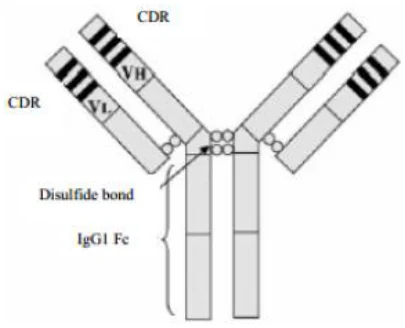
Structural formula:
Physicochemical properties:
Tocilizumab is a monoclonal recombinant humanized immunoglobulin G subclass 1 (IgG1) type antibody composed of two covalently linked heterodimers, each of which consists of a heavy and a light polypeptide chain. The light chain (LC) contains 214 amino acids and the heavy chain (HC) contains 448 amino acids (excluding the C-terminal lysine). The 4 polypeptide chains are linked by 12 intra- and 4 inter-chains disulfide bonds. Tocilizumab has a molecular weight of approximately 148 kDa. One canonical N-glycosite is present at Asn299 of the heavy chain. Microheterogeneity of tocilizumab is observed due to variable processing of carboxy-terminal lysine and glycan structure variation at a single heavy chain site of N-linked glycosylation.
For intravenous infusion, Tyenne is supplied as a sterile, preservative-free protein solution at a concentration of 20 mg/mL. Tyenne is a clear, colorless to slightly yellowish solution, with a pH of about 6.0. Single-use vials are available containing 80 mg/4 mL, 200 mg/10 mL, or 400 mg/20 mL of Tyenne. Injectable solutions of Tyenne contain the following non-medicinal ingredients: L-arginine, L-histidine, L-lactic acid, polysorbate 80, sodium chloride, sodium hydroxide, hydrochloric acid and water for injection.
For subcutaneous injection, Tyenne is supplied as a sterile yellowish, preservative-free liquid at a concentration of 162 mg/0.9 mL. Ready-to-use, single-use pre-filled syringes with needle safety device and single-use autoinjectors are available. Subcutaneous formulation contains the following non-medicinal ingredients: L-arginine, L-histidine, L-lactic acid, polysorbate 80, sodium chloride, sodium hydroxide, hydrochloric acid and water for injection.
14 Clinical Trials
14.4 Clinical Trials - Reference Biologic Drug
RHEUMATOID ARTHRITIS
Study Demographics and Trial Design
The efficacy and safety of intravenously administered tocilizumab was assessed in five randomized, double-blind, multicenter studies in patients ≥18 years with active rheumatoid arthritis diagnosed according to American College of Rheumatology (ACR) criteria. Patients had at least 8 tender and 6 swollen joints at baseline. tocilizumab was given intravenously every 4 weeks as monotherapy [Study I (AMBITION)], in combination with MTX (Studies II and III) or other disease-modifying anti-rheumatic drugs (DMARDs) [Study IV (TOWARD)] in patients with an inadequate response to those drugs, or in combination with MTX in patients with an inadequate response to TNF antagonists [Study V (RADIATE)]. The primary endpoint in all 5 studies was the proportion of patients who achieved an ACR20 response at week 24.
The safety and efficacy of tocilizumab were also assessed in a randomized, double-blind multicenter study [Study VI (FUNCTION)] in MTX-naïve and biologic-naïve adult patients with early, severe and progressive RA (≤2 years RA disease duration). The primary endpoint was the proportion of patients achieving DAS28 remission (DAS28 below 2.6) at week 24.
The long-term safety and efficacy of tocilizumab was assessed in two open-label long-term extension (LTE) trials. Patients enrolled in study VII (LTE Study I) had previously completed core Phase III study III (OPTION) whereas patients enrolled in study VIII (LTE Study II) had previously completed core studies IV and V (AMBITION, TOWARD and RADIATE). In addition, a small number of patients in study VIII (LTE Study II) were recruited from a drug interaction study.
The efficacy and safety of subcutaneously administered tocilizumab was assessed in 2 double-blind, controlled, multicenter studies in patients with active RA. Both studies [SC-I (SUMMACTA) and SC-II (BREVACTA)] required patients to be ≥18 years of age with active rheumatoid arthritis diagnosed according to ACR criteria and who had at least 4 tender and 4 swollen joints at baseline. All patients received background non-biologic DMARD(s). The primary endpoint in the studies was the difference in the proportion of patients who achieved an ACR20 response at week 24. Both studies included open-label, long-term extension phases of 72-weeks duration.
Table 22 Summary of Patient Demographics for Clinical Trials in Rheumatoid Arthritis (ITT populations)
| Study # | Trial design | Dosage, route of administration and duration | Study subjects (n) | Mean age (SD) | Gender (%Female) | Mean Baseline Disease Duration (years) |
|---|---|---|---|---|---|---|
| Study # | Trial design | Dosage, route of administration and duration | Study subjects (n) | Mean age (SD) | Gender (%Female) | Mean Baseline Disease Duration (years) |
| Study # | Trial design | Dosage, route of administration and duration | Study subjects (n) | Mean age (SD) | Gender (%Female) | Mean Baseline Disease Duration (years) |
Study I (AMBITION)5 MTX-Naïve | TCZ 8 mg/kg intravenous every 4 weeks for 24 weeks. | 286 | 51 (13) | 83 | 6.4 | |
| MTX (escalating dose from 7.5 – 20 mg/week over 8-week period) for 24 weeks | 284 | 50 (13) | 79 | 6.2 | ||
| (PBO/TCZ 8 mg/kg substudy) | 99 | |||||
Study II (LITHE) Inadequate Response to MTX | Multi-center, double-blind, randomized, placebo controlled multiple dose study combined with MTX Double-blinded for one year, and open-label for the second year | TCZ 4 mg/kg + MTX | 399 | 51 (13) | 84 | 9.4 |
| TCZ 8 mg/kg + MTX | 398 | 53 (12) | 82 | 9.3 | ||
| PBO + MTX | 393 | 51 (12) | 83 | 8.9 | ||
| TCZ administered intravenously every 4 weeks for 24 months. | ||||||
Study III (OPTION)6 Inadequate Response to MTX | Multi-center, double-blind, randomized, placebo controlled multiple dose study combined with MTX | TCZ 4 mg/kg + MTX | 213 | 51 (13) | 82 | 7.4 |
| TCZ 8 mg/kg + MTX | 205 | 51 (12) | 85 | 7.5 | ||
| PBO + MTX | 204 | 51 (12) | 78 | 7.8 | ||
| TCZ administered intravenously every 4 weeks for 24 weeks. | ||||||
Study IV (TOWARD)7 Inadequate | Multi-center, double-blind, randomized, placebo | TCZ 8 mg/kg + DMARD | 803 | 53 (13) | 81 | 9.8 |
| Response to DMARD | controlled multiple dose study combined with DMARDs | TCZ administered intravenously every 4 weeks for 24 weeks. | ||||
| PBO + DMARD | 413 | 54 (13) | 84 | 9.8 | ||
Study V (RADIATE)8 Inadequate Response to TNF Antagonist | Multi-center, double-blind, randomized, placebo controlled multiple dose study combined with MTX | TCZ 4 mg/kg + MTX | 161 | 51 (12) | 81 | 11.0 |
| Tocilizumab 8 mg/kg + MTX | 170 | 54 (13) | 84 | 12.6 | ||
| PBO + MTX | 158 | 53 (13) | 79 | 11.4 | ||
| TCZ administered intravenously every 4 weeks for 24 weeks. | ||||||
SC-I (SUMMACTA) | Randomized, multi-center, 6-month, double-blind, phase | TCZ 162 mg subcutaneous qw + DMARD | 631 | 53 (12) | 82 | 8.7 |
| TCZ 8 mg/kg intravenous q4w + DMARD | 631 | 53 (13) | 83 | 8.6 | ||
SC-II (BREVACTA) | Randomized, multi-center, 6-month, double-blind, phase | TCZ 162 mg subcutaneous q2w + DMARD | 437 | 52 (11) | 86 | 11.1 |
| PBO q2w + DMARD | 219 | 52 (12) | 83 | 11.1 | ||
| Study VI (FUNCTION) MTX naïve/ Early RA | Multi-center, double-blind, randomized, parallel group study | TCZ 4 mg/kgv + MTX | 288 | 51 (14) | 79 | 0.4 |
| TCZ 8 mg/kg + MTX | 290 | 50 (14) | 79 | 0.5 | ||
| TCZ 8 mg/kg + PBO | 292 | 50 (13) | 75 | 0.5 | ||
| PBO + MTX | 282 | 50 (13) | 80 | 0.4 | ||
Study VII (LTE Study I) | Open-label long-term extension study. Included patients from core Study III (OPTION) | TCZ 8 mg/kg, q4 weeks | 538 | 51 (12) | 82 | 7.6 |
Study VIII (LTE Study II) | Open-label long-term extension study. Included patients from core Study I (AMBITION), Study IV (TOWARD), Study V (RADIATE) and a DDI study with simvastatin | TCZ 8 mg/kg, q4 weeks | 2067 | 52 (13) | 82 | 9.5 |
PBO: placebo; TCZ: tocilizumab
Description of Clinical Studies
In Study I, tocilizumab was administered intravenously every four weeks as monotherapy. In Studies II, III and V, tocilizumab was administered intravenously every four weeks in combination with MTX vs. placebo and MTX. In Study IV, tocilizumab was administered intravenously every 4 weeks in combination with other traditional DMARDs vs. placebo and other traditional DMARDs.
Study I (AMBITION) evaluated 673 patients who had not been treated with MTX within 6 months prior to randomization, and who had not discontinued previous MTX treatment as a result of clinically important toxic effects or lack of response. The majority (67%) of patients were MTX naïve. Doses of 8 mg/kg of tocilizumab were given every four weeks as monotherapy. The comparator group was weekly MTX (dose titrated from 7.5 to a maximum of 20 mg weekly over an 8-week period).
Study II (LITHE) was a 2-year study with an optional 3-year extension phase with two planned interim analyses at week 24 and week 52 that evaluated 1196 patients with moderate to severe rheumatoid arthritis who had an inadequate clinical response to MTX. Patients received tocilizumab 8 mg/kg, tocilizumab 4 mg/kg, or placebo every four weeks, in combination with MTX (10-25 mg weekly). Upon completion of 52-weeks, patients received open-label treatment with tocilizumab 8 mg/kg through 104-weeks or they had the option to continue their double-blind treatment if they maintained a >70% improvement in swollen/tender joint count. The primary endpoint at week 24 was the proportion of patients who achieved an ACR20 response. At weeks-52 and 104 the co-primary endpoints were change from baseline in modified total Sharp-Genant score and change in physical function as measured by the AUC of the change from baseline in HAQ-DI score.
Study III (OPTION) evaluated 623 patients with moderate to severe active rheumatoid arthritis who had an inadequate clinical response to MTX. Patients received tocilizumab 8 mg/kg, tocilizumab 4 mg/kg, or placebo every four weeks, in combination with MTX (10-25 mg weekly).
Study IV (TOWARD) evaluated 1220 patients who had an inadequate response to their existing therapy, including one or more DMARDs. Patients received tocilizumab 8 mg/kg or placebo every four weeks, in combination with the stable DMARDs.
Study V (RADIATE) evaluated 499 patients with moderate to severe active rheumatoid arthritis who had an inadequate clinical response or were intolerant to one or more TNF antagonist therapies. The TNF antagonist therapy was discontinued prior to randomization. Patients received tocilizumab 8 mg/kg, tocilizumab 4 mg/kg, or placebo every four weeks, in combination with MTX (10-25 mg weekly).
Study SC-I (SUMMACTA) and SC-II (BREVACTA) both evaluated patients with moderate to severe active rheumatoid arthritis who had an inadequate clinical response to their existing rheumatologic therapy, including one or more DMARD(s). Approximately 20% had a history of inadequate response to at least one TNF inhibitor. In SC-I (SUMMACTA), 1262 patients were randomized 1:1 to receive tocilizumab subcutaneous 162 mg every week or tocilizumab intravenous 8 mg/kg every four weeks in combination with non-biologic DMARD(s). In SC-II (BREVACTA) 656 patients were randomized in a 2:1 ratio to receive either tocilizumab 162 mg subcutaneous q2w or placebo subcutaneous q2w in combination with non-biologic DMARD(s).
Study VI (FUNCTION), a 2 year study with the planned primary analysis at week 52 evaluated 1162 MTX-naïve adult patients with moderate to severe, active early RA. This study evaluated the efficacy of intravenous tocilizumab 4 or 8 mg/kg every 4 weeks/MTX combination therapy, tocilizumab 8 mg/kg monotherapy and MTX monotherapy.
Study VII evaluated 538 adult patients and Study VIII evaluated 2067 adult patients with rheumatoid arthritis. Adult RA patients were treated with tocilizumab 8 mg/kg every 4 weeks intravenous as monotherapy or in combination with background DMARD therapy(ies) and could receive treatment for a total treatment duration of more than 5 years. Patients were followed for both safety and efficacy. The median duration was 5.37 years (range: 0.2 − 6.4 years) and 5.22 years (range: 0.1 to 7.5 years), respectively, which includes the duration in the core studies. The overall retention rate for patients remaining on treatment for at least 264 weeks (approximately 5 years) was ≥60% in both studies; 65.6% (353 patients) and 60.6% (1252 patients) in Study VII and VIII respectively.
Study Results
ACR Response
The percent of patients achieving ACR 20, 50 and 70 responses in Studies I to V are shown in Table 23. In all studies, patients treated with 8 mg/kg tocilizumab had statistically superior ACR20, ACR50, and ACR70 response rates versus MTX- or placebo-treated patients (p<0.01) at week 24.
Patients treated with tocilizumab at a dose of 4 mg/kg in patients with inadequate response to DMARDs or TNF antagonist therapy had lower response rates compared to patients treated with tocilizumab 8 mg/kg.
Table 23 ACR Response at 6 Months in Active and Placebo Controlled Trials (Percent of Patients)
| Percent of Patients | |||||||||||||
|---|---|---|---|---|---|---|---|---|---|---|---|---|---|
| Response Rate Week 24 | Study I (AMBITION) | Study II (LITHE) | Study III (OPTION) | Study IV (TOWARD) | Study V (RADIATE) | ||||||||
| MTX | TCZ 8 mg/kg | PBO + MTX | TCZ 4 mg/kg + MTX | TCZ 8 mg/kg + MTX | PBO + MTX | TCZ 4 mg/kg + MTX | TCZ 8 mg/kg + MTX | PBO + DMARDs | TCZ 8 mg/kg + DMARDs | PBO + MTX | TCZ 4 mg/kg + MTX | TCZ 8 mg/kg + MTX | |
| N=284 | N=286 | N=393 | N=399 | N=398 | N=204 | N=213 | N=205 | N=413 | N=803 | N=158 | N=161 | N=170 | |
| ACR20 | |||||||||||||
| Responders | 53% | 70%*** | 27% | 51% | 56%*** | 27% | 48% | 59%*** | 25% | 61%*** | 10% | 30%*** | 50%*** |
| Weighted Difference %a (95% CI)b | 19 (11, 27) | 23 (17, 29) | 29 (23, 35) | 23 (15, 32) | 32 (23, 41) | 35 (30, 40) | 25 (15, 36) | 46 (36, 56) | |||||
| ACR50 | |||||||||||||
| Responders | 34% | 44%** | 10% | 25% | 32%*** | 11% | 32% | 44%*** | 9% | 38%*** | 4% | 17% | 29%*** |
| Weighted Difference %a (95% CI)b | 12 (4, 20) | 15 (9, 20) | 22 (16, 28) | 21 (13, 29) | 33 (25, 41) | 28 (23, 33) | 15 (5, 25) | 31 (21, 41) | |||||
| ACR70 | |||||||||||||
| Responders | 15% | 28%** | 2% | 11% | 13%*** | 2% | 12% | 22%*** | 3% | 21%*** | 1% | 5% | 12%** |
| Weighted Difference %a (95% CI)b | 14 (7, 22) | 8 (3, 13) | 10 (5, 15) | 11 (4, 18) | 20 (12, 27) | 17 (13, 21) | 4 (-6, 13) | 12 (3, 22) | |||||
a The weighted difference is the difference between tocilizumab and Placebo response rates, adjusted for site (and disease duration for Study I only). b CI: 95% confidence interval of the weighted difference ** p<0.01, tocilizumab vs. placebo + MTX/ Traditional DMARDs *** p<0.0001, tocilizumab vs. placebo + MTX/ Traditional DMARDs PBO: placebo; TCZ: tocilizumab | |||||||||||||
The results of the components of the ACR response criteria for Studies III and V are shown in Table 24. Similar results to Study III were observed in Studies I, II and IV.
Table 24 Components of ACR Response at 6 Months
| Study III (OPTION) | Study V (RADIATE) | ||||||||||||||||||||||||||||||||||||||||||||||||||||
|---|---|---|---|---|---|---|---|---|---|---|---|---|---|---|---|---|---|---|---|---|---|---|---|---|---|---|---|---|---|---|---|---|---|---|---|---|---|---|---|---|---|---|---|---|---|---|---|---|---|---|---|---|---|
| Study III (OPTION) | Study V (RADIATE) | ||||||||||||||||||||||||||||||||||||||||||||||||||||
| TCZ 4 mg/kg + MTX | TCZ 8 mg/kg + MTX | PBO + MTX | TCZ 4 mg/kg + MTX | TCZ 8 mg/kg + MTX | PBO + MTX | ||||||||||||||||||||||||||||||||||||||||||||||||
| TCZ 4 mg/kg + MTX | TCZ 8 mg/kg + MTX | PBO + MTX | TCZ 4 mg/kg + MTX | TCZ 8 mg/kg + MTX | PBO + MTX | ||||||||||||||||||||||||||||||||||||||||||||||||
| N=213 | N=205 | N=204 | N=161 | N=170 | N=158 | ||||||||||||||||||||||||||||||||||||||||||||||||
| N=213 | N=205 | N=204 | N=161 | N=170 | N=158 | ||||||||||||||||||||||||||||||||||||||||||||||||
| Component (mean) | Baseline | Week 24a | Baseline | Week 24a | Baseline | Week 24 | Baseline | Week 24a | Baseline | Week 24a | Baseline | Week 24 | |||||||||||||||||||||||||||||||||||||||||
| Component (mean) | Baseline | Week 24a | Baseline | Week 24a | Baseline | Week 24 | Baseline | Week 24a | Baseline | Week 24a | Baseline | Week 24 | |||||||||||||||||||||||||||||||||||||||||
| Number of tender joints (0-68) | 33 | 19 | 32 | 14.5 | 33 | 25 | 31 | 21 | 32 | 17 | 30 | 30 | |||||||||||||||||||||||||||||||||||||||||
| -7.0 | -9.6 | -10.8 | -15.1 | ||||||||||||||||||||||||||||||||||||||||||||||||||
| (-10.0, -4.1) | (-12.6, -6.7) | (-14.6, -7.1) | (-18.8, -11.4) | ||||||||||||||||||||||||||||||||||||||||||||||||||
| Number of swollen joints (0-66) | 20 | 10 | 19.5 | 8 | 21 | 15 | 19.5 | 13 | 19 | 11 | 19 | 18 | |||||||||||||||||||||||||||||||||||||||||
| -4.2 | -6.2 | -6.2 | -7.2 | ||||||||||||||||||||||||||||||||||||||||||||||||||
| (-6.1, -2.3) | (-8.1, -4.2) | (-9.0, -3.5) | (-9.9, -4.5) | ||||||||||||||||||||||||||||||||||||||||||||||||||
| Painb | 61 | 33 | 60 | 30 | 57 | 43 | 63.5 | 43 | 65 | 33 | 64 | 48 | |||||||||||||||||||||||||||||||||||||||||
| -11.0 | -15.8 | -12.4 | -23.9 | ||||||||||||||||||||||||||||||||||||||||||||||||||
| (-17.0, -5.0) | (-21.7, -9.9) | (-22.1, -2.1) | (-33.7, -14.1) | ||||||||||||||||||||||||||||||||||||||||||||||||||
| Patient global assessmentb | 66 | 34 | 65 | 31 | 64 | 45 | 70 | 46 | 70 | 36 | 71 | 51 | |||||||||||||||||||||||||||||||||||||||||
| -10.9 | -14.9 | -10.0 | -17.4 | ||||||||||||||||||||||||||||||||||||||||||||||||||
| (-17.1, -4.8) | (-20.9, -8.9) | (-20.3, 0.3) | (-27.8, -7.0) | ||||||||||||||||||||||||||||||||||||||||||||||||||
| Physician global assessmentb | 64 | 26 | 64 | 23 | 64 | 32 | 66.5 | 39 | 66 | 28 | 67.5 | 43 | |||||||||||||||||||||||||||||||||||||||||
| -5.6 | -9.0 | -10.5 | -18.2 | ||||||||||||||||||||||||||||||||||||||||||||||||||
| (-10.5, -0.8) | (-13.8, -4.2) | (-18.6, -2.5) | (-26.3, -10.0) | ||||||||||||||||||||||||||||||||||||||||||||||||||
| Disability index (HAQ)c | 1.64 | 1.01 | 1.55 | 0.96 | 1.55 | 1.21 | 1.67 | 1.39 | 1.75 | 1.34 | 1.70 | 1.58 | |||||||||||||||||||||||||||||||||||||||||
| -0.18 | -0.21 | -0.25 | -0.34 | ||||||||||||||||||||||||||||||||||||||||||||||||||
| (-0.34, -0.02) | (-0.37, -0.05) | (-0.42, -0.09) | (-0.51, -0.17) | ||||||||||||||||||||||||||||||||||||||||||||||||||
| CRP (mg/dL) | 2.79 | 1.17 | 2.61 | 0.25 | 2.36 | 1.89 | 3.11 | 1.77 | 2.80 | 0.28 | 3.705 | 3.06 | |||||||||||||||||||||||||||||||||||||||||
| -1.30 | -2.156 | -1.34 | -2.52 | ||||||||||||||||||||||||||||||||||||||||||||||||||
| (-2.0, -0.59) | (-2.86, -1.46) | (-2.5, -0.15) | (-3.72, -1.32) | ||||||||||||||||||||||||||||||||||||||||||||||||||
a Data shown is mean at week 24, difference in adjusted mean change from baseline compared with placebo + MTX at week 24 and 95% confidence interval for that difference b Visual analog scale: 0=best, 100=worst c Health Assessment Questionnaire: 0=best, 3=worst; 20 questions; 8 categories: dressing and grooming, arising, eating, walking, hygiene, reach, grip, and activities PBO: placebo; TCZ: tocilizumab | |||||||||||||||||||||||||||||||||||||||||||||||||||||
ACR Response Rates over Time
The percent of ACR20 responders by visit for Study III is shown in Figure 1. Similar increases in responses over time were observed in studies I, II, IV, and V.
Figure 1 Percent of ACR20 Responders by Visit for Study III (Inadequate Response to MTX)*
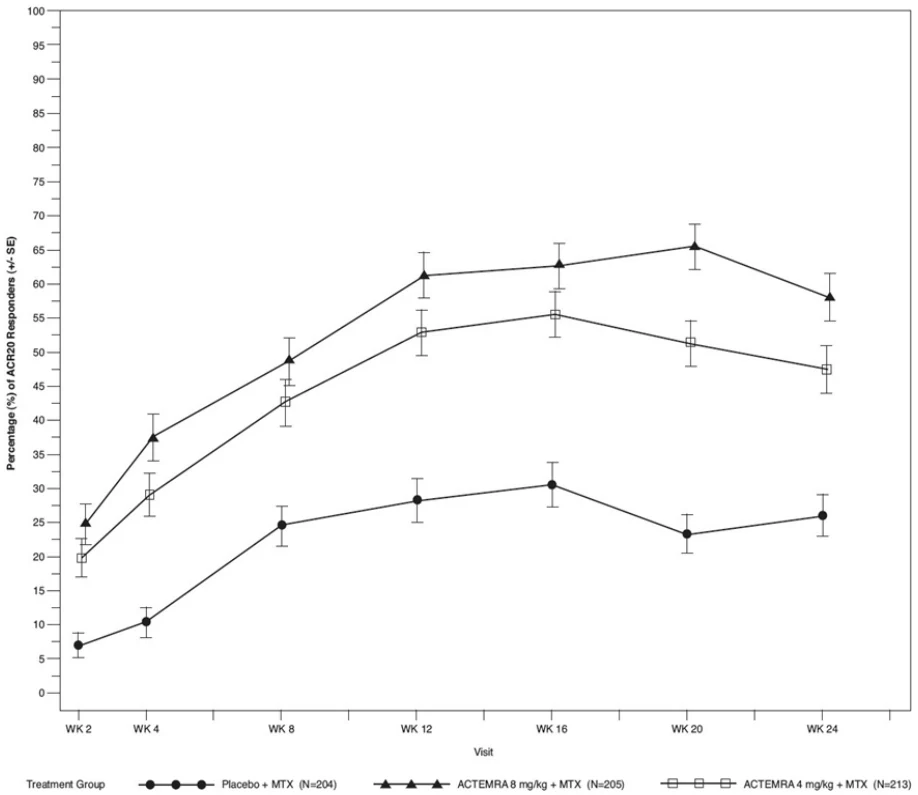
*The same patients may not have responded at each timepoint.
Long-term Treatment
Results of Study VII and VIII efficacy analyses demonstrate that the significant improvements in signs and symptoms and disease activity observed during the 24-week controlled treatment periods of the core studies were sustained in patients who subsequently entered the LTE studies and continued to receive tocilizumab treatment for up to 5 years or more.
In Study VII and VIII the proportion of patients achieving an ACR20, ACR50 or ACR70 response increased rapidly during the first 48 weeks of tocilizumab treatment and continued to increase until Week 108, with efficacy sustained up to Week 264. In Study VII (LTE Study I), out of 367 patients who were still on treatment at week 264, the number (%) of patients who achieved an ACR20, ACR50 or ACR70 response at week 264 was 308 (83.9%), 249 (67.8%) and 168 (45.8%), respectively. In Study VIII (LTE Study II), out of 1319 patients who were still on treatment at week 264, the number (%) of patients who achieved an ACR20, ACR50 or ACR70 response at week 264 was 1038 (78.7%), 775 (58.8%) and 534 (40.5%), respectively. In Study VIII, some differences in efficacy were observed between patients based on prior RA treatments with lower efficacy in patients who were inadequate responders to TNFs compared to patients who were either MTX-naïve or had an inadequate response to DMARDs. This was also seen between the core studies (see Table 23; Studies I, IV and V).
MTX naïve, Early RA
A significantly higher proportion of patients in the tocilizumab 8 mg/kg + MTX and tocilizumab 8 mg/kg monotherapy groups met the primary endpoint compared with MTX alone. The tocilizumab 8 mg/kg + MTX group also showed statistically significant results across the key secondary endpoints. Numerically greater responses compared with MTX alone were observed in the tocilizumab 8 mg/kg monotherapy group in all secondary endpoints, including radiographic endpoints (see Table 27 below). The results from Study VI are shown in Table 25 below.
Table 25 Efficacy Results for Study VI (FUNCTION) on MTX naïve, early RA patients
| PBO + MTX | TCZ 4 mg/kg + MTX | TCZ 8 mg/kg + MTX | TCZ 8 mg/kg + PBO | ||||||||||||||
|---|---|---|---|---|---|---|---|---|---|---|---|---|---|---|---|---|---|
| N=287 | N=288 | N=290 | N=292 | ||||||||||||||
| Primary Endpoint | |||||||||||||||||
| DAS28 Remission | |||||||||||||||||
| Week 24 | n (%) | 43 (15.0) | 92 (31.9) | 130 (44.8)*** | 113 (38.7)*** | ||||||||||||
| Key Secondary Endpoints | |||||||||||||||||
| DAS 28 remission | |||||||||||||||||
| Week 52 | n (%) | 56 (19.5) | 98 (34.0) | 142 (49.0)*** | 115 (39.4) | ||||||||||||
| ACR | |||||||||||||||||
| Week 24 | ACR20, n (%) | 187 (65.2) | 212 (73.6) | 216 (74.5)* | 205 (70.2) | ||||||||||||
| ACR50, n (%) | 124 (43.2) | 138 (47.9) | 165 (56.9)** | 139 (47.6) | |||||||||||||
| ACR70, n (%) | 73 (25.4) | 100(34.7) | 112 (38.6)** | 88 (30.1) | |||||||||||||
| Week 52 | ACR20, n (%) | 164 (57.1) | 181(62.8)* | 195 (67.2)* | 184 (63.0) | ||||||||||||
| ACR50, n (%) | 117 (40.8) | 151(52.4) | 162 (55.9)** | 144 (49.3)# | |||||||||||||
| ACR70, n (%) | 83 (28.9) | 107 (37.2) | 125 (43.1)** | 105 (36.0) | |||||||||||||
All efficacy comparisons vs Placebo + MTX. ***p≤0.0001; **p<0.001; *p<0.05 PBO: placebo; TCZ: tocilizumab | |||||||||||||||||
Subcutaneous Trials
The clinical response to 24 weeks of tocilizumab subcutaneous therapy is shown in Table 26. In SC-I, the primary outcome measure was ACR20 at Week 24. The pre-specified non-inferiority margin was a treatment difference of 12%. The study demonstrated non-inferiority of tocilizumab with respect to ACR20 at Week 24. In SC-II, a greater portion of patients treated with tocilizumab 162 mg subcutaneous every other week achieved ACR20, ACR50, and ACR70 responses compared to placebo-treated patients (Table 26). Further, a greater proportion of patients treated with tocilizumab 162 mg subcutaneous every other week achieved a low level of disease activity as measured by a DAS28-ESR less than 2.6 at Week 24 compared to those treated with placebo (Table 26).
Table 26 Clinical Response at Week 24 in Subcutaneous Trials (Percent of Patients)
| SC-I (SUMMACTA)a | SC-II (BREVACTA)b | ||||||||||||||
|---|---|---|---|---|---|---|---|---|---|---|---|---|---|---|---|
| TCZ SC 162 mg every week + DMARD(s) | TCZ IV 8 mg/kg + DMARD(s) | TCZ SC 162 mg every other week + DMARD | PBO + DMARD | ||||||||||||
| N=558 | N=537 | N=437 | N=219 | ||||||||||||
| ACR20 | |||||||||||||||
| Week 24 | 69.4% | 73.4% | 60.9% | 31.5% | |||||||||||
| Weighted difference (95% CI) | -4.0 (-9.2, 1.2) | 29.5% (22.0, 37.0) | |||||||||||||
| ACR50 | |||||||||||||||
| Week 24 | 47.0% | 48.6% | 39.8% | 12.3% | |||||||||||
| Weighted difference (95% CI) | -1.8 (-7.5, 4.0) | 27.9% (21.5, 34.4) | |||||||||||||
| ACR70 | |||||||||||||||
| Week 24 | 24.0% | 27.9% | 19.7% | 5.0% | |||||||||||
| Weighted difference (95% CI) | -3.8 (-9.0, 1.3) | 14.8% (9.8, 19.9) | |||||||||||||
| Change in DAS28 [adjusted mean] | |||||||||||||||
| Week 24 | -3.5 | -3.5 | -3.1 | -1.7 | |||||||||||
| Adjusted mean difference (95% CI) | 0 (-0.2, 0.1) | -1.4 (-1.7; -1.1) | |||||||||||||
| DAS28 <2.6 | |||||||||||||||
| Week 24 | 38.4% | 36.9% | 32% | 4.0% | |||||||||||
| Weighted difference (95% CI) | 0.9 (-5.0, 6.8) | 28.6 (22.0, 35.2) | |||||||||||||
| EULAR response (%) | |||||||||||||||
| None | 3.3% | 4.8% | 13.4% | 31.9% | |||||||||||
| Moderate | 41.7% | 42.7% | 44.9% | 54.3% | |||||||||||
| Good | 55.0% | 52.4% | 41.7% | 13.8% | |||||||||||
TCZ=tocilizumab; PBO: placebo; SC: subcutaneous; IV: intravenous a=Per Protocol Population b=Intent To Treat Population | |||||||||||||||
Radiographic Response - Intravenous Administration
In Study II, structural joint damage was assessed radiographically and expressed as change in total Sharp-Genant score and its components, i.e., the erosion score and joint space narrowing score. Radiographs of hands/wrists and forefeet were obtained at baseline, 24 weeks, 52 weeks, and 104 weeks and scored by readers unaware of treatment group and visit number. The results from baseline to week 52 are shown in Table 27.
The mean change from baseline to week 104 in Total Sharp-Genant Score for the tocilizumab 4 mg/kg groups was 0.47 (SD=1.47) and for the 8 mg/kg groups was 0.34 (SD=1.24). By week 104, most patients in the control (placebo + MTX) group had crossed over to active treatment, and results are therefore not included for comparison. Patients in the active groups may have crossed over to the alternate active dose group, and results are reported per original randomized dose group.
In the placebo group, 66% (193/294) of patients experienced no radiographic progression (Total Sharp-Genant Score change ≤0) at week 52 compared to 78% (268/343) and 83% (294/353) in the tocilizumab 4 mg/kg and 8 mg/kg, respectively.
Table 27 Radiographic Mean Changes at 52 weeks in Study II (LITHE)
| PBO + MTX ( + option of TCZ from week 16) | TCZ 4 mg/kg + MTX ( + option of TCZ to 8 mg/kg from 16 weeks) | TCZ 8 mg/kg + MTX | |||||||||
|---|---|---|---|---|---|---|---|---|---|---|---|
| N=393 | N=399 | N=398 | |||||||||
| Mean | Mean | Mean | |||||||||
| Changes from baseline to Week 52 | |||||||||||
| n | 290 | 339 | 348 | ||||||||
| Total Sharp-Genant score, Mean | 1.13 | 0.34 | 0.29 | ||||||||
| (SD) | (2.96) | (1.45) | (1.28) | ||||||||
| Adjusted Mean Difference * (97.5% CI)** | - | -0.77 | -0.81 | ||||||||
| (-1.12, -0.41) | (-1.16, -0.46) | ||||||||||
| Erosion score, Mean (SD) | 0.71 | 0.21 | 0.17 | ||||||||
| (1.89) | (0.92) | (0.86) | |||||||||
| JSN score, Mean (SD) | 0.42 | 0.13 | 0.12 | ||||||||
| (1.70) | (0.74) | (0.64) | |||||||||
MTX – Methotrexate; PBO: placebo; TCZ: tocilizumab JSN - Joint space narrowing * Difference between the adjusted means (Actemra + MTX - Placebo + MTX). The means are adjusted for region. SD=standard deviation ** The 97.5% confidence intervals are displayed as a significance level of 0.025 was used to test the co-primary endpoint All data presented was read together in campaign 1 which consists of the evaluations of the baseline, week 24, week 52 and early withdrawal or escape therapy readings taken up to week 52 visit | |||||||||||
In study VI the radiographic outcome measure was assessed using the Sharp van der Heijde method and expressed as change in total modified Sharp score and its components, i.e., the erosion score and joint space narrowing score. Radiographs of hands/wrists and forefeet were obtained at baseline, 24 weeks, 52 weeks, and 104 weeks and scored by readers unaware of treatment group and visit number. The results from baseline to week 52 are shown in Table 28.
Table 28 Radiographic mean changes at 52 weeks in Study VI (FUNCTION)
| Placebo + MTX | TCZ 4 mg/kg + MTX | TCZ 8 mg/kg + MTX | TCZ 8 mg/kg + PBO | |||||||||||||
|---|---|---|---|---|---|---|---|---|---|---|---|---|---|---|---|---|
| N=287 | N=288 | N=290 | N=292 | |||||||||||||
| Changes from Baseline to Week 52 | ||||||||||||||||
| Mean (SD) | mTSS | 1.14 | 0.42 | 0.08*** | 0.26 | |||||||||||
| (4.297) | (2.929) | (2.090) | (1.876) | |||||||||||||
| Erosion Score | 0.63 | 0.25 | 0.05** | 0.15 | ||||||||||||
| (2.556) | (1.686) | (1.736) | (1.544) | |||||||||||||
| JSN | 0.51 | 0.17 | 0.03 | 0.11 | ||||||||||||
| (2.362) | (1.645) | (0.751) | (1.046) | |||||||||||||
***p≤0.0001; **p<0.001 PBO: placebo; TCZ: tocilizumab | ||||||||||||||||
Radiographic Response – Subcutaneous Administration
In study SC-II, inhibition of structural joint damage was assessed radiographically and expressed as a change from baseline in the van der Heijde modified mean total Sharp score (mTSS). At week 24, inhibition of structural damage was shown, with significantly less radiographic progression in patients receiving tocilizumab subcutaneous compared with placebo (mTSS of 0.62 vs. 1.23, p=0.0149 (van Elteren). These results are consistent with those observed in patients treated with intravenous tocilizumab.
Quality of Life Outcomes – Subcutaneous Administration
In studies SC-I and SC-II, the mean decrease in HAQ-DI from baseline to week 24 was 0.6, 0.4, 0.6, and 0.3 for tocilizumab subcutaneous 162 mg every week, subcutaneous every other week, intravenous 8 mg/kg every 4 weeks, and placebo, respectively. The proportion of patients achieving a clinically relevant improvement in HAQ-DI at week 24 (change from baseline of ≥0.3 units) was 65%, 58%, 67%, and 47% for the tocilizumab subcutaneous every week, subcutaneous every other week, intravenous 8 mg/kg every 4 weeks, and placebo, respectively.
Monotherapy: tocilizumab versus HUMIRA
Study WA19924 (ADACTA) evaluated 326 patients with moderate to severe RA who were intolerant of MTX or where continued treatment with MTX was considered inappropriate (including MTX inadequate responders). Patients in the tocilizumab arm received an intravenous infusion of tocilizumab (8 mg/kg) every 4 weeks (q4w) and a subcutaneous placebo injection every 2 weeks (q2w). Patients in the HUMIRA arm received a HUMIRA subcutaneous injection (40 mg) q2w plus an intravenous placebo infusion q4w.
A statistically significant difference was seen in the primary endpoint (DAS28 change from baseline to week 24) and the week 24 ACR20/50/70 scores with tocilizumab (8 mg/kg) (q4w) vs. HUMIRA (40 mg) (q2w).
Table 29 Efficacy Results for Study WA19924
| HUMIRA 40 mg + PBO (IV) | TCZ 8 mg/kg + PBO (SC) | p-value(a) | |||||||
|---|---|---|---|---|---|---|---|---|---|
| N=162 | N=163 | ||||||||
| Primary Endpoint - Mean Change from baseline at Week 24 | |||||||||
DAS28 (adjusted mean) (95% CI) | -1.8 (-2.10, -1.55) | -3.3 (-3.57, -3.02) | |||||||
| Difference in adjusted mean (95% CI) | -1.5 (-1.8, -1.1) | <0.0001 | |||||||
| Secondary Endpoints - Percentage of Responders at Week 24(b) | |||||||||
| ACR20 response, n (%) | 80 (49.4) | 106 (65.0) | |||||||
| ACR50 response, n (%) | 45 (27.8) | 77 (47.2) | |||||||
| ACR70 response, n (%) | 29 (17.9) | 53 (32.5) | |||||||
ap value is adjusted for region and duration of RA for all endpoints and additionally baseline value for all continuous endpoints. bNon-responder Imputation used for missing data. Multiplicity controlled using Bonferroni-Holm Procedure PBO: placebo; TCZ: tocilizumab; SC: subcutaneous; IV: intravenous | |||||||||
For the safety summary in study WA19924 see 8 Adverse Reactions, Monotherapy: tocilizumab versus HUMIRA.
Cardiovascular Outcomes
Study WA25204 (ENTRACTE) was a randomized, open-label (sponsor-blinded), 2-arm parallel group, multi-centre, non-inferiority trial. Enrolled patients (n=3,080) were 50 years of age or older with moderate-to-severe active seropositive RA with an inadequate response to non-biologic DMARDs and at least one additional CV risk factor. Patients were randomized 1:1 to intravenous tocilizumab 8 mg/kg every 4 weeks or subcutaneous etanercept 50 mg every week, in addition to standard of care for their CV risk factors, and were followed for an average of 3.2 years. The primary objective of the trial was to confirm that treatment with tocilizumab does not result in any unacceptable increase in CV risk as compared to etanercept in adults with moderate-to-severe RA. This was done by demonstrating that the upper limit of the two-sided 95% confidence interval (CI) of the hazard ratio for tocilizumab versus etanercept is less than 1.8 when comparing time to first occurrence of a major adverse cardiovascular event (MACE, defined as non-fatal myocardial infarction, non-fatal stroke, or CV death; reviewed by an independent and blinded adjudication committee).
At baseline, 78% of enrolled patients were women, who were an average of 61 years old and had a median duration of RA of 7.6 years. Cardiovascular risk factors at baseline included family history of premature coronary heart disease (16%), myocardial infarction (4.7%), stroke (2.4%), NYHA Class I and II heart failure (2.3%; patients with NYHA Class III and intravenous heart failure were excluded from the study), hypertension (71%), dyslipidemia (45.6%), and diabetes mellitus (18%).
In total, 96% of patients completed the trial. In the intention to treat population, the total number of MACE was 161 (83 [5.4%] in the tocilizumab arm and 78 [5.1%] in the etanercept arm). The estimated hazard ratio of MACE associated with tocilizumab relative to etanercept was 1.05 with a 95% confidence interval of (0.77, 1.43). An 80% excess risk of tocilizumab vs. etanercept for the primary MACE composite endpoint was ruled out. The results of WA25204, including the contribution of each component to the primary endpoint results, are shown in Figure 2.
Figure 2 Primary Endpoint Analysis, and components, Intent to treat Population in ENTRACTE
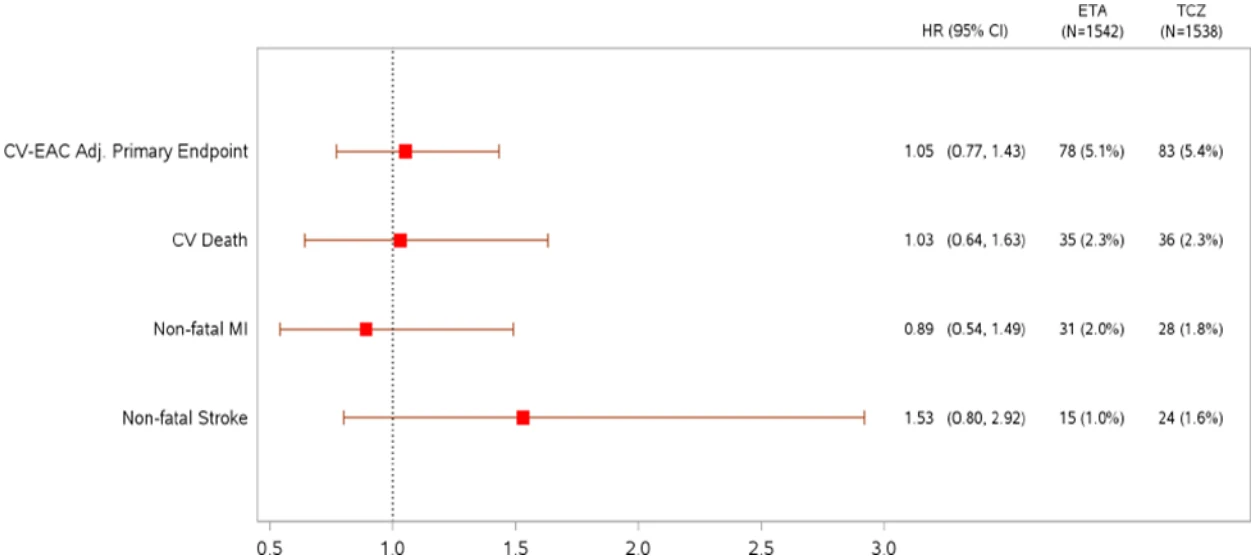
GIANT CELL ARTERITIS
Study Demographics and Trial Design
The safety and efficacy of subcutaneously administered tocilizumab for the treatment of GCA was evaluated in single a randomized, multi-center, double-blind placebo-controlled Phase III study in patients with active GCA (GiACTA).
Two hundred and fifty-one (251) patients with new-onset or relapsing GCA (cranial GCA and large-vessel vasculitis) were enrolled and assigned to one of four treatment arms. The study consisted of a 52-week blinded period (Part 1), followed by a 104-week open-label extension (Part 2).
Two subcutaneous doses of tocilizumab (162 mg every week and 162 mg every other week) were compared to two different placebo control groups (pre-specified prednisone-taper regimen over 26 weeks and 52 weeks) randomized 2:1:1:1. Randomization was stratified by the baseline prednisone dose (>30 mg/day and ≤30 mg/day prednisone).
All patients received background glucocorticoid (prednisone) therapy. Each of the tocilizumab-treated groups and one of the placebo-treated groups followed a pre-specified prednisone-taper regimen over
26 weeks, while the second placebo-treated group followed a pre-specified prednisone-taper regimen over 52 weeks designed to be more in keeping with standard practice.
The primary efficacy endpoint was the proportion of patients achieving sustained remission from Week 12 through Week 52. Sustained remission was defined by a patient attaining a sustained absence of GCA signs and symptoms, normalization of erythrocyte sedimentation rate (ESR <30 mm/hr without an elevation ≥30 mm/hr attributable to GCA) and C-reactive protein (CRP <1 mg/dL, with an absence of successive elevations ≥1 mg/dL) from Week 12 through Week 52, and successful adherence to the prednisone taper defined by not more than 100 mg of excess prednisone from Week 12 through Week 52.
Study Results
Tocilizumab 162 mg QW and 162 mg Q2W + 26-weeks prednisone taper both showed superiority in proportion of patients achieving sustained remission from Week 12 through Week 52 compared with placebo + 26 weeks prednisone taper or placebo + 52 weeks prednisone taper (56% and 53% vs. 14% and 18%, respectively, Table 30).
The estimated annual cumulative prednisone dose was lower in the two tocilizumab dose groups (medians of 1887 mg and 2207 mg in tocilizumab QW and Q2W, respectively) relative to the placebo arms (medians of 3804 mg and 3902 mg in placebo + 26-weeks prednisone and placebo + 52 weeks prednisone taper, respectively).
Table 30 Efficacy results from the GCA study (GiACTA)
| PBO + 26 weeks prednisone taper | PBO + 52 weeks prednisone taper | TCZ 162 mg SC QW + 26 weeks prednisone taper | TCZ 162 mg SC Q2W + 26 weeks prednisone taper | ||||||||||||
|---|---|---|---|---|---|---|---|---|---|---|---|---|---|---|---|
| PBO + 26 weeks prednisone taper | PBO + 52 weeks prednisone taper | TCZ 162 mg SC QW + 26 weeks prednisone taper | TCZ 162 mg SC Q2W + 26 weeks prednisone taper | ||||||||||||
| N=50 | N=51 | N=100 | N=49 | ||||||||||||
| N=50 | N=51 | N=100 | N=49 | ||||||||||||
| Sustained remission a | |||||||||||||||
| Responders at Week 52, n (%) | 7 (14%) | 9 (17.6%) | 56 (56%) | 26 (53.1%) | |||||||||||
| Unadjusted difference in proportions vs. PBO + 26 weeks taper (primary analysis) | N/A | N/A | 42.0% | 39.1% | |||||||||||
| (99.5% CI) | (18.0, 66.0) | (12.5, 65.7) | |||||||||||||
| p-valueb | p<0.0001 | p<0.0001 | |||||||||||||
| Unadjusted difference in proportions vs. PBO + 52 weeks taper (key secondary analysis) | N/A | N/A | 38.4% | 35.4% | |||||||||||
| (99.5% CI) | (14.4, 62.3) | (8.6, 62.2) | |||||||||||||
| p-valueb | p<0.0001 | p<0.005 | |||||||||||||
| Components of Sustained Remission | |||||||||||||||
| Sustained absence of GCA signs and symptomsc, n (%) | 20 (40.0%) | 23 (45.1%) | 69 (69.0%) | 28 (57.1%) | |||||||||||
| Sustained ESR<30 mm/hrd, n (%) | 20 (40.0%) | 22 (43.1%) | 83 (83.0%) | 37 (75.5%) | |||||||||||
| Sustained CRP normalizatione, n (%) | 17 (34.0%) | 13 (25.5%) | 72 (72.0%) | 34 (69.4%) | |||||||||||
| Successful prednisone taperingf, n (%) | 10 (20.0%) | 20 (39.2%) | 60 (60.0%) | 28 (57.1%) | |||||||||||
a Sustained remission was achieved by a patient meeting all of the following components: absence of GCA signs and symptomsc, normalization of ESRd, normalization of CRPe and adherence to the prednisone taper regimene. b P-value calculated using Cochran-Mantel-Haenszel method. Two independent hierarchies (one for weekly TCZ dose, one for every other week TCZ dose) were used to control the type I error rate. The overall alpha level of 0.01 was equally divided between the two chains. c Patients who did not have any signs or symptoms of GCA recorded from Week 12 up to Week 52 d Patients who did not have an elevated ESR ≥30 mm/hr which was classified as attributed to GCA from Week 12 up to Week 52. e Patients who did not have two or more consecutive CRP records of ≥1 mg/dL from Week 12 up to Week 52. f Patients who did not enter escape therapy and received ≤100 mg of additional concomitant prednisone from Week 12 up to Week 52. Patients not completing the study to week 52 were classified as non-responders in the primary and key secondary analysis: PBO + 26: 6 (12.0%), PBO + 52: 5 (9.8%), TCZ QW: 15 (15.0%), TCZ Q2W: 9 (18.4%). N/A= Not applicable TCZ: Tocilizumab PBO: Placebo QW: every week dose Q2W: every other week dose SC: subcutaneous | |||||||||||||||
POLYARTICULAR JUVENILE IDIOPATHIC ARTHRITIS
Study Demographics and Trial Design
Intravenous tocilizumab
The efficacy of intravenous tocilizumab was assessed in a three-part study including an open-label extension in children with active polyarticular juvenile idiopathic arthritis (pJIA) which was defined as at least five joints with active arthritis (swollen or limitation of movement accompanied by pain and/or tenderness) and/or at least 3 active joints having limitation of motion (mean number of active joints 20.3; limited movement 17.6). At baseline 148 patients (79%) were taking methotrexate and 86 patients (46%) were taking oral corticosteroids. Part I consisted of a 16-week active tocilizumab treatment lead-in period (n=188) followed by Part II, a 24-week randomized double-blind placebo-controlled withdrawal period (ITT, n=163). The primary endpoint was the proportion of patients with a JIA ACR30 flare at week 40 vs. 16, defined as 3 or more of the 6 core variables worsened by at least 30% with no more than 1 of the remaining variables improved by >30 %). Part III consisted of a 64-week open-label extension period, beginning at week 40 to examine the long-term safety and efficacy. A total of 160 patients entered Part III.
Patients ≥30 kg received tocilizumab at 8 mg/kg for 4 doses. Patients below 30 kg were randomized 1:1 to receive either tocilizumab 8 mg/kg or 10 mg/kg intravenous every 4 weeks for 4 doses. Patients who completed Part I of the study and achieved at least a JIA ACR30 response at week 16 compared to baseline entered the blinded withdrawal period (Part II; 82 in the tocilizumab group, 84 in the placebo group) of the study. These responders (n=163, Intent to Treat Population) were randomized to tocilizumab (same dose received in Part I) or placebo in a 1:1 ratio stratified by concurrent methotrexate use and concurrent corticosteroid use. Each patient continued in Part II of the study until Week 40 or until the patient satisfied JIA ACR30 flare criteria (relative to Week 16) and qualified for escape. During Part III, patients on placebo who successfully completed Part II of the trial or entered escape resumed active treatment. Patients who were randomized to tocilizumab in Part II continued to receive their assigned dose. Patients were considered for corticosteroid reduction, if applicable, based on corticosteroid guidance and maintenance of at least a JIA ACR50 response relative to baseline. If applicable, patients with inactive disease for at least 6 months, who were not receiving corticosteroids could be considered for MTX tapering/discontinuation.
Subcutaneous tocilizumab
Subcutaneous administration of tocilizumab in pediatric patients with polyarticular juvenile idiopathic arthritis (PJIA) was assessed in Study WA28117, a 52-week, open-label, multi-center, pharmacokinetic/pharmacodynamics (PK/PD) and safety study conducted in paediatric patients with pJIA, aged 1 to 17 years old, to determine the appropriate subcutaneous dose of tocilizumab that achieved comparable PK/PD and safety profiles to the intravenous regimen.
Patients who had an inadequate response or inability to tolerate MTX, including patients with well-controlled disease on treatment with tocilizumab intravenous and tocilizumab naïve patients with active disease, received tocilizumab subcutaneous treatment according to body weight (BW). Patients weighing ≥30 kg (n=25) received 162 mg of tocilizumab subcutaneous every 2 weeks (Q2W) and patients weighing below 30 kg (n=27) were treated with 162 mg of tocilizumab subcutaneous every 3 weeks (Q3W) for 52 weeks. Of these 52 patients, 37 (71%) were naive to tocilizumab and 15 (29%) had been receiving tocilizumab intravenous and switched to tocilizumab subcutaneous at baseline.
Study Results
Intravenous tocilizumab
At the conclusion of Part I, JIA ACR 30/50/70 responses were 89.4%, 83.0% and 62.2%. Responses by dose/weight are summarized below:
Table 31 JIA ACR Response Rates at Week 16
| TCZ 10 mg/kg (below 30 kg) | TCZ 8 mg/kg (below 30 kg) | TCZ 8 mg/kg (≥30 kg) | TCZ All | |
|---|---|---|---|---|
| N=35 | N=34 | N=119 | N=188 | |
| No. (%) | No. (%) | No. (%) | No. (%) | |
| JIA ACR 30 | 31 (88.6) | 26 (76.5) | 111 (93.3) | 168 (89.4) |
| JIA ACR 50 | 28 (80.0) | 24 (70.6) | 104 (87.4) | 156 (83.0) |
| JIA ACR 70 | 22 (62.9) | 14 (41.2) | 81 (68.1) | 117 (62.2) |
TCZ: tocilizumab
Across all groups, approximately 79% of patients were taking concomitant MTX, 65% were taking NSAIDs, and 50% were taking corticosteroids.
During the withdrawal phase (Part II), more patients treated with tocilizumab showed JIA ACR 30/50/70 responses at Week 40 compared to patients withdrawn to placebo.
Forty-eight percent (48.1%, 39/81) of the patients treated with placebo flared compared with 25.6% (21/82) of tocilizumab-treated patients. These proportions were statistically significantly different (p=0.0024). Table 32 below provides number of patients with flare at week 40 by treatment group.
Table 32 Part II: Number of Patients with Flare at Week 40 by Treatment Group
10 mg/kg (below 30 kg) | 8 mg/kg (below 30 kg) | 8 mg/kg (≥30 kg) | All | |
|---|---|---|---|---|
Placebo N Flare N (%) | 15 8 (53.3) | 13 5 (38.5) | 53 26 (49.1) | 81 39 (48.1) |
Tocilizumab N Flare N (%) | 16 3 (18.8) | 11 2 (18.2) | 55 16 (29.1) | 82 21 (25.6) |
Part III Open Label Extension
The maintenance of efficacy analysis was based primarily on the “continuous tocilizumab” subgroup of patients (n=82) which included patients who were randomized to tocilizumab in Part II and therefore received tocilizumab in all three parts of the study. Maintenance of efficacy from week 52 through week 104 was demonstrated for each of the JIA ACR30/50/70/90 response rates. JIA ACR30 and 50 response rates reached plateaus earlier in the study and these responses were maintained from Week 16 through Week 104. JIA ACR70 and 90 response rates increased until Week 52, and were maintained through week 104 of the study. Response rates at Week 104 were 78/82 (95.1%), 74/82 (90.2%), 71/82 (86.6%), and 58/82 (70.7%) for JIA ACR 30/50/70/90, respectively.
Of the 85 patients who received oral corticosteroid at baseline, 66 patients completed Week 104. Of these patients 31 (47%) patients had stopped taking oral corticosteroid by Week 104, while a further 23 (35%) patients had decreased their dose. Of the 148 patients who were taking MTX at baseline, 127 patients completed Week 104. Of these patients, 12 (9%) patients had stopped taking MTX by Week 104, while a further 13 (10%) had decreased their dose.
Over the 2-year study period in the continuous tocilizumab group, the analysis of radiographic data indicated that the majority of patients treated with tocilizumab were not subject to radiographic disease progression. However due to the lack of a control group or historical control, as well as the added limitations which include the fact that the radiographic endpoints were exploratory endpoints, the small population for assessment (45 patients in mITT-M population and 35 in mITT-P population) and the possible bias caused by using LOCF in the analysis, it is not possible to definitively quantify the benefit of tocilizumab on radiographic progression.
Subcutaneous tocilizumab
The efficacy of subcutaneous tocilizumab in children 1 to 17 years of age is based on PK exposure, PD responses and extrapolation of the established efficacy of the approved tocilizumab intravenous regimens for pJIA (see 10 Clinical Pharmacology and 14 Clinical Trials).
SYSTEMIC JUVENILE IDIOPATHIC ARTHRITIS
Study Demographics and Trial Design
Intravenous tocilizumab
The efficacy of intravenous tocilizumab for the treatment of active sJIA was assessed in a 12-week randomized, double blind, placebo-controlled, parallel group, 2-arm pivotal phase 3 study WA18221. Patients (treated with or without MTX) were randomized (tocilizumab: placebo=2:1) to one of two treatment groups: 75 patients received tocilizumab infusions every two weeks (either 8 mg/kg for patients ≥30 kg or 12 mg/kg for patients below 30 kg), and 37 patients were assigned to receive placebo infusions every two weeks. The randomization stratification factors include body weight, disease duration, background corticosteroid dose, and background methotrexate use. Corticosteroid tapering could occur from week six for patients who achieved a JIA ACR70 response. After 12 weeks or at the time of escape (due to disease worsening) patients were treated in the open-label extension phase at weight appropriate dosing.
Patients aged 2-16 received 12 mg/kg (mean 6.6 years) and patients aged 7-17 received 8 mg/kg (mean 13.5 years). Placebo patients ranged in age from 2-17 (mean 9.1 years).
Three of the 112 patients randomized, one in each treatment group, withdrew from treatment before the end of the 12-week randomized, double blind, placebo-controlled period of the study. The reasons for withdrawal included an SAE of MAS in a patient randomized to placebo, after escape to 12 mg/kg of tocilizumab, an SAE of angioedema in a patient randomized to 12 mg/kg and withdrawal of consent in a patient randomized to 8 mg/kg.
The primary endpoint was the proportion of patients with at least 30% improvement in JIA ACR core set (JIA ACR30 response) at Week 12 and absence of fever (no temperature recording ≥37.5°C in the preceding 7 days). JIA ACR (American College of Rheumatology) responses are defined as the percentage improvement (e.g., 30%, 50%, 70%) in 3 of any 6 core outcome variables compared to baseline, with worsening in no more than 1 of the remaining variables by 30% or more. Core variables consist of physician global assessment, parent per patient global assessment, number of joints with active arthritis, number of joints with limitation of movement, erythrocyte sedimentation rate (ESR), and functional ability (childhood health assessment questionnaire-CHAQ).
Subcutaneous tocilizumab
Pediatric Study WA28118: A 52-week, open-label, multi-centre, PK/PD and safety study (WA28118) was conducted in pediatric patients with sJIA, aged 1 to 17 years, to determine the appropriate subcutaneous dose of TCZ that achieved comparable PK/PD and safety profiles to the intravenous regimen. The study included 3 patients who were aged between 1-2 years at baseline.
Eligible patients received TCZ dosed according to body weight (BW), with patients weighing ≥30 kg (n=26) dosed with 162 mg of TCZ every week (QW) and patients weighing below 30 kg (n=25) dosed with 162 mg of TCZ every 10 days (Q10D; n=8) or every 2 weeks (Q2W; n=17) for 52 weeks. Of these 51patients, 26 (51%) were naive to TCZ and 25 (49%) had been receiving intravenous TCZ and switched to subcutaneous TCZ at baseline.
Study Results
Intravenous tocilizumab
In study WA18221, 85% (64/75) of the patients treated with tocilizumab and 24.3% (9/37) of placebo patients achieved the primary endpoint of at least 30% improvement in JIA ACR core set at Week 12 and absence of fever. These proportions were significantly different (p<0.0001) (see Table 33 below).
The percent of patients achieving JIA ACR 30, 50, 70 and 90 responses are shown in the table below. In the open-label extension, through 48 weeks of treatment 82.1 % (78 of 95 patients) achieved the primary endpoint of JIA ACR30 response with absence of fever.
Table 33 Response Rates at Week 12
Response Rate Week 12 | TCZ N=75 | PBO N=37 |
|---|---|---|
Response Rate Week 12 | TCZ N=75 | PBO N=37 |
| Primary Endpoint: JIA ACR 30 + absence of fever | ||
| Responders | 85.3% | 24.3% |
Weighted difference (95% CI)b | 61.5* (44.9, 78.1) | - |
| JIA ACR Response Rates at Week 12 | ||
| JIA ACR 30 | ||
| Responders | 90.7%* | 24.3% |
| Weighted differencea | 66.8 | - |
| (95% CI)b | (50.7, 82.9) | |
| JIA ACR 50 | ||
| Responders | 85.3%* | 10.8% |
Weighted differencea (95% CI)b | 74.0 (57.9, 90.1) | - |
| JIA ACR 70 | ||
| Responders | 70.7%* | 8.1% |
Weighted differencea (95% CI)b | 62.9 (46.1, 79.7) | - |
| JIA ACR 90 | ||
| Responders | 37.3%* | 5.4% |
Weighted differencea (95% CI)b | 33.3 (16.8, 49.7) | - |
* p<0.0001, tocilizumab vs. placebo aThe weighted difference is the difference between the tocilizumab and Placebo response rates, adjusted for the stratification factors (weight, disease duration, background oral corticosteroid dose and background methotrexate use). b CI: confidence interval of the weighted difference. To control for the rate of false positive conclusions, a fixed sequence approach was applied to secondary endpoints. Testing was carried out based on pre-specified hierarchical ordering, hence no adjustment for multiplicity was required. PBO: placebo; TCZ: tocilizumab | ||
Systemic Features
In those patients treated with tocilizumab, 35 out of 41 (85%) who had fever due to sJIA at baseline were free of fever (no temperature recording ≥37.5°C in the preceding 14 days) at week 12 versus 5 out of 24 (21%) of placebo patients and 14 out of 22 (64%) of tocilizumab treated patients with rash characteristic of sJIA at baseline were free of rash at week 12 versus 2 out of 18 (11%) of placebo patients.
In the open-label extension, at 48 weeks of treatment 11 (17.7%) out of 62 patients (who had fever at baseline) had fever present and 24 (61.5%) out of 39 patients (who had a rash at baseline) had rash present (based on assessment in last 14 days.
Corticosteroid Tapering
Of the patients receiving oral corticosteroids at baseline, 8 out of 31 (26%) placebo and 48 out of 70 (69%) tocilizumab patients achieved a JIA ACR70 response at week 6 or 8 enabling corticosteroid dose reduction. Seventeen (24%) tocilizumab patients versus 1 (3%) placebo patient were able to reduce the dose of corticosteroid by at least 20% without experiencing a subsequent JIA ACR30 flare or occurrence of systemic symptoms to week 12. Reductions in corticosteroids continued, with 44 out of 91 (48%) tocilizumab patients off oral corticosteroids, at week 44, while maintaining ACR responses.
Quality of Life
Physical function and disability were assessed using the Childhood Health Assessment Questionnaire Disability Index (CHAQ-DI). Seventy-seven percent (77%, 58 out of 75) of patients in the tocilizumab treatment group achieved a minimal clinically important improvement in CHAQ-DI (change from baseline of ≥0.13 units) at week 12 compared to 19% (7 out of 37) in the placebo treatment group.
Laboratory Parameters
Fifty out of seventy-five (67%) patients treated with tocilizumab had a hemoglobin below LLN at baseline. Forty (80%) of these patients with decreased hemoglobin had an increase in their hemoglobin to within the normal range at week 12, in comparison to 2 out of 29 (7%) of placebo patients with hemoglobin below LLN at baseline.
The proportion of patients with thrombocytosis at baseline who had a normal platelet count at week 12 was 90% (47 out of 52) in the tocilizumab treatment group and 4% (1 out of 26) in the placebo treatment group.
Subcutaneous tocilizumab
Study WA28118: Exploratory efficacy results showed that subcutaneous tocilizumab improved all exploratory efficacy parameters including Juvenile Arthritis Disease Activity Score (JADAS)-71, for TCZ naïve patients and maintained all exploratory efficacy parameters for patients who switched from intravenous to subcutaneous TCZ treatment over the entire course of the study for patients in both body weight groups (below 30 kg and ≥30 kg).
CYTOKINE RELEASE SYNDROME
The efficacy of tocilizumab for the treatment of CRS was assessed in a retrospective analysis of pooled data from clinical trials of CAR T-cell therapies (CTL019/tisagenlecleucel and KTE-C19/axicabtagene ciloleucel) for hematological malignancies. Evaluable patients had been treated with intravenous tocilizumab 8 mg/kg (12 mg/kg for patients below 30 kg) with or without additional high-dose corticosteroids for severe or life-threatening CRS; only the first episode of CRS was included in the analysis. The study population for the CTL019/tisagenlecleucel cohort included 24 males and 21 females (total 45 patients) of median age 12 years (range, 3–23 years). The median time from start of CRS to first dose of tocilizumab was 4 days (range, 0–18 days). Resolution of CRS was defined as lack of fever and off vasopressors for at least 24 hours. Patients were considered responders if CRS resolved within 14 days of the first dose of tocilizumab, if no more than 2 doses of tocilizumab were needed, and no drugs other than tocilizumab and corticosteroids were used for treatment. Thirty-one patients (69%; 95% CI: 53%-82%) achieved a response. In an independent cohort of 15 patients (range: 9-75 years old) with KTE-C19/axicabtagene ciloleucel-induced CRS, 53% achieved resolution of CRS within 14 days.
COVID-19
RECOVERY (Randomised Evaluation of COVID-19 Therapy) Collaborative Group Study in Hospitalized Adults Diagnosed with COVID-19
RECOVERY was a randomized, controlled, open-label, multi-center platform study undertaken to evaluate the efficacy and safety of potential treatments in hospitalized adult patients with severe COVID-19. The trial was conducted entirely within the United Kingdom. Eligible patients (n=21 550) received usual care and underwent a main randomization to 0, 1, 2 or 3 additional treatments being investigated for use in the treatment of COVID-19. Patients were eligible for the trial if they were hospitalized and had clinically suspected or laboratory-confirmed SARS-CoV-2 infection and no medical contraindications to any of the treatments. Up to 21 days after the main randomization, and regardless of treatment allocation during the main randomization, patients with clinical evidence of progressive COVID-19 (defined as blood oxygen saturation <92% on room air or receiving oxygen therapy, and evidence of systemic inflammation defined as CRP ≥75 mg/L) could qualify for re-randomization to receive either a single intravenous dose of tocilizumab + usual care or usual care alone. A second dose of tocilizumab could be administered 12-24 hours after the first if the patient’s condition had not improved based on the investigator’s judgement.
Efficacy analyses considered the population comprising 4116 patients who were re-randomized to either tocilizumab + usual care (n=2022) or usual care alone (n=2094). The median time to second randomization was 0.3 hours (range: 0-21 days) after the main randomization. The baseline demographic and disease characteristics of the re-randomized population were well balanced across treatment arms. The mean age of participants was 63.6 years (standard deviation [SD] 13.6 years). The majority of patients were male (67%) and White (76%). The median (range) concentration of CRP was 143 mg/L (75-982). At baseline, 0.2% (N=9) of patients were not on supplemental oxygen, 45% of patients required low flow oxygen, 41% of patients required non-invasive ventilation or high-flow oxygen and 14% of patients required invasive mechanical ventilation; 82% of patients were receiving systemic corticosteroids. The most common comorbidities were diabetes (28.4%), heart disease (22.6%) and chronic lung disease (23.3%).
The primary outcome was time to death through Day 28. Overall, 621/2022 (31%) patients randomized to tocilizumab + usual care and 729/2094 (35%) patients randomized to usual care alone died within 28 days. The rate ratio comparing the tocilizumab ± usual care arm to the usual care alone arm was 0.85 (95% CI: 0.76 to 0.94), (p=0.0028). In subgroup analyses, the rate ratio for patients receiving systemic corticosteroids at baseline (n=3385) was 0.79 (95% CI: 0.70 to 0.89), and for patients not receiving systemic corticosteroids at baseline (n=724) was 1.16 (95% CI: 0.91 to 1.48).
Table 34 Effect of Allocation to Tocilizumab on Primary Efficacy Outcomes
| Analysis Population | Outcomes | Tocilizumab group (n=2022) | Usual care group (n=2094) | RR (95%CI) | P value |
|---|---|---|---|---|---|
| ITT | 28-day mortality | 621 (31%) | 729 (35%) | 0.85 (0.76-0.94) | 0.0028 |
| Corticosteroids use at baseline | 28-day mortality | - | |||
| Yes | 482/1664 (29%) | 600/1721 (35%) | 0.79 (0.70-0.89) | ||
| No | 139/357 (39%) | 127/367 (35%) | 1.16 (0.91-1.48) | ||
| RR= rate ratio and 95% confidence interval (CI) and p-value are calculated using log-rank observed minus expected statistics and its variance. | |||||
The median time to hospital discharge was 19 days in the tocilizumab + usual care arm and >28 days in the usual care arm.
Among patients not requiring invasive mechanical ventilation at baseline, the proportion of patients who required mechanical ventilation or died by Day 28 was 35% (619/1754) in the tocilizumab + usual care arm and 42% (754/1800) in the usual care alone arm.
15 Microbiology
No microbiological information is required for this drug product.
16 Non-Clinical Toxicology
Reference Biologic Drug
Animal Toxicology and/or Pharmacology: A study in cynomolgus monkeys demonstrated plasma-exposure correlated binding of tocilizumab to neutrophils. There is no apparent correlation between tocilizumab binding to neutrophils and functional deficits, such as chemotaxis or neutrophil phagocyte activity. A transient reduction in absolute neutrophil counts was seen in monkeys following repeated daily intravenous administration (up to 50 mg/kg/day) over 28 days without associated changes in differential counts or effects on the bone marrow compartment.
An embryonal/fetal developmental toxicity study was performed on pregnant cynomolgus monkeys. Animals were administered tocilizumab via the intravenous route during early gestation (organogenesis period; post-coitum days 20 through 50) with doses of 2, 10 or 50 mg/kg/day. The exposures in monkeys from a 50 mg/kg/day dose were above 100 times the exposures in humans from an 8 mg/kg dose, administered every 4 weeks (based on Ctrough). In this study there was an increase in the incidence of abortion/embryo-fetal death in the 10 and 50 mg/kg/day high-dose groups, i.e., incidence rates were 10%, 10%, 20% and 30% for the control, 2, 10 and 50 mg/kg groups, respectively. The abortions at 50 mg/kg bw (body weight) were considered to be treatment-related and it was considered equivocal whether the abortions at 10 mg/kg bw were related to treatment.
Testing of a murine analogue of tocilizumab, i.e. MR16-1, in responder mice did not yield any evidence of harm to offspring during the pre- and postnatal development phase when dosed at 50 mg/kg intravenously with treatment every three days from implantation until day 21 after delivery (weaning). There was no evidence for any functional impairment of the development and behavior, learning ability, immune competence and fertility of the offspring. At the tested dose levels there was maximal pharmacological effectiveness of the murine analogue and high embryonal exposure to the murine analogue of tocilizumab.
Treatment with a murine analogue did not exert toxicity in juvenile mice. In particular, there was no impairment of skeletal growth, immune function and sexual maturation.
Table 35 Summary of Toxicology Studies
| Study Type | Treatment Duration | Species/ Test system | Animals/ group | Dose (mg/kg/day) | Results |
|---|---|---|---|---|---|
| Study Type | Treatment Duration | Species/ Test system | Animals/ group | Dose (mg/kg/day) | Results |
| Study Type | Treatment Duration | Species/ Test system | Animals/ group | Dose (mg/kg/day) | Results |
| Study Type | Treatment Duration | Species/ Test system | Animals/ group | Dose (mg/kg/day) | Results |
| Study Type | Treatment Duration | Species/ Test system | Animals/ group | Dose (mg/kg/day) | Results |
| Study Type | Treatment Duration | Species/ Test system | Animals/ group | Dose (mg/kg/day) | Results |
| Study Type | Treatment Duration | Species/ Test system | Animals/ group | Dose (mg/kg/day) | Results |
| Study Type | Treatment Duration | Species/ Test system | Animals/ group | Dose (mg/kg/day) | Results |
| General toxicity | |||||
Single-dose IV | 1 day ( + 14 days recovery) | Rat (Sprague Dawley) (6 weeks old) | 5 M 5 F | 0, 6, 30, 150 | During the 14-day observation period there were no deaths in any group and no obvious signs of toxicity were noted in general condition or body weight profile. Pathological examination at Day 14 post-administration did not find any abnormality and no anti-TCZ antibodies were detected. LD50 above 150 mg/kg |
Single-dose IV | 1 day ( + 8 weeks recovery) | Monkey (cynomolgus) (2.5-4 years old) | 1 M 1 F | 0, 1, 10, 100 | During the 8-week observation period, there were no deaths in any group and no obvious signs of toxicity due to the drug were noted in general condition, body-weight profile and hematological or biochemical examination. Anti-TCZ antibodies were detected in the males in the 1 and 10 mg/kg groups from 2 weeks following injection through to the end of the observation period. LD50 above 100 mg/kg |
Repeated-dose IV once-daily | 28 days ( + 4 weeks recovery) | Rat (Sprague Dawley) (6 weeks old) | 15 M 15 F | 0, 2, 10, 50 | There were no consistent patterns of change in hematology, urinalysis or blood biochemistry investigations and no autopsy findings to suggest toxicity. Anti-TCZ antibodies were detected in one male in the 2 mg/kg group. During the recovery phase anti-TCZ antibodies were detected in 1 male and 4 females in the 2 mg/kg group, 2 males and 1 female in the 10 mg/kg group and 1 male and 1 female in the 50 mg/kg group. The toxicological no-effect dose in the rat was determined to be 10 mg/kg (in the 50 mg/kg group body-weight suppression and decrease in food and water consumption were observed in the females). |
Repeated-dose IV once-daily | 2 weeks | Monkey (cynomolgus) (2.5-4.0 years old) | 2 M 2 F | 0.4, 2, 10, 50 | There were no TCZ-related toxic changes noted in the general condition, body weight, urinalysis, blood examination, bone marrow examination, or pathological examination even at the high dose of 50 mg/kg/day. Anti-TCZ antibodies were detected in 2 males and 2 females treated with the minimal dose of 0.4 mg/kg of TCZ and in 1 male and 1 female treated with 2 mg/kg of TCZ. Anti-TCZ antibodies were not detected in any animals in the 10 mg/kg or 50 mg/kg groups. The toxicological no-effect dose in the monkey was determined to be 50 mg/kg |
Repeated-dose IV once-daily | 1 month ( + 4 weeks recovery) | Monkey (cynomolgus) (3-4 years old) | 4 M 4 F | 0, 2, 10, 50 | No obvious signs of toxicity due to TCZ were noted. A slight decrease in neutrophil counts in the 50 mg/kg group did not reverse on cessation of the drug. An increase in the γ-globulin fraction ratio was observed in the 50 mg/kg group. Anti-TCZ antibody was detected in 3 out of 4 males and 2 out of 4 females in the 2 mg/kg group, and in one male and one female in the 10 mg/kg group. Anti-TCZ antibodies not detected in any animals in the 50 mg/kg group. During the recovery period anti-TCZ antibody-positive cases became negative and no new positive cases were recorded. Toxicological no-effect dose determined to be 10 mg/kg (decreased neutrophil counts observed in the 50 mg/kg group). The toxicological no-effect dose in the monkey was determined to be 100 mg/kg |
Repeated-dose IV once-weekly | 6 months ( + 8 weeks recovery) | Monkey (cynomolgus) (2-4 years old) | 4 or 5M 4 or 5F | 0, 1, 10, 100 (weekly dose) | Repeated administration of 100 mg/kg/week of TCZ to cynomolgus monkeys for 6 months did not induce any toxic changes related to treatment. |
| Repeat dose SC once weekly | 9 weeks ( + 16 weeks recovery | Monkey (cynomolgus) (3-4 years old) | 5M/5F | 0, 100 mg/kg | Repeated subcutaneous administration of 100 mg/kg/week of TCZ to cynomolgus monkeys for 6 months did not induce any toxic changes related to treatment. There was no evidence for anti-TCZ-antibody formation. |
| Genotoxicity | |||||
| Ames test | in vitro | Salmonella typhimurium (TA98, TA100, TA1535, TA1537) and Escherichia coli (WP2uvrA) | 47.3–757 mcg/plate | No genotoxic activity. | |
| Chromosomal aberration test | in vitro | Human lymphocytes | 189-757 mcg/mL | No genotoxic activity. | |
| Reproductive toxicology | |||||
Fertility & implantation IV | Males: once-daily from 28 days prior to mating, total 43 days. Females: once-daily from 14 days prior to mating to Day 7 of gestation | Rat (Sprague Dawley) (M: 8 weeks-old; F: 9 weeks-old) | 18 M 18 F | 0, 5, 16, 50 | No abnormalities observed at autopsy in the estrous cycle, mating potency, fertility, spermatogenesis, embryo implantation rate or post-implantation viability. Normal rate of estrous cycle was reduced significantly to 50% in the 5 mg/kg group. This effect was not observed in higher dose groups, suggesting that this was not related to administration of TCZ. Although some changes were seen in males administered more than 5 mg/kg daily (slight decreases in hemoglobin and hematocrit; no abnormalities were noted in their reproductive functioning). The toxicological no-effect dose for reproductive functions in the male and female and early embryogenesis is 50 mg/kg daily. |
Embryo-fetal development IV | Once-daily from Day 7 to 17 of gestation | Rat (Sprague Dawley) (females: 12-13 weeks-old) | 19-20 F | 0, 5, 16, 50 | No changes in the general condition, body-weight, food consumption, and autopsy findings. On examination by Caesarean section, the number of corpora lutea, number of implantations, implantation rate, number of live fetuses and fetal viability were not affected by TCZ. No effects of TCZ were observed in the fetuses with respect to fetal weight, sex ratio and frequency of visceral or skeletal anomalies, frequency of skeletal variations or number of ossified sacral and caudal vertebrae. In addition, no external anomalies were noted. The toxicological no-effect dose for maternal toxicity, embryo/fetal toxicity and developmental toxicity is 50 mg/kg. |
Embryo-fetal development IV | Once-daily from Day 6 to 18 of gestation | Rabbit (Japanese White) (4-6 months-old) | 16-20 F | 0, 0.5, 5, 50 | No effect of TCZ on general condition. Rabbits given 5 mg/kg TCZ showed a decrease in body-weight gain on Day 22 to 28, and food consumption on Day 17 to 20 of gestation. In these rabbits, an increase in fetal mortality was observed as well as a decrease in fetal body weight. The number of corpora lutea, number of implantations, implantation rate and number of live fetuses were not affected by TCZ. In fetuses, no effects of TCZ were noted on sex ratio, frequency of visceral or skeletal anomalies, frequency of skeletal variations and number of ossified sacral and caudal vertebrae. In addition, no external anomalies were noted. The toxicological no-effect dose for maternal toxicity, embryo/fetal toxicity and developmental toxicity is 50 mg/kg bw |
Embryo-fetal development IV | Once-daily from Day 20 to 50 of gestation | Monkey (cynomolgus) (4-9 years-old) | 10 F | 0, 2, 10, 50 | No maternal deaths occurred in any group. Abortion or embryo-fetal death was noted in one female in each of the control and 2 mg/kg groups (10%), in 2 females in the 10 mg/kg group (20%) and in 3 females in the 50 mg/kg group (30%). No treatment-related abnormalities were noted in maternal clinical signs, body-weight, food consumption or hematological examinations. In those pregnancies carried to term, observations at Caesarean section showed no fetal deaths and no treatment-related effects on fetal weight, placental weight, external measurements, organ weight, external fetal appearance, placental, visceral or skeletal findings. The toxicological no-effect dose for general maternal toxicity is 50 mg/kg and the toxicological no-effect dose for reproductive function in dams and embryo-fetal development is 2 mg/kg. |
| Male fertility | Once every 3 days, for 63 days before mating, and through the mating period until the day before gross pathology | Mouse | 30 | 15 and 50 mg/kg | MR16-1 had no adverse effects on functional effects of males (on libido, insemination, epididymal sperm maturation and successful fertilization), at either dose of 15 or 50 mg/kg administered intravenously once every three days. Repeated dosing of MR16-1 was associated with death of a few animals due to immunological reactions towards MR16-1, a rat IgG1 antibody. The toxicological no-effect dose level for male fertility is 50 mg/kg bw. |
| Female fertility | Once every 3 days, for 14 days before mating, and through the mating period, and to Day 6 of gestation | Mouse | 30 | 15 and 50 mg/kg | MR16-1 had no adverse effects on estrous cycle, fertilization, tubal transport, implantation or embryonic development during the preimplantation stage at either dose of 15 or 50 mg/kg administered intravenously once every three days. Repeated dosing of MR16-1 was associated with death of a few animals due to immunological reactions towards MR16-1, a rat IgG1 antibody. The toxicological no-effect dose level for female fertility and early embryonic development is 50 mg/kg bw. |
| Pre- and postnatal development | Once every 3 days, from day 6 of gestation through to weaning (day 21 after delivery) | Mouse | 30 | 15 and 50 mg/kg | MR16-1 had no adverse effects on the pup viability after birth, development, behavior, learning, immune status (blood, spleen and thymus) and immune function parameters (IgM and IgG responses towards KLH immunization) or reproductive ability of the F1-generation, at either dose of 15 or 50 mg/kg administered intravenously to F0-females. Maternal deaths (~22%) and effects on live birth- and viability indices observed exclusively at the low dose are considered to be associated with an immunoreaction of mother animals towards the foreign MR16-1 protein, and are considered not to impact the study objective. The toxicological no-effect dose level for pregnant and lactating females, and the development of the F1 generation is 50 mg/kg bw. |
| Other studies | |||||
| Local tolerance IV; SC (perivenous) | Single dose | Rabbit (New Zealand White) (13 week-old) | 12 M | IV: 0.5mL/site SC: 0.2mL/site | Irritant property of TCZ formulation was equal to saline. |
| Local tolerance SC | Single dose | Rabbit (Russian Himalayan) (4 month-old) | 3M, 3F | 80 mg/0.8 mL/site | Neither macroscopic nor microscopic findings that could be considered related to the test item were observed at the injection site. |
| Local tolerance IV | Single dose | Rabbit (New Zealand White) | 6 M | 100 mg/0.5 mL | TCZ was well-tolerated when injected intravenously into rabbits, and did not induce treatment-related irritation at the injection site. |
| Local tolerance IM | Single dose | Rabbit (Japanese White) | 6 M | 100 mg/1 mL | The local tolerance reactions of TCZ were similar to those in the physiological saline group. |
| Local tolerance SC | Single dose | Rabbit (New Zealand White) | 6 M | 100 mg/0.2 mL | MRA was well-tolerated when injected intravenously into rabbits, and did not induce treatment-related irritation at the injection site. |
PBO: placebo; TCZ: tocilizumab; SC: subcutaneous; IV: intravenous; IM: Intramuscular
Carcinogenicity: No long-term animal studies have been performed to establish the carcinogenicity potential of tocilizumab (tocilizumab). However, pre-clinical studies conducted with tocilizumab or MR16-1 demonstrated anti-proliferative effects. Tocilizumab inhibited the proliferation of IL-6 dependent cell lines such as the human myeloma cell line in vitro and in vivo. Likewise, MR16-1 prevented the lympho-proliferative manifestations in an IL-6 transgenic mouse model of Castleman’s Disease and stopped the progression of tumour growth in a mouse model of colon carcinoma. In addition, proliferate lesions have not been observed in a chronic monkey 6-month toxicity study nor were they described in knock-out mice under chronic IL-6 depletion.
Genotoxicity: Standard genotoxicity studies with tocilizumab in both prokaryotic and eukaryotic cells were all negative.
Reproductive and Developmental Toxicology:
Impairment of Fertility
Non-clinical data do not suggest an effect on fertility under treatment with an analogue of tocilizumab. Effects on endocrine active organs or on organs of the reproductive system were not seen in a chronic cynomolgus monkey toxicity study, nor were the reproductive performance affected in IL-6 deficient mice. In vitro tissue cross reactivity studies conducted in both human and cynomolgus tissues did not show any binding specificity to organs involved in reproduction.
Reproductive Toxicity
When tocilizumab was administered intravenously to cynomolgus monkeys during early gestation, no direct or indirect harmful effects on embryo-fetal development were observed.
17 Supporting Product Monographs
ACTEMRA Solution; 20 mg/mL and 162 mg/0.9 mL, submission control 268502, Product Monograph, Hoffmann-La Roche Limited. (NOV 28, 2022).