


Product Monograph - Azathioprine-50
SUMMARY PRODUCT INFORMATION
| Route of Administration | Dosage Form / Strength | All Non-medicinal Ingredients |
| Oral | Tablet / 50 mg | Lactose, magnesium stearate, microcrystalline cellulose and starch |
INDICATIONS AND CLINICAL USE
Renal Homotransplantation
AZATHIOPRINE-50 (Azathioprine Tablets USP) is indicated as an adjunct for the prevention of rejection in renal homotransplantation.
Rheumatoid Arthritis
AZATHIOPRINE-50 is indicated only in adult patients meeting criteria for classic or definite rheumatoid arthritis as specified by the American Rheumatism Association. AZATHIOPRINE-50 should be restricted to patients with severe, active and erosive disease not responsive to conventional management including rest, acetylsalicylic acid or other non-steroidal drugs, or with disease-modifying antirheumatic drugs (DMARD’s).
Geriatrics (>65 years of age):
No data are available.
Pediatrics (<18 years of age):
No data are available.
CONTRAINDICATIONS
- Patients who are hypersensitive to AZATHIOPRINE-50 or to any ingredient in the formulation or component of the container. For a complete listing, see the Dosage Forms, Composition and Packaging section of the product monograph.
WARNINGS AND PRECAUTIONS
Serious Warning and Precautions
|
General
Physicians prescribing this drug should be very familiar with the mutagenic potential of the drug to both men and women and with its possible hematologic toxicities. Physicians should inform patients of the risk of malignancy with AZATHIOPRINE-50 (see WARNINGS AND PRECAUTIONS, Carcinogenesis and Mutagenesis and Hematologic).
The dosage that will be tolerated or effective will vary from patient to patient. Therefore, careful management is necessary to obtain the optimum therapeutic effect and to reduce toxicity. Caution must be exercised to observe early signs of depression of the bone marrow which may result in leukopenia and eventually thrombocytopenia and bleeding. Since this drug may have a delayed action, it is important to withdraw the medication temporarily at the first sign of an abnormally large fall in the white cell count or of abnormal depression of the bone marrow. It must be kept in mind that patients with impaired renal function may have slower elimination of the drug and a greater cumulative effect. Lower dose if there is impaired renal function. It is recommended that the drug be withheld if there is evidence of toxic hepatitis or biliary stasis.
A persistent negative nitrogen balance has been observed in some patients on continuous azathioprine dosage; if this should occur, the dose should be reduced as this has been found to correct the situation.
The combined use of azathioprine with DMARD’s have not been studied for either added benefit or unexpected adverse effects. The use of azathioprine with these agents cannot be recommended.
Carcinogenesis and Mutagenesis
AZATHIOPRINE-50 is carcinogenic and mutagenic in human and animal. Patients receiving immunosuppressive drugs, including azathioprine, particularly transplant patients receiving aggressive therapy, are known to have an increased risk of developing lymphoproliferative disorders (including the rare, very aggressive and usually fatal hepatosplenic T-cell lymphoma [HSTCL]) and other malignancies, notably skin cancer (melanoma and non-melanoma, sarcomas (Kaposi’s and non-Kaposi’s), uterine cervical cancer in situ, and reticulum cell or lymphomatous tumors. The increased risk appears to be related to the degree and duration of immunosuppression It has been reported that discontinuation of immunosuppression may provide partial regression of lymphoproliferative disorders. A treatment regimen containing multiple immunosuppressants (including thiopurines) should therefore be used with caution as this could lead to lymphoproliferative disorders, some with reported fatalities. A combination of multiple immunosuppressants, given concomitantly increases the risk of Epstein-Barr virus (EBV)-associated lymphoproliferative disorders. The degree of immunosuppression is determined not only by the immunosuppressive regimen, but also by a number of other patient factors. The number of immunosuppressive agents may not necessarily increase the risk of lymphomas. However, patients who receive multiple immunosuppressive agents may be at risk for over-immunosuppression; therefore, immunosuppressive drug therapy should be maintained at the lowest effective levels. As is usual for patients with increased risk for skin cancer, exposure to sunlight and UV light should be limited, and patients should wear protective clothing and use a sunscreen with a high protection factor. Information is available on the spontaneous neoplasia risk in rheumatoid arthritis, and on neoplasia following immunosuppressive therapy of other auto-immune diseases. It has not been possible to define the precise risk of neoplasia due to azathioprine. The increased risk of developing non-Hodgkin’s lymphomas in immunosuppressed rheumatoid arthritis patients compared with the general population appears to be related at least in part to the disease itself. However, acute myelogenous leukemia as well as solid tumors have been reported in patients with rheumatoid arthritis who have received azathioprine. Data on neoplasia in patients receiving azathioprine can be found under ADVERSE REACTIONS.
Patients with rheumatoid arthritis previously treated with alkylating agents (cyclophosphamide, chlorambucil, melphalan or others) may have a prohibitive risk of neoplasia if treated with azathioprine.
Gastrointestinal
A gastrointestinal hypersensitivity reaction characterized by severe nausea and vomiting has been reported. These symptoms may also be accompanied by diarrhea, rash, fever, malaise, myalgias, elevations in liver enzymes, vasculitis, hepatic dysfunction, cholestatis and occasionally, hypotension. Symptoms of gastrointestinal toxicity may often develop within the first several weeks of azathioprine therapy and are reversible upon discontinuation of the drug. The reaction can recur within hours after rechallenge with a single dose of azathioprine.
Hematologic
Severe leukopenia and/or thrombocytopenia may occur in patients on azathioprine. Macrocytic anemia and severe bone marrow depression may also occur. Hematologic toxicities are dose related and may be more severe in renal transplant patients whose homograft is undergoing rejection. It is suggested that patients on azathioprine have complete blood counts, including platelet counts, weekly during the first month, twice monthly for the second and third months of treatment, then monthly or more frequently if dosage alterations or other therapy changes are necessary. Delayed hematologic suppression may occur. Prompt reduction in dosage or temporary withdrawal of the drug may be necessary if there is a rapid fall in, or persistently low leukocyte count or other evidence of bone marrow depression. Leukopenia does not correlate with therapeutic effect; therefore, the dose should not be increased intentionally to lower the white blood cell count.
There are individuals with an inherited deficiency of the enzyme thiopurine methyltransferase (TPMT) who may be unusually sensitive to the myelosuppressive effect of azathioprine and prone to developing rapid bone marrow depression following the initiation of treatment with azathioprine. This problem could be exacerbated by coadministration with drugs that inhibit TPMT, such as olsalazine, mesalazine or sulphasalazine. Also a possible association between decreased TPMT activity and secondary leukemias and myelodysplasia has been reported in individuals receiving 6-mercaptopurine (the active metabolite of azathioprine) in combination with other cytotoxics. Some laboratories offer testing for TPMT deficiency, although these tests have not been shown to identify all patients at risk of severe toxicity. Therefore close monitoring of blood counts is still necessary.
Immune
Patients receiving azathioprine alone or in combination with other immunosuppressants, particularly corticosteroids, have shown increased susceptibility to infections (e.g. fungal, viral and bacterial), including severe or atypical infection with varicella, herpes zoster and other infections agents (see ADVERSE REACTIONS). Fungal, viral, bacterial and protozoal infections may be fatal and should be treated vigorously. Reduction of azathioprine dosage and/or use of other drugs should be considered. Infection with varicella zoster virus (VZV; chickenpox and herpes zoster) may become severe during the administration of immunosuppressants. Caution should be exercised especially with respect to the following:
Before starting the administration of immunosuppressants, the prescriber should check to see if the patient has a history of VZV. Serologic testing may be useful in determining previous exposure. Patients who have no history of exposure should avoid contact with individuals with chickenpox or herpes zoster. If the patient is exposed to VZV, special care must be taken to avoid patients developing chickenpox or herpes zoster, and passive immunisation with varicella- zoster immunoglobulin (VZIG) may be considered.
If the patient is infected with VZV, appropriate measures should be taken, which may include antiviral therapy and supportive care.
Macrophage activation syndrome
Macrophage activation syndrome (MAS) is a known, life-threatening disorder that may develop in patients with autoimmune conditions, in particular with inflammatory bowel disease (IBD), and there could potentially be an increased susceptibility for developing the condition with the use of azathioprine. If MAS occurs, or is suspected, evaluation and treatment should be started as early as possible, and treatment with azathioprine should be discontinued. Physicians should be attentive to symptoms of infection such as EBV and cytomegalovirus (CMV), as these are known triggers for MAS.
Neuromuscular agents
Special care is necessary when azathioprine is given concomitantly with neuromuscular acting agents like tubocurarine or succinylcholine (see DRUG INTERACTIONS). It can also potentiate the neuromuscular block that is produced by depolarising agents such as succinylcholine (see DRUG INTERACTIONS). Patients should be advised to inform their anaesthesiologist of their treatment with azathioprine prior to surgery.
Xanthine oxidase inhibitors
If allopurinol, oxipurinol and/or thiopurinol are given concomitantly with azathioprine, the dosage of azathioprine must be reduced to a quarter of the original dose (see DRUG INTERACTIONS).
Sexual Function/Reproduction
Azathioprine has been reported to cause temporary depression in spermatogenesis and reduction in sperm viability and sperm count in mice at doses 10 times the human therapeutic dose; a reduced percentage of fertile matings occurred when animals received 5 mg/kg.
Special Populations
Pregnant Women: There are no adequate and well-controlled studies in pregnant women therefore azathioprine should not be given to patients who are pregnant or likely to become pregnant in the near future without careful assessment of risk versus benefit.
Azathioprine can cause fetal harm when administered to a pregnant woman.
Azathioprine should not be given during pregnancy or in patients of reproductive potential without careful weighing of risk versus benefit. Use of azathioprine in pregnant patients should be avoided whenever possible. If this drug is used during pregnancy or if the patient becomes pregnant while taking this drug, the patient should be apprised of the potential hazard to the fetus. Women of childbearing age should be advised to avoid becoming pregnant.
There have been reports of intra-uterine growth retardation, premature birth and low birth weight following maternal exposure to azathioprine, particularly in combination with corticosteroids. There have also been reports of spontaneous abortion following either maternal or paternal exposure.
Azathioprine is teratogenic in rabbits and mice when given in doses equivalent to the human dose (5 mg/kg daily). Abnormalities included skeletal malformations and visceral anomalies.
Leukopenia and/or thrombocytopenia have been reported in a proportion of neonates whose mothers took azathioprine throughout their pregnancies. Extra care in hematological monitoring is advised during pregnancy.
Limited immunologic and other abnormalities have occurred in a few infants born of renal allograft recipients on azathioprine. In a detailed case report, documented lymphopenia, diminished IgG and IgM levels, CMV infection, and a decreased thymic shadow were noted in an infant born to a mother receiving 150 mg azathioprine and 30 mg prednisone daily throughout pregnancy. At 10 weeks most features were normalized. Pancytopenia and severe immune deficiency has been reported in a preterm infant whose mother received 125 mg azathioprine and 12.5 mg prednisone daily. There have been two published reports of abnormal physical findings. In one study an infant born with preaxial polydactyly whose mother received azathioprine 200 mg daily and prednisone 20 mg every other day during pregnancy. The second study described an infant with a large myelomeningocele in the upper lumbar region, bilateral dislocated hips, and bilateral talipes equinovarus. The father was on long-term azathioprine therapy.
Nursing Women: The use of azathioprine in nursing mothers is not recommended. Azathioprine or its metabolites are transferred at low levels, both transplacentally and in breast milk. Because of the potential for tumorigenicity shown for azathioprine, a decision should be made on whether to discontinue nursing or discontinue the drug, taking into account the importance of the drug to the mother.
Pediatrics (<18 years of age): Safety and efficacy of azathioprine in children have not been established.
Azathioprine should not be used to treat children with rheumatoid arthritis.
Geriatrics (> 65 years of age): Safety and efficacy of azathioprine in geriatrics have not been established.
ADVERSE REACTIONS
Adverse Drug Reaction Overview
The principal and potentially serious toxic effects of azathioprine are hematologic and gastrointestinal. The risks of secondary infection and neoplasia are also significant (see WARNINGS AND PRECAUTIONS). The frequency and severity of adverse reactions depend on the dose and duration of azathioprine as well as on the patient's underlying disease or concomitant therapies. The incidence of hematologic toxicities and neoplasia encountered in groups of renal homograft recipients is significantly higher than that in studies employing azathioprine for rheumatoid arthritis.
Clinical Trial Adverse Drug Reactions
Because clinical trials are conducted under very specific conditions the adverse reaction rates observed in the clinical trials may not reflect the rates observed in practice and should not be compared to the rates in the clinical trials of another drug. Adverse drug reaction information from clinical trials is useful for identifying drug-related adverse events and for approximating rates.
The relative incidences in clinical studies are summarized below:
| Toxicity | Renal Homograft | Rheumatoid Arthritis |
| Leukopenia Any Degree | >50% | 28% |
| <2500/mm3 | 16% | 5.3% |
| Infections | 20% | <1% |
Neoplasia Lymphoma Others | 0.5% 2.8% | * |
* Data on the rate and risk of neoplasia among persons with rheumatoid arthritis treated with azathioprine are limited. The incidence of lymphoproliferative disease in patients with RA appears to be significantly higher than that in the general population. In one completed study, the rate of lymphoproliferative disease in RA patients receiving higher than recommended doses of azathioprine (5 mg/kg/day) was 1.8 cases per 1000 patient years of follow-up, compared with 0.8 cases per 1000 patient years of follow-up in those not receiving azathioprine. However, the proportion of the increased risk attributable to the azathioprine dosage or to other therapies (i.e., alkylating agents) received by patients treated with azathioprine cannot be determined.
Hematologic
Leukopenia and/or thrombocytopenia and rarely as agranulocytosis, pancytopenia and aplastic anemia are dose dependent and may occur late in the course of azathioprine therapy. Dose reduction or temporary withdrawal allows reversal of these toxicities. These adverse events occur particularly in patients predisposed to myelotoxicity, such as those with TPMT deficiency (see WARNINGS AND PRECAUTIONS) and renal or hepatic insufficiency and in patients failing to reduce the dose of azathioprine when receiving concurrent allopurinol therapy (see WARNINGS AND PRECAUTIONS). Infection may occur as a secondary manifestation of bone marrow suppression or leukopenia, but the incidence of infection is 30 to 60 times greater in renal homotransplantation than in rheumatoid arthritis. Macrocytic anemia and/or bleeding have been reported in patients on azathioprine.
Gastrointestinal
Nausea and vomiting may occur within the first few months of azathioprine therapy, and occurred in approximately 12% of 676 rheumatoid arthritis patients. The frequency of gastric disturbance can often be reduced by administration of the drug in divided doses and/or after meals. However, in some patients, nausea and vomiting may be severe and may be accompanied by symptoms such as diarrhea, fever, malaise, vasculitis, hepatic dysfunction, cholestatis and myalgias (see WARNINGS AND PRECAUTIONS). Vomiting with abdominal pain may occur rarely with a hypersensitivity pancreatitis.
Infections and Infestations
Infections (i.e. viral, fungal and bacterial) occur very commonly in transplant patients receiving azathioprine in combination with other immunosuppressants and uncommonly in other patient populations (See WARNINGS AND PRECAUTIONS).
Hepatic
Hepatotoxicity manifested by elevation of serum alkaline phosphatase, bilirubin and/or serum transaminases is known to occur with thiopurines including azathioprine and Purinethol® (6- mercaptopurine). This toxic hepatitis with biliary stasis is known to occur in homograft recipients. Hepatotoxicity has been uncommon in rheumatoid arthritis patients on azathioprine (less than 1%). Hepatotoxicity following transplantation most often occurs within 6 months of transplantation and is generally reversible after interruption of azathioprine. Rare but life- threatening hepatic damage associated with chronic administration of azathioprine has been described primarily in transplant patients and in one patient receiving azathioprine for panuveitis. Histological findings include sinusoidal dilation, peliosis hepatis, veno-occlusive disease and nodular regenerative hyperplasia. Periodic measurement of serum transaminases, alkaline phosphatase, and bilirubin is indicated for early detection of hepatotoxicity. If hepatic veno- occlusive disease is clinically suspected, azathioprine should be permanently withdrawn. In some cases withdrawal of azathioprine has resulted in either a temporary or permanent improvement in liver histology and symptoms.
Less Common Clinical Trial Adverse Drug Reactions (<1%)
Additional side effects of low frequency have been reported. These include skin rashes, alopecia, fever, arthralgias, diarrhea, steatorrhea, negative nitrogen balance, and reversible interstitial pneumonitis.
Neoplasms benign, malignant and unspecified (including cysts and polyps)
There have been reports of neoplasms (frequency rare ≥1/10,000 to <1/1000) including lymphoproliferative disorders, skin cancers (melanoma and non-melanoma), sarcomas (Kaposi’s and non-Kaposi’s), uterine cervical cancer in situ, acute myeloid leukemia and myelodysplastic syndrome (some in association with chromosomal abnormalities).
Post-Market Adverse Drug Reactions
Stevens-Johnson syndrome and toxic epidermal necrolysis have been reported very rarely in post-marketing surveillance.
Cases of hepatosplenic T-cell lymphoma (HSTCL) have been reported.
Cases of progressive multifocal leukoencephalopathy (PML) have been reported with the use of azathioprine.
DRUG INTERACTIONS
Overview
Drug-Drug Interactions
Xanthine oxidase inhibitors: The principal pathway for detoxification of azathioprine is inhibited by xanthine oxidase inhibitors. If xanthine oxidase inhibitors, such as allopurinol, oxipurinol and/or thiopurinol, are given concomitantly with azathioprine, the dosage of azathioprine must be reduced to a quarter of the original dose. Subsequent adjustment of doses of azathioprine should be made on the basis of therapeutic response and any toxic effects.
Other agents affecting myelopoesis: Drugs which may affect leukocyte production, including trimethoprim/sulfamethoxazole, may lead to exaggerated leukopenia, especially in renal transplant recipients.
Angiotensin converting enzyme inhibitors: The use of angiotensin converting enzyme inhibitors to control hypertension in patients on azathioprine has been reported to induce anemia and severe leukopenia.
Warfarin: Azathioprine may inhibit the anticoagulant effect of warfarin.
Non-depolarizing muscle relaxants: There is clinical evidence that azathioprine antagonizes the effect of non-depolarizing muscle relaxants such as curare, d-tubocurarine and pancuronium. Experimental data confirm that azathioprine reverses the neuromuscular blockade caused by d-tubocurarine, and show that azathioprine potentiates the neuromuscular blockade caused by succinylcholine (see WARNINGS AND PRECAUTIONS).
As there is in vitro evidence that aminosalicylate derivatives (e.g. olsalazine, mesalazine or sulphasalazine) inhibit the TPMT enzyme, they should be administered with caution to patients receiving concurrent azathioprine therapy (See WARNINGS AND PRECAUTIONS).
DOSAGE AND ADMINISTRATION
Recommended Dose and Dosage Adjustment
Renal Homotransplantation
The dose of AZATHIOPRINE-50 (Azathioprine Tablets USP) required to prevent rejection and minimize toxicity will vary with individual patients; this necessitates careful management.
The initial dose is usually 3 to 5 mg/kg daily, beginning at the time of transplant. Azathioprine is usually given as a single daily dose on the day of, and in a minority of cases one to three days before, transplantation. Azathioprine is often initiated with the intravenous administration of the sodium salt, with subsequent use of tablets (at the same dose level) after the post-operative period. Intravenous administration of the sodium salt is indicated only in patients unable to tolerate oral medications. Dose reduction to maintenance levels of 1 to 3 mg/kg daily is usually possible. The dose of azathioprine should not be increased to toxic levels because of threatened rejection. Discontinuation may be necessary for severe hematologic or other toxicity, even if rejection of the homograft may be a consequence of drug withdrawal.
Rheumatoid Arthritis
Azathioprine is usually given on a daily basis. The initial dose should be approximately 1.0 mg/kg (50 to 100 mg) given as a single dose or on a twice daily schedule. The dose may be increased, beginning at six to eight weeks and thereafter by steps at four-week intervals, if there are no serious toxicities and if initial response is unsatisfactory. Dose increments should be 0.5 mg/kg daily, up to a maximum dose of 2.5 mg/kg/day. Therapeutic response occurs after several weeks of treatment, usually six to eight; an adequate trial should be a minimum of 12 weeks. Patients not improved after twelve weeks can be considered refractory. AZATHIOPRINE-50 may be continued long-term in patients with clinical response, but patients should be monitored carefully, and gradual dosage reduction should be attempted to reduce risk of toxicities. Maintenance therapy should be at the lowest effective dose, and the dose given can be lowered, with decremental changes of 0.5 mg/kg or approximately 25 mg daily every four weeks, while other therapy is kept constant. The optimum duration of maintenance azathioprine has not been determined. AZATHIOPRINE-50 can be discontinued abruptly, but delayed effects are possible.
Rest, physiotherapy and salicylates should be continued while AZATHIOPRINE-50 is given, but it may be possible to reduce the dose of corticosteroids in patients on AZATHIOPRINE-50.
Use in Renal Dysfunction
Relatively oliguric patients, especially those with tubular necrosis in the immediate post- cadaveric transplant period, may have delayed clearance of azathioprine or its metabolites, or be particularly sensitive to this drug, and are usually given lower doses.
OVERDOSAGE
| For the management of a suspected overdose, contact your regional Poison Control Centre. |
Initial symptoms are nausea and vomiting; and symptoms appearing later are leukopenia, thrombocytopenia, hepatic necrosis and anorexia.
For the treatment of overdosage, activated charcoal may be administered to aid in the removal of unabsorbed drug. General supportive measures are recommended.
About 30% of azathioprine is bound to serum proteins, but approximately 45% is removed during an 8-hour hemodialysis. A single case has been reported of a renal transplant patient who ingested a single dose of 7500 mg azathioprine. The immediate toxic reactions were nausea, vomiting, and diarrhea, followed by mild leukopenia and mild abnormalities in liver function. The white blood cell count, AST, and bilirubin returned to normal 6 days after the overdose.
For management of a suspected drug overdose, contact your regional Poison Control Centre.
ACTION AND CLINICAL PHARMACOLOGY
Mechanism of Action
Homograft Survival
Although the use of azathioprine for inhibition of renal homograft rejection is well established, the mechanism(s) for this action are somewhat obscure. The drug suppresses hypersensitivities of the cell-mediated type and causes variable alterations in antibody production. Suppression of T-cell effects, including ablation of T-cell suppression, is dependent on the temporal relationship to antigenic stimulus or engraftment. This agent has little effect on established graft rejections or secondary responses.
Alterations in specific immune responses or immunologic functions in transplant recipients are difficult to relate specifically to immunosuppression by azathioprine. These patients have subnormal responses to vaccines, low numbers of T-cells, and abnormal phagocytosis by peripheral blood cells, but their mitogenic responses, serum immunoglobulins and secondary antibody responses are usually normal.
Immunoinflammatory Response
Azathioprine suppresses disease manifestations as well as underlying pathology in animal models of auto-immune disease. For example, the severity of adjuvant arthritis is reduced by azathioprine.
The mechanisms whereby azathioprine affects auto-immune diseases are not known. Azathioprine is immunosuppressive, delayed hypersensitivity and cellular cytotoxicity tests being suppressed to a greater degree than are antibody responses. In the rat model of adjuvant arthritis, azathioprine has been shown to inhibit the lymph node hyperplasia which precedes the onset of the signs of the disease. Both the immunosuppressive and therapeutic effects in animal models are dose-related. Azathioprine is considered a slow-acting drug and effects may persist after the drug has been discontinued.
Pharmacodynamics
In view of the observations by Schwartz et al. that mercaptopurine suppressed the antibody response in rabbits injected with bovine serum albumin, the effects of azathioprine on the formation of antibodies were investigated. In the suppression of the formation of antibodies in mice to sheep red cells, as determined by hemagglutinin titers, azathioprine was found to be superior to mercaptopurine. Whereas mercaptopurine was active only at its maximum tolerated dose of 75 mg/kg, azathioprine was active at 25 mg/kg and was tolerated in doses up to 60 mg/kg for the dosage schedule employed (intraperitoneal injection for 4 successive days beginning at the time of the antigenic stimulus). The anti-immune effects of azathioprine are not due entirely to the mercaptopurine derived therefrom by splitting in vivo.
Another line of evidence which suggests that part of the activity of azathioprine may be due to its reaction with sulfhydryl compounds is the potentiation of its anti-immune effect by the simultaneous administration of MYLERAN® (busulfan). (Busulfan is also known to react with sulfhydryl groups in tissues.) Thus the combination of azathioprine (10 mg/kg) and busulfan (30 mg/kg) produced a marked suppression of the antibody response, whereas the minimum effective dose of azathioprine alone is 25 mg/kg, and busulfan alone is inactive at its maximum tolerated dose of 40 mg/kg. The combination of mercaptopurine (25 mg/kg) and busulfan (25 mg/kg) is inactive.
Pharmacokinetics
Distribution
The volume of distribution at steady state (Vdss) of azathioprine is unknown. The mean (± SD) apparent Vdss of 6-MP is 0.9 (±0.8) L/kg, although this may be an underestimate because 6-MP is cleared throughout the body (and not just in the liver).
Approximately 30% of azathioprine is protein bound.
Concentrations of 6-MP in cerebrospinal fluid (CSF) are low or negligible after i.v. or oral administration of 6-MP.
Metabolism
Azathioprine is well absorbed following oral administration. Maximum serum radioactivity occurs at one to two hours after oral 35S-azathioprine and decays with a half-life of five hours. This is not an estimate of the half-life of azathioprine itself but is the decay rate for all 35S-containing metabolites of the drug. Because of extensive metabolism, only a fraction of the radioactivity is present as azathioprine. Usual doses produce blood levels of azathioprine, and of mercaptopurine derived from it, which are low (<1 mcg/mL). Blood levels are of little predictive value for therapy since the magnitude and duration of clinical effects correlate with thiopurine nucleotide levels in tissues rather than with plasma drug levels. Azathioprine and mercaptopurine are moderately bound to serum proteins (30%) and are partially dialyzable.
Azathioprine is cleaved in vivo to mercaptopurine. Both compounds are rapidly eliminated from blood and are oxidized or methylated in erythrocytes and liver; no azathioprine or mercaptopurine is detectable in urine after eight hours. Conversion to inactive 6-thiouric acid by xanthine oxidase is an important degradative pathway, and the inhibition of this pathway in patients receiving ZYLOPRIM® (allopurinol) is the basis for the azathioprine dosage reduction required in these patients (see Drug Interactions under PRECAUTIONS). Proportions of metabolites are different in individual patients, and this presumably accounts for variable magnitude and duration of drug effects. Renal clearance is probably not important in predicting biological effectiveness or toxicities, although dose reduction is practiced in patients with poor renal function.
Elimination
After oral administration of 100mg 35S-azathioprine, 50% of the radioactivity was excreted in the urine over 24 hours and 12% in the faeces after 24 hours. In the urine, the major compound was the inactive oxidised metabolite thiouric acid. Less than 2% was excreted in the urine as azathioprine or 6-MP. Azathioprine has a high extraction ratio with a total clearance greater than 3L/min in normal volunteers. There are no data on the renal clearance or half-life of azathioprine. The renal clearance of 6-MP and the half-life of 6-MP are 191 mL/min/m2 and 0.9 hr respectively.
Mercaptopurine, a metabolite of azathioprine, has been identified in the colostrum and breast-milk of women receiving azathioprine treatment.
STORAGE AND STABILITY
Store at room temperature (15°C to 30°C), protected from light.
SPECIAL HANDLING INSTRUCTIONS
Tablets should be returned to the manufacturer for destruction. Proper precautions should be taken in packaging these materials for transport.
All materials which have come in contact with cytotoxic drugs should be segregated and incinerated at 1000°C or more. Sealed containers may explode.
Personnel regularly involved in the preparation and handling of cytotoxic agents should have bi- annual blood examinations.
DOSAGE FORMS, COMPOSITION AND PACKAGING
Composition
In addition to azathioprine, each AZATHIOPRINE-50 Tablet contains the non-medicinal ingredients lactose, magnesium stearate, microcrystalline cellulose and starch.
Packaging
AZATHIOPRINE-50 (azathioprine) 50 mg Tablets are pale yellow, peanut-shaped tablets, scored and engraved "AZ 50" on one side and plain on the other. AZATHIOPRINE-50 Tablets are available in bottles of 100, 250, 500 and 1000 tablets.
PART II: SCIENTIFIC INFORMATION
PHARMACEUTICAL INFORMATION
Drug Substance
Proper Name: Azathioprine
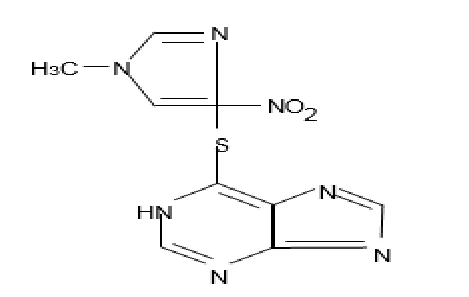
Chemical Name(s): 1) 1H-Purine,6-[(1-methyl-4-nitro-1H-imidazol-5-yl)-thio]-;
- 2) 6-[(1-Methyl-4-nitro-1H-imidazol-5-yl)thio]-1H-purine
Molecular Formula: C9H7N7O2S
Molecular Weight: 277.27 g/mol
Structural Formula:
Physicochemical Properties:
pKa: 8.2 (25°C)
Description: Azathioprine is a pale yellow, odourless powder. It is insoluble in water, soluble in dilute solutions of alkali hydroxides, sparingly soluble in dilute mineral acids and very slightly soluble in alcohol and in chloroform.
CLINICAL TRIALS
Renal Homotransplantation
Azathioprine is indicated as an adjunct for the prevention of rejection in renal homotransplantation. Experience with over 16,000 transplants shows a five-year patient survival of 35% to 55%, but this is dependent on donor, match for HLA antigens, antidonor or anti B-cell alloantigen antibody and other variables. The effect of azathioprine on these variables has not been tested in controlled trials.
Rheumatoid Arthritis
Azathioprine is indicated only in adult patients meeting criteria for classic or definite rheumatoid arthritis as specified by the American Rheumatism Association. Azathioprine should be restricted to patients with severe, active and erosive disease not responsive to conventional management including rest, acetylsalicylic acid or other non-steroidal drugs, or with disease- modifying antirheumatic drugs (DMARD’s). Rest, physiotherapy and salicylates should be continued while azathioprine is given, but it may be possible to reduce the dose of corticosteroids in patients on azathioprine. The combined use of azathioprine with DMARD’s have not been studied for either added benefit or unexpected adverse effects. The use of azathioprine with these agents cannot be recommended.
Comparative Bioavailability
Two comparative bioavailability studies were performed on healthy human volunteers - one fasted and one fed study. The rate and extent of absorption of 6-mercaptopurine were measured and compared following oral administration of 50 mg of either AZATHIOPRINE - 50 50 mg tablets or IMURAN 50 mg tablets. The results from measured data are summarized as follows.
FASTED STUDY:
Summary Table of the 6-Mercaptopurine Comparative Bioavailability Data (1 x 50 mg) from Measured Data | |||
| Parameter | Geometric Mean Arithmetic Mean (C.V.) | Ratio of Geometric Means (%) | |
| AZATHIOPRINE-50 | IMURAN† | ||
AUC0-T (ng∙hr/mL) | 27.88 31.59 (52.42) | 28.96 30.86 (34.64) | 96.3 |
AUC0-∞ (ng∙hr/mL) | 33.95 37.31 (45.10) | 34.61 36.45 (31.33) | 98.1 |
Cmax (ng/mL) | 15.3 18.10 (63.20) | 16.9 18.75 (42.09) | 90.5 |
| Tmax (hours)* | 1.33 (71.41) | 1.25 (66.65) | -- |
| T1/2 (hours)* | 1.51 (35.22) | 1.52 (31.50) | -- |
*Arithmetic means only (CV%).
†IMURAN is manufactured by Glaxo Wellcome Inc., and was purchased in Canada.
FED STUDY:
Summary Table of the 6-Mercaptopurine Comparative Bioavailability Data (1 x 50 mg) from Measured Data | |||
| Parameter | Geometric Mean Arithmetic Mean (C.V.) | Ratio of Geometric Means (%) | |
| AZATHIOPRINE-50 | IMURAN®† | ||
AUC0-T (ng∙hr/mL) | 16.1078 17.737 (44.9) | 17.6405 18.998 (39.0) | 91.31 |
AUC0-∞ (ng∙hr/mL) | 23.6023 24.763 (31.8) | 22.7782 24.102 (34.5) | 103.62 |
Cmax (ng/mL) | 6.9298 8.299 (69.8) | 7.8071 8.868 (54.4) | 88.76 |
| Tmax (hours)* | 1.847 (59.6) | 1.791 (54.0) | -- |
| T1/2 (hours)* | 2.216 (31.2) | 2.075 (43.2) | -- |
*Arithmetic means only (CV%).
†IMURAN is manufactured by Glaxo Wellcome Inc., and was purchased in Canada.
TOXICOLOGY
Acute toxicity studies in mice and rats showed a species variation and a somewhat lower toxicity when azathioprine was administered orally than when it was given intraperitoneally. The single LD50 dose in mice is 650 mg/kg, intraperitoneally, and about 2500 mg/kg, orally. In rats, the single LD50 is 310 mg/kg, intraperitoneally, and 400 mg/kg, orally. Death after an LD50 dose, and even after an LD100 dose, was delayed two to seven days. Subacute toxicity studies also demonstrated the cumulative toxicity.
When the drug was given to mice for five successive days, the maximum tolerated daily dose was 100 mg/kg intraperitoneally and 200 mg/kg orally. In rats given five consecutive daily doses, the LD50 was 100 mg/kg whether the drug was given intraperitoneally or orally, and in these animals death occurred within a day or two of the last dose.
Chronic toxicity studies in rats revealed that all the animals that died of drug toxicity at the two highest dosage levels (60 mg/kg body weight/day and 180 mg/kg body weight/day incorporated in the diet) showed agranulocytic spleens and bone marrows and hemorrhagic lungs.
There was also some colloid depletion of the thyroid and failure of spermatogenesis. None of the animals that survived the six-month period showed blood dyscrasias or histological abnormalities.
Dogs receiving 1 or 2 mg/kg body weight/day orally for 18 weeks showed a normal weight gain and no hematologic changes. Of four dogs receiving 4 mg/kg/day orally for 18 weeks, two had episodes of fever during the last six weeks and one of these died of pneumonia and had evidence of bone marrow depression. The other two dogs maintained a normal hematologic picture. Two dogs (including the one that died) showed reduced weight gain; the other two dogs that survived the dosage of 4 mg/kg/day showed at autopsy discolored and mottled lungs but no histological abnormalities in the liver, spleen, kidneys, testes, adrenals, pancreas or myocardium. Bone marrows showed normal cellularity.
A dog given ten doses of 10 mg/kg, orally, over a 12-day period became moribund four days after the last dose and had agranulocytosis and acute ulcers of the anal and rectal region with tissue necrosis. At a dose of 7.5 mg/kg given orally for ten doses, a dog maintained its weight and showed a normal white blood cell count for several months after the study; the red blood cell count was slightly depressed to 3.7 million two weeks after the final dose, but the count gradually returned to normal. At a dose of 5 mg/kg for ten doses, a dog maintained its weight and continued to show a normal blood picture for several months. Dogs with kidney homografts generally tolerated doses of 10 mg/kg/day, orally, for two days followed by maintenance doses of 2.5 mg to 4 mg/kg/day.
The hepatotoxic potential of azathioprine was studied by Starzl et al. in 18 normal dogs. Azathioprine alone was administered for 40 days in the same dosage as used for prevention of homograft rejection. There were declines in hematocrit, weight loss and elevations of SGOT, SGPT and alkaline phosphatase.
These changes tended to occur early suggesting that the liver injury was due to direct hepatotoxicity. Although there was usually a partial recovery from these biochemical abnormalities, 13 of the 18 dogs had histologic evidence of liver injury at the end of 40 days. The principal histologic alterations were usually in the centrilobular area. As Starzl pointed out, the hepatotoxicity of azathioprine is greater in dogs than in man. This is borne out by the 3% incidence of hepatitis in the cases reported in the Registry.
Mutagenicity
Azathioprine was found to be mutagenic in a number of in vitro and in vivo genotoxicity assays
Carcinogenicity Studies
Rats: Azathioprine was administered orally in the diet at doses of 0, 3 or 10 mg/kg/day to groups of 70 male and 70 female Sprague-Dawley rats for 90 and 97 consecutive weeks, respectively.
A life-table analysis indicated comparable cumulative survival of the control and 3 mg/kg/day female group. Survival of the male 3 mg/kg/day group began to diverge from the control group by day 600. Reduced cumulative survival of the male and female 10 mg/kg/day groups compared to the controls began by 450 and 350 days respectively.
There were no effects on food consumption. The mean weight of the 10 mg/kg group was lower than the untreated control group mean.
There was a marked depletion of body fat in the 10 mg/kg/day rats.
An increased incidence of neoplasms of the skin, ear canal (including the auditory sebaceous or Zymbal's gland) and preputial gland was associated with azathioprine administration. The presence of a few neoplasms of the nonglandular stomach in the treated males was considered potentially significant due to their rare spontaneous occurrence. Two mucinous adenocarcinomas of the duodenum, which were noted in the male 3 mg/kg/day group, were considered possibly significant.
Mice: A study was carried out to determine the carcinogenic effects of azathioprine when given orally in the diet to mice during an 18-month period. Six hundred (300 males and 300 females) clinically healthy 21-day-old mice were used in this study. Mice were randomly assigned to 1 of the 3 following dose groups of 100 males and 100 females: 0 mg/kg/day, 3 mg/kg/day and 10 mg/kg/day.
Mice in the high dose group (10 mg/kg/day) were fed a drug-free diet during dose weeks 21 through 38 because high mortality due to drug toxicity was observed. Otherwise the drug-diet mixture was fed until there was 10 to 20% survival of that sex in any treatment groups. Surviving females were sacrificed after 524 to 530 days on study and surviving males after 600 to 602 days on study.
Mice were observed daily and palpated weekly for tumors. Complete necropsies were performed on each mouse after death or sacrifice. Representative sections of all major organs and all tumors were fixed, prepared, and examined histologically from high dose (10 mg/kg/day) and control mice. Target organs and all tumors were examined from low dose (3 mg/kg/day) mice.
Azathioprine in the diet significantly reduced the survival of 3 mg/kg/ day females and 10 mg/kg/day males and females. Paleness of the mucous membranes, probably due to anemia, was observed. Significant differences in food consumption and body weights were periodically observed, but they were not consistently present throughout the study.
The number of clinically palpable nodules was similar in control and treated mice. At necropsy enlarged thymuses, lymph nodes, and spleens were observed, especially in the high dose group. Cystic endometrial hyperplasia was present in the majority of control and treated females.
Histologically, both male and female mice had a dose-related increase (p<.01) in lymphosarcomas. This increased incidence of lymphosarcoma in azathioprine-dose females was also responsible for a significant (p<.01) increase in total malignant and/or malignant plus benign tumors. In treated male mice, the incidence of malignant or malignant plus benign tumors was not significantly increased.
Synergistic immunosuppression with N-nitrosobutylurea and azathioprine induced leukemia, mean latent period of 189 days, in 14 of 24 (58%) C57BL mice. Immunosuppression with azathioprine of NZB X NZW mice that had lupus nephritis also increased the incidence of lymphosarcoma. In view of the above, lymphosarcoma as observed in this current study in treated mice may have been secondary to azathioprine immunosuppression.
An increased number of squamous cell carcinomas was observed in the preputial area of treated mice, and for purposes of statistical comparison were considered to be of preputial gland origin. Although the total number of these tumors in either treated group of male mice was not significantly greater than the number in controls, a positive dose response was detected statistically. The incidence of spontaneous preputial gland carcinomas reported in the literature is low; therefore, these tumors may have been induced by azathioprine.
Long-term carcinogenicity studies of azathioprine showed an increased incidence of lymphosarcomas, as well as epithelial tumours and carcinomas in mice and rats, respectively, at dosages of up to 2-fold the human therapeutic dose and at lower dosages in immunocompromised mice.
Teratology Studies
Reproductive studies have been performed in a variety of species. Studies in pregnant rats, mice and rabbits using azathioprine in dosages from 5 to 15 mg/kg bodyweight/day over the period of organogenesis have shown varying degrees of foetal abnormalities. The administration of azathioprine to pregnant rats and one strain of mice did not produce significant congenital anomalies. However, studies with pregnant rabbits and Swiss-Webster mice have shown that azathioprine has significant teratogenic potential producing resorptions and skeletal anomalies even when administered as late as the midpoint of gestation. Teratogenicity was evident in rabbits at 10 mg/kg bodyweight/day.
REFERENCES
- 1. Advisory Committee to the Renal Transplant Registry. The 12th report on the Human Renal Transplant Registry. JAMA 1975; 233:787-796.
- 2. Cox J, Daneshmend TK, Hawkey CJ, et al. Devastating diarrhoea caused by azathioprine: management difficulty in inflammatory bowel disease. Gut 1988; 29:686-688.
- 3. Davis JD, Muss HB, Turner RA. Cytotoxic agents in the treatment of rheumatoid arthritis. South Med J 1978; 71(1):58-64.
- 4. DeWitte DB, Buick MK, Cyran SE, et al. Neonatal pancytopenia and severe combined immunodeficiency associated with antenatal administration of azathioprine and prednisone. J Pediatr 1984; 105(4):625-628.
- 5. Elion GB, Hitchings GH. Azathioprine, in Handbook of Experimental Pharmacology, Vol. 38/2. Sartorelli and Johns (eds). Springer Verlag, New York, 1975; pp.404-425.
- 6. Fye K, Talal N. Cytotoxic drugs in the treatment of rheumatoid arthritis. Rational Drug Ther 1975; 9(4):1-5.
- 7. Hoover R, Fraumeni JF. Risk of cancer in renal transplant recipients. Lancet 1973; 2:55-57.
- 8. Hunter T, Urowitz MB, Gordon DA, et al. Azathioprine in rheumatoid arthritis. A long-term follow-up study. Arthritis Rheum 1975; 18(1):15-20.
- 9. International Agency for Research on Cancer: Azathioprine. IARC Monographs on the Evaluation of the Carcinogenic Risk of Chemicals to Humans 1981; 26:47-78.
- 10. Katzka DA, Saul SH, Jorkasky D, et al. Azathioprine and hepatic venocclusive disease in renal transplant patients. Gastroenterology 1986; 90:446-454.
- 11. Lewis RB, Castor CW, Knisley RE, et al. Frequency of neoplasia in systemic lupus erythematosus and rheumatoid arthritis. Arthritis Rheum 1976; 19(6):1256-1260.
- 12. Louie S, Schwartz RS. Immunodeficiency and the pathogenesis of lymphoma and leukemia. Semin Hematol 1978; 15(2):117-138.
- 13. McEwen C. The diagnosis and differential diagnosis of rheumatoid arthritis, in Arthritis and Allied Conditions. Lea and Febiger, Philadelphia, 1972; pp.403-418.
- 14. McGeown M. Immunosuppression for kidney transplantation. Lancet 1978; 2:310-312.
- 15. McIntosh J, Hansen P, Ziegler J, et al. Defective immune and phagocytic functions in uremia and renal transplantation. Int Arch Allergy Appl Immunol 1976; 51:544-559.
- 16. Saarikoski S, Seppalla M. Immunosuppression during pregnancy: Transmission of azathioprine and its metabolites from the mother to the fetus. Am J Obstet Gynec 1973; 115(8):1100-1106.
- 17. Schusziarra V, Ziekursch V, Schlamp R, et al. Pharmacokinetics of azathioprine under haemodialysis. Int J Clin Pharmacol Biopharm 1976: 14(4):298-302.
- 18. Schwartz R, Stack J, Dameshek W. Effect of 6-Mercaptopurine on Antibody Production. Proc Soc Exp Biol & Med 1958; 99:164-167.
- 19. Sieber SM, Adamson RH. Toxicity of antineoplastic agents in man. Adv Cancer Res 1975; 22:57-155.
- 20. Silman AJ, Petrie J, Hazelman B, et al. Lymphoproliferative cancer and other malignancy in patients with rheumatoid arthritis treated with azathioprine: a 20 year follow up study. Ann Rheum Dis 1988; 47:988-992.
- 21. Simmons RL, Thompson EJ, Yunis EJ, et al. 115 patients with first cadaver kidney transplants followed two to seven and a half years. Am J Med 1977; 62:234-242.
- 22. Starzl TE, Marchioro TL, Porter KA, et al. Factors determining short- and long-term survival after orthotopic liver homotransplantation in the dog. Surgery 1965; 58(1): 131-155.
- 23. Tagatz GE, Simmons RL. Pregnancy after renal transplantation. Ann Intern Med 1975; 82:113-114. (Editorial)
- 24. Tallent MB, Simmons RL, Najarian JS. Birth defects in child of male recipient of kidney transplant. JAMA 1970; 211(11):1854-1855.
- 25. Urowitz MB, Smythe HA, Abel T, et al. Long-term effects of azathioprine in rheumatoid arthritis. Ann Rheum Dis 1982; 41(Suppl):18-22.
- 26. Williamson RA, Karp LE. Azathioprine teratogenicity: review of the literature and case report. Obstet Gynecol 1981; 58(2):247-250.
- 27. Product Monograph. PrImuran® Azathioprine Tablets USP, - Azathioprine sodium for Injection, Manufacturer's Standard - Immunosuppressive Agent - GlaxoSmithKline Inc., Control No: 109525, Date of Revision: February 27, 2007.
- 28. Product Monograph. PrAPO-AZATHIOPRINE® Azathioprine Tablets USP 50 mg, Immunosuppressive Agent–APOTEX INC., Control No: 123789, Date of Revision: March 9, 2009.
- 29. Product Monograph. PrIMURAN® Azathioprine Tablets USP and Azathioprine sodium for Injection, Immunosuppressive Agent - Aspen Pharmacare Canada Inc., Control No: 219779, Date of Revision: January 07, 2019.