


Product Monograph - Bavencio
Recent Major Label Changes
| 4 Dosage and Administration | 2026-03 |
|---|---|
| 7 Warnings and Precautions, Immune | 2024-12 2025-03 2025-10 2026-03 |
| 8 Adverse Reactions, 8.5 Post-Market Adverse Reactions | 2024-12 2025-03 2026-03 |
Table of Contents
Sections or subsections that are not applicable at the time of authorization are not listed.
Recent Major Label Changes ........................................................................................................ 2
Table of Contents ........................................................................................................................... 2
Part 1: Healthcare Professional Information .............................................................................. 4
1 Indications ......................................................................................................................4
1.1 Pediatrics ..............................................................................................................4
1.2 Geriatrics ..............................................................................................................4
2 Contraindications ............................................................................................................... 4
4 Dosage and Administration .............................................................................................. 4
4.1 Dosing Considerations .........................................................................................4
4.2 Recommended Dose and Dosage Adjustment ....................................................5
4.3 Reconstitution .......................................................................................................6
4.4 Administration .......................................................................................................7
4.5 Missed Dose .........................................................................................................7
5 Overdose.............................................................................................................................. 7
6 Dosage Forms, Strengths, Composition, and Packaging ............................................ 7
7 Warnings and Precautions ................................................................................................ 8
7.1 Special Populations ............................................................................................12
7.1.1 Pregnancy ......................................................................................................12
7.1.2 Breastfeeding .................................................................................................12
7.1.3 Pediatrics ........................................................................................................12
7.1.4 Geriatrics ........................................................................................................12
8 Adverse Reactions .......................................................................................................13
8.1 Adverse Reaction Overview ...............................................................................13
8.2 Clinical Trial Adverse Reactions .........................................................................14
8.3 Less Common Clinical Trial Adverse Reactions .................................................26
8.4 Abnormal Laboratory Findings: Hematologic, Clinical Chemistry and Other Quantitative Data ...........................................................................................................27
8.5 Post-Market Adverse Reactions .........................................................................29
9 Drug Interactions .........................................................................................................30
9.2 Drug Interactions Overview ................................................................................30
9.3 Drug-Behaviour Interactions ...............................................................................30
9.4 Drug-Drug Interactions .......................................................................................30
9.5 Drug-Food Interactions .......................................................................................30
9.6 Drug-Herb Interactions .......................................................................................30
9.7 Drug-Laboratory Test Interactions ......................................................................30
10 Clinical Pharmacology .................................................................................................30
10.1 Mechanism of Action ..........................................................................................30
10.2 Pharmacodynamics ............................................................................................31
10.3 Pharmacokinetics ...............................................................................................31
10.4 Immunogenicity ..................................................................................................32
11 Storage, Stability, and Disposal .................................................................................33
Part 2: Scientific Information ..................................................................................................34
13 Pharmaceutical Information ........................................................................................34
14 Clinical Trials ................................................................................................................34
14.1 Clinical Trials by Indication .................................................................................34
Metastatic Merkel Cell Carcinoma .................................................................................34
Locally Advanced or Metastatic Urothelial Carcinoma ...................................................38
16 Non-Clinical Toxicology ..............................................................................................44
Patient Medication Information ..............................................................................................46
Part 1: Healthcare Professional Information
1 Indications
Locally Advanced or Metastatic Urothelial Carcinoma Bavencio is indicated for the maintenance treatment of patients with unresectable locally advanced or metastatic urothelial carcinoma (UC) whose disease has not progressed following first-line platinum-based chemotherapy.
Bavencio is indicated for the treatment of patients with locally advanced or metastatic urothelial carcinoma (UC) who have disease progression during or following platinum-based chemotherapy or within 12 months of neoadjuvant or adjuvant treatment with platinum-based chemotherapy.
Metastatic Merkel Cell Carcinoma Bavencio (avelumab for injection) is indicated for the treatment of adult patients with metastatic Merkel cell carcinoma (MCC).
Marketing authorization was based on tumour response and durability of response. An improvement in survival or disease-related symptoms has not yet been established (see section 14 Clinical Trials).
1.1 Pediatrics
Pediatrics (< 18 years of age): Based on the data submitted and reviewed by Health Canada, the safety and efficacy of Bavencio in pediatric patients have not been established (see 10 Clinical Pharmacology, 10.3 Pharmacokinetics, Special Populations and Conditions). Health Canada has not authorized an indication for pediatric use.
1.2 Geriatrics
Geriatrics (≥ 65 years of age): Overall differences in safety or efficacy between elderly patients (65 years and older) and younger patients (less than 65 years) have not been evaluated (see section 7.1.4 Warnings and Precautions, Geriatrics).
2 Contraindications
Bavencio is contraindicated in patients who are hypersensitive to this drug or to any ingredient in the formulation, including any non-medicinal ingredient, or component of the container. For a complete listing, see section 6 Dosage Forms, Strengths, Composition, and Packaging.
4 Dosage and Administration
4.1 Dosing Considerations
Bavencio must be administered as an intravenous infusion (IV) under the supervision of a qualified healthcare professional. Do not administer as an IV push or bolus.
4.2 Recommended Dose and Dosage Adjustment
Dosage The recommended dose of Bavencio is 10 mg/kg body weight administered intravenously over 60 minutes every 2 weeks.
Premedication and Monitoring Premedicate patients with an antihistamine and acetaminophen prior to the first 4 infusions of Bavencio. Premedication should be administered for subsequent Bavencio doses based upon clinical judgment and presence/severity of prior infusion reactions.
Duration of Treatment It is recommended that patients are treated with Bavencio until disease progression or unacceptable toxicity. Clinically stable patients with initial evidence of disease progression may remain on treatment until disease progression is confirmed.
Treatment Modifications Dose escalation or reduction is not recommended. Dosing delay or discontinuation may be required based on individual safety and tolerability.
Table 1 summarizes guidelines for treatment modifications. Detailed guidelines for the management of immune-mediated adverse drug reactions are described in section 7 Warnings and Precautions.
Table 1 – Recommended Dose Modification of Bavencio for Treatment-related Adverse Drug Reactions
| Treatment-related Adverse Reaction | Severity* | Treatment Modification |
|---|---|---|
| Treatment-related Adverse Reaction | Severity* | Treatment Modification |
| Pneumonitis | Grade 2 | Withhold** |
| Grade 3 or Grade 4 or recurrent Grade 2 | Permanently discontinue | |
| Hepatitis | Aspartate aminotransferase (AST) or alanine aminotransferase (ALT) greater than 3 and up to 5 times upper limit of normal (ULN) or total bilirubin greater than 1.5 and up to 3 times ULN (Grade 2) | Withhold** |
| AST or ALT greater than 5 times ULN or total bilirubin greater than 3 times ULN (Grade 3 or 4) | Permanently discontinue | |
| Colitis/diarrhea | Grade 2 or Grade 3 | Withhold** |
| Grade 4 or recurrent Grade 3 | Permanently discontinue | |
| Endocrinopathies (including but not limited to hypothyroidism, hyperthyroidism, adrenal insufficiency, type 1 diabetes mellitus, hyperglycemia) | Grade 3 or Grade 4 | Withhold** |
| Nephritis and renal | Serum creatinine more than 1.5 and up to 6 | Withhold** |
| dysfunction | times ULN (Grade 2 or 3) | |
| Serum creatinine more than 6 times ULN (Grade 4) | Permanently discontinue | |
| Myocarditis | Grade 2, 3 or 4 | Permanently discontinue |
Other immune-mediated adverse reactions (imARs) (including immune-mediated reactions observed in section 7 Warnings and Precautions, Other immune-mediated adverse drug reactions) | For any of the following: Grade 2 or Grade 3 clinical signs or symptoms of an immune-mediated adverse reaction not described above | Withhold** |
For any of the following:
| Permanently discontinue | |
| Infusion reactions | Grade 1 or Grade 2 | Interrupt or slow the rate of infusion |
| Grade 3 or Grade 4 | Permanently discontinue | |
*Note: Toxicity grades are in accordance with National Cancer Institute Common Terminology Criteria for Adverse Events Version 4.0 (NCI-CTCAE v4.03). **Until adverse reactions recover to Grade 0-1 and/or after corticosteroid taper.
4.3 Reconstitution
Use aseptic technique for the preparation of the solution for infusion.
- Visually inspect vial for particulate matter and discolouration. Bavencio is a clear, colourless to slightly yellow solution. Discard vial if the solution is cloudy, discoloured, or contains particulate matter.
- Take an infusion bag of appropriate size (250 mL preferable) containing either 0.9% or 0.45% sodium chloride solution. Withdraw the required volume of Bavencio from the vial(s) and transfer it to the infusion bag. Discard any partially used or empty vials.
- Mix the diluted solution by gently inverting the infusion bag in order to avoid foaming or excessive shearing of the solution.
- Inspect the solution to ensure it is clear, colourless, and free of visible particles. Use the diluted solution immediately once prepared.
- Do not co-administer other drugs through the same intravenous line.
- Administer the infusion as described above.
- After the administration of Bavencio, flush the line with either 0.9% or 0.45% sodium chloride solution.
Bavencio does not contain a preservative. If Bavencio is not infused immediately, the
- diluted solution can be stored up to 8 hours at room temperature or up to 24 hours in the refrigerator at 2°C to 8°C. If refrigerated, allow the diluted solution to come to room temperature prior to administration. This storage time includes the storage of the infusion solution in the infusion bag, and the duration of infusion (see section 11 Storage, Stability, and Disposal).
Bavencio is compatible with either 0.9% or 0.45% sodium chloride solution and must not be mixed with other products.
Bavencio is compatible with polyethylene, polypropylene, and ethylene vinyl acetate infusion bags, glass bottles, polyvinyl chloride infusion sets and in line filters with polyethersulfone membranes with pore sizes of 0.2 micrometer.
4.4 Administration
Bavencio has to be diluted with either 0.9% or 0.45% sodium chloride solution prior to infusion.
Bavencio is administered over 60 minutes as an intravenous infusion using a sterile, non-pyrogenic, low-protein binding 0.2 micrometer in-line or add-on filter.
Bavencio infusion must not be administered as an intravenous push or bolus injection.
4.5 Missed Dose
If a planned dose of Bavencio is missed, it should be administered as soon as feasible or continue at the next planned dose.
5 Overdose
There are limited experiences with overdose with Bavencio in clinical studies. Treatment is directed to the management of symptoms.
For the most recent information in the management of a suspected drug overdose, contact your regional poison control centre or Health Canada’s toll-free number, 1-844 POISON-X (1-844-764-7669).
6 Dosage Forms, Strengths, Composition, and Packaging
To help ensure the traceability of biologic products, healthcare professionals should record both the brand name and the non-proprietary (active ingredient) name as well as other product-specific identifiers such as the Drug Identification Number (DIN) and the batch/lot number of the product supplied.
Table 2 – Dosage Forms, Strengths, and Composition
| Route of Administration | Dosage Form / Strength/Composition | Non-medicinal Ingredients |
| Intravenous | Solution for infusion / 20 mg/mL | D-mannitol, glacial acetic acid, polysorbate 20, sodium hydroxide, Water for Injection |
Description
Bavencio is a sterile, clear, colourless to slightly yellow solution.
Bavencio is supplied as a single-use vial. One vial of 10 mL contains 200 mg of avelumab.
The container closure does not contain natural rubber latex material.
7 Warnings and Precautions
General
Treatment should be initiated and supervised by a physician experienced in the treatment of cancer.
Driving and Operating Machinery
Bavencio has negligible influence on the ability to drive and use machines. Fatigue has been reported following administration of Bavencio (see section 8.2 Adverse Reactions, Clinical Trial Adverse Reactions). Patients should be advised not to drive or operate machinery until they are sure they are feeling well.
Immune (see section 8.2 Adverse Reactions, Clinical Trial Adverse Reactions)
Bavencio can result in severe and fatal immune-mediated adverse reactions (see section 8 Adverse Reactions). As observed with other immune-checkpoint inhibitors, immune-mediated reactions may involve any organ system or tissue. Most immune-mediated reactions initially manifest during treatment; however, immune-mediated adverse reactions can occur after discontinuation.
Patients with pre-existing autoimmune disease (AID)
Patients with pre-existing AID were excluded from clinical trials with Bavencio (see section 14.1 Clinical Trials). In patients with pre-existing AID, data from individual case safety reports in the post-market setting from 15 patients with pre-existing AID suggest that there are risks of immune-mediated adverse events following treatment with Bavencio. Two patients experienced a flare of the underlying pre-existing AID; one of which was a novel immune-mediated adverse event, while the remaining patients experienced previously reported immune-mediated adverse events. Careful consideration should be given whether to treat patients with pre-existing AID with Bavencio due to a potential risk of immune-mediated adverse drug reactions (see section 8.5 Adverse Reactions, Post-Market Adverse Reactions).
Important immune-mediated adverse reactions listed in this section below are not inclusive of all possible immune-mediated reactions.
The immune-mediated adverse drug reactions described below in more detail reflect the exposure to Bavencio in a total of 1738 patients in Study EMR100070-001 (Study 001) (N=1650) and Study EMR100070-003 Part A (Study 003 Part A) (N=88) in patients with previously treated metastatic MCC with a median duration of treatment of 12 weeks in Study 001 and 17 weeks in Study 003 Part A at the time of data cut-off. In addition, the immune-mediated adverse drug reactions described below reflect the exposure to Bavencio in a total of 116 patients in Study EMR100070-003 Part B (Study 003 Part B) in treatment-naïve patients with metastatic MCC with a median duration of treatment of 24 weeks at the time of data cut-off.
Immune-mediated pneumonitis
Immune-mediated pneumonitis including fatal outcomes has been reported in patients receiving Bavencio (see section 8.2 Adverse Reactions, Clinical Trial Adverse Reactions).
Patients should be monitored for signs and symptoms of immune-mediated pneumonitis and causes other than immune-mediated pneumonitis should be ruled out. Suspected pneumonitis should be confirmed with radiographic imaging.
Corticosteroids should be administered for Grade ≥ 2 events (initial dose of 1 - 2 mg/kg/day prednisone or equivalent, followed by a corticosteroid taper of at least 1 month duration which should be initiated upon improvement).
Bavencio should be withheld for Grade 2 immune-mediated pneumonitis until resolution to Grade 1 or less, and permanently discontinued for Grade ≥ 3 pneumonitis or recurrent Grade 2 immune-mediated pneumonitis (see section 4.2 Dosage and Administration, Recommended Dose and Dose Adjustment).
Immune-mediated hepatitis
Immune-mediated hepatitis including fatal outcomes has been reported in patients receiving Bavencio (see section 8.2 Adverse Reactions, Clinical Trial Adverse Reactions).
Patients should be monitored for changes in liver function and symptoms of immune-mediated hepatitis. Causes other than immune-mediated hepatitis should be ruled out. Corticosteroids should be administered for Grade ≥ 2 immune-mediated hepatitis (initial dose 1 – 2 mg/kg/day prednisone or equivalent, followed by a corticosteroid taper of at least 1 month duration which should be initiated upon improvement).
Bavencio should be withheld for Grade 2 immune-mediated hepatitis until resolution to Grade 1 or less, and permanently discontinued for Grade ≥ 3 immune-mediated hepatitis (see section 4.2 Dosage and Administration, Recommended Dose and Dose Adjustment).
Immune-mediated colitis
Immune-mediated colitis has been reported in patients receiving Bavencio (see section 8.2 Adverse Reactions, Clinical Trial Adverse Reactions).
Patients should be monitored for signs and symptoms of colitis and causes other than immune-mediated colitis should be ruled out. Corticosteroids should be administered for Grade ≥ 2 events (initial dose of 1 - 2 mg/kg/day prednisone or equivalent, followed by a corticosteroid taper of at least 1 month duration which should be initiated upon improvement).
Bavencio should be withheld for Grade 2 or Grade 3 immune-mediated colitis until resolution to Grade 1 or less, and permanently discontinued for Grade 4 immune-mediated colitis or recurrent Grade 3 immune-mediated colitis (see section 4.2 Dosage and Administration, Recommended Dose and Dose Adjustment).
Immune-mediated endocrinopathies
Immune-mediated thyroid disorders, immune-mediated adrenal insufficiency and type 1 diabetes mellitus occurred in patients receiving Bavencio (see section 8.2 Adverse Reactions, Clinical Trial Adverse Reactions).
Patients should be monitored for clinical signs and symptoms of endocrinopathies.
Thyroid disorders (Hypothyroidism/Hyperthyroidism)
Thyroid disorders can occur at any time during treatment. Patients should be monitored for changes in thyroid function (at the start of treatment, periodically during treatment, and as indicated based on clinical evaluation) and for clinical signs and symptoms of thyroid disorders. Hypothyroidism should be managed with replacement therapy and hyperthyroidism with anti-thyroid drug as needed.
Bavencio should be withheld for Grade ≥ 3 thyroid disorders until resolution to Grade 1 or less (see section 4.2 Dosage and Administration, Recommended Dose and Dose Adjustment).
Adrenal insufficiency
Patients should be monitored for signs and symptoms of adrenal insufficiency during and after treatment. Corticosteroids should be administered (1 – 2 mg/kg/day prednisone IV or oral equivalent) for Grade ≥ 3 adrenal insufficiency, followed by a taper until a dose less than or equal to 10 mg/day has been reached.
Bavencio should be withheld for Grade ≥ 3 symptomatic adrenal insufficiency until resolution to Grade 1 or less (see section 4.2 Dosage and Administration, Recommended Dose and Dose Adjustment).
Type 1 diabetes mellitus
Bavencio can cause type 1 diabetes mellitus, including diabetic ketoacidosis (see section 8.2 Adverse Reactions, Clinical Trial Adverse Reactions).
Patients should be monitored for hyperglycemia or other signs and symptoms of diabetes. Initiate treatment with insulin for type 1 diabetes mellitus. Bavencio should be withheld and anti-hyperglycemics or insulin in patients with ≥ Grade 3 hyperglycemia should be administered. Resume treatment with Bavencio when metabolic control is achieved on insulin replacement or anti-hyperglycemics (see section 4.2 Dosage and Administration, Recommended Dose and Dose Adjustment).
Immune-mediated nephritis and renal dysfunction
Bavencio can cause immune-mediated nephritis.
Patients should be monitored for elevated serum creatinine prior to and periodically during treatment. Corticosteroids (initial dose of 1 to 2 mg/kg/day prednisone or equivalent followed by a corticosteroid taper) should be administered for Grade ≥ 2 nephritis.
Bavencio should be withheld for Grade 2 or Grade 3 nephritis until resolution to Grade 1 or less and permanently discontinued for Grade 4 nephritis (see section 4.2 Dosage and Administration, Recommended Dose and Dose Adjustment).
Immune-Mediated Myocarditis-Myositis-Myasthenia Gravis Overlap Syndrome
Cases of an overlap syndrome defined by concurrent manifestation of any two or all three conditions of myocarditis, myositis, myasthenia gravis which have been observed with Bavencio and other immune-checkpoint inhibitors. It is important to recognize overlapping symptoms, which can complicate diagnosis and management and could carry a higher risk of associated morbidity and mortality. Patients presenting with signs or symptoms of one condition should also be monitored and evaluated for the other two conditions and they should be managed as clinically indicated. Institute medical management promptly, including specialty consultation as appropriate (see section 4.2 Dosage and Administration, Recommended Dose and Dose Adjustment for recommended dose modification guidance for Other immune-mediated adverse reactions).
Other immune-mediated adverse drug reactions
Other clinically important immune-mediated adverse reactions were reported in less than 1% of patients: myocarditis including with fatal outcome, myositis, psoriasis, arthritis, exfoliative dermatitis, erythema multiforme, pemphigoid, hypopituitarism, uveitis, myasthenia gravis/ myasthenic syndrome, Guillain-Barré syndrome, neutropenia, gastritis, sclerosing cholangitis, arthritis, polymyalgia rheumatica, Sjogren’s syndrome, and sarcoidosis.
Immune-mediated pancreatitis has been observed in patients receiving Bavencio. In one clinical trial with Bavencio in combination with axitinib, cases of immune-mediated pancreatitis with fatal outcomes have been observed (see section 8.2 Adverse Reactions, Clinical Trial Adverse Reactions).
The following clinically significant, immune-mediated adverse reactions have been reported with other products in this class: immune-mediated skin disorders (bullous dermatitis, Stevens Johnson Syndrome (SJS)/toxic epidermal necrolysis (TEN)), pancreatitis, rhabdomyolysis, myasthenia gravis, histiocytic necrotizing lymphadenitis, demyelination, vasculitis, hemolytic anemia, aplastic anemia, hypophysitis, iritis and encephalitis.
Infusion Reactions
Infusion reactions, which might be severe, occurred in patients receiving Bavencio.
Patients should be monitored for signs and symptoms of infusion reactions including pyrexia, chills, flushing, hypotension, dyspnea, wheezing, back pain, abdominal pain, and urticaria.
For Grade 1 infusion reactions, the infusion rate has to be slowed by 50% for the current infusion. For patients with Grade 2 infusion reactions, the infusion should be temporarily discontinued until Grade 1 or resolved, then the infusion will restart with a 50% slower infusion rate. For Grade ≥ 3 infusion reactions, stop infusion and permanently discontinue Bavencio (see section 4.2 Dosage and Administration, Recommended Dose and Dose Adjustment).
Patients have to be premedicated with an antihistamine and acetaminophen prior to the first 4 infusions of Bavencio. Premedication should be administered for subsequent Bavencio doses based upon clinical judgment and presence/severity of prior infusion reactions (see section 4.2 Dosage and Administration, Recommended Dose and Dose Adjustment).
Reproductive Health
Fertility
Studies to evaluate the effect of Bavencio on fertility have not been conducted. The effect of Bavencio on male and female fertility is unknown.
In 1 month and 3 month repeat dose toxicology studies in monkeys, there were no notable effects in the male and female reproductive organs.
7.1 Special Populations
7.1.1 Pregnancy
There are no or limited data from the use of Bavencio in pregnant women.
Based on its mechanism of action, Bavencio can cause fetal harm when administered to a pregnant woman and may increase the risk of developing immune-mediated disorders or altering the normal immune response.
Animal reproduction studies have not been conducted with avelumab to evaluate its effect on reproduction and fetal development.
In animal models, the PD-1/PD-L1 signalling pathway is important in the maintenance of pregnancy through induction of maternal immune tolerance to fetal tissue.
Human IgG1 immunoglobulins are known to cross the placenta. Therefore, avelumab has the potential to be transmitted from the mother to the developing fetus.
Blockade of PD-L1 signalling has been shown in murine models of pregnancy to disrupt tolerance to the fetus and to result in an increase in fetal loss. Therefore, potential risks of administering Bavencio during pregnancy include increased rates of abortion or stillbirth.
Bavencio is not recommended during pregnancy or in women with child-bearing potential not using effective contraception unless the clinical benefit outweighs the potential risk. Advise women of reproductive potential to use effective contraception during treatment with Bavencio and for at least 1 month after the last dose of Bavencio.
7.1.2 Breastfeeding
It is unknown whether avelumab is excreted in human milk. Since it is known that antibodies can be secreted in human milk, a risk to the newborns/infants cannot be excluded. A decision should be made whether to discontinue breast-feeding or discontinue Bavencio, taking into account the benefit of breast-feeding for the child and the benefit of Bavencio therapy for the mother.
Breast-feeding women should be advised not to breast-feed during treatment and for at least 1 month after the last dose of Bavencio due to the potential for serious adverse reactions in breast-fed infants.
7.1.3 Pediatrics
Pediatrics (< 18 years of age): Based on the data submitted and reviewed by Health Canada, the safety and efficacy of Bavencio in pediatric patients have not been established. Health Canada has not authorized an indication for pediatric use.
7.1.4 Geriatrics
Geriatrics (≥ 65 years of age):
Metastatic Merkel Cell Carcinoma
Overall differences in safety or efficacy between elderly patients (65 years and older) and younger patients (less than 65 years) have not been evaluated.
Locally Advanced or Metastatic Urothelial Carcinoma
Maintenance Treatment Following First-Line Platinum-Based Chemotherapy Of the 350 patients randomized to Bavencio 10 mg/kg plus best supportive care (BSC) in the JAVELIN Bladder 100 study (Study B9991001), 63% were 65 years or older and 23% were 75 years or over. No overall differences in safety or efficacy were reported between elderly patients (≥ 65 years) and younger patients (< 65 years). Safety data from patients 75 years of age or older are too limited to draw conclusions on this population.
Previously Treated Urothelial Carcinoma Of the 242 patients with locally advanced or metastatic UC treated with Bavencio, 68% were 65 years or over and 28% were 75 years or over. Among patients 65 years or over who were followed for at least 12 months, 17% (28/165) responded to Bavencio and 67% (111/165) developed a Grade 3 - 4 adverse reaction. No overall differences in safety or efficacy were reported between elderly patients and younger patients.
8 Adverse Reactions
8.1 Adverse Reaction Overview
The safety of Bavencio at doses of 10 mg/kg intravenously every 2 weeks has been evaluated in a total of 1738 patients, in Study 001, a phase I, single arm, multi-center study in patients with other solid tumours (N = 1650) including patients with locally advanced or metastatic UC
(N = 242) and in Study 003 Part A, a single arm, multi-center study in patients with previously treated metastatic MCC (N = 88). In addition, the safety of Bavencio at doses of 10 mg/kg intravenously every 2 weeks has been evaluated in treatment-naïve patients with metastatic MCC in Study 003 Part B (N = 116).
The study population characteristics of the 1738 patients (Study 001 and Study 003 Part A) were median age of 64 years (range: 19 to 91 years); 52% male; 78% White, 9% Asian, 5% Black or African American, and 8% other ethnic groups; Eastern Cooperative Oncology Group (ECOG) performance score of 0 (38%), 1 (62%), or > 1 (0.4%); and the underlying malignancies were non-small cell lung cancer (20%), gastric and gastroesophageal cancer (15%), urothelial cancer (14%), ovarian cancer (13%), metastatic breast cancer (10%), head and neck cancer (9%), metastatic MCC (5%), mesothelioma, renal cell carcinoma, melanoma, adrenocortical carcinoma (3% each), colorectal cancer, castrate-resistant prostate cancer, and unknown (1% each). In this population, 25% of patients were exposed to Bavencio for ≥ 6 months and 8% were exposed to Bavencio for ≥ 12 months.
The study population characteristics of the 116 patients in Study 003 Part B were median age of 74 years (range: 41 to 93 years); 69.8% male; 64.7% White, 2.6% Asian, 1.7% Black or African American; and ECOG performance score of 0 (62.1%) or 1 (37.9%).
Metastatic Merkel Cell Carcinoma
In Study 003 Part A, the median duration of exposure to Bavencio was 17 weeks (range: 2 weeks to 102 weeks) with a median of 7 doses (range: 1 dose to 95 doses). In this ongoing study, 39.8% of patients received Bavencio for more than 6 months and 26.1% for more than one year.
In Study 003 Part B, the median duration of exposure to Bavencio was 24 weeks (range: 2 weeks to 154 weeks) with a median of 11.5 doses (range: 1 dose to 76 doses). In this ongoing study, 48.3% of patients received Bavencio for more than 6 months and 36.2% for more than one year.
Locally Advanced or Metastatic Urothelial Carcinoma
Maintenance Treatment Following First-Line Platinum-Based Chemotherapy The safety of Bavencio has been evaluated in the JAVELIN Bladder 100 study in which patients with unresectable locally advanced or metastatic UC whose disease had not progressed following first-line platinum-based chemotherapy received Bavencio 10 mg/kg every 2 weeks plus best supportive care (N=344) or best supportive care alone (N=345) as a maintenance treatment.
In the JAVELIN Bladder 100 study primary analysis, the median duration of exposure to Bavencio plus best supportive care (BSC) was 25 weeks (range: 2 weeks to 160 weeks); 47.4% of patients received Bavencio plus best supportive care for more than 6 months and 28.2% for more than one year.
At the updated analysis, the median duration of exposure to Bavencio plus BSC was 25.3 weeks (range: 2 weeks to 290.6 weeks). There were no new safety signals observed at the updated analysis and therefore with additional follow-up, no meaningful changes were observed in the safety profile of Bavencio.
For the study population characteristics of the patients treated with Bavencio, see section 14 Clinical Trials.
Previously Treated Urothelial Carcinoma In Study 001, the median duration of exposure to Bavencio for patients with locally advanced or metastatic UC was 12 weeks (range: 2 weeks to 134 weeks) with a median of 6 doses (range: 1 dose to 67 doses); 26.9% of patients received Bavencio for more than 6 months.
8.2 Clinical Trial Adverse Reactions
Clinical trials are conducted under very specific conditions. The adverse reaction rates observed in the clinical trials; therefore, may not reflect the rates observed in practice and should not be compared to the rates in the clinical trials of another drug. Adverse reaction information from clinical trials may be useful in identifying and approximating rates of adverse drug reactions in real-world use.
Metastatic Merkel Cell Carcinoma
The safety of Bavencio was investigated in Study 003, a single-arm multi-center study with two parts. Part A included 88 patients with metastatic MCC whose disease had progressed after at least one chemotherapy treatment. Part B included 116 patients with histologically confirmed metastatic MCC who were treatment-naïve to systemic therapy in the metastatic setting.
Part A – Previously treated metastatic MCC: In Part A, the most common adverse reactions (≥ 20%) were fatigue, musculoskeletal pain, diarrhea, nausea, infusion related reaction, rash, peripheral edema and decreased appetite (see Table 3). The most common Grade ≥ 3 treatment emergent adverse events (≥ 3%) were anemia, lymphopenia, abdominal pain, alanine aminotransferase increased, blood creatine phosphokinase increased, gamma-glutamyltransferase increased, lipase increased and hypertension. Serious treatment emergent adverse events that occurred in more than one patient were anemia, abdominal pain, general physical health deterioration, cellulitis, lung infection, squamous cell carcinoma of skin and acute kidney injury.
Bavencio was permanently discontinued in 10 (11.4%) patients due to treatment emergent adverse events of anemia, thrombocytopenia, pericardial effusion, autoimmune colitis, ileus, autoimmune disorder, alanine aminotransferase increased, blood creatine phosphokinase increased, gamma-glutamyltransferase increased, neutrophil count decreased and transaminases increased.
Bavencio was temporarily discontinued in 36 (40.9%) patients for treatment emergent adverse events, excluding temporary dose interruption for infusion related reactions where infusion was restarted the same day. Anemia, gastric hemorrhage, lung infection, infusion related reaction and back pain were the reasons for temporary discontinuation of Bavencio reported in more than one patient.
Part B - Treatment-naïve metastatic MCC: In Part B, the most common adverse reactions (≥ 20%) were fatigue, infusion related reaction, musculoskeletal pain, constipation, cough and rash (see Table 3). The most common Grade ≥ 3 treatment emergent adverse events (≥ 3%) were general physical health deterioration, lipase increased, amylase increased, sepsis, hypertension, decreased appetite, hyponatremia and lymphopenia. Serious treatment emergent adverse events that occurred in more than one patient were infusion related reaction, abdominal pain, dysphagia, vomiting, asthenia, general physical health deterioration, sepsis, dehydration, diabetes mellitus, hyponatremia, hydronephrosis, pulmonary embolism and lymphoedema.
Bavencio was permanently discontinued in 30 (25.9%) patients due to treatment emergent adverse events. Infusion related reactions resulted in permanent discontinuation of Bavencio in more than one patient (2.6%). One patient permanently discontinued Bavencio due to the treatment emergent adverse event of tumour lysis syndrome.
Bavencio was temporarily discontinued in 53 (45.7%) patients for treatment emergent adverse events, excluding temporary dose interruption for infusion related reactions where infusion was restarted the same day. Abdominal pain, diarrhea, general physical health deterioration, pyrexia, nasopharyngitis, infusion related reaction, abnormal laboratory values (alanine aminotransferase increased, amylase increased, aspartate aminotransferase increased), hyponatremia and back pain were the reasons for temporary discontinuation of Bavencio reported in more than one patient.
Table 3 summarizes the adverse reactions that occurred in at least 1% of patients receiving Bavencio in Study 003 Part A (previously treated) or Part B (treatment-naïve).
Table 3 – All Grade Adverse Reactions in ≥ 1% of Patients with Metastatic MCC in Study 003 Part A (previously treated) or Part B (treatment-naïve)
| MedDRA System Organ Class and Preferred Term | Avelumab Part A (N = 88) | Avelumab Part B (N = 116) | |||||||||||||
|---|---|---|---|---|---|---|---|---|---|---|---|---|---|---|---|
| MedDRA System Organ Class and Preferred Term | Avelumab Part A (N = 88) | Avelumab Part B (N = 116) | |||||||||||||
| MedDRA System Organ Class and Preferred Term | Avelumab Part A (N = 88) | Avelumab Part B (N = 116) | |||||||||||||
| All Grades n (%) | Grade 3-4 n (%) | All Grades n (%) | Grade 3-4 n (%) | ||||||||||||
| All Grades n (%) | Grade 3-4 n (%) | All Grades n (%) | Grade 3-4 n (%) | ||||||||||||
| All Grades n (%) | Grade 3-4 n (%) | All Grades n (%) | Grade 3-4 n (%) | ||||||||||||
| Blood and lymphatic system disorder | |||||||||||||||
| Anemia | 16 (18.2) | 10 (11.4) | 19 (16.4) | 3 (2.6) | |||||||||||
| Endocrine disorders | |||||||||||||||
| Hypothyroidism* | 5 (5.7) | 1 (1.1) | 5 (4.3) | 0 | |||||||||||
| Hyperthyroidism* | 1 (1.1) | 0 | 1 (0.9) | 0 | |||||||||||
| Adrenal insufficiency | 0 | 0 | 3 (2.6) | 0 | |||||||||||
| Gastrointestinal disorders | |||||||||||||||
| Nausea | 24 (27.3) | 0 | 22 (19.0) | 0 | |||||||||||
| Diarrhea | 23 (26.1) | 0 | 18 (15.5) | 1 (0.9) | |||||||||||
| Constipation | 16 (18.2) | 1 (1.1) | 29 (25.0) | 0 | |||||||||||
| Vomiting | 13 (14.8) | 0 | 12 (10.3) | 2 (1.7) | |||||||||||
| Abdominal paina | 17 (19.3) | 4 (4.5) | 15 (12.9) | 3 (2.6) | |||||||||||
| Autoimmune colitis | 1(1.1) | 0 | 0 | 0 | |||||||||||
| General disorders and administration site conditions | |||||||||||||||
| Fatigueb | 46 (52.3) | 2 (2.3) | 50 (43.1) | 4 (3.4) | |||||||||||
| Pyrexia# | 2 (2.3) | 0 | 7 (6.0) | 0 | |||||||||||
| Edema peripheralc | 20 (22.7) | 0 | 15 (12.9) | 0 | |||||||||||
| Chills# | 2 (2.3) | 0 | 11 (9.5) | 0 | |||||||||||
| Immune system disorders | |||||||||||||||
| Drug hypersensitivity# | 1 (1.1) | 0 | 0 | 0 | |||||||||||
| Hypersensitivity# | 1 (1.1) | 0 | 0 | 0 | |||||||||||
| Autoimmune disorder | 1(1.1) | 1(1.1) | 0 | 0 | |||||||||||
| Haemophagocytic lymphohistiocytosis | 1(1.1) | 0 | 0 | 0 | |||||||||||
| Injury, poisoning and procedural complications | |||||||||||||||
| Infusion related reaction# | 19 (21.6) | 0 | 34 (29.3) | 1 (0.9) | |||||||||||
| Investigations | |||||||||||||||
| Weight decreased | 14 (15.9) | 0 | 19 (16.4) | 1 (0.9) | |||||||||||
| Aspartate aminotransferase (AST) increased* | 1(1.1) | 0 | 3 (2.6) | 2 (1.7) | |||||||||||
| Alanine aminotransferase (ALT) increased* | 1 (1.1) | 1 (1.1) | 3 (2.6) | 1 (0.9) | |||||||||||
| Transaminases increased* | 1 (1.1) | 1 (1.1) | 0 | 0 | |||||||||||
| Thyroid function test abnormal | 1 (1.1) | 0 | 0 | 0 | |||||||||||
| Blood thyroid stimulating hormone increased* | 0 | 0 | 2 (1.7) | 0 | |||||||||||
| Metabolism and nutrition disorders | |||||||||||||||
| Decreased appetite | 21 (23.9) | 1 (1.1) | 16 (13.8) | 6 (5.2) | |||||||||||
| Musculoskeletal and connective tissue disorders | |||||||||||||||
| Back pain# | 1 (1.1) | 0 | 3 (2.6) | 0 | |||||||||||
| Musculoskeletal paind | 35 (39.8) | 3 (3.4) | 24 (20.7) | 0 | |||||||||||
| Arthralgia | 16 (18.2) | 1 (1.1) | 10 (8.6) | 0 | |||||||||||
| Nervous system disorders | |||||||||||||||
| Dizziness | 12 (13.6) | 0 | 5 (4.3) | 0 | |||||||||||
| Headache | 10 (11.4) | 0 | 5 (4.3) | 0 | |||||||||||
| Renal and urinary disorders | |||||||||||||||
| Tubulointerstitial nephritis | 1 (1.1) | 0 | 0 | 0 | |||||||||||
| Respiratory, thoracic and mediastinal disorders | |||||||||||||||
| Cough | 16 (18.2) | 0 | 28 (24.1) | 0 | |||||||||||
| Dyspneae | 12 (13.6) | 1 (1.1) | 18 (15.5) | 1 (0.9) | |||||||||||
| Skin and subcutaneous tissue disorders | |||||||||||||||
| Rashf | 23 (26.1) | 0 | 28 (24.1) | 0 | |||||||||||
| Pruritusg | 13 (14.8) | 0 | 20 (17.2) | 1 (0.9) | |||||||||||
| Rash maculo-papular* | 1 (1.1) | 0 | 6 (5.2) | 0 | |||||||||||
| Erythema* | 2 (2.3) | 0 | 1 (0.9) | 0 | |||||||||||
| Vascular disorders | |||||||||||||||
| Hypertension | 11 (12.5) | 6 (6.8) | 11 (9.5) | 7 (6.0) | |||||||||||
| Hypotension# | 1 (1.1) | 0 | 1 (0.9) | 0 | |||||||||||
*Immune-mediated adverse drug reaction #Infusion adverse reaction (IRR) based on predefined definition based on timely relationship including signs and symptoms of IRR including drug hypersensitivity, hypersensitivity, chills, pyrexia, back pain, dyspnea, flushing and hypotension aAbdominal pain is a composite term which includes abdominal pain, abdominal pain upper and abdominal pain lower bFatigue is a composite term which includes fatigue and asthenia cEdema peripheral is a composite term which includes edema peripheral and peripheral swelling dMusculoskeletal pain is a composite term which includes musculoskeletal pain, back pain, myalgia, neck pain, pain in extremity eDyspnea is a composite term that includes dyspnea and dyspnea exertional fRash is a composite term which includes rash, rash maculo-papular, rash macular, erythema, rash erythematous, dermatitis bullous and rash pruritic gPruritus is a composite term that includes pruritus and pruritus generalized | |||||||||||||||
Locally Advanced or Metastatic Urothelial Carcinoma
Maintenance Treatment Following First-Line Platinum-Based Chemotherapy In 344 patients treated with Bavencio plus best supportive care (BSC), the most common adverse reactions (≥ 20%) were fatigue, musculoskeletal pain, urinary tract infection, and rash.
One of the 344 patients who received Bavencio plus BSC experienced an adverse reaction of sepsis, which led to death.
Serious adverse reactions occurred in 27.9% of patients receiving Bavencio plus BSC. Serious adverse reactions reported in ≥ 1% of patients were urinary tract infection (4.7%), acute kidney injury (1.7%), hematuria (1.5%), sepsis (1.2%), pain (1.2%), and infusion related reaction (1.2%).
Bavencio was permanently discontinued due to adverse reactions in 11.9% of patients receiving Bavencio plus BSC. The adverse reaction resulting in permanent discontinuation of Bavencio in > 1% of patients was infusion related reaction (1.2%).
Bavencio was temporarily discontinued in 40.7% of patients due to adverse reactions, excluding temporary dose interruptions for infusion related reactions. The adverse reaction resulting in temporary discontinuation of Bavencio in > 3% of patients was urinary tract infection (3.5%).
At the updated analysis, one of the 344 patients who received Bavencio plus BSC experienced an adverse reaction of immune-mediated nephritis, which led to death.
Table 4 summarizes the adverse reactions that occurred in ≥ 1% of patients receiving Bavencio plus BSC in the JAVELIN Bladder 100 study.
Table 4 – Adverse Reactions* in ≥ 1% of Patients Receiving Avelumab Plus Best Supportive Care in the JAVELIN Bladder 100 Study
| MedDRA System Organ Class and Preferred Term/ Clustered Preferred Term | Avelumab plus Best Supportive Care (N=344) | Best Supportive Care (N=345) | |||||||||||
|---|---|---|---|---|---|---|---|---|---|---|---|---|---|
| MedDRA System Organ Class and Preferred Term/ Clustered Preferred Term | Avelumab plus Best Supportive Care (N=344) | Best Supportive Care (N=345) | |||||||||||
| All Grades n (%) | Grade ≥3 n (%) | All Grades n (%) | Grade ≥3 n (%) | ||||||||||
| All Grades n (%) | Grade ≥3 n (%) | All Grades n (%) | Grade ≥3 n (%) | ||||||||||
| Endocrine disorders | |||||||||||||
| Hypothyroidism | 40 (11.6) | 1 (0.3) | 2 (0.6) | 0 | |||||||||
| Hyperthyroidism | 21 (6.1) | 0 | 1 (0.3) | 0 | |||||||||
| Adrenal insufficiency | 5 (1.5) | 0 | 0 | 0 | |||||||||
| Gastrointestinal disorders | |||||||||||||
| Diarrhea | 57 (16.6) | 2 (0.6) | 17 (4.9) | 1 (0.3) | |||||||||
| Constipation | 56 (16.3) | 2 (0.6) | 31 (9.0) | 0 | |||||||||
| Nausea | 54 (15.7) | 1 (0.3) | 22 (6.4) | 2 (0.6) | |||||||||
| Vomiting | 43 (12.5) | 4 (1.2) | 12 (3.5) | 2 (0.6) | |||||||||
| Colitis | 6 (1.7) | 2 (0.6) | 0 | 0 | |||||||||
| General disorders and administration site conditions | |||||||||||||
| Fatiguea | 122 (35.5) | 6 (1.7) | 46 (13.3) | 6 (1.7) | |||||||||
| Pyrexia | 51 (14.8) | 1 (0.3) | 12 (3.5) | 0 | |||||||||
| Chills | 28 (8.1) | 0 | 3 (0.9) | 0 | |||||||||
| Immune system disorders | |||||||||||||
| Hypersensitivity | 5 (1.5) | 0 | 0 | 0 | |||||||||
| Infections and infestations | |||||||||||||
| Urinary tract infectionb | 70 (20.3) | 20 (5.8) | 38 (11.0) | 13 (3.8) | |||||||||
| Injury, poisoning and procedural complications | |||||||||||||
| Infusion related reaction | 35 (10.2) | 3 (0.9) | 0 | 0 | |||||||||
| Investigations | |||||||||||||
| Alanine aminotransferase (ALT) increased | 18 (5.2) | 5 (1.5) | 2 (0.6) | 0 | |||||||||
| Aspartate aminotransferase (AST) increased | 13 (3.8) | 3 (0.9) | 2 (0.6) | 0 | |||||||||
| Blood thyroid stimulating hormone increased | 4 (1.2) | 0 | 0 | 0 | |||||||||
| Metabolism and nutrition disorders | |||||||||||||
| Decreased appetite | 47 (13.7) | 1 (0.3) | 23 (6.7) | 2 (0.6) | |||||||||
| Hyperglycemia | 13 (3.8) | 6 (1.7) | 8 (2.3) | 1 (0.3) | |||||||||
| Musculoskeletal and connective tissue disorders | |||||||||||||
| Musculoskeletal painc | 81 (23.5) | 4 (1.2) | 51 (14.8) | 9 (2.6) | |||||||||
| Arthralgia | 56 (16.3) | 2 (0.6) | 19 (5.5) | 0 | |||||||||
| Arthritis | 5 (1.5) | 1 (0.3) | 0 | 0 | |||||||||
| Renal and urinary disorders | |||||||||||||
| Renal failure | 6 (1.7) | 0 | 4 (1.2) | 3 (0.9) | |||||||||
| Respiratory, thoracic and mediastinal disorders | |||||||||||||
| Coughd | 48 (14.0) | 1 (0.3) | 16 (4.6) | 0 | |||||||||
| Dyspnea | 23 (6.7) | 5 (1.5) | 11 (3.2) | 2 (0.6) | |||||||||
| Pneumonitis | 9 (2.6) | 1 (0.3) | 0 | 0 | |||||||||
| Skin and subcutaneous tissue disorders | |||||||||||||
| Rashe | 69 (20.1) | 4 (1.2) | 8 (2.3) | 0 | |||||||||
| Pruritus | 59 (17.2) | 1 (0.3) | 6 (1.7) | 0 | |||||||||
| Vascular disorders | |||||||||||||
| Hypotension | 6 (1.7) | 0 | 0 | 0 | |||||||||
| *Adverse reactions include immune-mediated Adverse Reactions (imARs), infusion related reactions (IRRs), and adverse events in the Bavencio plus best supportive care arm for which the frequency is ≥ 10% and higher than in the best supportive care alone arm (between arm difference ≥ 5% for all grades or ≥ 2% for Grade 3 and above) aFatigue is a composite term that includes fatigue, asthenia and malaise. bUrinary tract infection is a composite term that includes urinary tract infection, urosepsis, cystitis, kidney infection, pyuria, pyelonephritis, Bacteriuria, pyelonephritis acute, urinary tract infection bacterial and escherichia urinary tract infection. cMusculoskeletal pain is a composite term that includes musculoskeletal pain, back pain, myalgia and neck pain. dCough is a composite term that includes cough and productive cough. eRash is a composite term that includes rash, rash maculo-papular, erythema, dermatitis acneiform, eczema, erythema multiforme, rash erythematous, rash macular, rash papular, rash pruritic, drug eruption and lichen planus. The denominator to calculate percentages is N, the number of subjects in the safety analysis set within each treatment group. Subjects reporting more than one adverse event within a preferred term or clustered preferred term are counted only once in that term. | |||||||||||||
Previously Treated Urothelial Carcinoma In Study 001, the UC group (N=249) included 7 patients who had not received previous platinum-based chemotherapy. The following information is based on UC patients who did receive previous platinum-based therapy (N=242).
In 242 patients with locally advanced or metastatic UC, the most common adverse reactions
(≥ 15%) were fatigue, nausea, decreased appetite, infusion related reaction, decreased weight, diarrhea, constipation, urinary tract infection, anemia, vomiting, pyrexia, abdominal pain and dyspnea.
The most commonly reported Grade ≥ 3 adverse reaction was anemia (8.3%). Other Grade ≥ 3 adverse reactions reported in ≥ 3% of patients were hypertension, fatigue, urinary tract infection and asthenia.
One of the 242 patients experienced an adverse reaction of immune-mediated pneumonitis which led to death.
Serious adverse reactions reported in ≥ 1 % of patients were infusion related reaction, pneumonitis and diarrhea. Adverse reactions leading to permanent discontinuation were reported in 7.4% of patients, and adverse reactions leading to temporary discontinuation were reported in 11.2% of patients.
Table 5 summarizes the adverse reactions that occurred in ≥ 1% of patients with locally advanced or metastatic UC receiving Bavencio in Study 001.
Table 5 – All Grade Adverse Reactions in ≥ 1% of Patients with Locally Advanced or Metastatic UC in Study 001
| MedDRA System Organ Class and Preferred Term | Avelumab (N = 242) | |||||||
|---|---|---|---|---|---|---|---|---|
| MedDRA System Organ Class and Preferred Term | Avelumab (N = 242) | |||||||
| All Grades n (%) | Grade 3-4 n (%) | |||||||
| All Grades n (%) | Grade 3-4 n (%) | |||||||
| Blood and lymphatic system disorder | ||||||||
| Anemia | 46 (19.0) | 20 (8.3) | ||||||
| Endocrine disorders | ||||||||
| Hypothyroidism* | 11 (4.5) | 0 | ||||||
| Gastrointestinal disorders | ||||||||
| Nausea | 65 (26.9) | 4 (1.7) | ||||||
| Constipation | 50 (20.7) | 2 (0.8) | ||||||
| Diarrhea | 50 (20.7) | 3 (1.2) | ||||||
| Abdominal paina | 49 (20.2) | 5 (2.1) | ||||||
| Vomiting | 41 (16.9) | 4 (1.7) | ||||||
| General disorders and administration site conditions | ||||||||
| Fatigueb | 108 (44.6) | 19 (7.9) | ||||||
| Edema peripheralc | 40 (16.5) | 1 (0.4) | ||||||
| Pyrexia | 39 (16.1) | 2 (0.8) | ||||||
| Chills** | 13 (5.4) | 0 | ||||||
| Infections and infestations | ||||||||
| Urinary tract infectiond | 60 (24.8) | 16 (6.6) | ||||||
| Injury, poisoning and procedural complications | ||||||||
| Infusion related reaction | 56 (23.1) | 1 (0.4) | ||||||
| Investigations | ||||||||
| Weight decreased | 50 (20.7) | 1 (0.4) | ||||||
| Metabolism and nutrition disorders | ||||||||
| Decreased appetite | 57 (23.6) | 5 (2.1) | ||||||
| Musculoskeletal and connective tissue disorders | ||||||||
| Musculoskeletal paine | 72 (29.8) | 8 (3.3) | ||||||
| Arthralgia | 25 (10.3) | 3 (1.2) | ||||||
| Renal disorders | ||||||||
| Renal failuref | 44 (18.2) | 8 (3.3) | ||||||
| Respiratory, thoracic and mediastinal disorders | ||||||||
| Dyspneag | 48 (19.8) | 7 (2.9) | ||||||
| Cough | 36 (14.9) | 0 | ||||||
| Pneumonitis* | 5 (2.1) | 3 (1.2) | ||||||
| Skin and subcutaneous tissue disorders | ||||||||
| Rashh | 42 (17.4) | 1 (0.4) | ||||||
| Pruritusi | 27 (11.2) | 1 (0.4) | ||||||
| Vascular disorders | ||||||||
| Hypertension | 32 (13.3) | 16 (6.6) | ||||||
| * Immune-mediated adverse reaction ** Infusion related reaction (IRR) based on predefined definition based on timely relationship including signs and symptoms of IRR including drug hypersensitivity, hypersensitivity, chills, pyrexia, back pain, flushing, and hypotension aAbdominal pain is a composite term which includes abdominal pain, abdominal discomfort, abdominal pain upper and lower bFatigue is a composite term which includes fatigue, asthenia and malaise cEdema peripheral is a composite term which includes edema peripheral and peripheral swelling dUrinary tract infection is a composite term which includes Urinary Tract Infection, urosepsis, cystitis, kidney infection, urinary tract infection fungal, urinary tract infection bacterial, urinary tract infection enterococcal eMusculoskeletal pain is a composite term which includes musculoskeletal pain, back pain, myalgia, neck pain, pain in extremity fRenal failure is a composite term which includes renal failure, creatinine increased, acute kidney injury, GFR decreased gDyspnea is a composite term that includes dyspnea and dyspnea exertional hRash is a composite term which includes rash, rash macular-papular, rash pruritic, rash erythematous, erythema, erythema multiforme, rash macular, rash popular iPruritus is a composite term that includes pruritus and pruritus generalized | ||||||||
Immune-Mediated Adverse Reactions The following criteria were used to classify an adverse reaction as immune-mediated: onset within 90 days after last dose of Bavencio, no spontaneous resolution within 7 days of onset, treatment with corticosteroids or other immunosuppressant or hormone replacement therapy, biopsy consistent with immune-mediated reaction, and no other clear etiology.
Immune-mediated pneumonitis Immune-mediated pneumonitis occurred in patients receiving Bavencio. Across clinical studies in patients with advanced solid tumours (Study 001 and Study 003 Part A) 1.3% (23/1738) of patients developed immune-mediated pneumonitis. Of these patients, there was 1 (0.1%) patient with a fatal outcome, 1 (0.1%) patient with Grade 4, 6 (0.3%) patients with Grade 3, 12 (0.7%) patients with Grade 2 and 3 (0.2%) patients with Grade 1 immune-mediated pneumonitis. The median time to onset of immune-mediated pneumonitis was 11 weeks (range: 3 days to 11.8 months). The median duration was 7 weeks (range: 4 days to more than 4 months). Bavencio was discontinued in 3 patients and all 23 patients were treated with corticosteroids. Immune-mediated pneumonitis resolved in 13 patients at the time of data cut off.
In Study 003 Part A, none of the 88 patients with previously treated metastatic MCC and in Part B none of the 116 patients with treatment-naïve metastatic MCC developed immune-mediated pneumonitis.
In Study 001, 2.0% (5/242) of patients with locally advanced metastatic UC developed immune-mediated pneumonitis; 1 patient with Grade 5, 2 patients with Grade 3 and 2 patients with Grade 2 immune-mediated pneumonitis.
Immune-mediated hepatitis Immune-mediated hepatitis occurred in patients receiving Bavencio. Across clinical studies in patients with advanced solid tumours, 1.0 % (18/1738) of patients developed immune-mediated hepatitis. Of these patients, there were 2 (0.1%) patients with a fatal outcome, and 13 (0.7%) patients with Grade 3, 2 (0.1%) patients with Grade 2 and 1 (0.1%) patient with Grade 1 immune-mediated hepatitis. The median time to onset of immune-mediated hepatitis was 14 weeks (range: 1 week to 16 months). The median duration was 2.8 months (range: 1 day to 8 months). Bavencio was discontinued in 11 patients and all 18 patients were treated with corticosteroids. Immune-mediated hepatitis resolved in 11 of the 18 patients at the time of data cut off.
In Study 003 Part A, 2% (2/88) of patients with previously treated metastatic MCC developed immune-mediated hepatitis, which was Grade 3 in severity. In Study 003 Part B, 3.4% (4/116) of patients with treatment-naïve metastatic MCC developed immune-mediated hepatitis; 3 patients with Grade 3 and 1 patient with Grade 2 immune-mediated hepatitis.
In Study 001, 1.7% (4/242) of patients with locally advanced metastatic UC developed immune-mediated hepatitis; 3 patients with Grade 3 and 1 patient with Grade 1 immune-mediated hepatitis.
Immune-mediated colitis Immune-mediated colitis, including immune-mediated diarrhea, occurred in patients receiving Bavencio. Across clinical studies in patients with advanced solid tumours, 1.6% (27/1738) of patients developed immune-mediated colitis or immune-mediated diarrhea. Of these patients there were 7 (0.4%) patients with Grade 3, 14 (0.8%) patients with Grade 2 and 6 (0.3%) patients with Grade 1 immune-mediated colitis. The median time to onset of immune-mediated colitis was 9 weeks (range: 2 days to 11.5 months). The median duration was 4 weeks (range: 1 day to more than 15 months). Bavencio was discontinued in 9 patients and all 27 patients were treated with corticosteroids. Immune-mediated colitis resolved in 19 patients at the time of data cut off.
In Study 003 Part A, 3% (3/88) of patients with previously treated metastatic MCC developed Grade 2 immune-mediated colitis. In Study 003 Part B, 0.9% (1/116) of patients with treatment-naïve metastatic MCC developed Grade 2 immune-mediated colitis.
In Study 001, 0.8% (2/242) of patients with locally advanced metastatic UC developed immune-mediated colitis, including immune-mediated diarrhea, 1 patient with Grade 3 immune-mediated diarrhea.
Immune-mediated endocrinopathies Immune-mediated thyroid disorders, immune-mediated adrenal insufficiency and type 1 diabetes mellitus occurred in patients receiving Bavencio.
Thyroid disorders (Hypothyroidism/Hyperthyroidism) Across clinical studies in patients with advanced solid tumours, 5.8% (100/1738) of patients developed immune-mediated thyroid disorders, of which 92 (5.3%) patients with hypothyroidism, 7 (0.4%) with hyperthyroidism, and 4 (0.2%) with thyroiditis. Of these patients there were 3 (0.2%) patients with Grade 3, 71 (4.1%) patients with Grade 2 and 26 (1.5%) patients with Grade 1 immune-mediated thyroid disorders. The median time to onset of thyroid disorders was 12 weeks (range: 2 weeks to 15 months). The median duration was not estimable (range: 1 day to more than 28 months). Bavencio was discontinued in 1 (0.1%) patient. Thyroid disorders resolved in 7 patients at the time of data cut off.
In Study 003 Part A, 8% (7/88) of patients with previously treated metastatic MCC developed Grade 3 (1 patient), Grade 2 (2 patients) and Grade 1 (3 patients) immune-mediated thyroid disorders, including 5 patients with hypothyroidism, 1 patient with hyperthyroidism and 1 patient with an abnormal thyroid function test (not graded). In Study 003 Part B, 6% (7/116) of patients with treatment-naïve metastatic MCC developed Grade 2 (3 patients) and Grade 1 (4 patients) immune-mediated thyroid disorders, including 5 patients with hypothyroidism, 1 patient with hyperthyroidism and 2 patients with increased blood thyroid stimulating hormone.
In Study 001, 5.4 % (13/242) of patients with locally advanced or metastatic UC developed immune-mediated thyroid disorders, all of which were Grade 1 or 2. Eleven (4.5%) patients had hypothyroidism and 2 (0.8%) patients had hyperthyroidism.
In Study JAVELIN Bladder 100, 12.2% (42/344) of patients with locally advanced or metastatic UC who received Bavencio maintenance therapy developed immune-mediated thyroid disorders, all of which were Grade 1 or 2 with the exception of 1 patient with Grade 3 hypothyroidism. Out of 42 patients, 37 (10.8%) patients had hypothyroidism, 16 (4.7%) patients had hyperthyroidism, and 3 (0.9%) patients had thyroiditis. Immune-mediated thyroid disorders resolved in 7 patients at the time of data cut off.
Adrenal insufficiency Across clinical studies in patients with advanced solid tumours, 0.5% (9/1738) of patients developed immune-mediated adrenal insufficiency. Of these patients there were 2 (0.1%) patients with Grade 3, 6 (0.3%) patients with Grade 2 and 1 (0.1%) patient with Grade 1 immune-mediated adrenal insufficiency. The median time to onset of immune-mediated adrenal insufficiency was 14 weeks (range: 1 day to 13.5 months). The median duration was not estimable (range: 2 days to more than 11 months). Bavencio was discontinued in 2 patients and all 9 patients were treated with corticosteroids, 4 (44 %) of the 9 patients received high dose systemic corticosteroids (≥ 40 mg prednisone or equivalent) followed by a taper. None of the patients had adrenal insufficiency resolved at the time of data cut off.
In Study 003 Part A, none of the 88 patients with previously treated metastatic MCC had immune-mediated adrenal insufficiency. In Study 003 Part B, 2.6% (3/116) of patients with treatment-naïve metastatic MCC developed Grade 2 (2 patients) and Grade 1 (1 patient) immune-mediated adrenal insufficiency.
Type 1 diabetes mellitus New onset of type 1 diabetes mellitus including diabetic ketoacidosis occurred in patients receiving Bavencio. Across clinical studies in patients with advanced solid tumours, type 1 diabetes mellitus (Grade 3), without an alternative etiology occurred in 0.1% (2/1738) of patients that led to permanent discontinuation.
In Study 003 Part A, none of the 88 patients with previously treated metastatic MCC had type 1 diabetes. In Study 003 Part B, type 1 diabetes occurred in 0.9% (1/116) of patients with treatment-naïve metastatic MCC reported as Grade 3. The dose of Bavencio was not changed.
Immune-mediated nephritis and renal dysfunction Immune-mediated nephritis occurred in 0.1% (1/1738) of patients receiving Bavencio, leading to permanent discontinuation of Bavencio.
In Study 003 Part A, immune-mediated nephritis occurred in 1.1% (1/88) of patients with previously treated metastatic MCC reported as tubulointerstitial nephritis Grade 2. In Study 003 Part B, immune-mediated nephritis occurred in 0.9% (1/116) of patients with treatment-naïve metastatic MCC reported as Grade 3. The dose of Bavencio was not changed and the patient recovered.
Other immune-mediated adverse drug reactions Myocarditis Immune-mediated myocarditis was observed in studies outside of Study 003 and Study 001, in 2 patients treated with Bavencio including one case with fatal outcome.
In Study 003 Part A, none of the 88 patients with previously treated metastatic MCC had myocarditis. In Study 003 Part B, immune-mediated myocarditis occurred in 0.9% (1/116) of patients with treatment-naïve metastatic MCC reported as Grade 2 leading to permanent discontinuation of Bavencio.
Myositis Across clinical studies in patients with advanced solid tumours, 0.5% (9/1738) patients developed immune-mediated myositis. Of these patients there was 3 (0.2%) patients with Grade 4, 2 (0.1%) patients with Grade 3, 3 (0.2%) patients with Grade 2 and 1 (0.1%) patient with Grade 1 immune-mediated myositis.
In Study 003 Part A, none of the 88 patients with previously treated metastatic MCC had myositis. In Study 003 Part B, immune-mediated myositis occurred in 0.9% (1/116) of patients with treatment-naïve metastatic MCC reported as Grade 2 leading to permanent discontinuation of Bavencio.
Neurologic events In Study 003 Part A, none of the 88 patients with previously treated metastatic MCC had neurologic events. In Study 003 Part B, immune-mediated autoimmune neuropathy occurred in 0.9% (1/116) of patients with treatment-naïve metastatic MCC reported as Grade 3 leading to permanent discontinuation of Bavencio.
Pancreatitis Immune-mediated pancreatitis has been observed in patients receiving Bavencio outside of Study 003 and 001. In one clinical trial with Bavencio in combination with axitinib, rare cases of immune-mediated pancreatitis with fatal outcomes have been observed.
Myasthenia gravis/myasthenic syndrome Myasthenia gravis/myasthenic syndrome has been observed in patients receiving Bavencio outside of Study 003 and 001.
Infusion reactions Infusion reactions occurred in patients in clinical studies receiving Bavencio. Grade 3 and 4 infusion reactions have been reported in 0.7% (12/1738) of patients receiving Bavencio, 0.6% (11/1738) of patients with Grade 3 or 4 infusion adverse reactions received intravenous corticosteroids.
In Study 003 Part A, none of the 88 patients with previously treated metastatic MCC had Grade 3 infusion related reactions. In Study 003 Part B, Grade 3 infusion reactions have been reported in 0.9% (1/116) of patients with treatment-naïve metastatic MCC leading to permanent discontinuation.
8.3 Less Common Clinical Trial Adverse Reactions
Metastatic Merkel Cell Carcinoma All adverse reactions observed in Study 003 Part A are included in Table 3. Due to the limited size of Study 003 Part A (N=88), no adverse reactions < 1% were possible to be observed.
Adverse reactions observed in Study 003 Part B at a rate of less than 1% by SOC include:
Autoimmune Disorders: Autoimmune nephritis*, Autoimmune neuropathy*
Cardiac Disorders: Myocarditis*, Myositis*
Endocrine Disorders: Hyperthyroidism*
Gastrointestinal Disorders: Colitis*
Investigations: Blood creatine phosphokinase increased*, Liver function test increased*, Blood bilirubin increased*
Metabolism and Nutrition Disorders: Diabetes mellitus*, Hyperglycemia*
Skin and Subcutaneous Tissue Disorders: Erythema*, Dermatitis psoriasiform*
Locally Advanced or Metastatic Urothelial Carcinoma
Maintenance Treatment Following First-Line Platinum-Based Chemotherapy Adverse reactions observed in patients receiving Bavencio plus best supportive care in the JAVELIN Bladder 100 study at a rate of less than 1% by SOC include:
Endocrine Disorders : Autoimmune thyroiditis*, Autoimmune hypothyroidism*, Thyroiditis*
Eye Disorders: Uveitis*
Gastrointestinal Disorders: Pancreatitis*, Proctitis*, Autoimmune pancreatitis*, Enteritis*
Hepatobiliary Disorders: Autoimmune hepatitis*, Hepatotoxicity*
Investigations: Thyroxine free decreased*, Troponin T increased
Metabolism and Nutrition Disorders: Diabetes mellitus*
Musculoskeletal and Connective Tissue Disorders: Myositis*, Polyarthritis*, Oligoarthritis*, Rheumatoid arthritis*
Nervous System Disorders: Miller Fisher syndrome*
Renal and Urinary Disorders: Nephritis*, Tubulointerstitial nephritis*
Respiratory, Thoracic and Mediastinal Disorders: Interstitial lung disease*
Skin and Subcutaneous Tissue Disorders: Psoriasis*, Purpura*, Vitiligo*, Dermatitis psoriasiform*
* Immune-mediated adverse reaction
Previously Treated Urothelial Carcinoma Adverse reactions observed in Study 001 at a rate of less than 1% by SOC include:
Endocrine Disorders: Hyperthyroidism*, Adrenal insufficiency*
Eye Disorders: Uveitis*
Gastrointestinal Disorders: Diarrhea*, Enterocolitis*
Hepatobiliary Disorders: Autoimmune hepatitis*, Hepatitis*
Investigations: Aspartate aminotransferase increased*, Alanine aminotransferase increased*, Blood creatine phosphokinase increased*
Musculoskeletal and Connective Tissue Disorders: Back pain*, Rheumatoid arthritis*
Nervous System Disorders: Guillain-Barre syndrome*
Respiratory, Thoracic and Mediastinal Disorders: Dyspnea**
Skin and Subcutaneous Tissue Disorders: Rash pruritic*, Erythema*, Erythema multiforme*, Pruritis generalized, Rash erythematous*
Vascular Disorders: Flushing**, Hypotension**
* Immune-mediated adverse reaction ** Infusion related reaction (IRR) based on predefined definition
8.4 Abnormal Laboratory Findings: Hematologic, Clinical Chemistry and Other Quantitative Data
Clinical Trial Findings
Metastatic Merkel Cell Carcinoma Table 6 summarizes selected Grade 3 – 4 laboratory abnormalities that occurred in ≥ 1% of patients treated with Bavencio in Study 003 Part A (Previously-treated) or Part B (Treatment-naïve).
Table 6 – Selected Laboratory Abnormalities with On-Treatment Worsening to Grade 3 – 4 in ≥ 1% of Patients in Study 003 Part A (N = 88) or Part B (N = 116)
| Laboratory Tests | Part A | Part B | |||||||||||||
|---|---|---|---|---|---|---|---|---|---|---|---|---|---|---|---|
| Laboratory Tests | Part A | Part B | |||||||||||||
| Any Grade (N = 88) n (%) | Grade 3-4 (N = 88) n (%) | Any Grade (N = 116) n (%) | Grade 3-4 (N = 116) n (%) | ||||||||||||
| Any Grade (N = 88) n (%) | Grade 3-4 (N = 88) n (%) | Any Grade (N = 116) n (%) | Grade 3-4 (N = 116) n (%) | ||||||||||||
| Chemistry | |||||||||||||||
| Alanine aminotransferase (ALT) increased | 18 (20.9) | 4 (4.7) | 26 (23.0) | 3 (2.7) | |||||||||||
| Alkaline phosphatase (ALP) increased | 22 (25.9) | 1 (1.2) | 16 (14.2) | 0 (0.0) | |||||||||||
| Amylase increased | 6 (7.6) | 1 (1.3) | 17 (16.0) | 6 (5.7) | |||||||||||
| Aspartate aminotransferase (AST) increased | 29 (33.7) | 2 (2.3) | 33 (29.2) | 4 (3.5) | |||||||||||
| Creatinine increased | 69 (81.2) | 2 (2.4) | 85 (75.2) | 2 (1.8) | |||||||||||
| Creatinine phosphokinase (CPK) increased | 13 (18.3) | 1 (1.4) | 7 (21.9) | 0 (0.0) | |||||||||||
| Gamma-glutamyl transferase (GGT) increased | 22 (26.8) | 7 (8.5) | 9 (17.6) | 2 (3.9) | |||||||||||
| Hyperglycemia* | - | 7 (8.3) | - | 10 (8.9) | |||||||||||
| Hyperkalemia | 22 (25.9) | 1 (1.2) | 30 (26.5) | 2 (1.8) | |||||||||||
| Hypermagnesemia | 8 (9.6) | 2 (2.4) | 3 (2.7) | 2 (1.8) | |||||||||||
| Hypokalemia | 13 (15.3) | 2 (2.4) | 11 (9.7) | 0 (0.0) | |||||||||||
| Hyponatremia | 32 (37.6) | 12 (14.1) | 40 (35.4) | 13 (11.5) | |||||||||||
| Hypophosphatemia | 26 (31.7) | 4 (4.9) | 30 (26.5) | 3 (2.7) | |||||||||||
| Lipase increased | 12 (15.0) | 4 (5.0) | 28 (25.7) | 6 (5.5) | |||||||||||
| Hematology | |||||||||||||||
| Anemia | 33 (38.8) | 8 (9.4) | 46 (40.4) | 4 (3.5) | |||||||||||
| Lymphopenia | 42 (50.6) | 16 (19.3) | 57 (51.8) | 15 (13.6) | |||||||||||
| Neutropenia | 6 (7.1) | 1 (1.2) | 12 (10.6) | 0 (0.0) | |||||||||||
| Thrombocytopenia | 25 (29.4) | 3 (3.5) | 20 (17.5) | 0 (0.0) | |||||||||||
| *Hyperglycemia illustrated for Grade ≥ 3 only due to non-fasting measurements | |||||||||||||||
Locally Advanced or Metastatic Urothelial Carcinoma
Maintenance Treatment Following First-Line Platinum-Based Chemotherapy Table 7 summarizes laboratory abnormalities that occurred in ≥ 10% of patients treated with Bavencio plus best supportive care and at a higher incidence than best supportive care alone in the JAVELIN Bladder 100 study.
Table 7 – Laboratory Abnormalities Worsening from Baseline in ≥ 10% of Patients Receiving Avelumab Plus Best Supportive Care and at a Higher Incidence than Best Supportive Care (Between Arm Difference ≥ 5% [All Grades] or ≥ 2% [Grades 3-4] (Javelin Bladder 100 Study)
| Laboratory Abnormality | Avelumab plus Best Supportive Care | Best Supportive Care | |||||||||||||
|---|---|---|---|---|---|---|---|---|---|---|---|---|---|---|---|
| N | All Grades n (%) | Grade ≥3 n (%) | N | All Grades n (%) | Grade ≥3 n (%) | ||||||||||
| Chemistry | |||||||||||||||
| Hypertriglyceridemia | 339 | 116 (34.2) | 7 (2.1) | 334 | 95 (28.4) | 4 (1.2) | |||||||||
| Alkaline Phosphatase Increased | 344 | 103 (29.9) | 10 (2.9) | 341 | 69 (20.2) | 8 (2.3) | |||||||||
| Hyponatremia | 344 | 97 (28.2) | 19 (5.5) | 341 | 67 (19.6) | 9 (2.6) | |||||||||
| GGT Increased | 343 | 91 (26.5) | 18 (5.2) | 340 | 66 (19.4) | 13 (3.8) | |||||||||
| Lipase Increased | 343 | 87 (25.4) | 27 (7.9) | 333 | 52 (15.6) | 19 (5.7) | |||||||||
| Aspartate Aminotransferase Increased | 344 | 84 (24.4) | 6 (1.7) | 340 | 42 (12.4) | 3 (0.9) | |||||||||
| Hyperkalemia | 344 | 82 (23.8) | 13 (3.8) | 341 | 56 (16.4) | 3 (0.9) | |||||||||
| Alanine Aminotransferase Increased | 344 | 81 (23.5) | 9 (2.6) | 341 | 40 (11.7) | 2 (0.6) | |||||||||
| Hypoalbuminemia | 343 | 81 (23.6) | 1 (0.3) | 340 | 58 (17.1) | 1 (0.3) | |||||||||
| Cholesterol High | 339 | 75 (22.1) | 4 (1.2) | 335 | 53 (15.8) | 1 (0.3) | |||||||||
| Serum Amylase Increased | 339 | 70 (20.6) | 18 (5.3) | 329 | 38 (11.6) | 6 (1.8) | |||||||||
| CPK Increased | 339 | 65 (19.2) | 8 (2.4) | 332 | 40 (12.0) | 0 | |||||||||
| Hypophosphatemia | 343 | 65 (19.0) | 11 (3.2) | 340 | 50 (14.7) | 4 (1.2) | |||||||||
| Hematology | |||||||||||||||
| Lymphocyte Count Decreased | 344 | 136 (39.5) | 17 (4.9) | 339 | 91 (26.8) | 11 (3.2) | |||||||||
| Anemia | 344 | 95 (27.6) | 15 (4.4) | 339 | 62 (18.3) | 11 (3.2) | |||||||||
| White Blood Cell Decreased | 344 | 67 (19.5) | 2 (0.6) | 339 | 34 (10.0) | 0 | |||||||||
| Platelet Count Decreased | 344 | 62 (18.0) | 2 (0.6) | 339 | 40 (11.8) | 1 (0.3) | |||||||||
Previously Treated Urothelial Carcinoma Table 8 summarizes selected Grade 3 – 4 laboratory abnormalities that occurred in ≥ 1% patients, with locally advanced or metastatic UC, treated with Bavencio in Study 001.
Table 8 – Selected Laboratory Abnormalities with On-Treatment Worsening in ≥ 1% of UC Patients, with Locally Advanced or Metastatic UC, in Study 001
| Laboratory Tests | Any Grade (N = 242) n (%) | Grade 3-4 (N = 242) n (%) | |||||
|---|---|---|---|---|---|---|---|
| Chemistry | |||||||
| Alanine aminotransferase increased | 51 (21.7) | 4 (1.7) | |||||
| Alkaline phosphatase increased | 91 (39.1) | 18 (7.7) | |||||
| Aspartate aminotransferase increased | 69 (29.4) | 9 (3.8) | |||||
| Blood bilirubin increased | 26 (11.3) | 3 (1.3) | |||||
| CPK increased | 14 (8.7) | 1 (0.6) | |||||
| Creatinine increased | 158 (67.2) | 6 (2.6) | |||||
| GGT increased | 60 (31.7) | 19 (10.1) | |||||
| Hypercalcemia | 4 (2.0) | 1 (0.5) | |||||
| Hyperglycemia* | - | 21 (8.9) | |||||
| Hyperkalemia | 63 (26.8) | 8 (3.4) | |||||
| Hypocalcemia | 3 (1.5) | 0 (0.0) | |||||
| Hypoglycemia | 19 (8.1) | 1 (0.4) | |||||
| Hypokalemia | 26 (11.1) | 1 (0.4) | |||||
| Hypomagnesemia | 48 (21.2) | 2 (0.9) | |||||
| Hyponatremia | 98 (41.7) | 37 (15.7) | |||||
| Hypophosphatemia | 61 (26.5) | 12 (5.2) | |||||
| Lipase increased | 34 (18.7) | 15 (8.2) | |||||
| Serum amylase increased | 20 (11.5) | 5 (2.9) | |||||
| Hematology | |||||||
| Anemia | 116 (50.9) | 22 (9.6) | |||||
| Lymphocyte count decreased | 114 (51.4) | 29 (13.1) | |||||
| Neutrophil count decreased | 22 (10.1) | 2 (0.9) | |||||
| Platelet count decreased | 46 (20.1) | 2 (0.9) | |||||
| *Hyperglycemia illustrated for Grade ≥ 3 only due to non-fasting measurements | |||||||
8.5 Post-Market Adverse Reactions
The following adverse reactions have been identified during post-approval use of Bavencio. Because these reactions are reported voluntarily from a population of uncertain size, it is not always possible to reliably estimate their frequency or establish a causal relationship to drug exposure.
Immune-related adverse events with pre-existing autoimmune disease were observed (see section 7 Warnings and Precautions).
Blood and lymphatic system disorders: neutropenia*.
Gastrointestinal disorders: gastritis*.
Hepatobiliary disorders: sclerosing cholangitis*.
Immune system disorders: sarcoidosis* (disease flare); myocarditis-myositis-myasthenia gravis overlap syndrome*.
Musculoskeletal and connective tissue disorders: arthritis*, polymyalgia rheumatica*, Sjogren’s syndrome*.
*Immune-mediated adverse reaction
9 Drug Interactions
9.2 Drug Interactions Overview
No interaction studies have been conducted with Bavencio in humans.
Avelumab is primarily metabolized through catabolic pathways. Therefore, it is not expected that Bavencio will have drug-drug interactions with other medicinal products.
9.3 Drug-Behaviour Interactions
The interaction of Bavencio with individual behavioural risks (e.g. cigarette smoking, cannabis use, and/or alcohol consumption) has not been studied.
9.4 Drug-Drug Interactions
Interactions with other drugs have not been established.
9.5 Drug-Food Interactions
Interactions with food have not been established
9.6 Drug-Herb Interactions
Interactions with herbal products have not been established.
9.7 Drug-Laboratory Test Interactions
Interactions with laboratory tests have not been established.
10 Clinical Pharmacology
10.1 Mechanism of Action
PD-L1 may be expressed on tumour cells and/or tumour-infiltrating immune cells and can contribute to the inhibition of the anti-tumour immune response in the tumour microenvironment. Binding of PD-L1 to the PD-1 and B7.1 receptors found on T cells and antigen presenting cells suppresses cytotoxic T-cell activity, T-cell proliferation and cytokine production.
Avelumab is a fully human immunoglobulin G1 (IgG1) monoclonal antibody directed against programmed death ligand 1 (PD-L1). Avelumab binds PD-L1 and blocks the interaction between PD-L1 and the programmed death 1 (PD-1) and B7.1 receptors. This removes the suppressive effects of PD-L1 on cytotoxic CD8+ T-cells, resulting in the restoration of anti-tumour T-cell responses. In syngeneic mouse tumour models, blocking PD-L1 activity resulted in decreased tumour growth.
As a fully human IgG1, avelumab retains FCƴ receptor binding and has shown to induce natural killer (NK) cell-mediated direct tumour cell lysis via antibody-dependent cell-mediated cytotoxicity (ADCC) in vitro.
10.2 Pharmacodynamics
In peripheral blood of patients who received avelumab 10 mg/kg every 2 weeks, a PD-L1 target occupancy of over 90% was observed throughout the dose interval. Transient increases in IFNγ and TNFα were observed.
10.3 Pharmacokinetics
Table 9 – Summary of Avelumab Pharmacokinetics at 10 mg/kg Every 2 Weeks in Patients with Malignant Tumours
| Cmax | Tmax | t½ | AUC0-tau | CL | Vss | |
| Means, Range or Population Estimate | 294 μg/mL* | 1.5 hours** | 6.1 days§ | 26214 μg*hr/mL*** | 0.59 L/day§ | 4.72 L§ |
CL = total systemic clearance; Vss = volume of distribution at steady state
*observed largest geometric mean (CV=32.5%) of Cmax in Study 001
**observed median after first dose at 10 mg/kg in Study 001
***estimated steady state geometric mean (CV=35.4%) based on a population pharmacokinetic (PK) analysis
§ based on a population PK analysis
Absorption: Avelumab is administered intravenously and is 100% bioavailable in the blood circulation.
Distribution: Avelumab is expected to be distributed in the systemic circulation and to a lesser extent in the extracellular space. The volume of distribution at steady state was 4.72 L.
Metabolism: Avelumab is expected to be degraded into small peptides and amino acids via catabolic pathways in the same manner as endogenous IgG antibodies.
Elimination: Based on a population PK analysis from 1629 patients, the value of the parameter systemic clearance (CL) in this population PK model is 0.59 L/day.
Steady-state concentrations of avelumab were reached after approximately 4 to 6 weeks (2 to 3 cycles) of repeated dosing at 10 mg/kg every 2 weeks, and systemic accumulation was approximately 1.25-fold in Cmax values and 1.66-fold in the Ctrough values after 24 weeks of treatment.
The elimination half-life (t1/2) at the recommended dose is 6.1 days based on the population PK analysis. Following IV administration of a 10 mg/kg dose, the mean clearance determined by non-compartmental analysis was 0.36 mL/h/kg. The corresponding mean half-life was 95 h (~4 days).
Linearity/Nonlinearity: The avelumab exposure increased dose-proportionally in the dose range of 10 mg/kg to 20 mg/kg every 2 weeks.
Special Populations and Conditions
A covariate analysis with the current population PK model could not detect any significant effect on the CL parameter with the covariates of age, gender, race, PD-L1 status, tumour burden, renal impairment and mild or moderate hepatic impairment.
The covariate of body weight had a positive correlation with the CL and V1 parameters in the population PK model.
- Pediatrics
The pharmacokinetics of avelumab were investigated in a Phase I/II study in 21 pediatric patients (range: 3 to 17 years of age) with refractory or relapsed solid tumors. A total of 6 patients received avelumab at 10 mg/kg every 2 weeks (all patients were Asian), and avelumab pharmacokinetics in these patients are summarized in Table 10.
Table 10 – Summary of Avelumab Pharmacokinetics at 10 mg/kg Every 2 Weeks in Pediatric Patients with Advanced Solid Tumours
| Cmax | Tmax | t½ | AUC0-tau,ss | CL | Vss | ||||||
| 10mg/kg Q2W (Total group) | 190 ug/mL* | 1.4 hours** | 2.9 days§ | 18773 μg*hr/mL*** | 0.47 L/day§ | 2.57 L§ | |||||
CL = total systemic clearance; Vss = volume of distribution at steady state *observed largest geometric mean (Geo CV=34.5%) of Cmax in Study MS100070-0306 **observed median after first dose in Study MS100070-0306 ***estimated steady state geometric mean (Geo CV=20.4%) based on a population pharmacokinetic (PK) analysis § based on a population PK analysis | |||||||||||
No new adverse reactions were identified in the study, compared to the known safety profile of Bavencio in adult patients, and the efficacy of avelumab in this pediatric population has not been established.
- Hepatic Insufficiency
A population PK analysis suggested no clinically important effect on the CL parameter in the model by the covariates of mild hepatic impairment (bilirubin less than or equal to the upper limit of normal (ULN) and AST greater than ULN or bilirubin between 1 and 1.5 times ULN, n = 217), or moderate hepatic impairment (bilirubin between 1.5 and 3 times ULN, n = 4), and normal hepatic function (bilirubin and AST less than or equal to ULN, n = 1388).
Avelumab has not been studied in patients with severe hepatic impairment (bilirubin greater than 3 times ULN).
- Renal Insufficiency
No clinically important differences in the clearance of avelumab were found between patients with mild (glomerular filtration rate (GFR) 60 to 89 mL/min, Cockcroft-Gault Creatinine Clearance (CrCL); n = 623), moderate (GFR 30 to 59 mL/min, n = 320) or severe (GFR 15 to 29 mL/min, n = 4) renal impairment and patients with normal (GFR ≥ 90 mL/min, n = 671) renal function.
10.4 Immunogenicity
As with all therapeutic proteins, Bavencio has the potential for immunogenicity.
The detection of antibody formation is highly dependent on the sensitivity and specificity of the assay. Additionally, the observed incidence of antibody (including neutralizing antibody) positivity in an assay may be influenced by several factors including assay methodology, sample handling, timing of sample collection, concomitant medications, and underlying disease. For these reasons, comparison of incidence of antibodies in the studies described below with the incidences of antibodies in other studies or to other products may be misleading.
Anti-drug antibodies (ADA) responses following administration of BAVENCIO 10 mg/kg every 2 weeks were evaluated during the respective treatment periods in each trial. The ADA and neutralizing antibody (nAb) incidences are listed in Table 11.
Table 11 – Bavencio ADA Incidence
| Study # | Treatment Period (months) | ADA | nAb in patients with ADA |
| EMR 100070-003 Part A (Study 003 Part A, JAVELIN Merkel 200 Study, Part A) | 48 | 8.9% (7/79) | 71% (5/7) |
| EMR 100070-003 Part B (Study 003 Part B, JAVELIN Merkel 200 Study, Part B) | 35 | 8.2% (9/110) | 89% (8/9) |
| EMR100070-001 (Study 001, JAVELIN Solid Tumour Study) – UC Cohorts | 59 | 18% (41/226) | Not tested |
| JAVELIN Bladder 100 (B9991001) | 37 | 19% (62/326) | 97% (60/62) |
| ADA: anti-drug antibodies; nAb: neutralizing antibody; UC: urothelial carcinoma | |||
Due to limited number of patients in the ADA-positive group and treatment-emergent nAb positive group, no meaningful association between immunogenicity (specifically nAb) and pharmacokinetics, safety, or efficacy could be identified.
11 Storage, Stability, and Disposal
Storage of vials Store at 2°C to 8°C, do not freeze. Store in the original package in order to protect from light.
Storage of the diluted solution for infusion Bavencio does not contain a preservative.
If Bavencio is not infused immediately, the diluted solution can be stored up to 8 hours at room temperature or up to 24 hours in the refrigerator at 2°C to 8°C. If refrigerated, allow the diluted solution to come to room temperature prior to administration. This storage time includes the storage of the infusion solution in the infusion bag, and the duration of infusion.
Do not freeze or shake the diluted solution.
Part 2: Scientific Information
13 Pharmaceutical Information
Drug Substance
Non-proprietary name of the drug substance(s): Avelumab
Chemical name: Recombinant human IgG1 monoclonal antibody directed against human PD-L1
Molecular formula and molecular mass: The molecular formula for the heterodimer (including disulfide bridge) is C6374+H9898+N1694+O2010+S44. The molecular mass of intact avelumab, calculated on the basis of the amino acid composition and predicted disulfide bonding without glycans is 143, 832 Da, the mass including glycans is approximately 147, 000 Da.
Structure: Avelumab is a recombinant human IgG1 monoclonal antibody. It consists of two heavy chains (HC) of 450 amino acid residues each and two light chains (LC) of 216 amino acid residues each with typical IgG1 inter- and intra- chain disulfide bonds.
Physicochemical properties: Avelumab is a clear, colourless to slightly yellow concentrate for solution for infusion, practically free from visible particles. The pH of the solution is in the range of 5.0 – 5.6 and the osmolality is between 285 and 350 mOsm/kg.
Pharmaceutical standard: Professed
Product Characteristics:
Avelumab is a human monoclonal IgG1 antibody directed against the immunomodulatory cell surface ligand protein PD-L1 and produced in Chinese hamster ovary cells by recombinant DNA technology.
14 Clinical Trials
14.1 Clinical Trials by Indication
Metastatic Merkel Cell Carcinoma
Table 12 – Summary of patient demographics for Clinical Trial 003 in Metastatic MCC
| Study # | Study design | Dosage, route of administration and duration | Study subjects (n) | Mean age (Range) | Sex |
| EMR 100070-003 Part A (Study 003 Part A, JAVELIN Merkel 200 Study, Part A) | Single-arm, multi-center | 10 mg/kg IV every 2 weeks until disease progression or unacceptable toxicity | 88 | 69.7 years 33 to 88 years | Male: n = 65 (74%) Female: n = 23 (26%) |
| EMR 100070-003 Part B (Study 003 Part B, JAVELIN Merkel 200 Study, Part B) | Single-arm, multi-center | 10 mg/kg IV every 2 weeks until disease progression or unacceptable toxicity | 116 | 74.0 years 41 to 93 years | Male: n = 81 (70%) Female: n = 35 (30%) |
Study 003 Part A - Previously treated metastatic MCC: Study 003 Part A was an open-label, single-arm, multi-center study in 88 patients with histologically confirmed metastatic MCC whose disease had progressed after at least one chemotherapy treatment for distant metastatic disease. The study excluded patients with autoimmune disease; medical conditions requiring systemic immunosuppression; prior organ or allogeneic stem cell transplantation; prior treatment with anti-PD-1, anti-PD-L1 or anti-CTLA-4 antibodies; central nervous system (CNS) metastases; infection with HIV, hepatitis B or hepatitis C; or ECOG performance score > 2.
Patients received Bavencio (avelumab for injection) at a dose of 10 mg/kg every 2 weeks until disease progression or unacceptable toxicity. Patients with radiological disease progression could receive additional doses of treatment unless disease progression was associated with significant clinical deterioration. Tumour response assessments were performed every 6 weeks, as assessed by an Independent Endpoint Review Committee (IERC) using Response Evaluation Criteria in Solid Tumours (RECIST) v1.1.
Of the 88 patients, 73.9% were male, the median age was 72.5 years (33 years to 88 years), 92.0% were Caucasian, and 55.7% and 44.3% had an ECOG performance status 0 and 1, respectively. In the metastatic disease setting, 65% of patients were reported to have had one prior anti-cancer therapy and 35% had two or more prior therapies. Fifty-three percent (53%) of patients had visceral metastases. All patients had tumour samples evaluated retrospectively for PD-L1 expression; of these, 66% were PD-L1-positive (≥ 1% of tumour cells), 18% were PD-L1 negative, and 16% had non-evaluable results by an investigational immunohistochemistry assay. Archival tumour samples were evaluated for Merkel cell polyomavirus (MCV) using an investigational assay; of the 77 patients with evaluable results, 60% had evidence of MCV. Patients received a median of 7 doses of Bavencio (1 dose to 95 doses), and the median duration of treatment was 17 weeks (2 to 208 weeks).
The primary efficacy analysis was confirmed best overall response (BOR). The key secondary efficacy analysis was duration of response (DOR). The efficacy analysis was conducted when the last patient enrolled had completed 36 months of follow-up.
Study 003 Part B – Treatment-naïve metastatic MCC: Study 003 Part B was an open-label, single-arm, multi-center study in 116 patients with metastatic MCC who were systemic treatment-naïve in the metastatic setting. In addition to the exclusion criteria defined in Study 003 Part A, Study 003 Part B also excluded patients with previous malignant disease (other than MCC) within the last 5 years with the exception of basal or squamous cell carcinoma of the skin or carcinoma in situ (skin, bladder, cervical, colorectal, breast, or low grade prostatic intraepithelial neoplasia or Grade 1 prostate cancer).
As with Study 003 Part A, patients in Study 003 Part B received Bavencio at a dose of 10 mg/kg every 2 weeks until disease progression or unacceptable toxicity. Patients with radiological disease progression could receive additional doses of treatment unless disease progression was associated with significant clinical deterioration. Tumour response assessments were performed every 6 weeks, as assessed by an Independent Endpoint Review Committee (IERC) using Response Evaluation Criteria in Solid Tumours (RECIST) v1.1.
Of the 116 patients, 69.8% were male, the median age was 74.0 years (41 to 93 years), 81.0% were ≥ 65 years of age, 64.7% were Caucasian and 62.1% and 37.9% had an ECOG performance status of 0 and 1, respectively. Disease status at study entry included 68.1% of patients with visceral disease, defined as target and nontarget lesion sites categorized as other than skin (including soft tissue or eye) or lymph node per IERC assessment, and 21.6% had lymph node disease only. A total of 6 patients had received prior systemic anti-cancer treatment for non-metastatic disease in the adjuvant or locally advanced setting.
All patients had tumour samples evaluated retrospectively for PD-L1 expression; of these, 18.1% were PD-L1 positive (defined as having ≥ 1% PD-L1 expression on tumour cells), 75.0% were PD-L1 negative, and 6.9% had non-evaluable results by an investigational immunohistochemistry assay. With regards to Merkel cell virus status according to immunohistochemistry method, of the 116 patients, 60.3% were reported as positive, 31.9% were negative, and 7.8% were not evaluable. Patients received a median of 11.5 doses of Bavencio (1 dose to 76 doses), and the median duration of treatment was 24.0 weeks (2 to 154 weeks).
The primary efficacy endpoint was durable response rate (DRR), defined as the proportion of treated patients with an objective response (complete response (CR) or partial response (PR)) with a duration of at least 6 months. Key secondary endpoints included best overall response (BOR) and duration of response (DOR). The efficacy analysis was based on a primary analysis conducted when the last patient enrolled had completed a minimum follow-up of 15 months.
Study 003 Part A – Previously treated metastatic MCC: The objective response rate (ORR) in previously treated patients with metastatic MCC was 33.0% (95% CI 23.3, 43.8) (see Table 13).
Table 13 – Efficacy Results of Study 003 Part A in Metastatic MCC
Efficacy Endpoints (Tumour assessments per RECIST v1.1, IERC) | Results N=88 |
| Primary endpoints | |
Confirmed Best Overall Response (BOR) Complete Response (CR)* n (%) Partial Response (PR)* n (%) | 10 (11.4%) 19 (21.6%) |
Objective Response Rate (ORR) Response Rate, CR+PR* n (%) (95% CI) | 29 (33.0%) (23.3, 43.8) |
| Key secondary endpoints | |
Duration of Response (DOR)a Median, months (95% CI) Minimum, Maximum | N = 29 40.5 (18.0, not estimated) 2.8, 41.5 + |
Time to Response Median, weeks (Range) | N = 29 6.1 (6 - 36) |
CI: Confidence interval; RECIST: Response Evaluation Criteria in Solid Tumours; IERC: Independent Endpoint Review Committee; +denotes a censored value; *CR or PR was confirmed at a subsequent tumour assessment; aBased on number of patients with confirmed response (CR or PR)
A higher response rate was observed for patients with PD-L1 positive tumours compared to patients with PD-L1 negative tumours 36.2% (21/58) versus 18.8% (3/16), respectively.
Study 003 Part B - Treatment-naïve metastatic MCC: The primary analysis conducted after a minimum follow-up of 15 months in treatment-naïve patients with metastatic MCC reported 35 patients with a response duration of at least 6 months for a DRR of 30.2% (95% CI: 22.0, 39.4). Additional results are presented in Table 14.
Table 14 – Efficacy Results of Study 003 Part B in Metastatic MCC
Efficacy Endpoints (Tumour assessments per RECIST v1.1, IERC) | Results N=116 |
| Key secondary endpoints | |
Confirmed Best Overall Response (BOR) Complete Response (CR)* n (%) Partial Response (PR)* n (%) | 19 (16.4%) 27 (23.3%) |
Objective Response Rate (ORR) Response Rate, CR+PR* n (%) (95% CI) | 46 (39.7%) (30.7, 49.2) |
Duration of Response (DOR)a Median, months (95% CI) Minimum, Maximum | N = 46 18.2 (11.3, not estimated) 1.2, 28.3 |
Time to Response Median, weeks (Range) | N = 46 6.1 (5 - 36) |
CI: Confidence interval; RECIST: Response Evaluation Criteria in Solid Tumours; IERC: Independent Endpoint Review Committee; +denotes a censored value; *CR or PR was confirmed at a subsequent tumour assessment; aBased on number of patients with confirmed response (CR or PR)
A higher response rate was observed for patients with PD-L1 positive tumours compared to patients with PD-L1 negative tumours (61.9% (13/21) versus 33.3% (29/87), respectively). At the time of the primary analysis, the median DOR for PD-L1 positive patients was not reached and the median DOR for PD-L1 negative patients was 16.5 months (95% CI: 10.2, not estimated).
Locally Advanced or Metastatic Urothelial Carcinoma
Maintenance Treatment Following First-Line Platinum-Based Chemotherapy
Table 15 – Summary of Patient Demographics for the JAVELIN Bladder 100 Clinical Trial in Maintenance Treatment Following First-Line Platinum-Based Chemotherapy of Locally Advanced or Metastatic UC
| Study # | Study design | Dosage, route of administration and duration | Study subjects (n) | Mean age (Range) | Sex |
JAVELIN Bladder 100 (B9991001) | Randomized, multi-center, open-label | 10 mg/kg IV every 2 weeks plus best supportive care compared to best supportive care alone until disease progression or unacceptable toxicity | Bavencio plus best supportive care n=350 Best supportive care n=350 | 67.5 years (32 to 90 years) | Male: n = 541 (77%) Female: n = 159 (23%) |
The JAVELIN Bladder 100 study was a randomized (1:1), multi-center, open-label study conducted in 700 patients with unresectable, locally advanced or metastatic urothelial carcinoma whose disease had not progressed following first-line platinum-based chemotherapy (first-line maintenance).
Patients were excluded if they had received prior adjuvant or neoadjuvant systemic therapy within 12 months of randomization; prior immunotherapy (IL-2, IFN-α, anti-PD-1, anti-PD-L1, anti-CD137 or anti-CTLA-4 antibodies) or any other antibody or drug specifically targeting T-cell co-stimulation or immune checkpoint pathways; had active autoimmune disease; a medical condition that required immunosuppression; or had symptomatic central nervous system metastases requiring steroids.
Randomization was stratified by best response to chemotherapy (complete response (CR)/ partial response (PR) vs. stable disease (SD)) and site of metastasis (visceral vs. non-visceral) at the time of initiating first-line chemotherapy. Following 4 to 6 cycles of first-line platinum-based chemotherapy (gemcitabine + cisplatin and/or gemcitabine + carboplatin) and within 4-10 weeks after the last dose, patients were randomized to receive either Bavencio 10 mg/kg intravenous infusion every 2 weeks plus best supportive care (BSC) or BSC alone.
Treatment with Bavencio continued until RECIST v1.1-defined progression of disease by Blinded Independent Central Review (BICR) assessment or unacceptable toxicity. Administration of Bavencio was permitted beyond RECIST-defined disease progression if the patient was clinically stable and considered to be deriving clinical benefit by the investigator. Assessment of tumour status was performed at baseline, 8 weeks after randomization, then every 8 weeks up to 12 months after randomization, and every 12 weeks thereafter until documented disease progression based on BICR assessment per RECIST v1.1.
The primary efficacy outcome measure was overall survival (OS).
Demographic and baseline characteristics were generally well balanced between arms. Among the 700 study subjects, 77% were male, the median age was 69 years (32 to 90 years), 66% of patients were ≥ 65 years of age, 67% were Caucasian, and the ECOG performance status was 0 (61%) or 1 (39%). For first-line chemotherapy, 56% of patients received gemcitabine plus cisplatin, 38% of patients gemcitabine plus carboplatin, and 6% of patients gemcitabine plus cisplatin and gemcitabine plus carboplatin. Best response to first-line platinum-based chemotherapy was CR or PR (72%) or SD (28%). Sites of metastasis prior to chemotherapy were visceral (55%) or non-visceral (45%).
Tumour’s PD-L1 status was tested using the Ventana PD-L1 (SP263) Assay. PD-L1-positivity was defined as ≥ 1 of 3 criteria being met: (1) ≥ 25% of tumour cells stained for PD-L1; (2) ≥ 25% of immune cells stained for PD-L1 if > 1% of the tumour area contained immune cells; or (3) 100% of immune cells stained for PD-L1 if = 1% of the tumour area contained immune cells. Fifty-one percent (51%) of patients had PD-L1-positive tumours, 39% had PD-L1-negative tumours, and 10% had unknown PD-L1 tumour status.
At the primary data cut-off date, 42% of patients in the Bavencio plus BSC arm had received subsequent anti-cancer drug therapies after discontinuation of study treatment, 6% received a PD-1/PD-L1 inhibitor; and 62% of patients in the BSC arm had received subsequent anti-cancer drug therapies, 44% received a PD-1/PD-L1 inhibitor.
At the updated OS data cut-off date, 52.9% of patients in the Bavencio plus BSC arm had received subsequent anti-cancer drug therapies after discontinuation of study treatment, 11.4% received a PD-1/PD-L1 inhibitor; and 72.0% of patients in the BSC arm had received subsequent anti-cancer drug therapies, 53.1% received a PD-1/PD-L1 inhibitor.
Previously Treated Urothelial Carcinoma
Table 16 – Summary of Patient Demographics for Clinical Trial 001 in Locally Advanced or Metastatic UC After Platinum-based Therapy
| Study # | Study design | Dosage, route of administration and duration | Study subjects (n) | Mean age (Range) | Sex |
| EMR100070-001 (Study 001, JAVELIN Solid Tumour Study) – UC Cohorts | Single-arm, multi-center | 10 mg/kg IV every 2 weeks until disease progression or unacceptable toxicity | 242* | 67.6 years (30 to 89 years) | Male: n = 175 (72%) Female: n = 67 (28%) |
*platinum exposed patients only
Study 001 was an open-label, single arm, multi-center study of 242 patients with locally advanced or metastatic UC with disease progression on or after platinum-based therapy or who had disease progression within 12 months of treatment with a platinum-based neoadjuvant or adjuvant chemotherapy regimen. At the time of the first data cut-off, all patients had at least 6 weeks of follow-up, with 161 (67%) having at least 6 months of follow-up. At the time of the second data cut-off, all 242 subjects have been followed up minimally for 12 months after the last enrolled UC subject received the first dose of avelumab.
Patients with active or a history of central nervous system (CNS) metastasis; active or a history of any autoimmune disease (other than type 1 diabetes, vitiligo, psoriasis or thyroid disease not requiring immunosuppressive treatment); other malignancies within the last 5 years; organ transplant; conditions requiring therapeutic immune suppression or active infection with HIV, hepatitis B or C were excluded. Tumour response assessments were performed every 6 weeks by an Independent Endpoint Review Committee (IERC) using the Response Evaluation Criteria in Solid Tumours (RECIST) v1.1. The primary efficacy outcome measure was confirmed objective response rate (ORR). Duration of response (DOR) was a key secondary outcome. Efficacy was evaluated in patients who were followed for at least 6 and 12 months, respectively, at the time of data cut-off.
Of the 242 patients, 72.3% were male, the median age was 68.0 years (30 years to 89 years), 77.7% were Caucasian, and 35% and 65% of patients enrolled with an ECOG performance status 0 or 1, respectively. Forty-three percent of patients had non-bladder urothelial carcinoma including 23% of patients with upper tract disease and 84% of patients had visceral metastases (baseline target and/or non-target lesions present outside of the lymph nodes). All patients received prior chemotherapy for locally advanced or metastatic disease, 46% of patients had one prior anti-cancer therapy for locally advanced or metastatic UC, 30% with had two prior therapies, 15% had three prior therapies and 7% with had four or more prior therapies. At baseline, 17% of patients had a hemoglobin < 10 g/dL and 34% of patients had liver metastases. Patients were enrolled regardless of their PD-L1 status.
Maintenance Treatment Following First-Line Platinum-Based Chemotherapy
The study met its primary objective. Table 17 summarizes the primary OS efficacy results from a pre-specified interim analysis.
Table 17 – Efficacy Results (Primary OS Analysis) for Patients with Maintenance Treatment Following First-Line Platinum-Based Chemotherapy of Locally Advanced or Metastatic UC in the JAVELIN Bladder 100 Study – Full Analysis Set
| Primary Endpoint | Bavencio plus Best Supportive Care (N=350) | Best Supportive Care (N=350) |
Overall Survival (OS) Events (%) Median, months (95% CI) Hazard ratio (95% CI) p-value* | 145 (41.4%) 21.4 (18.9, 26.1) | 179 (51.1%) 14.3 (12.9, 17.9) |
0.69 (0.556, 0.863) 0.0010 | ||
CI: Confidence interval*p-value based on 2-sided stratified log-rank
At the updated analysis when 452 deaths were observed, the OS HR for all randomized patients was 0.76 (95% CI: 0.631-0.915). Updated OS data shows that benefit is maintained, with a median follow-up of 38.0 and 39.6 months for patients treated with Bavencio plus BSC and patients with BSC alone, respectively. In the BSC group, 72% patients received second-line anti-cancer treatment compared to 52.9% patients in the avelumab + BSC group. The results of a sensitivity analysis that used inverse-probability-of-censoring weighting (IPCW) to adjust for such an imbalance in subsequent therapies showed an estimated OS HR for all subjects of 0.60 (95% CI: 0.411-0.876).
Figure 1 shows the Kaplan-Meier survival estimates for OS in all randomized patients with the median follow-up being 19.6 and 19.2 months for patients treated with Bavencio plus BSC and patients with BSC alone, respectively.
Figure 1 – Kaplan-Meier Plot of Primary Analysis for Overall Survival – Full Analysis Set (JAVELIN Bladder 100 Study)
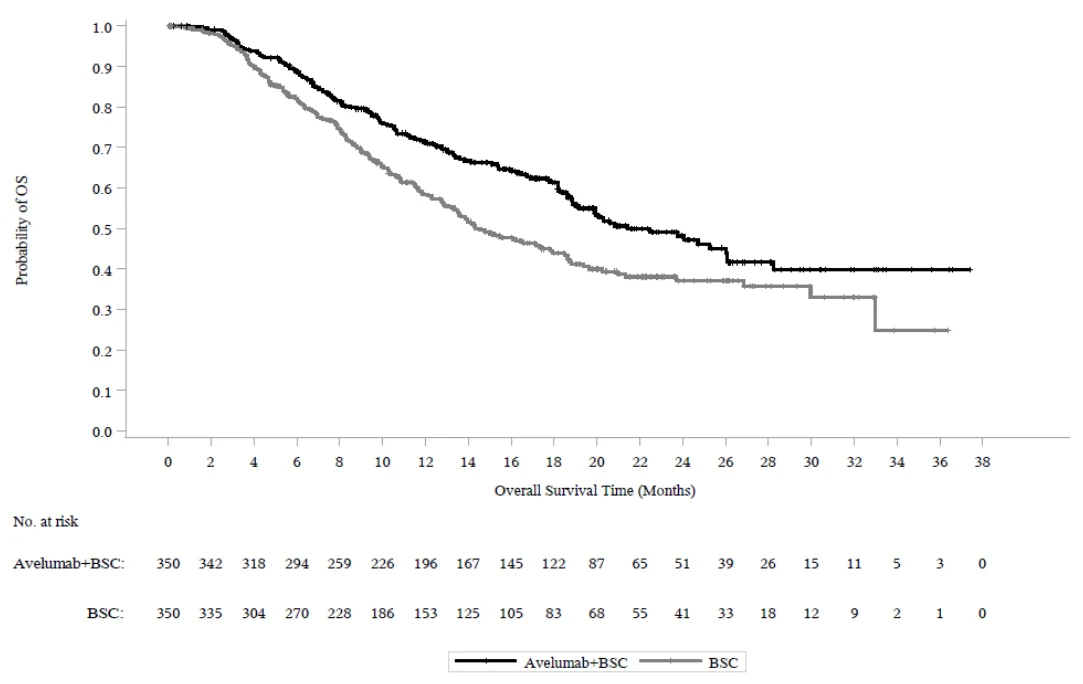
In a pre-specified analysis for patients with PD-L1 positive tumours conducted at the time of primary OS analysis, the estimated hazard ratio (HR) was 0.56 (95% CI: 0.40, 0.79). In an exploratory analysis, for patients with PD-L1-negative tumours, the updated HR was 0.86. Kaplan-Meier survival estimates for patients with PD-L1-positive and PD-L1-negative tumours, respectively, are shown in Figure 2 and 3.
Figure 2 – Kaplan-Meier Plot of Primary Analysis for Overall Survival - Subjects with PD-L1-Positive Tumours in the Full Analysis Set (JAVELIN Bladder 100 Study)
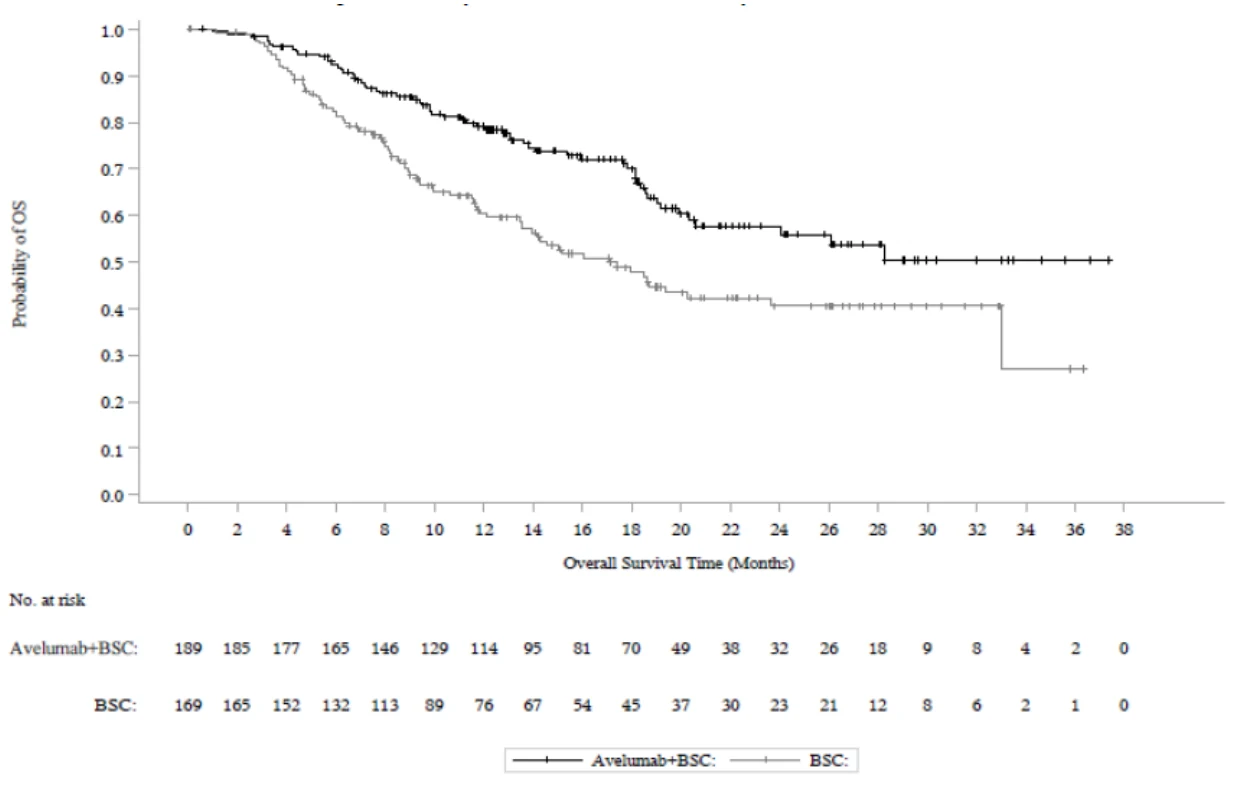
Figure 3 - Kaplan-Meier Plot of Primary OS Analysis - Subjects with PD-L1-Negative Tumours in the Full Analysis Set (Protocol B9991001)
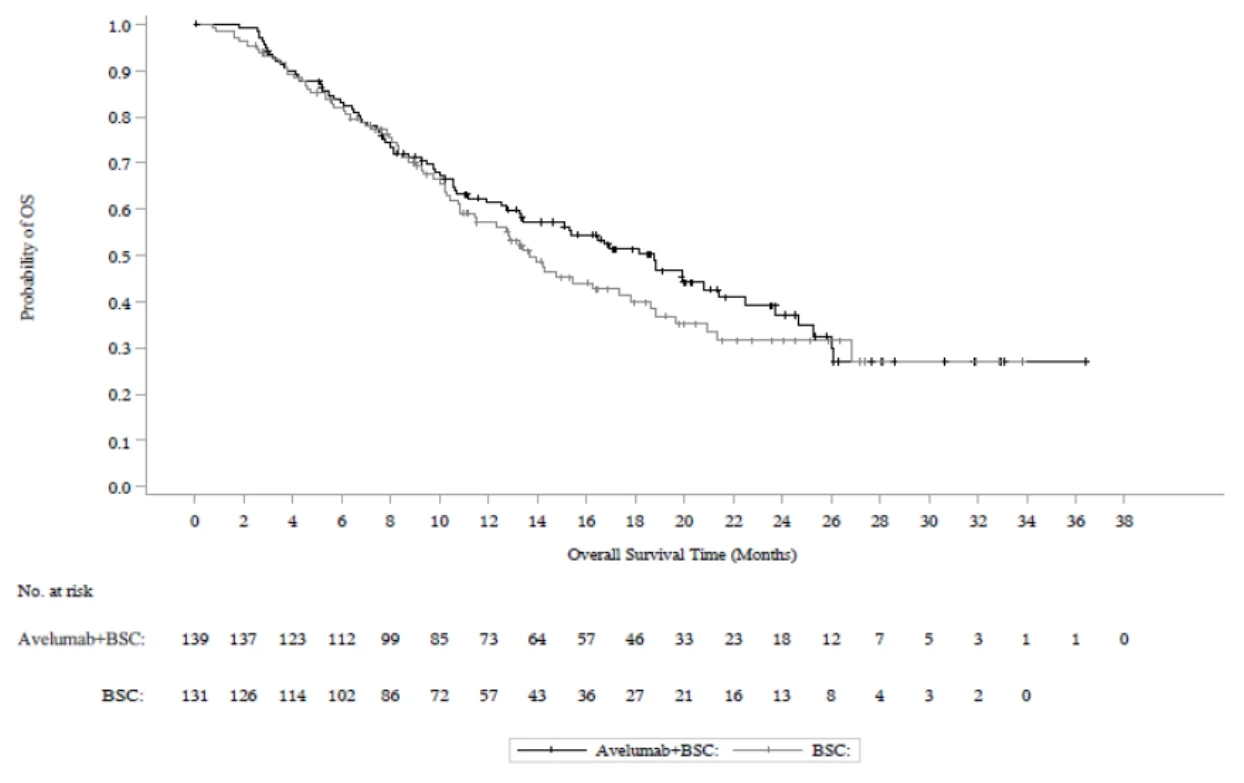
In an exploratory subgroup analysis per the metastatic site at the time of initiating first-line chemotherapy, the estimated HR for visceral subgroup and non-visceral subgroup was 0.82 and 0.54, respectively.
Previously Treated Urothelial Carcinoma
Efficacy results, for patients with locally advanced or metastatic UC who received prior platinum -based chemotherapy, from Study 001 are presented in Table 18.
Efficacy Results from First Data Cut-Off (≥ 6 Months Follow-Up, N = 161): The confirmed objective response rate (ORR) as assessed by the IERC was 16.1%, consisting of 8 complete responses and 18 partial responses in Bavencio treated patients. The median time to response onset was 11.4 weeks (min, max: 5.6, 48). The 6-month durability of response was 95.8% among 161 patients with at least 6 months of follow-up. Responses were observed among PD-L1 positive and PD-L1 negative patients with a lower response rate observed among patients determined to be PD-L1 negative patients in Study 001 (defined as having less than 5% PD-L1 expression on tumour cells).
Efficacy Results from Second Data Cut-Off (≥ 12 Months Follow-Up, N = 242): The confirmed ORR as assessed by the IERC was 15.7%, consisting of 11 complete responses and 27 partial responses in Bavencio treated patients. The median time to response onset was 11.6 weeks (min, max: 5.6, 47.7). The 6-month and 12-month durability of response was 94.4% and 69.4%, respectively, among 242 patients with at least 12 months of follow-up.
Table 18 – Efficacy Results for Patients with Locally Advanced or Metastatic UC in Study 001
Efficacy Endpoints (Tumour assessments per RECIST v1.1, IERC) | Results ≥ 6 Months Follow-Up (N = 161) |
| Primary endpoint | |
Confirmed Best Overall Response (BOR) Complete Response (CR)* n (%) Partial Response (PR)* n (%) | 8 (5.0%) 18 (11.2%) |
| Key secondary endpoints | |
Objective Response Rate (ORR) Response Rate, CR+PR* n (%) (95% CI) | 26 (16.1%) (10.8, 22.8) |
Duration of Response (DOR)a Median, months (95% CI) ≥ 6 months by K-M (95% CI) Minimum, Maximum, months | NE (9.7, NE) 95.8% (73.9, 99.4) 1.4+, 17.4+ |
CI: Confidence interval; RECIST: Response Evaluation Criteria in Solid Tumours; IERC: Independent Endpoint Review Committee; K-M: Kaplan Meier; +denotes a censored value; NE: Not estimable; *CR or PR was confirmed at a subsequent tumour assessment aBased on number of patients with confirmed response (CR or PR)
16 Non-Clinical Toxicology
Conventional repeat dose toxicity studies were conducted in Cynomolgus monkeys. Intravenous doses of 20, 60 or 140 mg/kg were administered once per week in the 1-month study and 3-month studies, followed by a recovery period (1 month and 2 months, respectively).
Results from these studies did not show any notable effects. The no observed adverse effect level (NOAEL) in both primate studies was ≥ 140 mg/kg, which is 10 to 14 times the human clinical exposure based on AUC.
No studies have been conducted to assess the potential of avelumab for genotoxicity or carcinogenicity.
No reproductive or development toxicity studies have been conducted with avelumab.
Fertility studies have not been conducted with avelumab. In the 1-month and 3-month repeat dose toxicology studies in Cynomolgus monkeys, there were no notable effects in the male and female reproductive organs.
In animal models, inhibition of PD-L1/PD-1 signaling increased the severity of some infections and enhanced inflammatory responses. M. tuberculosis-infected PD-1 knockout mice exhibit markedly decreased survival compared with wild-type controls, which correlated with increased bacterial proliferation and inflammatory responses in these animals. PD-L1 and PD-1 knockout mice and mice receiving PD-L1 blocking antibody have also shown decreased survival following infection with lymphocytic choriomeningitis virus.