


Product Monograph - Tecentriq
Recent Major Label Changes
| 1 Indications | XX/XXXX |
|---|---|
| 4 Dosage and Administration, 4.2 Recommended Dose and Dosage Adjustment | XX/XXXX |
| 4 Dosage and Administration, 4.4 Administration | XX/XXXX |
| 7 Warnings and Precautions | 2026-04 |
Table of Contents
Certain sections or subsections that are not applicable at the time of the preparation of the most recent authorized product monograph are not listed.
Recent Major Label Changes .................................................................................................. 2
Table of Contents................................................................................................................... 2
Part 1: Healthcare Professional Information........................................................................... 4
- 1.
Indications ...................................................................................................................... 4
1.1. Pediatrics ............................................................................................................ 5
1.2. Geriatrics............................................................................................................. 5
- 2. Contraindications ............................................................................................................ 5
- 4.
Dosage and Administration ............................................................................................. 5
4.1. Dosing Considerations ......................................................................................... 5
4.2. Recommended Dose and Dosage Adjustment....................................................... 5
4.3. Reconstitution ................................................................................................... 11
4.4. Administration................................................................................................... 11
4.5. Missed Dose ...................................................................................................... 11
- 5. Overdose ...................................................................................................................... 11
- 6. Dosage Forms, Strengths, Composition, and Packaging ................................................. 11
- 7.
Warnings and Precautions............................................................................................. 12
General ......................................................................................................................... 12
Driving and Operating Machinery................................................................................... 13
Immune ........................................................................................................................ 13
Monitoring and Laboratory Tests ................................................................................... 18
Ophthalmologic ............................................................................................................. 18
Reproductive Health ...................................................................................................... 18
7.1. Special Populations ............................................................................................ 18
7.1.1. Pregnancy .................................................................................................. 18
7.1.2. Breastfeeding............................................................................................. 19
7.1.3. Pediatrics ................................................................................................... 19
7.1.4. Geriatrics ................................................................................................... 19
- 8.
Adverse Reactions......................................................................................................... 19
8.1. Adverse Reaction Overview................................................................................ 19
8.2. Clinical Trial Adverse Reactions .......................................................................... 19
8.3. Less Common Clinical Trial Adverse Reactions .................................................... 55
8.4. Abnormal Laboratory Findings: Hematologic, Clinical Chemistry, and Other Quantitative Data .......................................................................................................... 58
8.5. Post-Market Adverse Reactions.......................................................................... 66
- 9. Drug Interactions .......................................................................................................... 66
- 10.
Clinical Pharmacology ................................................................................................... 66
10.1. Mechanism of Action ......................................................................................... 66
10.2. Pharmacodynamics............................................................................................ 66
10.3. Pharmacokinetics .............................................................................................. 66
10.4. Immunogenicity................................................................................................. 68
- 11. Storage, Stability, and Disposal ..................................................................................... 69
Part 2: Scientific Information ............................................................................................... 70
- 13. Pharmaceutical Information.......................................................................................... 70
- 14.
Clinical Trials ................................................................................................................. 70
14.1. Clinical Trials by Indication ................................................................................. 70
- 16. Non-Clinical Toxicology ............................................................................................... 104
Patient Medication Information..........................................................................................109
Part 1: Healthcare Professional Information
1. Indications
TECENTRIQ (atezolizumab for injection) is indicated for:
First-Line Extensive-Stage Small Cell Lung Cancer (ES-SCLC)
- TECENTRIQ in combination with carboplatin and etoposide, is indicated for the first-line treatment of adult patients with extensive-stage small cell lung cancer (ES-SCLC).
- TECENTRIQ, in combination with lurbinectedin, is indicated for the maintenance treatment of adult patients with ES-SCLC whose disease has not progressed following first-line induction therapy with atezolizumab, carboplatin and etoposide.
Non-Small Cell Lung Cancer (NSCLC)
TECENTRIQ as monotherapy, is indicated as adjuvant treatment following complete resection and no progression after platinum-based adjuvant chemotherapy for adult patients with Stage II to IIIA* NSCLC whose tumours have PD-L1 expression on ≥ 50% of tumour cells (TCs) (see 14 Clinical Trials).
*According to American Joint Committee on Cancer [7th edition]
- TECENTRIQ as monotherapy, is indicated for the first-line treatment of patients with metastatic NSCLC whose tumours have high PD-L1 expression (PD-L1 stained ≥ 50% of TCs or PD-L1 stained tumour-infiltrating immune cells [ICs] covering ≥ 10% of the tumour area), as determined by a validated test and who do not have EGFR or ALK genomic tumour aberrations.
- TECENTRIQ in combination with bevacizumab, paclitaxel and carboplatin is indicated for the first-line treatment of adult patients with metastatic non-squamous NSCLC, with no EGFR or ALK genomic tumour aberrations, and no prior systemic chemotherapy treatment for metastatic non-squamous NSCLC.
- TECENTRIQ in combination with nab-paclitaxel and carboplatin, is indicated for the first-line treatment of adult patients with metastatic non-squamous, non-small cell lung cancer (NSCLC) who do not have EGFR or ALK genomic tumour aberrations.
- TECENTRIQ is indicated for the treatment of adult patients with locally advanced or metastatic NSCLC with progression on or after platinum-based chemotherapy. Patients with EGFR or ALK genomic tumour aberrations should have disease progression on a therapy for these aberrations prior to receiving TECENTRIQ.
First-Line Unresectable or Metastatic Hepatocellular Carcinoma (HCC)
- TECENTRIQ in combination with bevacizumab, is indicated for the first-line treatment of adult patients with unresectable or metastatic hepatocellular carcinoma (HCC) who require systemic therapy.
Locally Advanced or Metastatic Triple-Negative Breast Cancer (TNBC)
TECENTRIQ in combination with nab-paclitaxel is indicated for the treatment of adult patients with unresectable locally advanced or metastatic triple-negative breast cancer (TNBC) whose tumours have PD-L1 expression on tumour-infiltrating immune cells (IC) covering ≥ 1% of the tumour area, and who have not received prior chemotherapy for
- metastatic disease.
Do not replace nab-paclitaxel with paclitaxel, in combination with TECENTRIQ, when treating patients with unresectable locally advanced or metastatic TNBC (see 7 Warnings and Precautions and 14 Clinical Trials).
1.1. Pediatrics
Pediatrics (<18 years of age): Based on the data submitted and reviewed by Health Canada, the safety and efficacy of TECENTRIQ in pediatric patients has not been established; therefore, Health Canada has not authorized an indication for pediatric use.
1.2. Geriatrics
Geriatrics (≥65 years of age): No overall differences in safety or efficacy were observed between patients ≥ 65 years of age and younger patients.
2. Contraindications
TECENTRIQ is contraindicated in:
- Patients with a known hypersensitivity to atezolizumab or any of the excipients. For a complete listing, see 6 Dosage Forms, Strengths, Composition, and Packaging.
4. Dosage and Administration
4.1. Dosing Considerations
- It is important to check the product labels to ensure that the correct formulation [TECENTRIQ intravenous formulation (IV) or TECENTRIQ SC subcutaneous formulation (SC)] is being administered to the patient as prescribed. Patients currently receiving TECENTRIQ may transition to TECENTRIQ SC at the next scheduled dose.
- TECENTRIQ (IV formulation) is not intended for subcutaneous administration.
- Do not co-administer other medicinal products through the same infusion line.
4.2. Recommended Dose and Dosage Adjustment
TECENTRIQ Combination Therapy
Extensive-Stage Small Cell Lung Cancer (ES-SCLC)
TECENTRIQ in combination with carboplatin and etoposide (first-line) and TECENTRIQ in combination with lurbinectedin (maintenance)
The recommended dose is either:
- 840 mg administered by IV infusion every 2 weeks;
- 1200 mg administered by IV infusion every 3 weeks;
- 1680 mg administered by IV infusion every 4 weeks.
During the induction phase, TECENTRIQ is administered according to its dosing schedules by IV infusion followed by carboplatin, and then etoposide administered by IV infusion on day 1. Etoposide is administered by IV infusion on days 2 and 3. Carboplatin and etoposide should be given every 3 weeks. This regimen is administered for four cycles (see 14 Clinical Trials).
For the use of TECENTRIQ SC in the induction phase, please refer to the Product Monograph of TECENTRIQ SC.
The induction phase is followed by a maintenance phase in which TECENTRIQ is administered either:
- according to its dosing schedules by IV infusion, or
- according to its dosing schedules by IV infusion in combination with 3.2 mg/m2 lurbinectedin every 3 weeks.
When using TECENTRIQ with lurbinectedin for the maintenance treatment of ES-SCLC, TECENTRIQ should be administered first when given on the same day.
Non-Small Cell Lung Cancer (NSCLC)
TECENTRIQ in Combination with Bevacizumab, Paclitaxel and Carboplatin (First-Line)
The recommended dose is either:
- 840 mg administered by IV infusion every 2 weeks;
- 1200 mg administered by IV infusion every 3 weeks;
- 1680 mg administered by IV infusion every 4 weeks.
During the induction phase, TECENTRIQ is administered according to its dosing schedules by IV infusion followed by bevacizumab, paclitaxel, and carboplatin, on Day 1 of each 21-day cycle for a maximum of 4 to 6 cycles of chemotherapy.
The induction phase is followed by a maintenance phase without chemotherapy in which TECENTRIQ is administered according to its dosing schedules by IV infusion followed by bevacizumab on Day 1 of each 21-day cycle.
The paclitaxel starting dose for patients of Asian race/ethnicity was 175 mg/m2 due to higher overall level of hematologic toxicities in patients from Asian countries compared with those from non-Asian countries.
The use of systemic corticosteroids or immunosuppressants before starting TECENTRIQ should be avoided because of their potential interference with the pharmacodynamic activity and efficacy of atezolizumab. However, systemic corticosteroids or other immunosuppressants can be used to treat immune-mediated adverse reactions after starting TECENTRIQ.
TECENTRIQ in Combination with nab-Paclitaxel and Carboplatin (First-Line)
The recommended dose is either:
- 840 mg administered by IV infusion every 2 weeks;
- 1200 mg administered by IV infusion every 3 weeks;
- 1680 mg administered by IV infusion every 4 weeks.
During the induction phase, TECENTRIQ is administered according to its dosing schedules by IV infusion, followed by nab-paclitaxel and carboplatin every 3 weeks for four or six cycles. For each 21-day cycle, nab-paclitaxel and carboplatin are administered on day 1. In addition, nab-paclitaxel is administered on days 8 and 15.
The induction phase is followed by a maintenance phase without chemotherapy in which TECENTRIQ is administered by IV infusion according to its dosing schedules.
Unresectable or Metastatic Hepatocellular Carcinoma (HCC)
TECENTRIQ in Combination with Bevacizumab (First-Line)
The recommended dose is either:
- 840 mg administered by IV infusion every 2 weeks;
- 1200 mg administered by IV infusion every 3 weeks;
- 1680 mg administered by IV infusion every 4 weeks.
TECENTRIQ is administered according to its dosing schedules by IV infusion, followed by bevacizumab 15 mg/kg every 3 weeks.
Refer to the Product Monograph for bevacizumab prior to initiation.
Triple-Negative Breast Cancer (TNBC)
TECENTRIQ in Combination with nab-Paclitaxel (First-Line)
The recommended dose is:
- 840 mg administered by IV infusion every 2 weeks; or
- 1200 mg administered by IV infusion every 3 weeks; or
- 1680 mg administered by IV infusion every 4 weeks. TECENTRIQ is administered according to its dosing schedules by IV infusion and 100 mg/m2 nab-paclitaxel is administered on days 1, 8 and 15 during each 28-day cycle. TECENTRIQ should be administered prior to nab-paclitaxel when given on the same day.
Patients should be selected for treatment based on the tumour expression of PD-L1 confirmed by a validated test (see 14 Clinical Trials).
TECENTRIQ Monotherapy
Adjuvant Treatment of Early-Stage NSCLC
The recommended dose is either:
- 840 mg administered by IV infusion every 2 weeks;
- 1200 mg administered by IV infusion every 3 weeks;
- 1680 mg administered by IV infusion every 4 weeks.
Patients should be selected for treatment based on PD-L1 expression on ≥ 50% of tumour cells (TCs), determined by an experienced laboratory using a validated test, which is equivalent to that used in the clinical trial (see 14 Clinical Trials).
Metastatic NSCLC (First Line)
The recommended dose is either:
- 840 mg administered by IV infusion every 2 weeks;
- 1200 mg administered by IV infusion every 3 weeks;
- 1680 mg administered by IV infusion every 4 weeks.
Patients should be selected for treatment based on high PD-L1 expression (TCs ≥ 50% or ICs ≥ 10%), determined by an experienced laboratory using a validated test (see 14 Clinical Trials).
Locally Advanced or Metastatic NSCLC (Second Line)
The recommended dose is either:
- 840 mg administered by IV infusion every 2 weeks;
- 1200 mg administered by IV infusion every 3 weeks;
- 1680 mg administered by IV infusion every 4 weeks.
Duration of Treatment
Adjuvant Treatment of Early-Stage NSCLC
Patients are treated with TECENTRIQ for up to 1 year unless there is disease recurrence or unacceptable toxicity (see 14 Clinical Trials).
ES-SCLC (First-Line), Locally Advanced or Metastatic NSCLC (First Line and Second Line), and Unresectable or Metastatic Hepatocellular Carcinoma
It is recommended that patients are treated with TECENTRIQ until loss of clinical benefit or unmanageable toxicity.
For previously treated patients in pivotal studies, treatment with TECENTRIQ was permitted until loss of clinical benefit as defined by the following criteria:
- Absence of symptoms and signs (including worsening of laboratory values [e.g., new or worsening hypercalcemia]) indicating unequivocal progression of disease
- No decline in ECOG performance status
- Absence of tumour progression at critical anatomical sites (e.g., leptomeningeal disease) that cannot be readily managed and stabilized by protocol allowed medical interventions prior to repeat dosing
- Evidence of clinical benefit as assessed by the investigator
TNBC
Patients are treated with TECENTRIQ until disease progression or unacceptable toxicity.
Dose Modifications for Immune-Mediated Adverse Reactions
No dose reductions of TECENTRIQ are recommended.
TECENTRIQ dose modifications for specific adverse drug reactions (see 7 Warnings and Precautions) are presented in Table 1.
Table 1: Recommended TECENTRIQ Dose Modifications for Specific Adverse Drug Reactions
| Adverse Reaction | Severity | TECENTRIQ Dose Modification |
|---|---|---|
| Adverse Reaction | Severity | TECENTRIQ Dose Modification |
| Adverse Reaction | Severity | TECENTRIQ Dose Modification |
| Immune-Mediated Pneumonitis | Grade 2 | Withhold1 |
| Grade 3 or 4 | Permanently discontinue | |
| Immune-Mediated Hepatitis in Patients without HCC | Grade 2 (ALT or AST >3x ULN or blood bilirubin >1.5x ULN for more than 5-7 days) | Withhold1 |
| Grade 3 or 4 (ALT or AST >5x ULN or blood bilirubin >3x ULN) | Permanently discontinue | |
| Immune-Mediated Hepatitis in Patients with HCC | If AST/ALT is within normal limits at baseline and increases to >3x to ≤10x ULN | Withhold1 |
If AST/ALT is >1 to ≤3x ULN at baseline and increases to >5x to ≤10x ULN If AST/ALT is >3x to ≤5x ULN at baseline and increases to >8x to ≤10x ULN | Permanently discontinue for events lasting > 5 days of duration following withholding of TECENTRIQ | |
| If AST/ALT increases to >10x ULN or total bilirubin increases to >3x ULN | Permanently discontinue | |
| Immune-Mediated Colitis | Grade 2 diarrhea or colitis | Withhold1 |
| Grade 3 diarrhea or colitis | Withhold1 Initiate IV corticosteroids and convert to oral corticosteroids after improvement | |
| Grade 4 diarrhea or colitis | Permanently discontinue | |
| Immune-Mediated Hypothyroidism | Symptomatic | Withhold2 Initiate thyroid hormone replacement therapy |
| Immune-Mediated Hyperthyroidism | Symptomatic | Withhold2 Initiate anti-thyroid therapy as needed |
| Immune-Mediated Adrenal Insufficiency | Symptomatic | Withhold1 |
| Immune-Mediated Hypophysitis | Grade 2 or 3 | Withhold1 |
| Grade 4 | Permanently discontinue | |
| Immune-Mediated Type 1 Diabetes | For ≥ Grade 3 hyperglycemia (fasting glucose >13.9 mmol/L) | Withhold2 Initiate insulin |
| Immune-Mediated Meningitis, Encephalitis, Myasthenic Syndrome / Myasthenia Gravis, Guillain-Barré syndrome | All grades | Permanently discontinue |
| Immune-Mediated Myelitis | Grade 2, 3 or 4 | Permanently discontinue |
| Immune-Mediated Facial Paresis | Grade 1 or 2 | Withhold1 |
| Grade 3 or 4 | Permanently discontinue | |
| Immune-Mediated Pancreatitis | Grade 2 or 3 ≥ Grade 3 serum amylase or lipase levels increased (> 2x ULN) | Withhold1 |
| Grade 4 or any grade recurrent pancreatitis | Permanently discontinue | |
| Immune-Mediated Myocarditis | Grade 2 or above | Permanently discontinue |
| Immune-Mediated Myositis | Grade 2 or 3 | Withhold1 |
| Grade 4 or grade 3 recurrent myositis | Permanently discontinue | |
| Immune-Mediated Nephritis | Grade 2 (creatinine level >1.5 - 3x baseline or >1.5 - 3x ULN) | Withhold1 |
| Grade 3 (creatinine level >3x baseline or >3 - 6x ULN) or 4 (creatinine level >6x ULN) | Permanently discontinue | |
| Immune-Mediated Pericardial Disorders | Grade 1 pericarditis | Withhold3 |
| Grade 2 or above | Permanently discontinue | |
| Infusion-Related Reactions | Grade 1 or 2 | Reduce rate of infusion or withhold treatment Premedication with antipyretic and antihistamines may be considered for subsequent doses |
| Grade 3 or 4 | Permanently discontinue | |
| Haemophagocytic Lymphohistiocytosis | Suspected haemophagocytic lymphohistiocytosis3 | Permanently discontinue |
| Immune-Mediated Skin Reactions | Grade 3 Or suspected Stevens-Johnson syndrome (SJS) or toxic epidermal necrolysis (TEN)4 | Withhold1 |
Grade 4 Or confirmed Stevens-Johnson syndrome (SJS) or toxic epidermal necrolysis (TEN)4 | Permanently discontinue | |
| Persistent Grade 2 or 3 Adverse Reaction (excluding endocrinopathies) | Grade 2 or 3 adverse reaction that does not recover to Grade 0 or 1 within 12 weeks after last TECENTRIQ dose | Permanently discontinue |
| Inability to Taper Corticosteroid | Inability to reduce to less than or equal to prednisone 10 mg per day (or equivalent) within 12 weeks after last TECENTRIQ dose | Permanently discontinue |
| Recurrent Grade 3 or 4 Adverse Reaction | Recurrent Grade 3 or 4 (severe or life-threatening) adverse reaction | Permanently discontinue |
1 Treatment with corticosteroid therapy (1-2 mg/kg/day prednisone or equivalent) should be initiated. Treatment with TECENTRIQ may be resumed in patients with complete or partial resolution (Grade 0 to 1) within 12 weeks, and after corticosteroids have been reduced to ≤10 mg/day oral prednisone or equivalent. 2 Treatment with TECENTRIQ may be resumed when symptoms are controlled and the patient is clinically stable. 3 Conduct a detailed cardiac evaluation to determine the etiology and manage appropriately. 4 Regardless of severity. | ||
For other immune-mediated reactions, based on the type and severity of the reaction, treatment with TECENTRIQ should be withheld for Grades 2 or 3 immune-mediated adverse reactions and corticosteroid therapy (1-2 mg/kg/day prednisone or equivalent) should be initiated. If symptoms improve to ≤ Grade 1, taper corticosteroids as clinically indicated. Treatment with TECENTRIQ may be resumed if the event improves to ≤ Grade 1 within 12 weeks, and corticosteroids have been reduced to ≤ 10 mg oral prednisone or equivalent per day.
Treatment with TECENTRIQ should be permanently discontinued for Grade 4 immune-mediated adverse reactions, or when unable to reduce corticosteroid dose to the equivalent of ≤ 10 mg prednisone per day within 12 weeks after onset.
For dose modification guidelines for co-administered products (bevacizumab, carboplatin, etoposide, lurbinectedin, nab-paclitaxel and paclitaxel), refer to the respective Product Monographs.
4.3. Reconstitution
TECENTRIQ should be prepared by a healthcare professional using aseptic technique. Use a sterile needle and syringe to prepare TECENTRIQ. Withdraw the required volume of TECENTRIQ liquid concentrate from the vial. Dilute into a 250 mL polyvinyl chloride (PVC), polyolefin (PO), polyethylene (PE), or polypropylene (PP) infusion bag containing 0.9% Sodium Chloride Injection, USP. Dilute with 0.9% Sodium Chloride Injection only. After dilution, the final concentration of the diluted solution should be between 3.2 mg/mL and 16.8 mg/mL. Mix diluted solution by gentle inversion. Do not shake.
No preservative is used in TECENTRIQ therefore each vial is for single use only.
TECENTRIQ must not be mixed with other medicinal products. Discard any unused portion.
The diluted solution for infusion should be used immediately. If the solution is not used immediately, it can be stored for up to 30 days at 2 - 8°C, or 24 hours at ambient temperature (≤ 25°C) if prepared under aseptic conditions. See 11 Storage, Stability, and Disposal.
4.4. Administration
TECENTRIQ must be administered as an intravenous infusion under the supervision of a qualified healthcare professional. Do not administer as an IV push or bolus.
The initial dose of TECENTRIQ must be administered over 60 minutes. If the first infusion is tolerated all subsequent infusions may be administered over 30 minutes.
For the use of TECENTRIQ in combination therapy with bevacizumab, carboplatin, etoposide, lurbinectedin, nab-paclitaxel or paclitaxel, please refer to the Product Monograph for the combination product for full prescribing information. TECENTRIQ should be administered prior to IV combination therapy if given on the same day.
4.5. Missed Dose
If a planned dose of TECENTRIQ is missed, it should be administered as soon as possible. The schedule of administration should be adjusted to maintain an appropriate interval between doses.
5. Overdose
There is no information on overdose with TECENTRIQ. Doses ranging from 0.01 to 20 mg/kg were tested in patients with various tumour types, and a maximum tolerated dose (MTD) was not determined.
In case of overdose, patients should be closely monitored for signs or symptoms of adverse reactions, and appropriate symptomatic treatment instituted.
| For the most recent information in the management of a suspected drug overdose, contact your regional poison control centre or Health Canada’s toll-free number, 1-844 POISON-X (1-844-764-7669). |
|---|
- 6. Dosage Forms, Strengths, Composition, and Packaging
To help ensure the traceability of biologic products, healthcare professionals should record both the brand name and the non-proprietary (active ingredient) name as well as other product-specific identifiers such as the Drug Identification Number (DIN) and the batch/lot number of the product supplied.
Table 2 Dosage Forms, Strengths, and Composition
Description
TECENTRIQ is supplied as a single-use vial containing either 840 mg atezolizumab/14 mL or 1200 mg atezolizumab/20 mL preservative-free, colourless to slightly yellow solution, at a concentration of 60 mg/mL for dilution for intravenous infusion. Each carton contains one vial of either 840 mg or 1200 mg TECENTRIQ.
7. Warnings and Precautions
General
TECENTRIQ should be administered under the supervision of healthcare professionals experienced in the treatment of cancer.
Discontinuation/Dose modification and dose interruption
Immune-mediated adverse reactions, including severe and fatal cases, have occurred in patients receiving TECENTRIQ. In clinical trials, most immune-mediated adverse reactions were reversible and managed with interruptions of TECENTRIQ, administration of corticosteroids and/or supportive care. Immune-mediated adverse reactions have also occurred after the last dose of TECENTRIQ. Immune-mediated adverse reactions affecting more than one body system can occur simultaneously. For suspected immune-mediated adverse reactions, ensure adequate evaluation to confirm etiology or exclude other causes. See 4 Dosage and Administration and 8 Adverse Reactions for additional information.
Numeric increase in the risk of death in patients with metastatic TNBC when TECENTRIQ is used in combination with paclitaxel
In a randomized clinical trial in patients with locally advanced or metastatic TNBC, Study MO39196 (IMpassion131), an increase in the risk of death was observed in patients treated with TECENTRIQ plus paclitaxel compared with placebo and paclitaxel in the PD-L1-positive population (Overall Survival stratified HR: 1.11, 95% CI [0.76, 1.64]). Do not replace nab-paclitaxel with paclitaxel in combination with TECENTRIQ in clinical practice for unresectable locally advanced or metastatic TNBC outside of controlled clinical trials. See 1 Indications and 14 Clinical Trials for additional information.
| Route of Administration | Dosage Form/ Strength/Composition | Non-Medicinal Ingredients |
| Intravenous infusion | Concentrate for solution for infusion 1200 mg atezolizumab / 20 mL (60 mg/mL) and, 840 mg atezolizumab / 14 mL (60 mg/mL) | glacial acetic acid, L-histidine, polysorbate 20, sucrose, and water for injection. |
Use in lung and hepatocellular cancer patients treated with the combination of TECENTRIQ and bevacizumab
Bleeding (including fatal events) is a known adverse reaction with bevacizumab. Serious bleeding events, including fatalities, have occurred in lung and hepatocellular cancer patients treated with the combination of TECENTRIQ and bevacizumab. Lung cancer patients, who had clear tumour infiltration into the thoracic great vessels or clear cavitation of pulmonary lesions, as seen on imaging, were excluded from the pivotal clinical study GO9436 (IMpower150) after several cases of fatal pulmonary hemorrhage occurred following initiation of treatment with TECENTRIQ in combination with bevacizumab, paclitaxel and carboplatin.
There is lack of clinical data to support the combination of TECENTRIQ and bevacizumab in hepatocellular cancer patients with bleeding varices (including recent bleeds), untreated varices or varices at high risk of bleeding because these patients were excluded from treatment with TECENTRIQ and bevacizumab in the YO40245 (IMbrave150) pivotal study (see 14 Clinical Trials).
Carefully consider the risks of TECENTRIQ plus bevacizumab in patients with HCC or the four-drug regimen of TECENTRIQ in combination with bevacizumab, paclitaxel, and carboplatin in lung cancer patients before initiating treatment. Patients with HCC should be evaluated for the presence of varices and have varices treated as indicated within 6 months prior to initiating therapy with the combination of TECENTRIQ and bevacizumab.
Refer to the bevacizumab Product Monograph for full prescribing information on the risks of bleeding events.
Driving and Operating Machinery
No studies on the effects on the ability to drive and to use machines have been performed.
Immune
Autoimmune Hemolytic Anemia
TECENTRIQ can cause autoimmune hemolytic anemia (AIHA). Patients should be monitored for signs and symptoms of drug-induced AIHA, and if this adverse reaction is observed, administration of this drug should be discontinued and treatment for AIHA should be initiated, as deemed medically appropriate.
Haemophagocytic Lymphohistiocytosis
TECENTRIQ can cause haemophagocytic lymphohistiocytosis (HLH), including fatal cases, which were observed in patients receiving TECENTRIQ (see section 8 Adverse Reactions). HLH should be considered when the presentation of cytokine release syndrome is atypical or prolonged. Patients should be monitored for clinical signs and symptoms of HLH. Refer to section 4 Dosage and Administration for recommended dose modifications.
Immune-Mediated Colitis
TECENTRIQ can cause diarrhea or colitis. Patients should be monitored for signs and symptoms of colitis. Refer to section 4 Dosage and Administration for recommended dose modifications.
Treatment with TECENTRIQ should be withheld for Grade 2 or Grade 3 diarrhea (increase of ≥ 4 stools/day over baseline) or colitis (symptomatic). For Grade 2 diarrhea or colitis, if symptoms persist > 5 days or recur, start 1–2 mg/kg prednisone or equivalent per day. Treat Grade 3 diarrhea or colitis with IV corticosteroids (1–2 mg/kg/day methylprednisolone or equivalent) and convert to oral corticosteroids (prednisone 1–2 mg/kg or equivalent per day) after improvement. If symptoms improve to ≤ Grade 1, taper corticosteroids over ≥ 1 month. Treatment with TECENTRIQ may be resumed if the event improves to ≤ Grade 1 within 12 weeks and corticosteroids have been reduced to ≤ 10 mg oral prednisone or equivalent per day. Treatment with TECENTRIQ should be permanently discontinued for Grade 4 (life threatening; urgent intervention indicated) diarrhea or colitis.
Cytomegalovirus (CMV) infection/reactivation has been reported in patients with corticosteroid-refractory immune-mediated colitis. In cases of corticosteroid-refractory colitis, consider repeating infectious workup to exclude alternative etiologies.
Immune-Mediated Endocrinopathies
TECENTRIQ can cause hypothyroidism, hyperthyroidism, adrenal insufficiency and type 1 diabetes mellitus, including diabetic ketoacidosis across tumour types. Patients should be monitored for clinical signs and symptoms of endocrinopathies.
Adrenal Insufficiency
For symptomatic adrenal insufficiency, TECENTRIQ should be withheld and treatment of 1–2 mg/kg per day of IV methylprednisolone or equivalent should be started. Once symptoms improve, follow with 1–2 mg/kg per day of oral prednisone or equivalent. If symptoms improve to ≤ Grade 1, taper corticosteroids over ≥ 1 month. Treatment may be resumed if the event improves to ≤ Grade 1 within 12 weeks and corticosteroids have been reduced to the equivalent of ≤ 10 mg oral prednisone or equivalent per day and patient is stable on replacement therapy (if required). Refer to section 4 Dosage and Administration for recommended dose modifications.
Diabetes Mellitus
Treatment with insulin should be initiated for type 1 diabetes mellitus. For ≥ Grade 3 hyperglycemia (fasting glucose >13.9 mmol/L), TECENTRIQ should be withheld. Treatment with TECENTRIQ may be resumed if metabolic control is achieved on insulin replacement therapy. Refer to section 4 Dosage and Administration for recommended dose modifications.
Hypophysitis
TECENTRIQ can cause hypophysitis across tumour types. Monitor for signs and symptoms of hypophysitis. Administer corticosteroids and hormone replacement as clinically indicated. Withhold TECENTRIQ for Grade 2 or Grade 3 and permanently discontinue for Grade 4 hypophysitis. Refer to section 4 Dosage and Administration for recommended dose modifications.
Thyroid Disorders
Monitor thyroid function prior to and periodically during treatment with TECENTRIQ. Consider appropriate management of patients with abnormal thyroid function tests at baseline. Patients with abnormal thyroid function tests who are asymptomatic may receive TECENTRIQ. Refer to section 4 Dosage and Administration for recommended dose modifications.
Asymptomatic patients with abnormal thyroid function tests can receive TECENTRIQ. For symptomatic hypothyroidism, TECENTRIQ should be withheld and thyroid hormone replacement should be initiated as needed. Isolated hypothyroidism may be managed with replacement therapy and without corticosteroids. For symptomatic hyperthyroidism, TECENTRIQ should be withheld and an anti-thyroid drug such as methimazole or carbimazole should be initiated as needed. Treatment with TECENTRIQ may be resumed when symptoms are controlled and thyroid function is improving.
Refer to section 8 Adverse Reactions for additional information.
Immune-Mediated Hepatitis
TECENTRIQ can cause hepatitis, some leading to fatal outcomes across tumour types. Patients should be monitored for signs and symptoms of hepatitis. Monitor aspartate aminotransferase (AST), alanine aminotransferase (ALT) and bilirubin prior to and periodically during treatment with TECENTRIQ. Consider appropriate management of patients with abnormal liver function tests (LFTs) at baseline. Refer to section 4 Dosage and Administration for recommended dose modifications.
Treatment with TECENTRIQ should be withheld if Grade 2 (ALT or AST >3x upper limit of normal (ULN) or blood bilirubin >1.5x ULN) persists for more than 5–7 days, and 1–2 mg/kg prednisone or equivalent per day should be started. If LFTs improve to ≤ Grade 1, taper corticosteroids over ≥ 1 month. Treatment with TECENTRIQ may be resumed if the event improves to ≤ Grade 1 within 12 weeks, and corticosteroids have been reduced to ≤ 10 mg oral prednisone or equivalent per day. Treatment with TECENTRIQ should be permanently discontinued for Grade 3 or Grade 4 events (ALT or AST >5.0x ULN or blood bilirubin >3x ULN).
Immune-Mediated Meningoencephalitis
TECENTRIQ can cause meningoencephalitis across tumour types. Patients should be monitored for clinical signs and symptoms of meningitis or encephalitis. Refer to section 4 Dosage and Administration for recommended dose modifications.
Treatment with TECENTRIQ should be permanently discontinued for any grade of meningitis or encephalitis. Treat with 1–2 mg/kg IV methylprednisolone or equivalent per day. Convert to 1–2 mg/kg oral prednisone or equivalent per day once the patient has improved. If symptoms improve to ≤ Grade 1, taper corticosteroids over ≥ 1 month.
Immune-Mediated Myelitis
TECENTRIQ can cause myelitis, including fatal cases. Patients should be closely monitored for signs and symptoms that are suggestive of myelitis. Refer to section 4 Dosage and Administration for recommended dose modifications.
Immune-Mediated Myocarditis
TECENTRIQ can cause myocarditis, including fatal cases, observed in clinical trials. Patients should be monitored for signs and symptoms of myocarditis (also see “Immune-Mediated Myocarditis/Myositis/Myasthenia Gravis Overlap Syndrome” in this section). Refer to section 4 Dosage and Administration for recommended dose modifications.
Treatment with TECENTRIQ should be permanently discontinued for myocarditis Grade 2 or above. Corticosteroids and/or additional immunosuppressive agents should be administered as clinically indicated.
Immune-Mediated Myositis
TECENTRIQ can cause myositis, including fatal cases. Cases of rhabdomyolysis were also observed. Patients should be monitored for signs and symptoms of myositis (also see “Immune-Mediated Myocarditis/Myositis/Myasthenia Gravis Overlap Syndrome” in this section). Refer to section 4 Dosage and Administration for recommended dose modifications.
Treatment with TECENTRIQ should be withheld if Grade 2 or Grade 3 myositis occurs. Treatment with corticosteroid therapy (1–2 mg/kg/day prednisone or equivalent) should be initiated. Treatment with TECENTRIQ may be resumed in patients with complete or partial resolution (Grade 0 to 1) within 12 weeks, and after corticosteroids have been reduced to ≤10 mg/day oral prednisone or equivalent. Treatment with TECENTRIQ should be permanently discontinued for Grade 4, or recurrent Grade 3 myositis.
Immune-Mediated Nephritis
TECENTRIQ can cause nephritis. Patients should be monitored for changes in renal function. Refer to section 4 Dosage and Administration for recommended dose modifications.
Treatment with TECENTRIQ should be withheld for Grade 2 nephritis. Treatment with TECENTRIQ should be permanently discontinued for Grade 3 or 4 nephritis.
Immune-Mediated Neuropathies
TECENTRIQ can cause myasthenic syndrome/myasthenia gravis or Guillain-Barré syndrome, which may be life threatening, and facial paresis, which were observed in patients receiving TECENTRIQ across tumour types. Patients should be monitored for symptoms of motor and sensory neuropathy (also see “Immune-Mediated Myocarditis/Myositis/Myasthenia Gravis Overlap Syndrome” in this section). Refer to section 4 Dosage and Administration for recommended dose modifications.
Treatment with TECENTRIQ should be permanently discontinued for any grade of myasthenic syndrome / myasthenia gravis or Guillain-Barré syndrome. Consider initiation of systemic corticosteroids at a dose of 1–2 mg/kg oral prednisone or equivalent per day.
Immune-Mediated Pancreatitis
TECENTRIQ can cause pancreatitis, including increases in serum amylase and lipase levels across tumour types. Patients should be closely monitored for signs and symptoms that are suggestive of acute pancreatitis. Refer to section 4 Dosage and Administration for recommended dose modifications.
Treatment with TECENTRIQ should be withheld for ≥ Grade 3 serum amylase or lipase levels increased (> 2.0x ULN), or Grade 2 or 3 pancreatitis, and treatment with 1–2 mg/kg IV methylprednisolone or equivalent per day, should be started. Once symptoms improve, follow with 1–2 mg/kg oral prednisone or equivalent per day. Treatment with TECENTRIQ may be resumed when serum amylase and lipase levels improve to ≤ Grade 1 within 12 weeks, or symptoms of pancreatitis have resolved, and corticosteroids have been reduced to ≤ 10 mg oral prednisone or equivalent per day. Treatment with TECENTRIQ should be permanently discontinued for Grade 4, or any grade of recurrent pancreatitis.
Immune-Mediated Pericardial Disorders
Pericardial disorders, including pericarditis, pericardial effusion and cardiac tamponade, some leading to fatal outcomes, have been observed in clinical trials with TECENTRIQ (see 8 Adverse Reactions). Patients should be monitored for clinical signs and symptoms of pericardial disorders. Refer to the 4 Dosage and Administration section for recommended dose modifications.
Immune-Mediated Pneumonitis
TECENTRIQ can cause pneumonitis, including fatal cases across tumour types. Patients should be monitored for signs and symptoms of pneumonitis. Refer to section 4 Dosage and Administration for recommended dose modifications.
Treatment with TECENTRIQ should be withheld for Grade 2 pneumonitis, and 1–2 mg/kg prednisone or equivalent per day should be started. If symptoms improve to ≤ Grade 1, taper corticosteroids over ≥ 1 month. Treatment with TECENTRIQ may be resumed if the event improves to ≤ Grade 1 within 12 weeks, and corticosteroids have been reduced to ≤ 10 mg oral prednisone or equivalent per day. Treatment with TECENTRIQ should be permanently discontinued for Grade 3 or Grade 4 pneumonitis.
Immune-Mediated Skin Reactions
TECENTRIQ can cause immune-mediated rash. Immune-mediated severe cutaneous adverse reactions (SCARs), including cases of Stevens-Johnson syndrome (SJS) and toxic epidermal necrolysis (TEN), have been reported in patients receiving TECENTRIQ monotherapy or in combination with other anti-cancer agents. In most cases, patients received concomitant medications known to be associated with severe cutaneous reactions. Monitor patients for rash and other skin reactions and exclude other causes. Based on the severity of the adverse reaction, TECENTRIQ should be withheld for Grade 3 skin reactions until recovery to Grade ≤1 or permanently discontinued for Grade 4 skin reactions, and corticosteroids should be administered. Refer to the 4 Dosage and Administration section for recommended dose modifications.
For suspected SCARs, patients should be referred to a specialist for further diagnosis and management. TECENTRIQ should be withheld for patients with suspected SJS or TEN. For confirmed SJS or TEN, TECENTRIQ should be permanently discontinued.
Caution should be used when considering the use of TECENTRIQ in a patient who has previously experienced a severe or life-threatening skin adverse reaction on prior treatment with other immune-stimulatory anticancer agents.
Immune-Mediated Myocarditis/Myositis/Myasthenia Gravis Overlap Syndrome
Cases of an overlap syndrome defined by the concurrent manifestation of any two or all three of the following conditions: myocarditis, myositis, and myasthenia gravis, have been observed in clinical trials or the post-marketing setting with TECENTRIQ and other immune checkpoint inhibitors. Onset occurs predominantly within the first two treatment cycles. It is important to recognize overlapping symptoms, which can complicate diagnosis and management and could have a higher risk of morbidity and mortality. Patients presenting with signs or symptoms of one condition should also be monitored and evaluated for the other two conditions and they should be managed as clinically indicated. Refer to the 4 Dosage and Administration section for recommended dose modification guidance for the individual conditions (myocarditis, myositis, myasthenia gravis) and adhere to the most stringent recommendations.
Other Immune-Mediated Toxicities
The following additional clinically significant immune-mediated adverse reactions were reported in less than 1% (unless otherwise indicated) in patients treated with TECENTRIQ for various cancers and/or reported with the use of other PD-1/PD-L1 blocking antibodies: sarcoidosis, vasculitis and aplastic anemia.
Infections
TECENTRIQ can cause severe infections. Monitor patients for signs and symptoms of infection and treat with antibiotics for suspected or confirmed bacterial infections. Withhold TECENTRIQ for ≥ Grade 3 infection. Refer to 4 Dosage and Administration for recommended dose modifications.
Infusion-Related Reactions
Infusion related reactions, including hypersensitivity and anaphylaxis, have been observed in clinical trials with TECENTRIQ. Monitor for signs and symptoms of infusion-related reactions. Refer to section 4 Dosage and Administration for recommended dose modifications.
The rate of infusion should be reduced or treatment should be interrupted in patients with Grade 1 or 2 infusion-related reactions. Patients with Grade 1 or 2 infusion-related reactions may continue to receive TECENTRIQ with close monitoring; premedication with antipyretic and antihistamines may be considered. Treatment with TECENTRIQ should be permanently discontinued in patients with Grade 3 or 4 infusion-related reactions.
Monitoring and Laboratory Tests
Monitor AST, ALT, bilirubin, renal, and thyroid function prior to, periodically during treatment with TECENTRIQ and as indicated based on clinical evaluation. Patients should be closely monitored during treatment for signs and symptoms of immune-mediated adverse reactions, including but not limited to, dyspnea, hypoxia; increased frequency of bowel movements, diarrhea; elevated creatinine levels; rash, pruritus; headache, fatigue, hypotension, mental status changes, visual disturbances; muscle pain or weakness, paresthesias (see 7 Warnings and Precautions and 8 Adverse Reactions).
Ophthalmologic
Ocular Inflammatory Toxicity
TECENTRIQ can cause ocular inflammatory toxicity including optic neuritis, uveitis, keratitis and retinopathy. Withhold TECENTRIQ for moderate and permanently discontinue for severe ocular inflammatory toxicity. Refer to section 4 Dosage and Administration for recommended dose modifications.
Reproductive Health
- Fertility
Based on animal studies, TECENTRIQ may impair fertility in females of reproductive potential while receiving treatment.
7.1. Special Populations
Patients with autoimmune disease were excluded from clinical trials with TECENTRIQ. In the absence of data, TECENTRIQ should be used with caution in patients with autoimmune disease, after assessment of the potential risk-benefit.
7.1.1. Pregnancy
There are no data on the use of TECENTRIQ in pregnant women. Animal reproductive studies have not been conducted with TECENTRIQ; however, in murine pregnancy models, inhibition of the PD-L1/PD-1 pathway has been demonstrated to disrupt immune system tolerance to the developing fetus resulting in fetal death. Based on these studies, and based on its mechanism of action, the use of TECENTRIQ during pregnancy can cause fetal harm including increased rates of abortion or stillbirth (see 16 Non-Clinical Toxicology).
TECENTRIQ is not recommended during pregnancy unless the potential benefit for the mother outweighs the potential risk to the fetus. Pregnant women should be advised of the potential risk to the fetus.
Women of Childbearing Potential: For women of childbearing potential, pregnancy status should be established prior to initiating TECENTRIQ. Women should be advised to use highly effective contraception and take active measures to avoid pregnancy while undergoing TECENTRIQ treatment and for at least 5 months after the last dose (see 16 Non-Clinical Toxicology).
7.1.2. Breastfeeding
Nursing Women: There is no information regarding the presence of atezolizumab in human milk, the effects on the breastfed infant, or the effects on milk production. As human IgG is excreted in human milk, the potential for absorption and harm to the infant is unknown. Because of the potential for serious adverse reactions in breastfed infants from TECENTRIQ, advise women not to breastfeed during treatment and for at least 5 months after the last dose.
7.1.3. Pediatrics
Pediatrics (<18 years of age): Based on the data submitted and reviewed by Health Canada, the safety and efficacy of TECENTRIQ in pediatric patients have not been established; therefore Health Canada has not authorized an indication for pediatric use.
7.1.4. Geriatrics
Geriatrics (≥ 65 years of age): No overall differences in safety or efficacy were observed between patients ≥ 65 years of age and younger patients. Data for patients ≥ 75 years of age are too limited to draw conclusions on this population.
8. Adverse Reactions
8.1. Adverse Reaction Overview
The following clinically significant adverse reactions have been observed in patients treated with TECENTRIQ and are detailed under 7 Warnings and Precautions:
- Severe and fatal immune-mediated adverse reactions (see 7 Warnings and Precautions, Immune and 8.2 Clinical Trial Adverse Reactions, Additional Information on Selected Adverse Reactions)
- Infections (see 7 Warnings and Precautions, Infections, 8.2 Clinical Trial Adverse Reactions and 16 Non-Clinical Toxicology, Special Toxicology)
- Infusion-related reactions (see 7 Warnings and Precautions, Immune and 8.2 Clinical Trial Adverse Reactions, Additional Information on Selected Adverse Reactions)
8.2. Clinical Trial Adverse Reactions
Clinical trials are conducted under very specific conditions. Therefore, the frequencies of adverse reactions observed in the clinical trials may not reflect frequencies observed in clinical practice and should not be compared to frequencies reported in clinical trials of another drug.
Extensive-Stage Small Cell Lung Cancer (ES-SCLC)
Study GO30081 (IMpower133) – First-Line Combination Therapy
The safety of TECENTRIQ was evaluated in study GO30081 (IMpower133), a randomized, multicentre, double-blind, placebo-controlled trial in patients with chemotherapy-naïve ES-SCLC. A total of 403 patients were randomized (1:1) to one of the following treatment arms:
Arm A: TECENTRIQ 1200 mg followed by carboplatin and then etoposide every 3 weeks for four
- cycles, followed by TECENTRIQ 1200 mg every 3 weeks as maintenance therapy
- Arm B: Placebo followed by carboplatin and then etoposide every 3 weeks for four cycles, followed by placebo every 3 weeks
Among 198 patients treated in the TECENTRIQ plus carboplatin and etoposide (CE) arm, the median duration of exposure of TECENTRIQ was 4.7 months (range: 0-21 months). The administration of TECENTRIQ did not compromise the delivery of standard carboplatin plus etoposide in the TECENTRIQ plus CE arm. In both treatment arms, patients received a median of 4 doses of carboplatin, and a median of 12 doses of etoposide.
Overall, 198/198 (100%) patients treated with TECENTRIQ plus CE had at least one adverse event versus 189/196 (96.4%) patients treated with placebo plus CE. Grade 3 to 4 adverse events were experienced by 133 (67.2%) patients treated with TECENTRIQ plus CE versus 125 (63.8%) patients treated with placebo plus CE. Serious adverse events occurred in 74 (37.4%) patients treated with TECENTRIQ plus CE versus 68 (34.7%) patients treated with placebo plus CE. Grade 5 adverse events occurred in 4 (2.0%) patients treated with TECENTRIQ plus CE versus 11 (5.6%) patients treated with placebo plus CE. Adverse events leading to dose modification / interruption occurred in 138 (69.7%) patients treated with TECENTRIQ plus CE versus 119 (60.7%) patients in the placebo plus CE arm. Adverse events leading to TECENTRIQ / placebo withdrawal occurred in 21 (10.6%) patients treated with TECENTRIQ plus CE and 5 (2.6%) patients in the placebo plus CE arm.
The most common adverse reactions (≥10%) in patients receiving TECENTRIQ plus CE were anemia (43.4%), nausea (37.9%), decreased appetite (27.3%), fatigue (27.3%), vomiting (19.7%), thrombocytopenia (16.7%), platelet count decreased (12.6%), hypothyroidism (10.1%), dyspnea (10.1%), and pyrexia (10.1%).
The common adverse events (≥1%) in patients treated with TECENTRIQ plus CE leading to atezolizumab dose modification / interruption was neutropenia (21.7%), neutrophil count decreased (10.6%), anemia (8.6%), leukopenia (6.6%), thrombocytopenia (5.1%), fatigue (4.0%), infusion related reaction (3.5%), pneumonia (2.0%), platelet count decreased (1.5%), white blood cell count decreased (1.5%), febrile neutropenia (1.5%), ALT increased (1.5%), nausea (1.5%), vomiting (1.0%), acute kidney injury (1.0%), AST increased (1.0%), blood alkaline phosphatase increased (1.0%), hemoptysis (1.0%), hypertension (1.0%), hypothyroidism (1.0%), peripheral neuropathy (1.0%), pyrexia (1.0%), rash maculo-papular (1.0%).
Table 3 summarizes adverse reactions that occurred in ≥1% of patients in the TECENTRIQ in combination with carboplatin and etoposide arm and in the placebo with carboplatin and etoposide arm. Table 12 summarizes selected laboratory abnormalities worsening from baseline that occurred in ≥1% of patients in the TECENTRIQ with carboplatin and etoposide arm and at a higher incidence than in the placebo with carboplatin and etoposide arm.
Table 3 Adverse Drug Reactions Occurring in ≥ 1% of Patients with First-Line Extensive-Stage Small Cell Lung Cancer (ES-SCLC) treated with TECENTRIQ plus Carboplatin plus Etoposide vs. Carboplatin plus Etoposide in Pivotal Study GO30081 (IMpower133)
System Organ Class Preferred Term* | TECENTRIQ + carboplatin + etoposide (N=198) | Placebo + carboplatin + etoposide (N=196) | ||
|---|---|---|---|---|
System Organ Class Preferred Term* | TECENTRIQ + carboplatin + etoposide (N=198) | Placebo + carboplatin + etoposide (N=196) | ||
System Organ Class Preferred Term* | TECENTRIQ + carboplatin + etoposide (N=198) | Placebo + carboplatin + etoposide (N=196) | ||
All Grades n (%) | Grades 3 – 4 n (%) | All Grades n (%) | Grades 3 – 4 n (%) | |
All Grades n (%) | Grades 3 – 4 n (%) | All Grades n (%) | Grades 3 – 4 n (%) | |
All Grades n (%) | Grades 3 – 4 n (%) | All Grades n (%) | Grades 3 – 4 n (%) | |
| Blood and Lymphatic System Disorders | ||||
| Anemia | 86 (43.4) | 31 (15.7) | 69 (35.2) | 26 (13.3) |
| Thrombocytopeniaa | 56 (28.3) | 27 (13.6) | 58 (29.6) | 25 (12.8) |
| Endocrine Disorders | ||||
| Hypothyroidismb | 25 (12.6) | 0 | 1 (0.5) | 0 |
| Hyperthyroidism | 11 (5.6) | 0 | 5 (2.6) | 0 |
| Adrenal insufficiencyc | 0 | 0 | 3 (1.5) | 0 |
| Gastrointestinal Disorders | ||||
| Nausea | 75 (37.9) | 1 (0.5) | 64 (32.7) | 1 (0.5) |
| Vomiting | 39 (19.7) | 3 (1.5) | 33 (16.8) | 5 (2.6) |
| Diarrhea | 35 (17.7) | 4 (2.0) | 31 (15.8) | 2 (1.0) |
| Abdominal paind | 14 (7.1) | 1 (0.5) | 17 (8.7) | 0 |
| Oropharyngeal pain | 12 (6.1) | 0 | 5 (2.6) | 0 |
| Dysphagia | 4 (2.0) | 0 | 3 (1.5) | 0 |
| Pancreatitise | 2 (1.0) | 2 (1.0) | 2 (1.0) | 2 (1.0) |
| Colitisf | 3 (1.5) | 2 (1.0) | 0 | 0 |
| General Disorders and Administration Site Conditions | ||||
| Fatigueg | 84 (42.4) | 10 (5.1) | 68 (34.7) | 5 (2.6) |
| Pyrexia | 20 (10.1) | 0 | 16 (8.2) | 0 |
| Infusion related reactionh | 12 (6.1) | 5 (2.5) | 12 (6.1) | 1 (0.5) |
| Influenza like illness | 2 (1.0) | 0 | 3 (1.5) | 0 |
| Chills | 3 (1.5) | 0 | 0 | 0 |
| Hepatobiliary Disorder | ||||
| AST increased | 9 (4.5) | 0 | 6 (3.1) | 0 |
| ALT increased | 7 (3.5) | 1 (0.5) | 7 (3.6) | 0 |
| Infections and infestations | ||||
| Urinary tract infectioni | 14 (7.1) | 2 (1.0) | 7 (3.6) | 2 (1.0) |
| Metabolism and Nutrition Disorders | ||||
| Decreased appetitej | 54 (27.3) | 2 (1.0) | 37 (18.9) | 0 |
| Hypokalemia | 8 (4.0) | 0 | 18 (9.2) | 3 (1.5) |
| Hyponatremia | 11 (5.6) | 9 (4.5) | 14 (7.1) | 13 (6.6) |
| Hyperglycemia | 11 (5.6) | 4 (2.0) | 4 (2.0) | 1 (0.5) |
| Musculoskeletal and Connective Tissue Disorders | ||||
| Musculoskeletal paink | 37 (18.7) | 1 (0.5) | 43 (21.9) | 2 (1.0) |
| Arthralgia | 18 (9.1) | 0 | 13 (6.6) | 1 (0.5) |
| Respiratory, Thoracic, and Mediastinal Disorders | ||||
| Coughl | 28 (14.1) | 1 (0.5) | 31 (15.8) | 2 (1.0) |
| Dyspneam | 20 (10.1) | 3 (1.5) | 21 (10.7) | 4 (2.0) |
| Pneumonitis | 4 (2.0) | 1 (0.5) | 5 (2.6) | 2 (1.0) |
| Nasopharyngitisn | 6 (3.0) | 0 | 2 (1.0) | 0 |
| Hypoxia | 2 (1.0) | 1 (0.5) | 2 (1.0) | 0 |
| Skin and Subcutaneous Tissue Disorders | ||||
| Rasho | 36 (18.2) | 4 (2.0) | 20 (10.2) | 0 |
| Pruritus | 12 (6.1) | 0 | 9 (4.6) | 0 |
| Severe cutaneous adverse reactionsp | 2 (1.0) | 0 | 0 | 0 |
| Vascular Disorders | ||||
| Hypotension | 8 (4.0) | 0 | 9 (4.6) | 0 |
*Reported adverse event terms were coded using MedDRA v.22.0 a Includes reports of thrombocytopenia and platelet count decreased b Includes reports of autoimmune hypothyroiditis, blood thyroid stimulating hormone decreased, blood thyroid stimulating hormone increased, hypothyroidism, thyroiditis, thyroxine free increased and tri-iodothyronine free increased c Includes reports of adrenal insufficiency and cortisol decreased d Includes reports of abdominal pain, abdominal pain upper and flank pain e Includes reports of lipase increased, pancreatic enzymes increased, pancreatitis and pancreatitis acute f Includes reports of colitis and autoimmune colitis g Includes reports of asthenia, fatigue, lethargy and malaise h Includes reports of anaphylactic reaction, hypersensitivity and infusion related reaction i Includes reports of cystitis, urinary tract infection and urinary tract infection enterococcal j Includes reports of decreased appetite, early satiety and hypophagia k Includes reports of back pain, musculoskeletal chest pain, musculoskeletal pain, myalgia and neck pain l Includes reports of cough, productive cough and upper airway cough syndrome m Includes reports of dyspnea and dyspnea exertional n Includes reports of nasopharyngitis and nasal congestion o Includes reports of dermatitis, dermatitis acneiform, drug eruption, erythema, folliculitis, rash, rash erythematous, rash follicular, rash maculo-papular, rash papular, rash pruritic, rash pustular, skin toxicity and skin ulcer p Includes reports of dermatitis bullous and toxic skin eruption | ||||
Study GO43104 (IMforte) – Maintenance Treatment in Combination with Lurbinectedin Following First-Line Induction Therapy
The safety of TECENTRIQ with lurbinectedin was evaluated in IMforte, a randomized, multicenter, open-label study in which 242 patients with ES-SCLC whose disease had not progressed after first-line induction therapy with TECENTRIQ, carboplatin, and etoposide (see 14 Clinical Trials) received maintenance treatment with TECENTRIQ 1200 mg IV and lurbinectedin 3.2 mg/m2 IV, on Day 1 of each 21-day cycle until disease progression or unacceptable toxicity. Among 242 patients receiving TECENTRIQ with lurbinectedin, the median duration of exposure to TECENTRIQ was 4.2 months, with 26% of patients treated for 6 months to 12 months and 8% of patients treated for 12 months or longer. In the control arm patients, the median duration of exposure to atezolizumab was 2.1 months; 11% were exposed to atezolizumab for 6 months to 12 months and 7% were exposed for greater than one year.
The most common (≥20%) adverse reactions (all grades) including laboratory abnormalities, in patients with ES-SCLC who received TECENTRIQ with lurbinectedin were lymphopenia (55%), thrombocytopenia (54%), anemia (51%), leukopenia (40%), neutropenia (36%), nausea (36%), fatigue/asthenia (33%), increased alkaline phosphatase (29%), hyponatremia (27%), increased ALT (25%), increased AST (24%), hypocalcemia (24%), and hypercreatinemia (21%).
Serious adverse reactions occurred in 31% of patients receiving TECENTRIQ with lurbinectedin. Serious adverse reactions in ≥2% of patients were pneumonia (2%), respiratory tract infection (2%), dyspnea (2%). Fatal adverse reactions occurred in 5% of patients receiving TECENTRIQ with lurbinectedin including pneumonia (3 patients), sepsis (1 patient), septic shock (1 patient), vascular device infection (1 patient), cardio-respiratory arrest (2 patients), myocardial infarction (2 patients) and febrile neutropenia (1 patient).
TECENTRIQ was discontinued due to adverse reactions in 2% of patients receiving TECENTRIQ with lurbinectedin; the most frequent adverse reactions requiring permanent discontinuation were immune-mediated nephritis (2 patients), peripheral neuropathy, nephropathy, pneumonitis, anemia, neutropenia, and thrombocytopenia (1 patient each).
TECENTRIQ was interrupted due to adverse reactions in 29% of patients receiving TECENTRIQ with lurbinectedin; the most frequent adverse reactions (>2%) were anemia (5%), fatigue/asthenia (3%), neutrophil count decreased (3%), pneumonitis (2%), and platelet count decreased (2%).
Table 4 summarizes the adverse drug reactions that occurred in ≥1% of adult patients with ES-SCLC who received TECENTRIQ with lurbinectedin in IMforte.
Table 4: Adverse Drug Reactions* Occurring in ≥1% of Patients with Extensive-Stage Small Cell Lung Cancer (ES-SCLC) Treated with TECENTRIQ plus Lurbinectedin vs. TECENTRIQ in Study GO43104 (IMforte)
System Organ Class Preferred Term# | TECENTRIQ + lurbinectedin N = 242 | TECENTRIQ N = 240 | ||||||||||||||
|---|---|---|---|---|---|---|---|---|---|---|---|---|---|---|---|---|
System Organ Class Preferred Term# | TECENTRIQ + lurbinectedin N = 242 | TECENTRIQ N = 240 | ||||||||||||||
System Organ Class Preferred Term# | TECENTRIQ + lurbinectedin N = 242 | TECENTRIQ N = 240 | ||||||||||||||
All Grades n (%) | Grades 3–4 n (%) | All Grades n (%) | Grades 3–4 n (%) | |||||||||||||
All Grades n (%) | Grades 3–4 n (%) | All Grades n (%) | Grades 3–4 n (%) | |||||||||||||
All Grades n (%) | Grades 3–4 n (%) | All Grades n (%) | Grades 3–4 n (%) | |||||||||||||
| Blood and Lymphatic System Disorders | ||||||||||||||||
| Anemia | 77 (32) | 20 (8) | 16 (7) | 2 (0.8) | ||||||||||||
| Thrombocytopeniaa | 67 (28) | 27 (11) | 11 (5) | 1 (0.4) | ||||||||||||
| Neutropeniab | 56 (23) | 29 (12) | 7 (3) | 1 (0.4) | ||||||||||||
| Leukopeniac | 29 (12) | 7 (3) | 9 (4) | 1 (0.4) | ||||||||||||
| Lymphopeniad | 13 (5) | 5 (2) | 6 (3) | 3 (1) | ||||||||||||
| Endocrine Disorders | ||||||||||||||||
| Hypothyroidisme | 17 (7) | 0 | 18 (8) | 0 | ||||||||||||
| Hyperthyroidismf | 8 (3) | 0 | 8 (3) | 0 | ||||||||||||
| Diabetes mellitusg | 4 (2) | 2 (0.8) | 2(0.8) | 0 | ||||||||||||
| Gastrointestinal Disorders | ||||||||||||||||
| Nausea | 88 (36) | 6 (2) | 10 (4) | 2 (0.8) | ||||||||||||
| Diarrhoea | 34 (14) | 0 | 18 (8) | 1 (0.4) | ||||||||||||
| Vomiting | 33 (14) | 2 (0.8) | 6 (3) | 0 | ||||||||||||
| Constipation | 29 (12) | 0 | 15 (6) | 2 (0.8) | ||||||||||||
| Abdominal painh | 23 (10) | 1 (0.4) | 8 (3) | 0 | ||||||||||||
| Stomatitis | 5 (2) | 0 | 1 (0.4) | 0 | ||||||||||||
| Dry mouth | 4 (2) | 0 | 7 (3) | 0 | ||||||||||||
| Colitis | 3 (1) | 0 | 4 (2) | 0 | ||||||||||||
| Oropharyngeal paini | 1 (0.4) | 0 | 3 (1) | 0 | ||||||||||||
| General Disorders and Administration Site Conditions | ||||||||||||||||
| Fatiguej | 82 (34) | 11 (5) | 34 (14) | 4 (2) | ||||||||||||
| Edemak | 23 (10) | 2 (0.8) | 5 (2) | 0 | ||||||||||||
| Pyrexia | 13 (5) | 0 | 2 (0.8) | 0 | ||||||||||||
| Injection site reactionl | 11 (5) | 0 | 0 | 0 | ||||||||||||
| Chills | 5 (2) | 0 | 2 (0.8) | 0 | ||||||||||||
| Hepatobiliary Disorders | ||||||||||||||||
| Hepatitis (lab abnormality)m | 24 (10) | 8 (3) | 14 (6) | 2 (0.8) | ||||||||||||
| AST increasedn | 16 (7) | 3 (1) | 11 (5) | 0 | ||||||||||||
| ALT increasedo | 16 (7) | 6 (2) | 9 (4) | 1 (0.4) | ||||||||||||
| Infections and Infestations | ||||||||||||||||
| Respiratory tract infectionp | 35 (14) | 4 (2) | 21 (9) | 3 (1) | ||||||||||||
| Lung infectionq | 15 (6) | 7 (3) | 16 (7) | 5 (2) | ||||||||||||
| Nasopharyngitisr | 15 (6) | 0 | 8 (3) | 0 | ||||||||||||
| Urinary tract infections | 13 (5) | 1 (0.4) | 5 (2) | 2 (0.8) | ||||||||||||
| Nephritist | 3 (1) | 1 (0.4) | 0 | 0 | ||||||||||||
| Investigations | ||||||||||||||||
| Blood creatinine increasedu | 14 (6) | 0 | 3 (1) | 0 | ||||||||||||
| Blood alkaline phosphatase increasedv | 10 (4) | 0 | 8 (3) | 0 | ||||||||||||
| Blood CPK increasedw | 4 (2) | 1 (0.4) | 12 (5) | 1 (0.4) | ||||||||||||
| Metabolism and Nutrition Disorders | ||||||||||||||||
| Decreased appetitex | 41 (17) | 1 (0.4) | 17 (7) | 0 | ||||||||||||
| Hypomagnesemiay | 13 (5) | 1 (0.4) | 5 (2) | 0 | ||||||||||||
| Hyponatremiaz | 11 (5) | 3 (1) | 15 (6) | 5 (2) | ||||||||||||
| Hypokalemia | 10 (4) | 5 (2) | 8 (3) | 3 (1) | ||||||||||||
| Hyperglycemiaaa | 8 (3) | 3 (1) | 9 (4) | 2 (0.8) | ||||||||||||
| Musculoskeletal and Connective Tissue Disorders | ||||||||||||||||
| Musculoskeletal painbb | 27 (11) | 1 (0.4) | 18 (8) | 1 (0.4) | ||||||||||||
| Arthralgia | 20 (8) | 3 (1) | 12 (5) | 1 (0.4) | ||||||||||||
| Nervous System Disorders | ||||||||||||||||
| Neuropathy peripheralcc | 21 (9) | 2 (0.8) | 13 (5) | 3 (1) | ||||||||||||
| Dizziness | 17 (7) | 0 | 5 (2) | 0 | ||||||||||||
| Headache | 15 (6) | 0 | 6 (3) | 0 | ||||||||||||
| Dysgeusia | 7 (3) | 0 | 1 (0.4) | 0 | ||||||||||||
| Renal and Urinary Disorders | ||||||||||||||||
| Acute renal failuredd | 18 (7) | 4 (2) | 4 (2) | 0 | ||||||||||||
| Respiratory, Thoracic and Mediastinal Disorders | ||||||||||||||||
| Coughee | 29 (12) | 0 | 20 (8) | 1 (0.4) | ||||||||||||
| Dyspneaff | 27 (11) | 5 (2) | 23 (10) | 4 (2) | ||||||||||||
| Pneumonitisgg | 10 (4) | 3 (1) | 4 (2) | 1 (0.4) | ||||||||||||
| Skin and Subcutaneous Tissue Disorders | ||||||||||||||||
| Pruritus | 18 (7) | 1 (0.4) | 17 (7) | 0 | ||||||||||||
| Rashhh | 14 (6) | 0 | 18 (8) | 1 (0.4) | ||||||||||||
| Dry skinii | 3 (1) | 0 | 8 (3) | 0 | ||||||||||||
| Vascular Disorders | ||||||||||||||||
| Thrombophlebitisjj | 41 (17) | 3 (1) | 2 (0.8) | 0 | ||||||||||||
| Embolismkk | 7 (3) | 2 (0.8) | 2 (0.8) | 0 | ||||||||||||
| Hypertension | 3 (1) | 0 | 6 (3) | 2 (0.8) | ||||||||||||
*Treatment-emergent adverse events
# Reported adverse event terms were coded using MedDRA v.27.0
a Includes reports of platelet count decreased and thrombocytopenia
b Includes reports of neutrophil count decreased and neutropenia
c Includes reports of white blood cell count decreased and leukopenia
d Includes reports of lymphocyte count decreased and lymphopenia
e Includes reports of hypothyroidism, blood thyroid stimulating hormone decreased, blood thyroid stimulating hormone increased, and thyroiditis subacute
f Includes reports of hyperthyroidism and immune-mediated hyperthyroidism
g Includes reports of diabetes mellitus and diabetic ketoacidosis
h Includes reports of abdominal pain, abdominal pain upper, abdominal discomfort and flank pain.
i Includes reports of oropharyngeal pain and throat irritation
j Includes reports of fatigue, asthenia, malaise, and lethargy
k Includes reports of oedema peripheral and peripheral swelling
l Includes reports of aspartate aminotransferase increased, alanine aminotransferase increased, gamma-glutamyltransferase increased, liver function test increased, blood bilirubin increased, blood bilirubin unconjugated increased, hyperbilirubinemia, and transaminases increased
m Includes reports of extravasation, infusion site extravasation, administration site extravasation, infusion site reaction, injection site phlebitis, puncture site oedema
n Includes reports of aspartate aminotransferase increased
o Includes reports of alanine aminotransferase increased
p Includes reports of upper respiratory tract infection, COVID-19, respiratory tract infection, bronchitis, viral upper respiratory tract infection
q Includes reports of pneumonia, lower respiratory tract infection, COVID-19 pneumonia, pneumonia bacterial, pneumonia fungal, pneumonia viral
r Includes reports of nasopharyngitis, nasal congestion
s Includes reports of urinary tract infection, cystitis, and pyelonephritis acute
t Includes reports of immune mediated nephritis
u Includes reports of blood creatinine increased and hypercreatininemia
v Includes reports of blood alkaline phosphatase increased
w Includes reports of blood creatine phosphokinase increased
x Includes reports of hypophagia
y Includes reports of hypomagnesemia and blood magnesium decreased
z Includes reports of hyponatremia and blood sodium decreased
aa Includes reports of hyperglycemia and glucose tolerance impaired
bb Includes reports of back pain, myalgia, neck pain, musculoskeletal pain, and musculoskeletal chest pain.
cc Includes reports of neuropathy peripheral, hypoesthesia, paresthesia, peripheral sensory neuropathy, herpes zoster, neuralgia, and peripheral motor neuropathy
dd Includes reports of blood creatinine increased, acute kidney injury, renal failure, blood urea increased, hypercreatininaemia, proteinuria, renal impairment
ee Includes reports of cough, productive cough, and upper-airway cough syndrome.
ff Includes reports of dyspnea and dyspnea exertional
gg Includes reports of pneumonitis, interstitial lung disease, and immune-mediated lung disease.
hh Includes reports of rash, dermatitis, rash maculo-papular, dermatitis acneiform, and erythema ii Includes repots of dry skin and xerosis
jj Includes reports of phlebitis, thrombophlebitis, thrombosis, arteriosclerosis, deep vein thrombosis, superior vena cava syndrome, chemical phlebitis, injection site phlebitis, intermittent claudication, peripheral arterial occlusive disease, subclavian vein thrombosis and vasculitis
kk Includes reports of pulmonary embolism, deep vein thrombosis, and embolism
Locally Advanced or Metastatic Non-Small Cell Lung Cancer (NSCLC)
Study GO29527 (IMpower010) – Adjuvant Treatment of Early-Stage NSCLC
The safety of TECENTRIQ was evaluated in IMpower010, a multicentre, open-label, randomized trial for the adjuvant treatment of patients with stage IB (tumours ≥4cm) – stage IIIA NSCLC, who had complete tumour resection and received up to 4 cycles of cisplatin-based adjuvant chemotherapy. Patients received TECENTRIQ 1200 mg every 3 weeks (n=495) or best supportive care for 16 cycles, unless disease progression or unacceptable toxicity (see 14 Clinical Trials). The median duration of exposure to TECENTRIQ was 10.4 months (0–16 months); the median number of cycles received was 16 (range: 1, 16).
Fatal adverse events occurred in 1.8% of patients receiving TECENTRIQ; these included interstitial lung disease, myocarditis, acute myeloid leukemia, multiple organ dysfunction syndrome, arrhythmia, acute cardiac failure, pneumothorax, cerebrovascular accident, and death of unknown cause (1 patient each).
Serious adverse events occurred in 18% of patients receiving TECENTRIQ. The most frequent serious adverse events (>1%) were pneumonia (1.6%) and pyrexia (1.2%).
TECENTRIQ was discontinued due to adverse events in 18% of patients; the most common adverse events (≥1%) leading to TECENTRIQ discontinuation were pneumonitis (1.4%), hypothyroidism (1.4%), increased AST (1.4%), and increased ALT (1.0%).
Adverse events leading to interruption of TECENTRIQ occurred in 29% of patients; the most common (>1%) were hyperthyroidism (2.8%), increased AST (1.6%), pyrexia (1.6%), increased ALT (1.4%), rash (1.4%), upper respiratory tract infection (1.4%), hypothyroidism (1.2%), headache (1.2%), and pneumonia (1.0%).
Table 5 summarizes adverse drug reactions in patients included in study GO29527 (IMpower010) during treatment with TECENTRIQ 1200 mg every 3 weeks (n=495) or best supportive care (BSC, n=495).
Table 5 Adverse Drug Reactions* Occurring in ≥1 % of Patients with Non-Small Cell Lung Cancer Receiving TECENTRIQ vs. Best Supportive Care in Study GO29527 (IMpower010)
System Organ Class Preferred Term# | TECENTRIQ (N=495) | Best Supportive Care (N=495) | ||||||||||
|---|---|---|---|---|---|---|---|---|---|---|---|---|
System Organ Class Preferred Term# | TECENTRIQ (N=495) | Best Supportive Care (N=495) | ||||||||||
System Organ Class Preferred Term# | TECENTRIQ (N=495) | Best Supportive Care (N=495) | ||||||||||
System Organ Class Preferred Term# | TECENTRIQ (N=495) | Best Supportive Care (N=495) | ||||||||||
System Organ Class Preferred Term# | TECENTRIQ (N=495) | Best Supportive Care (N=495) | ||||||||||
All Grades n (%) | Grade 3–4 n (%) | All Grades n (%) | Grade 3–4 n (%) | |||||||||
All Grades n (%) | Grade 3–4 n (%) | All Grades n (%) | Grade 3–4 n (%) | |||||||||
All Grades n (%) | Grade 3–4 n (%) | All Grades n (%) | Grade 3–4 n (%) | |||||||||
All Grades n (%) | Grade 3–4 n (%) | All Grades n (%) | Grade 3–4 n (%) | |||||||||
All Grades n (%) | Grade 3–4 n (%) | All Grades n (%) | Grade 3–4 n (%) | |||||||||
| Gastrointestinal | ||||||||||||
| Nausea | 30 (6.1) | 0 | 16 (3.2) | 0 | ||||||||
| Constipation | 23 (4.6) | 0 | 8 (1.6) | 0 | ||||||||
| Diarrhoea | 37 (7.5) | 1 (0.2) | 9 (1.8) | 1 (0.2) | ||||||||
| Vomiting | 20 (4.0) | 3 (0.6) | 9(1.8) | 0 | ||||||||
| Abdominal paina | 28 (5.7) | 1 (0.2) | 14 (2.8) | 0 | ||||||||
| Stomatitis | 10 (2.0) | 0 | 2 (0.4) | 0 | ||||||||
| Gastroesophageal reflux disease | 8 (1.6) | 0 | 9 (1.8) | 0 | ||||||||
| Dry mouth | 14 (2.8) | 0 | 0 | 0 | ||||||||
| Abdominal distension | 5 (1.0) | 0 | 1 (0.2) | 0 | ||||||||
| General Disorders and Administration Site Conditions | ||||||||||||
| Fatiguec | 70 (14.1) | 3 (0.6) | 27 (5.5) | 1 (0.2) | ||||||||
| Edemad | 21 (4.2) | 1 (0.2) | 12 (2.4) | 0 | ||||||||
| Pyrexia | 65 (13.1) | 4 (0.8) | 11 (2.2) | 1 (0.2) | ||||||||
| Chest pain | 8 (1.6) | 0 | 13 (2.6) | 1 (0.2) | ||||||||
| Influenza like illness | 7 (1.4) | 0 | 11 (2.2) | 1 (0.2) | ||||||||
| Chills | 11 (2.2) | 0 | 0 | 0 | ||||||||
| Chest discomfort | 6 (1.2) | 0 | 2 (0.4) | 0 | ||||||||
| Blood and Lymphatic System Disorders | ||||||||||||
| Neutropeniae | 29 (5.9) | 5 (1.0) | 8 (1.6) | 2 (0.4) | ||||||||
| Anemia | 38 (7.7) | 2 (0.4) | 30 (6.1) | 1 (0.2) | ||||||||
| Leukopenia | 5 (1.0) | 2 (0.4) | 5 (1.0) | 0 | ||||||||
| Thrombocytopenia | 9 (1.8) | 1 (0.2) | 6 (1.2) | 0 | ||||||||
| Investigations | ||||||||||||
| ALT increased | 53 (10.7) | 8 (1.6) | 16 (3.2) | 1 (0.2) | ||||||||
| AST increased | 53 (10.7) | 7 (1.4) | 16 (3.2) | 0 | ||||||||
| Blood creatinine increased | 29 (5.9) | 1 (0.2) | 15 (3.0) | 0 | ||||||||
| White blood cell count decreased | 6 (1.2) | 0 | 1 (0.2) | 0 | ||||||||
| Platelet count decreased | 10 (2.0) | 0 | 1 (0.2) | 0 | ||||||||
| Weight decreased | 8 (1.6) | 0 | 1 (0.2) | 0 | ||||||||
| Weight increased | 17 (3.4) | 0 | 7 (1.4) | 0 | ||||||||
| Blood alkaline phosphatase increased | 11 (2.2) | 0 | 1 (0.2) | 0 | ||||||||
| Gamma-glutamyltransferase increased | 5 (1.0) | 2 (0.4) | 3 (0.6) | 0 | ||||||||
| Blood lactate dehydrogenase increased | 8 (1.6) | 0 | 0 | 0 | ||||||||
| Blood creatine phosphokinase increased | 8 (1.6) | 2 (0.4) | 2 (0.4) | 0 | ||||||||
| Metabolism and Nutrition Disorders | ||||||||||||
| Decreased appetite | 22 (4.4) | 1 (0.2) | 7 (1.4) | 0 | ||||||||
| Dehydration | 6 (1.2) | 0 | 1 (0.2) | 0 | ||||||||
| Hyperglycemia | 8 (1.6) | 1 (0.2) | 7 (1.4) | 1 (0.2) | ||||||||
| Hypomagnesemia | 6 (1.2) | 0 | 3 (0.6) | 0 | ||||||||
| Hypokalemia | 9 (1.8) | 1 (0.2) | 1 (0.2) | 0 | ||||||||
| Hyperkalemia | 12 (2.4) | 3 (0.6) | 5 (1.0) | 1 (0.2) | ||||||||
| Hyperuricaemia | 7 (1.4) | 0 | 4 (0.8) | 1 (0.2) | ||||||||
| Hypertriglyceridaemia | 5 (1.0) | 1 (0.2) | 4 (0.8) | 0 | ||||||||
| Respiratory, Thoracic and Mediastinal Disorders | ||||||||||||
| Dyspneaf | 36 (7.3) | 1 (0.2) | 37 (7.5) | 4 (0.8) | ||||||||
| Coughg | 79 (16.0) | 0 | 53 (10.7) | 0 | ||||||||
| Oropharyngeal pain | 13 (2.6) | 0 | 7 (1.4) | 0 | ||||||||
| Rhinorrhoea | 9 (1.8) | 0 | 3 (0.6) | 0 | ||||||||
| Pneumonitis | 12 (2.4) | 2 (0.4) | 1 (0.2) | 0 | ||||||||
| Interstitial lung disease | 6 (1.2) | 2 (0.4) | 0 | 0 | ||||||||
| Infections and Infestations | ||||||||||||
| Respiratory tract infectionh | 70 (14.1) | 9 (1.8) | 41 (8.3) | 5 (1.0) | ||||||||
| Nasopharyngitisi | 37 (7.5) | 0 | 51 (10.3) | 0 | ||||||||
| Urinary tract infectionj | 20 (4.0) | 3 (0.6) | 14 (2.8) | 1 (0.2) | ||||||||
| Influenza | 15 (3.0) | 2 (0.4) | 9 (1.8) | 0 | ||||||||
| Respiratory tract infection viral | 8 (1.6) | 0 | 7 (1.4) | 0 | ||||||||
| Sinusitis | 8 (1.6) | 0 | 5 (1.0) | 0 | ||||||||
| Pharyngitis | 6 (1.2) | 0 | 3 (0.6) | 1 (0.2) | ||||||||
| Viral infection | 5 (1.0) | 0 | 0 | 0 | ||||||||
| Musculoskeletal and Connective Tissue Disorders | ||||||||||||
| Musculoskeletal painl | 47 (9.5) | 4 (0.8) | 28 (5.7) | 0 | ||||||||
| Arthralgia | 52 (10.5) | 2 (0.4) | 26 (5.3) | 0 | ||||||||
| Pain in extremity | 20 (4.0) | 0 | 9 (1.8) | 0 | ||||||||
| Bone pain | 5 (1.0) | 0 | 4 (0.8) | 1 (0.2) | ||||||||
| Muscle spams | 9 (1.8) | 0 | 5 (1.0) | 0 | ||||||||
| Muscular weakness | 5 (1.0) | 1 (0.2) | 2 (0.4) | 0 | ||||||||
| Nervous System Disorders | ||||||||||||
| Neuropathy peripheralm | 60 (12.1) | 2 (0.4) | 35 (7.1) | 1 (0.2) | ||||||||
| Headache | 28 (5.7) | 0 | 20 (4.0) | 0 | ||||||||
| Dizziness | 18 (3.6) | 0 | 15 (3.0) | 0 | ||||||||
| Skin and Subcutaneous Tissue Disorders | ||||||||||||
| Rashn | 91 (18.4) | 7 (1.4) | 11 (2.2) | 0 | ||||||||
| Alopecia | 6 (1.2) | 0 | 10 (2.0) | 0 | ||||||||
| Pruritus | 51 (10.3) | 0 | 3 (0.6) | 0 | ||||||||
| Dry skin | 9 (1.8) | 0 | 0 | 0 | ||||||||
| Psoriasis | 6 (1.2) | 1 (0.2) | 0 | 0 | ||||||||
| Endocrine Disorders | ||||||||||||
| Hypothyroidismo | 86 (17.4) | 0 | 3 (0.6) | 0 | ||||||||
| Hyperthyroidismp | 32 (6.5) | 2 (0.4) | 4 (0.8) | 0 | ||||||||
| Adrenal insufficiency | 5 (1.0) | 1 (0.2) | 0 | 0 | ||||||||
| Vascular Disorders | ||||||||||||
| Hypertension | 18 (3.6) | 5 (1.0) | 9 (1.8) | 2 (0.4) | ||||||||
| Hypotension | 7 (1.4) | 1 (0.2) | 1 (0.2) | 0 | ||||||||
| Embolismq | 5 (1.0) | 3 (0.6) | 5 (1.0) | 2 (0.4) | ||||||||
| Psychiatric Disorders | ||||||||||||
| Insomnia | 21 (4.2) | 0 | 6 (1.2) | 0 | ||||||||
| Anxiety | 10 (2.0) | 0 | 5 (1.0) | 0 | ||||||||
| Ear and Labyrinth Disorders | ||||||||||||
| Tinnitis | 6 (1.2) | 0 | 6 (1.2) | 0 | ||||||||
| Vertigo | 5 (1.0) | 0 | 3 (0.6) | 0 | ||||||||
| Injury, Poisoning and Procedural Complications | ||||||||||||
| Fall | 6 (1.2) | 0 | 2 (0.4) | 0 | ||||||||
| Infusion related reaction | 7 (1.4) | 1 (0.2) | 0 | 0 | ||||||||
| Cardiac Disorders | ||||||||||||
| Tachycardia | 6 (1.2) | 0 | 1 (0.2) | 0 | ||||||||
| Atrial fibrillation | 5 (1.0) | 1 (0.2) | 0 | 0 | ||||||||
*treatment-emergent adverse events # Reported adverse event terms were coded using MedDRA v.22.0 a Includes reports of abdominal pain, abdominal pain upper, abdominal pain lower, flank pain c Includes reports of fatigue, asthenia, lethargy, malaise d Includes reports of localized oedema, oedema, oedema peripheral, peripheral swelling, swelling e Includes reports of neutropenia, neutrophil count decreased f Includes reports of dyspnea, dyspnea exertional g Includes reports of cough, productive cough, upper-airway cough syndrome h Includes reports of bronchitis, pneumonia, respiratory tract infection, upper respiratory tract infection i Includes reports of nasal congestion, nasopharyngitis j Includes reports of cystitis, kidney infection, pyelonephritis, urinary tract infection l Includes reports of back pain, musculoskeletal pain, musculoskeletal chest pain, myalgia, neck pain m Includes reports of herpes zoster, hypoesthesia, neuralgia, neuropathy peripheral, paresthesia, peripheral sensory neuropathy, polyneuropathy | ||||||||||||
n Includes reports of acne, dermatitis, dermatitis acneiform, dermatitis allergic, drug eruption, eczema, erythema, erythema of eye lid, hand dermatitis, furuncle, rash, Palmar-plantar erythrodysaesthesia syndrome, rash erythematous, rash maculo-papular, rash pruritic, rash papular, skin exfoliation, skin ulcer o Includes reports of anti-thyroid antibody positive, autoimmune thyroiditis, autoimmune hypothyroidism, hypothyroidism, blood thyroid stimulating hormone decreased, blood thyroid stimulating hormone increased, goiter, immune-mediated thyroiditis, myxedema, primary hypothyroidism, thyroid disorder, thyroiditis, thyroxine free decreased, thyroxine free increased, thyroxine increased, tri-iodothyronine free decreased, tri-iodothyronine decreased, tri-iodothyronine increased p Includes reports of Basedow’s disease, hyperthyroidism q Includes reports of deep vein thrombosis, embolism pulmonary embolism, venous thrombosis | ||||||||||||
Study GO29431 (IMpower110) – First Line Monotherapy
The safety of TECENTRIQ was evaluated in Study GO29431. Patients received TECENTRIQ 1200 mg every 3 weeks (n=286) or platinum-based chemotherapy consisting of carboplatin or cisplatin in combination with either pemetrexed or gemcitabine (n=263). The median duration of treatment was 5.3 months in the TECENTRIQ arm, 3.5 months for pemetrexed, 2.1 months for cisplatin, 2.3 months for carboplatin, 2.6 months for gemcitabine in the chemotherapy arm.
Overall, 258/286 (90.2%) patients treated with TECENTRIQ in GO29431 had at least one adverse event versus 249/263 (94.7 %) patients treated with chemotherapy. The incidence of Grade 3-4 events was 30.1% in the TECENTRIQ arm and 52.5% in the chemotherapy arm. Serious adverse reactions occurred in 28.3% patients receiving TECENTRIQ and 28.5% patients in the chemotherapy arm. The incidence of Grade 5 adverse events was 3.8% (11 patients) in the TECENTRIQ arm and 4.2% (11 patients) in the chemotherapy arm.
Adverse events leading to dose interruption occurred in 74 (25.9%) patients treated with TECENTRIQ and 115 (43.7%) patients treated with chemotherapy. The proportion of patients experiencing adverse events leading to any study treatment withdrawal was 6.3% (18 patients) in the TECENTRIQ arm and 16.3% (43 patients) in the chemotherapy arm.
The information provided in Table 6 and Listing 4 summarizes the adverse drug reactions observed in patients included in study GO29431 (IMpower110) during treatment with TECENTRIQ 1200 mg every 3 weeks (n=286) or platinum-based chemotherapy consisting of carboplatin or cisplatin in combination with either pemetrexed or gemcitabine (n=263).
Table 6 Adverse Drug Reactions Occurring in ≥ 1% of Patients with Metastatic Non- Small Cell Lung Cancer (NSCLC) Treated with TECENTRIQ vs.
Platinum Agent in Combination with Pemetrexed or Gemcitabine in the Study
GO29431 (IMpower110)
System Organ Class Preferred Term* | TECENTRIQ (N=286) | Platinum Agent in Combination with Pemetrexed or Gemcitabine (N=263) | ||||||||||
|---|---|---|---|---|---|---|---|---|---|---|---|---|
System Organ Class Preferred Term* | TECENTRIQ (N=286) | Platinum Agent in Combination with Pemetrexed or Gemcitabine (N=263) | ||||||||||
System Organ Class Preferred Term* | TECENTRIQ (N=286) | Platinum Agent in Combination with Pemetrexed or Gemcitabine (N=263) | ||||||||||
System Organ Class Preferred Term* | TECENTRIQ (N=286) | Platinum Agent in Combination with Pemetrexed or Gemcitabine (N=263) | ||||||||||
System Organ Class Preferred Term* | TECENTRIQ (N=286) | Platinum Agent in Combination with Pemetrexed or Gemcitabine (N=263) | ||||||||||
All Grades n (%) | Grade 3–4 n (%) | All Grades n (%) | Grade 3–4 n (%) | |||||||||
All Grades n (%) | Grade 3–4 n (%) | All Grades n (%) | Grade 3–4 n (%) | |||||||||
All Grades n (%) | Grade 3–4 n (%) | All Grades n (%) | Grade 3–4 n (%) | |||||||||
All Grades n (%) | Grade 3–4 n (%) | All Grades n (%) | Grade 3–4 n (%) | |||||||||
All Grades n (%) | Grade 3–4 n (%) | All Grades n (%) | Grade 3–4 n (%) | |||||||||
| Gastrointestinal | ||||||||||||
| Nausea | 39 (13.6) | 1 (0.3) | 89 (33.8) | 5 (1.9) | ||||||||
| Constipation | 35 (12.2) | 3 (1.0) | 57 (21.7) | 2 (0.8) | ||||||||
| Diarrhoea | 32 (11.2) | 0 | 31 (11.8) | 2 (0.8) | ||||||||
| Vomiting | 18 (6.3) | 1 (0.3) | 34 (12.9) | 2 (0.8) | ||||||||
| Stomatitis | 8 (2.8) | 0 | 14 (5.3) | 2 (0.8) | ||||||||
| Dry mouth | 12 (4.2) | 0 | 1 (0.4) | 0 | ||||||||
| Abdominal paina | 12 (4.2) | 0 | 11 (4.2) | 0 | ||||||||
| Dyspepsia | 6 (2.1) | 0 | 6 (2.3) | 0 | ||||||||
| Dysphagia | 5 (1.7) | 0 | 5 (1.9) | 0 | ||||||||
| Colitisb | 3 (1.0) | 2 (0.7) | 0 | 0 | ||||||||
| Haemorrhoids | 3 (1.0) | 0 | 2 (0.8) | 0 | ||||||||
| Gastritis | 3 (1.0) | 0 | 1 (0.4) | 0 | ||||||||
| General | ||||||||||||
| Fatiguec | 75 (26.2) | 4 (1.4) | 95 (36.1) | 11 (4.2) | ||||||||
| Pyrexia | 39 (13.6) | 0 | 23 (8.7) | 1 (0.4) | ||||||||
| Oedemad | 19 (6.6) | 1 (0.3) | 18 (6.8) | 2 (0.8) | ||||||||
| Chest pain | 17 (5.9) | 2 (0.7) | 10 (3.8) | 1 (0.4) | ||||||||
| Mucosal inflammation | 4 (1.4) | 0 | 11 (4.2) | 1 (0.4) | ||||||||
| Chills | 6 (2.1) | 0 | 3 (1.1) | 0 | ||||||||
| Pain | 6 (2.1) | 0 | 2 (0.8) | 0 | ||||||||
| Influenza like illness | 7 (2.4) | 2 (0.7) | 0 | 0 | ||||||||
| Blood and Lymphatic System Disorders | ||||||||||||
| Anamia | 44 (15.4) | 5 (1.7) | 125 (47.5) | 48 (18.3) | ||||||||
| Neutropeniae | 4 (1.4) | 2 (0.7) | 90 (34.2) | 55 (20.9) | ||||||||
| Thrombocytopenia | 7 (2.4) | 1 (0.3) | 44 (16.7) | 19 (7.2) | ||||||||
| Leukopenia | 3 (1.0) | 1 (0.3) | 21 (8.0) | 4 (1.5) | ||||||||
| Lymphopenia | 6 (2.1) | 1 (0.3) | 3 (1.1) | 0 | ||||||||
| Thrombocytosis | 3 (1.0) | 0 | 3 (1.1) | 1 (0.4) | ||||||||
| Metabolism and Nutrition Disorders | ||||||||||||
| Decreased appetite | 44 (15.4) | 2 (0.7) | 50 (19.0) | 0 | ||||||||
| Hyponatremia | 17 (5.9) | 6 (2.1) | 12 (4.6) | 6 (2.3) | ||||||||
| Hyperglycemia | 12 (4.2) | 1 (0.3) | 13 (4.9) | 4 (1.5) | ||||||||
| Hyperkalemia | 12 (4.2) | 6 (2.1) | 8 (3.0) | 3 (1.1) | ||||||||
| Hypomagnesemia | 8 (2.8) | 0 | 11 (4.2) | 1 (0.4) | ||||||||
| Hypokalemia | 4 (1.4) | 0 | 10 (3.8) | 3 (1.1) | ||||||||
| Hypoalbuminaemia | 8 (2.8) | 0 | 5 (1.9) | 2 (0.8) | ||||||||
| Hypercalcemia | 7 (2.4) | 4 (1.4) | 2 (0.8) | 0 | ||||||||
| Hypocalcemia | 4 (1.4) | 0 | 4 (1.5) | 1 (0.4) | ||||||||
| Respiratory, Thoracic and Mediastinal Disorders | ||||||||||||
| Dyspneaf | 41 (14.3) | 3 (1.0) | 30 (11.4) | 0 | ||||||||
| Coughg | 38 (13.3) | 1 (0.3) | 26 (9.9) | 0 | ||||||||
| Haemoptysis | 21 (7.3) | 0 | 12 (4.6) | 2 (0.8) | ||||||||
| Chronic obstructive pulmonary disease | 11 (3.8) | 4 (1.4) | 2 (0.8) | 0 | ||||||||
| Pneumonitis | 9 (3.1) | 2 (0.7) | 1 (0.4) | 0 | ||||||||
| Oropharyngeal pain | 8 (2.8) | 0 | 1 (0.4) | 0 | ||||||||
| Pleurisy | 4 (1.4) | 0 | 2 (0.8) | 0 | ||||||||
| Infections and Infestations | ||||||||||||
| Respiratory tract infectionh | 40 (14.0) | 10 (3.5) | 29 (11.0) | 10 (3.8) | ||||||||
| Nasopharyngitisi | 21 (7.3) | 0 | 6 (2.3) | 0 | ||||||||
| Urinary tract infectionj | 8 (2.8) | 1 (0.3) | 12 (4.6) | 3 (1.1) | ||||||||
| Conjunctivitis | 3 (1.0) | 0 | 8 (3.0) | 0 | ||||||||
| Influenza | 7 (2.4) | 0 | 4 (1.5) | 0 | ||||||||
| Lower respiratory tract infection | 3 (1.0) | 1 (0.3) | 6 (2.3) | 3 (1.1) | ||||||||
| Lung infection | 5 (1.7) | 2 (0.7) | 3 (1.1) | 2 (0.8) | ||||||||
| Respiratory tract infection viral | 4 (1.4) | 0 | 4 (1.5) | 0 | ||||||||
| Pharyngitis | 5 (1.7) | 1 (0.3) | 1 (0.4) | 0 | ||||||||
| Infection | 3 (1.0) | 0 | 0 | 0 | ||||||||
| Oral fungal infectionk | 3 (1.0) | 0 | 3 (1.1) | 0 | ||||||||
| Musculoskeletal and Connective Tissue Disorders | ||||||||||||
| Musculoskeletal painl | 44 (15.4) | 2 (0.7) | 26 (9.9) | 3 (1.1) | ||||||||
| Arthralgia | 18 (6.3) | 2 (0.7) | 6 (2.3) | 0 | ||||||||
| Pain in extremity | 10 (3.5) | 2 (0.7) | 11 (4.2) | 1 (0.4) | ||||||||
| Spinal pain | 4 (1.4) | 0 | 3 (1.1) | 0 | ||||||||
| Muscular weakness | 4 (1.4) | 0 | 0 | 0 | ||||||||
| Nervous System Disorders | ||||||||||||
| Headache | 26 (9.1) | 0 | 18 (6.8) | 0 | ||||||||
| Neuropathy peripheralm | 21 (7.3) | 0 | 13 (4.9) | 1 (0.4) | ||||||||
| Dizziness | 9 (3.1) | 0 | 13 (4.9) | 0 | ||||||||
| Dysgeusia | 6 (2.1) | 0 | 8 (3.0) | 0 | ||||||||
| Somnolence | 6 (2.1) | 0 | 2 (0.8) | 1 (0.4) | ||||||||
| Cerebral ischaemia | 3 (1.0) | 1 (0.3) | 2 (0.8) | 0 | ||||||||
| Tremor | 4 (1.4) | 0 | 1 (0.4) | 0 | ||||||||
| Skin and Subcutaneous Tissue Disorders | ||||||||||||
| Rashn | 43 (15.0) | 3 (1.0) | 19 (7.2) | 2 (0.8) | ||||||||
| Pruritus | 19 (6.6) | 0 | 4 (1.5) | 0 | ||||||||
| Alopecia | 3 (1.0) | 0 | 15 (5.7) | 0 | ||||||||
| Dry skin | 8 (2.8) | 0 | 4 (1.5) | 0 | ||||||||
| Hyperhidrosis | 4 (1.4) | 0 | 2 (0.8) | 0 | ||||||||
| Psychiatric Disorders | ||||||||||||
| Insomnia | 20 (7.0) | 0 | 15 (5.7) | 0 | ||||||||
| Anxiety | 9 (3.1) | 0 | 2 (0.8) | 0 | ||||||||
| Depression | 8 (2.8) | 0 | 3 (1.1) | 0 | ||||||||
| Confusional state | 4 (1.4) | 0 | 0 | 0 | ||||||||
| Endocrine Disorders | ||||||||||||
| Hypothyroidismo | 27 (9.4) | 0 | 4 (1.5) | 0 | ||||||||
| Hyperthyroidismp | 13 (4.5) | 0 | 2 (0.8) | 0 | ||||||||
| Renal and Urinary Disorders | ||||||||||||
| Renal impairment | 3 (1.0) | 0 | 7 (2.7) | 1 (0.4) | ||||||||
| Dysuria | 4 (1.4) | 0 | 0 | 0 | ||||||||
| Haematuria | 4 (1.4) | 1 (0.3) | 0 | 0 | ||||||||
| Urinary retention | 3 (1.0) | 0 | 1 (0.4) | 0 | ||||||||
| Vascular Disorders | ||||||||||||
| Hypertension | 5 (1.7) | 2 (0.7) | 9 (3.4) | 3 (1.1) | ||||||||
| Embolismq | 10 (3.5) | 4 (1.4) | 4 (1.5) | 2 (0.8) | ||||||||
| Cardiac Disorders | ||||||||||||
| Atrial fibrillation | 3 (1.0) | 0 | 3 (1.1) | 0 | ||||||||
| Tachycardia | 4 (1.4) | 0 | 2 (0.8) | 0 | ||||||||
| Ear and Labyrinth Disorders | ||||||||||||
| Vertigo | 3 (1.0) | 0 | 4 (1.5) | 0 | ||||||||
| Eye Disorders | ||||||||||||
| Vision blurred | 3 (1.0) | 0 | 3 (1.1) | 0 | ||||||||
| Injury, Poisoning and Procedural Complications | ||||||||||||
| Infusion related reaction | 4 (1.4) | 0 | 0 | 0 | ||||||||
| * Reported adverse event terms were coded using MedDRA v.22.0 | ||||||||||||
a Includes reports of abdominal pain, abdominal pain lower, abdominal pain upper, flank pain b Includes reports of autoimmune colitis, colitis c Includes reports of asthenia, fatigue, lethargy, malaise d Includes reports of lymphoedema, oedema, oedema peripheral, peripheral swelling, swelling e Includes reports of neutropenia, neutrophil count decreased f Includes reports of dyspnea, dyspnea exertional g Includes reports of cough, productive cough, upper-airway cough syndrome h Includes reports of bronchitis, pneumonia, respiratory tract infection, upper respiratory tract infection i Includes reports of nasal congestion, nasopharyngitis j Includes reports of cystitis, urinary tract infection k Includes reports of oral candidiasis, oral fungal infection l Includes reports of back pain, musculoskeletal pain, musculoskeletal chest pain, myalgia, neck pain m Includes reports of herpes zoster, hypoesthesia, neuralgia, neuropathy peripheral, paresthesia, peripheral sensory neuropathy, polyneuropathy n Includes reports of acne, blister, dermatitis, dermatitis acneiform, dermatitis allergic, drug eruption, eczema, erythema, folliculitis, rash, rash erythematous, rash macular, rash maculo-papular, rash pruritic, rash pustular, skin exfoliation, skin ulcer o Includes reports of hypothyroidism, blood thyroid stimulating hormone decreased, myxedema, thyroxine free decreased p Includes reports of exophthalmos, hyperthyroidism q Includes reports of deep vein thrombosis, pulmonary embolism | ||||||||||||
Study GO29436 (IMpower150) (First-Line Combination Therapy)
The safety of TECENTRIQ in combination with paclitaxel and carboplatin, with bevacizumab, for the treatment of chemotherapy-naïve patients with metastatic, non-squamous NSCLC in study GO29436 (IMpower150) in the first-line (1L) setting is presented in Table 7. TECENTRIQ at a dose of 1200 mg was administered intravenously every 3 weeks until loss of clinical benefit or unacceptable toxicity (for bevacizumab, carboplatin and paclitaxel dosage information see 14 Clinical Trials).
The incidence of patients experiencing at least one adverse event of any grade was 98.2% in the TECENTRIQ + bevacizumab (Bev) + carboplatin and paclitaxel (CP) arm and 99.0% in the Bev + CP arm. The incidence of Grade 3-4 adverse events was 63.6% in the TECENTRIQ + Bev + CP arm and 58.4%, in the Bev + CP arm. The proportion of patients experiencing serious adverse events was 44.3% in the TECENTRIQ + Bev + CP arm and 34.3% in the Bev + CP arm.
The incidence of Grade 5 adverse events were 6.1% (n = 24) in the TECENTRIQ + Bev + CP arm, 5.3% (n = 21) in the Bev + CP arm. The deaths due to adverse events in the TECENTRIQ + Bev + CP arm were due to: febrile neutropenia (n = 3), hemoptysis (n = 3), pulmonary embolism (n = 2), pulmonary hemorrhage (n = 2), death (n = 2), cardiac arrest (n = 2), cerebrovascular accident (n = 2), chronic obstructive pulmonary disease (n = 1), pneumonia aspiration (n = 1), pneumonia (n = 1), intracranial hemorrhage (n = 1), intestinal angina (n = 1), intestinal obstruction (n = 1), intestinal ischemia (n = 1) and aortic dissection (n = 1). Eleven Grade 5 events were related to any study treatment; cerebrovascular accident (n = 1), intestinal obstruction (n = 1), febrile neutropenia (n = 3), haemoptysis (n = 3), pulmonary haemorrhage (n = 2) and aortic dissection (n = 1).
The deaths due to adverse events in the Bev + CP arm were due to: pneumonia (n = 3), sepsis (n = 2), pulmonary embolism (n = 2), pulmonary hemorrhage (n = 2), intestinal perforation (n = 2), death (n = 2), hemoptysis (n = 1), thrombosis (n = 1), respiratory tract infection (n = 1), acute myocardial infarction (n = 1), myocardial infarction (n = 1), pericarditis (n = 1), cerebral infarction (n = 1) and posterior reversible encephalopathy syndrome (n = 1). Nine Grade 5 events were related to any study treatment: intestinal perforation (n = 2), pulmonary embolism (n = 2), pulmonary hemorrhage (n = 2), pneumonia (n = 1), sepsis (n = 1) and posterior reversible encephalopathy syndrome (n = 1). The proportion of patients experiencing adverse events leading to any dose modification or interruption was 62.6% in the TECENTRIQ + Bev + CP arm and 47.7 % in the Bev + CP arm.
The most common adverse events in patients treated with TECENTRIQ (reported by ≥10% patients) were: neuropathy peripheral (23.7%), peripheral sensory neuropathy (16.5%), nausea (39.2%), anemia (29.3%), neutropenia (18.6%), neutrophil count decreased (12.2%), febrile neutropenia (10.2%), rash (16.5%), fatigue (33.1%), constipation (29.8%), decreased appetite (28.8%), diarrhea (32.1%), thrombocytopenia (13.5%), platelet count decreased (14.0%), arthralgia (26.2%), asthenia (20.6%), cough (19.6%), dyspnea (13.5%), vomiting (18.6%), pyrexia (18.6%), pruritus (12.7%), hypothyroidism (11.5%), back pain (12.2%), hypomagnesemia (13.0%), hepatitis (lab abnormality) (12.2%), stomatitis (13.0%), musculoskeletal pain (10.9%) and febrile neutropenia (10.2%).
The most common adverse events in patients treated with TECENTRIQ, bevacizumab and CP leading to dose modification/interruption were neutropenia (7.6%), thrombocytopenia (5.6%), anemia (3.1%), febrile neutropenia (4.1%), platelet count decreased (7.1%), neutrophil count decreased (4.6%), peripheral neuropathy (3.6%), peripheral sensory neuropathy (2.5%), weight decreased (5.1%), pneumonia (3.1 %), asthenia (3.6%), fatigue (3.3%), pyrexia (2.0%), diarrhea (5.1%), dyspnea (1.3%), hypothyroidism (2.8%), proteinuria (6.4%) and infusion related reaction (1.3%).
The information provided in 7 and 5 summarizes the adverse drug reactions observed in patients included in study GO29436 (IMpower150) (n=1202) in chemotherapy-naïve patients with metastatic, non-squamous NSCLC in the first-line (1L) setting.
In the first-line NSCLC study (IMpower150), an overall higher frequency of adverse events was observed in the four-drug regimen of atezolizumab, bevacizumab, paclitaxel, and carboplatin compared to atezolizumab, paclitaxel and carboplatin. Nausea, diarrhea, stomatitis, fatigue, pyrexia, mucosal inflammation, decreased appetite, weight decreased, hypertension and proteinuria were reported higher (≥ 5% difference) in patients receiving atezolizumab in combination with bevacizumab, paclitaxel and carboplatin. Other clinically significant adverse events which were observed more frequently in the atezolizumab, bevacizumab, paclitaxel, and carboplatin arm were epistaxis, hemoptysis, cerebrovascular accident, including fatal events.
Table 7 Adverse Drug Reactions Occurring in ≥ 1% of Patients with NSCLC Treated with TECENTRIQ in Combination with Bevacizumab, Paclitaxel and
Carboplatin in the Pivotal Study GO29436 (IMpower150)
System Organ Class Preferred Term* | Arm B: TECENTRIQ + bevacizumab + paclitaxel + carboplatin (N=393) | Arm C: bevacizumab + paclitaxel + carboplatin (N=394) | ||
|---|---|---|---|---|
System Organ Class Preferred Term* | Arm B: TECENTRIQ + bevacizumab + paclitaxel + carboplatin (N=393) | Arm C: bevacizumab + paclitaxel + carboplatin (N=394) | ||
All Grades n (%) | Grades 3 – 4 n (%) | All Grades n (%) | Grades 3 – 4 n (%) | |
All Grades n (%) | Grades 3 – 4 n (%) | All Grades n (%) | Grades 3 – 4 n (%) | |
| Gastrointestinal Disorders | ||||
| Diarrheaa | 127 (32.3) | 18 (4.6) | 97 (24.6) | 2 (0.5) |
| Vomiting | 73 (18.6) | 7 (1.8) | 69 (17.5) | 5 (1.3) |
| Abdominal painb | 53 (13.5) | 7 (1.8) | 39 (9.9) | 4 (1.0) |
| Colitisc | 11 (2.8) | 7 (1.8) | 2 (0.5) | 2 (0.5) |
| General Disorders & Administration Site Conditions | ||||
| Fatigued | 222 (56.5) | 24 (6.1) | 192 (48.7) | 25 (6.3) |
| Pyrexia | 73 (18.6) | 1 (0.3) | 34 (8.6) | 2 (0.5) |
| Edemae | 41 (10.4) | 1 (0.3) | 26 (6.6) | 2 (0.5) |
| Hepatobiliary Disorders | ||||
| Liver function test abnormality | 35 (8.9) | 10 (2.5) | 26 (6.6) | 2 (0.5) |
| Alanine aminotransferase increased | 30 (7.6) | 9 (2.3) | 20 (5.1) | 2 (0.5) |
| Blood alkaline phosphatase increased | 11 (2.8) | 2 (0.5) | 9 (2.3) | 0 |
| Blood bilirubin increased | 4 (1.0) | 1 (0.3) | 1 (0.3) | 0 |
| Infections & Infestations | ||||
| Respiratory tract infectionf | 107 (27.2) | 31 (7.9) | 67 (17.0) | 18 (4.6) |
| Urinary tract infectiong | 42 (10.7) | 5 (1.3) | 30 (7.6) | 4 (1.0) |
| Oral fungal infectionh | 7 (1.8) | 0 | 5 (1.3) | 0 |
| Sepsisi | 5 (1.3) | 5 (1.3) | 5 (1.3) | 3 (0.8) |
| Metabolism Disorders | ||||
| Decreased appetitej | 114 (29.0) | 14 (3.6) | 84 (21.3) | 3 (0.8) |
| Dehydration | 34 (8.7) | 8 (2.0) | 21 (5.3) | 7 (1.8) |
| Musculoskeletal and Connective Tissue Disorders | ||||
| Musculoskeletal paink | 153 (38.9) | 8 (2.0) | 117 (29.7) | 8 (2.0) |
| Nervous System Disorders | ||||
| Neuropathy peripherall | 224 (57.0) | 14 (3.6) | 190 (48.2) | 13 (3.3) |
| Psychiatric Disorders | ||||
| Insomnia | 39 (9.9) | 0 | 37 (9.4) | 0 |
| Confusional statem | 9 (2.3) | 1 (0.3) | 10 (2.5) | 4 (1.0) |
| Renal & Urinary Disorders | ||||
| Blood creatinine increased | 11 (2.8) | 0 | 9 (2.3) | 0 |
| Hematuria | 13 (3.3) | 0 | 7 (1.8) | 1 (0.3) |
| Acute kidney injury | 7 (1.8) | 1 (0.3) | 6 (1.5) | 4 (1.0) |
| Respiratory, Thoracic and Mediastinal Disorders | ||||
| Coughn | 86 (21.9) | 3 (0.8) | 79 (20.1) | 1 (0.3) |
| Dyspneao | 58 (14.8) | 4 (1.0) | 64 (16.2) | 7 (1.8) |
| Skin & Subcutaneous Disorders | ||||
| Rashp | 114 (29.0) | 9 (2.3) | 52 (13.2) | 2 (0.5) |
| Severe cutaneous adverse reactionsq | 4 (1.0) | 0 | 2 (0.5) | 0 |
| Vascular Disorders | ||||
| Embolismr | 23 (5.9) | 10 (2.5) | 22 (5.6) | 13 (3.3) |
* Reported adverse event terms were coded using MedDRA v.20.1 a Includes reports of diarrhea and frequent bowel movements b Includes reports of abdominal pain, abdominal pain lower, abdominal pain upper and flank pain c Includes reports of colitis, colitis ischemic and immune-mediated enterocolitis d Includes reports of asthenia, fatigue, lethargy and malaise e Includes reports of edema, edema peripheral, localized edema, lymphedema, peripheral swelling and swelling f Includes reports of bronchitis, pneumonia, respiratory tract infection and upper respiratory tract infection g Includes reports of cystitis, emphysematous cystitis, pyelonephritis and urinary tract infection h Includes reports of oral candidiasis and oral fungal infection i Includes reports of bacteremia, sepsis and urosepsis j Includes reports of decreased appetite, early satiety and hypophagia k Includes reports of back pain, musculoskeletal chest pain, musculoskeletal pain, myalgia and neck pain l Includes reports of brachial plexopathy, herpes zoster, hypoesthesia, neuralgia, neuralgic amyotrophy, neuropathy peripheral, paresthesia, peripheral motor neuropathy, peripheral sensorimotor neuropathy, peripheral sensory neuropathy, polyneuropathy and toxic neuropathy m Includes reports of confusional state and mental status changes n Includes reports of cough, productive cough and upper airway cough syndrome o Includes reports of dyspnea and dyspnea exertional p Includes reports of acne, blister dermatitis, dermatitis acneiform, dermatitis allergic, drug eruption, eczema, eczema infected, erythema, folliculitis, furuncle, palmar-plantar erythrodysesthesia syndrome, rash, rash erythematous, rash macular, rash maculo-papular, rash pruritic, rash pustular, seborrheic dermatitis, skin exfoliation, skin toxicity and skin ulcer q Includes reports of erythema multiforme, exfoliative rash, toxic skin eruption and dermatitis exfoliative generalised r Includes reports of deep vein thrombosis, embolism, embolism venous and pulmonary embolism | ||||
Metastatic Non-Squamous Non-Small Cell Lung Cancer (NSCLC)
Study GO29537 (IMpower130) – First-Line Combination Therapy
The safety of TECENTRIQ in combination with nab-paclitaxel and carboplatin for the treatment of chemotherapy-naïve patients with metastatic, non-squamous NSCLC in study GO29537 (IMpower130) in the first-line (1L) setting is presented in Table 8. TECENTRIQ at a dose of 1200 mg was administered intravenously every 3 weeks until loss of clinical benefit or unacceptable toxicity (for carboplatin and nab-paclitaxel (CnP) dosage information see 14 Clinical Trials).
The majority of patients in both treatment arms experienced at least one AE of any grade (TECENTRIQ + CnP 99.6% vs. CnP 99.1%). The incidence of Grade >3 AEs was 85.8% in the TECENTRIQ + CnP arm and 76.3% in the CnP arm. The incidence of Grade 5 AEs was 5.3% in the TECENTRIQ + CnP versus 5.6% in the CnP arm. Overall, 8 of the Grade 5 AEs in the TECENTRIQ + CnP arm and 1 Grade 5 AE in the CnP arm were considered by the investigator as related to any study treatment component. The proportion of patients who experienced SAEs was 50.7% in the TECENTRIQ + CnP arm and 37.9% in the CnP arm. AEs led to withdrawal of any study treatment during the overall study period in 26.4% in the TECENTRIQ + CnP arm and 22.0% in the CnP arm. The proportion of patients experiencing AEs leading to any dose modification/interruption was 85.0% in the TECENTRIQ + CnP arm and 80.2% in the CnP arm.
The most common adverse events in patients treated with TECENTRIQ + CnP (reported by ≥10% patients) were: anemia (52.4%), neutropenia (46.1%), nausea (43.8%), fatigue (39.1%), diarrhea (31.7%), alopecia (30.7%), thrombocytopenia (26.8%), decreased appetite (22.6%), platelet count decrease (22.2%), vomiting (20.9%), neutrophil count decrease (19.7%), constipation (15.4%), hypomagnesemia (13.1%), asthenia (12.9%), white blood cell count decrease (10.8%), dysgeusia (10.8%), peripheral sensory neuropathy (10.6%), neuropathy peripheral (10.4%), hypothyroidism (10.4%) and leukopenia (10.1%).
The most common adverse events in patients treated with TECENTRIQ + CnP leading to dose modification/interruption were neutropenia (38.5%), thrombocytopenia (19.7%), anemia (16.3%), platelet count decrease (15.0%), neutrophil count decrease (14.4%), diarrhea (9.1%), fatigue (7.4%), leukopenia (5.7%), white blood cell count decrease (5.7%), pyrexia (4.9%), nausea (4.4%), pneumonia (3.8%), dyspnea (3.6%), vomiting (3.2%), pneumonitis (2.7%), dehydration (2.5%), blood creatinine increased (2.3%), decreased appetite (2.3%), asthenia (2.1%) and febrile neutropenia (1.5%).
The information provided in Table 8 and Listing 6 summarizes the adverse drug reactions observed in patients included in study GO29537 (IMpower130) (n=705) in chemotherapy-naïve patients with metastatic, non-squamous non-small cell lung cancer (NSCLC) in the first-line (1L) setting.
Table 8 Adverse Drug Reactions Occurring in ≥ 1% of Patients with NSCLC Treated with TECENTRIQ in Combination with nab-Paclitaxel and Carboplatin in the
Pivotal Study GO29537 (IMpower130)
System Organ Class Preferred Term* | TECENTRIQ + nab-paclitaxel + carboplatin (N=473) | nab-paclitaxel + carboplatin (N=232) | ||
|---|---|---|---|---|
System Organ Class Preferred Term* | TECENTRIQ + nab-paclitaxel + carboplatin (N=473) | nab-paclitaxel + carboplatin (N=232) | ||
All Grades n (%) | Grades 3 – 4 n (%) | All Grades n (%) | Grades 3 – 4 n (%) | |
All Grades n (%) | Grades 3 – 4 n (%) | All Grades n (%) | Grades 3 – 4 n (%) | |
| Gastrointestinal Disorders | ||||
| Diarrheaa | 202 (42.7) | 25 (5.3) | 73 (31.5) | 14 (6.0) |
| Vomiting | 128 (27.1) | 13 (2.7) | 45 (19.4) | 5 (2.2) |
| Abdominal painb | 82 (17.3) | 6 (1.3) | 28 (12.1) | 3 (1.3) |
| General Disorders & Administration Site Conditions | ||||
| Fatiguec | 294 (62.2) | 52 (11.0) | 140 (60.3) | 19 (8.2) |
| Pyrexia | 82 (17.3) | 1 (0.2) | 23 (9.9) | 0 |
| Edemad | 72 (15.2) | 3 (0.6) | 33 (14.2) | 2 (0.9) |
| Infections & Infestations | ||||
| Respiratory tract infectione | 132 (27.9) | 47 (9.9) | 39 (16.8) | 13 (5.6) |
| Urinary tract infectionf | 69 (14.6) | 8 (1.7) | 24 (10.3) | 2 (0.9) |
| Oral fungal infectiong | 10 (2.1) | 0 | 7 (3.0) | 0 |
| Sepsish | 11 (2.3) | 10 (2.1) | 3 (1.3) | 1 (0.4) |
| Investigations | ||||
| Alanine aminotransferase increased | 25 (5.3) | 6 (1.3) | 14 (6.0) | 4 (1.7) |
| Blood alkaline phosphatase increased | 20 (4.2) | 4 (0.8) | 10 (4.3) | 0 |
| Metabolism Disorders | ||||
| Decreased appetitei | 143 (30.2) | 10 (2.1) | 60 (25.9) | 5 (2.2) |
| Dehydration | 49 (10.4) | 6 (1.3) | 25 (10.8) | 2 (0.9) |
| Musculoskeletal and Connective Tissue Disorders | ||||
| Musculoskeletal painj | 158 (33.4) | 12 (2.5) | 41 (17.7) | 1 (0.4) |
| Nervous System Disorders | ||||
| Neuropathy peripheralk | 167 (35.3) | 14 (3.0) | 65 (28.0) | 6 (2.6) |
| Psychiatric Disorders | ||||
| Insomnia | 68 (14.4) | 0 | 31 (13.4) | 0 |
| Confusional statel | 19 (4.0) | 8 (1.7) | 1 (0.4) | 0 |
| Renal & Urinary Disorders | ||||
| Blood creatinine increased | 26 (5.5) | 2 (0.4) | 7 (3.0) | 0 |
| Hematuria | 16 (3.4) | 2 (0.4) | 5 (2.2) | 0 |
| Acute kidney injury | 9 (1.9) | 4 (0.8) | 3 (1.3) | 1 (0.4) |
| Respiratory, Thoracic and Mediastinal Disorders | ||||
| Coughm | 149 (31.5) | 3 (0.6) | 45 (19.4) | 0 |
| Dyspnean | 148 (31.3) | 23 (4.9) | 56 (24.1) | 3 (1.3) |
| Skin & Subcutaneous Disorders | ||||
| Rasho | 112 (23.7) | 5 (1.1) | 36 (15.5) | 2 (0.9) |
| Vascular Disorders | ||||
| Embolismp | 34 (7.2) | 19 (4.0) | 15 (6.5) | 8 (3.4) |
* Reported adverse event terms were coded using MedDRA v.20.1 a Includes reports of diarrhea and frequent bowel movements b Includes reports of abdominal pain, abdominal pain lower, abdominal pain upper and flank pain c Includes reports of asthenia, fatigue, lethargy and malaise d Includes reports of edema, edema peripheral, localized edema, lymphedema, peripheral swelling and swelling e Includes reports of bronchitis, pneumonia, respiratory tract infection and upper respiratory tract infection f Includes reports of cystitis, urinary tract infection, urinary tract infection bacterial, urinary tract infection enterococcal and urinary tract infection pseudomonal g Includes reports of fungal esophagitis and oral candidiasis h Includes reports of bacteremia, pulmonary sepsis, sepsis and urosepsis i Includes reports of decreased appetite and hypophagia j Includes reports of back pain, musculoskeletal chest pain, musculoskeletal pain, myalgia and neck pain k Includes reports of autoimmune neuropathy, herpes zoster, hypoesthesia, neuralgia, neuropathy peripheral, paresthesia, peripheral motor neuropathy, peripheral sensorimotor neuropathy, peripheral sensory neuropathy, polyneuropathy and toxic neuropathy l Includes reports of confusional state and mental status changes m Includes reports of cough, productive cough and upper airway cough syndrome n Includes reports of dyspnea and dyspnea exertional o Includes reports of acne, blister, dermatitis, dermatitis acneiform, dermatitis allergic, drug eruption, eczema, erythema, folliculitis, furuncle, palmar-plantar erythrodysaesthesia syndrome, pemphigoid, rash, rash erythematous, rash macular, rash maculo-papular, rash papular, rash pruritic, rash pustular, seborrhoeic dermatitis, skin exfoliation and skin ulcer p Includes reports of deep vein thrombosis, embolism, embolism venous, pulmonary embolism and venous thrombosis | ||||
Study GO28915 (OAK) – Second Line Monotherapy
The safety of TECENTRIQ, as presented in Table 9, is based on use in 1187 patients with locally advanced or metastatic Non-Small Cell Lung Cancer (NSCLC), who had progressed during or following a platinum-containing regimen. These patients were enrolled in the phase III pivotal trial study GO28915 (OAK), in which 609 patients received TECENTRIQ 1200 mg administered intravenously every 3 weeks until loss of clinical benefit or unacceptable toxicity vs. 578 patients who received docetaxel 75 mg/m2 administered intravenously every 3 weeks until unacceptable toxicity or disease progression.
Overall, 573/609 (94.1%) patients treated with TECENTRIQ in GO28915 (OAK), had at least one adverse event versus 555/578 (96.0%) patients treated with docetaxel. Grade 3-4 events were experienced by 227 (37.3%) patients treated with TECENTRIQ versus 310 (53.6%) patients treated with docetaxel. Serious adverse events occurred in 194 (31.9%) patients treated with TECENTRIQ versus 181 (31.3%) patients treated with docetaxel. Grade 5 adverse events occurred in 10 (1.6%) patients treated with TECENTRIQ versus 14 (2.4%) patients treated with docetaxel. There were no deaths related to TECENTRIQ and one related to docetaxel (respiratory tract infection). Adverse events leading to dose interruption occurred in 152 (25.0%) patients treated with TECENTRIQ versus 210 (36.3%) patients treated with docetaxel and withdrawal from TECENTRIQ due to adverse events occurred in 46 (7.6%) patients versus 108 (18.7%) patients treated with docetaxel.
The most common adverse events in patients treated with TECENTRIQ (reported by ≥10% patients) were: fatigue (26.8%), asthenia (19.0%), pyrexia (17.7%), nausea (17.7%), diarrhea (15.4%), constipation (17.6%), vomiting (12.2%), cough (23.2%), dyspnea (19.4%), arthralgia (12.0%), decreased appetite (23.5%), anemia (11.5%), musculoskeletal pain (10.5%) and back pain (11.0%).
The most common adverse events in patients treated with TECENTRIQ leading to dose interruption were pneumonia (2.1%), respiratory tract infection (1.0%), fatigue (1.1%), pyrexia (1.0%), dyspnea (1.6%), and back pain (1.3%).
The safety of TECENTRIQ in NSCLC was also investigated in four additional supporting studies: Phase II global multi-centered open-label randomized controlled study GO28753 (POPLAR), two phase II global multi-centered single arm studies GO28754 (BIRCH) and GO28625 (FIR), and phase I multi-centered open-label study PCD4989g with a NSCLC cohort. The total number of locally advanced or metastatic NSCLC patients who were treated with TECENTRIQ in clinical trials was 1636.
The information provided in Table 9 and Listing 7 summarizes the adverse drug reactions observed in patients included in study GO28915 (OAK) (n=1187), during treatment with TECENTRIQ compared to treatment with docetaxel.
Table 9 Adverse Drug Reactions Occurring in ≥ 1% of Patients with Non-Small Cell Lung Cancer (NSCLC) Treated with TECENTRIQ vs. Docetaxel in the
Pivotal Study GO28915 (OAK)
System Organ Class Preferred Term* | TECENTRIQ N = 609 | Docetaxel N = 578 | ||
|---|---|---|---|---|
System Organ Class Preferred Term* | TECENTRIQ N = 609 | Docetaxel N = 578 | ||
All Grades n (%) | Grades 3 – 4 n (%) | All Grades n (%) | Grades 3 – 4 n (%) | |
All Grades n (%) | Grades 3 – 4 n (%) | All Grades n (%) | Grades 3 – 4 n (%) | |
| All Adverse Drug Reactions | 511 (83.9) | 104 (17.1) | 480 (83.0) | 95 (16.4) |
| Blood and Lymphatic System Disorders | ||||
| Thrombocytopenia | 8 (1.3) | 1 (0.2) | 8 (1.4) | 1 (0.2) |
| Cardiac Disorders | ||||
| Pericardial disordersa | 8 (1.3) | 5 (0.8) | 4 (0.7) | 0 |
| Endocrine Disorders | ||||
| Hypothyroidismb | 27 (4.4) | 0 | 2 (0.3) | 0 |
| Hyperthyroidismc | 9 (1.5) | 0 | 0 | 0 |
| Gastrointestinal Disorders | ||||
| Nausea | 109 (17.9) | 4 (0.7) | 132 (22.8) | 2 (0.3) |
| Diarrhea | 94 (15.4) | 4 (0.7) | 141 (24.4) | 11 (1.9) |
| Vomiting | 74 (12.2) | 2 (0.3) | 63 (10.9) | 5 (0.9) |
| Abdominal paind | 44 (7.2) | 3 (0.5) | 57 (9.9) | 6 (1.0) |
| Dry mouth | 16 (2.6) | 0 | 11 (1.9) | 0 |
| Dysphagia | 13 (2.1) | 2 (0.3) | 11 (1.9) | 1 (0.2) |
| General Disorders and Administration | ||||
| Fatiguee | 271 (44.5) | 25 (4.1) | 329 (56.9) | 35 (6.1) |
| Pyrexia | 109 (17.9) | 2 (0.3) | 77 (13.3) | 1 (0.2) |
| Chills | 22 (3.6) | 1 (0.2) | 9 (1.6) | 0 |
| Influenza like illness | 32 (5.3) | 0 | 14 (2.4) | 0 |
| Hepatobiliary Disorders | ||||
| AST increased | 38 (6.2) | 5 (0.8) | 12 (2.1) | 2 (0.3) |
| ALT increased | 35 (5.7) | 6 (1.0) | 14 (2.4) | 2 (0.3) |
| Immune System Disorders | ||||
| Hypersensitivity | 6 (1.0) | 1 (0.2) | 11 (1.9) | 0 |
| Metabolism and Nutrition Disorders | ||||
| Decreased appetitef | 145 (23.8) | 2 (0.3) | 138 (23.9) | 9 (1.6) |
| Hyponatremia | 26 (4.3) | 11 (1.8) | 18 (3.1) | 4 (0.7) |
| Hypokalemia | 25 (4.1) | 4 (0.7) | 24 (4.2) | 6 (1.0) |
| Hyperglycemiag | 19 (3.1) | 7 (1.1) | 26 (4.5) | 5 (0.9) |
| Musculoskeletal and Connective Tissue Disorders | ||||
| Musculoskeletal painh | 170 (27.9) | 16 (2.6) | 152 (26.3) | 9 (1.6) |
| Arthralgia | 73 (12.0) | 3 (0.5) | 58 (10.0) | 1 (0.2) |
| Respiratory, Thoracic, and Mediastinal Disorders | ||||
| Dyspneai | 134 (22.0) | 17 (2.8) | 123 (21.3) | 15 (2.6) |
| Nasopharyngitisj | 42 (6.9) | 0 | 26 (4.5) | 0 |
| Pneumonitisk | 14 (2.3) | 5 (0.8) | 4 (0.7) | 2 (0.3) |
| Hypoxia | 10 (1.6) | 4 (0.7) | 11 (1.9) | 6 (1.0) |
| Skin and Subcutaneous Tissue Disorders | ||||
| Rashl | 103 (16.9) | 5 (0.8) | 87 (15.1) | 1 (0.2) |
| Pruritus | 50 (8.2) | 3 (0.5) | 18 (3.1) | 0 |
| Vascular Disorders | ||||
| Hypotension | 17 (2.8) | 2 (0.3) | 23 (4.0) | 3 (0.5) |
*Reported adverse event terms were coded using MedDRA a Includes reports of pericardial effusion, cardiac tamponade and pericarditis b Includes reports of blood thyroid stimulating hormone decreased, blood thyroid stimulating hormone increased, hypothyroidism, thyroid function test abnormal and thyroiditis c Includes reports of endocrine opthalmopathy, exophthalmos and hyperthyrodism d Includes reports of abdominal pain, abdominal pain lower, abdominal pain upper and flank pain e Includes reports of asthenia, fatigue, lethargy and malaise f Includes reports of decreased appetite and hypophagia g Includes reports of glucose tolerance impaired and hyperglycemia h Includes reports of back pain, musculoskeletal chest pain, musculoskeletal pain, myalgia and neck pain i Includes reports of dyspnea and dyspnea exertional j Includes reports of nasal congestion and nasopharyngitis k Includes reports of interstitial lung disease, lung infiltration, radiation pneumonitis, pneumonitis and bronchioloitis l Includes reports of acne, blister, dermatitis, dermatitis acneiform, drug eruption, eczema, epidermolysis, erythema, erythema of eyelid, folliculitis, palmar-plantar erythrodysaesthesia syndrome, pemphigoid, rash, rash erythematous, rash maculo-papular, rash papular, rash pruritic, rash pustular, seborrhoeic dermatitis, skin exfoliation, skin toxicity and skin ulcer | ||||
Unresectable or Metastatic Hepatocellular Carcinoma (HCC)
Study YO40245 (IMbrave150) -First-Line Combination Therapy
The safety of TECENTRIQ in combination with bevacizumab was evaluated in YO40245 (IMbrave150), a multicentre, international, randomized, open-label first-line trial in patients with unresectable or metastatic hepatocellular carcinoma not amenable to curative or localized therapies who require systemic treatment (see 14 Clinical Trials). Patients received 1200 mg of TECENTRIQ intravenously, followed by 15 mg/kg bevacizumab (n=329) on the same day, every 3 weeks until loss of clinical benefit or unacceptable toxicity or 400 mg of sorafenib (n=156) given orally twice daily, until loss of clinical benefit or unacceptable toxicity. The median duration of exposure to TECENTRIQ was 7.4 months (range: 0-16 months) and to bevacizumab was 6.9 months (range: 0-16 months) in the TECENTRIQ and bevacizumab arm.
Fatal adverse reactions occurred in 4.6% of patients in the TECENTRIQ and bevacizumab arm. These most common adverse events leading to death were gastrointestinal and esophageal varices hemorrhage (1.2%) and infections (1.2%). Other fatal events included liver injury, hepatic function abnormal, gastric ulcer perforation, sepsis, multiple organ dysfunction syndrome, respiratory distress, empyema, and cardiac arrest (0.3% each).
Serious adverse reactions occurred in 38% of patients in the TECENTRIQ and bevacizumab arm. The most frequent serious adverse reactions (≥ 2%) were hemorrhages (7.3%), infections (7.3%), and pyrexia (2.1%).
Adverse reactions leading to discontinuation of TECENTRIQ occurred in 8.5% of patients in the TECENTRIQ and bevacizumab arm. The most common adverse reactions leading to TECENTRIQ discontinuation were hemorrhage (1.2%), aspartate aminotransferase or bilirubin increased (1.2%), infusion-related reaction or cytokine release syndrome (0.9%), and autoimmune hepatitis (0.6%).
Adverse reactions leading to interruption of TECENTRIQ occurred in 41% of patients in the TECENTRIQ and bevacizumab arm; the most common (≥ 2%) were aspartate aminotransferase increased (5.2%), alanine aminotransferase increased (3.3%), hyperthyroidism (2.7%), platelet count decreased (2.1%), and pyrexia (2.1%).
Immune-related adverse reactions requiring systemic corticosteroid therapy occurred in 12.2% of patients in the TECENTRIQ and bevacizumab arm.
The information provided in Table 10 and Listing 8 summarizes the adverse drug reactions observed in Study YO40245 (IMbrave150) in adult patients who received 1200 mg of TECENTRIQ intravenously, followed by 15 mg/kg bevacizumab (n=329), every 3 weeks until loss of clinical benefit or unacceptable toxicity or 400 mg of sorafenib (n=156) given orally twice daily.
Table 10 Adverse Reactions Occurring in ≥1% of Patients with Unresectable or
Metastatic HCC Receiving TECENTRIQ in Combination with
Bevacizumab Compared to Sorafenib in YO40245
System Organ Class Preferred Term* | TECENTRIQ in combination with bevacizumab (N = 329) | Sorafenib (N = 156) | ||||||||||||||
|---|---|---|---|---|---|---|---|---|---|---|---|---|---|---|---|---|
System Organ Class Preferred Term* | TECENTRIQ in combination with bevacizumab (N = 329) | Sorafenib (N = 156) | ||||||||||||||
System Organ Class Preferred Term* | TECENTRIQ in combination with bevacizumab (N = 329) | Sorafenib (N = 156) | ||||||||||||||
System Organ Class Preferred Term* | TECENTRIQ in combination with bevacizumab (N = 329) | Sorafenib (N = 156) | ||||||||||||||
All Grades n (%) | Grades 3–4 n (%) | All Grades n (%) | Grades 3–4 n (%) | |||||||||||||
All Grades n (%) | Grades 3–4 n (%) | All Grades n (%) | Grades 3–4 n (%) | |||||||||||||
All Grades n (%) | Grades 3–4 n (%) | All Grades n (%) | Grades 3–4 n (%) | |||||||||||||
All Grades n (%) | Grades 3–4 n (%) | All Grades n (%) | Grades 3–4 n (%) | |||||||||||||
| Blood and Lymphatic System Disorders | ||||||||||||||||
| Anemia | 30 (9.1) | 9 (2.7) | 15 (9.6) | 4 (2.6) | ||||||||||||
| Neutropeniaa | 28 (8.5) | 6 (1.8) | 7 (4.5) | 1 (0.6) | ||||||||||||
| Thrombocytopenia | 27 (8.2) | 6 (1.8) | 8 (5.1) | 3 (1.9) | ||||||||||||
| Leukopenia | 19 (5.8) | 3 (0.9) | 4 (2.6) | 0 | ||||||||||||
| Leukocytosis | 5 (1.5) | 0 | 1 (0.6) | 0 | ||||||||||||
| Endocrine Disorders | ||||||||||||||||
| Hypothyroidismb | 36 (10.9) | 0 | 4 (2.6) | 0 | ||||||||||||
| Hyperthyroidism | 15 (4.6) | 1 (0.3) | 0 | 0 | ||||||||||||
| Eye Disorders | ||||||||||||||||
| Cataract | 0 | 0 | 2 (1.3) | 0 | ||||||||||||
| Gastrointestinal Disorders | ||||||||||||||||
| Diarrhoeac | 62 (18.8) | 6 (1.8) | 77 (49.4) | 8 (5.1) | ||||||||||||
| Abdominal paind | 57 (17.3) | 5 (1.5) | 32 (20.5) | 5 (3.2) | ||||||||||||
| Constipation | 44 (13.4) | 0 | 22 (14.1) | 0 | ||||||||||||
| Nausea | 40 (12.2) | 1 (0.3) | 25 (16) | 1 (0.6) | ||||||||||||
| Vomitinge | 33 (10) | 2 (0.6) | 13 (8.3) | 1 (0.6) | ||||||||||||
| Ascites | 23 (7) | 6 (1.8) | 9 (5.8) | 2 (1.3) | ||||||||||||
| Abdominal distension | 23 (7) | 1 (0.3) | 5 (3.2) | 2 (1.3) | ||||||||||||
| Stomatitis | 19 (5.8) | 3 (0.9) | 7 (4.5) | 1 (0.6) | ||||||||||||
| Gingival bleeding | 9 (2.7) | 0 | 0 | 0 | ||||||||||||
| Pancreatitisf | 9 (2.7) | 3 (0.9) | 6 (3.8) | 5 (3.2) | ||||||||||||
| Dyspepsia | 8 (2.4) | 0 | 3 (1.9) | 2 (1.3) | ||||||||||||
| Gastrointestinal hemorrhage | 8 (2.4) | 4 (1.2) | 3 (1.9) | 3 (1.9) | ||||||||||||
| Oesophageal varices haemorrhage | 8 (2.4) | 6 (1.8) | 1 (0.6) | 1 (0.6) | ||||||||||||
| Gastrooesophoageal reflux disease | 6 (1.8) | 1 (0.3) | 3 (1.9) | 0 | ||||||||||||
| Colitis | 6 (1.8) | 2 (0.6) | 1 (0.6) | 1 (0.6) | ||||||||||||
| Dysphagia | 6 (1.8) | 0 | 1 (0.6) | 2 (1.3) | ||||||||||||
| Haemorrhoids | 5 (1.5) | 0 | 5 (3.2) | 1 (0.6) | ||||||||||||
| Dry mouth | 5 (1.5) | 0 | 3 (1.9) | 0 | ||||||||||||
| Rectal haemorrhage | 5 (1.5) | 1 (0.3) | 3 (1.9) | 0 | ||||||||||||
| Flatulence | 4 (1.2) | 0 | 3 (1.9) | 0 | ||||||||||||
| Mouth ulceration | 4 (1.2) | 0 | 2 (1.3) | 0 | ||||||||||||
| Upper gastrointestinal haemorrhage | 4 (1.2) | 2 (0.6) | 2 (1.3) | 2 (1.3) | ||||||||||||
| General Disorders and Administration Site Conditions | ||||||||||||||||
| Fatigueg | 95 (28.9) | 8 (2.4) | 55 (35.3) | 10 (6.4) | ||||||||||||
| Pyrexia | 59 (17.9) | 4 (1.2) | 15 (9.6) | 2 (1.3) | ||||||||||||
| Edemah | 38 (11.6) | 0 | 6 (3.8) | 0 | ||||||||||||
| Pain | 8 (2.4) | 0 | 1 (0.6) | 0 | ||||||||||||
| Chills | 7 (2.1) | 0 | 2 (1.3) | 0 | ||||||||||||
| Influenza like illness | 7 (2.1) | 0 | 0 | 0 | ||||||||||||
| Mucosal inflammation | 5 (1.5) | 0 | 5 (3.2) | 0 | ||||||||||||
| Chest pain | 4 (1.2) | 2 (0.6) | 3 (1.9) | 0 | ||||||||||||
| Hepatobiliary Disorders | ||||||||||||||||
| Hepatic function abnormal | 7 (2.1) | 2 (0.6) | 5 (3.2) | 2 (1.3) | ||||||||||||
| Hyperbilirubinemia | 6 (1.8) | 3 (0.9) | 3 (1.9) | 1 (0.6) | ||||||||||||
| Hepatic pain | 5 (1.5) | 1 (0.3) | 2 (1.3) | 0 | ||||||||||||
| Cholangitis | 5 (1.5) | 4 (1.2) | 1 (0.6) | 1 (0.6) | ||||||||||||
| Infections and Infestations | ||||||||||||||||
| Upper Respiratory tract infectioni | 31 (9.4) | 7 (2.1) | 4 (2.6) | 1 (0.6) | ||||||||||||
| Urinary tract infectionj | 17 (5.2) | 2 (0.6) | 3 (1.9) | 0 | ||||||||||||
| Periodontitis | 7 (2.1) | 0 | 0 | 0 | ||||||||||||
| Gingivitis | 5 (1.5) | 1 (0.3) | 1 (0.6) | 0 | ||||||||||||
| Oral fungal infectionk | 6 (1.8) | 0 | 1 (0.6) | 0 | ||||||||||||
| Sepsisl | 6 (1.8) | 4 (1.2) | 0 | 0 | ||||||||||||
| Sinusitis | 4 (1.2) | 0 | 1 (0.6) | 0 | ||||||||||||
| Injury, Poisoning and Procedural Complications | ||||||||||||||||
| Infusion related reaction | 37 (11.2) | 8 (2.4) | 0 | 0 | ||||||||||||
| Fall | 4 (1.2) | 0 | 0 | 0 | ||||||||||||
| Metabolism and Nutrition Disorders | ||||||||||||||||
| Decreased appetitem | 58 (17.6) | 4 (1.2) | 38 (24.4) | 6 (3.8) | ||||||||||||
| Hypoalbuminaemia | 24 (7.3) | 1 (0.3) | 12 (7.7) | 0 | ||||||||||||
| Hyponatremia | 19 (5.8) | 9 (2.7) | 9 (5.8) | 3 (1.9) | ||||||||||||
| Hyperglycemia | 16 (4.9) | 2 (0.6) | 4 (2.6) | 2 (1.3) | ||||||||||||
| Hyperkalemia | 11 (3.3) | 4 (1.2) | 4 (2.6) | 0 | ||||||||||||
| Hypokalemia | 9 (2.7) | 2 (0.6) | 10 (6.4) | 4 (2.6) | ||||||||||||
| Diabetes mellitus | 8 (2.4) | 1 (0.3) | 0 | 0 | ||||||||||||
| Hypophosphataemia | 7 (2.1) | 2 (0.6) | 11 (7.1) | 6 (3.8) | ||||||||||||
| Hypoglycemia | 5 (1.5) | 3 (0.9) | 3 (1.9) | 2 (1.3) | ||||||||||||
| Hypercalcemia | 4 (1.2) | 0 | 0 | 0 | ||||||||||||
| Musculoskeletal and Connective Tissue Disorders | ||||||||||||||||
| Musculoskeletal painn | 54 (16.4) | 2 (0.6) | 16 (10.3) | 3 (1.9) | ||||||||||||
| Arthralgia | 32 (9.7) | 0 | 8 (5.1) | 1 (0.6) | ||||||||||||
| Pain in extremity | 8 (2.4) | 0 | 6 (3.8) | 0 | ||||||||||||
| Muscle spasms | 7 (2.1) | 0 | 5 (3.2) | 0 | ||||||||||||
| Muscular weakness | 5 (1.5) | 1 (0.3) | 0 | 0 | ||||||||||||
| Nervous System Disorders | ||||||||||||||||
| Headache | 27 (8.2) | 0 | 11 (7.1) | 1 (0.6) | ||||||||||||
| Dizziness | 10 (3.0) | 0 | 1 (0.6) | 1 (0.6) | ||||||||||||
| Neuropathy peripheralo | 8 (2.4) | 0 | 4 (2.6) | 0 | ||||||||||||
| Dysgeusia | 6 (1.8) | 0 | 3 (1.9) | 0 | ||||||||||||
| Hepatic encephalopathy | 5 (1.5) | 2 (0.6) | 3 (1.9) | 2 (1.3) | ||||||||||||
| Tremor | 4 (1.2) | 0 | 0 | 0 | ||||||||||||
| Psychiatric Disorders | ||||||||||||||||
| Insomnia | 28 (8.5) | 1 (0.3) | 11 (7.1) | 0 | ||||||||||||
| Confusional statep | 6 (1.8) | 3 (0.9) | 0 | 0 | ||||||||||||
| Renal and Urinary Disorders | ||||||||||||||||
| Proteinuria | 66 (20.1) | 10 (3.0) | 11 (7.1) | 1 (0.6) | ||||||||||||
| Haematuria | 10 (3.0) | 1 (0.3) | 0 | 0 | ||||||||||||
| Respiratory, Thoracic and Mediastinal Disorders | ||||||||||||||||
| Coughq | 45 (13.7) | 0 | 17 (10.9) | 1 (0.6) | ||||||||||||
| Epistaxis | 34 (10.3) | 0 | 7 (4.5) | 1 (0.6) | ||||||||||||
| Dyspnear | 32 (9.7) | 4 (1.2) | 9 (5.8) | 3 (1.9) | ||||||||||||
| Dysphonia | 28 (8.5) | 0 | 11 (7.1) | 0 | ||||||||||||
| Nasopharyngitiss | 18 (5.5) | 0 | 4 (2.6) | 0 | ||||||||||||
| Rhinorrhoea | 10 (3.0) | 0 | 3 (1.9) | 0 | ||||||||||||
| Oropharyngeal pain | 8 (2.4) | 0 | 4 (2.6) | 0 | ||||||||||||
| Pleural effusion | 7 (2.1) | 2 (0.6) | 2 (1.3) | 1 (0.6) | ||||||||||||
| Productive cough | 7 (2.1) | 0 | 2 (1.3) | 0 | ||||||||||||
| Skin and Subcutaneous Tissue Disorders | ||||||||||||||||
| Pruritus | 64 (19.5) | 0 | 15 (9.6) | 0 | ||||||||||||
| Rasht | 64 (19.5) | 2 (0.6) | 96 (61.5) | 20 (12.8) | ||||||||||||
| Dry Skin | 13 (4.0) | 0 | 4 (2.6) | 1 (0.6) | ||||||||||||
| Urticaria | 6 (1.8) | 0 | 0 | 0 | ||||||||||||
| Alopecia | 4 (1.2) | 0 | 22 (14.1) | 0 | ||||||||||||
| Vascular Disorders | ||||||||||||||||
| Hypertension | 98 (29.8) | 50 (15.2) | 38 (24.4) | 19 (12.2) | ||||||||||||
| Embolismu | 9 (2.7) | 5 (1.5) | 5 (3.2) | 3 (1.9) | ||||||||||||
| Hypotension | 7 (2.1) | 1 (0.3) | 1 (0.6) | 1 (0.6) | ||||||||||||
*Reported adverse event terms were coded using MedDRA a Includes reports of neutropenia and neutrophil count decreased b Includes reports of blood thyroid stimulating hormone increased, hypothyroidism, thyroid disorder, thyroxine free increased and tri-iodothyronine free increased c Includes reports of diarrhea and frequent bowel movements d Includes reports of abdominal pain, abdominal pain lower, abdominal pain upper and flank pain e Includes reports of retching and vomiting f Includes reports of amylase increased, lipase increased, pancreatic enzymes increased and pancreatitis g Includes reports of asthenia, fatigue, lethargy and malaise h Includes reports of edema, edema peripheral, peripheral swelling and swelling i Includes reports of bronchitis, pneumonia, respiratory tract infection and upper respiratory tract infection j Includes reports of cystitis and urinary tract infection k Includes reports of oral candidiasis and oral fungal infection l Includes reports of pulmonary sepsis and sepsis m Includes reports of decreased appetite and early satiety n Includes reports of back pain, musculoskeletal chest pain, musculoskeletal pain, myalgia and neck pain o Includes reports of hypoesthesia, neuropathy peripheral, paresthesia and peripheral sensory neuropathy p Includes reports of confusional state and mental status changes q Includes reports of cough and productive cough r Includes reports of dyspnea and dyspnea exertional s Includes reports of nasal congestion and nasopharyngitis | ||||||||||||||||
t Includes reports of blister, dermatitis, dermatitis acneiform, dermatitis allergic, drug eruption, erythema, folliculitis, palmar-plantar erythrodysaesthesia syndrome, rash, rash erythematous, rash maculo-papular, rash papular, rash pruritic, skin exfoliation, skin toxicity and skin ulcer u Includes reports of deep vein thrombosis, embolism, embolism venous and pulmonary embolism | ||||||||||||||||
Locally Advanced or Metastatic Triple-Negative Breast Cancer (TNBC)
Study WO29522 (IMpassion130) - First-Line Combination Therapy
The safety of TECENTRIQ in combination with nab-paclitaxel was evaluated in WO29522 (IMpassion130), a multicentre, international, randomized, double-blinded placebo controlled trial in patients with locally advanced or metastatic TNBC who had not received prior chemotherapy for metastatic disease (see 14 Clinical Trials). Patients received 840 mg of TECENTRIQ (n=460) or placebo (n=430) intravenously followed by nab-paclitaxel (100 mg/m2) intravenously. For each 28-day cycle, TECENTRIQ was administered on days 1 and 15 and nab-paclitaxel was administered on days 1, 8, and 15 until radiographic disease progression per RECIST v1.1, or unacceptable toxicity. In the safety-evaluable population, the median duration of exposure to TECENTRIQ was 5.5 months (range: 0–55.6 months) and nab-paclitaxel was 5.1 months (range: 0 – 55.6 months) in the TECENTRIQ plus nab-paclitaxel arm. The median duration of exposure to placebo was 5.1 months (range: 0–26.9 months) and nab-paclitaxel was 4.9 months (range: 0–38.2 months) in the nab-paclitaxel arm. The addition of TECENTRIQ did not compromise the patient’s ability to receive nab-paclitaxel. The mean dose intensity was 85.9% in the TECENTRIQ plus nab-paclitaxel arm and 90.1% in the placebo arm.
Overall, 457 (99.3%) patients treated with TECENTRIQ in combination with nab-paclitaxel had at least one adverse event versus 421 (97.9%) patients treated with placebo plus nab-paclitaxel. Grade 3 to 4 adverse events were experienced by 233 (50.7%) patients treated with TECENTRIQ in combination with nab-paclitaxel versus 183 (42.6%) patients treated with placebo plus nab-paclitaxel. Serious adverse events occurred in 110 (23.9%) patients treated with TECENTRIQ in combination with nab-paclitaxel versus 80 (18.6%) patients treated with placebo plus nab-paclitaxel. The most frequent of these serious adverse events (≥ 1%) were pneumonia (2.6%), cellulitis (1.1%), urinary tract infection (1.1%), pulmonary embolism (1.1%), dyspnea (1.1%), pyrexia (1.1%) and febrile neutropenia (1.1%). Grade 5 adverse events occurred in 6 (1.3%) patients treated with TECENTRIQ in combination with nab-paclitaxel versus 3 (0.7%) patients treated with placebo plus nab-paclitaxel. Adverse events leading to TECENTRIQ/placebo discontinuation occurred in 37 (8.0%) patients treated with TECENTRIQ in combination with nab-paclitaxel and 4 (0.9%) patients in the placebo plus nab-paclitaxel arm. Dose reductions of TECENTRIQ/placebo were not permitted by the protocol.
The most common adverse events leading to TECENTRIQ discontinuation were peripheral neuropathies (1.3%). Overall, the most common (≥1% of patients in either arm) adverse events leading to nab-paclitaxel withdrawal were peripheral neuropathies (9.3% TECENTRIQ + nab-paclitaxel vs. 4% placebo + nab-paclitaxel), and fatigue (1.7% vs. 1.4%).
Adverse events leading to interruption of TECENTRIQ/placebo occurred in 160 (34.8%) patients treated with TECENTRIQ in combination with nab-paclitaxel and 102 (23.7%) patients in the placebo plus nab-paclitaxel arm. The most common adverse events leading to interruption of TECENTRIQ/placebo (≥ 2%) were neutropenia (3.9% TECENTRIQ + nab-paclitaxel vs. 1.9% placebo + nab-paclitaxel), neutrophil count decreased (2.6% vs. 1.4%), hyperthyroidism (2.2% vs. 0%), pyrexia (2.2% vs. 0.5%), pneumonitis (2.0% vs 0%) and dyspnea (2.0% vs 1.6%). Adverse events leading to dose modification/interruption of nab-paclitaxel occurred in 206 (44.8%) patients treated with TECENTRIQ in combination with nab-paclitaxel and 170 (39.5%) patients in the placebo plus nab-paclitaxel arm.
The common adverse reactions (≥ 10%) in patients receiving TECENTRIQ in combination with nab-paclitaxel were alopecia (57.2%), fatigue (47.0%), nausea (46.7%), peripheral neuropathies (43.0%), rash (35.9%), neutropenia (33.5%), diarrhea (32.8%), anemia (28.3%), cough (27.4%), constipation (25.4%), headache (25.2%), musculoskeletal pain (24.6%), pyrexia (20.2%), vomiting (20.0%), decreased appetite (20.0%), arthralgia (19.3%), hypothyroidism (18.3%), nasopharyngitis (17.4%), dyspnea (16.3%), back pain (16.1%), edema peripheral (15.9%), pruritus (15.9%), urinary tract infection (15.9%), dizziness (15.0%), leukopenia (14.6%), asthenia (13.0%), ALT increased (11.7%), abdominal pain (11.5%), dysgeusia (11.3%), lung infections (11.3%), AST increased (10.9%), stomatitis (10.7%).
The information provided in Table 11 and Listing 9 summarizes the adverse drug reactions observed in patients included in study WO29522 (n=890), during treatment with TECENTRIQ + nab-paclitaxel compared to treatment with placebo + nab-paclitaxel.
Table 11 Adverse Drug Reactionsa Occurring in ≥ 1% of Patients with Triple Negative Breast Cancer (TNBC) Treated with TECENTRIQ + Nab-paclitaxel versus Placebo +
Nab-paclitaxel in Study WO29522 (IMpassion130)
System Organ Class Preferred Term | TECENTRIQ + Nab-paclitaxel N = 460 n (%) | Placebo + Nab-paclitaxel N = 430 n (%) | ||
|---|---|---|---|---|
System Organ Class Preferred Term | TECENTRIQ + Nab-paclitaxel N = 460 n (%) | Placebo + Nab-paclitaxel N = 430 n (%) | ||
System Organ Class Preferred Term | TECENTRIQ + Nab-paclitaxel N = 460 n (%) | Placebo + Nab-paclitaxel N = 430 n (%) | ||
| All Grades | Grades 3 – 4 | All Grades | Grades 3 – 4 | |
| All Grades | Grades 3 – 4 | All Grades | Grades 3 – 4 | |
| All Grades | Grades 3 – 4 | All Grades | Grades 3 – 4 | |
| Blood and Lymphatic System Disorders | ||||
| Neutropeniab | 154 (33.5) | 64 (13.9) | 111 (25.8) | 50 (11.6) |
| Anemia | 130 (28.3) | 16 (3.5) | 116 (27.0) | 12 (2.8) |
| Leukopeniac | 67 (14.6) | 16 (3.5) | 42 (9.8) | 11 (2.6) |
| Lymphopeniad | 20 (4.3) | 9 (2.0) | 10 (2.3) | 4 (0.9) |
| Thrombocytopeniae | 12 (2.6) | 3 (0.7) | 6 (1.4) | 2 (0.5) |
| Endocrine Disorders | ||||
| Hypothyroidismf | 84 (18.3) | 0 | 19 (4.4) | 0 |
| Hyperthyroidism | 22 (4.8) | 1 (0.2) | 5 (1.2) | 0 |
| Adrenal Insufficiencyg | 5 (1.1) | 1 (0.2) | 0 | 0 |
| Gastrointestinal Disorders | ||||
| Nausea | 215 (46.7) | 5 (1.1) | 165 (38.4) | 8 (1.9) |
| Diarrhea | 151 (32.8) | 8 (1.7) | 149 (34.7) | 9 (2.1) |
| Constipation | 117 (25.4) | 3 (0.7) | 108 (25.1) | 1 (0.2) |
| Vomiting | 92 (20.0) | 5 (1.1) | 75 (17.4) | 5 (1.2) |
| Abdominal pain | 53 (11.5) | 2 (0.4) | 53 (12.3) | 1 (0.2) |
| Stomatitis | 49 (10.7) | 1 (0.2) | 21 (4.9) | 1 (0.2) |
| Oropharyngeal painh | 33 (7.2) | 0 | 15 (3.5) | 0 |
| Dysphagia | 10 (2.2) | 1 (0.2) | 5 (1.2) | 0 |
| Colitisi | 7 (1.5) | 2 (0.4) | 3 (0.7) | 1 (0.2) |
| General Disorders and Administration | ||||
| Fatigue | 216 (47.0) | 18 (3.9) | 194 (45.1) | 15 (3.5) |
| Pyrexia | 93 (20.2) | 3 (0.7) | 46 (10.7) | 0 |
| Peripheral edema | 73 (15.9) | 1 (0.2) | 68 (15.8) | 6 (1.4) |
| Asthenia | 60 (13.0) | 3 (0.7) | 51 (11.9) | 5 (1.2) |
| Chills | 42 (9.1) | 1 (0.2) | 23 (5.3) | 0 |
| Influenza-like illness | 29 (6.3) | 0 | 12 (2.8) | 0 |
| Hepatobiliary Disorders | ||||
| ALT increased | 54 (11.7) | 10 (2.2) | 38 (8.8) | 5 (1.2) |
| AST increased | 50 (10.9) | 9 (2.0) | 42 (9.8) | 9 (2.1) |
| Hepatitisj | 11 (2.4) | 7 (1.5) | 7 (1.6) | 1 (0.2) |
| Immune System Disorders | ||||
| Hypersensitivity | 8 (1.7) | 0 | 2 (0.5) | 0 |
| Infections and Infestations | ||||
| Urinary tract infectionk | 73 (15.9) | 5 (1.1) | 51 (11.9) | 3 (0.7) |
| Lung infectionl | 52 (11.3) | 14 (3.0) | 21 (4.9) | 4 (0.9) |
| Cellulitis | 13 (2.8) | 3 (0.7) | 10 (2.3) | 2 (0.5) |
| Injury, Poisoning and Procedural Complications | ||||
| Infusion-related reaction | 6 (1.3) | 0 | 5 (1.2) | 0 |
| Investigations | ||||
| Blood alkaline phosphatase increased | 18 (3.9) | 3 (0.7) | 13 (3.0) | 2 (0.5) |
| Metabolism and Nutrition Disorders | ||||
| Decreased appetite | 92 (20.0) | 3 (0.7) | 80 (18.6) | 3 (0.7) |
| Hypokalemiam | 31 (6.7) | 11 (2.4) | 11 (2.6) | 4 (0.9) |
| Hypomagnesemia | 26 (5.7) | 0 | 11 (2.6) | 0 |
| Hyperglycemia | 21 (4.6) | 3 (0.7) | 17 (4) | 4 (0.9) |
| Hyponatremian | 12 (2.6) | 4 (0.9) | 16 (3.7) | 6 (1.4) |
| Musculoskeletal and Connective Tissue Disorders | ||||
| Musculoskeletal paino | 113 (24.6) | 6 (1.3) | 98 (22.8) | 7 (1.6) |
| Arthralgia | 89 (19.3) | 1 (0.2) | 70 (16.3) | 1 (0.2) |
| Back pain | 74 (16.1) | 6 (1.3) | 58 (13.5) | 2 (0.5) |
| Nervous System Disorder | ||||
| Peripheral neuropathyp | 198 (43.0) | 43 (9.3) | 171 (39.8) | 22 (5.1) |
| Headache | 116 (25.2) | 3 (0.7) | 93 (21.6) | 4 (0.9) |
| Dizziness | 69 (15.0) | 0 | 43 (10.0) | 0 |
| Dysgeusia | 52 (11.3) | 0 | 44 (10.2) | 0 |
| Photophobia | 5 (1.1) | 0 | 2 (0.5) | 0 |
| Renal and Urinary Disorders | ||||
| Blood creatinine increased | 8 ( 1.7) | 1 ( 0.2) | 5 ( 1.2) | 0 |
| Respiratory, Thoracic, and Mediastinal Disorders | ||||
| Cough | 126 (27.4) | 0 | 80 (18.6) | 0 |
| Nasopharyngitisq | 80 (17.4) | 0 | 50 (11.6) | 0 |
| Dyspnea | 75 (16.3) | 3 (0.7) | 62 (14.4) | 3 (0.7) |
| Dysphonia | 22 (4.8) | 1 (0.2) | 11 (2.6) | 0 |
| Pneumonitisr | 18 (3.9) | 2 (0.4) | 1 (0.2) | 0 |
| Pulmonary embolism | 6 (1.3) | 4 (0.9) | 6 (1.4) | 6 (1.4) |
| Skin and Subcutaneous Tissue Disorders | ||||
| Alopecias | 263 (57.2) | 2 (0.4) | 247 (57.4) | 1 (0.2) |
| Rasht | 165 (35.9) | 5 (1.1) | 112 (26.0) | 2 (0.5) |
| Pruritus | 73 (15.9) | 0 | 45 (10.5) | 0 |
| Dry skin | 42 (9.1) | 0 | 25 (5.8) | 0 |
| Vascular Disorders | ||||
| Hypertensionu | 27 (5.9) | 6 (1.3) | 23 (5.3) | 9 (2.1) |
| Hypotension | 11 (2.4) | 0 | 7 (1.6) | 2 (0.5) |
* Reported adverse event terms were coded using MedDRA a ADRs known to be associated with atezolizumab monotherapy and combination therapy b Includes reports of neutropenia, neutrophil count decreased, febrile neutropenia and neutropenic sepsis c Includes reports of white blood cell count decreased and leukopenia d Includes reports of lymphocyte count decreased and lymphopenia e Includes reports of platelet count decreased and thrombocytopenia f Includes reports of autoimmune thyroiditis, blood thyroid stimulating hormone decreased, blood thyroid stimulating hormone increased, goitre, hypothyroidism, thyroid function test abnormal, thyroiditis, thyroxine decreased, thyroxine free increased, and tri-iodothyronine free decreased g Includes reports of adrenal insufficiency, addison's disease, adrenocortical insufficiency acute, cortisol decreased h Includes reports of oropharyngeal pain, oropharyngeal discomfort and throat irritation i Includes reports of colitis and colitis ulcerative j Includes ascites, autoimmune hepatitis, hepatitis, hepatoxicity, hepatitis toxic, immune-mediated hepatitis, hepatic encephalopathy, hepatic failure, liver disorder (*1 fatal case of autoimmune hepatitis) k Includes reports of cystitis, pyelonephritis, pyelonephritis acute and urinary tract infection l Includes reports of bronchitis, lower respiratory tract infection, infective exacerbation of chronic obstructive airways disease, and pneumonia (*1 fatal case of pneumonia) m Includes reports of blood potassium decreased and hypokalemia n Includes reports of blood sodium decreased and hyponatremia o Includes reports of musculoskeletal pain, myalgia and bone pain p Includes reports of herpes zoster, neuropathy peripheral, peripheral motor neuropathy, peripheral sensory neuropathy, polyneuropathy and toxic neuropathy q Includes reports of nasopharyngitis, nasal congestion, and rhinorrhea r Includes reports of pneumonitis and lung opacity s Includes reports of alopecia and madarosis t Includes reports of acne, blister, dermatitis, dermatitis acneiform, dermatitis allergic, drug eruption, eczema, erythema, erythema of eyelid, folliculitis, furuncle, genital blister, lip blister, palmar-plantar erythrodysaesthesia syndrome, rash, rash erythematous, rash macular, rash maculo-papular, rash papular, rash pruritic, rash pustular, skin exfoliation, skin toxicity, skin ulcer, and toxic epidermal necrolysis u Includes reports of hypertension and blood pressure increased | ||||
Additional Information on Selected Adverse Reactions
General
- Monotherapy
Clinically significant adverse drug reactions were observed for TECENTRIQ monotherapy and reflect exposure to TECENTRIQ in 3178 patients in three randomized, active-controlled studies (POPLAR, OAK, IMmotion150) and four open-label, single arm studies (PCD4989g, IMvigor210, IMvigor211, BIRCH, FIR) which provided 983 patients with metastatic urothelial carcinoma, 1636 patients with metastatic NSCLC, 175 patients with renal cell carcinoma (RCC) and 384 patients with other tumour types. Cases of dry skin/xerosis and uveitis were also observed in a TECENTRIQ monotherapy studies.
- Combination Therapy
Details for the significant adverse reactions for TECENTRIQ when given in combination are presented if clinically relevant differences were noted in comparison to TECENTRIQ monotherapy. See 7 Warnings and Precautions. Cases of dysphonia, alopecia and peripheral edema and uveitis were also observed in TECENTRIQ combination studies.
Immune-Mediated Adverse Reactions
- Haemophagocytic Lymphohistiocytosis
Haemophagocytic lymphohistiocytosis (HLH) occurred in <0.1% (1/3178, Grade 5) of patients who received TECENTRIQ monotherapy. The time to onset was 1.6 months. The duration was 1.4 months. HLH led to discontinuation of TECENTRIQ in this patient. The patient did not require the use of corticosteroids.
- Immune-Mediated Pneumonitis
Pneumonitis occurred in 2.7% (87/3178) of patients who received TECENTRIQ monotherapy, including Grade 1 - 2 in 1.9% (59/3178), Grade 3-4 in 0.8% (27/3178), and Grade 5 in 1 (<0.1%) patient. The median time to onset was 3.4 months (range: 0.1 to 24.8 months). The median duration was 1.4 months (range: 0 to 21.2+ months; + denotes a censored value). Pneumonitis resolved in 59 patients. Pneumonitis led to discontinuation of TECENTRIQ in 12 (0.4%) patients. Pneumonitis requiring the use of corticosteroids occurred in 1.6% (51/3178) of patients receiving TECENTRIQ.
In IMpower010, pneumonitis occurred in 3.8% (19/495) of patients who received TECENTRIQ monotherapy, including Grade 3-4 in 0.8% (4/495), and Grade 5 in 1 (0.2%) patient. Pneumonitis led to discontinuation of TECENTRIQ in 11 (2.2%) patients.
- Immune-Mediated Hepatitis
Hepatitis occurred in 2.0% (62/3178) of patients who received TECENTRIQ monotherapy. Grade 3 - 4 hepatitis occurred in 0.8% (25/3178) of patients. The median time to onset was 1.5 months (range 0.2 to 18.8 months). The median duration was 2.1 months (range: 0 to 22.0+ months; + denotes a censored value). Hepatitis led to discontinuation in 6 (0.2%) patients. Hepatitis requiring the use of corticosteroids occurred in 0.6% (18/3178) of patients.
- Immune-Mediated Colitis
Colitis occurred in 1.1% (34/3178) of patients who received TECENTRIQ monotherapy. Grade 3 - 4 colitis occurred in 0.6% (18/3178) of patients. The median time to onset was 4.7 months (range: 0.5 to 17.2 months). The median duration was 1.2 months (range 0.1 to 17.8+ months; + denotes a censored value). Colitis led to discontinuation of TECENTRIQ in 8 (0.3%) patients. Colitis requiring the use of corticosteroids occurred in 0.6% (19/3178) of patients receiving TECENTRIQ.
Diarrhea occurred in 19.7% (626/3178) patients, including Grade 3 - 4 diarrhea in 1.1% (36/3178) of patients who received TECENTRIQ.
- Immune-Mediated Endocrinopathies
Hypophysitis
Across clinical trials, hypophysitis occurred in <0.1% (2/3178) of all patients who received TECENTRIQ monotherapy. The median time to onset was 7.2 months (range: 0.8 to 13.7 months). One patient required the use of corticosteroids and treatment with TECENTRIQ was discontinued.
Hypophysitis occurred in 0.8% (3/393) of patients who received TECENTRIQ with bevacizumab, paclitaxel, and carboplatin. The median time to onset was 7.7 months (range: 5.0 to 8.8 months). Two patients required the use of corticosteroids. Hypophysitis led to the discontinuation of treatment in one patient.
Hypothyroidism
Hypothyroidism occurred in 5.2% (164/3178) of patients who received TECENTRIQ monotherapy. The median time to onset was 4.9 months (range: 0 to 31.3 months). Hypothyroidism requiring the use of corticosteroids occurred in 0.6% (18/3178) of patients receiving TECENTRIQ.
In IMpower010, hypothyroidism occurred in 17.4% (86/495) of patients who received TECENTRIQ monotherapy. Hypothyroidism led to discontinuation of TECENTRIQ in 8 (1.6%) patients. Hypothyroidism requiring the use of corticosteroids occurred in 1.4% (7/495) of patients receiving TECENTRIQ.
Hypothyroidism occurred in 14.2% (56/393) of patients who received TECENTRIQ with bevacizumab, paclitaxel, and carboplatin. One patient had Grade 3 and 49 patients had Grade 1 – 2 hypothyroidism. The median time to onset was 4.9 months (range: 15 days to 31.3 months). Thyroid stimulating hormone (TSH) was elevated and above the patient’s baseline in 28.5% (101/355) of patients with a follow-up measurement.
Hyperthyroidism
Hyperthyroidism occurred in 0.9% (30/3178) of patients who received TECENTRIQ monotherapy. Grade 1 – 2 hyperthyroidism occurred in 0.9% (29/3178) of patients. The median time to onset was 2.1 months (range: 0.7 to 15.7 months). The median duration was 2.6 months (range: 0+ to 17.1+ months; + denotes a censored value).
In IMpower010, hyperthyroidism occurred in 6.5% (32/495) of patients who received TECENTRIQ monotherapy. Hyperthyroidism led to discontinuation of TECENTRIQ in 4 (0.8%) patients.
Hyperthyroidism occurred in 4.9% (23/473) of patients who received TECENTRIQ in combination with nab-paclitaxel and carboplatin. Hyperthyroidism led to discontinuation in 1 (0.2%) patient.
Adrenal Insufficiency
Adrenal insufficiency occurred in 0.3% (11/3178) of patients who received TECENTRIQ monotherapy, including Grades 1 – 2 in 0.3% (9/3178) of patients. The median time to onset was 5.5 months (range: 0.1 to 19.0 months). The median duration was 16.8 months (range: 0 to 16.8 months). Adrenal insufficiency led to discontinuation of TECENTRIQ in 1 (<0.1%) patient. Adrenal insufficiency requiring the use of corticosteroids occurred in 0.3% (9/3178) of patients receiving TECENTRIQ.
In IMpower010, adrenal insufficiency occurred in 1.2% (6/495) of patients who received TECENTRIQ monotherapy, including Grades 3–4 in 0.4% (2/495) of patients. Adrenal insufficiency led to discontinuation of TECENTRIQ in 3 (0.6%) patients.
Adrenal insufficiency occurred in 1.5% (7/473) of patients who received TECENTRIQ in combination with nab-paclitaxel and carboplatin. Adrenal insufficiency requiring the use of corticosteroids occurred in 0.8% (4/473) of patients receiving TECENTRIQ in combination with nab-paclitaxel and carboplatin.
Diabetes Mellitus
Diabetes mellitus occurred in 0.3% (11/3178) of patients who received TECENTRIQ monotherapy, including Grade 1 – 2 in 0.2% (5/3178) and Grade 3 – 4 in 0.2% (6/3178) of patients. The median time to onset was 3.6 months (range: 0.1 to 9.9 months). The median duration was 2.4 months (range: 0.1 to 15.2+ months; + denotes a censored value). Diabetes mellitus resolved in 8 patients.
- Immune-Mediated Meningoencephalitis
Meningoencephalitis occurred in 0.4% (13/3178) of patients who received TECENTRIQ monotherapy, including Grade 1 – 2 in 0.2% (7/3178) of patients and Grade 3-4 in 0.2% (6/3178) of patients. The median time to onset was 0.5 months (range: 0 to 12.5 months). The median duration was 0.7 months (range: 0.2 to 14.5+ months; + denotes a censored value). Meningoencephalitis requiring the use of corticosteroids occurred in 0.2% (6/3178) of patients receiving TECENTRIQ and led to discontinuation of TECENTRIQ in 4 (0.1%) patients.
- Immune-Mediated Neuropathies
Guillain-Barré Syndrome and Demyelinating Polyneuropathy
Guillain-Barré syndrome and demyelinating polyneuropathy occurred in 0.2% (5/3178) of patients who received TECENTRIQ monotherapy. Guillain-Barré syndrome Grade 3 occurred in 0.1% (4/3178) patients and demyelinating polyneuropathy Grade 2 occurred in 1 (<0.1%) patient. The median time to onset was 7.0 months (range: 0.6 to 8.1 months). The median duration was 8.0 months (0.6 to 8.3+ months; +denotes a censored value). Guillain-Barré syndrome led to the discontinuation of TECENTRIQ in 1 (<0.1%) patient. Guillain-Barré syndrome requiring the use of corticosteroids occurred in <0.1% (2/3178) of patients.
Myasthenia gravis occurred in <0.1% (1/3178) of patients who received TECENTRIQ for metastatic urothelial carcinoma and NSCLC. The time to onset was 1.2 months and the duration was 12.7 months.
Immune-Mediated Facial Paresis
Facial paresis occurred in <0.1% (1/3178) of patients who received TECENTRIQ monotherapy. The time to onset was 0.95 months. The duration was 1.1 months. The event did not require the use of corticosteroids and the event did not lead to discontinuation of TECENTRIQ.
- Immune-Mediated Pancreatitis
Pancreatitis, including amylase increased and lipase increased, occurred in 0.6% (18/3178) of patients who received TECENTRIQ monotherapy, including Grade 1 – 2 in 0.2% (5/3178) and Grade 3 – 4 in 0.4% (13/3178) of patients. The median time to onset was 5.0 months (range: 0.3 to 16.9 months). The median duration was 0.8 months (range: 0.1 to 12.0+ months; + denotes a censored value). Pancreatitis led to discontinuation of TECENTRIQ in 3 (<0.1%) patients. Pancreatitis requiring the use of corticosteroids occurred in 0.1% (4/3178) patients receiving TECENTRIQ. Pancreatitis resolved in 14 patients.
Pancreatitis, including amylase increased and lipase increased, occurred in 1.3% (5/393) of patients who received TECENTRIQ with bevacizumab, paclitaxel, and carboplatin and one of these patients was treated with corticosteroids. The median time to onset of pancreatitis was 4.4 months (range: 20 days to 9.4 months). The median duration of pancreatitis was 12 days (range: 3 days+ to 12+ months).
- Immune-Mediated Myelitis
Myelitis occurred in <0.1% (1/3178, Grade 3) of patients who received TECENTRIQ monotherapy. The time to onset was 0.76 months. The event required the use of corticosteroids but did not lead to discontinuation of TECENTRIQ.
- Immune-Mediated Myositis
Myositis, including rhabdomyolysis, occurred in 0.4% (13/3178) of patients who received TECENTRIQ for various cancers, including Grade 1 – 2 in 0.3% (8/3178) and Grade 3 – 4 in 0.2% (5/3178) of patients. The median time to onset was 5.1 months (range: 0.7 to 11.0 months). The median duration was 5.0 months (range: 0.7 to 22.6+ months, + denotes a censored value). Myositis requiring the use of corticosteroids occurred in 0.2% (7/3178) of patients receiving TECENTRIQ.
- Immune-Mediated Nephritis
Nephritis occurred in <0.1% (3/3178) of patients who received TECENTRIQ monotherapy. The median time to onset was 13.1 months (range: 9.0 to 17.5 months). The median duration was 2.8 months (range: 0.5 to 9.5+ months; + denotes a censored value). Nephritis led to discontinuation of TECENTRIQ in 2 (<0.1%) patients. One patient required the use of corticosteroids.
- Immune-Mediated Skin Reactions
Severe cutaneous adverse reactions (SCARs) (including reports of erythema multiforme, dermatitis bullous, toxic skin eruption, toxic epidermal necrolysis (TEN), exfoliative rash, and dermatitis exfoliative generalized) occurred in 0.7% (22/3178) of patients who received TECENTRIQ monotherapy. Grade 3 – 4 severe cutaneous adverse reactions occurred in <0.1% (3/3178) of patients. One (<0.1%) fatal case of TEN was observed. The median time to onset was 5.9 months (range 0.1 to 15.5 months). The median duration was 1.6 months (range 0 to 22.1+ months; + denotes a censored value). SCARs led to discontinuation of TECENTRIQ in 3 (<0.1%) patients. SCARs requiring the use of systemic corticosteroids occurred in 0.2% (6/3178) of patients receiving TECENTRIQ monotherapy.
Cases of severe cutaneous adverse reactions (including reports of erythema multiforme, dermatitis bullous, toxic skin eruption, exfoliative rash, dermatitis exfoliative generalized, TEN, and cutaneous vasculitis) were observed in 0.6% (27/4371) of patients in TECENTRIQ combination therapy studies. Grade 3 – 4 severe cutaneous adverse reactions occurred in 0.2% (8/4317) of patients. No fatal cases were observed. The median time to onset was 2.0 months (range 0.2 to 18.3 months). The median duration of the first event was 1.1 months (range 0.1 to 9.9 months). SCARs led to discontinuation of TECENTRIQ in 5 (0.1%) patients. SCARs requiring the use of systemic corticosteroids occurred in 0.3% (11/4371) of patients receiving TECENTRIQ in combination therapy. Cases of Stevens-Johnson syndrome (SJS) and drug reaction with eosinophilia and systemic symptoms (DRESS) have been reported in studies outside the pivotal study dataset.
- Immune-Mediated Pericardial Disorders
Pericardial disorders occurred in 1.4% (45/3178) of patients who received TECENTRIQ monotherapy, including Grade 1 – 2 in 0.7% (21/3178) and Grade 3 – 4 in 0.7% (22/3178). Two (<0.1%) fatal cases (cardiac tamponade and pericarditis constrictive) were observed. The median time to onset was 1.4 months (range 0.2 to 17.5 months). The median duration was 1.4 months (range 0 to 19.3 months).
- Infection
In 3178 patients who received TECENTRIQ monotherapy, infection occurred in 1351 (42.5%) patients. Grade 1 – 2 infection occurred in 984 (31.0%) patients and Grade 3 or 4 infection occurred in 336 (10.6%) patients, while 31 (1.0%) patients died due to infection. Pneumonia was the most common type of Grade 3 or higher infection, occurring in 108 (3.4%) patients.
- Infusion-Related Reactions
Infusion-related reactions occurred in 1.1% (34/3178) of patients who received TECENTRIQ monotherapy. Grade 1 – 2 infusion-related reactions occurred in 0.9% (29/3178) of patients and Grade 3 - 4 in 0.2% (5/3178) of patients.
8.3. Less Common Clinical Trial Adverse Reactions
Extensive-Stage Small Cell Lung Cancer (ES-SCLC)
Study GO30081 (IMpower133) - First-Line Combination Therapy
Listing 1 Less Common Adverse Drug Reactions Occurring in (<1%) Patients with First-Line Extensive-Stage Small Cell Lung Cancer (ES-SCLC) Treated with TECENTRIQ in Study IMpower133
Endocrine Disorders: diabetes mellitus, temperature regulation disorder
Musculoskeletal and Connective Tissue Disorders: myopathy, rhabdomyolysis
Nervous System Disorders: Guillan Barré Syndrome
Renal and Urinary Disorders: tubulointerstitial nephritis
Study GO43104 (IMforte) - Maintenance Treatment in Combination with Lurbinectedin Following First-Line Induction Therapy
Listing 2 Less Common Adverse Drug Reactions Occurring in (<1%) Patients with Extensive-Stage Small Cell Lung Cancer (ES-SCLC) Treated with TECENTRIQ and lurbinectedin in Study IMforte (GO43104)
Cardiac Disorders: Pericardial effusion
Endocrine Disorders: Adrenal insufficiency
Gastrointestinal Disorders: Dysphagia, Lipase increased, Amylase increased, Pancreatitis Acute
Nervous System Disorders: Syncope
Renal and Urinary Disorders: Proteinuria
Respiratory, Thoracic and Mediastinal Disorders: Dysphonia, hypoxia
Skin and Subcutaneous Tissue Disorders: Alopecia, Erythema multiforme
Vascular Disorders: Hypotension
Non-Small Cell Lung Cancer (NSCLC)
Study GO29527 (IMpower010) – Adjuvant Treatment of Early-Stage NSCLC
Listing 3 Less Common Adverse Drug Reactions Occurring in (<1%) Patients with Non-Small Cell Lung Cancer (NSCLC) Treated with TECENTRIQ in Study GO29527 (IMpower010)
Cardiac Disorders: Myocarditis
Endocrine Disorders: Hypophysitis
Gastrointestinal Disorders: Dysphagia, colitis, pancreatitis
Hepatobiliary Disorders: Hepatitis
Immune System Disorders: Hypersensitivity, sarcoidosis
Metabolism and Nutrition Disorders: Diabetes mellitus, hyponatremia
Musculoskeletal and Connective Tissue Disorders: Myositis
Nervous System Disorders: Guillain Barré Syndrome, dysgeusia, meningoencephalitis
Skin and Subcutaneous Tissue Disorders: Severe cutaneous adverse reactions
Renal and Urinary Disorders: Nephritis
Respiratory, Thoracic, and Mediastinal Disorders: Nasal congestion, hypoxia
Study GO29431 (IMpower110) – First Line Monotherapy
Listing 4 Less Common Adverse Drug Reactions Occurring in (<1%) Patients with Metastatic Non-Small Cell Lung Cancer (NSCLC) Treated with TECENTRIQ in Study GO29431 (IMpower110)
Cardiac Disorders: Myocarditis
Endocrine Disorders: Adrenal insufficiency
Hepatobiliary Disorders: Hepatitis
Immune System Disorders: Hypersensitivity
Metabolism and Nutrition Disorders: Diabetes mellitus
Musculoskeletal and Connective Tissue Disorders: Myositis
Renal and Urinary Disorders: Nephritis
Skin and Subcutaneous Tissue Disorders: Dermatitis exfoliative, Erythema multiforme
Vascular Disorders: Hypotension
Study GO29436 (IMpower150) (First-Line Combination Therapy)
Listing 5 Less Common Adverse Drug Reactions Occurring in (< 1%) Patients with NSCLC Treated with TECENTRIQ in Combination with bevacizumab, Paclitaxel and Carboplatin in the Pivotal Study GO29436 (IMpower150)
Metabolism & Nutrition Disorders: Dehydration: Hypovolemia.
Psychiatric Disorders: Delirium, Hallucination. Insomnia: Sleep Disorder.
Renal & Urinary Disorders: Urinary Obstruction: Urinary Tract Obstruction.
Metastatic Non-Squamous Non-Small Cell Lung Cancer (NSCLC)
Study GO29537 (IMpower130) – First-Line Combination Therapy
Listing 6 Less Common Adverse Drug Reactions Occurring in (< 1%) Patients with NSCLC Treated with TECENTRIQ in Combination with nab-Paclitaxel and Carboplatin in the Pivotal Study GO29537 (IMpower130)
Altered Mentation: Delirium, Hallucination.
Liver Function Test Abnormalities: Blood Bilirubin Increased
Skin and Subcutaneous Tissue Disorders: Erythema Multiforme, Toxic Skin Eruption
Urinary Obstruction: Urinary Tract Obstruction.
Study GO28915 (OAK) – Second Line Monotherapy
Listing 7 Less Common Adverse Drug Reactions Occurring in (< 1%) Patients with Non-Small Cell Lung Cancer (NSCLC) Treated with TECENTRIQ in the Pivotal Study GO28915 (OAK)
Endocrine Disorders: Adrenal insufficiency, type 2 diabetes mellitus and type 1 diabetes mellitus.
Gastrointestinal Disorders: Colitis, pancreatitis.
Hepatobiliary Disorders: Hepatitis
Injury, Poisoning and Procedural Complications: Infusion related reaction
Nervous System Disorders: Guillain-Barré syndrome, Meningitis Noninfective, Noninfective encephalitis.
Skin and Subcutaneous Tissue Disorders: Dermatitis bullous, erythema multiforme
Unresectable or Metastatic Hepatocellular Carcinoma (HCC)
Study Y040245 (IMbrave150) - First-Line Combination Therapy
Listing 8 Less Common Adverse Drug Reactions Occurring in (< 1%) Patients with Hepatocellular Carcinoma Treated with TECENTRIQ plus Bevacizumab in Study YO40245 (IMbrave150)
Blood and Lymphatic System Disorders: haemolytic anemia
Cardiac Disorders: acute coronary syndrome, acute myocardial infarction, aortic valve stenosis, atrial fibrillation, cardiac arrest, conduction disorder, myocardial infarction
Congenital, Familial and Genetic Disorders: hydrocele
Ear and Labyrinth Disorders: hypoacusis
Endocrine Disorders: adrenal insufficiency
Eye Disorders: blindness
Gastrointestinal Disorders: dental caries, duodenal ulcer, gastric mucosal lesion, gastric ulcer perforation, gastric varices haemorrhage, gastrointestinal necrosis, haematemesis, hiatus hernia, ileus, large intestinal haemorrhage, melaena, mesenteric vein thrombosis, oesophageal haemorrhage, oesophageal stenosis, varices oesophageal
General Disorders and Administration Site Conditions: multiple organ dysfunction syndrome
Hepatobiliary Disorders: autoimmune hepatitis, bile duct stone, hepatic cirrhosis, hepatitis, hepatobiliary disease, hepatorenal failure, immune-mediated hepatitis, jaundice, liver injury
Immune System Disorders: anaphylactic reaction, cytokine release syndrome, hypersensitivity
Infections and infestations: burkholderia pseudomallei infection, cellulitis, empyema, escherichia sepsis, gastroenteritis, haemophilus infection, herpes simplex encephalitis, neutropenic sepsis, peritonitis, post procedural infection, septic shock, skin infection, tooth infection
Injury, Poisoning and Procedural Complications: acetabulum fracture, femur fracture, head injury, hip fracture
Investigations: granulocyte count decreased, liver function test abnormal
Metabolism and Nutrition Disorders: hyperammonaemia, hypoproteinaemia, lactic acidosis, metabolic acidosis, tumour lysis syndrome, type 2 diabetes mellitus
Musculoskeletal and Connective Tissue Disorders: autoimmune arthritis, groin pain, hypercreatinaemia, pathological fracture, tendonitis
Neoplasms Benign, Malignant and Unspecified (incl cysts and polyps): chronic myeloid leukaemia, oesophageal squamous cell carcinoma, oropharyngeal neoplasm, tumour haemorrhage
Nervous System Disorders: cerebral infarction, cerebrovascular accident, subarachnoid haemorrhage, subdural hygroma, syncope, VIth nerve disorder, VIth nerve paralysis
Psychiatric Disorders: delirium
Renal and Urinary Disorders: acute kidney injury, ketonuria, nephritis, nephrotic syndrome
Reproductive System and Breast Disorders: pelvic pain
Respiratory, Thoracic and Mediastinal Disorders: asthma, chronic obstructive pulmonary disease, laryngeal pain, pharyngeal inflammation, pneumonitis, pneumothorax, pulmonary haemorrhage, respiratory distress
Skin and Subcutaneous Tissue Disorders: psoriasis, toxic skin eruption
Vascular Disorders: bleeding varicose vein
Locally Advanced or Metastatic Triple Negative Breast Cancer (TNBC)
Study WO29522 (IMpassion130) – First-Line Combination Therapy
Listing 9 Less Common Adverse Drug Reactions Occurring in (< 1%) Patients with Triple-Negative Breast Cancer (TNBC) Treated with TECENTRIQ + Nab-paclitaxel in Study WO29522 (IMpassion130) (MedDRA PTs)
Endocrine Disorders: diabetes mellitus, diabetic ketoacidosis, hypophysitis
Gastrointestinal Disorders: amylase abnormal, amylase increased
Hepatobiliary Disorders: autoimmune cholangitis, gamma-glutamyltransferase increased, blood bilirubin increased, transaminases increased, hepatic function abnormal, hepatic pain, liver function test increased
Musculoskeletal and Connective Tissue Disorders: myositis, myopathy
Nervous System Disorders: syncope
Renal and Urinary Disorders: autoimmune nephritis, proteinuria
Respiratory, Thoracic, and Mediastinal Disorders: hypoxia
Skin and Subcutaneous Tissue Disorders: dermatitis bullous, dermatitis exfoliative, dermatitis exfoliative generalised, psoriasis
8.4. Abnormal Laboratory Findings: Hematologic, Clinical Chemistry, and Other Quantitative Data
Clinical Trial Findings
Extensive-Stage Small Cell Lung Cancer (ES-SCLC)
Study GO30081 (IMpower133) - First-Line Combination Therapy
The information provided in Table 12 summarizes grade 3-4 laboratory abnormalities that occurred in ≥ 1% of patients treated with TECENTRIQ in pivotal study GO30081 (IMpower133).
Table 12 Grade 3-4 Laboratory Abnormalities in ≥1% of Patients with First-Line Extensive-Stage Small Cell Lung Cancer (ES-SCLC) Treated with TECENTRIQ in Pivotal Study
GO30081 (IMpower133)
| Laboratory Test | Grade 3 – 4 (%) |
|---|---|
| Laboratory Test | Grade 3 – 4 (%) |
| Neutropenia | 45 |
| Leukopenia | 23 |
| Thrombocytopenia | 20 |
| Anemia | 17 |
| Hyponatremia | 15 |
| Lymphopenia | 14 |
| Creatinine increased | 4 |
| Hypokalemia | 3 |
| Hypomagnesemia | 3 |
| SGPTa/ALTb increased | 3 |
| Hypocalcemia | 3 |
| Hypophosphatemia | 3 |
| Hypermagnesemia | 2 |
| Hypercalcemia | 2 |
| Bilirubin increased | 2 |
| Hemoglobin increased | 2 |
| Hypoalbuminemia | 1 |
| Alkaline phosphatase increased | 1 |
| Hyperkalemia | 1 |
| SGOTc/ASTd increased | 1 |
| Hypernatremia | 1 |
a Serum Glutamic-Pyruvic Transaminase
b Alanine Aminotransferase
c Serum Glutamic-Oxaloacetic Transaminase
d Aspartate Aminotransferase
Study GO43104 (IMforte) - Maintenance Treatment in Combination with Lurbinectedin Following First-Line Induction Therapy
The information provided in Table 13 summarizes grade 3 - 4 laboratory abnormalities that occurred in ≥ 1% of patients treated with TECENTRIQ and lurbinectedin vs TECENTRIQ in study GO43104 (IMforte).
Table 13 Grade 3 - 4 Laboratory Abnormalities in ≥1% of Patients with ES-SCLC Treated with TECENTRIQ and Lurbinectedin Study GO43104 (IMforte)
| Laboratory Test* | TECENTRIQ with lurbinectedin | TECENTRIQ |
|---|---|---|
Grade 3–4 (%) | Grade 3 – 4 (%) | |
| Neutrophils decreased | 18 | 4 |
| Lymphocytes decreased | 17 | 11 |
| Platelet decreased | 15 | 3 |
| Hemoglobin decreased | 13 | 3 |
| Total leukocyte count decreased | 11 | 2 |
| Sodium decreased | 4 | 5 |
| International normalized ratio increased | 4 | 0 |
| Albumin decreased | 1 | 1 |
| Potassium decreased | 3 | 3 |
| Bilirubin increased | 3 | 3 |
| ALT increased | 3 | 2 |
| Calcium increased | 3 | 1 |
| Calcium decreased | 3 | 0.9 |
| AST increased | 3 | 0.9 |
| Creatinine increased | 3 | 0 |
| Magnesium increased | 2 | 3 |
| Potassium increased | 2 | 3 |
| Glucose decreased | 1 | 0.9 |
*Denominator: Safety Analysis Set patients with baseline and at least one post-baseline lab result.
Non-Small Cell Lung Cancer (NSCLC)
Study GO29527 (IMpower010) – Adjuvant Treatment of Early-Stage NSCLC
The information provided in Table 14 summarizes grade 3 – 4 laboratory abnormalities that occurred in ≥ 1% of patients treated with TECENTRIQ in pivotal study GO29527 (IMpower010).
Table 14 Grade 3 – 4 Laboratory Abnormalities in ≥1% of Patients with Non-Small Cell Lung Cancer (NSCLC) Treated with TECENTRIQ vs. Best Supportive Care in Study
GO29527 (IMpower010)
| Laboratory Test | TECENTRIQ | Best Supportive Care |
|---|---|---|
Grade 3–4 (%) | Grade 3 – 4 (%) | |
| Potassium increased | 3.7 | 2.7 |
| Glucose increased | 3.3 | 3.6 |
| SGPT/ALT increased | 3.3 | 0.4 |
| Sodium decreased | 2.7 | 1.5 |
| SGOT/AST increased | 2.5 | 0.0 |
| Neutrophils decreased | 1.9 | 0.5 |
| Lymphocytes decreased | 1.7 | 0.5 |
| Calcium decreased | 1.5 | 0.6 |
| Leukocytes decreased | 1.5 | 0.0 |
| Potassium decreased | 1.2 | 0.2 |
| Phosphate decreased | 0.8 | 1.5 |
Study GO29431 (IMpower110) – First Line Monotherapy
The information provided in Table 15 summarizes grade 3-4 laboratory abnormalities that occurred in ≥ 1% of patients treated with TECENTRIQ in study GO29431 (IMpower110).
Table 15 Grade 3 – 4 Laboratory Abnormalities in ≥1% of Patients with Metastatic Non-Small Cell Lung Cancer (NSCLC) Treated with TECENTRIQ vs. Platinum Agent in Combination with Pemetrexed or Gemcitabine in Study GO29431 (IMpower110)
| Laboratory Test | TECENTRIQ | Platinum Agent in Combination with Pemetrexed or Gemcitabine |
|---|---|---|
Grade 3 – 4 (%) | Grade 3 – 4 (%) | |
| Lymphopenia | 9 | 17 |
| Hyponatremia | 9 | 7 |
| Hypermagnesemia | 5 | 2 |
| Hypophosphatemia | 4 | 2 |
| Hypercalcemia | 4 | 0 |
| Hyperkalemia | 4 | 3 |
| Bilirubin increased | 3 | 0 |
| AST increased | 3 | 1 |
| ALT increased | 3 | 1 |
| Alkaline phosphatase increased | 3 | 1 |
| Hypocalcemia | 1 | 3 |
| Anemia | 2 | 20 |
| Neutropenia | 1 | 27 |
| Thrombocytopenia | 1 | 13 |
| Hypokalemia | 1 | 2 |
| Creatinine increased | 1 | 2 |
| Hypoalbuminemia | 0 | 2 |
| Hypomagnesemia | 0 | 1 |
| Leukopenia | 0 | 15 |
Study GO29436 (IMpower150) - First-Line Combination Therapy
The information provided in Table 16 summarizes grade 3-4 laboratory abnormalities that occurred in ≥ 1% of patients treated with TECENTRIQ in pivotal study GO29436 (IMpower150).
Table 16 Grade 3 – 4 Laboratory Abnormalities in ≥ 1% Patients with Non-Small Cell Lung Cancer (NSCLC) Treated with TECENTRIQ in Combination with Bevacizumab, Paclitaxel and Carboplatin, in Pivotal Study GO29436 (IMpower150)
| Laboratory Test | Arm B: TECENTRIQ + bevacizumab + paclitaxel + carboplatin | Arm C: bevacizumab + paclitaxel + carboplatin |
|---|---|---|
Grade 3 – 4 (%) | Grade 3 – 4 (%) | |
| Neutropenia | 31 | 26 |
| Lymphopenia | 17 | 13 |
| Thrombocytopenia | 11 | 9 |
| Anemia | 10 | 9 |
| Hyperkalemia | 7 | 4 |
| ALT increased | 6 | 1 |
| Hypophosphatemia | 4 | 4 |
| AST increased | 4 | 1 |
| Hypocalcemia | 3 | 3 |
| Hypoalbuminemia | 3 | 2 |
| Hypomagnesemia | 2 | 1 |
| Alkaline phosphatase increased | 2 | 1 |
| Hypoglycemia | 2 | 0 |
| Creatinine increased | 1 | 2 |
| Bilirubin increased | 1 | 0 |
Metastatic Non-Squamous Non-Small Cell Lung Cancer (NSCLC)
Study GO29537 (IMpower130) – First-Line Combination Therapy
The information provided in Table 17 summarizes grade 3 – 4 laboratory abnormalities that occurred in ≥ 1% of patients treated with TECENTRIQ in combination with nab-paclitaxel and carboplatin in pivotal study GO29537 (IMpower130).
Table 17 Grade 3 – 4 Laboratory Abnormalities in ≥ 1% Patients with Non-Small Cell Lung Cancer (NSCLC) Treated with TECENTRIQ in combination with nab-Paclitaxel and Carboplatin in Pivotal Study GO29537 (IMpower130)
| Laboratory Test | Grade 3 – 4 (%) |
|---|---|
| Neutropenia | 50 |
| Leukopenia | 36 |
| Anemia | 33 |
| Lymphopenia | 24 |
| Thrombocytopenia | 19 |
| Hyponatremia | 9 |
| Hypokalemia | 6 |
| Hypophosphotamia | 6 |
| Hypomagnesemia | 3 |
| Creatinine increased | 3 |
| SGPT/ALT increased | 3 |
| Alkaline phosphatase increased | 3 |
| Hypocalcemia | 3 |
| Hypermagnesemia | 3 |
| SGOT/AST increased | 2 |
| Hyperkalemia | 2 |
| International normalized ratio increased | 2 |
| Albumin decreased | 1 |
| Hemoglobin increased | 1 |
Unresectable or Metastatic Hepatocellular Carcinoma
Study YO40245 (IMbrave150) - First-Line Combination Therapy
The following Table 18 summarizes grade 3 – 4 laboratory abnormalities in ≥ 1% adult patients with unresectable or metastatic hepatocellular carcinoma treated with TECENTRIQ in combination with bevacizumab in pivotal study YO40245.
Table 18 Grade 3 – 4 Laboratory Abnormalities in ≥ 1% Patients with Unresectable or Metastatic Hepatocellular Carcinoma Treated with TECENTRIQ in
combination with Bevacizumab in Pivotal Study YO40245
(IMbrave150)
| Laboratory Test | Grades 3 – 4 (%) | |
|---|---|---|
| Chemistry | ||
| AST increased | 16 | |
| Sodium decreased | 13 | |
| Glucose increased | 9 | |
| ALT increased | 8 | |
| Phosphorus decreased | 5 | |
| Alkaline phosphatase increased | 4 | |
| Potassium increased | 2 | |
| Albumin decreased | 2 | |
| Potassium decreased | 2 | |
| Glucose decreased | 1 | |
| Hematology | ||
| Lymphocytes decreased | 14 | |
| Bilirubin increased | 8 | |
| Platelet decreased | 7 | |
| Leukocyte decreased | 3 | |
| Hemoglobin decreased | 3 | |
| Neutrophil decreased | 2 | |
Study GO28915 (OAK) - Second Line Monotherapy
The information provided in Table 19 summarizes grade 3 – 4 laboratory abnormalities that occurred in ≥1% of patients treated with TECENTRIQ in pivotal study GO28915 (OAK).
Table 19 Grade 3 – 4 Laboratory Abnormalities in ≥ 1% Patients with Non-Small Cell Lung Cancer (NSCLC) Treated with TECENTRIQ in Pivotal Study GO28915 (OAK)
| Laboratory Test | Grade 3 – 4 (%) |
|---|---|
| Laboratory Test | Grade 3 – 4 (%) |
| Lymphopenia | 14 |
| Hyponatremia | 7 |
| Hypophosphatemia | 5 |
| Hypoalbuminemia | 4 |
| Anemia | 3 |
| ALT increased | 3 |
| AST increased | 3 |
| Alkaline phosphatase increased | 2 |
| Hypokalemia | 2 |
| Creatinine increased | 2 |
| Bilirubin increased | 2 |
| Hyperkalemia | 2 |
| Thrombocytopenia | 2 |
| Hypercalcemia | 2 |
| Leukopenia | 2 |
| INR increased | 2 |
| Neutropenia | 2 |
| Hypoglycemia | 1 |
| Hypomagnesemia | 1 |
Locally Advanced or Metastatic Triple-Negative Breast Cancer (TNBC)
Study WO29522 (IMpassion130) – First-Line Combination Therapy
The information provided in Table 20 summarizes grade 3 – 4 laboratory shifts from baseline (defined as shifts from Grade 0, 1 or 2 at baseline to Grade 3 or 4 post baseline) that occurred in ≥ 1% of patients treated with TECENTRIQ in pivotal study WO29522.
Table 20 Grade 3 – 4 Laboratory Shifts from Baseline in ³ 1% Patients with TNBC Treated with TECENTRIQ in Pivotal Study WO29522 (IMpassion130)
| Laboratory Test | Grade 3 – 4 (%) |
| Neutrophils decreased | 19.6 |
| Lymphocytes decreased | 18.9 |
| Leukocytes decreased | 15.7 |
| ALT increased | 6.5 |
| AST increased | 5.9 |
| Sodium decreased | 5.7 |
| Potassium decreased | 5.2 |
| Phosphorus decreased | 4.3 |
| Hemoglobin decreased | 4.1 |
| Alkaline phosphatase increased | 3.7 |
| Bilirubin increased | 2.2 |
| Lymphocytes increased | 2.0 |
| Magnesium increased | 1.9 |
| Calcium decreased | 1.5 |
| Platelets decreased | 1.5 |
| Potassium increased | 1.1 |
| Albumin decreased | 1.1 |
| Creatinine increased | 1.1 |
8.5. Post-Market Adverse Reactions
The following adverse drug reactions have been identified from post marketing surveillance with TECENTRIQ. Adverse drug reactions from post marketing surveillance are listed by MedDRA system organ class. Because these reactions are reported voluntarily from a population of uncertain size, it is not always possible to reliably estimate their frequency or establish a causal relationship to drug exposure.
Blood and Lymphatic System Disorders: haemophagocytic lymphohistiocytosis
Cardiac Disorders: pericardial disordersa
Immune System Disorders: immune-mediated myocarditis-myositis-myasthenia gravis overlap syndrome
Infections and Infestations: cytomegalovirus infection
Musculoskeletal and Connective Tissue Disorders: tenosynovitis
Nervous System Disorders: facial paresis, myelitis
aIncludes reports of pericarditis, pericardial effusion, cardiac tamponade and pericarditis constrictive
9. Drug Interactions
No formal drug interaction studies have been conducted with atezolizumab.
10. Clinical Pharmacology
10.1. Mechanism of Action
Atezolizumab is an Fc-engineered humanized immunoglobulin G1 (IgG1) monoclonal antibody that directly binds to PD-L1 and blocks interactions with the PD-1 and B7.1 receptors, releasing PD-L1/PD-1 pathway-mediated inhibition of the immune response, including reactivating the anti-tumour immune response. Atezolizumab leaves the PD-L2/PD-1 interaction intact. In syngeneic mouse tumour models, blocking PD-L1 activity resulted in decreased tumour growth.
10.2. Pharmacodynamics
The time course of pharmacodynamic response of atezolizumab is unknown. There were no clinically significant exposure-efficacy and -safety relationship of atezolizumab in the non- and extensive stage- small cell lung cancer, hepatocellular carcinoma, or triple negative breast cancer populations over the tested doses of 1875 mg Q3W SC, 840 mg Q2W IV or 1200 mg Q3W IV. The exposure-efficacy and -safety relationship of atezolizumab was flat in various solid tumours over a dose range of 1-20 mg/kg IV Q3W.
Cardiac Electrophysiology
No clinically meaningful impact of atezolizumab PK on QTcF in patients with metastatic solid tumours was observed over tested doses of 10 to 20 mg/kg Q3W IV.
10.3. Pharmacokinetics
The pharmacokinetics of atezolizumab have been characterized in patients in multiple clinical trials across tumour types at doses 0.01 mg/kg to 20 mg/kg and 1200 mg every 3 weeks, as well as 840 mg every 2 weeks. Exposure to atezolizumab increased dose proportionally over the dose range of 1 mg/kg to 20 mg/kg. A population analysis that included 472 patients described atezolizumab pharmacokinetics for the dose range: 1 - 20 mg/kg with a linear two-compartment disposition model with first-order elimination. Based on pharmacokinetic modeling, the overall exposure parameters of atezolizumab (Cmin, Cmax and AUC) administered at doses of 840 mg every 2 weeks, 1200 mg every 3 weeks and 1680 mg every 4 weeks are comparable. A population pharmacokinetic analysis suggests that steady-state is obtained after 6 to 9 weeks after multiple doses. The maximum systemic accumulation ratio across dosing regimens is 3.3.
Table 21 Summary of Atezolizumab Pharmacokinetic Parameters in Patients with Locally Advanced or Metastatic Solid Tumours or Hematologic Malignancies in Cycle 1 at the 15 mg/kg q3w Dose Level
Cmax (µg/mL) | Ctrough (µg/mL) | AUC0-∞ (day*µg/mL) | t½ (days) | CL (L/day) | Vss (L) | |
|---|---|---|---|---|---|---|
Geometric Mean (geo mean CV%) | 372 (199) n=228 | 67.1 (73) n=214 | 3280 (35) n=17 | 18.0 (39) n=29 | 0.365 (23) n=17 | 4.89 (22) n=17 |
Based on non-compartmental analysis
15 mg/kg would be equivalent to 1200 mg IV
Q3WAUC0-∞ = AUC from time zero to infinity; CL= clearance; Cmax= maximum serum concentration; Ctrough; minimum concentration, CV%= (percent) coefficient of variation (geometric mean); t1/2= terminal half-life; Vss=volume of distribution at steady-state
Absorption
Atezolizumab is administered as an IV infusion.
Distribution
A population pharmacokinetic analysis indicates that central compartment volume of distribution (V1) is 3.28 L and volume at steady-state (Vss) is 6.91 L in the typical patient.
Metabolism
The metabolism of atezolizumab has not been directly studied. Antibodies are cleared principally by catabolism.
Elimination
A population pharmacokinetic analysis indicates that the clearance of atezolizumab is 0.200 L/day and the typical terminal elimination half-life (t1/2) is 27 days. Atezolizumab clearance was found to decrease over time, with a mean maximal reduction (CV%) from baseline value of 17% (41%); however, the decrease in clearance was not considered clinically relevant.
Special populations and conditions
Based on an analysis of exposure, safety and efficacy data, the following factors have no clinically relevant effect: age (21-89 years), body weight, gender, positive anti-therapeutic antibody (ATA) status, albumin levels, tumour burden, region or ethnicity, mild or moderate renal impairment, mild or moderate hepatic impairment, level of PD-L1 expression, or ECOG status.
- Pediatrics: TECENTRIQ is not approved for use in pediatric patients below 18 years of age. The clinical benefit was not observed in one early-phase, multi-centre, open-label study (GO29664) that was conducted in pediatric (<18 years, n=69) and young adult patients (18-30 years, n=18) with relapsed or progressive solid tumours and lymphomas. In a population pharmacokinetics analysis, model-predicted Cmin values were shown to be comparable between pediatric and young adult patients receiving atezolizumab 15 mg/kg and young adult patients receiving 1200 mg every 3 weeks. Data for children <2 years is limited thus no definitive conclusions can be made.
- Geriatrics: No dedicated studies of atezolizumab have been conducted in elderly patients. The effect of age on the pharmacokinetics of atezolizumab was assessed in a population pharmacokinetic analysis. Age was not identified as a significant covariate influencing intravenous atezolizumab pharmacokinetics based on patients of age range of 21-89 years (n = 472), and median of 62 years of age. No clinically important difference was observed in the pharmacokinetics of intravenous atezolizumab among patients < 65 years (n = 274), patients between 65-75 years (n = 152) and patients > 75 years (n = 46) (see 4 Dosage and Administration).
- Hepatic Impairment: No dedicated studies of atezolizumab have been conducted in patients with hepatic impairment. In the population pharmacokinetic analysis, there were no clinically important differences in the clearance of atezolizumab between patients with mild hepatic impairment (bilirubin ≤ ULN and AST > ULN or bilirubin > 1.0 to 1.5 x ULN and any AST), or moderate hepatic impairment (bilirubin >1.5 to 3x ULN and any AST). No data are available in patients with severe (bilirubin > 3.0 × ULN and any AST) hepatic impairment. Hepatic impairment was defined by the National Cancer Institute (NCI) criteria of hepatic dysfunction (see 4 Dosage and Administration).
- Renal Insufficiency: No dedicated studies of atezolizumab have been conducted in patients with renal impairment. In the population pharmacokinetic analysis, no clinically important differences in the clearance of intravenous atezolizumab were found in patients with mild (eGFR 60 to 89 mL/min/1.73 m2; n = 208) or moderate (eGFR 30 to 59 mL/min/1.73 m2; n = 116) renal impairment compared to patients with normal (eGFR greater than or equal to 90 mL/min/1.73 m2; n = 140) renal function. Only a few patients had severe renal impairment (eGFR 15 to 29 mL/min/1.73 m2; n = 8). The impact of severe renal impairment on the clearance of atezolizumab is unknown (see 4 Dosage and Administration).
10.4. Immunogenicity
As with all therapeutic proteins, there is the potential for an immune response to atezolizumab. Across multiple phase II and III studies with intravenous atezolizumab, 17.9% to 54.1% of patients developed treatment-emergent anti-drug antibodies (ADAs) and 4.3% to 27.5% of patients developed neutralizing antibodies (NAbs). In general, patients who developed ADAs and NAbs had worse baseline prognostic factors, which can confound the interpretation of ADA subgroup analyses of PK, efficacy, and safety. A decrease in atezolizumab exposure was observed in ADA-positive patients compared to ADA-negative patients, but this effect on exposure is not expected to be clinically meaningful. Exploratory OS meta-analyses showed that while there appears to be some attenuation in efficacy in the ADA-positive subgroup compared to the ADA-negative subgroup, the ADA-positive subgroup derives meaningful OS benefit from atezolizumab treatment compared to control.
Across pooled datasets for patients treated with atezolizumab monotherapy (N=3460) and with combination therapies (N=2285), the following rates of adverse events (AEs) have been observed for the ADA-positive population compared to the ADA-negative population, respectively: Grade 3-4 AEs 45.9% vs. 39.1%, Serious Adverse Events (SAEs) 39.4% vs. 33.0%, AEs leading to treatment withdrawal 8.4% vs 7.7% (for monotherapy); Grade 3-4 AEs 63.9% vs. 60.9%, SAEs 43.9% vs. 35.6%, AEs leading to treatment withdrawal 22.8% vs 18.4% (for combination therapy). Available data do not allow conclusions to be drawn on possible patterns of adverse drug reactions or their causal relationship with ADAs.
Immunogenicity assay results are highly dependent on several factors including assay sensitivity and specificity, assay methodology, sample handling, timing of sample collection, concomitant medications and underlying disease. For these reasons, comparison of incidence of antibodies to atezolizumab with the incidence of antibodies to other products may be misleading.
- 11. Storage, Stability, and Disposal
Store TECENTRIQ (atezolizumab) vials at 2 - 8°C.
TECENTRIQ should be protected from light.
Do not freeze. Do not shake.
As TECENTRIQ for infusion does not contain any antimicrobial preservative, it is essential that the prepared solutions for infusion are not microbiologically compromised. The diluted solution for infusion should be used immediately. If the solution is not used immediately, in-use storage times and conditions prior to use are the responsibility of the user. It can be stored for up to 30 days at 2 - 8°C, or 24 hours at ambient temperature (≤ 25°C) if prepared under aseptic conditions. Administration should take place as per standard practices after the aseptic preparation of intravenous mixtures.
Part 2: Scientific Information
13. Pharmaceutical Information
Drug Substance
Non-proprietary name of the drug substance(s): atezolizumab
Chemical name: Non-glycosylated IgG1 kappa immunoglobulin monoclonal antibody which consists of two heavy chains (448 amino acid residues each) and two light chains (214 amino acid residues each).
Molecular formula and molecular mass: C6434H9878O1996N1702S42. Atezolizumab has a calculated molecular mass of 144,356 Da.
Physicochemical properties: colourless to slightly yellow solution
Product Characteristics:
TECENTRIQ is an Fc engineered, humanised IgG1 anti programmed death ligand 1 (PD-L1) monoclonal antibody produced in Chinese hamster ovary cells by recombinant DNA technology.
14. Clinical Trials
14.1. Clinical Trials by Indication
Extensive-Stage Small Cell Lung Cancer (ES-SCLC)
Study GO30081 (IMpower133) – First-Line Combination Therapy
Study Demographics and Trial Design
Table 22: Summary of patient demographics for Study GO30081 (IMpower133) in Extensive- Stage Small Cell Lung Cancer (ES-SCLC) Patients
| Study Number | Study Design | Dosage, route of administration and duration | Study subjects (n) | Median age Years (range) | Sex n (%) |
|---|---|---|---|---|---|
| Study Number | Study Design | Dosage, route of administration and duration | Study subjects (n) | Median age Years (range) | Sex n (%) |
| GO30081 | Multicenter, double-blind, placebo-controlled, randomized study | Induction (4 cycles): atezolizumab 1200 mg IV or placebo q3w (day 1) carboplatin AUC 5mg/mL/min q3w (day 1) etoposide 100 mg/m2 IV q3w (days 1, 2, 3) Maintenance: atezolizumab 1200 mg IV or placebo q3w (day 1) Duration: atezolizumab: progressive disease or loss of clinical benefit | 403 | 64 (26 - 90) | M: 261 (65) F: 142 (35) |
| carboplatin + etoposide: until completion of 4 cycles, progressive disease, unacceptable toxicity, or death, whichever occurs first | |||||
IV = Intravenous; Q3W = every three weeks
A Phase I/III, randomized, multicentre, double-blind, placebo controlled study, GO30081 (IMpower133), was conducted to evaluate the efficacy and safety of TECENTRIQ in combination with carboplatin and etoposide in patients with chemotherapy-naïve ES-SCLC. The study enrolled patients with ES-SCLC who had received no prior chemotherapy for extensive stage disease and ECOG performance status 0 or 1. This study excluded patients who had active or untreated CNS metastases (patients with a history of treated asymptomatic CNS metastases were included); history of autoimmune disease; administration of live, attenuated vaccine within 4 weeks prior to randomization; administration of systemic immunosuppressive medications within 1 week prior to randomization. Thoracic radiation with curative intent was not permitted.
Randomization was stratified by sex, ECOG performance status, and presence of brain metastases. A total of 403 patients were randomized (1:1) to receive one of the treatment regimens described in Table 23. Administration of TECENTRIQ was permitted beyond RECIST-defined disease progression. Prophylactic cranial irradiation (PCI) was permitted during the maintenance phase in accordance with local standards of care.
Table 23 Intravenous Treatment Regimen in Study GO30081 (IMpower133)
| Treatment regimen | Induction (Four 21-Day Cycles) | Maintenance (21-Day Cycles) | ||||
|---|---|---|---|---|---|---|
| A | TECENTRIQ (1200 mg)a + carboplatin (AUC 5)b + etoposide (100 mg/m2)b,c | TECENTRIQ (1200 mg) a | ||||
| B | placebo + carboplatin (AUC 5)b + etoposide (100 mg/m2)b,c | Placebo | ||||
a TECENTRIQ is administered until loss of clinical benefit as assessed by investigator; administer TECENTRIQ prior to chemotherapy when given on the same day. b AUC5 was calculated using Calvert formula; carboplatin and etoposide is administered until completion of 4 cycles, or progressive disease or unacceptable toxicity whichever occurs first. c Etoposide is administered on day 1, 2 and 3 of each cycle. | ||||||
Tumour assessments performed by the investigator according to RECIST v.1.1 were conducted every 6 weeks for the first 48 weeks following Cycle 1, Day 1 and then every 9 weeks thereafter. Patients treated beyond disease progression had tumour assessment conducted every 6 weeks until treatment discontinuation.
The co-primary efficacy endpoints were OS and PFS as assessed by the investigator according to RECIST v1.1. Additional study endpoints included ORR and DOR as assessed by the investigator per RECIST v1.1. One interim efficacy analysis of OS was planned for when approximately 240 OS events had been observed. The primary analysis of PFS was conducted at the same time as the interim OS analysis.
The demographic and baseline disease characteristics of the primary analysis population were balanced between the treatment arms. The median age was 64 years (range: 26 to 90 years). The majority of patients were male (65%), white (80%) and were current or previous smokers (97%). Baseline ECOG performance status was 0 (35%) or 1 (65%) and 9% of patients had brain metastases.
Study Results
At the time of the primary analysis, patients had a median survival follow up time of 13.9 months (range: 0.0 to 21.4 months). The key results are summarized in Table 24. Kaplan-Meier curves for OS and PFS are presented in Figure 1 and Figure 2, respectively.
Table 24 Summary of Efficacy from Study GO30081 (IMpower133)
| Key efficacy endpoints | Arm A (TECENTRIQ + carboplatin + etoposide) | Arm B (Placebo + carboplatin + etoposide) | ||||||||||
|---|---|---|---|---|---|---|---|---|---|---|---|---|
| Co-primary endpoints | ||||||||||||
| OS analysis | n = 201 | n = 202 | ||||||||||
| No. of deaths (%) | 104 (51.7%) | 134 (66.3%) | ||||||||||
| Median time to events (months) | 12.3 | 10.3 | ||||||||||
| 95% CI | (10.8, 15.9) | (9.3, 11.3) | ||||||||||
| Stratified hazard ratio1 (95% CI) | 0.70 (0.54, 0.91) | |||||||||||
| p-value2 | 0.0069 | |||||||||||
| 12-month OS (%) | 51.7 | 38.2 | ||||||||||
| Investigator-assessed PFS (RECIST v1.1) | n = 201 | n = 202 | ||||||||||
| No. of events (%) | 171 (85.1%) | 189 (93.6%) | ||||||||||
| Median duration of PFS (months) | 5.2 | 4.3 | ||||||||||
| 95% CI | (4.4, 5.6) | (4.2, 4.5) | ||||||||||
| Stratified hazard ratio1 (95% CI) | 0.77 (0.62, 0.96) | |||||||||||
| p-value3 | 0.0170 | |||||||||||
6-month PFS (%) 12-month PFS (%) | 30.9 12.6 | 22.4 5.4 | ||||||||||
| Secondary endpoints | ||||||||||||
| Investigator-assessed ORR (RECIST 1.1) | n = 201 | n = 202 | ||||||||||
| No. of responders (%) | 121 (60.2%) | 130 (64.4%) | ||||||||||
| 95% CI | (53.1, 67.0) | (57.3, 71.0.) | ||||||||||
| No. of complete response (%) | 5 (2.5%) | 2 (1.0%) | ||||||||||
| No. of partial response (%) | 116 (57.7%) | 128 (63.4%) | ||||||||||
| Investigator-assessed DOR (RECIST 1.1) | n = 121 | n = 130 | ||||||||||
| Median in months | 4.2 | 3.9 | ||||||||||
| 95% CI | (4.1, 4.5) | (3.1, 4.2) | ||||||||||
PFS=progression-free survival; RECIST=Response Evaluation Criteria in Solid Tumours v1.1.; CI=confidence interval; ORR=objective response rate (confirmed); DOR=duration of response (confirmed); OS=overall survival 1 Based on Cox regression stratified by sex and ECOG performance status 2 Based on the stratified log-rank test. Interim Analysis of OS was tested at two-sided alpha of 0.0193 (with 238 observed OS events at the time of analysis) to control the overall two-sided type I error for OS at 0.045 by Lan DeMets function approximating O’Brien-Fleming boundary 3 Based on the stratified log-rank test. Since the null hypothesis for OS was rejected at an overall two-sided significance level of 0.045, PFS was tested at two-sided type I error of 0.05 | ||||||||||||
Figure 1 Kaplan-Meier Plot of Overall Survival in Study GO30081 (IMpower133)
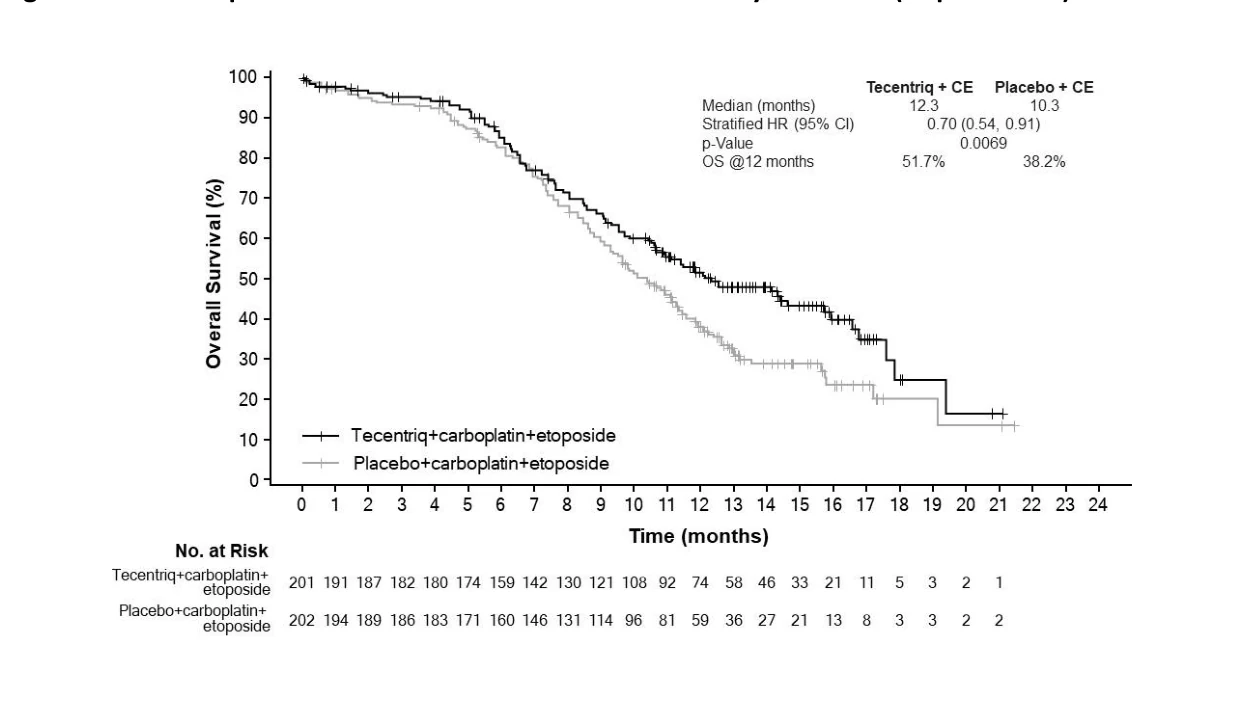
Figure 2 Kaplan-Meier Plot of Progression-Free Survival in Study GO30081 (IMpower133)
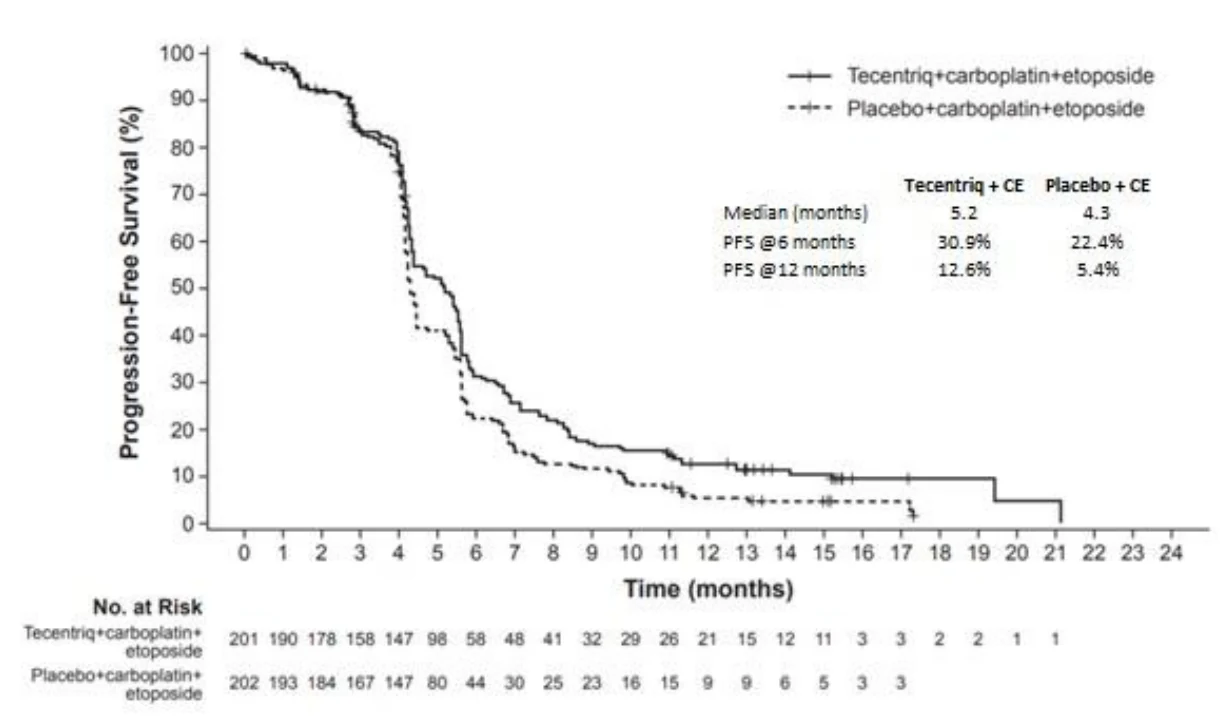
Study GO43104 (IMforte) – Maintenance Treatment in Combination with Lurbinectedin Following First-Line Induction Therapy
Study Demographics and Trial Design
Table 25 – Summary of patient demographics for Study GO43104 (IMforte) in Extensive-Stage Small Cell Lung Cancer (ES-SCLC) Patients
| Study Number | Study Design | Dosage, route of administration and duration | Study subjects (n) | Median age Years (range) | Sex n (%) |
|---|---|---|---|---|---|
| GO43104 (IMforte) | Phase 3, randomized, multicenter, open-label, two-arm study | Induction (4 cycles): atezolizumab 1200 mg IV q3w (day 1) carboplatin (day 1) etoposide (days 1, 2, 3) Maintenance: Arm A: atezolizumab 1200 mg IV q3w (day 1) lurbinectedin 3.2 mg/m2 IV q3w (day 1) Duration: Until disease progression or unacceptable toxicity Arm B: atezolizumab 1200 mg IV q3w (day 1) Duration: Until disease progression or unacceptable toxicity | 483* | 66 (35 – 85) | M: 302 (63) F:181 (37) |
*895 patients were screened for enrollment into the study. Of these, 235 participants were reported as having failed screening. The main reasons for screen failure for the enrollment phase were presence or history of CNS metastases, excluded prior medical conditions and inadequate hematologic and end-organ function. Of the 660 patients enrolled in the induction phase, 546 participants were screened for the randomized phase of the study. 63 participants failed randomization screening mainly due to “non-completion of induction phase or disease progression.”
The efficacy of TECENTRIQ with lurbinectedin as maintenance treatment for patients with ES-SCLC following first-line induction therapy with TECENTRIQ, carboplatin and etoposide was investigated in IMforte (GO43104). This was a randomized, multicenter, open-label study. Patients were eligible for randomization into the maintenance phase if their disease had not progressed after completion of 4 cycles of induction treatment with TECENTRIQ, carboplatin and etoposide and if they had an ECOG performance status of 0 or 1. Eligible patients were randomized 1:1 to receive maintenance treatment with either TECENTRIQ with lurbinectedin or TECENTRIQ. Unless contraindicated, primary prophylaxis with granulocyte colony-stimulating factor (G-CSF) was mandated for patients assigned to the TECENTRIQ with lurbinectedin arm.
The randomized phase excluded patients with presence or history of CNS metastases, history of autoimmune disease or leptomeningeal disease. Randomization was stratified by ECOG performance status (0 vs. 1), lactate dehydrogenase (LDH) (≤ ULN vs. > ULN), presence of liver metastases and prior receipt of prophylactic cranial irradiation (yes vs. no).
Of 483 randomized patients, 242 were randomized to receive TECENTRIQ with lurbinectedin and 241 were randomized to receive TECENTRIQ alone. The majority of patients were White (81.6%); 12.8% were Asian, 6.6% were Hispanic or Latino and <1% were Black or African American. Most patients were male (62.5%) and 97.5% were current or previous smokers. Baseline ECOG performance status was 0 (42.9%) or 1 (57.1%). Of patients randomized to the TECENTRIQ with lurbinectedin arm, 84% received at least one concomitant primary prophylaxis of G-CSF.
The primary endpoints of the study were OS and independent review facility (IRF)-assessed PFS per RECIST v1.1 in the randomized population
Study Results
At the time of the primary analysis, the median follow-up was 15 months (range: 0.2 to 26.1 months). Efficacy endpoint assessments started from randomization into the maintenance phase. The key study results are summarized in Table 26. Kaplan-Meier curves for OS and IRF-assessed PFS are presented in Figures 3 and 4.
Table 26 Summary of efficacy from IMforte
| Key efficacy endpoints | Arm A (TECENTRIQ with lurbinectedin) | Arm B (TECENTRIQ) | |||||||||
|---|---|---|---|---|---|---|---|---|---|---|---|
| Primary endpoints | N=242 | N=241 | |||||||||
| Overall Survival Analysis1, 2 | |||||||||||
| No. of deaths (%) | 113 (46.7) | 136 (56.4) | |||||||||
| Median duration of OS (months) | 13.2 | 10.6 | |||||||||
| 95% CI | (11.9, 16.4) | (9.5, 12.2) | |||||||||
| Stratified hazard ratio‡ (95% CI) | 0.73 (0.57, 0.95) | ||||||||||
| p-value3, 4 | 0.0174 | ||||||||||
| IRF-assessed PFS (RECIST v1.1)2 | |||||||||||
| No. of events (%) | 174 (71.9) | 202 (83.8) | |||||||||
| Median duration of PFS (months) | 5.4 | 2.1 | |||||||||
| 95% CI | (4.2, 5.8) | (1.6, 2.7) | |||||||||
| Stratified hazard ratio‡ (95% CI) | 0.54 (0.43, 0.67) | ||||||||||
| p-value3, 5 | <0.0001 | ||||||||||
1Based on OS interim analysis
2Measured from the time of randomization
3Based on the two-sided stratified log-rank test
4Compared to the allocated alpha of 0.0313 (two-sided) for this interim OS analysis.
5Compared to the allocated alpha of 0.001 (two- sided) for this final PFS analysis.
‡Stratified by ECOG performance status, LDH level, presence of liver metastases and prior receipt of prophylactic cranial irradiation
PFS=progression-free survival; RECIST=Response Evaluation Criteria in Solid Tumours; CI=confidence interval; OS=overall survival
Figure 3 Kaplan-Meier Plot of Overall Survival (IMforte)
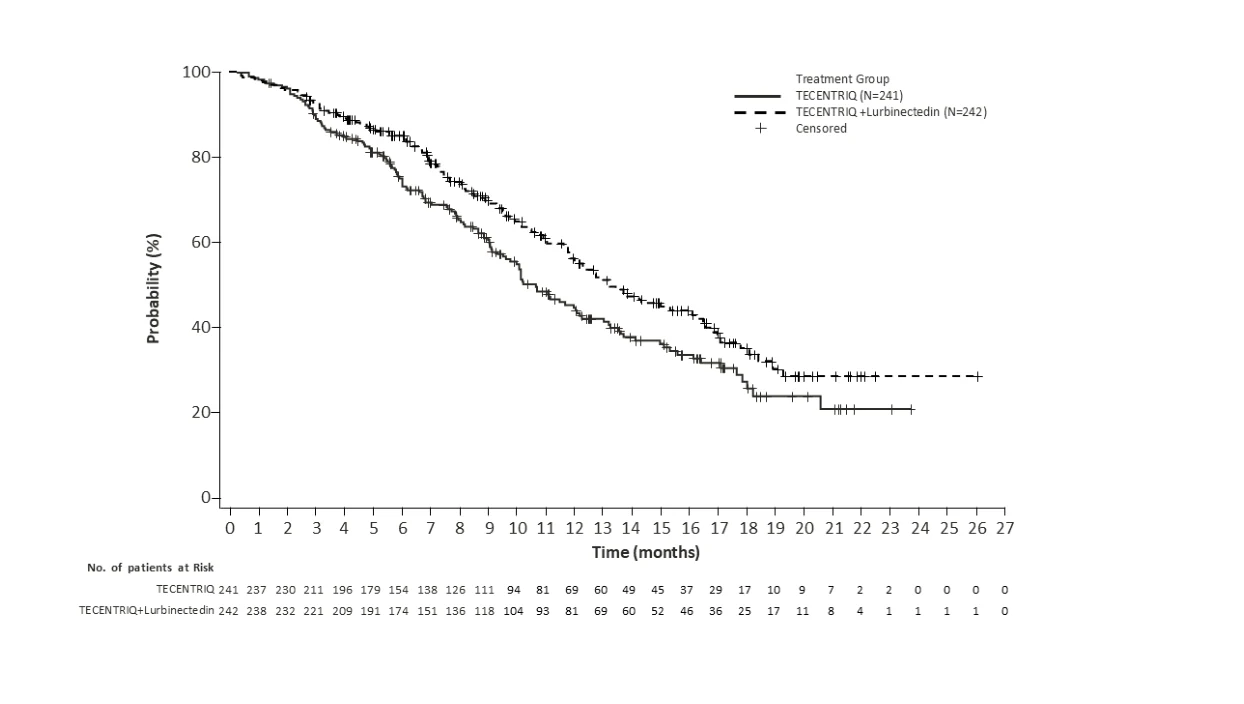
Figure 4 Kaplan-Meier Plot of IRF-assessed Progression Free Survival (IMforte)
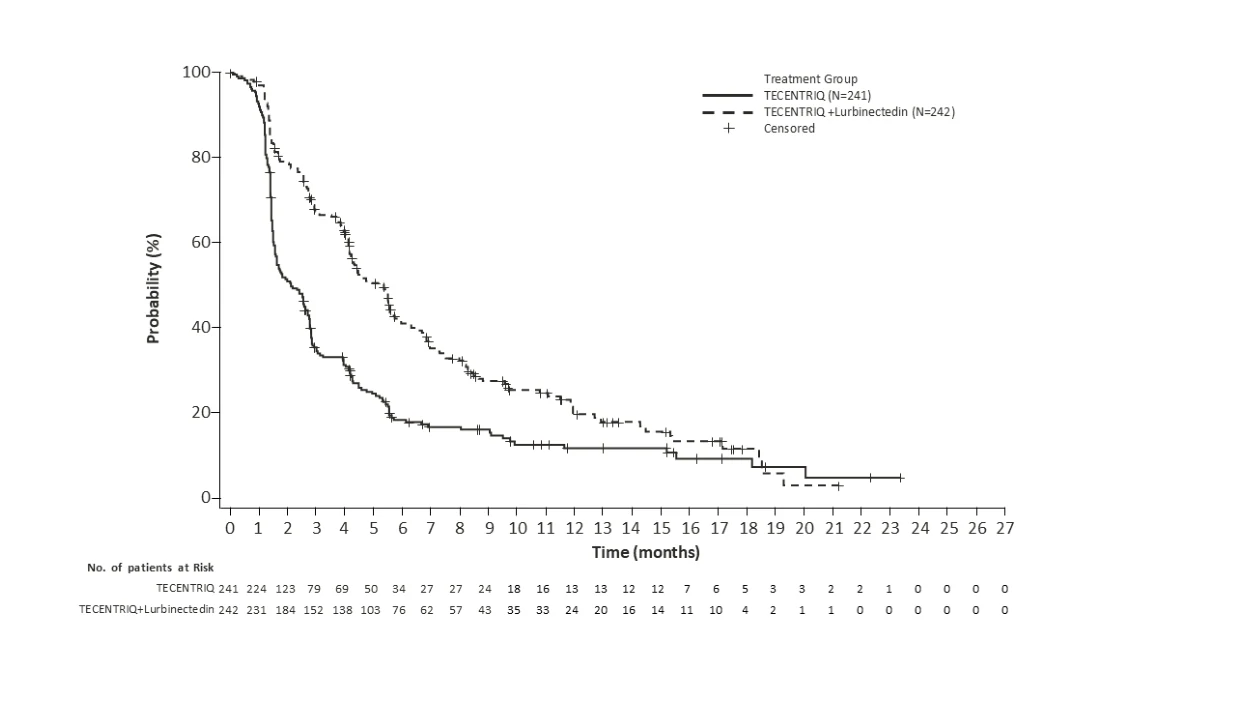
Adjuvant Treatment of Non-Small Cell Lung Cancer (NSCLC)
Study GO29527 (IMpower010) – Adjuvant Treatment of Early-Stage NSCLC
Study Demographics and Trial Design
Table 27 Summary of patient demographics for clinical trials in adjuvant treatment of early- stage NSCLC (IMpower010)
| Study # | Study design | Dosage, route of administration and duration | Study subjects (n) | Median age Years (Range) | Sex n (%) |
| GO29527 (IMpower010) | Phase III, open label, multicentre, randomized study to evaluate the efficacy and safety of TECENTRIQ for the adjuvant treatment of patients with stage IB (tumours ≥ 4 cm) – IIIA NSCLC (per the Union for International Cancer Control / American Joint Committee on Cancer staging system, 7th edition). | Atezolizumab 1200 mg IV q3W for 16 cycles until disease recurrence or unacceptable toxicity. | 1005 | 62 (26 to 84) | M: 318 (67) F:158 (33) |
Patients who had complete tumour resection and were eligible to receive cisplatin-based chemotherapy were enrolled. Subsequently, patients whose disease had not progressed following completion of cisplatin-based chemotherapy (up to four cycles) were randomized.
Patients were excluded if they had a history of autoimmune disease; a history of idiopathic pulmonary fibrosis, organizing pneumonia, drug-induced pneumonitis, idiopathic pneumonitis, or evidence of active pneumonitis; administration of a live, attenuated vaccine within 28 days prior to randomization; administration of systemic immunostimulatory agents within 4 weeks or systemic immunosuppressive medications within 2 weeks prior to randomization.
A total of 1005 patients were randomized in a 1:1 ratio to receive TECENTRIQ (Arm A) or best supportive care (BSC) (Arm B). Randomization was stratified by sex, stage of disease, histology, and PD L1 expression.
Tumour assessments were conducted at baseline of the randomization phase and every 4 months for the first year following Cycle 1, Day 1 and then every 6 months until year five, then annually thereafter.
In all randomized ITT patients, the median age was 62 years (range: 26 to 84), and 67% of patients were male. The majority of patients were White (73%), and Asian (24%). Most patients were current or previous smokers (78%) and baseline ECOG performance status in patients was 0 (55%) or 1 (44%). Overall, 12% of patients had stage IB, 47% had stage II and 41% had stage IIIA disease. PD-L1 expression, defined as the percentage of tumour cells (TC) expressing PD-L1 as measured by the VENTANA PDL1 (SP263) assay, was ≥ 50% in 26% of patients, ≥ 1% in 53% of patients, <1% in 44% and unknown in 2.6%. The percentage of patients with non-squamous histology was 66%. Activating EGFR mutations were detected in 11.6% of patients, ALK mutations in 3.3% of patients.
The primary efficacy outcome measure was disease-free survival (DFS) as assessed by the investigator. DFS was defined as the time from the date of randomization to the date of occurrence of any of the following: first documented recurrence of disease, new primary NSCLC, or death due to any cause, whichever occurred first. DFS was assessed hierarchically in the following analysis populations: patients with Stage II-IIIA NSCLC with PD-L1 expression ≥ 1% TC, all randomized patients with Stage II-IIIA NSCLC, and all randomized ITT patients. DFS in the PD-L1 ≥ 50% TC Stage II-IIIA population and OS in the ITT population were pre-specified key secondary endpoints.
Study Results
At the time of the interim DFS analysis, the study demonstrated a statistically significant improvement in DFS in the TECENTRIQ arm compared to the BSC arm in the PD-L1 ≥ 1% TC stage II – IIIA patient population (n=476). In the secondary objective analysis of patients with PD-L1 TC ≥ 50% stage II to IIIA (n = 229), a clinically meaningful improvement in DFS in the TECENTRIQ arm was shown compared to the BSC arm.
The efficacy findings for DFS in the PD-L1 expression ≥ 1% TC, ≥50% TC, and 1 – 49% TC Stage II-IIIA patient populations are shown in Table 28. The Kaplan-Meier curves for DFS in ≥50% TC Stage II – IIIA patient population are presented in Figure 5. For the interim DFS analysis, the median follow-up time was 32 months.
Table 28 Summary of efficacy from IMpower010 in PD-L1 expression ≥ 1% TC, ≥50% TC, and 1 – 49% TC Stage II - IIIA patient populations
Efficacy endpoints Investigator-assessed DFS | Arm A (TECENTRIQ) | Arm B (Best Supportive Care) | |||||||||
|---|---|---|---|---|---|---|---|---|---|---|---|
Efficacy endpoints Investigator-assessed DFS | Arm A (TECENTRIQ) | Arm B (Best Supportive Care) | |||||||||
| Primary Endpoint | |||||||||||
| DFS in PD-L1 SP263 ≥1% TC Stage II-IIIA | n = 248 | n = 228 | |||||||||
| No. of events (%) | 88 (35.5) | 105 (46.1) | |||||||||
| Median duration of DFS (months) | NE | 35.3 | |||||||||
| 95% CI | 36.1, NE | 29.0, NE | |||||||||
| Stratified* hazard ratio (95% CI) | 0.66 (0.50, 0.88) | ||||||||||
| p-value** | 0.004 | ||||||||||
| Secondary Endpoint | |||||||||||
| DFS in PD-L1 SP263 ≥50% TC Stage II-IIIA | n=115 | n=114 | |||||||||
| No. of events (%) | 28 (24.3%) | 52 (45.6%) | |||||||||
| Median duration of DFS (months) | NE | 35.7 | |||||||||
| 95% CI | 42.3, NE | 29.7, NE | |||||||||
| Unstratified hazard ratio (95% CI) | 0.43 (0.27, 0.68) | ||||||||||
| Exploratory Endpoint | |||||||||||
| DFS in PD-L1 SP263 1-49% TC Stage II-IIIA | n=133 | n=114 | |||||||||
| No. of events (%) | 60 (45.1%) | 53 (46.5%) | |||||||||
| Median duration of DFS (months) | 32.8 | 31.4 | |||||||||
| 95% CI | 29.4, NE | 24.0, NE | |||||||||
| Unstratified hazard ratio (95% CI) | 0.87 (0.60, 1.26) | ||||||||||
DFS = Disease-free survival; CI = confidence interval; NE = not estimable
*Stratified by stage of disease, sex, and histology
** The p-value (two-sided) for DFS in PD-L1 SP263 ≥1% TC Stage II-IIIA was compared with a two-sided significance level of 0.037 at the interim analysis.
Figure 5 Kaplan-Meier Plot of Disease-Free Survival in the PD-L1 expression ≥ 50% TC Stage II – IIIA Patient Population
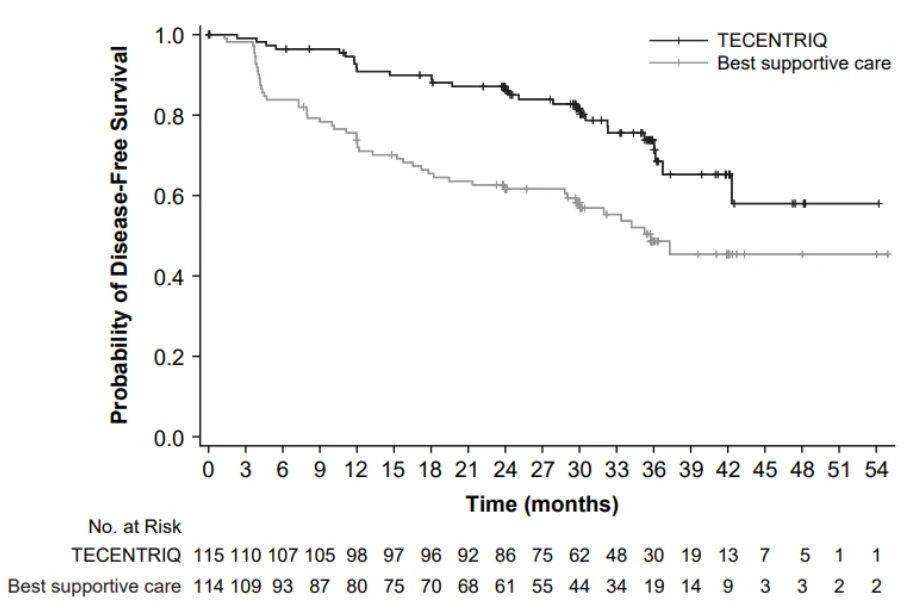
Metastatic Non-Small Cell Lung Cancer (NSCLC)
Study GO29431 (IMpower110) – First Line Monotherapy
Study Demographics and Trial Design
Table 29 Summary of patient demographics for Study GO29431 (IMpower110) in Metastatic Non-Small Cell Lung Cancer Patients
| Study Number | Study Design | Dosage, route of administration and duration | Study subjects (n) | Median age Year (range) | Sex n (%) |
|---|---|---|---|---|---|
| GO29431 | Phase III, multicenter, open-label, randomized, controlled study | Experimental Arm: atezolizumab 1200 mg IV q3w Control Arm: IV, q3w:
Duration: atezolizumab: until loss of clinical benefit Induction: cisplatin, carboplatin, pemetrexed and gemcitabine are administered until completion of 4 or 6 cycles, or progressive disease, or unacceptable toxicity Maintenance: pemetrexed is administered as maintenance regimen every 21 days until progressive disease or unacceptable toxicity | WT Population: 205 | 65 (33 -87) | M: 143 (70) F: 62 (30) |
Intent to Treat Wild Type Patients are populations excluding patients with a sensitizing EGFR mutation or ALK translocation; IV = Intravenous; Q3W = every three weeks; WT = Wild Type
A phase III, open label, multi-center, randomized study, GO29431 (IMpower110), was conducted to evaluate the efficacy and safety of TECENTRIQ in chemotherapy-naïve patients with metastatic NSCLC whose tumours express PD-L1 ≥ 1% tumour cells (TCs) (PD-L1 stained ≥ 1% of TCs) or ≥ 1% immune cells (ICs) (PD-L1 stained tumour-infiltrating ICs covering ≥ 1% of the tumour area) by the VENTANA PD-L1 (SP142) Assay.
A total of 572 non-squamous or squamous patients were randomized in a 1:1 ratio to receive TECENTRIQ (Arm A) or chemotherapy (Arm B). The wild-type population (n=554) was defined as all randomized patients excluding patients with a sensitizing EGFR mutation or ALK translocation. TECENTRIQ was administered as a fixed dose of 1200 mg by IV infusion every 3 weeks until loss of clinical benefit as assessed by the investigator or unacceptable toxicity. The chemotherapy regimens are described in Table 30 Randomization was stratified by sex, ECOG performance status, histology (non-squamous vs. squamous), and PD-L1 tumour expression on TCs and ICs (TCs ≥ 1% and any ICs vs. TCs < 1% and ICs ≥ 1%). Patients were excluded if they had history of autoimmune disease; administration of a live, attenuated vaccine within 28 days prior to randomization; administration of systemic immunostimulatory agents within 4 weeks or systemic immunosuppressive medications within 2 weeks prior to randomization; active or untreated CNS metastases. Tumour assessments were conducted every 6 weeks for the first 48 weeks following Cycle 1, Day 1 and then every 9 weeks thereafter.
Tumour tissues were prospectively tested for PD-L1 expression using the VENTANA PD-L1 (SP142) assay at a central laboratory to define subgroups for pre-specified analyses. The primary endpoint was overall survival (OS). OS was sequentially tested in the following PD-L1 subgroups of patients without EGFR or ALK genomic tumour aberrations: TCs ≥ 50% or ICs ≥ 10%; TCs ≥ 5% or ICs ≥ 5%; and TCs ≥ 1% or ICs ≥ 1%.
Table 30 Chemotherapy Intravenous Treatment Regimens in Study GO29431 (IMpower110)
| Treatment regimen | Induction (Four or Six 21-day cycles) | Maintenance (21-day cycles) |
|---|---|---|
B (Non-squamous) | Cisplatina (75 mg/m²) + pemetrexeda (500 mg/m²) OR carboplatina (AUC 6) + pemetrexed (500 mg/m²) | Pemetrexedb, d (500 mg/m²) |
B (Squamous) | Cisplatina (75 mg/m²) + gemcitabinea,c (1250 mg/m2) OR carboplatina (AUC 5) + gemcitabinea,c (1000 mg/m2) | Best supportive cared |
a Cisplatin, carboplatin, pemetrexed and gemcitabine are administered until completion of 4 or 6 cycles, or progressive disease or unacceptable toxicity b Pemetrexed is administered as maintenance regimen every 21 days until progressive disease or unacceptable toxicity c Gemcitabine is administered on days 1 and 8 of each cycle d No crossover was allowed from the control arm (platinum-based chemotherapy) to the TECENTRIQ arm (Arm A) | ||
The demographics and baseline disease characteristics in the 205 wild-type patients with high PD-L1 expression (PD-L1 ≥ 50% TC or ≥ 10% IC) who do not have EGFR or ALK genomic tumour aberrations were generally balanced between the treatment arms. The median age was 65 years (range: 33 to 87), and 70% of patients were male. The majority of patients were white (82%) and Asian (17%). Most patients were current or previous smokers (88%) and baseline ECOG performance status in patients was 0 (36%) or 1 (64%). Overall, 76% of patients had non-squamous disease and 24% of patients had squamous disease. The median follow-up in patients with high PD-L1 expression (TCs ≥ 50% or ICs ≥ 10%) was 16.5 months in the TECENTRIQ arm and 15.5 months in the chemotherapy arm.
Study Results
OS results for high PD-L1 subgroup (TCs ≥ 50% or ICs ≥ 10%) are presented in Table 31 and Figure 6. Statistically significant OS benefit was not observed for the TCs ≥ 5% or ICs ≥ 5% and TCs ≥ 1% or ICs ≥ 1% subgroups at prespecified analyses.
Table 31 Summary of Efficacy from Study GO29431 (IMpower110) in Patients with High PD-L1 Expression (TCs ≥ 50% or ICs ≥ 10%) by the VENTANA PD-L1 [SP142] Assay)
| Key Efficacy Endpoints | Arm A (TECENTRIQ) | Arm B (Chemotherapy) | |||||||
|---|---|---|---|---|---|---|---|---|---|
| Primary endpoint | |||||||||
| OS analysis | n=107 | n=98 | |||||||
| No. of deaths (%) | 44 (41.1%) | 57 (58.2%) | |||||||
| Median overall survival time (months) | 20.2 | 13.1 | |||||||
| 95% CI | (16.5, NE) | (7.4, 16.5) | |||||||
| Stratified hazard ratio‡ (95% CI) | 0.59 (0.40, 0.89) | ||||||||
| p-value‡ | 0.0106 | ||||||||
‡ Stratified by sex and ECOG performance status (0 vs 1) CI=confidence interval; OS=overall survival; NE=not estimable. The p-value (two-sided) was compared with the allocated alpha of 0.0413 at the interim analysis. | |||||||||
Figure 6 Kaplan-Meier Plot of Overall Survival in Patients with high PD-L1 Expression (TCs ≥ 50% or ICs ≥ 10%)
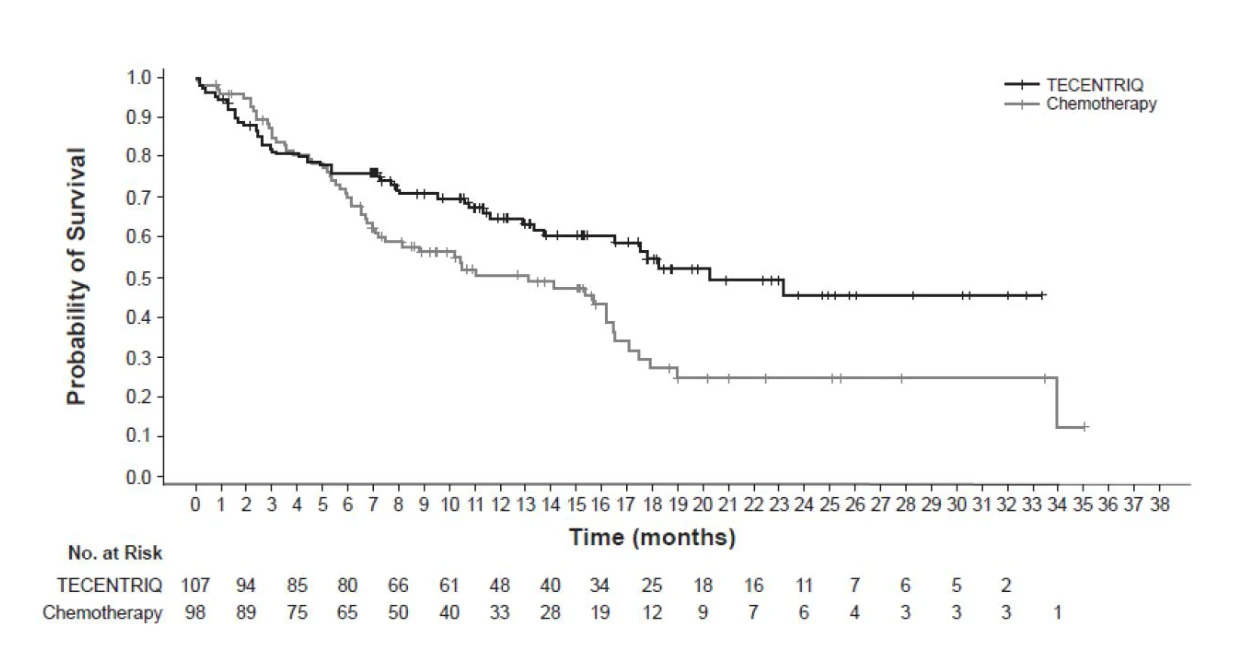
Investigator-assessed PFS showed a HR of 0.63, with median PFS of 8.1 months in the TECENTRIQ arm and 5 months in the platinum-based chemotherapy arm. The investigator-assessed confirmed ORR was 38% in the TECENTRIQ arm and 29% in the platinum-based chemotherapy arm.
Metastatic Non-Squamous Non-Small Cell Lung Cancer (NSCLC)
Study GO29436 (IMpower150) - First-Line Combination Therapy
Study Demographics and Trial Design
Table 32 Summary of patient demographics for Study GO29436 (IMpower150) in Metastatic Non-Squamous Non-Small Cell Lung Cancer Patients
| Study Number | Study Design | Dosage, route of administration and duration | Study subjects (n) | Median age Years (range) | Sex n (%) |
|---|---|---|---|---|---|
| GO29436 | Multicentre, open-label, randomized, controlled study | Arm A: atezolizumab + paclitaxel + carboplatin Arm B: atezolizumab + bevacizumab + paclitaxel + carboplatin Arm C: bevacizumab + paclitaxel + carboplatin atezolizumab 1200 mg IV q3w carboplatin AUC 6mg/mL/min q3w paclitaxel 200 mg/m2 IV q3w bevacizumab 15 mg/m2 IV q3w Duration: atezolizumab: until loss of clinical benefit bevacizumab: until disease progression, unacceptable toxicity, or death carboplatin + paclitaxel: until completion of 4 or 6 cycles, progressive disease, unacceptable toxicity, or death, whichever occurs first | 1202 | 63 (31 – 90) | M: 720 (60) F: 482 (40) |
IV = intravenous; q3w = every three weeks
A phase III, open-label, multicentre, international randomized study, GO29436 (IMpower150), was conducted to evaluate the efficacy and safety of TECENTRIQ in combination with paclitaxel and carboplatin, with or without bevacizumab, in chemotherapy-naïve patients with metastatic non-squamous NSCLC. A total of 1202 patients were enrolled and were randomized in a 1:1:1 ratio to receive one of the treatment regimens. For this indication, only the comparison for Arm B versus Arm C has been reviewed and included in this product monograph.
Patients were randomized to one of the following three treatment arms.
- Arm A: TECENTRIQ 1200 mg, paclitaxel 175 mg/m2 or 200 mg/m2 and carboplatin AUC 6 mg/mL/min on Day 1 of each 21-day cycle for a maximum of 4 or 6 cycles
- Arm B: TECENTRIQ 1200 mg, bevacizumab 15 mg/kg, paclitaxel 175 mg/m2 or 200 mg/m2, and carboplatin AUC 6 mg/mL/min on Day 1 of each 21-day cycle for a maximum of 4 or 6 cycles
- Arm C: bevacizumab 15 mg/kg, paclitaxel 175 mg/m2 or 200 mg/m2, and carboplatin AUC 6 mg/mL/min on Day 1 of each 21-day cycle for a maximum of 4 or 6 cycles
Patients who had not experienced disease progression following the completion or cessation of platinum-based chemotherapy, received:
- Arm A: TECENTRIQ 1200 mg intravenously on Day 1 of each 21-day cycle until disease progression or unacceptable toxicity
- Arm B: TECENTRIQ 1200 mg and bevacizumab 15 mg/kg intravenously on Day 1 of each 21-day cycle until disease progression or unacceptable toxicity
- Arm C: bevacizumab 15 mg/kg intravenously on Day 1 of each 21-day cycle until disease progression or unacceptable toxicity
The paclitaxel starting dose for patients of Asian race/ethnicity was 175 mg/m2 due to higher overall level of hematologic toxicities in patients from Asian countries compared with those from non-Asian countries.
Randomization was stratified by sex, presence of liver metastases and PD-L1 tumour expression on tumour cells (TC) and tumour infiltrating cells (IC) as follows: TC3 and any IC vs. TC0/1/2 and IC2/3 vs. TC0/1/2 and IC0/1.
The PFS and OS results are based on the ITT-WT population, defined as the ITT population excluding EGFR mutations or ALK rearrangements.
Patients were excluded if they had history of autoimmune disease; administration of a live, attenuated vaccine within 28 days prior to randomization; administration of systemic immunostimulatory agents within 4 weeks or systemic immunosuppressive medications within 2 weeks prior to randomization; active or untreated brain metastases; clear tumour infiltration into the thoracic great vessels or clear cavitation of pulmonary lesions, as seen on imaging. Tumour assessments were conducted every 6 weeks for the first 48 weeks following Cycle 1, Day 1 and then every 9 weeks thereafter.
The demographics and baseline disease characteristics of the study population were well balanced between the treatment arms. In this study, the median age was 63 years (range: 31 to 90), and 60% of patients were male. The majority of patients were white (82.2%), 12.5% of patients were Asian, and 2.0% of patients were Black or African American. Hispanic or Latino patients represents 9.6% of the enrolled patients. Patients of Asian race/ethnicity received paclitaxel at a dose of 175 mg/m2 while the remaining patients received paclitaxel at a dose of 200 mg/m2. Approximately 10% of patients had known EGFR mutations, 4% had known ALK rearrangements, 14% had liver metastases at baseline, and most patients were current or previous smokers (80%). Baseline ECOG performance status was 0 (43%) or 1 (57%). PD-L1 was TC3 and any IC in 12%, TC0/1/2 and IC2/3 in 12.8% and TC0/1/2 and IC0/1 in 75.2%.
The median duration of exposure to TECENTRIQ was 8.3 months in patients receiving TECENTRIQ with bevacizumab, paclitaxel and carboplatin.
The major efficacy outcome measures were investigator-assessed progression-free survival (PFS) using RECIST v1.1 and overall survival (OS). The primary analysis population excluded patients with EGFR mutations or ALK rearrangements.
Study Results
The results of the primary analysis demonstrated a statistically significant PFS improvement in Arm B as compared to Arm C (HR: 0.62 [95% CI: 0.52, 0.74] median PFS 8.3 vs. 6.8 months). The improvement was maintained at the next PFS update which was conducted at the next OS interim analysis (HR: 0.59 [95% CI: 0.50, 0.70] median PFS 8.3 vs. 6.8 months); the results from this analysis are summarized in Table 33. Kaplan-Meier curves for PFS are presented in Figure 7.
The interim analysis of the co-primary endpoint OS was performed when all patients had a median follow up time of 19.6 months (Arm B) and 19.7 months (Arm C); the results of the analysis demonstrated a statistically significant OS improvement in Arm B as compared to Arm C (HR: 0.78 [95% CI: 0.64, 0.96] median OS 19.2 vs. 14.7 months); the results from this analysis are summarized in Table 33. Kaplan-Meier curves for OS are presented in Figure 8.
Table 33 Primary Efficacy Endpoints in the ITT-WT population in GO29436, (IMpower150), data cut of 22 January 2019
Key Efficacy Endpoints (Primary Analysis Population) | Arm B: TECENTRIQ + bevacizumab + paclitaxel + carboplatin | Arm C: bevacizumab + paclitaxel + carboplatin | ||||||||||
|---|---|---|---|---|---|---|---|---|---|---|---|---|
| Co-Primary Efficacy Endpoints | ||||||||||||
| Investigator-assessed PFS (RECIST v1.1) | n=359 | n=337 | ||||||||||
| No. of events (%) | 263 (73.3%) | 298 (88.4%) | ||||||||||
| Median duration of PFS (months) | 8.3 | 6.8 | ||||||||||
| 95% CI | (7.7, 9.8) | (6.0, 7.1) | ||||||||||
| Stratified hazard ratio1 (95% CI) | 0.59 (0.50, 0.70) | |||||||||||
| p-value 2 | < 0.0001 | |||||||||||
| OS | n=359 | n=337 | ||||||||||
| No. of deaths (%) | 179 (49.9%) | 197 (58.5%) | ||||||||||
| Median time to events (months) | 19.2 | 14.7 | ||||||||||
| 95% CI | (17.4, 23.8) | (13.3, 16.9) | ||||||||||
| Stratified hazard ratio (95% CI) | 0.78 (0.64, 0.96) | |||||||||||
| p-value 2 | 0.0164 | |||||||||||
1Stratified by sex, presence of liver metastases and PD-L1 tumour expression on TC and IC PFS=progression-free survival; RECIST=Response Evaluation Criteria in Solid Tumours v1.1.; CI=confidence interval; OS=overall survival 2 Based on the stratified log-rank test. The overall two-sided type I error of 0.05 was controlled by splitting it to 0.012 and 0.038, and allocated to the co-primary endpoints of PFS and OS, respectively. For the testing of OS, the statistically boundary for interim analysis was further accounted for following group sequential design using Lan-Demets approximation to the O’Brien-Fleming boundary | ||||||||||||
The results for the secondary efficacy endpoint of investigator-assessed overall best response showed higher overall response rate (ORR) in Arm B (55.3%, 95% CI: 50.0, 60.6) compared with Arm C (40.4%, 95% CI: 35.0, 45.9).
The results for the secondary efficacy endpoint of investigator-assessed DOR indicate prolonged DOR among confirmed responders for Arm B compared to Arm C:11.5 months (95% CI: 8.9, 16.2) vs. 6.4 months (95% CI: 5.7, 7.0) respectively.
Figure 7 Kaplan-Meier Curves for Progression Free Survival (PFS) in the ITT-WT Population in GO29436 (IMpower150)
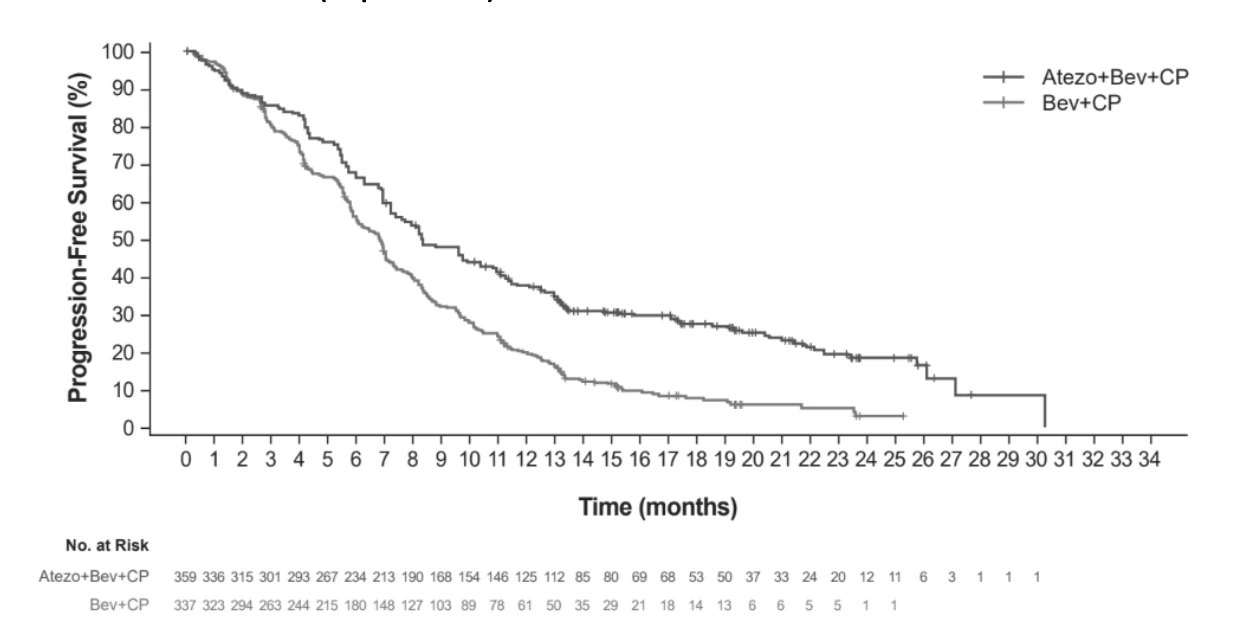
Figure 8 Kaplan-Meier Curves for Overall Survival (OS) the ITT-WT Population in GO29436 (IMpower150)
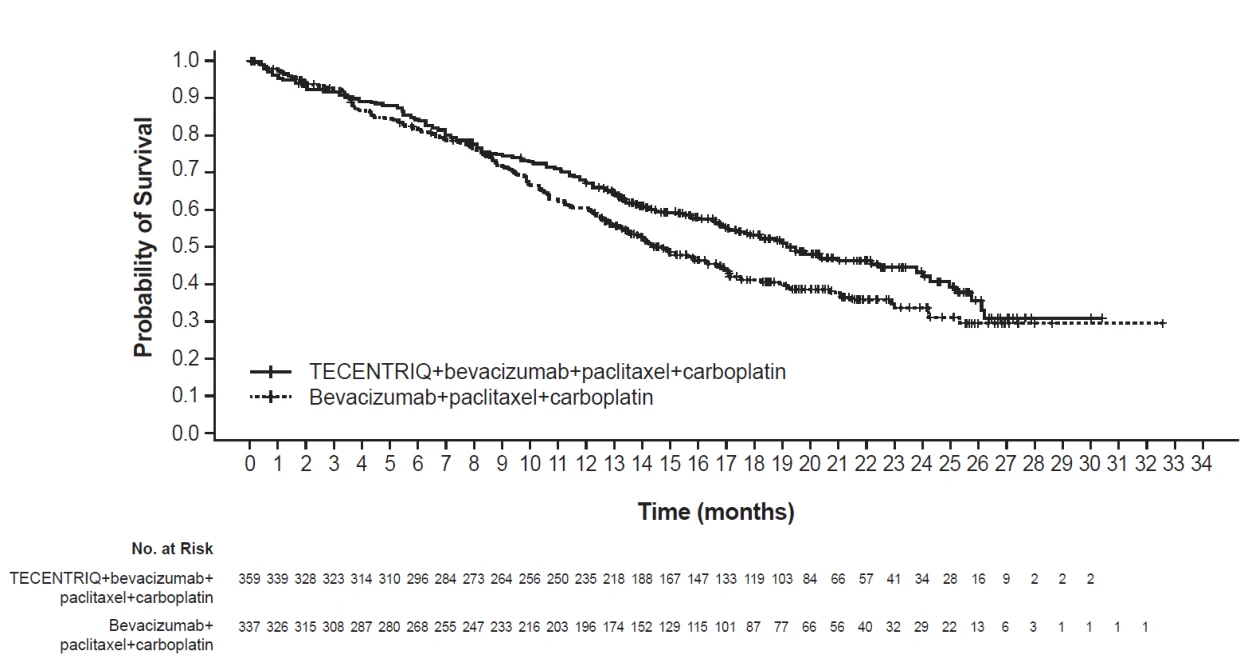
Study GO29537 (IMpower130) – First-Line Combination Therapy
Study Demographics and Trial Design
Table 34 Summary of patient demographics for Study GO29537 (IMpower130) in Metastatic Non-Squamous Non-Small Cell Lung Cancer Patients
| Study Number | Study Design | Dosage, route of administration and duration | Study subjects (n) | Median age Years (range) | Sex n (%) |
|---|---|---|---|---|---|
| GO29537 | Phase III, multicentre, open-label, randomized, controlled study | Arm A: atezolizumab + carboplatin + nab-paclitaxel Arm B: carboplatin + nab-paclitaxel atezolizumab1200 mg IV q3w carboplatin AUC 6mg/mL/min IV q3w nab-paclitaxel 100 mg/m2 IV Day 1, 8, and 15 of each 21-day cycle Duration: atezolizumab + carboplatin + nab-paclitaxel: until loss of clinical benefit carboplatin + nab-paclitaxel: until completion of 4 or 6 cycles, progressive disease, or unacceptable toxicity | 723 | 64 (18-86) | M: 415 (57%) F: 308 (43%) |
IV = Intravenous; q3w = every three weeks
A Phase III, open-label, randomized study, GO29537 (IMpower130) was conducted to evaluate the efficacy and safety of TECENTRIQ in combination with nab-paclitaxel and carboplatin, in chemotherapy-naïve patients with metastatic non-squamous NSCLC. Patients including those with EGFR or ALK genomic tumour aberrations, were enrolled and were randomized in a 2:1 ratio to receive one of the treatment regimens described in Table 35. Randomization was stratified by sex, presence of liver metastases and PD-L1 tumour expression on tumour cells (TC) and tumour infiltrating cells (IC). Patients in treatment regimen B (Nab-paclitaxel (100mg/m2)b + Carboplatin (AUC 6)c )were able to crossover and receive TECENTRIQ monotherapy following disease progression.
Table 35 Intravenous treatment regimens in GO29537 (IMpower130)
| Treatment Regimen | Induction (Four or Six 21-Day Cycles) | Maintenance (21-Day Cycles) |
|---|---|---|
| A | TECENTRIQ (1200mg)a + nab-paclitaxel (100mg/m2)b,c + carboplatin (AUC 6)c | TECENTRIQ (1200mg) a |
| B | Nab-paclitaxel (100mg/m2)b + Carboplatin (AUC 6)c | Best supportive care or pemetrexed |
a TECENTRIQ is administered until loss of clinical benefit as assessed by investigator b Nab-paclitaxel is administered on days 1, 8, and 15 of each cycle c Nab-paclitaxel and carboplatin is administered until completion of 4-6 cycles, or progressive disease or unacceptable toxicity whichever occurs first | ||
Patients were excluded if they had history of autoimmune disease, administration of live, attenuated vaccine within 28 days prior to randomization, administration of immunostimulatory agents within 4 weeks or systemic immunosuppressive medications within 2 weeks prior to randomization, and active or untreated CNS metastases. Tumour assessments were conducted every 6 weeks for the first 48 weeks following Cycle 1, then every 9 weeks thereafter.
The demographics and baseline disease characteristics of the study population (n = 723) were well balanced between the treatment arms. The median age was 64 years (range 18 to 86). The majority of the patients were, male (57%), white (90%). 14.8% of patients had liver metastases at baseline, and most patients were current or previous smokers (88%). The majority of patients had baseline ECOG performance status of 1 (58.7%).
Study Results
The primary analysis was conducted in all patients, excluding those with EGFR or ALK genomic tumour aberrations (n = 679). Patients had a median survival follow up time of 18.6 months. Improvements in OS and PFS were demonstrated with TECENTRIQ+ nab-paclitaxel + carboplatin compared to the control. The key results are summarized in Table 36 and Kaplan-Meier curves for OS and PFS are presented in Figure 9 and Figure 11, respectively.
All PD-L1 subgroups, regardless of expression, derived benefit in terms of OS and PFS; the results are summarized in Figure 10 and Figure 12 Consistent OS and PFS benefit was demonstrated in all other pre-specified subgroups, with the exception of patients with liver metastases who did not show improved OS with TECENTRIQ, nab-paclitaxel and carboplatin, compared to nab-paclitaxel and carboplatin (HR of 1.04, 95% CI: 0.63,1.72).
Approximately 66% of patients in the nab-paclitaxel and carboplatin arm received any anti-cancer therapy after disease progression compared to 39% in the TECENTRIQ, nab-paclitaxel and carboplatin arm. These included, approximately 59% of patients in the nab-paclitaxel and carboplatin arm received any cancer immunotherapy after disease progression, which includes TECENTRIQ as crossover (41% of all patients), compared to 7.3% in the TECENTRIQ, nab-paclitaxel and carboplatin arm.
Table 36 Summary of efficacy from GO29537 (IMpower130) in the Primary Analysis Population
| Key efficacy endpoints | TECENTRIQ + nab-paclitaxel + carboplatin | nab-paclitaxel + carboplatin | |||||||||||||
|---|---|---|---|---|---|---|---|---|---|---|---|---|---|---|---|
| Key efficacy endpoints | TECENTRIQ + nab-paclitaxel + carboplatin | nab-paclitaxel + carboplatin | |||||||||||||
| Co-primary Endpoints | |||||||||||||||
| OS | n = 451 | n = 228 | |||||||||||||
| No. of deaths (%) | 226 (50.1%) | 131 (57.5%) | |||||||||||||
| Median time to events (months) | 18.6 | 13.9 | |||||||||||||
| 95% CI | (16.0, 21.2) | (12.0, 18.7) | |||||||||||||
| Stratified hazard ratio‡ (95% CI) | 0.79 (0.64, 0.98) | ||||||||||||||
| p-value | 0.033 | ||||||||||||||
| 12-month OS (%) | 63 | 56 | |||||||||||||
| Investigator-assessed PFS (RECIST v1.1) | n = 451 | n = 228 | |||||||||||||
| No. of events (%) | 347 (76.9) | 198 (86.8) | |||||||||||||
| Median duration of PFS (months) | 7.0 | 5.5 | |||||||||||||
| 95% CI | (6.2, 7.3) | (4.4, 5.9) | |||||||||||||
| Stratified hazard ratio‡ (95% CI) | 0.64 (0.54, 0.77) | ||||||||||||||
| p-value | < 0.0001 | ||||||||||||||
| 12-month PFS (%) | 29 | 14 | |||||||||||||
| Secondary Endpoints | |||||||||||||||
| Investigator-assessed ORR (RECIST 1.1) | n = 447 | n = 226 | |||||||||||||
| No. of confirmed responders (%) | 220 (49.2%) | 72 (31.9%) | |||||||||||||
| 95% CI | (44.5, 54.0) | (25.8, 38.4) | |||||||||||||
| No. of complete response (%) | 11 (2.5%) | 3 (1.3%) | |||||||||||||
| No. of partial response (%) | 209 (46.8%) | 69 (30.5%) | |||||||||||||
| Investigator-assessed confirmed DOR (RECIST 1.1) | n = 220 | n = 72 | |||||||||||||
| Median in months | 8.4 | 6.1 | |||||||||||||
| 95% CI | (6.9, 11.8) | (5.5, 7.9) | |||||||||||||
‡ Stratified by sex and PD-L1 tumour expression on TC and IC PFS=progression-free survival; RECIST=Response Evaluation Criteria in Solid Tumours v1.1.; CI=confidence interval; ORR=objective response rate; DOR=duration of response; OS=overall survival | |||||||||||||||
Figure 9 Kaplan-Meier Plot for Overall Survival GO29537 (IMpower130)
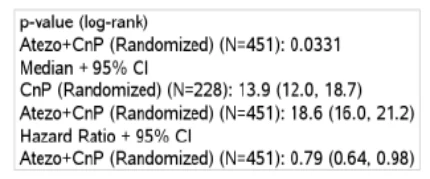
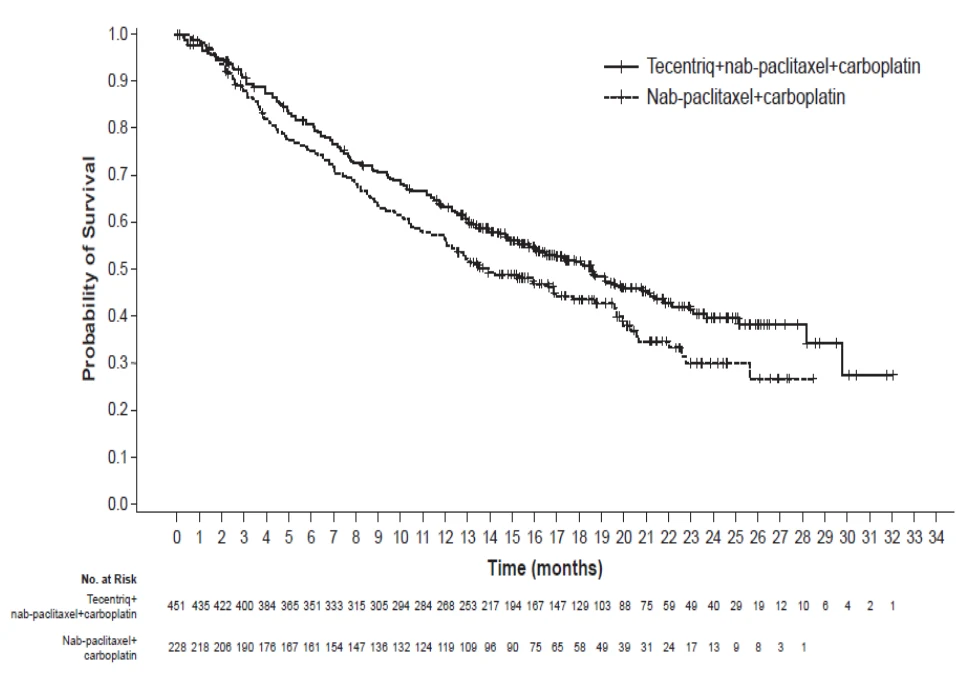
Figure 10 Forest Plot of Overall Survival by PD-L1 expression GO29537 (IMpower130)
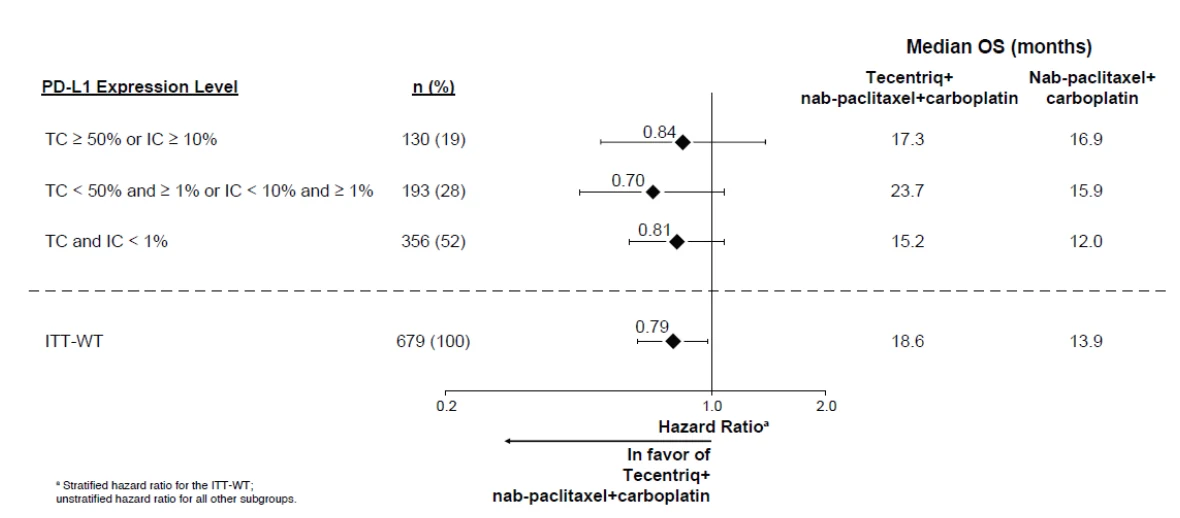
Figure 11 Kaplan-Meier Plot for Progression Free Survival (PFS) GO29537 (IMpower130)
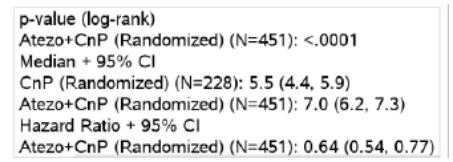
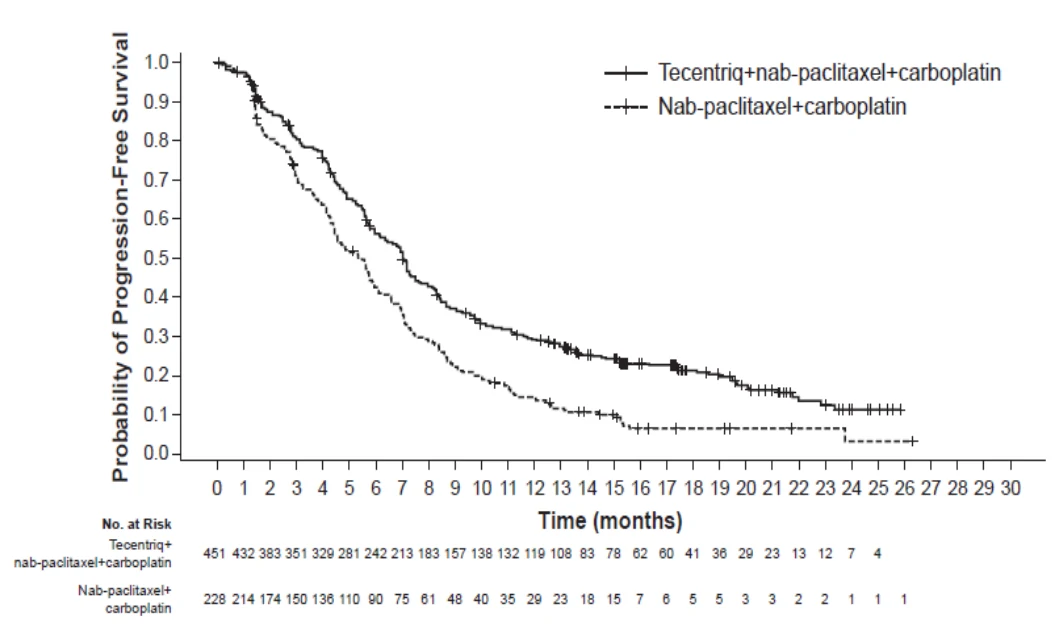
Figure 12 Forest Plot of Progression Free Survival (PFS) by PD-L1 expression GO29537 (IMpower130)
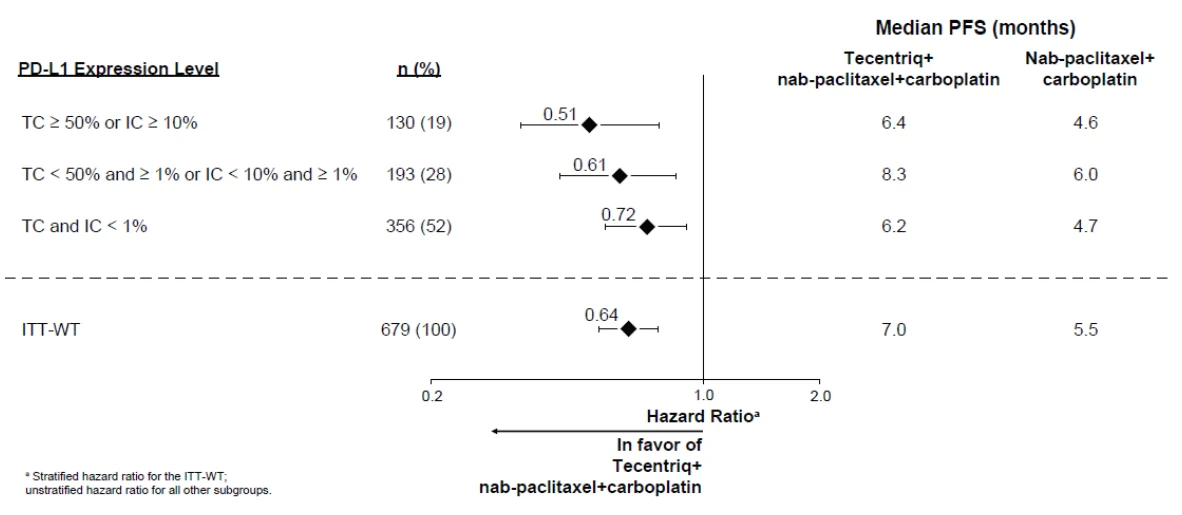
Locally Advanced or Metastatic Non-Small Cell Lung Cancer (NSCLC)
Study GO28915 (OAK) – Second Line Monotherapy
Study Demographics and Trial Design
Table 37 Summary of patient demographics for Study GO28915 (OAK) in Locally Advanced or Metastatic Non-Small Cell Lung Cancer Patients
| Study Number | Study Design | Dosage, route of administration and duration | Study subjects (n) | Median age Years (range) | Sex n (%) |
|---|---|---|---|---|---|
| GO28915 | Phase III, multicentre, open-label, randomized, controlled | atezolizumab 1200 mg IV q3w docetaxel 75 mg/m2 IV q3w Duration: Atezolizumab arm: Until loss of clinical benefit or unacceptable toxicity Docetaxel arm: Until disease progression or unacceptable toxicity | Total randomized: 1225 | ||
| Primary Population: | |||||
| First 850 randomized intent-to-treat patients | 64 (33-85) | M: 520 (61%) F: 330 (39%) | |||
IV = Intravenous; Q3W = every three weeks
A phase III, open-label, multi-center, international, randomized study, GO28915 (OAK), was conducted to evaluate the efficacy and safety of TECENTRIQ compared with docetaxel in patients with locally advanced or metastatic NSCLC who have progressed during or following a platinum-containing regimen. A total of 1225 patients were enrolled, with the primary analysis population consisting of the first 850 randomized patients. Eligible patients were stratified by PD-L1 expression status in tumour-infiltrating immune cells (IC), by the number of prior chemotherapy regimens, and by histology.
Patients were randomized (1:1) to receive either TECENTRIQ or docetaxel. This study excluded patients who had a history of autoimmune disease, active or corticosteroid-dependent brain metastases, HIV, Hepatitis B or Hepatitis C infection, administration of a live, attenuated vaccine within 28 days prior to enrollment, administration of systemic immunostimulatory agents within 4 weeks or systemic immunosuppressive medications within 2 weeks prior to enrollment. Tumour assessments were conducted every 6 weeks for the first 36 weeks, and every 9 weeks thereafter. Tumour specimens were evaluated prospectively for PD-L1 expression on tumour cells (TC) and IC using the VENTANA PD-L1 (SP142) Assay and the results were used to define the PD-L1 expression subgroups for the analyses described below.
The demographic and baseline disease characteristics of the primary analysis population were well balanced between the treatment arms. The median age was 64 years (range: 33 to 85), and 61% of patients were male. The majority of patients were white (70%). Approximately three-fourths of patients had non-squamous disease (74%), 10% had known EGFR mutation, 0.2% had known ALK rearrangements, 10% had brain metastases at baseline, and most patients were current or previous smokers (82%). Baseline ECOG performance status was 0 (37%) or 1 (63%). Seventy-five percent of patients received only one prior platinum-based therapeutic regimen.
TECENTRIQ was administered as a fixed dose of 1200 mg by IV infusion every 3 weeks. No dose reduction was allowed. Patients were treated until unacceptable toxicity or disease progression. However, treatment with TECENTRIQ was permitted until loss of clinical benefit (see 4 Dosage and Administration, 4.2 Recommended Dose and Dosage Adjustment, Duration of Treatment).
Docetaxel was administered at 75 mg/m2 by IV infusion on day 1 of each 21-day cycle until unacceptable toxicity or disease progression. For all treated patients, the median duration of treatment was 2.1 months for the docetaxel arm and 3.4 months for the TECENTRIQ arm.
The primary efficacy endpoint was Overall Survival (OS) in the primary analysis population (first 850 randomized patients). Key secondary efficacy endpoints were Investigator-assessed PFS, Investigator-assessed ORR, and Investigator-assessed DOR.
Study Results
The key results of this study with a median survival follow-up of 21 months are summarized in Table 38.
Table 38 Summary of Efficacy from Pivotal Study GO28915 (OAK)
| Efficacy Endpoints | TECENTRIQ | Docetaxel | |
|---|---|---|---|
| Primary Efficacy Endpoint | |||
| Overall Survival (OS) | |||
| All Patients* | n=425 | n=425 | |
| No. of deaths (%) | 271 (64%) | 298 (70%) | |
| Median time to events (months) | 13.8 | 9.6 | |
| 95% CI | (11.8, 15.7) | (8.6, 11.2) | |
| aStratified hazard ratio (95% CI) | 0.73 (0.62, 0.87) | ||
| p-value** | 0.0003 | ||
| 12-month OS (%) | 218 (55%) | 151 (41%) | |
| 18-month OS (%) | 157 (40%) | 98 (27%) | |
| Secondary Endpoints | |||
| Investigator-assessed PFS (RECIST v1.1) | |||
| All Patients | n=425 | n=425 | |
| No. of deaths (%) | 380 (89%) | 375 (88%) | |
| Median time to events (months) | 2.8 | 4.0 | |
| 95% CI | (2.6, 3.0) | (3.3, 4.2) | |
| Stratified hazard ratio (95% CI) | 0.95 (0.82, 1.10) | ||
| Investigator-assessed ORR (RECIST v1.1) | |||
| All Patients | n=425 | n=425 | |
| No. of responders (%) | 58 (14%) | 57 (13%) | |
| 95% CI | (10.5, 17.3) | (10.3, 17.0) | |
| Complete Response | 6 (1%) | 1 (<1%) | |
| Partial Response | 52 (12%) | 56 (13%) | |
| Investigator-assessed DOR (RECIST v1.1) | |||
| All Patients | n=58 | n=57 | |
| Median in months | 16.3 | 6.2 | |
| 95% CI | (10.0, NE) | (4.9, 7.6) | |
CI=confidence interval; DOR=duration of response; IC=tumour-infiltrating immune cells; NE=not estimable; ORR=objective response rate; OS=overall survival; PFS=progression-free survival; RECIST=Response Evaluation Criteria in Solid Tumours v1.1; TC = tumour cells. *All patients refer to the primary analysis population consisting of the first 850 randomized patients aStratified by PD-L1 expression in tumour infiltrating immune cells, the number of prior chemotherapy regimens, and histology ** Based on the stratified log-rank test | |||
Kaplan-Meier curves for OS in the intention-to-treat (ITT) population are presented in Figure 13.
Figure 13 Kaplan-Meier Plot for Overall Survival in the Primary Analysis Population (All Patients, GO28915)
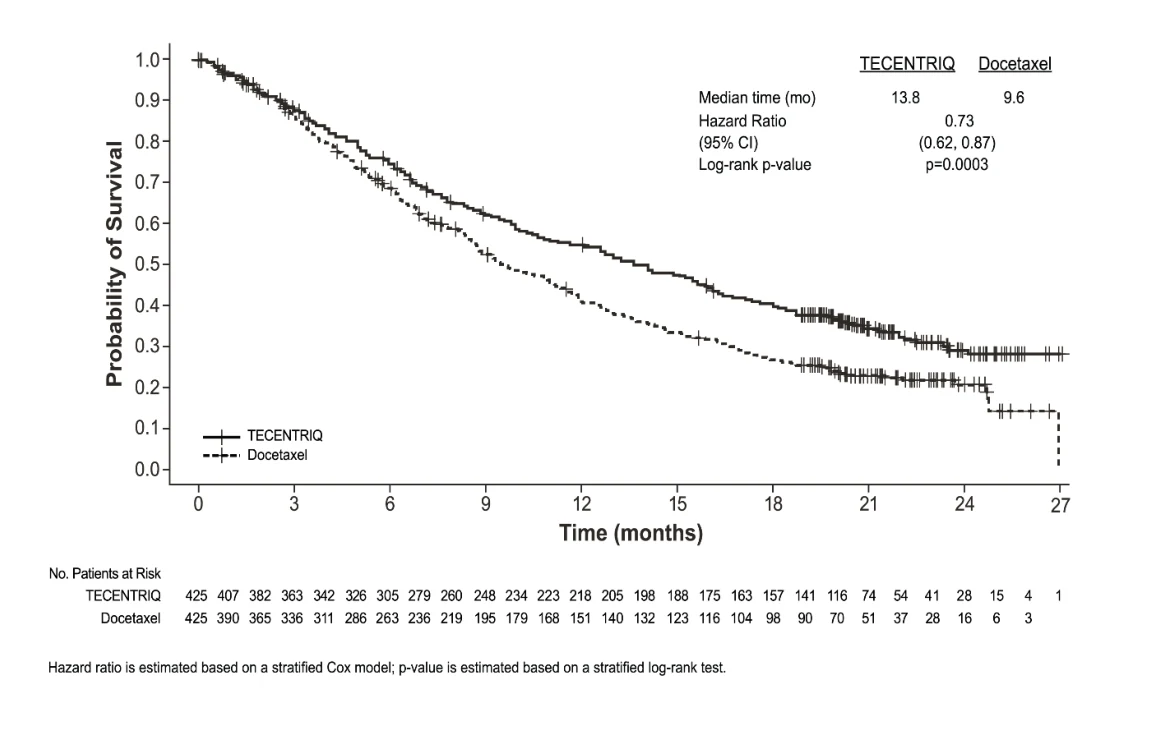
Figure 14 summarizes the results of OS in the ITT and PD-L1 subgroups, demonstrating OS benefit with TECENTRIQ in all subgroups, including those with PD-L1 expression <1% in TC and IC.
Figure 14 Forest Plot of Overall Survival by PD-L1 Expression in the Primary Analysis Population GO28915 (OAK)
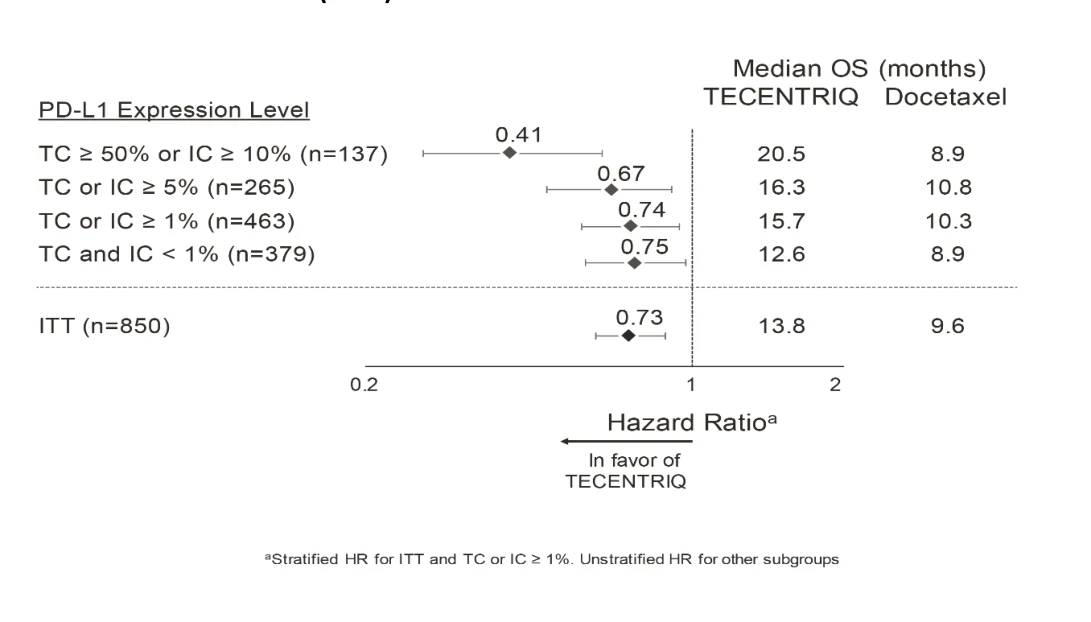
In an exploratory efficacy subgroup analysis based on histology, an improvement in OS was observed with TECENTRIQ compared to docetaxel in both non-squamous NSCLC patients (hazard ratio [HR] of 0.73, 95% CI: 0.60, 0.89; median OS of 15.6 vs. 11.2 months for TECENTRIQ and docetaxel, respectively) and squamous NSCLC patients (HR of 0.73, 95% CI: 0.54, 0.98; median OS of 8.9 vs. 7.7 months for TECENTRIQ and docetaxel, respectively).
Tumour specimens were evaluated prospectively using the VENTANA PD-L1 (SP142) Assay at a central laboratory and the results were used to define the PD-L1 expression subgroups for pre-specified analyses. Of the 850 patients constituting the primary analysis population, 16% were classified as having the highest PD-L1 expression, defined as PD-L1 expression on ≥ 50% of TC or ≥ 10% of IC, and 45% were classified as having the lowest (absence of discernable staining or presence of < 1 % TC or IC).
The primary efficacy endpoint was OS. In all patients (the primary analysis population consisting of the first 850 randomized patients), the hazard ratio was 0.73 (95% CI: 0.62, 0.87). In an exploratory efficacy subgroup analysis of OS based on PD-L1 expression, improved OS for atezolizumab relative to docetaxel was observed across all PD-L1 expression subgroups. In the highest PD-L1 expression subgroup (≥ 50% TC or ≥ 10% IC), numerically more pronounced benefit was observed, with a hazard ratio of 0.41 (95% CI: 0.27, 0.64). In the TC1/2/3 or IC1/2/3 PD-L1 expression subgroup (TC or IC ≥ 1%), OS benefit was demonstrated for atezolizumab vs. docetaxel, with the HR = 0.74 (95% CI: 0.58, 0.93). In the lowest expression subgroup (absence of discernable staining or presence of < 1% TC or IC), OS benefit was also demonstrated for atezolizumab vs. docetaxel, with the HR= 0.75 (95% CI: 0.59, 0.96).
PFS was one of the secondary efficacy endpoints. Delayed crossing of the progression-free survival (PFS) curves on Kaplan-Meier plots was noted. The study was not specifically powered to assess statistical significance of PFS. Per investigator-assessed RECIST v.1.1 in the primary analysis population, the hazard ratio was 0.95 [95% CI: 0.82, 1.10]. See Figure 15.
Figure 15 Kaplan-Meier Plot for Progression-Free Survival in the Primary Analysis Population (All Patients, GO28915)
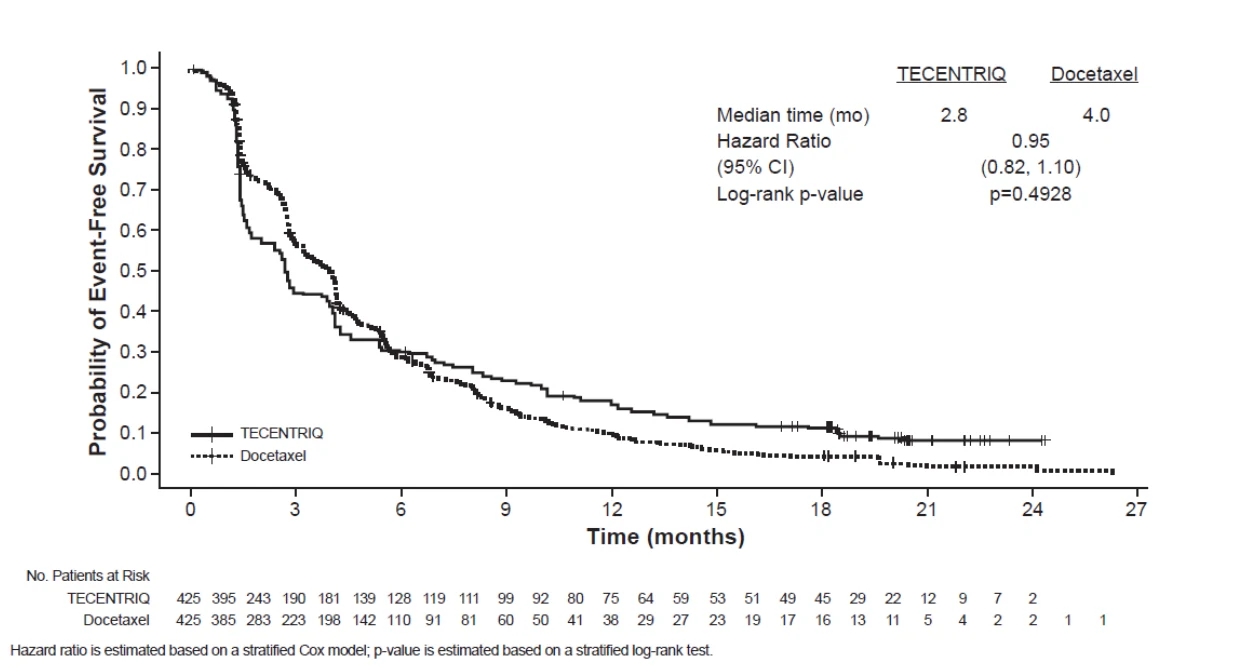
GO28753 (POPLAR)
Study Demographics and Trial Design
Table 39 Summary of Patient Demographics in Study GO28753 in Non-Small Cell Lung Cancer Patients
| Study Number | Study Design | Dosage, route of administration and duration | Study subjects (n) | Median age Years (range) | Sex n (%) |
|---|---|---|---|---|---|
| GO28752 | Phase II, multicentre, open-label, randomized, controlled study | atezolizumab 1200 mg IV q3w until loss of clinical benefit or docetaxel 75 mg/m2 IV q3w until disease progression or unacceptable toxicity | 287 | 62 (36 – 84) | M: 169 (59) F: 118 (41) |
IV = Intravenous; q3w = every three weeks
A phase II, multi-center, international, randomized, open-label, controlled study GO28753 (POPLAR), was conducted in patients with locally advanced or metastatic NSCLC. The primary efficacy outcome was overall survival. A total of 287 patients were randomized 1:1 to receive either TECENTRIQ or docetaxel. Randomization was stratified by PD-L1 expression status in IC, by the number of prior chemotherapy regimens and by histology.
Study Results
At the time of the primary analysis with 173 events (deaths), OS was observed for patients assigned to atezolizumab in the all-comer (ITT) population compared with docetaxel (HR = 0.73; 95% CI: [0.53, 0.99]; p= 0.0404; median OS 9.7 months in the docetaxel arm versus 12.6 months in the atezolizumab arm. Results of an updated post-hoc analysis with a total of 200 deaths observed and a median survival follow-up of 22 months showed a median OS of 12.6 months in patients treated with TECENTRIQ, vs. 9.7 months in patients treated with docetaxel (HR of 0.69, 95% CI: 0.52, 0.92). ORR was 15.3% vs. 14.7% and median DOR was 18.6 months vs. 7.2 months for TECENTRIQ vs. docetaxel, respectively.
Unresectable or Metastatic Hepatocellular Carcinoma
Study YO40245 (IMbrave150) - First-Line Combination Therapy
Study Demographics and Trial Design
Table 40 Summary of Patient Demographics for Study YO40245 (IMbrave150) in Unresectable or Metastatic Hepatocellular Carcinoma Patients
| Study Number | Study Design | Dosage, route of administration and duration | Study subjects (n) | Median age Years (range) | Sex n (%) |
|---|---|---|---|---|---|
| YO40245 | Phase III, multicenter, randomized, open-label study | Atezo: IV, 1200 mg Q3W Bev: IV, 15 mg/kg Q3W or Sorafenib: 400 mg PO, BID, continuously Duration: Patients received treatment until unacceptable toxicity or loss of clinical benefit as determined by the Investigator after an integrated assessment of radiographic and biochemical data, and clinical status | 501 | 65 (26-88) | M: 414 (83) F: 87 (17) |
Atezo = Atezolizumab; Bev = Bevacizumab; BID = twice per day; IV = Intravenous; PO = dosed by mouth; Q3W = every three weeks
A global phase III, randomized, multi-centre, open-label study, YO40245 (IMbrave150), was conducted to evaluate the efficacy and safety of TECENTRIQ in combination with bevacizumab, compared to sorafenib, as first-line systemic treatment of patients with unresectable or metastatic hepatocellular carcinoma (HCC). A total of 501 patients were randomized (2:1) to receive either TECENTRIQ 1200 mg and 15 mg/kg of bevacizumab every 3 weeks administered via IV infusion (n = 336), or sorafenib 400 mg orally twice per day (n = 165). Randomization was stratified by geographic region (Asia excluding Japan vs. rest of world), macrovascular invasion, extrahepatic spread (presence vs. absence), baseline alpha-fetoprotein (AFP) (<400 vs. ≥400 ng/mL) and ECOG performance status (0 vs. 1). Patients in both arms received treatment until loss of clinical benefit or unacceptable toxicity. Patients could discontinue either TECENTRIQ or bevacizumab (e.g., due to adverse events) and continue on single-agent therapy until loss of clinical benefit or unacceptable toxicity associated with the single-agent.
The study enrolled adults who were Child-Pugh A, ECOG 0 or1 and who had not received prior systemic treatment for HCC. Patients who were Child-Pugh B were excluded from the study and no information on the safety and efficacy of TECENTRIQ plus bevacizumab is available from YO40245 in these patients. Bleeding (including fatal events) is a known adverse reaction with bevacizumab and upper gastrointestinal bleeding is a common and life threatening complication in patients with HCC. Hence, patients were required to be evaluated for the presence of varices within 6 months prior to treatment and were excluded if they had variceal bleeding within 6 months prior to treatment, untreated or incompletely treated varices with bleeding or high risk of bleeding.
Other exclusions included patients with moderate or severe ascites; a history of abdominal or tracheoesophageal fistula, gastrointestinal (GI) perforation, or intra-abdominal abscess within 6 months prior to initiation of study treatment; an intra-abdominal inflammatory process within 6 months prior to initiation of study treatment; a history of hepatic encephalopathy; a history of autoimmune disease; administration of a live, attenuated vaccine within 4 weeks prior to randomization; administration of systemic immunostimulatory agents within 4 weeks or systemic immunosuppressive medications within 2 weeks prior to randomization; untreated or corticosteroid-dependent brain metastases.
The demographic and baseline disease characteristics of the study population were generally well balanced between the treatment arms. The median age was 65 years (range: 26 to 88 years) and 83% were male. The majority of patients were Asian (57%) and white (35%). 40% were from Asia (excluding Japan), while 60% were from rest of world. Approximately 75% of patients presented with macrovascular invasion and/or extrahepatic spread and 37% had a baseline AFP ≥400 ng/mL. Baseline ECOG performance status was 0 (62%) or 1 (38%). The primary risk factors for the development of HCC were Hepatitis B virus infection in 48% of patients, Hepatitis C virus infection in 22% of patients, and non-viral disease in 31% of patients. HCC was categorized as Barcelona Clinic Liver Cancer (BCLC) stage C in 82% of patients, stage B in 16% of patients, and stage A in 3% of patients.
Study Results
The primary efficacy endpoints were overall survival (OS) and independent review facility (IRF)-assessed progression free survival (PFS) according to RECIST v1.1. Tumour assessments were performed every 6 weeks for the first 54 weeks following Cycle 1, Day 1, and then every 9 weeks thereafter. The key efficacy results from the primary analysis are summarized in Table 41. The Kaplan-Meier curves for OS and PFS are presented in Figure 16 and Figure 17, respectively.
An updated efficacy analysis was performed with a median survival follow up time of 15.6 months. The median OS was 19.2 months (95% CI: 17.0, 23.7) in the TECENTRIQ + bevacizumab arm compared to 13.4 months (95% CI: 11.4, 16.9) in the sorafenib arm, with a hazard ratio (HR) of 0.66 (95% CI: 0.52, 0.85). The median PFS by IRF-assessment was 6.9 months (95% CI: 5.8, 8.6) in the TECENTRIQ + bevacizumab arm versus 4.3 months (95% CI: 4.0, 5.6) in the sorafenib arm with a HR of 0.65 (95% CI: 0.53, 0.81).
The IRF-assessed overall response rate (ORR) was 29.8% (95% CI: 24.8, 35.0) in the TECENTRIQ + bevacizumab arm and 11.3% (95% CI: 6.9, 17.3) in the sorafenib arm.
The IRF-assessed median duration of response (DOR) among confirmed responders was 18.1 months (95% CI: 14.6, NE) in the TECENTRIQ + bevacizumab arm compared to 14.9 months (95% CI: 4.9, 17.0) in the sorafenib arm.
Table 41 Summary of Efficacy - YO40245 (IMbrave150 – Primary Analysis)
TECENTRIQ in combination with Bevacizumab (N= 336) | Sorafenib (N=165) | |||||||||
|---|---|---|---|---|---|---|---|---|---|---|
| Overall Survival | ||||||||||
| Number of deaths (%) | 96 (28.6%) | 65 (39.4%) | ||||||||
| Median time to event (months) 95% CI | NE (NE, NE) | 13.2 (10.4, NE) | ||||||||
| Stratified hazard ratio‡ (95% CI) | 0.58 (0.42, 0.79) | |||||||||
| p-value1 | 0.0006 | |||||||||
| IRF-assessed PFS, RECIST 1.1 | ||||||||||
| Number of events (%) | 197 (58.6%) | 109 (66.1%) | ||||||||
| Median duration of PFS (months) (95% CI) | 6.8 (5.8, 8.3) | 4.3 (4.0, 5.6) | ||||||||
| Stratified hazard ratio‡ 95% CI | 0.59 (0.47, 0.76) | |||||||||
| p-value1 | <0.0001 | |||||||||
| IRF-assessed ORR, RECIST 1.1 | n=326 | n=159 | ||||||||
| Number of confirmed responders (%) | 89 (27.3%) | 19 (11.9%) | ||||||||
| 95% CI | (22.5, 32.5) | (7.4, 18.0) | ||||||||
| Number of complete responses (%) | 18 (5.5%) | 0 | ||||||||
| Number of partial responses (%) | 71 (21.8%) | 19 (11.9%) | ||||||||
| IRF-assessed ORR, HCC mRECIST | n=325 | n=158 | ||||||||
| Number of responders (%) | 108 (33.2%) | 21 (13.3%) | ||||||||
| (95% CI) | (28.1, 38.6) | (8.4, 19.6) | ||||||||
| Number of complete responses (%) | 33 (10.2%) | 3 (1.9%) | ||||||||
| Number of partial responses (%) | 75 (23.1%) | 18 (11.4%) | ||||||||
‡ Stratified by geographic region (Asia excluding Japan vs. rest of world), macrovascular invasion and/or extrahepatic spread (presence vs. absence), and baseline AFP (<400 vs. ≥400 ng/mL)
PFS=progression-free survival; RECIST=Response Evaluation Criteria in Solid Tumours v1.1; HCC mRECIST = Modified RECIST Assessment for Hepatocellular Carcinoma ; CI=confidence interval; ORR=objective response rate; OS=overall survival; NE=not estimable; N/A=not applicable | ||||||||||
Figure 16 Kaplan-Meier Plot for Overall Survival YO40245 (IMbrave150– Primary Analysis)
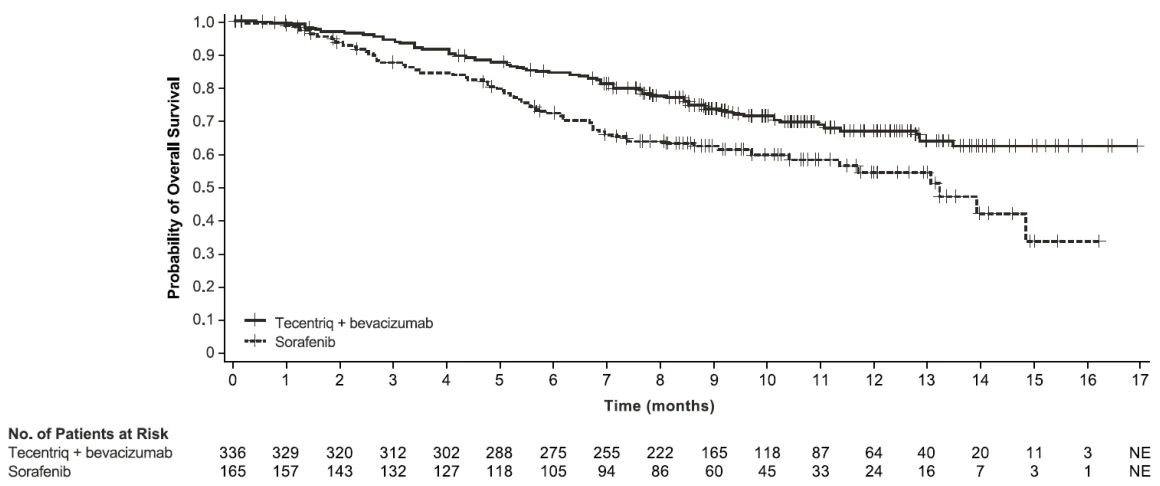
Figure 17 Kaplan-Meier Plot for Progression-Free Survival per RECIST v1.1 YO40245 (IMbrave150)
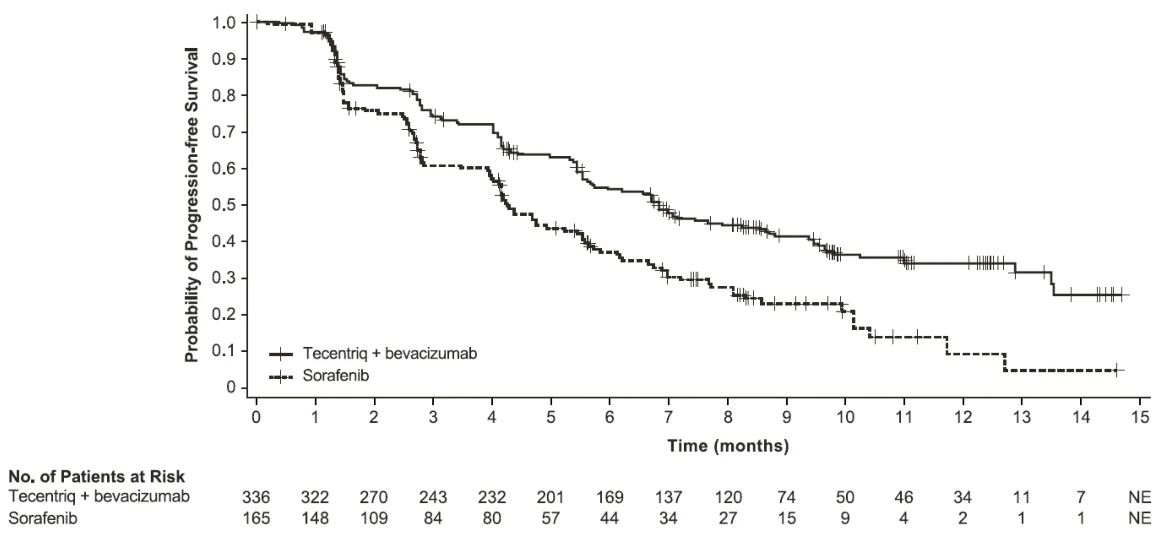
Locally Advanced or Metastatic Triple-Negative Breast Cancer (TNBC)
Study WO29522 (IMpassion130) - First-Line Therapy in Combination with Nab-Paclitaxel
Study Demographics and Trial Design
Table 42 Summary of Patient Demographics for Study WO29522 (IMpassion130) in Locally Advanced or Metastatic Triple-Negative Breast Cancer Patients
| Study Number | Study Design | Dosage, route of administration and duration | Study subjects (n) | Median age Years (range) | Sex n (%) |
|---|---|---|---|---|---|
| WO29522 | Phase III, randomized, placebo-controlled, double-blinded, two-arm | atezolizumab or placebo: IV, 840mg q2w nab-paclitaxel: IV, 100 mg/m2 weekly for three consecutive weeks followed by a 1-week rest period Duration: Until disease progression or unacceptable toxicity nab-paclitaxel: target of at least 6 cycles in the absence of disease progression or unacceptable toxicity | 902 | 55 (20 – 86) | F: 898 (99.6) M: 4 (0.4) |
IV = Intravenous; q2w = every two weeks
Designed as a phase III, double-blind, two-arm, randomized, placebo-controlled study, WO29522 (IMpassion130), was conducted to evaluate the efficacy and safety of TECENTRIQ in combination with nab-paclitaxel compared to placebo plus nab-paclitaxel, in patients with unresectable locally advanced or metastatic TNBC who had not received prior chemotherapy for metastatic disease. A total of 902 patients were enrolled and stratified by presence of liver metastases, prior taxane treatment, and by PD-L1 expression status in tumour-infiltrating immune cells (IC) (PD-L1 stained IC in <1% of the tumour area vs. ≥1% of the tumour area) by the VENTANA PD-L1 (SP142) Assay. Patients were randomized to receive TECENTRIQ (840 mg) or placebo IV infusions on Days 1 and 15 of every 28-day cycle, plus nab-paclitaxel (100 mg/m2) administered via IV infusion on Days 1, 8 and 15 of every 28-day cycle. Patients received treatment until radiographic disease progression per RECIST v1.1, or unacceptable toxicity. Tumour assessments were performed every 8 weeks (± 1 week) for the first 12 months after Cycle 1, day 1 and every 12 weeks (± 1 week) thereafter.
Patients were excluded if they had a history of autoimmune disease; administration of a live, attenuated vaccine within 4 weeks prior to randomization; administration of systemic immunostimulatory agents within 4 weeks or systemic immunosuppressive medications within 2 weeks prior to randomization; untreated or corticosteroid-dependent brain metastases.
The demographic and baseline disease characteristics of the study population were well balanced between the treatment arms. Most patients were women (99.6%). Sixty-seven percent of patients were white (67.5%), 17.8% were Asian, 6.5% were Black or African American, and 4.4% were American Indian or Alaskan Native. The median age was 55 years (range: 20-86). Baseline ECOG performance status was 0 (58.4%) or 1 (41.3%). Overall, 41% of enrolled patients had PD-L1 expression on IC covering ≥1% of the tumour area, 27% had liver metastases and 7% brain metastases at baseline. Approximately half the patients had received a taxane (51%) or anthracycline (54%) in the (neo) adjuvant setting.
The co-primary efficacy endpoints were OS and PFS as assessed by the investigator according to RECIST V1.1, both in the ITT population and the PD-L1-positive patient population. Secondary endpoints included ORR and DOR as assessed by the investigator per RECIST v1.1. Two interim and one final analyses of OS were planned. OS in the PD-L1-positive patient population was formally tested only if the OS results in the ITT population were statistically significant.
Study Results
PFS, ORR and DOR results for patients with PD-L1 expression of ≥1% on IC with a median survival follow up of 13 months are summarized in Table 43 and Figure 18.
A final OS analysis was performed in patients with PD-L1 expression of ≥1% on IC with a median survival follow-up of 19.12 months. OS results are presented in Table 43 and Figure 19.
Table 43 Summary of Efficacy in Patients with PD-L1 Expression of ≥1% on IC (IMpassion130)
| Efficacy endpoint | TECENTRIQ + nab-paclitaxel | Placebo + nab-paclitaxel | |||||||||||
|---|---|---|---|---|---|---|---|---|---|---|---|---|---|
| Primary endpoint | |||||||||||||
| Investigator-assessed PFS (RECIST v1.1)* | n=185 | n=184 | |||||||||||
| No. of events (%) | 138 (74.6%) | 157 (85.3%) | |||||||||||
| Median duration of PFS (months) | 7.5 | 5.0 | |||||||||||
| 95% CI | (6.7, 9.2) | (3.8, 5.6) | |||||||||||
| Stratified hazard ratio‡ (95% CI) | 0.62 (0.49, 0.78) | ||||||||||||
| p-value1 | <0.0001 | ||||||||||||
| OS2 | n=185 | n=184 | |||||||||||
| No. of deaths (%) | 120 (64.9%) | 139 (75.5%) | |||||||||||
| Median time to events (months) | 25.4 | 17.9 | |||||||||||
| 95% CI | (19.6, 30.7) | (13.6, 20.3) | |||||||||||
| Stratified hazard ratio‡ ‡ (95% CI) | 0.67 (0.53, 0.86) | ||||||||||||
| Secondary endpoints | |||||||||||||
| Investigator-assessed ORR (RECIST 1.1)* | n=185 | n=183 | |||||||||||
| No. of responders (%) | 109 (58.9%) | 78 (42.6%) | |||||||||||
| 95% CI | (51.5, 66.1) | (35.4, 50.1) | |||||||||||
| No. of complete response (%) | 19 (10.3%) | 2 (1.1%) | |||||||||||
| No. of partial response (%) | 90 (48.6%) | 76 (41.5%) | |||||||||||
| Investigator-assessed DOR* | n=109 | n=78 | |||||||||||
| Median in months | 8.5 | 5.5 | |||||||||||
| 95% CI | (7.3, 9.7) | (3.7, 7.1) | |||||||||||
* The results were similar to those obtained using independent review committee assessment of these endpoints 1 Based on the stratified log-rank test at significance level 0.005 as per the pre-specified type I error control rate 2 OS comparisons between treatment arms in patients with PD-L1 expression of ≥1% on IC were not formally tested, as per the pre-specified analysis hierarchy. ‡Stratified by presence of liver metastases, and by prior taxane treatment PFS=progression-free survival; RECIST=Response Evaluation Criteria in Solid Tumours v1.1.; CI=confidence interval; ORR=objective response rate; DOR=duration of response; OS=overall survival, NE=not estimable | |||||||||||||
Figure 18 Kaplan-Meier Plot for Progression Free Survival in Patients with PD-L1 Expression of ≥1% on IC (IMpassion130)
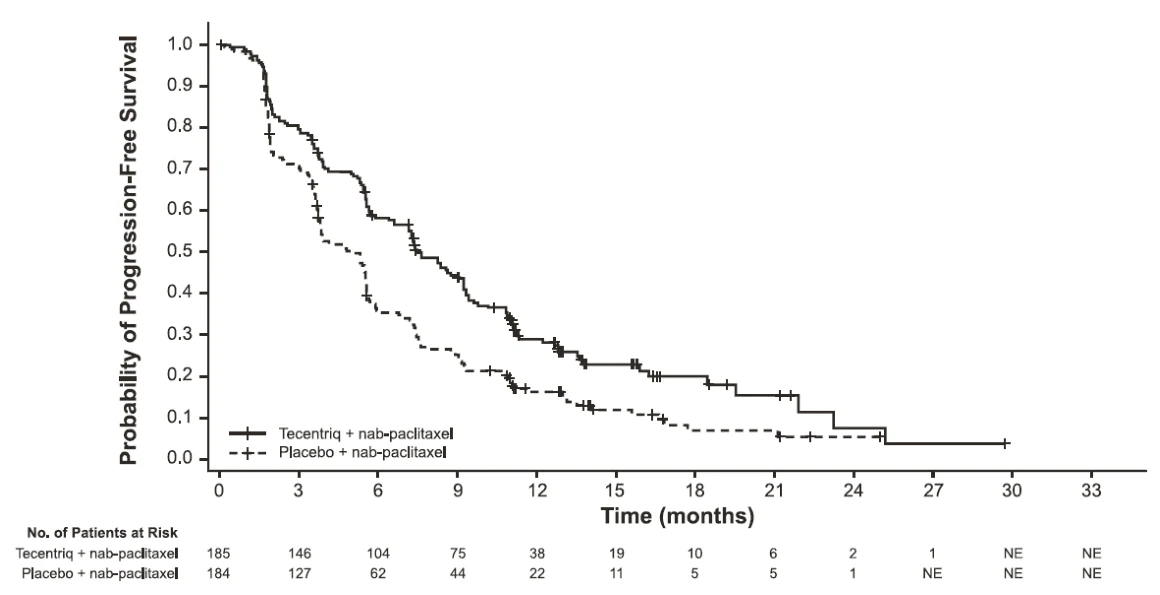
Figure 19 Kaplan-Meier Plot for Overall Survival in Patients with PD-L1 Expression of ≥1% on IC (IMpassion130)
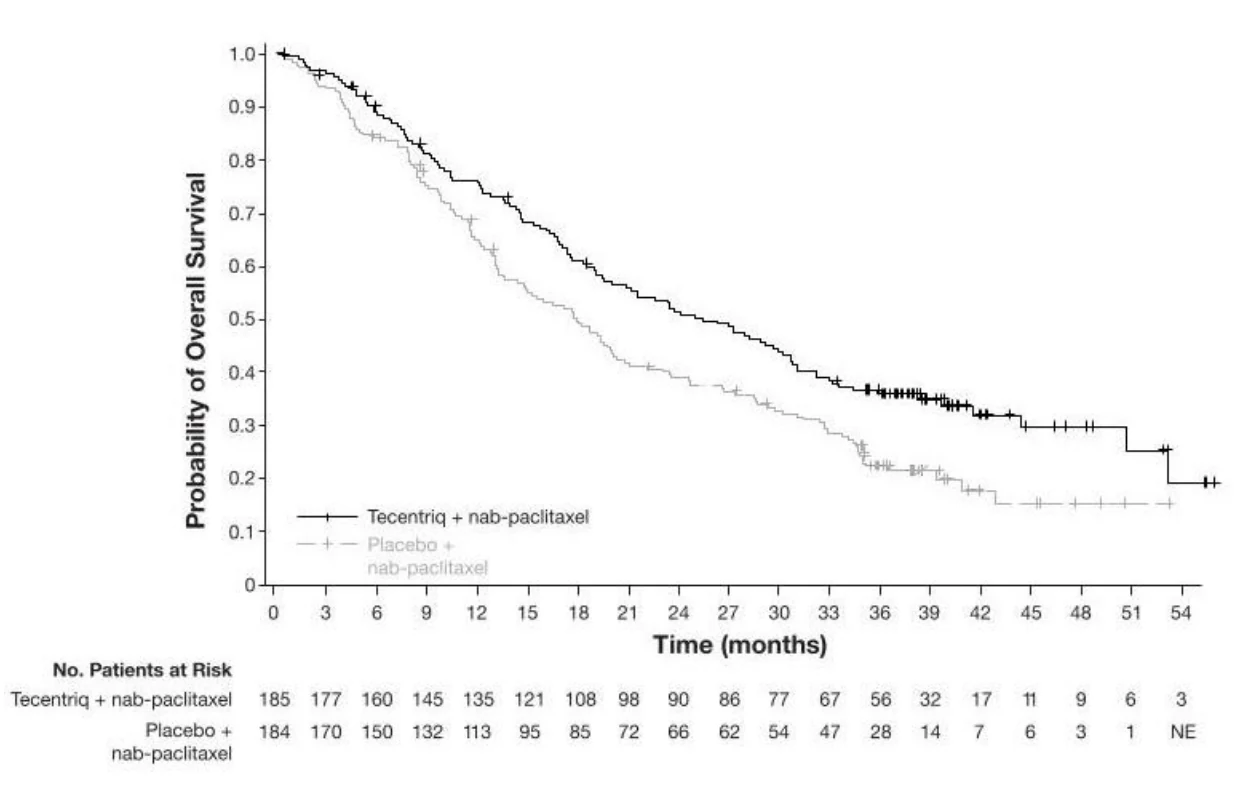
Lack of Efficacy in Combination with Paclitaxel in Locally Advanced or Metastatic TNBC
Study MO39196 (IMpassion131) was a phase III, double-blind, randomized (2:1), placebo-controlled study that evaluated TECENTRIQ in combination with paclitaxel compared to placebo plus paclitaxel in patients with unresectable locally advanced or metastatic TNBC who had not received prior chemotherapy for metastatic disease. TECENTRIQ (840 mg) was administered by IV infusion on Days 1 and 15 of every 28-day cycle, plus paclitaxel (90 mg/m2) intravenously on Days 1, 8 and 15 of every 28-day cycle. Among the 651 randomized patients, 292 were PD-L1-positive, which was defined as PD-L1 expression on IC covering ≥ 1% of the tumour area. For the PD-L1-positive patients, results of the final OS analysis with a total of 123 deaths and a median survival follow-up of 15.4 months showed a median OS of 22.1 month in the TECENTRIQ arm compared to 28.3 months in the placebo arm (HR of 1.11, 95% CI: 0.76, 1.64).
16. Non-Clinical Toxicology
General toxicology
Repeat-dose toxicity studies were conducted in cynomolgus monkeys and C57BL/6 and CD-1 mice.
Cynomolgus Monkeys:
In an 8-week study, cynomolgus monkeys received 0, 15, or 50 mg/kg atezolizumab by intravenous administration or 15 or 50 mg/kg by subcutaneous injection once per week (9 doses) followed by a 12-week recovery period. In a 26-week study, cynomolgus monkeys received 0, 5, 15 or 50 mg/kg atezolizumab by intravenous administration once per week (27 doses) followed by a 13-week recovery period. All animals survived until scheduled termination.
Atezolizumab-related minimal to mild multi-organ arteritis/periarteritis was observed at dose levels of 15 and 50 mg/kg. The vasculitis is consistent with heightened immune autoreactivity. An additional finding in the 26-week, repeat-dose toxicity study was an atezolizumab-related effect on menstrual cycles. All females in the 50 mg/kg dose group experienced an irregular cycle pattern during the dosing phase. This finding correlated with an absence of fresh corpora lutea in the ovaries (lack of cycling activity) at the time of the terminal phase necropsy. This effect occurred at an estimated AUC approximately 6 times the AUC in patients receiving the recommended dose and was reversible. The no observed adverse effect level (NOAEL) was determined to be 5 mg/kg.
C57BL/6 and CD-1 mice:
Female C57BL/6 mice received 0, 10, or 50 mg/kg intravenous administration of atezolizumab weekly for 15 days (3 doses) followed by a 4-week recovery period. Female CD-1 mice received 0 or 50 mg/kg intravenous administration of atezolizumab weekly for 15 days (3 doses) followed by a 4-week recovery period. All animals survived until scheduled termination. Irreversible minimal sciatic neuropathy characterized by vacuolation and lymphocytic infiltration was observed at dose levels of 10 and 50 mg/kg in C57BL/6 mice only. This finding is considered atezolizumab-related and is attributed to a heightened immune response.
For further details on the repeat-dose toxicity studies with TECENTRIQ, see Table 44.
Impairment of Fertility
No fertility studies have been conducted with TECENTRIQ; however, assessment of the cynomolgus monkey male and female reproductive organs was included in the chronic toxicity study. TECENTRIQ had an effect on menstrual cycles in all female monkeys in the 50 mg/kg dose group characterized by an irregular cycle pattern during the dosing phase and correlated with the lack of fresh corpora lutea in the ovaries at the terminal necropsy; this effect was reversible during the dose-free recovery period. Based on this observation, TECENTRIQ may impair fertility in females with reproductive potential. There was no effect on the male reproductive organs.
| Table 44 Summary of Toxicology Studies | |||||||||
|---|---|---|---|---|---|---|---|---|---|
| Table 44 Summary of Toxicology Studies | |||||||||
| Study Type | Treatment Duration and Dosing Schedule | Species/ Test System | Gender and No. per group | Doses (mg/kg) | Findings/Conclusions | ||||
| Study Type | Treatment Duration and Dosing Schedule | Species/ Test System | Gender and No. per group | Doses (mg/kg) | Findings/Conclusions | ||||
| Non-GLP Repeat Dose Study | Once weekly for 2 weeks (3 total doses); IV | C57BL/6 and CD-1 mice | Female (total of n=32/ group); n=8/group for toxicity assessment; n=15/ group for immune assessment; n=9/group toxicokinetic assessment | C57BL/6 0 mg/kg 10 mg/kg 50 mg/kg CD-1 0 mg/kg 50 mg/kg |
| ||||
| Repeat Dose Study | Once weekly for 8 consecutive weeks (9 total doses) | Cynomolgus monkeys | n=5/sex/group for each main study dose group (IV or SC); n=3/sex/group for cardiovascular safety pharmacology via implanted telemetry (IV) | 0 mg/kg (IV/SC) 5 mg/kg (IV) 15 mg/kg (IV) 50 mg/kg (IV) 15 mg/kg (SC) 50 mg/kg (SC) |
| ||||
| Repeat Dose Study | Once weekly for 26 consecutive weeks (27 total doses) | Cynomolgus monkeys | 5/sex/ group | 0 mg/kg (IV) 5 mg/kg (IV) 15 mg/kg (IV) 50 mg/kg (IV) |
| ||||
Genotoxicity: No studies have been performed to establish the mutagenic potential of atezolizumab.
Carcinogenicity: No carcinogenicity studies have been conducted with TECENTRIQ.
Reproductive and developmental toxicology: No reproductive or developmental studies in animals have been conducted with atezolizumab. The PD-L1/PD-1 signaling pathway is well established as essential in maternal / fetal tolerance and embryo-fetal survival during gestation. Blockade of PD-L1 signaling has been shown, in murine models of pregnancy, to disrupt tolerance to the fetus and to result in an increase in fetal loss. Therefore, the potential risks of administering atezolizumab during pregnancy include increased rates of abortion or stillbirth. As reported in the literature, there were no malformations related to the blockade of PD-L1/PD-1 signaling in the offspring of these animals; however, immune-mediated disorders occurred in PD-1 and PD-L1 knockout mice. Based on its mechanism of action, fetal exposure to atezolizumab may increase the risk of developing immune-mediated disorders or altering the normal immune response.
Special toxicology: In animal models, inhibition of PD L1/PD 1 signaling increased the severity of some infections and enhanced inflammatory responses. M. tuberculosis-infected PD 1 knockout mice exhibit markedly decreased survival compared with wild-type controls, which correlated with increased bacterial proliferation and inflammatory responses in these animals. PD L1 and PD 1 knockout mice and mice receiving PD L1 blocking antibody have also shown decreased survival following infection with lymphocytic choriomeningitis virus clone 13.