


Product Monograph - Besremi
Recent Major Label Changes
None at the time of authorization
Table of Contents
Recent Major Label Changes ................................................................................................. 2
Table of Contents ................................................................................................................. 2
Part 1: Healthcare Professional Information.......................................................................... 5
- 1.
Indications..................................................................................................................... 5
1.1. Pediatrics .................................................................................................................... 5
1.2. Geriatrics .................................................................................................................... 5
- 2. Contraindications .......................................................................................................... 5
- 3. Serious Warnings and Precautions Box ........................................................................... 5
- 4.
Dosage and Administration ............................................................................................ 6
4.1. Dosing Considerations ............................................................................................... 6
4.2. Recommended Dose and Dosage Adjustment .......................................................... 6
4.3. Administration ........................................................................................................... 9
4.4. Missed Dose ............................................................................................................. 10
- 5. Overdose ..................................................................................................................... 10
- 6. Dosage Forms, Strengths, Composition, and Packaging ................................................ 10
- 7.
Warnings and Precautions ........................................................................................... 11
General ................................................................................................................................. 11
Cardiovascular ...................................................................................................................... 11
Dental and Periodontal Disorders ........................................................................................ 12
Driving and Operating Machinery ........................................................................................ 12
Endocrine and Metabolism .................................................................................................. 12
Hepatic/Biliary/Pancreatic ................................................................................................... 12
Immune ................................................................................................................................ 13
Ophthalmologic .................................................................................................................... 13
Psychiatric ............................................................................................................................. 13
Renal ..................................................................................................................................... 14
Reproductive Health ............................................................................................................. 14
Respiratory ........................................................................................................................... 14
Skin ....................................................................................................................................... 14
7.1. Special Populations .................................................................................................. 14
7.1.1. Pregnancy ......................................................................................................... 14
7.1.2. Breastfeeding ................................................................................................... 14
7.1.3. Pediatrics .......................................................................................................... 15
7.1.4. Geriatrics .......................................................................................................... 15
- 8.
Adverse Reactions ....................................................................................................... 15
8.1. Adverse Reaction Overview ..................................................................................... 15
8.2. Clinical Trial Adverse Reactions ............................................................................... 15
8.3. Less Common Clinical Trial Adverse Reactions ........................................................ 18
8.4. Abnormal Laboratory Findings: Hematologic, Clinical Chemistry, and Other Quantitative Data ................................................................................................................. 19
- 9.
Drug Interactions ......................................................................................................... 19
9.2. Drug Interactions Overview ..................................................................................... 19
9.3. Drug-Behaviour Interactions .................................................................................... 20
9.4. Drug-Drug Interactions ............................................................................................ 20
9.5. Drug-Food Interactions ............................................................................................ 20
9.6. Drug-Herb Interactions ............................................................................................ 20
9.7. Drug-Laboratory Test Interactions........................................................................... 20
- 10.
Clinical Pharmacology .................................................................................................. 20
10.1. Mechanism of Action ............................................................................................... 20
10.2. Pharmacodynamics .................................................................................................. 21
10.3. Pharmacokinetics ..................................................................................................... 21
10.4. Immunogenicity ....................................................................................................... 23
- 11. Storage, Stability, and Disposal .................................................................................... 23
- 12. Special Handling Instructions ....................................................................................... 23
Part 2: Scientific Information .............................................................................................. 24
- 13. Pharmaceutical Information ........................................................................................ 24
- 14.
Clinical Trials ............................................................................................................... 25
14.1. Clinical Trials by Indication ...................................................................................... 25
- 16. Non-Clinical Toxicology ................................................................................................ 28
Patient Medication Information ......................................................................................... 29
Part 1: Healthcare Professional Information
1. Indications
BESREMI (ropeginterferon alfa-2b) is indicated for:
The treatment of adults with polycythemia vera.
1.1. Pediatrics
Pediatrics (< 18 years of age): No data are available to Health Canada; therefore, Health Canada has not authorized an indication for pediatric use.
1.2. Geriatrics
Geriatrics (≥ 75 years of age): Evidence from clinical studies and experience suggests that use in the geriatric population is not associated with differences in safety or effectiveness.
2. Contraindications
- BESREMI is contraindicated in patients who are hypersensitive to this drug or to any ingredient in the formulation, including any non-medicinal ingredient, or component of the container. For a complete listing, see 6 DOSAGE FORMS, STRENGTHS, COMPOSITION AND PACKAGING.
- Existence of, or history of severe psychiatric disorders, particularly severe depression, suicidal ideation or suicide attempt.
- Decompensated cirrhosis of the liver (Child-Pugh B or C).
- History or presence of active serious or untreated autoimmune disease.
- Immunosuppressed transplant recipients.
- Pre-existing thyroid disease unless it can be controlled with conventional treatment.
- Severe pre-existing cardiovascular disease, (i.e., uncontrolled hypertension, congestive heart failure (≥ NYHA class 2), serious cardiac arrhythmia, significant coronary artery stenosis, unstable angina) or recent stroke or myocardial infarction.
- Severe or end stage renal disease (GFR <30 mL/min).
3. Serious Warnings and Precautions Box
- BESREMI (ropeginterferon alfa-2b) may cause or aggravate fatal or life-threatening neuropsychiatric, autoimmune, ischemic, and infectious disorders. Patients should be monitored closely with periodic clinical and laboratory evaluations. Patients with persistently severe or worsening signs or symptoms of these conditions should be withdrawn from therapy. In many cases, but not all cases, these disorders resolve after stopping interferon therapy (see 7 WARNINGS AND PRECAUTIONS).
4. Dosage and Administration
4.1. Dosing Considerations
- Obtain a pregnancy test in females of reproductive potential prior to initiating treatment with BESREMI.
Treatment should be initiated under the supervision of a Health Care Professional experienced in the management of polycythemia vera.
4.2. Recommended Dose and Dosage Adjustment
Titration phase
Patients Not Already on Hydroxyurea:
- The recommended starting dosage of BESREMI for patients who are not already on hydroxyurea is 100 mcg by subcutaneous injection every two weeks.
- Increase the dose by 50 mcg every two weeks (up to a maximum of 500 mcg), until the hematological parameters are stabilized (hematocrit less than 45%, platelets less than 400 x 109/L, and leukocytes less than 10 x 109/L).
Patients Transitioning from Hydroxyurea:
- When transitioning to BESREMI from hydroxyurea, start BESREMI at 50 mcg by subcutaneous injection every two weeks in combination with hydroxyurea.
- Gradually taper off the hydroxyurea by reducing the total biweekly dose by 20-40% every two weeks during Weeks 3-12.
- Increase the dose of BESREMI by 50 mcg every two weeks (up to a maximum of 500 mcg), until the hematological parameters are stabilized (hematocrit less than 45%, platelets less than 400 x 109/L, and leukocytes less than 10 x 109/L).
- Discontinue hydroxyurea by Week 13.
Maintenance phase
Once stabilization is achieved, maintain the dose (i.e., the dose at which hematological parameters stabilized) and two week dosing interval of BESREMI for at least 1 year. After achievement of hematological stability for at least 1 year on a stable dose of BESREMI, the dosing interval may be expanded to every 4 weeks.
Monitor patients closely, especially during the titration phase and during dose modifications. Perform complete blood counts (CBC) regularly, every 2 weeks during the titration and modification phases and every 3-6 months during the maintenance phase (after the patient’s optimal dose is established). Monitor CBC more frequently if clinically indicated. Phlebotomy as rescue treatment to normalize blood hyperviscosity may be necessary during the titration or modification phase.
Dose Modifications
If adverse events develop during therapy, the administered dose should be reduced or treatment discontinued temporarily until adverse events abate. If treatment is re-initiated after experiencing drug-related toxicity, the dose should be reduced to the next lower level.
If an increase of hematological parameters (hematocrit, platelets, and/or leukocytes) is observed, the dose and/or dosing interval needs to be adapted individually.
Recommended dosing modifications for adverse events are shown in Table 1.
Table 1 – Dose Modifications for BESREMI Adverse Reactions
| Adverse Reaction | Severity | Dosage Modification |
|---|---|---|
| Adverse Reaction | Severity | Dosage Modification |
| Liver enzyme elevation with concomitant bilirubin elevation, or other evidence of hepatic decompensation | Any increase above baseline |
|
| Liver enzyme elevation | >5 x the upper limit of normal (ULN) but ≤20 x ULN |
|
| >20 x ULN |
| |
| ||
| Cytopenia | Anemia: Hemoglobin (Hgb) < 8 g/dL Thrombocytopenia: platelet count < 50,000/mm3 but ≥25,000/mm3 Leukopenia: white blood cell count (WBC) <2000/mm3 but ≥1,000/mm3 |
|
Anemia: Hemoglobin levels are life threatening, or urgent intervention needed Thrombocytopenia: platelet count <25,000/mm3 Leukopenia: WBC <1000/mm3 |
| |
| Depression | Mild, without suicidal ideation | Consider psychiatric consultation if persistent (>8 weeks). |
| Moderate, without suicidal ideation | Consider dose reduction and psychiatric consultation. | |
| Severe, or any severity with suicidal ideation | Discontinue therapy, recommend psychiatric consultation. |
Dosing in Special Populations
Renal Impairment
No dose adjustment is necessary in patients with estimated glomerular filtration rate (eGFR) ≥30 mL/min. Avoid use of BESREMI in patients with eGFR <30 mL/min. (see 2 CONTRAINDICATIONS).
Hepatic Impairment
Liver enzymes and hepatic function should be regularly monitored in patients with long-term BESREMI therapy. In patients with compensated cirrhosis (i.e., Child-Pugh A), another pegylated interferon alfa (pegylated interferon alfa-2a) has been shown to be safe. No BESREMI dose adjustment is required for adult patients with mild liver impairment.
The use of interferon alfa has not been evaluated in patients with decompensated cirrhosis (i.e., Child-Pugh B or C) and is contraindicated in these patients (see 2 CONTRAINDICATIONS). In patients who develop evidence of hepatic decompensation during treatment, BESREMI should be discontinued.
Increased liver enzyme levels have been observed in patients treated with BESREMI. When the increase in liver enzyme levels is progressive and persistent, the dose should be reduced. If the increase in liver enzymes is progressive and clinically significant despite dose reduction, or if there is evidence of hepatic decompensation, therapy should be discontinued (see 7 WARNINGS AND PRECAUTIONS).
Geriatrics
Adjustments in the recommended dose for BESREMI are not necessary when starting therapy in elderly patients.
Pediatrics
The safety and efficacy of BESREMI in children and adolescents has not been established. No data is available.
4.3. Administration
Read the INSTRUCTIONS FOR USE before administering the single-use BESREMI pre-filled syringe. BESREMI is for subcutaneous injection only and may be administered by either a healthcare professional, a patient or a caregiver. Before a decision is made to allow BESREMI to be administered by a patient or caregiver, ensure that the patient is an appropriate candidate for self-administration or administration by a caregiver. Proper training on storage, preparation and administration technique should be provided. If a patient or caregiver is not an appropriate candidate for any reason, then BESREMI should be administered by a healthcare professional.
Before each injection, remove the carton that contains the BESREMI pre-filled syringe from the refrigerator. Keep the pre-filled syringe in the carton and lay it flat on a clean work surface for 15-30 minutes to allow the pre-filled syringe to reach room temperature (15 °C to 25 °C).
Each BESREMI pre-filled syringe is for single use only.
Before injection, visually inspect BESREMI in the pre-filled syringe for particulate matter and discoloration before administration (do not use if the solution in the syringe is cloudy, discolored, contains particulate matter or if the syringe shows any sign of damage).
Syringe Preparation
- Remove the pre-filled syringe cap by unscrewing it counterclockwise.
- Attach the covered needle to the pre-filled syringe by firmly pushing it onto the collar of the syringe and then screwing (turn clockwise) it on until it feels securely attached.
- Choose one of the following injection sites: Lower stomach (abdomen) area, at least 5 cm away from the belly button, or top of thighs. Rotate (change) the injection site for each injection. Do not inject into skin that is irritated, red, bruised, infected, or scarred; clean the chosen injection site with an alcohol swab and let air dry.
- Uncap needle and move air bubbles to top. Pull the pink needle shield back and hold the syringe from the syringe body. Remove the clear needle cap by pulling it straight off. Throw away the needle cap into the trash. Hold the pre-filled syringe with the needle pointing up. Tap on the body of the pre-filled syringe to move any air bubbles to the top.
Set Injection Dose
- Depending on the prescribed dose, the amount of dose in the syringe may need to be adjusted by discarding some of the medication.
- Hold the pre-filled syringe at eye level with the needle pointing straight up over a paper towel, sink, or trash can. Check that you can see the dose lines and number markings on the pre-filled syringe.
- Pinch the end of the plunger and slowly push up to remove liquid medicine until the top edge of the gray stopper lines up with the marking for the prescribed dose.
Inject BESREMI
- Pinch the chosen injection site. While pinching the skin, insert needle at a 45- to 90-degree angle into the pinched skin, then release the pinched skin.
- Inject BESREMI by slowly pressing on the plunger all the way until it stops. After all the liquid medicine is injected, remove the needle from the skin.
Dispose of Used Syringe
- Carefully push the pink needle shield over the needle until it snaps into place and covers the needle. Do not recap the needle using the needle cap; only use the pink needle shield to cover the needle.
- Throw away the used pre-filled syringe with the needle still attached, into a sharps disposal container.
4.4. Missed Dose
If a dose is missed, it should be administered as soon as possible within 2 days after the missed dose. If more than 2 days have passed, the missed dose should be skipped and the next dose should be administered on the regularly scheduled day.
5. Overdose
During the clinical study program, one accidental case of overdose has been reported with BESREMI. The patient received a 10-times higher starting dose than recommended and developed flu-like symptoms for three days which were rated as non-serious. The patient recovered completely after temporary discontinuation of BESREMI therapy and acetaminophen administration.
For the most recent information in the management of a suspected drug overdose, contact your regional poison control centre or Health Canada’s toll-free number, 1-844 POISON-X (1-844-764-7669).
- 6. Dosage Forms, Strengths, Composition, and Packaging
To help ensure the traceability of biologic products, healthcare professionals should record both the brand name and the non-proprietary (active ingredient) name as well as other product-specific identifiers such as the Drug Identification Number (DIN) and the batch/lot number of the product supplied.
Table 2– Dosage Forms, Strengths, and Composition
Description
BESREMI is provided in a single-use 1 mL, Type I, clear borosilicate glass syringe barrel with a luer-lock adapter and plastic rigid tip cap closed with a siliconized plunger stopper.
7. Warnings and Precautions
See 3 Serious Warnings and Precautions Box.
General
The recommended posology for the titration phase of BESREMI (see 4.2 Recommended Dose and Dosage Adjustment) results in a prolonged time to reach the individual optimal dose compared to hydroxyurea. In a clinical study in polycythemia vera, the end of the mean individual titration phase for BESREMI was reached after approximately 3.7 months, and for hydroxyurea after approximately 2.6 months of treatment.
During the titration phase the efficacy to reduce the cardiovascular and thromboembolic risk of the underlying disease may not be fully established. Patients should be closely monitored, in particular, during the titration phase; complete blood counts including determination of hematocrit level, leukocyte and platelet counts should be performed regularly also after the individual optimal dose has been established. Phlebotomy as rescue treatment to normalize blood hyperviscosity may be necessary.
Cardiovascular
Cardiac events including cardiomyopathy, myocardial infarction, atrial fibrillation and ischemic coronary artery disorders have been associated with interferon alfa treatment (see 8 ADVERSE REACTIONS). Patients with pre-existing or a history of cardiovascular disorders should be closely monitored during BESREMI therapy. BESREMI is contraindicated in patients with severe pre-existing cardiovascular disease or patients who have recently suffered from a stroke or myocardial infarction (see 2 CONTRAINDICATIONS).
| Route of Administration | Dosage Form/ Strength/Composition | Non-Medicinal Ingredients |
| Subcutaneous (SC) injection | Pre-filled syringe 500 mcg/syringe (500 mcg/ 1 mL) | acetic acid, glacial; benzyl alcohol; polysorbate 80; sodium acetate, anhydrous; sodium chloride; water for injection |
Dental and Periodontal Disorders
Dental and periodontal disorders, which may lead to loss of teeth, have been reported with other interferon alfa products (see 8 ADVERSE REACTIONS). In addition, dry mouth could have a damaging effect on teeth and mucous membranes of the mouth during long-term treatment with BESREMI. Patients should brush their teeth thoroughly twice daily and have regular dental examinations.
Driving and Operating Machinery
BESREMI can have an influence on the ability to drive or use machines. Patients who experience dizziness, somnolence or hallucination (see 8 ADVERSE REACTIONS) during BESREMI therapy should be advised to avoid driving or using machines.
Endocrine and Metabolism
Before initiation of BESREMI therapy, any pre-existing thyroid disease needs to be treated and controlled with conventional therapy. Patients who develop symptoms indicative of thyroid dysfunction during ropeginterferon alfa-2b therapy, should evaluate their thyroid stimulating hormone (TSH) levels. If TSH levels can be controlled within the normal range, the therapy can be continued.
Diabetes mellitus has been observed with interferon alfa products (see 8 ADVERSE REACTIONS). Patients with diabetes mellitus that is not effectively controlled by medication should not begin treatment with BESREMI. If a patient being treated with BESREMI develops diabetes mellitus that cannot be controlled with medication, BESREMI treatment should be discontinued.
Hepatic/Biliary/Pancreatic
Hepatic
Interferon alfa therapy has been associated with hepatotoxicity characterized by significant increases in liver enzymes. Hepatic failure in hepatitis C virus infected patients was reported with other interferon alfa products (see 8 ADVERSE REACTIONS).
Increases in ALT (≥3 times the upper limit of normal), AST (≥3 times the upper limit of normal), GGT (≥3 times the upper limit of normal) and bilirubin (>2 times the upper limit of normal) levels have been observed in patients treated with BESREMI. These elevations were mostly transient and occurred during the first year of treatment.
Liver disorders have been reported in patients after long-term BESREMI therapy (see 8 ADVERSE REACTIONS). Liver enzymes and hepatic function should be regularly controlled in patients with long-term BESREMI therapy. Treatment with BESREMI should be discontinued when, despite dose reduction, the increase in liver enzyme levels is progressive and clinically significant. In patients who develop evidence of hepatic decompensation during treatment, BESREMI should be discontinued. BESREMI is contraindicated in patients with decompensated cirrhosis of the liver (see 2 CONTRAINDICATIONS).
Pancreatic
Pancreatitis has occurred in patients receiving interferon alfa products, including BESREMI. Pancreatitis was reported in 2.2% of patients receiving BESREMI. Symptoms may include nausea, vomiting, upper abdominal pain, bloating, and fever. Patients may experience elevated lipase, amylase, white blood cell count, or altered renal/hepatic function. Interrupt BESREMI treatment in patients with possible pancreatitis and evaluate promptly. Consider discontinuation of BESREMI in patients with confirmed pancreatitis.
Immune
Colitis
Fatal and serious ulcerative or hemorrhagic/ischemic colitis have occurred in patients receiving interferon alfa products, some cases occurring as early as 12 weeks after start of treatment. Symptoms may include abdominal pain, bloody diarrhea, and fever. Discontinue BESREMI in patients who develop these signs or symptoms. Colitis may resolve within 1 to 3 weeks of stopping treatment.
Hypersensitivity
Serious, acute hypersensitivity reactions (e.g., urticaria, angioedema, bronchoconstriction, anaphylaxis) have been rarely observed with interferon alfa products. If such reactions occur, BESREMI therapy must be discontinued, and appropriate medical therapy instituted immediately. Transient rashes do not necessitate interruption of treatment.
Ophthalmologic
Severe eye disorders such as retinopathy, retinal hemorrhage, retinal exudates, retinal detachment and retinal artery or vein occlusion which may result in blindness have been observed rarely in patients treated with interferon alfa (see 8 ADVERSE REACTIONS). Patients should have eye examinations before and during BESREMI therapy, specifically in those patients with retinopathy associated disease such as diabetes mellitus or hypertension. Any patient reporting a decrease or loss of vision or reporting other eye symptoms should have an immediate eye examination. Discontinuation of BESREMI should be considered in patients who develop new or worsening eye disorders.
Psychiatric
CNS effects, in particular depression, have been observed in some patients treated with BESREMI during the clinical development program (see 8 ADVERSE REACTIONS). Other CNS effects, including suicidal ideation, attempted suicide, aggression, bipolar disorder, mania and confusion have been observed with interferon alfa products. Patients should be closely monitored for any symptoms of psychiatric disorders and therapeutic management should be considered by the treating physician if such symptoms emerge. If psychiatric symptoms worsen, it is recommended to discontinue BESREMI therapy. BESREMI must not be administered in patients with existence of or history of severe psychiatric disorders, particularly severe depression, suicidal ideation or suicide attempt (see 2 CONTRAINDICATIONS).
Renal
Regardless of the starting dose or degree of renal impairment, patients should be monitored. Discontinue BESREMI if severe renal impairment develops during treatment.
BESREMI is contraindicated in patients with end stage renal disease (see 2 CONTRAINDICATIONS).
Reproductive Health
Fertility
There are no data on the effect of ropeginterferon alfa-2b therapy on the fertility of females or males.
Respiratory
Respiratory disorders such as lung infiltration, pneumonitis, pneumonia or pulmonary arterial hypertension have been observed rarely in patients treated with interferon alfa (see 8 ADVERSE REACTIONS). Patients who develop respiratory symptoms should be monitored closely and if necessary, BESREMI therapy should be discontinued.
Skin
The use of BESREMI is associated with skin disorders such as pruritus (6.7%), alopecia (6.7%), rash (1.7%), erythema (1.1%), psoriasis (1.7%), xeroderma (1.1%), hyperkeratosis (1.1%), hyperhidrosis (3.4%) and some of these events may be related to the disease. In case of the appearance or worsening of these skin disorders, consider discontinuation of treatment.
7.1. Special Populations
7.1.1. Pregnancy
There is limited amount of data from the use of interferon alfa in pregnant women. Studies in animals have shown reproductive toxicity (see 16 NONCLINICAL TOXICOLOGY). An abortifacient effect was reported in primates receiving ropeginterferon alfa-2b and other interferon alfa products.
BESREMI is not recommended for use during pregnancy.
Pregnancy testing prior to treatment is recommended for women of childbearing potential.
Women of childbearing potential have to use effective contraception during the treatment with BESREMI, unless otherwise discussed with the physician.
7.1.2. Breastfeeding
It is unknown whether the active substance, ropeginterferon alfa-2b, is excreted in human milk. A risk to the breastfeeding child cannot be excluded. A decision must be made whether to discontinue breastfeeding or to discontinue/abstain from BESREMI therapy taking into account the benefit of breast feeding for the child and the benefit of therapy for the woman.
7.1.3. Pediatrics
Pediatrics (<18 years of age): No data are available to Health Canada; therefore, Health Canada has not authorized an indication for pediatric use.
7.1.4. Geriatrics
Geriatrics (≥ 75 years of age): Evidence from clinical studies and experience suggests that use in the geriatric population is not associated with differences in safety or effectiveness.
8. Adverse Reactions
8.1. Adverse Reaction Overview
In the Phase III PROUD-PV study and its extension, CONTINUATION-PV, the number of temporary dose interruptions due to toxicities was 24.4% (31/127). The dose of BESREMI needed to be reduced at least once during the study due to ADRs in 41.7% (53/127) of the patients. 8.7% (11/127) of patients stopped ropeginterferon alfa-2b due to adverse reactions.
In the clinical development program, the most common treatment-emergent adverse reactions were fatigue 23.0%, arthralgia 21.9%, leukopenia 19.7%, thrombocytopenia 19.1%, pruritus 18.5%, headache 16.9%, diarrhea 16.3%, gamma-glutamyl transferase increased 16.3%, nasopharyngitis 15.7%, back pain 14.0%, dizziness 14.0%, influenza like Illness 13.5%, pyrexia 13.5%, myalgia 12.4%, anemia 10.7%, alanine aminotransferase increased 10.7%, pain in extremity 10.7%, nausea 10.1%, urinary tract infection 9.0%.
8.2. Clinical Trial Adverse Reactions
Clinical trials are conducted under very specific conditions. Therefore, the frequencies of adverse reactions observed in the clinical trials may not reflect frequencies observed in clinical practice and should not be compared to frequencies reported in clinical trials of another drug.
A total of 127 patients received at least one dose of long-acting ropeginterferon alfa-2b during the 12-month phase III clinical study. The mean administered dose during the study was 334 (±121) micrograms, with the maximum dosing plateau reached at week 28. Table 3 shows the Adverse Events reported in subjects followed for at least 36 months. One-hundred and six BESREMI treated subjects (106/127) completed the PROUD-PV study.
Table 3– Treatment Emergent Adverse Events That Started in PROUD-PV or the Extension Study, CONTINUATION-PV, and Were Observed in ≥ 5% of Subjects
| System organ class/preferred term | ropeginterferon alfa-2b n = 127 | HU/BAT a n = 127 | |||||||
| System organ class/preferred term | ropeginterferon alfa-2b n = 127 | HU/BAT a n = 127 | |||||||
| System organ class/preferred term | ropeginterferon alfa-2b n = 127 | HU/BAT a n = 127 | |||||||
| All, n (%) | Grade 3 or higher, n (%) | All, n (%) | Grade 3 or higher, n (%) | ||||||
| All, n (%) | Grade 3 or higher, n (%) | All, n (%) | Grade 3 or higher, n (%) | ||||||
| All, n (%) | Grade 3 or higher, n (%) | All, n (%) | Grade 3 or higher, n (%) | ||||||
| Blood and lymphatic system disorders | |||||||||
| Thrombocytopenia | 28 (22.0%) | 3 (2.4%) | 36 (28.3%) | 4 (3.1%) | |||||
| Leukopenia | 26 (20.5%) | 3 (2.4%) | 30 (23.6%) | 6 (4.7%) | |||||
| Anemia | 17 (13.4%) | 1 (0.8%) | 34 (26.8%) | 2 (1.6%) | |||||
| Splenomegaly | 13 (10.2%) | 0 (0.0%) | 9 (7.1%) | 1 (0.8%) | |||||
| Infections and infestations | |||||||||
| Nasopharyngitis | 7 (5.5%) | 0 (0.0%) | 13 (10.2%) | 0 (0.0%) | |||||
| Upper respiratory tract infection | 9 (7.1%) | 0 (0.0%) | 6 (4.7%) | 0 (0.0%) | |||||
| Urinary tract infection | 8 (6.3%) | 1 (0.8%) | 5 (3.9%) | 0 (0.0%) | |||||
| Rhinitis | 7 (5.5%) | 0 (0.0%) | 3 (2.4%) | 0 (0.0%) | |||||
| Investigations | |||||||||
| Gamma-glutamyl transferase increased | 24 (18.9%) | 9 (7.1%) | 4 (3.1%) | 2 (1.6%) | |||||
| ALT increase | 18 (14.2%) | 6 (4.7%) | 2 (1.6%) | 0 (0.0%) | |||||
| AST increase | 13 (10.2%) | 3 (2.4%) | 2 (1.6%) | 0 (0.0%) | |||||
| Hepatic enzyme increase | 8 (6.3%) | 0 (0.0%) | 1 (0.8%) | 0 (0.0%) | |||||
| Gastrointestinal disorder | |||||||||
| Diarrhea | 12 (9.4%) | 0 (0.0%) | 14 (11.0%) | 1 (0.8%) | |||||
| Abdominal pain | 8 (6.3%) | 0 (0.0%) | 7 (5.5%) | 1 (0.8%) | |||||
| General disorders and administration site conditions | |||||||||
| Fatigue | 17 (13.4%) | 0 (0.0%) | 18 (14.2%) | 1 (0.8%) | |||||
| Asthenia | 10 (7.9%) | 0 (0.0%) | 6 (4.7%) | 1 (0.8%) | |||||
| Pyrexia | 12 (9.4%) | 1 (0.8%) | 4 (3.1%) | 0 (0.0%) | |||||
| Influenza like illness | 10 (7.9%) | 0 (0.0%) | 3 (2.4%) | 0 (0.0%) | |||||
| Nervous system disorders | |||||||||
| Headache | 15 (11.8%) | 0 (0.0%) | 16 (12.6%) | 0 (0.0%) | |||||
| Dizziness | 14 (11.0%) | 0 (0.0%) | 11 (8.7%) | 0 (0.0%) | |||||
| Musculoskeletal and connective tissue disorders | |||||||||
| Arthralgia | 15 (11.8%) | 1 (0.8%) | 5 (3.9%) | 0 (0.0%) | |||||
| Back pain | 12 (9.4%) | 0 (0.0%) | 6 (4.7%) | 0 (0.0%) | |||||
| Myalgia | 12 (9.4%) | 0 (0.0%) | 5 (3.9%) | 0 (0.0%) | |||||
| Pain in extremity | 10 (7.9%) | 1 (0.8%) | 6 (4.7%) | 0 (0.0%) | |||||
| Skin and subcutaneous tissue disorders | |||||||||
| Pruritus | 10 (7.9%) | 0 (0.0%) | 9 (7.1%) | 0 (0.0%) | |||||
| Eye disorders | |||||||||
| Cataract | 7 (5.5%) | 0 (0.0%) | 3 (2.4%) | 1 (0.8%) | |||||
| Dry eye | 7 (5.5%) | 0 (0.0%) | 2 (1.6%) | 0 (0.0%) | |||||
| Respiratory, thoracic and mediastinal disorders | |||||||||
| Cough | 11 (8.7%) | 0 (0.0%) | 9 (7.1%) | 0 (0.0%) | |||||
| Vascular disorders | |||||||||
| Hypertension | 7 (5.5%) | 4 (3.1%) | 12 (9.4%) | 5 (3.9%) | |||||
CONTINUATION-PV was an extension study of PROUD-PV which enrolled 95 subjects and 76 subjects who had previously been treated with ropeginterferon alfa-2b or hydroxyurea, respectively, in the PROUD-PV study.
a HU/BAT – hydroxyurea or best available therapy
Select adverse events observed during the clinical development of BESREMI (Phase I/II PEGINVERA-PV; Phase III PROUD-PV, CONTINUATION-PV and PEN-PV studies) are discussed below.
Gastrointestinal disorders
Gastrointestinal disorders have been reported with other interferon alfa products and have been reported in 38.8% of patients with BESREMI treatment. The most common gastrointestinal disorders reported in these studies were diarrhea (16.3%) and nausea (10.1%).
CNS and neuropsychiatric effects
In the clinical development program of BESREMI, eleven cases of depression (6.2%) occurred, 3.4% of the patients recovered and 2.8% stopped therapy. However, in the phase III PROUD-PV study depression was observed in 3 (2.4%) of the patients treated with ropeginterferon alfa-2b, equally to the incidence of depression in HU/BAT arm. Only one patient stopped therapy with BESREMI during the phase III study due to depression. Neuropsychiatric effects including suicide attempt, suicidal ideation, completed suicide, aggression, bipolar disorder, mania and confusion have been reported with interferon alfa (see 7 WARNINGS AND PRECAUTIONS).
Cardiovascular effects
During BESREMI therapy, ten cases of atrial fibrillation (5.6%; incidence rate) with intensity grade 1 to 3 (one episode) occurred in two patients. BESREMI treatment was continued and the patients received appropriate products to treat these events. Patients recovered from the two events and one event was ongoing at the time of assessment.
Respiratory effects
Cases of pulmonary arterial hypertension (PAH) have been reported with interferon alfa, notably in patients with risk factors for PAH (such as portal hypertension, HIV infection, cirrhosis). Events were reported at various time points typically several months after starting treatment with interferon alfa.
Ophthalmologic effects
Serious eye disorders have been reported with interferon alfa such as retinopathy, retinal hemorrhage, retinal exudates, retinal detachment and retinal artery or vein occlusion (see 7 WARNINGS AND PRECAUTIONS).
8.3. Less Common Clinical Trial Adverse Reactions
The following treatment emergent adverse events (TEAEs), reported regardless of whether they were considered related to treatment, occurred in ≥2 BESREMI treated patients in the PROUD-PV or its extension CONTINUATION-PV studies and were observed at a higher incidence with BESREMI than with the comparator:
Blood and lymphatic system disorders: iron deficiency anaemia
Cardiac disorders: atrial fibrillation, tachycardia, palpitations, sinus tachycardia
Ear and labyrinth disorders: tinnitus
Endocrine disorders: hypothyroidism, autoimmune thyroiditis, hyperthyroidism
Eye disorders: retinopathy, visual acuity reduced, presbyopia, vision blurred
Gastrointestinal disorders: dyspepsia, gastrooesophageal reflux disease, gastritis, abdominal distension, dry mouth, diverticulum intestinal, gastrointestinal motility disorder, haemorrhoids, pancreatitis chronic
General disorders and administration site conditions: oedema peripheral, chest pain, mucosal inflammation, injection site pain
Hepatobiliary disorders: hepatic steatosis, hepatic cyst
Infections and infestations: respiratory tract infection, herpes zoster, conjunctivitis, viral infection, ear infection, erysipelas, infection, laryngitis, lyme disease, tonsillitis
Injury, poisoning and procedural complications: fall, foot fracture, muscle strain
Investigations: haematocrit increased, blood thyroid stimulating hormone increased, blood uric acid increased, platelet count increased, blood lactate dehydrogenase increased, body temperature increased, anti-thyroid antibody positive, blood alkaline phosphatase increased, ejection fraction decreased, transferrin decreased, colonoscopy, weight decreased
Metabolism and nutrition disorders: iron deficiency, hypocalcaemia, hyperglycaemia, hyperuricaemia, vitamin d deficiency, diabetes mellitus, hypoalbuminaemia, hypokalaemia
Musculoskeletal and connective tissue disorders: spinal pain, osteoarthritis, musculoskeletal pain, bone pain, musculoskeletal chest pain, neck pain, muscular weakness, rotator cuff syndrome
Nervous system disorders: hypoaesthesia, migraine, somnolence, ischaemic stroke, loss of consciousness, neuropathy peripheral, sciatica
Psychiatric disorders: anxiety, sleep disorder, affective disorder, mood swings, nervousness, restlessness
Renal and urinary disorders: calculus urinary, leukocyturia
Reproductive system and breast disorders: erectile dysfunction
Respiratory, thoracic and mediastinal disorders: oropharyngeal pain, dyspnoea exertional
Skin and subcutaneous tissue disorders: alopecia, erythema, hyperhidrosis, psoriasis, pruritus generalised, xeroderma
Surgical and medical procedures: tooth extraction
Vascular disorders: hypotension, blood pressure fluctuation, circulatory collapse, peripheral arterial occlusive disease
8.4. Abnormal Laboratory Findings: Hematologic, Clinical Chemistry, and Other Quantitative Data
Clinical Trial Findings
Table 4 – Hematologic and Clinical Chemistry Changes Observed in PROUD-PV and the Extension Study CONTINUATION-PV
| Laboratory Parameter | BESREMI N = 127 (%) | HU/BAT a N = 127 (%) | ||||||||
|---|---|---|---|---|---|---|---|---|---|---|
| All Grades | Grade ≥3 | All Grades | Grade ≥3 | |||||||
| Alanine aminotransferase increased | 18 (14.2) | 6 (4.7) | 2 (1.6) | 0 (0) | ||||||
| Antinuclear antibody increased | 3 (2.4) | 0 (0) | 3 (2.4) | 0 (0) | ||||||
| Anti-thyroid antibody positive | 3 (2.4) | 0 (0) | 0 (0) | 0 (0) | ||||||
| Aspartate aminotransferase increased | 13 (10.2) | 3 (2.4) | 2 (1.6) | 0 (0) | ||||||
| Blood alkaline phosphatase increased | 2 (1.6) | 0 (0) | 1 (0.8) | 0 (0) | ||||||
| Blood lactate dehydrogenase increased | 3 (2.4) | 1 (0.8) | 1 (0.8) | 0 (0) | ||||||
| Blood thyroid stimulating hormone increased | 5 (3.9) | 0 (0) | 1 (0.8) | 0 (0) | ||||||
| Blood uric acid increased | 3 (2.4) | 0 (0) | 2 (1.6) | 0 (0) | ||||||
| Gamma-glutamyl transferase increased | 24 (18.9) | 9 (7.1) | 4 (3.1) | 2 (1.6) | ||||||
| Haematocrit increased | 6 (4.7) | 0 (0) | 4 (3.1) | 0 (0) | ||||||
| Hepatic enzyme increased | 8 (6.3) | 1 (0.8) | 1 (0.8) | 0 (0) | ||||||
| Platelet count decreased | 3 (2.4) | 0 (0) | 12 (9.4) | 2 (1.6) | ||||||
| Platelet count increased | 3 (2.4) | 1 (0.8) | 2 (1.6) | 0 (0) | ||||||
| Transferrin decreased | 2 (1.6) | 0 (0) | 1 (0.8) | 0 (0) | ||||||
| White blood cell count decreased | 5 (3.9) | 0 (0) | 5 (3.9) | 1 (0.8) | ||||||
a HU/BAT – hydroxyurea or best available therapy
9. Drug Interactions
9.2. Drug Interactions Overview
No interaction studies have been performed with ropeginterferon alfa-2b.
At clinically relevant concentrations, ropeginterferon alfa-2b does not inhibit CYP1A2, 2B6, 2C8, 2C9, 2C19, 2D6, 2E1, or 3A4 enzyme in vitro. Ropeginterferon alfa-2b is not an inducer of human CYP1A2, 2B6, and 3A4 enzymes in vitro. No dosage adjustment is necessary for drugs that are metabolized by these CYP450 enzymes. Ropeginterferon alfa-2b is a weak time-dependent inhibitor of CYP2A6 in vitro. Drugs with narrow therapeutic index metabolized by CYP2A6 should be administered with caution and appropriate dosage adjustments are necessary based upon monitoring of blood levels.
9.3. Drug-Behaviour Interactions
The interaction of BESREMI with individual behavioural risks (e.g. cigarette smoking, cannabis use, and/or alcohol consumption) has not been studied.
9.4. Drug-Drug Interactions
No dose adjustments for ropeginterferon alfa-2b are necessary when concomitantly administered with products metabolized via CYP2C9/19, CYP3A4 or by N-acetyltransferase.
Administration of 180 micrograms of pegylated interferon alfa-2a once weekly for 4 weeks in healthy male subjects did not show any effect on mephenytoin, dapsone, debrisoquine and tolbutamide pharmacokinetics profiles, suggesting that pegylated interferon alfa-2a has no effect on in vivo metabolic activity of cytochrome P450 (CYP) 3A4, 2C9, 2C19 and 2D6 isozymes. In the same study, a 25% increase in the AUC of theophylline (CYP1A2 substrate) was observed, demonstrating that pegylated interferon alfa-2a is an inhibitor of CYP1A2 activity.
9.5. Drug-Food Interactions
Interactions with food have not been established.
9.6. Drug-Herb Interactions
Interactions with herbal products have not been established.
9.7. Drug-Laboratory Test Interactions
Interactions with laboratory tests have not been established.
10. Clinical Pharmacology
10.1. Mechanism of Action
Ropeginterferon alfa-2b belongs to the class of type I interferons, which exhibit their cellular effects by binding to a transmembrane receptor termed interferon alfa receptor (IFNAR). Binding to IFNAR initiates a downstream signaling cascade through the activation of kinases, in particular Janus kinase 1 (JAK1) and tyrosine kinase 2 (TYK2) and activator of transcription (STAT) proteins. Nuclear translocation of STAT proteins controls distinct gene-expression programs and exhibit various cellular effects. Interferon alfa was shown to have an inhibitory effect on the proliferation of hematopoietic and bone marrow fibroblast progenitor cells and antagonized the action of growth factors and other cytokines that have a role in the development of myelofibrosis. These actions may be involved in the therapeutic effects of ropeginterferon alfa-2b in polycythemia vera.
Further, in some patients with polycythemia vera ropeginterferon alfa-2b treatment was associated with a decrease in the mutated JAK2V617F allele burden (a V617F point mutation in the JAK2 kinase is a driver mutation and a hallmark of polycythemia vera and is present in approximately 95% of patients).
10.2. Pharmacodynamics
Efficacy
The efficacy of ropeginterferon alfa-2b is dependent on the stabilization of hematological parameters (hematocrit <45%, platelets <400 x 109/L and leukocytes <10 x 109/L). Pharmacokinetic-pharmacodynamic analyses has demonstrated the reduction in the individual hematological parameters is dependent on ropeginterferon alfa-2b concentrations. Complete hematological response (CHR, defined as a patient achieving hematocrit <45% without phlebotomy [at least 3 months since last phlebotomy], platelets <400 x 109/L and leukocytes <10 x 109/L) increased with increasing ropeginterferon alfa-2b area under the curve in a dosing interval.
Safety
The occurrence of thrombocytopenia of any grade and gamma glutamyl transferase elevation of any grade is significantly related to ropeginterferon alfa 2b trough concentrations (Cmin).
10.3. Pharmacokinetics
Linearity/Nonlinearity
Over a dose range of 24 to 270 micrograms, ropeginterferon alfa-2b Cmax increased proportionally with dose levels in a pharmacokinetic study with healthy subjects. A higher than proportional increase in exposure was observed. Inter-subject variability for ropeginterferon alfa-2b was 35% (Cmax) and 25% (AUC).
Table 5– Summary of ropeginterferon alfa-2b pharmacokinetic parameters in subjects receiving subcutaneous dose(s) (n=5)
| Cmax (ng/mL) | Tmax (days) | t½ (days) | AUC0-t (ng·h/mL) | CL/F (mL/h) | Vd/F (L) | |
| Geometric mean (%CV) | Median (min – max) | Mean (SD) | Geometric mean (%CV) | Mean (SD) | Mean (SD) | |
Single Dose Healthy subjects 180 mcg | 19.7 (35) | 3.0 (1.5 – 5.0) | 2.77 (2.08) | 3642.1 (30) | 47.94 (11.5) | 4.35 (2.80) |
Multiple Dose PV patients 450 mcg/Q2W | 43.98 (NR) | 6.0 (5.0 – 6.0) | 8.2 (1.87) | 12040.8 (NR) | NR | NR |
Data from non-compartmental analyses.
NR – not reported; Q2W – once every two weeks
Absorption
The absorption of ropeginterferon alfa-2b is sustained in patients with peak serum concentrations reached after 3 to 6 days.
Distribution
Ropeginterferon alfa-2b is found mainly in the bloodstream and extracellular fluid as seen by the volume of distribution at steady-state (Vd) of 6.6 to 17 liters in patients after subcutaneous administration (dose range 50 – 450 micrograms). Mean Cmax was 2.4 ng/mL (with a dose of 50 –80 micrograms) to 49 ng/mL (with a dose of 450 micrograms) and AUC0-t ranged from 28.5 ng.h/mL (with a dose of 50 – 80 micrograms) to 552.6 ng.h/mL (with a dose of 450 micrograms) in patients after subcutaneous multiple dose administration. Inter-subject variability was observed with 25% and 35% for AUC and Cmax, respectively, in healthy volunteers.
Metabolism
The metabolism of ropeginterferon alfa-2b is not fully characterized. The attachment of interferon alfa-2b to a high molecular weight (40 kDa) branched polyethylene glycol moiety is considered as the main reason for the differences in the elimination compared to nonpegylated interferons.
Elimination
After subcutaneous multiple dose administration (dose range 50 – 450 micrograms), the terminal half- life of ropeginterferon alfa-2b in patients is approximately 6 to 10 days and the clearance of ropeginterferon alfa-2b is 0.023 to 0.061 L/h.
The involvement of transport proteins in absorption, distribution and elimination of ropeginterferon alfa-2b is not known.
Special populations and conditions
- Geriatrics Only limited pharmacokinetic data are available from the use of ropeginterferon alfa-2b in the elderly.
- Hepatic Insufficiency Comparable exposure and pharmacokinetic profile were reported for another interferon alfa (pegylated interferon alfa-2a) in cirrhotic (Child-Pugh A) and non-cirrhotic patients. Pharmacokinetics were not evaluated in patients with increased severity of hepatic impairment.
Renal Insufficiency
Patients with moderate or severe renal impairment receiving 180 micrograms of pegylated interferon alfa-2a once weekly showed a comparable or 60% higher drug plasma exposure, respectively, compared to subjects with normal renal function.
In 13 patients with ESRD requiring chronic hemodialysis, administration of 135 micrograms pegylated interferon alfa-2a once weekly resulted in a 34% lower drug exposure than in patients with normal renal function.
Patients with renal impairment receiving a single dose of 1.0 micrograms/kg pegylated interferon alfa-2b showed an increased relation of Cmax, AUC, and half-life to the degree of renal impairment. Following multiple dosing of pegylated interferon alfa-2b (1.0 micrograms/kg subcutaneously administered every week for four weeks), the clearance of pegylated interferon alfa-2b was reduced by a mean of 17% and 44% in patients with moderate or severe renal impairment, respectively, compared to subjects with normal renal function. Based on single dose data, clearance was similar in patients with severe renal impairment not on hemodialysis and in patients who received hemodialysis.
- Obese or underweight patients The pharmacokinetic profile of ropeginterferon alfa-2b has not been determined in obese and underweight patients.
10.4. Immunogenicity
All therapeutic proteins have the potential for immunogenicity.
The detection of antibody formation is highly dependent on the sensitivity and specificity of the assay. Additionally, the observed incidence of antibody (including neutralizing antibody) positivity in an assay may be influenced by several factors including assay methodology, sample handling, timing of sample collection, concomitant medications, and underlying disease. For these reasons, comparison of incidence of antibodies to ropeginterferon alfa-2b with the incidences of antibodies in other studies or to other products may be misleading.
The incidence of binding antibodies to ropeginterferon alfa-2b was 1.4% (2/146). Among the patients tested positive for binding antibodies, none developed neutralizing antibodies.
- 11. Storage, Stability, and Disposal
Store BESREMI in a refrigerator at 2°C to 8°C in the original carton to protect from light. Do not freeze.
12. Special Handling Instructions
Disposal of used pre-filled syringe
Carefully push the pink needle shield to cover the needle until it snaps into place. Dispose the used pre-filled syringe with the needle still attached into a sharps disposal container.
Part 2: Scientific Information
13. Pharmaceutical Information
Drug Substance
Non-proprietary name of the drug substance(s): ropeginterferon alfa-2b
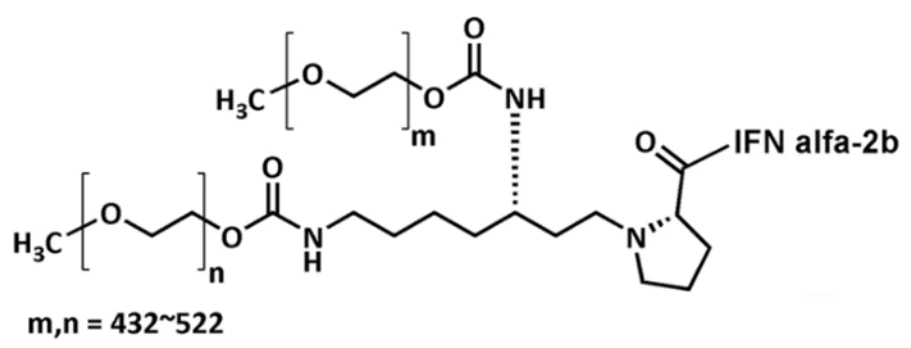
Chemical name: Poly (oxy-1,2-ethanediyl), α-hydro-ω-methoxy-,1,1-diester with interferon α-2b [1-[1-[3,7-bis (carboxyamino) heptyl] proline]] (synthetic human)
Molecular formula and molecular mass: C876H1376N232O260S9·(C2H4O)n, where n = 864 to 1044. The molecular mass of ropeginterferon alfa-2b is approximately 60 kilodalton (kDa).
Structural formula:
Physicochemical properties: ropeginterferon alfa-2b is a clear, colorless to slightly yellowish solution. The pH is approximately 6.
Pharmaceutical standard: in-house standard
Product Characteristics:
Ropeginterferon alfa-2b is a long-acting interferon alfa-2b. Ropeginterferon alfa-2b is a covalent conjugate of the protein interferon alpha-2b, produced in Escherichia coli cells by recombinant DNA technology, and conjugated with a methoxypolyethylene glycol (mPEG) moiety. The approximate molecular weight of the PEG portion of the molecule is 40 kDa. Ropeginterferon alfa-2b has an approximate molecular weight of 60 kDa.
14. Clinical Trials
14.1. Clinical Trials by Indication
Polycythemia Vera
Table 6 – Summary of Patient Demographics for Clinical Trials in Polycythemia Vera
| Study Name | Study design | Dosage, route of administration and duration | Study subjects (n) | Age (range) | Sex |
| PROUD-PV/CON TINUATI ON-PV | Randomized (1:1), open label, active controlled, Phase III study with a long term follow-up* | Ropeginterferon alfa-2b administered subcutaneously from 50 to 500 mcg, every two weeks for 12 months Hydroxyurea taken orally at starting dose of 500 mg daily for 12 months | Ropeginterferon alfa-2b arm: PROUD-PV: 127 CONTINUATION-PV: 95 Hydroxyurea/Best available therapy arm: PROUD-PV: 127 CONTINUATION-PV: 76 | 58.5 (30 – 85) 57.9 (21 – 81) | Female: 54% Male: 46% Female: 53% Male: 47% |
*PROUD-PV randomized subjects 1:1 to BESREMI or Hydroxyurea. Patients were followed for 1 year for efficacy and safety. After 1 year, patients from each arm could continue to be treated and followed in the CONTINUATION-PV study. The table shows the number of subjects enrolled in PROUD-PV, and the subset of subjects who enrolled in CONTINUATION-PV in the Study Subjects (n) column.
An open label, randomized phase III study (PROUD-PV) evaluated the efficacy and safety of BESREMI in comparison to hydroxyurea in 254 adult polycythemia vera patients (randomization 1:1). Previously untreated patients were eligible if they required cytoreductive treatment. Patients who were currently being treated with hydroxyurea were eligible if they were non-responders to treatment, had a duration of treatment less than 3 years and did not have documented resistance or intolerance. Patients were excluded if they had received cytoreductive therapy other than hydroxyurea or had received other interferon alfa products. Patients were stratified by previous exposure to hydroxyurea, age at screening (≤60 or >60 years) and presence of thromboembolic events in the past. Characteristics of the study population are presented in Table 7.
Table 7 - Patient characteristics at screening in the PROUD-PV study
| Ropeginterferon alfa-2b treatment arm (n=127) | Control treatment arm (n=127) | |
|---|---|---|
Age Years* | 58.5 ± 10.81 | 57.9 ± 13.10 |
Gender Female n (%) Male n (%) | 68 (53.5) 59 (46.5) | 67 (52.8) 60 (47.2) |
Race White n (%) | 127 (100.0) | 127 (100.0) |
| Duration of PV (months)* | 12.6 ± 24.70 | 15.7 ± 25.65 |
| JAK2V617F allele burden (%)* | 41.9 ± 23.49 | 42.8 ± 24.14 |
Hematological parameters Hematocrit (%)* Platelets (109/L)* Leukocytes (109/L)* | 47.8 ± 5.22 537.7 ± 273.08 11.5 ± 4.76 | 48.6 ± 5.39 516.8 ± 254.43 11.9 ± 4.88 |
| Median spleen diameter† (range) (cm) | 13.1 (7.0 – 25.0) | 13.0 (7.5 – 24.5) |
Presence of splenomegaly ‡ No n (%) Yes n (%) | 115 (90.6) 12 (9.4) | 112 (88.2) 15 (11.8) |
* values are mean ± SD.
† longitudinal diameter measured by CT or MRI
‡ defined as spleen diameter > 17 cm by CT or MRI
Hydroxyurea treatment-naïve (n=160) or hydroxyurea treated (n=94) patients were randomized (1:1) to receive BESREMI or hydroxyurea. The dose was gradually increased depending on disease response and tolerability (for BESREMI, from 50 to 500 micrograms administered subcutaneously every two weeks). The mean dose after 12 months of treatment was 382 (±141) micrograms for BESREMI.
After 1 year of treatment on PROUD-PV, patients were eligible to enroll in a long-term follow-up study known as CONTINUATION-PV. Ninety-five of 127 participants enrolled in CONTINUATION-PV and continued to receive BESREMI (from 50 to 500 micrograms administered subcutaneously every two, three or four weeks). The mean dose after 36 months of treatment (12-month treatment duration in the PROUD-PV Study and 24- month treatment duration in the extension study) was 363 (± 149) micrograms for BESREMI.
The efficacy of BESREMI was demonstrated in 127 participants based on the complete haematological response (CHR) and CHR + normal spleen rates and supported by estimates of duration of longest response. CHR was defined as a defined as hematocrit <45% without phlebotomy (at least 3 months since last phlebotomy), platelets <400 x 109/L and leukocytes <10 x 109/L and normal spleen was defined ≤12 cm for females and ≤13 cm for males. The CHR rate (and CHR rate + normal spleen) was calculated based on best individual responses observed during the combined follow-up of PROUD-PV and CONTINUATION-PV.
In participants who received BESREMI, the CHR rate was 84.3% (95%CI: 76.7, 90.1), and the CHR rate including normal spleen (defined as <= 12 cm in females and <= 13 cm in males) was 64.6% (95%CI:
55.6, 72.9).
The longest duration of CHR over the course of the studies was NE (95%CI: 38.7 months, NE) and the longest duration of CHR + normal spleen over the course of the studies was 15.18 months (95%CI: 9.7, 21.1). Estimates of response and related endpoints are shown in Table 8.
Table 8 - Efficacy of BESREMI in PROUD-PV and long term extension study CONTINUTION-PV
| Endpoint | BESREMI Treated Patients (N = 127) |
|---|---|
| Complete Hematological Response (CHR) | |
CHR rate, n (%) (95%CI) | 107 (84.3%) (76.7, 90.1) |
| Median duration of longest response (95% CI), monthsa | Not Reached (38.8, NE) |
| Median time to first response (95%CI), monthsa | 6.46 (6.0, 9.2) |
| CHR + Normal Spleen | |
CHR + normal spleen rate, n (%) (95%CI) | 82 (64.6%) (55.6, 72.9) |
| Median duration of longest response (95% CI), monthsa | 15.18 (9.7, 21.1) |
| Median time to first response (range), monthsa | 11.90 (9.2, 14.7) |
| Study Follow-up | |
| Median follow-up time (range), months | 30.15 (0.95, 36.03) |
Complete hematologic response rates were calculated as the number of responders observed over the entire follow-up period divided by the total cohort.
Best individual response defined as response achieved for at least one assessment visit over the 12-month treatment duration of PROUD-PV and 24-month treatment duration of the CONTINUATION-PV extension study.
Patients lost to follow-up imputed as non-responders (if patient had not responded prior to discontinuation).
a based on Kaplan-Meier estimates
16. Non-Clinical Toxicology
General Toxicology: Toxicology studies were limited to ≤ 4 weeks in duration due to the production of neutralizing ADAs in cynomolgus monkeys and the lack of biologic activity in Sprague Dawley rats. Drug-related effects observed in the pivotal 4-week monkey toxicity study were consistent with the known effects of interferons (IFN). The most clinically relevant NOAEL for this study was considered to be 2 mg/kg as thrombocytopenia is a known adverse effect of PEGylated IFN use in human subjects, and allows for an appropriate safety margin to the maximal applied human dose of 540 µg, i.e. 7.7 µg/kg (based on a 70 kg body weight).
Genotoxicity:
Ropeginterferon alfa-2b did not caused damage to DNA when tested in the standard battery of mutagenesis assays.
Carcinogenicity: No long-term animal studies have been performed to evaluate the carcinogenic potential of ropeginterferon alfa-2b.
Reproductive and Developmental Toxicology: In an embryo-fetal development toxicity study in cynomolgus monkeys, an abortifacient effect was observed in dams during and subsequent to twice-weekly administration of ropeginterferon alfa-2b over the period of organogenesis (Day 20 [GD 20] through GD 48) at a dose of 0.675 mg/kg and above. No effect of treatment was observed in surviving fetuses at the 2mg/kg dose level, the highest tested in this study. The abortifacient effect observed in this study is consistent with known effects of interferons in nonhuman primates. Effects on fertility was not assessed.
It is unknown if the active substance is excreted into animal or human milk (see 7.1 SPECIAL POPULATIONS).