


Product Monograph - Boey
Recent Major Label Changes
None at time of the most recent authorization.
Table of Contents
Certain sections or subsections that are not applicable at the time of the preparation of the most recent authorized product monograph are not listed.
Recent Major Label Changes ............................................................................................................... 2
Table of Contents ................................................................................................................................ 2
Part 1: Healthcare Professional Information ........................................................................................ 4
- 1.
Indications .................................................................................................................................. 4
1.1. Pediatrics ................................................................................................................................4
1.2. Geriatrics ................................................................................................................................4
- 2. Contraindications ........................................................................................................................ 4
- 3. Serious Warnings and Precautions Box ........................................................................................ 4
- 4.
Dosage and Administration ......................................................................................................... 5
4.1. Dosing Considerations ............................................................................................................5
4.2. Recommended Dose and Dosage Adjustment.......................................................................5
4.3. Reconstitution ........................................................................................................................5
4.4. Administration ........................................................................................................................6
4.5. Missed Dose ...........................................................................................................................7
- 5. Overdose ..................................................................................................................................... 7
- 6. Dosage Forms, Strengths, Composition, and Packaging ................................................................ 8
- 7.
Warnings and Precautions ........................................................................................................... 8
General ................................................................................................................................................8
Carcinogenesis and Mutagenesis ........................................................................................................9
Cardiovascular .....................................................................................................................................9
Distant Spread of Toxin Effect .............................................................................................................9
Hypersensitivity Reactions ...................................................................................................................9
Immune ............................................................................................................................................. 10
Lack of Equivalency Between Botulinum Toxin Products ................................................................. 10
Driving and Operating Machinery..................................................................................................... 10
Monitoring and Laboratory Tests ..................................................................................................... 10
Pre-Existing Neuromuscular Disorders ............................................................................................. 10
Ophthalmologic ................................................................................................................................ 10
Skin .................................................................................................................................................... 10
7.1. Special Populations ............................................................................................................. 11
7.1.1. Pregnancy ................................................................................................................... 11
7.1.2. Breastfeeding ............................................................................................................. 11
7.1.3. Pediatrics .................................................................................................................... 11
7.1.4. Geriatrics .................................................................................................................... 11
- 8.
Adverse Reactions ..................................................................................................................... 11
8.1. Adverse Reaction Overview ................................................................................................ 11
8.2. Clinical Trial Adverse Reactions ........................................................................................... 12
8.3. Less Common Clinical Trial Adverse Reactions ................................................................... 12
8.4. Abnormal Laboratory Findings: Hematologic, Clinical Chemistry, and Other Quantitative Data 13
8.5. Post-Market Adverse Reactions .......................................................................................... 13
- 9.
Drug Interactions ....................................................................................................................... 13
9.2. Drug Interactions Overview ................................................................................................ 13
9.3. Drug-Behaviour Interactions ............................................................................................... 13
9.4. Drug-Drug Interactions ........................................................................................................ 13
9.5. Drug-Food Interactions ....................................................................................................... 14
9.6. Drug-Herb Interactions ....................................................................................................... 14
9.7. Drug-Laboratory Test Interactions ...................................................................................... 15
- 10.
Clinical Pharmacology ............................................................................................................... 15
10.1. Mechanism of Action .......................................................................................................... 15
10.2. Pharmacodynamics ............................................................................................................. 15
10.3. Pharmacokinetics ................................................................................................................ 15
10.4. Immunogenicity .................................................................................................................. 15
- 11. Storage, Stability, and Disposal .................................................................................................. 16
Part 2: Scientific Information ............................................................................................................ 17
- 13. Pharmaceutical Information ...................................................................................................... 17
- 14.
Clinical Trials ............................................................................................................................. 17
14.1. Clinical Trials by Indication .................................................................................................. 17
Glabellar Lines ................................................................................................................................... 17
- 16. Non-Clinical Toxicology .............................................................................................................. 21
Patient Medication Information ........................................................................................................ 22
Part 1: Healthcare Professional Information
1. Indications
BoeyTM (TrenibotulinumtoxinE for Injection) is indicated in adult patients for the temporary improvement in the appearance of moderate to severe glabellar lines associated with corrugator and/or procerus muscle activity.
1.1. Pediatrics
Pediatrics (< 18 years of age): No data are available to Health Canada; therefore, Health Canada has not authorized an indication for pediatric use.
1.2. Geriatrics
Geriatrics (≥ 65 years of age): No specific dose adjustment is required for use in the elderly. Clinical studies included 162 subjects aged 65 years or older; and no clinically meaningful differences in safety were observed between older and younger subjects in the study population.
2. Contraindications
Boey is contraindicated:
- In individuals with known hypersensitivity to any botulinum toxin preparation or to any of its excipients. For a complete listing, see 6 Dosage Forms, Strengths, Composition and Packaging.
- In the presence of infection at the proposed injection site(s).
3. Serious Warnings and Precautions Box
|
|---|
4. Dosage and Administration
4.1. Dosing Considerations
Boey should only be given by a physician or authorized prescriber with the appropriate qualifications and experience in the treatment of patients.
Dosage and administration recommendations should be followed.
The potency Units of Boey for injection are specific to the preparation and assay method utilized. They are not interchangeable with other preparations of botulinum toxin products and, therefore, units of biological activity of Boey cannot be compared to nor converted into units of any other botulinum toxin products assessed with any other specific assay method. See 7 Warnings and Precautions, Lack of Equivalency Between Botulinum Toxin Products.
The appropriate use of Boey depends upon proper storage of the product, selection of the correct dose, and proper aseptic reconstitution and administration techniques. See 4.3 Reconstitution and 4.4 Administration. A physician or authorized prescriber administering Boey must understand the relevant neuromuscular and structural anatomy of the area involved and any alterations to the anatomy due to prior surgical procedures and disease.
Do not use Boey and contact AbbVie (1-888-704-8271) if the carton perforations are broken.
Boey vials are for single-dose and for individual patients only.
The efficacy and safety of more than 3 consecutive injections of Boey beyond 18 weeks have not been evaluated.
4.2. Recommended Dose and Dosage Adjustment
The total dose is 700 Units per treatment session divided into five equal intramuscular injections of 140 Units for glabellar line treatment.
4.3. Reconstitution
Instruction for Preparation and Handling
It is good practice to perform vial reconstitution and syringe preparation over plastic-lined paper towels to catch any spillage. Reconstitute each vial of Boey as shown in Table 1 to obtain a reconstituted solution at a concentration of 140 Units/0.1 mL and a total treatment dose of 700 Units in 0.5 mL.
Table 1 – Dilution Table
| Vial Size | Diluent added (sterile, preservative-free 0.9% sodium chloride solution for injection) | Resulting Dose (Units/0.1 mL) |
| 1400 Units | 1 mL | 140 |
Allow the vacuum to draw the saline from the syringe into the vial, letting it slowly and gently drip down the vial wall. DO NOT press/put force on the syringe plunger. Discard the vial if there is evidence of a loss of vacuum (i.e., if diluent is not pulled into the vial upon insertion of the needle). Gently mix Boey with the saline by slowly inverting the vial until completely dissolved.
Store reconstituted Boey in a refrigerator between 2 to 8°C and administer within 24 hours of reconstitution. Boey vials are for single-dose and for individual patients only. Discard any remaining solution after drug administration. Do not freeze reconstituted Boey.
Reconstituted Boey should be clear, colorless to slightly yellow. Do not inject reconstituted Boey if particulates are visible.
4.4. Administration
Glabellar lines arise from the activity of the corrugator and orbicularis oculi muscles. These muscles move the brow medially, and the procerus and depressor supercilii pull the brow inferiorly. This creates a frown or “furrowed brow”. The location, size, and use of the muscles vary markedly among individuals. Lines induced by facial expression occur perpendicular to the direction of action of contracting facial muscles.
In order to reduce the complication of ptosis, the following steps should be taken:
- Avoid injection near the levator palpebrae superioris, particularly in patients with larger brow depressor complexes.
- Position lateral corrugator muscle injections at least one cm above the bony supraorbital ridge.
- Ensure the injected volume/dose is accurate.
Administration steps
NOTE: To achieve a 0.5 mL volume delivery, an adequate amount of reconstituted solution must be drawn into the syringe to account for volume loss from air bubble removal and needle priming.
- Draw more than 0.5 mL reconstituted solution into the sterile syringe barrel and expel any air bubbles.
- Remove the needle used to withdraw the product. Attach an appropriately sized needle for injection and prime the needle.
- Inject 140 Units (0.1 mL) of reconstituted Boey intramuscularly into each of five sites, two injections in each corrugator muscle and one injection in the procerus muscle for a total dose of 700 Units (see Table 2 and Figure 1 below).
Figure 1. Injection Sites for Glabellar Lines
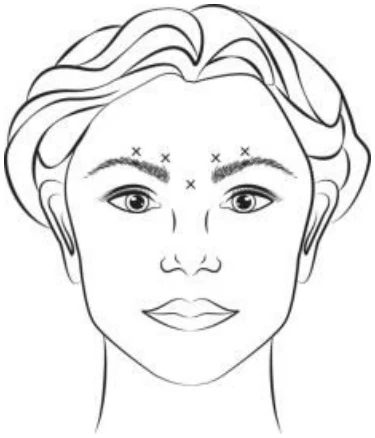
Table 2. Dosing for Glabellar Lines
| Glabellar Lines | Injection sites | Total Dose (Number of Injection Sites) |
|---|---|---|
| 140 Units (0.1 mL) per injection into each of five sites | 1 injection in the procerus muscle 2 injections in each corrugator muscle | 700 Units (5 sites) |
Retreatment of Boey:
Boey was studied in up to two treatment cycles in pivotal clinical trials (see 14. Clinical Trials). Retreatment at more frequent intervals than every 6 weeks has not been evaluated. The timing of Boey retreatment should be determined by the physician or authorized prescriber assessment of wrinkle severity.
Transition to onabotulinumtoxinA:
After receiving Boey, patients may be treated with onabotulinumtoxinA after observation of moderate to severe glabellar lines as assessed by the physician or authorized prescriber.
4.5. Missed Dose
Not Applicable.
5. Overdose
Symptoms of overdose may not be apparent immediately post-injection. Excessive doses may produce local, or distant, generalized and profound neuromuscular paralysis.
Should accidental injection or oral ingestion occur, or overdose be suspected, medically monitor the patient for up to several weeks for progressive signs or symptoms of systemic muscular weakness which could be local to, or distant from, the site of injection, and may include ptosis, diplopia, dysphagia, dysarthria, generalized weakness or respiratory failure. Consider these patients for further medical evaluation and immediately institute appropriate medical therapy, which may include hospitalization.
If the musculature of the oropharynx and esophagus are affected, aspiration may occur which may lead to development of aspiration pneumonia. If the respiratory muscles become paralyzed or sufficiently weakened, intubation and assisted respiration may be necessary until recovery takes place. Supportive care could involve the need for a tracheostomy and/or prolonged mechanical ventilation, in addition to other general supportive care.
| For the most recent information in the management of a suspected drug overdose, contact your regional poison control centre or Health Canada’s toll-free number, 1-844 POISON-X (1-844-764-7669). |
|---|
- 6. Dosage Forms, Strengths, Composition, and Packaging
To help ensure the traceability of biologic products, physician or authorized prescriber should record both the brand name and the non-proprietary (active ingredient) name as well as other product-specific identifiers such as the Drug Identification Number (DIN) and the batch/lot number of the product supplied.
Table 3 – Dosage Forms, Strengths, and Composition
Description
Boey powder for solution for injection is a white to off-white lyophilized powder, supplied in a single-use vial in the following size:
- 1400 Units of trenibotulinumtoxinE
The powder may appear as broken cake.
7. Warnings and Precautions
Please see the 3. Serious Warnings and Precautions Box.
General
Use Boey only as directed.
Do not use dosage recommendations and potency Units applied to other botulinum toxin products when using Boey.
The safe and effective use of Boey depends upon proper storage of the product, selection of the correct dose, and proper reconstitution and administration techniques.
| Route of Administration | Dosage Form/ Strength/Composition | Non-Medicinal Ingredients |
| Intramuscular | A sterile lyophilized preparation; Powder for solution for injection; 1400 Units per vial | L-Histidine, L-Histidine Hydrochloride Monohydrate, L-Methionine, Poloxamer 188, Sodium Chloride, Trehalose Dihydrate |
A physician or authorized prescriber administering Boey should be familiar with the relevant anatomy of the area involved and any alterations to the anatomy due to prior surgical procedures. Care should be taken when injecting in or near vulnerable anatomic structures.
Caution should be used when Boey is used in the presence of inflammation at the proposed injection site(s) or when excessive weakness or atrophy is present in the target muscle.
Local muscle weakness represents the expected pharmacological action of botulinum toxin in muscle tissue. However, weakness of adjacent muscles associated with local diffusion and/or injection technique has been reported.
Progressive signs or symptoms of muscular weakness remote to the site of injection may include ptosis and diplopia, as well as other serious adverse effects including swallowing and speech disorders, generalized weakness or respiratory failure. In addition, certain adverse effects (e.g., dysphagia, aspiration pneumonia) have been rarely reported with botulinum toxin Type A products, some of which have been associated with a fatal outcome.
Patients or caregivers should be advised to seek immediate medical care if swallowing, speech or respiratory disorders arise.
Carcinogenesis and Mutagenesis
Studies have not been performed to evaluate the mutagenic and carcinogenic potential of Boey.
Cardiovascular
There have been reports following administration of botulinum toxin type A products of adverse events involving the cardiovascular system, including arrhythmia and myocardial infarction, some with fatal outcomes. Some of these patients had risk factors including pre-existing cardiovascular disease. The exact relationship of these events to botulinum toxin is unknown.
Distant Spread of Toxin Effect
Safety data from other approved botulinum toxins suggest that botulinum toxin effects may, in some cases, be observed beyond the site of local injection. The symptoms that are consistent with the mechanism of action of botulinum toxin may include muscular weakness, swallowing and speech disorders, aspiration pneumonia, difficulty breathing, and respiratory depression.
Patients or caregivers should be advised to seek immediate medical care if swallowing, speech or respiratory disorders arise.
No definitive adverse event (serious or non-serious) reports of distant spread of toxin effect associated with dermatologic use of Boey for glabellar lines have been reported.
Hypersensitivity Reactions
Serious and/or immediate hypersensitivity reactions such as anaphylaxis and serum sickness, as well as other manifestations of hypersensitivity including urticaria, soft tissue edema, and dyspnea may occur. If such a reaction occurs, further injection should be discontinued and appropriate medical therapy immediately instituted. Necessary precautions should be taken, and epinephrine should be available.
Immune
Formation of neutralizing antibodies to botulinum toxin type E may reduce the effectiveness of Boey treatment by inactivating the biological activity of the toxin. The critical factors for neutralizing antibody formation have not been well characterized. The results from some studies suggest that botulinum toxin injections at more frequent intervals or at higher doses may lead to greater incidence of antibody formation. When appropriate, the potential for antibody formation may be minimized by injecting with the lowest effective dose given at the longest feasible intervals between injections. Among 2104 subjects treated with Boey, no subjects developed neutralizing antibodies. See 10.4 Immunogenicity.
Lack of Equivalency Between Botulinum Toxin Products
The potency Units of Boey are specific to the preparation and assay method utilized. Boey is not equivalent to other botulinum toxin products, and therefore, Units of biological activity of Boey cannot be compared to nor converted into units of any other botulinum toxin products assessed with any other specific assay method. See 13. Pharmaceutical Information.
Driving and Operating Machinery
Boey has negligible influence on the ability to drive and use machines. However, it may cause eyelid ptosis and visual disturbance. Patients should exercise caution before driving or using machinery until they are reasonably certain that Boey does not adversely affect performance.
Monitoring and Laboratory Tests
There are no specific requirements for laboratory test monitoring when patients are treated with Boey.
Pre-Existing Neuromuscular Disorders
Extreme caution, including close monitoring, should be exercised when administering Boey to individuals with peripheral motor neuropathic diseases (e.g., amyotrophic lateral sclerosis or motor neuropathy) or neuromuscular junctional disorders (e.g., myasthenia gravis or Lambert-Eaton syndrome). Patients with neuromuscular junction disorders may be at increased risk of clinically significant systemic effects including severe dysphagia and respiratory compromise.
Ophthalmologic
Ophthalmic Adverse Reactions in Patients Treated with Other Botulinum Toxin Products
Reduced blinking from injection with the use of other botulinum toxins has been reported which can lead to dry eye, corneal exposure, persistent epithelial defects and corneal ulceration, especially in patients with cranial nerve VII disorders. Vigorous treatment of any epithelial defect should be employed. This may require protective drops, ointment, therapeutic soft contact lenses, or closure of the eye by patching or other means.
Skin
Injection Site Pre-existing Conditions and Reactions
The relevant anatomy, and any alterations to the anatomy due to prior surgical procedures, must be understood prior to administering Boey.
Caution should be exercised when Boey is used in the presence of inflammation at the proposed injection site(s), ptosis, or when excessive weakness or atrophy is present in the target muscle(s).
As is expected for any injection procedure, localized pain, inflammation, paresthesia, hypoesthesia, tenderness, swelling/edema, erythema, localized infection, bleeding, bruising, warmth, and/or induration have been associated with botulinum toxin injections. Needle-related pain and/or anxiety may result in vasovagal responses, including transient symptomatic hypotension and syncope.
7.1. Special Populations
7.1.1. Pregnancy
There are no studies or adequate data on the developmental risk associated with use of trenibotulinumtoxinE in pregnant women.
The impairment of fertility and early embryonic development potential of Boey was studied in dose range-finding embryo-fetal development study in mice. Maternal death was observed at 75 Units/kg; there were no additional maternal or fetal effects up to 75 Units/kg. No further fertility and early embryonic development studies in animals have been conducted.
The use of Boey during pregnancy is not recommended.
During the clinical trials with Boey, there were two reported pregnancies. In addition, one pregnancy was reported after the end of the study. For the three pregnancies, time to onset from the last dose of Boey was the following: 12 days, 25 days, and >1 month. In two pregnancies, the outcome was live birth with no congenital anomalies or birth defects reported and in the remaining pregnancy, the outcome was unknown.
7.1.2. Breastfeeding
There are no data on the presence of Boey in human or animal milk, the effects on the breastfed infant, or the effects on milk production. Given the lack of data, the use of Boey during breastfeeding is not recommended.
7.1.3. Pediatrics
Pediatrics (< 18 years of age): No data are available to Health Canada; therefore, Health Canada has not authorized an indication for pediatric use.
7.1.4. Geriatrics
No specific dose adjustment is required for use in the elderly.
The clinical studies included 162 subjects aged 65 years or older. Although there was a limited number of subjects aged 65 years or older, no clinically meaningful differences in safety were observed between older and younger subjects.
8. Adverse Reactions
8.1. Adverse Reaction Overview
Local muscle weakness represents the expected pharmacological action of botulinum toxin in muscle tissue. However, weakness of adjacent muscles associated with local diffusion and/or injection technique has been reported.
As is expected for any injection procedure, localized pain, inflammation, paresthesia, hypoesthesia, tenderness, swelling/oedema, erythema, localized infection, bleeding and/or bruising may be associated with the injection.
8.2. Clinical Trial Adverse Reactions
Clinical trials are conducted under very specific conditions. Therefore, the frequencies of adverse reactions observed in the clinical trials may not reflect frequencies observed in clinical practice and should not be compared to frequencies reported in clinical trials of another drug.
Glabellar Lines
Adverse drug reactions are adverse events reasonably associated with the use of a drug and thus imply a suspected causal relationship.
Adverse drug reactions from glabellar line clinical trials were all non-serious and mild in severity. Onset was generally within the first week. In most cases, the events resolved in 2 to 8 days rarely lasting longer
Safety was evaluated in two multicenter, double-blind, placebo-controlled studies of identical design for the treatment of glabellar lines (N = 947, 709 in the Boey-treated group and 238 in the placebo-treated group). The most frequently reported treatment-related adverse events were headache (3.4% in the Boey-treated group and 4.2% in the placebo-treated group), injection site pain (1.7% in the Boey-treated group and 2.9% in the placebo-treated group), and injection site erythema (0.6% in the Boey-treated group and 1.3% in the placebo-treated group) (see Table 4).
Table 4. Most Frequently Reported Treatment-Related Adverse Events
System organ class / preferred term | Boey N = 709 (%) | Placebo N= 238 (%) |
| General disorders and administration site conditions | ||
| Injection site pain | 1.7% | 2.9% |
| Injection site erythema | 0.6% | 1.3% |
| Nervous System disorders | ||
| Headache | 3.4% | 4.2% |
Most adverse events were of mild severity. In a multicenter, open-label, repeat injection study, 846 patients received 3 treatment cycles. In this study, adverse events were comparable in type, incidence, severity, and causality to those reported in the two placebo-controlled, double-blind studies.
8.3. Less Common Clinical Trial Adverse Reactions
Overall, the safety of at least one treatment of Boey was evaluated across all completed studies involving eight clinical trials (seven double-blind, placebo-controlled clinical studies and an open-label safety study).
Adverse drug reactions are presented below by system organ class and frequency.
Eye Disorders: Uncommon: eyelid ptosis (0.17%)
Injury, Poisoning and Procedural Complications: Rare: Mephisto sign (0.04%)
Skin and Subcutaneous Tissue Disorders: Uncommon: brow ptosis (0.13%)
8.4. Abnormal Laboratory Findings: Hematologic, Clinical Chemistry, and Other Quantitative Data
Clinical Trial Findings
No specific trends in abnormal hematologic or clinical chemistry findings have been reported.
8.5. Post-Market Adverse Reactions
There is no post-market surveillance information available with the use of Boey.
9. Drug Interactions
9.2. Drug Interactions Overview
No formal drug interaction studies have been conducted with trenibotulinumtoxinE.
9.3. Drug-Behaviour Interactions
The interaction of trenibotulinumtoxinE with individual behavioural risks (e.g. cigarette smoking, cannabis use, and/or alcohol consumption) has not been studied.
9.4. Drug-Drug Interactions
Table 5 – Established or Potential Drug-Drug Interactions
| [Non-proprietary name(s) of the drug product(s)] | Source of evidence | Effect | Clinical comment |
| [Non-proprietary name(s) of the drug product(s)] | Source of evidence | Effect | Clinical comment |
| Other Botulinum Neurotoxin Products | T | The effect of administering different botulinum neurotoxin serotypes at the same time is unknown. | Neuromuscular weakness may be exacerbated by administration of another botulinum toxin prior to the resolution of the effects of a previously administered botulinum toxin. |
| CT | In a Phase 1 study, the sequential treatment of trenibotulinum toxinE or placebo on Day 1 followed by onabotulinumt oxinA administered at Day 30, identified no safety concerns (see 10. Clinical Pharmacology). | After receiving trenibotulinumtoxinE, patients may be treated with onabotulinumtoxinA after observation of moderate to severe glabellar lines as assessed by the physician or authorized prescriber. | |
| Muscle Relaxants | T | Not studied | Excessive weakness may be exaggerated by administration of a muscle relaxant before or after administration of botulinum toxins, including trenibotulinumtoxinE. |
| Aminoglycosides and Other Agents Interfering with Neuromuscular Transmission | T | Not studied | The effect of botulinum toxins, including trenibotulinumtoxinE, may be potentiated by aminoglycoside antibiotics or other medicinal products that interfere with neuromuscular transmission (e.g. neuromuscular blocking agents) |
| Anticholinergic Drugs | T | Not studied | Use of anticholinergic drugs after administration of botulinum toxins, including trenibotulinumtoxinE, may potentiate systemic anticholinergic effects. |
| Legend: C = Case Study; CT = Clinical Trial; T = Theoretical; | |||
9.5. Drug-Food Interactions
Interactions with food have not been studied.
9.6. Drug-Herb Interactions
Interactions with herbal products have not been studied.
9.7. Drug-Laboratory Test Interactions
Interactions with laboratory test impacting the accuracy of test results have not been studied.
10. Clinical Pharmacology
10.1. Mechanism of Action
TrenibotulinumtoxinE blocks neuromuscular transmission by binding to acceptor sites on motor nerve terminals, entering the nerve terminals, and inhibiting the release of acetylcholine. This inhibition occurs as the neurotoxin cleaves SNAP-25, a pre-synaptic protein integral to the successful docking of vesicles situated within nerve terminals and subsequent release of acetylcholine from those vesicles. When injected intramuscularly at therapeutic doses, trenibotulinumtoxinE produces partial chemical denervation of the muscle resulting in a localized reduction in muscle activity within hours.
The early onset of effect may be due to rapid uptake and translocation of botulinum toxin type E into neuronal cells, and the short duration may be due to the short half-life of the light chain of botulinum toxin type E.
10.2. Pharmacodynamics
A Phase 1, double-blind study was conducted with sequential administration of trenibotulinumtoxinE 700 Units or placebo on Day 1 followed by onabotulinumtoxinA 20 Units (units are toxin-specific) on Day 30 in a total of 90 subjects with moderate to severe glabellar lines. Subjects were eligible for treatment with onabotulinumtoxinA if eligibility criteria were met, including moderate to severe glabellar line severity at maximum frown.
The overall incidence of treatment-emergent adverse events (TEAEs) was similar between treatment groups after onabotulinumtoxinA treatment, regardless of whether the subject initially received trenibotulinumtoxinE or placebo.
10.3. Pharmacokinetics
General characteristics of the active substance
Using currently available analytical technology, it is not possible to detect trenibotulinumtoxinE in peripheral blood after intramuscular injection at the recommended dose.
10.4. Immunogenicity
As with all proteins, there is a potential for immunogenicity. The observed incidence of anti-drug antibodies is highly dependent on the sensitivity and specificity of the assay. Differences in assay methods preclude meaningful comparisons of the incidence of anti-drug antibodies in the studies described below with the incidence of anti-drug antibodies in other studies, including those of other botulinum toxin products.
In five glabellar line studies, 2104 subjects treated with trenibotulinumtoxinE had samples analyzed for antibody formation. Among trenibotulinumtoxinE-treated subjects who received single or repeat treatments (up to three treatments), one subject (<0.1%) developed binding antibodies. This subject received three treatments of 700 Units trenibotulinumtoxinE at 6-week intervals and was negative for neutralizing antibodies. Across all studies, no subjects (0%) developed neutralizing antibodies. Overall, there was a low incidence of antibody formation and data were suggestive of no impact on safety or efficacy of trenibotulinumtoxinE.
In the Phase 1 study in which trenibotulinumtoxinE or placebo was administered at Day 1 followed by onabotulinumtoxinA at Day 30, no subject developed binding or neutralizing antibodies to trenibotulinumtoxinE or onabotulinumtoxinA.
- 11.
Storage, Stability, and Disposal
- Unopened vial: Store at 2 to 8°C in a refrigerator. Do not use after the expiration date on the vial.
- Reconstituted vial: Store at 2 to 8°C in a refrigerator and administer within 24 hours of reconstitution.
- Keep the vial in the original carton in order to protect from light.
- Incompatibilities: In the absence of incompatibility studies, this medicinal product should not be mixed with other medicinal products.
- Boey vials are for single-dose and for individual patients only. Discard any remaining solution after drug administration.
- Medicine: keep out of reach of children.
All vials, including expired vials, or equipment used in direct contact with the drug should be disposed of as medical waste. In cases when deactivation of the toxin is desired (e.g., spills), the use of sodium hypochlorite (NaClO) at not less than 0.7% or household bleach solution at not less than 10% volume/volume for 10 minutes is recommended prior to disposal as medical waste.
Part 2: Scientific Information
13. Pharmaceutical Information
Drug Substance
Non-proprietary name of the drug substance(s): TrenibotulinumtoxinE
Chemical name: not applicable. TrenibotulinumtoxinE is a botulinum toxin serotype E
Molecular formula and molecular mass: Based on the amino acid sequence, the molecular formula of trenibotulinumtoxinE molecule is C6438H9972N1696O1971S23 , which corresponds to nicked (active) form. The predicted molecular weight of trenibotulinumtoxinE is approximately 150 kDa Structure: TrenibotulinumtoxinE protein is the 150 kDa subunit of the native 300 kDa complex expressed in Clostridium botulinum type E.
Physicochemical properties: TrenibotulinumtoxinE Drug Product (DP) is supplied as sterile lyophilized powder for solution for injection. It is reconstituted with 1 mL of 0.9% sodium chloride solution.
Product Characteristics:
Boey is a sterile, single use lyophilized powder for solution for injection. It is to be reconstituted with sterile, preservative free, normal saline prior to injection. See Dosage and Administration section for further details. The active ingredient is trenibotulinumtoxinE, a botulinum toxin type E, produced from Clostridium botulinum type E.
The primary release procedure for Boey uses a cell-based potency assay to determine the potency relative to a reference standard. The assay is specific to AbbVie’s product Boey. One Unit corresponds to the calculated median intraperitoneal lethal dose (LD50) in mice. Units of Boey cannot be compared to nor converted into Units of any other botulinum toxin or any toxin.
14. Clinical Trials
14.1. Clinical Trials by Indication
Glabellar Lines
Two Phase 3 multicenter, randomized, double-blind, placebo-controlled studies (Study M21-500, Study M21-508) evaluated Boey (N=709 Boey and N=238 placebo) for the temporary improvement in the appearance of moderate to severe glabellar lines associated with corrugator and/or procerus muscle activity.
The studies enrolled healthy adults with moderate to severe glabellar lines at maximum frown on baseline Day 1 (Hour 0). Subject assessment visits were at Day 1 (Hours 8 and 12), Day 2 (Hours 24 and 36), Day 3 (Hour 48), and Days 7, 14, 21, 28, 35, and 43.Subjects were eligible for treatment with Boey at the Day 43 Visit if retreatment criteria were met, including moderate to severe glabellar line severity at maximum frown.
Table 6. – Summary of Patient Demographics for Clinical Trials in [Glabellar Lines]
| Study # | Study design | Dosage, route of administration and duration | Study subjects (n) | Median Age (range), age subgroup | Sex |
| M21-500 | Randomized, double-blind, placebo-controlled period, followed by open-label period | 700 U Intramuscular 12 weeks Up to two treatments (one double-blind treatment, one open-label treatment) | Total: 638 Boey: 482 Placebo: 156 | 48 (21 to 81) years < 65 years: 92% ≥ 65 years: 8% | Female: 566 Male: 72 |
| M21-508 | Randomized, double-blind, placebo-controlled period, followed by open-label period | 700 U Intramuscular 12 weeks Up to two treatments (one double-blind treatment, one open-label treatment) | Total: 309 Boey: 227 Placebo: 82 | 42 (20 to 76) years < 65 years: 94% ≥ 65 years: 6% | Female: 245 Male: 64 |
Efficacy was measured by the assessment of glabellar line severity at maximum frown using the 4-point Facial Wrinkle Scale (FWS) with Photonumeric Guide (0=none, 1=mild, 2=moderate, 3=severe) by both the investigator and subject. The investigator and subject assessments were performed independently.
The primary composite endpoint was defined as the achievement of Grade 0 or 1 (None or Mild) and ≥2-grade improvement from baseline in glabellar line severity at maximum frown based on both investigator and subject FWS assessments at Day 7. Key secondary endpoints included the achievement of Grade 0 or 1 (None or Mild) and ≥2-grade improvement from baseline in glabellar line severity at maximum frown based on both investigator and subject FWS assessments over time.
In Study M21-500, 89% were female, 90% were White, 3% were Asian, 4% were Black or African American, and 90% identified as not Hispanic or Latino. Subjects had a mean age of 47.2 years; 52 (8%) subjects were aged 65 years or older.
In Study M21-508, 79% were female, 83% were White, 6% were Asian, 6% were Black or African American, and 89% identified as not Hispanic or Latino. Subjects had a mean age of 43.1 years; 18 (6%) subjects were aged 65 years or older.
Efficacy results in Studies M21-500 and M21-508 are summarized in Table 7, Figure 2, and Figure 3.
Table 7. Responder Rate Results at Day 7 in Subjects with Moderate or Severe Glabellar Lines in Studies M21-500 and M21-508
| Study M21-500 | Study M21-508 | |||||||||||
|---|---|---|---|---|---|---|---|---|---|---|---|---|
Boey 700 Units (N=482) n (%) | Placebo (N=156) n (%) | Difference 95% CI | Boey 700 Units (N=227) n (%) | Placebo (N=82) n (%) | Difference 95% CI | |||||||
| Compositea | 289 (60.0%) | 1 (0.6%) | 59.3%b (54.7%, 63.9%) | 149 (65.7%) | 1 (1.2%) | 64.5%b (57.9%, 71.1%) | ||||||
| Individual Components | ||||||||||||
| Investigator Assessment | 350 (72.6%) | 1 (0.6%) | 72.0% (67.8%, 76.2%) | 171 (75.5%) | 2 (2.4%) | 73.0% (66.5%, 79.6%) | ||||||
| Subject Assessment | 305 (63.3%) | 1 (0.6%) | 62.6% (58.1%, 67.2%) | 158 (69.4%) | 1 (1.2%) | 68.2% (61.7%, 74.7%) | ||||||
| ||||||||||||
Figure 2. Percentages of Subjects Achieving None or Mild and ≥ 2-Grade Improvement from Baseline Based on the Investigator and Subject Assessments of Glabellar Line Severity at Maximum Frown Over Time (Study M21-500)
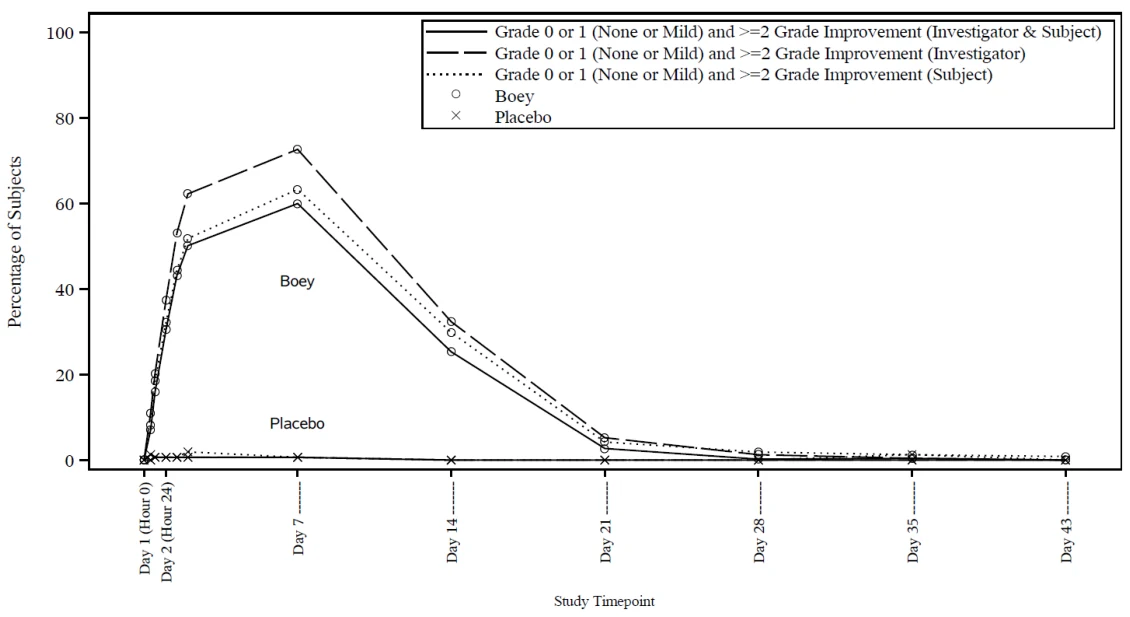
Percentage of subjects is estimated after using multiple imputation for missing data
Figure 3. Percentages of Subjects Achieving None or Mild and ≥ 2-Grade Improvement from Baseline Based on the Investigator and Subject Assessments of Glabellar Line Severity at Maximum Frown Over Time (Study M21-508)
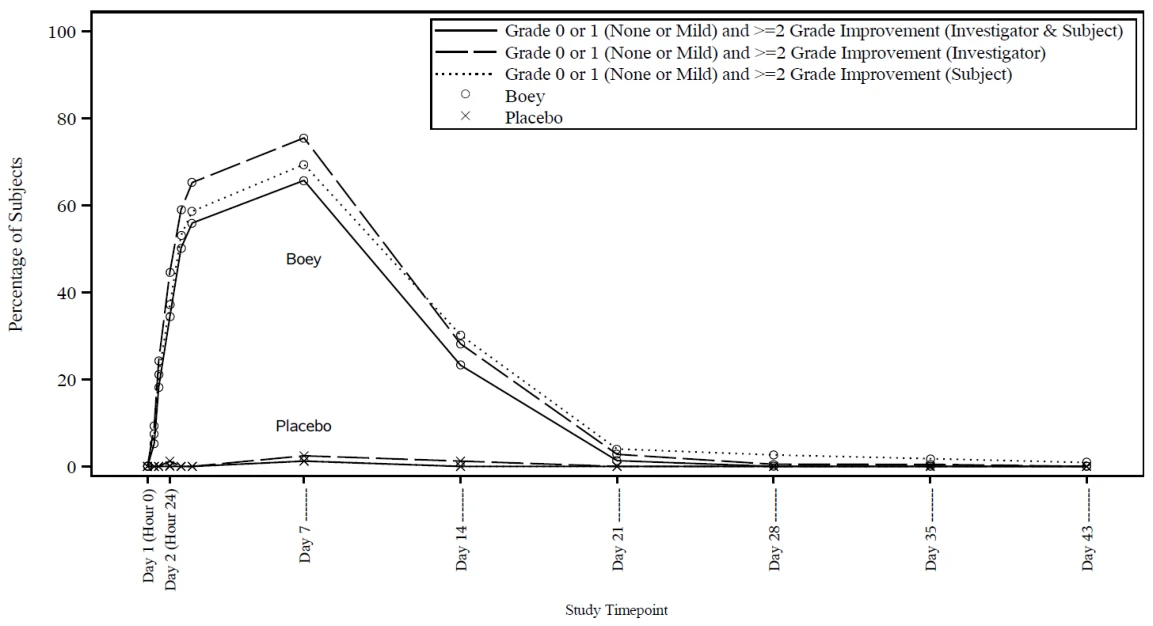
Percentage of subjects is estimated after using multiple imputation for missing data
In both studies, results for satisfaction with treatment and natural look were supportive of treatment benefit observed in the primary endpoints.
16. Non-Clinical Toxicology
General toxicology
Repeat administration of trenibotulinumtoxinE to mice resulted in limited usage, swelling and non-adverse minimal to mild myofiber regeneration in the injected hindlimb muscles. The established no-observed-adverse effect level doses of trenibotulinumtoxinE following repeat intramuscular administration in mice (once monthly for up to six months, seven total doses) of 75 Units/kg is approximately six times the human dose of 700 Units, based on a body weight (Units/kg).
Genotoxicity
Genotoxicity studies have not been conducted for trenibotulinumtoxinE.
Carcinogenicity
Studies in animals have not been performed to evaluate carcinogenic potential of trenibotulinumtoxinE.
Reproductive and developmental toxicology
Fertility and early embryonic development studies have not been conducted for trenibotulinumtoxinE.