


Product Monograph - Letybo
RECENT MAJOR LABEL CHANGES
| 3 SERIOUS WARNINGS AND PRECAUTIONS BOX | 01/2022 |
|---|---|
| PATIENT MEDICATION INFORMATION, Serious Warnings and Precautions Box | 09/2023 |
TABLE OF CONTENTS
Sections or subsections that are not applicable at the time of authorization are not listed.
RECENT MAJOR LABEL CHANGES ............................................................................................ 2
TABLE OF CONTENTS .............................................................................................................. 2
PART I: HEALTH PROFESSIONAL INFORMATION ...................................................................... 4
1 INDICATIONS ............................................................................................................... 4
1.1 Pediatrics ................................................................................................................ 4
1.2 Geriatrics ................................................................................................................ 4
2 CONTRAINDICATIONS ................................................................................................. 4
3 SERIOUS WARNINGS AND PRECAUTIONS BOX ............................................................ 4
4 DOSAGE AND ADMINISTRATION ................................................................................. 5
4.1 Dosing Considerations ............................................................................................ 5
4.2 Recommended Dose and Dosage Adjustment ....................................................... 5
4.3 Reconstitution ........................................................................................................ 5
4.4 Administration ........................................................................................................ 6
4.5 Missed Dose ........................................................................................................... 6
5 OVERDOSAGE .............................................................................................................. 7
6 DOSAGE FORMS, STRENGTHS, COMPOSITION AND PACKAGING ................................. 7
7 WARNINGS AND PRECAUTIONS .................................................................................. 7
7.1 Special Populations................................................................................................. 9
7.1.1 Pregnant Women ............................................................................................. 9
7.1.2 Breast-feeding ................................................................................................ 10
7.1.3 Pediatrics ........................................................................................................ 10
7.1.4 Geriatrics ........................................................................................................ 10
8 ADVERSE REACTIONS ................................................................................................ 10
8.1 Adverse Reaction Overview .................................................................................. 10
8.2 Clinical Trial Adverse Reactions ............................................................................ 10
8.2.1 Clinical Trial Adverse Reactions – Pediatrics ................................................... 11
8.3 Less Common Clinical Trial Adverse Reactions ..................................................... 11
8.3.1 Less Common Clinical Trial Adverse Reactions – Pediatrics ............................ 12
8.5 Post-Market Adverse Reactions ........................................................................... 12
9 DRUG INTERACTIONS ................................................................................................ 12
9.2 Drug Interactions Overview .................................................................................. 12
9.3 Drug-Behavioural Interactions .............................................................................. 12
9.4 Drug-Drug Interactions ......................................................................................... 12
9.5 Drug-Food Interactions ......................................................................................... 13
9.6 Drug-Herb Interactions ......................................................................................... 13
9.7 Drug-Laboratory Test Interactions ........................................................................ 13
10 CLINICAL PHARMACOLOGY ....................................................................................... 13
10.1 Mechanism of Action ...................................................................................... 13
10.2 Pharmacodynamics ........................................................................................ 14
10.3 Pharmacokinetics ........................................................................................... 14
11 STORAGE, STABILITY AND DISPOSAL ......................................................................... 14
12 SPECIAL HANDLING INSTRUCTIONS ........................................................................... 14
PART II: SCIENTIFIC INFORMATION ....................................................................................... 15
13 PHARMACEUTICAL INFORMATION ............................................................................ 15
14 CLINICAL TRIALS ........................................................................................................ 15
14.1 Trial Design and Study Demographics ............................................................ 15
14.2 Study Results .................................................................................................. 16
15 MICROBIOLOGY ........................................................................................................ 17
16 NON-CLINICAL TOXICOLOGY ..................................................................................... 17
PATIENT MEDICATION INFORMATION .................................................................................. 19
PART I: HEALTH PROFESSIONAL INFORMATION
1 INDICATIONS
LETYBO is indicated for:
- The temporary improvement in the appearance of moderate to severe glabellar lines associated with corrugator and/or procerus muscle activity in adult patients < 65 years of age.
1.1 Pediatrics
Pediatrics (<18 years of age): Letybo is not recommended for use in children.
1.2 Geriatrics
Geriatrics (≥65 years of age): The clinical data for subjects ≥ 65 years of age are limited.
2 CONTRAINDICATIONS
Letybo is contraindicated in patients:
- who are hypersensitive to this drug or to any ingredient in the formulation, including any non-medicinal ingredient, or component of the container. For a complete listing, see 6 DOSAGE FORMS, STRENGTHS, COMPOSITION AND PACKAGING.
- with infection or inflammation at the proposed injection site(s).
3 SERIOUS WARNINGS AND PRECAUTIONS BOX
Serious Warnings and Precautions
|
|---|
4 DOSAGE AND ADMINISTRATION
4.1 Dosing Considerations
- For Intramuscular Use Only
- The potency Units of Letybo are specific to the preparation and assay method utilized. They are not interchangeable with other preparations of botulinum toxin products and, therefore, Units of biological activity of Letybo cannot be compared to or converted into Units of any other botulinum toxin products assessed with any other specific assay method.
- Treatment should be administered at no more than the recommended dose for each treatment site.
- Injection intervals of Letybo should be no more frequent than every three months.
4.2 Recommended Dose and Dosage Adjustment
Glabellar lines
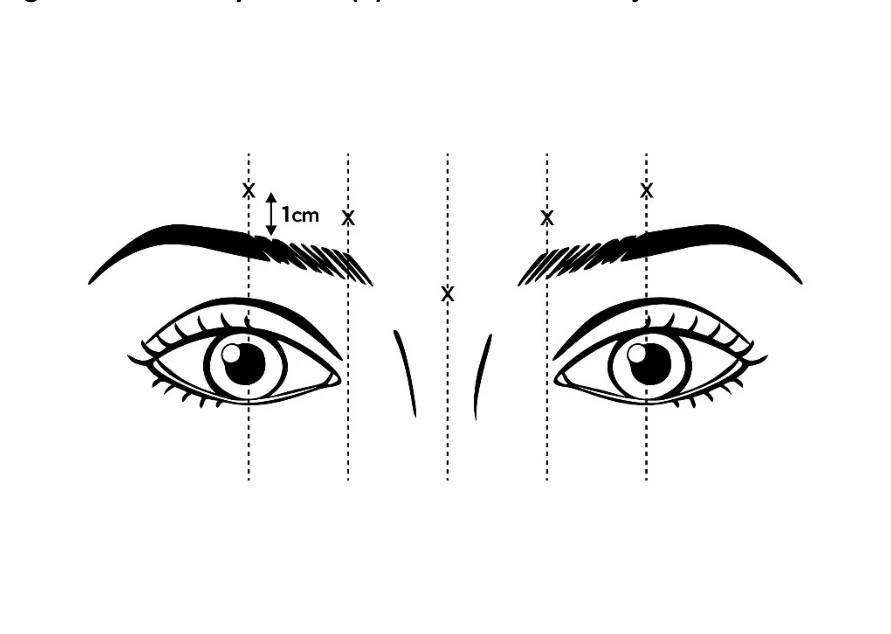
- Four (4) Units should be injected intramuscularly at each of five injection sites, 2 in each corrugator muscle and 1 in the procerus muscle for a total dose of 20 Units (see Figure 1).
Health Canada has not authorized an indication for pediatric use.
4.3 Reconstitution
Letybo is supplied in single-dose 50 or 100-Unit freeze-dried vials without preservative (Table 2 in 6. DOSAGE FORMS, STRENGTHS, COMPOSITION AND PACKAGING). Prior to intramuscular injection, reconstitute each vial of Letybo with sterile, preservative-free 0.9% Sodium Chloride Injection, USP to obtain a reconstituted solution at a concentration of 4 Units/0.1 mL and a total treatment dose of 20 Units in 0.5 mL (see Table 1).
Table 1: Reconstitution
| Vial Size | Volume of Diluent* to be Added to Vial | Resulting Dose Units per 0.1 mL |
| 50 Units | 1.25 mL | 4 Units |
| 100 Units | 2.5 mL | 4 Units |
| *Sterile preservative-free 0.9% Sodium Chloride Injection, USP | ||
Slowly inject the diluent (sterile preservative-free 0.9% Sodium Chloride Injection, USP) into the vial. Discard the vial if a vacuum does not pull the diluent into the vial. Gently mix Letybo with the diluent by rotating the vial.
Letybo should be administered within 24 hours after reconstitution. Unused reconstituted Letybo should be stored in a refrigerator between 2°C to 8°C in the original carton to protect from light until time of use for up to 24 hours. Do not freeze reconstituted Letybo. Letybo vials are for single use only. After reconstitution, Letybo should be used for only one injection session and for only one patient. Discard any remaining solution after administration.
Reconstituted Letybo should be clear, colourless and free of particulate matter, otherwise it should not be injected.
4.4 Administration
Glabellar facial lines arise from the activity of the corrugator and orbicularis oculi muscles. These muscles move the brow medially and the procerus and depressor supercilii pull the brow inferiorly. This creates a frown or “furrowed brow”. The location, size, and use of the muscles vary markedly among individuals. Lines induced by facial expression occur perpendicular to the direction of action of contracting facial muscles.
Physicians administering Letybo must understand the relevant neuromuscular and/or orbital anatomy of the area involved and any alterations to the anatomy due to prior surgical procedures.
In order to reduce the incidence of eyelid ptosis the following steps should be taken:
- Avoid injection near the levator palpebrae superioris, particularly in patients with larger brow depressor complexes.
- Lateral corrugator injections should be placed at least 1 cm above the bony supraorbital ridge.
- Ensure the injected volume/dose is accurate and where feasible kept to a minimum.
- Avoid injecting toxin closer than 1 centimeter above the central eyebrow.
Draw at least 0.5 mL of the properly reconstituted toxin into a sterile syringe and expel any air bubbles in the syringe barrel. Remove the needle used to reconstitute the product and attach a 30–31-gauge needle. Confirm the patency of the needle.
Inject a dose of 0.1 mL (4 Units) intramuscularly into each of the 5 sites, the inferomedial and superior middle of each corrugator and one in the mid-line of the procerus muscle for a total dose of 20 Units (see Figure 1).
Figure 1: Letybo Sites (X) for Intramuscular Injection
4.5 Missed Dose
Not applicable.
5 OVERDOSAGE
Excessive doses of Letybo may be expected to produce neuromuscular weakness with a variety of symptoms. Respiratory support may be required when excessive doses cause paralysis of respiratory muscles. In the event of overdose, the patient should be medically monitored for symptoms of excessive muscle weakness or muscle paralysis. Symptomatic treatment may be necessary.
Symptoms of overdose are not likely to be present immediately following injection. Should accidental injection or oral ingestion occur, the person should be medically supervised for several weeks for signs and symptoms of excessive muscle weakness or paralysis.
In the event of suspected or actual cases of botulinum toxin poisoning, please contact your local Health Department to process a request for antitoxin and also notify the company. However, the antitoxin will not reverse any botulinum toxin-induced effects already apparent by the time of antitoxin administration.
| For management of a suspected drug overdose, contact your regional poison control centre. |
|---|
6 DOSAGE FORMS, STRENGTHS, COMPOSITION AND PACKAGING
To help ensure the traceability of biologic products, including biosimilars, health professionals should recognise the importance of recording both the brand name and the non-proprietary (active ingredient) name as well as other product-specific identifiers such as the Drug Identification Number (DIN) and the batch/lot number of the product supplied.
Table 2: Dosage Forms, Strengths, Composition and Packaging
Each vial of Letybo contains either 50 or 100 Units of botulinum toxin type A neurotoxin complex (letibotulinumtoxinA), human serum albumin (0.25 or 0.5 mg) and sodium chloride (0.45 or 0.9 mg) in a sterile, freeze-dried form without a preservative.
7 WARNINGS AND PRECAUTIONS
Please see 3 SERIOUS WARNINGS AND PRECAUTIONS BOX.
General
Use Letybo only as directed.
Injection intervals of Letybo should be no more frequent than every three months. Indication-specific dosage and administration recommendations should be followed.
Do not use dosage recommendations and potency Units applied to other botulinum toxin products when using Letybo. Do not exceed the recommended dosage and frequency of administration of
| Route of Administration | Dosage Form / Strength/Composition | Non-medicinal Ingredients |
| Intramuscular | Sterile, freeze-dried powder for reconstitution; 50 or 100 Units per vial | Human serum albumin, sodium chloride |
Letybo.
Prior to administering Letybo, the physician must familiarize himself/herself with the patient’s anatomy and any alterations to the anatomy and follow the recommended injection procedure in administration. Care should be taken to ensure that Letybo is not injected into a blood vessel.
Caution should be exercised when administering Letybo to patients with neuromuscular junction disorders or when excessive weakness or atrophy is present in the target muscle, and in patients with prolonged bleeding times, surgical alterations to the facial anatomy, marked facial asymmetry, inflammation at the injection site(s), ptosis, excessive dermatochalasis, deep dermal scarring, or thick sebaceous skin.
Muscle weakness remote to the site of injection and other serious adverse effects have been reported in the cosmetic applications of botulinum toxin products. Progressive signs or symptoms of muscular weakness remote to the site of injection may include ptosis and diplopia, as well as other serious adverse effects including swallowing and speech or respiratory disorders. Patients should be advised to seek immediate medical care if swallowing, speech or respiratory disorder occur.
Patients with a history of underlying neurologic disorders, dysphagia and/or aspiration are at a greater risk of these effects and should be treated with extreme caution. The botulinum toxin product should be used under specialist supervision in these patients and should only be used if the benefit of treatment is considered to outweigh the risk.
Patients or caregivers should be advised to seek immediate medical care if swallowing, speech or respiratory disorders arise.
This product contains human serum albumin, a derivative of human blood. Based on effective donor screening and product manufacturing processes, it carries an extremely remote risk for transmission of viral diseases. The theoretical risk for transmission of Creutzfeldt-Jakob disease (CJD) also is considered extremely remote. No known cases of transmission of viral diseases or CJD have been identified for human serum albumin.
Carcinogenesis and Mutagenesis
See 16 NON-CLINICAL TOXICOLOGY.
Cardiovascular
There have been reports following administration of other botulinum toxin products of adverse events involving the cardiovascular system, including arrhythmia and myocardial infarction, some with fatal outcomes. Some of these patients had risk factors including pre-existing cardiovascular disease. Use caution when administering to patients with pre-existing cardiovascular disease.
Immune
As with all biologic products, an anaphylactic reaction may occur. Necessary precautions should be taken, and epinephrine should be available. Serious and/or immediate hypersensitivity reactions such as anaphylaxis and serum sickness have been rarely reported, as well as other manifestations of hypersensitivity including urticaria, soft tissue edema, and dyspnea. If such a reaction occurs, further injection should be discontinued, and appropriate medical therapy immediately instituted.
Treatment with botulinum toxins may result in the formation of antibodies that may reduce the effectiveness of subsequent treatments by inactivating biological activity of the toxin. The results from some studies suggest that botulinum toxin injections at more frequent intervals or at higher doses may lead to greater incidence of antibody formation. Among 854 subjects treated with Letybo, there were no neutralizing anti-drug antibodies detected.
The detection of antibody formation is highly dependent on the sensitivity and specificity of the assay and other factors such as assay methodology, sample handling, timing of sample collection, concomitant medications, and underlying disease. Therefore, comparison of the incidence of antibodies to Letybo with that to other products may be misleading.
Monitoring and Laboratory Tests
There are no specific requirements for laboratory test monitoring when patients are treated with Letybo.
Neurologic
Caution should be exercised when administering Letybo to individuals with peripheral motor neuropathy (e.g., amyotrophic lateral sclerosis or other motor neuropathy), facial palsy or neuromuscular junctional disorders (e.g., myasthenia gravis or Lambert-Eaton syndrome). Patients with neuromuscular disorders may be at an increased risk of clinically significant systemic effects such as severe dysphagia and respiratory compromise. There have been rare cases of administration of a botulinum toxin to patients with known or unrecognized neuromuscular junction disorders where the patients have shown extreme sensitivity to the systemic effects of typical clinical doses. In some of these cases, dysphagia has lasted several months and required placement of a gastric feeding tube.
Ophthalmologic
Caution should be exercised when administering Letybo to individuals with eye disorders, including dry eye and eyelid oedema.
Risk of ptosis can be mitigated by careful examination of the upper lid for separation or weakness of the levator palpebrae muscle (true ptosis) and evaluation of the range of lid excursion while manually depressing the frontalis to assess compensation. The potential risk of localized muscle weakness or visual disturbances linked with the use of Letybo may temporarily impair the ability to drive or operate machinery.
Skin
Caution should be exercised when administering Letybo to patients with inflammation at the injection site(s), deep dermal scarring, or thick sebaceous skin. As is expected for any injection procedure, localized pain, inflammation, paresthesia, hypoesthesia, tenderness, swelling/edema, erythema, localized infection, bleeding and/or bruising have been associated with injections.
7.1 Special Populations
7.1.1 Pregnant Women
There are limited data from the use of botulinum toxin type A in pregnant women. A study in animals with Letybo has shown reproductive toxicity (see 16 NON-CLINICAL TOXICOLOGY). The potential risk to pregnant women is unknown. Letybo should not be used during pregnancy. If this drug is used during pregnancy, or if the patient becomes pregnant while taking this drug, the patient should be informed of the potential risks, including abortion or fetal malformations, which have been observed in rabbits with other botulinum toxins .
7.1.2 Breast-feeding
It is unknown if Letybo is excreted in human milk. The excretion of Letybo in milk has not been studied in animals. Because many drugs are excreted in human milk precaution should be exercised. The use of Letybo during lactation is not recommended.
7.1.3 Pediatrics
Pediatrics (<18 years of age): Letybo is not recommended for use in children.
7.1.4 Geriatrics
The 3 clinical trials of Letybo included 152 subjects aged 65 and over. Although no clinically meaningful differences in safety or efficacy were observed between older and younger subjects, clinical studies of Letybo did not include sufficient numbers of subjects aged 65 and over to determine whether they respond differently from younger subjects.
8 ADVERSE REACTIONS
8.1 Adverse Reaction Overview
Adverse reactions may occur within the first few days following injection and while generally transient may have a duration of several months.
Local muscle weakness represents the expected pharmacological action of botulinum toxin in muscle tissue; however, weakness of adjacent muscles associated with local diffusion and/or injection technique has been reported. Muscle weakness remote to the site of injection and other serious adverse effects have been rarely reported in the cosmetic application of botulinum toxin A products.
As is expected for any injection procedure, localized pain, inflammation, tenderness, swelling/oedema, erythema, localized infection, bleeding and/or bruising have been associated with injections. Needle-related pain and/or anxiety have resulted in vasovagal responses, including transient symptomatic hypotension and syncope.
8.2 Clinical Trial Adverse Reactions
Clinical trials are conducted under very specific conditions. Adverse reaction rates observed in clinical trials for a specific drug, therefore, may not reflect the rates observed in clinical practice and should not be compared to rates from clinical trials of another drug. Adverse reaction information from clinical trials may be useful in identifying and approximating rates of adverse drug reactions in real-world use.
Adverse events were evaluated in subjects receiving 20 Units of Letybo in the glabellar region in three single-dose Phase III studies (BLESS I, BLESS II and BLESS III). Subject demographics were balanced between treatment groups during the double-blind phase of the studies. Overall, during the double-blind phase (N=1272), the mean age was 50.5 years in the Letybo group (N=955) and 49.6 years in the placebo group (N=317). In the Letybo group, 837 (87.6%) subjects were <65 years old which was comparable with 283 (89.3%) subjects in the placebo group. In the Letybo group, 881 (92.3%) of the subjects were female comparable with 280 (88.3%) in the placebo group. The majority of subjects were white (871 [91.2%] in the Letybo group and 282 [89.0%] subjects in the placebo group). Most treatment-emergent adverse events (TEAEs) were mild to moderate in severity and none considered study drug related were serious.
Table 3: Treatment-emergent Adverse Events with ≥1% Incidence based on Pooled Data in the Double-blind Phase of Three Clinical Trials
System Organ Class Preferred Term | Pooled Single Letybo Dose N = 955 (%) | Pooled Placebo N = 317 (%) |
| Infections and Infestations | ||
| Nasopharyngitis | 2.6% | 2.8% |
| Upper respiratory tract infection | 1.0% | 0.3% |
| Nervous System Disorders | ||
| Headache | 2.9% | 1.3% |
During the open-label phase of the BLESS I and BLESS II studies (N=854), TEAEs that occurred in ≥1% of subjects following up to 3 additional Letybo treatments included nasopharyngitis, upper respiratory tract infection, sinusitis, influenza, bronchitis, headache, procedural pain, sciatica and hypertension. The most common TEAE with Letybo treatment in the open-label phase was headache (3.4%).
TEAEs indicating local spread of toxin (eyelid ptosis, brow ptosis, dry eye, and/or blurred vision) were reported in 8 subjects (0.8%, 8/955) in the Letybo group and in no subjects (0/317) in the placebo group in the double-blind phase of the three studies. In the open-label extension phase of BLESS I and BLESS II, 7 subjects (0.8%, 7/854) had TEAEs indicative of local spread of toxin. Sixteen days following Letybo treatment, one subject experienced non-serious mild episodic dysarthria which lasted 40 days.
Among all subjects (854 in total) who had more than one single-dose Letybo treatment cycle in the BLESS I and BLESS II studies, no subject tested positive for neutralizing antibodies against letibotulinumtoxinA.
8.2.1 Clinical Trial Adverse Reactions – Pediatrics
Not applicable.
8.3 Less Common Clinical Trial Adverse Reactions
The following less common adverse reactions occurred in <1% of subjects in the Letybo group overall (including double-blind and open-label treatment).
Eye disorders: blepharospasm, conjunctival haemorrhage, dry eye, eye pain, eyelid oedema, eyelid ptosis
Gastrointestinal disorders: constipation, nausea
General disorders and administration site conditions: administration site swelling, discomfort, facial pain, influenza like illness, injection site bruising, injection site haematoma, injection site mass, injection site nodule, injection site pain, injection site pruritus, injection site reaction, pain, pyrexia, swelling
Infections and infestations: folliculitis, oral herpes, pharyngitis streptococcal, pneumonia
Injury, poisoning and procedural complications: contusion, periorbital haematoma
Investigations: blood potassium increased
Nervous system disorder: dizziness, head discomfort, migraine, paraesthesia, sinus headache, tension headache, visual field defect
Respiratory, thoracic and mediastinal disorders: pharyngeal hypoaesthesia
Skin and subcutaneous tissue disorders: brow ptosis, dry skin, urticaria
Vascular disorders: haematoma
8.3.1 Less Common Clinical Trial Adverse Reactions – Pediatrics
Not applicable.
8.5 Post-Market Adverse Reactions
There is no post-market surveillance information available with the use of Letybo. Letybo contains the same active ingredient as other botulinum toxin containing products. Therefore, adverse events observed with these products also have the potential to be associated with the use of Letybo.
9 DRUG INTERACTIONS
9.2 Drug Interactions Overview
No formal drug interaction studies have been conducted with Letybo.
Patients treated concomitantly with botulinum toxins and aminoglycosides or other agents interfering with neuromuscular transmission (e.g., curare-like agents) should be observed closely because the effect of the botulinum toxin may be potentiated. Use of anticholinergic drugs after administration of Letybo may potentiate systemic anticholinergic effects such as blurred vision.
The effect of administering different botulinum toxin products at the same time or within several months of each other is unknown. Excessive weakness may be exacerbated by another administration of botulinum toxin prior to the resolution of the effects of a previously administered botulinum toxin.
Excessive weakness may also be exaggerated by administration of a muscle relaxant before or after administration of Letybo.
9.3 Drug-Behavioural Interactions
Not applicable.
9.4 Drug-Drug Interactions
Interactions with other drugs have not been established.
Table 4: Potential Drug-Drug Interactions
| Proper/Common name of Drug | Source of Evidence | Effect | Clinical Comment |
| Aminoglycoside antibiotics or other medicinal products that interfere with neuromuscular transmission (e.g., curare-like agents, lincosamides, polymyxins, and anticholinesterases). | Theoretical | Theoretically, the effect of botulinum toxin may be potentiated. | The effect of botulinum toxin may be potentiated by aminoglycoside antibiotics or other drugs that interfere with neuromuscular transmission. Caution should be exercised when Letybo is used with aminoglycosides or any other drugs that interfere with neuromuscular transmission. |
| Different botulinum neurotoxin serotypes | Theoretical | Unknown | The effect of administering different botulinum neurotoxin serotypes at the same time or within several months of each other is unknown. Excessive weakness may be exacerbated by administration of another botulinum toxin prior to the resolution of the effects of a previously administered botulinum toxin. |
9.5 Drug-Food Interactions
Interactions with food have not been established.
9.6 Drug-Herb Interactions
Interactions with herbal products have not been established.
9.7 Drug-Laboratory Test Interactions
Interactions with laboratory tests have not been established.
10 CLINICAL PHARMACOLOGY
10.1 Mechanism of Action
Letybo inhibits release of the neurotransmitter, acetylcholine, from peripheral cholinergic nerve endings, causing a flaccid paralysis of muscles. Toxin activity occurs in the following sequence: toxin heavy chain mediated binding to specific surface receptors on nerve endings, internalization of the toxin by receptor mediated endocytosis, pH-induced translocation of the toxin light chain to the cell cytosol and cleavage of SNAP25 leading to intracellular blockage of exocytosis of neurotransmitter (acetylcholine) into the neuromuscular junction. This accounts for the therapeutic utility of the toxin in diseases characterized by excessive efferent activity in motor nerves. Recovery of transmission occurs gradually as the neuromuscular junction recovers from SNAP25 cleavage and as new nerve endings are formed.
10.2 Pharmacodynamics
No pharmacodynamic studies have been conducted with Letybo. However, the primary pharmacodynamics of intramuscularly injected Botulinum neurotoxin type A are well established, i.e. dose-related muscle weakness resulting from the irreversible blockade of acetylcholine release from presynaptic vesicles by BoNT/A, a decrease of the compound muscle action potential and then reduction of the activity of the down-stream muscles.
10.3 Pharmacokinetics
It is not feasible to conduct pharmacokinetic studies of BoNT/A due to the extremely high affinity (picomolar range) of BoNT/A for the binding sites on presynaptic cholinergic axon terminals so that no detectable amount of the toxin in blood is expected before or even after the animal or human becomes highly toxified if a PK study of a BoNT/A product were conducted. Due to its large size (900k), letibotulinumtoxinA intramuscularly injected is expected to slowly diffuse within tissues and even more slowly into blood stream. The toxin protein complex is expected to be mostly metabolized enzymatically in the body.
11 STORAGE, STABILITY AND DISPOSAL
Unopened vials of Letybo should be stored under refrigeration (2°C to 8°C) in the original carton to protect from exposure to light.
Reconstituted Letybo should be stored under refrigeration (2°C to 8°C) in the original carton to protect from exposure to light for up to 24 hours until time of use. Do not freeze reconstituted Letybo. Discard any remaining solution after administration.
Do not use after the expiration date on the vial.
12 SPECIAL HANDLING INSTRUCTIONS
All vials, including unused product remaining and expired vials, or equipment used with Letybo should be disposed of carefully as is done with all medical waste. In cases when deactivation of the toxin is desired (e.g., spills), the use of dilute hypochlorite solution (0.5% or 1%) for five minutes is recommended prior to disposal as medical waste.
PART II: SCIENTIFIC INFORMATION
13 PHARMACEUTICAL INFORMATION
Drug Substance
Proper name: LetibotulinumtoxinA for injection
Chemical name: Botulinum toxin type A complex
Molecular formula and molecular mass: 150 kDa toxin within a 900 kDa protein complex
Structural formula: LetibotulinumtoxinA, the active ingredient in Letybo is a purified neurotoxin type A complex produced from fermentation of Clostridium botulinum, strain CBFC26. The structure of the drug substance is a 900 kDa non-covalent multimeric complex composed of the 150 kDa toxin, a 130 kDa non-toxic non haemagglutinating protein, and various haemagglutinins ranging between 17 and 48 kDa in size.
Physicochemical properties: Letybo is a sterile, single use freeze-dried powder for solution for intramuscular injection and is to be reconstituted with sterile, preservative free, normal saline prior to injection.
The primary release procedure for Letybo uses an animal-based potency assay to determine the potency relative to a reference standard. The assay is specific to Letybo. One Unit of Letybo corresponds to the calculated median intraperitoneal lethal dose (LD50) in mice. Due to specific details of this assay, Units of biological activity of Letybo cannot be converted into Units of any other botulinum toxin or any toxin assessed with any other specific assay method.
14 CLINICAL TRIALS
14.1 Trial Design and Study Demographics
Three Phase III clinical trials (BLESS I, BLESS II and BLESS III) of identical design were conducted to evaluate the efficacy and safety of Letybo used for the temporary improvement of the appearance of moderate to severe glabellar facial lines (Table 5).
The trials enrolled healthy adults, ranging in age from 19 to 75, with moderate to severe glabellar frown lines at maximum frown as measured with a severity score of 2 or 3 on the Facial Wrinkle Scale (FWS) (where: 0 = none, 1 = mild, 2 = moderate, 3 = severe) determined by both the investigator and the subject independently. The trials excluded subjects who had ptosis, deep dermal scarring, or an inability to substantially lessen glabellar lines even by physically spreading the glabellar lines apart.
Consisting of up to four consecutive treatment cycles, each of the clinical trials had two phases, i.e. the initial parallel-group, randomized, double-blind, placebo-controlled study in the first treatment cycle followed by an open-label, uncontrolled extension in the additional treatment cycles (up to 3). In each treatment cycle, eligible subjects had only one treatment session on Day 1 with intramuscular injection of Letybo or placebo at 5 sites (see Figure 1). Each treatment cycle lasted for at least 12 weeks and up to 48 weeks.
The first treatment cycle comprised 2 treatment groups; Group A (Letybo, 20 Units) and Group B (placebo) randomized in a 3:1 ratio, respectively. After the first treatment cycle, all eligible subjects could enter the open-label, uncontrolled extension phase and received Letybo (20 Units) in each of the additional 1 to 3 treatment cycle(s).
In the efficacy assessment, composite response was defined as having ≥2-point or ≥1-point improvement in FWS score at maximum frown from baseline AND achieving a score of 0 or 1 following the first injection as assessed independently by both the investigator and the subject.
The primary efficacy endpoint in the three studies was ≥2-point composite response at Week 4 after the first treatment.
In these trials 1,272 subjects were randomized and received a single treatment with Letybo (n=955) or placebo (n=317) in the first treatment cycle. The mean age in the three studies was 50 years, with 152 subjects (12%) ≥65 years of age. Most of the subjects were women (91%), and a majority of the subjects were white (91%). In the double-blind phase of each of the three trials, subject demographics was balanced between treatment groups.
Table 5: Summary of Patient Demographics for Clinical Trials in Glabellar Lines (BLESS I, BLESS II, and BLESS III)
| Study # | Study design | Dosage, route of administration and duration | Study subjects (n) | Mean age (Range) | Sex | ||||
| BLESS I | Phase III, multi-centre, randomized, double-blind, placebo-controlled | Single dose (20 Units), intramuscular, administered on Day 1 and study duration of ≥12 weeks | 704 | LetibotulinumtoxinA 49.3 years (19 to 75) Placebo 48.7 years (21 to 74) | Females: 638 Males: 66 | ||||
| BLESS II | 213 | LetibotulinumtoxinA 52.0 years (27 to 75) Placebo 52.4 years (29 to 73) | Females: 195 Males: 18 | ||||||
| BLESS III | 355 | LetibotulinumtoxinA 52.2 years (21 to 75) Placebo 49.4 years (22 to 75) | Females: 328 Males: 27 | ||||||
14.2 Study Results
Based on the primary efficacy endpoint, the ≥2-point composite responder rates in the Letybo and placebo groups at Week 4 were 46.5% and 0% in BLESS I; 48.8% and 1.9% in BLESS II; and 64.7% and 0% in BLESS III, respectively (Table 6). The absolute differences between groups were 46.5%, 46.9%, and 64.7% with statistical significance in BLESS I, BLESS II and BLESS III, respectively.
Table 6: Responder Rates in Studies BLESS I, II, and III based on ≥ 2-Point Reduction in FWS from baseline and FWS Score of 0 or 1 at Maximum Frown at Week 4
| Study | Responder Rate (%) | Letybo | Placebo |
| BLESS I | Composite endpoint Absolute difference 95% CI for difference p-value (Cochran–Mantel–Haenszel Test) Investigator’s assessment Subject assessment | 246/529 (46.5%) 46.5% 41.8, 50.8 P<0.001 348/529 (65.8%) 290/529 (54.8%) | 0/175 (0.0%) |
| BLESS II | Composite endpoint Absolute difference 95% CI for difference p-value (Cochran–Mantel–Haenszel Test) Investigator’s assessment Subject assessment | 78/160 (48.8%) 46.9% 35.8, 54.7 P<0.001 120/160 (75.0%) 83/160 (51.9%) | 1/53 (1.9%) |
| BLESS III | Composite endpoint Absolute difference 95% CI for difference p-value (Cochran–Mantel–Haenszel Test) Investigator’s assessment Subject assessment | 172/266 (64.7%) 64.7% 57.4, 70.2 P<0.001 209/266 (78.6%) 183/266 (68.8%) | 0/89 (0.0%) |
15 MICROBIOLOGY
No microbial information is required for this drug product.
16 NON-CLINICAL TOXICOLOGY
General Toxicology:
A single dose 14-day toxicity study was conducted with Letybo in Sprague- Dawley (SD) rats following intramuscular administration in the femoral part of the body at a dose of 0 (saline control), 6, 30, or 150 Units/kg. Systemic paralysis was observed at all dose levels. Emaciation, red tear, enlargement of eyeball, opacity of eyeball, rupture of eyeball, prone position, crawling position, no feces, soiled fur, rough fur, soiled perineal region, edema and soft stool were observed in the 30 and 150 Units/kg groups. The LD50 in single-dose intramuscular administration of Letybo in SD rats was estimated as 129.5 Units/kg (approximately 432 times the maximum recommended human dose of 20 Units, based on Units/kg comparison).
Repeat administration of Letybo to SD rats over 6 months (once monthly intramuscular administration of up to 15 Units/kg into the right musculus quadriceps femoris) showed degenerative findings at the injection site. Most of the findings observed at the end of the 6-month treatment period (including muscle fatty infiltration, inflammation, and atrophy, or reduced body weight) were reversible or partially reversible following a six-month off-dose period.
Carcinogenicity: Long-term animal studies have not been conducted to evaluate the carcinogenic potential of Letybo.
Genotoxicity: Animal studies have not been conducted to evaluate the genotoxic potential of Letybo.
Reproductive and Developmental Toxicology: Animal studies have not been conducted to evaluate the impairment of fertility potential of Letybo.
In an embryofetal developmental study, intramuscular doses 0, 1, 4 or 8 Units/kg of Letybo were administered to pregnant rats once daily for 12 days during organogenesis (gestation days 5 to 16). While dose-dependent paralytic gait and significant body weight loss were observed in the pregnant rats in all Letybo-treated study groups, treatment-related body weight loss, dwarfism and retarded meta-tarsal ossification were observed in the developing fetus. Under the conditions of this study, the NOAEL of Letybo is considered to be less than 1 Unit/kg/day for both pregnant SD rats and embryo-fetuses.