


Product Monograph - Xeomin Cosmetic
RECENT MAJOR LABEL CHANGES
| 04/2023 |
|---|---|
| 01/2023 |
| 01/2023 |
| 01/2023 |
TABLE OF CONTENTS
RECENT MAJOR LABEL CHANGES ............................................................................................. 2
TABLE OF CONTENTS ............................................................................................................... 2
PART I: HEALTH PROFESSIONAL INFORMATION ....................................................................... 4
- 1.
INDICATIONS ................................................................................................................ 4
1.1 Pediatrics ..................................................................................................................... 4
1.2 Geriatrics ..................................................................................................................... 4
- 2. CONTRAINDICATIONS .................................................................................................. 4
- 3. SERIOUS WARNINGS AND PRECAUTIONS BOX ............................................................. 5
- 4.
DOSAGE AND ADMINISTRATION .................................................................................. 5
4.1 Dosing Considerations ................................................................................................. 5
4.2 Recommended Dose and Dosage Adjustment ............................................................ 6
4.3 Reconstitution ............................................................................................................. 9
4.4 Administration ........................................................................................................... 10
4.5 Missed Dose .............................................................................................................. 10
5 OVERDOSAGE ..................................................................................................................... 10
6 DOSAGE FORMS, STRENGTHS, COMPOSITION AND PACKAGING ........................................ 11
7 WARNINGS AND PRECAUTIONS .......................................................................................... 11
7.1 Special Populations ................................................................................................... 13
7.1.1 Pregnant Women ................................................................................................... 13
7.1.2 Breast-feeding ........................................................................................................ 13
7.1.3 Pediatrics ................................................................................................................ 13
7.1.4 Geriatrics ................................................................................................................ 13
- 8.
ADVERSE REACTIONS ......................................................................................................... 14
8.1 Adverse Reaction Overview ....................................................................................... 14
8.2 Clinical Trial Adverse Reactions ................................................................................. 14
8.3 Less Common Clinical Trial Adverse Reactions .......................................................... 19
8.4 Abnormal Laboratory Findings: Hematologic, Clinical Chemistry and Other Quantitative Data ............................................................................................................ 19
Clinical Trial Findings ....................................................................................................... 19
Post-Market Findings ...................................................................................................... 19
Not available. .................................................................................................................. 19
8.5 Post-Market Adverse Reactions ................................................................................ 19
9 DRUG INTERACTIONS .......................................................................................................... 19
9.2 Drug Interactions Overview ....................................................................................... 19
9.3 Drug-Behavioural Interactions ................................................................................... 19
9.4 Drug-Drug Interactions .............................................................................................. 20
9.5 Drug-Food Interactions ............................................................................................. 20
9.6 Drug-Herb Interactions .............................................................................................. 20
9.7 Drug-Laboratory Test Interactions ............................................................................ 20
10 CLINICAL PHARMACOLOGY ............................................................................................... 20
10.1 Mechanism of Action ............................................................................................... 20
10.2 Pharmacodynamics ................................................................................................. 21
10.3 Pharmacokinetics .................................................................................................... 22
11 STORAGE, STABILITY AND DISPOSAL ................................................................................. 22
12 SPECIAL HANDLING INSTRUCTIONS................................................................................... 22
PART II: SCIENTIFIC INFORMATION ........................................................................................ 24
13 PHARMACEUTICAL INFORMATION.................................................................................... 24
14 CLINICAL TRIALS ................................................................................................................ 25
14.1 Trial Design and Study Demographics ..................................................................... 25
14.2 Study Results ........................................................................................................... 25
14.3 Comparative Bioavailability Studies ........................................................................ 29
15 MICROBIOLOGY ................................................................................................................ 29
16 NON-CLINICAL TOXICOLOGY ............................................................................................. 29
PART III: CONSUMER INFORMATION ........................................................................ 33
PART I: HEALTH PROFESSIONAL INFORMATION
1. INDICATIONS
XEOMIN COSMETIC® (incobotulinumtoxinA) is indicated in adults for:
- the temporary improvement in the appearance of moderate to severe horizontal forehead lines, lateral canthal lines, and glabellar lines.
Xeomin Cosmetic® may only be used by physicians with suitable qualifications and experience in the application of Botulinum neurotoxin type A (BoNT/A)
1.1 Pediatrics
Pediatrics (< 18 years of age): Xeomin Cosmetic® has not been studied in the pediatric population and is therefore not recommended in this age group.
1.2 Geriatrics
Geriatrics (> 65 years of age): Although clinical studies included a number of patients over the age of 65, no clinical trials specifically designed for elderly patients have been performed.
2. CONTRAINDICATIONS
Xeomin Cosmetic® is contraindicated in patients who:
- are hypersensitive to BoNT/A or to any ingredient in the formulation, including any non-medicinal ingredient, or component of the container. For a complete listing, see 6 DOSAGE FORMS, STRENGTHS, COMPOSITION AND PACKAGING.
- have generalised disorders of muscle activity (e.g. myasthenia gravis, Lambert-Eaton syndrome).
- have infection or inflammation at the proposed injection site(s).
- SERIOUS WARNINGS AND PRECAUTIONS BOX
Serious Warnings and Precautions
|
|---|
4. DOSAGE AND ADMINISTRATION
4.1 Dosing Considerations
- For Intramuscular Use Only
- Due to unit differences in the potency assay, Xeomin Cosmetic® units are specific to Xeomin Cosmetic®. Therefore unit doses or “U” recommended for Xeomin Cosmetic® are not interchangeable with those for other preparations of Botulinum toxin.
- Xeomin Cosmetic® should only be given by physicians with the appropriate qualifications and experience in the application of Botulinum toxin.
- The use of one vial for more than one injection session or patient is not recommended because the product and diluent do not contain a preservative.
- The smaller the injection volume the less pressure sensation and the less spread of BoNT/A in the injected muscle occurs. This is of benefit in reducing effects on nearby muscles when small muscle groups are being injected.
- Undesirable effects may occur from misplaced injections of BoNT/A that temporarily paralyse nearby muscle groups.
Lack of Response:
There are several potential explanations for a lack of or a diminished response to an individual treatment with Xeomin Cosmetic®. These may include inadequate dose selection, selection of inappropriate muscles for injection, muscles inaccessible to injection, failure to correctly target the desired muscle through misplaced injections, underlying structural abnormalities such as muscle contractures or bone disorders, change in pattern of muscle involvement, patient perception of benefit compared with initial results, inappropriate storage or reconstitution, as well as neutralizing antibodies to Botulinum toxin.
A suggested course of action when patients do not respond to Xeomin Cosmetic® injections is:
- 1) wait the usual treatment interval;
- 2) consider reasons for lack of response listed above;
- 3) test patient using an acceptable method (i.e., test for anhydrotic rings with a starch iodine test or test for serum antibodies).
More than one treatment course should be considered before classification of a patient as a non-responder.
4.2 Recommended Dose and Dosage Adjustment
- Xeomin Cosmetic® is reconstituted prior to use with sterile preservative free 0.9% sodium chloride solution.
Glabellar Lines
The recommended dose is 20 units per treatment session. In a dose finding study of 191 subjects evaluating doses up to 30 units, 48 subjects received the highest doses of 30 units. Four (4) units should be injected into each of 5 injection sites, two injections in each corrugator muscle and one injection in the procerus muscle (see diagram below). Injections near the levator palpebrae superioris muscle and into the cranial portion of the orbicularis oculi should be avoided in order to avoid blepharoptosis. Injections into the corrugator muscle should be done in the medial portion of the muscle, and in the central portion of the muscle belly at least 1 cm above the bony edge of the orbital rim.

Lateral Canthal Lines
The total recommended standard dose per treatment is 12 units per side (overall total dose: 24 units).
3-point injection scheme
Four (4) units are to be injected bilaterally into each of the 3 injection sites per eye area. One injection of 4 units is placed approximately 1 cm lateral from the bony orbital rim into the orbicularis oculi muscle. The other two injections of 4 units each should be placed approximately 1 cm above and below the area of the first injection. Injections too close to the zygomaticus major muscle should be avoided to prevent lip ptosis.
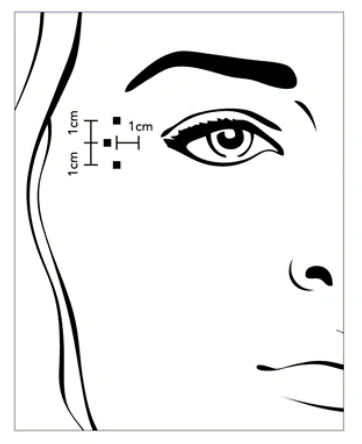
4-point injection scheme
Three (3) units are to be injected bilaterally into each of the 4 injection sites per eye area. Mark the 1 cm lateral from the bony orbital rim. The first two injections of 3 units is placed approximately 0.5 cm above and below this point. The other two injections of 3 units each should be placed approximately 1 cm above and below the first marked point. Injections too close to the zygomaticus major muscle should be avoided to prevent lip ptosis.
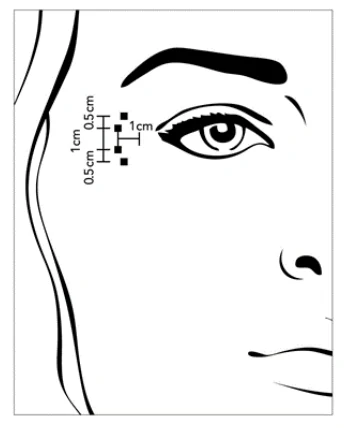
Horizontal Forehead Lines
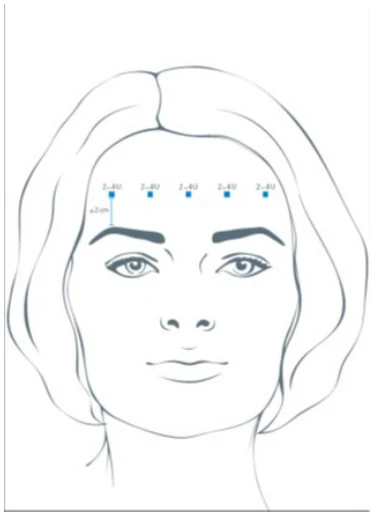
The recommended total dose range is 10 to 20 units according to the individual needs of the patients. Ten (10) to 20 units are injected into the frontalis muscle in five horizontally aligned injection sites at least 2 cm above the orbital rim. Two (2), 3 or 4 units are applied per injection point, respectively. Injections too close to the orbital rim should be avoided to reduce the risk of brow ptosis.
The optimum dosage, frequency, and number of injection sites in the treated muscle should be determined by the physician individually for each patient at each treatment. Retreatment with Xeomin Cosmetic® should be administered no more frequently than every three months. When treating patients with Xeomin Cosmetic® previous treatment with all Botulinum toxin products for all other indications should be taken into consideration.
4.3 Reconstitution
Parenteral Products:
Xeomin Cosmetic® is reconstituted prior to use with sterile preservative free sodium chloride 9 mg/mL (0.9%) solution for injection. Xeomin Cosmetic® should not be mixed with any medicinal products other than sterile preservative free sodium chloride (0.9%). Reconstitution and dilution should be performed in accordance with good clinical practice guidelines, particularly with respect to asepsis.
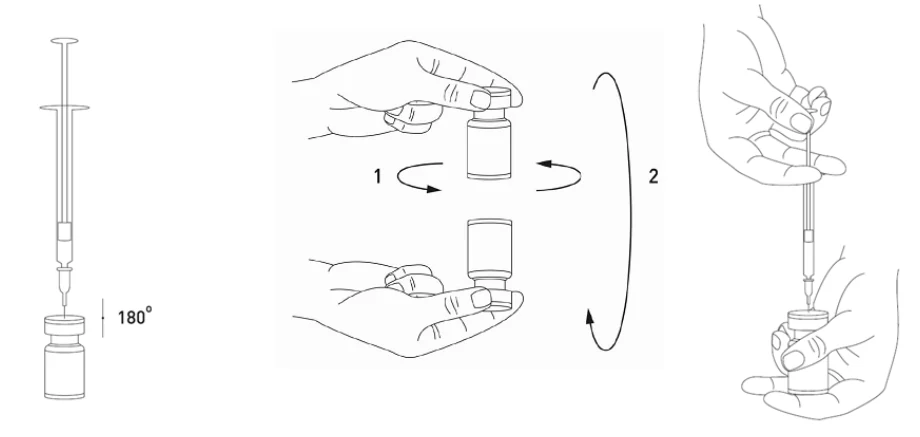
It is good practice to perform vial reconstitution and syringe preparation over plastic-lined paper towels to catch any spillage. An appropriate amount of solvent (Table 1) is drawn up into a syringe. A 20-27 gauge short bevel needle is recommended for reconstitution. The exposed portion of the rubber stopper of the vial is cleaned with alcohol (70%) prior to insertion of the needle. After vertical insertion of the needle through the rubber stopper the solvent is injected gently into the vial in order to avoid foam formation. The vial must be discarded if the vacuum does not pull the solvent into the vial. Remove the syringe from the vial and mix Xeomin Cosmetic® with the solvent by carefully swirling and inverting the vial – do not shake vigorously. Record the date and time of reconstitution on the vial.
If needed, the needle used for reconstitution should remain in the vial and the required amount of solution should be drawn up with a new sterile syringe suitable for injection.
Reconstituted Xeomin Cosmetic® is a clear colourless solution free of particulate matter.
Xeomin Cosmetic® should not be used if the reconstituted solution (prepared as above) has a cloudy appearance or contains floccular or particulate matter.
Table 1: Possible Dilutions of Xeomin Cosmetic® in the Reconstituted Solution
| Solvent added (sodium chloride 9 mg/mL (0.9%) solution for injection) | Resulting dose in units per 0.1 mL 100 U Vial |
1.0 mL 1.25 mL 2.0 mL 2.5 mL 4.0 mL | 10.0 U 8.0 U 5.0 U 4.0 U 2.5 U |
Any solution for injection that has been stored for more than 24 hours as well as any unused solution for injection should be discarded. For safe disposal of the reconstituted solution, see 12 SPECIAL HANDLING INSTRUCTIONS.
4.4 Administration
Reconstituted Xeomin Cosmetic® is injected using a thin sterile needle (e.g., 30-33 gauge needle). See dilution table (Table 1) above for volume of properly diluted toxin.
4.5 Missed Dose
Not applicable.
5 OVERDOSAGE
The lethal amount of crystalline Botulinum toxin type A for a 70 kg human is calculated to be approximately 0.09 to 0.15 µg applied intravenously or intramuscularly, and 70 µg applied orally. A vial with 100 units Xeomin Cosmetic® contains 0.6 ng BoNT/A, i.e. less than 1/100 of the estimated human lethal dose following intravenous or intramuscular application.
Symptoms of Overdose
Overdose of Xeomin Cosmetic® depends upon dose, site of injection and underlying tissue properties. Signs and symptoms of overdose are not apparent immediately post-injection. Increased doses may result in paralysis distant from the site of injection with a variety of symptoms. Symptoms may include general weakness, ptosis, diplopia, breathing difficulties, speech difficulties, paralysis of the respiratory muscles or swallowing difficulties which may result in aspiration pneumonia.
Measures in Cases of Overdose
Should accidental injection or oral ingestion occur, or overdose be suspected, the person should be medically monitored for up to several weeks for symptoms of excessive muscle weakness or muscle paralysis. Symptomatic treatment may be necessary. Respiratory support may be required if paralysis of the respiratory muscles occurs.
| For management of a suspected drug overdose, contact your regional poison control centre. |
|---|
6 DOSAGE FORMS, STRENGTHS, COMPOSITION AND PACKAGING
Table 2: Dosage Forms, Strengths, Composition and Packaging
Xeomin Cosmetic® is supplied as a sterile, white, preservative free powder for solution for injection (lyophilisate) packed in a vial of type 1 glass with a latex-free stopper (bromobutyl rubber) and tamper-proof seal (aluminum).
Xeomin Cosmetic® is available in pack sizes of 1 (single unit pack), 2, 3 or 6 vials (multi-packs).
Each vial contains 100 units of incobotulinumtoxinA (Clostridium Botulinum Neurotoxin Type A (150 kD), free from complexing proteins) where one unit corresponds to the median lethal dose (LD50) in mice or the equivalent cell-based potency units, 4.7 mg of sucrose and 1.0 mg of human albumin. Prior to use Xeomin Cosmetic® is reconstituted with commercially available 0.9 % physiological saline (not supplied in the pack) to form a clear, and colorless solution.
7 WARNINGS AND PRECAUTIONS
Please see 3 SERIOUS WARNINGS AND PRECAUTIONS BOX.
General
Xeomin® and Xeomin Cosmetic® contain the same active ingredient in the same formulation. Therefore adverse events observed with the use of Xeomin® also have the potential to be associated with the use of Xeomin Cosmetic®.
Use Xeomin Cosmetic® only as directed.
The safe and effective use of Xeomin Cosmetic® depends upon proper storage of the product, selection of the correct dose, and proper reconstitution and administration techniques.
Prior to administering Xeomin Cosmetic®, the physician must familiarize himself/herself with the patient’s anatomy and any alterations to the anatomy. Care should be taken to ensure that Xeomin Cosmetic® is not injected into a blood vessel. Failure to correctly target the desired musculature through misplaced applications may result in apparent lack of efficacy.
If proposed injection sites are marked with a pen, Xeomin Cosmetic® must not be injected through the pen marks; otherwise a permanent tattooing effect may occur.
Injection intervals of Xeomin Cosmetic® should generally be no more frequent than every three months
| Route of Administration | Dosage Form / Strength/Composition | Non-medicinal Ingredients |
| Intramuscular injection | Powder for solution for injection 100 units per vial | Sucrose (4.7 mg), human albumin (1.0 mg) |
although injection intervals need to be tailored to patient needs. Indication specific dosage and administration recommendations should be followed.
This product contains human albumin, a derivative of human blood. Based on effective donor screening and product manufacturing processes, it carries an extremely remote risk for transmission of viral diseases. The theoretical risk for transmission of Creutzfeldt-Jakob disease (CJD) also is considered extremely remote. No cases of transmission of viral diseases or CJD have ever been identified for human albumin.
Driving and Operating Machinery
No studies on the effects on the ability to drive and use machines have been performed. However if asthenia, muscle weakness, vision disorders, dizziness or drooping eyelids occur, affected persons should avoid these tasks until they adjust to these changes.
Hematologic
Xeomin Cosmetic® is administered by intramuscular injection. Care should be taken to minimize injection site related trauma. Xeomin Cosmetic® should be used with caution:
- if bleeding disorders of any type exist
- in patients receiving anticoagulant therapy or taking other substances in anticoagulant doses.
Hypersensitivity Reactions
Hypersensitivity reactions have been reported with Botulinum neurotoxin products. If serious (e.g. anaphylactic reactions) and/or immediate hypersensitivity reactions occur, appropriate medical therapy should be instituted.
Immune
The risks for development of neutralizing antibodies to Botulinum toxins may be influenced by several factors and have been reported to be related to high dosage, higher total dosage, too frequent injections, young age at disease onset, and the nature of Botulinum toxin received. Antibody development may lead to treatment failure, see 4 DOSAGE AND ADMINISTRATION.
Local and Distant Spread of Toxin Effect
Symptoms of local spread of toxin effects such as eyelid ptosis and facial paresis were reported in clinical studies for treatment of a single type of upper facial line or combined upper facial lines (horizontal forehead lines, lateral canthal lines, and glabellar lines). The combined treatment of three upper facial lines may increase the risk of toxin spread to distal areas, such as the oral pharyngolaryngeal region (see 14 Clinical Trial Adverse Reactions). Patients should be advised to seek immediate medical care if swallowing, speech or respiratory disorders occur.
Ophthalmologic
In order to reduce the complications of blepharoptosis, avoid injection near the levator palpebrae superioris and into the cranial portions of the orbicularis oculi, particularly in patients with larger brow depressor complexes. Medial corrugator injections should be placed in the central portion of the muscle belly at least 1 cm above the bony supraorbital ridge.
Neurologic
Pre-existing Neuromuscular Disorders
The injection of Xeomin Cosmetic® is not recommended for patients with a history of dysphagia and aspiration.
Xeomin Cosmetic® should be used with caution:
- In patients suffering from amyotrophic lateral sclerosis (ALS)
- In patients with other diseases which result in peripheral neuromuscular dysfunction
- In targeted muscles which display pronounced weakness or atrophy.
Monitoring and Laboratory Tests
There are no specific requirements for laboratory test monitoring when patients are treated with Xeomin Cosmetic®.
7.1 Special Populations
7.1.1 Pregnant Women
There have been no studies in pregnant women. Studies in animals have shown reproductive toxicity, see 16 NON-CLINICAL TOXICOLOGY. The potential risk for humans is unknown.
Xeomin Cosmetic® should not be used during pregnancy.
7.1.2 Breast-feeding
It is not known whether BoNT/A is excreted into the breast milk. Therefore, the use of Xeomin Cosmetic® during lactation is not recommended.
7.1.3 Pediatrics
Pediatrics (< 18 years of age): The safety and efficacy of Xeomin Cosmetic® has not been studied in the pediatric population and is therefore not recommended in this age group.
7.1.4 Geriatrics
Geriatrics (> 65 years of age): The clinical data for subjects > 65 years of age are limited. Although clinical studies included a number of patients over the age of 65, no clinical trials specifically designed for elderly patients have been performed. Initial dosing should begin at the lowest recommended dose for the specific indication and be cautiously titrated within the recommended range for optimal patient outcome.
8. ADVERSE REACTIONS
8.1 Adverse Reaction Overview
In general, adverse drug reactions to Xeomin Cosmetic® occur within the first few days following injection and are generally transient, however, in some cases may last for several months.
In Studies 6 and 7, the overall incidence of adverse reactions did not increase with increasing numbers of treatment sessions when there was a 120-day interval between two treatment sessions.
Local muscle weakness represents the expected pharmacological action of botulinum toxin. Symptoms of local spread of toxin effects such as eyelid ptosis and facial paresis were reported in clinical studies for treatment of a single type of upper facial line or combined upper facial lines (horizontal forehead lines, lateral canthal lines, and glabellar lines). The combined treatment of three upper facial lines may increase the risk of toxin spread to distal areas, such as the oral pharyngolaryngeal region (see 14 CLINICAL TRIAL ADVERSE REACTIONS).
Serious and/or immediate hypersensitivity reactions including anaphylaxis, serum sickness, urticaria, soft tissue edema, and dyspnea have been rarely reported.
8.2 Clinical Trial Adverse Reactions
Because clinical trials are conducted under very specific conditions the adverse reaction rates observed in the clinical trials may not reflect the rates observed in practice and should not be compared to the rates in the clinical trials of another drug. Adverse reaction information from clinical trials is useful for identifying drug-related adverse events and for approximating rates.
Glabellar Lines
There were three Phase 3, placebo-controlled trials conducted in 803 subjects with glabellar line treatment in which 535 subjects received a single dose of 20 units Xeomin Cosmetic® and 268 subjects received placebo.
A summary of subjects with adverse reactions ≥ 1 % in glabellar line studies is presented in Table 3. Table 4 shows a summary of adverse reactions in < 1% of patients.
Table 3: Adverse Reactions Reported in ≥ 1% of Glabellar Line Patients (Greater than Placebo)
System Organ Class Preferred term | Xeomin Cosmetic® (20 units) (N=535) n (%) | Placebo (N=268) n (%) |
|---|---|---|
| Patients with Adverse Reactions | 46 (8.6%) | 10 (3.7%) |
Nervous System Disorder Headache | 27 (5%) | 5 (1.9%) |
Table 4: Adverse Reactions Reported in < 1% of Glabellar Line Patients (Greater than Placebo)
System Organ Class Preferred term | Xeomin Cosmetic®* (20 units) (N=535) n (%) | Placebo (N=268) n (%) |
|---|---|---|
Nervous System Disorder Facial paresis | 4 (0.7%) | 0 |
General Disorders and Administration Site Conditions Injection site hematoma | 4 (0.7%) | 1 (0.4%) |
*The cut-off for the table of ADRs reported in < 1% of glabellar line patients has been set to at least 2 Xeomin Cosmetic® subjects (0.4%) (greater than placebo).
In a prospective, open-label, multicenter, repeat-dose trial, 796 patients who had completed one of 4 prospective, randomized, double-blind, placebo-controlled, multicenter trials and who had at least moderate glabellar line severity received up to 8 additional treatments. The most common adverse drug reactions were headache (3.5%), injection site hematoma (0.5%), injection site pain (0.5%), eyelid edema (0.3%), and eyelid ptosis (0.3%). In this study the adverse events remained fairly constant in each subsequent cycle, indicating a stable safety pattern after repeated dosing.
Additional adverse reactions from pooled placebo-controlled, single-dose studies were: facial (brow) asymmetry, discomfort (heavy feeling of the eyelid/eyebrow), local tenderness, fatigue, muscle disorders (elevation of eyebrow), muscle spasms (above eyebrows), vision blurred, and nasopharyngitis.
Lateral Canthal Lines
In the placebo-controlled, single-dose study (Study 5, see 14 CLINICAL TRIALS), adverse reactions were reported for 6 of 83 patients (7.2%) in the Xeomin Cosmetic® group (a single dose of 12 units per lateral eye area), compared to 0 of 28 patients in the placebo group. A summary of patients with adverse reactions ≥ 1% in the lateral canthus lines study is presented in Table 5.
Table 5: Adverse Reactions Reported in ≥ 1% of Lateral Canthus Line Patients (Greater than Placebo)
System Organ Class Preferred term | Xeomin Cosmetic® (24 units) (N=83) n (%) | Placebo (N=28) n (%) |
|---|---|---|
| Patients with Adverse Reactions | 6 (7.2%) | 0 |
Eye Disorders Eye lid edema Dry eye Eye pain | 3 (3.6%) 1 (1.2%) 1 (1.2%) | 0 0 0 |
General Disorders and Administration Site Conditions Injection site hematoma | 2 (2.4%) | 0 |
Skin and Subcutaneous Tissue Disorders Vitiligo | 1 (1.2%) | 0 |
Upper Facial Lines (UFL)
Two clinical studies were conducted to investigate the efficacy and safety of combined treatment of upper facial lines (horizontal forehead lines, lateral canthal lines, and glabellar lines) with Xeomin Cosmetic ®. One study (Study 6, see 14 CLINICAL TRIALS) was a randomized, double-blind, placebo-controlled, multicenter trial with an open-label extension phase (OLEX). The other study (Study 7) was a prospective, open-label, multicenter, repeat-dose study to investigate the safety of Xeomin Cosmetic ® in the combined treatment of upper facial lines. A total dose of between 54 and 64 units of Xeomin Cosmetic ® was administered at a treatment session with a 120-day interval between two treatment sessions (up to four treatment sessions in total). A greater proportion of patients in the Xeomin Cosmetic® group in Study 6 received a higher dose (60 to 64 units) than that in Study 7.
Table 6 lists the adverse reactions reported in ≥ 1% of patients (N=105) in the single-dose analysis in Study 6.
Table 6: Adverse Reactions Reported in ≥ 1% of Upper Facial Line Patients (Greater than Placebo) in the Single-dose Analysis
System Organ Class Preferred term | Xeomin Cosmetic® (54 to 64 units: 10 to 20 units for horizontal forehead lines, 24 units for lateral canthal lines, and 20 units for glabellar lines) (N=105) n (%) | Placebo (N=51) n (%) |
|---|---|---|
| Patients with Adverse Reactions | 24 (22.9%) | 6 (11.8%) |
| Nervous System Disorders | ||
| Headache | 12 (11.4%) | 0 |
| Dyskinesia | 1 (1.0%) | 0 |
| Hypoesthesia | 1 (1.0%) | 0 |
| General Disorders and Administration Site Conditions | ||
| Application site bruise | 1 (1.0%) | 0 |
| Application site pain | 1 (1.0%) | 0 |
| Discomfort (heavy feeling of frontal area) | 1 (1.0%) | 0 |
| Eye Disorders | ||
| Eyelid ptosis | 2 (1.9%) | 0 |
| Abnormal sensation in eye | 1 (1.0%) | 0 |
| Blepharochalasis | 1 (1.0%) | 0 |
| Dry eye | 1 (1.0%) | 0 |
| Musculoskeletal and Connective Tissue Disorders | ||
| Facial asymmetry* | 3 (2.9%) | 0 |
| Gastrointestinal Disorders | ||
| Hypoesthesia oral | 1 (1.0%) | 0 |
| Nausea | 1 (1.0%) | 0 |
| Skin and Subcutaneous Tissue Disorders | ||
| Skin burning sensation | 1 (1.0%) | 0 |
* the symptoms reported as eye brow asymmetry and facial asymmetry.
The rate of headache and facial paralytic dysfunctions (facial asymmetry, eyelid/eyebrow ptosis and others) in the combined treatment of upper facial lines with Xeomin Cosmetic® (54 to 64 units per treatment) in Studies 6 and 7, was higher than that in treatment of glabellar lines alone (Table 3 and Table 4) or lateral canthal lines alone (Table 5) with a dose up to 24 units per treatment. In the majority of cases, the severity of headache and facial paralytic dysfunctions was mild.
Neither the overall incidence nor the incidence of the individual adverse reactions increased with increasing numbers of treatment sessions when there was a 120-day interval between two treatment sessions.
Overall, in Study 6 (Main Period + OLEX), 40 of 150 patients (26.7%) experienced adverse reactions (N=150 received one treatment session; N=94 received two treatment sessions). The most frequently reported adverse reactions were headache (17 patients, 11.3%), followed by injection site hematoma (13 patients, 8.7%), and injection site erythema, eyelid ptosis, and facial asymmetry (3 patients each 2.0%]). Brow ptosis occurred in 1 patient (0.7%).
In addition, one patient in Study 6 experienced prolonged headache (for 42 days) and numbness of the palate (for 14 days), and also experienced eyelid ptosis following injection of 64 units of Xeomin Cosmetic®. One patient in Study 7 developed mild accommodation disorder in the eye for 2 days and speech disorder for 5 days following injection of 54 units of Xeomin Cosmetic®.
8.3 Less Common Clinical Trial Adverse Reactions
Adverse drug reactions occurring in Xeomin Cosmetic® treated patients are included below.
Glabellar Lines
Facial paresis, injection site hematoma.
Lateral Canthus Line Patients
None reported.
Upper Facial Lines
None reported.
8.4 Abnormal Laboratory Findings: Hematologic, Clinical Chemistry and Other Quantitative Data
Clinical Trial Findings
In all clinical trials, there were no findings indicative of underlying pathological changes as a result of trial medication, both with regard to the incidence of abnormal hematologic and clinical chemistry values and with regard to the mean change in laboratory values for either treatment group.
Post-Market Findings
Not available.
8.5 Post-Market Adverse Reactions
During post-approval use of Xeomin Cosmetic® the following unexpected adverse reactions have been reported: flu-like symptoms, and hypersensitivity reactions like swelling, edema (also apart from injection site), erythema, pruritus, rash (local and generalized), muscle atrophy, dyspnea and sialolithiasis.
Because these reactions are reported voluntarily from a population of uncertain size, it is not always possible to reliably estimate their frequency or establish a causal relationship to drug exposure.
9 DRUG INTERACTIONS
9.2 Drug Interactions Overview
No drug interaction studies have been performed.
9.3 Drug-Behavioural Interactions
Not available.
9.4 Drug-Drug Interactions
Interactions with other drugs have not been established.
Theoretically, the effects of Botulinum toxin may be potentiated by aminoglycoside antibiotics or other medicinal products that interfere with neuromuscular transmission, e.g. tubocurarine-type muscle relaxants.
Therefore, the concomitant use of Xeomin Cosmetic® with spectinomycin or aminoglycoside antibiotics or any other drugs that interfere with neuromuscular transmission requires special care. Peripheral muscle relaxants should be used with caution, if necessary reducing the starting dose of relaxant, or using an intermediate-acting substance such as vecuronium or atracurium rather than substances with longer lasting effects.
4-Aminochinolines may reduce the effect of Xeomin Cosmetic®.
9.5 Drug-Food Interactions
Interactions with food have not been established.
9.6 Drug-Herb Interactions
Interactions with herbal products have not been established.
9.7 Drug-Laboratory Test Interactions
Interactions with results of laboratory tests have not been established.
10 CLINICAL PHARMACOLOGY
10.1 Mechanism of Action
The mechanism of action of BoNT/A is well characterized. It involves a 4 step process resulting in a reduction in muscular contractions. The 4 steps include binding, uptake within a vesicle, translocation into cytosol and proteolytic cleavage of SNAP 25.
The C-terminal end of the heavy chain of BoNT/A binds to binding sites (ganglioside GT1b and the synaptic vesicle membrane protein SV2C) on presynaptic cholinergic axon terminals with very high specificity and affinity (picomolar range). The actual protein binding site of BoNT/A has not yet been fully characterized.
After binding, the complete BoNT/A molecule is taken up by endocytosis so that it resides in an endocytic vesicle in the cytosol of the nerve terminal. Translocation of the BoNT/A light chain from the vesicle into the cytosol is then mediated by a 50 kD N-terminal domain of the heavy chain which undergoes a configuration change to form a transmembrane hydrophilic pore in the vesicle, through which the light chain, a zinc-dependent endopeptidase, protrudes into the cytosol. Translocation is detectable in vitro within 20 minutes of binding, and reaches a peak after 90 minutes.
After translocation into the nerve terminal cytosol, the light chain of the neurotoxin becomes proteolytically active and specifically cleaves a component (SNAP 25) of the vesicle fusion machinery, which is essential for the release of acetylcholine. By inhibiting acetylcholine BoNT/A reduces muscular contractions. The blockade of transmission at the neuromuscular junction and at salivary glands leads to retraction of the endplate nerve terminals and subsequent loss of endplate organization.
Extensive compensatory sprouting by the affected terminal nerve membrane begins within 4 days, leading to the formation of temporary functional synapses and partial recovery of muscle function within approximately 28 days of treatment. Within approximately 2 months, the affected nerve terminals begin to recover their ability to release acetylcholine and the original endplate connections are progressively restored. Sprouting stops and the temporary synapses begin to lose their functionality. Within approximately 3 months, the original nerve endings recover full functionality, leading to the normalization of the original motor endplates. This induces retraction and regression of the sprouts and a complete functional repair of the original terminals.
In addition, cholinergic, autonomic, parasympathetic, and postganglionic sympathetic nerve synapses are also potential targets of therapeutic intervention, e.g. the intradermal application of BoNT/A leads to denervation of eccrine glands. It is therefore conceivable that systematic autonomic side effects of local BoNT/A injections may include dryness of the mouth and eyes and ocular accommodation difficulties.
10.2 Pharmacodynamics
The pharmacodynamics of locally injected BoNT/A are well established, with dose-related muscle weakness resulting from the irreversible blockade of acetylcholine release from presynaptic vesicles.
The desired pharmacological effect of BoNT/A relates to reduced muscle contraction in the target muscle, whereas undesirable effects appear to relate to the diffusion of toxin from the target muscle to adjacent muscles and/or nerves. Muscle relaxation generally occurs within 2 to 5 days after intramuscular injection, with an expected maximum effect after 2 weeks and a duration of effect for an average of 9 to 16 weeks.
The diffusion of BoNT/A from intramuscular injection sites into surrounding tissue is dose-dependent. Limiting the dose of BoNT/A in critical anatomical areas is therefore helpful in preventing complications (e.g. limiting dose administered to the orbicularis oculi muscle to prevent ptosis).
Three pharmacodynamic studies were conducted with Xeomin Cosmetic® (incobotulinumtoxinA) in healthy volunteers. Two of the studies were active-control (onabotulinumtoxinA) studies conducted in a small foot muscle [extensor digitorum brevis (EDB)] model. Active control studies showed a reduction in compound muscle action potential (CMAP) in all subjects with similar effects between treatments. No significant difference was seen between preparations with respect to degree of paralysis, onset of paralysis, and duration of effect. In a dose-response study overall, a dose-response relationship was observed when the highest dose (32 unit) and the lowest dose (2 unit) groups were compared with similar effects for Xeomin Cosmetic® (incobotulinumtoxinA) and the conventional BoNT/A preparation (onabotulinumtoxinA) observed in all dose groups. No local diffusion of either preparation was observed in adjacent muscles at tested doses. The third active-controlled study examined the diffusion characteristics of Xeomin Cosmetic® in comparison with onabotulinumtoxinA and abobotulinumtoxinA products in an anhydrosis model. All subjects responded to the 3 botulinum toxin type A treatments. The maximal area of anhidrosis observed with Xeomin Cosmetic® over 6 weeks did not differ significantly from that of the onabotulinumtoxinA comparator but was significantly smaller than the abobotulinumtoxinA comparator.
10.3 Pharmacokinetics
Classic kinetic and distribution studies cannot be conducted with BoNT/A because the active substance is applied in very small quantities (picograms per injection), and because it binds so rapidly and irreversibly to cholinergic nerve terminals.
It is believed that little systemic distribution of therapeutic doses of Xeomin Cosmetic® occurs. Xeomin Cosmetic® is not expected to be presented in the peripheral blood at measurable levels following intramuscular or intradermal injection at the recommended doses. The recommended quantities of neurotoxin administered at each treatment session are not expected to result in systemic, overt distant clinical effects, i.e. muscle weakness, in patients without other neuromuscular dysfunction.
Like many other proteins of its size, BoNT/A has been shown to undergo retrograde axonal transport after intramuscular injection. Retrograde transsynaptic passage of active BoNT/A into the central nervous system however has not been found. Proteolyzed BoNT/A yields amino acids which will enter the normal physiological metabolic pathways, being recycled or catabolized, according to the needs of the cell.
Duration of Effect
See 4 DOSAGE AND ADMINISTRATION, 4.2 Recommended Dose and Dosage Adjustment.
11 STORAGE, STABILITY AND DISPOSAL
Xeomin Cosmetic®, unreconstituted, is stored at room temperature (up to 25°C) and should not be used after the expiry date stated on the outer package.
Reconstituted solution: This product does not contain any antimicrobial preservatives and should ideally be used immediately after reconstitution. Reconstituted solution is stable for up to 24 hours at 2 to 8°C.
Do not freeze reconstituted Xeomin Cosmetic®.
Procedure to follow for a safe disposal of vials, syringes and materials used:
Any unused vials or remaining Xeomin Cosmetic® solution in the vial and/or syringe should be inactivated by adding one of the following solutions: 70% ethanol, 50% isopropanol, 0.1% sodium dodecyl sulfate (SDS) (anionic detergent), sodium hydroxide solution (0.1 N NaOH), or diluted sodium hypochlorite solution (at least 0.1% NaOCl).
After inactivation used vials, syringes, and materials should not be emptied and should be discarded into appropriate containers and disposed of in accordance with local requirements.
12 SPECIAL HANDLING INSTRUCTIONS
Recommendations should any incident occur during the handling of BoNT/A:
Any spills of the product must be wiped up: either using absorbent material impregnated with any of the above listed solutions in case of the powder, or with dry, absorbent material in case of reconstituted product.
The contaminated surfaces should be cleaned using absorbent material impregnated with any of the above listed solutions, then dried.
If a vial is broken, proceed as mentioned above by carefully collecting the pieces of broken glass and wiping up the product, avoiding any cuts to the skin.
If the product comes into contact with skin, rinse the affected area abundantly with water.
If product gets into the eyes, rinse thoroughly with plenty of water or with an ophthalmic eyewash solution.
If product comes into contact with a wound, cut or broken skin, rinse thoroughly with plenty of water and take the appropriate medical steps according to the dose injected.
PART II: SCIENTIFIC INFORMATION
13 PHARMACEUTICAL INFORMATION
Drug Substance
Proper name: incobotulinumtoxinA
Chemical name: Botulinum Neurotoxin Type A (toxinum botulinicum typum A)
Molecular formula and molecular mass:
IncobotulinumtoxinA is synthesised by the anaerobic bacterium Clostridium botulinum as a single chain polypeptide (1,296 amino acid residues, molecular weight ~150 kD), which is subsequently split between residues 438 and 439 as well as between residues 448 and 449 by an endogenous protease during post-translational modification. A decapeptide (residue 439 to residue 448) is cleaved from the protein, resulting in a heavy chain, with a molecular weight of ~100 kD, and a light chain, with a molecular weight of ~50 kD. These separate chains are covalently linked via a disulphide bond. The light chain is associated with one zinc ion and functions as a zinc-dependent endopeptidase. The heavy chain comprises two functional domains: the N-terminal section is the translocation domain and the C-terminal section is the binding domain (Figure 1).
Structural formula:
Figure 1: Structure of the 150 kD purified neurotoxin free from complexing proteins (incobotulinumtoxinA)
S S COOH NH 2 Zn 2+ Light chain Heavy chain
Physicochemical properties:
Xeomin Cosmetic® (incobotulinumtoxinA) is supplied as a sterile, white, preservative free powder for solution for injection (lyophilisate) packed under nitrogen in single-use glass vials. Each vial contains either 50 or 100 units of incobotulinumtoxinA (Clostridium Botulinum Neurotoxin Type A (150 kD), free from complexing proteins), 4.7 mg of sucrose and 1.0 mg of human albumin. Prior to use Xeomin Cosmetic® is reconstituted with commercially available 0.9 % physiological saline (not supplied in the pack) to form a clear, and colorless solution. The size of the vials allows different concentrations (i.e. doses) to be prepared.
Pharmaceutical standard: House
Product Characteristics:
Xeomin Cosmetic® is a formulation of incobotulinumtoxinA. It is produced by the anaerobic bacterial fermentation process from the Hall strain of Clostridium botulinum as a single chain polypeptide with a molecular weight of approximately 150 kD. The neurotoxin is a part of a high molecular weight complex (MW = 900 kD) consisting of at least five additional proteins (= complexing proteins). During the unique manufacturing process of the drug substance the neurotoxin is taken through a number of purification steps, which separate the complexing proteins from the neurotoxin. It consists of the purified neurotoxin which has been separated from complexing proteins (hemagglutinins and a non-toxic non-hemagglutinating protein) during production.
14 CLINICAL TRIALS
14.1 Trial Design and Study Demographics
The safety and efficacy of Xeomin Cosmetic® were assessed in seven trials. Study demographics and trial design are summarized within section 14.2 below.
14.2 Study Results
Glabellar Lines
Two identical randomized, double-blind, multi-center, placebo-controlled Phase 3 clinical trials (Study 1 and Study 2) were conducted to evaluate Xeomin Cosmetic® for the use in the temporary improvement of moderate to severe glabellar lines. The studies included a total of 547 subjects of which 193 subjects were > 50 years of age and 55 subjects were male. The study patients received either 20 units Xeomin Cosmetic® or an equal amount of placebo. The total dose was delivered in 5 equally divided aliquots of 4 units each to specific injection sites.
Overall, treatment success was defined as a 2-point improvement at maximum frown on Day 30 on a 4-point scale (Facial Wrinkle Scale, FWS, 0=none, 1=mild, 2=moderate, 3=severe) compared to baseline for both the investigator’s and patient’s assessments (composite endpoint).
At Day 30, Xeomin Cosmetic® improved wrinkles significantly better than placebo (2-point simultaneous improvement on investigator and patient assessment). There was a statistically significant (p <0.0001) response rate between Xeomin Cosmetic® and placebo for the composite endpoint (see Tables 6 and 7 below).
Xeomin Cosmetic® also consistently showed better efficacy than placebo at maximum frown based on both the investigator’s and patient’s rating on the 4-point scale. Secondary efficacy endpoints support the results of the primary endpoint.
The highest response rates were observed on Day 30 (subjects were evaluated on the efficacy assessment at baseline and Days 7, 30, 60, 90 and 120) and then decreased until nearly all subjects had lost response by Day 120.
Table 7: CETS: Responder analysis at Day 30 - imputation of missing data – FAS (Study 1)
| NT 201 (N=184) | Placebo (N=92) | |||||
| CETS | ||||||
| Response: Yes [n (%)] | 111 (60.3) | 0 (0.0) | ||||
| Response rate (RR)* | 0.60 | 0.00 | ||||
| Difference RR (NT 201-Placebo) | 0.60 | |||||
| 95% CI for difference RR | 0.52, 0.68 | |||||
| p-value (Fisher's exact test) | <0.0001 | |||||
| 2-point response investigator assessment | ||||||
| Response: Yes [n (%)] | 141(76.6) | 0 (0.0) | ||||
| 2-point response patient assessment | ||||||
| Response: Yes [n (%)] | 120 (60.4) | 0 (0.0) | ||||
CETS = Composite endpoint treatment success; CI = Confidence interval; FAS = Full Analysis Set; FWS = Facial wrinkle scale; N= Number of subjects in specific group; n= Number of subjects; Calculation of percentages based on N. *Missing data were imputed with last observation carried forward (LOCF) Note: Visit 3 = Day 30. | ||||||
Table 8: CETS: Responder analysis at Day 30 - imputation of missing data – FAS (Study 2)
| NT 201 (N=182) | Placebo (N=89) | |||||
| CETS | ||||||
| Response: Yes [n (%)] | 87 (47.8) | 0 (0.0) | ||||
| Response rate (RR)* | 0.48 | 0.00 | ||||
| Difference RR (NT 201-Placebo) | 0.48 | |||||
| 95% CI for difference RR | 0.40, 0.56 | |||||
| p-value (Fisher's exact test) | <0.0001 | |||||
| 2-point response investigator assessment | ||||||
| Response: Yes [n (%)] | 129 (70.9) | 0 (0.0) | ||||
| 2-point response patient assessment | ||||||
| Response: Yes [n (%)] | 101 (55.5) | 1 (1.1) | ||||
CETS = Composite endpoint treatment success; CI = Confidence interval; FAS = Full Analysis Set; FWS = Facial wrinkle scale; N= Number of subjects in specific group; n= Number of subjects; Calculation of percentages based on N. *Missing data were imputed with last observation carried forward (LOCF) Note: Visit 3 = Day 30. | ||||||
In an open-label study (Study 3) evaluating the long-term safety of Xeomin Cosmetic® patients who had previously participated in placebo-controlled studies in glabellar lines were treated with up to another 8 repeat dose cycles. A total of 694, 322, 309, 291, 261, 191 and 48 subjects entered Cycles 2, 3, 4, 5, 6, 7 and 8, respectively.
There was no increase in the incidence of adverse events indicating a stable safety pattern after repeated dosing. No new unexpected events occurred and the safety profile was consistent with that observed in other studies.
Non-inferiority of Xeomin Cosmetic® efficacy as compared to a comparator product containing the conventional Botulinum toxin type A complex (onabotulinumtoxinA) was shown in one comparative single-dosing Phase 3 study (Study 4). In this study, 381 females between 18 and 50 years of age with glabellar lines of at least moderate severity at maximum frown were treated either with 24 units Xeomin Cosmetic® or 24 units onabotulinumtoxinA, randomized in a 2:1 ratio (Xeomin Cosmetic®: onabotulinumtoxinA). The patients assessed efficacy at maximum frown on Day 28 of treatment using the FWS. Treatment success was defined as a 1-point improvement on this scale compared to baseline.
Lateral Canthal Lines
Two clinical studies (Study 5 and Study 6) were conducted to investigate the treatment effects of Xeomin Cosmetic® for lateral canthal lines.
Study 5 was a Phase 3, double-blind, intraindividually randomized for eye side and application schemes, independent rater-blind, multicenter placebo-controlled trial with parallel group design conducted to investigate the efficacy and safety of Xeomin Cosmetic® in comparison to placebo in the treatment of moderate to severe lateral canthal lines at maximum smile, and to assess and compare two different application schemes of Xeomin Cosmetic®. Of the 111 patients (22 to 62 years of age; mean age 47.1 years), 83 were randomized to receive 12 units Xeomin Cosmetic® per side (right/left eye area) and 28 patients were randomized to receive the respective volume of placebo in a single dose divided among 3 or 4 injections.
The primary efficacy variable was treatment response rate where treatment response was defined as an improvement of at least 1 point on the 4-point scale for lateral periorbital wrinkles (lateral canthal lines) assessed by an independent rater using standardized digital photographs taken at maximum smile at Week 4 for either eye area compared to baseline. Based on study inclusion criteria, subjects should have moderate (grade 2) or severe (grade 3) symmetrical lateral periorbital wrinkles assessed by the investigator according to the 4-point scale at maximum smile at both the screening and baseline visits. However, a notable number of subjects were rated as having mild wrinkles at baseline by the independent rater.
Both the 3-injection and 4-injection schemes demonstrated superiority over placebo at Week 4 (p<0.0001).
The efficacy of Xeomin Cosmetic® was also demonstrated for lateral canthal lines in Study 6 described below in which the combined treatment of horizontal forehead lines, lateral canthal lines and glabellar lines with 54 to 64 units of Xeomin Cosmetic® was investigated (see Table 9).
Upper Facial Lines
Study 6 was a Phase 3, randomized, double-blind, placebo-controlled, multicenter study in the combined treatment of upper facial lines with a 120-day Main Period and a 120-day Open-label Extension (OLEX) Period. Patients with glabellar lines, horizontal forehead lines, and symmetrical lateral canthal lines of moderate to severe intensity at maximum contraction as assessed by the investigator according to a validated 5-point aesthetics scale, were randomly assigned to 1 of 2 treatment groups, Xeomin Cosmetic® treatment group and placebo group. A total dose of between 54 and 64 units of Xeomin Cosmetic®, or an equivalent volume of placebo, was administered as a single treatment session, consisting of 4 divided doses, forehead (10 to 20 U), glabellar area (20 U), lateral left eye (12 U) and lateral right eye (12 U). The OLEX Period also consisted of one treatment in which all patients received Xeomin Cosmetic® treatment in the same areas of the face and same total dose range as during the Main Period. The full analysis set (FAS) included 105 patients in the Xeomin Cosmetic® group and 51 placebo patients. At the end of the study, 87 Xeomin Cosmetic®-treated (Main Period) patients and 45 placebo (Main Period) patients had completed the OLEX Period.
The majority of subjects were female (86.5%) and White (97.4%). The mean age was 47.5 years. In both treatment groups the baseline severity across all three areas was assessed as mostly severe.
Primary efficacy variables were: (a) Response at maximum contraction at Day 30 individually for each of the three treated areas, as assessed by the investigator according to the aesthetics scale, i.e. a score of none (0) or mild (1), and (b) Response at maximum contraction at Day 30 simultaneously for all three treatment areas, as assessed by the investigator according to the aesthetics scale, i.e. a sum score of 3 or lower. A 4-step hierarchical test procedure (logistic regression model) was used. A statistically significant difference between Xeomin Cosmetic® and the placebo group was observed for all three areas (p<0.0001)
and for all three treatment areas combined (p=0.0001).
Table 9: Responder Rates at Day 30 in Upper Facial Lines Study (Main Period)
| Treatment Area | Xeomin Cosmetic® (n=105) | Placebo (n=51) | P-value |
| Glabellar lines | 82.9% | 0.0% | <.0001 |
| Horizontal Forehead lines | 71.4% | 2.0% | <.0001 |
| Lateral Canthal lines | 63.8% | 2.0% | <.0001 |
| All areas combined | 54.3% | 0.0% | 0.0001 |
The primary efficacy analysis demonstrated statistically significant treatment differences and high responder rates under Xeomin Cosmetic® in the treatment of glabellar lines, horizontal forehead lines, and lateral canthal lines alone as well as for all areas combined.
14.3 Comparative Bioavailability Studies
Not applicable.
15 MICROBIOLOGY
No microbiological information is required for this drug product.
16 NON-CLINICAL TOXICOLOGY
General Toxicology:
Single-Dose Toxicity
Single dose toxicity studies have been conducted with incobotulinumtoxinA in mice and rats by the intravenous, intraperitoneal, intramuscular and/or oral routes. A key finding of the acute toxicity studies is that incobotulinumtoxinA is practically non-toxic by oral administration. The oral LD50 is about 5 orders of magnitude higher than the intravenous and intraperitoneal LD50. When compared to BoNT/A-complex the oral LD50 values for incobotulinumtoxinA in rats were about 60 times higher (55,300 LDU/kg versus approximately 3,200,000 LDU/kg, respectively).
A dose of 5 LDU/kg is considered the NOAEL for a single intramuscular administration of incobotulinumtoxinA in mice.
Repeat-Dose Toxicity
Repeat dose toxicity studies were conducted in mice, rabbits and monkeys by the intended clinical intramuscular route of administration.
A 28-week repeat-dose study was conducted in mice with intramuscular injection three times at 6 and 13 week intervals at doses of up to 32 LDU/kg/administration for incobotulinumtoxinA and Active Comparator 1, and doses up to 78 LDU/kg/administration for Active Comparator 2. Active Comparator 1 and incobotulinumtoxinA were comparable in paralytic effect and in toxicity (in terms of weight loss per LDU). The NOAEL for incobotulinumtoxinA in this study was <13 LDU/kg.
A repeat-dose study (3 intramuscular injections at 14 day intervals) was conducted in rabbits involving 3 biweekly doses of incobotulinumtoxinA from 2.5 to 40 LDU/kg. Mortality was seen at 5 LDU/kg and higher. No marked local reactions and no treatment-related lesions were noted in any of the dose groups during necropsy examinations. The dose level of 3.5 LDU/kg can be considered as the Maximum Tolerated Dose (MTD).
Repeat dose studies of 13 and 39 weeks were conducted in the Cynomolgus monkey where incobotulinumtoxinA was administered intramuscularly in 4-12 week intervals (dose levels of up to 16 LDU/kg). Study results revealed local effects related to the pharmacological properties of the drug. The only systemic effects were transient dose-dependent reductions in mean body weight or body weight gain.
In the 39-week toxicity study where Cynomolgus monkeys received repeated intramuscular injections of incobotulinumtoxinA in the left gastrocnemius and biceps brachialis muscles (dose of 16 LDU/kg with varying dosing intervals of up to 12 weeks for a total of 4 administrations) the occurrence of atrophy seemed to be time-related, and not specifically related to the number of administrations. Pronounced atrophy was observed following 4 intramuscular administrations of 16 U/kg/administration. The NOAEL for this study was 16 LDU/kg for a dosing interval of at least 8 weeks.
In a repeated dose study in rats, the weight of the injected submandibular salivary gland was reduced at all dose levels (2, 10, and 40 units/kg), and salivary gland atrophy was seen at the highest dose. The NOAEL of 10 LDU/kg was established after four repeated injections of incobotulinumtoxinA at 8-week intervals.
Most effects seen in repeated dose toxicity studies were related to the pharmacological action of local muscle paralysis (i.e., reduced motility and muscular tonus, ataxia) or to generalized low-grade blockade of autonomic neurotransmission (piloerection, ptosis, lacrimation or mydriasis). No severe systemic effects or apparent organ toxicity were detected.
Carcinogenicity and Genotoxicity:
Studies have not been performed to evaluate the carcinogenic and mutagenic potential of incobotulinumtoxinA. Based on the chemical structure and mode of action there is no reason to suspect mutagenic or carcinogenic potential. Studies conducted with Active Comparator 1 have indicated no mutagenic potential.
Reproductive and Developmental Toxicology:
Fertility and Early Embryotic Development
The effects of incobotulinumtoxinA on gonadal function, mating behaviour and reproductive performance were assessed after repeated intramuscular administration in rabbits at doses of 1.25, 2.5 and 3.5 LDU/kg. There were no effects of these parameters at any dose level given therefore 3.5 LDU/kg was considered the NOAEL under the defined experimental conditions.
Embryo-foetal Development
The effects of incobotulinumtoxinA on embryonic and foetal development of the rat were evaluated following intramuscular injections of total doses up to 98 LDU/kg during the period of organogenesis. A total dose of 30 LDU/kg (weekly 10 or biweekly 6 LDU/kg) was considered the maternal NOAEL. There were no indications of embryo-toxicity in any treated group except for a slight reduction in foetal weights in the groups where maternal toxicity resulted in reduced terminal maternal body weights. The total dose level of 98 or 90 LDU/kg (weekly 30, twice weekly 18 or daily 7 LDU/kg) was considered the NOAEL for embryo-toxicity.
Effects on embryo-foetal development were also evaluated in rabbits following multiple dose intramuscular administration of incobotulinumtoxinA at single dose levels of up to 5 LDU/kg. Maternal toxicity was observed at 2.5 and 5 LDU/kg. The maternal NOAEL was determined to be 1.25 LDU/kg after intramuscular administration during gestation. Abortions between GD 23 and 29 occurred in females at 5 LDU/kg; these were most likely associated with the observed maternal toxicity, as indicated by severe body weight loss in the affected females and the absence of embryo-fetal effects in the surviving dams. No indications of embryotoxicity or teratogenicity were seen at any of the dose levels tested, and therefore the single dose level of 5 LDU/kg was considered as the foetal NOAEL under the defined experimental conditions.
Peri- and Post-natal Development
The embryo-foetal, peri and post-natal development of the rat and the subsequent reproductive performance of the offspring was evaluated following repeated intramuscular doses of incobotulinumtoxinA from day 6 of gestation to weaning. There was no adverse effect of maternal treatment on peri- or post-natal development or reproductive performance of the offspring in any group. The NOAEL for the embryo-foetal and peri- and post-natal development of the rat and subsequent reproductive performance of the offspring was therefore weekly 20 (total of 120 LDU/kg) or daily 3 LDU/kg (total of 114 LDU/kg).
Post-weaning Development in Juvenile Animals
The effects of incobotulinumtoxinA on post-weaning development in juvenile rats were assessed after repeated intramuscular injections of up to 30 LDU/kg/administration at 2-week intervals up to 11 weeks of age. Dose-dependent decreases in size and weight of injected muscle, mean body weight gain, and food consumption were observed however there were no relevant effects on sexual maturation and post-weaning development. At 30 LDU/kg, some males failed to mate, i.e., reproductive performance was impaired, while some others had atrophy of the testicular germinal epithelium, however, not all animals were affected. There were no adverse effects on mating performance or on the testicular germinal epithelium at lower dose levels. There were no indications of systemic toxicity other than growth retardation at a dose of 10 LDU/kg and below.
Special Toxicology:
Local Tolerance
Local tolerance of incobotulinumtoxinA was assessed in mice, rabbits, and monkeys. Studies indicate that incobotulinumtoxinA does not induce clinically relevant local intolerance reactions after repeated intramuscular injection up to 40 LDU/kg or repeated intradermal administration up to 8.34 LDU/kg.
IncobotulinumtoxinA was also found to be non-irritating when administered via the ocular route in rabbits (100 LDU/animal).
Hemolytic Activity
In an in vitro study with pelleted human erythrocytes, incobotulinumtoxinA was not hemolytic at concentrations up to 400 LDU/mL (concentrations at least 400 times the maximal achievable concentration in human blood). Therefore, a hemolytic potential in human blood appears extremely unlikely.
Immunogenicity
The immunogenicity of incobotulinumtoxinA was examined in two repeated-dose studies in rabbits.
In the initial study the formation of neutralizing antibodies against the active neurotoxin was measured before, during and after five intradermal biweekly applications of a high dose (235 LDU per administration, approximately 8.34 LDU/kg) of incobotulinumtoxinA or Active Comparator 1. In study week 12, BoNT/A-neutralizing antibodies were found in 4 of 8 surviving rabbits treated with Active Comparator 1 versus 0 of 10 surviving rabbits treated with incobotulinumtoxinA.
Results were confirmed with another study at lower doses where rabbits were administered incobotulinumtoxinA or Active Comparator 1 at 16 LDU per administration for 8 administrations, with a 25 LDU final booster administration over 33 weeks. An Active Comparator 2 treatment group was dosed at 40 LDU per administration for 5 administrations with a reduced dose of 20 LDU for the sixth (final) administration (due to an observed toxicity in terms of reduced body weight). After 6 injections 15 of 20 Active Comparator 2 sera were able to neutralize the paralytic activity of the neurotoxin. In test week 36, four of 20 animals treated with Active Comparator 1 had detectable neutralizing antibodies versus 0 of 20 animals administered incobotulinumtoxinA