


Product Monograph - Braftovi
Recent Major Label Changes
| 2026-06 |
|---|---|
| 2026-06 |
| 2025-07 |
| 2026-06 |
| 2026-06 |
Table of Contents
Certain sections or subsections that are not applicable at the time of the preparation of the most recent authorized product monograph are not listed.
Recent Major Label Changes ............................................................................................................... 2
Table of Contents ................................................................................................................................ 2
Part 1: Healthcare Professional Information ........................................................................................ 5
- 1.
Indications .............................................................................................................................. 5
1.1. Pediatrics ...........................................................................................................................5
1.2. Geriatrics ............................................................................................................................5
- 2. Contraindications ................................................................................................................... 5
- 3. Serious Warnings and Precautions Box ................................................................................... 6
- 4.
Dosage and Administration .................................................................................................... 6
4.1. Dosing Considerations .......................................................................................................6
4.2. Recommended Dose and Dosage Adjustment ..................................................................6
4.4. Administration ................................................................................................................ 10
4.5. Missed Dose .................................................................................................................... 10
- 5. Overdose .............................................................................................................................. 10
- 6. Dosage Forms, Strengths, Composition, and Packaging ......................................................... 10
- 7.
Warnings and Precautions .................................................................................................... 11
General ........................................................................................................................ 11
Carcinogenesis and Genotoxicity ................................................................................... 12
Cardiovascular ................................................................................................................ 12
Driving and Operating Machinery .................................................................................. 13
Endocrine and Metabolism ............................................................................................ 13
Hematologic ................................................................................................................... 14
Hepatic/Biliary/Pancreatic ............................................................................................. 14
Ophthalmologic .............................................................................................................. 15
Reproductive Health ...................................................................................................... 15
Skin ........................................................................................................................ 15
7.1. Special Populations ......................................................................................................... 16
7.1.1. Pregnancy ....................................................................................................... 16
7.1.2. Breastfeeding ................................................................................................. 16
7.1.3. Pediatrics ........................................................................................................ 17
7.1.4. Geriatrics ........................................................................................................ 17
- 8.
Adverse Reactions ................................................................................................................ 17
8.1. Adverse Reaction Overview ............................................................................................ 17
8.2. Clinical Trial Adverse Reactions ...................................................................................... 19
8.3. Less Common Clinical Trial Adverse Reactions ............................................................... 26
8.4. Abnormal Laboratory Findings: Hematologic, Clinical Chemistry and Other Quantitative Data ........................................................................................................................................ 27
8.5. Post-Market Adverse Reactions ...................................................................................... 30
- 9.
Drug Interactions .................................................................................................................. 30
9.2. Drug Interactions Overview ............................................................................................ 30
9.4. Drug-Drug Interactions ................................................................................................... 31
9.5. Drug-Food Interactions ................................................................................................... 34
9.6. Drug-Herb Interactions ................................................................................................... 34
9.7. Drug-Laboratory Test Interactions .................................................................................. 34
- 10.
Clinical Pharmacology ........................................................................................................... 34
10.1. Mechanism of Action ...................................................................................................... 34
10.2. Pharmacodynamics ......................................................................................................... 35
10.3. Pharmacokinetics ............................................................................................................ 35
- 11. Storage, Stability, and Disposal ............................................................................................. 36
Part 2: Scientific Information ............................................................................................................ 37
- 13. Pharmaceutical Information ................................................................................................. 37
- 14.
Clinical Trials ........................................................................................................................ 38
14.1. Clinical Trials by Indication.............................................................................................. 38
- 15. Microbiology ........................................................................................................................ 50
- 16. Non-Clinical Toxicology ......................................................................................................... 50
Patient Medication Information ........................................................................................................ 52
Part 1: Healthcare Professional Information
1. Indications
BRAFTOVI (encorafenib) is indicated:
in combination with binimetinib, for the treatment of patients with unresectable or metastatic melanoma with a BRAF V600 mutation, as detected by a validated test.
Clinical data supporting the use of BRAFTOVI in the treatment of patients with BRAF V600 mutations are limited to patients with V600E or V600K mutations.
- in combination with cetuximab and mFOLFOX6, for the treatment of patients with metastatic colorectal cancer (mCRC) with a BRAF V600E mutation, as detected by a validated test.
- in combination with cetuximab, for the treatment of patients with metastatic colorectal cancer (mCRC) with a BRAF V600E mutation, as detected by a validated test, after prior therapy.
1.1. Pediatrics
Pediatrics (< 18 years of age): The safety and effectiveness of BRAFTOVI have not been established in pediatric patients; therefore, Health Canada has not authorized an indication for pediatric use.
1.2. Geriatrics
Melanoma
No overall differences in the safety or effectiveness of BRAFTOVI used in combination with binimetinib were observed in patients aged 65 years and older, compared to younger patients (see 7.1.4 Warnings and Precautions, Special Populations - Geriatrics).
mCRC
In BEACON CRC, there are insufficient data regarding use of BRAFTOVI in combination with cetuximab in patients aged 65 years and older to assess any difference in efficacy or safety compared to younger patients (see 7.1.4 Warnings and Precautions, Special Populations - Geriatrics).
In BREAKWATER, adverse events that were reported with a higher frequency (difference of ≥10%) in patients aged ≥65 years (vs <65 years) included diarrhea, decreased appetite, neutropenia, weight decreased and hypomagnesemia (see 7.1.4. Warnings and Precautions, Special Populations - Geriatrics).
2. Contraindications
BRAFTOVI (encorafenib) is contraindicated in patients who are hypersensitive to this drug or to any ingredient in the formulation, including any non-medicinal ingredient, or component of the container. For a complete listing, see 6. Dosage Forms, Strengths, and Composition.
3. Serious Warnings and Precautions Box
The following are significant adverse drug reactions identified in clinical trials conducted with BRAFTOVI (encorafenib) in combination with binimetinib and/or with BRAFTOVI in combination with cetuximab and/or with BRAFTOVI in combination with cetuximab plus mFOLFOX6:
- New Primary Cutaneous Malignancies (see 7. Warnings and Precautions, Carcinogenesis and Genotoxicity)
- Major Hemorrhagic Events (see 7. Warnings and Precautions, Hematologic)
- Uveitis (see 7. Warnings and Precautions, Ophthalmologic)
- Venous Thromboembolism (see 7. Warnings and Precautions, Cardiovascular)
- QT Prolongation (see 7. Warnings and Precautions, Cardiovascular)
4. Dosage and Administration
4.1. Dosing Considerations
Before taking BRAFTOVI (encorafenib) in combination with binimetinib or cetuximab or cetuximab plus mFOLFOX6, patients must have unresectable or metastatic melanoma with a BRAF V600 mutation or metastatic colorectal cancer with BRAF V600E mutation, confirmed by a validated test (see 7. Warnings and Precautions, General, Tumour promotion in BRAF wild-type tumours).
4.2. Recommended Dose and Dosage Adjustment
Melanoma
The recommended dose of BRAFTOVI is 450 mg (six 75 mg capsules) taken orally once daily in combination with binimetinib until disease progression or unacceptable toxicity. BRAFTOVI may be taken with or without food.
Consult the binimetinib Product Monograph for recommended binimetinib dosing information.
mCRC
The recommended dose of BRAFTOVI is 300 mg (four 75 mg capsules) taken orally once daily in combination with cetuximab and mFOLFOX6 (leucovorin, fluorouracil and oxaliplatin) or in combination with cetuximab until disease progression or unacceptable toxicity. BRAFTOVI may be taken with or without food.
For cetuximab dosing:
In combination with BRAFTOVI and mFOLFOX6: Administer cetuximab on a biweekly schedule.
- Initial and subsequent doses: 500 mg/m2 administered as a 120-minute intravenous infusion every 2 weeks
In combination with BRAFTOVI: Administer cetuximab on a weekly schedule.
- Initial dose: 400 mg/m2 administered as a 120-minute intravenous infusion
- Subsequent doses: 250 mg/m2 administered as a 60-minute infusion every week
Refer to the respective Product Monograph for each therapeutic agent administered in combination with BRAFTOVI for the recommended dosage information, as appropriate.
Dose modifications
The management of adverse reactions may require dose reduction, temporary interruption or treatment discontinuation (see Table 1, Table 2 and Table 3).
Melanoma:
If binimetinib is withheld, reduce BRAFTOVI to a maximum dose of 300 mg once daily until binimetinib is resumed. If binimetinib is permanently discontinued, BRAFTOVI should be discontinued.
Dose reduction recommendations for BRAFTOVI are presented in Table 1.
Table 1 - Recommended dose reductions for BRAFTOVI (Melanoma indication)
| Action | Recommended Dose |
|---|---|
| First dose reduction | 300 mg (four 75 mg capsules) orally once daily |
| Second dose reduction | 225 mg (three 75 mg capsules) orally once daily |
| Subsequent modification | Permanently discontinue if unable to tolerate BRAFTOVI 225 mg (three 75 mg capsules) orally once daily |
For information on the posology and recommended dose modifications of binimetinib, see the binimetinib Product Monograph.
mCRC
If cetuximab is discontinued, discontinue BRAFTOVI if given as a single agent. Dose reductions for adverse reactions associated with BRAFTOVI are presented in Table 2.
Table 2 - Recommended dose reductions for BRAFTOVI (mCRC indication)
| Action | Recommended Dose |
|---|---|
| First Dose Reduction | 225 mg (three 75 mg capsules) orally once daily |
| Second Dose Reduction | 150 mg (two 75 mg capsules) orally once daily |
| Subsequent Modification | Permanently discontinue if unable to tolerate BRAFTOVI 150 mg (two 75 mg capsules) once daily |
For information on the posology and recommended dose modifications of cetuximab and mFOLFOX6, see the Product Monographs for cetuximab and the individual product components of mFOLFOX6 (leucovorin, fluorouracil and oxaliplatin).
Melanoma and mCRC
Dose modifications for adverse reactions associated with BRAFTOVI are presented in Table 3.
Table 3 - Recommended dose modifications for BRAFTOVI for adverse reactions
| Severity of Adverse Reaction | Dose Modification for BRAFTOVI |
|---|---|
| New Primary Malignancies (see 7. Warnings and Precautions, Carcinogenesis and Genotoxicity) | |
| Non-Cutaneous RAS Mutation-positive Malignancies | Permanently discontinue BRAFTOVI. |
| Uveitis (see 7 WARNINGS AND PRECAUTIONS, Ophthalmologic) | |
|
|
| Permanently discontinue BRAFTOVI. |
| QTc Prolongation (see 7. Warnings and Precautions, Cardiovascular) | |
| Withhold BRAFTOVI until QTcF less than or equal to 500 ms. Resume at reduced dose.
|
| Permanently discontinue BRAFTOVI. |
| Hepatotoxicity | |
| Maintain BRAFTOVI dose.
|
| See Other Adverse Reactions. |
| Dermatologic | |
| If no improvement within 2 weeks, withhold BRAFTOVI until Grade 0-1. Resume at same dose. |
| Withhold BRAFTOVI until Grade 0-1. Resume at same dose if first occurrence or reduce dose if recurrent. |
| Permanently discontinue BRAFTOVI. |
| Other Adverse Reactions (including Hemorrhage) (see 7. Warnings and Precautions, Hematologic) | |
| Withhold BRAFTOVI for up to 4 weeks.
|
| Permanently discontinue BRAFTOVI, or Withhold BRAFTOVI for up to 4 weeks.
|
| Consider permanently discontinuing BRAFTOVI. |
| Permanently discontinue BRAFTOVI. |
- a National Cancer Institute Common Terminology Criteria for Adverse Events (NCI CTCAE) version 4.03.
Dose modification of BRAFTOVI when administered with binimetinib or with cetuximab is not recommended for new primary cutaneous malignancies; ocular events other than uveitis, iritis, and iridocyclitis; interstitial lung disease/pneumonitis; cardiac dysfunction; creatine phosphokinase (CPK) elevation; rhabdomyolysis; and venous thromboembolism.
For information on dose modifications for adverse reactions associated with binimetinib, cetuximab, and mFOLFOX6, see the Product Monographs of binimetinib, cetuximab and the individual product components of mFOLFOX6 (leucovorin, fluorouracil and oxaliplatin).
Dose modifications for coadministration with strong or moderate CYP3A4 inhibitors
Avoid coadministration with strong or moderate CYP3A4 inhibitors during treatment with BRAFTOVI. If coadministration with a strong or moderate CYP3A4 inhibitor is unavoidable, reduce the BRAFTOVI dose according to the recommendations in Table 4. After the inhibitor has been discontinued for 3 to 5 elimination half-lives, resume the BRAFTOVI dose that was taken prior to initiating the CYP3A4 inhibitor (see 9. Drug Interactions).
Table 4 - Recommended dose reductions for BRAFTOVI for coadministration with strong or moderate CYP3A4 inhibitors
| Planned Dose | Dose for Co-administration with Moderate CYP3A4 | Dose for Co-administration with Strong CYP3A4 |
|---|---|---|
| 450 mg | 225 mg | 150 mg |
| 300 mga | 150 mg | 75 mg |
| 225 mga | 75 mg | 75 mg |
| 150 mg | 75 mg | 75 mgb |
a Planned dose refers to recommended dose reductions for BRAFTOVI for adverse reactions based on dosing recommendations in Table 1 (melanoma) and Table 2 (mCRC).
b Encorafenib exposure at the 75 mg QD BRAFTOVI dosage when co-administered with a strong CYP3A4 inhibitor is expected to be higher than at the 150 mg QD dosage in the absence of a CYP3A4 inhibitor and similar to exposure at the 225 mg QD dosage in the absence of a CYP3A4 inhibitor. Monitor patients closely for adverse reactions and use clinical judgement when using BRAFTOVI with strong CYP3A4 inhibitors at the 150 mg dose level.
Special Populations
Geriatrics
No dose adjustment is required for patients aged 65 years and older (see 10.3. Clinical Pharmacology, Pharmacokinetics).
Hepatic impairment
The recommended dose of BRAFTOVI for patients with mild hepatic impairment (Child-Pugh Class A) is 300 mg orally once daily (see 10.3. Clinical Pharmacology, Pharmacokinetics). A recommended dose has not been established for patients with moderate (Child-Pugh Class B) or severe (Child-Pugh Class C) hepatic impairment.
Renal impairment
No dose adjustment is recommended for patients with mild to moderate renal impairment (CLcr 30 to < 90 mL/min) (see 10.3. Clinical Pharmacology, Pharmacokinetics). A recommended dose has not been established for patients with severe renal impairment (CLcr < 30 mL/min).
Pediatric population
Heath Canada has not authorized an indication for pediatric use (see 1.1. Indications, Pediatrics).
4.4. Administration
BRAFTOVI (encorafenib) capsules should be swallowed whole with water, and may be taken with or without food. The concomitant administration of encorafenib with grapefruit juice should be avoided (see 9. Drug Interactions).
4.5. Missed Dose
If a dose of BRAFTOVI is missed, it should not be taken if it is less than 12 hours until the next dose. Do not take an additional dose if vomiting occurs after BRAFTOVI administration but continue with the next scheduled dose.
5. Overdose
There is no specific treatment in the event of BRAFTOVI (encorafenib) overdose. Since encorafenib is 86% bound to plasma proteins, hemodialysis is likely to be ineffective in the treatment of overdose with BRAFTOVI.
For the most recent information in the management of a suspected drug overdose, contact your regional poison control centre or Health Canada’s toll-free number 1-844 POISON-X (1-844-764-7669).
- 6. Dosage Forms, Strengths, Composition, and Packaging
Table 5 - Dosage Forms, Strengths, and Composition
| Route of Administration | Dosage Form / Strength/Composition | Non-Medicinal Ingredients |
| oral | Capsule / 75 mg | Colloidal silicon dioxide, copovidone, crospovidone, ferrosoferric oxide, gelatin, iron oxide red, iron oxide yellow, magnesium stearate of vegetable origin, microcrystalline cellulose, pharmaceutical glaze, poloxamer 188, propylene glycol, succinic acid and titanium |
BRAFTOVI 75 mg hard capsules:
Stylized “A” on beige cap and “LGX 75mg” on white body. BRAFTOVI capsules are supplied in bottles of 60 count and bottles of 90 count.
7. Warnings and Precautions
See 3. Serious Warning and Precautions Box.
General
BRAFTOVI (encorafenib) is indicated for use in combination with binimetinib for the treatment of unresectable or metastatic melanoma. BRAFTOVI (encorafenib) is indicated for use in combination with cetuximab, or in combination with cetuximab + mFOLFOX6 for the treatment of mCRC. For additional information on warnings and precautions associated with binimetinib, cetuximab and individual product components of mFOLFOX6 treatment (leucovorin, fluorouracil and oxaliplatin), consult the Product Monographs for each therapeutic agent.
Confirmation of BRAF V600 mutation using a validated test is required for selection of patients appropriate for treatment with BRAFTOVI.
Tumour promotion in BRAF wild-type tumours
In vitro experiments have demonstrated paradoxical activation of MAP-kinase signaling and increased cell proliferation in BRAF wild-type cells, which are exposed to BRAF inhibitors. Confirm evidence of BRAF V600 mutation prior to initiating BRAFTOVI.
Risks associated with BRAFTOVI as a single agent
Melanoma
BRAFTOVI when used as a single agent is associated with an increased risk of certain adverse reactions compared to when BRAFTOVI is used in combination with binimetinib. In the COLUMBUS trial, Grades 3 or 4 dermatologic reactions occurred in 21% of patients treated with BRAFTOVI as a single agent compared to 2% of patients treated with BRAFTOVI in combination with binimetinib (see 7. Warnings and Precautions, Carcinogenesis and Genotoxicity and 8. Adverse Reactions).
If binimetinib is temporarily interrupted or permanently discontinued, reduce or discontinue the dose of BRAFTOVI as recommended (see 4.2. Dosage and Administration, Recommended Dose and Dosage Adjustment).
mCRC
In the BEACON CRC trial and BREAKWATER trial, no patients were treated with BRAFTOVI as a single agent.
Risks associated with combination treatment
| dioxide. |
BRAFTOVI is indicated for use as part of a regimen in combination with binimetinib, cetuximab or cetuximab and mFOLFOX6. Refer to the Product Monograph for binimetinib, cetuximab and individual product components of mFOLFOX6 for additional risk information.
Carcinogenesis and Genotoxicity
New Primary Malignancies
New primary malignancies, cutaneous and non-cutaneous, have been observed in patients treated with BRAF inhibitors and can occur with BRAFTOVI.
Cutaneous malignancies
In the COLUMBUS trial, cutaneous squamous cell carcinoma (cuSCC), including keratoacanthoma (KA), occurred in 2.6%, and basal cell carcinoma occurred in 1.6% of patients who received BRAFTOVI in combination with binimetinib. The median time to first occurrence of cuSCC/KA was 5.8 months (range 1 to 9 months) (see 8. Adverse Reactions).
For patients who received BRAFTOVI as a single agent, cuSCC/KA was reported in 8%, basal cell carcinoma in 1%, and new primary melanoma in 5% of patients.
In BEACON CRC, cuSCC/KA occurred in 1.4%, and a new primary melanoma occurred in 1.4% of patients who received BRAFTOVI in combination with cetuximab.
In BREAKWATER, melanocytic naevus was reported in 5.6%, skin papilloma in 3.0%, basal cell carcinoma in 1.3%, squamous cell carcinoma of skin in 0.9%, keratoacanthoma in 0.4% and malignant melanoma in situ in 0.4% of patients who received BRAFTOVI in combination with cetuximab and mFOLFOX6.
Perform dermatologic evaluations prior to initiating treatment, every 2 months during treatment, and for up to 6 months following discontinuation of treatment. Manage suspicious skin lesions with excision and dermatopathologic evaluation. Instruct patients to inform their physician immediately if new skin lesions develop. Dose modification is not recommended for new primary cutaneous malignancies.
Non-cutaneous malignancies
Based on its mechanism of action, BRAFTOVI may promote malignancies associated with activation of RAS through mutation or other mechanisms. Monitor patients receiving BRAFTOVI for signs and symptoms of non-cutaneous malignancies. Permanently discontinue BRAFTOVI in patients who develop RAS mutation-positive non-cutaneous malignancies (see 4.2. Dosage and Administration, Recommended Dose and Dosage Adjustment).
Cardiovascular
QT Prolongation
BRAFTOVI is associated with dose-dependent QTc interval prolongation in some patients (see 10.2. Clinical Pharmacology, Pharmacodynamics, Cardiac Electrophysiology). In the safety analysis of pooled studies, an increase in QTcF to > 500 ms was measured in 0.7% (2/268) of patients who received BRAFTOVI in combination with binimetinib.
In BEACON CRC, an increase in QTcF was measured in 3.2% (7/216) patients who received BRAFTOVI in combination with cetuximab.
In BREAKWATER, an increase of QTcF >500 ms was measured in 4.0% (9/226) of patients receiving BRAFTOVI in combination with cetuximab and mFOLFOX6. Electrocardiogram QT prolonged was reported in 4.7% of patients receiving BRAFTOVI in combination with cetuximab and mFOLFOX6.
Monitor patients who already have or who are at significant risk of developing QTc prolongation, including patients with known long QT syndromes, clinically significant bradyarrhythmias, severe or uncontrolled heart failure and those taking other medicinal products associated with QT prolongation. Correct hypokalemia and hypomagnesemia prior to and during BRAFTOVI administration. Withhold, reduce dose, or permanently discontinue for QTc > 500 ms (see 4.2. Dosage and Administration, Recommended Dose and Dosage Adjustment).
Venous Thromboembolism (VTE)
In COLUMBUS, venous thromboembolism (VTE) occurred in 6% of patients receiving binimetinib in combination with BRAFTOVI, including 3.1% of patients who developed pulmonary embolism. Consult binimetinib Product Monograph.
In BEACON CRC, VTE occurred in 3.2% of patients receiving BRAFTOVI in combination with cetuximab, including 1.4% of patients who developed pulmonary embolism.
In BREAKWATER, VTE occurred in 9.5% of patients who received BRAFTOVI in combination with cetuximab and mFOLFOX6, including 3.9% of patients who developed pulmonary embolism.
Driving and Operating Machinery
No studies on the effects of BRAFTOVI on the ability to drive or operate machinery have been performed. BRAFTOVI may have a minor influence on the ability to drive and use machines. Fatigue and vision problems have been reported, and patients taking BRAFTOVI should observe caution when driving or operating a vehicle or potentially dangerous machinery.
Endocrine and Metabolism
Hyperglycaemia
Hyperglycaemia can occur in some patients taking BRAFTOVI. In COLUMBUS, clinically notable increased glucose serum fasting was reported in 12.9% of patients taking BRAFTOVI in combination with binimetinib; Grade 3 or 4 increased glucose serum fasting values were reported in 5.2%.
In BEACON CRC, Grade 3 or 4 elevations of hyperglycaemia based on laboratory values were reported in 5.6% of patients taking BRAFTOVI in combination with cetuximab.
In BREAKWATER, Grade 3 or 4 hyperglycaemia based on laboratory values were reported in 10.5% of patients taking BRAFTOVI in combination with cetuximab and mFOLFOX6.
Monitor glucose regularly in patients with diabetes or hyperglycaemia and adjust anti-diabetic treatments accordingly. Advise patients to report symptoms of severe hyperglycaemia such as excessive thirst or any increase in the volume or frequency of urination.
Tumour Lysis Syndrome
- linical trial and post-marketing cases of Tumour Lysis Syndrome (TLS), which can be fatal, have been reported in patients treated with BRAFTOVI (encorafenib) in combination with binimetinib and in combination with cetuximab. Risk factors include high tumour burden, pre-existing chronic renal insufficiency, oliguria, dehydration, hypotension, and acidic urine. Patients with risk factors for TLS should be closely monitored, and prophylactic hydration should be considered. TLS should be treated promptly, as clinically indicated.
Hematologic
Hemorrhage
Hemorrhage can occur in some patients taking BRAFTOVI. In COLUMBUS, hemorrhage occurred in 19% of patients receiving BRAFTOVI in combination with binimetinib; Grade 3 or greater hemorrhage occurred in 3.2% of patients. The most frequent hemorrhagic events were gastrointestinal, including rectal hemorrhage (4.2%), hematochezia (3.1%), and hemorrhoidal hemorrhage (1%). Events of hematuria occurred in 2.6%. Fatal cerebral hemorrhage in the setting of new or progressive brain metastases occurred in 1.6% of patients.
In BEACON CRC, hemorrhage occurred in 19% of patients receiving BRAFTOVI in combination with cetuximab; Grade 3 or higher hemorrhage occurred in 1.9% of patients, including fatal gastrointestinal hemorrhage in 0.5% of patients. The most frequent hemorrhagic events were epistaxis (6.9%), hematochezia (2.3%) and rectal hemorrhage (2.3%).
In BREAKWATER, hemorrhage occurred in 34.1% of patients receiving BRAFTOVI in combination with cetuximab and mFOLFOX6; Grade 3 or 4 hemorrhage occurred in 2.6% of patients. The most frequent (>3%) hemorrhagic events were epistaxis (17.7%), gingival bleeding (4.3%), hematuria (4.3%), rectal hemorrhage (3.9%), and haemorrhoidal haemorrhage (3.4%).
Withhold, reduce dose, or permanently discontinue BRAFTOVI based on the severity of the adverse reaction (see 4.2. Dosage and Administration, Recommended Dose and Dosage Adjustment and 8. Adverse Reactions).
Hepatic/Biliary/Pancreatic
Hepatotoxicity
Hepatotoxicity can occur in some patients taking BRAFTOVI. In COLUMBUS, the incidence of Grade 3 or 4 increases in serum liver function laboratory tests (LFT) in patients receiving BRAFTOVI in combination with binimetinib was 6% for alanine aminotransferase (ALT), 2.6% for aspartate aminotransferase (AST), and 0.5% for alkaline phosphatase. No patient experienced Grade 3 or 4 bilirubin elevation.
In BEACON CRC, the incidence of Grade 3 or 4 increases in LFT in patients receiving BRAFTOVI in combination with cetuximab was 1.4% for AST, 4.2% for alkaline phosphatase, and 2.3% for bilirubin. No patient experienced Grade 3 or 4 ALT elevation.
In BREAKWATER, the incidence of Grade 3 or 4 increases in LFTs in patients receiving BRAFTOVI in combination with cetuximab and mFOLFOX6 was 2.6% for alkaline phosphatase, 1.8% for bilirubin, 1.3% for ALT, and 1.3% for AST.
Monitor liver laboratory tests before initiation of BRAFTOVI, monthly during treatment, and as clinically indicated. Withhold, reduce dose, or permanently discontinue based on severity of adverse reaction (see 4.2. Dosage and Administration, Recommended Dose and Dosage Adjustment and 8. Adverse Reactions).
Ophthalmologic
Uveitis
Uveitis, including iritis and iridocyclitis, has been reported in patients treated with BRAFTOVI in combination with binimetinib. In COLUMBUS, the incidence of uveitis among patients treated with BRAFTOVI in combination with binimetinib was 4%.
In BREAKWATER, the incidence of uveitis among patients who received BRAFTOVI in combination with cetuximab and mFOLFOX6 was 0.4%.
Patients should be assessed at each visit for symptoms of new or worsening visual disturbances. If symptoms of new or worsening visual disturbances including diminished central vision, blurred vision or loss of vision are identified, a prompt ophthalmologic examination is recommended. Withhold, reduce dose, or permanently discontinue based on severity of adverse reaction (see 4.2. Dosage and Administration, Recommended Dose and Dosage Adjustment and 8. Adverse Reactions).
Reproductive Health
Pregnancy testing
Verify the pregnancy status of females of reproductive potential prior to initiating BRAFTOVI.
Fertility
There are no human data on the effect of BRAFTOVI on fertility. Based on findings in male rats at doses approximately 13 times the human exposure at the 450 mg clinical dose, use of BRAFTOVI may impact fertility in males (see 16. Non-Clinical Toxicology).
Teratogenic Risk
Contraception
BRAFTOVI can cause fetal harm when administered to a pregnant woman (see 7.1.1. Warnings and Precautions, Pregnancy). Advise females of reproductive potential to use effective contraception during treatment with BRAFTOVI and for 2 weeks after the final dose. Counsel patients to use a non-hormonal method of contraception since BRAFTOVI has the potential to render hormonal contraceptives ineffective (see 9. Drug Interactions).
Advise male patients with female partners who are pregnant, possibly pregnant, or who could become pregnant to use effective barrier contraception during treatment with BRAFTOVI and for at least 1 week after the last dose of BRAFTOVI.
Skin
New primary cutaneous malignancies
New primary cutaneous malignancies have been observed in patients treated with BRAF inhibitors and can occur with BRAFTOVI (see 7. Warnings and Precautions, Carcinogenesis and Genotoxicity).
Severe cutaneous adverse reactions
Cases of severe cutaneous adverse reactions (SCARs), including Stevens-Johnson syndrome (SJS), toxic epidermal necrolysis (TEN), drug reaction with eosinophilia and systemic symptoms (DRESS), and acute generalized exanthematous pustulosis (AGEP), which can be life-threatening, have been reported during treatment with encorafenib in combination with binimetinib or cetuximab. Before initiating treatment, patients should be advised of the signs and symptoms, and monitored closely for skin reactions. If signs and symptoms suggestive of SCAR appear, encorafenib and binimetinib or cetuximab should be withdrawn.
Rash
Rash can occur in some patients taking BRAFTOVI. In COLUMBUS, the incidence of rash among patients treated with BRAFTOVI in combination with binimetinib was 25.9%; Grade 3 or 4 rash occurred in 1.0% of patients.
In BEACON CRC, the incidence of rash among patients treated with BRAFTOVI in combination with cetuximab was 11.6%; no patient experienced Grade 3 or 4 rash.
In BREAKWATER, the incidence of rash among patients treated with BRAFTOVI in combination with cetuximab and mFOLFOX6 was 36.2%; Grade 3 or 4 rash occurred in 1.3% of patients.
Perform a dermatologic evaluation prior to initiation of BRAFTOVI and monitor patients routinely while on therapy. Withhold, reduce dose, or permanently discontinue BRAFTOVI based on the severity of the adverse reaction (see 4.2. Dosage and Administration, Recommended Dose and Dosage Adjustment and 8. Adverse Reactions).
7.1. Special Populations
7.1.1. Pregnancy
There is no information on the effect of BRAFTOVI (encorafenib) on pregnancy in humans. Based on its mechanism of action and animal reproduction studies, BRAFTOVI can cause fetal harm when administered to a pregnant woman (see 10.1. Clinical Pharmacology, Mechanism of Action and 16. Non-Clinical Toxicology). BRAFTOVI should not be used in pregnant women. If the patient becomes pregnant while taking BRAFTOVI, the patient should be apprised of potential hazard to the fetus.
7.1.2. Breastfeeding
There are no data on the presence of encorafenib or its metabolites in human milk or the effects of encorafenib on the breastfed infant, or on milk production. Because many drugs are excreted in human milk, a risk to the nursing infant cannot be excluded. Advise women not to breastfeed during treatment with BRAFTOVI and for 2 weeks after the final dose.
7.1.3. Pediatrics
Pediatrics (<18 years): The safety and effectiveness of BRAFTOVI have not been established in pediatric patients; therefore, Health Canada has not authorized an indication for pediatric use.
7.1.4. Geriatrics
Of the 690 patients with BRAF mutation-positive melanoma who received BRAFTOVI at doses between 300 mg and 600 mg once daily in combination with binimetinib (45 mg twice daily) across multiple clinical trials, 20% were aged 65 to 74 years and 8% were aged 75 years and older.
No overall differences in the safety or effectiveness of BRAFTOVI in combination with binimetinib were observed in patients over 65 years of age compared to younger patients. The most common adverse events reported with a higher incidence in patients aged ≥ 65 years compared to patients aged < 65 years included diarrhea, pruritis, GGT and blood phosphatase alkaline elevation.
Of the 232 patients with BRAF V600E mutation-positive metastatic CRC who received BRAFTOVI in combination with cetuximab and mFOLFOX6, 84 (36%) were 65 years of age and over and 16 (7%) were 75 years of age and over.
In the BREAKWATER study, no overall differences in the effectiveness of BRAFTOVI plus cetuximab and mFOLFOX6 were observed in patients over 65 years of age compared to younger patients. Adverse events that were reported with a higher frequency (difference of ≥10%) in patients aged ≥65 years (vs <65 years) included diarrhea (48.8% vs 37.8%), decreased appetite (45.2% vs 33.1%), neutropenia (33.3% vs 18.9%), weight decreased (27.4% vs 14.2%), and hypomagnesaemia (23.8% vs 12.2%).
Of the 216 patients with BRAF V600E mutation-positive metastatic CRC who received BRAFTOVI 300 mg once daily in combination with cetuximab in the BEACON CRC study, 29% were 65 years of age to up to 75 years of age, while 9% were 75 years of age and over.
The BEACON CRC study did not include a sufficient number of patients aged 65 and older to assess differences in efficacy or safety compared to patients younger than 65 years of age.
8. Adverse Reactions
8.1. Adverse Reaction Overview
BRAF V600 Mutation-Positive Unresectable or Metastatic Melanoma – BRAFTOVI with Binimetinib
The safety of BRAFTOVI (encorafenib) in combination with binimetinib is described in 192 patients with BRAF V600 mutation-positive unresectable or metastatic melanoma who received BRAFTOVI (450 mg once daily) in combination with binimetinib (45 mg twice daily) in a randomized open-label, active-controlled trial (COLUMBUS).
The most common (≥20%) adverse events in patients receiving BRAFTOVI in combination with binimetinib were fatigue, nausea, diarrhea, vomiting, constipation, abdominal pain, headache, rash, hyperkeratosis, blood CK increased, arthralgia, myopathy, and visual impairment.
Grade 3/4 adverse events were reported in 57.8% of patients receiving BRAFTOVI in combination with binimetinib, and in 63.4% of patients receiving vemurafenib. Adverse reactions leading to dose interruptions of BRAFTOVI occurred in 30% of patients receiving BRAFTOVI in combination with binimetinib; the most common were nausea (7%), vomiting (7%) and pyrexia (4%). Adverse reactions leading to dose reductions of BRAFTOVI occurred in 14% of patients receiving BRAFTOVI in combination with binimetinib; the most common were arthralgia (2%), fatigue (2%) and nausea (2%). Five percent (5%) of patients receiving BRAFTOVI in combination with binimetinib experienced an adverse reaction that resulted in permanent discontinuation of BRAFTOVI; the most common were hemorrhage in 2% and headache in 1% of patients.
BRAF V600E Mutation-Positive Metastatic Colorectal Cancer (mCRC) - BRAFTOVI with Cetuximab and mFOLFOX6
The safety of BRAFTOVI 300 mg once daily in combination with cetuximab (500 mg/m2 every 2 weeks) and mFOLFOX6 was evaluated in 232 patients with BRAF V600E mutation-positive metastatic CRC in a randomized, open-label, active-controlled trial (BREAKWATER).
The most common (≥20%) adverse reactions of BRAFTOVI when used in combination with cetuximab and mFOLFOX6 were peripheral neuropathy, nausea, fatigue, anemia, diarrhea, decreased appetite, vomiting, rash, hemorrhage (see 7. Warnings and Precautions, Hematologic), arthralgia, abdominal pain, pyrexia, constipation, alopecia, dry skin, dermatitis acneiform, myopathy, and lipase increased.
Grade 3 or 4 adverse events were reported in 81.5% of patients receiving BRAFTOVI in combination with cetuximab and mFOLFOX6 and in 66.8% of patients receiving standard of care therapies (mFOLFOX6 ± bevacizumab or FOLFOXIRI ± bevacizumab or CAPOX ± bevacizumab).
Serious adverse events occurred in 46.1% of patients receiving BRAFTOVI in combination with cetuximab and mFOLFOX6 and in 38.9% of patients receiving standard of care therapies. Serious adverse events reported in >3% of patients receiving BRAFTOVI in combination with cetuximab and mFOLFOX6 were intestinal obstruction (4.7%), pyrexia (3.9%), anemia, and disease progression (3.4% each).
Fatal intestinal obstruction occurred in 0.9% of patients, and fatal large intestinal perforation and gastrointestinal perforation occurred in 0.4% (each) in patients who received BRAFTOVI in combination with cetuximab and mFOLFOX6. These events were assessed as attributable to the underlying disease under study and its complications and not related to the treatment regimen.
Adverse reactions leading to dose interruptions of BRAFTOVI occurred in 67.7% of patients receiving BRAFTOVI in combination with cetuximab and mFOLFOX6; the most common (≥5%) were anemia (9.1%), pyrexia (8.6%), COVID-19 (7.8%), neutropenia (6.9%), neutrophil count decreased (6.5%), and diarrhea (5.2%). Adverse reactions leading to dose reductions of BRAFTOVI occurred in 25.4% of patients receiving BRAFTOVI in combination with cetuximab and mFOLFOX6; the most common (≥2%) were anemia, arthralgia, lipase increased (2.6% each), nausea, neurotoxicity, and vomiting (2.2% each). 13.8% of patients receiving BRAFTOVI in combination with cetuximab and mFOLFOX6 experienced an adverse reaction that resulted in permanent discontinuation of BRAFTOVI; the most common (≥1%) were lipase increased (2.2%) and disease progression (1.3%).
BRAF V600E Mutation-Positive Metastatic Colorectal Cancer (mCRC) - BRAFTOVI with Cetuximab
The safety of BRAFTOVI (300 mg once daily) in combination with cetuximab (400 mg/m2 initial dose, followed by 250 mg/m2 weekly) was evaluated in 216 patients with BRAF V600E mutation-positive mCRC in a randomized, open-label, active-controlled trial (BEACON CRC).
The most common (≥ 20%) adverse events in patients receiving BRAFTOVI in combination with cetuximab were nausea, diarrhea, fatigue, dermatitis acneiform, vomiting, decreased appetite, abdominal pain, and asthenia.
Grade 3/4 adverse events were reported in 50% of patients receiving BRAFTOVI in combination with cetuximab, and in 61% of patients receiving irinotecan/cetuximab or Infusional 5-fluorouracil (5-FU)/Folinic acid (FA)/irinotecan (FOLFIRI)/cetuximab (Control). Adverse reactions leading to dose interruptions of BRAFTOVI occurred in 14.8% of patients receiving BRAFTOVI in combination with cetuximab; the most common were vomiting, fatigue and pyrexia. Adverse reactions leading to dose reductions of BRAFTOVI occurred in 5.1% of patients receiving BRAFTOVI in combination with cetuximab; the most common were fatigue, peripheral neuropathy and arthralgia. One patient receiving BRAFTOVI in combination with cetuximab experienced an adverse reaction that resulted in permanent discontinuation of BRAFTOVI: peripheral neuropathy (0.5%).
8.2. Clinical Trial Adverse Reactions
Clinical trials are conducted under very specific conditions. Therefore, the frequencies of adverse reactions observed in the clinical trials may not reflect frequencies observed in clinical practice and should not be compared to frequencies reported in the clinical trials of another drug.
Unresectable or Metastatic Melanoma
The safety of BRAFTOVI in combination with binimetinib is described in 192 patients with BRAF V600 mutation-positive unresectable or metastatic melanoma who received BRAFTOVI (450 mg once daily) in combination with binimetinib (45 mg twice daily) in a Phase III randomized open-label, active-controlled trial (COLUMBUS). COLUMBUS patients were randomized (1:1:1) to receive BRAFTOVI in combination with binimetinib (as described above), BRAFTOVI 300 mg once daily, or vemurafenib 960 mg twice daily (see 14. Clinical Trials). COLUMBUS patients who received BRAFTOVI in combination with binimetinib had a median age of 57.0 years, were 40.1% female, and 70.8% had baseline ECOG performance status of 0. Control arm patients had comparable demographic characteristics (see 14. Clinical Trials). The COLUMBUS trial excluded patients with a history of Gilbert’s syndrome, abnormal left ventricular ejection fraction, prolonged QTc (>480 ms), uncontrolled hypertension, and history or current evidence of retinal vein occlusion. The median duration of exposure was 11.8 months for patients treated with BRAFTOVI in combination with binimetinib and 6.2 months for patients treated with vemurafenib.
Table 6 presents adverse drug reactions identified in COLUMBUS.
Table 6 - Adverse Reactions Occurring in ≥10% of Patients Receiving BRAFTOVI in Combination with Binimetinib in COLUMBUSa
| Adverse Reaction | BRAFTOVI with binimetinib N=192 | Vemurafenib N=186 | |||
|---|---|---|---|---|---|
| Adverse Reaction | BRAFTOVI with binimetinib N=192 | Vemurafenib N=186 | |||
All Grades (%) | Grades 3 and 4b (%) | All Grades (%) | Grades 3 and 4 (%) | ||
All Grades (%) | Grades 3 and 4b (%) | All Grades (%) | Grades 3 and 4 (%) | ||
| Blood and Lymphatic System Disorders | |||||
| Anemia | 15 | 4 | 8 | 2 | |
| Eye Disorders | |||||
| Retinal pigment epithelial detachment | 20 | 3 | 2 | 0 | |
| Visual impairment | 20 | 0 | 2 | 0 | |
| Gastrointestinal Disorders | |||||
| Nausea | 41 | 2 | 34 | 2 | |
| Diarrhea | 37 | 3 | 34 | 2 | |
| Vomitingc | 30 | 2 | 16 | 1 | |
| Abdominal painc | 28 | 4 | 16 | 1 | |
| Constipation | 22 | 0 | 7 | <1 | |
| General Disorders and Administration Site Conditions | |||||
| Fatiguec | 43 | 3 | 46 | 7 | |
| Pyrexiac | 18 | 4 | 30 | 0 | |
| Peripheral oedema | 13 | 1 | 15 | 1 | |
| Musculoskeletal and Connective Tissue Disorders | |||||
| Arthralgiac | 26 | <1 | 46 | 6 | |
| Myopathyc | 23 | 0 | 22 | <1 | |
| Pain in extremity | 11 | 1 | 13 | 1 | |
| Nervous System Disorders | |||||
| Headachec | 22 | 2 | 20 | <1 | |
| Dizzinessc | 15 | 3 | 4 | 0 | |
| Peripheral neuropathyc | 12 | 1 | 13 | 2 | |
| Skin and Subcutaneous Tissue Disorders | |||||
| Hyperkeratosisc | 23 | <1 | 50 | 1 | |
| Rashc | 22 | 1 | 53 | 13 | |
| Dry skinc | 16 | 0 | 26 | 0 | |
| Alopeciac | 14 | 0 | 38 | 0 | |
| Pruritusc | 13 | <1 | 21 | 1 | |
| Vascular Disorders | |||||
| Hemorrhagec | 19 | 3 | 9 | 2 | |
| Hypertension | 12 | 6 | 11 | 3 | |
- a Grades per National Cancer Institute CTCAE v4.03.
- b Grade 4 adverse reactions limited to fatigue (n=1), pruritus (n=1) and rash (n=1) in the BRAFTOVI with binimetinib arm.
- c Represents a composite of multiple, related preferred terms.
BRAFTOVI when used as a single agent increases the risk of certain adverse reactions compared to BRAFTOVI in combination with binimetinib. In patients receiving BRAFTOVI 300 mg orally once daily as a single agent, the following adverse reactions were observed at a higher rate (≥ 5%) compared to patients receiving BRAFTOVI in combination with binimetinib: palmar-plantar erythrodysesthesia syndrome (51% vs. 7%), hyperkeratosis (57% vs. 23%), dry skin (38% vs. 16%), erythema (16% vs. 7%), rash (41% vs. 22%), alopecia (56% vs. 14%), pruritus (31% vs. 13%), arthralgia (44% vs. 26%), myopathy (33% vs. 23%), back pain (15% vs. 9%), dysgeusia (13% vs. 6%), and acneiform dermatitis (8% vs. 3%).
Metastatic Colorectal Cancer in First Line
The safety of BRAFTOVI 300 mg once daily in combination with cetuximab (500 mg/m2 every 2 weeks) and mFOLFOX6 was evaluated in 232 patients with BRAF V600E mutation-positive metastatic CRC in a
Phase III randomized, open-label, active-controlled trial (BREAKWATER). BREAKWATER patients were initially randomized 1:1:1 to one of the following treatment arms, and then 1:1 after discontinuation of enrollment of the BRAFTOVI+cetuximab arm:
- BRAFTOVI 300 mg orally once daily in combination with cetuximab (BRAFTOVI+cetuximab arm; discontinued after randomization of 158 patients)
- BRAFTOVI 300 mg orally once daily in combination with cetuximab and mFOLFOX6 (BRAFTOVI+cetuximab+mFOLFOX6 arm)
- mFOLFOX6, FOLFOXIRI, or CAPOX each with or without bevacizumab (control arm)
The dosage of cetuximab in both BRAFTOVI treatment arms was cetuximab 500 mg/m2 IV infusion every 2 weeks. Patients in the BRAFTOVI+cetuximab+mFOLFOX6 arm received mFOLFOX6 every 2 weeks (oxaliplatin 85 mg/m2 IV infusion; leucovorin 400 mg/m2 IV infusion; 5-FU 400 mg/m2 IV bolus, then 5-FU 2400 mg/m2 continuous IV infusion over 46-48 hours) (see 14. Clinical Trials).
BREAKWATER patients in the BRAFTOVI+cetuximab+mFOLFOX6 arm had a median age of 60 years; 47.9% were female and 54.7% had baseline ECOG performance status of 0. Control arm patients had comparable demographic characteristics.
The BREAKWATER trial excluded patients with pancreatitis, leptomeningeal disease, chronic inflammatory bowel disease requiring medical intervention, as well as clinically significant cardiovascular diseases [e.g., myocardial infarction, acute coronary syndromes, NYHA Class ≥II congestive heart failure, prolonged QTcF interval (≥480 ms), history of prolonged QT syndrome], active infectious conditions and impaired gastrointestinal function. The median duration of treatment was 28.1 weeks for patients treated with BRAFTOVI in combination with cetuximab and mFOLFOX6 and 20.4 weeks for patients treated with either mFOLFOX6, FOLFOXIRI, or CAPOX each with or without bevacizumab.
Among patients who received BRAFTOVI, 73% were exposed for 6 months or longer and 48% were exposed for one year or longer.
Table 7 presents adverse drug reactions identified in BREAKWATER.
| Table 7 - Adverse Reactions Occurring in ≥10% of Patients Receiving BRAFTOVI in Combination With Cetuximab and mFOLFOX6 in BREAKWATERa | ||||||||||||
|---|---|---|---|---|---|---|---|---|---|---|---|---|
| Table 7 - Adverse Reactions Occurring in ≥10% of Patients Receiving BRAFTOVI in Combination With Cetuximab and mFOLFOX6 in BREAKWATERa | ||||||||||||
| Adverse Reaction | BRAFTOVI with cetuximab and mFOLFOX6 N=232 | mFOLFOX6 ± bevacizumab or FOLFOXIRI ± bevacizumab or CAPOX ± bevacizumab N=229 | ||||||||||
| Adverse Reaction | BRAFTOVI with cetuximab and mFOLFOX6 N=232 | mFOLFOX6 ± bevacizumab or FOLFOXIRI ± bevacizumab or CAPOX ± bevacizumab N=229 | ||||||||||
All Grades (%) | ≥ Grade 3 (%) | All Grades (%) | ≥ Grade 3 (%) | |||||||||
All Grades (%) | ≥ Grade 3 (%) | All Grades (%) | ≥ Grade 3 (%) | |||||||||
| Blood and Lymphatic System Disorders | ||||||||||||
| Anemiab | 47 | 15 | 28 | 4 | ||||||||
| Gastrointestinal Disorders | ||||||||||||
| Nausea | 54 | 3 | 50 | 4 | ||||||||
| Diarrhea | 42 | 1 | 50 | 5 | ||||||||
| Vomiting | 36 | 4 | 22 | 2 | ||||||||
| Abdominal painc | 32 | 5 | 31 | 2 | ||||||||
| Constipation | 27 | <1 | 23 | <1 | ||||||||
| Lipase increased | 22 | 17 | 12 | 6 | ||||||||
| General Disorders and Administration Site Conditions | ||||||||||||
| Fatigued | 53 | 7 | 41 | 5 | ||||||||
| Pyrexiae | 29 | 2 | 16 | <1 | ||||||||
| Metabolism and Nutrition Disorders | ||||||||||||
| Decreased appetite | 38 | 2 | 27 | 1 | ||||||||
| Weight decreased | 19 | 2 | 10 | 0 | ||||||||
| Musculoskeletal and Connective Tissue Disorders | ||||||||||||
| Arthralgiaf | 32 | 3 | 6 | <1 | ||||||||
| Myopathyg | 22 | 0 | 8 | <1 | ||||||||
| Nervous System Disorders | ||||||||||||
| Peripheral neuropathyh | 69 | 19 | 59 | 9 | ||||||||
| Headachei | 15 | <1 | 9 | 0 | ||||||||
| Dysgeusia | 15 | 0 | 14 | 0 | ||||||||
| Neurotoxicity | 11 | 6 | 8 | 0 | ||||||||
| Psychiatric Disorders | ||||||||||||
| Insomniaj | 13 | 0 | 9 | 0 | ||||||||
| Skin and Subcutaneous Tissue Disorders | ||||||||||||
| Rashk | 36 | 1 | 6 | 0 | ||||||||
| Alopecia | 23 | 0 | 11 | 0 | ||||||||
| Dry skinl | 22 | <1 | 6 | 0 | ||||||||
| Dermatitis acneiformm | 20 | 1 | 1 | 0 | ||||||||
| Skin hyperpigmentation | 19 | 0 | 3 | 0 | ||||||||
| Palmar-plantar erythrodysesthesia | 16 | 3 | 10 | 1 | ||||||||
| Pruritusn | 14 | 0 | 4 | <1 | ||||||||
| Vascular Disorders | ||||||||||||
| Hemorrhageo | 34 | 3 | 21 | 1 | ||||||||
- a. E v4.03.
- b. Anemia includes anemia, anemia of chronic disease, anemia vitamin B12 deficiency, blood iron decreased, hematocrit decreased, hemoglobin decreased, iron deficiency anemia, red blood cell count decreased.
- c. Abdominal pain includes abdominal discomfort, abdominal pain, abdominal pain lower, abdominal pain upper, epigastric discomfort, hepatic pain.
- d. Fatigue includes asthenia, fatigue, lethargy.
- e. Pyrexia includes body temperature increased, pyrexia.
- f. Arthralgia includes arthralgia, joint stiffness, musculoskeletal pain.
- g. Myopathy includes muscle contracture, muscle disorder, muscle spasms, muscular weakness, musculoskeletal chest pain, musculoskeletal discomfort, myalgia, myositis.
- h. Peripheral neuropathy includes cold dysesthesia, dysesthesia, hypoesthesia, neuralgia, neuropathy peripheral, paresthesia, peripheral motor neuropathy, peripheral sensory neuropathy, polyneuropathy.
- i. Headache includes headache.
- j. Insomnia includes insomnia, middle insomnia, sleep disorder.
- k. Rash includes eyelid rash, nodular rash, perineal rash, rash, rash erythematous, rash macular, rash maculo-papular, rash papular, rash pruritic, rash pustular.
- l. Dry skin includes dry skin, skin fissures, xeroderma, xerosis.
- m. Dermatitis acneiform includes acne, dermatitis acneiform.
- n. Pruritus includes anal pruritus, eye pruritus, pruritus, vulvovaginal pruritus
- o. Hemorrhage includes anal hemorrhage, conjunctival hemorrhage, epistaxis, gastrointestinal hemorrhage, gingival bleeding, hematochezia, hematuria, hemoptysis, hemorrhoidal hemorrhage, heavy menstrual bleeding, intermenstrual bleeding, lower gastrointestinal hemorrhage, melena, occult blood, orbital hematoma, rectal hemorrhage, stoma site hemorrhage, subdural hematoma, tumour hemorrhage, umbilical hemorrhage, upper gastrointestinal hemorrhage, vaginal hemorrhage.
Metastatic Colorectal Cancer After Prior Therapy
The safety of BRAFTOVI 300 mg once daily in combination with cetuximab (400 mg/m2 initial dose, followed by 250 mg/m2 weekly) was evaluated in 216 patients with BRAF V600E mutation-positive metastatic CRC in a Phase III randomized, open-label, active-controlled trial (BEACON CRC).
BEACON CRC patients were randomized (1:1:1) to receive BRAFTOVI 300 mg daily in combination with cetuximab (as described above); BRAFTOVI 300 mg daily in combination with binimetinib 45 mg twice daily and cetuximab (also as described above) or Control (irinotecan in combination with cetuximab or FOLFIRI in combination with cetuximab) (see 14. Clinical Trials). BEACON CRC patients who received BRAFTOVI+cetuximab had a median age of 61 years; 47.7% were female; and 50.9% had baseline ECOG performance status of 0. Control arm patients had comparable demographic characteristics. The BEACON CRC trial excluded patients with a history of Gilbert’s syndrome, abnormal left ventricular ejection fraction, prolonged QTc (> 480 msec), uncontrolled hypertension, and history or current evidence of retinal vein occlusion. The median duration of exposure was 4.4 months for patients treated with BRAFTOVI in combination with cetuximab and 1.6 months for patients treated with irinotecan/cetuximab or infusional 5-fluorouracil (5-FU)/folinic acid (FA)/irinotecan (FOLFIRI)/cetuximab (Control).
Table 8 presents adverse drug reactions identified in BEACON CRC.
| Table 8 - Adverse Reactions Occurring in ≥ 10% of Patients Receiving BRAFTOVI in Combination with Cetuximab in BEACON CRCa | ||||||||||||
|---|---|---|---|---|---|---|---|---|---|---|---|---|
| Table 8 - Adverse Reactions Occurring in ≥ 10% of Patients Receiving BRAFTOVI in Combination with Cetuximab in BEACON CRCa | ||||||||||||
| Adverse Reaction | BRAFTOVI with cetuximab N=216 | Irinotecan with cetuximab or FOLFIRI with cetuximab N=193 | ||||||||||
| Adverse Reaction | BRAFTOVI with cetuximab N=216 | Irinotecan with cetuximab or FOLFIRI with cetuximab N=193 | ||||||||||
All Grades (%) | ≥ Grade 3b (%) | All Grades (%) | ≥ Grade 3 (%) | |||||||||
All Grades (%) | ≥ Grade 3b (%) | All Grades (%) | ≥ Grade 3 (%) | |||||||||
| Gastrointestinal Disorders | ||||||||||||
| Nausea | 34 | <1 | 42 | 1 | ||||||||
| Diarrhea | 33 | 2 | 48 | 10 | ||||||||
| Abdominal painc | 30 | 4 | 32 | 5 | ||||||||
| Vomiting | 21 | 1 | 29 | 3 | ||||||||
| Constipation | 15 | 0 | 18 | 1 | ||||||||
| General Disorders and Administration Site Conditions | ||||||||||||
| Fatiguec | 51 | 7 | 50 | 8 | ||||||||
| Pyrexiac | 17 | 1 | 15 | 1 | ||||||||
| Metabolism and Nutrition Disorders | ||||||||||||
| Decreased appetite | 27 | 1 | 27 | 3 | ||||||||
| Musculoskeletal and Connective Tissue Disorders | ||||||||||||
| Arthralgiac | 27 | <1 | 3 | 0 | ||||||||
| Myopathyc | 15 | <1 | 4 | 0 | ||||||||
| Pain in extremity | 10 | 0 | <1 | 0 | ||||||||
| Back Pain | 10 | <1 | 12 | 1 | ||||||||
| Nervous System Disorders | ||||||||||||
| Headachec | 20 | 0 | 3 | 0 | ||||||||
| Peripheral neuropathyc | 12 | 1 | 6 | 0 | ||||||||
| Psychiatric Disorders | ||||||||||||
| Insomniac | 13 | 0 | 6 | 0 | ||||||||
| Respiratory, Thoracic and Mediastinal Disorders | ||||||||||||
| Dyspnea | 11 | <1 | 9 | 3 | ||||||||
| Skin and Subcutaneous Tissue Disorders | ||||||||||||
| Dermatitis acneiform | 29 | <1 | 39 | 3 | ||||||||
| Rashc | 26 | 0 | 26 | 2 | ||||||||
| Pruritusc | 14 | 0 | 6 | 0 | ||||||||
| Melanocytic nevus | 14 | 0 | 0 | 0 | ||||||||
| Dry skinc | 13 | 0 | 12 | <1 | ||||||||
| Vascular Disorders | ||||||||||||
| Hemorrhagec | 19 | 2 | 9 | 0 | ||||||||
- a Grades per National Cancer Institute CTCAE v4.03.
- b Grade 4 adverse reactions limited to drug hypersensitivity (n=1). Grade 5 adverse reactions limited to hemorrhage (n=1).
- c Represents a composite of multiple, related preferred terms.
8.3. Less Common Clinical Trial Adverse Reactions
Unresectable or Metastatic Melanoma
Other clinically important adverse reactions occurring in <10% of patients who received BRAFTOVI in combination with binimetinib in the COLUMBUS trial were:
Gastrointestinal disorders: Pancreatitis (1.0%)
Immune system disorders: Drug hypersensitivity (3.6%)
Nervous system disorders: Facial paresis (1.0%)
Skin and subcutaneous tissue disorders: Panniculitis (1.6%), Photosensitivity (4.2%)
Metastatic Colorectal Cancer in First Line
Other clinically important adverse reactions occurring in < 10% of patients who received BRAFTOVI in combination with cetuximab and mFOLFOX6 in the BREAKWATER CRC trial were:
Eye disorders: uveitis (0.4%), retinal detachment (0.4%)
Gastrointestinal disorders: Pancreatitisa (0.4%)
Immune system disorders: Drug hypersensitivitya (9.5%)
Musculoskeletal and connective tissue disorders: Pain in extremitya (9.5%)
Neoplasms benign, malignant and unspecified (including cysts and polyps): Melanocytic naevus (5.6%), skin papillomaa (3.0%), malignant melanomaa (0.4%), squamous cell carcinoma of skina (0.4%)
Skin and subcutaneous tissue disorders: Hyperkeratosisa (3.9%)
a Represents a composite of multiple, related preferred terms.
Metastatic Colorectal Cancer After Prior Therapy
Other clinically important adverse reactions occurring in < 10% of patients who received BRAFTOVI in combination with cetuximab in the BEACON CRC trial were:
Cardiac disorders: Tachycardia (5.6%)
Eye disorders: Vision blurred (3.7%)
Gastrointestinal disorders: Pancreatitis (0.5%)
Immune system disorders: Drug hypersensitivity (1.4%)
Renal and urinary disorders: Acute kidney injury (1.9%)
8.4. Abnormal Laboratory Findings: Hematologic, Clinical Chemistry and Other Quantitative Data
Clinical Trial Findings
Table 11, Table 10 and Table 11 present laboratory abnormalities identified in the COLUMBUS, BREAKWATER and BEACON CRC, respectively.
Table 9 - Laboratory Abnormalities Occurring in ≥10% (All Grades) of Patients Receiving BRAFTOVI in Combination with Binimetinib in COLUMBUSa
| Laboratory Abnormality | BRAFTOVI with binimetinib N=192 | Vemurafenib N=186 | ||
|---|---|---|---|---|
All Grades (%) | Grades 3 and 4 (%) | All Grades (%) | Grades 3 and 4 (%) | |
| Hematology | ||||
| Decreased Hemoglobin | 37 | 4 | 34 | 2 |
| Decreased Leukocytes | 13 | 0 | 10 | <1 |
| Decreased Lymphocytes | 13 | 2 | 30 | 7 |
| Decreased Neutrophils | 13 | 3 | 5 | <1 |
| Chemistry | ||||
| Increased Creatinine | 93 | 4 | 92 | 1 |
| Increased Gamma Glutamyl Transferase | 45 | 12 | 34 | 5 |
| Increased ALT | 29 | 6 | 27 | 2 |
| Increased AST | 27 | 3 | 24 | 2 |
| Increased Glucose | 28 | 5 | 20 | 3 |
| Increased Alkaline Phosphatase | 21 | <1 | 36 | 2 |
| Decreased Sodium | 18 | 4 | 15 | <1 |
| Increased Magnesium | 10 | 1 | 26 | <1 |
a Grades per National Cancer Institute CTCAE v4.03.
| Table 10 - Laboratory Abnormalities Occurring in ≥10% (All Grades) of Patients Receiving BRAFTOVI in Combination With Cetuximab and mFOLFOX6 in BREAKWATERa | |||||||||||
|---|---|---|---|---|---|---|---|---|---|---|---|
| Table 10 - Laboratory Abnormalities Occurring in ≥10% (All Grades) of Patients Receiving BRAFTOVI in Combination With Cetuximab and mFOLFOX6 in BREAKWATERa | |||||||||||
| Laboratory Abnormalityb | BRAFTOVI with cetuximab and mFOLFOX6 | mFOLFOX6 ± bevacizumab or FOLFOXIRI ± bevacizumab or CAPOX ± bevacizumab | |||||||||
| Laboratory Abnormalityb | BRAFTOVI with cetuximab and mFOLFOX6 | mFOLFOX6 ± bevacizumab or FOLFOXIRI ± bevacizumab or CAPOX ± bevacizumab | |||||||||
All Grades (%) | Grades 3 and 4 (%) | All Grades (%) | Grades 3 and 4 (%) | ||||||||
All Grades (%) | Grades 3 and 4 (%) | All Grades (%) | Grades 3 and 4 (%) | ||||||||
| Hematology | |||||||||||
| Hemoglobin decreased | 68 | 19 | 50 | 6 | |||||||
| Activated partial thromboplastin time prolonged | 67 | 5 | 43 | 1 | |||||||
| Neutrophil count decreased | 66 | 37 | 63 | 35 | |||||||
| White blood cell decreased | 66 | 12 | 59 | 8 | |||||||
| Platelet count decreased | 65 | 1 | 57 | 3 | |||||||
| INR increased | 47 | 1 | 23 | 1 | |||||||
| Chemistry | |||||||||||
| Lipase increased | 85 | 53 | 57 | 28 | |||||||
| Creatinine increased | 70 | 1 | 72 | 1 | |||||||
| Glucose increased | 56 | 11 | 40 | 2 | |||||||
| Alanine aminotransferase increased | 43 | 1 | 44 | 3 | |||||||
| Albumin decreased | 42 | 1 | 27 | 1 | |||||||
| Alkaline phosphatase increased | 40 | 3 | 35 | 1 | |||||||
| Aspartate aminotransferase increased | 40 | 1 | 41 | 2 | |||||||
| Potassium decreased | 38 | 5 | 23 | 5 | |||||||
| Calcium decreased | 33 | 4 | 22 | 2 | |||||||
| Magnesium decreased | 27 | 1 | 12 | 1 | |||||||
| Sodium decreased | 23 | 3 | 17 | 4 | |||||||
| Glucose decreased | 17 | 0 | 9 | 0 | |||||||
| Potassium increased | 16 | <1 | 11 | 0 | |||||||
| Blood bilirubin increased | 13 | 2 | 8 | 1 | |||||||
a. Grades per National Cancer Institute CTCAE v4.03.
b. The denominator used to calculate the rate varied from 220 to 227 based on the number of patients with a baseline and at least one post-treatment value.
| Table 11 - Laboratory Abnormalities Occurring in ≥ 10% (All Grades) of Patients Receiving BRAFTOVI in Combination with Cetuximab in BEACON mCRCa | ||||||||||||
|---|---|---|---|---|---|---|---|---|---|---|---|---|
| Laboratory Abnormality | BRAFTOVI with cetuximab N=216 | Irinotecan with cetuximab or FOLFIRI with cetuximab N=193 | ||||||||||
All Grades (%) | Grades 3 and 4 (%) | All Grades (%) | Grades 3 and 4 (%) | |||||||||
| Hematology | ||||||||||||
| Decreased Hemoglobin | 32 | 4 | 44 | 4 | ||||||||
| Decreased Lymphocytes | 23 | 7 | 31 | 5 | ||||||||
| APTT increased | 12 | <1 | 7 | <1 | ||||||||
| Chemistry | ||||||||||||
| Increased Creatinine | 51 | 2 | 34 | 1 | ||||||||
| Decreased Magnesium | 19 | 0 | 20 | <1 | ||||||||
| Increased Alkaline Phosphatase | 17 | 4 | 26 | 6 | ||||||||
| Increased ALT | 17 | 0 | 26 | 3 | ||||||||
| Decreased albumin | 16 | 0 | 23 | 0 | ||||||||
| Increased AST | 14 | 1 | 20 | 2 | ||||||||
| Decreased Potassium | 12 | 3 | 29 | 5 | ||||||||
| Decreased Sodium | 10 | 2 | 11 | 2 | ||||||||
- d Grades per National Cancer Institute CTCAE v4.03.
8.5. Post-Market Adverse Reactions
Metabolism and nutrition disorders: Tumour lysis syndrome
Skin and subcutaneous tissue disorders: Severe cutaneous adverse reactions (SCAR; including SJS, TEN, DRESS, and AGEP)
9. Drug Interactions
9.2. Drug Interactions Overview
Effects of other drugs on BRAFTOVI (encorafenib)
Strong or Moderate CYP3A4 Inhibitors
Concomitant administration of BRAFTOVI with a strong or moderate CYP3A4 inhibitor increased encorafenib plasma concentrations and may increase encorafenib adverse reactions. Avoid coadministration of BRAFTOVI with strong or moderate CYP3A4 inhibitors. If coadministration of strong or moderate CYP3A4 inhibitors cannot be avoided, modify BRAFTOVI dose as recommended (see 4.2. Dosage and Administration, Recommended Dose and Dosage Adjustment).
Strong or Moderate CYP3A4 Inducers
Concomitant administration of BRAFTOVI with a strong or moderate CYP3A4 inducer may decrease encorafenib plasma concentrations and may decrease encorafenib efficacy. Avoid concomitant administration of strong or moderate CYP3A4 inducers with BRAFTOVI.
Effect of BRAFTOVI on other drugs
Sensitive CYP3A4 Substrates
BRAFTOVI is a strong CYP3A4 inducer at steady-state. Concomitant use of BRAFTOVI may decrease the concentrations of CYP3A4 substrates (including hormonal contraceptives), which may reduce the efficacy of these substrates. Avoid the coadministration of BRAFTOVI with CYP3A4 substrates for which a minimal decrease in concentration may lead to therapeutic failure of the substrate. If the coadministration cannot be avoided, adjust the dosage of these substrates per their respective Product Monographs (see 7. Warnings and Precautions, Reproductive Health, Teratogenic Risk).
Sensitive OATP1B1, OATP1B3 or BCRP Substrates
Concomitant administration of BRAFTOVI with sensitive OATP1B1, OATP1B3 or BCRP substrates may increase their concentrations and result in increased toxicity of these agents. Closely monitor patients and consider dose adjustment of OATP1B1, OATP1B3 or BCRP substrates as per their respective Product Monographs.
Drugs that prolong QT Interval
BRAFTOVI is associated with dose-dependent QTc interval prolongation. Avoid coadministration of BRAFTOVI with medicinal products with a known potential to prolong QT/QTc interval (see 7. Warnings and Precautions, Cardiovascular).
9.4. Drug-Drug Interactions
Table 12 - Established or Potential Drug-Drug Interactions
Category / Common name | Source of Evidence | Effect | Clinical comment |
Category / Common name | Source of Evidence | Effect | Clinical comment |
Category / Common name | Source of Evidence | Effect | Clinical comment |
Strong CYP3A inhibitors (e.g., itraconazole, posaconazole, clarithromycin, telithromycin, ritonavir, cobicistat, indinavir, saquinavir, nelfinavir, boceprevir, telaprevir); Moderate CYP3A inhibitors (e.g., ciprofloxacin, erythromycin, diltiazem, fluconazole, verapamil, amprenavir) | CT | Coadministration of a strong (posaconazole) or moderate (diltiazem) CYP3A4 inhibitor with BRAFTOVI increased the AUC of encorafenib by 3- and 2-fold, respectively, and increased the Cmax by 68% and 45%, respectively, after a single BRAFTOVI dose of 50 mg (0.1 times the recommended dose). | Avoid coadministration of BRAFTOVI with strong or moderate CYP3A4 inhibitors. If coadministration of strong or moderate CYP3A4 inhibitors cannot be avoided, modify BRAFTOVI dose as recommended (see 4.2. Dosage and Administration, Recommended Dose and Dosage Adjustment). |
| Strong CYP3A inducers (e.g., carbamazepine, phenobarbital, phenytoin, rifabutin, rifampicin, St. | T | The effect of coadministration of a strong CYP3A4 inducer on encorafenib exposure has | Avoid concomitant administration of strong CYP3A4 inducers with BRAFTOVI. |
| John’s Wort) | not been studied. In clinical trials, steady-state encorafenib exposures were lower than encorafenib exposures after the first dose, suggesting CYP3A4 auto-induction. | ||
| Moderate CYP3A inducers (e.g., bosentan, efavirenz, etravirine, modafinil, nafcillin) | CT | Repeat dose administration of BRAFTOVI 450 mg once daily and binimetinib 45 mg twice daily with modafinil, a moderate CYP3A4 inducer, decreased encorafenib steady-state AUC by 24% and Cmax by 20%, compared to BRAFTOVI alone. | Avoid concomitant administration of moderate CYP3A4 inducers with BRAFTOVI. If the coadministration cannot be avoided, no change in encorafenib dosing is recommended when coadministered with a moderate CYP3A4 inducer. |
| Sensitive CYP3A4 substrates (e.g., hormonal contraceptives, atorvastatin, midazolam) | CT | Concomitant administration of BRAFTOVI with sensitive CYP3A4 substrates may result in increased toxicity or decreased efficacy of these agents. Repeat dose administration of BRAFTOVI 450 mg once daily and binimetinib 45 mg twice daily decreased AUC by 82% and Cmax by 74% of a single oral 2 mg dose of midazolam. | Avoid the coadministration of BRAFTOVI with CYP3A4 substrates for which a minimal decrease in concentration may lead to therapeutic failure of the substrate. If the coadministration cannot be avoided, adjust the dosage of these substrates per their respective Product Monographs (see 7. Warnings and Precautions, Reproductive Health, Teratogenic Risk). |
| Sensitive CYP1A2 substrates (e.g., caffeine) | CT | Repeat dose administration of BRAFTOVI 450 mg once daily and binimetinib 45 mg twice daily increased AUC by 27% and Cmax by 13% of a single 50 mg dose of caffeine. | Coadministration of BRAFTOVI with CYP1A2 substrates should be undertaken with caution. Closely monitor patients for adverse reactions. |
| Sensitive CYP2C19 substrates (e.g., omeprazole) | CT | Repeat dose administration of BRAFTOVI 450 mg once daily and binimetinib 45 mg twice daily decreased AUC by 17% and did not change | Concomitant administration of BRAFTOVI with sensitive CYP2C19 substrates may result in increased toxicity or |
| the Cmax of a single oral 20 mg dose of omeprazole. | decreased efficacy of these agents. | ||
| Sensitive CYP2B6 substrates (e.g., bupropion) | CT | Repeat dose administration of BRAFTOVI 450 mg once daily and binimetinib 45 mg twice daily decreased AUC by 26% and Cmax by 25% of a single 75 mg dose of bupropion. | Concomitant administration of BRAFTOVI with sensitive CYP2B6 substrates may result in increased toxicity or decreased efficacy of these agents. |
| Sensitive CYP2C9 substrates (e.g., losartan) | CT | Repeat dose administration of BRAFTOVI 450 mg once daily and binimetinib 45 mg twice daily decreased the ratio of metabolite E3174 to losartan concentrations in the urine by 28% after a single oral 25 mg dose of losartan. | Concomitant administration of BRAFTOVI with sensitive CYP2C9 substrates may result in increased toxicity or decreased efficacy of these agents. |
| Drugs that prolong QT Interval (e.g., amiodarone, furosemide) | CT | BRAFTOVI is associated with dose-dependent QTc interval prolongation. | Avoid coadministration of BRAFTOVI with medicinal products with a known potential to prolong QT/QTc interval (see 7. Warnings and Precautions, Cardiovascular). |
| OATP1B1, OATP1B3 or BCRP substrates (e.g., rosuvastatin) | CT | Repeat-dose administration of encorafenib 450 mg once daily and binimetinib 45 mg twice daily with a single dose of rosuvastatin (a sensitive OATP1B1, OATP1B3 and BCRP substrate) increased rosuvastatin Cmax by 2.7-fold and AUC by 1.6-fold. | Coadministration of BRAFTOVI with OATP1B1, OATP1B3 or BCRP substrates should be undertaken with caution. Closely monitor patients for adverse reactions and consider a dose adjustment of these substrates. |
Legend: C = Case Study; CT = Clinical Trial; T = Theoretical
Clinical Studies
Effect of Acid Reducing Agents on encorafenib: Coadministration of a proton pump inhibitor, rabeprazole, had no effect on AUC and Cmax of encorafenib.
Effects of various agents co-administered with encorafenib and binimetinib in patients with BRAF V600-mutant Unresectable or Metastatic Melanoma or Other Advanced Solid Tumours were studied in an open-label Phase 1 drug-drug interaction study, the results of which are presented in Table 10. Repeat dose administration of BRAFTOVI 450 mg once daily and binimetinib 45 mg twice daily did not change the ratio of metabolite dextrorphan to dextromethorphan concentrations in the urine after a single oral 30 mg dose of dextromethorphan (a sensitive CYP2D6 substrate).
Combination Treatment: Coadministration of BRAFTOVI (UGT1A1 inhibitor) with binimetinib (UGT1A1 substrate) had no effect on binimetinib exposure.
No clinically relevant differences in pharmacokinetics exist with coadministration of BRAFTOVI in combination with cetuximab at the recommended doses.
In Vitro Studies
Effect of encorafenib on CYP/UGT Substrates: Encorafenib is a reversible inhibitor of UGT1A1, CYP1A2, CYP2B6, CYP2C8/9, CYP2D6, and CYP3A, and a time-dependent inhibitor of CYP3A4 at clinically relevant plasma concentrations. Encorafenib induced CYP1A2, CYP2B6, CYP2C9, and CYP3A4 at clinically relevant plasma concentrations.
Effect of Transporters on encorafenib: Encorafenib is a substrate of P-glycoprotein (P-gp). Encorafenib is not a substrate of breast cancer resistance protein (BCRP), multidrug resistance-associated protein 2 (MRP2), organic anion transporting polypeptide (OATP1B1, OATP1B3) or organic cation transporter (OCT1) at clinically relevant plasma concentrations.
Effect of encorafenib on Transporters: encorafenib inhibited P-gp, OCT1, OCT2, and organic anion transporters (OAT1, OAT3), but not MRP2 at clinically relevant plasma concentrations.
9.5. Drug-Food Interactions
Avoid grapefruit and grapefruit juice during treatment with BRAFTOVI, as they contain inhibitors of CYP3A4 and may increase encorafenib plasma concentrations.
BRAFTOVI can be administered with or without food (see 10.3. Clinical Pharmacology, Pharmacokinetics).
9.6. Drug-Herb Interactions
Interactions with herbal products have not been studied. Avoid concomitant use of St. John’s Wort with BRAFTOVI, as this herb is a strong inducer of CYP3A4 and may decrease encorafenib plasma concentrations.
9.7. Drug-Laboratory Test Interactions
Interactions with laboratory tests have not been established.
10. Clinical Pharmacology
10.1. Mechanism of Action
Encorafenib is a kinase inhibitor that targets BRAF V600E, as well as wild-type BRAF and CRAF in in vitro cell-free assays with IC50 values of 0.35, 0.47, and 0.3 nM, respectively. Mutations in the BRAF gene, such as BRAF V600E, can result in constitutively activated BRAF kinases that may stimulate tumour cell growth. Encorafenib was also able to bind to other kinases in vitro including JNK1, JNK2, JNK3, LIMK1, LIMK2, MEK4, and STK36 and reduce ligand binding to these kinases at clinically achievable concentrations (≤ 0.9 µM).
Encorafenib inhibited in vitro growth of tumour cell lines expressing BRAF V600 E, D, and K mutations. In mice implanted with tumour cells expressing BRAF V600E, encorafenib induced tumour regressions associated with RAF/MEK/ERK pathway suppression.
Melanoma: Encorafenib, binimetinib models
Encorafenib and binimetinib target two different kinases in the RAS/RAF/MEK/ERK pathway. Compared with either drug alone, co-administration of encorafenib and binimetinib resulted in greater anti-proliferative activity in vitro in BRAF mutation-positive cell lines and greater anti-tumour activity with respect to tumour growth inhibition in BRAF V600E mutant human melanoma xenograft studies in mice. Additionally, the combination of encorafenib and binimetinib delayed the emergence of resistance in BRAF V600E mutant human melanoma xenografts in mice compared to either drug alone.
mCRC: Encorafenib, cetuximab models
In the setting of BRAF-V600E mutant CRC, induction of EGFR-mediated MAPK pathway activation has been identified as a mechanism of resistance to BRAF inhibitors. Combinations of a BRAF inhibitor and agents targeting EGFR have been shown to overcome this resistance mechanism in nonclinical models. In vitro, the combination of encorafenib with either EGFR or c-MET inhibitors had greater ability to block BRAF-mutant CRC proliferation compared to encorafenib alone.
10.2. Pharmacodynamics
Cardiac Electrophysiology
A dedicated study to evaluate the QT prolongation potential of BRAFTOVI (encorafenib) has not been conducted. BRAFTOVI is associated with dose-dependent QTc interval prolongation. Following administration of the recommended dose of BRAFTOVI in combination with binimetinib, based on a central tendency analysis of QTc in a study of adult patients with melanoma, the largest mean (90% CI) QTcF change from baseline (ΔQTcF) was 18 (14 to 22) ms (see 7. Warnings and Precautions, Cardiovascular).
10.3. Pharmacokinetics
The pharmacokinetics of encorafenib were studied in healthy subjects and patients with solid tumours, including advanced and unresectable or metastatic cutaneous melanoma harboring a BRAF V600E or V600K mutation. After a single dose, systemic exposure of encorafenib was dose proportional over the dose range of 50 mg to 700 mg. After once-daily dosing, systemic exposure of encorafenib was less than dose proportional over the dose range of 50 mg to 800 mg. Steady-state was reached within 15 days, with exposure being 50% lower compared to Day 1; intersubject variability (CV%) of AUC ranged from 12% to 69%.
Absorption: After oral administration, the median Tmax of encorafenib is 2 hours. At least 86% of the dose is absorbed.
Effect of food:
Administration of a single dose of BRAFTOVI 100 mg (0.2 times the recommended dose) with a high-fat, high-calorie meal (comprised of approximately 150 calories from protein, 350 calories from carbohydrates, and 500 calories from fat) decreased the mean maximum encorafenib concentration (Cmax) by 36% with no effect on AUC.
Distribution: Encorafenib is 86% bound to human plasma proteins in vitro. The blood-to-plasma concentration ratio is 0.58. The geometric mean (CV%) of apparent volume of distribution is 164 L (70%).
Metabolism: The primary metabolic pathway is N-dealkylation, with CYP3A4 as the main contributor (83%) to total oxidative clearance of encorafenib in human liver microsomes, followed by CYP2C19 (16%) and CYP2D6 (1%).
Elimination: The mean (CV%) terminal half-life (t1/2) of encorafenib is 3.5 hours (17%), and the apparent clearance is 14 L/h (54%) at day 1, increasing to 32 L/h (59%) at steady-state suggesting auto-induction. Following a single oral dose of 100 mg radiolabeled encorafenib, 47% (5% unchanged) of the administered dose was recovered in the feces and 47% (2% unchanged) was recovered in the urine.
Special populations and conditions
Age (19 to 89 years), sex, and body weight (42 to 168 kg) do not have a clinically meaningful effect on the pharmacokinetics of encorafenib. The effect of race or ethnicity on encorafenib pharmacokinetics has not been studied.
Hepatic Insufficiency: Results from a dedicated clinical study indicate a 25% higher total encorafenib exposure in patients with mild hepatic impairment (Child-Pugh Class A) compared with subjects with normal liver function. This translates into a 55% increase of the unbound encorafenib exposure.
The pharmacokinetics of encorafenib has not been evaluated clinically in patients with moderate (Child-Pugh Class B) or severe (Child-Pugh Class C) hepatic impairment. As encorafenib is primarily metabolised and eliminated via the liver, patients with moderate to severe hepatic impairment may have greater increases in exposure than patients with mild hepatic impairment.
Renal Insufficiency: Encorafenib undergoes minimal renal elimination. No formal clinical study has been conducted to evaluate the effect of renal impairment on the pharmacokinetics of encorafenib. In a population pharmacokinetic analysis, no clear trend in encorafenib CL/F was observed in patients with mild (eGFR 60 to 90 mL/min/1.73 m2) or moderate (eGFR 30 to 59 mL/min/1.73 m2) renal impairment compared with subjects with normal renal function (eGFR ≥90 mL/min/1.73 m2). A small decrease in CL/F (≤5%) was predicted for patients with mild and moderate renal impairment, which is unlikely to be clinically relevant. The pharmacokinetics of encorafenib have not been studied in patients with severe renal impairment.
- 11. Storage, Stability, and Disposal
Store between 15-30°C. Do not use if safety seal under cap is broken or missing. Dispense in original bottle. Do not remove desiccant. Protect from moisture. Keep container tightly closed.
BRAFTOVI should not be disposed of via wastewater or household waste.
Healthcare professionals should advise their patients to return all unused or expired medications to pharmacy for proper disposal according to local requirements.
Part 2: Scientific Information
13. PHARMACEUTICAL INFORMATION
Drug Substance
Non-proprietary name of the drug substance(s): encorafenib
Chemical name: methyl N-{(2S)-1-[(4-{3-[5-chloro-2-fluoro-3-(methanesulfonamido)phenyl]-1-(propan-2-yl)-1H-pyrazol-4-yl}pyrimidin-2-yl)amino]propan-2-yl}carbamate
Molecular formula and molecular mass: Molecular formula is C22H27ClFN7O4S with a molecular mass of 540 daltons.
Structural formula:
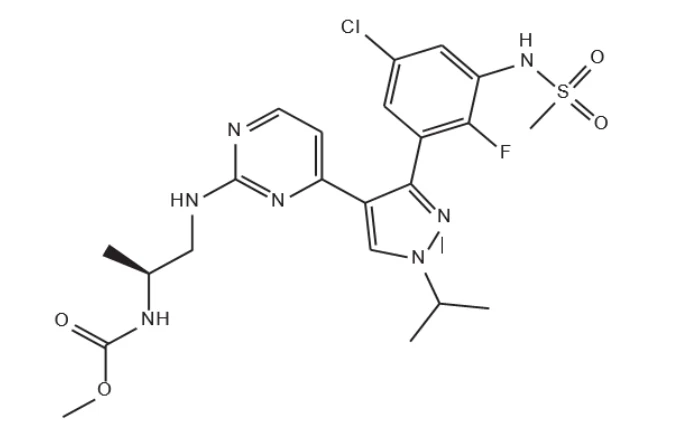
Physicochemical properties: Encorafenib is a white to almost white powder. In aqueous media, encorafenib is slightly soluble at pH 1, very slightly soluble at pH 2 and pH 3, and practically insoluble at pH 4 and above.
14. Clinical Trials
14.1. Clinical Trials by Indication
BRAF V600 Mutation-Positive Unresectable or Metastatic Melanoma
Table 13 - Summary of Clinical Trial Design in BRAF V600E or V600K Mutation Positive Unresectable or Metastatic Melanoma
| Study | Trial design | Dosage; route of administration | Study subjects (n) |
| COLUMBUS | Randomized, active-controlled Open-label, multicentre | BRAFTOVI (450 mg QD) + binimetinib (45 mg BID); oral BRAFTOVI (300 mg QD); oral Vemurafenib (960 mg BID); oral | n=192 n=194 n=191 |
The efficacy and safety of BRAFTOVI (encorafenib) in combination with binimetinib was evaluated in a Phase III randomized, active-controlled, open-label, international multicentre trial (COLUMBUS) comparing treatment with BRAFTOVI in combination with binimetinib to treatment with vemurafenib. Eligible patients were required to have BRAF V600E or V600K mutation-positive unresectable or metastatic melanoma, as detected using a BRAF mutation assay. Patients were permitted to have received immunotherapy in the adjuvant setting and one prior line of immunotherapy for unresectable locally advanced or metastatic disease. Prior use of BRAF inhibitors or MEK inhibitors was prohibited. Randomization was stratified by American Joint Committee on Cancer (AJCC) Stage (IIIB, IIIC, IVM1a or IVM1b, versus IVM1c), Eastern Cooperative Oncology Group (ECOG) performance status (0 versus 1), and prior immunotherapy for unresectable or metastatic disease (yes versus no). The Intent to Treat (ITT) population included all randomized patients.
Patients were randomized (1:1:1) to receive BRAFTOVI 450 mg once daily in combination with binimetinib 45 mg twice daily (BRAFTOVI in combination with binimetinib), BRAFTOVI 300 mg once daily, or vemurafenib 960 mg twice daily. Treatment continued until disease progression or unacceptable toxicity. Only the results of the approved dosing regimen (BRAFTOVI 450 mg in combination with binimetinib 45 mg) are described.
The major efficacy outcome measure was progression-free survival (PFS), as assessed by a blinded independent central review, to compare treatment with BRAFTOVI in combination with binimetinib to treatment with vemurafenib. Additional efficacy outcome measures included overall survival (OS), objective response rate (ORR) and duration of response (DoR), which were assessed by central review.
Table 14 - Patient Demographics and Baseline Characteristics for COLUMBUS
BRAFTOVI (450 mg QD) + binimetinib (45 mg BID) N=192 | Vemurafenib (960 mg BID) N=191 | |
|---|---|---|
Age (years) Median (Min˗Max) Age Category, n (%) < 65 ≥ 65 | 57.0 (20-89) 132 (68.8) 60 (31.3) | 56.0 (21-82) 140 (73.3) 51 (26.7) |
Sex, n (%) Female Male | 77 (40.1) 115 (59.9) | 80 (41.9) 111 (58.1) |
Race, n (%) Caucasian Asian Native American Other / Unknown / Missing | 181 (94.3) 5 (2.6) 0 6 (3.1) | 166 (86.9) 8 (4.2) 2 (1.0) 15 (7.8) |
BRAF Mutation Status, n (%) V600E V600K V600E&K | 170 (88.5) 22 (11.5) 0 | 168 (88.0) 22 (11.5) 1 (0.5) |
ECOG PS at Baseline, n (%) ECOG PS = 0 ECOG PS = 1 | 136 (70.8) 56 (29.2) | 140 (73.3) 51 (26.7) |
Prior Antineoplastic Therapy, n (%) Medication Surgery Radiotherapy | 62 (32.3) 146 (76.0) 30 (15.6) | 59 (30.9) 157 (82.2) 25 (13.1) |
Any Prior Immunotherapya, n (%) Yes No | 57 (29.7) 43 (70.3) | 57 (29.8) 43 (70.2) |
Stage at time of study entry, n (%) Stage IIIB / IIIC Stage IV M1A / M1B Stage IV M1C with elevated LDH Stage IV M1C with normal LDH | 9 (4.7) 60 (31.2) 50 (26.0) 73 (38.0) | 11 (5.7) 55 (28.8) 36 (18.8) 89 (46.6) |
Number of organs involved at Baselineb, n (%) 1 2 3 >3 | 47 (24.5) 58 (30.2) 45 (23.4) 42 (21.9) | 45 (23.6) 59 (30.9) 42 (22.0) 45 (23.6) |
LDH at Baselinec, n (%) Low Normal High | 0 137 (71.4) 55 (28.6) | 0 139 (72.8) 52 (27.2) |
a Treatment included use in both metastatic and adjuvant settings. Prior use of Interferons/Interleukins was most common; seven patients used Ipilimumab and one patient used Anti-PD1/PDL1 inhibitors. b For patients with Stage IIIB and IIIC at study entry, the number of organs involved at baseline is equal to one and presented as skin. c Low and high categories defined by normal ranges.
Treatment with BRAFTOVI in combination with binimetinib demonstrated a statistically significant improvement in the primary endpoint of PFS compared to treatment with vemurafenib. Efficacy results are summarized in Table 15 and Figure 1.
Table 15 - Efficacy Results for COLUMBUS
BRAFTOVI with binimetinib N=192 | Vemurafenib N=191 | |||||||||||||
|---|---|---|---|---|---|---|---|---|---|---|---|---|---|---|
| Progression-Free Survival | ||||||||||||||
| Number of events (%) | 98 (51) | 106 (55) | ||||||||||||
| Progressive disease | 88 (46) | 104 (54) | ||||||||||||
| Death | 10 (5) | 2 (1) | ||||||||||||
| Median PFS, months (95% CI) | 14.9 (11, 18.5) | 7.3 (5.6, 8.2) | ||||||||||||
| HR (95% CI) a | 0.54 (0.41, 0.71) | |||||||||||||
| P-value b | <0.0001 | |||||||||||||
| Overall Survivalc | ||||||||||||||
| Number of events (%) | 105 (55) | 127 (67) | ||||||||||||
| Median OS, months (95% CI) | 33.6 (24.4, 39.2) | 16.9 (14.0, 24.5) | ||||||||||||
| HR (95% CI) a | 0.61 (0.47, 0.79) | |||||||||||||
| Overall Response Rate | ||||||||||||||
| Responders (ORR%) | 121 (63%) | 77 (40%) | ||||||||||||
| (95% CI) | (56%, 70%) | (33%, 48%) | ||||||||||||
| CR | 8% | 6% | ||||||||||||
| PR | 55% | 35% | ||||||||||||
| Duration of Response | ||||||||||||||
| Median DoR, months (95% CI) | 16.6 (12.2, 20.4) | 12.3 (6.9, 16.9) | ||||||||||||
CI = Confidence interval; CR = Complete response; DoR = Duration of response; HR = Hazard ratio; NE = Not estimable; ORR = Overall response rate; OS = Overall survival; PFS = Progression-free survival; PR = Partial response.
- a Estimated with Cox proportional hazard model adjusted by the following stratification factors: American Joint Committee on Cancer (AJCC) Stage (IIIB, IIIC, IVM1a or IVM1b, versus IVM1c) and Eastern Cooperative Oncology Group (ECOG) performance status (0 versus 1).
- b Log-rank test adjusted by the same stratification factors.
- c Interim analysis based on a cutoff date 17.6 months after the date of PFS analysis.
Figure 1 - Kaplan-Meier Curves for Progression-Free Survival in COLUMBUS
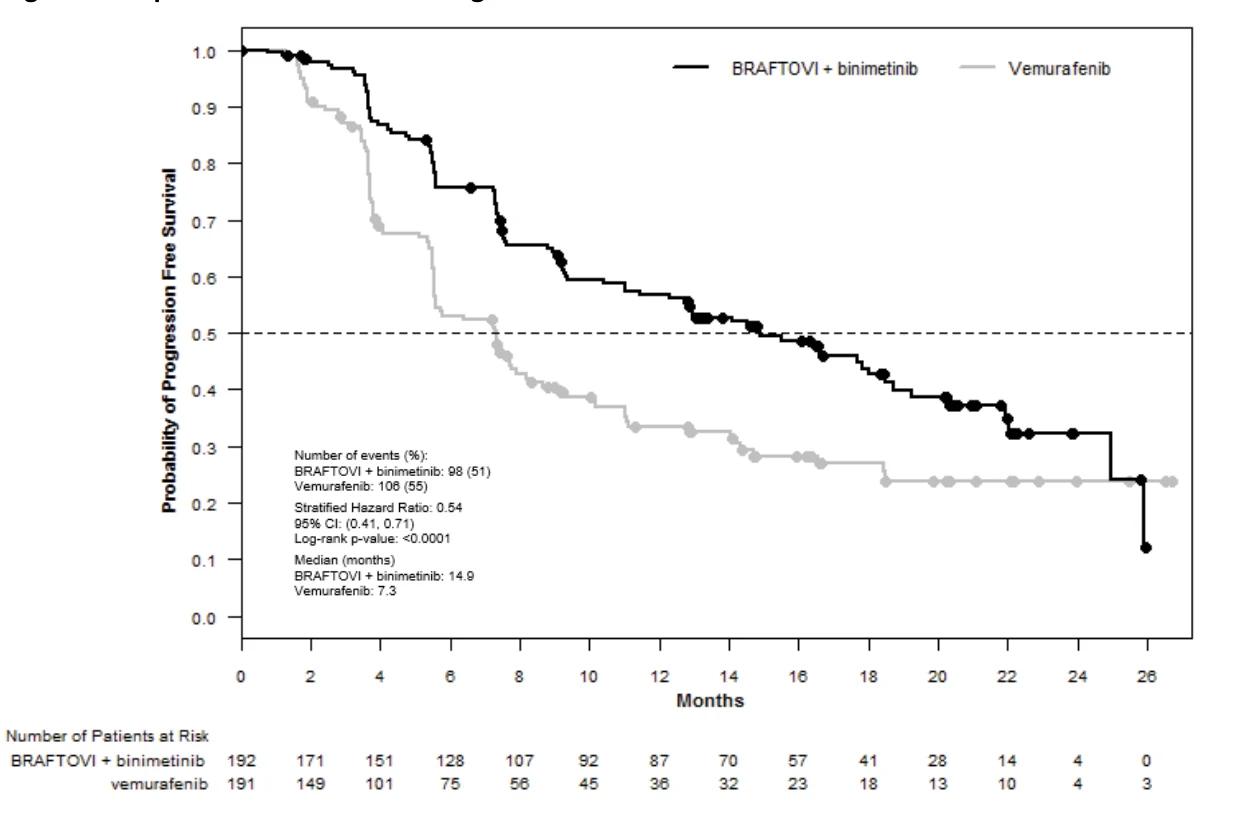
BRAF V600E Mutation-Positive Metastatic Colorectal Cancer (mCRC) in First Line
Table 16 - Summary of Clinical Trial Design in BRAF V600E Mutation-Positive Metastatic Colorectal Cancer (mCRC) in First Line
| Study | Trial design | Dosage; route of administration | Study subjects (n) |
| BREAKWATER | Randomized, active-controlled Open-label, multicentre | BRAFTOVI (300 mg QD) + cetuximab; oral / IV BRAFTOVI (300 mg QD) + cetuximab + mFOLFOX6; oral / IV / IV mFOLFOX6, FOLFOXIRI or CAPOX each with or without bevacizumab; all IV (except capecitabine in CAPOX: Oral) | n=158 n=236 n=243 |
BRAFTOVI in combination with cetuximab and mFOLFOX6 was evaluated in a Phase III randomized, active-controlled, open-label, multicentre trial (BREAKWATER). Eligible patients were required to have BRAF V600E mutation-positive metastatic colorectal cancer (mCRC), as detected using the Qiagen therascreen BRAF V600E RGQ polymerase chain reaction (PCR) Kit. Other key eligibility criteria included no prior systemic treatment in the metastatic setting, absence of prior treatment with any selective
BRAF inhibitor or EGFR inhibitor, tumour that is not microsatellite instability-high (MSI-H) or mismatch repair deficient (dMMR) unless the patient is ineligible to receive immune checkpoint inhibitors, and Eastern Cooperative Oncology Group (ECOG) performance status 0-1. Randomization was stratified by ECOG performance status (0 versus 1) and region (US/Canada versus Europe versus Rest of World).
Patients were initially randomized 1:1:1 to one of the following treatment arms, and then 1:1 after discontinuation of enrollment of the BRAFTOVI+cetuximab arm:
- BRAFTOVI 300 mg orally once daily in combination with cetuximab (BRAFTOVI+cetuximab arm; discontinued after randomization of 158 patients)
- BRAFTOVI 300 mg orally once daily in combination with cetuximab and mFOLFOX6 (BRAFTOVI+cetuximab+mFOLFOX6 arm)
- mFOLFOX6, FOLFOXIRI, or CAPOX each with or without bevacizumab (control arm)
The dosage of cetuximab in both BRAFTOVI treatment arms was cetuximab 500 mg/m2 IV infusion every 2 weeks. Patients in the BRAFTOVI+cetuximab+mFOLFOX6 arm received mFOLFOX6 every 2 weeks (oxaliplatin 85 mg/m2 IV infusion; leucovorin 400 mg/m2 IV infusion; 5-FU 400 mg/m2 IV bolus, then 5-FU 2400 mg/m2 continuous IV infusion over 46-48 hours).
Patients in the control arm received either mFOLFOX6 every 2 weeks (oxaliplatin 85 mg/m2 IV infusion; leucovorin 400 mg/m2 IV infusion; 5-FU 400 mg/m2 IV bolus, then 5-FU 2400 mg/m2 continuous IV infusion over 46-48 hours), CAPOX every 3 weeks (oxaliplatin 130 mg/m2 IV infusion and capecitabine 1000 mg/m2 oral tablet BID Days 1-14), or FOLFOXIRI every 2 weeks (irinotecan 165 mg/m2 IV infusion; oxaliplatin 85 mg/m2 IV infusion; leucovorin 400 mg/m2 IV infusion; 5-FU 2400 or 3200 mg/m2 continuous IV infusion over 46-48 hours [per local standard of care]), each with or without bevacizumab given per prescribing instructions.
Treatment continued until disease progression per blinded independent central review (BICR), unacceptable toxicity, withdrawal of consent/assent, lost to follow-up, or death. Only the results of the authorized regimen (BRAFTOVI in combination with cetuximab and mFOLFOX6) are described below.
The primary endpoints were PFS and ORR as assessed by BICR. Additional efficacy outcome measures included OS and duration of response (DoR) as assessed by BICR. OS and PFS were assessed in all randomized patients. ORR and DoR were assessed in the subset of the first 110 patients randomized in each arm.
A total of 236 patients were randomized to the BRAFTOVI+cetuximab+mFOLFOX6 arm and 243 to the control arm. Of these patients, the median age was 61 years; 49.5% were female; 59.5% were White and 37.4% were Asian. At baseline, 54.3% had an ECOG performance status of 0.
Table 17 - Patient Demographics and Baseline Characteristics for BREAKWATER
BRAFTOVI + cetuximab + mFOLFOX6 N=236 | mFOLFOX6, FOLFOXIRI or CAPOX; each ± bevacizumab N=243 | |
|---|---|---|
BRAFTOVI + cetuximab + mFOLFOX6 N=236 | mFOLFOX6, FOLFOXIRI or CAPOX; each ± bevacizumab N=243 | |
Age (years) Median (Min˗Max) Age Category, n (%) < 65 ≥ 65 | 60 (24-81) 150 (63.6) 86 (36.4) | 62 (28-84) 139 (57.2) 104 (42.8) |
| Sex, n (%) | ||
Female Male | 113 (47.9) 123 (52.1) | 124 (51.0) 119 (49.0) |
Race, n (%) Caucasian Asian Black/African American Other / Unknown / Missing | 141 (59.7) 88 (37.3) 0 7 (3.0) | 144 (59.3) 91 (37.4) 1 (0.4) 7 (2.9) |
Central BRAF Mutation Status, n (%) V600E Indeterminate Not Detected / Not Available | 226 (95.8) 0 10 (4.2) | 224 (92.2) 1 (0.4) 18 (7.4) |
ECOG PS at Baseline, n (%) ECOG PS = 0 ECOG PS = 1 Missing | 129 (54.7) 103 (43.6) 4 (1.7) | 131 (53.9) 98 (40.3) 14 (5.8) |
Stage at initial diagnosis, n (%) Stage I Stage II Stage III Stage IV | 3 (1.3) 13 (5.5) 37 (15.7) 183 (77.5) | 2 (0.8) 10 (4.1) 43 (17.7) 188 (77.4) |
Number of organs involved at Baseline, n (%) ≤2 ≥3 | 122 (51.7) 114 (48.3) | 129 (53.1) 114 (46.9) |
BRAFTOVI in combination with cetuximab and mFOLFOX6 demonstrated a statistically significant improvement in PFS, ORR, and OS compared to the control arm. Efficacy results are summarized in Table 18 and Figures 2 and 3 below.
| Table 18 - Efficacy Results for BREAKWATERa | ||||||||||||||||
|---|---|---|---|---|---|---|---|---|---|---|---|---|---|---|---|---|
| Efficacy Parameter | BRAFTOVI with cetuximab and mFOLFOX6 N=236 | mFOLFOX6 ± bevacizumab or FOLFOXIRI ± bevacizumab or CAPOX ± bevacizumab N=243 | ||||||||||||||
| Progression-Free Survival | ||||||||||||||||
| Number of events (%) | 122 (51.7) | 132 (54.3) | ||||||||||||||
| Progressive disease | 105 (44.5) | 109 (44.9) | ||||||||||||||
| Death | 17 (7.2) | 23 (9.5) | ||||||||||||||
| Median PFS, months (95% CI) | 12.8 (11.2, 15.9) | 7.1 (6.8, 8.5) | ||||||||||||||
| HR (95% CI)a,b | 0.53 (0.41, 0.68) | |||||||||||||||
| P-valueb,c | <0.0001 | |||||||||||||||
| Confirmed Objective Response Rate (per BICR)d | ||||||||||||||||
ORR, n (%) (95% CI) | 67 (60.9) (51.6, 69.5) | 44 (40.0) (31.3, 49.3) | ||||||||||||||
| CR, n (%) | 3 (2.7) | 2 (1.8) | ||||||||||||||
| PR, n (%) | 64 (58.2) | 42 (38.2) | ||||||||||||||
| P-valueb,e | 0.0008 | |||||||||||||||
| Duration of Response (per BICR)d | ||||||||||||||||
| Median DoR, months (95% CI) | 13.9 (8.5, NE) | 11.1 (6.7, 12.7) | ||||||||||||||
| with DoR ≥6 months, n (%) | 46 (68.7) | 15 (34.1) | ||||||||||||||
| with DoR ≥12 months, n (%) | 15 (22.4) | 5 (11.4) | ||||||||||||||
| Overall Survivalf | ||||||||||||||||
| Number of events (%) | 94 (39.8%) | 148 (60.9%) | ||||||||||||||
| Median OS, months (95% CI) | 30.3 (21.7, NE) | 15.1 (13.7, 17.7) | ||||||||||||||
| HR (95% CI)a,b | 0.49 (0.38, 0.63) | |||||||||||||||
| P-valueb,g | <0.0001 | |||||||||||||||
BICR = Blinded Independent Central Review; CI = Confidence interval; CR = Complete response; DoR = Duration of response; HR = Hazard ratio; N = Number of patients; NE = Not estimable; ORR = Objective response rate; OS = Overall survival; PFS = Progression-free survival; PR = Partial response.
- a. Hazard ratio based on stratified Cox proportional hazards model.
- b. Stratified by ECOG performance status and geographic region at randomization.
- c. Stratified log-rank test. Tested at 1-sided alpha level of 0.023.
- d. ORR Subset included the first 110 participants in each arm.
- e. Cochran-Mantel-Haenszel test; tested at 1-sided alpha level of 0.001.
- f. Interim OS analysis conducted at 81.5% of total events required for final analysis.
- g. Stratified log-rank test. Tested at 1-sided alpha level of 0.012.
Figure 2: Kaplan-Meier Curves for Progression-Free Survival in BREAKWATER
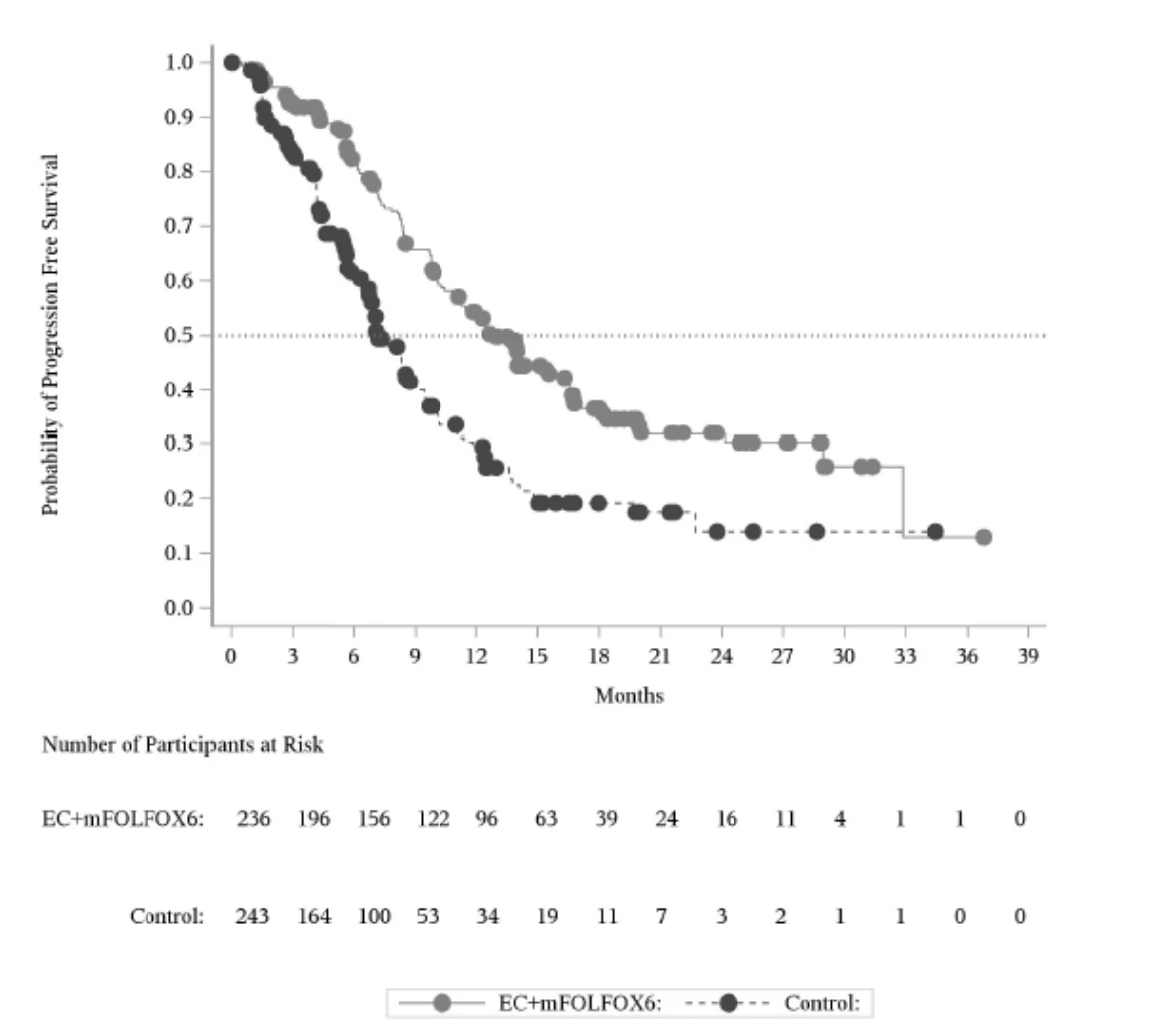
Figure 3: Kaplan-Meier Curves for Overall Survival in BREAKWATER
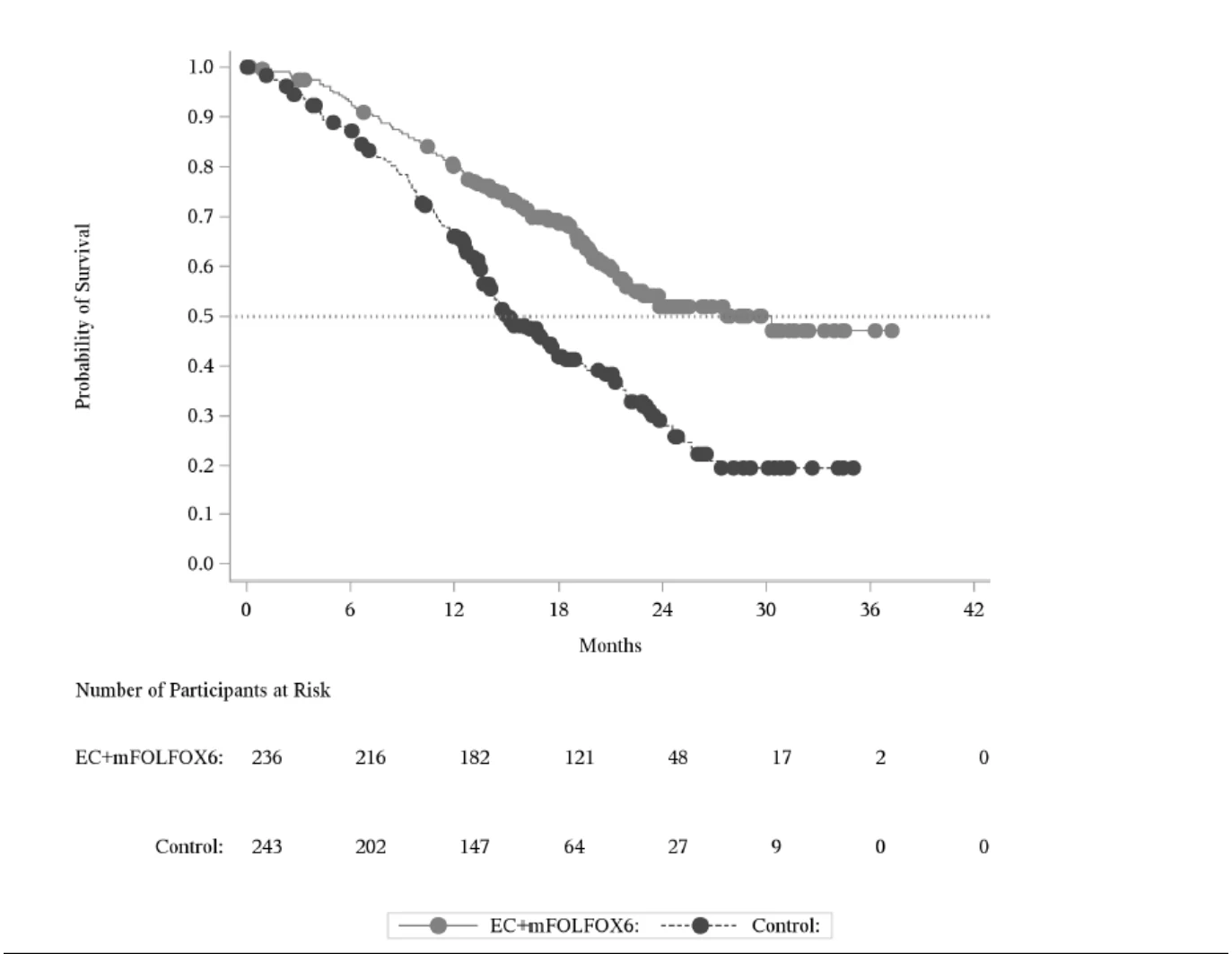
BRAF V600E Mutation-Positive Metastatic Colorectal Cancer (mCRC), after prior therapy
BEACON Study ˗ BRAF V600E Mutation-Positive Metastatic Colorectal Cancer (mCRC)
Table 19 - Summary of Clinical Trial Design in BRAF V600E Mutation-Positive Metastatic Colorectal Cancer (mCRC), after prior therapy
| Study | Trial design | Dosage; route of administration | Study subjects (n) |
| BEACON CRC | Randomized, active-controlled Open-label, multicentre | BRAFTOVI (300 mg QD) + cetuximab; oral Irinotecan + cetuximab or FOLFIRI + cetuximab; IV BRAFTOVI (300 mg QD); oral + cetuximab; IV + binimetinib (45 mg BID); oral | n=220 n=221 n=224 |
The efficacy and safety of BRAFTOVI in combination with cetuximab was evaluated in a randomized, active-controlled, open-label, international multicentre trial (BEACON CRC) comparing BRAFTOVI in combination with cetuximab to treatment with irinotecan/cetuximab or FOLFIRI/cetuximab. Eligible patients were required to have BRAF V600E mutation-positive metastatic colorectal cancer (mCRC), as detected using a BRAF mutation assay. Eligible patients were required to have mCRC that had progressed after 1 or 2 prior regimens in the metastatic setting. Key inclusion criteria included eligibility to receive cetuximab per local labeling with respect to tumour RAS status, ECOG PS 0˗1, and the absence of prior treatment with RAF, MEK, or EGFR inhibitors. The ITT population included all randomized patients.
A total of 665 patients were randomized (1:1:1) to receive BRAFTOVI 300 mg daily in combination with cetuximab dosed as per its approved label; BRAFTOVI 300 mg daily in combination with binimetinib 45 mg twice daily and cetuximab dosed as per its approved label; or Control (irinotecan in combination with cetuximab or FOLFIRI in combination with cetuximab). Treatment continued until disease progression or unacceptable toxicity. Only the results of the approved regimen (BRAFTOVI in combination with cetuximab) are described below.
The major efficacy outcome measures were overall survival (OS) and overall response rate (ORR) as assessed by a blinded independent central review, comparing BRAFTOVI 300 mg in combination with cetuximab versus Control. Other efficacy outcome measures included duration of response (DoR) and progression-free survival (PFS). The OS and PFS were assessed in all randomized patients (Full Analysis Set). The ORR and DoR were assessed in the first 220 patients randomized to either the BRAFTOVI in combination with cetuximab arm or the Control arm of the study.
Table 20 - Patient Demographics and Baseline Characteristics for BEACON
BRAFTOVI (300 mg QD) + cetuximab N=220 | Irinotecan with cetuximab or FOLFIRI with cetuximab N=221 | |
|---|---|---|
Age (years) Median (Min˗Max) Age Category, n (%) < 65 ≥ 65 | 61 (30-91) 137 (62.3) 83 (37.7) | 60 (27-91) 149 (67.4) 72 (32.6) |
Sex, n (%) Female Male | 105 (47.7) 115 (52.3) | 127 (57.5) 94 (42.5) |
Race, n (%) Caucasian Asian Black/African American Other / Unknown / Missing | 183 (83.2) 25 (11.4) 0 12 (5.4) | 172 (77.8) 39 (17.6) 0 10 (4.6) |
BRAF Mutation Status, n (%) V600E Indeterminate | 201 (91.4) 11 (5.0) | 201 (91.0) 9 (4.1) |
ECOG PS at Baseline, n (%)a ECOG PS = 0 ECOG PS = 1 ECOG PS = 2 | 112 (50.9) 104 (47.3) 4 (1.8)b | 108 (48.9) 113 (51.1) 0 |
Prior Antineoplastic Therapy, n (%) Number of Prior Systemic Regimens for Metastatic Disease c 1 2 >2 Prior Irinotecan Prior Oxaliplatin | 146 (66.4) 74 (33.6) 0 114 (51.8) 210 (95.5) | 145 (65.6) 75 (33.9) 1 (0.5) 117 (52.9) 201 (91.0) |
Stage at time of study entry, n (%) Stage IV | 220 (100) | 221 (100) |
Number of organs involved at Baseline, n (%) ≤2 ≥3 | 117 (53.2) 103 (46.8) | 123 (55.7) 98 (44.3) |
a ECOG PS as per eCRF at Baseline.
b All 4 patients were ECOG PS 1 at randomization
c Based on Sponsor assessment
Table 21 - Efficacy Results for BEACON CRC
| BRAFTOVI with cetuximab | Irinotecan with cetuximab or FOLFIRI with cetuximab | |||||||||||||||
|---|---|---|---|---|---|---|---|---|---|---|---|---|---|---|---|---|
| Overall Survival | ||||||||||||||||
| Number of Patientsa | 220 | 221 | ||||||||||||||
| Number of Events (%) | 93 (42.3) | 114 (51.6) | ||||||||||||||
| Median OS, months (95% CI) | 8.4 (7.5, 11.0) | 5.4 (4.8, 6.6) | ||||||||||||||
| HR (95% CI)b,h | 0.60 (0.45, 0.79) | |||||||||||||||
| P-valueb,g | 0.0002 | |||||||||||||||
| Overall Response Rate (per Blinded Independent Central Review) | ||||||||||||||||
| Number of Patientsc | 113 | 107 | ||||||||||||||
| ORR n (%) | 23 (20.4) | 2 (1.9) | ||||||||||||||
| (95% CI)d | (13.4, 29.0) | (0.2, 6.6) | ||||||||||||||
| CR, n (%) | 6 (5.3) | 0 | ||||||||||||||
| PR, n (%) | 17 (15.0) | 2 (1.9) | ||||||||||||||
| P-valueb,e,g | <0.0001 | |||||||||||||||
| Progression Free Survival (per Blinded Independent Central Review) | ||||||||||||||||
| Number of Patientsa | 220 | 221 | ||||||||||||||
| Number of events (%) | 133 (60.5) | 128 (57.9) | ||||||||||||||
| Progressive disease | 110 (50.0) | 101 (45.7) | ||||||||||||||
| Death | 23 (10.5) | 27 (12.2) | ||||||||||||||
| Median PFS, months (95% CI) | 4.2 (3.7, 5.4) | 1.5 (1.5, 1.7) | ||||||||||||||
| HR (95% CI)b,h | 0.40 (0.31, 0.52) | |||||||||||||||
| P-valueb,g | < 0.0001 | |||||||||||||||
CI = Confidence interval; CR = Complete response; DoR = Duration of response; HR = Hazard ratio; NR = Not reached; ORR = Overall response rate; OS = Overall survival; PFS = Progression-free survival; PR = Partial response.
- a Randomized Phase 3, Full Analysis Set.
- b Stratified by ECOG PS, source of cetuximab, and prior irinotecan use at randomization.
- c ORR was assessed in the first 331 patients randomized to the study, including 113 and 107 patients randomized to the BRAFTOVI in combination with cetuximab arm and the Control arm, respectively).
- d Clopper-Pearson method.
- e Cochran-Mantel-Haenszel test.
- f In the metastatic setting.
- g P-values are one-sided.
- h Stratified Cox proportional hazard model.
Figure 2: Kaplan-Meier Curves for Overall Survival in BEACON CRC
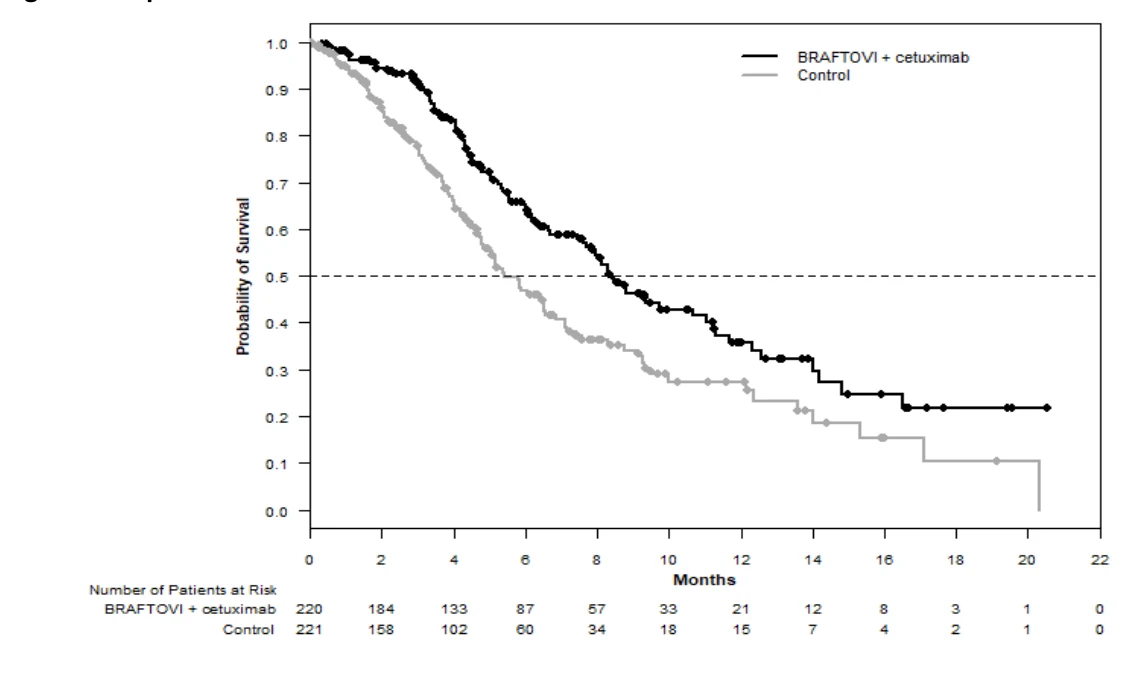
15. Microbiology
Not applicable.
16. Non-Clinical Toxicology
General Toxicology
In the subacute 28-day toxicity study in rats, encorafenib was well tolerated at plasma exposures at which tumour regression was observed in mouse xenograft studies. Notable findings included hyperplasia and hyperkeratosis in the skin and non-glandular stomach; adverse effects in the testes/seminiferous tubules and epididymides, which included decreased organ weights and an absence of the later stages of spermatid maturation. The male reproductive organ findings did not appear to be reversible. Exposures (mean AUC0‑24h) achieved at the no-observable-adverse-effect level (NOAEL; 20 mg/kg/day) in this study were approximately 14-fold of that achieved at steady-state in cancer patients receiving the 450 mg QD dose level of encorafenib. In 4-week toxicity studies in monkeys, encorafenib was well tolerated up to 100 mg/kg/day. Primary in-life observations were diarrhea, slight decreases in body weight and in food consumption and were reversible; the NOAEL was 100 mg/kg/day with an exposure (mean AUC0‑24h) approximately 5-fold of that achieved at steady-state in cancer patients receiving the 450 mg QD dose level of encorafenib.
In the 13-week toxicity studies in rats and monkeys, encorafenib was clinically well tolerated at doses up to 60 mg/kg/day. The AUC0-24h exposure margins versus the relevant human exposure at the NOAEL of 20 mg/kg/day are 14-fold for rat and 0.5-fold for monkey. In the rats, the primary findings were reduced body weight parameters, as well as changes in organ weights (epididymides), macroscopic and microscopic pathology (testes, epididymides, stomach, skin) similar to what was observed in the 4-week study. In the monkey, abnormal retinal findings in two animals at the high dose of 60 mg/kg/day were the only notable findings.
Genotoxicity
Encorafenib was not genotoxic in studies evaluating reverse mutations in bacteria, chromosomal aberrations in mammalian cells, or micronuclei in bone marrow of rats.
Carcinogenicity
Carcinogenicity studies with encorafenib have not been conducted.
Reproductive and developmental toxicology
No dedicated fertility studies were performed with encorafenib in animals. In 4- and 13-week repeat-dose toxicology studies in rats, decreased testes and epididymis weights, tubular degeneration in testes, and oligospermia in epididymides were observed at doses approximately 13 times the human exposure at the 450 mg clinical dose based on AUC. No effects on reproductive organs were observed in either sex in any of the non-human primate toxicity studies.
In reproductive toxicity studies, administration of encorafenib to rats during the period of organogenesis resulted in maternal toxicity, decreased fetal weights, and increased incidence of total skeletal variations at a dose of 20 mg/kg/day (approximately 26 times the human exposure based on AUC at the recommended clinical dose of 450 mg once daily). In an embryo-fetal development study conducted in pregnant rabbits, administration of encorafenib during the period of organogenesis resulted in maternal toxicity, decreased fetal body weights, increased incidence of total skeletal variations and increased post-implantation loss, including total loss of pregnancy at a dose of 75 mg/kg/day (approximately 178 times the human exposure based on AUC at the recommended clinical dose of 450 mg once daily). While formal placental transfer studies have not been performed, encorafenib exposure in the fetal plasma of both rats and rabbits was up to 1.7% and 0.8%, respectively, of maternal exposure.