


Product Monograph - Ojemda
Recent Major Label Changes
Not applicable
Table of Contents
Certain sections or subsections that are not applicable at the time of the preparation of the most recent authorized product monograph are not listed.
Recent Major Label Changes .................................................................................................... 2
Table of Contents .................................................................................................................... 2
Part 1: Healthcare Professional Information ............................................................................ 5
- 1.
Indications ........................................................................................................................ 5
1.1. Pediatrics ................................................................................................................... 5
1.2. Geriatrics ................................................................................................................... 5
- 2. Contraindications ............................................................................................................. 5
- 4.
Dosage and Administration .............................................................................................. 5
4.1. Dosing Considerations ............................................................................................... 5
4.2. Recommended Dose and Dosage Adjustment .......................................................... 5
4.3. Reconstitution ........................................................................................................... 8
4.4. Administration ........................................................................................................... 9
4.5. Missed Dose .............................................................................................................. 9
- 5. Overdose ........................................................................................................................ 10
- 6. Dosage Forms, Strengths, Composition, and Packaging .................................................. 10
- 7.
Warnings and Precautions .............................................................................................. 10
General ................................................................................................................................ 10
Driving and Operating Machinery ........................................................................................ 11
Hematologic ........................................................................................................................ 11
Hepatic/Biliary/Pancreatic ................................................................................................... 11
Musculoskeletal ................................................................................................................... 11
Reproductive Health ............................................................................................................ 12
Skin ...................................................................................................................................... 12
7.1. Special Populations ................................................................................................. 13
7.1.1. Pregnancy ........................................................................................................ 13
7.1.2. Breastfeeding .................................................................................................. 13
- 8.
Adverse Reactions .......................................................................................................... 13
8.1. Adverse Reaction Overview ..................................................................................... 13
8.2. Clinical Trial Adverse Reactions ............................................................................... 13
8.4. Abnormal Laboratory Findings: Hematologic, Clinical Chemistry, and Other Quantitative Data ................................................................................................................ 17
- 9.
Drug Interactions ............................................................................................................ 18
9.2. Drug Interactions Overview ..................................................................................... 18
9.3. Drug-Behaviour Interactions ................................................................................... 18
9.4. Drug-Drug Interactions ............................................................................................ 19
9.5. Drug-Food Interactions............................................................................................ 20
9.6. Drug-Herb Interactions ............................................................................................ 20
9.7. Drug-Laboratory Test Interactions .......................................................................... 21
- 10.
Clinical Pharmacology .................................................................................................... 21
10.1. Mechanism of Action ............................................................................................... 21
10.2. Pharmacodynamics ................................................................................................. 21
10.3. Pharmacokinetics .................................................................................................... 21
- 11. Storage, Stability, and Disposal ....................................................................................... 23
Part 2: Scientific Information ................................................................................................. 24
- 13. Pharmaceutical Information ........................................................................................... 24
- 14.
Clinical Trials ................................................................................................................... 24
14.1. Clinical Trials by Indication ...................................................................................... 24
Pediatric Low-grade Glioma ................................................................................................. 24
- 15. Microbiology .................................................................................................................. 26
- 16. Non-Clinical Toxicology ................................................................................................... 26
Patient Medication Information ............................................................................................ 28
Part 1: Healthcare Professional Information
1. Indications
OJEMDA (tovorafenib tablets and tovorafenib for oral suspension) is indicated as:
- monotherapy for the treatment of patients 6 months of age and older with relapsed or refractory pediatric low-grade glioma (LGG) harbouring a BRAF fusion or rearrangement, or BRAF V600 mutation, who have received one or more prior systemic therapies.
A validated test is required to identify the BRAF fusion or rearrangement, or BRAF V600 mutation status to select patients appropriate for treatment with OJEMDA.
1.1. Pediatrics
Pediatrics (< 6 months of age): Based on the data submitted and reviewed by Health Canada, the safety and efficacy of OJEMDA in pediatric patients below 6 months of age has not been established.
1.2. Geriatrics
Geriatrics (≥ 65 years of age): No data are available to Health Canada; therefore, Health Canada has not authorized an indication for geriatric use.
2. Contraindications
OJEMDA is contraindicated in patients who are hypersensitive to this drug or to any ingredient in the formulation, including any non-medicinal ingredient, or component of the container. For a complete listing, see 6 Dosage Forms, Strengths, Composition, and Packaging.
4. Dosage and Administration
4.1. Dosing Considerations
Before initiating OJEMDA, liver function should be evaluated, including alanine aminotransferase (ALT), aspartate aminotransferase (AST) and bilirubin (see 7 Warnings and Precautions, Hepatic/Biliary/Pancreatic).
4.2. Recommended Dose and Dosage Adjustment
The recommended dose of OJEMDA based on body surface area (BSA) is 380 mg/m2 orally once weekly (the maximum recommended dose is 600 mg orally once weekly), until disease progression or unacceptable toxicity.
OJEMDA may be administered as an immediate release tablet (see Table 1) or as an oral suspension (see Table 2).
A recommended dose for patients with BSA less than 0.3 m2 has not been established.
Table 1 – Recommended dose based on body surface area (tablets)
| Body Surface Area | Recommended dose |
|---|---|
| Body Surface Area | Recommended dose |
| 0.30-0.89 m2 | Administer the oral suspension once weekly (see Table 2) |
| 0.90-1.12 m2 | 400 mg once weekly |
| 1.13-1.39 m2 | 500 mg once weekly |
| ≥1.40 m2 | 600 mg once weekly |
Table 2 – Recommended dose based on body surface area (oral suspension)
| Body Surface Area | Dose Volume* | Recommended dose |
|---|---|---|
| 0.30-0.35 m2 | 5 ml | 125 mg once weekly |
| 0.36-0.42 m2 | 6 ml | 150 mg once weekly |
| 0.43-0.48 m2 | 7 ml | 175 mg once weekly |
| 0.49-0.54 m2 | 8 ml | 200 mg once weekly |
| 0.55-0.63 m2 | 9 ml | 225 mg once weekly |
| 0.64-0.77 m2 | 11 ml | 275 mg once weekly |
| 0.78-0.83 m2 | 12 ml | 300 mg once weekly |
| 0.84-0.89 m2 | 14 ml | 350 mg once weekly |
| 0.90-1.05 m2 | 15 ml | 375 mg once weekly |
| 1.06-1.25 m2 | 18 ml | 450 mg once weekly |
| 1.26-1.39 m2 | 21 ml | 525 mg once weekly |
| ≥1.40 m2 | 24 ml | 600 mg once weekly |
*The maximum dose per bottle is 300 mg (12 ml).
Dose Modifications for Adverse Reactions
The management of adverse reactions may require dose reduction, treatment interruption or treatment discontinuation.
The recommended dose reductions for adverse reactions for OJEMDA tablets are provided in Table 3 and OJEMDA oral suspension in Table 4.
Table 3 – Recommended dose reductions for adverse reactions (tablets)
| Body Surface Area | First Dose Reduction | Second Dose Reduction | ||||||
|---|---|---|---|---|---|---|---|---|
| 0.30-1.12 m2 | Administer the oral suspension once weekly (see Table 4) | |||||||
| 1.13-1.39 m2 | 400 mg once weekly | Administer the oral suspension once weekly (see Table 4) | ||||||
| ≥1.40 m2 | 500 mg once weekly | 400 mg once weekly | ||||||
Table 4 – Recommended dose reductions for adverse reactions (oral suspension)
| Body Surface Area | First Dose Reduction | Second Dose Reduction | ||||||||||
|---|---|---|---|---|---|---|---|---|---|---|---|---|
| Volume | Dose | Volume | Dose | |||||||||
| 0.30-0.35 m2 | 4 ml | 100 mg | 3 ml | 75 mg | ||||||||
| 0.36-0.42 m2 | 5 ml | 125 mg | 4 ml | 100 mg | ||||||||
| 0.43-0.48 m2 | 6 ml | 150 mg | 5 ml | 125 mg | ||||||||
| 0.49-0.54 m2 | 7 ml | 175 mg | 6 ml | 150 mg | ||||||||
| 0.55-0.63 m2 | 8 ml | 200 mg | 6 ml | 150 mg | ||||||||
| 0.64-0.77 m2 | 9 ml | 225 mg | 8 ml | 200 mg | ||||||||
| 0.78-0.83 m2 | 10 ml | 250 mg | 8 ml | 200 mg | ||||||||
| 0.84-0.89 m2 | 12 ml | 300 mg | 10 ml | 250 mg | ||||||||
| 0.90-1.05 m2 | 13 ml | 325 mg | 11 ml | 275 mg | ||||||||
| 1.06-1.25 m2 | 15 ml | 375 mg | 13 ml | 325 mg | ||||||||
| 1.26-1.39 m2 | 18 ml | 450 mg | 15 ml | 375 mg | ||||||||
| ≥1.40 m2 | 20 ml | 500 mg | 16 ml | 400 mg | ||||||||
The recommended dose modifications for adverse reactions for OJEMDA are in Table 5.
Table 5 – Recommended Dose Modifications for Adverse Reactions
| Severity of ARa | Dose Modificationb |
|---|---|
| Severity of ARa | Dose Modificationb |
| Hemorrhage | |
| Withhold until improvement. If improved to Grade 0-1, resume at a reduced dose. If not improved, consider permanent discontinuation. |
| Withhold until improvement. If improved to Grade 0-1, resume at a reduced dose. If not improved, permanently discontinue. |
| Permanently discontinue. |
| Skin Toxicity, including photosensitivity | |
| Withhold until improvement. If improved to Grade 0-1, resume at a reduced dose. |
| If not improved, consider permanent discontinuation. | |
| Hepatotoxicity | |
| Withhold until improvement. If improved to Grade ≤ 2 or baseline, resume as follows:
|
| Withhold until improvement. If improved to Grade 0-1, resume at a reduced dose. If not improved, permanently discontinue. |
| Permanent discontinuation. |
| Other Adverse Reactions | |
| Withhold until improvement. If improved to Grade 0-1, resume at a reduced dose. If not improved, consider permanent discontinuation. |
| Withhold until improvement. If improved to Grade 0-1, resume at a reduced dose. If not improved or recurrent, permanently discontinue. |
Abbreviations: AR = adverse reaction; ALT = alanine aminotransferase; AST = aspartate aminotransferase a National Cancer Institute Common Terminology Criteria for Adverse Events (NCI CTCAE) version 5.0.
b See Table 3 and Table 4 for recommended dose reductions.
Special populations
Hepatic impairment: No dose adjustment is recommended for patients with mild (bilirubin ≤ upper limit of normal (ULN) and aspartate aminotransferase (AST) > ULN or bilirubin > 1x to 1.5x ULN and any AST) hepatic impairment. OJEMDA has not been studied in patients with moderate (bilirubin > 1.5x to 3x ULN and any AST) or severe (bilirubin > 3x ULN and any AST) hepatic impairment (see 10.3 Pharmacokinetics).
Renal impairment: No dose adjustment is recommended for patients with mild-to-moderate (eGFR ≥ 30 mL/min/1.73 m2 calculated by Schwartz equation or MDRD equation) renal impairment. OJEMDA has not been studied in patients with severe (eGFR <30 mL/min/1.73 m2) renal impairment (see 10.3 Pharmacokinetics).
4.3. Reconstitution
Oral Suspension:
OJEMDA powder must be reconstituted to the oral suspension prior to being administered. Prior to use of the oral suspension for the first time, instruct caregivers (and if appropriate, patients) on the proper preparation, dose, and administration of OJEMDA.
Reconstitute the powder in each supplied bottle with exactly 14 mL of room temperature water to form the oral suspension. After reconstitution, each bottle of the oral suspension delivers 300 mg of OJEMDA in 12 ml (25 mg/ml). Let the bottle sit for 60 seconds to allow the foam to settle, as product foaming after reconstitution reduces the deliverable volume.
For doses greater than 300 mg, reconstitute two bottles to achieve the recommended dose. Split the dose as equally as possible between the two bottles (e.g., 6 mL and 7 mL for a 325 mg dose). Prepare the first bottle and administer dose prior to preparing the second bottle.
OJEMDA oral suspension must be administered within 15 minutes after reconstitution. If the oral suspension is not administered within 15 minutes after preparation, instruct the patient to discard it (see 11 Storage, Stability, and Disposal).
4.4. Administration
OJEMDA is for oral use. The tablets and powder may be used interchangeably.
OJEMDA should be taken orally at a regularly scheduled time once weekly with or without food (see 10Clinical Pharmacology10.3 Pharmacokinetics).
Tablets
Swallow tablets whole with water. Do not chew, cut or crush the tablets.
Oral Suspension
Administer the oral suspension using the supplied oral dosing syringe (co-packaged) by mouth or through a feeding tube (not included, minimum 12 French) immediately after preparation per the Instructions for Use (see Patient Medication Information, INSTRUCTIONS FOR USE).
4.5. Missed Dose
If a dose is missed by 3 days or less, the missed dose should be taken as soon as possible, and the next dose should be taken on its regularly scheduled day.
If a dose is missed by more than 3 days, the missed dose should be skipped, and the next dose should be taken on its regularly scheduled day.
A minimum of four days should occur between doses.
If vomiting occurs immediately after taking a dose, the dose should be repeated.
5. Overdose
There is no information on overdose with OJEMDA. If overdose occurs, OJEMDA should be withheld and the patient should be treated supportively with appropriate monitoring as necessary. Since tovorafenib is highly bound to plasma proteins, hemodialysis is likely to be ineffective in the treatment of overdose with OJEMDA.
| For the most recent information in the management of a suspected drug overdose, contact your regional poison control centre or Health Canada’s toll-free number, 1-844 POISON-X (1-844-764-7669). |
|---|
- 6. Dosage Forms, Strengths, Composition, and Packaging
Table 6 – Dosage Forms, Strengths, Composition and Packaging
Tablets
- Orange, film-coated, oval tablets debossed with “100” on one side and “D101” on the opposite side.
Packaged in boxes of:
- 16 film-coated tablets: 4 blister cards (4 tablets each) per box.
- 20 film-coated tablets: 5 blister cards (4 tablets each) per box or 4 blister cards (5 tablets each) per box.
- 24 film-coated tablets: 4 blister cards (6 tablets each) per box.
Powder
- White to off white powder.
- Packaged in a 30 mL clear glass bottle with a white child-resistant screw cap, co-packaged with a press-in bottle adaptor and a 20 mL oral dosing syringe.
7. Warnings and Precautions
General
Neurofibromatosis Type 1 (NF1) Associated Tumours
| Route of Administration | Dosage Form / Strength/Composition | Non-medicinal Ingredients |
| Oral | Tablet 100 mg tovorafenib | Colloidal silicon dioxide, Copovidone, Croscarmellose sodium, Magnesium stearate, Microcrystalline cellulose, Orange film coating (hypromellose, polyethylene glycol 8000, titanium dioxide, ferric oxide yellow, ferric oxide red). |
| Oral | Powder 25mg/ml tovorafenib | Artificial strawberry flavor, Colloidal silicon dioxide, Copovidone, Maltodextrin, Mannitol, Microcrystalline cellulose, Simethicone, Sodium lauryl sulfate, Sucralose |
Based on nonclinical data in NF1 models without BRAF alterations, OJEMDA may promote tumour growth in patients with NF1 tumours. In FIREFLY-1, patients with a known or suspected NF1 tumour were excluded. A BRAF alteration should be confirmed prior to initiation of OJEMDA treatment (see 1 Indications).
Driving and Operating Machinery
OJEMDA can cause fatigue (see 8.2 Clinical Trial Adverse Reactions). While taking OJEMDA, patients should be cautioned not to drive, operate dangerous machinery or engage in activities that require alertness or physical coordination if they are experiencing this effect.
Hematologic
Hemorrhage
In FIREFLY-1 (Arm 1 and Arm 2; N=137), hemorrhage events were observed in 40% of patients, with Grade 3 events occurring in 2% of patients (see 8.2 Clinical Trial Adverse Reactions). Tumour hemorrhage and intracranial tumour hemorrhage occurred in 19 (14%) patients, including one Grade 5 tumour hemorrhage event. OJEMDA was permanently discontinued due to intra-tumoral or tumour hemorrhage in 4 (3%) patients.
Advise patients and caregivers of the risk of hemorrhage during treatment with OJEMDA. Monitor for signs and symptoms of hemorrhage, including tumour hemorrhage, and evaluate as clinically indicated. If hemorrhage occurs, patients should be treated as clinically indicated. Withhold and resume OJEMDA at a reduced dose upon improvement, or permanently discontinue based on the severity of adverse reactions (see 4.2 Recommended Dose and Dosage Adjustment).
Hepatic/Biliary/Pancreatic
Hepatotoxicity
In FIREFLY-1, adverse events of increased alanine aminotransferase (ALT) were reported in 25% of patients, and increased aspartate aminotransferase (AST) occurred in 38% of patients, including Grade ≥3 increased ALT and AST in 6% and 3% of patients, respectively. Adverse events of increased blood bilirubin were reported in 15% of patients, including 1 (1%) patient with a Grade 3 event (see 8.2 Clinical Trial Adverse Reactions). Increased ALT or AST resulted in dose interruption in 5% and 3% of patients, respectively, and dose reduction in 2% and 1% of patients, respectively.
Monitor liver function tests, including ALT, AST and bilirubin, before initiating OJEMDA, one month after initiation, routinely during treatment, and as clinically indicated. OJEMDA should be withheld and resumed at the same or a reduced dose upon improvement, or permanently discontinued based on the severity of adverse reactions (see 4.2 Recommended Dose and Dosage Adjustment).
Musculoskeletal
Effect on Growth
OJEMDA can cause decreased growth velocity. In FIREFLY-1, treatment-emergent decreased growth velocity occurred in 61 (45%) patients aged 1 to 14 years, including Grade 3 events in 33% of patients (see 8.2 Clinical Trial Adverse Reactions). OJEMDA was interrupted in 7 patients (5%) and permanently discontinued in 4 patients (3%) due to decreased growth velocity. The median change from baseline in height percentile was -14 (z-score change -0.6) for evaluable patients on study for 12 months (N=107) and -20.3 (z-score change -0.9) for evaluable patients on study for 18 months (N=95).
Improvement in growth velocity was observed following permanent discontinuation or prolonged interruption of OJEMDA. Among 34 evaluable patients, the median annualized growth velocity (AGV) was 1.8 cm/year during the 2-year active treatment period. Of those, patients off-treatment for 3 months (N = 17), 6 months (N = 9), and 9 months (N = 7) had median AGVs of 4.2 cm/year, 10.9 cm/year, and 5.8 cm/year, respectively.
Routinely monitor patient growth during treatment with OJEMDA.
Reproductive Health
- Contraception
Women of childbearing potential should have a pregnancy test prior to starting treatment with tovorafenib. Before initiating treatment in women of childbearing potential, appropriate advice on effective methods of contraception should be provided. Women of childbearing potential must use effective nonhormonal contraception during therapy and for 28 days after the last dose of tovorafenib. Tovorafenib may decrease the efficacy of hormonal contraceptives, and effective nonhormonal contraception should be used (see 9.4 Drug-Drug Interactions). Male patients with female partners of reproductive potential must use condoms and effective contraception during treatment with tovorafenib and for 2 weeks after the last dose.
- Fertility
There are no data on the effects of tovorafenib on fertility in humans. Based on findings in animals, tovorafenib may impact fertility in males and females of reproductive potential (see 16 Non-Clinical Toxicology). The impact on fertility may not be reversible based on non-clinical data.
Skin
Rash
OJEMDA can cause rash. In FIREFLY-1, rash occurred in 83% of patients, including Grade 3 rash in 12% of patients. Rash resulted in dose interruption in 16% of patients, dose reduction in 9% of patients, and permanent treatment discontinuation in 1 patient (1%). Dermatitis acneiform occurred in 38% of patients treated with OJEMDA, including Grade 3 dermatitis acneiform in 1 (1%) patient (see 8.2 Clinical Trial Adverse Reactions). Dose reduction was required in 2 patients (2%) due to dermatitis acneiform.
Monitor for new or worsening skin reactions. Consider dermatologic consultation and initiate supportive care as clinically indicated. Withhold, reduce the dose, or permanently discontinue OJEMDA based on the severity of adverse reactions (see 4.2 Recommended Dose and Dosage Adjustment).
Photosensitivity
In FIREFLY-1, photosensitivity occurred in 20 (15%) patients, including one Grade 3 event in a single patient (1%). Photosensitivity resulted in dose interruption and permanent discontinuation in 1 (1%) patient each (see 8.2 Clinical Trial Adverse Reactions).
Patients should be advised to use precautionary measures against ultraviolet exposure such as use of sunscreen (SPF ≥50), sunglasses, and/or protective clothing during treatment with OJEMDA. Withhold, reduce the dose, or permanently discontinue OJEMDA based on the severity of adverse reactions (see 4.2 Recommended Dose and Dosage Adjustment).
7.1. Special Populations
7.1.1. Pregnancy
There are no data on the use of OJEMDA in pregnant women. Animal studies showed that tovorafenib caused embryo-fetal lethality in rats at exposures below those achieved in humans at the recommended dose (see 16 Non-Clinical Toxicology). Advise pregnant women of the potential risk to a fetus. If a patient becomes pregnant while taking tovorafenib, the patient should be informed of the potential hazard to the fetus (see 7 Warnings and Precautions).
7.1.2. Breastfeeding
It is unknown whether tovorafenib or its metabolites are excreted in human milk. Due to the potential risk to the breastfed child, breastfeeding should be discontinued during treatment with OJEMDA and for 2 weeks after the last dose.
8. Adverse Reactions
8.1. Adverse Reaction Overview
Among the 137 patients with pediatric LGG and treated in FIREFLY-1 study (Arm 1 and Arm 2), the most common adverse reactions (≥20% of patients) were rash, hair colour changes, viral infection, blood creatine phosphokinase increased, anemia, fatigue, vomiting, hypophosphatemia, headache, dry skin, pyrexia, decreased growth velocity, hemorrhage, aspartate aminotransferase increased, blood lactate dehydrogenase increased, dermatitis acneiform, nausea, constipation, upper respiratory tract infection, edema, decreased appetite, paronychia, abdominal pain, hypokalemia, stomatitis, pruritus, diarrhea, weight decreased, alanine aminotransferase increased, skin discolouration, alopecia, and pain in extremity.
Serious adverse events occurred in 56% of patients. Serious adverse events in ≥5% of patients included pyrexia (11%), decreased growth velocity (7%), vomiting (7%), and tumour hemorrhage (5%). A fatal event of tumour hemorrhage occurred in 1 patient (1%).
Ninety (66%) patients had adverse events leading to OJEMDA dose interruption. Adverse reactions leading to dose interruption in ≥5% of patients were pyrexia (14%), rash maculopapular (10%), vomiting (10%), fatigue (6%), nausea (5%), headache (5%), and alanine aminotransferase increased (5%).
Forty-four (32%) patients experienced adverse events that led to OJEMDA dose reduction. Adverse reaction leading to dose reduction in ≥5% of patients was rash maculopapular (5%).
Fifteen (11%) patients permanently discontinued OJEMDA treatment due to adverse events. Adverse reactions which resulted in permanent treatment discontinuation in more than one patient were decreased growth velocity (3%) and tumour hemorrhage (3%).
8.2. Clinical Trial Adverse Reactions
Clinical trials are conducted under very specific conditions. Therefore, the frequencies of adverse reactions observed in the clinical trials may not reflect frequencies observed in clinical practice and should not be compared to frequencies reported in clinical trials of another drug.
The safety profile of OJEMDA is based on data from 137 patients 11 months of age and older with relapsed or refractory pediatric LGG harbouring an activating BRAF alteration who received OJEMDA treatment in Arm 1 and Arm 2 of FIREFLY-1 (see 14.1 Clinical Trials by Indication), including 119 patients (87%) treated for at least 6 months and 108 patients (79%) treated for at least 1 year, 91 patients (66%) treated for at least 18 months, and 27 patients (20%) treated for at least 24 months. The median duration of treatment was 21 months (range 0.7 to 32.1 months).
The safety population characteristics were comprised of patients with a median age of 9 years (range 11 months to 24 years); 3 (2%) patients were 11 months to < 2 years of age, 92 (68%) patients were 2 years to < 12 years of age, and 41 (30%) patients were >12 years of age.
Adverse reactions reported in patients treated with OJEMDA monotherapy in FIREFLY-1 (n=137) are listed in Table 7.
Table 7 – Adverse Reactions Occurring in ≥ 1% of Patients with Pediatric LGG Treated with OJEMDA in FIREFLY-1 (Arm 1 and Arm 2)
| Adverse Reaction | OJEMDA N = 137 | ||||||
|---|---|---|---|---|---|---|---|
| Adverse Reaction | OJEMDA N = 137 | ||||||
| Adverse Reaction | OJEMDA N = 137 | ||||||
| All grades n (%) | Grade 3 and Grade 4 n (%) | ||||||
| All grades n (%) | Grade 3 and Grade 4 n (%) | ||||||
| All grades n (%) | Grade 3 and Grade 4 n (%) | ||||||
| Blood and lymphatic system disorders | |||||||
| Anemiaa | 84 (61) | 18 (13) | |||||
| Eosinophilia | 11 (8) | 0 | |||||
| Gastrointestinal disorders | |||||||
| Vomiting | 77 (56) | 9 (7) | |||||
| Nausea | 51 (37) | 0 | |||||
| Constipation | 50 (36) | 1 (1) | |||||
| Abdominal painb | 40 (29) | 1 (1) | |||||
| Stomatitisc | 39 (28) | 0 | |||||
| Diarrhead | 36 (26) | 2 (1) | |||||
| General disorders and administration site conditions | |||||||
| Fatigue | 83 (61) | 6 (4) | |||||
| Pyrexia | 64 (47) | 9 (7) | |||||
| Edemae | 46 (34) | 0 | |||||
| Infections and Infestations | |||||||
| Viral Infectionf | 86 (63) | 14 (10) | |||||
| Upper respiratory tract infection | 49 (36) | 2 (1) | |||||
| Paronychia | 41 (30) | 2 (1) | |||||
| Investigations | |||||||
| Blood creatine phosphokinase increased | 85 (62) | 17 (12) | |||||
| Hypophosphatemiag | 76 (55) | 2 (1) | |||||
| Aspartate aminotransferase increased | 52 (38) | 4 (3) | |||||
| Blood lactate dehydrogenase increased | 52 (38) | 0 | |||||
| Weight decreased | 35 (26) | 2 (1) | |||||
| Alanine aminotransferase increased | 34 (25) | 8 (6) | |||||
| Lymphocyte count decreased | 23 (17) | 1 (1) | |||||
| Blood bilirubin increased | 20 (15) | 1 (1) | |||||
| White blood cell count decreased | 16 (12) | 2 (1) | |||||
| Metabolism and nutrition disorders | |||||||
| Decreased appetite | 41 (30) | 5 (4) | |||||
| Hypokalemia | 39 (28) | 6 (4) | |||||
| Hypoalbuminemia | 20 (15) | 1 (1) | |||||
| Hyponatremia | 19 (14) | 3 (2) | |||||
| Musculoskeletal and connective tissue disorders | |||||||
| Decreased growth velocityh | 61 (45) | 46 (34) | |||||
| Pain in extremity | 28 (20) | 1 (1) | |||||
| Myalgia | 22 (16) | 0 | |||||
| Arthralgia | 19 (14) | 0 | |||||
| Nervous system disorders | |||||||
| Headache | 72 (53) | 3 (2) | |||||
| Skin and subcutaneous tissue disorders | |||||||
| Rashi | 114 (83) | 17 (12) | |||||
| Hair colour changes | 106 (77) | 0 | |||||
| Dry skinj | 65 (47) | 0 | |||||
| Dermatitis acneiformj | 52 (38) | 1 (1) | |||||
| Pruritus | 38 (28) | 2 (1) | |||||
| Skin discolourationl | 30 (22) | 0 | |||||
| Alopecia | 28 (20) | 0 | |||||
| Photosensitivity reaction | 20 (15) | 1 (1) | |||||
| Vascular disorders | |||||||
| Hemorrhagem | 55 (40) | 3 (2) | |||||
| Intratumoural hemorrhagen | 19 (14) | 5* (4) | |||||
| Flushing | 14 (10) | 0 | |||||
MedDRA 23.1, CTCAE v5.0
a Includes term hemoglobin decreased.
b Includes term abdominal pain upper.
c Includes terms cheilitis, angular cheilitis, aphthous ulcer, mouth ulceration, lip ulceration.
d Includes term enterocolitis.
e Includes terms face edema, periorbital edema, edema peripheral, peripheral swelling, lip edema, swelling face, eye swelling, vulval edema.
f Includes terms viral infection, rhinovirus infection, enterovirus infection, viral upper respiratory tract infection, enterocolitis viral, oral herpes, gastroenteritis viral, influenza, influenza like illness, respiratory syncytial virus infection, coronavirus infection, COVID-19, SARS-COV-2 test positive, herpes simplex, parainfluenza virus infection, adenoviral upper respiratory infection, viraemia, adenovirus infection, conjunctivitis viral, eye infection viral, metapneumovirus infection, parvovirus infection, respiratory syncytial virus bronchiolitis, respiratory tract infection viral, viral pharyngitis, viral rhinitis, viral tonsillitis.
g Includes term blood phosphorus decreased
h Includes terms growth retardation, growth failure.
i Includes terms rash maculo-papular, eczema, rash erythematous, rash papular, rash pustular, dermatitis, drug eruption, skin exfoliation, dermatitis bullous, rash follicular, rash macular, rash pruritic, erythema multiforme, rash vesicular.
j Includes terms chapped lips, lip dry, xeroderma.
k Includes term acne.
l Includes terms skin depigmentation, skin hyperpigmentation, skin hypopigmentation, melanocytic nevus, ephelides.
m Includes terms epistaxis, contusion, gingival bleeding, hematoma, petechiae, gastrointestinal hemorrhage, hematemesis, hematochezia, lower gastrointestinal hemorrhage, purpura, subdural hemorrhage, vaginal hemorrhage.
n Includes terms tumour hemorrhage, intracranial tumour hemorrhage.
*Includes a Grade 5 event.
8.4. Abnormal Laboratory Findings: Hematologic, Clinical Chemistry, and Other Quantitative Data
Clinical Trial Findings
Table 8 – Abnormal Laboratory Findings Changed from Baseline in ≥ 20% of Patients with Pediatric LGG Treated with OJEMDA in FIREFLY-1 (Arm 1 and Arm 2)
| OJEMDA (N=137) | ||||||||
|---|---|---|---|---|---|---|---|---|
| OJEMDA (N=137) | ||||||||
| Laboratory Abnormalitya | All Grades n/Nb evaluable (%) | Grade 3-4 n/Nb evaluable (%) | ||||||
| Laboratory Abnormalitya | All Grades n/Nb evaluable (%) | Grade 3-4 n/Nb evaluable (%) | ||||||
| Hematology | ||||||||
| Decreased Hemoglobin | 127/137 (93) | 21/137 (15) | ||||||
| Decreased Lymphocytes | 70/133 (53) | 4/133 (3) | ||||||
| Decreased Leukocytes | 47/137 (34) | 2/137 (1) | ||||||
| Increased Hemoglobin | 45/137 (33) | 0/137 (0) | ||||||
| Increased Lymphocytes | 43/133 (32) | 0/133 (0) | ||||||
| Decreased Neutrophils | 38/137 (28) | 9/137 (7) | ||||||
| Decreased Platelets | 29/137 (21) | 1/137 (1) | ||||||
| Clinical Chemistry | ||||||||
| Decreased Phosphate | 59/67 (88) | 18/67 (27) | ||||||
| Increased Creatine Kinase | 114/132 (86) | 17/132 (13) | ||||||
| Increased Aspartate Aminotransferase | 117/136 (86) | 3/136 (2) | ||||||
| Increased Lactate Dehydrogenase | 100/135 (74) | 0/135 (0) | ||||||
| Decreased Potassium | 75/137 (55) | 4/137 (3) | ||||||
| Increased Alanine Aminotransferase | 70/137 (51) | 8/137 (6) | ||||||
| Decreased Bicarbonate/Total CO2 | 50/135 (37) | 0/135 (0) | ||||||
| Decreased Albumin | 43/137 (31) | 0/137 (0) | ||||||
| Decreased Glucose | 42/137 (31) | 0/137 (0) | ||||||
| Increased Bilirubin | 31/137 (23) | 1/137 (1) | ||||||
| Increased Creatinine | 30/137 (22) | 1/137 (1) | ||||||
| Increased Sodium | 29/137 (21) | 3/137 (2) | ||||||
| Decreased Sodium | 28/137 (20) | 2/137 (1) | ||||||
| Increased Prothrombin Intl. Normalized Ratio | 10/49 (20) | 0/49 (0) | ||||||
a Laboratory parameters were graded using CTCAE v5.0 where applicable; decreased phosphate was graded using CTCAE v4.03 b The denominator for each laboratory parameter is based on the number of patients with a baseline and post-treatment laboratory value available, which ranged from 49 to 137 patients.
9. Drug Interactions
9.2. Drug Interactions Overview
Tovorafenib is a substrate for the metabolic enzyme CYP2C8. Coadministration with strong or moderate inhibitors or inducers of CYP2C8 may alter the systemic exposure of tovorafenib (see 9.4 Drug-Drug Interactions). In vitro, tovorafenib inhibits CYP2C8, CYP2C9, CYP2C19, and CYP3A, and induces CYP3A, CYP2C8, CYP1A2, CYP2B6, CYP2C9, and CYP2C19 at clinically relevant concentrations. Coadministration may alter exposure of drugs metabolized by these enzymes. Model-informed data predict a ≥20% decrease in midazolam (CYP3A4 substrate) exposure (see 9.4 Drug-Drug Interactions). In vitro studies indicate that tovorafenib inhibits BCRP, MATE1, OAPT1B1, and OATP1B3 at clinically relevant concentrations.
9.3. Drug-Behaviour Interactions
The interaction of OJEMDA with individual behavioural risks (e.g. cigarette smoking, cannabis use, and/or alcohol consumption) has not been studied.
9.4. Drug-Drug Interactions
The drugs listed in this table are based on either drug interaction case reports or studies, or potential interactions due to the expected magnitude and seriousness of the interaction (i.e., those identified as contraindicated).
Table 9 – Established or Potential Drug-Drug Interactions
| Name of the Drug Product | Source of evidence | Effect | Clinical comment |
| Name of the Drug Product | Source of evidence | Effect | Clinical comment |
| Strong or Moderate CYP2C8 Inhibitors | In vitro | Tovorafenib is a CYP2C8 substrate. Strong or moderate CYP2C8 inhibitors are predicted to increase tovorafenib exposure based on a mechanistic understanding of its elimination which may increase the risk of adverse reactions with tovorafenib. | Avoid coadministration of tovorafenib with a strong or moderate CYP2C8 inhibitor. |
| Strong or Moderate CYP2C8 Inducers | In vitro | Tovorafenib is a CYP2C8 substrate. Strong or moderate CYP2C8 inducers are predicted to decrease tovorafenib exposure based on a mechanistic understanding of its elimination, which may reduce tovorafenib efficacy. | Avoid coadministration of tovorafenib with a strong or moderate CYP2C8 inducer. |
| CYP3A Substrates | In vitro | Tovorafenib is a CYP3A inducer. Coadministration of tovorafenib is predicted to decrease exposure of certain CYP3A substrates, which may reduce the effectiveness of these substrates. Coadministration of tovorafenib with hormonal contraceptives (CYP3A substrates) may render hormonal contraceptives ineffective. | Avoid coadministration of tovorafenib with certain CYP3A substrates where minimal concentration changes may lead to serious therapeutic failures. If coadministration is unavoidable, monitor patients for loss of efficacy unless otherwise recommended in the product labeling for CYP3A substrates. Avoid coadministration of hormonal contraceptives with tovorafenib. If coadministration is unavoidable, use an additional effective nonhormonal contraceptive method during coadministration and for 28 days following discontinuation of tovorafenib. |
Model-Informed Approaches
CYP3A Substrates: Midazolam (CYP3A4 substrate) steady-state Cmax and AUC are predicted to decrease by at least 20% following coadministration with tovorafenib.
In Vitro Studies
CYP450 Enzymes: Tovorafenib inhibits CYP2C8, CYP2C9, CYP2C19 and CYP3A, but does not inhibit CYP1A2, CYP2B6 and CYP2D6 at clinically relevant concentrations. Tovorafenib induces CYP3A, CYP2C8, CYP1A2, CYP2B6, CYP2C9 and CYP2C19 at clinically relevant concentrations.
Transporter Systems: Tovorafenib is not a substrate of BCRP, P-glycoprotein (P-gp), OATP1B1 and OATP1B3. Tovorafenib has not been evaluated as a substrate of OAT1, OAT3, MATE1, MATE2-K and OCT2. Tovorafenib inhibits BCRP, MATE1, OAPT1B1, and OATP1B3 at clinically relevant concentrations.
9.5. Drug-Food Interactions
Administration of tablets with a high-fat meal (approximately 859 total calories, 54% fat) delayed the time to peak plasma concentration of tovorafenib by approximately 3 hours compared to fasted conditions but did not result in clinically significant changes in tovorafenib exposure (see 10.3 Pharmacokinetics).
OJEMDA may be taken with or without food.
9.6. Drug-Herb Interactions
Interactions with herbal products have not been established.
9.7. Drug-Laboratory Test Interactions
Interactions with laboratory tests have not been established.
10. Clinical Pharmacology
10.1. Mechanism of Action
Tovorafenib is a Type II RAF kinase inhibitor of mutant BRAF V600E, wild-type BRAF, and wild-type CRAF kinases (with in vitro half maximal inhibitory concentration [IC50] values of 7.1, 10.1, and 0.7 nM, respectively), and BRAF Fusion proteins.
Tovorafenib exhibited antitumor activity in cultured cells and xenograft tumor models harboring BRAF V600E and V600D mutations. Tovorafenib also exhibited antitumor activity in cultured cells and in xenograft tumor models harboring a BRAF fusion, suppressing activation of the mitogen -activated protein kinase (MAPK) pathway.
10.2. Pharmacodynamics
Exposure Response Relationships
Tovorafenib exposure is associated with reduction in height-for-age Z-scores in pediatric patients. Reduced height-for-age risk persists during treatment with tovorafenib.
Higher tovorafenib exposure is associated with increased risk of skin rash, elevated liver enzymes (AST and ALT), and elevated creatine phosphokinase.
The exposure-response relationship for overall response rate based on RAPNO-LGG (Response Assessment in Pediatric Neuro-Oncology), and RANO-LGG (Response Assessment in Neuro-Oncology) were not clinically significant over the dose range of 290 to 476 mg/m2 (0.76-1.25 times the recommended dose).
Cardiac Electrophysiology
At the recommended tovorafenib dose of 380 mg/m2 orally once weekly (not to exceed 600 mg), a mean increase in the QT interval >20 milliseconds was not observed.
10.3. Pharmacokinetics
Tovorafenib pharmacokinetic parameters are presented as mean (CV%) unless otherwise indicated. Tovorafenib steady state maximum concentration (Cmax) is 6.8 µg/mL (23%) and the area under the concentration-time curve (AUC) is 500 µg*h/mL (32%). Time to reach steady state of tovorafenib is 12 days (33%). Tovorafenib exposure increases in a dose-proportional manner. No clinically significant tovorafenib accumulation occurs with once-weekly administration.
Table 10 – Summary of tovorafenib pharmacokinetic parameters in patients with pediatric LGG
Cmax,SS (μg/mL) (N=142) | AUCSS (μg × h/mL) | CL/F (L/h/m2) | Vc/F (L/m2) | |
Multiple Dose Geometric Mean | 6.8 | 500 | 0.75 | 60.6 |
Cmax,SS: Maximum observed plasma concentration at steady state; AUCSS: Area under the plasma concentration–time curve over one dosing interval at steady state; CL/F: Apparent oral clearance normalized by body surface area; Vc/F: Apparent central volume of distribution normalized by body surface area
Absorption: Tovorafenib median time to achieve peak plasma concentration (Tmax) is 3 hours, following a single dose with tablets or oral suspension.
Food effect
No clinically significant differences in tovorafenib Cmax and AUC were observed following administration of tablets with a high-fat meal compared to fasted conditions, but the Tmax was delayed by approximately 3 hours.
Distribution: Tovorafenib apparent volume of distribution is 60.6 L/m2 (23%). Tovorafenib is 97.5% bound to human plasma proteins in vitro.
Metabolism: Tovorafenib is primarily metabolized by aldehyde oxidase and CYP2C8 in vitro. CYP3A, CYP2C9 and CYP2C19 metabolize tovorafenib to a minor extent.
Elimination: Tovorafenib terminal half-life is approximately 56 hours (33%) and the apparent clearance is 0.75 L/h/m2 (32%). Following a single oral dose of radiolabeled tovorafenib, 65% of the total radiolabeled dose was recovered in the feces (8.6% unchanged) and 27% of the dose was recovered in the urine (0.2% unchanged).
Special Populations and Conditions
- Pediatrics: No clinically significant differences of tovorafenib were observed based on age (range: 1 to 94 years). Cmax and AUC in pediatric patients aged 11 months to 17 years were within the range of values observed in adults given the same dose per body surface area.
- Sex: No clinically significant differences in the pharmacokinetics of tovorafenib were observed based on sex.
- Ethnic Origin: No clinically significant differences of tovorafenib were observed based on race. A population PK analysis did not identify clinically relevant differences in PK of tovorafenib based on race (White, Black, Asian).
- Hepatic Insufficiency: No clinically significant differences of tovorafenib were observed in patients with mild hepatic impairment [bilirubin ≤ upper limit of normal (ULN) and Aspartate Aminotransferase (AST) > ULN or bilirubin > 1 to 1.5x ULN and any AST)]. Tovorafenib has not been studied in patients with moderate (bilirubin > 1.5x to 3x ULN and any AST) or severe hepatic impairment (total bilirubin >3 x ULN and any AST)4.2Recommended Dose and Dosage Adjustment.
Renal Insufficiency: No clinically significant differences of tovorafenib were observed in patients with mild-to-moderate renal impairment (eGFR) ≥ 30 mL/min/1.73 m2 calculated by Schwartz
- equation or MDRD equation), no clinically significant differences of tovorafenib were observed. Tovorafenib has not been studied in patients with severe (eGFR <30 mL/min/1.73 m2) renal impairment.
- Storage, Stability, and Disposal
Keep out of reach of children. Store at room temperature (15°C to 30°C). Any unused medicinal product or waste material should be disposed of in accordance with local requirements.
Tablets: Dispense product in the original package. Tablets should not be removed from blisters until immediately before use.
Powder: Suspension must be used within 15 minutes after reconstitution.
Part 2: Scientific Information
13. Pharmaceutical Information
Drug Substance
Non-proprietary name of the drug substance(s): tovorafenib
Chemical name: 6-amino-5-chloro-N-[(1R)-1-[5-[[[5chloro-4-(trifluoromethyl)-2 pyridinyl]amino]carbonyl]-2-thiazolyl]ethyl]-4-pyrimidinecarboxamide
Molecular formula and molecular mass: C17H12Cl2F3N7O2S, 506.29 g/mol
Structural formula:
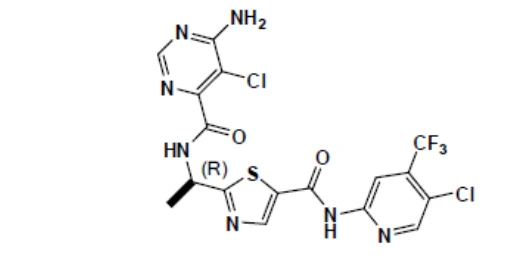
Physicochemical properties: Tovorafenib is a kinase inhibitor. It is a white to off-white powder. The solubility of tovorafenib at 37°C is ≤ 3 micrograms/mL from pH 1.2 to 8 in aqueous media.
14. Clinical Trials
14.1. Clinical Trials by Indication
Pediatric Low-grade Glioma
Table 11 – Summary of Patient Demographics for the Pivotal Clinical Trial in Patients with Relapsed or Progressive Pediatric LGG after One or More Prior Systemic Therapies
| Study # | Study design | Dosage, route of administration and duration | Study subjects (n) | Age (range) | Sex | ||||
| Study # | Study design | Dosage, route of administration and duration | Study subjects (n) | Age (range) | Sex | ||||
| FIREFLY-1 | Phase II, multicenter, open-label, multi-arm, uncontrolled study in patients with relapsed or progressive pediatric LGG harbouring an activating BRAF alteration who had | 420 mg/m2 orally once weekly (range*: 290 to 476 mg/m2) according to body surface area, with a maximum dose of 600 mg until disease progression or unacceptable | Arm 1: 77 Arm 2: 60 | Arm 1: median 8 years (2-21) Arm 2: median 9.5 years (11 months-24 years) | Arm 1: male 52%; female 48% Arm 2: male 55%; female 45% | ||||
| received at least one prior systemic therapy | toxicity | ||||||||
Abbreviation: LGG = low-grade glioma
*Actual dose range resulting from maximum dose, BSA bands, and dose rounding.
The efficacy of OJEMDA was evaluated in Arm 1 of FIREFLY-1. The presence of an eligible BRAF alteration was based on local laboratory testing. Patients were also required to have at least one measurable lesion as defined by the RANO-HGG (Response Assessment in Neuro-Oncology for High-Grade Glioma) criteria. All patients had received at least one line of prior systemic therapy and had documented evidence of radiographic progression. Patients with tumours harbouring additional activating molecular alteration(s) (e.g., IDH1/2 mutations, FGFR mutations) or patients with known or suspected diagnosis of neurofibromatosis type 1 (NF1) were excluded.
Patients received OJEMDA at approximately 420 mg/m2 orally once weekly (range: 290 to 476 mg/m2) according to body surface area, with a maximum dose of 600 mg, until disease progression or unacceptable toxicity. Although the OJEMDA doses administered in FIREFLY-1 (Arm 1) were between 290 and 476 mg/m2, the recommended OJEMDA dose is 380 mg/m2 orally once weekly because this dose was determined to be safe and effective for the treatment of patients 6 months of age and older with relapsed or refractory pediatric LGG harbouring a BRAF fusion or rearrangement, or BRAF V600 mutation (see 4.2 Recommended Dose and Dosage Adjustment).
Tumour assessments were performed every 12 weeks.
The major efficacy outcome measure was overall response rate (ORR), defined as the proportion of patients with complete response (CR), partial response (PR), or minor response (MR) by independent review based on RAPNO-LGG (Response Assessment in Pediatric Neuro-Oncology) criteria. Additional efficacy outcome measures included duration of response, time to response, and ORR by independent review based on RANO-LGG and RANO-HGG criteria.
The efficacy population comprised 76 patients in Arm 1 who had measurable disease at baseline and received OJEMDA treatment. Sixty-one percent of the patients were White, and 93% had Karnofsky/Lansky performance status of 80 to 100. Patients received a median of 3 prior systemic regimens (range: 1 to 9), with 22%, 26%, 21%, and 30% receiving 1, 2, 3, and >3 prior systemic regimens, respectively. Forty-six patients (60%) received prior treatment with a MAP kinase pathway inhibitor. The most common tumour locations were the optic pathway (51%), deep midline structures (12%), brain stem (8%), cerebellum (7%), and cerebral hemisphere (5%). Fifty-six patients (73%) had a KIAA1549:BRAF fusion, 13 patients (17%) had a V600E mutation, and 8 patients (10%) had a BRAF alteration classified as “other”, including BRAF duplication or BRAF rearrangement.
The median duration of treatment was 23.7 months (range 0.7 to 32.1 months).
Efficacy results are shown in Table 12.
Table 12 – Efficacy Results Based on Independent Review Using RAPNO-LGG Criteria in FIREFLY-1 (Arm-1)
| Efficacy Parameter | OJEMDA N=76* |
| Overall Response Rate | |
| ORR (CR+PR+MR) 95% CIa | 52.6% (40.8, 64.2) |
| Complete Response (CR), n (%) | 0 (0) |
| Partial Response (PR), n (%) | 29 (38.2) |
| Minor Response (MR), n (%) | 11 (14.5) |
| Duration of Response (DoR) | N=40 |
| Median (95% CI)b, Months | 18.0 (12.0, 22.8) |
| DoR rate at 12 monthsb | 65.0% |
| DoR rate at 24 monthsb | 25.6% |
Abbreviations: RAPNO-LGG = Response Assessment in Pediatric Neuro-Oncology for Low-Grade Glioma; CI = confidence interval.
*At least one measurable lesion by the relevant imaging criteria at baseline based on RAPNO-LGG criteria.
a Based on Clopper-Pearson exact confidence interval.
b Based on Kaplan-Meier estimate.
Based on RAPNO-LGG criteria, among responders, the median time to response was 5.4 months (range 1.6 to 17.5 months). Based on exploratory subgroup analyses, the ORR was 53.1% (95% CI: 40.2, 65.7) among patients with BRAF fusion or rearrangement (n=64), and 50.0% (95% CI: 21.1, 78.9) among patients with BRAF V600E mutation (n=12), respectively. The ORR was 51.1% (95% CI: 35.8, 66.3) among patients who had received prior MAPK-targeted therapy (n=45), and 54.8% (95% CI: 36.0, 72.7) among patients who had not received prior MAPK-targeted therapy (n=31).
Based on RANO-LGG criteria (N=76), the ORR was 53.9% (95% CI: 42.1, 65.5). No patients had CR, 30.3% had PR, and 23.7% had MR.
Based on RANO-HGG criteria (N=69), the ORR was 71.0% (95% CI: 58.9, 81.3), including 23.2% of patients with CR and 47.8% with PR. RANO-HGG-based response was assessed on T1-enhancing lesions and should be interpreted with caution.
Per protocol, patients were permitted to enter an optional drug holiday, during which time they could be re-treated with OJEMDA if there was clinical or radiographic evidence of disease progression. In Arm 1, 33 (43%) patients were on a drug holiday after completing 26 cycles of therapy (24 months of treatment), and 11 (14%) patients remained on treatment by the data cutoff.
15. Microbiology
No microbiological information is required for this drug product.
16. Non-Clinical Toxicology
General Toxicology
In repeat- dose toxicology studies in rats of up to 3 months duration, tovorafenib-related findings in male and female rats included persistent follicular cell atrophy of the thyroid gland at ≥ 150 mg/kg once every other day (approximately 0.3-fold and 0.7-fold the human exposure at the recommended dose based on AUC in males and females, respectively). In repeat-dose toxicology studies in monkeys of up to 3 months duration, tovorafenib-related findings in male and female monkeys included reversible increase in myeloid-to-erythroid ratio in the sternal bone marrow at ≥ 3 mg/kg once every other day (approximately 0.3-fold and 0.2-fold the human exposure at the recommended dose based on AUC in males and females, respectively).
Carcinogenicity
Tovorafenib was not carcinogenic in a 26-week (or 6-month) study in transgenic rasH2 mice following oral administration at doses up to 100 mg/kg/day, at exposures approximately 0.6-fold the human exposure (AUC) at the recommended human dose.
Genotoxicity
Tovorafenib was not mutagenic in the in vitro bacterial reverse mutation (Ames) assay. Tovorafenib was not genotoxic in cultured human lymphocytes without metabolic activation. Tovorafenib induced chromosomal aberrations in cultured human lymphocytes with metabolic activation at a single concentration in vitro. Tovorafenib was not genotoxic in an in vivo rat bone marrow micronucleus assay.
Reproductive and Developmental Toxicology
In a fertility and early embryonic development study in female rats, tovorafenib decreased the number of pregnancies, corpora lutea, and live embryos, as well as increased post-implantation losses at doses as low as 37.5 mg/kg/day (approximately 0.8-fold the human exposure at the recommended dose based on AUC).
In repeat- dose toxicology studies in rats of up to 3 months duration, tovorafenib-related findings in female rats included reversible increased thickness of the vaginal mucosa, increased size and/or numbers of corpora hemorrhagicum and hemorrhage, and non-reversible cystic follicles, decreased corpora lutea, and interstitial cell hyperplasia in ovaries at doses ≥ 50 mg/kg once every other day (approximately 0.4-fold the human exposure at the recommended dose based on AUC). In male rats, tovorafenib reduced weights of epididymis and testes, which correlated with reversible tubular degeneration/atrophy of the testes and reduced epididymal sperm at doses ≥ 50 mg/kg once every other day (approximately 0.3-fold the human exposure at the recommended dose based on AUC).