


Product Monograph - Ceftazidime for Injection, USP
RECENT MAJOR LABEL CHANGES
| Section | Date |
| 1 INDICATIONS | [02/2022] |
| 4 DOSAGE AND ADMINISTRATION, 4.2 Recommended Dose and Dosage Adjustment | [02/2022] |
| 7 WARNINGS AND PRECAUTIONS, Carcinogenesis and Mutagenesis, Sensitivity/Resistance, Skin and Sodium Content | [02/2022] |
| 7 WARNINGS AND PRECAUTIONS, 7.1.1 Pregnant Women | [02/2022] |
TABLE OF CONTENTS
Sections or subsections that are not applicable at the time of authorization are not listed.
RECENT MAJOR LABEL CHANGES ..................................................................................................2
TABLE OF CONTENTS ..................................................................................................................2
PART I: HEALTH PROFESSIONAL INFORMATION .............................................................................4
1 INDICATIONS ..................................................................................................................4
1.1 Pediatrics ..............................................................................................................5
1.2 Geriatrics ..............................................................................................................5
2 CONTRAINDICATIONS......................................................................................................5
4 DOSAGE AND ADMINISTRATION .......................................................................................5
4.1 Dosing Considerations .............................................................................................5
4.2 Recommended Dose and Dosage Adjustment .............................................................6
4.3 Reconstitution .......................................................................................................8
4.4 Administration ..................................................................................................... 11
5 OVERDOSAGE ............................................................................................................... 11
6 DOSAGE FORMS, STRENGTHS, COMPOSITION AND PACKAGING ......................................... 12
7 WARNINGS AND PRECAUTIONS ...................................................................................... 13
7.1 Special Populations ............................................................................................... 15
7.1.1 Pregnant Women ................................................................................................. 15
7.1.2 Breast-feeding ..................................................................................................... 16
7.1.3 Pediatrics ............................................................................................................ 16
7.1.4 Geriatrics ............................................................................................................ 16
8 ADVERSE REACTIONS..................................................................................................... 16
8.1 Adverse Reaction Overview.................................................................................... 16
8.2 Clinical Trial Adverse Reactions............................................................................... 16
8.3 Less Common Clinical Trial Adverse Reactions........................................................... 17
8.4 Abnormal Laboratory Findings: Hematologic, Clinical Chemistry and Other Quantitative Data ................................................................................................................... 17
8.5 Post-Market Adverse Reactions .............................................................................. 17
9 DRUG INTERACTIONS .................................................................................................... 18
9.2 Drug Interactions Overview.................................................................................... 18
9.4 Drug-Drug Interactions .......................................................................................... 18
9.5 Drug-Food Interactions.......................................................................................... 19
9.6 Drug-Herb Interactions.......................................................................................... 19
9.7 Drug-Laboratory Test Interactions........................................................................... 19
10 CLINICAL PHARMACOLOGY ............................................................................................ 19
10.1 Mechanism of Action ............................................................................................ 19
10.2 Pharmacodynamics............................................................................................... 19
10.3 Pharmacokinetics ................................................................................................. 20
11 STORAGE, STABILITY AND DISPOSAL ............................................................................... 27
12 SPECIAL HANDLING INSTRUCTIONS ................................................................................. 28
PART II: SCIENTIFIC INFORMATION ............................................................................................. 29
13 PHARMACEUTICAL INFORMATION .................................................................................. 29
14 CLINICAL TRIALS............................................................................................................ 29
15 MICROBIOLOGY ............................................................................................................ 29
16 NON-CLINICAL TOXICOLOGY........................................................................................... 34
17 SUPPORTING PRODUCT MONOGRAPHS........................................................................... 39
PATIENT MEDICATION INFORMATION ........................................................................................ 40
PART I: HEALTH PROFESSIONAL INFORMATION
1 INDICATIONS
Ceftazidime for Injection, USP is indicated for the treatment of infections caused by susceptible strains of the designated organisms in the diseases listed below:
Lower Respiratory Tract infections
Pneumonia caused by Pseudomonas aeruginosa, H. influenzae (including ampicillin-resistant strains), Klebsiella sp., Enterobacter sp., Proteus mirabilis, E. coli, Serratia sp., Streptococcus pneumoniae, and Staphylococcus aureus (methicillin-susceptible strains).
Skin and skin-structure infections
Caused by Pseudomonas aeruginosa, Klebsiella sp., E. coli, Proteus mirabilis, Enterobacter sp., Staphylococcus aureus (methicillin-susceptible strains), and Streptococcus pyogenes.
Urinary tract infections
Caused by Pseudomonas aeruginosa, Enterobacter sp., Proteus sp. (indole-positive and negative), Klebsiella sp., and E. coli.
Bacteremia/Septicemia
Caused by Pseudomonas aeruginosa, Klebsiella sp., E. coli, Serratia sp., Streptococcus pneumoniae, Staphylococcus aureus (methicillin-susceptible strains) and Staphylococcus epidermidis.
Bone infections
Caused by Pseudomonas aeruginosa, Proteus mirabilis, Enterobacter sp., and Staphylococcus aureus (methicillin-susceptible strains).
Peritonitis
Caused by E. coli, Klebsiella sp., Peptostreptococcus sp. and Bacteroides sp. (most strains of B. fragilis are resistant).
Specimens for bacteriologic cultures should be obtained prior to therapy in order to isolate and identify causative organisms and to determine their susceptibilities to ceftazidime. Therapy may be instituted before results of susceptibility studies are known; however, once these results become available, the antibiotic treatment should be adjusted accordingly.
Due to the nature of the underlying conditions which usually predispose patients to pseudomonal infections of the lower respiratory and urinary tracts, a good clinical response accompanied by bacterial eradication may not be achieved despite evidence of in vitro sensitivity.
To reduce the development of drug-resistant bacteria and maintain the effectiveness of Ceftazidime for Injection, USP and other antibacterial drugs, Ceftazidime for Injection, USP should be used only to treat infections that are proven or strongly suspected to be caused by susceptible bacteria. When culture and susceptibility information are available, they should be considered in selecting or modifying antibacterial therapy. In the absence of such data, local epidemiology and susceptibility patterns may contribute to the empiric selection of therapy.
1.1 Pediatrics
Pediatrics (age 1 month – 18 years):
Based on the data submitted and reviewed by Health Canada, the safety and efficacy of Ceftazidime for Injection, USP in pediatric patients has been established. Therefore, Health Canada has authorized an indication for pediatric use(age 1 month – 18 years). See 7.1.3 Pediatrics.
Pediatrics (age 0-1 month):
Based on the data submitted and reviewed by Health Canada, the safety and efficacy of Ceftazidime for Injection, USP in pediatric patients age 0-1 month has not been established. Therefore, Health Canada has not authorized an indication for pediatric use (age 0-1 month). See 7.1.3 Pediatrics.
1.2 Geriatrics
Geriatrics: Evidence from clinical studies and experience suggests that use in the geriatric population is associated with differences in safety or effectiveness.
2 CONTRAINDICATIONS
Ceftazidime for Injection, USP is contraindicated in patients who have shown hypersensitivity to ceftazidime or the cephalosporin group of antibiotics. See 7 WARNINGS AND PRECAUTIONS and 9 DRUG INTERACTIONS.
4 DOSAGE AND ADMINISTRATION
4.1 Dosing Considerations
Ceftazidime for Injection, USP may be administered intravenously or intramuscularly after reconstitution. Dosage and route of administration should be determined by the severity of infection, susceptibility of the causative organisms, and condition and renal function of the patient.
Solutions of ceftazidime, like those of most beta-lactam antibiotics, should not be added to solutions of aminoglycoside antibiotics because of potential interaction. However, if concurrent therapy with ceftazidime and an aminoglycoside is indicated, each of these antibiotics should be administered in different sites.
4.2 Recommended Dose and Dosage Adjustment
Adults:
The usual recommended daily dose of Ceftazidime for Injection, USP is 1 g to 6 g in divided doses; 250 mg to 2 g every 8 to 12 hours (see Table 1).
Table 1
| Type of infection | Dosage | Frequency and Route |
|---|---|---|
| Uncomplicated urinary tract infections | 250 mg | q12h Intramuscular or Intravenous |
| Skin and skin structure infections and uncomplicated pneumonia | 500 mg - 1 g | q8h Intramuscular or Intravenous |
| Bone infections | 2 g | q12h Intravenous |
| Life-threatening infections (those commonly needing antibiotics in higher doses e.g., peritonitis or septicemia) or infections due to less susceptible organisms | 2 g | q8h Intravenous |
A normal course of treatment should continue until 48 - 72 hours after the patient defervesces or after bacterial eradication has been obtained, usually 10 - 14 days, except for bone infections where treatment can continue for 6 weeks. In the treatment of beta-hemolytic streptococcal infections, Ceftazidime for Injection, USP should be administered for at least 10 days.
For the treatment of infections caused by Staphylococcus species, a dosage of 1 or 2 g administered every 8 hours is recommended. For the treatment of infections (except those confined to the urinary tract) caused by Enterobacter species, a dosage of at least 1 g administered every 8 hours is recommended.
Adults With Impaired Renal Function:
A reduced dosage must be employed and the serum levels closely monitored. After an initial dose of 1 g, a maintenance dosage schedule should be followed (see Table 2 below). The maintenance dosage should be determined by degree of renal impairment, severity of infection, and susceptibility of the causative organism.
When only serum creatinine is available, the following formula (based on sex, weight, and age of the patient) may be used to convert this value into creatinine clearance. The serum creatinine should represent a steady state of renal function.
| Males: | |||
| Creatinine Clearance (mL/min) = | Weight (kg) x (140-age) | ||
| 72 x serum creatinine (mg/dL) | |||
| Females: | 0.85 x above value | ||
Table 2 Maintenance Dosage Guide for Patients with Renal Impairment
| Creatinine Clearance (mL/min.) | Recommended Dose of Ceftazidime for Injection, USP | Frequency |
|---|---|---|
| 50 - 31 | 1 g | q12h |
| 30 - 16 | 1 g | q24h |
| 15 - 6 | 500 mg | q24h |
| ≤ 5 | 500 mg | q48h |
In patients with severe infections who would normally receive 6 g of ceftazidime daily were it not for renal insufficiency, the dose given in the above table may be increased by 50% or the dosing frequency increased appropriately. Continued dosage should be determined by therapeutic monitoring, severity of the infection, and susceptibility of the causative organism.
In patients undergoing hemodialysis, a loading dose of 0.5 - 1 g of ceftazidime is recommended, followed by 0.5 - 1 g after each hemodialysis period.
Ceftazidime for Injection, USP can also be used in patients undergoing intraperitoneal dialysis (IPD) and continuous ambulatory peritoneal dialysis (CAPD). In such patients, a loading dose of 1 g of ceftazidime may be given, followed by 500 mg every 24 hours. In addition to intravenous use, ceftazidime can be incorporated in the dialysis fluid at a concentration of 250 mg/2 L of dialysis fluid.
Children with Impaired Renal Function:
In children, as in adults, the creatinine clearance should be adjusted for body surface area or lean body mass and the dosing frequency should be reduced in cases of renal insufficiency.
Impaired Hepatic Function:
No adjustment in dosage is required for patients with hepatic dysfunction provided renal function is not impaired.
Infants and Children*:
The following dosage schedule (not to exceed the maximum adult dose) is recommended, although renal status and seriousness of infection must be considered:
Table 3
| Age | Dosage | Frequency |
| 1 month - 2 months | 25 - 50 mg/kg | q12h Intravenous |
| 2 months - 12 years | 30 – 50 mg/kg | q8h Intravenous |
| 12 – 18 years | Children >40kg weight - Same as adults. See Table 1. | |
| * Safety and efficacy have not been established in infants less than 1 month of age. | ||
Use in Elderly:
Because elderly patients are more likely to have decreased renal function, care should be taken in dose selection, and it may be useful to monitor renal function. In acutely ill elderly patients with reduced renal clearance of ceftazidime, the daily dosage should not exceed 3 g.
4.3 Reconstitution
NOTE: As with all parenteral drug products, intravenous admixtures should be inspected for clarity of solutions, particulate matter, precipitate, discolouration and leakage prior to administration, whenever solution and container permit. Solutions showing haziness, particulate matter, precipitate, discolouration or leakage should not be used.
For Intramuscular Use
- Solutions for Reconstitution:
Sterile Water for Injection or, if required, Bacteriostatic Water for Injection, 0.5 to 1.0% Lidocaine Hydrochloride Injection.
Reconstitution Table:
| Vial Size | Diluent to be Added to Vial | Approximate Available Volume | Approximate Average Concentration |
| 1 g | 3.0 mL | 3.6 mL | 280 mg/mL |
Shake well until dissolved. See 11 STORAGE, STABILITY AND DISPOSAL for recommended storage conditions for both dry state and reconstituted solutions.
For Intravenous Use
- Solutions for Reconstitution:
Sterile Water for Injection.
Reconstitution Table:
| Vial Size | Diluent to be Added to Vial | Approximate Available Volume | Approximate Average Concentration |
| 1 g | 5 or 10 mL | 5.6 or 10.6 mL | 180 or 95 mg/mL |
| 2 g | 10 mL | 11.2 mL | 180 mg/mL |
Shake well until dissolved. The prepared solution may be further diluted to the desired volume with any of the solutions for intravenous infusion listed below. see 11 STORAGE, STABILITY AND DISPOSAL for recommended storage conditions for both dry state and reconstituted solutions.
For Direct Intravenous Injection: Reconstitute as directed above.
For Intermittent Intravenous Infusion: Reconstitute as directed above for 1 g or 2 g vials of Ceftazidime for Injection, USP.
For Continuous Intravenous Infusion: Reconstitute 1 g or 2 g vials of Ceftazidime for Injection, USP with 10 mL Sterile Water for Injection. The appropriate quantity of the reconstituted solution may be added to an intravenous bottle containing any of the solutions listed below.
Pharmacy Bulk Vial
The availability of the bulk pharmacy vial is restricted to hospitals with a recognized intravenous admixture program.
Ceftazidime for Injection, USP does not contain any preservatives. The Pharmacy Bulk Vial is intended for multiple dispensing for intravenous use only, employing a single puncture.
Reconstitution Table:
| Vial Size | Diluent to be Added to Vial | Approximate Available Volume | Approximate Average Concentration |
| 6 g | 26 mL | 30 mL | 200 or |
| 56 mL | 60 mL | 100 mg/mL |
For 6 g vial, following reconstitution with Sterile Water for Injection, the solution should be dispensed and further diluted for use within 8 hours if stored at room temperature (not exceeding 25 °C) and 48 hours if refrigerated (2 to 8 °C). Any unused reconstituted solution should be discarded after 8 hours if stored at room temperature and after 48 hours if refrigerated. See 11 STORAGE, STABILITY AND DISPOSAL for recommended storage conditions for both dry state and reconstituted solutions.
Solutions for Intravenous Infusion:
0.9% Sodium Chloride Injection
M/6 Sodium Lactate Injection
Ringer’s Injection, USP
Lactated Ringer’s Injection, USP
5% Dextrose Injection
5% Dextrose and 0.45% Sodium Chloride Injection
5% Dextrose and 0.9% Sodium Chloride Injection
10% Dextrose Injection
Normosol®-M in 5% Dextrose Injection
When Ceftazidime for Injection, USP is dissolved, carbon dioxide is released and a positive pressure develops. For ease of use, please follow the recommended techniques of reconstitution described below.
Instructions for Reconstitution:
- For 1 g Intramuscular/Intravenous, and 2 g Intravenous vials:
- Inject the diluent and shake well to dissolve.
- Carbon dioxide is released as the antibiotic dissolves, generating pressure within the vial. The solution will become clear within 1 to 2 minutes.
- Invert the vial, and completely depress the syringe plunger prior to insertion.
- Insert the needle through the vial stopper. Be sure the needle remains within the solution, and withdraw contents of the vial in the usual manner. Pressure in the vial may aid withdrawal.
- The withdrawn solution may contain carbon dioxide bubbles which should be expelled from the syringe before injection.
- For 6 g Pharmacy Bulk Package:
- When diluent is being added, the vial must be vented to prevent buildup of pressure due to release of carbon dioxide formed as the antibiotic dissolves. Use standard venting procedures outlined in the venting card for Ceftazidime for Injection, USP.
- Inject 26 mL of diluent to provide a solution containing approximately 1 g of ceftazidime for injection activity per 5 mL. Inject 56 mL of diluent to provide a solution containing approximately 1 g of ceftazidime activity per 10 mL.
- Dissolve the antibiotic by gently agitating the solution.
- Allow sufficient time (1 - 2 minutes) for carbon dioxide to vent before dispensing solution.
- After storage, relieve any additional pressure which may develop in the vial before dispensing.
4.4 Administration
Intramuscular
Ceftazidime for Injection, USP should be injected well within the body of a large muscle mass such as the upper outer quadrant of the gluteus maximus or lateral part of the thigh.
Intravenous
The intravenous route is preferable for patients with septicemia, peritonitis, or other severe or life-threatening infections.
Intermittent Intravenous Administration
The reconstituted solution may be slowly injected into the vein over a period of 3 to 5 minutes or given through the tubing of an administration set. During the infusion of the solution containing ceftazidime, the administration of other solutions should be discontinued temporarily.
Continuous Intravenous Infusion
Ceftazidime for Injection, USP may also be administered over a longer period of time.
NOTE: If therapy with Ceftazidime for Injection, USP is carried out in combination with an aminoglycoside antibiotic, either, each of these antibiotics should be administered at different sites, or ceftazidime and aminoglycosides may be administered sequentially by intermittent intravenous infusion. After the administration of one of the two drugs, the tubing is carefully and thoroughly flushed with an approved solution for reconstitution and then the other drug solution is administered. An aminoglycoside should not be mixed with Ceftazidime for Injection, USP in the same container.
5 OVERDOSAGE
Signs and Symptoms
Overdosage has occurred in patients with renal failure. Reactions have included seizure activity, encephalopathy, asterixis, and neuromuscular excitability. Patients who receive an acute overdosage should be carefully observed and given supportive treatment. In the presence of renal insufficiency, hemodialysis or peritoneal dialysis may aid in the removal of ceftazidime from the body. It is reported that the administration of large doses of parenteral cephalosporins may cause dizziness, paresthesias, and headaches. Seizures may occur following overdosage with some cephalosporins, particularly in patients with renal impairment in whom accumulation is likely to occur.
Laboratory abnormalities that may occur after an overdose include elevations in creatinine, BUN, liver enzymes and bilirubin, a positive Coombs' test, thrombocytosis, thrombocytopenia, eosinophilia, leukopenia, and prolongation of the prothrombin time.
Treatment
If seizures occur, the drug should be discontinued promptly and anticonvulsant therapy may be administered if clinically indicated. The patient's airway should be protected and ventilation and perfusion supported. The patient's vital signs, blood gases, serum electrolytes, etc. should be meticulously monitored and maintained, within acceptable limits.
In cases of severe overdosage, especially in a patient with renal failure, combined hemodialysis and hemoperfusion may be considered if response to more conservative therapy fails. However, no clinical data supporting such therapy of Ceftazidime for Injection, USP overdosage are available.
| For management of a suspected drug overdose, contact your regional Poison Control Centre. |
6 DOSAGE FORMS, STRENGTHS, COMPOSITION AND PACKAGING
Table Dosage Forms, Strengths, Composition and Packaging
Ceftazidime for Injection, USP vials contain a mixture of ceftazidime and sodium carbonate.
The sodium carbonate at a concentration of 118 mg/g of ceftazidime activity has been admixed to facilitate dissolution. The total sodium content of the mixture is approximately 54 mg (2.3 mEq/g of ceftazidime activity).
Availability of dosage forms:
The vial stoppers are not made with natural rubber latex.
Ceftazidime for Injection, USP 1 g, equivalent to 1 g ceftazidime and 118 mg sodium carbonate, 20 mL rubber-stoppered vial (Dry Powder).
Ceftazidime for Injection, USP 2 g, equivalent to 2 g ceftazidime and 236 mg sodium carbonate, 50 mL rubber-stoppered vial (Dry Powder).
Pharmacy Bulk Vial: Ceftazidime for Injection, USP 6 g, equivalent to 6 g ceftazidime and 708 mg sodium carbonate, 100 mL rubber-stoppered vial (Dry Powder).
| Route of Administration | Dosage Form / Strength/Composition | Non-medicinal Ingredients |
|---|---|---|
| Intramuscular or Intravenous | Sterile Powder for Solution 1 g / vial, 2 g / vial, 6 g / vial | sodium carbonate |
7 WARNINGS AND PRECAUTIONS
Carcinogenesis and Mutagenesis
Long-term studies in animals have not been performed to evaluate carcinogenic potential. However, a mouse micronucleus test and an Ames test were both negative for mutagenic effects (see 16 NON-CLINICAL TOXICOLOGY, Mutagenicity Studies).
Gastrointestinal
Ceftazidime for Injection, USP should be prescribed with caution in individuals with a history of gastrointestinal disease, particularly colitis.
- Clostridium difficile-associated disease
Clostridium difficile-associated disease (CDAD) has been reported with the use of many antibacterial agents, including Ceftazidime for Injection, USP. CDAD may range in severity from mild diarrhea to fatal colitis. It is important to consider this diagnosis in patients who present with diarrhea, or symptoms of colitis, pseudomembranous colitis, toxic megacolon, or perforation of colon subsequent to the administration of any antibacterial agent. CDAD has been reported to occur over 2 months after the administration of antibacterial agents.
Treatment with antibacterial agents may alter the normal flora of the colon and may permit overgrowth of Clostridium difficile. Clostridium difficile produces toxins A and B, which contribute to the development of CDAD. CDAD may cause significant morbidity and mortality. CDAD can be refractory to antimicrobial therapy.
If the diagnosis of CDAD is suspected or confirmed, appropriate therapeutic measures should be initiated. Mild cases of CDAD usually respond to discontinuation of antibacterial agents not directed against Clostridium difficile. In moderate to severe cases, consideration should be given to management with fluids and electrolytes, protein supplementation, and treatment with an antibacterial agent clinically effective against Clostridium difficile. Surgical evaluation should be instituted as clinically indicated, as surgical intervention may be required in certain severe cases (see 8 ADVERSE REACTIONS).
As with other antibiotics, prolonged use of Ceftazidime for Injection, USP may result in the overgrowth of non-susceptible organisms including species originally sensitive to the drug. Repeated evaluation of the patient's condition is essential. If superinfection occurs during therapy, appropriate measures should be taken. Resistance has developed during therapy with ceftazidime by Staphylococcus aureus, Enterobacteriaceae, Acinetobacter species, and Pseudomonas species.
Hematologic
- Hemolytic Anemia
Ceftazidime for Injection, USP should not be used in patients with a history of cephalosporin-associated hemolytic anemia since the recurrence of hemolysis is much more severe.
An immune mediate hemolytic anemia has been observed in patients receiving cephalosporin class antibacterials, including Ceftazidime for Injection, USP. Severe cases of hemolytic anemia, including fatalities, have been reported in both adults and children. If a patient develops anemia anytime during, or within 2 - 3 weeks subsequent to the administration of Ceftazidime for Injection, USP, the diagnosis of a cephalosporin-associated anemia should be considered and the drug discontinued until the etiology is determined.
Patients may benefit from periodic monitoring for signs and symptoms of hemolytic anemia, including measurement of hematological parameters or drug-induced antibody testing, where appropriate (see 8 ADVERSE REACTIONS).
Immune
- Hypersensitivity
Before therapy with Ceftazidime for Injection, USP is instituted, careful inquiry should be made to determine whether the patient has had previous hypersensitivity reactions to ceftazidime, cephalosporins, penicillins, or other drugs. Ceftazidime for injection, USP should be administered with caution to any patient who has demonstrated some form of allergy, particularly to drugs. This product should be given with caution to patients with type i hypersensitivity reactions to penicillin. If this product is to be given to penicillin-sensitive patients, caution should be exercised because cross-hypersensitivity among β-lactam antibiotics has been clearly documented and may occur in up to 10% of patients with a history of penicillin allergy. If an allergic reaction to Ceftazidime for Injection, USP occurs, discontinue treatment with the drug. Serious acute hypersensitivity reactions may require epinephrine and other emergency measures.
Monitoring and Laboratory Tests
A false-positive reaction for glucose in the urine may occur with Benedict's or Fehling's solution or with CLINITEST® tablets. As with some other cephalosporins, transient elevations of blood urea, blood urea nitrogen, and/or serum creatinine, hepatic enzymes [aspartate transaminase (AST)/serum glutamic oxaloacetic transaminase (SGOT), alanine transaminase (ALT)/serum glutamic pyruvic transaminase (SGPT), lactic dehydrogenase (LDH) and alkaline phosphatases] were observed occasionally. Transient leukopenia, neutropenia, agranulocytosis, thrombocytopenia and lymphocytosis were very rarely seen.
Renal
Ceftazidime for Injection, USP dosage should be reduced in patients with impaired renal function (see 4.2 Recommended Dose and Dosage Adjustment). High and prolonged serum antibiotic concentrations can occur from normal dosages in patients with transient or persistent reduction of urinary output because of renal insufficiency. The total daily dosage should be reduced when ceftazidime is administered to such patients to avoid the clinical consequences, e.g., seizures, encephalopathy, asterixis, and neuromuscular excitability due to elevated levels of antibiotics (see 4.2 Recommended Dose and Dosage Adjustment and 5 OVERDOSAGE). Continued dosage should be determined by degree of renal impairment, severity of infection, and susceptibility of the causative organism.
Nephrotoxicity has been reported following concomitant administration of cephalosporins and aminoglycoside antibiotics or potent diuretics, such as furosemide. Although transient elevations of BUN and serum creatinine have been observed in clinical studies, there is no evidence that ceftazidime, when administered alone, is significantly nephrotoxic.
Sensitivity/Resistance
- Development of Drug-Resistant Bacteria
Prescribing Ceftazidime for Injection, USP in the absence of a proven or strongly suspected bacterial infection is unlikely to provide benefit to the patient and risks the development of drug-resistant bacteria. Development of resistance during the administration of Ceftazidime for Injection, USP has been observed for Staphylococcus aureus, members of the Enterobacteriaceae family, Acinetobacter species, Pseudomonas species, and Serratia species.
The prevalence of acquired resistance is geographically and time dependent and for select species may be very high. Local information on resistance and prevalence of extended spectrum beta lactamase (ESBLs) producing organisms is desirable, particularly when treating severe infections.
- Potential for Microbial Overgrowth
Prolonged treatment with Ceftazidime for Injection, USP may result in the overgrowth of nonsusceptible organisms, including species originally sensitive to the drug. Repeated evaluation of the patient's condition is essential. If superinfection occurs during therapy, appropriate measures should be taken.
Skin
- Severe Cutaneous Adverse Reactions
Severe cutaneous adverse reactions (SCAR) such as acute generalized exanthematous pustulosis (AGEP), drug reaction with eosinophilia and systemic symptoms (DRESS), Stevens-Johnson syndrome (SJS), and toxic epidermal necrolysis (TEN) have been reported in association with beta-lactam treatment. When SCAR is suspected, Ceftazidime for Injection, USP should be discontinued and appropriate therapy and/or measures should be taken.
Sodium Content
Each 1 g of ceftazidime contains 52 mg of sodium. The sodium content must be taken into account in patients requiring sodium restriction.
7.1 Special Populations
7.1.1 Pregnant Women
The safety of Ceftazidime for Injection, USP in the treatment of infections during pregnancy has not been established. If the administration of ceftazidime to pregnant patients is considered necessary, its use requires that the potential benefits be weighed against the possible hazards to the fetus.
Reproduction studies have been performed in mice and rats employing ceftazidime doses of up to 25 times those usually administered to humans. These studies have revealed no evidence of impaired fertility or harm of the fetus caused by ceftazidime. Animal reproduction studies, however, are not always predictive of human response.
7.1.2 Breast-feeding
Ceftazidime is excreted in human milk in low concentrations (3.8 - 5.2 mg/mL). The clinical significance of this is unknown. Caution should be exercised when Ceftazidime for Injection, USP is administered to a nursing woman.
7.1.3 Pediatrics
Safety in infants 1 month of age or younger has not been established. Therefore, Health Canada has not authorized an indication for use in pediatric patients under the age of 1 month.
7.1.4 Geriatrics
Evidence from clinical studies and experience suggests that use in the geriatric population is associated with differences in safety or effectiveness. The elimination of ceftazidime may be reduced due to age related impairment of renal function.
8 ADVERSE REACTIONS
8.1 Adverse Reaction Overview
The most common adverse effects have been local reactions following intravenous injection, allergic reactions, and gastrointestinal reactions. Other adverse effects have been encountered less frequently.
8.2 Clinical Trial Adverse Reactions
The most common adverse reactions associated with the administration of Ceftazidime for Injection, USP in clinical trials are listed below:
Local effects reported in 2.8% of patients
Phlebitis, thrombophlebitis, pain and inflammation at the site of injection or infusion.
Hypersensitivity reactions reported in 2.7% of patients
Pruritus, urticaria, rash, and fever. Immediate reactions, generally manifested by rash and/or pruritus, occurred in 1 in 285 patients. Angioedema and anaphylaxis (0.2% of patients; bronchospasm and/or hypotension) have been reported very rarely (see 7.WARNINGS AND PRECAUTIONS, Immune).
Gastrointestinal symptoms reported in < 4% of patients
Diarrhea, colitis, nausea, vomiting, and abdominal pain. Pseudomembranous colitis has been reported (see 7 WARNINGS AND PRECAUTIONS, Gastrointestinal).
Central nervous system reactions (less than 1%)
Headache, dizziness, paresthesia, hallucinations, and lethargy. There have been reports of neurological sequelae including tremor, myoclonia, convulsions, encephalopathy and coma occurring in patients with renal impairment in whom the dose of ceftazidime has not been appropriately reduced. Seizures have been reported with several cephalosporins including ceftazidime (see 7 WARNINGS AND PRECAUTIONS and 5 OVERDOSAGE).
8.3 Less Common Clinical Trial Adverse Reactions
Less frequent adverse events: (< 1%)
Blurred vision, flushing, candidiasis (including oral thrush) and vaginitis.
8.4 Abnormal Laboratory Findings: Hematologic, Clinical Chemistry and Other Quantitative Data
Hepatic: < 4% of patients experienced transient elevations of hepatic values, these included: SGOT, SGPT, LDH, and alkaline phosphatase.
Renal: transient elevations of blood urea, blood urea nitrogen, and/or serum creatinine were noted in <1% of patients.
Hematopoietic effects: were noted and included eosinophilia (3.4%), positive Coombs' test without hemolysis (5.1%). Transient leukopenia, neutropenia, agranulocytosis, thrombocytopenia, thrombocytosis, and lymphocytosis were seen in < 1% of patients.
Hematologic: Cases of hemolytic anemia have been reported (see 7 WARNINGS AND PRECAUTIONS, Hematologic).
8.5 Post-Market Adverse Reactions
In addition to adverse events reported during clinical trials, the following events have been identified during clinical practice in patients treated with ceftazidime and were reported spontaneously. Because these reactions were reported voluntarily from a population of uncertain size, it is not possible to reliably estimate their frequency.
Blood and lymphatic system disorders
Lymphocytosis, hemolytic anemia, and agranulocytosis.
Immune system disorders
Anaphylaxis (including bronchospasm and/or hypotension).
Nervous system disorders
Paraesthesia.
Gastrointestinal disorders
Bad taste.
Hepatobiliary disorders
Jaundice.
Skin and subcutaneous tissue disorders
Angioedema, erythema multiforme, Stevens-Johnson syndrome, and toxic epidermal necrolysis.
9 DRUG INTERACTIONS
9.2 Drug Interactions Overview
Concurrent treatment with high doses of cephalosporins and nephrotoxic medicinal products such as aminoglycosides or potent diuretics (e.g. furosemide) may adversely affect renal function. See 7 WARNINGS AND PRECAUTIONS, Renal.
9.4 Drug-Drug Interactions
The drugs listed in this table are based on either drug interaction case reports or studies, or potential interactions due to the expected magnitude and seriousness of the interaction (i.e., those identified as contraindicated).
Table Established or Potential Drug-Drug Interactions
| Drug or Drug class | Effect / Clinical comment |
|---|---|
| Aminoglycosides | The concomitant administration of aminoglycosides and some cephalosporins has caused nephrotoxicity. Although transient elevations of BUN and serum creatinine have been observed in clinical studies, there is no evidence that Ceftazidime, when administered alone, is significantly nephrotoxic. However, the effect of administering Ceftazidime concomitantly with aminoglycosides is not known. |
| Chloramphenicol | In combination with cephalosporins, including ceftazidime, has been shown to be antagonistic in vitro. Due to the possibility of antagonism in vivo, this combination should be avoided. |
| Drug or Drug class | Effect / Clinical comment |
|---|---|
| Oral contraceptives. | In common with other antibiotics, ceftazidime may affect the gut flora, leading to lower estrogen reabsorption and reduced efficacy of combined oral contraceptives. |
| Potent diuretics, such as furosemide and ethacrynic acid | Studies suggest that the concomitant use of potent diuretics, such as furosemide and ethacrynic acid, may increase the risk of renal toxicity with cephalosporins. |
9.5 Drug-Food Interactions
Interactions with food have not been established.
9.6 Drug-Herb Interactions
Interactions with herbal products have not been established
9.7 Drug-Laboratory Test Interactions
Ceftazidime may cause a false positive reaction for glucose in the urine with copper reduction tests (Benedict's or Fehling's solution). As a false negative result may occur in the ferricyanide test, it is Ceftazidime for Injection USP recommended that either glucose oxidase or hexokinase method be used to determine blood plasma glucose levels in patients receiving Ceftazidime for Injection USP.
Ceftazidime does not interfere in the alkaline picrate assay for creatinine. A positive Coombs' test has been reported during treatment with cephalosporins. This phenomenon can interfere with cross matching of blood.
10 CLINICAL PHARMACOLOGY
10.1 Mechanism of Action
Ceftazidime is a bactericidal agent that inhibits bacterial cell wall synthesis following attachment to penicillin binding proteins (PBPs). This results in the interruption of cell wall (peptidoglycan) biosynthesis, which leads to bacterial cell lysis and death.
10.2 Pharmacodynamics
In vitro studies indicate that the bactericidal action of ceftazidime results from inhibition of bacterial cell wall synthesis. Ceftazidime has a high affinity for the Penicillin-Binding Protein-3 (PBP-3) and moderate affinity for the PBP-1a of certain Gram negative organisms such as Escherichia coli and Pseudomonas aeruginosa. The affinity for PBP-1b is much less than that for either PBP-3 or PBP-1a. PBP-3 is involved in the process of cross-wall formation (septation). Binding to this protein results in formation of filaments and eventual death of the bacterium. PBP-1a and PBP-1b are involved in longitudinal wall synthesis (elongation) prior to septation. Binding to these proteins results in spheroplast formation followed by rapid lysis.
Ceftazidime has high affinity for PBP-1 and PBP-2 of Staphylococcus aureus. However, the drug's affinity for PBP-3 is very much less in this organism.
10.3 Pharmacokinetics
Absorption
- Intramuscular Injection:
Following intramuscular administration of 500 mg and 1 g doses of ceftazidime to normal adult volunteers, the mean peak serum concentrations at approximately 1 hour were 17 mg/L and 39 mg/L respectively. Serum concentration-time curves are shown below.
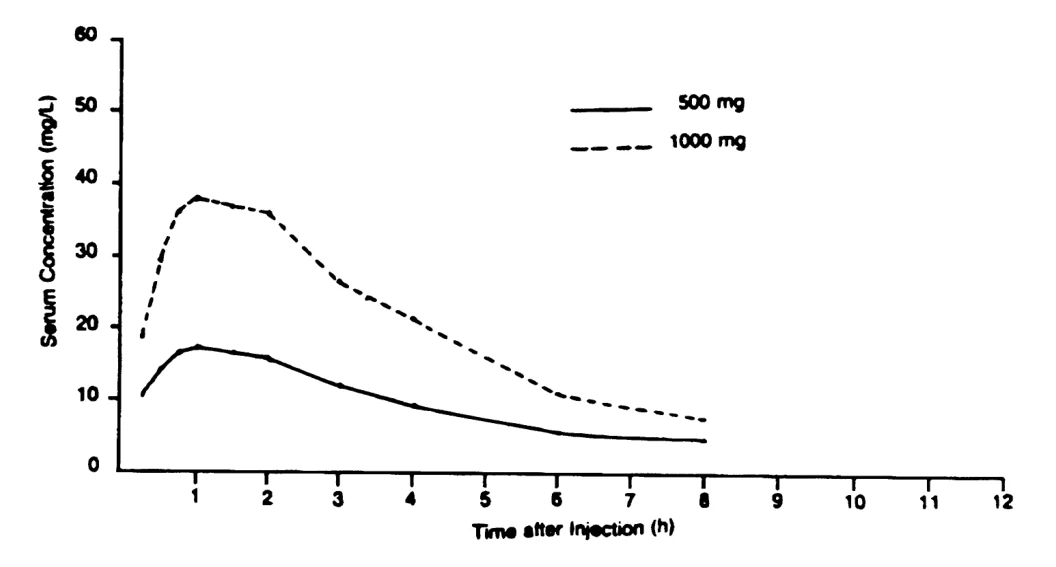
Figure 1
The average urinary concentration, following 500 mg intramuscular administration to 6 patients, was 2100 mg/L. Mean urinary recovery over 24 hours ranged from 78.9% of a 1g intramuscular dose to 84.6% of a 500 mg intramuscular dose.
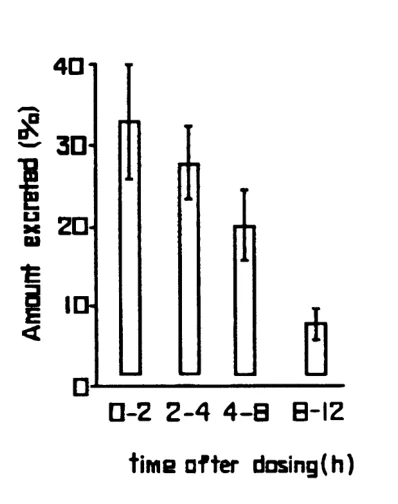
Figure 2
Table 4 Pharmacokinetic Profile of Ceftazidime after intramuscular Injection
| Dose | Peak Serum Conc. (mg/L) | Apparent Volume of Distribution (L) | Serum Half-life (h) | Urinary Recovery (%, 24h) | Renal Clearance (mL/min) |
| Single 500mg | 17 | 21 | 2.2 | 85 | 90 |
| Single 1g | 39 | 17 | 2.0 | 79 | 76 |
| Multiple 1g | 44 | 17 | 2.2 | - | - |
No drug accumulation was noted after repeated single intramuscular dosing over 10 days. Pharmacokinetic parameters remained unchanged. The addition of lidocaine did not alter the kinetics (see Table 4).
- Intravenous Administration:
Single doses of 250 mg, 500 mg, 1000 mg and 2000 mg ceftazidime were infused over 30 minutes to six male volunteers. Serum concentration time curves (Figure 3) follow a biexponential decay.
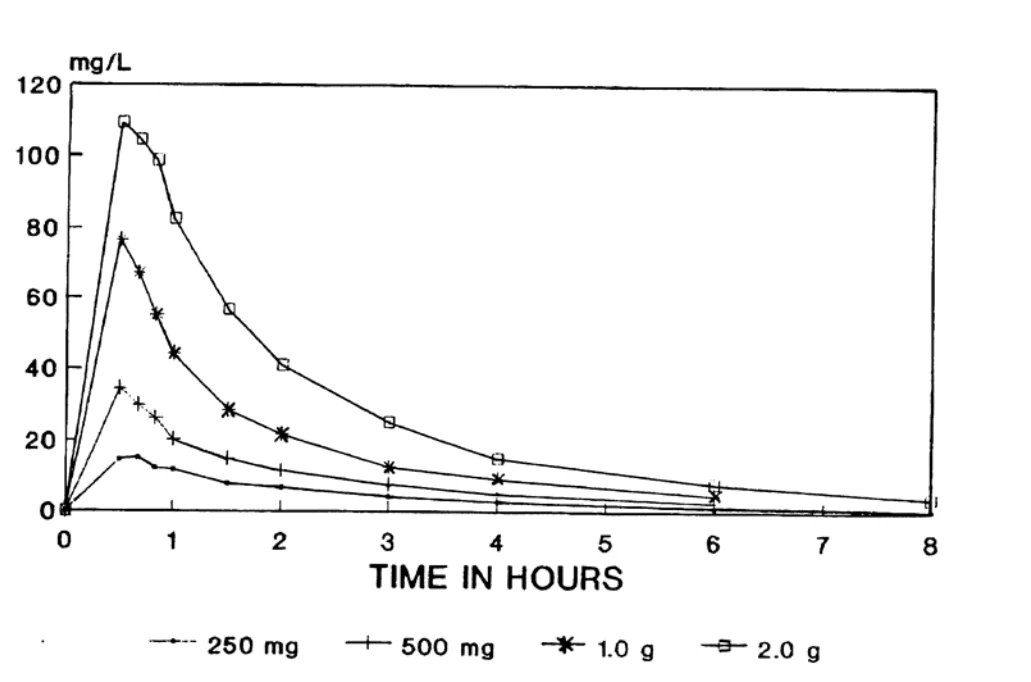
Figure 3
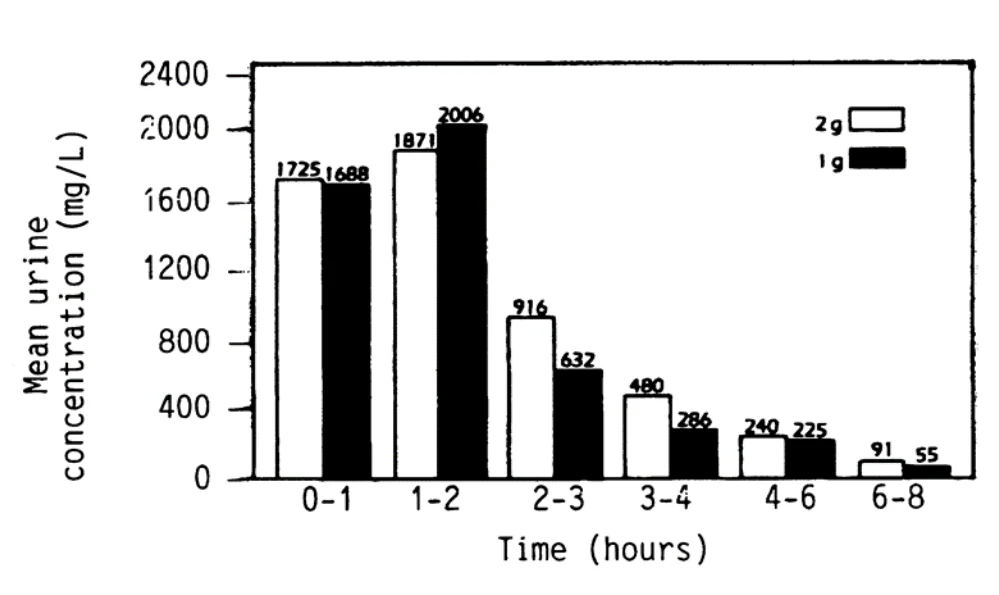
Figure 4
Mean urinary recovery of unchanged drug over 24 hours was approximately 85%, with over 50% being excreted in the first two to four hours. Figure 4 shows urinary concentrations of two doses of ceftazidime for various collection intervals after infusion.
Table 5 Average pharmacokinetic parameters of ceftazidime after intravenous infusion
| Dose/ Route | Peak Serum Conc. | Apparent volume of distributio n | Area under serum level / time curve | Serum half-life | Dose recovered in urine to 24h | Renal Clearance | Plasma Clearance |
| (Intravenous -Infusion) | (mg/L) | (L) | (mg/L/h) | (h) | (%) | (mL/min) | (mL/min) |
| 250 mg | 15.2 | 16.2 | 33.5 | 1.5 | 77.5 | 100 | 126 |
| 500 mg | 34.5 | 20.2 | 68.7 | 1.9 | 63.2 | 77 | 122 |
| 1 g | 76.8 | 19.7 | 134.6 | 1.8 | 69.6 | 88 | 126 |
| 2 g | 114.2 | 22.5 | 235.6 | 1.8 | 53.8 | 79 | 146 |
Maximum serum concentrations following rapid intravenous infusions (3 to 5 minutes) were higher than those measured at the conclusion of 30 - 60 minute infusions. The maximum concentration and the area under the curve (AUC) increased proportionately with increasing doses while the elimination half-life (range of 1.5 - 2.01 hours) and renal excretion remained constant. In subjects receiving up to ten days of intravenous ceftazidime, there was no evidence of accumulation or alteration of pharmacokinetics. Addition of probenecid did not alter pharmacokinetics. The apparent volume of distribution and plasma and renal clearance rates remained within the same range as the intramuscular doses. Proportional increases in AUC with increasing doses show that ceftazidime follows linear kinetics.
Distribution
- Protein Binding
In vitro studies with human serum revealed that 5 - 23% of ceftazidime is protein bound and is independent of drug concentration.
- Tissue Concentrations
Therapeutic concentrations of ceftazidime in tissues and body fluids are presented in Table 6.
Table 6 Ceftazidime Concentration in Tissues and Body Fluids
| Tissue or Fluid | Dose/Route | No. of Patients | Time of Sample Post-Dose | Average Tissue or Fluid Level (mcg/mL or mcg/g) |
|---|---|---|---|---|
| Urine | 500 mg Intramuscular | 6 | 0 - 2 hr | 2100 |
| 2 g Intravenous | 6 | 0 - 2 hr | 12000 | |
| Bile | 2 g Intravenous | 3 | 90 min | 36.4 |
| Synovial fluid | 2 g Intravenous | 13 | 2 hr | 25.6 |
| Tissue or Fluid | Dose/Route | No. of Patients | Time of Sample Post-Dose | Average Tissue or Fluid Level (mcg/mL or mcg/g) |
|---|---|---|---|---|
| Peritoneal fluid | 2 g Intravenous | 8 | 2 hr | 48.6 |
| Sputum | 1 g Intravenous | 8 | 1 hr | 9 |
| Cerebrospinal fluid (inflamed meninges) | 2 g q 8 hr Intravenous | 5 | 120 min | 9.4 |
| Aqueous humor | 2 g Intravenous | 13 | 1 - 3 hr | 11 |
| Blister fluid | 1 g Intravenous | 7 | 2 - 3 hr | 19.7 |
| Lymphatic fluid | 1 g Intravenous | 7 | 2 - 3 hr | 23.4 |
| Bone | 2 g Intravenous | 8 | 0.67 hr | 31.1 |
| Heart muscle | 2 g Intravenous | 35 | 30 - 280 min | 12.7 |
| Skin | 2 g Intravenous | 22 | 30 - 280 min | 6.6 |
| Skeletal Muscle | 2 g Intravenous | 35 | 30 - 280 min | 9.4 |
| Myometrium | 2 g Intravenous | 31 | 1 - 2 hr | 18.7 |
Concentrations of ceftazidime in the breast milk of 11 puerperal women following intravenous administration of 2 g doses every 8 hours for 5 days were determined by bioassay. Mean (± S.D.) concentrations of ceftazidime averaged 3.8 ± 2.0 mcg/mL (before the next dose), 5.2 ± 3.0 mcg/mL (1 hour after dosing) and 4.5 ± 1.7 mcg/mL (3 hours after dosing). Excretion of ceftazidime into breast milk remained constant between days 2 and 4 of therapy.
Metabolism
Ceftazidime is not metabolized. Metabolites were not detected either in the serum or in the urine.
Elimination
Hepatic clearance (i.e., biliary excretion) accounts for less than 1% of the non-renal clearance of ceftazidime in the presence of normally functioning kidneys.
The mean renal clearance of ceftazidime was 86 mL/min (range 46 to 145 mL/min). The calculated plasma clearance of 130 mL/min (range 103 to 199 mL/min) indicated nearly complete elimination of ceftazidime by the renal route. Administration of probenecid prior to dosing had no effect on the elimination of kinetics of ceftazidime, suggesting elimination by glomerular filtration and not by renal tubular secretion.
Special Populations and Conditions
- Pediatrics
Neonates and Infants
Fifty-three neonates and infants (1 day to 12 months of age) were administered ceftazidime as a single intravenous bolus injection at a mean dose of 31 mg/kg (25.0 - 35.7 mg/kg) in addition to other antimicrobial therapy. Serum levels are presented in Table 7. The mean serum half-life for babies ages 2 months or younger was prolonged (4.2 ± 1.6 h). Those aged greater than 2 months had a half-life of 2.0 ± 0.6h.
Table 7
Serum levels (mcg/mL) at hours after dose (mean ± S.D.) | |||||||||||
| Age | 3 | 5 | 6 | 7 | 8 | ||||||
| <2 months (n=30) | 54.1 ± 28.7 | - | 31.2 ± 17.9 | - | 18.6 ± 12.1 | ||||||
| 2-12 months (n=23) | 26.5 ± 10.7 | 12.3 ± 7.6 | - | 6.4 ± 6.0 | 3.3 ± 4.2 | ||||||
In another study pediatric patients (1-6 years) with Gram-negative infections received a single intravenous infusion over 15 minutes of either 15 mg/kg (8 patients) or 50 mg/kg (5 patients) of ceftazidime. Serum levels were measured by bioassay. Pharmacokinetic data are presented in Table 8.
Table 8 Pharmacokinetic Parameters in Children
Patient Group | n | Mean Age (months) | Dose (mg/Kg) | Peak Serum Conc. (mg/L) | Serum half-life (h) | Vol. of Distribution (L/Kg) | Plasma Clearance (mL/min/Kg) |
| A | 8 | 22.5 | 15 | 37.8 | 1.65 | 0.73 | 5.03 |
| B | 5 | 57.4 | 50 | 186.4 | 1.72 | 0.52 | 3.75 |
- Geriatrics
Ceftazidime, at a dose of 2g b.i.d., was administered as a bolus intravenous injection to 13 elderly patients with a mean age of 77 years (63 - 83 years) and to 6 younger volunteers (24 - 32 years). A mean serum half-life of 2.9 hours was observed for the elderly patients and 1.75 hours in the young volunteers. The elderly patients were continued on treatment and no accumulation was noted on day 7.
- Sex
Females had a smaller volume of distribution than males attributed to a smaller extra-cellular volume. The time to maximum serum concentration was slightly prolonged in females, and peak serum concentrations were higher than in men following the same dosing.
- Pregnancy and Breastfeeding
Intramuscular injections to pregnant women scheduled for abortions following diagnosis of fetal Cooley's anemia resulted in serum levels of ceftazidime approximately 50% lower than similar doses given to non-pregnant females.
- Renal Insufficiency
The relationship between serum elimination half-life and glomerular filtration rate (GFR) is curvilinear. The half-life increases steeply at GFR's less-than 50mL/min/1.73 m2 (see Figure 5).
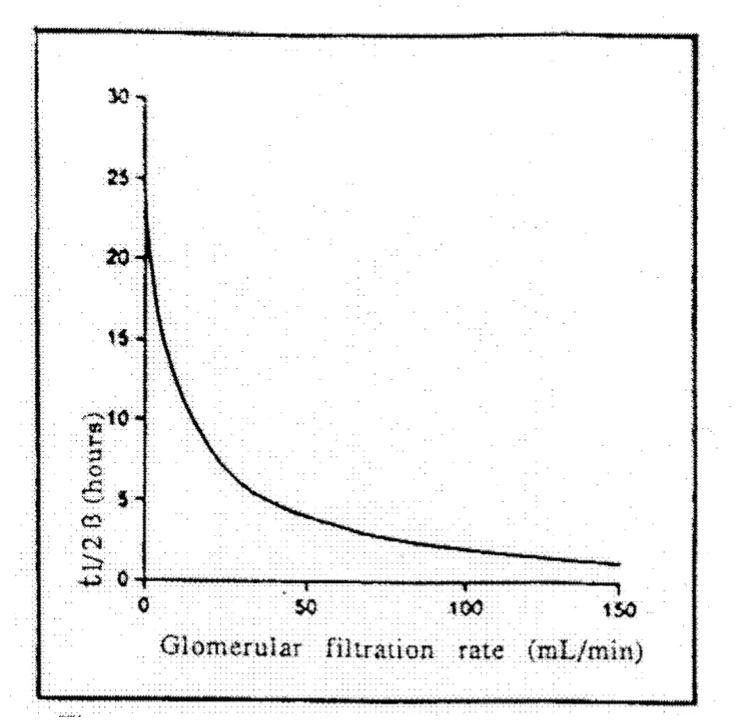
Figure 5 Relationship between the ceftazidime half-life of elimination (t1/2β) and glomerular filtration rate
Pharmacokinetics of patients having various degrees of renal insufficiency were compared to those of normal patients following intravenous administration of a 1g bolus dose of ceftazidime to 14 patients (mean age 49 years) with severely impaired renal function and those from 8 healthy volunteers (mean age 35 years).
Table 9 Mean Pharmacokinetic Parameters after 1g Ceftazidime intravenous
| Group | C0 (mg/h/L) | AUCT (mg/h/L) | B (h-1) | T1/2ß (h) | VdB (L) | UR (%) | GFR (mL/min) |
|---|---|---|---|---|---|---|---|
| Volunteers (8) | 108 | 152 | 0.378 | 1.9 | 17.8 | 88 | 115 |
| Patients (8) | 70 | 1360 | 0.061 | 16.7 | 19.2 | 24 | 12 |
| Patients on Dialysis (6) | 82 | 292 | 0.176 | 4.6 | 22.2 | 0 | - |
| Group | C0 (mg/h/L) | AUCT (mg/h/L) | B (h-1) | T1/2ß (h) | VdB (L) | UR (%) | GFR (mL/min) |
|---|---|---|---|---|---|---|---|
C0 = Fictive serum concentration at time zero AUCT = Area under the serum concentration/time curve to infinity B = Serum elimination rate constant T1/2B = Serum half-life VdB = Volume of distribution during the post-distributive phase UR = Urinary recovery over 24h | |||||||
In another study, six normal volunteers and four end-stage renal disease (ESRD) patients on hemodialysis were administered a single 1g intravenous dose of ceftazidime. The apparent volumes of distribution were similar in both groups. The terminal half-life in the normal subjects ranged from 1.3 to 1.7 hours, while in the ESRD patients it ranged from 25.5 to 35.4 hours. Dialysis clearance ranged from 27 to 50mL/min, while the total body clearance in the normal volunteers ranged from 98 to 184 mL/min.
The elimination half-life measured after peritoneal dialysis was comparable to the value obtained in the post dialysis period of patients undergoing hemodialysis.
- Cystic Fibrosis
The pharmacokinetics of an intravenous infusion (20 min) of 50 mg/kg ceftazidime were studied in 10 patients (20.8 ± 4.8 yr, 4 female, 6 males) with cystic fibrosis and 10 normal volunteers (21.6 ± 1.9 yr, 3 females, 7 males). Serum elimination half-lives were 1.76 ± 0.21h in controls and 1.50 ± 0.19h in cystic fibrosis patients. Total body clearance was 41.9% greater in the cystic fibrosis group (142.4 ±16.9mL/min/1.73m2) compared to controls (100.5 ± 10.3mL/min/1.73m2). Although the fraction of the dose recovered in urine was the same in each group, renal clearance was 40.9% greater in patients with cystic fibrosis (130.1 ± 11.4 and 92.7 ± 11.6mL/min/1.73m2 respectively).
The mechanisms responsible for the altered renal clearance of ceftazidime in cystic fibrotic patients is not known.
11 STORAGE, STABILITY AND DISPOSAL
Dry Powder
Ceftazidime for Injection, USP in the dry state should be stored at 15 °C to 30 °C and protected from light.
Solutions
1 g and 2 g Vials: Reconstituted solutions should be administered within 12 hours when stored at room temperature, (not exceeding 25 °C), and within 48 hours when refrigerated (2 °C to 8 °C), from the time of reconstitution.
6 g Vial: Reconstituted solution and further dilutions should be administered within 8 hours when stored at room temperature (not exceeding 25 °C) and within 48 hours if refrigerated (2 °C to 8 °C) from the time of reconstitution. Any unused reconstituted solution should be discarded after 8 hours if stored at room temperature and after 48 hours if refrigerated.
Incompatibility
Ceftazidime for Injection, USP should not be added to blood products, protein hydrolysates or amino acids. Ceftazidime for Injection, USP should not be mixed together with an aminoglycoside.
12 SPECIAL HANDLING INSTRUCTIONS
There are no special handling instructions for this drug product.
PART II: SCIENTIFIC INFORMATION
13 PHARMACEUTICAL INFORMATION
Drug Substance
| Proper Name: | Ceftazidime |
| Chemical Name: | Pyridinium, 1-[[7-[[(2-amino-4-thiazolyl)[(1-carboxy-1-methylethoxy)imino]acetyl]amino]-2-carboxy-8-oxo-5-thia-1-azabicyclo[4.2.0]oct-2-en-3-yl]methyl]-, hydroxide, inner salt,pentahydrate, [6R-[6α,7β(Z)]]. |
| Molecular Formula: | C22H22N6O7S2.5H2O |
| Molecular Mass: | 636.65 g/mol |
| Structural Formula: | |
| Physicochemical properties: | Ceftazidime is a white to cream-coloured crystalline powder. It is soluble in acid, alkali and dimethyl sulfoxide; slightly soluble in water, methanol and dimethylformamide; insoluble in 95% ethanol, ethyl acetate, acetone, 1,-4-dioxan, diethyl ether, toluene, petroleum spirit and chloroform. Solutions of ceftazidime for injection range in colour from light yellow to amber, depending upon the diluent and volume used. The pH of freshly reconstituted solutions usually ranges from 5.0 to 7.5. |
14 CLINICAL TRIALS
The clinical trial data on which the indications were originally authorized is not available.
15 MICROBIOLOGY
The in vitro activity of ceftazidime against various Gram-positive and Gram-negative aerobic and anaerobic organisms is shown in Table 10.
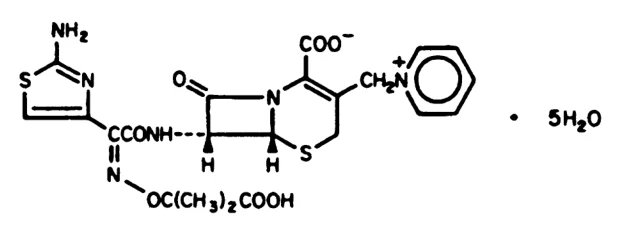 |
Table 10
| Organism | No. of Strains | Cumulative % of strains inhibited at indicated concentrations (g/mL) | ||||||||||
|---|---|---|---|---|---|---|---|---|---|---|---|---|
| 0.06 | 0.13 | 0.25 | 0.5 | 1.0 | 2.0 | 4.0 | 8.0 | 16.0 | 31.0 | 62.0 | ||
| GRAM-NEGATIVE AEROBES | ||||||||||||
| Acinetobacter species | 32 | -- | -- | -- | -- | 3 | 7 | 34 | 78 | 100 | ||
| Bordetella pertussis | 9 | -- | -- | 78 | 100 | |||||||
| Branhamella catarrhalis | 7 | 43 | 100 | |||||||||
| Citrobacter freundii | 21 | 10 | 29 | 62 | 76 | 90 | -- | 95 | -- | 100 | ||
| Citrobacter species | 18 | 39 | 78 | 94 | 100 | |||||||
| Enterobacter aerogenes | 7 | 14 | -- | 43 | 71 | 86 | -- | 100 | ||||
| Enterobacter cloacae | 62 | 10 | 22 | 70 | 81 | 86 | 87 | 92 | -- | 94 | 95 | 98 |
| Escherichia coli | 125 | 43 | 74 | 92 | 96 | -- | 97 | 98 | 100 | |||
| Haemophilus ducreyi | 42 | 67 | 100 | |||||||||
| Haemophilus influenzae | 51 | 39 | 82 | 90 | 98 | -- | -- | 100 | ||||
| Klebsiella pneumoniae | 103 | 17 | -- | 27 | 79 | 94 | 99 | -- | -- | 100 | ||
| Klebsiella species | 18 | 28 | 44 | 72 | 83 | 94 | 100 | |||||
| Legionella pneumophila* | 4 | -- | -- | -- | 100 | |||||||
| Morganella morganii | 34 | 71 | 85 | 94 | -- | -- | -- | 97 | -- | 100 | ||
| Neisseria gonorrhoea | 19 | 84 | -- | 89 | -- | -- | -- | 95 | 100 | |||
| Neisseria meningitidis | 80 | 2 | 100 | |||||||||
| Proteus mirabilis | 106 | 99 | 100 | |||||||||
| Proteus rettgeri | 8 | 61 | 74 | 87 | -- | -- | 100 | |||||
| Proteus vulgaris | 38 | 87 | -- | 97 | -- | 100 | ||||||
| Providencia species | 46 | 30 | 70 | 78 | 89 | 98 | 100 | |||||
| Pseudomonas aeruginosa | 127 | 2 | -- | 5 | 18 | 52 | 85 | 97 | 100 | |||
| Pseudomonas species | 94 | 2 | 4 | 6 | 13 | 52 | 88 | 99 | 100 | |||
| Salmonella species | 25 | -- | 8 | 96 | -- | 100 | ||||||
| Serratia marcescens | 31 | 34 | 66 | 97 | 100 | |||||||
| Serratia species | 69 | 51 | 71 | 87 | 100 | |||||||
| Shigella species | 10 | 10 | 50 | 70 | -- | -- | 90 | 100 | ||||
| Organism | No. of Strains | Cumulative % of strains inhibited at indicated concentrations (g/mL) |
|---|
| 0.06 | 0.13 | 0.25 | 0.5 | 1.0 | 2.0 | 4.0 | 8.0 | 16.0 | 31.0 | 62.0 | ||
|---|---|---|---|---|---|---|---|---|---|---|---|---|
| GRAM-POSITIVE AEROBES | ||||||||||||
| Listeria monocytogenes | 10 | -- | -- | -- | -- | -- | -- | -- | -- | -- | -- | -- |
| Micrococcus species | 13 | -- | -- | -- | -- | 8 | 23 | 31 | 46 | 100 | ||
| Staphylococcus epidermidis | 9 | -- | -- | -- | -- | -- | 22 | 78 | 100 | |||
Staphylococcus species (methicillin-sensitive) | 36 | -- | -- | -- | -- | 3 | -- | 64 | 100 | |||
Staphylococcus species (methicillin-resistant) | 24 | -- | -- | -- | -- | -- | -- | 4 | -- | 8 | 64 | 100 |
| Streptococcus agalactiae Gr.B. | 5 | -- | 100 | |||||||||
| Streptococcus faecalis | 29 | -- | -- | -- | -- | -- | -- | -- | -- | 62 | 69 | 76 |
| Streptococcus pneumoniae | 6 | 17 | 83 | 100 | ||||||||
| Streptococcus pyogenes | 8 | 75 | 100 | |||||||||
| GRAM-NEGATIVE ANAEROBES | ||||||||||||
| Bacteroides fragilis | 62 | -- | -- | -- | -- | -- | -- | -- | -- | -- | 21 | 55 |
| Bacteroides thetaiotamicron | 8 | -- | -- | -- | -- | -- | -- | -- | -- | -- | -- | -- |
| Fusobacterium species | 15 | -- | 21 | -- | -- | -- | -- | 36 | -- | 50 | 79 | 86 |
| Veillonella species | 22 | -- | 9 | -- | -- | 14 | -- | 36 | 41 | 64 | 86 | 91 |
| GRAM-POSITIVE ANAEROBES | ||||||||||||
| Actinomyces | 10 | -- | -- | -- | -- | 10 | 30 | 40 | 60 | -- | 80 | 100 |
| Bifidobacterium species | 7 | -- | -- | -- | -- | 14 | 29 | 43 | -- | 71 | 86 | -- |
| Clostridium difficile | 10 | -- | -- | -- | -- | -- | -- | -- | -- | -- | 10 | 20 |
| Clostridium perfringens | 29 | -- | 4 | -- | -- | 7 | -- | 18 | 57 | 86 | 96 | 100 |
| Peptococcus species | 46 | -- | 7 | -- | 26 | 37 | 43 | 63 | 74 | 89 | 98 | 100 |
| Peptostreptococcus species | 21 | -- | 33 | -- | 48 | 52 | 76 | -- | 86 | -- | 95 | 100 |
| Propionibacterium acnes | 91 | -- | -- | -- | -- | -- | 13 | 46 | 76 | 98 | 100 | |
| *Legionnaires' Disease has been observed to progress in patients treated with antimicrobial agents possessing demonstrated in vitro activity against Legionnaires' Disease bacterium. |
Inoculum Effect
The MIC's of ceftazidime against aerobic bacteria are not significantly affected by changes in inoculum size in the range 102 to 105 CFU/mL. However, increasing the inoculum size to 107 CFU/mL has a pronounced effect on the MIC's for some organisms. In one study, when the inocula of various Enterobacteriaceae (10 Citrobacter species, 10 Enterobacter species, 20 indole-positive Proteus species) were increased in size from 105 to 107 CFU/mL, MIC values increased 8- to 128-fold. The ratios of MBC to MIC are shown in Table 11.
Table 11 Ceftazidime MIC's and MBC's Tested against 110 Bacterial Isolates from 11 Genera
| MIC (mcg/mL) | MBC (mcg/mL) | Ratio of Means | |||
|---|---|---|---|---|---|
| Organisms (No. Tested) | Mean | 90 % | Mean | 90 % | MBC/MIC |
| Citrobacter spp. (10) | 0.35 | 1.0 | 0.33 | 1.0 | 0.94 |
| E. coli (10) | 0.16 | 0.12 | 0.18 | 0.25 | 0.13 |
| Enterobacter spp. (10) | 0.60 | 8.0 | 0.65 | 8.0 | 1.08 |
| K. pneumoniae (10) | 0.18 | 0.12 | 0.19 | 0.12 | 1.06 |
Proteus Providencia-* Morganella spp. (20) | 0.15 | 0.06 | 0.20 | 0.12 | 1.33 |
| Pr. mirabilis (10) | 0.05 | 0.06 | 0.05 | 0.06 | 1.00 |
| Ser. marcescens (10) | 0.25 | 0.25 | 0.30 | 0.5 | 1.20 |
| Ps. aeruginosa (10) | 2.40 | 4.0 | 2.80 | 4.0 | 1.17 |
| Staph. aureus (10) | 9.60 | 16 | 12.80 | 16 | 1.33 |
| Str. faecalis (10) | 230 | >256 | >230 | >256 | 1.00 |
| *Includes Pr. vulgaris (6), Prov. rettgeri (7) and Morg. morganii (7). | |||||
The rates of hydrolysis of ceftazidime and 2 other cephalosporins relative to those of cephaloridine (value 100) by various beta-lactamases are shown in Table 12.
Table 12
| Name | Source | CFZ | CFX | CAZ |
|---|---|---|---|---|
| TEM-1 | E. coli | 18 | <1 | 0 |
| TEM-2 | E. coli | 19 | 0 | 0 |
| SHV-1 | K. pneumoniae | <1 | 0 | 0 |
| OXA-1 | E. coli | 13 | 22 | 7 |
| OXA-2 | E. coli | 150 | 0 | 0 |
| OXA-3 | E. coli | 800 | 0 | 0 |
| Name | Source | CFZ | CFX | CAZ |
|---|---|---|---|---|
| K1 | K. pneumoniae | 161 | 7 | 3 |
| P99 | E. cloacae | 128 | 3 | >1 |
| 2046E | C. intermedius b | 36 | 15 | >1 |
| STH4 | B. fragilis | 61 | 0 | 1 |
| PSE-1 | P. aeruginosa | 14 | 27 | 0 |
| PSE-2 | P. aeruginosa | 30 | 16 | 30 |
| PSE-3 | P. aeruginosa | 41 | <1 | 8 |
| PSE-4 | P. aeruginosa | 10 | 1 | 2 |
| S and A | P. aeruginosa | 112 | 15 | <1 |
| PC-1 | S. aureus | 115 | 0 | 30 |
| Abbreviations: CFZ, cefazolin; CFX, cefoxitin; CAZ, ceftazidime. | ||||
Development of Resistance
Resistance to ceftazidime has been induced in E. cloacae and C. freundii through successive daily subcultures. Pseudomonas aeruginosa rendered ceftazidime-resistant exhibited cross-resistance to other beta-lactam antibiotics but not to aminoglycosides.
Susceptibility Testing
The standard single-disc susceptibility test (using the 30 mcg ceftazidime disc) and dilution susceptibility should be interpreted according to the criteria in Table 13.
Table 13
Zone diameter (30 mcg ceftazidime disc) | Approximate MIC correlation (mg/L) | |
|---|---|---|
| Susceptible (susceptible to the usual doses) | =18 | ≤ 8 |
| Moderately Susceptible (intermediate) | 15 - 17 | 9 - 31 |
| Resistant | ≤ 14 | =32 |
Organisms should be tested with ceftazidime discs, since ceftazidime has been shown by in vitro tests to be active against certain strains found resistant when other beta-lactam discs are used.
16 NON-CLINICAL TOXICOLOGY
Acute Toxicity
The effects produced by single doses of ceftazidime have been studied in mice, rats, dogs, and Rhesus monkeys using intravenous and subcutaneous administration. The results are shown in Table 14.
In the intravenous studies one animal of each species died at the high dose with only minimal signs of toxicity observed, limited to the day of dosing. No deaths or signs of toxicity occurred when ceftazidime was administered subcutaneously to rats.
A single intravenous dose of 1500 mg ceftazidime/kg administered to dogs and monkeys was tolerated with signs of toxicity limited to vomiting and salivation in dogs and soft stools in monkeys.
A comparative study using Glaxo and Lilly ceftazidime was conducted in mice with a single intravenous dose of 2000 mg/kg in mice. Results with both products were similar.
Sub chronic Toxicity
- Rats:
Daily intravenous doses of 100, 300, or 900 mg ceftazidime were administered to rats (15/sex/group) for one month. Doses for this study showed demonstrable toxicity but no deaths at 900 mg/kg.
There were no deaths or toxicologically significant changes in body weight gain, food consumption, or clinical chemistry values. Changes in hematology, slight in degree, including decreases in values of erythrocyte parameters and activated partial thromboplastin time occurred in all dose groups. Slight increases in liver and kidney weight also occurred. Cecomegaly and hyaline droplet formation in the renal cortical tubules were the only treatment-related lesions observed.
Daily intramuscular injections for 12 weeks were well tolerated by rats. All animals survived treatment and no abnormal physical or behavioral symptoms were seen.
Table 14 Acute Toxicity Studies
| Species | Animals | Duration of Study (Days) | Administration | Dose Levels (mg/kg) | Signs of Toxicity | Results (LD50 mg/kg) | |
|---|---|---|---|---|---|---|---|
| M | F | ||||||
| Ceftazidime | |||||||
| Mouse | 50 | 50 | 14 | Intravenous | 516 - 5163 | Leg weakness and tremors | > 5163 |
| Rat | 30 | 30 | 14 | Intravenous | 1033 or 2581 | Leg weakness | > 2581 |
| Rat | - | 30 | 14 | Subcutaneous | 1033 or 2581 | None | LDo > 2581 |
| Dog | 1 | 1 | 14 | Intravenous | 1500 | Vomiting and salivation | LDo > 1500 |
| Species | Animals | Duration of Study (Days) | Administration | Dose Levels (mg/kg) | Signs of Toxicity | Results (LD50 mg/kg) |
|---|
| M | F | ||||||
|---|---|---|---|---|---|---|---|
| Rhesus Monkey | 1 | 1 | 14 | Intravenous | 1500 | Soft stools and diarrhea | LDo > 1500 |
| Mouse | - | 20 | 14 | Intravenous | 2000a | Leg weakness, poor grooming | > 2000 |
| Mouse | - | 20 | 14 | Intravenous | 2000b | Leg weakness, poor grooming, hypoactivity | > 2000 |
a Glaxo ceftazidime b Lilly ceftazidime |
Erythrocyte counts increased in the 900 mg/kg/day females and decreased in males. Other laboratory parameter changes at the same dose were: decreases in serum alkaline phosphatase, SGPT, hematocrit, and hemoglobin; increases in serum creatinine, bilirubin, potassium, BUN and SGOT; and inconsistent changes in lymphocyte and neutrophil counts.
Increases in serum cholesterol; inconsistent changes in serum proteins; and increases in urinary volume and pH and decreases in specific gravity were observed in both 300 and 900 mg/kg/day groups.
- Dogs:
Daily intravenous doses of ceftazidime of 250, 500, or 1000 mg/kg were administered to dogs (2/sex/group) for one month. All dogs survived the study and all treated dogs vomited, salivated and had soft and/or mucoid stools. No effects were observed on body weight, clinical chemistry, urinalysis, bone marrow differential counts, or organ weights. A few large platelets and moderate decreases in numbers of platelets in the high dose dogs and mild injection site reactions were the only treatment-related effects. Accumulation of the antibiotic was not observed.
Chronic Toxicity
- Rats:
Daily subcutaneous doses of 60, 250, or 1000 mg/kg were administered to rats (15/sex/group) for six months. There were no deaths or toxicologically significant changes in food consumption, clinical chemistry, or urinalysis values. Treatment-related effects occurred primarily at the high dose and included depressed weight gain, decreased erythrocyte parameters with compensatory increases in reticulocyte counts and systemic hematopoiesis, increased activated partial thromboplastin time, increased organ weights, cecomegaly, injection site irritation, hemosiderin deposition in renal tubules, renal tubular vacuolar degeneration and the presence of phagocytized amorphous material in renal cortical tubular cytoplasm and in Kupffer cells of the liver.
- Dogs:
Ceftazidime was administered to dogs (4/sex/group) in daily intravenous doses of 0, 125, 250, or 500 mg/kg for six months. All dogs survived the treatment. No vomiting occurred at any doses, and abnormal stools were seen in the middle and high dose groups. Increases in liver weights and pigmentation of renal cortical tubular epithelium were seen in the middle and high dose groups. In a second six month study in dogs using intravenous doses up to 850 mg/kg/day, adverse effects of treatment included principally discomfort during injection, salivation and vomiting. Laboratory abnormalities in the mid and high dose groups consisted of decreases in serum gamma-globulin and SGPT, and increases in cholesterol, albumin, and total protein. Post-mortem examinations revealed hepatomegaly, injection phlebitis, proteinaceous droplets in proximal convoluted tubular cells, and infiltration of the prostate.
Mutagenicity Studies
Ceftazidime was evaluated in a battery of in vitro and in vivo tests including Ames test, a modified fluctuation test, a yeast conversion test, DNA repair in rat hepatocytes and mouse micronucleus test. No mutagenic effects were observed.
Reproduction and Teratology Studies
Teratology:
- Mouse:
Pregnant mice were given subcutaneous injections of ceftazidime at 1500, 3250 or 6500 mg/kg/day during the period of organogenesis (gestation days 6 - 15). Eight mice from the control group and eight from the 6500 mg/kg/day group were allowed to give birth and raise their young to weaning. The other mice were sacrificed on day 18 of pregnancy and examined.
The overall incidence of skeletal abnormalities was 15% (controls), 20% (3250 mg/Kg ceftazidime) and 24% (6500 mg/kg ceftazidime). These consisted mainly of obliquely fused sternebrae. The incidence of rib variance was significantly higher in the high dose group than in the control group. In the group treated with the high dose (6500 mg/kg), one fetus had extra ribs on cervical vertebrae 6 and 7 and one fetus had a bifid hyoid bone.
The number of live pups/litter and the weights of litters born to mice treated with the high-dose (6500 mg/kg) was significantly lower when compared to controls.
- Rabbit:
Female Dutch rabbits were given intramuscular injections of 0, 25 mg/kg, 50 mg/kg, 100 mg/kg or 200 mg/kg ceftazidime daily from day 6 to day 18 of pregnancy. On day 29, the rabbits were sacrificed and the uterine contents examined.
Twenty-nine rabbits dosed with ceftazidime were either found dead (18) or had to be destroyed (11) due to ill-health (diarrhea and emaciation) or because they had aborted their fetuses. One rabbit in the control group was found dead on day 10 of pregnancy. The incidence of death was not dose-related (highest incidence occurred in the group given 25 mg/kg/day).
A decrease in body weight was noted during the first week of dosing and continued for the duration of the study in those rabbits receiving doses greater than 25 mg/kg of ceftazidime per day.
Results of the examination of the uterine contents are presented in Table 15 (see below).
Table 15
| Observation | Control | 25 mg/kg ceftazidime | 50 mg/kg ceftazidime | 100 mg/kg ceftazidime | 200 mg/kg ceftazidime |
|---|---|---|---|---|---|
| Implantations | 7 | 6 | 6 | 6 | 6 |
| Resorptions | 1 | 1 | 2 | 2 | 4 |
| Live Fetuses | 6 | 5 | 4 | 4 | 3 |
| Live Litter Weight (g) | 191 | 153 | 136 | 141 | 138 |
| Within Litter Mean Live Fetuses Weight (g) | 31.4 | 30.2 | 28.6 | 26.9 | 24.5 |
| Within Litter Mean Practical Weight (g) | 3.93 | 4.56 | 3.56 | 3.87 | 2.91 |
Two dead fetuses were reported - one in the control group (flexed forepaws) and one in 25 mg/kg/day group. Three fetuses (25 mg/kg group) from a litter of 5 had one or more of the following gross external abnormalities: anencephaly, gastroschisis, 1st and 3rd toes absent from both forepaws, 4th toe on right hind paw absent, tail twisted, craniorachischisis, lower jaw absent, eyes open, fore and hind limb buds present, tail and anogenital papilla present, thoracic and abdominal organs exposed.
Peri- and Postnatal Study
Groups of 20 female rats received a daily subcutaneous injection of either 0, 100, 500 or 2500 mg/kg ceftazidime. Animals were dosed from day 17 of pregnancy to the day of parturition and subsequently on days 1 - 21 inclusive postpartum.
No significant adverse reactions were seen during pregnancy with the exception of the high dose (2500 mg/kg) group which produced large quantities of soft wet feces. During the second and third week of the lactation period the dams treated with ceftazidime gained weight more rapidly than in the control group and this effect was dose-related. At termination (day 21 postpartum), pups in the high-dose group (2500 mg/kg) had gained significantly (p < 0.05) less weight (47.95 g) than controls (52.23 g). This was observed through lactation.
Fertility and Reproduction
Groups of 20 male and 40 female mice received subcutaneous injections of either saline or ceftazidime daily through gametogenesis and mating and in the case of females through pregnancy. Males were treated for 60 days prior to mating and females for 14 days. Half of the pregnant mice were sacrificed on day 18 of pregnancy while the remainder were allowed to litter and rear their young for 21 days. Two pups from each litter were retained to study any effects on fertility of the F1 generation.
Treatment with ceftazidime had no adverse effect on the fertility of either male or female mice.
A high incidence of skeletal variants seen in all of the groups was due to the large number of fetuses with supernumerary ribs. The incidence of bone variants was significantly higher in the high-dose group (6500 mg/kg/day) as compared to the controls. Throughout lactation, the mean pup weights (F1 generation) for the mid- and high-dose groups (3250 and 6500 mg/kg/day) were lower than the corresponding control values but the differences did not achieve statistical significance.
There were no significant differences in pregnancy rates for any of the F1 generation groups.
The mean pup weights (F2 generation) during lactation in the high-dose group were consistently less than those of controls but the differences were not statistically significant and this was attributed to the lighter weights of the dams.
Miscellaneous Studies
- Nephrotoxicity Studies in Rabbits:
In a comparative study in rabbits, single doses of 354 or 708 mg/kg ceftazidime or 400 or 800 mg/kg cefazolin sodium were administered subcutaneously. Serum concentrations of urea nitrogen, creatinine, glucose, total bilirubin and the activity of alkaline phosphatase and alanine transaminase were used as the indicators of nephrotoxicity. At those doses, there was evidence of nephrotoxicity with cefazolin but not ceftazidime.
In a similar study, 2000 mg/kg doses of ceftazidime, cefazolin sodium, cefamandole nafate, or cephalothin sodium were given by intravenous infusion. Rabbits treated with cefazolin sodium and cefamandole nafate exhibited severe and mild nephrotoxicity, respectively; while rabbits treated with ceftazidime or cephalothin sodium had no evidence of renal toxicity.
In female mice single subcutaneous doses of 8000 and 10 000 mg/kg ceftazidime produced coagulative necrosis of inner cortical tubules. Male rats given ≥ 4000 mg/kg produced acute tubular necrosis (inner cortex) and elevations in serum urea nitrogen.
The addition of an aminoglycoside to ceftazidime treatment of male rats did not potentiate the nephrotoxicity of either drug given alone, but involved less outer cortical tubular necrosis than caused by the aminoglycoside alone.
- Intramuscular Irritation in Rabbits:
In a study in which single intramuscular doses of 0.5 mL sterile water, or 25% aqueous solutions of ceftazidime or cefamandole nafate were given to rabbits, all substances tested, including sterile water, caused muscle necrosis and inflammation. Ceftazidime produced more muscle irritation than sterile water (measured by CPK and histologic endpoints) but less than that produced by cefamandole nafate.
- Intravenous Irritation:
Postmortem examinations following the 28 week intravenous dose study in dogs demonstrated injection phlebitis.
- Hemolysis and Serum Flocculation Tests:
These studies were conducted due to the proposed parenteral route of administration. No flocculation was detected in rat or dog blood at a concentration of 250 mg ceftazidime/mL. The same concentration produced only slight in vitro hemolysis in dog blood and no hemolysis in rat blood.
- Studies of Ceftazidime Containing Polymer:
The possibility that some lots of ceftazidime could generate polymeric impurities was noted in a nephrotoxicity study in rabbits in which unexpected deaths occurred at high doses. Subsequent analytical work showed that the observed toxicity was associated with a high molecular weight polymer. A series of studies in rats, mice and dogs, up to one month in duration, were conducted with ceftazidime containing various levels of polymer. In addition to an apparent enhancement of acute toxicity in mice when administered at a dose of 5000 mg/kg, the most significant finding was foreign material phagocytized in Kupffer cells of the liver. This was found in dogs given 500 or 1000 mg/kg/day of ceftazidime containing 0.6% polymer intravenously for one month. No effects occurred in the 100 mg/kg group. A polymer specification of not more than 0.3% was set for the product based on this study.
17 SUPPORTING PRODUCT MONOGRAPHS
CEFTAZIDIME FOR INJECTION BP, Sterile Powder for Solution, 1 g/vial, 2 g/vial, 3 g/vial, 6 g/vial, submission control 227800, Product Monograph, SteriMax Inc. (MAY 27, 2019).