


Product Monograph - Ceftriaxone Injection, USP
RECENT MAJOR LABEL CHANGES
| 7 Warnings and Precautions | 01/2025 |
|---|
TABLE OF CONTENTS
Sections or subsections that are not applicable at the time of authorization are not listed.
TABLE OF CONTENTS ................................................................................................................2
PART I: HEALTH PROFESSIONAL INFORMATION .......................................................................4
1 INDICATIONS ................................................................................................................4
1.1 Pediatrics...........................................................................................................5
1.2 Geriatrics ...........................................................................................................5
2 CONTRAINDICATIONS ...................................................................................................5
4 DOSAGE AND ADMINISTRATION...................................................................................6
4.1 Dosing Considerations........................................................................................6
4.2 Recommended Dose and Dosage Adjustment .....................................................6
4.4 Administration ...................................................................................................7
5 OVERDOSAGE ...............................................................................................................9
6 DOSAGE FORMS, STRENGTHS, COMPOSITION AND PACKAGING ...................................9
7 WARNINGS AND PRECAUTIONS .................................................................................. 10
7.1 Special Populations .......................................................................................... 12
7.1.1 Pregnant Women .........................................................................................12
7.1.2 Breast-feeding..............................................................................................12
7.1.3 Pediatrics .....................................................................................................13
7.1.4 Geriatrics .....................................................................................................13
8 ADVERSE REACTIONS .................................................................................................. 13
8.1 Adverse Reaction Overview .............................................................................. 13
8.2 Clinical Trial Adverse Reactions ........................................................................ 13
8.4 Abnormal Laboratory Findings: Hematologic, Clinical Chemistry and Other Quantitative Data ........................................................................................................ 14
8.5 Post-Market Adverse Reactions ........................................................................ 14
9 DRUG INTERACTIONS.................................................................................................. 15
9.2 Drug Interactions Overview .............................................................................. 15
9.4 Drug-Drug Interactions..................................................................................... 15
9.5 Drug-Food Interactions .................................................................................... 17
9.6 Drug-Herb Interactions..................................................................................... 17
9.7 Drug-Laboratory Test Interactions .................................................................... 17
10 CLINICAL PHARMACOLOGY ......................................................................................... 17
10.2 Pharmacodynamics .......................................................................................... 17
10.3 Pharmacokinetics............................................................................................. 18
11 STORAGE, STABILITY AND DISPOSAL ........................................................................... 31
12 SPECIAL HANDLING INSTRUCTIONS............................................................................. 31
PART II: SCIENTIFIC INFORMATION ........................................................................................ 32
13 PHARMACEUTICAL INFORMATION.............................................................................. 32
14 CLINICAL TRIALS.......................................................................................................... 33
15 MICROBIOLOGY .......................................................................................................... 33
16 NON-CLINICAL TOXICOLOGY ....................................................................................... 45
17 SUPPORTING PRODUCT MONOGRAPHS...................................................................... 54
PATIENT MEDICATION INFORMATION ................................................................................... 55
PART I: HEALTH PROFESSIONAL INFORMATION
1 INDICATIONS
Ceftriaxone Injection, USP is indicated for the treatment of the following infections when caused by susceptible strains of the designated micro-organisms:
- Lower Respiratory tract infections caused by E. coli, H. influenzae, K. pneumoniae and species, Staph. aureus, Strep. pneumoniae and species (excluding enterococci).
- Urinary tract infections (complicated and uncomplicated) caused by E. coli, Klebsiella species, P. mirabilis and P. vulgaris.
- Bacterial Septicemia caused by E. coli, H. influenzae, K. pneumoniae, Staph. aureus and Strep. pneumoniae, (excluding enterococci).
- Skin and Skin Structure Infections caused by K. pneumoniae and species, P. mirabilis, Staph. aureus, Staph. epidermidis and Streptococcus species (excluding enterococci).
- Bone and Joint Infections caused by Staph. aureus, Strep. pneumoniae and Streptococcus species (excluding enterococci).
- Intra-Abdominal Infections caused by E.coli and K. pneumoniae.
- Meningitis caused by H. influenzae, N. meningitidis, and Strep. pneumoniae. Ceftriaxone sodium should not be used for the treatment of meningitis caused by L. monocytogenes
- Uncomplicated Gonorrhea (cervical/urethral, pharyngeal and rectal) caused by N. gonorrhoeae (penicillinase and nonpenicillinase producing strains).
Susceptibility Testing: Specimens for bacteriologic culture should be obtained prior to therapy in order to identify the causative organisms and to determine their susceptibilities to ceftriaxone. Therapy may be instituted before results of susceptibility testing are known. However, modification of the treatment may be required once these results become available.
Prophylaxis: The preoperative administration of a single 1 g dose of ceftriaxone sodium may reduce the incidence of postoperative infections in patients undergoing vaginal or abdominal hysterectomy, coronary artery bypass surgery, or in patients at risk of infection undergoing biliary tract surgery. If signs of post surgical infection should appear, specimens for culture should be obtained for identification of the causative organism(s) so that the appropriate therapy may be instituted.
To reduce the development of drug-resistant bacteria and maintain the effectiveness of ceftriaxone sodium and other antibacterial drugs, Ceftriaxone Injection, USP should be used only to treat infections that are proven or strongly suspected to be caused by susceptible bacteria. When culture and susceptibility information are available, they should be considered in selecting or modifying antibacterial therapy. In the absence of such data, local epidemiology and susceptibility patterns may contribute to the empiric selection of therapy.
1.1 Pediatrics
Pediatrics (One Month to 12 Years of Age): Based on the data submitted and reviewed by Health Canada, the safety and efficacy of ceftriaxone sodium in pediatric patients has been established. Therefore, Health Canada has authorized an indication for pediatric use (see 4 DOSAGE AND ADMINISTRATION).
1.2 Geriatrics
Geriatrics: There is no known evidence to suggest that use in the geriatric population is associated with differences in safety or effectiveness.
2 CONTRAINDICATIONS
Ceftriaxone Injection, USP is contraindicated in:
- Patients with known hypersensitivity to this drug or to any ingredient in the formulation, including any non-medicinal ingredient, or component of the container, other cephalosporins, or penicillins (see 7 WARNINGS AND PRECAUTIONS). For a complete listing, see 6 DOSAGE FORMS, STRENGTHS, COMPOSITION AND PACKAGING.
- Hyperbilirubinemic neonates and preterm neonates should not be treated with ceftriaxone. In vitro studies have shown that ceftriaxone can displace bilirubin from its binding to serum albumin leading to a possible risk of bilirubin encephalopathy in these patients (see 7 WARNINGS AND PRECAUTIONS).
Neonates (≤ 28 days old) if they require (or are expected to require) treatment with calcium-containing IV solutions, including continuous calcium-containing infusions such as parenteral nutrition because of the risk of precipitation of ceftriaxone-calcium (see 7 WARNINGS AND PRECAUTIONS, 8 ADVERSE REACTIONS, 4 DOSAGE AND
- , 13 PHARMACEUTICAL INFORMATION and 10 CLINICAL PHARMACOLOGY).
4 DOSAGE AND ADMINISTRATION
4.1 Dosing Considerations
Ceftriaxone Injection, USP is administered intravenously.
Dosage and route of administration should be determined by the severity of infection, susceptibility of the causative organisms, and condition of the patient. The intravenous route is preferable for patients with septicemia or other severe or life -threatening infections.
4.2 Recommended Dose and Dosage Adjustment
Adults
| Type of Infection | Route | Dose | Frequency | Total Daily Dose |
|---|---|---|---|---|
| Moderate and Severe Infections | Intravenously | 1 or 2 g | q24h | 1 or 2 g |
| 0.5 or 1 g | q12h | 1 or 2 g | ||
| There is limited experience with daily doses of 3-4 g administered as a single dose or two equally divided doses. The total daily dose should not exceed 4 g. | ||||
Infants and Children (One Month to 12 Years of Age)
| Type of Infection | Route | Dose | Frequency | Total Daily Dose |
|---|---|---|---|---|
| Serious Miscellaneous Infections | Intravenously | 25 or 37.5 mg/kg | q12h | 50 or 75 mg/kg |
| The total daily dose should not exceed 2 g. If body weight is 50 kg or more the adult dose should be used. | ||||
| Meningitis | Intravenously | 50 mg/kg* | q12h | 100 mg/kg |
*With or without a loading dose of 75 mg/kg. The total daily dose should not exceed 4 g. | ||||
With the exception of gonorrhea, which is treated with a single dose, the administration of Ceftriaxone Injection, USP should be continued for a minimum of 48 to 72 hours after the patient defervesces or after evidence of bacterial eradication has been obtained, usually 4 to 14 days. In bone and joint infections, the average duration of treatment during clinical trials was 6 weeks, with a range of 1 to 13 weeks, depending on the severity of the infection.
When treating infections caused by beta hemolytic streptococcus, it is recommended that therapy be continued for at least 10 days. The average duration of therapy for infections associated with beta hemolytic streptococcus during clinical trials was 2 weeks, with a range of 1 to 5 weeks, depending on the site and severity of the infection.
Prophylaxis (Vaginal or Abdominal Hysterectomy, Coronary Artery Bypass Surgery, Biliary Tract Surgery): For preoperative use as prophylaxis before vaginal or abdominal hysterectomy, coronary artery bypass surgery, or biliary tract surgery in patients at risk of infection, a single dose of 1 g administered 1/2 to 2 hours before surgery is recommended.
Impairment of Renal and/or Hepatic Function: In patients with mild to moderate renal impairment, changes in the dosage regimen are not required, provided liver function is not impaired. In cases of preterminal renal failure (creatinine clearance less than 10 mL/min), periodic monitoring of serum ceftriaxone concentrations is recommended. The daily dosage should be limited to 2 g or less. In patients with liver damage, there is no need for the dosage to be reduced provided renal function is not impaired. In cases of coexistent renal and clinically significant hepatic insufficiency, close monitoring of serum ceftriaxone concentrations, at regular intervals, is recommended. If there is evidence of accumulation, dosage should be decreased accordingly.
4.4 Administration
Ceftriaxone Injection, USP is for intravenous administration using sterile equipment. It should be administered intravenously by infusion over a period of 30 minutes.
Do not add supplementary medication.
NOTE: Ceftriaxone Injection, USP solution should not be physically mixed with aminoglycoside antibiotics nor administered at the same site because of possible chemical incompatibility. There have also been literature reports of physical incompatabilities between ceftriaxone and vancomycin, amsacrine, or fluconazole.
Precipitation of ceftriaxone calcium can also occur when Ceftriaxone Injection, USP is mixed with calcium-containing solutions in the same IV administration line. Ceftriaxone Injection, USP must not be administered simultaneously with calcium-containing IV solutions, including continuous calcium-containing infusions such as parenteral nutrition via a Y-site. However, in patients other than neonates, Ceftriaxone Injection, USP and calcium-containing solutions may be administered sequentially of one another if the infusion lines are thoroughly flushed between infusions with a compatible fluid (see 2 CONTRAINDICATIONS and 7 WARNINGS AND PRECAUTIONS).
DIRECTIONS FOR USE
Thawing of Plastic Container
Thaw frozen container at room temperature (15 - 25°C) or under refrigeration (3 - 7°C). [DO NOT FORCE THAW BY IMMERSION IN WATER BATHS OR BY MICROWAVE IRRADIATION.]
The approximate thaw times are as follows:
| Individual Container | Entire Carton | |
|---|---|---|
| Room Temperature (15 – 25°C) | 60 – 80 minutes | 4 – 12 hours |
| Refrigerated (3 – 7°C) | 225 – 233 minutes | 13.5 – 38.5 hours |
Check for minute leaks by squeezing container firmly. If leaks are detected, discard solution as sterility may be impaired.
Do not add supplementary medication.
Visually inspect the container. If the outlet port protector is damaged, detached, or not present, discard container as solution path sterility may be impaired. Components of the solution may precipitate in the frozen state and will dissolve upon reaching room temperature with little or no agitation. Potency is not affected. Agitate after solution has reached room temperature. If after visual inspection the solution remains cloudy or if an insoluble precipitate is noted, or if any seals are not intact, the container should be discarded.
The thawed solution is stable for 21 days under refrigeration (3 - 7°C) or 48 hours at room temperature (15 - 25°C). Do not refreeze thawed antibiotics.
Caution: Do not use plastic containers in series connections. Such use could result in air embolism due to residual air being drawn from the primary container before administration of the fluid from the secondary container is complete.
Preparation for Intravenous Administration:
- 1. Suspend container from eyelet support.
- 2. Remove protector from outlet port at bottom of container.
- 3. Attach administration set. Refer to complete directions accompanying set.
Incompatibility:
Ceftriaxone Injection, USP should not be added to solutions containing calcium such as Hartmann’s solution and Ringer’s solution (see 2 CONTRAINDICATIONS and 7 WARNINGS AND PRECAUTIONS).
Ceftriaxone Injection, USP should not be physically mixed with other antimicrobial agents, vancomycin, amsacrine, or fluconazole.
Ceftriaxone Injection, USP should not be added to blood products, protein hydrolysates or amino acids.
5 OVERDOSAGE
- Ultrasonographic shadows suggesting precipitations in the kidneys accompanied by calcium ceftriaxone precipitate in the urine was observed in one patient dosed with ceftriaxone sodium at 10 g/day (2.5 times the maximum recommended dose). No other case of overdosage has been reported to date with ceftriaxone sodium.
- No specific information on symptoms or treatment is available.
- Excessive serum concentration of ceftriaxone cannot be reduced by hemodialysis or peritoneal dialysis. Treatment should be symptomatic.
| For management of a suspected drug overdose, contact your regional poison control centre. |
|---|
6 DOSAGE FORMS, STRENGTHS, COMPOSITION AND PACKAGING
Table 1 – Dosage Forms, Strengths, Composition and Packaging
| Route of Administration | Dosage Form/ Strength | Non-medicinal Ingredients |
|---|---|---|
| Intravenous | Sterile ready to use solution (frozen), 1000 mg / 50 mL (20 mg/mL) and 2000 mg / 50 mL (40 mg / mL) | Dextrose, sodium hydroxide, hydrochloric acid and water for injection |
Ceftriaxone Injection, USP is supplied premixed as a frozen, iso-osmotic, sterile, nonpyrogenic solution of ceftriaxone sodium in a case of 24 x 50 mL single dose GALAXY containers (PL 2040 plastic). The following strengths are available:
- 1000 mg equivalent of ceftriaxone, iso-osmotic with approximately 1.9 g Dextrose Hydrous, USP, added.
- 2000 mg equivalent of ceftriaxone, iso-osmotic with approximately 1.2 g Dextrose Hydrous, USP, added.
7 WARNINGS AND PRECAUTIONS
General
Severe Cutaneous Adverse Reactions
Severe cutaneous adverse reactions (SCAR) such as acute generalized exanthematous pustulosis (AGEP), drug reaction with eosinophilia and systemic symptoms (DRESS), Stevens-Johnson syndrome (SJS), and toxic epidermal necrolysis (TEN) have been reported in association with beta-lactam treatment. When SCAR is suspected, Ceftriaxone Injection, USP should be discontinued and appropriate therapy and/or measures should be taken.
As with other dextrose-containing solutions, Ceftriaxone Injection, USP should be prescribed with caution in patients with overt or known subclinical diabetes mellitus or carbohydrate intolerance for any reason.
Clostridium Difficile-Associated Disease
Clostridium difficile-associated disease (CDAD) has been reported with use of many antibacterial agents, including ceftriaxone. CDAD may range in severity from mild diarrhea to fatal colitis. It is important to consider this diagnosis in patients who present with diarrhea, or symptoms of colitis, pseudomembranous colitis, toxic megacolon, or perforation of colon subsequent to the administration of any antibacterial agent. CDAD has been reported to occur over 2 months after the administration of antibacterial agents.
Treatment with antibacterial agents may alter the normal flora of the colon and may permit overgrowth of Clostridium difficile. Clostridium difficile produces toxins A and B, which contribute to the development of CDAD. CDAD may cause significant morbidity and mortality. CDAD can be refractory to antimicrobial therapy.
If the diagnosis of CDAD is suspected or confirmed, appropriate therapeutic measures should be initiated. Mild cases of CDAD usually respond to discontinuation of antibacterial agents not directed against Clostridium difficile. In moderate to severe cases, consideration should be given to management with fluids and electrolytes, protein supplementation, and treatment with an antibacterial agent clinically effective against Clostridium difficile. Surgical evaluation should be instituted as clinically indicated, as surgical intervention may be required in certain severe cases (see 8 ADVERSE REACTIONS).
Hypersensitivity
Before therapy with Ceftriaxone Injection, USP is instituted, careful inquiry should be made concerning previous hypersensitivity reactions to ceftriaxone, other cephalosporins, penicillins or other allergens. Ceftriaxone Injection, USP should only be administered with caution to any patient who has demonstrated any form of allergy particularly to drugs. As with other cephalosporins, anaphylactic reactions with fatal outcome have been reported, even if a patient is not known to be allergic or previously exposed. Ceftriaxone Injection, USP should be administered with caution to patients with type I hypersensitivity reaction to penicillin. Cross-hypersensitivity among β- lactam antibiotics have been clearly documented and may occur in up to 10% of patients with a history of penicillin allergy. If an allergic reaction occurs, the administration of Ceftriaxone Injection, USP should be discontinued and appropriate therapy instituted (see 2 CONTRAINDICATIONS and 8 ADVERSE REACTIONS).
Solutions containing dextrose should be use with caution, if at all, in patients with known allergy to corn or corn products.
Hematologic
Hemolytic Anemia
Ceftriaxone Injection, USP SHOULD NOT BE USED IN PATIENTS WITH A HISTORY OF CEPHALOSPORIN-ASSOCIATED HEMOLYTIC ANEM IA SINCE THE RECURRENCE OF HEM OLYSIS IS MUCH MORE SEVERE.
An immune mediated hemolytic anemia has been observed in patients receiving cephalosporin class antibacterials, including ceftriaxone. Severe cases of hemolytic anemia, including fatalities, have been reported in both adults and children. If a patient develops anemia anytime during, or within 2-3 weeks subsequent to the administration of ceftriaxone, the diagnosis of a cephalosporin-associated anemia should be considered and the drug discontinued until the etiology is determined.
Patients who receive prolonged or frequent courses of ceftriaxone may benefit from periodic monitoring for signs and symptoms of hemolytic anemia, including measurement of haematological parameters or drug-induced antibody testing, where appropriate (see 8 ADVERSE REACTIONS).
Renal and Hepatic Impairment
Although transient elevations of BUN and serum creatinine have been observed in clinical studies, there is no other evidence that ceftriaxone sodium, when administered alone, is nephrotoxic.
In severe renal impairment (creatinine clearance of less than 10 mL/min), periodic monitoring of serum ceftriaxone concentrations is recommended. The maximum daily dose should not exceed 2 g. In severe renal impairment associated with clinically significant hepatic impairment, close monitoring of serum ceftriaxone concentrations, at regular intervals, is recommended. If there is evidence of accumulation, dosage should be decreased accordingly.
Susceptibility/Resistance
Development of Drug Resistant Bacteria
Prescribing Ceftriaxone Injection, USP in the absence of a proven or strongly suspected bacterial infection is unlikely to provide benefit to the patient and risks the development of drug-resistant bacteria.
7.1 Special Populations
7.1.1 Pregnant Women
The safety of ceftriaxone sodium in the treatment of infections during pregnancy has not been established. Ceftriaxone Injection, USP should only be used during pregnancy if the likely benefit outweighs the potential risk to the fetus and/or the mother. Ceftriaxone has been detected in the umbilical cord blood, amniotic fluid and placenta. At parturition, 1 hour after a 2 g I.V. dose of ceftriaxone sodium, average ceftriaxone concentrations in maternal serum, umbilical cord serum, amniotic fluid, and placenta were 106 ± 40 µg/mL, 19.5 ± 11.5 µg/mL, 3.8 ± 3.2 µg/mL and 20.9 ± 4.4 µg/g.
7.1.2 Breast-feeding
Ceftriaxone is excreted in human milk at low concentrations, (e.g., the peak concentration of total drug in milk ranged between 0.45 to 0.65 µg/mL, approximately five hours after the administration of 1 g I.V. or I.M.). The clinical significance of this is unknown, therefore, caution should be exercised when ceftriaxone sodium is administered to a nursing mother.
7.1.3 Pediatrics
The safety of ceftriaxone sodium in neonates (birth to 28 days of age) has not been established (see 10 CLINICAL PHARMACOLOGY). In vitro studies have shown that ceftriaxone can displace bilirubin from serum albumin. Ceftriaxone Injection, USP should not be used in neonates (especially prematures), at risk of developing bilirubin encephalopathy (see 2 CONTRAINDICATIONS).
7.1.4 Geriatrics
The elimination of ceftriaxone may be reduced in elderly patients possibly due to impairment of both renal and hepatic function (see 10 CLINICAL PHARMACOLOGY).
8 ADVERSE REACTIONS
8.1 Adverse Reaction Overview
The most commonly reported adverse reactions are Severe Cutaneous Adverse Reactions, Clostridium Difficile-Associated Disease, Hemolytic Anemia and Renal and Hepatic Impairment (see 7 WARNINGS AND PRECAUTIONS).
8.2 Clinical Trial Adverse Reactions
Clinical trials are conducted under very specific conditions. The adverse reaction rates observed in the clinical trials; therefore, may not reflect the rates observed in practice and should not be compared to the rates in the clinical trials of another drug. Adverse reaction information from clinical trials may be useful for identifying and approximating rates of adverse drug reactions in real-world use.
During clinical trials and post-marketing experience with ceftriaxone sodium the following adverse reactions have been observed:
Clinical Adverse Experiences
Dermatological: Rash (1.3%); exanthema, allergic dermatitis and pruritis (0.1 - 1.0%); urticaria (post-marketing reports). Isolated cases of severe cutaneous adverse reactions (erythema multiforme, Stevens Johnson Syndrome, or Lyell’s Syndrome/toxic epidermal necrolysis) have also been reported.
Hematological: Anemia (0.1 - 1.0%); auto-immune hemolytic anemia and serum sickness (< 0.1%); immune hemolytic anemia (post-marketing reports - see 7 WARNINGS AND PRECAUTIONS for more information on hemolytic anemia); granulocytopenia (post-marketing reports). Isolated cases of agranulocytosis (<500/mm3) have been reported, most of them after 10 days of treatment and following total doses of 20g or more.
Hepatic: Jaundice, reports (in asymtomatic and symptomatic patients) of ultrasonographic shadows suggesting precipitations in the gallbladder and reports of gallbladder sludge (< 0.1%).
Urogenital: Moniliasis and vaginitis (0.1 - 1.0%); oliguria and nephrolithiasis (post- marketing reports).
Gastrointestinal: Diarrhea (3.3%); nausea, vomiting, dysgeusia and gastric pain (0.1 - 1.0%); abdominal pain, colitis, flatulence, dyspepsia, pseudomembranous colitis and stomatitis (< 0.1%); glossitis (post-marketing reports).
Neurological: Dizziness and headache (0.1 - 1.0%); ataxia and paresthesia (< 0.1%).
Miscellaneous: Fever, chills, diaphoresis, malaise, burning tongue, flushing, edema and anaphylactic shock (0.1 - 1.0%); bronchospasm, palpitations and epistaxis (< 0.1%); glottic/laryngeal edema (post-marketing reports).
Local Reactions at Injection Site: Pain (9.4%), induration and tenderness (1 - 2%); phlebitic reactions (0.1 - 1.0%); thrombophlebitis (< 0.1%).
8.4 Abnormal Laboratory Findings: Hematologic, Clinical Chemistry and Other Quantitative Data
Hematologic: Eosinophilia (4.6%), thrombocytosis (5.1%), leukopenia (2.0%); neutropenia, lymphopenia, thrombocytopenia, increase or decrease in hematocrit, prolongation of prothrombin time and decrease in hemoglobin (0.1 - 1.0%); leucocytosis, lymphocytosis, monocytosis, basophilia and decrease in prothrombin time (< 0.1%). (See 7 WARNINGS AND PRECAUTIONS for information on alterations in prothrombin time.)
Hepatic: Increase in AST (SGOT) (4.0%)b, ALT (SGPT) (4.8%)b, increase in alkaline phosphatase (1.0%); increase in bilirubin (0.1 - 1.0%).
Urinary: Increase in BUN (1.1%)c ; increase in creatinine, erythrocyturia, proteinuria and presence of casts in urine (0.1 - 1.0%); glycosuria (< 0.1%).
b Incidence is more frequent in patients less than one year old.
c Incidence is more frequent in patients less than one year old and over 50 years old.
8.5 Post-Market Adverse Reactions
Post-Market Adverse Drug Reactions
A small number of cases of fatal outcomes in which a crystalline material was observed in the lungs and kidneys at autopsy have been reported in neonates receiving ceftriaxone sodium and calcium-containing fluids. In some of these cases, the same intravenous infusion line was used for both ceftriaxone sodium and calcium-containing fluids and in some a precipitate was observed in the intravenous infusion line. At least one fatality has been reported in a neonate in whom ceftriaxone sodium and calcium-containing fluids were administered at different time points via different intravenous lines; no crystalline material was observed at autopsy in this neonate. There have been no similar reports in patients other than neonates.
Serious post-market cases of encephalopathy (also reported as altered mental status, delirium, confusion, disturbance of consciousness, disorientation, agitation, hallucinations) have been reported. These cases can be accompanied by myoclonus and other movement disorders (including tremor and choreoathetosis). In t he majority of cases, symptoms of neurotoxicity resolved after discontinuation of ceftriaxone. Many cases were reported in patients with renal impairment. The maximum daily dose in patients with a creatinine clearance less than 10 mL/min should not exceed 2 g.
9 DRUG INTERACTIONS
9.2 Drug Interactions Overview
Interactions between ceftriaxone sodium and other drugs have not been fully evaluated.
9.4 Drug-Drug Interactions
There have been no reports of an interaction between ceftriaxone and oral calcium- containing products or interaction between intramuscular ceftriaxone and calcium- containing products (IV or oral).
Interaction with Calcium-Containing Products
Precipitation of ceftriaxone-calcium can also occur when Ceftriaxone Injection, USP is mixed with calcium-containing solutions in the same IV administration line. Ceftriaxone Injection, USP must not be administered simultaneously with calcium-containing IV solutions, including continuous calcium-containing infusions such as parenteral nutrition via a Y-site. However, in patients other than neonates, Ceftriaxone Injection, USP and calcium-containing solutions may be administered sequentially of one another if the infusion lines are thoroughly flushed between infusions with a compatible fluid. In vitro studies using adult and neonatal plasma from umbilical cord blood demonstrated that neonates have an increased risk of precipitation of ceftriaxone calcium (see 2 CONTRAINDICATIONS, 8 ADVERSE REACTIONS, 4 DOSAGE AND ADMINISTRATION, and 10 CLINICAL PHARMACOLOGY).
Though no reports of intravascular calcium-ceftriaxone precipitates have been reported in other than neonatal patients treated with ceftriaxone and calcium-containing intravenous products, caution is nevertheless warranted during intravenous treatment (see INCOMPATABILITY). There have been reports of sonographic abnormalities in the gallbladder of patients treated with ceftriaxone sodium; some of these patients also had symptoms of gallbladder disease. These abnormalities appear on sonography as an echo without acoustical shadowing suggesting sludge or as an echo with acoustical shadowing which may be misinterpreted as gallstones. The chemical nature of the sonographically-detected material has been determined to be predominantly a ceftriaxone-calcium salt. The condition appears to be transient and reversible upon discontinuation of ceftriaxone sodium and institution of conservative management. Therefore, Ceftriaxone Injection, USP should be discontinued in patients who develop signs and symptoms suggestive of gallbladder disease and/or the sonographic findings described above. The effect of pre-existing gallbladder disease is not known.
Cases of pancreatitis, possibly of biliary obstruction etiology, have been rarely reported in patients treated with ceftriaxone sodium. Most patients presented with risk factors for biliary stasis and biliary sludge, e.g. preceding major therapy, severe illness and total parenteral nutrition. A trigger or cofactor role of ceftriaxone sodium-related biliary precipitation can not be ruled out.
Ceftriaxone may cause renal lithiasis through precipitation of calcium ceftriaxone. When using this product in subjects with hypercalciuria or a history of renal lithiasis, benefit must be weighed against risk. Very rare cases of nephrolithiasis (renal precipitation) have been reported, mostly in children older than 3 years and who have been treated with either high daily doses (e.g. ≥80 mg/kg/day) or total doses exceeding 10 grams and presenting other risk factors (e.g. fluid restrictions, confinement to bed, etc.). This event may be symptomatic, may lead to renal insufficiency, and appears to be reversible upon discontinuation of ceftriaxone sodium.
Sonography for biliary sludge or renal lithiasis is recommended in cases of right hypochondrial and/or abdominal pain. Ceftriaxone Injection, USP treatment should be withdrawn to allow signs and symptoms to resolve.
Alterations in prothrombin time (see 8 ADVERSE REACTIONS) and hypoprothrombinemia have occurred rarely in patients treated with ceftriaxone sodium. Patients with impaired vitamin K synthesis or low vitamin K stores (e.g., chronic hepatic disease and malnutrition) may require monitoring of hematology and coagulation parameters during Ceftriaxone Injection, USP treatment. Vitamin K administration (10 mg weekly) may be necessary if the prothrombin time is prolonged before or during treatment.
Prolonged treatment with ceftriaxone sodium may result in overgrowth of non-susceptible organisms and organisms initially sensitive to the drug. Development of resistant organisms during the administration of ceftriaxone sodium in clinical trials has been observed in 6% of the 94 patients infected with P. aeruginosa, in 33% of 3 patients infected with Citrobacter species and in 10% of the 10 patients infected with Enterobacter species. If superinfection occurs, appropriate measures should be taken.
Ceftriaxone Injection, USP should be administered with caution to individuals with a history of gastrointestinal disease, particularly colitis.
9.5 Drug-Food Interactions
Interactions with food have not been established
9.6 Drug-Herb Interactions
Interactions with herbal products have not been established.
9.7 Drug-Laboratory Test Interactions
Ceftriaxone may interfere with urine glucose determinations utilizing the copper -reduction test (Clinitest), but not utilizing the glucose-oxidase test (Diastix or Tes Tape). In patients treated with ceftriaxone sodium the Coombs’ test may rarely become false-positive; and ceftriaxone sodium, like other antibiotics, may result in false-positive tests for galactosemia.
10 CLINICAL PHARMACOLOGY
10.2 Pharmacodynamics
Animal Pharmacology:
Ceftriaxone, at a maximum dose of 1,000 mg/kg, had no appreciable effect on:
- 1) the heart, circulation or the autonomic nervous system in anesthetised and unanesthetised dogs, anesthetised cats and conscious spontaneously hypertensive rats;
- 2) respiration, in unanesthetised dogs, anesthetised cats and conscious rabbits;
- 3) the gastrointestinal tract in mice;
- 4) the central nervous system in mice and rats.
In rats (during saline induced diuresis) and in dogs, ceftriaxone, at a maximum dose of 300 mg/kg, had no effect on urinary excretion except for one study where sodium retention in one strain of rat was observed (Na/K ratio 1.1-1.4).
In drug interaction studies in rats, ceftriaxone, given in doses of 200 mg/kg, potentiated the immunosuppressant activity of dexamethasone and cyclophosphamide and antagonised the diuretic effect of furosemide. In mice treated with leptazol, ceftriaxone, given S.C. in doses of 200 mg/kg, significantly decreased the anticonvulsant activity of 6 mg/kg I.P. doses of diazepam but not of 0.75, 1.5 or 3 mg/kg IP doses.
Ceftriaxone demonstrated no immunomodulating properties in mice and no antigenic activity in rats and guinea pigs.
Intravenous administration of ceftriaxone to groups of dogs at doses of 150 and 400 mg/kg/day resulted in the formation of some gritty and occasionally clotted concretions in the gallbladder. The concretions consisted mostly of a calcium salt of ceftriaxone.
10.3 Pharmacokinetics
A number of standard abbreviations and terms have been used throughout this section. They are identified and defined below:
C - plasma concentration (max - maximum, min - minimum, ave – average steady state)
AUC - area under the plasma concentration - time curve
C1p - systemic (plasma) clearance
C1R - renal clearance
Vd(ß) - volume of distribution
t1/2(ß) - half-life of elimination
fu - fraction of the dose excreted in the urine
T - total drug (bound plus unbound or free drug)
F - unbound or free drug
Accumulation (ratio) - the ratio of minimum steady state plasma concentration at 12 hours after the last dose to minimum plasma concentration at 12 hours after the first dose
Predicted accumulation
(ratio) - calculated as a function of t1/2(ß)
Concentration units - mg/L is equivalent to mcg/mL
The pharmacokinetics of ceftriaxone are distinguished by: (1) saturable plasma protein binding within the therapeutic range (the free fraction of ceftriaxone remaining relatively constant at approximately 5 to 10 percent at ceftriaxone plasma concentrations of less than 200 mcg/mL, and increasing to approximately 40 percent at 650 mcg/mL), (2) no active secretion by renal tubules, and (3) approximately 55 percent renal elimination and 45 percent excretion through the bilary pathway.
Ceftriaxone plasma protein binding is dependent upon total drug concentration. The free fractions of ceftriaxone at total ceftriaxone concentrations of 4-68, 94-188 and 653 mcg/mL are 4-5, 8 and 42 percent, respectively. As a result, the pharmacokinetics of total plasma ceftriaxone are non-linear. This is demonstrated by a less than proportional increase in area under the curve (AUCT(0-∞)) with increase in dose and dose dependent increases in volume of distribution (VdT(ß)), systemic plasma clearance (C1Tp) and renal clearance (C1TR). In contrast, the pharmacokinetics of free ceftriaxone are linear.
The renal clearance of free ceftriaxone is slightly less than the glomerular filtration rate. Probenecid does not influence the clearance of ceftriaxone. At doses of 500 mg or more, renal clearance based on total ceftriaxone (C1TR) decreases with time. In contrast, renal clearance based on free ceftriaxone (C1FR) remains relatively constant with time regardless of the dose. This phenomenon is due to increased ceftriaxone protein binding as plasma concentrations decrease during elimination.
Following a single intravenous dose of 14C-ceftriaxone to two male subjects (23 and 27 years old), the following urinary and fecal excretion profile of radioactivity was observed:
Table 2 -
| Time Intervals (hr) | Percent of Total Radioactivity Administered | |||||
|---|---|---|---|---|---|---|
| Urine | Feces | Total | ||||
0-24 0-48 0-100 | 53, 47 59, 51 61, 52 | 29, 14 39, 40 41, 49 | 82, 61 98, 91 102, 101 | |||
Excretion of the radioactivity was complete by 100 hours with 90 percent of the dose being excreted during the first 48 hours. Ninety-two percent of the radioactivity recovered in the urine and approximately ten percent of the radioactivity recovered in the feces was accounted for by unchanged ceftriaxone. Relatively high concentrations of unchanged ceftriaxone are found in the bile. This may suggest that ceftriaxone is inactivated by the intestinal flora rather than by the liver.
On multiple dosing, the fraction of ceftriaxone excreted unchanged in the urine (fu) and the terminal elimination half-life (t1/2(ß)) remain unchanged regardless of the dose. However, area under the curve (AUCT) decreases by 12 and 15 percent and volume of distribution (VdT(ß)) and systemic plasma clearance (C1Tp) increase by 14 and 20 percent and 12 and 15 percent after multiple doses of 1,000 and 2,000 mg at 12-hour intervals, respectively. These parameters are not altered with multiple doses of 500 mg at 12-hour intervals. The changes observed at the higher doses are possibly due to the non-linear plasma protein binding of ceftriaxone.
Intravenous Administration Bolus Injection Over 5 Minutes:
Single Dose:
Ceftriaxone, reconstituted with saline, was administered as a single dose bolus injection over 5 minutes to six healthy male volunteers (mean age 25 years) in four doses: 150, 500, 1,500 and 3,000 mg. The total ceftriaxone plasma concentration-time profile for each dose, in a single representative subject, is shown in Figure 1. The total drug concentration time profiles could each be described by a biexponential equation.
Figure 1 - Total ceftriaxone plasma concentration-time profiles after single dose bolus injections.
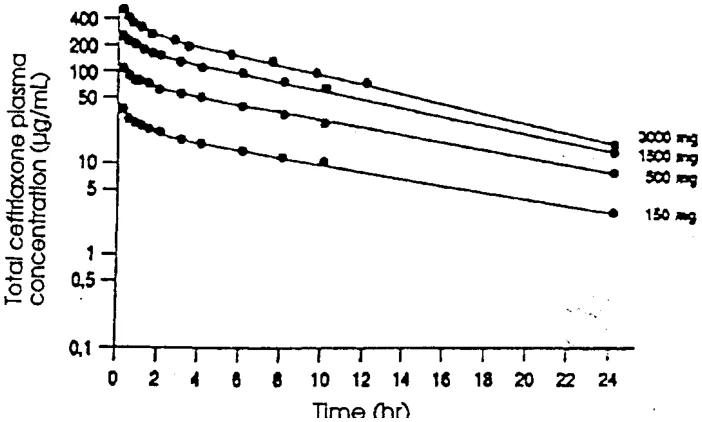
Mean urinary recoveries of unchanged drug over 48 or 52 hours were 58.6 ± 6.6, 64.3 ± 7.3, 65.0 ± 4.3 and 66.6 ± 9.0 percent for the 150, 500, 1500 and 3000 mg doses, respectively. Mean urinary ceftriaxone concentrations for various collection intervals are shown in Table 3.
Table 3 - Urinary Concentrations of Ceftriaxone After Single Dose Bolus Injections
| Time Interval (hr) | Mean Urinary Ceftriaxone Concentrations (mcg/mL)* | |||||||
|---|---|---|---|---|---|---|---|---|
| Dose (mg) | ||||||||
| 150 | 500 | 1,500 | ||||||
0-2 2-4 4-6 6-8 8-10 10-12 12-24 | 189 ± 89 113 ± 64 102 ± 40 84 ± 11 47 ± 19 43 ± 20 28 ± 10 | 894 ± 421 453 ± 249 360 ± 119 329 ± 76 195 ± 66 117 ± 41 82 ± 30 | 3483 ± 951 1530 ± 680 1093 ± 150 833 ± 263 314 ± 188 323 ± 175 158 ± 50 | |||||
*Ceftriaxone urinary concentrations for the 3,000 mg dose were not reported.
Various pharmacokinetic parameters were determined and mean values are reported in Table 4.
Table 4 - Pharmacokinetics of Ceftriaxone After Single Dose Bolus Injections
| Pharmacokinetic Parameters | Dose (mg) | |||
| 150 | 500 | 1500 | 3000 | |
| AUCT(0-∞) (mcg • hr/mL) | 268 ± 52 | 846 ± 179 | 1980 ± 376 | 2725 ± 293 |
| AUCF(0-∞) (mcg • hr/mL) | 10.1 ± 2.0 | 35.6 ± 8.5 | 106 ± 16.0 | 196.6 ± 22.7 |
| ClTp (mL/min)* | 9.7 ± 2 | 10.2 ± 21 | 13 ± 2.6 | 18.5 ± 2.1 |
| ClFp (mL/min)* | 262 ± 47 | 253 ± 52 | 249 ± 36 | 258 ± 31 |
| ClTR (mL/min)** | 6.5 ± 1.3 | 8.2 ± 1.1 | 13.2 ± 1.1 | 33.0 ± 2.6 |
| ClFR (mL/min)** | 169 ± 29 | 174 ± 33 | 165 ± 28 | 189 ± 48 |
| VdT(β) (L) | 7.0 ± 0.5 | 6.7 ± 1.1 | 8.6 ± 0.8 | 12.7 ± 0.9 |
| tT½ (β) (hour)* | 8.6 ± 1.7 | 7.7 ± 1.2 | 7.8 ± 1.0 | 8.0 ± 0.7 |
| tF½ (β) (hour)* | 8.6 ± 1.6 | 7.6 ± 1.2 | 7.6 ± 1.0 | 7.8 ± 0.3 |
* 0-48 hr for 150, 500, 1,500 mg doses and 0-52 hr for the 3,000 mg dose
** 0-2 hr for 150, 500, 1,500 mg doses and 0-1 hr for the 3,000 mg dose
Infusion Over 30 Minutes:
Single Dose:
Ceftriaxone, in 100 mL of saline, was administered as a single dose infusion at a constant rate over 30 minutes to twelve normal volunteers (ten males and two females, mean age 35 years) in three doses: 500, 1,000 and 2,000 mg. The mean total ceftriaxone plasma concentration- time profile for each dose is shown in Figure 2. The total drug concentration-time profiles were biphasic and were fitted to a linear two compartment model.
Figure 2 - Mean total ceftriaxone plasma concentration-time profiles after single dose infusions.
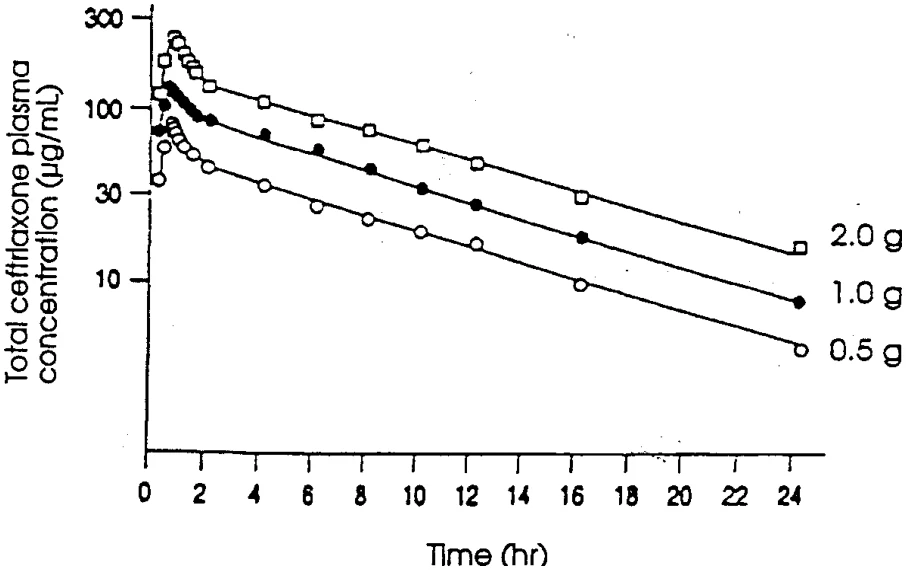
Mean urinary recoveries of unchanged drug over 48 hours were 41±8, 39±5 and 43±10 percent for the 500, 1,000 and 2,000 mg doses, respectively. Mean urinary ceftriaxone concentrations for various collection intervals are shown in Table 5.
Table 5 - Urinary Concentrations of Ceftriaxone After Single Dose Infusions
| Time Interval (hr) | Mean Urinary Ceftriaxone Concentrations (mcg/mL) | ||||||||||
|---|---|---|---|---|---|---|---|---|---|---|---|
| Dose (mg) | |||||||||||
| 500 | 1,000 | 2,000 | |||||||||
| 0-2 | 526 ± 303 | 995 ± 734 | 2692 ± 1403 | ||||||||
| 2-4 | 366 ± 203 | 855 ± 615 | 1976 ± 1047 | ||||||||
| 4-8 | 142 ± 63 | 293 ± 163 | 757 ± 437 | ||||||||
| 8-12 | 87 ± 45 | 147 ± 66 | 274 ± 119 | ||||||||
| 12-24 | 70 ± 25 | 132 ± 47 | 198 ± 93 | ||||||||
A number of pharmacokinetic parameters were determined and the mean values are reported in Table 6.
Table 6 - Pharmacokinetics of Ceftriaxone After Single Dose Infusions
| Pharmacokinetic Parameters | Dose (mg) | ||
|---|---|---|---|
| 500 | 1000 | 2000 | |
| AUCT(0-∞) (mcg.hr/mL) | 551 ± 91 | 1006 ± 118 | 1703 ± 203 |
| V dT(ß) (L) | 8.8 ± 1.22 | 9.2 ± 1.05 | 10.3 ± 1.01 |
| tT1/2(ß) (hour) | 6.5 ± 0.72 | 6.2 ± 0.76 | 5.9 ± 0.69 |
| C1TP (mL/min) | 15.5 ± 2.4 | 16.8 ± 2.1 | 19.8 ± 2.5 |
| C1TR (mL/min) (0-2 hr) | 7.3 ± 1.3 | 9.0 ± 1.6 | 15.3 ± 3.9 |
Multiple Doses:
Seven 500, 1000 or 2000 mg doses of ceftriaxone were administered at 12-hour intervals to normal volunteers as constant rate infusions over 30-minute periods. The 500 and 1000 mg doses were each administered to twelve males (mean ages 29 and 31 years, respectively) and the 2000 mg doses to eleven males and one female (mean age 33 years). Total ceftriaxone plasma Cmax, Cmin and Cave values are reported in Table 7.
Table 7 - Total Ceftriaxone Plasma Cmax, Cmin and Cave Values After Multiple Dose Infusion
| Dose (mg) | Cmax (mcg/mL) | Cmin (mcg/mL) | Cave (mcg/mL) | |
| 500 | First Dose Last Dose | 79 ± 11.5 101 ± 12.7 | 15 ± 4.5 20 ± 5.5 | -- 41 ± 7 |
| 1000 | First Dose Last Dose | 145 ± 11 168 ± 25 | 30 ± 6 35 ± 9.2 | -- 72 ± 13 |
| 2000 | First Dose Last Dose | 255 ± 41 280 ± 39 | 45 ± 11 59 ± 21 | -- 118 ± 19 |
Plasma drug concentrations attained steady state by Day 4. The accumulation of ceftriaxone in plasma after the 500, 1,000 and 2,000 mg doses was 35, 20 and 21 percent, respectively. The predicted accumulation was 40 percent.
Intramuscular Administration
The bioavailability of ceftriaxone by the intramuscular route is approximately 100 percent.
Single Dose:
Ceftriaxone, reconstituted with either water or 1% lidocaine, was administered intramuscularly in a single 500 mg dose to six normal male volunteers (mean age 36 years). The mean total ceftriaxone plasma concentration-time profile for each diluent is shown in Figure 3.
Figure 3 - Mean total ceftriaxone plasma concentration-time profiles after single intramuscular doses.
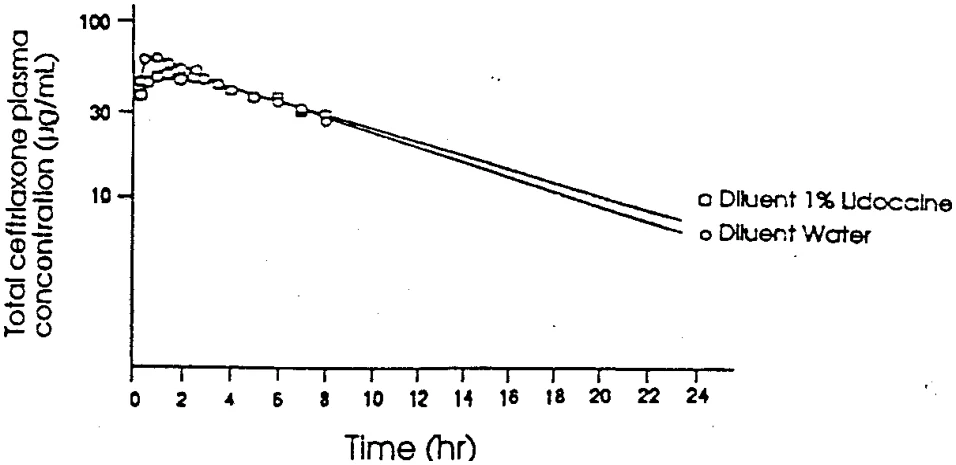
Over 72 hours, 225 ± 40 and 229 ± 26 mg of unchanged ceftriaxone was recovered in the urine after the administration of the water and 1% lidocaine preparations, respectively. Mean urinary ceftriaxone concentrations for various collection intervals are shown in Table 8.
Table 8 - Urinary Concentrations of Ceftriaxone After a Single 500 mg Intramuscular Dose
| Time Interval (hr) | Mean Urinary Ceftriaxone Concentrations (mcg/mL) | ||||||
| Diluent | |||||||
| Water | 1% Lidocaine | ||||||
| 0 - 2 | 176 ± 129 | 176 ± 135 | |||||
| 2 - 4 | 223 ± 156 | 215 ± 124 | |||||
| 4 - 6 | 213 ± 93 | 298 ± 111 | |||||
| 6 - 8 | 198 ± 96 | 216 ± 83 | |||||
| 8 - 24 | 99 ± 44 | 111 ± 43 | |||||
A number of pharmacokinetic parameters were determined and the mean values are reported in Table 9. No significant differences were found between the mean pharmacokinetic parameters of the two preparations.
Table 9 - Pharmacokinetics of Ceftriaxone After a Single 500 mg Intramuscular Dose
| Pharmacokinetic Parameters | Diluent | |
| Water | 1% Lidocaine | |
| Cmax (mcg/mL) | 67.0 ± 9.7 | 55.8 ± 4.5 |
| AUCT(0-∞) (mcg • hr/mL) | 709 ± 58 | 728 ± 63 |
| tT½ (β) (hour) | 8.5 ± 0.7 | 8.4 ± 0.5 |
| ClTR (0 - 8 hr) (mL/min) | 6.9 ± 0.5 | 6.6 ± 0.5 |
Multiple Doses:
Seven 500 or 1,000 mg doses of ceftriaxone, reconstituted with 1% lidocaine, were administered intramuscularly at 12-hour intervals to twelve healthy volunteers (ten males and two females, mean age 36 years). Total ceftriaxone plasma Cmax, Cmin and Cave values are reported in Table 10.
Table 10 - Total Ceftriaxone Plasma Cmax, Cmin and Cave Values After Multiple Intramuscular Doses
Dose (mg) | Cmax (mcg/mL) | Cmin (mcg/mL) | Cave (mcg/mL) | |
| 500 | First Dose Last Dose | 49 ± 11 65 ± 8 | 16 ± 5 24 ± 6 | -- 46 ± 6 |
| 1,000 | First Dose Last Dose | 81 ± 12 114 ± 16 | 29 ± 7 39 ± 8 | -- 70 ± 10 |
Maximum ceftriaxone plasma concentrations were reached 0.75 to 3 hours (mean 1.7 hours) after drug administration. Steady-state plasma concentrations were apparent after the third dose of both dosage regimens, and minimum steady-state plasma concentrations were maintained. The observed mean accumulation ratios were 1.36 and 1.29 after the multiple administration of 500 and 1,000 mg of ceftriaxone respectively. These values were not significantly different from the 1.40 and 1.36 predicted mean accumulation ratios.
Effect of Age on Pharmacokinetics
A representative total ceftriaxone plasma concentration-time profile for an infant (7 months old) and for a child (5.8 years old), each given a single 50 mg/kg dose of ceftriaxone by intravenous injection over 5 minutes, is presented in Figure 4.
Figure 4 - Total ceftriaxone plasma concentration-time profiles after single dose intravenous injections in an infant and a child.
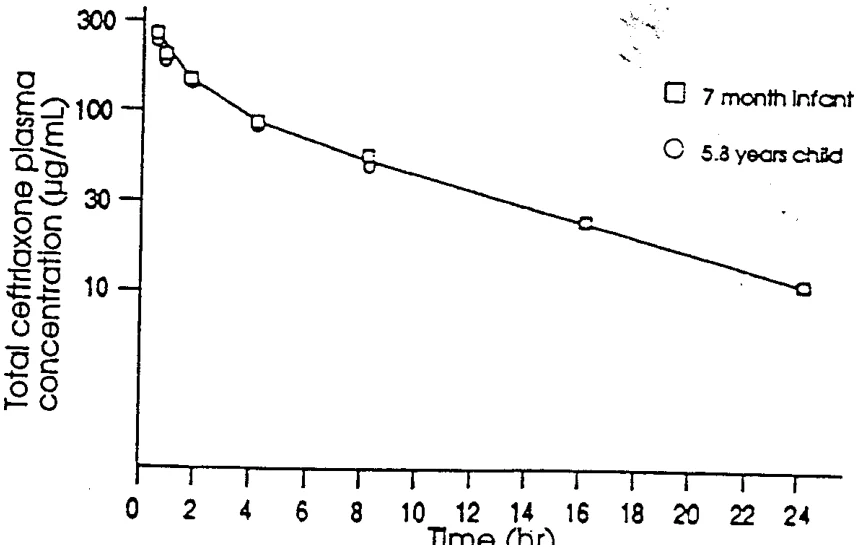
A summary of the age-associated changes in ceftriaxone pharmacokinetics is presented in Table 11. Renal and hepatic function was normal for age on the basis of clinical laboratory findings in these subjects. Ceftriaxone sodium was administered intravenously as a bolus over 2 to 5 minutes or as a 30-minute infusion. The age-associated changes in half-life appear to result from changes in systemic clearance.
Table 11 - Pharmacokinetic Parameters (Mean ± SD) Based on Total Ceftriaxone Plasma Concentration at Various Ages
| Subjects and Underlying Condition | n | Mean Ceftriaxone Dosage (mg/kg) | Age | t½(ß) (hr) | VdT (ß) (L/kg) | ClTp (mL/min/kg) | fu (%) |
| NEONATES | 24 | 50 | 1 - 8 d | 18.6 ± 6.9 | 0.50 ± 0.15 | 0.34 ± 0.13 | 72 ± 20 |
Respiratory distress syndrome (20)*, meningitis or bacteremia (4)* | |||||||
Meningitis or bacteremia | 10 | 86 | 9 - 30 d | 9.7 ± 3.9 | 0.65 ± 0.28 | 0.93 ± 0.66 | 75 ± 21 |
| INFANTS | |||||||
| 11 | 50 (2)* or 95 (9)* | 1 - 12 m | 7.2 ± 3.2 | 0.54 ± 0.25 | 0.93 ± 0.40 | 55 ± 20 | Meningitis or bacteremia (9)*, viral infection or epilepsy (2)* |
| CHILDREN | 5 | 50 | 2 - 6 y | 6.6 ± 0.6 | 0.40 ± 0.08 | 0.71 ± 0.15 | 52 ± 4.7 |
Viral infection or epilepsy | |||||||
| ADULTS | 50 | 13, 14, 25 or 27 | 18 - 49 y | 7.3 ± 1.6 | 0.16 ± 0.03 | 0.24 ± 0.06 | 44 ± 9.8 |
| Healthy volunteers | |||||||
| ELDERLY | 9 | 14 or 27 | 50 - 74 y | 8.3 ± 2.2 | 0.15 ± 0.02 | 0.23 ± 0.07 | 39 ± 11 |
| Healthy volunteers | |||||||
| Healthy volunteers (1)*, bronchitis (10)* | 11 | 14 (1)* or 24 (10)* | 75 - 92 y | 14.2 ± 2.9 | 0.15 ± 0.03 | 0.14 ± 0.04 | -- |
Effect of Renal Impairment on Pharmacokinetics
Twelve functionally anephric patients (six males and six females, mean age 54 years, creatinine clearance ≤ 10 mL/min) received single 150, 500 and 1500 mg doses of ceftriaxone sodium intravenously over 5 minutes. Ten of the twelve patients had non-renal clearance values of free drug similar to healthy subjects. Pharmacokinetic parameters for these ten patients are presented in Table 12. Minor increases were observed in mean elimination half-lives in comparison to normal subjects.
Table 12
Pharmacokinetic Parameters | 150 mg (n = 4) | 500 mg (n = 2) | 1500 mg (n = 4) |
| tT1/2(β) (hr) | 12.4 ± 1.8 | 7.7, 10.3 | 11.8 ± 2.4 |
| tF1/2(β) (hr) | 12.1 ± 1.8 | 7.4, 10.0 | 9.1 ± 1.0 |
| VdT(β) (L) | 9.9 ± 1.9 | 9.7, 12.6 | 13 ± 2.3 |
| VdF(β) (L) | 115.8 ± 35.2 | 69.4, 136.9 | 86.6 ± 17.7 |
| ClTp (mL/min) | 9.3 ± 2.1 | 14.5, 14.1 | 12.9 ± 1.8 |
| ClFp (mL/min) | 109.7 ± 22.4 | 108.1, 158.8 | 119.7 ± 32.5 |
Two of the patients exhibited decreased non-renal clearance values indicating an impairment of their biliary elimination pathway which was not obvious from standard liver function tests.
Pharmacokinetic parameters for these two patients are presented in Table 13. More severe prolongations of their elimination half-lives were observed as well as decreases in total body clearance.
Table 13
Pharmacokinetic Parameters | 500 mg (n = 2) |
| tT1/2 (ß) (hr) | 20.0, 34.8 |
| tF1/2(β) (hr) | 18.4, 32.0 |
| VdT(β) (L) | 9.5, 13.3 |
| VdF(β) (L) | 79.0, 78.1 |
| ClTp (mL/min) | 5.5, 4.4 |
| ClFp (mL/min) | 49.3, 27.9 |
Peritoneal dialysis did not remove ceftriaxone and hemodialysis was not very efficient at removing the drug.
Effect of Hepatic Dysfunction on Pharmacokinetics
The pharmacokinetics of total ceftriaxone were investigated in eight patients with liver disease (five males and three females, mean age 46 years) after a single 1000 mg intravenous dose.
The half-life of ceftriaxone was within the range for normal subjects regardless of the type of liver disease. In the two patients suffering from decompensated liver cirrhosis with ascites, area under the curve was decreased and total body clearance and volume of distribution were significantly increased (Table 14). In the remaining six patients, these parameters were similar to normal.
Table 14
Liver Disease (n) | Fatty Liver (2), Compensated Liver Cirrhosis (2), Liver Fibrosis (1), Liver Damage with Intrahepatic Cholestasis (1) | Decompensated Liver Cirrhosis with Ascites (2) |
| Pharmacokinetic Parameter | ||
| AUCT(0-∞) (mcg • hr/mL) | 1160 ± 217 | 597 ± 49 |
| ClTp (mL/min) | 14.9 ± 3.2 | 28.1 ± 2.3 |
| VdT(β) (L) | 10.9 ± 0.8 | 21.9 ± 3.7 |
| tT½ (β) (hour) | 8.8 ± 2.1 | 9.0 ± 0.8 |
| fu (%) | 61.7 ± 16.9 | 74.8 ± 3.5 |
Tissue and Body Fluids Ceftriaxone Concentration Blister Fluid
Penetration of ceftriaxone into blister fluid is rapid. Pertinent pharmacokinetic parameters, for total ceftriaxone, in plasma and in blister fluid are presented in Table 15. Elimination of ceftriaxone from blister fluid is slightly slower than from plasma.
Table 15 - Plasma And Blister Fluid Pharmacokinetic Parameters
| Subjects (Healthy Volunteers) | Dosage (mg) | Route | Plasma | Blister Fluid | |||||||||||||||
| n | Sex | Age (yr) | AUCT (mcg·hr/mL) | tT½ (hr) | Cmax (mcg/mL) | Cmin (mcg/mL) | AUCT (mcg·hr/mL) | tT½ (hr) | |||||||||||
| 6 | M | 21-37 | Single Dose 500 | Intravenous | 610±122 | 8.8±1.7 | 32.7±7 .0 | - | 569±134 | 10.4±2.7 | |||||||||
| 12 | 6 M 6 F | 19-24 | Multiple Dose 1000 q 12 h for 5 days. First Dose Last Dose | Intravenous | 1218±301 1076±169 | 6.3±1.2 6.7±1.1 | 36.0±10.6 67.0 ±22.0 | 13.6±7.5 39.8±14.2 | 448±159 513±213 | 8.3±2.9 15.0±4.1 | |||||||||
2000 q 24 h for 5 days. First Dose Last Dose | 1987±280 1940±253 | 6.5±0.9 7.2±1.0 | 38.6±10.1 68.9±19.7 | 14.5±8.3 27.1±7.9 | 767±460 1002±285 | 11.5±5.7 12.8±8.0 | |||||||||||||
Cerebrospinal Fluid
Seven infants (4.5 to 15.6 months old) and one child (4.3 years old) received a 50 mg/kg dose of ceftriaxone and eight infants (3.1 to 9.8 months old) received a 75 mg/kg dose, by intravenous injection over five minutes. The pediatric patients had bacterial meningitis or ventriculitis. On average, 3 hours after administration, mean ceftriaxone cerebrospinal fluid concentrations were 4.5 ± 3.5 and 6.0 ± 3.9 mcg/mL after the 50 and 75 mg/kg ceftriaxone doses, respectively.
Ceftriaxone sodium was administered as a single intramuscular injection to one hundred and eight patients, presenting with purulent meningitis. The patients were divided into three groups based on dose. The average (± SD) doses administered in the three groups were 21 ± 2.6, 36 ± 2.4 and 52 ± 1.1 mg/kg. Sixty-two patients were between 10 days and 2 years old, eighteen were between 2 and 9 years old, nine were between 10 and 19 years old and nineteen were between 20 and 83 years old. There were sixty-one males and forty-seven females. CSF concentrations of ceftriaxone were lower than serum concentrations. The mean ceftriaxone concentrations at different times are shown in Table 16. A distinction is made between results for purulent meningitis, as a function of whether bacteriology was positive or negative.
At doses equal to or greater than 35 mg/kg, mean spinal ceftriaxone concentrations were consistently higher than 2 mcg/mL for the 24 hours following the single intramuscular injection.
Table 16 - Ceftriaxone Concentrations in CSF After Intramuscular Injection in 108 Patients
| Culture of CSF | Dose of Ceftriaxone mg/kg (No. of Patients) | Ceftriaxone Concentrations in CSF (mcg/mL) (No. of Assays) | |||||||||||||||
|---|---|---|---|---|---|---|---|---|---|---|---|---|---|---|---|---|---|
| Hour 2 | Hour 6 | Hour 12 | Hour 24 | ||||||||||||||
| Positive | 21 ± 2.6 | 3.70 ± 1.78 | 3.17 ± 1.34 | 2.44 ± 1.33 | 1.70 ± 1.52 | ||||||||||||
| (23) | (13) | (13) | (13) | (6) | |||||||||||||
| 36 ± 2.4 | 3.36 ± 2.36 | 5.72 ± 3.25 | 2.68 ± 2.59 | 2.25 ± 1.54 | |||||||||||||
| (14) | (6) | (10) | (7) | (11) | |||||||||||||
| 52 ± 1.1 | 5.66 ± 2.60 | 6.80 ± 1.76 | 5.62 ± 6.48 | 2.65 ± 1.67 | |||||||||||||
| (49) | (16) | (26) | (4) | (18) | |||||||||||||
| Negative | 41.7 | 2.94 ± 4.48 | 3.21 ± 2.25 | 4.55 ± 7.35 | 1.64 ± 1.45 | ||||||||||||
| (22) | (5) | (10) | (5) | (18) | |||||||||||||
Hepatic Bile
Ceftriaxone concentrations were measured in samples of bile obtained from eight patients (five females and three males, mean age 64 years) undergoing surgery for chronic cholecystitis with cholelithiasis (N=5) or other biliary diseases (N=3). Ceftriaxone sodium was administered at a dosage of 500 mg IV q 12 h for 7 days. Bile samples were obtained daily through a T-tube at various intervals after dosing. Ceftriaxone was detected in all specimens. Two patients had ceftriaxone bile concentrations consistently <16 mcg/mL while the remaining six patients had concentrations ranging from 35 to as high as 924mcg/mL.
The total calcium concentrations in the hepatic bile were also measured. The calculated ionic products of calcium and ceftriaxone ranged from 0.51 to 3.5 x 10⁻⁶. The threshold value for precipitation of the calcium salt of ceftriaxone is 3.16 x 10⁻⁴.
Gallbladder Bile
Seven patients (four females and three males, average age 49 ± 16 years) with relatively normal hepatic enzyme levels were given five doses (five patients) or three doses (two patients) of ceftriaxone sodium IV at a dosage of 2 g q 12 h. The last injection was given 0.1 to 5.3 (mean
2.7) hours before cholecystectomy. The concentrations of ceftriaxone in the gallbladder bile for all seven patients at the time of the operation ranged from 2,970 to 5,884 mcg/mL. The mean total calcium concentration in the gallbladder bile was 5.1 ± 1.3 mmol/L. The calculated ionic product ranged from 2.4 x 10⁻⁵ to 6.2 x 10⁻⁵.
Interaction of Ceftriaxone and Calcium In Vitro
Two in vitro studies, one using adult plasma and the other neonatal plasma from umbilical cord blood, were carried out to assess the interaction of ceftriaxone and calcium. Ceftriaxone concentrations of 0.1-1 mM (55-555 mcg/mL) were incubated for 2 hours with calcium concentrations of 2-12 mM (80-480 mcg/mL). Recovery of ceftriaxone from plasma was statistically significantly reduced at calcium concentrations of 6 mM (240 mcg/mL) or higher in adult plasma and 4 mM (160 mcg/mL) or higher in neonatal plasma. These measures included total free and protein bound ceftriaxone and calcium. The difference observed in the assays may be reflective of ceftriaxone-calcium precipitations.
11 STORAGE, STABILITY AND DISPOSAL
Store in the frozen state, in a freezer capable of maintaining a temperature, at or below -20°C to -25°C. The thawed solution is stable for 21 days under refrigeration (3°C to 7°C) or 48 hours at room temperature (15°C to 25°C). Do not refreeze thawed antibiotics.
12 SPECIAL HANDLING INSTRUCTIONS
Handle frozen product containers with care. Product containers may be fragile in the frozen state.
Disposal of syringes/sharps
The following points should be strictly adhered to regarding the use and disposal of syringes and other medicinal sharps:
- Needles and syringes should never be reused.
- Place all used needles and syringes into a sharps container (puncture -proof disposable container).
- Keep this container out of the reach of children.
- Placing used sharps containers in the household waste should be avoided.
- Dispose of the full container according to local requirements or as instructed by your healthcare provider.
Disposal of unused/expired medicines
The release of pharmaceuticals in the environment should be minimized. Medicines should not be disposed of via wastewater, and disposal through household waste should be avoided. Use established ‘collection systems’ if available at your location
PART II: SCIENTIFIC INFORMATION
13 PHARMACEUTICAL INFORMATION
Drug Substance
Proper name: ceftriaxone sodium Chemical name:
- 6R-[6α, 7β(Z)]]-7-[[(2-Amino-4-thiazolyl)(methoxyimino)acetyl]amino]-8-oxo-3-[[(1,2,5,6- tetrahydro-2-methyl-5,6-dioxo-1,2,4-traizin-3-yl)thio]methyl]-5-thia-1-azabicyclo[4.2.0]oct-2-ene- 2-carboxylic acid, disodium salt hemiheptahydrate
- (6R, 7R)-7-[[(2Z)-(2-Amino-4-thiazolyl)(methoxyimino)acetyl]amino]-8-oxo-3-[[(1,2,5,6-tetrahydro- 2-methyl-5,6-dioxo-1,2,4-traizin-3-yl)thio]methyl]-5-thia-1-azabicyclo[4.2.0]oct-2-ene-2-carboxylic acid, disodium salt hemiheptahydrate
- Disodium (Z)-(6R, 7R)-7-[2-(2-Amino-1,3-thiazol-4-yl)-2-(methoxy-imino)acetamido]-8-oxo-3-[(2,5- dihydro-2-methyl-6-oxido-5-oxo-1,2,4-triazin-3-yl)thiomethyl]-5-thia-1-azabicyclo[4.2.0]oct-2-ene- 2-carboxylate, hemiheptahydrate
- (6R, 7R)-7-[2-(2-Amino-4-thiazolyl)glyoxylamido]-3-[[2,5-dihydro-6-hydroxy-2-methyl-5-oxo-as- traizin-3-yl)thio]methyl]-8-oxo-5-thia-1-azabicyclo[4.2.0]oct-2-ene-2-carboxylic acid 72-(Z)-(O- methyloxime), disodium salt hemiheptahydrate
Molecular formula and molecular mass:
Ceftriaxone Sodium C18H16N8Na2O7S3 ·3½ H2O, 661.6 g / mol
Structural formula:
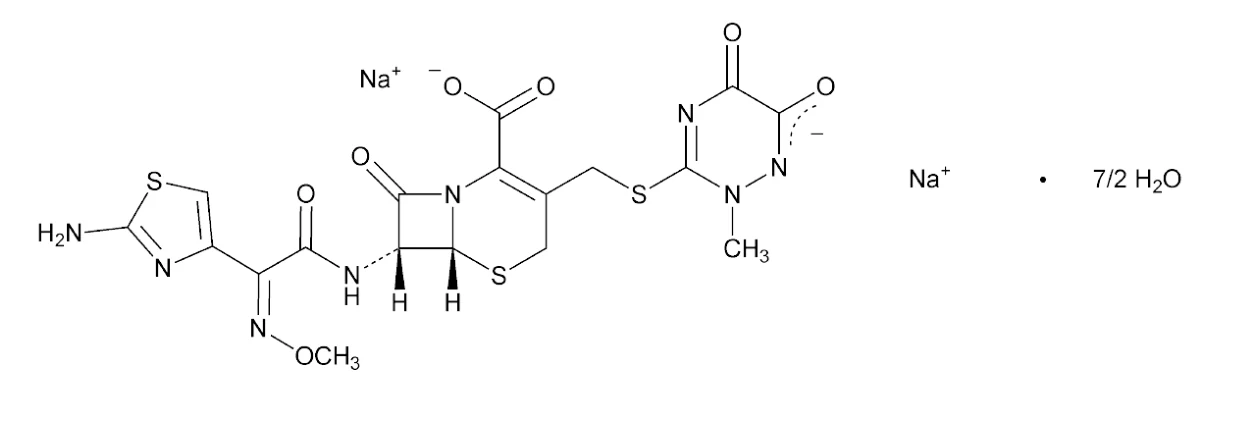
Physicochemical properties:
White or yellowish, crystalline, slightly hygroscopic powder. Freely soluble in water, sparingly soluble in methanol, very slightly soluble in ethanol.
Product Characteristics:
Composition:
Ceftriaxone Injection, USP is supplied as a frozen, iso-osmotic, sterile, nonpyrogenic solution premixed in a dextrose diluent. Dextrose, USP has been added to adjust the osmolality (approximately 1.9 g and 1.2 g as dextrose hydrous to the 1 g and 2 g dosages, respectively). The pH may be adjusted with sodium hydroxide and/or hydrochloric acid. Solutions of premixed Ceftriaxone Injection, USP may range from light yellow to amber in color. After thawing, the solution is intended for intravenous use only. The pH of thawed solutions may range from 6.0 to 8.0.
Ceftriaxone Injection, USP contains approximately 83 mg (3.6 mEq) of sodium per gram of ceftriaxone activity.
14 CLINICAL TRIALS
This information is not available for this drug product.
15 MICROBIOLOGY
The in vitro activity of ceftriaxone against various gram positive and gram negative organisms is presented in Table 17.
Table 17
Cumulative Percentage of Clinical Isolates Inhibited at
≤ Indicated Concentrations of Ceftriaxone (mg/L)*
| Microorganisms (No. of Isolates) | 0.007 8 | 0.016 | 0.031 | 0.062 5 | 0.125 | 0.25 | 0.5 | 1 | 2 | 4 | 8 | 16 | 32 | 64 | 128 | |||||||
| Aerobes Gram Negative | ||||||||||||||||||||||
| Acinetobacter anitratum (28) | 11 | 39 | 96 | 100 | ||||||||||||||||||
| Acinetobacter calcoaceticus (50) | 2 | 6 | 12 | 24 | 32 | 66 | 96 | 100 | ||||||||||||||
| Acinetobacter lwoffi (10) | 10 | 40 | 50 | |||||||||||||||||||
| Citrobacter freundii (21) | 5 | 33 | 62 | 67 | 71 | 95 | ||||||||||||||||
| Enterobacter aerogenes (17) | 24 | 47 | 71 | 82 | 88 | 94 | 100 | |||||||||||||||
| Enterobacter cloacae (40) | 5 | 28 | 50 | 55 | 65 | 75 | 90 | 93 | ||||||||||||||
| Escherichia coli (47) | 6 | 66 | 88 | 94 | 98 | 100 | ||||||||||||||||
| Haemophilus influenzae (16) | 86 | 94 | 100 | |||||||||||||||||||
| Klebsiella oxytoca (21) | 50 | 90 | ||||||||||||||||||||
| Klebsiella species (49) | 50 | 90 | ||||||||||||||||||||
| Klebsiella pneumoniae (56) | 5 | 41 | 86 | 100 | ||||||||||||||||||
| Neisseria gonorrhea (10)** | 90 | 100 | ||||||||||||||||||||
| Microorganisms (No. of Isolates) | 0.007 8 | 0.016 | 0.031 | 0.062 5 | 0.125 | 0.25 | 0.5 | 1 | 2 | 4 | 8 | 16 | 32 | 64 | 128 | |||||||||
| Neisseria meningitidis (22)** | 59 | 68 | 77 | 100 | ||||||||||||||||||||
| Proteus inconstans (5) | 20 | 80 | 100 | |||||||||||||||||||||
| Proteus mirabilis (40) | 60 | 95 | 100 | |||||||||||||||||||||
| Proteus morganii (40) | 18 | 43 | 58 | 75 | 85 | 90 | 93 | 98 | 100 | |||||||||||||||
| Proteus rettgeri (12) | 42 | 58 | 75 | 92 | 100 | |||||||||||||||||||
| Proteus vulgaris (29) | 3 | 14 | 31 | 52 | 72 | 86 | 90 | 97 | 100 | |||||||||||||||
| Pseudomonas aeruginosa (64) | 5 | 28 | 52 | 73 | 95 | 97 | ||||||||||||||||||
| Pseudomonas cepacia (7) | 14 | 43 | 71 | 100 | ||||||||||||||||||||
| Pseudomonas fluorescens (8) | 25 | 75 | ||||||||||||||||||||||
| Pseudomonas maltophilia (9) | 11 | 22 | 67 | 78 | 100 | |||||||||||||||||||
| Pseudomonas putida (9) | 11 | 33 | 78 | 100 | ||||||||||||||||||||
| Salmonella species (18) | 50 | |||||||||||||||||||||||
| Salmonella typhi (30)** | 3 | 7 | 43 | 100 | ||||||||||||||||||||
| Shigella (11)** | 9 | 55 | 73 | 82 | 100 | |||||||||||||||||||
| Serratia marcescens (45) | 4 | 20 | 38 | 47 | 58 | 62 | 64 | 78 | 96 | 98 | ||||||||||||||
| Aerobes Gram Positive | ||||||||||||||||||||||||
| Staphylococcus aureus (34) | 15 | 85 | 91 | 97 | ||||||||||||||||||||
| Microorganisms (No. of Isolates) | 0.007 8 | 0.016 | 0.031 | 0.062 5 | 0.125 | 0.25 | 0.5 | 1 | 2 | 4 | 8 | 16 | 32 | 64 | 128 | ||||||||
| Staphylococcus epidermidis (22) | 9 | 23 | 36 | 50 | 68 | 82 | 95 | ||||||||||||||||
| Streptococcus agalacticae (25) | 48 | 96 | 100 | ||||||||||||||||||||
| Streptococcus pneumoniae (88) | 26 | 39 | 55 | 80 | 90 | 100 | |||||||||||||||||
| Streptococcus pyogenes (15) | 100 | ||||||||||||||||||||||
| Anaerobes Gram Negative | |||||||||||||||||||||||
| Bacteroides SP. (56) | 2 | 4 | 5 | 13 | 29 | 55 | 71 | 84 | 91 | ||||||||||||||
| Fusobacterium SP. (8) | 13 | 25 | 38 | 50 | 63 | ||||||||||||||||||
| Anaerobes Gram Positive | |||||||||||||||||||||||
| Clostridium SP. (10) | 10 | 20 | 50 | 60 | 70 | 80 | 10 0 | ||||||||||||||||
| Peptococcus SP. (15) | 33 | 47 | 53 | 66 | 73 | 100 | |||||||||||||||||
| Peptostreptococcus SP. (8) | 13 | 50 | 88 | 100 | |||||||||||||||||||
* The inoculum size ranged from 103 to 106 cells/mL.
** The inoculum size was not reported.
Methicillin resistant staphylococci and most strains of enterococci, Streptococcus faecalis, Group D streptococci, Clostridium difficile and Listeria monocytogenes are resistant to ceftriaxone.
The MBC/MIC ratio for a selected group of organisms is shown in Table 18.
Table 18
The MBC/MIC Ratio of Ceftriaxone
for Randomly Selected Susceptible Isolates
Microorganisms (No. of Strains) | Mean MBC/MIC Ratio |
|---|---|
Citrobacter freundii (6) Enterobacter cloacae (8) Escherichia coli (8) Klebsiella pneumoniae (8) Proteus mirabilis (8) Proteus morganii (5) (Morganella morganii) Pseudomonas æruginosa (8) Serratia marcescens (8) | 2.00 2.75 1.38 1.13 2.88 1.00 5.25 1.13 |
The effect of inoculum size on the activity of ceftriaxone was dependent upon the strain examined. Increases in inocula size from 103 to 105 CFU/mL had little if any effect on either MIC or MBC for a number of bacterial strains including beta-lactamase producers. However, a 100-fold increase in inocula size from 105 to 107 CFU/mL resulted in 8 to 533-fold increases in MICs and >32 to 4267-fold increases in MBCs for P. æruginosa, S. marcescens and P. vulgaris, and 125 to 8333-fold increases in MICs and >8 to 8333-fold increases in MBCs for beta- lactamase producers. A 10-fold increase in inocula size from 107 to 108 CFU/mL was accompanied by 64 to 1000-fold increases in MICs for S. marcescens and P. vulgaris.
The effects of pH in the range of 6 through 8 are shown in Table 19.
Table 19
Effect of pH on the In Vitro Activity of Ceftriaxone
Organism (No. of Strains) | MIC (mg/L at Indicated pH | ||
|---|---|---|---|
| pH 8 | pH 7 | pH 6 | |
| S. aureus (2) | 3.13 - 6.25 | 3.13 | 0.78 |
| S. epidermidis (1) | 1.56 | 3.13 | 1.56 |
| S. pyogenes (1) | 0.025 | ≤0.012 | ≤0.012 |
| E. coli (3) | ≤0.012-0.10 | 0.025-0.10 | ≤0.012-0.20 |
| K. pneumoniæ (1) | 0.05 | 0.05 | 0.05 |
| S. typhimurium (2) | 0.025-0.100 | 0.05-0.20 | 0.05-0.20 |
| S. marcescens (1) | 1.56 | 0.78 | 0.20 |
| E. cloacæ (1) | 1.56 | 12.5 | 25.0 |
| P. vulgaris (3) | ≤0.012-0.025 | ≤0.012 | ≤0.012-0.025 |
| P. rettgeri (1) | 0.025 | 0.10 | 1.56 |
| P. mirabilis (1) | ≤0.012 | 0.025 | ≤0.012 |
| P. æruginosa (2) | 3.13-12.5 | 3.13-12.5 | 6.25-12.5 |
Heart Infusion Agar
Inoculum: 106 cells/mL
The MICs of laboratory strains of S. aureus, E. coli, P. mirabilis, P. vulgaris and S. marcescens were within one dilution of each other when measured in the following media: Nutrient agar, DST agar, antibiotic medium No. 1 and Mueller-Hinton agar. For P. æruginosa, however, ceftriaxone was 2 to 8-fold more active in Nutrient agar than in the other media.
The effect of human serum on the MICs and the MBCs of various bacteria are shown in Table 20.
Table 20
The Effect of Serum on the MIC and MBC of Ceftriaxone (mg/L)
| Organism (No. of Strains) | Isosensitest Broth | Isosensitest Broth +25% Human Serum | Isosensitest Broth +75% Human Serum | |||
|---|---|---|---|---|---|---|
| MIC | MBC | MIC | MBC | MIC | MBC | |
| E. coli (2) | 0.06 | 0.06 | 0.06-0.12 | 0.06-0.12 | 0.12-0.25 | 0.25 |
| K. pneumoniæ (2) | 0.06 | 0.06 | 0.25 | 0.25 | 0.5 | 0.5 |
| P. mirabilis (1) | 0.008 | 0.015 | 0.015 | 0.03 | 0.06 | 0.06 |
| P. vulgaris (1) | 0.06 | 0.25 | 0.25 | 0.25 | 0.5 | 2.0 |
| P. æruginosa (2) | 4.0-32.0 | 4.0-32.0 | 4.0-64.0 | 16.0-64.0 | 8.0-64.0 | 64.0-128.0 |
| S. aureus (2) | 2.0 | 4.0 | 4.0-16.0 | 8.0-16.0 | 8.0-16.0 | 16.0-32.0 |
The relative rates of hydrolysis of ceftriaxone by various beta-lactamases are shown in Table 21
Table 21
| Beta-Lactamase Sources | Types of Beta-lactamase1 | Richmond-Sykes Classifications | Relative Rate of Hydrolysis2 |
| Escherichia coli3 | Pen | V | 0.1 |
| Klebsiella pneumoniae | Cepha | 111A | 6 |
| Enterobacter cloacae4 | Cepha | 1A | 11 |
| Citrobacter freundii4 | Cepha | - | 21 |
| Serratia marcescens | Cepha | 1A | 0 |
| Morganella morganii4 | Cepha | 1A | 10 |
| Proteus vulgaris4 | Cepha | 1C | 25 |
| Shigella sonnei3 | Pen | - | 0.2 |
| Pseudomonas aeruginosa3 | Pen | V | 0 |
| Pseudomonas aeruginosa | Cepha | 1D | 36 |
| Bacteroides fragilis4 | Cepha | - | 128 |
| Staphylococcus aureus4 | Pen | - | 0 |
| Bacillus cereus | Both | - | 16 |
1 - Pen: primarily penicillin substrate; Cepha: primarily cephalosporin substrate; Both: both types.
2 - Rate in relation to cephaloridine (100%), except for S. aureus and B. cereus, which are based upon hydrolysis of penicillin G (100%).
3 - Plasmid mediated.
4 - Induced with cephalothin.
Development of Resistance:
The acquisition of resistance to ceftriaxone was studied in vitro in eight strains of E. coli. MIC values were determined before and after five passages through sublethal doses of ceftriaxone. As shown in Table 22, the increases in resistance to ceftriaxone ranged from 2 to ≥ 1024-fold.
Table 22
Effect of Five Passages Through Media Containing Ceftriaxone on the Susceptibility of Beta Lactam Sensitive and Resistant E. coli Strains
| Strains | MIC (mg/mL) | MIC Increase (Fold) | Original Susceptibility to Beta-lactams | ||
| Pre-transfer | Post-transfer | Cefazolin | Ampicillin | ||
| NIHJ | 0.1 | 0.2 | 2 | S1 | S |
| IW431 | 0.025 | 0.39 | 16 | S | S |
| IU586 | 0.05 | 0.2 | 4 | S | R2(C)3 |
| IW432 | 0.1 | 25 | 256 | S | R(C) |
| IW434 | 0.1 | 3.13 | 32 | R | R(C) |
| IV 57 | 0.2 | 25 | 128 | R | R(C) |
| IV 84 | 0.78 | 100 | 128 | R | R(C) |
| IU581 | 0.2 | > 100 | ≥ 1024 | R | R(R) 4 |
1 - S = Sensitive
2 - R = Resistant
3 - (C) = Chromosome-mediated resistance.
4 - (R) = R-plasmid-mediated resistance.
Interaction With Other Antibiotics
Combinations of ceftriaxone with aminoglycosides resulted in synergistic effects (i.e. at least a 4-fold decrease in the MICs of both antibiotics) against many strains of Pseudomonas æruginosa and Streptococcus fæcalis in vitro (Table 23), even when the organisms were resistant to the individual antibiotics. A combination of ceftriaxone with cefoxitin produced either synergy or antagonism depending on the species and strain (Table 24).
In in vivo studies synergy was very infrequently observed against Pseudomonas æruginosa with gentamicin (0 of 8 strains at ratios of ceftriaxone: aminoglycoside of 1:1 or 1:8), tobramycin (1 of 8 strains at 1:1 and 0 of 8 at 1:8) and amikacin (0 of 6 strains at 1:1 and 2 of 6 at 1:8). Synergy was not observed against S. fæcalis with either gentamicin or amikacin. Antagonism between ceftriaxone and cefoxitin was observed for 5 of 5 strains of Pseudomonas æruginosa.
Table 23
In Vitro Interaction Between Ceftriaxone and Aminoglycosides
| Aminoglycoside s | Organisms | Sensitivity | No. of Strains | Numberd (%) of Strains at Indicated Ratio of Ceftriaxone: Aminoglycoside | ||||||||
| Optimum Ratio Synergy | 8:1 Ratio Synergy | |||||||||||
| Gentamicin | P. aeruginosa | sens* | 20 | 17(85) | 11(55) | |||||||
| P. aeruginosa | resisa | 7 | 3(43) | 1(14) | ||||||||
| P. aeruginosa | resisb | 6 | 3(50) | 0 | ||||||||
| P. aeruginosa | resisc | 3 | 2(67) | 0 | ||||||||
| S. faecalis | resisb | 1 | - | 0 | ||||||||
| S. faecalis | resisc | 9 | - | 9(100) | ||||||||
| E. coli | sens | 3 | - | 0 | ||||||||
| S. typhimurium | sens | 2 | - | 0 | ||||||||
| Prot. mirabilis | sens | 1 | - | 0 | ||||||||
| Prot. vulgaris | sens | 2 | - | 0 | ||||||||
| Prot. morganii | sens | 1 | - | 0 | ||||||||
| Prot. rettgeri | sens | 1 | - | 0 | ||||||||
| Klebs. pneum. | sens | 2 | - | 0 | ||||||||
| Ent. cloacae | sens | 1 | - | 0 | ||||||||
| Ent. cloacae | resisa | 2 | - | 0 | ||||||||
| S. marcescens | sens | 3 | - | 2(67) | ||||||||
| Aminoglycoside s | Organisms | Sensitivity | No. of Strains | Numberd (%) of Strains at Indicated Ratio of Ceftriaxone: Aminoglycoside | ||||||||
| Optimum Ratio Synergy | 8:1 Ratio Synergy | |||||||||||
| Staph. aureus | sens | 2 | - | 0 | ||||||||
| Tobramycin | P. aeruginosa | sens | 20 | 15(75) | 5(25) | |||||||
| P. aeruginosa | resisa | 10 | 9(90) | 9(20) | ||||||||
| P. aeruginosa | resisb | 6 | 4(67) | 0 | ||||||||
| S. faecalis | resisb | 1 | - | 0 | ||||||||
| S. faecalis | resisc | 9 | - | 9(100) | ||||||||
| E. coli | sens | 3 | - | 0 | ||||||||
| S. typhimurium | sens | 2 | - | 0 | ||||||||
| Prot. mirabilis | sens | 1 | - | 0 | ||||||||
| Prot. vulgaris | sens | 1 | - | 0 | ||||||||
| Prot. morganii | sens | 1 | - | 0 | ||||||||
| Prot. rettgeri | sens | 1 | - | 0 | ||||||||
| Klebs. pneum. | sens | 2 | - | 0 | ||||||||
| Ent. cloacae | sens | 3 | - | 0 | ||||||||
| S. marcescens | sens | 1 | - | 0 | ||||||||
| S. marcescens | resisb | 2 | - | 0 | ||||||||
| Staph. aureus | sens | 1 | - | 0 | ||||||||
| Amikacin | P. aeruginosa | sens | 23 | 16(70) | 13(57) | |||||||
| P. aeruginosa | resisa | 13 | 11(85) | 6(46) | ||||||||
| E. coli | sens | 3 | - | 0 | ||||||||
| S. typhimurium | sens | 2 | - | 0 | ||||||||
| Prot. mirabilis | sens | 1 | - | 0 | ||||||||
| Prot. vulgaris | sens | 2 | - | 0 | ||||||||
| Prot. morganii | sens | 1 | - | 0 | ||||||||
| Prot. rettgeri | sens | 1 | - | 0 | ||||||||
| Klebs. pneum. | sens | 2 | - | 0 | ||||||||
| Ent. cloacae | sens | 1 | - | 0 | ||||||||
| Aminoglycoside s | Organisms | Sensitivity | No. of Strains | Numberd (%) of Strains at Indicated Ratio of Ceftriaxone: Aminoglycoside | ||||||
| Optimum Ratio Synergy | 8:1 Ratio Synergy | |||||||||
| Ent. cloacae | resisa | 2 | - | 0 | ||||||
| S. marcescens | sens | 3 | - | 0 | ||||||
| Staph. aureus | sens | 2 | - | 0 | ||||||
*sens: The organisms were classified as either sensitive or of intermediate sensitivity towards both antibiotics. For ceftriaxone this was ≤ 50 mg/L, for gentamicin ≤ 6.3 mg/L, for tobramycin ≤6.3 mg/L and for amikacin ≤12.5 mg/L.
a: The organism(s) was (were) resistant to ceftriaxone.
b: The organism(s) was (were) resistant to the aminoglycoside studied.
c: The organism(s) was (were) resistant to ceftriaxone and the aminoglycoside studied. d: The number of strains does not necessarily match the total number of strains tested.
This is because no interaction was observed for some strains.
-: No data.
Table 24
In Vitro Interaction Between Ceftriaxone and Cefoxitin
| Organisms | No. of Strains | Number* (%) if Strains at Ratio of 1:1 | |
| Synergy | Antagonism | ||
| P. aeruginosa | 12 | 0 | 11(92) |
| Enterob. cloacae | 7 | 0 | 4(57) |
| P. morganii | 1 | 0 | 1(100) |
| S. marcescens | 3 | 0 | 2(67) |
| Citr. freundii | 2 | 0 | 2(100) |
| Bact. fragilis | 14 | 13(93) | 0 |
| Strep. faecalis | 19 | 19(100) | 0 |
* The number of strains does not necessarily match the total number of strains tested. This is because no interaction was observed for some strains.
Susceptibility Test:
The standard disc susceptibility test (modified Kirby-Bauer method) using the 30 mcg ceftriaxone sodium disc and dilution susceptibility tests should be interpreted according to the criteria in Table 25.
Table 25
| Zone Diameter (30 mcg Ceftriaxone Disc) | Approximate MIC Correlation | |
| Susceptible | ≥ 18 mm | ≤ 16 mg/L |
| Moderately Susceptible | 14 - 17 mm | 32 mg/L |
| Resistant | ≤ 13 mm | ≥ 64 mg/L |
Ceftriaxone has been shown by in vitro tests to be active against certain strains found to be resistant when other beta-lactam discs are used. It is therefore recommended that only the ceftriaxone sodium disc (containing 30 mcg ceftriaxone) be used when conducting susceptibility tests. Similarly, the ceftriaxone sodium disc should not be used for testing susceptibility to other cephalosporins.
The zone diameters produced by a 30 mcg ceftriaxone disc and the MICs determined by ceftriaxone dilution susceptibility testing for recommended reference strains are provided in Table 26.
Table 26
| Reference Strains | Zone Diameter | MIC |
| E. coli (ATCC 25922) | 29 - 35 mm | 0.016 - 0.5 mg/L |
| S. aureus (ATCC 25923) | 22 - 28 mm | 1 - 2 mg/L |
| P. aeruginosa (ATCC 27853) | 17 - 23 mm | 8 - 64 mg/L |
Disc or dilution susceptibility testing may not be appropriate for Pseudomonas species because of a 40 and 31 percent incidence of false susceptible results, respectively.
16 NON-CLINICAL TOXICOLOGY
Acute Toxicity
The acute toxicity of ceftriaxone was determined in mice, rats and rabbits.
Table 27
Acute Toxicity of Ceftriaxone
| Route | Species | Strains | Sex | LD50 mg/kg (95% confidence limit) | Signs |
| Intravenous | Mice | CFI | M F | 1840 (1750 - 1930) 2150 (1940 - 2420) | salivation, respiratory depression, tremors |
| ICR-SLC | M F | 3000 (2778 - 3240) 2800 (2617 - 2996) | transient tremor, staggering gait, irregular respiration, accelerated respiration, sedation, systemic convulsions | ||
| Rats | Sprague Dawley-CD | M, F | 2240 (2040 - 2500) | ataxia, cyanosis, respiratory depression, salivation, Straub reaction, tonic extensor | |
| Sprague Dawley | M, F | 2175 (2033 - 2327) | Systemic stiffness, tonic spasms, dyspnea, staggering gait, irregular respiration, sedation, ataxic walking, cecum enlargement in most animals | ||
| Neonatal Rats* | CD | M, F | 1900 (1600 - 3100) | loss of righting reflex, respiratory depression, cyanosis, gasping, thrashing | |
| Rabbits | New Zealand White | M, F | 240 (69 - 700) | decreased motor activity, respiratory depression, diarrhea, general debilitated condition, irritation of large intestine, thymus congestion, myocardial pallor or hemorrhage | |
| Subcutaneous | Mice | IRC-SLC | M, F | > 5000 | none reported |
| Rats | Sprague Dawley | M, F | > 5000 | sedation, anorexia, ataxia, analgesia, irregular respiration, convulsions, cecum enlargement | |
| Oral | Mice | IRC-SLC | M, F | > 10 000 | none reported |
| Rats | Sprague Dawley | M, F | > 10 000 | cecum enlargement | |
| Intraperitoneal | Neonatal Rats ** | CD | M, F | > 2000 | pallor |
* 14 days old
** >24 hours old
In an intravenous pyramiding dose study in Swiss beagle dogs (one of each sex) daily doses of 100, 200, 400, 800, 1600, 2 x 1600 (12 hours between dosing) and 3 x 1600 mg/kg (8 hours between dosing) of ceftriaxone were administered. The 400 mg/kg dose and higher doses caused some transient screaming, whimpering, gasping for breath and in one case a few clonic convulsions. The symptoms could be largely avoided by slow IV administration. Reversible staggering gait, some dizziness and lassitude were observed at all 1600 mg/kg doses. Some elevations in SGPT (up to 12-fold in one dog) and alkaline phosphatase were observed. At autopsy the gallbladder of both dogs were vastly contracted but contained no concretion-like material.
In another intravenous study in four beagle dogs (two/sex), pyramiding doses of 3.6, 12, 36, 120, 360 and 1200 mg/kg of ceftriaxone were administered at 1 to 2-day intervals. Drug-related signs and symptoms were retching, emesis, head shaking, ear scratching, erythema, edema around the eyes and snout and sporadic panting and licking. Most of these were observed in one animal which may have been atypically responsive to the drug. Following the 1200 mg/kg dose, SGPT was increased by about 10 and 3.5-fold in two dogs. A grey-white, amorphous, non-gritty, sediment was seen in the gallbladder of three dogs at autopsy, 25 days after the last dose.
Multiple Dose Toxicity Studies
Rats
In a 2-week intravenous administration study, groups of eight male Füllinsdorf rats were administered 0, 25 or 60 mg/kg/day of ceftriaxone. Body weight gain was slightly depressed by 9.2 and 20.1 percent in the 25 and 60 mg/kg/day groups respectively. The average weight of the thyroid glands was increased in the treated groups by 11 to 14 percent in comparison to the control animals. A 50 percent reduction in plasma bilirubin in the treated rats was reported along with a decrease in the number of leucocytes.
In a 4-week intravenous study, groups of twenty-four rats (twelve/sex) were administered 0, 25, 125, or 600 mg/kg/day of ceftriaxone. Local and general tolerance were good except that the rapid injection of 600 mg/kg/day resulted in slight and transient giddiness, apathy, lassitude and deep breathing. Some alopecia was noted in two males and four females in the high-dose group and one male in the middle-dose group. Body weight gain was reduced by about 7 percent in the males of the 600 mg/kg/day group. Compared to control rats urine volumes at week 4 of the study were reduced by 18.5 and 40.0 percent in rats treated with 125 and 600 mg/kg/day, respectively. At week 4, one rat of each sex, in the 600 mg/kg/day group developed seizures and convulsions, immediately after injection, and died. At autopsy, all rats in the 125 and 600 mg/kg/day groups showed a marked enlargement of the cecum. There were 18 and
10 percent increases in male and female absolute adrenal gland weights, respectively, in the high-dose group. The average absolute liver weight was decreased by 10 and 17 percent in males in the 125 and 600 mg/kg/day groups, respectively.
Sprague-Dawley rats (sixteen/sex/dose) were administered 0, 100, 350 or 1225 mg/kg ceftriaxone IV daily for 13 weeks after which six rats/sex/dose were observed during a 5-week recovery period. Because of severe damage at the injection site in the 1225 mg/kg/day group, surviving rats were either sacrificed on day 42 or observed during a 4-week recovery period. In the high-dose group, transient staggering gait and accelerated respiration were observed. Convulsions and dyspnea followed by death were observed in two females in this group after 31 to 35 days of dosing. Hematology and blood chemistry changes in comparison to control rats were reported in the 1225 mg/kg/day group only and included: increases in both sexes in MCV and MCH of 12 to 13 and 14 percent, respectively, and, an increase in serum sodium and decreases in Hb, PCV and RBC count of 2, 2.5, 3.3 and 14 percent, respectively, in females. All these changes became normal during the recovery period. During autopsy, vascular occlusion at the injection site was observed in the 350 and 1225 mg/kg/day groups. Cecum enlargement was noted in most treated rats, but returned to normal during the recovery period. In the 1225 mg/kg/day group, half of the animals (both sexes) exhibited a slight petechial bleeding scattered in the subcapsular parts of the thymus. This was not observed in the recovery group animals.
Dogs
In a 2-week study, male Füllinsdorf beagles (two/group) were administered intravenously 0, 25 or 60 mg/kg/day of ceftriaxone for 2 weeks. The average body weight gains were 8, 4 and 2 percent in the control, low and high-dose groups, respectively. Slight dose-related decreases in serum gamma-globulin and potassium along with a slight dose-related increases in total bilirubin, serum albumin and albumin/globulin ratio were reported.
In a 4-week study, groups of beagle dogs (two or three/sex/dose) were administered intravenously 0, 25, 150 or 400 mg/kg/day of ceftriaxone. Injection of the drug induced some initial vomiting in one dog in the middle-dose group and in all dogs in the high-dose group.
Rectal temperature was slightly raised in the high-dosed dogs at the end of the study. In the treated groups, there was about a 10 percent reduction in lymphocyte count in the middle and high-dose groups after four weeks’ administration. After four weeks’ administration, SGPT was elevated by 4.3, 6.4 and 29-fold and alkaline phosphatase was elevated by 2.7, 1.9 and 3.2-fold in one dog in the middle-dose group and two dogs in the high-dose group, respectively. At autopsy five of six middle-dose dogs and all high-dose dogs had some gritty and occasionally clotted concretions in their gallbladder consisting predominantly of the calcium salt of ceftriaxone. The bile of the high-dose dogs was normal except for an almost doubled content of bile acids and a 50 percent reduction in iron content. Histologically, perivascular hemorrhage, periarteritis or periphlebitis were noted at the injection site. The centrilobular liver cells showed a slightly increased tendency to cloudy swelling and some limited proliferation of pseudo biliary ducts with the higher dose.
In a 4 ½-week study, groups of four Füllinsdorf beagle dogs (two/sex/group) were administered ceftriaxone intravenously at dosages of 0, 50 mg/kg/day, 50 mg/kg twice daily, 50 mg/kg three times daily or 75 mg/kg three times daily. Changes in some hematological parameters and liver function tests, although statistically significant, were not considered outside the normal ranges or drug-related. At autopsy, gallbladder concrements containing 30-40 percent, of the calcium salt of ceftriaxone were found in two of the four dogs in the 50 mg/kg twice and three times daily groups. This was also found in three of the four dogs in the 75 mg/kg three times daily group. Dogs in the 50 mg/kg/day, as well as one dog in each of the other ceftriaxone treated groups, had flaky, mucous precipitate in the gallbladder containing 3 percent or less of the calcium salt of ceftriaxone. Histologically, some minor centrilobular liver cell swelling was observed and polarising crystals in the lumen of the gallbladder were observed in one dog in the 50 mg/kg three times daily group and in three dogs in the 75 mg/kg three times daily group.
In a 5-week study, groups of eight beagle dogs (four/sex/group) were administered ceftriaxone intravenously at doses of 0, 60, 120 or 240 mg/kg/day. One animal/sex/group was then allowed to recover for 4 weeks. The dogs were fed three times daily. Occasional vomiting was reported in all groups studied including the control animals. In the 120 and 240 mg/kg/day groups, dose independent statistically insignificant decreases in the average platelet counts (27 and 41 percent in males and females, respectively) were reported at the end of the 5-week treatment period. Sporadic elevations in alkaline phosphatase and transaminases were observed for some of the treated animals (approximately 1 ½ to 2-fold). No evidence of precipitation in the gallbladder was reported.
In another 5-week study, ceftriaxone was administered IV in doses of 200 or 400 mg/kg/day to groups of two male and two female beagles. Precipitates were found in the bile of three of the four dogs sacrificed at the end of the dosing period, but in none of the four sacrificed after a 5 week recovery period. The one dog having no precipitation after 5 weeks of treatment (with 400 mg/kg/day) had eaten soon after each injection. Analysis showed the precipitate contained ceftriaxone (0.32-0.57 mcmol/mg) and calcium (0.25-0.47 mcmol/mg). The calcium concentrations in the bile were slightly decreased in the treated dogs (0.30-0.37 mg/mL compared with 0.38-0.39 mg/mL in controls).
To investigate the association of precipitate formation with eating habits, ceftriaxone was given as single IV doses of 200 or 450 mg/kg to beagles, 3 hours before autopsy. Precipitates in the bile were found in all the dogs given the drug after a 24-hour fast, but in none of those fed just before or just after injection. The bile volume and the calcium concentration in the gallbladder bile were almost twice as high and the concentration of ceftriaxone in the gallbladder bile (excluding the precipitates) was over 5 times higher in the fasting dogs.
In an in vitro study, mixing the bile from the fasting dogs with an equal volume of either a 10 or 5 percent solution of ceftriaxone in dog serum at 37°C led to precipitation within 10 or 24 hours, respectively. No precipitate formed, however, in the bile from the fed dogs under the same conditions, even at the ceftriaxone concentration of 10 percent.
Further long-term intravenous studies in beagle dogs showed that ceftriaxone doses of 60, 120 or 240 mg/kg/day administered for 5 weeks to dogs (three/sex/dose), fed three times a day, was not associated with bile precipitate. However, when ceftriaxone was administered to dogs for 13 weeks, under the same feeding conditions as in the preceding 5-week study, bile precipitates were observed in three of the three male and two of the three female dogs treated with 240 mg/kg/day. Almost all the precipitate disappeared from the gallbladder after the 5 week recovery period. No bile precipitate was found in the dogs treated with 120 mg/kg/day or less.
Baboon
In a 29-day toxicity study, groups of four baboons (two/sex/group) we re administered intravenously 0, 25, 150 or 400 mg/kg/day of ceftriaxone. Diarrhea was a frequent finding in the treated animals. Occasional vomiting was observed. Urinary N-acetylglucosaminidase was statistically significantly increased in the 400 mg/kg/day group. Plasma urea concentrations were statistically significantly increased in this high-dose group, but remained within normal range. No drug-related histological changes or gallbladder precipitates were observed.
Groups of baboons (three/sex/dose) were given ceftriaxone IV in doses of 0, 30, 150, 400 or 700 mg/kg daily for 26 weeks. Early in the study, emesis and soft stools or diarrhea were noted, particularly at doses of 150 mg/kg daily or greater. Late in the study, sclerosis of the veins used for injection was seen in some animals in the 400 and 700 mg/kg/day groups. Other drug- related findings in some animals in the 700 mg/kg/day group were lethargy, decreased activity, pale oral mucosa or facial colour, unthrifty and hunched appearance, sunken eyes, body sores, tremors, weight loss, dehydration and a sweet body odour. Treatment-related hematological changes included decreases in platelet counts particularly in females (up to 51 percent), sporadic increases in reticulocyte counts and transient prolongation of clotting times. The less than 15 percent decreases in hematocrit, hemoglobin and erythrocyte counts found early in the study in the highest dosed group largely returned to normal by the end of the study. The mean SGPT (serum ALT) values were increased by 2 or 3-fold in all treated males at week 4, but were subsequently normal. One male in the highest dose group gradually deteriorated with signs of uremia and was sacrificed at week 20. All other animals were autopsied after 26 weeks of treatment. Increases in absolute kidney weight of 12, 38 and 42 percent were noted in females dosed at 400 mg/kg/day and in males and females dosed at 700 mg/kg/day, respectively. Nephropathy was found in the 150, 400 and 700 mg/kg/day groups. In the animals treated with 150 mg/kg/day, it was minimal (greenish-brown granular pigment in regenerative tubular epithelium). At the two highest dose levels, the nephropathy ranged from minimal to moderately severe with necrosis, microliths and regeneration of the renal tubuli. Secondary to the nephropathy there was thymic atrophy in four animals and decreased bone marrow cellularity in two. In the gallbladder, no precipitation was found in the baboons given 30 or 150 mg/kg/day. Soft or granular deposits were found in the gallbladders of some animals treated with 400 or 700 mg/kg/day.
Microscopic choleliths and/or amorphous material were also noted in the lumen in most males of the two highest dose groups.
Fertility and Reproduction Study
Groups of Sprague-Dawley rats (twenty-two/sex/dose) received 0, 100, 350 or 700 mg/kg ceftriaxone IV daily. The males were dosed for at least 60 days prior to and during mating and the females for at least 14 days prior to mating and throughout gestation and lactation. The delivery was natural in twelve females per group and by Cesarian section in the others. Copulation, fertilization and pregnancy were not impaired. There was a tendency to cecal enlargement in all treated groups.
No adverse effects were found on the numbers or relative proportions of corpora lutea and implantations, or on the resorption rate or fetal weight. No visceral or skeletal abnormalities were found in the fetuses from either the control or the treated animals.
In the dams which delivered normally, no adverse effects were seen during lactation or on the numbers of implantation sites and live births. The gestation, viability and lactation indices were not affected and neonatal body weight at birth and throughout lactation were normal. The general appearance, behaviour and sensory function of all the offspring were normal during the suckling period and at autopsy.
Tetratology Studies
Mouse
Groups of thirty female Füllinsdorf albino mice were given 0, 100, 250 or 625 mg/kg ceftriaxone IV daily from day 7 to day 16 of gestation. About twenty animals per group were sacrificed on day 19 and the remainder allowed to deliver normally and rear their young.
In the groups that were sacrificed on day 19, the incidence of 14 ribs was much greater (18 fetuses all from one litter) in the high-dose group than in the control group (2 fetuses). In the groups that were permitted to deliver normally, the percentage of resorptions per implantation appeared to increase in a dose-related manner: 6.5, 10.5, 11.1, 17.8 percent at doses of 0, 100, 250, 625 mg/kg/day, respectively. The pups showed a uniform increase in body weight during the lactation period. No indications of any embryotoxic or teratogenic effect (except for exencephaly observed in one fetus at the lowest dosage group) of the drug were found.
Rat
Groups of thirty female Sprague-Dawley rats were given 0, 100, 350 or 700 mg/kg ceftriaxone IV daily from day 7 to day 17 of gestation. Twenty animals per group were sacrificed on day 21 and the remaining ten were allowed to deliver normally.
No dams died during gestation or lactation. There were no drug-related differences in average litter size, resorption rate or fetal body weight between the control and treated groups. The drug produced no external, visceral or skeletal abnormalities in the fetuses.
Rabbit
Groups of seven to twelve rabbits were given 0, 20 or 100 mg/kg ceftriaxone IV daily from day 7 to day 19 of gestation. The drug was poorly tolerated by the dams, death occurring in 50 and 30 percent of the dams in the high and low-dose groups, respectively. Diarrhea was seen in most of the dams (heavy in all high-dose animals). All animals in the high-dose group experienced vaginal bleeding. The number of resorptions was significantly increased: 100 percent of implantations at the high dose and 50.6 percent at the low dose. Examination of surviving fetuses (low-dose group) provided no evidence of any teratogenic effect of the drug.
Monkey
Ceftriaxone was given IV in a dose of 100 mg/kg/day to ten Cynomolgus monkeys (group A) from day 21 to day 31 of gestation and to nine (group B) from day 32 to day 45 of gestation. A control group (nine animals) received the vehicle from day 21 to day 45 of gestation. Fetuses were delivered by Cesarian section on day 100 ± 1 of gestation and immediately examined for abnormalities.
Abortion occurred in two control monkeys, one in group A and two in group B. Mild diarrhea occurred in two animals in each of the treatment groups. The body weights of the fetuse s from group B (average of approximately 99 grams) were decreased in comparison to controls (average of approximately 108 grams). All other findings were normal and there were no fetal malformations.
Perinatal and Postnatal Study
Groups of twenty female Sprague-Dawley rats were given ceftriaxone IV in doses of 0, 100, 350 and 700 mg/kg/day from day 17 of gestation and throughout lactation. All were allowed to give birth naturally.
No maternal deaths occurred. Body weight gain and food intake were slightly diminished in all treated dams during gestation but not during lactation. Parturition occurred normally. At autopsy, cecal enlargement was seen in all treated dams. The average numbers of implantations and of live and dead births were similar in all groups. Neonatal viability, body weight, appearance, behaviour and sensory function were not affected by the drug. No notable external, visceral or skeletal anomalies were seen.
During the 8-week observation period after weaning, no notable effects were seen on mean body weight, emotional behaviour, learning ability, fertility or reproductive performance of the F1 rats.
Mutagenicity Studies
In the Ames test, ceftriaxone did not induce mutations in various Salmonella typhimurium strains at concentrations up to 100 ng/plate either with or without activation by a rat liver homogenate fraction. Higher concentrations were bactericidal to these strains.
In the micronucleus test, groups of three mice/sex/dose were given 18, 84.0 or 420.0 mg/kg ceftriaxone IV 30 and 6 hours before sacrifice. No drug-related increases in micronuclei were found. Hence, under the conditions used, the drug does not induce chromosome breaks or mitotic non-disjunctions in mouse bone marrow cells.
In a third study, lymphoblasts obtained from human peripheral blood lymphocytes were exposed in vitro to ceftriaxone at a concentration of 0.2, 2 or 20 mg/mL culture medium for 24 hours. No increase in chromosome aberrations was observed with the first two concentrations. The highest concentration could not be evaluated since it was toxic to the cells.
Other Studies
Tolerance Studies
Intramuscular Route
Female albino rats were given 0.2 mL of freshly prepared injections of ceftriaxone in water into the rectus femoris muscle of a hind leg. The increases in SGOT levels 24 hours after administration were 44 and 58 percent for 119 and 289 mg/mL solutions of ceftriaxone, respectively.
New Zealand white rabbits received 0.1 or 1.0 mL injections of a low concentration (10 mg/mL) or a high concentration (600 mg added to 1.7 mL) of ceftriaxone in water, or distilled water into the sacrospinalis muscle. While 0.1 mL of the low concentration was not more irritating than the vehicle, 0.1 mL of the high concentration and 1.0 mL of both concentrations produced significant muscle irritation estimated in terms of swelling, edema, hemorrhage and necrosis. The irritation appeared to be dependent upon both volume and dose.
Intramuscular injection of a 100 mg/mL solution of ceftriaxone in a dose of 100 mg/kg caused a 4-fold rise in plasma SGOT in one dog and a 47 percent increase in another. Slight pain occurred during injection in both animals.
Intravenous Route
An aqueous solution containing 100 mg/mL ceftriaxone was diluted 1, 3 or 7-fold with normal saline solution and incubated with citrated whole canine blood for 5 minutes. No hemolysis occurred.
Injection of 0.5 mL of ceftriaxone disodium aqueous solution (100 mg/mL) into the rabbit ear vein was well tolerated.
A 10 mg/mL solution of ceftriaxone in water was administered IV to dogs (0.4 mL/kg) at a rate of 1.25 mL/min. Analysis of plasma for hemoglobin just before and 1 minute after infusion did not reveal any detectable hemolysis. Gross examination of the injection sites 24 hours later did not reveal any venous irritation. In another study in dogs, a 40 mg/mL solution of ceftriaxone in 5% dextrose solution was infused IV at the same rate to achieve a dose of 16 mg/kg (0.4 mL/kg). No appreciable hemolysis and no venous irritation were found.
Intrathecal Route
Cerebrospinal fluid (3 mL in one dog and 2 mL in seven dogs) was withdrawn from Swiss beagle dogs (four males and four females) anaesthetised with pentobarbital and replaced by ceftriaxone solution (100 mg/mL) or isotonic saline. The 3 mL replacement dose was too toxic. Injection of ceftriaxone (2 mL) immediately resulted in depression of breathing followed by temporary apnea (2-3 minutes), significant tachycardia, opisthotonus and tetanic convulsions. After 24 hours, convulsions and central nervous disorders were still present and the CSF contained increased protein and mono- and polynucleated cells. At autopsy, the brain was normal, but the subarachnoid space was dilated with infiltration of polymorphonuclear leucocytes and edema. No abnormal findings were observed in control dogs given saline.
Nephrotoxicity
Male rabbits (three/dose) were administered single SC injections of 100, 200 or 400 mg/kg ceftriaxone. No drug-related renal changes were reported but a 4-5 percent loss of body weight was observed.
Another study was carried out comparing ceftriaxone, cephaloridine and cefoxitin at single doses of 30, 300 or 1000 mg/kg in rabbits. Slight to moderate focal or multi -focal necrosis of kidney tubular epithelium was observed in rabbits dosed with 1000 mg/kg of ceftriaxone.
17 SUPPORTING PRODUCT MONOGRAPHS
- 1. Ceftriaxone Sodium for Injection (powder for solution, 1 g and 10 g)), submission control 246728, Product Monograph, Teva Canada Limited. (May 26, 2021)
- 2. Rocephin (powder for solution, 250 mg and 1g), submission control 134328, Product Monograph, Hoffman-La Roche Ltd., Canada. (FEB 09, 2010).
- 3. Ceftriaxone Sodium for Injection BP (powder for solution, 250 mg, 1 g, 2 g and 10 g), submission control 255080, Product Monograph, Sandoz Canada Inc. (JAN 6, 2022).