


Product Monograph - Climara 100
SUMMARY PRODUCT INFORMATION
Product Information Summary
| Route of Administration | Dosage Form / Strength | Clinically Relevant Nonmedicinal Ingredients |
| topical | transdermal system / 0.025 mg/day 0.05 mg/day 0.075 mg/day 0.1 mg/day | acrylate copolymer (consisting of isooctyl acrylate, acrylamide, vinyl acetate copolymer), ethyl oleate, glyceryl monolaurate, isopropyl myristate For a complete listing see Dosage Forms, Composition and Packaging section. |
INDICATIONS AND CLINICAL USE
CLIMARA (estradiol hemihydrate transdermal system) is indicated for:
- the relief of menopausal and postmenopausal symptoms occurring in naturally or surgically induced estrogen deficiency states.
CLIMARA 50, 75 and 100 are indicated for:
- the prevention of osteoporosis in naturally occurring or surgically induced estrogen-deficiency states. In post-menopausal women already diagnosed as having osteoporosis and vertebral fractures, treatment with CLIMARA may retard further bone loss.
CLIMARA 25 is not indicated for the prevention of osteoporosis.
When CLIMARA is prescribed solely for the prevention of postmenopausal osteoporosis, it is to be considered in light of other available therapies. Adequate diet, calcium and vitamin D intake, cessation of smoking as well as regular physical weight bearing exercise are required in addition to the administration of CLIMARA.
CLIMARA should be prescribed with an appropriate dosage of a progestin for women with intact uteri, in order to prevent endometrial hyperplasia/carcinoma.
CONTRAINDICATIONS
CLIMARA (estradiol hemihydrate transdermal system) should not be used in individuals with any of the following conditions:
- Hypersensitivity to this drug or to any ingredient in the formulation or component of the container. For a complete listing, see the Dosage Forms, Composition and Packaging section of the product monograph.
- Liver dysfunction or disease as long as liver function tests have failed to return to normal.
- Known or suspected estrogen-dependent malignant neoplasia (e.g. endometrial cancer).
- Endometrial hyperplasia.
- Known, suspected, or past history of breast cancer.
- Undiagnosed abnormal genital bleeding.
- Known or suspected pregnancy or lactation.
- Active or past history of arterial thromboembolic disease (e.g. stroke, myocardial infarction, coronary heart disease).
- Active or past history of confirmed venous thromboembolism (such as deep vein thrombosis or pulmonary embolism) or active thrombophlebitis.
- A high risk of venous or arterial thrombosis, including known thrombophilic disorders (see WARNINGS AND PRECAUTIONS)
- Partial or complete loss of vision due to ophthalmic vascular disease.
- Presence or history of liver tumours (benign or malignant)
WARNINGS AND PRECAUTIONS
Serious Warnings and Precautions The Women=s Health Initiative (WHI) trial examined the health benefits and risks of oral combined estrogen plus progestin therapy (n=16,608) and oral estrogen-alone therapy (n=10,739) in postmenopausal women aged 50 to 79 years.1-3 The estrogen plus progestin arm of the WHI trial (mean age 63.3 years) indicated an increased risk of myocardial infarction (MI), stroke, invasive breast cancer, pulmonary emboli and deep vein thrombosis in postmenopausal women receiving treatment with combined conjugated equine estrogens (CEE, 0.625 mg/day) and medroxyprogesterone acetate (MPA, 2.5 mg/day) for 5.2 years compared to those receiving placebo.1 The estrogen-alone arm of the WHI trial (mean age 63.6 years) indicated an increased risk of stroke and deep vein thrombosis in hysterectomized women treated with CEE-alone (0.625 mg/day) for 6.8 years compared to those receiving placebo.2 Other doses of oral conjugated estrogens with medroxyprogesterone acetate, and other combinations and dosage forms of estrogens and progestins were not studied in the WHI clinical trials and, in the absence of comparable data, these risks should be assumed to be similar. |
Therefore, the following should be given serious consideration at the time of prescribing:
|
General
The effects of CLIMARA on the ability to drive and use machines have not been studied.
Carcinogenesis and Mutagenesis
Breast Cancer
Available epidemiological data indicate that the use of combined estrogen plus progestin by postmenopausal women is associated with an increased risk of invasive breast cancer.
In the estrogen plus progestin arm of the WHI trial, among 10,000 women over a one-year period, there were:
- 8 more cases of invasive breast cancer (38 on combined HRT versus 30 on placebo).1
The WHI study also reported that the invasive breast cancers diagnosed in the estrogen plus progestin group were similar in histology but were larger (mean [SD], 1.7 cm [1.1] vs 1.5 cm [0.9], respectively; P=0.04) and were at a more advanced stage compared with those diagnosed in the placebo group. The percentage of women with abnormal mammograms (recommendations for short-interval follow-up, a suspicious abnormality, or highly suggestive of malignancy) was significantly higher in the estrogen plus progestin group versus the placebo group. This difference appeared at year one and persisted in each year thereafter.3
In the estrogen-alone arm of the WHI trial, there was no statistically significant difference in the rate of invasive breast cancer in hysterectomized women treated with conjugated equine estrogens versus women treated with placebo.2
It is recommended that estrogens not be given to women with existing breast cancer or those with a previous history of the disease (see CONTRAINDICATIONS).
There is a need for caution in prescribing estrogens for women with known risk factors associated with the development of breast cancer, such as strong family history of breast cancer (first degree relative) or who present a breast condition with an increased risk (abnormal mammograms and/ or atypical hyperplasia at breast biopsy).
Other known risk factors for the development of breast cancer such as nulliparity, obesity, early menarche, late age at first full term pregnancy and at menopause should also be evaluated.
It is recommended that women undergo mammography prior to the start of HRT treatment and at regular intervals during treatment, as deemed appropriate by the treating physician and according to the perceived risks for each patient. HRT increases the density of mammographic images which may adversely affect the radiological detection of breast cancer in some cases.
The overall benefits and possible risks of hormone replacement therapy should be fully considered and discussed with patients. It is important that the modest increased risk of being diagnosed with breast cancer after 4 years of treatment with combined estrogen plus progestin HRT (as reported in the results of the WHI trial) be discussed with the patient and weighed against its known benefits.
Instructions for regular self-examination of the breasts should be included in this counselling.
Ovarian Cancer
Some recent epidemiologic studies have found that the use of hormone replacement therapy (estrogen-alone and estrogen plus progestin therapies), in particular for five or more years, has been associated with an increased risk of ovarian cancer.
Endometrial Hyperplasia and Endometrial Carcinoma
Estrogen-only HRT increases the risk of endometrial hyperplasia if taken by women with intact uteri.
Estrogen should be prescribed with an appropriate dosage of progestin for women with intact uteri in order to prevent endometrial hyperplasia/carcinoma.
Clinical surveillance of all women taking estrogen/progestin combinations is important. Adequate diagnostic measures, including endometrial sampling when indicated, should be undertaken to rule out malignancy in all cases of undiagnosed persistent or recurring abnormal vaginal bleeding.
Pituitary Tumors
Close medical supervision (including periodic measurement of prolactin levels) is necessary if the patient suffers from hyperprolactinemia, prolactinoma, or is at risk of developing prolactinoma.
Cardiovascular
The results of the Heart and Estrogen/progestin Replacement Studies (HERS and HERS II) and the Women's Health Initiative (WHI) trial indicate that the use of estrogen plus progestin is associated with an increased risk of coronary heart disease (CHD) in postmenopausal women.1,4,5 The results of the WHI trial indicate that the use of estrogen-alone and estrogen plus progestin is associated with an increased risk of stroke in postmenopausal women.1,2
WHI trial findings
In the combined estrogen plus progestin arm of the WHI trial, among 10,000 women over a one-year period, there were:
- 8 more cases of stroke (29 on combined HRT versus 21 on placebo)
- 7 more cases of CHD (37 on combined HRT versus 30 on placebo).1
In the estrogen-alone arm of the WHI trial of women with prior hysterectomy, among 10,000 women over a one-year period, there were/was:
- 12 more cases of stroke (44 on estrogen-alone therapy versus 32 on placebo)
- no statistically significant difference in the rate of CHD.2
HERS and HERS II findings
In the Heart and Estrogen/progestin Replacement Study (HERS) of postmenopausal women with documented heart disease (n=2763, average age 66.7 years), a randomized placebo-controlled clinical trial of secondary prevention of coronary heart disease (CHD), treatment with 0.625 mg/day oral conjugated equine estrogen (CEE) plus 2.5 mg medroxyprogesterone acetate (MPA) demonstrated no cardiovascular benefit. Specifically, during an average follow-up of 4.1 years, treatment with CEE plus MPA did not reduce the overall rate of CHD events in postmenopausal women with established coronary heart disease. There were more CHD events in the hormone-treated group than in the placebo group in year 1, but not during the subsequent years.4
From the original HERS trial, 2321 women consented to participate in an open label extension of HERS known as HERS II. Average follow-up in HERS II was an additional 2.7 years, for a total of 6.8 years overall. After 6.8 years, hormone therapy did not reduce the risk of cardiovascular events in women with CHD.5
Blood pressure
Women using hormone replacement therapy sometimes experience increased blood pressure. Blood pressure should be monitored with HRT use. Elevation of blood pressure in previously normotensive or hypertensive patients should be investigated and HRT may have to be discontinued.
Ear/Nose/Throat
Estrogens should be used with caution in patients with otosclerosis.
Endocrine and Metabolism
Glucose and lipid metabolism
A worsening of glucose tolerance and lipid metabolism have been observed in a significant percentage of peri- and post-menopausal patients. Therefore, diabetic patients or those with a predisposition to diabetes should be observed closely to detect any alterations in carbohydrate or lipid metabolism, especially in triglyceride blood levels.
Women with familial hyperlipidemias need special surveillance. Lipid-lowering measures are recommended additionally, before treatment is started.
Heme Metabolism
Women with porphyria need special surveillance.
Calcium and phosphorus metabolism
Because the prolonged use of estrogens influences the metabolism of calcium and phosphorus, estrogens should be used with caution in patients with metabolic and malignant bone diseases associated with hypercalcemia and in patients with renal insufficiency.
Hypothyroidism
Patients who require thyroid hormone replacement therapy and who are also taking estrogen should have their thyroid function monitored regularly to assure that thyroid hormone levels remain in an acceptable range (see Drug-Laboratory Test Interactions).
Genitourinary
Vaginal bleeding
Abnormal vaginal bleeding, due to its prolongation, irregularity or heaviness, occurring during therapy should prompt appropriate diagnostic measures to rule out the possibility of uterine malignancy and the treatment should be re-evaluated.
Uterine leiomyomata
Pre-existing uterine leiomyomata may increase in size during estrogen use. Growth, pain or tenderness of uterine leiomyomata requires discontinuation of medication and appropriate investigation.
Endometriosis
Symptoms and physical findings associated with a previous diagnosis of endometriosis may reappear or become aggravated with estrogen use.
Hematologic
Venous thromboembolism
Available epidemiological data indicate that use of estrogen with or without progestin by postmenopausal women is associated with an increased risk of developing venous thromboembolism (VTE).
In the estrogen plus progestin arm of the WHI trial, among 10,000 women on combined HRT over a one-year period, there were 18 more cases of venous thromboembolism, including 8 more cases of pulmonary embolism.1
In the estrogen-alone arm of the WHI trial, among 10,000 women on estrogen therapy over a one-year period, there were 7 more cases of venous thromboembolism, although there was no statistically significant difference in the rate of pulmonary embolism.2
Generally recognized risk factors for VTE include a personal history, a family history (the occurrence of VTE in a direct relative at a relatively early age may indicate genetic predisposition), severe obesity (body mass index > 30 kg/m2) and systemic lupus erythematosus. The risk of VTE also increases with age and smoking. The potential for an increased synergistic risk of thrombosis should be considered in women who possess a combination of risk factors or exhibit a greater severity of an individual risk factor.
The risk of VTE may be temporarily increased with prolonged immobilization, major surgery or trauma. In women on HRT, attention should be given to prophylactic measures to prevent VTE following surgery. Also, patients with varicose veins should be closely supervised. The physician should be alert to the earliest manifestations of thrombotic disorders (thrombophlebitis, retinal thrombosis, cerebral embolism and pulmonary embolism). If these occur or are suspected, hormone therapy should be discontinued immediately, given the risks of long-term disability or fatality.
If feasible, estrogens should be discontinued at least 4 weeks before major surgery which may be associated with an increased risk of thromboembolism, or during periods of prolonged immobilization.
Hepatic/Biliary/Pancreatic
Gallbladder disease
A 2- to 4-fold increase in the risk of gallbladder disease requiring surgery in women receiving postmenopausal estrogens has been reported.
Hepatic hemangioma
Particular caution is indicated in women with hepatic hemangiomas as estrogens may cause exacerbation of this condition.
Jaundice
Caution is advised in patients with a history of liver and/or biliary disorders. If cholestatic jaundice develops, or if there is a recurrence of cholestatic pruritis which first occurred during pregnancy or during previous use of sex steroids, the treatment should be discontinued and appropriate investigations carried out.
Liver function tests
Liver function tests should be done periodically in subjects who are suspected of having hepatic disease. For information on endocrine and liver function tests, see the section under Monitoring and Laboratory Tests.
Hepatic Tumours
Benign hepatic adenomas have been associated with the use of combined estrogen and progestin oral contraceptives. Although benign and rare, these tumours may rupture and cause death from intra-abdominal hemorrhage. Such lesions have not yet been reported in association with other estrogen or progestin preparations, but they should be considered if abdominal pain and tenderness, abdominal mass, or hypovolemic shock occurs in patients receiving estrogen. Hepatocellular carcinoma has also been reported in women taking estrogen-containing oral contraceptives. The causal relationship of this malignancy to these drugs is not known.
Immune
Angioedema
Exogenous estrogens may induce or exacerbate symptoms of angioedema, in particular in women with hereditary angioedema.
Systemic lupus erythematosus
Particular caution is indicated in women with systemic lupus erythematosus.
Neurologic
Cerebrovascular insufficiency
Patients who develop visual disturbances, classical migraine, transient aphasia, paralysis or loss of consciousness should discontinue medication.
Patients with a previous history of classical migraine and who develop a recurrence or worsening of migraine symptoms should be reevaluated.
Dementia
Available epidemiological data indicate that the use of combined estrogen plus progestin in women age 65 and over may increase the risk of developing probable dementia.
The Women's Health Initiative Memory Study (WHIMS), a clinical substudy of the WHI, was designed to assess whether postmenopausal hormone replacement therapy (oral estrogen plus progestin or oral estrogen-alone) reduces the risk of dementia in women aged 65 and over (age range 65-79 years) and free of dementia at baseline.6,7
In the estrogen plus progestin arm of the WHIMS (n=4532), women with intact uteri were treated with daily 0.625 mg conjugated equine estrogens (CEE) plus 2.5 mg medroxyprogesterone acetate (MPA) or placebo for an average of 4.05 years. The results, when extrapolated to 10,000 women treated over a one-year period showed:
- 23 more cases of probable dementia (45 on combined HRT versus 22 on placebo).6
In the estrogen-alone arm of the WHIMS (n=2947), women with prior hysterectomy were treated with daily 0.625 mg CEE or placebo for an average of 5.21 years. The results, when extrapolated to 10,000 women treated over a one-year period showed:
- 12 more cases of probable dementia (37 on estrogen-alone versus 25 on placebo) although this difference did not reach statistical significance.7
When data from the estrogen plus progestin arm of the WHIMS and the estrogen-alone arm of the WHIMS were combined, as per the original WHIMS protocol, in 10,000 women over a one-year period, there were:
- 18 more cases of probable dementia (41 on estrogen plus progestin or estrogen-alone versus 23 on placebo).7
Epilepsy
Particular caution is indicated in women with epilepsy, as HRT may cause an exacerbation of this condition.
Renal
Fluid retention
Estrogens may cause fluid retention. Therefore, particular caution is indicated in cardiac or renal dysfunction, or asthma. If, in any of the above-mentioned conditions, a worsening of the underlying disease is diagnosed or suspected during treatment, the benefits and risks of treatment should be reassessed based on the individual case.
Special Populations
Estrogens should be used with caution in patients with chorea minor.
Pregnant women: If pregnancy occurs during medication with CLIMARA, treatment should be withdrawn immediately.
Skin
Persistent erythema or pruritis at the application site may occur.
Estrogens should be used with caution in patients with chloasma, or a history or chloasma gravidarum.
Dermatologic sensitivity
Contact sensitization is known to occur with topical applications. Although it is extremely rare, patients who develop contact sensitization to any component of the patch should be warned that a severe hypersensitivity reaction may occur with continuing exposure to the causative agent.
Monitoring and Laboratory Tests
Before CLIMARA is administered, the patient should have a complete physical examination, including a blood pressure determination. Breasts and pelvic organs should be appropriately examined and a Papanicolaou smear should be performed. Endometrial biopsy should be done only when indicated. Baseline tests should include mammography, measurement of blood glucose, calcium, triglycerides and cholesterol, and liver function tests.
The first follow-up examination should be done within three to six months after initiation of treatment to assess response to treatment. Thereafter, examinations should be made at intervals of at least once a year. Appropriate investigations should be arranged at regular intervals as determined by the physician.
The importance of regular self-examination of the breasts should be discussed with the patient.
Liver function tests should be done periodically in subjects who are suspected of having hepatic disease.
ADVERSE REACTIONS
Adverse Drug Reaction Overview
See WARNINGS AND PRECAUTIONS regarding the potential for induction of malignant neoplasms and adverse effects similar to those of oral contraceptives.
The following adverse reactions have been reported with estrogen/progestin combination in general:
Blood and lymphatic system disorders
Altered coagulation tests (see WARNINGS AND PRECAUTIONS, Drug-Laboratory Test Interactions).
Cardiac disorders
Palpitations; increase in blood pressure (see WARNINGS AND PRECAUTIONS); coronary thrombosis.
Endocrine disorders
Increased blood sugar levels; decreased glucose tolerance.
Eye disorders
Neuro-ocular lesions (e.g retinal thrombosis, optic neuritis); visual disturbances; steepening of the corneal curvature; intolerance to contact lenses.
Gastrointestinal disorders
Nausea; vomiting; abdominal discomfort (cramps, pressure, pain, bloating).
General disorders and administration site conditions
Fatigue; changes in appetite; changes in body weight; change in libido.
Hepatobiliary disorders
Gallbladder disorder; asymptomatic impaired liver function; cholestatic jaundice.
Immune system disorders
Exogenous estrogens may induce or exacerbate symptoms of angioedema, in particular in women with hereditary angioedema.
Musculoskeletal and connective tissue disorders
Musculoskeletal pain including leg pain not related to thromboembolic disease (usually transient, lasting 3-6 weeks) may occur.
Nervous system disorders
Aggravation of migraine episodes; headaches; dizziness; neuritis.
Psychiatric disorders
Mental depression; nervousness; irritability.
Renal and urinary disorders
Cystitis; dysuria; sodium retention; edema.
Reproductive system and breast disorders
Breakthrough bleeding; spotting; change in menstrual flow; dysmenorrhea ; vaginal itching/discharge; dyspareunia ; endometrial hyperplasia; pre-menstrual-like syndrome; reactivation of endometriosis; changes in cervical erosion and amount of cervical secretion; breast swelling and tenderness.
Skin and subcutaneous tissue disorders
Chloasma or melasma, which may persist when drug is discontinued; erythema multiforme; erythema nodosum; haemorrhagic eruption; loss of scalp hair; hirsutism and acne.
Vascular disorders
Isolated cases of: thrombophlebitis; thromboembolic disorders.
Clinical Trial Adverse Drug Reactions
Because clinical trials are conducted under very specific conditions, the adverse reaction rates observed in the clinical trials may not reflect the rates observed in practice and should not be compared to the rates in the clinical trials of another drug. Adverse drug reaction information from clinical trials is useful for identifying drug-related adverse events and for approximating rates.
| Table 1 – Adverse events occurring at rate of ≥ 1% reported in CLIMARA phase III clinical trials* R-838T-01033 R-838T-01134 in the indication: relief of menopausal symptoms. | ||||
|---|---|---|---|---|
| Reported adverse event | Incidence (%) | |||
Climara 50 (n=201) | Climara 100 (n=194) | Premarin** (n=136) | Placebo patch (n=72) | |
Cardiac disorders syncope palpitation | 1.0 1.0 | 0.0 1.5 | 0.0 1.3 | 1.4 1.5 |
Ear and labyrinth disorders: earache tinnitus | 2.0 0.5 | 1.0 1.0 | 2.2 0.7 | 0.0 0.0 |
Eye disorders: vision abnormal | 2.0 | 0.5 | 0.7 | 1.4 |
Gastrointestinal disorders: abdominal pain nausea vomiting flatulence constipation dyspepsia hemorrhoids | 10.9 5.5 3.0 3.5 3.0 2.0 0.0 | 16.0 6.2 8.2 6.7 2.6 1.0 1.0 | 14.7 4.4 11.8 3.7 0.0 0.0 0.0 | 8.3 2.8 5.6 1.4 1.4 0.0 1.4 |
| Table 1 – Adverse events occurring at rate of ≥ 1% reported in CLIMARA phase III clinical trials* R-838T-01033 R-838T-01134 in the indication: relief of menopausal symptoms. |
|---|
| Reported adverse event | Incidence (%) |
|---|
Climara 50 (n=201) | Climara 100 (n=194) | Premarin** (n=136) | Placebo patch (n=72) | |
|---|---|---|---|---|
General disorders and administration site conditions: edema pain malaise rigors fatigue chest pain | 12.9 8.5 5.0 3.0 2.0 1.0 | 10.3 10.8 2.6 3.1 1.5 2.1 | 5.1 2.9 4.4 1.5 3.7 0.7 | 5.6 6.9 6.9 0.0 0.0 5.6 |
Immune system disorders allergic reactions | 2.5 | 0.5 | 2.2 | 0.0 |
Infections and infestations: infection viral infection fungal infection bacterial infection herpes zoster | 10.0 4.0 1.0 1.5 1.0 | 8.8 2.6 1.5 0.5 0.5 | 10.3 1.5 0.0 0.0 0.0 | 9.7 1.4 0.0 1.4 0.0 |
Investigations: weight increase | 3.0 | 3.1 | 1.5 | 0.0 |
Musculoskeletal and connective tissue disorders: back pain arthralgia myalgia leg cramps arthritis arthrosis fracture, accidental myostasis | 8.0 5.5 2.0 0.5 1.0 1.5 0.0 1.0 | 9.3 4.6 2.1 2.6 1.5 0.5 2.1 0.0 | 3.7 2.2 2.2 4.4 0.0 1.5 1.5 0.0 | 5.6 2.8 1.4 0.0 0.0 0.0 0.0 0.0 |
Nervous system disorders: headache dizziness hyperesthesia sweating increased | 17.9 3.0 2.0 2.0 | 13.4 2.6 1.0 0.0 | 22.8 2.9 2.2 0.0 | 9.7 2.8 1.4 0.0 |
Psychiatric disorders: depression insomnia anxiety nervousness somnolence amnesia | 5.5 2.5 2.0 2.0 0.0 0.0 | 8.2 2.1 2.1 1.0 1.5 1.0 | 6.6 0.7 2.2 0.0 0.0 0.0 | 0.0 0.0 0.0 1.4 0.0 0.0 |
| Table 1 – Adverse events occurring at rate of ≥ 1% reported in CLIMARA phase III clinical trials* R-838T-01033 R-838T-01134 in the indication: relief of menopausal symptoms. |
|---|
| Reported adverse event | Incidence (%) |
|---|
Climara 50 (n=201) | Climara 100 (n=194) | Premarin** (n=136) | Placebo patch (n=72) | |
|---|---|---|---|---|
Renal and urinary disorders: urinary tract infection polyuria dysuria cystitis urinary incontinence | 3.0 0.5 0.5 1.0 1.0 | 3.1 1.0 1.0 0.0 0.0 | 0.7 1.5 0.0 0.7 0.0 | 1.4 2.8 1.4 1.4 0.0 |
Reproductive system and breast disorders: breast pain leukorrhea vaginitis pelvic pain breast malformation vaginal disorder | 8.0 6.5 4.0 1.0 0.5 1.0 | 28.9 7.2 5.2 3.6 1.5 1.0 | 13.2 2.9 2.2 2.9 0.7 0.0 | 4.2 1.4 0.0 2.8 0.0 0.0 |
Respiratory, thoracic and mediastinal disorders upper respiratory tract infection pharyngitis rhinitis sinusitis coughing bronchitis respiratory disorder laryngitis | 16.9 3.0 4.0 4.0 2.0 3.0 1.0 1.0 | 17.0 7.2 5.7 5.2 2.6 1.0 0.5 0.0 | 26.5 5.1 2.9 5.9 2.9 0.7 0.7 0.0 | 8.3 2.8 1.4 2.8 0.0 0.0 0.0 0.0 |
Skin and subcutaneous tissue disorders: dermatitis pruritus rash urticaria sweating increased acne rash, etythematous rash, pustular skin cold and clammy | 4.0 6.0 2.5 1.5 1.0 0.5 0.0 0.0 0.5 | 5.7 3.1 0.5 0.5 1.0 1.5 1.0 1.0 | 3.7 3.7 0.7 0.0 0.0 2.9 0.7 0.0 0.0 | 4.2 5.6 4.2 1.4 0.0 1.4 0.0 0.0 0.0 |
Vascular disorders hypertension | 1.0 | 3.1 | 0.0 | 0.0 |
* Both clinical trials R-838T-01033 and R-838T-01134 were double-blind, randomized, parallel, active- and placebo- controlled, multiple-dose (3 x 3 week treatment cycles, separated by 1 week washout) studies.
** 0.625 mg conjugated estrogen tablets, administered daily
The most commonly reported adverse event reported in CLIMARA (estradiol hemihydrate transdermal system) clinical trials R-838T-01033 and R-838T-01134 were abdominal pain (10.9% for CLIMARA 50, 16.0% for CLIMARA 100, 14.7% for Premarin, 8.3% for placebo), viral infection (10.0% for CLIMARA 50, 8.8% for CLIMARA 100, 10.3% for Premarin, 9.7% for placebo), edema (12.9% for CLIMARA 50, 10.3% for CLIMARA 100, 5.1% for Premarin, 5.6% for placebo), headache (17.9% for CLIMARA 50, 13.4% for CLIMARA 100, 22.8% for Premarin, 9.7% for placebo), breast pain (8.0% for CLIMARA
50, 28.9% for CLIMARA 100, 13.2% for Premarin, 4.2% for placebo) and upper respiratory tract infection (16.9% for CLIMARA 50, 17.0% for CLIMARA 100, 26.5% for Premarin, 8.3% for placebo). The overall rate of discontinuation due to application site irritation was 6.8% (7.9% for the CLIMARA 50 system and 5.3% for the CLIMARA 100 system) compared to 11.5% for the placebo system.
In a further randomized, controlled, two-year clinical trial (Study 308-3B30) comparing CLIMARA with placebo, the overall rate of application site reactions with CLIMARA was 28.7%, compared to 17.4% for the placebo system; the dropout rate due to application site reactions during the period was 4.7% (6 out of 129 subjects), compared to 0% for the placebo system.
Overall, the most commonly reported adverse reaction to CLIMARA in clinical trials was breast pain and application site irritation.
Post-Market Adverse Drug Reactions
Adverse events occurring post-market with CLIMARA are consistent with those reported during clinical trials.
If adverse symptoms persist, the prescription of HRT should be re-considered.
DRUG INTERACTIONS
Overview
Estrogens may diminish the effectiveness of anticoagulant, antidiabetic and antihypertensive agents.
Preparations inducing liver enzymes (e.g., barbiturates, hydantoins, carbamazepine, meprobamate, phenylbutazone or rifampicin) may interfere with the activity of orally administered estrogens. The extent of interference with transdermally administered estradiol-17ß is not known.
Drug-Drug Interactions
Effects of other drugs on CLIMARA
Substances increasing the clearance of sex hormones (diminished efficacy by enzyme induction)
Estrogens are metabolized partially by cytochrome P450 enzymes (e.g. CYP 3A4). Interactions can occur with drugs that induce CYP enzymes which can result in increased clearance of sex hormones and which may lead to changes in the uterine bleeding profile and/or reduction of the therapeutic effect.
CYP enzyme inducers include phenytoin, barbiturates, primidone, carbamazepine, rifampicin and possibly also oxcarbazepine, topiramate, felbamate, griseofulvin and products containing St. John’s wort.
Substances with variable effects on the clearance of sex hormones
When co-administered with sex hormones, many HIV protease inhibitors (eg, nelfinavir, ritonavir, ritonavir-boosted protease inhibitors), HCV protease inhibitors (eg, boceprevir, telaprevir) and non-nucleoside reverse transcriptase inhibitors (eg, nevirapine) can increase or decrease plasma concentrations of the estrogen. These changes may alter the safety and effectiveness of CLIMARA. Healthcare providers should refer to the label of the individual anti-HIV/HCV protease inhibitor or non-nucleoside reverse transcriptase inhibitor for further drug-drug interaction information.
Substances decreasing the clearance of sex hormones (enzyme inhibitors)
Strong and moderate CYP3A4 inhibitors such as azole antifungals (e.g. fluconazole, itraconazole, ketoconazole, voriconazole), verapamil, macrolides (e.g. clarithromycin, erythromycin), diltiazem and grapefruit juice can increase plasma concentrations of the estrogen or the progestin or both, and may result in side effects.
Drug-Food Interactions
Grapefruit juice is an inhibitor of cytochrome P450 (CYP 3A4) 32 and could therefore increase plasma concentrations of estrogens, which might result in side effects.
Drug-Herb Interactions
It was found that some herbal products (e.g. St. John's wort) which are available as over-the-counter (OTC) products might interfere with steroid metabolism and therefore alter the efficacy and safety of estrogen/progestin products.
Physicians and other health care providers should be made aware of other non-prescription products concomitantly used by the patient, including herbal and natural products obtained from the widely spread health stores.
Drug-Laboratory Test Interactions
The results of certain endocrine, adrenal, renal and liver function tests may be affected by estrogen-containing products:
- increased prothrombin time and partial thromboplastin time; increased levels of fibrinogen and fibrinogen activity; increased coagulation factors VII, VIII, IX, X; increased norepinephrine-induced platelet aggregability; decreased antithrombin III;
- increased thyroxine-binding globulin (TBG), leading to increased circulating total thyroid hormone (T4) as measured by column or radioimmunoassay; T3 resin uptake is decreased, reflecting the elevated TBG; free T4 concentration is unaltered;
- other binding proteins may be elevated in serum i.e., corticosteroid binding globulin (CBG), sex-hormone binding globulin (SHBG), leading to increased circulating corticosteroids and sex steroids respectively; free or biologically active hormone concentrations are unchanged;
- impaired glucose tolerance;
- increased serum triglycerides and phospholipids concentration;
With transdermally administered estradiol-17ß, no effect on fibrinogen, antithrombin III, TBG, CBG or SHBG nor decreases in serum triglycerides have been observed.
The results of the above laboratory tests should not be considered reliable unless therapy has been discontinued for two to four weeks.
The pathologist should be informed that the patient is receiving hormone replacement therapy when relevant specimens are submitted.
Drug-Lifestyle Interactions
Interaction with alcohol
Acute alcohol ingestion during use of HRT may lead to elevations in circulating estradiol levels.
DOSAGE AND ADMINISTRATION
Dosing Considerations
CLIMARA (estradiol hemihydrate transdermal system) should be prescribed with an appropriate dosage of a progestin for women with intact uteri in order to prevent endometrial hyperplasia/carcinoma. Progestin therapy is not required as part of hormone replacement therapy in women who have had a previous hysterectomy.
Use of estrogen, alone or in combination with a progestin, should be limited to the shortest duration consistent with treatment goals and risks for the individual woman. Patients should be re-evaluated periodically as clinically appropriate (e.g., 3- to 6-month intervals) to determine if treatment is still necessary. For women who have intact uteri, adequate diagnostic measures, such as endometrial sampling, when indicated, should be undertaken to rule out malignancy in cases of undiagnosed persistent or recurring abnormal vaginal bleeding.
Recommended Dose and Dosage Adjustment
CLIMARA should be applied once a week and worn on a continuous basis for 7 days. It should be removed and a new one applied after 7 days. Only one patch should be worn at any one time during the 7-day dosing interval.
Initiation of Therapy
Four CLIMARA systems are available: CLIMARA 25 (0.025 mg/day), CLIMARA 50 (0.05 mg/day), CLIMARA 75 (0.075 mg/day) and CLIMARA 100 (0.1 mg/day). Treatment is usually initiated with CLIMARA 50 applied to the skin once weekly. The dose should be adjusted as necessary to control symptoms.
Clinical response at the lowest effective dose should be the guide for establishing administration of CLIMARA. The necessity for hormone replacement therapy for menopausal symptoms should be re-assessed periodically. Attempts to taper or discontinue the medication should be made at 3- to 6-month intervals.
For the prevention of osteoporosis, CLIMARA 50 (0.05 mg/day) is the minimum dose approved. The choice of which dose to use should be made on the basis of individual considerations such as the age of the patient, other risk factors for osteoporosis and response to therapy as assessed by biochemical markers.
Missed Dose
If the patient forgets to apply the patch, then she should be counseled to apply a new patch and continue with her regular treatment schedule.
Administration
Patch Application
The physician should discuss the most appropriate placement of the patch with the patient. Immediately after removal of a patch from the pouch and removal of the protective liner, the adhesive side of the CLIMARA patch should be placed on a clean, dry area of intact skin. The area selected should not be oily, damaged or irritated, and not exposed to the sun. The site selected should also be one at which little wrinkling of the skin occurs during movement of the body, preferably the buttocks, lower abdomen or hip. The patch may also be placed on the side or lower back. The patch should be placed consistently on the same area of the body with each application (e.g., either the buttocks, lower abdomen, hip, side or lower back). Experience to date has shown that less irritation of the skin occurs on the buttocks than on other sites of application. Therefore, it is advisable to apply CLIMARA to the buttocks. The waistline should be avoided, since tight clothing may dislodge the patch. The patch should be pressed firmly in place with the palm of the hand, making sure there is good contact, especially around the edges.
In the event that a patch should fall off, a new one should be applied and the original treatment schedule should be continued. Patches should not be applied to the same skin site twice in succession.
CLIMARA must not be applied to the breasts in order to avoid potentially harmful effects on the breast tissue.
OVERDOSAGE
Symptoms
Overdosage with transdermal application of estradiol is unlikely. Numerous reports of ingestion of large doses of estrogen products and estrogen-containing oral contraceptives by young children have not revealed acute serious ill effects. Overdosage with estrogen may cause nausea, breast discomfort, fluid retention, bloating or vaginal bleeding in women.
Treatment
Symptomatic treatment should be given and the CLIMARA patch(es) should be removed.
ACTION AND CLINICAL PHARMACOLOGY
Mechanism of Action
CLIMARA (estradiol hemihydrate transdermal system) is composed of a translucent polyethylene film with an acrylate adhesive matrix containing estradiol-17β. Upon application to intact skin, CLIMARA provides continuous systemic delivery of estrogen by releasing estradiol-17β, the major estrogenic hormone secreted by the human ovary.
Pharmacodynamics
Estradiol-17β is the predominant estrogen produced by the ovaries in premenopausal women. Administration of transdermal estradiol to postmenopausal women elevates
For management of a suspected overdose, contact your regional Poison Control Centre plasma estradiol concentrations into the range observed in premenopausal women at the early to mid-follicular stage. As a result of the increased plasma estradiol concentrations, plasma concentrations of follicle-stimulating hormone and luteinizing hormone are decreased and vaginal cytology is converted to a pattern resembling that found in premenopausal women, with improvement of the maturation and karyopyknotic indices. Estrogens are effective in reducing the number and intensity of hot flushes associated with menopause and in the prevention of osteoporosis.
Pharmacokinetics
Absorption
CLIMARA provides controlled delivery of approximately 0.025, 0.05, 0.075 or 0.1 mg of estradiol per day into the systemic circulation, depending on the strength of the system.
Distribution and Metabolism
When given orally, estrogens and their esters are extensively metabolized by the liver (first-pass effect) and circulate primarily as estrone sulfate, with smaller amounts of other conjugated and unconjugated weaker estrogens. This results in limited oral potency.
In contrast, because the skin metabolizes estradiol only to a small extent, the transdermal administration of estradiol produces therapeutic serum levels of estradiol with lower circulating levels of estrone and estrone conjugates. CLIMARA maintains the favourable estradiol/estrone ratio associated with transdermal application, which is comparable to that observed in premenopausal women during the early follicular phase.
Transdermal administration of estradiol offers some advantages over oral administration. It avoids the hepatic "first-pass" effect thereby minimizing interpatient and intrapatient variations due to variable hepatic metabolism. Transdermal administration avoids gastrointestinal intolerance associated with oral administration of estrogens.
Consistent serum estradiol concentrations are maintained with CLIMARA over a one-week application interval. Linear pharmacokinetics have been demonstrated for CLIMARA. On average, CLIMARA 100 maintained mean steady state serum estradiol levels of 70 pg/mL and CLIMARA 50 maintained mean steady-state serum estradiol levels of approximately 35 pg/mL.
CLIMARA does not produce an estrogen accumulation following multiple one-week applications.
Excretion
Because estradiol has a short half-life (0.3 to 2 hours after parenteral administration), transdermal administration allows a rapid decline in blood levels after CLIMARA is removed.
Estrogen Pharmacology
Independent of the route of administration, estrogen exerts a dose-dependent stimulating effect on mitosis and proliferation of the endometrium. Unopposed estrogen increases the frequency of endometrial hyperplasia and thus the risk of endometrial carcinoma. In order to avoid endometrial hyperplasia the sequential administration of an appropriate dosage of progestin is recommended during long-term therapy in women with intact uteri.
STORAGE AND STABILITY
Store between 15ºC and 30ºC. Store in sealed pouch. Apply immediately upon removal from the protective pouch.
Keep out of the reach of children before and after use.
DOSAGE FORMS, COMPOSITION AND PACKAGING
CLIMARA (estradiol hemihydrate transdermal system) is available in four strengths:
CLIMARA 25: each translucent 6.5 cm2 system contains 2.04 mg of estradiol hemihydrate, Ph. Eur. (equivalent to 2.0 mg estradiol-17β), and provides controlled delivery of estradiol-17β, 0.025 mg/day, to the patient. Available in packages of 4 systems.
CLIMARA 50: each translucent 12.5 cm2 system contains 3.9 mg of estradiol hemihydrate, Ph. Eur. (equivalent to 3.8 mg estradiol-17β), and provides controlled delivery of estradiol-17β, 0.05 mg/day, to the patient. Available in packages of 4 systems.
CLIMARA 75: each translucent 18.75 cm2 system contains 5.85 mg of estradiol hemihydrate, Ph. Eur. (equivalent to 5.7 mg estradiol-17β), and provides controlled delivery of estradiol-17β, 0.075 mg/day, to the patient. Available in packages of 4 systems.
CLIMARA 100: each translucent 25.0 cm2 system contains 7.8 mg of estradiol hemihydrate, Ph. Eur. (equivalent to 7.6 mg estradiol-17β), and provides controlled delivery of estradiol-17β, 0.1 mg per day, to the patient. Available in packages of 4 systems.
CLIMARA is composed of two layers: (1) a translucent polyethylene film and (2) an acrylate adhesive matrix containing estradiol hemihydrate, Ph. Eur. A protective polyester liner is attached to the adhesive surface and must be removed before the system can be used.
Active ingredient: estradiol hemihydrate, Ph. Eur. (estradiol-17β)
Non-active ingredients: acrylate copolymer (consisting of isooctyl acrylate, acrylamide, vinyl acetate copolymer), ethyl oleate, glyceryl monolaurate, isopropyl myristate
PART II: SCIENTIFIC INFORMATION
PHARMACEUTICAL INFORMATION
Drug Substance
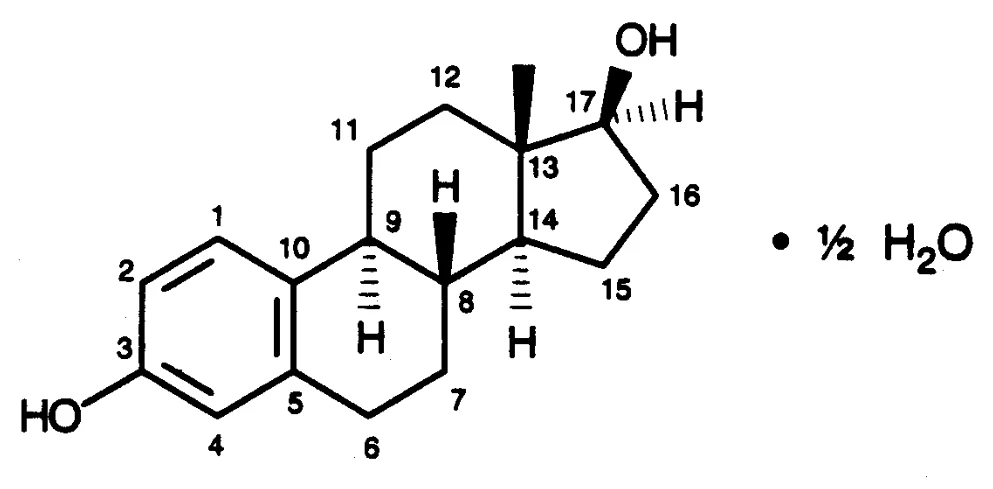
Proper name: Estradiol hemihydrate, Ph. Eur.
Chemical name: Estra-1,3,5(10)-triene-3,17β-diol, hydrate (2:1) (CAS 9 CI)
Molecular formula and molecular mass: C18H24O2 • ½H2O
281.40
Structural formula:
Physicochemical properties:
Physical form: White to off-white crystals or crystalline powder
Melting point: 173ºC to 180ºC
pKa value: 10.71
Partition coefficient: log Pow 3.30
CLINICAL TRIALS
Clinical Trials
Seven clinical trials performed with CLIMARA patches are summarized. Premarin® was used as an active comparator in some of the clinical trials. Premarin is available for sale in Canada.
Efficacy and Safety Studies
Study Demographics and Trial Design
| Table 2 – Summary of patient demographics for clinical trials in the indication: relief of menopausal symptoms | |||||
|---|---|---|---|---|---|
| Study # | Trial design | Dosage, route of administration and duration | Study subjects (n=number) | Mean age (Range) | Gender |
| R-838T-01033 | Double-blind, randomized, parallel, placebo-controlled, multiple-dose study (3 x 3 week treatment cycles, 1 week washout in between) | A: CLIMARA 50 patch + placebo patch, each 1/week B: CLIMARA 100 + placebo patch, each 1/week C: placebo patch + placebo patch, each 1/week Patches were applied to abdomen 1/week for 3 cycles (3 week treatment periods followed by 1 week washout); total study duration = 11 weeks | A: n = 72 B: n = 70 C: n = 72 | A: 50.8 (26 – 71) years B: 51.5 (25 – 74) years C: 51.5 (33 – 70) years | F |
| R-838T-01134 | Double-blind, randomized, parallel, active- and placebo- controlled, multiple-dose study (3 x 3 week treatment cycles, separated by 1 week washout) | A: CLIMARA 50 + placebo patch + placebo capsule B: CLIMARA 100 + placebo patch + placebo capsule C: Premarin® 0.625 mg conjugated estrogen tablets (encapsulated) + placebo patch + placebo patch patches = 1/week capsules = 1/day Patches were applied to abdomen 1/week for 3 cycles (3 week treatment periods followed by 1 week washout); total study duration = 11 weeks | A: n = 130 B: n = 124 C: n = 136 | A: 50.8 (26 – 70) years B: 50.0 (28 – 73) years C: 50.7 (31 – 73) years | F |
| Table 2 – Summary of patient demographics for clinical trials in the indication: relief of menopausal symptoms |
|---|
| Study # | Trial design | Dosage, route of administration and duration | Study subjects (n=number) | Mean age (Range) | Gender |
|---|---|---|---|---|---|
| 9209835 | A: CLIMARA 50 patch + placebo patch B: CLIMARA 100 patch + placebo patch C: placebo patch + placebo patch Each patch was applied 1/week for 4 months duration, continuously | A: n = 28 B: n = 28 C: n = 28 | A: 50.6 (32 – 62) years B: 52.7 (38 – 64) years C: 52.0 (38 – 64) years | F | |
| 97074A36 | placebo-controlled, double-blind, parallel group, randomized study. | A: CLIMARA 25 patch B: placebo patch Each patch was applied 1/week for 3 28-day cycles. | A: n = 92 B: n = 94 | A: 52.1 (45-67) years B: 52.0 (44-70) years | F |
| 97095A37 | parallel group, double-blind, randomized, controlled study | A: CLIMARA 25 + placebo capsule B: Premarin® 0.3 mg capsule + placebo patch Each patch was applied 1/week for 3 28-day cycles. | A: n = 95 B: n = 98 | A: 53.3 (44-67) years B: 50.8 (44-62) years | F |
| Table 3 – Summary of patient demographics for clinical trials in the indication: prevention of osteoporosis | |||||
|---|---|---|---|---|---|
| Study # | Trial design | Dosage, route of administration and duration | Study subjects (n=number) | Mean age (Range) | Gender |
| 308-3B30 | Parallel group, double-blind, randomized, placebo-controlled study. Two patches of different sizes were worn at all times (at least one was a placebo), in order to preserve the blinding. | A: CLIMARA 25 patch + placebo patch, 1/week for twenty-six, 28-day cycles B: CLIMARA 50 + placebo patch, 1/week for twenty-six, 28-day cycles C: CLIMARA 60* + placebo patch, 1/week for twenty-six, 28-day cycles D: CLIMARA 100 + placebo patch, 1/week for twenty-six, 28-day cycles | A: n = 129 B: n = 46 | 51.2 (40-71) years | F |
| ME 9306338 | Parallel-group, double-blind, randomized, placebo-controlled study. Two patches of different sizes were worn at all times (at least one was a placebo), in order to preserve the blinding. | A: CLIMARA 50 patch + placebo patch, B: CLIMARA 100 + placebo patch, | A: n = 93 B: n = 48 | 57.4 (44-65) years | F |
* CLIMARA 60 (providing controlled delivery of 0.060 mg estradiol-17β per day) is not approved for sale in Canada.
Study results
Study R-838T-01033 was performed to compare the safety and efficacy of once-weekly applications of CLIMARA 50 and CLIMARA 100 patches with placebo in women with vasomotor symptoms.
Conclusion: In the placebo group, 50 of 72 patients completed the study. In the CLIMARA 50 group, 53 of 72 patients completed the study. In the CLIMARA 100 group, 61 of 70 patients completed the study. Both CLIMARA 50 and CLIMARA 100 were significantly (p ≤ 0.05) more effective than placebo in reducing hot flushes; global ratings of efficacy were also generally superior to placebo. CLIMARA 100 performed consistently better than CLIMARA 50 for all efficacy parameters. Statistically significant (p ≤ 0.05) treatment effects with both doses were seen after only 3 weeks of treatment.
| Table 4 – Study R-838T-010: efficacy results | ||
|---|---|---|
| Primary Endpoints | Associated value and statistical significance for drug at specific dosages | Associated value and statistical significance for placebo or active control |
Weekly Hot Flush Rate (mean ± S.D.) | CLIMARA 50 Cycle 1 (week 1-3): 26±22.0 Cycle 2 (week 5-7): 16±20.9 Cycle 3 (week 9-11): 17±21.4 All Cycles: 20±21.9 CLIMARA 100 Cycle 1 (week 1-3): 24±20.0 Cycle 2 (week 5-7): 14±16.2 Cycle 3 (week 9-11): 12±17.5 All Cycles: 16±18.6 | Placebo Cycle 1 (week 1-3): 47±42.0 Cycle 2 (week 5-7): 45±47.1 Cycle 3 (week 9-11): 47±48.3 All Cycles: 46±45.6 |
| Change in Weekly Hot Flush Rate from Baseline (mean ± S.D.) | CLIMARA 50 Cycle 1 (week 1-3): -22±28.2 Cycle 2 (week 5-7): -32±30.2 Cycle 3 (week 9-11): -31±32.9 All Cycles: -28±30.6 CLIMARA 100 Cycle 1 (week 1-3): -29±26.9 Cycle 2 (week 5-7): -39±32.9 Cycle 3 (week 9-11): -40±33.3 All Cycles: -36±31.4 | Placebo Cycle 1 (week 1-3): -6±17.5* Cycle 2 (week 5-7): -8±24.0* Cycle 3 (week 9-11): -6±25.0* All Cycles: -6±22.3* |
Patient Global Treatment Ratings (Global rating: 0 = poor, 1 = fair, 2 = good, 3 = very good, 4 = excellent) | CLIMARA 50 Cycle 1 (week 1-3): 2.1±1.2*** Cycle 2 (week 5-7): 2.3±1.3 Cycle 3 (week 9-11): 2.2±1.4 All Cycles: 2.2±1.3 CLIMARA 100 Cycle 1 (week 1-3): 2.7±1.1 Cycle 2 (week 5-7): 2.7±1.2 Cycle 3 (week 9-11): 2.6±1.3 All Cycles: 2.6±1.2 | Placebo Cycle 1 (week 1-3): 1.4±1.2** Cycle 2 (week 5-7): 1.3±1.4** Cycle 3 (week 9-11): 1.2±1.4** All Cycles: 1.3±1.3** |
* Mean change from baseline significantly (p≤0.05) less for placebo group than for the CLIMARA 50 and CLIMARA 100 groups.
** Mean score significantly (p≤0.05) less for the placebo group than for the CLIMARA 50 and CLIMARA 100 groups.
*** Pairwise comparison with CLIMARA 50 and CLIMARA 100 statistically significant at p ≤ 0.05.
Study R-838T-01134 was performed to compare the safety and efficacy of once-weekly applications of CLIMARA 50 and CLIMARA 100 patches with oral Premarin tablets (0.625 mg conjugated estrogen) in women with vasomotor symptoms.
Conclusion: In the Premarin group, 120 of 136 patients completed the study. In the CLIMARA 50 group, 101 of 130 patients completed the study. In the CLIMARA 100 group, 105 of 124 patients completed the study. All 3 treatments were effective in reducing hot flushes, across all cycles as well as during each cycle; global ratings supported these results. CLIMARA 100 performed better than CLIMARA 50 and Premarin® for all efficacy parameters evaluated. Substantial reductions in weekly mean hot flush rates were seen after only 3 weeks of therapy, for all treatment groups.
| Table 5 – Study R-838T-011: efficacy results | ||
|---|---|---|
| Primary Endpoints | Associated value and statistical significance for drug at specific dosages | Associated value and statistical significance for placebo or active control |
Weekly Hot Flush Rate (mean ± S.D.) | CLIMARA 50 Cycle 1 (week 1-3): 32±35.2 Cycle 2 (week 5-7): 21±28.3 Cycle 3 (week 9-11): 21±29.0 All Cycles: 25±31.4 CLIMARA 100 Cycle 1 (week 1-3): 25±24.4 Cycle 2 (week 5-7): 13±22.0 Cycle 3 (week 9-11): 11±20.5 All Cycles: 16±23.1 | Premarin Tablets Cycle 1 (week 1-3): 30±30.3 Cycle 2 (week 5-7): 19±26.3 Cycle 3 (week 9-11): 17±25.2 All Cycles: 22±27.9 |
| Change in Weekly Hot Flush Rate from Baseline (mean ± S.D.) | CLIMARA 50 Cycle 1 (week 1-3): -20±29.0 Cycle 2 (week 5-7): -32±35.3 Cycle 3 (week 9-11): -32±36.6 All Cycles: -28±34.1 CLIMARA 100 Cycle 1 (week 1-3): -26±23.5 Cycle 2 (week 5-7): -38±25.7 Cycle 3 (week 9-11): -40±29.5 All Cycles: -35±26.9 | Premarin Tablets Cycle 1 (week 1-3): -23±19.0 Cycle 2 (week 5-7): -34±25.8 Cycle 3 (week 9-11): -36±27.8 All Cycles: -31±24.8 |
Patient Global Treatment Ratings (Global rating: 0 = poor, 1 = fair, 2 = good, 3 = very good, 4 = excellent) | CLIMARA 50 Cycle 1 (week 1-3): 2.2±1.1** Cycle 2 (week 5-7): 2.3±1.3* Cycle 3 (week 9-11): 2.3±1.3* All Cycles: 2.2±1.2* CLIMARA 100 Cycle 1 (week 1-3): 2.5±1.0 Cycle 2 (week 5-7): 2.7±1.1 Cycle 3 (week 9-11): 2.8±1.2 All Cycles: 2.7±1.1 | Premarin Tablets Cycle 1 (week 1-3): 2.5±1.0 Cycle 2 (week 5-7): 2.4±1.1 Cycle 3 (week 9-11): 2.4±1.3 All Cycles: 2.5±1.1 |
* Mean score significantly (p ≤ 0.05) less for the for the CLIMARA 50 group than for the CLIMARA 100 group.
** Mean score significantly (p ≤ 0.05) less for the for the CLIMARA 50 group than for the CLIMARA 100 group, and, mean score significantly (p ≤  CLIMARA 50 group than for the Premarin group.
Study 9209835 was performed to compare the efficacy of CLIMARA 50 and CLIMARA 100 and a placebo patch over a 4 month period in hysterectomized, post-menopausal women.
Conclusion: In the CLIMARA 50 + placebo group, 13 of 28 patients completed the study. In the CLIMARA 100 + placebo group, 15 of 28 patients completed the study. In the placebo + placebo group, 1 of 28 patients completed the study. A statistically significant (p<0.05) difference between the active and placebo group was noted in hot flush rate/night sweats (change relative to baseline) at weeks 4 and 16. The effects were variable with the other menopausal symptoms assessed (palpitations, headaches, irritability, lack of concentration, sleep disturbance, depression, joint/bone/muscle pain, vaginal dryness, loss of sex drive, urinary symptoms and lethargy). The mean number of total hot flushes/night sweats for the 4 month period experienced by patients was lower in both active groups compared to the placebo group. There was a statistically significant effect of time in this parameter in the 3 comparisons made, with the mean total number and severity of hot flushes/night sweats per month decreasing during the study.
| Table 6 – Study 92098: efficacy results | ||
|---|---|---|
| Primary Endpoints | Associated value and statistical significance for Drug at specific dosages | Associated value and statistical significance for Placebo or active control |
| Hot Flushes / Night Sweats (Change from baseline) | CLIMARA 50 Month 1 Improved 81%* Same 19% Worse 0% Month 2 Improved 73% Same 27% Worse 0% Month 3 Improved 91% Same 9% Worse 0% Month 4 Improved 100%* Same 0% Worse 0% Last Assessment – improvement: * CLIMARA 100 Month 1 Improved 73%* Same 27% Worse 0% Month 2 Improved 78% Same 22% | Placebo Month 1 Improved 35% Same 65% Worse 0% Month 2 Improved 83% Same 8% Worse 8 Month 3 Improved 69% Same 31% Worse 0% Month 4 Improved 56% Same 44% Worse 0% Last Assessment – improvement: n.s. |
| Table 6 – Study 92098: efficacy results |
|---|
| Primary Endpoints | Associated value and statistical significance for Drug at specific dosages | Associated value and statistical significance for Placebo or active control |
|---|---|---|
Worse 0% Month 3 Improved 80% Same 20% Worse 0% Month 4 Improved 77% Same 23% Worse 0% Last Assessment – improvement: * | ||
| Total No. of Hot Flushes / Night Sweats (mean ± S.D.) | CLIMARA 50 Month 1 98.4±95.5 Month 2 28.0±53.2 Month 3 6.6±12.4 Month 4 2.4±4.6 CLIMARA 100 Month 1 49.6±53.3 Month 2 21.0±30.8 Month 3 14.8±20.6 Month 4 13.9±25.5 | Placebo Month 1 151.8±129.7 Month 2 81.8±88.0 Month 3 48.1±54.5 Month 4 37.0±59.4 |
| Severity: Mean Total Score for Hot Flushes/Night Sweats (mean ± S.D.) | CLIMARA 50 Month 1 205± 256 Month 2 50 ±104 Month 3 8 ± 12 Month 4 3 ± 6 CLIMARA 100 Month 1 87± 102 Month 2 35 ±55 Month 3 23 ± 34 Month 4 18 ± 34 | Placebo Month 1 307± 306 Month 2 143 ±159 Month 3 91± 112 Month 4 61 ± 101 |
| Table 6 – Study 92098: efficacy results |
|---|
| Primary Endpoints | Associated value and statistical significance for Drug at specific dosages | Associated value and statistical significance for Placebo or active control |
|---|---|---|
| Global Impression of Both the Investigator and Patient Regarding the Effect of Therapy on Menopausal Symptoms | Patient’s Assessment CLIMARA 50 Greatly Improved 75%** Improved 16% No Change 8% CLIMARA 100 Greatly Improved 53% Improved 38% No Change 7% Investigator’s Assessment CLIMARA 50 Greatly Improved 66%** Improved 25% No Change 8% CLIMARA 100 Greatly Improved 33% Improved 53% No Change 7% | Patient’s Assessment Placebo Greatly Improved 22% Improved 55% No Change 22% Investigator’s Assessment Placebo Greatly Improved 11% Improved 66% No Change 22% |
* Statistically significantly (p<0.05) different relative to placebo (ANOVA).
** Statistically significantly (p<0.05) different relative to placebo (Cochran-Mantel Test).
n.s. Not significant.
Study 97074A36 was performed to determine the efficacy of CLIMARA 25 compared with placebo in decreasing the frequency and severity of hot flushes in postmenopausal women.
Conclusion: CLIMARA 25 was shown to be more effective than placebo in decreasing the frequency and severity of hot flushes in post-menopausal women.
| Table 7 – Study 97074A: efficacy results | ||||||
| Change from Baseline in Mean Weekly Number of Hot Flushes By Treatment and Cycle | ||||||
| Treatment Group | Cycle 1 | Cycle 2 | Cycle 3 | All Endpoint | Completers Endpoint | |
Climara 25 (n=92) | n | 88 | 87 | 84 | 89 | 85 |
| mean | -39.4 | -58.6 | -61.2 | -60.8 | -61.2 | |
| SD | 31.4 | 36.2 | 37.6 | 37.7 | 37.9 | |
Placebo (n=94) | n | 91 | 79 | 73 | 91 | 77 |
| mean | -36.3 | -51 | -49.9 | -47.2 | -51 | |
| SD | 77.3 | 100.9 | 110.2 | 100.7 | 108.9 | |
| p-value | 0.0171* | 0.0017* | 0.0003* | <0.0001* | 0.0003* | |
* p < 0.05
Study 97095A37 was performed to determine the efficacy of CLIMARA 25 compared with the daily oral administration of conjugated equine estrogens in decreasing the frequency and severity of hot flushes in postmenopausal women.
Conclusion: CLIMARA 25 was equally effective as oral conjugated equine estrogen in decreasing the frequency and severity of hot flushes in postmenopausal women.
| Table 8 – Study 97095A: efficacy results | ||||||
| Change from Baseline in Mean Weekly Number of Hot Flushes By Treatment and Cycle | ||||||
| Treatment Group | Cycle 1 | Cycle 2 | Cycle 3 | All Endpoint | Completers Endpoint | |
Climara 25 (n=95) | n | 94 | 88 | 82 | 94 | 86 |
| mean | -40.0 | -61.2 | -66.0 | -65.4 | -66.5 | |
| SD | 32.2 | 40.7 | 43.3 | 42.6 | 42.8 | |
Conjugated Equine Estrogen, 0.3 mg daily (n=98) | n | 95 | 88 | 86 | 96 | 87 |
| mean | -39.0 | -62.3 | -66.1 | -63.1 | -65.4 | |
| SD | 41.3 | 41.3 | 50.3 | 50.2 | 50.5 | |
| p-value | 0.4866 | 0.7858 | 0.7565 | 0.9398 | 0.9573 | |
Study 308-3B30 was performed to evaluate the efficacy of treatment utilizing four different doses of CLIMARA patches as compared to placebo, in the prevention of osteoporosis of the lumbar spine in postmenopausal, hysterectomized women.
Conclusion: Of the 175 subjects randomized, 78 withdrew from the study prematurely (17 of 32 in the CLIMARA 25 group, 12 of 31 in the CLIMARA 50 group, 9 of 31 in the CLIMARA 60 group, 13 of 31 in the CLIMARA 100 group, and 27 of 46 in the placebo group).
Treatment with all CLIMARA doses resulted in increases in mean bone mineral density (BMD) of the lumbar spine and hip at each timepoint. The mean percent increases in BMD at 24 months, relative to placebo, varied from 4.86% to 7.19% at the lumbar spine and 2.30% to 5.09% at the hip. A majority of subjects at each CLIMARA dose showed no loss of BMD of the lumbar spine. This fraction at 24 months ranged from 69% for CLIMARA 25 to 94% for the CLIMARA 50 and 90% for the CLIMARA 100 group. These results were supported by the changes in biochemical parameters, serum osteocalcin, urinary deoxypyridine and urinary pyridinoline, which showed evidence of decreased bone turnover.
| Table 9 – Study 308-3B: efficacy results for lumbar spine | ||||||
| Bone mineral density of the lumbar spine (AP View, L2-L4): mean percent change from baseline | ||||||
| Treatment Group | 6 Months | 12 Months | 18 Months | 24 Months | Endpoint | |
| CLIMARA 25 | n | 25 | 20 | 17 | 16 | 25 |
| mean | 1.16 | 2.67 | 3.57 | 2.37 | 2.32 | |
| p-valuea | 0.0090 † | 0.0028 † | 0.0009 † | 0.0008 † | <0.0001 † | |
| CLIMARA 50 | n | 23 | 21 | 18 | 18 | 23 |
| mean | 2.54 | 3.84 | 3.41 | 4.09 | 3.74 | |
| p-valuea | <0.0001 † | <0.0001 † | 0.0001 † | <0.0001 † | <0.0001 † | |
| CLIMARA 60** | n | 24 | 24 | 22 | 20 | 25 |
| mean | 2.02 | 2.97 | 3.02 | 3.28 | 3.45 | |
| p-valuea | 0.0003 † | 0.0014 † | 0.0016 † | <0.0001 † | <0.0001 † | |
| CLIMARA 100 | n | 27 | 24 | 23 | 21 | 27 |
| mean | 3.14 | 3.68 | 4.53 | 4.7 | 5.2 | |
| p-valuea | <0.0001 † | <0.0001 † | <0.0001 † | <0.0001 † | <0.0001 † | |
| Placebo | n | 34 | 26 | 22 | 21 | 34 |
| mean | -0.78 | -0.82 | -0.78 | -2.49 | -2.33 | |
| overall p-value* | <0.0001‡ | <0.0001 ‡ | 0.0001 ‡ | <0.0001‡ | <0.0001 ‡ | |
a p-value for comparison of each dose against placebo; p-values were adjusted by the method of Hochberg
† P1 < 0.0412
* overall p-value obtained from model: Y=TMT INV (Y=outcome variable; TMT=treatment effect; INV=investigator effect)
‡ p < 0.05
** CLIMARA 60 (providing controlled delivery of 0.060 mg estradiol-17β per day) is not approved for sale in Canada.
| Table 10 – Study 308-3B: efficacy results for total hip | ||||||
| Bone mineral density of the total hip: mean percent change from baseline | ||||||
| Treatment Group | 6 Months | 12 Months | 18 Months | 24 Months | Endpoint | |
| CLIMARA 25 | n | 23 | 18 | 16 | 14 | 23 |
| mean | 0.81 | 1.31 | 0.47 | 0.26 | 0.65 | |
| p-valuea | 0.0141 † | 0.0010 † | 0.0106 † | 0.0202 † | 0.0044 † | |
| CLIMARA 50 | n | 24 | 22 | 18 | 18 | 24 |
| mean | 1.19 | 2.35 | 2.31 | 2.85 | 2.41 | |
| p-valuea | 0.0023 † | <0.0001 † | <0.0001 † | <0.0001 † | <0.0001 † | |
| CLIMARA 60** | n | 23 | 22 | 21 | 20 | 23 |
| mean | 0.71 | 1.38 | 1.94 | 3.05 | 2.61 | |
| p-valuea | 0.0176 † | 0.0003 † | <0.0001 † | <0.0001 † | <0.0001 † | |
| CLIMARA 100 | n | 24 | 22 | 22 | 21 | 25 |
| mean | 0.84 | 1.31 | 2.13 | 2.03 | 1.98 | |
| p-valuea | 0.0131 † | 0.0003 † | <0.0001 † | <0.0001 † | <0.0001 † | |
| Placebo | n | 34 | 26 | 22 | 21 | 34 |
| mean | -0.73 | -1.17 | -1.89 | -2.04 | -1.66 | |
| overall p-value* | p-value * | 0.0141 ‡ | <0.0001 ‡ | 0.0001 ‡ | <0.0001 ‡ | <0.0001 ‡ |
a p-value for comparison of each dose against placebo; p-values were adjusted by the method of Hochberg
† P1 < 0.0412
* overall p-value obtained from model: Y=TMT INV (Y=outcome variable; TMT=treatment effect; INV=investigator effect)
‡ p < 0.05
** CLIMARA 60 (providing controlled delivery of 0.060 mg estradiol-17β per day) is not approved for sale in Canada.
Study ME-9306338 was performed to compare the effect of treatment with CLIMARA 50 and CLIMARA 100 patches, and placebo, on the bone mineral density of hysterectomized, post-menopausal women.
Conclusion: Of the 141 subjects randomized, 47 withdrew from the study prematurely (19 of 47 in the CLIMARA 50 group, 13 of 46 in the CLIMARA 100 group, 15 of 48 in the placebo group). Both CLIMARA 50 and CLIMARA 100 showed good efficacy in increasing bone mineral density and menopausal symptom control.
| Table 11 – Study ME-93063: efficacy results | ||||
| An increase in bone mineral density at the hip (trochanteric region, Ward’s triangle, femoral neck) and spine (L2-L4) | ||||
| Treatment Group | 48 weeks | 96 weeks | ||
| Mean (% change) | 95% C.I. | Mean (% change) | 95% C.I. | |
| Ward’s Triangle | ||||
| CLIMARA 100 | +1.84 | -0.89, +4.57 | +4.88* | +2.09, +7.68 |
| CLIMARA 50 | +3.70* | +1.80, +5.60 | +7.74* | +5.11, +10.37 |
| placebo | -1.43 | -3.49, +0.63 | -3.18 | -6.43, +0.07 |
| Trochanteric | ||||
| CLIMARA 100 | +3.65* | +2.12, +5.19 | +7.60* | +5.78, +9.42 |
| CLIMARA 50 | +4.67* | +3.35, +6.00 | +7.87* | +5.60, +10.15 |
| placebo | -0.18 | -1.84, +1.48 | -1.14 | -2.76, +0.48 |
| Femoral Neck | ||||
| CLIMARA 100 | +3.29* | +1.61, +4.98 | +5.63* | +3.87, +7.38 |
| CLIMARA 50 | +3.57* | +2.35, +4.79 | +5.73* | +4.25, +7.21 |
| placebo | 0.00 | -1.39, +1.38 | -1.55 | -4.12, +1.03 |
| Spine L2-L4 | ||||
| CLIMARA 100 | +5.60* | +4.19, +7.02 | +8.66* | +7.15, +10.18 |
| CLIMARA 50 | +4.09* | +2.55, +5.63 | +7.25* | +5.74, +8.76 |
| placebo | +0.64 | +0.50, +1.77 | +0.38 | -1.11, +1.86 |
Note: positive values indicated an increase in bone density
* p-value > 0.05 vs. placebo
DETAILED PHARMACOLOGY
Pharmacodynamics
Guinea pig sensitization studies were conducted with placebo and CLIMARA (estradiol hemihydrate transdermal system). No positive responses were observed during the challenge phase of these studies.
In humans, the potential for skin irritation was assessed in three clinical trials. An open-label 21-day cumulative irritation study compared CLIMARA with ESTRADERM® (estradiol hemihydrate transdermal system), Micropore® (an inert tape) and placebo in 23 postmenopausal women. Both Micropore and ESTRADERM are products which are available in Canada. Results indicated that the irritation potential of CLIMARA was minimal, with ESTRADERM being slightly more irritating than CLIMARA.
Another study conducted in 99 postmenopausal women showed a similar incidence of skin irritation between CLIMARA and ESTRADERM. Some degree of irritation was noted at some time point during the 3 week study in 75% and 70% of subjects wearing CLIMARA and ESTRADERM, respectively. By the end of the third week of the study, clinically significant irritation (defined as mild erythema with symptoms of itching, burning or stinging or a moderate to severe erythema with or without symptoms) was observed in 9% of CLIMARA subjects versus 11% of ESTRADERM subjects.
The third study compared the degree of irritation caused by CLIMARA with that of ESTRADERM in a total of 482 (241 per treatment) postmenopausal women, over a 4 week period. The overall incidence of irritation was high for both systems: 87% in the CLIMARA group and 77% in the ESTRADERM group. At the week 4 evaluation (primary endpoint), there was no difference between the two treatment groups (14.1% in the CLIMARA group and 14.8% in the ESTRADERM group).
A sensitization study was conducted in 102 postmenopausal women. Most subjects had no visible irritation to either active or placebo CLIMARA, during initial testing or during the challenge phase. Only 2 subjects showed some irritation following challenge; they received a second challenge, after which they showed no irritation. It was concluded that CLIMARA exhibited minimal potential for contact sensitization.
Pharmacokinetics
The CLIMARA 25, CLIMARA 50, CLIMARA 75 and CLIMARA 100 systems deliver 0.025 mg, 0.05 mg, 0.075 mg and 0.1 mg of estradiol per day, respectively, into the systemic circulation. In a 3-week multiple-application study in 24 postmenopausal women, the CLIMARA 100 system produced average peak estradiol concentrations of approximately 100 pg/mL. Trough values at the end of each wear interval were approximately 35 pg/mL. Nearly identical serum curves were seen each week, indicating little or no accumulation of estradiol in the body. Serum estrone peak and trough levels were 60 and 40 pg/mL, respectively. Serum concentrations of estradiol and estrone returned to preapplication levels within 6 to 24 hours after removal of the last system (to less than 17 pg/mL of estradiol and 30 pg/mL estrone).
Linear pharmacokinetics have been demonstrated for CLIMARA. In a 1-week application study in 54 postmenopausal women, the CLIMARA 100 system produced estradiol serum profiles and pharmacokinetic parameters that were twice as high as the CLIMARA 50 system. Statistical analyses confirmed the 2:1 dose proportionality.
On average, CLIMARA 100 maintained mean steady-state serum estradiol levels of approximately 70 pg/mL and CLIMARA 50 maintained mean steady-state serum estradiol levels of approximately 35 pg/mL.
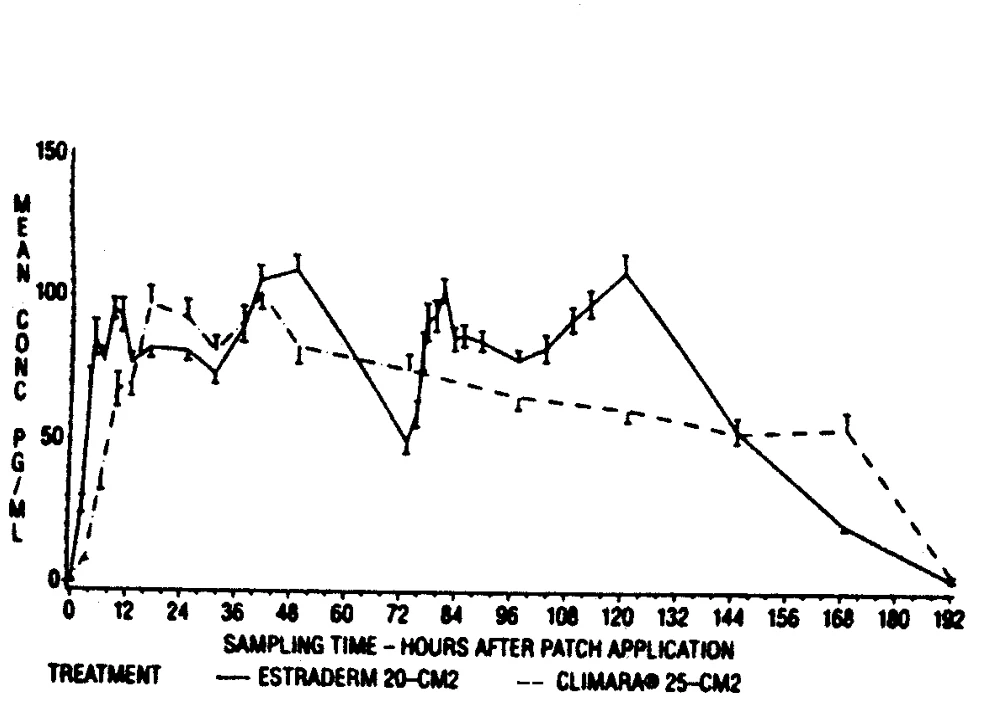
Two studies compared a single, 1-week application of CLIMARA with consecutive 3-day and 4-day applications of ESTRADERM. CLIMARA 100 (25 cm2) was compared with the ESTRADERM 20 cm2 system (see Figure 1) and CLIMARA 50 (12.5 cm2) was compared to the ESTRADERM 10 cm2 system. For a 1-week treatment period, both sizes of the CLIMARA systems maintained significantly lower peak and mean steady-state levels than the comparator system; however, towards the end of each treatment period, CLIMARA maintained similar (day 6) or higher (day 7) serum estradiol levels than ESTRADERM. As a result, the peak-to-end of application interval trough level fluctuations were 3- to 4-times less with CLIMARA.
| Figure 1 - Mean Serum Estradiol Levels For a One-Week Application of the CLIMARA 100 (25 cm2) and Consecutive Three-Day and Four-Day Applications of the ESTRADERM System (20cm2) |
 |
TOXICOLOGY
Animal Toxicology
The toxicity of CLIMARA (estradiol hemihydrate transdermal system) was assessed in rabbits and guinea pigs. In standard primary skin irritation tests performed in albino rabbits, irritation scores for both intact and abraded skin sites, and for the active and placebo systems, were similar. CLIMARA was rated to be a slight irritant due to the minimal erythema observed following removal of the systems; all irritation resolved by 48 hours following system removal.
A cumulative dermal irritation study, also conducted in rabbits, compared the irritation potential of CLIMARA, ESTRADERM and placebo. ESTRADERM is a product which is available in Canada. Irritation produced by CLIMARA and placebo systems were similar for both intact and abraded skin sites, and generally resolved within 48 hours following removal of the systems. ESTRADERM was shown to be less irritating than CLIMARA, but this difference was attributed to the poorer adhesion of ESTRADERM, which resulted in a less complete occlusion of the skin test sites.
Special Tolerance Studies in Humans
Cytotoxicity studies conducted with CLIMARA yielded results within the acceptable range based on historical data from other adhesive systems such as surgical tape.
The adhesive system for the CLIMARA system is a copolymer consisting primarily of isooctyl acrylate (IOA) with a smaller amount of vinyl acetate (VoAc) and an even lesser amount of acrylamide (ACM). Both IOA and VoAc are not mutagenic nor carcinogenic and low levels of any residual monomer in the adhesive would not pose any safety risk to patients wearing the CLIMARA system. However, toxicity testing of ACM has demonstrated mutagenic and carcinogenic potential. Carcinogenic effects were not found in a study of workers exposed to environmental ACM in the workplace. Since the Climara 100 (25 cm2) system can contain a very low level of residual ACM monomer (i.e., 9.6 μg) a risk assessment was performed. It was demonstrated that exposure of ACM from CLIMARA was less than ambient environmental lifetime ACM exposure from drinking water.
Long-term continuous administration of natural and synthetic estrogens in certain animal species increase the frequency of carcinomas of the breast, uterus, cervix, vagina, testis and liver (See CONTRAINDICATIONS and WARNINGS AND PRECAUTIONS).
ESTRADERM® is a registered trademark of NOVARTIS.
Micropore® is a registered trademark of 3M.
REFERENCES
- 1. Writing Group for the Women=s Health Initiative Investigators. Risks and benefits of estrogen plus progestin in healthy postmenopausal women. Principal results from the Women=s Health Initiative Randomized Controlled Trial. JAMA. 2002; 288(3):321-333.
- 2. The Women's Health Initiative Steering Committee. Effects of conjugated equine estrogen in postmenopausal women with hysterectomy. The Women's Health Initiative randomized controlled trial. JAMA. 2004; 291(14):1701-1712.
- 3. Chlebowski RT, Hendrix SL, Langer RD, Stefanick ML, Gass M, Lane D, et al. The Women=s Health Initiative randomized trial. Influence of estrogen plus progestin on breast cancer and mammography in healthy postmenopausal women. JAMA. 2003; 289(24):3243-3253.
- 4. Hulley S, Grady D, Bush T, Furberg C, Herrington D, Riggs B, et al for the Heart and Estrogen/progestin Replacement Study (HERS) Research Group. Randomized trial of estrogen plus progestin for secondary prevention of coronary heart disease in postmenopausal women. JAMA. 1998; 280(7):605-613.
- 5. Grady D, Herrington D, Bittner V, Blumenthal R, Davidson M, Hlatky M, et al for the HERS Research Group. Cardiovascular disease outcomes during 6.8 years of hormone therapy. Heart and estrogen/progestin replacement study follow-up (HERS II). JAMA. 2002; 288(1):49-57.
- 6. Shumaker SA, Legault C, Rapp SR, Thal L, Wallace RB, Ockene JK, et al. The Women=s Health Initiative Memory Study: A randomized controlled trial. Estrogen plus progestin and the incidence of dementia and mild cognitive impairment in postmenopausal women. JAMA. 2003; 289(20):2651-2662.
- 7. Shumaker SA, Legault C, Kuller L, Rapp SR, Thal L, Lane DS, et al. Conjugated equine estrogens and incidence of probable dementia and mild cognitive impairment in postmenopausal women. Women's Health Initiative Memory Study. JAMA. 2004; 291(24):2947-2958.
- 8. JF Dunn, BC Nisula, and D Rodbard. Transport of steroid hormones: binding of 21 endogenous steroids to both testosterone-binding globulin and corticosteroid-binding globulin in human plasma. J Clin Endocrinol Metab. 1981; 53:58-68.
- 9. Bolt HM. Metabolism of estrogens -natural and synthetic. Pharmacol Ther. 1979; 4:155-181.
- 10. Schubert W, Cullberg G, Edgar B, Hedner T. Inhibition of 17 beta-estradiol metabolism by grapefruit juice in ovariectomized women. Maturitas. 1994; 20(2-3):155-163.
- 11. Lin J, Lu A. Inhibition and induction of cytochrome P450 and the clinical implications. Clinical Pharmocokinetics. 1998; 35(5):361-390.
- 12. Düsterberg B and Nishino Y. Pharmacokinetic and pharmacological features of oestradiol valerate. Maturitas. 1982; 4:315-324.
- 13. Kuhnz W, Gansau C and Mahler M. Pharmacokinetics of estradiol, free and total estrone, in young women following single intravenous and oral administration of 17ß-estradiol. Drug Res. 1993; 43(II)9:966-973.
- 14. Sandberg AA and Slaunwhite WR. Studies on phenolic steroids in human subjects. II. The metabolic fate and hepatobiliary-enteric circulation of 14C-estrone and 14C-estradiol in women. J Clin Invest. 1957; 36:1266-1278.
- 15. Kuhnz W, Blode H, Zimmermann H. Pharmacokinetics of exogenous natural and synthetic estrogens and antiestrogens. In: Oettel M, Schillinger E, eds. Estrogens and antiestrogens II. Springer, Berlin / Heidelberg, 1999; 261-322.
- 16. Adlercreutz H, Martin F, Jarvenpaa P, Fotsis T. Steroid absorption and enterohepatic recycling. Contraception. 1979; 20:201-223.
- 17. Balfour JA, Heel, RC. Transdermal estradiol - a review of its pharmacodynamic and pharmacokinetic properties, and therapeutic efficacy in the treatment of menopausal complaints. Drugs. 1990; 40(4):561-582.
- 18. Balfour JA, McTavish, D. Transdermal estradiol. A review of its pharmacological profile, and therapeutic potential in the prevention of postmenopausal osteoporosis. Drugs and Aging. 1992; 2:487-507.
- 19. Christiansen, C. Prevention of early postmenopausal bone loss: controlled 2-year study in 315 normal females. Eur J Clin Invest. 1980; 10:273-279.
- 20. Cummings SR, Browner WS, Bauer D, Stone K, Ensrud K, Jamal S, Ettinger, B. Endogenous Hormones and the Risk of Hip and Vertebral Fractures Among Older Women. New England Journal of Medicine. 1998; 339(11):733-738.
- 21. Van Erpecum KJ, Van Berge Henegouwen GP, Verschoor L, Stoelwinder B, Willekens FL. Different hepatobiliary effects of oral and transdermal estradiol in postmenopausal women. Gastroenterology. 1991; 100(2):482-488.
- 22. Gordon SF, Thompson KA, Ruoff GE, Lane PJ, Schwenker CE. Efficacy and safety of a seven-day, transdermal estradiol drug delivery system: Comparison with conjugated estrogens and placebo. Int J Fertil. 1995; 40:126-134.
- 23. Gordon SF. Clinical experience with a seven-day estradiol transdermal system for estrogen replacement therapy. American Journal of Obstetrics and Gynecology. 1995; 173(3, Part 2):999-1004.
- 24. Hassager C, Riis BJ, Strom V, Guyene TT, Christiansen C. The long-term effect of oral and percutaneous estradiol on plasma renin substrate and blood pressure. Circulation. 1987; 76(4):753-758.
- 25. Riis, BJ. The effect of percutaneous estradiol and natural progesterone on postmenopausal bone loss. Am J Obstet Gynecol. 1987; 156:61-65.
- 26. Scarabin PY, Oger E, Plu-Bureau G, Estrogen and Thromboembolism Risk Study Group. Differential association of oral and transdermal oestrogen-replacement therapy with venous thromboembolism risk. Lancet. 2003; 362:428-432.
- 27. Sefaty D, Caulin F. Efficacy and tolerability of transdermal 17 beta estradiol in patients with climacteric symptoms: dose titration according to individual choice. Current Therapeutic Research. 1996; 57:506-515.
- 28. Stampfer MJ, Colditz GA, Willett WC, Manson JE, Rosner B, Speizer FE, Hennekens CH. Postmenopausal estrogen therapy and cardiovascular disease - ten-year followup from the Nurse's Health Study. New Engl J Med. 1991; 325:756-762.
- 29. Menopause: A report by the Special Advisory Committee on Reproductive Physiology to the Drugs Directorate Health Protection Branch, Health Canada. 1995.
- 30. Weiss SR, Ellman H, Dolker M. A randomized controlled trial of four doses of transdermal estradiol for preventing postmenopausal bone loss. Obstetrics & Gynecology. 1999; 94:330-336.
- 31. Study R-838T-013. Data on file.
- 32. Schubert W, Eriksson U, Edgar B, Cullberg G, Hedner, T. Flavonoids in grapefruit juice inhibit the in vitro hepatic metabolism of 17 beta-estradiol. Eur J Drug Metab Pharmacokinet. 1995; 20(3):219-224.
- 33. Study R-838T-010. Data on file.
- 34. Study R-838T-011. Data on file.
- 35. Study 92098. Data on file.
- 36. Study 97074A. Data on file.
- 37. Study 97095A. Data on file.
- 38. Study ME-93063. Data on file.
- 39. Evans SF and Davie MWJ. Low and conventional dose transdermal oestradiol are equally effective at preventing bone loss in spine and femur at all post-menopausal ages. Clin Endocrinology. 1996; 44:79-84.