


Product Monograph - Dovato
Recent Major Label Changes
| 4 Dosage and Administration, 4.1 Dosing Considerations | 11/2024 |
|---|---|
| 7 Warnings and Precautions, Reproductive Health | 11/2024 |
| 7 Warnings and Precautions, 7.1.1 Pregnancy | 11/2024 |
Table of Contents
Certain sections or subsections that are not applicable at the time of the preparation of the most recent authorized product monograph are not listed.
Recent Major Label Changes .................................................................................................. 2
Table of Contents .................................................................................................................. 2
Part 1: Healthcare Professional Information........................................................................... 4
1 Indications ................................................................................................................. 4
1.1 Pediatrics ................................................................................................................. 4
1.2 Geriatrics ................................................................................................................. 4
2 Contraindications ....................................................................................................... 4
3 Serious Warnings and Precautions Box ....................................................................... 4
4 Dosage and Administration ........................................................................................ 4
4.1 Dosing Considerations ............................................................................................ 4
4.2 Recommended Dose and Dosage Adjustment ....................................................... 5
4.5 Missed Dose ............................................................................................................ 6
5 Overdose ................................................................................................................... 6
6 Dosage Forms, Strengths, Composition, and Packaging ............................................... 6
7 Warnings and Precautions .......................................................................................... 6
General ................................................................................................................................ 7
Endocrine and Metabolism ................................................................................................. 7
Hematologic ........................................................................................................................ 7
Hepatic/Biliary/Pancreatic .................................................................................................. 7
Immune ............................................................................................................................... 8
Renal ................................................................................................................................... 9
Reproductive Health ........................................................................................................... 9
7.1 Special Populations ................................................................................................. 9
7.1.1 Pregnancy ............................................................................................................ 9
7.1.2 Breastfeeding .................................................................................................... 11
7.1.3 Pediatrics ........................................................................................................... 11
7.1.4 Geriatrics ........................................................................................................... 11
8 Adverse Reactions .................................................................................................... 11
8.1 Adverse Reaction Overview .................................................................................. 11
8.2 Clinical Trial Adverse Reactions ............................................................................ 12
8.2.1 Clinical Trial Adverse Reactions – Adolescents ................................................. 13
8.3 Less Common Clinical Trial Adverse Reactions ..................................................... 13
8.4 Abnormal Laboratory Findings: Hematologic, Clinical Chemistry and Other Quantitative Data .............................................................................................................. 14
8.5 Post-Market Adverse Reactions ............................................................................ 16
9 Drug Interactions ..................................................................................................... 16
9.2 Drug Interactions Overview .................................................................................. 16
9.4 Drug-Drug Interactions ......................................................................................... 17
9.5 Drug-Food Interactions ......................................................................................... 22
9.6 Drug-Herb Interactions ......................................................................................... 22
9.7 Drug-Laboratory Test Interactions........................................................................ 22
10 Clinical Pharmacology .............................................................................................. 23
10.1 Mechanism of Action ............................................................................................ 23
10.2 Pharmacodynamics ............................................................................................... 23
10.3 Pharmacokinetics .................................................................................................. 24
11 Storage, Stability, and Disposal ................................................................................. 27
Part 2: Pharmaceutical Information ..................................................................................... 28
13 Pharmaceutical Information ..................................................................................... 28
14 Clinical Trials ............................................................................................................ 28
14.1 Clinical Trials by indication .................................................................................... 29
14.2 Comparative Bioavailability Studies ..................................................................... 35
15 Microbiology ............................................................................................................ 37
16 Non-Clinical Toxicology ............................................................................................ 39
17 Supporting Product Monographs .............................................................................. 40
Patient Medication Information .......................................................................................... 41
Part 1: Healthcare Professional Information
1 Indications
DOVATO (dolutegravir and lamivudine) is indicated as a complete regimen for the treatment of Human Immunodeficiency Virus type 1 (HIV-1) infection in adults and adolescents 12 years of age and older and weighing at least 40 kg.
1.1 Pediatrics
Pediatrics (<18 years of age): Safety and efficacy of DOVATO in pediatric patients less than 12 years of age have not been established. There are no clinical study data with DOVATO in the adolescent population. The safety and efficacy of DOVATO in adolescents 12 years of age and older, and weighing at least 40 kg, is supported by the clinical data from studies of dolutegravir or lamivudine as single agents in combination with other antiretroviral agents in adolescents, and also by the clinical data from studies with dolutegravir in combination with lamivudine in adults (see 14 Clinical Trials, Adolescents).
1.2 Geriatrics
Geriatrics (≥ 65 years of age): Clinical studies of DOVATO did not include sufficient numbers of patients aged 65 years and older to determine whether they respond differently from adult patients < 65 years of age.
2 Contraindications
DOVATO is contraindicated in patients who are hypersensitive to this drug or to any ingredient in the formulation, including any non-medicinal ingredient, or component of the container. For a complete listing, see 6 Dosage Forms, Strengths, Composition, and Packaging.
DOVATO is contraindicated in combination with drugs with narrow therapeutic windows, that are substrates of organic cation transporter 2 (OCT2), including but not limited to dofetilide, and/or fampridine (also known as dalfampridine) (see 9 Drug Interactions).
3 Serious Warnings and Precautions Box
Serious Warnings and Precautions
Post-Treatment Exacerbations of Hepatitis B
Severe acute exacerbations of hepatitis B have been reported in patients who are infected with hepatitis B virus (HBV) and have discontinued lamivudine, a component of DOVATO. Hepatic function should be monitored closely with both clinical and laboratory follow-up for at least several months in patients who discontinue DOVATO. If appropriate, initiation of anti-hepatitis B therapy may be warranted (see 7 Warnings and Precautions, Hepatic/Biliary/Pancreatic).
4 Dosage and Administration
4.1 Dosing Considerations
- As with all antiretroviral drugs, therapy should be initiated by a healthcare professional experienced in the management of HIV infection.
- DOVATO can be taken with or without food.
- DOVATO is a fixed-dose tablet and should not be prescribed for patients requiring dosage adjustments, such as those with creatinine clearance less than 30 mL/min.
- DOVATO is not recommended for patients with any known or suspected viral resistance to dolutegravir or lamivudine.
- DOVATO contains lamivudine and therefore it is recommended to test for Hepatitis B virus (HBV) infection prior to or when initiating DOVATO (see 7 Warnings and Precautions, Hepatic/Biliary/Pancreatic).
4.2 Recommended Dose and Dosage Adjustment
The recommended dose of DOVATO in adults and adolescents weighing at least 40 kg is one tablet once daily taken orally.
A separate preparation of dolutegravir (TIVICAY) is available where dose adjustment is required due to drug-drug interactions (see 9 Drug Interactions).
Dosage Recommendation with Certain Concomitant Medications
The dolutegravir dose (50 mg) in DOVATO is insufficient when co-administered with medications listed in Table 1 that may decrease dolutegravir concentrations; the following dolutegravir dosage regimen is recommended.
Table 1 Dosing Recommendations for DOVATO with Co-administered Medications
| Co-administered Drug | Dosing Recommendation |
|---|---|
| Oxcarbamazepine, carbamazepine, phenytoin, phenobarbital, St. John’s wort or rifampin | Adjust dolutegravir dose to 50 mg twice daily. The additional 50 mg dose of dolutegravir should be taken, separated by 12 hours from DOVATO (see 9 Drug Interactions). |
Geriatrics (≥ 65 years of age)
Clinical studies of DOVATO did not include sufficient numbers of patients aged 65 years and older to determine whether they respond differently from adult patients < 65 years of age.
Pediatrics (< 12 years of age)
Safety and efficacy of DOVATO in pediatric patients less than 12 years of age and weighting less than 40 kg have not been established.
Hepatic Insufficiency
No dosage adjustment of DOVATO is required in patients with mild or moderate hepatic insufficiency (Child-Pugh score A or B). DOVATO is not recommended in patients with severe hepatic insufficiency (Child-Pugh score C) as it has not been studied in these patients (see 10.3 Pharmacokinetics, Special Populations and Conditions, Hepatic Insufficiency).
Renal Insufficiency
DOVATO is not recommended for use in patients with a creatinine clearance less than 30 mL/min as the dose of lamivudine cannot be adjusted (see 10.3 Pharmacokinetics, Special Populations and Conditions, Renal Insufficiency and 7 Warnings and Precautions, Renal).
4.5 Missed Dose
If a dose is missed, patients should take the missed dose as soon as possible unless it is within 4 hours of their next scheduled dose. If a dose is skipped, the patient should not double the next dose.
5 Overdose
Symptoms and signs
Experience with overdose of DOVATO or the individual components, dolutegravir and lamivudine is limited. No specific symptoms or signs have been identified.
Treatment
There is no known treatment for overdose with DOVATO. If overdose occurs, the patient should be monitored and standard supportive treatment applied as required. Since lamivudine is dialysable, continuous haemodialysis could be used in the treatment of overdose, although this has not been studied. As dolutegravir is highly bound to plasma proteins, it is unlikely that it will be significantly removed by dialysis.
For the most recent information in the management of a suspected drug overdose, contact your regional poison control centre or Health Canada’s toll-free number, 1-844 POISON-X (1-844-764-7669).
6 Dosage Forms, Strengths, Composition, and Packaging
Table 2 Dosage Forms, Strengths, Composition and Packaging
Each film-coated tablet of DOVATO contains 50 mg dolutegravir (as 52.6 mg of dolutegravir sodium) and 300 mg lamivudine.
Dosage Forms
DOVATO tablets are oval, biconvex, white, film-coated tablets, debossed with ‘SV 137’ on one face.
Packaging
DOVATO tablets are supplied in opaque, white, round, HDPE (high density polyethylene) bottles closed with polypropylene child-resistant closures. Each bottle contains 30 film-coated tablets.
7 Warnings and Precautions
Please see the Serious Warnings and Precautions Box at the beginning of Part 1: Healthcare Professional Information.
| Route of Administration | Dosage Form / Strength/Composition | Non-medicinal Ingredients |
| oral | tablet 50 mg dolutegravir (as dolutegravir sodium), 300 mg lamivudine | hypromellose, macrogol/PEG, magnesium stearate, mannitol (E421), microcrystalline cellulose, povidone (K29/32), sodium starch glycolate, sodium stearyl fumarate, titanium dioxide |
General
DOVATO is a complete regimen for the treatment of HIV-1 infection; therefore, coadministration with other antiretroviral medications for treatment of HIV-1 infection is not recommended.
The safety and efficacy of DOVATO have not been studied in HIV-1-infected patients who have failed previous antiretroviral therapy and are currently not virologically suppressed.
As with other antiretroviral medicinal products, resistance testing and/or historical resistance data should guide the use of DOVATO. DOVATO should not be used in patients with known or suspected resistance to dolutegravir or lamivudine.
Patients receiving DOVATO or any other antiretroviral therapy may still develop opportunistic infections and other complications of HIV infection. Therefore, patients should remain under close clinical observation by physicians experienced in the treatment of these associated HIV diseases.
Endocrine and Metabolism
Serum lipids and blood glucose
Serum lipid and blood glucose levels may increase during antiretroviral therapy. Disease control and life style changes may also be contributing factors. Consideration should be given to the measurement of serum lipids and blood glucose. Lipid disorders and blood glucose elevations should be managed as clinically appropriate.
Hematologic
Very rare occurrences of pure red cell aplasia have been reported with lamivudine use. Discontinuation of lamivudine has resulted in normalization of hematologic parameters in patients with suspected lamivudine-induced pure red cell aplasia.
Hepatic/Biliary/Pancreatic
Hepatotoxicity
Cases of hepatic toxicity including elevated serum liver biochemistries, hepatitis, and acute liver failure have been reported in patients receiving a dolutegravir-containing regimen who had no pre-existing hepatic disease or other identifiable risk factors. Drug-induced liver injury leading to liver transplant has been reported with TRIUMEQ. Monitoring for hepatotoxicity is recommended.
Post-Treatment Exacerbations of Hepatitis B in Patients Co-infected with HIV-1 and HBV
Prior to or when initiating DOVATO, test for HBV infection (see 4 Dosage and Administration).
Severe acute exacerbations of HBV have been reported in patients who are co-infected with HBV and HIV-1 and have discontinued lamivudine, a component of DOVATO. Patients who are co-infected with HIV-1 and HBV should be closely monitored with both clinical and laboratory follow-up for at least several months after stopping treatment with DOVATO. If appropriate, initiation of anti-hepatitis B therapy may be warranted, especially in HBV co-infected patients with advanced liver disease or cirrhosis, since post-treatment exacerbation of hepatitis may lead to hepatic decompensation.
Emergence of Lamivudine-Resistant HBV
Emergence of hepatitis B virus variants associated with resistance to lamivudine has also been reported in HIV-1-infected patients who have received lamivudine-containing antiretroviral regimens in the presence of concurrent infection with hepatitis B virus. Consider an alternative regimen in these patients.
Liver chemistry changes in patients with HBV or HCV co-infection
Patients with underlying HBV or HCV may be at increased risk for worsening or development of transaminase elevations with use of a dolutegravir-containing regimen. Liver chemistry elevations consistent with immune reconstitution inflammatory syndrome were observed in some HBV and/or HCV co-infected patients at the start of dolutegravir therapy. Monitoring of liver chemistries is recommended in patients with HBV and/or HCV co-infection. Particular diligence should be applied in initiating or maintaining effective HBV therapy when starting therapy with DOVATO in HBV co-infected patients.
Lactic Acidosis/Severe Hepatomegaly with Steatosis
Lactic acidosis and severe hepatomegaly with steatosis, including fatal cases, have been reported with the use of nucleoside analogues alone or in combination, including lamivudine (a component of DOVATO). Treatment with DOVATO should be suspended in any patient who develops clinical or laboratory findings suggestive of lactic acidosis or pronounced hepatotoxicity, which may include hepatomegaly and steatosis even in the absence of marked transaminase elevations.
Hypersensitivity Reactions
Hypersensitivity reactions have been reported with integrase inhibitors, including dolutegravir, and were characterized by rash, constitutional findings, and sometimes, organ dysfunction, including liver injury. Discontinue DOVATO and other suspect agents immediately if signs or symptoms of hypersensitivity reactions develop (including, but not limited to, severe rash or rash accompanied by fever, general malaise, fatigue, muscle or joint aches, blisters, oral lesions conjunctivitis, facial edema, hepatitis, eosinophilia, angioedema). Clinical status including liver aminotransferases should be monitored and appropriate therapy initiated. Delay in stopping treatment with DOVATO or other suspect agents after the onset of hypersensitivity may result in a life-threatening reaction.
Immune
Immune Reconstitution Inflammatory Syndrome
During the initial phase of treatment, patients responding to antiretroviral therapy may develop an inflammatory response to indolent or residual opportunistic infections (such as MAC, CMV, PCP, and TB) which may necessitate further evaluation and treatment.
Autoimmune disorders (such as Graves’ disease, polymyositis and Guillain-Barre syndrome) have also been reported to occur in the setting of immune reconstitution, however the time to onset is more variable, and can occur many months after initiation of treatment and sometimes can be an atypical presentation.
Renal
DOVATO is not recommended for patients with creatinine clearance <30 mL/min because DOVATO is a fixed-dose combination and the dosage of the individual components cannot be adjusted. If a dose reduction of lamivudine, a component of DOVATO, is required for patients with creatinine clearance <30 mL/min, then the individual components should be used (see 4.2 Recommended Dose and Dosage Adjustment, Renal Insufficiency).
Patients with a creatinine clearance between 30 and 49 mL/min receiving DOVATO may experience a 1.6- to 3.3-fold higher lamivudine exposure (AUC) than patients with a creatinine clearance ≥50 mL/min. There are no safety data from randomized, controlled trials comparing DOVATO to the individual components in patients with a creatinine clearance between 30 and 49 mL/min who received dose-adjusted lamivudine. In the original lamivudine registrational trials in combination with zidovudine, higher lamivudine exposures were associated with higher rates of hematologic toxicities (neutropenia and anemia), although discontinuations due to neutropenia or anemia each occurred in <1% of subjects. Patients with a sustained creatinine clearance between 30 and 49 mL/min who receive DOVATO should be monitored for hematologic toxicities. If new or worsening neutropenia or anemia develop, dose adjustment of lamivudine, per lamivudine prescribing information, is recommended. If lamivudine dose adjustment is indicated, DOVATO should be discontinued and the individual components should be used to construct the treatment regimen.
Reproductive Health
Fertility
There are no data on the effects of dolutegravir or lamivudine on human male or female fertility. Animal studies indicate no effects of dolutegravir or lamivudine on male or female fertility (see 16 Non-Clinical Toxicology).
7.1 Special Populations
7.1.1 Pregnancy
There is limited information on the use of DOVATO in pregnancy. DOVATO should not be used in pregnant women unless the potential benefits outweigh the potential risks to the fetus. There are insufficient human data on the use of DOVATO during pregnancy to definitively assess a drug-associated risk for birth defects and miscarriage. However, available human data from the Antiretroviral Pregnancy Registry (APR) with the individual components of DOVATO do not indicate an increased risk of birth defects (see Information on individual components). In the Canadian general population, the estimated background rate for major birth defects and miscarriage in clinically recognized pregnancies is 3% to 5% and 15% to 25%, respectively.
Information on individual components
Dolutegravir:
Two large birth outcome surveillance studies in Botswana (Tsepamo) and Eswatini, which together include over 19,000 individuals taking dolutegravir-containing regimens at conception, show no significant difference in neural tube defect prevalence in infants born to individuals taking dolutegravir at conception compared to those born to individuals taking non-dolutegravir containing antiretroviral regimens at conception, or infants born to HIV-negative individuals.
The first interim analysis from the Tsepamo birth outcome surveillance study in Botswana identified an association between dolutegravir and an increased risk of neural tube defects when dolutegravir was administered at the time of conception and in early pregnancy. A subsequent analysis was conducted based on a larger cohort from the birth outcome surveillance study in Botswana and included over 9,460 individuals exposed to dolutegravir at conception, 23,664 individuals exposed to non-dolutegravir-containing regimens, and 170,723 HIV-negative pregnant individuals. The prevalence of neural tube defects in infants delivered to individuals taking dolutegravir at conception was 0.11% (95% CI: 0.05-0.19%). The observed prevalence rate did not differ significantly from that of infants delivered to individuals taking non-dolutegravir-containing regimens (0.11%, 95% CI: 0.07-0.16%), or to HIV-negative individuals (0.06%, 95% CI: 0.05-0.08%).
The Eswatini birth outcome surveillance study includes 9,743 individuals exposed to dolutegravir at conception, 1,838 individuals exposed to non-dolutegravir-containing regimens, and 32,259 HIV-negative pregnant individuals. The prevalence of neural tube defects in infants delivered to individuals taking dolutegravir at conception was 0.08% (95% CI: 0.04-0.16%). The observed prevalence rate did not differ significantly from that of infants delivered to individuals taking non-dolutegravir-containing regimens (0.22%, 95% CI: 0.06-0.56%) or to HIV-negative individuals (0.08%, 95% CI: 0.06-0.12%). The observed prevalence of neural tube defects in infants delivered to individuals taking non-dolutegravir-containing regimens had a wide confidence interval due to low sample size.
Limitations of these birth outcome surveillance studies include insufficient data to determine if baseline characteristics were balanced between the study groups or to assess other factors such as the use of folic acid during the preconception or first trimester periods.
Based on prospective reports to the APR, of 1,378 exposures to dolutegravir during pregnancy resulting in live births (including 874 exposed in the first trimester), there was no difference between the overall risk of birth defects for dolutegravir when compared to the background birth defect rate from two population based surveillance systems (Metropolitan Atlanta Congenital Defects Program (MACDP) with defects of 2.72 per 100 live births and the Texas Birth Defects Registry (TBDR) with 4.17 per 100 live births). The prevalence of defects in live births was 3.3% (95% CI: 2.2% to 4.7%) following first trimester exposure to dolutegravir-containing regimens and 5.0% (95% CI: 3.2% to 7. 3%) following second/third trimester exposure to dolutegravir-containing regimens.
Dolutegravir readily crosses the placenta in humans. In pregnant women with HIV, the median (range) foetal umbilical cord concentrations of dolutegravir were 1.28 (1.21 to 1.28) fold greater compared with maternal peripheral plasma concentrations.
There is insufficient information on the effects of dolutegravir on neonates.
In reproductive toxicity studies in animals, no evidence of teratogenicity, reproductive function, relevant embryonic or fetal toxicity including neural tube defects was identified in rats and rabbits at ≥30 and 0.55 times human clinical exposure based on AUC, respectively (see 16 Non-Clinical Toxicology).
Lamivudine:
Based on prospective reports to the APR of over 13,000 exposures to lamivudine during pregnancy resulting in live births (including over 5600 exposed in the first trimester), there was no difference between the overall risk of birth defects for lamivudine when compared to the background birth defect rate of 2.72% and 4.17% from the MACDP and TBDR, respectively. The prevalence of defects in live births was 3.1% (95% CI: 2.6% to 3.6%) following first trimester exposure to lamivudine-containing regimens and 2.9% (95% CI: 2.5% to 3.3%) following second/third trimester exposure to lamivudine-containing regimens.
Reproduction studies with lamivudine in rats and rabbits showed no evidence of teratogenicity. Evidence of early embryolethality was seen in the rabbit at lamivudine exposure levels similar to those observed in humans, but there was no indication of this effect in the rat at exposure levels ~21 times (based on Cmax) that of the recommended human dose. Studies in pregnant rats showed that lamivudine is transferred to the fetus through the placenta (see 16 Non-Clinical Toxicology).
Mitochondrial dysfunction
There have been reports of mild, transient elevations in serum lactate levels, which may be due to mitochondrial dysfunction, in neonates and infants exposed in utero or peri-partum to nucleoside reverse transcriptase inhibitors (NRTIs). The clinical relevance of transient elevations in serum lactate is unknown. There have also been very rare reports of developmental delay, seizures and other neurological disease. However, a causal relationship between these events and NRTI exposure in utero or peri-partum has not been established. These findings do not affect current recommendations to use antiretroviral therapy in pregnant women to prevent vertical transmission of HIV.
Antiretroviral Pregnancy Registry (APR): To monitor maternal-fetal outcomes of pregnant women with HIV exposed to DOVATO and other antiretroviral agents, an Antiretroviral Pregnancy Registry has been established. Healthcare professionals are encouraged to register patients:
http://www.apregistry.com
Telephone: (800) 258-4263
Fax: (800) 800-1052
7.1.2 Breastfeeding
HIV-1-infected mothers should not breast-feed their infants to avoid risking postnatal transmission of HIV. Dolutegravir is excreted in human milk in small amounts. In an open-label randomised study in which HIV-infected treatment naïve pregnant women were administered a dolutegravir based regimen until two weeks post-partum, the median (range) dolutegravir breast milk to maternal plasma ratio was 0.033 (0.021 to 0.050).
Lamivudine is excreted in human milk at similar concentrations to those found in serum. Because of the potential for HIV-1 transmission and the potential for serious adverse reactions in nursing infants, mothers should be instructed not to breast-feed if they are receiving DOVATO.
7.1.3 Pediatrics
Pediatrics (< 12 years of age): Safety and efficacy of DOVATO have not been established in pediatric patients less than 12 years of age.
7.1.4 Geriatrics
Geriatrics (≥ 65 years of age): Clinical studies of DOVATO did not include sufficient numbers of patients aged 65 years and older to determine whether they respond differently from adult patients < 65 years of age. In general, caution should be exercised in the administration of DOVATO in elderly patients reflecting the greater frequency of decreased hepatic, renal or cardiac function and of concomitant disease or other drug therapy.
8 Adverse Reactions
8.1 Adverse Reaction Overview
The following adverse drug reactions are discussed in the 7 Warnings and Precautions section:
- Hepatotoxicity
- Severe acute exacerbation of hepatitis B in patients co-infected with HIV-1 and HBV
- Lactic acidosis and severe hepatomegaly with steatosis
- Hypersensitivity reactions
- Immune reconstitution inflammatory syndrome
8.2 Clinical Trial Adverse Reactions
Clinical trials are conducted under very specific conditions. Therefore, the frequencies of adverse reactions observed in the clinical trials may not reflect frequencies observed in clinical practice and should not be compared to frequencies reported in clinical trials of another drug.
For details on adverse reactions that have occurred in studies with dolutegravir or lamivudine, please refer to the TIVICAY and 3TC product monographs.
Treatment-Naïve Patients
The safety assessment of DOVATO in HIV-1-infected, treatment naïve adult patients with viral load ≤ 500,000 HIV-1 RNA copies per mL is based on the pooled primary Week 48, Week 96 and Week 144 analyses of data from two identical, multicenter, double-blind, controlled trials, GEMINI-1 and GEMINI-2 where dolutegravir plus lamivudine were co-administered as single agents (TIVICAY and 3TC).
A total of 1,433 adult HIV–1-infected treatment-naïve subjects were randomized to dolutegravir 50 mg plus lamivudine 300 mg, as a complete regimen once daily, or dolutegravir 50 mg plus fixed-dose combination tenofovir disoproxil fumarate (TDF)/emtricitabine (FTC), administered once daily.
The rates of adverse events leading to discontinuation in the pooled analysis were 2% (Week 48) and 3% (Week 96) of subjects in both treatment arms. At Week 144, the rates of adverse events leading to discontinuation in the pooled analysis were 4% of subjects who received TIVICAY plus 3TC and 5% in subjects who received TIVICAY plus TRUVADA. The most common adverse events leading to discontinuation were psychiatric disorders (<1% (Week 48) and 1% (Week 96) of subjects in both treatment arms). At Week 144, the most common adverse events leading to discontinuation were psychiatric disorders: 2% of subjects who received TIVICAY plus 3TC and 1% in subjects who received TIVICAY plus TRUVADA.
Adverse reactions (all grades) observed in at least 2% of subjects in either treatment arm of the pooled analysis of GEMINI-1 and GEMINI-2 studies at Weeks 48, 96 and 144 are provided in Table 3.
The adverse reactions observed for TIVICAY plus 3TC in the pooled Week 48, Week 96 and Week 144 analyses from GEMINI-1 and GEMINI-2 were generally consistent with the adverse reaction profiles and severities for the individual components, when administered with other antiretroviral agents. The majority of adverse reactions related to TIVICAY plus 3TC were of Grade 1 intensity.
Table 3 Treatment-Emergent Adverse Reactionsa (All Grades) and at Least 2% Frequency in either treatment arm (Week 48, 96 and 144 Pooled Analyses)
| System Organ Class/ Preferred Term | POOLED | ||||||||||||||
|---|---|---|---|---|---|---|---|---|---|---|---|---|---|---|---|
TIVICAY + 3TC (n = 716) n (%) | TIVICAY + TRUVADA (n = 717) n (%) | ||||||||||||||
| Week 48 | Week 96 | Week 144 | Week 48 | Week 96 | Week 144 | ||||||||||
| Nervous system disorders | |||||||||||||||
| Headache | 21 (3) | 21 (3) | 21 (3) | 30 (4) | 30 (4) | 30 (4) | |||||||||
| Dizziness | 8 (1) | 8 (1) | 8 (1) | 13 (2) | 13 (2) | 14 (2) | |||||||||
| Gastrointestinal disorders | |||||||||||||||
| Nausea | 14 (2) | 14 (2) | 14 (2) | 39 (5) | 39 (5) | 40 (6) | |||||||||
| Diarrhea | 14 (2) | 15 (2) | 15 (2) | 19 (3) | 19 (3) | 21 (3) | |||||||||
| Psychiatric disorders | |||||||||||||||
| Insomnia | 13 (2) | 15 (2) | 15 (2) | 18 (3) | 19 (3) | 20 (3) | |||||||||
| Anxiety | N/A | 11 (2) | 11 (2) | N/A | 5 (<1) | 6 (<1) | |||||||||
| General disorders and administration site conditions | |||||||||||||||
| Fatigue | 10 (1) | 11 (2) | 11 (2) | 6 (<1) | 6 (<1) | 6 (<1) | |||||||||
a Frequencies of adverse reactions are based on all treatment-emergent adverse events attributed to study drug by the investigator.
The only adverse reaction of ≥ Grade 2 occurring in ≥1% of subjects treated with TIVICAY plus 3TC was headache (1%).
Virologically Suppressed Patients
The safety of DOVATO in virologically suppressed adults was based on Week 48 and Week 96 data from 740 subjects in a randomized, parallel-group, open-label, multicenter, non-inferiority controlled trial (TANGO). Subjects who were on a stable suppressive tenofovir alafenamide-based regimen (TBR) were randomized to receive DOVATO once daily or continue with TBR. Overall, the safety profile of DOVATO in virologically suppressed adult subjects in the TANGO trial was similar to that of TIVICAY plus 3TC in treatment naïve subjects in the GEMINI trials.
8.2.1 Clinical Trial Adverse Reactions – Adolescents
There are no clinical study data with DOVATO in the adolescent population. However, a summary of the clinical trial adverse reactions from prior adolescent studies of dolutegravir or lamivudine are available in the respective TIVICAY, 3TC and TRIUMEQ product monographs. For the adolescent studies, there were no additional types of adverse reactions beyond those observed in the adult population.
8.3 Less Common Clinical Trial Adverse Reactions
The following adverse reactions occurred in less than 2% of patients receiving dolutegravir plus lamivudine or are from studies described in the product monographs of the individual components TIVICAY (dolutegravir) and 3TC (lamivudine). Some events have been included because of their seriousness and assessment of potential causal relationship.
Blood and Lymphatic Systems Disorders: Anemia, neutropenia, thrombocytopenia.
Gastrointestinal Disorders: Abdominal pain, abdominal discomfort, flatulence, upper abdominal pain, vomiting
General Disorders: Fever, malaise
Hepatobiliary Disorders: Hepatitis
Immune System Disorders: Hypersensitivity, immune reconstitution inflammatory syndrome
Musculoskeletal and Connective Tissue Disorders: Myositis
Nervous System Disorders: Somnolence
Psychiatric Disorders: Abnormal dreams, depression, suicidal ideation or suicide attempt (particularly in patients with a pre-existing history of depression or psychiatric illness)
Renal and Urinary Disorders: Renal impairment
Skin and Subcutaneous Tissue Disorders: Pruritus, rash
8.4 Abnormal Laboratory Findings: Hematologic, Clinical Chemistry and Other Quantitative Data
Selected laboratory abnormalities with a worsening grade from baseline and representing the worst-grade toxicity in GEMINI-1 and GEMINI 2 are presented in Table 4. The Week 144 pooled analyses were generally consistent with Week 48 and Week 96.
Table 4 Selected Laboratory Abnormalities (Grades 2 and 3 to 4; Week 48, 96 and 144
Pooled Analyses) in GEMINI-1 and GEMINI-2 Trials
Laboratory Parameter Preferred Term | Week 48 | Week 96 | Week 144 | ||||||||||||||||
|---|---|---|---|---|---|---|---|---|---|---|---|---|---|---|---|---|---|---|---|
Laboratory Parameter Preferred Term | Week 48 | Week 96 | Week 144 | ||||||||||||||||
TIVICAY + 3TC (N =716) n (%) | TIVICAY + TRUVADA (N = 717) n (%) | TIVICAY + 3TC (N = 716) n (%) | TIVICAY + TRUVADA (N = 717) n (%) | TIVICAY + 3TC (N =716) n (%) | TIVICAY + TRUVADA (N = 717) n (%) | ||||||||||||||
TIVICAY + 3TC (N =716) n (%) | TIVICAY + TRUVADA (N = 717) n (%) | TIVICAY + 3TC (N = 716) n (%) | TIVICAY + TRUVADA (N = 717) n (%) | TIVICAY + 3TC (N =716) n (%) | TIVICAY + TRUVADA (N = 717) n (%) | ||||||||||||||
| ALT | |||||||||||||||||||
| Grade 2 (>2.5 to 5.0 x ULN) | 13 (2) | 20 (3) | 18 (3) | 27 (4) | 26 (4) | 30 (4) | |||||||||||||
| Grade 3 to 4 (>5.0 x ULN) | 18 (3) | 18 (3) | 23 (3) | 19 (3) | 27 (4) | 24 (3) | |||||||||||||
| AST | |||||||||||||||||||
| Grade 2 (>2.5 to 5.0 x ULN) | 22 (3) | 19 (3) | 29 (4) | 27 (4) | 35 (5) | 36 (5) | |||||||||||||
| Grade 3 to 4 (>5.0 x ULN) | 12 (2) | 24 (3) | 18 (3) | 25 (3) | 22 (3) | 27 (4) | |||||||||||||
| Total Bilirubin | |||||||||||||||||||
| Grade 2 (1.6 to 2.5 x ULN) | 9 (1) | 17 (2) | 16 (2) | 23 (3) | 19 (3) | 26 (4) | |||||||||||||
| Grade 3 to 4 (>2.5 x ULN) | 7 (<1) | 7 (<1) | 8 (1) | 7 (<1) | 8 (1) | 7 (<1) | |||||||||||||
| Cholesterol | |||||||||||||||||||
| Grade 2 (6.19 to <7.77 mmol/L) | 30 (4) | 14 (2) | 37 (5) | 18 (3) | 46 (6) | 24 (3) | |||||||||||||
| Grade 3 to 4 (>7.77 mmol/L) | 0 | 0 | 0 | 1 (<1) | 1 (<1) | 1 (<1) | |||||||||||||
| Creatine kinase | |||||||||||||||||||
| Grade 2 (6.0 to 9.9 x ULN) | 26 (4) | 21 (3) | 29 (4) | 31 (4) | 37 (5) | 36 (5) | |||||||||||||
| Grade 3 to 4 (≥10.0 x ULN) | 32 (4) | 35 (5) | 46 (6) | 47 (7) | 54 (8) | 63 (9) | |||||||||||||
| Hyperglycemia | |||||||||||||||||||
| Grade 2 (6.95 to 13.89 mmol/L) | 48 (7) | 29 (4) | 62 (9) | 46 (6) | 81 (11) | 58 (8) | |||||||||||||
| Grade 3 to 4 (>13.89 mmol/L) | 5 (<1) | 5 (<1) | 6 (<1) | 5 (<1) | 6 (<1) | 5 (<1) | |||||||||||||
| LDL Cholesterol | |||||||||||||||||||
| Grade 2 (4.12 to < 4.9 mmol/L) | 20 (3) | 12 (2) | 25 (3) | 15 (2) | 27 (4) | 21 (3) | |||||||||||||
| Grade 3 to 4 (> 4.9 mmol/L) | 8 (1) | 3 (<1) | 8 (1) | 5 (<1) | 11 (2) | 6 (<1) | |||||||||||||
| Lipase | |||||||||||||||||||
| Grade 2 (>1.5 to 3.0 x ULN) | 37 (5) | 34 (5) | 41 (6) | 45 (6) | 52 (7) | 57 (8) | |||||||||||||
| Grade 3 to 4 (>3.0 x ULN) | 7 (<1) | 19 (3) | 15 (2) | 29 (4) | 19 (3) | 35 (5) | |||||||||||||
| Triglycerides | |||||||||||||||||||
| Grade 2 (>3.42 to 5.7 mmol/L) | 13 (2) | 13 (2) | 18 (3) | 18 (3) | 23 (3) | 25 (3) | |||||||||||||
| Grade 3 to 4 (> 5.7 mmol/L) | 9 (1) | 4 (<1) | 10 (1) | 4 (<1) | 11 (2) | 4 (<1) | |||||||||||||
ULN = Upper limit of normal, ALT = Alanine Aminotransferase, AST = Aspartate Aminotransferase
Changes in Clinical Laboratory Values
Dolutegravir has been shown to increase serum creatinine due to inhibition of tubular secretion of creatinine without affecting renal glomerular function. Increases in serum creatinine occurred within the first four weeks of treatment with dolutegravir plus lamivudine and remained stable through 144 weeks. A mean change from baseline of 12.76 µmol/L (range: -31.8 µmol/L to 71.7 µmol/L) was observed after 144 weeks of treatment (see 10.2 Pharmacodynamics, Effects on Renal Function).
Small increases in total bilirubin (without clinical jaundice) were observed with dolutegravir plus lamivudine. These changes are not considered clinically relevant as they likely reflect competition between dolutegravir and unconjugated bilirubin for a common clearance pathway (UGT1A1) (see 10.3 Pharmacokinetics, Metabolism).
In the pooled analysis, few subjects in either group experienced changes in lipid profile. A small number of subjects in each treatment group experienced LDL cholesterol toxicities ≥ Grade 2, TIVICAY + 3TC 4% (Week 48) and 5% (Week 144) and TIVICAY + TRUVADA group 2% (Week 48) and 4% (Week 144). However, both treatment groups showed an overall reduction in the mean total cholesterol/HDL ratio, with a greater reduction in the TIVICAY + TRUVADA group. A small proportion of subjects in both treatment groups also had emergent triglyceride toxicities of ≥ Grade 2, TIVICAY + 3TC 3% (Week 48) and 5% (Week 144), TIVICAY + TRUVADA 2% (Week 48) and 4% (Week 144). A total of 51 and 28 subjects receiving TIVICAY + 3TC and TIVICAY + TRUVADA, respectively, initiated lipid-lowering agents post-baseline by Week 144.
Table 5 Mean Change from Baseline in Fasted Lipid Values (Week 48, 96 and 144 Pooled
Analyses) in GEMINI-1 and GEMINI-2 Trials
| Laboratory Parameter Preferred Term | Week 48 | Week 96 | Week 144 | ||||||||||||
|---|---|---|---|---|---|---|---|---|---|---|---|---|---|---|---|
TIVICAY plus 3TC (n = 716) | TIVICAY plus TRUVADA (n = 717) | TIVICAY plus 3TC (n = 716) | TIVICAY plus TRUVADA (n = 717) | TIVICAY plus 3TC (n = 716) | TIVICAY plus TRUVADA (n = 717) | ||||||||||
| Cholesterol (mmol/L) | 0.35 | -0.18 | 0.39 | -0.14 | 0.39 | -0.06 | |||||||||
| HDL cholesterol (mmol/L) | 0.15 | 0.02 | 0.19 | 0.08 | 0.18 | 0.09 | |||||||||
| LDL cholesterol (mmol/L) | 0.19 | -0.16 | 0.16 | -0.17 | 0.18 | -0.11 | |||||||||
| Triglycerides (mmol/L) | 0.04 | -0.08 | 0.13 | -0.12 | 0.11 | -0.10 | |||||||||
| Total cholesterol/HDL cholesterol ratio | -0.09 | -0.26 | -0.13 | -0.42 | -0.20 | -0.41 | |||||||||
8.5 Post-Market Adverse Reactions
These events have been chosen for inclusion due to either their seriousness, frequency of reporting, potential causal connection to dolutegravir- and/or lamivudine-containing regimens, or a combination of these factors. Because they are reported voluntarily from a population of unknown size, estimates of frequency cannot be made.
Body as a whole: anaphylaxis, weakness
Blood and Lymphatic Systems Disorders: pure red cell aplasia, anemia, lymphadenopathy, sideroblastic anaemia. Reversible sideroblastic anaemia has been reported with dolutegravir-containing regimens (the contribution of dolutegravir in these cases is unclear).
Gastrointestinal Disorders: rises in serum amylase, pancreatitis, stomatitis
Hepatobiliary Disorders: acute hepatic failure, splenomegaly
Investigations: weight increased
Metabolism and Nutrition Disorders: lactic acidosis, hyperlactatemia, hepatic steatosis, hyperglycemia
Musculoskeletal and connective tissue disorders: muscle disorders including rarely rhabdomyolysis, arthralgia, myalgia
Nervous System Disorders: paresthesia, peripheral neuropathy
Skin and Subcutaneous Tissue Disorders: alopecia, urticaria, pruritus
9 Drug Interactions
9.2 Drug Interactions Overview
DOVATO contains dolutegravir plus lamivudine and any interactions that have been identified with either component individually may occur with DOVATO. There are no significant interactions between dolutegravir and lamivudine. Because DOVATO is a complete regimen coadministration with other antiretroviral medications for the treatment of HIV-1 infection is not recommended and information regarding potential drug-drug interactions with other antiretroviral medications is not provided. For more information on these interactions, please refer to the TIVICAY and 3TC product monographs.
9.4 Drug-Drug Interactions
Effect of Dolutegravir or Lamivudine on the Pharmacokinetics of Other Agents
Dolutegravir
In vitro, dolutegravir did not inhibit (IC50 >50 μM) the enzymes: cytochrome P450 (CYP)1A2, CYP2A6, CYP2B6, CYP2C8, CYP2C9, CYP2C19, CYP2D6, CYP3A, uridine diphosphate glucuronosyl transferase (UGT)1A1 or UGT2B7, or transporters: P-glycoprotein (Pgp), breast cancer resistance protein (BCRP), bile salt export pump (BSEP), organic anion transporter polypeptide (OATP)1B1, OATP1B3, OCT1, or multidrug resistance protein (MRP)2 or MRP4. In vitro, dolutegravir did not induce CYP1A2, CYP2B6, or CYP3A4. Based on these data, dolutegravir is not expected to affect the pharmacokinetics of drugs that are substrates of these enzymes or transporters.
In vitro, dolutegravir inhibited the renal organic cation transporter 2, OCT2 (IC50 = 1.93 μM), multidrug and toxin extrusion transporter (MATE) 1 (IC50=6.34 μM) and MATE2-K (IC50=24.8 μM). In vivo, dolutegravir has a low potential to affect the transport of MATE2-K substrates. In vivo, dolutegravir inhibits tubular secretion of creatinine by inhibiting OCT2. Dolutegravir may increase plasma concentrations of drugs in which excretion is dependent upon OCT2 (for example dofetilide, fampridine (also known as dalfampridine) (see 2 CONTRAINDICATIONS), metformin) or MATE1 (see Table 6).
In vitro, dolutegravir inhibited the basolateral renal transporters: organic anion transporter (OAT) 1 (IC50 = 2.12 μM) and OAT3 (IC50 = 1.97 μM). Based upon the dolutegravir unbound plasma concentration, in silico modelling, and no notable effect on the pharmacokinetics in vivo of the OAT substrates tenofovir and para-aminohippurate, dolutegravir has low propensity to cause drug interactions via inhibition of OAT transporters.
Lamivudine
In vitro, lamivudine does not inhibit or induce CYP enzymes (such as CYP 3A4, CYP 2C9 or CYP 2D6). Lamivudine demonstrates no or weak inhibition of the drug transporters organic anion transporter 1B1 (OATP1B1), OATP1B3, breast cancer resistance protein (BCRP) or P-glycoprotein (Pgp), multidrug and toxin extrusion protein 1 (MATE1), MATE2-K or organic cation transporter 3 (OCT3). Lamivudine is therefore not expected to affect the plasma concentrations of drugs that are substrates of these enzymes or drug transporters.
Lamivudine is an inhibitor of OCT1 and OCT2 in vitro with IC50 values of 17 and 33 µM, respectively, however lamivudine has low potential to affect the plasma concentrations of OCT1 and OCT2 substrates at therapeutic drug exposures (up to 300 mg).
Effect of Other Agents on the Pharmacokinetics of Dolutegravir or Lamivudine
Dolutegravir
Dolutegravir is metabolized by UGT1A1 with some contribution from CYP3A. Dolutegravir is also a substrate of UGT1A3, UGT1A9, Pgp and BCRP in vitro; therefore drugs that induce those enzymes and transporters, may decrease dolutegravir plasma concentration and reduce the therapeutic effect of dolutegravir.
Co-administration of dolutegravir and other drugs that inhibit UGT1A1, UGT1A3, UGT1A9, CYP3A4 and/or Pgp may increase dolutegravir plasma concentration (see Table 6).
In vitro, dolutegravir is not a substrate of human organic anion transporting polypeptide (OATP)1B1, OATP1B3, or OCT1.
Coadministration of dolutegravir with polyvalent cation-containing products may lead to decreased adsorption of dolutegravir.
Lamivudine
Lamivudine is a substrate of MATE1, MATE2-K and OCT2 in vitro. Trimethoprim (an inhibitor of these drug transporters) has been shown to increase lamivudine plasma concentrations, however this interaction is not considered clinically significant as no dose adjustment of lamivudine is needed.
Lamivudine is a substrate of the hepatic uptake transporter OCT1. As hepatic elimination plays a minor role in the clearance of lamivudine, drug interactions due to inhibition of OCT1 are unlikely to be of clinical significance.
Lamivudine is a substrate of Pgp and BCRP, however due to its high bioavailability it is unlikely that these transporters play a significant role in the absorption of lamivudine. Therefore, co-administration of drugs that are inhibitors of these efflux transporters is unlikely to affect the disposition and elimination of lamivudine.
Lamivudine is predominantly eliminated by active organic cationic secretion. The possibility of interactions with other drugs administered concurrently should be considered, particularly when the main route of administration is renal.
Established or Potential Drug Interactions
Established and theoretical interactions with selected medicinal products are listed in Table 6. The drugs listed in this table are not all-inclusive. Recommendations are based on either drug interaction studies, or potential or predicted interactions due to the expected magnitude of interaction and/or potential for serious adverse events or loss of efficacy.
Table 6 Established or Potential Drug-Drug Interactions
Concomitant Drug Class: Drug Name | Effect on Concentration of Dolutegravir, Lamivudine, or Concomitant Drug* | Clinical Comment | ||
|---|---|---|---|---|
Concomitant Drug Class: Drug Name | Effect on Concentration of Dolutegravir, Lamivudine, or Concomitant Drug* | Clinical Comment | ||
Concomitant Drug Class: Drug Name | Effect on Concentration of Dolutegravir, Lamivudine, or Concomitant Drug* | Clinical Comment | ||
| DOLUTEGRAVIR | ||||
Antiarrhythmics: Dofetilide | Dofetilide↑ | Coadministration of DOVATO with dofetilide is contraindicated due to potential life-threatening toxicity caused by high dofetilide concentrations. | ||
Potassium channel blockers: Fampridine (also known as dalfampridine) | Fampridine/dalfampridine↑ | Coadministration is contraindicated with DOVATO due to the potential for seizures associated with fampridine/dalfampridine. | ||
Anticonvulsants Oxcarbazepine Phenytoin Phenobarbital Carbamazepinea | Dolutegravir↓ | An additional 50 mg dose of dolutegravir (TIVICAY) should be taken, separated by 12 hours from DOVATO. | ||
Antidiabetics: Metformina | Co-administered with DOVATO: Metformin ↑ | Consider metformin dose adjustments when starting or stopping concomitant treatment to maintain glycemic control. | ||
Antimycobacterials Rifampina | Dolutegravir↓ | An additional 50 mg dose of dolutegravir (TIVICAY) should be taken, separated by 12 hours from DOVATO. | ||
Medications containing polyvalent cations (e.g. Mg, Al) Cation-containing antacidsa or laxative, sucralfate, buffered medications | Dolutegravir↓ | DOVATO is recommended to be administered 2 hours before or 6 hours after taking medications containing polyvalent cations. | ||
Calcium and iron supplementsa Includes multivitamins that contain calcium or iron. | Dolutegravir ↓ | When taken with food, DOVATO and calcium and/or iron supplements or multivitamins containing calcium and/or iron can be taken at the same time. Under fasting conditions, DOVATO should be taken 2 hours before or 6 hours after taking supplements containing calcium and/or iron. | ||
| LAMIVUDINE | ||||
| Trimethoprim/sulfamethoxazole (Co-trimoxazole) | Lamivudine: AUC ↑ ~40% Trimethoprim: AUC ↔ Sulfamethoxazole: AUC ↔ | Unless the patient has renal impairment, no dosage adjustment of DOVATO is necessary. Co-administration with DOVATO is not recommended in patients with renal impairment as lamivudine dosage adjustment is not possible. The effect of coadministration of lamivudine with higher doses of co-trimoxazole used for the treatment of Pneumocystis jiroveci pneumonia (often referred to as PCP) and toxoplasmosis has not been studied. | ||
Sorbitol solution (3.2 g, 10.2 g, 13.4 g) | Single dose lamivudine oral solution 300 mg Lamivudine: AUC ↓ 14%; 32%; 36% Cmax ↓ 28%; 52%, 55%. | When possible, avoid chronic coadministration of sorbitol-containing medicines with DOVATO. Consider more frequent monitoring of HIV-1 viral load when chronic coadministration cannot be avoided. | ||
↑ = Increase, ↓ = Decrease, ↔ = No change.
a For magnitude of interaction, see Table 7 and Table 8.
The effects of DTG on the exposure of co-administered drugs are shown in Table 7. The effects of co-administered drugs on the exposure of DTG are shown in Table 8.
Table 7 Summary of Effect of Dolutegravir on the Pharmacokinetics of Co-administered Drugs
Co-administered Drug(s) and Dose(s) | Dose of Dolutegravir | n | Geometric Mean Ratio (90% CI) of Pharmacokinetic Parameters of Co-administered Drug With/Without Dolutegravir No Effect = 1.00 | ||||||||||||
| Cτ or C24 | AUC | Cmax | |||||||||||||
Daclatasvir 60 mg once daily | 50 mg once daily | 12 | 1.06 (0.88 to 1.29) | 0.98 (0.83 to 1.15) | 1.03 (0.84 to 1.25) | ||||||||||
Ethinyl estradiol 0.035 mg | 50 mg twice daily | 15 | 1.02 (0.93, 1.11) | 1.03 (0.96, 1.11) | 0.99 (0.91, 1.08) | ||||||||||
Methadone 16 to 150 mg | 50 mg twice daily | 12 | 0.99 (0.91, 1.07) | 0.98 (0.91, 1.06) | 1.00 (0.94, 1.06) | ||||||||||
Midazolam 3 mg | 25 mg once daily | 10 | _ | 0.95 (0.79, 1.15) | _ | ||||||||||
Norgestimate 0.25 mg | 50 mg twice daily | 15 | 0.93 (0.85, 1.03) | 0.98 (0.91, 1.04) | 0.89 (0.82, 0.97) | ||||||||||
Metformin 500 mg twice daily | 50 mg once daily | 14 | _ | 1.79 (1.65, 1.93) | 1.66 (1.53, 1.81) | ||||||||||
Metformin 500 mg twice daily | 50 mg twice daily | 14 | _ | 2.45 (2.25, 2.66) | 2.11 (1.91, 2.33) | ||||||||||
Table 8 Summary of Effect of Co-administered Drugs on the Pharmacokinetics of Dolutegravir
Co-administered Drug(s) and Dose(s) | Dose of Dolutegravir | n | Geometric Mean Ratio (90% CI) of Dolutegravir Pharmacokinetic Parameters With/Without Co-administered Drugs No Effect = 1.00 | |||||||||
Co-administered Drug(s) and Dose(s) | Dose of Dolutegravir | n | Geometric Mean Ratio (90% CI) of Dolutegravir Pharmacokinetic Parameters With/Without Co-administered Drugs No Effect = 1.00 | |||||||||
| Cτ or C24 | AUC | Cmax | ||||||||||
| Cτ or C24 | AUC | Cmax | ||||||||||
| Maalox® | 50 mg single dose | 16 | 0.26 (0.21, 0.31) | 0.26 (0.22, 0.32) | 0.28 (0.23, 0.33) | |||||||
Maalox® 2 hrs after dolutegravir | 50 mg single dose | 16 | 0.70 (0.58, 0.85) | 0.74 (0.62, 0.90) | 0.82 (0.69, 0.98) | |||||||
Calcium Carbonate 1200 mg simultaneous administration (fasted) | 50 mg single dose | 12 | 0.61 (0.47, 0.80) | 0.61 (0.47, 0.80) | 0.63 (0.50, 0.81) | |||||||
Calcium Carbonate 1200 mg simultaneous administration (fed) | 50 mg single dose | 11 | 1.08 (0.81, 1.42) | 1.09 (0.84, 1.43) | 1.07 (0.83, 1.38) | |||||||
Calcium Carbonate 1200 mg 2 hrs after dolutegravir | 50 mg single dose | 11 | 0.90 (0.68, 1.19) | 0.94 (0.72, 1.23) | 1.00 (0.78, 1.29) | |||||||
Ferrous Fumarate 324 mg simultaneous administration (fasted) | 50 mg single dose | 11 | 0.44 (0.36, 0.54) | 0.46 (0.38, 0.56) | 0.43 (0.35, 0.52) | |||||||
Ferrous Fumarate 324 mg simultaneous administration (fed) | 50 mg single dose | 11 | 1.00 (0.81, 1.23) | 0.98 (0.81, 1.20) | 1.03 (0.84, 1.26) | |||||||
Ferrous Fumarate 324 mg 2 hrs after dolutegravir | 50 mg single dose | 10 | 0.92 (0.74, 1.13) | 0.95 (0.77, 1.15) | 0.99 (0.81, 1.21) | |||||||
Multivitamin One tablet once daily | 50 mg single dose | 16 | 0.68 (0.56, 0.82) | 0.67 (0.55, 0.81) | 0.65 (0.54, 0.77) | |||||||
Omeprazole 40 mg once daily | 50 mg single dose | 12 | 0.95 (0.75, 1.21) | 0.97 (0.78, 1.20) | 0.92 (0.75, 1.11) | |||||||
Prednisone 60 mg once daily with taper | 50 mg once daily | 12 | 1.17 (1.06, 1.28) | 1.11 (1.03, 1.20) | 1.06 (0.99, 1.14) | |||||||
Rifampina 600 mg once daily | 50 mg twice dailya | 11 | 0.28 (0.23, 0.34) | 0.46 (0.38, 0.55) | 0.57 (0.49, 0.65) | |||||||
Rifampinb 600 mg once daily | 50 mg twice dailyb | 11 | 1.22 (1.01, 1.48) | 1.33 (1.15, 1.53) | 1.18 (1.03, 1.37) | |||||||
Rifabutin 300 mg once daily | 50 mg once daily | 9 | 0.70 (0.57, 0.87) | 0.95 (0.82, 1.10) | 1.16 (0.98, 1.37) | |||||||
Carbamazepine 300 mg twice daily | 50 mg once daily | 14 | 0.27 (0.24, 0.31) | 0.51 (0.48, 0.55) | 0.67 (0.61, 0.73) | |||||||
Daclatasvir 60 mg once daily | 50 mg once daily | 12 | 1.45 (1.25 to 1.68) | 1.33 (1.11 to 1.59) | 1.29 (1.07 to 1.57) | |||||||
a Comparison is rifampin taken with dolutegravir 50 mg twice daily compared with dolutegravir 50 mg twice daily.
b Comparison is rifampin taken with dolutegravir 50 mg twice daily compared with dolutegravir 50 mg once daily.
Drugs with No Observed or Predicted Interactions with DOVATO
Based on drug interaction studies conducted with DOVATO or the components of DOVATO, no clinically significant drug interactions have been either observed or are expected when DOVATO is administered with the following drugs: hormonal contraceptives containing norgestimate and ethinyl estradiol, methadone, midazolam, omeprazole, prednisone, rifabutin, daclatasvir, sofosbuvir/velpatasvir, trimethoprim-sulfamethoxazole (except in renal impairment, see Table 6), and calcium carbonate, ferrous fumarate, or cation-containing multivitamin supplements (when taken with food, see Table 6).
9.5 Drug-Food Interactions
DOVATO can be taken with or without food (see 10 Clinical Pharmacology).
9.6 Drug-Herb Interactions
No interaction study has been conducted, however, St. John’s Wort is a potent CYP3A inducer and may potentially decrease dolutegravir plasma concentration. In adults and adolescent patients, an additional dose of TIVICAY 50 mg separated by 12 hours from DOVATO may be considered when taken together with St. John’s Wort.
9.7 Drug-Laboratory Test Interactions
Interactions with laboratory tests have not been established.
10 Clinical Pharmacology
10.1 Mechanism of Action
Dolutegravir inhibits HIV integrase by binding to the integrase active site and blocking the strand transfer step of retroviral Deoxyribonucleic acid (DNA) integration which is essential for the HIV replication cycle. In vitro, dolutegravir dissociates slowly from the active site of the wild type integrase-DNA complex (t ½ 71 hours). Strand transfer biochemical assays using purified HIV-1 integrase and pre-processed substrate DNA resulted in IC50 values of 2.7 nM and 12.6 nM.
Lamivudine is a synthetic nucleoside analogue, an (-) enantiomer of a dideoxy analogue of cytidine. Lamivudine is metabolized by intracellular kinases to its triphosphate (TP), which is the active moiety (lamivudine triphosphate or L-TP) Lamivudine is a nucleoside reverse transcriptase inhibitor (NRTI), and is a potent, selective inhibitor of HIV-1 and HIV-2 replication in vitro. In vitro L-TP has an intracellular half-life of approximately 10.5 to 15.5 hours. L-TP is a substrate for and a competitive inhibitor of HIV reverse transcriptase (RT). Inhibition of RT is via viral DNA chain termination after nucleoside analogue incorporation. L-TP shows significantly less affinity for host cell DNA polymerases and is a weak inhibitor of mammalian α, β, and γ DNA polymerases.
10.2 Pharmacodynamics
In a randomized, dose-ranging trial, HIV 1 infected patients treated with dolutegravir monotherapy demonstrated rapid and dose-dependent antiviral activity with mean declines from baseline to Day 11 in HIV-1 RNA of 1.5, 2.0, and 2.5 log10 for dolutegravir 2 mg, 10 mg, and 50 mg once daily, respectively. This antiviral response was maintained for 3 to 4 days after the last dose in the 50 mg group.
Effects on Electrocardiogram
Dolutegravir
In a randomized, placebo-controlled, cross-over trial, 42 healthy subjects received single dose oral administrations of placebo, dolutegravir 250 mg suspension (exposures approximately 3-fold of the 50 mg once-daily dose at steady state), and moxifloxacin (400 mg, active control) in random sequence. Dolutegravir did not prolong the QTc interval for 24 hours post dose. After baseline and placebo adjustment, the maximum mean QTc change based on Fridericia correction method (QTcF) was 1.99 msec (1-sided 95% upper CI: 4.53 msec).
Effects on Renal Function
The effect of dolutegravir on serum creatinine clearance (CrCl), glomerular filtration rate (GFR) using iohexol as the probe and effective renal plasma flow (ERPF) using para-aminohippurate (PAH) as the probe was evaluated in an open-label, randomized, 3-arm, parallel, placebo-controlled study in 37 healthy subjects, who were administered dolutegravir 50 mg once daily (n=12), 50 mg twice daily (n=13) or placebo once daily (n=12) for 14 days. A modest decrease in CrCl was observed with dolutegravir within the first week of treatment, consistent with that seen in clinical studies. Dolutegravir at both doses had no significant effect on GFR or ERPF. These data support in vitro studies which suggest that the small increases in creatinine observed in clinical studies are due to the nonpathologic inhibition of the organic cation transporter 2 (OCT2) in the proximal renal tubules, which mediates the tubular secretion of creatinine.
In the pooled analysis of GEMINI-1 and GEMINI-2 studies in treatment-naïve adult patients at the Week 48 and 96 analyses, TIVICAY + 3TC had an increase in the estimated GFR using cystatin C adjusted CKD-EPI equation (adjusted mean change from baseline of 6.3 (Week 48) and 10.7 (Week 96) mL/min/1.73 m2). Change from baseline analysis showed that urine albumin/creatinine and protein/creatinine ratios decreased at Week 48 and 96 compared to baseline in the TIVICAY + 3TC group (urine albumin/creatinine Week 48/baseline ratio of 0.914 and urine albumin/creatinine Week 96/baseline ratio of 0.934; protein/creatinine Week 48/baseline ratio of 0.869 and protein/creatinine Week 96/baseline ratio of 0.878).
At Week 144, the TIVICAY + 3TC group had a greater increase in the estimated GFR using cystatin C adjusted CKD-EPI equation, compared with the TIVICAY + TRUVADA group (adjusted mean change from baseline of 12.2 and 10.6 mL/min/1.73 m2, respectively; p = 0.008). Change from baseline analysis showed that urine albumin/creatinine increased and protein/creatinine ratios decreased at Week 144 compared to baseline in the TIVICAY + 3TC group (urine albumin/creatinine of 1.046 and protein/creatinine of 0.994).
10.3 Pharmacokinetics
In a fasted comparative bioavailability study, the dolutegravir Cmax was equivalent and the dolutegravir AUCT was 16% higher when comparing the DOVATO tablet to dolutegravir 50 mg co-administered with lamivudine 300 mg. The higher DTG AUCT does not significantly affect patient safety or antiviral efficacy based on historical clinical efficacy and safety data for DTG 50 mg BID. The lamivudine AUCT was equivalent when comparing the DOVATO tablet to lamivudine 300 mg co-administered with dolutegravir 50 mg. Lamivudine Cmax for the DOVATO tablet was 32% higher than lamivudine 300 mg co-administered with dolutegravir 50 mg. The higher lamivudine Cmax, which reflects differences in the rate of absorption but not extent of absorption, does not significantly affect patient safety or antiviral efficacy based on historical clinical efficacy and safety data at higher lamivudine doses/exposures. Following multiple oral doses of DOVATO in HIV-infected, treatment experienced subjects in the Phase III TANGO study, the steady state dolutegravir and lamivudine AUC and Cmax were similar to historical exposures.
The pharmacokinetic (PK) properties of the components of DOVATO are provided in Table 9.
Table 9 Pharmacokinetic Properties of the Components of DOVATO
| Dolutegravir | Lamivudine | |||||||||||
|---|---|---|---|---|---|---|---|---|---|---|---|---|
| Dolutegravir | Lamivudine | |||||||||||
| Absorption | ||||||||||||
| AUCT a (μg.h/mL) | 52.3 (31.5) | 13.4 (18.1) | ||||||||||
| Cmax a (μg/mL) | 2.91 (30.6) | 3.22 (29.3) | ||||||||||
| Tmax a (h) | 2.5 (0.5, 6.0) | 1 (0.5, 3.5) | ||||||||||
| Effect of high-fat meal (relative to fasting)b | AUCI % Ratio 132.6 (118.4, 148.5) | AUCI % Ratio 91.1 (86.6, 95.9) | ||||||||||
| Distribution | ||||||||||||
| % Bound to human plasma proteins | ~99 | <36 | ||||||||||
| Source of protein binding data | in vitro | in vitro | ||||||||||
| Blood-to-plasma ratio | 0.44-0.54 | 1.1 - 1.2c | ||||||||||
| Metabolism | ||||||||||||
| Metabolic pathways | UGT1A1 CYP3A (minor) | Not significantly metabolized | ||||||||||
| Elimination | ||||||||||||
| Major route of elimination | Metabolism | Renal, by the organic cationic transport system | ||||||||||
| t1/2 (h) | ~14 | 18-19 | ||||||||||
| % of dose excreted as total [14C] (unchanged drug) in urine | 31 (<1)d | ND (~70)e | ||||||||||
| % of dose excreted as total [14C] (unchanged drug) in feces | 64 (53)d | ND (ND) | ||||||||||
ND: not determined
- a. Single dose PK parameters presented as geometric mean (CVb) except for Tmax which is presented as median (range)
- b. Geometric mean ratio (fed/fasted) in PK parameters and (90% confidence interval). High- calorie/high-fat meal = ~900 kcal, 56% fat
- c. Lamivudine blood-to-plasma ratio (B/P) was calculated based on the percent (p) of blood lamivudine associated with erythrocytes (53% to 57%) and the hematocrit value (H) using the equation B/P = (1-H)(1-p)
- d. Based on single-dose, mass-balance study of [14C] dolutegravir
- e. Based on 24-hour urine collection obtained after oral or IV administration (NUCB1001)
Absorption
Dolutegravir and lamivudine are rapidly absorbed following oral administration. The absolute bioavailability of dolutegravir has not been established. The absolute bioavailability of oral lamivudine in adults is 80 to 85%. For DOVATO, the median time to maximal plasma concentrations (tmax) is 2.5 hours for dolutegravir and 1.0 hour for lamivudine, when dosed under fasted conditions.
Following multiple oral doses of dolutegravir 50 mg once daily, the geometric mean steady state pharmacokinetic parameter estimates are 53.6 µg.h/mL for AUC24, 3.67 µg/mL for Cmax, and 1.11 µg/mL for C24. Following multiple-dose oral administration of lamivudine 300 mg once daily for seven days the mean steady-state Cmax is 2.04 µg/mL and the mean AUC24 is 8.87 µg.h/mL.
Effect of Food on Oral Absorption
DOVATO may be administered with or without food. Administration of DOVATO with a high-fat, high-calorie meal increased dolutegravir AUCT and Cmax by 32% and 21%, respectively, and decreased the lamivudine Cmax by 32% compared to fasted conditions. The lamivudine AUCT was not affected by a high-fat, high-calorie meal. These changes are not clinically significant.
Distribution
Dolutegravir is highly bound (≥ 98.9%) to human plasma proteins based on in vivo data and binding is independent of plasma dolutegravir concentration. The apparent volume of distribution (Vd/F) following 50 mg once daily oral administration was estimated at 17.4 L based on population pharmacokinetic analysis. Lamivudine exhibits linear pharmacokinetics over the therapeutic dose range and displays low plasma protein binding (less than 36%).
Cerebrospinal Fluid (CSF)
In 12 treatment-naïve patients on dolutegravir plus abacavir/lamivudine, the median dolutegravir concentration in CSF was 18 ng/mL (ranging from 4 to 23 ng/mL) 2 to 6 hours post-dose after 2 weeks of treatment. The clinical relevance of this finding has not been established. The mean ratio of CSF/serum lamivudine concentrations 2 to 4 h after oral administration was approximately 12%. The true extent of CNS penetration of lamivudine and its relationship with any clinical efficacy is unknown.
Metabolism
Dolutegravir is primarily metabolized via UGT1A1 with a minor CYP3A component (9.7% of total dose administered in a human mass balance study). Dolutegravir is the predominant circulating compound in plasma; renal elimination of unchanged drug is low (<1% of the dose). Metabolism of lamivudine is a minor route of elimination. Lamivudine is predominately cleared unchanged by renal excretion. The likelihood of metabolic interactions with lamivudine is low due to the small extent of hepatic metabolism (less than 10%).
Elimination
Dolutegravir has a terminal half-life of approximately 14 hours and an apparent clearance (CL/F) of 0.9-1.05 L/hr based on population pharmacokinetic analyses.
Fifty-three percent of total oral dose is excreted unchanged in the faeces. It is unknown if all or part of this is due to unabsorbed drug or biliary excretion of the glucuronidate conjugate, which can be further degraded to form the parent compound in the gut lumen.
The observed lamivudine half life of elimination is 18 to 19 hours. For patients receiving lamivudine 300 mg once daily, the terminal intracellular half-life of lamivudine-TP was 16 to 19 hours. The mean systemic clearance of lamivudine is approximately 0.32 L/h/kg, predominantly by renal clearance (> 70%) via the organic cationic transport system.
Special Populations and Conditions
Pediatrics: DOVATO has not been studied in the pediatric population.
- Dolutegravir: In a pediatric study including 23 antiretroviral treatment-experienced HIV-1 infected adolescents aged 12 to 18 years of age, the pharmacokinetics of dolutegravir was evaluated in 10 adolescents and showed that dolutegravir 50 mg once daily dosage resulted in dolutegravir exposure in pediatric subjects comparable to that observed in adults who received dolutegravir 50 mg once daily (Table 10).
Table 10 Pediatric pharmacokinetic parameters (n=10)
| Age/weight | Dolutegravir Dose | Dolutegravir Pharmacokinetic Parameter Estimates Geometric Mean (CV%) | ||||
|---|---|---|---|---|---|---|
| AUC(0-24) μg.hr/mL | Cmax μg/mL | C24 μg/mL | ||||
| 12 to <18 years ≥ 40 kg a | 50 mg once daily a | 46 (43) | 3.49 (38) | 0.90 (59) | ||
a One subject weighing 37 kg received 35 mg once daily.
- Lamivudine: Limited data are available in adolescents receiving a daily dose of 300 mg of lamivudine. Pharmacokinetic parameters are comparable to those reported in adults.
- Geriatrics: Population pharmacokinetic analysis of dolutegravir using data in HIV-1 infected adults showed that there was no clinically relevant effect of age on dolutegravir exposure. Pharmacokinetic data for dolutegravir and lamivudine in subjects of >65 years old are limited.
- Gender: Population pharmacokinetic analyses revealed no clinically relevant effect of gender on the exposure of dolutegravir. No clinically relevant differences in the pharmacokinetics of lamivudine have been observed between men and women.
Pregnancy and Breast-feeding: The pharmacokinetics of lamivudine during late pregnancy were similar to that of non-pregnant adults. In humans, consistent with passive transmission of lamivudine across the placenta, lamivudine concentrations in infant serum at birth were similar to those in maternal and cord serum at delivery.
There are limited pharmacokinetic data on the use of dolutegravir in pregnancy.
- Genetic Polymorphism: In a meta-analysis using pharmacogenomics samples collected in clinical studies in healthy subjects, subjects with UGT1A1 (n=7) genotypes conferring poor dolutegravir metabolism had a 32% lower clearance of dolutegravir and 46% higher AUC compared with subjects with genotypes associated with normal metabolism via UGT1A1 (n=41).
- Ethnic origin: Population PK analyses using pooled pharmacokinetic data from adult studies revealed no clinically relevant effect of race on the exposure of dolutegravir.
Hepatic Insufficiency: Pharmacokinetic data has been obtained for dolutegravir and lamivudine alone.
Data obtained for lamivudine in patients with moderate to severe hepatic impairment and for dolutegravir in patients with moderate hepatic impairment show that the pharmacokinetics are not significantly affected by hepatic dysfunction. Dolutegravir is primarily metabolized and eliminated by the liver. In a study comparing 8 subjects with moderate hepatic impairment (Child-Pugh score B) to 8 matched healthy adult controls, exposure of dolutegravir from a single 50 mg dose was similar between the two groups. The effect of severe hepatic impairment (Child-Pugh score C) on the pharmacokinetics of dolutegravir has not been studied.
- Hepatitis B or Hepatitis C Co-infection: Population pharmacokinetic analysis indicated that hepatitis C virus co-infection had no clinically relevant effect on the exposure to dolutegravir. There are limited pharmacokinetic data on hepatitis B co-infection.
Renal Insufficiency: Pharmacokinetic data have been obtained for dolutegravir and lamivudine alone. DOVATO should not be used in patients with creatinine clearance of less than 30 mL/min because, whilst no dosage adjustment of dolutegravir is necessary in patients with renal impairment, dose reduction is required for the lamivudine component.
Studies with lamivudine show that plasma concentrations (AUC) are increased in patients with renal dysfunction due to decreased clearance.
Renal clearance of unchanged drug is a minor pathway of elimination for dolutegravir. A study of the pharmacokinetics of dolutegravir was performed in subjects (n = 8) with severe renal impairment (CLcr <30 mL/min). No clinically important pharmacokinetic differences between subjects with severe renal impairment (CLcr <30 mL/min) and matching healthy subjects were observed. Dolutegravir AUC, Cmax, and C24 were lower by 40%, 23%, and 43%, respectively, in subjects with severe renal impairment as compared with matched healthy controls.
11 Storage, Stability, and Disposal
Store DOVATO up to 30°C.
Healthcare professionals should recommend that their patients return all unused medications to a pharmacy for proper disposal.
Part 2: Pharmaceutical Information
13 Pharmaceutical Information
Drug Substance
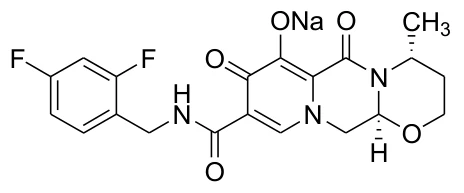
Dolutegravir
Proper name: dolutegravir sodium
Chemical name: sodium (4R,12aS)-9-{[(2,4-difluorophenyl)methyl]carbamoyl}-4-methyl-6,8-dioxo-3,4,6,8,12,12a-hexahydro-2H-pyrido[1',2':4,5]pyrazino[2,1-b][1,3]oxazin-7-olate
Molecular formula and molecular mass: C20H18F2N3NaO5
441.36 g/mol
Structural formula:
Physicochemical properties: Dolutegravir sodium is a white to light yellow powder and is slightly soluble in water.
Drug Substance
Lamivudine
Proper name: lamivudine
Chemical name: 2(1H)-Pyrimidinone, 4-amino-1-[2- (hydroxymethyl)-1,3-oxathiolan-5-yl]-(2R-cis)-
Molecular formula and molecular mass: C8H11N3O3S
229.3 g/mol
Structural formula:
* * * chiral centre N N O N H 2 S O H O
Physicochemical properties: Lamivudine is a white to off-white crystalline solid with a melting point of 176°C and is soluble in water.
14 Clinical Trials
The efficacy of DOVATO is supported by data from two randomized, double-blind, controlled trials
(GEMINI-1 [204861] and GEMINI-2 [205543]) in HIV-1-infected treatment naïve adults, and data from a randomized, open-label, controlled trial (TANGO [204862]) in virologically suppressed HIV-1-infected adults.
14.1 Clinical Trials by indication
Treatment Naïve
GEMINI-1 and GEMINI-2 are identical 148-week, Phase III, randomized, double-blind, multicenter, parallel-group, non-inferiority controlled trials. A total of 1433 HIV-1 infected antiretroviral treatment-naïve adult subjects received treatment in the trials. Subjects were enrolled with a screening plasma HIV-1 RNA of 1000 c/mL to ≤ 500,000 c/mL. Subjects were randomized to a two-drug regimen of TIVICAY (dolutegravir 50 mg) plus 3TC (lamivudine 300mg) administered once daily or to a three-drug regimen TIVICAY (dolutegravir 50 mg) plus TRUVADA (tenofovir/emtricitabine 200mg/300mg) administered once daily. The primary efficacy endpoint for each GEMINI trial was the proportion of subjects with plasma HIV-1 RNA <50 copies/mL at Week 48 (Snapshot algorithm for the ITT-E population).
The demographic baseline characteristics were similarly distributed between treatment arms (see Table 11).
Table 11 Summary of Baseline Characteristics for Studies GEMINI-1, GEMINI-2, and Pooled Data (ITT-E Population)
| GEMINI-1 | GEMINI-2 | POOLED | ||||||||||||||||||||||||||||||||
|---|---|---|---|---|---|---|---|---|---|---|---|---|---|---|---|---|---|---|---|---|---|---|---|---|---|---|---|---|---|---|---|---|---|---|
| GEMINI-1 | GEMINI-2 | POOLED | ||||||||||||||||||||||||||||||||
| TIVICAY + 3TC | TIVICAY + TRUVADA | TIVICAY + 3TC | TIVICAY + TRUVADA | TIVICAY + 3TC | TIVICAY + TRUVADA | |||||||||||||||||||||||||||||
| TIVICAY + 3TC | TIVICAY + TRUVADA | TIVICAY + 3TC | TIVICAY + TRUVADA | TIVICAY + 3TC | TIVICAY + TRUVADA | |||||||||||||||||||||||||||||
| N=356 (%) | N=358 (%) | N=360 (%) | N=359 (%) | N=716 (%) | N=717 (%) | |||||||||||||||||||||||||||||
| N=356 (%) | N=358 (%) | N=360 (%) | N=359 (%) | N=716 (%) | N=717 (%) | |||||||||||||||||||||||||||||
| Baseline HIV-1 RNA (c/mL) | ||||||||||||||||||||||||||||||||||
| <100,000 | 282 (79) | 282 (78) | 294 (82) | 282 (79) | 576 (80) | 564 (79) | ||||||||||||||||||||||||||||
| ≥100,000 to <500,000 | 70 (20) | 69 (19) | 57(16) | 69 (19) | 127 (18) | 138 (19) | ||||||||||||||||||||||||||||
| ≥500,000 | 4 (1) | 7 (2) | 9 (3) | 8 (2) | 13 (2) | 15 (2) | ||||||||||||||||||||||||||||
Baseline CD4+ (log10 cells/mm3) | ||||||||||||||||||||||||||||||||||
| Median | 427.0 | 435.5 | 427.5 | 442.0 | 427.0 | 438.0 | ||||||||||||||||||||||||||||
| Min., Max. | 19, 1399 | 19, 1305 | 19, 1364 | 19, 1497 | 19, 1399 | 19, 1497 | ||||||||||||||||||||||||||||
| Baseline CD4+ (cells/mm3), n (%) | ||||||||||||||||||||||||||||||||||
| <50 | 5 (1) | 4 (1) | 3 (<1) | 5 (1) | 8 (1) | 9 (1) | ||||||||||||||||||||||||||||
| 50 to <200 | 26 (7) | 25 (7) | 29 (8) | 20 (6) | 55 (8) | 45 (6) | ||||||||||||||||||||||||||||
| 200 to <350 | 92 (26) | 79 (22) | 87 (24) | 87 (24) | 179 (25) | 166 (23) | ||||||||||||||||||||||||||||
| 350 to <500 | 99 (28) | 120 (34) | 105 (29) | 108 (30) | 204 (28) | 228 (32) | ||||||||||||||||||||||||||||
| ≥500 | 134 (38) | 130 (36) | 136 (38) | 139 (39) | 270 (38) | 269 (38) | ||||||||||||||||||||||||||||
| Age (y) median (range) | 32.0 (18-69) | 33.0 (18-66) | 32.0 (18-72) | 33.0 (18-70) | 32.0 (18-72) | 33.0 (18-70) | ||||||||||||||||||||||||||||
| Sex | ||||||||||||||||||||||||||||||||||
| Female | 59 (17) | 52 (15) | 54 (15) | 46 (13) | 113 (16) | 98 (14) | ||||||||||||||||||||||||||||
| Male | 297 (83) | 306 (85) | 306 (85) | 313 (87) | 603 (84) | 619 (86) | ||||||||||||||||||||||||||||
| Race, n (%) | ||||||||||||||||||||||||||||||||||
| American Indian or Alaska Native | 31 (9) | 28 (8) | 21 (6) | 29 (8) | 52 (7) | 57 (8) | ||||||||||||||||||||||||||||
| Asian | 37 (10) | 42 (12) | 34 (9) | 30 (8) | 71 (10) | 72 (10) | ||||||||||||||||||||||||||||
| Black/African American | 39 (11) | 36 (10) | 51 (14) | 35 (10) | 90 (13) | 71 (10) | ||||||||||||||||||||||||||||
| Native Hawaiian or other Pacific Islander | 2 (<1) | 0 | 0 | 1 (<1) | 2 (<1) | 1 (<1) | ||||||||||||||||||||||||||||
| White | 244 (69) | 247 (69) | 240 (67) | 252 (70) | 484 (68) | 499 (70) | ||||||||||||||||||||||||||||
| Multiple Heritage | 3 (<1) | 5 (1) | 14 (4) | 12 (3) | 17 (2) | 17 (2) | ||||||||||||||||||||||||||||
| Hepatitis B & C Test Results | ||||||||||||||||||||||||||||||||||
| B only | 0 | 0 | 0 | 0 | 0 | 0 | ||||||||||||||||||||||||||||
| C only | 26 (7) | 28 (8) | 13 (4) | 21 (6) | 39 (5) | 49 (7) | ||||||||||||||||||||||||||||
| B and C | 0 | 0 | 0 | 0 | 0 | 0 | ||||||||||||||||||||||||||||
| Neither | 329 (92) | 330 (92) | 347 (96) | 338 (94) | 676 (94) | 668 (93) | ||||||||||||||||||||||||||||
| Missing | 1 (<1) | 0 | 0 | 0 | 1 (<1) | 0 | ||||||||||||||||||||||||||||
| CDC Category | ||||||||||||||||||||||||||||||||||
| Stage 0 | 1 (<1) | 0 | 0 | 1 (<1) | 1 (<1) | 1 (<1) | ||||||||||||||||||||||||||||
| Stage 1 | 128 (36) | 126 (35) | 129 (36) | 137 (38) | 257 (36) | 263 (37) | ||||||||||||||||||||||||||||
| Stage 2 | 194 (54) | 204 (57) | 198 (55) | 189 (53) | 392 (55) | 393 (55) | ||||||||||||||||||||||||||||
| Stage 3 | 33 (9) | 28 (8) | 33 (9) | 32 (9) | 66 (9) | 60 (8) | ||||||||||||||||||||||||||||
TIVICAY = dolutegravir, 3TC = lamivudine, TRUVADA = tenofovir disoproxil fumarate/emtricitabine
Study Results:
TIVICAY plus 3TC remained non-inferior to TIVICAY plus TRUVADA through 144 weeks in GEMINI-1 and GEMINI-2 studies. This was supported by the pooled analysis, see Table 12.
Table 12 Virologic Outcomes of Randomized Treatment at Week 48, 96 and 144 in GEMINI studies (Snapshot Algorithm, ITT-E Population)
TIVICAY + 3TC (N=716), n (%) | TIVICAY + TRUVADA (N=717), n (%) | |||||
|---|---|---|---|---|---|---|
TIVICAY + 3TC (N=716), n (%) | TIVICAY + TRUVADA (N=717), n (%) | |||||
| Week 48 | Week 96 | Week 144 | Week 48 | Week 96 | Week 144 | |
| Week 48 | Week 96 | Week 144 | Week 48 | Week 96 | Week 144 | |
| HIV-1 RNA <50 copies/mL | (655/716) 91% | (616/716) 86% | (584/716) 82% | (669/717) 93% | (642/717) 90% | (599 /717) 84% |
| Treatment Difference† (95% confidence intervals) | Week 48: -1.7% (95% CI: -4.4%, 1.1%) Week 96: -3.4% (95% CI: -6.7%, 0.0%) Week 144: -1.8% (95% CI: -5.8%, 2.1%) | |||||
| Virologic non response | 20 (3%) | 22 (3%) | 23 (3%) | 13 (2%) | 14 (2%) | 21 (3%) |
| Reasons | ||||||
| Data in window and ≥50 copies/mL | 8 (1%) | 4 (<1%) | 4 (<1%) | 5 (<1%) | 4 (<1%) | 5 (<1%) |
| Discontinued for lack of efficacy | 5 (<1%) | 9 (1%) | 10 (1%) | 2 (<1%) | 3 (<1%) | 4 (<1%) |
| Discontinued for other reasons and ≥50 copies/mL | 5 (<1%) | 7 (1%) | 7 (<1%) | 5 (<1%) | 6 (<1%) | 11 (2%) |
| Change in ART | 2 (<1%) | 2 (<1%) | 2 (<1%) | 1 (<1%) | 1 (<1%) | 1 (<1%) |
| No virologic data at Week 48, 96 or 144 window | 41 (6%) | 78 (11%) | 109 (15%) | 35 (5%) | 61 (9%) | 97 (14%) |
| Reasons | ||||||
| Discontinued study due to adverse event or death | 10 (1%) | 22 (3%) | 29 (4%) | 13 (2%) | 21 (3%) | 32 (4%) |
| Discontinued study for other reasons | 29 (4%) | 56 (8%) | 78 (11%) | 22 (3%) | 38 (5%) | 64 (9%) |
| Missing data during window but on study | 2 (<1%) | 0 | 2 (<1%) | 0 | 2 (<1%) | 1 (<1%) |
| n/N (%) | n/N (%) | |||||
| Baseline Plasma Viral Load (copies/mL) | ||||||
| ≤100,000 | 526 / 576 (91%) | 499 / 576 (87%) | (469/576) 81% | 531 / 564 (94%) | 510 / 564 (90%) | 471/564 (84%) |
| >100,000 | 129 / 140 (92%) | 117 / 140 (84%) | (115/140) 82% | 138 / 153 (90%) | 132 / 153 (86%) | (128/153) 84% |
| Baseline CD4+ (cells/ mm3) | ||||||
| ≤200 | 50 / 63 (79%)a | 43 / 63 (68%)b | (42/63) 67% | 51 / 55 (93%) | 48 / 55 (87%) | (42/55) 76% |
| >200 | 605 / 653 (93%) | 573/ 653 (88%) | (542/653) 83% | 618 / 662 (93%) | 594 /662 (90%) | (557/662) 84% |
| Gender | ||||||
| Male | 555 / 603 (92%) | 523 / 603 (87%) | (500/603) 83% | 580 / 619 (94%) | 557 / 619 (90%) | (517/619) 84% |
| Female | 100 / 113 (88%) | 93 / 113 (82%) | (84/113) 74% | 89 / 98 (91%) | 85 / 98 (87%) | (82/98) 84% |
| Race | ||||||
| White | 451 / 484 (93%) | 429 / 484 (89%) | 409/484 (85%) | 473 / 499 (95%) | 453 / 499 (91%) | 429/499 (86%) |
| African-American/African Heritage/Asian/Other | 204 / 232 (88%) | 187 / 232 (81%) | 175/232 (75%) | 196 / 218 (90%) | 189/ 218 (87%) | 170/218 (78%) |
| Age (years) | ||||||
| <50 | 597 / 651 (92%) | 561/ 651 (86%) | (530/651) 81% | 597 / 637 (94%) | 572 / 637 (90%) | (533/637) 84% |
| ≥50 | 58 / 65 (89%) | 55 / 65 (85%) | (54/65) 83% | 72 / 80 (90%) | 70 / 80 (88%) | (66/80) 83% |
TIVICAY = dolutegravir, 3TC = lamivudine, TRUVADA = tenofovir disoproxil fumarate/emtricitabine
* The results of the pooled analysis are in line with those of the individual studies, for which the primary endpoint of non-inferiority (in proportion <50 copies/mL plasma HIV-1 RNA at Week 48 based on the Snapshot algorithm for TIVICAY plus 3TC versus TIVICAY plus TRUVADA) was met. The adjusted difference was -2.6 (95% CI: -6.7; 1.5) for GEMINI-1 and -0.7 (95% CI: -4.3; 2.9) for GEMINI-2 with a prespecified non-inferiority margin of -10%.
† Based on CMH-stratified analysis adjusting for the following baseline stratification factors: Plasma HIV-1 RNA (≤100,000 c/mL vs. >100,000 c/mL) and CD4+ cell count (≤200 cells/mm3 vs. >200 cells/mm3). Pooled analysis also stratified by study. Assessed using a non-inferiority margin of -10%.
a With the exception of one patient treated with TIVICAY plus 3TC in GEMINI-1 who was withdrawn due to confirmed loss of virologic response, none of the patients treated with TIVICAY plus 3TC who did not have HIV-1 RNA < 50 copies/mL at Week 48 (based on Snapshot Algorithm) were discontinued for treatment-related reasons by Week 48. A patient in GEMINI-1 whose last HIV-1 RNA was 64,366 copies per/mL was lost to follow up.
b Four subjects treated with TIVICAY plus 3TC were withdrawn for treatment-related reasons (3 due to confirmed loss of virologic response and 1 due to drug-related adverse reactions). Two subjects also had HIV-1 RNA ≥50 copies/mL at Week 96 but remained in the study. The other 14 subjects treated with TIVICAY plus 3TC who did not have HIV-1 RNA <50 copies/mL at Week 96 (based on Snapshot algorithm) were discontinued for non–treatment-related reasons by Week 96.
N = Number of subjects in each treatment group
The adjusted mean change from baseline in CD4+ cell count based on the pooled analysis at Week 48 was 224 cells/mm3 for the group receiving TIVICAY + 3TC, and 217 cells/mm3 for the TIVICAY + TRUVADA group. The adjusted mean change from baseline in CD4+ cell count based on the pooled analysis at Week 96 was 269 cells/mm3 for the group receiving TIVICAY + 3TC, and 259 cells/mm3 for the TIVICAY + TRUVADA group.
Virologic outcomes by baseline CD4+ (cells/mm3) in GEMINI-1 and GEMINI-2 pooled analysis are shown in Table 12. In both studies, lower response rates (HIV-1 RNA<50 copies/mL) were observed in patients with baseline CD4+ ≤ 200 cells/mm3. These findings were seen irrespective of baseline plasma HIV-1 RNA.
At 144 weeks in the GEMINI 1 and GEMINI 2 studies, the TIVICAY + 3TC group (82% with plasma HIV 1 RNA < 50 copies/mL [pooled data]) remained non-inferior to TIVICAY + TRUVADA group (84% with plasma HIV 1 RNA < 50 copies/mL [pooled data]). The results of the pooled analysis were in line with those of the individual studies, for which the secondary endpoint (difference in proportion of participants with <50 copies/mL plasma HIV 1 RNA at Week 144 based on the Snapshot algorithm for TIVICAY + 3TC versus TIVICAY + TRUVADA) was met. The adjusted difference in proportions and 95% CI for the pooled data was -1.8% (-5.8, 2.1). The adjusted differences of -3.6% (95% CI: -9.4, 2.1) for GEMINI-1 and 0.0% (95% CI: -5.3, 5.3) for GEMINI 2 were within the prespecified non-inferiority margin of 10%.
The mean adjusted increase from baseline in CD4+ T-cell counts based on the pooled analysis was 302 cells/mm3 in the TIVICAY+3TC arm and 300 cells/mm3 in the TIVICAY + TRUVADA arm, at Week 144.
Virologically Suppressed
The efficacy of DOVATO in HIV-infected, antiretroviral therapy experienced, virologically suppressed subjects is supported by data from a Phase III, randomized, open-label, multicenter, parallel-group, non-inferiority controlled trial (TANGO). A total of 741 adult HIV-1 infected subjects who were on a stable suppressive tenofovir alafenamide based regimen (TBR) received treatment. Subjects were randomized in a 1:1 ratio to receive DOVATO once daily or continue with TBR. Randomization was stratified by baseline third agent class (protease inhibitor [PI], integrase inhibitor [INSTI], or non-nucleoside reverse transcriptase inhibitor [NNRTI]). The primary efficacy endpoint was the proportion of subjects with plasma HIV-1 RNA ≥50 c/mL (virologic non-response) as per the FDA Snapshot category at Week 48 (Snapshot algorithm adjusting for randomization stratification factor: Baseline Third Agent Class [INSTI, PI, NNRTI]).
At baseline the median age of subjects was 39 years, 8% were female and 21% non-white, 5% were CDC Stage 3 (AIDS) and 98% subjects had Baseline CD4+ cell count ≥200 cells/mm3; these characteristics were similar between treatment arms. Subjects had been on ART for a median of 2.8 years and 2.9 years prior to Day 1 for the DOVATO and TBR arms, respectively. Most subjects were on INSTI-based TBR, 78% and 80% in the DOVATO and TBR arms, respectively.
Study Results
In the primary 48 week analysis in TANGO, DOVATO was non-inferior to TBR, with <1% of subjects in both arms experiencing virologic failure (HIV-1 RNA ≥50 c/mL) based on the Snapshot algorithm (Table 13).
Table 13 Virologic Outcomes of Randomized Treatment of TANGO at Week 48 and Week 96 (Snapshot algorithm)
| Week 48 | Week 96 | |||||||||||||||||||||||
|---|---|---|---|---|---|---|---|---|---|---|---|---|---|---|---|---|---|---|---|---|---|---|---|---|
| Week 48 | Week 96 | |||||||||||||||||||||||
DTG/3TC FDC (N=369) n (%) | TBR (N=372) n (%) | DTG/3TC FDC (N=369) n (%) | TBR (N=372) n (%) | |||||||||||||||||||||
DTG/3TC FDC (N=369) n (%) | TBR (N=372) n (%) | DTG/3TC FDC (N=369) n (%) | TBR (N=372) n (%) | |||||||||||||||||||||
| Virologic non response (≥50 copies/mL)** | 1 (<1%) | 2 (<1%) | 1 (<1%) | 4 (1%) | ||||||||||||||||||||
| Treatment Difference† (95% confidence intervals) | -0.3% (95% CI: -1.2%, 0.7%) | -0.8% (95% CI: -2.0%, 0.4%) | ||||||||||||||||||||||
| Reasons | ||||||||||||||||||||||||
| Data in window and ≥50 copies/mL | 0 | 0 | 0 | 1 (<1%) | ||||||||||||||||||||
| Discontinued for lack of efficacy | 0 | 2 (<1%) | 0 | 3 (<1%) | ||||||||||||||||||||
| Discontinued for other reasons and ≥50 copies/mL | 1 (<1%) | 0 | 1 (<1%) | 0 | ||||||||||||||||||||
| Change in ART | 0 | 0 | 0 | 0 | ||||||||||||||||||||
| HIV-1 RNA <50 copies/mL | (344/369) 93% | (346/372) 93% | (317/369) 86% | (294/372) 79% | ||||||||||||||||||||
| No virologic data at Week 48 and 96 window | 24 (6%) | 24 (6%) | 51 (14%) | 74 (20%) | ||||||||||||||||||||
| Reasons | ||||||||||||||||||||||||
| Discontinued study due to adverse event or death | 12 (3%) | 1 (<1%) | 17 (5%) | 4 (1%) | ||||||||||||||||||||
| Discontinued study for other reasons | 12 (3%) | 22 (6%) | 18 (5%) | 40 (11%) | ||||||||||||||||||||
| Missing data during window but on study (Non-COVID-19 related) | 0 | 1 (<1%) | 0 | 2 (<1%) | ||||||||||||||||||||
| Missing data during window but on study (COVID-19 related) | - | - | 16 (4%) | 28 (8%) | ||||||||||||||||||||
| HIV-1 RNA <50 copies/mL by baseline covariates | n/N (%) | n/N (%) | n/N (%) | n/N (%) | ||||||||||||||||||||
| Baseline CD4+ (cells/ mm3) | ||||||||||||||||||||||||
| <500 | 92 / 98 (94%) | 68/74(92%) | 80/98 (82%) | 62/74 (84%) | ||||||||||||||||||||
| ≥500 | 252/271(93%) | 278/298(93%) | 237/271(87%) | 232/298(78%) | ||||||||||||||||||||
| Baseline Third Agent Class | ||||||||||||||||||||||||
| NNRTI | 49 / 51 (96%) | 42 / 48 (88%) | 47/51 (92%) | 36/48 (75%) | ||||||||||||||||||||
| INSTI | 268/289(93%) | 276/296(93%) | 245/289(85%) | 232/296(78%) | ||||||||||||||||||||
| PI | 27 / 29 (93%) | 28/28 (100%) | 25/29 (86%) | 26/28 (93%) | ||||||||||||||||||||
| Gender | ||||||||||||||||||||||||
| Male | 323/344(94%) | 319/339(94%) | 297/344(86%) | 272/339(80%) | ||||||||||||||||||||
| Female | 21 / 25 (84%) | 27 / 33 (82%) | 20/25 (80%) | 22/33 (67%) | ||||||||||||||||||||
TBR = tenofovir alafenamide based regimen; INSTI = Integrase inhibitor; NNRTI = Non-nucleoside reverse transcriptase inhibitor; PI = Protease Inhibitor, N = Number of subjects in each treatment group
†Based on CMH-stratified analysis adjusting for Baseline third agent class (PI, NNRTI, INSTI).
**Based on a 4% non-inferiority margin, DOVATO is non-inferior to TBR at Week 48 in the primary analysis (proportion of subjects with plasma HIV-1 RNA ≥50 c/mL) because the upper bound of the 95% CI for the adjusted treatment difference is less than 4%
In TANGO, treatment outcomes between treatment arms were similar across the stratification factor, baseline third-agent class (PI, INSTI, or NNRTI), and across subgroups by age, sex, race, baseline CD4+ cell count, CDC HIV disease stage, and countries. The median change from baseline in CD4+ count at Week 48 was 22.5 cells/mm3 in subjects who received DOVATO and 11.0 cells/mm3 in subjects who received the TBR.
At 96 weeks in the TANGO study, the proportion of subjects with HIV-1 RNA ≥50 c/mL (Snapshot) was 0.3% and 1.1% in the DOVATO and TBR groups, respectively. Based on a non-inferiority margin of 4%, DOVATO remained non-inferior to TBR, as the upper bound of the 95% CI for the adjusted treatment difference (-2.0%, 0.4%) was less than 4% for the ITT E Population.
The median change from baseline in CD4+ T-cell counts at Week 96 was 61 cells/mm3 in the DOVATO FDC arm and 45 cells/mm3 in the TBR arm.
Adolescents
There are no clinical study data with DOVATO in the adolescent population. However, the safety and efficacy of DOVATO in adolescents 12 years of age and older, and weighting at least 40 kg, is supported by the clinical trial data from prior adolescent studies of dolutegravir or lamivudine available in the respective TIVICAY, 3TC and TRIUMEQ product monographs, and also by clinical data from the GEMINI trials with dolutegravir plus lamivudine in adults.
14.2 Comparative Bioavailability Studies
A single-dose, randomized, open-label, 2-period, 2-sequence crossover study was conducted in healthy, adult male and female volunteers (n=76; 50 males and 26 females) to evaluate the comparative bioavailability of an oral 1 x DOVATO (50 mg dolutegravir/300 mg lamivudine) fixed dose combination tablet versus concurrent oral administration of 1 x Dolutegravir 50 mg tablet and EPIVIR (lamivudine 300 mg) tablet under fasting conditions. The effect of a high-fat, high-calorie meal on the bioavailability
| Week 48 | Week 96 | |||||||||
|---|---|---|---|---|---|---|---|---|---|---|
DTG/3TC FDC (N=369) n (%) | TBR (N=372) n (%) | DTG/3TC FDC (N=369) n (%) | TBR (N=372) n (%) | |||||||
| Race | ||||||||||
| White | 279/297(94%) | 272/289(94%) | 257/297(87%) | 232/289(80%) | ||||||
| African-American/African Heritage/Other | 65 / 72 (90%) | 74 / 83 (89%) | 60/72 (83%) | 62/83 (75%) | ||||||
| Age (years) | ||||||||||
| <50 | 271/290(93%) | 260/280(93%) | 250/290(86%) | 218/280(78%) | ||||||
| ≥50 | 73 / 79 (92%) | 86 / 92 (93%) | 67/79 (85%) | 76/92 (83%) | ||||||
of the fixed dose combination tablet was also evaluated in a sub-set of the volunteers (n=16; 10 males and 6 females). The comparative bioavailability results from 74 completed subjects (49 males and 25 females) are summarized in tabular format below.
Table 14 Summary of the Comparative Bioavailability Data for Dolutegravir
Dolutegravir (1 x 50 mg) FASTED CONDITIONS From measured data Geometric Mean Arithmetic Mean (CV %) | ||||
|---|---|---|---|---|
| Parameter | Test1 | Reference2 | % Ratio of Geometric Means | 90% Confidence Interval |
AUCT (μg.h/mL) | 52.3 54.8 (30.5) | 45.2 48.4 (36.9) | 115.8 | (107.2, 125.1) |
AUCI (μg.h/mL) | 54.6 57.2 (31.2) | 47.2 50.8 (37.8) | 115.5 | (107.0, 124.7) |
Cmax (μg/mL) | 2.91 3.04 (28.7) | 2.55 2.70 (32.1) | 114.1 | (105.3, 123.6) |
Tmax3 (h) | 2.50 (0.500, 6.00) | 2.50 (0.500, 5.01) | ||
| T½ (h)4 | 15.2 (18.1) | 15.4 (17.8) | ||
- 1 DOVATO (50 mg dolutegravir/300 mg lamivudine) fixed-dose combination tablets.
- 2 Dolutegravir 50 mg tablet and lamivudine 300 mg tablet, administered concurrently.
- 3 Expressed as median (range) only.
- 4 Expressed as the arithmetic mean (CV%) only.
Table 15 Summary of the Comparative Bioavailability Data for Lamivudine
Lamivudine (1 x 300 mg) FASTED CONDITIONS From measured data Geometric Mean Arithmetic Mean (CV %) | ||||
|---|---|---|---|---|
| Parameter | Test1 | Reference2 | % Ratio of Geometric Means | 90% Confidence Interval |
AUCT (μg.h/mL) | 13.4 13.6 (17.9) | 12.5 12.7 (18.9) | 107.0 | (104.6, 109.5) |
AUCI (μg.h/mL) | 13.63 13.8 (17.6) | 12.83 13.0 (18.2) | 106.4 | (104.2, 108.7)3 |
Cmax (μg/mL) | 3.22 3.44 (28.4) | 2.44 2.53 (26.7) | 131.8 | (126.2, 137.6) |
Tmax4 (h) | 1.00 (0.500, 3.50) | 1.00 (0.500, 4.00) | ||
| T½ (h)5 | 19.5 (31.1) | 20.1 (33.5) | ||
- 1 DOVATO (50 mg dolutegravir/300 mg lamivudine) fixed-dose combination tablets.
- 2 Dolutegravir 50 mg tablet and lamivudine 300 mg tablet, administered concurrently.
- 3 n=73. One subject was excluded from the statistical analysis of AUCI because >20% of AUCI was extrapolated and λz time duration <2x calculated t1/2.
- 4 Expressed as median (range).
- 5 Expressed as the arithmetic mean (CV%) only.
15 Microbiology
Antiviral Activity in cell culture
Dolutegravir
Dolutegravir exhibited antiviral activity against laboratory strains of wild-type HIV-1 with mean EC50 values of 0.51 nM to 2.1 nM in peripheral blood mononuclear cells (PBMCs) and MT-4 cells.
In a viral integrase susceptibility assay using the integrase coding region from 13 clinically diverse clade B isolates, dolutegravir demonstrated antiviral potency similar to reference laboratory strains, with a mean EC50 of 0.52 nM. When tested in PBMC assays against a panel consisting of 24 HIV-1 clinical isolates [group M (clade A, B, C, D, E, F and G) and group O] and 3 HIV-2 clinical isolates, the geometric mean EC50 was 0.20 nM and EC50 values ranged from 0.02 to 2.14 nM for HIV-1, while the geometric mean EC50 was 0.18 nM and EC50 values ranged from 0.09 to 0.61 nM for HIV-2 isolates.
Lamivudine
The antiviral activity of lamivudine against HIV-1 was assessed in a number of cell lines including monocytes and PBMCs using standard susceptibility assays. EC50 values were in the range of 0.003 µM to 2 µM (1 μM = 0.23 µg/mL). The EC50 values of lamivudine against different HIV-1 clades (A to G) ranged from 0.001 to 0.120 µM, and against HIV-2 isolates from 0.002 to 0.041 µM in PBMCs. Ribavirin (50µM) decreased the anti-HIV-1 activity of lamivudine by 3.5-fold in MT-4 cells.
Antiviral Activity in combination with other antiviral agents
Dolutegravir
The following drugs were not antagonistic with dolutegravir in in-vitro assessments conducted in checkerboard format: stavudine, abacavir, efavirenz, nevirapine, lopinavir, amprenavir, enfuvirtide, maraviroc, adefovir and raltegravir. In addition, the anti-HCV drug ribavirin had no apparent effect on dolutegravir activity.
Lamivudine
No antagonistic effects in vitro were seen with lamivudine and other antiretrovirals (tested agents: abacavir, didanosine, nevirapine, zalcitabine, and zidovudine).
Effect of Human Serum and Serum Proteins
In vitro studies suggested a 75-fold shift in EC50 of dolutegravir in the presence of 100% human serum (by method of extrapolation), and the protein adjusted EC90 (PA-EC90) in PBMCs for dolutegravir was estimated to be 0.064 μg/mL. Dolutegravir trough concentration for a single 50 mg dose in integrase inhibitor naïve patients was 1.20 μg/mL, 19 times higher than the estimated PA-EC90. Lamivudine exhibits linear pharmacokinetics over the therapeutic dose range and displays low plasma protein binding (less than 36%).
Resistance in vitro and in vivo (dolutegravir)
Isolation from wild type HIV-1 and activity against resistant strains
Viruses highly resistant to dolutegravir were not observed during the 112 day passage of strain IIIB, with a 4.1-fold maximum fold change (FC) observed for the passaged resistant virus populations with substitutions at the conserved IN positions S153Y and S153F.
Passage of the wild type HIV-1 strain NL432 in the presence of dolutegravir selected for E92Q (passage population virus FC=3.1) and G193E (passage population virus FC=3.2) substitutions on Day 56. Additional passage of wildtype subtype B, C, and A/G viruses in the presence of dolutegravir selected for R263K (site-directed mutant FC = 1.5), G118R (site-directed mutant FC = 10), and S153T.
Treatment-naïve HIV-1 infected subjects receiving dolutegravir
No INI-resistant mutations or treatment emergent resistance to the NRTI backbone therapy were isolated with dolutegravir 50 mg once daily in treatment–naive studies.
Resistance in vitro and in vivo (lamivudine)
HIV-1 resistance to lamivudine involves the development of a M184I or M184V amino acid change close to the active site of the viral RT. This variant arises both during in vitro selection and in HIV-1 infected patients treated with lamivudine-containing antiretroviral therapy. M184V mutants display greatly reduced susceptibility to lamivudine and show diminished viral replicative capacity in vitro.
Resistance in vivo (dolutegravir plus lamivudine)
No subjects that met the protocol-defined confirmed virologic withdrawal (CVW) criteria across the pooled GEMINI-1 and GEMINI-2 studies through Week 144 or in the TANGO study through Week 96 had emergent INSTI or NRTI resistance substitutions.
Cross-resistance
Cross resistance between lamivudine and antiretrovirals from other classes (e.g. protease inhibitors (PI) or non-nucleoside reverse transcriptase inhibitors (NNRTIs)), is unlikely.
Site-directed INSTI mutant virus
Dolutegravir activity was determined against a panel of 60 INSTI-resistant site-directed mutant HIV-1 viruses (28 with single substitutions and 32 with 2 or more substitutions). The single INSTI-resistance substitutions T66K, I151L, and S153Y conferred a greater than 2-fold decrease in dolutegravir susceptibility (range: 2.3-fold to 3.6-fold from reference). Combinations of multiple substitutions T66K/L74M, E92Q/N155H, G140C/Q148R, G140S/Q148H, R or K, Q148R/N155H, T97A/G140S/Q148, and substitutions at E138/G140/Q148 showed a greater than 2-fold decrease in dolutegravir susceptibility (range: 2.5-fold to 21-fold from reference).
Recombinant resistant clinical isolates
Dolutegravir activity was measured for 705 raltegravir resistant recombinant isolates from clinical practice; 93.9% (662/705) of the isolates had a dolutegravir FC ≤10 and 1.8% had a DTG FC >25. Mutants with Y143 and N155 pathway had mean FCs of 1.2 and 1.5, respectively, while Q148 + 1 mutant and Q148 + ≥2 mutants mean FCs were 4.8 and 6.0, respectively.
Cross-resistance conferred by the M184V reverse transcriptase
Cross-resistance is limited within the nucleoside inhibitor class of antiretroviral agents. Zidovudine and stavudine maintain their antiretroviral activities against lamivudine-resistant HIV-1. Abacavir and tenofovir maintain antiretroviral activity against lamivudine-resistant HIV-1 harbouring only the M184V mutation.
16 Non-Clinical Toxicology
Carcinogenicity/mutagenicity: Dolutegravir was not mutagenic or clastogenic using in vitro tests in bacteria and cultured mammalian cells, and an in vivo rodent micronucleus assay. Dolutegravir was not carcinogenic in long term studies in the mouse and rat.
Lamivudine was not mutagenic in bacterial tests, but like many nucleoside analogues it shows activity in the in vitro mammalian tests such as the mouse lymphoma assay. This is consistent with the known activity of other nucleoside analogues. The results from two in vivo rat micronucleus tests with lamivudine were negative.
Lamivudine did not show any genotoxic activity in additional in vivo studies in rats (metaphase analysis of bone marrow and unscheduled DNA synthesis). The results of long-term carcinogenicity studies in mice and rats did not show any carcinogenic potential at exposures approximately 11 to 65 times higher than human clinical exposure based on AUC.
Fertility: Fertility studies in the rat have shown that dolutegravir and lamivudine had no effect on male or female fertility. Dolutegravir did not affect male or female fertility in rats at doses up to 1000 mg/kg/day, the highest dose tested (33 times the 50 mg human clinical exposure, based on AUC). Lamivudine did not affect male or female fertility in rats at doses up to 2000 mg/kg BID, the highest dose tested (>90 times the 300 mg human clinical exposure, based on AUC).
Reproductive and Developmental Toxicology: In a peri-/post-natal/juvenile toxicity study with lamivudine in rats, some histological inflammatory changes at the ano-rectal junction and slight diffuse epithelial hyperplasia of the cecum were observed in dams and pups at the high-dose level. An increased incidence of urination upon handling was also seen in some offspring at exposures >50 times the human clinical exposure based on Cmax. In addition, a reduction in testes weight was observed in juvenile males (at exposures >125 times the human clinical exposure based on Cmax) which was associated with slight to moderate dilatation of the seminiferous tubules.
17 Supporting Product Monographs
- 1. 3TC (tablets, 300 mg 150 mg; oral solution, 10 mg/mL; lamivudine), submission control #202946, Product Monograph, ViiV Healthcare ULC. (May 12, 2017)
- 2. TIVICAY (tablets, 10, 25, and 50 mg dolutegravir), submission control #217790, Product Monograph, ViiV Healthcare ULC. (Aug 27, 2018).