


Product Monograph - Apo-Zidovudine-Lamivudine-Nevirapine
SUMMARY PRODUCT INFORMATION
| Route of Administration | Dosage Form / Strength | All Nonmedicinal Ingredients |
| oral | tablet /300 mg zidovudine, 150 mg lamivudine, and 200 mg nevirapine | none* |
*For a complete listing of nonmedicinal ingredients see the dosage forms, composition and packaging section of the product monograph
INDICATIONS AND CLINICAL USE
Apo-Zidovudine-Lamivudine-Nevirapine is indicated for the treatment of HIV-1 infection in settings where more preferred therapies cannot be used.
Apo-Zidovudine-Lamivudine-Nevirapine has not been evaluated in clinical trials. This indication is based on bioavailability studies (see CLINICAL TRIALS, Comparative Bioavailability Studies).
The decision to use Apo-Zidovudine-Lamivudine-Nevirapine should take into account liver and skin toxicity, potentially fatal, especially in patients with higher CD4 counts and in women, due to the nevirapine component (see WARNINGS AND PRECAUTIONS, Hepatic/Biliary/Pancreatic and Skin Reactions).
Based on serious and life-threatening hepatotoxicity observed with nevirapine in controlled and uncontrolled studies, Apo-Zidovudine-Lamivudine-Nevirapine should not be initiated in adult females with CD4+ cell counts greater than 250 cells/mmP 3 P or in adult males with CD4+ cell counts greater than 400 cells/mmP 3 P, unless the benefit outweighs the risk (see WARNINGS AND PRECAUTIONS, Hepatic/Biliary/Pancreatic).
Clinical trials have not established the equivalence of nevirapine to protease inhibitors or other NNRTIs.
P P P P
UGeriatricsU (>65 years of age)
Apo-Zidovudine-Lamivudine-Nevirapine has not been studied in geriatric patients. In general, use in elderly patients should consider the greater frequency of decreased hepatic, renal and cardiac function, and of concomitant disease or drug therapy. Clinical trials of zidovudine, lamivudine or nevirapine as separate products did not establish if patients aged 65 and over respond differently from younger patients (see WARNINGS AND PRECAUTIONS and DOSAGE AND ADMINISTRATION).
UPediatricsU (<15 years of age)
Apo-Zidovudine-Lamivudine-Nevirapine has not been studied in pediatric patients. The safety and effectiveness of nevirapine in HIV-1 infected pediatric patients younger than 15 years of age have not been established. Nevirapine is metabolized more rapidly in pediatric patients than in adults (see WARNINGS AND PRECAUTIONS).
CONTRAINDICATIONS
- Apo-Zidovudine-Lamivudine-Nevirapine is contraindicated in patients with previously demonstrated clinically significant hypersensitivity to any of the components of the product (for a complete listing see DOSAGE FORMS, COMPOSITION AND PACKAGING).
- The co-administration of Apo-Zidovudine-Lamivudine-Nevirapine with products containing lamivudine or zidovudine or nevirapine is contraindicated, except in the lead-in dosing period (see DOSAGE AND ADMINISTRATION).
- Due to the active ingredient zidovudine, Apo-Zidovudine-Lamivudine-Nevirapine is contraindicated in patients with abnormally low neutrophil counts (< 0.75 x 10P 9 P/L) or abnormally low hemoglobin levels (< 75 g/L or 4.65 mmol/L).
- Apo-Zidovudine-Lamivudine-Nevirapine is contraindicated in patients with severe hepatic impairment or pretreatment AST or ALT> 5X Upper Limit of Normality (ULN).
- Use of Apo-Zidovudine-Lamivudine-Nevirapine is contraindicated in patients who have been discontinued for severe rash, rash accompanied by constitutional symptoms, hypersensitivity reactions, or clinical hepatitis due to nevirapine.
- Apo-Zidovudine-Lamivudine-Nevirapine is contraindicated in patients who previously had AST or ALT> 5X Upper Limit of Normality (ULN) during nevirapine therapy (see WARNINGS AND PRECAUTIONS, Hepatic/Biliary/Pancreatic and Skin Reactions).
- Coadministration of Apo-Zidovudine-Lamivudine-Nevirapine with herbal preparations containing St John’s wort (Hypericum perforatum) is contraindicated due to the risk of potentially significant decreases of plasma concentrations and reduced clinical effects of nevirapine (see DRUG INTERACTIONS).
WARNINGS AND PRECAUTIONS
Serious Warnings and Precautions
Apo-Zidovudine-Lamivudine-Nevirapine should not be initiated in adult females, including pregnant women, with CD4+ cell counts > 250 cell/mm3 and in adult males with CD4 cell counts> 400 cells/mm3 unless the benefit outweighs the risk. Severe, life-threatening, and in |
some cases fatal hepatotoxicity, particularly in the first 18 weeks, has been reported in patients treated with nevirapine. An increased risk of hepatic adverse events is associated with female gender and higher CD4 counts (see WARNINGS AND PRECAUTIONS, General and Hepatic/Biliary/Pancreatic).
Severe, life-threatening skin reactions, including fatal cases, have been reported with nevirapine treatment, occurring almost exclusively during the first 6 weeks of therapy. These have included cases of Stevens-Johnson syndrome (SJS), toxic epidermal necrolysis (TEN), and hypersensitivity syndrome characterized by rash, constitutional findings, and organ dysfunction). Patients should be carefully monitored during the first 18 weeks of treatment. Patients developing signs or symptoms of severe skin reactions or hypersensitivity reactions (including, but not limited to, severe rash or rash accompanied by fever, general malaise, fatigue, muscle or joint aches, blisters, oral lesions, conjunctivitis, facial edema, and/or hepatitis, eosinophilia, granulocytopenia, lymphadenopathy, and renal dysfunction) must permanently discontinue nevirapineand seek medical evaluation immediately (see WARNINGS AND PRECAUTIONS, Skin Reactions and ADVERSE REACTIONS).
Lactic acidosis and severe hepatomegaly with steatosis, including fatal cases, have been reported with the use of nucleoside analogues alone or in combination. A majority of these cases have been in women. Obesity and prolonged nucleoside exposure may be risk factors. However, cases have also been reported in patients with no known risk factors. Treatment with Apo-Zidovudine-Lamivudine-Nevirapine should be suspended in any patient who develops clinical or laboratory findings suggestive of lactic acidosis or pronounced hepatotoxicity (which may include hepatomegaly and steatosis even in the absence of marked transaminase elevations (see WARNINGS AND PRECAUTIONS, Hepatic/Biliary/Pancreatic).
It is recommended that all patients with HIV be tested for the presence of chronic hepatitis B virus (HBV) before initiating antiretroviral therapy. Apo-Zidovudine-Lamivudine-Nevirapine is not indicated for the treatment of chronic HBV infection and the safety and efficacy of Apo-Zidovudine-Lamivudine-Nevirapine have not been established in patients co-infected with HBV and HIV. Exacerbations of hepatitis B have been reported in patients after the discontinuation of antiretroviral therapy. Patients co-infected with HIV and HBV should be closely monitored with both clinical and laboratory follow-up for at least several months after stopping treatment with Apo-Zidovudine-Lamivudine-Nevirapine (see WARNINGS AND PRECAUTIONS, Hepatic/Biliary/Pancreatic, Patients Coinfected with Hepatitis B virus).
In pediatric patients with a history of prior antiretroviral nucleoside exposure, a history of pancreatitis, or other significant risk factors for the development of pancreatitis, Apo-Zidovudine-Lamivudine-Nevirapine should be used with caution. Treatment with Apo-Zidovudine-Lamivudine-Nevirapine should be stopped immediately if clinical signs, symptoms, or laboratory abnormalities suggestive of pancreatitis occur (see ADVERSE REACTIONS). |
UGeneral
Patients should be cautioned about the concomitant use of self-administered medications.
Apo-Zidovudine-Lamivudine-Nevirapine is a fixed-dose combination of lamivudine, zidovudine and nevirapine. Apo-Zidovudine-Lamivudine-Nevirapine should not be administered concomitantly with other products containing either lamivudine or zidovudine including 3TC® Tablets and oral solution; HEPTOVIR® Tablets and Oral solution, RETROVIR® Tablets, Capsules, Syrup and IV infusion, KIVEXA® Tablets, or TRIZIVIR® Tablets.
Apo-Zidovudine-Lamivudine-Nevirapine should also not be administered concomitantly with emtricitabine containing products, including ATRIPLA® Tablets, EMTRIVA® Capsules, TRUVADA® Tablets, COMPLERA® Tablets, or STRIBILD™ Tablets.
Patients receiving Apo-Zidovudine-Lamivudine-Nevirapine or any other antiretroviral therapy may continue to develop opportunistic infections and other complications of HIV infection. Therefore, patients should remain under close observation by physicians experienced in the treatment of patients with HIV-associated diseases.
Patients should be advised that current antiretroviral therapy has not been proven to prevent the risk of transmission of HIV to others through sexual contact or blood contamination. Appropriate precautions should continue to be taken.
Women and patients with higher CD4 counts are at increased risk of hepatic adverse events. The first 18 weeks of therapy with Apo-Zidovudine-Lamivudine-Nevirapine are a critical period during which intensive monitoring of patients is required to detect potentially life-threatening hepatic events and skin reactions. The optimal frequency of monitoring during this time period has not been established, however it may be prudent to conduct clinical and laboratory monitoring more often than once per month; for example, liver function tests at baseline, prior to dose escalation and at two weeks post dose escalation. After the initial 18 week period, frequent clinical and laboratory monitoring should continue throughout treatment. The greatest risk of hepatic events and skin reactions occurs in the first 6 weeks of therapy. However, the risk of any hepatic event continues past this period and monitoring should continue at frequent intervals (see Hepatic/Biliary/Pancreatic, Skin Reactions and Monitoring and Laboratory Tests).
When discontinuing Apo-Zidovudine-Lamivudine-Nevirapine, the longer half-life of nevirapine should be taken into account, low plasma concentrations of nevirapine alone may persist for a week or longer and virus resistance may subsequently develop.
The incidence of adverse reactions appears to increase with disease progression and patients should be monitored carefully, especially as disease progression occurs. The complete prescribing information for zidovudine, lamivudine and nevirapine should be consulted before combination therapy with Apo-Zidovudine-Lamivudine-Nevirapine is initiated.
UHepatic/Biliary/Pancreatic
Severe, life-threatening, and in some cases fatal hepatotoxicity, including fulminant and choleastic hepatitis, hepatic necrosis, and hepatic failure, have been reported in patients treated with nevirapine. In some cases, patients presented with non-specific prodromal signs or symptoms of hepatitis and progressed to hepatic failure. These events are often associated with rash. Female gender and higher CD4 counts at the initiation of therapy place patients at greater risk of hepatic adverse events. Based on serious and life-threatening hepatotoxicity observed in controlled and uncontrolled studies with nevirapine, Apo-Zidovudine-Lamivudine-Nevirapine should not be initiated in adult females with CD4 cell counts greater than 250 cells/mmP 3 P, including pregnant women receiving chronic treatment for HIV infection, or in adult males with CD4+ cell counts greater than 400 cells/mmP 3 Punless the benefit outweighs the risk. In some cases, hepatic injury has progressed despite discontinuation of therapy. Patients developing signs or symptoms of hepatitis, severe skin reaction or hypersensitivity reactions must discontinue Apo-Zidovudine-Lamivudine-Nevirapine immediately and seek medical evaluation immediately. Apo-Zidovudine-Lamivudine-Nevirapine or other nevirapine-containing antiretroviral products should not be restarted following severe hepatic, skin or hypersensitivity reactions (see Management of Hepatic Events with Apo-Zidovudine-Lamivudine-Nevirapine below and Monitoring and Laboratory Tests).
In clinical trials, the risk of hepatic events regardless of severity was greatest in the first 6 weeks of therapy. The risk continued to be greater in the nevirapine groups compared to controls through 18 weeks of treatment. However, hepatic events may occur at any time during treatment. In some cases, patients presented with non-specific, prodromal signs or symptoms of fatigue, malaise, anorexia, nausea, jaundice, liver tenderness or hepatomegaly, with or without initially abnormal serum transaminase levels. Some of these events have progressed to hepatic failure with transaminase elevation, with or without hyperbilirubinemia, prolonged partial thromboplastin time, or eosinophilia. Rash and fever accompanied some of these hepatic events. Patients with signs or symptoms of hepatitis must be advised to discontinue nevirapine and immediately seek medical evaluation, which should include liver function tests.
In rare instances rhabdomyolysis has been observed in patients experiencing skin and/or liver reactions associated with nevirapine use.
Increased AST or ALT levels and/or co-infection with hepatitis B and C at the start of antiretroviral therapy are associated with a greater risk of hepatic adverse events.
In a retrospective analysis of pooled clinical studies with nevirapine immediate-release tablets, women had a three fold higher risk than men for symptomatic, often rash-associated, hepatic events (5.8% versus 2.2%), and patients with higher CD4 counts at initiation of nevirapine therapy were at higher risk for symptomatic hepatic events with nevirapine. Women with CD4 counts >250 cells/mmP 3 Phad a 12 fold higher risk of symptomatic hepatic adverse events compared to women with CD4 counts <250 cells/mmP 3 P(11.0% versus 0.9%). An increased risk was also observed in men with CD4 counts >400 cells/mmP 3 P(6.3% versus 2.3% for men with CD4 counts <400 cells/mmP 3 P).
| Management of Hepatic Events with Apo-Zidovudine-Lamivudine-Nevirapine* |
0 BRisk Factors for Symptomatic Hepatic Events
1 BPatient Management
Hepatic Event Management Evaluate patients regularly: clinical, ALT/AST evaluations If symptoms of hepatitis§ occur If no symptoms Permanently discontinue Can continue Other Important Information
|
* Hepatic events include symptomatic hepatitis and/or ALT/AST >5X ULN ‡ Risk factors associated with regimens and without nevirapine § Signs and symptoms † If nevirapine has been interrupted for >7 days, reintroduce with 200 mg once daily lead-in dose Severe, life-threatening, and in some cases fatal hepatotoxicity, including fulminant and choleastic hepatitis, hepatic necrosis, and hepatic failure, have been reported in patients treated with nevirapine. In some cases, patients presented with non-specific prodromal signs or symptoms of hepatitis and progressed to hepatic failure. Patients with signs and symptoms of hepatitis must seek medical evaluation immediately and should be advised to discontinue Apo-Zidovudine-Lamivudine-Nevirapine. |
Lactic Acidosis and Severe Hepatomegaly with Steatosis
Lactic acidosis and severe hepatomegaly with steatosis, including fatal cases, have been reported with the use of nucleoside analogues alone or in combination, including lamivudine and zidovudine. A majority of these cases have been in women. Obesity and prolonged nucleoside exposure may be risk factors. However, cases have also been reported in patients with no known risk factors. Caution should be exercised when administering Apo-Zidovudine-Lamivudine-Nevirapine to any patient, and particularly to those with known risk factors for liver disease. Treatment with Apo-Zidovudine-Lamivudine-Nevirapine should be suspended in any patient who develops clinical or laboratory findings suggestive of lactic acidosis (generalised weakness, anorexia, sudden unexplained weight loss, gastrointestinal symptoms, dyspnea or tachypnea) or pronounced hepatotoxicity (which may include hepatomegaly and steatosis even in the absence of marked transaminase elevations).
Hepatic Impairment
Apo-Zidovudine-Lamivudine-Nevirapine is contraindicated in patients with severe hepatic impairment (see CONTRAINDICATIONS).
Apo-Zidovudine-Lamivudine-Nevirapine is not recommended for patients with mild- or moderate hepatic impairment as a reduction in daily dose of zidovudine is not possible in these patients (see DOSAGE AND ADMINISTRATION).
Patients Coinfected with Hepatitis B virus
Clinical trials and marketed use of lamivudine have shown that some patients with chronic hepatitis B virus (HBV) disease may experience clinical or laboratory evidence of recurrent hepatitis upon discontinuation of lamivudine, which may have more severe consequences in patients with decompensated liver disease. If Apo-Zidovudine-Lamivudine-Nevirapine is discontinued in a patient with HIV and HBV coinfection, periodic monitoring of both liver function tests and markers of HBV replication should be considered.
UPatients Co-infected with Hepatitis C virus
Exacerbation of anemia due to ribavirin has been reported when zidovudine is part of the regimen used to treat HIV although the exact mechanism remains to be elucidated.
Therefore, the co-administration of ribavirin and zidovudine is not advised and consideration should be given to replacing zidovudine in a combination anti-retroviral therapy (ART) regimen if this is already established. This would be particularly important in patients with a known history of zidovudine induced anemia.
UPancreatitis
Cases of pancreatitis have occurred rarely in patients treated with lamivudine and zidovudine. However it is not clear whether these cases were due to treatment with the medicinal products or to the underlying HIV disease. Pancreatitis must be considered whenever a patient develops abdominal pain, nausea, vomiting or elevated biochemical markers. Discontinue use of Apo-Zidovudine-Lamivudine-Nevirapine until diagnosis of pancreatitis is excluded.
USkin Reactions
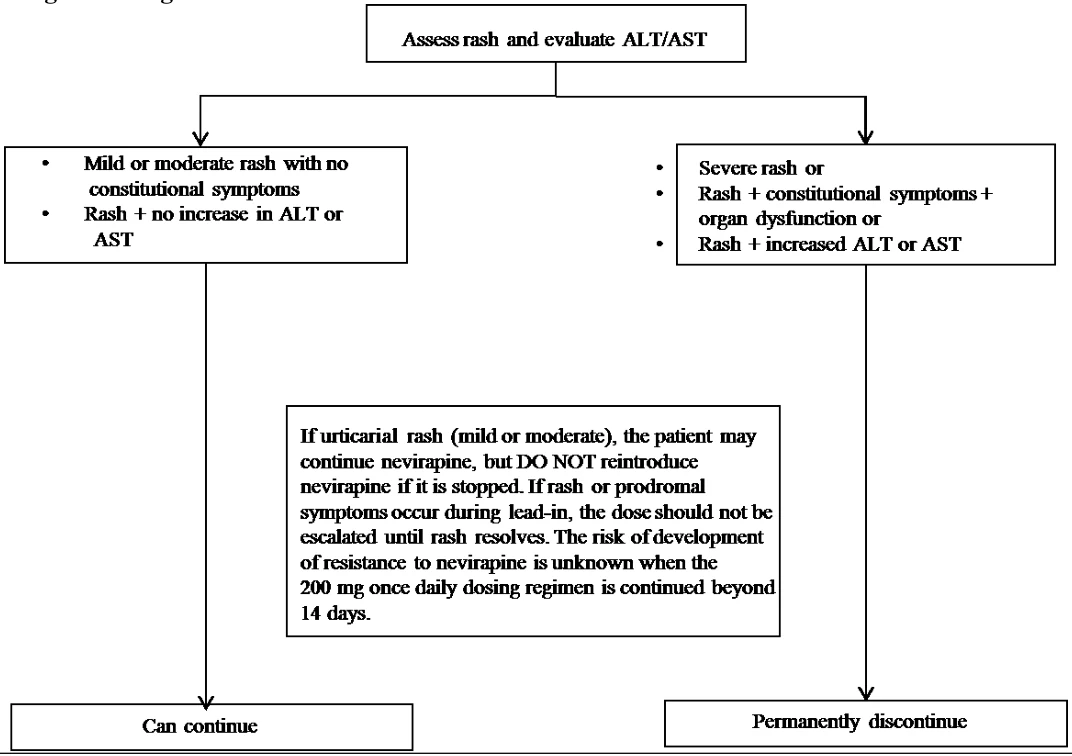
Severe, life-threatening skin reactions, including fatal cases, have been reported with nevirapine treatment, occurring almost exclusively during the first 6 weeks of therapy. These have included cases of Stevens-Johnson syndrome (SJS), toxic epidermal necrolysis (TEN), and hypersensitivity syndrome characterized by rash, constitutional findings, and organ dysfunction (see ADVERSE REACTIONS, Adverse Drug Reaction Overview). Patients should be carefully monitored during the first 18 weeks of treatment. Patients developing signs or symptoms of severe skin reactions or hypersensitivity reactions (including, but not limited to, severe rash or rash accompanied by fever, general malaise, fatigue, muscle or joint aches, blisters, oral lesions, conjunctivitis, facial edema, and/or hepatitis, eosinophilia, granulocytopenia, lymphadenopathy, and renal dysfunction) must permanently discontinue nevirapine and seek medical evaluation immediately. Nevirapine should not be restarted following severe skin rash or hypersensitivity reaction. Some of the risk factors for developing serious cutaneous reactions include failure to follow the initial dosing of 200 mg daily during the 14-day lead-in period and delay in stopping the nevirapine treatment after the onset of the initial symptoms (see Management of Rash Events with Nevirapine below and Monitoring and Laboratory Tests).
Therapy with nevirapine must be initiated with a 14-day lead-in period of 200 mg/day, which has been shown to reduce the frequency of rash. If rash is observed during this lead-in period, dose escalation should not occur until the rash has resolved. Patients should be monitored closely if an isolated rash of any severity occurs. The risk of development of resistance to nevirapine is unknown when the 200 mg once daily dose is continued beyond 14 days (see Management of Rash Events with Nevirapine below and DOSAGE AND ADMINISTRATION).
If patients present with a suspected nevirapine-associated rash, liver function tests should be performed. Patients with rash-associated AST or ALT elevations should be permanently discontinued from nevirapine.
In rare instances rhabdomyolysis has been observed in patients experiencing skin and/or liver reactions associated with nevirapine use.
Women appear to be at higher risk than men of developing rash with nevirapine.
In a clinical trial, the concomitant use of prednisone (40 mg/day for the first 14 days of nevirapine administration) was associated with an increase in the incidence and severity of rash during the first 6 weeks of nevirapine therapy. Therefore, the use of prednisone to prevent nevirapine-associated rash is not recommended.
| Management of Rash Events with Nevirapine* |
Patient Management The recommended 14-day, 200 mg once-daily lead-in dose, prior to escalation to 200 mg twice daily, has been shown to reduce the frequency of rash and must be strictly followed Do not increase the dose of nevirapine in the presence of rash If nevirapine is interrupted for >7 days, reintroduce with the 14-day, 200 mg once-daily lead-in dose It is suggested that nevirapine and other medications that often cause rash should not be started simultaneously Prednisone should not be used to prevent rash. Prednisone administration during the first 2 weeks of therapy with nevirapine appears to increase the incidence of rash Antihistamines do not appear to be effective in preventing rash with nevirapine Rash Management Algorithm |
Definitions
|
| *Severe, life-threatening skin reactions, including fatal cases, have occurred in patients treated with nevirapine. These have included severe cases of SJS, TEN, and hypersensitivity reactions characterized by rash, constitutional findings, and organ dysfunction. Patients developing sign and symptoms of severe skin reactions or hypersensitivity reactions must discontinue Apo-Zidovudine-Lamivudine-Nevirapine as soon as possible. |
UCarcinogenesis and Mutagenesis
Zidovudine
Vaginal tumours occurred in the long-term carcinogenicity studies with zidovudine in mice and rats at systemic exposure (AUC) 8 times (mouse) and 57 times (rat) the human exposure at recommended dose of 300 mg (see TOXICOLOGY).
Zidovudine was mutagenic in vivo and in vitro, including in the HIV patients (see TOXICOLOGY).
In a study involving 11 AIDS patients, it was reported that the seven patients who were receiving zidovudine (1,200 mg/day) as their only medication for 4 weeks to 7 months showed a chromosome breakage frequency of 8.29 ± 2.65 breaks per 100 peripheral lymphocytes. This was significantly (p <0.05) higher than the incidence of 0.5 ± 0.29 breaks per 100 cells that was observed in the four AIDS patients who had not received zidovudine. A pilot study has demonstrated that zidovudine is incorporated into leukocyte nuclear DNA of adults, including pregnant women, taking zidovudine as treatment for HIV-1 infection, or for the prevention of mother to child viral transmission.
Zidovudine was also incorporated into DNA from cord blood leukocytes of infants from zidovudine-treated mothers. The clinical significance of these findings is unknown.
Nevirapine
In the long-term carcinogenicity studies with nevirepine, there was an increased incidence of hepatocellular adenomas and carcinomas in mice and of hepatocellular adenomas in rats at systemic exposure (AUC) lower than that measured in humans at the recommended daily dose (see TOXICOLOGY).
UConcomitant Use with Other Drugs
In vitro studies have shown ribavirin can reduce the phosphorylation of pyrimidine nucleoside analogues such as lamivudine and zidovudine. Although no evidence of a pharmacokinetic or pharmacodynamic interaction (e.g., loss of HIV/HCV virologic suppression) was seen when ribavirin was coadministered with lamivudine or zidovudine in HIV/HCV co-infected patients, hepatic decompensation (some fatal) has occurred in HIV/HCV co-infected patients receiving combination antiretroviral therapy for HIV and interferon alfa with or without ribavirin. Patients receiving interferon alfa with or without ribavirin and Apo-Zidovudine-Lamivudine-Nevirapine should be closely monitored for treatment-associated toxicities, especially hepatic decompensation, neutropenia, and anemia. Discontinuation of Apo-Zidovudine-Lamivudine-Nevirapine should be considered as medically appropriate. Dose reduction or discontinuation of interferon alfa, ribavirin, or both should also be considered if worsening clinical toxicities are observed, including hepatic decompensation (e.g., Child Pugh >6) (see the Product Monographs for interferon and ribavirin).
Apo-Zidovudine-Lamivudine-Nevirapine should not be administered concomitantly with emtricitabine containing products, including ATRIPLA® Tablets, EMTRIVA® Capsules, TRUVADA® Tablets, COMPLERA® Tablets, or STRIBILD™ Tablets. Lamivudine may inhibit the intracellular phosphorylation of emtricitabine when the two medicinal products are used concurrently. Additionally, the mechanism of viral resistance for both lamivudine and emtricitabine is mediated via mutation of the same viral reverse transcriptase gene (M184V) and therefore the therapeutic efficacy of these drugs in combination therapy may be limited.
Zidovudine is metabolized by glucuronidation. Coadministration of Apo-Zidovudine-Lamivudine-Nevirapine with drugs metabolized by glucuronidation should be avoided because the toxicity of either drug may be potentiated.
Nevirapine can alter plasma exposure of other drugs, and other drugs can alter plasma exposure of nevirapine through interactions involving cytochrome P450 (CYP) 3A. Combining the following compounds with Apo-Zidovudine-Lamivudine-Nevirapine is not recommended: efavirenz, rifampin, ketoconazole, delavirdine, etravirine, rilpivirine, elvitegravir (in combination with cobicistat), boceprevir; if not co-administered with low dose ritonavir: fosamprenavir and saquinavir.
See DRUG INTERACTIONS for more information.
Gender
In general, women have a three fold higher risk than men for symptomatic, often rash-associated, hepatic events (5.8% versus 2.2%), and patients with higher CD4 counts at initiation of Apo-Zidovudine-Lamivudine-Nevirapine therapy are at higher risk for symptomatic hepatic events due to nevirapine. In a retrospective review of nevirapine symptomatic hepatic adverse events, women with CD4 counts > 250 cells/mmP 3 P had a 12 fold higher risk of symptomatic hepatic adverse events compared to women with CD4 counts < 250 cells/mmP 3 P (11.0% versus 0.9%). An increased risk was also observed in men with CD4 counts > 400 cells/mmP 3 P (6.3% versus 2.3% for men with CD4 counts < 400 cells/mmP 3 P) (see ADVERSE REACTIONS).
UEndocrine and Metabolism
Fat Redistribution
Redistribution/accumulation of body fat including central obesity, dorsocervical fat enlargement (“buffalo hump”), peripheral wasting, facial wasting, breast enlargement, and “cushingoid appearance” have been observed in patients receiving antiretroviral therapy. The mechanism and long-term consequences of these events are currently unknown. A causal relationship has not been established.
UHematologic
Apo-Zidovudine-Lamivudine-Nevirapine is contraindicated in patients with abnormally low neutrophil counts (< 0.75 x 10P 9 P/L) or abnormally low hemoglobin levels (< 75 g/L or 4.65 mmol/L) (see CONTRAINDICATIONS).
Very rare occurrences of pure red cell aplasia have been reported with lamivudine or zidovudine use. Discontinuation of lamivudine and/or zidovudine has resulted in normalization of hematologic parameters in patients with suspected lamivudine or zidovudine-induced pure red cell aplasia.
Anemia, neutropenia and leucopenia (usually secondary to neutropenia) can be expected to occur in patients receiving zidovudine. These occurred more frequently at higher zidovudine dosages (1200 to 1500 mg/day), in patients with advanced HIV disease and in those who had poor marrow reserve prior to treatment (see ADVERSE REACTIONS).
Hematological parameters should therefore be carefully monitored in patients receiving Apo-Zidovudine-Lamivudine-Nevirapine. The hematological effects are not usually observed before four to six weeks therapy. For patients with advanced symptomatic HIV disease, it is generally recommended that blood tests are performed at least every two weeks for the first three months of therapy and at least monthly thereafter. In patients with early HIV disease hematological adverse reactions are infrequent. Depending on the overall condition of the patient, blood tests may be performed less often, for example every one to three months.
UBone Marrow Suppression
Apo-Zidovudine-Lamivudine-Nevirapine should be used with extreme caution in patients who have bone marrow compromise evidenced by granulocyte count <1000 cells/mmP 3 P or hemoglobin <9.5 g/dL. In patients with advanced symptomatic disease, anemia and granulocytopenia were the most significant adverse events observed (see ADVERSE REACTIONS).
There have been reports of pancytopenia associated with the use of zidovudine, which was reversible in most instances after discontinuation of the drug.
Dosage adjustment of zidovudine may be required if severe anemia or myelosuppression occurs during treatment with Apo-Zidovudine-Lamivudine-Nevirapine, or in patients with preexisting bone marrow compromise for example hemoglobin less than 9 g/dl (5.59 mmol/l) or neutrophil count less than 1.0 x 10P 9 P/l. As dosage adjustment of Apo-Zidovudine-Lamivudine-Nevirapine is not possible separate preparations of zidovudine, lamivudine and nepivirine should be used (see CONTRAINDICATIONS).
UImmune
Immune Reconstitution Syndrome
In HIV-infected patients with severe immune deficiency at the time of institution of combination antiretroviral therapy, an inflammatory reaction to asymptomatic or residual opportunistic pathogens may arise and cause serious clinical conditions, or aggravation of symptoms.
Typically, such reactions have been observed within the first few weeks or months of initiation of combination antiretroviral therapy. Relevant examples are cytomegalovirus retinitis, generalised and/or focal mycobacterial infections, and Pneumocystis pneumonia. Autoimmune disorders (such as Graves’ disease, polymyositis and Guillain-Barre syndrome) have also been reported to occur in the setting of immune reconstitution, however the time to onset is more variable, and can occur many months after initiation of treatment and sometimes can be an atypical presentation. Any inflammatory symptoms should be evaluated and treatment instituted when necessary.
UMusculoskeletal
Myopathy
Myopathy and myositis with pathological changes similar to that produced by HIV disease have been associated with prolonged use of zidovudine and may occur with Apo-Zidovudine-Lamivudine-Nevirapine therapy.
URenal
Patients with impaired renal function may be at a greater risk of toxicity from Apo-Zidovudine-Lamivudine-Nevirapine due to decreased renal clearance of the drug. It is recommended that Apo-Zidovudine-Lamivudine-Nevirapine not be used in patients with reduced renal function (creatinine clearance ≤ 50 mL/min). For these patients, lamivudine, zidovudine and nevirapine should be administered as separate products as a dose adjustment of lamivudine and zidouvudine is recommended (see Product Monographs for lamivudine and zidovudine).
Sexual Function/Reproduction
No human data on fertility are available.
Evidence of impaired fertility was seen in the non-clinical studies with nevirapine in female rats at doses providing systemic exposure (AUC) approximately equivalent to the recommended clinical dose (see TOXICOLOGY).
UBirth Control Methods
Hormonal methods of birth control other than Depo Medroxyprogesterone Acetate (DMPA) should not be used as the sole method of contraception in women taking Apo-Zidovudine-Lamivudine-Nevirapine. Nevirapine may lower the plasma concentrations of these medications (see DRUG INTERACTIONS). Therefore, when postmenopausal hormone therapy is used during administration of Apo-Zidovudine-Lamivudine-Nevirapine, its therapeutic effect should be monitored.
USpecial Populations
Pregnant Women
There have been no adequate and well controlled studies of Apo-Zidovudine-Lamivudine-Nevirapine in pregnant women, nor are there reports of infants born to women who conceived while receiving Apo-Zidovudine-Lamivudine-Nevirapine. Apo-Zidovudine-Lamivudine-Nevirapine should not be used during pregnancy unless the potential benefit justifies the potential risk to the fetus.
There have been reports of mild, transient elevations in serum lactate levels, which may be due to mitochondrial dysfunction, in neonates and infants exposed in utero or peripartum to nucleoside reverse transcriptase inhibitors (NRTIs). The clinical relevance of transient elevations in serum lactate is unknown. There have also been very rare reports of developmental delay, seizures and other neurological disease. However, a causal relationship between these events and NRTI exposure in utero or peri-partum has not been established. These findings do not affect current recommendations to use antiretroviral therapy in pregnant women to prevent vertical transmission of HIV.
Zidovudine
A randomized, double-blind, placebo-controlled trial was conducted in HIV-infected pregnant women to determine the utility of zidovudine for the prevention of maternal fetal HIV-transmission. Congenital abnormalities occurred with similar frequency between infants born to mothers who received zidovudine and infants born to mothers who received placebo. Abnormalities were either problems in embryogenesis (prior to 14 weeks) or were recognized on ultrasound before or immediately after initiation of study drug.
The long-term consequences of in utero and infant exposure to zidovudine are unknown. The long-term effects of early or short-term use of zidovudine in pregnant women are also unknown.
Zidovudine showed embryo-fetal and teratogenic effects in rats and rabbits at doses associated with zidovudine peak plasma concentrations higher than the peak human plasma concentrations at recommended dose (see TOXICOLOGY).
Lamivudine
Consistent with passive transmission of the drug across the placenta, lamivudine concentrations in infant serum at birth were similar to those in maternal and cord serum.
Lamivudine induced early embryolethality when administered to pregnant rabbits at exposure levels comparable to those achieved in man (see TOXICOLOGY).
Nevirapine
Preliminary results from a pharmacokinetic study (ACTG 25) of 10 HIV-1 infected pregnant women who were administered a single oral dose of 100 or 200 mg nevirapine at a median of 5.8 hours before delivery, indicated that nevirapine readily crosses the placenta.
The Antiretroviral Pregnancy Registry, which has been surveying pregnancy outcomes since January 1989, has not found an increased risk of birth defects following first trimester exposures to nevirapine. The prevalence of birth defects after any trimester exposure to nevirapine is comparable to the prevalence observed in the general population.
Severe hepatic events, including fatalities, have been reported in pregnant women receiving chronic nevirapine therapy as part of combination treatment for HIV infection. Regardless of pregnancy status, women with CD4 counts >250 cells/mm3 should not initiate nevirapine unless the benefit outweighs the risk. It is unclear if pregnancy augments the risk observed in non-pregnant women (see WARNINGS AND PRECAUTIONS, Hepatic/Biliary/Pancreatic).
Antiretroviral Pregnancy Registry
To monitor maternal-fetal outcomes of pregnant women exposed to ART (antiretroviral therapy), including Apo-Zidovudine-Lamivudine-Nevirapine, an Antiretroviral Pregnancy Registry has been established. Healthcare providers are encouraged to register patients:
http://www.apregistry.com
Telephone: (800) 258-4263
Fax: (800) 800-1052
Nursing Women
It is recommended that HIV-1 infected women should not breast feed infants regardless of the use of antiretroviral agents, to avoid post-natal transmission of HIV-1. Because of both the potential for HIV transmission and the potential for serious adverse reactions in nursing infants, mothers should be instructed not to breast-feed if they are receiving Apo-Zidovudine-Lamivudine-Nevirapine.
Both lamivudine and zidovudine are excreted in human milk at similar concentrations to those found in serum.
Preliminary results from a pharmacokinetic study (ACTG 25) of 10 HIV-1 infected pregnant women who were administered a single oral dose of 100 or 200 mg nevirapine at a median of 5.8 hours before delivery, indicated that nevirapine is excreted into breast milk (breast milk samples taken from 3 out of 10 mothers).
Pediatrics (< 15 years of age)
Apo-Zidovudine-Lamivudine-Nevirapine is not recommended in pediatric patients less than 15 years of age as safety and effectiveness of nevirapine in these patients has not been established.
Nevirapine is metabolized more rapidly in pediatric patients than in adults.
Geriatrics (>65 years of age)
Apo-Zidovudine-Lamivudine-Nevirapine has not been studied in patients >65 years of age. Special care is advised in these patients due to age associated changes such as the decrease in hepatic, renal and cardiac function, alteration of hematological parameters, and concomitant diseases or drug therapies.
Ethnic Origin
An evaluation of nevirapine plasma concentrations (pooled data from several clinical trials) from HIV-1-infected patients (27 Black, 24 Hispanic, 189 Caucasian) revealed no marked difference in nevirapine steady-state trough concentrations (median CRminssR= 4.7 μg/mL Black, 3.8 μg/mL Hispanic, 4.3 μg/mL Caucasian) with long-term nevirapine treatment at 400 mg/day. However, the pharmacokinetics of nevirapine have not been evaluated specifically for the effects of ethnicity.
UMonitoring and Laboratory Tests
Intensive clinical and laboratory monitoring, including liver function tests, is essential at baseline and during the first 18 weeks of treatment.
The optimal frequency of monitoring during this period has not been established, however it may be prudent to conduct clinical and laboratory monitoring more often than once per month. Liver function tests should be done at baseline, prior to dose escalation and at two weeks post-dose escalation. Liver function tests should be performed immediately if a patient experiences signs or symptoms suggestive of hepatitis and/or hypersensitivity reaction. Liver function tests should also be obtained for all patients who develop a rash in the first 18 weeks of treatment. Physicians and patients should be vigilant for the appearance of signs or symptoms of hepatitis, such as fatigue, malaise, anorexia, nausea, jaundice, bilirubinuria, acholic stools, liver tenderness or hepatomegaly. After the initial 18 week period, frequent clinical and laboratory monitoring should continue throughout treatment. The greatest risk of hepatic events and skin reactions occurs in the first 6 weeks of therapy. However, the risk of any hepatic event continues past this period and monitoring should continue at frequent intervals.
If clinical hepatitis occurs, Apo-Zidovudine-Lamivudine-Nevirapine should be permanently discontinued and not restarted after recovery. If either AST or ALT increase to > 5X ULN, Apo-Zidovudine-Lamivudine-Nevirapine should be immediately stopped. Apo-Zidovudine-Lamivudine-Nevirapine should not be readministered to patients who have been discontinued for severe rash, rash accompanied by constitutional symptoms, hypersensitivity reactions, or clinical hepatitis due to nevirapine. In some cases hepatic injury progresses despite the discontinuation of treatment (see WARNINGS AND PRECAUTIONS, Hepatic/Biliary/Pancreatic, Management of Hepatic Events with Apo-Zidovudine-Lamivudine-Nevirapine).
With AST or ALT values > 2X ULN, liver tests should be monitored more frequently.
Asymptomatic elevation of liver enzymes occurs frequently in patients infected with HIV and is not necessarily a contraindication to initiating therapy with Apo-Zidovudine-Lamivudine-Nevirapine.
Asymptomatic GGT elevations are not a contraindication to continuing therapy.
UPost-exposure Prophylaxis
Apo-Zidovudine-Lamivudine-Nevirapine is not recommended for post-exposure prophylaxis. In the setting of post-exposure prophylaxis, an unapproved use, serious hepatotoxicity, including one instance of liver failure requiring transplantation, and serious skin rash including Stevens-Johnson syndrome, have been reported in HIV-uninfected individuals receiving multiple doses of nevirapine in combination with other antiretroviral agents.
ADVERSE REACTIONS
UAdverse Drug Reactions Overview
The most significant adverse rections associated with zidovudine are anemia, neutropenia, leucopenia (usually secondary to neutropenia) and pancytopenia. The most frequent adverse drug reactions associated with lamivudine and zidovudine in clinical trials are headache or dizziness and nausea. Lactic acidosis, severe hepatomegaly with steatosis and pancreatitis have been reported in patients treated with zidovudine and lamivudine in clinical trials and/or post-market experience. Myopathy may occur with prolonged use of zidovudine.
The most serious adverse reactions associated with nevirapine are clinical hepatitis/hepatic failure, Stevens-Johnson syndrome, toxic epidermal necrolysis, and hypersensitivity reactions. Clinical hepatitis/hepatic failure may be isolated or associated with signs of hypersensitivity which may include, severe rash or rash accompanied by fever, general malaise, fatigue, muscle or joint aches, blisters, oral lesions, conjunctivitis, facial edema, and/or hepatitis, eosinophilia, granulocytopenia, lymphadenopathy and renal dysfunction. Severe and life-threatening hepatic injury and fatal fulminant hepatitis have been reported in patients treated with nevirapine. The first 18 weeks of treatment is a critical period, but such events may also occur later. The risk of hepatic events is greatest in the first 6 weeks of therapy. However the risk continues past this period and monitoring should continue at frequent intervals throughout treatment (see WARNINGS AND PRECAUTIONS).
Class effects of antiretroviral therapy include fat redistribution and immune reconstitution inflammatory syndrome (see WARNINGS AND PRECAUTIONS).
U
Clinical Trial Adverse Drug Reactions
Because clinical trials are conducted under very specific conditions the adverse reaction rates observed in the clinical trials may not reflect the rates observed in practice and should not be compared to the rates in the clinical trials of another drug. Adverse drug reaction information from clinical trials is useful for identifying drug-related adverse events and for approximating rates.
Zidovudine/Lamivudine
In a human bioequivalence trial, the clinical adverse events associated with lamivudine/zidovudine combination in 24 subjects were similar when compared to lamivudine 150 mg plus zidovudine 300 mg administered as separate tablets. All reported adverse events were mild in intensity. The most frequently reported adverse events after single-dose administration were headache or dizziness (seven events in six subjects) and nausea (four events in four subjects). Other reported adverse events included pruritus, skin lesion, visual disturbance, rhinorrhea, and phlebitis (one event in one subject, each). Ten events in seven subjects were assessed by the investigator as possibly or probably drug related and included headache, nausea, phlebitis, and disturbance of vision.
The safety of chronic dosing with lamivudine/zidovudine combination has not been assessed but is not expected to be different from the safety profiles of lamivudine and zidovudine administered concurrently as separate formulations. In four randomized, controlled trials of lamivudine 300 mg per day plus zidovudine 600 mg per day, the following selected clinical adverse events were observed (see Table 1).
Table 1: Selected clinical adverse events (≥5% frequency) in four controlled clinical trials with lamivudine 300 mg/day and zidovudine 600 mg/day
| Adverse Event | lamivudine plus zidovudine (n=251) |
Body as a whole Headache Malaise & fatigue Fever or chills | |
| 35% | |
| 27% | |
| 10% | |
Digestive Nausea Diarrhea Nausea & vomiting Anorexia and/or decreased appetite Abdominal pain Abdominal cramps Dyspepsia | |
| 33% | |
| 18% | |
| 13% | |
| 10% | |
| 9% | |
| 6% | |
| 5% | |
Nervous System Neuropathy Insomnia & other sleep disorders Dizziness | |
| 12% | |
| 11% | |
| 10% | |
| Depressive disorders | 9% |
Respiratory Nasal signs & symptoms Cough | |
| 20% | |
| 18% | |
Skin Skin rashes | |
| 9% | |
Musculoskeletal Musculoskeletal pain Myalgia Arthralgia | |
| 12% | |
| 8% | |
| 5% |
Other clinical adverse events reported in controlled clinical trials in association with lamivudine 150 mg b.i.d. plus zidovudine 600 mg per day in at least 1% of patients were:
Gastrointestinal: Abdominal discomfort and pain (3%), abdominal distension (3%), dyspepsia (2%), gastrointestinal discomfort and pain (3%), gastrointestinal gas (4%), hyposalivation (2%), oral ulceration (1%).
Musculoskeletal: Muscle atrophy/weakness/tiredness (1%), muscle pain (2%).
Neurological: Mood disorders (1%), sleep disorders (4%), taste disturbances (1%).
Other: Breathing disorders (2%), general signs and symptoms (1%), pain (2%), sexual function disturbances (1%), temperature regulation disturbance (1%).
Skin: Pruritis (1%), skin rashes (1%), sweating (1%).
Pancreatitis was observed in three of the 656 adult patients (<0.5%) who received lamivudine in controlled clinical trials.
Nevirapine
Hepato-Biliary
In controlled clinical trials, clinical hepatic events regardless of severity occurred in 4.0% (range 2.5% to 11.0%) of patients who received nevirapine and 1.2% of patients in control groups. Transaminase elevations (ALT or AST > 5X ULN) were observed in 8.8% of patients receiving nevirapine and 6.2% of patients in control groups in clinical trials. In a retrospective analysis of controlled and uncontrolled clinical trials, patients with higher CD4 counts at initiation of nevirapine therapy, particularly women, were at greater risk for acute symptomatic hepatic events, including death, especially in the first six weeks of therapy.
Patients with chronic hepatitis B or C infection were at higher risk for later hepatic events (see WARNINGS AND PRECAUTIONS, Hepatic/Biliary/Pancreatic).
Skin and Subcutaneous Tissues
The most common clinical toxicity of nevirapine is rash. In placebo-controlled trials involving 1374 patients treated with nevirapine (see Table 2), rash, of all grades and causality occurred in 14-20% of patients treated with nevirapine. Severe or life-threatening rash occurred in approximately 2% of nevirapine-treated patients, almost exclusively within the first 6 weeks of therapy.
Rashes were usually mild to moderate, maculopapular erythematous cutaneous eruptions, with or without pruritus, located on the trunk, face and extremities. Allergic reactions (anaphylaxis, angio-oedema and urticaria) have been reported. Severe and life-threatening skin reactions have occurred in patients treated with nevirapine, including Stevens-Johnson syndrome (SJS) and toxic epidermal necrolysis (TEN). Fatal cases of SJS, TEN and hypersensitivity reactions have been reported. Based on a denominator of 2861 nevirapine-treated clinical trial patients, the overall incidence of SJS was 0.3% (9/2861).
Rashes occur alone or in the context of a hypersensitivity syndrome characterised by rash with constitutional symptoms such as fever, arthralgia, myalgia and lymphadenopathy plus visceral involvement, such as hepatitis, eosinophilia, granulocytopenia and renal dysfunction.
Table 2: Risk of rash (%) in adult placebo controlled trialsP 1 P – regardless of causality
| Nevirapine | Placebo | ||||||
|---|---|---|---|---|---|---|---|
n=1374 % | n=1331 % | ||||||
| Through 6 weeks of treatmentP 2 P | |||||||
| Rash events of all gradesP 3 | 14.8 | 5.9 | |||||
| Grade 1 | Erythema, pruritus | 8.5 | 4.2 | ||||
| Grade 2 | Diffuse maculopapular rash, dry desquamation | 4.8 | 1.6 | ||||
| Grade 3 or 4 | Grade 3: vesiculation, moist desquamation, ulceration; Grade 4: erythema multiforme, Stevens Johnson syndrome, toxic epidermal necrolysis, necrosis requiring surgery, exfoliative dermatitis | 1.5 | 0.1 | ||||
| Through 52 weeks of treatmentP 2 P | |||||||
| Rash events of all gradesP 3 | 24.0 | 14.9 | |||||
| Grade 1 | See above | 15.5 | 10.8 | ||||
| Grade 2 | See above | 7.1 | 3.9 | ||||
| 3 or Grade 4 | See above | 1.7 | 0.2 | ||||
| Proportion of Patients who Discontinued Treatment Due to Rash | 4.3 | 1.2 | |||||
1 Trials 1037, 1038, 1046 and 1090
2 % based on Kaplan-Meier probability estimates
3 NCI grading system
Treatment related, adverse experiences of moderate or severe intensity observed in >2% of patients receiving nevirapine in placebo-controlled trials are shown in Table 3.
Table 3: Percentage of patients with moderate or severe drug related events in adult placebo-controlled trials
| Trial 1090P 1 | Trials 1037, 1038, 1046P 2 | ||||||||
Nevirapine (n = 1121) | Placebo (n = 1128) | Nevirapine (n = 253) | Placebo (n = 203) | ||||||
| Median Exposure (weeks) | 58 | 52 | 28 | 28 | |||||
Any adverse event Rash Abnormal LFTs Nausea Granulocytopenia Headache Fatigue Diarrhea Abdominal pain Myalgia | 14.5% 5.1 1.2 0.5 1.8 0.7 0.2 0.2 0.1 0.2 | 11.1% 1.8 0.9 1.1 2.8 0.4 0.3 0.8 0.4 0 | 31.6% 6.7 6.7 8.7 0.4 3.6 4.7 2.0 2.0 1.2 | 13.3% 1.5 1.5 3.9 0 0.5 3.9 0.5 0 2.0 |
P 1 P Background therapy included lamivudine for all patients and combinations of NRTIs and Pls. Patients had CD4+ counts <200 cells/mmP 3 P.
2 Background therapy included ZDV and ZDV+ddI; nevirapine monotherapy was administered in some patients. Patients had CD4+ >200 cells/mmP 3 P.
Apart from rash and abnormal LFTs, the most frequently reported adverse events related to nevirapine therapy across all clinical trials were nausea, fatigue, fever, headache, vomiting, diarrhea, abdominal pain and myalgia.
UAbnormal Hematologic and Clinical Chemistry Findings
Zidovudine/Lamivudine
Selected laboratory abnormalities observed during therapy with zidovudine/lamivudine are listed in Table 4.
Table 4: Frequencies of selected laboratory abnormalities among adults in four controlled clinical trials of lamivudine 300 mg/day plus zidovudine 600 mg/day*
| Test (Abnormal Level) | lamivudine plus zidovudine %(n) |
| Neutropenia (ANC <750/mmP 3 P) | 7.2% (237) |
| Anemia (Hgb <8.0 g/dL) | 2.9% (241) |
| Thrombocytopenia (platelets<50,000/mmP 3 P) | 0.4% (240) |
| ALT (>5.0 x ULN) | 3.7% (241) |
| AST (>5.0 x ULN) | 1.7% (241) |
| Bilirubin (>2.5 ULN) | 0.8% (241) |
| Amylase (>2.0 ULN) | 4.2% (72) |
ULN = Upper limit of normal
ANC = Absolute neutrophil count
n = Number of patients assessed
* Frequencies of these laboratory abnormalities were higher in patients with mild laboratory abnormalities at baseline
Nevirapine
The most frequently observed laboratory test abnormalities are elevations in LFTs, including ALT, AST, GGT, total bilirubin and alkaline phosphatase. Asymptomatic elevations of GGT levels are the most frequent. Cases of jaundice have been reported. Cases of hepatitis, severe and life-threatening hepatotoxicity, and fatal fulminant hepatitis, have been reported in patients treated with nevirapine.
Liver function test abnormalities (AST, ALT) were observed more frequently in patients receiving nevirapine than in controls (see Table 5). Asymptomatic elevations in GGT occur frequently but are not a contraindication to continue nevirapine therapy in the absence of elevations in other liver function tests. Other laboratory abnormalities (bilirubin, anemia, neutropenia, thrombocytopenia) were observed with similar frequencies in clinical trials comparing nevirapine and control regimens (see Table 5).
Table 5: Percentage of patients with marked laboratory abnormalities
| Trial 1090P 1 | Trials 1037, 1038, 1046P 2 | ||||||||||
| Nevirapine | Placebo | Nevirapine | Placebo | ||||||||
Laboratory Abnormality n=1 121 n=1 128 n=253 n=203 Hematology Hemoglobin 80 g/L Platelets <50 x 10P 9 P/L Neutrophils < 750 x 10P 6 P/L | n = 1121 3.2% 1.3 13.3 | n = 1128 4.1% 1 13.5 | n = 253 0% 0.4 3.6 | n = 203 0% 1.5 1 | |||||||
Blood Chemistry AST >250 U/L ALT >250 U/L Bilirubin > 42.5 μm/L | 3.7 5.3 1.7 | 2.5 4.4 2.2 | 7.6 14 1.7 | 1.5 4 1.5 | |||||||
P 1 P Background therapy included lamivudine for all patients and combinations of NRTIs and Pls. Patients had CD4+ counts <200 cells/mmP 3 P.
2 Background therapy included ZDV and ZDV+ddI; nevirapine monotherapy was administered in some patients. Patients had CD4+ ≥200 cells/mmP 3 P.
Because clinical hepatitis has been reported in niverapine-treated patients, intensive clinical and laboratory monitoring, including liver function tests, is essential at baseline and during the first 18 weeks of treatment. Monitoring should continue at frequent intervals thereafter; depending on the patient’s clinical status (see WARNINGS AND PRECAUTIONS, Hepatic/Biliary/Pancreatic and Monitoring and Laboratory Tests).
UPost-Market Adverse Drug Reactions
Ziduvudine/Lamivudine
The following events have been identified during post-approval use of lamivudine and/or zidovudine alone or in combination with other antiretroviral therapy in clinical practice. Because they are reported voluntarily from a population of unknown size, estimates of frequency cannot be made. These events have been chosen for inclusion due to either their seriousness, frequency of reporting, causal connection to lamivudine and/or zidovudine, or a combination of these factors.
Body as a Whole: Redistribution/accumulation of body fat (see WARNINGS AND PRECAUTIONS, Fat Redistribution).
Cardiovascular: Cardiac arrest, cardiac failure, cardiomegaly, cardiomyopathy, cerebrovascular accident, hypertension, hypotension, intracranial hemorrhage, orthostatic hypotension, palpitation(s), syncope, tachycardia, vasculitis, vasodilation.
Endocrine and Metabolic: Acidosis, anorexia, dehydration, gynecomastia, hypercholesterolemia, hyperglycemia, hyperlactataemia, hyperlipidemia, hyperuricemia, hypoglycemia, hyponatremia, inappropriate antidiuretic hormone secretion, increased appetite, increased CPK, increased LDH, increased serum iron, lactic acidosis and hepatic steatosis (see WARNINGS AND PRECAUTIONS), weight loss.
Eye: Conjunctivitis, retinitis, visual field defect.
Gastrointestinal: Abdominal distention, ascites, bleeding gums, constipation, diarrhea, discoloration of tongue, dyspepsia, dysphagia, edema of the tongue, esophagitis, esophageal ulcer, flatulence, gastritis, gastrointestinal hemorrhage, mouth ulcer, nausea and vomiting, oral mucosa pigmentation ,peptic ulcer, rectal hemorrhage, rises in serum amylase, sialoadenitis, stomatitis.
General: Abdominal pain, allergic reaction, anaphylaxis, back pain, Candida infection, chills, chest pain, death, edema of face, edema of extremities, fatigue, fever, flu syndrome, hypertonia, hypotonia, malaise, pain, pallor, sepsis, weakness.
Hemic and Lymphatic: Abnormalities of red cells, abnormalites of white cells, agranulocytosis, anemia, aplastic anemia, bone marrow depression, eosinophilia, hemolysis, impaired red cell maturation, leukocytosis, leukopenia, lymphadenopathy, lymphocytosis, lymphoma, methemoglobinemia, neutropenia, pancytopenia, pure red cell aplasia, sarcoma, splenomegaly, thrombocytopenia, thrombotic thrombocytopenic purpura.
Hepatobiliary Tract and Pancreas: Cholestatic jaundice, fatty liver, hepatic impairment, hepatic failure, hepatitis, hepatomegaly, hyperbilirubinemia, increased aminotransferase levels, increased amylase, jaundice, pancreatitis.
Immune System: Immune Reconstitution Syndrome (see
WARNINGS AND PRECAUTIONS, Immune)
Musculoskeletal: Amyotrophy, arthralgia, muscle disorders including rarely rhabdomyolosis, myositis, tremor, twitch, myalgia, hemarthrosis, leg cramps.
Nervous: Aggressive behavior, agitation, amnesia, anxiety, ataxia, confusion, convulsions, delusions, dementia, depression, dizziness, dystonic movement(s), emotional lability, encephalitis, facial palsy, hallucinations, headache, hypoesthesia, insomnia, loss of mental acuity, meningitis, myasthenia, nervousness, mania, paresthesia, paranoia, peripheral neuritis, peripheral neuropathy, personality disorder, psychotic disorders, somnolence, tremor, vertigo.
Reproductive: Amenorrhea, decreased libido, impotence, intermenstrual bleeding.
Respiratory: Apnea, cough, dyspnea, epistaxis, hyperventilation, influenza, pharyngitis, pneumonia, rhinitis, sinusitis.
Skin: Acne, alopecia, changes in skin and nail pigmentation, dryness of skin, erythema multiforme, exfoliative dermatitis, hair color change, hirsutism, hyperpigmentation, maculopapular lesions, nail disorders, photosensitivity, pruritus, rash, rubelliform rash, Stevens-Johnson syndrome, sweating, urticaria, vesciculobullous rash.
Special Senses: Ageusia, amblyopia, hearing loss, photophobia, taste disturbance, speech disorder, tinnitus.
Urogenital: Albuminuria, dysuria, hematuria, increased creatinine levels, polyuria, renal dysfunction, renal failure, urinary frequency.
Nevirapine
In addition to the adverse events identified during clinical trials, the following events have been reported with the use of nevirapine in clinical practice:
Body as a Whole: fever, somnolence, drug withdrawal (see WARNINGS AND PRECAUTIONS), redistribution/accumulation of body fat (see WARNINGS AND PRECAUTIONS, Fat Redistribution)
Gastrointestinal: vomiting
Liver and Biliary: jaundice, fulminant and cholestatic hepatitis, hepatic necrosis, hepatic failure
Hematology: anemia (more commonly observed in children), eosinophilia, neutropenia
Musculoskeletal: arthralgia
Neurologic: paraesthesia
Skin and Appendages: allergic reactions including anaphylaxis, angioedema, bullous eruptions, ulcerative stomatitis and urticaria have all been reported. In addition, hypersensitivity reactions with rash associated with constitutional findings such as fever, blistering, oral lesions, conjunctivitis, facial edema, muscle or joint aches, general malaise or significant hepatic abnormalities (see WARNINGS AND PRECAUTIONS) plus one or more of the following: hepatitis, eosinophilia, granulocytopeflia and/or renal dysfunction have been reported with the use of nevirapine.
In very rare instances, cases of anaemia and neutropeflia may be associated with nevirapine therapy. Arthralgia has been reported as a stand-alone event in rare instances in patients receiving nevirapine containing regimens.
The following events have also been reported when nevirapine has been used in combination with other anti-retroviral agents: pancreatitis, peripheral neuropathy and thrombocytopenia. These events are commonly associated with other anti-retroviral agents and may be expected to occur when nevirapine is used in combination with other agents.
In summary the list of side effects, which can be expected with nevirapine treatment, includes:
UBlood and lymphatic system disorders: granulocytopenia, anemia
UImmune system disorders: drug reaction with eosinophilia and systemic symptoms, anaphylactic reaction, hypersensitivity (characterised by rash associated with constitutional symptoms such as fever, arthalgia, myalgia and lymphadenopathy plus one or more of the following: hepatitis, eosinophilia, granulocytopenia, renal dysfunction or other visceral involvement has also been reported. Also including anaphylactic reaction, angioedema, urticaria)
UNervous system disorders: headache
UGastrointestinal disorders: diarrhoea, abdominal pain, nausea, vomiting
UHepatobiliary disorders: hepatitis (including severe and life threatening hepatotoxicity), hepatitis fulminant (which may be fatal), jaundice
USkin and subcutaneous tissue disorders: rash, Stevens-Johnson Syndrome/toxic epidermal necrolysis (which may be fatal), angioedema,
urticaria
UMusculoskeletal and connective tissue disorders:arthralgia, myalgia
UGeneral disorders and administration site conditions: pyrexia, fatigue
UInvestigations:
liver function test abnormal (alanine aminotransferase increased; transaminases increased aspartate aminotransferase increased; gamma-glutamyltransferase increased; hepatic enzyme increased; hypertransaminasaemia; total bilirubin, alkaline phosphatase), blood phosphorus decreased, blood pressure increased
DRUG INTERACTIONS
UOVERVIEW
Zidovudine/Lamivudine
Zidovudine plasma levels are not significantly altered when co-administered with lamivudine. Zidovudine had no effect on the pharmacokinetics of lamivudine (see ACTION AND CLINICAL PHARMACOLOGY).
The possibility of interactions with other drugs administered concurrently should be considered, particularly when the main route of elimination is renal.
UNevirapine
Biotransformation of nevirapine involves extensive cytochrome P450 metabolism (CYP3A>CYP2B6) and glucuronidation. Nevirapine induces CYP 3A4 and 2B6 with maximal induction occurring within 2-4 weeks of initiating multiple-dose therapy. Available data on the potential interaction between nevirapine and other drugs that are extensively metabolized by CYP3A are limited. Co-administration of nevirapine and drugs primarily metabolized by CYP3A4 or CYP2B6 may result in decreased plasma concentrations of these drugs and attenuate their therapeutic effects.
Nevirapine does not appear to affect the plasma concentrations of drugs that are substrates of other CYP450 enzyme systems, such as 1A2, 2D6, 2A6, 2E1, 2C9 or 2C19.
Drug-Drug Interactions
No drug interaction studies have been conducted with Apo-Zidovudine-Lamivudine-Nevirapine. The data presented in Table 6 are from studies conducted with zidovudine, lamivudine or nevirapine as separate agents. Therefore, it is not always possible to provide a clinical recommendation regarding co-administration of Apo-Zidovudine-Lamivudine-Nevirapine with some drugs. In these cases, caution, close monitoring and careful assessment of patient’s risk/benefit are recommended.
Table 6: Established and Potential Significant Drug Interactions
Concomitant Drug Class: Drug Name | Effect | Clinical Comment |
| ANTIRETROVIRALS | ||
| NRTIs | ||
| Didanosine | ↔ didanosine | In one crossover study, nevirapine had no effect on the steady-state pharmacokinetics of didanosine (n=18). |
| Emtricitabine | lamivudine may inhibit the intracellular phosphorylation of emtricitabine; additionally, the mechanism of viral resistance for both lamivudine and emtricitabine is mediated via mutation of the same viral reverse transcriptase gene (M184V) and therefore the therapeutic efficacy of these drugs in combination therapy may be limited. | Co-administration of Apo-Zidovudine-Lamivudine-Nevirapine with emtricitabine-containing products is not recommended (see WARNINGS AND PRECAUTIONS, Concomitant Use with Other Drugs). |
| Abacavir | In human liver microsomes, abacavir did not inhibit cytochrome P450 isoforms. Abacavir is not expected to meaningfully affect nevirapine exposure. | |
| Stavudine | zidovudine may inhibit the intracellular phosphorylation of stavudine | In vitro, combinations of zidovudine with stavudine are antagonistic. Coadministration of Apo-Zidovudine-Lamivudine-Nevirapine with stavudine is not recommended. |
| Tenofovir disoproxil fumarate | ↔ nevirapine ↔ tenofovir | Tenofovir plasma levels remain unchanged when co-administered with nevirapine. Tenofovir does not have an effect on nevirapine plasma levels. No drug interaction study between zidovudine and/or lamivudine and tenofovir disoproxil fumarate has been conducted. Due to renal excretion of zidovudine, lamivudine and tenofovir, caution and monitoring for renal adverse effects are recommended when Apo-Zidovudine-Lamivudine-Nevirapine is co-administered with tenofovir disporoxil fumarate containing products. |
| Zalcitabine | lamivudine may inhibit the intracellular phosphorylation of zalcitabine | Co-administration of Apo-Zidovudine-Lamivudine-Nevirapine with zalcitabine is not recommended. |
| NNRTIs | ||
| Efavirenz | ↓ efavirenz | Co-administration with nevirapine decreases plasma level of efavirenz. In addition, co-administration of nevirapine with other NNRTIs is not recommended as this combination has not been shown to be beneficial. Therefore, Apo-Zidovudine-Lamivudine-Nevirapine should not be co-administered with efavirenz-containing products (see WARNINGS AND PRECAUTIONS, Concomitant Use with Other Drugs). |
| Delavirdine | Interaction has not been studied but plasma concentrations may be altered. In addition, co-administration of nevirapine with other NNRTIs is not recommended as this combination has not been shown to be beneficial. Therefore, Apo-Zidovudine-Lamivudine-Nevirapine should not be co-administered with delavirdine (see WARNINGS AND PRECAUTIONS, Concomitant Use with Other Drugs), | |
| Etravirine | Interaction has not been studied but plasma concentrations may be altered. In addition, co-administration of nevirapine with other NNRTIs is not recommended as this combination has not been shown to be beneficial. Therefore, Apo-Zidovudine-Lamivudine-Nevirapine should not be co-administered with etravirine (see WARNINGS AND PRECAUTIONS, Concomitant Use with Other Drugs). | |
| Rilpivirine | Interaction has not been studied but plasma concentrations may be altered. In addition, co-administration of nevirapine with other NNRTIs is not recommended as this combination has not been shown to be beneficial. Therefore, Apo-Zidovudine-Lamivudine-Nevirapine should not be co-administered with rilpivirine (see WARNINGS AND PRECAUTIONS, Concomitant Use with Other Drugs). | |
| PIs | ||
Darunavir / ritonavir | ↑ nevirapine ↑ darunavir | The drug interaction study with nevirapine and darunavir/ritonavir showed increased plasma levels of nevirapine and darunavir. The observed increases in nevirapine and darunavir exposure are not expected to be clinically meaningful. |
| Fosamprenavir (a pro-drug of amprenavir) | ↑ nevirapine ↓ amprenavir | The drug interaction study with nevirapine and fosamprenavir showed an increased plasma level of nevirapine and a decreased plasma level of amprenavir. The increased exposure of nevirapine is not expected to be clinically meaningful. Due to decreased amprenavir exposure, it is recommended that Apo-Zidovudine-Lamivudine-Nevirapine be co-administered with |
| fosamprenavir with ritonavir. | ||
| Fosamprenavir/ritonavir | ↑ nevirapine ↓ amprenavir | The drug interaction study with nevirapine and fosamprenavir/ritonavir showed an increased plasma level of nevirapine and a decreased plasma level of amprenavir. The observed changes in nevirapine and amprenavir exposures are not expected to be clinically meaningful. |
| Indinavir | ↔ nevirapine ↓ indinavir | Results from a clinical trial with HIV infected patients administered nevirapine and indinavir indicated that their co-administration leads to a decrease in indinavir AUC and Cmin. There was no significant change in nevirapine plasma levels. A dose increase of indinavir to 1000 mg q8h should be considered when indinavir is given with nevirapine 200 mg BID; however, there are no data currently available to establish that the short term or long term antiviral activity of indinavir 1000 mg q8h with nevirapine 200 mg BID will differ from that of indinavir 800 mg q8h with nevirapine 200 mg BID. |
| Lopinavir/ritonavir | ↓ lopinavir | In HIV positive adults, nevirapine used in combination with lopinavir/ritonavir 400/100 mg (3 capsules) twice daily resulted in a decline in the mean lopinavir AUC and Cmin. Although the clinical relevance of this observation has not been fully established, an increase in the dose of lopinavir/ritonavir to 533/133 mg (4 capsules) twice daily with food is recommended in combination with nevirapine. |
| Nelfinavir | ↔ nevirapine ↓ nelfinavir Cmin ↓ nelfinavir-M8 metabolite | Results from a 28 day study in HIV infected patients administered nevirapine, nelfinavir showed no statistically significant changes in nelfinavir pharmacokinetic parameters after the addition of nevirapine. Compared to historical controls nevirapine levels appeared to be unchanged. The major metabolite of nelfinavir (M8) which has comparable activity to the parent compound, however, has a decrease in AUC, Cmax and Cmin. The appropriate dose for nelfinavir in combination with nevirapine, with respect to safety and efficacy, has not been established. Nelfinavir and nevirapine can be used without dose adjustments. |
| Ritonavir | ↔ nevirapine ↔ ritonavir | Results from a clinical trial with HIV infected patients administered nevirapine and ritonavir indicated that their co-administration leads to no significant change in ritonavir or nevirapine plasma concentrations. Ritonavir and nevirapine can be used without dose adjustments. |
| Saquinavir | ↔ nevirapine | Results from a clinical trial with HIV infected patients |
| Saquinavir/ritonavir | ↓ saquinavir | administered nevirapine and saquinavir hard gelatine capsule indicated that their coadministration leads to a mean reduction in saquinavir AUC and no significant change in nevirapine plasma levels. This decrease is not thought to be clinically significant and no dose adjustments of saquinavir is recommended. The safety and efficacy of the combination of nevirapine and saquinavir/ritonavir have not been established. |
| Tipranavir/ritonavir | ↔ nevirapine ↓ tipranavir | No specific drug-drug interaction study has been performed. The limited data available from a phase IIa study in HIV-infected patients have shown a clinical non significant 20% decrease of tipranavir Cmin. No significant effect on tipranavir and nevirapine pharmacokinetic parameters is expected. Tipranavir can be used with nevirapine without dose adjustments. |
| ENTRY INHIBITORS | ||
| Enfuvirtide | No clinically significant pharmacokinetic interactions are expected between enfuvirtide and concomitantly given medicinal products metabolised by CYP450 enzymes. No significant effect on enfurtivide and nevirapine pharmacokinetic parameters is expected. Enfuvirtide and nevirapine can be used without dose adjustments. | |
| Maraviroc | ↑ maraviroc (Cmax; 54%) | Co-administration with nevirapine increased Cmax of maraviroc, which is not expected to be clinically meaningful. The effect of maraviroc on nevirapine plasma concentration was not determined. |
| INTEGRASE INHIBITORS | ||
| Raltegravir | No clinical data available. Due to the metabolic pathway of raltegravir no interaction is expected. | |
Elvitegravir/ cobicistat | Interaction has not been studied. Cobicistat, a cytochrome P450 3A inhibitor significantly inhibits hepatic enzymes, as well as other metabolic pathways. Therefore coadministration would likely result in altered plasma levels of cobicistat and nevirapine. Coadministration of Apo-Zidovudine-Lamivudine-Nevirapine with elvitegravir in combination with cobicistat is not recommended (see WARNINGS AND PRECAUTIONS, Concomitant Use with Other Drugs). | |
| ANTIVIRALS FOR HEPATITIS B AND C | ||
| Interferon-alpha | increased risk of hematologic toxicities | Should the use of Apo-Zidovudine-Lamivudine-Nevirapine in combination with interferon-alpha become necessary, interruption of one or both agents may be necessary, and hematologic parameters should be monitored frequently. |
| Entecavir | Entecavir is not a substrate, inducer or an inhibitor of CYP450 enzymes. Due to the metabolic pathway of entecavir, no clinically relevant drug-drug interaction with nevirapine is expected. Entecavir may be co-administered with nevirapine without dose adjustments. | |
| Telbivudine | Telbivudine is not a substrate, inducer or inhibitor of the CYP450 enzyme system. Due to the metabolic pathway | |
of telbivudine, no clinically relevant drug-drug interaction with neveripine is expected. Telbivudine may be co-administered with nevirapine without dose adjustments | ||
| Adefovir | Results of in vitro studies showed a weak antagonism of nevirapine by adefovir, which has not been confirmed in clinical trials and reduced efficacy is not expected. Adefovir did not influence any of the common CYP450 isoforms known to be involved in human drug metabolism and is excreted renally. No clinically relevant drug-drug interaction is expected with nevirapine. | |
| Ribavirin | ↑ ribavirin increased risk of anemia | Preliminary data suggest that the use of ribavirin and zidovudine leads to increased ribavirin levels and increased risk of anemia. In vitro, combinations of zidovudine with ribavirin are antagonistic. The concomitant use of Apo-Zidovudine-Lamivudine-Nevirapine and ribavirinshould be avoided. |
| Boceprevir | Boceprevir is partly metabolized by CYP3A4/5. Co-administration of boceprevir with medicines that induce or inhibit CYP3A4/5 could increase or decrease exposure. Plasma trough concentrations of boceprevir were decreased when administered with an NNRTI with a similar metabolic pathway as nevirapine. The clinical outcome of this observed reduction of boceprevir trough concentrations has not been directly assessed. Co-administration of Apo-Zidovudine-Lamivudine-Nevirapine with boceprevir is not recommended (see WARNINGS AND PRECAUTIONS, Concomitant Use with Other Drugs). | |
| Telaprevir | Telaprevir is metabolised in the liver by CYP3A and is a P-glycoprotein substrate. Other enzymes may also be involved in the metabolism of telaprevir. Coadministration of telaprevir and medicinal products that induce CYP3A and/or P-gp may decrease telaprevir plasma concentrations. No drug-drug interaction study of telaprevir with nevirapine has been conducted; however, interaction studies of telaprevir with an NNRTI with a similar metabolic pathway as nevirapine demonstrated reduced levels of both. Results of drug interaction studies of telaprevir with efavirenz indicate that caution should be exercised when co-administering telaprevir with P450 inducers. Caution should be exercised when co-administering telaprevir with nevirapine. If co-administered with Apo-Zidovudine-Lamivudine-Nevirapine, an adjustment in the telaprevir dose should be considered. | |
| Ganciclovir | increased risk of hematologic toxicities in some patients with advanced HIV disease | Use of zidovudine in combination with ganciclovir increases the risk of hematologic toxicities in some patients with advanced HIV disease. Should the use of Apo-Zidovudine-Lamivudine-Nevirapine in combination with ganciclovir become necessary in the treatment of patients with HIV disease, interruption of one or both agents may be necessary to minimize hematologic toxicity. Hematologic parameters, including hemoglobin, hematocrit, and white blood cell count with differential, |
| should be monitored frequently in all patients receiving this combination. | ||
| ANTIBIOTICS | ||
| Clarithromycin | ↑ nevirapine ↓ clarithromycin clarithromycin - 14-OH Metabolite ↓ zidovudine | Results of a nevirapine-clarithromycin drug-drug interaction study resulted in a significant reduction in clarithromycin AUC, Cmax and Cmin but a significant increase in AUC and Cmax of the active metabolite 14-OH clarithromycin. There was a significant increase in the nevirapine Cmin and a non-significant increase in nevirapine AUC and Cmax. In addition, clarithromycin tablets reduce the absorption of zidovudine. Alternatives to clarithromycin, such as azithromycin should be considered. If the co-administration is considered necessary, Apo-Zidovudine-Lamivudine-Nevirapine and clarithromycin should be separated by two hours and close monitoring for hepatic abnormalities is recommended. |
| Rifabutin | ↔ nevirapine ↑ rifabutin ↑ metabolite 25-Odesacetylrifabutin | In an open label pharmacokinetic study the concomitant administration of rifabutin following full induction with nevirapine resulted in an increase in the steady-state AUC, Cmax, and Cmin of rifabutin. There was also an increase in the 25-O-desacetyl-rifabutin metabolite exposure in extent and rate. Due to the high intersubject variability some patients may experience large increases in rifabutin exposure and may be at higher risk for rifabutin toxicity. Therefore, caution should be used in concomitant administration. A clinically not relevant increase in the apparent clearance of nevirapine (by 9%) compared to historical pharmacokinetic data was reported. Rifabutin can be used with nevirapine without dose adjustment. |
Rifampin (Rifampicin) | ↓ nevirapine ↓ zidovudine ↔ rifampin | Co-administration of Apo-Zidovudine-Lamivudine-Nevirapine with rifampin is not recommended. Limited clinical data exist with a dose adjustment for nevirapine when co-administered with rifampicin. Preliminary data from a drug interaction study (n=10) suggest that coadministration of 200 mg zidovudine and 600 mg rifampin decreases the area under the plasma concentration curve of zidovudine by an average of 48% ± 34%. However, the effect of once daily dosing of rifampin on multiple daily doses of zidovudine is unknown. Physicians needing to treat patients coinfected with tuberculosis and using a nevirapine containing regimen may consider use of rifabutin instead. |
| ANTIBACTERIALS | ||
Trimethoprim, a constituent of cotrimoxazole | ↑ lamivudine | Administration of trimethoprim, a constituent of co-trimoxazole causes a 40% increase in lamivudine plasma levels. However, unless the patient has renal impairment, no dosage adjustment of lamivudine is necessary. Lamivudine has no effect on the pharmacokinetics of co-trimoxazole. Administration of cotrimoxazole with the lamivudine/zidovudine combination in patients with renal impairment should be |
| carefully assessed. | ||
| Probenecid | ↑ zidovudine | Limited data suggest that probenecid may increase zidovudine levels by inhibiting glucuronidation and/or reducing renal excretion of zidovudine. Some patients who have used zidovudine concomitantly with probenecid have developed flu-like symptoms consisting of myalgia, malaise, and/or fever and maculopapular rash. |
| Other agents | Some drugs such as trimethoprim-sulfamethoxazole, pyrimethamine, and acyclovir may be necessary for the management or prevention of opportunistic infections. Limited data from clinical trials do not indicate a significantly increased risk of adverse reactions to zidovudine with these medicinal products. Although, there is an isolated published report of neurotoxicity (profound lethargy) associated with concomitant use of zidovudine and acyclovir, this isolated case is not understood and unlikely to be of general relevance. | |
| ANTIFUNGALS | ||
| Ketoconazole | ↓ ketoconazole | Nevirapine significantly reduced ketoconazole exposure (72% reduction in AUC and 44% reduction in CRmaxR). Coadministration of Apo-Zidovudine-Lamivudine-Nevirapine with ketoconazole is not recommended (see WARNINGS AND PRECAUTIONS, Concomitant Use with Other Drugs). |
| Fluconazole | ↑ nevirapine ↑ zidovudine ↔ fluconazole | Nevirapine exposure was increased 100% by fluconazole compared with historical data where nevirapine was administered alone. Preliminary data suggest that fluconazole interferes with the oral clearance and metabolism of zidovudine. In a pharmacokinetic interaction study in which 12 HIV-positive men received zidovudine alone and in combination with fluconazole, increases in the mean peak serum concentration (79%), AUC (70%) and half-life (38%) were observed at steady state. The clinical significance of this interaction is unknown. Because of the risk of increased exposure to nevirapine, caution should be exercised if the medicinal products are given concomitantly and patients should be monitored closely. Fluconazole may only be added to a stable nevirapine containing regimen when the benefits clearly outweigh the risks. |
| Itraconazole | ↔ nevirapine ↓ itraconazole | The drug interaction study with nevirapine and itraconazole (200 mg/day) showed a decreased itraconazole exposure. A dose adjustment for itraconazole should be considered when these two agents are administered concomitantly; however, a higher dosage of itraconazole maydecrease nevirapine plasma concentration. |
| Atovaquone | ↑ zidovudine | Pharmacokinetic data have shown that atovaquone appears to decrease the rate of metabolism of zidovudine to its glucuronide metabolite (steady state AUC of zidovudine was increased by 33% and peak plasma |
| concentration of the glucuronide was decreased by 19%). At zidovudine dosages of 500 or 600 mg/day it would seem unlikely that a three week, concomitant course of atovaquone for the treatment of acute PCP would result in an increased incidence of adverse reactions attributable to higher plasma concentrations of zidovudine. Extra care should be taken in monitoring patients receiving prolonged atovaquone therapy. | ||
| ANTACIDS | ||
| Cimetidine | ↑ nevirapine Cmin | The median nevirapine trough for patients on cimetidine was 7% higher than the control group. The limited data suggest no dose adjustment when cimetidine is co-administered with nevirapine. Cimetidine may alter the metabolism of zidovudine by competitively inhibiting glucuronidation or directly inhibiting hepatic microsomal metabolism. Careful thought should be given to the possibility of interaction before using cimetidine particularly for chronic therapy, in combination with Apo-Zidovudine-Lamivudine-Nevirapine. If concomitant therapy with Apo-Zidovudine-Lamivudine-Nevirapine and cimetidine is necessary then extra care should be taken in monitoring renal function and hematological parameters and, if required, the dosage of one or more agents should be reduced. |
| ANTITHROMBOTICS | ||
| Warfarin | ↓ or ↑ warfarin | The interaction between nevirapine and the antithrombotic agent warfarin is complex with the potential for both increases and decreases in coagulation time when used concomitantly. The net effect of the interaction may change during the first weeks of coadministration, during the re-establishment of therapeutic effect only after dose adjustment, or upon discontinuation of nevirapine. Close monitoring of anticoagulation levels is therefore warranted. |
| CONTRACEPTIVES | ||
Depomedroxyprogest erone acetate (DMPA) | ↑ nevirapine ↔ DMPA | No significant effect on DMPA and nevirapine pharmacokinetic parameters is seen. DMPA can be used with nevirapine without dose adjustments. Nevirapine co-administration did not alter the ovulation suppression effects of DMPA as measured by progesterone levels. |
Ethinyl estradiol (EE) / Norethindrone (NET) | ↓ ethinyl estradiol (EE) ↓ norethindrone (NET) | Oral hormonal contraceptives should not be used as the sole method of contraception in women taking Apo-Zidovudine-Lamivudine-Nevirapine. Appropriate doses for hormonal contraceptives (oral or other forms of application) other than DMPA in combination with Apo-Zidovudine-Lamivudine-Nevirapine have not been established with respect to safety and efficacy. |
| ANALGESICS/OPIOIDS | ||
| Methadone | ↑ zidovudine ↓ methadone | Results from a study with HIV-infected patients in the presence of nevirapine, steady state plasma methadone concentrations have been shown to be reduced at Cmax and in extent of methadone exposure (AUC). Narcotic withdrawal syndrome has been reported in |
patients treated with nevirapine and methadone concomitantly. Methadone-maintained patients beginning nevirapine therapy should be monitored for evidence of withdrawal and methadone dose should be adjusted accordingly. In a pharmacokinetic study of 9 HIV-positive patients receiving methadone-maintenance (30 to 90 mg daily) concurrent with 200 mg of zidovudine every 4 hours, no changes were observed in the pharmacokinetics of methadone upon initiation of therapy with zidovudine and after 14 days of treatment with zidovudine. No adjustments in methadone-maintenance requirements were reported. However, plasma levels of zidovudine were elevated in some patients while remaining unchanged in others. The exact mechanism and clinical significance of these data are unknown. | ||
| ANTI EPILEPTIC AGENTS | ||
| Valproic acid | ↑ zidovudine ↓ GZDV (metabolite of zidovudine) | The concomitant administration of valproic acid 250 mg (n=5) or 500 mg (n=1) every 8 hours and zidovudine 100 mg orally every 8 hours for 4 days to 6 HIV-infected, asymptomatic male volunteers resulted in a 79% ± 61% (mean ± SD) increase in the plasma zidovudine AUC and a 22% ± 10% decrease in the plasma GZDV AUC as compared to the administration of zidovudine in the absence of valproic acid. The GZDV/zidovudine urinary excretion ratio decreased 58% ± 12%. Because no change in the zidovudine plasma half-life occurred, these results suggest that valproic acid may increase the oral bioavailability of zidovudine through inhibition of first-pass metabolism. Although the clinical signification of this interaction is unknown, patients should be monitored more closely for a possible increase in zidovudine related adverse effects. The effect of zidovudine on the pharmacokinetics of valproic acid was not evaluated. |
| Phenytoin | ↑ zidovudine | Phenytoin plasma levels have been reported to be low in some patients receiving zidovudine, while in one case a high level was documented. However, in a pharmacokinetic interaction study in which 12 HIV-positive volunteers received a single 300 mg phenytoin dose alone and during steady-state zidovudine conditions (200 mg every 4 hours), no change in phenytoin kinetics was observed. Although not designed to optimally assess the effect of phenytoin on zidovudine kinetics, a 30% decrease in oral zidovudine clearance was observed with phenytoin. |
| OTHER AGENTS | ||
| Bone marrow suppressive agents/cytotoxic agents | increased risk of hematologic toxicity | Coadministration of zidovudine with drugs that are cytotoxic or which interfere with RBC/WBC number or function (e.g. dapsone, flucytosine, vincristine, vinblastine, or adriamycin) may increase the risk of hematologic toxicity. |
| Miscellaneous | Other medicinal products, including but not limited to, acetylsalicylic acid, codeine, morphine, indomethacin, ketoprofen, naproxen, oxazepam, lorazepam, clofibrate, dapsone and isoprinosine, may alter the metabolism of | |
| zidovudine by competitively inhibiting glucuronidation or directly inhibiting hepatic microsomal metabolism. Careful thought should be given to the possibilities of interactions before using such medicinal products particularly for chronic therapy, in combination with abacavir-lamivudine. Concomitant treatment, especially acute therapy, with potentially nephrotoxic or myelosuppressive medicinal products (for example systemic pentamidine, dapsone, pyrimethamine, co-trimoxazole, amphotericin, flucytosine, interferon, vincristine, vinblastine and doxorubicin) may also increase the risk of adverse reactions to zidovudine. If concomitant therapy with Apo-Zidovudine-Lamivudine-Nevirapine and any of these medicinal products is necessary then extra care should be taken in monitoring renal function and hematological parameters and, if required, the dosage of one or more agents should be reduced. | ||
| HERBAL PRODUCTS | ||
| St John's Wort | ↓ nevirapine | Concomitant use of Apo-Zidovudine-Lamivudine-Nevirapine and St. John’s wort (Hypericum perforatum) or St. John’s wort-containing products is not recommended. Co-administration of NNRTIs including Apo-Zidovudine-Lamivudine-Nevirapine, with St. John’s wort is expected to decrease NNRTI concentrations and may result in sub-optimal levels of nevirapine and lead to loss of virologic response and possible resistance to nevirapine or to the class of NNRTIs. This is due to induction of drug metabolism enzymes and/or transport proteins by St Johns Wort. If a patient is already taking St. John‘s Wort check nevirapine and if possible viral levels and stop St John‘s Wort. Nevirapine levels may increase on stopping St John‘s Wort.. The inducing effect may persist for at least 2 weeks after cessation of treatment with St. John‘s Wort. |
↑ = Increase; ↓ = Decrease; ↔ = No Effect
P
In addition to established drug interactions, the potential pharmacokinetic interactions between nevirapine and other drug classes that are metabolized by the cytochrome P450 system are listed in Table 7. Caution, clinical monitoring and/or dose adjustment of the co-administered drug may be warranted when using these drugs concomitantly with Apo-Zidovudine-Lamivudine-Nevirapine.
Table 7: Potential Drug Interactions of Neverapine
Examples of Drugs in Which Plasma Concentrations May Be Decreased By Co-administration With Nevirapine | ||
| Drug Class | Examples of Drugs | |
| Antiarrhythmics | Amiodarone, disopyramide, lidocaine | |
| Anticonvulsants | Carbamazepille. clonazepam, ethosuximide | |
| Calcium channel blockers | Diltiazem, nifedipine, | |
| verapamil | ||
| Cancer chemotherapy | Cyclophosphamide | |
| Ergot alkaloids | Ergotamine | |
| lmmunossupressants | Cyclosporin, tacrolimus, sirolimus | |
| Motility agents | Cisapride* | . |
| Opiate agonists | Fentanyl | |
*Cisapride is no longer marketed in Canada
The effects of nevirapine on the pharmacokinetics of co-administered drugs and the coadministered drugs on nevirapine are summarized in Tables 8 and 9, respectively. These data are based on the results of drug interaction studies conducted in HIV-1 seropositive subjects unless otherwise indicated.
TABLE 8: Changes in Pharmacokinetic Parameters for Nevirapine in the Presence of Co-administered Drug
Co-administered Drug | Dose of Co- administered Drug | Dose Regimen of nevirapine | n | Ratio Change of Nevirapine Pharmacokinetic Parameters (90% CI) No effect = 1.00 | ||
| ANTI-INFECTIVES | AUC | Cmax | Cmin | |||
| Antiretrovirals | ||||||
| PIs | ||||||
| Darunavir/ritonavir | 400/100 mg BID | 200 mg BID | 8 | 1.27 (1.12-1.44) | 1.18 (1.02-1.37) | 1.47 (1.20-1.82) |
| Fosamprenavir | 1400 mg BID | 200 mg BID | 17 | 1.29 (1.19-1.40) | 1.25 (1.14-1.37) | 1.34 (1.21-1.49) |
| Fosamprenavir/ Ritonavir | 700/100 mg BID | 200 mg BID | 17 | 1.14 (1.05-1.24) | 1.13 (1.03-1.24) | 1.22 (1.10-1.35) |
| Antibiotics | ||||||
| Clarithromycin | 500 mg BID | 200 mg daily x 14 days; 200 mg BID x 14 days | 15 | 1.26 | 1.24 | 1.28 |
| Rifampin | 600 mg daily | 200 mg daily x 14 days; 200 mg BID x 14 days | 14 | 0.42 | 0.50 | 0.32 |
| Antifungals | ||||||
| Itraconazole | 200 mg daily | 200 mg daily | 12 | 1.02 (1.00-1.06) | 1.05 (1.04-1.06) | 1.14 (1.08-1.27) |
| CONTRACEPTIVES | ||||||
| Depo-medroxy- progesterone acetate (DMPA) | 150 mg every 3 months | 200 mg daily x 14 days; 200 mg BID x 14 days) | 16 | 1.17 (1.03-1.33) | 1.19 (1.05-1.33) | -- |
TABLE 9: Changes in Pharmacokinetic Parameters for Co-administered Drug in the Presence of Nevirapine
Co-administered Drug | Dose of Co- administered Drug | Dose Regimen of nevirapine | n | Ratio Change of Co-administered Drug Pharmacokinetic Parameters (90% CI) No effect = 1.00 | ||
| ANTI-INFECTIVES | AUC | Cmax | Cmin | |||
| Antiretrovirals | ||||||
| NRTIs | ||||||
| Didanosine | 100 - 150 mg BID | 200 mg daily x 14 days; 200 mg BID x 14 days | 18 | 1.08 (0.92-1.27) | 0.98 (0.79-1.21) | § |
| Stavudine/ Nelfinavir | 30-40 mg BID 750 mg TID | 200 mg daily x 14 days; 200 mg BID x 14 days | 22 | 0.96 (0.89-1.03) | 0.94 (0.86-1.03) | § |
Zalcitabinee Zidovudine | 0.125-0.25 mg TID 100-200 mg TID | 200 mg daily x 14 days; 200 mg BID x 14 days | 6 | 1.14 (0.87-1.52) | 0.97 (0.75-1.25) | § |
| Zidovudine | 100-200 mg TID | 200 mg daily x 14 days; 200 mg BID x 14 days | 11 | 0.72 (0.60-0.96) | 0.70 (0.49-1.14) | § |
| NNRTIs | ||||||
| Efavirenza | 600 mg daily | 200 mg daily x 14 days; 400 mg daily x 14 days | 17 | 0.72 (0.66-0.86) | 0.88 (0.77-1.01) | 0.68 (0.65-0.81) |
| PIs | ||||||
| Darunavir/ritonavir d | 400/100 mg BID | 200 mg BID | 8 | 1.24 (0.97-1.57) | 1.40 (1.14-1.73) | 1.02 (0.79-1.32) |
| Fosamprenavir | 1400 mg BID | 200 mg BID | 17 | 0.67 (0.55-0.80) | 0.75 (0.63-0.89) | 0.65 (0.49-0.85) |
Fosamprenavir/ ritonavir | 700/100 mg BID | 200 mg BID | 17 | 0.89 (0.77-1.03) | 0.97 (0.85-1.10) | 0.81 (0.69-0.96) |
Co-administered Drug | Dose of Co- administered Drug | Dose Regimen of nevirapine | n | Ratio Change of Co-administered Drug Pharmacokinetic Parameters (90% CI) No effect = 1.00 | ||
| ANTI-INFECTIVES | AUC | Cmax | Cmin | |||
| Antiretrovirals | ||||||
| Indinavira | 800 mg q8H | 200 mg daily x 14 days; 200 mg BID x 14 days | 19 | 0.69 (0.61-0.78 | 0.85 (0.76-0.96) | 0.56 (0.47-0.67) |
| Lopinavira, b | 300/75 mg/m2 (lopinavir/ ritonavir) b | 7 mg/kg or 4 mg/kg daily x 2 weeks; BID x 1 week | 12, 15 c | 0.78 (0.56-1.09) | 0.86 (0.64-1.16) | 0.45 (0.25-0.81) |
| Lopinavira | 400/100 mg BID (lopinavir/ ritonavir) | 200 mg daily x 14 days; 200 mg BID > 1 year | 22, c 19 | 0.73 (0.53-0.98) | 0.81 (0.62 - 0.95) | 0.54 (0.28-0.74) |
Nelfinavira Nelfinavir-M8 metabolite | 750 mg TID | 200 mg daily x 14 days; 200 mg BID x 14 days | 23 | 0.94 (0.78-1.14) | 1.06 (0.92-1.22) | 0.68 (0.50-1.05) |
| 0.38 (0.30–0.47) | 0.41 (0.32–0.52) | 0.34 (0.26–0.45) | ||||
| Ritonavir | 600 mg BID | 200 mg daily x 14 days; 200 mg BID x 14 days | 18 | 0.92 (0.79-1.07) | 0.91 (0.78-1.07) | 0.93 (0.76-1.14) |
| Saquinavira | 600 mg TID | 200 mg daily x 14 days; 200 mg BID x 21 days | 23 | 0.62 (0.53-0.89) | 0.68 (0.56-0.94) | § |
| Entry Inhibitors | ||||||
Maraviroc/ Lamivudine/ Tenofovir DF | 300 mg Single Dose/ 300 mg daily/ 300 mg daily | 200 mg BID | 8 | 1.01 (0.65 -1.55) | 1.54 (0.94-2.51) | § |
| Antibiotics | ||||||
Clarithromycina Metabolite 14-OH- clarithromycin | 500 mg BID | 200 mg daily x 14 days; 200 mg BID x 14 days | 15 | 0.69 (0.62-0.76) | 0.77 (0.69-0.86) | 0.44 (0.30-0.64) |
| 1.42 (1.16-1.73) | 1.47 (1.21-1.80) | 0 (0.68-1.49) | ||||
| Rifabutina | 150 or 300 mg | 200 mg daily x 14 | 19 | 1.17 | 1.28 | 1.07 |
Metabolite 25-O-desacetyl- rifabutin | daily | days; 200 mg BID x 14 days | (0.98-1.40) | (1.09-1.51) | (0.84-1.37) | |
| 1.24 (0.84-1.84) | 1.29 (0.98-1.68) | 1.22 (0.86-1.74) | ||||
Rifampicin (Rifampin)a | 600 mg daily | 200 mg daily x 14 days; 200 mg BID x 14 days | 14 | 1.11 (0.96-1.28) | 1.06 (0.91-1.22) | § |
| Antifungals | ||||||
| Fluconazole | 200 mg daily | 200 mg daily x 14 days; 200 mg BID x 14 days | 19 0 | 0.94 (0.88-1.01) | 0.92 (0.85-0.99) | 0.93 (0.86-1.01) |
| Itraconazole d | 200 mg daily | 200 mg daily | 12 | 0.39 | 0.62 | 0.13 |
| Ketoconazolea | 400 mg daily | 200 mg daily x 14 days; 200 mg BID x 14 days | 21 | 0.28 (0.20-0.40) | 0.56 (0.42-0.73) | § |
| CONTRACEPTIVES | ||||||
Ethinyl estradiol (EE)a and Norethindronea (NET) | 0.035 mg (as Ortho-Novum® 1/35) 1 mg (as Ortho-Novum® 1/35) | 200 mg daily x 14 days; 200 mg BID x 14 days | 10 | 0.80 (0.67 - 0.97) | 0.94 (0.79 - 1.12) | § |
| 0.81 (0.70 - 0.93) | 0.84 (0.73 - 0.97) | § | ||||
| DRUG ABUSE | ||||||
| Methadone | Individual Patient Dosing | 200 mg daily x 14 days; 200 mg BID ≥ 7 days | 8 | 0.40 (0.31 - 0.51) | 0.58 (0.50 - 0.67) | § |
§ = CRminR below detectable level of the assay
↑ = Increase, ↓ = Decrease, ↔ = No Effect
P a P For information regarding clinical recommendations see Table 6
P b P Pediatric subjects ranging in age from 6 months to 12 years
P c P Parallel group design; n for nevirapine + lopinavir/ritonavir, n for lopinavir/ritonavir alone d Studies reported from healthy subjects
P e PDiscontinued in Canada
U
UDrug Lifestyle Interactions
Effects on ability to drive and use machines
There are no specific studies assessing psychomotor performance in patients using Apo-Zidovudine-Lamivudine-Nevirapine.
However, patients should be advised that they may experience undesirable effects such as drowsiness during treatment with nevirapine. Therefore, caution should be recommended when driving a car or operating machinery. If patients experience drowsiness they should avoid potentially hazardous tasks such as driving or operating machinery.
DOSAGE AND ADMINISTRATION
Dosing Considerations
- Apo-Zidovudine-Lamivudine-Nevirapine should be discontinued if patients experience severe rash or a rash accompanied by constitutional findings (see WARNINGS AND PRECAUTIONS, Serious Warnings and Precautions Box).
- Intensive clinical and laboratory monitoring, including liver function tests, is essential at baseline and during the first 18 weeks of treatment with Apo-Zidovudine-Lamivudine-Nevirapine (see WARNINGS AND PRECAUTIONS, Monitoring and Laboratory Tests).
- Apo-Zidovudine-Lamivudine-Nevirapine administration should be interrupted in patients experiencing moderate or severe liver function test abnormalities (> 5x ULN) (excluding GGT), until the liver function test elevations have returned to baseline (see WARNINGS AND PRECAUTIONS, Monitoring and Laboratory Tests).
URecommended Dose and Dosage Adjustment
A 14-day lead-in period is necessary to begin Apo-Zidovudine-Lamivudine-Nevirapine therapy in order to lessen the frequency of nevirapine-associated rash.
Therefore, during the 14-day lead-in period, the recommended dose for Apo-Zidovudine-Lamivudine-Nevirapine is one tablet once daily. During the 14-day lead-in, an additional 300 mg zidovudine and 150 mg lamivudine per day should also be prescribed, separated by 12 hours from the Apo-Zidovudine-Lamivudine-Nevirapine dose.
Following the 14-day lead-in period, the recommended dose for Apo-Zidovudine-Lamivudine-Nevirapine is one tablet twice daily.
It is recommended that the dose of lamivudine be reduced for adults with body weight below 30 kg, therefore a patient may be on a reduced dose of lamivudine and a standard dose of zidovudine and would not be a candidate for the use of Apo-Zidovudine-Lamivudine-Nevirapine tablets.
UDose Adjustment
Monitoring of Patients
Intensive clinical and laboratory monitoring, including liver function tests, is essential at baseline and during the first 18 weeks of treatment with Apo-Zidovudine-Lamivudine-Nevirapine, due to its nevirapine component. The optimal frequency of monitoring during this period has not been established, however it may be prudent to conduct clinical and laboratory monitoring more often than once per month; for example, liver function tests at baseline, prior to dose escalation and at two weeks post-dose escalation. After the initial 18-week period, frequent clinical and laboratory monitoring should continue throughout Apo-Zidovudine-Lamivudine-Nevirapine treatment (see WARNINGS AND PRECAUTIONS, Monitoring and Laboratory Tests).
Apo-Zidovudine-Lamivudine-Nevirapine should be discontinued if patients experience severe rash or a rash accompanied by constitutional findings. Patients experiencing rash during the 14-day lead-in period should not have their Apo-Zidovudine-Lamivudine-Nevirapine dose increased until the rash has resolved (see WARNINGS AND PRECAUTIONS, Serious Warnings and Precautions Box and Skin Reactions).
Apo-Zidovudine-Lamivudine-Nevirapine administration should be interrupted in patients experiencing moderate or severe liver function test abnormalities (> 5X ULN) (excluding GGT), until the liver function test elevations have returned to baseline. Apo-Zidovudine-Lamivudine-Nevirapine may then be restarted at the lead-in dose of 1 pill/day. Increasing the daily dose to 1 pill twice daily should be done with caution, after extended observation. Patients should be aware that this may not prevent serious adverse reactions. Apo-Zidovudine-Lamivudine-Nevirapine (and its nevirapine component) should be permanently discontinued if moderate or severe liver function test abnormalities recur (see WARNINGS AND PRECAUTIONS, Hepatic/Biliary/Pancreatic).
Special Populations
Renal Impairment
Apo-Zidovudine-Lamivudine-Nevirapine should not be used in patients with reduced renal function (creatinine clearance ≤ 50 mL/min). As Apo-Zidovudine-Lamivudine-Nevirapine is a fixed-dose combination therefore dosage adjustment is not possible. It is recommended that lamivudine, zidovudine, and nevirapine be administered in these patients as separate tablets (see Product Monographs for lamivudine zidovudine and nevirapine).
Hepatic Impairment
Apo-Zidovudine-Lamivudine-Nevirapine is contraindicated in patients with severe liver impairment (see CONTRAINDICATIONS).
Apo-Zidovudine-Lamivudine-Nevirapine should not be used in patients with mild or moderate hepatic impairment. As Apo-Zidovudine-Lamivudine-Nevirapine is a fixed-dose combination therefore dosage adjustment is not possible. It is recommended that lamivudine, zidovudine, and nevirapine be administered in these patients as separate tablets (see Product Monographs for zidovudine, lamivudine and nevirapine).
Geriatrics (>65 years of age)
Special care is advised in these patients due to age associated changes such as the decrease in hepatic, renal and cardiac function and alteration of hematological parameters.
UMissed Dose
Patients who miss a dose should take it as soon as they remember and then continue as before. Do not double the next dosage.
Patients who interrupt Apo-Zidovudine-Lamivudine-Nevirapine dosing for more than 7 days should restart using the lead-in dosing described above (see Recommended Dose and Dose Adjustment).
OVERDOSAGE
| For the management of a suspected drug overdose, contact your regional Poison Control Centre. |
There is no known antidote for Apo-Zidovudine-Lamivudine-Nevirapine. The use of activated charcoal may be helpful
If overdosage occurs the patient should be monitored, and standard supportive treatment applied as required. Although no data is available, administration of activated charcoal may be used to aid in removal of unabsorbed drug. Because a negligible amount of lamivudine was removed via (4-hour) hemodialysis, continuous ambulatory peritoneal dialysis, and automated peritoneal dialysis, it is not known if continuous hemodialysis would provide clinical benefit in a lamivudine overdose event. Hemodialysis and peritoneal dialysis appear to have a negligible effect on the removal of zidovudine while elimination of its primary metabolite, GZDV is enhanced.
Limited data are available on the consequences of ingestion of acute overdoses in humans. No fatalities occurred, and the patient recovered. No specific signs or symptoms have been identified following such overdose.
One case of acute overdose in an adult ingesting 6 g of lamivudine was reported; there were no clinical signs or symptoms noted and haematologic tests remained normal. One other adult patient in error ingested lamivudine 1,200 mg per day plus zidovudine 1,200 mg per day for approximately 2 weeks; he had a Grade 3 decrease in absolute neutrophil count that resolved upon reduction of doses of lamivudine and zidovudine. In Phase I studies, lamivudine was administered at doses up to 20 mg/kg per day (i.e., approximately five times the usual recommended dose in adults) without serious consequences. It is not known whether lamivudine can be removed by peritoneal dialysis or haemodialysis.
Cases of acute overdose of zidovudine in both children and adults have been reported with doses up to 50 grams. None were fatal. The only consistent finding in these cases of overdose was spontaneous or induced nausea and vomiting. Hematologic changes were transient and not severe. Some patients experienced nonspecific CNS symtoms such as headache, dizziness, drowsiness, lethargy, and confusion. One report of a grand mal seizure possibly attributable to zidovudine occurred in a 35-year-old male 3 hours after ingesting 36 grams of zidovudine. No other cause could be identified. All patients recovered without permanent sequelae.
Cases of nevirapine overdose at doses ranging from 800 to 6000 mg per day for up to 15 days have been reported. Patients have experienced edema, erythema nodosum, fatigue, fever, headache, insomnia, nausea, pulmonary infiltrates, rash, vertigo, vomiting, increase in transaminases, and weight decrease. All subsided following discontinuation of nevirapine.
In one case, a patient accidentally ingested nevirapine 1200 mg daily for three days, and then 1800 mg for a fourth day. The patient suffered fever, generalized rash, nausea, vomiting, headache, chills, and facial swelling, and was admitted to hospital for 5 days. The event resolved without sequelae.
In another case, a patient ingested 9 tablets of nevirapine (1800 mg) per day for 10 days. The patient presented with rash (erythema nodosum), pulmonary infiltrate, and bilateral edema of hands and feet. He was hospitalized for 2 weeks during which time he was aggressively diuresed. The events resolved over 3 weeks.
No acute toxicities or sequelae were reported for one patient who ingested 800 mg of nevirapine for one day.
ACTION AND CLINICAL PHARMACOLOGY
UMechanism of Action
Lamivudine and zidovudine are potent, selective inhibitors of HIV-1 and HIV-2 replication in vitro. Lamivudine is the (-) enantiomer of a dideoxy analogue of cytidine. Zidovudine is a thymidine analogue in which the 3'-hydroxy (-OH) group is replaced by an azido (-N3) group. Intracellularly, lamivudine and zidovudine are phosphorylated to their active 5-triphosphate metabolites, lamivudine triphosphate (L-TP) and zidovudine triphosphate (ZDV-TP). In vitro L-TP has an intracellular half-life of approximately 10.5 to 15.5 hours. The principal mode of action of L-TP and ZDV-TP is inhibition of HIV reverse transcription (RT) via viral DNA chain termination. L-TP is a weak inhibitor of mammalian α, β, and γ-DNA polymerases. ZDV-TP is a weak inhibitor of the cellular DNA polymerase-α and mitochondrial polymerase-γ and has been reported to be incorporated into the DNA of cells in culture.
Nevirapine is a highly selective, non-nucleoside reverse transcriptase inhibitor (NNRTI) of Human Immunodeficiency Virus Type 1 (HIV-1). The enzymatic activity of reverse transcriptase (RT) is required for replication of HIV. Nevirapine binds directly to RI and blocks the RNA-dependent and DNA-dependent DNA polymerase activities by causing a disruption of the enzyme’s catalytic site. The inhibitory activity of nevirapine is not competitive with respect to template or nucleoside triphosphates. Reverse transcriptase from HIV-2 and eukaryotic DNA polymerases (such as human DNA polymerases α, β, γ or δ) are not inhibited by nevirapine.
UPharmacokinetics
The single-dose pharmacokinetic properties of lamivudine and zidovudine have been studied in 24 healthy adult subjects in a single-centre, open label, randomized, three-way crossover study to evaluate the bioequivalence between lamivudine/zidovudine combination and the 150 mg lamivudine tablet and the 300 mg zidovudine tablet given simultaneously. Lamivudine/zidovudine combination was bioequivalent to one lamivudine tablet (150 mg) plus one zidovudine tablet (300 mg) when administered to fasting subjects. A summary of the results is provided in Table 10.
Table 10: Comparative Bioavailability Data for Lamivudine and Zidovudine Tablets
| Geometric Mean and Arithmetic Mean (CV) | Ration of Geometric Means A:B (%) (CI) | Ratio of Geometric Means C:A (%) (CI) | |||||||||||||||||||
Treatment A Combined 150 mg lamivudine and zidovudine 300 mg Fasted | Treatment B lamivudine 150 mg Tablet + zidovudine 300 mg Tablet Fasted | Treatment C Combined 150 mg lamivudine and zidovudine 300 mg Fed | |||||||||||||||||||
| ZDV | LAM | ZDV | LAM | ZDV | LAM | ZDV | LAM | ZDV | LAM | ||||||||||||
AUCRlast (ng·h/mL) | 2266.80 2365.63 (29.6) | 5747.93 5896.06 (21.45) | 2296.02 2357.09 (23.22) | 5931.51 6131.41 (26.37) | 2029.33 1810.16 (31.21) | 5683.12 5167.96 (18.67) | 0.99 (0.91- 1.07) | 0.97 (0.92- 1.03) | 0.90 (0.83- 0.97) | 0.99 (0.93- 1.05) | |||||||||||
AUC∞ (ng·h/mL) | 2299.44 2398.16 (29.43) | 6004.95 6137.56 (20.11) | 2329.36 2390.88 (23.13) | 6185.54 6374.20 (25.22) | 2061.10 2147.63 (30.95) | 5932.26 6035.41 (19.23) | 0.99 (0.91- 1.07) | 0.97 (0.92- 1.02) | 0.90 (0.83- 0.97) | 0.99 (0.94- 1.04) | |||||||||||
Cmax (ng/mL) | 1827.27 2008.27 (40.33) | 1536.96 1620.28 (32.07) | 1883.15 1992.64 (31.92) | 1634.32 1742.22 (35.37) | 1000.26 1139.24 (51.59) | 1311.73 1367.59 (29.53) | 0.97 (0.82- 1.15) | 0.94 (0.84- 1.06) | 0.55 (0.46- 0.65) | 0.85 (0.76- 0.96) | |||||||||||
Tmax (h) | 0.50* 0.57 (80.32) | 0.75* 0.91 (53.16) | 0.50* 0.58 (58.83) | 1.00* 0.91 (40.51) | 1.00* 1.07 (61.26) | 1.50* 1.86 (50.81) | NA | NA | NA | NA | |||||||||||
TR½ (h) | 1.48 | 9.66 | 1.43 | 9.52 | 1.48 | 9.80 | NA | NA | NA | NA | |||||||||||
| 1.50 | 9.98 | 1.45 | 9.79 | 1.53 | 10.52 | ||||||||||||||||
| (15.73) | (27.85) | (16.24) | (24.71) | (26.78) | (50.61) | ||||||||||||||||
ZDV = zidovudine, LAM = lamivudine
* Median
NA: not applicable
Lamivudine
The pharmacokinetic properties of lamivudine have been studied in asymptomatic, HIV-infected adult patients after administration of single oral, multiple oral and intravenous (IV) doses ranging from 0.25 to 10 mg/kg. After oral administration of 2 mg/kg, the peak plasma lamivudine concentration (CRmaxR) was 1.5 ± 0.5 mcg/mL (mean ± S.D.) and half-life was 2.6 ± 0.5 hours. There were no significant differences in half-life across the range of single doses (0.25 to 8 mg/kg). The area under the plasma concentration versus time curve (AUC) and CRmaxR increased in proportion to dose over the range from 0.25 to 10 mg/kg.
Lamivudine is well absorbed from the gut, and the bioavailability of oral lamivudine in adults is normally between 80 and 85%. Following oral administration, the mean time (tRmaxR) to maximal serum concentrations (CRmaxR) is about an hour.
Zidovudine
Pharmacokinetic studies of zidovudine following intravenous dosing in adults indicate dose-independent kinetics over the range of 1 to 5 mg/kg with a mean zidovudine half-life of 1.1 hours. Zidovudine is rapidly metabolized in the liver to 3'-azido-3'-deoxy-5'-O-β-D- glucopyranuronosylthymidine (GZDV, formerly called GAZT), and both are rapidly eliminated by the kidney. A second metabolite, 3'-amino-3'-deoxythymidine (AMT) has been identified in the plasma following single dose intravenous administration of zidovudine. After oral dosing in adults, zidovudine is rapidly absorbed from the gastrointestinal tract with peak serum concentrations occurring within 0.5 to 1.5 hours, with an average oral bioavailability of 65%.
Nevirapine
The pharmacokinetics of nevirapine are characterized by rapid and nearly complete oral absorption, an apparent volume of distribution that exceeds total body water, and a prolonged disposition phase in humans. Nevirapine is approximately 60% bound to plasma proteins in the plasma concentration range of 1-10 μg/mL. Nevirapine concentrations in human cerebrospinal fluid (n=6) were 45% of the concentration in plasma; this ratio is approximately equal to the fraction not bound to plasma protein. Nevirapine is extensively biotranstormed by cytochrome P450 to several hydroxylated metabolites; in vitro studies suggest that this metabolism is mediated primarily by CYP3A, although other CYP450 isozymes may have a secondary role. The multiple dose pharmacokinetics are characterized by metabolic autoinduction of CYPP450 isozymes resulting in a 1.5 to 2 fold increase in nevirapine systemic clearance as treatment continues from a single dose to two-to-four weeks of dosing with 200-400 mg/day. Autoinduction also results in a corresponding decrease in the terminal phase half-life of nevirapine in plasma from 45 hours (single dose) to approximately 25 to 30 hours with multiple dosing. The pharmacokinetics of nevirapine remain approximately linear in the dose range of 200-400 mg/day following induction.
UAbsorption
Lamivudine
Lamivudine was rapidly absorbed after oral administration in HIV-infected patients. Absolute bioavailability in 12 adult patients was 86% ± 16% (mean ± SD) for the tablet and 87% ± 13% for the oral solution.
Zidovudine
After oral dosing (capsules) zidovudine was rapidly absorbed from the gastrointestinal tract. As a result of first-pass metabolism, the average oral capsule bioavailability of zidovudine is 64% ± 10% (mean ± SD).
Nevirapine
Nevirapine is readily absorbed (>90%) after oral administration in healthy volunteers and in adults with HIV-1 infection. Absolute bioavailability in 12 healthy adults following single-dose administration was 93 ± 9% (mean ± SD) for the 50 mg tablet and 91.8% for the oral solution. Peak plasma nevirapine concentrations of 2 ± 0.4 μg/mL are attained by 4 hours following a single 200 mg dose. Following multiple doses, nevirapine peak concentrations appear to increase linearly in the dose range of 200 to 400 mg/day. Steady state trough nevirapine concentrations of 4.5 ± 1.9 μg/mL (17 ± 7μM), (n=242) were attained at 400 mg/day.
When nevirapine (200 mg) was administered to 24 healthy adults (12 male, 12 female), with either a high fat breakfast (857 kcal, 50 g fat, 53% of calories from fat) or antacid (Maalox® 30 mL), the extent of nevirapine absorption (AUC) was comparable to that observed under fasting conditions. In a separate study in HIV-1-infected patients (n=6), nevirapine steady-state systemic exposure (AUCRTR) was not significantly altered by ddI, which is formulated with an alkaline buffering agent. Nevirapine may be administered with or without food, antacid or ddI.
UDistribution
Lamivudine
Lamivudine apparent volume of distribution after intravenous (IV) administration to 20 patients was 1.3 ± 0.4 L/kg, suggesting that lamivudine distributes into extravascular spaces. Volume of distribution was independent of dose and did not correlate with body weight. Binding of lamivudine to human plasma proteins is low (<36%). In vitro studies showed that, over the concentration range of 0.1 to 100 µg/mL, the amount of lamivudine associated with erythrocytes ranged from 53% to 57% and was independent of concentration.
Distribution of lamivudine into cerebrospinal fluid (CSF) was assessed in 38 pediatric patients after multiple oral dosing with lamivudine. CSF lamivudine concentrations in eight patients ranged from 5.6% to 30.9% (mean ± SD of 14.2% ± 7.9%) of the concentration in a simultaneous serum sample, with CSF lamivudine concentrations ranging from 0.04 to 0.30 µg/mL. The zidovudine CSF/plasma concentration ratio was determined in 39 adult patients receiving chronic therapy with zidovudine. The median ratio measured in 50 paired samples drawn 1 to 8 hours after the last dose of zidovudine was 0.6 (range 0.04 to 2.62).
Zidovudine
Similar to lamivudine, zidovudine apparent volume of distribution after IV administration was 1.6 L/kg and plasma protein binding is 34% to 38%.
Nevirapine
Nevirapine is highly lipophilic and is essentially nonionized at physiologic pH. Animal studies have shown that nevirapine is widely distributed to nearly all tissues and readily crosses the blood-brain barrier. Following intravenous administration in healthy adults, the apparent volume of distribution (VRdssR) of nevirapine was 1.21 ± 0.09 L/kg, suggesting that nevirapine also is widely distributed in humans. Nevirapine is approximately 57-61% bound to plasma proteins in the plasma concentration range of 1-10 µg/mL. Nevirapine concentrations in human cerebrospinal fluid (n=6) were 45% (± 5%) of the concentrations in plasma; this ratio is approximately equal to the fraction not bound to plasma protein.
UMetabolism
Lamivudine
Metabolism of lamivudine is a minor route of elimination. In humans, the only known metabolite of lamivudine is the trans-sulfoxide metabolite. Within 12 hours after a single oral lamivudine dose in six HIV-infected adults, 5.2% ± 1.4% (mean ± SD) of the dose was excreted as the trans-sulfoxide metabolite in the urine. Serum concentrations of this metabolite have not been determined.
Zidovudine
Zidovudine is rapidly metabolized to 3'-azido-3'-deoxy-5'-O-β-Dglucopyranuronosylthymidine
(GZDV) which has an apparent elimination half-life of 1 hour (range 0.61 to 1.73 hours). Following oral administration, urinary recovery of zidovudine and GZDV accounted for 14% and 74% of the dose, respectively, and the total urinary recovery averaged 90% (range 63% to 95%), indicating a high degree of absorption. A second metabolite, 3'-amino-3'-deoxythymidine (AMT), has been identified in the plasma following single-dose intravenous administration of zidovudine. AMT area-under-the-curve (AUC) was one-fifth of the AUC of zidovudine and had a half-life of 2.7 ± 0.7 hours. In comparison, GZDV AUC was about three-fold greater than the AUC of zidovudine.
Nevirapine
In vivo studies in humans and in vitro studies with human liver microsomes have shown that nevirapine is extensively biotransformed via cytochrome P-450 (oxidative) metabolism to several hydroxylated metabolites. In vitro studies with human liver microsomes suggest that oxidative metabolism of nevirapine is mediated primarily by cytochrome P450 isozymes from the CYP3A family, although other isozymes may have a secondary role. In a mass balance/excretion study in eight healthy male volunteers dosed to steady state with nevirapine 200 mg b.i.d. followed by a single dose of P 14 PC-nevirapine, approximately 91.4% ±10.5% of the radiolabeled dose was recovered, with urine (81.3% ± 11.1%) representing the primary route of excretion compared to feces (10.1 % ± 1.5%). Greater than 80% of the radioactivity in urine was made up of glucuronide conjugates of hydroxylated metabolites. Thus cytochrorrie P-450 metabolism, glucuronide conjugation, and urinary excretion of glucuronidated metabolites represent the primary route of nevirapine biotransformation and elimination in humans. Only a small fraction (<5%) of the radioactivity in urine (representing <3% of the total dose) was made up of parent compound; therefore, renal excretion of nevirapine plays a minor role in elimination of the parent compound.
UExcretion
Zidovudine
Zidovudine pharmacokinetic data following intravenous dosing indicated dose-independent kinetics over the range of 1 to 5 mg/kg with a mean zidovudine half-life of 1.1 hours (range 0.48 to 2.86 hours). Total body clearance averaged 1.6 L/hr/kg. Renal clearance is estimated to be 0.34 L/hr/kg, indicating glomerular filtration and active tubular secretion by the kidneys.
Lamivudine
The majority of lamivudine is eliminated unchanged in urine. In 20 patients given a single IV dose, renal clearance was 0.22 ± 0.06 L/hr/kg (mean ± SD), representing 71% ±16% (mean ± SD) of total lamivudine clearance. In most single-dose studies in HIV-infected patients with serum sampling for 24 hours after dosing, the observed mean elimination half-life (t½) ranged from 5 to 7 hours. Oral clearance was 0.37 ± 0.05 L/hr/kg (mean ± SD). Oral clearance and elimination half-life were independent of dose and body weight over an oral dosing range from 0.25 to 10 mg/kg. Renal clearance is estimated to be 314 mL/min, indicating glomerular filtration and active tubular secretion by the kidneys.
Nevirapine
Nevirapine is an inducer of hepatic CYP450 metabolic enzymes 3A4 and 2B6. Nevirapine induces CYP3A4 and CYP2B6 by approximately 20-25%, as indicated by erythromycin breath test results and urine metabolites. Autoinduction of CYP3A4 and CYP2B6 mediated metabolism leads to an approximately 1.5 to 2 fold increase in the apparent oral clearance of nevirapine as treatment continues from a single dose to two-to-four weeks of dosing with 200-400 mg/day. Autoinduction also results in a corresponding decrease in the terminal phase half-life of nevirapine in plasma, from approximately 45 hours (single dose) to approximately 25-30 hours following multiple dosing with 200400 mg/day. The pharmacokinetics of nevirapine in the dose range of 200-400 mg/day remain approximately linear following autoinduction.
USpecial Populations and Conditions
Pediatrics
Apo-Zidovudine-Lamivudine-Nevirapine is not recommended in pediatric patients less than 15 years of age as safety and effectiveness of nevirapine in these patients has not been established.
Geriatrics
Lamivudine, zidovudine and nevirapine pharmacokinetics have not been studies in patients over 65 years of age.
Impaired Renal Function
Patients with impaired renal function may be at a greater risk of toxicity from Apo-Zidovudine-Lamivudine-Nevirapine due to decreased renal clearance of the drug. Apo-Zidovudine-Lamivudine-Nevirapine should not be used in patients with reduced renal function (creatinine clearance ≤ 50 mL/min). As Apo-Zidovudine-Lamivudine-Nevirapine is a fixed-dose combination therefore dosage adjustment is not possible. It is recommended that for these patients, lamivudine, zidovudine and nevirapine be administered as separate products (see Product Monographs for zidovudine, lamivudine and nevirapine).
The elimination of lamivudine and zidovudine in patients with impaired renal function is diminished. Reduction of the dosages of lamivudine and zidovudine are recommended for patients with impaired renal function (see WARNINGS AND PRECAUTIONS). The pharmacokinetic properties of lamivudine were determined in a small group of HIV-infected adults with impaired renal function, and are summarized in Table 11.
Table 11: Pharmacokinetic Parameters (Mean ± S.D.) After a Single 300 mg Oral Dose of
Lamivudine in Three Groups of Adults with Varying Degrees of Renal Function (CrCl > 60 mL/min, CrCl = 10-30 mL/min, and CrCl < 10 mL/min)
| Number of subjects | 6 | 4 | 6 |
| Creatinine clearance criterion | > 60 mL/min | 10-30 mL/min | < 10 mL/min |
| Creatinine clearance (mL/min) | 111 ± 14 | 28 ± 8 | 6 ± 2 |
| Cmax(µg/mL) | 2.6 ± 0.5 | 3.6 ± 0.8 | 5.8 ± 1.2 |
| AUC∞ (µg·h/mL) | 11.0 ± 1.7 | 48.0 ± 19 | 157 ± 74 |
| CI/F (mL/min) | 464 ± 76 | 114 ± 34 | 36 ± 11 |
These results show increases in CRmaxR and half-life with diminishing creatinine clearance. Apparent total clearance (Cl/F) of lamivudine decreased as creatinine clearance decreased. TRmaxR was not significantly affected by renal function. Based on these observations, it is recommended that the dosage of lamivudine be modified in patients with reduced creatinine clearance (see DOSAGE AND ADMINISTRATION).
The pharmacokinetics of zidovudine has been evaluated in patients with impaired renal function following a single 200 mg oral dose. In 14 patients (mean creatinine clearance 18 ± 2 mL/min), the half-life of zidovudine was 1.4 hours compared to 1.0 hour for control subjects with normal renal function; AUC values were approximately twice those of controls. Additionally, GZDV half-life in these patients was 8.0 hours (vs 0.9 hours for control) and AUC was 17 times higher than for control subjects. The pharmacokinetics and tolerance were evaluated in a multiple-dose study in patients undergoing hemodialysis (n=5) or peritoneal dialysis (n=6). Patients received escalating doses of zidovudine up to 200 mg 5 times daily for 8 weeks. Daily doses of 500 mg or less were well-tolerated despite significantly elevated plasma levels of GZDV. Total body clearance after oral administration of zidovudine was approximately 50% of that reported in patients with normal renal function. The plasma concentrations of AMT are not known in patients with renal insufficiency. Daily doses of 300 to 400 mg should be appropriate in HIV-infected patients with severe renal dysfunction. Hemodialysis and peritoneal dialysis appear to have a negligible effect on the removal of zidovudine, whereas GZDV elimination is enhanced.
The single-dose pharmacokinetics of nevirapine have been compared in 23 subjects with either mild (50 ≤ creatinine clearance <80 mL/min), moderate (30 ≤ creatinine clearance <50 mL/min) or severe renal dysfunction (creatinine clearance <30 mL/min), renal impairment or end-stage renal disease (ESRD) requiring dialysis, and 8 subjects with normal renal function (creatinine clearance >80 mL/min). Renal impairment (mild, moderate and severe) resulted in no significant change in the pharmacokinetics of nevirapine. However, subjects with ESRD requiring dialysis exhibited a 43.5 % reduction in nevirapine AUC over a one-week exposure period. There was also accumulation of nevirapine hydroxy-metabolites in plasma.
UImpaired Hepatic Function
Apo-Zidovudine-Lamivudine-Nevirapine is contraindicated in patients with severe hepatic impairment (see CONTRAINDICATIONS).
Apo-Zidovudine-Lamivudine-Nevirapine should not be used in patients with mild- or moderate hepatic impairment. As Apo-Zidovudine-Lamivudine-Nevirapine is a fixed-dose combination therefore dosage adjustment is not possible. It is recommended that for these patients zidovudine, lamivudine and nevirapine be administered as separate products (see DOSAGE AND ADMINISTRATION).
The single-dose pharmacokinetics of nevirapine have been compared in 10 subjects with hepatic dysfunction and 8 subjects with normal hepatic function. Overall, the results suggest that patients with mild to moderate hepatic dysfunction, defined as Child-Pugh Classification Score ≤7, do not require an adjustment in nevirapine dosing. However, the pharmacokinetics of nevirapine in one subject with a Child-Pugh score of 8 and moderate to severe ascites suggests that patients with worsening hepatic function may be at risk of accumulating nevirapine in the systemic circulation.
In a 200 mg nevirapine single dose pharmacokinetic study of HIV-negative patients with mild and moderate hepatic impairment, a significant increase in the AUC of nevirapine was observed in one patient with moderate hepatic impairment and ascites suggesting that patients with worsening hepatic function and ascites may be at risk of accumulating nevirapine in the systemic circulation.
UPregnancy
The pharmacokinetics of zidovudine has been studied in a Phase 1 study of eight women during the last trimester of pregnancy. As pregnancy progressed, there was no evidence of drug accumulation. The pharmacokinetics of zidovudine was similar to that of nonpregnant adults. Consistent with passive transmission of the drug across the placenta, zidovudine concentrations in infant plasma at birth were essentially equal to those in maternal plasma at delivery. Although data are limited, methadone maintenance therapy in five pregnant women did not appear to alter zidovudine pharmacokinetics. However, in another patient population, a potential for interaction has been identified (see DRUG INTERACTIONS).
Following oral administration, lamivudine pharmacokinetics in late-pregnancy were similar to non-pregnant adults.
U
UGender
There are no significant differences in pharmacokinetic properties of lamivudine by gender.
In one Phase I study in healthy volunteers (15 females, 15 males), the weight-adjusted apparent volume of distribution (VRdssR/F) of nevirapine was higher in the female subjects (1.54 L/kg) compared to the males (1.38 L/kg), (p=0.001, Wilcoxon rank sum test) suggesting that nevirapine was distributed more extensively in the female subjects. However, this difference was offset by a slightly shorter terminal-phase half-life in the females resulting in no significant gender difference in nevirapine oral clearance or plasma concentrations following either single- or multiple-dose administration(s). Furthermore, an evaluation of nevirapine plasma concentrations (pooled data from several clinical trials) from HIV-1-infected patients (37 females, 205 males) revealed no clinically significant difference in nevirapine steady-state trough concentrations (median CRminssR = 4.6 μg/mL females, 4.2 μg/mL males) with long-term nevirapine treatment at 400 mg/day.
URace
There are no significant differences in pharmacokinetic properties of lamivudine among races.
An evaluation of nevirapine plasma concentrations (pooled data from several clinical trials) from H1V-1-infected patients (27 Black, 24 Hispanic, 189 Caucasian) revealed no marked difference in nevirapine steady-state trough concentrations (median CRminssR = 4.7 μg/mL Black, 3.8 μg/mL Hispanic, 4.3 μg/mL Caucasian) with long-term nevirapine treatment at 400 mg/day. However, the pharmacokinetics of nevirapine have not been evaluated specifically for the effects of ethnicity.
UEffect of Food on Absorption
Apo-Zidovudine-Lamivudine-Nevirapine may be administered with or without food.
Zidovudine/Lamivudine
The extent of lamivudine and zidovudine absorption (AUCR∞R) and estimates of half-life following administration of lamivudine/zidovudine combination with food were similar when compared to fasting subjects. The rate of absorption (CRmaxR, tRmaxR) was slowed by food. Lamivudine CRmaxR and zidovudine CRmaxR were decreased by 15% (4% to 24%) and 45% (35% to 54%) (geometric mean ratio with 90% confidence interval), respectively, when administered with food. The slower rate of absorption in the presence of food resulted in a median prolongation of tRmaxR, approximately 0.9 hours for lamivudine and 0.6 hours for zidovudine, when compared to fasted conditions.
Nevirapine
When nevirapine (200 mg) was administered to 24 healthy adults (12 male, 12 female), with either a high fat breakfast (857 kcal, 50 g fat, 53% of calories from fat) or antacid (Maalox® 30 mL), the extent of nevirapine absorption (AUC) was comparable to that observed under fasting conditions.
STORAGE AND STABILITY
Apo-Zidovudine-Lamivudine-Nevirapine (zidovudine, lamivudine and nevirapine) tablets should be stored between 15° and 30°C. Protect from light.
DOSAGE FORMS, COMPOSITION AND PACKAGING
Apo-Zidovudine-Lamivudine-Nevirapine (zidovudine, lamivudine and nevirapine) tablets are white to off-white, capsule-shaped tablets, engraved “Apo-TriAvir” on one side and “XCL” on the other side. Available in bottles of 60 tablets.
Composition
Each Apo-Zidovudine-Lamivudine-Nevirapine tablet contains 300 mg of zidovudine, 150 mg of lamivudine, and 200 mg of nevirapine. In addition, each tablet contains the non-medicinal ingredients microcrystalline cellulose, methylcellulose, croscarmellose sodium, magnesium stearate and colloidal silicon dioxide.
PART II: SCIENTIFIC INFORMATION
PHARMACEUTICAL INFORMATION
Drug Substance
Proper Name: zidovudine
Chemical Name: 3'-azido-3'-deoxythymidine
Molecular formula and molecular weight: CR10RHR13RNR5ROR4R 267.24 g/mol
Structural Formula:
N NH O O CH3 O N+ N-N OH
Physicochemical properties:
Description: Zidovudine is a white to beige, odorless, crystalline solid. It has a melting point of 122-124°C and a solubility in water of 20.1 g/mL at 25°C.
pKa and pH: The pH value of a 10 mg/L solution of zidovudine in water is approximately 6.2. The pKa is 9.68.
Distribution Coefficient: The distribution coefficient of zidovudine between 1-octanol and distilled water at 25ºC is 1.15.
Drug Substance
Proper Name: lamivudine
Chemical Name: 2(1H)-Pyrimidinone, 4-amino-1-[2-(hydroxymethyl)-1,3- oxathiolan-5-yl]-,(2R-cis)-
Molecular formula and molecular weight: C8H11N3O3S 229.3 g/mol
Structural Formula:
O S N OH N O NH2
Physicochemical properties:
Description: Lamivudine is a white to off-white crystalline solid. It has a melting point of 176°C and a solubility of approximately 70 mg/mL in water at 20°C.
pKa and pH: The pH value of a 1% w/v solution of lamivudine in water is approximately 6.9. The pKa determined by UV is 4.30.
Distribution Coefficient: The distribution coefficient of lamivudine between noctanol and water at pH 7.4 was -0.7 ± 0.2 when measured by HPLC.
Drug Substance
Proper Name: nevirapine
Chemical Name: 11-cyclopropyl-5,11-dihydro-4-methyl-62 0 TH2 0 T-dipyrido[3,2-2 0 Tb2 0 T:2’,3’-2 0 Te2 0 T][1,4]diazepin-6-one
Molecular formula and molecular weight: C2 9 T R15R 2 9 TH2 9 T R14R 2 9 TN2 9 T R4R 2 9 TO 266.30 g/mol
Structural Formula:
N N N N H CH3 O
Physicochemical properties:
Description: Nevirapine is a white to off-white, crystalline powder.
Solubility (mg/mL @ 25°C): water 0.1
ethanol 5.5
methanol 8.1
chloroform 100.0
cyclohexane 0.01
hexane 0.001
40% propylene glycol/water 1.0
pKa and pH: pKaR1R = 2.8; pKaR2R = -0.4
Partition Coefficient: log KRowR = 1.8
Melting point: ~245ºC
CLINICAL TRIALS
UComparative Bioavailability Studies
A comparative bioavailability study was performed on healthy male volunteers under fasting conditions. The rate and extent of absorption of zidovudine, lamivudine and nevirapine was measured and compared following a single oral dose of Apo-Zidovudine-Lamivudine-Nevirapine (zidovudine, lamivudine and nevirapine) or RETROVIRP ® P (AZT™) (zidovudine) 3 x 100 mg capsules, 3TCP ® P (lamivudine) 150 mg tablets and VIRAMUNEP ® P (nevirapine) 200 mg tablets. The results from measured data are summarized in Tables 12, 13 and 14.
Table 12:
Summary Table of the Comparative Bioavailability Data Fixed Dose Combination of Lamivudine/Zidovudine/Nevirapine Tablets, 150 mg/300 mg/ 200 mg (A single oral dose of lamivudine 150 mg / zidovudine 300 mg / nevirapine 200 mg) Lamivudine 150 mg From Measured Data/Fasting Conditions Geometric Least Square Mean Arithmetic Mean (CV%) | ||||
| Parameter | Apo–Combination of Lamivudine/Zidovudine/ NevirapineP † | Co-administration of 3TC®/Retrovir® (AZT™)/ Viramune® P †† | Ratio of Geometric Means (%)## | 90% Confidence Interval (%)## |
AUCRt (ng•h/mL) | 6151.72 6289.96 (23) | 6201.47 6301.57 (20) | 99.2 | 93.3 – 105.4 |
AUCRinf (ng•h/mL) | 6238.02 6375.64 (23) | 6312.38 6412.51 (20) | 98.8 | 93.1 – 104.9 |
CRmax (ng/mL) | 1539.56 1606.82 (30) | 1627.37 1648.73 (18) | 94.6 | 85.4 – 104.8 |
| TRmaxR P # P (h) | 0.99 (30) | 0.89 (46) | ||
| TRhalfR P # P (h) | 5.11 (26) | 6.86 (90) | ||
# Arithmetic means (CV%). ## Based on the least squares estimate. P † P Fixed Dose Combination of Lamivudine/Zidovudine/Nevirapine Tablets, 150 mg/300 mg/ 200 mg [Apotex Inc.] P †† P3TC® Tablets, 150 mg [GlaxoSmithKline Shire BioChem]/ Retrovir® (AZT™) Capsules, 100 mg [GlaxoSmithKline Inc.]/ Viramune® Tablets, 200 mg [Boehringer Ingelheim] and was purchased in Canada. | ||||
Table 13:
Summary Table of the Comparative Bioavailability Data Fixed Dose Combination of Lamivudine/Zidovudine/Nevirapine Tablets, 150 mg/300 mg/ 200 mg (A single oral dose of lamivudine 150 mg/ zidovudine 300 mg / nevirapine 200 mg) Nevirapine 200 mg From Measured Data/Fasting Conditions Geometric Least Square Mean Arithmetic Mean (CV%) | ||||
| Parameter | Apo–Combination of Lamivudine/Zidovudine/ NevirapineP † | Co-administration of 3TC®/Retrovir® (AZT™)/ Viramune® P †† | Ratio of Geometric Means (%)## | 90% Confidence Interval (%)## |
AUCR72 (ng•h/mL) | 82492.2 83336.2 (14) | 82807.8 83834.3 (14) | 99.6 | 98.2 – 101.0 |
AUCRinf (ng•h/mL) | 144075.8 153292.1 (42) | 150011.6 157371.8 (34) | 96.0 | 90.9 – 101.4 |
CRmax (ng/mL) | 2477.5 2505.3 (16) | 2226.2 2256.5 (16) | 111.3 | 106.7 – 116.0 |
| TRmaxR P # P (h) | 1.93 (54) | 2.27 (56) | ||
| TRhalfR P # P (h) | 61.97 (48) | 64.41 (38) | ||
# Arithmetic means (CV%). ## Based on the least squares estimate. P † P Fixed Dose Combination of Lamivudine/Zidovudine/Nevirapine Tablets, 150 mg/300 mg/ 200 mg [Apotex Inc.] P †† P3TC® Tablets, 150 mg [GlaxoSmithKline Shire BioChem]/ Retrovir® (AZT™) Capsules, 100 mg [GlaxoSmithKline Inc.]/ Viramune® Tablets, 200 mg [Boehringer Ingelheim] and was purchased in Canada. | ||||
Table 14:
Summary Table of the Comparative Bioavailability Data Fixed Dose Combination of Lamivudine/Zidovudine/Nevirapine Tablets, 150 mg/300 mg/ 200 mg (A single oral dose of lamivudine 150 mg / zidovudine 300 mg / nevirapine 200 mg) Zidovudine 300 mg From Measured Data/Fasting Conditions Geometric Least Square Mean Arithmetic Mean (CV%) | ||||
| Parameter | Apo–Combination of Lamivudine/Zidovudine/ NevirapineP † | Co-administration of 3TC®/Retrovir® (AZT™)/ Viramune® P †† | Ratio of Geometric Means (%)## | 90% Confidence Interval (%)## |
AUCRt (ng•h/mL) | 2809.03 2890.74 (29) | 2927.70 3004.74 (23) | 95.9 | 91.1 – 101.0 |
AUCRinf (ng•h/mL) | 2843.60 2926.47 (29) | 2961.32 3039.89 (23) | 96.0 | 91.2 – 101.1 |
CRmax (ng/mL) | 2348.24 2476.90 (37) | 2834.95 2963.19 (31) | 82.8 | 73.2 – 93.7 |
| TRmaxR P # P (h) | 0.46 (32) | 0.49 (37) | ||
| TRhalfR P # P (h) | 1.42 (12) | 1.42 (10) | ||
# Arithmetic means (CV%). ## Based on the least squares estimate. P † P Fixed Dose Combination of Lamivudine/Zidovudine/Nevirapine Tablets, 150 mg/300 mg/ 200 mg [Apotex Inc.] P †† P3TC® Tablets, 150 mg [GlaxoSmithKline Shire BioChem]/ Retrovir® (AZT™) Capsules, 100 mg [GlaxoSmithKline Inc.]/ Viramune® Tablets, 200 mg [Boehringer Ingelheim] and was purchased in Canada. | ||||
UNevirapine Clinical Studies
Study Demographics and Trial Design
Table 15: Summary of patient demographics in study1100.1090
| Study # | Trial Design | Dosage, Route of Administration and duration | Study Subjects (n=number) | Mean age (Range) | Gender |
| 1100.1090 | Randomized, double-blind, placebo- controlled, study | Study drug: nevirapine 200 mg BID, Oral | 1121 nevirapine 200 mg BID, 1128 placebo | Nevirapine 200 mg BID: 37.7 y, 18.0 to 71.5 y Placebo: 36.7 y, 17.9 to 71.8 y | M879/F242 M902/F226 |
Table 16: Summary of patient demographics in study1100.1046
| Study # | Trial Design | Dosage, Route of Administration and duration | Study Subjects (n=number) | Mean age (Range) | Gender |
| 1100.1046 | Randomized, double-blind, placebo- controlled, study NVP/ZDV/ddI PBO/ZDV/ddI NVP/ZDV/PBO | Study drug: nevirapine 200 mg BID, Oral | NVP/ZDV/ddI: 51 PBO/ZDV/ddI: 53 NVP/ZDV/PBO: 47 | NVP/ZDV/ddI: 38.0 y (22.0 to 62.0 y) PBO/ZDV/ddI: 36.4 y (21.0 to 54.0 y) NVP/ZDV/PBO: 37.8 y (25.0 to 65.0 y) | M47/F4 M50/F3 M43/F4 |
Trial BI 1090 (patients with advanced HIV disease, with or without prior antiretroviral treatment
Trial BI 1090 was a placebo-controlled, double-blind, randomized trial in 2249 adult patients with <200 CD4+ cells at screening. More than 75% of patients had extensive prior treatment with monotherapy or dual therapy prior to entering the trial. Treatment in this trial reflected the pre-HAART era of standard of care. BI 1090 compared treatment with nevirapine + lamivudine versus placebo + lamivudine in NNRTI naïve patients, who were also taking other background antiretroviral agents. Treatment doses were nevirapine, 200 mg daily for two weeks followed by 200 mg twice daily, or placebo; lamivudine 150 mg twice daily; other antiretroviral agents were given at standard doses. The patients (median age 36.5 years, 70% Caucasian, 79% male) had advanced HIV infection, with a median baseline CD4+ cell count of 96 cells/mmP 3 Pand a baseline HIV RNA of 4.58 logR10 Rcopies/mL (38,291 copies/mL). Prior to entering the trial, 45% had previously experienced an AIDS-defining clinical event.
There was no maximum limit to the duration of prior antiretroviral treatment. The 24% of patients who were permanently lost to follow-up during the study are included in the intent to treat (ITT) evaluations of virologic outcome. Patients were classified as responders at 48 weeks if their viral load decreased and remained below the limit of quantification (LOQ=50 copies/mL) by 48 weeks. Patients were categorized as non-responders if they did not complete 48 weeks, changed or added additional antiretroviral therapy, or experienced an AIDS defining event prior to 48 weeks. The virologic responder rate at 48 weeks was significantly higher for nevirapine patients (19%) than for placebo patients (3%).
Of the 2249 patients, 527 (23.4%) entered the trial as treatment naïve or having received only ZDV prior to entering the trial. The patients had advanced HIV-infection with a median CD4+ cell count of 91 cells/mmP 3 Pand baseline HIV RNA of 5.02 logR10R copies/mL (105,213 copies/mL). The virologic responder rates at 48 weeks were significantly higher for the nevirapine patients (40%) than the placebo patients (3%).
The change from baseline in CD4+ count through one year of therapy was significantly greater for the nevirapine group compared to the placebo group for the overall study population (64 cells/mmP 3 Pvs 22 cells/mmP 3 P, respectively). This was also evident for patients who entered the trial as first HAART (treatment naïve or having received only ZDV); the change from baseline in CD4+ count was significantly greater for the nevirapine group over placebo (85 cells/mmP 3 Pvs 25 cells/mmP 3 P, respectively).
Using an endpoint of the time to first new AIDS disease event or death in an intent to treat analysis in the overall study population, there was a 28% improvement in event-free survival in the nevirapine group compared to the placebo group (Risk ratio: 1.28; 95% confidence interval: 1.03 to 1.58).
INCAS (BI Trial 1046 – Adult Antiretroviral Naïve Patients)
INCAS (Bl Trial 1046) compared treatment with nevirapine+ZDV+ddI versus ZDV+ddI versus nevirapine +ZDV in 151 HIV-1-infected patients (median age 36 years, 94% Caucasian, 93% male) with CD4+ cell counts of 200-600 cells/mmP 3 P(median 370 cells/mmP 3 P) and a mean baseline plasma HIV-1 RNA concentration of 4.41 logR10R copies/mL (25,704 copies/mL). Treatment doses were nevirapine, 200 mg daily for two weeks followed by 200 mg twice daily, or placebo; ZDV, 200 mg three times daily; ddI, 125 or 200 mg twice daily.
Using an intent to treat evaluation of virologic outcome, patients were classified as responders at 48 weeks if their viral load decreased and remained below LOQ (400 copies/mL) by 48 weeks. Patients were categorized as non-responders if they did not complete 48 weeks, changed or added additional antiretroviral therapy, or experienced an AIDS defining event prior to 48 weeks. The virologic responder rates at 48 weeks were significantly higher for nevirapine+ZDV+ddI patients (45%) compared to either the ZDV+ddI (19%) or nevirapine +ZDV patients (0%).
CD4+ cell counts in the nevirapine+ZDV+ddt group increased above baseline by a mean of 139 cells/mmP 3 Pat one year, significantly greater than the increase of 87 cells/mmP 3 Pin the ZDV+ddI patients. The nevirapine +ZDV group mean decreased by 6 cells/mmP 3 Pbelow baseline.
U
VIROLOGY
UIn Vitro Activity
R R R RLamivudine and zidovudine demonstrated anti-HIV-1 activities in all virus/cell combinations tested. However, zidovudine, activity was substantially less in chronically infected cell lines.
The antiviral activity of lamivudine has been studied in combination with other antiretroviral compounds (zidovudine, zalcitabine, and didanosine) using HIV-1-infected MT-4 cells as the test system. No antagonistic effects were seen in vitro with lamivudine and other antiretrovirals (tested agents: abacavir, didanosine, nevirapine, zalcitabine, and zidovudine). No antagonistic effects were seen in vitro with zidovudine and other antiretrovirals (tested agents: abacavir, didanosine, lamivudine and interferon-alpha).
UResistance
In Vitro
A known mechanism of lamivudine resistance is the change in the 184 amino acid of RT from methionine to either isoleucine or valine. In vitro studies indicate that zidovudine-resistant viral isolates can become sensitive to zidovudine when they acquire the 184 mutation. The clinical relevance of such findings remains, however, not well defined.
Cross-resistance conferred by the M184V RT is limited within the nucleoside inhibitor class of antiretroviral agents. Zidovudine and stavudine maintain their antiretroviral activities against lamivudine-resistant HIV-1. Abacavir maintains its antiretroviral activities against lamivudine-resistant HIV-1 harbouring only the M184V mutation. The M184V RT mutant shows a < 4-fold decrease in susceptibility to didanosine and zalcitabine; the clinical significance of these findings is unknown.
Multiple drug antiretroviral therapy containing lamivudine has been shown to be effective in antiretrovirally-nave patients as well as in patients presenting with viruses containing the M184V mutations.
In vitro resistance to zidovudine is due to the accumulation of specific mutations in the HIV reverse transcriptase coding region. Six amino acid substitutions (Met41→Leu, A67→Asn, Lys70→Arg, L210W, Thr215→Tyr or Phe, and Lys219→Gln) have been described in viruses with decreased in vitro susceptibility to zidovudine inhibition. Viruses acquire phenotypic resistance to thymidine analogues through the combination of mutations at codons 41 and 215 or by accumulation of at least four to six mutations. These thymidine analogue mutations alone do not cause high-level cross-resistance to any of the other nucleosides, allowing for subsequent use of any other approved reverse transcriptase inhibitors.
For isolates collected in clinical studies, phenotypic and genotypic resistance data showed that resistance to lamivudine monotherapy or combination therapy with lamivudine plus zidovudine developed in most patients within 12 weeks. Evidence in isolates from antiretroviral-naive patients suggests that the combination of lamivudine and zidovudine delays the emergence of mutations conferring resistance to zidovudine. Combination therapy with lamivudine plus zidovudine did not prevent phenotypic resistance to lamivudine. However, phenotypic resistance to lamivudine did not limit the antiretroviral activity of combination therapy with lamivudine plus zidovudine. In antiretroviral therapy-naive patients, phenotypic resistance to lamivudine emerged more slowly on combination therapy than on lamivudine monotherapy. In the zidovudine-experienced patients on lamivudine plus zidovudine, no consistent pattern of changes in phenotypic resistance to lamivudine or zidovudine was observed.
HIV isolates with 100-250-fold reduced susceptibility to nevirapine emerge in vitro. Genotypic analysis showed mutations in the HIV RT gene at amino acid positions 181 and/or 106 depending upon the virus strain and cell line employed. Time to emergence of nevirapine resistance in vitro was not altered when selection included nevirapine in combination with several other NRTIs.
In Vivo
Phenotypic or genotypic changes in HIV-1 isolates from patients treated with either nevirapine immediate release (n=24) or nevirapine extended release and ZDV (n=14) were monitored in Phase I/Il trials over 1 or ≥ 12 weeks. After 1 week of nevirapine monotherapy, isolates from 3/3 patients had decreased susceptibility to nevirapine in vitro; one or more of the RT mutations at amino acid positions 103, 106, 108, 181, 188, and 190 were detected in some patients as early as 2 weeks after therapy initiation. By week eight of nevirapine monotherapy, 100% of the patients tested (n=24) had HIV isolates with a >100 fold decrease in susceptibility to nevirapine in vitro compared to baseline, and had one or more of the nevirapine-associated RT resistance mutations; 19 of 24 patients (80%) had isolates with a position 181 mutation regardless of dose. Nevirapine + ZDV combination therapy did not alter the emergence rate of nevirapine-resistant virus or the magnitude of nevirapine resistance in vitro; however, a different RT mutation pattern, predominantly distributed amongst amino acid positions 103, 106, 188, and 190, was observed. In patients (6 of 14) whose baseline isolates possessed a wild type RT gene, nevirapine+ZDV combination therapy did not appear to delay emergence of ZDV-resistant RT mutations.
Genotypic and phenotypic resistance was examined for patients receiving nevirapine in triple and double therapy drug combination therapy, and in the non-nevirapine comparative group from the phase II INCAS study. Antiretroviral naive subjects with CD4 cells counts of 200-600/mmP 3 Pwere treated with either nevirapine + ZDV (n=46), ZDV + ddI (n=51) or nevirapine + ZDV + ddI (n=51) and followed for 52 weeks or longer on therapy. At 24 weeks, all available isolates (32/32) recoverable from patients receiving nevirapine as part of a two or three drug combination were resistant to this agent, while 18/21 (86%) patients carried such isolates at 30-60 weeks. With respect to genotypic NVP resistance, in 12 isolates from 11 patients receiving triple therapy, the most common single mutation was K103N, followed by G190A and Y181C.
The prevalence of phenotypic drug resistance was assessed in 60 patients with a viral rebound after they received a protease inhibitor (P1) or nevirapine containing regimen. Resistance testing was done within 36 weeks of viral rebound classified as a subsequent increase to >500 copies/mL following an initial viral load decrease to <500 copies/mL or a viral rebound of ≥ 0.5 logR10 Rfollowing an initial drop of ≥1.0 logR10R. In total, 88.9% given nevirapine had strains with reduced susceptibility to the drug. Overall, 46 patients (76.7%) harboured a strain resistant to ≥ 1 drug of their initial PI or nevirapine containing regimen. Of 53 patients who remained on treatment at the time of the study (40 had switched to a different combination from that at baseline), 6 harboured isolates susceptible to all drugs they had ever received.
Genotypic analysis of isolates from antiretroviral naïve patients with virologic rebound (n=71) receiving nevirapine once daily (n=25) or twice daily (n=46) in combination with lamivudine and stavudine (study 2NN) for 48 weeks showed that isolates from 8/25 and 23/46 patients, respectively, contained one or more of the following NNRTI resistance-associated mutations: Y181C, K101E, G190A/S, K103N, V106A/M, V108I, Y188C/L, A98G, F227L and M230L. Genotypic analysis was performed on isolates from 86 antiretroviral naïve patients who discontinued the VERxVE study (1100.1486) after experiencing virologic failure (rebound, partial response) or due to an adverse event or who had transient increase in viral load during the course of the study. The analysis of these samples of patients receiving nevirapine in combination with tenofovir and emtricitabine showed that isolates from 50 patients contained resistance mutations expected with a nevirapine-based regimen. Of these 50 patients, 28 developed resistance to efavirenz and 39 developed resistance to etravirine (the most frequently emergent resistance mutation being Y181C).
The observed mutations at failure were those expected with a nevirapine-based regimen. Two new substitutions on codons previously associated with nevirapine resistance were observed: one patient with Y181I and one patient with Y188N; resistance to nevirapine was confirmed by phenotype.
UCross-Resistance
The potential for cross-resistance between HIV reverse transcriptase inhibitors and protease inhibitors is low because of the different enzyme targets involved. HIV isolates with multidrug resistance to zidovudine, didanosine, zalcitabine, stavudine, and lamivudine were recovered from a small number of patients treated for ≥1 year with the combination of zidovudine and didanosine or zalcitabine. The pattern of resistant mutations in the combination therapy was different (Ala62→Val, Val75→Ile, Phe77→Leu, Phe116→Tyr and Gln151→Met) from monotherapy, with mutation 151 being most significant for multidrug resistance. Site-directed mutagenesis studies showed that these mutations could also result in resistance to zalcitabine, lamivudine, and stavudine. A second pattern, typically involving a T69S mutation plus a 6 base-pair inserted at the same position, results in a phenotypic resistance to zidovudine as well as to
the other approved nucleoside reverse transcriptase inhibitors. Either of these two patterns of multinucleoside resistance mutations severely limits future therapeutic options.
Rapid emergence of HIV strains which are cross-resistant to NNRTIs has been observed in vitro. Data on cross-resistance between the NNRTI nevirapine and nucleoside analogue RT inhibitors are very limited. In four patients, ZDV-resistant isolates tested in vitro retained susceptibility to nevirapine and in six patients; nevirapine-resistant isolates were susceptible to ZDV and ddI. One case of double resistance to ZDV and nevirapine including transmission has been reported.
Cross-resistance between nevirapine and HIV protease inhibitors is unlikely because the enzyme targets involved are different.
Cross-resistance among the currently registered NNRTIs is broad. Some genotypic resistance data indicate that in most patients failing NNRTIs, viral strains express cross-resistance to the other NNRTIS. The currently available data do not support sequential use of NNRTIs.
The choice of new antiretroviral agents to be used in combination with nevirapine should take into consideration the potential for cross resistance. When discontinuing an antiretroviral regimen containing nevirapine, the long half-life of nevirapine should be taken into account; if antiretrovirals with shorter half-lives than nevirapine are stopped concurrently, low plasma concentrations of nevirapine alone may persist for a week or longer and virus resistance may subsequently develop.
UCytotoxicity
Lamivudine
The results of cytotoxicity studies in various assays have shown little cytotoxic action with lamivudine. Cytotoxicity of lamivudine was compared with that of zidovudine, zalcitabine, and didanosine in four T-lymphoblastoid cell lines; one monocyte/macrophage-like cell line; one B-lymphoblastoid cell line; and peripheral blood lymphocytes (PBLs) using both cell proliferation (CP) and [P 3 PH]-thymidine uptake (Td) assays. In the CP assay, lamivudine was the least toxic of the four compounds. [P 3 PH]-thymidine uptake results demonstrated a similar trend to those from the CP assays. Lamivudine had no cytotoxic effect when incubated for 10 days with phytohemagglutinin (PHA)-activated human lymphocytes or human macrophages.
In phytohemagglutinin (PHA)-activated peripheral blood leucocytes (PBLs) and T lymphoblastoid cell line (CEM) cells, lamivudine greatly reduced the cytotoxicity of zalcitabine, slightly reduced the cytotoxicity of zidovudine in some cases, and did not alter the cytotoxicity of didanosine.
Lamivudine demonstrated no toxic effects against erythroid, granulocyte-macrophage, pluripotent, or stromal progenitor cells from healthy human donors. Lamivudine was not toxic to human hematopoietic supportive stroma, nonadherent hematopoietic cells, or stromal fibroblasts and produced minimal changes in cytokine (GM-CSF) production from mitogen-stimulated bone marrow stromal cells. Lamivudine was less toxic than zidovudine, zalcitabine, ara-C, 3FT, and stavudine in these studies. In another study, lamivudine was not toxic to activated human T-cells.
Zidovudine
The cytotoxicity of zidovudine for various cell lines was determined using a cell growth inhibition assay. IDR50R values for several human cell lines showed little growth inhibition by zidovudine except at concentrations >50 µg/mL. However, one human T-lymphocyte cell line was sensitive to the cytotoxic effect of zidovudine with an ID50 of 5 µg/mL. Moreover, in a colony-forming unit assay designed to assess the toxicity of zidovudine for human bone marrow, an IDR50R value of <1.25 µg/mL was estimated. Two of 10 human lymphocyte cultures tested were found to be sensitive to zidovudine at 5 µg/mL or less.
TOXICOLOGY
U
UGeneral Toxicity
Lamivudine
In repeat-dose toxicity studies in rats, lamivudine -related effects were restricted to minor haematological (mainly red cell parameters), clinical chemistry and urinalysis changes, and the mucosal hyperplasia of the caecum (in the 6 month study). The no-observed-adverse-effect-level (NOAEL) was 450 mg/kg b.i.d. (approximately 29 times the lamivudine dose from Apo-Zidovudine-Lamivudine-Nevirapine based on body surface area).
In the repeat-dose studies in dogs, lamivudine -related changes included reductions in red cell counts at all dose levels, associated with increased MCV and MCH, and reductions in total leucocyte, neutrophil and lymphocyte counts in high dose animals (1500 and 1000 mg/kg b.i.d in males and females, respectively; approximately 215 times the lamivudine dose from Apo-Zidovudine-Lamivudine-Nevirapine based on body surface area), but with no effect on bone marrow cytology. Deaths were seen in females dosed with 1500 mg/kg b.i.d. in a 3 month study but not in a 12 month study, using a dose of 1000 mg/kg b.i.d.
Zidovudine
The main finding in the rat and monkey toxicity studies with zidovudine was macrolytic anemia (decreased RBC, HCT and HB; increased MCV and MCH) associated with reversible retardation of bone marrow cell maturation.
UCarcinogenicity and Mutagenicity
Lamivudine
Long-term carcinogenicity studies with lamivudine in mice and rats showed no evidence of carcinogenic potential at exposures up to 10 times (mice) and 58 times (rats) the human exposures at recommended therapeutic dose of 300 mg.
Lamivudine was mutagenic in a cytogenetic assay using cultured human lymphocytes and in the mouse lymphoma assay. Lamivudine was not mutagenic in a microbial mutagenicity assay, in vitro cell transformation assay, and in vivo rat micronucleus assay at oral doses of up to 2,000 mg/kg (approximately 10 times the the lamivudine dose from Apo-Zidovudine-Lamivudine-Nevirapine based on body surface area ).
Zidovudine
In the long-term carcinogenicity studies with zidovudine, seven and two late vaginal tumours occurred in mice and rats, respectively at the estimated drug exposure (as measured by AUC) of approximately 8 times (mouse) and 57 times (rat) the estimated human exposure following a single dose of 300 mg.
Two transplacental carcinogenicity studies with zidovudine were conducted in mice. One study administered zidovudine at doses of 20 mg/kg per day or 40 mg/kg per day from gestation day 10 through parturition and lactation with dosing continuing in offspring for 24 months postnatally. The doses of zidovudine employed in this study produced zidovudine exposures approximately three times the estimated human exposure at recommended doses. After 24 months, an increase in incidence of vaginal tumours was noted. A second study administered zidovudine at maximum tolerated doses of 12.5 mg/day or 25 mg/day (~1,000 mg/kg nonpregnant body weight or ~450 mg/kg of term body weight) to pregnant mice from days 12 through 18 of gestation. There was an increase in the number of tumours in the lung, liver, and female reproductive tracts in the offspring of mice receiving the higher dose level of zidovudine (approximately 3.6 times the zidovudine dose from Apo-Zidovudine-Lamivudine-Nevirapine based on body surface area).
It is not known how predictive the results of rodent carcinogenicity studies may be for humans.
Zidovudine was not mutagenic in the Ames Salmonella assay at concentrations up to 10 µg per plate. In L5178Y/TK+/- mouse lymphoma cells, zidovudine was weakly mutagenic in the absence of metabolic activation only at the highest concentrations tested (4,000 and 5000 µg/mL). In the presence of metabolic activation, the drug was weakly mutagenic at concentrations of 1,000 µg/mL and higher. In an in vitro mammalian cell transformation assay, zidovudine was positive at concentrations of 0.5 µg/mL and higher. In an in vitro cytogenetic study performed in cultured human lymphocytes, zidovudine induced dose-related structural chromosomal abnormalities at concentrations of 3 µg/mL and higher. In an in vivo cytogenetic study in rats given a single intravenous injection of zidovudine at doses of 37.5 to 300 mg/kg, there were no treatment-related structural or numerical chromosomal alterations in spite of plasma levels that were as high as 453 µg/mL 5 minutes after dosing.
In two in vivo micronucleus studies in male mice, oral doses of zidovudine 100 to 1,000 mg/kg per day administered once daily for approximately 4 weeks induced dose-related increases in micronucleated erythrocytes (the dose of 100 mg/kg is less than the zidovudine dose from Apo-Zidovudine-Lamivudine-Nevirapine based on body surface area). Similar results were also seen after 4 or 7 days of dosing at 500 mg/kg per day in rats and mice.
Nevirapine
See WARNINGS AND PRECAUTIONS, Carcinogenesis and Mutagenesis.
UReproduction and Teratology
Zidovudine
No effect on male or female fertility (as judged by conception rates) was seen in rats given zidovudine orally at doses up to 450 mg/kg/day (approximately 7 times the zidovudine dose from Apo-Zidovudine-Lamivudine-Nevirapine based on body surface area).
In a fertility and development study, male rats were dosed for 85 days prior to mating and females for 26 days prior to mating and throughout gestation and lactation. No fetal malformations or variations occurred, but the mid- and high-doses were embryotoxic, increasing the number of early resorptions and decreasing litter sizes. In agreement, in an in vitro experiment with fertilized mouse oocytes, zidovudine exposure resulted in a dose-dependent reduction in blastocyst formation. No embryotoxic effects occurred in untreated females mated with treated males.
No evidence of teratogenicity was found in rats given oral doses of zidovudine of up to 500 mg/kg/day on days 6 through 15 of gestation. The doses used in the teratology studies resulted in peak zidovudine plasma concentrations (after one-half of the daily dose) in rats of 66 to 226 times the peak human plasma concentrations.
In an additional teratology study in rats, an oral dose of 3000 mg/kg/day (very near the oral median lethal dose in rats of 3683 mg/kg/day) caused marked maternal toxicity and an increase in the incidence of fetal malformations including absent tail, anal atresia, fetal edema, situs inversus, diaphragmatic hernia, bent limb bones, atlas occipital defect and vertebral and/or rib anomalies.
There was also a significant increase in the number of litters with bent ribs, reduced ossification of the vertebral arches, and presacral vertebrae. This dose resulted in peak zidovudine plasma concentrations 117 times peak human plasma concentrations (estimated area-under-the-curve AUC in rats at this dose level was 327 times the daily AUC in humans following a single dose of 300 mg). No evidence of teratogenicity was seen in thisstudy at doses of 600 mg/kg/day or less.
In one of two studies in pregnant rabbits, the incidence of fetal resorptions was increased in rabbits given 500 mg/kg/day. There was no evidence of a teratogenic effect at any dose level (5 to 49 times mean peak human plasma concentrations following a single 300 mg dose of zidovudine).
UA peri- and post-natal study was conducted in pregnant rats given zidovudine doses of 0, 50, 150 and 400 mg/kg/day from day 17 of gestation through to day 21 of lactation. There were no adverse effects noted in either generation. The reproductive capacity of FR1R generation was not affected.
Neonatal animals were given zidovudine at 0, 80, 250 or 750 mg/kg/day for two months, starting on lactation day 8. Treatment-related alterations occurred only in the high-dose group and included reversible macrocytic anemia and increased urine output in both sexes, and decreased body weight gain in males. Mild to moderate increases in spleen weights were also noted.
Lamivudine
In a rat fertility study, except for a few minor changes in high dose (2000 mg/kg b.i.d; ; approximately 130 times the lamivudine dose from Apo-Zidovudine-Lamivudine-Nevirapine based on body surface area) animals, the overall reproductive performance of the FR0R and FR1R generation animals, and the development of the FR1R and FR2R generation, was unaffected by treatment with lamivudine.
Lamivudine was not teratogenic in the rat or rabbit, at doses up to 2000 mg/kg b.i.d. (approximately 130 times the lamivudine dose from Apo-Zidovudine-Lamivudine-Nevirapine based on body surface area) and 500 mg/kg b.i.d., (approximately 65 times the lamivudine dose from Apo-Zidovudine-Lamivudine-Nevirapine based on body surface area) respectively. In the rabbit a slight increase in the incidence of preimplantation loss at doses 20 mg/kg b.i.d. and above indicates a possible early embryolethal effect. There was no such effect in the rat. These marginal effects occurred at relatively low doses, which produced plasma levels comparable to those achieved in patients.
In a peri-/post-natal/juvenile toxicity study in rats, some histological inflammatory changes at the ano-rectal junction and slight diffuse epithelial hyperplasia of the caecum were observed in dams and pups at the high dose level. An increased incidence of urination upon handling was also seen in some offspring receiving 450 or 2000 mg/kg (approximately 15 times the lamivudine dose from Apo-Zidovudine-Lamivudine-Nevirapine based on body surface area). In addition, a reduction in testes weight was observed in juvenile males at 2000 mg/kg which was associated with slight to moderate dilatation of the seminiferous tubules.
Nevirapine
There was no evidence of teratogenicity in reproductive studies performed in rats and rabbits treated with oral doses up to 50 and 300 mg/kg/day nevirapine (approximately 7 times the lamivudine dose from Apo-Zidovudine-Lamivudine-Nevirapine based on body surface area).
In rats a significant decrease in fetal body weight occurred at doses providing systemic exposure approximately 50% higher, based on AUC, than that seen at the recommended clinical dose. Maternal toxicity and observable effects on fetal development were not observed in the rat with a systemic exposure equivalent to that seen at the recommended human dose or in the rabbit with a systemic exposure approximately 50% higher than that seen at the recommended human dose.
REFERENCES
- 1. Angel JB, Hussey EK, Hall ST, Donn KH, Morris DM, McCormack JP, et al. Pharmacokinetics of lamivudine (GR109714X) administered with and without food to HIV infected patients. Drug Invest. 1993; 6 (2): 70-74
- 2. Antiretroviral Pregnancy Registry Steering Committee. The Antiretroviral Pregnancy Registry interim report for 1 January 1989 through 31 July 2007 (issued: December 2007). www.APRegistry.com ; Wilmington: Registry Coordinating Center 2007 (P08-03671)
- 3. Carr A. HIV lipodystrophy: risk factors, pathogenesis, diagnosis and management. AIDS 2003; 17 (suppl 1): S141-S148.
- 4. Conway B, Weinberg MA, Hall D et al. Development of drug resistance in patients receiving combinations of zidovudine, didanosine and nevirapine. AIDS 2001; 15 (10): 1269-1274.
- 5. Cvetkovic RS, Goa KL Lopinavir/ritonavir: a review of its use in the management of HIV infection. Drugs 2003; 63(8): 769-802.
- 6. D’Aquila RT, Hughes MD, Johnson VA, Fischl MA, Sommadossi JP, Liou SH, Timpone J, Myers M, Basgoz N, Niu M, Hirsch MS. Nevirapine, zidovudine, and didanosine compared with zidovudine and didanosine in patients with HIV-1 infection. Ann Intern Med I 996; 124 (12): 1019-1030.
- 7. Droste JAH, Kearney BP, Hekster YA, Burger DM. Assessment of drug-drug interactions between tenofovir disoproxil fumarate and the nonnucleoside reverse transcriptase inhibitors nevirapine and efavirenz in HIV-infected patients. J Acquir Immune Defic Syndr 41(1), 37-43 (2006). (P06-01598)
- 8. DeJesus E, Piliero PJ, Summers K, Wire MB, Stein DS, Masterman A, Lou Y, Min SS, Shelton MJ. Interaction between fosamprenavir, with and without ritonavir, and nevirapine in human immunodeficiency virus-infected subjects. Antimicrob Agents Chemother 2006;50(9):3157-3159. (P07-07158)
- 9. Dailly E, Raffi F, Biron C, Allavena C, Jolliet P. Impact of nevirapine or efavirenz coadministration on ritonavir-boosted amprenavir pharmacokinetics in HIV-infected patients. Fundam Clin Pharmacol 2008;22(1):101-104. (P08-03751)
- 10. DeSimone JA, Pomerantz RJ, Babinchak TJ. Inflammatory Reactions in HIV-1-Infected Persons after initiation of Highly Active Antiretroviral Therapy. Ann Intern Med 2000; 133 (16): 447-454.
- 11. Eron JJ, Benoit S, Jemsek J, MacArthur RD, Santana J, Quinn JB, et al. The safety and efficacy of lamivudine, zidovudine or both in the treatment of HIV positive patients with CD4 cell counts of 200 500 cells/cubic millimeter. N Engl J Med 1995; 333 (25): 1662-1669.
- 12. Fulco PP, Zingone MM, Higginson RT. Possible Antiretroviral Therapy–Warfarin Drug Interaction. Pharmacotherapy 2008;28(7):945–949.
- 13. Hart GJ, Orr DC, Penn CR, Figueiredo HT, Gray NM, Boehme RE, et al. Effects of (-)-2’-Deoxy-3’-Thiacytidine (lamivudine) 5’-Triphosphate on human immunodeficiency virus reverse ranscriptase and mammalian DNA polymerases alpha, beta, and gamma. Antimicrobial Agents & Chemotherapy 1992; 36 (8): 1688-1694.
- 14. Henry K, Erice A, Tierney C et al. A randomised, controlled, double-blind study comparing the survival benefit of four different reverse transcriptase inhibitor therapies (three-drug, two-drug, and alternating drug) for the treatment of advanced AIDS. J Acquir Immune Defic Syndr Hum Retrovirol 1998; 19: 339-349.
- 15. Jaruratanasiriku, S. and Sriwiriyajan, S. Pharmacokinetic study of the interaction between itraconazole and nevirapine; Eur-J-Clin-Pharmacol, 2007 63, (5), p. 451-6 (P07-04820)
- 16. Katlama C, Ingrand D, Loveday C, Clumeck N, Mallolas J, Staszewski S, et al. Safety and efficacy of lamivudine-zidovudine combination therapy in antiretroviralnaive patients: A randomized controlled comparison with zidovudine monotherapy. JAMA 1996; 276 (2): 118-125.
- 17. .
- 18. Lepri AC, Sabin CA, Staszewski S et al. Resistance profiles in patients with viral rebound on potent antiretroviral therapy. J Infect Dis., 2000; 181: 1143-1147.
- 19. Lertora JJ, Rege AB, Greenspan DL, Akula S, George WJ, Hyslop NE, et al. Pharmacokinetic interaction between zidovudine and valproic acid in patients infected with human immunodeficiency virus. Clin Pharmacol Ther 1994; 56 (3): 272-278.
- 20. Mackie NE, Fidler S, Tamm N, Clarke JR, Back D, Weber JN, et al. Clinical implications of stopping nevirapine-based antiretroviral therapy: relative pharmacokinetics and avoidance of drug resistance. HIV Med 2004; 5(3): 180-184.
- 21. Majluf-Cruz A, Luna-Castaños G, Tre viño-Pérez S, Santoscoy H, Nieto-Cisnero L. Lamivudine-induced pure red cell aplasia. American J of Hematology 2000; 65: 189-191.
- 22. Merrill DP, Moonis M, Chou TC, Hirsch MS. Lamivudine or stavudine in two-and three-drug combinations against human immunodeficieflcy virus type 1 replication in vitro. J Infect Dis 1996; 173 (2): 355-364.
- 23. Montaner JSG, Reiss P, Cooper D, Vella 5, Harris M, Conway B, Wainberg MA, Smith D, Robinson P. Hall D, Myers M, Lange JMA. A randomized, double-blind trial comparing combinations of nevirapine, didanosine, and zidovudine for HIV-infected patients. JAMA 1 998; 279 (12): 930-937.
- 24. Olivero OA, Shearer GM, Chougnet CA, Kovacs AAS, Landay AL, Baker R. Incorporation of zidovudine into leukocyte DNA from HIV-1-positive adults and pregnant women, and cord blood from infants exposed in utero. AIDS 1999; 13: 919-925.
- 25. O'Sullivan MJ, Boyer PJ, Scott GB, Parks WP, Weller S, Blum MR et al. The pharmacokinetics and safety of zidovudine in the third trimester of pregnancy for women infected with human immunodeficiency virus and their infants: phase I acquired immunodeficiency syndrome clinical trials group study (protocol 082). Zidovudine Collaborative Working Group. Am J Obstet Gynecol 1993; 168(5):1510-1516
- 26. Perronne C. Antiviral hepatitis and antiretroviral drug interactions. J Hepatol 2006;44(1 Suppl):S119-S125.
- 27. Ramos A, Asensio A, Perales I, Montero MC, Martin T. Prolonged paradoxical reaction of tuberculosis in an HIV-infected patient with initiation of Highly Active Antiretroviral Therapy. Eur J Clin Microbiol Inf Dis 2003; 22 (6): 374-376.
- 28. Richman D, Rosenthal AS, Skoog M, Eckner RJ, Chou TC, Sabo JP, Merluzzi VJ. Bl-RG587 is active against zidovudine-resistant human immunodeficiency virus type 1 and synergistic with zidovudine. Antimicrob Agents Chemother 1991; 35 (2): 305-308.
- 29. Richman OD. Resistance of clinical isolates of human immunodeficiencyvirus to antiretroviral agents. Antimicrob Agents Chemother 1993; 37 (6): 1207-1213.
- 30. Rodriguez-Torres M, Torriani FJ, Soriano V, Borucki MJ, Lissen E, Sulkowski M, et al. Effect of ribavirin on intracellular and plasma pharmacokinetics of nucleoside reverse transcriptase inhibitors in patients with human immunodeficiency virushepatitis C virus coinfection: results of a randomized clinical study. Antimicrob Agents Chemother 2005 Oct;49(10):3997-4008.
- 31. Safdar A, Rubocki RJ, Horvath JA, Naravank K, Waldron RL. Fatal immune restoration disease in human immunodeficiency type-1 infected patients with progressive multifocal leukoencephalopathy: Impact of antiretroviral therapyassociated immune reconstitution. Clinical Infectious Diseases 2002; 35 (10): 1250-7.
- 32. Salama C, Policar M, Venkataraman M. Isolated pulmonary Mycobacterium avium Complex infection in patients with Human Immunodeficiency Virus infection: case reports and literature review Clinical Infectious Diseases 2003; 37 (3): 374-376
- 33. Serious Adverse Events Attributed to Nevirapine Regimens for Postexposure Prophylaxis After HIV Exposure. MMWR 2001; 49 (no. 51 & 52). 119. Kappelhoff BS, Leth F van, MacGregor TR, Lange JMA, Beijnen JH, Huitema ADR.
- 34. Stocker H, Kruse G, Krecke P et al. Nevirapine Significantly Reduces the Levels of Racemic Methadone and (R)-Methadone in Human Immunodeficiency Virus-Infected Patients. Antimicrobial Agents and Chemotherapy, Nov. 2004, p. 4148–4153.
- 35. Veldkamp Al, Veverling GJ, Lange JMA, et aI. High exposure to nevirapine in plasma is associated with an improved virologic response in HIV-1 infected individuals. AIDS 2001, 15: 1089-1095.
- 36. Product Monograph - COMBIVIRP ® P(lamivudine and zidovudine) tablets. GlaxoSmithKline Shire BioChem. Date of revision: June 20, 2014.
- 37. Product Monograph - VIRAMUNEP ® P(nevirapine) tablets. Boehringer Ingelheim Canada Ltd. Date of revision: November 18, 2013.