


Product Monograph - Odefsey
RECENT MAJOR LABEL CHANGES
| Serious Warnings and Precautions Box (3) | 06/2018 |
| Dosage and Administration, Dosing Considerations (4.1) | 10/2019 |
| Dosage and Administration, Recommended Dose and Dose Adjustment (4.2) | 12/2018 |
| Warnings and Precautions, General (7) | 10/2019 |
| Warnings and Precautions, Cardiovascular (7) | 10/2019 |
| Warnings and Precautions, Serum Lipids and Blood Glucose (7) | 06/2018 |
| Warnings and Precautions, Gastrointestinal (7) | 01/2018 |
| Warnings and Precautions, Lactic Acidosis/Severe Hepatomegaly with Steatosis (7) | 06/2018 |
| Warnings and Precautions, Musculoskeletal (7) | 06/2018 |
| Warnings and Precautions, Renal (7) | 10/2019 |
| Warnings and Precautions, Risk of Adverse Reactions or Loss of Virologic Response Due to Drug Interactions (7) | 10/2019 |
| Warnings and Precautions, Special Populations, Pregnant Women (7.1.2) | 12/2018 |
TABLE OF CONTENTS
RECENT MAJOR LABEL CHANGES ........................................................................................................... 2
TABLE OF CONTENTS ................................................................................................................................ 2
PART I: HEALTH PROFESSIONAL INFORMATION ................................................................................... 4
- 1.
INDICATIONS ....................................................................................................................................... 4
1.2 Geriatrics (≥ 65 years of age) .................................................................................................... 4
- 2. CONTRAINDICATIONS ........................................................................................................................ 5
- 3. SERIOUS WARNINGS AND PRECAUTIONS BOX ............................................................................. 6
- 4.
DOSAGE AND ADMINISTRATION ...................................................................................................... 7
4.1. Dosing Considerations .............................................................................................................. 7
4.2. Recommended Dose and Dose Adjustment ............................................................................. 7
4.3. Missed Dose .............................................................................................................................. 8
- 5. OVERDOSAGE ..................................................................................................................................... 9
- 6. DOSAGE FORMS, COMPOSITION AND PACKAGING ...................................................................... 9
- 7.
WARNINGS AND PRECAUTIONS ..................................................................................................... 10
7.1. Special Populations ................................................................................................................. 15
7.1.1. Patients Coinfected with HIV and HBV ................................................................... 15
7.1.2. Pregnant Women .................................................................................................... 16
7.1.3. Nursing Women ....................................................................................................... 17
7.1.4. Pediatrics (< 18 years of age) ................................................................................. 17
7.1.5. Geriatrics (≥ 65 years of age) .................................................................................. 18
- 8.
ADVERSE REACTIONS ..................................................................................................................... 18
8.1. Adverse Drug Reaction Overview ........................................................................................... 18
8.2. Clinical Trial Adverse Drug Reactions ..................................................................................... 18
Clinical Trials in Virologically Suppressed Patients ............................................................................ 20
Clinical Trials in Adult Patients with Renal Impairment ....................................................................... 21
Patients coinfected with Hepatitis B and/or Hepatitis C virus ............................................................. 21
8.3. Less Common Clinical Trial Adverse Drug Reactions (< 1%) ................................................. 21
8.4. Abnormal Laboratory Findings: Hematologic, Clinical Chemistry and Other Quantitative Data ..................................................................................................................... 22
8.5. Post-Market Adverse Drug Reactions ..................................................................................... 26
- 9.
DRUG INTERACTIONS ...................................................................................................................... 27
9.1. Drug-Drug Interactions ............................................................................................................ 27
9.2. Drug-Food Interactions ............................................................................................................ 38
9.3. Drug-Herb Interactions ............................................................................................................ 38
9.4. Drug-Laboratory Interactions ................................................................................................... 38
- 10.
ACTION AND CLINICAL PHARMACOLOGY ..................................................................................... 38
10.1. Mechanism of Action ............................................................................................................... 38
10.2. Pharmacodynamics ................................................................................................................. 39
10.3. Pharmacokinetics .................................................................................................................... 40
- 11. STORAGE, STABILITY AND DISPOSAL ........................................................................................... 46
- 12. SPECIAL HANDLING INSTRUCTIONS ............................................................................................. 46
PART II: SCIENTIFIC INFORMATION ....................................................................................................... 47
- 13. PHARMACEUTICAL INFORMATION ................................................................................................. 47
- 14.
CLINICAL TRIALS ............................................................................................................................... 49
14.1. Study Demographics and Trial Design .................................................................................... 52
14.2. Study results ............................................................................................................................ 60
- 15. MICROBIOLOGY ................................................................................................................................ 75
- 16. NON-CLINICAL TOXICOLOGY .......................................................................................................... 81
- 17. SUPPORTING PRODUCT MONOGRAPHS ...................................................................................... 85
PATIENT MEDICATION INFORMATION ................................................................................................... 86
PART I: HEALTH PROFESSIONAL INFORMATION
1. INDICATIONS
ODEFSEY (emtricitabine [FTC]/rilpivirine [RPV]/tenofovir alafenamide [TAF]) is indicated as a complete regimen for the treatment of adults infected with HIV-1 with no known mutations associated with resistance to the non-nucleoside reverse transcriptase inhibitor (NNRTI) class, tenofovir or FTC, and with a viral load ≤ 100,000 copies/mL.
The safety and efficacy of ODEFSEY has not been established in patients with a prior history of virologic failure.
The following points should be considered prior to the initiation of therapy in patients with no antiretroviral treatment history:
- Regardless of HIV-1 RNA at the start of therapy, more RPV-treated patients with CD4+ cell count less than 200 cells/mm3 at the start of therapy experienced virologic failure compared to patients with CD4+ cell count greater than or equal to 200 cells/mm3.
- The observed virologic failure rate in RPV-treated patients conferred a higher rate of overall treatment resistance and cross-resistance to the NNRTI class compared to the control (efavirenz) (see WARNINGS AND PRECAUTIONS, Resistance/Cross-resistance, MICROBIOLOGY, Resistance, Cross-resistance).
- More patients treated with RPV developed tenofovir and lamivudine/FTC associated resistance compared to the control (see WARNINGS AND PRECAUTIONS, Resistance/Cross-resistance, MICROBIOLOGY, Resistance, Cross-resistance).
- 1.1 Pediatrics (< 18 years of age)
The safety and efficacy of ODEFSEY have not been established in pediatric patients.
1.2 Geriatrics (≥ 65 years of age)
ODEFSEY should be used with caution in patients ≥ 65 years since clinical studies of the RPV component of ODEFSEY did not include sufficient numbers of these patients to determine whether they respond differently from adult patients < 65 years of age. No differences in safety or efficacy have been observed between elderly patients and those < 65 years of age receiving FTC+TAF (see WARNINGS AND PRECAUTIONS, DOSAGE AND ADMINISTRATION and ACTION AND CLINICAL PHARMACOLOGY).
2. CONTRAINDICATIONS
ODEFSEY is contraindicated in patients with known hypersensitivity to any of the components of the product. For a complete listing, see the DOSAGE FORMS, COMPOSITION AND PACKAGING section of the Product Monograph.
Coadministration of ODEFSEY is contraindicated with drugs which induce CYP3A enzymes or increase gastric pH as this may result in significant decreases in the plasma concentrations of RPV, a loss of virologic response and possible resistance to ODEFSEY or to the components of ODEFSEY. These drugs are listed in Table 1 (see
DRUG INTERACTIONS, Drug-Drug Interactions).
Table 1. Drugs That Are Contraindicated with ODEFSEY
| Drug Class | Drugs Within Class That Are Contraindicated with ODEFSEY | Clinical Comment |
|---|---|---|
| Anticonvulsant | carbamazepine, oxcarbazepine, phenobarbital, phenytoin | ODEFSEY is contraindicated with these anticonvulsants as coadministration may cause significant decreases in RPV and TAF plasma concentrations (induction of CYP3A and P-gp). This may result in loss of therapeutic effect of ODEFSEY and possible development of resistance to RPV and other NNRTIs. |
| Antimycobacterial | rifampin, rifapentine* | Concomitant use of ODEFSEY with rifampin, and rifapentine (induction of CYP3A and P-gp) may cause significant decreases in RPV and TAF plasma concentrations. This may result in loss of therapeutic effect of ODEFSEY. Coadministration of ODEFSEY with rifampin and rifapentine is contraindicated. |
| Glucocorticoid | systemic dexamethasone (more than a single dose) | ODEFSEY is contraindicated in combination with systemic dexamethasone as coadministration may cause significant decreases in RPV plasma concentrations (induction of CYP3A enzymes). This may result in loss of therapeutic effect of ODEFSEY and possible development of resistance to RPV and other NNRTIs. Alternatives should be considered, particularly for long-term use. |
| Herbal product | St. John’s wort (Hypericum perforatum) | ODEFSEY is contraindicated with products containing St. John’s wort as coadministration may cause significant |
| Drug Class | Drugs Within Class That Are Contraindicated with ODEFSEY | Clinical Comment | ||
|---|---|---|---|---|
| decreases in RPV and TAF plasma concentrations (induction of CYP3A). This may result in loss of therapeutic effect of ODEFSEY and possible development of resistance to RPV and other NNRTIs. | ||||
| Proton pump inhibitor | omeprazole, esomeprazole, lansoprazole, dexlansoprazole, pantoprazole, rabeprazole | ODEFSEY is contraindicated with proton pump inhibitors as coadministration may cause significant decreases in RPV plasma concentrations (increase in gastric pH). This may result in loss of therapeutic effect of ODEFSEY and possible development of resistance to RPV and other NNRTIs. | ||
*Drug not marketed in Canada
- 3. SERIOUS WARNINGS AND PRECAUTIONS BOX
Serious Warnings and Precautions
- Post-treatment Exacerbation of Hepatitis B Virus
ODEFSEY is not approved for the treatment of chronic hepatitis B virus (HBV) and the safety and efficacy of ODEFSEY have not been established in patients coinfected with HIV-1 and HBV. Discontinuation of ODEFSEY therapy in patients coinfected with HIV-1 and HBV may be associated with severe acute exacerbations of hepatitis due to the FTC or TAF components of ODEFSEY. Patients coinfected with HIV-1 and HBV who discontinue ODEFSEY should be closely monitored with both clinical and laboratory follow-up for at least several months after stopping treatment. If appropriate, initiation of anti-hepatitis B therapy may be warranted, especially in patients with advanced liver disease or cirrhosis since post-treatment exacerbation of hepatitis may lead to hepatic decompensation (See WARNINGS AND PRECAUTIONS, Special Populations).
4. DOSAGE AND ADMINISTRATION
4.1. Dosing Considerations
Do not take other products containing any of the same active components (see WARNINGS AND PRECAUTIONS, General).
Testing Prior to Initiation and During Treatment with ODEFSEY
Viral load must be determined prior to initiation of therapy. Therapy must not be initiated in patients with a viral load ≥ 100 000 copies/mL.
Prior to or when initiating ODEFSEY, test patients for hepatitis B virus infection.
Prior to or when initiating ODEFSEY, and during treatment with ODEFSEY, on a clinically appropriate schedule, assess serum creatinine, estimated creatinine clearance, urine glucose, and urine protein in all patients. In patients with chronic kidney disease, also assess serum phosphorus.
4.2. Recommended Dose and Dose Adjustment
Adults
The recommended dose of ODEFSEY is one tablet of 200 mg/25 mg/25 mg FTC/RPV/TAF, taken orally once daily. ODEFSEY must be taken with a meal to obtain optimal absorption of RPV (see ACTION AND CLINICAL PHARMACOLOGY, Pharmacokinetics).
Pediatrics (< 18 years of age)
ODEFSEY is not indicated for use in pediatric patients <18 years of age.
Geriatrics (≥ 65 years of age)
No data are available on which to make a dose recommendation for patients ≥ 65 years of age. In clinical trials, 80 of the 97 patients enrolled aged 65 years and over received FTC+TAF given with EVG+COBI as a FDC tablet (administered as GENVOYA). No differences in safety or efficacy have been observed between elderly patients and those < 65 years of age. Clinical trials of RPV did not include sufficient numbers of patients aged ≥ 65 to determine whether they respond differently from younger patients (see ACTION AND CLINICAL PHARMACOLOGY).
Pregnant Women
Lower exposures of RPV were observed during pregnancy; therefore, viral load should be monitored closely (see WARNINGS AND PRECAUTIONS and ACTION AND CLINICAL PHARMACOLOGY).
Renal Impairment
No dose adjustment of ODEFSEY is required in adult patients with estimated creatinine clearance ≥ 30 mL/minute. ODEFSEY should not be initiated in patients with estimated creatinine clearance < 30 mL/minute as there are insufficient data available regarding the use of ODEFSEY in this population. No dose adjustment of RPV is required in patients with mild or moderate renal impairment (see ACTION AND CLINICAL PHARMACOLOGY). For additional information, consult the EDURANT Product Monograph.
The safety, virologic, and immunologic responses for FTC+TAF components of ODEFSEY are based on an open-label trial (Study 112) that evaluated FTC+TAF given with EVG+COBI as a FDC tablet (administered as GENVOYA) in adult patients with mild to moderate renal impairment (eGFR by Cockcroft-Gault method 30–69 mL/min). The safety profile of FTC+TAF in patients with mild to moderate renal impairment was similar to those with normal renal function. For additional information, consult the GENVOYA Product Monograph.
Hepatic Impairment
No dose adjustment of ODEFSEY is required in patients with mild (Child-Pugh Class A) or moderate (Child-Pugh Class B) hepatic impairment. The RPV component of ODEFSEY has not been studied in patients with severe hepatic impairment (Child-Pugh Class C); therefore, ODEFSEY is not recommended for use in patients with severe hepatic impairment (see ACTION AND CLINICAL PHARMACOLOGY).
4.3. Missed Dose
If a patient misses a dose of ODEFSEY within 12 hours of the time it is usually taken, the patient should take ODEFSEY with a meal as soon as possible, and then take the next dose of ODEFSEY at the regularly scheduled time.
If a patient misses a dose of ODEFSEY by more than 12 hours, the patient should not take the missed dose, but resume the usual dosing schedule.
If the patient vomits within 4 hours of taking ODEFSEY, another tablet should be taken with a meal. If a patient vomits more than 4 hours after taking ODEFSEY, they do not need to take another dose of ODEFSEY until the next regularly scheduled dose.
5. OVERDOSAGE
| For management of a suspected drug overdose, contact your regional Poison Control Centre. |
If overdose occurs the patient must be monitored for evidence of toxicity. Treatment of overdose with ODEFSEY consists of general supportive measures including monitoring of vital signs and ECG (QT interval) as well as observation of the clinical status of the patient.
Emtricitabine
Limited clinical experience is available at doses higher than the therapeutic dose of FTC. In one clinical pharmacology study, single doses of FTC 1200 mg (6 times the dose in ODEFSEY) were administered to 11 subjects. No severe adverse reactions were reported. The effects of higher doses are not known.
Emtricitabine can be removed by hemodialysis, which removes approximately 30% of the FTC dose over a 3-hour dialysis period starting within 1.5 hours of FTC dosing.
It is not known whether FTC can be removed by peritoneal dialysis.
Rilpivirine
There is no specific antidote for overdose with RPV. Human experience of overdose with RPV is limited. Since RPV is highly bound to plasma protein, dialysis is unlikely to result in significant removal of RPV.
Tenofovir alafenamide
Limited clinical experience is available at doses higher than the therapeutic dose of TAF. A single supratherapeutic dose of 125 mg TAF was administered to 48 healthy subjects. No serious adverse reactions were reported. The effects of higher doses are unknown. Tenofovir is efficiently removed by hemodialysis with an extraction coefficient of approximately 54%.
6. DOSAGE FORMS, COMPOSITION AND PACKAGING
ODEFSEY is available as tablets. Each tablet contains 200 mg of FTC, 25 mg of RPV (as 27.5 mg of RPV hydrochloride) and 25 mg of TAF (as 28.0 mg of TAF hemifumarate).
The tablets also include the following inactive ingredients: croscarmellose sodium, lactose monohydrate, magnesium stearate, microcrystalline cellulose, polysorbate 20 and povidone. The tablets are coated with a coating material containing polyvinyl alcohol, titanium dioxide, macrogol/polyethylene glycol, talc, and iron oxide black.
ODEFSEY tablets are gray, capsule-shaped, film-coated, debossed with ‘GSI’ on one side of the tablet and ‘255’ on the other side of the tablet. Each bottle contains 30 tablets, a silica gel desiccant, polyester coil and is closed with a child-resistant closure.
7. WARNINGS AND PRECAUTIONS
Please see the SERIOUS WARNINGS AND PRECAUTIONS BOX at the beginning of Part I: Health Professional Information.
General
As ODEFSEY is a fixed-dose combination (FDC) of FTC, RPV and TAF, it should not be administered concurrently with products containing any of the same active components, (ATRIPLA®, BIKTARVY®, COMPLERA®, DESCOVY®, Edurant®, EMTRIVA®, STRIBILD®, Symtuza™, TRUVADA®, GENVOYA®, VEMLIDY®); or with products containing lamivudine or tenofovir disoproxil fumarate (3TC®, ATRIPLA, Combivir®, COMPLERA, Kivexa®, STRIBILD, Triumeq®, Trizivir®, TRUVADA, VIREAD®) or with adefovir dipivoxil (HEPSERA®).
Caution should be given to prescribing ODEFSEY with medicinal products that may reduce the exposure of RPV (see CONTRAINDICATIONS and
DRUG INTERACTIONS, Drug-Drug Interactions).
As with other antiretroviral medicinal products, resistance testing should guide the use of ODEFSEY.
Carcinogenesis and Mutagenesis
Rilpivirine induced benign and malignant tumors in the liver of mice and rats. These tumors are caused by the enzyme induction that RPV caused in these species which may be rodent-specific. In rats, RPV caused benign and malignant tumors of the thyroid follicular cells. These tumors are the result of continuous stimulation of the follicular cells due to the increased clearance of thyroxine caused by RPV in this species. This effect is considered rat-specific.
Cardiovascular
ODEFSEY should be administered with caution to patients who are suspected to be at an increased risk of experiencing proarrhythmic conditions such as hypokalemia, clinically significant bradycardia, acute myocardial ischemia, congestive heart failure or congenital prolongation of QTc interval (see ADVERSE REACTIONS,
DRUG INTERACTIONS and ACTION AND CLINICAL PHARMACOLOGY).
In healthy subjects, RPV has been associated with prolongation of the QT interval of the electrocardiogram at doses of 75 mg and 300 mg once daily. In antiretroviral-naïve, HIV-1 infected patients receiving RPV 25 mg once daily in Phase III clinical trials, which excluded patients with high risk factors for proarrhythmia, the mean QTc interval increased gradually over 48 weeks and remained stable through Week 96. An increase of > 60 ms in QTcF interval resulting in abnormal values of > 480 ms was reported in one patient. Prolongation of QT interval may increase the risk of cardiac arrhythmias.
There is limited information available on the potential for a pharmacodynamic interaction between RPV and drugs that prolong the QTc interval of the electrocardiogram.
ODEFSEY should be used with caution when co-administered with drugs with a known risk of Torsade de Pointes.
Depressive Disorders
During the Phase III trials of RPV in adult patients (N = 686) through 96 weeks, the incidence of depressive disorder adverse drug reactions (depressed mood, depression, dysphoria, major depression, mood altered, negative thoughts, suicide attempt, suicidal ideation) of at least moderate intensity (Grades 2 to 4) was 5%. The incidence of discontinuation due to depressive disorders was 1%. Suicide attempt was reported in 2 patients while suicide ideation was reported in 4 patients taking RPV. The incidence of these events was similar in the control group.
Patients with severe depressive symptoms should seek immediate medical evaluation to assess the possibility that the symptoms are related to RPV, and if so, to determine whether the risks of continued therapy with ODEFSEY outweigh the benefits.
Endocrine and Metabolism
Serum Lipids and Blood Glucose
Serum lipid and blood glucose levels may increase during antiretroviral therapy. Disease control and life style changes may also be contributing factors. Consideration should be given to the measurement of serum lipids and blood glucose. Lipid disorders and blood glucose elevations should be managed as clinically appropriate.
Gastrointestinal
ODEFSEY contains lactose. This medicine is not recommended for patients with rare hereditary problems of galactose intolerance (severe lactase deficiency or glucose-galactose malabsorption).
Hepatic/Biliary/Pancreatic
Hepatic Impairment
Emtricitabine has not been evaluated in patients with hepatic impairment; however, emtricitabine is not significantly metabolized by liver enzymes, so the impact of liver impairment is likely to be limited.
Rilpivirine is primarily metabolized and eliminated by the liver. No dose adjustment of ODEFSEY is required in patients with mild (Child-Pugh Class A) or moderate (Child-Pugh Class B) hepatic impairment. Rilpivirine has not been studied in patients with severe hepatic impairment (Child-Pugh Class C) and the use of ODEFSEY is not recommended in this population. Given that the metabolism of RPV is cytochrome P450-mediated and that clinical experience in patients with mild or moderate hepatic impairment is limited, caution should be exercised when administering ODEFSEY to this population (see ACTION AND CLINICAL PHARMACOLOGY).
Clinically relevant changes in tenofovir pharmacokinetics were not observed in patients with mild, moderate, or severe hepatic impairment, and no TAF dose adjustment is required in patients with hepatic impairment.
The safety and efficacy of ODEFSEY have not been studied specifically in patients with underlying liver disorders. Patients with chronic hepatitis B or C who are treated with antiretroviral therapy are at increased risk for severe and potentially fatal hepatic adverse events (see WARNINGS AND PRECAUTIONS, Special Populations).
Hepatotoxicity
Hepatic adverse events have been reported in patients receiving an RPV-containing regimen. Patients with underlying hepatitis B or C, or marked elevations in transaminases prior to treatment, may be at increased risk for worsening or development of transaminase elevations with use of RPV. A few cases of hepatic toxicity have been reported in adult patients receiving a RPV-containing regimen who had no pre-existing hepatic disease or other identifiable risk factors. Appropriate laboratory testing prior to initiating therapy and monitoring for hepatotoxicity during therapy with RPV is recommended in patients with underlying hepatic disease such as hepatitis B or C, or in patients with marked elevations in transaminases prior to treatment initiation. Liver enzyme monitoring should also be considered for patients without pre-existing hepatic dysfunction or other risk factors.
Pancreatitis
Caution should be exercised in the use of ODEFSEY in patients with a history of pancreatitis or risk factors for the development of pancreatitis. Pancreatitis has occurred during the use of nucleoside analogues. Therapy should be suspended in patients with suspected pancreatitis.
Lactic Acidosis/Severe Hepatomegaly with Steatosis
Lactic acidosis and severe hepatomegaly with steatosis, including fatal cases, have been reported with the use of nucleoside analogs, including FTC, a component of ODEFSEY, and tenofovir disoproxil fumarate (TDF), another prodrug of tenofovir, alone or in combination with other antiretrovirals. Treatment with ODEFSEY should be suspended in any patient who develops clinical or laboratory findings suggestive of lactic acidosis or pronounced hepatotoxicity (which may include hepatomegaly and steatosis even in the absence of marked transaminase elevations).
Immune
Immune Reconstitution Inflammatory Syndrome
Immune reconstitution inflammatory syndrome has been reported in patients treated with combination ART, including RPV, FTC, and ODEFSEY. During the initial phase of combination antiretroviral treatment, patients responding to ART may develop an inflammatory response to indolent or residual opportunistic infections (such as Mycobacterium avium-complex [MAC], cytomegalovirus [CMV], Pneumocystis jirovecii pneumonia [PCP], or tuberculosis [TB]), which may necessitate further evaluation and treatment.
Autoimmune disorders (such as Graves’ disease, polymyositis, Guillain-Barré syndrome, and autoimmune hepatitis) have also been reported to occur in the setting of immune reconstitution, however, the time to onset is more variable, and can occur many months after initiation of treatment.
Musculoskeletal
Bone Effects
Tenofovir alafenamide and tenofovir have been shown to be associated with decreases in bone mineral density (BMD) in animal toxicology studies and in human clinical trials.
In a pooled analysis of two Phase III clinical studies in HIV-1 infected ART treatment-naïve adults who received FTC+TAF given with EVG+COBI as a FDC (administered as GENVOYA), the percentage of patients who had more than a 3% decrease from baseline in hip and spine BMD at Week 48 was 17% and 27%, respectively, at Week 96 was 23% and 26%, respectively, and at Week 144 was 28% and 30%, respectively (see CLINICAL TRIALS).
The effects of TAF-associated changes in BMD and biochemical markers on long-term bone health and future fracture risk are unknown.
Renal
Rilpivirine (a component of ODEFSEY) has not been studied in patients with renal impairment. Caution should be exercised prior to prescribing ODEFSEY to patients with severe renal impairment or end-stage renal disease whose drug absorption, distribution and metabolism may be altered secondary to renal dysfunction (see Dosing Considerations, Testing Prior to Initiation and During Treatment with ODEFSEY).
Renal impairment, including cases of acute renal failure and Fanconi syndrome (renal tubular injury with severe hypophosphatemia), has been reported with the use of tenofovir prodrugs in both animal toxicology studies and human trials. In clinical trials of FTC+TAF given with EVG+COBI as a FDC (administered as GENVOYA), there have been no cases of Fanconi syndrome or proximal renal tubulopathy.
Patients taking tenofovir prodrugs who have impaired renal function and those taking nephrotoxic agents including non-steroidal anti-inflammatory drugs are at increased risk of developing renal-related adverse reactions.
ODEFSEY should not be initiated in patients with estimated creatinine clearance below 30 mL / minute as there are insufficient data available regarding the use of ODEFSEY in this population.
Prior to or when initiating ODEFSEY, and during treatment with ODEFSEY, on a clinically appropriate schedule, assess serum creatinine, estimated creatinine clearance, urine glucose, and urine protein in all patients. In patients with chronic kidney disease, also assess serum phosphorus. Discontinue ODEFSEY in patients who develop clinically significant decreases in renal function or evidence of Fanconi syndrome.
Resistance/Cross-resistance
In the pooled analysis from two Phase III trials conducted with RPV, the emergence of resistance among patients was greater in the RPV arm as compared to the control (efavirenz) arm at Week 48 (10.6%, 5.3%, respectively) and at Week 96 (14%, 7.6%, respectively). More RPV-treated patients with baseline HIV-1 RNA > 100,000 copies/mL experienced virologic failure compared to patients with HIV RNA ≤ 100,000 copies/mL at baseline.
The observed virologic failures in RPV-treated patients conferred a higher cross resistance to the NNRTI class as compared to those in control-treated patients. More patients treated with RPV developed lamivudine/emtricitabine associated resistance as compared to those treated with the comparator (see MICROBIOLOGY, Resistance, Cross-resistance).
Risk of Adverse Reactions or Loss of Virologic Response Due to Drug Interactions
The concomitant use of ODEFSEY and other drugs may result in potentially significant drug interactions, some of which may lead to the loss of therapeutic effect of ODEFSEY and possible development of resistance due to reduced exposure of RPV (see CONTRAINDICATIONS and
DRUG INTERACTIONS). Consider the potential for drug interactions prior to and during ODEFSEY therapy and review concomitant medications during ODEFSEY therapy.
Skin and Hypersensitivity Reactions
Severe skin and hypersensitivity reactions have been reported during the post-marketing experience, including cases of Drug Reaction with Eosinophilia and Systemic Symptoms (DRESS), with RPV-containing regimens. While some skin reactions were accompanied by constitutional symptoms such as fever, other skin reactions were associated with organ dysfunctions, including elevations in hepatic serum biochemistries. During the Phase III clinical trials conducted with RPV, treatment-related rashes with at least Grade 2 severity were reported in 3% of patients receiving RPV. No grade 4 rash was reported. Overall, most rashes were Grade 1 or 2 and occurred in the first four to six weeks of therapy (see ADVERSE REACTIONS). Discontinue ODEFSEY immediately if signs or symptoms of severe skin or hypersensitivity reactions develop, including but not limited to, severe rash or rash accompanied by fever, blisters, mucosal involvement, conjunctivitis, facial edema, angioedema, hepatitis or eosinophilia. Clinical status including laboratory parameters should be monitored and appropriate therapy should be initiated.
7.1. Special Populations
7.1.1. Patients Coinfected with HIV and HBV
The safety and efficacy of ODEFSEY have not been established in patients coinfected with HIV-1 and HBV. It is recommended that all patients with HIV-1 be tested for HBV before or when initiating ART.
Severe acute exacerbations of hepatitis B (and association with liver decompensation and liver failure in some patients) may occur in patients coinfected with HIV-1 and HBV after discontinuation of FTC and TAF, two of the components of ODEFSEY.
Hepatic function should be closely monitored with both clinical and laboratory follow-up for at least several months in patients who discontinue ODEFSEY and are coinfected with HIV-1 and HBV. If appropriate, initiation of anti-hepatitis B therapy may be warranted. In patients with advanced liver disease or cirrhosis, post-treatment exacerbation of hepatitis may lead to hepatic decompensation and liver failure. In these patients, therefore, discontinuation of treatment without initiation of alternative anti-hepatitis B therapy is not recommended.
7.1.2. Pregnant Women
There are no adequate and well-controlled studies of ODEFSEY or its components in pregnant women. ODEFSEY should not be used during pregnancy unless the potential benefits outweigh the potential risks to the fetus.
Lower exposures of RPV were observed during pregnancy; therefore, viral load should be monitored closely.
Emtricitabine
The incidence of fetal variations and malformations was not increased in embryo-fetal toxicity studies performed with FTC in mice at exposures (AUC) approximately 60 times higher and in rabbits at approximately 120 times higher than human exposures at the recommended daily dose.
Rilpivirine
Rilpivirine in combination with a background regimen was evaluated in a clinical trial of 19 pregnant women during the second and third trimesters, and postpartum. The pharmacokinetic data demonstrate that total exposure (AUC) to RPV as a part of an antiretroviral regimen was approximately 30% lower during pregnancy compared with postpartum (6−12 weeks). Virologic response was preserved throughout the trial period. No mother to child transmission occurred in all 10 infants born to the mothers who completed the trial and for whom the HIV status was available. Rilpivirine was well tolerated during pregnancy and postpartum. There were no new safety findings compared with the known safety profile of RPV in HIV-1 infected adults (see ACTION AND CLINICAL PHARMACOLOGY, Special Populations and Conditions, Pregnancy and Postpartum).
Studies in animals have shown no evidence of embryonic or fetal toxicity or an effect on reproductive function. There was no teratogenicity with RPV in rats and rabbits. The exposures at the embryo-fetal No Observed Adverse Effects Levels (NOAEL) in rats and rabbits were respectively 15 and 70 times higher than the exposure in humans at the recommended dose of 25 mg once daily.
Tenofovir Alafenamide
In the embryo-fetal development study in rats, administration of TAF was associated with reduced fetal body weight and delayed ossification rate at ≥ 100 mg/kg. The NOAEL for embryo-fetal development was 25 mg/kg (approximately 10 times the clinical tenofovir exposure based on AUC).
In the embryo-fetal toxicity study in pregnant rabbits, administration of TAF resulted in significantly increased number of litters with minor external and visceral anomalies at 100 mg/kg (approximately 90 times the clinical tenofovir exposure based on AUC). The NOAEL for embryo-fetal development was 30 mg/kg/day (approximately 17 times the clinical tenofovir exposure based on AUC).
In the peri- and postnatal development study, administration of TDF, another prodrug of tenofovir, to pregnant rats resulted in increased peri/postparturn pup mortality, reduced pup survival, reduced pup body weights, reduced survival of F1 generation, reduced body weight/food consumption of F1 generation, and delayed sexual maturation of F1 generation at ≥ 400 mg/kg (approximately 90 times the clinical tenofovir exposure based on AUC). The NOAEL for these effects was 150 mg/kg (approximately 25 times the clinical tenofovir exposure based on AUC). These results are considered relevant to TAF.
Antiretroviral Pregnancy Registry: To monitor fetal outcomes of pregnant women exposed to ART including ODEFSEY, an Antiretroviral Pregnancy Registry has been established. Healthcare providers are encouraged to register patients,
http://www.apregistry.com Telephone: 1 - (800) 258-4263 Fax: 1 - (800) 800-1052
7.1.3. Nursing Women
HIV-1 infected mothers should not breastfeed their infants to avoid risking postnatal transmission of HIV.
In humans, samples of breast milk obtained from five HIV-1 infected mothers given TRUVADA (FTC/TDF) show that FTC is secreted in human milk at estimated neonatal concentrations 3 to 12 times higher than the FTC IC50 but 3 to 12 times lower than the Cmin achieved from oral administration of FTC. Breastfeeding infants whose mothers are being treated with FTC may be at risk for developing viral resistance to FTC. Other FTC-associated risks in infants breastfed by mothers being treated with FTC are unknown.
In animal studies it has been shown that tenofovir is secreted into milk. It is not known whether RPV and TAF are secreted in human milk.
Because of both the potential for HIV transmission and the potential for serious adverse reactions in nursing infants, mothers should be instructed not to breastfeed if they are receiving ODEFSEY.
7.1.4. Pediatrics (< 18 years of age)
The safety and efficacy of ODEFSEY have not been established in pediatric patients.
7.1.5. Geriatrics (≥ 65 years of age)
No data are available on which to make a dose recommendation for patients over the age of 65 years. In clinical trials, 80 of the 97 patients enrolled aged 65 years and over received FTC+TAF given with EVG+COBI as a FDC (administered as GENVOYA). No differences in safety or efficacy have been observed between elderly patients and those < 65 years of age (see ACTION AND CLINICAL PHARMACOLOGY). Clinical studies of RPV did not include sufficient numbers of patients aged 65 and over to determine whether they respond differently from adult patients < 65 years of age. In general, dose selection for the elderly patient should be cautious, keeping in mind the greater frequency of decreased hepatic, renal, or cardiac function, and of concomitant disease or other drug therapy.
8. ADVERSE REACTIONS
8.1. Adverse Drug Reaction Overview
No data are available from clinical studies of ODEFSEY in HIV-1 infected patients. The safety of ODEFSEY is based on studies of FTC+TAF when given with EVG+COBI as the FDC tablet, GENVOYA, and studies of RPV when given with FTC+TDF as individual components or as the FDC tablet, COMPLERA (FTC/RPV/TDF).
8.2. Clinical Trial Adverse Drug Reactions
Because clinical trials are conducted under very specific conditions the adverse reaction rates observed in the clinical trials may not reflect the rates observed in practice and should not be compared to the rates in the clinical trials of another drug. Adverse drug reaction information from clinical trials is useful for identifying drug-related adverse events and for approximating rates.
Clinical Trials in Treatment-Naïve Adults
Emtricitabine+Tenofovir Alafenamide-Containing Regimens
The safety assessment of FTC and TAF is based on Weeks 48, 96, and 144 pooled data from 1733 patients in two comparative clinical trials, Study GS-US-292-0104 (Study 104) and Study GS-US-292-0111 (Study 111), in antiretroviral treatment-naive HIV-1 infected adult patients who received FTC+TAF (N = 866) given with EVG+COBI as a FDC tablet (administered as GENVOYA) once daily.
The proportion of patients who discontinued treatment with FTC+TAF (administered as GENVOYA) or FTC+TDF (administered as STRIBILD) due to adverse events, regardless of severity, was 0.9% and 1.5% at Week 48, and 1.3% and 3.3% at Week 144, respectively. Table 2 displays the frequency of adverse reactions (Grades 2-4) ≥ 1% observed in patients receiving FTC + TAF (administered as GENVOYA).
Table 2. Adverse Reactionsa (Grades 2-4) Reported in ≥ 1% of HIV-1 Infected Treatment-Naïve Adults Receiving FTC+TAF (Administered as GENVOYA) or FTC+TDF (Administered as STRIBILD) in Studies 104 and 111 (Week 48 and Week 144 analysesb)
| Week 48 and Week 144 | ||||||
|---|---|---|---|---|---|---|
| FTC+TAF (Administered as GENVOYA) (N = 866) | FTC+TDF (Administered as STRIBILD) (N = 867) | |||||
| GASTROINTESTINAL DISORDERS | ||||||
| Nausea | 1% | 1% | ||||
| Diarrhea | 1% | < 1% | ||||
| GENERAL DISORDERS AND ADMINISTRATION SITE CONDITIONS | ||||||
| Fatigue | 1% | 1% | ||||
| NERVOUS SYSTEM DISORDERS | ||||||
| Headache | 1% | 1% | ||||
a Frequencies of adverse reactions are based on Grades 2-4 adverse events attributed to study drugs by the investigator.
b Frequencies of adverse reactions are the same for Week 48 through Week 144.
Rilpivirine-Containing Regimens
The safety assessment of RPV at Week 48 and Week 96 is based on pooled data from 686 patients in the Phase III controlled studies TMC278-C209 (ECHO) and TMC278-C215 (THRIVE) in adult patients with no antiretroviral treatment history who received RPV (25 mg once daily) in combination with other retroviral drugs; most (550) received FTC+TDF as background regimen (see CLINICAL TRIALS). In the Week 96 analysis, the median duration of exposure was 104 weeks. The proportion of patients who discontinued treatment with RPV in combination with FTC and TDF due to adverse drug reactions (ADRs) was 2%. Most ADRs occurred during the first 48 weeks of treatment and no new ADR terms were identified between 48 weeks and 96 weeks. Adverse reactions observed in these studies were generally consistent with those seen in previous studies of the individual components (Table 3).
Table 3. Selected Treatment-Emergent Adverse Reactionsa (Grades 2–4) Reported in ≥ 1% of Patients Receiving RPV or Efavirenz (EFV) in Combination with FTC/TDF in Studies C209 and C215 (Week 96)
| RPV + FTC/TDF | EFV + FTC/TDF | |||||||
|---|---|---|---|---|---|---|---|---|
| (N = 550) | (N = 546) | |||||||
| GASTROINTESTINAL DISORDER | ||||||||
| Abdominal Pain | 2% | 2% | ||||||
| Nausea | 2% | 3% | ||||||
| Vomiting | 1% | 2% | ||||||
| GENERAL DISORDERS AND ADMINISTRATION SITE CONDITION | ||||||||
| Fatigue | 2% | 3% | ||||||
| NERVOUS SYSTEM DISORDERS | ||||||||
| Dizzinessb | 1% | 7% | ||||||
| Headache | 4% | 4% | ||||||
| Somnolence | < 1% | 1% | ||||||
| PSYCHIATRIC DISORDERS | ||||||||
| Abnormal dreams | 2% | 5% | ||||||
| Depression | 5% | 3% | ||||||
| Insomnia | 3% | 3% | ||||||
| Sleep Disorders | 1% | 1% | ||||||
| SKIN AND SUBCUTANEOUS TISSUE DISORDERS | ||||||||
| Rashb | 3% | 10% | ||||||
| METABOLISM AND NUTRITION DISORDERS | ||||||||
| Decreased Appetite | 1% | 1% | ||||||
- Frequencies of adverse reactions are based on all Grades 2-4 treatment-emergent adverse events, regardless of relationship to study drug.
b p-value < 0.0001 based on Fisher’s exact test.
Clinical Trials in Virologically Suppressed Patients
Emtricitabine+Tenofovir Alafenamide-Containing Regimens
No new adverse reactions to FTC+TAF were identified through Week 96 in an open-label clinical trial Study GS-US-292-0109 (Study 109) of virologically suppressed patients who switched treatment from a TDF-containing combination regimen to FTC+TAF given with EVG+COBI as a FDC tablet (administered as GENVOYA) (N = 959).
Rilpivirine-Containing Regimens
No new adverse reactions to RPV given with FTC+TDF as a FDC tablet (administered as COMPLERA) were identified in stable, virologically-suppressed patients who switched to COMPLERA from a regimen containing a ritonavir-boosted protease inhibitor; however, the frequency of adverse reactions increased by 20% (GS-US-264-0106) after switching to COMPLERA.
Clinical Trials in Adult Patients with Renal Impairment
Emtricitabine+Tenofovir Alafenamide-Containing Regimens
The safety of FTC+TAF was evaluated through Week 144 in an open-label clinical study GS-US-292-0112 (Study 112) in 248 HIV-1 infected patients who were either treatment-naïve (N = 6) or virologically suppressed (N = 242) with mild to moderate renal impairment (eGFR by Cockcroft-Gault method 30 - 69 mL/min) received FTC+TAF given with EVG+COBI as a FDC tablet (administered as GENVOYA). The safety profile of FTC+TAF in patients with mild to moderate renal impairment was similar to that in patients with normal renal function (eGFR ≥ 80 mL/min) (see CLINICAL TRIALS).
Patients coinfected with Hepatitis B and/or Hepatitis C virus
Rilpivirine-Containing Regimens
In patients coinfected with hepatitis B or C virus receiving RPV in studies C209 and C215, the incidence of hepatic enzyme elevation was higher than in patients receiving RPV who were not coinfected. The same increase was also observed in the EFV arm. The pharmacokinetic exposure of RPV in coinfected patients was comparable to that in patients without coinfection.
8.3. Less Common Clinical Trial Adverse Drug Reactions (< 1%)
Emtricitabine+Tenofovir Alafenamide-Containing Regimens
In addition to the adverse reactions presented in Table 2, abdominal pain, dyspepsia, flatulence, rash, and vomiting occurred at a frequency of < 1% and/or at severity of Grade 1 in the FTC+TAF group (administered as GENVOYA).
Rilpivirine-Containing Regimens
Treatment-emergent ADRs of at least moderate intensity (≥ Grade 2) occurring in less than 1% of antiretroviral treatment-naïve subjects receiving RPV are listed below. Some adverse events (*) have been included because of investigator’s assessment of potential causal relationship and were considered serious or have been reported in more than 1 subject treated with RPV.
Gastrointestinal Disorders: Abdominal discomfort
Hepatobiliary Disorders: cholecystitis*, cholelithiasis*
Psychiatric Disorders: Depressed mood, anxiety
Renal and Urinary Disorders: glomerulonephritis membranous*, glomerulonephritis mesangioproliferative*, nephrolithiasis*
Adverse Reactions from Clinical Trials of the Components of ODEFSEY
For information on the safety profiles of EMTRIVA or Edurant, consult the Product Monographs for these products.
8.4. Abnormal Laboratory Findings: Hematologic, Clinical Chemistry and Other Quantitative Data
Emtricitabine+Tenofovir Alafenamide-Containing Regimens
The frequency of laboratory abnormalities (Grades 3-4) occurring in at least 2% of patients receiving FTC+TAF given with EVG+COBI as a FDC tablet (administered as GENVOYA) in Studies 104 and 111 are presented in Table 4.
Table 4. Laboratory Abnormalities (Grades 3-4) Reported in ≥ 2% of Patients Receiving FTC+TAF (Administered as GENVOYA) in Studies 104 and 111 (Week 48 and Week 144 Analyses)
| Week 48 | Week 144 | |||||||||
|---|---|---|---|---|---|---|---|---|---|---|
| Laboratory Parameter Abnormalitya | FTC+TAF (Administered as GENVOYA) (N = 866) | FTC+TDF (Administered as STRIBILD) (N = 867) | FTC+TAF (Administered as GENVOYA) (N = 866) | FTC+TDF (Administered as STRIBILD) (N = 867) | ||||||
| Amylase (> 2.0 x ULN) | <2% | 3% | 3% | 5% | ||||||
| ALT (> 5.0 x ULN) | <2% | <2% | 3% | 3% | ||||||
| AST (> 5.0 x ULN) | <2% | <2% | 3% | 4% | ||||||
| Creatine Kinase (≥ 10.0 x ULN) | 7% | 6% | 11% | 10% | ||||||
| LDL-cholesterol (fasted) (> 4.92 mmol/L) | 5% | 2% | 11% | 5% | ||||||
| Total Cholesterol (fasted) (> 7.77 mmol/L) | <2% | 1% | 4% | 3% | ||||||
| Lipaseb (≥ 3.0 x ULN) | 4% | 8% | 5% | 8% | ||||||
| Urine RBC (Hematuria) (> 75 RBC/HPF) | <2% | 2% | 3% | 3% | ||||||
- 1. Frequencies are based on treatment-emergent laboratory abnormalities.
- 2. Lipase test was performed only for patients with serum amylase > 1.5 x ULN (N = 90 for GENVOYA arm, N = 113 for STRIBILD arm at Week 48; N = 127 for GENVOYA arm, N = 154 for STRIBILD arm at Week 144).
Rilpivirine-Containing Regimens
Laboratory abnormalities observed in studies C209 and C215 were generally consistent with those seen in other studies of the individual components (Table 5).
Table 5. Significant Laboratory Abnormalities (Grades 3-4) Reported in Patients Who Received RPV or EFV in Combination with FTC/TDF in Studies C209 and C215 (Week 96)
| Laboratory Parameter Abnormality | RPV + FTC/TDF (N = 550) | EFV + FTC/TDF (N = 546) |
|---|---|---|
| Creatinine (> 1.8 ULN) | 0.2% | 0.2% |
| Pancreatic Amylase (> 2 ULNa) | 4.2% | 4.9% |
| Lipase (> 3 ULN) | 0.9% | 1.5% |
| Decreased Hemoglobin (< 4.5 mmol/L) | 0.2% | 0.6% |
| Decreased Platelet Count (< 49.999 x 10⁹/L) | 0.0% | 0.2% |
| Decreased White Blood Cell Count (< 1.499 x 10⁹/L ) | 0.2% | 0.2% |
| AST (> 5 ULN) | 2.6% | 3.6% |
| ALT (> 5 ULN) | 1.6% | 3.5% |
| Increased Bilirubin (> 2.5 ULN) | 0.5% | 0.4% |
| Total Cholesterol (fasted) (> 7.77 mmol/L) | 0.2% | 2.2% |
| LDL-Cholesterol (fasted) (≥ 4.91 mmol/L) | 0.9% | 3.9% |
| Triglycerides (fasted) (≥ 8.49 mmol/L) | 0.5% | 2.6% |
- a ULN = Upper limit of normal value.
Serum Lipids
Emtricitabine+Tenofovir Alafenamide-Containing Regimens
Patients receiving FTC+TAF (administered as GENVOYA) experienced higher increases in serum lipids than those receiving FTC+TDF (administered as STRIBILD). In the clinical trials of FTC+TAF, and of FTC+TDF, both given with EVG+COBI as a FDC tablet (administered as GENVOYA and STRIBILD, respectively), a similar percentage of patients receiving FTC+TAF, and FTC+TDF were on lipid lowering agents at baseline (2% and 3%, respectively). Similar percentages of subjects in each treatment group initiated lipid-modifying medications through Week 144, 5.5% and 5.8% in subjects receiving FTC+TAF and FTC+TDF, respectively.
Changes from baseline in total cholesterol, HDL-cholesterol, LDL-cholesterol, triglycerides, and total cholesterol to HDL ratio at Week 48 and Week 144 are presented in Table 6.
Table 6. Lipid Values, Mean Change from Baseline, Reported in Patients Receiving FTC+TAF (Administered as GENVOYA) or FTC+TDF (Administered as STRIBILD) in Studies 104 and 111a (Week 48 and Week 144 Analyses)
| Week 48 | Week 144 | |||||||||||||
|---|---|---|---|---|---|---|---|---|---|---|---|---|---|---|
| FTC+TAF (Administered as GENVOYA) (N = 866) | FTC+TDF (Administered as STRIBILD) (N = 867) | FTC+TAF (Administered as GENVOYA) (N = 866) | FTC+TDF (Administered as STRIBILD) (N = 867) | |||||||||||
| Baseline | Changeb at Week 48 | Baseline | Changeb at Week 48 | Baseline | Changec at Week 144 | Baseline | Changec at Week 144 | |||||||
| Total Cholesterol (fasted) mmol/L | 4.19 [N = 757] | +0.78 [N = 757] | 4.29 [N = 742] | +0.34 [N = 742] | 4.19 [N=647] | +0.80 [N=647] | 4.27 [N=627] | +0.6 [N=627] | ||||||
| HDL-cholesterol (fasted) mmol/L | 1.19 [N = 757] | +0.18 [N = 757] | 1.16 [N = 742] | +0.10 [N = 742] | 1.21 [N=647] | +0.18 [N=647] | 1.19 [N=627] | +0.08 [N=627] | ||||||
| LDL-cholesterol (fasted) mmol/L | 2.69 [N = 753] | +0.39 [N = 753] | 2.77 [N = 744] | +0.08 [N = 744] | 2.66 [N=643] | +0.52 [N=643] | 2.77 [N=628] | +0.21 [N=628] | ||||||
| Triglycerides (fasted) mmol/L | 1.28 [N = 757] | +0.33 [N = 757] | 1.34 [N = 742] | +0.11 [N = 742] | 1.25 [N=647] | +0.33 [N=647] | 1.30 [N=627] | +0.19 [N=627] | ||||||
| Total Cholesterol to HDL ratio | 3.7 [N = 757] | 0.2 [N = 757] | 3.9 [N = 742] | 0 [N = 742] | 3.7 [N=647] | 0.2 [N=647] | 3.8 [N=627] | 0.1 [N=627] | ||||||
a. Excludes patients who received lipid lowering agents during the treatment period.
b. The change from baseline is the mean of within-patient changes from baseline for patients with both baseline and Week 48 values.
c. The change from baseline is the mean of within-patient changes from baseline for patients with both baseline and Week 144 values.
Rilpivirine-Containing Regimens
Changes from baseline in total cholesterol, LDL-cholesterol, HDL-cholesterol and triglycerides are presented in Table 7. The mean changes from baseline were smaller in the RPV arm versus the EFV arm. The impact of such findings has not been demonstrated.
Table 7. Lipid Values, Mean Change from Baseline, Reported in Patients Receiving RPV or EFV in Combination with FTC/TDF in Studies C209 and C215 (Week 96)a
| RPV + FTC/TDF (N = 550) | EFV + FTC/TDF (N = 546) | |||||||
|---|---|---|---|---|---|---|---|---|
| Baseline | Changeb at Week 96 | Baseline | Changeb at Week 96 | |||||
| Total Cholesterol (fasted)c mmol/L | 4.19 [N = 430] | 0.05 [N = 430] | 4.14 [N = 401] | 0.67 [N = 401] | ||||
| HDL-cholesterol (fasted)c mmol/L | 1.09 [N = 429] | 0.10 [N = 429] | 1.03 [N = 399] | 0.28 [N = 399] | ||||
| LDL-cholesterol (fasted)c mmol/L | 2.51 [N = 427] | -0.03 [N = 427] | 2.48 [N = 397] | 0.36 [N = 397] | ||||
| Triglycerides (fasted)c mmol/L | 1.39 [N = 430] | -0.16 [N = 430] | 1.43 [N = 401] | 0.07 [N = 401] | ||||
- 1. Excludes patients who received lipid-lowering agents during the treatment period.
- 2.
The change from baseline is the mean of within-patient changes from baseline for patients with both baseline and Week 96 values.
- p-value < 0.0001, Wilcoxon rank-sum test for treatment comparison of change from baseline.
Adrenal Function
Rilpivirine-Containing Regimens
In the pooled analysis of Phase III trials, at Week 48, the overall mean change from baseline in basal cortisol showed a decrease of 13.1 nmol/L in the RPV group and an increase of 9.0 nmol/L in the control (EFV) group. At Week 96, the overall mean change from baseline in basal cortisol showed a decrease of 19.1 nmol/L in the RPV group and a decrease of 0.6 nmol/L in the control group. At Week 48 and Week 96, the mean change from baseline in ACTH-stimulated cortisol levels was lower in the RPV group (+16.5 ± 6.14 nmol/L and +18.4 ± 8.36 nmol/L, respectively) than in the control group (+58.1 ± 6.66 nmol/L and +54.1 ± 7.24 nmol/L, respectively). Mean values for both basal and ACTH-stimulated cortisol values at Week 48 and Week 96 were within the normal range. Overall, there were no serious adverse events, deaths, or treatment discontinuations that could clearly be attributed to adrenal insufficiency. The effects on adrenal function are specific to RPV and not dependent on the background regimen.
Electrocardiogram Findings
Rilpivirine-Containing Regimens
In a Phase II clinical trial in antiretroviral-naïve HIV-1 infected patients, RPV at doses of 25 mg, 75 mg, and 150 mg once daily was associated with dose-dependent QTc prolongation. A pooled analysis of data from two Phase III clinical trials of
antiretroviral-naïve HIV-1 infected patients who received either RPV 25 mg once daily or control (EFV), showed statistically significant mean increase from baseline in the QTc interval at Weeks 48 and 96. During treatment with RPV 25 mg, the mean change from baseline in QTc increased through Week 48 without reaching plateau and remained stable between Week 48 and Week 96 (11.4 ms [95% CI 10.1, 12.8] and 12.4 ms [95% CI 11.0, 13.7], respectively). These trials excluded patients with high risk factors for proarrhythmia. The clinical relevance of these findings is unknown (see
DRUG INTERACTIONS, QT Prolonging Drugs; ACTION AND CLINICAL PHARMACOLOGY, Effects on Electrocardiogram).
8.5. Post-Market Adverse Drug Reactions
In addition to the adverse reaction reports from clinical trials, the following possible adverse reactions have been identified during post-approval use of FTC-, RPV-, or TAF- containing regimens. Because these events have been reported voluntarily from a population of unknown size, estimates of frequency cannot be made. These events have been considered possible adverse reactions due to a combination of their seriousness, frequency of reporting or potential causal relationship with treatment.
Emtricitabine
The following adverse experiences have been reported in post-marketing experience without regard to causality; some events represent a single report.
| Blood and lymphatic system disorders: | Thrombocytopenia |
| Gastrointestinal disorders: | Pancreatitis |
| General disorders and administrative site conditions: | Pyrexia |
| Metabolism and nutrition disorders: | Lactic acidosis |
Rilpivirine-Containing Regimens
| Metabolism and nutrition disorders: | Weight increased |
| Skin and subcutaneous tissue disorders: | Severe skin reactions with systemic symptoms (including rashes accompanied by fever, blisters, conjunctivitis, angioedema, elevated liver function tests, and/or eosinophilia) |
| Renal and genitourinary disorders: | Nephrotic syndrome |
Tenofovir Alafenamide-Containing Regimens
| Skin and subcutaneous tissue disorders: | Angioedema, urticaria |
9. DRUG INTERACTIONS
9.1. Drug-Drug Interactions
ODEFSEY is indicated for use as a complete regimen for the treatment of HIV-1 infection; therefore ODEFSEY should not be coadministered with other antiretroviral medications. (see WARNINGS AND PRECAUTIONS, General).
As ODEFSEY contains FTC, RPV, and TAF, any interactions that have been identified with these agents individually may occur with ODEFSEY.
Drugs Inhibiting Cathepsin A
Coadministration of ODEFSEY with drugs that inhibit the lysosomal carboxypeptidase cathepsin A (CatA) may decrease metabolism of TAF to tenofovir in target cells, which may lead to reduced therapeutic effect of ODEFSEY and development of resistance (see
DRUG INTERACTIONS, Table 8).
Drugs Inducing or Inhibiting CYP3A Enzymes
Rilpivirine is primarily metabolized by cytochrome P450 (CYP) 3A; drugs that induce or inhibit CYP3A may thus affect the clearance of RPV (see CONTRAINDICATIONS and ACTION AND CLINICAL PHARMACOLOGY). Coadministration of RPV and drugs that induce CYP3A may result in decreased plasma concentrations of RPV, loss of virologic response, and possible resistance to RPV or to the class of NNRTIs which could potentially reduce the therapeutic effect of ODEFSEY. Coadministration of RPV and drugs that inhibit CYP3A may result in increased plasma concentrations of RPV.
Drugs Affecting P-glycoprotein and Breast Cancer Resistance Protein
Tenofovir alafenamide, a component of ODEFSEY, is transported by P-glycoprotein (P-gp) and breast cancer resistance protein (BCRP). Drugs that strongly affect P-gp and BCRP activity may lead to changes in TAF absorption (see Table 8). Drugs that induce P-gp activity are expected to decrease the absorption of TAF, resulting in decreased plasma concentration of TAF, which may lead to loss of therapeutic effect of ODEFSEY and development of resistance. Coadministration of ODEFSEY with other drugs that inhibit P-gp and BCRP may increase the absorption and plasma concentration of TAF.
Drugs Increasing Gastric pH
Coadministration of RPV with drugs that increase gastric pH (such as proton pump inhibitors, H2-receptor antagonists, and antacids) may decrease plasma concentrations of RPV and lead to loss of virologic response and possible resistance to RPV or to the NNRTI class of antiretrovirals (see Table 8).
QT Prolonging Drugs
There is limited information available on the potential for a pharmacodynamic interaction between RPV and drugs that prolong the QTc interval of the electrocardiogram. In a study of healthy subjects, supratherapeutic doses of RPV (75 mg once daily and 300 mg once daily) have been shown to prolong the QTc interval of the electrocardiogram (see ACTION AND CLINICAL PHARMACOLOGY). ODEFSEY should be used with caution when coadministered with a drug with a known risk of QTc prolongation.
Rilpivirine is a substrate for CYP3A4. Plasma levels of RPV can be increased by inhibitors of CYP3A4. Drugs that inhibit CYP3A4 include, but are not limited to, azole antifungal agents (e.g., ketoconazole, fluconazole, voriconazole), clarithromycin, erythromycin, and telithromycin. Caution should be observed if these drugs are to be used concomitantly with ODEFSEY.
Caution should be observed when using ODEFSEY with drugs that can disrupt electrolyte levels, including, but not limited to, the following: loop, thiazide, and related diuretics; laxatives and enemas; amphotericin B; high dose corticosteroids.
ODEFSEY should be used with caution when coadministered with a drug with a known risk of Torsade de Pointes (see WARNINGS AND PRECAUTIONS, Cardiovascular).
Established and Other Potentially Significant Interactions
Drug interaction information for ODEFSEY with potential concomitant drugs is summarized in Table 8. The drug interactions described are based on studies conducted with either ODEFSEY, the components of ODEFSEY (FTC, RPV and TAF) as individual agents, or are potential drug interactions that may occur with ODEFSEY. As ODEFSEY should not be coadministered with other antiretroviral products, information regarding drug-drug interactions with other antiretroviral products (including protease inhibitors and NNRTIs) is not provided (see WARNINGS AND PRECAUTIONS, General). The table includes potentially significant interactions, but is not all inclusive (see also CONTRAINDICATIONS).
Table 8. Established and Other Potentially Significanta Drug Interactions
| Concomitant Drug Class: Drug Name | Effectb | Clinical Comment |
|---|---|---|
Antacids: antacids (e.g., aluminium, magnesium hydroxide, or calcium carbonate) | ↔ rilpivirine (antacids taken at least 2 hours before or at least 4 hours after rilpivirine) ↓ rilpivirine (concomitant intake) | Antacids should only be administered either at least 2 hours before or at least 4 hours after ODEFSEY. |
Anticonvulsants: carbamazepine oxcarbazepine phenobarbital phenytoin | ↓ rilpivirine ↓ tenofovir alafenamide | ODEFSEY is contraindicated with these anticonvulsants as coadministration may cause significant decreases in RPV and TAF plasma concentrations (induction of CYP3A and P-gp). This may result in loss of therapeutic effect of ODEFSEY and possible development of resistance to RPV and other NNRTIs. |
Antimycobacterials: rifabutind rifampinc,d rifapentinee | ↓ rilpivirined ↓ tenofovir alafenamide | Concomitant use of ODEFSEY with rifampin, rifabutin, and rifapentine (induction of CYP3A and P-gp) may cause significant decreases in RPV and TAF plasma concentrations. This may result in loss of therapeutic effect of ODEFSEY. Coadministration of ODEFSEY with rifabutin is not recommended. Coadministration of ODEFSEY with rifampin and rifapentine is contraindicated. |
Azole Antifungal Agents: fluconazole itraconazole ketoconazolec,d posaconazole voriconazole | ↑ rilpivirinec,d ↓ ketoconazolec,d ↑ tenofovir alafenamide | Concomitant use of ODEFSEY with azole antifungal agents (CYP3A and P-gp inhibitors) may cause an increase in the plasma concentrations of RPV (inhibition of CYP3A enzymes) and TAF (inhibition of P-gp). No dose adjustment is required when ODEFSEY is coadministered with azole antifungal agents. |
Glucocorticoids: dexamethasone (systemic) | ↓ rilpivirine | ODEFSEY is contraindicated in combination with systemic dexamethasone as coadministration may cause significant decreases in RPV plasma concentrations (induction of CYP3A and P-gp). This may result in loss of therapeutic effect of ODEFSEY and possible development of resistance to RPV and other NNRTIs. Alternatives should be considered, particularly for long-term use. |
| Concomitant Drug Class: Drug Name | Effectb | Clinical Comment |
|---|---|---|
H2-Receptor Antagonists: cimetidine famotidinec,d nizatidine ranitidine | ↔ rilpivirine (famotidine taken 12 hours before rilpivirine or 4 hours after rilpivirine) ↓ rilpivirine (famotidine taken 2 hours before rilpivirine) | The combination of ODEFSEY and H2-receptor antagonists should be used with caution as coadministration may cause significant decreases in RPV plasma concentrations (increase in gastric pH). H2-receptor antagonists should only be administered at least 12 hours before or at least 4 hours after ODEFSEY. |
Immunosuppressants: cyclosporine | ↑ tenofovir alafenamide | Coadministration with cyclosporine may result in increased plasma concentration of TAF. Therapeutic monitoring is recommended upon coadministration with ODEFSEY. |
Macrolide or Ketolide Antibiotics clarithromycin erythromycin telithromycin | ↑ rilpivirine ↔ clarithromycin ↔ erythromycin ↔ telithromycin | Concomitant use of ODEFSEY with clarithromycin, erythromycin or telithromycin may cause an increase in the plasma concentrations of RPV (inhibition of CYP3A enzymes). Where possible, alternatives such as azithromycin should be considered. |
Narcotic Analgesics: methadoned | ↓ R (−) methadone ↓ S (+) methadone | No dose adjustments are required when initiating coadministration of methadone with ODEFSEY. However, clinical monitoring is recommended as methadone maintenance therapy may need to be adjusted in some patients. |
Proton Pump Inhibitors: omeprazolec,d lansoprazole rabeprazole pantoprazole esomeprazole | ↓ rilpivirine ↓ omeprazole | ODEFSEY is contraindicated with proton pump inhibitors as coadministration may cause significant decreases in RPV plasma concentrations (increase in gastric pH). This may result in loss of therapeutic effect of ODEFSEY and possible development of resistance to RPV and other NNRTIs. |
- a. This table is not all inclusive.
- b. = increase, ↓ = decrease, ↔ = no effect
- c. This interaction study has been performed with a dose (150 mg of RPV) higher than the recommended dose for RPV assessing the maximal effect on the coadministered drug. The dosing recommendation is applicable to the recommended dose of RPV 25 mg once daily.
- d. The interaction was evaluated in a clinical study. All other drug-drug interactions shown are predicted.
- e. Not available in Canada.
Drugs without Clinically Significant Interactions with ODEFSEY Based on drug interaction studies conducted with ODEFSEY or the components of ODEFSEY, no clinically significant drug interactions have been either observed or are expected when ODEFSEY is combined with the following drugs: acetaminophen, atorvastatin, buprenorphine, chlorzoxazone, digoxin, ethinyl estradiol, famciclovir, ledipasvir/sofosbuvir, metformin, midazolam, naloxone, norbuprenorphine, norethindrone, norgestimate/ethinyl estradiol, sertraline, sildenafil, simeprevir, sofosbuvir, sofosbuvir/velpatasvir, and sofosbuvir/velpatasvir/voxilaprevir.
Assessment of Drug Interactions
Emtricitabine
In vitro and clinical pharmacokinetic drug-drug interaction studies have shown that the potential for CYP-mediated interactions involving FTC with other medicinal products is low.
Emtricitabine is primarily excreted by the kidneys by a combination of glomerular filtration and active tubular secretion. No drug-drug interactions due to competition for renal excretion have been observed; however, coadministration of FTC with drugs that are eliminated by active tubular secretion may increase concentrations of FTC, and/or the coadministered drug.
Drugs that decrease renal function may increase concentrations of FTC.
Rilpivirine
Rilpivirine is primarily metabolized by cytochrome CYP3A, and drugs that induce or inhibit CYP3A may thus affect the clearance of RPV. Coadministration of ODEFSEY and drugs that induce CYP3A may result in decreased plasma concentrations of RPV and loss of virologic response and possible resistance. Coadministration of ODEFSEY and drugs that inhibit CYP3A may result in increased plasma concentrations of RPV. Coadministration of ODEFSEY with drugs that increase gastric pH may result in decreased plasma concentrations of RPV and loss of virologic response and possible resistance to RPV and to the class of NNRTIs.
Tenofovir Alafenamide
Tenofovir alafenamide is a substrate of P-gp and BCRP transporters. Drugs that strongly affect P-gp and BCRP activity may lead to changes in TAF absorption. Tenofovir alafenamide is not an inhibitor or inducer of CYP3A in vivo.
In vitro and clinical pharmacokinetic drug-drug interaction studies have shown that the potential for CYP-mediated interactions involving TAF with other medicinal products is low.
Drug Interaction Studies
The drug interaction studies described in Table 9 to Table 12 were conducted with ODEFSEY or its components (FTC, RPV, or TAF) administered alone.
As ODEFSEY should not be administered with other antiretroviral medications, information regarding drug-drug interactions with other antiretroviral agents is not provided (see WARNINGS AND PRECAUTIONS).
The effects of coadministered drugs on the exposure of RPV and TAF are shown in Table 9 and Table 10, respectively. The effects of RPV and TAF on the exposure of coadministered drugs are shown in Table 11 and Table 12, respectively. For information regarding clinical recommendations, see DRUG INTERACTIONS, Drug-Drug Interactions.
Table 9. Drug Interactions: Pharmacokinetic Parameters for RPV in the Presence of Co-administered Drugs
| Coadministered Drug | RPV Dose (mg) / Schedule | N | Mean Ratio of RPV Pharmacokinetic Parameters With/Without Co-administered Drug (90% CI); No Effect = 1.00 | |||
|---|---|---|---|---|---|---|
| Drug | Dose (mg) / Schedule | Cmax | AUC | Cmin | ||
| Acetaminophen | 500 single dose | 150 once dailya | 16 | 1.09 (1.01,1.18) | 1.16 (1.10,1.22) | 1.26 (1.16,1.38) |
| Atorvastatin | 40 once daily | 150 once dailya | 16 | 0.91 (0.79,1.06) | 0.90 (0.81,0.99) | 0.90 (0.84,0.96) |
| Chlorzoxazone | 500 single dose taken 2 hours after RPV | 150 once dailya | 16 | 1.17 (1.08,1.27) | 1.25 (1.16,1.35) | 1.18 (1.09,1.28) |
Ethinylestradiol/ Norethindrone | 0.035 once daily/ 1 mg once daily | 25 once daily | 15 | ↔b | ↔b | ↔b |
| Famotidine | 40 single dose taken 12 hours before RPV | 150 single dosea | 24 | 0.99 (0.84,1.16) | 0.91 (0.78,1.07) | NA |
| Famotidine | 40 single dose taken 2 hours before RPV | 150 single dosea | 23 | 0.15 (0.12,0.19) | 0.24 (0.20,0.28) | NA |
| Famotidine | 40 single dose taken 4 hours after RPV | 150 single dosea | 24 | 1.21 (1.06,1.39) | 1.13 (1.01,1.27) | NA |
| Ketoconazole | 400 once daily | 150 once dailya | 15 | 1.30 (1.13,1.48) | 1.49 (1.31,1.70) | 1.76 (1.57, 1.97) |
| Methadone | 60-100 once daily, individualised dose | 25 once daily | 12 | ↔b | ↔b | ↔b |
Ledipasvir/ Sofosbuvir | 90/400 once daily | 25 once dailyc | 42 | 0.97 (0.92, 1.02) | 0.95 (0.91, 0.98) | 0.93 (0.89, 0.97) |
| Omeprazole | 20 once daily | 25 single dose | 15 | 0.30 (0.24, 0.38) | 0.35 (0.28, 0.44) | NA |
| Coadministered Drug | RPV Dose (mg) / Schedule | N | Mean Ratio of RPV Pharmacokinetic Parameters With/Without Co-administered Drug (90% CI); No Effect = 1.00 |
|---|
| Drug | Dose (mg) / Schedule | Cmax | AUC | Cmin | ||||||||
|---|---|---|---|---|---|---|---|---|---|---|---|---|
| Rifabutin | 300 once daily | 25 once daily | 18 | 0.69 (0.62, 0.76) | 0.58 (0.52, 0.65) | 0.52 (0.46, 0.59) | ||||||
| 300 once daily | 50 once dailya | 18 | 1.43 (1.30, 1.56)d | 1.16 (1.06, 1.26)d | 0.93 (0.85, 1.00)d | |||||||
| Rifampin | 600 once daily | 150 once dailya | 16 | 0.31 (0.27, 0.36) | 0.20 (0.18, 0.23) | 0.11 (0.10, 0.13) | ||||||
| Simeprevir | 25 once daily | 150 once daily | 23 | 1.04 (0.95, 1.30) | 1.12 (1.05, 1.19) | 1.25 (1.16, 1.35) | ||||||
| Sildenafil | 50 single dose | 75 once dailya | 16 | 0.92 (0.85, 0.99) | 0.98 (0.92, 1.05) | 1.04 (0.98, 1.09) | ||||||
| Sofosbuvir/velpatasvir | 400/100 once daily | 25 once dailye | 24 | 0.93 (0.88, 0.98) | 0.95 (0.90, 1.00) | 0.96 (0.90, 1.03) | ||||||
| Sofosbuvir/ velpatasvir/ voxilaprevir | 400/100/100 + 100 voxilaprevirf once daily | 25 once dailyc | 30 | 0.79 (0.74, 0.84) | 0.80 (0.76, 0.85) | 0.82 (0.77, 0.87) | ||||||
CI = Confidence Interval; N = maximum number of subjects with data; NA = not available; ↔ = no change a This interaction study has been performed with a dose higher than the recommended dose for Edurant (25 mg once daily) assessing the maximal effect on the co-administered drug.
b Comparison based on historic controls.
c Study conducted with ODEFSEY (FTC/RPV/TAF).
d Compared to RPV 25 mg once daily alone.
e Study conducted with COMPLERA (FTC/RPV/TDF).
f Study conducted with additional voxilaprevir 100 mg to achieve voxilaprevir exposures expected in HCV-infected patients
Table 10. Drug Interactions: Changes in Pharmacokinetic Parameters for TAF in the Presence of the Coadministered Druga
| Coadministered Drug | TAF Dose (mg) / Schedule | N | Mean Ratio of TAF Pharmacokinetic Parameters (90% CI)b; No effect = 1.00 | |||
| Drug | Dose (mg) / Schedule | Cmax | AUC | Cmin | ||
| Cobicistat | 150 once daily | 8 once daily | 12 | 2.83 (2.20, 3.65) | 2.65 (2.29, 3.07) | NA |
| Efavirenzc | 600 once daily | 40 once dailyd | 11 | 0.78 (0.58, 1.05) | 0.86 (0.72, 1.02) | NA |
Ledipasvir/ Sofosbuvir | 90/400 once daily | 25 once dailye | 42 | 1.03 (0.94, 1.14) | 1.32 (1.25, 1.40) | NA |
| Sertraline | 50 single dose | 10 once dailyf | 19 | 1.00 | 0.96 | NA |
| (0.86, 1.16) | (0.89, 1.03) |
| Sofosbuvir/ velpatasvir/ voxilaprevir | |
| 400/100/100 + 100 voxilaprevirg once daily | |
| 25 once dailye | |
| 30 | |
| 1.32 (1.17, 1.48) | 1.52 (1.43, 1.61) |
| NA | |
CI = Confidence Interval; NA = not available
a All interaction studies conducted in healthy volunteers.
b All No Effect Boundaries are 70% -143% unless otherwise specified.
c A moderate P-gp and CYP3A4 inducer.
d Study conducted with DESCOVY (FTC/TAF).
e Study conducted with ODEFSEY (FTC/RPV/TAF).
f Study conducted with GENVOYA (EVG/COBI/FTC/TAF).
g Study conducted with additional voxilaprevir 100 mg to achieve voxilaprevir exposures expected in HCV-infected patients.
Table 11. Drug Interactions: Pharmacokinetic Parameters for Coadministered Drugs in the Presence of RPV
| Co-administered Drug | RPV Dose (mg)/ Schedule | N | Mean Ratio of Co-administered Drug Pharmacokinetic Parameters With/Without EDURANT (90% CI); No Effect = 1.00 | |||
|---|---|---|---|---|---|---|
| Drug | Dose (mg)/Schedule | Cmax | AUC | Cmin | ||
| Analgesic | ||||||
| Acetaminophen | 500 single dose | 150 once dailya | 16 | 0.97 (0.86,1.10) | 0.92 (0.85,0.99) | NA |
| Antifungal Agent | ||||||
| Ketoconazole | 400 once daily | 150 once dailya | 14 | 0.85 (0.80, 0.90) | 0.76 (0.70, 0.82) | 0.34 (0.25, 0.46) |
| Antihyperglycemic Agent | ||||||
| Metformin | 850 single dose | 25 once daily | 20 | 1.02 (0.95, 1.10) | 0.97 (0.90, 1.06)c | NA |
| Antimicrobacterials | ||||||
| Rifampin | 600 once daily | 150 once dailya | 16 | 1.02 (0.93, 1.12) | 0.99 (0.92, 1.07) | NA |
| 25-desacetylrifampin | 16 | 1.00 (0.87, 1.15) | 0.91 (0.77, 1.07) | NA | ||
| Centrally Acting Skeletal Muscle Relaxants | ||||||
| Chlorzoxazone | 500 single dose taken 2 hours after RPV | 150 once dailya | 16 | 0.98 (0.85, 1.13) | 1.03 (0.95, 1.13) | NA |
| Cardiac Glycoside | ||||||
| Co-administered Drug | RPV Dose (mg)/ Schedule | N | Mean Ratio of Co-administered Drug Pharmacokinetic Parameters With/Without EDURANT (90% CI); No Effect = 1.00 |
|---|
| Drug | Dose (mg)/Schedule | Cmax | AUC | Cmin | ||||||||
|---|---|---|---|---|---|---|---|---|---|---|---|---|
| Digoxin | 0.5 single dose | 25 once daily | 22 | 1.06 (0.97, 1.17) | 0.98 (0.93, 1.04)b | NA | ||||||
| HCV Antivirals | ||||||||||||
| Ledipasvir | 90/400 once daily | 25 once daily | 41 | 1.01 (0.97, 1.05) | 1.02 (0.97, 1.06) | 1.02 (0.98, 1.07) | ||||||
| Sofosbuvir | 0.96 (0.89, 1.04) | 1.05 (1.01, 1.09) | NA | |||||||||
| GS-331007d | 1.08 (1.05, 1.11) | 1.08 (1.06, 1.10) | 1.10 (1.07, 1.12) | |||||||||
| Sofosbuvir | 400/100 once daily | 25 once dailye | 24 | 1.09 (0.95, 1.25) | 1.16 (1.10, 1.24) | NA | ||||||
| GS-331007d | 0.96 (0.90, 1.01) | 1.04 (1.00, 1.07) | 1.12 (1.07, 1.17) | |||||||||
| Velpatasvir | 0.96 (0.85, 1.10) | 0.99 (0.88, 1.11) | 1.02 (0.91, 1.15) | |||||||||
| Sofosbuvir | 400/100/100 + 100 voxilaprevirf once daily | 25 once daily | 30 | 0.95 (0.86, 1.05) | 1.01 (0.97, 1.06) | NA | ||||||
| GS-331007d | 1.02 (0.98, 1.06) | 1.04 (1.01, 1.06) | NA | |||||||||
| Velpatasvir | 1.05 (0.96, 1.16) | 1.01 (0.94, 1.07) | 1.01 (0.95, 1.09) | |||||||||
| Voxilaprevir | 0.96 (0.84, 1.11) | 0.94 (0.84, 1.05) | 1.02 (0.92, 1.12) | |||||||||
| Simeprevir | 150 once daily | 25 once daily | 21 | 1.10 (0.97, 1.26) | 1.06 (0.94, 1.19) | 0.96 (0.83, 1.11) | ||||||
| HMG-CoA Reductase Inhibitors | ||||||||||||
| Atorvastatin | 40 once daily | 150 once dailya | 16 | 1.35 (1.08, 1.68) | 1.04 (0.97, 1.12) | 0.85 (0.69, 1.03) | ||||||
| Co-administered Drug | RPV Dose (mg)/ Schedule | N | Mean Ratio of Co-administered Drug Pharmacokinetic Parameters With/Without EDURANT (90% CI); No Effect = 1.00 |
|---|
| Drug | Dose (mg)/Schedule | Cmax | AUC | Cmin | |||||||||
|---|---|---|---|---|---|---|---|---|---|---|---|---|---|
| 2-hydroxy-atorvastatin | 16 | 1.58 (1.33, 1.87) | 1.39 (1.29, 1.50) | 1.32 (1.10, 1.58) | |||||||||
| 4-hydroxy-atorvastatin | 16 | 1.28 (1.15, 1.43) | 1.23 (1.13, 1.33) | NA | |||||||||
| Oral Contraceptives | |||||||||||||
| Ethinylestradiol | 0.035 once daily | 25 once daily | 17 | 1.17 (1.06, 1.30) | 1.14 (1.10, 1.19) | 1.09 (1.03, 1.16) | |||||||
| Norethindrone | 1 once daily | 17 | 0.94 (0.83, 1.06) | 0.89 (0.84, 0.94) | 0.99 (0.90, 1.08) | ||||||||
| Opiate Agonists | |||||||||||||
| R (-) methadone | 60-100 once daily, individualized dose | 25 once daily | 13 | 0.86 (0.78, 0.95) | 0.84 (0.74, 0.95) | 0.78 (0.67, 0.91) | |||||||
| S (+) methadone | 13 | 0.87 (0.78, 0.97) | 0.84 (0.74, 0.96) | 0.79 (0.67, 0.92) | |||||||||
| Proton Pump Inhibitors | |||||||||||||
| Omeprazole | 20 once daily | 150 once dailya | 15 | 0.86 (0.68, 1.09) | 0.86 (0.76, 1.03) | NA | |||||||
| Vasodilating Agent | |||||||||||||
| Sildenafil | 50 single dose | 75 once dailya | 16 | 0.93 (0.80, 1.08) | 0.97 (0.87, 1.08) | NA | |||||||
| N-desmethyl-sildenafil | 16 | 0.90 (0.80, 1.02) | 0.92 (0.85, 0.99)b | NA | |||||||||
CI = Confidence Interval; N = maximum number of subjects with data; NA = not available
a This interaction study has been performed with a dose higher than the recommended dose of Edurant (25 mg once daily) assessing the maximal effect on the co-administered drug.
b AUC(0-last)
c N (maximum number of subjects with data for AUC(0-∞) = 15
d The predominant circulating nucleoside metabolite of sofosbuvir.
e Study conducted with COMPLERA (FTC/RPV/TDF).
f Study conducted with additional voxilaprevir 100 mg to achieve voxilaprevir exposures expected in HCV-infected patients.
Table 12. Drug Interactions: Changes in Pharmacokinetic Parameters for Coadministered Drug in the Presence of TAFa
| Coadministered Drug | TAF Dose (mg) / Schedule | N | Mean Ratio of Coadministered Drug Pharmacokinetic Parameters (90% CI)b; No effect = 1.00 |
|---|---|---|---|
| Drug | |||
| Dose (mg)/Schedule | Cmax | AUC | Cmin |
| Benzodiazepines | |||
| Midazolamb | |||
| 2.5 single dose, orally | |||
| 25 once daily | |||
| 18 | 1.02 (0.92, 1.13) | 1.13 (1.04, 1.23) | NA |
| 1 single dose, IV | 0.99 (0.89, 1.11) | 1.08 (1.04, 1.13) | NA |
| HCV Antivirals | |||
| Ledipasvir | |||
| 90/400 once daily | |||
| 25 once dailyc | |||
| 41 | 1.01 (0.97, 1.05) | 1.02 (0.97, 1.06) | 1.02 (0.98, 1.07) |
| Sofosbuvir | 0.96 (0.89, 1.04) | 1.05 (1.01, 1.09) | NA |
| GS-331007d | 1.08 (1.05, 1.11) | 1.08 (1.06, 1.10) | 1.10 (1.07, 1.12) |
| Sofosbuvir | |||
| 400 /100 /100 + 100f once daily | |||
| 25 once dailyc | |||
| 30 | 0.95 (0.86, 1.05) | 1.01 (0.97, 1.06) | NA |
| GS-331007d | 1.02 (0.98, 1.06) | 1.04 (1.01, 1.06) | NA |
| Velpatasvir | 1.05 (0.96, 1.16) | 1.01 (0.94, 1.07) | 1.01 (0.95, 1.09) |
| Voxilaprevir | 0.96 (0.84, 1.11) | 0.94 (0.84, 1.05) | 1.02 (0.92, 1.12) |
| Oral Contraceptives | |||
| Norelgestromin | |||
| norgestimate 0.180/0.215/0.250 once daily / ethinyl estradiol 0.025 once daily | |||
| 25 once dailye | |||
| 15 | 1.17 (1.07, 1.26) | 1.12 (1.07, 1.17) | 1.16 (1.08, 1.24) |
| Norgestrel | 1.10 (1.02, 1.18) | 1.09 (1.01, 1.18) | 1.11 (1.03, 1.20) |
| Ethinyl estradiol | 1.22 (1.15, 1.29) | 1.11 (1.07, 1.16) | 1.02 (0.92, 1.12) |
NA = Not Available; IV = intravenous
a All interaction studies conducted in healthy volunteers.
b A sensitive CYP3A4 substrate.
c Study conducted with ODEFSEY (FTC/RPV/TAF).
d The predominant circulating nucleoside metabolite of sofosbuvir.
e Study conducted with DESCOVY (FTC/TAF).
f Study conducted with additional voxilaprevir 100 mg to achieve voxilaprevir exposures expected in HCV-infected patients.
9.2. Drug-Food Interactions
Interactions with food have not been established.
Grapefruit or grapefruit juice can inhibit CYP3A enzyme activity and should be avoided with ODEFSEY.
Effect of Food on Absorption
It is recommended that ODEFSEY be taken with a meal (see ACTION AND CLINICAL PHARMACOLOGY, Pharmacokinetics).
9.3. Drug-Herb Interactions
Coadministration of St. John’s wort (Hypericum perforatum), a potent CYP3A inducer, may significantly decrease RPV and TAF plasma concentrations, which may result in loss of therapeutic effect and development of resistance.
Coadministration of ODEFSEY with St. John’s wort is contraindicated.
9.4. Drug-Laboratory Interactions
Interactions of ODEFSEY with laboratory tests have not been established.
10. ACTION AND CLINICAL PHARMACOLOGY
10.1. Mechanism of Action
ODEFSEY is a fixed-dose combination single tablet regimen of the antiretroviral drugs FTC, RPV, and TAF (see MICROBIOLOGY, Antiviral Activity).
Emtricitabine
Emtricitabine, a synthetic nucleoside analog of cytidine, is phosphorylated by cellular enzymes to form FTC 5'-triphosphate. Emtricitabine 5'-triphosphate inhibits the activity of the HIV-1 reverse transcriptase by competing with the natural substrate deoxycytidine 5'-triphosphate and by being incorporated into nascent viral DNA which results in chain termination.
Emtricitabine has activity that is specific to human immunodeficiency virus (HIV-1 and HIV-2) and HBV.
Emtricitabine triphosphate is a weak inhibitor of mammalian DNA polymerases that include mitochondrial DNA polymerase γ and there was no evidence of toxicity to mitochondria in vitro and in vivo.
Rilpivirine
Rilpivirine is a diarylpyrimidine NNRTI of HIV-1. RPV activity is mediated by noncompetitive inhibition of HIV-1 reverse transcriptase. RPV does not inhibit the human cellular DNA polymerase α, β, and mitochondrial DNA polymerase γ.
Tenofovir Alafenamide
Tenofovir alafenamide is a phosphonamidate prodrug of tenofovir (2’-deoxyadenosine monophosphate analogue) and differs from TDF which is another prodrug of tenofovir. Tenofovir alafenamide is permeable into cells and due to increased plasma stability and intracellular activation through hydrolysis by cathepsin A, TAF is more efficient (> 4-fold at clinical doses) than TDF in loading tenofovir into peripheral blood mononuclear cells (PBMCs) (including lymphocytes and other HIV target cells) and macrophages. Intracellular tenofovir is subsequently phosphorylated to the pharmacologically active metabolite tenofovir diphosphate. Tenofovir diphosphate inhibits HIV replication through incorporation into viral DNA by the HIV reverse transcriptase, which results in DNA chain-termination.
Tenofovir has activity that is specific to human immunodeficiency virus (HIV-1 and HIV-2). Tenofovir alafenamide displayed antiviral activity in cell culture against all HIV-1 groups. In vitro studies have shown that both FTC and tenofovir can be fully phosphorylated when combined in cells. Tenofovir diphosphate is a weak inhibitor of mammalian DNA polymerases that include mitochondrial DNA polymerase γ. In the in vitro study, TAF did not significantly affect mitochondrial DNA in HepG2 cells.
10.2. Pharmacodynamics
Effects on Electrocardiogram
The effect of RPV on the QTc interval of the ECG was evaluated in two Phase I studies in healthy adult volunteers. Rilpivirine at the recommended therapeutic dose of 25 mg q.d. was examined in a double-blind, double-dummy, randomized, placebo- and active-controlled three-way crossover study in healthy adult volunteers (N = 60, 35M/25F), with 13 ECG recordings over 24 hours on day 11 of treatment (steady-state). Rilpivirine at the dose of 25 mg q.d. was not associated with a statistically significant or clinically relevant effect on the QTc interval. Rilpivirine at doses of 75 mg q.d., and 300 mg q.d. was studied in a double-blind, double-dummy, randomized, placebo and active controlled, three-way crossover study in healthy adult volunteers (N = 41, 22F/19M), with 13 ECG recordings over 24 hours on day 1 and day 11 of treatment. On day 11 of treatment (steady-state), the maximum mean QTc interval prolongation (baseline- and placebo-adjusted) was 10.7 (90% CI 6.1, 15.3) ms in the 75 mg q.d. treatment arm and 23.3 (90% CI 18.0, 28.7) ms at 4.5 h post-dosing in the 300 mg q.d. arm.
For QTc interval effects with long-term treatment in the target patient population see ADVERSE REACTIONS, Electrocardiogram Findings. See also WARNINGS AND PRECAUTIONS, Cardiovascular and
DRUG INTERACTIONS, QT Prolonging Drugs.
In a thorough QT/QTc study in 48 healthy subjects, TAF at the therapeutic dose or at a supratherapeutic dose, approximately 5 times the recommended therapeutic dose, did not affect the QT/QTc interval and did not prolong the PR interval. The effect of FTC on the QT interval is not known.
10.3. Pharmacokinetics
Comparative Bioavailability
The bioavailabilities of FTC and TAF were comparable when comparing ODEFSEY 200/25/25 mg to GENVOYA (EVG/COBI/FTC/TAF [150/150/200/10 mg] FDC tablet) following single-dose administration to healthy subjects under moderate fat fed conditions (N = 95) (see CLINICAL TRIALS, Pivotal Comparative Bioavailability Study).
The bioavailability of RPV was comparable when comparing ODEFSEY 200/25/25 mg to Edurant (RPV) 25 mg following single-dose administration to healthy subjects under moderate fat fed conditions (N = 95) (see CLINICAL TRIALS, Pivotal Comparative Bioavailability Study).
Absorption and Bioavailability
The multiple dose pharmacokinetic parameters of FTC, RPV and TAF and its metabolite tenofovir are provided in Table 13. Following oral administration in adult patients, peak plasma concentrations were observed 3 hours post-dose for FTC and 1 hour post-dose for TAF. Exposure to RPV was generally lower in HIV-1-infected patients than in healthy subjects. After oral administration, the Cmax of RPV is achieved within 4–5 hours. The absolute bioavailability of FTC, RPV, and TAF are unknown.
Table 13. Multiple Dose Pharmacokinetic Parameters of FTC, RPV, TAF and its Metabolite Tenofovir Following Oral Administration with Food in HIV-Infected Adults
| Parameter | Emtricitabinea Mean (CV%) | Rilpivirineb Mean (CV%) | Tenofovir Alafenamidec Mean (CV%) | Tenofovird,e Mean (CV%) |
Cmax (microgram/mL) | 2.1 (20.2) | ND | 0.16 (51.1) | 0.02 (26.1) |
AUCtau (microgram•hour/mL) | 11.7 (16.6) | 2.2 (38.1) | 0.21 (71.8) | 0.29 (27.4) |
Ctrough (microgram/mL) | 0.10 (46.7) | 0.08 (44.3) | NA | 0.01 (28.5) |
CV = Coefficient of Variation; NA = Not Applicable; ND = Not Determined
a. From Intensive PK analysis in Study 102, N=19
b. From Population PK analysis in studies (C209 and C215) conducted in treatment-naïve adults with HIV-1 infection treated with RPV, N=679.
c. From Population PK analysis in studies (104 and 111) conducted in EVG+COB+FTC+TAF, N=539.
d. From Population PK analysis in studies (104 and 111) conducted in EVG+COB+FTC+TAF, N=841.
e. In Studies 104 and 111, a 10 mg oral dose of TAF in GENVOYA resulted in greater than 90% lower concentrations of tenofovir in plasma as compared to a 300 mg oral dose of TDF in STRIBILD.
Effect of Food on Absorption
Relative to fasting conditions, the administration of ODEFSEY to healthy adult subjects with a moderate fat meal (~600 kcal, 27% fat) or high fat meal (~800-1000 kcal, 50% fat) resulted in a decrease in FTC systemic exposure (AUC) by 9 and 12%, respectively, and a decrease in Cmax of 24% and 26%, respectively. The median Tmax was delayed by 1 hour when ODEFSEY was administered with a meal. The decrease in FTC systemic exposure when ODEFSEY was administered with food is not considered significant.
Relative to fasting conditions, the administration of ODEFSEY to healthy adult subjects with a moderate fat meal (~600 kcal, 27% fat) or high fat meal (~800-1000 kcal, 50% fat) resulted in increased RPV systemic exposure (AUC) by 19% and 82%, respectively, and an increase in Cmax of 42% and 111%, respectively. The median Tmax was delayed by 1.0 hour under fed conditions.
Relative to fasting conditions, the administration of ODEFSEY to healthy adult subjects with a moderate fat meal (~600 kcal, 27% fat) or high fat meal (~800-1000 kcal, 50% fat) resulted in increased TAF systemic exposure (AUC) by 45% and 53%, respectively. The Cmax values were not comparable under fasting and fed conditions and the median Tmax was delayed approximately 1.0 hour under fed conditions.
As a result of the decrease in systemic exposure (AUC) and Cmax of RPV when ODEFSEY is administered under fasting conditions, it is recommended that ODEFSEY be taken with a meal to obtain optimal absorption (see DOSAGE AND ADMINISTRATION, Dosing Considerations).
Distribution
Emtricitabine
In vitro binding of FTC to human plasma proteins is < 4% and is independent of concentration over the range of 0.02 to 200 μg/mL. At peak plasma concentration, the mean plasma to blood drug concentration ratio was ~1.0 and the mean semen to plasma drug concentration ratio was ~4.0.
Rilpivirine
Rilpivirine is approximately 99.7% bound to plasma proteins in vitro, primarily to albumin. The distribution of RPV into compartments other than plasma (e.g., cerebrospinal fluid, genital tract secretions) has not been evaluated in humans.
Tenofovir Alafenamide
The binding of tenofovir to human plasma proteins is < 0.7% and is independent of concentration over the range of 0.01 to 25 μg/mL. The binding of TAF to human plasma proteins in samples collected during clinical studies was approximately 80%.
Distribution studies in dogs showed 5.7 to 15-fold higher [14C]-radioactivity in lymphoid tissues (iliac, axillary, inguinal and mesenteric lymph nodes, and spleen) 24 hours following administration of an equivalent dose of [14C]-TAF relative to [14C]-TDF.
Metabolism
Emtricitabine
Emtricitabine is not significantly metabolized.
In vitro studies indicate that FTC is not an inhibitor of human CYP450 enzymes. Following administration of [14C]-FTC, complete recovery of the FTC dose was achieved in urine (~86%) and feces (~14%). Thirteen percent of the dose was recovered in the urine as three putative metabolites. The biotransformation of FTC includes oxidation of the thiol moiety to form the 3’-sulfoxide diastereomers (~9% of dose) and conjugation with glucuronic acid to form 2’-O-glucuronide (~4% of dose). No other metabolites were identifiable.
Rilpivirine
In vitro experiments indicate that RPV primarily undergoes oxidative metabolism mediated by the cytochrome P450 (CYP) 3A system.
Tenofovir Alafenamide
Metabolism is a major elimination pathway for tenofovir alafenamide in humans, accounting for > 80% of an oral dose. In vitro studies have shown that TAF is metabolized to tenofovir (major metabolite) by cathepsin A in PBMCs (including lymphocytes and other HIV target cells) and macrophages; and by carboxylesterase-1 in hepatocytes. Tenofovir alafenamide is a substrate of P-gp and BCRP transporters, and is minimally metabolized by CYP3A4. Upon coadministration with the moderate CYP3A inducer probe EFV, TAF exposure was unaffected.
In vivo, TAF is hydrolyzed within cells to form tenofovir (major metabolite), which is phosphorylated to the active metabolite, tenofovir diphosphate. In human clinical studies, a 10 mg oral dose of TAF resulted in tenofovir diphosphate concentrations > 4-fold higher in PBMCs and > 90% lower concentrations of tenofovir in plasma as compared to a 300 mg oral dose of TDF.
In vitro, TAF is not an inhibitor of CYP1A2, CYP2B6, CYP2C8, CYP2C9, CYP2C19, or CYP2D6. TAF is not an inhibitor or inducer of CYP3A in vivo.
Excretion
Emtricitabine
The plasma half-life of FTC was approximately 10 hours. Following FTC dosing, the steady state mean intracellular half-life of FTC 5’-triphosphate (the active drug moiety) in PBMCs was 39 hours. Emtricitabine is primarily excreted in the urine by a combination of glomerular filtration and active tubular secretion.
Rilpivirine
The terminal elimination half-life of RPV is approximately 45 hours. After single dose oral administration of [14C]-rilpivirine, on average 85% and 6.1% of the radioactivity could be retrieved in feces and urine, respectively. In feces, unchanged RPV accounted for on average 25% of the administered dose. Only trace amounts of unchanged RPV (< 1% of dose) were detected in urine.
Tenofovir Alafenamide
Tenofovir alafenamide is eliminated following metabolism to tenofovir. Tenofovir is eliminated from the body in the feces and urine by both glomerular filtration and active tubular secretion. Tenofovir alafenamide and tenofovir have a median plasma half-life of 0.51 and 32.37 hours, respectively. Renal excretion of intact tenofovir alafenamide is a minor pathway with < 1% of the dose eliminated in urine. The pharmacologically active metabolite, tenofovir diphosphate, has a half-life of 150-180 hours within PBMCs.
Linearity/Non-linearity
Emtricitabine
The multiple dose pharmacokinetics of FTC are dose proportional over the dose range of 25 mg to 200 mg.
Tenofovir Alafenamide
TAF exposures are dose proportional over the dose range of 8 mg to 125 mg.
Special Populations and Conditions
Pediatrics (< 18 years of age)
ODEFSEY is not indicated for use in pediatric patients <18 years of age.
Geriatrics (≥ 65 years of age)
Clinical studies of RPV did not include sufficient numbers of patients aged 65 and over to determine whether they respond differently from adult patients < 65 years of age. Population pharmacokinetics analysis of HIV-infected patients in Phase II and Phase III trials of FTC+TAF given with EVG+COBI as a FDC tablet showed that within the age range of 12 to 82 years, age did not have a clinically relevant effect on exposures of TAF. ODEFSEY should be used with caution in this population.
Race
Emtricitabine
No pharmacokinetic differences due to race have been identified following the administration of FTC.
Rilpivirine and Tenofovir Alafenamide
Population pharmacokinetic analysis in HIV-1-infected patients indicated that race had no clinically relevant effect on the exposure to RPV or TAF.
Gender
No clinically relevant pharmacokinetic differences have been observed between men and women for FTC, RPV and TAF.
Hepatic Impairment
Emtricitabine
The pharmacokinetics of FTC has not been studied in patients with hepatic impairment; however, FTC is not significantly metabolized by liver enzymes, so the impact of liver impairment should be limited.
Rilpivirine
RPV is primarily metabolized and eliminated by the liver. In a study comparing 8 patients with mild hepatic impairment (Child-Pugh score A) to 8 matched controls and 8 patients with moderate hepatic impairment (Child-Pugh score B) to 8 matched controls, the multiple dose exposure of RPV was 47% higher in subjects with mild hepatic impairment and 5% higher in subjects with moderate hepatic impairment. No RPV dose adjustment is required in patients with mild or moderate hepatic impairment. RPV has not been studied in patients with severe hepatic impairment (Child Pugh score C).
Tenofovir Alafenamide
Clinically relevant changes in the pharmacokinetics of TAF or its metabolite tenofovir were not observed in patients with mild, moderate, or severe hepatic impairment; no TAF dose adjustment is required in patients with hepatic impairment.
Renal Impairment
Emtricitabine
FTC is principally eliminated by renal excretion, and the exposure to FTC increases in patients with renal impairment.
Rilpivirine
Population pharmacokinetic analysis indicated that RPV exposure was similar in HIV-1 infected subjects with mild renal impairment relative to HIV-1 infected subjects with normal renal function. There is limited or no information regarding the pharmacokinetics of RPV in patients with moderate or severe renal impairment or in patients with end-stage renal disease, and RPV concentrations may be increased due to alteration of drug absorption, distribution, and metabolism secondary to renal dysfunction. The potential impact is not expected to be of clinical relevance for HIV-1-infected patients with moderate renal impairment, and no dose adjustment is required in these patients. RPV should be used with caution and with increased monitoring for adverse effects in patients with severe renal impairment or end-stage renal disease. As RPV is highly bound to plasma proteins, it is unlikely that it will be significantly removed by hemodialysis or peritoneal dialysis (see WARNINGS AND PRECAUTIONS, Special Populations).
Tenofovir Alafenamide
No clinically relevant differences in TAF or tenofovir pharmacokinetics were observed between healthy subjects and subjects with severe renal impairment (estimated creatinine clearance < 30 mL/minute) in studies of TAF. There are no pharmacokinetic data on TAF in patients with creatinine clearance < 15 mL/minute.
Hepatitis B and/or Hepatitis C Virus Coinfection
Pharmacokinetics of FTC and TAF have not been fully evaluated in patients coinfected with hepatitis B and/or C virus. Population pharmacokinetic analysis indicated that hepatitis B and/or C virus coinfection had no clinically relevant effect on the exposure to RPV.
Pregnancy and Postpartum
The exposure to total RPV after intake of RPV 25 mg once daily as part of an antiretroviral regimen was lower during pregnancy (similar for the 2nd and 3rd trimesters)
compared with postpartum (seeTable 14). The decrease in unbound (i.e., active) RPV pharmacokinetic parameters during pregnancy compared to postpartum was less pronounced than for total RPV.
In women receiving RPV 25 mg once daily during the 2nd trimester of pregnancy, mean intra-individual values for total RPV Cmax, AUC24h, and Cmin values were, respectively, 21%, 29%, and 35% lower as compared to postpartum; during the 3rd trimester of pregnancy, Cmax, AUC24h, and Cmin values were, respectively, 20%, 31%, and 42% lower as compared to postpartum.
Table 14. Pharmacokinetic Results of Total RPV After Administration of RPV 25 mg Once Daily as Part of an Antiretroviral Regimen, During the 2nd Trimester of Pregnancy, the 3rd Trimester of Pregnancy, and Postpartum
Pharmacokinetics of Total RPV (mean ± SD, tmax:median [range]) | Postpartum (6-12 Weeks) (n=11) | 2nd Trimester of Pregnancy (n=15) | 3rd Trimester of Pregnancy (n=13) |
| Cmin, ng/mL | 84.0 ± 58.8 | 54.3 ± 25.8 | 52.9 ± 24.4 |
| Cmax, ng/mL | 167 ± 101 | 121 ± 45.9 | 123 ± 47.5 |
| tmax, h | 4.00 (2.03-25.08) | 4.00 (1.00-9.00) | 4.00 (2.00-24.93) |
| AUC 24h, ng.h/mL | 2714 ± 1535 | 1792 ± 711 | 1762 ± 662 |
11. STORAGE, STABILITY AND DISPOSAL
Store below 30 °C (86 °F).
- Keep container tightly closed.
- Dispense only in original container.
- Do not use if seal over bottle opening is broken or missing.
12. SPECIAL HANDLING INSTRUCTIONS
There are no special handling instructions.
PART II: SCIENTIFIC INFORMATION
13. PHARMACEUTICAL INFORMATION
ODEFSEY is a FDC, single tablet regimen containing FTC, RPV and TAF hemifumarate. Emtricitabine is a synthetic nucleoside analog of cytidine. Rilpivirine is a NNRTI. Tenofovir alafenamide, a nucleoside reverse transcriptase inhibitor (NRTI), is a prodrug of tenofovir converted in vivo to tenofovir, an acyclic nucleoside phosphanate (nucleotide) analog of adenosine 5'-monophosphate.
ODEFSEY tablets are for oral administration. Each tablet contains 200 mg of FTC, 25 mg of RPV (as 27.5 mg of RPV hydrochloride) and 25 mg of TAF (as 28.0 mg of TAF hemifumarate).
The tablets also include the following inactive ingredients: croscarmellose sodium, lactose monohydrate, magnesium stearate, microcrystalline cellulose, polysorbate 20 and povidone. The tablets are film-coated with a coating material containing polyvinyl alcohol, titanium dioxide, macrogol/polyethylene glycol, talc, and iron oxide black.
Emtricitabine
Drug Substance
Common Name: emtricitabine (USAN)
Chemical Name: 5-fluoro-1-(2R,5S)-[2-(hydroxymethyl)-1,3-oxathiolan-5-yl]cytosine
Empirical Formula: C8H10FN3O3S
Molecular Weight: 247.24
Structural Formula:
Physicochemical Properties:
Description: FTC is a white to off-white crystalline powder.
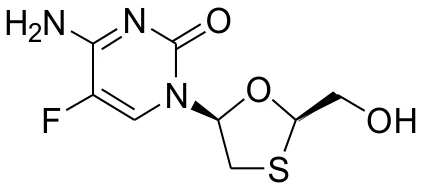 |
Solubility: The solubility is approximately 112 mg/mL in water at 25 °C. The partition coefficient (log P) is −0.43 and the pKa is 2.65.
Rilpivirine
Drug Substance
Common Name: rilpivirine hydrochloride (INN)
Chemical Name: 4-[[4-[[4-[(E)-2-cyanoethenyl]-2,6-dimethylphenyl]amino]-2- pyrimidinyl]amino]benzonitrile monohydrochloride
Empirical Formula: C22H18N6•HCl
Molecular Weight: 402.88
Structural Formula:
Physicochemical Properties:
Description: RPV hydrochloride is a white to almost white powder.
Solubility: RPV hydrochloride is practically insoluble in water over a wide pH range. The solubility is approximately 0.01 mg/mL in water at 25 °C.
Dissociation Constant: The pKa is 5.6 (pyrimidine moiety).
Partition Coeffficient: The log P is 4.86.
Tenofovir alafenamide
Drug Substance
Common Name: Tenofovir alafenamide hemifumarate Tenofovir alafenamide fumarate (USAN)
Chemical Name: Propan-2-yl N-[(S)-({[(2R)-1-(6-amino-9H-purin-9-yl)propan-2-yl]-oxy}methyl)(phenoxy)phosphoryl]-l-alaninate, (2E)-but-2-enedioate (2:1)
Empirical Formula: C21H29O5N6P•½(C4H4O4)
Formula Weight: 534.50
Structural Formula:
Physicochemical Properties:
Description: TAF hemifumarate is a white to off-white or tan powder.
Solubility: The solubility of TAF hemifumarate in water, pH 8.0 (50 mM phosphate buffer) at 20 °C is 4.86 mg/mL. The partition coefficient (log P) is 1.6 and the pKa is 3.96.
14. CLINICAL TRIALS
No data are available from clinical trials of ODEFSEY in HIV-infected patients. Clinical efficacy of ODEFSEY was established through linkage to studies conducted with FTC+TAF when given with COBI-boosted EVG as a FDC (GENVOYA [EVG/COBI/FTC/TAF]); and from studies of RPV when given with TRUVADA (FTC/TDF) as individual components or as a fixed-dose combination COMPLERA (FTC/RPV/TDF) by using comparative bioavailability data from healthy volunteers.
Pivotal Comparative Bioavailability Study
Study GS-US-366-1159 was a randomized, open-label, single-dose, three-way, six-sequence, crossover comparative bioavailability study under moderate fat fed conditions (approximately 600 kcal and 27% fat) conducted in 96 healthy male and female volunteers from 19 – 45 years of age. The study evaluated the comparative bioavailability of FTC, RPV and TAF from a FDC of ODEFSEY (FTC/RPV/TAF) 200/25/25 mg relative to GENVOYA (EVG/COBI/FTC/TAF) 150/150/200/10 mg FDC tablets or Edurant (RPV) 25 mg tablets administered in separate treatment arms. The bioavailability results from measured data in 95 subjects are provided in Table 15, Table 16, and Table 17.
The bioavailabilities of FTC and TAF were comparable when comparing ODEFSEY 200/25/25 mg to GENVOYA (EVG/COBI/FTC/TAF (150/150/200/10 mg) FDC tablet) following single-dose administration to healthy subjects (N = 95) under moderate fat fed conditions. The bioavailability of RPV was comparable when comparing ODEFSEY 200/25/25 mg to RPV 25 mg following single-dose administration to healthy subjects (N = 95) under moderate fat fed conditions.
Table 15. Summary Table of the Comparative Bioavailability Data for Study GS-US-366-1159
Emtricitabine (FTC) (1 x 200 mg) From measured data Geometric Mean Arithmetic Mean (CV %) | ||||
| Parameter | Test* | Reference† | % Ratio of Geometric Means | 90% Confidence Interval |
| AUCT (h•ng/mL) | 9112.9 9381.9 (21.7) | 9879.2 10159.4 (21.5) | 92.24 | 90.84 – 93.67 |
| AUCinf (h•ng/mL) | 9316.6 9603.2 (21.6) | 10086.0 10387.1 (21.5) | 92.37 | 90.93 – 93.83 |
| Cmax (ng/mL) | 1534.6 1608.6 (26.5) | 1522.2 1583.8 (23.8) | 100.81 | 97.52 – 104.21 |
| Tmax§ (h) | 2.00 (0.75 – 5.00) | 2.00 (0.75 – 5.00) | ||
| T1/2§ (h) | 18.71 (3.45 – 68.76) | 18.90 (5.93 – 67.33) | ||
* ODEFSEY (FTC/RPV/TAF) 200 mg/25 mg/25 mg FDC tablets (Gilead Sciences Canada Inc.)
† GENVOYA (EVG/COBI/FTC/TAF) 150 mg/150 mg/200 mg/10 mg FDC tablets (Gilead Sciences Canada Inc.)
§ Expressed as median [range] only.
Table 16. Summary Table of the Comparative Bioavailability Data for Study GS-US-366-1159
Rilpivirine (RPV) (1 x 25 mg) From measured data Geometric Mean Arithmetic Mean (CV %) | ||||
| Parameter | Test* | Reference† | % Ratio of Geometric Means | 90% Confidence Interval |
| AUC0-72 (h•ng/mL) | 2351.07 2420.9 (24.8) | 2099.24 2177.6 (27.8) | 112.00 | 107.37 – 116.83 |
| AUCinf (h•ng/mL) | 3635.88 3840.3 (36.4) | 3275.76 3518.5 (43.1) | 110.99 | 106.29 – 115.91 |
| Cmax (ng/mL) | 118.35 122.0 (25.6) | 103.85 108.3 (28.6) | 113.96 | 108.81 – 119.36 |
| Tmax§ (h) | 4.00 (2.00 – 6.02) | 4.00 (3.00 – 6.00) | ||
| T1/2§ (h) | 51.30 (23.19 – 126.37) | 51.99 (5.01 – 129.90) | ||
* ODEFSEY (FTC/RPV/TAF) 200 mg/25 mg/25 mg FDC tablets (Gilead Sciences Canada Inc.)
† GENVOYA (EVG/COBI/FTC/TAF) 150 mg/150 mg/200 mg/10 mg FDC tablets (Gilead Sciences Canada Inc.)
§ Expressed as median [range] only.
Table 17. Summary Table of the Comparative Bioavailability Data for Study GS-US-366-1159
Tenofovir Alafenamide (TAF) (1 x 25 mg versus 1 x 10 mg)** From measured data Geometric Mean Arithmetic Mean (CV %) | ||||
| Parameter | Test* | Reference† | % Ratio of Geometric Means | 90% Confidence Interval |
| AUCT (h•ng/mL) | 228.3 250.0 (43.4) | 221.9 238.4 (36.5) | 102.85 | 98.18 – 107.75 |
| AUCinf (h•ng/mL) | 234.9 263.6 (42.0) | 226.2 247.4 (36.1) | 103.85 | 98.27 – 109.74 |
| Cmax (ng/mL) | 178.0 198.0 (57.7) | 176.6 191.5 (48.2) | 100.78 | 91.63 – 110.85 |
| Tmax§ (h) | 1.50 (0.50 – 4.00) | 1.50 (0.50 – 4.00) | ||
| T1/2§ (h) | 0.42 (0.29 – 0.91) | 0.41 (0.31 – 0.87) | ||
* ODEFSEY (FTC/RPV/TAF) 200 mg/25 mg/25 mg FDC tablets (Gilead Sciences Canada Inc.)
† GENVOYA (EVG/COBI/FTC/TAF) 150 mg/150 mg/200 mg/10 mg FDC tablets (Gilead Sciences Canada Inc.)
§ Expressed as median [range] only.
**The amount of TAF in the ODEFSEY FDC tablet (25 mg) is adjusted compared with that in the GENVOYA FDC tablet (10 mg) as TAF is co-formulated with cobicistat in GENVOYA which increases the exposure of TAF.
14.1. Study Demographics and Trial Design
Treatment-Naïve HIV-1 Infected Patients
Emtricitabine+Tenofovir Alafenamide-Containing Regimens
In both Study 104 and Study 111, patients were randomized in a 1:1 ratio to receive either FTC+TAF (N = 866) once daily or FTC+TDF (N = 867) once daily, both given with EVG+COBI as a FDC tablet (administered as GENVOYA and STRIBILD, respectively).
For demographic and baseline characteristics for Study 104 and 111, see Table 18.
Table 18. Pooled Demographic and Baseline Characteristics of Antiretroviral Treatment-naïve HIV-1 Infected Adult Patients in Studies 104 and 111
FTC+TAF (Administered as GENVOYA) (N = 866) | FTC+TDF (Administered as STRIBILD) (N = 867) | ||||||||||
|---|---|---|---|---|---|---|---|---|---|---|---|
| Demographic characteristics | |||||||||||
| Median age, years (range) | 33 (18-74) | 35 (18-76) | |||||||||
| Sex | |||||||||||
| Male | 733 | 740 | |||||||||
| Female | 133 | 127 | |||||||||
| Race | |||||||||||
| American Indian/ Alaska Native | 5 | 8 | |||||||||
| White | 485 | 498 | |||||||||
| 223 | 213 | ||||||||||
| Native Hawaiian/ Pacific Islander | 5 | 4 | |||||||||
| Asian | 91 | 89 | |||||||||
| Other | 57 | 55 | |||||||||
| Baseline disease characteristics | |||||||||||
| Median baseline plasma HIV-1 RNA log10 copies/mL (range) | 4.58 (2.57-6.89) | 4.58 (1.28-6.98) | |||||||||
Percentage of patients with viral load ≤ 100,000 copies/mL | 77.4 | 77.5 | |||||||||
Percentage of patients with viral load > 100,000 to ≤ 400,000 copies/mL | 17.0 | 17.8 | |||||||||
Percentage of patients with viral load > 400,000 copies/mL | 5.7 | 4.7 | |||||||||
| Median baseline CD4+ cell count /µL (range) | 404 (0-1311) | 406 (1-1360) | |||||||||
| Percentage of patients with CD4+ cell counts < 200 cells/mm3 | 13.0 | 13.5 | |||||||||
| HIV disease status | |||||||||||
| Asymptomatic | 779 | 800 | |||||||||
| Symptomatic HIV infection | 53 | 34 | |||||||||
| AIDS | 31 | 29 | |||||||||
FTC+TAF (Administered as GENVOYA) (N = 866) | FTC+TDF (Administered as STRIBILD) (N = 867) | ||||||||
|---|---|---|---|---|---|---|---|---|---|
| Unknown | 3 | 4 | |||||||
| eGFRCG (mL/min), median (Q1, Q3) | 117.0 (99.6, 135.6) | 113.9 (99.0, 133.6) | |||||||
| Proteinuria by urinalysis (dipstick) | |||||||||
| Grade 0 | 778 | 780 | |||||||
| Grade 1 | 80 | 67 | |||||||
| Grade 2 | 8 | 18 | |||||||
| Grade 3 | 0 | 1 | |||||||
| Missing- | 0 | 1 | |||||||
Rilpivirine-Containing Regimens
The studies are identical in design with the exception of the background regimen (BR). Patients were randomized in a 1:1 ratio to receive either RPV 25 mg (N = 686) once daily or EFV 600 mg (N = 682) once daily in addition to a BR. In TMC278-C209 (N = 690), the BR was FTC/TDF. In TMC278-C215 (N = 678), the BR consisted of 2 NRTIs: FTC/TDF (60%, N = 406) or lamivudine/zidovudine (30%, N = 204) or abacavir plus lamivudine (10%, N = 68).
Patients with plasma HIV-1 RNA ≥ 5000 copies/mL, who were screened for susceptibility to N(t)RTIs and for absence of specific NNRTI resistance-associated mutations, were included in the trials.
Demographic characteristics for patients who received FTC/TDF in Studies C209 and C215 are provided in Table 19.
Table 19. Demographic Characteristics of Antiretroviral Treatment-naïve HIV-1 Infected Adult Patients in Studies C209 (ECHO) and C215 (THRIVE)
Treatment Arm RPV+FTC/TDF (N = 550) | Control Arm EFV+BR1,2 (N = 546) | ||||||||
|---|---|---|---|---|---|---|---|---|---|
| Demographic characteristics | |||||||||
| Median age, years (range) | 36.0 (18-78) | 36.0 (19-69) | |||||||
| Sex | |||||||||
| Male | 429 | 431 | |||||||
| Female | 121 | 115 | |||||||
| Race | |||||||||
| White | 348 | 334 | |||||||
| 134 | 128 | ||||||||
| Asian | 54 | 70 | |||||||
| Other | 5 | 7 | |||||||
| Missing | 9 | 7 | |||||||
| Baseline disease characteristics | |||||||||
| Percentage of patients with viral load ≤ 100,000 copies/mL | 52.4 | 46.9 | |||||||
| Percentage of patients with viral load > 100,000 to ≤ 500,000 copies/mL | 38.0 | 40.1 | |||||||
| Percentage of patients with viral load > 500,000 copies/mL | 9.6 | 13.0 | |||||||
| Percentage of patients with CD4+ cell counts < 200 cells/µL | 33.03 | 30.0 | |||||||
- 1. In Study C209, the BR was FTC/TDF.
- 2. In Study C215, the BR consisted of 2 NRTIs: FTC/TDF or lamivudine/zidovudine or abacavir plus lamivudine. Only the results for FTC/TDF are presented here.
- 3. Excludes 1 patient with missing CD4+ cell count.
Virologically Suppressed HIV-1 Infected Patients
Emtricitabine+Tenofovir Alafenamide-Containing Regimens
In Study 109, the efficacy and safety of switching from either ATRIPLA (EFV/ FTC/TDF), TRUVADA (FTC/TDF) plus atazanavir (boosted by either COBI or ritonavir), or STRIBILD to FTC+TAF given with EVG+COBI as a FDC tablet (administered as GENVOYA) were evaluated in a randomized, open-label study of virologically suppressed (HIV-1 RNA < 50 copies/mL) HIV-1 infected adults (N = 1436). Patients must have been stably suppressed (HIV-1 RNA < 50 copies/mL) on their baseline regimen for at least 6 months and had no resistance mutations to FTC, TAF, or EVG prior to study entry. Patients were randomized in a 2:1 ratio to either switch to FTC+TAF given with EVG+COBI as a FDC tablet at baseline (N = 959), or stay on their baseline antiretroviral regimen (N = 477). Demographic and baseline characteristics are presented in Table 20.
Patients were stratified by prior treatment regimen. At screening, 42% of patients were receiving TRUVADA plus atazanavir (boosted by either COBI or ritonavir), 32% of patients were receiving STRIBILD, and 26% of patients were receiving ATRIPLA.
Table 20. Demographic and Baseline Characteristics of Virologically Suppressed HIV-1 Infected Adult Patients in Study 109
| Study GS-US-292-0109 | ||||||||||
|---|---|---|---|---|---|---|---|---|---|---|
FTC+TAF (Administered as GENVOYA) (N = 959) | Baseline Regimen (N = 477) | |||||||||
| Demographic characteristics | ||||||||||
| Median age, years (range) | 41 (21-77) | 40 (22-69) | ||||||||
| Sex | ||||||||||
| Male | 856 | 427 | ||||||||
| Female | 103 | 50 | ||||||||
| Race | ||||||||||
| American Indian/ Alaska Native | 5 | 2 | ||||||||
| White | 651 | 314 | ||||||||
| 169 | 102 | |||||||||
| Native Hawaiian/ Pacific Islander | 6 | 1 | ||||||||
| Asian | 59 | 35 | ||||||||
| Other | 67 | 22 | ||||||||
| Not permitted | 2 | 1 | ||||||||
| Prior treatment regimen | ||||||||||
| STB | 306 | 153 | ||||||||
| ATR | 251 | 125 | ||||||||
| ATV/boosted+TVD | 402 | 199 | ||||||||
| Baseline disease characteristics | ||||||||||
| Study GS-US-292-0109 |
|---|
FTC+TAF (Administered as GENVOYA) (N = 959) | Baseline Regimen (N = 477) | |
|---|---|---|
| HIV-1 RNA < 50 copies/mL | 943 | 466 |
| CD4 cell count (cells/μL), median (Q1, Q3) | 675 (520, 833) | 662 (525, 831) |
| eGFRCG (mL/min), median (Q1, Q3) | 105.7 (89.4, 126.0) | 107.7 (88.7, 128.2) |
| Proteinuria by urinalysis (dipstick) | ||
| Grade 0 | 873 | 430 |
| Grade 1 | 81 | 44 |
| Grade 2 | 4 | 3 |
| Grade 3 | 0 | 0 |
| -Missing- | 1 | 0 |
STB: STRIBILD; ATR: ATRIPLA; ATZ: atazanavir; TVD: TRUVADA
Rilpivirine-Containing Regimens
The efficacy and safety of switching from a ritonavir-boosted protease inhibitor in combination with two NRTIs to COMPLERA (FTC/RPV/TDF) was evaluated in a randomized, open-label study of virologically-suppressed HIV-1 infected adults, Study GS-US-264-0106. Patients had to be on either their first or second antiretroviral regimen with no history of virologic failure, have no current or past history of resistance to any of the three components of COMPLERA, and must have been stably suppressed (HIV-1 RNA < 50 copies/mL) for at least 6 months prior to screening. Patients were randomized in a 2:1 ratio to either switch to COMPLERA at baseline (COMPLERA, N = 317), or stay on their baseline antiretroviral regimen for 24 weeks (Stay on Baseline Regimen, SBR, N = 159) before switching to COMPLERA for an additional 24 weeks (SBR Rollover to COMPLERA, N = 152).
Demographic characteristics for patients in Study GS-US-264-0106 are provided in Table 21.
Table 21. Demographic and Baseline Characteristics of Virologically-Suppressed HIV-1 Infected Adult Patients in GS-US-264-0106
| Study GS-US-264-0106 | |||||||||||||
|---|---|---|---|---|---|---|---|---|---|---|---|---|---|
Total (N = 476) | Treatment Arm FTC/RPV/TDF (N = 317) | Stayed on Baseline Regimen (N = 159) | |||||||||||
| Demographic characteristics | |||||||||||||
| Median age, years (range) | 42 (19-73) | 42 (19-73) | 43 (20-71) | ||||||||||
| Sex | |||||||||||||
| Male | 417 | 273 | 144 | ||||||||||
| Female | 59 | 44 | 15 | ||||||||||
| Race | |||||||||||||
| White | 365 | 241 | 124 | ||||||||||
| 83 | 61 | 22 | |||||||||||
| Other | 28 | 15 | 13 | ||||||||||
| Prior treatment regimen | |||||||||||||
| TDF Containing Regimen | 390 | 260 | 130 | ||||||||||
| Non-TDF Containing Regimen | 86 | 57 | 29 | ||||||||||
| Baseline disease characteristics | |||||||||||||
| HIV-1 RNA <50 copies/mL | 451 | 299 | 152 | ||||||||||
| CD4+ cell count (cells/μL), median (Q1, Q3) | 558 (409, 727) | 554 (412, 713) | 561 (401, 744) | ||||||||||
| eGFRCG (mL/min), median (Q1, Q3) | 104.1 (89.8, 123.7) | 104.2 (90.0, 123.2) | 103.8 (88.9, 124.3) | ||||||||||
The mean baseline CD4 cell count was 584 cells/mm3 (range: 42-1484). Randomization was stratified by use of TDF and/or lopinavir/ritonavir in the baseline regimen.
HIV-1 Infected Patients with Renal Impairment
Emtricitabine+Tenofovir Alafenamide-Containing Regimens
In Study 112, the efficacy and safety of FTC+TAF were evaluated in an open-label clinical study in which 242 HIV-1 infected patients with mild to moderate renal impairment (eGFR by Cockcroft-Gault method between 30 to 69 mL/minute) switched to
FTC+TAF given with EVG+COBI as a FDC tablet (administered as GENVOYA). Patients were virologically suppressed (HIV-1 RNA < 50 copies/mL) for at least 6 months before switching.
For demographic and baseline characteristics for Study 112, see Table 22.
Table 22. Demographic and Baseline Characteristics of Virologically Suppressed HIV-1 Infected Adult Patients with Renal Impairment in Study GS-US-292-0112
| Study GS-US-292-0112 | ||||||||||||||
|---|---|---|---|---|---|---|---|---|---|---|---|---|---|---|
| Cohort 1: ART–Experienced | ||||||||||||||
| Baseline eGFRCG < 50 mL/min (N = 80) | Baseline eGFRCG ≥ 50 mL/min (N = 162) | |||||||||||||
| Demographic characteristics | ||||||||||||||
| Median age, years (range) | 59 (31-82) | 58 (24-76) | ||||||||||||
| Sex | ||||||||||||||
| Male | 59 | 133 | ||||||||||||
| Female | 21 | 29 | ||||||||||||
| Race | ||||||||||||||
| American Indian/ Alaska Native | 1 | 0 | ||||||||||||
| White | 39 | 113 | ||||||||||||
| 14 | 30 | |||||||||||||
| Native Hawaiian/ Pacific Islander | 0 | 2 | ||||||||||||
| Asian | 23 | 11 | ||||||||||||
| Other | 3 | 4 | ||||||||||||
| Not permitted | 0 | 2 | ||||||||||||
| Baseline disease characteristics | ||||||||||||||
| HIV-1 RNA categories (copies/mL) | ||||||||||||||
| < 50 | 78 | 158 | ||||||||||||
| ≥ 50 to ≤ 100,000 | 2 | 4 | ||||||||||||
| > 100,000 to ≤ 400,000 | 0 | 0 | ||||||||||||
| CD4 cell count (cells/uL), median (Q1, Q3) | 622 (449, 844) | 635 (461, 797) | ||||||||||||
| HIV disease status | ||||||||||||||
| Asymptomatic | 46 | 134 | ||||||||||||
| Symptomatic HIV infection | 18 | 10 | ||||||||||||
| AIDS | 16 | 18 | ||||||||||||
| eGFRCGb (mL/min), median (Q1, Q3) | 42.6 (37.7, 45.7) | 60.3 (55.5, 65.0) | ||||||||||||
| Study GS-US-292-0112 |
|---|
| Cohort 1: ART–Experienced |
|---|
| Baseline eGFRCG < 50 mL/min (N = 80) | Baseline eGFRCG ≥ 50 mL/min (N = 162) | |
|---|---|---|
| Proteinuria by urinalysis (dipstick) | ||
| Grade 0 | 45 | 118 |
| Grade 1 | 23 | 33 |
| Grade 2 | 12 | 11 |
| Grade 3 | 0 | 0 |
14.2. Study results
Treatment-Naïve HIV-1 Infected Patients
Emtricitabine+Tenofovir Alafenamide-Containing Regimens
In both Studies 104 and 111, patients were stratified by baseline HIV-1 RNA (≤ 100,000 copies/mL, > 100,000 copies/mL to ≤ 400,000 copies/mL, or > 400,000 copies/mL), by CD4 count (< 50 cells/μL, 50-199 cells/μL, or ≥ 200 cells/μL), and by region (US or ex-US).
Treatment outcomes of Studies 104 and 111 through Week 48 and Week 96 are presented in Table 23.
Table 23. Pooled Virologic Outcomes of Studies 104 and 111 at Week 48a and Week 96b
| Week 48 | Week 96 | |||||||||||
|---|---|---|---|---|---|---|---|---|---|---|---|---|
FTC+TAF (administered as GENVOYA) (N = 866) | FTC+TDF (administered as STRIBILD) (N = 867) | FTC+TAF (administered as GENVOYA) (N = 866) | FTC+TDF (administered as STRIBILD) (N = 867) | |||||||||
Virologic Success HIV-1 RNA < 50 copies/mL | 92% | 90% | 87% | 85% | ||||||||
| Treatment Difference | 2.0% (95% CI: -0.7% to 4.7%) | 1.5% (95% CI: -1.8% to 4.8%) | ||||||||||
Virologic Failure HIV-1 RNA ≥ 50 copies/mLc | 4% | 4% | 5% | 4% | ||||||||
| No Virologic Data at Week 48 or Week 96 Window | 4% | 6% | 9% | 11% | ||||||||
| Discontinued Study Drug Due to AE or Deathd | 1% | 2% | 1% | 2% | ||||||||
| Week 48 | Week 96 |
|---|
FTC+TAF (administered as GENVOYA) (N = 866) | FTC+TDF (administered as STRIBILD) (N = 867) | FTC+TAF (administered as GENVOYA) (N = 866) | FTC+TDF (administered as STRIBILD) (N = 867) | |
|---|---|---|---|---|
| Discontinued Study Drug Due to Other Reasons and Last Available HIV-1 RNA < 50 copies/mLe | 2% | 4% | 6% | 7% |
| Missing Data During Window but on Study Drug | 1% | <1% | 2% | 1% |
| Proportion (%) of Patients with HIV‑1 RNA < 50 copies/mL by Subgroup | ||||
Age < 50 years ≥ 50 years | 716/777 (92%) 84/89 (94%) | 680/753 (90%) 104/114 (91%) | 668/777 (86%) 82/89 (92%) | 639/753 (85%) 100/114 (88%) |
Sex Male Female | 674/733 (92%) 126/133 (95%) | 673/740 (91%) 111/127 (87%) | 635/733 (87%) 115/133 (87%) | 631/740 (85%) 108/127 (85%) |
Race Nonblack | 197/223 (88%) 603/643 (94%) | 177/213 (83%) 607/654 (93%) | 173/223 (78%) 577/643 (90%) | 168/213 (79%) 571/654 (87%) |
Baseline Viral Load ≤ 100,000 copies/mL > 100,000 copies/mL | 629/670 (94%) 171/196 (87%) | 610/672 (91%) 174/195 (89%) | 587/670 (88%) 163/196 (83%) | 573/672 (85%) 166/195 (85%) |
Baseline CD4+ cell count < 200 cells/mm3 ≥ 200 cells/mm3 | 96/112 (86%) 703/753 (93%) | 104/117 (89%) 680/750 (91%) | 93/112 (83%) 657/753 (87%) | 97/117 (83%) 642/750 (86%) |
a. Week 48 window was between Day 294 and 377 (inclusive).
b. Week 96 window was between Day 630 and 713 (inclusive).
c. Included patients who had ≥ 50 copies/mL in the Week 48 or 96 window; patients who discontinued early due to lack or loss of efficacy; patients who discontinued for reasons other than an adverse event (AE), death or lack or loss of efficacy and at the time of discontinuation had a viral value of ≥ 50 copies/mL.
d. Includes patients who discontinued due to AE or death at any time point from Day 1 through the time window if this resulted in no virologic data on treatment during the specified window.
e. Includes patients who discontinued for reasons other than an AE, death or lack or loss of efficacy; e.g., withdrew consent, loss to follow-up, etc.
In Studies 104 and 111, FTC+TAF met the noninferiority criteria in achieving HIV-1 RNA < 50 copies/mL at Week 48 and Week 96 when compared to FTC+TDF, both given with EVG+COBI as a FDC tablet (administered as GENVOYA and STRIBILD, respectively). The 95% CIs for differences in virologic success between treatment groups included zero for most subgroups evaluated suggesting no differences between the treatments. Treatment outcomes were consistent through Week 144.
In Studies 104 and 111, the mean increase from baseline in CD4+ cell count at Week 48, Week 96, and Week 144 was 230 cells/mm3, 280 cells/mm3 and 326 cells/mm3, respectively, in FTC+TAF-treated patients and 211 cells/mm3, 266 cells/mm3, and 305 cells/mm3 in FTC+TDF-treated patients (p = 0.024, p = 0.14, p = 0.06 at Week 48, Week 96, and Week 144, respectively).
Bone Mineral Density
In the pooled analysis of Studies 104 and 111, the effects of FTC+TAF compared to that of FTC+TDF on BMD from baseline to Week 48, Week 96, and Week 144 were assessed by dual-energy X-ray absorptiometry (DXA). As shown in Table 24, in patients who had both baseline and Week 48, Week 96, and Week 144 measurements (Week 48: N = 780 and 784 in the FTC+TAF group and N = 767 and 773 in the FTC+TDF group for hip and spine, respectively; Week 96: N = 716 and 722 in the FTC+TAF group and N = 711 and 714 in the FTC+TDF group, for hip and spine, respectively; Week 144: N = 690 and 702 in the FTC+TAF group and N = 683 and 686 in the FTC+TDF group, for hip and spine, respectively) there were smaller decreases in BMD in patients receiving FTC+TAF as compared to patients receiving FTC+TDF, both given with EVG+COBI as a FDC tablet (GENVOYA and STRIBILD, respectively).
Table 24. Measures of Bone Mineral Density in Studies 104 and 111 (Week 48, Week 96, and Week 144 analyses)
| Week 48 | Week 96 | Week 144 | |||||||||||||||||||||||||||||||
|---|---|---|---|---|---|---|---|---|---|---|---|---|---|---|---|---|---|---|---|---|---|---|---|---|---|---|---|---|---|---|---|---|---|
FTC+TAF (administered as GENVOYA) | FTC+TDF (administered as STRIBILD) | Treatment Difference | FTC+TAF (administered as GENVOYA) | FTC+TDF (administered as STRIBILD) | Treatment Difference | FTC+TAF (administered as GENVOYA) | FTC+TDF (administered as STRIBILD) | Treatment Difference | |||||||||||||||||||||||||
| Hip DXA Analysis | N = 780 | N = 767 | Difference in LSM (95% CI) | P-value | N = 716 | N = 711 | Difference in LSM (95% CI) | P-value | N=690 | N=683 | Difference in LSM (95% CI) | P-value | |||||||||||||||||||||
| Mean (SD) Percent Change in BMD | -0.7% (3.3%) | -3.0% (3.4%) | 2.3% (2.0 to 2.6) | p < 0.001 | -0.7% (3.9%) | -3.3% (4.0%) | 2.6% (2.2 to 3.0) | p < 0.001 | -0.8% (4.4%) | -3.4% (4.3%) | 2.6% (2.2 to 3.1) | p < 0.001 | |||||||||||||||||||||
Patients with Categorical Change: > 3% Decrease in BMD > 3% Increase in BMD | 17% 7% | 50% 3% | — | — | 23% 12% | 56% 6% | — | — | 28% 13% | 55% 6% | -- | -- | |||||||||||||||||||||
| Patients with No Decrease (≥ zero % change) in BMD | 35% | 14% | — | — | 39% | 16% | — | — | 40% | 19% | -- | -- | |||||||||||||||||||||
| Lumbar Spine DXA Analysis | N = 784 | N = 773 | N = 722 | N = 714 | N=702 | N=686 | |||||||||||||||||||||||||||
| Mean (SD) Percent Change in BMD | -1.3% (3.1%) | -2.9% (3.2%) | 1.6% (1.2 to 1.9) | p < 0.001 | -1.0% (3.7%) | -2.8% (3.9%) | 1.8% (1.4 to 2.2) | p < 0.001 | -0.9% (4.1%) | -3.0% (4.3%) | 2.0% (1.6 to 2.5) | p < 0.001 | |||||||||||||||||||||
| Week 48 | Week 96 | Week 144 |
|---|
FTC+TAF (administered as GENVOYA) | FTC+TDF (administered as STRIBILD) | Treatment Difference | FTC+TAF (administered as GENVOYA) | FTC+TDF (administered as STRIBILD) | Treatment Difference | FTC+TAF (administered as GENVOYA) | FTC+TDF (administered as STRIBILD) | Treatment Difference | ||||
|---|---|---|---|---|---|---|---|---|---|---|---|---|
Patients with Categorical Change: > 3% Decrease in BMD > 3% Increase in BMD | 27% 7% | 46% 3% | — | — | 26% 11% | 48% 6% | — | — | 30% 13% | 49% 7% | -- | -- |
| Patients with No Decrease (≥ zero % change) in BMD | 34% | 17% | — | — | 37% | 21% | — | — | 39% | 22% | -- | -- |
Changes in Renal Laboratory Tests and Renal Safety
In the pooled analysis of Studies 104 and 111 in treatment-naïve adult patients, there were statistically significantly higher increases in serum creatinine, Urine Protein to Creatinine Ratio (UPCR), Urine Albumin to Creatinine Ratio (UACR), urine retinol binding protein (RBP) to creatinine ratio, and urine beta-2-microglobulin to creatinine ratio in the FTC+TDF group as compared to the FTC+TAF group (see Table 25). There were zero cases of Fanconi syndrome or Proximal Renal Tubulopathy (PRT) in the FTC+TAF group through Week 144.
Table 25. Change from Baseline in Renal Laboratory Tests in Studies 104 and 111 (Week 48, Week 96, and Week 144 analyses)
| Week 48 | Week 96 | Week 144 | ||||||||||||||||||||||||||
|---|---|---|---|---|---|---|---|---|---|---|---|---|---|---|---|---|---|---|---|---|---|---|---|---|---|---|---|---|
FTC+TAF (administered as GENVOYA) (N = 866) | FTC+TDF (administered as STRIBILD) (N = 867) | Treatment Difference | FTC+TAF (administered as GENVOYA) (N = 866) | FTC+TDF (administered as STRIBILD) (N = 867) | Treatment Difference | FTC+TAF (administered as GENVOYA) (N = 866) | FTC+TDF (administered as STRIBILD) (N = 867) | Treatment Difference | ||||||||||||||||||||
| Serum Creatinine (μmol/L)a | 7.07 ± 10.96 | 9.72 ± 19.18 | -3.54 p < 0.001 | 3.54 ± 10.08 | 6.19 ± 11.23 | -2.65 p < 0.001 | 3.54 ± 10.61 | 6.19 ± 11.23 | -3.54 p < 0.001 | |||||||||||||||||||
| Proteinuria by Urine Dipstickb | 31% | 37% | p = 0.022 | 36% | 41% | p = 0.034 | 40% | 45% | p = 0.027 | |||||||||||||||||||
| Urine Protein to Creatinine Ratio [UPCR]c | -3.4% | 19.8% | p < 0.001 | -9.1% | 16.2% | p < 0.001 | -10.5% | 25.2% | p < 0.001 | |||||||||||||||||||
| Urine Albumin to Creatinine Ratio [UACR]c | -4.7% | 7.1% | p < 0.001 | -5.2% | 4.9% | p < 0.001 | -d | -d | -d | |||||||||||||||||||
| Urine Retinol Binding Protein to Creatinine Ratioc | 9.2% | 51.2% | p < 0.001 | 13.8% | 74.2% | p < 0.001 | 34.8% | 111% | p < 0.001 | |||||||||||||||||||
| Urine Beta-2-Microglobulin to Creatinine Ratioc | -31.7% | 24.1% | p < 0.001 | -32.1% | 33.5% | p < 0.001 | -25.7% | 53.8% | p < 0.001 | |||||||||||||||||||
a. Mean change ± SD
b. Includes all severity grades (1-3)
c. Median percent change
d. UACR was assessed up to Week 96.
At Week 48, 96, and 144, the proportion of patients with any grade hypophosphatemia was 3.6%, 5.6%, and 6.8% in patients receiving FTC+TAF and 4.0%, 5.4%, and 7.6% in patients receiving FTC+TDF, respectively. The median (Q1, Q3) change from baseline in FEPO4 was 2.0% (-1.2%, 5.6%), 2.1% (-1.3%, 5.5%), and 3.0% (-0.7%, 7.2%) at Weeks 48, 96, and 144, respectively, in patients receiving FTC+TAF and 2.6% (-0.7%, 6.4%), 2.7% (-0.8%, 7.0%), and 4.1% (0.2%, 8.0%) at Weeks 48, 96, and 144, respectively, in patients receiving FTC+TDF (p = 0.006, 0.009, and 0.001 at Week 48, Week 96, and Week 144, respectively).
The median (Q1, Q3) change from baseline in the ratio of the renal tubular maximum reabsorption rate of phosphate to the glomerular filtration rate (TmP/GFR) was -0.2 mg/dL (-0.7 mg/dL, 0.2 mg/dL), -0.3 mg/dL (-0.9 mg/dL, 0.2 mg/dL), and -0.4 mg/dL (-1.0 mg/dL, 0.1 mg/dL) at Weeks 48, 96, and 144, respectively, in patients receiving FTC+TAF and -0.3 mg/dL (-0.7 mg/dL, 0.2 mg/dL), -0.4 mg/dL (-0.8 mg/dL, 0.1 mg/dL), and -0.5 mg/dL (-1.0 mg/dL, 1.0 mg/dL) at Weeks 48, 96, and 144, respectively, in patients receiving FTC+TDF (p = 0.21, 0.35, and 0.011 at Week 48, Week 96, and Week 144, respectively).
Changes in Lipid Laboratory Tests
Increases from baseline were observed in both treatment groups for the fasting lipid parameters total cholesterol, direct LDL, HDL, and triglycerides at Week 48, 96, and 144. As seen in Table 6, the median increase from baseline for these parameters was greater in patients receiving FTC+TAF compared with patients receiving FTC+TDF, both given with EVG+COBI as a FDC tablet (administered as GENVOYA and STRIBILD, respectively) (p < 0.001 for the difference between treatment groups for fasting total cholesterol, direct LDL, HDL, and triglycerides). Median (Q1, Q3) change from baseline at Weeks 48, 96, and 144 in total cholesterol to HDL ratio was 0.1 (–0.3, 0.5), 0.1 (–0.3, 0.7), and 0.2 (-0.3, 0.7) in patients receiving FTC+TAF and 0.0 (–0.5, 0.4), 0.0 (– 0.4, 0.5), and 0.1 (-0.4, 0.6) in patients receiving FTC+TDF (p < 0.001 for the difference between treatment groups at Weeks 48 and 96; p = 0.006 at Week 144), respectively (see ADVERSE REACTIONS).
Rilpivirine-Containing Regimens
In studies C209 and C215, efficacy at Week 48 and Week 96 for patients in the RPV and EFV arms for the pooled data are shown in Table 26. Similar efficacy for Edurant was seen in each trial demonstrating non-inferiority to comparator. The response rate (confirmed undetectable viral load HIV-1 RNA < 50 copies/mL) at Week 96 was comparable between the RPV arm and the EFV arm. The incidence of virologic failure was higher in the RPV arm than the EFV arm at Week 96; however, most of the virologic failures occurred within the first 48 weeks of treatment.
Table 26. Pooled Virologic Outcomes of Randomized Treatment of Studies C209 and C215 (for Patients Receiving RPV or EFV in Combination with FTC/TDF) at Week 48 and Week 96a
| Outcome at Week 48 | Outcome at Week 96 | |||||||||||
| RPV + FTC/TDF | EFV + FTC/TDF | RPV + FTC/TDF | EFV + FTC/TDF | |||||||||
| (N = 550) | (N = 546) | (N = 550) | (N = 546) | |||||||||
Virologic Success Confirmed Undetectable Viral Load (< 50 HIV-1 RNA copies/ml)a,b | 459 (83.5%) | 450 (82.4%) | 423 (76.9%) | 422 (77.3%) | ||||||||
| Virologic failurec | 52 (9.5%) | 23 (4.2%) | 63 (11.5%) | 28 (5.1%) | ||||||||
| Death | 0 | 1 (0.2%) | 0 | 4 (0.7%) | ||||||||
| Discontinued study due to adverse event (AE) | 12 (2.2%) | 39 (7.1%) | 20 (3.6%) | 44 (8.1%) | ||||||||
| Discontinued study for other reasons | 27 (4.9%) | 33 (6.0%) | 44 (8.0%) | 48 (8.8%) | ||||||||
N = number of patients per treatment group
a Patient with 2 consecutive viral load values <50 copies/mL (ITT TLOVR - Intention to Treat Time to Loss of Virologic Response).
b The difference of response rate is -3% to 6% (95% confidence interval) for week 48 and -5% to 5% for week 96, respectively, using normal approximation.
c Includes patients who were rebounder (confirmed viral load ≥ 50 copies/mL after being responder) or who were never suppressed (no confirmed viral load < 50 copies/mL).
Virologic response by baseline plasma viral load is presented in Table 27.
Table 27. Virological Outcomes of Studies C209 and C215 (Pooled Data for Patients Receiving Rilpivirine or Efavirenz in Combination with Emtricitabine/Tenofovir DF) at 48 Weeks and 96 weeks by Baseline Viral Load and Baseline CD4+ Cell Count
| Outcome at Week 48* | Outcome at Week 96* | ||||||||||
|---|---|---|---|---|---|---|---|---|---|---|---|
| RPV + FTC/TDF | EFV + FTC/TDF | RPV + FTC/TDF | EFV + FTC/TDF | ||||||||
| Virologic Response | 459/550 (83.5%) | 450/546 (82.4%) | 423/550 (76.9%) | 422/546 (77.3%) | |||||||
| By baseline viral load (copies/mL) | |||||||||||
| ≤ 100,000 | 258/288 (89.6%) | 217/256 (84.8%) | 241/288 (83.7%) | 206/255 (80.8%) | |||||||
| > 100,000 | 201/262 (76.7%) | 233/290 (80.3%) | 182/262 (69.5%) | 216/291 (74.2%) | |||||||
| By baseline CD4+ cell count (cells/mm3) | |||||||||||
| Outcome at Week 48* | Outcome at Week 96* |
|---|
| RPV + FTC/TDF | EFV + FTC/TDF | RPV + FTC/TDF | EFV + FTC/TDF | |
|---|---|---|---|---|
| < 200 | 138/181 (76.2%) | 132/164 (80.5%) | 122/181 (67.4%) | 119/164 (72.6%) |
| ≥ 200 | 321/368 (87.2%) | 318/382 (83.2%) | 301/368 (81.8%) | 303/382 (79.3%) |
| Virologic Failurea | 52/550 (9.5%) | 23/546 (4.2%) | 63/550 (11.5%) | 28/546 (5.1%) |
| By baseline viral load (copies/mL) | ||||
| ≤ 100,000 | 12/288 (4.2%) | 6/256 (2.3%) | 17/288 (5.9%) | 6/255 (2.4%) |
| > 100,000 | 40/262 (15.3%) | 17/290 (5.9%) | 46/262 (17.6%) | 22/291 (7.6%) |
| By baseline CD4+ cell count (cells/mm3) | ||||
| < 200 | 28/181 (15.5%) | 12/164 (7.3%) | 36/181 (19.9%) | 14/164 (8.5%) |
| ≥ 200 | 24/368 (6.5%) | 11/382 (2.9%) | 27/368 (7.3%) | 14/382 (3.7%) |
N = number of patients per treatment group
* Imputations according to the TLOVR algorithm
a Includes patients who were rebounder (confirmed viral load ≥ 50 copies/mL after being responder) or who were never suppressed (no confirmed viral load < 50 copies/mL).
Virologic outcomes were comparable between males and females in studies C209 and C215.
Based on the pooled data from the C209 and C215 trials at 96 weeks of treatment, the mean CD4+ cell count increase from baseline was 226 cells/mm3 for RPV plus FTC/TDF-treated patients and 222 cells/mm3 for EFV plus FTC/TDF-treated patients [estimated treatment difference (95% CI): +8 (-13 to 28)].
Changes in Lipid Laboratory Tests
In Studies C209 and C215, changes from baseline in total cholesterol, LDL-cholesterol, HDL-cholesterol and triglycerides are presented in the ADVERSE REACTIONS section. The mean changes from baseline were smaller in the RPV arm versus the EFV arm. The impact of such findings has not been demonstrated.
Virologically Suppressed HIV-1 Infected Patients
Emtricitabine+Tenofovir Alafenamide-Containing Regimens
Treatment outcomes of Study 109 through Week 48 and Week 96 are presented in Table 28.
Table 28. Virologic Outcomes of Study 109 at Week 48a and Week 96b
| Week 48 | Week 96 | ||||||||||||
|---|---|---|---|---|---|---|---|---|---|---|---|---|---|
FTC+TAF (administered as GENVOYA) (N = 959) | Baseline Regimen (N = 477) | FTC+TAF (administered as GENVOYA) (N = 959) | Baseline Regimen (N = 477) | ||||||||||
Virologic Success HIV-1 RNA < 50 copies/mL | 97% | 93% | 93% | 89% | |||||||||
| Treatment Difference | 4.1% (95% CI: 1.6% to 6.7%) | 3.7% (95% CI: 0.4% to 7.0%) | |||||||||||
| p-value | p < 0.001 | p = 0.017 | |||||||||||
Virologic Failure HIV-1 RNA ≥ 50 copies/mLc | 1% | 1% | 2% | 2% | |||||||||
| No Virologic Data at Week 48 or 96 Window | 2% | 6% | 5% | 9% | |||||||||
| Discontinued Study Drug Due to AE or Deathd | 1% | 1% | 1% | 3% | |||||||||
| Discontinued Study Drug Due to Other Reasons and Last Available HIV-1 RNA < 50 copies/mLe | 1% | 4% | 3% | 6% | |||||||||
| Missing Data During Window but on Study Drug | 0 | <1% | 1% | <1% | |||||||||
a. Week 48 window was between Day 294 and 377 (inclusive).
b. Week 96 window was between Day 630 and 713 (inclusive).
c. Included patients who had ≥ 50 copies/mL in the Week 48 or Week 96 window; patients who discontinued early due to lack or loss of efficacy; patients who discontinued for reasons other than an adverse event (AE), death or lack or loss of efficacy and at the time of discontinuation had a viral value of ≥ 50 copies/mL.
d. Includes patients who discontinued due to AE or death at any time point from Day 1 through the time window if this resulted in no virologic data on treatment during the specified window.
e. Includes patients who discontinued for reasons other than an AE, death or lack or loss of efficacy; e.g., withdrew consent, loss to follow-up, etc.
Switching to FTC+TAF when given with EVG+COBI as a FDC tablet (administered as GENVOYA) was non-inferior at Week 48 (p < 0.001) and at Week 96 (p = 0.017) in maintaining HIV-1 RNA < 50 copies/mL when compared to patients who stayed on their baseline regimen.
The mean increase from baseline in CD4+ cell count at Week 48 and Week 96 was 35 and 60 cells/mm3 in FTC+TAF-treated patients and 24 and 42 cells/mm3 in patients who stayed on their baseline regimen, respectively.
Bone Mineral Density
Changes in BMD from baseline to Week 48 were assessed by DXA in patients who had both baseline and Week 48 measurements (N = 869 and N = 881 in FTC+TAF arm, and N = 428 and N = 436 in patients who remained on their baseline regimen, for hip and spine, respectively). Changes in BMD from baseline to Week 96 were assessed by DXA in patients who had both baseline and Week 96 measurements (N = 809 and N = 821 in the FTC+TAF arm, and N = 396 and N = 401 in patients who remained on their baseline regimen, for hip and spine, respectively). Results for Week 48 and Week 96 are summarized in Table 29.
Table 29. Measures of Bone Mineral Density in Study 109 (Week 48 and Week 96 analyses)
| Week 48 | Week 96 | ||||||||||||||||||||||||||
|---|---|---|---|---|---|---|---|---|---|---|---|---|---|---|---|---|---|---|---|---|---|---|---|---|---|---|---|
| FTC+TAF (administered as GENVOYA) | Baseline Regimen | Treatment Difference | FTC+TAF (administered as GENVOYA) | Baseline Regimen | Treatment Difference | ||||||||||||||||||||||
| Hip DXA Analysis | N = 869 | N = 428 | Difference in LSM (95% CI) | P-value | N=809 | N=396 | Difference in LSM (95% CI) | P-value | |||||||||||||||||||
| Mean (SD) Percent Change in BMD | 1.5% (2.7%) | -0.3% (2.8%) | 1.8% (1.5 to 2.1) | p < 0.001 | 2.4% (3.6%) | -0.5% (3.4%) | 2.9% (2.5 to 3.3) | p < 0.001 | |||||||||||||||||||
Patients with Categorical Change: > 3% Decrease in BMD > 3% Increase in BMD | 3% 21% | 13% 7% | — | — | 2% 35% | 15% 9% | — | — | |||||||||||||||||||
| Patients with No Decrease (≥ zero% change) in BMD | 78% | 46% | — | — | 82% | 43% | — | — | |||||||||||||||||||
| Lumbar Spine DXA Analysis | N = 881 | N = 436 | N=821 | N=401 | |||||||||||||||||||||||
| Mean (SD) Percent Change in BMD | 1.6% (3.8%) | -0.4% (4.1%) | 2.0% (1.5 to 2.4) | p < 0.001 | 2.1% (3.8%) | -0.1% (3.5%) | 2.2% (1.8 to 2.6) | p < 0.001 | |||||||||||||||||||
Patients with Categorical Change: > 3% Decrease in BMD > 3% Increase in BMD | 8% 33% | 19% 13% | — | — | 6% 37% | 17% 18% | — | — | |||||||||||||||||||
| Patients with No Decrease (≥ zero% change) in BMD | 74% | 47% | — | — | 75% | 47% | — | — | |||||||||||||||||||
Changes in Renal Laboratory Tests and Renal Safety
There were decreases from baseline in proteinuria (UPCR), albuminuria (UACR), and tubular proteinuria (urine RBP to creatinine ratio and urine beta-2-microglobulin to creatinine ratio), and also in other measures of proximal renal tubular dysfunction (including fractional excretion of uric acid [FEUA]) in patients receiving FTC+TAF when given with EVG+COBI as a FDC tablet (administered as GENVOYA), as compared with increases from baseline in patients who stayed on their TDF-containing baseline regimen, collectively indicating a reduced impact of TAF on proximal renal tubular function. At Week 96, the median percentage change in UPCR was −26% vs. 9%; in UACR it was −14% vs. 11%. At Week 48, the median percentage change in urine RBP to creatinine ratio was −33% vs. 18%; and in urine beta-2-microglobulin to creatinine ratio it was −52% vs. 19% (p < 0.001 for all comparisons). There were zero cases of Fanconi syndrome or PRT in patients switching to FTC + TAF when given with EVG+COBI as a FDC tablet (administered as GENVOYA) through Week 96.
Rilpivirine-Containing Regimens
Treatment outcomes of Study GS-US-264-0106 (FDA Snapshot analysis) are presented in Table 30. Switching to FTC/RPV/TDF (COMPLERA) was noninferior in maintaining HIV-1 RNA < 50 copies/mL when compared to patients who stayed on a ritonavir-boosted protease inhibitor in combination with two NRTIs (Treatment difference [95% CI]: +3.8% [-1.6% to 9.1%]).
Table 30. Virologic Outcomes of Study GS-US-264-0106
FTC/RPV/TDF (COMPLERA) Week 48a | Stayed on Baseline Regimen Week 24b | ||||||
| (N = 317) | (N = 159) | ||||||
Virologic Successc HIV-1 RNA < 50 copies/mL | 283 (89.3%) | 143 (89.9%) | |||||
| Virologic Failured | 8 (2.5%) | 8 (5.0%) | |||||
| No Virologic Data at Week 24 Window | |||||||
| Discontinued Study Drug Due to AE or Deathe | 7 (2.2%) | 0% | |||||
| Discontinued Study Drug Due to Other Reasons and Last Available HIV-1 RNA < 50 copies/mLf | 16 (5.0%) | 5 (3.1%) | |||||
| Missing Data During Window but on Study Drug | 3 (0.9%) | 3 (1.9%) | |||||
a. Week 48 window is between Day 295 and 378 (inclusive).
b. For patients in the SBR arm who maintained their baseline regimen for 24 weeks and then switched to COMPLERA, the Week 24 window is between Day 127 and first dose day on COMPLERA.
c. Predicted difference (95% CI) of response rate for switching to COMPLERA at Week 48 compared to staying on baseline regimen at Week 24 (in absence of Week 48 results from the SBR group by study design) is -0.7% (-6.4% to 5.1%).
d. Includes patients who had HIV-1 RNA ≥ 50 copies/mL in the time window, patients who discontinued earlier due to lack or loss of efficacy, and patients who discontinued for reasons other than an adverse event or death, who at the time of discontinuation had HIV-1 RNA of ≥ 50 copies/mL.
e. Includes patients who discontinued due to adverse event or death at any time point from Day 1 through the time window if this resulted in no virologic data on treatment during the specified window.
f. Includes patients who discontinued for reasons other than an adverse event, death or lack or loss of efficacy, e.g., withdrew consent, loss to follow-up, etc.
By Week 24, median CD4+ cell counts had increased significantly from baseline in both the COMPLERA arm (+10 cells/mm3, p = 0.046) and the SBR arm (+22 cells/mm3, p = 0.008) in the on-treatment analysis. The difference in median CD4+ cell count change between the COMPLERA and SBR treatment arms was not statistically significant at Week 24 (p = 0.28).
HIV-1 Infected Patients with Renal Impairment
Emtricitabine+Tenofovir Alafenamide-Containing Regimens
In Study 112, at Week 24, 95% (230/242 patients) maintained HIV-1 RNA < 50 copies/mL after switching to FTC+TAF given with EVG+COBI as a FDC tablet (administered as GENVOYA). Three patients had virologic failure at Week 24. At Week 96, 88.4% (214/242) of patients maintained HIV-1 RNA < 50 copies/mL after switching to FTC+TAF given with EVG+COBI as a FDC tablet (administered as GENVOYA). At Week 144, 83.1% (197/237) maintained HIV-1 RNA < 50 copies/mL after switching to FTC+TAF given with EVG+COBI as a FDC tablet (administered as GENVOYA); 14.8% of patients had no virologic data in the Week 144 window. Five patients among the entire study population had virologic failure at Week 144.
In a substudy, patients given FTC+TAF with EVG+COBI as a FDC tablet (administered as GENVOYA) (N=32) had no change from baseline in their actual glomerular filtration rate at Week 24, as measured by iohexol clearance.
Changes from baseline in renal laboratory tests at Weeks 24, 96, and 144 in patients who switched to FTC+TAF given with EVG+COBI as a FDC tablet (administered as GENVOYA) are presented in Table 31. The prevalence of clinically significant proteinuria (UPCR > 200 mg/g) was 42% at baseline, and decreased to 21%, 18%, and 16% at Weeks 24, 96, and 144, respectively. The prevalence of clinically significant albuminuria (UACR ≥ 30 mg/g) was 49% at baseline, and decreased to 27%, 27%, and 32% at Weeks 24, 96, and 144, respectively. Other renal assessments, including fractional excretion of uric acid, serum cystatin C, and serum phosphorus showed small changes from baseline at each time point through Weeks 24, 96, and 144. Overall, multiple assessments of renal function indicate that changes in renal functions were observed as soon as 1 week after switching to FTC+TAF when given with EVG+COBI as a FDC tablet (administered as GENVOYA) and persisted through 144 weeks.
Table 31. Change from Baseline in Renal Laboratory Tests at Week 24, and Week 96, and Week 144 in Virologically Suppressed Patients with Renal Impairment who Switched to FTC+TAF (Administered as GENVOYA) in Study 112 (Week 24, Week 96, and Week 144 Analyses)
| Week 24 | Week 96 | Week 144 | ||||||||
|---|---|---|---|---|---|---|---|---|---|---|
FTC+TAF (Administered as GENVOYA) (N = 242) | ||||||||||
| Serum Creatinine (µmol/L)a | 1.77 ± 22.19 | -2.65 ± 24.66 | -4.42 ± 25.38 | |||||||
| Improvement in Proteinuria by Urine Dipstickb | 57/76 (75%) | 60/71 (85%) | 56/66 (85%) | |||||||
| Urine Protein to Creatinine Ratioc | -35.3% | -37.7% | -45.7% | |||||||
| Urine Albumin to Creatinine Ratioc | -38.8% | -45.5% | -35.1% | |||||||
| Urine Retinol Binding Protein to Creatinine Ratioc | -56.2% | -64.1% | -63.8% | |||||||
| Urine Beta-2-Microglobulin to Creatinine Ratioc | -70.7% | -83.6% | -81.9% | |||||||
a. Mean change ± SD
b. An improvement of at least 1 toxicity grade from baseline
c. Median percent change
Bone Mineral Density: In virologically suppressed patients with renal impairment who switched to FTC+TAF given with EVG+COBI as a FDC tablet (administered as GENVOYA), mean percentage increases from baseline at Weeks 24, 96, and 144 were observed in hip and spine BMD. At Week 144, assessment of BMD using a threshold of 3% for changes from baseline revealed higher percentages of patients had increases versus decreases from baseline in BMD at both hip and spine.
At week 144, virologically suppressed patients who switched to FTC+TAF given with EVG+COBI as a FDC (administered as GENVOYA) from a TDF-based regimen achieved a higher median percentage increase from baseline in hip and spine BMD, compared to patients who switched from a non-TDF based regimen.
15. MICROBIOLOGY
Antiviral Activity
Emtricitabine, Rilpivirine and Tenofovir Alafenamide
The combinations of FTC, RPV, and TAF were not antagonistic and showed synergistic effects with each other in cell culture combination antiviral activity assays.
Emtricitabine
The antiviral activity of FTC against laboratory and clinical isolates of HIV-1 was assessed in lymphoblastoid cell lines, the MAGI-CCR5 cell line, and peripheral blood mononuclear cells. The 50% effective concentration (EC50) values for FTC were in the range of 0.0013 to 0.64 μM.
Emtricitabine displayed antiviral activity in cell culture against HIV-1 clades A, B, C, D, E, F, and G (EC50 values ranged from 0.007 to 0.075 μM) and showed strain specific activity against HIV-2 (EC50 values ranged from 0.007 to 1.5 μM).
In two-drug combination studies of FTC with NRTIs (abacavir, didanosine, lamivudine, stavudine, tenofovir, and zidovudine), NNRTIs (delavirdine, efavirenz, nevirapine, and RPV), protease inhibitors (PIs) (amprenavir, nelfinavir, ritonavir, and saquinavir), and the integrase strand transfer inhibitor (INSTI) EVG, additive to synergistic effects were observed. No antagonism was observed for these combinations.
Rilpivirine
Rilpivirine exhibited activity against laboratory strains of wild-type HIV-1 in an acutely infected T-cell line with a median EC50 value for HIV-1/IIIB of 0.73 nM. Rilpivirine demonstrated limited activity in cell culture against HIV-2 with a median EC50 value of 5,220 nM (range 2,510–10,830 nM).
Rilpivirine demonstrated antiviral activity against a broad panel of HIV-1 group M (subtype A, B, C, D, F, G, H) primary isolates with EC50 values ranging from 0.07 to 1.01 nM and group O primary isolates with EC50 values ranging from 2.88 to 8.45 nM.
Rilpivirine showed additive to synergistic antiviral activity in combination with the NRTIs (abacavir, didanosine, FTC, lamivudine, stavudine, tenofovir, and zidovudine); the PIs (amprenavir, atazanavir, darunavir, indinavir, lopinavir, nelfinavir, ritonavir, saquinavir, and tipranavir); the NNRTIs (EFV, etravirine, and nevirapine); the fusion inhibitor enfuvirtide; the entry inhibitor maraviroc; and the integrase inhibitor raltegravir.
Tenofovir Alafenamide
The antiviral activity of TAF against laboratory and clinical isolates of HIV-1 subtype B was assessed in lymphoblastoid cell lines, PBMCs, primary monocyte/macrophage cells, and CD4-T lymphocytes. The EC50 values for TAF were in the range of 2.0 to 14.7 nM.
Tenofovir alafenamide displayed antiviral activity in cell culture against all HIV-1 groups (M, N, O), including subtypes A, B, C, D, E, F, and G (EC50 values ranged from 0.10 to 12.0 nM) and strain-specific activity against HIV-2 (EC50 values ranged from 0.91 to 2.63 nM).
In a study of TAF with a broad panel of representatives from the major classes of approved anti-HIV agents (NRTIs, NNRTIs, INSTIs, and PIs), additive to synergistic effects were observed. No antagonism was observed for these combinations.
Resistance
In Cell Culture
Emtricitabine
HIV-1 isolates with reduced susceptibility to FTC have been selected in cell culture. Reduced susceptibility to FTC was associated with M184V/I substitutions in HIV-1 RT.
Rilpivirine
Rilpivirine-resistant strains were selected in cell culture starting from wild-type HIV-1 of different origins and subtypes as well as NNRTI-resistant HIV-1. The frequently observed amino acid substitutions that emerged and conferred decreased phenotypic susceptibility to RPV included: L100I, K101E, V106I and A, V108I, E138K and G, Q, R, V179F and I, Y181C and I, V189I, G190E, H221Y, F227C, and M230I and L.
Tenofovir Alafenamide
HIV-1 isolates with reduced susceptibility to TAF have been selected in cell culture. HIV-1 isolates selected by TAF expressed a K65R mutation in HIV-1 RT; in addition, a K70E substitution in HIV-1 RT has been transiently observed. In vitro drug resistance selection studies with TAF have shown no development of resistance increases above 2.5-fold after 6 months in culture.
In Clinical Trials
In Treatment-naïve Patients
Emtricitabine and Tenofovir Alafenamide
In a pooled analysis of antiretroviral-naïve patients receiving FTC+TAF given with EVG+COBI as a FDC tablet (administered as GENVOYA) in Phase 3 Studies 104 and 111, genotyping was performed on plasma HIV-1 isolates from all patients with HIV-1 RNA ≥ 400 copies/mL at confirmed virologic failure, at Week 144, or at time of early study drug discontinuation. As of Week 144, the development of one or more primary FTC, TAF, or EVG resistance-associated mutations was observed in 12 of 22 patients with evaluable genotypic data from paired baseline and EVG+COBI+FTC+TAF treatment-failure isolates (12 of 866 patients [1.4%]) compared with 12 of 20 treatment-failure isolates from patients with evaluable genotypic data in the EVG+COBI+FTC+TDF group (12 of 867 patients [1.4%]). Of the 12 patients with resistance development in the EVG+COBI+FTC+TAF group, the mutations that emerged were M184V/I (N = 11) and K65R/N (N = 2) in reverse transcriptase and
T66T/A/I/V (N = 2), E92Q (N = 4), Q148Q/R (N = 1), and N155H (N = 2) in integrase. Of the 12 patients with resistance development in the EVG+COBI+FTC+TDF group, the mutations that emerged were M184V/I (N = 9), K65R/N (N = 4), and L210LW (N = 1) in reverse transcriptase and E92Q/V (N = 4), Q148R (N = 2) and N155H/S (N = 3) in integrase. In both treatment groups, most patients who developed resistance mutations to EVG in integrase also developed resistance mutations to FTC in reverse transcriptase.
In phenotypic analyses of patients in the final resistance analysis population, 7 of 22 patients (32%) had HIV-1 isolates with reduced susceptibility to EVG in the EVG+COBI+FTC+TAF group compared with 7 of 20 patients (35%) in the EVG+COBI+FTC+TDF group, 8 patients (36%) had reduced susceptibility to FTC in the EVG+COBI+FTC+TAF group compared with 7 patients (35%) in the EVG+COBI+FTC+TDF group. One patient in the EVG+COBI+FTC+TAF group (1 of 22 [4.5%]) and 2 patients in the EVG+COBI+FTC+TDF group (2 of 20 [10%]) had reduced susceptibility to tenofovir.
Rilpivirine-Containing Regimens
In the pooled analysis from two Phase III trials (C209 and C215), the emergence of resistance was greater among patients receiving RPV in combination with FTC/TDF as compared to the control (EFV in combination with FTC/TDF) arm at Week 48 (11.5%, 4.2%, respectively) and at Week 96 (14.2%, 6.8%, respectively). Fewer virologic failures due to resistance occurred between Week 48 and Week 96 in each treatment arm (2.7% and 2.6% in the RPV and control arms, respectively). Through week 96, fewer patients with baseline viral load ≤ 100,000 copies/mL had genotypic and/or phenotypic resistance to RPV (2.4%) as compared to patients with baseline viral load > 100,000 copies/mL (11.4%). In the Week 96 pooled resistance analysis for patients treated with RPV/FTC/TDF resistance data were available for 71 of the 78 virologic failures. The most common emergent NNRTI substitutions in these patients included V90I, K101E/P/T, E138K/A/Q/G, V179I/L, Y181C/I, V189I, H221Y, F227C/L and M230L, which were associated with an RPV phenotypic fold change range of 2.6–621. However, in the trials, the presence of the substitutions V90I and V189I at baseline did not affect the virologic response. The E138K substitution emerged most frequently during RPV treatment at Week 48 and Week 96, commonly in combination with the M184I mutation. The amino acid substitutions associated with NRTI resistance that developed in 3 or more patients treated with RPV were: K65R, K70E, M184V/I, and K219E. The most common mutations were the same in the Week 48 and Week 96 analyses.
The FTC and lamivudine resistance-associated substitutions M184I or V and NRTI resistance-associated substitutions (K65R/N, A62V, D67N/G, K70E, Y115F, K219E/R) emerged more frequently in the RPV resistance-analysis patients than in EFV resistance-analysis patients.
In Virologically Suppressed Patients
Emtricitabine and Tenofovir Alafenamide
Three patients with emergent resistance to FTC and/or EVG were identified (M184M/I; M184I + E92G; M184V + E92Q) as of Week 96 in a clinical study of virologically suppressed patients who switched from a regimen containing FTC+TDF to FTC+TAF given with EVG+COBI in a FDC tablet (administered as GENVOYA) (Study 109, N = 959).
Rilpivirine-Containing Regimens
Study GS-US-264-0106
Of the 469 patients treated with FTC/RPV/TDF (317 patients who switched to FTC/RPV/TDF at baseline and 152 patients who switched at Week 24), a total of 7 patients were analyzed for resistance development and had genotypic and phenotypic data available. Through Week 24, 2 patients who switched to FTC/RPV/TDF at baseline (2/317, 0.6%) and 1 patient who maintained their protease inhibitor-based regimen (1/159 patients, 0.6%) developed genotypic and/or phenotypic resistance to study drugs. After Week 24, 2 additional patients who switched to FTC/RPV/TDF at baseline developed resistance by Week 48 (total of 4 of 469 patients, 0.9%). The most common emergent resistance mutations in FTC/RPV/TDF -treated patients were M184V/I and E138K in reverse transcriptase. All patients remained susceptible to tenofovir.
Of the patients treated with FTC/RPV/TDF who had historical evidence of the NNRTI-associated K103N substitution, 17 of 18 patients who switched to FTC/RPV/TDF at baseline and 5 of 6 patients who switched to FTC/RPV/TDF at Week 24 maintained virologic suppression through 48 weeks and 24 weeks of FTC/RPV/TDF treatment, respectively.
Cross Resistance
In HIV-1 Infected Treatment-Naïve Patients or Virologically Suppressed Patients
Considering all of the available in vitro and in vivo data in treatment-naïve patients the following resistance-associated substitutions, when present at baseline, may affect the activity of ODEFSEY: K65R, K70E, K101E, K101P, E138A, E138G, E138K, E138Q, E138R, V179L, Y181C, Y181I, Y181V, M184I, M184V, Y188L, H221Y, F227C, M230I, M230L, and the combination of L100I+K103N.
Emtricitabine
Emtricitabine-resistant viruses with the M184V/I substitution were cross-resistant to lamivudine, but retained sensitivity to didanosine, stavudine, tenofovir, and zidovudine.
Viruses harboring mutations conferring reduced susceptibility to stavudine and zidovudine —thymidine analogue-associated mutations—TAMs (M41L, D67N, K70R,
L210W, T215Y/F, K219Q/E), or didanosine (L74V) remained sensitive to FTC. HIV-1 containing the K103N substitution or other substitutions associated with resistance to NNRTIs was susceptible to FTC.
Rilpivirine-Containing Regimens
No significant cross-resistance has been demonstrated between RPV-resistant HIV-1 variants to FTC or tenofovir, or between FTC- or tenofovir-resistant variants and RPV.
In Treatment-Naïve Adult Patients
In the Week 96 pooled analysis for patients receiving RPV in combination with FTC/TDF in the two Phase III trials of 66 patients with virologic failure for whom phenotypic resistance data were available, 40 (60%) had reduced susceptibility to FTC, 31 (47%) to RPV, 39 (59%) to lamivudine and 2 (3%) to tenofovir. Of the 29 patients with virologic failure on EFV (control) in combination with FTC/TDF for whom phenotypic resistance data was available 12 (41.4%) had reduced susceptibility to EFV, 5 (17.2%) to FTC, 6 (20.7%) to lamivudine and 1 (3.4%) to tenofovir. Of the 31 patients who had reduced susceptibility to RPV, 31 (100%) were resistant to etravirine, 28 (90%) to EFV, and 13 (42%) to nevirapine. Of the 12 patients who lost susceptibility to EFV, 1 (8%) was resistant to etravirine, none to RPV, and 12 (100%) to nevirapine.
In the Week 96 pooled analyses, fewer patients with baseline viral load ≤ 100,000 copies/ml had phenotypic cross-resistance to other NNRTIs (4/7) as compared to patients with baseline viral load > 100,000 copies/ml (28/30).
Virologically Suppressed Adult Patients
In Study GS-US-264-0106, 4 of the 469 patients that switched from a protease inhibitor-based regimen to FTC/RPV/TDF had reduced susceptibility to at least one component of FTC/RPV/TDF through Week 48. Among these patients, all 4 lost susceptibility to FTC and 2 lost susceptibility to RPV. Patients with resistance to FTC also were resistant to lamivudine. These patients with resistance to RPV developed phenotypic cross-resistance to the other NNRTIs delavirdine, EFV, and nevirapine, but remained susceptible to etravirine in 1 of 2 cases.
In Vitro
In a panel of 67 HIV-1 recombinant laboratory strains with one amino acid substitution at RT positions associated with NNRTI resistance, including the most commonly found K103N and Y181C, RPV showed antiviral activity against 64 (96%) of these strains. The single amino acid substitutions associated with a loss of susceptibility to RPV were: K101P and Y181V/I. The K103N substitution did not result in reduced susceptibility to RPV by itself, but the combination of K103N with L100I resulted in a 7-fold reduced susceptibility to RPV. In another study, the Y188L substitution resulted in a reduced susceptibility to RPV of 9-fold for clinical isolates and 6-fold for site-directed mutants.
Tenofovir Alafenamide
The K65R and K70E mutations result in reduced susceptibility to abacavir, didanosine, lamivudine, FTC, TAF, and tenofovir, but retain sensitivity to zidovudine.
Multinucleoside resistant HIV-1 with a T69S double insertion mutation or with a Q151M mutation complex including K65R showed reduced susceptibility to TAF.
HIV-1 containing the K103N or Y181C mutations associated with resistance to NNRTIs was susceptible to TAF.
HIV-1 containing mutations associated with resistance to PIs, such as M46I, I54V, V82F/T, and L90M, were susceptible to TAF.
16. NON-CLINICAL TOXICOLOGY
General
No toxicology studies have been conducted with ODEFSEY tablets. The toxicology information is based on studies conducted with FTC, RPV or TAF as individual agents.
Rilpivirine
Animal toxicology studies have been conducted with RPV in mice, rats, rabbits, dogs, and cynomolgus monkeys. The target organs and systems of toxicity were the adrenal cortex and the associated steroid biosynthesis (mouse, rat, dog, cynomolgus monkey), the reproductive organs (female mouse, male and female dog), the liver (mouse, rat, dog), the thyroid and pituitary gland (rat), the kidney (mouse, dog), the hematopoietic system (mouse, rat, dog), and the coagulation system (rat).
Nonclinical studies in rats, dogs and monkeys revealed bone and kidney as the primary target organs of toxicity.
Tenofovir alafenamide
The general toxicology profile of TAF has been studied in mice, rats, dogs and monkeys. Nonclinical studies in rats and dogs revealed bone and kidney as the primary target organs of toxicity. The effects on the kidneys included cortical tubular basophilia and tubular karyomegaly in both rats and dogs and additionally cortical tubular degeneration/regeneration in dogs. These effects did not appear to meaningfully affect renal function except for possibly related reduction in serum calcitriol (1,25-dihydroxyvitamin D3) that may be implicated in the bone effects (see below). The TAF-related effects on the bone included decreases in BMD and mineral content observed in both rats and dogs. In the 9-month dog study, animals dosed at 18/12 mg/kg/day (approximately 47 times the clinical exposure based on AUC) failed to mature skeletally.
The NOAEL in the rat and dog was 25 mg/kg/day (approximately 13 times clinical tenofovir exposure based on AUC) and 2 mg/kg/day (approximately 4 times the clinical tenofovir exposure based on AUC), respectively. These effects were partially reversible upon treatment discontinuation.
Electrocardiographic effects occurred in the 9-month dog study and included prolongation of PR intervals at ≥ 6 mg/kg (approximately 15 times the clinical exposure based on AUC) and reduction in heart rate with an associated QT prolongation at 18/12 mg/kg (approximately 47 times the clinical exposure based on AUC); the heart rate changes were reversible following a three-month recovery period. The NOAEL was 2 mg/kg (approximately 4 times the clinical tenofovir exposure based on AUC). These effects might have been due to a reduction in triiodothryonine (T3) levels.
Carcinogenesis
Emtricitabine
In long-term carcinogenicity studies of FTC, no drug-related increases in tumor incidence were found in mice at doses up to 750 mg/kg/day (23 times the human systemic exposure at the therapeutic dose of 200 mg/day) or in rats at doses up to 600 mg/kg/day (28 times the human systemic exposure at the therapeutic dose).
Rilpivirine
RPV was evaluated for carcinogenic potential by oral gavage administration to mice and rats up to 104 weeks. Daily doses of 20, 60, and 160 mg/kg/day were administered to mice and doses of 40, 200, 500, and 1500 mg/kg/day were administered to rats. An increase in the incidences of hepatocellular adenomas and carcinomas was observed in mice and rats. An increase in the incidences of follicular cell adenomas and/or carcinomas in the thyroid gland was observed in rats. Administration of RPV did not cause a statistically significant increase in the incidence of any other benign or malignant neoplasm in mice or rats. The observed hepatocellular findings in mice and rats are considered to be rodent specific, associated with liver enzyme induction. A similar mechanism does not exist in humans; hence, these tumors are not relevant for humans. The follicular cell findings are considered to be rat specific, associated with increased clearance of thyroxine and are not considered to be relevant for humans. At the lowest tested doses in the carcinogenicity studies, the systemic exposures (based on AUC) to RPV were 21 fold (mice) and 3 fold (rats), relative to those observed in humans at the recommended dose (25 mg once daily).
Tenofovir Alafenamide
Because there is a lower tenofovir exposure in rats and mice after TAF administration compared to TDF, carcinogenicity studies were conducted only with TDF. Long-term oral carcinogenicity studies of TDF in mice and rats were carried out at exposures up to approximately 10 times (mice) and 4 times (rats) those observed in humans at the 300 mg therapeutic dose of TDF for HIV-1 infection. At the high dose in female mice, liver adenomas were increased at exposures 10 times that in humans. In rats, the study was negative for carcinogenic findings at exposures up to 4 times that observed in humans at the therapeutic dose.
Mutagenesis
Emtricitabine
Emtricitabine was not genotoxic in the reverse mutation bacterial test (Ames test), mouse lymphoma or mouse micronucleus assays.
Rilpivirine
Rilpivirine has tested negative in the in vitro Ames reverse mutation assay, in vitro chromosomal aberration assay in human lymphocyte, and in vitro clastogenicity mouse lymphoma assay, tested in the absence and presence of a metabolic activation system. RPV did not induce chromosomal damage in the in vivo micronucleus test in mice.
Tenofovir Alafenamide
Tenofovir alafenamide was not genotoxic in the reverse mutation bacterial test (Ames test), mouse lymphoma or rat micronucleus assays.
Reproductive Toxicology
Emtricitabine
The incidence of fetal variations and malformations was not increased in embryofetal toxicity studies performed with FTC in mice at exposures (AUC) approximately 60-fold higher and in rabbits at approximately 120-fold higher than human exposures at the recommended daily dose.
Emtricitabine did not affect fertility in male rats at approximately 140-fold or in male and female mice at approximately 60-fold higher exposures (AUC) than in humans given the recommended 200 mg daily dose. Fertility was normal in the offspring of mice exposed daily from before birth (in utero) through sexual maturity at daily exposures (AUC) of approximately 60-fold higher than human exposures at the recommended 200 mg daily dose.
Rilpivirine
In a study conducted in rats, there were no effects on mating or fertility with RPV up to 400 mg/kg/day, a dose of RPV that showed maternal toxicity. This dose is associated with an exposure that is approximately 40 times higher than the exposure in humans at the recommended dose of 25 mg once daily. Studies in animals have shown no evidence of relevant embryonic or fetal toxicity or an effect on reproductive function. There was no teratogenicity with RPV in rats and rabbits. The exposures at the embryo fetal NOAELs in rats and rabbits were respectively 15 and 70 times higher than the exposure in humans at the recommended dose of 25 mg once daily. In a pre- and postnatal development assessment in rats, RPV had no effect on development of offspring during lactation or postweaning when the mothers were dosed up to 400 mg/kg/day.
Tenofovir Alafenamide
There were no effects on fertility when TAF was administered to male rats at a dose equivalent to 155 times the human dose based on body surface area comparisons for 28 days prior to mating and to female rats for 14 days prior to mating through day seven of gestation.
17. SUPPORTING PRODUCT MONOGRAPHS
COMPLERA (emtricitabine 200mg/rilpivirine 25mg/tenofovir disoproxil fumarate 300mg) tablets, Control No. 186081, Product Monograph, Gilead Sciences Canada, Inc. September 11, 2015.
EDURANT (rilpivirine 25mg) tablets, Control No. 223865, Product Monograph, Janssen Inc. March 04, 2019.
EMTRIVA (emtricitabine 200mg) capsules, Control No. 165814, Product Monograph, Gilead Sciences Canada, Inc. September 05, 2013.
GENVOYA (elvitegravir 150 mg/cobicistat 150 mg/emtricitabine 200 mg/tenofovir alafenamide 10 mg) tablets, Control No. 224195, Product Monograph, Gilead Sciences Canada, Inc. May 07, 2019.