


Product Monograph - Symtuza
RECENT MAJOR LABEL CHANGES
2 CONTRAINDICATIONS
| 08/2022 |
|---|
TABLE OF CONTENTS
Sections or subsections that are not applicable at the time of authorization are not listed.
RECENT MAJOR LABEL CHANGES ...................................................................................... 2
TABLE OF CONTENTS ........................................................................................................... 2
PART I: HEALTH PROFESSIONAL INFORMATION ............................................................... 4
1 INDICATIONS ............................................................................................................... 4
1.1 Pediatrics ............................................................................................................. 4
1.2 Geriatrics ............................................................................................................. 4
2 CONTRAINDICATIONS ................................................................................................ 4
3 SERIOUS WARNINGS AND PRECAUTIONS BOX ...................................................... 5
4 DOSAGE AND ADMINISTRATION .............................................................................. 6
4.1 Dosing Considerations ......................................................................................... 6
4.2 Recommended Dose and Dosage Adjustment ..................................................... 6
4.4 Administration ...................................................................................................... 7
4.5 Missed Dose ........................................................................................................ 7
5 OVERDOSAGE ............................................................................................................. 7
6 DOSAGE FORMS, STRENGTHS, COMPOSITION AND PACKAGING ....................... 8
7 WARNINGS AND PRECAUTIONS ............................................................................... 9
7.1 Special Populations ........................................................................................... 13
7.1.1 Pregnant Women ................................................................................................ 13
7.1.2 Breast-feeding .................................................................................................... 14
7.1.3 Pediatrics ............................................................................................................ 15
7.1.4 Geriatrics ............................................................................................................ 15
8 ADVERSE REACTIONS ............................................................................................. 15
8.1 Adverse Reaction Overview ............................................................................... 15
8.2 Clinical Trial Adverse Reactions......................................................................... 15
8.2.1 Clinical Trial Adverse Reactions – Pediatrics ...................................................... 18
8.4 Abnormal Laboratory Findings: Hematologic, Clinical Chemistry, and Other Quantitative Data ......................................................................................................... 18
8.5 Post-Market Adverse Reactions ......................................................................... 20
9 DRUG INTERACTIONS .............................................................................................. 22
9.1 Serious Drug Interactions .................................................................................. 22
9.2 Drug Interactions Overview ................................................................................ 22
9.4 Drug-Drug Interactions ....................................................................................... 24
9.5 Drug-Food Interactions ...................................................................................... 34
9.6 Drug-Herb Interactions ....................................................................................... 34
9.7 Drug-Laboratory Test Interactions ...................................................................... 34
10 CLINICAL PHARMACOLOGY .................................................................................... 35
10.1 Mechanism of Action ......................................................................................... 35
10.2 Pharmacodynamics ........................................................................................... 35
10.3 Pharmacokinetics .............................................................................................. 37
11 STORAGE, STABILITY AND DISPOSAL ................................................................... 42
PART II: SCIENTIFIC INFORMATION ................................................................................... 43
13 PHARMACEUTICAL INFORMATION ......................................................................... 43
14 CLINICAL TRIALS ...................................................................................................... 45
14.1 Clinical Trial by Indication ............................................................................. 45
Indication 1 .................................................................................................................. 45
14.2 Comparative Bioavailability Studies ............................................................. 48
15 MICROBIOLOGY ........................................................................................................ 49
16 NON-CLINICAL TOXICOLOGY .................................................................................. 51
PATIENT MEDICATION INFORMATION ............................................................................... 56
PART I: HEALTH PROFESSIONAL INFORMATION
1 INDICATIONS
SYMTUZA® (darunavir/cobicistat/emtricitabine/tenofovir alafenamide) is indicated as a complete regimen for:
- the treatment of human immunodeficiency virus type 1 (HIV-1) infection in adults and adolescents (aged 12 years and older with body weight at least 40 kg) and with no known mutations associated with resistance to the individual components of SYMTUZA®.
For a description of the clinical data and dosing in support of this indication, refer to 4 DOSAGE AND ADMINISTRATION and 14 CLINICAL TRIALS.
1.1 Pediatrics
Pediatrics (≥12 and <18 years of age with body weight ≥40 kg)
Pediatrics (≥12 years of age with body weight ≥40 kg): Based on the data submitted and reviewed by Health Canada, the safety and efficacy of SYMTUZA in pediatric patients has been established. Therefore, Health Canada has authorized an indication for pediatric use. (see 4 DOSAGE AND ADMINISTRATION and 7 WARNINGS AND PRECAUTIONS).
1.2 Geriatrics
Geriatrics (≥65 years of age)
Limited information is available on the use of SYMTUZA® in patients aged 65 and over (see 4 DOSAGE AND ADMINISTRATION, 7 WARNINGS AND PRECAUTIONS, and 10 CLINICAL PHARMACOLOGY). Therefore, SYMTUZA® should be used with caution in elderly patients.
2 CONTRAINDICATIONS
SYMTUZA® is contraindicated in patients who are hypersensitive to darunavir, cobicistat, emtricitabine, tenofovir alafenamide, or to any ingredient in the formulation or component of the container. For a complete listing, see the 6 DOSAGE FORMS, STRENGTHS, COMPOSITION AND PACKAGING section of the Product Monograph.
SYMTUZA® is contraindicated in patients with severe (Child-Pugh Class C) hepatic insufficiency.
Darunavir and cobicistat are both inhibitors of the cytochrome P450 3A (CYP3A) isoform. Administration of SYMTUZA® is contraindicated with drugs that are highly dependent on CYP3A for clearance and for which elevated plasma concentrations are associated with serious and/or life-threatening events (narrow therapeutic index). Darunavir and cobicistat are both substrates of the cytochrome P450 3A (CYP3A) isoform. Co-administration of SYMTUZA® is contraindicated with potent CYP3A inducers as it may lead to lower exposures of darunavir and cobicistat and potential loss of efficacy of darunavir and development of resistance. Drugs that are contraindicated with SYMTUZA® are listed in Table 1 (also see 9.4 Drug-Drug Interactions, Table 6).
Table 1: Drugs that are Contraindicated with SYMTUZA®
| Drug Class | Drugs within Class that are Contraindicated with SYMTUZA® |
| Alpha 1-Adrenoreceptor Antagonist | alfuzosin |
| Antiarrhythmics/Antianginals | amiodarone, dronedarone, ivabradine, lidocaine (systemic) |
| Anti-coagulants | apixaban, dabigatran, rivaroxaban |
| Anti-convulsants | carbamezepine, phenobarbital, phenytoin |
| Anti-gout | colchicine (in patients with renal and/or hepatic impairment) |
| Antimycobacterial | rifampin |
| Ergot Derivatives | dihydroergotamine, ergonovine, ergotamine |
| Hepatitis C Virus Direct-Acting Antivirals | elbasvir/grazoprevir |
| Herbal Products | St. John’s wort (Hypericum perforatum) |
| HMG-CoA Reductase Inhibitors | lovastatin, simvastatin |
| Other Lipid Modifying Agents | lomitapide |
| Inhaled Beta Agonist | salmeterol |
| Neuroleptics | lurasidone, pimozide |
| Opioid Antagonist | naloxegol |
| PDE-5 Inhibitor | sildenafil (for treatment of pulmonary arterial hypertension) |
| Platelet Aggregation Inhibitor | ticagrelor |
| Sedatives/Hypnotics | triazolam |
3 SERIOUS WARNINGS AND PRECAUTIONS BOX
Serious Warnings and Precautions
Post-treatment Exacerbation of Hepatitis SYMTUZA® is not approved for the treatment of chronic hepatitis B virus (HBV) infection and the safety and efficacy of SYMTUZA® have not been established in patients coinfected with HIV-1 and HBV. Discontinuation of SYMTUZA® therapy in patients coinfected with HIV-1 and HBV may be associated with severe acute exacerbations of hepatitis due to the emtricitabine or tenofovir alafenamide components of SYMTUZA®. Hepatic function should be monitored closely with both clinical and laboratory follow-up for at least several months in patients who are coinfected with HIV-1 and HBV and discontinue SYMTUZA®. If appropriate, initiation of antihepatitis B therapy may be warranted (see 7.1 Special Populations). |
|---|
4 DOSAGE AND ADMINISTRATION
4.1 Dosing Considerations
SYMTUZA® is a fixed dose combination of 800 mg of HIV protease inhibitor darunavir, 150 mg of pharmacokinetic enhancer cobicistat, 200 mg of nucleoside reverse transcriptase inhibitior emtricitabine and 10 mg nucleotide reverse transcriptase inhibitor tenofovir alafenamide.
After therapy with SYMTUZA® has been initiated, patients should not alter the dosage or discontinue therapy without instruction of their healthcare provider. Separate pharmaceutical forms of the components of SYMTUZA® are available, either alone or in combination products. Therefore, if patients are unable to swallow the SYMTUZA® tablet, require a dose modification of any of the components of SYMTUZA®, or discontinue treatment with SYMTUZA® alternatively, the pharmaceutical forms of the individual components may be used. Please refer to the respective prescribing information for proper use of the products.
4.2 Recommended Dose and Dosage Adjustment
Adults
The recommended dose regimen is one tablet taken once daily with food. SYMTUZA® should be taken with food. The type of food does not affect the exposure to the components of SYMTUZA® (see 9.5 Drug-Food Interactions, and 10.3 Pharmacokinetics, Effects of Food on Oral Absorption).
SYMTUZA® should be swallowed whole without breaking or crushing to ensure administration of the entire dose.
Pediatrics (≥12 years and <18 years of age with body weight ≥40 kg
In adolescent patients aged 12 years and older weighing at least 40 kg, the recommended dosage is one tablet taken once daily with food. No dose has been established for SYMTUZA® for pediatric patients 3-11 years of age or weighing less than 40 kg. SYMTUZA® should not be used in pediatric patients below 3 years of age. In pre-clinical studies of darunavir, toxicity and mortality was observed in juvenile rates dosed with darunavir (from 20 mg/kg to 1000 mg/kg) up to days 23 and 26 of age (see 7 WARNINGS AND PRECAUTIONS, 10 CLINICAL PHARMACOLOGY, Special Populations and Conditions, Pediatrics and 16 NON-CLINICAL TOXICOLOGY, Reproductive and Developmental Toxicity).
Geriatric Patients
Limited information is available on the use of SYMTUZA® in patients 65 years of age and older. Therefore, SYMTUZA® should be used with caution in elderly patients (see. 1 INDICATIONS, 7 WARNINGS AND PRECAUTIONS and 10 CLINICAL PHARMACOLOGY).
Pregnancy and postpartum
SYMTUZA® is not recommended for use during pregnancy because of substantially lower exposure of darunavir and cobicistat during pregnancy.
Therapy with SYMTUZA® should not be initiated during pregnancy, and women who become pregnant during therapy with SYMTUZA® should be switched to an alternative regimen (see 7.1.1 Pregnant Women).
Hepatic Impairment
No dose adjustment of SYMTUZA® is required in patients with mild (Child Pugh Class A) or moderate (Child Pugh Class B) hepatic impairment (see 10.3 Pharmacokinetics)
SYMTUZA® has not been studied in patients with severe hepatic impairment (Child Pugh Class C) and there are only limited data regarding the use of SYMTUZA® components in this population. The safety and efficacy of SYMTUZA® have not been established in patients with severe hepatic insufficiency (see 2 CONTRAINDICATIONS)
Renal Impairment
No dose adjustment of SYMTUZA® is required in patients with an estimated glomerular filtration rate accoding to Cockcroft-Gault formula for creatinine clearance (eGFRCG) of 30 mL/min or above. SYMTUZA® should not be initiated in patients with eGFRCG below 30 mL/min (see 7 WARNINGS AND PRECAUTIONS, Renal impairment and 10.3 Pharmacokinetics).
SYMTUZA® should be discontinued in patients with eGFRCG that declines below 30 mL/min during treatment.
4.4 Administration
SYMTUZA® should be swallowed whole without breaking or crushing to ensure administration of the entire dose.
4.5 Missed Dose
If a dose of SYMTUZA® is missed within 12 hours of the time it is usually taken, patients should be instructed to take the prescribed dose of SYMTUZA® with food as soon as possible. If a missed dose is noticed later than 12 hours of the time it is usually taken, it should not be taken and the patient should resume the usual dosing schedule.
5 OVERDOSAGE
Human experience of acute overdose with SYMTUZA® is limited. If overdose occurs, the patient must be monitored for evidence of toxicity (see 8 ADVERSE REACTIONS).
There is no specific antidote for overdose with SYMTUZA®. Treatment of overdose with SYMTUZA® consists of general supportive measures including monitoring of vital signs and observation of the clinical status of the patient. Since darunavir and cobicistat are highly protein bound, dialysis is unlikely to be beneficial in significant removal of the active substances.
Darunavir
Single doses up to 3,200 mg of the oral solution of darunavir alone and up to 1,600 mg of the tablet formulation of darunavir co-administered with ritonavir have been administered to healthy volunteers without untoward symptomatic effects. Since darunavir is highly protein bound, it is unlikely that it will be significantly removed by hemodialysis or peritoneal dialysis.
Cobicistat
Limited clinical experience with cobicistat is available at doses higher than the therapeutic dose. In two studies, a single dose of cobicistat 400 mg was administered to a total of 60 healthy subjects. No severe adverse reactions were reported. The effects of higher doses are not known. Since cobicistat is highly protein bound, it is unlikely that it will be significantly removed by hemodialysis or peritoneal dialysis.
Emtricitabine
Limited clinical experience is available at doses higher than the therapeutic dose of EMTRIVA. In one clinical pharmacology study, single doses of emtricitabine 1200 mg (6 times the dose in GENVOYA/DESCOVY) were administered to 11 subjects. No severe adverse reactions were reported. The effects of higher doses are not known. Emtricitabine can be removed by hemodialysis, which removes approximately 30% of the emtricitabine dose over a 3 hour dialysis period starting within 1.5 hours of emtricitabine dosing. It is not known whether emtricitabine can be removed by peritoneal dialysis.
Tenofovir Alafenamide
Limited clinical experience is available at doses higher than the therapeutic dose of tenofovir alafenamide. A single supratherapeutic dose of 125 mg tenofovir alafenamide was administered to 48 healthy subjects. No serious adverse reactions were reported. The effects of higher doses are unknown. Tenofovir is efficiently removed by hemodialysis with an extraction coefficient of approximately 54%. It is not known whether tenofovir can be removed by peritoneal dialysis.
| For management of a suspected drug overdose, contact your regional poison control centre. |
|---|
6 DOSAGE FORMS, STRENGTHS, COMPOSITION AND PACKAGING
Table –Dosage Forms, Strengths, Composition and Packaging
Description
SYMTUZA® Tablets
SYMTUZA® (darunavir/cobicistat/ emtricitabine/ tenofovir alafenamide) 800/150/200/10-mg film coated tablets are supplied as a yellow to yellowish-brown capsule-shaped tablet of 22 mm × 10 mm, debossed with “8121” on one side and “JG” on the opposite side.
SYMTUZA® tablets are supplied in a white, high density polyethylene (HDPE) bottle with a silica gel desiccant pouch and a polypropylene child resistant closure. Each bottle contains 30 tablets.
| Route of Administrati on | Dosage Form / Strength/Composition | Non-medicinal Ingredients |
| Oral | film-coated tablet 800 mg darunavir*/ 150 mg cobicistat/ 200 mg emtricitabine/ 10 mg tenofovir alafenamide** *as 867 mg darunavir ethanolate **as 11.2 mg tenofovir alafenamide hemifumarate |
|
7 WARNINGS AND PRECAUTIONS
Please see 3 SERIOUS WARNINGS AND PRECAUTIONS BOX.
General
Patients with HIV-1 harboring mutations
SYMTUZA® should not be used in antiretroviral-experienced patients with HIV-1 harboring any darunavir resistance-associated mutations (such as V11I, V32I, L33F, I47V, I50V, I54M, I54L, T74P, L76V, I84V, L89V) in HIV-1 protease or the K65R mutation in HIV-1 reverse transcriptase (see 15 MICROBIOLOGY), or with suspected darunavir or tenofovir resistance, in virologically suppressed patients if no genotype is available.
Interactions with medicinal products
SYMTUZA® can cause and/or is subject to drug interactions which may be life-threatening or result in lack of efficacy (see 2 CONTRAINDICATIONS, 7 WARNINGS AND PRECAUTIONS, General and 9 DRUG INTERACTIONS).
SYMTUZA® should not be coadministered with products containing any of the same components, darunavir, cobicistat, emtricitabine or tenofovir alafenamide (PREZISTA®, PREZCOBIX®, TYBOST, STRIBILD, ATRIPLA, COMPLERA, DESCOVY, EMTRIVA, GENVOYA, ODEFSEY, TRUVADA, VEMLIDY); or with products containing lamivudine (3TC, COMBIVIR, TRIUMEQ and TRIZIVIR) or tenofovir disoproxil fumarate (ATRIPLA, COMPLERA, TRUVADA, VIREAD); SYMTUZA® should not be administered concurrently with ritonavir or ritonavir containing products or regimens (HOLKIRA PAK, KALETRA, NORVIR) due to similar effects of cobicistat and ritonavir on CYP3A. SYMTUZA® should not be administered with adefovir dipivoxil (HEPSERA). SYMTUZA® should not be used in combination with another antiretroviral that requires pharmacokinetic boosting with ritonavir or cobicistat (REYATAZ, INVIRASE, KALETRA, CRIXIVAN).
Due to inhibition of CYP3A by SYMTUZA®, co-administration of SYMTUZA® with quetiapine may results in increased quetiapine concentrations. Serious and life-threatening quetiapine-related adverse reactions have been reported with CYP3A inhibitors. SYMTUZA® should not be used in combination with quetiapine (see 9 DRUG INTERACTIONS). Monitoring and dose reductions may be required if necessary.
Carcinogenesis and Mutagenesis
Darunavir was not mutagenic or genotoxic in a battery of in vitro and in vivo assays including bacterial reverse mutation (Ames), chromosomal aberration in human lymphocytes and in vivo micronucleus test in mice (see 16 NON-CLINICAL TOXICOLOGY, Genotoxicity).
Refer to 16 NON-CLINICAL TOXICOLOGY, Genotoxicity for information regarding cobicistat, emtricitabine and tenofovir alafenamide.
Endocrine and Metabolism
Diabetes Mellitus/Hyperglycemia
New onset diabetes mellitus, exacerbation of pre-existing diabetes mellitus, and hyperglycemia have been reported during postmarketing surveillance in HIV-infected patients receiving protease inhibitor (PI) therapy. Some patients required either initiation or dose adjustments of insulin or oral hypoglycemic agents for treatment of these events. In some cases, diabetic ketoacidosis has occurred. In those patients who discontinued PI therapy, hyperglycemia persisted in some cases. Because these events have been reported voluntarily during clinical practice, estimates of frequency cannot be made and causal relationships between PI therapy and these events have not been established.
Serum Lipids and Blood Glucose
Serum lipid and blood glucose levels may increase during antiretroviral therapy. Disease control and life style changes may also be contributing factors. Consideration should be given to the measurement of serum lipids and blood glucose. Lipid disorders and blood glucose elevations should be managed as clinically appropriate. See 9 DRUG INTERACTIONS, Table 6 and Table 7 for information on potential drug interactions with SYMTUZA® and HMG-CoA reductase inhibitors /other lipid modifying agents.
Hematologic
There have been reports of increased bleeding, including spontaneous skin hematomas and hemarthrosis, in patients with hemophilia type A and B treated with protease inhibitors. In some patients, additional factor VIII was given. In more than half of the reported cases, treatment with protease inhibitors was continued or reintroduced. A causal relationship between protease inhibitor therapy and these events has not been established; however, the frequency of bleeding episodes should be closely monitored in patients on SYMTUZA®.
Hepatic/Biliary/Pancreatic
Lactic Acidosis/Severe Hepatomegaly with Steatosis
Lactic acidosis and severe hepatomegaly with steatosis, including fatal cases, have been reported with the use of nucleoside analogs, including emtricitabine (FTC), a component of SYMTUZA®, and tenofovir disoproxil fumarate (TDF), another prodrug of tenofovir, alone or in combination with other antiretrovirals. Treatment with SYMTUZA® should be suspended in any patient who develops clinical or laboratory findings suggestive of lactic acidosis or pronounced hepatotoxicity (which may include hepatomegaly and steatosis even in the absence of marked transaminase elevations).
Hepatic Impairment
SYMTUZA® has not been investigated in patients with hepatic impairment. However, there are pharmacokinetic data for the components of SYMTUZA®. (see 10 CLINICAL PHARMACOLOGY, Special Populations and Conditions, Hepatic Insufficiency).
SYMTUZA® is contraindicated in patients with severe hepatic insufficiency (Child-Pugh Class C) (see 2 CONTRAINDICATIONS). Patients with mild or moderate hepatic impairment (Child-Pugh Class A or B, respectively) should be closely monitored.
The safety and efficacy of SYMTUZA® have not been studied specifically in patients with underlying liver disorders. Patients with chronic hepatitis B or C and treated with antiretroviral therapy (ART) are at increased risk for severe and potentially fatal hepatic adverse events (see 7.1 Special Populations).
Patients co-infected with HIV and hepatitis B (HBV) or C (HCV) virus
Patients with chronic hepatitis B or C treated with antiretroviral therapy are at an increased risk for severe and potentially fatal hepatic adverse reactions. It is recommended that all patients with HIV-1 be tested for the presence of chronic hepatitis B virus (HBV) before initiating ART.
The safety and efficacy of SYMTUZA® in patients co-infected with HIV-1 and HBV and/or HCV have not been established.
Severe acute exacerbations of hepatitis B (and association with liver decompensation and liver failure in some patients), may occur in patients coinfected with HBV and HIV-1 after discontinuation of emtricitabine and tenofovir alafenamide, two of the components of SYMTUZA®.
Hepatic function should be closely monitored with both clinical and laboratory follow-up for at least several months in patients who discontinue SYMTUZA® and are co-infected with HIV-1 and HBV. If appropriate, initiation of anti-hepatitis B therapy may be warranted. In patients with advanced liver disease or cirrhosis, post-treatment exacerbation of hepatitis may lead to hepatic decompensation and liver failure. Therefore, in these patients, discontinuation of treatment without initiation of alternative anti-hepatitis B therapy is not recommended.
Hepatotoxicity
In patients receiving darunavir, cases of drug-induced hepatitis (e.g., acute hepatitis, cytolytic hepatitis) has been reported in 0.5% of patients.
Post-marketing cases of clinical hepatitis and hepatic decompensation, including some fatalities have been reported. These have generally occurred in patients with advanced HIV disease taking multiple concomitant medications, having co-morbidities including hepatitis B or C co-infection, and/or developing immune reconstitution inflammatory syndrome. A causal relationship with darunavir/ritonavir therapy has not been established.
Patients with pre-existing liver dysfunction including chronic hepatitis B or C have an increased frequency of liver function abnormalities during combination antiretroviral therapy. They should be monitored according to standard practice.
Appropriate monitoring should be conducted prior to initiating therapy with SYMTUZA® and increased monitoring should be considered in patients with elevated baseline transaminase levels, active hepatitis B and/or C and in patients with underlying liver disease, especially during the first several months of SYMTUZA® treatment.
Evidence of new or worsening liver dysfunction (including clinically significant elevation of liver enzymes and/or symptoms such as fatigue, anorexia, nausea, jaundice, dark urine, liver tenderness and hepatomegaly) in patients on SYMTUZA®, should prompt consideration to interrupt or discontinue treatment.
Pancreatic
Caution should be exercised in the use of SYMTUZA® in patients with a history of pancreatitis or risk factors for the development of pancreatitis. Pancreatitis has been observed in patients receiving darunavir/ritonavir therapy and those receiving nucleoside analogues, including those who developed marked triglyceride elevations. Although a causal relationship to darunavir has not been established, marked triglyceride elevation is a risk factor for development of pancreatitis (see 7 WARNINGS AND PRECAUTIONS, Endocrine and Metabolism, Serum Lipids and Blood Glucose). Patients with advanced HIV disease may be at risk of elevated triglycerides and pancreatitis, and patients with a history of pancreatitis may be at increased risk for recurrence during SYMTUZA® therapy. Therapy should be suspended in patients with suspected pancreatitis.
Immune
Immune Reconstitution Inflammatory Syndrome
Immune reconstitution inflammatory syndrome has been reported in patients treated with combination ART, including emtricitabine, a component of SYMTUZA®. During the initial phase of treatment, patients responding to antiretroviral therapy may develop an inflammatory response to indolent or residual opportunistic infections (such as Mycobacterium avium complex (MAC) infection, cytomegalovirus (CMV) infection, Pneumocystis jirovecii pneumonia (PCP), or tuberculosis (TB)), which may necessitate further evaluation and treatment.
Autoimmune disorders (such as Graves’ disease, autoimmune hepatitis, polymyositis and Guillain-Barré syndrome) have also been reported to occur in the setting of immune reconstitution; however, the time to onset is more variable, and can occur many months after initiation of treatment.
Musculoskeletal
Bone Effects of Tenofovir Alafenamide
Tenofovir alafenamide and tenofovir have been shown to be associated with decreases in bone mineral density (BMD) in animal toxicology studies and in human clinical trials. Refer to DESCOVY Product Monograph for further information.
The effects of tenofovir alafenamide-associated changes in BMD and biochemical markers on long-term bone health and future fracture risk are unknown.
In a pooled analysis of two Phase 3 clinical studies in HIV-1 infected ART treatment-naïve adults who received FTC+TAF in combination with elvitegravir (EVG) and COBI as a fixed dose combination (FDC) tablet, the percentage of patients who had more than a 3% decrease from baseline in hip and spine BMD at Week 48 was 17% and 27%, respectively, and at Week 96 was 23% and 26%, respectively.
The effects of TAF-associated changes in BMD on long-term bone health and future fracture risk are unknown.
Renal
Effects on Serum Creatinine
Cobicistat has been shown to decrease estimated creatinine clearance due to inhibition of tubular secretion of creatinine without affecting actual renal glomerular function (see 8 ADVERSE REACTIONS, Effects on Serum Creatinine). This effect should be considered when interpreting changes in creatinine clearance in patients initiating SYMTUZA® particularly when co-administered with a drug that has dosing adjustment recommendations guided by estimated creatinine clearance. Dosing recommendations are not available for drugs that require dosing adjustment for renal impairment with the use of cobicistat (see 4.2 Recommended Dose and Dosage Adjustment). Consider alternative medications that do not require dosing adjustments.
Although cobicistat may cause modest increases in serum creatinine and modest declines in estimated creatinine clearance without affecting renal glomerular function, patients who experience a confirmed increase in serum creatinine of greater than 0.4 mg per dL from baseline should be closely monitored for renal safety including measuring serum phosphorus, urine glucose, and urine protein.
Renal Impairment
Renal impairment, including cases of acute renal failure and Fanconi syndrome (renal tubular injury with severe hypophosphatemia), has been reported with the use of tenofovir prodrugs in both animal toxicology studies and human trials.
A potential risk of nephrotoxicity resulting from chronic exposure to low levels of tenofovir due to dosing with tenofovir alafenamide cannot be excluded. Patients taking tenofovir prodrugs who have impaired renal function and those taking nephrotoxic agents including non-steroidal anti-inflammatory drugs are at increased risk of developing renal-related adverse reactions.
Reproductive Health: Female and Male Potential
Fertility
There was no effect on mating or fertility with darunavir, cobicistat, emtricitabine, or tenofovir alafenamide treatment in animals (see 16 NON-CLINICAL TOXICOLOGY, Reproductive and Developmental Toxicity). No effect on reproduction or fertility is expected with SYMTUZA®.
Sensitivity/Resistance
Darunavir contains a sulfonamide moiety. SYMTUZA® should be used with caution in patients with a known sulfonamide allergy. The potential for cross-sensitivity between drugs in the sulfonamide class and darunavir is unknown. In clinical studies with darunavir/ritonavir, the incidence and severity of rash was similar in patients with or without a history of sulphonamide allergy.
Severe Skin Reactions
In patients receiving darunavir, severe skin reactions may occur. During the clinical development program (n=3,063), where darunavir was co-administered with low dose ritonavir, severe skin reactions, which may be accompanied by fever and/or elevations of transaminases, have been reported in 0.4% of patients. Stevens-Johnson Syndrome was rarely (<0.1%) reported; and during post-marketing experience toxic epidermal necrolysis, Drug Rash with Eosinophilia and Systemic Symptoms (DRESS) and acute generalized exanthematous pustulosis have been reported very rarely (<0.01%). Discontinue SYMTUZA® immediately if signs or symptoms of severe skin reactions develop. These can include but are not limited to severe rash or rash accompanied with fever, general malaise, fatigue, muscle or joint aches, blisters, oral lesions, conjunctivitis, hepatitis and/or eosinophilia.
7.1 Special Populations
7.1.1 Pregnant Women
There are no human data on the use of SYMTUZA® during pregnancy. SYMTUZA® is not recommended for use during pregnancy because of substantially lower exposures of darunavir and cobicistat during pregnancy. SYMTUZA® should not be initiated in pregnant women. An alternative regimen is recommended for women who become pregnant during therapy with SYMTUZA®.
Darunavir/cobicistat in combination with a background regimen was evaluated in a clinical trial of 7 pregnant women during the second and third trimesters, and postpartum (6-12 weeks). The pharmacokinetic data demonstrate that exposure to darunavir boosted with cobicistat was substantially lower during pregnancy compared with postpartum (see 10.3 Pharmacokinetics, Special Populations and Conditions, Pregnancy and Breast-feeding).
There are no clinical data on the virologic response when SYMTUZA® is initiated during pregnancy.
In the embryo-fetal development study in rats, administration of tenofovir alafenamide was associated with reduced fetal body weight and delayed ossification rate at ≥100 mg/kg. The no-observed-adverse-effect-level (NOAEL) for embryo-fetal development was 25 mg/kg (approximately 10 times the clinical tenofovir exposure based on AUC).
In the embryo-fetal toxicity study in pregnant rabbits, administration of tenofovir alafenamide resulted in significantly increased number of litters with minor external and visceral anomalies at 100 mg/kg (approximately 90 times the clinical tenofovir exposure based on AUC). The NOAEL for embryo-fetal development was 30 mg/kg/day (approximately 17 times the clinical tenofovir exposure based on AUC).
In the peri- and postnatal development study, administration of tenofovir disoproxil fumarate, another prodrug of tenofovir, to pregnant rats resulted in increased peri/postparturn pup mortality, reduced pup survival, reduced pup body weights, reduced survival of F1 generation, reduced body weight/food consumption of F1 generation and delayed sexual maturation of F1 generation at ≥400 mg/kg (approximately 90 times the clinical tenofovir exposure based on AUC). The NOAEL for these effects was 150 mg/kg (approximately 25 times the clinical tenofovir exposure based on AUC). These results are considered relevant to tenofovir alafenamide.
Antiretroviral Pregnancy Registry: To monitor maternal-fetal outcomes of pregnant women exposed to SYMTUZA®, an Antiretroviral Pregnancy Registry has been established. Healthcare professionals are encouraged to register patients
http://www.apregistry.com
Telephone: 1-800-258-4263
Fax: 1-800-800-1052.
7.1.2 Breast-feeding
HIV-infected mothers should not breast-feed their infants to avoid risking postnatal transmission of HIV.
Emtricitabine is excreted in human milk. It is not known whether darunavir, cobicistat, tenofovir alafenamide or their metabolites are excreted in human milk. Animal studies have demonstrated that darunavir, cobicistat, and tenofovir are excreted in milk.
In humans, samples of breast milk obtained from five HIV-1 infected mothers show that emtricitabine is secreted in human milk at estimated neonatal concentrations 3 to 12 times higher than the emtricitabine IC50 but 3 to 12 times lower than the Cmin achieved from oral administration of emtricitabine. Breast-feeding infants whose mothers are being treated with emtricitabine may be at risk for developing viral resistance to emtricitabine. Other emtricitabine-associated risks in infants breastfed by mothers being treated with emtricitabine are unknown.
Tenofovir-associated risks, including the risk of developing viral resistance to tenofovir, in infants breastfed by mothers being treated with tenofovir alafenamide are unknown.
There is insufficient information on the effects of cobicistat, emtricitabine, and tenofovir in newborns/infants, and children below 3 years of age should not be exposed to darunavir (see 16 NON-CLINICAL TOXICOLOGY, Reproductive and Developmental Toxicity). Therefore, SYMTUZA® should not be used during breast-feeding. Because of both the potential for HIV transmission and the potential for serious adverse events in nursing infants, mothers should be instructed not to breast-feed if they are receiving SYMTUZA® (see 16 NON-CLINICAL TOXICOLOGY, Reproductive and Developmental Toxicity).
7.1.3 Pediatrics
Pediatrics (<12 years or weighing <40 kg)
Based on the data submitted and reviewed by Health Canada, the safety and efficacy of SYMTUZA® in pediatric patients has not been established; therefore, Health Canada has not authorized an indication for pediatric use. (see 1.1 Pediatrics)
7.1.4 Geriatrics
Geriatrics (≥65 years of age)
Limited information is available on the use of SYMTUZA® in patients aged 65 and over. (see 10.3 Pharmacokinetics, Geriatrics).
In general, caution should be exercised in the administration and monitoring of SYMTUZA® in elderly patients, reflecting the greater frequency of decreased hepatic, renal or cardiac function and of concomitant disease or other drug therapy.
8 ADVERSE REACTIONS
8.1 Adverse Reaction Overview
The overall safety profile of SYMTUZA® is based on a randomized, double-blinded, comparative Phase 2 trial, GS-US-299-0102, and on all available clinical trial and post marketing data of its components. As SYMTUZA® contains darunavir, cobicistat, emtricitabine, and tenofovir alafenamide, the adverse reactions associated with each of the individual compounds may be expected.
The following adverse drug reactions are discussed in other sections of the product monograph:
- Lactic Acidosis/Severe Hepatomegaly with Steatosis (See 7 WARNINGS AND PRECAUTIONS, Lactic Acidosis/Severe Hepatomegaly with Steatosis)
- Severe Acute Exacerbations of Hepatitis B (see 3 SERIOUS WARNINGS AND PRECAUTIONS BOX, 7 WARNINGS AND PRECAUTIONS , and Patients co-infected with HIV and hepatitis B (HBV) or C (HCV) virus)
- Immune Reconstitution Inflammatory Syndrome (see 7 WARNINGS AND PRECAUTIONS).
8.2 Clinical Trial Adverse Reactions
Clinical trials are conducted under very specific conditions. The adverse reaction rates observed in the clinical trials; therefore, may not reflect the rates observed in practice and should not be compared to the rates in the clinical trials of another drug. Adverse reaction information from clinical trials may be useful in identifying and approximating rates of adverse drug reactions in real-world use.
Adverse Drug Reactions in Trials with Darunavir/Cobicistat/Emtricitabine/Tenofovir disoproxil fumarate 800/150/200/10 mg q.d.
In clinical study GS US-299-0102, 153 HIV-1 infected treatment-naïve adult patients received either SYMTUZA® (N=103) or cobicistat (COBI)-boosted darunavir (DRV) (single agents) plus emtricitabine/tenofovir disoproxil fumarate (FTC/TDF fixed-dose combination) (N=50) once daily for at least 48 weeks. The median exposure in 103 patients treated with SYMTUZA® was 68 weeks. The majority of the adverse reactions reported during treatment with SYMTUZA® were mild in severity. The most frequent (≥5%) adverse reaction to SYMTUZA® that was moderate to severe (Grade 2-4) was diarrhea. Grade 3 adverse reactions were drug hypersensitivity and rash (incidence 1%); no Grade 4 adverse reactions were reported. 1% of the patients discontinued treatment due to adverse reactions. An overview of adverse reactions of at least Grade 2 severity reported in GS US-299-0102 is presented in Table 2 below.
Table 2: Adverse Reactions at Least Grade 2 Severity in GS-US-299-0102
System Organ Class Adverse Reaction | SYMTUZA® N=103 | DRV+COBI+FTC/TDF N=50 |
| Gastrointestinal disorders | ||
| Diarrhea | 5.8% | 8.0% |
| Nausea | 1.9% | 2.0% |
| Abdominal pain | 1.0% | 6.0% |
| Vomiting | 1.0% | 2.0% |
| Dyspepsia | 1.0% | 0 |
| General disorders and administration site conditions | ||
| Fatigue | 2.9% | 2.0% |
| Immune system disorders | ||
| (Drug) hypersensitivity | 1.0% | 0 |
| Musculoskeletal and connective tissue disorders | ||
| Myalgia | 1.9% | 0 |
| Nervous system disorders | ||
| Headache | 1.0% | 2.0% |
| Skin and subcutaneous tissue disorders | ||
| Rash | 3.9% | 4.0% |
| Pruritus | 1.0% | 0 |
Additional adverse reactions of Grade 2-4 severity that were reported for SYMTUZA® components in other trials are presented in Table 3.
Table 3: Additional Adverse Reactions at Least Grade 2 Severity Reported for SYMTUZA® Components
System Organ Class Adverse Reaction | ||
| Gastrointestinal disorders | ||
| Abdominal distension | 2.0% | |
| Flatulence | 1.0% | |
| Acute pancreatitis | 0.6% | |
| General disorders and administration site conditions | ||
| Asthenia | 0.9% | |
| Hepatobiliary disorders | ||
| Acute hepatitis | 0.3% | |
| Immune system disorders | ||
| Immune reconstitution syndrome | 0.3% | |
| Metabolism and nutrition disorders | ||
| Anorexia | 1.5% | |
| Diabetes mellitus | 0.6% | |
| Musculoskeletal and connective tissue disorders | ||
| Osteonecrosis | 0.3% | |
| Psychiatric disorders | ||
| Abnormal dreams | 0.3% | |
| Reproductive system and breast disorders | ||
| Gynecomastia | 0.3% | |
| Skin and subcutaneous tissue disorders | ||
| Urticaria | 1.2% | |
Angioedema Lipodystrophy | 0.6% 0.9% | |
| Stevens-Johnson syndrome | 0.3% | |
| Note: The incidence is based on Grade 2-4 adverse reactions reported in (1) GS-US-216-0130 (DRV/COBI, 48 week analysis, N=313), (2) ARTEMIS trial (DRV/rtv qd, 192 week analysis, N=343), or (3) TITAN trial (DRV/rtv bid, 96 week analysis, N=298). | ||
Adverse Reactions from Clinical Trials of the Components of SYMTUZA®
For information on the safety profile of EMTRIVA, TYBOST, PREZISTA®, PREZCOBIX® and DESCOVY consult the Product Monograph for each of these products.
Rash
Rash is a common adverse reaction in patients treated with darunavir. Rash was mostly mild to moderate, often occurring within the first four weeks of treatment and resolving with continued dosing. The discontinuation rate due to rash in patients using darunavir is ≤2.2%. In the comparative Phase 2 trial investigating SYMTUZA® as a single tablet regimen, 11.7% of patients receiving SYMTUZA® (N=103) experienced rash (most of which were grade 1), of which 1% of patients discontinued treatment due to grade 3 hypersensitivity and rash.
Patients co-infected with hepatitis B and/or hepatitis C virus
Limited information is available on the use of SYMTUZA® components in patients co-infected with hepatitis B and/or C virus. Among 1968 treatment-experienced patients receiving darunavir co-administered with ritonavir twice daily, 236 patients were co-infected with hepatitis B or C. In co-infected patients, the incidence of adverse events and clinical chemistry abnormalities was not higher than in patients who were not co-infected, except for increased hepatic enzymes. The safety of emtricitabine and tenofovir alafenamide in combination with elvitegravir and cobicistat as a fixed-dose combination tablet was evaluated in approximately 70 HIV/HBV co-infected patients receiving treatment for HIV in an open-label clinical study (GS US-292-1249). Based on this limited experience, the safety profile of emtricitabine and tenofovir alafenamide in patients with HIV/HBV co-infection appears to be similar to that in patients with HIV-1 monoinfection.
8.2.1 Clinical Trial Adverse Reactions – Pediatrics
Clinical Trials in Pediatric Patients (12 to <18 years of age)
The safety of SYMTUZA® in pediatric patients has not been investigated. However, the safety of SYMTUZA® components was evaluated through the clinical studies TMC114-C230 (N=12) for darunavir with ritonavir and GS-US-292-0106 (N=50) for a fixed-dose combination containing elvitegravir, cobicistat, emtricitabine, and tenofovir alafenamide. Data from these studies showed that the overall safety profile in adolescent patients aged 12 to <18 years and weighing at least 40 kg was similar to that observed in the adult population.
8.4 Abnormal Laboratory Findings: Hematologic, Clinical Chemistry, and Other Quantitative Data
Abnormal Clinical Chemistry Findings
Serum Lipids
In Study GS-US-299-0102, increases from baseline were observed for fasting total cholesterol, fasting direct LDL cholesterol, fasting HDL cholesterol, and fasting triglycerides at Week 48 for each treatment group, with the median increase from baseline being greater in the SYMTUZA® group compared with the DRV+COBI+FTC/TDF.
A similar percentage of subjects in each treatment group received concomitant lipid-modifying agents (SYMTUZA® 14.6%, 15 subjects: DRV+COBI+FTC/TDF 14.0%, 7 subjects). In the SYMTUZA® group, 10 of the 15 subjects were continuing treatment from baseline, while 5 initiated treatment during the study. In the DRV+COBI+FTC/TDF group, 3 subjects were continuing treatment from baseline, and 4 subjects initiated treatment during the study. Changes from baseline in total cholesterol, HDL-cholesterol, LDL-cholesterol, triglycerides, and total cholesterol to HDL ratio are presented in Table 4.
Table 4: Lipid Values, Mean Change from Baseline, Reported in Patients Receiving SYMTUZA® or DRV+COBI+FTC/TDF in Study GS-US-299-0102
| SYMTUZA® (N = 103) | DRV+COBI+FTC/TDF (N = 50) | ||||||||||
| Baseline | Changea at Week 48 | Baseline | Changea at Week 48 | ||||||||
| n=77c | n=45d | ||||||||||
| Total Cholesterol (fasted) mmol/L | 4.09 | +1.01 | 4.31 | +0.33 | |||||||
| HDL-cholesterol (fasted) mmol/L | 1.11 | +0.18 | 1.18 | +0.05 | |||||||
| LDL-cholesterol (fasted) mmol/L | 2.52 | +0.80 | 2.77 | +0.22 | |||||||
| Triglycerides (fasted) mmol/L | 1.46 | +0.43 | 1.29 | +0.36 | |||||||
| Total Cholesterol to HDL ratio | 4.21 | 0.39 | 3.83 | 0.15 | |||||||
- 1. Subjects on lipid lowering agents (i.e. lipid modifying agents, excluding omega-3 fatty acids and fish oil given for general health) at screening/baseline were excluded from the analysis (8 on SYMTUZA®, 1 on DRV+COBI+FTC/TDF). Subjects initiating a lipid-lowering agent post-baseline (5 on SYMTUZA®, 4 on DRV+COBI+FTC/TDF) had their last fasted on-treatment value (prior to starting the agent) carried forward.
b. The change from baseline is the mean of within-patient changes from baseline for patients with both baseline and Week 48 values (the baseline mean is calculated only in subjects having value at Week 48).
c. n=77 for all tests.
d. n=45 for all tests.
Laboratory abnormalities, Grade 2-4, reported in study GS US-299-0102 and considered adverse reactions are shown in Table 5.
Table 5: Laboratory Abnormalities, Grade 2-4, Considered Adverse Reactions in GS-US-299-0102
Laboratory Parameter Grade | Limit | SYMTUZA® N=102 %* | DRV+COBI+FTC/TDF N=50 %* |
| Amylase | |||
| Grade 2 | >1.5 to ≤2.0 x ULN | 1% | 10% |
| Grade 3 | >2.0 to ≤5.0 x ULN | 0 | 2% |
| Grade 4 | >5.0 x ULN | 1% | 0 |
| Lipase | |||
| Grade 2 | >1.5 to ≤3.0 x ULN | 0 | 22.2% |
| Creatinine | |||
| Grade 2 | 1.4 to 1.8 x ULN | 0 | 2% |
| Triglycerides, fasting | |||
| Grade 2 | 5.65-8.48 mmol/L | 2% | 2% |
| Grade 3 | 8.49-13.56 mmol/L | 3% | 0 |
| Grade 4 | >13.56 mmol/L | 1% | 2% |
| Total Cholesterol, fasting | |||
| Grade 2 | 240-300 mg/dL | 15.2% | 12.2% |
| Grade 3 | >300 mg/dL | 4% | 2% |
| LDL Cholesterol, fasting | |||
| Grade 2 | 4.13-4.9 mmol/L | 19.2% | 10.2% |
Laboratory Parameter Grade | Limit | SYMTUZA® N=102 %* | DRV+COBI+FTC/TDF N=50 %* | ||||||||||
| Grade 3 | >4.9 mmol/L | 5.1% | 8.2% | ||||||||||
| Hyperglycemia | |||||||||||||
| Grade 2 | 6.95-13.88 mmol/L | 19.6% | 18% | ||||||||||
| Grade 3 | 13.89-27.75 mmol/L | 2% | 0 | ||||||||||
| Grade 4 | >27.75 mmol/L | 1% | 0 | ||||||||||
| Alanine Aminotransferase | |||||||||||||
| Grade 2 | >2.5 to ≤5.0 x ULN | 2.9% | 4% | ||||||||||
| Grade 3 | >5.0 to ≤10.0 x ULN | 1% | 0 | ||||||||||
| Aspartate Aminotransferase | |||||||||||||
| Grade 2 | >2.5 to ≤5.0 x ULN | 2.9% | 4% | ||||||||||
| Grade 3 | >5.0 to ≤10.0 x ULN | 0 | 2% | ||||||||||
| Grade 4 | >10.0 x ULN | 1% | 2% | ||||||||||
Note: no Grade 2-4 abnormalities were reported for Alkaline Phosphatase N=total number of subjects with data * The number of subjects with data can vary per laboratory parameter, but the % reflects the true percentage of observed abnormalities. | |||||||||||||
Decrease estimated creatinine clearance
Cobicistat increases serum creatinine due to inhibition of tubular secretion of creatinine without affecting renal glomerular function as assessed, for instance, by using Cystatin C (Cyst C) as filtration marker.
In the Phase 2 trial of SYMTUZA® in treatment-naïve patients, increases in serum creatinine and decreases in eGFRCG occurred at the first on-treatment assessment (Week 2) and remained stable through 48 weeks. At Week 48, changes from baseline were smaller with darunavir/ cobicistat/emtricitabine/tenofovir alafenamide (D/C/F/TAF) than with darunavir+cobicistat+ emtricitabine/tenofovir disoproxil fumarate (D+C+F/TDF). The median change in eGFRCG was 2.9 mL/min with D/C/F/TAF and -10.6 mL/min with D+C+F/TDF (p=0.017). Using Cyst C as filtration marker, the median changes in estimated glomerular filtration rate calculated using the CKD-EPI (eGFRCKD-EPI Cyst C) formula were respectively 6.7 mL/min/1.73m² and 0.3 mL/min/1.73m² (p=0.029).
8.5 Post-Market Adverse Reactions
In addition to adverse events identified in clinical trials, the following post-marketing events have been reported voluntarily during post-approval use of darunavir and/or cobicistat and emtricitabine. These events have been included due to their seriousness, frequency of reporting, potential causal association with treatment, or a combination of these factors. Because they are reported spontaneously from a population of unknown size, estimates of incidence cannot be made.
Darunavir/Cobicistat:
Blood and Lymphatic System Disorders: anemia, pancytopenia, thrombocytopenia and neutropenia
Cardiac Disorders: bradycardia, myocarditis
Eye Disorders: eye swelling, uveitis, maculopathy, blurred vision
Gastrointestinal Disorders: pancreatitis relapsing, rectal hemorrhage, gastritis
Hepatobiliary Disorders: bile duct obstruction, hepatic cirrhosis, hepatic failure, hepatotoxicity, jaundice
Infections and Infestations: clostridial infection, cryptosporidiosis infection, cytomegalovirus encephalitis, hepatitis B, esophageal candidiasis, progressive multifocal leukoencephalopathy, sepsis
Investigations: blood alkaline phosphatase increased, blood bilirubin increased, abnormal liver function test
Immune System Disorder: drug hypersensitivity, immune reconstitution inflammatory syndrome, autoimmune disorders such as Graves’ disease and autoimmune hepatitis
Injury, Poisoning and Procedural Complications: drug toxicity
Metabolism and Nutrition Disorders: dehydration, hyperkalemia, metabolic acidosis
Musculoskeletal and Connective Tissue Disorders: increased creatine phosphokinase (CPK), myositis, rhabdomyolysis, sensation of heaviness, arthritis, bone pain, pain in extremities, arthropathy
Neoplasms Benign, Malignant and Unspecified: diffuse large B-cell neoplasm, malignant hepatic neoplasm, lymphoma
Nervous System Disorders: altered state of consciousness, cerebrovascular accident, dizziness, facial palsy, grand mal convulsion, ischemic cerebral infarction, nervous system disorder, neuromyopathy, petit mal epilepsy
Psychiatric Disorders: completed suicide, anxiety, depression
Renal and Urinary Disorders: acute renal failure, hematuria, renal tubular necrosis, creatinine renal decreased, GFR decreased, renal failure, proteinuria, crystal nephropathy
Respiratory, Thoracic and Mediastinal Disorders: acute respiratory distress syndrome, pharyngeal lesion, pneumothorax, respiratory failure, pulmonary edema, epistaxis
Skin and Subcutaneous Tissue Disorders: angioedema, swelling face, toxic epidermal necrolysis, urticaria, acute generalized exanthematous pustulosis, DRESS (Drug Rash with Eosinophilia and Systemic Symptoms)
Emtricitabine:
Blood and lymphatic system disorders: thrombocytopenia
Gastrointestinal disorders: pancreatitis
General disorders and administrative site conditions: pyrexia
Metabolism and nutrition disorders: lactic acidosis
For information on the safety profile of EMTRIVA, TYBOST, PREZISTA®, PREZCOBIX® and DESCOVY consult the Product Monograph for each of these products.
9 DRUG INTERACTIONS
9.1 Serious Drug Interactions
Serious Drug Interactions
|
|---|
9.2 Drug Interactions Overview
SYMTUZA® can cause and/or is subject to drug interactions which may be life-threatening or result in lack of efficacy (see 2 CONTRAINDICATIONS, 7 WARNINGS AND PRECAUTIONS, General and 9.4 Drug-Drug Interactions).
No drug interaction studies have been performed using SYMTUZA®. Interactions that may occur with SYMTUZA® are determined by interactions that have been identified with any of its components.
Darunavir and cobicistat
Darunavir is an inhibitor of the cytochrome P450 isoform CYP3A. Cobicistat is a weak inhibitor of CYP2D6 and strong inhibitor of CYP3A. Cobicistat is not expected to inhibit CYP1A2, CYP2B6, CYP2C8, CYP2C9 or CYP2C19. Cobicistat is not expected to induce CYP1A2, CYP3A4, CYP2C9, CYP2C19, uridine diphosphate glucuronosyltransferase 1A1 (UGT1A1), or multidrug resistance protein 1 (MDR1). The transporters cobicistat inhibits include p-glycoprotein (P-gp), BCRP, MATE1, OATP1B1 and OATP1B3. Thus, co-administration of SYMTUZA® with drugs that are primarily metabolized by CYP3A, or CYP2D6, or are substrates of P-gp, BCRP, MATE1, OATP1B1, or OATP1B3 may result in increased plasma concentrations of such drugs, which could increase or prolong their therapeutic effect and adverse events (see 2 CONTRAINDICATIONS and 9.4 Drug-Drug Interactions, Table 6 and Table 7). Co-administration of SYMTUZA® with drugs that have active metabolite(s) formed by CYP3A may result in reduced plasma concentrations of these active metabolite(s), potentially leading to loss of their therapeutic effect (see 9.4 Drug-Drug Interactions, Table 7).
Darunavir and cobicistat are metabolized by CYP3A. Drugs that induce CYP3A activity would be expected to lower plasma concentrations of darunavir and cobicistat. Co-administration with strong inducers of CYP3A could potentially lead to loss of efficacy of darunavir and possible development of resistance (see 2 CONTRAINDICATIONS and 9.4 Drug-Drug Interactions, Table 6 and Table 7). Co-administration of SYMTUZA® and other medicinal products that inhibit CYP3A may increase plasma concentrations of darunavir and cobicistat.
SYMTUZA® should not be used in combination with another antiretroviral that requires pharmacokinetic boosting (e.g. atazanavir, indinavir, lopinavir, saquinavir). SYMTUZA® should not be used in combination with the individual components of SYMTUZA® (darunavir, cobicistat, emtricitabine or tenofovir alafenamide; or with products containing lamivudine or tenofovir disoproxil fumarate; and SYMTUZA® should not be administered with adefovir dipivoxil (see 7 WARNINGS AND PRECAUTIONS, General).
Emtricitabine
In vitro and clinical pharmacokinetic drug-drug interaction studies have shown that the potential for CYP-mediated interactions involving emtricitabine with other medicinal products is low.
Emtricitabine is primarily excreted by the kidneys by a combination of glomerular filtration and active tubular secretion. No drug-drug interactions due to competition for renal excretion have been observed; however, coadministration of emtricitabine with drugs that are eliminated by active tubular secretion may increase concentrations of emtricitabine, and/or the coadministered drug.
Drugs that decrease renal function may increase concentrations of emtricitabine.
In drug interaction studies conducted with emtricitabine and with tenofovir disoproxil fumarate, coadministration of emtricitabine and famciclovir had no effect on the Cmax or AUC of either drug.
Tenofovir alafenamide
Tenofovir alafenamide, a component of SYMTUZA®, is transported by P-glycoprotein (P-gp). Drugs that strongly affect P-gp activity may lead to changes in tenofovir alafenamide absorption (see Table 6 and Table 7). Drugs that induce P-gp activity are expected to decrease the absorption of tenofovir alafenamide, resulting in decreased plasma concentration of tenofovir alafenamide, which may lead to loss of therapeutic effect of SYMTUZA® and development of resistance.
Coadministration of SYMTUZA® with other drugs that inhibit P-gp may increase the absorption and plasma concentration of tenofovir alafenamide.
Coadministration of SYMTUZA® with drugs that inhibit the lysosomal carboxypeptidase cathepsin A may decrease metabolism of tenofovir alafenamide to tenofovir in target cells, which may lead to reduced therapeutic effect of SYMTUZA® and development of resistance.
Tenofovir alafenamide (TAF) is not an inhibitor of CYP1A2, CYP2B6, CYP2C8, CYP2C9, CYP2C19, or CYP2D6 in vitro. It is not an inhibitor or inducer of CYP3A in vivo.
Expected interactions between SYMTUZA® with potential concomitant drugs are listed in Table 6 and Table 7) below and are based on studies conducted with the components of SYMTUZA®, as individual agents or in combination, or are predicted interactions. It should be noted that the interaction profile of darunavir depends on whether ritonavir or cobicistat was used as pharmacokinetic enhancer; refer to the prescribing information for PREZCOBIX®, and DESCOVY for further information.
SYMTUZA® is a complete antiretroviral treatment regimen. Therefore, information regarding drug interactions with other antiretroviral products is not provided.
9.4 Drug-Drug Interactions
Drugs that are contraindicated for co-administration with SYMTUZA® are included in Table 6. These recommendations are based on either drug interaction studies or predicted interactions due to the expected magnitude of interaction and potential for serious events or loss of efficacy.
The below list of examples of drug-drug interactions is not comprehensive and therefore the label of each drug that is co-administered with SYMTUZA® should be consulted for information related to the route of metabolism, interaction pathways, potential risks, and specific actions to be taken with regards to co-administration.
Table 6: Drugs that are CONTRAINDICATED with SYMTUZA®
| Drug Class: Drug Name | Clinical Comment |
Alpha 1-Adrenoreceptor Antagonists: alfuzosin | CONTRAINDICATED due to potential for serious and/or life-threatening reactions such as hypotension. |
Antiarrhythmics/Antianginals: amiodarone dronedarone ivabradine lidocaine (systemic) | CONTRAINDICATED: Concentrations of amiodarone, dronedarone, ivabradine, and lidocaine (systemic), may be increased (inhibition of CYP3A and/or CYP2D6) when co-administered with SYMTUZA®. |
Direct Oral Anticoagulants (DOACs): apixaban dabigatran rivaroxaban | CONTRAINDICATED: DOACs are primarily metabolized by CYP3A4 and/or transported by P-gp. Co-administration with SYMTUZA® may result in increased plasma concentrations of the DOAC, which may lead to an increased bleeding risk. Concentrations of apixaban, dabigatran or rivaroxaban may be increased when co-administered with SYMTUZA® (affected by both CYP3A and P glycoprotein). |
Anti-convulsants carbamezepine phenobarbital phenytoin | CONTRAINDICATED: Co-administration of SYMTUZA® with carbamazepine, phenobarbital, or phenytoin (which are CYP3A and P-gp inducers) decreases plasma concentrations of darunavir, cobicistat, and tenofovir alafenamide which may result in loss of therapeutic effect and development of resistance. |
Anti-gout: colchicine | Concomitant use of SYMTUZA® with colchicine may increase concentrations of colchicine (inhibition of CYP3A). Refer to colchicine product information for dosing recommendations. CONTRAINDICATED: Patients with renal or hepatic impairment should not be given colchicine with SYMTUZA®. |
Antimycobacterials: rifampin | CONTRAINDICATED: Rifampin is a potent inducer of CYP450 metabolism. SYMTUZA® should not be used in combination with rifampin, as this may cause significant decreases in darunavir, cobicistat and/or tenofovir alafenamide plasma concentrations. This may result in loss of therapeutic effect of SYMTUZA® and development of resistance. |
| Drug Class: Drug Name | Clinical Comment |
Ergot Derivatives: dihydroergotamine ergonovine ergotamine | CONTRAINDICATED due to potential for serious and/or life-threatening reactions such as acute ergot toxicity characterized by peripheral vasospasm and ischemia of the extremities and other tissues. |
Hepatitis C Virus Direct-Acting Antivirals: elbasvir/grazoprevir | CONTRAINDICATED: Concomitant use of elbasvir/grazoprevir and SYMTUZA® may increase the exposure to grazoprevir (inhibition of OATPB1 and CYP3A). |
Herbal Products: St. John's wort (Hypericum perforatum) | CONTRAINDICATED: SYMTUZA® should not be used concomitantly with products containing St. John’s wort (Hypericum perforatum) because co-administration may cause significant decreases in darunavir, cobicistat and/or tenofovir alafenamide plasma concentrations (induction of CYP3A or P-gp). This may result in loss of therapeutic effect and development of resistance. |
HMG-CoA Reductase Inhibitors: lovastatin simvastatin | CONTRAINDICATED: HMG-CoA reductase inhibitors, such as lovastatin and simvastatin, which are highly dependent on CYP3A4 metabolism, are expected to have markedly increased plasma concentrations when co-administered with SYMTUZA®. Increased concentrations of HMG-CoA reductase inhibitors may cause myopathy, including rhabdomyolysis. Concomitant use of SYMTUZA® with lovastatin or simvastatin is contraindicated For information regarding atorvastatin, rosuvastatin and pravastatin see Table 7. |
Other lipid modifying agents: lomitapide | CONTRAINDICATED: SYMTUZA® is expected to increase the exposure of lomitapide when co-administered. |
Inhaled Beta Agonist: salmeterol | CONTRAINDICATED as the combination may result in increased risk of cardiovascular adverse events associated with salmeterol, including QT prolongation, palpitations and sinus tachycardia. |
Neuroleptics: lurasidone pimozide | CONTRAINDICATED due to the potential for serious and/or life-threatening reactions such as cardiac arrhythmias. |
Opioid Antagonist: naloxegol | CONTRAINDICATED: Concomitant use of naloxegol and SYMTUZA® may increase the exposure to naloxegol (inhibition of CYP3A). |
PDE-5 Inhibitors: sildenafil (for treatment of pulmonary arterial hypertension) | CONTRAINDICATED: A safe and effective dose of the PDE-5 inhibitors for the treatment of pulmonary arterial hypertension has not been established when co-administered with SYMTUZA®. There is an increased potential for sildenafil-associated adverse events (which include visual disturbances, hypotension, prolonged erection, and syncope). |
Platelet Aggregation Inhibitors: ticagrelor | CONTRAINDICATED: Based on theoretical considerations co-administration of SYMTUZA® with ticagrelor may increase concentrations of the anticoagulant (CYP3A and/or P-glycoprotein inhibition). Concomitant administration of SYMTUZA® with ticagrelor is contraindicated. |
| Drug Class: Drug Name | Clinical Comment |
Sedatives/Hypnotics: triazolam | CONTRAINDICATED due to the potential for serious and/or life-threatening reactions such as prolonged or increased sedation or respiratory depression. |
Established and other potentially significant drug interactions with SYMTUZA® are included in Table 7. These recommendations are based on either drug interaction studies or predicted interactions due to the expected magnitude of interaction and potential for serious events or loss of efficacy.
Table 7: Established and Other Potentially Significant Drug Interactions: Alterations in Dose or Regimen May Be Recommended Based on Drug Interaction Studies or Predicted Interaction
Concomitant Drug Class: Drug Name | Effect on Concentration of Darunavir and/or Cobicistat or Concomitant Drug | Clinical Comment |
Antacids: aluminium/magnesium hydroxide, calcium carbonate | ↔ darunavir ↔ cobicistat | SYMTUZA® and antacids can be used concomitantly without dose adjustment. |
Antiarrhythmics/ Antianginals digoxin disopyramide flecainide mexiletine propafenone | ↑ digoxin ↑ antiarrhythmics/antianginals | Co-administration of SYMTUZA® with digoxin may increase concentrations of digoxin (inhibition of p-glycoprotein). The lowest dose of digoxin should initially be prescribed. The serum digoxin concentrations should be monitored and used for titration of digoxin dose to obtain the desired clinical effect. Co-administration of SYMTUZA® with disopyramide, flecainide, mexiletine or propafenoe may increase concentrations of the antiarrhythmic (inhibition of CYP3A). Caution is warranted and therapeutic concentration monitoring, if available, is recommended for antiarrhythmics/antianginals when co-administered with SYMTUZA®. |
Anticancer Agents: dasatinib nilotinib vinblastine vincristine everolimus, irinotecan | ↑ anticancer agent | Co-administration of SYMTUZA® with these anticancer agents may increase concentrations of the anticancer agent (inhibition of CYP3A), resulting in the potential for increased adverse events usually associated with these agents. Clinical monitoring is recommended when co-administering SYMTUZA® with these anticancer agents. Concomitant use of everolimus or irinotecan and SYMTUZA® is not recommended. |
Direct Oral Anticoagulants (DOACs): dabigatran edoxaban | ↑ dabigatran ↑ edoxaban | DOACs are primarily metabolized by CYP3A4 and/or transported by P-gp. Co-administration with SYMTUZA® may result in increased plasma concentrations of the DOAC, which may lead to an increased bleeding risk. The results of a drug-drug interaction study, between darunavir/cobicistat 800/150 mg and dabigatran 150 mg in healthy participants showed a 2.6-fold increase in dabigatran plasma AUC after single dosing of darunavir/cobicistat, and a 1.9-fold increase in dabigatran plasma AUC after repeated dosing of darunavir/cobicistat. The study demonstrated a 2.6-fold increase in dabigatran plasma Cmax after single dosing of darunavir/cobicistat and a 2.0-fold increase in dabigatran plasma Cmax after repeated dosing of darunavir/cobicistat. Use of dabigatran is contraindicated (see Table 6). Clinical monitoring is required when edoxaban, which is not affected by CYP3A4 but is transported by P-gp, is co-administered with SYMTUZA®. A dose reduction of edoxaban may be needed. The combination of darunavir/cobicistat and edoxaban is not recommended in subjects with severe renal impairment. |
| warfarin | effect on warfarin unknown | Warfarin concentrations may be affected when co-administered with SYMTUZA®. It is recommended that the international normalized ratio (INR) be monitored when warfarin is combined with SYMTUZA®. |
Anticonvulsants: oxcarbazepine clonazepam, ethosuximide | ↓ darunavir ↓ cobicistat ↓ tenofovir alafenamide ↑clonazepam ↑ethosuximide | Co-administration of SYMTUZA® with oxcarbazepine may decrease darunavir, cobicistat and tenofovir alafenamide concentrations (induction of CYP3A and P-gp), which may result in loss of therapeutic effect to darunavir and development of resistance. Co-administration of SYMTUZA® with oxcarbezepine is not recommended. Alternative anticonvulsants should be considered. Co-administration of SYMTUZA® with clonazepam or ethosuximide may increase concentrations of the anticonvulsant (inhibition of CYP3A). Clinical monitoring is recommended when coadministering SYMTUZA® with these anticonvulsants. |
Antidepressants: amitriptyline desipramine | ↑ antidepressant | Concomitant use of SYMTUZA® and these antidepressants may increase concentrations of the antidepressant (inhibition of CYP2D6 and/or |
imipramine nortriptyline paroxetine sertraline trazodone | CYP3A). Clinical monitoring is recommended when co-administering SYMTUZA® with these antidepressants and a dose adjustment of the antidepressant may be needed. | |
Anti-infectives ketolide or macrolide antibiotics clarithromycin erythromycin | effect on darunavir unknown ↑ cobicistat ↑ anti-infective | Co-administration of SYMTUZA® with these antibacterials may increase concentrations of darunavir (although no darunavir increase was observed with ritonavir-boosted darunavir and clarithromycin), cobicistat or the antibacterial (inhibition of CYP3A). SYMTUZA® and clarithromycin can be used without dose adjustment in patients with normal renal function; for patients with renal impairment, consult the prescribing information for clarithromycin for the recommended dosage. |
Antiemetics: domperidone | ↑ domperidone | Use with caution: monitor for domperidone adverse reactions. |
Antifungals: fluconazole ketoconazole itraconazole isavuconazole posaconazole voriconazole | ↑ darunavir ↑ cobicistat ↑ antifungal ↑ tenofovir alafenamide | Co-administration of SYMTUZA® with these antifungals may increase concentrations of darunavir, cobicistat, tenofovir alafenamide and/or the antifungal (inhibition of CYP3A and/or P-glycoprotein). Clinical monitoring is recommended when co-administering SYMTUZA® with these antifungals. When co-administration is required, the daily dose of ketoconazole or itraconazole should not exceed 200 mg. Clinical monitoring is recommended when co-administering SYMTUZA® with posaconazole or isavuconazole. Voriconazole should not be administered to patients receiving SYMTUZA® unless an assessment of the benefit/risk ratio justifies the use of voriconazole. |
Anti-gout: colchicine | ↑ colchicine | Concomitant use of SYMTUZA® with colchicine may increase concentrations of colchicine (inhibition of CYP3A). Refer to colchicine product information for dosing recommendations. Patients with renal or hepatic impairment should not be given colchicine with SYMTUZA®. |
Antimycobacterials: rifabutin | ↓ darunavir ↓ cobicistat ↑ rifabutin ↓ tenofovir alafenamide | Co-administration of SYMTUZA® with rifabutin may decrease darunavir, cobicistat and/or tenofovir alafenamide concentrations (induction of CYP3A and P-gp), which may result in loss of therapeutic effect and development of resistance. Rifabutin concentrations may be increased when co-administered with SYMTUZA®. Co-administration of SYMTUZA® with rifabutin is not recommended. A dosage reduction of rifabutin by 75% of the usual dose of 300 mg/day (i.e., |
| rifabutin 150 mg every other day) is warranted if rifabutin is co-administered with SYMTUZA®. Increased monitoring for rifabutin-related adverse events is warranted in patients receiving the combination. | ||
Antiplatelets: clopidogrel | ↓ clopidogrel active metabolite | Co-administration of SYMTUZA® with clopidogrel is expected to decrease clopidogrel active metabolite plasma concentration, which may reduce the antiplatelet activity of clopidogrel. Co-administration of SYMTUZA® with clopidogrel is not recommended. |
β-Blockers: carvedilol metoprolol timolol | ↑ β-blockers | Co-administration of SYMTUZA® and beta-blockers may increase concentrations of the beta-blocker (inhibition of CYP2D6). Clinical monitoring is recommended when co- administering SYMTUZA® with beta-blockers and a lower dose of the beta-blocker should be considered. |
Calcium Channel Blockers: amlodipine diltiazem felodipine nifedipine verapamil | ↑ calcium channel blockers | Plasma concentrations of calcium channel blockers (e.g., amlodipine, diltiazem, felodipine, nifedipine, verapamil) may increase when SYMTUZA® are co-administered. Caution is warranted and clinical monitoring of patients is recommended. |
Corticosteroids: Systemic Dexamethasone prednisone Primarily metabolized by CYP3A, including inhaled/nasal topical betamethasone budesonide fluticasone mometasone triamcinolone | ↓ darunavir ↓ cobicistat ↑ corticosteroid | Systemic dexamethasone induces CYP3A4 and can thereby decrease darunavir and/or cobicistat plasma concentrations. This may result in loss of therapeutic effect of darunavir and development of resistance. Co-administration of SYMTUZA® with (systemic) dexamethasone is not recommended. Concomitant use of corticosteroids (systemic and/or inhaled/nasal/topical) and SYMTUZA® may increase plasma concentrations of these corticosteroids. Alternatives should be considered, particularly for long-term use. For co-administration of cutaneously-administered corticosteroids sensitive to CYP3A inhibition, refer to the prescribing information of the corticosteroid for conditions or uses that augment its systemic absorption. |
Endothelin Receptor Antagonists: bosentan | ↓ darunavir ↓ cobicistat ↑ bosentan | Bosentan concentrations may be increased when co-administered with SYMTUZA®. Clinical monitoring is recommended when co-administering SYMTUZA® with bosentan and a dose adjustment of bosentan may be needed. |
Hormonal Contraceptives: drospirenone | ↑ drospirenone ↑ norgestimate ↓ ethinyl estradiol | The results of an interaction trial between DRV+COBI and ethinylestradiol and drospirenone demonstrated that single dose systemic |
ethinyl estradiol norethindrone norgestimate | ↓ norethindrone | exposures to ethinylestradiol and drospirenone are decreased by 30% and increased by 58%, respectively. When SYMTUZA® is co-administered with a drospirenone-containing product, clinical monitoring is recommended due to the potential for hyperkalemia. No data are available to make recommendations on the use of SYMTUZA® with other hormonal contraceptives. Therefore, additional or alternative methods of non-hormonal contraception are recommended. Drug interaction data with hormonal contraceptives are available from studies using one of the active products of SYMTUZA® together with other products; it is not known which of the products is responsible for the observed effects. The results of an interaction trial between darunavir/rtv (600/100 mg b.i.d.) and ethinyl estradiol and norethindrone demonstrated that at steady-state, systemic exposures to ethinyl estradiol and norethindrone are decreased by 44% and 14%, respectively. A drug interaction study between elvitegravir/emtricitabine/tenofovir/cobicistat, which contains cobicistat, and a norgestimate/ethinyl estradiol containing hormonal oral contraceptive resulted in decreased plasma concentrations of ethinyl estradiol and an increase in norgestimate. The effects of increases in the concentration of the progestational component norgestimate are not fully known and can include increased risk of insulin resistance, dyslipedemia, acne and venous thrombosis. The potential unknown risks and benefits associated with co-administration of norgestimate/ethinyl estradiol with cobicistat should be considered, particularly in women who have risk factors for these events. |
Eugeroics: modafinil | ↓ darunavir ↓ cobicistat | Co-administration of SYMTUZA® with modafinil may decrease darunavir and/or cobicistat concentrations (induction of CYP3A), which may result in loss of therapeutic effect and development of resistance. Co-administration of SYMTUZA® and modafinil is not recommended. |
H2-Receptor Antagonists and Proton Pump Inhibitors: cimetidine famotidine nizatidine ranitidine esomeprazole lansoprazole omeprazole pantoprazole rabeprazole | ↔ darunavir ↔ cobicistat | Based on mechanistic considerations (i.e. decreased gastric acidity) no interaction is expected when SYMTUZA® is co-administered with H2-receptor antagonists. SYMTUZA® can be co-administered with H2-receptor antagonists and proton pump inhibitors without dose adjustments. |
Hepatitis C Virus (HCV) direct-acting antivirals: glecaprevir/pibrentasvir sofosbuvir, ledipasvir, daclatasvir | ↑glecaprevir ↑pibrentasvir | Concomitant use of glecaprevir/pibrentasvir and SYMTUZA® may increase the exposure to glecaprevir and pibrentasvir (inhibition of P-gp, BCRP and/or OATP1B1/3). Co-administration of SYMTUZA® with glecaprevir/pibrentasvir is not recommended. Based on mechanistic considerations, no clinically relevant interaction is expected when SYMTUZA® is co-administered with sofosbuvir, sofosbuvir/ledipasvir, or daclatasvir. SYMTUZA® can be co-administered with sofosbuvir, sofosbuvir/ledipasvir, or daclatasvir without dose adjustment. |
HMG-CoA Reductase Inhibitors: atorvastatin rosuvastatin pravastatin | ↑HMG-CoA reductase inhibitors | Concomitant use of a HMG-CoA reductase inhibitor and SYMTUZA® may increase plasma concentrations of the lipid-lowering agent (inhibition of CYP3A and/or transport), which may lead to adverse events such as myopathy. Clinical monitoring is recommended when co-administering SYMTUZA® with HMG-CoA reductase inhibitors and a lower dose of the lipid-lowering agent should be considered. The results of an interaction trial with DRV+COBI and atorvastatin (10 mg q.d.) showed a 3.9-fold increase in exposure to atorvastatin. When administration of atorvastatin and SYMTUZA® is desired, it is recommended to start with an atorvastatin dose of 10 mg q.d. A gradual dose increase of atorvastatin may be tailored to the clinical response. The results of an interaction trial with DRV+COBI and rosuvastatin (10 mg q.d.) showed a 1.9-fold increase in exposure to rosuvastatin. When administration of rosuvastatin and SYMTUZA® is desired, it is recommended to start with the lowest possible dose of rosuvastatin and titrate up to the desired clinical effect while monitoring for safety. For information regarding lovastatin, simvastatin see Table 6. |
Immunosuppressants: cyclosporine everolimus tacrolimus sirolimus | ↑ immunosuppressants | Plasma concentrations of cyclosporine, everolimus, tacrolimus or sirolimus may be increased when co-administered with SYMTUZA®. Co-administration with cyclosporine may result in increased plasma concentration of tenofovir alafenamide. Therapeutic concentration monitoring of the immunosuppressive agent is recommended for immunosuppressant agents when co-administered with SYMTUZA®. Concomitant use of everolimus and SYMTUZA® is not recommended. |
Narcotic Analgesics: methadone buprenorphine/naloxone meperidine fentanyl oxycodone tramadol | ↓ methadone ↔ buprenorphine ↔naloxone ↑ norbuprenorphine ↓ meperidine ↑ fentanyl ↑ oxycodone ↑ tramadol | No dose adjustment of buprenorphine or methadone is required when co-administering with SYMTUZA®. However, careful clinical monitoring is recommended as the dose of buprenorphine or methadone may need to be adjusted in some patients. SYMTUZA® is expected to decrease meperidine concentrations and increase normeperidine metabolite concentrations. Dosage increase and long-term use of meperidine and SYMTUZA® are not recommended due to the increased concentrations of the metabolite normeperidine, which has both analgesic and CNS stimulant activity (e.g., seizures). Co-administration of SYMTUZA® with these analgesics may increase concentrations of the analgesic (inhibition of CYP2D6 and/or CYP3A). Clinical monitoring is recommended when co-administering SYMTUZA® with these analgesics. |
Neuroleptics: perphenazine risperidone quetiapine | ↑ neuroleptics ↑ quetiapine | Co-administration of SYMTUZA® and these neuroleptics may increase concentrations of the neuroleptic (inhibition of CYP3A or CYP2D6). Clinical monitoring is recommended when co-administering SYMTUZA® with these neuroleptics and a lower dose of the neuroleptic should be considered. SYMTUZA® should not be used in combination with quetiapine. Due to CYP3A inhibition by SYMTUZA®, concentrations of quetiapine are expected to increase, which can result in serious and/or life-threatening adverse reactions. Initiation of SYMTUZA® in patients taking quetiapine: consider alternative antiretroviral therapy to avoid increases in quetiapine exposure. If co-administration is necessary, reduce the quetiapine dose to 1/6 of the current dose and monitor for quetiapine-associated adverse reactions. Refer to |
the quetiapine prescribing information for recommendations on adverse reaction monitoring. Initiation of quetiapine in patients taking SYMTUZA® refer to the quetiapine prescribing information for initial dosing and titration of quetiapine. | ||
PDE-5 Inhibitors: sildenafil tadalafil vardenafil | ↑ PDE-5 inhibitors | Co-administration with SYMTUZA® may result in an increase in PDE-5 inhibitor-associated adverse events, including hypotension, syncope, visual disturbances and priapism. Use of PDE-5 inhibitors for erectile dysfunction: Concomitant use of PDE-5 inhibitors, when used for the treatment of erectile dysfunction, should be done with caution. Co-administration of darunavir with sildenafil or tadalafil is expected to substantially increase the PDE-5 concentration and may result in an increase in PDE-5 inhibitor-associated adverse events including hypotension, visual changes, syncope and priapism. If concomitant use of SYMTUZA® with sildenafil or tadalafil is required, sildenafil at a single dose not exceeding 25 mg in 48 hours or tadalafil at a single dose not exceeding 10 mg in 72 hours is recommended with increased monitoring for PDE-5 inhibitor-associated adverse events. Vardenafil should not be used with SYMTUZA®. Use of PDE-5 inhibitors for pulmonary arterial hypertension (PAH): Use of sildenafil is contraindicated (see Table 6). Based on theoretical considerations, co-administration of SYMTUZA® with tadalafil may increase concentrations of tadalafil (CYP3A inhibition). Co-administration of SYMTUZA® with tadalafil is not recommended. |
Sedatives/Hypnotics: buspirone clorazepate diazepam flurazepam zolpidem parenterally administered midazolam | ↑ sedatives/hypnotics | Co-administration of SYMTUZA® with these sedatives/hypnotics may increase concentrations of the sedative/hypnotic (inhibition of CYP3A). Clinical monitoring is recommended when co-administering SYMTUZA® with these sedatives/hypnotics and a lower dose of the sedatives/hypnotics should be considered. Co-administration of parenteral midazolam should be done in a setting that ensures close clinical monitoring and appropriate medical management in case of respiratory depression and/or prolonged sedation. Dose reduction for parenteral midazolam should be considered, especially if |
| more than a single dose of midazolam is administered. | ||
Urinary antispasmodics: fesoterodine solifenacin | ↑ Urinary antispasmodics | Use with caution. Monitor for fesoterodine or solifenacin adverse reactions, dose reduction of fesoterodine or solifenacin may be necessary. |
9.5 Drug-Food Interactions
SYMTUZA® should be taken with food. The type of food does not affect the exposure to SYMTUZA®.
General
The bioavailability of all components of SYMTUZA® was comparable to that when DRV 800 mg, COBI 150 mg, and FTC/TAF 200/10 mg were co-administered as separate formulations; bioequivalence was established following single-dose administration under fed conditions in healthy subjects (N=96). (see 14.3 Comparative Bioavailability Studies).
Effects of Food on Oral Absorption
The exposure (AUC) of DRV and COBI administered as SYMTUZA® was 34% and 29% lower, respectively, in fasted condition compared to fed condition. For FTC and TAF, exposure was comparable in fed and fasted conditions. Therefore, SYMTUZA® should be taken with food. The type of food does not affect exposure to SYMTUZA®.
9.6 Drug-Herb Interactions
Concomitant use of SYMTUZA® and St. John’s wort (Hypericum perforatum) or products containing St. John’s wort is contraindicated. Co-administration of SYMTUZA® with St. John’s wort may cause significant decreases in darunavir, cobicistat, and/or tenofovir alafenamide concentrations which may result loss of therapeutic effect and development of resistance (see 9.4 Drug-Drug Interactions, Table 6).
Interactions with other herbal products have not been established.
9.7 Drug-Laboratory Test Interactions
Interactions with laboratory tests have not been established.
10 CLINICAL PHARMACOLOGY
10.1 Mechanism of Action
SYMTUZA® consists of the HIV protease inhibitor darunavir (DRV), the pharmacokinetic enhancer cobicistat (COBI), the nucleoside reverse transcriptase inhibitor emtricitabine (FTC), and the nucleotide reverse transcriptase inhibitor tenofovir alafenamide (TAF).
Darunavir: DRV is an inhibitor of the dimerization and of the catalytic activity of the HIV-1 protease. It selectively inhibits the cleavage of HIV-encoded Gag-Pol polyproteins in virus-infected cells, thereby preventing the formation of mature infectious virus particles. Darunavir tightly binds to the HIV-1 protease with a KD of 4.5 x 10⁻¹² M. Darunavir is not an inhibitor of any of 13 tested human cellular proteases.
Cobicistat: COBI is a selective, mechanism-based inhibitor of the CYP3A subfamily. Inhibition of CYP3A-mediated metabolism by cobicistat enhances the systemic exposure of CYP3A substrates, such as darunavir, where bioavailability is limited and half-life is shortened due to CYP3A-dependent metabolism.
Emtricitabine: FTC is a nucleoside analogue of 2’-deoxycytidine. FTC is phosphorylated by cellular enzymes to form FTC triphosphate. FTC triphosphate inhibits HIV replication through incorporation into viral DNA by the HIV reverse transcriptase, which results in DNA chain-termination. FTC has activity that is specific to human immunodeficiency virus (HIV-1 and HIV-2) and hepatitis B virus. FTC triphosphate is a weak inhibitor of mammalian DNA polymerases that include mitochondrial DNA polymerase γ and there was no evidence of toxicity to mitochondria in vitro and in vivo.
Tenofovir alafenamide: TAF is a phosphonamidate prodrug of tenofovir (2’-deoxyadenosine monophosphate analogue). TAF is permeable into cells and due to increased plasma stability and intracellular activation through hydrolysis by cathepsin A, TAF is efficient in loading tenofovir in peripheral blood mononuclear cells (PBMCs) (including lymphocytes and other HIV target cells) and macrophages. Intracellular tenofovir is subsequently phosphorylated to the pharmacologically active metabolite tenofovir diphosphate. Tenofovir diphosphate inhibits HIV replication through incorporation into viral DNA by the HIV reverse transcriptase, which results in DNA chain-termination. Tenofovir has activity that is specific to human immunodeficiency virus (HIV-1 and HIV-2). TAF displayed antiviral activity in cell culture against all HIV-1 groups. Tenofovir diphosphate is a weak inhibitor of mammalian DNA polymerase that include mitochondrial DNA polymerase γ. In the in vitro study, TAF did not significantly affect mitochondrial DNA in HepG2 cells.
10.2 Pharmacodynamics
Electrocardiogram (Effect on QT Interval)
Darunavir: In an open-label, randomized, placebo- and active-controlled, four-way crossover trial, 40 healthy subjects were administered supratherapeutic doses of darunavir/ritonavir 1,600/100 mg once daily and 800/100 mg twice daily for seven days.
At the mean maximum darunavir concentration of 6,599 ng/mL observed in this study, the mean increase in QTcF was 2.2 ms with a 90% two-sided confidence interval (CI) of –2.0 to 6.3 ms. When evaluating the two-sided 90% CI on the time-matched mean changes in QTcF versus placebo control, the upper bounds of both darunavir/ritonavir groups never exceeded the 10 ms boundary. In the setting of this trial, darunavir/ritonavir did not appear to prolong the QTc interval.
Cobicistat: The electrocardiographic effects of cobicistat were determined in a study of 48 healthy subjects. Cobicistat did not prolong the QTcF interval at doses of 250 mg and 400 mg, providing exposures 2- and 4-fold above the recommended therapeutic dose, respectively. A modest increase in PR interval (+9.6 msec) occurred around Cmax, 3 to 5 hours after dosing of cobicistat 250 mg. This finding was not considered to be clinically significant.
In a human clinical study of 35 healthy subjects, echocardiograms performed at baseline and after receiving 150 mg cobicistat once daily for at least 15 days indicated no clinically significant change in left ventricular function.
Emtricitabine: The effect of FTC on the QT interval is not known.
Tenofovir alafenamide: In a thorough QT/QTc study in 48 healthy subjects, TAF at the therapeutic dose or at a supratherapeutic dose approximately 5 times the recommended therapeutic dose did not affect the QT/QTc interval and did not prolong the PR interval.
Effects on Serum Creatinine
The effect of cobicistat on serum creatinine was investigated in a Phase I study in subjects with normal renal function (eGFR ≥80 mL/min, N=12) and mild to moderate renal impairment (eGFR 50-79 mL/min, N=18). A statistically significant change of estimated glomerular filtration rate calculated by Cockcroft-Gault method (eGFRCG) from baseline was observed after 7 days of treatment with cobicistat 150 mg among subjects with normal renal function (9.9 ± 13.1 mL/min) and mild to moderate renal impairment (11.9 ± 7.0 mL/min).
An increase in serum creatinine due to cobicistat’s inhibitory effect generally does not exceed 0.4 mg per dL from baseline.
These decreases in eGFRCG were reversible after cobicistat was discontinued. The actual glomerular filtration rate, as determined by the clearance of probe drug iohexol, was not altered from baseline following treatment of cobicistat among subjects with normal renal function and mild to moderate renal impairment, indicating cobicistat inhibits tubular secretion of creatinine, reflected as a reduction in eGFRCG, without affecting the actual glomerular filtration rate.
Antiviral Activity In Vitro
Darunavir: DRV exhibits activity against laboratory strains and clinical isolates of HIV-1 and laboratory strains of HIV-2 in acutely infected T-cell lines, human peripheral blood mononuclear cells and human monocytes/macrophages with median EC50 (50% effective concentration) values ranging from 1.2 to 8.5 nM (0.7 to 5.0 ng/mL). Darunavir demonstrates antiviral activity in vitro against a broad panel of HIV-1 group M (A, B, C, D, E, F, G) and group O primary isolates with EC50 values ranging from <0.1 to 4.3 nM.
These EC50 values are well below the 50% cellular toxicity concentration range of 87 µM to > 100 µM. The EC50 value of darunavir increases by a median factor of 5.4 in the presence of human serum.
Darunavir showed synergistic antiviral activity when studied in combination with the PIs ritonavir, nelfinavir, or amprenavir, and additive antiviral activity when studied in combination with the PIs indinavir, saquinavir, lopinavir, atazanavir, or tipranavir, the nucleoside (nucleotide) reverse transcriptase inhibitors (N(t)RTIs) zidovudine, lamivudine, zalcitabine, didanosine, stavudine, abacavir, emtricitabine, or tenofovir, the non-nucleoside reverse transcriptase inhibitors (NNRTIs) nevirapine, delavirdine, etravirine, or efavirenz, and the fusion inhibitor enfuvirtide. No antagonism was observed between darunavir and any of these antiretrovirals in vitro.
Cobicistat: COBI has no detectable antiviral activity against HIV-1, HBV, or HCV and does not antagonize the antiviral effect of darunavir.
Emtricitabine: The antiviral activity of FTC against laboratory and clinical isolates of HIV-1 was assessed in lymphoblastoid cell lines, the MAGI-CCR5 cell line, and primary peripheral blood mononucleanr cells (PBMCs). The EC50 values for FTC were in the range of 0.0013 to 0.64 μM. FTC displayed antiviral activity in cell culture against HIV-1 clades A, B, C, D, E, F, and G (EC50 values ranged from 0.007 to 0.075 μM) and showed strain specific activity against HIV-2 (EC50 values ranged from 0.007 to 1.5 μM).
In two-drug combination studies of FTC with NRTIs (abacavir, didanosine, lamivudine, stavudine, tenofovir, and zidovudine), NNRTIs (delavirdine, efavirenz, nevirapine, and rilpivirine), PIs (amprenavir, nelfinavir, ritonavir, and saquinavir), and the integrase strand transfer inhibitor elvitegravir additive to synergistic effects were observed. No antagonism was observed for these combinations.
Tenofovir alafenamide: The antiviral activity of TAF against laboratory and clinical isolates of HIV-1 subtype B was assessed in lymphoblastoid cell lines, PBMCs, primary monocyte/ macrophage cells, and CD4+ T lymphocytes. The EC50 values for TAF were in the range of 2.0 to 14.7 nM. TAF displayed antiviral activity in cell culture against all HIV-1 groups (M, N, O), including sub-types A, B, C, D, E, F, and G (EC50 values ranged from 0.10 to 12.0 nM) and strain specific activity against HIV-2 (EC50 values ranged from 0.91 to 2.63 nM). Overall, tenofovir alafenamide showed potent antiviral activity against the HIV-1 groups/subtypes evaluated.
In a study of TAF with a broad panel of representatives from the major classes of approved anti-HIV agents (NRTIs, NNRTIs, INSTIs, and PIs), additive to synergistic effects were observed. No antagonism was observed for these combinations.
10.3 Pharmacokinetics
Absorption
Absorption and Bioavailability
The absolute bioavailability of a single 600 mg dose of DRV alone was approximately 37% and increased to approximately 82% in the presence of ritonavir. The absolute bioavailability of the FTC 200 mg capsule was 93%. All components were rapidly absorbed following oral administration of SYMTUZA® in healthy subjects. Maximum plasma concentrations of DRV, COBI, FTC, and TAF were achieved at 4.00, 4.00, 2.00, and 1.50 hours after dosing, respectively.
Distribution:
Darunavir: DRV is approximately 95% bound to plasma proteins. Darunavir binds primarily to plasma alpha-1-acid glycoprotein (AAG).
Cobicistat: COBI is 97 to 98% bound to human plasma proteins and the mean plasma to blood-drug concentration ratio was approximately 2.
Emtricitabine: In vitro binding of FTC to human plasma proteins was <4% and independent of concentration over the range of 0.02 to 200 mcg/mL. At peak plasma concentration, the mean plasma to blood drug concentration ratio was ~1.0 and the mean semen to plasma drug concentration ratio was ~4.0.
Tenofovir alafenamide: In vitro binding of tenofovir to human plasma proteins is less than 0.7% and is independent of concentration over the range of 0.01 to 25 mcg/mL. Ex-vivo binding of TAF to human plasma proteins in samples collected during clinical studies was approximately 80%.
Metabolism:
Darunavir: In vitro experiments with human liver microsomes (HLMs) indicate that darunavir primarily undergoes oxidative metabolism. Darunavir is extensively metabolized by the hepatic CYP system, and almost exclusively by isozyme CYP3A4. A 14C-darunavir trial in healthy volunteers showed that a majority of the radioactivity in plasma after a single 400/100 mg darunavir/ritonavir dose was due to the parent drug. At least three oxidative metabolites of darunavir have been identified in humans; all showed activity that was at least 10-fold less than the activity of darunavir against wild-type HIV.
Cobicistat: Cobicistat is metabolized via CYP3A (major) and CYP2D6 (minor)-mediated oxidation and does not undergo glucuronidation. Following oral administration of 14C-cobicistat, 99% of circulating radioactivity in plasma was unchanged cobicistat. Low levels of metabolites are observed in urine and feces and do not contribute to the CYP3A inhibitory activity of cobicistat.
Emtricitabine: Emtricitabine is not significantly metabolized.
Tenofovir alafenamide: Metabolism is a major elimination pathway for TAF in humans, accounting for >80% of an oral dose. In vitro studies have shown that TAF is metabolized to tenofovir (major metabolite) by cathepsin A in PBMCs (including lymphocytes and other HIV target cells) and macrophages; and by carboxylesterase-1 in hepatocytes. Tenofovir alafenamide is a substrate of P-gp and BCRP transporters, and is minimally metabolized by CYP3A4. Upon coadministration with the moderate CYP3A inducer probe efavirenz, tenofovir alafenamide exposure was unaffected.
In vivo, TAF is hydrolyzed within cells to form tenofovir (major metabolite), which is phosphorylated to the active metabolite, tenofovir diphosphate. In human clinical studies, a 10 mg oral dose of TAF resulted in tenofovir diphosphate concentrations >4-fold higher in PBMCs and >90% lower concentrations of tenofovir in plasma as compared to a 300 mg oral dose of tenofovir disoproxil fumarate in STRIBILD.
In vitro, TAF is not metabolized by CYP1A2, CYP2C8, CYP2C9, CYP2C19, CYP2D6 or UGT1A1. Tenofovir alafenamide is a weak inhibitor of CYP3A in vitro. Tenofovir alafenamide is not an inhibitor or inducer of CYP3A in vivo.
Elimination
Darunavir: After a 400/100 mg 14C-darunavir/ritonavir dose, approximately 79.5% and 13.9% of the administered dose of 14C-darunavir could be retrieved in feces and urine, respectively. Unchanged darunavir accounted for approximately 41.2% and 7.7% of the administered dose in feces and urine, respectively. The terminal elimination half-life of darunavir was approximately 11 hours when combined with cobicistat. The intravenous clearance of darunavir alone (150 mg) and in the presence of low-dose ritonavir was 32.8 L/h and 5.9 L/h, respectively. The terminal elimination half life of DRV is approximately 6 hours following administration of SYMTUZA®.
Cobicistat: Following oral administration of 14C-cobicistat, 86% and 8.2% of the dose were recovered in feces and urine, respectively. The median terminal elimination half-life of cobicistat is approximately 3 to 4 hours following administration of SYMTUZA®.
Emtricitabine: FTC and TAF are primarily excreted by the kidney, by both glomerular filtration and active tubular secretion. Following administration of SYMTUZA®, the elimination half-life of FTC is approximately 17 hours.
Tenofovir alafenamide: TAF is mainly eliminated following metabolism to tenofovir. The terminal elimination half-life of TAF is approximately 0.3 hours following administration of SYMTUZA®. Tenofovir is eliminated from the body in the feces and urine by both glomerular filtration and active tubular secretion. Tenofovir alafenamide and tenofovir have a median plasma half-life of 0.51 and 32.37 hours, respectively. Renal excretion of intact tenofovir alafenamide is a minor pathway with less than 1% of the dose eliminated in urine. The pharmacologically active metabolite, tenofovir diphosphate, has an elimination half-life of approximately 150-180 hours within PBMCs.
Special Populations and Conditions
Pediatrics: The pharmacokinetics of SYMTUZA® in pediatric patients have not been investigated. However, available pharmacokinetic data for the different components of SYMTUZA® indicate that doses of 800 mg darunavir, 150 mg cobicistat, 200 mg emtricitabine, and 10 mg tenofovir alafenamide result in similar exposures in adolescents aged 12 years and older, weighing at least 40 kg, and adults.
Darunavir: A dosage of 800 mg once daily in pediatric patients weighing ≥40 kg resulted in darunavir exposure that was comparable to that achieved in adults receiving the same dose.
Cobicistat: Exposures of cobicistat 150 mg achieved in pediatric patients aged 12 to <18 years were similar to exposures achieved in treatment-naïve adults.
Emtricitabine and tenofovir alafenamide: Exposures of FTC 200 mg and TAF 10 mg achieved in pediatric patients aged 12 to <18 years were similar to exposures achieved in treatment-naïve adults.
Geriatrics: Population pharmacokinetic analysis in HIV-infected patients showed that darunavir (co-administered with low dose ritonavir) pharmacokinetics are not considerably different in the age range (18 to 75 years) evaluated in HIV-infected patients (n=12, age ≥65) (see 7.1.4 Geriatrics).
No clinically relevant pharmacokinetic differences due to age have been identified for cobicistat, emtricitabine, or tenofovir alafenamide.
Sex: Darunavir: Population pharmacokinetic analysis showed a slightly higher darunavir (co-administered with low dose ritonavir) exposure (16.8%) in HIV-infected females (n=68) compared to males. This difference is not considered clinically relevant.
Cobicistat: No clinically relevant pharmacokinetic differences due to gender have been identified for cobicistat.
Emtricitabine: No clinically relevant pharmacokinetic differences have been observed between men and women for emtricitabine.
Tenofovir Alafenamide: No clinically relevant pharmacokinetic differences have been observed between men and women for tenofovir alafenamide.
Pregnancy and Breast-feeding: Darunavir/cobicistat (administered as the fixed dose combination PREZCOBIX®) in combination with a background regimen was evaluated in a clinical trial of 7 pregnant women taking PREZCOBIX® prior to enrollment and who were willing to remain on PREZCOBIX® throughout the study. The study period included the second and third trimesters, and through 12 weeks postpartum. Six women completed the trial. One out of 6 women who completed the study experienced virologic failure with HIV-1 RNA >1000 copies/mL from the third trimester visit through the postpartum period. Five women had sustained virologic response (HIV RNA <50 copies/mL) throughout the study period. There are no clinical data on the virologic response when PREZCOBIX® is initiated during pregnancy.
The exposure to total darunavir boosted with cobicistat after intake of PREZCOBIX® as part of an antiretroviral regimen was substantially lower during the second and third trimesters of pregnancy compared with 6-12 weeks postpartum. The decrease in unbound (i.e., active) darunavir pharmacokinetic parameters (Cmax and AUC24h) during pregnancy compared to postpartum was less pronounced than for total darunavir.
In women receiving PREZCOBIX® during the 2nd trimester of pregnancy, mean intra-individual values for total darunavir Cmax, AUC24h and Cmin were 49%, 56% and 92% lower, respectively, as compared with postpartum; during the 3rd trimester of pregnancy, total darunavir Cmax, AUC24h and Cmin values were 37%, 50% and 89% lower, respectively, as compared with postpartum.
Emtricitabine is excreted in human milk. It is not known whether darunavir, cobicistat, tenofovir alafenamide or their metabolites are excreted in human milk. Animal studies have demonstrated that darunavir, cobicistat, and tenofovir are excreted in milk.
Ethnic Origin: Darunavir: Population pharmacokinetic analysis of darunavir (co-administered with low dose ritonavir) in HIV-infected patients indicated that race had no apparent effect on the exposure to darunavir.
Cobicistat: No clinically relevant pharmacokinetic differences due to ethnicity have been identified for cobicistat.
Emtricitabine: No pharmacokinetic differences due to race have been identified following the administration of EMTRIVA.
Tenofovir Alafenamide: Population pharmacokinetics analysis of tenofovir alafenamide in HIV-1 infected patients indicated that race had no clinically relevant effect on the exposure of tenofovir alafenamide.
Hepatic Insufficiency: The pharmacokinetics of SYMTUZA® have not been investigated in patients with hepatic impairment. However, there are data for the components of SYMTUZA®.
Darunavir: In a multiple dose study with DRV co-administered with ritonavir (600/100 mg) twice daily, it was demonstrated that the steady-state pharmacokinetic parameters of darunavir in patients with mild (Child-Pugh Class A, n=8) and moderate (Child-Pugh Class B, n=8) hepatic impairment were comparable with those in healthy patients. The effect of severe hepatic impairment on the pharmacokinetics of darunavir has not been studied (see 2 CONTRAINDICATIONS, 4 DOSAGE AND ADMINISTRATION and, 7 WARNINGS AND PRECAUTIONS).
Cobicistat: Cobicistat is primarily metabolized and eliminated by the liver. A study of the pharmacokinetics of cobicistat was performed in non-HIV-1 infected subjects with moderate hepatic impairment (Child-Pugh Class B). No clinically relevant differences in cobicistat pharmacokinetics were observed between subjects with moderate impairment and healthy subjects. The effect of severe hepatic impairment (Child-Pugh Class C) on the pharmacokinetics of cobicistat has not been studied.
Emtricitabine: The pharmacokinetics of FTC have not been studied in subjects with hepatic impairment; however, FTC is not significantly metabolized by liver enzymes, so the impact of liver impairment should be limited.
Tenofovir alafenamide: Clinically relevant changes in the pharmacokinetics of tenofovir alafenamide or its metabolite tenofovir were not observed in patients with mild or moderate hepatic impairment; no TAF dose adjustment is required in patients with mild to moderate hepatic impairment. The effect of severe hepatic impairment (Child-Pugh Class C) on the pharmacokinetics of tenofovir alafenamide has not been studied.
Hepatitis B or Hepatitis C Virus Co-infection
There were insufficient pharmacokinetic data in the clinical trials to determine the effect of hepatitis B and/or C virus infection on the pharmacokinetics of SYMTUZA®.
Darunavir: The primary 48-week analysis of the data from Study TMC114-C211 and TMC114-C214 in HIV-1-infected patients taking DRV/rtv indicated that hepatitis B and/or hepatitis C virus co-infection status had no apparent effect on the exposure to darunavir.
Cobicistat: There were insufficient pharmacokinetic data in the clinical trials to determine the effect of hepatitis B and/or C virus infection on the pharmacokinetics of cobicistat.
Emtricitabine and tenofovir alafenamide: Pharmacokinetics of FTC and TAF have not been fully evaluated in patients co-infected with hepatitis B and/or C virus.
Renal Insufficiency: The pharmacokinetics of SYMTUZA® have not been investigated in patients with renal impairment. However, there are data for the components of SYMTUZA®.
Darunavir: Results from a mass balance study with 14C-darunavir/ritonavir showed that approximately 7.7% of the administered dose of darunavir is excreted in the urine as unchanged drug. As darunavir is highly bound to plasma proteins, it is unlikely that it will be significantly removed by hemodialysis or peritoneal dialysis. Although darunavir has not been studied in patients with renal impairment, population pharmacokinetic analysis showed that the pharmacokinetics of darunavir were not significantly affected in HIV-infected patients with moderate renal impairment (CrCL between 30–60 mL/min, n=20) (see 4.2 Recommended Dose and Dosage Adjustment and 7 WARNINGS AND PRECAUTIONS, Renal impairment).
Cobicistat: A study of the pharmacokinetics of cobicistat was performed in non-HIV-1 infected subjects with severe renal impairment (estimated creatinine clearance below 30 mL/min). No meaningful differences in cobicistat pharmacokinetics were observed between subjects with severe renal impairment and healthy subjects, consistent with low renal clearance of cobicistat.
Emtricitabine: Mean systemic FTC exposure was higher in patients with severe renal impairment (eGFRCG <30 mL/min) than in subjects with normal renal function.
Tenofovir alafenamide: No clinically relevant differences in TAF or tenofovir pharmacokinetics were observed between healthy subjects and subjects with severe renal impairment (eGFRCG <30 mL/min) in studies of TAF. There are no pharmacokinetic data on TAF in patients with eGFRCG <15 mL/min.
The safety, virologic, and immunologic responses of DESCOVY in HIV-1 infected patients with mild to moderate renal impairment (eGFR by Cockcroft-Gault method 30-69 mL/min) were evaluated with emtricitabine and tenofovir alafenamide given with elvitegravir and cobicistat as a fixed-dose combination tablet (administered as GENVOYA) in an open-label trial, Study 112. The safety profile of DESCOVY in patients with mild to moderate renal impairment was similar to safety data from patients with normal renal function.
11 STORAGE, STABILITY AND DISPOSAL
Store SYMTUZA® tablets in the original package with desiccant inside the bottle in order to protect the tablets from moisture. Keep the bottle tightly closed. Store between 15 – 30°C. Keep out of the sight and reach of children.
PART II: SCIENTIFIC INFORMATION
13 PHARMACEUTICAL INFORMATION
Drug Substance
SYMTUZA® is a fixed-dose combination tablet which contains:
- 867 mg of darunavir ethanolate (equivalent to 800 mg of darunavir free form),
- 288.5 mg of cobicistat on silicon dioxide (equivalent to 150 mg of cobicistat free form)
- 200 mg of emtricitabine, and
- 11.2 mg of tenofovir alafenamide fumarate (equivalent to 10 mg of tenofovir alafenamide free form).
Proper name: Darunavir ethanolate (DRV)
Chemical name: [(1S,2R)-3-[[(4-aminophenyl)sulfonyl](2-methylpropyl)amino]-2-hydroxy-1-(phenylmethyl)propyl]-carbamic acid (3R,3aS,6aR)-hexahydrofuro[2,3-b]furan-3-yl ester ethanolate.
Molecular formula: C27H37N3O7S.C2H5OH
Molecular mass: 593.73 g/mol
Structural formula:
Physicochemical properties:
Physical Description: Darunavir ethanolate is a white to off-white powder.
Solubility: The solubility of darunavir (or darunavir ethanolate) is approximately 0.015 mg/mL in water at 20°C.
Proper name: Cobicistat (COBI)
Chemical name: 1,3-Thiazol-5-ylmethyl[(2R,5R)-5-{[(2S)-2-[(methyl{[2-(propan-2-yl)-1,3-thiazol-4-yl]methyl}carbamoyl)amino]-4-(morpholin-4-yl)butanoyl]amino}-1,6-diphenylhexan-2-yl)carbamate.
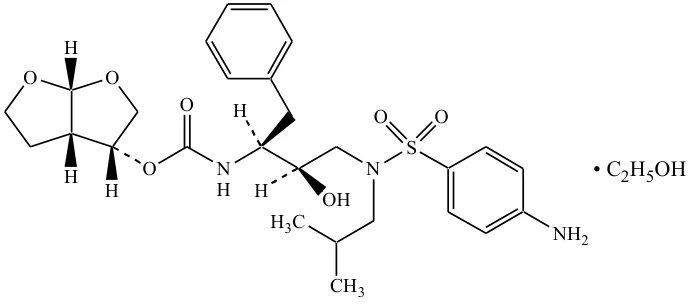
Molecular formula: C40H53N7O5S2
Molecular mass: 776.0 g/mol
Structural formula:
Physicochemical properties:
Physical Description: Cobicistat is a white to yellow solid. Cobicistat is adsorbed onto silicon dioxide.
Solubility: The solubility of cobicistat is approximately 0.1 mg/mL in water at 20°C.
Proper name: Emtricitabine (FTC)
Chemical name: 5-fluoro-1-(2R,5S)-[2-(hydroxymethyl)-1,3-oxathiolan-5-yl]cytosine.
Molecular formula: C8H10FN3O3S
Molecular mass: 247.24 g/mol
Structural formula:
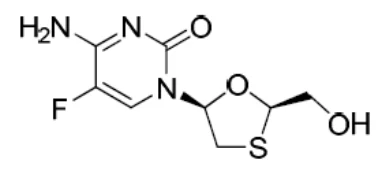
Physicochemical properties:
Physical Description: Emtricitabine is a white to off-white powder.
Solubility: Solubility of emtricitabine is approximately 112 mg/mL in water at 25°C.
Proper name: Tenofovir alafenamide hemifumarate (TAF)
Tenofovir alafenamide fumarate (USAN)
Chemical name: Propan-2-yl N-[(S)-({[(2R)-1-(6-amino-9H-purin-9 yl) propan-2-yl]-oxy}methyl)(phenoxy) phosphoryl]- L alaninate, (2E)-but-2-enedioate (2:1).
Molecular formula: C21H29O5N6P•1/2(C4H4O4)
Molecular mass: 534.5 g/mol
Structural formula:
Physicochemical properties:
Physical Description: Tenofovir alafenamide fumarate is a white to off-white or tan powder.
Solubility: The solubility of TAF in water pH 8.0 (50 mM phosphate buffer) at 20 °C is 4.86 mg/mL.
14 CLINICAL TRIALS
General
The antiretroviral effect of SYMTUZA® is due to the darunavir, emtricitabine, and tenofovir alafenamide. The activity of cobicistat as a pharmacokinetic enhancer to darunavir has been demonstrated in pharmacokinetic studies. Darunavir, emtricitabine, and tenofovir alafenamide administered as a component of SYMTUZA® is bioequivalent to the administration as single agents or in other combination products (see 14.3 Comparative Bioavailability Studies).
14.1 Clinical Trial by Indication
Indication 1
Efficacy in adult patients
The evidence of efficacy of SYMTUZA® once daily in HIV-1 infected patients is based on the established efficacy of the constituents (refer to the prescribing information for the fixed-dose combinations of darunavir/cobicistat and of emtricitabine/tenofovir alafenamide for more details) supported by the analysis of 24 week and 48 week data from the randomized, double-blinded, comparative Phase 2 study GS US 299 0102.
In study GS US 299 0102, treatment-naïve patients were randomized to receive either SYMTUZA® (N=103) or cobicistat-boosted darunavir (as single agents) plus emtricitabine/tenofovir disoproxil fumarate (FTC/TDF) fixed-dose combination (N=50) once daily. HIV-1 infected patients who were eligible for this trial had plasma HIV-1 RNA levels ≥5000 copies/mL and CD4+ cell count >50 cells/μL at screening. Virologic response was defined as confirmed plasma HIV-1 RNA viral load <50 copies/mL.
The 153 patients in total had a median age of 33 years (range 18-68), 92.8% were male, 60.1% White, 34.6% Black, 2% Asian, and 1.3% Native Hawaiian or other Pacific Islander. The mean baseline plasma HIV-1 RNA and the median baseline CD4+ cell count were 4.68 log10 copies/mL and 384 × 106 cells/L (range 7 x 10⁶ cells/L to 1463 × 106 cells/L), respectively.
The table below shows the efficacy data of the 24 week and 48 week analyses from the GS US 299-0102 trial.
Table 8: Virologic Outcomes of Trial GS-US-299-0102 at Week 24 and Week 48a
| Week 24 | Week 48 | ||||||||||||||||||||
|---|---|---|---|---|---|---|---|---|---|---|---|---|---|---|---|---|---|---|---|---|---|
SYMTUZA® (N=103) | D+C+F/TDF (N=50) | SYMTUZA® (N=103) | D+C+F/TDF (N=50) | ||||||||||||||||||
| Virologic Response (Snapshot Analysis) % (N) | |||||||||||||||||||||
| HIV-1 RNA <50 copies/mLb | 75% (77) | 74% (37) | 77% (79) | 84% (42) | |||||||||||||||||
| Treatment difference (95% CI)c | 3.3% (-11.4% to 18.1%) | -6.2% (-19.9% to 7.4%) | |||||||||||||||||||
| HIV-1 RNA <50 copies/mL - PPd | 85% (77) | 79% (37) | 93% (79) | 91% (42) | |||||||||||||||||
| Treatment difference (95% CI)c | 8.3% (-5.3% to 22%) | 2.4% (-8.8% to 13.7%) | |||||||||||||||||||
| Virologic Failure | 20% (21) | 24% (12) | 16% (16) | 12% (6) | |||||||||||||||||
| HIV-1 RNA ≥50 copies/mL | 14% (14) | 22% (11) | 7% (7) | 8% (4) | |||||||||||||||||
| Discontinued study drug due to other reasons and last available HIV-1 RNA ≥50 copies/mLe | 7% (7) | 2% (1) | 9% (9) | 4% (2) | |||||||||||||||||
| No virologic data | 5% (5) | 2% (1) | 8% (8) | 4% (2) | |||||||||||||||||
| Discontinued study drug due to AE or deathf | 1% (1) | 0 | 1% (1) | 2% (1) | |||||||||||||||||
| Discontinued study drug due to other reasons and last available HIV-1 RNA <50 copies/mLe | 4% (4) | 2% (1) | 7% (7) | 2% (1) | |||||||||||||||||
| CD4+ cell count mean change from baseline | 186 | 139 | 231 | 212 | |||||||||||||||||
SYMTUZA® = fixed-dose combination of darunavir, cobicistat, emtricitabine, and tenofovir alafenamide D+C+F/TDF = cobicistat-boosted darunavir plus emtricitabine/tenofovir disoproxil fumarate fixed-dose combination a Week 24 and 48 window was between Day 140 and 195 (inclusive), and Day 294 and 377 (inclusive), respectively. b The primary analysis set for the efficacy analysis was the Full Analysis Set, which included all subjects who (1) were randomized into the study and (2) received ≥1 dose of study medication. c Treatment difference (SYMTUZA® minus D+C+F/TDF) and 95% CI based on baseline HIV-1 RNA and race stratum-adjusted Mantel-Haenszel proportions. d The Per-Protocol (PP) analysis set was defined as all subjects who (1) were randomized into the study, (2) received ≥1 dose of study drug, and (3) did not commit any major protocol violation (such as having an adherence rate for study drug up to Week 48 visit below the 2.5th percentile, or discontinued for reasons other than lack of efficacy with no Week 48 data). e Included patients who discontinued for reasons other than an AE, death, or lack or loss of efficacy (eg, withdrew consent, loss to follow-up). f Included patients who discontinued due to AE or death at any time point from Day 1 through the time window if this resulted in no virologic data on treatment during the specified window. | |||||||||||||||||||||
Efficacy in pediatric patients
The efficacy of SYMTUZA® in pediatric patients has not been investigated.
However, the use of SYMTUZA® in adolescent patients from the age of 12 years to <18 years, and weighing at least 40 kg is supported by two clinical studies in HIV-1 infected pediatric patients: TMC114 C230 and GS-US-292-0106. (For more details, refer to the prescribing information of PREZISTA® and DESCOVY).
Efficacy, Safety and Pharmacokinetics in adolescents
The open-label, Phase 2 trial TMC114-C230 was conducted for evaluating the pharmacokinetics, safety, tolerability, and efficacy of darunavir with low dose ritonavir in 12 treatment-naïve HIV 1 infected pediatric patients aged 12 to less than 18 years and weighing at least 40 kg. These patients received darunavir/ritonavir 800/100 mg once daily in combination with other antiretroviral agents. Virologic response was defined as a decrease in plasma HIV-1 RNA viral load of at least 1.0 log10 versus baseline. Patients had a median age of 14.4 years (range: 12.6-17.3), and 66.7% were female, 58.3% were White, and 41.7% were Black. At baseline, median plasma HIV-1 RNA was 4.92 log10 copies/mL, median CD4+ cell count was 282 × 106 cells/L (range: 204-515 × 106 cells/L), and median CD4+ % was 18.3% (range: 12.1-40.8%). Overall, 41.7% had baseline plasma HIV-1 RNA ≥100000 copies/mL.
The table below shows the virologic outcomes of study TMC114-C230 at Week 48.
Table 9: Virologic Outcomes of Trial TMC114-C230 at Week 48 (TLOVR algorithm)
Darunavir/ritonavir (N=12) | ||||
|---|---|---|---|---|
| ≥1.0 log10 decrease from baseline in plasma viral load | 100% | |||
| HIV-1 RNA <50 copies/mLa | 83.3% (10) | |||
| CD4+ cell count mean change from baselineb | 221 | |||
a Imputations according to the TLOVR algorithm. b Non-completer is failure imputation: patients who discontinued prematurely are imputed with a change equal to 0. | ||||
In study GS-US-292-0106, the efficacy, safety, and pharmacokinetics of emtricitabine and tenofovir alafenamide were evaluated in an open-label study, in which HIV-1-infected treatment-naïve adolescents received emtricitabine and tenofovir alafenamide in combination with elvitegravir and cobicistat as a fixed-dose combination tablet (GENVOYA). Twenty-three patients treated with GENVOYA for 24 weeks had a mean age of 14 years (range: 12 to 17), were 52% male, 17% Asian, and 83% Black. At baseline, mean plasma HIV-1 RNA was 4.8 log10 copies/mL, median CD4+ cell count was 456 cells/mm3 (range: 104 to 748), and median CD4+% was 23% (range: 7% to 41%). Overall, 35% had baseline plasma HIV-1 RNA >100000 copies/mL.
At Week 24, out of 23 patients assessed for efficacy, 91% achieved HIV-1 RNA <50 copies/mL, similar to response rates in trials of treatment-naïve HIV-1 infected adults. The mean increase from baseline in CD4+ cell count at Week 24 was 212 cells per mm3. Two patients had virologic failure at Week 24; neither patient had evidence of resistance to emtricitabine and tenofovir alafenamide.
Fifty patients were assessed for safety at Week 24 (these patients received emtricitabine and tenofovir alafenamide (10 mg) given with elvitegravir+cobicistat as a fixed-dose combination tablet (GENVOYA) for 24 weeks). BMD by DXA was assessed in 47 patients for spine and 45 patients for total body less head. Mean (SD) BMD increased from baseline to Week 24, +1.6% (3.9%) at the lumbar spine and +0.6% (2.5%) for total body less head. Only those patients who had a height-age-adjusted BMD Z-score both at baseline and at Week 24 were assessed. At Week 24, 4 patients experienced treatment-emergent worsening in the spine (39 out of 47 patients assessed) and/or TBLH (37 out of 45 patients assessed) height-age-adjusted BMD Z-score clinical status from baseline, where a relationship to GENVOYA could not be excluded. However, in 2 of these patients, improvements in BMD were subsequently observed at Week 48.
14.2 Comparative Bioavailability Studies
In a Phase 1, single-dose, open-label, randomized, crossover trial the bioequivalence of darunavir 800 mg, emtricitabine 200 mg, and tenofovir alafenamide 10 mg, in the presence of cobicistat 150 mg, administered as either SYMTUZA® (800/150/200/10 mg darunavir/cobicistat/emtricitabine/tenofovir alafenamide fixed-dose combination tablet) or as separate agents PREZISTA® (800 mg darunavir), DESCOVY (200/10mg emtricitabine/tenofovir alafenamide fixed dose combination) and TYBOST (150 mg cobicistat) tablets in healthy subjects was assessed in 94 healthy male and female subjects under fed conditions, consisting of standardized breakfast. Treatment sessions were separated by a washout period of at least 7 days.
The results indicate that SYMTUZA® is bioequivalent to combined administration of the separate agents PREZISTA®, DESCOVY and TYBOST. The summary results are presented in Table 10.
Table 10: Summary of Pharmacokinetic Results for Individual Components After a Single Dose Administration of SYMTUZA® (800/150/200/10 mg darunavir/cobicistat/emtricitabine/tenofovir alafenamide) and as Separate Agents PREZISTA® (800 mg darunavir), DESCOVY (200/10mg emtricitabine/tenofovir alafenamide) and TYBOST (150 mg cobicistat), Under Fed Conditions
From measured data
Geometric Least Square Mean
Arithmetic Mean (CV%)
| Darunavir (800 mg) | |||||||||
|---|---|---|---|---|---|---|---|---|---|
| Parameter | Test1 | Reference2 | % Ratio of Geometric Means (90% Confidence Interval) | ||||||
| AUClast (ng.h/mL) | 82994 87200 (31.4%) | 79703 84406 (34.9%) | 104.84 (100.87-108.97) | ||||||
| AUC∞ (ng.h/mL) | 82883 87280 (32.2%) | 80569 85210 (34.7%) | 103.74 (90.30 – 102.07) | ||||||
| Cmax (ng/mL) | 6886 7042 (21.0%) | 6483 6620 (21.6%) | 106.73 (103.50-110.06) | ||||||
| Tmax3 (h) | 4.00 (1.5-8.00) | 4.00 (2.00-12.00) | |||||||
| T½4 (h) | 5.9 (35.2%) | 6.2 (42.9%) | |||||||
| Cobicistat (150 mg) | |||||||||
| Parameter | Test1 | Reference2 | % Ratio of Geometric Means (90% Confidence Interval) | ||||||
| AUClast (ng.h/mL) | 6238 6681 (37.2) | 6352 6763 (36.0) | 98.77 (95.14-102.52) | |||||||||
|---|---|---|---|---|---|---|---|---|---|---|---|---|
| AUC∞ (ng.h/mL) | 6336 6785 (37.1) | 6452 6868 (35.8) | 98.76 (95.15-102.52) | |||||||||
| Cmax (ng/mL) | 859 894 (28.5) | 856 881 (23.5) | 100.69 (96.80-104.73) | |||||||||
| Tmax3 (h) | 4.00 (1.50-6.00) | 4.00 (1.50-5.05) | ||||||||||
| T½4 (h) | 3.7 (18.7) | 3.7 (20.1) | ||||||||||
| Emtricitabine (200 mg) | ||||||||||||
| Parameter | Test1 | Reference2 | % Ratio of Geometric Means (90% Confidence Interval) | |||||||||
| AUClast (ng.h/mL) | 11552 11722 (16.7%) | 11597 11746 (15.9%) | 100.04 (98.46-101.66) | |||||||||
| AUC∞ (ng.h/mL) | 11706 11882 (16.9%) | 11769 11927 (16.2%) | 100.13 (98.36-101.93) | |||||||||
| Cmax (ng/mL) | 1984 2041 (23.5%) | 2003 2053 (22.8%) | 99.32 (95.61-103.17) | |||||||||
| Tmax3 (h) | 2.00 (0.60-5.00) | 2.00 (0.50-5.00) | ||||||||||
| T½4 (h) | 16.5 (19.7) | 17.0 (19.8%) | ||||||||||
| Tenofovir alafenamide (10 mg) | ||||||||||||
| Parameter | Test1 | Reference2 | % Ratio of Geometric Means (90% Confidence Interval) | |||||||||
| AUClast (ng.h/mL) | 116 123 (34.2%) | 122 132 (43.9%) | 96.59 (91.72-101.73) | |||||||||
| AUC∞ (ng.h/mL) | 121 127 (31.1%) | 130 141 (42.5%) | 95.42 (90.62-100.48) | |||||||||
| Cmax (ng/mL) | 98.1 110 (49.0%) | 102 120 (61.7%) | 96.87 (88.95-105.50) | |||||||||
| Tmax3 (h) | 1.50 (0.25-3.50) | 1.01 (0.25-4.00) | ||||||||||
| T½4 (h) | 0.3 (37.3%) | 0.3 (37.9%) | ||||||||||
1 SYMTUZA® (800/150/200/10 mg darunavir/cobicistat/emtricitabine/tenofovir alafenamide fixed-dose combination tablet).
2 PREZISTA® (800 mg darunavir), DESCOVY (200/10mg emtricitabine/tenofovir alafenamide fixed dose combination) and TYBOST (150 mg cobicistat)
3 Expressed arithmetic median (range) only.
4 Expressed as the arithmetic mean (CV%) only.
15 MICROBIOLOGY
Resistance In Vitro
Darunavir: In vitro selection of darunavir-resistant virus from wild-type HIV-1 was lengthy (more than 2 years). The selected viruses were unable to grow in the presence of darunavir concentrations above 220 nM. Viruses selected in these conditions and showing decreased susceptibility to darunavir (range: 23- to 50-fold) harboured 2 to 4 amino acid mutations in the protease gene. The decreased susceptibility to darunavir of the emerging viruses in the selection experiment could not be explained by the emergence of these protease mutations.
In vitro selection of darunavir-resistant HIV-1 (range: 53- to 641-fold change in EC50 values) from 9 HIV-1 strains harbouring multiple PI resistance-associated mutations (RAMs) resulted in the overall emergence of 22 mutations in the protease, of which L10F, V32I, L33F, S37N, M46I, I47V, I50V, L63P, A71V, and I84V were present in more than 50% of the 9 darunavir-resistant isolates. A minimum of 8 of these darunavir in vitro selected mutations, from which at least 2 were already present in the protease prior to selection, were required in the HIV-1 protease to render a virus resistant (fold change (FC) >10) to darunavir.
In 1113 clinical isolates resistant to amprenavir, atazanavir, indinavir, lopinavir, nelfinavir, ritonavir, saquinavir and/or tipranavir, and in 886 baseline isolates from treatment-experienced patients only the subgroups with >10 PI resistance-associated mutations showed a median FC for darunavir >10.
In vivo, DRV RAMs (V11I, V32I, L33F, I47V, I50V, I54L or M, T74P, L76V, I84V and L89V) in HIV-1 protease were derived from clinical trial data of antiretroviral therapy experienced patients, which were all protease inhibitor experienced patients.
Cobicistat: No in vitro resistance can be demonstrated due to its lack of antiviral activity.
Emtricitabine: HIV-1 isolates with reduced susceptibility to FTC have been selected in cell culture. Reduced susceptibility to FTC was associated with M184V/I mutations in HIV-1 reverse transcriptase (RT).
Tenofovir alafenamide: HIV-1 isolates with reduced susceptibility to TAF have been selected in cell culture. HIV-1 isolates selected by TAF expressed a K65R mutation in HIV-1 RT; in addition, a K70E mutation in HIV-1 RT has been transiently observed. HIV-1 isolates with the K65R mutation have low-level reduced susceptibility to abacavir, FTC, tenofovir, and lamivudine. In vitro drug resistance selection studies with TAF have shown no development of resistance increases above 2.5 fold after 6 months in culture.
Cross-Resistance In Vitro
Darunavir: Cross-resistance has been observed among PIs. DRV has a < 10-fold decreased susceptibility against 90% of 3309 clinical isolates resistant to amprenavir, atazanavir, indinavir, lopinavir, nelfinavir, ritonavir, saquinavir and/or tipranavir showing that viruses resistant to most PIs remain susceptible to darunavir.
Cross-resistance between darunavir and the nucleoside/nucleotide reverse transcriptase inhibitors, the non-nucleoside reverse transcriptase inhibitors, the fusion inhibitors, CCR5 co-receptors agonists, or the integrase inhibitor is unlikely because the viral targets for those inhibitors are different.
Emtricitabine: Cross-resistance has been observed among NRTIs. FTC-resistant isolates harboring an M184V/I mutation in HIV-1 RT were cross-resistant to lamivudine. HIV-1 isolates containing the K65R RT mutation, selected in vivo by abacavir, didanosine, and tenofovir, demonstrated reduced susceptibility to inhibition by emtricitabine.
Tenofovir alafenamide: The K65R and K70E mutations result in reduced susceptibility to abacavir, didanosine, lamivudine, FTC, and tenofovir, but retain sensitivity to zidovudine. Multinucleoside resistant HIV-1 with a T69S double insertion mutation or with a Q151M mutation complex including K65R showed reduced susceptibility to TAF. HIV-1 containing the K103N or
Y181C mutations associated with resistance to NNRTIs were susceptible to TAF. HIV-1 containing mutations associated with resistance to PIs such as M46I, I54V, V82F/T, and L90M were susceptible to TAF.
In Vivo Selection of Viral Resistance During SYMTUZA® Therapy
The resistance profile of SYMTUZA® is driven by darunavir, emtricitabine, and tenofovir alafenamide. Cobicistat does not select any HIV resistance mutations due to its lack of antiviral activity.
In the comparative Phase 2 study GS-US-299-0102 in HIV-1 infected treatment-naïve patients, no subject developed any darunavir or primary protease resistance-associated mutations from baseline through Week 48. One subject, receiving SYMTUZA®, had an NRTI-resistance mutation emerging at the unblinding visit after Week 48 with the emergence of a mutant/wild-type mixture at position K65 (K65K/R) and a mutant/wild-type mixture at position M184 (M184M/I). These mutations are associated with resistance to tenofovir disoproxil fumarate/tenofovir alafenamide and emtricitabine, respectively. However, phenotypic susceptibilities to both emtricitabine and tenofovir disoproxil fumarate were in the sensitive range despite the presence of those mutations. The subject had a viral load increase above 50 copies/mL at Week 40 followed by re-suppression of HIV-1 RNA <50 copies/mL, suggesting improper treatment compliance.
These data are in line with the low level of resistance development observed in historical studies investigating: (1) darunavir once daily, boosted with either ritonavir or cobicistat, in combination with other antiretroviral products (primarily emtricitabine/tenofovir disoproxil fumarate) in treatment-naïve patients and treatment-experienced patients with no darunavir RAMs, and (2) emtricitabine and tenofovir alafenamide in treatment-naïve and virologically suppressed patients.
In Vivo Cross-Resistance
In treatment-naïve virologic failures on boosted darunavir no cross-resistance with other HIV PIs has been observed.
Emtricitabine-resistant viruses with the M184V/I substitution were cross-resistant to lamivudine, but retained sensitivity to didanosine, stavudine, tenofovir, and zidovudine.
The K65R and K70E mutations result in reduced susceptibility to abacavir, didanosine, lamivudine, emtricitabine, and tenofovir, but retain sensitivity to zidovudine.
For more details on the clinical resistance profile of darunavir, boosted with ritonavir or cobicistat, and emtricitabine/tenofovir alafenamide please refer to the PREZCOBIX® and DESCOVY Product Monographs.
16 NON-CLINICAL TOXICOLOGY
General Toxicology
Darunavir: Animal toxicology studies have been conducted with darunavir alone, in mice, rats and dogs and in combination with ritonavir in rats and dogs. In chronic toxicology studies in rats and dogs, there were only limited effects of treatment with darunavir. In the rat the key target organs identified were the hematopoietic system, the blood coagulation system, liver and thyroid, observed at 100 mg/kg/day and above and at exposures below clinical levels. A variable but limited decrease in red blood cell-related parameters was observed, together with increases in activated PTT. The observed liver and thyroid changes were considered to reflect an adaptive response to enzyme induction in the rat rather than an adverse effect. In combination toxicity studies with ritonavir, no additional target organs of toxicity were reported in rats. In the dog, no major toxicity findings or key target organs were identified at doses up to 120 mg/kg/day and exposures equivalent to clinical exposure at the recommended dose.
Cobicistat: Non-clinical data reveal no special hazard for humans based on conventional studies of repeated dose toxicity. Ex vivo rabbit studies and in vivo dog studies suggest that cobicistat has a low potential for QT prolongation, and may slightly prolong the PR interval and decrease left ventricular function at mean concentrations at least 10-fold higher than the human exposure at the recommended 150 mg daily dose.
Emtricitabine: Non-clinical data on emtricitabine reveal no special hazard for humans based on conventional studies of safety pharmacology and repeated dose toxicity.
Tenofovir alafenamide: The general toxicology profile of tenofovir alafenamide has been studied in mice, rats, dogs and monkeys. The target organs were the kidney and bone. The effects on the kidneys included cortical tubular basophilia and tubular karyomegaly in both rats and dogs and additionally cortical tubular degeneration/regeneration in dogs. These effects did not appear to meaningfully affect renal function except for possibly related reduction in serum calcitriol (1,25-dihydroxyvitamin D3) that may be implicated in the bone effects (see below). The tenofovir alafenamide-related effects on the bone included decreases in bone mineral density and mineral content observed in both rats and dogs. In the 9-month dog study, animals dosed at 18/12 mg/kg/day (approximately 47 times the clinical exposure based on AUC) failed to mature skeletally. The NOAEL in the rat and dog was 25 mg/kg/day (approximately 13 times clinical tenofovir exposure based on AUC) and 2 mg/kg/day (approximately 4 times the clinical tenofovir exposure based on AUC), respectively. These effects were partially reversible upon treatment discontinuation.
Electrocardiographic effects occurred in the 9-month dog study and included prolongation of PR intervals at ≥6 mg/kg (approximately 15 times the clinical exposure based on AUC) and reduction in heart rate with an associated QT prolongation at 18/12 mg/kg (approximately 47 times the clinical exposure based on AUC); the heart rate changes were reversible following a three-month recovery period. The NOAEL was 2 mg/kg (approximately 4 times the clinical tenofovir exposure based on AUC). These effects might have been due to a reduction in triiodothryonine (T3) levels.
Carcinogenicity
Darunavir: Darunavir was evaluated for carcinogenic potential by oral gavage administration to mice and rats up to 104 weeks. Daily doses of 150, 450 and 1000 mg/kg were administered to mice and doses of 50, 150 and 500 mg/kg were administered to rats. A dose related increase in the incidences of hepatocellular adenomas and carcinomas were observed in males and females of both species. Thyroid follicular cell adenomas were noted in male rats. Administration of darunavir did not cause a statistically significant increase in the incidence of any other benign or malignant neoplasm in mice or rats. The observed hepatocellular findings in rodents are considered to be of limited relevance to humans. Repeated administration of darunavir to rats caused hepatic microsomal enzyme induction and increased thyroid hormone elimination, which predispose rats, but not humans, to thyroid neoplasms. At the highest tested doses, the systemic exposures (based on AUC) to darunavir were between 0.5- and 0.6-fold (mice) and 0.9-fold (rats), relative to those observed in humans at the recommended therapeutic doses (600/100 mg twice daily or 800/100 mg once daily).
Cobicistat: In a long-term carcinogenicity study of cobicistat in mice, no drug-related increases in tumour incidence were observed at doses up to 50 and 100 mg/kg/day (males and females, respectively).
Cobicistat exposures at these doses were approximately 7 (males) and 16 (females) times, respectively, the human systemic exposure at the therapeutic daily dose. In a long-term carcinogenicity study of cobicistat in rats, an increased incidence of follicular cell adenomas and/or carcinomas in the thyroid gland was observed at doses of 25 and 50 mg/kg/day in males, and at 30 mg/kg/day in females. The follicular cell findings are considered to be rat-specific, secondary to hepatic microsomal enzyme induction and thyroid hormone imbalance and are not relevant for humans. At the highest doses tested in the rat carcinogenicity study, systemic exposures were approximately 2 times the human systemic exposure at the therapeutic daily dose.
Emtricitabine: In long-term carcinogenicity studies of emtricitabine, no drug-related increases in tumor incidence were found in mice at doses up to 750 mg/kg/day (23 times the human systemic exposure at the therapeutic dose of 200 mg/day) or in rats at doses up to 600 mg/kg/day (28 times the human systemic exposure at the therapeutic dose).
Tenofovir alafenamide: Because there is a lower tenofovir exposure in rats and mice after TAF compared to tenofovir disoproxil fumarate (TDF), carcinogenicity studies were conducted only with TDF. Long-term oral carcinogenicity studies of tenofovir disoproxil fumarate in mice and rats were carried out at exposures up to approximately 10 times (mice) and 4 times (rats) those observed in humans at the 300 mg therapeutic dose of tenofovir disoproxil fumarate for HIV-1 infection. At the high dose in female mice, liver adenomas were increased at exposures 10 times that in humans. In rats, the study was negative for carcinogenic findings at exposures up to 4 times that observed in humans at the therapeutic dose.
Genotoxicity
Darunavir: Darunavir was not mutagenic or genotoxic in a battery of in vitro and in vivo assays including bacterial reverse mutation (Ames), chromosomal aberration in human lymphocytes and in vivo micronucleus test in mice.
Cobicistat: Cobicistat was not genotoxic in the reverse mutation bacterial test (Ames test), mouse lymphoma or rat micronucleus assays.
Emtricitabine: Emtricitabine was not genotoxic in the reverse mutation bacterial test (Ames test), mouse lymphoma or mouse micronucleus assays.
Tenofovir alafenamide: Tenofovir alafenamide was not genotoxic in the reverse mutation bacterial test (Ames test), mouse lymphoma or rat micronucleus assays.
Reproductive and Developmental Toxicology
Darunavir: Investigation of fertility and early embryonic development with darunavir was performed in rats, teratogenicity studies were conducted in mice, rats and rabbits, and the pre- and post-natal development study was conducted in rats.
In the fertility and early embryonic development study conducted with darunavir, a significant decrease in body weight gain with subsequent related reduction in the number of ovulations resulting in a reduction in the number of live fetuses was observed in female rats treated with 1000 mg/kg. Otherwise, there were no effects on mating or fertility with darunavir treatment up to 1000 mg/kg/day and exposure levels below (AUC 0.5-fold) that in humans at the clinically recommended dose. Up to the same dose levels, there was no teratogenicity with darunavir in rats and rabbits when treated alone nor in mice when treated in combination with ritonavir. The exposure levels were lower than those observed with the recommended clinical dose in humans. In a pre- and post-natal development assessment in rats, darunavir with and without ritonavir caused a transient reduction in body weight gain of the offspring during lactation. This was attributed to drug exposure via the milk. No post-weaning functions were affected with darunavir alone or in combination with ritonavir.
Cobicistat: Reproductive studies with cobicistat were conducted in rats and rabbits. Animal studies do not indicate direct or indirect harmful effects of cobicistat with respect to pregnancy, fetal development, parturition or postnatal development. There were no effects on mating and fertility parameters. Studies in animals have shown no evidence of teratogenicity or an effect on reproductive function.
Cobicistat did not affect fertility in male or female rats at daily exposures (AUC) approximately 3.3-fold higher than human exposures at the recommended 150 mg daily dose.
Emtricitabine:
Emtricitabine did not affect fertility in male rats at approximately 140-fold or in male and female mice at approximately 60 fold higher exposures (AUC) than in humans given the recommended 200 mg daily dose.
Tenofovir alafenamide: There were no effects on fertility, mating performance when tenofovir alafenamide was administered to male rats at a dose equivalent to 155 times the human dose based on body surface area comparisons for 28 days prior to mating and to female rats for 14 days prior to mating through day seven of gestation.
Juvenile Toxicity
Darunavir: In juvenile rats directly dosed with darunavir (from 20 mg/kg to 1000 mg/kg) up to days 23 to 26 of age, mortality was observed and, in some of the animals, convulsions. Within this age range exposures in plasma, liver and brain were dose and age dependent and were considerably greater than those observed in adult rats. These findings were attributed to the ontogeny of the CYP450 liver enzymes involved in the metabolism of darunavir and the immaturity of the blood-brain barrier. No treatment-related mortalities were noted in juvenile rats dosed at 1000 mg/kg darunavir (single dose) on day 26 of age or at 500 mg/kg (repeated dose) from day 23 to 50 of age, and the exposures and toxicity profile were comparable to those observed in adult rats. In humans, the activity of drug-metabolizing enzymes approaches adult values by 3 years of age.
Cobicistat: In offspring from rat and rabbit dams treated with cobicistat during pregnancy, there were no toxicologically significant effects on developmental endpoints. The exposures at the embryo-fetal NOAELs in rats and rabbits were respectively 1.4 and 3.3 times higher than the exposure in humans at the recommended daily dose of 150 mg. Fertility was normal in the offspring of rats exposed daily from before birth (in utero) through sexual maturity at daily exposures (AUC) of approximately 1.2-fold higher than human exposures at the recommended 150 mg daily dose.
Emtricitabine: The incidence of fetal variations and malformations was not increased in embryo-fetal toxicity studies performed with emtricitabine in mice at exposures (AUC) approximately 60 times higher and in rabbits at approximately 120 times higher than human exposures at the recommended daily dose. Fertility was normal in the offspring of mice exposed daily from before birth (in utero) through sexual maturity at daily exposures (AUC) of approximately 60-fold higher than human exposures at the recommended 200 mg daily dose.
Tenofovir alafenamide: There were no effects on early embryonic development when tenofovir alafenamide was administered to male rats at a dose equivalent to 155 times the human dose based on body surface area comparisons for 28 days prior to mating and to female rats for 14 days prior to mating through day seven of gestation.