


Product Monograph - Triumeq
Recent Major Label Changes
| 4 Dosage and Administration 4.1 Dosing Considerations | 11/2024 |
|---|---|
| 7 Warnings and Precautions, 7.1.1 Pregnant Women | 11/2024 |
Table of Contents
Certain sections or subsections that are not applicable at the time of the preparation of the most recent authorized product monograph are not listed.
Recent Major Label Changes .............................................................................................................. 2
Table of Contents ............................................................................................................................... 2
Part 1: Healthcare Professional Information ....................................................................................... 4
1 Indications ............................................................................................................................. 4
1.1 Pediatrics............................................................................................................................. 4
1.2 Geriatrics ............................................................................................................................. 4
2 Contraindications ................................................................................................................... 4
3 Serious Warnings and Precautions Box ................................................................................... 5
4 Dosage and Administration .................................................................................................... 5
4.1 Dosing Considerations ........................................................................................................ 5
4.2 Recommended Dose and Dosage Adjustment ................................................................... 5
4.5 Missed Dose ........................................................................................................................ 6
5 Overdose ............................................................................................................................... 6
6 Dosage Forms, Strengths, Composition, and Packaging ........................................................... 7
7 Warnings and Precautions ...................................................................................................... 7
General ............................................................................................................................................. 7
Cardiovascular .................................................................................................................................. 7
Endocrine and Metabolism .............................................................................................................. 8
Hematologic ..................................................................................................................................... 8
Hepatic/Biliary/Pancreatic ............................................................................................................... 8
Hypersensitivity ............................................................................................................................... 9
Immune .......................................................................................................................................... 11
Renal .............................................................................................................................................. 11
7.1 Special Populations ........................................................................................................... 12
7.1.1 Pregnancy ......................................................................................................................... 12
7.1.2 Breastfeeding .................................................................................................................... 14
7.1.3 Pediatrics........................................................................................................................... 14
7.1.4 Geriatrics ........................................................................................................................... 14
8 Adverse Reactions ............................................................................................................... 14
8.1 Adverse Reaction Overview .............................................................................................. 14
8.2 Clinical Trial Adverse Reactions ........................................................................................ 15
8.2.1 Clinical Trial Adverse Reactions – Pediatrics ..................................................................... 16
8.3 Less Common Clinical Trial Adverse Reactions ................................................................. 17
8.4 Abnormal Laboratory Findings: Hematologic, Clinical Chemistry and Other Quantitative
Data .......................................................................................................................................... 17
8.5 Post-Market Adverse Reactions ........................................................................................ 20
9 Drug Interactions ................................................................................................................. 21
9.2 Drug Interactions Overview .............................................................................................. 21
9.4 Drug-Drug Interactions ..................................................................................................... 23
9.5 Drug-Food Interactions ..................................................................................................... 30
9.6 Drug-Herb Interactions ..................................................................................................... 30
9.7 Drug-Laboratory Test Interactions .................................................................................... 30
10 Clinical Pharmacology .......................................................................................................... 30
10.1 Mechanism of Action ........................................................................................................ 30
10.2 Pharmacodynamics ........................................................................................................... 30
10.3 Pharmacokinetics .............................................................................................................. 31
11 Storage, Stability, and Disposal ............................................................................................ 35
Part 2: Pharmaceutical Information .................................................................................................. 36
13 Pharmaceutical Information ................................................................................................. 36
14 Clinical Trials ........................................................................................................................ 38
14.1 Clinical Trials by Indication ............................................................................................... 38
14.2 Comparative Bioavailability Studies ................................................................................. 42
15 Microbiology ....................................................................................................................... 45
16 Non-Clinical Toxicology ........................................................................................................ 48
Patient Medication Information ....................................................................................................... 51
Part 1: Healthcare Professional Information
1 Indications
TRIUMEQ (dolutegravir, abacavir, and lamivudine) is indicated for the treatment of Human Immunodeficiency Virus (HIV-1) infection in adults and adolescents aged 12 years and older and weighing at least 40 kg.
1.1 Pediatrics
Pediatrics (<12 years of age and weighing less than 40 kg):
No data are available to Health Canada; therefore, Health Canada has not authorized an indication for pediatric use <12 years of age and weighing less than 40 kg.
Pediatrics (>12 to 18 years of age and weighing at least 40 kg):
Based on the data submitted and reviewed by Health Canada, the safety and efficacy of TRIUMEQ in pediatric patients >12 to 18 years of age and weighing at least 40 kg has been established. Therefore, Health Canada has authorized an indication for pediatric use for >12 to 18 years of age and weighing at least 40 kg.
1.2 Geriatrics
Geriatrics (≥65 years of age):
Clinical studies of TRIUMEQ did not include sufficient numbers of patients aged 65 and over to determine whether they respond differently from younger patients.
2 Contraindications
TRIUMEQ is contraindicated in patients:
- who are hypersensitive to this drug or to any ingredient in the formulation or component of the container. For a complete listing, see 6 Dosage Forms, Strengths, Composition, and Packaging.
- who are positive for the HLA-B*5701 allele and patients with a prior history of a hypersensitivity reaction to abacavir, or products containing abacavir, regardless of HLA-B*5701 status. Fatal hypersensitivity reactions have been associated with rechallenge of abacavir (see 7 Warnings and Precautions).
- who are prescribed drugs with narrow therapeutic windows, that are substrates of organic cation transporter 2 (OCT2), including but not limited to dofetilide, or fampridine (also known as dalfampridine; see 9 Drug Interactions).
3 Serious Warnings and Precautions Box
4 Dosage and Administration
4.1 Dosing Considerations
- TRIUMEQ can be taken with or without food.
4.2 Recommended Dose and Dosage Adjustment
Adults and adolescents (≥12 years and weighing at least 40 kg)
The recommended dose of TRIUMEQ is one tablet once daily. One tablet contains 50 mg of dolutegravir (as dolutegravir sodium), 600 mg abacavir (as abacavir sodium) and 300 mg of lamivudine.
Pediatrics (<12 years)
The safety and effectiveness of TRIUMEQ in pediatric patients <12 years of age and weighing less than 40 kg have not been established. TRIUMEQ is not recommended for treatment of children weighing less than 40 kg as the necessary dose adjustment cannot be made.
Geriatrics (≥65 years of age)
There are limited data available on the use of dolutegravir, abacavir and lamivudine (TRIUMEQ) in patients aged 65 years and older. In general, caution should be exercised in the administration of TRIUMEQ in elderly patients reflecting the greater frequency of decreased hepatic, renal or cardiac function and of concomitant disease or other drug therapy.
Dosage Adjustment
The separate components of dolutegravir (TIVICAY), abacavir (ZIAGEN) and lamivudine (3TC) should be considered in cases where dose adjustment or discontinuation of an individual component is indicated.
Serious Warnings and Precautions
- Fatal Hypersensitivity Reactions
All patients should be screened for the HLA-B*5701 allele prior to initiating or re-initiating treatment with TRIUMEQ. Patients who carry the HLA B*5701 allele are at high risk for experiencing a hypersensitivity reaction to abacavir, a component of TRIUMEQ although, hypersensitivity reactions have occurred in patients who do not carry the HLA-B*5701 allele. Serious and sometimes fatal hypersensitivity reactions have been associated with therapy with abacavir sulfate and other abacavir-containing products (see 7 Warnings and Precautions, Hypersensitivity).
- Post Treatment Exacerbations of Hepatitis B
Severe acute exacerbations of hepatitis B have been reported in patients who are co-infected with hepatitis B virus (HBV) and human immunodeficiency virus (HIV-1) and have discontinued lamivudine, one component of TRIUMEQ. Hepatic function should be monitored closely with both clinical and laboratory follow-up for at least several months in patients who discontinue TRIUMEQ. If appropriate, initiation of anti hepatitis B therapy may be warranted (see 7 Warnings and Precautions, Hepatic/Biliary/Pancreatic).
TRIUMEQ is not recommended for patients requiring dosage adjustments, such as:
- patients with renal impairment (creatinine clearance < 30 mL/min) (see 10.3 Pharmacokinetics, Special Populations and Conditions, Renal Insufficiency)
- patients with hepatic impairment (see 10.3 Pharmacokinetics, Special Populations and Conditions, Hepatic Insufficiency)
Dosage Recommendation with Certain Concomitant Medications
TRIUMEQ alone is insufficient for patients with integrase inhibitor resistance requiring dolutegravir 50 mg twice daily (see TIVICAY Product Monograph).
The dolutegravir dose (50 mg) in TRIUMEQ is insufficient when co-administered with medications listed in Table 1 that may decrease dolutegravir concentrations: the following dolutegravir dosage regimen is recommended.
Table 1 Dosing Recommendations for TRIUMEQ with Co-administered Medications
| Co-administered Drug | Dosing Recommendation |
|---|---|
| Efavirenz, etravirine*, fosamprenavir/ritonavir, tipranavir/ritonavir, oxcarbamazepine, carbamazepine, phenytoin, phenobarbital, St. John’s wort or rifampin | Adjust dolutegravir dose to 50 mg twice daily. The additional 50-mg dose of dolutegravir should be taken, separated by 12 hours from TRIUMEQ |
*TRIUMEQ should only be used with etravirine when co-administered with atazanavir/ritonavir, darunavir/ritonavir or lopinavir/ritonavir in INI-resistant patients
4.5 Missed Dose
If a dose is missed, patients should take the missed dose as soon as possible unless it is within 4 hours of their next scheduled dose. If a dose is skipped, the patient should not double the next dose.
5 Overdose
If overdosage occurs, the patient should be monitored, and standard supportive treatment applied as required.
Dolutegravir: As dolutegravir is highly bound to plasma proteins, it is unlikely that it will be significantly removed by dialysis.
There is currently limited experience with overdosage in dolutegravir. Limited experience of single higher doses (up to 250 mg in healthy subjects) revealed no specific symptoms or signs, apart from those listed as adverse reactions.
Abacavir: It is not known whether abacavir can be removed by peritoneal dialysis or hemodialysis.
Lamivudine: Since lamivudine is dialysable, continuous hemodialysis could be used in the treatment of overdose, although this has not been studied.
No specific symptoms or signs have been identified following acute overdose with abacavir or lamivudine, apart from those listed as adverse reactions.
For the most recent information in the management of a suspected drug overdose, contact your regional poison control centre or Health Canada’s toll-free number, 1-844 POISON-X (1-844-764-7669).
6 Dosage Forms, Strengths, Composition, and Packaging
Table 2 Dosage Forms, Strengths, Composition and Packaging
| Route of Administration | Dosage Form / Strength / Composition | Nonmedicinal Ingredients |
| oral | tablet/ 50 mg dolutegravir (as dolutegravir sodium), 600 mg abacavir (as abacavir sulfate) and 300 mg lamivudine | D-mannitol, magnesium stearate, microcrystalline cellulose, povidone K29/32, and sodium starch glycolate. The tablet film-coating (OPADRY® II Purple 85F90057) contains the inactive ingredients iron oxide black, iron oxide red, macrogol/PEG, polyvinyl alcohol–part hydrolyzed, talc, and titanium dioxide. |
Each TRIUMEQ tablet contains 50 mg of dolutegravir (as 52.6 mg dolutegravir sodium), 600 mg of abacavir (as 702 mg abacavir sulfate) and 300 mg lamivudine.
Dosage Forms
TRIUMEQ tablets are purple, biconvex, oval, film-coated tablets, debossed with “572 Trı” on one side.
Packaging
Supplied in 100 cc HDPE bottles containing 30 tablets and a silica gel desiccant.
7 Warnings and Precautions
Please see 3 Serious Warnings and Precautions Box.
General
Patients prescribed TRIUMEQ or any other antiretroviral therapy may still develop opportunistic infections and other complications of HIV infection. Therefore, patients should remain under close clinical observation by physicians experienced in the treatment of these associated HIV diseases.
TRIUMEQ contains fixed doses of an INSTI (dolutegravir) and two nucleoside analogues (abacavir and lamivudine) and should not be administered concomitantly with other products containing abacavir or lamivudine (3TC, COMBIVIR, KIVEXA or ZIAGEN) or emtricitabine-containing products (COMPLERA, EMTRIVA, STRIBILD or TRUVADA).
Cardiovascular
Several observational and epidemiological studies have reported an association with abacavir use and risk of myocardial infarction. Meta-analyses of randomised controlled trials have observed no excess risk of myocardial infarction with abacavir use. To date, there is no established biological mechanism to explain a potential increase in risk. Overall, the available data from observational studies and from controlled clinical trials show inconsistency and therefore the evidence for a causal relationship between abacavir treatment and the risk of myocardial infarction is inconclusive.
As a precaution, the underlying risk of coronary heart disease should be considered when prescribing antiretroviral therapies, including abacavir, and action taken to minimize all modifiable risk factors (e.g. hypertension, hyperlipidemia, diabetes mellitus and smoking).
Endocrine and Metabolism
Serum lipids and blood glucose
Serum lipid and blood glucose levels may increase during antiretroviral therapy. Disease control and lifestyle changes may also be contributing factors. Consideration should be given to the measurement of serum lipids and blood glucose. Lipid disorders and blood glucose elevations should be managed as clinically appropriate.
Hematologic
Very rare occurrences of pure red cell aplasia have been reported with lamivudine use. Discontinuation of lamivudine has resulted in normalization of hematologic parameters in patients with suspected lamivudine induced pure red cell aplasia.
Hepatic/Biliary/Pancreatic
Hepatoxicity
Cases of hepatic toxicity including elevated serum liver biochemistries, hepatitis, and acute liver failure have been reported in patients receiving a dolutegravir-containing regimen who had no pre-existing hepatic disease or other identifiable risk factors. Drug-induced liver injury leading to liver transplant has been reported with TRIUMEQ. Monitoring for hepatotoxicity is recommended.
Liver chemistry changes in patients with Hepatitis B or C co-infection
Patients with underlying hepatitis B or C may be at increased risk for worsening or development of transaminase elevations with use of TRIUMEQ. Liver chemistry elevations consistent with immune reconstitution inflammatory syndrome were observed in some hepatitis B and/or C co-infected patients at the start of dolutegravir therapy. Monitoring of liver chemistries is recommended in patients with hepatitis B and/or C co-infection. Particular diligence should be applied in initiating or maintaining effective hepatitis B therapy (referring to treatment guidelines) when starting dolutegravir-based therapy in hepatitis B co-infected patients (see 8.4 Abnormal Laboratory Findings: Hematologic, Clinical Chemistry and Other Quantitative Data).
Post-Treatment Exacerbations of Hepatitis B
Clinical study and marketed use of lamivudine have shown that some patients with chronic hepatitis B virus (HBV) disease may experience clinical or laboratory evidence of recurrent hepatitis upon discontinuation of lamivudine, which may have more severe consequences in patients with decompensated liver disease. If TRIUMEQ is discontinued in patients coinfected with HBV, periodic monitoring of both liver function tests and markers of HBV replication should be considered.
Lactic Acidosis/Severe Hepatomegaly with Steatosis
Lactic acidosis and severe hepatomegaly with steatosis, including fatal cases, have been reported with the use of nucleoside analogues alone or in combination, including abacavir and lamivudine and other antiretrovirals. A majority of these cases have been in women. Clinical features which may be indicative of the development of lactic acidosis include generalized weakness, anorexia and sudden unexplained weight loss, gastrointestinal symptoms and respiratory symptoms (dyspnea and tachypnea). Female sex and obesity may be risk factors. Caution should be exercised when administering TRIUMEQ or other nucleoside analogues, particularly to those with known risk factors for liver disease. However, cases have also been reported in patients with no known risk factors. Treatment with TRIUMEQ should be suspended in any patient who develops clinical or laboratory findings suggestive of lactic acidosis with or without hepatitis, which may include hepatomegaly and steatosis even in the absence of marked transaminase elevations.
Pancreatitis
Pancreatitis has been observed in some patients receiving nucleoside analogues, including abacavir and lamivudine. However, it is not clear whether these cases were due to drug treatment or to the underlying HIV disease. Pancreatitis must be considered whenever a patient develops abdominal pain, nausea, vomiting or elevated biochemical markers. Discontinue use of TRIUMEQ until diagnosis of pancreatitis is excluded (see 8.5 Post-Market Adverse Reactions).
Hepatic Insufficiency
TRIUMEQ is not recommended in patients with moderate to severe hepatic impairment (Child-Pugh grade B or C) (see 4.2 Recommended Dose and Dosage Adjustment and 10.3 Pharmacokinetics). If a dose reduction of abacavir, a component of TRIUMEQ, is required for patients with mild hepatic impairment (Child-Pugh grade A), then the separate preparations of dolutegravir, abacavir and lamivudine should be used.
Hypersensitivity
Both abacavir and dolutegravir are associated with a risk for hypersensitivity reactions (HSR) and share some common features such as fever and/or rash with other symptoms indicating multi-organ involvement (see 7 Warnings and Precautions, Clinical Description of HSRs). Clinically it is not possible to determine whether a HSR with TRIUMEQ would be caused by abacavir or dolutegravir. Hypersensitivity reactions have been observed more commonly with abacavir, some of which have been life-threatening, and in rare cases fatal, when not managed appropriately. The risk for abacavir HSR to occur is high for patients who test positive for the HLA-B*5701 allele. However, abacavir HSRs have been reported at a low frequency in patients who do not carry this allele.
Clinical Management
All patients should be screened for the HLA-B*5701 allele prior to initiating or re-initiating treatment with TRIUMEQ.
Do not use TRIUMEQ in HLA-B*5701-positive patients or in patients with a negative HLA-B*5701 status who had a suspected abacavir HSR on a previous abacavir-containing regimen.
HLA-B*5701-negative patients may develop a hypersensitivity reaction to abacavir; however, this occurs significantly less frequently than in HLA-B*5701-positive patients.
Regardless of HLA-B*5701 status, permanently discontinue TRIUMEQ if hypersensitivity cannot be ruled out, even when other diagnoses are possible (e.g., acute onset respiratory diseases such as pneumonia, bronchitis, pharyngitis, influenza; gastroenteritis; or reactions to other medications).
Restarting abacavir-containing products following a suspected abacavir HSR can result in a prompt return of symptoms within hours. This recurrence is usually more severe than on initial presentation, and may include life-threatening hypotension and death.
NEVER restart TRIUMEQ or any other abacavir- or dolutegravir-containing product in patients who have stopped therapy with TRIUMEQ due to a hypersensitivity reaction.
When therapy with TRIUMEQ has been discontinued for reasons other than symptoms of a hypersensitivity reaction, and if reinitiation of TRIUMEQ or any other abacavir- or dolutegravir-containing product is under consideration, carefully evaluate the reason for discontinuation of TRIUMEQ to ensure that the patient did not have symptoms of a hypersensitivity reaction.
Stevens-Johnson syndrome (SJS) and toxic epidermal necrolysis (TEN)
Suspected Stevens-Johnson syndrome (SJS) and toxic epidermal necrolysis (TEN) (primarily in combination with medications known to be associated with SJS and TEN, respectively). Because of the overlap of the clinical signs and symptoms between hypersensitivity to abacavir, SJS and TEN and the possibility of multiple drug sensitivities in some patients, abacavir should be discontinued and not restarted in such cases.
If hypersensitivity cannot be ruled out, DO NOT reintroduce TRIUMEQ or any other abacavir- or dolutegravir-containing product.
If symptoms consistent with abacavir or dolutegravir hypersensitivity are not identified, reintroduction can be undertaken with continued monitoring for symptoms of a hypersensitivity reaction. Make patients aware that a hypersensitivity reaction can occur with reintroduction of TRIUMEQ or any other abacavir- or dolutegravir-containing product. Reintroduction should be attempted only if the potential benefit outweighs the risk and if medical care can be readily accessed by the patient or others in case an adverse reaction occurs.
Clinical Description of HSRs
Hypersensitivity reactions have been reported in <1% of patients treated with dolutegravir in clinical studies, and were characterized by rash, constitutional findings, and sometimes, organ dysfunction, including severe liver reactions.
Abacavir HSR has been well characterized through clinical studies and during post marketing follow-up. Symptoms usually appeared within the first six weeks (median time to onset 11 days) of initiation of treatment with abacavir, although these reactions may occur at any time during therapy.
Almost all HSRs to abacavir will include fever and/or rash. Other signs and symptoms that have been observed as part of abacavir HSR may include, respiratory signs and symptoms (including, but not limited to, pharyngitis, dyspnea or cough), and gastrointestinal symptoms (including, but not limited to, nausea, vomiting, diarrhea or abdominal pain). Importantly, such symptoms may lead to misdiagnosis of HSR as respiratory disease (pneumonia, bronchitis, pharyngitis), or gastroenteritis. Other frequently observed signs or symptoms of HSR may include, but are not limited to, generalized malaise, fatigue or achiness. The symptoms related to this HSR worsen with continued therapy and can be life-threatening. These symptoms usually resolve upon discontinuation of the abacavir-containing product.
A warning card with information for the patient about this hypersensitivity reaction is included as part of the TRIUMEQ outer pack label (see a copy of this card on the last page of this Product Monograph).
Detailed Description of Abacavir Hypersensitivity Adverse Reactions
Abacavir hypersensitivity
The signs and symptoms of abacavir hypersensitivity reaction are listed below. These have been identified either from clinical studies or post marketing surveillance. Those reported in at least 10% of patients with a hypersensitivity reaction are in bold text.
As described in 7 Warnings and Precautions, almost all patients developing hypersensitivity reactions will have fever and/or rash (usually maculopapular or urticarial) as part of the syndrome, however, reactions have occurred without rash or fever. Other key symptoms include gastrointestinal, respiratory or constitutional symptoms such as lethargy and malaise.
Skin:
Rash (usually maculopapular or urticarial)
Gastrointestinal tract:
Nausea, vomiting, diarrhea, abdominal pain, mouth ulceration
Respiratory tract:
Dyspnea, cough, sore throat, adult respiratory distress syndrome, respiratory failure
Miscellaneous:
Fever, fatigue, malaise, edema, lymphadenopathy, hypotension, conjunctivitis, anaphylaxis
Neurological/Psychiatry:
Headache, paraesthesia
Hematological:
Lymphopenia
Liver/pancreas:
Elevated liver function tests, hepatic failure
Musculoskeletal:
Myalgia, rarely myolysis, arthralgia, elevated creatine phosphokinase
Urology:
Elevated creatinine, renal failure
Restarting abacavir following an abacavir HSR results in a prompt return of symptoms within hours. This recurrence of the HSR is usually more severe than on initial presentation, and may include life-threatening hypotension and death. Reactions have also occurred infrequently after restarting abacavir in patients who had only one of the key symptoms of hypersensitivity (see above) prior to stopping abacavir; and on very rare occasions have also been seen in patients who have restarted therapy with no preceding symptoms of a HSR (i.e., patients previously considered to be abacavir tolerant).
For details of clinical management in the event of a suspected abacavir HSR (see 7 Warnings and Precautions, Hypersensitivity, Clinical Management).
Immune
Immune Reconstitution Inflammatory Syndrome (IRIS)
During the initial phase of treatment, patients responding to antiretroviral therapy may develop an inflammatory response to indolent or residual opportunistic infections [such as Mycobacterium avium-complex (MAC), cytomegalovirus (CMV), Pneumocystis jirovecii pneumonia (PCP), and tuberculosis (TB)], which may necessitate further evaluation and treatment.
Autoimmune disorders (such as Graves’ disease, polymyositis, autoimmune hepatitis and Guillain-Barre syndrome) have also been reported to occur in the setting of immune reconstitution, however, the time to onset is more variable, and can occur many months after initiation of treatment and sometimes can be an atypical presentation.
Renal
TRIUMEQ is not recommended for use in patients with a creatinine clearance < 30 mL/min as TRIUMEQ is a fixed-dose combination and the dosage of the individual components cannot be adjusted. If patients require a dose reduction due to renal impairment, separate preparations of dolutegravir, abacavir and lamivudine should be administered (see 4.2 Recommended Dose and Dosage Adjustment and 10.3 Pharmacokinetics).
Patients with renal impairment (creatinine clearance 30 – 49 mL/min)
Patients with a creatinine clearance between 30 and 49 mL/min receiving TRIUMEQ may experience a 1.6- to 3.3-fold higher lamivudine exposure (AUC) than patients with a creatinine clearance ≥50 mL/min. There are no safety data from randomized, controlled trials comparing TRIUMEQ to the individual components in patients with a creatinine clearance between 30 and 49 mL/min who received dose-adjusted lamivudine. In the original lamivudine registrational trials in combination with zidovudine, higher lamivudine exposures were associated with higher rates of hematologic toxicities (neutropenia and anemia), although discontinuations due to neutropenia or anemia each occurred in <1% of subjects. Patients with a sustained creatinine clearance between 30 and 49 mL/min who receive TRIUMEQ should be monitored for hematologic toxicities. If new or worsening neutropenia or anemia develop, dose adjustment of lamivudine, per lamivudine prescribing information, is recommended. If lamivudine dose adjustment is indicated, TRIUMEQ should be discontinued and the individual components should be used to construct the treatment regimen.
7.1 Special Populations
7.1.1 Pregnancy
There is limited information on the use of TRIUMEQ in pregnancy. TRIUMEQ should not be used in pregnant women unless the potential benefits outweigh the potential risk to the fetus.
There are insufficient human data on the use of TRIUMEQ during pregnancy to definitively assess a drug-associated risk for birth defects and miscarriage. However, available human data from the Antiretroviral Pregnancy Registry (APR) with the individual components of TRIUMEQ do not indicate an increased risk of birth defects (see Information on individual components). In the Canadian general population, the estimated background rate for major birth defects and miscarriage in clinically recognized pregnancies is 3% to 5% and 15% to 25%, respectively.
Information on individual components
Dolutegravir:
Two large birth outcome surveillance studies in Botswana (Tsepamo) and Eswatini, which together include over 19,000 individuals taking dolutegravir-containing regimens at conception, show no significant difference in neural tube defect prevalence in infants born to individuals taking dolutegravir at conception compared to those born to individuals taking non-dolutegravir containing antiretroviral regimens at conception, or infants born to HIV-negative individuals.
The first interim analysis from the Tsepamo birth outcome surveillance study in Botswana identified an association between dolutegravir and an increased risk of neural tube defects when dolutegravir was administered at the time of conception and in early pregnancy. A subsequent analysis was conducted based on a larger cohort from the birth outcome surveillance study in Botswana and included over 9,460 individuals exposed to dolutegravir at conception, 23,664 individuals exposed to non-dolutegravir-containing regimens, and 170,723 HIV negative pregnant individuals. The prevalence of neural tube defects in infants delivered to individuals taking dolutegravir at conception was 0.11% (95% CI: 0.05-0.19%). The observed prevalence rate did not differ significantly from that of infants delivered to individuals taking non-dolutegravir containing regimens (0.11%, 95% CI: 0.07-0.16%), or to HIV-negative individuals (0.06%, 95% CI: 0.04-0.16).
The Eswatini birth outcome surveillance study includes 9,743 individuals exposed to dolutegravir at conception,1,838 individuals exposed to non-dolutegravir-containing regimens, and 32,259 HIV-negative pregnant individuals. The prevalence of neural tube defects in infants delivered to women taking dolutegravir at conception was 0.08% (95% CI: 0.04-0.16%). The observed prevalence rate did not differ significantly from that of infants delivered to individuals taking non-dolutegravir-containing regimens (0.22%, 95% CI: 0.06-0.56%) or to HIV-negative individuals (0.08%, 95% CI: 0.06-0.12%). The observed prevalence of neural tube defects in infants delivered to individuals taking non-dolutegravir-containing regimens had a wide confidence interval due to low sample size.
Limitations of these birth outcome surveillance studies include insufficient data to determine if baseline characteristics were balanced between the study groups or to assess other factors such as the use of folic acid during the preconception or first trimester periods.
Based on prospective reports to the APR of 1,378 exposures to dolutegravir during pregnancy resulting in live births (including 874 exposed in the first trimester), there was no difference between the overall risk of birth defects for dolutegravir when compared to the background birth defect rate from two population based surveillance systems (Metropolitan Atlanta Congenital Defects Program (MACDP) with defects of 2.72 per 100 live births and the Texas Birth Defects Registry (TBDR) with 4.17 per 100 live births). The prevalence of defects in live births was 3.3% (95% CI: 2.2% to 4.7%) following first trimester exposure to dolutegravir-containing regimens and 5.0% (95% CI: 3.2% to 7.3%) following second/third trimester exposure to dolutegravir-containing regimens.
Dolutegravir readily crosses the placenta in humans. In pregnant women with HIV, the median (range) foetal umbilical cord concentrations of dolutegravir were 1.28 (1.21 to 1.28) fold greater compared with maternal peripheral plasma concentrations.
There is insufficient information on the effects of dolutegravir on neonates.
In reproductive toxicity studies in animals, no evidence of teratogenicity, reproductive function, relevant embryonic or fetal toxicity including neural tube defects was identified in rats and rabbits at ≥30 and 0.55 times human clinical exposure based on AUC, respectively (see 16 Non-Clinical Toxicology).
Lamivudine:
Based on prospective reports to the APR of over 13,000 exposures to lamivudine during pregnancy resulting in live births (including over 5,600 exposed in the first trimester), there was no difference between the overall risk of birth defects for lamivudine when compared to the background birth defect rate of 2.72% and 4.17% from the MACDP and TBDR, respectively. The prevalence of defects in live births was 3.1% (95% CI: 2.6% to 3.6%) following first trimester exposure to lamivudine-containing regimens and 2.9% (95% CI: 2.5% to 3.3%) following second/third trimester exposure to lamivudine-containing regimens.
Reproduction studies with lamivudine in rats and rabbits showed no evidence of teratogenicity. Evidence of early embryolethality was seen in the rabbit at lamivudine exposure levels similar to those observed in humans, but there was no indication of this effect in the rat at exposure levels ~21 times (based on Cmax) that of the recommended human dose. Studies in pregnant rats showed that lamivudine is transferred to the fetus through the placenta (see 16 Non-Clinical Toxicology).
Abacavir:
Based on prospective reports to the APR of over 2,800 exposures to abacavir during pregnancy resulting in live births (including over 1,450 exposed in the first trimester), there was no difference between the overall risk of birth defects for abacavir when compared to the background birth defect rate of 2.72% and 4.17% from the MACDP and TBDR, respectively. The prevalence of defects in live births was 3.2% (95% CI: 2.4% to 4.3%) following first trimester exposure to abacavir-containing regimens and 3.0% (95% CI: 2.2% to 4.1%) following second/third trimester exposure to abacavir-containing regimens.
In reproductive toxicity studies in animals, no evidence of impaired fertility or harm to the fetus, including neural tube defects, was identified. Abacavir was associated with findings in animal reproductive toxicity studies (see 16 Non-Clinical Toxicology).
Mitochondrial dysfunction
There have been reports of mild, transient elevations in serum lactate levels, which may be due to mitochondrial dysfunction, in neonates and infants exposed in utero or peri-partum to nucleoside reverse transcriptase inhibitors (NRTIs). The clinical relevance of transient elevations in serum lactate is unknown. There have also been very rare reports of developmental delay, seizures and other neurological disease. However, a causal relationship between these events and NRTI exposure in utero or peri-partum has not been established. These findings do not affect current recommendations to use antiretroviral therapy in pregnant women to prevent vertical transmission of HIV.
Antiretroviral Pregnancy Registry
To monitor maternal-fetal outcomes of pregnant women exposed to ART (antiretroviral therapy), including TRIUMEQ, an Antiretroviral Pregnancy Registry has been established. Healthcare professionals are encouraged to register patients:
http://www.apregistry.com
Telephone: (800) 258-4263
Fax: (800) 800-1052
7.1.2 Breastfeeding
HIV-1 infected mothers should not breastfeed their infants to avoid risking postnatal transmission of HIV.
Dolutegravir is excreted in human milk in small amounts. In an open-label randomised study in which HIV-infected treatment-naïve pregnant women were administered a dolutegravir based regimen until two weeks post-partum, the median (range) dolutegravir breast milk to maternal plasma ration was 0.033 (0.021 to 0.050). Lamivudine is excreted in human milk at similar concentrations to those found in serum. Abacavir is also excreted in human breast milk at similar concentrations as plasma levels. Because of both the potential for HIV transmission and the potential for serious adverse reactions in nursing infants, mothers should be instructed not to breastfeed if they are receiving TRIUMEQ.
7.1.3 Pediatrics
Pediatrics (<12 years of age):
TRIUMEQ is not recommended in pediatric patients weighing less than 40 kg as the necessary dose adjustment cannot be made. The safety and effectiveness of TRIUMEQ in pediatric patients <12 years of age and weighing less than 40 kg has not been established.
7.1.4 Geriatrics
Geriatrics (≥ 65 years of age):
Clinical studies of TRIUMEQ did not include sufficient numbers of patients aged 65 and older to determine whether they respond differently from younger patients. In general, caution should be exercised in the administration and monitoring of TRIUMEQ in elderly patients, reflecting the greater frequency of decreased hepatic, renal or cardiac function and of concomitant disease or other drug therapy.
8 Adverse Reactions
8.1 Adverse Reaction Overview
The following adverse reactions are discussed in the 7 Warnings and Precautions section:
- Serious and sometimes fatal hypersensitivity reaction
- Serum lipids and blood glucose
- Lactic acidosis and severe hepatomegaly
- Effects on serum liver biochemistries in patients with hepatitis B or C co-infection
- Post-treatment exacerbations of hepatitis
- Myocardial infarction
8.2 Clinical Trial Adverse Reactions
Clinical trials are conducted under very specific conditions. Therefore, the frequencies of adverse reactions observed in the clinical trials may not reflect frequencies observed in clinical practice and should not be compared to frequencies reported in clinical trials of another drug.
In addition to the events reported here, please consult the TIVICAY and KIVEXA Product Monographs.
Treatment-Emergent Adverse Drug Reaction
Treatment-Naïve Patients
The safety assessment of TRIUMEQ is primarily based on the analyses of 48-and 96-week data from a randomized, international, multicentre, double-blind, active-controlled study SINGLE (ING114467); and supported by 96 week data in treatment-naïve subjects from SPRING-2 (ING113086) and 48 week data in FLAMINGO (ING114915).
In SINGLE, 833 treatment-naive patients received at least one dose of either dolutegravir (TIVICAY) 50 mg with fixed-dose abacavir and lamivudine (KIVEXA) once daily (N = 414) or fixed-dose efavirenz/emtricitabine/tenofovir (ATRIPLA) once daily (N = 419). Through 96 weeks, the rates of adverse events leading to discontinuation were 3% in subjects receiving TIVICAY + KIVEXA and 12% in subjects receiving ATRIPLA once daily.
In SPRING-2, 411 patients received TIVICAY 50 mg once daily versus 411 who received raltegravir 400 mg twice daily, both in combination with investigator-selected nucleoside reverse transcriptase inhibitor (NRTI) background regimen (either KIVEXA or TRUVADA). Of these patients, 169 in the group receiving TIVICAY and 164 in the group receiving raltegravir were receiving KIVEXA as the background regimen. Through 96 weeks, the rate of adverse events leading to discontinuation in these patients was 3% in patients receiving TIVICAY and 2% in patients receiving raltegravir.
In FLAMINGO, 242 patients received TIVICAY 50 mg once daily versus 242 patients who received darunavir 800 mg/ritonavir 100 mg once daily, both in combination with investigator-selected NRTI background regimen (either KIVEXA or TRUVADA). Of these patients, 33% in each group received KIVEXA as the background regimen. Through 48 weeks, the rate of adverse events leading to discontinuation in these patients was 4% in each group.
Treatment-emergent adverse reactions in SINGLE of moderate to severe intensity with a ≥2% frequency in either treatment are provided in Table 3.
Table 3 Treatment-Emergent Adverse Drug Reactions of at Least Moderate Intensity (Grades 2 to 4) and ≥2% Frequency in Treatment-Naive Subjects in SINGLE
Body System/ Preferred Term | 48 Week Analysis | 96 Week Analysis | ||||||||
|---|---|---|---|---|---|---|---|---|---|---|
TIVICAY + KIVEXA QD (N = 414) | ATRIPLA QD (N = 419) | TIVICAY + KIVEXA QD (N = 414) | ATRIPLA QD (N = 419) | |||||||
| Psychiatric | ||||||||||
| Insomnia | 13 (3%) | 9 (2%) | 14 (3%) | 10 (2%) | ||||||
| Depression | 4 (<1%) | 5 (1%) | 5 (1%) | 9 (2%) | ||||||
| Abnormal dreams | 2 (<1%) | 8 (2%) | 3 (<1%) | 8 (2%) | ||||||
| Nervous System | ||||||||||
| Dizziness | 2 (<1%) | 19 (5%) | 2 (<1%) | 21 (5%) | ||||||
| Headache | 7 (2%) | 9 (2%) | 8 (2%) | 9 (2%) | ||||||
| Gastrointestinal | ||||||||||
| Nausea | 3 (<1%) | 12 (3%) | 3 (<1%) | 12 (3%) | ||||||
| Diarrhea | 4 (<1%) | 7 (2%) | 3 (<1%) | 7 (2%) | ||||||
| General Disorders | ||||||||||
| Fatigue | 6 (1%) | 5 (1%) | 7 (2%) | 7 (2%) | ||||||
| Skin and Subcutaneous Tissue | ||||||||||
| Rash | 1 (<1%) | 14 (3%) | 1 (<1%) | 14 (3%) | ||||||
| Ear and Labyrinth | ||||||||||
| Vertigo | 0 | 7 (2%) | 0 (0%) | 7 (2%) | ||||||
The adverse drug reactions observed in the subset of patients who received TIVICAY + KIVEXA in SPRING-2 and FLAMINGO were generally consistent with observations in SINGLE.
The adverse drug reactions and laboratory abnormalities observed at 144 weeks in SINGLE were generally consistent with those seen at 48 and 96 weeks.
8.2.1 Clinical Trial Adverse Reactions – Pediatrics
Abacavir and Lamivudine
The safety of once-daily compared with twice-daily dosing of abacavir and lamivudine, administered as either single products or as KIVEXA, was assessed in the ARROW trial (n = 336). Primary safety assessment in the ARROW (COL105677) trial was based on Grade 3 and Grade 4 adverse events. One event of Grade 4 hepatitis in the once-daily cohort was considered as uncertain causality by the investigator and all other Grade 3 or 4 adverse events were considered not related by the investigator. No additional safety issues were identified in pediatric subjects compared with historical data in adults.
Dolutegravir
IMPAACT P1093 is a 48-week multicenter, open-label, non-comparative trial of approximately 160 HIV-1-infected pediatric subjects aged 4 weeks to less than 18 years, of which, 23 treatment-experienced, INSTI-naïve subjects aged 12 to less than 18 years were enrolled.
The ADR profile was similar to that for adults. Grade 2 ADRs reported by more than one subject were decreased neutrophil count (n = 2). No Grade 3 or 4 ADRs were reported. No ADRs led to discontinuation. The Grade 3 laboratory abnormalities reported in 1 subject each were elevated total bilirubin, elevated lipase, and decreased white blood cell count. There was one Grade 4 decreased neutrophil count. The changes in mean serum creatinine were similar to those observed in adults.
8.3 Less Common Clinical Trial Adverse Reactions
The following treatment-emergent adverse reactions occurred in <2% of treatment-naïve or treatment-experienced adult subjects in any one trial. These events have been included because of their seriousness and/or assessment of potential causal relationship.
Gastrointestinal Disorders: Abdominal pain, abdominal distention, abdominal discomfort, dyspepsia, flatulence, gastro-oesophageal reflux disease, upper abdominal pain, vomiting
General Disorders: Fever, lethargy
Hepatobiliary Disorders: Hepatitis
Immune System Disorders: Hypersensitivity, immune reconstitution inflammatory syndrome
Metabolism and Nutrition Disorders: Anorexia, hypertriglyceridemia
Musculoskeletal and Connective Tissue Disorders: Arthralgia, myalgia, myositis
Nervous Systems Disorders: Somnolence
Psychiatric: Nightmare, sleep disorder, depression, suicidal ideation or suicide attempt (particularly in patients with a pre-existing history or depression or psychiatric illness)
Renal and Urinary Disorders: Renal impairment
Skin and Subcutaneous Tissue Disorders: Pruritus
8.4 Abnormal Laboratory Findings: Hematologic, Clinical Chemistry and Other Quantitative Data
Treatment-Naive Patients
Selected laboratory abnormalities (Grades 2 to 4) with a worsening grade from baseline and representing the worst-grade toxicity in ≥2% of subjects in SINGLE are presented in Table 4.
Table 4 Selected Laboratory Abnormalities (Grades 2 to 4) in Treatment-Naive Subjects in SINGLE
Laboratory Parameter Preferred Term (Unit) | 48 Week | 96 Week | ||||||
|---|---|---|---|---|---|---|---|---|
TIVICAY 50 mg + KIVEXA QD (N = 414) | ATRIPLA QD (N = 419) | TIVICAY 50 mg + KIVEXA QD (N = 414) | ATRIPLA QD (N = 419) | |||||
| ALT (IU/L) | ||||||||
| Grade 2 (>2.5-5.0 x ULN) | 9 (2%) | 20 (5%) | 10 (2%) | 22 (5%) | ||||
| Grade 3 to 4 (>5.0 x ULN) | 1 (<1%) | 2 (<1%) | 2 (<1%) | 2 (<1%) | ||||
| AST (IU/L) | ||||||||
| Grade 2 (>2.5-5.0 x ULN) | 7 (2%) | 13 (3%) | 12 (3%) | 13 (3%) | ||||
| Grade 3 to 4 (>5.0 x ULN) | 0 (0%) | 10 (2%) | 1 (<1%) | 11 (3%) | ||||
| Creatine kinase (IU/L) | ||||||||
| Grade 2 (6.0-9.9 x ULN) | 15 (4%) | 7 (2%) | 16 (4%) | 7 (2%) | ||||
| Grade 3 to 4 (≥10.0 x ULN) | 11 (3%) | 19 (5%) | 21 (5%) | 28 (7%) | ||||
| Hyperglycemia (mmol/L) | ||||||||
| Grade 2 (6.95-13.88 mmol/L) | 28 (7%) | 19 (5%) | 30 (7%) | 21 (5%) | ||||
| Grade 3 to 4 (>13.88 mmol/L) | 6 (1%) | 1 (<1%) | 8 (2%) | 2 (<1%) | ||||
| Lipase (U/L) | ||||||||
| Grade 2 (>1.5-3.0 x ULN) | 33 (8%) | 30 (7%) | 39 (9%) | 40 (10%) | ||||
| Grade 3 to 4 (>3.0 ULN) | 11 (3%) | 8 (2%) | 16 (4%) | 13 (3%) | ||||
| Phosphorus, inorganic (mmol/L) | ||||||||
| Grade 2 (0.65-0.80 mmol/L) | 37 (9%) | 52 (12%) | 49 (12%) | 70 (17%) | ||||
| Grade 3 to 4 <0.65mmol/L) | 5 (1%) | 12 (3%) | 5 (1%) | 12 (3%) | ||||
| Total neutrophils (103/μL) | ||||||||
| Grade 2 (0.75-0.99 x 10⁹) | 10 (2%) | 15 (4%) | 12 (3%) | 21 (5%) | ||||
| Grade 3 to 4 (<0.75 x 10⁹) | 7 (2%) | 12 (3%) | 10 (2%) | 14 (3%) | ||||
ULN = Upper limit of normal
The mean change from baseline observed for selected lipid values from SINGLE is presented in Table 5.
Table 5 Mean Change From Baseline in Fasted Lipid Values in Treatment-Naive Patients in SINGLE
Laboratory Parameter Preferred Term (unit) | 48 Weeks* | 96 Weeks | ||||||
|---|---|---|---|---|---|---|---|---|
Laboratory Parameter Preferred Term (unit) | 48 Weeks* | 96 Weeks | ||||||
TIVICAY 50 mg + KIVEXA QD (N = 414) | ATRIPLA QD (N = 419) | TIVICAY 50 mg + KIVEXA QD (N = 414) | ATRIPLA QD (N = 419) | |||||
TIVICAY 50 mg + KIVEXA QD (N = 414) | ATRIPLA QD (N = 419) | TIVICAY 50 mg + KIVEXA QD (N = 414) | ATRIPLA QD (N = 419) | |||||
| Cholesterol (mmol/L) | 0.44 | 0.62 | 0.62 | 0.72 | ||||
| HDL cholesterol (mmol/L) | 0.14 | 0.21 | 0.14 | 0.19 | ||||
| LDL cholesterol (mmol/L) | 0.22 | 0.34 | 0.38 | 0.47 | ||||
| Total cholesterol/HDL (ratio) | -0.09 | -0.10 | 0.12 | 0.02 | ||||
| Triglycerides (mmol/L) | 0.20 | 0.21 | 0.20 | 0.20 | ||||
*SINGLE Study: p-value versus ATRIPLA at Week 48; pre-defined p-value adjusted for baseline value and stratification factors: p= 0.005 for cholesterol and p= 0.032 for LDL cholesterol
Laboratory abnormalities observed in the subset of patients who received TIVICAY + KIVEXA in SPRING-2 and FLAMINGO were generally consistent with observations in SINGLE.
Dolutegravir: Hepatitis C Virus Co-infection
In SINGLE, the pivotal Phase III study, patients with hepatitis C co-infection were permitted to enrol provided that baseline liver chemistry tests did not exceed 5 times the upper limit of normal (ULN); patients with hepatitis B co-infection were excluded from the SINGLE study. Overall, the safety profile in patients co-infected with hepatitis C was similar to that observed in patients without hepatitis C co-infection, although the rates of AST and ALT abnormalities were higher in the subgroup with hepatitis C co-infection for both treatment groups. Grades 2 to 4 ALT abnormalities in hepatitis C co-infected patients compared with HIV mono-infected patients receiving TRIUMEQ were observed in 15% and 2% (vs. 24% and 4% of patients treated with ATRIPLA), respectively (see 7 Warnings and Precautions, Hepatic/Biliary/Pancreatic).
Changes in Clinical Laboratory Values
Dolutegravir has been shown to increase serum creatinine due to inhibition of tubular secretion of creatinine without affecting renal glomerular function. Increases in serum creatinine occurred within the first four weeks of treatment and remained stable through 24 to 96 weeks. In SINGLE, a mean change from baseline of 12.6 μmol/L (range: -28 μmol/L to 52 μmol/L) was observed after 96 weeks of treatment. Creatinine increases were similar in treatment-experienced patients (see 10.2 Pharmacodynamics).
Increases in total bilirubin (without clinical jaundice) were observed on TIVICAY and ISENTRESS (but not efavirenz) arms in the dolutegravir development programme. In the SINGLE study, at 96 weeks, a mean change of -0.52 µmol/L (range -19 µmol/L to 14 µmol/L) was observed and are not considered clinically relevant as they likely reflect competition between dolutegravir and unconjugated bilirubin for a common clearance pathway (UGT1A1) (see 10.3 Pharmacokinetics).
In the SINGLE study, grade 3 to 4 creatine phosphokinase (CPK) abnormalities were reported in 5% of patients at week 96. Cases of myalgia or myositis with concurrent CPK elevations have been reported in the dolutegravir programme; relationship with the use of dolutegravir could not be excluded.
Abacavir Sulfate and Lamivudine
Laboratory abnormalities observed in clinical trials were neutropenia, anemia, thrombocytopenia, hyperlactatemia, and transient rise in liver enzymes (AST, ALT and GGT).
8.5 Post-Market Adverse Reactions
In addition to the adverse events included from clinical trial data, the following adverse events listed below have been identified during post-approval use of dolutegravir, abacavir, lamivudine or the fixed dose combination (dolutegravir/abacavir/lamivudine FDC) tablet.
These events have been chosen for inclusion due to either their seriousness, frequency of reporting, potential causal connection to dolutegravir, abacavir and lamivudine, or a combination of these factors. Because they are reported voluntarily from a population of unknown size, estimates of frequency cannot be made.
Dolutegravir
Blood and Lymphatic Systems Disorders: sideroblastic anaemia. Reversible sideroblastic anaemia has been reported with dolutegravir-containing regimens (the contribution of dolutegravir in these cases is unclear).
Musculoskeletal and connective tissue disorders: arthralgia, myalgia
Psychiatric disorders: anxiety
Investigations: weight increased
Abacavir
Endocrine/Metabolic: lactic acidosis (see 7 Warnings and Precautions, Hepatic/Biliary/Pancreatic), hepatic steatosis
Digestive: pancreatitis
Immune System: Immune Reconstitution Inflammatory Syndrome (see 7 Warnings and Precautions, Immune)
Skin: rash, erythema multiforme, suspected Stevens-Johnson syndrome (SJS) and toxic epidermal necrolysis (TEN) (primarily in combination with medications known to be associated with SJS and TEN, respectively) (see 7 Warnings and Precautions, Hypersensitivity, Clinical Management)
Lamivudine
Body as a whole: anaphylaxis, weakness
Hematological: pure red cell aplasia
Hemic and Lymphatic: anemia, lymphadenopathy, splenomegaly
Endocrine/Metabolic: lactic acidosis (see 7 Warnings and Precautions, Hepatic/Biliary/Pancreatic), hyperlactatemia, hepatic steatosis, hyperglycemia
Nervous: paresthesia, peripheral neuropathy
Digestive: rises in serum amylase, pancreatitis, stomatitis
Immune System: Immune Reconstitution Inflammatory Syndrome (see 7 Warnings and Precautions, Immune)
Skin: alopecia, pruritus, urticaria
Musculoskeletal: muscle disorders including rarely rhabdomyolysis, arthralgia
Dolutegravir/Abacavir/Lamivudine FDC Tablet
Hepatobiliary Disorders: acute hepatic failure
Abacavir hypersensitivity
See 7 Warnings and Precautions, Detailed Description of Abacavir Hypersensitivity Adverse Reactions).
9 Drug Interactions
9.2 Drug Interactions Overview
No drug interaction studies have been conducted with TRIUMEQ Tablets. Drug interaction trials were conducted with dolutegravir, abacavir, and/or lamivudine, the components of TRIUMEQ™. Due to different routes of metabolism and elimination, and the minimal effect of these agents on drug metabolizing enzymes or transporters, no clinically significant drug interactions are expected between dolutegravir, abacavir, and lamivudine.
Effect of Dolutegravir, Abacavir and Lamivudine on the Pharmacokinetics of Other Agents
Dolutegravir
In vitro, dolutegravir inhibited the renal organic cation transporter 2, OCT2 (IC50 = 1.93 μM), multidrug and toxin extrusion transporter (MATE) 1 (IC50=6.34 μM) and MATE2-K (IC50=24.8 μM). In vivo, dolutegravir has a low potential to affect the transport of MATE2-K substrates. In vivo, dolutegravir inhibits tubular secretion of creatinine by inhibiting OCT2. Dolutegravir may increase plasma concentrations of drugs in which excretion is dependent upon OCT2 (for example dofetilide, fampridine (also known as dalfampridine) (see 2 Contraindications) and metformin) or MATE1 (see Table 6).
In vitro, dolutegravir inhibited the basolateral renal transporters: organic anion transporter (OAT) 1 (IC50 = 2.12 μM) and OAT3 (IC50 = 1.97 μM). Based upon the dolutegravir unbound plasma concentration, in silico modelling, and no notable effect on the pharmacokinetics in vivo of the OAT substrates tenofovir and para aminohippurate, dolutegravir has low propensity to cause drug interactions via inhibition of OAT transporters.
In vitro, dolutegravir did not inhibit (IC50 >50 μM) the enzymes: cytochrome P450 (CYP)1A2, CYP2A6, CYP2B6, CYP2C8, CYP2C9, CYP2C19, CYP2D6, CYP3A, uridine diphosphate glucuronosyl transferase (UGT)1A1 or UGT2B7, or the transporters: P-glycoprotein (Pgp), breast cancer resistance protein (BCRP), bile salt export pump (BSEP), organic anion transporter polypeptide 1B1 (OATP1B1), OATP1B3, organic cation transporter1 (OCT)1, multidrug resistance-associated protein 2 (MRP2), or MRP4. In vitro, dolutegravir did not induce CYP1A2, CYP2B6, or CYP3A4. Based on these data, and the drug interactions studies, dolutegravir is not expected to affect the pharmacokinetics of drugs that are substrates of these enzymes or transporters.
In drug interaction studies, dolutegravir did not have a clinically relevant effect on the pharmacokinetics of the following: tenofovir, methadone, rilpivirine, and oral contraceptives containing norgestimate and ethinyl estradiol. Using cross-study comparisons to historical pharmacokinetic data for each interacting drug, dolutegravir did not appear to affect the pharmacokinetics of the following drugs: atazanavir, darunavir, efavirenz, etravirine, fosamprenavir, lopinavir, ritonavir, boceprevir and telaprevir (see 9.4 Drug-Drug Interactions).
Abacavir and Lamivudine
In vitro studies have shown that abacavir has potential to inhibit CYP1A1 and limited potential to inhibit metabolism mediated by CYP3A4. Lamivudine does not inhibit or induce CYP3A4. Abacavir and lamivudine do not inhibit or induce other CYP enzymes (such as CYP 2C9 or CYP 2D6) and demonstrate no or weak inhibition of the OATP1B1, OATP1B3, BCRP and Pgp, and toxin extrusion protein 2-K (MATE2-K). In addition, lamivudine demonstrates no or weak inhibition of the drug transporters MATE1or OCT3 and abacavir demonstrates minimal inhibition of OCT1 and OCT2. Abacavir and lamivudine are therefore not expected to affect the plasma concentrations of drugs that are substrates of these enzymes or transporters.
Although abacavir is an inhibitor of MATE1 and lamivudine is an inhibitor of OCT1 and OCT2 in vitro, they have low potential to affect the plasma concentrations of substrates of these transporters at therapeutic drug exposures (up to 600 mg for abacavir or 300 mg for lamivudine).
Effect of Other Agents on the Pharmacokinetics of Dolutegravir, Abacavir and Lamivudine
Dolutegravir
Dolutegravir is metabolised by UGT1A1 with some contribution from CYP3A. Dolutegravir is also a substrate of UGT1A3, UGT1A9, CYP3A4, Pgp, and BCRP in vitro; therefore drugs that induce those enzymes and transporters, may decrease dolutegravir plasma concentration and reduce the therapeutic effect of dolutegravir.
Co-administration of dolutegravir and other drugs that inhibit UGT1A1, UGT1A3, UGT1A9, CYP3A4, and/or Pgp may increase dolutegravir plasma concentration (see Table 6).
In vitro, dolutegravir is not a substrate of human organic anion transporting polypeptide (OATP)1B1, OATP1B3, or OCT1, therefore drugs that solely modulate these transporters are not expected to affect dolutegravir plasma concentration.
Etravirine significantly reduced plasma concentrations of dolutegravir but the effect of etravirine was mitigated by co-administration of lopinavir/ritonavir or darunavir/ritonavir, and is expected to be mitigated by atazanavir/ritonavir.
Tenofovir, lopinavir/ritonavir, darunavir/ritonavir, rilpivirine, boceprevir, telaprevir, prednisone, rifabutin, and omeprazole had no clinically significant effect on dolutegravir pharmacokinetics.
Abacavir and Lamivudine
The likelihood of metabolic interactions with abacavir and lamivudine is low. Abacavir and lamivudine are not significantly metabolised by CYP enzymes. The primary pathways of abacavir metabolism in human are by alcohol dehydrogenase and by glucuronidation to produce the 5’-carboxylic acid and 5’-glucuronide which account for about 66% of the administered dose. These metabolites are excreted in the urine. The likelihood of metabolic interactions with lamivudine is low due to limited metabolism and plasma protein binding, and almost complete renal clearance. Lamivudine is predominantly eliminated by active organic cationic secretion. The possibility of interactions with other medicinal products administered concurrently should be considered, particularly when the main route of elimination is renal. In vitro, abacavir is not a substrate of OATP1B1, OATP1B3, OCT1, OCT2, OAT1, MATE1, MATE2-K, MRP2 or MRP4 therefore drugs that modulate these transporters are not expected to affect abacavir plasma concentrations.
Although abacavir and lamivudine are substrates of BCRP and Pgp in vitro, clinical studies demonstrate no clinically significant changes in abacavir pharmacokinetics when co-administered with lopinavir/ritonovir (Pgp and BCRP inhibitors) and inhibitors of these efflux transporters are unlikely to affect the disposition of lamivudine due to its high bioavailability. Lamivudine is an in vitro substrate of MATE1, MATE2-K and OCT2. Trimethoprim (an inhibitor of these drug transporters) has been shown to increase lamivudine plasma concentrations however; the resulting increase was of such magnitude that a dose adjustment is not recommended as it is not expected to have clinical significance. Lamivudine is a substrate of the hepatic uptake transporter OCT1. As hepatic elimination plays a minor role in the clearance of lamivudine, drug interactions due to inhibition of OCT1 are unlikely to be of clinical significance.
9.4 Drug-Drug Interactions
Selected drug interactions are presented in Table 6. Recommendations are based on either drug interaction studies or predicted interactions due to the expected magnitude of interaction and potential for serious adverse events or loss of efficacy.
Table 6 Established or Potential Dolutegravir, Abacavir and Lamivudine Drug-Drug Interactions
| Concomitant Drug Class: Drug Name | Effect on Concentration | Clinical Comment | |||||||
|---|---|---|---|---|---|---|---|---|---|
| Concomitant Drug Class: Drug Name | Effect on Concentration | Clinical Comment | |||||||
| Concomitant Drug Class: Drug Name | Effect on Concentration | Clinical Comment | |||||||
| Concomitant Drug Class: Drug Name | Effect on Concentration | Clinical Comment | |||||||
| DOLUTEGRAVIR | |||||||||
| HIV-1 Antiviral Agents | |||||||||
| Non-nucleoside Reverse Transcriptase Inhibitor: Etravirinea (ETR) | Dolutegravir↓ ETR ↔ | No dose adjustment of TRIUMEQ is needed if etravirine is taken with atazanavir/ritonavir, darunavir/ritonavir, or lopinavir/ritonavir. Adjust dolutegravir dose to 50 mg twice daily in patients taking etravirine without a boosted protease inhibitor. An additional dolutegravir 50-mg dose should be taken, separated by 12 hours from TRIUMEQ. TRIUMEQ should only be used with etravirine when co-administered with atazanavir/ritonavir, darunavir/ritonavir or lopinavir/ritonavir in INI-resistant patients. | |||||||
| Non-nucleoside Reverse Transcriptase Inhibitor: Efavirenza (EFV) | Dolutegravir↓ EFV ↔ | Adjust dolutegravir dose to 50 mg twice daily. An additional 50-mg dose of dolutegravir should be taken, separated by 12 hours from TRIUMEQ. | |||||||
| Non-nucleoside Reverse Transcriptase Inhibitor: Nevirapine | Dolutegravir↓ | Co-administration with nevirapine should be avoided because there are insufficient data to make a dosing recommendation. | |||||||
| Protease Inhibitor: Atazanavira (ATV) | Dolutegravir↑ ATV ↔ | Atazanavir increased dolutegravir plasma concentration. No dose adjustment is necessary. | |||||||
Protease Inhibitor: Atazanavir/ritonavira (ATV + RTV) | Dolutegravir↑ ATV ↔ RTV ↔ | Atazanavir/ritonavir increased dolutegravir plasma concentration. No dose adjustment is necessary. | |||||||
Protease Inhibitor: Tipranavir/ritonavira (TPV+RTV) | Dolutegravir↓ TPV ↔ RTV ↔ | Adjust dolutegravir dose to 50 mg twice daily. An additional 50-mg dose of dolutegravir should be taken, separated by 12 hours from TRIUMEQ. | |||||||
Protease Inhibitor: Fosamprenavir/ ritonavira (FPV+RTV) | Dolutegravir↓ FPV ↔ RTV ↔ | Adjust dolutegravir dose to 50 mg twice daily. An additional 50-mg dose of dolutegravir should be taken, separated by 12 hours from TRIUMEQ. | |||||||
| Protease Inhibitor: Lopinavir/ritonavira (LPV+RTV) | Dolutegravir ↔ LPV↔ RTV↔ | Lopinavir/ritonavir did not change dolutegravir plasma concentration to a clinically relevant extent. No dose adjustment is necessary. | |||||||
| Other Agents | |||||||||
Antiarrhythmic: Dofetilide | Dofetilide ↑ | Co-administration of dolutegravir has the potential to increase dofetilide plasma concentration via inhibition of OCT2 transporter; co-administration has not been studied. TRIUMEQ and dofetilide co-administration is contraindicated due to potential life-threatening toxicity caused by high dofetilide concentration. | |||||||
Potassium channel blocker: Fampridine (also known as dalfampridine) | Fampridine/ dalfampridine | Co-administration is contraindicated with TRIUMEQ due to potential for seizures associated with fampridine/dalfampridine. | |||||||
Anticonvulsants: Oxcarbazepine Carbamazepine Phenytoin Phenobarbital | Dolutegravir↓ | Adjust dolutegravir dose to 50 mg twice daily. The additional 50-mg dose of dolutegravir should be taken, separated by 12 hours from TRIUMEQ. Co-administration with these metabolic inducers should be avoided in INI-resistant patients. | |||||||
Medications containing polyvalent cations (e.g. Mg, Al) Cation-containing antacidsa or laxative, sucralfate, buffered medications | Dolutegravir↓ | TRIUMEQ is recommended to be administered 2 hours before or 6 hours after taking medications containing polyvalent cations. | |||||||
| Calcium and iron supplementsa | Dolutegravir ↓ | When taken with food, TRIUMEQ and calcium and/or iron supplements or multivitamins containing calcium and/or iron can be taken at the same time. Under fasting conditions, TRIUMEQ should be taken 2 hours before or 6 hours after taking supplements containing calcium and/or iron. | |||||||
Antidiabetics: Metformin | Metformin ↑ | Consider metformin dose adjustments when starting or stopping concomitant treatment to maintain glycemic control. | |||||||
| Rifampina | Dolutegravir ↓ | Adjust dolutegravir dose to 50 mg twice daily. An additional 50-mg dose of dolutegravir should be taken, separated by 12 hours from TRIUMEQ. | |||||||
| ABACAVIR | |||||||||
| Riociguat | In vitro, abacavir inhibits CYP1A1. Coadministration of a single dose of riociguat (0.5 mg) to HIV-1–infected subjects receiving TRIUMEQ (once daily) resulted in approximately 3-fold higher riociguat AUC(0-∞) compared with historical riociguat AUC(0-∞) reported in healthy subjects. | TRIUMEQ and ADEMPAS (riociguat) should be co-administered with caution. Riociguat dose may need to be reduced, consult the riociguat product labeling for dosing recommendations. | |||||||
| Ethanol |
|
| |||||||
| Methadone | Abacavir AUC ↔ Cmax ↓ Methadone CL/F ↑ |
| |||||||
| LAMIVUDINE | |||||||||
| Trimethoprim/sulfamethoxazole (Co-trimoxazole) | Lamivudine: AUC ↑ Trimethoprim: AUC ↔ Sulfamethoxazole: AUC ↔ | Unless the patient has renal impairment, no dosage adjustment of lamivudine is necessary (see 4.2 Recommended Dose and Dosage Adjustment). Lamivudine has no effect on the pharmacokinetics of trimethoprim or sulfamethoxazole. The effect of coadministration of lamivudine with higher doses of co-trimoxazole used for the treatment of Pneumocystis | |||||||
| jiroveci pneumonia (often referred to as PCP) and toxoplasmosis has not been studied. | |||||||||
| Emtricitabine | Lamivudine may inhibit the intracellular phosphorylation of emtricitabine when the two medicinal products are used concurrently. Additionally, the mechanism of viral resistance for both lamivudine and emtricitabine is mediated via mutation of the same viral reverse transcriptase gene (M184V) and therefore the therapeutic efficacy of these drugs in combination therapy may be limited. TRIUMEQ is not recommended for use in combination with emtricitabine or emtricitabine-containing fixed-dose combinations. | ||||||||
Sorbitol solution (3.2, 10.2 g, 13.4 g) | Single dose lamivudine oral solution 300 mg Lamivudine: AUC ↓ 14%; 32%; 36% Cmax ↓ 28%; 52%, 55%. | When possible, avoid chronic coadministration of sorbitol-containing medicines with lamivudine. Consider more frequent monitoring of HIV-1 viral load when chronic coadministration cannot be avoided. | |||||||
aSee 10.3 Pharmacokinetics for magnitude of interaction (Table 8 and Table 9)
The effects of dolutegravir on the exposure of co-administered drugs is shown in Table 7. The effects of co-administered drugs on the exposure of DTG is shown in Table 8.
Table 7 Summary of Effect of Dolutegravir on the Pharmacokinetics of Co-administered Drugs
Coadministered Drug(s) and Dose(s) | Dose of TIVICAY | n | Geometric Mean Ratio (90% CI) of Pharmacokinetic Parameters of Coadministered Drug With/Without Dolutegravir No Effect = 1.00 | ||
| Cτ or C24 | AUC | Cmax | |||
Ethinyl estradiol 0.035 mg | 50 mg twice daily | 15 | 1.02 (0.93, 1.11) | 1.03 (0.96, 1.11) | 0.99 (0.91, 1.08) |
Methadone 20 to 150 mg | 50 mg twice daily | 12 | 0.99 (0.91, 1.07) | 0.98 (0.91, 1.06) | 1.00 (0.94, 1.06) |
Midazolam 3 mg | 25 mg once daily | 10 | _ | 0.95 (0.79, 1.15) | _ |
Norgestimate 0.25 mg | 50 mg twice daily | 15 | 0.93 (0.85, 1.03) | 0.98 (0.91, 1.04) | 0.89 (0.82, 0.97) |
Rilpivirine 25 mg once daily | 50 mg once daily | 16 | 1.21 (1.07, 1.38) | 1.06 (0.98, 1.16) | 1.10 (0.99, 1.22) |
Tenofovir disoproxil fumarate 300 mg once daily | 50 mg once daily | 16 | 1.19 (1.04, 1.35) | 1.12 (1.01, 1.24) | 1.09 (0.97, 1.23) |
Metformin 500 mg twice daily | 50 mg once daily | 14 | _ | 1.79 (1.65, 1.93) | 1.66 (1.53, 1.81) |
Metformin 500 mg twice daily | 50 mg twice daily | 14 | _ | 2.45 (2.25, 2.66) | 2.11 (1.91, 2.33) |
Table 8 Summary of Effect of Co-administered Drugs on the Pharmacokinetics of Dolutegravir
Coadministered Drug(s) and Dose(s) | Dose of TIVICAY | n | Geometric Mean Ratio (90% CI) of Dolutegravir Pharmacokinetic Parameters With/Without Coadministered Drugs No Effect = 1.00 | ||||||
|---|---|---|---|---|---|---|---|---|---|
| Cτ or C24 | AUC | Cmax | |||||||
Atazanavir 400 mg once daily | 30 mg once daily | 12 | 2.80 (2.52, 3.11) | 1.91 (1.80, 2.03) | 1.50 (1.40, 1.59) | ||||
Atazanavir/ritonavir 300/100 mg once daily | 30 mg once daily | 12 | 2.21 (1.97, 2.47) | 1.62 (1.50, 1.74) | 1.34 (1.25, 1.42) | ||||
Tenofovir 300 mg once daily | 50 mg once daily | 15 | 0.92 (0.82, 1.04) | 1.01 (0.91, 1.11) | 0.97 (0.87, 1.08) | ||||
Darunavir/ritonavir 600/100 mg twice daily | 30 mg once daily | 15 | 0.62 (0.56, 0.69) | 0.78 (0.72, 0.85) | 0.89 (0.83, 0.97) | ||||
Efavirenz 600 mg once daily | 50 mg once daily | 12 | 0.25 (0.18, 0.34) | 0.43 (0.35, 0.54) | 0.61 (0.51, 0.73) | ||||
Etravirine 200 mg twice daily. | 50 mg once daily | 15 | 0.12 (0.09, 0.16) | 0.29 (0.26, 0.34) | 0.48 (0.43, 0.54) | ||||
Etravirine + darunavir/ritonavir 200 mg + 600/100 mg twice daily | 50 mg once daily | 9 | 0.63 (0.52, 0.76) | 0.75 (0.69, 0.81) | 0.88 (0.78, 1.00) | ||||
Etravirine + lopinavir/ritonavir 200 mg + 400/100 mg twice daily | 50 mg once daily | 8 | 1.28 (1.13, 1.45) | 1.11 (1.02, 1.20) | 1.07 (1.02, 1.13) | ||||
Fosamprenavir/ritonavir 700 mg + 100 mg twice daily | 50 mg once daily | 12 | 0.51 (0.41, 0.63) | 0.65 (0.54, 0.78) | 0.76 (0.63, 0.92) | ||||
Lopinavir/ritonavir 400/100 mg twice daily | 30 mg once daily | 15 | 0.94 (0.85, 1.05) | 0.97 (0.91, 1.04) | 1.00 (0.94, 1.07) | ||||
| Maalox | 50 mg single dose | 16 | 0.26 (0.21, 0.31) | 0.26 (0.22, 0.32) | 0.28 (0.23, 0.33) | ||||
Maalox 2 hrs after dolutegravir | 50 mg single dose | 16 | 0.70 (0.58, 0.85) | 0.74 (0.62, 0.90) | 0.82 (0.69, 0.98) | ||||
Calcium Carbonate 1200mg Simultaneous administration (fasted) | 50 mg single dose | 12 | 0.61 (0.47, 0.80) | 0.61 (0.47, 0.79) | 0.63 (0.50, 0.81) | ||||
Calcium Carbonate 1200mg Simultaneous administration (fed) | 50 mg single dose | 11 | 1.08 (0.81, 1.42) | 1.09 (0.84, 1.43) | 1.07 (0.83, 1.38) | ||||
a Comparison is rifampin taken with dolutegravir 50 mg twice daily compared with dolutegravir 50 mg twice daily.
b Comparison is rifampin taken with dolutegravir 50 mg twice daily compared with dolutegravir 50 mg once daily.
Coadministered Drug(s) and Dose(s) | Dose of TIVICAY | n | Geometric Mean Ratio (90% CI) of Dolutegravir Pharmacokinetic Parameters With/Without Coadministered Drugs No Effect = 1.00 | ||||||||
|---|---|---|---|---|---|---|---|---|---|---|---|
| Cτ or C24 | AUC | Cmax | |||||||||
Calcium Carbonate 1200mg 2 hrs prior to dolutegravir | 50 mg single dose | 11 | 0.90 (0.68, 1.19) | 0.94 (0.72, 1.23) | 1.00 (0.7, 1.29) | ||||||
| Ferrous Fumarate 324 mg Simultaneous administration (fasted) | 50 mg single dose | 11 | 0.44 (0.36, 0.54) | 0.46 (0.38, 0.56) | 0.43 (0.35, 0.52) | ||||||
| Ferrous Fumarate 324 mg Simultaneous administration (fed) | 50 mg single dose | 11 | 0.99 (0.80, 1.22) | 0.97 (0.80, 1.19) | 1.03 (0.85, 1.26) | ||||||
Ferrous Fumarate 324 mg 2 hrs prior to dolutegravir | 50 mg single dose | 10 | 0.92 (0.74, 1.13) | 0.95 (0.78, 1.15) | 0.99 (0.81, 1.21) | ||||||
Multivitamin One tablet once daily | 50 mg single dose | 16 | 0.68 (0.56, 0.82) | 0.67 (0.55, 0.81) | 0.65 (0.54, 0.77) | ||||||
Omeprazole 40 mg once daily | 50 mg single dose | 12 | 0.95 (0.75, 1.21) | 0.97 (0.78, 1.20) | 0.92 (0.75, 1.11) | ||||||
Prednisone 60 mg once daily with taper | 50 mg once daily | 12 | 1.17 (1.06, 1.28) | 1.11 (1.03, 1.20) | 1.06 (0.99, 1.14) | ||||||
Rifampina 600 mg once daily | 50 mg twice dailya | 11 | 0.28 (0.23, 0.34) | 0.46 (0.38, 0.55) | 0.57 (0.49, 0.65) | ||||||
Rifampinb 600 mg once daily | 50 mg twice dailyb | 11 | 1.22 (1.01, 1.48) | 1.33 (1.15, 1.53) | 1.18 (1.03, 1.37) | ||||||
Rifabutin 300 mg once daily | 50 mg once daily | 9 | 0.70 (0.57, 0.87) | 0.95 (0.82, 1.10) | 1.16 (0.98, 1.37) | ||||||
Rilpivirine 25 mg once daily | 50 mg once daily | 16 | 1.22 (1.15, 1.30) | 1.12 (1.05, 1.19) | 1.13 (1.06, 1.21) | ||||||
Tipranavir/ritonavir 500/200 mg twice daily | 50 mg once daily | 14 | 0.24 (0.21, 0.27) | 0.41 (0.38 to 0.44) | 0.54 (0.50 to 0.57) | ||||||
Telaprevir 750 mg every 8 hours | 50 mg once daily | 15 | 1.37 (1.29, 1.45) | 1.25 (1.20, 1.31) | 1.18 (1.11, 1.26) | ||||||
Boceprevir 800 mg every 8 hours | 50 mg once daily | 13 | 1.08 (0.91, 1.28) | 1.07 (0.95, 1.20) | 1.05 (0.96, 1.15) | ||||||
Carbamazepine 300 mg twice daily | 50 mg once daily | 14 | 0.27 (0.24, 0.31) | 0.51 (0.48, 0.55) | 0.67 (0.61, 0.73) | ||||||
9.5 Drug-Food Interactions
TRIUMEQ may be administered with or without food (see 10 Clinical Pharmacology).
9.6 Drug-Herb Interactions
No interaction study has been conducted, however, St. John’s Wort is a potent CYP3A inducer and may potentially decrease dolutegravir plasma concentration. In adults and adolescent patients, an additional dose of TIVICAY 50 mg separated by 12 hours from TRIUMEQ may be considered when taken together with St. John’s Wort. St. John’s Wort should be avoided in INI-resistant patients.
9.7 Drug-Laboratory Test Interactions
No Drug-Laboratory interactions have been identified.
10 Clinical Pharmacology
10.1 Mechanism of Action
Dolutegravir inhibits HIV integrase by binding to the integrase active site and blocking the strand transfer step of retroviral Deoxyribonucleic acid (DNA) integration which is essential for the HIV replication cycle. In vitro, dolutegravir dissociates slowly from the active site of the wild type integrase-DNA complex (t ½ 71 hours). Strand transfer biochemical assays using purified HIV-1 integrase and pre-processed substrate DNA resulted in IC50 values of 2.7 nM and 12.6 nM.
Abacavir and lamivudine are nucleoside reverse transcriptase inhibitors (NRTIs), and are potent, selective inhibitors of HIV-1 and HIV-2 replication in vitro. Abacavir is a carbocyclic synthetic nucleoside analogue of deoxyguanosine-5’-triphosphate and lamivudine is also a synthetic nucleoside analogue, an (-) enantiomer of a dideoxy analogue of cytidine. Both abacavir and lamivudine are metabolized sequentially by intracellular kinases to their respective triphosphate (TP), which are the active moieties (carbovir triphosphate (CBV-TP) for abacavir; and lamivudine triphospate (L-TP) for lamivudine). The extended intracellular half-lives of CBV-TP and L-TP support once daily dosing (see 10.3 Pharmacokinetics). L-TP and CBV-TP are substrates for and competitive inhibitors of HIV reverse transcriptase (RT). Inhibition of RT is via viral DNA chain termination after nucleoside analogue incorporation. CBV-TP and L-TP show significantly less affinity for host cell DNA polymerases and are weak inhibitors of mammalian α, β and γ-DNA polymerases.
10.2 Pharmacodynamics
In a randomized, dose-ranging trial, HIV-1–infected subjects treated with dolutegravir monotherapy (ING111521) demonstrated rapid and dose-dependent antiviral activity, with mean declines from baseline to day 11 in HIV-1 RNA of 1.5, 2.0, and 2.5 log10 for dolutegravir 2 mg, 10 mg, and 50 mg once daily, respectively. This antiviral response was maintained for 3 to 4 days after the last dose in the 50 mg group.
Effects on Electrocardiogram
In a randomized, placebo-controlled, cross-over trial, 42 healthy subjects received single dose oral administrations of placebo, dolutegravir 250 mg suspension (exposures approximately 3-fold of the 50 mg once-daily dose at steady state), and moxifloxacin (400 mg, active control) in random sequence. After baseline and placebo adjustment, the maximum mean QTc change based on Fridericia correction method (QTcF) was 1.99 msec (1-sided 95% upper CI: 4.53 msec). TIVICAY did not prolong the QTc interval for 24 hours post dose. The effect of the combination regimen TRIUMEQ on the QT interval is not known.
Effects on Renal Function
The effect of dolutegravir on serum creatinine clearance (CrCl), glomerular filtration rate (GFR) using iohexol as the probe and effective renal plasma flow (ERPF) using para-aminohippurate (PAH) as the probe was evaluated in an open-label, randomized, 3 arm, parallel, placebo-controlled study in 37 healthy subjects, who were administered dolutegravir 50 mg once daily (n=12), 50 mg twice daily (n=13) or placebo once daily (n=12) for 14 days. A decrease in CrCl, as determined by 24-hour urine collection, was observed with both doses of dolutegravir (9% and 13%, for dolutegravir 50mg once daily and twice daily, respectively). Dolutegravir had no significant effect on GFR or ERPF at either dose level.
10.3 Pharmacokinetics
Pharmacokinetics in Adults
One TRIUMEQ Tablet was bioequivalent to one TIVICAY Tablet (50 mg) plus one EPZICOM Tablet under fasted conditions in healthy subjects (n = 62).
Absorption
Dolutegravir, abacavir and lamivudine are rapidly absorbed following oral administration. The absolute bioavailability of dolutegravir has not been established. The absolute bioavailability of oral abacavir and lamivudine in adults is 83 and 80 to 85% respectively. The mean time to maximal serum concentrations (tmax) is about 2 to 3 hours (post dose for tablet formulation) for dolutegravir, 1.5 hours for abacavir and 1.0 hours for lamivudine.
Following multiple oral doses of dolutegravir 50 mg once daily, the geometric mean steady state pharmacokinetic parameter estimates are 53.6 micrograms.h/mL for AUC24, 3.67 microgram/mL for Cmax, and 1.11 microgram/mL for C24. Following a single oral dose of 600 mg of abacavir, the mean Cmax is 4.26 μg/mL and the mean AUC∞ is 11.95 μg.h/mL. Following multiple dose oral administration of lamivudine 300 mg once daily for seven days the mean steady state Cmax is 2.04 μg/mL and the mean AUC24 is 8.87 μg.h/mL.
Effects of Food on Oral Absorption
TRIUMEQ may be administered with or without food. Administration of TRIUMEQ with a high-fat, high-calorie meal resulted in 48% higher AUC and 37% higher Cmax for dolutegravir, no change in AUC and Cmax of lamivudine, no change in the AUC and a 23% decrease in Cmax of abacavir, and prolonged Tmax for all three drugs compared in the fasted state (n = 12). This is not considered clinically significant.
Distribution
The apparent volume of distribution (Vd/F) following 50 mg once daily oral administration of suspension formulation was estimated at 17.4 L based on population pharmacokinetic analysis. Intravenous studies with abacavir and lamivudine showed that the mean apparent volume of distribution is 0.8 and 1.3 L/kg respectively.
Dolutegravir is highly bound (≥ 98.9%) to human plasma proteins based on in vivo data and binding is independent of plasma dolutegravir concentration. Plasma protein binding studies in vitro indicate that abacavir binds only low to moderately (~ 49%) to human plasma proteins at therapeutic concentrations. Lamivudine exhibits linear pharmacokinetics over the therapeutic dose range and displays low plasma protein binding (< 36%).
Cerebrospinal Fluid (CSF)
In 12 treatment-naïve subjects on dolutegravir 50 mg daily plus abacavir/lamivudine, the median dolutegravir concentration in CSF was 13.2 ng/mL (ranging from 3.7 ng/mL to 18.3 ng/mL) 2 to 6 hours post-dose after 16 weeks of treatment. At Week 16, 100% of subjects (n = 11) had CSF HIV-1 RNA <50 c/mL (median change from baseline was -3.42 log10 copies/mL). Studies with abacavir demonstrate a CSF to plasma AUC ratio of between 30 to 44%. The observed values of the peak concentrations are 9 fold greater than the IC50 of abacavir of 0.08 μg/mL or 0.26 μM when abacavir is given at 600 mg twice daily. The mean ratio of CSF/serum lamivudine concentrations 2-4 hours after oral administration was approximately 12%. The true extent of CNS penetration of lamivudine and its relationship with any clinical efficacy is unknown.
Metabolism
Dolutegravir is primarily metabolized via UGT1A1 with some contribution from CYP3A. Renal elimination of unchanged drug was low (< 1% of the dose). After a single oral dose of [14C] dolutegravir, 53% of the total oral dose was excreted unchanged in the feces. Thirty-one percent of the total oral dose was excreted in the urine, represented by an ether glucuronide of dolutegravir (18.9% of total dose), N-dealkylation metabolite (3.6% of total dose), and a metabolite formed by oxidation at the benzylic carbon (3.0% of total dose).
Abacavir is primarily metabolized by the liver with less than 2% of the administered dose being renally excreted as unchanged compound. The primary pathways of metabolism in humans are by alcohol dehydrogenase and by glucuronidation to produce the 5'-carboxylic acid and 5'-glucuronide which account for about 66% of the administered dose. These metabolites are excreted in the urine.
Metabolism of lamivudine is a minor route of elimination. Lamivudine is predominately cleared unchanged by renal excretion. The likelihood of metabolic interactions with lamivudine is low due to the small extent of hepatic metabolism (< 10%).
Elimination
Dolutegravir has a terminal half-life of approximately 14 hours and an apparent clearance (CL/F) of 0.9-1.05 L/hr based on population pharmacokinetic analyses.
The mean half life of abacavir is about 1.5 hours. The geometric mean terminal half-life of intracellular carbovir-TP at steady-state is 20.6 hours. Following multiple oral doses of abacavir 300 mg twice a day, there is no significant accumulation of abacavir. Elimination of abacavir is via hepatic metabolism with subsequent excretion of metabolites primarily in the urine. The metabolites and unchanged abacavir account for about 83% of the administered abacavir dose in the urine. The remainder is eliminated in the feces.
The observed lamivudine half life of elimination is 18 to 19 hours. For patients receiving lamivudine 300 mg once daily, the terminal intracellular half-life of lamivudine-TP was prolonged to 16 to 19 hours. The mean systemic clearance of lamivudine is approximately 0.32 L/h/kg, predominantly by renal clearance (> 70%) via the organic cationic transport system.
Special Populations and Conditions
Pediatrics:
The pharmacokinetics of TRIUMEQ have not been established in pediatric subjects. Dosing recommendations are based on safety, efficacy, and pharmacokinetics of abacavir, lamivudine, and TIVICAY as single entities or in various combinations.
Abacavir and Lamivudine
Limited pharmacokinetic data are available in adolescents receiving a daily dose of 600 mg of abacavir and 300 mg of lamivudine. Pharmacokinetic parameters are comparable to those reported in adults.
Abacavir is rapidly and well absorbed from oral solution and tablet formulations when administered to children. Plasma abacavir exposure has been shown to be the same for both formulations when administered at the same dose. Children receiving abacavir oral solution according to the recommended dosage regimen achieve plasma abacavir exposure similar to adults. Children receiving abacavir oral tablets according to the recommended dosage regimen achieve higher plasma abacavir exposure than children receiving oral solution because higher mg/kg doses are administered with the tablet formulation. Pediatric pharmacokinetic studies have demonstrated that once daily dosing provides equivalent AUC0-24 to twice daily dosing of the same total daily dose for both oral solution and tablet formulations.
The absolute bioavailability of lamivudine (approximately 58 to 66%) was lower and more variable in pediatric patients under 12 years of age. In children, administration of tablets delivered higher plasma lamivudine AUC∞ and Cmax than oral solution. Children receiving lamivudine oral solution according to the recommended dosage regimen achieve plasma lamivudine exposure within the range of values observed in adults. Children receiving lamivudine oral tablets according to the recommended dosage regimen achieve higher plasma lamivudine exposure than children receiving oral solution because higher mg/kg doses are administered with the tablet formulation and the tablet formulation has higher bioavailability. Pediatric pharmacokinetic studies with both oral solution and tablet formulations have demonstrated that once daily dosing provides equivalent AUC0-24 to twice daily dosing of the same total daily dose (See KIVEXA Product Monograph).
Dolutegravir
In a pediatric study including 23 antiretroviral treatment-experienced HIV-1 infected adolescents aged 12 to 18 years of age, the pharmacokinetics of dolutegravir was evaluated in 10 adolescents and showed that dolutegravir 50 mg once daily dosage resulted in dolutegravir exposure in pediatric subjects comparable to that observed in adults who received dolutegravir 50 mg once daily (Table 9).
Table 9 Pediatric pharmacokinetic parameters (n=10)
| Age/weight | Dolutegravir Dose | Dolutegravir Pharmacokinetic Parameter Estimates Geometric Mean (CV%) | |||||
|---|---|---|---|---|---|---|---|
| AUC(0-24) μg.hr/mL | Cmax μg/mL | C24 μg/mL | |||||
| 12 to <18 years ≥40 kg a | 50 mg once daily a | 46 (43) | 3.49 (38) | 0.90 (59) | |||
a One subject weighing 37 kg received 35 mg once daily.
Geriatrics:
Population pharmacokinetic analyses using pooled pharmacokinetic data from adult trials indicated age had no clinically relevant effect on the pharmacokinetics of dolutegravir. Pharmacokinetic data for dolutegravir, abacavir and lamivudine in subjects of >65 years old are limited.
Gender:
Population PK analyses using pooled pharmacokinetic data from adult studies revealed no clinically relevant effect of gender on the exposure of dolutegravir.
Genetic Polymorphism:
In a meta-analysis using pharmacogenomics samples collected in clinical studies in healthy subjects, subjects with UGT1A1 (n=7) genotypes conferring poor dolutegravir metabolism had a 32% lower clearance of dolutegravir and 46% higher AUC compared with subjects with genotypes associated with normal metabolism via UGT1A1 (n=41).
Ethnic origin:
Population PK analyses using pooled pharmacokinetic data from adult studies revealed no clinically relevant effect of race on the exposure of dolutegravir.
Hepatic Insufficiency:
Pharmacokinetic data has been obtained for dolutegravir, abacavir and lamivudine alone. Based on data obtained for abacavir, TRIUMEQ is not recommended in patients with moderate to severe hepatic impairment.
Abacavir is metabolised primarily by the liver. The pharmacokinetics of abacavir have been studied in patients with mild hepatic impairment (Child-Pugh score A) who had confirmed cirrhosis.
The results showed that there was a mean increase of 1.89 fold in the abacavir AUC, and 1.58 fold in the half life of abacavir. The AUCs of the metabolites were not modified by the liver disease. However, the rates of formation and elimination of these were decreased. If a dosage reduction of abacavir, a component of TRIUMEQ, is required in patients with mild hepatic impairment, then the separate preparations of dolutegravir (TIVICAY), abacavir (ZIAGEN), and lamivudine (3TC) should be used. The pharmacokinetics of abacavir have not been studied in patients with moderate or severe hepatic impairment. Plasma concentrations of abacavir are expected to be variable and substantially increased in these patients. TRIUMEQ is therefore not recommended in patients with moderate to severe hepatic impairment.
Data obtained for lamivudine in patients with moderate to severe hepatic impairment and for dolutegravir in patients with moderate hepatic impairment show that the pharmacokinetics are not significantly affected by hepatic dysfunction.
Dolutegravir is primarily metabolized and eliminated by the liver. In a study comparing 8 subjects with moderate hepatic impairment (Child-Pugh score B) to 8 matched healthy adult controls, exposure of dolutegravir from a single 50 mg dose was similar between the two groups. The effect of severe hepatic impairment (Child-Pugh score C) on the pharmacokinetics of dolutegravir has not been studied.
Renal Insufficiency:
Pharmacokinetic data have been obtained for dolutegravir, abacavir and lamivudine alone. TRIUMEQ should not be used in patients with creatinine clearance of less than 30 mL/min because; whilst no dosage adjustment of dolutegravir or abacavir is necessary in patients with renal impairment, dose reduction is required for the lamivudine component. As dosage reduction is not possible with TRIUMEQ, the separate preparations of dolutegravir (TIVICAY), abacavir (ZIAGEN), and lamivudine (3TC) should be used.
Studies with lamivudine show that plasma concentrations (AUC) are increased in patients with renal dysfunction due to decreased clearance.
Abacavir is primarily metabolised by the liver, with approximately 2% of abacavir excreted unchanged in the urine. The pharmacokinetics of abacavir in patients with end-stage renal disease is similar to patients with normal renal function.
Renal clearance of unchanged drug is a minor pathway of elimination for dolutegravir. In a study comparing 8 subjects with severe renal impairment (CrCL<30 mL/min) to 8 matched healthy controls, the mean AUC, Cmax and C24 of dolutegravir in renally impaired subjects were decreased by 40%, 23% and 43%, respectively. No dosage adjustment is necessary for INI-naive patients with renal impairment. There is limited information on dolutegravir in patients on dialysis.
Hepatitis B or Hepatitis C Co-infection:
Population analyses using pooled pharmacokinetic data from adult studies indicated no clinically relevant effect of Hepatitis C co-infection on the pharmacokinetics of dolutegravir. There were limited pharmacokinetic data on Hepatitis B co-infection.
11 Storage, Stability, and Disposal
Store up to 30°C.
Store in the original package in order to protect from moisture. Keep the bottle tightly closed. Do not remove the desiccant.
Part 2: Pharmaceutical Information
13 Pharmaceutical Information
Dolutegravir
Drug Substance
Proper name: dolutegravir sodium
Chemical name: sodium (4R,12aS)-9-{[(2,4-difluorophenyl)methyl]carbamoyl}-4-methyl-6,8-dioxo-3,4,6,8,12,12a-hexahydro-2H-pyrido[1',2':4,5]pyrazino[2,1-b][1,3]oxazin-7-olate
Molecular formula and molecular mass: C20H18F2N3NaO5
Molecular mass (dolutegravir sodium): 441.36 g/mol
Molecular mass (dolutegravir free acid): 419.38 g/mol
Structural formula:
Physicochemical properties:
Dolutegravir sodium is a white to light yellow powder and is slightly soluble in water.
Solubility: The solubility in water at 25°C is 3.176 mg/mL. The pKa is 8.2.
Abacavir
Drug Substance
Proper name: abacavir sulfate
Chemical name: (1S,cis)-4-[2-amino-6-(cyclopropylamino)-9H-purin-9-yl]-2-cyclopentene-1-methanol sulfate (salt) (2:1)
Molecular formula and molecular mass: (C14H18N6O)2 . H2SO4 ,
670.74 g/mol
Structural formula:
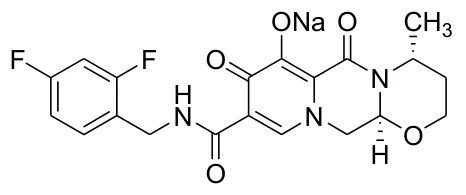
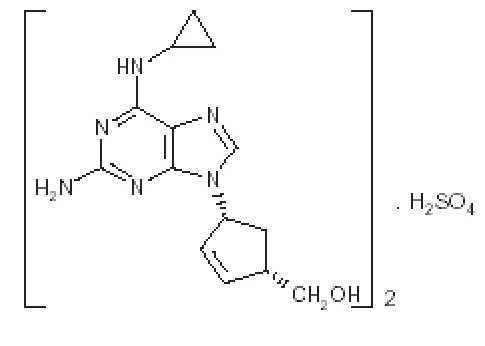
Physicochemical properties:
Abacavir sulfate is a white to off-white powder with a melting point around 219 º C followed by decomposition
The aqueous solubility and pH of abacavir sulfate was determined at 25ºC as follows
| Solvent | Solubility (mg/mL) | pH |
|---|---|---|
| Distilled water | 77 | 3.1 |
| 0.1 M HCL | 110 | 1.6 |
| 0.1 M NaOH | 22 | 12.2 |
PKa: The pKa for abacavir have been determined by UV spectroscopy at 25°C as follows: pK1 = 0.4, pK2 = 5.06.
Lamivudine
Drug Substance
Proper name: lamivudine
Chemical name: 2(1H)-Pyrimidinone, 4-amino-1-[2- (hydroxymethyl)-1,3-oxathiolan-5-yl]-(2R-cis)-
Molecular formula and molecular mass: C8H11N3O3S
229.3 g/mol
Structural formula:
* * * chiral centre N N O N H 2 S O H O
Physicochemical properties:
Lamivudine is a white to off-white crystalline solid with a melting point of 176°C.
Solubility:
| Solvent | Temperature (°C) | Solubility (mg/mL) |
|---|---|---|
| Water | 15 | 61.3 |
| Water | 25 | 98.1 |
| Methanol | 25 | 33.4 |
| Ethanol | 25 | 11.4 |
| Acetone | 25 | 0.94 |
pKa and pH: The pH value of a 1% w/v solution in water is approximately 6.9. The pKa determined by UV is 4.30.
14 Clinical Trials
14.1 Clinical Trials by Indication
Treatment of Human Immunodeficiency Virus (HIV-1) Infection in Adults
Trial Design and Study Demographics
The following clinical studies have been conducted with the individual products, TIVICAY and KIVEXA.
Table 10 Summary of patient demographics for clinical trials for the treatment of HIV infection in Adults
| Study # | Study design | Dosage, route of administration and duration | Study subjects (n) | Median age | Sex (% female) | |||
|---|---|---|---|---|---|---|---|---|
| Study # | Study design | Dosage, route of administration and duration | Study subjects (n) | Median age | Sex (% female) | |||
| SINGLE (ING114467: 48 and 96 weeks) | Randomized, controlled study in antiretroviral treatment-naïve subjects. | 1 dose of either TIVICAY 50 mg once daily with KIVEXA (abacavir and lamivudine) or ATRIPLA (efavirenz/emtricitabine/tenofovir disoproxil fumarate). | In SINGLE, 833 patients were randomized. At baseline, 32% of subjects were non-white, 7% had hepatitis C co-infection (hepatitis B virus co-infection was excluded), 4% were CDC Class C (AIDS), 32% had HIV-1 RNA >100,000 copies/mL, and 53% had CD4+ cell count <350 cells/mm3; these characteristics were similar between treatment groups. | 35 | 16% | |||
| SPRING-2 (ING113086: 48 and 96 weeks) | Randomized, controlled study in antiretroviral treatment-naïve subjects. | Received at least one dose of either dolutegravir 50 mg once daily or raltegravir 400 mg twice daily, both administered with fixed-dose dual NRTI therapy (either KIVEXA or TRUVADA). | In SPRING-2, 822 adults were randomized. Of these patients, 169/411 in the group receiving dolutegravir and 164/411 in the group receiving raltegravir were receiving KIVEXA as the background regimen. At baseline, 15% of subjects were non-white, 11% had hepatitis B and/or C co-infection, and 2% were | 36 | 14% | |||
| CDC Class C, 28% had HIV-1 RNA >100,000 copies/mL and 47% had CD4+ cell count <350 cells/mm3. These characteristics were similar between treatment groups. | ||||||||
| FLAMINGO (ING114915: 48 weeks). | Open-label, Randomized, active-controlled study in antiretroviral treatment-naïve subjects. | Received at least one dose of either dolutegravir 50 mg once daily or darunavir/ritonavir (DRV/r) 800 mg/100 mg once daily, both administered with fixed-dose dual NRTI therapy (either KIVEXA or TRUVADA). | In FLAMINGO, 484 HIV-1 infected antiretroviral naïve adults were randomized. Of these subjects, 33% in each group received KIVEXA as background regimen. At baseline, 28% of subjects were non-white, 10% had hepatitis B and/or C co-infection, and 3% were CDC Class C, 25% had HIV-1 RNA >100,000 copies/mL, and 35% had CD4+ cell count <350 cells/mm3. These characteristics were similar between treatment groups. | 34 | 15% | |||
Study Results: Treatment of Human Immunodeficiency Virus (HIV-1) Infection in Adults
SINGLE (ING114467: 48 and 96 weeks)
Virologic outcomes (including outcomes by key baseline covariates) are described below.
Table 11 Virologic Outcomes of Randomized Treatment in SINGLE at 48 Weeks and 96 Weeks (Snapshot Algorithm)
* Adjusted for baseline stratification factors.
† Includes patients who discontinued prior to Week 48/96 for lack or loss of efficacy and patients who are ≥50 copies in the Week 48/96 window.
‡ Includes patients who discontinued due to an adverse event or death at any time point from Day 1 through the Week 48/96 analysis window if this resulted in no virologic data on treatment during the analysis window.
§ Includes reasons such as withdrew consent, loss to follow-up, moved, protocol deviation.
Notes: ABC/3TC = abacavir 600 mg, lamivudine 300 mg in the form of Kivexa fixed dose combination (FDC)
| 48 Weeks | 96 Weeks | ||||||||||||||||||||
|---|---|---|---|---|---|---|---|---|---|---|---|---|---|---|---|---|---|---|---|---|---|
TIVICAY + KIVEXA QD N=414 n (%) | ATRIPLA QD N=419 n (%) | TIVICAY + KIVEXA QD N=414 n (%) | ATRIPLA QD N=419 n (%) | ||||||||||||||||||
| HIV-1 RNA <50 copies/mL | 364 (88) | 338 (81) | 332 (80) | 303 (72) | |||||||||||||||||
| Treatment Difference* | 7.4% (95% CI: 2.5%, 12.3%), p = 0.003 | 8.0% (95% CI: 2.3%, 13.8%), p = 0.006 | |||||||||||||||||||
| Virologic non-response† | 21 (5) | 26 (6) | 31 (7) | 33 (8) | |||||||||||||||||
| No virologic data | 29 (7) | 55 (13) | 51 (12) | 83 (20) | |||||||||||||||||
Reasons: Discontinued study/study drug due to adverse event or death‡ | 9 (2) | 40 (10) | 13 (3) | 48 (11) | |||||||||||||||||
| Discontinued study/study drug for other reasons§ | 20 (5) | 14 (3) | 36 (9) | 35 (8) | |||||||||||||||||
| Missing data during window but on study | 0 | 1 (<1) | 2 (<1) | 0 | |||||||||||||||||
| HIV-1 RNA <50 copies/mL by baseline covariates | |||||||||||||||||||||
| Baseline Plasma Viral Load (copies/mL) | n / N (%) | n / N (%) | n / N (%) | n / N (%) | |||||||||||||||||
| ≤100,000 | 253 / 280 (90) | 238 / 288 (83) | 237 / 280 (85) | 209 / 288 (73) | |||||||||||||||||
| >100,000 | 111 / 134 (83) | 100 / 131 (76) | 95 / 134 (71) | 94 / 131 (72) | |||||||||||||||||
| Baseline CD4+ (cells/ mm3) | |||||||||||||||||||||
| <200 | 45 / 57 (79) | 48 / 62 (77) | 39 / 57 (68) | 45 / 62 (73) | |||||||||||||||||
| 200 to <350 | 143 / 163 (88) | 126 / 159 (79) | 135 / 163 (83) | 113 / 159 (71) | |||||||||||||||||
| ≥350 | 176 / 194 (91) | 164 / 198 (83) | 158 / 194 (81) | 145 / 198 (73) | |||||||||||||||||
EFV/TDF/FTC = efavirenz 600 mg, tenofovir 300 mg, emtricitabine 200 mg in the form of Atripla FDC.
N = Number of patients in each treatment group
Snapshot algorithm: Subjects whose last HIV-1 RNA result was <50 c/mL in the analysis window (i.e. 48 ± 6 weeks, 96 ± 6 weeks) were counted as responders; subjects who were not suppressed or did not have data at the analysis time point were counted as non-responders.
In the SINGLE primary 48 week analysis, there was a statistically significant difference in the proportion of subjects with HIV-1 RNA <50 copies/mL between the group receiving TIVICAY + KIVEXA (88%) compared to the ATRIPLA group (81%) (p=0.003). The virologic suppression treatment differences were comparable across baseline characteristics (gender, race and age, HIV-1 RNA and CD4+ cell count).
At 48 and 96 weeks, the adjusted mean change in CD4+ T cell count from baseline were 267 cells/mm3 and 325 cells/mm3 in the group receiving TIVICAY + KIVEXA and 208 cells/mm3 and 281 cells/mm3 for the ATRIPLA arm, respectively. The respective adjusted differences and 95% CIs were 58.9 and 44 (33.4, 84.4 and 14.34, 73.55), and were statistically significant p<0.001 and p=0.004 (repeated measure model adjusting for the baseline stratification factors: baseline HIV-1 RNA and baseline CD4+ T cell count, among other factors).
The median time to viral suppression was 28 days in the group receiving TIVICAY + KIVEXA and 84 days in the ATRIPLA arm in SINGLE (p<0.0001). At 28 days (week 4), 63% of patients in the TIVICAY arm reached virologic suppression, compared to 14% in the ATRIPLA arm.
Virologic suppression was maintained through 144 weeks (open-label phase week 96 to 144 week). The proportion of subjects achieving HIV-1 RNA<50 copies/mL was 71% for the dolutegravir + KIVEXA group and 63% for the ATRIPLA group (treatment difference 8.3% (95% CI: 2.0%, 14.6%, p=0.010)). The adjusted mean change in CD4+ T cell count from baseline was 378 cells/mm3 in the group receiving TIVICAY + KIVEXA, which continued to be statistically significantly different from the ATRIPLA arm (332 cells/mm3) (treatment difference 47 cells/mm3 (95% CI: 15.61, 78.20) p=0.003).
SPRING-2 (ING114915: 48 weeks)
Overall virologic suppression (HIV-1 RNA <50 copies/mL) observed with either background regimen in the dolutegravir group (88%) was non-inferior to the raltegravir group (85%) at 48 weeks (non-inferiority margin -10%). The adjusted difference in proportion and 95% CI were 2.5 (-2.2, 7.1). At 96 weeks, virologic suppression in the dolutegravir group (81%) remained non-inferior to the raltegravir group (76%). The adjusted difference in proportion and 95% CI were 4.5 (-1.1, 10.0). Response rates at 48 weeks were 86% and 87% for dolutegravir + KIVEXA and raltegravir + KIVEXA, respectively. Response rates at 96 weeks were 74% and 76 % for dolutegravir + KIVEXA and for raltegravir + KIVEXA, respectively.
The overall median change in CD4+ cell count from baseline to Week 96 in the dolutegravir group was +276.0 cells/mm3, compared to +264.0 cells/mm3 in the raltegravir arm.
Through 144 weeks in SINGLE and 96 weeks in SPRING-2, no treatment emergent resistance to dolutegravir, abacavir, or lamivudine in background therapy were isolated on the dolutegravir-containing arms.
FLAMINGO (ING113086: 48 and 96 weeks)
At 48 weeks, there was a statistically significant difference in the proportion of patients achieving virologic suppression (HIV-1 RNA <50 copies/mL) between the group receiving TIVICAY (90%) compared to the darunavir/ritonavir group (83%). The adjusted difference in proportion and 95% CI were 7.1 (0.9, 13.2) (p=0.025). At 96 weeks virologic suppression in the TIVICAY group (80%) remained statistically significant to the darunavir/ritonavir group (68%). The adjusted difference in proportion and 95% CI were 12.4 (4.7, 20.2) (p=0.002). The median time to viral suppression was 28 days in the dolutegravir treatment group and 85 days in the darunavir/ritonavir arm (p<0.001). Response rates at 48 weeks were 90% for TIVICAY + KIVEXA and 85% for darunavir/ritonavir + KIVEXA and at 96 weeks were 82% for TIVICAY + KIVEXA and 75% for darunavir/ritonavir + KIVEXA. The adjusted difference in proportion and 95% CI were 7.3 (-5.4, 20.0). Through 96 weeks, no subjects in the study had treatment-emergent primary resistance mutations.
Treatment of Human Immunodeficiency Virus (HIV-1) Infection in adolescents aged 12 years and older and weighing at least 40 kg.
The efficacy of the individual components of TRIUMEQ for the treatment of HIV-1 infection was evaluated in pediatric patients aged 12 years and older weighing at least 40 kg in the below pediatric studies of TIVICAY and KIVEXA and is also supported by well-controlled studies of TIVICAY and KIVEXA in adults with HIV-1 infection.
Trial Design and Study Demographics
ARROW
Abacavir and lamivudine were evaluated in a randomized, multicenter trial (ARROW) in HIV-1–infected, treatment-naïve subjects. Subjects randomized to once-daily dosing (n = 336) and who weighed at least 25 kg received abacavir 600 mg and lamivudine 300 mg, as either the single entities or as KIVEXA.
IMPAACT P1093
Dolutegravir was evaluated in 23 treatment-experienced, INSTI-naïve, HIV-1–infected subjects aged 12 to less than 18 years in a 48-week open-label, multicenter, dose-finding clinical trial, IMPAACT P1093.
Study Results: Treatment of Human Immunodeficiency Virus (HIV-1) Infection in adolescents aged 12 years and older and weighing at least 40 kg.
ARROW
At Week 96, 67% of subjects receiving abacavir and lamivudine once-daily had HIV-1 RNA less than 80 copies per mL (See KIVEXA Product Monograph).
IMPAACT P1093
At 48 weeks, 61% of subjects treated with TIVICAY once daily plus optimized background therapy achieved a viral load less than 50 copies per mL (See TIVICAY Product Monograph).
14.2 Comparative Bioavailability Studies
A single-dose, 2-part, crossover study was conducted to evaluate the bioequivalence of an oral 1 x TRIUMEQ (50 mg dolutegravir/600 mg abacavir/300 mg lamivudine) fixed dose combination tablet versus the concurrent oral administration of 1 x Dolutegravir 50 mg tablet plus 1 x EPZICOM (600 mg abacavir/300 mg lamivudine) tablet under fasting conditions (study Part A; n=62) and to evaluate the effect of food on the bioavailability of the fixed dose combination tablet (study Part B: n= 12). The study was conducted in healthy, adult male and female subjects.
EPZICOM (600 mg abacavir/300 mg lamivudine) tablets and the Dolutegravir 50 mg tablets administered as the Reference products in the study are comparable to the commercial Canadian marketed KIVEXA (600 mg abacavir/300 mg lamivudine) tablets and TIVICAY (dolutegravir 50 mg) tablets, respectively.
The TRIUMEQ (50 mg dolutegravir/600 mg abacavir/300 mg lamivudine) fixed dose combination tablet was bioequivalent to Dolutegravir 50 mg tablets plus EPZICOM (abacavir/lamivudine) tablets administered concurrently as separate tablets.
In the separate cohort (n=12), there was no clinically significant effect of a high-fat, high calorie meal on the rate and extent of absorption of dolutegravir, abacavir or lamivudine. These results indicate that TRIUMEQ may be taken with or without food.
Dolutegravir (1 x 50 mg) FASTED CONDITIONS From measured data Geometric Mean Arithmetic Mean (CV %) | ||||
| Parameter | Test1 | Reference2 | % Ratio of Geometric Means | 90% Confidence Interval |
AUCT (μg.h/mL) | 40.90 42.75 (31) | 43.37 45.41 (30) | 94.30 | (88.80, 100.10) |
AUCI (μg.h/mL) | 44.80 47.12 (33) | 47.40 49.82 (31) | 94.50 | (88.90, 100.30) |
Cmax (μg/mL) | 2.44 2.53 (28) | 2.54 2.64 (28) | 96.10 | (90.60, 101.90) |
Tmax§ (h) | 3.32 (40) | 3.15 (53) | ||
T½ § (h) | 13.00 (21) | 13.05 (18) | ||
- 1. TRIUMEQ (50 mg dolutegravir / 600 mg abacavir / 300 mg lamivudine) fixed dose combination tablets
- 2. Dolutegravir 50 mg tablet plus EPZICOM (600 mg abacavir / 300 mg lamivudine) tablet administered concurrently
§ expressed as the arithmetic mean (CV%) only
Abacavir (1 x 600 mg) FASTED CONDITIONS From measured data Geometric Mean Arithmetic Mean (CV %) | ||||
| Parameter | Test1 | Reference2 | % Ratio of Geometric Means | 90% Confidence Interval |
AUCT (μg.h/mL) | 13.89 14.32 (25) | 14.48 14.87 (23) | 96.00 | (93.90, 98.00) |
AUCI (μg.h/mL) | 13.91 14.35 (25) | 14.50 14.89 (23) | 96.00 | (93.90, 98.00) |
Cmax (μg/mL) | 4.02 4.13 (23) | 4.37 4.52 (25) | 92.00 | (86.70, 97.70) |
Tmax§ (h) | 1.73 (49) | 1.57 (51) | ||
T½§ (h) | 2.69 (31) | 2.63 (28) | ||
- 1. TRIUMEQ (50 mg dolutegravir / 600 mg abacavir / 300 mg lamivudine) fixed dose combination tablets
- 2. Dolutegravir 50 mg tablet plus EPZICOM (600 mg abacavir / 300 mg lamivudine) tablet administered concurrently
§ expressed as the arithmetic mean (CV%) only
Lamivudine (1 x 300 mg) FASTED CONDITIONS From measured data Geometric Mean Arithmetic Mean (CV %) | ||||
| Parameter | Test1 | Reference2 | % Ratio of Geometric Means | 90% Confidence Interval |
AUCT (μg.h/mL) | 12.31 12.70 (26) | 12.81 13.10 (21) | 96.00 | (92.80, 99.40) |
AUCI (μg.h/mL) | 12.76 13.13 (25) | 13.12 13.41 (21) | 97.20 | (94.00, 100.50) |
Cmax (μg/mL) | 2.11 2.20 (29) | 2.28 2.35 (25) | 92.60 | (88.50, 96.80) |
Tmax§ (h) | 2.74 (32) | 2.31 (33) | ||
T½§ (h) | 16.28 (47) | 13.74 (39) | ||
- 1. TRIUMEQ (50 mg dolutegravir / 600 mg abacavir / 300 mg lamivudine) fixed dose combination tablets
- 2. Dolutegravir 50 mg tablet plus EPZICOM (600 mg abavacir / 300 mg lamivudine) tablet administered concurrently
§ expressed as the arithmetic mean (CV%) only
15 Microbiology
Antiviral Activity in Cell Culture
Dolutegravir
Dolutegravir exhibited antiviral activity against laboratory strains of wild-type HIV-1 with mean IC50 values of 0.51 nM to 2.1 nM in peripheral blood mononuclear cells (PBMCs) and MT-4 cells.
When dolutegravir was tested in PBMC assays against a panel consisting of 24 HIV-1 clinical isolates [group M (clade A, B, C, D, E, F and G) and group O] and 3 HIV-2 clinical isolates, the geometric mean IC50 was 0.20 nM (0.02 to 2.14 nM) for HIV-1, while the geometric mean IC50 was 0.18 nM (0.09 to 0.61nM) for HIV-2 isolates.
Abacavir
The in vitro anti-HIV-1 activity of abacavir was evaluated against a T-cell tropic laboratory strain HIV-1 IIIB in lymphoblastic cell lines, a monocyte/macrophage tropic laboratory strain HIV-1 BaL in primary monocytes/macrophages and clinical isolates in peripheral blood mononuclear cells. The concentration of drug necessary to inhibit viral replication by 50 percent (IC50) ranged from 3.7 to 5.8 μM against HIV-1 IIIB, and was 0.26 ± 0.18 μM (1 μM = 0.28 μg/mL) against eight clinical isolates. The IC50 of abacavir against HIV-1 BaL varied from 0.07 to 1.0 μM. Ribavirin (50µM) had no effect on the anti-HIV-1 activity of abacavir in cell culture.
Lamivudine
The antiviral activity of lamivudine against HIV-1 was assessed in a number of cell lines including monocytes and PBMCs using standard susceptibility assays. IC50 values were in the range of 0.003 µM to 2 µM (1 μM = 0.23 mcg/mL). The IC50 values of lamivudine against different HIV-1 clades (A to G) ranged from 0.001 to 0.120 µM, and against HIV-2 isolates from 0.002 to 0.041 µM in PBMCs. Ribavirin (50µM) decreased the anti-HIV-1 activity of lamivudine by 3.5 fold in MT-4 cells.
Antiviral Activity in combination with other antiviral agents
Dolutegravir
The following drugs were not antagonistic with dolutegravir in in-vitro assessments conducted in checkerboard format: stavudine, abacavir, efavirenz, nevirapine, lopinavir, amprenavir, enfuvirtide, maraviroc, adefovir and raltegravir. In addition, the anti-HCV drug ribavirin had no apparent effect on dolutegravir activity.
Abacavir and Lamivudine
No drugs with inherent anti-HIV activity were antagonistic with abacavir/lamivudine; in vitro assessments conducted in checkerboard format in combination with the NRTIs emtricitabine, stavudine, tenofovir, zalcitabine, zidovudine; the non-nucleoside reverse transcriptase inhibitors (NNRTIs) delavirdine, efavirenz, nevirapine; the protease inhibitors (PIs) amprenavir, indinavir, lopinavir, nelfinavir, ritonavir, saquinavir; or the fusion inhibitor, enfuvirtide. Ribavirin decreased the anti-HIV-1 potency of abacavir/lamivudine reproducibly by 2- to 6-fold in cell culture.
Effect of Human Serum and Serum Proteins
In vitro studies suggested a 75-fold shift in IC50 of dolutegravir in the presence of 100% human serum (by method of extrapolation), and the protein adjusted IC90 (PA-IC90) in PBMCs for dolutegravir was estimated to be 0.064 μg/mL. Dolutegravir trough concentration for a single 50 mg dose in integrase inhibitor naïve patients was 1.20 μg/mL, 19 times higher than the estimated PA-IC90. Plasma protein binding studies in vitro indicate that abacavir binds only low to moderately (~49%) to human plasma proteins at therapeutic concentrations. Lamivudine exhibits linear pharmacokinetics over the therapeutic dose range and displays low plasma protein binding (less than 36%).
Resistance in vitro (dolutegravir)
Isolation from wild type HIV-1
Viruses highly resistant to dolutegravir were not observed during the 112 day passage of strain IIIB, with a 4.1-fold maximum fold change (FC) observed for the passaged resistant virus populations with substitutions at the conserved IN positions S153Y and S153F.
Passage of the wild type HIV-1 strain NL432 in the presence of dolutegravir selected for E92Q (passage population virus FC=3.1) and G193E (passage population virus FC=3.2) substitutions on Day 56. Additional passage of wildtype subtype B, C, and A/G viruses in the presence of dolutegravir selected for R263K, G118R, and S153T.
Resistance in vitro (abacavir and lamivudine)
HIV-1 isolates with reduced susceptibility to the combination of abacavir and lamivudine have been selected in cell culture with amino acid substitutions M184V/I, K65R, L74V, and Y115F in HIV-1 RT. Resistance to lamivudine was due to a specific amino acid substitution at codon 184 changing the methionine to either isoleucine or valine (M184V/I). The substitution at M184I/V causes high-level resistance to lamivudine and approximately three-fold decreased susceptibility to abacavir, below the clinical cutoff for abacavir (4.5-fold). An additional substitution from abacavir resistance positions K65R, L74M, or Y115F conferred a 7- fold to 8-fold change (above the clinical cutoff) in abacavir susceptibility, and combinations of three substitutions were required to confer more than an 8-fold change in susceptibility.
Resistance in vivo (dolutegravir)
Integrase inhibitor naïve patients
No INI-resistant substitutions or treatment emergent resistance to the NRTI backbone therapy were isolated with dolutegravir 50 mg once daily in treatment–naive studies (SPRING-2, SINGLE and FLAMINGO studies).
Resistance in vivo (abacavir and lamivudine)
HIV-1 isolates with reduced susceptibility to the combination of abacavir and lamivudine have been obtained from subjects failing abacavir/lamivudine-containing regimens. Resistance analyses of virologic failure isolates for subjects receiving abacavir/lamivudine therapy showed that the RT substitutions that emerged were those observed in vitro (K65R, L74V, Y115F, and M184V/I), with the abacavir and lamivudine-associated resistance substitution M184V/I being most commonly observed.
Resistance testing was performed on samples from subjects failing treatment with dolutegravir + KIVEXA in the treatment-naïve trials: SINGLE (n = 414 treated through 96 weeks), SPRING-2 (n = 169 treated through 96 weeks), and FLAMINGO (n = 79 treated through 48 weeks). Of these, 34 subjects met resistance testing criteria: 25 from SINGLE, 9 from SPRING-2 and none from FLAMINGO. Of these, 23 had both baseline and on study resistance testing data; there were no treatment-emergent RT substitutions isolated in the subjects receiving dolutegravir + KIVEXA
Anti-HIV Activity Against Resistant Strains
Reverse Transcriptase Inhibitor- and Protease Inhibitor-Resistant Strains: Dolutegravir demonstrated equivalent antiviral activity against 2 non-nucleoside (NN)-RTI-resistant, 3 nucleoside (N)-RTI-resistant, and 2 PI-resistant HIV-1 mutant clones (1 triple and 1 sextuple) compared to the wildtype strain.
Integrase Inhibitor-Resistant HIV-1 Strains
Sixty integrase inhibitor-resistant mutant HIV-1 viruses (28 with single substitutions and 32 with 2 or more substitutions) were produced from wild-type virus NL-432 using site-directed mutagenesis. Dolutegravir showed anti-HIV activity (susceptibility) with FC < 5 against 27 of 28 integrase inhibitor-resistant mutant viruses with single substitutions including T66A/I/K, E92Q/V, Y143C/H/R, Q148H/K/R, and N155H, while for raltegravir and elvitegravir there were 17/28 and 11/21 tested mutant viruses with FC < 5, respectively. In addition, of the 32 integrase inhibitor-resistant mutant viruses with 2 or more substitutions, 23 of 32 showed FC < 5 to dolutegravir compared with FC < 5 for 4 of 32 for raltegravir and FC < 5 for 2 of 25 tested for elvitegravir.
Integrase Inhibitor-Resistant HIV-2 Strains
Site directed mutant HIV-2 viruses were constructed based on patients infected with HIV-2 and treated with raltegravir who showed virologic failure (n=6). Overall the HIV-2 FCs observed were similar to HIV-1 FCs observed for similar pathway mutations. Dolutegravir FC was <5 against 4 HIV-2 viruses (S163D, G140A/Q148R, A153G/N155H/S163G and E92Q/T97A/N155H/S163D); for E92Q/N155H, dolutegravir FC was 8.5, and for G140S/Q148R, dolutegravir FC was 17. Dolutegravir, raltegravir and elvitegravir all had had the same activity against site directed mutant HIV-2 with S163D as wildtype, and for the remaining mutant HIV-2 virus raltegravir FC ranges were 6.4 to 420 and elvitegravir FC ranges were 22 to 640.
Abacavir and Lamivudine
Cross resistance between abacavir or lamivudine and antiretrovirals from other classes (e.g. protease inhibitors (PI) or non-nucleoside reverse transcriptase inhibitors (NNRTIs)), is unlikely. Reduced susceptibility to abacavir has been demonstrated in clinical isolates of patients with uncontrolled viral replication, who have been pre-treated with and are resistant to other nucleoside inhibitors.
Clinical isolates with three or more mutations associated with NRTIs are unlikely to be susceptible to abacavir. Cross resistance conferred by the M184V RT is limited within the nucleoside inhibitor class of antiretroviral agents. Zidovudine, stavudine, abacavir and tenofovir maintain their antiretroviral activities against lamivudine-resistant HIV-1 harbouring only the M184V mutation.
In vitro isolates resistant to abacavir might also show reduced sensitivity to lamivudine, zalcitabine, tenofovir, emtricitabine and/or didanosine, but remain sensitive to zidovudine and stavudine.
16 Non-Clinical Toxicology
With the exception of a negative in vivo rat micronucleus test for the combination of abacavir and lamivudine, there are no data available on the effects of the combination of dolutegravir, abacavir and lamivudine in animals.
Carcinogenesis/mutagenesis
Dolutegravir was not mutagenic or clastogenic using in vitro tests in bacteria and cultured mammalian cells, and an in vivo rodent micronucleus assay. Dolutegravir was not carcinogenic in long term studies in the mouse and rat at exposures ~26 and ~23 times, respectively, above the human clinical exposure based on AUC at the recommended dose of 50 mg dolutegravir.
Neither abacavir nor lamivudine were mutagenic in bacterial tests, but like many nucleoside analogues they show activity in the in vitro mammalian tests such as the mouse lymphoma assay. This is consistent with the known activity of other nucleoside analogues. The results of an in vivo rat micronucleus test with abacavir and lamivudine in combination were negative.
Carcinogenicity studies with orally administered abacavir in mice and rats showed an increase in the incidence of malignant and non-malignant tumours. Malignant tumours occurred in the preputial gland of males and the clitoral gland of females of both species, and in the liver, urinary bladder, lymph nodes and the subcutis of female rats.
The majority of these tumours occurred at the highest abacavir dose of 330 mg/kg/day in mice and 600 mg/kg/day in rats. These dose levels were equivalent to 21 to 28 times above the human clinical exposure based on AUC at the recommended dose of 600 mg abacavir. The exception was the preputial gland tumour which occurred at a dose of 110 mg/kg. This is equivalent to six times the expected human systemic exposure. There is no structural counterpart for this gland in humans. While the carcinogenic potential in humans is unknown, these data suggest that a carcinogenic risk to humans is outweighed by the potential clinical benefit.
In in-vivo studies, long-term carcinogenicity studies with lamivudine in mice and rats showed no evidence of carcinogenic potential at exposures up to 12 times (mice) and 72 times (rats) above the human clinical exposure based on AUC at the recommended dose of 300 mg lamivudine.
Abacavir induced chromosomal aberrations both in the presence and absence of metabolic activation in an in vitro cytogenetic study in human lymphocytes. Abacavir was mutagenic in the absence of metabolic activation, although it was not mutagenic in the presence of metabolic activation in an L5178Y mouse lymphoma assay. At systemic exposures approximately nine times higher than those in humans at the therapeutic dose, abacavir was clastogenic in males and not clastogenic in females in an in vivo mouse bone marrow micronucleus assay. Abacavir was not mutagenic in bacterial mutagenicity assays in the presence and absence of metabolic activation.
Lamivudine was not active in a microbial mutagenicity screen or an in vitro cell transformation assay, but showed weak in vitro mutagenic activity in a cytogenetic assay using cultured human lymphocytes and in the mouse lymphoma assay. However, lamivudine showed no evidence of in vivo genotoxic activity in the rat at oral doses of up to 2,000 mg/kg, approximately 65 times the recommended human dose.
Reproductive Toxicology
Fertility:
Fertility studies in the rat have shown that dolutegravir, abacavir and lamivudine had no effect on male or female fertility.
Dolutegravir did not affect male or female fertility in rats at doses up to 1,000 mg/kg/day, the highest dose tested (44 times above the human clinical exposure based on AUC at the recommended dose of 50 mg dolutegravir, 600 mg abacavir, and 300 mg lamivudine).
Pregnancy:
In reproductive toxicity studies in animals, dolutegravir, abacavir and lamivudine were shown to cross the placenta.
Dolutegravir
Oral administration of dolutegravir to pregnant rats at doses up to 1,000 mg/kg daily from days 6 to 17 of gestation did not elicit maternal toxicity, developmental toxicity or teratogenicity (50 times above the human clinical exposure based on AUC at the recommended dose of 50 mg dolutegravir, 600 mg abacavir, and 300 mg lamivudine).
Oral administration of dolutegravir to pregnant rabbits at doses up to 1,000 mg/kg daily from days 6 to 18 of gestation did not elicit developmental toxicity or teratogenicity (0.74 times the human clinical exposure based on AUC at the recommended dose of 50 mg dolutegravir, 600 mg abacavir, and 300 mg lamivudine). In rabbits, maternal toxicity (decreased food consumption, scant/no feces/urine, suppressed body weight gain) was observed at 1,000 mg/kg (0.74 times the human clinical exposure based on AUC at the recommended dose of 50 mg dolutegravir, 600 mg abacavir, and 300 mg lamivudine).
Abacavir
Reproduction studies were performed in rats and rabbits at orally administered doses up to 1,000 mg/kg/day and 700 mg/kg/day, respectively. These doses in rats and rabbits achieved approximately 28 and 7 times, respectively, above the human clinical exposure based on AUC at the recommended dose of 50 mg dolutegravir, 600 mg abacavir, and 300 mg lamivudine. In the rat, development toxicity (depressed fetal body weight and reduced crown-rump length) and increased incidences of fetal anasarca and skeletal malformations were observed at the highest dose assessed. Studies in pregnant rats showed that abacavir is transferred to the fetus through the placenta. In a fertility study, evidence of toxicity to the developing embryo and fetuses (increased resorptions, decreased fetal body weights) occurred only at 500 mg/kg/day, a dose that was toxic to the parental generation. The offspring of female rats treated with abacavir at 500 mg/kg (beginning at embryo implantation and ending at weaning) showed increased incidence of stillbirth and lower body weights throughout life.
Lamivudine
Lamivudine was not teratogenic in the rat or rabbit, at doses up to 2,000 mg/kg b.i.d. and 500 mg/kg b.i.d., respectively. In the rabbit a slight increase in the incidence of pre-implantation loss at doses 20 mg/kg b.i.d. and above indicates a possible early embryolethal effect. There was no such effect in the rat. These marginal effects occurred at relatively low doses, which produced plasma levels comparable to those achieved in patients.
In a peri-/post-natal/juvenile toxicity study in rats, some histological inflammatory changes at the ano-rectal junction and slight diffuse epithelial hyperplasia of the cecum were observed in dams and pups at the high-dose level. An increased incidence of urination upon handling was also seen in some offspring receiving 450 or 2,000 mg/kg. In addition, a reduction in testes weight was observed in juvenile males at 2,000 mg/kg which was associated with slight to moderate dilatation of the seminiferous tubules.
Animal toxicology and/or pharmacology
Dolutegravir
The effect of prolonged daily treatment with high doses of dolutegravir has been evaluated in repeat oral dose toxicity studies in rats (up to 26 weeks) and in monkeys (up to 38 weeks). The primary effect of dolutegravir was gastrointestinal intolerance or irritation in rats and monkeys at doses that produce systemic exposures approximately 38 and 1.5 times above the human clinical exposure based on AUC at the recommended dose of 50 mg dolutegravir, 600 mg abacavir, and 300 mg lamivudine. Because gastrointestinal (GI) intolerance is considered to be due to local drug administration, mg/kg or mg/m2 metrics are appropriate determinates of safety cover for this toxicity. GI intolerance in monkeys occurred at 30 times the human mg/kg equivalent dose (based on 50 kg human), and 11 times the human mg/m2 equivalent dose for a total daily clinical dose of 50 mg. Dolutegravir was slightly to mildly irritating to skin and eyes in the rabbit.
Mild myocardial degeneration in the heart of mice and rats was observed following administration of abacavir for two years. The systemic exposures were equivalent to 7 to 21 times above the human clinical exposure based on AUC at the recommended dose of 50 mg dolutegravir, 600 mg abacavir, and 300 mg lamivudine. The clinical relevance of this finding has not been determined.
For additional information on Toxicology, please consult the individual product monographs of TIVICAY, KIVEXA, 3TC, and ZIAGEN.