


Product Monograph - Doxycycline for Injection USP
RECENT MAJOR LABEL CHANGES
Not applicable.
TABLE OF CONTENTS
Certain sections or subsections that are not applicable at the time of the preparation of the most recent authorized product monograph are not listed.
TABLE OF CONTENTS .............................................................................................................. 2
Part 1: Health Professional Information ................................................................................. 4
1 Indications .................................................................................................................. 4
1.1 Pediatrics ................................................................................................................. 5
1.2 Geriatrics ................................................................................................................. 5
2 Contraindications ....................................................................................................... 5
4 Dosage and Administration ......................................................................................... 5
4.1 Dosing Considerations ............................................................................................. 5
4.2 Recommended Dose and Dosage Adjustment ....................................................... 5
4.3 Reconstitution ......................................................................................................... 6
4.4 Administration ......................................................................................................... 6
4.5 Missed Dose ............................................................................................................ 7
5 Overdosage ................................................................................................................ 7
6 Dosage Forms, Strengths, Composition, and Packaging ............................................... 7
7 Warnings and Precautions .......................................................................................... 7
7.1 Special Populations ............................................................................................... 10
7.1.1 Pregnant Women .............................................................................................. 10
7.1.2 Breast-feeding ................................................................................................... 10
7.1.3 Pediatrics ........................................................................................................... 10
8 Adverse Reactions .................................................................................................... 10
8.1 Adverse Reaction Overview .................................................................................. 10
8.2 Clinical Trial Adverse Reactions ............................................................................. 12
8.2.1 Clinical Trial Adverse Reactions – Pediatrics ..................................................... 13
8.4 Abnormal Laboratory Findings: Hematologic, Clinical Chemistry and Other Quantitative Data .............................................................................................................. 13
8.5 Post-Market Adverse Reactions ............................................................................ 13
9 Drug Interactions ...................................................................................................... 13
9.1 Serious Drug Interactions ...................................................................................... 13
9.2 Drug Interactions Overview .................................................................................. 13
9.4 Drug-Drug Interactions .......................................................................................... 13
9.5 Drug-Food Interactions ......................................................................................... 14
9.6 Drug-Herb Interactions ......................................................................................... 14
9.7 Drug-Laboratory Test Interactions ........................................................................ 14
10 Clinical Pharmacology ............................................................................................... 14
10.1 Mechanism of Action ............................................................................................ 14
10.2 Pharmacodynamics ............................................................................................... 14
10.3 Pharmacokinetics .................................................................................................. 15
11 Storage, Stability, and Disposal ................................................................................. 17
Part 2: Scientific Information ............................................................................................... 18
13 Pharmaceutical Information ..................................................................................... 18
14 Clinical Trials ............................................................................................................ 18
15 Microbiology ............................................................................................................ 18
16 Non-Clinical Toxicology ............................................................................................. 22
Patient Medication Information ........................................................................................... 27
Part 1: Health Professional Information
1 Indications
Doxycycline for Injection USP (doxycycline hyclate) is indicated for:
Pneumonia
Single and multilobe pneumonia and bronchopneumonia due to susceptible strains of Streptococcus pneumoniae and other Streptococcus spp., Staphylococcus spp., Haemophilus influenzae, and Klebsiella pneumoniae.
Other Respiratory Tract Infections
Pharyngitis, tonsillitis, sinusitis, otitis media, bronchitis caused by susceptible strains of β-hemolytic Streptococcus, Staphylococcus spp., Streptococcus pneumoniae, and Haemophilus influenzae.
Skin and Soft Tissue Infections
Caused by susceptible strains of Staphylococcus aureus.
Urinary Tract Infections
Caused by susceptible strains of Klebsiella species, Escherichia coli, Enterococcus faecalis (formerly Streptococcus faecalis), and Acinetobacter species (formerly Mima species and Herellea species).
Sexually Transmitted Infections
Infections due to Chlamydia trachomatis (including lymphogranuloma venereum), Neisseria gonorrhoeae, Bacteroides species, or Clostridium species. Doxycycline for Injection USP is also indicated for the treatment of granuloma inguinale (Klebsiella granulomatis).
Rickettsial Infections
Rocky Mountain spotted fever, typhus fever, the typhus group, Q fever, rickettsialpox, and tick fevers.
Anthrax
Anthrax due to Bacillus anthracis, including inhalational anthrax (post-exposure): to reduce the incidence or progression of disease following exposure to aerosolized Bacillus anthracis.
Other Bacterial Infections
Psittacosis and ornithosis (Chlamydia psittaci), brucellosis (Brucella species) (in combination with streptomycin), cholera (Vibrio cholerae [formerly Vibrio comma]), the plague (Yersinia pestis [formerly Pasteurella pestis]), relapsing fever (Borrelia recurrentis), tularemia (Francisella tularensis [formerly Pasteurella tularensis]), and Oroya fever and verruga peruana (Bartonella bacilliformis) infections.
Malaria
Doxycycline is indicated for the treatment of severe or complicated Plasmodium falciparum malaria (in combination with a second anti-malarial drug, i.e., quinine [quinine sulfate]).
To reduce the development of drug-resistant bacteria and maintain the effectiveness of Doxycycline for Injection USP (doxycycline hyclate) and other antibacterial drugs, Doxycycline for Injection USP should be used only to treat or prevent infections that are proven or strongly suspected to be caused by susceptible bacteria. When culture and susceptibility information are available, they should be considered in selecting or modifying antibacterial therapy. In the absence of such data, local epidemiology and susceptibility patterns may contribute to the empiric selection of therapy.
1.1 Pediatrics
Pediatrics (≥8 years of age): Based on the data submitted and reviewed by Health Canada, the safety and efficacy of Doxycycline for Injection USP in pediatric patients has been established. Therefore, Health Canada has authorized an indication for pediatric use (see 4 Dosage and Administration).
Pediatrics (<8 years of age): The use of Doxycycline for Injection USP in children under 8 years is not recommended because safe conditions for its use have not been established (see 4 Dosage and Administration and 7 Warnings and Precautions – General).
1.2 Geriatrics
Geriatrics (>65 years of age): Evidence from clinical studies suggests that use in the geriatric population is not associated with differences in safety or effectiveness.
2 Contraindications
- Doxycycline for Injection USP is contraindicated in individuals who have shown hypersensitivity to doxycycline hyclate and to any ingredient in the formulation, including any non-medicinal ingredient, or component of the container, or to any other tetracyclines. For a complete listing, see 6 Dosage Forms, Strengths, Composition, and Packaging.
- Doxycycline for Injection USP is contraindicated in patients with myasthenia gravis (see 7 Warnings and Precautions – Musculoskeletal).
- Doxycycline for Injection USP is contraindicated in patients taking isotretinoin (see 9 Drug Interactions).
4 Dosage and Administration
4.1 Dosing Considerations
Rapid administration is to be avoided (4 Dosage and Administration, 4.4 Administration). Parenteral therapy is indicated only when oral therapy is not indicated. Oral therapy should be instituted as soon as possible. If intravenous therapy is given over prolonged periods of time, thrombophlebitis may result.
4.2 Recommended Dose and Dosage Adjustment
No dosage adjustment is required in patients with renal impairment. Doxycycline pharmacokinetics have not been evaluated in patients with hepatic insufficiency.
Adults: The usual dosage of doxycycline for injection is 200 mg on the first day of treatment administered in one or two infusions. Subsequent daily dosage is 100 to 200 mg depending upon the severity of infection, with 200 mg administered in one or two infusions. The maximum daily dosage is 300 mg/day.
In the treatment of inhalational anthrax (post-exposure) the recommended dose is 100 mg of doxycycline, twice a day. Parenteral therapy is only indicated when oral therapy is not indicated and should not be continued over a prolonged period of time. Oral therapy should be instituted as soon as possible. Therapy must continue for a total of 60 days.
Pediatric Patients (≥8 years of age): For all pediatric patients weighing less than 45 kg with severe or life-threatening infections (e.g., anthrax, Rickettsial infections such as Rocky Mountain spotted fever), the recommended dosage is 2.2 mg/kg of body weight administered every 12 hours. Children weighing 45 kg or more should receive the adult dose.
For pediatric patients with less severe disease and weighing less than 45 kg, the recommended dosage schedule is 4.4 mg/kg of body weight divided into two doses on the first day of treatment, followed by a maintenance dose of 2.2 mg/kg of body weight (given as a single daily dose or divided into twice daily doses). For pediatric patients weighing over 45 kg, the usual adult dose should be used.
In the treatment of inhalational anthrax (post-exposure) the recommended dose is 2.2 mg/kg of body weight, twice a day in children weighing less than 45 kg. Parenteral therapy is only indicated when oral therapy is not indicated and should not be continued over a prolonged period of time. Oral therapy should be instituted as soon as possible. Therapy must continue for a total of 60 days.
4.3 Reconstitution
To prepare a solution containing 10 mg/mL, the contents of the vial should be reconstituted with 10 mL (for the 100 mg/vial container) or 20 mL (for the 200 mg/vial container) of Sterile Water for Injection or any of the 10 intravenous infusion solutions listed below. Each 100 mg of Doxycycline for Injection USP (i.e., withdraw entire solution from the 100 mg vial) is further diluted with 100 mL to 1,000 mL of the intravenous solutions listed below. Each 200 mg of Doxycycline for Injection USP (i.e., withdraw entire solution from the 200 mg vial) is further diluted with 200 mL to 2,000 mL of the following intravenous solutions:
- 1. Sodium Chloride Injection, USP
- 2. 5% Dextrose Injection, USP
- 3. Ringer’s Injection USP
- 4. Invert Sugar, 10% in Water
- 5. Lactated Ringer’s Injection USP
- 6. Dextrose 5% in Lactated Ringer’s
- 7. Normosol-M® in D5-W
- 8. Normosol-R® in D5-W
- 9. Plasma-Lyte® 56 in 5% Dextrose
- 10. Plasma-Lyte® 148 in 5% Dextrose
This will result in desired concentrations of 0.1 to 1 mg/mL. Concentrations lower than 0.1 mg/mL or higher than 1 mg/mL are not recommended.
For additional information, see 11 Storage, Stability, and Disposal.
4.4 Administration
The duration of infusion may vary with the dose (100 to 200 mg/day) but is usually 1 to 4 hours. A recommended minimum infusion time for 100 mg of a 0.5 mg/mL solution is 1 hour. Therapy should be continued for at least 24 to 48 hours after symptoms and fever have subsided. The therapeutic antibacterial serum activity will usually persist for 24 hours following recommended dosage.
Intravenous solutions should not be injected intramuscularly or subcutaneously. Caution should be taken to avoid the inadvertent introduction of the intravenous solution into the adjacent soft tissue.
4.5 Missed Dose
When doxycycline is prescribed to treat a bacterial infection, patients should be told that although it is common to feel better early in the course of therapy, the medication should be taken exactly as directed. Skipping doses or not completing the full course of therapy may (1) decrease the effectiveness of the immediate treatment and (2) increase the likelihood that bacteria will develop resistance and will not be treatable by doxycycline or other antibacterial drugs in the future.
If a dose is missed, it should be given as soon as possible.
5 Overdosage
Specific information on symptoms or treatment of overdosage with doxycycline hyclate is not available. In case of overdosage, discontinue medication. Treatment, therefore, should be symptomatic. Dialysis does not alter serum half-life and thus would not be of benefit in treating cases of overdosage.
For the most recent information in the management of a suspected drug overdose, contact your regional poison control centre or Health Canada’s toll-free number, 1-844-POISON-X (1-844-764-7669).
6 Dosage Forms, Strengths, Composition, and Packaging
Table 1 Dosage Forms, Strengths, Composition, and Packaging
| Route of Administration | Dosage Form / Strength/Composition | Non-medicinal Ingredients |
| Intravenous Injection | Powder for solution, 100 mg per vial | Ascorbic acid 480 mg and mannitol 300 mg |
| Intravenous Injection | Powder for solution, 200 mg per vial | Ascorbic acid 960 mg and mannitol 600 mg |
Doxycycline for Injection USP 100 mg per vial contains doxycycline hyclate equivalent to 100 mg doxycycline for reconstitution (see 4 Dosage and Administration, 4.3 Reconstitution).
Doxycycline for Injection USP 200 mg per vial contains doxycycline hyclate equivalent to 200 mg doxycycline for reconstitution (see 4 Dosage and Administration, 4.3 Reconstitution).
Doxycycline for Injection USP, 100 mg/vial is supplied as a sterile powder for injection filled in 20 mL stoppered, single-dose glass vials. Doxycycline for Injection USP, 200 mg/vial is supplied as a sterile powder for injection filled in 30 mL stoppered, single-dose glass vials. The stoppers are not made with natural rubber latex.
7 Warnings and Precautions
General
Doxycycline hyclate, like other tetracyclines, may form a stable calcium complex in any bone-forming tissue, though in vitro it binds calcium less strongly than other tetracyclines. It should be anticipated that the use of doxycycline hyclate during tooth development (last trimester of pregnancy, during lactation, neonatal period, and childhood to the age of 8 years) may cause permanent discolouration of the teeth (yellow-gray-brown). Though more commonly associated with long-term use of tetracyclines, this effect has also been known to occur after short courses. Enamel hypoplasia has also been reported. Use doxycycline in pediatric patients 8 years of age or less only when the potential benefits are expected to outweigh the risks in severe or life-threatening conditions (e.g., anthrax, Rickettsial infections such as Rocky Mountain spotted fever), particularly when there are no alternative therapies.
Patients should be advised that the use of doxycycline might increase the incidence of vaginal candidiasis (see 8 Adverse Reactions).8Adverse Reactions
Carcinogenesis and Mutagenesis
Only animal data are available. See 16 Non-Clinical Toxicology.
Gastrointestinal
Clostridium difficile associated diarrhea (CDAD) has been reported with use of many antibacterial agents, including doxycycline hyclate. CDAD may range in severity from mild diarrhea to fatal colitis. It is important to consider this diagnosis in patients who present with diarrhea, or symptoms of colitis, pseudomembranous colitis, toxic megacolon, or perforation of colon subsequent to the administration of any antibacterial agent. CDAD has been reported to occur over 2 months after the administration of antibacterial agents.
Treatment with antibacterial agents may alter the normal flora of the colon and may permit overgrowth of Clostridium difficile. Clostridium difficile produces toxins A and B, which contribute to the development of CDAD. CDAD may cause increased morbidity and mortality. CDAD can be refractory to antimicrobial therapy.
If the diagnosis of CDAD is suspected or confirmed, appropriate therapeutic measures should be initiated. Mild cases of CDAD usually respond to discontinuation of antibacterial agents not directed against Clostridium difficile. In moderate to severe cases, consideration should be given to management with fluids and electrolytes, protein supplementation, and treatment with an antibacterial drug clinically effective against Clostridium difficile. Surgical evaluation should be instituted as clinically indicated, as surgical intervention may be required in certain severe cases (see 8 Adverse Reactions).
Hepatic/Biliary/Pancreatic
Concurrent administration of doxycycline hyclate with agents known to be hepatotoxic should be avoided.
Immune
Hypersensitivity adverse drug reactions that included, but not limited to anaphylactic reaction, angioedema, dyspnea, tachycardia, hypotension, pericarditis, urticaria, rash, erythema multiforme, Stevens-Johnson syndrome (SJS), and toxic epidermal necrolysis (TEN), have been reported with doxycycline hyclate use. Some of these reactions were serious. If an allergic reaction occurs, administration of Doxycycline for Injection USP should be discontinued and appropriate therapy should be initiated.
Doxycycline hyclate has been associated with the development of autoimmune adverse drug reactions including exacerbation of systemic lupus erythematous, rash, peripheral edema, arthralgia, myalgia, and serum sickness. If patients with autoimmune reactions are suspected, administration of Doxycycline for Injection USP should be discontinued and liver function tests, antinuclear antibody, complete blood count, and other appropriate tests should be performed to evaluate the patients.
Monitoring and Laboratory Tests
In sexually transmitted infections when coexistent syphilis is suspected, a dark field examination should be done before treatment is started and the blood serology repeated monthly for at least 4 months.
In long-term therapy with doxycycline, periodic laboratory evaluation of organ systems, including hematopoietic, renal, and hepatic studies should be performed. Liver function tests should be carried out at regular intervals on patients receiving high doses for prolonged periods of time.
Musculoskeletal
Use of Doxycycline for Injection USP is contraindicated in patients with myasthenia gravis due to the risk of worsening of the myasthenia gravis condition (see 2 Contraindications).
Neurologic
Benign intracranial hypertension (pseudotumor cerebri) has been associated with the use of tetracyclines including doxycycline. Clinical manifestations of intracranial hypertension include headache, blurred vision, diplopia, and vision loss; papilledema can be found on fundoscopy. Women of childbearing age who are overweight or have a history of intracranial hypertension are at greater risk for developing tetracycline associated intracranial hypertension. Benign intracranial hypertension (pseudotumor cerebri) is usually transient; however, cases of permanent visual loss secondary to benign intracranial hypertension (pseudotumor cerebri) have been reported with tetracyclines including doxycycline. If visual disturbance occurs during treatment, prompt ophthalmologic evaluation is warranted. Since intracranial pressure can remain elevated for weeks after drug cessation patients should be monitored until they stabilize. Concomitant use of isotretinoin and doxycycline is contraindicated because isotretinoin is also known to cause benign intracranial hypertension (pseudotumor cerebri) (see 8 Adverse Reactions).
Perioperative Considerations
Incision and drainage or other surgical procedures should be performed in conjunction with antibacterial therapy, when indicated.
Renal
The anti-anabolic action of the tetracyclines may cause an increase in blood urea nitrogen. Studies to date indicate that this anti-anabolic effect does not occur with the use of doxycycline in patients with impaired renal function.
In clinical studies to date, administration of doxycycline hyclate did not lead to increased serum levels nor to an increase in the serum half-life of doxycycline in patients with impaired renal function. Modification of doxycycline hyclate dosage for these patients is not necessary. Although no evidence of increased toxicity has been observed in such patients, the potential for increased hepatic or other toxicity should be considered until further data on the metabolic fate of doxycycline under these conditions become available.
Sensitivity/Resistance
Prescribing Doxycycline for Injection USP in the absence of proven or strongly suspected bacterial infection is unlikely to provide benefit to the patient and increases the risk of the development of drug-resistant bacteria.
The use of antibiotics may occasionally result in overgrowth of non-susceptible organisms, including fungi; thus, observation of the patient is essential.
Skin
Photosensitivity manifested by an exaggerated sunburn reaction has been observed in some individuals taking tetracyclines. Patients apt to be exposed to direct sunlight or ultraviolet light should be advised that this reaction can occur with tetracycline drugs, and treatment should be discontinued at the first evidence of skin erythema (see 8 Adverse Reactions). The use of sunscreen or sunblock prior to sun or UV light exposure should be considered in patients receiving Doxycycline for Injection USP.
7.1 Special Populations
7.1.1 Pregnant Women
Doxycycline for Injection USP has not been studied in pregnant women. Doxycycline for Injection USP should not be administered to pregnant women unless, in the judgment of the physician, the potential benefit to the mother outweighs the risk to the fetus (see 7 Warnings and Precautions – General about use during tooth development).
Results of animal studies indicate that tetracyclines cross the placenta, are found in fetal tissues, and can have toxic effects on the developing fetus (often related to retardation of skeletal development). Evidence of embryo-toxicity has also been noted in animals treated early in pregnancy (see 16 Non-Clinical Toxicology).
7.1.2 Breast-feeding
Tetracyclines are excreted in the milk of lactating women. Accordingly, the use of Doxycycline for Injection USP is not recommended in women while they are breastfeeding (see 7 Warnings and Precautions – General about use during tooth development).
7.1.3 Pediatrics
The use of Doxycycline for Injection in children under 8 years is not recommended because safe conditions for its use have not been established (see 7 Warnings and Precautions – General about use during tooth development).
Doxycycline hyclate, like other tetracyclines, forms a stable calcium complex in any bone-forming tissue. A decrease in the fibula growth rate has been observed in premature human infants given oral tetracycline in doses of 25 mg/kg every 6 hours. This reaction was shown to be reversible when the drug was discontinued.
8 Adverse Reactions
8.1 Adverse Reaction Overview
The most frequently occurring adverse reactions with oral and parenteral doxycycline use are as follows:
Gastrointestinal
As with other broad spectrum antibiotics administered orally and parenterally, gastrointestinal disturbances such as decreased appetite, nausea, vomiting, diarrhea, glossitis, dysphagia, stomatitis, proctitis, and enterocolitis may occur, but have rarely been sufficiently troublesome to warrant discontinuation of therapy with doxycycline hyclate. Abdominal pain, dyspepsia (heartburn/gastritis), pseudomembranous colitis, Clostridium difficile colitis, pancreatitis, and inflammatory lesions (with monilial overgrowth) in the anogenital region have also been reported (see 7 Warnings and Precautions – Gastrointestinal).
Autonomic Nervous System
Flushing.
Hypersensitivity
Hypersensitivity reactions including urticaria, angioedema, anaphylactic reaction, anaphylactoid reaction, Henoch-Schonlein Purpura, dyspnea, hypotension, pericarditis, peripheral edema, serum sickness, tachycardia, and exacerbation of systemic lupus erythematosus have been reported.
Skin
Maculopapular and erythematous rashes, photosensitivity reaction, photo-onycholysis, erythema multiforme, Stevens-Johnson syndrome (SJS), and toxic epidermal necrolysis (TEN) have been reported. Exfoliative dermatitis has been reported but is uncommon (see 7 Warnings and Precautions – Skin).
Musculoskeletal
Arthralgia and myalgia.
Central Nervous System
Headache, fontanelle bulging in infants, and benign intracranial hypertension (pseudotumor cerebri) in adults. In relation to benign intracranial hypertension, symptoms included blurring of vision, scotomata, and diplopia. Permanent visual loss has been reported (see 7 Warnings and Precautions – General).
Liver/Biliary
There have been reports of hepatotoxicity (including hepatic failure, autoimmune hepatitis, and cholestasis) and hepatic function abnormal. As with other tetracyclines, hepatitis, elevation of aspartate aminotransferase (AST) or alanine aminotransferase (ALT) values have been reported, the significance of which is not known.
Hematologic
Hemolytic anemia, thrombocytopenia, neutropenia, eosinophilia, leukopenia.
Immune System Disorders
Drug Reaction with Eosinophilia and Systemic Symptoms (DRESS).
Hearing/Vestibular
Tinnitus.
Renal Toxicity
Blood urea increased (apparently dose related) has been reported (see 7 Warnings and Precautions – Monitoring and Laboratory Tests).
Urogenital
Vaginal candidiasis (see 7 Warnings and Precautions – General).
Other
When given over prolonged periods, tetracyclines have been reported to produce brown-black microscopic discolouration of thyroid glands. Abnormalities of thyroid function have not been shown to date (see 16 Non-Clinical Toxicity – Subacute Toxicity).
Superficial discolouration of the adult permanent dentition, reversible upon drug discontinuation and professional dental cleaning, has been reported. Permanent tooth discolouration and enamel hypoplasia may occur with drugs of the tetracycline class when used during tooth development (7 Warnings and Precautions – General).
8.2 Clinical Trial Adverse Reactions
Clinical trials are conducted under very specific conditions. The adverse reaction rates observed in the clinical trials, therefore, may not reflect the rates observed in practice and should not be compared to the rates in the clinical trials of another drug. Adverse reaction information from clinical trials may be useful in identifying and approximating rates of adverse drug reactions in real-world use.
This section describes adverse reactions that were reported in 28 clinical studies that evaluated doxycycline administered intravenously and included the number or percentage of patients that experienced an adverse reaction. The following table demonstrates commonly occurring adverse reactions that occurred in ≥1% of patients in patients that received intravenous doxycycline in each study. Patients may have been receiving intravenous doxycycline co-administered with other antibiotics at the same time.
Table 2 Common Adverse Reactions
| System Organ Class | Common (≥1% of patients) |
| System Organ Class | Common (≥1% of patients) |
| Blood and lymphatic system disorders | Eosinophilia |
| Gastrointestinal disorders | Abdominal pain Diarrhea Dyspepsia Nausea Vomiting |
| General disorders and administration site conditions | Fever Local irritation Localized injury Pain at infusion site |
| Hepatobiliary disorders | Liver disorder |
| Immune system disorders | Allergic reaction Hypersensitivity-type reaction |
| Infections and infestations | Vaginal candidiasis |
| Musculoskeletal and connective tissue disorders | Gout-like symptoms |
| Nervous system disorders | Dizziness |
| Renal and urinary disorders | Renal impairment |
| Skin and subcutaneous tissue disorders | Pruritus Rash Urticaria |
| Vascular disorders | Phlebitis Superficial thrombophlebitis |
8.2.1 Clinical Trial Adverse Reactions – Pediatrics
There were 11 controlled clinical studies that evaluated doxycycline administered intravenously in pediatric patients and included the number or percentage of patients that experienced an adverse reaction. All of these studies included both pediatric (14 years or older) and adult patients, and safety results were not reported separately for pediatric and adult patients.
8.4 Abnormal Laboratory Findings: Hematologic, Clinical Chemistry and Other Quantitative Data
Clinical Trial Findings
Abnormal or clinically significant laboratory findings were rare in clinical studies with doxycycline-treated patients. Presence or absence of abnormal laboratory findings were reported in 14 clinical studies that evaluated doxycycline administered intravenously and included the number or percentage of patients that experienced the abnormality. Patients may have been receiving intravenous doxycycline co-administered with other antibiotics at the same time. Findings included eosinophilia, increased alkaline phosphatase, increased AST, increased ALT, and elevated liver function test/transaminases/liver enzymes.
8.5 Post-Market Adverse Reactions
In market use, adverse reactions that have been observed are consistent with those observed in clinical studies. The most common post market adverse reactions (accounting for ≥5% of all total reported events for doxycycline) between 1970 and 2024 include drug hypersensitivity, drug ineffectiveness, nausea, vomiting, rash, headache, and off-label use. Because these reactions are reported voluntarily from a population of uncertain size, it is generally not possible to reliably estimate their frequency or establish causal relationship to drug exposure.
9 Drug Interactions
9.1 Serious Drug Interactions
- Concomitant use of isotretinoin and doxycycline is contraindicated because isotretinoin is also known to cause benign intracranial hypertension (pseudotumor cerebri) (see 2 Contraindications and 9.4 Drug-Drug Interactions).
9.2 Drug Interactions Overview
Drug interactions may be possible with doxycycline and oral anticoagulants, rifampicin, cyclosporine, alcohol, barbiturates, carbamazepine, phenytoin, ferrous sulphate (iron), penicillin, oral contraceptives, sulphonylurea oral antidiabetic agents, methoxyflurane, and isotretinoin.
9.4 Drug-Drug Interactions
Doxycycline hyclate should be given with caution to patients receiving oral anticoagulants. Because tetracyclines have been shown to depress plasma prothrombin activity, patients who are on anticoagulant therapy may require downward adjustment of their anticoagulant dosage.
The concurrent use of doxycycline hyclate with rifampicin, cyclosporine, alcohol, barbiturates, phenytoin and carbamazepine (hepatic enzyme inducers) has been reported to result in a reduction of plasma half-life of doxycycline, thereby reducing the antimicrobial effectiveness of doxycycline hyclate. This effect may last for several days after discontinuation of therapy with the interacting agent. Therefore, consideration should be given to re-adjustment of the daily dose of doxycycline hyclate when administered concomitantly with alcohol and with drugs known to be enzyme inducers.
It has been reported that concurrent administration of ferrous sulphate (iron) lowered serum concentrations of doxycycline given orally and shortened the serum half-life after a single IV injection. In the event that iron and iron-containing products have to be given during treatment with doxycycline hyclate, the interval between administration of each drug should be as wide as possible.
Since bacteriostatic drugs may interfere with the bactericidal action of β-lactam class antibiotics including penicillin, it is advisable to avoid giving doxycycline hyclate, or any other tetracycline, in conjunction with β-lactam class antibiotics.
Tetracyclines may interfere with the effectiveness of low dose oral contraceptives. To avoid contraceptive failure, a second form of contraceptive may be advised during treatment with doxycycline.
Doxycycline has been shown to potentiate the hypoglycemic effect of sulphonylurea oral antidiabetic agents. If administered in combination with these medicinal products, blood glucose levels should be monitored and, if necessary, the doses of the sulphonylureas should be reduced.
The concurrent use of tetracycline and methoxyflurane has been reported to result in fatal renal toxicity.
9.5 Drug-Food Interactions
Interactions with food have not been established.
9.6 Drug-Herb Interactions
Interactions with herbal products have not been established.
9.7 Drug-Laboratory Test Interactions
False elevations of urinary catecholamine levels may occur due to interference with the fluorescence test.
10 Clinical Pharmacology
10.1 Mechanism of Action
Doxycycline hyclate is a broad-spectrum antibiotic and is active against a wide range of Gram-negative and Gram-positive organisms. Doxycycline exerts its bacteriostatic effect by the inhibition of protein synthesis.
10.2 Pharmacodynamics
Doxycycline hyclate has high lipophilicity compared to other tetracyclines, which allows it to cross multiple membranes to reach target molecules. It works systemically in various tissues.
10.3 Pharmacokinetics
Serum levels of doxycycline administered orally follow a similar pattern to those obtained with equivalent dosages administered intravenously as shown in Table 3. Peak serum levels were slightly higher and occurred earlier following intravenous administration than for oral administration.
Table 3: Serum Levels After Oral and Intravenous Infusion over 60 minutes (0.5 mg/mL) of a Total Daily Dose of 200 mg Doxycycline Hyclate on the First Day (100 mg every 12 hours) and a Dose of 100 mg on the Second and Third Day of Administration (22 Male Volunteers/Group)
Time (h:min) | Mean Serum Level IV | Mean Serum Level Capsules | p-value |
|---|---|---|---|
| _____ | _____ | _____ | |
| 0:05 | 2.455 | 0.000 | <0.001 |
| 1:00 | 1.608 | 1.206 | <0.01 |
| 2:00 | 1.551 | 1.643 | |
| 3:00 | 1.421 | 1.482 | |
| 16:00 | 1.131 | 1.124 | |
| 11:00 | 0.800 | 0.815 | |
| _____ | _____ | _____ | |
| 13:00 | 2.397 | 1.107 | <0.001 |
| 15:00 | 2.130 | 2.000 | |
| 24:00 | 1.468 | 1.663 | 0.088 |
| _____ | _____ | _____ | |
| 35:00 | 1.734 | 1.725 | |
| 48:00 | 1.159 | 1.078 | |
| _____ | _____ | _____ | |
| 48:05 | 3.658 | 1.124 | <0.001 |
| 49:00 | 2.945 | 2.147 | <0.001 |
| 50:00 | 2.848 | 2.406 | 0.056 |
| 51:00 | 2.760 | 2.436 | |
| 54:00 | 2.150 | 1.989 | |
| 59:00 | 1.665 | 1.516 | |
| 72:00 | 1.021 | 0.945 | |
| 83:00 | 0.700 | 0.709 | |
| 96:00 | 0.426 | 0.399 | |
| 107:00 | 0.247 | 0.234 | |
| Mean area IV | Mean area capsules | ||
| AUC0-107h (mg•h/L) | 138 | 128 |
AUC0-107h = area under the plasma concentration-time curve from time 0 to 107 hours; IV = intravenous
Note: Where no p is stated, p>0.10.
_____ time of dosing
Absorption
Tetracyclines are readily absorbed.
Following a single 100 mg dose administered in a concentration of 0.4 mg/mL in a 1-hour infusion, normal adult volunteers averaged a peak of 2.5 mcg/mL, while 200 mg of a concentration of 0.4 mg/mL administered over 2 hours averaged a peak of 3.6 mcg/mL.
Distribution:
Tetracyclines are bound to plasma proteins in varying degree. Doxycycline is approximately 93% protein bound. The volume of distribution is approximately 0.7 L/kg.
Results of animal studies indicate that doxycycline has high tissue distribution as well as distribution into the brain, reproductive organs (including the placenta), and fetal tissues, and is excreted in milk. The distribution of doxycycline into the lung after IV administration was significantly higher (~1000 mcg/g) than oral administration (~30 mcg/g) when administered at the same dose of 50 mg/kg.
Metabolism:
Doxycycline is highly stable in normal human serum.
Elimination
Tetracyclines are concentrated by the liver in the bile and excreted in the urine and feces at high concentrations and in a biologically active form.
Excretion of doxycycline by the kidneys is about 40%/72 hours in individuals with normal renal function (creatinine clearance about 75 mL/min).
Doxycycline is excreted in the urine (approximately 35% to 40% of the administered dose) and in the bile.
The serum half-life of doxycycline ranges from 18 to 22 hours.
Special Populations and Conditions
- Pediatrics Population pharmacokinetic analysis of sparse concentration-time data of doxycycline following standard of care intravenous and oral dosing in 44 pediatric patients (2 to 18 years of age) showed that allometrically-scaled clearance (CL) of doxycycline in pediatric patients ≥2 to ≤8 years of age (median [range] 3.58 [2.27-10.82] L/h/70 kg, N=11) did not differ significantly from pediatric patients >8 to 18 years of age (3.27 [1.11-8.12] L/h/70 kg, N=33). For pediatric patients weighing ≤45 kg, body weight normalized doxycycline CL in those ≥2 to ≤8 years of age (median [range] 0.071 [0.041-0.202] L/kg/h, N=10) did not differ significantly from those >8 to 18 years of age (0.081 [0.035-0.126] L/kg/h, N=8). In pediatric patients weighing >45 kg, no clinically significant difference in body weight normalized doxycycline CL were observed between those ≥2 to ≤8 years of age (0.050 L/kg/h, N=1) and those >8 to 18 years of age (0.044 [0.014-0.121] L/kg/h, N=25). No clinically significant difference in CL between oral and IV dosing was observed in the small cohort of pediatric patients who received the oral (N=19) or IV (N=21) formulation alone.
Renal Insufficiency The percentage of excretion may fall as low as 1% to 5%/72 hours in individuals with severe renal insufficiency (creatinine clearance below 10 mL/min). The serum half-life of doxycycline is not increased, nor does it accumulate in the blood of patients with
- impaired renal function. Hemodialysis does not alter this serum half-life of doxycycline.
11 Storage, Stability, and Disposal
Store at 15°C - 30°C (unopened vials of dry powder).
Doxycycline is stable for 48 hours in solution when diluted with Sodium Chloride Injection, USP, or 5% Dextrose Injection, USP, to concentrations between 1 mg/mL and 0.1 mg/mL and stored at 25°C. Doxycycline in these solutions is stable under fluorescent light for 48 hours, but must be protected from direct sunlight during storage and infusion. Reconstituted solutions (1 mg/mL to 0.1 mg/mL) may be stored up to 72 hours prior to start of infusion if refrigerated and protected from sunlight and artificial light. Infusions must then be completed within 12 hours. Solutions must be used within these time periods or discarded.
Doxycycline, when diluted with Ringer’s Injection USP, or Invert Sugar, 10% in Water, to a concentration between 1 mg/mL and 0.1 mg/mL, must be completely infused within 12 hours after reconstitution to ensure adequate stability. During infusion, the solution must be protected from direct sunlight. Reconstituted solutions (1 mg/mL to 0.1 mg/mL) may be stored up to 72 hours prior to start of infusion if refrigerated and protected from sunlight and artificial light. Infusion must then be completed within 12 hours. Solutions must be used within these time periods or discarded.
Diluted solutions (0.1 mg/mL to 1 mg/mL) prepared using Normosol-M® in D5-W; Normosol-R® in D5-W; Plasma-Lyte® 56 in 5% Dextrose; or Plasma-Lyte® 148 in 5% Dextrose may also be stored up to 12 hours prior to start of infusion, if refrigerated and protected from sunlight and artificial light. The infusion must be completed within 12 hours. Solutions must be used within these time periods or discarded.
When diluted with Lactated Ringer’s Injection USP, or Dextrose 5% in Lactated Ringer’s, infusion of the solution (approximately 1 mg/mL) or lower concentration (not less than 0.1 mg/mL) must be completed within 6 hours after reconstitution to ensure adequate stability. During infusion, the solution must be protected from direct sunlight. Solutions must be used within this time period or discarded.
Solutions of Doxycycline for Injection USP, at a concentration of 10 mg/mL in Sterile Water for Injection, when frozen immediately after reconstitution, are stable for 8 weeks when stored at -20°C. If the product is warmed, care should be taken to avoid heating it after the thawing is complete. Once thawed the solution should not be refrozen.
Parenteral drug products should be inspected visually for particulate matter and discolouration prior to administration, whenever solution and container permit.
Part 2: Scientific Information
13 Pharmaceutical Information
Drug Substance
Proper name: Doxycycline hyclate
Chemical name: 4-(dimethylamino)-1,4,4a,5,5a,6,11,12a-octahydro-3,5,10,12,12a-pentahydroxy-6-methyl-1,11-de monohydrochloride with ethyl alcohol (2:1), monohydrate
Molecular formula: (C22H24N2O8 • HCl)2 • C2H6O • H2O
Molecular mass: 1025.88
Structural formula:
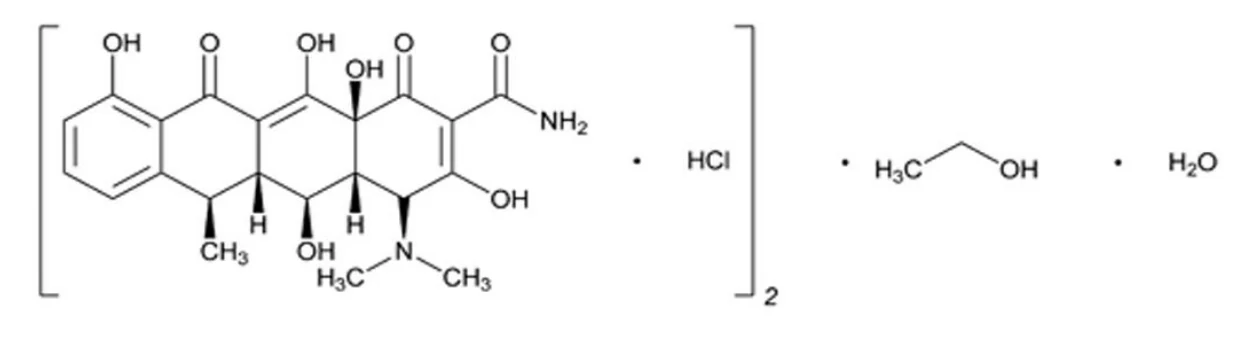
Physicochemical properties: Doxycycline hyclate is a yellow, crystalline powder. Doxycycline hyclate is freely soluble in water and in methanol while sparingly soluble in ethanol (96%). Doxycycline hyclate dissolves in solutions of alkali hydroxides and carbonates.
14 Clinical Trials
A comprehensive literature review was performed to evaluate the effect of intravenous injection of doxycycline on efficacy and safety outcomes compared to standard therapies and/or placebo in subjects undergoing various procedures.
There were 154 studies of doxycycline in adults and/or pediatric patients that supported efficacy for the indications (see 1 Indications). Across these studies, doxycycline was used to treat a broad range of Gram-positive and Gram-negative bacteria in patients with respiratory, urinary, gynecological, Rickettsial, and other infections.
15 Microbiology
Mechanism of Action
See 10 Clinical Pharmacology, 10.1 Mechanism of Action.
Resistance and Cross-Resistance
The drugs in the tetracycline class have closely similar antimicrobial spectra, and cross-resistance among them is common.
Up to 44 percent of strains of Streptococcus pyogenes and 74 percent of Enterococcus faecalis (formerly
Streptococcus faecalis) have been found to be resistant to tetracycline drugs. Therefore, tetracyclines should not be used for streptococcal disease unless the organism has been demonstrated to be sensitive.
Interaction with other Antimicrobials
See 9 Drug Interactions, 9.4 Drug-Drug Interactions.
Antibacterial Activity
Doxycycline is a broad spectrum antibiotic and has been shown to be active against most isolates of the following microorganisms, both in vitro and/or in clinical infections (see 1 Indications).
Gram-Negative Bacteria
Acinetobacter species Bacteroides species Bartonella bacilliformis Brucella species Campylobacter fetus Enterobacter aerogenes Escherichia coli Francisella tularensis Haemophilus ducreyi Haemophilus influenzae Klebsiella granulomatis Klebsiella pneumoniae Klebsiella species Mycoplasma pneumoniae Neisseria gonorrhoeae Shigella species Vibrio cholerae Yersinia pestis
Gram-Positive Bacteria
Bacillus anthracis Enterococcus faecalis Listeria monocytogenes Staphylococcus aureus Streptococcus pneumoniae Streptococcus pyogenes
Anaerobic Bacteria
Clostridium species
Other Bacteria
Borrelia recurrentis Chlamydia psittaci Chlamydia trachomatis Coxiella burnetti Rickettsiae species Treponema pallidum Ureaplasma urealyticum
Parasites
Plasmodium falciparum* *Doxycycline has been found to be active against the asexual erythrocytic forms of Plasmodium falciparum but not against the gametocytes of P. falciparum. The precise mechanism of action of the drug is not known.
Susceptibility Testing and Dilution and Diffusion Techniques
When available, the results of in vitro susceptibility test results for antimicrobial drugs used in resident hospitals should be provided to the physician as periodic reports which describe the susceptibility profile of nosocomial and community-acquired pathogens. These reports should aid the physician in selecting the most effective antimicrobial.
Quantitative methods are used to determine antimicrobial minimum inhibitory concentrations (MICs). These MICs provide estimates of the susceptibility of bacteria to antimicrobial compounds. The MICs should be determined using a standardized procedure, such as broth microdilution or standardised disk diffusion method as described by European Committee on Antimicrobial Susceptibility Testing (EUCAST). The MIC interpretive criteria are shown in Table 4.
Table 4 Susceptibility Test Interpretive Criteria for Doxycycline and Tetracycline
| Bacterial Species | MIC Breakpoints (mg/L) | Disk Content (mcg) | Zone Diameter Breakpoints (mm) | |||||||||||
|---|---|---|---|---|---|---|---|---|---|---|---|---|---|---|
| Bacterial Species | MIC Breakpoints (mg/L) | Disk Content (mcg) | Zone Diameter Breakpoints (mm) | |||||||||||
| S ≤ | R > | S ≥ | R < | |||||||||||
| Acinetobacter species | ||||||||||||||
| Doxycycline | - | - | - | - | ||||||||||
| Tetracycline | - | - | - | - | ||||||||||
| Bacillus anthracis | ||||||||||||||
| Doxycycline | 0.06a | 0.06a | a | a | ||||||||||
| Tetracycline | 0.125 | 0.125 | 30 | 26 | 26 | |||||||||
| Brucella melitensis | ||||||||||||||
| Doxycycline | 0.25a | 0.25a | a | a | ||||||||||
| Tetracycline | 0.5 | 0.5 | 30 | 42 | 42 | |||||||||
| Enterobacterales | ||||||||||||||
| Doxycycline | - | - | - | - | ||||||||||
| Tetracycline | - | - | - | - | ||||||||||
| Enterococcus species | ||||||||||||||
| Doxycycline | - | - | - | - | ||||||||||
| Tetracycline | - | - | - | - | ||||||||||
| Haemophilus influenzae | ||||||||||||||
| Doxycycline | 1b | 1b | b | b | ||||||||||
| Tetracycline | 2b | 2b | 30 | 25b | 25b | |||||||||
| Neisseria gonorrhoeae | ||||||||||||||
| Doxycycline | IE | IE | c | c | ||||||||||
| Tetracycline | 0.5 | 0.5 | c | c | ||||||||||
| Staphylococcus species | ||||||||||||||
| Doxycycline | 1d | 1d | d | d | ||||||||||
| Tetracycline | 1d | 1d | 30 | 22d | 22d | |||||||||
| Streptococcus pneumoniae | ||||||||||||||
| Doxycycline | 1d | 1d | d | d | ||||||||||
| Tetracycline | 1d | 1d | 30 | 25d | 25d | |||||||||
| Streptococcus groups A, B, C, and Ge | ||||||||||||||
| Doxycycline | 1d | 1d | d | d | ||||||||||
| Tetracycline | 1d | 1d | 30 | 23d | 23d | |||||||||
| Vibrio species | ||||||||||||||
| Doxycycline | 0.5 | 0.5 | f | f | ||||||||||
| Tetracycline (screen only)f | N/A | N/A | 30 | 20f | 20f | |||||||||
IE = insufficient evidence; MIC = minimum inhibitory concentration; N/A = not applicable
a Isolates susceptible to tetracycline can be reported susceptible to doxycycline. Isolates resistant to tetracycline should be tested for susceptibility to doxycycline or reported resistant.
b Tetracycline can be used to screen for resistance in tetracycline agents. Isolates categorised as susceptible to tetracycline can be reported susceptible to doxycycline and minocycline. Isolates categorised as resistant to tetracycline should be tested for susceptibility to individual agents or reported resistant.
c Disk diffusion criteria for antimicrobial susceptibility testing of Neisseria gonorrhoeae have not yet been defined and a MIC method should be used. If a commercial MIC method is used, follow the manufacturer´s instructions. Laboratories with few isolates are encouraged to refer these to a reference laboratory for testing.
d Tetracycline can be used to screen for resistance in tetracycline agents. Isolates categorised as susceptible can be reported susceptible to doxycycline and minocycline. Isolates categorised as resistant should be tested for susceptibility to individual agents or reported resistant.
e This group of bacteria includes many species, which can be grouped as follows: Group A: S. pyogenes. Group B: S. agalactiae. Group C: S. dysgalactiae (plus the more rarely isolated S. equi). Group G: S. dysgalactiae and S. canis. S. dysgalactiae includes the subspecies equisimilis and dysgalactiae, S. equi includes subspecies equi and zooepidermicus.
f Susceptibility to doxycycline (and tetracycline when doxycycline is not available) is inferred from the tetracycline disk diffusion test.
Quality Control
Quality control limits for broth microdilution testing and disk diffusion have been established with EUCAST and are shown in Table 5.
Table 5 Acceptable Quality Control Ranges for Susceptibility Testing for Doxycycline and Tetracycline
| QC Strain | MIC (mg/L) | Disk Content (mcg) | Inhibition Zone Diameter (mm) | |||||||||||||
|---|---|---|---|---|---|---|---|---|---|---|---|---|---|---|---|---|
| Targeta | Rangeb | Targeta | Rangec | |||||||||||||
| Haemophilus influenzae ATCC 49766 | ||||||||||||||||
| Doxycycline | 0.5 | 0.25 to 1 | - | - | - | |||||||||||
| Tetracycline | 0.5 | 0.25 to 1 | 30 | 31 | 28 to 34 | |||||||||||
| Staphylococcus aureus ATCC 29213 | ||||||||||||||||
| Doxycycline | 0.25 | 0.125 to 0.5 | - | - | - | |||||||||||
| Tetracycline | 0.25 to 0.5 | 0.125 to 1 | 30 | 27 | 23-31 | |||||||||||
| Streptococcus pneumoniae ATCC 49619 | ||||||||||||||||
| Doxycycline | 0.03 to 0.06 | 0.016 to 0.125 | - | - | - | |||||||||||
| Tetracycline | 0.125 to 0.25 | 0.06 to 0.5 | 30 | 31 | 28 to 34 | |||||||||||
ATCC = American Type Culture Collection; EUCAST = European Committee on Antimicrobial Susceptibility Testing
a Calculated by EUCAST.
b From Clinical and Laboratory Standards Institute, M100-S35, 2025, except ranges in bold established by EUCAST. All ranges have been validated by EUCAST.
c Established and validated by EUCAST.
16 Non-Clinical Toxicology
General Toxicology:
Doxycycline Hyclate
- a) Acute Toxicity
The acute oral and parenteral toxicity of doxycycline in mice, rats, and dogs are as follows:
Table 6 Acute Oral and Parenteral Toxicity of Doxycycline in Mice, Rats, and Dogs
| LD50 (95% Confidence Limits) mg/kg | |||||||
|---|---|---|---|---|---|---|---|
| LD50 (95% Confidence Limits) mg/kg | |||||||
| Oral | IV | ||||||
| Mice | 1,900 (1696-2128) | 241 (230-253) | |||||
| Rats | >2,000 | 228 (202-258) | |||||
| Dogs | >500 | >100 | |||||
IV = intravenous; LD50 = median lethal dose
The intraperitoneal median lethal doses (LD50) of doxycycline in weaning and newborn rats are 262 (222-309) and 300 (275-327) mg/kg, respectively.
- b) Subacute Toxicity
One to 2 1/2-month subacute toxicity studies were conducted in rats, hamsters, dogs, and monkeys. Doxycycline induced a yellow fluorescence (under ultraviolet light) of bone, teeth, kidney, and/or liver, in all animal species tested. In rats, doxycycline produced no toxic effects in doses of up to 500 mg/kg/day for 30 days. In hamsters, doxycycline in dosages of 500 or 250 mg/kg/day produced weight loss and early death, but the 50 mg/kg level (for 30 days) was nontoxic. In dogs, doxycycline in dosages of 250 mg/kg/day for 1 month produced discolouration of the thyroid gland with the presence of intracytoplasmic granules in follicular acini and occasional amorphous body formation within follicular colloid.
Certain biochemical, functional, and histological changes of the liver occurred in the dogs (but not in the rats, hamsters, or monkeys) receiving doxycycline for 30 days at dosage levels of 250 and 50 mg/kg/day, but not at the 25 mg/kg/day level. The biochemical changes in the blood were elevations of alkaline phosphatase, ALT, and/or bromosulfophthalein (BSP) retention. Histologic changes were confined to bile ductular proliferation and hepatocellular intracytoplasmic inclusion bodies and Kupffer cells swollen with PAS-positive granular material. These changes in the dog were reversible upon drug withdrawal.
Monkeys which received doxycycline at dosages of 25 and 50 mg/kg/day for 1 1/2 to 2 1/2 months showed mild yellow ultraviolet fluorescence of liver, kidney, and bone, and the presence of small amounts of intracytoplasmic granular material in the thyroid gland.
- c) Chronic Toxicity
In an 18-month chronic toxicity study, rats were fed diets containing doxycycline at levels to provide daily drug intake of 500, 250, 50, and 0 mg/kg. Slight depression of weight gains in some rats receiving the 500 mg/kg/day dose occurred during the middle third of the study. The usual yellow ultraviolet fluorescence of bone, teeth, and/or kidneys was seen in rats receiving all levels of doxycycline for 6, 12, or 18 months. Dark to light brown discolouration of the thyroid gland was also noted in rats receiving doxycycline for 12 months at levels of 500 and 250 mg/kg/day, and at 18 months at all levels. The only other change noted was depletion of hepatic glycogen in 4 rats receiving the highest dose level for 12 months.
Beagle dogs received doxycycline at levels of 10 and 100 mg/kg, 6 days per week. Moderate to marked elevations of alkaline phosphatase and ALT (occasionally AST) were observed in animals receiving doxycycline, 100 mg/kg/day. One of 2 dogs receiving doxycycline, 100 mg/kg/day, displayed mild bile ductular proliferation and hepatocellular inclusion bodies after 5 months (biopsy sample) and 12 months (necropsy sample). Administration of doxycycline for 5 and 12 months at a level of 100 mg/kg/day and for 12 months at a level of 10 mg/kg caused black and brownish discolouration of the thyroid gland, respectively, with intracytoplasmic granules. Other changes included vasodilatation and focal areas of necrosis of the mucosa of the pyloric and fundic stomach of dogs, and yellow ultraviolet fluorescence of teeth and bones of animals at 100 mg/kg/day dose levels of doxycycline.
Additional groups of 4 beagles each received doxycycline in dosages of 5, 1, and 0 mg/kg/day for 6 months. The only abnormal findings were slight elevations of ALT values in 3 dogs at the 5 mg/kg level at 180 days.
In a 1 year chronic toxicity study, groups of 4 rhesus monkeys each received doxycycline in oral doses of 0, 5, 25, and 50 mg/kg/day, respectively. Oral dosage of 100 mg/kg produced severe gastrointestinal symptoms, e.g., vomiting and diarrhea. In 1 out of 4 monkeys receiving the 50 mg/kg/day dose, occasional anorexia and diarrhea were observed during the first 6 months.
Significant pathologic changes noted in monkeys sacrificed after receiving doxycycline for 1 year at dose levels of 50 mg/kg/day were: 1) grossly, very light brown discolouration of the thyroid gland in 1 of the 4 monkeys, and 2) microscopically, brownish intracytoplasmic inclusions in the acinar cells of thyroid follicles of 3 out of 4 monkeys. Bone and dentin exhibited slight to moderate ultraviolet fluorescence.
Two monkeys, in another study, receiving the 25 mg/kg/day dosage, were sacrificed after 6 and 8 months on test, respectively. Significant gross and histopathologic findings were slight yellow ultraviolet fluorescence of the endosteum and periosteum of bone, and microscopic appearance of small amounts of granular intracytoplasmic material in the acinar cells of thyroid follicles.
The highlights of the chronic toxicity studies can be summarized as follows:
- 1) Discolouration of the thyroid gland, with deposition of intracytoplasmic granules in the acinar cells of the follicle. Thyroid function, however, did not seem to be affected. This phenomenon appears to be a result of the interaction of the antibiotic with the active iodinating system of the gland.
- 2) Yellow staining of bones and teeth, which is thought to be due to formation of a tetracycline-calcium-phosphate complex.
Otherwise doxycycline was well tolerated by the rat and monkey at doses up to and including 500 and 50 mg/kg/day for 18 and 12 months, respectively. In dogs, however, repeated daily oral administration of large doses of doxycycline resulted in certain hepatic functional and histopathologic changes which are reversible after drug withdrawal. No adverse hepatic effects were noted in the hamster (1 month), rats (18 months), or monkeys (12 months) for doses up to and including 500, 500, and 50 mg/kg/day, respectively. In view of this and in view of the lack of notable toxicity in the wide human clinical program, it is considered a species-specific phenomenon for the dog only.
Doxycycline Monohydrate
With bulk doxycycline monohydrate administered in a 10% aqueous suspension, the oral LD50 for albino male mice was greater than 5000 mg/kg.
Doxycycline Hyclate with Ascorbic Acid
Studies in mice and rats showed the LD50 of intravenous doxycycline to be 75 mg/kg in mice and 88 mg/kg in rats of doxycycline (using a preparation of doxycycline hyclate equivalent to 100 mg of doxycycline with 480 mg of ascorbic acid as a sterile powder).
No signs of drug toxicity were seen in dogs receiving 20 to 21 daily doses of intravenous doxycycline at a dose level of 5 mg/kg when administered as a 0.5% solution at a rate of 1 mg/kg/min. Dogs receiving 14, 16, or 17 daily intravenous doses of 10 mg doxycycline per kg of body weight, or 4 daily 60 minute infusions of 300 mg intravenous doxycycline, or 300 mg degraded intravenous doxycycline evidenced serum alkaline phosphatase and ALT elevations. No morphological basis for these enzyme elevations was established although moderate bile ductular proliferation was seen in 1 of 2 dogs receiving 4 daily intravenous infusions of degraded intravenous doxycycline.
In 8 dogs receiving daily intravenous doses of intravenous doxycycline 10 mg/kg/day (0.5% solution), 5 of 24 vessels used for injections evidenced degrees of thrombosis with recanalization.
Thrombosis in 3 of 6 sites occurred in 2 dogs receiving infusions of degraded intravenous doxycycline (30 mg/kg-0.5% solution). Injection site thrombosis did not occur in 6 dogs (18 sites) receiving daily doses of intravenous doxycycline 5 mg/kg bodyweight administered as a 0.5% solution at a rate of 1 mg/kg/min (approximately 1 mL/min).
Studies to date indicate that the maximum tolerated intravenous daily dose of intravenous doxycycline in dogs for 21 consecutive days is 5 mg/kg/day when administered as a 0.5% solution at a rate of 1 mg/kg/min.
Genotoxicity:
Doxycycline hyclate demonstrated no potential to cause genetic toxicity in an in vitro point mutation study with mammalian cells (Chinese hamster ovary/HGPRT forward mutation assay) or in an in vivo micronucleus assay conducted in CD-1 mice. However, an in vitro chromosomal aberration assay with CHO cells suggested that doxycycline hyclate is a weak clastogen.
Positive results in in vitro mammalian cell assays have also been reported for related antibiotics (tetracycline, oxytetracycline).
Carcinogenicity: Long-term studies in animals to evaluate carcinogenic potential of doxycycline IV have not been conducted. However, there has been evidence of oncogenic activity in rats in oral studies.
Doxycycline hyclate was assessed for potential to induce carcinogenesis in a study in which the compound was administered to Sprague-Dawley rats by oral gavage at dosages of 20, 75, and 200 mg/kg/day for two years. Increases in benign tumours of the mammary gland (fibroadenoma), uterus (polyp) and thyroid (C-cell adenoma) were noted in females. Noteworthy non-neoplastic findings included brown pigment in the thyroid, observed in all treated groups. Reduction in bodyweight gain and cystic endometrial hyperplasia in the uterus was observed in females treated with 200 mg/kg/day. Focal epithelial hyperplasia in the stomach was observed in males and females treated with 200 mg/kg/day. Catarrhal exudate and inflammatory cell infiltrate/inflammation in the nasopharynx was observed in males and females treated with 75 and 200 mg/kg/day.
A 2-year carcinogenicity study with doxycycline administered daily by oral gavage to adult male (maximum dose 150 mg/kg/day) and female (maximum dose 300 mg/kg/day) mice showed no changes in tumor incidence.
Evidence of oncogenic activity was obtained in studies with the related antibiotics, oxytetracycline (adrenal and pituitary tumors) and minocycline (thyroid tumors).
Reproductive and Developmental Toxicology: In a fertility and reproductive study, five groups of 25 male and 25 female rats were dosed by oral gavage at dose levels of 0, 50, 100, 250, or 500 mg/kg/day doxycycline hyclate. A similar control group received purified water. The males were dosed for 28 days prior to mating, throughout the mating period and until the day before necropsy. The females were dosed for 14 days prior to mating, during the mating period, and until day 7 of pregnancy. The study demonstrated that the oral administration of doxycycline hyclate to Sprague-Dawley rats adversely affected fertility and reproductive performance, as evidenced by increased time for mating to occur, reduced sperm motility, velocity, and concentration, abnormal sperm morphology, and increased pre-and post implantation losses. Doxycycline induced reproductive toxicity at all dosages in the study, as even the lowest dose tested (50 mg/kg per day) induced a statistically significant reduction in sperm velocity.
In a study for effects on prenatal and postnatal development, including maternal function, five groups of 25 pregnant female rats (F0 generation) were treated with doxycycline hyclate at dose levels of 0, 50, 100, 250, or 500 mg/kg/day. Females were dosed once daily, by oral gavage, from day 18 of pregnancy (rather than day 7 when implantation occurs as recommended in the guidance) and throughout lactation until day 20 post-partum, inclusive. The F1 offspring were not mated to assess reproductive performance. The daily oral administration of doxycycline hyclate elicited maternal toxicity at 500 mg/kg/day, which included noisy breathing, a reduction in bodyweight gain, a reduction in food consumption, and an increased duration of gestation. There was also evidence of slight toxicity in the F1 generation, which was characterized by a reduction in bodyweight during lactation and post-weaning, generalized pallor, and an increase in the numbers of litters containing one or more pups with clinical signs including hair-loss, piloerection, and abnormal hair growth. At 250 mg/kg/day, there was evidence of slight maternal toxicity (e.g., reduction in bodyweight gain and food consumption, slight increase in the duration of gestation) and slight toxicity in the F1 generation (e.g., increase in the numbers of litters containing one or more pups with clinical signs including hair-loss, piloerection, and abnormal hair growth). At 100 mg/kg/day, there was an increase in the numbers of pups with hair-loss in the F1 generation but there was no apparent evidence of maternal toxicity at 100 or 50 mg/kg/day or toxicity in the F1 generation at 50 mg/kg/day.
Juvenile Toxicity
In mouse studies where doxycycline was administered orally to males during the neonatal and pubertal phases, doxycycline had adverse effects on spermatogenesis at ≥1 and ≥2.8 mg/kg/day, respectively, which were not fully reversible in adulthood after drug cessation.