


Product Monograph - Duodopa
RECENT MAJOR LABEL CHANGES
| 7 Warnings and Precautions | 02/2020 |
TABLE OF CONTENTS
Sections or subsections that are not applicable at the time of authorization are not listed.
RECENT MAJOR LABEL CHANGES .......................................................................................... 2
TABLE OF CONTENTS ............................................................................................................ 2
PART I: HEALTH PROFESSIONAL INFORMATION .................................................................... 4
1 INDICATIONS ............................................................................................................. 4
1.1 Pediatrics ................................................................................................................ 4
1.2 Geriatrics ................................................................................................................ 4
2 CONTRAINDICATIONS ................................................................................................ 4
3 SERIOUS WARNINGS AND PRECAUTIONS BOX ........................................................... 6
4 DOSAGE AND ADMINISTRATION ................................................................................ 6
4.1 Dosing Considerations ........................................................................................... 6
4.2 Recommended Dose and Dosage Adjustment ...................................................... 7
4.3 Reconstitution ...................................................................................................... 10
4.4 Administration ..................................................................................................... 10
4.5 Missed Dose ......................................................................................................... 10
5 OVERDOSAGE .......................................................................................................... 10
6 DOSAGE FORMS, STRENGTHS, COMPOSITION AND PACKAGING .............................. 11
7 WARNINGS AND PRECAUTIONS ............................................................................... 11
7.1 Special Populations .............................................................................................. 15
7.1.1 Pregnant Women ................................................................................................. 15
7.1.2 Breast-feeding ...................................................................................................... 16
7.1.3 Pediatrics .............................................................................................................. 16
7.1.4 Geriatrics .............................................................................................................. 16
8 ADVERSE REACTIONS............................................................................................... 16
8.1 Adverse Reaction Overview ................................................................................. 16
8.2 Clinical Trial Adverse Reactions ........................................................................... 17
8.3 Less Common Clinical Trial Adverse Reactions .................................................... 24
8.4 Abnormal Laboratory Findings: Hematologic, Clinical Chemistry and Other Quantitative Data ............................................................................................................. 25
8.5 Post-Market Adverse Reactions ........................................................................... 25
9 DRUG INTERACTIONS .............................................................................................. 26
9.2 Drug Interactions Overview ................................................................................. 26
9.3 Drug-Behavioural Interactions ............................................................................. 26
9.4 Drug-Drug Interactions ........................................................................................ 27
9.5 Drug-Food Interactions ........................................................................................ 28
9.6 Drug-Herb Interactions ........................................................................................ 28
9.7 Drug-Laboratory Test Interactions....................................................................... 28
10 CLINICAL PHARMACOLOGY ...................................................................................... 28
10.1 Mechanism of Action ........................................................................................... 28
10.2 Pharmacodynamics .............................................................................................. 29
10.3 Pharmacokinetics ................................................................................................. 29
11 STORAGE, STABILITY AND DISPOSAL ........................................................................ 33
12 SPECIAL HANDLING INSTRUCTIONS .......................................................................... 33
PART II: SCIENTIFIC INFORMATION ..................................................................................... 34
13 PHARMACEUTICAL INFORMATION .......................................................................... 34
14 CLINICAL TRIALS ...................................................................................................... 36
14.1 Clinical Trials by Indication .................................................................................. 36
15 MICROBIOLOGY ...................................................................................................... 41
16 NON-CLINICAL TOXICOLOGY .................................................................................... 41
PATIENT MEDICATION INFORMATION ................................................................................ 44
PART I: HEALTH PROFESSIONAL INFORMATION
1 INDICATIONS
DUODOPA (levodopa/carbidopa intestinal gel) is indicated for the treatment of patients with advanced levodopa-responsive Parkinson’s disease:
- who do not have satisfactory control of severe, debilitating motor fluctuations and hyper-/dyskinesia despite optimized treatment with available combinations of Parkinson’s medicinal products (see 14 CLINICAL TRIALS), and
- for whom the benefits of this treatment may outweigh the risks associated with the insertion and long-term use of the percutaneous endoscopic gastrostomy-jejunostomy (PEG-J) tube required for administration (see 2 CONTRAINDICATIONS, 3 SERIOUS WARNINGS AND PRECAUTIONS BOX, Gastrointestinal, Peri-Operative Considerations and 8 ADVERSE REACTIONS).
Prior to insertion of PEG-J tube, a positive test of the clinical response to DUODOPA administered via a temporary nasojejunal (NJ) tube is recommended for all patients.
DUODOPA should only be prescribed by neurologists who are experienced in the treatment of patients with Parkinson’s disease, and who have completed the DUODOPA education program that includes training in: the criteria for selecting suitable patients; initiation and management with DUODOPA therapy via naso-intestinal infusion and percutaneous endoscopic gastrostomy; postprocedural care; and the risks associated with the procedure and long-term use of the PEG-J.
Establishment of the transabdominal port should be performed by a gastroenterologist or other healthcare professional (e.g., radiologist, gastrosurgeon) experienced in the PEG placement procedure. Dose adjustments should be carried out in association with a neurological clinic staffed with healthcare professionals trained in the use of DUODOPA.
1.1 Pediatrics
Pediatrics (< 18 years of age): The safety and efficacy of DUODOPA in patients under 18 years of age have not been evaluated and its use in patients below the age of 18 is not recommended.
1.2 Geriatrics
Geriatrics (≥ 65 years of age): Of the total number of patients using the DUODOPA System in the clinical studies, more than half were 65 years of age or older. No overall differences in safety or effectiveness were observed between these patients and younger patients (see 14 CLINICAL TRIALS).
2 CONTRAINDICATIONS
Contraindications for Treatment with Levodopa
DUODOPA is contraindicated in patients with:
- hypersensitivity to levodopa, carbidopa or to any ingredient in the formulation or component of the container. For a complete listing, see 6 DOSAGE FORMS, STRENGTHS, COMPOSITION AND PACKAGING.
- narrow-angle glaucoma.
- clinical or laboratory evidence of uncompensated cardiovascular, cerebrovascular, endocrine, renal, hepatic, hematologic or pulmonary disease (including bronchial asthma).
- concomitant use of nonselective monoamine oxidase (MAO) inhibitors and selective MAO type A inhibitors with DUODOPA. Nonselective MAO inhibitors and selective MAO type A inhibitors must be discontinued at least 2 weeks prior to initiating therapy with DUODOPA (see 9.4 Drug-Drug Interactions).
- suspicious, undiagnosed skin lesions or a history of melanoma because levodopa may activate a malignant melanoma.
- concomitant administration of a sympathomimetic amine (e.g., epinephrine, norepinephrine, isoproterenol) (see 9.4 Drug-Drug Interactions).
Contraindications for PEG Tube Placement
The placement of a PEG tube for DUODOPA treatment is contraindicated in patients with the following conditions:
- Pathological changes of the gastric wall
- Inability to bring the gastric wall and abdominal wall together
- Blood coagulation disorders
- Peritonitis
- Acute pancreatitis
- Paralytic ileus
3 SERIOUS WARNINGS AND PRECAUTIONS BOX
Serious Warnings and Precautions
|
4 DOSAGE AND ADMINISTRATION
4.1 Dosing Considerations
General
Periodic evaluation of hepatic, haematopoietic, cardiovascular and renal function is recommended during dosage optimization and during extended therapy with DUODOPA.
Mode of Administration
DUODOPA is a gel for continuous intestinal infusion. For long-term administration, the gel should be infused with a portable pump directly into the duodenum or upper jejunum by a permanent tube via percutaneous endoscopic gastrostomy (PEG) with an outer transabdominal tube and an inner intestinal tube. Alternatively, a radiological gastrojejunostomy may be considered if percutaneous endoscopic gastrostomy is not suitable for any reason.
Prior to duodenal/jejunal tube placement, it is recommended that all patients be treated short term using a nasojejunal tube (NJ). The dose should be adjusted to an optimal clinical response for the individual patient, which means maximizing the functional “On” time during the day by minimizing the number and duration of “Off” episodes (bradykinesia) and minimizing “On” time with disabling dyskinesia. The patient’s response and ability to tolerate the intestinal tubing and manage daily operation of the device system should be assessed prior to placement of the PEG-J tube (see 4.2 Recommended Dose and Dosage Adjustment).
DUODOPA should be given initially as monotherapy. If required, other medicinal products for Parkinson’s disease can be taken concurrently. For administration of DUODOPA, only the CADD-Legacy® DUODOPA pump should be used. A manual with instructions for using the portable pump is delivered together with the pump.
Treatment with DUODOPA using a permanent tube can be discontinued at any time by withdrawing the tube and letting the wound heal. Treatment should then continue with oral medicinal products including levodopa/carbidopa.
4.2 Recommended Dose and Dosage Adjustment
General
Levodopa given as DUODOPA has the same bioavailability as oral levodopa and therefore conversion from one form to another should be done in approximately a 1:1 ratio. The total dose/day of DUODOPA administered over approximately 16 hours is composed of 3 individually adjusted doses: the morning bolus dose, the continuous maintenance dose and extra bolus doses. During the nasojejunal test period the patient is supplied with and trained in the use of the portable pump, and the three DUODOPA dosing parameters are individualized for the patient. The patient can then independently control the infusion rates to suit their daily requirements, within parameters pre-set under the direction of their physician.
Each 100 mL cassette of DUODOPA contains 2000 mg levodopa/500 mg carbidopa. Some patients may require more than 1 cassette over a 16-hour period. The drug cassettes are for single use only and should not be used for longer than 16 hours even if some medicinal product remains. Patients should be instructed to not reuse an opened cassette.
By the end of the storage time, the gel might become slightly yellow. This does not influence the concentration of the drug or the treatment.
Morning Dose
The Morning Dose is an individualized daily loading dose administered to achieve a therapeutic dose level within 10 to 30 minutes.
Continuous Maintenance Dose
The Continuous Maintenance Dose (CMD) is administered after the Morning Dose and for the remainder of the 16-hour infusion period. The CMD is intended to provide continuous administration at a constant rate throughout the infusion period.
Extra Bolus Doses
Extra doses of DUODOPA can be used to assist in titration and during standard therapy to address immediate medical needs, such as the rapid deterioration of motor function (e.g., patient becomes hypokinetic). The extra dose feature is programmed by the healthcare professional and can be self-administered by the patient throughout the day. The pump includes a lockout feature to prevent inadvertent adjustments. The extra dose is customized for medication delivery to each patient. Refer to the pump manual for detailed instructions. If the need for use of the extra dose feature exceeds 5 doses/day, the physician should consider increasing the CMD.
After initial titration, additional adjustments of the dose settings may be performed over time.
Table 1 - Determination of Daily Doses (Morning, Continuous and Extra)
| Morning Dose | Continuous Maintenance Dose (CMD) | Extra Doses | |
|---|---|---|---|
| General | Usually 5 to 10 mL, corresponding to 100 to 200 mg levodopa and will normally not exceed 15 mL (300 mg levodopa). The calculated Morning Dose should be increased by 3 mLa to compensate for the priming of the deadspace. | May range from 1 to 10 mL/hour (20 to 200 mg levodopa/hour) and is usually 2 to 6 mL/hour (40 to 120 mg levodopa/hour). In exceptional cases a higher dose may be needed. | Usually 0.5 to 2.0 mL. In rare cases, a higher dose may be needed. If the need for Extra Doses exceeds 5 doses/day, the physician should consider increasing the maintenance dose. |
| Initiation of Treatment (Day 1) | Patients should not be administered a full equivalent of their usual oral morning dose of levodopa/carbidopa. The Morning Dose of DUODOPA is to be based on a percentage of the patient’s usual morning oral levodopa/carbidopa dose. |
| Morning Dose of Oral Levodopa/Carbidopa vs. Percent of Dose Given as DUODOPA | |
| If the usual morning oral dose is: | Give % DUODOPA: |
| 0 to 200 mg | 80% |
| 201 to 399 mg | 70% |
| ≥ 400 mg | 60% |
The CMD is adjustable in steps of 0.1 mL/hour (2 mg/hour). Calculation: Previous day’s dose minus morning dose = A mg Divide A mg by 20 mg/mL = B mL Divide B mL by 16 hours = C mL/hour C x 0.9 = D mL/hour rate of infusion | May be given hourly, begin with 1 mL per dose. |
| Morning Dose | Continuous Maintenance Dose (CMD) | Extra Doses | ||||
|---|---|---|---|---|---|---|
| Day 2 to End of Titration Period (titration generally takes 4 to 7 days) | The morning dose may be adjusted as necessary based on the patient’s response to the previous day’s Morning Dose. | Previous day’s last infusion rate. The CMD is adjustable in steps of 0.1 mL/hour (2 mg/hour) | May be given hourly, begin with 1 mL dose. | |||
| Stable Daily Dose Period | Once the effective Morning Dose has been established, no further adjustment should be made. | Maintain previous day’s last infusion rate. | May be given every 2 hours as needed (usually set between 0.5 to 2 mL per use). | |||
| ||||||
End of Day
The PEG-J is to be disconnected from the infusion pump at bedtime and flushed with room temperature potable water. Patients should be instructed in the importance of daily flushing of intestinal tubing with water as a preventative measure against occlusions (see Management of Device-Related Adverse Events).
If medically justified, DUODOPA may be administered during the night (e.g., nocturnal akinesia).
Post-Infusion Night-Time Treatment
Patients should be given prescriptions for a supply of levodopa/carbidopa tablets. Following the discontinuation of the daily DUODOPA infusion, patients should administer their routine night-time dosage of oral levodopa/carbidopa tablets.
Monitoring of Treatment
A sudden deterioration in treatment response with recurring motor fluctuations should lead to the suspicion that the distal part of the tube has become displaced from the duodenum/jejunum into the stomach. The location of the tube should be determined by X-ray and the end of the tube repositioned to the duodenum/jejunum (see DUODOPA Procedure- and Device-Related Complications).
Dose Adjustment for Renal and Hepatic Impairment
DUODOPA is contraindicated in patients with clinical or laboratory evidence of uncompensated hepatic or renal disease (see 2 CONTRAINDICATIONS). There are no studies on the pharmacokinetics of carbidopa and levodopa in patients with hepatic or renal impairment. Dosing with DUODOPA is individualized by titration to optimal effect which corresponds to individually optimized levodopa and carbidopa plasma exposures. Therefore, potential effects of hepatic or renal impairment on levodopa and carbidopa exposure are indirectly accounted for in dose titration. Dose titration should be conducted with caution in patients with severe renal and hepatic impairment (see 7 WARNINGS AND PRECAUTIONS).
Interruption of Therapy
Patients should be carefully observed when a sudden reduction of the dose is required or if it becomes necessary to discontinue treatment with DUODOPA, particularly if the patient is receiving antipsychotics (see Psychiatric and Neuroleptic Malignant Syndrome).
In case of suspected or diagnosed dementia with a decreased confusion threshold, patient’s pump should be handled by the nursing staff or a care giver and the benefit/risk of continued treatment with DUODOPA should be re-assessed.
Pediatrics (< 18 years of age)
Health Canada has not authorized an indication for pediatric use (see 1.1 Pediatrics).
Geriatrics (≥65 years of age)
Doses for all patients including geriatric population are individually adjusted by titration (see 4 DOSAGE AND ADMINISTRATION).
4.3 Reconstitution
Not applicable.
4.4 Administration
The cassette containing DUODOPA should be attached to the portable pump and the system connected to the nasojejunal tube or the transabdominal port/jejunal tube for administration just prior to use, according to the instructions provided in the pump instruction manual. The drug cassettes are for single use only and should not be used for longer than 1 day (up to 16 hours) even if some medicinal product remains. A cassette should not be re-used. By the end of the storage time (i.e., after 16 hours in use, or when approaching the expiration date) the gel might become slightly yellow. This does not influence the concentration of the drug or the treatment.
Substances other than DUODOPA (e.g., small tablet or food particles) should not be administered into the PEG-J tube due to the risk intestinal tube blockage by these substances.
4.5 Missed Dose
If the pump malfunctions, and dosing is interrupted, resume dosing as per the instructions above. Failure of the intestinal tube or pump, resulting in motor complications (e.g., sustained bradykinesia), will require treatment with oral levodopa/carbidopa until the problem is resolved.
5 OVERDOSAGE
The most prominent symptoms of an overdose with levodopa/carbidopa are dystonia and dyskinesia. Blepharospasm can be an early sign of overdose.
The treatment of an acute overdose of DUODOPA is in general the same as that of an acute overdose of levodopa; however, pyridoxine has no effect on the reversal of the action of DUODOPA. Electrocardiographic monitoring should be used and the patient observed carefully for the development of cardiac arrhythmias; if necessary an appropriate antiarrhythmic therapy should be given. The possibility that the patient took other medicinal products together with DUODOPA should be taken into consideration. To date experiences with dialysis have not been reported, therefore its value in the treatment of overdose is not known.
6 DOSAGE FORMS, STRENGTHS, COMPOSITION AND PACKAGING
Table 2 - Dosage Forms, Strengths, Composition and Packaging
| Route of Administration | Dosage Form / Strength / Composition | Non-medicinal Ingredients |
|---|---|---|
| intestinal infusion | gel/1 mL contains 20 mg levodopa and 5 mg carbidopa (monohydrate) | carmellose sodium, purified water |
DUODOPA is a gel for continuous intestinal infusion and is supplied in hard plastic cassettes for protection. Each cassette holds a reservoir bag containing 100 mL of gel with 2000 mg levodopa and 500 mg carbidopa monohydrate (20 mg/mL levodopa and 5 mg/mL carbidopa monohydrate). DUODOPA is available in cartons of 7 cassettes.
The gel is off-white to slightly yellow in colour.
7 WARNINGS AND PRECAUTIONS
Please see 3 SERIOUS WARNINGS AND PRECAUTIONS BOX.
General
Patients and/or caregivers should be thoroughly assessed for physical and cognitive ability to operate the DUODOPA system, prior to insertion of the PEG-J tube.
DUODOPA therapy should be administered cautiously to patients with severe cardiovascular or pulmonary disease, bronchial asthma, renal, hepatic, or endocrine disease, or history of peptic ulcer disease or of convulsions.
The dose of DUODOPA may need to be adjusted downwards in order to avoid levodopa-induced dyskinesias.
Carcinogenesis and Mutagenesis
DUODOPA contains hydrazine, a degradation product of carbidopa that can be genotoxic and possibly carcinogenic (see 16 NON-CLINICAL TOXICOLOGY). The average daily dose of DUODOPA is 100 mL, containing 2 g levodopa and 0.5 g carbidopa. The usual maximum daily dose is 200 mL. This includes hydrazine at up to an average exposure of 4 mg/day, with a maximum of 8 mg/day. The clinical significance of this hydrazine exposure is not known.
Cardiovascular
In patients with a history of myocardial infarction or who have atrial nodal or ventricular arrhythmias, cardiac function should be monitored with particular care during the period of initial dosage adjustments.
DUODOPA may induce orthostatic hypotension and should be given cautiously to patients who are taking other medicinal products which may cause orthostatic hypotension (see Monitoring and
| For management of a suspected drug overdose, contact your regional Poison Control Centre. |
Laboratory Tests and 9.4 Drug-Drug Interactions).
Gastrointestinal
Patients with a history of upper gastrointestinal problems or problems with intestinal absorption were generally excluded from DUODOPA clinical trials. Previous surgery in the upper part of the abdomen may lead to difficulty in performing gastrostomy or jejunostomy.
DUODOPA Procedure- and Device-Related Complications
A commonly reported event in the clinical studies was abdominal pain associated with the PEG-J procedure. The peri-operative abdominal pain was mostly mild to moderate in severity and resolved in the first 4 weeks.
Abdominal pain may also be a symptom of other potentially serious procedure- and/or device-related complications that have been reported in clinical studies and in postmarketing experience, including abscess, bezoar, ileus, implant site erosion/ulcer, intestinal hemorrhage, intestinal ischemia, intestinal obstruction, intestinal perforation, intussusception, pancreatitis, peritonitis, pneumonia (including aspiration pneumonia), pneumoperitoneum, post-operative wound infection, and sepsis. Some of these adverse events have resulted in serious outcomes, including prolonged hospitalization, surgery and/or death. Patients should be instructed in the early recognition of abdominal pain and symptoms additional to abdominal pain that may indicate a serious complication related to the device and to seek immediate medical attention if they experience any of the symptoms (see Device-Related Adverse Events).
A sudden deterioration in treatment response with recurring motor fluctuations should lead to the suspicion that the distal part of the tube has become displaced from the duodenum/proximal jejunum into the stomach. The location of the tube should be determined by X-ray and the end of the tube repositioned to the duodenum/jejunum. Patients should also be assessed for other potentially serious gastrointestinal complications that may occur with tube dislocation (e.g., perforation of intestine or adjacent anatomical structures).
Gastrostomy/jejunal tube blockage and/or intestinal obstruction with bezoar formation, necessitating replacement of tubing and in rare cases surgery, have been reported with DUODOPA. Cases of intussusception have been reported with DUODOPA and some of these have been associated with bezoars formed at the distal tip of the jejunal tube. Bezoars are retained concretions of undigested food material in the intestinal tract and consumption of fibrous food may be a risk factor for bezoar formation. Early symptoms include aggravation of Parkinson’s symptoms, reduced efficacy, abdominal pain, nausea and vomiting. In some cases, gastric and intestinal ulcerations have been found.
Monitoring and Laboratory Tests
Periodic evaluation of hepatic, hematopoietic, cardiovascular, and renal function is recommended during dosage optimization and during extended therapy with DUODOPA.
Blood pressure should be monitored in patients receiving antihypertensive medication (see Cardiovascular and 9.4 Drug-Drug Interactions).
Plasma concentrations of vitamin B12, vitamin B6, homocysteine, methylmalonic acid and folic acid should be obtained at baseline and at regular intervals during treatment with DUODOPA (see Polyneuropathy).
Neurologic
DUODOPA should be administered cautiously to patients who have a history of seizures, conditions associated with seizure or who have a lowered seizure threshold.
Polyneuropathy
Polyneuropathy has been reported in patients treated with levodopa/carbidopa combinations, including DUODOPA. In patients treated with DUODOPA polyneuropathy adverse events were generally consistent with axonal polyneuropathy, manifested as sensory or sensorimotor neuropathies, with subacute or chronic onset. Reported symptoms mainly included numbness, tingling, decreased sensation, weakness, and pain in the legs, hands, feet, and extremities. Deficiencies in folic acid, vitamin B12 and vitamin B6 and elevated homocysteine were observed in the majority of patients (see 8.5 Post-Market Adverse Reactions).
Patients should be evaluated for a history of polyneuropathy and known risk factors (e.g., vitamin B12 and/or vitamin B6 deficiencies, diabetes mellitus, hypothyroidism) prior to initiating treatment with DUODOPA. For patients with pre-existing polyneuropathy the benefits of treatment with DUODOPA should be carefully weighed against the potential risks, including the potential for impaired mobility. For all patients, plasma concentrations of vitamin B12, vitamin B6, homocysteine, methylmalonic acid and folic acid should be obtained at baseline and at regular intervals during treatment with DUODOPA. Patients who develop symptoms of peripheral neuropathy and low plasma concentrations of vitamin B6 and/or vitamin B12, or elevated homocysteine or methylmalonic acid concentrations may benefit from vitamin supplementation. Physicians should carefully evaluate if a dose adjustment is warranted and assess the benefit/risk of continued treatment (see Monitoring and Laboratory Tests).
Neuroleptic Malignant Syndrome
DUODOPA must not be withdrawn abruptly. A symptom complex resembling Neuroleptic Malignant Syndrome (NMS), including muscular rigidity, elevated body temperature, mental changes (e.g., agitation, confusion), altered consciousness, autonomic instability and elevated serum creatine phosphokinase has been reported in association with rapid dose reduction, withdrawal of or changes in antiparkinsonian therapy. Therefore, patients should be carefully observed when the dose of levodopa/carbidopa is abruptly reduced or discontinued, especially if the patient is receiving antipsychotics. Should a combination of such symptoms occur, the patient should be kept under medical surveillance, hospitalized if necessary, and appropriate symptomatic treatment given. This may include resumption of therapy with DUODOPA after appropriate evaluation.
Psychomotor Performance
Levodopa and carbidopa may cause dizziness and symptomatic orthostatism. Therefore, caution should be exercised when driving or using machines during treatment with DUODOPA.
Patients being treated with DUODOPA and presenting with somnolence and/or sudden sleep episodes must be advised to refrain from driving or engaging in activities where impaired alertness may put them, or others, at risk of serious injury or death (e.g., operating machines) until such recurrent episodes and somnolence have resolved (see Sudden onset of Sleep).
Ophthalmologic
Patients with chronic wide-angle glaucoma may be treated with DUODOPA with caution, provided the intra-ocular pressure is well controlled and the patient is monitored carefully for changes in intra-ocular pressure during therapy.
Peri-Operative Considerations
Prior to surgical placement of a permanent PEG-J tube, patients and caregivers should be fully informed of the following:
The benefits and known risks associated with the placement of the PEG-J tube and use of the DUODOPA system, through educational material and discussions with healthcare professionals who are informed in the use of this product.
The majority of patients that underwent PEG-J insertion in DUODOPA clinical trials experienced procedure- and/or device-related adverse events, sometimes serious and/or life-threatening, mainly during the first month after PEG-J placement (see Gastrointestinal and Device Related Adverse Events). Most of these adverse events were mild to moderate in severity, non-serious, reported within the first 28 days after the percutaneous endoscopic gastrostomy procedure and resolved in the same time period.
The PEG tube and J-tube will periodically require replacement. In DUODOPA clinical trials in which 395 patients had a PEG-J tube for a mean duration of 546 days, 14% (55/395) of patients required at least one PEG tube replacement and 43% (171/395) of patients required at least one J-tube replacement. Approximately half of the patients who had a J-tube replacement needed subsequent J-tube replacements.
Post-operative wound infections
Patients who are undergoing PEG-J tube placement are potentially at risk for postoperative peristomal infections. During the DUODOPA clinical trials 21% (83/395) of patients had postoperative wound infection adverse events. Antibiotic prophylaxis has been shown to markedly reduce the risk of peristomal infection and is recommended for patients undergoing PEG-J placement for administration of DUODOPA. In the DUODOPA clinical trials 75% of patients received antibiotic prophylaxis.
Local infections around the stoma are treated conservatively (disinfectant) or with systemic antibiotics; 92% (46/50) of patients received antibiotics (mostly oral) for post-operative wound infections at some point during the open-label 12-month study including 354 patients with advanced Parkinson’s disease. Patients and caregivers should be instructed that daily cleansing/disinfecting of the wound is recommended for the first 10 days, with daily sterile (non-occlusive, gauze or foam) dressing change. Thereafter, daily cleansing with soap and water and a clean dressing change are recommended, with monitoring for signs of infection. Severe localized tenderness may indicate development of an abdominal wall abscess related to the stoma. Abscesses may resolve spontaneously but occasionally require surgical incision.
Leakage from the stoma site
Post-procedural discharge was reported as an adverse event in DUODOPA clinical trials for 11% (43/395) of patients. Leakage of gastric or intestinal contents around the stoma site tube is a complication of PEG-J placement and can cause irritation, redness, and swelling. Management of gastric fluid leakage may include protecting the skin with a barrier cream that may reduce local skin irritation and leaving the site open to air as much as possible. Use of a foam dressing may also help reduce local skin irritation.
Psychiatric
Patients with past or current psychosis should be treated with caution.
Concomitant administration of antipsychotics with dopamine receptor blocking properties, particularly D2 receptor antagonists may reduce the therapeutic effects of levodopa and should be used with caution. Patients should be carefully observed for loss of antiparkinsonian effect or worsening of parkinsonian symptoms (see 9.4 Drug-Drug Interactions).
Impulse Control/Compulsive Behaviours
Patients and caregivers should be advised to adhere to dosage instructions given by the physician. Patients should be regularly monitored for the development of impulse control disorders. Patients and caregivers should be made aware that behavioral symptoms of impulse control disorders including pathological gambling, increased libido, hypersexuality, compulsive spending or buying, binge eating and compulsive eating have been reported in patients treated with dopamine agonists and/or other dopaminergic treatments for Parkinson’s disease, including DUODOPA. Safety data from various sources including literature, clinical trials, and post-market analysis have described an addictive pattern of dopamine replacement therapy, in which patients use doses in excess of those required to control their motor symptoms. Because patients may not recognize these behaviors as abnormal, it is important for physicians to specifically ask patients and caregivers to identify new behavior patterns. Review of treatment is recommended if such symptoms develop. These symptoms were generally reversible upon dose reduction or treatment discontinuation (see 8 ADVERSE REACTIONS).
Depression
All patients treated with DUODOPA should be monitored carefully for the development of mental changes, depression with suicidal tendencies, and other serious mental changes.
Skin
Melanoma
Epidemiological studies have shown that patients with Parkinson’s disease have a higher risk (2- to approximately 6-fold higher) of developing melanoma than the general population. It is unclear whether the increased risk observed was due to Parkinson’s disease or other factors, such as drugs used to treat Parkinson’s disease. Therefore, patients and healthcare providers are advised to monitor for melanomas frequently and on a regular basis when using DUODOPA for any indication. Ideally, periodic skin examinations should be performed by appropriately qualified individuals (e.g., dermatologists).
7.1 Special Populations
7.1.1 Pregnant Women
There are no adequate or well controlled studies evaluating the use of levodopa/carbidopa in pregnant women. Levodopa and combinations of levodopa/carbidopa have caused visceral and skeletal malformations in rabbits (see 16 NON-CLINICAL TOXICOLOGY). The potential risk for humans is not known. Use of DUODOPA in women of child-bearing potential requires that the anticipated benefits of the drug be weighed against possible risks to mother and child.
7.1.2 Breast-feeding
Levodopa is excreted in breast milk in significant quantities. There is evidence that lactation is suppressed during treatment with levodopa. Carbidopa is excreted in milk in animals, but it is not known whether it is excreted in human breast milk. The safety of levodopa and carbidopa in the infant is not known. DUODOPA should not be used during breastfeeding.
7.1.3 Pediatrics
Pediatrics (< 18 years of age): The safety and efficacy of DUODOPA in patients under 18 years of age have not been evaluated and its use in patients below the age of 18 is not recommended.
7.1.4 Geriatrics
Geriatrics (≥ 65 years of age): Of the total number of patients using the DUODOPA System in the clinical studies, more than half were 65 years of age or older. No overall differences in safety or effectiveness were observed between these patients and younger patients (see 1.2 Geriatrics).
8 ADVERSE REACTIONS
8.1 Adverse Reaction Overview
Early Stage Clinical Development Program
DUODOPA was administered to a total of 46 patients in open-label studies in which DUODOPA was compared to active treatments (oral levodopa products and/or other Parkinson drugs). The comparison of the safety of levodopa/carbidopa formulated as an intestinal gel versus oral levodopa products and, the characterization of the safety of long-term administration of DUODOPA via a PEG tube, was limited by: an overall small number of patients in the studies; a small subset of patients undergoing long-term treatment (6 months) following PEG tube placement (n = 7); and, the use of a nasoduodenal tube for DUODOPA administration for short durations (3 weeks to 1 month) for most patients.
Phase III Clinical Development Program
DUODOPA was administered to a total of 416 patients in Phase III clinical trials.
The safety of DUODOPA was compared to the standard oral immediate release formulation of levodopa/carbidopa (100/25 mg) in a total of 71 advanced Parkinson’s disease patients included in a randomized, double-blind, double-dummy, active controlled study with 12 weeks duration. The study data were from 2 identically-designed studies that were combined for analyses prior to breaking the study blind (total on DUODOPA n = 37, total on oral levodopa/carbidopa n = 34). Most patients in both treatment groups reported at least 1 treatment emergent adverse event (TEAE). The types of adverse events (procedure- and device-related adverse events and adverse events excluding procedure and device-related adverse events) were generally similar in both treatment groups and consistent with those reported in the safety data set for all Phase III studies. Several of the most frequently reported adverse events were reported more frequently in the DUODOPA group but, due to the numbers of patients in each treatment group, the significance of this observation is not known. A total of 3 of 71 patients (4.2%) discontinued the controlled studies prematurely due to treatment-emergent adverse events.
Additional safety information was collected in an open-label, 12-month study including 354 patients with advanced Parkinson’s disease and in open-label extension studies. In the open-label analysis set 92% of patients (379/412) reported at least 1 treatment-emergent adverse event, with 36.0% of patients (147/412) reporting at least 1 serious treatment-emergent adverse event. Forty-five of 412 patients (10.9%) discontinued treatment due to treatment-emergent adverse events.
The safety data presented in Table 3 and Table 4 represent the combined safety data, for patients receiving DUODOPA in all Phase III studies, regardless of study design (double-blind and open-label). For treatment emergent adverse events, excluding procedure- and device-related adverse events, the reported frequencies are based on 416 patients that received DUODOPA through an NJ tube or PEG-J tube in the Phase III studies. The reported frequencies of all procedure- and device-related adverse events are based on 395 patients that received DUODOPA via a PEG-J tube in these studies.
Device
Device- or procedure-related adverse events were reported for 73.7% of patients (291/395) that received DUODOPA via a PEG-J tube in the Phase III clinical trials over an average PEG-J exposure of 546 days per patient (range 1 to 1276 days). The prevalence of any device- or procedure-associated event in clinical trials was highest between Day 1 and Day 28 (61.8%) and decreased over time.
Serious device- or procedure-related adverse events were reported for 13.9% of patients that received DUODOPA via a PEG-J tube, with the following adverse events being reported for at least 1% of patients: complication of device insertion (7.3%), abdominal pain (3.5%), peritonitis (2.8%), pneumoperitoneum (2.3%), device dislocation (1.5%), postoperative wound infection (1.5%), device occlusion (1.0%), and small intestine obstruction (1.0%). Overall, 3.5% of patients had at least 1 procedure- or device-related adverse event leading to treatment discontinuation. Complication of device insertion (2.3%) and abdominal pain (1.0%) were the only adverse events leading to treatment discontinuation for at least 1% of patients. Most of these adverse events were mild to moderate in severity, non-serious, reported within the first 28 days after the percutaneous endoscopic gastrostomy procedure, and resolved in the same time period.
Drug
Treatment emergent adverse events, excluding procedure- or device-related adverse events, were reported for 90.1% of patients (375/416) that received DUODOPA in clinical trials over an average exposure of 515 days (range 1 to 1284 days).
Serious treatment emergent adverse events, excluding procedure-or device-related adverse events, were reported for 30.1% of patients treated with DUODOPA. Pneumonia, hip fracture, polyneuropathy, Parkinson’s disease, weight decreased, urinary tract infection, fall and depression were serious treatment emergent adverse events reported for at least 1% of patients (each reported for less than 4% of patients). Pneumonia was the only treatment emergent adverse events leading to discontinuation of treatment for at least 1% of patients.
8.2 Clinical Trial Adverse Reactions
Clinical trials are conducted under very specific conditions. The adverse reaction rates observed in the clinical trials; therefore, may not reflect the rates observed in practice and should not be compared to the rates in the clinical trials of another drug. Adverse reaction information from clinical trials may be useful in identifying and approximating rates of adverse drug reactions in real-world use.
Device-related Adverse Events
Procedure-related and device-related adverse events reported in 395 patients who received DUODOPA via a PEG-J tube in all Phase III studies, regardless of the study design (double-blind or open-label) are presented in Table 3. Similar types of procedure- and device-related adverse events were reported in the 12-week controlled clinical trial and the 12-month open-label study.
Table 3 - Procedure- and Device-Associated Adverse Events Reported in ≥ 1% of All Patients Who Received DUODOPA via PEG-J
System Organ Class MedDRA 14.0 Preferred Term | PEG-J N = 395 n (%) |
|---|---|
| Gastrointestinal Disorders | |
| Abdominal pain | 135 (34.2) |
| Pneumoperitoneum | 24 (6.1) |
| Abdominal discomfort | 17 (4.3) |
| Upper abdominal pain | 12 (3.0) |
| Peritonitis | 12 (3.0) |
| Small intestinal obstruction | 5 (1.3) |
| General Disorders and Administration Site Conditions | |
| Complication of device insertion1 | 156 (39.5) |
| Device dislocation | 10 (2.5) |
| Device occlusion | 6 (1.5) |
| Infections and Infestations | |
| Post-operative wound infection | 83 (21.0) |
| Incision site cellulitis | 8 (2.0) |
| Post-procedural infection | 7 (1.8) |
| Injury, Poisoning and Procedural Complications | |
| Procedural pain | 100 (25.3) |
| Incision site erythema | 69 (17.5) |
| Procedural site reaction | 46 (11.6) |
| Post-procedural discharge | 43 (10.9) |
| Incision site pain | 21 (5.3) |
| Post-procedural hemorrhage | 13 (3.3) |
| Gastrointestinal stoma complication | 10 (2.5) |
System Organ Class MedDRA 14.0 Preferred Term | PEG-J N = 395 n (%) |
|---|---|
| Post-procedural discomfort | 6 (1.5) |
| Post-procedural complication | 4 (1.0) |
| Post-operative ileus | 4 (1.0) |
| Skin and Subcutaneous Tissue Disorders | |
| Excessive granulation tissue | 72 (18.2) |
| |
Management of Device-Related Adverse Events
- Early recognition of symptoms that may indicate onset of serious adverse events related to the device (see DUODOPA Procedure- and Device-Related Complications).
- Gastrostomy tube blockage and/or intestinal obstruction with bezoar formation, intussusception (see DUODOPA Procedure- and Device-Related Complications).
- Dislocation of the intestinal tube backwards into the stomach (see DUODOPA Procedure- and Device-Related Complications).
- Failure of the intestinal tube or pump resulting in motor complications (see 4.5 Missed Dose).
- The stoma usually heals without complications, but abdominal pain, infection and leakage of gastric fluid may occur (see Peri-Operative Considerations and DUODOPA Procedure- and Device-Related Complications).
- Complications with the devices are very common (≥ 1/10), e.g., connector leakage, dislocation of the intestinal tube. Patients should be instructed to contact their healthcare provider.
- Occlusion, kinks, or knots, of the intestinal tube lead to high pressure signals from the pump. Kinking or knotting may need readjustment of the tubing. Occlusions are usually remedied by flushing the tube with tap water. Patients should be instructed in the importance of daily flushing of the intestinal tubing with water, as a preventative measure against occlusions (see 4.2 Recommended Dose and Dosage Adjustment).
Treatment Emergent Adverse Events, Excluding Procedure- and Device-Related Adverse Events
Treatment emergent adverse events, reported in patients who received DUODOPA in all Phase III studies, regardless of the study design (double-blind or open-label) are presented in Table 4. Adverse events are presented for patients that received doses of levodopa < 1250 mg/day, ≥ 1250 mg/day and any dose. In general, doses of levodopa ≥ 1250 mg/day were associated with a higher frequency of treatment emergent adverse events.
Table 4 - Treatment Emergent Adverse Eventsa (Excluding Procedure- and Device-Associated Adverse Events) Reported in ≥ 2% of All Patients Who Received DUODOPA
| System Organ Class MedDRA 14.0 Preferred Term | DUODOPA Low Dose < 1,250 mg/day N = 159 n (%) | DUODOPA High Dose > 1,250 mg/day N = 257 n (%) | DUODOPA Any Dose N = 416 n (%) | |||||||
|---|---|---|---|---|---|---|---|---|---|---|
| Blood and Lymphatic System Disorders | ||||||||||
| Anemia | 4 (2.5) | 7 (2.7) | 11 (2.6) | |||||||
| Gastrointestinal Disorders | ||||||||||
| Nausea | 31 (19.5) | 53 (20.6) | 84 (20.2)b | |||||||
| Constipation | 24 (15.1) | 53 (20.6) | 77 (18.5)b | |||||||
| Vomiting | 14 (8.8) | 26 (10.1) | 40 (9.6) | |||||||
| Diarrhoea | 11 (6.9) | 26 (10.1) | 37 (8.9)b | |||||||
| Dyspepsia | 10 (6.3) | 21 (8.2) | 31 (7.5)b | |||||||
| Abdominal distension | 10 (6.3) | 10 (3.9) | 20 (4.8)b | |||||||
| Flatulence | 7 (4.4) | 11 (4.3) | 18 (4.3)b | |||||||
| Gastritis | 3 (1.9) | 9 (3.5) | 12 (2.9) | |||||||
| Gastroesophageal reflux disease | 3 (1.9) | 9 (3.5) | 12 (2.9) | |||||||
| Dysphagia | 3 (1.9) | 7 (2.7) | 10 (2.4) | |||||||
| Dry Mouth | 0 | 9 (3.5) | 9 (2.2) | |||||||
| General Disorders and Administration Site Conditions | ||||||||||
| Fatigue | 5 (3.1) | 14 (5.4) | 19 (4.6) | |||||||
| Pain | 6 (3.8) | 10 (3.9) | 16 (3.8) | |||||||
| Oedema peripheral | 4 (2.5) | 10 (3.9) | 14 (3.4)b | |||||||
| Pyrexia | 6 (3.8) | 5 (1.9) | 11 (2.6)b | |||||||
| Infections and Infestations | ||||||||||
| Urinary tract infection | 20 (12.6) | 35 (13.6) | 55 (13.2) | |||||||
| Pneumonia | 7 (4.4) | 14 (5.4) | 21 (5.0) | |||||||
| System Organ Class MedDRA 14.0 Preferred Term | DUODOPA Low Dose < 1,250 mg/day N = 159 n (%) | DUODOPA High Dose > 1,250 mg/day N = 257 n (%) | DUODOPA Any Dose N = 416 n (%) | ||||||
|---|---|---|---|---|---|---|---|---|---|
| Upper respiratory tract infection | 5 (3.1) | 11 (4.3) | 16 (3.8)b | ||||||
| Nasopharyngitis | 2 (1.3) | 7 (2.7) | 9 (2.2) | ||||||
| Injury, Poisoning and Procedural Complications | |||||||||
| Fall | 22 (13.8) | 53 (20.6) | 75 (18.0) | ||||||
| Laceration | 5 (3.1) | 15 (5.8) | 20 (4.8) | ||||||
| Contusion | 6 (3.8) | 7 (2.7) | 13 (3.1) | ||||||
| Excoriation | 4 (2.5) | 8 (3.1) | 12 (2.9) | ||||||
| Hip fracture | 3 (1.9) | 6 (2.3) | 9 (2.2) | ||||||
| Investigations | |||||||||
| Weight decreased | 9 (5.7) | 38 (14.8) | 47 (11.3) | ||||||
| Vitamin B6 decreased | 14 (8.8) | 23 (8.9) | 37 (8.9) | ||||||
| Blood homocysteine increased | 11 (6.9) | 22 (8.6) | 33 (7.9) | ||||||
| Metabolism and Nutrition Disorders | |||||||||
| Decreased appetite | 5 (3.1) | 18 (7.0) | 23 (5.5) | ||||||
| Vitamin B6 deficiency | 4 (2.5) | 12 (4.7) | 16 (3.8) | ||||||
| Vitamin B12 deficiency | 2 (1.3) | 8 (3.1) | 10 (2.4) | ||||||
| Musculoskeletal and Connective Tissue Disorders | |||||||||
| Back pain | 13 (8.2) | 27 (10.5) | 40 (9.6) | ||||||
| Arthralgia | 8 (5.0) | 17 (6.6) | 25 (6.0) | ||||||
| Pain in extremity | 7 (4.4) | 18 (7.0) | 25 (6.0) | ||||||
| Musculoskeletal pain | 5 (3.1) | 18 (7.0) | 23 (5.5) | ||||||
| Neck pain | 4 (2.5) | 11 (4.3) | 15 (3.6) | ||||||
| Muscle spasms | 2 (1.3) | 12 (4.7) | 14 (3.4) | ||||||
| Myalgia | 1 (0.6) | 11 (4.3) | 12 (2.9) | ||||||
| Musculoskeletal stiffness | 2 (1.3) | 8 (3.1) | 10 (2.4) | ||||||
| System Organ Class MedDRA 14.0 Preferred Term | DUODOPA Low Dose < 1,250 mg/day N = 159 n (%) | DUODOPA High Dose > 1,250 mg/day N = 257 n (%) | DUODOPA Any Dose N = 416 n (%) | ||||||
|---|---|---|---|---|---|---|---|---|---|
| Neoplasms Benign, Malignant and Unspecified | |||||||||
| Basal cell carcinoma | 2 (1.3) | 9 (3.5) | 11 (2.6) | ||||||
| Seborrhoeic keratosis | 2 (1.3) | 7 (2.7) | 9 (2.2) | ||||||
| Nervous System Disorders | |||||||||
| Parkinson’s disease | 9 (5.7) | 39 (15.2) | 48 (11.5) | ||||||
| Dyskinesia | 21 (13.2) | 26 (10.1) | 47 (11.3)b | ||||||
| Headache | 11 (6.9) | 28 (10.9) | 39 (9.4) | ||||||
| Dizziness | 5 (3.1) | 19 (7.4) | 24 (5.8)b | ||||||
| Dystonia | 6 (3.8) | 10 (3.9) | 16 (3.8) | ||||||
| Polyneuropathy | 2 (1.3) | 15 (5.8) | 17 (4.1) | ||||||
| Syncope | 3 (1.9) | 10 (3.9) | 13 (3.1) | ||||||
| Paraesthesia | 2 (1.3) | 10 (3.9) | 12 (2.9) | ||||||
| Freezing phenomenon | 0 (0.0) | 10 (3.9) | 10 (2.4) | ||||||
| Hypoaesthesia | 1 (0.6) | 9 (3.5) | 10 (2.4) | ||||||
| ON and OFF phenomenon | 3 (1.9) | 7 (2.7) | 10 (2.4) | ||||||
| Restless legs syndrome | 5 (3.1) | 4 (1.6) | 9 (2.2) | ||||||
| Psychiatric Disorders | |||||||||
| Insomnia | 29 (18.2) | 56 (21.8) | 85 (20.4) | ||||||
| Anxiety | 14 (8.8) | 38 (14.8) | 52 (12.5)b | ||||||
| Depression | 13 (8.2) | 34 (13.2) | 47 (11.3)b | ||||||
| Sleep attacks | 8 (5.0) | 26 (10.1) | 34 (8.2) | ||||||
| Hallucination | 8 (5.0) | 19 (7.4) | 27 (6.5)b | ||||||
| Confusional state | 3 (1.9) | 9 (3.5) | 12 (2.9)b | ||||||
| Abnormal dreams | 4 (2.5) | 7 (2.7) | 11 (2.6) | ||||||
| Agitation | 2 (1.3) | 9 (3.5) | 11 (2.6) | ||||||
| System Organ Class MedDRA 14.0 Preferred Term | DUODOPA Low Dose < 1,250 mg/day N = 159 n (%) | DUODOPA High Dose > 1,250 mg/day N = 257 n (%) | DUODOPA Any Dose N = 416 n (%) | |||||
|---|---|---|---|---|---|---|---|---|
| Sleep disorder | 2 (1.3) | 9 (3.5) | 11 (2.6)b | |||||
| Renal and Urinary Disorders | ||||||||
| Urinary retention | 2 (1.3) | 10 (3.9) | 12 (2.9) | |||||
| Pollakiuria | 5 (3.1) | 5 (1.9) | 10 (2.4) | |||||
| Nocturia | 0 (0.0) | 9 (3.5) | 9 (2.2) | |||||
| Respiratory, Thoracic and Mediastinal Disorders | ||||||||
| Oropharyngeal pain | 9 (5.7) | 20 (7.8) | 29 (7.0)b | |||||
| Dyspnoea | 7 (4.4) | 11 (4.3) | 18 (4.3) | |||||
| Cough | 3 (1.9) | 8 (3.1) | 11 (2.6) | |||||
| Skin and Subcutaneous Tissue Disorders | ||||||||
| Hyperhidrosis | 3 (1.9) | 9 (3.5) | 12 (2.9) | |||||
| Dermatitis contact | 3 (1.9) | 6 (2.3) | 9 (2.2) | |||||
| Vascular Disorders | ||||||||
| Orthostatic hypotension | 13 (8.2) | 29 (11.3) | 42 (10.1) | |||||
| Hypertension | 8 (5.0) | 8 (3.1) | 16 (3.8)b | |||||
| Hypotension | 5 (3.1) | 5 (1.9) | 10 (2.4) | |||||
| ||||||||
Long-term Safety
The long-term safety and tolerability of DUODOPA was evaluated in a Phase III open-label study in which 354 patients who were not previously treated with DUODOPA received treatment for up to 12 months. DUODOPA was administered as monotherapy, with oral immediate release levodopa/carbidopa tablets permitted as rescue medication in case of acute deterioration. The types of adverse events (procedure- and device-related adverse events and treatment emergent adverse events excluding procedure- or device-related adverse events) reported during this long-term study were generally similar to those reported during the 12-week controlled clinical trial.
Treatment emergent adverse events listed in Table 4 that were reported in 2% or more of patients only during long-term treatment included: anemia, gastroesophageal reflux disease, dysphagia, fatigue, pain, urinary tract infection, laceration, blood homocysteine increased, vitamin B6 deficiency, decreased appetite, myalgia, musculoskeletal stiffness, basal cell carcinoma, syncope, dystonia, polyneuropathy, on and off phenomenon, agitation, sleep attacks, urinary retention, dyspnoea, cough and hyperhidrosis. Seven deaths that occurred during the study, including 2 completed suicides, were generally considered related to underlying medical and psychiatric conditions.
8.3 Less Common Clinical Trial Adverse Reactions
The following are medically significant adverse events reported in < 2% of all patients receiving DUODOPA.
| Cardiac Disorders: | atrial fibrillation, bradycardia |
| Gastrointestinal Disorders: | bezoar, duodenal perforation, duodenal ulcer, gastric ulcer, ileus paralytic, intestinal infarction, intestinal ischaemia, intestinal obstruction, intestinal perforation, intussusception, small intestinal hemorrhage |
| General Disorders and Administration Site Conditions: | asthenia, device occlusion, non-cardiac chest pain |
| Infections and Infestations: | abdominal wall abscess, peritoneal abscess, post-operative abscess |
| Injury, Poisoning and Procedural Complications: | post-operative fever |
| Investigations: | blood creatine phosphokinase increased, vitamin B12 decreased |
| Metabolism and Nutrition Disorders: | hypokalaemia, malnutrition |
| Nervous System Disorders: | balance disorder, cognitive disorder, neuropathy peripheral, neuropathy, peripheral sensorimotor neuropathy, peripheral sensory, somnolence, sudden onset of sleep, tremor |
| Psychiatric Disorders: | depressed mood, impulse control disorder |
| Renal and Urinary Disorders: | urinary incontinence |
| Respiratory, Thoracic and Mediastinal Disorders: | pneumonia aspiration |
8.4 Abnormal Laboratory Findings: Hematologic, Clinical Chemistry and Other Quantitative Data
Clinical Trial Findings
The following laboratory abnormalities have been reported with levodopa/carbidopa treatment and should be considered when treating patients with DUODOPA: elevated blood urea nitrogen, alkaline phosphatases, aspartate aminotransferase (AST)/serum glutamic oxaloacetic transaminase (SGOT), alanine aminotransferase (ALT)/serum glutamic pyruvic transaminase (SGPT), lactate dehydrogenase (LDH), bilirubin, blood sugar, creatinine, uric acid and Coomb's test, and lowered values of hemoglobin and hematocrit.
Leucocytes, bacteria, and blood in the urine have been reported.
8.5 Post-Market Adverse Reactions
Because these adverse events are reported voluntarily from a population of uncertain size, it is not always possible to reliably estimate their frequency or establish a causal relationship to drug exposure.
Polyneuropathy has been reported in patients treated with levodopa/carbidopa combinations, including DUODOPA. In the majority of these patients, folic acid, vitamin B12 and vitamin B6 deficiencies and elevated homocysteine and methylmalonic acid have been observed. Monitoring for changes in vitamin B12, vitamin B6, folic acid, homocysteine, and methylmalonic acid is recommended during treatment with DUODOPA (see Polyneuropathy).
The following additional adverse reactions have been identified during post-approval use of DUODOPA in Parkinson’s disease patients.
| Blood and Lymphatic System Disorders: | leukopenia, thrombocytopenia |
| Cardiac Disorders: | heart rate irregular, palpitations |
| Eye Disorders: | angle closure glaucoma, blepharospasm, optic ischemic neuropathy, diplopia, vision blurred |
| Gastrointestinal Disorders: | bezoar, bruxism, colitis ischemic, dysgeusia, gastric perforation, gastrointestinal ischemia, gastrointestinal obstruction, gastrointestinal perforation, glossodynia, hiccups, ileus/paralytic ileus, intestinal fistula, large intestinal perforation, pancreatitis, peritoneal hemorrhage, salivary hypersecretion, intussusception, small intestinal hemorrhage, small intestinal ischemia, small intestinal perforation, small intestinal ulcer |
| General Disorders and Administration Site Reactions: | malaise |
| Infections and Infestations: | abdominal abscess, sepsis, septic shock |
| Immune System Disorders: | anaphylactic reaction |
| Metabolism and Nutritional Disorders: | cachexia, increased weight |
| Neoplasms benign, malignant, and unspecified | malignant melanoma (see Melanoma) |
| Nervous System Disorders: | ataxia, cerebrovascular accident, convulsion, gait disturbance, somnolence |
| Psychiatric Disorders: | abnormal thinking, completed suicide, dementia, disorientation, dopamine dysregulation syndrome, euphoric mood, fear, libido increased (see Psychiatric), nightmare, psychotic disorder, suicide attempt |
| Renal and Urinary Disorders: | chromaturia, priapism, renal failure |
| Respiratory, Thoracic and Mediastinal Disorders: | chest pain, dysphonia, pleural effusion, pneumonia (including aspiration pneumonia), pulmonary embolism, respiration abnormal, respiratory arrest, respiratory disorder |
| Skin and Subcutaneous Tissue Disorders: | alopecia, edema, erythema, pruritus, rash, urticaria |
| Vascular Disorders: | phlebitis |
The following additional adverse reactions have been observed with dopaminergic drugs and could occur with DUODOPA.
| Blood and Lymphatic System Disorders: | agranulocytosis, hemolytic anemia |
| Eye Disorders: | Horner’s syndrome, mydriasis, oculogyric crisis |
| Nervous System Disorders: | Neuroleptic Malignant Syndrome (see Neuroleptic Malignant Syndrome), trismus |
| Skin and Subcutaneous Tissue Disorders: | angioedema, Henoch-Schonlein purpura |
9 DRUG INTERACTIONS
9.2 Drug Interactions Overview
No specific pharmacokinetic studies have been conducted with DUODOPA and concomitant drugs. However, levodopa/carbidopa combinations have been used widely in clinical trials and clinical practice concomitantly with other drugs.
9.3 Drug-Behavioural Interactions
Not applicable.
9.4 Drug-Drug Interactions
Drug Interactions Studies
Table 5 represents established and other potentially significant drug interactions with levodopa/carbidopa combinations. Caution is needed when the following medicinal products are administered concomitantly with DUODOPA.
Table 5 - Established or Potential Drug-Drug Interactions with Levodopa/Carbidopa Combinations
| Concomitant Class or Drug | Ref | Effect | Clinical Comment |
|---|---|---|---|
| Antihypertensives | C | Pharmacodynamic interaction | Symptomatic postural hypotension has occurred when combinations of levodopa and a decarboxylase inhibitor is added to the treatment of patients already receiving anti-hypertensives. DUODOPA should be administered cautiously and blood pressure should be monitored in patients receiving antihypertensive medication. Dosage adjustment of the antihypertensive agent may be required. |
| Catechol-O-Methyl Transferase (COMT) Inhibitors | CT | ↓ levodopa clearance | The dose of DUODOPA may need adjustment. |
| Iron | CT | ↓ levodopa bioavailability | Levodopa may form a chelate with iron (drug-iron complex) in the gastrointestinal tract leading to reduced absorption of levodopa. Therefore, iron supplements and iron-containing multivitamins can decrease the bioavailability of levodopa. |
| Monoamine Oxidase (MAO) Inhibitors | CT | Pharmacodynamic interaction | Nonselective monoamine oxidase (MAO) inhibitors and selective MAO A inhibitors are contraindicated for use with DUODOPA. These inhibitors must be discontinued at least 2 weeks prior to initiating therapy with DUODOPA. DUODOPA may be administered concomitantly with the recommended dose of selegiline-HCl, which is selective for MAO type B (see 2 CONTRAINDICATIONS). Concomitant use of selegiline and levodopa-carbidopa has been associated with serious orthostatic hypotension. |
| Tricyclic Antidepressants | C | Pharmacodynamic interaction | There have been rare reports of adverse reactions, including hypertension and dyskinesia resulting from concomitant administration of tricyclic antidepressants and |
| Concomitant Class or Drug | Ref | Effect | Clinical Comment | ||
|---|---|---|---|---|---|
| carbidopa/levodopa preparations. | |||||
| Other Medicinal Products: Dopamine Receptor Antagonists (some antipsychotics, e.g., phenothiazines, butyrophenones and risperidone and antiemetics, e.g., metoclopramide), Benzodiazepines, Isoniazid, Phenytoin, Papaverine | C, T | ↓ therapeutic effect of levodopa | Patients taking these medicinal products together with DUODOPA should be observed carefully for loss of therapeutic response (see Psychiatric and Neuroleptic Malignant Syndrome). | ||
| Legend: C = Case Study; CT = Clinical Trial; T = Theoretical | |||||
DUODOPA should not be administered concomitantly with sympathomimetic agents (e.g., epinephrine, norepinephrine, isoproterenol, or amphetamine), which stimulate the sympathetic nervous system as levodopa may potentiate cardiovascular effects (see 2 CONTRAINDICATIONS). If concomitant administration is necessary, close surveillance of the cardiovascular system is essential, and the dose of the sympathomimetic agents may need to be reduced.
9.5 Drug-Food Interactions
Because levodopa competes with certain amino acids for transport across the intestinal wall, the absorption and therapeutic effects of levodopa can be reduced in patients who are on a protein rich diet.
9.6 Drug-Herb Interactions
Interactions with herbal products have not been established.
9.7 Drug-Laboratory Test Interactions
Levodopa/carbidopa, and thus DUODOPA, may cause a false positive result when a dipstick is used to test for urinary ketone; this reaction is not altered by boiling the urine sample. The use of glucose oxidase methods may give false negative results for glucosuria.
10 CLINICAL PHARMACOLOGY
10.1 Mechanism of Action
Levodopa, a metabolic precursor of dopamine, is transported across the blood-brain barrier and relieves motor symptoms of Parkinson's disease following decarboxylation to dopamine in the brain. Carbidopa, which does not cross the blood-brain barrier, inhibits the peripheral decarboxylation of levodopa, resulting in a larger amount of unchanged levodopa being available for transport to the brain and transformation into dopamine. Combined therapy with levodopa and carbidopa reduces the amount of levodopa required for optimum therapeutic benefit and the incidence of levodopa side effects, such as nausea, vomiting and cardiac arrhythmias that are attributed to exposure to high levels of peripheral dopamine associated with large doses of levodopa.
The relatively short elimination half-life (~1.5 hours) of levodopa and other factors, such as gastric emptying rate, contribute to variable plasma concentrations of levodopa following oral administration. Therapy with DUODOPA allows continuous infusion of levodopa/carbidopa directly into the proximal small intestine. With administration of levodopa/carbidopa directly into the proximal small intestine, gastric emptying rate, which is often erratic in Parkinson’s disease patients, has limited influence on the absorption rate. Upper intestinal infusion enables plasma concentrations of levodopa to be kept at a relatively constant level within the individual therapeutic window, eliminating end-of-dose and peak plasma concentrations associated with oral administration of levodopa (see 10.2 Pharmacodynamics).
10.2 Pharmacodynamics
Levodopa is a hydrophilic compound (log D < -2; octanol/water buffer partitioning at pH 5.5 to 7.4) with an expected low passive membrane diffusion. Accordingly, the high small intestinal permeability of levodopa is a consequence of an efficient transepithelial transport by the amino acid carrier for large neutral amino acids (LNAA). The longer levodopa remains in the stomach or small intestine, the more extensively it is metabolised and made unavailable for absorption. Gastric emptying has also been shown to be an important factor contributing to the large intraindividual variability seen in the plasma concentration profile of patients on oral levodopa.
The principle behind constant levodopa infusion is to achieve continuous dopaminergic stimulation with an optimised dose that can be kept stable within the therapeutic window. Gastric emptying must be bypassed to achieve this. Intravenous infusions and intraduodenal or intrajejunal infusions of levodopa or levodopa/carbidopa have been shown to reduce fluctuations in plasma levodopa concentrations and to improve mobility compared to standard oral therapy.
In patients with advanced, levodopa-responsive Parkinson's disease who do not have satisfactory control of severe, debilitating motor fluctuations and hyper-/dyskinesia despite optimized treatment with available combinations of Parkinson’s medicinal products, continuous delivery of levodopa via the DUODOPA system enables plasma concentrations of levodopa to be kept at a more constant level within the individual’s optimal therapeutic window, with less variability than orally administered levodopa formulations. Less variability in levodopa plasma concentrations is expected to provide continuous rather than intermittent stimulation of the dopaminergic receptors in the brain. Clinical trials with DUODOPA demonstrated that intraduodenal or intrajejunal delivery of levodopa/carbidopa resulted in less intraindividual variation in plasma levodopa concentrations, less motor fluctuations and dyskinesias (see 14 CLINICAL TRIALS).
10.3 Pharmacokinetics
Pharmacokinetic-Pharmacodynamic Relationship
The reduced fluctuations in levodopa plasma concentrations correlate with decreased fluctuations in treatment response. The levodopa dose needed varies considerably among patients with advanced Parkinson's disease and it is important that the dose is individually adjusted based on the clinical response. Development of tolerance over time has not been observed with DUODOPA. After a period of satisfactory treatment with DUODOPA, patients may find that a lower dose of levodopa will provide a satisfactory clinical response.
Absorption
DUODOPA is administered directly into the duodenum or jejunum. Levodopa is absorbed quickly and effectively from the intestine through a high capacity transport system for amino acids.
A cross-study population pharmacokinetic analysis suggested that DUODOPA has comparable levodopa bioavailability to the oral levodopa/carbidopa (100/25 mg overencapsulated tablets). The bioavailability estimate for levodopa from DUODOPA relative to oral levodopa/carbidopa immediate release tablets was 97%. The absolute bioavailability of levodopa from oral levodopa/carbidopa immediate release tablets is reported to be 84 to 99%.
The pharmacokinetics of levodopa and carbidopa with 16-hour intrajejunal infusion of DUODOPA was evaluated in a Phase I study in 18 patients with advanced Parkinson’s disease who had been on DUODOPA therapy for ≥ 30 days. Patients remained on their individualized DUODOPA doses. Intrajejunal administration of DUODOPA rapidly achieved therapeutic plasma levels of levodopa and maintained consistent levodopa levels over the course of a 16-hour infusion. Following termination of infusion, levodopa levels declined rapidly (Figure 1).
Figure 1 - Plasma Concentration (Mean ± Standard Deviation) Versus Time Profile for Levodopa with DUODOPA 16-Hour Infusion
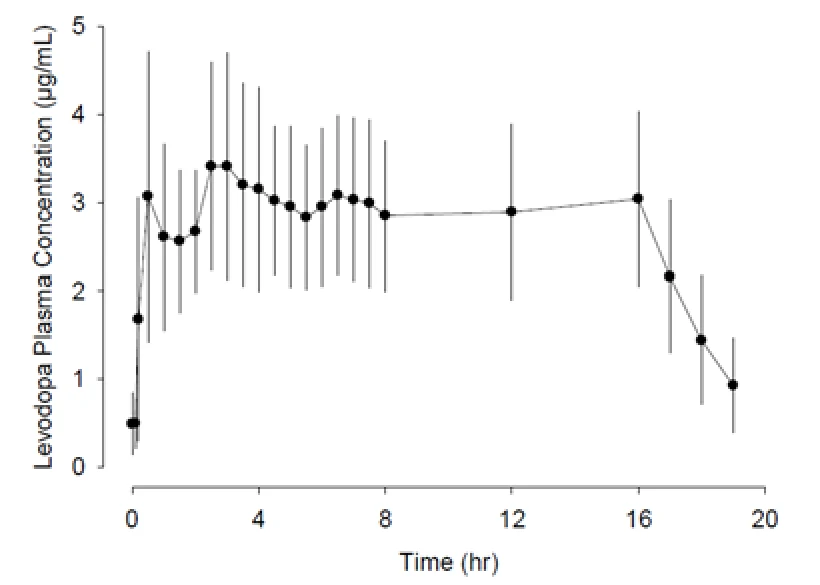
The pharmacokinetic parameters of levodopa and carbidopa with DUODOPA 16-hour infusion are presented in
Table 6.
Table 6 - Pharmacokinetic Parameters (Mean ± Standard Deviation) of Levodopa and Carbidopa with DUODOPA 16-Hour Infusion
| Analyte | ||||||||||
|---|---|---|---|---|---|---|---|---|---|---|
| Pharmacokinetic Parameters (units) | Levodopa (N = 18) | Carbidopa (N = 18) | ||||||||
| Total DUODOPA Dose on Pharmacokinetic Assessment Day (mg) | 1580 ± 403 | 395 ± 101 | ||||||||
| Tmax (h) | 2.9 ± 2.3 | 5.7 ± 5.2 | ||||||||
| Cmax (mcg/mL) | 4.21 ± 1.36 | 0.371 ± 0.149 | ||||||||
| Cmina (mcg/mL) | 0.45 ± 0.28 | 0.10 ± 0.07 | ||||||||
| Cavg (mcg/mL) | 2.91 ± 0.84 | 0.22 ± 0.08 | ||||||||
| AUC0-16 (mcg•h/mL) | 46.5 ± 13.3 | 3.54 ± 1.33 | ||||||||
| t½b (h) | 1.5 ± 0.19c | -- | ||||||||
| ||||||||||
The intra-subject variability in levodopa and carbidopa plasma concentrations starting from hour 2 to hour 16 following initiation of infusion was 13 and 19%, respectively.
In a 12-week, double-blind active-controlled, Phase III study, the intra-subject variability in levodopa and carbidopa plasma concentrations were much lower for patients treated with DUODOPA (21 and 25%, respectively) than in patients treated with oral levodopa/carbidopa 100/25 mg over-encapsulated tablets (67 and 39%, respectively).
Distribution
The volume of distribution for levodopa is 0.9 to 1.6 L/kg when given together with a decarboxylase inhibitor. The partitioning ratio for levodopa between erythrocytes and plasma is approximately 1. Levodopa has negligible binding to plasma proteins.
Metabolism
Levodopa is metabolized by 2 major pathways (decarboxylation and O-methylation) and 2 minor pathways (transamination and oxidation).
Decarboxylation of levodopa to dopamine by aromatic amino acid decarboxylase (AAAD) is the predominant metabolic pathway for levodopa administered without an inhibitor of AAAD (e.g., carbidopa). The major metabolites of this pathway are homovanillic acid and dihydroxyphenylacetic acid.
When levodopa is co-administered with carbidopa the decarboxylase enzyme is inhibited so that metabolism via catechol-O-methyl-transferase (COMT) becomes the dominant metabolic pathway. COMT methylates levodopa to 3-O-methyldopa (3-OMD). The half-life of this metabolite is approximately 10 times longer than that of levodopa, due to a significantly lower clearance. This results in a significantly higher plasma concentration of 3-OMD after chronic dosing.
Six metabolites of carbidopa have been identified in the urine of various species, including human. The 2 main metabolites of carbidopa are α-methyl-3-methoxy-4-hydroxyphenylpropionic acid and α-methyl-3,4-dihydroxyphenylpropionic acid. These 2 metabolites are primarily eliminated in the urine unchanged or as glucuronide conjugates.
Elimination
After intravenous administration of levodopa, together with carbidopa, the plasma clearance is 0.3 L/h/kg. The elimination half-life for levodopa is approximately 1 to 2 hours (in the presence of a dopa-decarboxylase inhibitor). Levodopa is eliminated completely through metabolism and the metabolites are excreted mainly in the urine.
The elimination half-life of carbidopa is approximately 2 hours. Unchanged carbidopa accounts for 30% of the total urinary excretion.
Special Populations and Conditions
No specific pharmacokinetic studies were conducted in special populations.
11 STORAGE, STABILITY AND DISPOSAL
Temperature:
Store DUODOPA in a refrigerator (2 to 8°C).
Other:
The cassette should be kept in the outer carton in order to protect from light.
12 SPECIAL HANDLING INSTRUCTIONS
A cassette is only to be used for 16 hours once it is out of refrigeration. Cassettes are single use only. Do not reuse cassettes even if some intestinal gel remains.
PART II: SCIENTIFIC INFORMATION
13 PHARMACEUTICAL INFORMATION
Drug Substance
Proper name: Levodopa
Chemical name: (2S)-2-Amino-3-(3,4-dihydroxyphenyl)propanoic acid
Molecular formula and molecular mass: C9H11NO4 and 197.2 g/mol
Structural formula:
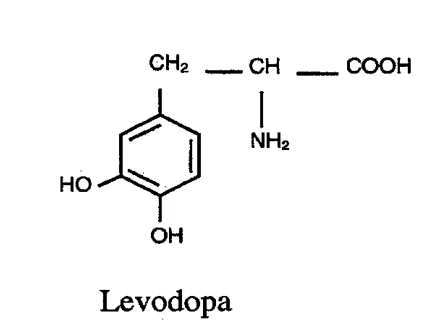
Physicochemical properties: Levodopa, an aromatic amino acid, is a white or slightly cream-coloured, crystalline compound that is slightly soluble in water and practically insoluble in alcohol and ether. It is freely soluble in 1M HCl and sparingly soluble in 0.1 M HCl.
Levodopa is light and oxygen sensitive.
Drug Substance
Proper name: Carbidopa monohydrate
Chemical name: (2S)-3-(3,4-dihydroxyphenyl)-2-hydrazino-2-methylpropanoic acid, monohydrate
Molecular formula and molecular mass: C10H14N2O4 · H2O and 244.2 g/mol
Structural formula:
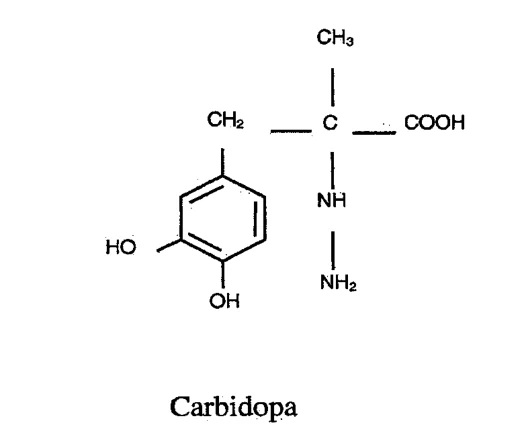
Physicochemical properties: Carbidopa monohydrate, an inhibitor or aromatic amino acid decarboxylation, is a white or yellowish-white, crystalline compound that is slightly soluble in water and very slightly soluble in alcohol. It is practically insoluble in methylene chloride and dissolves in dilute solutions of mineral acids.
Carbidopa monohydrate is light and oxygen sensitive.
14 CLINICAL TRIALS
14.1 Clinical Trials by Indication
Parkinson’s Disease
An Early Phase Clinical Development Program for DUODOPA (levodopa/carbidopa intestinal gel) provided preliminary efficacy and safety data, for the initial conditional marketing authorization of this product. The DUODOPA Phase III Clinical Development Program was conducted subsequent to conditional marketing authorization, to confirm the preliminary findings from the Early Phase Clinical Development Program.
Table 7 - Patient Demographics and Trial Design for DUODOPA Early Phase and Phase III Clinical Trials
| Study # | Study Design | Dosage, Route of Administration and Duration | Study Subjects (n) | Mean Age (Range) | Sex (M/F) |
|---|---|---|---|---|---|
| NPP-001-99 | Early phase, open-label, cross-over, single centre, PK study comparing DUODOPA nasoduodenal infusion versus oral levodopa/carbidopa tablets | 3 weeks DUODOPA by nasoduodenal infusiona: Individually adjusted infusion rates; mean total daily doses of 945 to 2694 mg levodopa + 3 weeks oral levodopa/carbidopa tabletsa: Individually adjusted doses with; daily doses of 850 to 2933 mg levodopa | 12 | 39 to 76 years | 10/2 |
| NPP-001-02 | Early phase, open-label, cross-over study comparing DUODOPA nasoduodenal infusion versus conventional anti-PD medicationb | 3 weeks DUODOPA by nasoduodenal infusiona: Individually adjusted infusion rates; mean total daily doses of 456 to 3556 mg levodopa + 3 weeks conventional anti-PD medication: Individually adjusted doses; mean daily doses of 275 to 2400 mg levodopa. | 24 | 50 to 79 years | 18/6 |
| Study # | Study Design | Dosage, Route of Administration and Duration | Study Subjects (n) | Mean Age (Range) | Sex (M/F) |
|---|---|---|---|---|---|
| S187-3-001/S187-3-002 | 12 weeks DUODOPA via PEG-J + placebo oral capsules OR 12 weeks Placebo gel via PEG-J + levodopa/carbidopa oral capsules (100/25 mg levodopa/carbidopa immediate-release tablets, encapsulated) Dose of DUODOPA and active control individually optimized by titration | 71 | 64.4 ± 8.3 (39 to 83 years) | 46/25 | |
| M15-535 (DYSCOVER) | Phase IIIb, open-label, randomized, multicenter study | 12 weeks DUODOPA via temporary NJ (optional) and PEG-J OR 12 weeks optimized medical treatment. Dose of DUODOPA individually optimized by titration | 61 | 69.0 ± 7.05 (46 to 83 years) | 29/32 |
Definitions: PEG-J: percutaneous endoscopic gastrostomy with jejunal extension; NJ: nasojejunal. | |||||
Early Phase Clinical Development Program
There were 46 patients included in the early phase clinical development program. All studies were open-label.
Study NPP-001-99
Study NPP-001-99 was a 6-week open-label, cross-over, single-centre, study comparing the pharmacokinetics of levodopa administered as DUODOPA nasoduodenal infusion versus oral levodopa/carbidopa in 12 patients with advanced, idiopathic levodopa-responsive Parkinson’s disease with diurnal motor fluctuations despite optimized levodopa treatment. Patients ranged in age from 39 to 76 years, with disease duration ranging from 7 to 29 years and duration of levodopa treatment ranging from 4 to 26 years. The primary efficacy endpoint was plasma levodopa variance.
Intraindividual plasma levodopa variance was reduced during DUODOPA treatment compared to optimized oral levodopa treatment. In addition, mean intraindividual coefficient of variation (standard deviation/mean) was also significantly lower (p < 0.01) during DUODOPA treatment (0.15 and 0.15 for each group) than during oral treatment (0.30 and 0.39).
Study NPP-001-02
Study NPP-001-02 was a 6-week, open-label, cross-over study comparing the efficacy and safety of DUODOPA nasoduodenal infusion versus conventional anti-Parkinson medication in 24 patients with advanced idiopathic levodopa-responsive Parkinson’s disease with severe fluctuating response despite frequent administrations of oral levodopa. Patients ranged in age from 50 to 79 years, with disease duration ranging from 6 to 23 years and duration of levodopa treatment ranging from 5 to 21 years. The primary efficacy endpoint was the duration and/or intensity of “On”, “Off” and “hyperkinetic” periods as assessed by rater-blinded assessments of video scoring.
During DUODOPA treatment, an increase in mean percentage “On” time was accompanied by a significant decrease in the mean percentage “Off” time (or “On” time with Parkinsonism). The percentage of “On” time with moderate to severe dyskinesia was not different for the 2 treatments.
Phase III Clinical Development Program
Study S187-3-001/S187-3-002
The efficacy of DUODOPA in controlling motor fluctuations in patients with advanced Parkinson’s disease was confirmed in a Phase III, 12-week, randomized, double-blind, double-dummy, active-controlled, parallel group, multicenter study evaluating the efficacy, safety, and tolerability of the DUODOPA System. The study was conducted with patients with advanced Parkinson’s disease who were levodopa-responsive, had persistent motor fluctuations, and experienced at least 3 hours of “Off” time per day, despite optimized treatment with oral levodopa/carbidopa and other available anti-Parkinson’s disease medications. The study data were from 2 identically designed studies that were combined prior to breaking the blind and conducting the analysis (Table 7, Study S187-3-001/S187-3-002).
Seventy-one (71) patients were randomized to treatment with levodopa/carbidopa intestinal gel + placebo capsules (DUODOPA n = 37) or placebo intestinal gel + levodopa/carbidopa capsules (LC-oral n = 34). A total of 66 patients completed the treatment (DUODOPA n = 35; LC-oral n = 31).
Mean age was similar in both treatment groups (overall mean age was 64.4 years), but the DUODOPA group had a greater proportion of patients < 65 years old (21/37 versus 15/34). The overall disease duration was 10.9 years, but mean disease duration was slightly less in the DUODOPA group than in the LC-oral group (10 years versus 11.9 years).
DUODOPA or placebo gel was infused for 16 hours daily through a PEG-J tube via the CADD® Legacy ambulatory infusion pump. Patients in both treatment arms had a PEG-J device placement; therefore the primary difference between the treatment groups was the route of administration of levodopa/carbidopa (intestinal versus oral).
Study medication doses were optimized during the first 4 weeks of treatment after PEG-J tube placement, and from Weeks 5 to 12 patients were to remain on a fixed dose of study medication. Rescue medication (oral immediate-release levodopa/carbidopa tablets) was permitted throughout the 12-week treatment period, to manage serious medical needs such as rapid deterioration of motor symptoms. The proportions of patients using rescue medication at least once during Weeks 5 to 12 were similar in both treatment groups (21/37 in the DUODOPA group versus 21/34 in the LC-oral group), but throughout the study the average dose of levodopa/carbidopa rescue medication was higher in the oral levodopa/carbidopa group than in the DUODOPA group. Rescue medication use on valid efficacy assessment days (mean 22.1 mg/day for DUODOPA and 35.7 mg/day for LC-oral) was incorporated as a covariate in the analysis of the primary efficacy endpoint. The mean total daily levodopa dose (from all sources) was 1117.3 mg/day levodopa for the DUODOPA group and
1350.6 mg/day levodopa for the LC-oral group. Most patients in both treatment groups continued to receive other permitted antiparkinson medications concomitantly throughout the study, if the doses of these medications were stable for at least 4 weeks prior to baseline.
The primary efficacy endpoint was the difference between treatments in the change from baseline to endpoint (Week 12) in the mean total daily “Off” time based on Parkinson’s Disease Diary© data collected for 3 days before the Week 12 study visit, with “Off” time normalized to a 16-hour awake/infusion period. The key secondary efficacy variable was the change from baseline to endpoint (Week 12) in “On” time without troublesome dyskinesia ("On" time without dyskinesia and "On" time with non-troublesome dyskinesia). The baseline values were collected 3 days prior to randomization and after 28 days of oral therapy standardization.
There was a clinically and statistically significant difference in reduction in the average daily normalized “Off” time (baseline to endpoint) of -1.91 hours (p = 0.0015) in the DUODOPA group compared to the oral levodopa/carbidopa group (LS mean change: -4.04 hours versus -2.14 hours (Table 8).
The change in “Off” time was associated with a clinically and statistically significant increase in the average daily normalized “On” time without troublesome dyskinesia (baseline to endpoint) of 1.86 hours (p = 0.0059), in the DUODOPA group compared to the oral levodopa/carbidopa group (LS mean change: 4.11 hours versus 2.24 hours) (Table 8).
Table 8 - Change from Baseline to Endpoint in Normalized "Off" Time and in "On" Time Without Troublesome Dyskinesia (ANCOVA, LOCF)
| Treatment Group | N | Baseline Mean (SD) (hours) | Endpoint Mean (SD) (hours) | LS Mean (SE) of Change (hours) | LS Mean (SE) of Difference (hours) | P-Value |
|---|---|---|---|---|---|---|
| “Off” Time (Primary Endpoint) | ||||||
| LC-orala | 31 | 6.90 (2.06) | 4.95 (2.04) | -2.14 (0.66) | ||
| DUODOPA | 35 | 6.32 (1.72) | 3.05 (2.52) | -4.04 (0.65) | -1.91 (0.57) | 0.0015b |
| “On” Time Without Troublesome Dyskinesiac (Key Secondary Endpoint) | ||||||
| LC-oral | 31 | 8.04 (2.09) | 9.92 (2.62) | 2.24 (0.76) | ||
| DUODOPA | 35 | 8.70 (2.01) | 11.95 (2.67) | 4.11 (0.75) | 1.86 (0.65) | 0.0059d |
Definitions: ANCOVA = analysis of covariance; LS = least squares; SD = standard deviation; SE = standard error | ||||||
Outcomes based on the Parkinson’s Disease Diary® data were supported by outcomes from other secondary endpoints including PDQ-39 Summary Index, Clinical Global Impression (CGI-I) score, and UPDRS Part II score (Activities of Daily Living).
12-Month Open Label Study
An open-label, single-arm, multicenter study was conducted to assess the long-term safety and tolerability of DUODOPA over 12 months. The study included 354 levodopa-responsive patients with advanced Parkinson’s disease who experienced motor fluctuations and at least 3 hours of “Off” time per day, despite optimized treatment with available Parkinson’s disease medications. Patients included in this study were not previously treated with DUODOPA in Study S187-3-001/S187-3-002. DUODOPA was administered as monotherapy in this study, but oral immediate release levodopa/carbidopa tablets were permitted as rescue medication in case of acute deterioration. The mean total daily dose of levodopa at the study endpoint was 1620.9 ± 589.8 mg/day. The overall magnitude of the reduction in "Off" time and increase in “On” time without troublesome dyskinesia from baseline to Week 54 was consistent with what was observed in the DUODOPA group in the 12-week active controlled study.
Phase IIIb Study
M15-535 (DYSCOVER)
A Phase IIIb, open-label, randomized, multicenter study was conducted to assess the effect of DUODOPA on dyskinesia compared with optimized medical treatment (OMT) over 12 weeks in patients with advanced Parkinson's disease who were levodopa-responsive and had persistent motor fluctuations that have not been controlled with OMT. Patients were eligible for participation in the study if they had a baseline Unified Dyskinesia Rating Scale (UDysRS) Total Score ≥ 30.
The primary efficacy endpoint was the mean change from baseline to week 12 in UDysRS total score. Sixty-one patients were enrolled in the study, with a similar mean age and disease duration. Disease duration was 14.0 years.
The UDysRS contains four parts. The historical disability section is composed of Part I (“On”-dyskinesia impact) and Part II (“Off”-dystonia impact) as perceived by the patient. The objective sub score, made up of parts III (impairment) and IV (disability), are assessed by the physician and rate the intensity of dyskinesias in various body parts and impact on specific activities. Parts III and IV were scored via videotape by a central rater blinded to the study protocol and hypothesis. All patients had external pumps during scoring, with patients in the OMT group wearing dummy pumps.
There was a clinically and statistically significant difference in reduction in the UDysRS total score (baseline to Week 12) of -15.05 points (p < 0.0001) in the DUODOPA group compared to the OMT (LS mean change: -17.37 points versus -2.33 points (Table 9).
Table 9 - Change from Baseline to Week 12 in UDysRS Total Score (MMRM, ITT)
| Treatment Group | Baseline | Week 12 | |||||
|---|---|---|---|---|---|---|---|
| N | Mean (SD) | N | Mean Change (SD) | LS Mean (SE) of Change | LS Mean (SE) of Difference | P-value | |
| OMT | 32 | 51.2 (11.56) | 26 | -1.5 (11.19) | -2.33 (2.56) | ||
| DUODOPA | 27 | 53.2 (12.24) | 24 | -18.7 (14.39) | -17.37 (2.79) | -15.05 (3.20) | < 0.0001 |
| Definitions: ITT = Intention-to-treat; MMRM = mixed-effect model repeated-measures; OMT = optimized medical treatments; SD = standard deviation; SE = standard error; UDysRS = Unified Dyskinesia Rating Scale | |||||||
Analysis of secondary efficacy endpoints using a fixed sequence testing procedure to control multiplicity, demonstrated statistically significant differences in favour of DUODOPA compared with OMT for “On” time without troublesome dyskinesia as measured by the Parkinson’s Disease Diary®, the
PDQ-8 Summary Index, Clinical Global Impression Change (CGI-C) score, UPDRS Part II score, and for “Off” time as measured by the Parkinson’s Disease Diary®. The UPDRS Part III score (motor examinations) did not meet statistical significance.
15 MICROBIOLOGY
No microbiological information is required for this drug product.
16 NON-CLINICAL TOXICOLOGY
DUODOPA contains hydrazine, a degradation product of carbidopa that can be genotoxic and possibly carcinogenic. In animal studies, hydrazine showed notable systemic toxicity, particularly by inhalation exposure. These studies reported that hydrazine is hepatotoxic, has CNS toxicities (although not described after oral treatment), and is genotoxic as well as carcinogenic.
General Toxicology
Acute Toxicity
At dosage ratios of 1:1, 1:2, 1:3, 1:4, 1:5 and 1:10 carbidopa to L-dopa, oral LD50 values in mice were 1930, 2280, 3270, 3090, 2940 and 3360 mg/kg, respectively. Clinical signs of toxicity were central stimulation appearing within 30 minutes of dosing and persisting 1 to 2 days. Deaths were mainly in the first 24 hours.
Long-Term Toxicity
Rat
Ratios of 25:250, 50:250 and 100:250 carbidopa/levodopa, with a fixed dose of 250 mg/kg/day of levodopa, given by gavage, were investigated in groups of 10 male and 10 female Sprague-Dawley rats for 26 days. The study was controlled with 10 male and 10 female rats receiving 0.5% methylcellulose. Apart from salivation, increased micturition and hyperactivity, no other findings were made.
Ratios of 25:500, 50:500 and 100:500 carbidopa/levodopa, with a fixed dose of 500 mg/kg/day of levodopa, given by gavage, were investigated in groups of 10 male and 10 female Sprague-Dawley rats for 33 days. The study was controlled with 10 male and 10 female rats receiving 0.5% methylcellulose. Mortality was recorded in all treatment groups and the high dose group was sacrificed after 19 days. Marked depression in body weight gain was recorded in the high and the intermediate groups. Meningeal hemorrhage was found in 2 high dose females and 1 intermediate group female.
Ratios of 2:1, 5:1 and 10:1 levodopa/carbidopa, with a fixed dose of 10 mg/kg/day of carbidopa, given by gavage, were investigated in groups of 70 male and 70 female Sprague-Dawley rats for 106 weeks. The study was controlled with 70 male and 70 female rats receiving 0.5% methylcellulose. Interim sacrifices of 10 male and 10 female animals were made at 26 and 52 weeks. Ptyalism was seen in the high dose animals until Week 35 and these animals were slightly sedated until Week 15. There were no differences in mortality between groups. Body weight gain was decreased in the high dose animals and the intermediate dose males. Slight increases in kidney weights were found in the high dose animals at 26 weeks and high and intermediate dose animals at 52 weeks. Slight increases in liver weights were found in high and intermediate dose females at 52 weeks. No significant pathologies were found at any time points.
Monkey
Ratios of 2:1, 5:1 and 10:1 levodopa/carbidopa, with a fixed dose of 10 mg/kg/day of carbidopa, given by gavage, were investigated in groups of 6 male and 6 female rhesus monkeys for 54 weeks. The study was controlled with 6 male and 6 female monkeys receiving 0.5% methylcellulose. An interim sacrifice of 3 males and 3 females was made at 26 weeks. Hyperactivity was noted over weeks 1 to 14 in the medium dose group and 1 to 26 weeks for the high dose group. Three deaths occurred: 1 low dose animal in Week 6, 1 medium dose animal in Week 15 and 1 control animal in Week 47; these deaths were not treatment related. There were no effects on body weight and hematological and biochemical parameters were within the normal range. Dose-related melanuria was found in all treated monkeys. Axonal degeneration of peripheral nerves was recorded in all treatment groups. Basophilic lamellar bodies occurred in the brain of 2 high dose animals.
Studies on dyskinesias in monkeys
It has been shown that squirrel monkeys treated twice daily with levodopa and carbidopa (15 and 3.75 mg/kg, respectively, by oral gavage) for 2 weeks developed dyskinesias. A study in cynomolgus monkeys showed that at the dose of 80 mg/kg/day levodopa and 20 mg/kg/day carbidopa for 13 weeks developed dyskinesias, which progressively intensified over the course of the study.
Carcinogenicity
Ratios of 2:1, 5:1 and 10:1 levodopa/carbidopa, with a fixed dose of 10 mg/kg/day of carbidopa, given by gavage, were investigated in groups of 70 male and 70 female Sprague-Dawley rats for 106 weeks. The study was controlled with 70 male and 70 female rats receiving 0.5% methylcellulose. Interim sacrifices of 10 male and 10 female animals were made at 26 and 52 weeks. Sufficient animals survived the treatment period to allow for proper interpretation of the data. There was no alteration to the tumour profile associated with the administration of this combination product.
Reproductive and Developmental Toxicology
Fertility and early embryonic development
Groups of 12 male Sprague-Dawley rats were given ratios of 2:1, 5:1 and 10:1 levodopa/carbidopa, with a fixed dose of 10 mg/kg/day of carbidopa, by oral gavage, for 70 days and each male mated to 3 untreated females. The control group was of 20 male animals. The females were sacrificed on Day 14 of gestation. No effects were seen on the number of pregnancies, implantations, resorptions, or foetuses per female when compared to the controls.
Groups of 24 female Sprague-Dawley rats were given ratios of 2:1, 5:1 and 10:1 levodopa/carbidopa, with a fixed dose of 10 mg/kg/day of carbidopa, by oral gavage, for 14 days and mated to untreated males. The control group was of 42 female animals. Half the animals were sacrificed on Day 14 and the other half allowed to litter. No effects were seen on the number of pregnancies, implantations, resorptions, or foetuses per female when compared to the respective controls.
Embryofetal development
Mice
Ratios of 250:25, 250:50, 250:125 and 500:100 mg/kg/day levodopa/carbidopa were administered, by oral gavage, to groups of 23 pregnant CF1 mice from Day 6 to 15 of gestation. The study was controlled with a group of 46 pregnant animals. In animals receiving the 250:125 and 500:100 mg/kg/day of levodopa/carbidopa significant decreases of foetal weights were found, and the number of stunted foetuses was higher than the controls. There was no increase in foetal mortality and malformations in comparison to the controls.
Ratios of 2.5:25, 12.5:125 and 25:250 mg/kg/day levodopa/carbidopa were administered by oral gavage to groups of 32 pregnant CF1 mice from Day 6 to 15 of gestation. The study was controlled with a group of 32 pregnant animals. On Day 19, 18 females from each group were sacrificed and the foetuses examined. One-third of the foetuses were examined for visceral malformations and ⅔ for skeletal abnormalities. Fourteen females from each group were permitted to litter normally and the pups observed for 4 weeks. Of the 32 females on each dose, 18, 19, 21 and 13 were pregnant from the control, low, intermediate, and high dose, respectively. There were no effects on maternal or pup weight gains. No abnormalities above control values were found. At Week 4 the number of live pups was marginally lower in animals dosed at the high combination dosage.
Rabbits
Ratios of 125:62.5, 187:37.5 and 250:25 mg/kg/day levodopa/carbidopa were administered by oral gavage to groups of 10 pregnant New Zealand White rabbits from Day 7 to 15 of gestation. The study was controlled with a group of 25 pregnant rabbits. There was decreased weight of the live foetuses in all test groups. The number of resorptions was increased. Visceral abnormalities of the lung, heart, and greater vessels, together with skeletal deformities were found at all dose levels. These effects are attributable to levodopa.
Rats
The ratio of 125:12.5 mg/kg/day of levodopa/carbidopa was administered by gavage to 21 pregnant Sprague-Dawley rats from Day 7 to 15 of gestation. The study was controlled with a group of 31 pregnant animals. Eleven females from each group were sacrificed at Day 21 and the other 10 animals allowed to litter. No differences were observed in numbers of resorptions, implants, pregnant females, live pups per litter or foetal abnormalities. In females allowed to litter, the average number of live pups were 14.7 for the control group and 10.7 for the treated group.