


Patient Medication Information: uses, side effects, how to take - Elonox
What is Elonox used for?
Elonox is used:
- To prevent the formation of deep vein thrombosis (blood clots), which can occur as a complication of orthopedic surgery such as hip or knee surgery or of intra-abdominal (inside the body cavity below diaphragm which contains stomach, intestines, liver, and other organs) surgeries;
- To prevent the formation of deep vein thrombosis in medical patients who are at risk of thromboembolic (blockage of blood vessel by a blood clot) complications due to severely restricted mobility during acute illnesses (cardiac insufficiency [reduced ability of heart to pump blood], respiratory failure or severe chest infections);
- To treat the deep vein thrombosis with or without pulmonary embolism (blockage of blood vessel in the lungs);
- To treat the unstable angina and non-Q-wave myocardial infarction (death of a part of the heart muscle that does not involve full thickness of the heart wall), concurrently with acetylsalicylic acid (ASA);
- To treat the acute ST-segment Elevation Myocardial Infarction (STEMI), a particular form of heart attack. This indication includes patients to be managed medically or those with subsequent Percutaneous Coronary Intervention (PCI), a procedure that opens up a coronary artery (blood vessel that brings blood and oxygen to the heart muscle) and restores blood flow;
- To prevent clotting in the extra-corporeal circulation during hemodialysis.
How does Elonox work?
Elonox is an anti-thrombotic drug. This means that Elonox helps to prevent blood clots from forming in patients who have either undergone surgery or are suffering from a medical condition that limits their mobility. It can also treat existing blood clots in deep veins or in unstable coronary artery disease (Unstable Angina or non Q-wave Myocardial Infarction).
What are the ingredients in Elonox?
Medicinal ingredients: Enoxaparin sodium.
Non-medicinal ingredients: Water for injection.
Elonox comes in the following dosage forms:
Elonox 100 mg/mL is available in pre-filled syringes offered with a system that shields the needle after injection:
- Single dose 30 mg/0.3 mL pre-filled syringes with protective shield
- Single dose 40 mg/0.4 mL pre-filled syringes with protective shield
- Single dose 60 mg/0.6 mL pre-filled syringes with protective shield
- Single dose 80 mg/0.8 mL pre-filled syringes with protective shield
- Single dose 100 mg/mL pre-filled syringes with protective shield
Do not use Elonox if you have:
- a known allergy to Elonox or any of its constituents;
- a known allergy to any other low molecular weight heparins and/or heparin;
- thrombocytopenia (a severe decrease in the number of platelets in the blood);
- History (within the past 100 days) of heparin-induced thrombocytopenia (HIT) (a blood clotting disorder caused by heparin).
- bacterial endocarditis (bacterial infection inside of the heart);
- active bleeding;
- a major clotting disorder;
- gastric or duodenal ulcer (defect of the internal walls of the stomach or small intestine);
- cerebrovascular accident (except if there are systemic emboli);
- severe uncontrolled hypertension (high blood pressure);
- eye problems due to diabetes (diabetic retinopathy) or hemorrhage (bleeding);
- a tendency to bleeding regardless of the reason;
- injury or surgery on the brain, spinal cord, eyes and ears;
- kidney problems;
- liver problems;
- spinal/epidural anesthesia is contraindicated where repeated treatment doses of Elonox (1 mg/kg every 12 hours or 1.5 mg/kg once daily) are required, due to an increased risk of bleeding;
- other conditions or diseases involving an increased risk of bleeding;
To help avoid side effects and ensure proper use, talk to your healthcare professional before you take Elonox. Talk about any health conditions or problems you may have, including if you:
- have prosthetic (artificial) heart valve,
- have a stroke (cerebrovascular accident),
- have a known allergy to Elonox or any of its constituents, or to other low molecular weight heparins and/or heparin,
- have thrombocytopenia (a severe decrease in the number of platelets in the blood), a history of heparin-induced thrombocytopenia (HIT) (a blood clotting disorder caused by heparin).
- have bacterial endocarditis (bacterial infection inside of the heart),
- have a major clotting disorder,
- have gastric or duodenal ulcer (defect of the internal walls of the stomach or small intestine),
- have hypertension (high blood pressure),
- have a tendency to bleeding regardless of the reason,
- have an injury or had surgery (spinal surgery with spinal/epidural anesthesia) involving the central nervous system, eyes or ears,
- have a spinal defect (or deformity),
- have kidney problems,
- have liver problems,
- have eye problems due to diabetes or hemorrhage (bleeding).
It is important that you provide your doctor with an accurate history of any serious illnesses you may have had in the past or any current medical conditions, as these may influence the action of Elonox.
You should also inform your doctor at once if you are pregnant or if you are breast-feeding, so he can evaluate the possible risks to you and the infant.
Other warnings you should know about:
Certain medications may intensify the anticoagulant effect (increase the anti-clotting effect) of Elonox. Therefore, it is important for you to advise your doctor of all drugs that you are presently taking.
It is necessary that you follow the instructions of your doctor or nurse carefully. Only give yourself the injections prescribed and do so the entire time period specified by your doctor.
Do not take any drugs other than those prescribed by your doctor while you are taking Elonox.
If you need to consult with another doctor or see your dentist, be absolutely sure to tell them that you are being treated with Elonox.
Tell your healthcare professional about all the medicines you take, including any drugs, vitamins, minerals, natural supplements or alternative medicines.
The following may interact with Elonox:
Drugs that affect blood clotting. These agents include medication such as:
- Acetylsalicylic acid (ASA), salicylates, and non-steroidal anti-inflammatories (e.g. diclofenac, ibuprofen, ketorolac);
- Prednisolone;
- Dextran, vitamin K antagonists, clopidogrel, ticlopidine and dipyridamole.
How to take Elonox:
Elonox is a prescription drug and must be used as directed. Usually it is administered as a subcutaneous injection, which means the injection is made just under the surface of the skin. For some conditions, Elonox may be administered as an intravenous (IV) injection. Elonox must NOT be administered by the intramuscular route.
Usual dose:
Hip or Knee Replacement Surgery: While you are in the hospital, your doctor or a nurse will give your first injection within 24 hours after your operation, so as to prevent blood clots from forming. After that, your doctor or a nurse will give you 2 subcutaneous injections every day (one injection every 12 hours) while you are in hospital.
In case of hip replacement surgery, after completing the treatment with 2 subcutaneous injections per day, your doctor may ask you to take 1 subcutaneous injection every day for the following days at home or in hospital for an additional 3 weeks.
Abdominal or Colorectal Surgery: While you are in the hospital, your doctor or a nurse will give your first injection 2 hours prior to surgery. After that, your doctor or a nurse will give you 1 subcutaneous injection once a day while you are in hospital, your doctor may ask you to continue to take 1 subcutaneous injection every day for up to 4 weeks.
Medical Patients: While you are in the hospital, your doctor or a nurse will give you 1 subcutaneous injection once a day. The usual duration of administration is 6 to 11 days.
Treatment of Deep Vein Thrombosis, with or without Embolism: while you are in the hospital, your doctor or a nurse will give you 1 subcutaneous injection once or twice daily for about 10 days.
Treatment of Unstable Angina or Non-Q-Wave Myocardial Infarction: while you are in the hospital, your doctor or a nurse will give you 2 subcutaneous injections every day (one injection every 12 hours) along with oral ASA (100 to 325 mg once daily) for a minimum of 2 days.
Treatment of acute ST-segment Elevation Myocardial Infarction (STEMI): while you are in the hospital, your doctor or a nurse will give you a single intravenous (IV) injection followed by 2 subcutaneous injections every day (one injection every 12 hours) along with oral ASA (75 to 325 mg once daily) for a minimum of 8 days, unless contraindicated.
It is possible that after you go home, you may need to continue your injections of Elonox for a few days.
Prevention of thrombus formation in the extra-corporeal circulation during hemodialysis: while you are in the hospital, your doctor or a nurse will inject Elonox into the arterial line of the circuit at the beginning of the dialysis session. The effect of this dose is usually sufficient for a 4-hour session.
Instructions for self-injection of Elonox
Your doctor may want you to continue your Elonox injections at home for a few days. If so, he or a nurse will show you how to administer your Elonox injections before you are released from hospital. It is essential that you follow these instructions exactly. If you have questions, be sure you ask your doctor or nurse to provide the explanations you require.
Proper subcutaneous (under the skin) injection of Elonox is essential to prevent pain and bruising at the injection site.
When at home, there is nothing for you to prepare. The syringe is pre-filled with the exact amount of drug required. Do not press on the plunger prior to injection.
Elonox solution should be inspected visually for clarity, particulate matter, precipitation, discolouration, and leakage prior to administration. Do not use if solution shows haziness, particulate matter, discolouration or leakage.
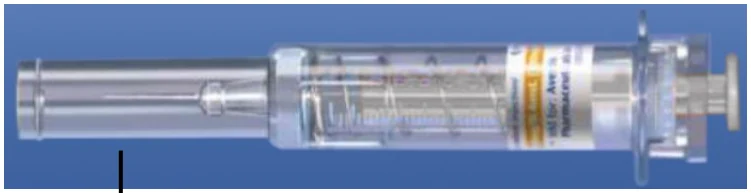
Pre-filled syringe before safety device activation

Pre-filled syringe after safety device activation
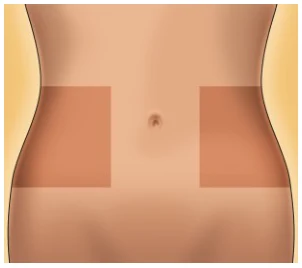
The recommended site for injection is into the fat of the lower abdomen. This should be at least 5 centimeters away from your belly button and out towards your sides.
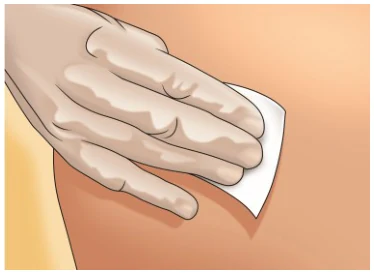
Prior to injection, wash your hands and cleanse (do not rub) the selected site for injection with an alcohol swab. Select a different site of the lower abdomen for each injection.
Needle
Needle cover
Plunger
Safety device
Remove the needle cover by pulling it straight off the syringe. If adjusting the dose is required, the dose adjustment must be done prior to injecting Elonox.
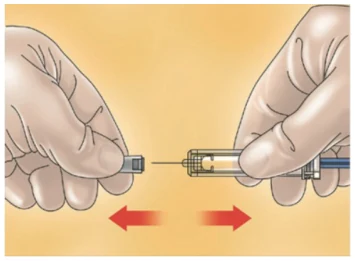
NOTE: To avoid the loss of drug when using the 30 and 40 mg pre-filled syringes, do not expel the air bubble from the syringe before the injection.
Sit or lie down in a comfortable position and gather a fold of skin with your thumb and forefinger.

Then holding the syringe at a right angle to the skin folded between your thumb and forefinger, insert the needle as far as it will go. Hold the skin fold throughout the injection process. Once the needle has been inserted, the syringe should not be moved.
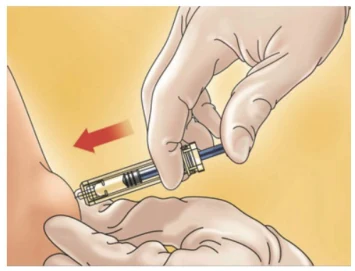
Push the plunger to inject Elonox. Be sure the syringe is empty and the plunger is pushed all the way down before removing the syringe.
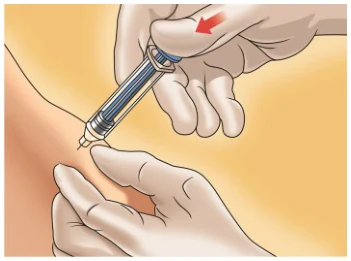
Remove the needle at a right angle, by pulling it straight out. You can now release the skin fold and apply light pressure to the skin at the injection site for several seconds with an alcohol swab. This action will help lessen any oozing of Elonox or bleeding. Do not rub the injection site.
Once the syringe is removed from the injection site, keep your finger on the plunger rod.
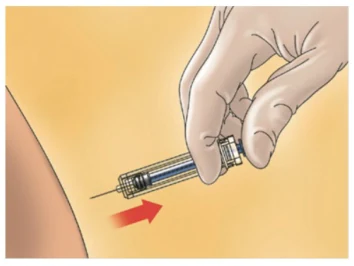
Orient the needle away from you and others, and activate the safety system by firmly pushing the plunger rod. The protective sleeve will automatically cover the needle and an audible “click” will be heard to confirm shield activation.
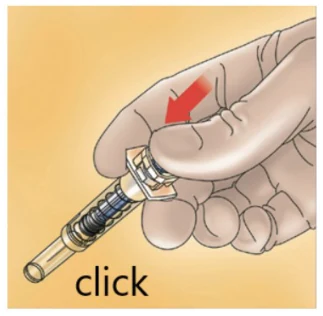
NOTE:
- The safety system can only be activated once the syringe has been emptied.
- Activation of the safety system must be done only after removing the needle from your skin.
- Do not replace the needle shield after injection.
- The safety system should not be sterilized.
Activation of the safety system may cause minimal splatter of fluid. For optimal safety activate the system while orienting it downwards away from yourself and others.
You should then safely dispose of the syringe and needle with its protective sleeve, so they remain out of reach of children.
Overdose:
Accidental overdosage may result in hemorrhaging, which cannot be treated at home. Therefore, if you suspect that you have used too much Elonox, call your doctor immediately even if you do not yet observe any unusual symptoms. Your doctor can then make arrangements to bring you to hospital for observation and/or treatment.
| If you think you, or a person you are caring for, have taken too much Elonox, contact a healthcare professional, hospital emergency department, or regional poison control centre immediately, even if there are no symptoms. |
Missed Dose:
If you miss a dose of this medication by a few hours, take it as soon as you remember. However if you are close to the time of the next dose, skip the missed dose and proceed with the regular dosing schedule. Do not double doses. If you are unsure about how to proceed contact your doctor or your pharmacist.
What are possible side effects from using Elonox?
These are not all the possible side effects you may have when taking Elonox. If you experience any side effects not listed here, tell your healthcare professional.
Administration of Elonox may result in bleeding which can have serious or life-threatening consequences. Hemorrhagic strokes (bleeding inside of the brain) and serious intra-abdominal bleeding (bleeding into the body cavity below diaphragm which contains stomach, intestines, liver, and other organs) have been reported. Elonox is generally well tolerated when used according to directions of use.
During your hospital stay or when using Elonox at home, it is important that you notify your doctor immediately if you notice any of the following symptoms which may be a sign of an underlying complication:
- Bleeding or oozing from the surgical wound;
- Any other bleeding episodes, for example, at the site of the injection, nosebleeds, blood in the urine or if you cough or throw up blood, or have bloody stools;
- Bleeding gums while brushing teeth;
- Spontaneous bruising (a bruise not caused by a blow or any apparent reason);
- Purplish or reddish discolouration or pain around the injection site;
- Skin discolouration as caused by ruptured blood vessels;
- Pain or swelling in any part of your leg, foot or hip;
- Dizziness;
- Headache;
- Rapid or unusual heart beat;
- Chest pain or shortness of breath;
- Vomiting;
- Confusion;
- Abdominal pain.
Talk to you doctor or pharmacist if you experience other side effects such as:
- Changes in the results of blood tests done to check how your liver is working during treatment with Elonox.
- Signs of liver problems such as loss of appetite, dark urine, light-colored stools, yellowing of the skin or eyes (jaundice).
- If you have an allergic reaction. The signs may include: skin rash, angioedema (swelling of lips, face, throat and tongue, breathing difficulties) and anaphylactic/anaphylactoid reactions including shock.
- Long term use of Elonox (greater than 3 months) may increase your risk of bone thinning (osteoporosis).
- Some patients may experience hair loss. The hair usually grows back once the treatment is discontinued.
- If you have had a spinal puncture or a spinal anesthetic and notice tingling, numbness and muscular weakness, particularly in the lower part of your body, or if you have problems controlling your bowels and/or bladder.
This is not a complete list of side effects. For any unexpected effects while taking Elonox, contact your doctor or pharmacist.
Reporting Side Effects
You can report any suspected side effects associated with the use of health products to Health Canada by:
NOTE: Contact your health professional if you need information about how to manage your side effects. The Canada Vigilance Program does not provide medical advice. |
Storage:
Store at 15°C to 25°C. Protect from heat. Keep out of reach and sight of children.
If you want more information about Elonox:
- Talk to your healthcare professional
- Find the full product monograph that is prepared for healthcare professionals and includes this Patient Medication Information by visiting the Health Canada website: (https://www.canada.ca/en/health-canada/services/drugs-health-products/drug-products/drug-product-database.html; the manufacturer’s website (https://www.fresenius-kabi.com/en-ca); or by calling 1-877-821-7724.
Fresenius Kabi Canada Ltd.
165 Galaxy Blvd., Suite 100
Toronto, ON M9W 0C8