


Patient Medication Information: uses, side effects, how to take - Innohep
What is innohep® used for?
- to prevent the formation of blood clots (venous thromboembolism) which can form as a complication of orthopaedic or general surgery and,
- to prevent and treat clots that have blocked a blood vessel (deep vein thrombosis) or that have formed in the lungs (pulmonary embolism) and,
- to prevent bloods clots forming in dialysis lines.
How does innohep® work?
innohep® works to prevent blood clots from forming in the blood vessels of patients at risk and is used to treat existing clots.
What are the ingredients in innohep®?
Medicinal ingredients: Tinzaparin sodium (a low molecular weight heparin).
Non-medicinal ingredients: The multi-dose vials of innohep® 10,000 anti-Xa IU/mL contain benzyl alcohol. The graduated syringes of innohep® 20,000 anti-Xa IU/mL contain sodium metabisulphite. The multi-dose vials of innohep® 20,000 anti-Xa IU/mL contain benzyl alcohol and sodium metabisulphite.
The needle shield of the prefilled syringes may contain latex.
innohep® comes in the following dosage forms:
Pre-filled single-use safety syringes:
| 10,000 anti-Xa IU/mL | ||
|---|---|---|
| 2,500 anti-Xa IU IU/0.25 mL | 3,500 anti-Xa IU/0.35 mL | 4,500 anti-Xa IU/0.45 mL |
| 20,000 anti-Xa IU/mL | ||
8,000 anti-Xa IU/0.4 mL 10,000 anti-Xa IU/0.5 mL | 12,000 anti-Xa IU/0.6 mL 14,000 anti-Xa IU/0.7 mL | 16,000 anti-Xa IU/0.8 mL 18,000 anti-Xa IU/0.9 mL |
Multi-dose vials: 20,000 IU/2 mL and 40,000 IU/2 mL
Syringes have a 27-gauge (10,000 anti-Xa IU/mL) or 29-gauge (20,000 anti-Xa IU/mL), ½ inch needle.
Do not use innohep® if:
Do not use innohep® if you have or have had any of the following:
an allergy to innohep® or its ingredients (e.g., benzyl alcohol, sodium metabisulphite) or components of the container or to other LMWHs and/or heparin,
- a history of decreased platelet count,
- a bacterial infection of the heart (bacterial endocarditis),
- serious bleeding, or have conditions or diseases with a high risk of bleeding,
- a blood clotting disorder which increases your risk of bleeding,
- a cerebrovascular accident (e.g., stroke),
- a stomach or intestinal ulcer or an ulcerating cancer,
- uncontrolled, severe high blood pressure,
- eye disorders due to diabetes or bleeding,
- an injury or surgery on the brain, spinal cord, eyes or ears,
- an artificial heart valve,
- a spinal/epidural anaesthesia and need high doses of innohep® as this increases the risk of bleeding.
The multi-dose vials of innohep® contain benzyl alcohol and must not be given to children <3yrs, premature infants or newborns due to the risk of developing gasping syndrome.
To help avoid side effects and ensure proper use, talk to your healthcare professional before you use innohep®. Talk about any health conditions or problems you may have, including if you:
- have stomach or intestinal ulcers or have diabetes,
- are asthmatic or have a sensitivity to sulphites,
- have or have had serious bleeding, have a medical condition with a risk of bleeding or have low platelet levels,
- have high blood pressure or had a stroke,
are pregnant, nursing or planning on becoming pregnant,
- have a prosthetic heart valve,
- are allergic to latex (natural rubber),
- if you need to consult with another doctor or see your dentist, be absolutely sure to tell them that you are being treated with innohep®.
Other warnings you should know about:
innohep® should not be given by intramuscular injection.
Do not use other medications by intramuscular injection while you are using innohep®.
Benzyl alcohol may cross the placenta, therefore innohep® multi-dose vials should not be used in pregnant women.
The sodium metabisulphite in innohep® can cause severe allergic reaction in asthmatics or those with sulphite sensitivity.
innohep® should be used with caution in patients with poor renal function.
Tell your healthcare professional about all the medicines you take, including any drugs, vitamins, minerals, natural supplements or alternative medicines.
The following may interact with innohep®:
innohep® should be used with caution if you are taking any medication that may cause increased risk of bleeding such as oral anticoagulants, NSAIDS including ASA, platelet inhibitors, thrombolytic agents vitamin K antagonists, activated protein C, direct factor Xa and IIa inhibitors.
Tell your doctor about all the drugs you are taking, including non prescription medicines. Do not take any drugs other than those prescribed by your doctor while you are using innohep®.
How to use innohep®:
innohep® should be injected just under the surface of the skin i.e., subcutaneously (with the exception of dialysis).
Hip and Knee Surgery: A subcutaneous injection is given after surgery, once a day for 7 to 10 days. You may also receive an injection 2 hours before surgery.
General Surgery: A subcutaneous injection is given 2 hours before surgery followed by an injection once daily after surgery for 7 to 10 days.
To Treat Blood Clots: A treatment (175 anti-Xa IU/kg) dose is given once daily usually for 5 to 7 days. In some cases, longer treatment is needed. Treatment may last for 3 to 6 months. Follow the treatment period prescribed by your doctor. At the same time, you may be given a blood thinner (pill). Take both medicines as instructed.
For Haemodialysis: A single dose is delivered into the dialyser tubing at the beginning of a dialysis session. Doses in subsequent dialysis sessions are adjusted as necessary. If you are at risk for bleeding, dialysis is done using halved doses.
At home: Follow the instructions of your doctor or nurse carefully. Only use the prescribed dose of innohep® for the time period specified by your doctor.
Preparing the Dose (use clean hands):
Graduated syringes: Before using this syringe, you may need to adjust the volume to the amount prescribed by your doctor. To adjust the dose, hold the syringe with the needle pointing up and gently tap the syringe to move the air bubble to the top of the syringe. Remove the cap. Slowly push the syringe plunger up to push the air bubble out. Continue to slowly push the plunger up until the top edge of the rubber stopper reaches the line matching your dose. Follow “self-injection” instructions below.
If you don’t need to adjust the dose, it is not necessary to remove the air bubble in the syringe before injecting. Follow the “self-injection” instructions below.
Multi-dose vials: Using a 1-mL syringe with a 27 or 29 gauge, 1/2 inch needle, insert the needle into the vial. Turn the vial upside down and pull back slowly on the plunger to draw up the desired dose. Draw up more if you see an air bubble in the syringe. Tap the syringe lightly and carefully remove air bubbles with a gentle push on the plunger. Check that you have the correct dose. If necessary, re-cap needle until ready for use.
Instructions for Self-injection:
A proper injection technique will help prevent pain and bruising at the injection site. innohep® safety syringes are designed to prevent needle stick injuries. Follow these instructions carefully for proper use of the safety device.
Wash your hands before you inject the medicine. Gently wipe (do not rub) the skin around the injection site clean using an alcohol swab and let skin dry.
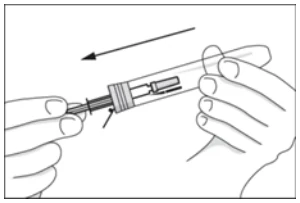
| 1. | Open the storage tube by flipping the tab back and bending the coloured lid all the way back. Remove the syringe and inspect the content of the syringe before you use it. If the medicine is cloudy or has particles, do not use it but take another syringe. A clear to slightly yellow solution is fine to use. | |
|---|---|---|
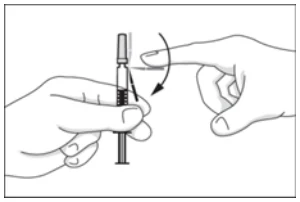
| 2. | Before removing needle cap, bend the safety device (orange tab) down and away from the cap on the needle. | |
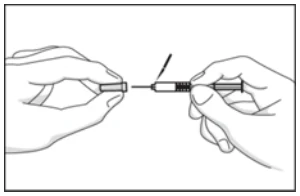
| 3. | Pull the protective needle cap straight off without bending the needle. If necessary, adjust the syringe to the dose prescribed by your doctor as previously described. | |
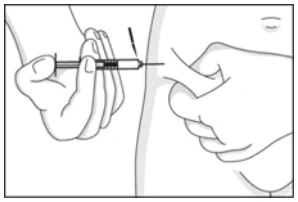
| 4. | Hold a fold of skin gently between your thumb and index finger. With the other hand gently insert the needle straight (at a right angle) into the skin fold. Be careful not to inject into the muscle. Ensure the safety device is not in the way. | |
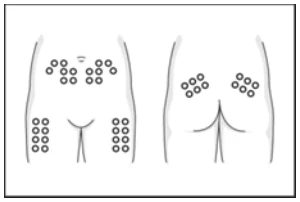
| 5. | Push the plunger all the way down and slowly inject the dose into the fatty tissue of the skin. The preferred location is to inject your lower stomach. You can also inject the sides of the thigh, the lower back or the upper arm. Avoid the belly button area. Wait a few seconds for the solution to spread out. Gently remove the needle and then release the skin fold. Using a cotton swab, apply light pressure at the injection site. Choose a different injection site next time (for e.g., move from the left to the right side of the stomach). | |
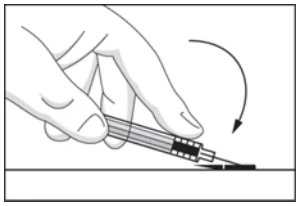
| 6. | Using the edge of a hard surface bring the safety device up from underneath back to its original position against the needle. Place the safety device flat against a hard surface and press down firmly on the syringe until the needle locks «clicks» into the device. | |
| 7. | Place the used syringe in the storage tube with the needle facing down and cap the tube or discard the syringe in a sharps container. The syringe is now safely secured. Take the tube or sharps container to the hospital or your pharmacist for disposal. Keep used syringe away from children. | |
Overdose:
 | ||
|---|---|---|
 | ||
 | ||
 | ||
 | ||
 |
Accidental overdose may result in bleeding which can not be treated at home.
If you think you, or a person you are caring for, have used too much innohep®, contact a healthcare professional, hospital emergency department, or regional poison control centre immediately, even if there are no symptoms.
Missed dose:
If you miss a dose, do not double up. Continue with your next injection as scheduled. If you are not sure what to do, talk to your doctor or pharmacist.
What are possible side effects from using innohep®?
These are not all the possible side effects you may have when using innohep®. If you experience any side effects not listed here, tell your healthcare professional.
Administration of innohep® may result in bleeding which can have serious or life-threatening consequences. Strokes and serious internal bleeding have been reported. innohep® is generally well tolerated when used according to directions for use.
If you notice any of the following effects while you are being treated with innohep®, contact your doctor promptly:
- persistent bleeding at the injection site and/or from surgical wounds;
- bruising without apparent cause;
- allergic reactions;
- other bleeding such as a heavy nosebleed, blood in the urine, coughing or throwing up blood, or excessive bleeding from the gums while brushing your teeth;
- purplish or reddish discolouration or pain and bruising around the injection site;
- dizziness, rapid heartbeat, shortness of breath. These signs could indicate you are bleeding internally.
Serious side effects and what to do about them
| Symptom/effect | Talk to your healthcare professional | Stop taking drug and get immediate medical help | |
|---|---|---|---|
| Only if severe | In all cases | ||
| RARE | |||
| Major bleeding events (e.g., at a surgical site, stroke, blood in the urine) | √ | ||
| Allergic reaction (incl. severe asthmatic episode) | √ | ||
If you have a troublesome symptom or side effect that is not listed here or becomes bad enough to interfere with your daily activities, tell your healthcare professional.
Reporting Side Effects
You can report any suspected side effects associated with the use of health products to Health
Canada by:
- Visiting the Web page on Adverse Reaction Reporting (https://www.canada.ca/en/health-canada/services/drugs-health-products/medeffect-canada.html) for information on how to report online, by mail or by fax; or
- Calling toll-free at 1-866-234-2345.
NOTE: Contact your health professional if you need information about how to manage your side effects. The Canada Vigilance Program does not provide medical advice.
Storage:
Do not store above 30°C.
Keep out of reach and sight of children.
If you want more information about innohep®:
- Talk to your healthcare professional
- Find the full product monograph that is prepared for healthcare professionals and includes this Patient Medication Information by visiting the Health Canada website: (https://www.canada.ca/en/health-canada/services/drugs-health-products/drug-products/drug-product-database.html); the manufacturer’s website www.leo-pharma.com\canada, or by calling 1-800-263-4218.
®Registered trademark of LEO Pharma A/S used under license by LEO Pharma Inc. Canada.