


Product Monograph - Epinephrine Injection USP 1 mg/mL
ACTION AND CLINICAL PHARMACOLOGY
The actions of epinephrine resemble the effects of stimulation of adrenergic nerves. It acts on both alpha and beta receptor sites of sympathetic effector cells. Its most prominent actions are on the beta receptors of the heart, vascular and other smooth muscle. When given by rapid intravenous injection, it produces a rapid rise in blood pressure, mainly systolic, by (1) direct stimulation of cardiac muscle which increases the strength of ventricular contraction, (2) increasing the heart rate and (3) constriction of the arterioles in the skin, mucosa and splanchnic areas of the circulation.
When given by slow intravenous injection, epinephrine usually produces only a moderate rise in systolic and a fall in diastolic pressure. Although some increase in pulse pressure occurs, there is usually no great elevation in mean blood pressure. Accordingly, the compensatory reflex mechanisms that come into play with a pronounced increase in blood pressure do not antagonize the direct cardiac actions of epinephrine as much as with catecholamines that have a predominant action on alpha receptors.
Total peripheral resistance decreases by action of epinephrine on beta receptors of the skeletal muscle vasculature and blood flow is thereby enhanced. Usually this vasodilator effect of the drug on the circulation predominates so that the modest rise in systolic pressure which follows slow injection or absorption is mainly the result of direct cardiac stimulation and increase in cardiac output. In some instances peripheral resistance is not altered or may even rise owing to a greater ratio of alpha to beta activity in different vascular areas.
Epinephrine relaxes the smooth muscles of the bronchi and iris and is a physiologic antagonist of histamine. The drug also produces an increase in blood sugar and glycogenolysis in the liver.
Pharmacokinetics
Intravenous injection produces an immediate and intensified response. Following intravenous injection epinephrine disappears rapidly from the blood stream.
Epinephrine is rapidly inactivated in the body and is degraded by enzymes in the liver and other tissues. The large portion of injection doses is excreted in the urine as inactivated compounds and the remainder partly unchanged or conjugated.
The drug becomes fixed in the tissues and is inactivated chiefly by enzymatic transformation to metanephrine or normetanephrine, either of which is subsequently conjugated and excreted in the urine in the form of sulfates and glucuronides. Either sequence results in the formation of 3-methoxy-4-hydroxy-mandelic acid (vanillyl-mandelic acid; VMA) which also is detectable in the urine.
Sodium chloride added to render the solution isotonic for injection of the active ingredient is present in amounts insufficient to affect serum electrolyte balance of sodium (Na+) and chloride (Cl-) ions.
INDICATIONS AND CLINICAL USE
In general, the most common uses of epinephrine are to relieve respiratory distress due to bronchospasm, to provide rapid relief of hypersensitivity (anaphylactic or anaphylactoid) reactions to drugs, animal serums and other allergens, and to prolong the action of infiltration anesthetics. Its cardiac effects may be of use in restoring cardiac rhythm in cardiac arrest due to various causes, and attacks of transitory atrioventricular (A-V) heart block and syncopal seizures (Stokes-Adams syndrome), but it is not used in cardiac failure or in hemorrhagic, traumatic, or cardiogenic shock.
In acute attacks of ventricular standstill, physical measures should be applied first. When external cardiac compression and attempts to restore the circulation by electrical defibrillation or use of a pacemaker fail, intracardiac puncture and intramyocardial injection of epinephrine may be effective.
Epinephrine is used as a hemostatic agent.
It is also used in treating mucosal congestion of hay fever, rhinitis, and acute sinusitis, to relieve bronchial asthmatic paroxysms, in syncope due to complete heart block or carotid sinus hypersensitivity, for symptomatic relief of serum sickness, urticaria, angioneurotic edema; for resuscitation in cardiac arrest following anesthetic accidents; in simple (open angle) glaucoma; for relaxation of uterine musculature and to inhibit uterine contractions. EPINEPHRINE
INJECTION can be utilized to prolong the action of intraspinal and local anesthetics (see CONTRAINDICATIONS).
CONTRAINDICATIONS
Epinephrine is contraindicated in patients with known hypersensitivity to sympathomimetic amines, in patients with angle closure glaucoma, and patients in shock (nonanaphylactic). It should not be used in patients anesthetized with agents such as cyclopropane or halothane as these may sensitize the heart to the arrhythmic action of sympathomimetic drugs.
Epinephrine should not ordinarily be used in those cases where vasopressor drugs may be contraindicated, e.g., in thyrotoxicosis, diabetes, patients receiving MAO inhibitors, in obstetrics when maternal blood pressure is in excess of 130/80 or during labor, and in hypertension and other cardiovascular disorders.
WARNINGS
Inadvertently induced high arterial blood pressure may result in angina pectoris, aortic rupture or cerebral hemorrhage.
Epinephrine may induce potentially serious cardiac arrhythmias in patients not suffering from heart disease and in patients with organic heart disease or who are receiving drugs that sensitize the myocardium.
Parenterally administered epinephrine initially may produce constriction of renal blood vessels and decrease urine formation and large doses may cause complete renal shutdown.
Epinephrine and Beta-blockers
There may be increased difficulty in treating an allergic-type reaction in patients on beta-blockers. In these patients, the reaction may be more sever due to pharmacologic effects of the beta-blockers and problems with fluid changes (see PRECAUTIONS-Drug Interactions).
EPINEPHRINE IS THE PREFERRED TREATMENT FOR SERIOUS ALLERGIC OR OTHER EMERGENCY SITUATIONS EVEN THOUGH THIS PRODUCT CONTAINS SODIUM METABISULFITE, A SULFITE THAT MAY CAUSE ALLERGIC-TYPE REACTIONS INCLUDING ANAPHYLACTIC SYMPTOMS OR LIFE-THREATENING OR LESS SEVERE ASTHMATIC EPISODES IN CERTAIN SUSCEPTIBLE PERSONS. THE ALTERNATIVES TO USING EPINEPHRINE IN A LIFE-THREATENING SITUATION MAY NOT BE SATISFACTORY. THE PRESENCE OF A SULFITE IN THIS PRODUCT SHOULD NOT DETER ADMINISTRATION OF THE DRUG FOR TREATMENT OF SERIOUS ALLERGIC OR OTHER EMERGENCY SITUATIONS.
PRECAUTIONS
Although epinephrine can produce ventricular fibrillation, its actions in restoring electrical activity in asystole and in enhancing defibrillation of the fibrillating ventricle are well documented. The drug, however, should be used with caution in patients with ventricular fibrillation.
In patients with prefibrillatory rhythm, intravenous epinephrine must be used judiciously, with extreme caution, because of its excitatory action on the heart. Since the myocardium is sensitized to this action of the drug by many anesthetic agents, epinephrine may convert asystole to ventricular fibrillation if used in the treatment of anesthetic cardiac accidents.
Epinephrine should be used cautiously in the elderly and in patients with diabetes, hyperthyroidism, hypertension and cardiac diseases/arrhythmias. Patients with long-standing bronchial asthma and emphysema, who have developed degenerative heart disease, should be administered the drug with extreme caution.
Fatalities may also result from pulmonary edema because of the peripheral constriction and cardiac stimulation produced. Rapidly acting vasodilators such as nitrites, or alpha-blocking agents may counteract the marked pressor effects of epinephrine.
Drug Interactions
Beta-blockers
There may be increased difficulty in treating an allergic-type reaction in patients on beta-blockers. In these patients, the reaction may be more severe due to pharmacologic effects of the beta-blockers and problems with fluid changes. Epinephrine should be administered with caution, since it may not have its usual effects in the treatment of anaphylaxis. On the one hand, larger doses of epinephrine may be needed to overcome the bronchospasm, while on the other, these doses can be associated with excessive alpha-adrenergic stimulation with consequent hypertension, reflex bradycardia and heart-block and possible potentiation of bronchospasm. Alternatives to the use of large doses of epinephrine include vigorous supportive care such as fluids and the use of beta agonists including parenteral salbutamol or isoproterenol to overcome bronchospasm and norepinephrine to overcome hypotension.
Sympathomimetic Drugs
Epinephrine should not be administered concomitantly with other sympathomimetic drugs (such as isoproterenol) because of possible additive effects and increased toxicity. Combined effects may induce serious cardiac arrhythmias. They may be administered alternately when the preceding effect of other such drugs has subsided.
Cyclopropane or Halogenated Hydrocarbon
Administration of epinephrine to patients receiving cyclopropane or halogenated hydrocarbon general anesthetics such as halothane which sensitize the myocardium, may induce cardiac arrhythmia (See CONTRAINDICATIONS). When encountered, such arrhythmias may respond to administration of a beta-adrenergic blocking drug.
Diuretics
Diuretic agents may decrease vascular response to pressor drugs such as epinephrine.
Guanethidine
Epinephrine may antagonize the neuron blockade produced by guanethidine, resulting in decreased antihypertensive effect and requiring increased dosage of the latter.
MAO Inhibitors
All vasopressors should be used cautiously in patients taking monoamine oxidase (MAO) inhibitors (See CONTRAINDICATIONS).
Others
The effects of epinephrine may be potentiated by tricyclic antidepressants, certain antihistamines, e.g. diphenhydramine, tripelennamine, chlorpheniramine, and sodium levothyroxine.
Epinephrine also should be used cautiously with other drugs (e.g., digitalis glycosides) that sensitize the myocardium to the actions of sympathomimetic agents.
Pregnancy
Epinephrine has been shown to be teratogenic in rats when given in doses about 25 times the human dose.
It is also not known whether epinephrine can cause fetal harm when administered to a pregnant woman or can affect reproduction capacity. Epinephrine should be given to a pregnant woman only if clearly needed.
Labor and Delivery
Parenteral administration of epinephrine, if used to support blood pressure during low or other spinal anesthesia for delivery can cause acceleration of fetal heart rate and should not be used in obstetrics when maternal blood pressure exceeds 130/80 (see CONTRAINDICATIONS).
Epinephrine may delay the second stage of labor.
ADVERSE REACTIONS
Transient and minor side effects of anxiety, headache, fear and palpitations may occur with systemic therapeutic doses, especially in hyperthyroid individuals. Adverse effects such as cardiac arrhythmias and excessive rise in blood pressure may also occur with systemic therapeutic doses or inadvertent overdosage. Other adverse reactions include: cerebral hemorrhage, hemiplegia, subarachnoid hemorrhage, anginal pain in patients with angina pectoris, anxiety, restlessness, throbbing headache, tremor, weakness, dizziness, pallor and respiratory difficulty.
Reporting Side Effects You can help improve the safe use of health products for Canadians by reporting serious and unexpected side effects to Health Canada. Your report may help to identify new side |
effects and change the product safety information. 3 ways to report:
NOTE: Contact your health professional if you need information about how to manage your side effects. The Canada Vigilance Program does not provide medical advice. |
SYMPTOMS AND TREATMENT OF OVERDOSAGE
Erroneous administration of large doses of epinephrine may lead to precordial distress, vomiting, headache, dyspnea, as well as unusually elevated blood pressure (see WARNINGS). Toxic effects of overdosage can be counteracted by injection of an alpha-adrenergic blocker and a beta-adrenergic blocker. In the event of a sharp rise in blood pressure, rapidly acting vasodilators such as nitrites, or alpha-adrenergic blocking agents can be given to counteract the marked pressor effect of large doses of epinephrine.
For management of suspected drug overdose, contact your regional Poison Control Centre immediately.
DOSAGE AND ADMINISTRATION
EPINEPHRINE INJECTION is administered by the following routes: Intravenous, intracardiac (left ventricular chamber), subcutaneous or intramuscular, and via endotracheal tube in the bronchial tree.
Note: The subcutaneous is the preferred route of administration. If given intramuscularly, injection into the buttocks should be avoided, due to the possibility of poor absorption.
Hypersensitivity Reactions
Adults: For bronchial asthma and certain allergic manifestations, e.g., angioedema, urticaria, serum sickness, anaphylactic shock, use epinephrine 0.2 to 1 mg [0.2 to 1 mL of a 1 mg/mL solution (1:1,000)] subcutaneously or intramuscularly. Subcutaneous doses may be repeated at 10- to 15-minute intervals in patients with anaphylactic shock. In patients with asthma, subcutaneous doses may be given at 20-minute to 4-hour intervals, depending on the severity of the condition and the response of the patient. In severe anaphylactic shock, intravenous administration may be necessary since absorption of the drug may be impaired with subcutaneous or intramuscular administration. If necessary, 0.1 to 0.25 mg of epinephrine [1 to 2.5 mL of a 0.1 mg/mL solution (1:10,000)] may be administered intravenously slowly (over 5 to 10 minutes) and repeated every 5 to 15 minutes as necessary. Start with small doses and increase if required.
Children: For bronchial asthma and other allergic manifestations in pediatric patients, administer 0.01 mg/kg [0.01 mL/kg of a 1 mg/mL solution (1:1000)] or 0.3 mg/m2 [0.3 mL/m2 of a 1 mg/mL solution
(1:1000)] to a maximum of 0.5 mg [0.5 mL of a 1 mg/mL solution (1:1000)] subcutaneously. Doses may be repeated at 20-minute to 4-hour intervals, depending on the severity of the condition and the response of the patient. In severe anaphylactic shock, intravenous administration may be necessary since absorption of the drug may be impaired with subcutaneous administration. If necessary, some clinicians recommend an initial intravenous epinephrine dose of 0.1 mg [10 mL of a 1:100,000 dilution prepared by diluting 0.1 mL of a 1 mg/mL solution (1:1,000) with 10 mL of 0.9% sodium chloride injection) given over 5 to 10 minutes (the initial dose may have to be reduced in young children), followed by a continuous infusion at an initial rate of 0.1 μg/kg/min (to a maximum of 1.5 μg/kg/min).
Cardiac Resuscitation
Adults: A dose of 0.5 mg intravenous [range 0.1 to 1 mg, usually as 1 to 10 mL of a 0.1 mg/mL solution (1:10,000)], repeated every 5 minutes, if needed. Adult intracardiac doses of 0.1 to 1 mg [usually as 1 to 10 mL of a 0.1 mg/mL solution (1:10,000)] have been recommended. External cardiac massage should follow intracardiac administration to permit the drug to enter coronary circulation.
Children: The usual pediatric intravenous dose is 0.01 mg/kg [0.1 mL/kg of a 0.1 mg/mL solution (1:10,000 solution)]. Intravenous doses may be repeated every 5 minutes if needed.
The usual neonatal intravenous dose is 0.01 to 0.03 mg/kg (0.1 to 0.3 mL/kg of a 0.1 mg/mL solution (1:10,000 solution)]. Intravenous doses may be repeated every 5 minutes if necessary.
Endotracheal Dosage:
Alternatively, as a means for advanced cardiac life support, when vascular access is hampered and patients intubated, epinephrine can be administered via the endotracheal tube directly into the bronchial tree. To aid delivery of the drug via an endotracheal tube, the dose may be diluted with 0.9% sodium chloride.
Adults: 1 mg [10 mL of a 0.1 mg/mL solution (1:10,000)].
Children: 0.01 mg/kg (0.1 mL/kg of a 0.1 mg/mL solution (1:10,000)].
Neonates: 0.01 to 0.03 mg/kg [0.1 to 0.3 mL/kg of a 0.1 mg/mL solution (1:10,000)].
Regional Anesthesia
A final concentration of 1:100,000 to 1:200,000 of EPINEPHRINE INJECTION is recommended for infiltration injection, nerve block, caudal or other epidural blocks. From 0.2 to 0.4 mg of epinephrine [0.2 to 0.4 mL of a 1 mg/mL solution (1:1,000)] may be mixed with spinal anesthetic agents.
AVAILABILITY AND DOSAGE FORMS
EPINEPHRINE INJECTION is a sterile, nonpyrogenic solution of epinephrine in Water for Injection USP.
Each mL of 1:1,000 solution contains epinephrine 1 mg, sodium chloride (tonicity), sodium metabisulfite 1 mg (antioxidant) and hydrochloric acid (pH adjustment).
The solution contains no bacteriostat or antimicrobial agent and is intended for use as a single-dose injection. When smaller doses are required, the unused portion should be discarded.
NOTE: THIS PRODUCT CONTAINS SODIUM METABISULFITE; USE WITH CAUTION (see WARNINGS).
Parenteral drug products should be inspected visually for particulate matter and discolouration prior to administration, whenever solution and container permit.
Storage: Store between 15 and 30°C. Protect from FREEZING. Avoid excessive heat. PROTECT FROM LIGHT.
NOTE: DO NOT USE THE INJECTION IF ITS COLOUR IS PINKISH OR DARKER THAN SLIGHT YELLOW OR IF IT CONTAINS A PRECIPITATE. DO NOT ADMINISTER UNLESS SOLUTION IS CLEAR. DISCARD UNUSED PORTION.
EPINEPHRINE INJECTION is available in single-dose amber ampoules in cartons of 10.
Alveda Pharmaceuticals Inc.
Toronto ON, M4T 1L9
1-800-656-0793
PHARMACEUTICAL INFORMATION
DRUG SUBSTANCE
Trade Name Epinephrine Injection
Proper Name Epinephrine
Chemical Name 1,2-Benzenediol, 4-[1-hydroxy-2-(methylamino)ethyl]-, (R)-
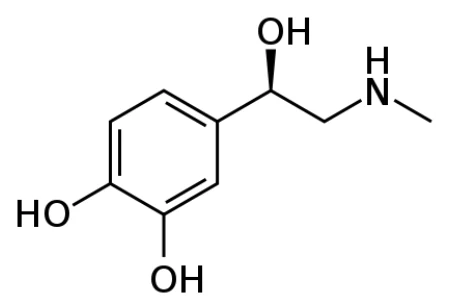
Structural Formula
Molecular Formula C9H13NO3
Molecular Weight 183.20
Description White or greyish white, crystalline powder
REFERENCES
- 1. Hospira Healthcare Corporation, Prescribing Information for EPINEPHRINE INJECTION USP, 1:1000 (1 mg/mL) Ampoules and 1:10,000 (0.1 mg/mL) Single-Use Syringes, October 2009.