


Product Monograph - Erleada
Recent Major Label Changes
Recent major label changes to the ERLEADA Product Monograph:
| 08/2026 |
|---|---|
| 03/2026 |
| 03/2026 |
Table of Contents
Certain sections or subsections that are not applicable at the time of the preparation of the most recent authorized product monograph are not listed.
Recent Major Label Changes ................................................................................................ 2
Table of Contents .................................................................................................................. 2
Part 1: Healthcare Professional Information ........................................................................ 4
- 1.
Indications.................................................................................................................. 4
1.1. Pediatrics.......................................................................................................... 4
1.2. Geriatrics .......................................................................................................... 4
- 2. Contraindications....................................................................................................... 4
- 4.
Dosage and Administration ....................................................................................... 4
4.2. Recommended Dose and Dosage Adjustment................................................... 4
4.5. Missed Dose ..................................................................................................... 6
- 5. Overdose .................................................................................................................... 6
- 6. Dosage Forms, Strengths, Composition and Packaging .......................................... 7
- 7.
Warnings and Precautions......................................................................................... 7
7.1. Special Populations ........................................................................................ 11
7.1.1. Pregnancy..................................................................................................... 11
7.1.2. Breastfeeding ................................................................................................ 11
7.1.3. Pediatrics ...................................................................................................... 11
7.1.4. Geriatrics ...................................................................................................... 11
- 8.
Adverse Reactions ................................................................................................... 12
8.1. Adverse Reaction Overview ............................................................................ 12
8.2. Clinical Trial Adverse Reactions ...................................................................... 12
8.3. Less Common Clinical Trial Adverse Reactions ............................................... 17
8.4. Abnormal Laboratory Findings: Hematologic, Clinical Chemistry, and Other Quantitative Data ....................................................................................................... 17
8.5. Post-Market Adverse Reactions ...................................................................... 18
- 9.
Drug Interactions ..................................................................................................... 18
9.2. Drug Interactions Overview ............................................................................. 18
9.4. Drug-Drug Interactions .................................................................................... 19
9.5. Drug-Food Interactions ................................................................................... 21
9.6. Drug-Herb Interactions .................................................................................... 21
9.7. Drug-Laboratory Test Interactions ................................................................... 21
- 10.
Clinical Pharmacology ............................................................................................. 21
10.1. Mechanism of Action ................................................................................... 21
10.2. Pharmacodynamics..................................................................................... 21
10.3. Pharmacokinetics........................................................................................ 22
- 11. Storage, Stability, and Disposal .............................................................................. 25
- 12. Special Handling Instructions.................................................................................. 25
Part 2: Scientific Information .............................................................................................. 26
- 13. Pharmaceutical Information..................................................................................... 26
- 14.
Clinical Trials............................................................................................................ 26
14.1. Clinical Trials by Indication .......................................................................... 26
Indication 1: Treatment of Patients with Metastatic Castration-sensitive Prostate Cancer (mCSPC). .................................................................................................................. 26
Indication 2: Treatment of Patients with Non-metastatic Castration-resistant Prostate Cancer (nmCRPC). .................................................................................................... 33
- 15. Microbiology ............................................................................................................ 39
- 16. Non-Clinical Toxicology........................................................................................... 39
Patient Medication Information ........................................................................................... 42
Part 1: Healthcare Professional Information
1. Indications
ERLEADA (apalutamide) is indicated for:
- the treatment of patients with metastatic castration-sensitive prostate cancer (mCSPC).
- the treatment of patients with non-metastatic castration-resistant prostate cancer (nmCRPC).
ERLEADA has not been studied in patients with nmCRPC at low risk of developing metastases. The benefit and risk profile in these patients is unknown.
1.1. Pediatrics
Pediatrics (<18 years): The safety and efficacy of ERLEADA in children have not been evaluated.
1.2. Geriatrics
Geriatrics (>65 years): No overall differences in efficacy were observed between geriatric patients and younger patients (see 4. Dosage and Administration; 7. Warnings and Precautions, 7.1. Special Populations).
2. Contraindications
ERLEADA is contraindicated in
- patients who are hypersensitive to this drug or to any ingredient in the formulation, including any non-medicinal ingredient, or component of the container. For a complete listing (see 6. Dosage Forms, Strengths, Composition and Packaging).
- women who are or may become pregnant.
4. Dosage and Administration
4.2. Recommended Dose and Dosage Adjustment
Adults
The recommended dose of ERLEADA is 240 mg (four 60 mg tablets or one 240 mg tablet) administered orally once daily. Patients should also receive a gonadotropin-releasing hormone (GnRH) analog concurrently or should have had bilateral orchiectomy.
ERLEADA tablets should be swallowed whole.
ERLEADA can be taken with or without food.
Alternative Method of Administration with 60 mg Tablets
Administer ERLEADA 60 mg tablets with applesauce
For patients who have difficulty swallowing tablets whole, the recommended dose of ERLEADA
60 mg tablets may be mixed in applesauce.
- Mix whole ERLEADA tablets in 4 ounces (120 mL) of applesauce by stirring. Do not crush the tablets.
- Wait 15 minutes, stir the applesauce mixture.
- Wait another 15 minutes, stir the applesauce mixture until tablets are fully dispersed (well mixed with no chunks remaining).
- Using a spoon, swallow the mixture right away.
- Rinse the mixture container with 2 ounces of water and immediately drink the contents. Repeat the rinse with 2 ounces of water one more time to ensure the whole dose is taken.
- The mixture should be consumed within one hour of preparation (see 10.3. Pharmacokinetics).
- Do not store ERLEADA mixed in applesauce for later use beyond the one-hour window of preparation.
Alternative Method of Administration with 240 mg Tablet
Disperse ERLEADA 240 mg tablet in water and administer with non-fizzy beverage or soft food
For patients who cannot swallow the tablet whole, the recommended dose of one ERLEADA 240 mg tablet can be dispersed in non-fizzy water and then mixed with one of the following non-fizzy beverages or soft foods; orange juice, green tea, applesauce, or drinkable yogurt as follows:
- Place the whole ERLEADA 240 mg tablet in a cup. Do not crush or split the tablet.
- Add about 2 teaspoons (10 mL) of non-fizzy water to make sure that the tablet is completely in water.
- Wait 2 minutes until the tablet is broken up and spread out, then stir the mixture.
- Add in 6 teaspoons or 2 tablespoons (30 mL) of one of the following non-fizzy beverages or soft foods; orange juice, green tea, applesauce, or drinkable yogurt and stir the mixture.
- Swallow the mixture immediately.
- Rinse the cup with enough water to make sure the whole dose is taken and drink it immediately.
Do not save the medicine/food mixture for later use (see 10.3. Pharmacokinetics).
Administer ERLEADA 240 mg tablet through a feeding tube
ERLEADA 240 mg tablet can be administered through a nasogastric feeding tube (NG tube) 8 French or greater as follows:
- Place one 240 mg tablet in the barrel of the syringe (use at least a 20 mL syringe) and draw up 10 mL of non-carbonated water into the syringe.
- Wait 10 minutes and then shake vigorously to disperse contents completely.
- Administer immediately through the NG feeding tube.
- Refill the syringe with non-carbonated water and administer. Repeat until no tablet residue is left in the syringe or feeding tube.
(see 10.3. Pharmacokinetics)
Dose Modification
If a patient experiences a ≥ Grade 3 toxicity or an intolerable side effect, hold dosing until symptoms improve to ≤ Grade 1 or original grade, then resume at the same dose or a reduced dose (180 mg or 120 mg), if warranted. If the toxicity recurs at Grade 3 or higher, then the dose of apalutamide should be reduced to the next lower dose level. A maximum of 2 dose level reductions (to 120 mg) is allowed. If further dose reductions are needed, apalutamide should be discontinued. Permanently discontinue ERLEADA in patients who develop a seizure during treatment.
Pediatrics (< 18 years of age): Safety and efficacy of ERLEADA in pediatric patients have not been evaluated.
Geriatrics (≥65 years of age): No dose adjustment is necessary for elderly patients. In general, patients in the oldest group (≥75 years) treated with ERLEADA experienced higher toxicity and lower tolerance than patients in the younger age groups (≤65 years and 65-74 years), see 7. Warnings and Precautions, Geriatrics. Monitor elderly patients more closely for toxicity and adjust dose when needed.
Renal insufficiency: No dosage adjustment is necessary for patients with mild to moderate renal impairment. No data are available in patients with severe renal impairment or end-stage renal disease (eGFR ≤ 29 mL/min/1.73m2) (see 10.3. Pharmacokinetics, Renal Insufficiency).
Hepatic insufficiency: No dosage adjustment is necessary for patients with baseline mild or moderate hepatic impairment. For patients with severe hepatic impairment (Child-Pugh Class C), the recommended dose is 120 mg (two 60 mg tablets) administered orally once daily (see 10.3. Pharmacokinetics, Hepatic Insufficiency).
4.5. Missed Dose
If the patient misses a dose, it should be taken as soon as possible on the same day with a return to the normal schedule on the following day. The patient should not take extra tablets to make up the missed dose.
5. Overdose
There is no known specific antidote for apalutamide overdose. In the event of an overdose, stop ERLEADA, undertake general supportive measures until clinical toxicity has been diminished or resolved.
| For the most recent information in the management of a suspected drug overdose, contact your regional poison control centre or Health Canada’s toll-free number, 1-844 POISON-X (1-844-764-7669). |
|---|
6. Dosage Forms, Strengths, Composition and Packaging
Table 1:Dosage Forms, Strengths, Composition and Packaging
| Route of Administration | Dosage Form / Strength / Composition | Non-medicinal Ingredients |
|---|---|---|
| Oral | tablet 60 mg | Tablet Core: colloidal anhydrous silica, croscarmellose sodium, hydroxypropyl methylcellulose-acetate succinate (HPMC-AS), magnesium stearate, microcrystalline cellulose, and silicified microcrystalline cellulose. Tablet Coating: iron oxide black (E172), iron oxide yellow (E172), polyethylene glycol, polyvinyl alcohol, talc, and titanium dioxide. |
| Oral | tablet 240 mg | Tablet Core: colloidal anhydrous silica, croscarmellose sodium, hydroxypropyl methylcellulose acetate succinate (HPMC‑AS), magnesium stearate, microcrystalline cellulose (silicified). Table Coating: Glyceryl monocaprylocaprate, iron oxide black (E172), macrogol poly (vinyl alcohol) grafted copolymer, polyvinyl alcohol, talc, titanium dioxide |
ERLEADA 60 mg tablets are slightly yellowish to greyish green, oblong-shaped, film-coated and debossed with “AR 60” on one side.
ERLEADA 60 mg tablets are supplied in bottles of 120 tablets. Each bottle contains silica gel desiccant.
ERLEADA 240 mg tablets are bluish grey to grey, oval-shaped, film-coated, debossed with “E240” on one side.
ERLEADA 240 mg tablets are supplied in bottles of 30 tablets. Each bottle contains silica gel desiccant.
7. Warnings and Precautions
Cardiovascular
Ischemic Cardiovascular Events
Ischemic events (all Grades: 5% vs. 2%), Grade 3 (1% vs. 0.8%), Grade 4 (0.3% vs. 0.1%) and Grade 5 events (0.3% vs. 0.2%) occurred in patients treated with apalutamide versus patients treated with placebo across both the clinical trials, TITAN (mCSPC population) and SPARTAN (mCRPC population).
Reported deaths due to ischemic heart disease were 0.5% in the apalutamide arm and 0.2% in the placebo arm for the combined clinical trials.
In TITAN, cardiovascular ischemic events occurred in 4% of patients treated with ERLEADA and 2% of patients treated with placebo. Two patients in each arm died from an ischemic cardiovascular event.
In SPARTAN, higher incidences of ischemic heart disease and cardiac failure were reported in patients treated with ERLEADA (see 8. Adverse Reactions). Majority of patients in TITAN and SPARTAN had cardiac risk factors.
Patients with clinically significant cardiovascular disease in the past 6 months including severe/unstable angina, myocardial infarction, symptomatic congestive heart failure, arterial or venous thromboembolic events (e.g., pulmonary embolism, stroke, cerebrovascular accident including transient ischemic attacks), or clinically significant ventricular arrhythmias were excluded from both clinical trials.
Patients with a cardiac history should be assessed for active cardiac disease before starting therapy with ERLEADA (see Monitoring and Laboratory tests). Patients should be monitored for signs and symptoms of ischemic heart disease. Optimize management of cardiovascular risk factors, such as hypertension, diabetes, or dyslipidemia.
QTc prolongation
In a dedicated QT study in men with CRPC administered apalutamide 240 mg once daily plus ADT, based on the longest QTcF change at any time for each patient at steady-state, the mean maximum QTcF change from baseline (ΔQTcF) was 20.2 msec with the upper bound limit of 90% CI of 23.7 msec (see 10. Clinical Pharmacology, 10.2. Pharmacodynamics). Syncope was reported in 2.1% of patients treated with ERLEADA compared to 1.0% of patients treated with placebo in SPARTAN. Apalutamide and N-desmethyl apalutamide inhibit hERG K+ channel with IC50 below the Cmax at steady-state at the clinically recommended ERLEADA daily dose (see 10. Clinical Pharmacology, 10.2. Pharmacodynamics). Monitor patients with known history of QT prolongation, risk factors for torsades de pointes, or taking medications known to prolong the QT interval.
Hepatic/Biliary/Pancreatic
Hepatic Impairment
In a clinical study in subjects with severe hepatic impairment administered a single 120 mg dose of apalutamide, the systemic exposure of unbound apalutamide was comparable to subjects with normal hepatic function administered a single 240 mg dose of apalutamide. The recommended dose is 120 mg for patients with severe hepatic impairment (see 4. Dosage and Administration and 10.3. Pharmacokinetics).
Monitoring and Laboratory Tests
Monitoring for laboratory or clinical parameters should be conducted per routine practice. In addition, the following clinical monitoring and laboratory tests are recommended for patients treated with ERLEADA.
- Monitor TSH during the treatment for hypothyroidism (See 8. Adverse Reactions, Hypothyroidism).
Monitoring of ECG at baseline and during the treatment of ERLEADA should be
- considered for patients at risk for QTc prolongation or taking medications known to prolong QT interval.
- Patients with a cardiac history should be assessed for active cardiac disease before and during therapy with ERLEADA.
- Patients with a history of stroke should be assessed before and during therapy with ERLEADA.
- Patients receiving ERLEADA should be assessed for the risk of fracture and fall and treated to prevent clinical fractures according to national guidelines, with consideration given to use of bone-targeted agents.
Patients should be monitored for disease progression radiographically in addition to serum PSA, as 87 out of 175 patients treated with ERLEADA reported radiographic progression (distant metastases) without PSA progression in the SPARTAN trial.
Interference with Immunoassay Measurement of Digoxin
ERLEADA can interfere with certain digoxin immunoassays (e.g., Chemiluminescent Microparticle Immunoassays), resulting in falsely elevated digoxin plasma concentration results. Notify the laboratory conducting the digoxin plasma concentration assay to use an appropriate method in patients receiving ERLEADA and digoxin (see 9.7. Drug-Laboratory Test Interactions).
Musculoskeletal
Fall and Fractures
Falls and fractures were reported more frequently in patients receiving ERLEADA.
In SPARTAN, falls were reported in 15.6% of patients treated with ERLEADA vs.9.0% of patients treated with placebo, with 1.7% of patients in the apalutamide arm and 0.8% in the placebo arm experiencing a fall resulting in hospitalization. Falls were not associated with loss of consciousness or seizure. In TITAN, falls were reported by a small percentage of patients in both the treatment arms (7.4% patients treated ERLEADA vs.7.0% patients treated with placebo), nearly all were low-grade (Grade 1 or 2) and non-serious.
In SPARTAN, fractures were reported for 11.7% of patients treated with ERLEADA compared to 6.5% of patients treated with placebo. Serious fractures occurred in 3.4% of patients treated with ERLEADA vs. 0.8% of patients treated with placebo. Of all serious fractures reported in the ERLEADA arm, 74% occurred in the weight bearing bones (see 8.2. Clinical Trials Adverse Reactions, Table 3 footnote). The median time to onset of fracture was 314 days (range: 20 to 953 days) for patients treated with ERLEADA. Forty percent of the patients experienced a fall within 7 days before the fracture event. In TITAN, fractures were reported for 6% of patients treated with ERLEADA vs. 5% patients treated with placebo, and nearly all were low grade. Serious fractures occurred in 1.1% of patients treated ERLEADA with vs. 0.8% patients treated with placebo. Rib fracture was the most common fracture in both treatment arms reported equally by 2.3% of patients in each treatment arm. Nearly half of the patients experienced a fall within 7 days before the fracture event.
Patients receiving ERLEADA should be assessed for the risk of fracture and fall (see 7. Warnings and Precautions, Monitoring and Laboratory Tests).
Neurologic
Ischemic Cerebrovascular Events
In the final analysis of SPARTAN, with a median exposure of 33 months for ERLEADA and 12 months for placebo, ischemic cerebrovascular disorders occurred in 4% of patients treated with ERLEADA and 1% of patients treated with placebo. In the TITAN study, with a median exposure of 20 months for ERLEADA and 18 months for placebo, ischemic cerebrovascular disorders occurred in a similar proportion of patients in the ERLEADA (1.5%) and placebo (1.5%) groups.
Across both SPARTAN and TITAN, Grade 3-4 events were reported for 1.2% of patients in the ERLEADA and 0.4% in the placebo groups and 2 patients (0.2%) treated with ERLEADA died from an ischemic cerebrovascular disorder.
Patients with a history of stroke or transient ischemic attack within 6 months of randomization were excluded from both clinical trials.
Patients with a history of stroke should be assessed before starting therapy with ERLEADA (see 7. Warnings and Precautions, Monitoring and Laboratory tests). Patients should be monitored for signs and symptoms of ischemic cerebrovascular disorders. Optimize management of ischemic cerebrovascular risk factors, such as hypertension, diabetes, and/or high cholesterol.
Seizures
Permanently discontinue ERLEADA in patients who develop a seizure during treatment.
In SPARTAN and TITAN, five patients (0.4%) treated with ERLEADA and two patients (0.2%) treated with placebo experienced a seizure. Patients with a history of seizure or predisposing factors for seizure were excluded from these clinical studies and medications known to lower seizure threshold were prohibited while receiving ERLEADA. There is no clinical experience in re-administering ERLEADA to patients who experienced a seizure.
Reproductive Health
- Fertility
ERLEADA can cause harm to the developing fetus and/or lead to loss of pregnancy. Patients having sex with female partners of reproductive potential should use a condom along with another highly effective contraceptive method during treatment and for 3 months after the last dose of ERLEADA.
Based on animal studies, ERLEADA may impair fertility in males of reproductive potential (see 16. Non-Clinical Toxicology). Male patients should not donate sperm during treatment and for 3 months after the last dose of ERLEADA.
- Teratogenic Risk
In animal studies, early embryonic loss was seen at 50 and 100 mg/kg/day. In addition, a disturbance of the normal embryo-fetal development was observed ≥ 25 mg/kg/day (2.3 times the human exposure based on AUC), evidenced by a shortening of the mean anogenital distance, a misshapen (rounded) pituitary gland and some skeletal variations (see 16. Non-Clinical Toxicology).
Respiratory
Interstitial Lung Disease (ILD)
In SPARTAN and TITAN, ILD occurred in five patients (0.4%) treated with apalutamide, and in one patient (0.1%) treated with placebo. Post-marketing cases of ILD, including fatal cases, have been observed in patients treated with apalutamide. In case of acute onset and/or unexplained worsening of pulmonary symptoms, treatment with apalutamide should be interrupted pending further investigation of these symptoms. If ILD is diagnosed, apalutamide should be discontinued (see 8. Adverse Reactions).
Skin
Severe Cutaneous Adverse Reaction (SCAR)
Rare post-marketing cases of SCAR (including drug reaction with eosinophilia and systemic symptoms [DRESS] and Stevens Johnson syndrome/Toxic epidermal necrolysis [SJS/TEN], which can be life-threatening or may lead to death, have been reported in patients taking ERLEADA (see 8.5. Post-Market Adverse Reactions). Discontinue ERLEADA immediately if signs or symptoms of DRESS/SJS/TEN develop.
7.1. Special Populations
7.1.1. Pregnancy
ERLEADA is contraindicated in women who are or may become pregnant (see 2. Contraindications). Based on its mechanism of action, ERLEADA can cause fetal harm when administered during pregnancy. There are no data available with the use of ERLEADA during pregnancy.
Animal Data
Animal embryo-fetal developmental toxicology studies have not been conducted with ERLEADA.
7.1.2. Breastfeeding
ERLEADA is not indicated for use in women. There are no data on the presence of apalutamide or its metabolites in human milk, the effect on the breastfed infant, or the effect on milk production.
7.1.3. Pediatrics
Safety and efficacy of ERLEADA in pediatric patients have not been evaluated. There is no relevant use of ERLEADA in pediatric patients <18 years of age.
7.1.4. Geriatrics
Of the 1327 patients who received ERLEADA in clinical studies, 19% of patients were less than 65 years, 41% of patients were 65 years to 74 years, and 40% were 75 years and over in age. No overall differences in efficacy and safety were observed between these patients and younger patients. However, there was a trend for older patients (≥75) to experience higher incidence of grade 3/4 adverse events when treated with ERLEADA as compared to younger patients (<65, and 65-74).
8. Adverse Reactions
8.1. Adverse Reaction Overview
The safety of ERLEADA has been assessed in randomized, double-blind, placebo-controlled, multi-centre clinical study, SPARTAN, a Phase 3 trial of 1201 patients with non-metastatic castration-resistant prostate cancer (nmCRPC), (see 14. Clinical Trials) and in a randomized, double-blind, placebo-controlled, multi-center study, TITAN, a Phase 3 trial of 1051 patients with metastatic castration-sensitive prostate cancer (mCSPC), (see 14. Clinical Trials).
In the combined data for apalutamide treatment versus placebo, from SPARTAN and TITAN, the most common adverse reactions (all Grades, ≥10%) were: fatigue (28% vs.19%), grouped term of skin rash (27% vs. 8%), hypertension (24% vs.18%), arthralgia (19% vs.12%), hot flush (18% vs.13%), diarrhoea (18% vs.10%), fall (16% vs. 8%), nausea (15% vs. 12%), weight decreased (14% vs. 6%), pain in extremity (11% vs. 9%), and decreased appetite (10% vs. 7%), respectively.
Commonly reported serious adverse reactions for apalutamide treatment versus placebo from combined clinical trials were hypertension (13% vs.11%) and skin rash (6% vs. 0.6%) respectively (see also 7. Warnings and Precautions, Monitoring and Laboratory Tests).
Across both clinical trials, the incidence of adverse reactions leading to dose reduction, dose interruption and dose discontinuation was 8.8% vs. 2%, 29% vs. 15% and 13% vs. 6% respectively for apalutamide treatment versus placebo.
Skin rash was the most common adverse reaction leading to dose reduction, dose interruption and treatment discontinuation in the combined population.
8.2. Clinical Trial Adverse Reactions
Clinical trials are conducted under very specific conditions. Therefore, the frequencies of adverse reactions observed in the clinical trials may not reflect frequencies observed in clinical practice and should not be compared to frequencies reported in clinical trials of another drug.
Metastatic Castration-sensitive Prostate Cancer (mCSPC)
In the TITAN clinical study, 524 patients (safety population) received ERLEADA at a dose of 240 mg daily. All patients in the TITAN study received a concomitant gonadotropin-releasing hormone (GnRH) analog or had prior bilateral orchiectomy. At the primary interim analysis, the median duration of exposure was 20 months (range: 0 to 34 months) in patients who received ERLEADA and 18 months (range: 0.1 to 34 months) in patients who received placebo. At the time of interim analysis, 66% patients remained on apalutamide and 46% on placebo. At the final updated analysis, the median exposure was 39 months for ERLEADA-treated patients and 20 months for placebo-treated patients. The safety profile remained consistent for both the interim and final analysis with no new safety concerns identified at final analysis.
The most common all grades adverse reactions (≥15%) that occurred more commonly (>2%) in the ERLEADA arm than the placebo arm were arthralgia, fatigue, rash, hypertension, and hot flush (see Table 2). The frequency of Grade 3/4 adverse events were, 42% in the ERLEADA arm and 41% in the placebo arm, respectively. Grade 3 and 4 adverse events (occurring in ≥1%) reported at a higher incidence in the ERLEADA arm than the placebo arm were, the grouped term of skin rash (6.3% vs. 0.6%), asthenia (1.9% vs. 0.6%) and fatigue (1.5% vs. 1.1%) respectively.
The frequency of serious adverse events was 20% in both arms of the trial. The frequently reported serious adverse events (occurring in ≥1%) that occurred at a higher incidence in the ERLEADA arm than the placebo arm were pneumonia (1.3% vs. 0.6%) and hematuria (1.3% vs. 0.6%).
Ten patients (2%) who were treated with ERLEADA and 16 patients (3%) treated with placebo died from adverse events. The causes of death in the ERLEADA arm were ischemic heart disease (n=2), acute kidney injury (n=2) and one event each of cardiorespiratory arrest, cardiogenic shock, sudden death, respiratory failure, cerebrovascular accident, and large intestinal ulcer perforation.
Treatment discontinuations due to adverse events were reported for 8% of patients treated with ERLEADA and 5% patients treated with placebo. Adverse events leading to dose interruption were reported for 20% of patients treated with ERLEADA and 12% treated with placebo. Dose reduction due to adverse events was reported for 7% of patients treated with ERLEADA and 2% of patients treated with placebo. Rash as a grouped term was the most frequently reported adverse event which led to dose interruptions (7%), dose reductions (5%) or treatment discontinuations (2%) respectively.
Table 2 shows treatment-emergent adverse events on the ERLEADA arm in TITAN, as compared to placebo listed by system organ class and frequency.
Table 2: Treatment-Emergent Adverse Events at an Incidence of ≥10% in Patients Randomized to ERLEADA that occurred with a 2% absolute increase in frequency compared to placebo in TITAN (mCSPC)
ERLEADA N=524 | Placebo N=527 | |||||||||||
ERLEADA N=524 | Placebo N=527 | |||||||||||
System/Organ Class Adverse reaction | All Grades % | Grade 3-4 % | All Grades % | Grade 3-4 % | ||||||||
System/Organ Class Adverse reaction | All Grades % | Grade 3-4 % | All Grades % | Grade 3-4 % | ||||||||
| General disorders and administration site conditions | ||||||||||||
| Fatigue1,3 | 20 | 2 | 17 | 1 | ||||||||
| Musculoskeletal and connective tissue disorders | ||||||||||||
| Arthralgia3 | 17 | 0.4 | 15 | 0.9 | ||||||||
| Skin and subcutaneous tissue disorders | ||||||||||||
| Rash2 | 28 | 6 | 9 | 0.8 | ||||||||
| Pruritus | 11 | 0.2 | 5 | 0.2 | ||||||||
| Vascular disorders | ||||||||||||
| Hot flush | 23 | 0 | 16 | 0 | ||||||||
| Hypertension | 18 | 8 | 16 | 9 | ||||||||
1 Includes fatigue and asthenia 2 Includes rash, rash maculo-papular, rash generalized, urticaria, rash pruritic, rash macular, conjunctivitis, erythema multiforme, rash papular, skin exfoliation, genital rash, rash erythematous, stomatitis, drug eruption, mouth ulceration, rash pustular, blister, papule, pemphigoid, skin erosion, dermatitis, and rash vesicular 3 Per the Common Terminology Criteria for Adverse Reactions (CTCAE), the highest severity for these events is Grade 3 | ||||||||||||
Additional adverse events reported in 1% to less than 10% of TITAN patients treated with ERLEADA versus placebo included diarrhea (9% vs. 6%), hypothyroidism (7% vs. 1%), hypercholesterolemia (5 % vs. 1%), ischemic heart disease (4% vs. 2%), hypertriglyceridemia (3% vs. 1%), dysgeusia (3% vs. 1%), and muscle spasm (3% vs. 2%).
Non-metastatic Castration-resistant Prostate Cancer (nmCRPC)
In the SPARTAN clinical study, 803 patients received ERLEADA at a dose of 240 mg daily in combination with androgen deprivation therapy (ADT) in the treatment arm and 398 received placebo with ADT in the control arm. At interim analysis, the median treatment duration for ERLEADA-treated patients was 16.9 (0.1-42.0) months compared to 11.2 (0.1-37.1) months for placebo-treated patients, and 61% of patients were still on ERLEADA and 30% of patients were still on placebo. At final analysis, the median treatment duration was 33 months in the ERLEADA arm and 12 months in the placebo (ADT alone) arm. The safety profile remained consistent for both the interim and final analysis.
In the SPARTAN clinical trial, the most common adverse reactions (≥15%) that occurred more commonly (>2%) in the ERLEADA arm than the placebo arm were fatigue, hypertension, rash, diarrhea, nausea, weight decreased, arthralgia, and fall.
Frequently reported serious adverse events (occurring in ≥1%) that occurred at a higher incidence in the ERLEADA arm than the placebo arm, were fracture as a grouped term (3.4% versus 0.8%), urinary tract infection (1.2% versus 0.8%), pneumonia (1.1% versus 0.5%), and sepsis (1.0% versus 0%).
Death due to adverse event was reported in 3% patients in the ERLEADA arm and 1% patients in the placebo arm. The causes of death in the ERLEADA arm were infection (n = 7: sepsis or pneumonia), general disorders (n=5), cardiac disorders (n=5), and one case each of cerebral hemorrhage and cerebrovascular accident.
Treatment discontinuations due to adverse events were reported for 15% of patients treated with ERLEADA and 7% of patients treated with placebo. Adverse events leading to dose interruption were reported for 35% of patients treated with ERLEADA and 18% treated with placebo. Dose reduction due to adverse events was reported for 10% of patients treated with
ERLEADA and 1.8% of patients treated with placebo. The most frequently reported adverse events that led to dose modifications were rash and fatigue.
Table 3 shows treatment-emergent adverse events that occurred in ≥10% in patients on the ERLEADA arm with a 2% absolute increase in frequency compared to placebo in the SPARTAN study.
Table 3: Treatment-Emergent Adverse Events at an Incidence of ≥10% in Patients Randomized to ERLEADA that occurred with a 2% absolute increase in frequency compared to placebo in SPARTAN
System/Organ Class Adverse reaction | ERLEADA+ADT N=803 | Placebo + ADT N=398 | |||||||||||
All Grades % | Grade 3-4 % | All Grades % | Grade 3-4 % | ||||||||||
| Gastrointestinal disorders | |||||||||||||
| Diarrhea | 20 | 1 | 15 | 0.5 | |||||||||
| Nausea | 18 | 0 | 16 | 0 | |||||||||
| General disorders and administration site conditions | |||||||||||||
| Fatigue1,6 | 39 | 1.4 | 28 | 0.3 | |||||||||
| Injury, poisoning and procedural complications | |||||||||||||
| Fall6 | 16 | 2 | 9 | 0.8 | |||||||||
| Fracture2 | 12 | 3 | 7 | 0.8 | |||||||||
| Investigations | |||||||||||||
| Weight decreased6 | 16 | 1 | 6 | 0.3 | |||||||||
| Metabolism and nutrition disorders | |||||||||||||
| Decreased appetite3 | 12 | 0.1 | 9 | 0 | |||||||||
| Peripheral edema4 | 11 | 0 | 9 | 0 | |||||||||
| Musculoskeletal and connective tissue disorders | |||||||||||||
| Arthralgia6 | 16 | 0 | 8 | 0 | |||||||||
| Skin and subcutaneous tissue disorders | |||||||||||||
| Rash5 | 25 | 5 | 6 | 0.3 | |||||||||
| Vascular disorders | |||||||||||||
| Hypertension | 25 | 14 | 20 | 12 | |||||||||
| Hot flush | 14 | 0 | 9 | 0 | |||||||||
1 Includes fatigue and asthenia
2 Includes rib fracture, lumbar vertebral fracture, spinal compression fracture, spinal fracture, foot fracture, hip fracture, humerus fracture, thoracic vertebral fracture, upper limb fracture, fractured sacrum, hand fracture, pubis fracture, acetabulum fracture, ankle fracture, compression fracture, costal cartilage fracture, facial bones fracture, lower limb fracture, osteoporotic fracture, wrist fracture, avulsion fracture, fibula fracture, fractured coccyx, pelvic fracture, radius fracture, sternal fracture, stress fracture, traumatic fracture, cervical vertebral fracture, femoral neck fracture, tibia fracture
3 Includes appetite disorder, decreased appetite, early satiety, and hypophagia
4 Includes peripheral edema, generalized edema, edema, edema genital, penile edema, peripheral swelling, scrotal edema, lymphedema, swelling, and localized edema
5 Includes rash, rash maculo-papular, rash generalized, urticaria, rash pruritic, rash macular, conjunctivitis, erythema multiforme, rash papular, skin exfoliation, genital rash, rash erythematous, stomatitis, drug eruption, mouth ulceration, rash pustular, blister, papule, pemphigoid, skin erosion, dermatitis, and rash vesicular]
6 Grade 4 definitions do not exist for these reactions
Additional adverse events reported in 1% to less than 10% of SPARTAN patients treated with ERLEADA versus placebo included hypothyroidism (8% vs. 2%), dysgeusia (7 % vs. 2%), pruritis (6% vs. 2%), hypercholesterolemia (6% vs. 2%), muscle spasms (4% vs. 2%), hypertriglyceridemia (4% vs. 1%), ischemic cerebrovascular events1 (4% vs.1%), ischemic heart disease (3.7% vs. 2 %), and heart failure (2.2% vs. 1 %).
Rash
In the combined data of two randomized, placebo-controlled clinical studies, rash associated with ERLEADA was most commonly described as macular or maculo-papular. Adverse events of rash were reported for 26% of patients treated with ERLEADA versus 8% of patients treated with placebo. Grade 3 rashes (defined as covering > 30% body surface area [BSA]) were reported with ERLEADA treatment (6%) versus placebo (0.5%). In these clinical studies, the incidence of all-grade rash and Grade 3 rash was more than 2-fold higher in the Japanese population compared with the entire study population.
The onset of rash occurred at a median of 83 days of ERLEADA treatment and resolved within a median of 78 days from onset of rash for 78% of patients. Rash was commonly managed with oral antihistamines, topical corticosteroids, and 19% of patients received systemic corticosteroids. Median time to resolution was 3 times longer for patients on the apalutamide arm (100 days) than those on placebo (29 days). Skin rash led to treatment discontinuation in 7% of all subjects who experienced rash. Dose reduction or dose interruption occurred in 14% and 28% of patients, respectively. Of the patients who had dose interruption, 59% experienced recurrence of rash upon reintroduction of ERLEADA (see 4. Dosage and Administration).
Hypothyroidism
In the combined data of two randomized, placebo-controlled clinical studies, hypothyroidism was reported for 8% of patients treated with ERLEADA and 2% of patients treated with placebo based on assessments of thyroid-stimulating hormone (TSH) every 4 months.
There were no grade 3 or 4 adverse reactions. Hypothyroidism occurred in 30% of patients already receiving thyroid replacement therapy in the ERLEADA arm and in 3% of patients in the placebo arm. In patients not receiving thyroid replacement therapy, hypothyroidism occurred in 7% of patients treated with ERLEADA and in 2% of patients treated with placebo. The median onset was at the first scheduled assessment. Monitor TSH regularly during the treatment of ERLEADA. Thyroid replacement therapy, when clinically indicated, should be initiated or dose-adjusted.
Apalutamide may induce UDP-glucuronosyl transferase (UGT). Levothyroxine and thyroxine are substrates of UGT. Patients on ERLEADA who are receiving levothyroxine should be monitored for loss of levothyroxine efficacy (see 9. Drug Interactions).
1 identified in the final analysis of the SPARTAN study after a longer median exposure to ERLEADA® (~2 fold longer than the interim study)
8.3. Less Common Clinical Trial Adverse Reactions
The following are selected clinically significant adverse reactions reported in less than 1% of patients receiving ERLEADA and with higher incidences reported than the placebo arm, across both the clinical studies:
Nervous system disorders: Seizure (0.4% apalutamide versus 0.2% on placebo)
Respiratory, thoracic and mediastinal disorders: Interstitial lung disease (0.4% apalutamide versus 0.1% placebo)
8.4. Abnormal Laboratory Findings: Hematologic, Clinical Chemistry, and Other Quantitative Data
Table 4 and Table 5 shows laboratory abnormalities from both the clinical studies.
Table 4: Laboratory Abnormalities Occurring in ≥ 15% of ERLEADA-Treated Patients and at a Higher Incidence than Placebo (Between Arm Difference > 5% All Grades) in SPARTAN (nmCRPC population)
ERLEADA N=803 | Placebo N=398 | ||||||||||||
|---|---|---|---|---|---|---|---|---|---|---|---|---|---|
| Laboratory Abnormality | All Grades % | Grade 3-4 % | All Grades % | Grade 3-4 % | |||||||||
| Hematology | |||||||||||||
| Anemia | 70 | 0.4 | 64 | 0.5 | |||||||||
| Leukopenia | 47 | 0.3 | 29 | 0 | |||||||||
| Lymphopenia* | 41 | 2 | 21 | 2 | |||||||||
| Chemistry | |||||||||||||
| Hypercholesterolemia1 | 76 | 0.1 | 46 | 0 | |||||||||
| Hyperglycemia1* | 70 | 2 | 59 | 1 | |||||||||
| Hypertriglyceridemia1 | 67 | 2 | 49 | 0.8 | |||||||||
| Hyperkalemia | 32 | 2 | 22 | 0.5 | |||||||||
1Does not reflect fasting values
Table 5: Laboratory Abnormalities Occurring in ≥ 15% of ERLEADA-Treated Patients and at a Higher Incidence than Placebo (Between Arm Difference > 5% All Grades) in TITAN (mCSPC population)
ERLEADA N=524 | Placebo N=527 | ||||||||||||
|---|---|---|---|---|---|---|---|---|---|---|---|---|---|
| Laboratory Abnormality | All Grades % | Grade 3-4 % | All Grades % | Grade 3-4 % | |||||||||
| Hematology | |||||||||||||
| White blood cell decreased | 27 | 0.4 | 19 | 0.6 | |||||||||
| Chemistry | |||||||||||||
| Hypertriglyceridemia1 | 17 | 3 | 12 | 2 | |||||||||
1Does not reflect fasting values
Additional laboratory abnormalities which were reported in < 15% of ERLEADA-treated patients and at a higher incidence than Placebo (between arm difference <5%) were hyperkalemia, hypercholesterolemia, and Vitamin D deficiency.
8.5. Post-Market Adverse Reactions
The following adverse reactions have been reported during post-marketing experience.
Nervous system disorders: Restless leg syndrome
Respiratory, thoracic and mediastinal disorders: Interstitial lung disease (including fatal cases)
Skin and subcutaneous tissue disorder: Stevens-Johnson syndrome (SJS)/Toxic epidermal necrolysis (TEN) (including fatal cases), Drug reaction with eosinophilia and systemic symptoms (DRESS), Lichenoid eruption.
9. Drug Interactions
9.2. Drug Interactions Overview
Medications that Inhibit CYP2C8 or CYP3A4
Co-administration of strong CYP2C8 or CYP3A4 inhibitors is predicted to increase the steady-state exposure of the active moieties (sum of unbound apalutamide plus the potency-adjusted unbound N-desmethyl-apalutamide). Mild or moderate inhibitors of CYP2C8 or CYP3A4 are not expected to affect the exposure of apalutamide.
Medications that Induce CYP3A4 or CYP2C8
The effects of CYP3A4 or CYP2C8 inducers on the pharmacokinetics of apalutamide have not been evaluated in vivo. Co-administration of strong CYP3A4 or CYP2C8 inducers are predicted to decrease the steady-state exposure of the active moieties (sum of unbound apalutamide plus the potency-adjusted unbound N-desmethyl-apalutamide).
Acid lowering agents
Apalutamide is not ionizable under relevant physiological pH condition, therefore acid lowering agents (e.g. proton pump inhibitor, H2-receptor antagonist, antacid) are not expected to affect the solubility and bioavailability of apalutamide.
Drugs that affect transporters
In vitro, apalutamide and its N-desmethyl metabolite are substrates for P-glycoprotein (P-gp) but not breast cancer resistance protein (BCRP), organic anion transporting polypeptide 1B1 (OATP1B1), or OATP1B3. Because apalutamide is completely absorbed after oral administration, P-gp does not limit the absorption of apalutamide and therefore inhibition or induction of P-gp is not expected to affect the bioavailability of apalutamide.
Effect of ERLEADA on Drug Metabolizing Enzymes
In vitro studies showed that apalutamide and N-desmethyl apalutamide are moderate to strong CYP3A4 and CYP2B6 inducers, are moderate inhibitors of CYP2B6 and CYP2C8, and weak inhibitors of CYP2C9, CYP2C19, and CYP3A4. Apalutamide and N-desmethyl apalutamide do not affect CYP1A2 and CYP2D6 at therapeutically relevant concentrations.
ERLEADA is a strong inducer of CYP3A4 and CYP2C19, and a weak inducer of CYP2C9 in humans. Concomitant use of ERLEADA with medications that are primarily metabolized by CYP3A4, CYP2C19 or CYP2C9 can result in lower exposure to these medications. Substitution for these medications is recommended when possible or evaluate for loss of efficacy if medication is continued. ERLEADA did not cause clinically meaningful changes in exposure to the CYP2C8 substrate.
Apalutamide may induce UDP-glucuronosyl transferase (UGT). Concomitant administration of ERLEADA with medications that are substrates of UGT can result in decreased exposure of these medications. Use caution if substrates of UGT must be co-administered with ERLEADA and evaluate for loss of efficacy.
Effect of ERLEADA on Drug Transporters
Apalutamide was shown clinically to be a weak inducer of P-gp, BCRP, and OATP1B1. Concomitant use of ERLEADA with medications that are substrates of P-gp, BCRP, or OATP1B1 can result in lower exposure of these medications. Use caution if substrates of P-gp, BCRP or OATP1B1 must be co-administered with ERLEADA and evaluate for loss of efficacy if medication is continued.
Based on in vitro data, inhibition of organic cation transporter 2 (OCT2), organic anion transporter 3 (OAT3) and multidrug and toxin extrusions (MATEs) by apalutamide and its N-desmethyl metabolite cannot be excluded. No in vitro inhibition of organic anion transporter 1 (OAT1) was observed. Simulations suggest that apalutamide does not cause clinically meaningful changes in exposure to benzylpenicillin (OAT3 substrate).
Effect of ERLEADA on GnRH Analog
In mCSPC subjects receiving leuprolide acetate (a GnRH analog) co-administered with apalutamide, PK data indicated that apalutamide had no apparent effect on the steady-state exposure of leuprolide.
9.4. Drug-Drug Interactions
The drugs listed in Table 6 below are based on either drug interaction studies, or potential interactions due to the expected magnitude and seriousness of the interaction.
Table 6: Established or Potential Drug-Drug Interactions
Drug Common name | Source of Evidence | Effect | Clinical comment |
Drug Common name | Source of Evidence | Effect | Clinical comment |
Drug Common name | Source of Evidence | Effect | Clinical comment |
| Effect of strong CYP2C8 inhibitors on apalutamide such as: | |||
| Gemfibrozil 600 mg BID | CT T* T* | ↑ apalutamide Single dose 240 mg: Cmax ↓ 21%, AUC ↑ 68% Steady State Cmax ↑ 32%, AUC ↑ 44% Active moieties (sum of unbound apalutamide plus potency-adjusted active metabolite) the steady state Cmax ↑ 19%, AUC ↑ 23% *represents the worst- case scenario | No initial dose adjustment is necessary. Consider reducing the ERLEADA dose based on tolerability (see 4. Dosage and Administration and 10. Clinical Pharmacology). |
| Effect of Strong CYP3A4 inhibitors on apalutamide such as: | |||
| Itraconazole, 200 mg QD | CT | ↔ apalutamide Single dose 240 mg: Cmax ↓ 22%, AUC ↔ | No initial dose adjustment is necessary. Consider reducing the ERLEADA dose based on tolerability (see 4. Dosage and Administration and 10. Clinical Pharmacology). |
| Ketoconazol e, 400 mg QD | T* T* | ↑ apalutamide Steady State Cmax ↑ 38%, AUC ↑ 51% Active moieties (sum of unbound apalutamide plus potency-adjusted active metabolite) the steady state Cmax ↑ 23%, AUC ↑ 28% *represents the worst- case scenario | No initial dose adjustment is necessary. Consider reducing the ERLEADA dose based on tolerability (see 4. Dosage and Administration and 10. Clinical Pharmacology). |
| Effect of CYP3A4/CYP2C8 inducers on apalutamide such as: | |||
| Rifampin 600 mg QD | T T | ↓ apalutamide Steady State Cmax ↓ 25%, AUC ↓ 34% Active moieties (sum of unbound apalutamide plus potency-adjusted active metabolite) the steady state Cmax ↓ 15%, AUC ↓ 19% | No dose adjustment necessary. |
| Effect of apalutamide on drugs metabolized by CYP3A4 such as: | |||
| Midazolam 2 mg | CT | Multiple oral doses of ERLEADA resulted in midazolam AUC ↓ 92%, Cmax ↓ 77% | Substitution is recommended when possible or evaluate for loss of efficacy if medication is continued. |
| Effect of apalutamide on drugs metabolized by CYP2C19 such as: | |||
| Omeprazole 40 mg | CT | Multiple oral doses of ERLEADA resulted in omeprazole AUC ↓ 85%, Cmax ↓ 77% | Substitution is recommended when possible or evaluate for loss of efficacy if medication is continued. |
| Effect of apalutamide on drugs metabolized by CYP2C9 such as: | |||
| Warfarin 10 mg | CT | Multiple oral doses of ERLEADA resulted in S-warfarin AUC ↓ 46%, Cmax ↓ 16% | Substitution is recommended when possible or evaluate for loss of efficacy if medication is continued. Monitor the international normalized ratio (INR) during ERLEADA treatment. |
| Effects of apalutamide on drugs metabolized by CYP2C8 such as: | |||
| Pioglitazone 15 mg | CT | Multiple oral doses of ERLEADA resulted in pioglitazone AUC ↓ 18%, Cmax ↔ | No dose adjustment |
| Effect of apalutamide on substrates of P-gp such as: | |||
| Fexofenadin e 30 mg | CT | Multiple oral doses of ERLEADA resulted in fexofenadine AUC ↓ 30%, Cmax ↔ | Use caution and evaluate for loss of efficacy if medication is continued. |
| Effect of apalutamide on substrates of BCRP or OATP1B1 such as: | |||
| Rosuvastatin 10 mg | CT | Multiple oral doses of ERLEADA resulted in rosuvastatin AUC ↓ 41%, Cmax ↔ | Use caution and evaluate for loss of efficacy if medication is continued. |
| Effect of apalutamide on substrates of OAT3 such as: | |||
| Benzylpenicil lin 240 mg | T | Multiple oral doses of ERLEADA resulted in ↔ benzylpenicillin AUC ↔ Cmax ↔ | No dose adjustment |
Legend: CT = Clinical Trial; T = Theoretical (based on simulations)
9.5. Drug-Food Interactions
ERLEADA can be administered with or without food (see 10. Clinical Pharmacology). In clinical studies, ERLEADA was administered without regard to food.
9.6. Drug-Herb Interactions
Interactions with herbal products have not been established.
9.7. Drug-Laboratory Test Interactions
Falsely elevated digoxin plasma level results with the chemiluminescent microparticle immunoassay (CMIA) have been identified in patients treated with apalutamide. Therefore, results of digoxin plasma levels obtained by CMIA should be interpreted with caution and confirmed by another type of assay before taking any action with digoxin doses.
10. Clinical Pharmacology
10.1. Mechanism of Action
Apalutamide is an orally administered Androgen Receptor (AR) inhibitor that binds directly to the ligand-binding domain of the AR. Apalutamide prevents AR nuclear translocation, inhibits DNA binding, impedes AR-mediated transcription, and lacks androgen receptor agonist activity in preclinical studies. In mouse models of prostate cancer, apalutamide administration causes decreased tumour cell proliferation and increased apoptosis leading to tumour growth inhibition and regression. A major metabolite, N-desmethyl apalutamide, exhibited one-third the in vitro AR transcription activity of apalutamide.
10.2. Pharmacodynamics
Effect of QT/QTc interval and Cardiac Electrophysiology
Apalutamide and N-desmethyl apalutamide inhibit hERG K+ channel with IC50 below the Cmax at steady-state at the clinically recommended 240 mg daily dose. In a dedicated QT study in men with CRPC administered apalutamide 240 mg once daily plus ADT, based on the longest QTcF change at any time for each patient at steady-state, the mean of individual maximum QTcF change from baseline (ΔQTcF) was 20.2 msec with the upper bound of 90% CI of 23.7 msec. Pharmacokinetic and pharmacodynamic analysis showed a concentration-dependent increase in QTcF with apalutamide and N-desmethyl apalutamide.
Effect on GABAA-Gated Chloride Channel
GABAA inhibition is an off-target activity of both apalutamide and N-desmethyl apalutamide. This interaction is considered the mechanism for the seizures/convulsions observed in general toxicology studies at high doses in animals (see 16. Non-Clinical Toxicology)
10.3. Pharmacokinetics
Table 7: Arithmetic Mean (SD) Pharmacokinetic Parameters of Apalutamide and N-Desmethyl Apalutamide at Steady-State Following Administration of 240 mg QD ERLEADA in Patients with Prostate Cancer
| Moiety | Cmax (µg/mL) | AUCtau (µg/mL) | tmax (h) a | Peak-to-trough ratio | Vd/F (L) b | CL/F (L/h) b | Effective t1/2 (h) |
|---|---|---|---|---|---|---|---|
| Apalutamide | 6.0 (1.7) | 100 (32) | 2 (1-4) | 1.63 (0.25) | 276 | 2.0 | 74 (28) |
| N-desmethyl apalutamide | 5.9 (1.0) | 124 (23) | 1 (0-4) | 1.27 (0.13) | 238 | 1.5 | Not determined |
a Median and range for tmax
b Based on population PK analysis
Following repeat once-daily dosing, apalutamide exposure (Cmax and area under the concentration curve [AUC]) increased in a dose-proportional manner across the dose range of 30 to 480 mg. Following administration of 240 mg once daily, apalutamide steady state was achieved after 4 weeks and the mean accumulation ratio was approximately 5-fold relative to a single dose. An increase in apparent clearance (CL/F) was observed with repeat dosing, likely due to induction of apalutamide’s own metabolism.
Mean AUC metabolite/parent drug ratio for N-desmethyl apalutamide following repeat-dose administration was 1.3. Based on systemic exposure, relative potency, and pharmacokinetic properties, N-desmethyl apalutamide likely contributed to the clinical activity of apalutamide.
Food Effect
Administration of apalutamide to healthy subjects under fasting conditions and with a high-fat meal resulted in no clinically relevant changes in Cmax and AUC. Median time to reach peak plasma concentration (tmax) was delayed about 1-2 hours with food (see 4. Dosage and Administration).
Administration of apalutamide 60 mg as a dispersed mixture using applesauce resulted in comparable exposures and shorter time (shorter by 1 hour) to reach peak plasma concentration (tmax) compared to administration of apalutamide as whole tablets. In-vitro dissolution profiles of apalutamide 240 mg tablets with or without food were comparable (orange juice, green tea, drinkable yogurt, and apple sauce).
Administration with Nasogastric (NG) Tube
Dispersed apalutamide 240 mg was compatible with different types of NG tubes (see 4. Dosage and Administration).
Absorption
After oral administration, median time to achieve tmax was 2 hours. Mean absolute oral bioavailability is approximately 100% in healthy subjects, indicating that apalutamide is completely absorbed after oral administration.
Distribution
The mean apparent volume of distribution at steady-state of apalutamide is about 276 L, indicative of extensive extravascular distribution.
Apalutamide and N-desmethyl apalutamide are 96% and 95% bound to plasma proteins, respectively, and mainly bind to serum albumin with no concentration dependency. Apalutamide and N-desmethyl apalutamide can cross the blood brain barrier based on animal studies.
Metabolism
Following single oral administration of 14C-labeled apalutamide 240 mg, apalutamide, the active metabolite, N-desmethyl apalutamide, and an inactive carboxylic acid metabolite accounted for the majority of the 14C-radioactivity in plasma, representing 44%, 44%, and 3%, respectively, of the total 14C-AUC.
Metabolism is the main route of elimination of apalutamide. It is metabolized primarily by CYP2C8 and CYP3A4 to form N-desmethyl apalutamide. Apalutamide and N-desmethyl apalutamide are further metabolized to form the inactive carboxylic acid metabolite by carboxylesterase. The contribution of CYP2C8 and CYP3A4 in the metabolism of apalutamide is estimated to be 58% and 13% following single dose but changes to 40% and 37%, respectively at steady-state.
Elimination
Apalutamide, mainly in the form of metabolites, is eliminated primarily via urine. Following a single oral administration of radiolabeled apalutamide, 89% of the radioactivity was recovered up to 70 days post-dose: 65% was recovered in urine (1.2% of dose as unchanged apalutamide and 2.7% as N-desmethyl apalutamide) and 24% was recovered in feces (1.5% of dose as unchanged apalutamide and 2% as N-desmethyl apalutamide).
The CL/F of apalutamide is 1.3 L/h after single dosing and increases to 2.0 L/h at steady-state after once-daily dosing. The mean effective half-life for apalutamide in subjects is about 3 days at steady-state.
Special populations and conditions
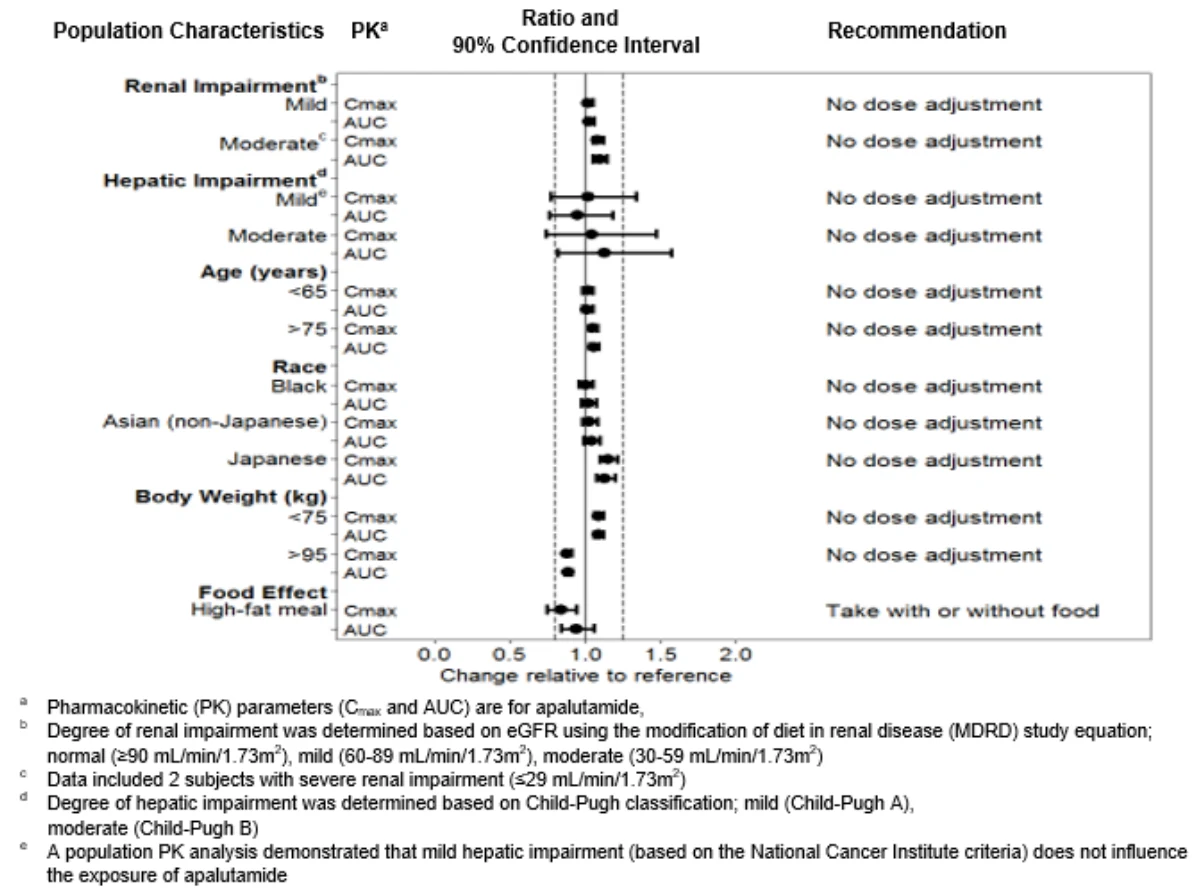
The effects of intrinsic factors such as renal impairment, hepatic impairment, age, race, and body weight on the pharmacokinetics of apalutamide are listed individually below and summarized in Figure 1 below. No clinically significant differences in the pharmacokinetics of apalutamide and N-desmethyl apalutamide were observed in subjects with mild (eGFR 60-89 mL/min/1.73m2) or moderate renal impairment (eGFR 30-59 mL/min/1.73m2), mild (Child-Pugh A) or moderate (Child-Pugh B) hepatic impairment, age ranging from 18 to 94 years, different body weight, or between different races.
- Pediatrics: ERLEADA has not been evaluated in pediatric patients.
- Geriatrics: Of the 1327 patients who received ERLEADA in clinical studies, 19% of patients were less than 65 years, 41% of patients were 65 years to 75 years, and 40% were 75 years and over in age. Population PK analyses showed that there was no clinically relevant difference in systemic exposure of apalutamide and N-desmethyl apalutamide between patients of ≥ 65 years and patients < 65 years.
- Sex: All data were derived from male patients
- Pregnancy and breast-feeding: ERLEADA is contraindicated in women who are or may become pregnant. Based on its mechanism of action, ERLEADA can cause fetal harm when administered during pregnancy. There are no human data available with the use of ERLEADA during pregnancy. There are no data on the presence of apalutamide or its metabolites in human milk, the effect on the breastfed infant, or the effect on milk production.
- Ethnic origin: Majority of apalutamide-treated patients in clinical studies were White (Caucasian or Hispanic or Latino). Based on population PK analysis, there were no clinically relevant differences in exposure between White (Caucasian or Hispanic or Latino), Black (of African heritage or African American), Asian (non-Japanese), or Japanese patients.
- Hepatic Insufficiency: Dedicated hepatic impairment studies compared the systemic exposure of apalutamide and N-desmethyl apalutamide in subjects with mild, moderate, or severe hepatic impairment (Child-Pugh Class A, B, or C, respectively) compared to subjects with normal hepatic function. The systemic exposure of apalutamide and N-desmethyl apalutamide was similar in subjects with mild or moderate baseline hepatic impairment compared to subjects with normal hepatic function. No dosage adjustment is necessary for patients with baseline mild or moderate hepatic impairment. The systemic exposure of unbound apalutamide was comparable and unbound N-desmethyl apalutamide reduced in subjects with severe baseline hepatic impairment (120 mg) compared to subjects with normal hepatic function (240 mg). A dosage adjustment to 120 mg is recommended for patients with baseline severe hepatic impairment. Following oral administration of 120 mg of apalutamide in subjects with severe hepatic impairment, Cmax and AUC∞ of unbound apalutamide were 22% lower and 3% higher, respectively, when compared to administration of 240 mg of apalutamide in subjects with normal hepatic function under fasting condition.
Renal Insufficiency: A dedicated renal impairment study for ERLEADA has not been conducted. Based on the population PK analysis using data from clinical studies in patients with CRPC and healthy subjects, no significant difference in systemic exposure was observed in subjects with pre-existing mild to moderate renal impairment (estimated glomerular filtration rate [eGFR] between 30 to 89 mL/min/1.73m2) compared to subjects with baseline normal renal function (eGFR ≥ 90 mL/min/1.73m2). No dosage adjustment is necessary for patients with mild to moderate renal impairment. No data are available
- in patients with severe renal impairment or end-stage renal disease (eGFR ≤ 29 mL/min/1.73m2).
- Obesity: Population PK analyses showed that body weight (range: 45-182 kg) did not have a clinically meaningful influence on the exposure to apalutamide.
Figure 1: Effects of Intrinsic Factor and Food on ERLEADA
- 11. Storage, Stability, and Disposal
Store ERLEADA at 15°C to 30°C, in the original package to protect from light and moisture. If ERLEADA tablets are provided in a bottle, do not remove the silica gel desiccant from the bottle.
Healthcare professionals should recommend that their patients return all unused medications to pharmacy for proper disposal.
Keep out of reach and sight of children.
12. Special Handling Instructions
There are no special handling requirements for this product.
Part 2: Scientific Information
13. Pharmaceutical Information
Drug Substance
Proper/Common name: apalutamide
Chemical name: 4-[7-[6-cyano-5-(trifluoromethyl) pyridin-3-yl]-8-oxo-6-thioxo-5,7-diazaspiro [3.4] octan-5-yl]-2-fluoro-N-methylbenzamide
Molecular formula and molecular mass: C21H15F4N5O2S and molecular weight is 477.43
Structural formula:
Physicochemical properties: The drug substance is a white to slightly yellow powder. The drug substance is practically insoluble in aqueous media over a wide range of pH values. The drug substance has a dissociation constant pKa of 9.7 (acidic carboxamide moiety).
14. Clinical Trials
14.1. Clinical Trials by Indication
Indication 1: Treatment of Patients with Metastatic Castration-sensitive Prostate Cancer (mCSPC).
TITAN Study: Metastatic Castration-sensitive Prostate Cancer (mCSPC)
TITAN was a randomized, double-blind, placebo-controlled, multinational, multicenter clinical trial in which 1052 patients with mCSPC were randomized (1:1) to receive either ERLEADA orally at a dose of 240 mg once daily (N = 525) or placebo once daily (N = 527). All patients received concomitant GnRH analog or had prior bilateral orchiectomy. Patients were stratified by Gleason score at diagnosis, prior docetaxel use, and region of the world. Patients with both high- and low-volume mCSPC were eligible for the study.
The following patient demographics and baseline disease characteristics were balanced between the treatment arms. The median age was 68 years (range 43-94) and 23% of patients were 75 years of age or older. The racial distribution was 68% Caucasian, 22% Asian, and 2% Black. Sixty-three percent (63%) of patients had high-volume disease and 37% had low-volume disease. Sixteen percent (16%) of patients had prior surgery, radiotherapy of the prostate or both. Majority of patients had a Gleason score of 7 or higher (92%). All patients except one in the placebo group, had an Eastern Cooperative Oncology Group Performance Status (ECOG PS) score of 0 or 1 at study entry.
The TITAN population consisted of newly diagnosed patients with metastatic disease and patients who had developed metastasis after being diagnosed with localized disease.
These patients had low-volume/high-volume disease burden; and/or low-risk /high-risk disease (Table 8).
High-volume of disease was defined as metastases involving the viscera with 1 bone lesion or the presence of 4 or more bone lesions, at least 1 of which must be in a bony structure beyond the vertebral column and pelvic bones. Low-volume disease is defined as the presence of bone lesions not meeting the definition of High-volume disease.
High-risk disease is the presence of any 2 prognostic factors of a Gleason score of ≥8; and/or at least 3 bone lesions; or the presence of visceral metastasis. Low-risk disease is the presence of disease not meeting the definition of high-risk disease.
Sixty-eight percent (68%) of patients received prior treatment with a first-generation anti-androgen in the non-metastatic setting.
The summary of key baseline disease characteristics is provided in Table 8 below:
Table 8: Key Baseline Disease Characteristics; Intent-to-treat Population (TITAN)
| ERLEADA | Placebo | ||||||||||||
| ITT Population | 525 | 527 | |||||||||||
| Time from initial diagnosis to randomization (months) | |||||||||||||
| Median (range) | 4.11 (0.5; 222.9) | 4.04 (0.7; 341.4) | |||||||||||
| Time from metastatic diagnosis to randomization (months) | |||||||||||||
| Median (range) | 2.63 (0.5;28.2) | 2.69 (0.4; 27.1) | |||||||||||
| Metastasis stage at diagnosis | |||||||||||||
| M0 | 16.2% | 11.2% | |||||||||||
| M1 | 78.3% | 83.7% | |||||||||||
| MX | 5.5% | 5.1% | |||||||||||
| Gleason score at initial diagnosis | |||||||||||||
| <7 | 7.8% | 7.4% | |||||||||||
| 7 | 25.3% | 24.7% | |||||||||||
| 8 | 30.7% | 29.2% | |||||||||||
| 9 | 31.4% | 33.0% | |||||||||||
| 10 | 4.8% | 5.7% | |||||||||||
| ECOG Performance Status Grade | |||||||||||||
| 0 | 62.5% | 66.0% | |||||||||||
| 1 | 37.5% | 33.8% | |||||||||||
| 2 | 0 | 0.2% | |||||||||||
| Prior docetaxel use | |||||||||||||
| No | 89.0% | 89.6% | |||||||||||
| Yes | 11.0% | 10.4% | |||||||||||
| Extent of disease at study entry | |||||||||||||
| Bone | 100.0% | 100.0% | |||||||||||
| Bone Only | 55.0% | 51.0% | |||||||||||
| Lymph Node | 37.9% | 41.6% | |||||||||||
| Visceral | 10.7% | 13.7% | |||||||||||
| Lung | 9.0% | 12.1% | |||||||||||
| Liver | 2.3% | 2.5% | |||||||||||
| Soft tissue | 4.2% | 5.1% | |||||||||||
| Number of bone lesions at study entry | |||||||||||||
| ≤10 | 60.6% | 62.8% | |||||||||||
| >10 | 39.4% | 37.2% | |||||||||||
| High-volume disease | 62% | 64% | |||||||||||
| Low-volume disease | 38% | 36% | |||||||||||
| High-risk disease | 55% | 54% | |||||||||||
| Low-risk disease | 45% | 46% | |||||||||||
Study Results:
The dual endpoints of the study were overall survival (OS) and radiographic progression-free survival (rPFS). Radiographic progression-free survival as assessed by the investigator is the duration from the date of randomization to the date of first documentation of radiographic progressive disease (progression of soft tissue lesions as per modified RECIST 1.1 criteria or
≥2 bone lesions on bone scan compared to baseline lesions), or death due to any cause, whichever comes first.
The secondary endpoints were time to cytotoxic chemotherapy, time to pain progression, time to chronic opioid use and time to skeletal related events. Other secondary endpoints were Time to PSA Progression2 and Second Progression-free Survival during first subsequent therapy (PFS-23).
At the time of the prespecified primary analysis, 66% patients in the ERLEADA arm and 46% of patients in the placebo arm were continuing study treatment. The median treatment duration at primary analysis was 20.5 months in the ERLEADA arm and 18.3 months in the placebo arm.
In the primary analysis, a statistically significant improvement in OS and rPFS was demonstrated in patients receiving ERLEADA compared to those patients receiving placebo. This improvement represented a 33% reduction in the risk of death, and a 52 % reduction in the risk of radiographic progression or death in patients receiving ERLEADA compared to those patients receiving placebo (Table 9).
An updated OS analysis was conducted at the time of final study analysis when 405 deaths were observed with a median follow-up of 44 months. At the time of final analysis, treatment was still ongoing in 51% of patients in the ERLEADA arm and 0% in the placebo arm. The median treatment duration was 39 months in the ERLEADA arm, and 20 months in the placebo arm. Additionally, by the time of final analysis, 39% of patients in the placebo arm had crossed over to receive ERLEADA with a median treatment of 15 months on ERLEADA crossover. The results from the updated final OS analysis were consistent with those from the pre-specified interim primary OS analysis (Table 9).
The key efficacy results from the TITAN study are summarized in Table 9, and Figures 2 and 4 below.
Table 9: Summary Results of Primary and Key Endpoints in the ITT Population (Study TITAN)
| Endpoint | Number of Events (%) | Median [Months (95% CI)] | HR (95%CI) a p-value (log-rank test) b | |||
|---|---|---|---|---|---|---|
ERLEADA +ADT (N=525) | Placebo +ADT (N=527) | ERLEADA +ADT (N=525) | Placebo +ADT (N=527) | |||
| Primary Endpoints | ||||||
| Interim Primary Overall Survival (OS)c | 83 (16%) | 117 (22%) | NE | NE | 0.67 (0.51-0.89) 0.0053 | |
| Updated Final OSd | 170 (32%) | 235 (45%) | NE | 52 | 0.65 (0.53-0.79) | |
2 Time to PSA progression was defined as time from randomization to date of PSA progression based on PCWG2 criteria
3 Time to progression on first subsequent therapy or death due to any cause (PFS-2)
| Endpoint | Number of Events (%) | Median [Months (95% CI)] | HR (95%CI) a p-value (log-rank test) b | |||
|---|---|---|---|---|---|---|
ERLEADA +ADT (N=525) | Placebo +ADT (N=527) | ERLEADA +ADT (N=525) | Placebo +ADT (N=527) | |||
| Radiographic Progression-free Survival (rPFS) | 134 (26%) | 231 (44%) | NE | 22.1 (18.5-33.0) | 0.48 (0.39-0.60) <0.0001 | |
| Secondary Endpoint | ||||||
| Time to Initiation of Cytotoxic Chemotherapye | 44 (8%) | 100 (19%) | NE | NE | 0.39 (0.27-0.56) <0.0001 | |
a Hazard ratio is from stratified proportional hazards model. Hazard ratio <1 favors active treatment.
b p-value is from the log-rank test stratified by Gleason score at diagnosis (≤7 vs. >7), Region (NA/EU vs. Other Countries) and Prior docetaxel use (Yes vs. No).
c This is based on the pre-specified interim analysis with a median follow-up time of 22 months
d Median follow-up time of 44 months
e Time to initiation of cytotoxic chemotherapy was time from randomization to the dose of initiation of cytotoxic chemotherapy for prostate cancer
NE=Not Estimable
Figure 2: Kaplan-Meier Plot of Final Overall Survival (OS); Intent-to-treat mCSPC Population (TITAN)
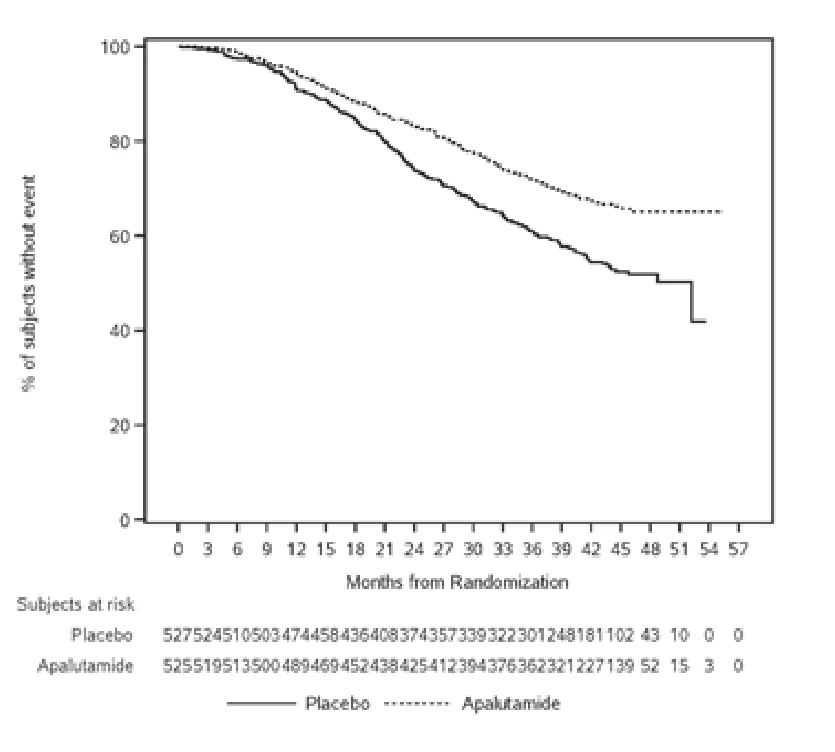
Consistent improvement in OS benefit was observed across most patient subgroups (see Forest-plot in Figure 3) including high- or low-volume disease, previous treatment for localized disease, geographic region, Gleason score at diagnosis, and low and high-risk disease.
Figure 3: Forest Plot of Overall Survival Defined by Baseline Clinical Disease Characteristics Intent-to-Treat Population
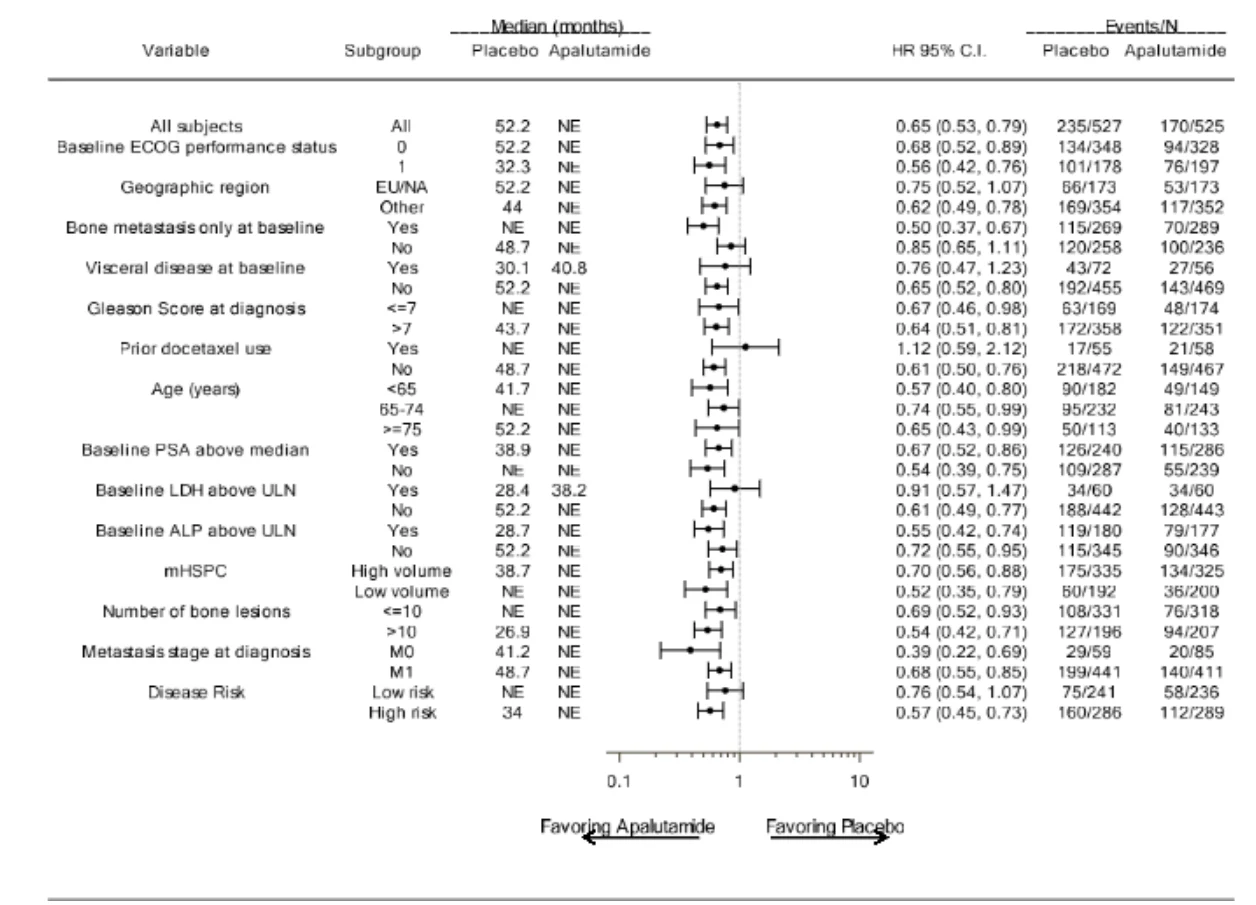
Figure 4: Kaplan-Meier Plot of Radiographic Progression-Free Survival (rPFS); Intent-to-treat mCSPC Population (TITAN)
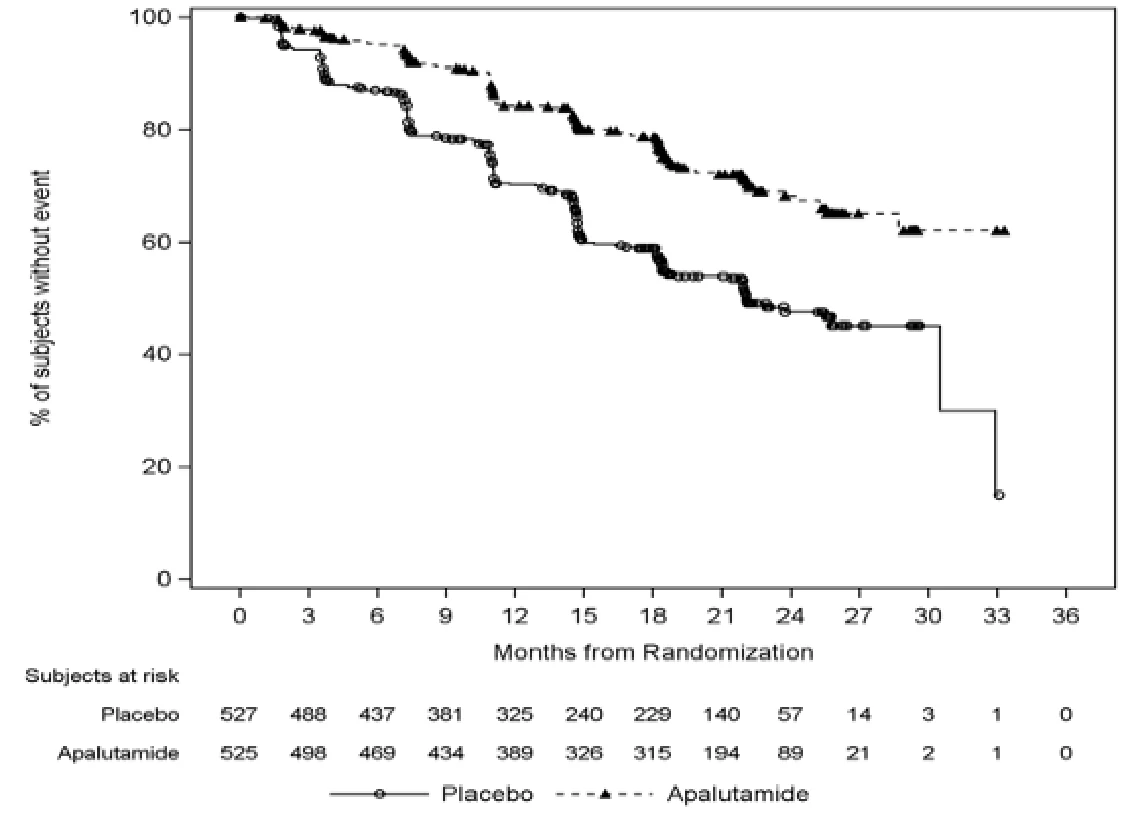
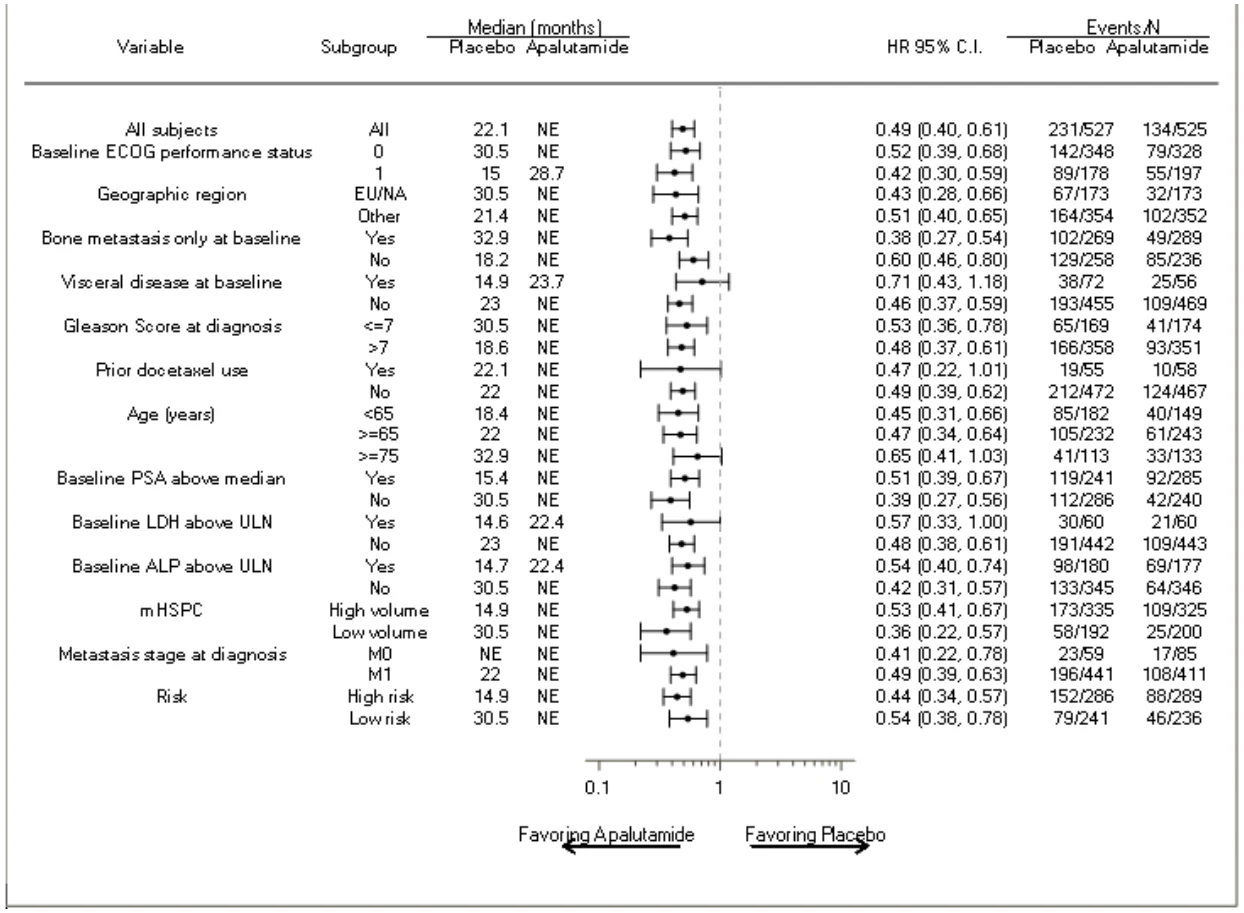
Consistent improvement in rPFS was observed across all analyzed subgroups, including high and low volume disease, geographic regions, low-risk and high-risk disease, prior docetaxel use, previous treatment for localized disease, and Gleason score at diagnosis (see Forest Plot in Figure 5).
Figure 5: Forest Plot of Radiographic Progression-Free Survival Defined by Baseline Clinical Disease Characteristics Intent-to-Treat Population
Secondary Endpoints: Time to pain progression did not reach prespecified statistical significance. Due to the hierarchical testing scheme of the secondary endpoints, time to chronic opioid use and time to skeletal related events could not be formally analyzed.
Other Endpoints: Time to PSA Progression and Second Progression-free Survival during first subsequent therapy (PFS-2), were supportive of the co-primary endpoints, but not controlled for Type 1 error. Additionally, PSA based endpoints are not validated surrogate endpoints of clinical benefit and PFS-2 was not centrally assessed.
Indication 2: Treatment of Patients with Non-metastatic Castration-resistant Prostate Cancer (nmCRPC).
SPARTAN Study: Non-metastatic, Castration-resistant Prostate Cancer (nmCRPC)
In a multicenter, double-blind, placebo-controlled clinical trial (SPARTAN) a total of 1207 patients with non-metastatic, castration-resistant prostate cancer (NM-CRPC) were randomized 2:1 to receive either ERLEADA orally at a dose of 240 mg once daily in combination with
Androgen Deprivation Therapy (ADT, gonadotropin-releasing hormone analog or bilateral orchiectomy) or placebo with ADT.
Patients randomized to either arm were to continue treatment until disease progression assessed by blinded central imaging review (BICR), initiation of new treatment, unacceptable toxicity or withdrawal. Prostate Specific Antigen (PSA) results were blinded and were not used for treatment discontinuation.
Eligible patients enrolled were confirmed to be non-metastatic by conventional scans (computerized tomography (CT) scan, magnetic resonance imaging (MRI) and technetium-99m bone scan) assessed by BICR. All patients enrolled had a PSA Doubling Time (PSADT) ≤ 10 months, considered to be at high risk of developing metastases.
Patient demographics and baseline disease characteristics were balanced between the treatment arms. The median age was 74 years (range 48-97) and 26% of patients were 80 years of age or older. The racial distribution was 66% Caucasian, 5.6% Black, 12% Asian, and 0.2% Other. Seventy-seven percent (77%) of patients in both treatment arms had prior surgery or radiotherapy of the prostate. Seventy-three percent (73%) of patients received prior treatment with a first-generation anti-androgen; 69% of patients received bicalutamide and 10% of patients received flutamide. Patients with prior treatment with abiraterone, ketoconazole or enzalutamide were excluded. Systemic corticosteroids were not allowed at study entry.
The summary of key baseline disease characteristics is provided in Table 10 below.
Table 10: Key Baseline Disease Characteristics; Intent-to-treat Population (SPARTAN)
| ERLEADA | Placebo | |||||||||||||
| ITT Population | 806 | 401 | ||||||||||||
| Time from initial diagnosis to randomization (years) | ||||||||||||||
| N | 806 | 400 | ||||||||||||
| Median (range) | 7.95 (0.3; 30.4) | 7.85 (0.8; 26.3) | ||||||||||||
| Gleason score at initial diagnosis | ||||||||||||||
| N | 784 | 387 | ||||||||||||
| <7 | 19.4% | 18.6% | ||||||||||||
| 7 | 37.1% | 37.7% | ||||||||||||
| 3+4 | 20.0% | 16.8% | ||||||||||||
| 4+3 | 15.9% | 19.9% | ||||||||||||
| >7 | 43.5% | 43.7% | ||||||||||||
| IVRS PSA Doubling Time (months) | ||||||||||||||
| N | 806 | 401 | ||||||||||||
| ≤ 6 months | 72.1% | 71.6% | ||||||||||||
| >6 months | 27.9% | 28.4% | ||||||||||||
| Median (range) | 4.40 (0.8; 10.0) | 4.50 (0.7; 10.0) | ||||||||||||
| PSA (ng/mL) at study entry (N) | ||||||||||||||
| N | 806 | 401 | ||||||||||||
| Mean (SD) | 14.90 (22.5) | 15.93 (23.8) | ||||||||||||
| Median | 7.78 | 7.96 | ||||||||||||
| Range | 0.1, 294.8 | 1.1, 291.8 | ||||||||||||
| Loco-regional disease at study entry (N) | ||||||||||||||
| N | 806 | 401 | ||||||||||||
| N0 | 76.6% | 77.3% | ||||||||||||
| N1 | 23.4% | 22.7% | ||||||||||||
| ECOG Performance Status Score | ||||||||||||||
| N | 806 | 400 | ||||||||||||
| 0 | 77.3% | 77.8% | ||||||||||||
| 1 | 22.7% | 22.3% | ||||||||||||
| Bone-sparing Agent Use | 806 | 401 | ||||||||||||
| Yes | 9.6% | 9.7% | ||||||||||||
| No | 90.4% | 90.3% | ||||||||||||
Study Results:
The primary endpoint was Metastasis-Free Survival (MFS), defined as the time from randomization to the time of first evidence of BICR-confirmed bone or soft tissue distant metastasis or death due to any cause, whichever occurred first. The median treatment duration for the primary analysis was 17 months in the ERLEADA arm and 11 months in the placebo (ADT alone) arm. The median treatment duration for the final analysis was 33 months in the ERLEADA arm and 12 months in the placebo (ADT alone) arm.
At the primary analysis, treatment with ERLEADA plus ADT significantly improved MFS over ADT alone. ERLEADA decreased the risk of distant metastasis or death by 70%. The median MFS for ERLEADA was 41 months and was 16 months for placebo (Table 11, Figure 6).
The primary endpoint (MFS) was supported by significant improvements in patients treated with ERLEADA over those treated with ADT alone for the key secondary endpoints of time to metastasis (TTM), progression-free survival (PFS), time to symptomatic progression (TTSP), overall survival (OS) and time to initiation of cytotoxic chemotherapy (TTICC) (Table 11).
The final analysis of OS and TTICC was conducted 32 months after the primary analysis of MFS, TTM, PFS and TTSP. At the time of primary analysis, patients treated with ADT alone were given the opportunity to cross-over to treatment with ERLEADA at the time of unblinding. After unblinding, 19% of the randomized placebo population crossed over to ERLEADA.
Patients who had crossed over had a median treatment duration of 26 months with ERLEADA treatment.
Table 11: Summary of Efficacy Results in the ITT Population (Study SPARTAN)
| Endpoint | Number of Events (%) | Median [Months (95% CI)] | HR (95% CI) p-value (log-rank test)a | ||
|---|---|---|---|---|---|
ERLEADA +ADT (N=806) | Placebo +ADT (N=401) | ERLEADA +ADT | Placebo+ ADT | ||
| Primary Endpoint | |||||
| Metastasis Free Survival (MFS)b | 209 (25.9%) | 210 (52.4%) | 40.51 (29.70, 40.51) | 15.70 (14.55, 18.40) | 0.30 (0.24, 0.36) <0.0001 |
| Key Secondary Efficacy Endpoints | |||||
| Time to Metastasis (TTM)b,c | 188 (23.3%) | 204 (50.9%) | 40.51 (31.15, 40.51) | 15.70 (14.55, 18.40) | 0.28 (0.23,0.34) <0.0001 |
| Progression-Free Survival (PFS)b,d | 220 (27.3%) | 219(54.6%) | 40.51 (29.40, 40.51) | 14.65 (11.27, 17.97) | 0.30 (0.25, 0.36) <0.0001 |
| Time to Symptomatic Progression (TTSP)e | 64 (7.9%) | 63 (15.7%) | NE (NE, NE) | NE (36.83, NE) | 0.45 (0.32,0.63) <0.0001 |
| Overall Survival (OS) | 274 (34%) | 154 (38%) | 73.86 (61.2,NE) | 59.89 (52.80, NE) | 0.78 (0.64-0.96) 0.0161 |
| Time to Initiation of Cytotoxic Chemotherapy (TTICC)f | 155 (19%) | 103 (26%) | NE (NE,NE) | NE (NE, NE) | 0.44 (0.29-0.66) <0.0001 |
a All analyses stratified by PSA doubling time, bone-sparing agent use, and locoregional disease status.
b Determined using Ex-US Censoring rules
c Time to Metastasis was defined as the time from randomization to the time of first evidence of BICR-confirmed radiographically detectable metastasis
d Progression free survival was defined as the time from randomization to the time of first evidence of BICR-confirmed radiographic progressive disease or death due to any cause (whichever occurs first)
e Time to symptomatic progression was defined as the time from randomization to development of either a skeletal-related event, pain progression or surgical intervention/radiation therapy f Time to initiation of cytotoxic chemotherapy was defined as time from randomization to start of a new cytotoxic chemotherapy
NE=Not Estimable
Figure 6: Kaplan-Meier Plot of Blinded Independent Central Review (BICR) Metastasis-Free Survival (MFS); Intent-to-treat Population (Study SPARTAN) (Ex-US Censoring rules)
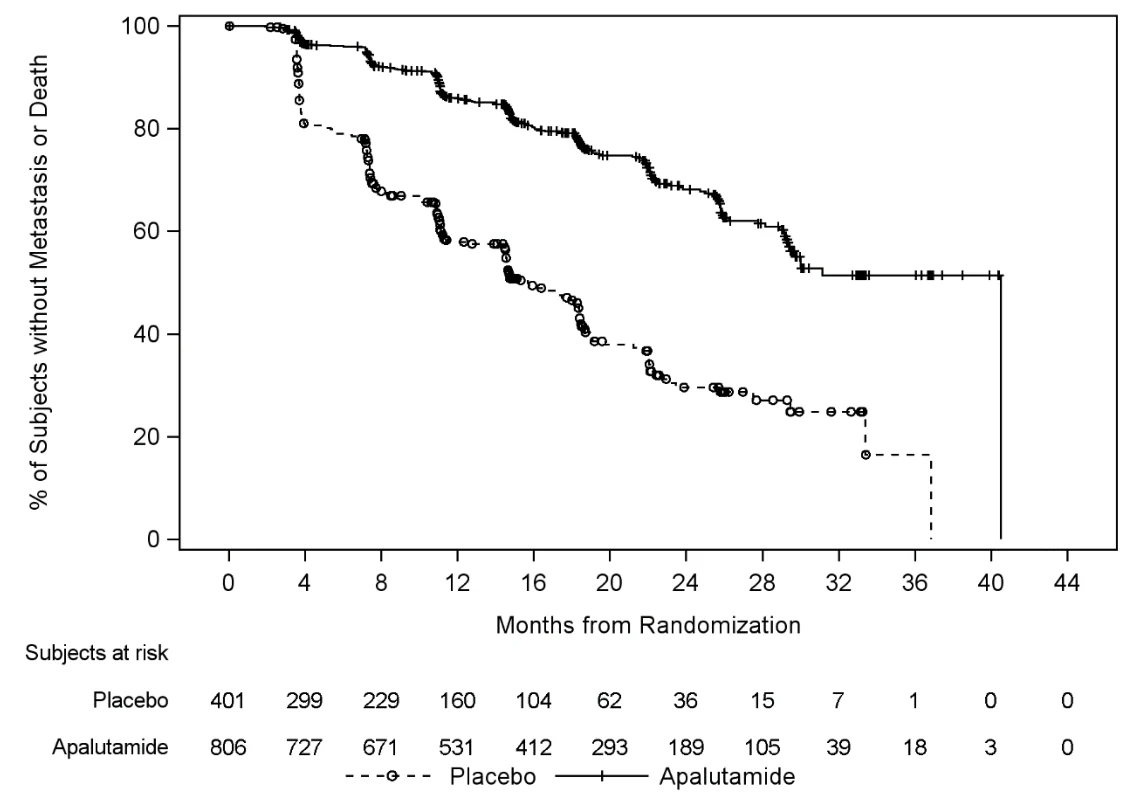
The treatment effect of ERLEADA on MFS was favorable across all subgroups and consistent with results for the total population. The non-stratified analysis of MFS by BICR for all patients and subgroups is presented in Figure 7.
Figure 7: Forest Plot of BICR MFS by Subgroups (Non-stratified) Defined by Baseline Disease Characteristics (Study SPARTAN) (Ex-US Censoring rules)
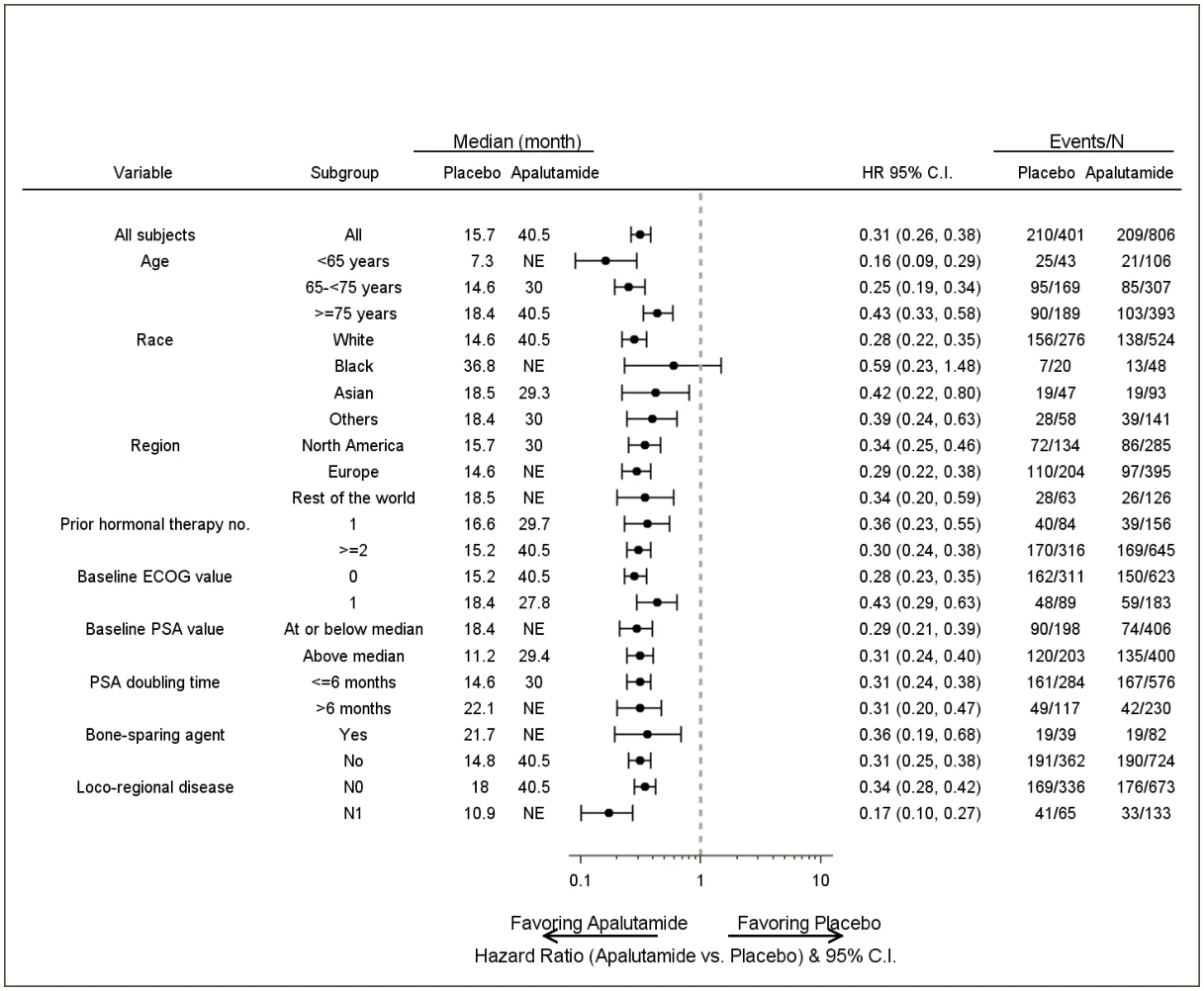
NE=Not Estimable All subjects = Intent-to Treat population
Figure 8: Kaplan-Meier Plot of Overall Survival, Intent-to-treat Population (Study SPARTAN)
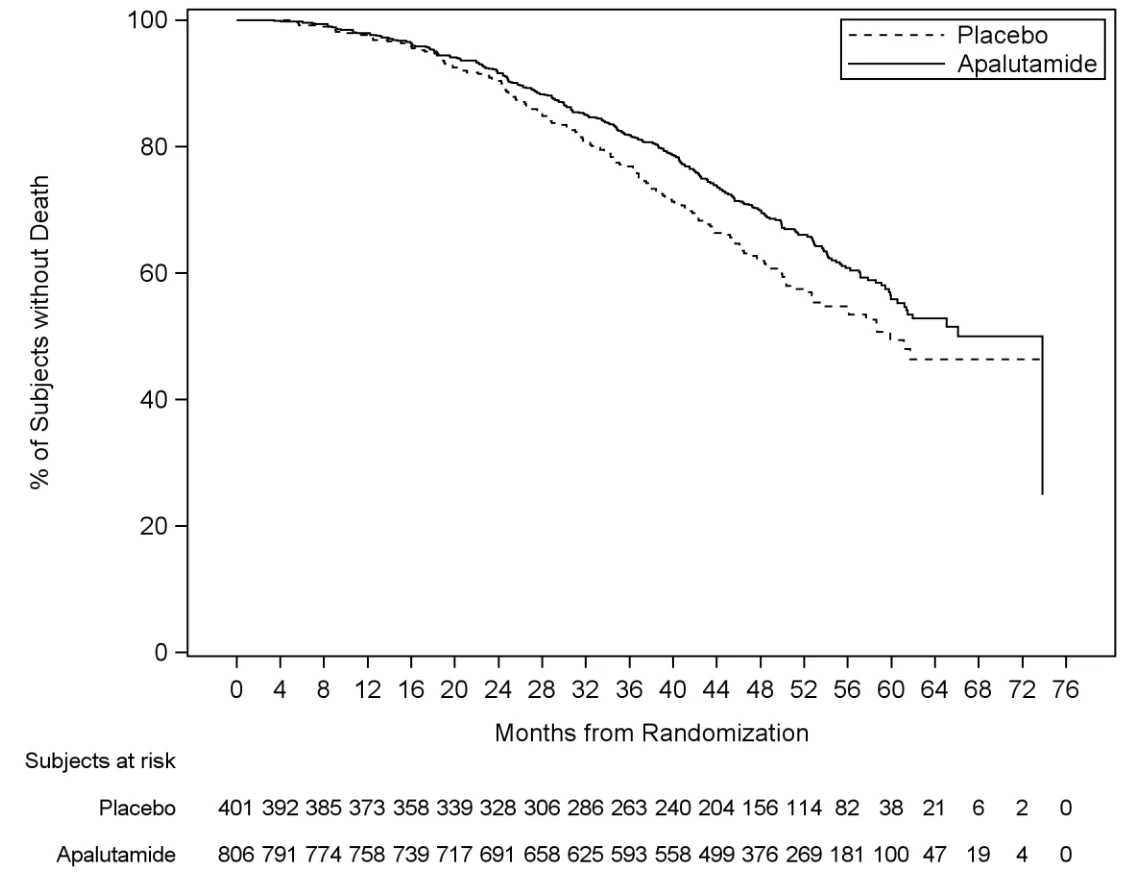
The treatment effect of ERLEADA on OS was favorable (Figure 8) and consistent across all subgroups for the total population.
15. Microbiology
No microbiological information is required for this drug product.
16. Non-Clinical Toxicology
General toxicology: Repeat-dose toxicity studies were conducted in rats (up to 26 weeks) and dogs (up to 39 weeks). Most toxicities were related to apalutamide interference with androgen signaling and affected the male and female reproductive system, mammary glands, pituitary gland, adrenal glands and/or thymus at ≥ 25 mg/kg/day in rats (≥0.5 times the human exposure based on AUC) and/or at ≥ 2.5 mg/kg/day in dogs (≥0.5 times the human exposure based on AUC).
Seizures/convulsions were observed in male dogs at ≥ 25 mg/kg/day (≥ 5 and 3 times human exposure to apalutamide and N-desmethyl apalutamide, respectively, based on Cmax) and considered to be mediated by off-target inhibition of GABAA current by both apalutamide and metabolite N-desmethyl apalutamide. In vitro, apalutamide and N-desmethyl apalutamide inhibited ligand binding to the GABAA-gated chloride channel with IC50 values of 3.0 and 3.2 μM, respectively. In a tissue-based functional assay for the GABAA receptor, an apalutamide IC50 of 0.88 μM was determined. Distribution of apalutamide and N-desmethyl apalutamide to brain was demonstrated in mice, rats and dogs.
Hepatocellular and thyroid hypertrophy, related to hepatic enzyme induction, were observed in rats, and bile duct/oval cell hyperplasia was observed in the liver in male dogs with concomitant increases in serum alkaline phosphatase (ALP) at doses ≥0.5 times the human dose based on AUC comparison.
Genotoxicity:
Apalutamide did not induce mutations in the bacterial reverse mutation (Ames) assay and was not genotoxic in either in vitro chromosome aberration test in human lymphocytes, the in vivo rat micronucleus assay or the in vivo rat Comet assay.
Carcinogenicity:
Apalutamide was not carcinogenic in a 6-month study in the male transgenic (Tg.rasH2) mouse at doses up to 30 mg/kg/day (corresponding to 1.2 and 0.5 times for apalutamide and N-desmethyl apalutamide respectively), the AUC in patients (at the recommended clinical dose of 240 mg/day).
In the 24-month oral carcinogenicity study in male Sprague-Dawley rats, apalutamide was administered by oral gavage at doses of 5, 15, and 50 mg/kg/day (corresponding to 0.2, 0.7, and 2.5 times) the AUC in patients (at the recommended dose of 240 mg), respectively for 100 weeks. Apalutamide-related neoplastic findings included an incidence of testicular Leydig cell adenoma and carcinoma at doses greater than or equal to 5 mg/kg/day, mammary adenocarcinoma and fibroadenoma at 15 mg/kg/day or 50 mg/kg/day, and thyroid cell adenoma at 50 mg/kg/day. Based on physiological differences with the rat, these findings are considered of limited relevance to humans.
Reproductive and developmental toxicology:
Male fertility is likely to be impaired by treatment with apalutamide based on findings in repeat-dose and fertility studies which were consistent with the pharmacological activity of apalutamide. In repeat-dose toxicity studies in male rats (up to 26 weeks) and dogs (up to 39 weeks), atrophy, aspermia/hypospermia, degeneration and/or hyperplasia or hypertrophy in the reproductive system were observed at ≥ 25 mg/kg/day in rats (≥0.5 times the human exposure based on AUC) and ≥ 2.5 mg/kg/day in dogs (≥0.5 times the human exposure based on AUC).
In a fertility study, male rats were given apalutamide for 4 weeks prior to mating. A decrease in sperm concentration and motility, copulation and fertility rates (upon pairing with untreated females) along with reduced weights of the secondary sex glands and epididymis were observed at ≥ 25 mg/kg/day (≥0.5 times human exposure based on AUC). A reduced number of live fetuses, as a result of increased pre- and/or post-implantation losses in pregnant females, were observed at 150 mg/kg/day (2 times human exposure based on AUC). Effects on male rats were reversible after 8 weeks from the last apalutamide administration. In a developmental toxicity study in the rat, apalutamide affected pregnancy including survival.
In animal studies, early embryonic loss was seen at 50 and 100 mg / kg / day. In addition, a disturbance of the normal embryo-fetal development was observed ≥ 25 mg/kg/day (2.3 times the human exposure based on AUC), evidenced by a shortening of the mean anogenital distance, a misshapen (rounded) pituitary gland and some skeletal variations.