


Product Monograph - Nubeqa
Recent Major Label Changes
| 1 Indications | 2025-07 |
|---|---|
| 4 Dosage and Administration, 4.1 Dosing Considerations | 2025-07 |
| 7 Warnings and Precautions, Cardiovascular | 2025-07 |
| 7 Warnings and Precautions, Hepatic/Biliary/Pancreatic | 2023-11 |
| 7 Warnings and Precautions, Monitoring and Laboratory Tests | 2025-07 |
| 7 Warnings and Precautions, Neurologic | 2025-07 |
Table of Contents
Certain sections or subsections that are not applicable at the time of the preparation of the most recent authorized product monograph are not listed.
Recent Major Label Changes ................................................................................................... 2
Table of Contents ...................................................................................................................... 2
Part 1: Health Professional Information .................................................................................. 4
1 Indications .............................................................................................................................. 4
1.1 Pediatrics ...................................................................................................................... 4
1.2 Geriatrics ...................................................................................................................... 4
2 Contraindications................................................................................................................... 4
4 Dosage and Administration ................................................................................................... 4
4.1 Dosing Considerations .................................................................................................. 4
4.2 Recommended Dose and Dosage Adjustment .............................................................. 4
4.4 Administration ............................................................................................................... 5
4.5 Missed Dose ................................................................................................................. 5
5 Overdose ................................................................................................................................ 5
6 Dosage Forms, Strengths, Composition, and Packaging ................................................... 6
7 Warnings and Precautions .................................................................................................... 6
7.1 Special Populations ...................................................................................................... 8
7.1.1 Pregnancy .............................................................................................................. 8
7.1.2 Breastfeeding ......................................................................................................... 8
7.1.3 Pediatrics ................................................................................................................ 8
7.1.4 Geriatrics ................................................................................................................ 8
8 Adverse Reactions ................................................................................................................. 8
8.1 Adverse Reaction Overview .......................................................................................... 8
8.2 Clinical Trial Adverse Reactions .................................................................................... 8
8.3 Less Common Clinical Trial Adverse Reactions ...........................................................14
8.4 Abnormal Laboratory Findings: Hematologic, Clinical Chemistry, and Other Quantitative Data ..............................................................................................................................14
9 Drug Interactions ................................................................................................................. 16
9.2 Drug Interactions Overview ..........................................................................................16
9.3 Drug-Behaviour Interactions.........................................................................................17
9.4 Drug-Drug Interactions .................................................................................................17
9.5 Drug-Food Interactions ................................................................................................18
9.6 Drug-Herb Interactions .................................................................................................18
9.7 Drug-Laboratory Test Interactions ................................................................................18
10 Clinical Pharmacology ....................................................................................................... 18
10.1 Mechanism of Action ..................................................................................................18
10.2 Pharmacodynamics ...................................................................................................18
10.3 Pharmacokinetics .......................................................................................................19
11 Storage, Stability, and Disposal ........................................................................................ 20
Part 2: Scientific Information ................................................................................................. 21
13 Pharmaceutical Information .............................................................................................. 21
14 Clinical Trials ...................................................................................................................... 22
14.1 Clinical Trials by Indication .........................................................................................22
Non-Metastatic Castration Resistant Prostate Cancer (nmCRPC) ................................. 22
Metastatic Castration-Sensitive Prostate Cancer (mCSPC) ........................................... 27
16 Non-Clinical Toxicology .................................................................................................... 37
Patient Medication Information .............................................................................................. 39
Part 1: Health Professional Information
1 Indications
NUBEQA (darolutamide) is indicated for:
the treatment of patients with non-metastatic castration resistant prostate cancer (nmCRPC).
NUBEQA has not been studied in patients with nmCRPC at low risk of developing metastases (see 14 Clinical Trials). The benefit and risk profile in these patients is unknown.
- the treatment of patients with metastatic castration-sensitive prostate cancer (mCSPC).
- the treatment of patients with metastatic castration-sensitive prostate cancer (mCSPC) in combination with docetaxel.
1.1 Pediatrics
Pediatrics (<18 years of age): No data are available to Health Canada; therefore, Health Canada has not authorized an indication for pediatric use.
1.2 Geriatrics
Geriatrics (≥ 65 years of age): Evidence from clinical studies does not suggest clinically relevant differences in safety or efficacy associated with the use of NUBEQA in the geriatric population (see 7.1.4 Geriatrics).
2 Contraindications
NUBEQA is contraindicated in patients who are hypersensitive to this drug or to any ingredient in the formulation, including any non-medicinal ingredient, or component of the container. For a complete listing, see 6 Dosage Forms, Strengths, Composition, and Packaging.
4 Dosage and Administration
4.1 Dosing Considerations
- Patients receiving NUBEQA should also receive a gonadotropin-releasing hormone (GnRH) analog concurrently or should have had a bilateral orchiectomy.
- When used in combination with docetaxel for patients with mCSPC, the first cycle of docetaxel should be administered within 6 weeks after the start of NUBEQA treatment. Docetaxel should be administered every 3 weeks for up to 6 cycles. Treatment with NUBEQA should be continued until disease progression or unacceptable toxicity even if the administration of docetaxel is delayed, interrupted, or discontinued before completion of 6 cycles.
4.2 Recommended Dose and Dosage Adjustment
The recommended dose is 600 mg (two film-coated tablets of 300 mg) NUBEQA taken twice daily, equivalent to a total daily dose of 1200 mg. NUBEQA should be continued until disease progression or unacceptable toxicity.
If a patient experiences a Grade 3 or higher toxicity or an intolerable adverse reaction, dosing should be withheld or reduced to 300 mg twice daily until symptoms improve. Then treatment may be resumed at a dose of 600 mg twice daily.
Dose reduction below 300 mg twice daily is not recommended. The maximum daily dose is 1200 mg (600 mg twice daily).
When NUBEQA is used in combination with docetaxel, dosage and administration recommendations in the docetaxel product monograph should be followed.
Pediatrics (<18 years of age)
Health Canada has not authorized an indication for pediatric use.
Patients with hepatic impairment
No dose adjustment is necessary for patients with mild hepatic impairment.
The recommended dose for patients with moderate hepatic impairment (Child-Pugh B) is 300 mg NUBEQA twice daily (see 10.3 Pharmacokinetics).
The effect of severe hepatic impairment (Child-Pugh C) on NUBEQA pharmacokinetics has not been studied.
Patients with renal impairment
No dose adjustment is necessary for patients with mild or moderate renal impairment.
The recommended dose for patients with severe renal impairment not receiving hemodialysis (estimated glomerular filtration rate (eGFR) of 15 to 29 mL/min/1.73m2) is 300 mg NUBEQA twice daily (see 10.3 Pharmacokinetics). Clinical experience in patients with severe renal impairment is limited.
The pharmacokinetics of NUBEQA has not been studied in patients with end-stage renal disease receiving dialysis (eGFR <15 mL/min/1.73 m2).
4.4 Administration
For oral use.
The tablets should be taken whole with food (see 10.3 Pharmacokinetics).
4.5 Missed Dose
If a dose of NUBEQA is missed, the dose should be taken as soon as the patient remembers prior to the next scheduled dose. The patient should not take two doses together to make up for a missed dose.
5 Overdose
There is no specific antidote for NUBEQA and symptoms of overdose are not established.
The highest dose of NUBEQA studied clinically was 900 mg twice daily, equivalent to a total daily dose of 1800 mg. No dose limiting toxicities were observed with this dose.
In the event of an overdose, closely monitor patients for signs and symptoms of adverse reactions, and initiate appropriate symptomatic and supportive treatment (see 8 Adverse Reactions; 10 Clinical Pharmacology; 16 Non-Clinical Toxicology).
For the most recent information in the management of a suspected drug overdose, contact your regional poison control centre or Health Canada’s toll-free number, 1-844-POISON-X (1-844-764-7669).
6 Dosage Forms, Strengths, Composition, and Packaging
Table 1: Dosage Forms, Strengths, and Composition
| Route of Administration | Dosage Form / Strength/Composition | Non-medicinal Ingredients |
|---|---|---|
| oral | tablet, 300 mg | Calcium hydrogen phosphate, croscarmellose sodium, hypromellose 15 cP, lactose monohydrate, Macrogol 3350, magnesium stearate, povidone K 30, titanium dioxide |
NUBEQA (darolutamide) 300 mg tablet is presented as white to off-white film-coated oval tablets. The tablets are marked with BAYER on one side and with 300 on the other side. The product is supplied in 120 mL bottles of 120 tablets or blisters containing 112 tablets.
7 Warnings and Precautions
Cardiovascular
Ischemic heart disease, including fatal cases, occurred in patients receiving NUBEQA.
In a pooled analysis of two randomized, placebo-controlled clinical trials, ischemic heart disease occurred in 3.4% of patients treated with NUBEQA and in 2.2% of patients treated with placebo, including Grade 3-4 events in 1.4% and 0.3%, respectively.
In a randomized clinical trial of patients receiving NUBEQA in combination with docetaxel, ischemic heart disease occurred in 2.9% of patients treated with NUBEQA+docetaxel and 2.0% of patients treated with placebo+docetaxel, including Grade 3-4 events in 1.3% and 1.1%, respectively. Fatal ischemic events occurred only in the NUBEQA+docetaxel arm, in 0.3% of patients.
Patients should be monitored for signs and symptoms of ischemic heart disease. Optimize management of cardiovascular risk factors, such as hypertension, diabetes, or dyslipidemia.
Hepatic/Biliary/Pancreatic
Serious cases of drug-induced liver injury (DILI), including Hy’s law cases, with increases in alanine aminotransferase (ALT) and/or aspartate aminotransferase (AST) to ≥5x and ≥20x upper limit of normal (ULN), including with concomitant bilirubin elevations ≥2x ULN, have been reported in patients treated with NUBEQA. Time to onset ranged from 1 month to 12 months after initiation of NUBEQA. The liver function test abnormalities were reversible upon NUBEQA discontinuation. Monitor serum transaminases and bilirubin as per routine clinical practice. In case of liver function test abnormalities suggestive of idiosyncratic drug-induced liver injury, permanently discontinue NUBEQA.
Monitoring and Laboratory Tests
Monitoring for laboratory or clinical parameters should be conducted as per routine practice and the following are recommended for patients treated with NUBEQA.
- Patients should be monitored for signs and symptoms of ischemic heart disease.
- Serum transaminases and bilirubin should be measured as clinically indicated.
Patients should be monitored for disease progression radiographically in addition to Prostate Specific Antigen (PSA). In the ARAMIS trial in nmCRPC, 141 out of 246 patients treated with NUBEQA with reported radiographic progression (distant metastasis) did not have prior PSA progression. In the ARASENS trial in mCSPC, 100 out of 225 patients who were treated with NUBEQA plus docetaxel with reported radiographic progression did not have PSA progression. In the ARANOTE trial in mCSPC, 89 out of 99 patients treated with NUBEQA with reported radiographic progression did not have PSA progression.
Neurologic
Seizure occurred in patients receiving NUBEQA. Patients with a history of seizure were permitted to enroll in the clinical trials. In the pooled safety population of 2051 patients treated with darolutamide and 1425 patients in the placebo arms, 17 and 2 patients, respectively, had prior history of seizure. However, all seizure events in patients receiving NUBEQA occurred in patients without prior history of seizure. In clinical trials, none of the patients permanently discontinued therapy due to seizure.
In a randomized study of patients with nmCRPC (ARAMIS), seizure (Grade 1-2) occurred in 0.2% of patients receiving NUBEQA or placebo. Seizure occurred 261 and 456 days after initiation of NUBEQA.
In a randomized study of patients with mCSPC (ARASENS), seizure occurred in 0.6% of patients receiving NUBEQA+docetaxel, including one Grade 3 event, and 0.2% of patients receiving placebo+docetaxel. Seizure occurred 38 to 340 days after initiation of NUBEQA.
There were no reports of seizure in a randomized study (ARANOTE) of patients with mCSPC treated with darolutamide or placebo.
Consider withholding NUBEQA in patients who develop a seizure during treatment.
Reproductive Health
- Teratogenic Risk
Based on the mechanism of action, darolutamide can cause harm to the developing fetus or lead to loss of pregnancy. If the patient is engaged in sexual activity with a pregnant individual, a condom should be used during and for 3 months after completion of treatment with NUBEQA.
If the patient is engaged in sexual activity with an individual of childbearing potential, a highly effective contraceptive method (<1% failure rate per year) should be used during and for 3 months after completion of treatment with NUBEQA to prevent pregnancy.
- Fertility
Based on animal studies, NUBEQA may impair fertility in patients of reproductive potential (see 16 Non-Clinical Toxicology). Patients should not donate sperm during treatment and for 3 months after the last dose of NUBEQA.
7.1 Special Populations
7.1.1 Pregnancy
NUBEQA is not indicated in those assigned female at birth. There are no human data on the use of NUBEQA in pregnant individuals. Animal embryo fetal toxicology studies have not been performed. However, based on the mechanism of action, NUBEQA can cause embryo/fetal harm or loss of pregnancy. Therefore, NUBEQA is not to be used in individuals who are or may become pregnant.
7.1.2 Breastfeeding
NUBEQA is not indicated in those assigned female at birth. No data exist on the presence of NUBEQA or its metabolites in human milk, its effects on the breast fed infant, or the effect on milk production. However, because many drugs are excreted in human milk, NUBEQA is not to be used in individuals who are breast-feeding.
7.1.3 Pediatrics
Pediatrics (<18 years of age): No data are available to Health Canada; therefore, Health Canada has not authorized an indication for pediatric use.
7.1.4 Geriatrics
Evidence from clinical studies do not suggest clinically relevant differences in safety or efficacy associated with the use of NUBEQA in the geriatric population.
8 Adverse Reactions
8.1 Adverse Reaction Overview
The safety of NUBEQA has been assessed in a pooled safety database of 954 patients with non-metastatic castration-resistant prostate cancer (nmCRPC) and 445 patients with metastatic castration-sensitive prostate cancer (mCSPC) from two randomized clinical studies (ARAMIS and ARANOTE) (see 14 Clinical Trials). The median duration of treatment in these trials was 18.2 months (range 0.03 to 44.3) in patients who received NUBEQA.
In this pooled population, the most common adverse reactions (≥10%) were arthralgia (10.7%), anemia (10.3%), and fatigue (10.0%). Serious adverse reactions were reported for 24.4% of patients treated with NUBEQA, and Grade ≥3 events occurred in 30.8% of patients treated with NUBEQA. The most frequently reported Grade ≥3 event was hypertension (3.5%). Adverse reactions led to NUBEQA dose modification in 14.4% of patients, and to permanent discontinuation in 8.0% of patients.
The safety of NUBEQA in combination with docetaxel in mCSPC is based on data from 1302 patients, of whom 652 received at least one dose of NUBEQA, in the ARASENS study (see 14 Clinical Trials).
8.2 Clinical Trial Adverse Reactions
Clinical trials are conducted under very specific conditions. Therefore, the frequencies of adverse reactions observed in clinical trials may not reflect frequencies observed in clinical practice and should not be compared to the frequencies reported in the clinical trials of another drug.
Non-Metastatic Castration Resistant Prostate Cancer (nmCRPC)
ARAMIS: NUBEQA versus placebo
ARAMIS, a phase III, randomized (2:1), double-blind, placebo-controlled, multi-centre clinical study, enrolled patients who had nmCRPC. In this study, patients received either NUBEQA at a dose of 600 mg twice a day, or a placebo. All patients in the ARAMIS study received a concomitant gonadotropin-releasing hormone (GnRH) analog or had a bilateral orchiectomy. Patients with uncontrolled hypertension or recent (in the past 6 months) stroke, myocardial infarction, severe/unstable angina pectoris, coronary/peripheral artery bypass graft, congestive heart failure New York Heart Association (NYHA) Class III or IV were excluded from the study. 64.4% of patients on NUBEQA and 36.1% of patients on placebo were receiving ongoing treatment at the time of the primary analysis. The median duration of exposure at the time of the primary analysis was 14.8 months (range: 0.0 to 44.3 months) in patients who received NUBEQA and 11.0 months (range: 0.1 to 40.5 months) in patients who received placebo.
The most frequently observed adverse reaction (≥10%) in patients receiving NUBEQA was fatigue.
Serious adverse reactions occurred in 25% of patients receiving NUBEQA and in 20% of patients receiving placebo. Serious adverse reactions in ≥1% of patients who received NUBEQA included urinary retention, pneumonia and hematuria. Overall, 3.9% of patients receiving NUBEQA and 3.2% of patients receiving placebo died from adverse reactions, which included death (0.4%), cardiac failure (0.3%), cardiac arrest (0.2%), general physical health deterioration (0.2%), and pulmonary embolism (0.2%) for NUBEQA.
Permanent discontinuation due to adverse reactions occurred in 8.9% of patients treated with NUBEQA and 8.7% of patients who received placebo. The most frequent adverse reactions requiring permanent discontinuation in patients who received NUBEQA included cardiac failure (0.4%), and death (0.4%).
Adverse reactions leading to dose interruption occurred in 12.5% of patients treated with NUBEQA and in 8.8% of patients who received placebo. The most frequent adverse reactions requiring dosage interruption in patients who received NUBEQA included hypertension (0.6%), diarrhea (0.5%), and pneumonia (0.5%).
Adverse reactions leading to dose reduction occurred in 4.8% of patients treated with NUBEQA and in 1.6% of patients who received placebo. The most frequent adverse reactions requiring dosage reduction in patients treated with NUBEQA included fatigue (0.7%), hypertension (0.3%), and nausea (0.3%).
Table 2 shows the incidence of adverse drug reactions reported in patients treated with NUBEQA in ARAMIS that occurred with a ≥2% absolute increase in frequency compared to placebo.
Table 2: Incidence of adverse drug reactions reported in patients treated with NUBEQA in ARAMIS that occurred with a ≥2% absolute increase in frequency compared to placebo
System/Organ Class Preferred Term MedDRA Version 21.0 | NUBEQA (n=954) | Placebo (n=554) | ||||||||||||
|---|---|---|---|---|---|---|---|---|---|---|---|---|---|---|
| Grade | Grade | |||||||||||||
| All n (%) | 3-4 n (%) | All n (%) | 3-4 n (%) | |||||||||||
| General disorders and administration site conditions | ||||||||||||||
| Fatiguea | 151 (16%) | 6 (0.6%) | 63 (11%) | 6 (1%) | ||||||||||
| Musculoskeletal and connective tissue disorders | ||||||||||||||
| Pain in Extremity | 55 (6%) | 0 | 18 (3%) | 1 (0.2%) | ||||||||||
| Skin and subcutaneous tissue disorders | ||||||||||||||
| Rashb | 28 (3%) | 1 (0.1%) | 5 (0.9%) | 0 | ||||||||||
- a includes Asthenia, Fatigue, Malaise, Lethargy
- b includes Rash, Rash macular, Rash maculo-papular, Rash papular, Rash pustular, Erythema, Dermatitis
At the final analysis, the median treatment duration was 25.8 months (range: 0.0 to 58.9) in patients who received NUBEQA and 11.6 months (range: 0.1 to 45.1 months) in patients who received placebo. The safety profile of NUBEQA remained consistent with the data presented in the primary analysis.
Metastatic Castration-Sensitive Prostrate Cancer (mCSPC)
ARANOTE: NUBEQA versus placebo
ARANOTE, a phase III, randomized (2:1), double-blind, placebo-controlled, multi-centre clinical study, enrolled patients who had mCSPC. Patients received either NUBEQA at a dose of 600 mg, or a placebo, twice a day. All patients in the ARANOTE study received a concomitant gonadotropin-releasing hormone (GnRH) agonist or antagonist or had a bilateral orchiectomy. The median duration of exposure at the time of the primary analysis was 24.2 months (range: 0.03 to 38.8 months) in patients receiving NUBEQA and 17.3 months (range: 0.23 to 36.7 months) in patients receiving placebo.
The most frequently observed adverse reactions (≥10%) in patients receiving NUBEQA were anemia (20.4%), arthralgia (12.4%), and urinary tract infection (11.7%).
Serious adverse reactions occurred in 23.6% of patients receiving NUBEQA and in 23.5% of patients receiving placebo. Serious adverse reactions in ≥1% of patients who received NUBEQA included urinary tract infection (1.8%), pneumonia (2.0%) and spinal cord compression (1.1%). Fatal adverse reactions occurred in 4.7% of patients receiving NUBEQA and in 5.4% of patients receiving placebo, and included sepsis (1.1%), craniocerebral injury (0.4%), and myocardial infarction (0.4%) for NUBEQA.
Permanent discontinuation due to adverse reactions occurred in 6.1% of patients treated with NUBEQA and 9.0% of patients who received placebo. The most frequent adverse reactions resulting in permanent discontinuation of NUBEQA were ALT increased, AST increased, craniocerebral injury, myocardial infarction, and rash (0.4% each).
Dose interruptions of NUBEQA due to adverse reactions occurred in 13.7% of patients treated with NUBEQA and 8.6% of patients who received placebo. The most frequent adverse reactions requiring dosage interruption of NUBEQA were AST increased (1.6%), ALT increased (1.3%), and rash (1.3%).
Dose reductions of NUBEQA due to adverse reactions occurred in 3.6% of patients treated with NUBEQA and 1.4% of patients who received placebo. The most frequent adverse reactions requiring dosage reduction of NUBEQA were rash (0.7%), AST increased (0.7%), ALT increased (0.4%), and hypertension (0.4%).
Table 3 shows the incidence of treatment emergent adverse events (TEAEs) reported in patients treated with NUBEQA in ARANOTE that occurred in ≥2% of patients with a ≥2% absolute increase in frequency compared to placebo.
Table 3: Treatment emergent adverse events that occurred at an incidence of ≥2% in patients treated with NUBEQA in ARANOTE with a ≥2% absolute increase in frequency compared to placebo
System/Organ Class Preferred Term MedDRA Version 27.0 | NUBEQA (n=445) | Placebo (n=221) | |||||||||||
|---|---|---|---|---|---|---|---|---|---|---|---|---|---|
| Grade | Grade | ||||||||||||
All n (%) | 3-4 n (%) | All n (%) | 3-4 n (%) | ||||||||||
| Cardiac disorders | |||||||||||||
| Arrhythmiaa | 39 (9%) | 3 (0.7%) | 15 (7%) | 1 (0.5%) | |||||||||
| Gastrointestinal disorders | |||||||||||||
| Constipation | 42 (9%) | 0 | 16 (7%) | 0 | |||||||||
| Infections and infestations | |||||||||||||
| Urinary tract infection | 52 (12%) | 8 (2%) | 17 (8%) | 1 (0.5%) | |||||||||
| Pneumoniab | 21 (5%) | 6 (1%) | 2 (0.9%) | 2 (0.9%) | |||||||||
| Psychiatric disorders | |||||||||||||
| Insomnia | 28 (6%) | 0 | 6 (3%) | 1 (0.5%) | |||||||||
| Vascular disorders | |||||||||||||
| Hot flush | 41 (9%) | 0 | 16 (7%) | 0 | |||||||||
- a includes Arrhythmia, Atrial fibrillation, Atrial flutter, Atrioventricular block, Atrioventricular block complete, Atrioventricular block first degree, Bradycardia, Bundle branch block left, Bundle branch block right, Sinus bradycardia, Sinus tachycardia, Supraventricular extrasystoles, Tachycardia, Ventricular extrasystoles
- b includes Lower respiratory tract infection, Pneumonia, Pneumonia acinetobacter, Pneumonia viral
ARASENS: NUBEQA with docetaxel versus placebo with docetaxel
ARASENS, a phase III, randomized (1:1), double-blind, placebo-controlled, multi-centre clinical study, enrolled patients who had mCSPC. In this study, patients received either NUBEQA at a dose of 600 mg, or a placebo, twice a day in combination with 75 mg/m2 docetaxel every 21 days for 6 cycles. All patients received a concomitant gonadotropin-releasing hormone (GnRH) analog or had a bilateral orchiectomy. The median duration of exposure was 41.0 months (range: 0.13 to 56.5 months) in patients who received NUBEQA and 16.7 months (range: 0.26 to 55.8 months) in patients who received placebo.
The most frequently observed adverse reactions (≥20%) in patients receiving NUBEQA+docetaxel were alopecia (40.5%), fatigue (33.1%), anemia (27.8%), arthralgia (27.3%), edema peripheral (26.5%), neutrophil count decreased (26.1%), diarrhea (25.6%), white blood cell count decreased (23.8%), and constipation (22.5%), and were reported at similar incidence in the placebo+docetaxel arm.
Serious adverse reactions occurred in 44.8% of patients receiving NUBEQA+docetaxel and in 42.3% of patients receiving placebo+docetaxel. Serious adverse reactions in ≥2% of patients who received NUBEQA+docetaxel included febrile neutropenia (6.1%), neutrophil count decreased (2.8%), and pneumonia (2.5%). Overall, 4.1% of patients receiving NUBEQA+docetaxel and 4.0% receiving placebo+docetaxel died from adverse reactions. Deaths reported in ≥2 patients in the NUBEQA+docetaxel arm included COVID-19/COVID-19 pneumonia (0.8%), myocardial infarction (0.3%), and sudden death (0.3%).
Permanent discontinuation of study drug due to adverse reactions occurred in 13.5% of patients who received NUBEQA+docetaxel and 10.6% of patients who received placebo+docetaxel. The most frequent adverse reactions requiring discontinuation in patients who received NUBEQA+docetaxel included rash (1.1%), aspartate aminotransferase (AST) increased (0.9%), and alanine aminotransferase (ALT) increased (0.8%).
Dose interruption of study drug due to adverse reactions occurred in 22.9% of patients treated with NUBEQA+docetaxel and in 15.7% of patients who received placebo+docetaxel. The most frequent adverse reactions requiring dosage interruption in patients who received NUBEQA+docetaxel included ALT increased (3.2%), AST increased (3.1%), and febrile neutropenia (2.1%).
Dose reductions of study drug due to adverse reactions occurred in 8.7% of patients treated with NUBEQA+docetaxel and in 4.3% of patients who received placebo+docetaxel. The most frequent adverse reactions requiring dosage reduction in patients treated with NUBEQA+docetaxel included ALT increased (2.8%), and AST increased (2.5%).
Table 4 shows the incidence of adverse drug reactions reported in patients treated with NUBEQA+docetaxel in ARASENS that occurred in ≥10% of patients with a ≥2% absolute increase in frequency compared to placebo+docetaxel.
Table 4: Adverse drug reactions that occurred at an incidence of ≥10% in patients treated with NUBEQA+docetaxel with a ≥2% absolute increase in frequency compared to placebo+docetaxel in ARASENSa
System/Organ Class Preferred Term MedDRA Version 24.1 | NUBEQA+docetaxel (n=652) | Placebo+docetaxel (n=650) | |||||||||
|---|---|---|---|---|---|---|---|---|---|---|---|
| Grade | Grade | ||||||||||
| All n (%) | 3-4 n (%) | All n (%) | 3-4 n (%) | ||||||||
| Gastrointestinal disorders | |||||||||||
| Constipationb | 147 (23%) | 2 (0.3%) | 130 (20%) | 2 (0.3%) | |||||||
| Investigations | |||||||||||
| Weight increased | 116 (18%) | 14 (2%) | 102 (16%) | 8 (1%) | |||||||
| Metabolism and nutrition disorders | |||||||||||
| Decreased appetiteb | 121 (19%) | 1 (0.2%) | 85 (13%) | 4 (0.6%) | |||||||
| Musculoskeletal and connective tissue disorders | |||||||||||
| Pain in extremityb | 98 (15%) | 2 (0.3%) | 78 (12%) | 2 (0.3%) | |||||||
| Vascular disorders | |||||||||||
| Hemorrhagec | 115 (18%) | 9 (1%) | 85 (13%) | 9 (1%) | |||||||
| Hypertensiond | 90 (14%) | 43 (7%) | 61 (9%) | 24 (4%) | |||||||
| Skin and subcutaneous tissue disorders | |||||||||||
| Rash b,e | 125 (19%) | 12 (2%) | 98 (15%) | 1 (0.2%) | |||||||
- a Adverse drug reaction incidence presented in Table 3 may not be attributable to NUBEQA alone but may contain contributions from other medicinal products used in combination
- b The incidence was highest during the first 6 months of treatment
- c Includes hematuria, epistaxis, anal hemorrhage, hemorrhoidal hemorrhage, rectal hemorrhage, upper gastrointestinal hemorrhage, hemoptysis, hemorrhage urinary tract, hemorrhagic stroke, subarachnoid hemorrhage, lower gastrointestinal hemorrhage, cystitis hemorrhagic, gastrointestinal hemorrhage, hemorrhage subcutaneous, intra-abdominal hemorrhage, nail bed bleeding, subdural hemorrhage
- d Includes hypertension, blood pressure increased, hypertensive crisis, hypertensive emergency
- e Includes rash, rash maculo-papular, palmar-plantar erythrodysesthesia syndrome, eczema, dermatitis, skin exfoliation, dermatitis acneiform, drug eruption, rash pruritic, rash erythematous, erythema multiforme, rash macular, dermatitis exfoliative generalized, penile rash, dyshidrotic eczema, rash papular, dermatitis bullous, rash follicular, rash pustular, rash vesicular, toxic skin eruption
8.3 Less Common Clinical Trial Adverse Reactions
NUBEQA (ARAMIS, ARANOTE)
Less common clinically significant adverse reactions (all Grades) reported in patients treated with NUBEQA include:
Cardiac disorders: heart failure (0.9%)
Injury, poisoning and procedural complications: fractures (4.0%)
NUBEQA+docetaxel (ARASENS)
Less common clinically significant adverse reactions (all Grades) reported in patients receiving NUBEQA+docetaxel include:
Cardiac disorders: ischemic heart disease (2.9%)
Hepatobiliary disorders: drug induced liver injury (0.3%)
Nervous system disorders: seizures (0.6%)
8.4 Abnormal Laboratory Findings: Hematologic, Clinical Chemistry, and Other Quantitative Data
Clinical Trial Findings
Table 5 shows laboratory test abnormalities related to NUBEQA treatment and reported more frequently in NUBEQA-treated patients compared to placebo-treated patients in the ARAMIS study.
Table 5: Laboratory test abnormalities in NUBEQA-Treated Patients Occurring at a Higher Incidence than Placebo (Between Arm Difference of >5%) in ARAMIS (nmCRPC)
| Laboratory parameter | NUBEQA (N=954)a | Placebo (N=554)a | ||
|---|---|---|---|---|
| All Gradesb (%) | Grade 3/4b (%) | All Gradesb (%) | Grade 3/4b (%) | |
| Blood and lymphatic system disorders | ||||
| Neutrophil count decreased | 20 | 4 | 9 | 0.5 |
| Hepatobiliary disorders | ||||
| Bilirubin increased | 16 | 0.1 | 7 | 0 |
| AST increased | 23 | 0.5 | 14 | 0.2 |
- a The denominator used to calculate the rate varied based on the number of patients with a baseline value and at least one post-treatment value.
- b Common Terminology Criteria for Adverse Events (CTCAE) version 4.03. Only laboratory values (no clinical assessments) were used for the grading. Grade 4 laboratory test values were limited to neutrophil count decreased.
Table 6 shows laboratory test abnormalities related to NUBEQA treatment and reported more frequently in NUBEQA-treated patients compared to placebo-treated patients in the ARANOTE study.
Table 6: Laboratory test abnormalities occurring in ≥15% of NUBEQA-Treated Patients and at a Higher Incidence than Placebo (Between Arm Difference of ≥5%) in ARANOTE (mCSPC)
| Laboratory parameter | NUBEQA (N=445)a | Placebo (N=221)a | ||
|---|---|---|---|---|
| All Gradesb (%) | Grade 3/4b (%) | All Gradesb (%) | Grade 3/4b (%) | |
| Blood and lymphatic system disorders | ||||
| Anemia | 51 | 3 | 43 | 4 |
| Lymphocyte count decreased | 23 | 2 | 18 | 4 |
| White blood cell count decreased | 17 | 0.7 | 8 | 0.5 |
| Neutrophil count decreased | 16 | 1 | 9 | 0.5 |
| Platelet count decreased | 15 | 0.9 | 9 | 0 |
| Hepatobiliary disorders | ||||
| Bilirubin increased | 17 | 0.5 | 7 | 0 |
| AST increased | 32 | 3 | 25 | 0.5 |
| ALT increased | 28 | 2 | 23 | 0.5 |
- a The number of patients tested for a specific laboratory test parameter may be different. The incidence of each laboratory test abnormality was calculated accordingly.
- b Common Terminology Criteria for Adverse Events (CTCAE) version 5.0. Only laboratory test values (no clinical assessments) were used for the grading. Grade 4 laboratory test values were limited to neutrophil count decreased.
Table 7 shows laboratory test abnormalities related to NUBEQA+docetaxel treatment and reported more frequently in NUBEQA+docetaxel-treated patients compared to placebo+docetaxel-treated patients in the ARASENS study.
Table 7: Laboratory test abnormalities occurring in ≥30% of NUBEQA+docetaxel -Treated Patients and at a Higher Incidence than Placebo+docetaxel in ARASENSa (mCSPC)
| Laboratory parameter | NUBEQA+docetaxel (N=652)b | Placebo+docetaxel (N=650)b | ||
|---|---|---|---|---|
| All Gradesc (%) | Grade 3/4c (%) | All Gradesc (%) | Grade 3/4c (%) | |
| Blood and lymphatic system disorders | ||||
| Anemia | 96 | 6 | 94 | 7 |
| Investigations | ||||
| White blood cell count decreased | 56 | 27 | 52 | 26 |
| Neutrophil count decreased | 51 | 34 | 46 | 31 |
| ALT increased | 42 | 4 | 38 | 3 |
| AST increased | 44 | 4 | 39 | 2 |
| Metabolism and nutrition disorders | ||||
| Hyperglycemia | 75 | 9 | 71 | 12 |
| Hypocalcemia | 35 | 3 | 31 | 2 |
- a Laboratory test abnormalities presented in Table 5 may not be attributable to NUBEQA, but may contain contributions from other medicinal products used in combination.
- b The number of patients tested for a specific laboratory test parameter may be different. The incidence of each laboratory test abnormality was calculated accordingly.
- c Common Terminology Criteria for Adverse Events (CTCAE) version 4.03. Only laboratory test values (no clinical assessments) were used for the grading.
Clinically relevant laboratory test abnormalities in < 30% of patients who received NUBEQA with docetaxel included blood bilirubin increased (all Grades 20%, Grade 3-4 0.5%) compared to placebo with docetaxel (all Grades 10%, Grades 3-4 0.3%).
9 Drug Interactions
9.2 Drug Interactions Overview
Darolutamide is primarily metabolized by CYP3A4, which can be induced or inhibited by concomitant medications. Darolutamide is also a substrate of P-glycoprotein (P-gp) and Breast Cancer Resistance Protein (BCRP). Concomitant use of darolutamide with combined P-gp and strong CYP3A4 inducers can decrease darolutamide exposure. Concomitant use of darolutamide with combined P-gp, BCRP and strong inhibitors of CYP3A4 can increase darolutamide exposure.
Darolutamide is also an inhibitor of BCRP, Organic Anion Transporting Polypeptides (OATP) 1B1 and 1B3 and P-gp in vitro. Co-administration of darolutamide with a BCRP substrate can significantly increase exposure of the BCRP substrate. Co-administration of darolutamide with OATP1B1 and OATP1B3 substrates may increase exposure of the OATP1B1 and OATP1B3 substrates. Co-administration of darolutamide with a P-gp substrate (i.e. dabigatran etexilate) does not result in a clinically significant drug-drug interaction. This indicates that NUBEQA may be given concomitantly with P-gp substrates.
Darolutamide is a weak inducer of CYP3A4. Co-administration of darolutamide with a CYP3A4 substrate does not result in a clinically significant drug-drug interaction.
In vitro data indicate darolutamide administration may inhibit OAT3, MATE1, MATE2K and intestinal MRP2. Darolutamide does not inhibit the transporters BSEP, OAT1, OCTs, OATP2B1 and NTCP at clinically relevant concentrations.
Administration of darolutamide in combination with docetaxel did not result in clinically relevant changes in the pharmacokinetics of either docetaxel or darolutamide in mCSPC patients.
9.3 Drug-Behaviour Interactions
The interaction of NUBEQA with individual behavioural risks (e.g. cigarette smoking, cannabis use, and/or alcohol consumption) has not been studied.
9.4 Drug-Drug Interactions
The drugs listed in this table are based on drug interaction studies.
Table 8: Established or Potential Drug-Drug Interactions
Legend: CT=Clinical Trial
| Proper / Common name | Source of Evidence | Effect | Clinical Comment |
|---|---|---|---|
| Effect of CYP3A4 and P-gp inducers on darolutamide | |||
| Rifampicin (600 mg) | CT | AUC ↓ 72% Cmax ↓ 52% | Avoid concomitant use of strong CYP3A4 inducers and P-gp inducers during treatment with NUBEQA, unless there is no therapeutic alternative. |
| Effect of CYP3A4, P-gp and BCRP inhibitors on darolutamide | |||
| Itraconazole (200 mg twice daily on day 1 and once daily on the following 7 days) | CT | AUC ↑ 1.7-fold Cmax ↑ 1.4-fold | Consider alternative therapies that do not strongly inhibit CYP3A4 and/or P-gp activity. In situations where satisfactory therapeutic alternatives do not exist, patients should be closely monitored for darolutamide related adverse events. |
| Effect of darolutamide on BCRP, OATP1B1 and OATP1B3 substrates | |||
| Rosuvastatin (5 mg) | CT | AUC ↑ 5-fold Cmax ↑ 5-fold | BCRP substrates: Avoid concomitant use if clinically feasible. If co-administration with NUBEQA is required, the related recommendation and monitoring advice in the Product Monograph of the BCRP substrate should be followed. OATP1B1 and OATP1B3 substrates: Concomitant use of NUBEQA may increase plasma exposure, therefore, the related recommendation and monitoring advice in the Product Monograph of the OATP1B1 and OATP1B3 substrates should be followed. |
| Effect of darolutamide on CYP3A4 substrates | |||
| Midazolam (1 mg) | CT | AUC ↓ 29% Cmax ↓ 32% | NUBEQA may be given concomitantly with CYP3A4 substrates. |
9.5 Drug-Food Interactions
Administration of darolutamide (2 x 300 mg) with a high-fat high-calorie meal resulted in a 2.5 fold increase in AUCT and a 2.0 fold increase in Cmax relative to administration of darolutamide (2 x 300 mg) under fasted conditions.
Administration of darolutamide (2 x 300 mg) with a low-fat low-calorie meal resulted in a 2.5 fold increase in AUCT and a 2.8 fold increase in Cmax relative to administration of darolutamide (2 x 300 mg) under fasted conditions.
This drug should be taken with food (see 4.4 Administration).
9.6 Drug-Herb Interactions
Avoid concomitant use of St. John's Wort during treatment with NUBEQA, unless there is no therapeutic alternative.
9.7 Drug-Laboratory Test Interactions
Interactions with laboratory tests have not been established.
10 Clinical Pharmacology
10.1 Mechanism of Action
Darolutamide is an orally administered, non-steroidal androgen receptor (AR) inhibitor with a flexible polar-substituted pyrazole structure that binds with high affinity directly to the receptor ligand binding domain to retain strong antagonistic activity against the AR.
Darolutamide competitively inhibits androgen binding, androgen receptor nuclear translocation, and AR mediated transcription.
Darolutamide inhibited prostate cancer cell proliferation and resulted in tumor growth inhibition in xenograft animal models of prostate cancer.
10.2 Pharmacodynamics
In the ARAMIS study, during the double-blind period, the confirmed prostate-specific antigen (PSA) response rate (defined as a ≥50% reduction from baseline) was 84.0%. The median PSA reduction at 16 weeks from baseline was 87.4% for the darolutamide arm.
In the ARASENS study, patients receiving darolutamide+docetaxel had a PSA response rate (defined as a ≥50% reduction from baseline) of 89.6% at 12 months after randomization.
In the ARANOTE study, 62.6% patients receiving darolutamide reached undetectable PSA levels (<0.2 ng/mL) compared to 18.5% patients in the placebo arm.
Cardiac Electrophysiology
The effect of darolutamide (600 mg twice daily) on the QTc interval was evaluated in a subgroup of 500 patients in the ARAMIS study. No large mean increase in QTc (i.e., >20 ms) was detected.
10.3 Pharmacokinetics
Table 9: Geometric mean (CV [%]), PK parameters at steady state in study 17712 using the selected Phase III popPK model (Study 18651)
Darolutamide
(n=388)
Keto-darolutamide
(n=388)
Cmax, µg/L
4786 (30.9)
8475 (35.4)
tmax, h
3.64 (4.4)
2.06 (3.3)
AUC(0-12), µg·h/L
52817 (33.9)
87640 (42.1)
Effective t1/2, h
19.6 (29.7)
20.0 (37.9)
Abbreviations: AUC(0-12) = area under the plasma concentration time curve from time 0 to 12 hours; Cmax = peak concentration; CV% = coefficient of variation; PK = pharmacokinetics; popPK = population pharmacokinetics; tmax = time to peak concentration; t1/2 = half-life.
Absorption:
Following oral administration of 600 mg (2 tablets of 300 mg), peak plasma concentrations of darolutamide of 4.79 mg/L (coefficient of variation: 30.9%) are usually reached around 4 hours after administration. Following oral administration together with food, steady-state is reached after 2-5 days of repeated twice-daily dosing, with a 2.9-fold accumulation.
The absolute bioavailability following oral administration of a NUBEQA tablet containing 300 mg darolutamide under fasted conditions is approximately 30%. Bioavailability of darolutamide was enhanced by 2.0 to 2.5 fold when administered with food. A similar increase of exposure was observed for the major metabolite keto-darolutamide.
Distribution:
The apparent volume of distribution of darolutamide after intravenous administration is 119 L. Binding to plasma proteins is 92% for darolutamide and 99.8% for keto-darolutamide. Serum albumin is the main binding protein for darolutamide and keto-darolutamide.
Passage of darolutamide across the blood-brain barrier has not been studied clinically. However, brain exposures to darolutamide in terms of AUC(0-24) are very low with 4.5% of plasma exposure after single dose in rats and 1.9-3.9% after repeated dose in mice. This indicates low passage of darolutamide across the intact blood-brain barrier in rats and mice and a low likelihood that darolutamide crosses the intact blood-brain barrier in humans to a clinically relevant extent.
Metabolism:
Following single oral administration of 300 mg C-darolutamide given as an oral solution, keto-darolutamide is the only major metabolite with about 2-fold higher total exposure in plasma compared to darolutamide. Darolutamide and keto-darolutamide together accounted for 87.4% of the C-radioactivity in plasma indicating that all other metabolites are of minor importance. Darolutamide is metabolized primarily by oxidative metabolism mediated mainly by CYP3A4, as well as by direct glucuronidation mediated preferentially by UGT1A9 and UGT1A1.
Elimination:
The effective half-life of darolutamide and keto-darolutamide in plasma of patients is approximately 20 hours. The clearance of darolutamide following intravenous administration was 116 mL/min (39.7%). Following administration of a radiolabeled oral solution of 300 mg darolutamide, a total of 63.4% of drug related material is excreted in the urine (6.7% unchanged), 32.4% is excreted in the feces (approximately 30% unchanged).
Linearity / Non-linearity:
In the dose range of 100 to 700 mg (after single dose and at steady state), the exposure (based on Cmax and AUC0-12) to darolutamide and the major metabolite keto-darolutamide increases linearly in a nearly dose-related manner. No notable increase in exposure to darolutamide was observed beyond 700 mg twice daily.
Special Populations and Conditions
- Pediatrics:
Safety and efficacy of NUBEQA have not been studied in children and adolescents below 18 years of age.
- Geriatrics:
A population pharmacokinetic analysis indicates increased darolutamide exposure with increasing age. Darolutamide AUC0-12 is 1.6-fold greater in patients aged above 85 years compared to patients aged below 65 years. The increase exposure was not associated with increased toxicity.
- Ethnic Origin:
A population pharmacokinetic analysis indicates a 1.4-fold greater AUC0-12 in Japanese patients. The increased exposure was not associated with increased toxicity.
- Hepatic Insufficiency:
In a clinical pharmacokinetic study, Cmax and AUC0-48 for darolutamide were 1.5 and 1.9-fold higher in non-cancer patients with moderate hepatic impairment (Child-Pugh B) compared to healthy volunteers. There are no data for patients with severe hepatic impairment (Child-Pugh C).
- Renal Insufficiency:
In a clinical pharmacokinetic study, Cmax and AUC0-48 for darolutamide were 1.6 and 2.5-fold higher in non-cancer patients with severe renal impairment (estimated Glomerular Filtration Rate [eGFR] 15 to 29 mL/min/1.73 m2) compared to healthy volunteers.
A population pharmacokinetic analysis indicates a 1.1-, 1.3- and an approximately 1.5-fold higher exposure (AUC) of darolutamide in patients with mild, moderate and severe renal impairment (eGFR 15 to 89 mL/min/1.73 m2) compared to patients with normal renal function.
The pharmacokinetics of darolutamide has not been studied in patients with end stage renal disease receiving dialysis (eGFR <15 mL/min/1.73 m2).
11 Storage, Stability, and Disposal
Store bottles or blisters at room temperature 15°C to 30°C. Keep out of sight and reach of children.
Keep the bottle tightly closed after first opening. Once the bottle is opened the medicinal product has shown to be stable for 3 months.
Part 2: Scientific Information
13 Pharmaceutical Information
Drug Substance
Non-propriety name of the drug substance:
darolutamide
Chemical name:
N-{(2S)-1-[3-(3-chloro-4-cyanophenyl)-1H-pyrazol-1-yl]propan-2-yl}-5-(1-hydroxyethyl)-1H-pyrazole-3-carboxamide
Molecular formula and molecular mass:
C19H19Cl N6O2
398.85 g/mol
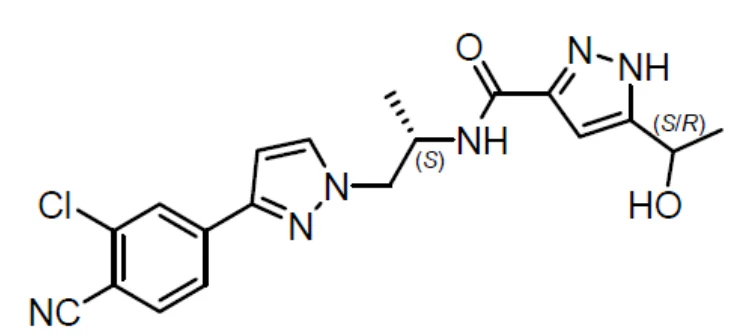
Structural formula:
Physicochemical properties:
Darolutamide is a white to greyish- or yellowish-white powder. Darolutamide milled drug substance is practically insoluble in water. Using the method described in the Ph. Eur. a saturated solution in water gives a pH-value of 6.4. The pKa value was found to be 11.75 ± 0.06. The aqueous solubility of darolutamide milled drug substance is practically not dependent on pH. Theoretically, darolutamide milled drug substance has another pKa under pH 2, but experimental solubility results show only slight effect within pH 1.0 – 6.8.
14 Clinical Trials
14.1 Clinical Trials by Indication
Non-Metastatic Castration Resistant Prostate Cancer (nmCRPC)
Table 10: Summary of Patient Demographics for Clinical Trials in nmCRPC
| Study # | Study design | Dosage, route of administration and duration | Study subjects (n) | Median Age (range) | Sex |
| ARAMIS (17712) | Randomized, double-blind, placebo-controlled multi-centre | NUBEQA 600 mg or placebo twice daily | NUBEQA: n=955 Placebo: n=554 | 74 years (48 – 95) | Male: 100% |
ARAMIS: NUBEQA versus placebo
The efficacy and safety of NUBEQA was assessed in a randomized, double-blind, placebo-controlled multi-centre phase III study (ARAMIS) in patients with nmCRPC with a prostate-specific antigen doubling time (PSADT) of ≤ 10 months (considered to be at high risk of developing metastatic disease). In total, 1509 patients were randomized 2:1 to receive either 600 mg NUBEQA orally twice daily (n=955) or matching placebo (n=554). Randomization was stratified by PSADT (≤ 6 months or > 6 months) and use of osteoclast-targeted therapy at study entry (yes or no).
All patients received a gonadotropin-releasing hormone (GnRH) analog concurrently or had a bilateral orchiectomy. Patients with presence of pelvic lymph nodes < 2 cm in short axis below the aortic bifurcation were allowed to enter the study. Absence or presence of metastasis was assessed by independent central radiological review. Included in these analyses were 89 patients that were retrospectively identified with metastases at baseline.
The following patient demographics and disease characteristics were balanced between treatment arms (see Table 11). The median age was 74 years (range 48-95) and 9% of patients were 85 years of age or older. The racial distribution was 79% White, 13% Asian and 3% Black. A majority of patients had a Gleason score of 7 or higher at diagnosis (73%). The median PSADT was 4.5 months. Nine percent (9%) of patients had prior orchiectomy, 25% of patients had prior prostatectomy and 50% of patients had at least one prior radiotherapy. Seventy-three percent (73%) of patients received prior treatment with an anti-androgen (bicalutamide or flutamide). All patients had an Eastern Cooperative Oncology Group Performance Status (ECOG PS) score of 0 or 1 (69% and 31%, respectively) at study entry.
Treatment with NUBEQA continued until radiographic disease progression as assessed by conventional imaging (CT, MRI, Tc99m bone scan) by blinded central review, unacceptable toxicity or withdrawal.
The primary efficacy endpoint was metastasis free survival (MFS) which was defined as the time from randomization to confirmed evidence of distant metastasis or death from any cause within 33 weeks after the last evaluable scan, whichever occurred first. Distant metastasis was defined as new bone or soft tissue lesions or enlarged lymph nodes above the aortic bifurcation. Secondary endpoints, evaluated in a hierarchical order, were overall survival (OS), time to pain progression, and time to initiation of first cytotoxic chemotherapy for prostate cancer.
Table 11: Demographic and baseline cancer characteristics (ARAMIS)
NUBEQA
Placebo
N = 955
N = 554
Age: years, median (range)
74.0 (48-95)
74.0 (50-92)
Age group (years), n (%)
<65
113 (11.8%)
84 (15.2%)
65-74
373 (39.1%)
216 (39.0%)
75-84
384 (40.2%)
209 (37.7%)
≥85
85 (8.9%)
45 (8.1%)
Race, n (%)
White
760 (79.6%)
434 (78.3%)
Asian
122 (12.8%)
71 (12.8%)
Black or African American
28 (2.9%)
24 (4.3%)
Missing
36 (3.8%)
19 (3.4%)
Other
9 (0.9%)
6 (1.1%)
Geographical region, n (%)
North America
108 (11.3%)
76 (13.7%)
Asia Pacific
119 (12.5%)
67 (12.1%)
Rest of the World
728 (76.2%)
411 (74.2%)
PSA central laboratory: ng/mL, median (range)
9.030 (0.31-858.30)
9.670 (1.46-885.21)
Categories, n (%)
≤10 ng/mL
508 (53.2%)
285 (51.4%)
>10 to ≤20 ng/mL
215 (22.5%)
122 (22.0%)
>20 ng/mL
232 (24.3%)
147 (26.5%)
Baseline value of PSADT, n (%)
≤6 months
669 (70.1%)
371 (67.0%)
>6 months
286 (29.9%)
183 (33.0%)
PSADT (months); median (range)
4.389 (0.744-10.991)
4.650 (0.662-13.194)
ECOG PS, n (%)
0
650 (68.1%)
391 (70.6%)
1
305 (31.9%)
163 (29.4%)
Gleason score at diagnosis (factor1+factor2), n (%)
Missing
27 (2.8%)
17 (3.1%)
<7
217 (22.7%)
142 (25.6%)
≥7
711 (74.5%)
395 (71.3%)
Baseline presence of regional pathological lymph nodes by central imaging review, n (%)a,b
No
855 (89.5%)
488 (88.1%)
Yes
100 (10.5%)
66 (11.9%)
Time since initial diagnosis to start of study treatment (months) median (range)
86.15 (2.6 – 337.5)
84.23 (0.5 – 344.7)
Baseline osteoclast-targeted therapy, Yes, n (%)
36 (3.8%)
28 (5.1%)
Abbreviations: ECOG PS = Eastern Cooperative Oncology Group performance status; PSA = prostate-specific antigen; PSADT = prostate-specific antigen doubling time.
- a pathological lymph nodes were defined according to RECIST criteria as having the short axis ≥15mm as measured by CT scan. The protocol allowed presence at baseline of lymph nodes with short axis of <2cm below the aortic bifurcation
- b Baseline values are observed at Screening Visit
The median treatment duration at the time of the primary analysis for NUBEQA-treated patients was 14.8 months compared to 11.0 months for placebo-treated patients. The median treatment duration at the time of the final analysis for NUBEQA-treated patients was 25.8 months (combined double blind + open-label) compared to 11.6 months for placebo-treated patients.
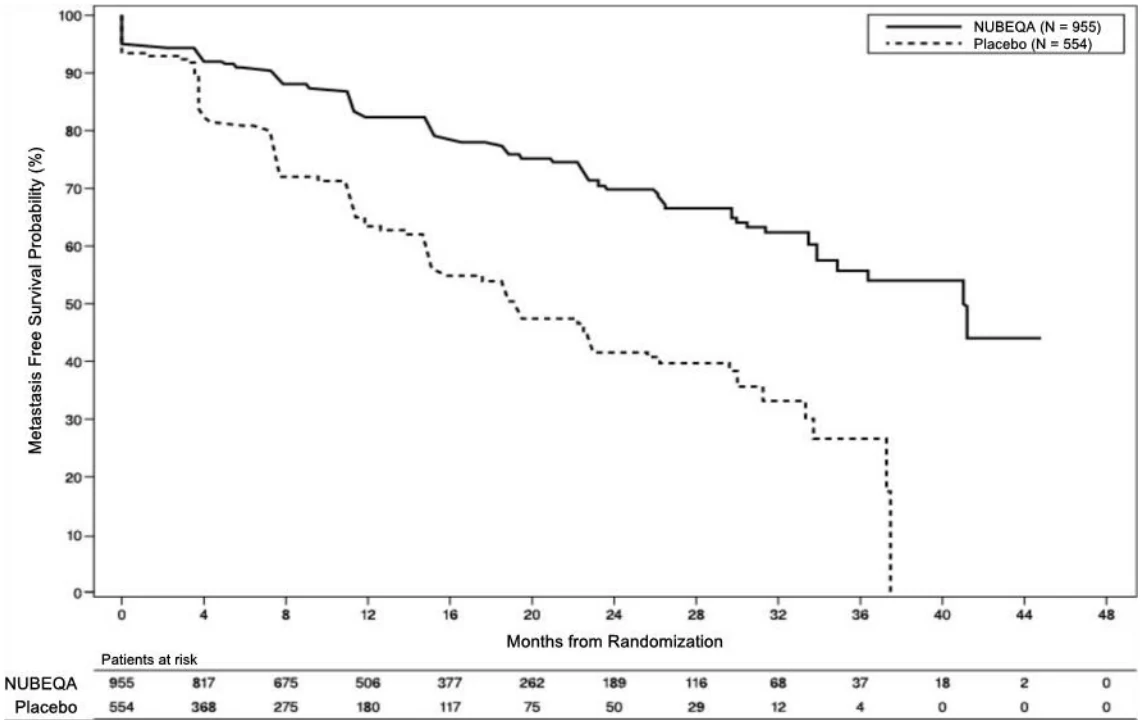
At the primary analysis, treatment with NUBEQA resulted in a statistically significant improvement in MFS compared to placebo (median MFS 40.4 vs. 18.4 months) with a p-value of <0.000001 and a hazard ratio (HR) of 0.413 (see Table 12 and Figure 1).
Table 12: Efficacy Results from the ARAMIS study
| Efficacy parametera | Number (%) of patients with events | Median (95% CI) | Hazard Ratioc,d (95% Confidence Interval [CI]) p-value (two-sided) | ||
|---|---|---|---|---|---|
NUBEQA (N=955) | Placebo (N=554) | NUBEQA (N=955) | Placebo (N=554) | ||
| Metastasis free survivale | 221 (23.1%) | 216 (39.0%) | 40.4 months (34.3, NR) | 18.4 months (15.5, 22.3) | 0.413 (0.341, 0.500) <0.000001 |
| Overall survival | 148 (15.5%) | 106b (19.1%) | NR (56.1, NR) | NRb (46.9, NR) | 0.685 (0.533, 0.881) 0.003048 |
| Time to pain progressione,f | 251 (26.3%) | 178 (32.1%) | 40.3 months (33.2, 41.2) | 25.4 months (19.1, 29.6) | 0.647 (0.533, 0.785) 0.000008 |
| Time to initiation of first cytotoxic chemotherapye | 127 (13.3%) | 98b (17.7%) | NR (NR, NR) | NRb (NR, NR) | 0.579 (0.444, 0.755) 0.000044 |
- a Analyses were performed in the full analysis set.
- b including 170 patients who crossed over to open-label NUBEQA.
- c Hazard ratio < 1 favors NUBEQA.
- d P-value is based on a log-rank test stratified by PSADT (≤ 6 months vs. > 6 months) and use of osteoclast-targeted therapy (yes vs. no).
- e MFS and time to pain progression endpoints were performed at the time of primary analysis and time to initiation of first cytotoxic chemotherapy was performed at the time of final OS analysis.
- f Patient reported outcome as evaluated by Brief Pain Inventory-Short Form questionnaire.
NR not reached
Figure 1: Kaplan Meier curves of Metastasis Free Survival (ARAMIS)
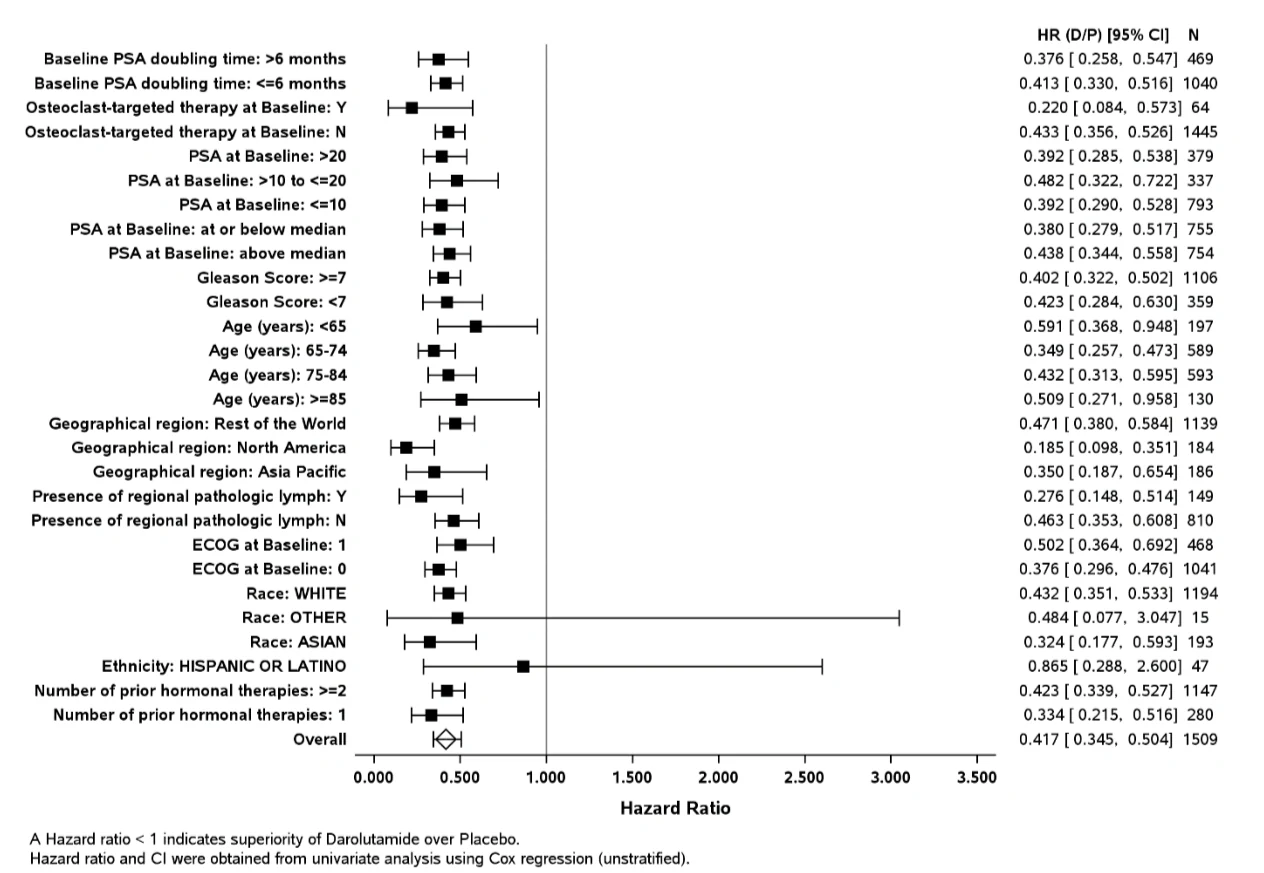
MFS results were consistent across patient subgroups (see Figure 2) regardless of PSADT, prior use of bone-targeting agents or loco-regional disease. Additional subgroups with consistent MFS results included PSA at baseline, Gleason score at diagnosis, age, geographical region, ECOG PS at baseline, race, and number of prior hormonal therapies.
Figure 2: Forest plot of subgroup analysis: Metastasis Free Survival (ARAMIS)
The final analysis of OS was event-driven conducted after 254 OS events had occurred, 14 months after the primary analysis of MFS. After the primary analysis of MFS, all patients receiving placebo at time of database cut-off were offered treatment with open-label NUBEQA (cross-over option) once the study was unblinded. Among the 554 patients randomized to placebo, 170 (31%) crossed over to receive NUBEQA treatment. The OS analysis was not adjusted for confounding effects of cross-over.
For patients who crossed over from placebo to NUBEQA after study unblinding, the median treatment duration was 11.0 months.
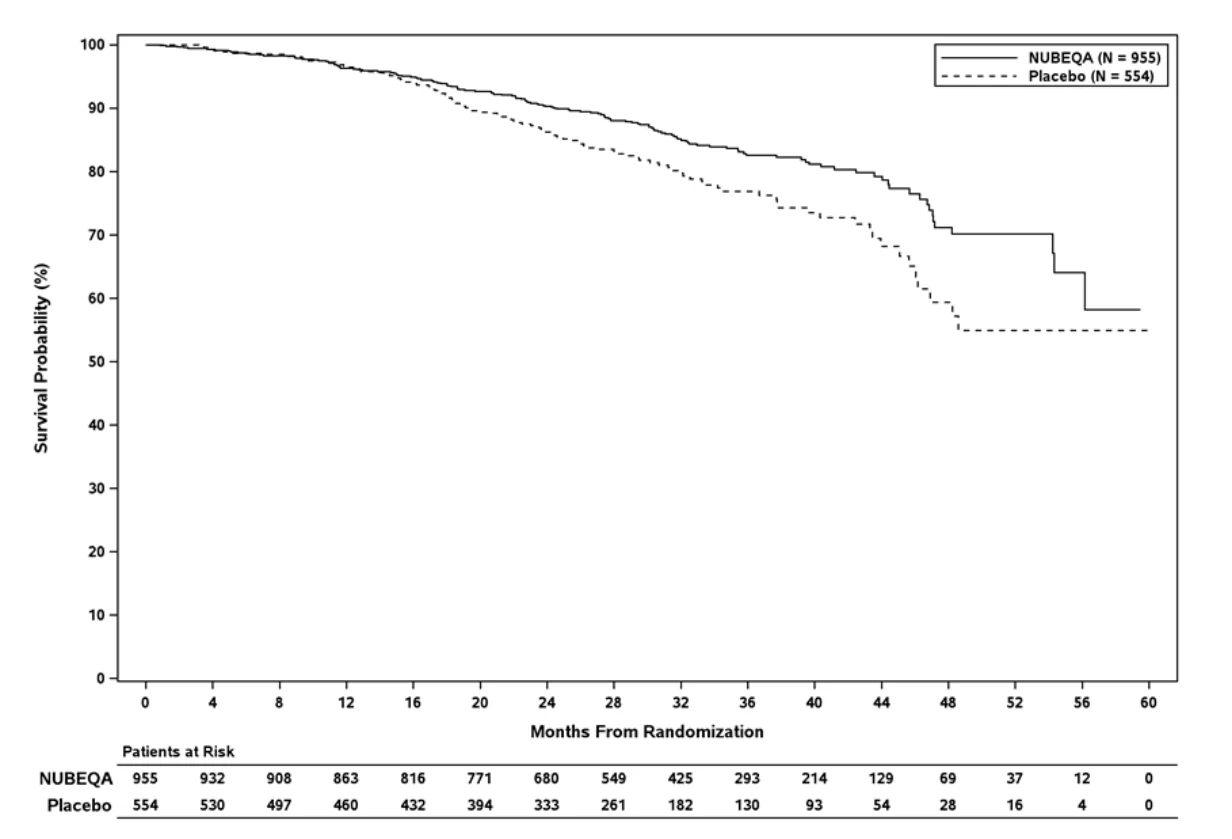
At the protocol-specified final OS analysis, treatment with NUBEQA resulted in a statistically significant improvement in OS compared to placebo (HR=0.685, p=0.003048, median was not reached in either arm (see Table 12 and Figure 3). The treatment effect for overall survival favored NUBEQA in pre-specified subgroups, including patients with PSA doubling time less than or equal to 6 months and greater than 6 months, presence or absence of lymph node involvement at baseline, and ECOG performance status of 0 or 1.
Figure 3: Kaplan-Meier curves of Overall Survival (ARAMIS)
Treatment with NUBEQA also resulted in statistically significant delays in time to pain progression (median 40.3 vs. 25.4 months, HR=0.647, p=0.000008), and time to initiation of first cytotoxic chemotherapy (HR=0.579, p=0.000044) compared to placebo (see Table 12).
Metastatic Castration-Sensitive Prostate Cancer (mCSPC)
Table 13: Summary of Patient Demographics for Clinical Trials in mCSPC
| Study # | Study design | Dosage, route of administration and duration | Study subjects (n) | Median Age (range) | Sex |
| ARANOTE (21140) | Randomized, double-blind, placebo-controlled multi-centre | NUBEQA 600 mg or placebo twice daily | NUBEQA n=446 Placebo n=223 | 70 years (43-93) | Male: 100% |
| ARASENS (17777) | Randomized, double-blind, placebo-controlled multi-centre | NUBEQA 600 mg or placebo twice daily in combination with docetaxel | NUBEQA n=651 Placebo n=655 | 67 years (41-89) | Male: 100% |
ARANOTE: NUBEQA versus placebo
ARANOTE was a multi-centre, double-blind, placebo-controlled phase III study in patients with mCSPC. In total, 669 patients were randomized 2:1 to receive 600 mg darolutamide orally twice daily (n=446) or matching placebo (n=223). All patients received a gonadotropin-releasing hormone (GnRH) agonist or antagonist concurrently or had a bilateral orchiectomy. Treatment with NUBEQA or placebo continued until progressive disease, change of antineoplastic therapy, unacceptable toxicity, death, or withdrawal.
Randomization was stratified by presence of visceral metastasis and use of prior local therapy. One patient (0.2%) with a history of seizure was enrolled in the NUBEQA arm.
Baseline demographics and disease characteristics were similar between the study arms (see Table 14).
Table 14: Demographics and baseline cancer characteristics (ARANOTE)
NUBEQA N=446
Placebo N=223
Age (years)
Mean (SD)
69.6 (8.8)
69.2 (8.9)
Median (Min, Max)
70.0 (43, 93)
70.0 (45, 91)
Age group (years), n (%)
<65
118 (26.5)
65 (29.1)
65-74
193 (43.3)
96 (43.0)
75-84
117 (26.2)
52 (23.3)
≥85
18 (4.0)
10 (4.5)
Geographical region, n (%)
Europe/ROW
186 (41.7)
88 (39.5)
Asia
141 (31.6)
63 (28.3)
Latin America
119 (26.7)
72 (32.3)
Race, n (%)
White
251 (56.3)
125 (56.1)
Black or African American
41 (9.2)
24 (10.8)
Asian
144 (32.3)
65 (29.1)
Othera
10 (2.2)
9 (4.0)
Extent of metastatic disease at study entryb, n (%)
M1a
17 (3.8)
10 (4.5)
M1b
344 (77.1)
171 (76.7)
M1c
85 (19.1)
42 (18.8)
Visceral metastases assessed by BICR (from IWRS), n (%)
Present
53 (11.9)
27 (12.1)
Absent
393 (88.1)
196 (87.9)
Stage of prostate cancer at initial diagnosis (TNM classification), n (%)
Stage I
6 (1.3)
6 (2.7)
Stage II
26 (5.8)
7 (3.1)
Stage III
31 (7.0)
17 (7.6)
Stage IV A
37 (8.3)
15 (6.7)
Stage IV B
317 (71.1)
168 (75.3)
Unknown
29 (6.5)
10 (4.5)
Gleason score at initial diagnosis of prostate cancer, n (%)
<8
122 (27.4)
67 (30.0)
≥8
311 (69.7)
146 (65.5)
Missing/not assessed
13 (2.9)
10 (4.5)
NUBEQA N=446
Placebo N=223
ECOG PS, n (%)
0
235 (52.7)
98 (43.9)
1
199 (44.6)
117 (52.5)
2
12 (2.7)
8 (3.6)
Prior local radiotherapy/prostatectomyc, n (%)
Yes
87 (19.5)
50 (22.4)
No
359 (80.5)
173 (77.6)
PSA at baseline (central laboratory) (ng/mL)
n
436
219
Mean (SD)
322.782 (1192.906)
301.324 (951.758)
Median (Min, Max)
21.395 (0.02, 15915.00)
21.210 (0.02, 8533.00)
Missing
10
4
Disease volume at baseline, n (%)d
High
315 (70.6)
157 (70.4)
Low
131 (29.4)
66 (29.6)
N=Total number of participants (100%); n=Number of participants within category; ROW=Rest of the World; SD=Standard deviation; BICR=Blinded independent central review; ECOG PS=Eastern Cooperative Oncology Group Performance Status; IWRS=Interactive web response system; Max=Maximum, Min=Minimum; PSA=Prostate-specific antigen; TNM=Tumor, Node, Metastasis
- a Race "Other" includes "American Indian or Alaska Native", "Native Hawaiian or other Pacific Islander", and "Multiple".
- b
TNM classification system categories for the extent of metastatic disease at study entry (M1) were defined as:
M1a=Nonregional lymph nodes metastases only.
M1b=Bone metastases with or without lymph node metastases.
M1c=Visceral metastases with or without lymph node metastases or with or without bone metastases.
- c Based on medical review.
- d High disease volume at baseline was defined as the presence of visceral metastases or 4 or more bone lesions (including superscans), with at least 1 metastasis beyond the vertebral column and pelvic bones. If none of these criteria were met, the participant had low disease volume at baseline.
Note: Data collection for race and ethnicity was not allowed in some countries/regions due to local regulations.
The primary efficacy endpoint was radiographic Progression Free Survival (rPFS), defined as the time from randomization to radiological disease progression or death, as assessed by blinded independent central review. Overall survival (OS) was a key secondary endpoint.
The median treatment duration at the time of the primary analysis for NUBEQA-treated patients was 24.2 months compared to 17.3 months for the placebo-treated patients. At the primary analysis, treatment with NUBEQA resulted in a statistically significant improvement in rPFS compared to placebo with a p-value of <0.0001 (see Table 15 and Figure 4) and a hazard ratio (HR) of 0.541. The rPFS results were consistent across subgroups, including in high and low volume disease (see Figure 5). There was no statistically significant improvement in OS (HR=0.813, p=0.1007).
Table 15: Efficacy Results from the ARANOTE study
| Efficacy parameter | Number (%) of patients with events | Median in months (95% CI) | Hazard Ratioa (95% Confidence Interval [CI]) p-value (one-sided)b | ||
|---|---|---|---|---|---|
| NUBEQA (N=446) | Placebo (N=223) | NUBEQA (N=446) | Placebo (N=223) | ||
| Primary Endpoint | |||||
| Radiographic Progression-Free Survivalc | 128 (28.7%) | 94 (42.2%) | NR | 25.0 (19.0, NR) | 0.541 (0.413, 0.707) <0.0001 |
- a Hazard ratio < 1 favors NUBEQA.
- b Based on stratified log-rank test.
- c Radiographic disease progression was determined based on RECIST v 1.1 criteria for soft tissue metastases and Prostate Cancer Working Group 3 criteria for bone metastases.
NR - not reached
Figure 4: Kaplan-Meier curves for radiographic Progression-Free Survival; mCSPC population (ARANOTE)
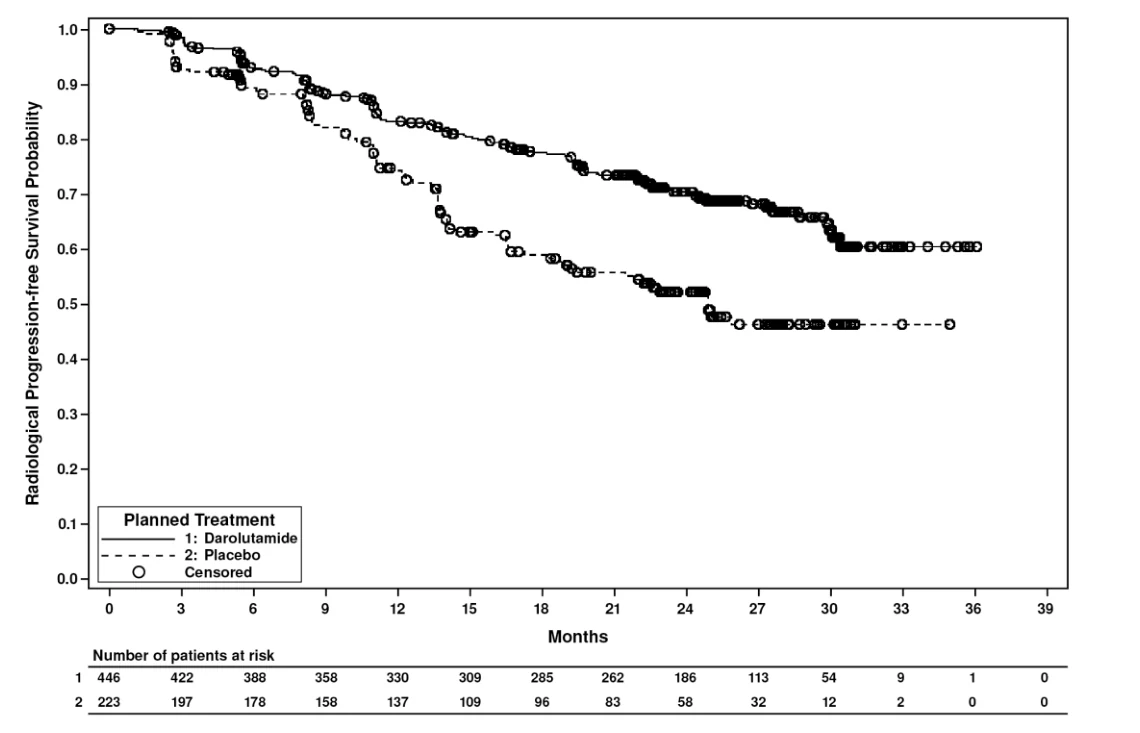
Figure 5: Forest plot of subgroup analysis: radiological progression-free survival (ARANOTE)
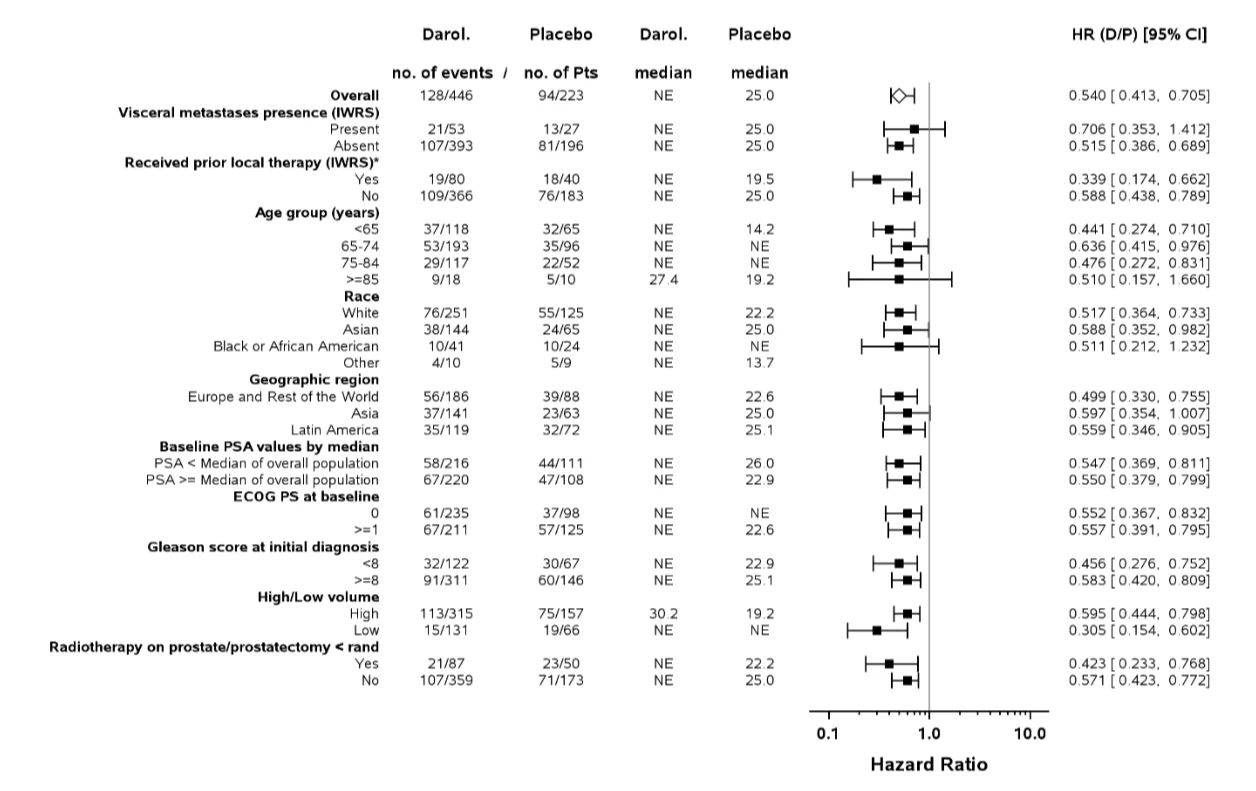
HR <1 indicates superiority of darolutamide over placebo.
HRs and CIs were obtained from univariate analysis using Cox regression (unstratified).
Medians were computed using Kaplan-Meier estimates.
HR estimates with 95% CIs were calculated if ≥10 total events were observed within the subgroup across the treatment arms.
*Prior local therapy (IWRS) included other procedures (e.g. orchiectomy, catheterization).
ARASENS: NUBEQA with docetaxel versus placebo with docetaxel
ARASENS was a randomized, multi-centre, double-blind, placebo-controlled phase III study in 1306 patients with mCSPC. Patients were randomized (1:1) to receive 600 mg darolutamide orally twice daily (n=651) or matching placebo (n=655), in combination with 75 mg/m2 of docetaxel once every 3 weeks for 6 cycles. Treatment with NUBEQA or placebo continued until symptomatic progressive disease, change of antineoplastic therapy, or unacceptable toxicity. All patients received a gonadotropin-releasing hormone (GnRH) analog concurrently or had a bilateral orchiectomy. 87.6% and 85.5% of patients received full 6 cycles of docetaxel and 1.5% and 2.0% of patients did not receive docetaxel, in NUBEQA+docetaxel and placebo+docetaxel arm, respectively.
Presence of metastasis was assessed by independent central radiological review. Patients with regional lymph node involvement only (M0) were excluded from the study.
Randomization was stratified by extent of disease (non-regional lymph nodes metastases only (M1a), bone metastases with or without lymph node metastases (M1b), or visceral metastases with or without lymph node metastases or with or without bone metastases (M1c)), and by alkaline phosphatase level (< or ≥ upper limit of normal) at study entry.
The following patient demographics and disease characteristics were balanced between treatment arms (see Table 16). The median age was 67 years (range 41-89) and 17% of patients were 75 years of age or older. The racial distribution was 52% White, 36% Asian and 4% Black. A majority of patients had a Gleason score of 8 or higher at diagnosis (78%). Seventy one percent (71%) of patients had an ECOG PS score of 0 and 29% of patients had an ECOG PS score of 1. There were 86% of patients with de novo (initial diagnosis with metastases) and 13% with recurrent disease (initial diagnosis with localized disease, recurred with metastases). At study entry, 3% of patients were M1a, 79.5% were M1b and 17.5% were M1c; alkaline phosphatase was <ULN in 45% of patients and ≥ ULN in 55% of patients; median PSA level at baseline was 30.3 µg/L and 24.2 µg/L for NUBEQA+docetaxel vs placebo+docetaxel arm, respectively. Patients with a medical history of seizure were allowed to enter the study (4 patients (0.6%) in the NUBEQA+docetaxel arm and 2 patients (0.3%) in the placebo+docetaxel arm).
Table 16: Demographics and baseline characteristics (FAS) (ARASENS)
NUBEQA+ docetaxel arm N=651
Placebo+ docetaxel arm N=654a
Age (years)
Mean (StD)
66.7 (7.9)
67.0 (7.8)
Median (Min, Max)
67.0 (41, 89)
67.0 (42, 86)
Age group (years), n (%)
<65
243 (37.3%)
234 (35.8%)
65–74
303 (46.5%)
306 (46.8%)
75–84
102 (15.7%)
110 (16.8%)
≥85
3 (0.5%)
4 (0.6%)
Race, n (%)
White
345 (53.0%)
333 (50.9%)
Black or African American
26 (4.0%)
28 (4.3%)
Asian
230 (35.3%)
245 (37.5%)
Otherb
7 (1.1%)
2 (0.3%)
Not reported
43 (6.6%)
46 (7.0%)
Ethnicity, n (%)
Hispanic or Latino
40 (6.1%)
49 (7.5%)
Not Hispanic or Latino
561 (86.2%)
557 (85.2%)
Not reported
50 (7.7%)
48 (7.3%)
Geographical region, n (%)
North America
125 (19.2%)
119 (18.2%)
Asia Pacific
229 (35.2%)
244 (37.3%)
Rest of the World
297 (45.6%)
291 (44.5%)
Body mass index group (kg/m2), n (%)
<20
45 (6.9%)
34 (5.2%)
20 – <25
254 (39.0%)
248 (37.9%)
25 – <30
240 (36.9%)
254 (38.8%)
≥30
108 (16.6%)
116 (17.7%)
Missing
4 (0.6%)
2 (0.3%)
Renal function - eGFR at baseline (mL/min)c
Normal
375 (57.6%)
365 (55.8%)
Mild impairment
236 (36.3%)
235 (35.9%)
Moderate impairment
39 (6.0%)
53 (8.1%)
Severe impairmentd
1 (0.2%)
0
Missing
0
1 (0.2%)
Hepatic function at baselinee
Normal
597 (91.7%)
593 (90.7%)
NUBEQA+ docetaxel arm N=651
Placebo+ docetaxel arm N=654a
Mild impairment
49 (7.5%)
52 (8.0%)
Moderate impairment
2 (0.3%)
0
Missing
3 (0.5%)
9 (1.4%)
Extent of metastatic disease at study
entry (eCRF), n (%)
M1a: Non-regional lymph nodes only
23 (3.5%)
16 (2.4%)
M1b: Bone with or without lymph nodes
517 (79.4%)
520 (79.5%)
M1c: Visceral with or without lymph nodes or bone
111 (17.1%)
118 (18.0%)
ALP at baseline (central laboratoryf; eCRF)
(U/L), n (%)
ALP < ULN
290 (44.5%)
291 (44.5%)
ALP ≥ ULN
361 (55.5%)
363 (55.5%)
Stage of prostate cancer at initial diagnosis
TNM classificationg, n (%)
Stage I
12 (1.8%)
10 (1.5%)
Stage IIA
18 (2.8%)
10 (1.5%)
Stage IIB
15 (2.3%)
10 (1.5%)
Stage III
36 (5.5%)
38 (5.8%)
Stage IV
563 (86.5%)
580 (88.7%)
Stage IV, M0
5 (0.8%)
14 (2.1%)
Stage IV, M1
558 (85.7%)
566 (86.5%)
Missing
7 (1.1%)
6 (0.9%)
Gleason score at initial diagnosis
of prostate cancer, n (%)
<8
122 (18.7%)
118 (18.0%)
≥8
505 (77.6%)
516 (78.9%)
Missing
24 (3.7%)
20 (3.1%)
PSA at baseline (central laboratory) (ng/mL)
n
651
653
Mean (StD)
248.47 (714.08)
204.71 (742.54)
Median (Min, Max)
30.30 (0.0, 9219.0)
24.20 (0.0, 11947.0)
Missing
0
1
ECOG Performance Status, n (%)
0
466 (71.6%)
462 (70.6%)
1
185 (28.4%)
190 (29.1%)
Missing
0
2 (0.3%)
Testosterone at baseline (central laboratory) (ng/mL)
<0.5
339 (52.1%)
353 (54.0%)
≥0.5
309 (47.5%)
296 (45.3%)
Missing
3 (0.5%)
5 (0.8%)
Abbreviations: AJCC=American Joint Committee on Cancer; ALP=Alkaline phosphatase; AST=Aspartate aminotransferase; eCRF=Electronic case report form; eGFR=Estimated glomerular filtration rate; FAS=Full analysis set; Max=Maximum; Min=Minimum; N=Total number of patients (100%); n=Number of patients with event; PSA=Prostate-specific antigen; StD=Standard deviation; TNM=Tumor, Node, Metastasis; U/L=Unit per litre; ULN=Upper limit of normal
- a One patient in the placebo arm was excluded from all analyses
- b Race 'Other' includes “American Indian or Alaska Native”, “Native Hawaiian or other Pacific Islander”, and “Multiple”
- c Renal function: normal: eGFR ≥90 mL/min; mild impairment: 60≤ eGFR <90 mL/min; moderate impairment: 30≤ eGFR <60 mL/min; severe impairment: 15≤ eGFR <30 mL/min
- d One patient with severe renal impairment at baseline was eligible based on a serum creatinine level below ≤2.0 x ULN.
- e
Hepatic function: normal: Total bilirubin and AST ≤ ULN; mild impairment: Total bilirubin and AST >ULN to 1.5x
- ULN or Total bilirubin ≤ ULN and AST >ULN; moderate impairment: Total bilirubin >1.5 to 3x ULN, any AST
- f For 2 patients (one in the NUBEQA+docetaxel arm and the other in the placebo+docetaxel arm), central laboratory ALP values were not available at baseline and the local laboratory ALP values were selected as baseline instead.
- g According to AJCC 7th edition, Stage IV could be M1 or M0 disease. For the purpose of this analysis, the Stage IV M0 group was defined as the time interval of >3 months between initial diagnosis and initial diagnosis of metastases.
Note: Data collection for race and ethnicity was not allowed in some countries (eg, France) due to local regulations.
The primary efficacy endpoint was overall survival (OS). Secondary endpoints, evaluated in a hierarchical order, included time to castration–resistant prostate cancer, time to pain progression, symptomatic skeletal event free survival (SSE–FS), time to first symptomatic skeletal event (SSE), and time to initiation of subsequent antineoplastic therapy.
A statistically significant improvement in OS with a 32.5% reduction in risk of death was observed in the NUBEQA+docetaxel arm compared to the placebo+docetaxel arm (see Table 17 and Figure 6). OS results were consistent across all patient subgroups, including stratification subgroups (extent of disease and alkaline phosphatase level) (see Figure 7). Of the patients who entered active or survival follow-up, 56.8% in the darolutamide +docetaxel arm and 75.6% in the placebo+docetaxel arm received subsequent life-prolonging therapy after stopping study treatment.
The following secondary efficacy endpoints showed a statistically significant advantage in favor of NUBEQA+docetaxel: time to castration–resistant prostate cancer, time to pain progression, time to first symptomatic skeletal event, time to initiation of subsequent antineoplastic chemotherapy, and longer symptomatic skeletal event free survival time (see Table 17). For the time to castration-resistant prostate cancer endpoint, although PSA progression represented the majority of events in both treatment arms, the proportion of radiological progression events in the absence of PSA progression was higher in the darolutamide+docetaxel arm (see7 Warnings and Precautions).
Pain progression was assessed using the Patient-Reported Outcome (PRO) Brief Pain Inventory- Short Form (BPI-SF). A statistically significant delay in time to pain progression was observed for patients treated in the NUBEQA+docetaxel arm compared to placebo+docetaxel arm.
Table 17: Efficacy Results from the ARASENS study
| Efficacy parameter | Number (%) of patients with events | Median in months (95% CI) | Hazard Ratiob (95% Confidence Interval [CI]) p-value (one-sided)c | ||
| NUBEQA+ docetaxel (N=651) | Placebo+ docetaxel (N=654)a | NUBEQA+ docetaxel (N=651) | Placebo+ docetaxel (N=654)a | ||
| Primary Endpoint | |||||
| Overall survival | 229 (35.2%) | 304 (46.5%) | NR (NR, NR) | 48.9 (44.4, NR) | 0.675 (0.568, 0.801) <0.0001 |
| Key Secondary Endpoints | |||||
| Time to CRPCd | 225 (34.6%) | 391 (59.8%) | NR (NR, NR) | 19.1 (16.5, 21.8) | 0.357 (0.302, 0.421) <0.0001 |
| Time to pain progressione | 222 (34.1%) | 248 (37.9%) | NR (30.5, NR) | 27.5 (22.0, 36.1) | 0.792 (0.660, 0.950) 0.0058 |
| Symptomatic skeletal event free survival (SSE–FS)f | 257 (39.5%) | 329 (50.3%) | 51.2 (47.2, NR) | 39.7 (36.0, 42.3) | 0.609 (0.516, 0.718) <0.0001 |
| Time to first symptomatic skeletal event (SSE)g | 95 (14.6%) | 108 (16.5%) | NR (NR, NR) | NR (NR, NR) | 0.712 (0.539, 0.940) 0.0081 |
| Time to initiation of subsequent antineoplastic therapy | 219 (33.6%) | 395 (60.4%) | NR (NR, NR) | 25.3 (23.1, 28.8) | 0.388 (0.328, 0.458) <0.0001 |
- a One patient in the placebo arm was excluded from all analyses
- b Hazard ratio < 1 favors NUBEQA
- c Based on stratified log-rank test
- d Time to CRPC defined as time from randomization to first occurrence of: PSA progression (≥25% increase and an absolute increase of 2 ng/mL or more from nadir), radiological progression by soft tissue and visceral lesions according to RECIST version 1.1, or radiological progression by bone lesions.
- e Evaluated by BPI-SF and initiation of short- or long-acting opioid for pain for ≥7 consecutive days. Analysis included patients who received subsequent anti-cancer therapies.
- f SSE-FS defined as time from randomization to first occurrence of an SSE or death from any cause. SSE defined as first occurrence of: external beam radiation therapy (EBRT) to relieve skeletal symptoms, new symptomatic pathologic bone fracture, spinal cord compression, or tumor-related orthopedic surgical intervention. The number of deaths in this analysis was 162 for the NUBEQA+docetaxel arm and 221 for the docetaxel+placebo arm. Analysis included patients who received subsequent anti-cancer therapies.
- g Time to first SSE defined as time from randomization to first occurrence of an SSE. Analysis included patients who received subsequent anti-cancer therapies.
CRPC=castration-resistant prostate cancer
NR=not reached
Figure 6: Kaplan-Meier curves of Overall Survival: mCSPC population (ARASENS)a
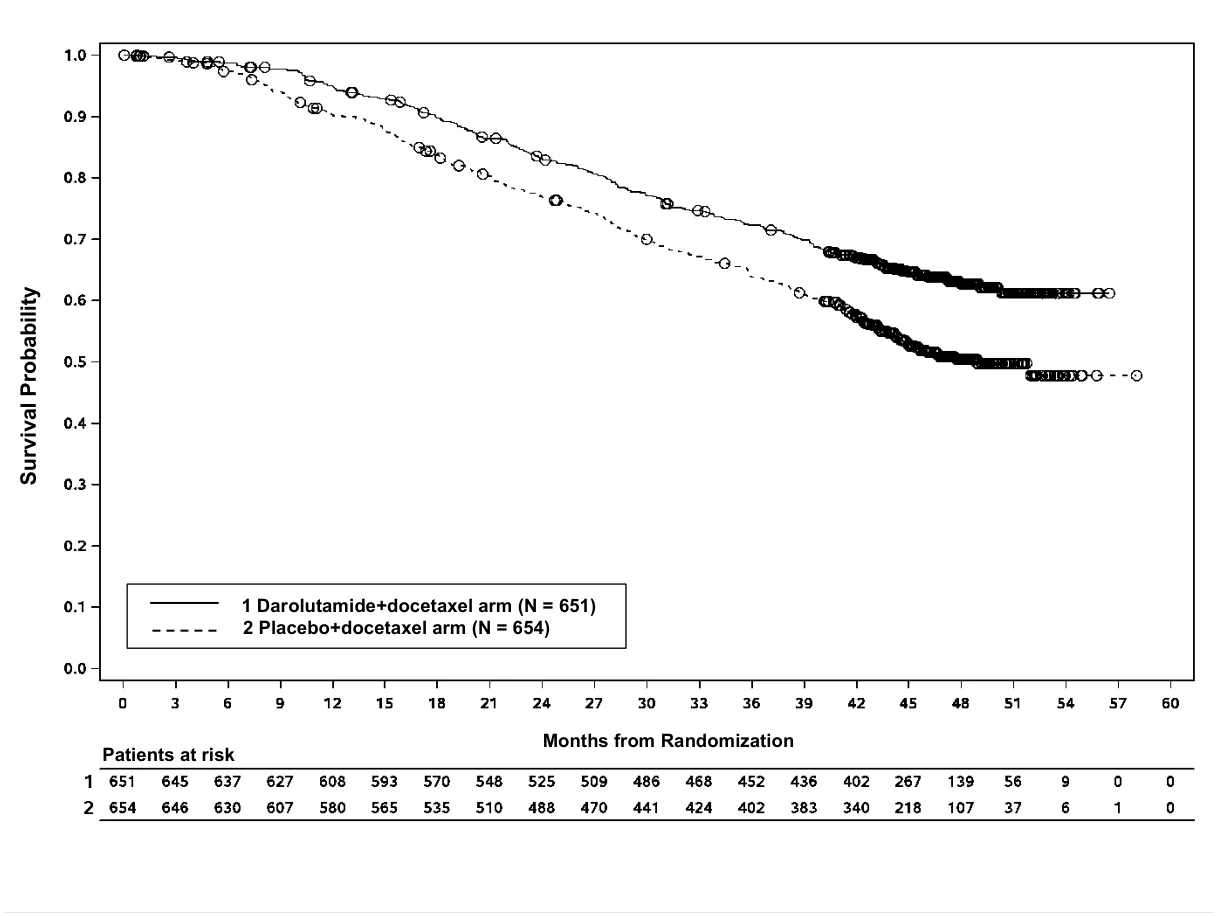
a OS rate at 36 months was 72.3% (95% CI, 68.8 to 75.8) in the NUBEQA+docetaxel arm versus 63.8% (95% CI, 60.1 to 67.6) in the placebo+docetaxel arm. OS rate at 48 months was 62.7% (95% CI, 58.7 to 66.7) in the NUBEQA+docetaxel arm versus 50.4% (95% CI, 46.3 to 54.6) in the placebo+docetaxel arm.
Months from Randomization
S urvi val P robabi li ty
1 Darolutamide+docetaxel arm (N = 651)
2 Placebo+docetaxel arm (N = 654)
Patients at risk
Figure 7: Forest plot of subgroup analysis results of overall survival (ARASENS)
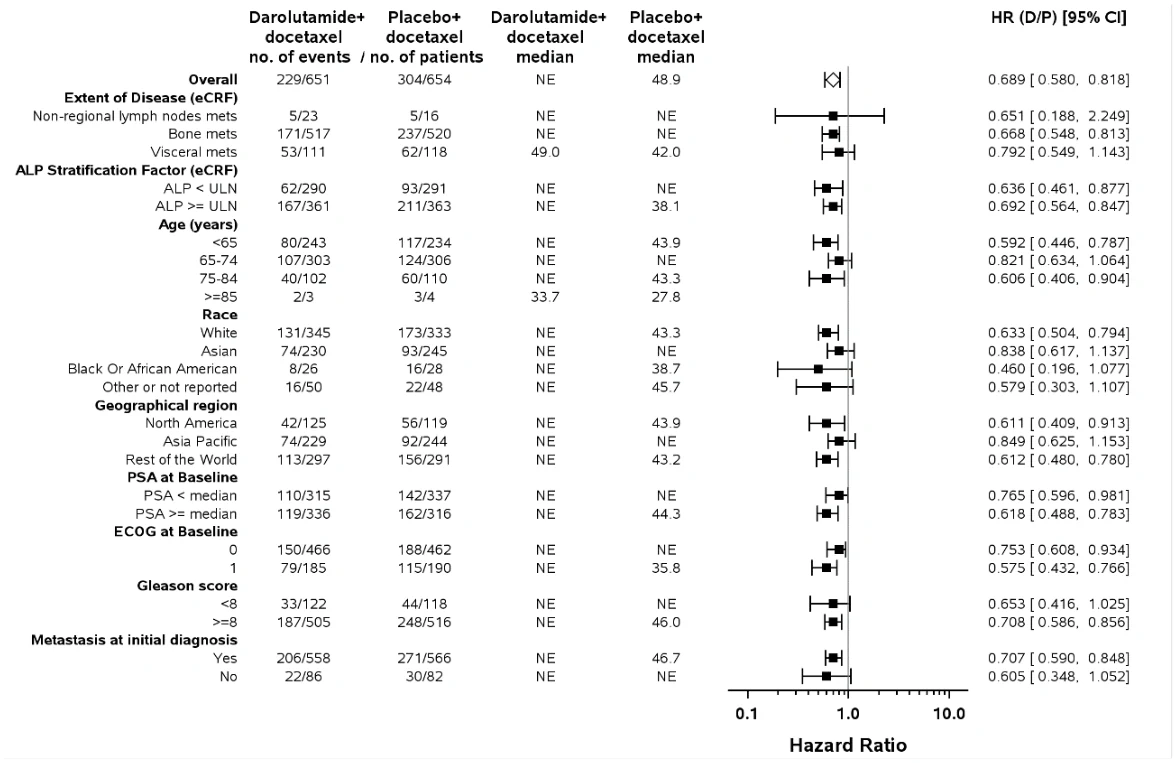
A hazard ratio <1 favours the darolutamide+docetaxel arm over the placebo+docetaxel arm.
Hazard ratios and CIs were obtained from univariate analysis using Cox regression (unstratified). Medians were computed using Kaplan-Meier estimates.
No HR was calculated if <10 total events were observed within the subgroups across the treatment arms.
Extent of disease classification: non-regional lymph node metastases=M1a; bone metastases=M1b; visceral metastases=M1c
16 Non-Clinical Toxicology
General Toxicology
In repeated dose toxicity studies in rats and dogs, the main findings were changes in the male reproductive organs (decreases in organ weight with atrophy of the prostate and epididymides). Additional changes to reproductive tissues included minimal increase in vacuolation of the pituitary gland, atrophy in seminal vesicles and mammary glands in rats as well as testicular hypospermia, seminiferous tubule dilatation and degeneration in dogs. These effects occurred at systemic exposures in the range of or below the anticipated human exposure (based on AUC comparison). Changes in the male reproductive organs in both species were consistent with the pharmacological activity of darolutamide and reversed or partially resolved after 4- to 8-week recovery periods. In addition, a slight decrease of body weight gain in the highest dose group in male rats (2x500 mg/kg/d) after 26-weeks and male dogs (2x200 mg/kg/d) after 39 weeks was observed. In male and female dogs decreases of small magnitude in mean red blood cell parameters (red blood cell, hemoglobin, packed cell volume) within or close to the background control range were seen at the highest dose during 39-weeks treatment.
Genotoxicity
Darolutamide did not induce mutations in the bacterial reverse mutation (Ames) assay. Additionally, darolutamide did not induce genotoxicity in the in vivo combined bone marrow rat micronucleus assay or the Comet assay in the liver and duodenum of the rat. However, clastogenicity was observed in the in vitro chromosome aberration assay in human lymphocytes.
Carcinogenicity
Oral administration of darolutamide to male rasH2 transgenic mice for 6 months did not show carcinogenic potential at doses up to 1000 mg/kg/day.
Reproductive and Developmental Toxicology
Studies on reproductive toxicity have not been performed. However, in repeated dose toxicity studies in rats and dogs, atrophy and hypospermia in the male reproductive system were observed, which is consistent with the pharmacological activity of darolutamide. These effects occurred at systemic exposures in the range of or below the anticipated human exposure (based on AUC comparison).