


Product Monograph - Evrysdi
Recent Major Label Changes
| 1 Indications, Pediatrics | 2024-10 |
|---|---|
| 4 Dosage and Administration, 4.1 Dosing Considerations | 2025-08 |
| 4 Dosage and Administration, 4.2 Recommended Dosage and Dosage Adjustment | 2025-08 |
| 4 Dosage and Administration, 4.3 Reconstitution | 2025-08 |
| 4 Dosage and Administration, 4.4 Administration | 2025-08 |
| 7 Warnings and Precautions, 7.1.3 Pediatrics | 2024-10 |
Table of Contents
Certain sections or subsections that are not applicable at the time of the preparation of the most recent authorized product monograph are not listed.
Recent Major Label Changes 2
Table of Contents 2
Part 1: Healthcare Professional Information 4
1 Indications 4
1.1 Pediatrics 4
1.2 Geriatrics 4
2 Contraindications 4
4 Dosage and Administration 4
4.1 Dosing Considerations 4
4.2 Recommended Dose and Dosage Adjustment 4
4.3 Reconstitution 5
4.4 Administration 6
4.5 Missed Dose 7
5 Overdose 7
6 Dosage Forms, Strengths, Composition, and Packaging 7
7 Warnings and Precautions 8
General 8
Dependence, Tolerance and/or Abuse Liability 8
Driving and Operating Machinery 8
Hepatic/Biliary/Pancreatic 8
Ophthalmologic 9
Renal 9
Reproductive Health 9
Skin 10
7.1 Special Populations 10
7.1.1 Pregnancy 10
7.1.2 Breastfeeding 10
7.1.3 Pediatrics 10
7.1.4 Geriatrics 11
8 Adverse Reactions 11
8.1 Adverse Reaction Overview 11
8.2 Clinical Trial Adverse Reactions 11
8.3 Less Common Clinical Trial Adverse Reactions 14
8.4 Abnormal Laboratory Findings: Hematologic, Clinical Chemistry, and Other Quantitative Data 14
8.5 Post-Market Adverse Reactions 14
9 Drug Interactions 14
9.2 Drug Interactions Overview 14
9.3 Drug-Behaviour Interactions 14
9.4 Drug-Drug Interactions 14
9.5 Drug-Food Interactions 16
9.6 Drug-Herb Interactions 16
9.7 Drug-Laboratory Test Interactions 16
10 Clinical Pharmacology 16
10.1 Mechanism of Action 16
10.2 Pharmacodynamics 16
10.3 Pharmacokinetics 17
11 Storage, Stability, and Disposal 19
12 Special Handling Instructions 19
Part 2: Scientific Information 21
13 Pharmaceutical Information 21
14 Clinical Trials 22
14.1 Clinical Trials by Indication 22
16 Non-Clinical Toxicology 33
Patient Medication Information 37
Instructions For Reconstitution 41
Instructions For Use 1
Patient Medication Information 10
Instructions For Use 14
Part 1: Healthcare Professional Information
1 Indications
EVRYSDI (risdiplam) is indicated for the treatment of patients with spinal muscular atrophy (SMA).
Adult: There are limited data on EVRYSDI for patients over 25 years of age.
1.1 Pediatrics
Pediatrics: Based on the data submitted and reviewed by Health Canada, the safety and efficacy of EVRYSDI in pediatric patients has been established; therefore, Health Canada has authorized an indication for pediatric use.
1.2 Geriatrics
Geriatrics (> 60 years of age): EVRYSDI has not been studied in patients with SMA above 60 years of age (see7 Warnings and Precautions, 7.1 Special Populations, 7.1.4 Geriatrics and 10.3 Pharmacokinetics, Special Populations and Conditions).
2 Contraindications
EVRYSDI is contraindicated in patients who are hypersensitive to this drug or to any ingredient in the formulation, including any non-medicinal ingredient, or component of the container. For a complete listing, see 6 Dosage Forms, Strengths, Composition, and Packaging.
4 Dosage and Administration
4.1 Dosing Considerations
EVRYSDI Powder for Oral Solution:
EVRYSDI oral solution must be reconstituted by a health professional prior to being dispensed.
EVRYSDI powder for oral solution is available for all age groups.
4.2 Recommended Dose and Dosage Adjustment
EVRYSDI is taken orally once daily, at approximately the same time each day, with or without food.
The recommended once daily dose of EVRYSDI for SMA patients is determined by age and body weight (see Table 1).
Table 1 Dosing Regimen by Age and Body Weight
| Age* and Body Weight | Recommended Daily Dose | Dosage Form |
| < 2 months of age | 0.15 mg/kg | Powder for oral solution |
| 2 months to < 2 years of age | 0.20 mg/kg | Powder for oral solution |
| ≥ 2 years of age (< 20 kg) | 0.25 mg/kg | Powder for oral solution |
| ≥ 2 years of age (≥ 20 kg) | 5 mg | Powder for oral solution or Film-coated tablet |
* based on corrected gestational age for preterm infants
The healthcare professional should prescribe the appropriate pharmaceutical form according to the dose required, and the patient’s needs. For patients with difficulty swallowing a whole tablet, the tablet can be dispersed or the powder for oral solution can be prescribed.
EVRYSDI Powder for Oral Solution:
EVRYSDI is taken orally once daily, using the re-usable oral syringe provided, at approximately the same time each day. In infants who are breastfed, EVRYSDI should be administered after breast-feeding.
EVRYSDI Film-coated Tablet:
The EVRYSDI film-coated tablets are available for patients prescribed the 5 mg dose.
Dose changes must be made under the supervision of a healthcare professional.
Treatment with a daily dose above 5 mg has not been studied.
Special Dosage Instructions
Pediatric use The safety and efficacy of EVRYSDI in preterm infants before reaching the corrected age of 16 days have not been established in clinical studies.
For infants initiating EVRYSDI between 2 and 5 months of age, who are symptomatic and treatment-naïve: see 7.1.3 Pediatrics and 10.3 Pharmacokinetics.
Geriatric use The impact of geriatric age on the pharmacokinetics of EVRYSDI has not been studied (see 7 Warnings and Precautions, 7.1 Special Populations, 7.1.4 Geriatrics and 10.3 Pharmacokinetics, Special Populations and Conditions).
Renal Impairment
No dose adjustment is required in patients with renal impairment (see 7 Warnings and Precautions, Renal and 10.3 Pharmacokinetics).
Hepatic Impairment
No dose adjustment is required in patients with mild or moderate hepatic impairment. Severe hepatic impairment has not been studied and could lead to increased EVRYSDI exposure (see 7 Warnings and Precautions, Hepatic/Biliary/pancreatic and 10.3 Pharmacokinetics).
4.3 Reconstitution
EVRYSDI Powder for Oral Solution
Please consult the Instructions for Reconstitution and Instructions for Use provided in the Patient Medication Information section for detailed instructions for reconstitution and administration.
Preparation of the 60 mg EVRYSDI Powder for Oral solution (0.75 mg/mL)
Caution should be exercised in the handling of EVRYSDI powder for oral solution (see 12 Special Handling Instructions). Avoid inhalation and direct contact with skin or mucous membranes with the dry powder and the reconstituted solution. Wear disposable gloves during reconstitution and while wiping the outer surface of the bottle/cap and cleaning the working surface after reconstitution. If contact occurs, wash thoroughly with soap and water; rinse eyes with water.
Selecting the Oral Syringe for the Prescribed Daily Dose
Table 2 Selecting the Oral Syringe for the Prescribed Daily Dose of EVRYSDI
| Dose Strength | Syringe Size | Dosing Volume | Syringe Increments | |||
0.75 mg/mL (100 mL bottle) | 1 mL | 0.3 mL to 1.0 mL | 0.01 mL | |||
| 6 mL | 1.0 to 6.0 mL | 0.1 mL | ||||
| 12 mL | 6.2 to 6.6 mL | 0.2 mL | ||||
For the calculation of dosing volume, the syringe increments need to be considered. Round the dose volume to the closest increment marked on the selected oral syringe.
Use Purified Water or Water for Injection (WFI) to reconstitute the medicine.
Mix 79 mL of Purified Water or Water for Injection (WFI) into the medicine bottle.
Patients should take EVRYSDI immediately after it is drawn up into the oral syringe. If it is not taken within 5 minutes, the dose should be discarded and a new dose should be prepared.
No incompatibilities between EVRYSDI and the recommended oral syringes have been observed.
Preparation of the Dispersion of EVRYSDI Film-coated Tablets
It is recommended that a healthcare professional discuss with the patient or caregiver how to prepare the prescribed daily dose prior to administration of the first dose.
Refer to Section 4.4 Administration for the proper dosing regimen instructions.
4.4 Administration
EVRYSDI Powder for Oral Solution:
Use the re-usable oral syringe provided to deliver the daily dose of EVRYSDI. It is recommended that a healthcare professional discuss with the patient or caregiver how to prepare the prescribed daily dose prior to administration of the first dose.
The patient should drink water after taking the reconstituted EVRYSDI to ensure the drug has been completely swallowed. Do not mix EVRYSDI with formula or milk. If the patient is unable to swallow and has a nasogastric or gastrostomy tube, administer EVRYSDI via the tube. The tube should be flushed with water after delivering EVRYSDI.
EVRYSDI Film-Coated Tablets:
The EVRYSDI film-coated tablet should be swallowed whole with water or dispersed in a small amount of room temperature non-chlorinated drinking water (e.g. bottled water). Do not chew, cut or crush the tablets.
If EVRYSDI film-coated tablet is dispersed in non-chlorinated drinking water (e.g. bottled water), take it immediately. EVRYSDI film-coated tablets must not be dispersed in any liquid other than non-chlorinated drinking water (e.g. bottled water). Discard the prepared dispersion if it is not used within 10 minutes of adding water. Do not expose the prepared dispersion to sunlight.
For detailed instructions on the dispersion and administration of EVRYSDI film-coated tablets in non-chlorinated drinking water (e.g. bottled water), please refer to the Instructions for Use.
If the prepared dispersion spills or gets on the skin, the area should be washed with soap and water.
EVRYSDI film-coated tablets (either whole or dispersed) should not be administered via nasogastric or gastrostomy tube. If administration through a nasogastric or gastrostomy tube is required, the EVRYSDI powder for oral solution should be used.
4.5 Missed Dose
EVRYSDI is taken orally once daily at approximately the same time each day. If a dose of EVRYSDI is missed, administer as soon as possible if still within 6 hours of the scheduled missed dose. Otherwise, skip the missed dose and take the next dose at the regularly scheduled time the next day.
If a dose is not fully swallowed or vomiting occurs after taking a dose of EVRYSDI, do not administer another dose to make up for the incomplete dose. Wait until the next day to administer the next dose at the regularly scheduled time.
5 Overdose
There is little experience with overdosage of EVRYSDI in clinical trials. There is no known antidote for overdosage of EVRYSDI.
In case of overdosage, the patient should be closely supervised and supportive care instituted.
For the most recent information in the management of a suspected drug overdose, contact your regional poison control centre or Health Canada’s toll-free number, 1-844 POISON-X (1-844-764-7669).
6 Dosage Forms, Strengths, Composition, and Packaging
Table 3 Dosage Forms, Strengths, and Composition
| Route of Administration | Dosage Form/ Strength/Composition | Non-Medicinal Ingredients |
| Oral or enteral | powder for solution 60 mg/bottle (0.75 mg/mL after reconstitution) | ascorbic acid, disodium edetate dihydrate, isomalt, macrogol/ polyethylene glycol 6000, mannitol, sodium benzoate, strawberry flavor, sucralose, tartaric acid |
| Oral | tablets, 5 mg | colloidal silicon dioxide/silica, colloidal anhydrous, crospovidone, iron oxide yellow, macrogol/polyethylene glycol 3350, mannitol, microcrystalline cellulose, partially hydrolyzed polyvinyl alcohol, sodium stearyl fumarate, strawberry flavor, tartaric acid, titanium dioxide |
EVRYSDI (risdiplam) is available as a powder for solution in an amber glass bottle and closed with a child-resistant and tamper-evident screw cap.
Each EVRYSDI carton contains one 100 mL bottle.
EVRYSDI Tablets are available in cartons containing 28 film-coated tablets. There are 4 blister strips with 7 tablets per strip.
7 Warnings and Precautions
General
For patients who are fructose/sugar intolerant, there is a potential for exceeding maximum daily recommendation for fructose/sugar with the recommended dosing regimen.
Dependence, Tolerance and/or Abuse Liability
EVRYSDI has no known potential to lead to abuse and dependence.
Driving and Operating Machinery
EVRYSDI has no known influence on the ability to drive and use machines.
Hepatic/Biliary/Pancreatic
The pharmacokinetics of a single dose of 5 mg EVRYSDI were evaluated in adult subjects with mild or moderate hepatic impairment, with no significant impact observed. No dose adjustment is therefore required in patients with mild or moderate hepatic impairment. Severe hepatic impairment has not been studied and could lead to increased EVRYSDI exposure (see sections 4.2 Recommended Dose and Dosage Adjustment and 10.3 Pharmacokinetics, Special Populations and Conditions).
Ophthalmologic
The effects of EVRYSDI on retinal structure observed in the non-clinical safety studies (including irreversible photoreceptor degeneration) have not been observed in clinical studies with SMA patients. However, long-term data are limited. The long-term clinical relevance of these non-clinical findings has therefore not been established (see 16 Non-Clinical Toxicology and 9.4 Drug-Drug Interactions, Concomitant use with retinotoxic drugs not studied).
Renal
EVRYSDI has not been studied in renal impairment. Renal impairment is not expected to alter the exposure to risdiplam (see 4.2 Recommended Dose and Dosage Adjustment and 10.3 Pharmacokinetics, Metabolism, Elimination and Special Populations and Conditions).
Reproductive Health
- Fertility
Male patients Due to reversible effects of EVRYSDI on male fertility based on observations from animal studies, male patients should not donate sperm while on treatment and for 4 months after the last dose of EVRYSDI (see 16 Non-Clinical Toxicology).
Male fertility may be compromised while on treatment with EVRYSDI based on non-clinical findings. In rat and monkey reproductive organs, sperm degeneration and reduced sperm numbers were observed (see 16 Non-Clinical Toxicology). The effects on sperm cells are expected to be reversible upon discontinuation of EVRYSDI. Prior to initiating treatment with EVRYSDI, fertility preservation strategies should be discussed with male patients receiving EVRYSDI. Male patients may consider sperm preservation, prior to treatment initiation or after a treatment free period of at least 4 months. Male patients who wish to father a child should stop treatment with EVRYSDI for a minimum of 4 months. Treatment can be re-started after conception.
Female patients Based on non-clinical data, an impact of EVRYSDI on female fertility is not expected (see 16 Non-Clinical Toxicology).
Embryo-fetal toxicity has been observed in animal studies (see 16 Non-Clinical Toxicology). Patients of reproductive potential must be informed of the risks and must use highly effective contraception.
Contraception Male and female patients of reproductive potential must adhere to the following contraception requirements:
- Female patients of childbearing potential must use highly effective contraception during treatment with EVRYSDI and for at least 1 month after the last dose.
- Male patients and their female partners of childbearing potential must both use highly effective contraception during treatment with EVRYSDI and for at least 4 months after his last dose.
Pregnancy testing The pregnancy status of females of reproductive potential should be verified prior to initiating EVRYSDI therapy. Pregnant women must be clearly advised of the risk of harm to the fetus.
Skin
Cutaneous Vasculitis
Cutaneous vasculitis was identified from post-marketing experience, as a single case with no systemic involvement and mild sequelae. There were two positive dechallenges, and a positive rechallenge, with the rechallenge occurring when there was no other ongoing treatment. Symptoms resolved after permanent discontinuation of EVRYSDI (see also 8.5 Post-Market Adverse Reactions).
7.1 Special Populations
7.1.1 Pregnancy
There are no clinical data from the use of EVRYSDI in pregnant women. EVRYSDI has been shown to be embryo-fetotoxic and teratogenic in animals. Based on the findings from animal studies, EVRYSDI crosses the placental barrier and may cause fetal harm (see 16 Non-Clinical Toxicology).
EVRYSDI should not be used during pregnancy unless the benefit to the mother outweighs the potential risks to the fetus. If a pregnant woman needs to be treated with EVRYSDI, she must be clearly advised on the potential risk to the fetus.
The safe use of EVRYSDI during labour and delivery has not been established.
7.1.2 Breastfeeding
It is not known whether EVRYSDI is excreted in human breast milk. Precaution should be exercised because many drugs can be excreted in human milk. Studies in rats show that EVRYSDI is excreted into milk (see 16 Non-Clinical Toxicology, Reproductive and Developmental Toxicity) and that EVRYSDI milk:plasma ratio was >3 for at least 24 hours following dosing. As the potential for harm to the nursing infant is unknown, a decision must be made with the patient’s treating healthcare professional. It is recommended not to breastfeed during treatment with EVRYSDI.
7.1.3 Pediatrics
Pediatrics: Based on the data submitted and reviewed by Health Canada, the safety and efficacy of EVRYSDI in pediatric patients has been established; therefore, Health Canada has authorized an indication for pediatric use (see section 14 Clinical Trials).
Use of EVRYSDI for SMA in patients 2 months of age and younger is supported by pharmacokinetic and safety data from pediatric patients 16 days and older. No clinical trial data are available in patients less than 16 days of age.
For infants initiating EVRYSDI between 2 and 5 months of age, who are symptomatic and treatment-naïve, potential overexposure is predicted for up to 6 months of age (see 10.3 Pharmacokinetics).
7.1.4 Geriatrics
EVRYSDI has not been studied in patients with SMA above 60 years of age (see sections 10.3 Pharmacokinetics, Special Populations and Conditions and 14 Clinical Trials).
8 Adverse Reactions
8.1 Adverse Reaction Overview
The safety profile of EVRYSDI is based on the FIREFISH and SUNFISH studies, and a supportive study, JEWELFISH.
The most commonly reported adverse reactions related to EVRYSDI in infantile-onset SMA patients were upper respiratory tract infections (82%); pyrexia (55%); lower respiratory tract infections (53%); rash (29%); constipation (26%); diarrhea (19%); vomiting (18%); cough (13%); eczema (13%); and urinary tract infection (6%).
In later-onset SMA, the most commonly reported adverse reactions related to EVRYSDI were pyrexia (22%); diarrhea (17%); rash (17%); mouth/aphthous ulcer (7%); urinary tract infection (7%); and arthralgia (5%).
Deaths occurred in 9.7% of patients with infantile-onset SMA on treatment with EVRYSDI and were due to progression of underlying SMA. No deaths occurred in patients with later-onset SMA.
Adverse events (regardless of causality) led to permanent discontinuation of EVRYSDI in one patient with a fatal viral respiratory tract infection in infantile-onset SMA. In infantile-onset SMA, dose was interrupted for single events of hypoxia, pneumonia and pyrexia.
In later-onset SMA, dose was interrupted for single events of gastroenteritis, pharyngitis, upper respiratory tract infection, varicella, constipation, vomiting, physical deconditioning, pyrexia, traumatic shock and aspiration.
8.2 Clinical Trial Adverse Reactions
Clinical trials are conducted under very specific conditions. Therefore, the frequencies of adverse reactions observed in the clinical trials may not reflect frequencies observed in clinical practice and should not be compared to frequencies reported in clinical trials of another drug.
The SUNFISH study is a two-part study with later-onset SMA between 2-25 years of age
(see 14 Clinical Trials, 14.1 Clinical Trials by Indication). The adverse drug reactions (ADR) observed in clinical trials for later-onset SMA in Table 4 are based on SUNFISH Part 2 (n=180), the randomized double-blind, placebo-controlled portion with a follow-up duration of at least 12 months.
Table 4 Summary of adverse drug reactions for later-onset SMA patients observed in ≥ 5% of Patients Treated with EVRYSDI and with an Incidence ≥ 5% Greater Than on Placebo in SUNFISH Part 2 Study
EVRYSDI N=120 n (%) | Placebo N=60 n (%) | ||||||
| Gastrointestinal Disorders | |||||||
| Diarrhea | 20 (17) | 5 (8) | |||||
| Mouth and aphthous ulceration | 8 (7) | 0 | |||||
| General disorders and administration site conditions | |||||||
| Pyrexia1 | 26 (22) | 10 (17) | |||||
| Infections and infestations | |||||||
| Urinary tract infection2 | 8 (7) | 0 | |||||
| Musculoskeletal and connective tissue disorders | |||||||
| Arthralgia | 6 (5) | 0 | |||||
| Skin and Subcutaneous Tissue Disorders | |||||||
| Rash3 | 20 (17) | 1 (2) | |||||
1 Includes pyrexia and hyperpyrexia
2 Includes cystitis and urinary tract infection
3 Includes rash, rash maculo-papular, erythema, dermatitis allergic, rash erythematous, folliculitis, rash papular
The FIREFISH study is a two-part, open-label study that enrolled 62 patients with infantile-onset SMA between 2.2 and 6.9 months of age. Fifty-seven patients received
EVRYSDI treatment for more than 12 months (range: 18 days – 47 months) (see 14 Clinical Trials, 14.1 Clinical Trials by Indication). The adverse drug reactions (ADRs) observed in clinical trials for infantile-onset SMA in Table 3 are based on the pooled analysis of patients from FIREFISH Part 1 and 2.
Table 5 Summary of adverse drug reactions for infantile-onset SMA patients observed in FIREFISH (Part 1 and 2) study in ≥ 5%
Incidence N=62 n (%) | Number of events/ 100 patient years Total exposure in patient years = 142.4 | ||||
| Gastrointestinal Disorders | |||||
| Constipation | 16 (26) | 17.6 | |||
| Diarrhea | 12 (19) | 9.8 | |||
| Vomiting | 11 (18) | 16.9 | |||
| General disorders and administration site conditions | |||||
| Pyrexia | 34 (55) | 74.4 | |||
| Infections and infestations | |||||
| Upper respiratory tract infection1 | 51 (82) | 95.5 | |||
| Lower respiratory tract infection2 | 33 (53) | 44.2 | |||
| Cough | 8 (13) | 7.7 | |||
| Urinary tract infection | 4 (6) | 4.2 | |||
| Skin and Subcutaneous Tissue Disorders | |||||
| Rash3 | 18 (29) | 16.2 | |||
| Eczema4 | 8 (13) | 6.3 | |||
1 Includes upper respiratory tract infection (bacterial, viral or not specified), nasopharyngitis, rhinitis, influenza, respiratory tract infection (viral or not specified), pharyngitis, COVID-19
2 Includes pneumonia (bacterial, staphylococcal, viral or not specified), bronchitis, bronchiolitis, lower respiratory tract infection (viral or not specified), COVID-19, respiratory syncytial virus bronchiolitis, tracheitis, tracheobronchitis, pneumonia aspiration
3 Includes rash, rash maculo-papular, erythema, dermatitis, dermatitis allergic, rash papular, dermatitis acneiform, folliculitis
4 Includes eczema, dyshidrotic eczema, eczema nummular, dermatitis atopic, dermatosis
In both infantile-onset and later-onset SMA patients, the adverse reactions diarrhea and rash occurred without an identifiable time or clinical pattern and resolved despite ongoing treatment with EVRYSDI.
The RAINBOWFISH study is an open-label, single-arm study that enrolled 26 patients with pre-symptomatic SMA between 16 and 41 days of age at first dose, and weight range of 3.1 to 5.7 kg. At the primary analysis, the median exposure duration was 20 months (range: 10.6 to 41.9 months). The safety profile of EVRYSDI in pre-symptomatic patients in the RAINBOWFISH study is consistent with the safety profile for symptomatic SMA patients treated with EVRYSDI in clinical trials.
Safety Profile in Patients Previously Treated with Other SMA Modifying Therapies
A supportive study, JEWELFISH, included 76 patients previously treated with nusinersen and 14 patients previously treated with onasemnogene abeparvovec. The safety profile of EVRYSDI in treating non-naïve patients who received EVRYSDI for a median duration of 26.5 months is consistent with the safety profile of EVRYSDI in treating naive SMA patients treated in the FIREFISH (Part 1 and Part 2), SUNFISH (Part 1 and Part 2) and RAINBOWFISH studies.
8.3 Less Common Clinical Trial Adverse Reactions
Patients with Infantile onset SMA (FIREFISH study):
Gastrointestinal Disorders: aphthous ulcer
8.4 Abnormal Laboratory Findings: Hematologic, Clinical Chemistry, and Other Quantitative Data
Not applicable
8.5 Post-Market Adverse Reactions
The following adverse drug reactions have been identified from postmarketing experience with EVRYSDI (Table 6). Adverse drug reactions are listed according to system organ classes in MedDRA. See also 7 Warnings and Precautions, Skin. The corresponding frequency category estimation for each adverse drug reaction is based on the following convention: very common (≥1/10); common (≥1/100 to <1/10); uncommon (≥1/1,000 to <1/100); rare (≥1/10,000 to <1/1,000); very rare (<1/10,000).
Table 6 Adverse drug reactions from post-marketing experience
| System Organ Class | Adverse Reaction | Frequency Category |
| Skin and subcutaneous disorders | Cutaneous vasculitis1 | Unknown |
| Cardiac disorders | Tachycardia2 | Uncommon |
1Incidence rate and frequency category cannot be estimated based on available data
2 The frequency category for ADRs observed only in the post-marketing setting is defined as the upper limit of the 95% confidence interval calculated on the basis of the total number of patients exposed to EVRYSDI in pivotal trials.
Symptoms of tachycardia resolved after interruption of EVRYSDI and restarted following retreatment of EVRYSDI.
9 Drug Interactions
9.2 Drug Interactions Overview
Risdiplam is primarily metabolized by flavin monooxygenase 1 and 3 (FMO1 and 3), and also by cytochrome P450 enzymes (CYPs) 1A1, 2J2, 3A4 and 3A7. Risdiplam is a weak substrate of human multidrug resistance protein 1 (MDR1) and human breast-cancer-resistant protein (BCRP) in vitro. Human MDR-1 or BCRP inhibitors are not expected to result in a clinically significant increase of risdiplam concentrations.
9.3 Drug-Behaviour Interactions
Interactions with behaviour have not been established.
9.4 Drug-Drug Interactions
Concomitant use with retinotoxic drugs not studied
The potential for synergistic effects of concomitant administration of risdiplam with retinotoxic drugs has not been studied. Therefore, caution in using concomitant medications with known or suspected retinal toxicity is recommended (see 7 Warnings and Precautions, Ophthalmologic).
Concomitant administration with other SMA therapies
The concomitant use of risdiplam and nusinersen should be avoided as there is no efficacy or safety data to support such use. Regarding the safety and efficacy of risdiplam in patients that previously received SMN1 gene therapy: there are limited safety data in these patients (see 8.2 Clinical Trial Adverse Reactions), while efficacy of risdiplam in this context has not been established.
Table 7 Established or potential drug-drug interactions
| Name | Source of Evidence | Effect | Clinical comment |
| Itraconazole and other CYP3A inhibitors | CT | ↑ risdiplam Not clinically significant | Co-administration of 200 mg itraconazole twice daily, a strong CYP3A inhibitor, with a single oral dose of 6 mg risdiplam did not exhibit a clinically relevant effect on the pharmacokinetic (PK) of risdiplam (11% increase in AUC, 9% decrease in Cmax). No dose adjustments are required when EVRYSDI is co-administered with a CYP3A inhibitor. |
| Midazolam, and other CYP3A substrates | CT | ↑ midazolam Not clinically significant | Risdiplam is a weak inhibitor of CYP3A in-vitro. In healthy adult subjects, administration of EVRYSDI once daily for 2 weeks slightly increased the exposure of midazolam, a sensitive CYP3A substrate (11% increase in AUC; 16% increase in Cmax). The extent of the interaction is not considered clinically relevant, and therefore no dose adjustment is required for CYP3A substrates. |
| Multidrug and Toxin Extrusion (MATE) Transporter Substrates (e.g., metformin) | T | ↑ MATE1 and MATE2-K | Risdiplam and its major metabolite are in vitro inhibitors of the human organic cation transporter 2 (OCT2) and the multidrug and toxin extrusion (MATE)1 and MATE2-K transporters. At therapeutic drug concentrations, no interaction is expected with OCT2 substrates. Based on in vitro data, EVRYSDI may increase plasma concentrations of drugs eliminated via MATE1 or MATE2-K, such as metformin. The clinical relevance of the co-administration with MATE1/2-K substrates is unknown, as such drugs were prohibited per protocol in the clinical studies. If co-administration cannot be avoided, monitor for drug-related toxicities, and consider dosage reduction of the co-administered drug if needed (based on labelling of that drug). |
| Omeprazole | CT | No effect | Omeprazole had no impact on the pharmacokinetics of risdiplam administered as a tablet. |
Legend: CT = Clinical Trial; T = Theoretical
9.5 Drug-Food Interactions
Administration of food (high-fat, high calorie breakfast) had no significant effect on the rate (Cmax) or extent of exposure (AUC) of risdiplam. Following consumption of a high-fat, high-calorie meal, time to maximum concentration (Tmax) increased by up to 90 minutes, irrespective of formulation.
9.6 Drug-Herb Interactions
Interactions with herbal products have not been established.
9.7 Drug-Laboratory Test Interactions
Interactions with laboratory tests have not been established.
10 Clinical Pharmacology
10.1 Mechanism of Action
Risdiplam is a pre-mRNA splicing modifier of survival of motor neuron 2 (SMN2) designed to treat SMA, which is caused by mutations in chromosome 5q that lead to SMN protein deficiency. Functional SMN protein deficiency is the pathophysiological mechanism of all SMA types. Risdiplam shifts the balance from exon 7 exclusion to exon 7 inclusion into the mRNA transcript, leading to increased production in functional and stable SMN protein. Thus, risdiplam treats SMA by increasing and sustaining functional SMN protein levels.
10.2 Pharmacodynamics
In non-clinical species, risdiplam distributes broadly in the body, including the central nervous system (CNS), and thereby leading to SMN protein increase in homogenates from brain and quadriceps muscle. In non-clinical species, concentrations of risdiplam in plasma and SMN protein in blood reflect its distribution and pharmacodynamic effects in tissues such as brain and muscle.
In FIREFISH, SUNFISH and JEWELFISH clinical trials for infantile-onset SMA and later-onset SMA patients, risdiplam led to a consistent and durable increase in SMN protein with a greater than 2-fold median change from baseline within 4 weeks of treatment initiation as measured in blood. This increase in SMN protein was sustained throughout the treatment period of at least 24 months (see 14 Clinical Trials).
Cardiac Electrophysiology
The effect of risdiplam on the QTc interval was evaluated in a study in 47 healthy adult subjects. At the therapeutic exposure, risdiplam did not prolong the QTc interval.
Secondary Pharmacodynamics
In vitro and in vivo data indicate that risdiplam may cause alternative splicing of additional genes, including FOXM1 and MADD. FOXM1 and MADD are thought to be involved in cell cycle regulation and apoptosis, respectively, and have been identified as possible contributors to adverse effects seen in animals
10.3 Pharmacokinetics
Pharmacokinetic parameters for EVRYSDI have been characterized in healthy adult subjects and in patients with SMA.
After administration of EVRYSDI as an oral solution, pharmacokinetics of risdiplam were approximately linear between 0.6 and 18 mg in a single-ascending-dose study in healthy adult subjects, and between 0.02 and 0.25 mg/kg (up to 5 mg) once daily in a multiple-ascending-dose study in patients with SMA. Risdiplam’s pharmacokinetics was best described by a population PK model with three-transit-compartment absorption, two-compartment disposition and first-order elimination. Body weight and age were found to have significant effect on the pharmacokinetics. The pharmacokinetics of the tablet (swallowed or dispersed in water) were bioequivalent to the oral solution.
Following once-daily oral administration of risdiplam for 14 days in healthy subjects, approximately 3-fold accumulation of peak plasma concentrations (Cmax) and area under the plasma concentration-time curve (AUC0-24h) was observed. Risdiplam exposures reach steady state 7 to 14 days after once-daily administration.
The observed risdiplam exposure range in FIREFISH and SUNFISH was 1060 to 3800 ng·h/ml at the Month 12 visit after one year of treatment, based on the target mean AUC 2000 ng·h/ml. For AUC values within this range, the efficacy and safety of risdiplam are established. For AUC values outside this range, it is uncertain how efficacy and safety would change.
RAINBOWFISH (16 days to <2 months at enrollment)
For pre-symptomatic infants (age 16 days to <2 months) in the RAINBOWFISH study (n=26): After two weeks of a daily dose of 0.15 mg/kg, the estimated mean exposure (AUC0-24h) was 2020 ng.h/mL (95% range of 1310 - 2750).
These infants transitioned to the daily dose of 0.2 mg/kg at 2 months of age. During the ages 2-5 months, the mean AUC0-24h was estimated to be 2260 ng.h/mL (95% range of 1440 - 3080), and the maximum concentration to be 129 ng/mL (95% range of 90.4 - 173).
After one year of treatment, mean AUC was estimated to be 1790 ng.h/mL (95% range of 1230 - 2360).
FIREFISH (2 - 7 months old at enrollment):
For the subset of infantile-onset SMA patients aged 2-5 months (n=25): A limited number of these patients received a daily dose of 0.2 mg/kg (see 14 Clinical Trials, 14.1 Clinical Trials by Indication). Therefore, the population-PK model was used to simulate the exposure in this sub-group following a dose of 0.2 mg/kg. The predicted mean AUC0-24h on Day 28, after 4 weeks of treatment was 2870 ng.h/mL, with a 95% range of 1850 - 4800 ng.h/mL. After one year of treatment, their estimated mean AUC was comparable to that of the RAINBOWFISH study.
SUNFISH (2-25 years old at enrollment):
For later-onset SMA patients with a bodyweight < 20 kg (n=28): At the recommended daily dose of 0.25 mg/kg, the mean AUC0-24h was estimated to be 2250 ng·h/mL with a range of 1650 – 3010 (corresponding to the 2.5th and 97.5th percentiles in this subgroup).
For later-onset SMA patients with a body weight ≥20 kg (n=89): At the recommended daily dose of 5 mg, the mean AUC0-24h was estimated to be 2010 ng ·h/mL with a range of 1250 – 3220 (corresponding to the 2.5th and 97.5th percentiles in this subgroup).
The observed maximum concentration (mean Cmax) was between 194 ng/mL at 0.2 mg/kg in FIREFISH and 120 ng/mL in SUNFISH Part 2.
Absorption: Risdiplam was rapidly absorbed in the fasted state with a plasma tmax ranging from 1 to 5 hours after oral administration of the solution, the tablet or the dispersed tablet. Based on data in 47 healthy subjects, food (high-fat, high calorie breakfast) had no significant effect on the rate (Cmax) or extent of exposure (AUC) of risdiplam. Following consumption of a high-fat, high-calorie meal, time to maximum concentration (Tmax) increased by up to 90 minutes, irrespective of formulation. In the clinical studies, risdiplam was administered with a morning meal or after breastfeeding.
Distribution: The population pharmacokinetic parameter estimates were 98 L for the apparent central volume of distribution, 93 L for the peripheral volume, and 0.68 L/hour for the inter-compartment clearance.
Risdiplam is predominantly bound to serum albumin, without any binding to alpha-1 acid glycoprotein, with a free fraction of 11%.
Metabolism: Risdiplam is primarily metabolized by flavin monooxygenase 1 and 3 (FMO1 and FMO3), and also by CYPs 1A1, 2J2, 3A4 and 3A7.
Elimination: Population PK analyses estimated an apparent clearance (CL/F) of 2.6 L/h for risdiplam.
The effective half-life of risdiplam was approximately 50 hours in SMA patients.
Approximately 53% of the dose (14% unchanged risdiplam) was excreted in the feces and 28% in urine (8% unchanged risdiplam). Parent drug was the major component found in plasma, accounting for 83% of drug related material in circulation. The pharmacologically inactive metabolite M1 was identified as the major circulating metabolite.
Special Populations and Conditions
Pediatrics: Body weight and age were identified as significant covariates in the population PK analysis. The dose is therefore adjusted based on age (thresholds of 2 months and 2 years) and body weight (up to 20 kg).
Dosing regimen in patients 2 months of age and younger was determined using pharmacokinetic modeling and simulation with PK data collected from pediatric patients aged 16 days and older.
- Geriatrics: The impact of geriatric age on the pharmacokinetics of EVRYSDI has not been studied.
- Ethnic origin: There were no clinically significant differences seen in the pharmacokinetics of Japanese and Caucasian subjects.
Hepatic Insufficiency: After administration of a single oral 5 mg dose of risdiplam to adult subjects in a dedicated study, the mean ratios for Cmax and AUC compared to healthy controls (n = 10) were: 0.95 and 0.80 in mild (Child-Pugh Class A; n=8), and 1.20 and 1.08 in moderate (Child-Pugh Class B; n=8) hepatic impaired subjects. Severe hepatic impairment has not been studied. Given the liver appears to be a
- primary site for metabolism of risdiplam, severe hepatic impairment could lead to increased exposure.
- Renal Insufficiency: No studies have been conducted to investigate the pharmacokinetics of risdiplam in renal impairment. Elimination of risdiplam as unchanged entity via renal excretion is minor (8%). Renal impairment is not expected to alter the exposure to risdiplam.
11 Storage, Stability, and Disposal
EVRYSDI Powder for Oral Solution:
Keep in the original amber bottle. Store at room temperature (15 – 25°C).
After reconstitution, the oral solution should be stored in the refrigerator (2 to 8°C) for up to 64 days. If necessary, the patient or their caregiver may store the oral solution at room temperature (below 40˚C) for no more than a total combined time of 5 days. Do not freeze. Do not store the oral solution above 40˚C. Keep the oral solution in the original bottle and keep the bottle always in an upright position with the cap tightly closed.
This medicine should not be used and should be discarded:
- after the expiry date (“EXP”) for the powder, and “Discard After” for the reconstituted oral solution) written on the pack and on the bottle,
- if the oral solution is kept outside of the refrigerator for more than a total combined time of 5 days at room temperature (below 40˚C),
- or if the oral solution is kept above 40˚C.
EVRYSDI Film-Coated Tablets:
Store at room temperature (15 - 30°C). Keep in the original package to protect from moisture.
If EVRYSDI film-coated tablet is dispersed in non-chlorinated drinking water (e.g. bottled water), it should be kept at room temperature (15 – 30°C) and taken immediately. EVRYSDI film-coated tablets must not be dispersed in any liquid other than non-chlorinated drinking water (e.g. bottled water). Discard the prepared dispersion if it is not used within 10 minutes of adding water. Do not expose the prepared dispersion to sunlight.
Keep out of reach and sight of children.
12 Special Handling Instructions
EVRYSDI Powder for Oral Solution:
Caution should be exercised in the handling of EVRYSDI powder for oral solution (see 4 Dosage and Administration, 4.3 Reconstitution). Avoid inhalation and direct contact with skin or mucous membranes with the dry powder and the reconstituted solution. Wear disposable gloves during reconstitution and while wiping the outer surface of the bottle/cap and cleaning the working surface after reconstitution. If contact occurs, wash thoroughly with soap and water; rinse eyes with water.
EVRYSDI Film-Coated Tablets:
If the prepared dispersion of EVRYSDI spills or gets on the skin, the area should be washed with soap and water (see 4 Dosage and Administration, 4.4 Administration).
Disposal of unused/expired medicines
The release of pharmaceuticals in the environment must be minimized. Medicines must not be disposed of via wastewater and disposal through household waste should be avoided.
Local requirements should be followed for the disposal process of unused/expired medicines.
Part 2: Scientific Information
13 Pharmaceutical Information
Drug Substance
Non-proprietary name of the drug substance: risdiplam
Chemical name: 7-(4,7-Diazaspiro[2.5]octan-7-yl)-2-(2,8-dimethylimidazo[1,2-b]pyridazin-6-yl)-4H-pyrido-[1,2-a]pyrimidin-4-one
Molecular formula and molecular mass: C22H23N7O, 401.46 g/mol
Structural formula:
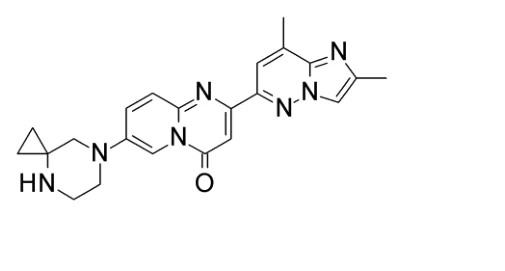
Physicochemical properties: risdiplam is a light yellow or yellow or grayish yellow or greenish yellow powder or powder with lumps.
14 Clinical Trials
14.1 Clinical Trials by Indication
Table 8 Summary of patient demographics for clinical trials in spinal muscular atrophy
| Study # | Trial design | Dosage, route of administration and duration | Study subjects (n) | Mean age (Range) | Sex |
| Study # | Trial design | Dosage, route of administration and duration | Study subjects (n) | Mean age (Range) | Sex |
| Study # | Trial design | Dosage, route of administration and duration | Study subjects (n) | Mean age (Range) | Sex |
| Study # | Trial design | Dosage, route of administration and duration | Study subjects (n) | Mean age (Range) | Sex |
| Study # | Trial design | Dosage, route of administration and duration | Study subjects (n) | Mean age (Range) | Sex |
| BP39055 (SUNFISH) | Part 1: A double-blind, placebo controlled, randomized, exploratory dose finding study in patients with Type 2 and Type 3 SMA (ambulant and non-ambulant) to select the dose for Part 2. | Oral, OD administration Part 1 Age 12-25 years: 3 mg or 5 mg Age 2-11 years: 0.02, 0.05, 0.15 or 0.25 mg/kg Minimum of 12-weeks placebo-controlled treatment, after which patients on placebo switched to risdiplam at the dose tested in their cohort. After the dose selection for Part 2, all patients switched to the pivotal dose. | Part 1: 51 patients 2 - 11 years cohort (n = 31) and 12 - 25 years cohort (n = 20) | Part 1: 2 -11 years cohort: 5.2 (2-11) years and 12 - 25 years cohort: 15.8 (12-24) years | Part 1: 2 -11 years cohort: F: 45.2% M: 58.2% 12 - 25 years cohort: F: 65.0% M: 35.0% |
Part 2: A double-blind, randomized, placebo controlled, parallel design study to investigate the efficacy, safety, and tolerability of risdiplam in patients aged 2-25 years with Type 2 and non-ambulant Type 3 SMA. Parts 1 and 2 Following 24 months of treatment in each part, patients can enter an OLE phase. | Oral, OD administration Part 2 Pivotal dose: 5 mg once daily for patients with a BW ≥ 20 kg and 0.25 mg/kg once daily for patients with a BW <20 kg 24-month treatment period (patients on placebo will be switched to active treatment in a blinded manner after 12 months). | Part 2: risdiplam: 120 placebo: 60 | Part 2: risdiplam: 9.9 (2-25) years placebo: 10.3 (2-24) years | Part 2: risdiplam: F: 50.8% M: 49.2% placebo: F/M: 50/50% | |
| BP39056 (FIREFISH) | Seamless, multi-center, two-part study in SMA Type 1 infants aged 1 to 7 months at the time of enrollment: Part 1: Open-label dose-escalation study to select the dose for Part 2. | OD oral administration Part 1 Starting dose for first infant: 0.00106 mg/kg single dose. Once daily treatment with 0.0106, 0.04, 0.08, 0.2, 0.25 mg/kg. After selection of the starting dose for Part 2 the protocol was amended to switch all patients to the dose of 0.2 mg/kg. (Of the n = 6 subset of patients enrolled at < 5 months of age, n = 2 received 0.2 mg/kg for at least 7 days while < 5 months of age) Minimum of 4 weeks treatment for dose selection after which all patients continue to receive risdiplam until Month 24. | Part 1: 21 infants | Part 1: 5.8 (3.3-6.9) months | Part 1: F: 71.4% M: 28.6% |
Part 2: Open-label study to assess the efficacy, safety, and tolerability of risdiplam in infants with type 1 SMA. Parts 1 and 2 Following 24 months of treatment in each part, patients can enter an OLE. | Part 2 starting dose Infants >1 month and <3 months at enrollment: 0.04 mg/kg Infants ≥3 to <5 months: 0.08 mg/kg Infants ≥ 5 months: 0.2 mg/kg. Subsequent Dosing Adjustment: The dose for all infants <2 years has been adjusted to 0.2 mg/kg. (Of the n = 19 subset of patients enrolled at < 5 months of age, n = 4 received 0.2 mg/kg for at least 7 days while < 5 months of age) Infants ≥2 years: 0.25 mg/kg. | Part 2: 41 infants | Part 2: 5.2 (2.2 – 6.9) months | Part 2: F: 53.7% M: 46.3% | |
BN40703 (RAINBOWFISH) | Open-label, single-arm, multicenter clinical study | OD oral administration Dose selected to achieve the targeted exposure range of close to 2000 ng•hr/mL. Patients received doses of risdiplam at 0.2 mg/kg, as follows:
2 years in the treatment phase, followed by 3 years in the OLE phase | 26 infants | 28.5 (16 – 41) days | F: 61.5% M: 38.5% |
The efficacy of EVRYSDI for the treatment of SMA patients with infantile-onset and later-onset SMA was evaluated in 2 pivotal clinical studies, FIREFISH and SUNFISH. The efficacy of EVRYSDI for the treatment of pre-symptomatic SMA patients was evaluated in the RAINBOWFISH study. The overall findings of these studies support the effectiveness of EVRYSDI for SMA patients.
Infantile-onset SMA
FIREFISH
Study BP39056 (FIREFISH) is an open-label, 2-part study to investigate the efficacy, safety, PK and pharmacodynamics (PD) of EVRYSDI in symptomatic Type 1 SMA patients (all patients had genetically confirmed disease with 2 copies of the SMN2 gene). Part 1 of FIREFISH was designed as the dose-finding part of the study. The confirmatory Part 2 of the FIREFISH study assessed the efficacy of EVRYSDI at the therapeutic dose selected based on the results from Part 1 (see 4 Dosage and Administration, 4.2 Recommended Dose and Dosage Adjustment). Patients from Part 1 did not take part in Part 2.
In Parts 1 and 2, the key efficacy endpoint was the ability to sit without support for at least 5 seconds, as measured by Item 22 of the Bayley Scales of Infant and Toddler Development – Third Edition (BSID-III) gross motor scale, after 12 months treatment with EVRYSDI.
FIREFISH Part 1
The efficacy of EVRYSDI in Type 1 SMA patients is also supported by results from FIREFISH Part 1. For the 21 patients from Part 1, the baseline characteristics were consistent with symptomatic patients with Type 1 SMA. The median age at enrollment was 6.7 months (range: 3.3-6.9 months) and the median time between onset of symptoms and first dose was 4.0 months (range: 2.0-5.8 months). A total of 17 patients received 0.2 mg/kg once daily (dose selected for Part 2) during their first 12 months of treatment, with the majority starting that dose after 5 months of age.
After 12 months of treatment, 41% (7/17) of patients were able to sit independently for at least 5 seconds (BSID-III, Item 22). After 18 months of treatment, 88% (15/17) of patients were alive and event-free (without permanent ventilation). These results in survival and motor milestone development were consistent with FIREFISH Part 2.
FIREFISH Part 2
In FIREFISH Part 2, 41 patients with Type 1 SMA were enrolled. The median age of onset of clinical signs and symptoms of Type 1 SMA was 1.5 months (range: 1.0-3.0 months), 54% were female, 54% Caucasian and 34% Asian. The median age at enrollment was 5.3 months (range: 2.2-6.9 months) and the median time between onset of symptoms and first dose was 3.4 months (range: 1.0-6.0 months). At baseline, the median CHOP-INTEND score was 22.0 points (range: 8.0-37.0) and the median HINE-2 score was 1.0 (range: 0.0-5.0).
FIREFISH Part 2
The primary endpoint, shown in Table 9, was the proportion of patients with the ability to sit without support for at least 5 seconds after 12 months of treatment (BSID-III gross motor scale, Item 22). Key secondary endpoints, at 12 or 24 months of treatment, are also shown. The efficacy endpoints of EVRYSDI-treated patients were compared to similar cohorts of untreated patients with infantile-onset SMA from natural history (defined as performance criteria) as shown in Table 9.
Table 9 Summary of Key Efficacy Results in Patients with Infantile-Onset SMA at Month 12 and Month 24 of Treatment (FIREFISH Part 2)
| Efficacy Endpoints | Proportion of Patients N = 41 (90% CI) |
| Primary Endpoint at 12 months | |
BSID-III: sitting without support for at least 5 seconds p-value based on performance criterion of 5%a | 29.3% (17.8%, 43.1%) <0.0001 |
| Secondary Endpoints at 12 months | |
CHOP-INTEND: score of 40 or higher p-value based on performance criterion of 17%a | 56.1% (42.1%, 69.4%) <0.0001 |
CHOP-INTEND: increase of ≥4 points from baseline p-value based on performance criterion of 17%a | 90.2% (79.1%, 96.6%) <0.0001 |
HINE-2: motor milestone respondersb p-value based on performance criterion of 12%a | 78.0% (64.8%, 88.0%) <0.0001 |
Event-Free Survivalc p-value based on performance criterion of 42%a | 85.4% (73.4%, 92.2%) <0.0001 |
| Secondary Endpoint at 24 months | |
BSID-III: sitting without support for at least 30 seconds p-value based on performance criterion of 5%a | 43.9% (30.6%, 57.9%) <0.0001 |
CHOP-INTEND=Children’s Hospital of Philadelphia Infant Test of Neuromuscular Disorders; HINE-2=Module 2 of the Hammersmith Infant Neurological Examination.
a p-values for survival and event-free survival are based on a Z-test; p-values for all other endpoints (BSID-III, CHOP-INTEND, HINE-2) are based on an exact binomial test. Survival proportions estimated using Kaplan-Meier methodology.
b According to HINE-2: ≥2 point increase [or maximal score] in ability to kick, OR ≥1 point increase in the motor milestones of head control, rolling, sitting, crawling, standing or walking, AND improvement in more categories of motor milestones than worsening is defined as a responder for this analysis.
c An event is meeting the endpoint of permanent ventilation defined as tracheostomy or ≥16 hours of non-invasive ventilation per day or intubation for > 21 consecutive days in the absence of, or following the resolution of, an acute reversible event. Three patients met the endpoint of permanent ventilation before Month 12. (All 3 patients achieved an increase of at least 4 points in their CHOP-INTEND score from baseline). By Month 24 one additional patient met the endpoint of permanent ventilation.
These results (Table 9) indicate a clinically meaningful deviation from the natural history of untreated infantile-onset SMA. Untreated patients with infantile-onset SMA would never be able to sit without support, and only 25% would be expected to survive without permanent ventilation beyond 14 months of age. In addition, after 24 months of treatment with EVRYSDI, 93% of patients remained alive, unchanged from Month 12. There were no data to suggest loss of efficacy at Month 24 compared to Month 12. For two additional key secondary outcomes at Month 24 (proportion of infants “standing alone” and proportion “walking alone” [BSID-III gross motor scale, Items 40 and 42, respectively]), the responder rate was 0%, which is not different than the natural history.
Later-Onset SMA
Study BP39055 (SUNFISH), is a 2-part, multicenter trial to investigate the efficacy, safety, pharmacokinetics (PK) and pharmacodynamics (PD) of EVRYSDI in SMA Type 2 or Type 3 patients between 2-25 years of age. Part 1 was the exploratory dose-finding portion and Part 2 was the randomized double-blind placebo-controlled confirmatory portion. Patients from Part 1 did not take part in Part 2.
The primary endpoint was the change from baseline score at month 12 on the Motor Function Measure-32 (MFM32). The MFM32 has the ability to assess a wide range of motor function across a broad range of SMA patients. The total MFM32 score is expressed as a percentage (range: 0 to 100) of the maximum possible score, with higher scores indicating greater motor function. The MFM32 measures motor function abilities which relate to important daily functions. Small changes in motor function can result in meaningful gain or loss of daily function(s).
SUNFISH Part 2
Part 2 is the randomized, double-blinded, placebo-controlled portion of the SUNFISH study in 180 non-ambulant patients with Type 2 (71%) or Type 3 (29%) SMA. Patients were randomized with 2:1 ratio to receive either EVRYSDI at the therapeutic dose (see 4 Dosage and Administration, 4.2 Recommended Dose and Dosage Adjustment) or placebo. Randomization was stratified by age group (2 to 5, 6 to 11, 12 to 17, 18 to 25 years old).
The median age of patients at the start of treatment was 9.0 years old (range 2-25 years old), the median time between onset of initial SMA symptoms to first treatment was 102.6 (1-275) months. Of the 180 patients included in the trial, 51% were female, 67% were Caucasian and 19% were Asian. At baseline, 67% of patients had scoliosis (32% of them with severe scoliosis). Patients had a mean baseline MFM32 score of 46.1 and Revised Upper Limb Module (RULM) score of 20.1. The overall baseline demographic characteristics were well balanced between EVRYSDI and placebo groups with the exception of an imbalance of patients with scoliosis (63.3% of patients in the EVRYSDI arm and 73.3% of patients in the placebo control).
SUNFISH Part 2
The primary analysis for SUNFISH Part 2, the change from baseline in MFM32 total score at Month 12 showed a clinically meaningful and statistically significant difference between patients treated with EVRYSDI and placebo. The results of the primary analysis and key secondary endpoints are shown in Table 10, Figure 1.
Table 10 Summary of Efficacy in Patients with Later-Onset SMA at Month 12 of Treatment (SUNFISH Part 2)
| Endpoint | EVRYSDI (N = 120) | Placebo (N = 60) | ||||
| Primary Endpoint: | ||||||
Change from baseline in MFM32 total score1 at Month 12 LS Mean (95%, CI) | 1.36 (0.61, 2.11) | -0.19 (-1.22, 0.84) | ||||
Difference from Placebo Estimate (95% CI) p-value2 | 1.55 (0.30, 2.81) 0.0156 | |||||
| Secondary Endpoints: | ||||||
| Proportion of patients with a change from baseline in MFM32 total score1 of 3 or more at Month 12 (95% CI) | 38.3% (28.9, 47.6) | 23.7% (12.0, 35.4) | ||||
Odds ratio for overall response (95% CI) Adjusted4 (unadjusted) p-value3,4 | 2.35 (1.01, 5.44) 0.0469 (0.0469) | |||||
Change from baseline in RULM total score5 at Month 12 LS Mean (95% CI) | 1.61 (1.00, 2.22) | 0.02 (-0.83, 0.87) | ||||
Difference from Placebo Estimate (95% CI) adjusted4 (unadjusted) p-value2,4 | 1.59 (0.55, 2.62) 0.0469 (0.0028) | |||||
LS=least squares
- 1. Based on the missing data rule for MFM32, 6 patients were excluded from the analysis (EVRYSDI n=115; placebo control n=59)
- 2. Data analyzed using a mixed model repeated measure with baseline total score, treatment, visit, age group, treatment-by-visit and baseline-by-visit.
- 3. Data analyzed using logistic regression with baseline total score, treatment and age group..
- 4. The adjusted p-value was obtained for the endpoints included in the hierarchical testing and was derived based on all the p-values from endpoints in order of the hierarchy up to the current endpoint. Unadjusted p-value was tested at the 5% significance level.
- 5. Based on the missing data rule for RULM, 3 patients were excluded from the analysis (EVRYSDI n=119; placebo control n=58)
When compared to placebo, patients treated with EVRYSDI compared to placebo demonstrated significant improvement in motor function assessed by MFM32 (1.55 point mean difference; p = 0.0156) after 12 months of treatment. Consistent improvement compared to baseline MFM32 was observed in both Type 2 and 3 SMA patients (1.54 points [95% CI: 0.06, 3.02]; 1.49 points [95% CI: -0.94, 3.93] respectively) treated with EVRYSDI compared to placebo control.
The study also met a secondary independent motor function outcome, RULM. On the RULM, statistically significant and clinically meaningful improvements in motor function were observed after 12 months of treatment compared to baseline.
Figure 1 Mean Change from Baseline in Total MFM32 Score Over 12 months in SUNFISH Part 21
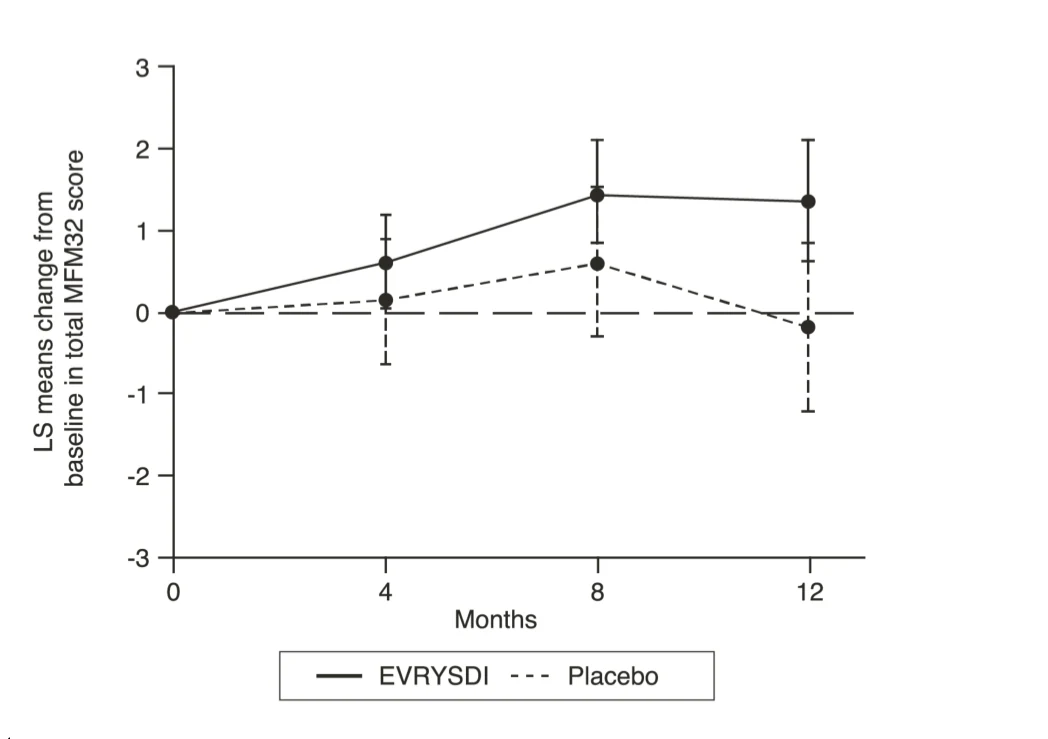
1The least squares (LS) mean difference for change from baseline in MFM32 score [95% CI]
SUNFISH Part 1
The efficacy of EVRYSDI in later-onset SMA patients was also supported by results from Part 1, the dose-finding part of SUNFISH. In Part 1, 51 patients with Type 2 and 3 SMA (including 7 ambulatory patients) between 2 to 25 years old were enrolled. After 1 year of treatment there was a clinically meaningful improvement in motor function as measured by MFM32 with a mean change from baseline of 2.7 points (95% CI: 1.5, 3.8). The improvement in MFM32 was maintained up to 2 years on EVRYSDI treatment (mean change of 2.7 points [95% CI: 1.2, 4.2]).
Pre-symptomatic SMA
RAINBOWFISH is an open-label, single-arm, multicenter clinical study to investigate the efficacy, safety, pharmacokinetics, and pharmacodynamics of EVRYSDI in infants from birth to 6 weeks of age (at first dose) who have been genetically diagnosed with SMA but do not yet present with symptoms. The majority of patients (77%; 20/26) were diagnosed with SMA by newborn screening, and the remaining (23%; 6/26) were identified on the basis of family history.
The efficacy in pre-symptomatic SMA patients was evaluated at Month 12 of EVRYSDI treatment.
There were 26 patients in the intent to treat (ITT) population; in these patients, the median age at first dose was 25 days (range: 16 to 41 days), 62% were female, and 85% were Caucasian. Eight patients, 13 patients, and 5 patients, respectively, had: 2 copies, 3 copies, and ≥ 4 or more copies of the SMN2 gene. At baseline the median CHOP-INTEND score was 51.5 (range: 35.0 to 62.0), the median HINE-2 score was 2.5 (range: 0 to 6.0), and the median ulnar nerve compound muscle action potential (CMAP) amplitude was 3.6 mV (range: 0.5 to 6.7 mV).
The primary efficacy population (n=5), a subset of the ITT was comprised of patients with 2 SMN2 copies, as well as a baseline CMAP amplitude ≥1.5 mV. In these patients, the median age at first dose was 24 days (range 22 - 35 days), 60% were female, and 100% were Caucasian. At baseline, the median CHOP-INTEND score was 48.0 (range: 36.0 to 52.0), the median HINE-2 score was 2.0 (range 1.0 to 3.0), and the median CMAP amplitude was 2.6 mV (range: 1.6 to 3.8 mV).
The primary endpoint was the proportion of patients with the ability to sit without support for at least 5 seconds (BSID-III gross motor scale, Item 22) at Month 12.
The results of the primary endpoint of EVRYSDI-treated patients, for both the primary efficacy population and the ITT population, are shown in Table 11. A clinically meaningful proportion of patients achieved this milestone for both populations, and was statistically meaningful for the primary efficacy population compared to the predefined performance criterion of 5%.
Table 11 Sitting Ability as defined by BSID-III Item 22 for Pre-symptomatic Patients at Month 12
| Efficacy Endpoint | Population | |
|---|---|---|
Primary Efficacy (N=5) | ITT (N=26) | |
| Proportion of patients sitting without support for at least 5 seconds (BSID-III, Item 22); (90% CI) | 80% (4/5) (34.3%, 99.0%) p < 0.0001a | 96.2% (25/26) (83.0%, 99.8%) |
Abbreviations: BSID-III = Bayley Scales of Infant and Toddler Development – Third Edition; CI=Confidence Interval; ITT=Intent-to-treat.
a p-value is based on a one-sided exact binomial test. The result is compared to a threshold of 5%.
At Month 12, 100% of patients in the ITT population (26/26) were alive and without permanent ventilation (“event-free survival”), and 96.2% (25 / 26) were able to feed orally (one patient was not assessed). The proportion of ITT patients who achieved a total score of ≥50 in the CHOP-INTEND at Month 12 was 92% (23/25).
16 Non-Clinical Toxicology
Safety Pharmacology
In vitro and in vivo safety pharmacology studies in rats and monkeys have shown that risdiplam does not display any adverse effects on vital organ functions in the cardiovascular, central nervous or respiratory systems. A clinical trial to characterize the risk of QTc prolongation associated with the oral administration of risdiplam is ongoing.
General Toxicology
Calculation of safety margins was based on mean exposure at the NOAEL of individual monkeys or composite means from rodents, compared to the expected range of exposure (from the therapeutic AUC range of 1060 to 3800 ng∙h/mL see 10.3 Pharmacokinetics). It is considered that an arithmetic mean AUC would not accurately reflect the range of patient exposure achieved or associated safety margins, as the dosing regimen is adjusted according to age and weight.
The repeat-dose toxicology program was conducted to assess the safety profile of risdiplam in juvenile and adult rats and monkeys. In all studies, risdiplam was administered by oral gavage in a solution similar to the clinical formulation. Findings of toxicological significance for risdiplam with daily oral dosing were primarily observed in organs with rapid cell turnover in mice, rats and monkeys with onset of less than 14 days of treatment, they were reversible or partially reversible in nature (depending on the chosen reversibility period and cell turnover in the respective organs), and included:
- Findings in gastrointestinal (GI) epithelia (increased apoptosis/single cell necrosis) were reversible at lower exposure multiples, but associated with mortality in mice and rats (in combination with decreased bone marrow cellularity). The range of exposure between tolerability and lethality was narrow in both species (approximately from 2- to 5-times the expected maximal therapeutic exposure).
- Effects on skin, larynx and eyelid histology were evident in mice, rats and monkeys treated with risdiplam. Adverse epithelial changes including those to the lamina propria (vacuolation) and exocrine pancreas (single cell necrosis) in mouse, rat and/or monkey were noted. Parakeratosis/hyperplasia/degeneration of the skin, tongue and larynx epithelia with associated inflammation were observed in monkeys.
Chronic treatment of monkeys with risdiplam yielded evidence for an effect on the retina in terms of photoreceptor degeneration starting in the periphery of the retina (see 7 Warnings and Precautions, Ophthalmology). Upon cessation of treatment, the effects on the retinogram were partially reversible but the photoreceptor degeneration did not reverse. Multifocal peripheral retina degeneration in the photoreceptor layer with hypertrophic retinal pigment epithelium (RPE) and microcystoid spaces (vacuolation) occurring both peripherally and centrally in the inner retinal layers were present in monkeys. These changes were monitored by spectral domain-optical coherence tomography (sdOCT) from week 20 through to week 38 of treatment and confirmed by histology at the end of 39 weeks of treatment. This was associated with depressed scotopic (rod) B wave and somewhat less affected photopic (cone) B wave in the electroretinogram (ERG). The no observed effect level (NOEL) of this finding with 39 weeks of treatment was 1870/2060 ng∙h/mL (AUC0-24 in M/F) with effects seen in all treated animals by sdOCT and in histology at an exposure ≥
- 4880/4850 ng∙h/mL (AUC0-24 in M/F). Depressed ERG and microcystoid spaces in the inner nuclear layer (INL) were only seen in animals at the high dose with an exposure of 5880/6470 ng∙h/mL (AUC0-24 in M/F). In the 22-week recovery phase, these changes partially regressed morphologically in sdOCT, and functional parameters in ERG returned to normal in 3/4 animals. Histologically, retinal degeneration with photoreceptor loss and RPE hypertrophy were still present but the vacuolation of the INL had reversed. Some experimental data indicate that the effect may be caused by an impairment of photoreceptor recycling in the retinal pigment epithelium. The effect has a clear NOAEL at the clinical dose used for risdiplam. Effects were seen with exposures slightly greater than the anticipated maximal exposure in humans at the therapeutic dose. No such findings were observed in albino or pigmented rats when dosed chronically with risdiplam at exposures exceeding those in the monkey.
Decreased epididymal and testicular weight, accompanied by degeneration of the seminiferous epithelium and degeneration/atrophy of seminiferous tubules were observed in juvenile and adult rats, with only partial reversibility. This finding occurred with the lowest tested dose in juvenile rats at 744 ng∙h/mL (AUC0-24) dosed from PND4 - 31. It was also observed in older rats with longer durations of treatment, and in monkeys at exposures of approximately 6000 ng∙h/mL AUC0-24. Evidence generated with SMN2 splice modifiers, showed a specific interaction in the pachytene stage of sperm cell differentiation, with later phases expected to be affected with prolonged exposure. The reversibility of these findings could not be fully assessed in monkeys.
Hematological findings (red and white cells), without histopathological changes in bone marrow but with either small thymus or decreased lymphoid cellularity in the thymus, were observed in mice, rats and monkeys. In mice, albino and pigmented rats, high doses associated with exposures of ≥ 15,000 ng∙h/mL (AUC0-24) led to decreased bone marrow cellularity in some pre-terminal deaths and early sacrifices.
In the acute bone marrow micronucleus test in rats, a reduction of more than 50% in the ratio of polychromatic (young) to normochromatic (adult) erythrocytes, indicative of substantial bone marrow toxicity, was observed at the high dose level with exposure ranging from 9 to 30 times the expected therapeutic range in humans. Early deaths and sacrifices likely based on hematological effects were seen with chronic treatment of rats over 26 weeks at the same exposure. The NOAEL for hematological effects in rats treated for 26 weeks was attained at exposures 2 to 7 times the range of exposure achieved in humans at the therapeutic dose. Micronucleus induction in bone marrow was observed in several toxicity studies in rats (adult and juvenile animals) with a NOAEL exposure of approximately 0.5 to 2 times the range of exposure in humans at the therapeutic dose.
Genotoxicity
Risdiplam was not mutagenic in a bacterial reverse mutation assay. In mammalian cells in vitro and in rat bone marrow erythrocytes, risdiplam increased the frequency of micronucleated cells suggesting clastogenic potential. Micronucleus induction in bone marrow was observed in several toxicity studies in rats (adult and juvenile animals). The no observed adverse effect level (NOAEL) across the studies is associated with an exposure comparable to or below the exposure in humans at the therapeutic dose. Data indicated that this effect is indirect and secondary to an interference of risdiplam with the cell cycle of dividing cells. Risdiplam was not associated with DNA strand breakages in an in vivo Comet assay.
Carcinogenicity
A carcinogenicity study with risdiplam in rasH2 transgenic mice did not give any evidence of tumorigenic potential with animals exposed up to 7-fold the exposure in humans at the therapeutic dose.
A 2-year carcinogenicity study in rats was conducted with daily oral doses of 0.3, 1, and
3 mg/kg of risdiplam. Risdiplam did not induce tumors at the low and mid-dose, where observed exposures in rats were equivalent to those in humans at the maximum recommended human dose (MRHD) of 5 mg. Statistically significant increases in tumors of the preputial gland in male rats and clitoral gland in female rats were seen at the high dose of 4 times the exposure of the MRHD. As these are both rodent-specific organs, these findings have no human relevance.
Reproductive and Developmental Toxicology
In studies in pregnant rats treated with risdiplam, embryofetal toxicity with lower fetal weight and delayed development was evident. The NOAEL exposure for this effect was approximately 1 to 4 times the exposure levels reached at the therapeutic range of exposure of risdiplam in patients. In studies with pregnant rabbits, embryofetal deaths and dysmorphogenic effects were observed at exposures also associated with maternal toxicity. These consisted of four fetuses (4%) from 4 litters (22%) with hydrocephaly. The maternal exposure at the NOAEL was 2 to 7 times the exposure levels reached at the therapeutic range of exposure of risdiplam in patients.
In a pre- and post-natal development study with pregnant rats treated daily with risdiplam, risdiplam caused a slight delay in gestation length. No adverse effects were recorded on the survival, growth, or behavioral performance of the offspring. Delayed sexual maturation (vaginal opening) and impaired reproductive potential (reduced corpora lutea, implantation sites and live embryos) were noted in offspring from highest dose group. The maternal plasma exposure levels were 0.5 to 1.8 times the therapeutic range of exposure in patients. There were no effects on female germ cells, as assessed by primordial follicle counts and ovarian histopathology.
Studies in pregnant and lactating rats showed that risdiplam crosses the placenta barrier and is excreted into milk (the milk to plasma ratio was > 3 for at least 24 hours following administration of risdiplam).
Impairment of Fertility
Treatment with risdiplam has been associated with male germ cell arrest in rats and monkeys. These effects led to degenerated spermatocytes, degeneration/necrosis of the seminiferous epithelium, and oligo/aspermia in the epididymis. Further, decreased sperm concentrations and motility associated with an increased number of spermatozoa morphology abnormalities were observed. In young rats, effects were seen at exposure levels 0.4 to 1.9 times the therapeutic range of exposure of risdiplam in patients. However, there was no impairment on male fertility seen in a respective study (13-week study with juvenile Wistar Hannover rats). Sperm cell effects of risdiplam are likely related to an interference of risdiplam with the cell cycle of dividing cells, and are stage specific, and are expected to be reversible. No effects were seen on female reproductive organs in rats and monkeys after treatment with risdiplam.
Juvenile Toxicity
Risdiplam was studied for toxicity with chronic administration in rats and monkeys including juvenile animal studies. Studies in juvenile animals did not indicate any specific effect of treatment with risdiplam on developing organ systems, but was associated with delayed growth (body weight and long bones), as well as delayed sexual maturity in males (pre-weaning). In terms of toxicity seen after treatment with risdiplam in various organ systems with high cell turnover (skin, GI-tract, bone marrow), animal studies do not indicate any differences in sensitivity between juvenile, adolescent and adult animals, i.e. the respective NOAELs were comparable with those seen in adult animals. At comparable exposures, incidences and severity of the adverse effects were not more pronounced in juvenile animals than in adult animals.