


Product Monograph - Spinraza
1 Indications
SPINRAZA (nusinersen) is indicated for:
- the treatment of 5q Spinal Muscular Atrophy (SMA).
There are limited data in patients over the age of 18 years. SPINRAZA has been studied in patients ranging in age from newborn to 19 years (see 14 Clinical Trials).
The efficacy and safety data supporting the use of SPINRAZA for the treatment of SMA were from:
- a completed randomized, controlled trial and an ongoing open-label clinical trial that included patients with infantile-onset SMA
- a completed randomized, controlled trial and completed open-label clinical trials in children with later-onset SMA and,
- an ongoing open-label clinical trial in presymptomatic infants with genetically diagnosed SMA (see 14 Clinical Trials).
Knowledge of the disease natural history and the use of management strategies that assist the patient in coping with the manifestations of SMA, which may include decline in motor function, serious respiratory complications and feeding difficulties remain necessary for the overall management of the disease. Treatment with SPINRAZA should only be initiated by healthcare professionals who are experienced in the management of SMA.
1.1 Pediatrics
Based on the data submitted and reviewed by Health Canada, the safety and efficacy of SPINRAZA in pediatric patients has been established (see 14 Clinical Trials).
1.2 Geriatrics
No data are available to Health Canada; therefore, Health Canada has not authorized an indication for geriatric use.
2 Contraindications
SPINRAZA is contraindicated:
- in patients with known or suspected hypersensitivity to nusinersen or to any of the ingredients in the formulation or component of the container.
4 Dosage and Administration
4.1 Dosing Considerations
- SPINRAZA is only for intrathecal use by lumbar puncture. SPINRAZA should not be administered by intravenous, intramuscular, subcutaneous or epidural routes.
- Treatment should be administered by health care professionals experienced in performing lumbar punctures.
- SPINRAZA has not been studied in patients with renal impairment.
- SPINRAZA has not been studied in patients with hepatic impairment.
- Doses of SPINRAZA should be at least 14 days apart.
- In the case of a delayed or missed dose, follow the recommended dosing schedule outlined in Table 1 (see 4.5 Missed Dose).
4.2 Recommended Dose and Dosage Adjustment
Pediatrics (<18 years of age): The recommended dose is 12 mg (5 mL).
- Loading doses: Initiate treatment as early as possible after diagnosis with 4 loading doses. The first 3 loading doses should be administered at 14-day intervals (e.g., Day 0, Day 14, Day 28). The fourth loading dose should be administered approximately 30 days after the third loading dose (e.g., Day 63).
- Maintenance doses: Following the fourth loading dose, a maintenance dose should be administered once every 4 months.
- Adults (≥ 18 years of age): Clinical studies of SPINRAZA have included patients from newborn up to 19 years of age. There is limited data involving the use of SPINRAZA in adults. However, no dose adjustment is required.
- Geriatrics: There is no data from patients over the age of 65 years.
- Patients with Hepatic Insufficiency: The pharmacokinetics of nusinersen in patients with hepatic impairment has not been studied. SPINRAZA is not metabolized via the cytochrome P450 enzyme system in the liver. Therefore, dosage adjustment is unlikely to be required in patients with hepatic impairment (see 10.3 Pharmacokinetics).
- Patients with Renal Insufficiency: The pharmacokinetics of nusinersen in patients with renal impairment has not been studied.
4.4 Administration
Preparation of dose
- 1. The vial should be taken out of the refrigerator and allowed to warm to room temperature (25oC/77oF) without using external heat sources, prior to administration. The solution must be visually inspected prior to use. Only clear and colorless solutions, free from particles, can be used. Do not administer SPINRAZA if visible particles are observed or if the solution in the vial is discolored. Use of external filters is not required.
- 2. Aseptic technique must be used when preparing and administering SPINRAZA.
- 3. Just prior to administration insert the syringe needle into the vial through the center of the over-seal and withdraw 12 mg (5 mL) of SPINRAZA from the vial into the syringe. SPINRAZA must not be diluted. If a vial remains unopened and the solution has not been used, it should be returned back to the refrigerator.
Administration of dose
- 1. Sedation may be required to administer SPINRAZA, as indicated by the clinical condition of the patient.
- 2. Ultrasound (or other imaging techniques) may be considered to guide intrathecal administration of SPINRAZA, particularly in younger patients.
- 3. Prior to administration, removal of 5 mL of cerebral spinal fluid is recommended.
- 4. Administer SPINRAZA as an intrathecal bolus injection over 1 to 3 minutes, using a spinal anesthesia needle. Do not administer SPINRAZA in areas of the skin where there are signs of infection or inflammation.
- 5. Once drawn into the syringe, if the solution is not used within 6 hours, it must be discarded.
4.5 Missed Dose
Based on population pharmacokinetics, the impact of a delayed or missed dose on median nusinersen CSF exposures was found to be strongly dependent on both the duration of dosing interruption and the phase in which the interruption occurred.
If a loading or a maintenance dose is delayed or missed, SPINRAZA should be administered according to the schedule in Table 1, below.
Table 1 - Dosing administration of delayed or missed dose1
| 2nd or 3rd Loading Dose | Timing of Dosing Administration |
|---|---|
| any delay† |
† If the third loading dose is administered ≥ 8 months from last dose, follow the same recommendations as for the maintenance dose for the same duration of dose interruption. † If a loading dose is delayed ≥ 40 months from the last dose, restart the entire loading regimen on the prescribed intervals. |
| 4th Loading Dose | Timing of Dosing Administration |
| ≤ 5 months from the 3rd loading dose |
|
| > 5 to < 8 months from the 3rd loading dose |
|
| ≥ 8 to < 16 months from the 3rd loading dose |
|
| ≥ 16 to < 40 months from last dose |
|
| ≥ 40 months from the 3rd loading dose |
|
| Maintenance dose | Timing of Dosing Administration |
| > 4 to < 8 months from last dose |
|
| ≥ 8 to < 16 months from last dose |
|
| ≥ 16 to < 40 months from last dose |
|
| ≥ 40 months from last dose |
|
1 Cutoff values allow some flexibility (± several days) as long as closest doses are administered at least
14 days apart.
5 Overdose
No cases of overdose associated with adverse reactions were reported in clinical studies.
In case of overdose with SPINRAZA the patient should be advised to seek medical attention if they experience any signs or symptoms of adverse reactions.
For the most recent information in the management of a suspected drug overdose, contact your regional poison control centre or Health Canada's toll-free number, 1-844 POISON-X (1-844-764-7669).
6 Dosage Forms, Strengths, Composition and Packaging
Table 2 – Dosage Forms, Strengths, Composition and Packaging
| Route of | Dosage Form / | Non-medicinal Ingredients* |
*Sodium hydroxide and hydrochloric acid may be used for pH adjustment.
SPINRAZA is a clear and colourless solution (2.4 mg/mL) with a pH of 7.2. SPINRAZA is supplied as 5mL in a single use Type I vial with bromobutyl rubber stopper and an aluminium over-seal and plastic cap. Pack size: one vial per carton.
7 Warnings and Precautions
General
The route of administration for SPINRAZA (nusinersen) is intrathecal injection by lumbar puncture and should be administered by healthcare professionals who are experienced in performing lumbar puncture procedures. Patients should be evaluated for the presence of potential contraindications for lumbar puncture (e.g., skin infection near site of lumbar puncture, suspicion of increased intracranial pressure due to a cerebral mass, uncorrected coagulopathy, acute spinal cord trauma), and all necessary precautions should be taken to avoid serious procedural complications (see 4.1 Dosing Considerations; 8.5 Post-Market Adverse Reactions).
Carcinogenesis and Genotoxicity
See 16 Non-Clinical Toxicology.
Cardiovascular
See 8.2 Clinical Trial Adverse Reactions.
Hematologic
Coagulation abnormalities and thrombocytopenia, including acute severe thrombocytopenia, have been observed after intravenous or subcutaneous administration of some antisense oligonucleotides.
In a combined analysis of the sham-controlled studies for patients with infantile-onset and later-onset SMA, 24 of 146 (16%) SPINRAZA-treated patients developed a platelet level below the lower limit of normal, compared to 10 of 72 (14%) sham-controlled patients. In the sham-
| Administration | Strength/Composition | |
| intrathecal by lumbar puncture | solution for intrathecal injection 2.4 mg/mL | calcium chloride dihydrate, disodium phosphate, magnesium chloride hexahydrate, potassium chloride, sodium chloride, sodium dihydrogen phosphate dihydrate, water for injection |
controlled study in patients with later-onset SMA (Study 2), two SPINRAZA-treated patients developed platelet counts less than 50,000 cells per microliter, with a lowest level of 10,000 cells per microliter recorded on study day 28.
Patients may be at increased risk of bleeding complications due to the risk of thrombocytopenia and coagulation abnormalities with SPINRAZA.
Perform a platelet count and coagulation laboratory testing at baseline and as clinically indicated (see 7 Warning and Precautions, Monitoring and Laboratory Tests).
Monitoring and Laboratory Tests
Conduct the following laboratory tests at baseline and as clinically indicated:
- Platelet count (see 7 Warnings and Precautions, Hematologic)
- Prothrombin time; activated partial thromboplastin time (see 7 Warnings and Precautions, Hematologic)
- Quantitative spot urine testing (see 7 Warnings and Precautions, Renal)
Neurologic
Hydrocephalus
There have been reports of communicating hydrocephalus not related to meningitis or bleeding in patients treated with nusinersen in the post-marketing setting. Some patients were implanted with a ventriculo-peritoneal shunt. In patients with decreased consciousness, an evaluation for hydrocephalus should be considered. The benefits and risks of nusinersen treatment in patients with a ventriculo-peritoneal shunt are unknown at present and the maintenance of treatment needs to be carefully considered.
Renal
Renal toxicity, including potentially fatal glomerulonephritis, has been observed after intravenous or subcutaneous administration of some antisense oligonucleotides. SPINRAZA is found in high concentrations in the kidney, localized mainly in proximal tubule cells, and is excreted by the kidney (see 10.3 Pharmacokinetics).
In a combined analysis of the sham-controlled studies for patients with infantile-onset and later-onset SMA, 71 of 123 (58%) of SPINRAZA-treated patients had elevated urine protein, compared to 22 of 65 (34%) sham-controlled patients.
Conduct quantitative spot urine protein testing (preferably using a first morning urine specimen) at baseline and as clinically indicated. For urinary protein concentration greater than 0.2 g/L, consider repeat testing and further evaluation.
Reproductive Health: Female and Male Potential
- Fertility
The effects of SPINRAZA on labor and delivery are not known.
7.1 Special Populations
7.1.1 Pregnant Women
There are no data from clinical studies on the use of SPINRAZA during pregnancy in humans and the effects of SPINRAZA on labor and delivery are not known. Because the potential developmental risk associated with the use of SPINRAZA in pregnant women is not known, the use of SPINRAZA during pregnancy is not recommended.
In animal studies, administration of nusinersen by subcutaneous injection to mice and rabbits during pregnancy did not have toxic effects on embryo-fetal development (see 16 Non-Clinical Toxicology).
7.1.2 Breastfeeding
It is not known if nusinersen is present in human breast milk.
There are no data on the use of SPINRAZA during lactation in humans and the effects of nusinersen on the breastfed infant are not known. Precaution should be exercised because many drugs can be excreted in human milk.
7.1.3 Pediatrics
In repeated dose toxicity studies in juvenile cynomolgus monkeys, following intrathecal administration of nusinersen (0.3, 1, or 3 mg/ dose for 14 weeks or 0.3, 1, 3 or 4 mg/ dose for 53 weeks) or vehicle control, brain histopathology (neuronal vacuolation and necrosis/cellular debris in the hippocampus) was observed at the mid- (1 mg/dose) and high doses (3 mg or 4 mg/dose), specifically in the inferior region of the hippocampus. Possible neurobehavioral deficits were observed on a learning and memory test at the high dose in the 53-week monkey study. The no-observed adverse effect level (NOAEL) dose for neurohistopathology in monkeys (0.3 mg/dose) is approximately equivalent to the human dose when calculated on a yearly basis and corrected for the species difference in CSF volume. The clinical significance of these observations in monkeys is not known (see 16 Non-Clinical Toxicology).
8 Adverse Reactions
8.1 Adverse Reaction Overview
In sham-controlled and open-label clinical studies, a total of 352 SMA patients were treated with SPINRAZA and total time on study ranged from 6 to 3940 days (median 2445 days). The experience in open-label clinical trials is consistent with the experience in the sham-controlled clinical trials.
The adverse reactions presented below are based on safety information from two phase 3 randomized, double-blind, sham-controlled clinical trials (Study 1 and Study 2). In Study 1, 121 patients were dosed, of whom 80 patients received SPINRAZA (median exposure 280 days) and 41 patients received sham control (median exposure 187 days). In Study 2, 126 patients were dosed, of whom 84 patients received SPINRAZA (median exposure 451 days) and 42 patients received sham control (median exposure 450 days).
The most common adverse events (>10%) reported in the clinical trials more frequently with SPINRAZA than with sham-control were respiratory events (upper respiratory tract infection, pneumonia, nasopharyngitis, respiratory tract infection), gastrointestinal events (constipation, vomiting, teething), events considered related to the lumbar puncture procedure (headache, back pain), and pyrexia.
The nature of the adverse events reported during all clinical trials suggests that the majority may have been related to SMA disease or the lumbar puncture procedure.
8.2 Clinical Trial Adverse Reactions
Clinical trials are conducted under very specific conditions. The adverse reaction rates observed in the clinical trials; therefore, may not reflect the rates observed in practice and should not be compared to the rates in the clinical trials of another drug. Adverse reaction information from clinical trials may be useful in identifying and approximating rates of adverse drug reactions in real-world use.
8.2.1 Clinical Trial Adverse Reactions - Pediatrics
The safety of SPINRAZA in infants and children with SMA was assessed in three randomized, double blind, sham controlled studies, two of which were phase 3 (Study 1 and Study 2) and one phase 2 (Study 5), in an open label phase 2 study in symptomatic infants (Study 3), an open label study in pre symptomatic infants genetically diagnosed with SMA (Study 4) and in patients aged 2 to 16 years (at first dose) in an integrated analysis of 4 open label studies (Studies CS2, CS12, CS1, CS10). Study 6 enrolled infantile- and later-onset subjects, including those who completed Studies 1, 2, and CS12. A total of 346 SMA patients were treated with SPINRAZA, with the total time on study ranging from 6 to 2028 days (median 627 days).
In Study 1, 121 patients were dosed, of whom 80 patients received SPINRAZA (median exposure 280 days) and 41 patients received sham control (median exposure 187 days).
In Study 2, 126 patients were dosed, of whom 84 patients received SPINRAZA (median exposure 451 days) and 42 patients received sham control (median exposure 450 days).
Adverse events reported at an incidence at least 5% higher in patients treated with SPINRAZA compared to sham-control in Studies 1 and 2 are summarized in Table 1 and Table 2 respectively. Events reported across the open-label studies and the double-blind Study 5 were consistent with those observed in Studies 1 and 2.
The adverse events are presented as MedDRA preferred terms under the MedDRA system organ class (SOC) (MedDRA Version 18.1).
The adverse events are listed by system organ class and are presented in order of decreasing seriousness.
Table 3 - Treatment Emergent Adverse Events Reported with an Incidence of at Least 5% Higher in Patients Treated with SPINRAZA Compared to Sham-control in the controlled clinical trial in patients with infantile-onset SMA
SPINRAZA n = 80 (%) | Control n = 41 (%) | |
| Any adverse Event | 77 (96%) | 40 (98%) |
Gastrointestinal disorders Constipation Teething | 28 (35%) 14 (18%) | 9 (22%) 3 (7%) |
Infections and Infestations Upper respiratory tract infection Pneumonia Nasopharyngitis Respiratory tract infection Urinary tract infection Bronchitis Upper respiratory tract congestion Bronchitis viral Influenza Ear infection | 24 (30%) 23 (29%) 15 (19%) 9 (11%) 7 (9%) 6 (8%) 6 (8%) 5 (6%) 5 (6%) 4 (5%) | 9 (22%) 7 (17%) 4 (10%) 2 (5%) 0 (0%) 1 (2%) 1 (2%) 0 (0%) 0 (0%) 1 (2%) |
Adverse events which are verbally communicated, such as those which commonly occur in the setting of lumbar puncture procedure, could not be assessed due to the infantile patient population.
Table 4 - Treatment Emergent Adverse Events Reported with an Incidence of at Least 5% Higher in Patients Treated with SPINRAZA Compared to Sham-control in the controlled clinical trial in patients with later-onset SMA
SPINRAZA n = 84 (%) | Control n = 42 (%) | |
| Any adverse event | 78 (93%) | 42 (100) |
Gastrointestinal disorders Vomiting* | 24 (29%) | 3 (7%) |
General disorders and administration site conditions Pyrexia | 36 (43%) | 15 (36%) |
Musculoskeletal and connective tissue disorders Back pain* | 21 (25%) | 0 |
Nervous system disorders Headache* | 24 (29%) | 3 (7%) |
Respiratory thoracic and mediastinal disorders Epistaxis | 6 (7%) | 0 |
* Adverse events considered related to the lumbar puncture procedure. These events can be considered manifestations of post-lumbar puncture syndrome.
QTc interval abnormalities
Across the sham-controlled studies in 247 patients with SMA who received either SPINRAZA or sham-control, QTc values >500 ms with a change from baseline values >60 ms were observed in 4 (2.4%) of patients receiving SPINRAZA. There were no patients with an adverse event of QTc prolongation and there was no increase in the incidence of cardiac adverse events associated with delayed ventricular repolarization in patients treated with SPINRAZA compared to the sham control.
Effect on growth
A reduction in growth, as measured by height, was suggested in the controlled clinical trial in patients with infantile-onset SMA treated with SPINRAZA. It is not known if any effect of SPINRAZA on growth would be reversible upon discontinuation of treatment.
Rash
Cases of rash were reported in the controlled clinical trial in patients with infantile-onset SMA. One patient developed painless lesions on the forearm, leg and foot, over an 8-week period 8 months after starting treatment with SPINRAZA. The lesions were initially red macular skin lesions that ulcerated and scabbed over in 4 weeks. The patient continued to have recurring painless ulcerative lesions in acral distribution. A second patient developed red macular lesions on the hands 10 months after starting treatment with SPINRAZA, which resolved over a period of 3 months. In both cases there was spontaneous resolution of the rash while the patients continued to receive SPINRAZA.
Hyponatremia
One patient treated with SPINRAZA in an open-label study including patients with infantile onset SMA had a serious adverse event of hyponatremia requiring daily salt supplementation for 14 months.
Immunogenicity
The immunogenic response to SPINRAZA was evaluated in 342 patients with post-baseline plasma samples for antidrug antibodies (ADAs). Overall, 36 SPINRAZA-treated patients (11%) developed treatment-emergent ADAs, of which 14 (4%) were transient and 22 (6%) were persistent. The impact of immunogenicity on safety could not be statistically analyzed because of the low number and heterogeneity of the subjects with positive ADA status. Individual safety data for the treatment-emergent ADA positive cases were reviewed. No Adverse Events of interest could be identified.
8.3 Less Common Clinical Trial Adverse Reactions
Treatment-emergent adverse events that were reported in clinical trials (for infantile-onset and later-onset SMA) with a frequency greater than 5% and not presented in Section 8.2 are summarized below by system organ class and preferred term.
Events are categorized by system organ class alphabetically with preferred terms listed in decreasing order of incidence in SPINRAZA-treated patients.
Cardiac disorders: tachycardia.
Gastrointestinal disorders: diarrhea, gastroesophageal reflux disease, dysphagia.
Infections and infestations: conjunctivitis, gastroenteritis, viral infection, bronchiolitis, pneumonia viral, rhinovirus infection, viral upper respiratory tract infection, gastroenteritis viral, otitis media.
Investigations: oxygen saturation decreased.
Respiratory, thoracic and mediastinal disorders: cough, respiratory distress, respiratory failure, atelectasis, rhinorrhea, acute respiratory failure, nasal congestion, pneumonia aspiration.
8.5 Post-Market Adverse Reactions
Adverse events associated with the lumbar puncture procedure used for administration of SPINRAZA, including serious infection, have occurred in the post-market setting. SPINRAZA should be administered by healthcare professionals who are experienced in performing lumbar puncture procedures (see 4.1 Dosing Considerations; 7 Warnings and Precautions). Hydrocephalus, hypersensitivity (e.g. angioedema, urticaria, rash), aseptic meningitis, arachnoiditis, and pyrexia have also been observed.
9 Drug Interactions
9.2 Drug Interactions Overview
There is no data available, regarding interactions of SPINRAZA with other drugs, herbal remedies, lifestyle, food, or laboratory tests.
9.3 Drug-Behavioural Interactions
Drug-behavioural interactions have not been established.
9.4 Drug-Drug Interactions
Interactions with other drugs have not been established.
No clinical studies of interactions with other medicines have been performed.
Nusinersen is metabolized via nucleases and not by the cytochrome P450 (CYP450) system (see 10.3 Pharmacokinetics).
In vitro studies indicated that nusinersen is not an inducer or inhibitor of CYP450 mediated metabolism (see 10.3 Pharmacokinetics).
In vitro studies indicated that the likelihood for interactions with nusinersen due to competition with or inhibition of transporters is low.
The co-administration of other intrathecal agents with SPINRAZA has not been evaluated and the safety of these combinations is not known.
9.5 Drug-Food Interactions
Interactions with food have not been established.
9.6 Drug-Herb Interactions
Interactions with herbal products have not been established.
9.7 Drug-Laboratory Test Interactions
Interactions with laboratory tests have not been established.
10 Clinical Pharmacology
10.1 Mechanism of Action
SPINRAZA (nusinersen) is an antisense oligonucleotide (ASO) specifically designed to treat SMA, an autosomal recessive progressive neuromuscular disease, caused by mutations in the chromosome 5q. These mutations lead to loss of function of the survival motor neuron 1 (SMN1) gene, resulting in deficiency of SMN protein. The SMN2 gene also produces SMN protein but at low levels. In patients with SMA, fewer SMN2 gene copies are associated with earlier age of onset and increased severity of symptoms.
SPINRAZA binds to a specific site in the SMN2 pre-messenger ribonucleic acid (pre-mRNA) to increase the proportion of exon 7 inclusion in SMN2 messenger ribonucleic acid (mRNA) transcripts made, which can be translated into the functional full length SMN protein.
10.2 Pharmacodynamics
Autopsy samples from treated infants had higher levels of SMN2 mRNA containing exon 7 in the thoracic spinal cord compared to untreated SMA infants.
10.3 Pharmacokinetics
Single- and multiple-dose pharmacokinetics of nusinersen, administered via intrathecal injection, were determined in pediatric patients diagnosed with SMA.
Absorption:
Intrathecal injection of nusinersen into the cerebrospinal fluid (CSF) allows nusinersen to be distributed from the CSF to the target central nervous system (CNS) tissues.
Following intrathecal administration trough plasma concentrations of nusinersen were relatively low compared to the trough CSF concentration. Median plasma Tmax values ranged from 1.7 to 6.0 hours. Mean plasma Cmax and AUC values increased approximately dose proportionally over the evaluated dose range up to 12 mg. There is no accumulation in plasma exposure measures (Cmax and AUC) after multiple doses.
Across nusinersen studies, median CSF trough concentrations of nusinersen accumulated approximately 2-fold over the loading phase, as compared to the median trough concentration after the first dose.
Exploratory analysis revealed that the average increase in trough CSF levels from the start of the maintenance phase through to the last observation timepoint across all patients was approximately 3.2-fold and 2.3-fold in the later-onset and infantile-onset populations respectively. The cumulative CSF PK data collected through to the end of Study 6 indicated that in infantile-onset and later-onset SMA patients, the standard dosing regimen (12mg every 4 months) leads to an apparent steady state CSF concentration by 7 to 8 years of treatment.
Distribution:
Autopsy data from patients (n=3) showed that following intrathecal administration, nusinersen was broadly distributed within the CNS and peripheral tissues such as skeletal muscle, liver, and kidney.
Metabolism:
Nusinersen is metabolized slowly via exonuclease (3’- and 5’) mediated hydrolysis and is not a substrate for, or inhibitor or inducer of CYP450 enzymes.
Elimination:
The mean terminal elimination half-life is estimated at 135 to 177 days in CSF and 63 to 87 days in plasma. Following slow metabolism in tissues, the primary route of elimination is likely by urinary excretion of nusinersen and its chain-shortened metabolites. During the first 24 hours after dosing, only 0.5% of the administered dose was recovered in urine.
Special Populations and Conditions
- Pediatrics: The pharmacokinetic properties of nusinersen have been characterized using data from clinical studies conducted in pediatric patients.
- Geriatrics: No assessment of SPINRAZA pharmacokinetics in patients 65 years of age was conducted.
- Sex: Population pharmacokinetic analysis showed that gender does not affect the pharmacokinetics of nusinersen.
- Pregnancy and Breast-feeding: There are no data from clinical studies on the use of SPINRAZA during pregnancy in humans. It is not known if nusinersen is present in human breast milk. There are no data on the use of SPINRAZA during lactation.
- Ethnic Origin: As assessed by population PK analysis, ethnic origin is unlikely to affect the pharmacokinetics of nusinersen.
- Hepatic Insufficiency: The pharmacokinetics of nusinersen in patients with hepatic impairment have not been studied.
- Renal Insufficiency The pharmacokinetics of nusinersen in patients with renal impairment have not been studied.
10.5 Natural History data
In a separate SMA registry, the natural disease course of 52 untreated later-onset patients who were able to sit but not walk (median [range] age: 2.6 [2.0–11.0] years) shows a progressive loss of motor function over time, with an estimated mean decline in HFMSE of 5.4 points over a period of 5 years.
11 Storage, Stability and Disposal
Store refrigerated at 2oC to 8oC (36oF to 46oF). Do not freeze.
SPINRAZA should be protected from light and kept in the original carton until time of use.
If no refrigeration is available, SPINRAZA may be stored in its original carton, protected from light at or below 30oC for up to 14 days.
Prior to administration, unopened vials of SPINRAZA can be removed from and returned to the refrigerator if necessary. If removed from the original carton, the total combined time out of refrigeration and secondary packaging should not exceed 30 hours, at a temperature that does not exceed 25oC (77oF).
Once in the syringe, if the solution is not used within 6 hours, it must be discarded.
Discard any unused solution left in a vial.
12 Special Handling Instructions
No special handling required.
Part 2: Scientific Information
13 Pharmaceutical Information
Drug Substance
Proper name: nusinersen sodium
Molecular formula and molecular mass: The molecular formula of SPINRAZA is C234H323N61O128P17S17Na17 and the molecular weight is 7501.0 amu
Structural formula:
Physicochemical properties: Nusinersen sodium is a fully modified 2′-O-2-methoxyethyl antisense oligonucleotide designed to bind to a specific sequence in the intron downstream of Exon 7 of the SMN2 transcript. SPINRAZA is a sterile, preservative-free solution that contains 2.4 mg/mL nusinersen free acid in artificial cerebral spinal fluid.
Each vial of SPINRAZA contains a 5 ml solution with 12 mg nusinersen free acid (2.4 mg/ml), equivalent to 12.6 mg nusinersen sodium, with an adjusted pH of approximately 7.2.
14 Clinical Trials
14.1 Clinical Trials by Indication
Indication: Treatment of 5q Spinal Muscular Atrophy
Table 5 – Summary of patient demographics for clinical trials in patients with SMA
| Study # | Study design | Dosage, route of administration and duration | Study subjects (n) | Mean age (Range) | Sex |
| Study # | Study design | Dosage, route of administration and duration | Study subjects (n) | Mean age (Range) | Sex |
| Study # | Study design | Dosage, route of administration and duration | Study subjects (n) | Mean age (Range) | Sex |
| Study # | Study design | Dosage, route of administration and duration | Study subjects (n) | Mean age (Range) | Sex |
| Study # | Study design | Dosage, route of administration and duration | Study subjects (n) | Mean age (Range) | Sex |
| Study 1 (ENDEAR; CS3B) | Phase 3, Randomized, double-blind, multiple-dose, sham-procedure controlled in subjects with symptomatic infantile-onset SMA [Completed] | 12 mg scaled equivalent dose or sham-procedure (2:1) Loading dose: Days 1, 15, 29, 64 Maintenance dose: Days 183 and 302 Intrathecal administration Study duration: ~13 months; study terminated early | 121 Population Studied: Most likely to develop Type I SMA SMN2 gene copies: 2 (120), 3 (1) | Median age at symptom onset 8 weeks (range 1 to 20 weeks) Median age at first dose: 175 days (range 30 to 262 days) | 45% male 55% female |
| Study 2 (CHERISH ; CS4) | Phase 3, Randomized, double-blind, multiple-dose, sham-procedure controlled in subjects with symptomatic later-onset SMA [Completed] | 12 mg scaled equivalent dose or sham-procedure (2:1) Loading dose: Days 1, 29 and 85 Maintenance dose: Day 274 Intrathecal administration Study duration: ~15 months; study terminated early | 126 Population Studied: SMN2 gene copies: 2 (10), 3 (111), 4 (3), unknown (2) | Median age at symptom onset: 11 months (range: 6 to 20 months) Median age at first dose: 3.95 years (range 2.1 to 9.2) | 47% male 53% female |
| Study 3 (CS3A) | Phase 2, open-label, multiple-dose in subjects with symptomatic infantile-onset SMA [Completed] | Cohort 1: 6 mg scaled equivalent loading dose and 12 mg maintenance dose Cohort 2: 12 mg scaled equivalent loading dose and 12 mg maintenance dose Loading dose: Days 1, 15, and 85 Maintenance dose: Day 253 and every 4 months thereafter. Intrathecal administration Study duration: ~3.7 years; study terminated early | 20 Population Studied: Most likely to develop Type I or Type II SMA SMN2 gene copies: 2 (17), 3 (2), unknown (1) | Median age at symptom onset 56 days (range: 21 to 154 days) Median age at first dose: 162 days (range 37 to 223 days) | 60% male 40% female |
| Study 4 (NURTUR E; CS5; SM201) | Phase 2, open-label study in pre symptomatic infants genetically diagnosed with SMA [Ongoing] | 12 mg scaled equivalent loading and maintenance doses of nusinersen on day 1, 15, 29, 64, 183, and every 4 months thereafter. Intrathecal administration Study duration: ~8 years | 25 Population Studied: SMN2 gene copies: 2 (15), 3 (10) | Median age at first dose: 22 days (range 3 - 42 days) | 48% male 52% female |
| Study 5 (EMBRAC E; SM202) | Phase 2, randomized, double-blind, multiple-dose, sham-procedure controlled in subjects with symptomatic infantile- or late-onset SMA who were not eligible to participate in Study CS3B or CS4 [Completed] | 12 mg scaled equivalent dose or sham procedure (2:1) at Days 1, 15, 29, 64, 183, and 302 Intrathecal administration Study duration: Part 1: ~13 months, study terminated early Part 2: ~28 months | 21 Population studied: SMN2 gene copies: 2(7), 2-3(1), 3(13) | Median age at symptom onset: 5.1 months (range: 1.8 to 11 months) Age at symptom onset <=6 months: 62% > 6 months: 38% Median age at first dose: 17 months (range: 7 to 53 months) | 52% male 48% female |
| Study 6 (SHINE; CS11) | Phase 3, open-label, extension in subjects who previously participated in Study CS3A, CS3B, CS4, CS12 [Completed] | 12 mg scaled equivalent loading dose Group 1A (subjects who received sham procedure in CS3B): nusinersen on Days 1, 15, 29, and 64 Group 1B (subjects who received nusinersen in CS3B): 3 sham procedures on Days 1, 15, and 64; and nusinersen on Day 29 Group 2A (subjects who received sham procedure in CS4): nusinersen on Days 1, 29, and 85 Group 2B (subjects who received nusinersen in CS4): nusinersen on Days 1 and 85, and sham procedure on Day 29 Day 1 of maintenance dose of nusinersen for | 114 infantile- and 178 later- onset Population studied: SMN2 gene copies: Infantile-onset: 2 (104), 3 (10) Later-onset: 2 (11), 3 (154), 4 (10), 5 (1), unknown (2) | Median age at symptom onset: Infantile-onset: 1.84 months (range: 0.5 to 5.9 months) Later onset: 12.0 months (range: 5.0 to 60.0 months) Median age at first dose: Infantile-onset: 17.8 months (range: 8.1 to 87.0 months) Later-onset: 5.7 years (range: 3.3 to 19.3 years) | Infantile-onset: 45% male 55% female Later-onset: 48% male 52% female |
Groups 1A, 1B, 2A, 2B, 3 (subjects from CS12), and 4 (subjects from CS3A) was 120 days after last dosing visit and every 4 months thereafter. Intrathecal administration Study duration: ~5 years after Day 1 of maintenance dose. | |||||
In addition to the studies noted in the table above, data from Phase 1 open label studies in SMA type II or III [study numbers CS2, CS12, CS1, CS10 (n= 56)] are included in the integrated data presented below.
Study Results
The efficacy of SPINRAZA (nusinersen) was demonstrated in three, randomized, double-blind, sham-procedure controlled clinical trials, one in symptomatic patients with infantile-onset SMA (Study 1), one in later-onset SMA (Study 2), and another in symptomatic patients who were not eligible to participate in Study 1 or Study 2 (Study 5). This is further supported by ongoing and completed open-label clinical trials conducted in patients with infantile-onset SMA, patients with later-onset SMA, and patients with presymptomatic genetically diagnosed SMA (Study 3, 4, and 6).
Clinical Trials in Infantile-Onset SMA
This study was a phase 3, multicenter, randomized, double-blind, sham-procedure controlled study conducted in 121 symptomatic infants ≤ 7 months of age at the time of first dose or sham procedure, diagnosed with SMA (symptom onset before 6 months of age). The median age of onset of clinical signs and symptoms of SMA was 6.5 weeks (range 2-18) and 8 weeks (range 1-20) for SPINRAZA treated versus sham control patients respectively. Patients in this study were deemed most likely to develop type I SMA. At baseline, the mean total motor milestone score was 1.37 (range 0-6), the median CHOP INTEND score was 28 (range 8-50.5), and the median CMAP amplitudes were 0.20 (range 0.00-0.87) and 0.30 (range 0.00-1.50) for the ulnar nerve and peroneal nerves, respectively. The median age when patients received their first dose was 164.5 days (range 52-242) for treated patients, and 205 days (range 30-262) for sham control.
Patients were randomized 2:1 to either SPINRAZA or sham-control, with a length of treatment ranging from 6 to 442 days (median 258). Patients randomized to the SPINRAZA group received 4 loading doses of 12 mg nusinersen intrathecal injection, administered by lumbar puncture, on Days 1, 15, 29 and 64, followed by maintenance doses administered at 4-month intervals on Days 183 and 302. In the sham-control group patients received a dermal puncture at all scheduled dosing visits.
Baseline disease characteristics were largely similar in the SPINRAZA treated patients and sham-control patients except that SPINRAZA treated patients at baseline had a higher percentage compared to sham-control patients of paradoxical breathing (89% vs 66%), pneumonia or respiratory symptoms (35% vs 22%), swallowing or feeding difficulties (51% vs 29%) and requirement for respiratory support (26% vs 15%).
A planned interim analysis was conducted based on patients with the opportunity to reach a 6 month evaluation. The primary endpoint assessed at the interim analysis was the proportion of motor milestone responders: patients achieving a pre-defined level of improvement in motor milestones according to Section 2 of the Hammersmith Infant Neurologic Exam (HINE). A treatment responder was defined as any patient with at least 2 point increase [or maximal score of 4] in ability to kick, or at least a 1 point increase in the motor milestones of head control, rolling, sitting, crawling, standing or walking. To be classified as a responder, patients needed to exhibit improvement in more categories of motor milestones than worsening. Of the 78 patients who were eligible for the interim analysis, a statistically significantly greater proportion of patients achieved the definition of a motor milestone responder in the SPINRAZA group (41%) compared to the sham-control group (0%), p<0.0001.
At the final analysis, time to death or permanent ventilation (≥ 16 hours ventilation/day continuously for > 21 days in the absence of an acute reversible event or tracheostomy) was assessed as the primary endpoint. Statistically significant effects on event-free survival, overall survival, the proportion of patients achieving the definition of a motor milestone responder, and the percentage of patients with at least a 4 point improvement from baseline in CHOP-INTEND score were observed in patients in the SPINRAZA group compared to those in the sham-control group (Table 4).
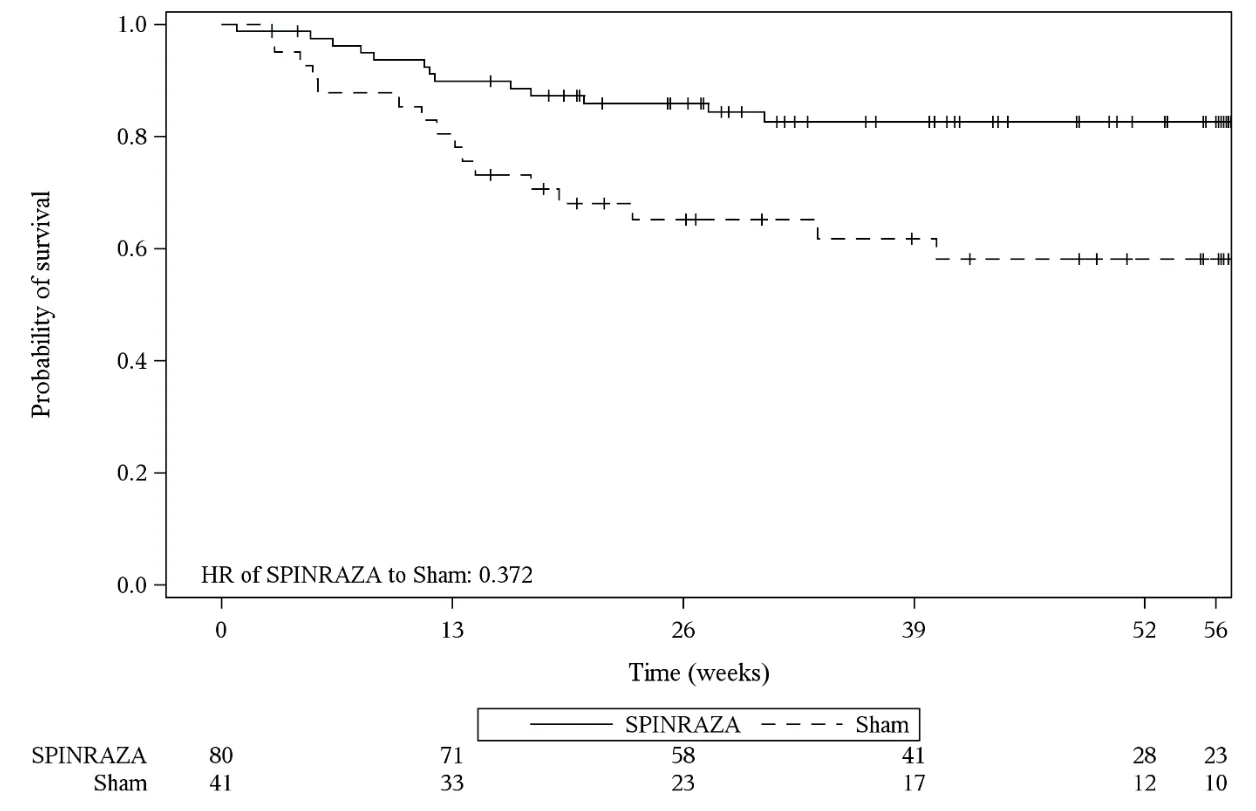
A 47% reduction in the risk of death or permanent ventilation was observed in the ITT population (p=0.0046). Median time to death or permanent ventilation was not reached in SPINRAZA group, and was 22.6 weeks in the sham-control group. A statistically significant 62.8% reduction in the risk of death was also observed (p=0.0041) (Figure 3).
In the efficacy set, 51% of patients in the SPINRAZA group achieved the definition of motor milestone responder compared to 0% in the sham control group at the final analysis (p<0.0001). The proportion of responders increased over time in patients in the SPINRAZA group with 41% responders at 6 months (compared to 5% in sham-control), 45% at 10 months (compared to 0% in sham-control), and 54% at 13 months (compared to 0% in sham-control). Overall, 49 (67%) of SPINRAZA compared to 5 (14%) of sham-control patients experienced improvement, and 1(1%) of SPINRAZA compared to 8 (22%) of sham-control patients experienced worsening in total motor milestone score (Figure 1).
In the efficacy set (ES), 18 (25%) patients in the SPINRAZA group and 12 (32%) patients in the sham-control group required permanent ventilation. Of these patients, 6 (33%) in the SPINRAZA group and 0 (0%) in the sham-control group met the protocol-defined criteria for a motor milestone responder. Eleven (61%) patients in the SPINRAZA group and 3 (25%) patients in the sham-control group experienced at least a 1 point improvement in total motor milestone score. Zero (0%) patients in the SPINRAZA group and 3 (25%) patients in the sham-control group experienced at least a 1 point worsening in total motor milestone score.
A statistically significant greater percentage of patients in the ES receiving SPINRAZA (71%) compared to sham-control (3%) achieved a least a 4 point improvement from baseline in CHOP-INTEND score (p<0.0001). Consistently, 3% of patients receiving SPINRAZA and 46% of patients receiving sham-control experienced at least a 4 point worsening from baseline in CHOP-INTEND score.
Figure 1 - Distribution of the net change from baseline in HINE total motor milestone score by percent of patients in the Efficacy Set
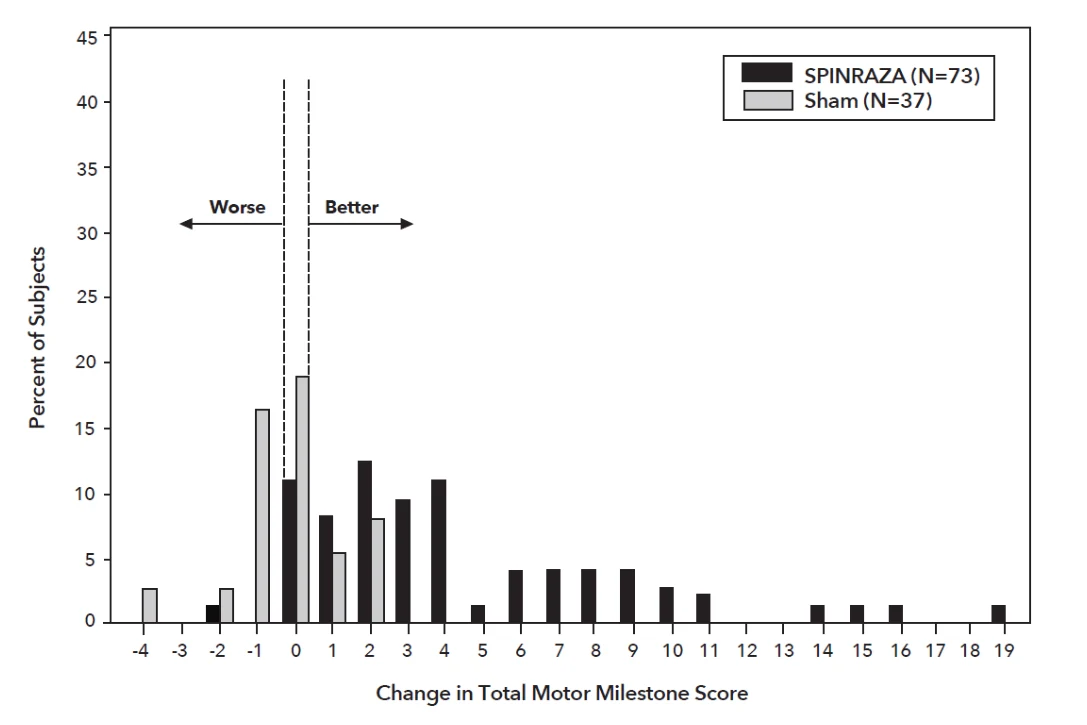
*For subjects who were alive and ongoing in the study, the change in total motor milestone score was calculated at the later of Day 183, Day 302, or Day 394.
Table 6 - Primary and secondary endpoints at final analysis – Study 1
| Efficacy Parameter | SPINRAZA, 12 mg | Sham-control Patients |
| Survival | ||
Event-free survival1 (Number of patients who died or received permanent ventilation) Hazard ratio (95% CI) p-value2 | 31 (39%) | 28 (68%) |
0.53 (032. -0.89) P = 0.0046 | ||
Overall survival1 Number of patients who died Hazard Ratio (95% CI) p-value2 | 13 (16%) | 16 (39%) |
0.37 (0.18 – 0.77) p=0.0041 | ||
| Motor Function | ||
Motor milestones3 (Proportion achieving pre-defined motor milestone responder criteria [HINE section 2])4,5 Proportion at Day 1836 Proportion at Day 3026 Proportion at Day 3946 Proportion with improvement in total motor milestone score Proportion with worsening in total motor milestone score | 37 (51%) P<0.0001 41% 45% 54% 49 (67%) 1 (1%) | 0 (0%) 5% 0% 0% 5 (14%) 8 (22%) |
CHOP-INTEND3 Proportion achieving a 4-point improvement Proportion achieving a 4-point worsening Proportion with any improvement Proportion with any worsening | 52 (71%) P< 0.0001 2 (3%) 53 (73%) 5(7%) | 1 (3%) 14(46%) 1 (3%) 18 (49%) |
1At the final analysis, event-free survival and overall survival were assessed using the Intent to Treat population (ITT SPINRAZA n=80; Sham-control n=41).
2Based on log-rank test stratified by disease duration
3At the final analysis, CHOP-INTEND and motor milestone analyses were conducted using the Efficacy Set (SPINRAZA n=73; Sham-control n=37).
4Assessed at the later of Day 183, Day 302, and Day 394 Study Visit
5According to HINE section 2: ≥2 point increase [or maximal score] in ability to kick, OR ≥1 point increase in the motor milestones of head control, rolling, sitting, crawling, standing or walking, AND improvement in more categories of motor milestones than worsening), defined as a responder for this primary analysis.
6The proportion of motor milestones responders at Day 183, Day 302, and Day 394 are based on efficacy sets at those visits
Figure 2 - Event-Free Survival in the Intent to Treat Set – Study 1
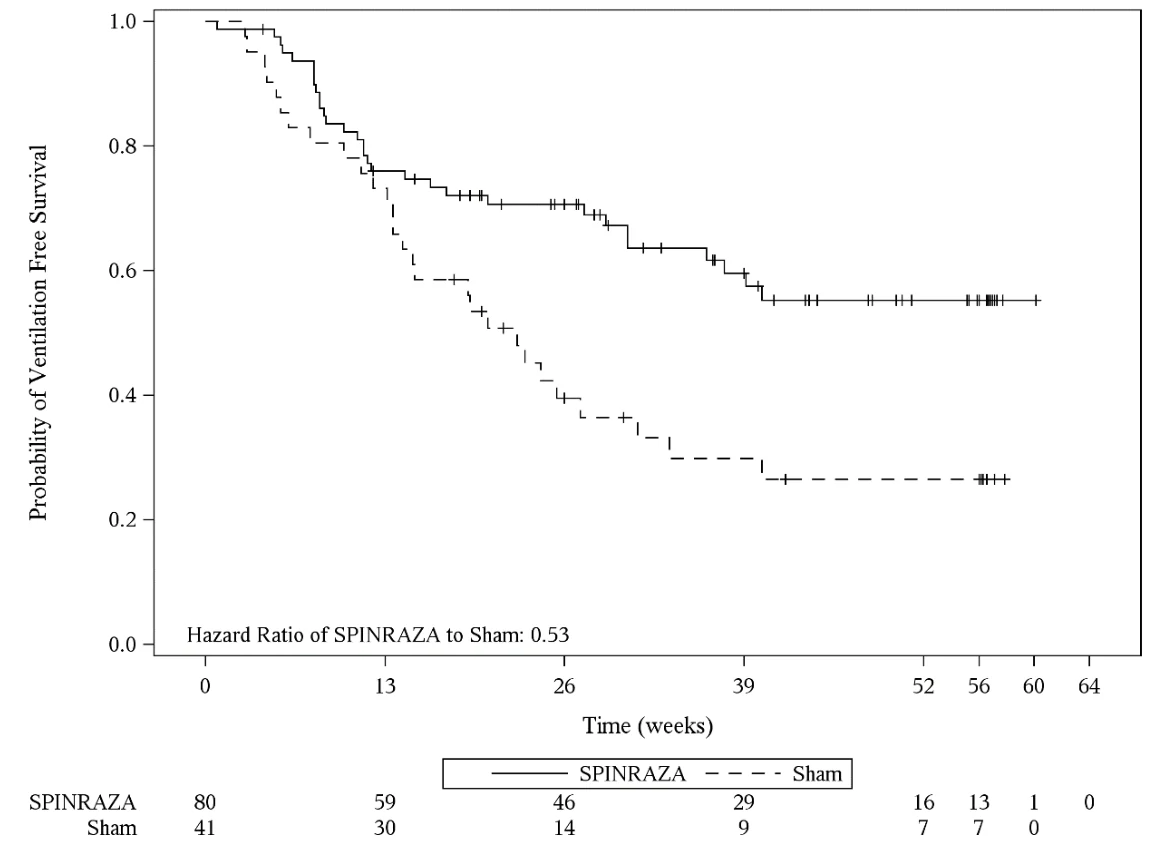
Figure 3 - Overall Survival (ITT) – Study 1
Of the 121 (81 SPINRAZA and 41 sham) patients in Study 1, 89 patients (65 SPINRAZA and 24 post-sham) enrolled in the ongoing open-label extension study (Study 6). In patients randomized to SPINRAZA in Study 1 and including the extension of SPINRAZA treatment in Study 6, 81 patients received the medication for 6 to 3043 days (median 2443 days). In patients randomized to sham in Study 1 and initiating SPINRAZA in Study 6, 24 patients received the medication for 65 to 2520 days (median 2090 days). Improvements in motor function were observed for patients continuing SPINRAZA from Study 1 and patients who initiated SPINRAZA in Study 6, with the greatest observed benefit in those with earlier treatment initiation. The majority of patients were alive at their last visit after initiating treatment with SPINRAZA in either Study 1 or Study 6.
Patients initiating SPINRAZA in Study 1 were of median age of 5.5 months (range 1.7 to 14.9 months). From SPINRAZA initiation and including extension of treatment in Study 6, the median time to death or permanent ventilation was 1.4 years. At the end of the Study 6, 60/81 (74%) patients were alive and 41/81(51%) were alive and had not met the Study 6 definition of permanent ventilation. Mean HINE-2 total motor milestone score increased by 5.3 (SD 4.6; n=53) and CHOP INTEND increased by 18.4 (SD 14.7; n=38) points from initiation of SPINRAZA to follow up visit day 394 and 2198 respectively.
Patients randomized to sham in Study 1 and initiating SPINRAZA in Study 6 (n=24; assigned to sham in Study 1) were of a median age of 17.8 months (range 10.1 - 23.0 months), had a mean CHOP INTEND score of 1.4 (range 0 to 5) at baseline in Study 6. As of the interim analysis 22/24 (92%) patients were alive. 12/24 patients (50%) had not met the Study 6 definition of permanent ventilation. The median time to death or permanent ventilation was 2.76 years after initiation of SPINRAZA in Study 6. At the end of Study 6, 19/24 (79%) patients were alive and 6/12 (50%) were alive without permanent ventilation. Improvement in mean total motor milestone score of 1.4 (SD 1.8; n=12) and CHOP INTEND score of 11.5 (SD 12.2; n=10) were observed from Study 6 baseline to follow up visit day 394 and 2198 respectively.
Clinical Trial in Later-Onset SMA
Study 2 was a phase 3, randomized, double-blind, sham-procedure controlled study in 126 symptomatic children with later-onset SMA (symptom onset after 6 months of age). Patients were randomized 2:1 to either SPINRAZA or sham-control, with a length of treatment ranging from 324 to 482 days (median 450). No patients in either treatment group discontinued treatment.
The median age at screening was 3 years (range 2-9), and the median age of onset of clinical signs and symptoms of SMA was 11 months (range 6-20). The majority of patients (88%) have 3 copies of the SMN2 gene (8% have 2 copies, 2% have 4 copies, and 2% have an unknown copy number). At baseline, patients had a mean HFMSE score of 21.6, a mean Revised Upper Limb Module (RULM) of 19.1, all had achieved independent sitting, and no patients had achieved independent walking. Patients in this study were deemed most likely to develop type II or III SMA.
Baseline disease characteristics were generally similar except for an imbalance in the proportion of patients who had ever achieved the ability to stand without support (13% of patients in the SPINRAZA group and 29% in sham-control) or walk with support (24% of patients in the SPINRAZA group and 33% in sham-control).
A planned interim analysis was conducted when all patients had completed their Month 6 assessment and at least 39 patients had completed their Month 15 assessment. The primary endpoint assessed at the time of interim analysis was change from baseline score at Month 15 on the HFMSE. The primary analysis was conducted in the ITT population which included all subjects who were randomized and received at least 1 dose of SPINRAZA or at least 1 sham procedure (SPINRAZA: n=84; sham-control: n=42). Post-baseline HFMSE data for patients without a Month 15 visit were imputed using the multiple imputation method. A statistically significant improvement from baseline HFMSE score was observed in SPINRAZA treated patients compared to the sham-control patients (SPINRAZA vs. sham-control: 4.0 vs. -1.9;
p=0.0000002).
Results from the final analysis are consistent with those from the interim analysis, showing a statistically significant improvement in HFMSE scores from baseline to Month 15 in the SPINRAZA group compared to the sham-control group (3.9 vs. -1.0; p=0.0000001) (Table 5, Figure 4).
An analysis of the subset of patients in the ITT population who had observed values at Month 15 demonstrated consistent, statistically significant results. Of those with observed values at Month 15 a higher proportion of SPINRAZA-treated subjects had improvement (73% vs 41%, respectively) and a lower proportion had worsening (23% vs 44%, respectively) in total HFMSE scores compared to sham-control treated subjects.
Among patients in the ITT population, 56.8% of patients in the SPINRAZA group achieved a 3-point or greater increase from baseline in the HFMSE score at baseline compared to 26.3% in the sham-control group, for a difference of 30.5% in favor of the SPINRAZA group (p=0.0006).
At the final analysis, all secondary endpoints including functional measures and WHO motor milestone achievement were formally statistically tested and are described in Table 5.
The proportion of subjects achieving new WHO motor milestones (without worsening in any baseline motor milestones) in the SPINRAZA group and sham-control groups was 19.7% and 5.9%, respectively, for a difference of 13.8% (p =0.0811). At 15 months, 1 of the 66 (2%) subjects in the SPINRAZA group compared to 9 of 34 (26%) subjects in the sham-control group had lost at least 1 motor milestone.
The number of new motor milestones achieved per subject at Month 15 was higher in the
SPINRAZA group, with a least squares mean difference of 0.4 between the 2 groups (nominal p = 0.0001).
Although SPINRAZA-treated patients with a longer time from symptom onset to initiation of treatment experienced benefit compared to sham-controlled patients, initiation of treatment sooner after symptom onset resulted in earlier and greater improvement in motor function.
There was a greater improvement in Revised Upper Limb Module (RULM) Test scores from baseline to Month 15 in the SPINRAZA group (least squares mean change of 4.2) than in the sham-control group (least squares mean change of 0.5), with a least squares mean difference of 3.7 between the 2 groups (nominal p = 0.0000001). Among patients with observed values at Month 15, a higher proportion of SPINRAZA treated subjects had improvement (79% vs 68%, respectively) and a lower proportion had worsening (14% vs 21%, respectively) in RULM score compared to sham-control.
Figure 4 - Mean change from baseline in HFMSE score over time at final analysis (ITT) – Study 21,2
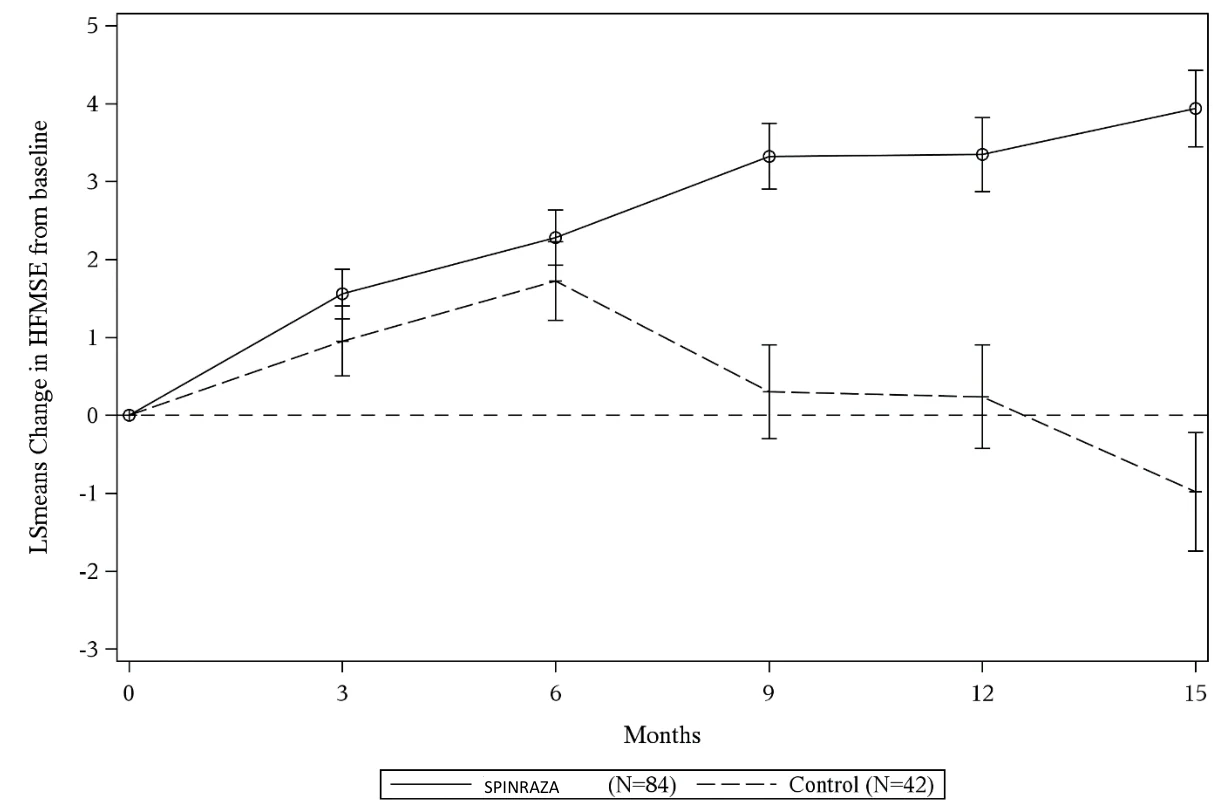
1Data for patients without a Month 15 visit were imputed using the multiple imputation method
2Error bars denote +/- standard error
SPINRAZA
Table 7 – Primary and secondary endpoints at final analysis – Study 2
| SPINRAZA, 12 mg | Sham-control Patients | |
HFMSE score Change from baseline in total HFMSE score at 15 months1,2,3 Proportion of patients who achieved at least a 3 point improvement from baseline to month 151 | 3.9 (95% CI: 3.0, 4.9) p=0.0000001 56.8% (95% CI: 45.6, 68.1) p=0.00065 | -1.0 (95% CI: -2.5, 0.5) 26.3% (95% CI: 12.4, 40.2) |
RULM Mean change from baseline to month 15 in total RULM score1,2,3 | 4.2(95% CI: 3.4, 5.0) p=0.00000016 | 0.5 (95% CI: -0.6, 1.6) |
WHO motor milestones Proportion of patients who achieved new motor milestones at 15 months4 Mean number of new motor milestones attained2,3,4 | 19.7% (95% CI: 10.9, 31.3) p=0.0811 0.2 (range -1 to 2, 95% CI: 0.1, 0.3) p=0.00016 | 5.9% (95% CI: 0.7, 19.7) -0.2 (range -1 to 1, 95% CI: -0.4, 0.0)3 |
1Assessed using the Intent to Treat population (SPINRAZA n=84; Sham-control n=42); data for patients without a Month 15 visit were imputed using the multiple imputation method
2Least squares mean
3Negative value indicates worsening, positive value indicates improvement.
4Assessed using the Month 15 Efficacy Set (SPINRAZA n=66; Sham control n=34; analyses are based on imputed data when there are missing data.
5Based on logistic regression with adjustment for each subject's age at screening and HFMSE score at baseline
6 Nominal p value
126 patients (84 SPINRAZA and 42 sham) enrolled in Study 2 and/or continued follow-up in the open-label extension Study 6. In patients randomized to SPINRAZA in Study 2 and including the extension of treatment with SPINRAZA in Study 6, patients received the medication for a median time of 7.2 years (range 1.3 to 8.4 years). In patients randomized to sham in Study 2 and initiating SPINRAZA in Study 6, patients received the medication for a median time of 5.8 years (range 2.7 to 6.7 years). In patients treated with SPINRAZA, clinically meaningful stabilization or improvement in motor function was observed up to day 2070, with the majority of patients achieving improvement, as demonstrated by an increase of ≥2 points in RULM or ≥3 points in HFMSE scores.
Patients initiating SPINRAZA in Study 2 were of median age 4.1 years (range 2.1-9.2 years). From SPINRAZA initiation and including extension of treatment in Study 6,HFMSE change was a mean increase of 1.3 (SD 9.4; n=54) points and RULM was a mean increase of 6.4 (SD 6.5; n=54) points at follow up visit day 2070.
Patients randomized to sham in Study 2 and initiating treatment in Study 6 were of a median age of 4.9 years (range 3.3 to 8.9 years). HFMSE change was a mean decrease of 1.3 (SD 9.3; n=22) points and RULM was a mean increase of 4.2 (SD 4.4; n=23) points at follow up visit day 2070.
Ongoing and completed open-label clinical trials
The results of the controlled trial in infantile-onset SMA patients were supported by data from completed and ongoing phase 1 and phase 2 open-label, uncontrolled trials conducted in symptomatic patients with infantile-onset SMA (n=20, age range 37 days to 223 days at first dose); in patients with later-onset SMA (n=56, age range 2 to 15 years at first dose); and, in presymptomatic genetically diagnosed patients (n=25, age range 3 to 42 days at first dose). Most of the patients included in these studies had or were likely to develop type I, type II or type III SMA. Some patients achieved milestones such as ability to sit unassisted, stand, or walk when they would otherwise be unexpected to do so, maintained milestones at ages when they would be expected to be lost, and survived to ages unexpected, when considering the number of SMN2 gene copies of patients enrolled in the studies and the disease natural history.
Study 3 was an open-label phase 2 study in symptomatic patients diagnosed with SMA. Median age of onset of clinical signs and symptoms was 56 days (range 21 to 154 days) and patients had either 2 SMN2 gene copies (n=17) or 3 SMN2 gene copies (n=2) (SMN2 gene copy number unknown for 1 patient). Patients in this study were deemed most likely to develop type I SMA. Median age at first dose was 162 days (range 37-223). At screening, the median number of motor milestones (HINE section 2) achieved was 2 (range 1 to 12), median CHOP INTEND total score was 27 (range 17 to 64).
As of the study closure date, 15 of 20 patients (75%) were alive and 5 patients had died (aged 5.13 to 36.28 months). 11 (55%) were alive and free of permanent ventilation (4 patients were on permanent ventilation aged 6.28 to 39.97 months). Of the 15 patients alive all were at least 14 months of age (median 43.5 months, range 14.1 to 54 months), with 6 at >45 months and 2 at >50 months of age.
The primary endpoint was the proportion of patients who improved in one or more categories in motor milestones (according to HINE section 2: ≥2-point increase [or maximal score] in ability to kick or voluntary grasp OR ≥1-point increase in the motor milestones of head control, rolling, sitting, crawling, standing or walking). Twelve out of 20 patients (60%) had met the primary endpoint, with a sustained improvement in mean motor milestone achievement over time. 8 of 20 patients (40%) developed the ability to sit independently, 4 of 20 patients (20%) gained the ability to stand with support or independently, 2 of 20 patients (10%) gained the ability to walk with support or independently.
A sustained improvement in mean CHOP INTEND score was observed from baseline to day 1072 (mean change 21.30). Overall, 11 out of 20 patients (55%) met the endpoint of an increase in total CHOP INTEND score of ≥4 points as of their last study visit prior to data cut-off.
When treatment with SPINRAZA was initiated prior to symptom onset in patients with genetically diagnosed SMA (study 4), patients achieved milestones unexpected in Type I or Type II SMA. Median age at first dose was 22 days (range 3-42 days). At baseline, the median number of motor milestones achieved was 3 (range 0-7), the median CHOP INTEND total score was 50.0 (range 25-60), and the median ulnar CMAP amplitude was 2.65 mV (1.0-6.7).
The Interim analysis was conducted when patients had been on study for a median of 48.3 months (36.6 – 57.1 months) and were of a median age at last visit of 46.0 months (34.0 – 57.0 months). At the time of the interim analysis of Study 4, all 25 of the patients composing the Efficacy Set (2 SMN2 gene copies, n=15; 3 SMN2 gene copies, n=10) were alive without permanent ventilation. The primary endpoint, time to death or respiratory intervention (defined as invasive or noninvasive ventilation for ≥6 hours/day continuously for ≥7 consecutive days or tracheostomy), could not be estimated as there were too few events. Four subjects (2 SMN2 copies) required respiratory intervention >6 hours/day continuously for ≥7 days, all of whom initiated ventilatory support during an acute reversible illness.
Patients achieved milestones unexpected in Type I or II SMA. All 25 (100%) patients had achieved the WHO motor milestone of sitting without support, and 23 (92%) had achieved the ability to walk with assistance and 22 of 25 (88%) had achieved walking alone; 3 of 25 (12%) had not achieved walking alone at this interim analysis. 21 (84%) patients achieved the maximum attainable CHOP INTEND score of 64. The mean CHOP INTEND score at last assessment was 62.0 (range 42-64) amongst patients with 2 SMN2 copies and 63.4 (58-64) amongst those with 3 SMN2 copies. All patients had the ability to suck and swallow at last visit (Day 788), with 22/25 (88%) infants achieved a maximal score on the HINE Section 1; three patients (12%) with 2 SMN2 copies had a score of 1. The proportion of patients developing clinically manifested SMA was assessed amongst patients who reached the Day 700 (n=25) visit as of the interim analysis. The protocol-defined criteria for clinically manifested SMA included age-adjusted weight below the fifth WHO percentile, a decrease of 2 or more major weight growth curve percentiles, the placement of a percutaneous gastric tube, and/or the inability to achieve expected age-appropriate WHO milestones (sitting without support, standing with assistance, hands-and-knees crawling, walking with assistance, standing alone and walking alone). At Day 700, 7/15 (47%) of patients with 2 SMN2 copies and 0/10 patients with 3 SMN2 copies met the protocol-defined criteria for clinically manifested SMA; however, these patients were gaining weight, and achieving milestones inconsistent with Type I SMA.
Study 5 is a phase 2, two-part study of which Part 1 was randomized, double-blind, and sham procedure-controlled and Part 2 was an open label extension. The study enrolled symptomatic patients diagnosed with infantile-onset SMA (≤6 months) or later-onset SMA (>6 months) and 2 or 3 copies of SMN2 who were not eligible for participation in Study 1 or Study 2 due to screening age or SMN2 copy number. Patients were followed for a median of 302 days in Part 1 of the study.
All patients treated with SPINRAZA were alive as of the early termination of Part 1, however, one patient in the control arm died at Study day 289. In addition, no patients in the SPINRAZA group or sham-control group required the use of permanent ventilation. Of the 13 patients with infantile-onset SMA, 7/9 (78%; 95%CI: 45, 94) of the SPINRAZA group and 0/4 (0%; 95%CI: 0, 60) of the sham group met the criteria for motor milestone response (HINE Section 2). Of the 8 patients with later-onset SMA, 4/5 (80%; 95% CI: 38, 96) of the SPINRAZA group and 2/3 (67%; 95% CI: 21, 94) of the sham-control group met this definition of response.
It is not known whether ongoing, continuous treatment with SPINRAZA will be required to maintain or prevent loss of motor function that is achieved during treatment.
15 Microbiology
No microbiological information is required for this drug product.
16 Non-Clinical Toxicology
General Toxicology: In repeat-dose toxicity studies (14-weeks and 53-weeks) intrathecal administration of nusinersen to juvenile cynomolgus monkeys resulted in transient deficits in lower spinal reflexes which occurred at the highest dose levels in each study (3 or 4 mg per dose; equivalent to 30 or 40 mg per IT dose in patients). These effects were observed within several hours post-dose and generally resolved within 48 hours. Neuronal vacuolation and necrosis/cellular debris in the hippocampus were also observed at the mid- and high doses (see 7.1.3 Pediatrics).
Genotoxicity: SPINRAZA demonstrated no evidence of genotoxicity, in in vitro assays (Ames and chromosomal aberration in CHO cells) or in in vivo assays (mouse micronucleus).
Carcinogenicity: Nusinersen did not demonstrate significant carcinogenic potential in a 2-year mouse carcinogenicity study in which the drug was administered by subcutaneous injection at dose levels of 5, 15, and 50 mg/kg every 2 weeks for 104 weeks. Nusinersen had no effect on survival or the incidence of palpable masses, or microscopic neoplasias. Slight increases in the incidence of uterine hemangiomas were noted in females receiving mid to high doses. Myocardial infiltration and/or fibrosis was observed in male animals and some females.
Reproductive and Developmental Toxicology: Reproductive toxicology studies were conducted using subcutaneous administration of SPINRAZA in mice and rabbits. No impact on male or female fertility, embryo-fetal development, or pre/post-natal development was observed.
Juvenile Toxicity: No juvenile toxicity studies were conducted.