


Product Monograph - Zolgensma
Recent Major Label Changes
| 1 Indications, 1.1 Pediatrics | 2024-11 |
|---|---|
| 4 Dosage and Administration, 4.1 Dosing Considerations | 2025-11 |
| 7 Warnings and Precautions, General | 2025-04 |
| 7 Warnings and Precautions, Cardiovascular | 2025-11 |
| 7 Warnings and Precautions, Immune | 2025-03 |
| 7 Warnings and Precautions, 7.1.3 Pediatrics | 2024-11 |
Table of Contents
Certain sections or subsections that are not applicable at the time of the preparation of the most recent authorized product monograph are not listed.
Recent Major Label Changes ................................................................................................... 2
Table of Contents ................................................................................................................... 2
Part 1: Healthcare Professional Information ........................................................................... 4
- 1.
Indications ....................................................................................................................... 4
1.1. Pediatrics .................................................................................................................. 4
1.2. Geriatrics .................................................................................................................. 4
- 2. Contraindications ............................................................................................................ 4
- 3. Serious Warnings and Precautions Box ............................................................................ 4
- 4.
Dosage and Administration ............................................................................................. 5
4.1. Dosing Considerations .............................................................................................. 5
4.2. Recommended Dose and Dosage Adjustment ......................................................... 7
4.4. Administration .......................................................................................................... 9
4.5. Missed Dose ............................................................................................................. 9
- 5. Overdose ......................................................................................................................... 9
- 6. Dosage Forms, Strengths, Composition, and Packaging ................................................. 10
- 7.
Warnings and Precautions ............................................................................................. 12
General ............................................................................................................................... 12
Cardiovascular .................................................................................................................... 12
Hematologic ....................................................................................................................... 12
Hepatic/Biliary/Pancreatic .................................................................................................. 13
Immune .............................................................................................................................. 14
Reproductive Health ........................................................................................................... 15
7.1. Special Populations ................................................................................................ 15
7.1.1. Pregnancy ...................................................................................................... 15
7.1.2. Breastfeeding ................................................................................................ 15
7.1.3. Pediatrics ....................................................................................................... 15
7.1.4. Geriatrics ....................................................................................................... 15
- 8.
Adverse Reactions ......................................................................................................... 15
8.1. Adverse Reaction Overview .................................................................................... 15
8.2. Clinical Trial Adverse Reactions .............................................................................. 16
8.3. Less Common Clinical Trial Adverse Reactions ....................................................... 19
8.4. Abnormal Laboratory Findings: Hematologic, Clinical Chemistry, and Other Quantitative Data ............................................................................................................... 20
8.5. Post-Market Adverse Reactions ............................................................................. 21
- 9.
Drug Interactions ........................................................................................................... 21
9.2. Drug Interactions Overview .................................................................................... 21
9.4. Drug-Drug Interactions ........................................................................................... 21
9.5. Drug-Food Interactions........................................................................................... 22
9.6. Drug-Herb Interactions ........................................................................................... 22
9.7. Drug-Laboratory Test Interactions ......................................................................... 22
- 10.
Clinical Pharmacology ................................................................................................... 22
10.1. Mechanism of Action .............................................................................................. 22
10.2. Pharmacodynamics ................................................................................................ 22
10.3. Pharmacokinetics ................................................................................................... 22
10.4. Immunogenicity ...................................................................................................... 23
- 11. Storage, Stability, and Disposal ...................................................................................... 23
- 12. Special Handling Instructions ......................................................................................... 23
Part 2: Scientific Information ................................................................................................ 25
- 13. Pharmaceutical Information .......................................................................................... 25
- 14.
Clinical Trials .................................................................................................................. 25
14.1. Clinical Trials by Indication ..................................................................................... 25
- 16. Non-Clinical Toxicology .................................................................................................. 30
Patient Medication Information ........................................................................................... 32
Part 1: Healthcare Professional Information
1. Indications
Zolgensma® (onasemnogene abeparvovec) is indicated for the treatment of pediatric patients with 5q spinal muscular atrophy (SMA) with bi-allelic mutations in the survival motor neuron 1 (SMN1) gene and:
- 3 or fewer copies of SMN2 gene; or
- infantile-onset SMA.
The efficacy and safety data supporting the use of Zolgensma in treating pediatric patients with SMA are derived from completed and ongoing open-label, single-arm, clinical trials in patients with:
- infantile-onset SMA and 2 copies of SMN2 gene; and
- presymptomatic genetically diagnosed SMA and 2 or 3 copies of SMN2 gene (see 14 Clinical Trials).
Zolgensma is an adeno-associated virus (AAV) vector-based gene therapy. Knowledge of the disease natural history and the use of management strategies that assist the patient in coping with the manifestations of SMA, which can include decline in motor function, serious respiratory complications, and feeding difficulties, remain necessary for the overall management of the disease. Administration of Zolgensma should only be performed by healthcare professionals who are experienced in the screening, diagnosis, and management of SMA and trained in the delivery of gene therapy.
1.1. Pediatrics
Pediatrics (≥ 8 months of age): The efficacy of Zolgensma in pediatric patients 8 months of age and older at the time of infusion has not been established in clinical trials. There is limited safety information in patients aged 1.5 to 9 years (see 8.2 Clinical Trial Adverse Reactions).
1.2. Geriatrics
Geriatrics: Zolgensma is not authorized for geriatric use.
2. Contraindications
Zolgensma is contraindicated in patients who are hypersensitive to this drug or to any ingredient in the formulation, including any non-medicinal ingredient, or component of the container. For a complete listing, see 6 Dosage Forms, Strengths, Composition, and Packaging.
3. Serious Warnings and Precautions Box
Hepatotoxicity (acute liver failure, acute liver injury and elevated liver aminotransferases) can occur with Zolgensma. Cases of acute liver failure with fatal outcomes have been reported (see 7 Warnings and Precautions and 8 Adverse Reactions).
- Patients with pre-existing liver impairment or hepatic viral infection may be at higher risk.
Before infusion, assess liver function by clinical examination and by laboratory testing in all patients. Before and after infusion, administer corticosteroid (oral prednisolone or
- equivalent) to all patients. Do not stop systemic corticosteroids abruptly. Continue to monitor liver function for at least 3 months after infusion, and at other times as clinically indicated (see 4.1 Dosing Considerations).
Thrombotic microangiopathy (TMA) can occur with Zolgensma. Cases of TMA have been reported to occur after Zolgensma infusion in the post-market setting. Prompt attention to signs and symptoms of TMA is advised, as TMA can result in life-threatening or fatal outcomes (see 7 Warnings and Precautions and 8 Adverse Reactions).
- Before infusion, assess kidney function by laboratory testing in all patients. Monitor all patients for signs and symptoms of TMA (see 4.1 Dosing Considerations and 7 Warnings and Precautions).
4. Dosage and Administration
4.1. Dosing Considerations
Zolgensma should only be infused by a healthcare professional trained in the delivery of gene therapy.
To improve the traceability of biological medicinal products, the name and batch number of the administered product should be clearly recorded.
Zolgensma is for a single treatment only. An immune response to the adeno-associated viral vector serotype 9 (AAV9) capsid will occur after infusion of Zolgensma. Patients should not be re-dosed with Zolgensma.
Overall Health Status
Due to the increased risk of serious systemic immune response, patients must be clinically stable in their overall health status (e.g., hydration and nutritional status, absence of infection) prior to Zolgensma infusion. Postpone Zolgensma in patients with infections until the infection has resolved (including the completion of any treatment for the infection [e.g., antibiotics, etc.]) and the patient is clinically stable. Clinical signs or symptoms of infection should not be evident at the time of Zolgensma infusion (see 7 Warnings and Precautions, Immune).
Laboratory Testing and Monitoring to Assess Safety
Liver function
To manage possible liver injury, including increases in alanine aminotransferase (ALT), aspartate aminotransferase (AST), and total bilirubin, treat all patients with corticosteroid (oral prednisolone or equivalent) before and after Zolgensma infusion and monitor liver function (see 3 Serious Warnings and Precautions Box and 7 Warnings and Precautions, Hepatic/Biliary/Pancreatic).
Before Zolgensma Infusion
- Clinically assess the patient's liver function, including aminotransferase and synthetic function testing (AST and ALT, total bilirubin, albumin, prothrombin time, partial thromboplastin time [PTT] and international normalized ratio [INR]).
- On the day before Zolgensma infusion, pre-treat the patient with oral prednisolone at a dose of 1 mg/kg body weight/day (or equivalent if another corticosteroid is used).
Day of Zolgensma Infusion and After Zolgensma Infusion
- Continue prednisolone treatment daily at 1 mg/kg body weight/day (or equivalent if another corticosteroid is used) including the day of Zolgensma infusion, for 30 days.
- During infusion, and immediately following infusion, monitor patient closely for infusion-related hypersensitivity/anaphylactic reactions. If a reaction occurs the infusion should be interrupted and treatment should be provided as needed (see 7 Warnings and Precautions and 8 Adverse Reactions, 8.5 Post-Market Adverse Reactions).
- Liver function should be monitored regularly for at least 3 months, and at other times as clinically indicated. During the first 30 days, monitor AST, ALT, total bilirubin and the clinical signs of liver injury weekly. Promptly clinically assess and closely monitor patients with worsening liver function test results and/or signs or symptoms of acute illness. If hepatic injury is suspected, further testing is recommended (albumin, prothrombin time, PTT and INR).
After 30 days, assess liver function by clinical examination and by measuring ALT, AST, and total bilirubin:
- For patients with unremarkable liver function findings (i.e., normal clinical exam, total bilirubin, and ALT and AST levels below 2 × ULN), gradually taper the corticosteroid dose over the next 28 days with careful monitoring, performed at least weekly. Do not stop systemic corticosteroids abruptly. If the patient is clinically stable with unremarkable findings at the end of the corticosteroid tapering period, continue monitoring every other week for another month.
- For patients with new or persistent liver function abnormalities, continue systemic corticosteroids (equivalent to oral prednisolone at 1 mg/kg body weight/day) until AST and ALT values are both below 2 × ULN and all other assessments return to within the normal range. Gradually taper the corticosteroid dose over the next 28 days with careful monitoring, performed at least weekly. Do not stop systemic corticosteroids abruptly. If the patient is clinically stable with unremarkable findings at the end of the corticosteroid tapering period, continue monitoring every other week for another month.
- If a patient does not respond adequately to the equivalent of 1 mg/kg body weight/day of oral prednisolone, and/or if acute serious liver injury/acute liver failure is suspected, promptly consult with one or more specialists (e.g., pediatric gastroenterologist/hepatologist). Consider increasing the daily dose of corticosteroid, and/or increasing the duration of corticosteroid treatment, and/or using a more gradual taper. If oral corticosteroid therapy is not tolerated or not effective, intravenous corticosteroid may be considered as clinically indicated.
Educational materials related to the risks of hepatotoxicity for healthcare professionals and caregivers are available through the manufacturer.
Creatinine
Measure creatinine level before Zolgensma infusion.
Complete blood count
A complete blood count (including hemoglobin and platelet count) should be obtained before Zolgensma infusion.
Platelet count
Monitor platelet counts at least weekly for the first month and every other week for the second and third months. Continue monitoring until platelet count results are unremarkable (see 7 Warnings and Precautions, Hematologic).
Troponin-I
Increases in cardiac troponin-I levels may occur following Zolgensma infusion (see 7 Warnings and Precautions, Cardiovascular). Consider troponin-I measurement before and after Zolgensma infusion, as well as cardiac evaluation after Zolgensma infusion. Consult a cardiologist as needed.
Anti-AAV Antibodies
Measure anti-AAV9 antibodies before Zolgensma infusion. Patients with titers higher than 1:50 should not be treated with Zolgensma (see 7 Warnings and Precautions, Immune).
4.2. Recommended Dose and Dosage Adjustment
The recommended dose of Zolgensma is 1.1 × 10¹⁴ vector genomes (vg)/kg patient body weight (Table 1).
Table 1 – Recommended Zolgensma Dose by Patient Body Weight
| Patient weight range (kg) | Dose (vg) | Total volume of dosea (mL) |
|---|---|---|
| Patient weight range (kg) | Dose (vg) | Total volume of dosea (mL) |
| 2.6 – 3.0 | 3.3 x 10¹⁴ | 16.5 |
| 3.1 – 3.5 | 3.9 x 10¹⁴ | 19.3 |
| 3.6 – 4.0 | 4.4 x 10¹⁴ | 22.0 |
| 4.1 – 4.5 | 5.0 x 10¹⁴ | 24.8 |
| 4.6 – 5.0 | 5.5 x 10¹⁴ | 27.5 |
| 5.1 – 5.5 | 6.1 x 10¹⁴ | 30.3 |
| 5.6 – 6.0 | 6.6 x 10¹⁴ | 33.0 |
| 6.1 – 6.5 | 7.2 x 10¹⁴ | 35.8 |
| 6.6 – 7.0 | 7.7 x 10¹⁴ | 38.5 |
| 7.1 – 7.5 | 8.3 x 10¹⁴ | 41.3 |
| 7.6 – 8.0 | 8.8 x 10¹⁴ | 44.0 |
| 8.1 – 8.5 | 9.4 x 10¹⁴ | 46.8 |
| 8.6 – 9.0 | 9.9 x 10¹⁴ | 49.5 |
| 9.1 – 9.5 | 1.05 x 10¹⁵ | 52.3 |
| 9.6 – 10.0 | 1.10 x 10¹⁵ | 55.0 |
| 10.1 – 10.5 | 1.16 x 10¹⁵ | 57.8 |
| 10.6 – 11.0 | 1.21 x 10¹⁵ | 60.5 |
| 11.1 – 11.5 | 1.27 x 10¹⁵ | 63.3 |
| 11.6 – 12.0 | 1.32 x 10¹⁵ | 66.0 |
| 12.1 – 12.5 | 1.38 x 10¹⁵ | 68.8 |
| 12.6 – 13.0 | 1.43 x 10¹⁵ | 71.5 |
| 13.1 – 13.5 | 1.49 x 10¹⁵ | 74.3 |
| 13.6 – 14.0 | 1.54 x 10¹⁵ | 77.0 |
| 14.1 – 14.5 | 1.60 x 10¹⁵ | 79.8 |
| 14.6 – 15.0 | 1.65 x 10¹⁵ | 82.5 |
| 15.1 – 15.5 | 1.71 x 10¹⁵ | 85.3 |
| 15.6 – 16.0 | 1.76 x 10¹⁵ | 88.0 |
| 16.1 – 16.5 | 1.82 x 10¹⁵ | 90.8 |
| 16.6 – 17.0 | 1.87 x 10¹⁵ | 93.5 |
| 17.1 – 17.5 | 1.93 x 10¹⁵ | 96.3 |
| 17.6 – 18.0 | 1.98 x 10¹⁵ | 99.0 |
| 18.1 – 18.5 | 2.04 x 10¹⁵ | 101.8 |
| 18.6 – 19.0 | 2.09 x 10¹⁵ | 104.5 |
| 19.1 – 19.5 | 2.15 x 10¹⁵ | 107.3 |
| 19.6 – 20.0 | 2.20 x 10¹⁵ | 110.0 |
| 20.1 – 20.5 | 2.26 x 10¹⁵ | 112.8 |
| 20.6 – 21.0 | 2.31 x 10¹⁵ | 115.5 |
a NOTE: Volume of dose is calculated using the upper limit of the Patient Weight Range.
Special populations
Renal impairment
The efficacy and safety of Zolgensma have not been established in patients with renal impairment.
Hepatic impairment
The efficacy and safety of Zolgensma have not been established in patients with hepatic impairment; however, a risk of hepatotoxicity has been identified in patients after Zolgensma infusion (see 3 Serious Warnings and Precautions Box and 7 Warnings and Precautions, Hepatic/Biliary/ Pancreatic).
Educational materials for healthcare professionals and caregivers related to the risks of hepatotoxicity are available through the manufacturer.
Pediatric patients
The efficacy and safety of Zolgensma in neonates who have not reached full-term gestational age have not been established.
The efficacy and safety of Zolgensma in pediatric patients 8 months of age and older at the time of infusion have not been established in clinical trials.
4.4. Administration
Zolgensma is for single-dose intravenous infusion only.
Preparation of Zolgensma:
- Zolgensma should be prepared aseptically.
- Thaw Zolgensma in the refrigerator (2°C to 8°C) for approximately 16 hours, or at room temperature (20°C to 25°C) for approximately 6 hours.
- Do not use Zolgensma unless thawed.
- When thawed, Zolgensma is a clear to slightly opaque, colourless to faint white liquid, free of particles. Visually inspect vials for particulate matter and discolouration prior to infusion. Do not use vials if particulates or discolouration are present.
- DO NOT SHAKE.
- Immediately prior to dosing, draw the prescribed dose volume from all vials into the syringe, remove air from syringe, cap syringe, and deliver filled syringe to patient infusion location.
- Once dose is drawn into the syringe, it must be used within 8 hours.
- DO NOT REFREEZE.
Intravenous Infusion Instructions:
- Place a primary catheter in a peripheral vein (generally in the arm or leg).
- Insertion of a secondary catheter is recommended.
- Program syringe pump for saline priming, or prime tubing manually with saline.
- Administer Zolgensma as a slow infusion over 60 minutes. Do not infuse as a rapid intravenous injection or bolus.
- Following completion of the infusion, flush line with saline.
Seal used Zolgensma vials in a biohazard bag and discard in biohazard waste containers according to institutional biohazard guidelines (see 11 Storage, Stability, and Disposal).
4.5. Missed Dose
Not applicable. Zolgensma is to be administered only once.
5. Overdose
No data from clinical studies are available regarding overdose of Zolgensma. Adjustment of the dose of prednisolone, close clinical observation and monitoring of laboratory parameters (including clinical chemistry and hematology) for systemic immune response are recommended (see 4.1 Dosing Considerations and 7 Warnings and Precautions).
For the most recent information in the management of a suspected drug overdose, contact your regional poison control centre or Health Canada’s toll-free number, 1-844 POISON-X (1-844-764-7669).
- 6. Dosage Forms, Strengths, Composition, and Packaging
To help ensure the traceability of biologic products, healthcare professionals should record both the brand name and the non-proprietary (active ingredient) name as well as other product-specific identifiers such as the Drug Identification Number (DIN) and the batch/lot number of the product supplied.
Table 2 – Dosage Forms, Strengths, and Composition
Description
Zolgensma is a solution for intravenous infusion supplied as single use vials. When thawed, Zolgensma is a clear to slightly opaque, colorless to faint white solution.
Each mL contains onasemnogene abeparvovec with a nominal concentration of 2 × 10¹³ vector genomes (vg).
Zolgensma is supplied in a vial (10 mL polymer crystal zenith) with stopper (20 mm chlorobutyl rubber) and seal (aluminum, flip-off) with a coloured cap (plastic), in two different vial fill volume sizes, either 5.5 mL or 8.3 mL.
The total number of vials and combination of fill volumes in each finished pack will be customized to meet dosing requirements for individual patients depending on their weight (Table 3).
Table 3 – Zolgensma kit configuration
| Patient weight (kg) | 5.5 mL viala | 8.3 mL vialb | Total vials per kit |
|---|---|---|---|
| 2.6 – 3.0 | 0 | 2 | 2 |
| 3.1 – 3.5 | 2 | 1 | 3 |
| 3.6 – 4.0 | 1 | 2 | 3 |
| 4.1 – 4.5 | 0 | 3 | 3 |
| 4.6 – 5.0 | 2 | 2 | 4 |
| 5.1 – 5.5 | 1 | 3 | 4 |
| 5.6 – 6.0 | 0 | 4 | 4 |
| 6.1 – 6.5 | 2 | 3 | 5 |
| Route of Administration | Dosage Form/ Strength/Composition | Non-medicinal Ingredients |
| Intravenous | Solution for infusion / 2.0 × 10¹³ vector genome (vg)/mL | Hydrochloric Acid (for pH adjustment), magnesium chloride, poloxamer 188, sodium chloride, tromethamine, water for injection |
| Patient weight (kg) | 5.5 mL viala | 8.3 mL vialb | Total vials per kit |
|---|---|---|---|
| 6.6 – 7.0 | 1 | 4 | 5 |
| 7.1 – 7.5 | 0 | 5 | 5 |
| 7.6 – 8.0 | 2 | 4 | 6 |
| 8.1 – 8.5 | 1 | 5 | 6 |
| 8.6 – 9.0 | 0 | 6 | 6 |
| 9.1 – 9.5 | 2 | 5 | 7 |
| 9.6 – 10.0 | 1 | 6 | 7 |
| 10.1 – 10.5 | 0 | 7 | 7 |
| 10.6 – 11.0 | 2 | 6 | 8 |
| 11.1 – 11.5 | 1 | 7 | 8 |
| 11.6 – 12.0 | 0 | 8 | 8 |
| 12.1 – 12.5 | 2 | 7 | 9 |
| 12.6 – 13.0 | 1 | 8 | 9 |
| 13.1 – 13.5 | 0 | 9 | 9 |
| 13.6 – 14.0 | 2 | 8 | 10 |
| 14.1 – 14.5 | 1 | 9 | 10 |
| 14.6 – 15.0 | 0 | 10 | 10 |
| 15.1 – 15.5 | 2 | 9 | 11 |
| 15.6 – 16.0 | 1 | 10 | 11 |
| 16.1 – 16.5 | 0 | 11 | 11 |
| 16.6 – 17.0 | 2 | 10 | 12 |
| 17.1 – 17.5 | 1 | 11 | 12 |
| 17.6 – 18.0 | 0 | 12 | 12 |
| 18.1 – 18.5 | 2 | 11 | 13 |
| 18.6 – 19.0 | 1 | 12 | 13 |
| 19.1 – 19.5 | 0 | 13 | 13 |
| 19.6 – 20.0 | 2 | 12 | 14 |
| 20.1 – 20.5 | 1 | 13 | 14 |
| 20.6 – 21.0 | 0 | 14 | 14 |
a Vial nominal concentration is 2.0 × 10¹³ vg/mL and contains an extractable volume of not less than 5.5 mL.
b Vial nominal concentration is 2.0 × 10¹³ vg/mL and contains an extractable volume of not less than 8.3 mL.
7. Warnings and Precautions
See 3 Serious Warnings and Precautions Box.
General
Advanced SMA
Since SMA results in progressive and non-reversible damage to motor neurons, the benefit of Zolgensma in symptomatic patients depends on the degree of disease burden at the time of treatment, with earlier treatment resulting in potential greater benefit.
Progressive motor neuron loss is irreversible. The treating healthcare professional should consider that the benefits and risks have not been established in patients with profound muscle weakness and respiratory failure, patients on permanent ventilation, and patients unable to swallow.
Blood and Tissue Donation
Patients treated with Zolgensma should not donate blood, organs, tissues or cells for transplantation.
Vector Shedding
Temporary vector shedding of Zolgensma occurs primarily through bodily waste (see 10 Clinical Pharmacology, Pharmacokinetics). Advise caregivers on the precautionary handling of patient feces (see 11 Storage, Stability and Disposal, Special Precautions for Disposal).
AAV vector DNA integration and risk of tumourigenicity
There is a theoretical risk of tumourigenicity due to integration of AAV vector DNA into the genome. The clinical relevance of individual integration events is unknown, but it is acknowledged that these events could potentially contribute to a risk of tumourigenicity.
Zolgensma is composed of a recombinant non-replicating AAV9 vector whose DNA persists largely in episomal form. Cases of tumour have been reported in patients treated with Zolgensma, and random integration of recombinant AAV9 vector DNA has been reported in patient tumour tissues following Zolgensma treatment. A causal relationship with Zolgensma has not been established based on tumour analyses performed to date; however, in some cases the available information was limited due to incomplete/inconclusive analyses. If a patient treated with Zolgensma develops a tumour, healthcare professionals should report the case to Novartis Pharmaceuticals Canada Inc., at 1-877-631-6775.
Cardiovascular
Troponin-I
Increases in cardiac troponin-I levels (up to 0.2 mcg/L) following infusion with Zolgensma have been observed in clinical trials (see 8 Adverse Reactions). Elevated troponin-I levels may indicate potential myocardial tissue injury; however, the clinical importance of these findings has not been established. Cardiac toxicity following onasemnogene abeparvovec treatment was observed in animal studies (see 16 Non-Clinical Toxicology). Consider troponin-I measurement before and after Zolgensma infusion, as well as cardiac evaluation after Zolgensma infusion. Consult a cardiologist as needed.
Hematologic
Thrombocytopenia
Transient decreases in platelet counts, some of which met the criteria for thrombocytopenia, were typically observed within the first two weeks after Zolgensma infusion (see 8 Adverse Reactions). Thrombocytopenia requiring platelet transfusion has been reported in patients with and without thrombotic microangiopathy in the post-market setting (see section below and 8.5 Post-Market Adverse Reactions). Measure platelet count before Zolgensma infusion and closely monitor for significant decreases within the first two weeks following infusion and on a regular basis afterwards; at least weekly for the first month and every other week for the second and third months. Continue monitoring until platelet count results are unremarkable.
Educational materials for healthcare professionals and caregivers related to the risks of thrombocytopenia are available through the manufacturer.
Thrombotic Microangiopathy
Cases of thrombotic microangiopathy (TMA), also known as atypical hemolytic uremic syndrome (aHUS) have been reported to occur generally within the first two weeks after Zolgensma infusion in the post-market setting (see 8.5 Post Market Adverse Reactions). Concurrent/recent immune system activation (e.g. infections, vaccinations) was identified as a possible contributing factor in some cases. TMA is characterized by thrombocytopenia, fever, hypertension, microangiopathic hemolytic anemia, and acute kidney injury.
Prompt attention to signs and symptoms of TMA is advised, as TMA can result in life-threatening or fatal outcomes. Advise caregivers about the importance of promptly identifying and reporting signs and symptoms of TMA following Zolgensma infusion.
Since thrombocytopenia is a key feature of TMA, closely monitor platelet count for significant decreases within the first two weeks following infusion and on a regular basis afterwards (see sub-section Thrombocytopenia above). In addition, monitor all patients for the signs and symptoms of TMA, including hypertension, increased bruising, seizures, or decreased urine output. In case these signs and symptoms occur in the presence of thrombocytopenia, promptly undertake further diagnostic evaluation for hemolytic anemia and renal dysfunction. If clinical signs, symptoms and/or laboratory findings consistent with TMA occur, immediately consult a pediatric hematologist and/or pediatric nephrologist to manage TMA as clinically indicated.
Educational materials for healthcare professionals and caregivers related to the risks of thrombotic microangiopathy are available through the manufacturer.
Hepatic/Biliary/Pancreatic
Acute Liver Failure/Liver Injury and Elevated Aminotransferases
Hepatotoxicity (acute liver failure, acute liver injury and elevated aminotransferases) can occur with Zolgensma (see 8 Adverse Reactions). Cases of acute liver failure with fatal outcomes have been reported. Patients with pre-existing liver impairment or hepatic viral infection may be at higher risk of acute liver failure/liver injury. The efficacy and safety of Zolgensma in patients with ALT, AST, or total bilirubin levels (except due to neonatal jaundice) > 2 × ULN have not been established. Before Zolgensma infusion, assess liver function by clinical examination and by testing AST, ALT, total bilirubin, albumin, prothrombin time, PTT and INR in all patients. Continue to monitor liver function (ALT, AST, total bilirubin) for at least 3 months after infusion, and at other times as clinically indicated (see 4.1 Dosing Considerations). Promptly clinically assess and closely monitor patients with worsening liver function test results and/or signs or symptoms of acute illness. In case hepatic injury is suspected, further testing is recommended (e.g., albumin, prothrombin time, PTT and INR).
Before and after infusion, administer corticosteroid (oral prednisolone or equivalent) to all patients. Do not stop systemic corticosteroids abruptly. Promptly consult with a specialist (pediatric gastroenterologist/hepatologist) if the patient does not adequately respond to prednisolone adjustments (see 4.1 Dosing Considerations).
Educational materials for healthcare professionals and caregivers related to the risks of hepatotoxicity are available through the manufacturer.
Immune
Systemic Immune Response and Concomitant Infections
Patients with infection were excluded from participation in Zolgensma clinical trials. In some post-market cases, patients with potential underlying acute (e.g. respiratory) or chronic uncontrolled infection who were treated with Zolgensma had severe clinical courses of the infection reported. A systemic immune response following Zolgensma infusion concomitantly with an infection could lead to serious/severe outcomes. Poor health status (e.g. nutrition, hydration) may also be a contributory factor.
Prior to Zolgensma infusion, patients must be clinically stable in their overall health status (e.g., hydration and nutritional status, absence of infection, etc.). Postpone Zolgensma infusion in patients with infections until the infection has resolved (including the completion of treatment for the infection [e.g. antibiotics, etc.]) and the patient is clinically stable. Clinical signs or symptoms of infection should not be evident at the time of Zolgensma infusion (see 4.1 Dosing Considerations).
Increased vigilance in the prevention, monitoring, and management of infection is recommended before and after Zolgensma infusion. Advise caregivers about infection prevention and the importance of promptly identifying and reporting signs and symptoms of infection before and after Zolgensma infusion.
Immunogenicity
In clinical trials, patients were required to have anti-AAV9 antibody titers at or below 1:50 as measured with an enzyme-linked immunosorbent assay (ELISA) before Zolgensma infusion. The efficacy and safety of Zolgensma has not been established in patients with anti-AAV9-antibody titers above 1:50 before infusion. Test patients for the presence of anti-AAV9 antibodies before Zolgensma infusion (see 4.1 Dosing Considerations). Retesting may be performed if anti-AAV9 antibody titers are reported as above 1:50 (see 10.4 Immunogenicity).
Infusion-related reactions
Serious infusion-related reactions, including hypersensitivity reactions and anaphylaxis, have occurred during, and/or shortly after, infusion of Zolgensma (see 8.5 Post Market Adverse Reactions). Signs and symptoms of these reactions may include, but are not limited to, rash, urticaria, vomiting, dyspnea, flushing, swelling of face/mouth/throat, chills, wheezing, oxygen desaturation, and/or alterations in heart rate and blood pressure. Closely monitor patients for signs and symptoms of infusion reactions during the infusion period and immediately following the end of the infusion. If a reaction occurs, the infusion should be interrupted and treatment should be provided as needed. Based on clinical evaluation and standard practices, administration may be cautiously resumed.
Reproductive Health
Fertility
There are no data on the effect of Zolgensma on fertility available. The effects of onasemnogene abeparvovec on male and female fertility have not been evaluated in animal studies (see 16 Non-Clinical Toxicology, Reproductive and Developmental Toxicology).
Germline integration
The potential for the germline transmission or integration of the onasemnogene abeparvovec vector genome has not been evaluated in animal studies (see 16 Non-Clinical Toxicology, Reproductive and Developmental Toxicology).
7.1. Special Populations
7.1.1. Pregnancy
There are no available data regarding Zolgensma use in pregnant women. No animal reproductive and developmental toxicity studies have been conducted with onasemnogene abeparvovec (see 16 Non-Clinical Toxicology, Reproductive and Developmental Toxicology).
7.1.2. Breastfeeding
There is no information available on the presence of Zolgensma in human milk, the effects on the breastfed infant or the effects on milk production.
7.1.3. Pediatrics
The efficacy and safety of Zolgensma in premature neonates who have not reached full-term gestational age have not been established.
The efficacy of Zolgensma in pediatric patients 8 months of age and older at the time of infusion has not been established in clinical trials. There is limited safety information in patients aged 1.5 to 9 years (see 8.2 Clinical Trial Adverse Reactions).
7.1.4. Geriatrics
No data are available for this population.
8. Adverse Reactions
8.1. Adverse Reaction Overview
The most frequently reported adverse events following Zolgensma infusion in the 4 open-label clinical studies described in section 8.2 below are fever/pyrexia (51%) liver function enzyme elevations (33%; 6.2% serious) and decreased platelet count/thrombocytopenia (6.2%) (see 3 Serious Warnings and Precautions Box, 4.1 Dosing Considerations, 7 Warnings and Precautions and 8.2 Clinical Trial Adverse Reactions, Descriptions of Selected Adverse Reactions).
Adverse drug reactions identified in the post-market setting are described below in 8.5 Post-Market Adverse Drug Reactions.
8.2. Clinical Trial Adverse Reactions
Clinical trials are conducted under very specific conditions. Therefore, the frequencies of adverse reactions observed in the clinical trials may not reflect frequencies observed in clinical practice and should not be compared to frequencies reported in clinical trials of another drug.
The safety of Zolgensma was evaluated in 97 patients who received Zolgensma at the recommended dose (1.1 x 10¹⁴ vg/kg) from 4 open-label clinical studies (CL-101, CL-303, CL-302, CL-304). The patients ranged in age from 0.3 months to 7.9 months at the time of Zolgensma administration (weight range: 3.0 kg to 8.4 kg). The duration of follow-up ranged from 1.8 months to 24 months post-infusion.
The treatment-emergent adverse events identified in patients treated with Zolgensma by intravenous infusion (frequencies ≥ 5%) from the 4 open-label clinical studies are presented in Table 4.
Table 4 - Treatment-emergent adverse events reported in clinical trials (studies CL-101, CL-303, CL-302, CL-304) (frequencies ≥ 5%)
System Organ Class Preferred Term | Zolgensma 1.1 x 10¹⁴ vg/kg (N=97) n (%) |
|---|---|
System Organ Class Preferred Term | Zolgensma 1.1 x 10¹⁴ vg/kg (N=97) n (%) |
System Organ Class Preferred Term | Zolgensma 1.1 x 10¹⁴ vg/kg (N=97) n (%) |
| Infections and infestations | |
| Upper respiratory tract infectiona | 48 (49.5) |
| Lower respiratory tract infectionb | 28 (29.9) |
| Respiratory tract infectionc | 20 (20.6) |
| Gastroenteritis | 16 (16.5) |
| Urinary tract infectiond | 11 (11.3) |
| Otitis mediae | 9 (9.3) |
| Fungal infectionf | 8 (8.2) |
| Conjunctivitis | 8 (8.2) |
| Ear infection | 7 (7.2) |
| Gastrointestinal disorders | |
| Constipation | 25 (25.8) |
| Vomiting | 24 (24.7) |
| Gastrooesophageal reflux disease | 17 (17.5) |
| Diarrhoea | 15 (15.5) |
| Teething | 10 (10.3) |
| General disorders and administration site conditions | |
| Pyrexiag | 49 (50.5) |
| Respiratory, thoracic and mediastinal disorders | |
| Coughh | 21 (21.6) |
| Nasal congestion | 12 (12.4) |
| Respiratory distress | 9 (9.3) |
| Hypoxiai | 7 (7.2) |
| Respiratory failurej | 7 (7.2) |
| Use of accessory respiratory muscles | 6 (6.2) |
| Aspirationk | 5 (5.2) |
| Atelectasis | 5 (5.2) |
| Respiration abnormal | 5 (5.2) |
| Rhinorrhoea | 5 (5.2) |
| Tachypnoea | 5 (5.2) |
| Investigations | |
| Liver function test increasedl | 32 (33.0) |
| Skin and subcutaneous tissue disorders | |
| Rashm | 17 (17.5) |
| Dermatitisn | 12 (12.4) |
| Injury, poisoning and procedural complications | |
| Contusion | 6 (6.2) |
| Musculoskeletal and connective tissue disorders | |
| Scoliosiso | 13 (13.4) |
| Nervous system disorders | |
| Muscle contractions involuntary | 6 (6.2) |
| Blood and lymphatic system disorders | |
| Anaemiap | 6 (6.2) |
| Thrombocytopeniaq | 6 (6.2) |
| Cardiac disorders | |
| Tachycardia | 5 (5.2) |
| Psychiatric disorders | |
| Irritability | 5 (5.2) |
| Vascular disorders | |
| Hypertensionr | 8 (8.2) |
- a Grouped with Influenza, Nasopharyngitis, Pharyngitis streptococcal, Bacterial tracheitis, Rhinitis, Laryngitis, Viral upper respiratory tract infection, Pharyngitis, Croup infectious, Tonsillitis
- b Grouped with Pneumonia, Pneumonia viral, Metapneumovirus infection, Pneumonia bacterial, Pneumonia parainfluenzae viral, Pneumonia respiratory syncytial viral, Bronchiolitis, Respiratory syncytial virus bronchiolitis, Bronchitis
- c Grouped with Rhinovirus infection, Parainfluenzae virus infection, Respiratory tract infection viral, Respiratory syncytial virus infection
- d Grouped with Urinary tract infection bacterial, Bacteriuria, Cystitis, Pyelonephritis
- e Grouped with Otitis media acute
- f Grouped with Candida infection, Candida nappy rash, Fungal skin infection, Oral candidiasis
- g Grouped with Body temperature increased
- h Grouped with Productive cough
- i Grouped with Oxygen saturation decreased
- j Grouped with Acute respiratory failure
- k Grouped with Pneumonia aspiration
- l Grouped with Hypertransaminasaemia, Hepatic enzyme increased, Transaminases increased, Aspartate aminotransferase increased, Alanine aminotransferase increased, Gamma-glutamyltransferase increased
- m Grouped with Rash macular, Rash generalised, Genital rash
- n “Dermatitis” was not reported but was chosen to group the following events: Dermatitis diaper, Dermatitis atopic, Dermatitis allergic, Dermatitis contact, Dermatitis infected, Catheter site dermatitis
- o Grouped with Deformity thorax, Kyphosis, Kyphoscoliosis
- p Grouped with Haemoglobin decreased, Microcytic anaemia, Iron deficiency anaemia
- q Grouped with Platelet count decreased
- r Grouped with Blood pressure systolic increased, Diastolic hypertension
Description of Selected Adverse Drug Reactions
Acute Liver Failure/Liver Injury and Elevated Aminotransferases
In the 4 open-label clinical trials, elevations in liver function enzymes were reported as adverse events in 32 (33%) patients, of which 6 (6.2%) patients reported serious adverse events. In the patients experiencing serious adverse events, the duration of prednisolone treatment ranged from 51 to 181 days.
Some patients have experienced AST and ALT elevations of greater than 20 times ULN and have been symptomatic (e.g. vomiting, jaundice), which required the use of corticosteroids, sometimes with prolonged duration and/or a higher dose (see 3 Serious Warnings and Precautions Box, 7 Warnings and Precautions, Hepatic/Biliary/Pancreatic, 8.4 Abnormal Laboratory Findings: Hematologic, Clinical Chemistry and Other Quantitative Data, and 8.5 Post-Market Adverse Reactions).
Thrombocytopenia
In clinical trials, transient decreases from baseline in mean platelet count, some of which met the criteria for thrombocytopenia, were observed at multiple time points after Zolgensma infusion. Thrombocytopenia was reported in the 4 open-label clinical trials in 6/97 (6.2%) patients (see 7 Warnings and Precautions, Hematologic, 8.4 Abnormal Laboratory Findings: Hematologic, Clinical Chemistry and Other Quantitative Data, and 8.5 Post-Market Adverse Reactions).
Increased troponin-I levels
In the 4 open-label clinical trials, increases in cardiac troponin-I levels up to 0.2 mcg/L were reported in 3/97 (3.1%) patients after Zolgensma infusion (see 7 Warnings and Precautions, Cardiovascular and 8.4 Abnormal Laboratory Findings: Hematologic, Clinical Chemistry and Other Quantitative Data).
Other special populations
Body weight ≥ 8.5 kg to ≤ 21 kg
The safety of Zolgensma was evaluated in a post-authorization clinical study (COAV101A12306) in 24 patients weighing ≥ 8.5 kg to ≤ 21 kg (median weight: 15.8 kg). The patients ranged in age from approximately 1.5 to 9 years at the time of administration. 1 of the 24 patients was under the age of 2 at the time of administration (median age: 4.9 years). Before treatment with Zolgensma, 21 patients discontinued their previous treatment with nusinersen or risdiplam. The types of adverse reactions observed were consistent with that of the 4 open-label studies.
Liver enzyme increases in this study occurred at a higher frequency compared with the previous 4 studies. AST or ALT elevations > 2 × ULN were observed in the majority of patients (23/24), including 21 patients with ALT elevations > 3 × ULN and 5 patients with ALT elevations > 20 × ULN. These patients were clinically asymptomatic and there were no elevations of bilirubin. The AST and ALT elevations were managed with the use of corticosteroids, typically with prolonged duration and/or a higher dose (see 7 Warnings and Precautions, Hepatic/Biliary/Pancreatic).
Transient decreases in platelet counts, which met the criteria for thrombocytopenia were observed in 20 out of 24 patients. Four patients had platelet counts below 50,000 per µL (see Thrombocytopenia above).
8.3. Less Common Clinical Trial Adverse Reactions
Serious or severe treatment-emergent adverse events that were reported in clinical trials with a frequency less than 5% were:
Cardiac Disorders: bradycardia, cyanosis
Gastrointestinal disorders: dysphagia, duodenal ulcer, inguinal hernia
Infections and infestations: enterovirus infection, viral infection, adenovirus infection, device related infection, exanthema subitum, postoperative wound infection, sepsis, staphylococcal bacteraemia
Injury, poisoning, and procedural complications: lower limb fracturea, post procedural haemorrhage
Investigations: human rhinovirus test positive, enterovirus test positive, blood alkaline phosphatase increased, coagulation test abnormal, human metapneumovirus test positive, norovirus test positive, respiratory syncytial virus test positive, sleep study
Metabolism and nutrition disorders: feeding disorder, dehydration, abnormal weight gain, failure to thrive, hypercalcaemia, hypernatraemia, hyperphosphatasaemia, hypokalaemia
Nervous System disorders: lethargy, hydrocephalus, hypoxic-ischaemic encephalopathy, loss of consciousness
Product issues: device malfunction
Psychiatric disorders: anxietyb
Respiratory, thoracic, and mediastinal disorders: sleep apnoea syndrome, upper respiratory tract congestionc, adenoidal hypertrophy, increased bronchial secretion, respiratory arrest, tonsillar hypertrophy
Skin and subcutaneous tissue disorders: decubitus ulcer
Surgical and medical procedures: gastrostomy, hospitalisation
Vascular disorders: hypotensiond
- a “Lower limb fracture” was not reported but was chosen to group Femur fracture and Tibia fracture
- b Grouped with Nervousness
- c Grouped with Influenza, Nasopharyngitis, Pharyngitis streptococcal, Bacterial tracheitis, Rhinitis, Laryngitis, Viral upper respiratory tract infection, Pharyngitis, Croup infectious, Tonsillitis
- d
Grouped with Blood pressure diastolic decreased
8.4. Abnormal Laboratory Findings: Hematologic, Clinical Chemistry, and Other Quantitative Data
Clinical Trial Findings
In clinical trials, laboratory parameters and other quantitative data were evaluated independent of adverse events and are presented in Table 5 and Table 6 below.
Table 5 - Summary of Patients Meeting Criteria for Potentially Clinically Significant Hematology Values*
| Parameter | n/N (%) |
|---|---|
| Platelets | 7/96 (7.3) |
| Neutrophils | 37/96 (38.5) |
*Criteria for potentially clinically significant values:
Platelets: <75x109/L
Neutrophils: Subjects 0-14 days and >180 days: <1.5 x10⁹/L; Subjects 15-179 days: <1x10⁹/L
Table 6 - Summary of Patients Meeting Criteria for Potentially Clinically Significant Chemistry Values*
| Parameter | n/N (%) |
|---|---|
| Alanine Aminotransferase (ALT) | 15/97 (15.5) |
| Aspartate Aminotransferase (AST) | 15/97 (15.5) |
| Alkaline Phosphatase | 6/96 (6.3) |
| Bilirubin | 13/97 (13.4) |
| Troponin I | 5/32 (15.6) |
*Criteria for potentially clinically significant values:
ALT: >150 U/L
AST: >180 U/L
Alkaline Phosphatase: >675 U/L
Bilirubin: >33.4 µmol/L
Troponin I: >50 ng/L
8.5. Post-Market Adverse Reactions
The following adverse drug reactions have been derived from post-market experience with Zolgensma, including spontaneous case reports and literature cases. Because these reactions are reported voluntarily, it is not possible to reliably estimate their frequency which is therefore categorized as not known.
Table 7 - Adverse drug reaction from post-marketing experience (frequency not known)
Blood and lymphatic system disorders
Thrombotic microangiopathy
Hepatobiliary Disorders
Acute liver failurea/liver injury
General disorders and administration site conditions
Infusion-related reactions, including hypersensitivity and anaphylaxisb
a Includes fatal cases
b Infusion-related reactions included signs and symptoms that occurred during, and/or shortly after, infusion (e.g. rash, urticaria, vomiting, dyspnea, wheezing, throat/mouth/face swelling, chills, oxygen desaturation, flushing, blood pressure and heart rate changes).
Acute liver failure/liver injury
Cases of acute liver failure with fatal outcome and of liver injury have been reported in the post-market setting. In some cases, patients required hospitalization, exhibited signs and symptoms associated with liver dysfunction (e.g., jaundice, coagulopathy, elevated ammonia levels), and required the use of corticosteroids (see 3 Serious Warnings and Precautions Box).
Educational materials for healthcare professionals and caregivers related to the risks of hepatotoxicity are available through the manufacturer.
Thrombotic microangiopathy
Thrombotic microangiopathy (TMA) has been reported following Zolgensma infusion in the post-market setting (see 7 Warnings and Precautions, Hematologic). TMA is characterized by thrombocytopenia, microangiopathic hemolytic anemia, and acute kidney injury. Reported cases occurred generally within the first two weeks after Zolgensma infusion. Hospitalization and platelet transfusions were required in some cases.
Educational materials for healthcare professionals and caregivers related to the risks of thrombotic microangiopathy are available through the manufacturer.
9. Drug Interactions
9.2. Drug Interactions Overview
No interaction studies have been performed.
9.4. Drug-Drug Interactions
No interaction studies have been performed.
Vaccinations
Live vaccines should not be administered to patients taking an immunosuppressive corticosteroid dose. Where feasible, adjust the patient’s vaccination schedule to accommodate prednisolone (or equivalent) treatment before and after Zolgensma infusion (see 4.1 Dosing Considerations). Seasonal Respiratory Syncytial Virus (RSV) prophylaxis is not precluded.
5q SMA Targeting Agents
The efficacy and safety of the use of Zolgensma with other 5q SMA targeting agents have not been established.
9.5. Drug-Food Interactions
Interactions with food have not been established.
9.6. Drug-Herb Interactions
Interactions with herbal products have not been established.
9.7. Drug-Laboratory Test Interactions
Interactions with laboratory tests have not been established.
10. Clinical Pharmacology
10.1. Mechanism of Action
Onasemnogene abeparvovec is a gene therapy designed to introduce a functional copy of the survival motor neuron gene (SMN1) in the transduced cells to address the monogenic root cause of spinal muscular atrophy (SMA). By providing an alternative source of SMN protein expression in motor neurons, it is expected to promote the survival and function of transduced motor neurons.
Onasemnogene abeparvovec is a non-replicating recombinant AAV vector that utilizes AAV9 capsid to deliver a stable, fully functional human SMN1 transgene. The SMN1 gene present in onasemnogene abeparvovec is designed to reside as episomal DNA in the nucleus of transduced cells and is expected to be stably expressed for an extended period of time in post-mitotic cells. The transgene is introduced to target cells as a self-complementary double stranded molecule. Expression of the transgene is driven by a constitutive promoter (cytomegalovirus enhanced chicken β actin hybrid), which is expected to result in continuous and sustained SMN protein expression.
10.2. Pharmacodynamics
There are no clinically relevant pharmacodynamics data for onasemnogene abeparvovec.
10.3. Pharmacokinetics
Vector Shedding: Onasemnogene abeparvovec vector shedding analysis, which assessed the amount of vector eliminated from the body through saliva, urine, and feces, were performed on samples from 5 patients with Type 1 SMA in a Phase 1 study.
Onasemnogene abeparvovec was shed in saliva, urine, and stool post-infusion of onasemnogene abeparvovec. Clearance of onasemnogene abeparvovec was primarily via feces and the majority is cleared within 30 days after dose administration. Onasemnogene abeparvovec concentrations in urine and saliva were highest at day 1 post-infusion and dropped thereafter.
Biodistribution: Biodistribution was evaluated in two patients who died 5.7 months and 1.7 months, respectively, after infusion of onasemnogene abeparvovec at the dose of 1.1 x 10¹⁴ vg/kg. Both cases showed that the highest levels of vector DNA were found in the liver. Vector DNA was also detected in the spleen, heart, pancreas, inguinal lymph node, skeletal muscles, peripheral nerves, kidney, lung, intestines, gonads (male and female), spinal cord, brain, and thymus. Immunostaining for SMN protein showed generalized SMN expression in spinal motor neurons, neuronal and glial cells of the brain, and in the heart, liver, skeletal muscles, and other tissues evaluated.
10.4. Immunogenicity
All therapeutic proteins have the potential for immunogenicity. The detection of antibody formation is highly dependent on the sensitivity and specificity of the assay. In addition, the observed incidence of antibody (including neutralizing antibody) positivity in an assay may be influenced by several factors including assay methodology, sample handling, timing of sample collection, concomitant medicinal products and underlying disease. For these reasons, comparison of incidence of antibodies in the studies described below with the incidences of antibodies in other studies or to other products may be misleading.
In clinical trials, patients were required to have anti-AAV9 antibody titers at or below 1:50 as measured with an enzyme-linked immunosorbent assay (ELISA) before Zolgensma infusion. Mean increases from baseline in anti-AAV9 antibody titer were observed in all patients. Titers reached at least 1:102,400 in all patients tested (n=15) and exceeded 1:819,200 in most patients (73%).
- 11. Storage, Stability, and Disposal
- • Zolgensma is shipped and delivered frozen (≤ -60 °C) in clear vials.
- • Immediately place the kit in a refrigerator at 2°C to 8°C upon receipt.
- • Zolgensma is stable for 14 days from receipt when stored at 2°C to 8°C.
- • DO NOT REFREEZE.
- • Must use within 14 days of receipt.
Once the prescribed dose volume is drawn into the syringe, Zolgensma must be infused within 8 hours (see 4.4 Administration). Following infusion, or after 8 hours if prepared Zolgensma is not infused, dispose the vector-containing syringe in accordance with institutional guidelines for biohazard waste (see Special Precautions for Disposal below).
Zolgensma must be kept out of the reach and sight of children.
Special Precautions for Disposal
Unused Zolgensma and waste material containing or exposed to Zolgensma must be disposed of in accordance with institutional guidelines for biohazardous waste (see 12 Special Handling Instructions).
12. Special Handling Instructions
Incompatibilities
Zolgensma must not be mixed with other medicinal products.
Instructions for use and handling
Each vial is for single use only.
Follow appropriate precautions for the handling and disposal of Zolgensma:
- Handle Zolgensma aseptically.
- Wear personal protective equipment (i.e., gloves, safety goggles, laboratory coat and sleeves) while handling or administering Zolgensma. Healthcare professionals should not handle or administer Zolgensma if they are at risk of exposure through cut or scratched skin.
- Wipe all spills of Zolgensma with absorbent gauze pads and disinfect the spill area. Dispose of all clean-up materials in accordance with institutional guidelines for biohazard waste.
- Dispose of all materials that have or may have come into contact with Zolgensma (e.g., vial, syringe, needles, gauze, wipes, gloves, and drapes) in accordance with institutional guidelines for biohazard waste.
Handling of Patient Waste
Vector shedding of Zolgensma occurs primarily through body waste. Advise caregivers about the proper handling of patient feces. Protective gloves and good hand hygiene are required when in contact with patient body waste for a minimum of 1 month after Zolgensma infusion. Disposable diapers should be sealed in disposable trash bags and discarded in regular trash. Reusable diapers should not be used within the first month after Zolgensma infusion.
Accidental Exposure
Avoid accidental exposure to Zolgensma.
If skin is accidentally exposed to Zolgensma, wash the affected area thoroughly with soap and water for at least 15 minutes. In the case of eye exposure, flush affected eye(s) thoroughly with water for at least 15 minutes. In case of accidental needle stick exposure, refer to institutional biosafety guidelines and contact site health unit as required.
Part 2: Scientific Information
13. Pharmaceutical Information
Drug Substance
Proper name: Onasemnogene abeparvovec
Chemical name: DNA (synthetic adeno-associated virus 9 vector scAAV9.CB.hSMN human survival motor neuron protein-specifying)
Structure: Onasemnogene abeparvovec is a non-replicating, recombinant adeno-associated virus serotype 9 (AAV9) containing the human survival motor neuron (SMN) gene under the control of the cytomegalovirus (CMV) enhancer/chicken-β-actin-hybrid promoter (CB). One of the two adeno-associated vector (AAV) inverted terminal repeats (ITRs) has been modified to promote intramolecular annealing of the transgene, thus forming a double-stranded transgene ready for transcription.
Physicochemical properties: Clear to slightly opaque, colorless to faint white solution.
pH value: 7.7 – 8.3
Product Characteristics:
Onasemnogene abeparvovec is a non-replicating recombinant AAV vector that utilizes AAV9 capsid to deliver a stable, fully functional human SMN transgene.
14. Clinical Trials
14.1. Clinical Trials by Indication
Spinal muscular atrophy
The efficacy of Zolgensma in patients less than 8 months of age with spinal muscular atrophy (SMA) was demonstrated based on three open-label, single-arm, single-dose clinical trials.
Table 8 - Summary of patient demographics for clinical trials in SMA
| Study # | Study design | Dosage, route of administration, and duration | Study Subjects (n) | Age (range) | Sex |
AVXS-101-CL-303 (Completed) | Open-label, single-arm, single dose, multicentre trial. | 1.1 × 10¹⁴ vg/kg Single-dose intravenous administration End of study at 18 months of age | n = 22 | 3.7 months (0.5 - 5.9 months) | Male: 45.5%; Female: 54.5% |
AVXS-101-CL-101 (Completed) | Open-label, single-arm, ascending-dose, single centre trial. | Cohort 1: 6.7 x 10¹³ vg/kga Cohort 2: 1.1 × 10¹⁴ vg/kgb Single-dose intravenous administration End of study at 2 years post-dose | n = 15 Cohort 1: n=3 Cohort 2: n=12 | 4.0 months (0.9-7.9 months) | Male: 40.0%; Female: 60.0% |
AVXS-101-CL-304 (Ongoing) | Open-label, single-arm, single-dose, multicentre trial. | 1.1 × 10¹⁴ vg/kg Single-dose intravenous administration End of study at 18 months of age (subjects with 2 copies SMN2) or 24 months of age (subjects with 3 copies SMN2) | n = 29 Cohort 1 (2 copies SMN2): n=14 Cohort 2 (3 copies SMN2): n=15 | Subjects with 2 copies SMN2: 20.6 days (8 to 34 days) Subjects with 3 copies SMN2: 28.7 days (9 to 43 days) | Subjects with 2 copies SMN2: Male: 28.6%; Female: 71.4% Subjects with 3 copies SMN2: Male: 40%; Female: 60% |
- a Low dose as measured by quantitative PCR (qPCR)
- b Proposed therapeutic dose as directly measured by validated droplet digital PCR (ddPCR)
AVXS-101-CL-303 Phase 3 Study in Subjects with Type 1 SMA with two copies of SMN2
Study CL-303 was a phase 3, open-label, single-arm, single-dose, multi-centre trial that assessed the efficacy and safety of intravenous administration of Zolgensma (1.1 × 10¹⁴ vg/kg) in subjects (n=22) with symptomatic SMA Type 1 with bi-allelic deletion of the survival motor neuron 1 (SMN1) gene and 2 copies of SMN2 gene without the SMN2 gene modifier mutation (c.859G>C). At the time of administration, the age and weight of subjects varied from 0.5 to 5.9 months and 3.9 to 7.5 kg, respectively.
The co-primary efficacy endpoints were: i) the proportion of subjects that achieved functional independent sitting for at least 30 seconds at the 18 months of age study visit; and ii) survival at 14 months of age. Independent sitting was defined as sitting up straight with the head erect for at least 30 seconds as per the Bayley Scales of Infant and Toddler Development (ver. 3) and confirmed by video recording. Survival was defined as the avoidance of death or permanent ventilation (i.e., tracheostomy or requirement of ≥ 16 hours of respiratory assistance per day (via non-invasive ventilatory support) for ≥ 14 consecutive days in the absence of an acute reversible illness, excluding perioperative ventilation).
The co-secondary efficacy endpoints were: i) the proportion of subjects maintaining the ability to thrive; and ii) the proportion of subjects who were independent of ventilatory support at 18 months of age. Ability to thrive was defined as the ability to tolerate thin liquids and to maintain weight (> third percentile based on WHO Child Growth Standards for age and gender) without need of gastrostomy or other mechanical or non-oral nutritional support at 18 months of age.
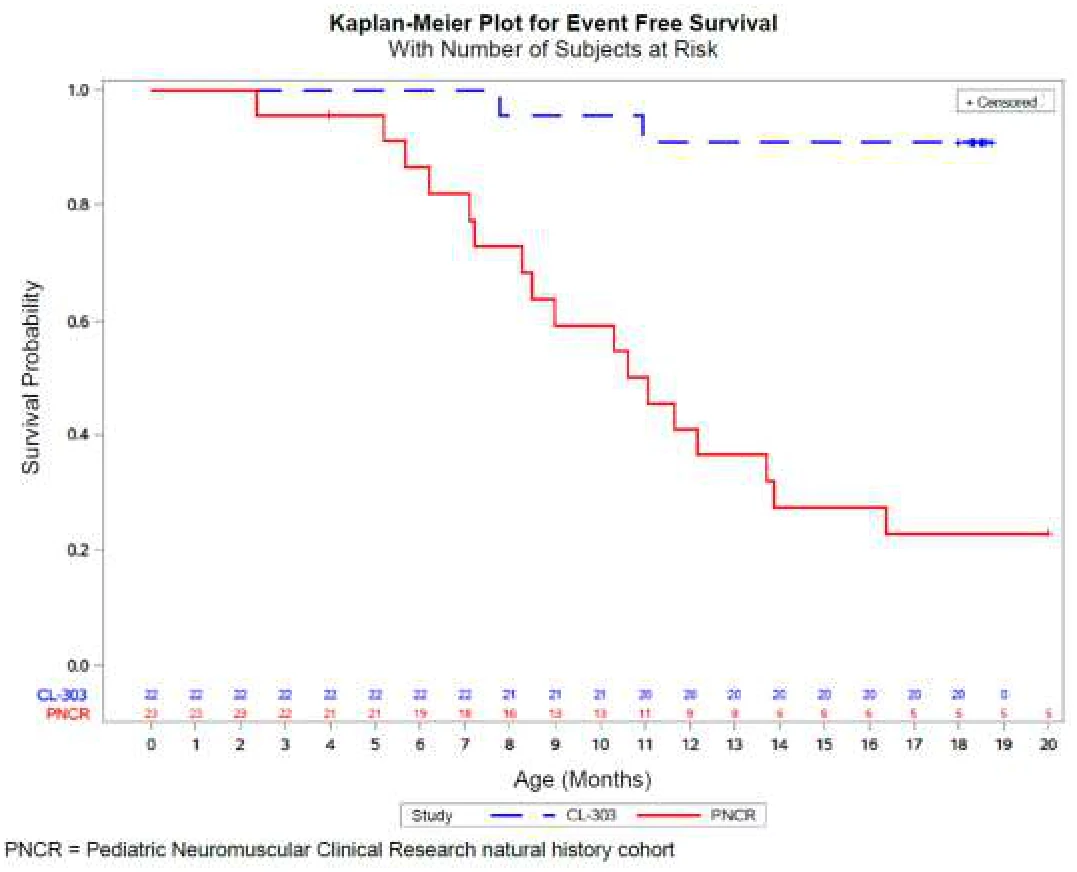
Twenty subjects (90.9%) demonstrated event-free survival (alive without permanent ventilation) at 14 months of age (Figure 1). Three subjects did not complete the study, of which two subjects had an event (death or permanent ventilation). One subject died at age 7.8 months due to disease progression, and one subject required permanent ventilation prior to discontinuation at age 11.9 months. The other subject who did not complete the study discontinued at the age of 18 months due to an adverse event.
Figure 1 - Time to death or permanent ventilation in Study CL-303
Thirteen subjects (59.1%) confirmed the milestone of independent sitting for at least 30 seconds at the Month 18 visit; one additional subject achieved the milestone of sitting independently for 30 seconds at 16 months of age, but this milestone was not confirmed at the Month 18 visit. For the 14 subjects (64%) that achieved the milestone of independent sitting for at least 30 seconds, the median age when this milestone was first demonstrated was 12.6 months (min 9.2, max 18.6).
The video-confirmed developmental milestones for subjects in Study CL-303 are summarized in Table 9.
Table 9 - Median time to achievement of other motor milestones in Study CL-303
| Video documented milestone | Number of subjects achieving milestone n/N (%) | Median age to the milestone achievement (Months) |
|---|---|---|
| Head control | 17/20* (85) | 6.8 |
| Rolls from back to sides | 13/22 (59) | 11.5 |
| Sitting without support for at least 10 seconds‡ | 14/22 (64) | 13.9 |
* 2 subjects were reported to have ‘head control’ by clinician assessment at baseline.
‡ WHO (World Health Organization) definition
One subject (4.5%) walked with assistance at 12.9 months. Based on the natural history of the disease, subjects who met the study entry criteria would not be expected to attain the ability to sit without support. Additionally, only approximately 25% of these subjects would be expected to survive (i.e., being alive without permanent ventilation) beyond 14 months of age.
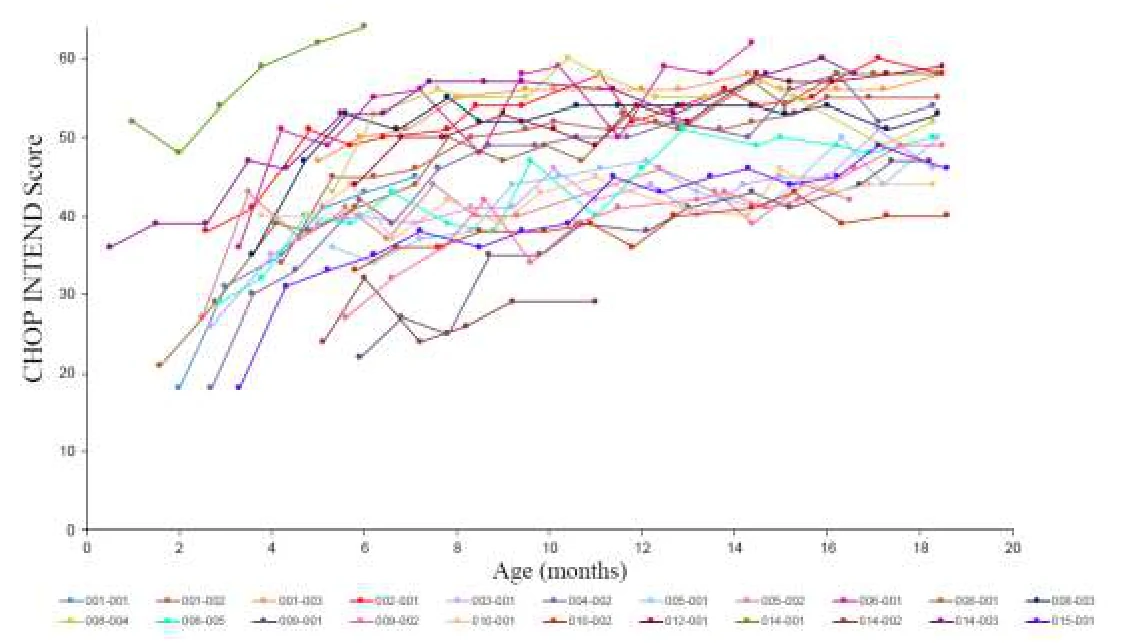
Motor function improvements relative to baseline were also observed as measured by the Children’s Hospital of Philadelphia Infant Test of Neuromuscular Disorders (CHOP-INTEND) (Figure 2). Twenty-one subjects (95.5%) achieved a CHOP-INTEND score ≥ 40; subjects with untreated SMA Type 1 do not typically achieve a CHOP-INTEND score ≥ 40. Among these subjects, 14 (64%) achieved a CHOP-INTEND score ≥ 50, including five (23%) who achieved a CHOP-INTEND score ≥ 60.
Figure 2 - CHOP-INTEND Motor Function Scores in Study CL-303
AVXS-101-CL-101 Phase 1 Study in Subjects with Type 1 SMA
Study CL-101 was a phase 1 open-label, single-arm, ascending dose, single-centre trial that assessed the safety and efficacy of intravenous administration of Zolgensma in subjects (n=12, cohort 2) with symptomatic SMA Type 1 with bi-allelic deletion of SMN1 gene and 2 copies of SMN2 gene without the SMN2 gene modifier mutation (c.859G>C). At the time of administration, the mean age of subjects was 3.4 (min 0.9, max 7.9) months.
The primary efficacy endpoint was event-free survival; survival was defined consistent with study CL-303. A key secondary efficacy endpoint was the achievement of clinically meaningful developmental milestones.
In cohort 2, all subjects demonstrated event-free survival at 14 months of age. At the end of the trial (24 months post dose), all subjects continued to demonstrate event-free survival (Figure 3).
Figure 3 - Time to death or permanent ventilation in Study CL-101
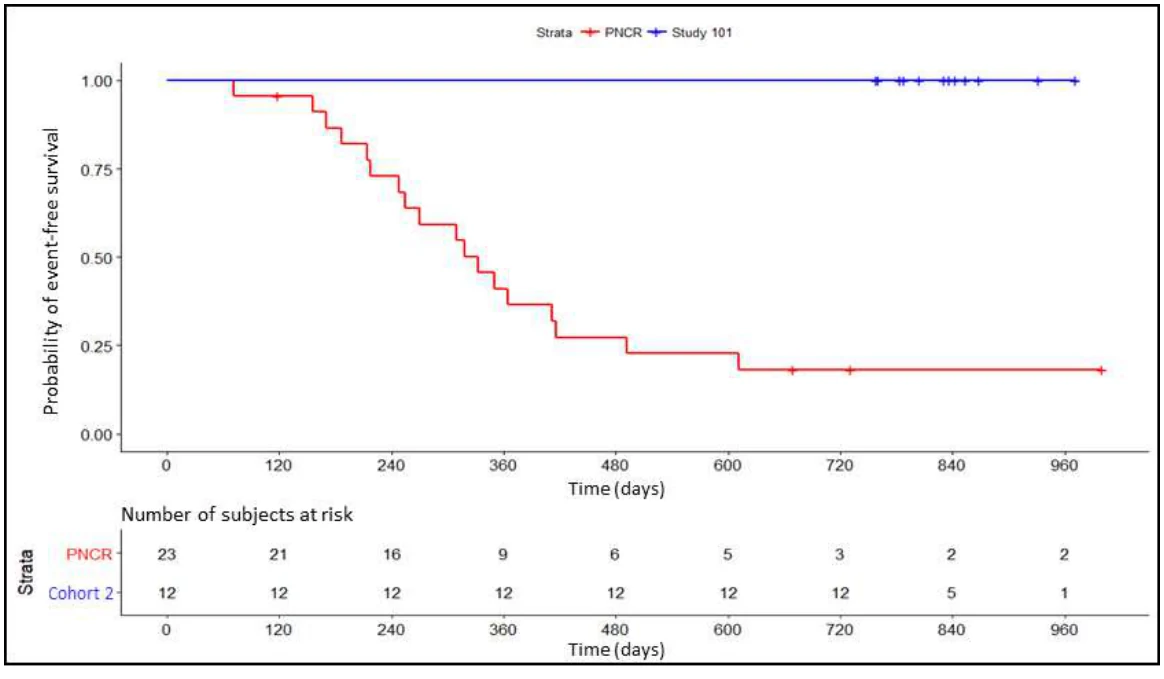
PNCR = Pediatric Neuromuscular Clinical Research natural history cohort.
At 24 months of follow-up post dose, 10 subjects (83.3%) were able to sit without support for ≥ 10 seconds, 9 subjects (75.0%) were able to sit without support for ≥ 30 seconds and 2 subjects (16.7%) were able to stand and walk without assistance.
AVXS-101-CL-304 Phase 3 Study in pre-symptomatic Subjects expected to develop SMA
Study CL-304 is an ongoing, phase 3, open-label, single-arm, single-dose, multi-centre trial that is assessing the efficacy and safety of intravenous Zolgensma (1.1 × 10¹⁴ vg/kg) in pre-symptomatic newborn subjects up to 6 weeks of age who are expected to develop infantile onset SMA. All subjects have bi-allelic deletion of SMN1 gene and either 2 copies (n=14; cohort 1) or 3 copies (n=15; cohort 2) of SMN2 gene. Data are limited to the most recent study visit prior to the data cut-off on 31 December 2019, At that time, subjects in cohort 1 were between 6 months and 18.6 months of age, and had been in the trial for a mean of 10.5 (min 5.1, max 18.0) months; subjects in cohort 2 were between 3.3 and 15.1 months of age and had been in the trial for a mean of 8.7 (min 2, max 13.9) months.
The primary efficacy endpoint in cohort 1 is the proportion of subjects achieving the development milestone of functional independent sitting for at least 30 seconds at any visit up to 18 months of age. The primary efficacy endpoint in cohort 2 is the proportion of subjects achieving the ability to stand without support for at least 3 seconds at any visit up to 24 months of age.
A key secondary efficacy endpoint in cohort 1 is the proportion of subjects that have survived to 14 months of age, without need for permanent ventilation (i.e., tracheostomy or requirement of ≥ 16 hours of respiratory assistance per day (via non-invasive ventilatory support) for ≥ 14 consecutive days in the absence of an acute reversible illness, excluding perioperative ventilation). A key secondary efficacy endpoint in cohort 2 is the proportion of subjects demonstrating the ability to walk alone, defined as the ability to take at least five steps independently displaying coordination and balance at any visit up to 24 months of age.
As of the data cut-off, all subjects had demonstrated event-free survival (i.e., alive without permanent ventilation). In cohort 1, eight subjects (57.1%) had achieved the milestone of sitting for at least 30 seconds. This milestone was achieved between 5.7 to 11.8 months of age. Six subjects (42.9%) who had not achieved this milestone were less than 9.2 months of age. Additionally, 12 subjects (85.7%) had achieved CHOP-INTEND scores ≥ 60. In cohort 2, four subjects (26.7%) had achieved the developmental milestone of the ability to stand without support for at least 3 seconds. This milestone was achieved between 9.5 and 12.4 months of age. Eleven subjects (73.3%) who had not achieved this milestone were less than 12.5 months of age. Additionally, two subjects (13.3%) achieved the milestone of able to walk at least five steps independently; 13 subjects (86.7%) who had not achieved this milestone were 3.3 to 12.5 months of age. Additionally, 10 subjects (66.7%) were able to sit without support for at least 30 seconds; this milestone was achieved between 6.1 and 12 months of age. Five subjects (33.3%) who had not achieved this milestone were between 3.3 and 9.6 months of age.
16. Non-Clinical Toxicology
Biodistribution: Biodistribution of onasemnogene abeparvovec in mice was evaluated at 3, 6, and 12 weeks following a single-dose administration of up to 3 X 10¹⁴ vg/kg by IV injection. Onasemnogene abeparvovec transduced target tissues such as neurons of the spinal cord and the brain, as well as many non-target organs, including the liver, lungs, spleen, adrenal gland, thymus, skeletal muscle, cardiac muscle, and reproductive organs as determined by the presence of vector genome and/or SMN mRNA. Onasemnogene abeparvovec showed a similar biodistribution in monkeys.
General Toxicology: In the mouse single-dose toxicity studies, the doses tested across the studies ranged from 7.9 × 10¹³ to 3.91 × 10¹⁴ vg/kg by IV injection, and the main target organs of toxicity identified were the heart and liver. Onasemnogene abeparvovec-related findings in the ventricles of the heart were comprised of dose-related inflammation, edema, and fibrosis. In the atria of the heart, inflammation, thrombosis, myocardial degeneration/necrosis, and fibroplasia were observed. Liver findings were comprised of hepatocellular hypertrophy, Kupffer cell activation, and scattered hepatocellular necrosis. Inflammation was reported in the lungs. Treatment-related mortality attributable to atrial thrombosis occurred at doses ≥2.4 × 10¹⁴ vg/kg. Onasemnogene abeparvovec-related findings in the ventricular myocardium were present at all doses studied and a No Observed Adverse Effect Level (NOAEL) could not be identified.
In a 6-month toxicology study conducted in juvenile cynomolgus monkeys, administration of a single dose of onasemnogene abeparvovec at the clinically recommended intravenous dose (1.1 x 10¹⁴ vg/kg), with or without corticosteroid treatment (oral prednisolone), resulted in oval cell hyperplasia in the liver. Monkeys also developed acute, mononuclear cell inflammation and neuronal degeneration in the dorsal root ganglia (DRG) and trigeminal ganglia (TG), as well as axonal degeneration and/or gliosis in the spinal cord. At 6 months, these findings showed decreased incidence and/or severity in the TG, DRG, spinal cord and liver. A NOAEL could not be determined for this study.
Carcinogenicity: Studies have not been conducted to evaluate the carcinogenic potential of onasemnogene abeparvovec.
Genotoxicity: Studies have not been conducted to evaluate the genotoxic potential of onasemnogene abeparvovec. Studies evaluating the potential for onasemnogene abeparvovec to integrate into the host genome have not been conducted.
Reproductive and Developmental Toxicology: Studies have not been conducted to evaluate the reproductive and developmental toxicity of onasemnogene abeparvovec.
Studies evaluating the potential for onasemnogene abeparvovec to integrate into the germline have also not been conducted. It is noted that vector DNA sequences and SMN mRNA were detected in the ovaries and testes of mice 3, 6, and 12 weeks following IV injection of onasemnogene abeparvovec at doses up to 3 X 10¹⁴ vg/kg. SMN mRNA were also detected in the testes of monkeys 12 months following IT injection of onasemnogene abeparvovec at a dose of 2 X10¹³ vg/kg.
Female monkeys were administered scAAV9 viral vector containing the gene for green fluorescent protein marker (i.e., not the SMN gene) under control of the CB promoter at doses of 1 X 10¹³ and 3 X 10¹³ vg/animal by intrathecal or intracisterna magna injection. The scAAV9 viral vector, which is utilized in onasemnogene abeparvovec, was shown to transduce oocytes.