


Product Monograph - Sohonos
Recent Major Label Changes
| 4 Dosage and Administration | 2024-11 |
|---|---|
| 7 Warnings and Precautions | 2024-11 |
Table Of Contents
Certain sections or subsections that are not applicable at the time of the preparation of the most recent authorized product monograph are not listed.
Recent Major Label Changes ........................................................................................... 2
Table Of Contents .............................................................................................................. 2
Part 1: Healthcare Professional Information ................................................................. 5
- 1.
Indications ................................................................................................................ 5
1.1. Pediatrics ............................................................................................................ 5
1.2. Geriatrics ............................................................................................................. 5
- 2. Contraindications ................................................................................................... 5
- 3. Serious Warnings and Precautions Box ............................................................. 5
- 4.
Dosage and Administration .................................................................................. 6
4.1. Dosing Considerations ...................................................................................... 6
4.2. Recommended Dose and Dosage Adjustment .............................................. 6
4.4. Administration ..................................................................................................... 8
4.5. Missed Dose ....................................................................................................... 8
- 5. Overdose .................................................................................................................. 8
- 6. Dosage Forms, Strengths, Composition, and Packaging ................................ 9
- 7.
Warnings and Precautions .................................................................................... 9
General ........................................................................................................................... 9
Driving and Operating Machinery .............................................................................. 10
Endocrine and Metabolism ......................................................................................... 10
Hepatic/Biliary/Pancreatic ........................................................................................... 10
Monitoring and Laboratory Tests ............................................................................... 11
Mucocutaneous ............................................................................................................ 11
Musculoskeletal ........................................................................................................... 12
Neurologic .................................................................................................................... 14
Ophthalmologic ............................................................................................................ 14
Psychiatric .................................................................................................................... 15
Renal ............................................................................................................................. 15
Reproductive Health .................................................................................................... 15
7.1. Special Populations ......................................................................................... 16
7.1.1. Pregnancy ..................................................................................................... 16
7.1.2. Breastfeeding ............................................................................................... 17
7.1.3. Pediatrics ...................................................................................................... 17
7.1.4. Geriatrics ....................................................................................................... 17
- 8.
Adverse Reactions ................................................................................................ 17
8.1. Adverse Reaction Overview ........................................................................... 17
8.2. Clinical Trial Adverse Reactions .................................................................... 18
8.2.1. Clinical Trial Adverse Reactions – Pediatrics ........................................... 21
8.3. Less Common Clinical Trial Adverse Reactions with SOHONOS (<5%) . 21
8.4. Abnormal Laboratory Findings: Hematologic, Clinical Chemistry and Other Quantitative Data .............................................................................................. 21
- 9.
Drug Interactions .................................................................................................. 23
9.2. Drug Interactions Overview ............................................................................ 23
9.3. Drug-Behaviour Interactions ........................................................................... 24
9.4. Drug-Drug Interactions .................................................................................... 24
9.5. Drug-Food Interactions ................................................................................... 25
9.6. Drug-Herb Interactions .................................................................................... 25
9.7. Drug-Laboratory Test Interactions ................................................................. 25
- 10.
Clinical Pharmacology ......................................................................................... 25
10.1. Mechanism of Action ................................................................................... 25
10.2. Pharmacodynamics ..................................................................................... 26
10.3. Pharmacokinetics ......................................................................................... 26
- 11. Storage, Stability and Disposal .......................................................................... 29
- 12. Special Handling Instructions ............................................................................ 29
PART 2: Scientific Information ....................................................................................... 30
- 13. Pharmaceutical Information ................................................................................ 30
- 14.
Clinical Trials ......................................................................................................... 31
14.1. Clinical Trials by Indication ......................................................................... 31
- 15. Microbiology .......................................................................................................... 36
- 16. Non-Clinical Toxicology ....................................................................................... 37
Patient Medication Information ...................................................................................... 39
Part 1: Healthcare Professional Information
1. Indications
SOHONOS (palovarotene capsules) is indicated to reduce the formation of heterotopic ossification in adults and children aged 8 years and above for females and 10 years and above for males with fibrodysplasia ossificans progressiva (FOP).
1.1. Pediatrics
Pediatrics (<8 years (females)/<10 years (males)): Do not use SOHONOS in females below 8 years and males below 10 years. Based on the data submitted and reviewed by Health Canada, the safety and efficacy of SOHONOS in these pediatric patients has not been established. Therefore, Health Canada has not authorized an indication for pediatric use in females below 8 years and males below 10 years (see 7.1.3. Pediatrics).
Pediatrics (≥8 years (females)/10 years (males)): Based on the data submitted and reviewed by Health Canada, the safety and efficacy of SOHONOS in pediatric patients has been established. Therefore, Health Canada has authorized an indication for pediatric use (see 7.1.3. Pediatrics).
1.2. Geriatrics
Geriatrics (≥ 65 years): Clinical studies of SOHONOS did not include sufficient numbers of subjects aged 65 and over to determine whether they respond differently from younger subjects. There were no clinically relevant differences in SOHONOS pharmacokinetics between young males and elderly males (see 7.1.4 Geriatrics).
2. Contraindications
- Patients who are pregnant or breastfeeding.
- Patients of childbearing potential unless all the conditions for pregnancy prevention are met, or they are not at risk of pregnancy due to physical limitations as assessed by the physician.
- Patients with a history of allergy or hypersensitivity to retinoids, or to any component of this product. For a complete listing, see 6. Dosage Forms, Strengths, Composition and Packaging.
3. Serious Warnings and Precautions Box
- SOHONOS is a member of the retinoid class of drugs that is associated with birth defects in humans. SOHONOS must not be used by patients who are, or intend to become, pregnant due to the risk of teratogenicity. SOHONOS should only be prescribed by physicians knowledgeable in the use and monitoring requirements of systemic retinoids, who understand the risk of teratogenicity in females of child bearing potential. To minimize fetal exposure, SOHONOS is to be administered only if all conditions for pregnancy prevention are met (see 7. Warnings and Precautions, Reproductive Health, Teratogenic Risk and Special Populations: Pregnancy).
- SOHONOS has been shown to cause premature physeal closure in growing children with FOP; periodic monitoring (every 3 months) is recommended (see 7. Warnings and Precautions, Musculoskeletal, Monitoring Recommendations).
4. Dosage and Administration
4.1. Dosing Considerations
Pregnancy testing and contraceptive measures must be followed prior to dosing SOHONOS in patients of childbearing potential.
Patients who are pregnant, or who intend to become pregnant, should avoid contact with SOHONOS. If pregnancy does occur during treatment with SOHONOS or for one month after its discontinuation, SOHONOS treatment must be immediately stopped if not already discontinued and patient should discuss with their physician.
To avoid unintended exposure, if emptying the capsule contents onto soft food, caregivers administering SOHONOS should wear disposable gloves when handling, and use disposable paper towels and a container to collect waste (e.g. a resealable bag).
4.2. Recommended Dose and Dosage Adjustment
Chronic Regimen
Recommended dosing: 5 mg once daily (chronic treatment)
Chronic treatment should stop at the time of initiation of flare-up treatment, and re-initiated after completion of the flare-up treatment.
Weight-adjusted dosage is required in children who are under 14 years of age (see Table 1).
Flare-up Regimen
Recommended Dosing: 20 mg once daily for 4 weeks, followed by 10 mg once daily for 8 weeks for a total of 12 weeks (20/10 mg flare-up treatment) even if symptoms resolve earlier.
In the presence of persistent flare-up symptoms, treatment may be extended in 4-week intervals with 10 mg SOHONOS and continued until the flare-up symptoms resolve.
Should the patient experience another flare-up (new flare-up location or marked worsening of the original flare-up) at any time during flare-up treatment, the aforementioned flare-up 12-week treatment protocol should be restarted.
Flare-up treatment should begin at the onset of the first symptom indicative of an FOP flare-up, or substantial high-risk traumatic event (e.g. surgery, intramuscular immunization, mandibular blocks for dental work, muscle fatigue, blunt muscle trauma from bumps, bruises, falls, or influenza-like viral illnesses), likely to lead to a flare-up, under the guidance of a health care professional.
Symptoms of a FOP flare-up typically include but are not limited to localized pain, soft tissue swelling/inflammation, redness, warmth, decreased joint range of motion, and stiffness.
Weight-adjusted dosage is required in children who are under 14 years of age (see Table 1).
Dose Adjustment in Children Under 14 Years of Age
SOHONOS dosage is weight-adjusted in patients under 14 years of age (see Table 1). The health care professional should prescribe the most appropriate dosage based on weight for children aged from 8 years (females) and 10 years (males) to less than 14 years (see Musculoskeletal and 14. Clinical Trials).
Table 1. Weight-Adjusted Dosage for Children ≥ 8 Years (Females)/10 Years (Males) but <14 Years
Weight
Chronic Dosage
Flare-up Dosage (Weeks 1 to 4)
Flare-up Dosage (Weeks 5 to 12)
≥60 kg*
5 mg
20 mg
10 mg
40 to <60 kg
4 mg
15 mg
7.5 mg
20 to <40 kg
3 mg
12.5 mg**
6 mg
10 to <20 kg
2.5 mg
10 mg**
5 mg
*All children ≥14 years of age and adults should receive the dose in the ≥60 kg weight category
Dose Modification for Adverse Reactions
If, during chronic or flare-up (Weeks 1-12) SOHONOS treatment, a patient experiences an adverse reaction that is not tolerable and does not require immediate drug discontinuation, the daily dose should be reduced in a stepwise way at the discretion of the physician (see Table 2 for the chronic dosing and Table 3 and Table 4 for the flare-up dosing). If the chronic dose reduction is not tolerated, consider discontinuation of the chronic dosing and only treating flare-ups. Additional dose reduction should occur if adverse reactions continue to be intolerable. If the patient is already receiving the lowest dose, then consideration should be given to discontinue therapy, temporarily or permanently, or switch to flare-up treatment only (see Flare-up only regimen). Subsequent flare-up treatment should be initiated at the same reduced treatment dose that was tolerated previously.
Table 2. Dose Reduction: Chronic Dosing
Weight
Chronic Dosage
≥60 kg*
2.5 mg
40 to <60 kg
2 mg
20 to <40 kg
1.5 mg
10 to <20 kg
1 mg
*All children ≥14 years of age and adults should receive the dose in the ≥60 kg weight category
Table 3. Dose Reduction: Flare-up Dosing Step 1
Weight
Flare-up Dosage (Weeks 1 to 4)
Flare-up Dosage (Weeks 5 to 12)
≥60 kg*
15 mg
7.5 mg
40 to <60 kg
12.5 mg
5 mg
20 to <40 kg
10 mg
4 mg
10 to <20 kg
7.5 mg
3 mg
*All children ≥14 years of age and adults should receive the dose in the ≥60 kg weight category
Table 4. Dose Reduction: Flare-up Dosing Step 2
Weight
Flare-up Dosage (Weeks 1 to 4)
Flare-up Dosage (Weeks 5 to 12)
≥60 kg*
10 mg
5 mg
40 to <60 kg
7.5 mg
4 mg
20 to <40 kg
6 mg
3 mg
10 to <20 kg
5 mg
2.5 mg
*All children ≥14 years of age and adults should receive the dose in the ≥60 kg weight category
Flare-up only regimen:
If the patient experiences intolerable adverse reactions while taking chronic daily treatment and dose reduction does not alleviate the adverse reactions, then the patient may take SOHONOS only at the time of flare-up (or substantial high-risk traumatic event).
Dose Modification for Drug Interactions
Moderate CYP3A Inhibitors: Avoid concomitant use of a moderate CYP3A inhibitor, if possible. If concomitant use will occur, reduce the dose of SOHONOS by half as shown in Table 5 when co-administered with moderate CYP3A inhibitors (see 9.2. Drug Interactions Overview).
Table 5. Dose Reduction of SOHONOS for use with Moderate CYP3A Inhibitors
Weight
Daily Dosage
Flare-up Dosage
(Weeks 1 to 4)
Flare-up Dosage
(Weeks 5 to 12)
10 to 19.9 kg
1 mg
5 mg
2.5 mg
20 to 39.9 kg
1.5 mg
6 mg
3 mg
40 to 59.9 kg
2 mg
7.5 mg
4 mg
≥ 60 kg*
2.5 mg
10 mg
5 mg
*All pediatric patients ≥ 14 years of age and adults should receive the dose in the ≥ 60 kg weight category.
4.4. Administration
SOHONOS should be taken with food, preferably at the same time each day. SOHONOS may be swallowed whole, or capsules may be opened and the contents emptied onto a teaspoon of soft food such as applesauce, yogurt, pudding, milk, oatmeal, rice cereal or liquid nutritional supplement, and taken within 1 hour of opening, provided it was maintained at room temperature and not exposed to direct sunlight.
4.5. Missed Dose
If a dose of medication is missed by less than 6 hours, patients should take the missed dose as soon as possible. If the dose has been missed by more than 6 hours, the patient should skip the missed dose and continue with the next scheduled dose. The patient should not take two doses at the same time or on the same day.
5. Overdose
No clinical experience with an overdose of SOHONOS has been reported. A single supratherapeutic dose of 50 mg SOHONOS had no apparent effects on vital signs, ECGs, or clinical laboratory parameters. Palovarotene is a derivative of vitamin A. In case of accidental overdose, signs of hypervitaminosis A could appear, including severe headache, nausea or vomiting, drowsiness, irritability and pruritus. Any overdose should be treated with supportive care according to the signs and symptoms exhibited by the patient.
For the most recent information in the management of a suspected drug overdose, contact your regional poison control centre or Health Canada’s toll-free number, 1-844 POISON-X (1-844-764-7669).
- 6. Dosage Forms, Strengths, Composition, and Packaging
Table 6. Dosage Forms, Strengths, and Composition
Capsules are packaged into a blister strip composed of PVC/PCTFE (polyvinylchloride/poly-chloro-tri-fluoro-ethylene) backed with push-through aluminium foil. The blister strips are then packaged into a carton.
1 mg hard-gelatin capsules are white, opaque, size “0”, elongated, printed with black ink “PVO 1” on the body, containing white to off-white powder; available in cartons of 28 capsules (2 x 14 blister strips).
1.5 mg hard-gelatin capsules are white, opaque, size “0”, elongated, printed with black ink “PVO 1.5” on the body, containing white to off-white powder; available in cartons of 28 capsules (2 x 14 blister strips).
2.5 mg hard-gelatin capsules are white, opaque, size “0”, elongated, printed with black ink “PVO 2.5” on the body, containing white to off-white powder; available in cartons of 28 capsules (2 x 14 blister strips).
5 mg hard-gelatin capsules are white, opaque, size “0”, elongated, printed with black ink “PVO 5” on the body, containing white to off-white powder; available in cartons of 28 capsules (2 x 14 blister strips).
10 mg hard-gelatin capsules are white, opaque, size “0”, elongated, printed with black ink “PVO 10” on the body, containing white to off-white powder; available in cartons of 28 capsules (2 x 14 blister strips).
7. Warnings and Precautions
See 3. Serious Warnings and Precautions Box.
General
Conditions of Use
SOHONOS should only be prescribed by an expert in the diagnosis and management of FOP.
SOHONOS is contraindicated in patients of childbearing potential unless all of the following conditions for pregnancy prevention are met, or they are not at risk for pregnancy (e.g. patient
| Route of Administration | Dosage Form / Strength/Composition | Non-medicinal Ingredients |
| Oral | Capsule 1 mg, 1.5 mg, 2.5 mg, 5 mg, 10 mg palovarotene | Croscarmellose sodium, gelatin, lactose monohydrate, magnesium stearate, microcrystalline cellulose, pharmaceutical grade printing ink, povidone, sodium lauryl sulfate, and titanium dioxide. |
has undergone a hysterectomy, bilateral oophorectomy, bilateral tubal ligation or has been medically confirmed to be postmenopausal).
Patients of Childbearing Potential
- The potential for pregnancy must be assessed for all patients.
- The patient must understand the teratogenic risk and the need to rapidly consult their physician if there is a risk of pregnancy or if they might be pregnant.
- Patients of child-bearing potential must use at least one highly effective method of contraception (e.g. intrauterine device (IUD)) or two effective methods (e.g. combined hormonal contraception in combination with another method of contraception such as a barrier method) during treatment with SOHONOS.
- The patient must understand and accept to undergo regular pregnancy testing before treatment with SOHONOS, during treatment and 1 month after stopping treatment.
- The patient must understand and accept the need for effective contraception, without interruption, 1 month before starting treatment, throughout the entire duration of treatment and for 1 month after the end of treatment.
- For those patients taking the flare-up regimen only, patients must continue to use effective contraception even during periods when SOHONOS is not being taken as the timing of flare-ups may not be predictable.
- The patient acknowledges that they understand the hazards and necessary precautions associated with the use of SOHONOS.
- The patient is informed and understands the potential consequences of pregnancy and the need to rapidly consult their physician if there is a risk of pregnancy or if they might be pregnant.
These conditions also concern patients of childbearing potential who are not currently sexually active unless the prescriber attests that there are compelling reasons to indicate that there is no risk of pregnancy (see 2. Contraindictions).
Driving and Operating Machinery
SOHONOS may influence the ability to drive and use machines (see Ophthalmologic, Nyctalopia).
Endocrine and Metabolism
Hypertriglyceridemia
Systemic retinoids may cause marked elevations of serum triglycerides. In FOP studies, hypertriglyceridemia was reported in 2 subjects during chronic SOHONOS treatment (2%) and in 4 subjects during flare-up dosing (4%).
Hepatic/Biliary/Pancreatic
The use of palovarotene has not been studied in patients with moderate and severe hepatic impairment (see 10.3 Pharmacokinetics). Palovarotene is not recommended in patients with moderate and severe hepatic impairment.
Hepatotoxicity
Retinoids have been associated with dose dependent elevations of liver enzymes and isolated cases of severe hepatitis. In SOHONOS studies of FOP, elevated ALT was observed in 6% of subjects during 20/10 mg flare-up dosing and 1% of subjects during 5 mg chronic dosing. There were no subjects who required dose reduction or treatment discontinuation due to liver enzyme elevations.
Pancreatitis
Pancreatitis has been reported with other systemic retinoids, both with and without elevated triglycerides, including fatal cases. In SOHONOS studies, one healthy subject developed acute pancreatitis, possibly related to concomitant use of ketoconazole in a drug-drug interaction study. There were no reports of pancreatitis in the FOP clinical studies.
Monitoring and Laboratory Tests
Pregnancy Testing
Medically documented blood or urine pregnancy tests are recommended to be performed, as follows:
Prior to Starting Therapy
At least one month after the patient has started using contraception, and shortly (preferably a few days) prior to the first prescription, the patient should undergo a pregnancy test. This test should ensure the patient is not pregnant when starting treatment with SOHONOS.
Follow-up Pregnancy Testing During Treatment
Monthly pregnancy testing is recommended.
End of Treatment
One month after stopping treatment, patients should undergo a final pregnancy test.
Growth
Periodic monitoring every 3 months of physeal growth plates is recommended in growing children (see Musculoskeletal).
Metabolic Bone Disorders
Following initiation of treatment with SOHONOS, periodic radiological assessment of the spine is recommended (see Musculoskeletal).
Mucocutaneous
Mucocutaneous effects are the most commonly reported adverse reactions across all doses during clinical studies with SOHONOS (98%) and were generally mild to moderate in severity; 4.3% of the mucocutaneous adverse reactions were severe. Mucocutaneous adverse reactions observed in over 10% of subjects were: dry skin (80%), lip dry (59%), pruritis (56%), alopecia (42%), rash (41%), erythema (35%), skin exfoliation [skin peeling] (32%), dry eye (27%), drug eruption (20%), chapped lips (18%), eczema (16%), dry mouth (13.7%), skin irritation (12%), and cheilitis (10.8%). SOHONOS may contribute to an increased risk of skin and soft tissue infections, particularly paronychia (14%) and decubitus ulcer (6%), due to a decreased skin barrier from mucocutaneous effects such as dry and peeling skin. One subject in a pivotal study developed perianal bleeding from dry perianal skin. The event was not felt to be due to a gastrointestinal bleeding source.
Some of these mucocutaneous adverse reactions led to dose reductions which occurred more frequently during flare-up dosing (37%) than during chronic treatment (3%), suggesting a dose response relationship. Prophylactic measures to minimize risk and/or treat the mucocutaneous effects are recommended (e.g. skin emollients, sunscreen, lip moisturizers, artificial tears, or other helpful treatments). Dose reductions may be required (see Recommended Dose and Dosage Adjustment).
Photosensitivity
Photosensitivity reactions, such as exaggerated sunburn reactions (e.g. burning, erythema, blistering) involving areas exposed to the sun have been associated with the use of retinoids. Although SOHONOS was negative for phototoxicity when tested in vitro, precautionary measures for phototoxicity are still recommended. Excessive exposure to sun or artificial ultraviolet light should be avoided, and protection from sunlight should be used when exposure cannot be avoided (ie: use of sunscreens, wearing protective clothing and use of sunglasses).
Musculoskeletal
Premature Physeal Closure (PPC) in Growing Children
Premature physeal closure (PPC) has been demonstrated to be an important risk associated with SOHONOS treatment in growing children. In clinical studies, PPC can be irreversible. Twenty-seven (27%) SOHONOS treated pediatric subjects <18 years of age reported PPC, 13 of 42 from ≥8/10 to <14 years (31%) and 14 of 25 subjects <8/10 years (56%). Overall, 8 subjects had severe PPC; of these, 5 subjects were younger children ≤7 years of age. There were no reports of PPC in patients aged between 14 and 18 years. SOHONOS is not indicated in children aged below 8 years for females and below 10 years for males.
Potential long-term consequences of PPC include growth arrest, leg length discrepancy, disproportionate growth (epiphyseal growth plate closure preferentially affecting the lower extremities), angular deformity in affected joints, and gait disturbance. Consistent with the retinoid literature, all but one of the PPC events was observed first in the knee. Additionally, femur and tibia length growth also demonstrated symmetric growth although differences leading to leg length discrepancy would likely take a longer amount of time to manifest. Should asymmetric physeal fusion occur, angular deformity would likely take a longer amount of time to manifest. Given the relatively short follow-up times to date of SOHONOS, long-term consequences on angular deformity have not been established in subjects treated with SOHONOS. Upon initiation of treatment with SOHONOS, all growing children should be considered to be at risk of developing PPC and the potential long-term consequences (see 8.2.1 Clinical Trial Adverse Reactions – Pediatrics). Educational materials can be found at www.ipsen.com/canadaen/SOEDUMAT.
Monitoring Recommendations
Periodic monitoring every 3 months of physeal growth plates is recommended in growing children. Should evidence of adverse effects on growth and/or PPC be observed, further evaluation and increased monitoring may be required. The decision to temporarily interrupt SOHONOS during the evaluation period or permanently discontinue should be made based on individual benefit-risk determination.
There are no clear characteristics that define or predict who will develop PPC, over what period, or after what duration of SOHONOS exposure. Therefore, prior to starting treatment with SOHONOS, it is recommended that all growing children undergo baseline clinical and radiological assessments including, but not limited to, an assessment of skeletal maturity via hand/wrist and knee x-rays, standard growth curves, and pubertal staging. Continued monitoring of linear growth and skeletal maturity via x-ray is recommended every 3 months until patients reach skeletal maturity or final adult height (frequency of monitoring may depend on patient characteristics such as age, pubertal status and skeletal maturity). Once the patients have reached skeletal maturity or the patient has reached final adult height, no further monitoring for PPC is necessary.
Should a patient exhibit signs of PPC based on clinical and radiologic evaluations, an assessment of the benefits and risks should be made in order to determine the appropriateness of continued treatment versus temporary or permanent discontinuation of SOHONOS, until the patient reaches skeletal maturity.
Bone mineral density and fractures
Retinoids are associated with bone toxicity, including reductions in bone mass and spontaneous reports of osteoporosis and fractures. An interim retrospective bone safety analyses through of whole body computed tomography (WBCT) scans and other bone safety data from 86 patients (mean age 18.3 years) treated with SOHONOS in the Phase 3 (MOVE) study compared with 91 untreated patients (mean age 20.9 years) from the Natural History Study (NHS) indicated that in the target population of FOP patients aged ≥8 (females)/10 (males) years, treatment with SOHONOS for up to 12 months was associated with statistically significant decreases in vertebral bone mineral content, bone density and bone strength, and a statistically significant 3.46 (95% ci: 1.51, 8.00) times increased risk of radiological observed vertebral (T4 to L4) fractures (see Clinical Trial Adverse Reactions). The newly identified vertebral fractures in both the SOHONOS-treated and untreated patients were numerically more common in the thoracic versus the lumbar region of the spine at both screening and Month 12. Only the T4-L4 regions of the spine were assessed in the WBCT scans for; whether treatment with SOHONOS increases the risk of fracture in other regions of the spine or body is not known.
Following initiation of treatment with SOHONOS, periodic radiological assessment of the spine is recommended. Educational materials can be found at www.ipsen.com/canadaen/SOEDUMAT.
Patients with FOP are in general at increased risk for fracture of normotopic and heterotopic bone, due to immobility, falls, and systemic corticosteroid use. At baseline, the majority of patients in the target population (aged ≥8 [females]/ ≥10 [males] years), approximately 62% in the SOHONOS-treated group and 74% in the untreated group) reported corticosteroid use, and approximately one-fifth (15/74 [20%] of patients with available data in the SOHONOS group and 18/83 [22%] of patients with available data in the untreated group) had at least one pre-existing vertebral fracture. At baseline, of the patients with available data, 14 were retrospectively identified to have had multiple (2 or more) pre-existing vertebral fractures (4/74 patients [5.4%] in the SOHONOS group and 10/83 patients [12%] in the untreated group). However, the 3.46 fold increased risk of vertebral fracture identified for the group of patients treated with SOHONOS was evident after adjusting for age, glucocorticoid use, age at FOP onset, and baseline history of fractures.
Additionally, of the 15 out of 68 (22.1%) patients with available data at 12 months who were retrospectively identified to have had new onset vertebral fractures following treatment with SOHONOS, 4 (27%) were determined to have had multiple (2 or more) new onset fractures. In comparison, of the 7 out of 64 (10.9%) patients with available data in the untreated group who experienced new vertebral fractures, none had more than one fracture.
All of the newly identified fractures in both groups were reported to be clinically silent (asymptomatic); however, the FOP flare-up rate was numerically higher in both SOHONOS-treated and untreated patients who were retrospectively identified to have had a fracture compared to those without a fracture, and the impact of SOHONOS treatment on fracture healing or on heterotopic ossification formation at the site of vertebral fractures is not currently known.
In light of the significantly increased risk of radiological vertebral fracture and the uncertainties identified above, the benefits and risks of initiating or continuing treatment with SOHONOS should be carefully assessed at the individual patient level, taking into consideration the patient’s clinical status and other risk factors for fractures.
Particular caution should be exercised if considering prescribing SOHONOS to patients who have had previous fractures, are considered to be at high baseline risk for fracture, or who have other conditions or are taking other therapies associated with increased risk of osteoporosis, osteomalacia, or other disorders of bone metabolism, with consideration of more frequent monitoring of such patients.
Patients should be counselled to seek immediate medical care if they experience new onset pain, worsening of chronic pain, or other signs or symptoms suggestive of vertebral fracture to rule out new onset fracture, and any patients diagnosed with fracture should be evaluated by a physician experienced in the management of fractures in patients with FOP.
If a patient experiences new onset fracture while taking SOHONOS, the risks and benefits of continued treatment should be re-evaluated.
Hyperostosis
Retinoids have been associated with hyperostotic changes (bone spurs) and calcification of tendons or ligaments and may occur with SOHONOS. These effects generally occur with long-term use, especially at high doses.
Neurologic
Intracranial Hypertension (Pseudotumor Cerebri)
Systemic retinoid use has been associated with cases of benign intracranial hypertension (also called pseudotumor cerebri), some of which involved the concomitant use of tetracyclines. There were no reports of benign intracranial hypertension in the FOP clinical studies.
Ophthalmologic
Dry eye/Conjunctivitis
27% of subjects experienced dry eye. Subjects were treated with saline or lubricating eye drops and symptoms improved.
Nyctalopia
Night blindness (nyctalopia) has been identified as a potentially dangerous effect associated with systemic retinoids. This may be dose-dependent, making driving a vehicle at night potentially hazardous during treatment. Night blindness is generally reversible after cessation of treatment but can also persist in some cases. A single mild adverse event of night blindness in an FOP subject receiving SOHONOS reported in the clinical trial resolved after 134 days without treatment discontinuation or dose de-escalation. Therefore, the product should be used with caution. Patients should be advised of the risk of decreased night vision and warned to be cautious when driving or operating any vehicle or machinery at night. Patients experiencing visual difficulties should be referred for an expert ophthalmological opinion (see Driving and Operating Machinery).
Psychiatric
Depression, depression aggravated, anxiety, mood alterations and suicidal thoughts and behaviours have been reported in patients treated with systemic retinoids and individuals with a personal history of psychiatric illness appear to be more susceptible. There is a relatively high background prevalence (24%) of depression in untreated patients with FOP with 9% of patients having a medical history of depression when enrolled in SOHONOS clinical trials.
In FOP clinical trials, there was no treatment-related increase in suicide ideation, suicidal behaviour or psychiatric disorders overall relative to untreated subjects with FOP. Particular care should be taken in patients with a history of psychiatric illness. Patients should be monitored for signs of depression and referred for appropriate treatment if necessary.
Renal
The effect of severe renal impairment on palovarotene pharmacokinetics has not been evaluated (see 10.3 Pharmacokinetics). Therefore, use in patients with severe renal impairment is not recommended.
Reproductive Health
(see 2. Contraindications and 7.1.1 Pregnant Women)
- Fertility
Females
A fertility study conducted on female rats revealed no effects of SOHONOS at up to 1mg/kg/day on reproductive function, or fertility and early embryonic development. At 3mg/kg/day lower numbers of implantation sites and live embryos were observed. These effects were considered secondary to decreased food intake and not a primary effect of SOHONOS. There were no findings in female reproductive organs in rats or dogs in chronic toxicity studies (see 16. Non-Clinical Toxicology).
Males
A fertility study conducted on male rats revealed no effects of SOHONOS at up to 1 mg/kg/day on reproductive function, fertility, or early embryonic development. However, some testicular toxicity was observed in rats at 5 mg/kg/day for 4 weeks, a dose that produced systemic toxicity and deaths. No evidence of testicular toxicity was observed in rats or dogs in chronic toxicity studies (see 16. Non-Clinical Toxicology).
- Teratogenic Risk
The teratogenic potential of systemic retinoids is well established. Studies in pregnant rats have shown that administration of SOHONOS resulted in fetal malformations typical of retinoids (i.e. cleft palate, misshapen skull bones, shortening of the long bones). There have been no reports of pregnancy or in utero exposure reported in clinical studies with SOHONOS (see Reproductive and Developmental Toxicology).
Retinoid Class Effects: Pregnancy and Teratogenicity
- The class of retinoids are known to cause severe birth defects in a very high percentage of infants born to patients who became pregnant during treatment with retinoids in any amount, even for a short period of time.
- Birth defects which have been documented following exposure to other retinoids, including: CNS (hydrocephalus, hydranencephaly, microcephaly, posterior fossa abnormalities, cranial nerve dysfunction, cerebellar malformation); craniofacial (anotia, microtia, low set ears, small or absent external auditory canals, microphthalmia, facial dysmorphia, cleft palate); cardiac (septal defects, aortic arch abnormalities, tetralogy of Fallot); thymus gland abnormalities; and parathyroid hormone deficiency. Cases of IQ scores less than 85 with or without other abnormalities have been reported in patients taking retinoids.
- Potentially any exposed fetus can be affected. There are no accurate means of determining whether an exposed fetus has been affected.
- SOHONOS should only be prescribed by physicians knowledgeable in the SOHONOS Pregnancy Prevention Plan.
7.1. Special Populations
7.1.1. Pregnancy
SOHONOS is contraindicated during pregnancy and in patients of childbearing potential who are sexually active and not using contraception because SOHONOS can cause fetal harm when administered to a pregnant patient. In animal reproduction studies, SOHONOS induced fetal malformations typical of retinoids when orally administered to pregnant rats during the period of organogenesis at a dose of ≥0.25 mg/kg/day. There are no available clinical data on SOHONOS use in pregnant patients to inform drug-associated risks. If pregnancy occurs in a patient treated with SOHONOS, treatment must be stopped, and the patient should be counselled to refer to their physician for evaluation and advice. If pregnancy occurs within 1 month of treatment discontinuation, there remains a risk of severe and serious malformation of the fetus. The patient should be counselled to refer to her physician (see 2. Contraindications and Reproductive and developmental toxicology).
A registry has been established to collect information about the effect of SOHONOS exposure, including exposure during pregnancy. The registry is a prospective observational study actively collecting information on SOHONOS exposure, including during pregnancy and associated pregnancy outcomes. Physicians are encouraged to enroll patients in the SOHONOS registry, or for more information regarding the registry, by calling 1-855-215-2288. If the patient does not wish to participate in the registry, physicians and patients are still encouraged to report pregnancies by calling 1-855-215-2288. Educational materials can be found at www.ipsen.com/canadaen/SOEDUMAT.
7.1.2. Breastfeeding
No data are available on the presence of SOHONOS or its main metabolites in human breast milk, or the effects of SOHONOS on the breastfed child, or on milk production. Due to the potential for serious adverse reactions from SOHONOS in a breastfed child, patients who are breastfeeding should not take SOHONOS and should not breastfeed for at least 1 month following cessation of SOHONOS.
7.1.3. Pediatrics
The safety and effectiveness of SOHONOS for the treatment of FOP has been established in females ≥8 and males ≥10 years of age. SOHONOS should not be used in children aged below 8 years for females and below 10 years for males. Clinical studies in subjects aged 4 years and above have shown that growing patients with open epiphyses are at risk of developing PPC of growth plates when treated with SOHONOS (see Musculoskeletal).
Bone X-rays should be conducted every 3 months for pediatric patients before physeal closure (frequency of monitoring may depend on patient characteristics such as age, pubertal status and skeletal maturity). Should a patient exhibit signs of PPC based on clinical and radiologic evaluations, an assessment of the benefits and risks should be made in order to determine the appropriateness of continued treatment versus temporary or permanent discontinuation of SOHONOS, until the patient reaches skeletal maturity.
7.1.4. Geriatrics
Clinical studies of SOHONOS did not include sufficient numbers of subjects aged 65 and over to determine whether they respond differently from younger subjects. The oldest subject in the clinical trials was 61 years of age. The median age at the time of death in FOP is 40 years of age. There were no clinically relevant differences in SOHONOS pharmacokinetics between young males and elderly males. In general, dose administration for an elderly patient (≥ 65 years) should be done with caution.
8. Adverse Reactions
8.1. Adverse Reaction Overview
The most commonly reported adverse reactions (more than 10%) reported in subjects with FOP aged ≥8 years (females)/10 years (males) were: Cutaneous, including dry skin (80%), pruritus (56%), alopecia (42%), rash (41%), erythema (35%), skin exfoliation (32%), drug eruption (20%), eczema (16%), and skin irritation (12%); Gastrointestinal, including lip dry (59%), chapped lips (18%), dry mouth (14%), nausea (12%), and cheilitis (11%) ; Infections, including paronychia (14%); Investigations, including bone density decreased (10%); Musculoskeletal, including pain in extremity (17%), and arthralgia (17%); Ocular, including dry eye (27%); Injury, poisoning and procedural complications, including skin abrasion (22%); Respiratory, including epistaxis (12%) and Neurological, including headache (17%). The majority of adverse reactions were mild or moderate in severity across all SOHONOS FOP trials.
Serious adverse reactions occurred in 22 (16%) SOHONOS treated subjects in the 8/10 years or older population with the most common serious adverse reaction being PPC. Serious adverse reactions of PPC reported in pediatric subjects with FOP aged ≥8 years (females)/10 years (males) to <14 years occurred in 13/42 subjects (31%) and <8 years (females) and 10 years (males) occurred in 14/25 subjects (56%). Close monitoring of PPC is recommended (see Musculoskeletal). Events occurring in two subjects or more were pain in extremity (1.4%), peripheral swelling (1.4%), cellulitis (1.4%), and condition aggravated (2.9%). All others were reported in single subjects and included the following: anemia, ankle fracture, seizure, epiphyseal disorder (frayed metaphyseal edge), mobility decreased, gastroenteritis, klebsiella bacteraemia, diarrhea, vomiting, malnutrition and erythema each in 0.7% of subjects.
Adverse events (AEs) leading to permanent discontinuation occurred in 9% of SOHONOS treated subjects. Among them, the most common AEs leading to treatment discontinuation were dry skin occurring in 2 subjects (1.4%), and cellulitis, furuncle, localized infection, parainfluenza virus infection, epiphyses premature fusion (PPC), mobility decreased, erythema, malnutrition, myoclonus and intentional self injury, each in 0.7% of subjects. No study drug discontinuations were reported in placebo/untreated subjects due to AEs.
Mucocutaneous AEs in subjects with FOP aged ≥ 8 years (females)/10 years (males) most commonly led to dose reductions during SOHONOS 20/10 mg flare-up treatment (37%) and during chronic treatment (3%).
Overall, the most common AEs leading to dose reduction were mucocutaneous including pruritus (9%), dry skin (8%), drug eruption (7%), and skin exfoliation (4%). In FOP clinical trials, there was no treatment-related increase in suicide ideation, suicidal behaviour or psychiatric disorders overall relative to untreated subjects with FOP.
There have been no reports of pregnancy or in utero exposure reported in clinical studies with SOHONOS.
8.2. Clinical Trial Adverse Reactions
Clinical trials are conducted under very specific conditions. The adverse reaction rates observed in the clinical trials may not reflect the rates observed in practice and should not be compared to the rates in the clinical trials of another drug. Adverse reaction information from clinical trials may be useful in identifying and approximating rates of adverse drug reactions in real-world use.
The data from the FOP clinical trials described below reflect exposure to SOHONOS in a total of 164 subjects (including 139 subjects aged ≥8 (females) and ≥10 (males) years of age) for a mean duration of 133.3 weeks, to a maximum of 5.5years. Subjects received either:
- Chronic/flare-up regimen: 5 mg daily dose with a 20/10 mg dose for 12 weeks at the time of flare-up (4 weeks of 20 mg once daily followed by 10 mg once daily for 8 weeks)
- Flare-up regimen only: either the 20/10 mg dose for 12 weeks, a 10/5 mg dose for 6 weeks (10 mg once daily for 2 weeks followed by 5 mg once daily for 4 weeks) or a 5/2.5 mg dose for 6 weeks (5 mg once daily for 2 weeks followed by 2.5 mg once daily for 4 weeks).
The mean duration of exposure was 105 weeks for chronic dosing (N=131 subjects) and 41 weeks for flare-up dosing (N=110 subjects). The mean age of these subjects was 19 years (range 8 to 61 years); 50% were male.
Table 7. Adverse Reactions Reported in Subjects with FOP Aged ≥ 8 (Females)/ 10 (Males) Years in All Clinical Trials (Incidence More Than ≥5% in the SOHONOS Exposed Patients)
System Organ Class Preferred Term | SOHONOS Treatment Period | SOHONOS Total** (n=139) n (%) | ||||||||||
|---|---|---|---|---|---|---|---|---|---|---|---|---|
| Chronic* 5 mg (n=131) n (%) | Flare-up* 20/10 mg (n=110) n (%) | |||||||||||
| Eye disorders | 22 (17) | 32 (29) | 47 (34) | |||||||||
| Dry eye | 13 (9.9) | 23 (20.9) | 37 (26.6) | |||||||||
| Ocular hyperemia | 1 (0.8) | 7 (6.4) | 9 (6.5) | |||||||||
| Gastrointestinal disorders | 73 (56) | 57 (52) | 108 (78) | |||||||||
| Lip dry | 50 (38.2) | 32 (29.1) | 82 (59.0) | |||||||||
| Chapped lips | 10 (7.6) | 14 (12.7) | 25 (18.0) | |||||||||
| Dry mouth | 10 (7.6) | 6 (5.5) | 19 (13.7) | |||||||||
| Nausea | 8 (6.1) | 7 (6.4) | 17 (12.2) | |||||||||
| Vomiting | 6 (4.6) | 6 (5.5) | 13 (9.4) | |||||||||
| Cheilitis | 5 (3.8) | 11 (10.0) | 15 (10.8) | |||||||||
| Diarrhea | 4 (3.1) | 2 (1.8) | 8 (5.8) | |||||||||
| Infections and infestations | 45 (34) | 42 (38) | 72 (52) | |||||||||
| Paronychia | 11 (8.4) | 12 (10.9) | 20 (14.4) | |||||||||
| Injury, poisoning and procedural complications | 28 (21) | 27 (25) | 49 (35) | |||||||||
| Skin abrasion | 10 (7.6) | 21 (19.1) | 30 (21.6) | |||||||||
| Sunburn | 5 (3.8) | 3 (2.7) | 9 (6.5) | |||||||||
| Metabolism and nutrition disorders | 8 (6) | 13 (12) | 25 (18) | |||||||||
| Decreased appetite | 3 (2.3) | 7 (6.4) | 11 (7.9) | |||||||||
| Musculoskeletal and connective tissue disorders | 35 (27) | 32 (29) | 54 (39) | |||||||||
| Radiological spinal fracture1 | - | - | 15 (22) | |||||||||
| Arthralgia | 11 (8.4) | 15 (13.6) | 23 (16.5) | |||||||||
| Epiphysis premature fusion2 | 5 (3.8) | 5 (4.5) | 10 (7.2) | |||||||||
| Back Pain | 3 (2.3) | 4 (3.6) | 8 (5.8) | |||||||||
| Joint swelling | 2 (1.5) | 5 (4.5) | 7 (5.0) | |||||||||
| Nervous system disorders | 14 (11) | 20 (18) | 32 (23) | |||||||||
| Headache | 9 (6.9) | 10 (9.1) | 23 (16.5) |
|---|---|---|---|
| Psychiatric disorders | 16 (12) | 17 (16) | 32 (23) |
| Depressed mood | 4 (3.1) | 3 (2.7) | 7 (5.0) |
| Irritability | 3 (2.3) | 2 (1.8) | 8 (5.8) |
| Respiratory, thoracic and mediastinal disorders | 23 (18) | 13 (12) | 37 (27) |
| Epistaxis | 11 (8.4) | 7 (6.4) | 17 (12.2) |
| Skin and subcutaneous tissue disorders | 115 (89) | 98 (89) | 136 (98) |
| Dry skin | 80 (61.1) | 61 (55.5) | 111 (79.9) |
| Alopecia | 32 (24.4) | 30 (27.3) | 58 (41.7) |
| Pruritus3 | 45 (34.4) | 49 (44.5) | 78 (56.1) |
| Rash4 | 35 (26.7) | 31 (28.2) | 57 (41.0) |
| Skin exfoliation | 21 (16.0) | 29 (26.4) | 44 (31.7) |
| Erythema | 20 (15.3) | 32 (29.1) | 48 (34.5) |
| Drug eruption | 13 (9.9) | 22 (20.0) | 28 (20.1) |
| Skin irritation | 8 (6.1) | 8 (7.3) | 16 (11.5) |
| Onychoclasis | 6 (4.6) | 5 (4.5) | 12 (8.6) |
| Skin fissures | 4 (3.1) | 9 (8.2) | 11 (7.9) |
| Blister | 4 (3.1) | 5 (4.5) | 9 (6.5) |
| Skin reaction5 | 22 (16.8) | 22 (20.0) | 40 (28.8) |
| Decubitus ulcer | 3 (2.3) | 5 (4.5) | 8 (5.8) |
| Madarosis | 3 (2.3) | 4 (3.6) | 7 (5.0) |
| Ingrowing nail | 5 (3.8) | 7 (6.4) | 10 (7.2) |
| Vascular disorders | 2 (2) | 8 (7) | 9 (7) |
| Flushing | 1 (0.8) | 6 (5.5) | 7 (5.0) |
*ADRs were captured as subjects were receiving chronic or flare-up treatment in Phase 2 and 3 clinical studies regardless of prior chronic treatment **inclusive of all dosing regimens across all Phase 2 and 3 FOP studies 1 Frequency based on vertebral fracture analysis applied to evaluable whole body computed tomography (WBCT) scans obtained in the Phase 3 PVO-1A-301 FOP study (15 out of 68 palovarotene-treated subjects) 2 Epiphysis premature fusion is PT used to capture premature physeal closure or PPC 3 Pruritus includes pruritus and pruritus generalized 4 Rash includes rash, rash generalized and rash maculo-papular 5 Skin reaction includes skin reaction, dermatitis and eczema | |||
Loss of bone mineral density and radiological vertebral fractures (PT: Spinal fracture) were identified as a risk associated with palovarotene based on analyses performed on WBCT data in subjects with FOP in the Phase 3 PVO-1A-301 study.
8.2.1. Clinical Trial Adverse Reactions – Pediatrics
Subjects <18 years with open epiphyses were assessed for growth during the clinical study. PPC was observed in 27 of 102 subjects (27%) <18 years of age and was more common in younger (<8/10 years: 14 of 25 subjects, 56%) compared with older subjects (≥8/10 to <14 years: 13 of 42 subjects, 31%). Many of the affected subjects exhibited slowing growth in height.
8.3. Less Common Clinical Trial Adverse Reactions with SOHONOS (<5%)
Blood and lymphatic system disorders: anemia
Gastrointestinal disorders: abdominal pain: gastroesophageal reflux disease
General disorders and administrative site conditions: fatigue
Infections and infestations: cellulitis; conjunctivitis; skin infection
Musculoskeletal and connective tissue disorders: ankle fracture
Neoplasms benign, malignant and unspecified (including cysts and polyps): pyogenic granuloma
Nervous system disorders: seizure
Psychiatric disorders: suicidal ideation
Renal and urinary disorders: proteinuria
Skin and subcutaneous tissue disorders: urticaria; skin fragility; swelling face
8.4. Abnormal Laboratory Findings: Hematologic, Clinical Chemistry and Other Quantitative Data
Incidence of baseline and new-onset PCS hematology, chemistry and ECG values during chronic and flare-up treatment in subjects ≥8 years (females)/10 years (males) of age are summarized in Table 8, Table 9, and Table 10. Overall, for both chronic and flare-up treatment there were no new-onset PCS abnormalities for AST/ALT or AST/ALT >3× ULN together with total bilirubin >2× ULN.
Table 8. Incidence of New-onset Potentially Clinically Significant (PCS) Hematology Values in Subjects ≥8 (Females)/10 (Males) Years
Chronic SOHONOS Treatment Period 5 mg (N=130)
Flare-up SOHONOS Treatment Period
Untreated*
(NHS)
(N=91)
Flare-up 10/5 mg (N=25)
Flare-up 20/10 mg (N=99)
Flare-up Total (N=106)
Parameter**
Hemoglobin
Nʹ
127
25
96
103
68
New-onset PCS high
0
0
0
0
0
New-onset PCS low
2 (1.6)
0
1 (1.0)
1 (1.0)
0
Hematocrit
Nʹ
127
25
96
103
68
New-onset PCS high
0
0
1 (1.0)
1 (1.0)
0
New-onset PCS low
1 (0.8)
0
5 (5.2)
5 (4.9)
0
Platelets
Nʹ
127
25
96
103
68
New-onset PCS high
1 (0.8)
0
1 (1.0)
1 (1.0)
0
New-onset PCS low
1 (0.8)
0
0
0
0
WBC
Nʹ
127
25
96
103
68
New-onset PCS high
3 (2.4)
0
8 (8.3)
9 (8.7)
0
New-onset PCS low
0
0
0
0
0
N’=number of subjects at the relevant visit; PCS=potentially clinically significant; WBC=white blood cell; NHS=Natural History Study
*Assessments taken at Study Months 12, 24, and 36
**Parameter new-onset PCS, n(%)
PCS defined as hemoglobin <9.5 g/dL; >19 g/dL; hematocrit <34% or >54%; platelets <75×109 L or >700×109/L; WBC <2.8×10⁹/L or >16×109/L
New-onset PCS values were defined as values that were not PCS at screen/baseline and were PCS after screen/baseline.
Table 9. Incidence of New-onset Potentially Clinically Significant (PCS) Chemistry Values in Subjects ≥8 (Females)/10 (Males) Years
Chronic SOHONOS Treatment Period 5 mg (N=130)
Flare-up SOHONOS Treatment Period
Untreated*
(NHS)
(N=91)
Flare-up 10/5 mg (N=25)
Flare-up 20/10 mg (N=99)
Flare-up Total (N=106)
Parameter**
Bilirubin
Nʹ
127
25
97
104
68
New-onset PCS high
0
1 (4.0)
2 (2.1)
2 (1.9)
0
Lipase
Nʹ
127
25
97
104
68
New-onset PCS high
3 (2.4)
2 (8.0)
5 (5.2)
7 (6.7)
1 (1.5)
N’=number of subjects at the relevant visit; PCS=potentially clinically significant; NHS=Natural History Study
*Assessments taken at Study Months 12, 24, and 36
**Parameter new-onset PCS, n(%)
PCS defined as: total bilirubin >2 mg/dL; lipase >3× ULN
New-onset PCS values were defined as values that were not PCS at screen/baseline and were PCS after screen/baseline.
Table 10. Incidence of New-onset Potentially Clinically Significant (PCS) ECG Values in Subjects ≥8 (Females)/10 (Males) Years
Chronic SOHONOS Treatment Period 5 mg (N=130)
Flare-up SOHONOS Treatment Period
Untreated*
(NHS)
(N=91)
Flare-up 10/5 mg (N=25)
Flare-up 20/10 mg (N=99)
Flare-up Total (N=106)
Parameter**
QTcF/QTcB
Nʹ
123
25
32
39
72
New-onset PCS high
0
0
0
0
0
Median PR Duration
Nʹ
123
25
32
40
76
Table 10. Incidence of New-onset Potentially Clinically Significant (PCS) ECG Values in Subjects ≥8 (Females)/10 (Males) Years
Chronic SOHONOS Treatment Period 5 mg (N=130)
Flare-up SOHONOS Treatment Period
Untreated*
(NHS)
(N=91)
Flare-up 10/5 mg (N=25)
Flare-up 20/10 mg (N=99)
Flare-up Total (N=106)
New-onset PCS high
12 (9.8)
3 (12.0)
3 (9.4)
6 (15.0)
3 (3.9)
Median QT duration
Nʹ
123
25
32
39
72
New-onset PCS high
3 (2.4)
0
0
0
1 (1.4)
Median QRS duration
Nʹ
123
25
32
40
76
New-onset PCS high
35 (28.5)
6 (24.0)
9 (28.1)
13 (32.5)
17 (22.4)
N’=number of subjects at the relevant visit; PCS=potentially clinically significant; NHS=Natural History Study
*Assessments taken at Study Months 12, 24, and 36
**Parameter new-onset PCS, n(%)
Following are the PCS criteria for ECG parameters. PR interval high: >200 ms only OR increase from baseline ≥20 ms only OR 3) >200 ms and increase from baseline ≥20 ms; QRS interval high: >100 ms only OR increase from baseline ≥10 ms only OR >100 ms and increase from baseline ≥10 ms; QT interval high: >500 ms only OR increase from baseline ≥60 ms only OR >500 ms and increase from baseline ≥60 ms; QTcF or QTcB intervals high: >500 ms only OR increase from baseline ≥60 ms only OR >500 ms and increase from baseline ≥60 ms.
New-onset PCS values were defined as values that were not PCS at screen/baseline and were PCS after screen/baseline.
9. Drug Interactions
9.2. Drug Interactions Overview
Strong CYP3A4 Inhibitors
Co-administration of SOHONOS with ketoconazole, a strong CYP3A4 inhibitor, increased the steady-state exposures of SOHONOS approximately 121% and 212%, based on Cmax and AUC, respectively. Avoid concomitant use of a strong CYP3A4 inhibitor such as azole antifungals (e.g. ketoconazole itraconazole), protease inhibitors and macrolide antibiotics (e.g. clarithromycin) with SOHONOS. Advise patients to avoid grapefruit or grapefruit juice that are known to inhibit CYP3A4 during SOHONOS treatment.
Moderate CYP3A4 Inhibitors
Co-administration of SOHONOS with moderate CYP3A4 inhibitors may increase exposure of SOHONOS. Avoid concomitant use of a moderate CYP3A4 inhibitors such as fluconazole, erythromycin with SOHONOS.
If co-administration will occur, reduce the SOHONOS dose by half when co-administered with moderate CYP3A inhibitors (see Table 5).
Strong CYP3A4 Inducers
Coadministration of SOHONOS with rifampicin/rifampin, a strong CYP3A4 inducer, decreased the exposure of SOHONOS approximately 81% and 89%, based on Cmax and AUC, respectively. Avoid concomitant use of strong CYP3A4 inducers (e.g. carbamazepine, phenytoin) with SOHONOS.
Moderate CYP3A4 Inducers
Co-administration of SOHONOS with moderate CYP3A4 inducers may decrease exposure of SOHONOS. Avoid concomitant use of moderate CYP3A4 inducers with SOHONOS.
Vitamin A
SOHONOS belongs to the same pharmacological class as vitamin A. Therefore, the use of both vitamin A and SOHONOS at the same time may lead to additive effects. Concomitant administration of vitamin A in doses higher than the recommended daily allowance (RDA) and/or other oral retinoids with SOHONOS must be avoided because of the risk of hypervitaminosis A.
Tetracyclines
Systemic retinoid use has been associated with cases of benign intracranial hypertension (also called pseudotumor cerebri), some of which involved the concomitant use of tetracyclines. Avoid coadministration of SOHONOS with tetracyclines derivates.
Systemic corticosteroids
Corticosteroids were administered per standard of care in the FOP clinical trials (e.g. prednisone at 2 mg/kg to a maximum dose of 100 mg daily for 4 days). In the population PK analysis, there was no evidence that administration of prednisone affected SOHONOS pharmacokinetics. SOHONOS had no effect on the pharmacokinetics of prednisone or its metabolite prednisolone.
9.3. Drug-Behaviour Interactions
The interaction of SOHONOS with individual behavioural risks (e.g. cigarette smoking, cannabis use, and/or alcohol consumption) has not been studied.
9.4. Drug-Drug Interactions
The drugs listed in this table are based on either drug interaction case reports or studies, or potential interactions due to the expected magnitude and seriousness of the interaction (i.e. those identified as contraindicated).
Table 11. Established or Potential Drug-Drug Interactions
| Proper/Common Name | Source of Evidence | Effect | Clinical Comment |
| Proper/Common Name | Source of Evidence | Effect | Clinical Comment |
| Ketoconazole | CT | Co-administration increased the exposure of SOHONOS at steady-state approximately 212% based on AUC. | Avoid concomitant use of a strong CYP3A4 inhibitor such as azole antifungals (e.g. ketoconazole, itraconazole) and macrolide antibiotics (e.g. clarithromycin) with SOHONOS. Advise patients to avoid grapefruit or grapefruit juice that are known to inhibit cytochrome P450 during SOHONOS treatment. |
| Rifampicin/rifampin | CT | Co-administration decreased the exposure of SOHONOS approximately 89% based on AUC. | Avoid concomitant use of strong CYP3A4 inducers (e.g. carbamazepine, phenytoin, rifabutin, St John’s wort extract) with SOHONOS. |
| Tetracyclines | T | Systemic retinoid use has been associated with cases of benign intracranial hypertension (also called pseudotumor cerebri), some of which involved the concomitant use of tetracyclines. | Avoid co-administration of SOHONOS with tetracyclines derivates. |
| Vitamin A | T | Use of both vitamin A and SOHONOS at the same time may lead to additive effects. | Avoid concomitant administration of vitamin A and/or other oral retinoids with SOHONOS. |
Legend: CT = Clinical Trial; T = Theoretical
9.5. Drug-Food Interactions
Oral absorption of SOHONOS is increased when given with food. For this reason, SOHONOS should be taken with food. Advise patients to avoid grapefruit or grapefruit juice that are known to inhibit cytochrome P450 during SOHONOS treatment.
9.6. Drug-Herb Interactions
Concomitant use of a strong CYP3A4 inducer such as St John’s wort extract should be avoided with SOHONOS (see Table 11).
9.7. Drug-Laboratory Test Interactions
Interactions with laboratory tests have not been established.
10. Clinical Pharmacology
10.1. Mechanism of Action
Palovarotene is an orally bioavailable retinoic acid receptor gamma (RARγ) selective agonist. FOP is a genetic condition caused by a gain-of-function mutation in the ACVR1/ALK2 gene, which encodes activin receptor type 1A/activin receptor-like kinase 2, a bone morphogenetic protein (BMP) type I receptor. This ALK2 gain-of-function mutation aberrantly activates the BMP-mothers against decapentaplegic homolog (Smad)1/5/8 signaling pathway, diverting normal soft tissue (muscles, tendons and ligaments) injury repair mechanisms away from tissue regeneration by promoting chondrogenesis and heterotopic bone formation.
RARγ is expressed in chondrogenic cells and chondrocytes operating as an unliganded transcriptional repressor. In a human FOP fibroblast cell line carrying the gain-of-function R206H ALK2 receptor mutation, palovarotene inhibited BMP-mediated Smad1/5 signaling. In animal models of FOP and injury-induced heterotopic ossification (HO), palovarotene reduced new HO and maintained joint mobility by decreasing mast cell infiltration and fibroproliferative response at the site of injury. Through binding to RARγ, palovarotene decreases BMP signaling and inhibits SMAD1/5/8 signaling, which are deeply involved in the pathogenesis of myositis ossificans, hence in FOP. By interfering with these pathways, palovarotene prevents chondrogenesis and ultimately HO by enabling normal muscle tissue repair or regeneration to take place, which reduces damage to muscle tissue.
10.2. Pharmacodynamics
Cardiac Electrophysiology
In a randomized, double-blind, placebo- and positive-controlled, 4-way crossover ECG assessment study in healthy adult subjects (N=31) receiving single 20 mg (therapeutic) and 50 mg (supratherapeutic) doses of palovarotene, no pharmacodynamic effects on QTc interval, QRS duration, PR interval, or heart rate were observed.
10.3. Pharmacokinetics
The pharmacokinetics of palovarotene after oral administration have been well characterized from single and multiple dose studies in healthy subjects, and in patients with FOP. Oral absorption of palovarotene is increased when given with food. For this reason, palovarotene was given with food in all the FOP trials.
In a population PK analysis, the pharmacokinetics of palovarotene were linear and dose proportional from 0.02 to 50 mg. Steady-state is achieved by Day 3.
Table 12. Summary of Steady-State Palovarotene Pharmacokinetic Parameters in Patients with FOP
| Mean (SD) Steady State PK Parameters | Cmax (ng/mL) | Tmax (h) | t½ (h) | AUC0-ꞇ (ng.h/mL) | CL/F (L/h) |
| 5 mg | 40.6 (16.2) | 3.00 (2.67, 6.07) | 4.9 (1.4) | 264 (98.4) | 17.8 (8.64) |
| 10 mg | 78.4 (33.3) | 3.00 (2.75, 10.0) | 4.3 (0.7) | 540 (226) | 17.0 (7.80) |
| 20 mg | 165 (72.7) | 3.00 (2.83, 10.0) | 4.4 (1.2) | 1060 (449) | 16.5 (7.43) |
Absorption
After administration of palovarotene 20 mg once daily for 14 days after a standard breakfast to healthy adult subjects, the median Tmax was 4.6 hours, the average Cmax was 140 ng/mL, and the average AUC(0-τ) was 942 ng*hr/mL. Little or no accumulation was observed following once-daily dosing. The mean steady-state trough plasma concentration was 3.5 ng/mL after once-daily 20 mg palovarotene.
Administration of a single dose of palovarotene (2 x 10 mg) in 23 subjects after a high-fat (approximately 50% of total caloric content of the meal), high-calorie (approximately 800 to 1200 calories) meal resulted in an approximate 40% increase in AUCT, an approximate 16% increase in Cmax and an approximate delay in Tmax by 2 hours when compared with administration of palovarotene (2 x 10 mg) under fasting conditions.
Plasma palovarotene AUCT and Cmax were comparable when either swallowed whole following a high-fat, high-calorie breakfast or the contents sprinkled onto applesauce following a high-fat, high-calorie breakfast.
Under fasting conditions, a 10 mg dose of SOHONOS was administered to 72 healthy subjects as 4 × 2.5 mg, 2 × 5 mg, and 1 × 10 mg in a three-way crossover study. The AUCT was comparable following administration of all three treatments. The Cmax was comparable following administration of the 2 x 5 mg treatment and the 4 x 2.5 mg treatment. However, the Cmax decreased by 22% following administration of the 1 x 10 mg treatment compared with the 4 x 2.5 mg treatment.
Distribution
Mean plasma protein binding of palovarotene is 99.0% in vitro. The mean blood-to-plasma ratio of palovarotene in humans is 0.62. The mean apparent volume of distribution (Vd/F) is 237 L following a single fed 20 mg dose of palovarotene.
Metabolism
Palovarotene is extensively metabolized by CYP3A4 and to a minor extent by CYP2C8 and CYP2C19. Five metabolites, M1 (6,7-dihydroxy), M2 (6-hydroxy), M3 (7-hydroxy), M4a (6-oxo), and M4b (7-oxo), were observed for palovarotene and reached steady-state by Day 4 with high variability in plasma levels. Following administration of [14C]-radiolabelled palovarotene, the contribution of palovarotene and its four known major metabolites (M2, M3, M4a, and M4b) represented collectively 40% of the total exposure in plasma. The pharmacological activity of M3 and M4b is approximately 1.7% and 4.2% of the activity of the parent drug based on an in vitro RARγ transactivation assay.
Elimination
After administration of palovarotene 20 mg once daily for 14 days following a standard breakfast, the mean elimination half-life is 8.7 hours. From a population PK analysis, the apparent total body clearance (CL/F) is estimated at 19.9 L/h across dose levels and across studies, supporting dose linearity.
Following administration of a 1 mg dose of [14C]-radiolabeled palovarotene in healthy subjects, 97.1% of the dose was recovered in the feces and 3.2% in the urine. More than 92% of the dose was recovered in the first 6 days postdose and mass balance was achieved with 100% of the dose recovered by Day 14.
Special populations and conditions
Based on a population PK analysis, there was no evidence that age, sex, race, smoking status or health status affected palovarotene PK. Body weight was found to have a significant impact on palovarotene PK resulting in increasing exposure with decreasing weight at the same dose.
- Pediatrics: Weight-adjusted doses for skeletally immature children in the FOP studies were selected for four defined weight categories (see 4.2 Recommended Dose and Dosage Adjustment) to provide similar exposure to adolescents and adults receiving doses from 5 to 20 mg SOHONOS. The appropriateness of the selected weight-based dosing was assessed in the population PK analysis. Based on simulations in a pediatric population, the derived steady-state exposure metrics (AUC0-τ, and Cmax,ss) following weight-based dosing for 5, 10 and 20 mg (or dose equivalent) in skeletally immature pediatric patients is presented by weight category in Table 13 below.
Table 13. Summary of Steady-State Exposure (50% Median) Following 5, 10 and 20mg SOHONOS in Pediatric Population by Weight Category
| Dose | Weight Category / Dose | Cmax, ss (ng/mL)* | AUC24, ss (ng∙hr/mL)* | ||||||
|---|---|---|---|---|---|---|---|---|---|
| 5 mg QD | <20 kg / 2.5 mg | 50.6 (47.1-54.0) | 263 (243-282) | ||||||
| 20-40 kg / 3 mg | 40.0 (38.2-42.2) | 237 (225-248) | |||||||
| 40-60 kg / 4 mg | 36.7 (34.3-39.0) | 242 (228-254) | |||||||
| ≥60 kg / 5 mg | 35.9 (32.8-39.6) | 252 (232-277) | |||||||
| 10 mg QD | <20 kg / 5 mg | 101 (94.1-108) | 527 (485-563) | ||||||
| 20-40 kg / 6 mg | 80.0 (76.3-84.4) | 474 (450-495) | |||||||
| 40-60 kg / 7.5 mg | 68.8 (64.4-73.2) | 454 (428-476) | |||||||
| ≥60 kg / 10 mg | 71.9 (65.7-79.1) | 504 (464-554) | |||||||
| 20 mg QD | <20 kg / 10 mg | 202 (188-216) | 1054 (971-1126) | ||||||
| 20-40 kg / 12.5 mg | 167 (159-176) | 988 (938-1032) | |||||||
| 40-60 kg / 15 mg | 138 (129-146) | 909 (856-952) | |||||||
| ≥60 kg / 20 mg | 144 (131-158) | 1008 (928-1107) | |||||||
QD=once daily * 50th Median (90% PI) | |||||||||
The simulated overall exposure (AUC24, ss) was comparable for the equivalent doses across the different weight groups, indicating that the weight-based dose scheme provides similar exposure between the pediatric weight groups.
Pregnancy and breastfeeding:
Semen Exposure in Males:
Administration of SOHONOS to a male patient is considered unlikely to affect development of an embryo or fetus carried by a pregnant female sexual partner exposed to SOHONOS via the patient’s semen. Based on the results of a clinical study in 24 healthy male subjects, and the maximal palovarotene amount that has been quantified in a single ejaculate (33 ng or ~0.00017% of the daily dose administered), the maximum potential fetal exposure to SOHONOS through semen is estimated to be 0.0066 ng/mL which is less than 1/100th of the exposure at the NOAEL for effects on embryofetal development.
Hepatic Insufficiency: Based on population pharmacokinetic analysis (n=701), no clinically significant differences in PK were observed in subjects with mild hepatic impairment (n=47; 7%), therefore no dose adjustment is required in these patients. The effect of moderate to severe hepatic impairment on palovarotene pharmacokinetics has not been evaluated. Hepatic metabolism is the main route of elimination and an increase in drug exposure is expected with worsening of hepatic impairment. Palovarotene is not recommended in patients with moderate and severe hepatic impairment.
- subjects with varying impairment of hepatic function. There are no clinical data in patients with moderate and severe hepatic impairment.
Renal Insufficiency: Based on a population pharmacokinetic analysis (n=701), no clinically significant differences in the PK of palovarotene were observed in subjects with mild (n=158, 22.5%) and moderate (n=24, 3.4%) renal impairment. The effect of severe renal impairment on palovarotene pharmacokinetics has not been evaluated. Therefore, use in patients with severe renal impairment is not recommended.
Palovarotene has minimal renal clearance. No specific studies have been conducted in subjects with varying impairment of renal function. There are no clinical data in patients with severe renal impairment or patients on dialysis.
11. Storage, Stability and Disposal
Store at room temperature (15° to 30°C). Keep blister strip in the carton in order to protect from light.
12. Special Handling Instructions
Return any unused SOHONOS (palovarotene) capsules to the pharmacist.
PART 2: Scientific Information
13. Pharmaceutical Information
Drug Substance
Non-proprietary name of the drug substance(s): Palovarotene
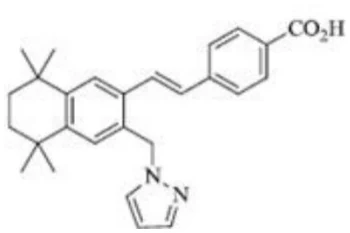
Chemical name: 4-[(E)-2(5,5,8,8-Tetramethyl-3-pyrazol-1-ylmethyl-5,6,7,8-tetrahydro-naphthalen-2-yl)-vinyl]-benzoic acid
or
4-[(1E)-2-[5,6,7,8-Tetrahydro-5,5,8,8- tetramethyl-3-(1 H-pyrazol-1-ylmethyl)-2-naphthalenyl]-ethenyl]-benzoic acid
Molecular formula and molecular mass: C27H30N2O2 414.54 g/mol
Structural formula:
Physicochemical properties:
| Table 14. Physicochemical Properties | ||
|---|---|---|
| Description: | White to off-white solid. Crystalline. | |
| Solubility: | ||
| Water | Practically insoluble or insoluble (0.04 µg/mL) | |
| 0.01M Hydrochloric Acid, pH 2.0 | Practically insoluble or insoluble (not detected) | |
| 0.01M Potassium Acetate, pH 4.0 | Practically insoluble or insoluble (not detected) | |
| 0.01M Potassium Acetate, pH 5.0 | Practically insoluble or insoluble (0.006 μg/mL) | |
| 0.01M Potassium Acetate, pH 6.0 | Practically insoluble or insoluble (0.04 μg/mL) | |
| 0.01M Potassium Phosphate Monobasic, pH 7.0 | Practically insoluble or insoluble (0.2 μg/mL) | |
| 0.01M Potassium Phosphate Monobasic, pH 8.0 | Practically insoluble or insoluble (1.8 μg/mL) | |
| Ethanol (absolute) | Slightly soluble (1 mg/mL) | |
| Isopropanol | Very slightly soluble (0.7 mg/mL) | |
| Methanol | Very slightly soluble (0.3 mg/mL) | |
| Acetonitrile | Very slightly soluble (0.3 mg/mL) | |
14. Clinical Trials
14.1. Clinical Trials by Indication
Fibrodysplasia Ossificans Progressiva (FOP)
Reduce the formation of HO in adults & children ≥8 (females)/10 (males) years of age with FOP.
Table 15. Summary of Patient Demographics for Clinical Trials in FOP
| Study | Study Design | Dosage, Route of Administration and Duration | Study Subjects (n) | Median age (Range) | Sex |
| Study | Study Design | Dosage, Route of Administration and Duration | Study Subjects (n) | Median age (Range) | Sex |
| PVO-1A-301 (MOVE) | Phase 3, multi-center, open-label study | 5 mg QD for up to 48 months, with dose escalation for flare-up treatment to 20 mg QD for 4 weeks, then 10 mg QD for 8 weeks (total of 12 weeks; or until flare-up resolution if treatment extended beyond 12 weeks). Weight-based dosing according to 4 categories (10 to <20 kg, 20 to <40 kg, 40 to <60 kg, and ≥60 kg). | Total enrolled: 107 Principal safety set: 99
| 13 (4, 61) | 53.5% M |
| PVO-1A-202 | Phase 2, multi-center, open-label study conducted in 3 parts | Part A: Oral QD 10 mg for 2 weeks, then 5 mg for 4 weeks for the next 2 subsequent flare-ups. Weight-based dosing when children 6+ years enrolled from Study PVO-1A-201. | Total enrolled: 40
| 21 (7, 53) | 45.0.% M |
Part B: Adult Cohort (chronic/flare-up regimen): 5 mg QD for up to 24 months, with dose escalation for flare-up treatment to 20 mg QD for 4 weeks, then 10 mg QD for 8 weeks (total of 12 weeks or until flare-up resolution if treatment extended beyond 12 weeks). Pediatric Cohort (flare-up regimen only): same as flare-up dosing in the Adult Cohort except dosing is weight-adjusted | Total enrolled: 54
| 19 (7, 54) | 42.6% M | ||
| Part C: All subjects receive chronic/flare-up regimen from Part B (weight-adjusted for skeletally immature subjects). Part C is ongoing. | Total enrolled: 48
| 20 (9, 48) | 47.9 % M | ||
| PVO-1A-201 | Multicenter, randomized, placebo controlled adaptive dose finding study | Cohort 1: oral QD 10 mg for 2 weeks, then 5.0 mg for 4 weeks, or placebo Cohort 2: oral QD 10 mg for 2 weeks, then 5.0 mg for 4 weeks; oral QD 5 mg for 2 weeks, then 2.5 mg for 4 weeks; or placebo | Total enrolled: 40
| 21 (7, 53) | 45.0% M |
| PVO-1A-001 | Natural history study (NHS) | Dosage not applicable (non-interventional study); 3-year follow-up. | Total enrolled: 114 Principal safety set :111
| 15 (4, 56) | 54.1% M |
QD=once daily
The MOVE study (PVO-1A-301) was a Phase 3, single arm study in subjects with FOP aged 4 years and older. The study evaluated the efficacy and safety of the chronic/flare-up SOHONOS regimen in preventing new HO as assessed by low-dose, whole body CT (WBCT) imaging (excluding head) as compared to data from the Natural History Study (NHS, PVO-1A-001). All WBCT images from treated subjects in the MOVE study and untreated subjects in the NHS were read in a manner blinded to study origination. Of the 107 subjects enrolled in the MOVE study, 99 had the R206H mutation and 8 had other FOP mutations. Of the 99 with the R206H mutation, 97 had at least one postbaseline HO volume measurement and were included in the Full Analysis Set.
In the MOVE study, subjects received SOHONOS 5 mg daily with increased dosing at the time of a flare-up (defined as at least one symptom (e.g. pain, swelling, redness) consistent with a previous flare-up or a substantial high-risk traumatic event likely to lead to a flare-up). Flare-up treatment was extended in 4-week increments for persistent symptoms. Anytime during flare-up treatment, the 12-week treatment restarted if subject had another flare-up or a substantial high-risk traumatic event. The dosing was adjusted according to body weight in skeletally immature children (children who had not reached at least 90% skeletal maturity defined as a bone age of ≥12 years 0 months for girls and ≥14 years 0 months for boys). The treatment groups assessed in the chronic/flare-up regimen were well matched for baseline demographics compared to subjects in the NHS study.
The median age (range) of subjects in the target population ≥8 (females)/10 (males) in the SOHONOS group (N=79) was 14 (8, 61) years; and 18 (9, 56) years in the untreated group (N=88) from the NHS. There were more male than female subjects in both the SOHONOS (54.4% and 45.6%, respectively) and untreated (51.1% and 48.9%, respectively) groups.
Table 16. PVO-1A-301 (MOVE) Study: Baseline Demographics and FOP Characteristics in Subjects ≥8 (Females)/10 (Males) Years
SOHONOS (N = 79)
Untreated* (N = 88)
Age at FOP diagnosis (years)
Mean (SD)
6.6 (5.01)
7.5 (5.30)
Time from FOP diagnosis to enrollment (years)
Mean (SD)
11.4 (9.75)
13.4 (9.69)
Associated Clinical Findings
Cervical Spine Malformations
Hearing Loss
Thumb Malformations
Shortened Femoral Necks
35 (44.3%)
36 (45.6%)
37 (46.8%)
10 (12.7%)
45 (51.1%)
31 (35.2%)
49 (55.7%)
13 (14.8%)
Osteochondromas
Tibia
Femur
Humerus
31 (39.2%)
5 (6.3%)
2 (2.5%)
33 (37.5%)
6 (6.8%)
2 (2.3%)
Number of flare-ups within past 12 months
Mean (SD)
Median (min, max)
1.2 (1.5)
1.0 (0, 6)
1.5 (2.0)
1.0 (0, 10)
Time since last flare-up, months
Mean (SD)
Median (min, max)
27.0 (40.4)
11 (1, 199)
21.3 (33.8)
7 (0, 181)
FOP= fibrodysplasia ossificans progressiva; SD=standard deviation
*The untreated group includes subjects from the Natural History Study
The flare-up only regimen was assessed in the Phase 2 program, including the double-blind, placebo-controlled Study PVO-1A-201 and open-label extension Study PVO-1A-202. Subjects participating in Study PVO-1A-201 were randomized in a 3:3:2 fashion to SOHONOS 10 mg for 2 weeks, then 5 mg for 4 weeks (10/5 mg treatment), SOHONOS 5 mg for 2 weeks, then 2.5 mg for 4 weeks (5/2.5 mg treatment) or placebo for 6 weeks, followed by a 6-week observation period for all groups.
In Study PVO-1A-202 Part A subjects experiencing another flare-up received SOHONOS 10/5 mg treatment in an open label manner. In Study PVO-1A-202 Part B, subjects who were at least 90% skeletally mature received chronic 5 mg daily treatment with increased dosing at the time of a flare-up to 20 mg for 4 weeks followed by 10 mg for 8 weeks (chronic/flare-up regimen), with continuation of treatment in 4-week increments for persistent symptoms. Skeletally immature subjects received the 20/10 mg flare-up treatment (weight-adjusted) in Part B.
The median (range) age of subjects in the target population (≥8 (females)/10 (males)) was 11 (7, 34) years (N=12); and 15 (7, 53) years in the untreated group (N=38). The percentage of male subjects in the target population was 33.3% and 47.0% in the untreated group.
Results of the MOVE Study (PVO-1A-301) in FOP
The mean annualized new HO volume from post hoc analyses in the MOVE study (PVO-1A-301) in the overall population for treated and untreated subjects is shown in Table 17 and in the indicated population of subjects aged ≥8 (females)/≥10 (males) years for treated and untreated subjects is shown in Table 18 and Figure 1. Post hoc analyses were performed after the prespecified analysis using a Bayesian compound Poisson model with square-root transformation demonstrated that the futility boundary had been crossed. These results revealed that using the square-root transformation of the data in the Bayesian model moved the statistical conclusion from significant therapeutic benefit of SOHONOS to showing futility. Additional analyses using the Bayesian and weighted linear mixed effect (wLME) models of annualized new HO volume without square-root transformation (including all raw data) demonstrated the efficacy of SOHONOS.
| Table 17. Mean Annualized New HO Volume in the Overall Population in the MOVE Study (PVO-1A-301) | ||||||||
|---|---|---|---|---|---|---|---|---|
| SOHONOS (N=97) | Untreated (N=101) | |||||||
| New HO (mm3) | Mean (SEM) | 9427 (3084) | 23720 (4850) | |||||
| % reduction (SOHONOS vs untreated) | 60% | |||||||
| LS mean (SEM) | 9367 (4102) | 20273 (3267) | ||||||
| % reduction (SOHONOS vs untreated) | 54% | |||||||
| wLME estimate (95% CI) | Nominal p-value | |||||||
| Treatment difference | -10906 (-21241, -572) | 0.0392 | ||||||
CI=confidence interval; HO=heterotopic ossification; LS mean=least square mean; SEM=standard error of the mean; wLME=weighted linear mixed effect. Note: The new HO weighted linear mixed effect (wLME) LS mean estimate and SEM are from a mixed model with dependent variable annualized new HO and independent variables including fixed effects of treatment and baseline total HO/baseline age and a random subject effect. | ||||||||
| Table 18. Mean Annualized New HO Volume in Subjects ≥8 Years (Females)/≥10 Years (Males) of Age in the MOVE Study (PVO-1A-301) | |||||||||
| SOHONOS (N=77) | Untreated (N=79) | ||||||||
| New HO (mm3) | Mean (SEM) | 11419 (3782) | 25796 (6066) | ||||||
| % reduction (SOHONOS vs untreated) | 56% | ||||||||
| LS mean (SEM) | 11033 (4973) | 21476 (4069) | |||||||
| % reduction (SOHONOS vs untreated) | 49% | ||||||||
| wLME estimate (95% CI) | Nominal p-value | ||||||||
| Treatment difference | -10443 (-23539, 2653) | 0.1124 | |||||||
CI=confidence interval; FAS=Full Analysis Set; HO=heterotopic ossification; LS mean=least square mean; SEM=standard error of mean; wLME=weighted linear mixed effect model. Note: The annualized new HO wLME LS mean estimate and SEM are from a mixed model with dependent variable annualized new HO and independent variables including fixed effects of treatment and baseline total HO/baseline age and a random subject effect. Note: The indicated population of subjects aged ≥8 (females)/≥10 (males) years was determined as a subgroup of the overall population based on the risk of PPC. | |||||||||
Figure 1. Mean Annualized New HO Volume in Subjects Aged ≥8 (Females)/≥10 (Males) Years in the MOVE Study (PVO-1A-301)
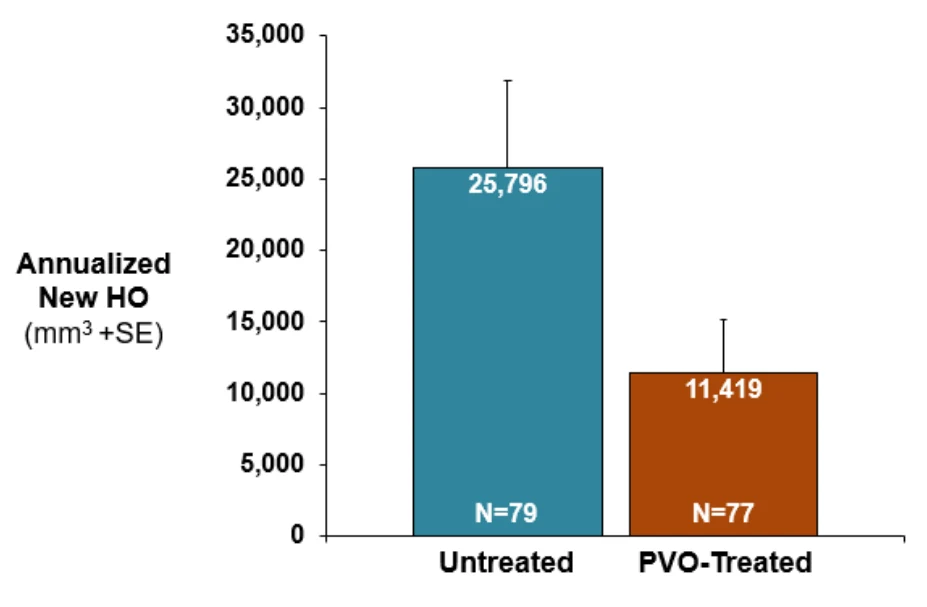
HO=heterotopic ossification; SE=standard error.
Results of Studies PVO-1A-201 and PVO-1A-202 in FOP
In the overall population, the Phase 2 studies demonstrated a reduction of 72% (p-value of 0.02) in new HO volume in the 15 flare-ups treated with the 20/10 mg flare-up only dose (3045 mm3) compared to 47 placebo/untreated flare-ups (10,780 mm3) (Table 19). In the target population, the Phase 2 studies demonstrated a reduction of 72% (p-value of 0.04) in new HO volume in the 14 flare-ups treated with the 20/10 mg flare-up only dose (3262 mm3) compared with 43 placebo/untreated flare-ups (11,712 mm3) (Table 20 and Figure 2). These results are supported by the 10/5 mg flare-up dose in both the target population (2807 mm3; 76% reduction; p-value of 0.10) and total population (3010 mm3; 72% reduction; p-value of 0.11).
| Table 19. Flare-up New HO at Week 12 for the Placebo/Untreated and SOHONOS Treated Flare-ups in the Overall Population | ||||||||
| SOHONOS 20/10 mg (M=15) | PBO/Untreated (M=47) | |||||||
| New HO volume (mm3) (including new HO volumes = 0a) | Mean (Std Err) | 3045 (1408) | 10780 (4841) | |||||
| Nominal p-Value b | 0.02 | |||||||
HO=heterotopic ossification; M=number of flare-ups analysed; PBO=placebo; Std Err=standard error. a When a flare-up had no baseline HO, 0 was assigned for analysis. b Based on hierarchical bootstrap estimates, which included a 4-level treatment factor (SOHONOS 20/10 mg Episodic; SOHONOS 20/10 mg Chronic; SOHONOS 10/5 mg; Placebo/Untreated) and covariates Flare-up Location at hip (Yes vs. No), Steroid Use flare-up (Yes vs. No), Sex (Male vs. Female), Age (Years) at flare-up Day 1. | ||||||||
| Table 20. Flare-up New HO at Week 12 for the Placebo/Untreated and SOHONOS Treated Flare-ups in Subjects ≥8 Years (Females)/≥10 Years (Males) of Age | ||||||||
| SOHONOS 20/10 mg (M=17) | PBO/Untreated (M=46) | |||||||
| Number of flare-ups analyzed | 14 | 43 | ||||||
| New HO volume (mm3) (including new HO volumes = 0a) | Mean (Std Err) | 3262 (1494) | 11712 (5274) | |||||
| Nominal p-Value b | 0.04 | |||||||
HO=heterotopic ossification; M=number of flare-ups; PBO=placebo; Std Err=standard error. a When a flare-up had no baseline HO, 0 was assigned for analysis. b Based on hierarchical bootstrap estimates, which included a 4-level treatment factor (SOHONOS 20/10 mg Episodic; SOHONOS 20/10 mg Chronic; SOHONOS 10/5 mg; Placebo/Untreated) and covariates Flare-up Location at hip/shoulder/knee (Yes vs. No), Steroid Use flare-up (Yes vs. No), Sex (Male vs. Female), Age (Years) at flare-up Day 1. | ||||||||
Figure 2. Mean Volume of New HO at Week 12 in SOHONOS vs Placebo/Untreated Flare-ups in Subjects ≥8 (Females)/≥10 (Males)Years of Age
Numbers in parentheses are the number of flare-ups; HO=heterotopic ossification; SE=standard error.
15. Microbiology
No microbiological information is required for this drug product.
16. Non-Clinical Toxicology
General toxicology
The toxicity of palovarotene was evaluated in repeat-dose daily oral toxicity studies lasting up to 6 weeks in juvenile rats (0.1, 0.5, and 1.2 mg/kg/day), up to 26 weeks in adult rats (0.3, 0.6 and 1.0 mg/kg/day), up to 4 weeks in adult rabbits (0.5, 1 and 2.5 mg/kg/day), and up to 39 weeks in adult dogs (0.012, 0.025, 0.040 and 0.120 mg/kg/day). The toxicity of repeated daily doses of palovarotene was similar to that of vitamin A and other retinoids. The dose-limiting toxicities of palovarotene were a subset of typical retinoid toxicities, primarily mucocutaneous toxicity in all nonclinical species and skeletal effects in rats. In this species, the effects of palovarotene were similar regardless of age; effects targeted skeleton and skin in both juvenile rats as young as 1 week of age and in adult rats. As would be expected, skin effects were dose-limiting in adult rats while skeletal effects were dose-limiting in younger rats.
The toxicity profile of palovarotene metabolites was similar to that of palovarotene; no unique or unexpected toxicities were identified.
Mucocutaneous effects
Mucocutaneous toxicity occurred in dose-related manner in adult animals, involved mainly the skin and was characterized microscopically by erythema, edema, epithelial hyperplasia, hyperkeratosis and/or hypergranulosis in the epidermis. Their intensity increased in a time-dependent manner up to 4 weeks of treatment, and they were reversible with discontinuation of dosing. In juvenile rats, skin lesions were limited to dry skin, thin fur cover, and/or scab and generally were no longer noted during the recovery period. These effects are generally observed at all dose levels, starting below the clinically relevant exposures.
Squamous epithelium of other tissues, such as nonglandular mucosa of the stomach (forestomach, rodent-specific), esophagus (rabbits only, non-adverse), and conjunctivae of the eye and surface of inner ear (dogs only), was also affected. The changes identified in the esophagus of rabbits after 4 weeks of oral administration at 1 mg/kg/day and above (i.e. below the highest clinical exposure) did not compromise the integrity of the esophageal mucosa or the health of the animal and were not interpreted to be toxicologically significant. No effects were observed in the non-squamous mucosa of glandular stomach or intestinal tissues in rats, dogs, or rabbits, which suggests that the potential for gastrointestinal toxicity is low.
Skeletal effects
The potential effects of chronic administration of palovarotene in pediatric patients were investigated in juvenile rats given daily oral doses of palovarotene at 0.1, 0.5, or 1.2 mg/kg/day throughout the period of skeletal growth (from weaning through puberty). Palovarotene produced dose-dependent effects on bone size, shape, and mass and/or geometry, all of which appeared to result from impaired physeal cartilage maturation/differentiation. In particular, narrowing/closure of the growth plate in the proximal femur resulted in changes in femoral head shape at ≥0.5 mg/kg/day and avascular necrosis (AVN) of the femoral head at 1.2 mg/kg/day. In addition, reduced bone mass and/or geometry were noted at ≥0.5 mg/kg/day. Ongoing recovery was noted at 0.5 mg/kg/day only. The NOAEL for skeletal toxicity (i.e. 0.1 mg/kg/day) was below the range of clinically relevant exposures.
In adult rats, repeated daily oral doses of palovarotene at 0.3, 0.6 and 1.0 mg/kg/day for 26 weeks caused, at all doses, chondrodystrophy in the growth plate, which remains open into adulthood in this species. Chondrodystrophy was associated with bone brittleness/fracture in rats when treated at 5 mg/kg/day (i.e. at exposure similar to the highest clinical exposure) for 4 weeks. The effects on bone growth are not considered relevant to humans once the growth plates have closed (i.e. near the end of puberty: approximately 14-15 years for girls and 15-17 years for boys).
Carcinogenicity
Carcinogenicity studies have not been conducted with palovarotene. Neither palovarotene nor its metabolites were mutagenic in Ames assays. Palovarotene did not have any clastogenic effect in the in vivo mouse micronucleus study at up to two doses of 25 mg/kg given on two consecutive days. Clastogenic activity was noted for palovarotene and its metabolites in the in vitro chromosomal aberration assay with human peripheral blood lymphocytes but only at cytotoxic concentrations that reduced the mitotic index by more than 50%. Specifically, for palovarotene, the threshold for clastogenic activity was between 30,000 and 50,000 ng/mL with the frequency of aberrations being increased at test concentrations ≥50,000 ng/mL but not at concentrations ≤30,000 ng/mL. For palovarotene metabolites, the frequency of cells with structural aberrations was significantly increased at a metabolite mixture concentration of 250,000 ng/mL (3-hour exposure) whereas following 24-hour exposure, no statistically significant increases of the frequency of chromosomal aberrations were observed. The concentrations at which these effects occurred with palovarotene or its human metabolites were orders of magnitude higher than the anticipated human maximal Cmax at the highest proposed clinical dose (138-202 ng/mL at 20 mg/day). Based on these results, palovarotene and its metabolites are not considered to pose a genotoxic hazard to human subjects.
Reproductive and developmental toxicology
Impairment of Fertility
Palovarotene given orally to female rats for 2 weeks prior to mating and up to Day 7 postcoitum at doses of 0.3 and 1 mg/kg/day revealed no effects on reproductive function, fertility or early embryonic development. Prolonged periods of diestrous and a slightly lower ovulation rate were noted at 3 mg/kg/day (high dose). Consequently, the 1 mg/kg/day dose (below the range of clinically relevant exposures) was considered as the NOAEL. Oral administration of palovarotene to male rats for 9 weeks (i.e. before cohabitation through two weeks after mating) at 0.3 and 1 mg/kg/day did not affect reproductive function, fertility, or early embryonic development. The dose of 1 mg/kg/day, which is below the range of clinically relevant exposures, was therefore considered as the NOAEL.
Evidence of testicular toxicity (including seminiferous tubule degeneration) was seen in male rats given daily oral doses at 5 mg/kg/day for 4 weeks, which exceeded the 4-week MTD. No testicular findings were observed at lower doses (0.04, 0.2 and 1 mg/kg/day) in this study.
Moreover, no findings in female reproductive organs or evidence of testicular toxicity were observed in rat or dog chronic toxicity studies (i.e. up to 26 or 39 weeks, respectively).
Animal Reproduction
Oral administration of palovarotene to pregnant rats from GD (Gestation Day) 6 to GD17 at doses of 0.25 and 1.25 mg/kg/day induced slight maternal toxicity (reduced maternal body weight gain and/or decreased food consumption). It also induced fetal malformations typical of retinoids (e.g. cleft palate, misshapen skull bones, short/long bones). The NOAEL for both maternal and fetal toxicity was therefore set at 0.01 mg/kg/day, which is below the range of clinical relevant exposures.