


Patient Medication Information: uses, side effects, how to take - Extavia
ABOUT THIS MEDICATION
What the medication is used for:
EXTAVIA is used for the treatment of relapsing forms of multiple sclerosis (MS) to reduce the frequency of clinical exacerbations in ambulatory patients (i.e., patients who are able to walk without help).
EXTAVIA is also used for the treatment of secondary- progressive multiple sclerosis to slow the progression of disability and to reduce the frequency of clinical exacerbations.
EXTAVIA is also approved for use in patients who have symptoms which are likely to be a first sign of multiple sclerosis (single clinical event suggestive of multiple sclerosis). Any other reasons which could explain the symptoms have to be ruled out. Your doctor will perform a test using an imaging machine (magnetic resonance imaging [MRI]). This test has to show at least two signs of inflammation in the central nervous system suggestive of multiple sclerosis.
What it does:
Multiple sclerosis is a life-long disease that affects your nervous system (i.e., brain and spinal cord) by destroying the protective covering (myelin) that surrounds your nerve fibers. An abnormal response by the body’s immune system is thought to play an important part in the process which damages the nervous system.
EXTAVIA is a form of protein called interferon beta that occurs naturally in the body. Interferon beta has been shown to modify the immune system response, but the exact way that EXTAVIA works in MS is unknown. EXTAVIA will not cure MS but it has been shown to decrease the number of flare-ups and slow the occurrence of some of the physical disabilities that are common in people with MS.
When it should not be used:
You should NOT use EXTAVIA:
- if you have had previous allergic reactions, such as difficulty breathing, itching, flushing or hives, to interferon beta or to any of the non-medicinal ingredients (see below).
What the medicinal ingredient is:
The active ingredient is interferon beta-1b.
What the non-medicinal ingredients are:
EXTAVIA powder: human albumin, mannitol
Diluent: sodium chloride, water for injection
What dosage forms it comes in:
EXTAVIA is formulated as a sterile, white to off-white powder which must be dissolved using the supplied diluent. Each single-use vial contains 0.3 mg (9.6 million international units [MIU]) of interferon beta-1b. The diluent syringe contains 1.2 mL of sodium chloride 0.54% solution.
The prepared solution for injection contains 0.25 mg (8.0 MIU) of interferon beta-1b per 1 mL.
WARNINGS AND PRECAUTIONS
BEFORE you use EXTAVIA, talk to your doctor if you have any of the following conditions:
- Depression, anxiety (feeling uneasy, nervous or fearful for no reason), or trouble sleeping
- Liver problems
- Epilepsy or a history of seizures
- Heart problems
- Problems with your thyroid gland
- Are breast-feeding or are planning to become pregnant
- If you ever had an allergic reaction to rubber or latex. The rubber cap of the diluent pre-filled syringe contains natural rubber latex.
Depression: Some patients treated with interferons, including EXTAVIA, have become seriously depressed (feeling sad). Some patients have thought about or have attempted to kill themselves. Depression (a sinking of spirits or sadness) is not uncommon in people with multiple sclerosis. However, if you are feeling noticeably sadder or helpless, or feel like hurting yourself or others, you should tell a family member or friend right away and call your doctor or healthcare provider as soon as possible. Your doctor may ask that you stop using EXTAVIA. Before starting EXTAVIA, you should also tell your doctor if you have ever had any mental illness, including depression, and if you take any medications for depression.
Allergic reactions: Some patients taking EXTAVIA have had severe allergic reactions leading to difficulty breathing and swallowing. Less severe allergic reactions such as rash, itching, skin bumps, or swelling of the mouth or tongue can also happen. If you think you are having an allergic reaction, stop using EXTAVIA immediately and call your doctor.
Liver problems: EXTAVIA, like other interferon beta products, may cause severe liver problems. Some of the symptoms of liver problems are yellowing of the skin and whites of the eyes, malaise (a vague feeling of discomfort), fatigue, nausea, vomiting, abdominal pain, dark urine and itching of the skin. If you develop these symptoms while taking EXTAVIA, you should call your doctor right away.
Seizures: Some patients have had seizures while taking interferons. It is not known whether the seizures are related to the effects of MS, to interferons, or to a combination of both. If you have a seizure while taking EXTAVIA, you should call your doctor right away.
Heart problems: During treatment with EXTAVIA, cardiomyopathy (a disease of the heart muscle) has been reported. If you experience symptoms like irregular heart beat, fluid retention (swelling) in the lower parts of your body (eg, ankles, legs), or shortness of breath, call your doctor immediately.
Thyroid problems: Some people taking EXTAVIA may develop changes in the function of their thyroid. Symptoms of these changes include feeling hot or cold much of the time or change in your weight (gain or loss) without a change in your diet or the amount of exercise you are getting.
Gastrointestinal problems: Inflammation of the pancreas has been observed with EXTAVIA use, often associated with an increase of triglycerides (a type of fat in the blood). If you have suffered from increased triglycerides or have had problems with your pancreas, please tell your doctor.
Women of childbearing potential: If you are a woman of childbearing potential and are taking EXTAVIA, you should use effective methods of contraception unless you are planning to become pregnant and have talked to your doctor about the potential risks and benefits of staying on EXTAVIA. It is not known if interferons interfere with hormonal contraceptives.
Available data with the use of EXTAVIA in pregnant women (mostly during the first trimester) suggest that spontaneous abortions (miscarriage) and congenital abnormalities (malformations) in their children did not happen more often than in the general population. Spontaneous abortions (miscarriage) have been reported in patients with multiple sclerosis in clinical studies, however not more often than in the general population. Administration of doses that were higher than the dose normally used to treat patients with multiple sclerosis caused an increased rate of miscarriages in studies done in monkeys. However, when pregnancies in these studies were carried to term, the animals were born without malformations.
Breast-feeding: You should talk to your doctor if you are breast-feeding an infant. A decision should be made whether to stop breast-feeding or stop taking EXTAVIA.
Immune system problems: The administration of interferons to patients with a pre-existing rare disturbance of the immune system where abnormal proteins are found in the blood (monoclonal gammopathy) has been associated with problems with small blood vessels leading to shock (collapse) and, in some cases, death.
Human albumin: This product contains a protein (albumin) extracted from human blood and so carries an extremely remote risk for transmission of viral diseases. A theoretical risk for transmission of a disease affecting the nervous system (Creutzfeld-Jacob disease) is also considered extremely remote.
Kidney problems: Blood clots in the small blood vessels may occur during your treatment. These blood clots could affect your kidney (thrombotic thrombocytopenic purpura or haemolytic uremic syndrome). This might happen several weeks to several years after starting EXTAVIA and may cause death. Talk to your doctor if you experience the following symptoms: increased bruising, bleeding, extreme weakness, headache, dizziness or light-headedness. Your doctor may want to check your blood pressure, blood (platelet count) and the function of your kidney.
INTERACTIONS WITH THIS MEDICATION
With the exception of steroids or ACTH (anti-inflammatory medicines), the use of EXTAVIA together with other substances that modify the immune system response was not studied. Caution should be exercised when interferons are given in combination with other drugs which need a certain liver enzyme system (the cytochrome P450 system) for their metabolism. These drugs include some commonly used drugs against fever and pain.
You should tell your doctor if you are taking any other prescription or non-prescription medicines, including vitamin and mineral supplements and herbal products.
PROPER USE OF THIS MEDICATION
EXTAVIA is intended for use under the guidance and supervision of a physician. Your physician or his/her delegate should instruct you in the preparation and self-injection technique of EXTAVIA. Do not begin your EXTAVIA treatment without training.
Usual dose:
EXTAVIA should be used as prescribed by your doctor. The usual dose is 1 mL of prepared EXTAVIA solution injected subcutaneously (under the skin) every other day. This is equal to 0.25 mg (8 MIU).
If you have been prescribed EXTAVIA because you have symptoms likely to be a first sign of multiple sclerosis, your treatment should be started at a low dose of 0.25 mL (0.0625 mg or 2 MIU). Your dose will then be increased slowly until you reach a dose of 1 mL. Your individual tolerability of EXTAVIA will determine the rate of dose increase. Your doctor will decide this with you.
Your injections should be about 48 hours (two days) apart, so it is best to take them at the same time each day, preferably in the evening before bedtime.
SELF-INJECTION PROCEDURE
SAFETY TIPS
- Use only the supplies that come with your EXTAVIA package and with the ExtaviPro 30G Application Kit.
- Use only the diluent from the prefilled syringe.
- The removable rubber cap of the diluent prefilled syringe contains natural rubber (latex), which should not be handled by persons sensitive to this substance.
- Wash your hands thoroughly with soap and water before starting.
- Keep the items sterile. Do not touch the needle, the piercing spike of the vial adapter or the top of the cleaned vial.
- Make sure none of the items in your package have been opened or are damaged.
- Do not use after the expiry date shown on the EXTAVIA vial and the prefilled diluent syringe.
- Do not reuse opened materials. Throw away any unused portions of EXTAVIA and diluent.
- Throw away used syringes and needles in the proper disposal container.
Before preparing your injection of EXTAVIA, make sure you read the instructions below on how to choose an injection site and on what supplies you will need to get ready to give your injection.
CHOOSING AN INJECTION SITE
EXTAVIA should be injected into subcutaneous tissue (under the skin, between the fat layer and the muscles beneath). The best areas for injection are loose and soft, away from joints.
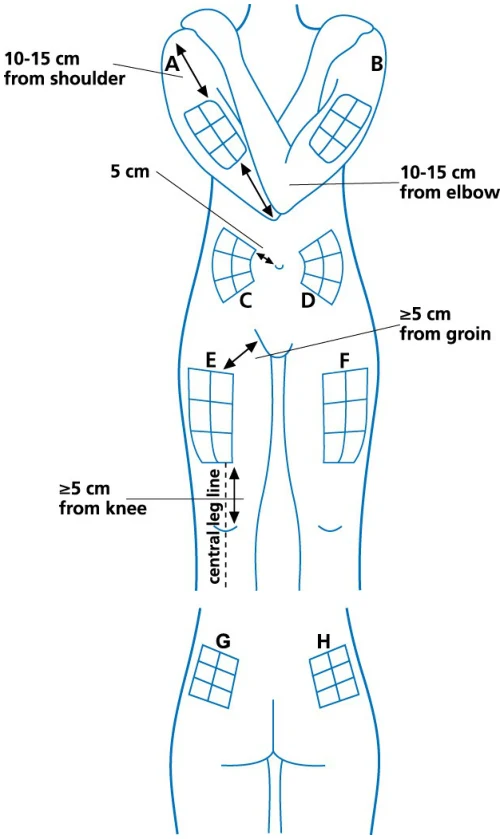
Choose an injection site from the following areas (Figure 1):
A Right arm, upper back portion (at least 10-15 cm below the shoulder and 10-15 cm above the elbow)
B Left arm, upper back portion (at least 10-15 cm below the shoulder and 10-15 cm above the elbow)
C-D Abdomen, above the waistline (at least 5 cm on either side of the navel)
E Right thigh (at least 5 cm above the knee and 5 cm below the groin)
F Left thigh (at least 5 cm above the knee and 5 cm below the groin)
G Left buttock (upper, outer portion)
H Right buttock (upper, outer portion)
- Change injection areas every time you inject yourself. Give the site time to recover from the last injection. This will help prevent injection site reactions.
- Wait at least one week before reusing an area.
Do not use any areas where you feel lumps, depressions, pain or discoloration; talk to your doctor or nurse about anything you find.
Figure 1
- Keep a record of when and where you are giving yourself injections. Use the EXTAVIA diary in your training kit.
GATHERING YOUR SUPPLIES
EXTAVIA is supplied in cartons containing vials of medication and prefilled diluent syringes (‘drug pack’). To reconstitute and inject your medicine, you will also need an application kit for the administration of EXTAVIA (supplied separately from your medicine), which contains alcohol wipes, vial adapters, and 30 gauge needles.
You will need the following supplies to get ready to give your injection of EXTAVIA:
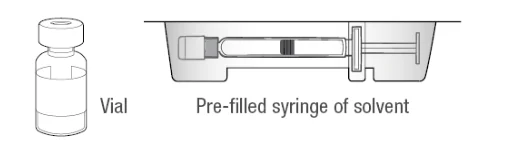
From the EXTAVIA drug pack, you will need:
- A vial of EXTAVIA
- A prefilled diluent syringe
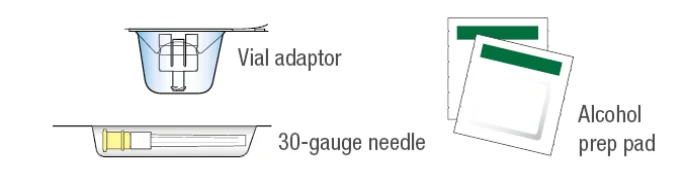
From the ExtaviPro 30G Application Kit, you will need:
Two (2) alcohol wipes
- A vial adapter
- A 30 gauge needle
RECONSTITUTING EXTAVIA AND PREPARING THE INJECTION
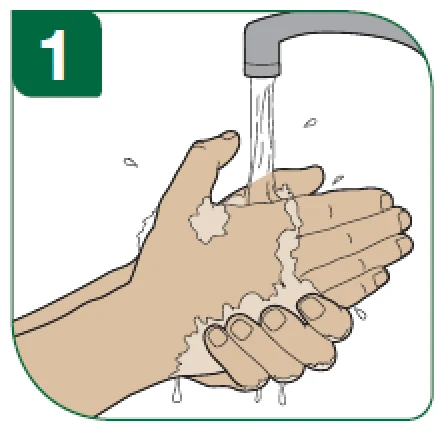
Step 1: Wash your hands thoroughly with soap and water before beginning this process.
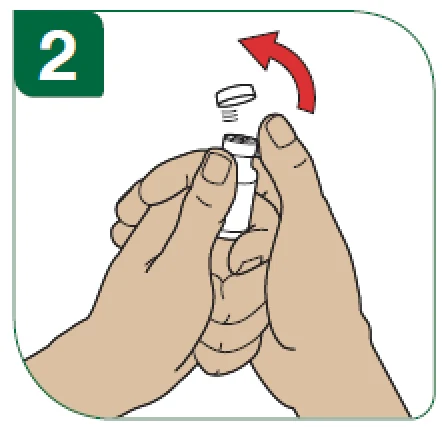
Step 2: Remove the flip off cap from the EXTAVIA vial. It is best to use your thumb rather than your nail, as your nail could break.
Put the vial on the table.
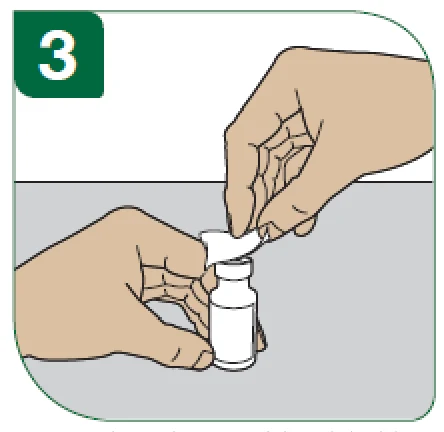
Step 3: Clean the top of the vial with an alcohol wipe, moving the wipe in one direction only.
Leave the wipe on top of the vial.
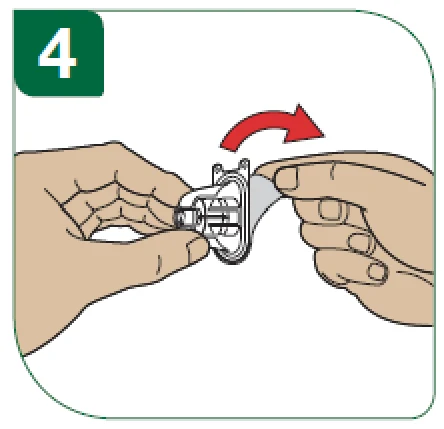
Step 4: Peel back and remove the cover from the vial adapter packaging. Do not remove the vial adapter from its packaging.
Note: Be sure to avoid touching the vial adapter, in order to maintain its sterility.
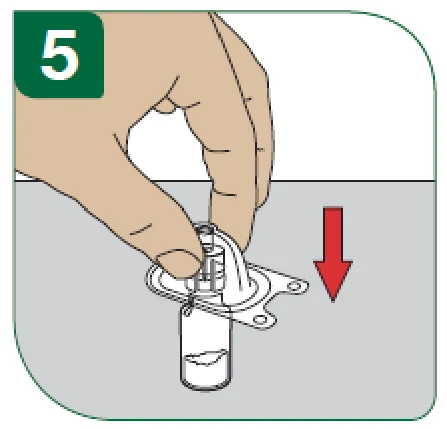
Step 5: Remove the wipe from the top of the vial. Use the packaging to handle the vial adapter. Attach it to the vial by pushing down until the vial adapter penetrates and locks around the top of the vial.
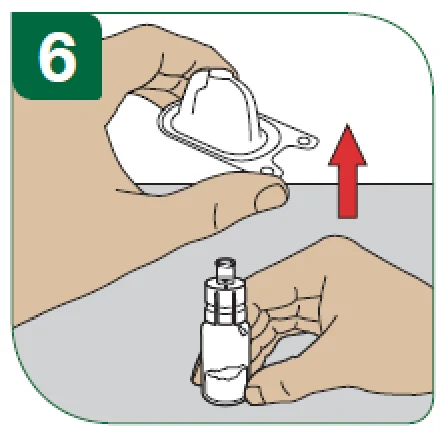
Step 6: Holding the edges securely, remove and discard the packaging ensuring the vial adapter remains on the vial.
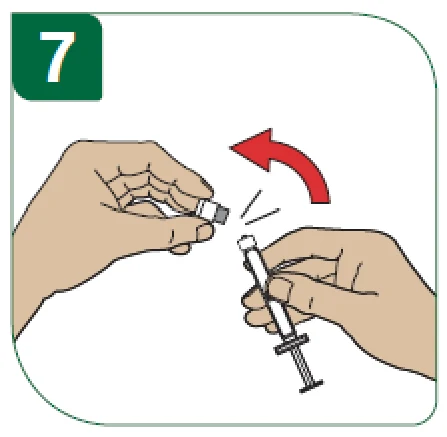
Step 7: Take out the pre-filled diluent syringe from its packaging.
Snap off and discard the tip of the syringe.
Note: Be careful not to touch the exposed end of the syringe. Do not push the plunger.
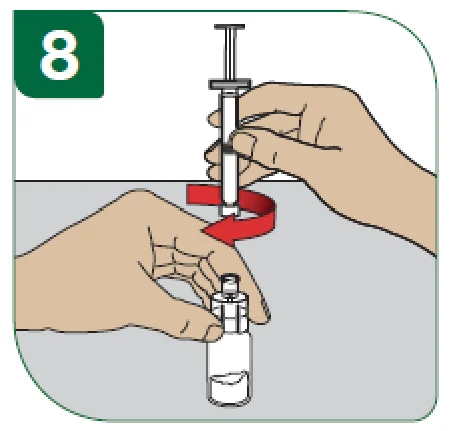
Step 8: Holding the vial and adapter securely, screw the syringe fully onto the vial adapter.
This forms the syringe-vial assembly.
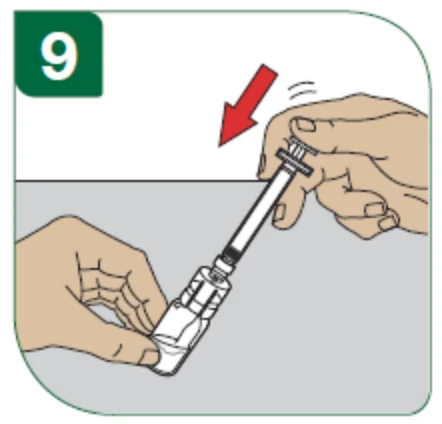
Step 9: Hold the syringe-vial assembly at a slight angle. Push the plunger down slowly so that the liquid runs down the inside of the vial.
Transfer all of the diluent into the vial.
Note: Do not shake the vial as this may cause excessive foaming.
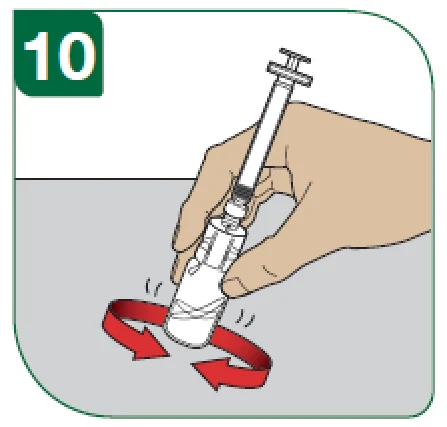
Step 10: Hold the vial between your thumb and fingers. Swirl the syringe-vial assembly gently until the powder is completely dissolved.
Note: Do not shake the vial.
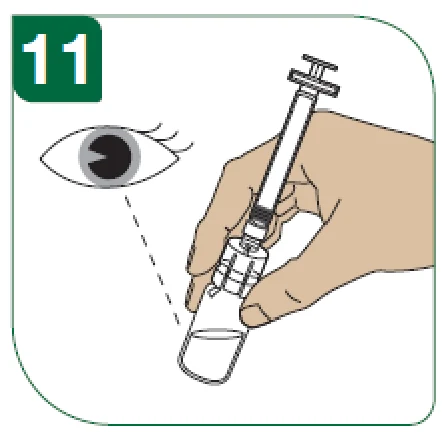
Step 11: Examine the solution carefully. It should be clear and contain no particles.
Note: If the solution is discolored or contains particles, discard it and start again with a new syringe and vial out of your package. If excessive foaming is present – which can happen if the vial is shaken or swirled too vigorously – let the vial sit undisturbed until the foam settles.
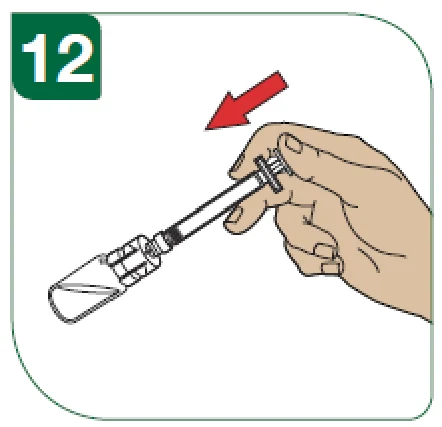
Step 12: Ensure the plunger stays fully pushed in before proceeding to the next step, as it may have moved.
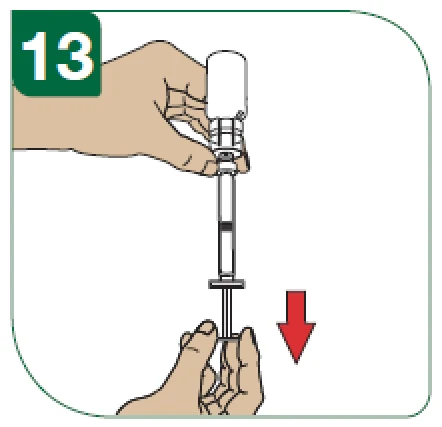
Step 13: Turn the syringe-vial assembly so that the vial is at the top. Slowly pull the plunger back to draw all of the solution into the syringe.
Note: If 1 mL of clear solution cannot be withdrawn from the vial, discard the vial and syringe and start over.
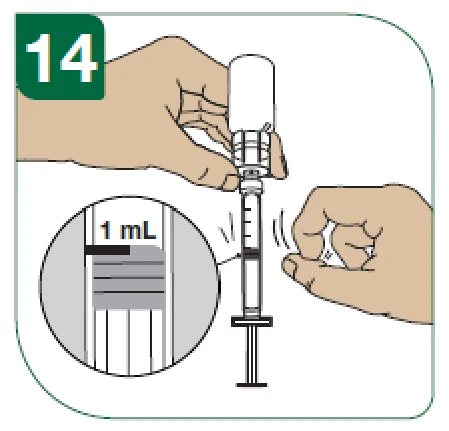
Step 14: Remove any excess air bubbles by gently tapping the syringe. Do not tap the syringe with a hard object because the syringe is made of glass and it could break
Push the plunger to the 1 mL mark on the syringe (or the volume prescribed by your doctor).
Note: It may be necessary to adjust the plunger position back and forth a few times to ensure the excess air bubbles are gone and there is 1mL of solution in the syringe.
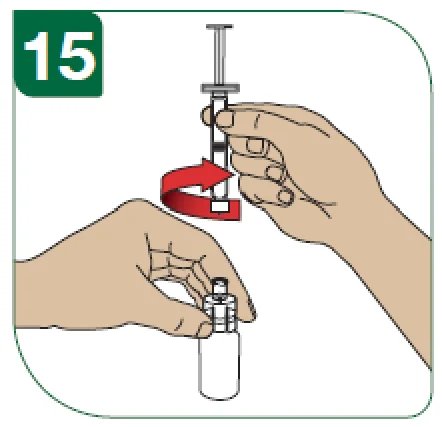
Step 15: Unscrew the syringe, leaving the vial adapter on the vial.
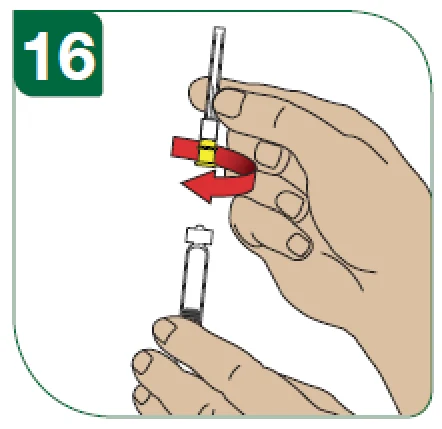
Step 16: Take the needle out of its wrapping and screw it firmly onto the top of the syringe.
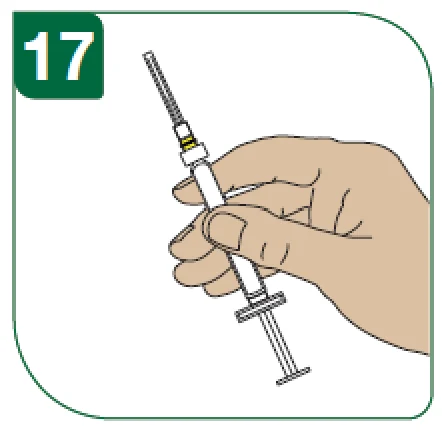
Step 17: Leave the needle cap on. You are now ready to inject.
The injection should be administered immediately after mixing. If you are unable to give the injection immediately, you may refrigerate the medication in the syringe and inject within three hours. Do not freeze.
INJECTING EXTAVIA
Optional - Autoinjector: If you have been given an autoinjector, you should follow the detailed instructions that are supplied with it. Be sure to only use the ExtaviPro 30G Auto-Injector.
- 1. Use a fresh alcohol wipe to clean the skin at the injection site. Use a circular motion from the center of the injection site outward. Let the alcohol dry.
- 2. Throw away the wipe.
- 3. Remove the protective needle guard from the needle by pulling it without turning.
- 4. Gently pinch the skin around the site to lift it up a bit.
- 5. Stick the needle straight into the skin at a 90° angle with a quick, firm motion.
- 6. Inject the drug by using a slow, steady push (push the plunger all the way in until the syringe is empty).
- 7. Remove the needle from the skin.
- 8. Gently massage the injection site with a clean, dry cotton ball, gauze, or with a fresh alcohol wipe from your Application Kit (or as directed by your healthcare professional).
- 9. Throw away the syringe in the disposal unit.
- 10. Discard all other components.
Overdose:
If you accidentally take more than your prescribed dose, or take it two days in a row, call your doctor right away.
Missed Dose:
If you miss a dose, you should take your next dose as soon as you remember or are able to take it. Your next injection should be given about 48 hours (two days) after that dose.
SIDE EFFECTS AND WHAT TO DO ABOUT THEM
As with any prescription medication, side effects related to therapy can occur. Consult your doctor if you have any problems, whether or not you think they may be related to EXTAVIA.
Skin reactions: Injection site reactions are common. They include redness, pain, swelling and discoloration. Less frequently, injection site necrosis (skin breakdown and tissue destruction) has been observed. To minimize the chance of a reaction, change injection areas every time you inject yourself and wait at least one week before reusing an area. Do not inject into skin that is tender, red, or hard. Do not use any areas where you feel lumps, depressions, pain, or discoloration. Injection site reactions may occur less frequently if you use an autoinjector. Talk to your doctor or nurse about anything you find. If you experience a break in the skin or drainage of fluid from the injection site, consult your doctor. The occurrence of injection site reactions decreases over time.
Flu-like symptoms: Flu-like symptoms are also common. They include fever, chills, sweating, fatigue, and muscle aches. For many patients, these symptoms will lessen or go away over time. Taking EXTAVIA at night may help lessen the impact of flu-like symptoms. You should talk to your doctor about whether you should take an over-the-counter medicine for pain or fever reduction before or after taking your dose of EXTAVIA.
Liver problems: Your liver function may be affected. Elevations of liver function values occurred very commonly in patients treated with EXTAVIA in clinical studies and in most cases were mild and transient. Rare cases of severe liver injury have been reported (see WARNINGS AND PRECAUTIONS – Liver Problems).
Blood problems: A decrease of infection-fighting white blood cells, red blood cells, or platelets (cells that help you form blood clots) may occur. If decreases are severe, they can lessen your ability to fight infections, make you feel tired or sluggish or cause you to bruise or bleed easily.
| SERIOUS SIDE EFFECTS, HOW OFTEN THEY HAPPEN AND WHAT TO DO ABOUT THEM | |||
|---|---|---|---|
| Symptom / Effect | Talk with your doctor or pharmacist in all cases | Stop taking drug and call your doctor or pharmacist | |
| Very common | Fluid retention (swelling) in ankles or legs | ||
| Common | Break in skin or drainage of fluid at injection site Rash | ||
| Uncommon | Difficulty breathing or swallowing, swelling of mouth or tongue Depression or suicidal thoughts Seizures Symptoms of liver problems: yellowing of the skin and whites of eyes, malaise, fatigue, nausea, vomiting, abdominal pain, dark urine, itching of the skin Symptoms of kidney problems: foamy urine, fatigue, swelling, particularly in the ankles and eyelids, and weight gain | ||
This is not a complete list of side effects. For any unexpected effects while taking EXTAVIA, contact your doctor or pharmacist.
HOW TO STORE IT
Before reconstitution: Store EXTAVIA between 2 - 25°C. Excursions between 25°C and 30°C are permitted as long as they do not exceed a maximum of 30 days. Do not freeze.
After reconstitution: If not used immediately, reconstituted EXTAVIA must be refrigerated and used within three hours. Do not freeze.
Keep syringes and needles away from children. Do not reuse needles or syringes. Discard used syringes and needles in a syringe disposal unit.
REPORTING SUSPECTED SIDE EFFECTS
| To monitor drug safety, Health Canada collects information on serious and unexpected effects of drugs. If you suspect you have had a serious or unexpected reaction to this drug you may notify Health Canada by: | |
| By toll-free telephone: | 866-234-2345 |
| By toll-free fax: | 866-678-6789 |
| By email: | cadrmp@hc-sc.gc.ca |
| By regular mail: | National AR Centre Marketed Health Products Safety and Effectiveness Information Division Marketed Health Products Directorate Tunney’s Pasture, AL 0701C Ottawa ON K1A 0K9 |
| NOTE: Before contacting Health Canada, you should contact your physician or pharmacist. | |
MORE INFORMATION
This document plus the full Product Monograph, prepared for health professionals can be found at:
http://www.novartis.ca
or by contacting the sponsor, Novartis Pharmaceuticals Canada Inc.at:
1-800-363-8883
Novartis Pharmaceuticals Canada Inc.
385 Bouchard Blvd.
Dorval, Quebec
H9S 1A9
Last revised: August 24, 2021
EXTAVIA is a registered trademark.
ExtaviPro is a registered trademark.