


Patient Medication Information: uses, side effects, how to take - Intron A (Merck Canada, 10000000 Unit / 1 mL, 6000000 Unit, 10000000 Unit)
ABOUT THIS MEDICATION
What the medication is used for:
INTRON A® can be used to treat the following diseases:
- Chronic Hepatitis C;
- Chronic Active Hepatitis B;
- Chronic Myelogenous Leukemia (CML), and thrombocytosis associated with CML;
- Multiple Myeloma;
- Non-Hodgkin's Lymphoma;
- Malignant Melanoma;
- AIDS-Related Kaposi's Sarcoma;
- Hairy Cell Leukemia;
- Basal Cell Carcinoma;
- Condylomata Acuminata.
What it does:
Interferons are among a number of substances produced in response to the presence of enemy cells. Not only do they “interfere” with foreign invaders that may cause infection, but they can prevent the growth and spread of other diseased cells as well, including some types of cancer cells. INTRON A® is a synthetic man-made version of these substances.
When it should not be used:
- If you are hypersensitive (allergic) to this drug, to any ingredient in the formulation or component of the container or to any interferon.
- If you have severe kidney disease.
- If you have autoimmune hepatitis (hepatitis caused by your immune system attacking your liver) or unstable liver disease (yellowing of the skin and eyes, swelling of the abdomen).
What the medicinal ingredient is:
The medicinal ingredient is interferon alfa-2b.
What the important nonmedicinal ingredients are:
For a full listing of nonmedicinal ingredients see Part 1 of the product monograph. You may also refer to the INTRON A® label.
What dosage forms it comes in:
- Lyophilized Powder with Diluent;
- Ready-to-Use Solution.
WARNINGS AND PRECAUTIONS
BEFORE you use INTRON A® talk to your doctor or pharmacist if:
- you have an infectious disorder;
- you had a heart attack, or have other heart problems;
- you have kidney problems;
- you have liver problems;
- you have nervous or mental problems (such as depression);
- you have had a body organ transplant;
- you have thyroid disease;
- you have problems with your immune system;
- you have diabetes or high blood pressure (your doctor may ask you to have periodic eye examinations);
- you have high blood fat levels (such as elevated triglycerides or cholesterol levels).
- you have psoriasis or sarcoidosis;
- you have symptoms of colitis (abdominal pain, bloody diarrhea, fever);
- you have respiratory symptoms (fever, cough, dyspnea);
- you are taking the Chinese herbal medication Shosaikoto (also known as Xiao-Chai-Hu-Tang);
you have a history of substance abuse (e.g., alcohol or drugs);
you think you are pregnant, are thinking of becoming pregnant or are breast-feeding. If you are prescribed INTRON A® in combination with ribavirin, ribavirin causes serious birth defects or fetal death, thus both female and male patients must use effective contraception if there is any chance for pregnancy to occur.
INTERACTIONS WITH THIS MEDICATION
Drugs that may interact with INTRON A® include:
- anticancer drugs.
Tell your doctor or pharmacist if you are taking SEBIVO* (telbivudine) for chronic hepatitis B because taking this medicine together with INTRON A® may increase your risk of developing peripheral neuropathy (numbness, weakness, tingling, and/or burning sensations, or pain in the arms and/or legs). The combined use of these medications is not recommended.
PROPER USE OF THIS MEDICATION
If you are using the INTRON A® Ready-to-Use Solution in vials, see the Use of the INTRON A® Ready-to-Use Solution (Albumin (human) free) section.
Use of the INTRON A® Lyophilized Powder
To prepare INTRON A® solution:
- 1. With pencil or pen, write the discard date in the space provided on the label; see the How to Store it section for the length of time that the solution may be stored before discarding. Do not use after expiration date.
- 2. Wash your hands thoroughly with soap and water, rinse, and towel dry.
- 3. Remove the protective plastic cap from the top of both the diluent and INTRON A® vial, leaving the rubber stopper and aluminium ring in place.
- 4. Clean the rubber stopper on the top of each vial with an alcohol swab. Your physician will tell you what size syringe and needle to use for mixing and how much diluent to add to the INTRON A® vial.
- 5. Remove the protective cap from the syringe needle and fill with air by pulling the plunger to the volume of diluent to be added.
- 6. Hold the diluent upright without touching the cleaned top of the vial with your hands.
- 7. Insert the needle into the vial containing the diluent and inject the air into the vial.
- 8. Invert the vial and make sure that the top of the needle is in the liquid.
- 9. Withdraw the diluent to be added to the INTRON A® vial by pulling the plunger to the exact amount your physician has told you. The marks on the side of the syringe indicate the amount of diluent withdrawn. Withdraw the needle from the vial. Gently tap syringe to clear air bubbles. Gently push plunger to get rid of air from end of syringe.
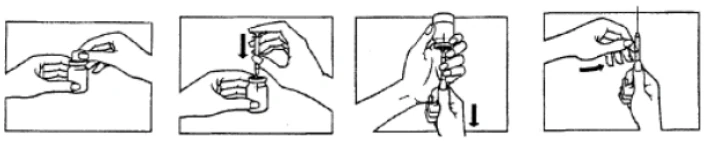
- 10. To prepare the INTRON A® solution, insert the needle through the rubber top of the INTRON A® vial and gently place the needle top against the glass wall of the vial.
- 11. Slowly inject the diluent, aiming the stream of liquid at the glass wall of the vial in order to avoid production of air bubbles.
- 12.
Do not aim the stream at the white powder at the bottom of the vial.
- 13. Remove needle, replace needle cap on needle and place syringe on a flat surface.
- 14. To dissolve the white contents, swirl the vial of INTRON A® with a gentle rotatory motion until the contents are completely dissolved. Do not shake vial.
- 15. If air bubbles do form, wait until the solution has settled and all bubbles have risen to the top of the solution and disappeared before injecting the dose. The reconstituted solution is clear and colorless to light yellow in color.
Refer to the Administration of INTRON A® section for instructions on administering INTRON A®.
Use of the INTRON A® Ready-to-Use Solution (Albumin (human) free)
- 1. With pencil or pen, write the discard date in the space provided on the label; see the How to Store it section for the length of time that the solution may be stored before discarding.
- 2. Check solution for change in color, cloudiness, and expiry date.
- 3. Leave vial at room temperature for ten minutes. Do not shake.
- 4. Wash your hands thoroughly with soap and water, rinse, and towel dry.
- 5. Remove the protective plastic cap from vial, leaving the rubber stopper and aluminium ring in place, and discard.
Refer to the Administration of INTRON A® section for instructions on administering INTRON A®.
Administration of INTRON A®
Filling the Syringe with INTRON A®
- Wipe top of vial with an alcohol swab.
- If syringe is cracked, or needle is bent-put into disposable bottle.
- Pull needle cap straight off. Fill syringe with air by pulling the plunger to the volume of INTRON A® to be withdrawn.
- With vial on flat surface, push needle through rubber stopper of INTRON A® vial and inject the air into the vial.
- With needle in vial, turn vial upside down making sure needle is in solution.
- Pull back plunger and slowly withdraw prescribed amount of solution into syringe. Check dose again.
(Note: It may be possible to withdraw greater than the prescribed amount of INTRON A® for injection from the vial. Withdraw only the prescribed amount).
- Remove needle from vial. Keep needle end up. Do not touch needle. Gently tap syringe to clear air bubbles. Gently push plunger to get rid of air from end of syringe.
- Replace the cover on the needle and put the syringe on a clean flat surface.
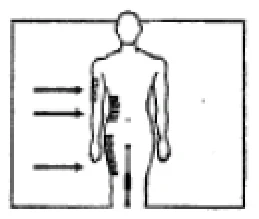
Selecting an Injection Site for subcutaneous injection
- Do not inject in area that is red or sore.
- Use the same site only once every six or seven weeks.
Injection sites:
Thighs, outer surface of upper arms, abdomen-except navel or below waistline.
Preparing to inject

- Using a circular motion, clean site with an alcohol swab (approximately for 10 seconds). Allow area to dry. (6)
- Remove the needle cap.
- Hold syringe between thumb and forefinger-like holding a pencil.
- With other hand grab skin where injection will be made.
- Hold needle at a 45 to 90 degree angle to the skin about 2 inches (5 cm) above the skin surface, insert the needle with a quick jab as if throwing a dart. The entire needle or at least 3/4 of it should go into the skin. (7)
- Pull back on plunger 1/4 of an inch. If you see blood in the syringe, do not inject. Withdraw and discard the syringe, prepare a new syringe and inject at a new site. If you do not see blood in the syringe, slowly push the plunger to inject the INTRON A®. (8)
- After injecting solution, pull out needle. Put alcohol swab over site for a few seconds. Do not press down. (9)
If needed, put on bandaid.
Cleaning up
- Do not put cover back on needle.
- Place empty syringe with needle in disposal bottle. Check with your nurse or pharmacist for proper disposal.
Intramuscular injection:
- INTRON A® may be administered intramuscularly providing you are taught by your doctor to administer by this route.
Keep out of reach of children.
Overdose:
| In case of drug overdose, contact a health care practitioner, hospital emergency department or regional Poison Control Centre immediately, even if there are no symptoms. |
Missed Dose:
If you are self-administering treatment, or if you are the caregiver, inject the recommended dose as soon as you remember and continue treatment as usual. Do not take a double dose to make up for a forgotten dose. If you are scheduled to inject this product every day, and you accidentally missed a full day’s dose, continue treatment at the usual dose the following day. Contact your doctor or pharmacist if needed.
SIDE EFFECTS AND WHAT TO DO ABOUT THEM
Like all medicines, INTRON A® can cause side effects, although not everybody gets them. Although not all of these side effects may occur, they may need medical attention if they do.
Contact your doctor immediately if you have a severe allergic reaction (which may include swelling of the hands, feet, ankles, face, lips, mouth, or throat which may cause difficulty in swallowing or breathing; wheezing, hives or fainting). Cases of acute hypersensitivity reactions have been reported.
The most frequently reported side effects, especially at the beginning of treatment with INTRON A®, have been fever, fatigue, headache and muscle aches joint pain and chills/rigors (flu-like symptoms). Your doctor may recommend you take acetaminophen if you develop these symptoms. Fever and fatigue have been reversible within 72 hours of interruption or cessation of treatment and were dose related. While fever may be related to these “flu-like” symptoms, other causes of persistent fever should be excluded.
Check with your doctor immediately if any of the following side effects occur:
- chest pain or persistent and severe cough
- irregular or rapid heartbeat
- breathing problems (including shortness of breath)
- confusion
- altered mental status
- feeling depressed or wanting to harm yourself (suicidal thoughts or attempts)
- hallucinations
- changed behaviour or aggressive behaviour (sometimes directed against others)
- nervousness or agitation
- numbness or tingling feeling or pain in hands or feet
- dizziness
- impaired consciousness or loss of consciousness
- convulsion ("seizure or fit")
- trouble sleeping, thinking or concentrating or difficulty remaining alert
- severe stomach pain or cramps
- blood or clots in stool (or black, tarry stool)
- fever or chills beginning after a few weeks of treatment
- nausea and vomiting
- diarrhea or constipation
- severe nosebleed
- waxy pallor
- pain in your lower back or side
- muscle pain or joint pain (sometimes severe)
- difficulty or inability to pass urine
- feeling tired (low thyroid gland activity)
- high sugar level in blood
- problems with your eyes or your eyesight or hearing, loss of hearing
- bleeding gums (periodontal) or dental disorders
- loss of appetite or taste alteration
- severe or painful reddening of your skin or mucous membrane
Your doctor will test your blood to ensure that your white blood cell (cells that fight infection) and red blood cell (cells that carry oxygen) counts, platelets (blood clotting cells) and other laboratory values are at acceptable levels.
Tell your doctor as soon as possible if you have any of the following side effects (medical attention may be required):
Very commonly reported side effects (at least 1 in every 10 patients):
Pain, swelling and redness or skin damage at site of injection, hair loss, dizziness, changes in appetite, stomach or abdominal pains, diarrhea, nausea (feeling sick), viral infection, depression, emotional lability, insomnia, anxiety, sore throat and painful swallowing, fatigue, chills/rigors, fever, flu-like reaction, feeling of general discomfort, headaches, weight loss, vomiting, irritability, weakness, mood swings, coughing (sometimes severe), shortness of breath, itching, dry skin, rash, sudden and severe muscle pain, joint pain, musculoskeletal pain, and changes in laboratory blood values including decreased white blood cell count.
Commonly reported side effects (at least 1 in every 100 patients, but less than 1 in every 10 patients):
Thirst, dehydration, high blood pressure, migraines, swollen glands, flushing, menstrual problems, decreased sexual drive, vaginal problem, breast pain, pain in testicle, problems with thyroid gland, red gums, dry mouth, red or sore mouth or tongue, tooth ache or tooth disorder, herpes simplex (fever blisters), taste change, upset stomach, dyspepsia (heartburn), constipation, enlargement of liver (liver problems, sometimes severe), loose stools, bedwetting in children, inflammation of the sinuses, bronchitis, eye pain, problem with your tear ducts, conjunctivitis (“pink eye”), agitation, sleepiness, sleepwalking, problem with behaviour, nervousness, stuffy or runny nose, sneezing, rapid breathing, pale or reddened skin, bruising, fingers and toes very sensitive to cold, problem with skin or nails, psoriasis (new or worsened), increased sweating, increased need to pass urine, fine shaking movements, decreased sensitivity to touch, and arthritis.
Rarely reported side effects (at least 1 in every 10,000 patients, but less than 1 in every 1,000 patients):
Pneumonia and new or worse high blood pressure in the lungs (pulmonary hypertension)
Very rarely reported side effects (less than 1 in every 10,000 patients):
Low blood pressure, puffy face, diabetes, leg cramps, back pain, kidney problems, nerve damage, bleeding gums, aplastic anemia. Pure red cell aplasia, a condition where the body stopped or reduced the production of red blood cells, has been reported. This causes severe anemia, symptoms of which would include unusual tiredness and a lack of energy.
Very rarely sarcoidosis, (a disease characterised by persistent fever, weight loss, joint pain and swelling, skin lesions and swollen glands) has been reported. Loss of consciousness has occurred very rarely, mostly in elderly patients treated at high doses. Cases of stroke (cerebrovascular events) have been reported.
Vogt-Koyanagi-Harada syndrome (an autoimmune inflammatory disorder affecting the eyes, skin and the membranes of the ears, brain and spinal cord), thoughts about killing others, and blindness have been reported with INTRON A® use.
Other side effects not listed above may also occur in some patients. If any of the side effects gets serious, or if you notice any side effects not listed in this leaflet, please tell your doctor or pharmacist.
This is not a complete list of side effects. For any unexpected effects while taking INTRON A®, contact your doctor or pharmacist.
HOW TO STORE IT
INTRON A® Lyophilized Powder
Before reconstitutiona, INTRON A® should be stored in the refrigerator at 2°C to 8°C. For the purpose of transport, the non-reconstituted product can be kept at room temperature (up to 25°C) for a period up to four weeks before use. If the product is not reconstituted during the four-week period, it cannot be put back in the refrigerator for a new storage period and should be discarded.
Upon reconstitution with Sterile Water for Injection, the solution is clear and colorless to light yellow in color. The solution must be used immediately; although not recommended, it may be stored for 24 hours at 2°C to 8°C.
Unused portion should be discarded.
INTRON A® should not be frozen.
INTRON A® Ready-to-Use-Solution (Albumin (human) free)
- 10 million IU vials: After first use, any unused solution is stable for 7 days maximum when refrigerated at 2 - 8°C
- 18 and 25 million IU vials: After first use, the solution is stable four weeks maximum when refrigerated at 2 - 8°C. Any solution remaining after four weeks must be discarded.
For the purpose of transport, the solution can be kept at room temperature (up to 25°C) for a period up to seven days before use. INTRON A® Ready-to-Use Solution (Albumin (human) free) can be put back in the refrigerator at any time during this seven-day period. If the product is not used during the seven-day period, it cannot be put back in the refrigerator for a new storage period and should be discarded.
INTRON A® Injectable Solution is clear and colorless.
INTRON A® should not be frozen. Frozen storage of the filled syringes is not recommended.
Always check the expiration date; never use after the expiration date.
a Reconstituting means adding a liquid (diluent) to a dry powder.
REPORTING SIDE EFFECTS
You can help improve the safe use of health products for Canadians by reporting serious and unexpected side effects to Health Canada. Your report may help to identify new side effects and change the product safety information. 3 ways to report: -----------------------------------------------------------------------
Postage paid labels and the Consumer Side Effect Reporting Form are available at MedEffect. NOTE: Contact your health professional if you need information about how to manage your side effects. The Canada Vigilance Program does not provide medical advice. |
MORE INFORMATION
If you want more information about INTRON A®:
- Talk to your healthcare professional
- Find the full product monograph that is prepared for healthcare professionals and includes this Patient Medication Information (or Consumer Information) by visiting the Health Canada website or Merck Canada website www.merck.ca or by calling Merck Canada at 1-800-567-2594
To report an adverse event related to INTRON A®, please contact 1-800-567-2594.
® MSD International Holdings GmbH. Used under license.
*All other trademarks are the property of their respective owners.
© 2011, 2019 Merck Canada Inc. All rights reserved.