


Patient Medication Information: uses, side effects, how to take - Infergen
ABOUT THIS MEDICATION
What the medication is used for:
Infergen® [9 mcg three times per week (TIW)] is
indicated for the treatment of chronic hepatitis C virus (HCV) infection in patients 18 years of age or older with compensated liver disease who have anti-HCV serum antibodies and/or the presence of HCV RNA. Other causes of hepatitis, such as viral hepatitis B or autoimmune hepatitis, should be ruled out prior to initiation of therapy with Infergen®.
Infergen® [15 mcg three times per week (TIW)] is also
indicated for the retreatment of chronic HCV infection in patients 18 years of age or older with compensated liver disease who have anti-HCV serum antibodies and/or the presence of HCV RNA who have failed to respond or relapsed after prior administration of an interferon alpha.
What it does:
Infergen® has been prescribed for you by your health professional because you have chronic hepatitis C virus infection (previously referred to as non-A, non-B hepatitis). Many patients with hepatitis C can be treated with interferons. Interferons are natural proteins produced by your body in response to a stimuli, such as infections caused by a virus. Interferons stimulate the body’s immune system to fight these viral infections. Your health professional has prescribed Infergen® which is a man-made form of interferon. Infergen® works like the natural interferons produced by your body to fight the virus.
When it should not be used:
Patients with known hypersensitivity to alpha
interferons, to E. Coli-derived products, or to any component of the product.
Patients with decompensated hepatic disease and
autoimmune hepatitis should not be treated with Infergen®, and patients who develop symptoms of hepatic decompensation, such as jaundice, ascites, coagulopathy, or decreased serum albumin, should halt further interferon therapy.
What the medicinal ingredient is:
The medicinal ingredient is interferon alfacon-1.
What the important non-medicinal ingredients are:
Sodium chloride and sodium phosphate. For a full listing of non-medicinal ingredients see Part 1 of the product monograph.
What dosage forms it comes in:
Suspension for Injection, 9 mcg (0.3 mL), 15 mcg (0.5mL)
WARNINGS AND PRECAUTIONS
NG
Serious Warnings and Precautions
Alfa interferons, cause or aggravate fatal or life-threatening neuropsychiatric, autoimmune, ischemic, and infectious disorders.
Patients should be monitored closely with periodic clinical and laboratory evaluations. Patients with persistently severe or worsening signs or symptoms of these conditions should be withdrawn from therapy. In many cases, but not all cases, these disorders resolve after stopping interferon therapy. See Immune and Psychiatric sections in Part I of the Product Monograph.
BEFORE you use Infergen® talk to your health professional if you have one or more of the following conditions:
- depression or anxiety
- sleep problems
drug or alcohol addiction or abuse
- high blood pressure
- heart problems
- liver problems (other than HCV)
- autoimmune disease such as psoriasis, systemic lupus erythematosus (SLE), rheumatoid arthritis, thyroiditis, and interstitial nephritis
- thyroid problems
- diabetes
- colitis (an inflammation of the bowels)
- cancer
- hepatitis B infection
- HIV infection
- kidney problems
- blood disorders
- taking a medication that suppresses your immune system
are pregnant or breast feeding
- planning to become pregnant
INTERACTIONS WITH THIS MEDICATION
No formal drug interaction studies have been conducted with Infergen®. Infergen® should be used cautiously in patients who are receiving agents that are known to cause myelosuppression or with agents known to be metabolized via the cytochrome P-450 pathway. Patients taking drugs that are metabolized by this pathway should be monitored closely for changes in the therapeutic and/or toxic levels of concomitant drugs.
An increased risk of developing peripheral neuropathy cannot be ruled out for treatments combining telbivudine with any alfa interferon products (standard or pegylated types). Development of peripheral neuropathy was reported in a small clinical trial in 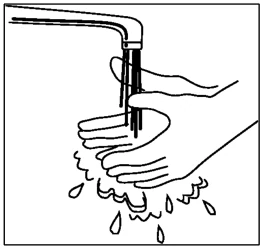
Hepatitis B investigating the use of both 600 mg daily of telbivudine and 180 micrograms once weekly by subcutaneous administration of pegylated interferon alfa-2a. This risk might occur when the drug is used with interferon products other than pegylated interferon alfa-2a. The safety and efficacy of telbivudine in combination with interferon alfa has not been established in patients; therefore, telbivudine in combination with alpha interferons is not recommended.
PROPER USE OF THIS MEDICATION
IMPORTANT: TO HELP AVOID CONTAMINATION AND POSSIBLE INFECTION DUE TO INJECTION, FOLLOW THESE INSTRUCTIONS EXACTLY.
You should only use disposable syringes and needles because they do not require sterilization; they should be used once and disposed of as instructed by your health professional. Vials of Infergen® are for single use only. Any unused portion of a vial should not be used. The Infergen® solution in the vial should always be clear and colorless. Do not use Infergen® if the contents of the vial appear discolored or cloudy, or if the vial appears to contain lumps, flakes, or particles.
Step-by-step guide to subcutaneous injection:
Step 1: Setting up for injection
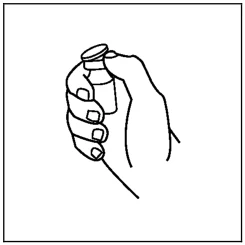
Inject at the same time each day. If you miss your dose by more than a few hours, contact your health professional. Find a comfortable, well-lit working place. Remove a vial of Infergen® from the refrigerator, check the date on the Infergen® vial to be sure that the drug has not expired, and allow the vial to reach room temperature. Each Infergen® vial is designed to be used only once; do not enter the vial more than once. DO NOT SHAKE THE VIAL VIGOROUSLY. Look at the liquid within the vial. If the medication has particles or is discolored, do not use it, and check with a health professional.
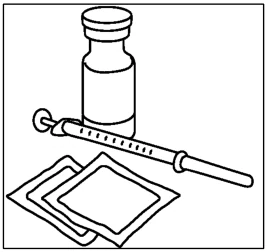
- 1. Assemble the supplies you will need for your injection - vial, sterile disposable syringe with needle, alcohol swabs, puncture-proof disposal container.
- 2. Clean your work area.
- 3.
Wash your hands thoroughly with soap and water before preparing the medication.
Step 2: Selecting and preparing the injection site
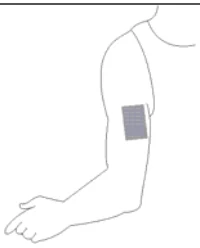
Always change the site for each injection as directed by your health professional. Occasionally a problem may develop at the injection site. If you notice a lump, swelling, or bruising that does not go away, contact your health professional.
- 4.
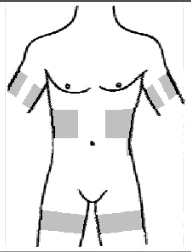
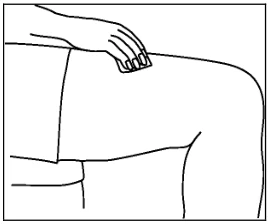
Find the site for injection.
a. Back of the upper arms (if someone is giving you the injection)
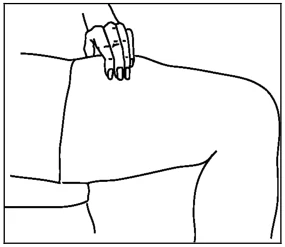
b. Abdomen, except for the navel and waist c. Upper thighs
- 4.
Alternate the injection site each time you inject to avoid soreness at any one site.
- 5. Clean the injection site with an alcohol swab. Use circular motions from the inside to the outside. Keep the used alcohol swab nearby.
Step 3: Preparing the dose
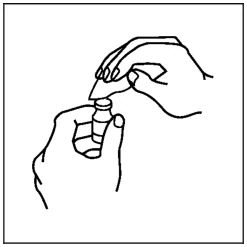
- 6. Remove the colored cap from the vial, exposing the rubber stopper.
- 7. Clean the rubber stopper with a fresh alcohol swab, then cover the stopper with the swab.
- 8. Check the syringe’s package. If the syringe package has been opened or damaged, do not use that syringe; dispose of it in the puncture-proof disposal container. If the syringe package is undamaged, open the package and remove the syringe.
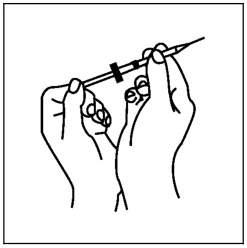
- 9. Remove the needle cover, pull back the plunger and draw air into the syringe. The amount of air drawn into the syringe should be the same volume as the dose of medication your health professional has prescribed.
- 10. While keeping the vial on a flat surface, insert the needle straight through the rubber stopper.
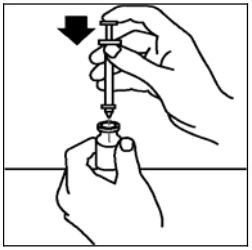
- 11. Push the plunger of the syringe down to inject air into the vial. The air injected into the vial will allow Infergen® to be easily withdrawn from the vial into the syringe.
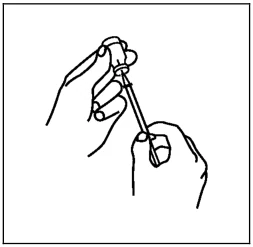
- 12. Keeping the needle in the vial, turn the vial upside down and make sure that the tip of the needle is within the liquid medication.
- 13.
Slowly pull back on the plunger and let the medication enter the syringe, filling it to the dose your health professional prescribed.
- 14. With the syringe still in the vial, check for air bubbles in the syringe. Air bubbles are harmless but can reduce the dose you should be receiving. To remove the air bubbles, gently tap the syringe until the bubbles rise to the top of the syringe barrel. Then push the plunger, forcing the air out of the syringe, and once again pull the plunger back to the number that correctly matches the amount of your dose. Double check for air bubbles. Repeat this procedure if necessary.
- 15. Double check to make sure you have drawn up the correct dose.
- 16. Take the needle out of the vial and hold the syringe in the hand that you will use to inject yourself. Do not lay the syringe down or allow the needle to touch anything.
Step 4: Injecting the dose
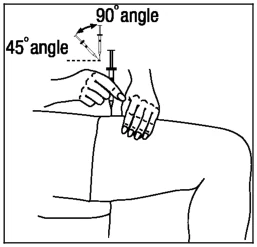
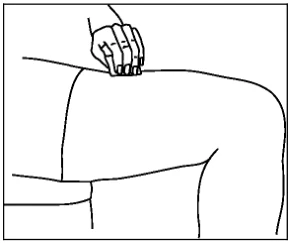
- 17. Use the other hand to pinch a fold of skin at the previously prepared injection site.
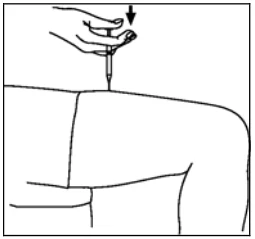
- 18. Hold the syringe the way you would hold a pencil and insert the needle either straight up and down (90 degree angle) or at a slight angle (45 degrees) to the skin.
- 19. After the needle is in, let go of the skin. Pull the plunger back slightly. If blood appears, do not inject Infergen®, because the needle has entered a blood vessel. Withdraw the syringe and inject in a different place. Repeat this procedure at the second site, checking for blood before injecting.
- 20. If no blood appears, slowly push down on the plunger all the way, until all the medication is gone from the syringe.
- 21. As you pull the needle out of the skin, place the alcohol swab over the injection site, then press for several seconds.
- 22. Use the disposable syringe only once to insure sterility of the syringe and needle, and to insure accuracy of the dose. Dispose of syringes and needles as directed by your health professional, or by following these simple steps:
Place all used needles and syringes in a hard plastic container, or a metal container with a plastic lid. Do not use glass or clear plastic containers, or any container that will be recycled or returned to a store. Always store the container out of the reach of children.
Properly label the container to indicate its contents. If a metal container (such as a coffee can with a plastic lid) is used, cut a small hole in the plastic lid and tape the lid onto the metal container. When the container is full, cover the hole and dispose of the container according to your health professional’s instructions.
If an opaque (do not use clear plastic), hard plastic container with a screw-on cap is used, always screw the cap on tightly after each use. When the container is full, tape around the cap or lid and dispose of the container according to your health professional’s instructions.
Please check with your health professional for other suggestions for disposal, since there may be special provincial and local laws that they will discuss with you.
Usual dose:
Initial Treatment: The recommended dose of Infergen® for initial treatment of chronic HCV infection is 9 mcg three times a week (TIW) administered SC as a single injection for up to 24 weeks. At least 48 hours should elapse between doses of Infergen®.
Retreatment: Patients who tolerated previous interferon therapy and did not respond or relapsed following its discontinuation may be retreated with 15 mcg of Infergen® TIW for up to 48 weeks.
Dose Reduction
Initial Treatment: For patients who experience a severe adverse reaction on initial Infergen® therapy, dosage should be withheld temporarily. If the adverse reaction becomes tolerable, therapy should be reinstituted, a dose reduction to 7.5 mcg may be considered. If the adverse reaction does not become tolerable, therapy should be discontinued. In the pivotal study, 11% of patients (26/231) who initially received Infergen® at a dose of 9 mcg (0.3 mL) were dose-reduced to 7.5 mcg (0.25 mL). If adverse reactions continue to occur at the reduced dosage, the health professional may discontinue treatment or reduce dosage
further. However, decreased efficacy may result from continued treatment at dosages below 7.5 mcg.
Retreatment: During retreatment with 15 mcg of Infergen®, up to 36% of patients required dose reductions in 3 mcg increments. The majority of these patients required only one dose reduction.
Overdose:
In Infergen® trials, the maximum overdose reported was a dose of 150 mcg Infergen® administered subcutaneously in a patient enrolled in a phase 1 advanced malignancy trial. The patient received 10 times the prescribed dosage for 3 days. The patient experienced a mild increase in anorexia, chills, fever, and myalgia. Increases in ALT (15 to 127 IU/L), aspartate transaminase (AST) (15 to 164 IU/L), and lactic dehydrogenase (LDH) (183 to 281 (IU/L) were reported. These laboratory values returned to normal or to the patient’s baseline values within 30 days.
In case of drug overdose, contact a health care practitioner, hospital emergency department or regional Poison Control Centre immediately, even if there are no symptoms.
Missed Dose:
If you miss a dose of Infergen®, give yourself an injection as soon as you remember and then call your health professional. Do not take your next scheduled dose until you have been told what you should do by your health professional.
SIDE EFFECTS AND WHAT TO DO ABOUT THEM
Although Infergen® is generally well tolerated, some side effects may occur.
As with other interferons, some patients may experience depression, particularly if they have a prior history of having depression. If you feel depressed (excessively sad) or have suicidal thoughts, inform your health professional immediately.
If you have muscle aches, fevers, headache, increased sweating, or unusual tiredness, tell your health professional. Your health professional may suggest that you take non-prescription pain relievers to relieve some of these symptoms.
Patients occasionally experience redness, swelling, or itching at the site of injection of Infergen®. If you experience a local reaction, consult your health professional.
If you experience a rash over your whole body, shortness of breath, wheezing, reduced blood pressure, fast pulse, or sweating, stop taking Infergen® and contact a health professional or emergency medical personnel immediately. Such symptoms may mean that you are allergic to Infergen®, and severe cases of this type of allergy may be life-threatening. If you think you are having a generalized allergic reaction, stop taking Infergen® and notify a health professional or emergency medical personnel immediately.
Changes in vision such as a decrease or loss of vision (blindness) may happen in some patients. You should have an eye exam before you take Infergen®. If you have eye problems or have had them in the past you may need eye exams while you are taking Infergen®. Tell your health professional immediately if you have changes in your vision.
In addition, there may be changes in certain blood components. To monitor these changes your health professional will order periodic blood tests.
Infergen® can cause serious side effects including:
- mental health problems
- blood problems
- heart problems
- autoimmune problems
- body organ problems
Infergen® can cause serious allergic reactions. Stop Infergen® and get medical treatment right away if you have:
- hives
- swelling around your eyes or lips
- swelling in your mouth or throat
- trouble breathing
- nerve problems
Some of the common but less serious side effects with Infergen® include:
Flu-like symptoms – Infergen® causes “flu-like”
symptoms in most patients. Symptoms include headache, muscle aches, tiredness, chills and fever that usually lessen after the first few weeks of therapy. If you inject your Infergen® dose at bedtime, you may be able to sleep through the symptoms. You may also take a fever and pain reducer such as acetaminophen or ibuprofen, to help relieve or reduce the flu-like symptoms.
Tiredness (fatigue) – Infergen® causes extreme tiredness
in many patients.
Upset stomach - Nausea, loss of appetite, diarrhea and
weight loss may happen.
Blood sugar problems – Infergen® may affect blood
sugar levels and cause high blood sugar or diabetes.
Skin reactions at the injection site - Redness, rash,
itching, a lump, swelling, or bruising that does not go away may happen at the site of injection. Call your health professional if these symptoms do not go away after several days.
Hair thinning - Hair thinning may happen during
Infergen® treatment, but hair loss stops and hair growth returns after you stop taking Infergen®.
These are not all of the side effects of Infergen®. Your health professional can give you a more complete list that has all the side effects.
HOW TO STORE IT
Infergen® should always be stored in the refrigerator, at 2 ºC to 8 ºC, but not in the freezer compartment. Do not let the vial freeze or leave it in direct sunlight. Do not use a vial of Infergen® that has been frozen or after the expiration date stamped on the label. If you think that the Infergen® has been frozen or left in direct sunlight, do not use it, and contact your health professional for further instructions. For instructions on how to transport Infergen®, contact your health professional.
Reporting Suspected Side Effects
| You can report any suspected adverse reactions associated | |
| with the use of health products to the Canada Vigilance | |
| Program by one of the following 3 ways: | |
| Report online at www.healthcanada.gc.ca/medeffect | |
| Call toll-free at 1-866-234-2345 | |
| Complete a Canada Vigilance Reporting Form and: | |
| Fax toll-free to 1-866-678-6789, or | |
| Mail to: | |
| Canada Vigilance Program | |
| Health Canada | |
| Postal Locator 0701D | |
| Ottawa, Ontario | |
| K1A 0K9 | |
| Postage paid labels, Canada Vigilance Reporting Form and the | |
| adverse reaction reporting guidelines are available on the | |
| MedEffect™ Canada Web site at | |
| www.healthcanada.gc.ca/medeffect. | |
| NOTE: Should you require information related to the | |
| management of side effects, contact your health professional. | |
| The Canada Vigilance Program does not provide medical | |
| advice. | |
MORE INFORMATION
This document plus the full product monograph, prepared for health professionals can be found at:
http://www.invaron.ca
or by contacting the sponsor, Invaron Pharmaceuticals, at: 1-877-377-7862.