


Product Monograph - GLN-Posaconazole
RECENT MAJOR LABEL CHANGES
Not applicable
TABLE OF CONTENTS
Sections or subsections that are not applicable at the time of authorization are not listed.
RECENT MAJOR LABEL CHANGES ......................................................................................... 2
TABLE OF CONTENTS ............................................................................................................... 2
PART I: HEALTH PROFESSIONAL INFORMATION .................................................................. 4
1 INDICATIONS ................................................................................................................ 4
1.1 Pediatrics ................................................................................................................... 4
1.2 Geriatrics .................................................................................................................... 4
2 CONTRAINDICATIONS ................................................................................................ 4
3 SERIOUS WARNINGS AND PRECAUTIONS BOX ..................................................... 5
4 DOSAGE AND ADMINISTRATION ............................................................................... 5
4.1 Dosing Considerations ............................................................................................. 5
4.2 Recommended Dose and Dosage Adjustment ....................................................... 5
4.4 Administration ........................................................................................................... 6
4.5 Missed Dose .............................................................................................................. 7
5 OVERDOSAGE ............................................................................................................. 7
6 DOSAGE FORMS, STRENGTHS, COMPOSITION AND PACKAGING ...................... 7
7 WARNINGS AND PRECAUTIONS ............................................................................... 8
7.1 Special Populations ................................................................................................ 10
7.1.1 Pregnant Women ...................................................................................... 10
7.1.2 Breast-feeding .......................................................................................... 10
7.1.3 Pediatrics .................................................................................................. 11
7.1.4 Geriatrics ................................................................................................... 11
8 ADVERSE REACTIONS .............................................................................................. 11
8.1 Adverse Reaction Overview ................................................................................... 11
8.2 Clinical Trial Adverse Reactions ............................................................................ 11
8.3 Less Common Clinical Trial Adverse Reactions .................................................. 16
8.4 Abnormal Laboratory Findings: Hematologic, Clinical Chemistry and Other Quantitative Data ........................................................................................................... 18
8.5 Post-Market Adverse Reactions ............................................................................ 18
9 DRUG INTERACTIONS ............................................................................................... 19
9.1 Serious Drug Interactions ...................................................................................... 19
9.2 Drug Interactions Overview .................................................................................... 19
9.3 Drug-Behavioural Interactions ............................................................................... 19
9.4 Drug-Drug Interactions ........................................................................................... 19
9.5 Drug-Food Interactions ........................................................................................... 29
9.6 Drug-Herb Interactions ........................................................................................... 30
9.7 Drug-Laboratory Test Interactions ........................................................................ 30
10 CLINICAL PHARMACOLOGY .................................................................................. 30
10.1 Mechanism of Action ............................................................................................ 30
10.2 Pharmacodynamics .............................................................................................. 30
10.3 Pharmacokinetics .................................................................................................. 31
11 STORAGE, STABILITY AND DISPOSAL ................................................................. 34
12 SPECIAL HANDLING INSTRUCTIONS .................................................................... 34
PART II: SCIENTIFIC INFORMATION ....................................................................................... 35
13 PHARMACEUTICAL INFORMATION ....................................................................... 35
14 CLINICAL TRIALS .................................................................................................... 35
14.2 Comparative bioavailability studies .................................................................... 39
15 MICROBIOLOGY ....................................................................................................... 40
16 NON-CLINICAL TOXICOLOGY ................................................................................ 45
17 SUPPORTING PRODUCT MONOGRAPHS ............................................................. 46
PATIENT MEDICATION INFORMATION .................................................................................. 47
PART I: HEALTH PROFESSIONAL INFORMATION
1 INDICATIONS
GLN-POSACONAZOLE (posaconazole) delayed-release tablets are indicated for:
- Prophylaxis of Aspergillus and Candida infections in patients who are at high risk of developing these infections, such as patients with prolonged neutropenia or hematopoietic stem cell transplant (HSCT) recipients.
- Treatment of invasive aspergillosis in patients with disease that is refractory to amphotericin B or itraconazole, or in patients who are intolerant of these medicinal products. Refractoriness is defined as progression of infection or failure to improve after a minimum of 7 days of prior therapeutic doses of effective antifungal therapy.
Limited data on other fungal infections appears in the Clinical Trials section of the product monograph.
GLN-POSACONAZOLE delayed-release tablets are indicated in patients 13 years of age and older.
1.1 Pediatrics
Pediatrics (13 - 17 years of age): Safety and effectiveness in pediatric subjects below the age of 13 years have not been studied.
1.2 Geriatrics
Geriatrics (≥65 years of age): Limited evidence from clinical studies and experience suggests that use in the geriatric population is associated with no overall differences in safety or effectiveness.
2 CONTRAINDICATIONS
- Patients who are hypersensitive to this drug or to any ingredient in the formulation or component of the container. For a complete listing, see the Dosage Forms, Composition and Packaging section of the product monograph. There is no information regarding cross- sensitivity between posaconazole and other azole antifungal agents. Caution should be used when prescribing GLN-POSACONAZOLE to patients with hypersensitivity to other azoles.
- Co-administration of GLN-POSACONAZOLE and ergot alkaloids. Posaconazole may increase the plasma concentrations of ergot alkaloids, which may lead to ergotism (see 9 DRUG INTERACTIONS).
- Co-administration of GLN-POSACONAZOLE and certain medicinal products metabolized through the CYP3A4 system: terfenadine, astemizole, cisapride, pimozide and quinidine. Although not studied in vitro or in vivo, co-administration of these CYP3A4 substrates may result in increased plasma concentrations of those medicinal products, leading to potentially serious and/or life threatening adverse events, such as QT prolongation and rare occurrences of torsade de pointes (see 9 DRUG INTERACTIONS).
- Co-administration of GLN-POSACONAZOLE and HMG-CoA reductase inhibitors (statins) that are primarily metabolized through CYP3A4, since increased plasma concentration of these drugs can lead to rhabdomyolysis.
- Co-administration of GLN-POSACONAZOLE and sirolimus. Concomitant administration of GLN-POSACONAZOLE with sirolimus increases the sirolimus blood concentrations by approximately 9-fold and can result in sirolimus toxicity.
3 SERIOUS WARNINGS AND PRECAUTIONS BOX
Serious Warnings and Precautions
4 DOSAGE AND ADMINISTRATION
4.1 Dosing Considerations
|
|---|
4.2 Recommended Dose and Dosage Adjustment
Recommended Dose
Table 1 - Dosing for GLN-POSACONAZOLE Delayed-Release Tablet
| Indication | Dose and Duration of Therapy |
|---|---|
| Prophylaxis of Invasive Fungal Infections (IFIs) | Loading dose of 300 mg (three 100 mg tablets) twice a day on the first day, then 300 mg (three 100 mg tablets) once a day thereafter. Each dose may be taken without regard to food intake. The duration of therapy is based on recovery from neutropenia or immunosuppression. |
| For patients with acute myelogenous leukemia (AML) or myelodysplastic syndromes (MDS), prophylaxis with posaconazole should start several days before the anticipated onset of neutropenia and continue for 7 days after the neutrophil count rises above 500 cells per mm3. | |
| Treatment of Refractory IFIs / Intolerant Patients with IFIs | Loading dose of 300 mg (three 100 mg tablets) twice a day on the first day, then 300 mg (three 100 mg tablets) once a day thereafter. Duration of therapy should be based on the severity of the underlying disease, recovery from immunosuppression, and clinical response. |
Dosage Adjustment
Use in Renal Impairment
The pharmacokinetics of posaconazole oral suspension are not significantly affected by renal impairment. Therefore, no dose adjustment is necessary for oral dosing in patients with mild to severe renal impairment. However, due to the variability in exposure with posaconazole oral therapy, patients with severe renal impairment should be monitored closely for breakthrough fungal infections (see 7 WARNINGS AND PRECAUTIONS and 10 CLINICAL PHARMACOLOGY).
Use in Hepatic Impairment
There are limited pharmacokinetic data in patients with hepatic insufficiency; therefore, no recommendation for dose adjustment can be made. In the small number of subjects studied who had hepatic insufficiency, there was an increase in half-life with a decrease in hepatic function (see 10 CLINICAL PHARMACOLOGY). Use with caution in patients with severe hepatic impairment (see 10 CLINICAL PHARMACOLOGY).
Use in Pediatrics (13 - 17 years)
A total of 11 patients 13 - 17 years of age were treated with 800 mg/day posaconazole oral suspension in a study for IFIs. Additionally, 12 patients 13 - 17 years of age received 600 mg/day of posaconazole oral suspension for prophylaxis of IFIs (studies C/I98-316 and P01899). The safety profile in these patients < 18 years of age appears similar to the safety profile observed in adults. Based on pharmacokinetic data in 10 of these pediatric patients, the pharmacokinetic profile appears to be similar to patients ≥ 18 years of age (see 10 CLINICAL PHARMACOLOGY).
4.4 Administration
GLN-POSACONAZOLE Delayed-Release Tablets
GLN-POSACONAZOLE delayed-release tablets and posaconazole oral suspension are NOT interchangeable due to the differences in the dosing of each formulation. Follow the specific dosage recommendations for each of these formulations.
GLN-POSACONAZOLE delayed-release tablets are intended for oral administration only.
GLN-POSACONAZOLE delayed-release tablets are specially designed for release in the small intestine.
They should be swallowed whole, and should not be divided, crushed or chewed.
4.5 Missed Dose
If a dose of this medication is missed, it should be taken as soon as possible. This will help to keep a constant amount of medication in the blood. However, if it is almost time for the next dose, it might be better to skip the missed dose and to go back to the regular dosing schedule.
5 OVERDOSAGE
There is no experience with overdosage of posaconazole delayed-release tablets.
During clinical trials, patients who received posaconazole oral suspension doses up to 1,600 mg/day had no noted adverse reactions different from those reported with patients at the lower doses. In addition, accidental overdose was noted in one patient who took 1,200 mg BID posaconazole oral suspension for 3 days. No adverse reactions were noted by the investigator.
In a trial of patients with severe hemodialysis-dependent renal dysfunction (Clcr < 20 mL/min), posaconazole was not removed by hemodialysis.
Activated charcoal may be used to remove unabsorbed drug.
| For management of a suspected drug overdose, contact your regional poison control centre. |
|---|
6 DOSAGE FORMS, STRENGTHS, COMPOSITION AND PACKAGING
Table 2 – Dosage Forms, Strengths, Composition and Packaging
Route of Administration | Dosage Form / Strength | Non-medicinal Ingredients |
|---|---|---|
| oral | delayed-release tablets, 100 mg posaconazole | Colloidal silicon dioxide, croscarmellose sodium, hydroxypropylcellulose, hypromellose acetate succinate, magnesium stearate, microcrystalline cellulose, talc, Opadry II Beige [consists of the following ingredients: iron oxide red, iron oxide yellow, Macrogol/PEG 3350 (polyethylene glycol 3350), polyvinyl alcohol partially hydrolyzed, titanium dioxide and talc]. The imprinting ink consist of ammonium hydroxide, ferrosoferric oxide, isopropyl alcohol, N-butyl alcohol, propylene glycol and shellac glaze. |
GLN-POSACONAZOLE Delayed-Release Tablets
GLN-POSACONAZOLE delayed-release tablet is a yellow colored film-coated, oblong-shaped tablet debossed with "G 345" on one side. Each tablet contains 100 mg of posaconazole and the following inactive ingredients: Colloidal silicon dioxide, croscarmellose sodium, hydroxypropylcellulose, hypromellose acetate succinate, magnesium stearate, microcrystalline cellulose, talc, Opadry II Beige [consists of the following ingredients: iron oxide red, iron oxide yellow, Macrogol/PEG 3350 (polyethylene glycol 3350), polyvinyl alcohol partially hydrolyzed, titanium dioxide and talc]. The imprinting ink consist of ammonium hydroxide, ferrosoferric oxide, isopropyl alcohol, N-butyl alcohol, propylene glycol and shellac glaze.
White HDPE bottle with a child-resistant closure. Each 120 mL bottle contains 60 tablets.
7 WARNINGS AND PRECAUTIONS
Please see 3 SERIOUS WARNINGS AND PRECAUTIONS BOX.
General
Oral Formulations: GLN-POSACONAZOLE delayed-release tablets are not interchangeable with the oral suspension or intravenous solution of posaconazole (see 4 DOSAGE AND ADMINISTRATION).
Posaconazole plasma concentrations following administration of posaconazole tablets are generally higher than those obtained with posaconazole oral suspension. Posaconazole plasma concentrations following administration of posaconazole tablets may increase over time in some patients. Safety data at higher exposure levels achieved with posaconazole tablets are limited (see 10 CLINICAL PHARMACOLOGY).
Hypersensitivity: There is no information regarding cross-sensitivity between posaconazole and other azole antifungal agents. Caution should be used when prescribing GLN-POSACONAZOLE to patients with hypersensitivity to other azoles.
No data on the effects of posaconazole on the ability to drive and use machines are available.
Carcinogenesis and Mutagenesis
Carcinogenicity studies did not reveal special hazards for humans. For information on animal data, see the Toxicology section of the product monograph.
Cardiovascular
Posaconazole has been associated with prolongation of the QT interval of the electrocardiogram (ECG) in some patients. Prolongation of the QT interval may increase the risk of arrhythmia.
Due to limited clinical experience, posaconazole should be administered with caution to patients with potentially proarrhythmic conditions such as congenital or acquired QTc prolongation, congestive heart failure, bradycardia, and acute myocardial ischemia. Electrolyte disturbances, especially those involving potassium, magnesium or calcium levels, should be monitored and corrected as necessary before and during GLN-POSACONAZOLE therapy.
Caution should be exercised if GLN-POSACONAZOLE is used in patients taking other drugs that may prolong the QT interval, such as antipsychotics, tricyclic antidepressants, methadone, erythromycin, Class IA (e.g., procainamide, quinidine) and Class III (e.g., amiodarone, sotalol) antiarrhythmic agents. Drugs metabolized by the hepatic cytochrome P450 isoenzyme CYP3A4 may be affected by posaconazole levels, with possible resulting QT effects. Such drugs include tacrolimus, HIV protease inhibitors and macrolide antibiotics (see 2 CONTRAINDICATIONS, 9 DRUG INTERACTIONS and 10 CLINICAL PHARMACOLOGY). During clinical development there was a single case of torsade de pointes in a patient taking posaconazole. This report involved a seriously ill patient with multiple confounding risk factors (see 8 ADVERSE REACTIONS, Less Common Clinical Trial Adverse Drug Reactions (< 2%)).
Dependence/Tolerance
There is no known abuse potential for posaconazole.
Hematologic
Rare cases of hemolytic uremic syndrome and thrombotic thrombocytopenic purpura have been reported primarily among patients who had been receiving concomitant cyclosporine or tacrolimus for management of transplant rejection or graft vs. host disease (GVHD).
Hepatic/Biliary/Pancreatic
Hepatic toxicity: In clinical trials, there were infrequent cases of hepatic reactions (e.g., mild to moderate elevations in ALT (Alanine aminotransferase), AST (Aspartate aminotransferase), alkaline phosphatase, total bilirubin, and/or clinical hepatitis) during treatment with posaconazole. The elevations in liver function tests were generally reversible on discontinuation of therapy, and in some instances these tests normalized without drug interruption and rarely required drug discontinuation. Rarely, more severe hepatic reactions including cholestasis or hepatic failure were reported in patients with serious underlying medical conditions (e.g., hematologic malignancy) during treatment with posaconazole.
Monitoring of hepatic function: Liver function tests should be evaluated at the start of and during the course of GLN-POSACONAZOLE therapy. Patients who develop abnormal liver function tests during GLN-POSACONAZOLE therapy should be monitored for the development of more severe hepatic injury. Patient management should include laboratory evaluation of hepatic function (particularly liver function tests and bilirubin). Discontinuation of GLN-POSACONAZOLE should be considered if clinical signs and symptoms are consistent with development of worsening liver disease.
Hepatic Impairment: GLN-POSACONAZOLE e should be used with caution in patients with severe hepatic impairment. Prolonged elimination half-life may lead to increased exposure.
Immune
Patients Taking Immunosuppressant: Cases of elevated cyclosporine levels resulting in rare serious adverse events, including nephrotoxicity and leukoencephalopathy, and death were reported in clinical efficacy studies. Dose reduction and more frequent clinical monitoring of cyclosporine and tacrolimus should be performed when GLN-POSACONAZOLE therapy is initiated (see 9 DRUG INTERACTIONS).
Neurologic
Vincristine Toxicity: Concomitant administration of azole antifungals, including posaconazole, with vincristine has been associated with neurotoxicity and other serious adverse reactions, including seizures, peripheral neuropathy, syndrome of inappropriate antidiuretic hormone secretion, and paralytic ileus. Reserve azole antifungals, including posaconazole, for patients receiving a vinca alkaloid, including vincristine, who have no alternative antifungal treatment options (see 9 DRUG INTERACTIONS).
Other
Venetoclax Toxicity: Concomitant administration of posaconazole with venetoclax (a CYP3A4 substrate) may increase venetoclax toxicities, including the risk of tumor lysis syndrome (TLS) and neutropenia (see 9 DRUG INTERACTIONS). Refer to the venetoclax Product Monograph for detailed guidance.
Renal
Renal impairment: Due to the variability in exposure with posaconazole oral therapy, patients with severe renal impairment should be monitored closely for breakthrough fungal infections (see 4 DOSAGE AND ADMINISTRATION and 10 CLINICAL PHARMACOLOGY).
7.1 Special Populations
7.1.1 Pregnant Women
There is insufficient information on the use of posaconazole in pregnant women. The extent of exposure in pregnancy during clinical trials is very limited. There are no adequate and well-controlled studies in pregnant women. Studies in animals have shown reproductive toxicity (see 16 NON-CLINICAL TOXICOLOGY). The potential risk to humans is unknown. Women of childbearing potential must always use adequate contraceptive measures while on treatment. GLN-POSACONAZOLE should be used in pregnancy only if the potential benefit justifies the potential risk to the fetus.
7.1.2 Breast-feeding
Nursing Women: Posaconazole is excreted into the milk of lactating rats (see 16 NON-CLINICAL TOXICOLOGY). The excretion of posaconazole in human breast milk has not been investigated. GLN-POSACONAZOLE should not be used by nursing mothers unless the benefit to the mother clearly outweighs the risk to the infant.
Hepatic Impairment: GLN-POSACONAZOLE should be used with caution in patients with severe hepatic impairment. Prolonged elimination half-life may lead to increased exposure.
Patients Taking Immunosuppressant: Cases of elevated cyclosporine levels resulting in rare serious adverse events, including nephrotoxicity and leukoencephalopathy, and death were reported in clinical efficacy studies. Dose reduction and more frequent clinical monitoring of cyclosporine and tacrolimus should be performed when GLN-POSACONAZOLE therapy is initiated (see 9 DRUG INTERACTIONS).
Vincristine Toxicity: Concomitant administration of azole antifungals, including posaconazole, with vincristine has been associated with neurotoxicity and other serious adverse reactions, including seizures, peripheral neuropathy, syndrome of inappropriate antidiuretic hormone secretion, and paralytic ileus. Reserve azole antifungals, including posaconazole, for patients receiving a vinca alkaloid, including vincristine, who have no alternative antifungal treatment options (see 9 DRUG INTERACTIONS).
7.1.3 Pediatrics
Safety and efficacy for posaconazole in pediatric patients less than 13 years of age have not been established.
7.1.4 Geriatrics
Evidence from clinical studies and experience suggests that safety and effectiveness of posaconazole are similar in geriatric and adult subjects.
8 ADVERSE REACTIONS
8.1 Adverse Reaction Overview
Posaconazole Delayed-Release Tablets
The safety of posaconazole delayed-release tablets has been assessed in 230 patients enrolled in the pivotal clinical study. Patients were enrolled in a non-comparative pharmacokinetic and safety trial of posaconazole delayed-release tablets when given as antifungal prophylaxis. Patients were immunocompromised with underlying conditions including hematological malignancy, neutropenia post-chemotherapy, GVHD, and post HSCT. posaconazole therapy was given for a median duration of 28 days. Twenty patients received 200 mg daily dose and 210 patients received 300 mg daily dose (following twice a day (BID) dosing on Day 1 in each cohort).
The posaconazole oral suspension formulation generally achieved lower steady state plasma Cmin levels of posaconazole than the delayed-release tablet formulation, with a maximum recorded average plasma Cmin level of 3,650 ng/mL. With the 300 mg tablet formulation, HSCT patients achieved higher average plasma Cmin levels of posaconazole, with 8% of HSCT subjects (6 patients) achieving average Cmin values ≥ 3,750 ng/mL and one patient achieving a measured posaconazole plasma level of 9,140 ng/mL. This did not appear to translate into increased safety issues, but the tablet clinical trial database is limited to 210 patients (300 mg once daily dose). The most frequently reported treatment-related adverse reactions with posaconazole delayed-release tablets 300 mg once daily (QD) were diarrhea and nausea.
The most frequently reported adverse reaction leading to discontinuation of posaconazole delayed- release tablets 300 mg QD was nausea.
8.2 Clinical Trial Adverse Reactions
Clinical trials are conducted under very specific conditions. The adverse reaction rates observed in the clinical trials; therefore, may not reflect the rates observed in practice and should not be compared to the rates in the clinical trials of another drug. Adverse reaction information from clinical trials may be useful in identifying and approximating rates of adverse drug reactions in real-world use.
Clinical Trial Safety Experience with Posaconazole Oral Delayed-Release Tablet
Study P05615
Study P05615 was a non-comparative multi-center study performed to evaluate the pharmacokinetic properties, safety, and tolerability of posaconazole delayed-release tablet. Study P05615 was conducted in a similar patient population to that previously studied in the pivotal posaconazole oral suspension clinical program.
Table 3: Treatment-related adverse reactions reported in Posaconazole Delayed-Release Tablet subjects treated with 300 mg daily dose reported at an incidence of ≥ 1% for the P05615 Study
| Adverse Reactions | Posaconazole Delayed-Release Tablet (300 mg) n=210 (%) |
|---|---|
| Cardiovascular | |
| Sinus bradycardia | 2 (1) |
| Gastrointestinal | |
| Abdominal discomfort | 2 (1) |
| Abdominal distension | 3 (1) |
| Abdominal pain | 9 (4) |
| Abdominal pain upper | 5 (2) |
| Constipation | 3 (1) |
| Diarrhea | 16 (8) |
| Dry mouth | 2 (1) |
| Dyspepsia | 5 (2) |
| Flatulence | 4 (2) |
| Gastritis | 2 (1) |
| Nausea | 23 (11) |
| Vomiting | 9 (4) |
| General and Administration Site Conditions | |
| Drug interaction | 2 (1) |
| Pyrexia | 2 (1) |
| Metabolism and Nutrition | |
| Decreased appetite | 2 (1) |
| Hypocalcemia | 3 (1) |
| Hypokalemia | 6 (3) |
| Hypomagnesemia | 3 (1) |
| Hypophosphatemia | 5 (2) |
| Musculoskeletal and Connective Tissue | |
| Pain in extremity | 2 (1) |
| Nervous System | |
| Headache | 2 (1) |
| Skin and Subcutaneous Tissue | |
| Pruritus | 2 (1) |
| Rash | 5 (2) |
| Rash macular | 2 (1) |
| Rash maculopapular | 2 (1) |
| Rash pruritic | 2 (1) |
| Investigations | |
| Alanine aminotransferase increased | 9 (4) |
| Aspartate aminotransferase increased | 8 (4) |
|---|---|
| Blood alkaline phosphatase increased | 3 (1) |
| Blood bilirubin increased | 3 (1) |
| Blood creatinine increased | 3 (1) |
| Electrocardiogram QT prolonged | 2 (1) |
| Hepatic enzyme increased | 2 (1) |
| Liver function test abnormal | 5 (2) |
Clinical Trial Safety Experience with Posaconazole Oral Suspension
Studies P01899 and C/I98-316
Study P01899 was a randomised, evaluator-blinded study that compared posaconazole oral suspension (200 mg three times a day (TID)) with fluconazole suspension (400 mg QD) or itraconazole oral solution (200 mg BID) as prophylaxis against IFIs in neutropenic patients who were receiving cytotoxic chemotherapy for acute myelogenous leukemia (AML) or myelodysplastic syndromes (MDS). The mean duration of therapy was comparable between the two treatment groups (29 days, posaconazole; 25 days, fluconazole/itraconazole). In this study, 304 patients were randomly assigned to posaconazole therapy and 240 patients were assigned to fluconazole, and 58 were assigned to itraconazole therapy as the local standard of care.
Study C/I98-316 was a randomised, double-blind trial that compared posaconazole oral suspension (200 mg TID) with fluconazole capsules (400 mg QD) as prophylaxis against IFIs in allogeneic HSCT recipients with GVHD. The mean duration of therapy was comparable between the two treatment groups (80 days, posaconazole; 77 days, fluconazole). In this study, 301 patients were randomly assigned to posaconazole therapy and 299 patients were assigned to fluconazole therapy.
Table 4 - Treatment-related adverse reactions reported in Posaconazole Oral Suspension, fluconazole and itraconazole subjects reported at an incidence of ≥ 1% for the prophylaxis studies C/I98-316 and P01899
| Adverse Reactions | Posaconazole n=605 (%) | Fluconazole n=539 (%) | Itraconazole n=58 (%) |
|---|---|---|---|
| Blood and Lymphatic System | |||
| Anemia | 5 (1) | 2 (< 1) | 0 |
| Thrombocytopenia | 4 (1) | 3 (1) | 0 |
| Cardiovascular | |||
| QT/QTc prolongation | 14 (2) | 6 (1) | 4 (7) |
| Hypertension | 3 (< 1) | 5 (1) | 0 |
| Tachycardia | 4 (1) | 1 (< 1) | 0 |
| Bradycardia | 1 (< 1) | 0 | 2 (3) |
| Vasculitis | 0 | 0 | 1 (2) |
| Eye | |||
| Vision blurred | 3 (< 1) | 6 (1) | 0 |
| Gastrointestinal | |||
Adverse Reactions
Posaconazole n=605 (%) | Fluconazole n=539 (%) | Itraconazole n=58 (%) | ||||||||||
|---|---|---|---|---|---|---|---|---|---|---|---|---|
| Nausea | 44 (7) | 45 (8) | 8 (14) | |||||||||
| Vomiting | 27 (4) | 29 (5) | 6 (10) | |||||||||
| Diarrhea | 28 (5) | 24 (4) | 9 (16) | |||||||||
| Abdominal pain | 13 (2) | 15 (3) | 1 (2) | |||||||||
| Constipation | 4 (1) | 12 (2) | 0 | |||||||||
| Dyspepsia | 8 (1) | 9 (2) | 0 | |||||||||
| Loose stools | 1 (< 1) | 5 (1) | 0 | |||||||||
| Abdominal distension | 4 (1) | 2 (< 1) | 0 | |||||||||
| Gastritis | 2 (< 1) | 3 (1) | 0 | |||||||||
| Nausea aggravated | 2 (< 1) | 1 (< 1) | 2 (3) | |||||||||
| Dry mouth | 3 (< 1) | 1 (< 1) | 1 (2) | |||||||||
| Mucositis not otherwise specified | 7 (1) | 0 | 0 | |||||||||
| Stomatitis aphtous | 1 (< 1) | 0 | 1 (2) | |||||||||
| Gastric disorder | 0 | 0 | 1 (2) | |||||||||
| Rectal pain | 0 | 0 | 1 (2) | |||||||||
| General and Administration Site Conditions | ||||||||||||
| Fatigue | 7 (1) | 7 (1) | 0 | |||||||||
| Weakness | 3 (< 1) | 5 (1) | 0 | |||||||||
| Asthenia | 2 (< 1) | 3 (1) | 0 | |||||||||
| Fever | 2 (< 1) | 3 (1) | 0 | |||||||||
| Hepatobiliary | ||||||||||||
| Bilirubinemia | 15 (2) | 10 (2) | 3 (5) | |||||||||
| Hepatic enzymes increased | 15 (2) | 10 (2) | 0 | |||||||||
| ALT (SGPT) increased | 16 (3) | 8 (1) | 1 (2) | |||||||||
| Gamma glutamyl transferase (GGT) increased | 14 (2) | 8 (1) | 1 (2) | |||||||||
| AST (SGOT) increased | 14 (2) | 7 (1) | 1 (2) | |||||||||
| Hepatic function abnormal | 2 (< 1) | 5 (1) | 0 | |||||||||
| Jaundice | 5 (1) | 2 (< 1) | 0 | |||||||||
| Hepatocellular damage | 5 (1) | 0 | 0 | |||||||||
| Immune | ||||||||||||
| Allergic reaction | 3 (< 1) | 3 (1) | 0 | |||||||||
| Metabolism and Nutrition | ||||||||||||
| Hypokalemia | 11 (2) | 6 (1) | 1 (2) | |||||||||
| Anorexia | 6 (1) | 8 (1) | 1 (2) | |||||||||
| Hypomagnesemia | 2 (< 1) | 6 (1) | 0 | |||||||||
| Hyperkalemia | 2 (< 1) | 4 (1) | 0 | |||||||||
| Weight decrease | 1 (< 1) | 4 (1) | 0 | |||||||||
| Hyperglycemia | 2 (< 1) | 3 (1) | 0 | |||||||||
| Adverse Reactions | Posaconazole n=605 (%) | Fluconazole n=539 (%) | Itraconazole n=58 (%) |
|---|---|---|---|
| Weight increase | 1 (< 1) | 0 | 1 (2) |
| Musculoskeletal and Connective Tissue | |||
| Myalgia | 2 (< 1) | 3 (1) | 0 |
| Nervous System | |||
| Headache | 8 (1) | 8 (1) | 1 (2) |
| Dizziness | 4 (1) | 7 (1) | 0 |
| Taste perversion | 3 (< 1) | 7 (1) | 1 (2) |
| Tremor | 4 (1) | 6 (1) | 0 |
| Paresthesia | 5 (1) | 3 (1) | 0 |
| Somnolence | 2 (< 1) | 3 (1) | 0 |
| Syncope | 2 (< 1) | 0 | 1 (2) |
| Renal and Urinary System | |||
| Blood creatinine increased | 6 (1) | 5 (1) | 0 |
| Creatinine clearance decreased | 2 (< 1) | 4 (1) | 0 |
| Renal insufficiency | 1 (< 1) | 4 (1) | 0 |
| Renal function abnormal | 2 (< 1) | 3 (1) | 0 |
| Respiratory, Thoracic and Mediastinal | |||
| Coughing | 2 (< 1) | 2 (< 1) | 1 (2) |
| Skin and Subcutaneous Tissue | |||
| Rash | 12 (2) | 10 (2) | 1 (2) |
| Pruritus | 4 (1) | 5 (1) | 0 |
| Rash pruritic | 3 (< 1) | 5 (1) | 0 |
| Rash maculopapular | 5 (1) | 2 (< 1) | 0 |
| Sweating increased | 1 (< 1) | 0 | 1 (2) |
| Cellulitis | 0 | 0 | 1 (2) |
| Investigations | |||
| Alkaline phosphatase increased | 6 (1) | 6 (1) | 1 (2) |
| Drug level altered | 5 (1) | 2 (< 1) | 0 |
| LDH increased | 5 (1) | 0 | 0 |
The most common treatment-related serious adverse events (1% each) in the combined prophylaxis studies were bilirubinemia, increased hepatic enzymes, hepatocellular damage, nausea, and vomiting.
Studies P01893 and P00041
Study P01893 was an open-label, randomized, parallel group, study of the safety, tolerability, efficacy, and pharmacokinetic profile of posaconazole in the treatment of immunocompromised patients with rIFI or in febrile neutropenic subjects who required empiric antifungal therapy. posaconazole oral suspension was given as follows: 200 mg administered 4 times daily (QID), 400 mg QID, 800 mg BID for 2 days followed by 400 mg BID, 600 mg BID, or 800 mg administered every day, respectively, for the remainder of the study. For subjects with rIFIs, daily administration of the study drug was continued for a maximum duration of 6 months. For febrile neutropenic subjects, daily administration of the study drug was continued until after completion of the study or until the recovering absolute neutrophil count reached 500 cells/mm3. In this study, 98 patients were randomized and 93 received posaconazole therapy.
Study P00041 was an open-label, non-comparative study of the safety and efficacy of posaconazole as treatment of IFIs in patients who had disease which was refractory to amphotericin B (including liposomal formulations) or itraconazole or in patients who were intolerant of these medicinal products. Patients were administered posaconazole oral suspension 800 mg/day in divided doses. In this study, 330 patients received posaconazole therapy. The median duration of posaconazole therapy was 102.5 days (1 – 609 days). The majority of patients were severely immunocompromised with underlying conditions such as hematologic malignancies, including bone marrow transplantation; solid organ transplantation; solid tumors and/or AIDS.
8.3 Less Common Clinical Trial Adverse Reactions
Less Common Clinical Trial Adverse Drug Reactions (< 2%)
Benign and Malignant Neoplasms: lipoma, Kaposi’s sarcoma.
Blood and Lymphatic System: abnormal blood gases not otherwise specified (NOS), abnormal platelets, anemia aggravated, blood neutrophil count decreased, bone marrow aplasia, coagulation disorder, coagulation time increased, eosinophilia, hematoma, hemoglobin decreased, hemorrhage NOS, leukopenia, lymphadenopathy, neutropenia aggravated, neutrophilia, pancytopenia, platelet count decreased, platelet count increased, prothrombin decreased, prothrombin time prolonged, purpura, splenomegaly, white blood cell count decreased.
In addition, rare cases of hemolytic uremic syndrome and thrombotic thrombocytopenic purpura have been reported primarily among patients who had been receiving concomitant cyclosporine or tacrolimus for management of transplant rejection or GVHD.
Cardiovascular: abnormal ECG, abnormal ECG specific, aortic valve sclerosis, arrhythmia, atherosclerosis, atrial fibrillation, atrial fibrillation aggravated, atrial flutter, AV block, bradycardia, bundle branch block, cardiac failure, cardiomegaly, cardio-respiratory arrest, cerebrovascular accident NOS, deep venous thrombosis NOS, dependent edema, ejection fraction decreased, extrasystoles, flushing, hot flushes, hypotension, hypotension postural, ischemia, mitral valve disease NOS, myocardial infarction, palpitation, premature atrial contractions, premature ventricular contractions, pulmonary embolism, sinus tachycardia, sudden death, supraventricular tachycardia, tachycardia, vascular disorder, ventricular hypertrophy, ventricular tachycardia.
During clinical development there was a single case of torsade de pointes in a patient taking posaconazole. This report involved a seriously ill patient with multiple confounding, potentially contributory risk factors, such as a history of palpitations, recent cardiotoxic chemotherapy, hypokalemia, and hypomagnesemia.
Ear and Labyrinth: earache, hearing impairment, tinnitus, vertigo, vestibular disorder.
Endocrine: adrenal insufficiency, glucocorticoids decreased, gonadotropins decreased.
Eye: conjunctivitis, diplopia, dry eyes, eye irritation, eye pain, periorbital edema, photophobia, scotoma.
Gastrointestinal: abdominal distention, abdominal pain aggravated, abdominal tenderness, ascites, ascites aggravated, bowel motility decreased, cheilitis, diverticulitis aggravated, dysphagia, eructation, esophagitis, esophagus ulceration, feces malodorous, gastritis, gastroenteritis, gastroesophageal reflux, gastrointestinal tract hemorrhage, hiccup, gingivitis, glossitis, hemorrhagic diarrhea, hemorrhagic gastritis, ileus, loose stools, melena, mouth ulceration, odynophagia, pancreatic enzymes NOS increased, pancreatitis, proctalgia, retching, saliva altered, stomatitis, tenesmus, thirst, tongue discoloration, tongue disorder, tooth discoloration, vomiting aggravated.
General and Administration Site Conditions: appetite increased, death, drug interaction, edema, fall, fatigue aggravated, fistula, generalized edema, influenza-like symptoms, laboratory test abnormality, legs edema, malaise, pain, pallor, peripheral edema, rigors.
Hepatobiliary: asterixis, biliary sludge, bilirubinemia aggravated, cholestasis, hepatic failure, hepatitis, hepatitis aggravated, hepatitis cholestatic, hepatocellular damage, hepatomegaly, hepatosplenomegaly, jaundice, liver tenderness.
Immune System: allergic reaction, allergy, GVHD aggravated, hypersensitivity reaction, non-specific inflammation, sarcoidosis aggravated, Stevens Johnson syndrome.
Infections and Infestations: catheter related infection, non herpetic cold sores, esophageal candidiasis, fungal infection, moniliasis, oral candidiasis, pneumonia, pseudomonas aeruginosa infection, sinusitis, upper respiratory tract infection, urinary tract infection.
Injury and Poisoning: drug toxicity NOS, ecchymoses, overdose NOS, skin trauma.
Metabolism and Nutrition: amylase increased, dehydration, electrolyte abnormality, hypercalcemia, hypercholesterolemia, hypercholesterolemia aggravated, hyperlipemia, hypernatremia, hyperphosphatemia, hyperproteinemia, hypertriglyceridemia, hyperuricemia, hypoalbuminemia, hypocalcemia, hyponatremia, hypophosphatemia, lipase increased, malnutrition, metabolic acidosis, metabolic disorder NOS, NPN increased, renal tubular acidosis, vitamin K deficiency.
Musculoskeletal and Connective Tissue: arthralgia, arthralgia aggravated, back pain, bone pain, chest wall pain, extremities cramps, fasciitis, flank pain, legs cramps, muscle cramps, muscle weakness, musculoskeletal pain, neck stiffness.
Nervous System: abnormal EEG, areflexia, ataxia, central nervous system (CNS) dysfunction, delirium, dysphonia, dystonia, encephalopathy, gait abnormal aggravated, headache aggravated, hemiparesis, hyperkinesia, hyperreflexia, hypoesthesia, hyporeflexia, hypotonia, impaired cognition, impaired concentration, memory impairment, meningism, meningitis, migraine, mononeuritis, neuritis, neuropathy, paraplegia, peripheral neuropathy, restless leg syndrome, sciatica, speech disorder, stupor, twitching.
Psychiatric: abnormal dreaming, altered mental status, amnesia, anxiety, anxiety aggravated, confusion, depression, depression psychotic, emotional lability, libido decreased, nightmare, psychosis, sleep disorder.
Renal and Urinary System: abnormal urine, albuminuria, BUN increased, dysuria, hematuria, micturition disorder, micturition frequency, nephritis interstitial, nocturia, renal calculus, renal failure, renal failure acute, renal insufficiency aggravated, urinary tract obstruction NOS.
Reproductive System and Breast: balanoposthitis, breast pain.
Respiratory, Thoracic and Mediastinal: atelectasis, chest pain, nonproductive cough, dry throat, dyspnea, dyspnea aggravated, epistaxis, epistaxis aggravated, interstitial pneumonia, nasal congestion, nasal irritation, pharyngitis, pneumonitis, postnasal drip, pulmonary hypertension, pulmonary infiltration, rales, respiratory disorder, rhinitis, rhinorrhea.
Surgical and Medical Procedures: cardioversion.
Skin and Subcutaneous Tissue: acne, alopecia, dermatitis, dry skin, erythema, erythematous rash, face edema, fissures, follicular rash, furunculosis, macular rash, maculopapular rash, night sweats, pruritic rash, rash aggravated, seborrhea, skin disorder, skin nodule, urticaria, vesicular rash.
8.4 Abnormal Laboratory Findings: Hematologic, Clinical Chemistry and Other Quantitative Data
Clinical Trial Findings
Clinical Chemistry Findings
In (uncontrolled) trials of patients with IFIs treated with posaconazole oral suspension doses ≥ 800 mg/day, the incidence of clinically significant liver function test abnormalities was: ALT and AST (> 3 X Upper Limit Normal [ULN]) 6% and 5%, respectively; total bilirubin (> 1.5 X ULN) 4%; and alkaline phosphatase (> 3 X ULN) 4%. In healthy volunteers, elevation of hepatic enzymes did not appear to be associated with higher plasma concentrations of posaconazole. In patients, the majority of abnormal liver function tests results showed minor and transient changes and rarely led to discontinuation of therapy.
In the comparative trials of hematopoietic stem cell recipients or patients with AML receiving posaconazole oral suspension as prophylaxis at doses up to 600 mg, the incidence of clinically significant liver function test abnormalities was as follows; ALT and AST (> 3 X ULN), 12% and 4%, respectively: total bilirubin (> 1.5 X ULN), 8%; and alkaline phosphatase (> 3 X ULN), 2%.
8.5 Post-Market Adverse Reactions
The following adverse events have been reported during the post-approval use of posaconazole in the US and Europe. Because these reactions are reported voluntarily from a population of uncertain size, it is not always possible to reliably estimate their frequency. A causal relationship to posaconazole could not be excluded for these adverse events, which included:
- Blood and lymphatic system: agranulocytosis;
- Hepatobiliary: cytolytic hepatitis, toxic hepatitis (including fatality);
- Endocrine Disorders: pseudoaldosteronism;
- Cardiovascular: QT prolongation, torsades de pointes;
- Infections and infestations: Trichosporon sepsis.
9 DRUG INTERACTIONS
9.1 Serious Drug Interactions
Serious Drug Interactions
|
|---|
The interactions described in the following subsections apply to posaconazole delayed-release tablets unless otherwise specified.
The following information was derived from data with posaconazole oral suspension or early tablet formulation.
9.2 Drug Interactions Overview
Effects of Other Drugs on Posaconazole Pharmacokinetics
Posaconazole is metabolized via UDP glucuronidation (phase 2 enzymes) and is a substrate from p- glycoprotein efflux. Therefore, inhibitors or inducers of these clearance pathways may affect posaconazole plasma concentrations. Posaconazole does not have any major circulating oxidative (CYP450 mediated) metabolites and its concentrations are thus unlikely to be altered by inhibitors of CYP450 enzymes.
Effects of Posaconazole on Pharmacokinetics of Other Drugs
Posaconazole is a strong inhibitor of CYP3A4 and thus the plasma levels of medicinal products that are metabolized through this enzyme pathway may increase when administered with posaconazole.
9.3 Drug-Behavioural Interactions
Not applicable.
9.4 Drug-Drug Interactions
The drugs listed in these tables are based on either drug interaction case reports or studies, or potential interactions due to the expected magnitude and seriousness of the interaction (i.e., those identified as contraindicated).
The majority of drug interaction studies were performed with the posaconazole oral suspension or early tablet formulation, which is 36% less bioavailable than the oral suspension. Although in some drug interaction studies posaconazole exposure levels were lower than observed in the patient population, the drug interactions described below are considered relevant for posaconazole oral suspension and posaconazole delayed-release tablets at the recommended doses.
Table 5 – Summary of the Effect of Co-administered Drugs on Posaconazole in Healthy Volunteers
| Co-administered Drug (Postulated Mechanism of Interaction) | Ref | Co-administered Drug Dose/Schedule | Posacon azole Dose/ Schedule | Effect on Bioavailability of Posaconazole | Recommendations | |||||||
|---|---|---|---|---|---|---|---|---|---|---|---|---|
| Change in Mean Cmax (ratio estimatea ; 90% CI of the ratio estimate) | Change in Mean AUCb (ratio estimate; 90% CI of the ratio estimate) | |||||||||||
| Rifabutin (UDP-G Induction) | clinical trial | 300 mg QDc x17 days | 200 mg (tablets) QD x 10 days | ↓ 43% (0.57; 0.43-0.75) | ↓ 49% (0.51; 0.37-0.71) | Concomitant use of posaconazole and rifabutin should be avoided unless the benefit to the patient outweighs the risk. | ||||||
| Phenytoin (UDP-G Induction) | clinical trial | 200 mg QD x 10 days | 200 mg (tablets) QD x 10 days | ↓ 41% (0.59; 0.44-0.79) | ↓ 50% (0.50; 0.36-0.71) | Concomitant use of posaconazole and phenytoin should be avoided unless the benefit to the patient outweighs the risk. | ||||||
Efavirenz (UDP-G Induction) | clinical trial | 400 mg QD × 10 and 20 days | 400 mg (oral suspensio n) BID × 10 and 20 days | ↓ 45% (0.55; 0.47-0.66) | ↓ 50% (0.50; 0.43-0.60) | Concomitant use of posaconazole and efavirenz should be avoided unless the benefit to the patient outweighs the risk. | ||||||
| Fosamprenavir | clinical trial | 700 mg BID x 10 days | 200 mg QD on the 1st day, 200 mg BID on the 2nd day, then 400 mg BID x 8 Days | ↓ 21% 0.79 (0.71-0.89) | ↓ 23% 0.77 (0.68-0.87) | If concomitant administration is required, close monitoring for breakthrough fungal infections is recommended. | ||||||
| Co-administered Drug (Postulated Mechanism of Interaction) | Ref | Co-administered Drug Dose/Schedule | Posacon azole Dose/ Schedule | Effect on Bioavailability of Posaconazole | Recommendations | ||||||||
|---|---|---|---|---|---|---|---|---|---|---|---|---|---|
| Change in Mean Cmax (ratio estimatea ; 90% CI of the ratio estimate) | Change in Mean AUCb (ratio estimate; 90% CI of the ratio estimate) | ||||||||||||
| Glipizide | clinical trial | 10 mg single dose | 400 mg BID oral suspensio n x 10 Days | Glipizide had no clinically significant effect on posaconazole Cmax and AUC. | No dose adjustments required. Glucose concentrations decreased in some healthy volunteers when glipizide was co-administered with posaconazole. Glucose concentrations should be monitored in accordance with the current standard of care for patients with diabetes when posaconazole is co-administered with glipizide. | ||||||||
| H2 receptor antagonists, proton pump inhibitors (PPIs) and antacids | |||||||||||||
| Antacids/H2 receptor antagonists (H2RA)/Proton pump inhibitors (PPI) | clinical trial | Single dose 20 mL of Mylanta† ultimate strength liquid; AM dose of 150 mg ranitidine tablet BID; esomeprazole 40 mg once in the morning QAM x 5 days (Day-4 to 1) | 400 mg single dose (4x100 mg ) delayed release tablets | No clinically relevant effects were observed when posaconazole tablets are concomitantly used with antacids, H2 receptor antagonists and proton pump inhibitors. | No dosage adjustment of posaconazole Delayed-Release Tablets is required when posaconazole Delayed-Release Tablets are concomitantly used with antacids, H2 receptor antagonists and proton pump inhibitors. | ||||||||
| Cimetidine (Alteration of Gastric pH) | clinical trial | 400 mg BIDd x 10 days | 200 mg (tablets) QD x 10 dayse | ↓ 39% (0.61; 0.53-0.70) | ↓ 39% (0.61; 0.54-0.69) | Concomitant use of Posaconazole Oral Suspension with H2 receptor antagonists should be avoided if possible. | |||||||
| Co-administered Drug (Postulated Mechanism of Interaction) | Ref | Co-administered Drug Dose/Schedule | Posacon azole Dose/ Schedule | Effect on Bioavailability of Posaconazole | Recommendations | |||||||
|---|---|---|---|---|---|---|---|---|---|---|---|---|
| Change in Mean Cmax (ratio estimatea ; 90% CI of the ratio estimate) | Change in Mean AUCb (ratio estimate; 90% CI of the ratio estimate) | |||||||||||
| Esomeprazole (Increase in Gastric pH) | clinical trial | 40 mg daily (QAM 5 days, day -4 to 1) | 400 mg (oral suspensio n) single dose | ↓ 46% (0.54; 0.43-0.69) | ↓ 32% (0.68; 0.57-0.81) | Concomitant use of Posaconazole Oral Suspension with proton pump inhibitors should be avoided if possible. | ||||||
| Gastrointestinal Motility Agents | ||||||||||||
| Metoclopramid e | clinical trial | 15 mg QIDf during 2 days (Day -1 and 1) | 400 mg single dose (4x100 mg ) delayed release tablets | No clinically meaningful effect on the pharmacokinetics of posaconazole was observed when posaconazole tablets were concomitantly administered with metoclopramide. | No dosage adjustment of Posaconazole Delayed-Release Tablets is required when given concomitantly with metoclopramide. | |||||||
| 10 mg TIDg × 2 days | 400 mg (oral suspensio n) single dose | Metoclopramide, when given with posaconazole oral suspension, decreases posaconazole plasma concentrations. | If metoclopramide is concomitantly administered with Posaconazole Oral Suspension, it is recommended to closely monitor for breakthrough fungal infections. | |||||||||
| Loperamide | clinical trial | 4 mg single dose (two 2 mg tablets) | 400 mg single dose (oral suspensio n) administe red with a nutritional suppleme nt | Loperamide does not affect posaconazole oral suspension plasma concentrations. | No dosage adjustment of Posaconazole Oral Suspension is required when loperamide and Posaconazole Oral Suspension are used concomitantly. | |||||||
Table 6 - Summary of the Effect of Posaconazole on Co-administered Drugs in Healthy Volunteers and Patients
| Co-administered Drug (Postulated Mechanism of Interaction) | Ref | Co-administered Drug Dose/Schedul e | Posaconaz ole Dose/Sche dule | Effect on Bioavailability of Co-Administered Drugs | Recommendations | ||||||
|---|---|---|---|---|---|---|---|---|---|---|---|
| Change in Mean Cmax (ratio estimat ea; 90% CI of the ratio estimat e) | Change in Mean AUCb (ratio estimat e; 90% CI of the ratio estimat e) | ||||||||||
| Cyclosporine (inhibition of CYP3A4 by Posaconazole) | clinical trial | Stable maintenance dose in heart transplant recipients | 200 mg (tablets) QDc x 10 days | ↑ cyclosporine whole blood trough concentrations. Cyclosporine dose reductions of up to 29% were required. | When initiating treatment with posaconazole in patients already receiving cyclosporine, reduction of the cyclosporine dose should be considered (e.g., to about 3/4 of the current dose). Thereafter blood levels of cyclosporine should be monitored carefully during co-administration and upon discontinuation of posaconazole treatment, the dose of cyclosporine should be adjusted as necessary. | ||||||
Tacrolimus (inhibition of CYP3A4 by posaconazole ) | clinical trial | 0.05 mg/kg single oral dose | 400 mg (oral suspension) BIDd x 7 days | ↑ 121% (2.21; 2.01-2.42) | ↑ 358% (4.58; 4.03-5.19) | When initiating treatment with posaconazole in patients already receiving tacrolimus, reduction of the tacrolimus dose should be considered (e.g., to about 1/3 of the current dose). | |||||
| Co-administered Drug (Postulated Mechanism of Interaction) | Ref | Co-administered Drug Dose/Schedul e | Posaconaz ole Dose/Sche dule | Effect on Bioavailability of Co-Administered Drugs | Recommendations | |||
|---|---|---|---|---|---|---|---|---|
| Change in Mean Cmax (ratio estimat ea; 90% CI of the ratio estimat e) | Change in Mean AUCb (ratio estimat e; 90% CI of the ratio estimat e) | |||||||
| Thereafter blood levels of tacrolimus should be monitored carefully during co-administration, and upon discontinuation of posaconazole, and the dose of tacrolimus should be adjusted as necessary. | ||||||||
Rifabutin (inhibition of CYP3A4 by Posaconazol e) | clinical trial | 300 mg QD x 17 days | 200 mg (tablets) QD x 10 days | ↑ 31% (1.31; 1.10-1.57) | ↑ 72% (1.72; 1.51-1.95) | Concomitant use of posaconazole and rifabutin should be avoided unless the benefit to the patient outweighs the risk. If the medicinal products are co-administered, careful monitoring of full blood counts and adverse effects related to increased rifabutin levels (e.g., uveitis) is recommended. | ||
Midazolam (inhibition of CYP3A4 by Posaconazol e) | clinical trial | 0.4-mg single IVe dose 0.4-mg single IVe dose 2-mg single oral dose | 200 mg (oral suspension) BID x 7 days 400 mg (oral suspension) BID x 7 days | ↑ 30% (1.3; 1.13-1.48) ↑62% (1.62; 1.41-1.86) ↑ 169% | ↑ 362% (4.62; 4.02-5.3) ↑ 524% (6.24; 5.43-7.16) ↑ 470% | It is recommended that dose adjustments of benzodiazepines, metabolized by CYP3A4, be considered during | ||
| Co-administered Drug (Postulated Mechanism of Interaction) | Ref | Co-administered Drug Dose/Schedul e | Posaconaz ole Dose/Sche dule | Effect on Bioavailability of Co-Administered Drugs | Recommendations | |||||
|---|---|---|---|---|---|---|---|---|---|---|
| Change in Mean Cmax (ratio estimat ea; 90% CI of the ratio estimat e) | Change in Mean AUCb (ratio estimat e; 90% CI of the ratio estimat e) | |||||||||
| 2-mg single oral dose | 200 mg (oral suspension) QD x 7 days 400 mg (oral suspension ) BID x 7 days | (2.69; 2.46-2.93) ↑ 138% (2.38; 2.13-2.66) | (5.70; 4.82-6.74) ↑ 397% (4.97; 4.46-5.54) | co-administration with posaconazole. | ||||||
Phenytoin (inhibition of CYP34A by Posaconazol e) | clinical trial | 200 mg QD POf x 10 days | 200 mg (tablets) QD x 10 days | ↑ 16% (1.16; 0.85-1.57) | ↑ 16% (1.16; 0.84-1.59) | Concomitant use of posaconazole and phenytoin should be avoided unless the benefit to the patient outweighs the risk. If the medicinal products are co-administered, frequent monitoring of phenytoin concentrations should be performed and dose reduction of phenytoin should be considered. | ||||
| Ergot alkaloids | theoret ical | NA, since theoretical | Posaconazole may ↑ the plasma concentration of ergot alkaloids (ergotamine and dihydroergotamine), which may lead to ergotism. | Co-administration of posaconazole and ergot alkaloids is contraindicated (see 2 CONTRAINDICATI ONS). | ||||||
| Co-administered Drug (Postulated Mechanism of Interaction) | Ref | Co-administered Drug Dose/Schedul e | Posaconaz ole Dose/Sche dule | Effect on Bioavailability of Co-Administered Drugs | Recommendations | |||||
|---|---|---|---|---|---|---|---|---|---|---|
| Change in Mean Cmax (ratio estimat ea; 90% CI of the ratio estimat e) | Change in Mean AUCb (ratio estimat e; 90% CI of the ratio estimat e) | |||||||||
Terfenadine Astemizole Cisapride Pimozide Quinidine | theoret ical | NA, since theoretical | Co-administration of posaconazole oral suspension and certain drugs such as cisapride*, pimozide, and quinidine, metabolized through the CYP3A4 system may result in ↑ plasma concentrations of these medicinal products, leading to potentially serious and/or life threatening adverse events (QT prolongation and rare occurrences of torsade de pointes). | Co-administration of these drugs with posaconazole is contraindicated (see 2 CONTRAINDICATI ONS). | ||||||
| Sirolimus | clinical trial | 2 mg single dose | 400 mg (oral suspension) BID x 16 days | ↑ 572% (6.72; 5.62-8.03) | ↑ 788% (8.88; 7.26-10.9) | Co-administration of posaconazole and sirolimus is contraindicated (see 2 CONTRAINDICATI ONS). | ||||
| Most of the vinca alkaloids (e.g., vincristine and vinblastine) are substrates of CYP3A4. Concomitant administration of azole antifungals, including | ||||||||||
| Co-administered Drug (Postulated Mechanism of Interaction) | Ref | Co-administered Drug Dose/Schedul e | Posaconaz ole Dose/Sche dule | Effect on Bioavailability of Co-Administered Drugs | Recommendations | ||||
|---|---|---|---|---|---|---|---|---|---|
| Change in Mean Cmax (ratio estimat ea; 90% CI of the ratio estimat e) | Change in Mean AUCb (ratio estimat e; 90% CI of the ratio estimat e) | ||||||||
| Vinca alkaloids | theoret ical | NA, since theoretical | posaconazole, with vincristine has been associated with serious adverse reactions (See 7 WARNINGS AND PRECAUTIONS). Posaconazole may ↑ the plasma concentration of vinca alkaloids (e.g., vincristine and vinblastine), which may lead to neurotoxicity and other serious adverse reactions. | Reserve azole antifungals, including posaconazole, for patients receiving a vinca alkaloid, including vincristine, who have no alternative antifungal treatment options. | |||||
| simvastatin (HMG-CoA reductase inhibitor metabolized through CYP3A4) | clinical trial | 40 mg single dose | 50, 100, and 200 mg (oral suspension) QD x 13 days | ↑ Cmax an average of 7.4- to 11.4-fold | ↑ AUC an average of 5.7- to 10.6-fold | Increased HMG-CoA reductase inhibitor concentrations in plasma can be associated with rhabdomyolysis. Co-administration of posaconazole and HMG-CoA reductase inhibitors primarily metabolized through CYP3A4 is contraindicated (see 2 CONTRAINDICATI ONS). | |||
| In HIV infected patients on stable doses | |||||||||
| Co-administered Drug (Postulated Mechanism of Interaction) | Ref | Co-administered Drug Dose/Schedul e | Posaconaz ole Dose/Sche dule | Effect on Bioavailability of Co-Administered Drugs | Recommendations | |||||
|---|---|---|---|---|---|---|---|---|---|---|
| Change in Mean Cmax (ratio estimat ea; 90% CI of the ratio estimat e) | Change in Mean AUCb (ratio estimat e; 90% CI of the ratio estimat e) | |||||||||
Zidovudine (AZT) Lamivudine (3TC) Indinavir | clinical trial | of AZT (300 mg BID or 200 mg every 8 hours (h)), 3TC (150 mg BID), and/or indinavir (800 mg every 8 h). | 200 mg (tablets) QDc x 10 days | Posaconazole had no clinically significant effect on the Cmax and AUC of these medicinal products. | No dose adjustments required | |||||
Atazanavir Atazanavir/ ritonavir boosted regimen | clinical trial | 300 mg QD x 14 days 300 mg/100 mg QD x 14 days | 400 mg (oral suspension) BID x 7 days 400 mg (oral suspension) BID x 7 days | ↑ 155% (2.55; 1.89-3.45) ↑ 53% (1.53; 1.13-2.07) | ↑ 268% (3.68; 2.89-4.70) ↑ 146% (2.46; 1.93-3.13) | Frequent monitoring for adverse events and toxicity related to antiretroviral agents that are substrates of CYP3A4 is recommended during co-administration with posaconazole. | ||||
| Calcium channel blockers metabolized through CYP3A4 | theoret ical | NA, since theoretical | Co-administration of posaconazole with calcium channel blockers metabolized through CYP3A4 may result in significant drug interactions. | Frequent monitoring for adverse effects and toxicity related to calcium channel blockers is recommended during co-administration with posaconazole. Dose adjustment of calcium channel blockers may be required. | ||||||
| Digoxin | theoret ical | NA, since theoretical | Posaconazole may increase plasma | Co-administration of other azoles with digoxin has been associated with increases in digoxin levels. Thus, | ||||||
| Co-administered Drug (Postulated Mechanism of Interaction) | Ref | Co-administered Drug Dose/Schedul e | Posaconaz ole Dose/Sche dule | Effect on Bioavailability of Co-Administered Drugs | Recommendations | ||||
|---|---|---|---|---|---|---|---|---|---|
| Change in Mean Cmax (ratio estimat ea; 90% CI of the ratio estimat e) | Change in Mean AUCb (ratio estimat e; 90% CI of the ratio estimat e) | ||||||||
| concentration of digoxin. | posaconazole may increase plasma concentration of digoxin and digoxin levels should be monitored when initiated or discontinuing posaconazole treatment. | ||||||||
| Venetoclax | clinical trial | Refer to venetoclax product monograph. | Concomitant use of venetoclax (a CYP3A4 substrate) with posaconazole increases venetoclax Cmax and AUC0-INF, which may increase venetoclax toxicities (see 7 WARNINGS AND PRECAUTIONS ) | Refer to venetoclax product monograph | |||||
a: Ratio Estimate = ratio of co-administered drug plus posaconazole to posaconazole alone for Cmax or AUC
b: AUC = area under the plasma concentration time curve
c: QD = once daily
d: BID = twice a day
e: IV = intravenous
f: PO = peros
9.5 Drug-Food Interactions
Table 7 – Established or Potential Drug-Food Interactions
| Proper name | Ref | Effect | Clinical comment |
|---|---|---|---|
| Caffeine | clinical trial | No clinically significant effect has been noted. | No dose adjustments required. |
| Proper name | Ref | Effect | Clinical comment |
|---|---|---|---|
| Food or nutritional supplement | clinical trial | Posaconazole delayed-release tablets when given in the fasted state as a single dose has comparable or greater relative bioavailability as compared to the posaconazole oral suspension given with a high fat meal as a single dose. The AUC of posaconazole delayed-release tablets is about 50% greater when administered with a high-fat meal (~ 50 grams fat) relative to the fasted state in healthy subjects. | Posaconazole delayed-release tablets can be taken with or without food. The effect of food is not considered to be clinically meaningful. No dosage adjustment of posaconazole delayed- release tablets is needed (see 10 CLINICAL PHARMACOLOGY). |
9.6 Drug-Herb Interactions
Interactions with herbal products have not been studied.
9.7 Drug-Laboratory Test Interactions
Interactions with laboratory tests have not been studied.
10 CLINICAL PHARMACOLOGY
10.1 Mechanism of Action
Posaconazole is an azole antifungal agent. Posaconazole blocks the synthesis of ergosterol, a key component of the fungal cell membrane.
10.2 Pharmacodynamics
A correlation between total drug exposure (AUC) and clinical outcome has been observed. For subjects with Aspergillus infections, effective drug exposure appears to be higher than that for infections caused by Candida species, although the critical AUC/MIC ratio associated with clinical success is uncertain. It is particularly important to try to ensure that maximal plasma levels are achieved in patients infected with Aspergillus (see 4 DOSAGE AND ADMINISTRATION and 10 CLINICAL PHARMACOLOGY, Pharmacokinetics).
Exposure Response Relationship:
In clinical studies of neutropenic patients who were receiving cytotoxic chemotherapy for AML or MDS or HSCT recipients with GVHD, a wide range of plasma exposures to posaconazole was noted following administration of posaconazole oral suspension. A pharmacokinetic-pharmacodynamic analysis of patient data revealed an apparent association between average posaconazole concentrations (Cavg) and efficacy outcomes (Table 8). A lower Cavg may be associated with an increased risk of treatment failure.
Table 8 – Posaconazole Oral Suspensions Exposure Analysis (Cavg) in Clinical Trials
| Treatment of refractory aspergillosis | Prophylaxis in AML/MDSa | Prophylaxis in GVHDb | |||||||||||||
|---|---|---|---|---|---|---|---|---|---|---|---|---|---|---|---|
| Cavg Range (ng/mL) | Treatment Failurec (%) | Cavg Range (ng/mL) | Treatment Failured (%) | Cavg Range (ng/mL) | Treatment Failured (%) | ||||||||||
| Quartile 1 | 55 - 277 | 76 | 90 - 322 | 54.7 | 22 - 557 | 44.4 | |||||||||
| Quartile 2 | 290 - 544 | 47 | 322 - 490 | 37.0 | 557 - 915 | 20.6 | |||||||||
| Quartile 3 | 550 - 861 | 47 | 490 - 734 | 46.8 | 915 – 1,563 | 17.5 | |||||||||
| Quartile 4 | 877 – 2,010 | 29 | 734 – 2,200 | 27.8 | 1,563 – 3,650 | 17.5 | |||||||||
Cavg = the average posaconazole concentration when measured at steady state
a: Neutropenic patients who were receiving cytotoxic chemotherapy for AML or MDS b: HSCT recipients with GVHD
c: Defined as failure to achieve global response at the end of therapy
d: Defined as treatment discontinuation, use of empiric systemic antifungal therapy (SAF), or occurrence of breakthrough invasive fungal infections
10.3 Pharmacokinetics
General Pharmacokinetic Characteristics:
Posaconazole Delayed-Release Tablets
Posaconazole delayed-release tablets exhibit dose proportional pharmacokinetics after single and multiple dosing up to 300 mg. The mean pharmacokinetic parameters of posaconazole at steady state following administration of Posaconazole delayed-release tablets 300 mg twice daily (BID) on Day 1, then 300 mg once daily (QD) thereafter in healthy volunteers and in neutropenic patients who are receiving cytotoxic chemotherapy for AML or MDS or HSCT recipients with GVHD are shown in Table 9.
Table 9: Arithmetic Mean (%CV) of Steady State PK Parameters in Healthy Volunteers and Patients Following Administration of Posaconazole Delayed-Release Tablets (300 mg)*
| N | AUC0-24 hr (ng·hr/mL) | Cavg† (ng/mL) | Cmax (ng/mL) | Cmin (ng/mL) | Tmax‡ (hr) | t½ (hr) | CL/F (L/hr) | |
|---|---|---|---|---|---|---|---|---|
| Healthy Volunteers | 12 | 51618 (25) | 2151 (25) | 2764 (21) | 1785 (29) | 4 (3-6) | 31 (40) | 7.5 (26) |
| Patients | 50 | 37900 (42) | 1580 (42) | 2090 (38) | 1310 (50) | 4 (1.3-8.3) | - | 9.39 (45) |
CV = coefficient of variation expressed as a percentage (%CV); AUC0-T = Area under the plasma concentration-time curve from time zero to 24 hr; Cmax = maximum observed concentration; Cmin = minimum observed plasma concentration; Tmax = time of maximum observed concentration; t½ = terminal phase half-life; CL/F = Apparent total body clearance
* 300 mg BID on Day 1, then 300 mg QD thereafter
† Cavg = time-averaged concentrations (i.e., AUC0-24 hr/24 hr)
‡ Median (minimum-maximum)
Absorption:
Posaconazole Delayed-Release Tablets
Posaconazole delayed-release tablets are absorbed with a median tmax of 4 to 5 hours and exhibit dose proportional pharmacokinetics after single and multiple dosing up to 300 mg. Steady-state plasma concentrations are attained by Day 6 at the 300 mg dose (QD after BID loading dose at Day 1). The absolute availability of the delayed-release tablets is approximately 54% under fasted conditions. The Cmax and AUC of posaconazole following administration of posaconazole delayed-release tablets is increased 16% and 51%, respectively, when given with a high fat meal compared to a fasted state (see Table 10). However, the effect of food on the absorption of posaconazole delayed-release tablets is not considered clinically meaningful. Food effect was taken into consideration at the time of final dose selection of the 300 mg delayed-release tablet based on data from the pivotal clinical Phase 1b/Phase 3 pharmacokinetic/safety study in which patients took posaconazole delayed-release tablets without regard to food intake. Posaconazole delayed-release tablet can therefore be administered with or without food.
Table 10: Statistical Comparison of Plasma Pharmacokinetics of Posaconazole Following Single Oral Dose Administration of 300 mg Posaconazole Delayed-Release Tablet to Healthy Subjects under Fasting and Fed Conditions
| Fasting Conditions | Fed Conditions (High Fat Meal)* | Fed/Fasting | ||||||||||||
|---|---|---|---|---|---|---|---|---|---|---|---|---|---|---|
| Pharmacokinetic Parameter | N | GM (95% CI) | N | GM (95% CI) | GMR (90% CI) | |||||||||
Cmax† (ng/mL) | 14 | 893 (731, 1,090) | 16 | 1,040 (915, 1,180) | 1.16 (0.96, 1.41) | |||||||||
AUC0-last† (hr∙ng/mL) | 14 | 25600 (21,500, 30,400) | 16 | 38700 (35,000, 42,700) | 1.51 (1.33, 1.72) | |||||||||
Tmax§ (hr) | 14 | 5.00 (3.00, 8.00) | 16 | 6.00 (5.00, 24.00) | N/A | |||||||||
GM = Geometric least-squares mean
GMR = Geometric least-squares mean ratio CI = Confidence interval
* 48.5 g fat
† Cmax = maximum observed concentration
‡ AUC0-last = AUC0-72hr
§ Median (Min, Max) reported for Tmax
Distribution:
Posaconazole has a mean (CV%) volume of distribution of 287 L (24%) in healthy volunteers.
Posaconazole is highly bound to human proteins (> 98%), predominantly to albumin.
Metabolism:
Posaconazole primarily circulates as the parent compound in plasma. Of the circulating metabolites, the majority are glucuronide conjugates formed via UDP glucuronidation (phase 2 enzymes). Posaconazole does not have any major circulating oxidative (CYP450 mediated) metabolites. The excreted metabolites in urine and feces account for ~ 17% of the administered radiolabeled dose.
Posaconazole is primarily metabolized via UDP glucuronidation (phase 2 enzymes) and is a substrate for p- glycoprotein (P-gp) efflux. Inhibitors of inducers of these clearance pathways may affect posaconazole plasma concentrations.
In vitro studies with human hepatic microsomes and clinical studies indicate that posaconazole is an inhibitor primarily of CYP3A4. A clinical study in healthy volunteers also indicates that posaconazole is a strong CYP3A4 inhibitor as evidenced by a >5-fold increase in midazolam AUC. Therefore, plasma concentrations of drugs predominantly metabolized by CYP3A4 may be increased by posaconazole.
Elimination:
Posaconazole is predominantly eliminated in the feces (77% of the radiolabeled dose) with the major component eliminated as parent drug (66% of the radiolabeled dose). Renal clearance is a minor elimination pathway, with 14% of the radiolabeled dose excreted in urine (< 0.2% of the radiolabeled dose is parent drug).
Posaconazole delayed-release tablet is eliminated with a mean half-life (t½) ranging between 26 and 31 hours and a mean apparent clearance ranging from 7.5 to 11 L/hr.
Special Populations and Conditions
Pediatrics: Use of posaconazole delayed-release tablet in patients 13 to 17 years of age is supported by evidence from adequate and well-controlled studies of posaconazole oral suspension in adults.
Following administration of 800 mg per day of posaconazole oral suspension as a divided dose for treatment of IFIs, mean trough plasma concentrations from 12 patients 8 – 17 years of age were similar to concentrations from 194 patients 18 – 64 years of age. No pharmacokinetic data are available from pediatric patients less than 8 years of age.
Geriatrics:
Of the 230 patients treated with posaconazole delayed-release tablets, 38 (17%) were greater than 65 years of age. The pharmacokinetics of posaconazole delayed-release tablets are comparable in young and elderly subjects. No overall differences in safety were observed between the geriatric patients and younger patients; therefore, no dosage adjustment is recommended for geriatric patients.
- Sex: The pharmacokinetics of posaconazole are comparable in men and women. No adjustment in the dosage of posaconazole is necessary based on gender.
Ethnic Origin: The pharmacokinetic profile of posaconazole is not significantly affected by race. No adjustment in the dosage of posaconazole is necessary based on race. The AUC and Cmax of posaconazole decreased slightly in Black subjects relative to
- Caucasian subjects. No other races were studied.
There is insufficient data among different races with posaconazole delayed-release tablets.
Hepatic Insufficiency: The pharmacokinetic data in subjects with hepatic impairment was not sufficient to determine if dose adjustment is necessary in patients with hepatic dysfunction. It is recommended that posaconazole oral suspension be used with caution in patients with hepatic impairment (see 7 WARNINGS and PRECAUTIONS and 4 DOSAGE AND ADMINISTRATION).
Similar recommendations apply to posaconazole delayed-release tablets; however, a specific study has not been conducted with posaconazole delayed-release tablets.
Renal Insufficiency: Following single-dose administration of 400 mg of the oral suspension, there was no significant effect of mild (GFR: 50-80 mL/min/1.73m2, n=6) and moderate (GFR: 20-49 mL/min/1.73m2, n=6) renal insufficiency on posaconazole pharmacokinetics; therefore, no dose adjustment is required in patients with mild to moderate renal impairment. In subjects with severe renal insufficiency (GFR: < 20 mL/min/1.73m2), the mean plasma exposure (AUC) was similar to that in patients with normal renal function (GFR: > 80 mL/min/1.73m2); however, the range of the AUC estimates was highly variable (CV=96%) in these subjects with severe renal insufficiency as compared to that in the other renal impairment groups (CV < 40%). Due to the variability in exposure with posaconazole oral therapy, patients with severe renal impairment should be monitored closely for breakthrough fungal infections (see 7 WARNINGS and PRECAUTIONS and 4 DOSAGE AND ADMINISTRATION).
Similar recommendations apply to posaconazole delayed-release tablets; however, a specific study has not been conducted with posaconazole delayed-release tablets.
- Obesity: Pharmacokinetic modeling for posaconazole suggests that patients weighing greater than 120 kg may have lower posaconazole exposure. It is, therefore, suggested to closely monitor for breakthrough fungal infections in patients weighing more than 120 kg.
11 STORAGE, STABILITY AND DISPOSAL
Storage
GLN-POSACONAZOLE Delayed-Release Tablets
Store at room temperature (15°C to 30°C). Do not use past expiry date on the label.
12 SPECIAL HANDLING INSTRUCTIONS
GLN-POSACONAZOLE Delayed-Release Tablets
No special requirements.
PART II: SCIENTIFIC INFORMATION
13 PHARMACEUTICAL INFORMATION
Drug Substance
| Proper name: | Posaconazole |
|---|---|
| Chemical name: | 4-[4-[4-[4-[[(3R,5R)-5-(2,4-difluorophenyl)tetrahydro-5-(1H-1,2,4-triazol-1-ylmethyl)-3-furanyl]methoxy]phenyl]-1-piperazinyl]phenyl]-2-[(1S,2S)-1-ethyl-2-hydroxypropyl]-2,4-dihydro-3H-1,2,4-triazol-3-one |
| Molecular formula and molecular mass: | C37H42F2N8O4 700.8 |
Structural formula:
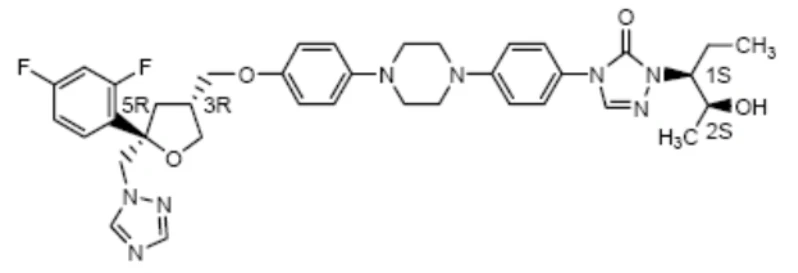
Physicochemical properties: Posaconazole is a white to off-white color powder which is soluble in dichloromethane and practically insoluble in water, pH 1.2 buffer, pH 3.0 buffer, pH 4.5 buffer, pH 6.8 buffer, pH 7.2 buffer, pH 8.0 buffer and 0.1N HCl.
Product Characteristics:
pH and pKa values:
pH: 6.03 [1% w/v Aqueous suspension] at about 25°C
Dissociation Constant (potentiometric titration): About 3.10 (Acetonitrile:Water)
Melting range: 165.1°C - 165.9°C
14 CLINICAL TRIALS
Pharmacokinetics and Safety of Posaconazole Delayed-Release Tablets in Patients
Study P05615
Study P05615 was a non-comparative multi-center study performed to evaluate the pharmacokinetic properties, safety, and tolerability of posaconazole delayed-release tablet. Study P05615 was conducted in a similar patient population to that previously studied in the pivotal posaconazole oral suspension clinical program.
Study P05615 enrolled a total of 230 subjects. Part 1 of the study was designed to select a dose for further study in Part 2, after first evaluating pharmacokinetics, safety, and tolerability in the neutropenic patient population at high risk of a fungal infection. Part 2 of the study was designed to evaluate posaconazole delayed-release tablet in a more diverse patient population, and to confirm the exposure of posaconazole delayed-release tablet in additional subjects at risk of a fungal infection.
Posaconazole delayed-release tablet was administered without regard to food intake in both Part 1 and Part 2 of the study.
The subject population for Part 1 included subjects with AML or MDS who had recently received chemotherapy and had developed or were anticipated to develop significant neutropenia. Two different dosing groups were evaluated in Part 1: 200 mg BID on Day 1, followed by 200 mg QD thereafter (Part 1A) and 300 mg BID on Day 1, followed by 300 mg QD thereafter (Part 1B).
The subject population in Part 2 included: 1) patients with AML or MDS who had recently received chemotherapy and had developed or were anticipated to develop significant neutropenia, or 2) patients who had undergone a HSCT and were receiving immunosuppressive therapy for prevention or treatment of GVHD. These types of patients had been previously studied in a pivotal controlled trial of posaconazole oral suspension. Based on the pharmacokinetics and safety results of Part 1, all subjects in Part 2 received 300 mg BID on Day 1, followed by 300 mg QD thereafter.
The total subject population had a mean age of 51 years (range = 19-78 years), 93% were White, the major ethnicity was not Hispanic or Latino (84%), and 62% were male. The study treated 110 (48%) subjects with AML (new diagnosis), 20 (9%) subjects with AML (first relapse), 9 (4%) subjects with MDS, and 91 (40%) subjects with HSCT, as the primary diseases at study entry.
Serial PK samples were collected on Day 1 and at steady-state on Day 8 for all Part 1 subjects and a subset of Part 2 subjects. This serial PK analysis demonstrated that 90% of the subjects treated with the 300 mg QD dose attained steady state Cavg between 500 - 2500 ng/mL [Cavg was the average concentration of posaconazole at steady state, calculated as AUC/dosing interval (24 hours)]. Subjects with AML/MDS with neutropenia following chemotherapy or HSCT subjects receiving immunosuppressive therapy to prevent or treat GVHD who received 300 mg QD achieved a mean Cavg at steady state of 1,580 ng/mL. In addition, 98% of subjects in the serial PK cohort attained a Cmin at steady-state levels ≥ 500 ng/mL. The PK findings from the pivotal study (Study P05615) support a 300-mg daily dose of posaconazole delayed-release tablet for use in prophylaxis.
DETAILED PHARMACOLOGY
Pharmacodynamics
ECG evaluation
No placebo - controlled, randomized, Phase 1 study with a positive control arm for QT prolongation was performed in order to evaluate the effect of posaconazole on the QT interval.
Multiple, time-matched ECGs collected over a 12 h period were recorded at baseline and steady-state from 173 healthy male and female volunteers (18 to 85 years of age) administered posaconazole oral suspension 400 mg BID with a high-fat meal. In this pooled analysis, the mean QTc (Fridericia (F)) interval change was -5 msec following administration of the recommended clinical dose. A decrease in the QTc (F) interval (- 3 msec) was also observed in a small number of subjects (n=16) administered placebo. The placebo-adjusted mean maximum QTc (F) interval change from baseline was < 0 msec (- 8 msec). No subject administered posaconazole had a QTc (F) interval of ≥ 500 msec or an increase ≥ 60 msec in their QTc (F) interval from baseline.
Pharmacokinetics (see ACTION AND CLINICAL PHARMACOLOGY)
The general pharmacokinetic findings across the clinical program in both healthy volunteers and patients were consistent, in that posaconazole was slowly absorbed and slowly eliminated with an extensive volume of distribution.
Exposure following multiple administration of posaconazole delayed-release tablets (200 or 300 mg) QD was 1.3 times higher in healthy volunteers than in patients.
Special Populations and Conditions
Pediatrics
Use of posaconazole delayed-release tablet in patients 13 to 17 years of age is supported by evidence from adequate and well-controlled studies of posaconazole oral suspension in adults.
Following administration of 800 mg per day of posaconazole oral suspension as a divided dose for treatment of IFIs, mean trough plasma concentrations from 12 patients 8 - 17 years of age (776 ng/mL) were similar to concentrations from 194 patients 18 - 64 years of age (817 ng/mL). No pharmacokinetic data are available from pediatric patients less than 8 years of age. Similarly, in the prophylaxis studies, the mean steady-state posaconazole Cavg was comparable among 10 adolescents (13 - 17 years of age) to Cavg achieved in adults (≥ 18 years of age).
Geriatrics
Of the 230 patients treated with posaconazole delayed-release tablets, 38 (17%) were greater than 65 years of age. The pharmacokinetics of posaconazole delayed-release tablets are comparable in young and elderly subjects. No overall differences in safety were observed between the geriatric patients and younger patients; therefore, no dosage adjustment is recommended for geriatric patients.
Gender
The pharmacokinetics of posaconazole are comparable in men and women. No adjustment in the dosage of posaconazole is necessary based on gender.
Race
There is insufficient data among different races with posaconazole delayed-release tablets.
Weight
Pharmacokinetic modeling for posaconazole suggests that patients weighing greater than 120 kg may have lower posaconazole exposure. It is, therefore, suggested to closely monitor for breakthrough fungal infections in patients weighing more than 120 kg.
Hepatic Insufficiency
In a small number of subjects (n=12) studied with hepatic insufficiency (Child-Pugh class A, B or C), Cmax values generally decreased with the severity of hepatic dysfunction (545, 414 and 347 ng/mL for the mild, moderate, and severe groups, respectively), even though the Cmax values (mean 508 ng/mL) for the normal subjects were consistent with previous trials in healthy volunteers. In addition, an increase in half-life was also associated with a decrease in hepatic function (26.6, 35.3, and 46.1 h for the mild, moderate, and severe groups, respectively), as all groups had longer half-life values than subjects with normal hepatic function (22.1 h). Due to the limited pharmacokinetic data in patients with hepatic insufficiency, no recommendation for dose adjustment can be made.
Similar recommendations apply to posaconazole delayed-release tablets; however, a specific study has not been conducted with posaconazole delayed-release tablets.
Renal Insufficiency
Following single-dose administration, there was no effect of mild and moderate renal insufficiency (n=18, GFR ≥ 20 mL/min/1.73 m2) on posaconazole pharmacokinetics, therefore, no dose adjustment is required. In subjects with severe renal insufficiency (n=6, GFR < 20 mL/min/1.73 m2), the exposure of posaconazole was highly variable (96% CV) compared to the exposure in the other renal groups (< 40% CV). However, as posaconazole is not significantly renally eliminated, an effect of severe renal insufficiency on the pharmacokinetics of posaconazole is not expected and no dose adjustment is recommended. Posaconazole is not removed by hemodialysis. Due to the variability in exposure, patients with severe renal impairment should be monitored closely for breakthrough fungal infections.
Similar recommendations apply to posaconazole delayed-release tablets; however, a specific study has not been conducted with posaconazole delayed-release tablets.
Animal Pharmacology
Posaconazole Oral Therapy The administration of a single oral dose of 30 mg/kg of posaconazole did not modify cardiovascular, gastrointestinal, behavioral, neurologic, or autonomic function in the rat. A single IV dose of a lipid-containing formulation of posaconazole (bolus) at 30 or 60 mg/kg did not demonstrate changes in respiratory rate, tidal volume, or minute volume, or in behavior, neurologic or autonomic function, compared with vehicle-treated rats. A single dose of 3 or 10 mg/kg did not affect renal function.
In vitro effects of posaconazole on ventricular repolarization were evaluated by measuring both the action potential and the recombinant hERG channel current. In Purkinje fibers isolated from dog heart, exposure to posaconazole at measured concentrations of 25 ng/mL (36 nM), 69 ng/mL (98 nM) and 365 ng/mL (521 nM) induced a small (< 10%) but statistically significant increase in action potential duration at 60% (APD60) and/or 90% (APD90) repolarization. In mouse L-929 cells stably transfected with the human α-subunit (hERG) of the cardiac delayed rectifier, IKr, a measured concentration of 770 ng/mL (1.1 µM) posaconazole decreased hERG current by 7%. Accounting for protein binding, the drug concentration in the hERG assay was 18-times the free posaconazole Cmax value in healthy volunteers. Changes of the magnitude noted in the recombinant hERG channel and isolated Purkinje fiber systems would be unlikely to elicit QT interval prolongation in vivo.
At an oral dose of 90 mg/kg in rats, posaconazole was associated with a minimal increase in systolic (13 to 23 mm Hg) and mean arterial (10 to 19 mm Hg) blood pressures after four weeks of dosing. There were no changes in heart rate. After four weeks of dosing, rats given posaconazole had a decreased intraventricular systolic diameter and increased fractional shortening, which may be indicative of increased cardiac contractility. However, there was no concomitant increase in stroke volume. No other echocardiographic indices of cardiac function were altered by posaconazole.
Cardiovascular parameters in monkeys were assessed in two safety pharmacology studies with the lipid-containing IV formulation of posaconazole. No posaconazole–related effects on heart rate, arterial blood pressure, ECG intervals (RR, PR, QRS, QT, QTc), or ECG morphology and rhythm were observed following seven days of dosing at doses up to 40 mg/kg. The lowest mean AUC (0-24 hr) was observed on Day 1 and was 141 µg.hr/mL, which is 2.4-fold a human AUC exposure of 59 µg.hr/mL. The absence of QT or QTc interval changes at 40 mg/kg posaconazole intravenously in conscious monkeys indicates a low potential for posaconazole to produce QT or QTc interval prolongation.
14.2 Comparative bioavailability studies
A comparative, double blind, randomized, single dose, two-way crossover bioavailability study of GLN-POSACONAZOLE 100 mg delayed-release tablets (Glenmark Pharmaceuticals Canada Inc.) and POSANOL® (posaconazole) 100 mg delayed-release tablets (Merck Canada Inc.) was conducted in healthy, adult male subjects under fasting conditions. A summary of the comparative bioavailability data from 59 subjects is presented in the following table:
Posaconazole (1x 100 mg) From measured data Geometric Mean Arithmetic Mean (CV%) | ||||
|---|---|---|---|---|
| Parameter | Test* | Reference† | % Ratio of Geometric Means | 90% Confidence Interval |
AUCt (ng·h/mL) | 7083.37 7346.33 (28.57) | 6508.63 6909.55 (34.80) | 108.8 | 102.5 - 115.6 |
AUC∞ (ng·h/mL) | 7308.14 7597.66 (29.38) | 6707.58 7121.15 (34.75) | 109.0 | 102.7 - 115.6 |
| Cmax (ng/mL) | 237.28 245.29 (26.11) | 211.63 224.85 (34.23) | 112.1 | 103.5 - 121.5 |
| Tmax# (h) | 5.00 (2.50 – 10.00) | 4.50 (2.00 – 10.00) | ||
| T½ $ (h) | 23.75 (21.31) | 23.53 (27.32) | ||
* GLN-POSACONAZOLE 100 mg Delayed-release Tablets (Glenmark Pharmaceuticals Canada Inc.)
† POSANOL® (posaconazole) 100 mg Delayed-release Tablets (Merck Canada Inc.), purchased in Canada
# Expressed as the median (range)
$ Expressed as the arithmetic mean (CV%)
A comparative, double blind, randomized, single dose, two-way crossover bioavailability study of GLN-POSACONAZOLE 100 mg delayed-release tablets (Glenmark Pharmaceuticals Canada Inc.) and POSANOL® (posaconazole) 100 mg delayed-release tablets (Merck Canada Inc.) was conducted in healthy, adult male subjects under fed conditions. A summary of the comparative bioavailability data from 36 subjects is presented in the following table:
Posaconazole (1x 100 mg) From measured data Geometric Mean Arithmetic Mean (CV%) | ||||
|---|---|---|---|---|
| Parameter | Test* | Reference† | % Ratio of Geometric Means | 90% Confidence Interval |
| AUCt (ng·h/mL) | 8691.42 8956.82 (24.57) | 9343.71 9697.80 (26.95) | 93.0 | 88.5 - 97.8 |
| AUC∞ (ng·h/mL) | 8925.41 9200.15 (24.42) | 9519.14 9881.27 (27.11) | 93.8 | 89.5 - 98.3 |
| Cmax (ng/mL) | 292.23 300.50 (23.40) | 320.12 327.78 (21.37) | 91.3 | 85.7 - 97.3 |
| Tmax# (h) | 6.25 (4.00 – 12.00) | 5.50 (3.50 – 10.00) | ||
| T½ $ (h) | 23.63 (28.25) | 24.46 (27.06) | ||
* GLN-POSACONAZOLE 100 mg Delayed-release Tablets (Glenmark Pharmaceuticals Canada Inc.)
† POSANOL® (posaconazole) 100 mg Delayed-release Tablets (Merck Canada Inc.), purchased in Canada
# Expressed as the median (range)
$ Expressed as the arithmetic mean (CV%)
15 MICROBIOLOGY
Posaconazole is a potent inhibitor of the enzyme lanosterol 14α-demethylase, which catalyses an essential step in ergosterol biosynthesis. Consequently, posaconazole exhibits broad- spectrum antifungal activity against a variety of yeasts and moulds including species of Candida (including C. albicans isolates resistant to fluconazole, voriconazole and itraconazole, C. krusei and C. glabrata which are inherently less susceptible to fluconazole, and C. lusitaniae which is inherently less susceptible to amphotericin B), Aspergillus (including isolates resistant to fluconazole, voriconazole, itraconazole and amphotericin B) and organisms not previously regarded as being susceptible to azoles such as the zygomycetes (e.g., species of Absidia, Mucor, Rhizopus and Rhizomucor). In vitro posaconazole exhibited fungicidal activity against species of Aspergillus, dimorphic fungi (Blastomyces dermatitidis, Histoplasma capsulatum, Penicillium marneffei, and Coccidioides immitis) and some species of Candida. In animal infection models posaconazole was active against a wide variety of fungal infections caused by moulds or yeasts. However, there was no consistent correlation between minimum inhibitory concentration (MIC) and efficacy.
Posaconazole has been shown in vitro and in clinical infections to be active against the following microorganisms (see 1 INDICATIONS): Aspergillus species (A. fumigatus, A. flavus, A.
terreus, A. nidulans, A. niger, A. ustus, A. ochraceus), Candida species (C. albicans, C. glabrata, C. krusei, C. parapsilosis), Coccidioides immitis, Fonsecaea pedrosoi, Pseudallescheria boydii and species of Exophiala, Fusarium, Rhizomucor, Mucor, and Rhizopus.
Additionally, the following in vitro data are available . The results of such studies do not necessarily correlate with clinical outcome. The safety and effectiveness of posaconazole in treating clinical infections due to these microorganisms have not been established in clinical trials.
The posaconazole MIC90 values for mould strains tested are summarized in Table 11.
Table 11 - MIC90 Values for Mould Strains Tested
| Pathogen | MIC90a (μg/mL) | Pathogen | MIC90a (μg/mL) | Pathogen | MIC90a (μg/mL) |
|---|---|---|---|---|---|
| Absidia coerulea | (2.0)b | Curvularia spp | (0.031 - 0.125) | Phialophora verrucosa | (0.5 - 4.0) |
| Absidia corymbifera | 2.0 | Epidermophyton floccosum | 0.125 | Pseudallescheria boydii | 2.0 |
| Absidia glauca | (2.0) | Exophiala dermatidis | (0.125) | Ramichloridium obovoideum | (0.031 - 0.063) |
| Absidia pseudocylindrospora | (16.0) | Exophiala jeanselmei | 0.5 | Rhizomucor miehei | (0.016) |
| Absidia repens | (4.0) | Exophiala moniliae | (0.016) | Rhizomucor pusillus | (0.031 - 0.25) |
| Absidia spp | (0.031 - 0.5) | Exserohilum rostratum | (0.063 - 0.25) | Rhizomucor spp | (0.016) |
| Alternaria alternate | (0.016 - 4.0) | Fonsecaea pedrosoi | 0.5 | Rhizopus arrhizus | (0.5 - 32.0) |
| Alternaria spp | 0.25 | Fusarium dimerum | (1.0 4.0) | Rhizopus microsporus | 16.0 |
| Apophysomyces spp | (0.031 - 4.0) | Fusarium moniliforme | 2.0 | Rhizopus microsporus v chinensis | (16.0) |
| Aspergillus candidus | (0.031 - 0.063) | Fusarium oxysporum | 16.0 | Rhizopus microsporus v oligosporus | (16.0) |
| Aspergillus flavus | 1.0 | Fusarium proliferatum | (0.5 - 8.0) | Rhizopus oryzae | 4.0 |
| Aspergillus fumigatus | 0.5 | Fusarium solani | 128.0 | Rhizopus schipperae | (1.0 - 8.0) |
| Aspergillus glaucus | (0.063-16.0) | Fusarium spp | 16.0 | Rhizopus spp | 4.0 |
| Pathogen | MIC90a (μg/mL) | Pathogen | MIC90a (μg/mL) | Pathogen | MIC90a (μg/mL) |
|---|---|---|---|---|---|
| Aspergillus nidulans | 0.25 | Geotrichum candidum | (0.125) | Rhizopus stolonifer | (2.0 - 16.0) |
| Aspergillus niger | 0.5 | Geotrichum spp | (0.25-32.0) | Saksenaea vasiformis | (0.016 - 2.0) |
| Aspergillus ochraceus | (0.063 - 0.125) | Histoplasma capsulatum | 0.5 | Scedosporium apiospermum | 2.0 |
| Aspergillus oryzae | (0.25) | Microsporum audouinii | (0.25) | Scedosporium prolificans | 32.0 |
| Aspergillus sydowii | 0.5 | Microsporum canis | 0.5 | Schizophyllum commune | (0.125 - 0.25) |
| Aspergillus terreus | 0.25 | Microsporum fulvum | (0.5) | Scopulariopsis brevicaulis | 8.0 |
| Aspergillus ustus | 16.0 | Microsporum gypseum | (0.008 - 0.5) | Scytalidium dimidiatum | (0.5) |
| Aspergillus versicolor | 2.0 | Microsporum persicolor | (0.25) | Sporothrix schenckii | 2.0 |
| Bipolaris hawaiiensis | (0.016) | Mucor circinelloides | 16.0 | Trichoderma spp | (1.0) |
| Bipolaris spicifera | (0.016 - 0.125) | Mucor hiemalis | 32.0 | Trichophyton krajdenii | (0.063) |
| Bipolaris spp | (0.125 - 1.0) | Mucor mucedo | (2.0) | Trichophyton mentagrophytes | 0.125 |
| Bjerkandera adusta | 0.25 | Mucor racemosus | (0.008 - 1.0) | Trichophyton raubitschekii | (0.25) |
| Blastomyces dermatitidis | 0.5 | Mucor ramosissimus | (0.125 - 0.5) | Trichophyton rubrum | 0.25 |
| Cladophialophora bantiana | (0.031 - 0.5) | Mucor rouxii | (1.0 - 32.0) | Trichophyton soudanense | (0.5) |
| Cladophialophora carionii | 0.5 | Mucor spp | 16.0 | Trichophyton spp | 0.063 |
| Coccidioides immitis | 0.5 | Paecilomyces lilacinus | 2.0 | Trichophyton terrestre | (0.125) |
| Cunninghamella bertholletiae | (0.5 - 16.0) | Paecilomyces spp | 0.5 |
| Pathogen | MIC90a (μg/mL) | Pathogen | MIC90a (μg/mL) | Pathogen | MIC90a (μg/mL) |
|---|---|---|---|---|---|
| Cunninghamella blakesleeana | (16.0) | Paecilomyces variotii | (0.016 - 0.063) | Trichophyton verrucosum | (0.5) |
| Cunninghamella echinulata | (4.0 - 16.0) | Paracoccidioides brasiliensis | 0.125 | Tritirachium spp | (1.0 - 16.0) |
| Cunninghamella elegans | (16.0) | Penicillium marneffei | 0.016 | Ulocladium spp | (0.25) |
| Cunninghamella spp | 2.0 | Penicillium spp | 1.0 | Wangiella dermatitidis | (0.063 - 0.125) |
| Curvularia lunata | (0.016 - 0.25) | Phialophora spp | (0.125 - 32.0) | ||
a: minimal inhibitory concentration at which 90% of the strains tested are inhibited from growth b: When the number of strains tested was < 10, the range of MICs is indicated in parentheses.
The posaconazole MIC90 values for yeast strains tested are summarized in Table 12.
Table 12 - MIC90 Values for Yeast Strains Tested
| Pathogen | MIC90a (μg/mL) | Pathogen | MIC90a (μg/mL) | Pathogen | MIC90a (μg/mL) |
|---|---|---|---|---|---|
| Blastoschizomyces capitatus | (0.016 - 1.0)b | Candida pseudotropicalis | (0.002 - 0.063) | Malassezia pachydermatis | (0.125) |
| Candida albicans | 0.25 | Candida pulcherrima | (0.063) | Malassezia restricta | (0.031) |
| Candida beigelii | (0.008 - 1.0) | Candida rugosa | 0.25 | Malassezia slooffiae | (0.031) |
| Candida colluculosa | (0.031 - 1.0) | Candida sake | (0.5 - 16.0) | Malassezia sympodialis | (0.031 - 0.063) |
| Candida dubliniensis | 0.25 | Candida sphaerica | (0.25) | Pichia anomala | 1.0 |
| Candida famata | 0.5 | Candida stellatoidea | (0.004 - 0.25) | Pichia etchellsii | (0.125) |
| Candida glabrata | 2.0 | Candida tropicalis | 0.25 | Pichia ohmeri | (0.016) |
| Candida guilliermondii | 0.5 | Candida utilis | (2.0) | Rhodotorula glutinis | (0.5) |
| Candida holmii | (0.25) | Candida zeylanoides | (0.008 - 0.25) | Rhodotorula mucilaginosa | (1.0 - 2.0) |
| Candida inconspicua | 4.0 | Cryptococcus humicolus | (0.125 - 0.25) | Rhodotorula rubra | (0.25 - 128.0) | |||||||
|---|---|---|---|---|---|---|---|---|---|---|---|---|
| Candida intermedia | (0.125) | Cryptococcus laurentii | (0.008 - 0.5) | Rhodotorula spp | 8.0 | |||||||
| Candida kefyr | 0.25 | Cryptococcus luteolus | (0.063) | Saccharomyces cerevisiae | 1.0 | |||||||
| Candida lambica | (0.016 - 0.25) | Cryptococcus spp. | (0.25) | Trichosporon beigelii | 1.0 | |||||||
| Candida lipolytica | 1.0 | Dekkera bruxellensis | (0.25) | Trichosporon capitatum | (0.125) | |||||||
| Candida lusitaniae | 0.125 | Kluyveromyces marxianus | (0.063 - 0.25) | Trichosporon cutaneum | (0.063 - 0.125) | |||||||
| Candida maris | (0.063 - 0.125) | Malassezia dermatis | (0.031 - 0.5) | Trichosporon inkin | (0.063 - 0.5) | |||||||
| Candida melibiosica | (0.125) | Malassezia furfur | 0.063 | Trichosporon mucoides | 16.0 | |||||||
| Candida norvegensis | (0.125) | Malassezia globosa | 0.031 | Trichosporon spp | (0.5 - 1.0) | |||||||
| Candida parapsilosis | 0.125 | Malassezia obtusa | (0.031) | Yarrowia lipolytica | (0.016 - 1.0) | |||||||
| Candida pelliculosa | 2.0 | |||||||||||
a: minimal inhibitory concentration at which 90% of the strains tested are inhibited from growth b: When the number of strains tested was < 10, the range of MICs is indicated in parentheses.
Specimens for fungal culture and other relevant laboratory studies (including histopathology) should be obtained prior to therapy to isolate and identify causative organism(s). Therapy may be instituted before the results of the cultures and other laboratory studies are known. However, once these results become available, antifungal therapy should be adjusted accordingly.
Drug Resistance
C. albicans strains resistant to posaconazole could not be generated in the laboratory; spontaneous laboratory Aspergillus fumigatus mutants exhibiting a decrease in susceptibility to posaconazole arose at a frequency of 1x10⁻⁸ to 1x10⁻⁹. Clinical isolates of Candida albicans and Aspergillus fumigatus exhibiting significant decreases in posaconazole susceptibility are rare. In those rare instances where decreased susceptibility was noted, there was no clear correlation between decreased susceptibility and clinical failure. Clinical success has been observed in patients infected with organisms resistant to other azoles; consistent with these observations posaconazole was active in vitro against many Aspergillus and Candida strains that developed resistance to other azoles and/or amphotericin B. Breakpoints for posaconazole have not been established for any fungi.
Antifungal medicinal products combinations
When combinations of posaconazole with either amphotericin B or caspofungin were tested in vitro and in vivo there was little or no antagonism and in some instances there was an additive effect. The clinical significance of these results is unknown.
16 NON-CLINICAL TOXICOLOGY
General Toxicology:
Acute Toxicity
The maximum non-lethal dose for a single oral dose of posaconazole was greater than 1,500 mg/kg in mice, greater than 4,000 mg/kg in rats and greater than 2,000 mg/kg in dogs.
Long-Term Toxicity
Repeated-dose toxicity studies of posaconazole were conducted in mice for up to three months, in rats for up to six months, and in dogs and monkeys for up to one year.
Posaconazole causes several toxicologic effects that occur with other antifungal substances in the azole class, i.e., hyperplasia of the adrenal glands (mice, rats and dogs), phospholipidosis of lung and lymphoid tissues (all species), disseminated intravascular coagulation (dogs only), bone thinning/fractures (rats only), hepatocellular adenomas (mice only), findings secondary to the interruption of steroidogenesis and fetal toxicity (rats and rabbits). Additional findings not previously reported with other marketed antifungal agents include neuronal phospholipidosis in dogs and increased urinary calcium excretion in dogs and rats.
In a twelve-month study in dogs with doses of posaconazole up to 30 mg/kg, neuronal phospholipidosis occurred after approximately three months of dosing, did not progress in severity over time and was present at the end of a three-month post dose period. There were no neurologic or degenerative changes in affected neurons and no functional changes in affected dogs. There were no posaconazole-related neurotoxicity or neuropathology findings in monkeys when administered daily doses of 180 mg/kg for twelve months.
Local Tolerance
Studies to evaluate local tolerance of posaconazole indicated a low potential for acute dermal toxicity and no potential for irritation or sensitization.
Immunotoxicity Studies
A series of immunotoxicology studies in mice indicate minimal changes in immune function (decreased antibody forming cell response and increased natural killer cell activity) and minimal changes in populations of lymphocytes, NK cells and monocytes in the blood and/or spleen in the 30 and 90 mg/kg groups after one and three months of dosing. The NEL for these changes was 10 mg/kg. The changes in the immune system parameters in the immunotoxicity studies were minimal and reversible, indicating that administration of posaconazole had no permanent effect on the function of the immune system.
Carcinogenicity: No drug-related neoplasms were recorded in rats or mice treated with posaconazole for two years at doses below the maximum tolerated dose. In a two-year carcinogenicity study, rats were given posaconazole orally at doses up to 20 mg/kg (females), or 30 mg/kg (males). These doses are equivalent to 3.9 or 3.5 times the exposure achieved with a 400 mg BID, respectively, based on steady-state AUC in healthy volunteers administered a high fat meal (400 mg BID regimen). In the mouse study, mice were treated at oral doses up to 60 mg/kg/day or 4.8 times the exposure achieved with a 400 mg BID regimen.
Mutagenicity: Posaconazole was evaluated in a bacterial mutagenicity, human peripheral blood lymphocyte, Chinese hamster ovary and mouse micronucleus studies. Posaconazole did not exhibit any genotoxic potential.
Reproductive and Developmental Toxicology: There was no effect on fertility in male rats dosed up to a high-dose of 180 mg/kg. There was no effect on fertility in female rats up to a high-dose of 45 mg/kg.
In a rat embryo-fetal development study, there were no posaconazole-related effects on pregnancy rate and numbers of corpora lutea, implantations and resorptions. At a dose of 27 mg/kg, skeletal variations and malformations occurred. The no-effect dose was 9 mg/kg for maternal and fetal effects in rats.
In a rabbit embryo-fetal development study with doses of 20, 40 and 80 mg/kg, there were no posaconazole-related effects on pregnancy rate, and numbers of corpora lutea and implantations. In the 40 and 80 mg/kg-dosed rabbits, there were increases in resorptions and skeletal variations. In a perinatal and postnatal development study in rats at doses of 6, 18 or 36 mg/kg, there were no posaconazole-related effects on the various indicators of physical and functional development, as well as behavioral responses, in the F1 pups.
17 SUPPORTING PRODUCT MONOGRAPHS
- 1. PrPOSANOL® (posaconazole delayed-release tablets, 100 mg), Submission Control # 254862, Product Monograph, Merck Canada Inc. (Jan. 04, 2022)