


Patient Medication Information: uses, side effects, how to take - Grastofil
Serious Warnings and Precautions
What Grastofil® is used for:
Grastofil® is used to treat neutropenia (nu-tro-peen-ee-ah), a condition where the body makes too few neutrophils. Neutropenia predisposes your body to infections and prevents you from fighting them. Your doctor has decided to prescribe Grastofil® for you to increase the number of neutrophils (nu-tro-fils), which will fight infections.
Neutropenia may be a long-standing condition where your body does not make enough neutrophils, or it may be caused by drugs used to treat cancer. In some cases, your body may make enough neutrophils, but as a part of your treatment for cancer, your doctor may want to increase the number of certain blood cells (CD34 cells) and collect them. The cells are collected using a process called apheresis (ay-fer-ree-sis). These collected cells are given back to you after you receive very high doses of treatment for cancer to make your blood counts get back to normal more quickly.
Grastofil® is a man-made form of granulocyte colony-stimulating factor (G-CSF), which is made using the bacteria E. coli. G-CSF is a substance naturally produced by the body.
How Grastofil® works:
Grastofil® works by helping the body make more neutrophils. To make sure Grastofil® is working, your doctor will ask that you have regular blood tests to count the number of neutrophils you have. It is important that you follow your doctor’s instructions about getting these tests.
The ingredients in Grastofil® are:
Medicinal ingredient: filgrastim
- Your spleen may become enlarged and can rupture while taking Grastofil®. A ruptured spleen can cause death. Call your doctor right away if you or your child has pain in the left upper stomach area or left shoulder tip area.
- If you have sickle cell trait or sickle cell disease, make sure that you tell your doctor before you start taking Grastofil® so that the potential risks and benefits can be discussed. In patients with sickle cell trait or sickle cell disease, severe sickle cell crises have been associated with the use of filgrastim, resulting in death in some cases.
Non-medicinal ingredients: acetate, polysorbate 80, sodium, sorbitol (E420), and water for injection.
The pre-filled syringe components contain natural rubber (a derivative of latex), which should not be handled by persons sensitive to this substance.
Grastofil® comes in the following dosage forms:
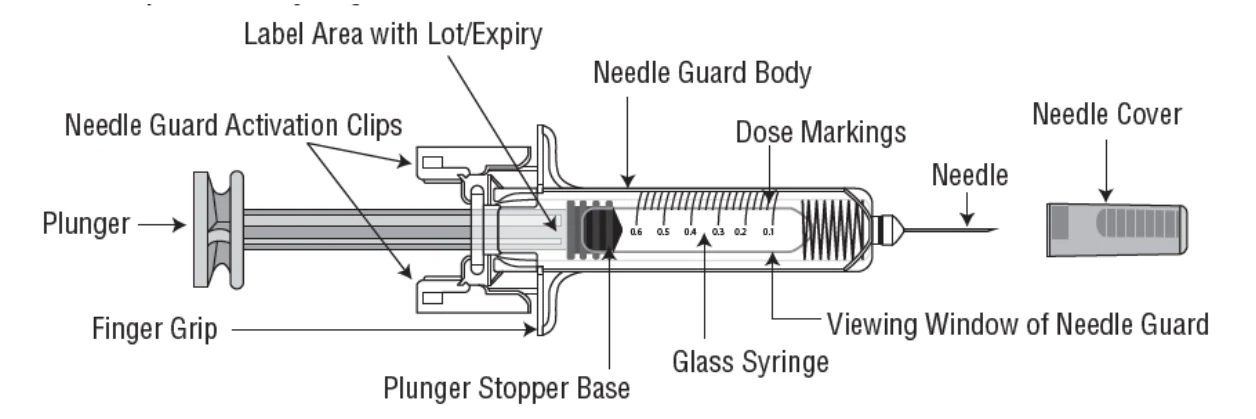
Grastofil® is available in single-use, graduated (1/40 graduations from 0.1 mL to 1.0 mL), pre-filled syringes, with an UltraSafe PlusTM Passive Needle Guard, as a clear, colourless injection in two sizes of 300 mcg/0.5mL and 480 mcg/0.8 mL (both containing 600 mcg/mL of filgrastim). These are available in cartons of 1 and 10 individually blistered pre-filled syringes per carton.
Do not use Grastofil® if:
- you are allergic to filgrastim or any of its ingredients.
- you are allergic to other medicines made using the bacteria E. coli. Ask your doctor if you are not sure.
To help avoid side effects and ensure proper use, talk to your healthcare professional before you take Grastofil®. Talk about any health conditions or problems you may have, including if you:
- have common signs or symptoms of infection, such as fever, chills, rash, sore throat, diarrhea, or redness, swelling, or pain around a cut or sore. If you/your child has any of these signs or symptoms during treatment with Grastofil®, tell your doctor or nurse immediately. Grastofil® may reduce your chance of getting an infection but does not prevent all infections. An infection can still happen during the short time when you/your child's neutrophil levels are low.
- have a lump, swelling, or bruising at an injection site that does not go away, call your doctor. There is a possibility that you could have a reaction at an injection site.
- have a sickle cell trait or sickle cell disease, make sure that you tell your doctor before you start taking Grastofil®. If you have a sickle cell crisis after getting Grastofil®, tell your doctor right away.
Other warnings you should know about:
Make sure your doctor knows about all medicines, and herbal or vitamin supplements you are taking before starting Grastofil®. If you are taking lithium, you may need more frequent blood tests.
If you/your child are receiving Grastofil® because you are also receiving chemotherapy, the last dose of Grastofil® should be injected at least 24 hours before your next dose of chemotherapy.
Talk to your doctor if you experience unusual bleeding or bruising while taking Grastofil® following chemotherapy, as this could mean a decrease of platelets which reduces the ability of blood to clot.
If you have any questions, you should talk to your doctor.
Pregnancy or breastfeeding and Grastofil®
Grastofil® has not been studied in pregnant women, and its effects on unborn babies are not known. If you take Grastofil® while you are pregnant, it is possible that small amounts of it may get into your baby’s blood. It is not known if Grastofil® can get into human breast milk. If you are pregnant, plan to become pregnant, think you may be pregnant, or are breastfeeding, you should tell your doctor before using Grastofil®.
Tell your healthcare professional about all the medicines you take, including any drugs, vitamins, minerals, natural supplements, or alternative medicines.
The following may interact with Grastofil®:
Drug interactions between Grastofil® and other drugs have not been studied. Drugs such as lithium may affect the release of neutrophils into the blood stream. You should discuss your treatment with your doctor before using Grastofil®.
How to inject Grastofil®:
This section contains information on how to give an injection of Grastofil®. It is important that you do not try to give the injection unless you have received training from your doctor or nurse. If you are not sure about giving the injection or you have any questions, please ask your doctor or nurse for help.
Injecting with Grastofil®:
You will need to give an injection into the tissue under the skin, known as a subcutaneous injection. Your doctor or nurse will tell you how frequently it should be injected.
Before injecting Grastofil®:
To give a subcutaneous injection you will need:
- 1. A new pre-filled syringe of Grastofil® with an UltraSafe PlusTM Passive Needle Guard.
- 2.
Alcohol wipes or similar.
- 3. Cotton or gauze.
- 4. A puncture-proof container for disposing of used syringes, as discussed with your doctor/nurse.
Setting-up for the Injection:
- 1. Remove one Grastofil® pre-filled syringe in the blister packaging from the refrigerator and leave it unopened on your working surface for about 30 minutes so that it reaches room temperature. Confirm on the syringe and carton that it is the correct dose (300 mcg/0.5 mL or 480 mcg/0.8 mL Grastofil®) as prescribed by your doctor.
- 2. Check the expiry date which is stated on the carton and syringe label (see EXP). Do not use it if the date has passed the last day of the month shown.
- 3. Do not shake the pre-filled syringe as vigorous shaking may damage the medication. Check the appearance of Grastofil®. It must be clear. If it is cloudy or there are particles in it, you must not use it.
- 4. Clean your hands thoroughly with soap and water and/or hand sanitizer.
- 5. Find a comfortable, well-lit place and put the syringe, the alcohol wipes, cotton or gauze, and the puncture-proof container where you can reach them.
- 6. Keep the needle cover on the needle until you are ready to inject or measure your dose and inject.
Choosing an injection site:
The most suitable injection sites (places on your body) to inject Grastofil® are:
- The outer area of your upper arms;
- The front of your middle thighs;
- The abdomen, except for the 2 inches area around the navel; or
- Upper outer area of your buttocks.
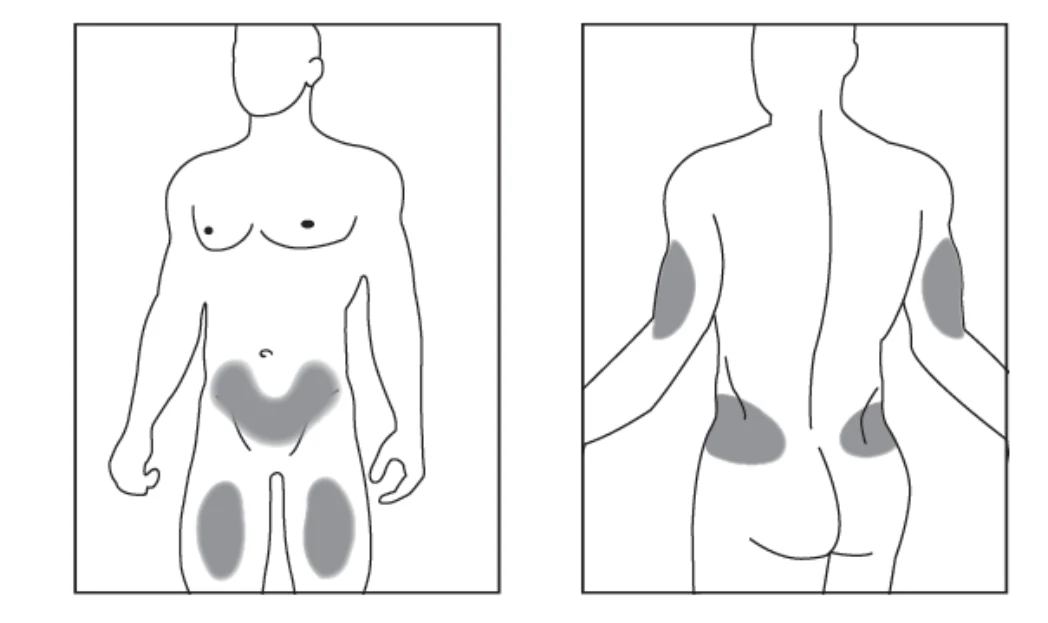
From the above options, change the injection site each time you take an injection so that you do not develop soreness in one area. Do not inject into the same site that is tender, red, bruised, or hard or that has scars or stretch marks.
How do I give my injection?
IMPORTANT: REMOVAL OF INDIVIDUAL SYRINGE FROM BLISTER PACKAGING
Follow directions for correct handling technique as shown below when removing the pre-filled syringe with the UltraSafe PlusTM Passive Needle Guard from the packaging, otherwise, the needle’s safety mechanism may be triggered, making the syringe unusable.
IMPORTANT: If you drop the syringe onto a hard surface, do not use it. Use a new pre-filled syringe.
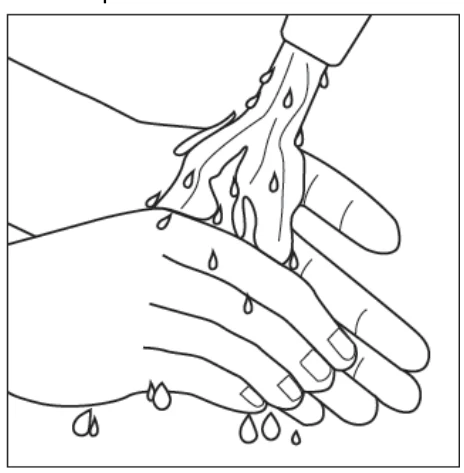
- 1. Clean your hands thoroughly with soap and water.
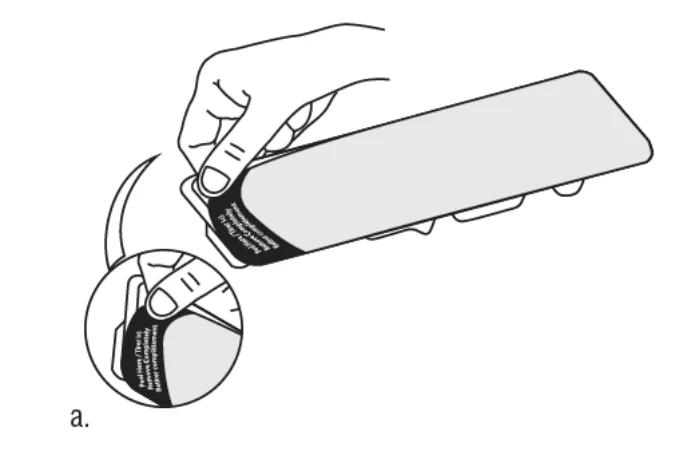
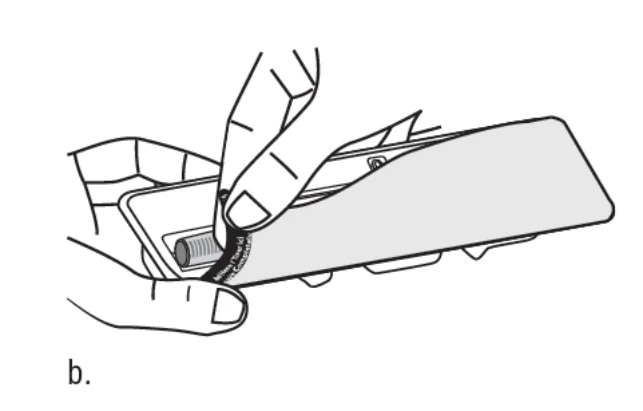
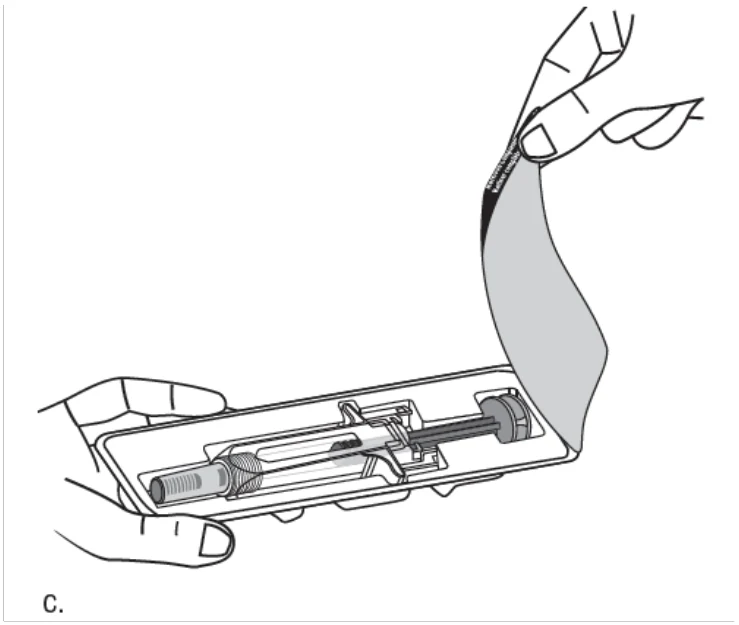
- 2. Locate the corner of the blister package as indicated by the arrow and "Peel Here" on the top layer. From this end, open the blister pack by peeling back the top layer and taking it COMPLETELY OFF.
x
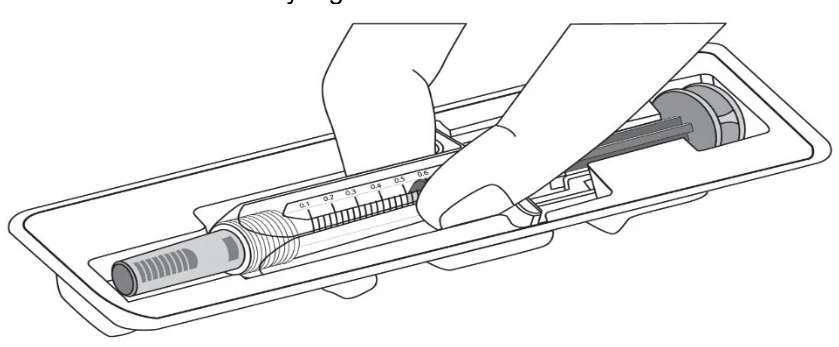
- 3. Remove the syringe from the blister pack by the body as shown below. Do not lift the product by the plunger or needle cover. Do not touch the needle guard activation clips at any time during use. This may trigger the needle's safety mechanism causing the needle to retract (pull back) before your injection is given. This will make the syringe unusable.
- 4. You must always clean the skin on the selected injection site with an alcohol wipe before giving the injection.
- 5.
Hold the pre-filled syringe by the body (needle guard) with the needle pointing up and avoid touching the needle guard activation clips. Holding the syringe by the body with the needle pointing up helps to prevent the medicine from leaking out of the needle. Carefully pull the needle cover straight off without twisting it. Do not touch the needle or plunger. Do not use if the syringe is damaged or needle is bent. If the syringe is damaged or needle is bent, throw away (dispose of) the syringe in a puncture-proof container.
If you drop the syringe onto a hard surface, do not use it. Use a new pre-filled syringe.
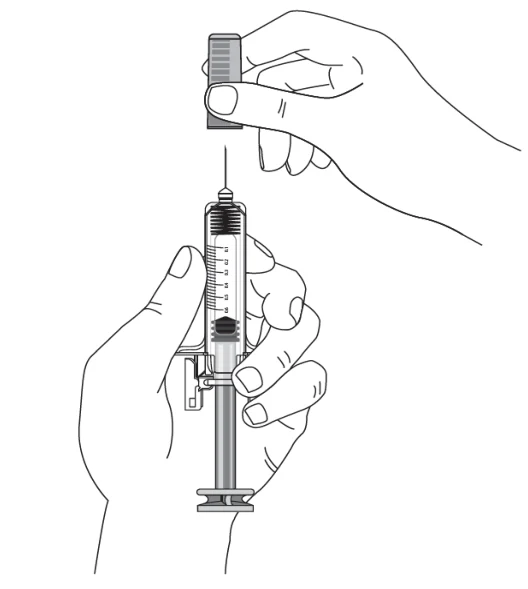
For patients injecting the full content of your syringe (as prescribed by your doctor), proceed to Step 6.
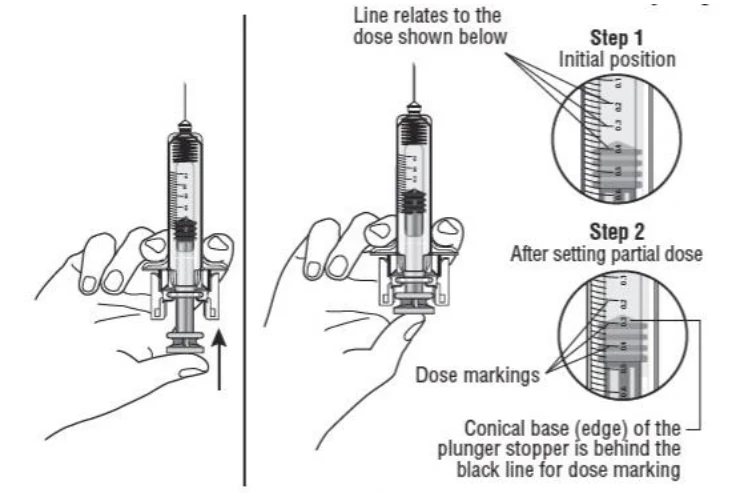
For patients injecting a partial dose only (as prescribed by your doctor): Holding the pre-filled syringe as shown in the image below, press slowly on the plunger to push out the excess medicine until the conical base of the plunger stopper lines up with the syringe marking for your prescribed dose.
Check again to make sure the correct dose of Grastofil® is in the syringe.
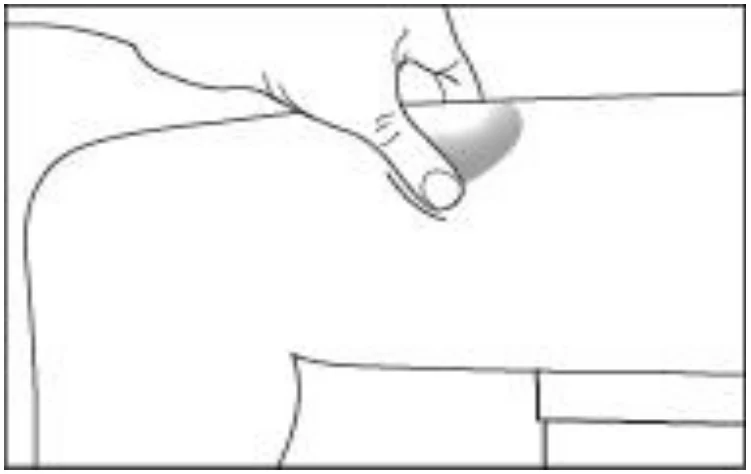
- 6. Hold the pre-filled syringe between the thumb and forefinger of the hand you will use to inject Grastofil®. Use the other hand to pinch a fold of the skin at the cleaned injection site between your thumb and forefinger, without squeezing it as shown below.
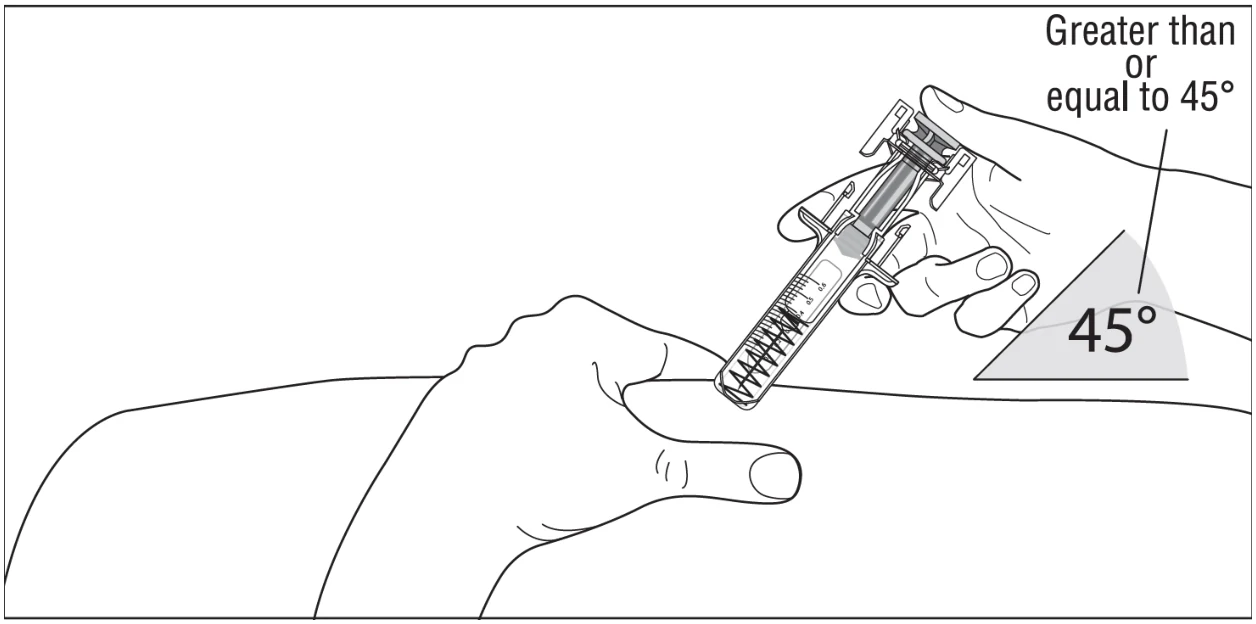
- 7. Insert the needle under the skin at an angle of approximately greater than or equal to 45° as shown by your doctor or nurse.
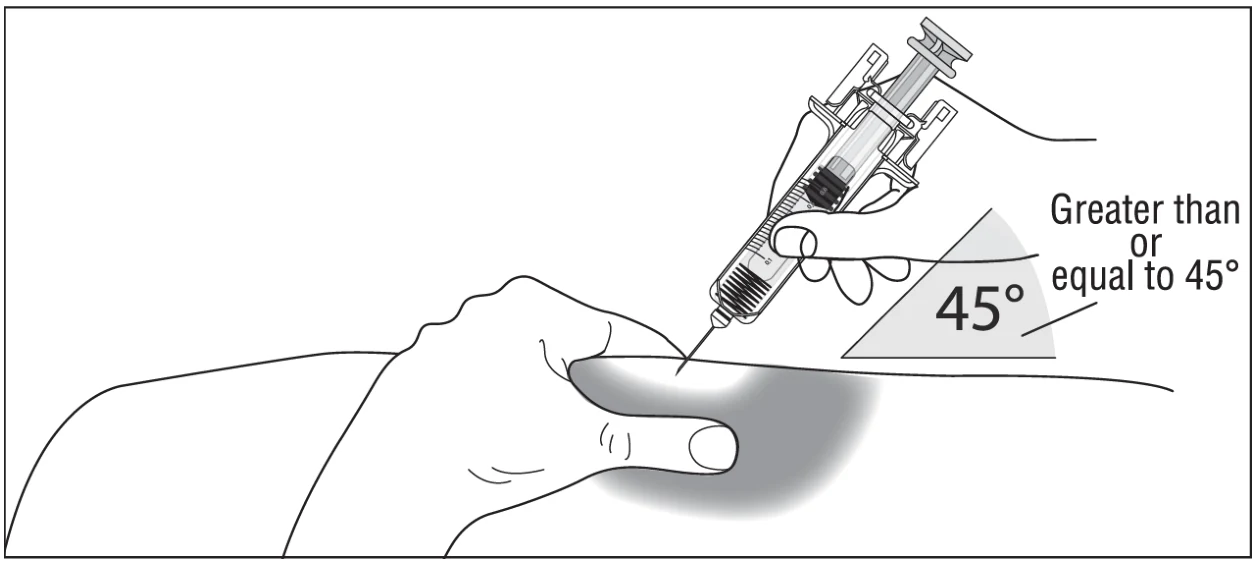
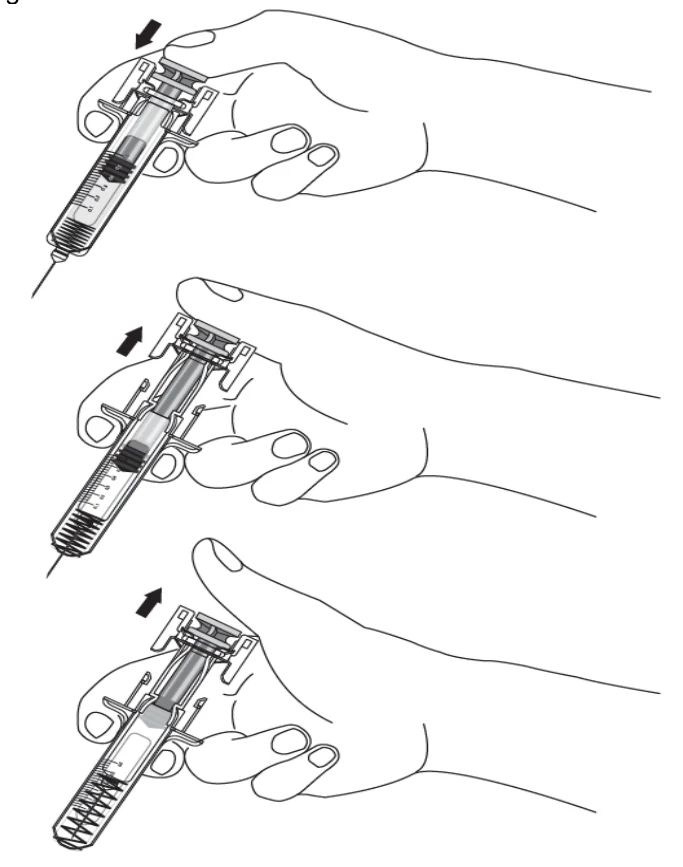
- 8. After the needle is inserted, let go of the fold of the skin. Inject the prescribed dose by pushing the plunger with your thumb while grasping the finger grips as shown in the image below and as directed by your doctor or nurse.
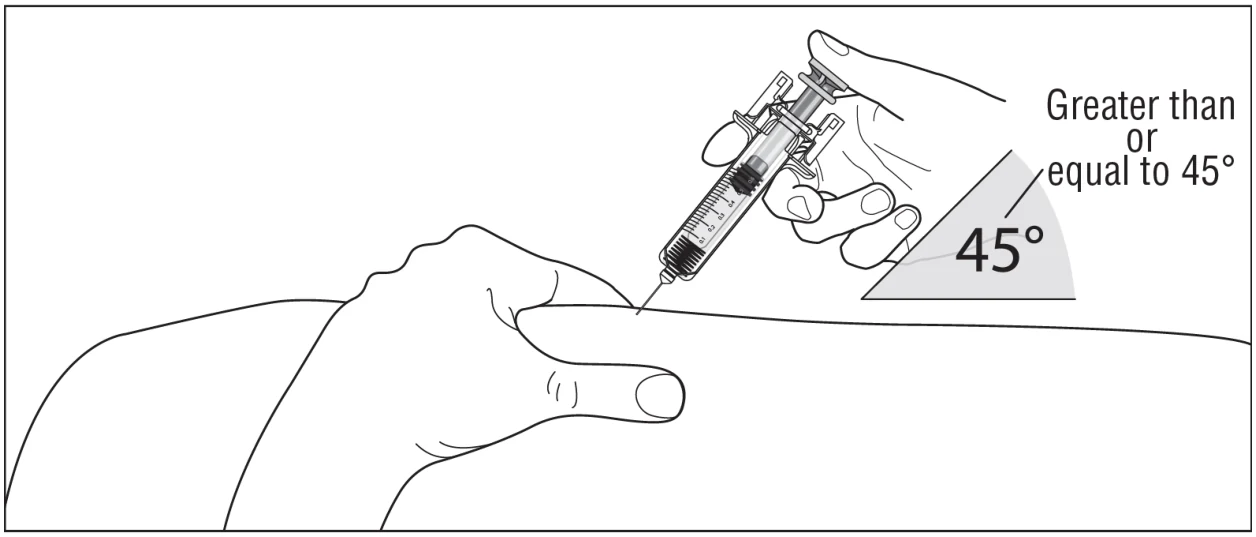
- 9. Press the plunger slowly and completely, until all of the medication has been injected as shown below. The needle guard will not be activated unless the entire dose has been administered and you remove downward pressure on the plunger.
When the syringe is emptied of all the medication, slowly lift your thumb from the plunger which will release the needle-guard. The needle will then withdraw from the skin and be covered and locked in place by the needle-guard.
- 10. After the injection, immediately place cotton or gauze on the injection site and apply pressure for several seconds. Do not use Grastofil® that is left in the syringe.
- 11. Place the pre-filled syringe with the needle guard covered needle into a puncture-proof container for proper disposal as described below. Use each pre-filled syringe only for one injection.
Remember:
Do not hesitate to consult your doctor or nurse for help or if you have any concerns.
Usual dose:
Your doctor will determine you/your child’s correct dose based on you/your child’s body weight.
Overdose:
You must always use the correct dose of Grastofil®. Too little Grastofil® may not protect you against infections, and too much Grastofil® may cause too many neutrophils to be in your blood.
If you think you, or a person you are caring for, have taken too much Grastofil®, contact a healthcare professional, hospital emergency department, regional poison control centre or Health Canada’s toll-free number, 1-844 POISON-X (1-844-764-7669) immediately, even if there are no signs or symptoms.
Missed dose:
Grastofil® should be injected at the same time each day. If you miss a dose, contact your doctor or nurse.
Disposal of used syringes:
The used syringes should be disposed of in accordance with local requirements.
- Put used syringes into an appropriate puncture-proof container as instructed by your doctor/nurse.
- Always keep this container out of reach and sight of children.
- When the puncture-proof container is full, it should be disposed as instructed by your doctor, nurse, or pharmacist. Do not throw the container in the household trash. Do not recycle.
- Never put used syringes into your normal household waste bin.
Possible side effects from using Grastofil®:
These are not all the possible side effects you may feel when taking Grastofil®. If you experience any side effects not listed here, contact your healthcare professional. Please also see Warnings and Precautions. Like all medications, Grastofil® may show side effects upon use and based on individual response.
Spleen Rupture
Your spleen may become enlarged and can rupture while taking Grastofil®. A ruptured spleen can cause death. The spleen is located in the upper left section of your stomach area. Call your doctor right away if you or your child has pain in the left upper stomach area or left shoulder tip area. This pain could mean you or your child’s spleen is enlarged or ruptured.
Serious Allergic Reactions
Grastofil® can cause serious allergic reactions. These reactions can cause a rash over the whole body, shortness of breath, wheezing, dizziness, swelling around the mouth or eyes, fast pulse, and sweating. If you or your child starts to have any of these symptoms, stop using Grastofil® and call your doctor or seek emergency care right away. If you or your child has an allergic reaction during the injection of Grastofil®, stop the injection right away.
A serious lung problem called acute respiratory distress syndrome (ARDS)
Call your doctor or seek emergency care right away if you or your child has shortness of breath, trouble breathing or a fast rate of breathing.
Sickle Cell Crisis
Call your doctor or seek emergency care right away if you or your child experiences severe pain in the bones, chest, gut, or joints.
- Kidney injury (glomerulonephritis) has been seen in patients who received Grastofil®. Call your doctor right away if you experience puffiness in your face or ankles, blood in your urine or brown coloured urine, or if you notice that you urinate less often than usual.
Most common side effects of Grastofil®:
The most common side effect you/your child may experience is aching in the bones and muscles. This pain can be relieved by taking a non-acetylsalicylic acid pain reliever such as acetaminophen.
In addition, other common side effects can be fatigue, headache, loss of appetite, diarrhea, cough, sore throat, elevation in liver enzymes, reduction in platelets (cells involved in clotting), which increases the risk of bleeding or bruising.
Some people may experience redness, swelling, bruising, or itching at the site of injection. This may be an allergy to the ingredients in Grastofil® or could be a local reaction. If you are giving an injection to a child, look for signs of redness, swelling, or itching at the site of injection because they may not be able to tell you they are experiencing a reaction. If at any time a serious allergic reaction occurs, immediately call the doctor or emergency services (for example, call 911).
If any of the side effects gets serious, or if you notice any side effects not listed in this leaflet, please tell your doctor or pharmacist.
Serious side effects and what to do about them
| Frequency / Side Effect / Symptom | Talk to your healthcare professional | Stop taking this drug and get immediate medical help | ||||
|---|---|---|---|---|---|---|
| Frequency / Side Effect / Symptom | Talk to your healthcare professional | Stop taking this drug and get immediate medical help | ||||
| Frequency / Side Effect / Symptom | Talk to your healthcare professional | Stop taking this drug and get immediate medical help | ||||
| Only if severe | In all cases | |||||
| Only if severe | In all cases | |||||
| Only if severe | In all cases | |||||
| Uncommon | ||||||
| Bone pain | √ | |||||
| Acute respiratory distress syndrome (including the symptoms: fever, shortness of breath, cough, or congestion in your lungs). | √ | √ | ||||
| Alveolar haemorrhage and hemoptysis (including the following symptoms: bleeding from the lungs and coughing of blood). | √ | √ | ||||
| Low platelet counts (thrombocytopenia) (including the following symptoms: easy bruising and increased bleeding). | √ | |||||
| Capillary Leak Syndrome (including the following symptoms: swelling or puffiness, which may be associated with passing water less frequently, difficulty breathing, abdominal swelling and feeling of fullness, and a general feeling of tiredness). | √ | |||||
| Rare | ||||||
| Extramedullary haematopoiesis (production of blood cell components [red blood cells, white blood cells, and/or platelets] outside of the typical site of production [bone marrow]). This may result in an enlarged spleen, liver or pink, red, or blue/purple spots or bumps on the skin. | √ | |||||
| Very Rare | ||||||
| Splenomegaly (including the following symptoms: pain in the left upper stomach area or left shoulder tip area). | √ | |||||
| Osteoporosis in children with severe chronic neutropenia (including decreased bone density, making them weak, more brittle and likely to break). | √ | |||||
| Allergic reactions [body rash, shortness of breath, a drop in blood pressure (usually causing dizziness or light headedness), swelling around the mouth or eyes, fast pulse, weakness, sweating, severe redness or swelling or itching at injection site]. | √ | √ | ||||
| Cutaneous Vasculitis (including the following signs: inflammation of the blood vessels in the skin). | √ | |||||
| Sweet’s Syndrome (including the following symptoms: plum-coloured, raised, painful sores on the limbs and sometimes the face and neck with a fever). | √ | |||||
| Kidney Injury (glomerulonephritis) (including the following symptoms: puffiness in the face or ankles, blood in urine or brown coloured urine, or urinating less often than usual). | √ | √ | ||||
| *Uknown | ||||||
| Splenic rupture (including the following symptoms: left upper abdominal pain or pain at the tip of your shoulder). | √ | |||||
| Pseudogout (including the following symptoms in patients treated for cancer: pain and swelling of the joints, similar to gout). | √ | |||||
| **Abnormal number of immature bone marrow cells (myelodysplastic syndrome) that could lead to a type of cancer (acute myeloid leukaemia) (including the following symptoms: fever, bone pain, bruising, difficulty breathing, bleeding and a general feeling of tiredness). | √ | √ | ||||
*Reported in the post-marketing setting where the incidence is not known.
**Adverse events in breast and lung cancer patients receiving chemotherapy and/or radiotherapy.
If you have a troublesome symptom or side effect that is not listed here or becomes bad enough to interfere with your daily activities, talk to your healthcare professional.
Reporting side effects
You can report any suspected side effects associated with the use of health products to Health Canada by:
- Visiting the Web page on Adverse Reaction Reporting (canada.ca/drug-device-reporting) for information on how to report online, by mail or by fax, or;
- Calling toll-free at 1-866-234-2345.
NOTE: Contact your health professional if you need information about how to manage your side effects. The Canada Vigilance Program does not provide medical advice.
Storage:
Do not use Grastofil® after the expiry date which is stated on the outer carton and on the pre-filled syringe.
- Store in a refrigerator (2°C to 8°C). Do not freeze. Do not shake.
- If Grastofil® is accidentally frozen, allow it to thaw in the refrigerator before giving the next dose. However, if it is frozen for a second time, do not use it and contact your doctor or nurse for further instructions.
- Grastofil® can be removed from the refrigerator and left at room temperature (not above 25°C) for a single period of up to 15 days that ends within the labelled expiry date. Once Grastofil® has been out at room temperature it should not be put back into the refrigerator. Any Grastofil® syringes that have been out of the refrigerator for longer than 15 days should not be used and should be disposed of in accordance with local requirements.
- Keep the pre-filled syringe in the carton in order to protect from light. Do not use if you notice it is cloudy or there are particles in it.
Medicines should not be disposed via wastewater or household waste. Ask your pharmacist how to dispose medicines no longer required. These measures will help to protect the environment.
Keep out of reach and sight of children.
If you want more information about Grastofil®:
- Talk to your healthcare professional.
- Find the full product monograph that is prepared for healthcare professionals and includes this Patient Medication Information by visiting the Health Canada website (Drug Product Database: Access the database). t the manufacturer’s website http://www.apotex.ca/products, or by contacting DISpedia, Apotex's Drug Information Service at: 1-800-667-4708.
UltraSafe PlusTM Passive is a trademark of Safety Syringes, Inc., parent company is Becton, Dickinson and Company.