


Product Monograph - Havrix 1440
Recent Major Label Changes
| Section | Date |
|---|---|
| 4 Dosage and Administration, 4.4. Administration | MAY 2025 |
Table of Contents
Certain sections or subsections that are not applicable at the time of the preparation of the most recent authorized product monograph are not listed.
Recent Major Label Changes .................................................................................................. 2
Table of Contents................................................................................................................... 2
- 1.
Indications .................................................................................................................. 4
1.1 Pediatrics......................................................................................................... 4
1.2 Geriatrics ......................................................................................................... 4
- 2. Contraindications ....................................................................................................... 4
- 4.
Dosage and Administration ........................................................................................ 4
4.2 Recommended Dose and Dosage Adjustment ................................................... 4
4.4 Administration ................................................................................................. 5
- 5. Overdose .................................................................................................................... 6
- 6. Dosage Forms, Strengths, Composition, and Packaging............................................... 7
- 7.
Warnings and Precautions .......................................................................................... 8
General ....................................................................................................................... 8
Driving and Operating Machinery ................................................................................ 8
Hematologic................................................................................................................ 8
Immune ...................................................................................................................... 9
Renal .......................................................................................................................... 9
7.1 Special Populations .......................................................................................... 9
7.1.1 Pregnancy .................................................................................................... 9
7.1.2 Breastfeeding............................................................................................... 9
7.1.3 Pediatrics ..................................................................................................... 9
7.1.4 Geriatrics ..................................................................................................... 9
- 8.
Adverse Reactions ...................................................................................................... 9
8.2 Clinical Trial Adverse Reactions ........................................................................ 9
8.3 Less Common Clinical Trial Adverse Reactions ................................................ 11
8.5 Post-Market Adverse Reactions ...................................................................... 11
- 9.
Drug Interactions ...................................................................................................... 11
9.2 Drug Interactions Overview ............................................................................ 11
9.4 Drug-Drug Interactions................................................................................... 12
9.5 Drug-Food Interactions .................................................................................. 12
9.6 Drug-Herb Interactions................................................................................... 12
9.7 Drug-Laboratory Test Interactions .................................................................. 12
- 10.
Clinical Pharmacology ............................................................................................... 12
10.1 Mechanism of Action ..................................................................................... 12
10.2 Pharmacodynamics ........................................................................................ 12
- 11. Storage, Stability, and Disposal................................................................................. 13
Part 2: Scientific Information ............................................................................................... 14
- 13. Pharmaceutical Information ..................................................................................... 14
- 14.
Clinical Trials............................................................................................................. 14
14.1 Clinical Trials by Indication ............................................................................. 14
- 15. Microbiology ............................................................................................................ 17
- 16. Non-Clinical Toxicology............................................................................................. 17
Patient Medication Information........................................................................................... 18
Part 1: Healthcare Professional Information
1. Indications
HAVRIX (hepatitis A virus, inactivated) is indicated for active immunization against disease caused by hepatitis A virus (HAV). HAVRIX is approved for use in persons 12 months of age and older. Primary immunization should be administered at least 2 weeks prior to anticipated exposure to HAV.
Please refer to the National Advisory Committee on Immunization (NACI) and the Canadian Immunization Guide for recommendations of use.
1.1 Pediatrics
Pediatrics (12 months of age and older): HAVRIX is approved for use in persons 12 months of age and older (see 14 CLINICAL TRIALS).
1.2 Geriatrics
Geriatrics: Limited data are available to Health Canada (see 7 WARNINGS AND PRECAUTIONS and 14 CLINICAL TRIALS).
2. Contraindications
HAVRIX (hepatitis A virus, inactivated) should not be administered to subjects with known hypersensitivity to any component of the vaccine preparation or component of the container, or to subjects having shown signs of hypersensitivity after previous HAVRIX administration. For a complete listing, see the 6 DOSAGE FORMS, STRENGTHS, COMPOSITION AND PACKAGING.
As with other vaccines, the administration of HAVRIX should be postponed in subjects with severe febrile illness. The presence of a minor infection however, is not a contraindication.
4. Dosage and Administration
4.2 Recommended Dose and Dosage Adjustment
Primary Immunization
Adults from 19 years onwards
A single dose of HAVRIX 1440 (hepatitis A virus, inactivated) (1 mL suspension) is used for primary immunization.
Children and adolescents from 1 year up to and including 18 years of age
A single dose of HAVRIX 720 Junior (0.5 mL suspension) is used for primary immunization.
Booster Dose
A booster dose is recommended at any time between 6 and 12 months after a single dose of HAVRIX 1440 or HAVRIX 720 Junior in order to ensure long-term protection.
Long-term persistence of serum antibodies to hepatitis A virus after vaccination with HAVRIX is under evaluation. Nevertheless, data available after 5 years show persistence of antibodies which is consistent with a projected 20 years persistence (based on mathematical calculations).
Concomitant administration with immune globulin (human)
Concomitant administration of HAVRIX and immune globulin (human) may be considered when a subject is at risk of being exposed to hepatitis A before adequate anti-HAV antibody titres can be reached.
4.4 Administration
Check the expiry date of the vaccine carefully. Do not use vaccine beyond its expiry date.
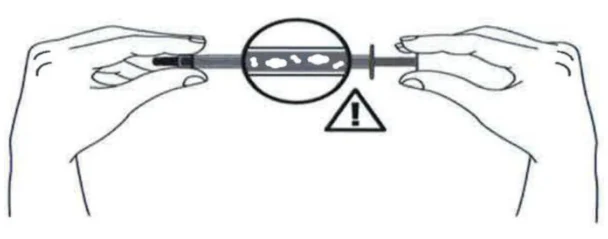
The vaccine should be inspected visually for any foreign particulate matter and/or colouration prior to administration.
Upon storage, a fine white deposit with a clear colourless layer above may be observed.
The vaccine should be re-suspended before use. When re-suspended, the vaccine will have a uniform hazy white appearance. Discard if the content appears otherwise.
Re-suspension of the vaccine to obtain a uniform hazy white suspension.
The vaccine can be re-suspended following the steps below:
- 1. Hold the syringe upright in a closed hand.
- 2. Shake the syringe by tipping it upside down and back again.
- 3. Repeat this action vigorously for at least 15 seconds.
- 4.
Inspect the vaccine again:
- a. If the vaccine appears as a uniform hazy white suspension, it is ready to use – the appearance should not be clear.
- b. If the vaccine still does not appear as a uniform hazy white suspension - tip upside down and back again for at least another 15 seconds - then inspect again.
Figure 1. Instructions for Use 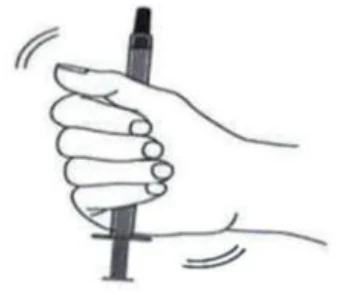 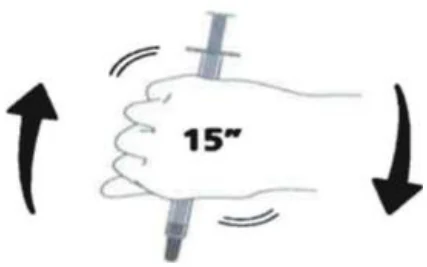 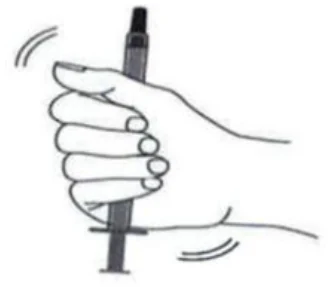
|
|---|
|
HAVRIX should be injected intramuscularly in the deltoid region in adults and children, in the antero-lateral part of the thigh in young children up to 2 years of age. The vaccine should not be administered intramuscularly in the gluteal region or subcutaneously/intradermally since administration by these routes may result in a less than optimal anti-HAV antibody response.
HAVRIX should never be administered intravenously.
| Figure 2. Pre-Filled Syringe Instructions | |
|---|---|
Hold the syringe by the barrel, not by the plunger. Unscrew the syringe cap by twisting it anticlockwise. | |
To attach the needle, connect the hub to the Luer Lock Adaptor and rotate a quarter turn clockwise until you feel it lock. Do not pull the syringe plunger out of the barrel. If it happens, do not administer the vaccine. | |
5. Overdose
Cases of overdose have been reported during post-marketing surveillance. Adverse events reported following overdosage were similar to those reported with normal vaccine administration.
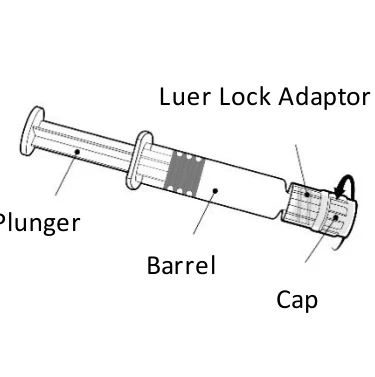 Plunger Barrel Cap Luer Lock Adaptor | |
|---|---|
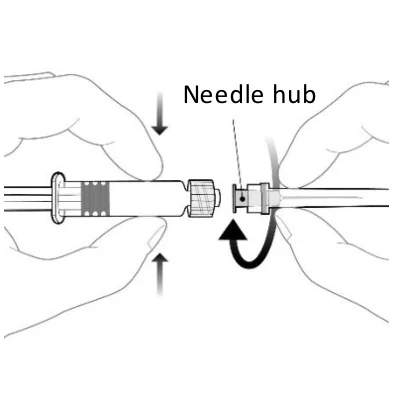 Needle hub |
| For the most recent information in the management of a suspected drug overdose, contact your regional poison control centre or Health Canada’s toll-free number, 1-844 POISON-X (1-844-764-7669). |
|---|
- 6. Dosage Forms, Strengths, Composition, and Packaging
To help ensure the traceability of vaccines for patient immunization record-keeping as well as safety monitoring, health professionals should record the time and date of administration, quantity of administered dose (if applicable), anatomical site and route of administration, brand name and generic name of the vaccine, the product lot number and expiry date.
Table 1 – Route of Administration, Dosage Forms, Strengths, and Non-medicinal Ingredients
*From the manufacturing process
Dosage Forms
HAVRIX (hepatitis A virus, inactivated) is available as HAVRIX 1440 (1440 ELISA Units/mL) and HAVRIX 720 Junior (720 ELISA Units/0.5 mL) suspension for injection.
Composition
HAVRIX is a sterile suspension containing formaldehyde-inactivated hepatitis A virus (HM175 hepatitis A virus strain) adsorbed onto aluminium hydroxide.
The virus is propagated in MRC5 human diploid cells. Before viral extraction, the cells are extensively washed to remove culture medium constituents. A virus suspension is then obtained by lysis of the cells followed by purification using ultrafiltration techniques and gel chromatography. Inactivation of the virus is assured by treatment with formalin.
The viral antigen content of HAVRIX is determined by an ELISA test. Each dose is standardized to ensure a viral antigen content of not less than:
| Route of Administration | Dosage Form / Strength | Non-medicinal Ingredients |
| Intramuscular Injection | Sterile suspension for injection/ HAVRIX 1440 contains: 1440 ELISA units per 1 mL of formaldehyde-inactivated hepatitis A virus (HM175 hepatitis A virus strain); HAVRIX 720 Junior contains: 720 ELISA units per 0.5 mL of formaldehyde-inactivated hepatitis A virus (HM175 hepatitis A virus strain). | Aluminium (as aluminium hydroxide), amino acids for injection, disodium phosphate, monopotassium phosphate, polysorbate 20, potassium chloride, sodium chloride, water for injection. Residue*: neomycin sulphate. |
| ELISA Units | Dose Volume | |
|---|---|---|
| HAVRIX 1440 | 1440 | 1 mL |
| HAVRIX 720 Junior | 720 | 0.5 mL |
The virus is adsorbed on aluminium (0.5 mg/1 mL adult dose, 0.25 mg/0.5 mL pediatric dose) in the form of aluminium hydroxide. Residue from the manufacturing process: neomycin sulphate (less than 10 ng for HAVRIX 720 Junior; less than 20 ng for HAVRIX 1440).
HAVRIX meets the World Health Organization requirement for biological substances including those for final vaccine residual bovine serum albumin.
Packaging
HAVRIX 1440:
Single Dose 1 mL Prefilled Syringes: in packages of 1 prefilled syringe.
HAVRIX 720 Junior:
Single Dose 0.5 mL Prefilled Syringes: in packages of 1 prefilled syringe.
Description
HAVRIX (hepatitis A virus, inactivated) is a sterile suspension containing formaldehyde-inactivated hepatitis A virus (HM175 hepatitis A virus strain) adsorbed onto aluminium hydroxide.
7. Warnings and Precautions
General
As with other injectable vaccines, appropriate medication (e.g., adrenaline) should be readily available for immediate use in case of anaphylaxis or anaphylactoid reactions following administration of the vaccine. For this reason, the vaccinee should remain under medical supervision for 30 minutes after immunization.
Syncope (fainting) can occur following, or even before, any vaccination as a psychogenic response to the needle injection. It is important that procedures are in place to avoid injury from faints.
Driving and Operating Machinery
HAVRIX (hepatitis A virus, inactivated) is unlikely to produce an effect on the ability to drive and use machines.
Hematologic
HAVRIX (hepatitis A virus, inactivated) should be administered with caution to subjects with thrombocytopenia or a bleeding disorder since bleeding may occur following an intramuscular administration to these subjects.
Immune
It is possible that subjects may be in the incubation period of hepatitis A infection at the time of immunization. It is not known whether HAVRIX will prevent hepatitis A in such cases.
Since there is a possibility that the vaccine may contain trace amounts of neomycin, the possibility of an allergic reaction in individuals sensitive to this substance should be kept in mind when considering the use of this vaccine (see 6 DOSAGE FORMS, STRENGTHS, COMPOSITION AND PACKAGING).
As with other vaccines, subjects with an impaired immune system may not obtain adequate antibody titres after the primary immunization course. Such patients may require administration of additional doses of HAVRIX. However, no specific dosing recommendations can be made at this time.
Renal
As with other vaccines, hemodialysis patients may not obtain adequate antibody titres after the primary immunization course. Such patients may require administration of additional doses of HAVRIX. However, no specific dosing recommendations can be made at this time.
7.1 Special Populations
7.1.1 Pregnancy
Animal reproduction studies and adequate human data on use during pregnancy are not available. However, as with all inactivated viral vaccines, the risks to the fetus are considered to be negligible. HAVRIX should be used during pregnancy only when clearly needed.
7.1.2 Breastfeeding
Animal reproduction studies and adequate human data on use during lactation are not available. Therefore, caution should be exercised if HAVRIX is to be administered to breast feeding women.
7.1.3 Pediatrics
Pediatrics (12 months of age and older): HAVRIX is approved for use in persons 12 months of age and older.
7.1.4 Geriatrics
Geriatrics: Clinical studies of HAVRIX did not include sufficient numbers of subjects aged 65 years and older to determine whether they respond differently from younger subjects. Other reported clinical experience from Hepatitis A vaccines has not identified differences in overall safety between these subjects and younger adult subjects.
8. Adverse Reactions
8.2 Clinical Trial Adverse Reactions
Clinical trials are conducted under very specific conditions. Therefore, the frequencies of adverse reactions observed in the clinical trials may not reflect frequencies observed in clinical practice and should not be compared to frequencies reported in clinical trials of another drug.
The safety profile presented below is based on data from more than 5,300 subjects.
Table 2 – Safety Profile of Subjects
| AE Frequency | System/Organ Class | Adverse Event (AE) |
|---|---|---|
Very Common: ≥ 10% | General disorders and administration site conditions | Pain and redness at the injection site, fatigue |
| Nervous system disorders | Headache | |
| Psychiatric disorders | Irritability | |
Common: ≥ 1% and < 10% | Gastrointestinal disorders | Gastrointestinal symptoms (such as nausea, vomiting, diarrhea) |
| General disorders and administration site conditions | Malaise, injection site reaction (such as swelling or induration), fever (≥ 37.5°C) | |
| Metabolism and nutrition disorders | Appetite lost | |
| Nervous system disorders | Drowsiness | |
Uncommon: ≥ 0.1% and < 1% | General disorders and administration site conditions | Influenza-like illness |
| Infections and infestations | Upper respiratory tract infection, rhinitis | |
| Musculoskeletal and connective tissue disorders | Myalgia, musculoskeletal stiffness | |
| Nervous system disorders | Dizziness | |
| Skin and subcutaneous tissue disorders | Rash | |
Rare: ≥ 0.01% and < 0.1% | General disorders and administration site conditions | Chills |
| Nervous system disorders | Hypoaesthesia, paraesthesia | |
| Skin and subcutaneous tissue disorders | Pruritus |
Administration of HAVRIX with measles-mumps-rubella (MMR) and varicella (V) vaccines
In a co-administration study (HAV 231) evaluating immune response in toddlers receiving HAVRIX 720 Junior (N=324) or HAVRIX 720 Junior plus measles-mumps-rubella (MMR) plus varicella vaccines (N=462) or MMR plus varicella plus HAVRIX 720 Junior (N=455), the primary analysis of safety (N=1,241) demonstrated that all the three vaccines, HAVRIX, MMR and varicella, whether co-administered or administered alone, were well tolerated. Reactogenicity and safety of HAVRIX when co-administered with MMR/V vaccines is consistent with the known safety profile of HAVRIX.
8.3 Less Common Clinical Trial Adverse Reactions
See Uncommon and Rare adverse events above for the safety information on Less Common Clinical Trials Adverse Reactions.
8.5 Post-Market Adverse Reactions
Because post marketing reporting of adverse events is voluntary and from a population of uncertain size, it is not always possible to reliably estimate the frequency of these reactions or establish a causal relationship to drug exposure. Evaluation and interpretation of these post marketing events is confounded by underlying diagnosis, concomitant medications, preexisting conditions, and inherent limitations of passive surveillance.
The following adverse reactions have been reported with HAVRIX (see Table 2).
Table 2 – Post-Market Adverse Reactions
| System/Organ Class | Adverse Event |
|---|---|
| Immune system disorders | Anaphylaxis, allergic reactions including anaphylactoid reactions and mimicking serum sickness |
| Musculoskeletal and connective tissue disorders | Arthralgia |
| Nervous system disorders | Convulsions |
| Skin and subcutaneous tissue disorders | Angioneurotic oedema, urticaria, erythema multiforme, Stevens-Johnson syndrome |
| Vascular disorders | Vasculitis |
9. Drug Interactions
9.2 Drug Interactions Overview
Since HAVRIX is an inactivated vaccine, its concomitant use with other inactivated vaccines is unlikely to result in interference with immune responses. When concomitant administration of other vaccines is considered necessary, the vaccines must be given with different syringes and at different injection sites.
Clinical experiences with the concomitant administration of HAVRIX and the hepatitis B virus surface antigen (recombinant) vaccine, ENGERIX-B, has been satisfactory. No interference in the respective immune responses to both antigens has been observed.
HAVRIX can be given concomitantly with any of the following vaccines: typhoid, yellow fever, cholera (injectable), tetanus, or with monovalent and combination vaccines comprised of measles, mumps, rubella and varicella. See also 14 CLINICAL TRIALS.
HAVRIX must not be mixed with other vaccines.
9.4 Drug-Drug Interactions
The concomitant administration of HAVRIX (hepatitis A virus, inactivated) and immune globulin (human) does not influence the seroconversion rate, but may result in a relatively lower anti-HAV antibody titre than when the vaccine is given alone. HAVRIX and immune globulin (human) should be administered at separate injection sites.
9.5 Drug-Food Interactions
Interactions with food have not been established.
9.6 Drug-Herb Interactions
Interactions with herbal products have not been established.
9.7 Drug-Laboratory Test Interactions
Interactions with laboratory tests have not been established.
10. Clinical Pharmacology
10.1 Mechanism of Action
HAVRIX (hepatitis A virus, inactivated) confers immunity against hepatitis A virus (HAV) infection by inducing the production of specific anti-HAV antibodies.
10.2 Pharmacodynamics
Immune response
In clinical studies involving subjects of 18 – 50 years of age, specific humoral antibodies against HAV were detected in more than 88% of vaccinees at day 15 and 99% at month 1 following administration of a single dose of HAVRIX 1440 (hepatitis A virus, inactivated).
In clinical studies involving subjects of 1 – 18 years of age, specific humoral antibodies against HAV were detected in more than 93% of vaccinees at day 15 and 99% of vaccinees one month following administration of HAVRIX 720 Junior.
The mean titre of anti-HAV antibodies induced by HAVRIX is at least 3 times higher than the maximum observed after passive immunization using immune globulin (human). In a randomly selected subset of subjects, vaccine induced anti-HAV antibodies were shown to be qualitatively indistinguishable from immune globulin (human) anti-HAV antibodies.
To obtain long-term immunity a booster dose is recommended at any time between 6 and 12 months after primary vaccination with HAVRIX 1440 Adult or HAVRIX 720 Junior, to induce long-term antibody titres.
Long-term persistence of serum antibodies to hepatitis A virus after vaccination with HAVRIX is under evaluation. Nevertheless, data available after 5 years show persistence of antibodies which is consistent with a projected 20 years persistence (based on mathematical calculations).
Primates exposed to the virulent heterologous hepatitis A strain were vaccinated 2 days after exposure. This post exposure vaccination resulted in total protection of the animals.
Efficacy of HAVRIX for outbreak control
Results of hepatitis A outbreak control program showed a substantial drop in symptomatic cases in 4,930 vaccinees within 3 weeks of receiving 1 dose of hepatitis A vaccine. In villages where more than 70% of estimated susceptible individuals were vaccinated, a dramatic drop in the number of symptomatic cases of disease was observed within 8 weeks of vaccination.
Immunization Recommendations (see also Canadian Immunization Guide)
Active immunization with HAVRIX is indicated for the following individuals: Armed Forces personnel who travel to higher endemicity areas or to areas where hygiene is poor have an increased risk of HAV infection, close contacts of infected persons since virus shedding of infected persons may occur for a prolonged period, individuals with chronic liver disease or who are at risk of developing chronic liver disease such as hepatitis B (HB) and hepatitis C (HC) chronic carriers and alcohol abusers and susceptible individuals in areas of intermediate to high prevalence of hepatitis A.
Immunization with HAVRIX is particularly recommended in subjects who are, or will be, at increased risk of infection such as: travellers (i.e., to areas where the prevalence of hepatitis A is high), persons for whom hepatitis A is an occupational hazard (i.e., employees in day-care centres, nursing, medical and paramedical personnel in hospitals and institutions, especially gastroenterology and pediatric units, sewage workers, and food handlers), persons for whom there is an increased risk of transmission of Hepatitis A (i.e., homosexuals, persons with multiple sexual partners, abusers of injectable drugs, hemophiliac patients), specific population groups known to have higher incidence of Hepatitis A (i.e., North American Indians, Inuits, recognized community-wide HAV epidemics).
- 11. Storage, Stability, and Disposal
The vaccine should not be used beyond the expiry date stamped on the syringe.
Store HAVRIX (hepatitis A virus, inactivated) in the original package in order to protect from light. The vaccine must be stored at 2 to 8°C.
Do not freeze; discard if vaccine has been frozen.
Stability data indicate that HAVRIX is stable at temperatures up to 25°C for 3 days. These data are intended to guide healthcare professionals in case of temporary temperature excursion only.
Dispose any unused product or waste material accordingly.
Part 2: Scientific Information
13. Pharmaceutical Information
Drug Substance
Proper name: hepatitis A virus, inactivated
Product Characteristics
HAVRIX (hepatitis A virus, inactivated) is a sterile suspension containing formaldehyde-inactivated hepatitis A virus (HM175 hepatitis A virus strain) adsorbed onto aluminium hydroxide.
14. Clinical Trials
14.1 Clinical Trials by Indication
For active immunization against disease caused by hepatitis A virus
Clinical studies have been conducted in Asia, Europe, Latin America, USA and Canada to evaluate the immunogenicity and reactogenicity of HAVRIX.
Table 3 – Summary of Study Demographics, Trial Design and Efficacy Results
| Study No. | Trial design | Dosage and route of administration | No. of subjects | Patient Demographi cs | Immunogenicity Results1 | |
|---|---|---|---|---|---|---|
| Study No. | Trial design | Dosage and route of administration | No. of subjects | Patient Demographi cs | Immunogenicity Results1 | |
| Study No. | Trial design | Dosage and route of administration | No. of subjects | Patient Demographi cs | Immunogenicity Results1 | |
| SC Rate (%) | GMT (mIU/ml) | |||||
| SC Rate (%) | GMT (mIU/ml) | |||||
| SC Rate (%) | GMT (mIU/ml) | |||||
| HAV-104 | Double-blind, randomized, multi-country, multi-centre | Intramuscular injection (into deltoid region) 1440 EL.U/1 mL dose 0, 6 month dosing schedule | Enrolled: 150 | Healthy adults aged 18 to 50 years | 97.62 | 5772 |
| HAV-107 | Double-blind, randomized, multi-country, multi-centre | Intramuscular injection (into deltoid region) 1440 EL.U/1 mL dose 0, 6 month dosing schedule | Enrolled: 150 | Healthy adults aged 18 to 40 years | 99.32 | 4902 |
| HAV-112 | Double-blind, randomized, multi-country, multi-centre | Intramuscular injection (into deltoid region) 1440 EL.U/1 mL dose 0, 12 month dosing schedule | Enrolled: 194 | Healthy adults aged 21 to 40 years | 99.43 | 3873 |
| HAV-115 | Open randomized, multi-country, multi-centre | Intramuscular injection (into deltoid region) Group 1: 720 EL.U/0.5 mL dose Group 2: 1440 EL.U/1 mL dose 0, 6 month dosing schedule | Enrolled: 202 | Healthy adolescents aged 12 to 19 years | Group 1: 99.0 Group 2: 100 | Group 1: 249 Group 2: 349 |
| HAV-117B | Open study, multi-country, multi-centre | Intramuscular injection (into deltoid region) 720 EL.U/0.5 mL dose 0, 6 month dosing schedule | Enrolled: 60 | Healthy children aged 2 to 13 years | 100 | 305 |
| HAV-118 | Open prospective study, multi-country, multi-centre | Intramuscular injection (into deltoid region, and sometimes the thigh muscle) 720 EL.U/0.5 mL dose 0, 12 month dosing schedule | Enrolled: 54 | Healthy children aged 2 to 11 years | 95.5 | 184 |
| HAV-122 | Open randomized study, multi-country, multi-centre | Intramuscular injection (into deltoid region) 720 EL.U/0.5 mL dose 0, 6 month dosing schedule | Enrolled: 81 | Healthy children aged 2 to 15 years | 96.8 | 194 |
| HAV-129 | Open study, multi-country, multi-centre | Intramuscular injection (into deltoid region) 720 EL.U/0.5 mL dose 0, 6 month dosing schedule | Enrolled: 120 | Healthy adolescents aged 9 to 18 years | 100 | 256 |
| Alaskan Outbreak Control Program me | Independent study, multi-country, multi-centre | Children/teenagers received dose level of 720 EL.U/0.5 mL Adults received dose level of 1440 EL.U/1 mL | Enrolled: 4,930 | Mean age (±standard deviation): 16.47 ± 14.9 years Male: 51% Female: 49% | 924 | Children / teenagers: 2695 Adults: 2546 |
| HAV-231 | Open randomized study, USA, multi-centre | Toddlers 15 months of age Group 1: HAVRIX 720 EL.U/0.5 mL dose 0, 6 month dosing schedule | Enrolled: 1474 | Mean age (±standard deviation): 15 months ± 0.21 months | Group 1: 99 Group 2: 99.7 Group 3: 100 | Group 1: 1390 Group 2: 1895 Group 3: 1770 |
Group 2: HAVRIX 720 EL.U/0.5 mL + MMR + varicella vaccines 0, 6-9 month dosing schedule Group 3: MMR + varicella vaccines + HAVRIX 720 EL.U/0.5 mL 0, day 42 (1st dose HAVRIX 720 EL.U/0.5 mL), month 7.5-10.5 (2nd dose HAVRIX 720 EL.U/0.5 mL) | Male: 53%. Female: 47% | (SC rates post-dose 2)7 | (GMCs post-dose 2)8 | |||
- 1. Results at 1 month after initial dose
- 2. Average of 3 lots
- 3. Average of 2 lots
- 4. Results at 3-4 weeks after initial dose
- 5. Average for 3 different age groups (1-2 years, 3-9 years and 10-19 years)
- 6. 20-40 years age group
- 7. Seroconversion rates for anti-HAV antibodies
- 8. GMCs for anti-HAV antibodies
Efficacy
Clinical studies performed in Europe (HAV 104, 107, 112) evaluated immune response in adults to primary vaccination with HAVRIX 1440. Antibodies were measured at screening, day 15, and at month 1 and 6.
In an overall analysis of immunogenicity following vaccination the seroconversion rate was 98.9% at month 1 and the Geometric Mean Titre was 466 mIU/mL.
Clinical studies performed in Asia, Europe, Latin America, and Alaska (HAV 115, 117B, 118, 122, 129 and Alaskan outbreak program) evaluated immune response in subjects between 2 and 18 years receiving 720 EL.U.
The overall analysis of immunogenicity following vaccination showed that the seroconversion rate was 99.3% at month 1 and the Geometric Mean Titre was 253 mIU/mL.
Administration of HAVRIX with measles-mumps-rubella (MMR) and varicella (V) vaccines
A co-administration study (HAV 231) evaluated immune response in toddlers receiving HAVRIX 720 Junior (group 1) or HAVRIX 720 Junior + MMR + V vaccines (group 2) or MMR + V + HAVRIX 720 Junior (group 3). Study HAV 231 demonstrated non-inferiority of anti-HAV immune response 31 days after the 2nd dose of HAVRIX when the 1st dose had been co-administered with MMR + V compared to HAVRIX alone (1st co-primary objective). HAV 231 also demonstrated non-inferiority of the MMR + V immune responses 42 days after the first dose of MMR co-administered with varicella and HAVRIX vaccines compared to MMR + V alone (2nd co-primary objective). All antigens in study HAV 231, including anti-measles, anti-rubella and anti-varicella antibodies, had similar immune responses in the co-administration group (HAV+MMR+V) and control groups (HAV Group and the MMR+V – HAV group). Thus, co-administration of HAVRIX with MMR and varicella vaccines does not impact the immunogenicity of either of these vaccines.
15. Microbiology
No microbiological information is required for this drug product.
16. Non-Clinical Toxicology
Not applicable.