


Patient Medication Information: uses, side effects, how to take - Hyqvia
Serious Warnings and Precautions
Talk to your doctor if you have risk factors for these kinds of conditions.
|
|---|
What is HyQvia used for?
HyQvia is used to treat adults and children with primary immunodeficiency diseases (PI), and secondary immunodeficiency diseases (SI).
HyQvia is used in adult patients with chronic inflammatory demyelinating polyradiculoneuropathy (CIDP) after having their CIDP symptoms stabilized with previous intravenous immunoglobulin (IVIG) treatments. CIDP is characterised by chronic inflammation of the peripheral nerves that causes muscle weakness and/or numbness mainly in the legs and arms. It is believed that the body’s own defense system attacks the peripheral nerves and causes nerve damage and inflammation. Immunoglobulins present in HyQvia are thought to help protect the nerves from being damaged by the immune system.
How does HyQvia work?
The recombinant human hyaluronidase is a protein that makes it easier for the immunoglobulins to be infused (dripped) under the skin and to reach your blood system.
The vial of immunoglobulins has been prepared from the blood of healthy people. Immunoglobulins are produced by the human body’s immune system. They help your body to fight infections caused by bacteria and viruses or maintain the balance in your immune system (referred to as immunomodulation). The medicine works in the same way as the immunoglobulins naturally present in the blood.
What are the ingredients in HyQvia?
Medicinal ingredients: Human normal immunoglobulin, 10%
Non-medicinal ingredients: glycine, water for injection
Recombinant human hyaluronidase: calcium chloride dihydrate, edetate disodium dihydrate, human albumin, sodium chloride, sodium hydroxide, sodium phosphate dibasic dihydrate
HyQvia comes in the following dosage forms:
HyQvia contains two solutions for subcutaneous (SC) infusion under the skin. It is supplied as a package containing one vial of human normal immunoglobulin 10% and one vial of recombinant human hyaluronidase. HyQvia is available in 25, 50, 100, 200 and 300 mL vial sizes of immunoglobulin, each supplied with a corresponding vial of hyaluronidase.
Do not use HyQvia if:
you are allergic to immunoglobulins, hyaluronidase, recombinant hyaluronidase or any
of the other ingredients of this medicine (see What are the ingredients in HyQvia?).
if you have antibodies against immunoglobulin A (IgA) in your blood. This may occur if you have IgA deficiency. Since HyQvia contains trace amounts of IgA, you might have an allergic
reaction.
To help avoid side effects and ensure proper use, talk to your healthcare professional before you take HyQvia. Talk about any health conditions or problems you may have, including if you:
- Have or had any kidney, liver, or heart problems or history of blood clots
- Have an IgA deficiency, have antibodies to IgA
- Have a history of severe allergic reactions to IgG antibodies or other blood products
Are pregnant, trying to become pregnant or are breast feeding.
- Have high blood pressure
Other warnings you should know about:
- Do not infuse HyQvia into or around an infected or red swollen area on your skin because it may cause the infection to spread.
You may experience side effects (for example dizziness or nausea) during treatment with HyQvia that might affect the ability to drive and use machines. If this happens, you should wait until the reactions have disappeared before driving a vehicle or using machinery.
Tell your healthcare professional about all the medicines you take, including any drugs, vitamins, minerals, natural supplements or alternative medicines.
The following may interact with HyQvia:
- Vaccinations: HyQvia may reduce the effect of some vaccines such as measles, rubella, mumps and chicken pox. Before you get any vaccines, tell your healthcare provider that you take HyQvia.
- Effects on blood tests: HyQvia contains many different antibodies, some of which can affect blood tests (serological tests). Tell your doctor about your treatment with HyQvia before any blood test.
How to take HyQvia:
- Always use this medicine exactly as your doctor has told you. Check with your doctor if you are not sure. Also, see the “Detailed Instructions for Use” provided below.
- HyQvia has to be infused under the skin (subcutaneous administration). Do not infuse HyQvia into your veins (intravenously) nor into muscle (intramuscularly).
- Treatment with HyQvia will be started by your doctor or nurse, but you may be allowed to use the medicine at home once you have received the first few infusions under medical supervision and you (and/or your guardian) have been adequately trained.
- You should be trained on how to infuse the drug, how to use the pump or syringe driver, recording your treatment in your treatment diary, recognizing side effects and what to do about them.
- You and your doctor will decide if you can use HyQvia at home. Do not begin treatment with HyQvia at home until you have received complete instructions.
- You will take the hyaluronidase first. Make sure you infused the entire vial of hyaluronidase, even if you will not use up the entire vial of immunoglobulin. Then, within 10 minutes, you will take the immunoglobulin through an infusion pump. You must carefully follow your doctor’s instructions regarding the dose, infusion speed and schedule for infusing HyQvia so that your treatment works for you.
- Your doctor may perform blood tests regularly to check your IgG level and adjust your dosage.
Usual dose:
Primary and Secondary Immunodeficiency
Your doctor will calculate the correct dose for you based on your body weight, any previous treatment you may have received and your response to treatment. In the beginning you will receive one quarter of this dose at 1 week intervals. This will be increased step-wise to larger doses at 3- to 4-week intervals with the next infusions. Sometimes your doctor may recommend that larger doses are split and given at two or three sites at once. Your doctor may also adjust your dose depending on your response to treatment.
Chronic Inflammatory Demyelinating Polyradiculoneuropathy
Your doctor will calculate the correct dose for you based on your body weight, any previous treatment you may have received and your response to treatment. In the beginning you will receive one quarter of this dose at 1 week intervals. This will be increased step-wise to larger doses at 2- to 4-week intervals with the next infusions. Sometimes your doctor may recommend that larger doses are split and given at two or three sites at once. Your doctor may also adjust your dose depending on your response to treatment.
Overdose:
| If you think you, or a person you are caring for, have taken too much HyQvia contact your doctor as soon as possible. |
|---|
Missed Dose:
Do not infuse a double dose of HyQvia to make up for a missed dose. If you think that you have missed a dose speak to your doctor as soon as possible.
What are possible side effects from using HyQvia?
These are not all the possible side effects you may have when taking HyQvia. If you experience any side effects not listed here, tell your healthcare professional.
After HyQvia infusion a temporary, soft swelling may occur around the infusion site, which may last 1 to 3 days, due to the volume of fluid infused.
The following local reactions may occur at the site of infusion and generally go away in a few hours: mild or moderate pain, redness, swelling, itching.
Local reactions are less likely after the first few infusions.
The most likely side effects of HyQvia, that occurred at rates of 5% or higher, are: headache, fatigue, nausea, fever, increase blood pressure, increased levels of enzymes made by your pancreas, abdominal pain, back pain, and pain in arms or legs.
Serious side effects and what to do about them
| Symptom / effect | Talk to your healthcare professional | Stop taking drug and get immediate medical help | |
|---|---|---|---|
| Only if severe | In all cases | ||
| RARE | |||
Serious allergic reaction Hives, swelling in the mouth or throat, itching, trouble breathing, wheezing, fainting, dizziness | √ | √ | |
Swelling in your brain Bad headache with nausea, vomiting, stiff neck, fever and sensitivity to light | √ | √ | |
Kidney problem Reduced urination, sudden weight gain or swelling in your legs | √ | √ | |
Blood clot Pain, swelling, warmth, redness, or a lump in your legs or arms, other than at the infusion site | √ | √ | |
Liver or blood problem Brown or red urine, fast heart rate, yellow skin or eyes | √ | √ | |
Serious side effects and what to do about them
| Symptom / effect | Talk to your healthcare professional | Stop taking drug and get immediate medical help |
|---|---|---|
| Only if severe | In all cases | |
Lung problem Chest pain or trouble breathing, blue lips or extremities | ||
| √ | √ | |
If you have a troublesome symptom or side effect that is not listed here or becomes bad enough to interfere with your daily activities, tell your healthcare professional.
Reporting Side Effects
You can report any suspected side effects associated with the use of health products to Health Canada by:
NOTE: Contact your health professional if you need information about how to manage your side effects. The Canada Vigilance Program does not provide medical advice. |
Storage:
Keep out of reach and sight of children.
Do not use this medicine after the expiry date which is stated on the label and carton after EXP. The expiry date refers to the last day of that month.
Store in a refrigerator (2°C to 8°C). You can take the product out of the refrigerator and store it at a temperature up to 25°C for 3 months. Do not use the product after the expiry date shown on the vial and carton even if the 3 month period is not over. Do not freeze. Do not shake.
Keep the vials in the outer carton in order to protect from light.
Do not use this medicine if the solutions are cloudy or have particles or deposits. After opening, dispose of any unused solutions in the vials.
Do not throw away any medicines via wastewater or household waste. Ask your pharmacist how to dispose of medicines you no longer use. These measures will help protect the environment.
Detailed Instructions for Use are provided in the section below.
| ||
Dual vial unit(s) of HyQvia, infusion supplies (subcutaneous needle set, solution container (bag or syringe), sterile clear bandage and tape, pump tubing, transfer devices, syringes, gauze and tape), sharps container, pump, and treatment logbook and other supplies as needed. Prepare the pump: program the infusion pump according to prescribed infusion rates and manufacturer's instructions | 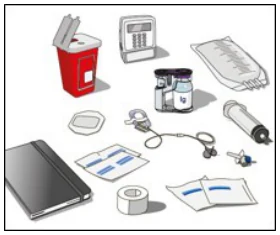 | |
| ||
|  | |
| 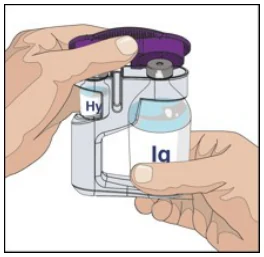 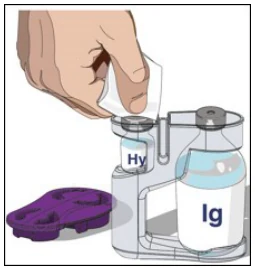 | |
| 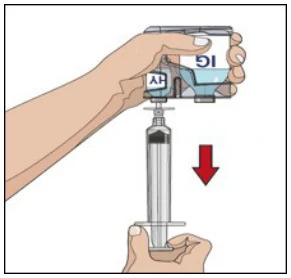 |
| 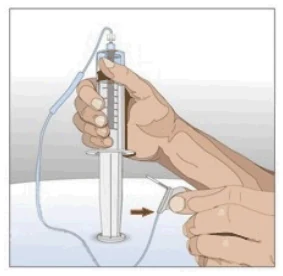 |
|
|
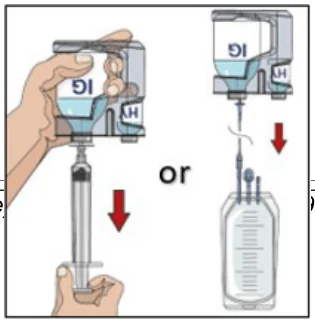 |
|
| 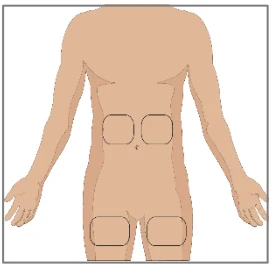 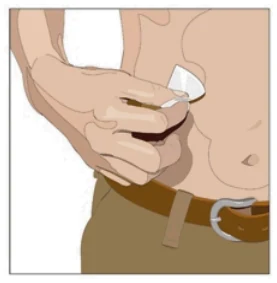 |
|  |
| 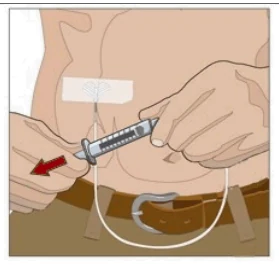 |
| 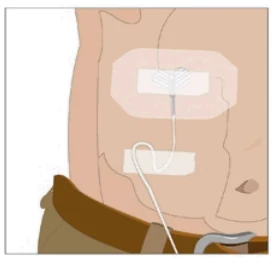 |
| 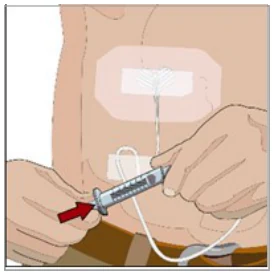 |
Administer the human normal immunoglobulin 10% with a pump at the rates prescribed by your healthcare professional and start the infusion. It is very important to infuse the medicine at the correct speed. | |
If instructed by your healthcare professional, attach a saline bag to the pump tubing/needle set to push the human normal immunoglobulin 10% up to the needle wings. | |
| |
|
If you want more information about HyQvia:
- Talk to your healthcare professional
- Find the full product monograph that is prepared for healthcare professionals and includes this Patient Medication Information by visiting the Health Canada website: (https://www.canada.ca/en/health-canada/services/drugs-health-products/drug-products/drug-product-database.html; the manufacturer’s website (https://www.takeda.com/en-ca), or by calling 1-800-268-2772.
Takeda Canada Inc.
22 Adelaide Street West, Suite 3800
Toronto, ON M5H 4E3
Last Revised:
HyQvia® is a registered trademark of Baxalta Incorporated.
TAKEDA® and the TAKEDA Logo® are trademarks of Takeda Pharmaceutical Company Limited, used under license.
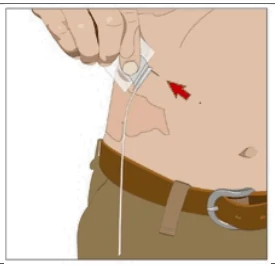 |