


Patient Medication Information: uses, side effects, how to take - Hizentra
Serious warnings and precautions box
What Hizentra is used for:
Hizentra (Hi - zen - tra) is a medicine used to treat conditions in which a person’s natural defense system (or immune system) does not function properly:
- Primary immunodeficiency (PID), secondary immunodeficiency (SID) and chronic inflammatory demyelinating polyneuropathy (CIDP).
- Rarely, human normal immunoglobulin can induce a fall in blood pressure with anaphylactic reaction, even in patients who had tolerated previous treatment with human normal immunoglobulin. Suspicion of allergic or anaphylactic type reactions requires immediate discontinuation of the injection. In case of shock, standard medical treatment should be administered.
- There is clinical evidence of an association between the administration of immunoglobulins and thromboembolic events such as myocardial infarction, stroke, pulmonary embolism and deep vein thrombosis. Therefore, caution should be exercised when prescribing and administering immunoglobulins.
- Risk factors for thromboembolic events include: advanced age, use of estrogens, in-dwelling central vascular catheters, history of vascular disease or thrombotic episodes, acquired or inherited hypercoagulable states, prolonged periods of immobilization, severe hypovolemia, diseases which increase blood viscosity and cardiovascular risk factors (including obesity, hypertension, diabetes mellitus, history of atherosclerosis and/or impaired cardiac output).
- Thrombosis may occur even in the absence of known risk factors.
How Hizentra works:
Hizentra is a highly purified product, called an immunoglobulin, made from human plasma. Hizentra contains the antibody immunoglobulin G (IgG), which helps combat germs, such as bacteria and viruses. Antibodies are major components of Immunity and IgG is the main type of antibody found in blood allowing it to control infection of body tissues.
Hizentra is supplied as a sterile liquid in single-use vials or pre-filled syringes and is given by subcutaneous (under the skin) infusion.
Hizentra treats primary immunodeficiency, secondary immunodeficiency and chronic inflammatory demyelinating polyneuropathy, conditions in which a person’s natural defense system (or immune system), does not function properly.
Normally, our immune system helps protect us against infections by recognizing potentially harmful bacteria and viruses that enter our body every day. In response, the immune system produces special proteins called antibodies (Immunoglobulins) that fight these foreign invaders (germs). However, when our immune system is not working properly, it is unable to produce these valuable antibodies, leaving us more vulnerable to illness.
Hizentra is known as antibody replacement therapy because it replaces the missing and much-needed IgG antibodies in people who have low levels of these infection-fighting proteins. By replacing these important antibodies, Hizentra helps make people with immune deficiencies better able to avoid infections and fight them when they do occur.
For people with CIDP Hizentra is believed to help protect the nerve from being attacked.
The ingredients in Hizentra are:
Medicinal ingredient: Human Immunoglobulins (IgG)
Non-medicinal ingredient: L-proline
For a full listing of nonmedicinal ingredients see Part 1: Healthcare Professional Information.
Hizentra comes in the following dosage forms:
Hizentra is a solution for subcutaneous injection.
Hizentra is supplied in a single-use, tamper-evident vial or pre-filled syringe containing 0.2 grams of protein per mL of preservative-free liquid.
Do not use Hizentra if:
- You have had an anaphylactic or severe systemic reaction to the administration of human normal immunoglobulin or to components of Hizentra.
- You have hyperprolinemia type I and II (high levels of proline in the blood) because it contains the stabilizer L-proline.
To help avoid side effects and ensure proper use, talk to your healthcare professional before you take Hizentra. Talk about any health conditions or problems you may have, including if you:
Are pregnant or think that you may be pregnant;
- Are nursing;
- Have a history of allergic or other adverse reactions to immunoglobulins;
- Recently have been vaccinated;
- Have been previously advised that you have IgA deficiency;
- Have a kidney disease;
- Have hyperprolinemia (high levels of proline in the blood);
- Have history of thromboembolic events (e.g. deep vein thrombosis, blockage of blood vessel, blood clots, stroke).
Tell your healthcare professional about all the medicines you take, including any drugs, vitamins, minerals, natural supplements or alternative medicines.
The following may interact with Hizentra:
- Hizentra may interfere with the response to certain viral vaccines such as measles, mumps, rubella, and varicella. Inform the immunizing physician of recent therapy with Hizentra so appropriate measures may be taken.
- Other products must not be mixed with the Hizentra solution.
How to take Hizentra:
- Your doctor or healthcare professional will teach you the proper techniques for administering Hizentra. Only after such instruction should you follow the instructions below.
- Hizentra is to be infused subcutaneously (under your skin) only. DO NOT inject Hizentra into a blood vessel (vein or artery). You will use needles and tubing to infuse Hizentra. You may have more than one needle inserted subcutaneously into different places of your body at one time. You can have infusions as often as every day up to every 2 weeks. For weekly infusions, it takes about 1 to 2 hours to complete an infusion; however, this time may be shorter or longer depending on the dose and frequency your doctor has prescribed for you.
- Your HCP will instruct you how to dispose of unused product or waste material.
- If you have any further questions on the use of this product, please ask your HCP.
Instructions for administration:
The following instructions are intended only as a guide. Before administering Hizentra, you should be under the care of a doctor and should have received proper training on preparation and administration from an HCP.
Please ensure that you have received proper guidance from your doctor or healthcare professional in case you experience a severe adverse reaction.
| Follow the steps below and use aseptic technique to administer Hizentra. | ||||
|---|---|---|---|---|
| 1 | Clean surface
| |||
| 2 | Assemble supplies Gather the Hizentra pre-filled syringe(s) and/or vial(s). The vials/pre-filled syringes must be at room temperature before administration. Gather the following supplies (not provided with Hizentra):
| |||
| 3 | Wash hands
| 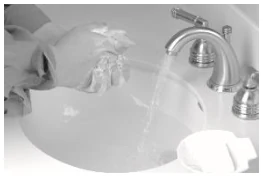 Figure 1 | ||
| 4 | Check Vials or Pre-Filled Syringes
| 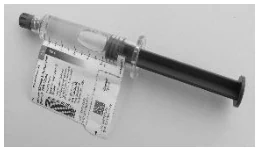 Figure 2 | ||
| 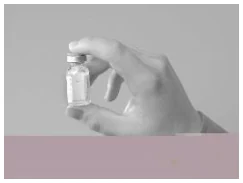 Figure 3 | |||
Do not use the pre-filled syringe or vial if:
| ||||
| 5 | Prepare Hizentra for infusion
| |||
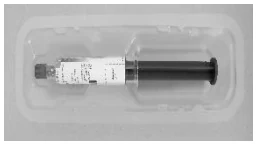
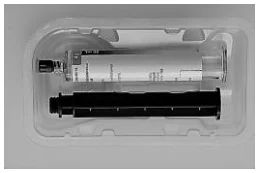
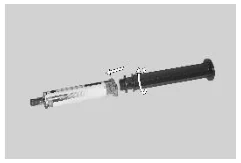
5.1: Hizentra pre-filled syringe(s) The 5 mL, 10 mL, 20 mL and 50 mL pre-filled syringes are supplied ready to use. The 5 mL and 10 mL pre-filled syringes are fully assembled (Figure 4). For the 20 mL and 50 mL pre-filled syringes (Figure 5), screw the plunger rod onto the pre-filled syringe stopper prior to use (Figure 6). If you are using a syringe pump, Hizentra pre-filled syringes can be placed directly in the syringe pump if the pre-filled syringe size matches the pump requirements. Please follow the manufacturer’s instructions, and then go to Step 6. NOTE: An additional adapter may be required for the Hizentra pre-filled syringes to fit properly in the infusion pump. Check with the provider of your supplies for the appropriate adapter and installation instructions. If the Hizentra pre-filled syringe size does not match the infusion pump requirements, transfer the contents of the pre-filled syringe to another empty sterile syringe of a size specific for the infusion pump by following the directions below:
| Figure 4 Figure 5 Figure 6 Figure 7 Figure 8 | |||
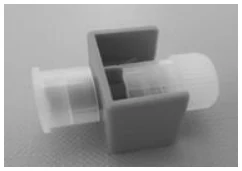
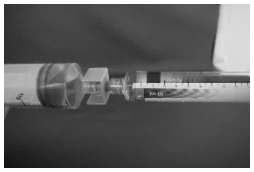
Go to Step 6. 5.2: Transfer Hizentra from vial(s) to syringe
| Figure 9 Figure 10 Figure 11 Figure 12 | |||
     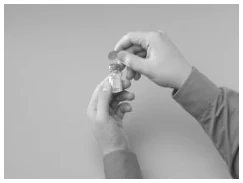 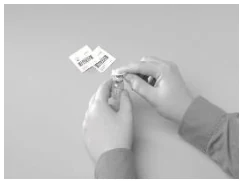 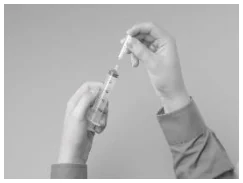 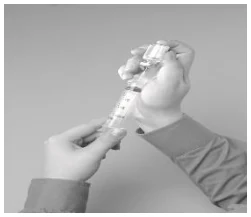 Go to Step 6. | ||||
| 6 | Prepare the administration tubing
| 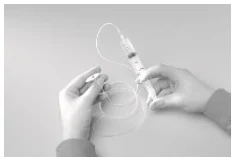 Figure 13 | ||
| 7 | Prepare infusion pump
| |||
| 8 | Prepare injection site(s)
| 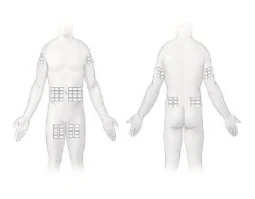 Figure 14 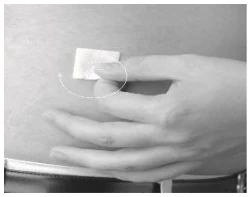 Figure 15 | ||
| 9 | Insert needle
| 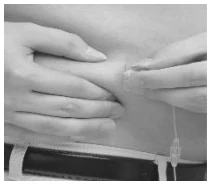 Figure 16  Figure 17 | ||
| 10 | Infuse Hizentra
| |||
| 11 | Record treatment
| |||
| 12 | Clean up
| |||
Be sure to tell your HCP about any problems you have doing your infusions. Your HCP may ask to see your treatment diary or logbook, so please follow instructions given by the healthcare team.
Usual dose:
Your healthcare professional should individualize your dose based on your clinical response to Hizentra therapy and serum immunoglobulin G (IgG) trough levels.
Doses may be adjusted over time to achieve the desired clinical response and serum IgG levels.
Your healthcare professional will discuss the transition from IVIG to SCIG with you.
In general, for weekly or frequent dosing, start treatment with Hizentra 1 week after your last IVIG infusion or Hizentra/SCIG infusion. For biweekly dosing, start treatment 1 or 2 weeks after the last IVIG infusion or 1 week after the last weekly Hizentra/SCIG infusion.
Overdose:
The consequences of an overdose are not known with Hizentra.
If you think you, or a person you are caring for, have taken too much Hizentra, contact a healthcare professional, hospital emergency department, regional poison control centre or Health Canada’s toll-free number, 1-844 POISON-X (1-844-764-7669) immediately, even if there are no signs or symptoms.
Missed Dose:
Inform your HCP if you missed a dose. A missed dose should be administered as soon as possible to ensure adequate IgG serum levels.
Possible side effects from using Hizentra:
These are not all the possible side effects you may have when taking Hizentra. If you experience any side effects not listed here, tell your healthcare professional.
No related serious adverse drug reactions were observed in subjects treated with Hizentra during the clinical studies evaluating its safety. However, there have been reports of serious thrombotic events (blood clots) following the use of other Subcutaneous Immunoglobulin (Human).
Reactions at the injection site are a common occurrence with SCIG infusions and this side effect is expected. Overall, the adverse events were mild or moderate in intensity.
The following symptoms are common: local reactions at the injection sites (e.g., swelling, redness, heat, pain, and itching), headaches, diarrhea, back pain, nausea, pain in extremity, cough, rash, vomiting, abdominal pain (upper), migraine, pain, pruritus, urticaria, fatigue and nasopharyngitis.
In isolated cases: severe hypersensitivity (anaphylactic) reactions of the immune system, aseptic meningitis syndrome (AMS: a temporary and reversible non-infectious meningitis resulting in an inflammation of the protective membranes surrounding the brain and spinal cord), and thromboembolism (formation of blood clots, which may be carried off in the blood circulation and which may result in blockage of a blood vessel) have been observed in treatment with Hizentra.
If any of the above listed symptoms occur, are severe or if they worry you, talk to your HCP.
Tell your HCP right away or go to the emergency room if you have hives, trouble breathing, wheezing, dizziness, or fainting. These could be signs of a bad allergic reaction.
Tell your HCP right away if you have any of the following symptoms. They could be signs of a serious problem.
- Bad headache with nausea, vomiting, stiff neck, fever, and sensitivity to light. These could be signs of a brain swelling called meningitis.
- Pain, swelling, warmth, redness, or a lump in your legs or arms, unexplained shortness of breath, chest pain or discomfort that worsens on deep breathing, unexplained rapid pulse, numbness or weakness on one side of the body, sudden confusion, or trouble speaking. These could be signs of a blood clot.
- Fever over 37.8°C (100ºF). This could be a sign of an infection.
This is not a complete list of side effects. Tell your HCP about any other side effects that concern you. You can ask your HCP to give you more information that is available to healthcare professionals.
1 RARE: may affect patients in less than 10 of 10,000 infusions
2 VERY RARE: may affect patients in less than 10 of 100,000 infusions
If you have a troublesome symptom or side effect that is not listed here or becomes bad enough to interfere with your daily activities, tell your healthcare professional.
Serious side effects and what to do about them:
| Symptom / effect | Talk to your healthcare professional | Stop taking drug and get immediate medical help | |
| Only if severe | In all cases | ||
RARE1 Severe hypersensitivity and anaphylactic reactions: a fall in blood pressure, swollen face or tongue, swelling of the throat, shortness of breath, fever, chills, dizziness, fast heartbeat, flushing. | ✓ | ✓ | |
| Signs of a blood clot: Pain, swelling, warmth, redness, or a lump in your legs or arms, unexplained shortness of breath, chest pain or discomfort that worsens on deep breathing, unexplained rapid pulse, numbness, or weakness on one side of the body, sudden confusion, or trouble speaking. | ✓ | ✓ | |
VERY RARE2 Non-infectious meningitis: Bad headache with nausea, vomiting, stiff neck, fever, and sensitivity to light. | ✓ | ✓ | |
Reporting Side Effects
You can report any suspected side effects associated with the use of health products to Health Canada by:
- Visiting the Web page on Adverse Reaction Reporting (canada.ca/drug-device-reporting) for information on how to report online, by mail or by fax; or
- Calling toll-free at 1-866-234-2345.
NOTE: Contact your health professional if you need information about how to manage your side effects. The Canada Vigilance Program does not provide medical advice.
We recommend that CSL Behring Canada be copied when reporting suspected side effects, at the following address:
AdverseReporting@CSLBehring.com
Storage:
Hizentra can be stored either in the refrigerator or at room temperature (at +2°C to +25°C). Hizentra is stable for the period indicated by the expiration date printed on the outer carton and vial/pre-filled syringe label. Do not use after the expiration date. The Hizentra solution contains no preservatives and should be administered as soon as possible after opening the vial/pre-filled syringe. Do not freeze Hizentra. Do not use product that has been frozen. Do not shake. Keep Hizentra in its original carton to protect it from light.
Keep out of reach and sight of children.
If you want more information about Hizentra:
- Talk to your healthcare professional
- Find the full product monograph that is prepared for healthcare professionals and includes this Patient Medication Information by visiting the Health Canada Drug Product Database website (Drug Product Database: Access the database); the manufacturer’s website (www.cslbehring.ca), or by calling 1-866-773-7721.
Date of Authorization: April 30, 2026